Find an Expert Rating: 
Home Blog Page 72

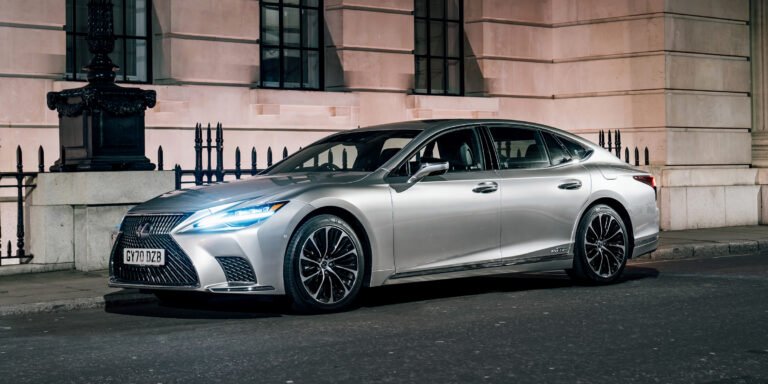
Lexus LS

Summary

The Lexus LS was a large executive saloon of a similar size, luxury and price to the Mercedes-Benz S-Class, BMW 7 Series and Audi A8. This model was the fifth-generation LS, which arrived in the UK in early 2018 and was on sale until early 2025.

Lexus only offered the LS with one powertrain option in the UK, the automatic petrol-hybrid LS 500h. Customers could, however, choose between front-wheel drive and all-wheel drive models.

The Lexus LS received rather mixed reviews from the UK motoring media, with verdicts ranging from below average to good. Review scores improved markedly after the model’s 2021 facelift, which brought a number of improvements to ride quality and interior refinement, but journalists still generally concluded that there were more capable luxury saloons available for such a high-end price tag.

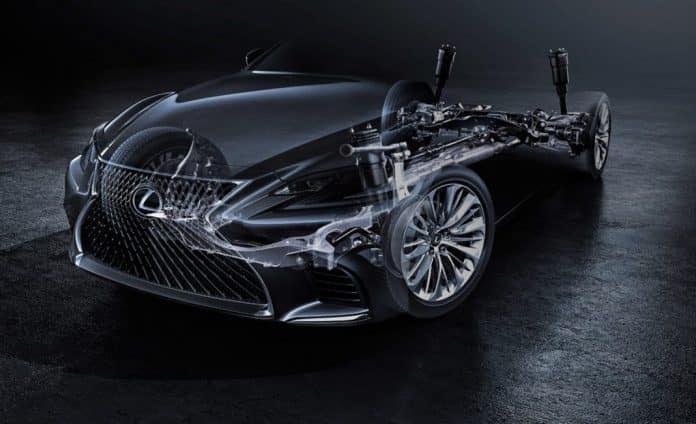
The Telegraph found this powertrain issue to be the Lexus LS’s downfall. “The strained hybrid driveline adds so much weight that the air suspension struggles to maintain a decent ride quality and the vaunted economy isn’t desperately good.”

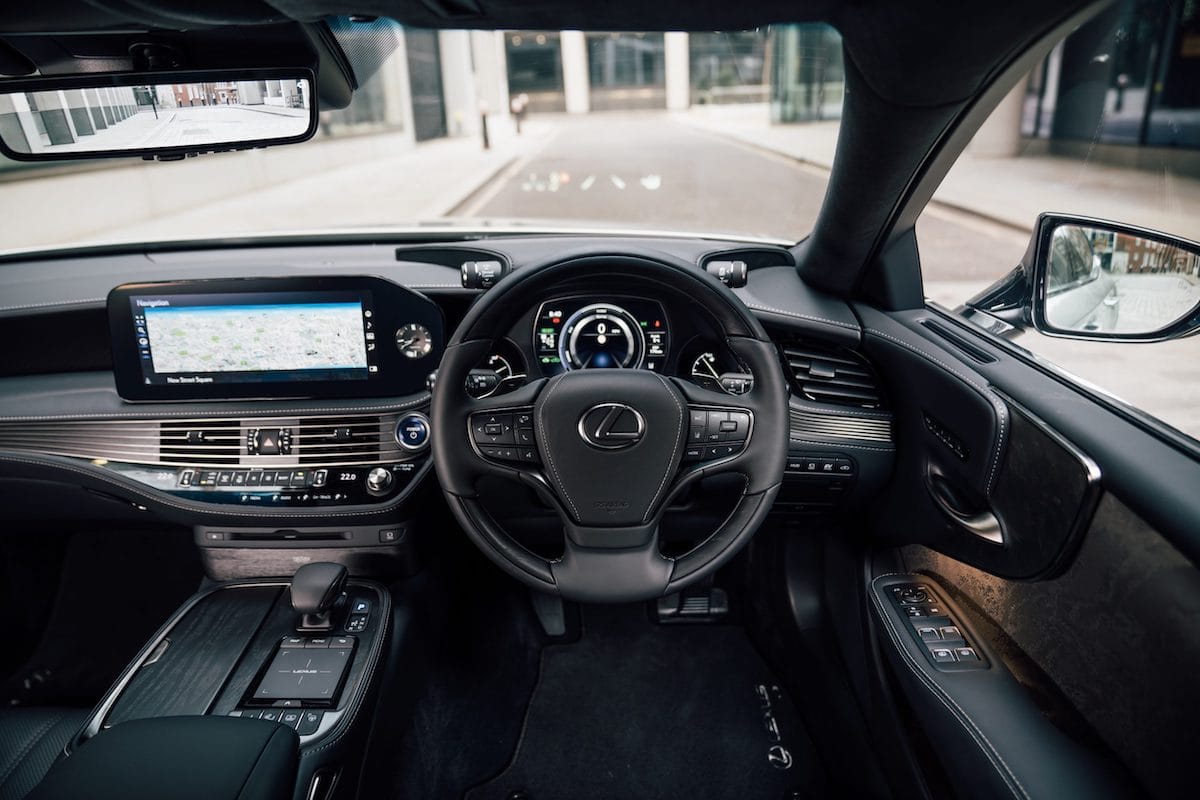
Putting aside its performance inconsistencies, it was inside the cabin where the LS excelled. Auto Express affirmed, “The Lexus LS is oozing with technology and driver assistance features, there are some stunning intricate design touches, and on the strength of this drive, the cabin feels even more beautifully screwed together than ever.”

Fleet World agreed, and added that the LS was “a desirable blend of reliability, safety and economy”, but conceded that its European rivals still had an edge, particularly those with plug-in hybrid variants.

As of June 2025, the Lexus LS holds a poor Used Car Expert Rating of E with a score of 46%. Its CO2 emissions are average, but its media review scores and running costs are poor.

Lexus LS highlights

  • Impressive interior quality
  • Plenty of on-board tech
  • Brand’s reputation for reliability
  • Spacious cabin

Lexus LS lowlights

  • Limited range of models
  • Rivals have more boot space
  • Ill-suited engine
  • Very expensive, base price and up

Key specifications

Body style: Large executive saloon
Engines: petrol-electric hybrid
Price: From £92,770 on-road

Launched: Spring 2018
Last updated: Summer 2020
Replacement due: TBA

Media reviews

Highlighted reviews and road tests from across the UK automotive media. Click any of the boxes to view.

Featured reviews

More reviews

Auto Trader

Car

Carbuyer

Driving Electric

Eurekar

Evo

Fleetworld

Honest John

Motoring Research

Parkers

The Telegraph

Top Gear

Safety rating

Independent crash test and safety ratings from Euro NCAP

No safety rating

The Lexus LS was not assessed by Euro NCAP during its production life.

Eco rating

Independent economy and emissions ratings from Green NCAP

No eco rating

The Lexus LS was not lab tested by Green NCAP during its production life.

Eco rating

Reliability data provided exclusively for The Car Expert by MotorEasy

No reliability rating

As of June 2025, we don’t have enough reliability data on the Lexus LS to generate a reliability rating.

The Car Expert’s reliability information is provided exclusively to us using extended warranty data from our partner, MotorEasy. As soon as MotorEasy has sufficient data on the LS, we’ll publish the score here.

Running cost rating

Clear Vehicle Data logo close crop

Monthly cost of ownership data provided exclusively for The Car Expert by Clear Vehicle Data

Fuel consumptionAverageScoreVariationScore
Hybrid models32 mpgE30 – 35 mpgD – E
CO₂ outputAverageScoreVariationScore
Hybrid models208 g/kmD182 – 217 g/kmC – D
Insurance groupAverageScoreVariationScore
All models50F49 – 50E – F
Service and maintenanceCostScore
Year 1£430D
Year 2£1,101D
Year 3£1,716D
Year 4£2,122D
Year 5£2,587D
Overall£7,956D

It’s probably not surprising that a £100K luxury saloon like the Lexus LS will also be expensive to own and run, which is shown above in whole-life costs provided exclusively to The Car Expert by our data partner, Clear Vehicle Data.

Despite hybrid assistance, the fuel economy is very poor, while road tax and insurance are also at the expensive end of town. Servicing is average for the first year, but gets more expensive very quickly after that.

Similar cars

If you’re looking at the Lexus LS, you might also be interested in these alternatives

Audi A8 | Bentley Flying Spur | BMW 7 Series | Maserati Quattroporte | Mercedes-Benz S-ClassRange Rover | Rolls-Royce Ghost | Rolls-Royce Wraith

More news, reviews and information about the Lexus LS at The Car Expert

Everything you need to know about Lexus

Everything you need to know about Lexus

Lexus updates flagship LS saloon

Lexus updates flagship LS saloon

New Lexus LS 500h debuts high-tech safety

New Lexus LS 500h debuts high-tech safety

Tokyo show debut for flagship Lexus LS+ concept

Tokyo show debut for flagship Lexus LS+ concept

Detroit show: Lexus LS range-topper debuts

Detroit show: Lexus LS range-topper debuts

Lexus LS flagship to debut in Detroit

Lexus LS flagship to debut in Detroit

Buy a Lexus LS

If you’re looking to buy a used Lexus LS, The Car Expert’s partners can help you find the right car.

Motors 600x300

Find your next used car with Motors. Find out more
Auto Trader logo 600x300

Find your next new or used car with Auto Trader. Find out more

Carwow logo 600x300

Find your next new or used car with Carwow. Find out more

Car of the Year 2021

Once you get beyond the obvious global pandemic thing, one of the key stories of 2021 has been the giant leap forward taken in electric motoring. We’re now well beyond the point of no return as the UK and Europe ramp up to a fully-electric future.

For the last decade, electric cars have been evangelised by a few early adopters, but largely resisted by the majority of households who have seen little point in switching away from a familiar petrol car. All of a sudden, the world has changed.

New EVs are joining the market almost every week, with every car company getting in on the action. And they’re no longer simply engineering curiosities that struggle with simple real-world driving tasks.

Our Expert Rating Index shows that EVs are consistently getting better review scores than their petrol and diesel equivalents. Therefore, it’s no great surprise that our first Car of the Year should be an electric vehicle.

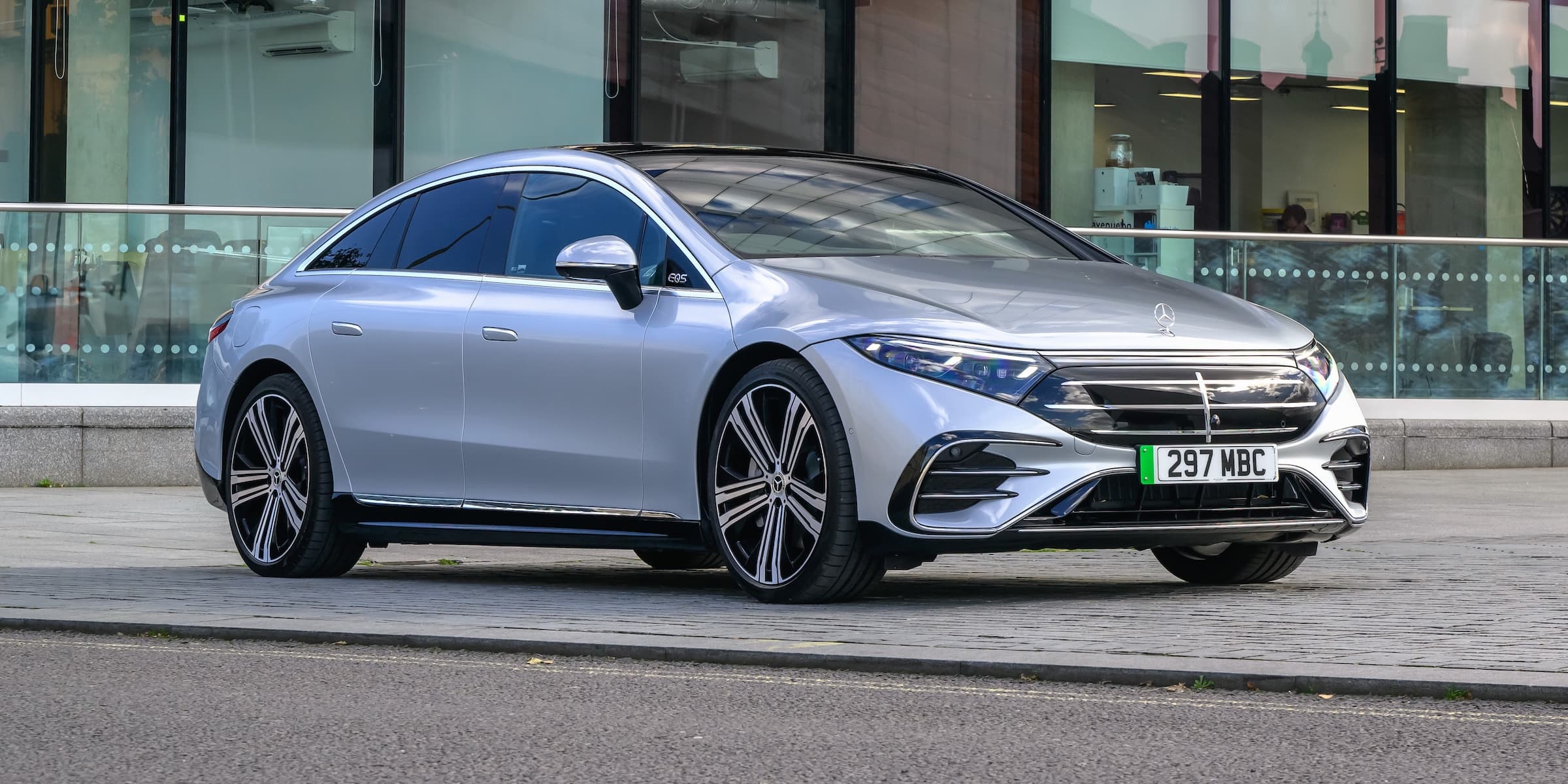
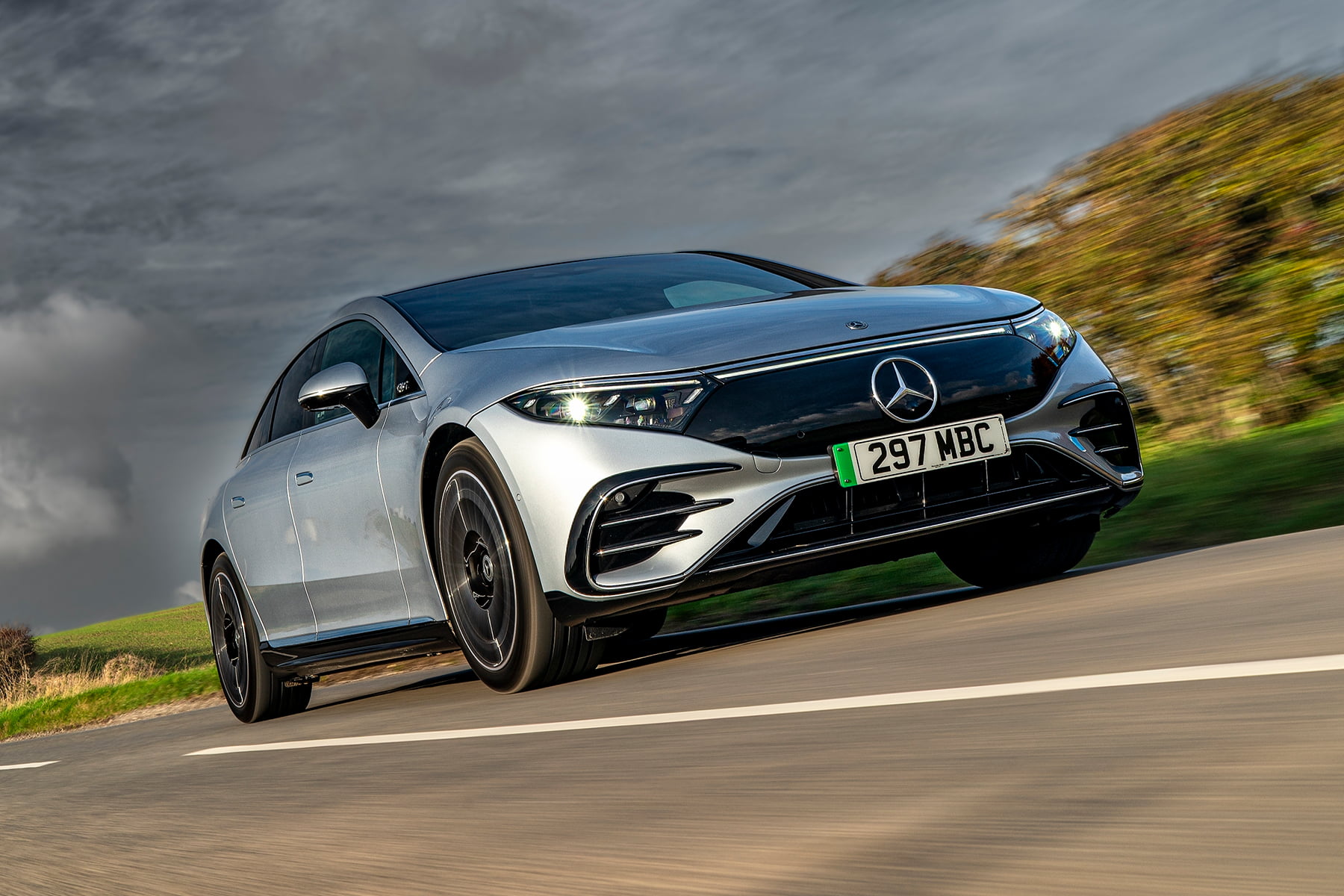
Based on all of the car reviews published by the UK motoring media over the last year, the highest-rated new car of 2021 is the Mercedes-Benz EQS.

The Car Expert’s Car of the Year 2021: Mercedes-Benz EQS

Up until now, Mercedes has offered up electric versions of existing models – the EQA, EQB, EQC and EQV all started life as petrol or diesel vehicles that had their internal combustion innards removed and replaced with electric motors and batteries. The EQS is different.

A dedicated EV rather than a converted petrol car, the EQS sets the scene for the next generation of the Mercedes EQ family. It’s an electric S-Class, but it’s not an electric version of a petrol S-Class.

One of the criticisms of electric cars over the last decade is that they are little more than ‘whitegoods on wheels’. Take away the noise, heat and vibration of an internal-combustion engine and you’re left with a soulless appliance that loses its magic.

Led by Tesla, the car industry answered those criticisms with stunning performance numbers – even humble family saloons can accelerate faster than a supercar thanks to the instantaneous torque of an electric motor. That certainly got attention, but it isn’t the whole answer.

The Mercedes-Benz EQS leans into the other characteristics of an electric car. It’s smooth, thanks to a lack of vibration from a traditional engine, gearbox and driveshaft. It’s also eerily quiet. Both are excellent characteristics for a luxury saloon, and critics have highlighted how the EQS uses them to very good effect.

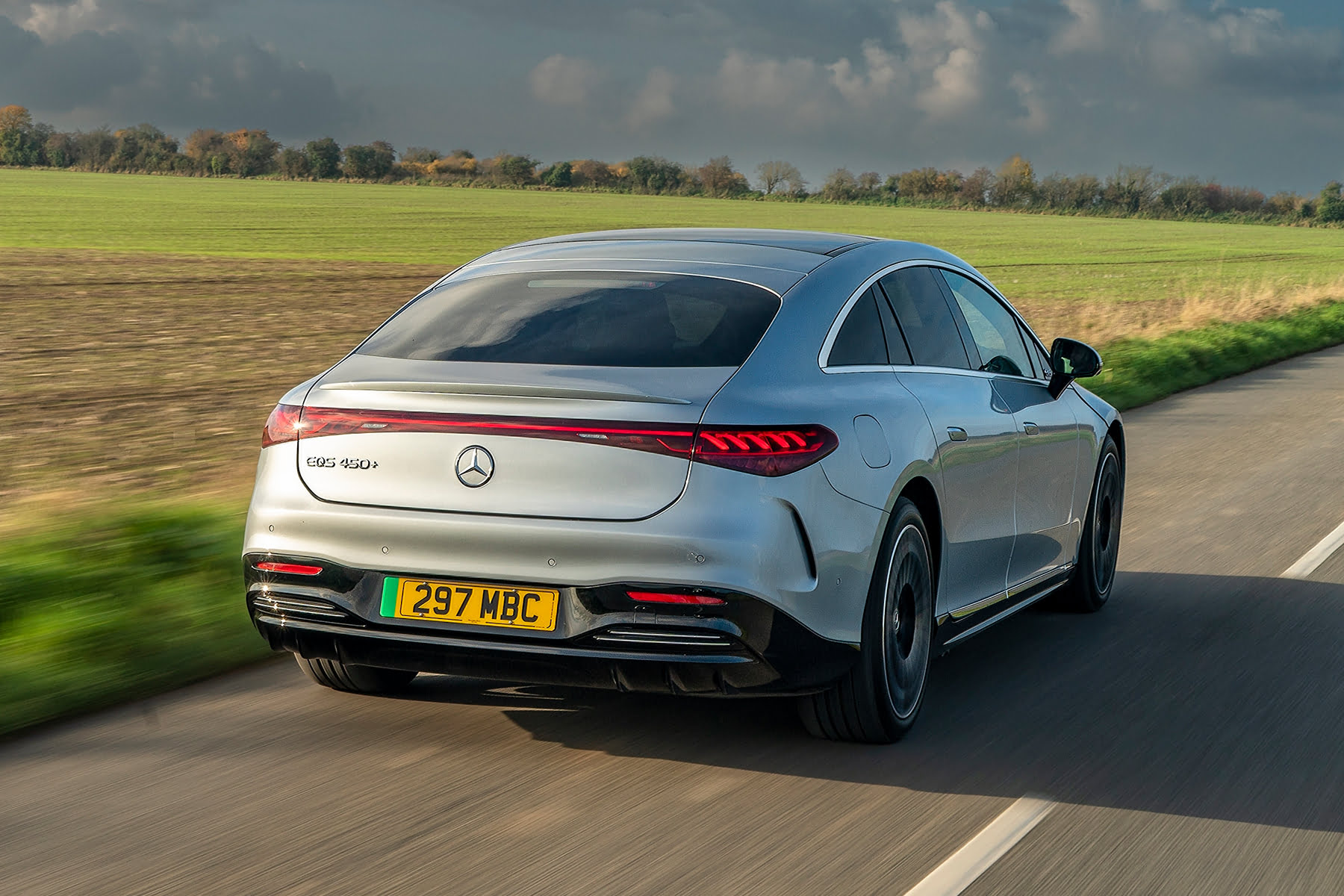
Both the exterior and interior design have a slightly futuristic style, like you’d expect a car of the 2030s to look, rather than the 2020s. It’s familiar yet different. The exterior is smooth from nose to tail, and less boxy than a traditional Mercedes saloon. It is distinctive yet still functional, with none of the attention-seeking controversy of a BMW iX or Tesla Cybertruck.

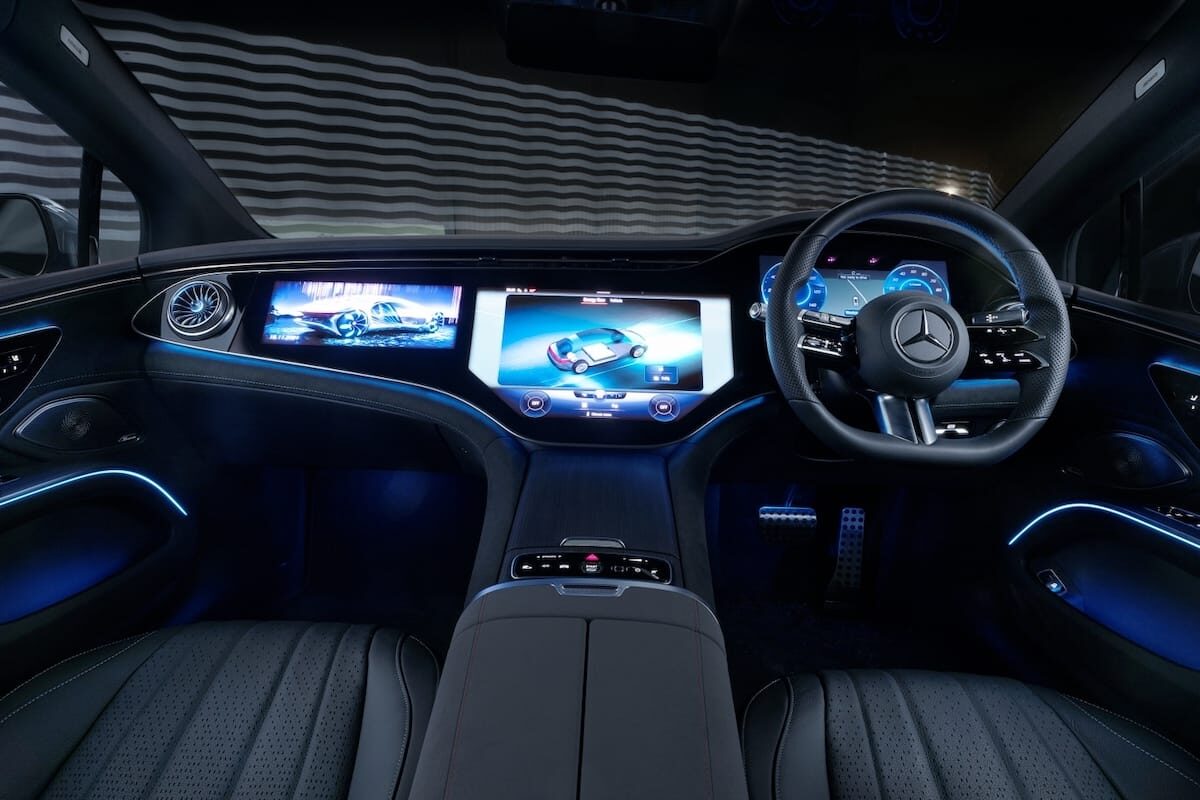
Inside, the company has made a big noise about screens, especially the optional £8K ‘hyperscreen’ that essentially turns the entire dashboard into an almost full-width touchscreen. Without the hyperscreen it looks similar to the new S-Class but with slightly sleeker touches throughout. As you’d hope for a £100K saloon.

The EQS is the new starting point for Mercedes-Benz in electric motoring. Its influence will be directly visible in next year’s EQE saloon – the electric equivalent of the E-Class – and then onwards throughout the rest of the Mercedes range in coming years. And, like the S-Class has shown for generations, setting the bar high has benefits that flow across the entire car industry.

Best convertibles of 2021

It’s one of the great motoring ironies that the UK has such rubbish weather, yet more convertibles are sold here per capita than anywhere else in the world.

Open-top motoring is available right throughout the new car market, from canvas roll-tops on city cars like the Fiat 500 or Citroën C1, through to the most expensive supercar or luxury car models like the Ferrari SF90 Stradale or Rolls-Royce Dawn.

Engineering a great convertible is difficult. Removing the roof from an existing car automatically makes a car less rigid, which affects performance, comfort and potentially safety. The best convertibles have clever ways to address all of these points, delivering a fantastic top-down driving experience without compromise.

The best convertibles of 2021

Best convertibles of 2021 – BMW 4 Series

Best new model : 
BMW 4 Series

Best convertibles of 2021 – Mazda MX-5

Class champion:
Mazda MX-5

Our two winners reflect two different approaches to open-top driving enjoyment. The best new model is the BMW 4 Series Convertible, a four-seater model based on the 3 Series saloon. Meanwhile, the Mazda MX-5 is our class champion, a focused roadster that dispenses with most practicalities in favour of driving purity.

Best new model: BMW 4 Series (80%)

Best new convertible of 2021 – BMW 4 Series

TCE Expert Rating: 80%

Euro NCAP safety rating: 5 stars

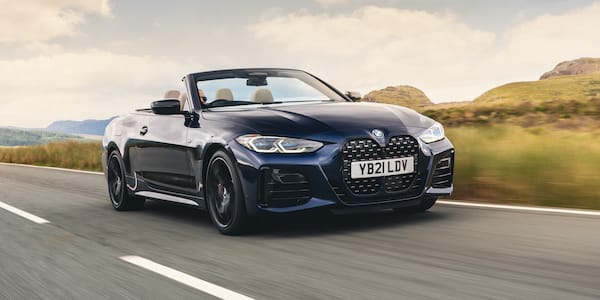
BMW has built convertible versions of its 3 Series for generations and, although the name changed to 4 Series in the last decade, the formula has remained the same. The 4 Series convertible and coupé give up some of their rear seat and boot space in exchange for sleeker styling and – in the case of the convertible – the ability to drop the top whenever the mood or the weather suit.

Critics have praised the all-round performance of the new 4 Series Convertible, in particular the way that it blends driving enjoyment with relaxed comfort that perfectly suits this type of vehicle. As usual, the styling is bizarrely challenging but that’s to be expected from BMW these days. The interior is well built and appointed, with user-friendly controls, and is a highly comfortable place with the roof either up or down.

We don’t have an Expert Rating page on the 4 Series Convertible yet, but it will be published shortly so check back soon.

Class champion: Mazda MX-5 (86%)

Mazda MX-5 A00th Anniversary Edition

TCE Expert Rating: 86%

Euro NCAP safety rating: 4 stars

The current Maxda MX-5 has been around since 2015, yet it still earns top marks every year for its minimalist approach to driving purity.

Over the last 30 years, four generations of MX-5 have seen off pretty much every challenge from other car companies. The latest model is possibly the best of all, and has been showered with awards from all around the world.

The MX-5 has never been about horsepower or luxuries, and on paper it looks to be comprehensively outgunned by almost any hot hatch in a similar price bracket. But no front-wheel-drive hatchback can match the perfectly balanced driving experience of a small, rear-wheel-drive roadster. It’s about as much fun as you can have within the national speed limit.

Notes on eligibility

To be eligible for our Best New Model or Class Champion titles, there are a couple of requirements in addition to having a top Expert Rating score.

Firstly, the Best New Model must have been launched in the UK between 1 December 2020 and 1 December 2021. That means cars registered and on the road, not just available to order for deliveries starting sometime in 2022.

Secondly, a car must have a current Euro NCAP safety rating of either four or five stars. If a car scores three stars or less, we can’t in good conscience give it an award for being best in class. If a new model has not been tested by Euro NCAP by December 2021, it will not be eligible but we will consider it next year if it has been tested.

Best performance cars of 2021

This is a specialist niche in the new car market, with driving experience taking priority over pretty much everything else.

We’re looking at high-performance versions of ordinary cars, rather than dedicated sports cars that are almost never put through Euro NCAP safety testing.

This is a category that looks set to be transformed in coming years, from today’s petrol-dominated market to a new generation of electric performance cars. We see the first signs of this in our award winners below, with a lot more to come for 2022 and beyond.

Our awards recognise both the best new models to have been launched over the last 12 months, but also the best overall cars in each category – because newer doesn’t always mean better, as you can see below.

The best performance cars of 2021

Best performance cars of 2021 – BMW M3

Best new model: 
BMW M3

Best performance cars of 2021 – Alfa Romeo Giulia Quadrifoglio

Class champion, overall:
Alfa Romeo Giulia Quadrifoglio

Best large cars of 2021 – Porsche Taycan

Class champion, electric:
Porsche Taycan

High-performance vehicles tend to score highly with motoring journalists, but all three of these cars are outstanding.

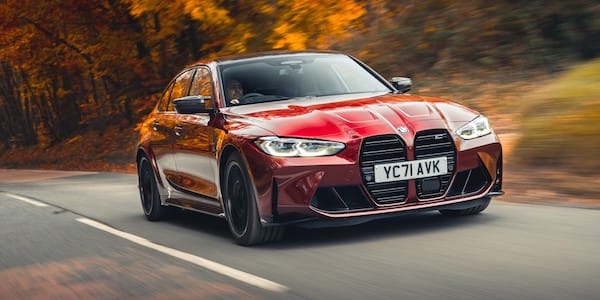
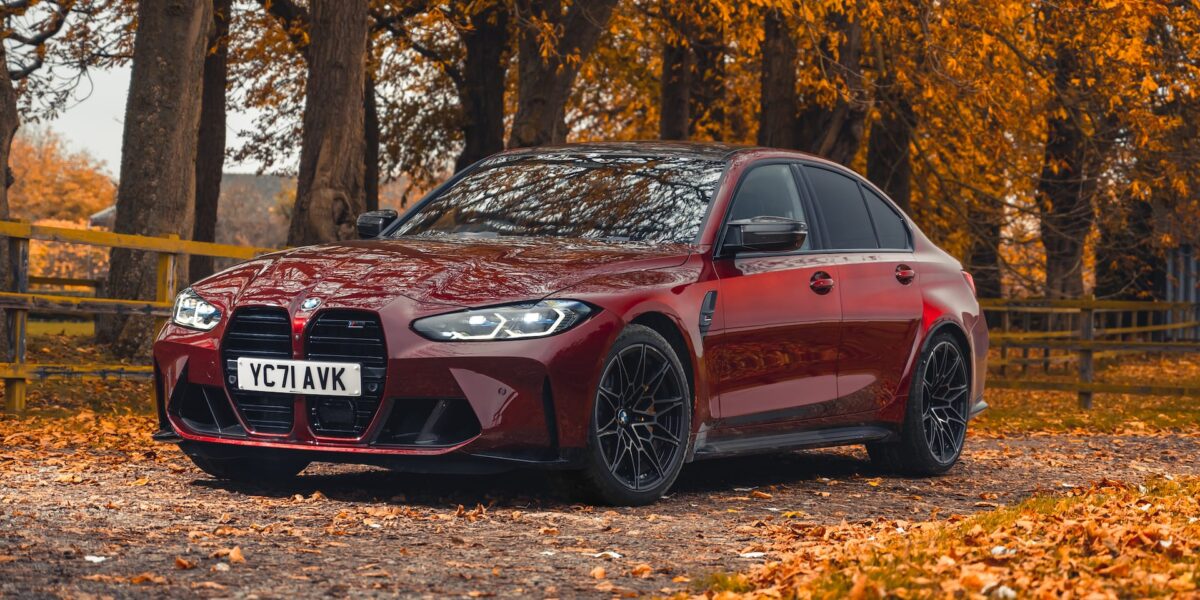
The BMW M3 saloon edges its coupé M4 sibling as the best new entry this year, although both offer titanic performance and a very similar driving experience. However, the critics’ favourite fast four-door is the Alfa Romeo Giulia Quadrifoglio, which ends the year with an outstanding Expert Rating score of 89%.

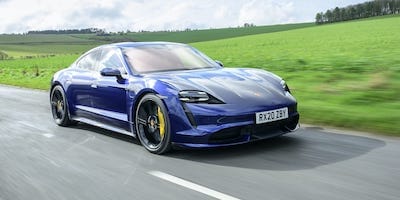
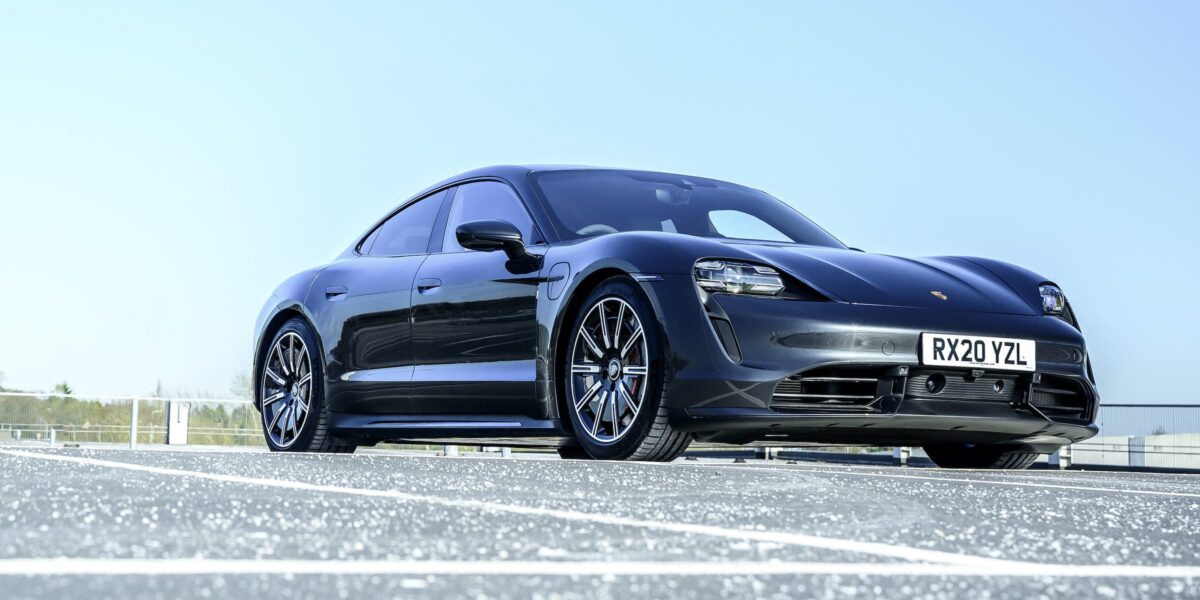
Our large car class champion is also represented here as the best electric performance car on offer. The Porsche Taycan, especially in Turbo S guise, highlights all the performance characteristics of electric motors, yet retains great driving appeal.

Best new model: BMW M3 (87%)

Best new performance car for 2021 – BMW M3

TCE Expert Rating: 87%

Euro NCAP safety rating: 5 stars

Any car carrying an M3 badge has an enormous level of expectation, built over generations of scintillating compact performance cars. Although the latest generation model has evolved further than ever from the original racing homologation special of the 1980s, the new M3 more than lives up to the name.

Here in the UK, we only get the top-spec M3 Competition model, which is powered by a 3.0-litre, twin-turbo, six-cylinder petrol engine that produces 510hp. It is available with either rear- or all-wheel drive.

Critics have lavished praise on the driving characteristics of both the M3 and M4, although – as with pretty much any new BMW – the styling is a divisive point.

We haven’t built an Expert Rating page for the new M3 yet, although we do have all of the data. Keep checking back for the latest updates.

Class champion, overall: Alfa Romeo Giulia Quadrifoglio (89%)

Alfa Romeo Giulia Quadrifoglio (2016 onwards) – Expert Rating

TCE Expert Rating: 89%

Euro NCAP safety rating: 5 stars

Critics have almost run out of superlatives to describe the Alfa Romeo Giulia Quadrifoglio over the last five years. Launched back in 2016 and still a firm favourite, the Quadrifoglio – along with its even higher-performance versions, the GTA and GTAm – represents the last of its kind for one of the world’s oldest car companies.

Under its new owner, Stellantis, Alfa Romeo will become an electric-only brand in a few years, although the company has pledged a new performance EV as a spiritual successor to the Giulia. So if you want an Alfa super saloon with a petrol V6 twin-turbo engine developed by Ferrari, this is your last chance.

Class champion, electric: Porsche Taycan (88%)

Best large cars 2021 – Porsche Taycan

TCE Expert Rating: 88%

Euro NCAP safety rating: 5 stars

Even in its most basic form, the Porsche Taycan qualifies as a performance car. But in top-spec Turbo S it offers 760hp – a number that puts it into genuine supercar territory.

Car enthusiasts have long feared that EVs will mean the death of sports cars, super saloons and hot hatches. But the Taycan, along with its closely related cousin, the Audi e-tron GT, have shown that this doesn’t have to be the case. Sure, things will certainly be different. But the future is much brighter than the doomsdayers would have you believe.

The Taycan offers superb driving dynamics for enthusiasts, combined with comfort and practicality for more mundane tasks like urban commuting. Obviously this is a £100K+ machine, but the lessons Porsche has been learning with the Taycan will benefit the next generation of Volkswagen Golf GTIs and similar vehicles.

Notes on eligibility

To be eligible for our Best New Model or Class Champion titles, there are a couple of requirements in addition to having a top Expert Rating score.

Firstly, the Best New Model must have been launched in the UK between 1 December 2020 and 1 December 2021. That means cars registered and on the road, not just available to order for deliveries starting sometime in 2022.

Secondly, a car must have a current Euro NCAP safety rating of either four or five stars. If a car scores three stars or less, we can’t in good conscience give it an award for being best in class. If a new model has not been tested by Euro NCAP by December 2021, it will not be eligible but we will consider it next year if it has been tested.

Our Euro NCAP requirement did not affect the performance car awards, as all of the top-scoring models have a full five-star safety rating.

Best hot hatches of 2021

The hot hatch is a UK and European institution, with generations of pocket rockets that cram genuine sports car performance into a shopping trolley hatchback body.

But the segment has shifted over time, with fewer budget hotches providing cheap thrills and minimal frills. Instead, we have a growing number of more expensive, more outlandish, more *everything* models.

We are in the final years of the high performance petrol hot hatch, with electrification yet to really make an impact here. It is inevitably coming as we edge closer to the 2030 cut-off for petrol power, but this will be one of the last categories to fall.

Our awards recognise both the best new models to have been launched over the last 12 months, but also the best overall cars in each category – because newer doesn’t always mean better.

The best hot hatches of 2021

Best hot hatches of 2021 – Audi RS 3

Best new model: 
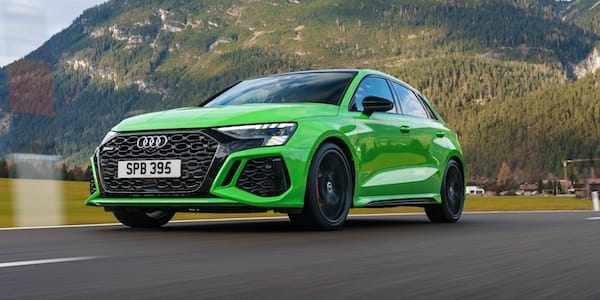
Audi RS 3

Best hot hatches of 2021 – Honda Civic Type R

Class champion:
Honda Civic Type R

This is the only category in our 2021 awards where neither of the winning cars was the top scorer according to our Expert Rating Index.

The top-rated new hot hatch was the impressive Hyundai i20 N, but none of the new i20 range has yet been put through the Euro NCAP safety testing programme so it is ineligible.

The same applies to the overall Class Champion results. The Toyota GR Yaris has had critics in raptures ever since it arrived, but it has been modified dramatically from the original Yaris Hybrid and does not share that model’s safety rating.

Best new model: Audi RS 3 (74%)

Audi RS 3 (2021 onwards) – Expert Rating

TCE Expert Rating: 74%

Euro NCAP safety rating: 5 stars

The Audi RS 3 isn’t so much a hot hatch as a rather practical junior supercar. With 400hp driving through all four wheels, there are not many faster ways to get from point A to point B in any conditions.

Despite its weapons-grade performance, the RS 3 can be as perfectly docile and comfortable as any regular A3 when you’re not trying to set lap records on a track day.

The RS 3 wasn’t the highest-scoring new entry on the hot hatch section of our Expert Rating Index, however. That honour fell to the new Hyundai i20 N, which currently holds an impressive score of 85%. Unfortunately, the i20 range has not been assessed by Euro NCAP as yet, so the i20 N is not eligible.

Class champion: Honda Civic Type R (86%)

Honda Civic Type R (2017 onwards) – Expert Rating

TCE Expert Rating: 86%

Euro NCAP safety rating: 5 stars

The Honda Civic Type R has been a legendary hot hatch for generations, and the current model is probably one of the best cars to wear Honda’s famed ‘Red H’ badge. It has been highly praised for its driving dynamics, both in terms of performance as well as comfort, which are almost universally regarded as best-in-class.

This generation of the Civic Type R ended production in 2021, with an all-new Civic due to be released in 2022. An all-new Type R is expected, so we may see vying for contention here next year.

There was another hot hatch that scored even higher on our Expert Rating Index, however, which was the Toyota GR Yaris. Originally intended as a rally homologation special, the limited production Toyota has won almost every award on offer over the last year. However, it doesn’t have a Euro NCAP safety rating so it’s not eligible for ours.

Notes on eligibility

To be eligible for our Best New Model or Class Champion titles, there are a couple of requirements in addition to having a top Expert Rating score.

Firstly, the Best New Model must have been launched in the UK between 1 December 2020 and 1 December 2021. That means cars registered and on the road, not just available to order for deliveries starting sometime in 2022.

Secondly, a car must have a current Euro NCAP safety rating of either four or five stars. If a car scores three stars or less, we can’t in good conscience give it an award for being best in class. If a new model has not been tested by Euro NCAP by December 2021, it will not be eligible but we will consider it next year if it has been tested.

The Euro NCAP requirement affected both awards in the hot hatch section as both the highest-scoring contenders were ineligible, although for different reasons. The Hyundai i20 N is a new model and will probably receive a safety rating in coming months, while the Toyota GR Yaris is a low-volume model that is unlikely to ever be tested.

Best large SUVs of 2021

While the unstoppable rise in SUV sales has extended to large SUVs, this is one sector that has grown in a rather different way to its smaller siblings. In addition to budget and mainstream models, there has been a huge rush from luxury car manufacturers to push out large and expensive SUVs to cash in on the craze.

In many ways these cars are the last of the dinosaurs, oblivious to the meteor that will obliterate them from the planet. Hulking great 4x4s powered by enormous petrol or diesel engines will soon be extinct, and the first examples of the next generation show that the future will be quite different. Our two award winners for 2021 reflect this changing of the guard.

The best large SUVs of 2021

Best new model + Class champion, electric: 
BMW iX

Best large SUVs of 2021 – Land Rover Defender

Class champion, overall:
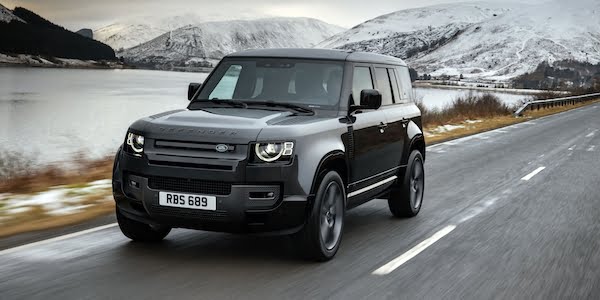
Land Rover Defender

The BMW iX arrived late in 2021, but went straight to the top of the list for best large SUVs launched this year. It also ends the year as Class Champion for large electric SUVs, comfortably eclipsing the Audi e-tron and Tesla Model X.

The top-ranked large SUV overall, however, is the Land Rover Defender, which has received plenty of praise since it was first launched in 2019.

Best new model + Class champion, electric: BMW iX (77%)

BMW iX - the best new large SUV of 2021 | The Car Expert

TCE Expert Rating: 77%

Euro NCAP safety rating: 5 stars

OK, let’s get the obvious out of the way first. The BMW iX is not a pretty car. In fact, it’s hard to work out which exact part of the overall design is the worst bit, but it’s probably either the enormous fake grille or the bizarre wheel arches.

Fortunately, the iX is a lot better when you don’t actually have to stand looking at it. Critics have praised the quality of engineering beneath that curiously shaped bodywork, awarding it high marks for the way it drives and the quality of its interior.

Battery range is good, especially in the (expensive) top-spec xDrive50 version, and performance is strong. The in-car tech all works well and is generally user-friendly. And as the old saying goes, when you’re sitting inside it, you can’t see the outside…

Class champion, overall: Land Rover Defender (83%)

Land Rover Defender (2020 onwards) – Expert Rating

TCE Expert Rating: 83%

Euro NCAP safety rating: 5 stars

The all-new, all-electric BMW iX is not, however, the highest-ranked large SUV on the market. From the slightly futuristic BMW, we jump back to a model that trades on the past. The Land Rover Defender may be trying to channel Britain’s love for the clunky old Land Rovers of yore, but this is a thoroughly modern large 4×4.

Available in two lengths (although the longer 100 model is far more sensible and practical) and a range of engines that cover petrol, diesel and plug-in hybrid choices, the Defender has been widely praised ever since it was launched back in 2019.

The Defender is a polished all-rounder that combines outstanding off-road ability with smooth on-road performance and understated luxury. It may be one of the last of the dinosaurs – especially if you pick the petrol V8 version – but it’s certainly an enjoyable way to drive into extinction.

Notes on eligibility

To be eligible for our Best New Model or Class Champion titles, there are a couple of requirements in addition to having a top Expert Rating score.

Firstly, the Best New Model must have been launched in the UK between 1 December 2020 and 1 December 2021. That means cars registered and on the road, not just available to order for deliveries starting sometime in 2022.

Secondly, a car must have a current Euro NCAP safety rating of either four or five stars. If a car scores three stars or less, we can’t in good conscience give it an award for being best in class. If a new model has not been tested by Euro NCAP by December 2021, it will not be eligible but we will consider it next year if it has been tested.

Our Euro NCAP requirement did not affect the large SUV awards, as both of the top-scoring models have a full five-star safety rating.

Best medium SUVs of 2021

The Medium SUVs segment is essentially the new family car category, with the “Mondeo Man” of yesteryear having morphed into “Medium SUV man” today.

It’s comfortably the largest of the categories we currently track in our industry-leading Expert Rating Index, with the highest number of car manufacturers represented and price points that stretch from budget to luxury.

Our awards recognise both the best new models to have been launched over the last 12 months, but also the best overall cars in each category – because newer doesn’t always mean better.

The best medium SUVs of 2021

Best medium SUVs of 2021 – Skoda Enyaq

Best new model + Class champion, overall: 
Skoda Enyaq

Best medium SUVs of 2021 – Volvo XC60

Class champion, petrol/diesel:
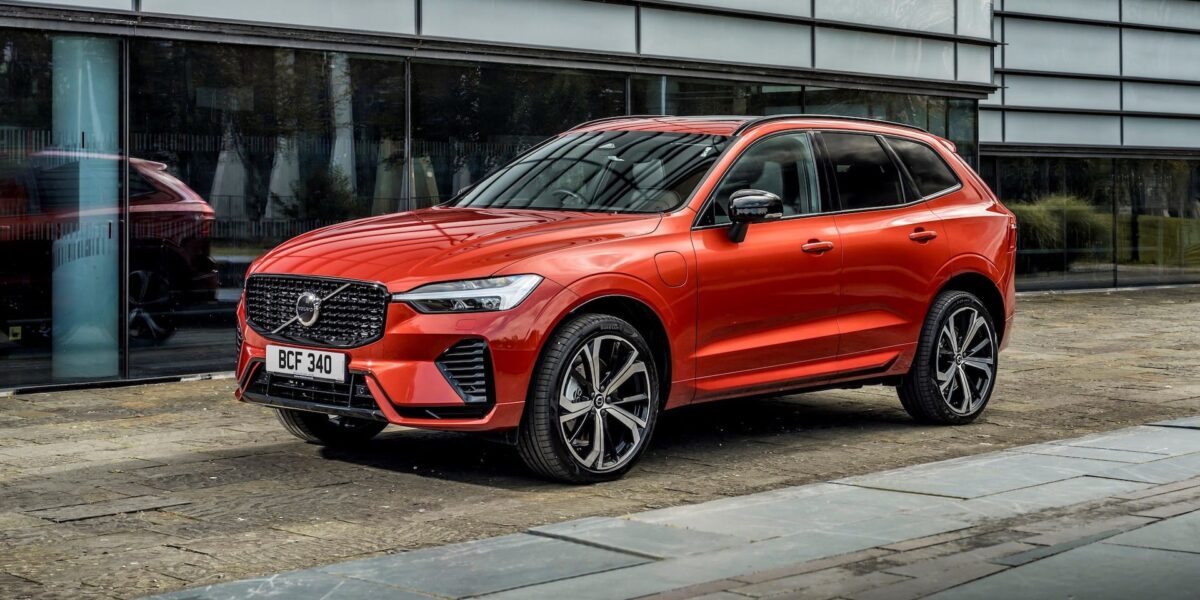
Volvo XC60

The Skoda Enyaq was the stand-out new model in the medium SUV category for 2021, ending the year as not only the best new model to arrive in the last 12 months but also the best medium SUV of all 50-odd cars in our database of more than 9,000 car reviews.

If you’re not ready to make the jump to an EV just yet, the Volvo XC60 is a fine petrol or diesel or plug-in hybrid alternative. It’s not the newest car in this class, but remains highly rated by critics. The Porsche Macan actually scores higher in our Expert Rating Index but it doesn’t have a current Euro NCAP safety rating (it expired last year), so it’s ineligible for an award.

Best new model + Class champion, overall: Skoda Enyaq (85%)

Skoda Enyaq (2021 onwards) – Expert Rating

TCE Expert Rating: 85%

Euro NCAP safety rating: 5 stars

The Skoda Enyaq arrived in the UK over the summer of 2021 and immediately created a good impression on critics. It might not be the prettiest thing on four wheels – that enormous black plastic fake grille is particularly obnoxious – so it’s fortunate that the substance makes up for any lack of style.

Like most Skodas, the Enyaq excels when it comes to both practicality and value for money. You get loads of space inside and the pricing is comparable to smaller electric SUVs from other brands. Yet you don’t have to sacrifice when it comes to quality or standard kit.

As well as being the top-ranked new model launched in 2021, the Skoda Enyaq also ends the year as the medium SUV Class Champion, edging out the previously class-leading Jaguar I-Pace by about half a percentage point.

Class champion, petrol/diesel: Volvo XC60 (76%)

Medium SUV Class Champion, combustion, of 2021 – Volvo XC60

TCE Expert Rating: 76%

Euro NCAP safety rating: 5 stars

The Volvo XC60 is certainly not the newest kid on the mid-size SUV block, but it was good to start with when it was launched back in 2017 and has been steadily tweaked over time to remain highly competitive in 2021.

As an all-round package, the XC60 is tough to beat. Whether you’re looking for petrol, diesel or plug-in hybrid power, it provides a comfortable driving experience and a genuinely lovely cabin.

Like the smaller XC40, the XC60 is almost certainly the last of its kind for petrol-powered Volvos, as the company shifts towards purely electric models in coming years. But if you’re not ready to make that jump just yet, the Volvo XC60 is everything a family-friendly medium SUV should be.

Notes on eligibility

To be eligible for our Best New Model or Class Champion titles, there are a couple of requirements in addition to having a top Expert Rating score.

Firstly, the Best New Model must have been launched in the UK between 1 December 2020 and 1 December 2021. That means cars registered and on the road, not just available to order for deliveries starting sometime in 2022.

Secondly, a car must have a current Euro NCAP safety rating of either four or five stars. If a car scores three stars or less, we can’t in good conscience give it an award for being best in class. If a new model has not been tested by Euro NCAP by December 2021, it will not be eligible but we will consider it next year if it has been tested.

The Euro NCAP requirement did have an impact on our Class Champion results for petrol and diesel models. The Porsche Macan outscored the Volvo XC60 by two points, but its Euro NCAP safety rating expired almost two years ago and is no longer valid, which rules it out of contention for our awards.

Best small SUVs of 2021

The small SUV sector is where the hottest action in the new car market is – a market that just a few years ago didn’t exist now sees a new model added to its ranks almost weekly.

The small SUV/crossover segment is one of the fastest-growing areas of the new car market, and is taking sales from both small and medium cars. Like the Small Cars segment, we are seeing rapid electrification in this segment, with a number of all-electric models on offer.

There were a number of new and updated models reaching UK roads in 2021, with models ranging from budget to premium.

Our awards recognise both the best new models to have been launched over the last 12 months, but also the best overall cars in each category – because newer doesn’t always mean better, as you can see below.

The best small SUVs of 2021

Best small SUVs of 2021 – Vauxhall Mokka-e

Best new model + Class champion, electric: 
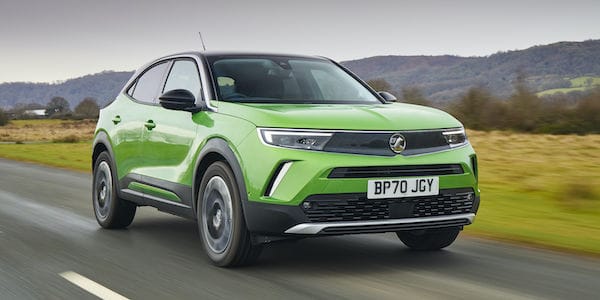
Vauxhall Mokka-e

Best small SUVs of 2021 – Volvo XC40

Class champion, overall:
Volvo XC40

The Vauxhall Mokka-e was the leading new model launched in 2021, and it’s specifically the electric model that is recognised here – its Expert Rating of 73% is five points better than the conventional petrol/diesel Mokka models. It also snares the title of Class Champion for small electric SUVs.

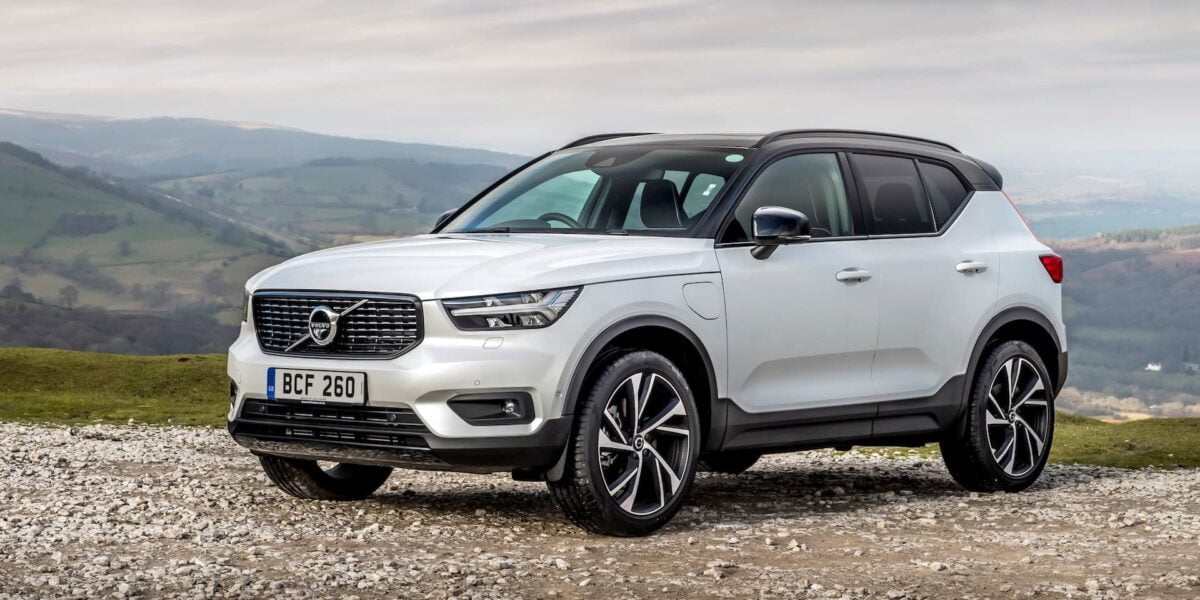
The Volvo XC40 is quite the opposite. The petrol and plug-in hybrid version is highly regarded by motoring journalists and holds the rank of overall Class Champion for small SUVs. But the electric XC40 Recharge doesn’t rate as highly, with an Expert Rating that’s a full 11 points behind the class-leading combustion versions.

Best new model + Class champion, electric: Vauxhall Mokka-e (73%)

Vauxhall Mokka-e – Best new small SUV of 2021

TCE Expert Rating: 73%

Euro NCAP safety rating: 4 stars

The new Vauxhall Mokka range debuted the company’s sharp new family face, which it calls ‘Vizor’. That style is gradually being rolled out across the rest of the range as models are facelifted and replaced. The Mokka doesn’t have quite as much space as some of its small SUV rivals, but it certainly looks sharp and modern.

The all-electric Mokka-e is the pick of the range, according to the critics. Its Expert Rating score of 73%, based on 19 different reviews, puts it five points clear of the regular Mokka models. With a smooth electric motor and great driving dynamics, it’s a great example of how an electric family car can be better to drive and live with than a petrol one.

When it comes to the Class Champion rankings, the Mokka-e is actually outscored by two other small electric SUVs, the Kia e-Niro (84%) and Hyundai Kona Electric (79%), but those cars do not have Euro NCAP safety ratings so they are ineligible according to our criteria. It’s important to note that electric versions of petrol cars do not automatically carry the same safety rating, as they can perform quite differently in a collision. As a result, separate tests are undertaken to provide dedicated ratings.

Class champion, overall: Volvo XC40 (79%)

Volvo XC40 – Small SUV Class Champion of 2021

TCE Expert Rating: 79%

Euro NCAP safety rating: 5 stars

The Volvo XC40 has been highly praised by motoring journalists since it arrived on the scene in 2018, with that praise extending to the plug-in hybrid model that joined the range a year or two later. The all-electric version hasn’t generated quite the same love from critics, so it doesn’t get to share in the title of Class Champion. Its scores may improve, however, as lower-priced models join the range in 2022.

The XC40 condenses all of the interior style and practicality from larger Volvos into a more compact package, with plenty of clever design flourishes inside and out. It will almost certainly be Volvo’s last-ever petrol SUV (diesel has already been dropped), but it’s a very good one.

Notes on eligibility

To be eligible for our Best New Model or Class Champion titles, there are a couple of requirements in addition to having a top Expert Rating score.

Firstly, the Best New Model must have been launched in the UK between 1 December 2020 and 1 December 2021. That means cars registered and on the road, not just available to order for deliveries starting sometime in 2022.

Secondly, a car must have a current Euro NCAP safety rating of either four or five stars. If a car scores three stars or less, we can’t in good conscience give it an award for being best in class. If a new model has not been tested by Euro NCAP by December 2021, it will not be eligible but we will consider it next year if it has been tested.

The Euro NCAP requirement tripped up a couple of otherwise excellent small electric SUVs. The Kia e-Niro and Hyundai Kona both carry higher Expert Ratings than the Vauxhall Mokka-e, but don’t have valid Euro NCAP safety ratings. Like the Mokka-e, the Kia and Hyundai are based on existing petrol SUVs, which both have valid Euro NCAP ratings, but the EV versions have not been tested to verify their safety scores.

Best large cars of 2021

The large car sector covers an enormous range of price tags – you’ll see a £30K Skoda Superb mixing with a £300K Rolls-Royce Phantom.

Alongside traditional saloons and estates, there are also sleeker liftbacks and ‘four-door coupé’ models trying to grab buyers’ interests as well.

Over the years, the sector has shifted more and more towards luxury car territory, as the famed ‘Mondeo Man’ of the 1990s has largely shifted to an SUV or a smaller but more premium saloon.

Electrification is working its way into the market, with a couple of key new EV contenders entering the market in 2021. Plug-in hybrids tend to be more popular for manufacturers in this segment at the moment – although this will shift in the next couple of years.

Our awards recognise both the best new models to have been launched over the last 12 months, but also the best overall cars in each category – because newer doesn’t always mean better, as you can see below.

The best large cars of 2021

Best large cars 2021 – Mercedes-Benz EQS

Best new model: 
Mercedes-Benz EQS

Class champion, overall:
Porsche Taycan

Best large cars 2021 – BMW 5 Series

Class champion, petrol/diesel:
BMW 5 Series

The Mercedes-Benz EQS is the company’s electric alternative to the traditional S-Class saloon, and has an identical Expert Rating score. However, it still falls a couple of points short of the critics’ favourite large car, the performance-oriented Porsche Taycan.

If you’re looking for a more traditional petrol, diesel or plug-in hybrid option, the BMW 5 Series is an outstanding car that continues to show the way to its executive saloon rivals.

Best new model: Mercedes-Benz EQS (86%)

TCE Expert Rating: 86%

Euro NCAP safety rating: 5 stars

The all-new Mercedes-Benz EQS arrived in the UK in late 2021 and is a technological tour de force. Similar in size and price to the traditional S-Class flagship, the EQS shows just how suited an EV can be to luxury motoring.

Its smooth, slightly futuristic styling is a contrast to the more conventional, boxy shapes of Mercedes saloons. Combined with its high-tech interior, including an optional £8K ‘hyperscreen’ dashboard that fills the entire dashboard width with touchscreens, the EQS sets the stage for the next generation of Mercedes-Benz electric models.

The EQS prioritises comfort over performance, unlike other large electric saloons from Porsche, Audi and Tesla, and is a fine benchmark for the rest of the car industry to chase over the next few years.

Class champion, overall: Porsche Taycan (88%)

Best large cars 2021 – Porsche Taycan

TCE Expert Rating: 88%

Euro NCAP safety rating: 5 stars

Although the Mercedes EQS is an impressive machine, it hasn’t quite managed to overtake the Porsche Taycan as the critics’ favourite electric saloon. An Expert Rating of 88% is an impressive result, which earns the Taycan the title of Class Champion for large cars in 2021.

On paper, you might struggle to rate the Taycan over the Tesla Model S, which is significantly cheaper, slightly quicker and has a better battery range. But the Porsche is universally admired for offering better build quality and a far superior driving experience. An estate version, called Sport Turismo, will join the range in 2022.

Incidentally, the Porsche Taycan isn’t the highest-rated large car in our Expert Rating Index – that falls to the Rolls-Royce Phantom with an incredible score of 92%. However, the Phantom (unsurprisingly) doesn’t have a Euro NCAP safety rating, so it’s not eligible.

Class champion, petrol/diesel: BMW 5 Series (87%)

BMW 5 Series (2020 onwards) – Expert Rating

TCE Expert Rating: 87%

Euro NCAP safety rating: 5 stars

The BMW 5 Series has been the benchmark for executive saloons for generations, and the current model is as good as any throughout the model’s storied history. For a conventional petrol/diesel/plug-in hybrid saloon with a relatively normal price tag, its Expert Rating score of 87% is outstanding.

Regarded as an accomplished all-rounder, the 5 Series is enjoyable to drive when you’re in the mood and comfortable when you’re merely commuting. The saloon is spacious for passengers, while the Touring estate version adds a large boot for practicality that is leagues ahead of most SUVs.

Notes on eligibility

To be eligible for our Best New Model or Class Champion titles, there are a couple of requirements in addition to having a top Expert Rating score.

Firstly, the Best New Model must have been launched in the UK between 1 December 2020 and 1 December 2021. That means cars registered and on the road, not just available to order for deliveries starting sometime in 2022.

Secondly, a car must have a current Euro NCAP safety rating of either four or five stars. If a car scores three stars or less, we can’t in good conscience give it an award for being best in class. If a new model has not been tested by Euro NCAP by December 2021, it will not be eligible but we will consider it next year if it has been tested.

A lack of Euro NCAP rating has affected our Class Champion results for large cars. The highest-ranked car is the Rolls-Royce Phantom, which scores an incredible 92% on our Expert Rating Index. But, unsurprisingly, the Phantom has not been subjected to Euro NCAP crash testing and is therefore ineligible.

Best medium cars of 2021

The variety of medium-sized cars remains huge and, despite the growing popularity of SUVs, this class is more complex than ever.

Several brands have more than one vehicle in this segment, with a variety of body styles like saloons, hatchbacks, estates and liftbacks. There is also plenty of choice when it comes to power, with petrol, diesel, hybrid and electric vehicles all available.

Electric power is starting to take over in terms of our Expert Rating Index rankings for this segment, with four of the top five cars being EVs. BMW is the leading light for combustion engines, with both the 3 Series and 1 Series achieving competitive scores against the latest generation of electric cars.

Our awards recognise both the best new models to have been launched over the last 12 months, but also the best overall cars in each category – because newer doesn’t always mean better, as you can see below.

The best medium cars of 2021

Best medium cars 2021 – Hyundai Ioniq 5

Best new model + Class champion, overall: 
Hyundai Ioniq 5

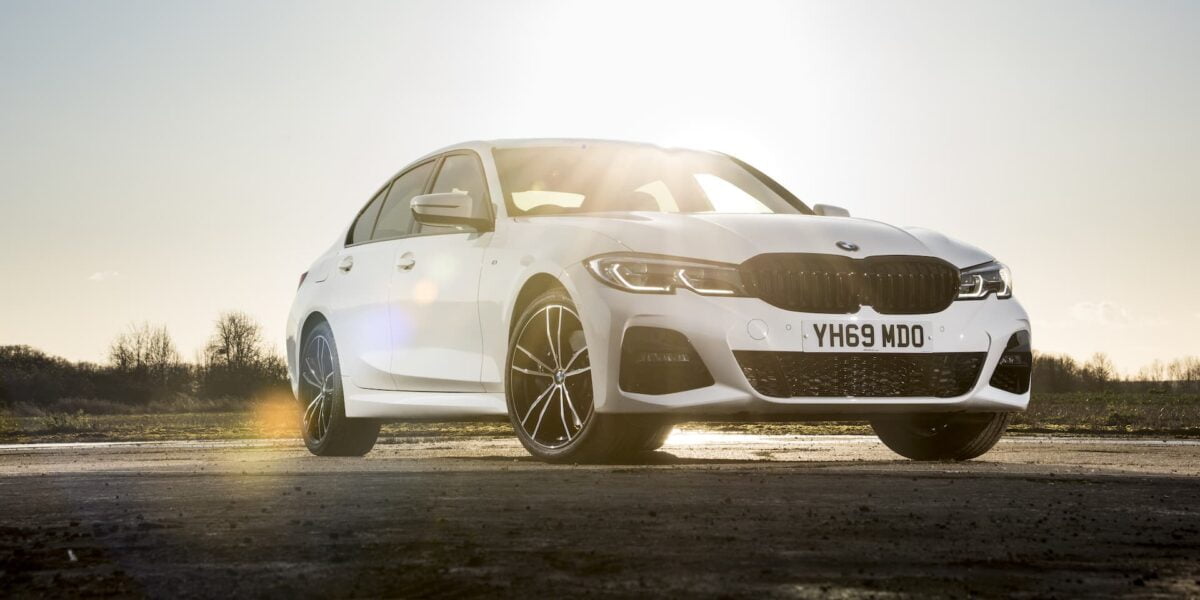
Best medium cars 2021 – BMW 3 Series

Class champion, petrol/diesel:
BMW 3 Series

This was a close fight. For a very long time, the BMW 3 Series has been the benchmark for medium-sized cars. But, according to our industry-leading Expert Rating Index, the all-new Hyundai Ioniq has pipped it to the post by 0.25%.

Both of these are excellent cars, with high praise from critics.

Best new model + Class champion: Hyundai Ioniq 5 (85%)

Hyundai Ioniq 5 (2021 onwards) – Expert Rating

TCE Expert Rating: 85%

Euro NCAP safety rating: 5 stars

The new Hyundai Ioniq 5 has been a bit of a sensation since even before it arrived in the UK over summer. With its retro-futuristic design, it has brought a welcome breath of fresh air into car styling and helped to recast opinions on electric cars being boring whitegoods on wheels.

The refreshing style extends inside the cabin, which is also spacious and practical. Further bolstering the practicality angle are the Ioniq 5’s competitive battery range and compatibility with ultra-fast charging points. There are not too many of these around the UK as of yet, but there will be in coming years and that will improve both convenience and resale value for existing owners.

Ride quality isn’t a high point on large wheels, and some critics have noted a lack of refinement compared to some premium-badged rivals, but overall the Hyundai Ioniq 5 is exactly what we need from new electric cars. An Expert Rating score of 85% is exceptionally good, and we can’t wait to see the next new EVs from Hyundai.

Class champion, petrol/diesel: BMW 3 Series (85%)

BMW 3 Series (2019 onwards) – Expert Rating

TCE Expert Rating: 85%

Euro NCAP safety rating: 5 stars

It’s a testament to how good the Hyundai is that it managed to outscore one of the critics’ favourite models for generations. The BMW 3 Series has long been the dynamic benchmark for small-to-medium saloons, and the latest edition adds additional refinement to match.

The 3 Series holds an Expert Rating of just under 85% as of December 2021, and is only a quarter of a point behind the Ioniq 5. Its score covers petrol, diesel and plug-in hybrid versions in both saloon and Touring (estate) body styles, but doesn’t include the M3 super saloon.

If you’re looking for petrol or diesel alternatives to the BMW 3 Series, the new Mercedes-Benz C-Class is several points behind, while the rest of the field is even further back.

Notes on eligibility

To be eligible for our Best New Model or Class Champion titles, there are a couple of requirements in addition to having a top Expert Rating score.

Firstly, the Best New Model must have been launched in the UK between 1 December 2020 and 1 December 2021. That means cars registered and on the road, not just available to order for deliveries starting sometime in 2022.

Secondly, a car must have a current Euro NCAP safety rating of either four or five stars. If a car scores three stars or less, we can’t in good conscience give it an award for being best in class. If a new model has not been tested by Euro NCAP by December 2021, it will not be eligible but we will consider it next year if it has been tested.

Neither of these conditions ended up affecting the results for medium cars, but there are a couple of highly rated cars that are awaiting Euro NCAP testing – namely, the Kia EV6 and Mercedes-Benz C-Class – and therefore would not have been eligible if they’d outscored our winners.

Best small cars of 2021

Despite the growing popularity of SUVs and crossovers, UK car buyers still choose more small hatchbacks than any other type of car.

Small cars can be divided into two categories, known as city cars and superminis. City cars are smaller and (usually) cheaper, and will often be three-door hatchbacks. Superminis are larger and are usually five-door hatchbacks.

This year saw some key new arrivals, such as the Dacia Sandero, Fiat 500e and Skoda Fabia, plus facelifts and updates for several other models.

Electrification is starting to really take off in this sector, with several EV choices now available. However, you will only find a few hybrid models and no plug-in hybrids at all. The majority are still powered by familiar petrol engines, although some have mild hybrid assistance. Diesels have almost completely vanished and only make up a fraction of sales.

Our awards recognise both the best new models to have been launched over the last 12 months, but also the best overall cars in each category – because newest doesn’t always mean best, as you can see below.

The best small cars of 2021

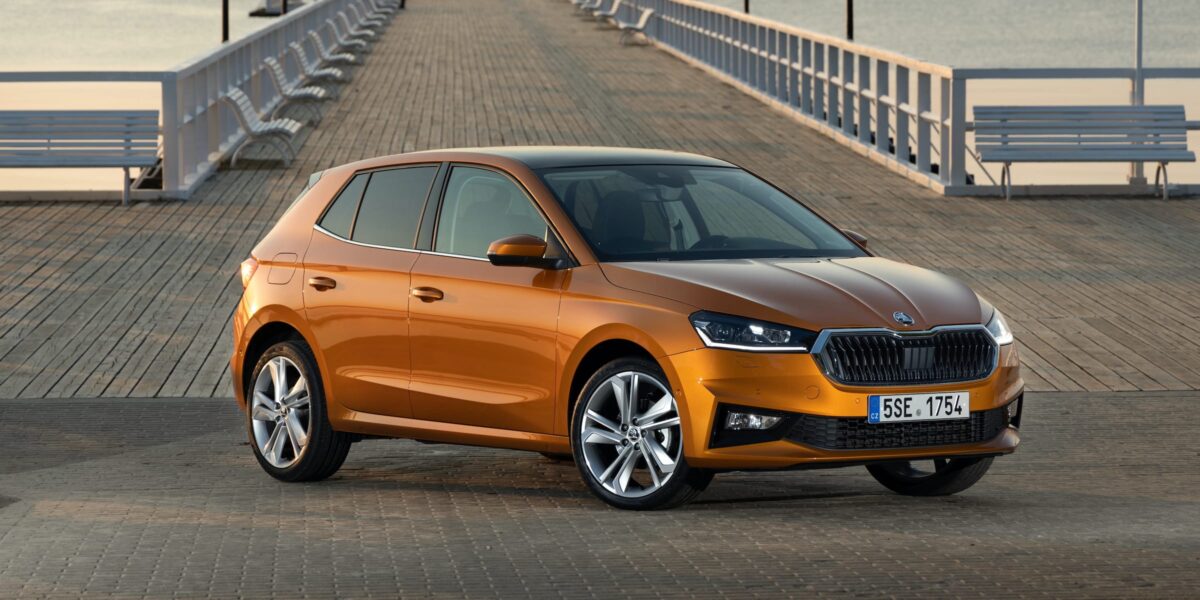
Best small cars 2021 – Skoda Fabia

Best new model: 
Skoda Fabia

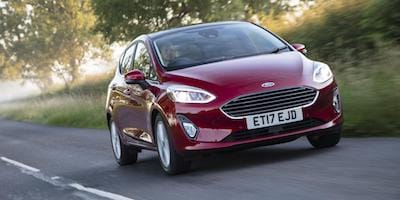
Best small cars 2021 – Ford Fiesta

Class champion, overall:
Ford Fiesta

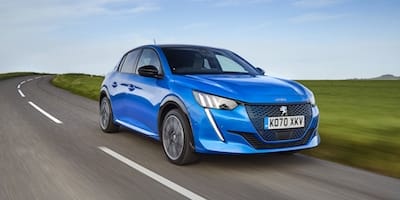
Best small cars 2021 – Peugeot e-208

Class champion, electric:
Peugeot e-208

The Skoda Fabia made a splash when it arrived in late 2021, and is the top-ranked new model to join the small car ranks this year with an Expert Rating of 76%. It wasn’t, however, enough to topple the best in class. The Ford Fiesta may have been around since 2017, but it still ended the year as top dog in the small car class. It has an Expert Rating of just over 78% based on 46 reviews in our database.

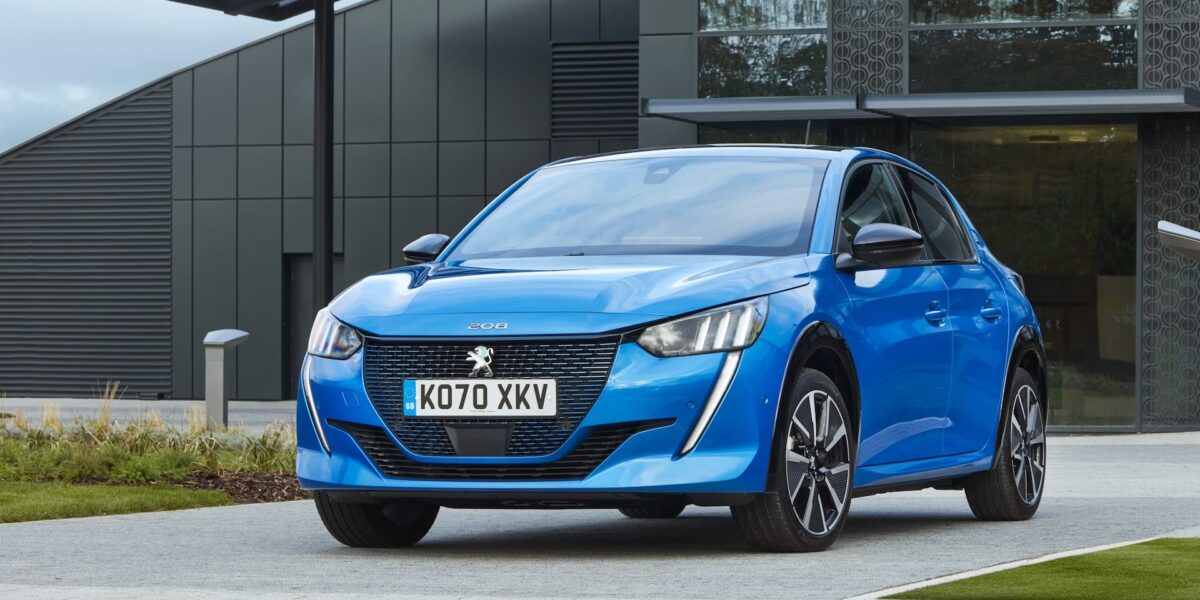
If you are looking to make the switch to electric power, the leading light is the Peugeot e-208, which critics rate as better than its petrol equivalent. It’s into its third year on sale now, and has an Expert Rating of 86% from 20 reviews.

Best new model: Skoda Fabia (76%)

Skoda Fabia (2021 onwards) – Expert Rating

TCE Expert Rating: 76%

Euro NCAP safety rating: 5 stars

The all-new Skoda Fabia arrived in the UK in late 2021 and has already been warmly received by critics. It’s a more sophisticated, more spacious, more technologically advanced Fabia than previous models but still retains traditional Skoda traits of clever practical touches and strong value for money. It also has an outstanding safety score for a small car.

There’s currently no hybrid or electric option, but if you’re looking for a conventional petrol-powered supermini, the new Fabia ticks a lot of boxes.

Class champion, overall: Ford Fiesta (78%)

Ford Fiesta – Britain's best-selling car 2020

TCE Expert Rating: 78%

Euro NCAP safety rating: 5 stars

As good as the new Fabia is, it’s not quite the best small car on sale. That honour falls to the Ford Fiesta, which just edged out the Volkswagen Up (by a margin of just 0.2%) to take top spot in our Expert Rating Index for 2021.

The Fiesta has been on sale since 2017 and has been highly regarded by critics since day one. There’s no better supermini to drive, which is the key characteristic that separates it from the rest of the small car herd. It also performs all the regular family runabout tasks faultlessly, although maybe not with the same flourish as newer rivals.

A facelifted model is set to arrive in the UK in early 2022, which should only enhance the Fiesta’s reputation. It may have lost the 2021 sales race to the Vauxhall Corsa, but it’s still the top-rated small car on sale today.

Class champion, electric: Peugeot e-208 (76%)

Peugeot e-208 (2020 onwards) - Expert Rating

TCE Expert Rating: 76%

Euro NCAP safety rating: 4 stars

The Peugeot 208 range was designed from the start to include petrol, diesel and electric power. Although all versions have received praise – as well as winning the 2020 European Car of the Year award – it’s the EV version that UK critics regard more highly.

The e-208 offers a combination of sleek styling (both inside and out), zippy performance around town and a decent battery range. While other small EVs may be better in individual areas, none can match the Peugeot e-208 as a great all-round choice. If you’re looking to make the switch to an electric car, this is the place to start.

Notes on eligibility

To be eligible for our Best New Model or Class Champion titles, there are a couple of requirements in addition to having a top Expert Rating score.

Firstly, the Best New Model must have been launched in the UK between 1 December 2020 and 1 December 2021. That means cars registered and on the road, not just available to order for deliveries starting sometime in 2022.

Secondly, a car must have a current Euro NCAP safety rating of either four or five stars. If a car scores three stars or less, we can’t in good conscience give it an award for being best in class. If a new model has not been tested by Euro NCAP by December 2021, it will not be eligible but we will consider it next year if it has been tested.

Neither of these conditions affected the results for small cars, although it was a close-run thing. The Volkswagen Up finished the year rated only 0.2% less than the Ford Fiesta but would not have been eligible as it only has a three-star Euro NCAP safety rating.

Vauxhall slashes EV prices after government cuts grant

Vauxhall has become the first manufacturer to react to the reduction of the government’s plug-in car grant, slashing the price of its electric Corsa and Mokka models by £3,000.

On 16th December, the government announced an immediate cut of £1,000 in the plug-in car grant designed to attract buyers towards electric vehicles EVs. The grant was reduced to £1,500 and now only applies to models costing less than £32,000, the price threshold lowered from the previous £35,000.

The government move, said to target aid at buyers of more affordable plug-in vehicles and made as EVs claimed 30% of monthly new car sales, sparked great criticism across the car industry. But now in a move that will be watched very carefully by other EV makers, Vauxhall has cut £3,000 from the prices of the Corsa-e supermini and Mokka-e small SUV.

The latest on the plug-in car grant

Corsa-e prices with the grant applied will now start from £25.8k and range up to £29.4k. Previously the prices with grant ranged from £27.8k to £31.4k, and the official on-the-road price (without grant) of the Elite variant, at £33.9k, would have excluded it from any government help following the 16th December changes.

Similarly the Mokka-e price list with the grant aid applied ranges from £29.4k to £30.5k. Under the new price threshold none of the Mokka-e range would have qualified for the grant at their previous prices.

Vauxhall managing director Paul Willcox said the changes had been made to help move the UK to electric motoring as quickly as possible.

“With more attainable pricing from significant reductions on both models, as well as the grant, we hope to put zero-emissions-in-use motoring within the reach of even more British motorists,” he said.

Vauxhall recently announced improved electric range figures for both the Corsa-e and Mokka-e. The WLTP-certified figures see the Corsa-e range increased by 13 miles to up to 222 miles while the Mokka-e increases from 201 to 209 miles.

The best new cars of 2021

Trying to select the one best new car each year is a debate that causes endless arguments among motoring journalists. Every magazine and/or website has its own ideas about how such a title should be awarded.

Every reviewer is a human being with their own ideas and preferences. Every car review is one person’s (or one group of people’s) opinion of how good or bad a car is. If you’re only relying on one source, you’re not getting the full picture.

Our approach at The Car Expert is simple. We have tracked new car reviews from 25 of the top motoring websites over the last 12 months and compiled all of the scores awarded to each new model. And we’ve used that data to put together our list of the very best new cars of 2021.

We’ll be revealing the winners, including our first overall Car of the Year title, at 10 on Tuesday 21 December.

Best new cars and class champions

Shiny new cars certainly grab all of the attention in the motoring media, but that doesn’t necessarily mean that they’re better than what’s already available.

In each of our award categories, we’ve recognised not just the best model launched in the last 12 months but also the top-ranked cars overall. In some cases, a new model has jumped straight to the top of the pile while, in others, an existing car is still top dog.

To help our readers appreciate the relative quality of the best newcomers, we’ve come up with Best New Models and Class Champions for each category. And, recognising the rapid growth of electric cars against the decline of petrol and diesel versions, we have separate class champion recignition for the very best electric and internal combustion cars.

Eligibility

There are a couple of conditions attached to our awards. A new model is a car that has arrived in the UK in the last 12 months – which means cars on the road and registered, not just announced or available to order. You should be able to pop down to your local dealer and see any of our award winners in the metal – and buy on one the spot, if you like (and if the dealer actually has any stock available, obviously!).

The second condition is that we will only award cars that have a current, valid Euro NCAP safety rating of at least four stars. That might not go down too well with some manufacturers, particularly if a newly-launched model hasn’t yet been tested by Euro NCAP, but it’s a point that we’re committing to.

Twice this year, we’ve seen cars publicly awarded trophies by magazines and then subsequently discovered that they have sub-par safety ratings. Dacia had to hand back a high-profile Car of the Year award in April (and hurriedly change a lot of its advertising material) after the new Sandero only scored two stars from Euro NCAP. The Renault Zoe was even worse – having been awarded plenty of trophies over the last couple of years, it recently scored a completely unacceptable zero stars from Euro NCAP.

We reject any arguments from car makers who say that Euro NCAP results are not relevant, especially when those same brands have been happy to trumpet their previous five-star scores.

The best cars of 2021

So that’s how we assess the candidates. The complete list of the best new cars on sale is now live, thanks to the unparalleled data of our Expert Rating Index.

The best websites for buying a mid-life crisis car

Have you found yourself looking recently at the classifieds, or staring longingly through showroom windows at sports cars or off-roaders that you would never have dreamed of buying a few years ago?

Do you wish you could fire up the ignition, select first gear and just blast away up the road, probably with the roof down for maximum wind-in-the-hair effect?

Are you considering buying yourself a car that doesn’t really match your lifestyle, but which you have decided you’ve ‘just got to have’?

Yes to any of these? Don’t worry, you’re simply going through a mid-life crisis.

Nothing wrong with that. When they hit 40-something, millions of people have the same thoughts and feelings. And one of the best ways to deal with it is to get yourself a mid-life crisis car.

We’ve previously look at the best sites for buying a fairly conventional car, luxury cars, and cheap used cars. This time, we’re going a bit left-field. We’re looking both sites that sell popular performance or lifesyle cars, as well as some unconventional options that give you the chance to really express yourself, or buy something no-one else in your street is ever likely to have.

Whether it’s a European super saloon, an American pick-up truck, a Japanese performance car or a big off-roader, here’s our pick of the top sites you should start with. Some are nationwide online providers, while otehrs have dedicated showrooms so you can have a look and test drive in person.

AutoLab

URL: autolabuk.co.uk
They say: “Providing vehicles to suit every requirement”

We like: Modern, smart website design
We don’t like: Not the easiest search mechanism

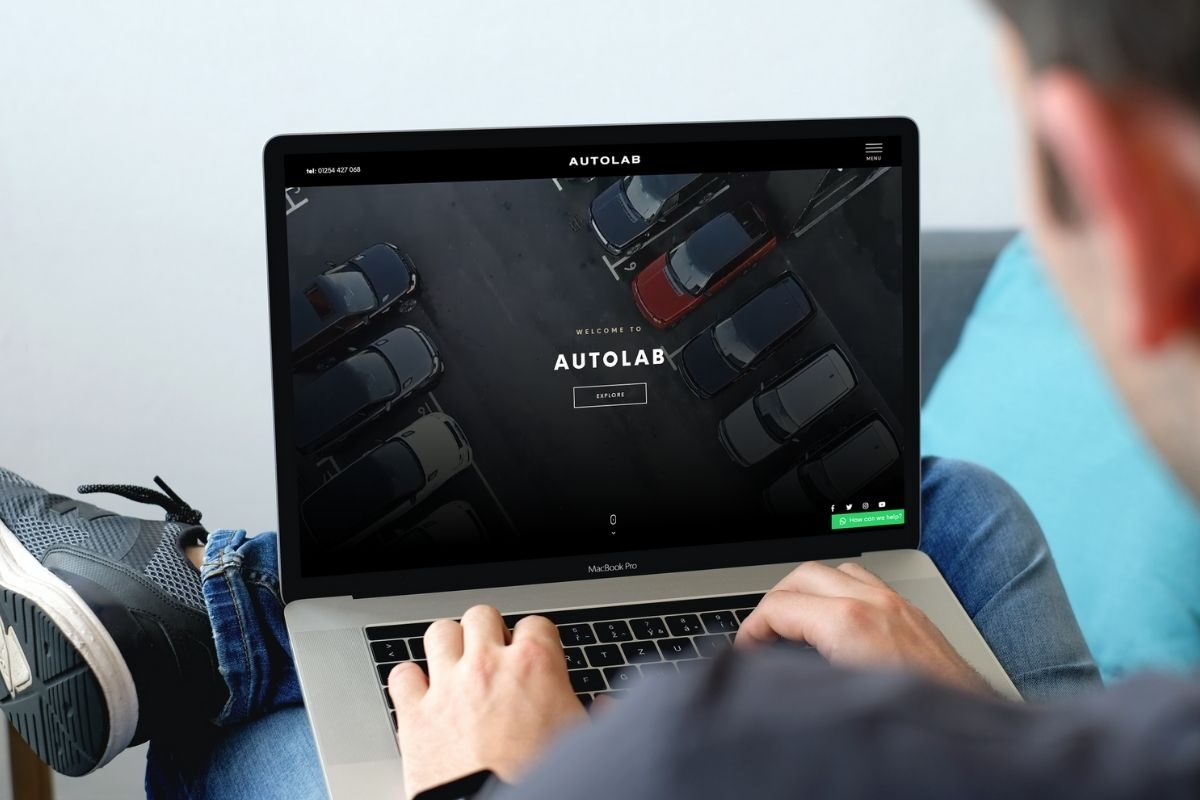
Formed in 2014, Blackburn-based AutoLab is an established used car dealership specialising in finding high-end used cars for their clients. Working with its customers, it sources prestige vehicles, tailors finance packages and carries out upgrades to finish with a car unique to the client.

The stocklist contains just six brands: Audi, BMW, Lamborghini, Land Rover, Mercedes and Volkswagen, but the examples offered are beautifully prepared and well-presented. Strangely, if you type in ‘BMW’ the next drop-down section, ‘Model’, contains all the other brands’ models too, such as Aventador, Discovery or SQ7.

However, click through to ‘correct’ model and you are taken to any available cars with a nice initial picture and short overview. Click on this and you go to a more detailed page with further pictures, more details and long list of features. There’s a message section to send any further enquiries.

Among the list of other services provided by AutoLab are part exchange, upgrades to interiors, exteriors and tyres, and a suite of finance options. This is a smaller, more limited set-up but the cars offered look excellently prepared.

Big Motoring World

URL: bigmotoringworld.co.uk
They say: “Your car, your choice”

We like: Friendly, straightforward website
We don’t like: Not as easy to find your chosen car as some sites

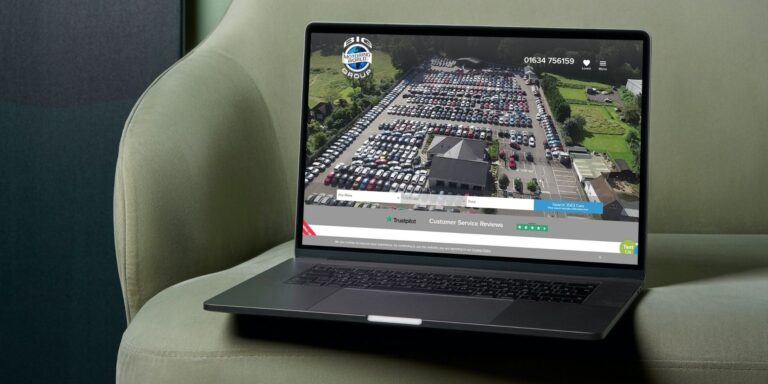
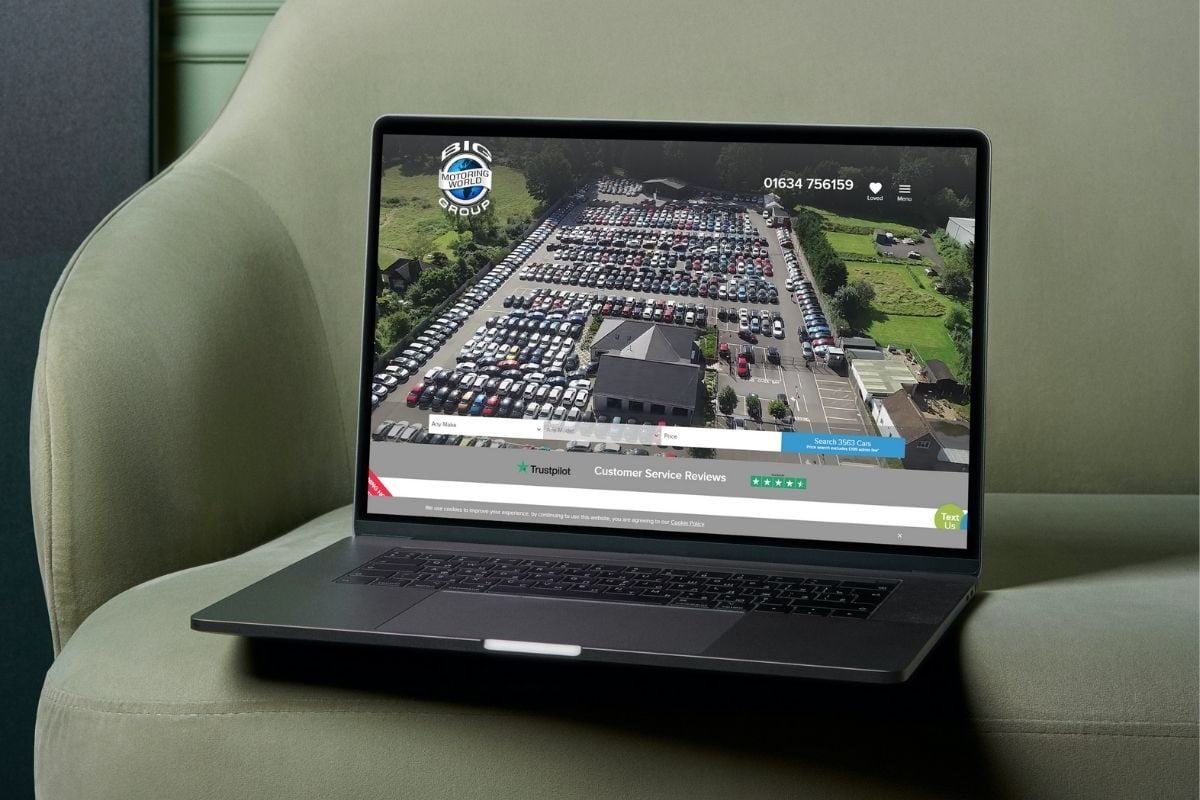
Big by name and big by nature. The landing page immediately takes you on a drone-style flight over the firm’s Enfield site to display a huge car park full of cars, all prepared and ready to go. Inside, a warehouse-style showroom houses further, highly desirable models.

Formed in 1986 by Peter Waddell, who initially traded from home and then bought a small car showroom, Big Motoring World has grown into a leading used car dealer with more than 300 staff. Having started selling used BMWs the company set out to become the UK’s largest independent BMW dealer, which it achieved in 2011. In recent years, it’s also branched out into other – predominantly German – brands.

Today Big Motoring World runs the Enfield ‘car supermarket’ with more than 800 vehicles to choose from, and a massive preparation centre in Peterborough where it can process 6,000 cars a month.

Go to ‘Used Cars’ and you’re taken to a drop down menu were you select from age, mileage, price, mpg figure or by make. However you can only search by A-Z or Z-A, so if you want end a car that’s mid-alphabet, you’d have to do a lot of scrolling. Thankfully there’s a section highlighting most popular makes to go straight through to.

Click on a chosen car and you’ll get plenty of pictures, lots of detail and a vehicle inspection graphic showing that the car has been looked at and ‘passed’. Cars are shown with a full price and an optional monthly payment figure. The company are big on finance and there’s a whole section on the subject along with warranty, part exchange and other topics.

There are lots of ‘standard’ cars here but there’s also a good chance to find a dream mid-life crisis car – especially if you like BMWs.

Clive Sutton Ltd

URL: clivesutton.co.uk
They say: “We will help find you the perfect car”

We like: Interesting site with great pictures
We don’t like: Some details ‘manufacturer specification only’

A former Chrysler and Jeep franchised dealer, Clive Sutton now specialises in sourcing pretty much any car, from anywhere in the world, and delivering it to you.

They are well-known for their ability to find American cars, in particular, and are the UK’s official Shelby American distributor. If you’re looking for a Dodge Charger, Cadillac Escalade or Ford Bronco, it would be worth looking at Clive Sutton’s website. Indeed there is a drop-down section devoted to US vehicles.

It’s a simple site to navigate around: click on ‘Inventory’ and you’ll find a ready-made list of available cars to view – there’s Porsche, Bentley and BMW listed alongside Lincoln, Dodge and Chevrolet.

Choose a brand and from there you’re taken to a list of cars in stock and ready to buy; as-new (100 miles on the clock) and used. In the Ford section for example, there’s a 1967 Mustang and a 2021 Mustang, along with a host of other interesting machinery such as F150 Raptors and new Broncos.

Clive Sutton sells vehicles for clients too and offers a range of bespoke services such as modifications, customisation and performance upgrades. For a mid-life crisis buyer, it’s worth a visit.

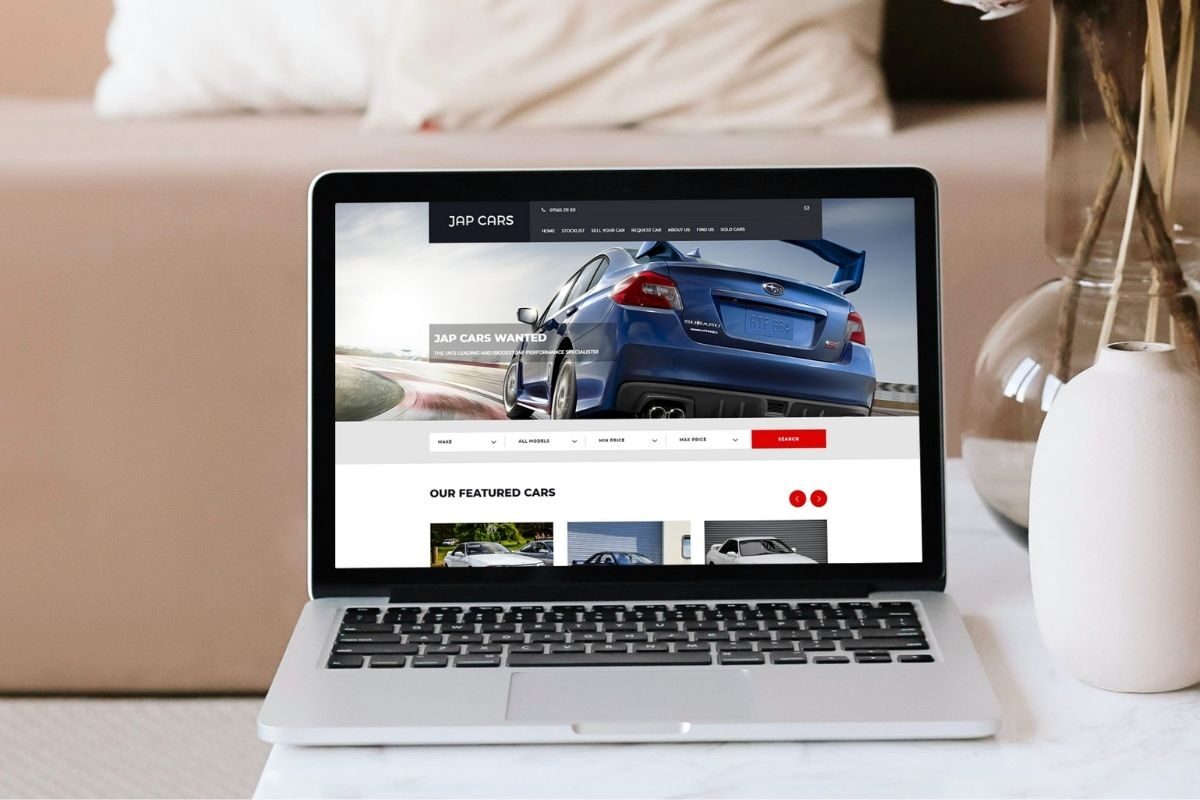
Jap Import Cars

URL: japimportcars.co.uk 
They say: “The UK’s leading Jap performance specialists”

We like: Honest, straightforward website
We don’t like: Scant in some detail

If US cars aren’t your thing but Japanese performance machinery is, here’s a site worth visiting. Rather like 51st State Autos and American cars, Jap Import Cars does as its title suggests – they find and import cars for customers.

There’s also a stocklist of vehicles currently available from them. This is fairly small and includes not just Japanese favourites such as Honda, Mitsubishi and Toyota, but European machinery too including Jaguar, Porsche and TVR. The ‘Looking for the perfect car?’ section shows a Mercedes even though there were none listed when we looked. Presumably the stock changes regularly.

There are some quite special cars for sale such as highly tuned sport models, modified cars and concourse condition collectors pieces. But they will only sell cars that are available now with UK title of ownership and number plates, and which are ready to drive away. In other words, they won’t sell a car that is abroad and you’ve never seen it.

The website doesn’t offer a huge amount of information when compared with other sites, but the detail on the cars they do have on sale is good and there are some nice pictures. There are tabs to request a test drive, print off an e-brochure or request more information about any car.

Motors.co.uk*

URL: motors.co.uk
They say: “Search less. Live more.”

We like: Lots of good advice and news
We don’t like: Some pictures are low quality

Here is another online offering that doesn’t own all the cars it shows; it acts as an agent for dealers across the UK for some, although there are private sellers in there too.

It’s a huge business with a lot of used car deals on its books – nearly 300,000 cars in total. You would want to break that down of course, and you can do that immediately by entering your postcode in the initial search box.

That will bring the number down drastically and you go from there: as you enter more detail in terms of make, model and so on, the number of available and relevant cars drops massively to leave you with a manageable number to consider. Bentley Continental GT, for example, brought up 46 examples. Some car details are better than others (beware of the jargon: ‘drives like a dream’ says one) but most are well pictured.

Not sure of the exact model? Check out ‘Popular makes’ and go from there. The site makes for interesting reading and there is plenty of advice, news and features, plus car evaluations and also a section showing video reviews. The helpful advice section includes tips on electric vehicles, a driving theory test, an ‘ask the experts’ section and more. There’s also a fuel calculator, car finance guide and a ‘smart search’ to find the best car match for you.

PistonHeads

URL: pistonheads.com
They say: “Find your next car”

We like: Lots to read and enjoy
We don’t like: Big block of initial car description

PistonHeads, one of the oldest and most popular motoring websites going, is another news-led site with used car buying as a sort of side line.

With its unique offering of enthusiast marketplace, extensive news and the famous motoring forum, PistonHeads has amassed a staggering 20 million-plus posts from car fans and industry watchers.

It’s full of motoring news, features and reviews written by well-known experts and isn’t just a place to go to find a dream car. There’s so much more. You can spend hours in the forum reading up on your favourite models written by enthusiast owners covering all kinds of subjects such as common faults, great roads and classic rebuilds and custom work.

If you are looking for an unusual model or special edition, this is a good place to be. From supercars to prestige cars to classics, there is a great choice to see and the vehicles often have more extensive descriptions than found elsewhere.

If you know what you want you can go straight to ‘Popular makes’: the four big ones are Porsche, Mercedes, Audi and BMW but under those are around 45 other brands each showing how many version of each are available to view.

Up comes a list of relevant vehicles, linking you direct to the dealer who’s selling each – you can phone them or send a message. There are plenty of photographs with car descriptions – some more comprehensive than others.

There’s plenty of fun news and features and some useful links to car finance, car insurance and gap insurance too.

The Car Warehouse

URL: thecarwarehouse.co.uk
They say: “One of Europe’s largest suppliers of used modern classics”

We like: Good mix of cars from rare to everyday
We don’t like: Limited stock compared with some

The Car Warehouse specialises in looking for the unusual, or limited in numbers, so if you’re after something like that as your mid-life crisis car, this could be a good place to start.

They carefully hand pick their stock and have agents around the world looking out for them. Cars such as Mazda Bongo, Nissan S-Cargo, Figaro and Estima are all targets for The Car Warehouse. They buy good quality examples and then have a team of re-trimmers to prepare and refurbish them to a high standard.

Go to ‘Showroom’’ and you’ll find a wonderful mixture of unusual and sought after cars: Rolls-Royce Phantom, a Renault 5 GT Turbo, VW T1 Kombi, MG RV8, and many others – all excellent mid-life crisis cars.

If you love unusual motors, it’s a great place to go browsing. Photography is good and, click for more details and you’ll be presented with a fine selection of pictures and a decent and detailed overview of the car you’ve chosen including mileage, body type, engine size, number of seats and other information, with a further written report.

The site also offers finance, part exchange, details of its import scheme and even a section of collector’s items, some automotive related and some not. It’s certainly a site worth looking around, even if you don’t buy one of their cars.

51st State Autos

URL: 51stateautos.com
They say: “The UK’s leading supplier of American Autos.”

We like: Easy to use, simple website
We don’t like: Not much car detail to begin with

If it’s an American car that’s on your mid-life crisis wish list, then this is as good a place to start as any.

Formed in 2004 by Charles Partos, Essex-based 51st State Autos’ mission hasn’t really changed much in that time: to specify, find and deliver the US-style car that you’re looking for.

There’s a good selection of used cars in stock but it’s more than that: 51st State will go through all the available options with you to tailor a car that meets your exacting wishes. They don’t mind how long that takes – there’s even a hotel next door!

We’re talking proper US muscle here – Dodge Ram, Chevrolet Corvette, GNC Sierra, Cadillac Escalade – there’s not an enormous list but what there is, it’s pure US magic.

Basic information is initially shown such as year, mileage, engine size, number of owners (if it’s a used car) and fuel type, with the price. Click for more details and you get further background information, more pictures and the opportunity to call 51st State or leave an email address for them to contact you. It’s quite a limited amount of detail about the cars so if you’re genuinely interested in something, you would have to take either of these routes.

Other services offered by 51st state include warranties, part exchanges, finance, car checks and servicing.

And if you need inspiration…

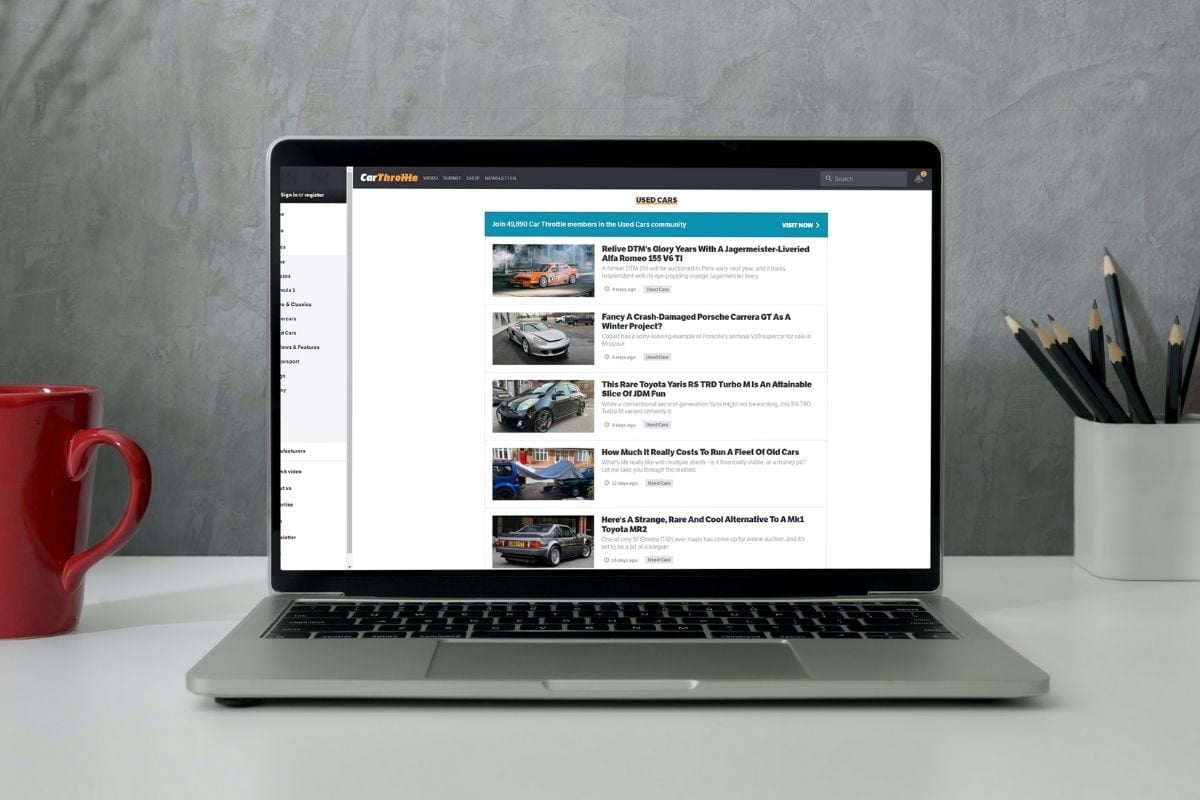
Car Throttle

URL: carthrottle.com
They say: “The internet’s largest community for car enthusiasts”

We like: Fun, busy site filled with things to read
We don’t like: Not a conventional way to buy your next car

Car Throttle is neither a dealership nor a sales website. It’s a community of car lovers, fans and enthusiasts, sharing their news, thoughts and questions.

Formed in 2009 by Adnan Ebrahim for like-minded young car enthusiasts it has grown into a massive community, all following on social media. The site is certainly popular: there are more than 6.7 million fans on Facebook and nearly three million YouTube subscribers. Today it is part of the Dennis media organisation which includes Auto Express, EVO and Carbuyer.

It’s an interesting and fun way to learn about new and used cars. There’s a brilliant section on rare and unusual used vehicles featuring former race cars, damaged supercars for repair and limited edition models, along with news and blogs.

When it comes to buying, or looking for, a car, most of the news stories finish with a link to similar makes or models that are available for purchase, operated through the online car dealership BuyaCar, which is also owner by Dennis.

And if you still want more, there’s a ‘Discussion’ section and a great series of videos to keep you entertained.

You may also like:

This article was originally published in December 2021. Last updated January 2024.

*The Car Expert has commercial partnerships with Motors.co.uk. If you click through to its website and view any vehicles, we may receive a small commission. We do not receive any payment or commission if you proceed to buy a car or sign an agreement.

Top ten winter driving myths debunked

0

We have all set off on winter journeys in freezing temperatures and, if you travel to work every morning, you are likely used to the routine once December rolls around; defrost the car, set off a few minutes earlier, and drive with caution, on the lookout for blankets of snow and icy roads.

But can you de-ice your car using hot water? Does your car need a few minutes to warm up before driving off? Do you turn into the skid to correct your car sliding on the road?

We have developed plenty of myths about driving safely in adverse conditions, and with snow already falling and Christmas not too far around the corner, we have debunked ten of the most common beliefs about winter driving and maintenance. Were your notions around car journeys in the cold season TRUE or FALSE? Find out below.

FALSE – setting off in snowy conditions on a road that is already gritted with salt can give you piece of mind, but you should still travel at a lower speed than you would normally and take extra care.

Salt does not dissolve ice immediately, and needs cars driving over it to turn it into an effective solution. In addition, salted roads can refreeze, and any part of the road ahead could potentially be untreated.

TRUE – if your car suddenly stops working in very cold temperatures, there is a good chance that your engine has frozen, but trying to run the engine to warm it up is definitely not a good idea.

Turning the engine over could cause it to overheat, so park your car somewhere warm and wait a few days for your engine to properly thaw before starting it again. To help avoid frozen engines, add a 50-50 mix of anti-freeze and water to the engine’s cooling system.

TRUE – should you encounter a skid while driving, you should gently turn the steering wheel in the direction of the skid. For example, if your car has started to slide to the left, then gently turn the wheel to the left. Although it can be quite the alarming situation, try not to panic.

Slamming the brakes will only make the skidding worse, and overcorrecting by steering too much could cause your car to spin. Remember your speed; If you are starting to skid, it’s a sign that you are driving too fast for the road conditions.

FALSE – stopping distances are indeed longer, but many drivers are not prepared for just how much longer they can be. Depending on your car and its tyres, stopping distances can be ten times longer in on winter roads.

You can increase your car’s traction and braking distance in cold temperatures by fitting winter tyres (and snow sock covers for those tyres in more snowy conditions), which have deeper grooves than standard tyres.

TRUE – while you may have needed to let a car ‘warm up’ previously, modern cars have computers or fuel injection systems that can compensate during cold temperatures.

If you let your car idle you are likely to be using more fuel which can make driving more expensive. In reality, your car generally needs about 20 seconds to properly lubricate engine components in cold conditions.

FALSE – 4×4 drivers certainly do have the advantage when driving in the colder months of the year, but this can give some drivers a false sense of security.

Yes, your car will have more power to help you get moving on slick surfaces, but more power doesn’t mean that you will brake any faster. Always respect the road ahead, and leave plenty of space between your car and the vehicle in front.

TRUE – this one is unlikely to happen to us in the UK, but for those of us enduring the most bone-chilling temperatures the British Isles can muster, this is something to keep an eye out for.

Leaving too much empty space inside your fuel tank can lead to the water vapour in your fuel lines freezing on particularly cold nights; stopping fuel from reaching the combustion chamber of your engine.

FALSE – if only it was that easy! Sure, hot water will break up the ice on your windscreen, but it can crack to windscreen too. This is because, although the glass used to make your windscreen and windows are (usually) reinforced, it isn’t designed to handle dramatic changes in temperature like this; from freezing cold to searing hot.

Buy and use a de-icer solution instead, or make a homemade de-icer solution by filling a spray bottle with 2/3rds rubbing alcohol and 1/3rd water.

FALSE – if you are driving when the visibility is decreased, additional lights are likely to make very little difference. In extreme cases a fog light may be beneficial, but more often than not full beam fog lights will actually make the situation worse, as fog reflects light back, further reducing your visibility.

Maintaining dimmed headlights, paired with cautious speeds and vigilance, should be more than enough to spot obstacles and other cars on winter roads.

We picked this myth up from our friends at WhoCanFixMyCar.com*, who have debunked a few common winter driving misconceptions of their own.

FALSE – this is a pretty big misbelief, and a dangerous one too. The myth comes from the idea that if you deflate your types a tiny bit you will increase the surface area of your tyres, in turn increasing grip on snow and ice. But this is simply not true, and deflating your tires can have heavy effect your car’s ability to steer correctly.

You should remember to check your tyre pressure every so often during the winter months too, as cold weather can cause the air in your tyres to compact.

*The Car Expert has a commercial partnership with WhoCanFixMyCar.com. If you click through to their website, we may receive a small commission. We do not receive any payment or commission if you proceed with any servicing plan.

Genesis G70 (2021 to 2024)

Summary

The Genesis G70 was a mid-sized saloon and estate (called a shooting brake, but it’s not really) that arrived in the UK in Autumn 2021, joining the likes of the Audi A4BMW 3 Series and Mercedes-Benz C-Class. It was discontinued in 2024 as the brand shifted to 100% electric models.

Genesis is a spin-off upmarket brand owned by Hyundai and the G70, alongside the GV70 SUV, is part of its first foray into the European automotive market after successes in Asia and the USA. There is another saloon available in the range, the larger Genesis G80.

All variants of the G70 were fitted with an automatic gearbox, with customers able to choose between a 2.0-litre petrol engine or a 2.2-litre diesel unit. The diesel unit, in particular, came in for criticism for unpleasant noise and vibrations.

Reviewers often commented that, like the rest of the Genesis range so far launched in the UK, the G70 was let down by its weak range of engines.

On the other hand, British reviews of the G70 consistently praised this executive saloon for the impressive amount of equipment included on the base model, and for its high quality interior trim.

Due to a lack of practicality and poor fuel economy in the face of the quality models produced by established premium brands, Car found the G70 hard to recommend: “With interior space being on the tight side and pricing that’s competitive but in no way a bargain, you’d have to really fall for the looks or the promise of a stress-free ownership experience. For some that might be enough, but we want a little more.”

As of February 2026, the Genesis G70 holds a Used Car Expert Rating of D, with a score of 59%.

G70 highlights

  • Well-equipped
  • Refined and comfortable interior
  • Care plan and five-year unlimited mileage warranty
  • Five-star safety rating

G70 lowlights

  • Unimpressive range of engines
  • No electrification
  • Tight rear space and boot
  • Poor fuel economy

Key specifications

Body style: Medium saloon and estate
Engines: petrol, diesel
Price: From £33,400 on-road

Launched: Autumn 2021
Discontinued: Summer 2024

Media reviews

Highlighted reviews and road tests from across the UK automotive media. Click any of the boxes to view.

The Car Expert

Auto Express

Auto Trader

Business Car

Car

Carbuyer

Carwow

Company Car Today

Daily Mail

Eurekar

Heycar

Honest John

Parkers

The Sun

The Telegraph

Safety rating

Independent crash test and safety ratings from Euro NCAP

Overall score: 5 stars
Date tested: December 2021
Read the full Euro NCAP review

Adult protection: 89%
Child protection: 87%
Vulnerable road users: 76%
Safety assist: 88%

Eco rating

Independent economy and emissions ratings from Green NCAP

No eco rating

The Genesis G70 was not assessed by Green NCAP during its production life.

Reliability rating

MotorEasy logo 600x167

Reliability data provided exclusively for The Car Expert by MotorEasy

No reliability rating

As of February 2026, we don’t have enough reliability data on the Genesis G70 to generate a reliability rating.

The Car Expert’s reliability information is provided exclusively to us using workshop and extended warranty data from our partner, MotorEasy, sourced from both official dealerships and independent workshops. 

As soon as MotorEasy has sufficient data on the G70, we’ll publish the results here.

Running cost rating

Clear Vehicle Data logo close crop

Monthly cost of ownership data provided exclusively for The Car Expert by Clear Vehicle Data

Fuel consumptionAverageScore
Petrol models34 mpgD
Diesel models44 mpgC
CO₂ outputAverageScoreVariationScore
Petrol models190 g/kmD
Diesel models175 g/kmD
Insurance groupAverageScoreVariationScore
All models35D

We only have limited running cost data on the Genesis G70 at this time, but the scores we do have are average to poor. We’ve also cross-checked with other sources, which confirm that the G70 is an expensive car to run.

Check back again soon for a more comprehensive breakdown of running cost data.

Awards

Significant UK trophies and awards that the Genesis G70 has received

2022

  • UK Car of the Year Awards – Best Estate

Similar cars

If you’re looking at the Genesis G70, you might also be interested in these alternatives

Alfa Romeo Giulia | Audi A5 Sportback | BMW 3 Series | BMW 4 Series Gran CoupéGenesis G80 | Jaguar XE | Kia StingerMazda 6 | Mercedes-Benz C-Class | Peugeot 508 | Polestar 2 | Skoda Superb | Subaru Levorg | Tesla Model 3 | Vauxhall Insignia | Volkswagen Arteon | Volkswagen Passat | Volvo S60 | Volvo V60

More news, reviews and information about the Genesis G70 at The Car Expert

Everything you need to know about Genesis

Everything you need to know about Genesis

Genesis G70 Shooting Brake review

Genesis G70 Shooting Brake review

Five-star safety for seven new cars – but none for Renault

Five-star safety for seven new cars – but none for Renault

Genesis G70 Shooting Brake pricing announced

Genesis G70 Shooting Brake pricing announced

Can Genesis become a revelation?

Can Genesis become a revelation?

Buy a Genesis G70

If you’re looking to buy a used Genesis G70, The Car Expert’s partners can help you find the right car.

Motors 600x300

Find your next used car with Motors. Find out more

Auto Trader logo 600x300

Find your next new or used car with Auto Trader. Find out more

Carwow logo 600x300

Find your next new or used car with Carwow. Find out more
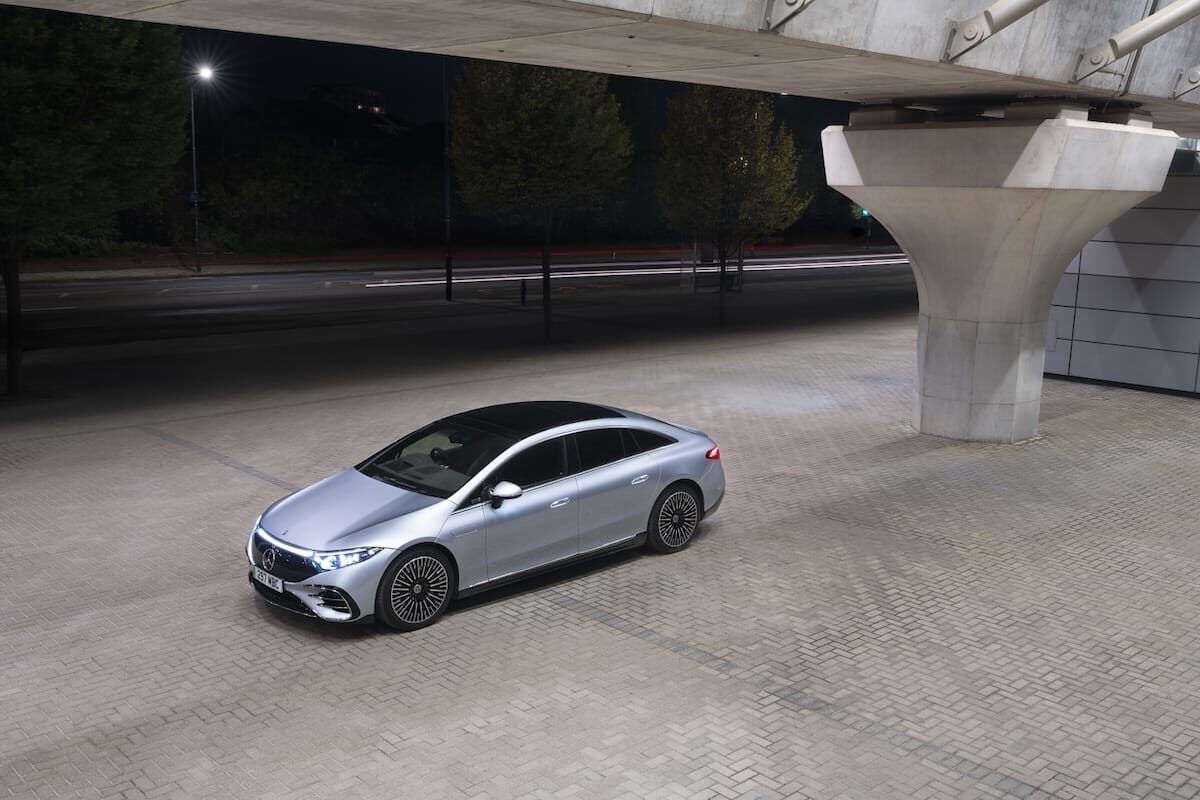
Cupra Born EV now available to order

0

SEAT’s performance brand Cupra has announced the pricing and specification for the all-electric Born hatchback, with customers able to buy a model from the new range ahead of its early 2022 arrival.

Officially unveiled back in May, the Born is essentially Cupra’s version of the Volkswagen ID.3. It will have a range of three different battery sizes to choose from by the end of 2022. However, the Born is initially available with the mid-range 58kWh battery only.

A cheaper 45kWh version and a more expensive 77kWh variant are planned to be offered later in the year, with pricing for those models coming in the new year.

For now, the 58kWh Cupra Born has a range of three trim levels to choose from, consisting of the standard ‘V1’ trim, the midrange ‘V2’ trim, and the range-topping ‘V3’ trim.

For just under £34k, the standard model includes 18-inch alloy wheels, LED headlights and taillights, heated door mirrors, a 12-inch infotainment console with navigation, a 5-inch digital cockpit behind the steering wheel, adaptive cruise control, lane-keeping assistance and keyless entry.

The V2 trim, which costs an extra £450, comes with 19-inch alloys and adds rear window tint, heated seats, and Cupra’s augmented reality head-up display which projects graphics onto the car’s windscreen while you are driving.

Fitted with 20-inch alloys, the top-spec starts at just over £37K and swaps out the standard leather seats for sportier bucket seats that are heated and fitted with a massage function.

Although the Born EV is available to order now, Cupra expects that customers will have to wait until around March 2022 for their order to be fulfilled, and the manufacturer concedes that the ongoing semi-conductor chip shortage may cause further delays.

The car industry needs to stop moaning about the plug-in grant

It’s been a predictable story for years now, and all it really does is make the car industry look silly – government reduces grant allowance, car industry complains, world doesn’t end and EV sales keep increasing anyway.

This week, the government announced that it was reducing the Plug-in Car Grant allowance for EVs once again. This is probably about the fifth or sixth time that this has happened since the grant was first announced about a decade ago, when it started out as a £5,000 taxpayer contribution towards every new electric car.

The grant allowance has steadily decreased over the years, and this week the level dropped from £2,500 down to £1,500. In parallel, the the price threshold for eligible vehicles has been decreasing and the focus has shifted from all plug-in cars to only pure EVs.

This was always the plan. The government was quite clear that the grant allowance would reduce over time as electric cars became more affordable, and that’s what has happened. The overall pool of money isn’t decreasing, but it’s being targeted at lower-priced EVs rather than luxury cars. It’s a rare case of the government actually sticking with a policy and keeping a promise.

Yet every time the grant allowance is reduced, we get the same cut-and-paste moaning from the same sources within the car industry, predicting that everyone will stop buying EVs. And every time, the market share of EVs just keeps increasing.

The car industry is its own worst enemy

The grant was last reduced back in March, from £3,000 to £2,500, and the threshold for eligibility dropped from £40K to £35K. The industry howled. And what happened? EV sales have continued skyrocketing without so much as a blip.

That simply reinforces the government’s approach. Sales of new EVs certainly haven’t tanked as was suggested, so the goverment will justifiably see the industry as crying wolf (again).

Yet the car industry undermined its own argument even further. When the last £500 reduction was announced, a number of car companies immediately cut their prices by £500 to offset the grant reduction. Others slashed the prices of their cars so they’d still qualify for the grant. A similar scenario will almost certainly play out this time.

Again, this just strengthens the government’s argument that decreasing the grant is the right way to go.

If you’re in the Treasury and you see car companies willingly reducing new car prices by £500 to match your grant reduction, or cutting prices even further to maintain the grant funding, you’d understandably assume that they didn’t really need that grant money in the first place.

EVs are no longer a niche market

New EV sales are currently at just under 20% of the overall market share and growing each month – a year ago it was 9%. EV market share was about double that of diesel in November, which is again a consistent direction of travel. So everything’s basically going according to plan.

Electric cars are still more expensive than petrol cars, although the gap is shrinking quickly. This is particularly felt at the lowest price points of the new car market, so it makes sense that any government grant money should be targeting cheaper EVs rather than more expensive ones.

As we pointed out in our inaugural Expert Rating Index report last month, there are currently more than 40 different new electric cars already on the market with more arriving each month. There are also clear tax benefits for company car users that make EVs more affordable than petrol or diesel cars – which are far more valuable than the plug-in grant – so there are still plenty of opportunities for car manufacturers to get more people into electric cars.

Tackle charging rather than crying for handouts

The biggest area where the car industry can, and should, pressure the government on its ‘net-zero’ plan is to accelerate the roll-out of EV charging points. Although the UK is better than most countries in this regard, it can do better and will need to do better as the car market shifts towards electrification.

The Society of Motor Manufacturers and Traders (SMMT) recently bemoaned the number of charging points per EV in the UK (it’s currently one point for every 16 EVs), but it didn’t set out any kind of target for what it thinks that number should be. For comparison, the best country is South Korea with a 3:1 ratio while the Netherlands is 5:1. Germany (Europe’s largest new car market) is 17:1, so just behind the UK.

Various studies have shown that the biggest hurdle to faster EV adoption is uncertainty over charging. Cost is obviously a factor, but it’s no longer the top concern car buyers considering a switch to electric power.

As we’ve previously written here, an electric car is a viable proposition for most households if you can charge at home. But if you have to rely on public charging, it’s much less attractive. So the industry should channel all its lobbying into getting more charging points in more places.

Pricing and specs set for new Toyota bZ4X EV

0

Toyota has released new details about the first car to arrive from its forthcoming range of new electric cars, the bZ4X SUV, with full UK pricing and specifications.

The Toyota bZ4X is the Japanese manufacturer’s first purpose-built electric vehicle, and is also the basis for the technically identical Subaru Solterra.

This pricing and trim level news comes after Toyota announced 11 new EV concepts in line with its ‘Beyond Zero’ strategy, including three other ‘bZ’ models that are planned to eventually sit alongside the bZ4X in Toyota showrooms.

The bZ4X was unveiled for the first time in October, featuring a new chassis design that Toyota claims is “class-leading” interior space, and plans to eventually offer the bZ4X with electronic ‘steer-by-wire’ steering, similar to the yoke control used by some aircraft.

All models have the same 71kWh battery and a range of 280 miles, with customers able to choose between four-wheel drive and ‘X-Mode’ all-wheel drive models.

The new bZ4X range includes four trim levels. The entry-level ‘Pure’ trim starts at just under £42K and is only available with front-wheel drive. It includes 18-inch alloy wheels, an eight-inch infotainment console, seven-inch digital cockpit behind the steering wheel, a reversing camera, climate control and keyless entry.

The mid-range ‘Motion’ trim, which costs just under £46K in front-wheel drive and £48K in all-wheel drive, adds a rear spoiler, rear privacy glass, parking sensors, heated front seats, ambient lighting in the cabin and a wireless charging tray.

£48K will also buy you the front-wheel drive version of the ‘Vision’ trim, which additionally includes a remotely controlled parking assist system, leather seat upholstery, a heated steering wheel, and a digital key allowing the car to be unlocked and started with the driver’s smartphone. The ‘Vision’ trim with all-wheel drive will cost £50k.

Top of the range is the all-wheel drive only ‘Premiere Edition’ trim, which features a nine-speaker JBL premium sound system and a panoramic roof, costs £51.5K.

The ‘Premiere Edition’ will only be available through Toyota’s online retail service, and the manufacturer says it has more information on the way about the bZ4X before its arrival on UK roads sometime in early 2022.

Plug-in grant cut by £1,000 to target cheaper EVs

The latest cut in the government’s Plug-in Car Grant has sparked predictable criticism from the UK automotive industry, despite it being precisely in line with long-standing government policy.

The grant, designed to encourage consumers to replace their petrol or diesel cars with electric vehicles (EVs), has been reduced by £1,000, from £2,500 to £1,500. It applies to cars under the price threshold that produce CO2 emissions of less than 50g/km and can travel at least 70 miles with no CO2 emissions.

The price threshold of qualifying cars has also been cut – previously any car with a recommended retail price of up to £35,000 was eligible, now the upper limit is £32,000. The changes came into effect immediately.

Announcing the changes, the government said that the scheme was being re-focused to target less expensive models, allowing the funding to go further and to help more people make the switch to an EV.

“The market is charging ahead in the switch to electric vehicles,” said transport minister, Trudy Harrison. “This, together with the increasing choice of new vehicles and growing demand from customers, means that we are refocusing our vehicle grants on the more affordable vehicles and reducing grant rates to allow more people to benefit, and enable taxpayers’ money to go further.”

The minister added that new rules would also be introduced to make it easier to find EV charge points and to make payments at them.

This week’s reductions are simply the latest changes to the application of the Plug-in Car Grant, which was initially a maximum £5,000 and available for both EVs and plug-in hybrids. It was always intended to reduce over time as the cost of electric cars reduced, and the government has steadily followed that path over several years.

As usual, industry bodies criticised both the changes and the speed of them, just as they have done on every other occasion that the grant has been reduced. Society of Motor Manufacturers & Traders (SMMT) chief executive Mike Hawes argued that the changes could not come at a worse time, “with inflation at a ten-year high and pandemic-related economic uncertainty looming large.”

Vauxhall managing director Paul Willcox claimed that the changes provided a confusing message to UK consumers. “(They) will harm EV adoption at a time when we need to be doing all we possibly can if we are to stand a chance to move the UK to electrified only vehicles by 2030,” he said, adding that EVs still represent only a small percentage of UK vehicle sales.

Other industry observers argue, however, that with plug-in vehicles now claiming 30% of sales figures and growing in popularity each month, there is less need to subsidise the market, while it’s right that any grants available should be targeted at the most affordable EVs.

Citroën SpaceTourer (2017 to 2022)

Summary

The nine-seater Citroën SpaceTourer MPV arrived in the UK in late 2016, and is a passenger version of the Citroën Dispatch mid-size delivery van. It was discontinued in 2022 as Citroën shifts to an electric future.

Developed by parent company Stellantis, the SpaceTourer is essentially identical to the Peugeot Traveller, Vauxhall Vivaro Life, Toyota Proace Verso and Fiat Ulysse.

First unveiled at the 2016 Geneva motor show, the Citroën SpaceTourer line-up consisted of two diesel powertrains, with both manual and automatic transmission variants available. The electric version called the ë-SpaceTourer was launched in 2020 and has essentially replaced this conventionally powered version.

Customers could choose between the standard ‘M’ trim, and the longer ‘XL’ trim, but reviewers generally concluded that the interior quality of both options was rather basic. “It feels cheap in places and looks very dull inside”, Carwow concluded, adding that the Citroën SpaceTourer’s back-to-basics cabin was likely to disappoint buyers that were more accustomed to driving traditional people carrier models, like the Citroën C4 SpaceTourer.

“It will suit people whose family has outgrown a conventional MPV or SUV”, Auto Trader deduced, “but more likely, it’ll be snapped up by airport taxi firms and private hire companies who need to transport lots of people and baggage comfortably, quickly and without fuss.”

As of February 2026, the Citroën SpaceTourer holds a Used Car Expert Rating of D, with a score of 60%. It gets good grades for its low running costs, but its CO2 emissions are only average and its media score and safety rating are poor.

SpaceTourer highlights

  • Impressive fuel economy considering its size
  • Seating for up to nine
  • Plenty of cabin space
  • Good levels of standard equipment

SpaceTourer lowlights

  • Lethargic handling
  • Noisy diesel engines
  • Unimpressive interior quality
  • Heavy rear seats are difficult to remove

Key specifications

Body style: Large people carrier
Engines: diesel
Price when new: From £34,495 on-road

Launched: Autumn 2016
Last updated: Autumn 2020
Discontinued: Spring 2022

Media reviews

Highlighted reviews and road tests from across the UK automotive media. Click any of the boxes to view.

Auto Express

Auto Trader

Business Car

Car Keys

Carbuyer

Carwow

Eurekar

Heycar

Honest John

Motors

The Sun

The Telegraph

Safety rating

Independent crash test and safety ratings from Euro NCAP

Overall score: 5 stars
Date tested: December 2015
Date expired: January 2022
Read the full Euro NCAP review

Adult protection: 87%
Child protection: 91%
Vulnerable road users: 64%
Safety assist: 78%

Eco rating

Independent economy and emissions ratings from Green NCAP

No eco rating

The Citroën SpaceTourer was not tested by Green NCAP during its production life.

Reliability rating

MotorEasy logo 600x167

Reliability data provided exclusively for The Car Expert by MotorEasy

No reliability rating

As of February 2026, we don’t have enough reliability data on the Citroën SpaceTourer to generate a reliability rating.

The Car Expert’s reliability information is provided exclusively to us using extended warranty data from our partner, MotorEasy. As soon as MotorEasy has sufficient data on the SpaceTourer, we’ll publish the score here.

Awards

Trophies, prizes and awards that the Citroën SpaceTourer has received

2017

  • Red Dot Awards – Design Award

Similar cars

If you’re looking at the Citroën SpaceTourer, you might also be interested in these alternatives

BMW 2 Series Gran TourerCitroën Grand C4 SpaceTourer | Fiat Ulysse | Ford Galaxy | Ford Tourneo Custom | Mercedes-Benz V-Class | Peugeot Traveller | Renault Trafic Passenger | Toyota Proace Verso | Vauxhall Vivaro Life | Volkswagen Multivan | Volkswagen Sharan

Buy a used Citroën SpaceTourer

If you’re looking to buy a Citroën SpaceTourer, The Car Expert’s partners can help you find the right car

Motors 600x300

Search less, live more. We make finding the right car simple. Find out more

Auto Trader logo 600x300

Search for your next new or used car with Auto Trader. Find out more

Carwow logo 600x300

Discover great deals available on both new and used cars. Find out more

Britain’s best-selling cars, November 2021

In yet another hectic month for new car sales, the Mini hatch topped the best-sellers chart as car registrations grew 2% in November.

Ongoing supply problems continue to plague almost every car brand, with individual results up or down depending on whether manufacturers can get enough computer chips to be able to build cars. Once again, that has led to a jumbled-up best-sellers’ list.

Despite the appearance of the Ford Focus in November’s rankings, it was yet another disastrous month for Ford, which has been struggling to supply its popular Fiesta supermini and Puma crossover models. Across more than 300 UK dealerships, Ford only managed to shift about 101 Fiestas and 126 Pumas in the entire month. Given that these are two cars that would normally be a regular fixture in the top ten, it made a large dent in Ford’s overall numbers – selling 50% fewer cars than November last year.

We’ve published our normal report on the monthly new car registration figures, with plenty of detail that you won’t find elsewhere. So let’s now look at the mixed-up top ten results for November 2021.


The UK’s top-selling cars, November 2021

1. Mini hatch

Minii 3-door wallpaper 2021

The Mini continued its sales ranking surge to take top spot for November, after just missing out in October. Despite being the oldest car in the top ten, the twice-facelifted Mini continues to sell strongly some seven years after the current model was launched, and its sales performance in the latter half of this year means that it has crept into the 2021 best-sellers list with one month to go.

For patriotic flag wavers, this is the first time in a long time that a British-built car has topped the sales charts, which is welcome news for all of Mini and BMW UK employees.

The Mini hatch still holds a very solid score of 76% in our Expert Ratings index, which is one of the top scores in its class. The electric version doesn’t score so well, with an Expert Rating of only 63% that puts it close to the bottom of its class.

2. Vauxhall Corsa

Vauxhall Corsa Ultimate

With just a month of 2021 left to go, it’s now beyond doubt the Vauxhall Corsa will be the first car in a dozen years to depose the Ford Fiesta as the UK’s most popular new car.

Securing second place for November, the Corsa extended its lead in the sales race to almost 9,000 units as challengers like the Mercedes-Benz A-Class and Volkswagen Polo failed to close the gap.

Despite its popularity, the petrol and diesel versions of the new Corsa hold a rather poor Expert Rating of 64% on our industry-leading Expert Rating Index, with the all-electric Corsa-e holding the same score. Those scores put the Corsa in the bottom half of the supermini class, suggesting that journalists are not as excited about the Corsa as customers seem to be.

3. Tesla Model 3

Tesla Model 3 (2019) new car ratings and reviews | The Car Expert

After topping the sales charts in September, the Tesla Model 3 secured another top-three result for November, after being notably absent from the top ten in October. The American company continues to dominate the electric car scene, which will have other manufacturers scratching their heads as to why their own EVs are not selling up a storm in the same way.

The Tesla Model 3 currently holds an Expert Rating of 84% according to our industry-leading Expert Rating Index, which is much higher than an Audi A4 or Mercedes C-Class, and just behind the BMW 3 Series.

4. Hyundai Tucson

Hyundai Tucson (2021 onwards) – Expert Rating

On the back of a strong sales showing in October, the Hyundai Tucson improved on its tenth place finish last month to be the fourth best-selling car in the UK for November. Hyundai (including Kia) has managed to maintain its production levels much better than most rivals during the semiconductor crisis, which has no doubt helped Tucson sales compared to many rivals.

It will be interesting to see if the all-new Kia Sportage – closely related to the Tucson – can enjoy a similarly successful launch in coming months.

The Hyundai Tucson currently has an Expert Rating of 76%, which places it well in the top half of all of the medium SUV marketplace according to our industry-leading Expert Rating index.

5. Ford Focus

Ford Focus (2018 onwards) Expert Rating

In what was a disastrous month for the Ford brand as a whole, the manufacturer can take some small relief from the resurgence of the Ford Focus, which was ranked fifth in the best-sellers list for November, down from its fourth place finish in October.

Previously one of the most popular cars in the country, the Focus has spent most of this year outside the top ten. It’s due a facelift that will arrive in the UK in early 2022, so this may be the last we see of the current version.

In terms of critical appraisal, the Ford Focus currently holds a score of 76% on our Expert Ratings Index, which is level with its fierce rival, the Volkswagen Golf.

6. MG ZS

MG ZS (2017 onwards) – Expert Rating

Making its first appearance in the top ten sales rankings, the MG ZS was the sixth best-selling car in the UK for November, as MG continued its impressive sales upswing, selling almost four times more cars in the past month than they could muster in November 2020.

The combustion-powered version of the MG ZS is far more popular with the general public than journalists, as it is currently one of the lowest-rated cars in our Expert Rating Index, with a score of 41%. The all-electric ZS fares better, currently holding a score of 56%.

7. Nissan Qashqai

Best-selling cars 2021 | Nissan Qashqai

The all-new Nissan Qashqai continued its strong debut by placing in the top ten best-sellers list for the third month running, dropping to seventh in November after securing a top three finish the month prior.

Nissan will be hoping that it can maintain production levels to keep up this momentum heading into the final month of 2021, as the Qashqai is firmly on track to appear in the overall best-sellers list for 2021.

We have compiled our Expert Rating report for the new Qashqai since last month’s registration report, and it puts Nissan’s latest contender right in the midfield with a score of 71%. It’s still early days and there’ll be more reviews to be published, so this could change – either up or down – in coming weeks.

8. Mercedes-Benz A-Class

Mercedes-Benz A-Class hatch – Britain's best-selling cars of 2020

Another commendable month of steady sales sees the Mercedes-Benz A-Class feature in the top ten best-sellers once again, though its eighth-place finish is rather overshadowed by the third place the A-Class earned in the same month last year.

Fortunately for Mercedes, Volkswagen’s top-selling models missed out on the top ten altogether in November. That means that the A-Class has managed to leapfrog both the Golf and the Polo to sit second in the year-to-year sales chart, as the very tight battle between Mercedes-Benz and Volkswagen for the ‘best-of-the-rest’ title heads into the final month of the year.

The A-Class has an Expert Rating of 69% in The Car Expert’s unique aggregated Expert Rating index. It ranks highly for safety, winning awards from Euro NCAP and Thatcham over the years for its protective qualities.

9. Volkswagen T-Roc

Volkswagen T-Roc (2017 onwards) Expert Rating

Although the Golf and Polo failed to rank in the top ten in November, the Volkswagen T-Roc crossover was able to secure a ninth-place finish, its first appearance in the top-sellers list since February. As Volkwagen shifts the remainder of its 2021 T-Roc stock, this is likely the last we will see of the current model, before the crossover gets a facelift in early 2022.

The T-Roc currently holds an Expert Rating of 71% in our industry-leading Expert Ratings index, which puts in the top half of the small SUV field.

10. Volvo XC40

Volvo XC40 (2018 onwards) – Expert Rating

The Volvo XC40 rounds out the top ten best-selling cars for November, its second appearance in these rankings in two months. Despite being on sale for nearly four years, the XC40 continues to sell well and remains highly rated by critics.

The XC40 is the class leader among premium small SUV/crossover models, with an Expert Rating of 79%, for the petrol/diesel/plug-in hybrid version. The new electric XC40 Recharge doesn’t fare quite so well, with an Expert Rating of 68%.

EV owners vote InstaVolt best charging network

0

EV mapping service Zap-Map has published its annual rankings of charging networks, based on satisfaction ratings from British EV owners.

Instavolt, which is the country’s third-largest public charging network, was voted as best in a survey of more than 3,000 plug-in car owners.

Naming the top 20 charging networks in Britain, Zap-Map’s satisfaction rankings are now in their fourth year. For the first time, the survey doesn’t include the Tesla Supercharge network as it is exclusive to the Tesla brand and not open to all cars.

InstaVolt came top of the pile with an overall rating of 4.4 stars, and it was the fourth year in a row that InstaVolt has finished in the top two. The network was praised by EV owners for its reliable chargers and convenient contactless payment system.

Ranked second was MFG EV Power, a new entrant making its first appearance in the rankings, while Osprey, who finished 3rd in last year’s Zap-Map rankings, once again completed the podium.

Source: Zap-Map

Conversely, the UK’s largest network, BP Pulse, ranked a poor 16th. Survey participants citing price rises, poor customer service, and the unreliability of their charging points as the key reasons for this low ranking. The Charge Your Car network, which is also owned by BP Pulse, fared even worse, placing 17th.

It must be noted that the rankings do not take into account the size of each network, mixing nationwide brands with smaller regional networks.

As the number of charging points continues to grow in an effort to keep up with the steep increase in new electric cars being registered for UK roads, Zap-Map expects that there will continue to be a high level of investment from these competing brands in the coming year.

Read More:

Mercedes-Benz EQS

The Mercedes-Benz EQS was The Car Expert’s Car of the Year 2021

Summary

The Mercedes-Benz EQS is a luxury executive saloon that is currently the flagship model in the Mercedes-EQ family, positioned as the electric alternative and eventual successor to the acclaimed Mercedes-Benz S-Class.

The EQS has a very smooth exterior design, with the car’s silhouette being one continuous line from bonnet to boot. This unusual styling means that the EQS is currently the most aerodynamic road car in production, and one of the factors behind why this high-end saloon can travel an advertised 453 miles from full charge, other than the fact that it has the biggest battery ever fitted to a production car.

“The EQS is going to really push forward the electric car benchmark in terms of range, refinement and technology”, comments Electrifying.com. “It’s a surprise that it doesn’t try to challenge Tesla or Audi in terms of performance though.”

There are other EVs around the Mercedes-Benz EQS’s £100,000 price tag with more speed and acceleration to offer, but Carbuyer points out that the EQS is not a sports saloon, and isn’t trying to be. “While other models like the Porsche Taycan and Tesla Model S may be faster, nothing comes close to matching its luxury or sheer opulence.”

The Mercedes-Benz EQS has arrived in the UK with a very positive reception from the UK media, primarily due to its luxurious and tech-filled interior, though not all were that impressed. “Whether all the electronic trickery is worth it is not so clear-cut. The voice control isn’t bad, while £8,000 for the Hyperscreen dashboard seems like a load of hype,” comments The Telegraph.

All of the impressive on-board features and battery technology found in the EQS is planned to appear on future EQ models, including the smaller and cheaper Merecedes-Benz EQE, so it might be worth waiting a while longer if you are interested in buying an all-electric Mercedes-Benz. “Still, if you like the idea of a silent, super luxurious electric limousine that’s jam-packed with impressive technology”, concludes Carwow, “then you’ll love the EQS.”

An updated EQS was revealed in Spring 2024, which offers more battery range, improved technology systems and styling tweaks.

As of July 2025, the Mercedes-Benz EQS holds a New Car Expert Rating of A, with a score of 76%. It scores top marks for its excellent safety rating, zero tailpipe emissions and outstanding media reviews. The only poor score is for running costs, which is not surprising for a £100K luxury saloon.

EQS highlights

  • Class-leading battery range
  • Luxurious interior trim
  • Impressive on-board tech and infotainment
  • Excellent build quality

EQS lowlights

  • Slightly rigid ride comfort
  • Very expensive, base price and up
  • A bit wide for the inner-city
  • Other high-end EVs offer more performance

Key specifications

Body style: Large five-door executive saloon
Engines: electric motor, battery-powered
Price: From £105,610 on-road

Launched: Winter 2021/22
Last updated: Spring 2024
Replacement due: TBA

Media reviews

Highlighted reviews and road tests from across the UK automotive media. Click any of the boxes to view.

Featured reviews

More reviews

Auto Express

Auto Trader

Car

Driving Electric

Electrifying.com

Green Car Guide

Heycar

Honest John

Motoring Research

Parkers

Regit

The Independent

The Sun

The Telegraph

Top Gear

Safety rating

Independent crash test and safety ratings from Euro NCAP

Overall score: 5 stars
Date tested: December 2021
Read the full Euro NCAP review

Adult protection: 96%
Child protection: 91%
Vulnerable road users: 76%
Safety assist: 80%

Eco rating

Independent economy and emissions ratings from Green NCAP

No eco rating

As of July 2025, the Mercedes-Benz EQS has not been assessed by Green NCAP.

The Green NCAP programme measures exhaust pollution (which is zero for an electric car) and energy efficiency. Electric cars are much more energy-efficient than combustion cars, so the EQS is likely to score very highly in Green NCAP testing whenever it ever takes place. Check back again soon.

Reliability rating

MotorEasy logo 600x167

Reliability data provided exclusively for The Car Expert by MotorEasy

No reliability rating

As of July 2025, we don’t have enough reliability data on the Mercedes-Benz EQS to generate a reliability rating.

The Car Expert’s reliability information is provided exclusively to us using workshop and extended warranty data from our partner, MotorEasy, sourced from both official dealerships and independent workshops. 

As soon as MotorEasy has sufficient data on the EQS, we’ll publish the results here.

Running cost rating

Clear Vehicle Data logo close crop

Monthly cost of ownership data provided exclusively for The Car Expert by Clear Vehicle Data

Battery rangeAverageScoreVariationScore
EV models433 milesA379 – 481 milesA – A
Electrical efficiencyAverageScoreVariationScore
EV models4 m/KWhC3.4 – 4.4 m/KWhB – E
Insurance groupAverageScoreVariationScore
All models50F50 – 50F – F
Service and maintenanceCostScore
Year 1£395C
Year 2£852C
Year 3£1,324C
Year 4£1,608C
Year 5£2,057C
Overall£6,236C

It’s probably not surprising that a very expensive car (more than £100K) also costs a lot to run – even though it’s an electric car.

The Mercedes-Benz EQS is fairly poor when it comes to electrical efficiency (the EV equivalent of miles per gallon for a petrol or diesel car), while insurance costs will be high as the EQS is in the very top group. Servicing is also expensive, especially after the first year.

The good news is that, despite the relative inefficiency of the electric motor, the battery range is still exemplary. The model average is 400 miles (based on official lab figures), ranging from 324 miles to 464 miles depending on which model you choose.

Awards

Significant UK trophies and awards that the Mercedes-Benz EQS has received.

2023

  • EcoCar Electrified Top 50 – Best Electric Luxury Car

2022

  • GQ eCar Awards – Best Luxury Car

2021

Similar cars

If you’re looking at the Mercedes-Benz EQS, you might also be interested in these alternatives

Audi e-tron GT | BMW i7 | Lexus LS | Maserati Quattroporte | Mercedes-Benz CLS | Mercedes-Benz S-Class | Porsche Panamera | Porsche Taycan | Tesla Model S

More news, reviews and information about the Mercedes-Benz EQS at The Car Expert

Everything you need to know about Mercedes-Benz

Everything you need to know about Mercedes-Benz

Battery range boost for Mercedes-Benz EQS

Battery range boost for Mercedes-Benz EQS

The best new electric cars for every budget 2024

The best new electric cars for every budget 2024

The best new electric cars for every budget 2023

The best new electric cars for every budget 2023

Best large cars of 2022

Best large cars of 2022

Mercedes-Benz EQS gets the SUV treatment

Mercedes-Benz EQS gets the SUV treatment

The five safest cars of 2021

The five safest cars of 2021

Car of the Year 2021

Car of the Year 2021

Best large cars of 2021

Best large cars of 2021

All-electric Mercedes EQS goes on sale

All-electric Mercedes EQS goes on sale

Buy a Mercedes-Benz EQS

If you’re looking to buy a new or used Mercedes-Benz EQS, The Car Expert’s partners can help you find the right car

Motors.co.uk logo transparent 600x300

Find your next used car with Motors.co.uk. Find out more

Auto Trader logo 600x300

Find your next new or used car with Auto Trader. Find out more

Carwow logo 600x300

Find your next new or used car with Carwow. Find out more
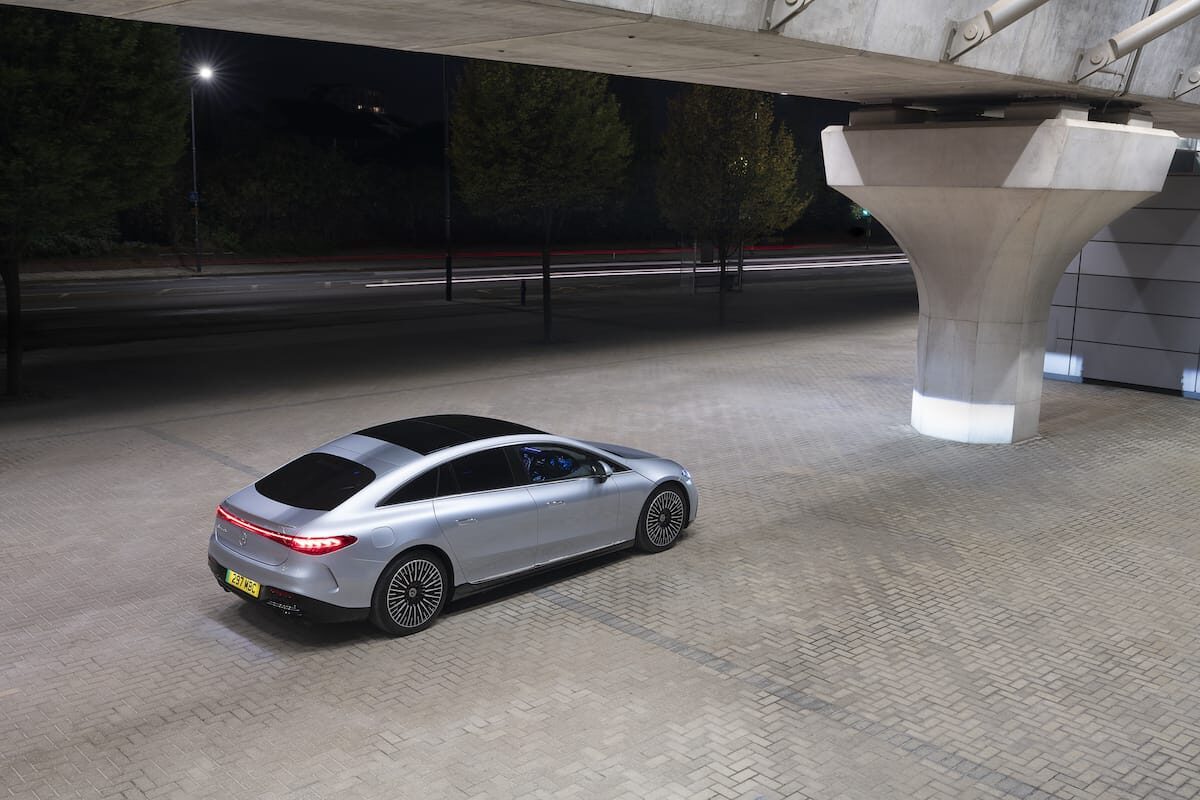
Lease a Mercedes-Benz EQS

If you’re looking to lease a new Mercedes-Benz EQS, The Car Expert’s partners can help you find a competitive deal

Carparison 600x300

Personal contract hire deals from Carparison Leasing. Find out more

Leasing-com logo

Personal contract hire deals from Leasing.com. Find out more
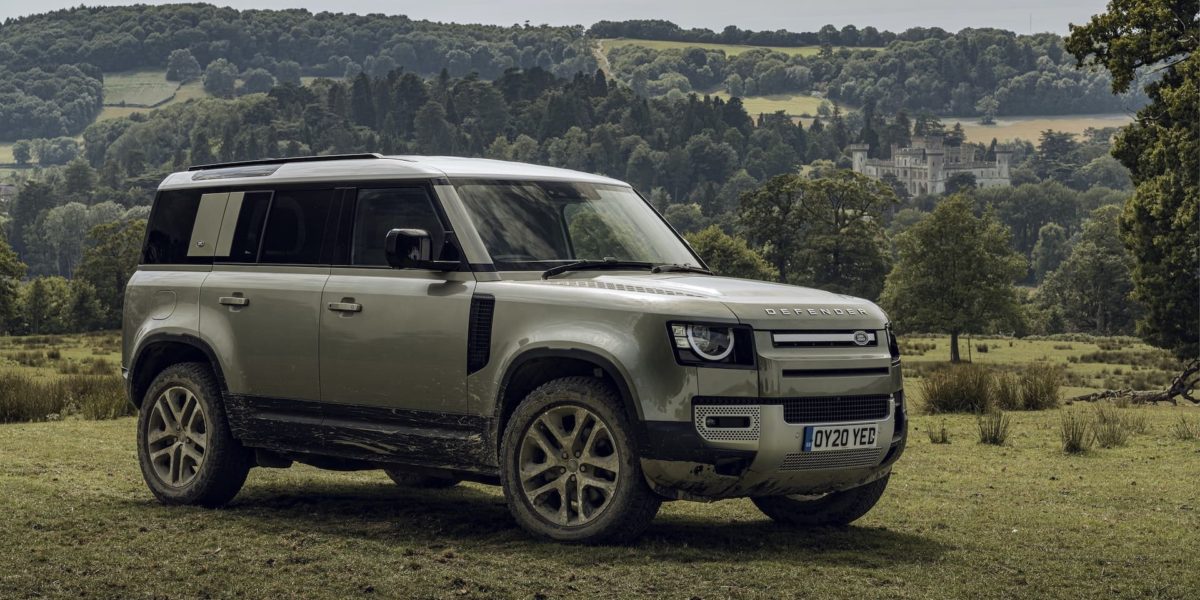
Select Car Leasing logo

Personal contract hire deals from Select Car Leasing. Find out more

Subscribe to a Mercedes-Benz EQS

Subscriptions are becoming a very popular way for consumers to try an electric car for a few weeks or months to help decide whether it’s a suitable alternative to a petrol car. If you’re interested in a car subscription, The Car Expert’s partners can help. (PS: What’s a car subscription?)

SelfDrive UK logo

Car subscriptions from SelfDrive.
Find out more
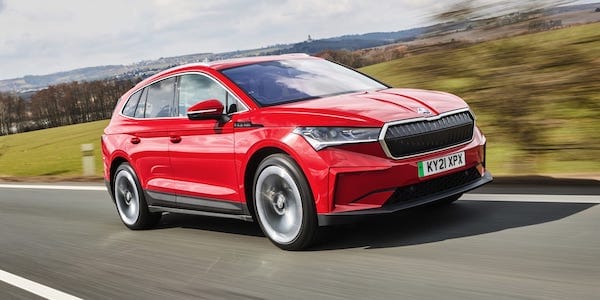
Drive Fuze logo 600x300

Car subscriptions from DriveFuze.
Find out more
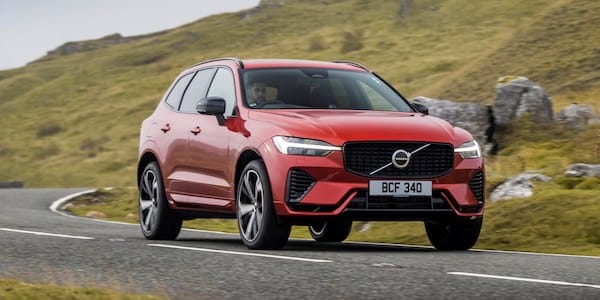
Cocoon Vehicles logo 600x300

Car subscriptions from Cocoon.
Find out more

How to understand Euro NCAP car safety ratings

0

New cars are safer than ever, and are getting safer every year. More technology to help drivers stay safe is being included in vehicles at all price points, while manufacturers continue to find new ways to improve the safety of their cars.

To help consumers understand how safe new cars really are, an independent testing organisation called Euro NCAP gives new cars from Europe ratings for how well they avoid accidents and protect in an impact. However, all the information can be a bit tricky to understand at times, which is why we’ve put together this guide that explains what it all means in plain English.

The UK is part of Euro NCAP (European New Car Assessment Programme) – in fact, Euro NCAP was established by the UK’s Transport Research Laboratory (now called TRL) on behalf of the Department for Transport in 1997. Today, management of the organisation is handled from Brussels while UK testing is undertaken by Thatcham Research.

Euro NCAP is based on an American programme called NCAP, and similar sister organisation have launched in other parts of the world, including Australia (ANCAP) and China (C-NCAP). There is also a global organisation (Global NCAP), also based in the UK, that concentrates on improving car safety in developing countries. Through its 14 member bodies like Thatcham Research, Euro NCAP thoroughly crash tests a large number of new cars each year and awards an overall rating depending on how well a car meets certain safety criteria.

Here at The Car Expert, we firmly believe that safety is a core component of any new car. Unlike most new car reviews elsewhere that only report the headline score and don’t bother updating it over time, our unique Expert Rating analysis includes the full Euro NCAP results for all cars tested and is kept up to date as ratings change or expire. We’ll explain below why we think this is so important.

Euro NCAP star rating system

Euro NCAP safety ratings are easy to recognise, and are based on a simple five-star system. Five stars is best, zero is the worst and there are no half-star ratings. Pleasingly, most new cars these days tend to score four or five stars, and it tends to be more newsworthy when a new car doesn’t actually score top marks – as happened this week when the Renault Zoe scored zero stars.
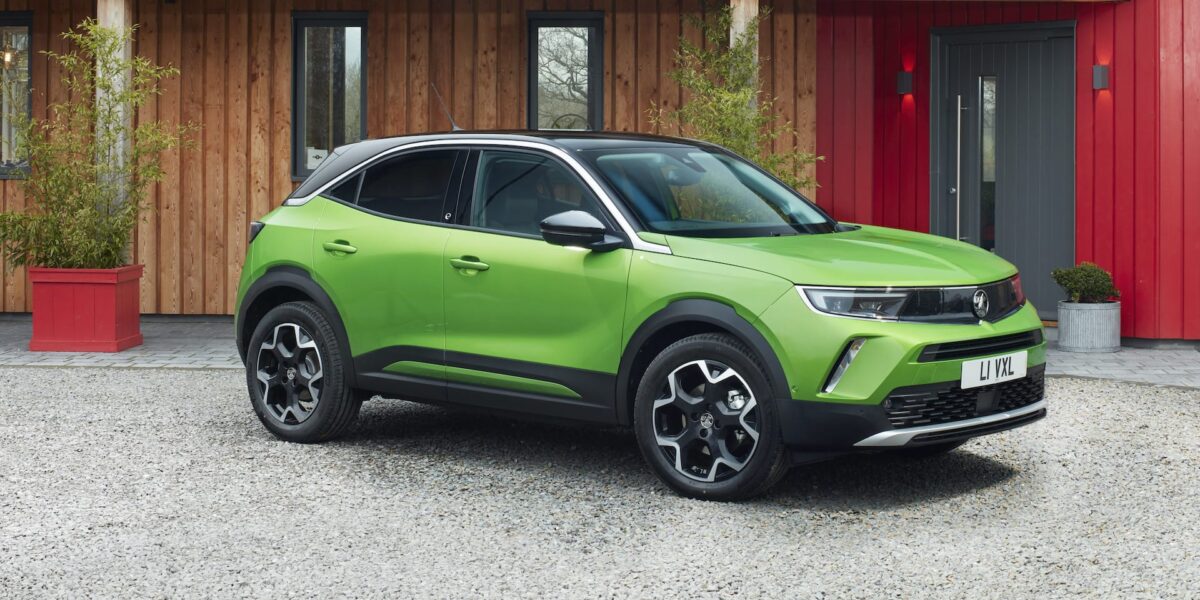
The testing standards go above and beyond minimum legal requirements, so a car can perform dismally in Euro NCAP testing but still meet legal requirements in the UK and across Europe – as well as the Renault Zoe scoring zero stars in 2021, the Fiat Panda scored zero stars in 2018. Despite these abysmal results, they’re both still on sale and perfectly legal. However, if you were a customer comparing two new cars – one with a five-star safety rating and the other with a zero-star rating – it would be difficult to justify picking the zero-star car.

Testing processes are also upgraded regularly, with minor enhancements each year and significant changes implemented every few years. This means that a five-star rating awarded a few years ago is not necessarily equivalent to a five-star rating awarded today.

Euro NCAP reviews the results of previous tests on an annual basis, and ratings will eventually expire when a car no longer meets the requirements to maintain its original rating against newer testing standards. For example, the Citroën C1 was tested back in 2014 and was awarded a four-star rating. However, this rating expired in January 2021 as it no longer met the criteria for a five-star car. With this expiry, the C1 effectively has no current safety rating.

Sometimes a car will be re-tested after several years on sale: the Volkswagen Up was tested in 2011, when it was first launched, and scored five stars. However, standards have evolved and the same model was tested again in 2019, with the result being that it was downgraded to only three stars.

Once a rating expires, a car manufacturer can no longer promote a car’s Euro NCAP score, but unfortunately the motoring media rarely update their reporting to reflect this.

Older ratings are obviously still important if you are looking at buying an older car, and the results for all tests remain available on the Euro NCAP website.

Here at The Car Expert, we regularly check the Euro NCAP database to remove ratings that have expired from our Expert Rating reports. We still provide a link to the original safety rating on the Euro NCAP website, but we make it very clear that the rating is no longer valid. We are the only UK automotive site that does this.

Which cars are tested?

Not every new car is put through the Euro NCAP safety testing protocol. It’s not compulsory and Euro NCAP can’t afford to test every new car on the market. The testing process requires four cars, all of which will be written off in high-impact collisions. That tends to rule out the organisation purchasing a few Bentleys or Lamborghinis to crash into walls and poles.

On top of the costs of the cars themselves, the cost of conducting the tests and maintaining the laboratories is substantial, so it’s simply not possible to assess every new car. As a result, the organisation has to decide which cars it will choose to test. This inevitably means taking the most popular models on sale, and cheaper rather than more expensive models.

In addition to cars that Euro NCAP purchases with its own money, car manufacturers can submit vehicles for testing. This usually happens when a new model is released (and when a car company is confident of achieving a good score), so that the manufacturer can – hopefully – promote a five-star rating as soon as the new model goes on sale.

Euro NCAP works with the car companies to make sure it is testing the most popular and most representative variants, and usually a rating will apply across all versions of that model sold across all European markets (including both left-hand drive and right-hand drive) and across different body styles.

For example, the Audi A4 has a five-star rating based on Euro NCAP testing of the saloon model. The scores apply to the estate versions as well because the cars are structurally identical for the purposes of testing – and Audi was required to show evidence of this to Euro NCAP in order for the rating to be applied to all models. Incidentally, the Audi A4’s rating also applies to the A5 coupé and A5 Sportback models as they are also structurally identical, but not the A5 Cabriolet, which has substantial differences (not having a roof, and the alterations required to the rest of the car to compensate for that).

There are circumstances where ratings only apply to specific versions of a car. For example, the Hyundai Kona has a five-star rating that applies to all petrol, diesel and hybrid models. However, that score does not apply to the Hyundai Kona Electric model, as there are too many changes to the vehicle that would affect how it performs in the tests.

Dual ratings

In 2016, Euro NCAP introduced the concept of a dual rating, as many cars have advanced safety equipment that may only be available on more expensive trim levels or as an extra-cost option. As a result, an entry-level model may not perform as well as a top-spec version of the same vehicle.

In such cases, Euro NCAP will run separate tests for cars with and without the additional safety equipment, and will award separate ratings. The first score reflects the car’s safety levels when fitted with standard equipment. According to Euro NCAP, it ‘reflects the minimum amount of safety you can normally expect from any car sold anywhere in the European Union’. The second rating reflects cars fitted with an additional safety pack available at extra cost.

An example of this is the Peugeot 2008, where the lower-spec ‘Active’ and ‘Active Premium’ models are not fitted with certain safety kit, and as a result they only get a four-star rating. Higher-spec models have this extra kit included, so they get a five-star score.

Some cars, like the Nissan Micra, have two separate ratings from Euro NCAP (four stars and five stars, depending on specification) but all models sold in the UK get the full suite of safety equipment as standard, so all UK-spec Nissan Micras are rated five stars while those in Europe may have a lesser score.

Here at The Car Expert, our Expert Rating reports will always display the standard rating for entry-level UK-spec cars in full, with additional notes about extra safety kit being available and a link to any separate Euro NCAP rating for cars with the extra kit. So for the Peugeot 2008 example above, we show the car as having a four-star rating, regardless of how many models are sold in that specification.

The four rating categories

The Euro NCAP rating is based on four separate categories, covering adults, children, vulnerable road users and safety assistance systems. All four scores are expressed as a percentage.

Adult occupancy protection

Adult occupancy measures how safe both an adult driver and front passenger are kept in the event of an accident. Tests are conducted for frontal impact, side impact and whiplash.

Euro NCAP adult protection logo
Child occupant protection

Child occupant testing measures how safe children are kept in the rear seats in the event of a crash. Euro NCAP uses crash test dummies to represent children six and ten years of age, and also assesses mounting points for child seats.

Vulnerable road user protection

Previously called pedestrian protection, this section was expanded in recent years to include cyclists. The purpose of the tests is to assess the potential injuries to a pedestrian’s head, pelvis, upper and lower leg in an impact.

Cars gain additional points if they have an autonomous emergency braking (AEB) system that recognises both pedestrians and cyclists.

Safety assist

Safety assistance systems that help avoid an accident (or at least reduce the impact) have improved massively over the last decade. Euro NCAP has placed increasing importance on this technology in recent years – after all, it’s better to avoid an accident altogether than to survive one.

The testing measures systems for autonomous emergency braking, speed limit assistance, land-keeping assistance, seatbelt warnings and driver fatigue detection.

Why all four scores are important

The headline star rating gives a good overall picture for each car, but it doesn’t necessarily provide the best answer for every situation as not every score will be relevant to every buyer.

A good example of this is the Ford Mustang. In 2017, the Mustang was widely criticised after scoring a dismal two stars in Euro NCAP testing. Essentially, it performed reasonably well for adult occupants but was poor in the other three tests – particularly for child protection. Ford quickly made some specification changes to the car, adding improved autonomous braking to benefit vulnerable road users and avoid rear-end collisions, and resubmitted the Mustang to Euro NCAP for a second round of testing.

In the new tests, the Mustang improved to a three-star score – better, but still a poor overall result. However, by looking at the four individual categories it becomes clear that the Mustang improved considerably in the vulnerable road user and safety assist scores, while adult occupant protection remained the same. The main weakness remained child protection in the rear seats, which was something that Ford was unable to suitably rectify without a wholesale redesign.

So if you have kids, a Mustang is probably one of the worst new cars you could buy to protect them. But if you don’t ever intend to put children in the back seats, the Mustang is a much safer car than its three-star rating suggests. Personally, I’d happily drive a Mustang myself but I wouldn’t buy one for our household as I have a five-year-old son who would be riding in the back several times a week.

Similarly, vulnerable road user protection is a much bigger issue for driving in city environments where there are lots of pedestrians and cyclists, compared to many rural settings where there may be very few. In terms of safety assistance systems, driver fatigue systems won’t really register if you only ever take short journeys. Speed assistance systems are particularly beneficial if you don’t know the local speed limits, but less so if you tend to only travel on the same roads for most of your journeys.

All four categories measure different aspects of a car’s overall safety, but not every buyer needs their car to do well in all of those tests. That’s why our Expert Rating reports show all four scores for each car, allowing you to see the full picture and make the best decision for your needs.

This article was originally published in June 2020, and most recently updated in December 2021 with new information. Additional reporting by Jack Evans, PA Media