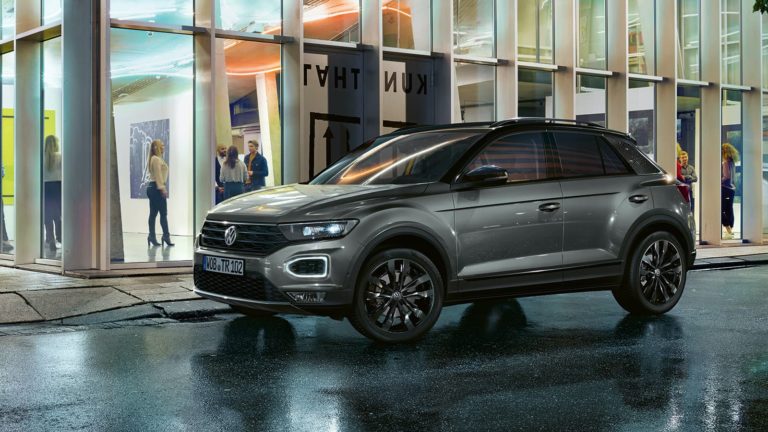
Volkswagen has added a new Black Edition specification to its compact T-Roc crossover model.
Priced from £23,750, the T-Roc Black Edition trim level is based on the existing SE specification but gains additional black-coloured trim pieces and extra interior features. It follows on from the Volkswagen Touareg, which also gained a Black Edition specification.
The exterior of the car receives a black finish to the front grille, rear privacy glass and 18-inch alloy wheels. LED headlights are included as standard, too.
Inside the black theme is continued, with piano black dashboard trim pieces and a black roof, while a multifunction steering wheel with contrasting grey stitching is also included.
Standard equipment includes adaptive cruise control, front and rear parking sensors, and Apple CarPlay and Android Auto smartphone integration. Safety-wise, the T-Roc Black Edition doesn’t pick any new kit, but the T-Roc already has a five-star safety rating from Euro NCAP so it’s already well equipped in the event of trouble.
If specified individually, these options would cost more than £2,000, meaning that the T-Roc Black Edition potentially represents a considerable saving for buyers. An extensive list of optional extras remains, however, with buyers able to add features such as leather upholstery and a sports suspension package for an additional cost.
Available in front-wheel drive, the T-Roc Black Edition can be fitted with the choice of a 1.0-litre or 1.5-litre petrol engine, as well as either a 1.6-litre or 2.0-litre diesel.
Tempting T-Roc
The Volkswagen T-Roc is one of the most highly-rated small crossovers, as calculated by The Car Expert’s unique Expert Rating system. We have analysed 19 different reviews of the T-Roc from the UK’s top automotive websites, and their combined scores give it an overall Expert rating of 79% (as of May 2020). That’s a few points behind the class-leading Ford Puma, but still puts it firmly in the top half of its segment.
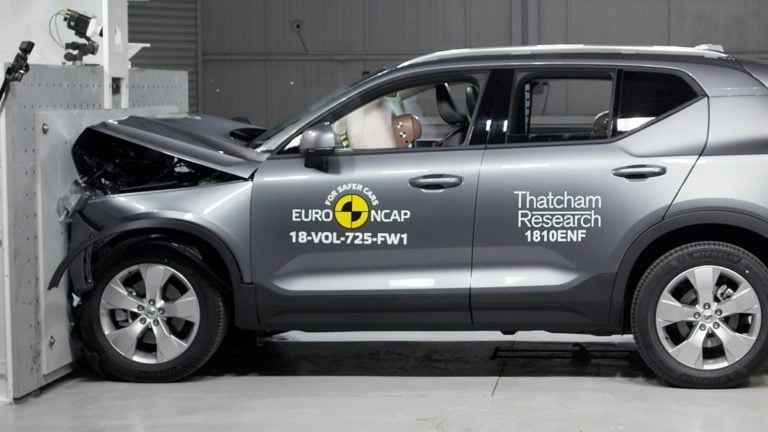
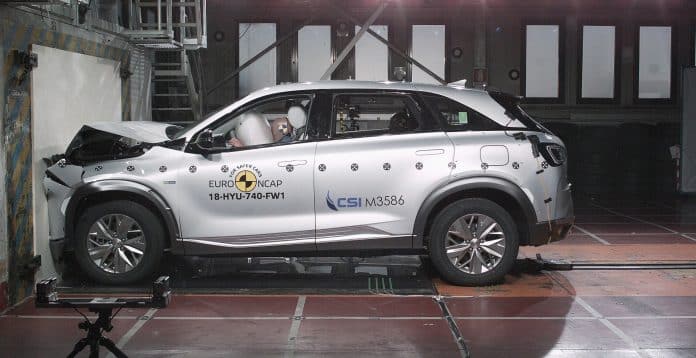
Car crash test procedures are being given their biggest overhaul in a decade to improve occupant protection and improve post-crash protection.
The Euro NCAP tests dictate the safety ratings given to new cars, which are ranked on how well they protect adult occupants, child occupants and vulnerable road users, as well as how much safety assistance technology is included.
When the changes are implemented later this year, they will include a new moving barrier in the moving car frontal crash test. Not only does this measure how occupants of the car are protected, it can also calculate how the vehicle’s front end crash structure contributes to injuries in the vehicle it has collided with.
Euro NCAP says side impacts account for the second highest frequency of death or serious injuries in collisions, so it has increased the severity of impacts during the test. It will also evaluate how the collision affects the ‘far side’ of a vehicle in an impact rather than just the immediate contact point, and the potential for interaction between the driver and front seat passenger.
The tests also include challenging new scenarios to evaluate the latest generation of driver assistance systems, and the first step towards evaluating a vehicle’s driver monitoring system.
A new crash test dummy, called THOR, is also being introduced. This is said to be the world’s most advanced crash dummy, which can more accurately replicate a human in crash conditions and record more types of potential injuries.
The organisation has also worked with the International Association of Fire and Rescue services to create a post-crash safety rating system. This will score manufacturers for how accurate and easily available extraction information is, as well as ease of extraction and use of electric door handles, for example.
Why we publish the full Euro NCAP ratings
The Car Expert is one of a very few automotive sites that publishes the full Euro NCAP safety ratings – rather than just the headline star rating – as part of our unique Expert Rating report for new cars.
The Euro NCAP tests are made up of four categories: 1) adult occupants; 2) child occupants; 3) vulnerable road users (pedestrians and cyclists); and 4) active safety systems (to help you avoid a crash). Together they combine to form an overall rating.
It’s quite common for a car to miss out on a higher overall rating because it is deficient in one area. For example, the Ford Mustang has an overall three-star rating, which means titles like Which? automatically give it a “Don’t Buy” recommendation. But one of the reasons for that poor rating is a very low child safety score. If you don’t have kids and are not planning to carry any in your car, the rest of the Mustang’s scores are much more competitive.
Stuart Masson, Editor
Levelling the playing field
Matthew Avery, director of research at Thatcham Research and Euro NCAP board member, said: “This is a new yardstick that vehicles will be measured against. We and Euro NCAP look forward to working closely with carmaker safety teams to drive towards strong results for these society-benefitting tests.
“These are the biggest changes to Euro NCAP’s impact testing protocols in a decade. Chief amongst them is the new ‘compatibility’ impact test.
“The objective is to encourage makers of larger vehicles to share some of the burden of the impact with smaller vehicles. Historically SUVs and other big cars have offered very good protection to their occupants. However, the smaller vehicles they sometimes crash into can fare less well.”
“In the new compatibility test, if the larger vehicle is too stiff in an impact scenario, it will be penalised accordingly. This levels the playing field for all vehicle sizes, which is a win-win for road safety.”
Avery also explained the benefits of the new dummy. “The THOR dummy is the most advanced we’ve ever worked with. It makes the new test especially challenging for carmakers, as the dummy more closely represents a human. The previous dummy we used was designed for impact scenarios that are less common today, while the THOR dummy is far more complex and sensitive and can record abdominal injuries.”
Euro NCAP normally tests up to half a dozen new cars each month, but testing has been put on hold due to the coronavirus pandemic. It is expected to resume in coming months, with the first tests under the new protocols due “after the summer”.
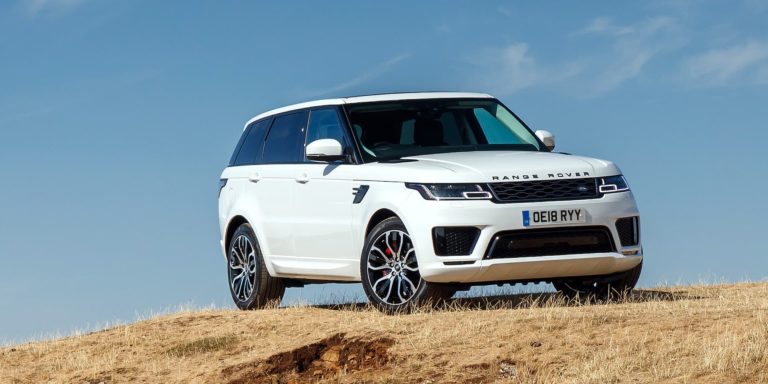
The Range Rover Sport was a large SUV that sat above the smaller Range Rover Velar and below the flagship Range Rover in the Land Rover family. This is the second generation, which was launched in 2013, received a mid-life update in early 2018, and was replaced by the current generation in 2022.
Unlike some other models in the Jaguar Land Rover stable, the Range Rover Sport was built in the UK for its full production life, at JLR’s factory in Solihull.
The Range Rover Sport received many positive reviews from the UK automotive media. It got particular praise for its ability to combine on-road and off-road performance, as well as comfort and luxury. However, like most Land Rover models, it was criticised for a high number of reliability and quality problems. We explain this in more detail in the ‘Reliability rating’ section below.
No longer on sale, the Range Rover Sport holds a Used Car Expert Rating of E, with a score of 44%. It scored well for its media reviews, but very poor scores for reliability and running costs drag the overall rating down.
Body style: Large SUV Engines: petrol, diesel, plug-in hybrid Price when new: From £65,295 on-road
Launched: Summer 2013 Last updated: Spring 2019 Replaced: Autumn 2022
Image gallery
Media reviews
Highlighted reviews and road tests from across the UK automotive media. Click any of the boxes to view.
Featured reviews
“If you’re looking for the ultimate combo of luxury, performance and off-road ability, nothing else comes close”
Model reviewed: Range overview
Score: 8 / 10
Auto Express
“A strong combination of full-size Range Rover elements in a more attainable package, but the Sport is objectively it’s no class-leader.”
Score: 7 / 10
Evo
More reviews
Auto Express
Model reviewed: 3.0-litre diesel (mild hybrid) D350 HST Score: 8 / 10 “Creaking infotainment aside, this Range Rover Sport feels rejuvenated by its all-new diesel engine. It has bags of punch and performance, is refined and offers great long-distance cruising ability.” Read review
Model reviewed: 3.0-litre petrol automatic HST Score: 8 / 10 “It may not look much different, but beneath the bonnet this new Range Rover Sport HST is very different indeed.” Read review
Model reviewed: 5.0-litre petrol automatic SVR Score: 8 / 10 “With the exhaust baffles fully open, the steering weighted up, the gearbox in its most aggressive setting and the engine in its most unhinged mode, the Range Rover Sport SVR feels like a proper weapon.” Read review
Model reviewed: 2.0-litre petrol/electric plug-in hybrid automatic P400e HSE Score: 8 / 10 “The Range Rover Sport’s P400e powertrain is beautifully befitting of the brand – nothing screams luxury like the sound of silence, after all. If a plug-in hybrid works for you financially, we’ve few reasons not to recommend one.” Read review
Car
Model reviewed: Range overview Score: 8 / 10 “The new straight-six engines in the Range Rover Sport are welcome powertrain replacements for their ousted counterparts, with the petrol proving impressively efficient around town, the diesel on longer slogs.” Read review
Model reviewed: 2.0-litre petrol/electric automatic plug-in hybrid P400e Score: 8 / 10 “In the grand scheme of things, the plug-in Range Rover Sport makes as much sense as any of its rivals; the electrified powertrain feels better matched here than it does in the maximum Range Rover.” Read review
Model reviewed: SVR Score: 8 / 10 “A Porsche Cayenne Turbo might be for the discerning driver, but the Range Rover Sport SVR will whole-heartedly tick the entertainment factor box. You just have to put up with looking like a Premier League footballer.” Read review
Model reviewed: 3.0-litre diesel automatic SDV6 Score: 8 / 10 “The 2017 update has kept the Range Rover Sport on the pace of newer rivals such as the Audi Q7 and Volvo XC90. It’s not as light, frugal or tax-friendly as those peers, but it offers a compelling combination of comfort and dynamics.” Read review
Carbuyer
Model reviewed: Range overview Score: 7.2 / 10 “The Range Rover Sport certainly isn’t cheap, but it offers most of the luxury of its big brother, while also being more enjoyable to drive.” Read review
Model reviewed: 2.0-litre petrol/electric plug-in hybrid automatic Score: 8.2 / 10 “The Range Rover Sport PHEV is a desirable luxury SUV with low emissions. It’s not perfect, but should dramatically cut costs for some drivers.” Read review
Carwow
Model reviewed: 5.0-litre petrol automatic SVR Score: 8 / 10 “Given the performance on offer, the Range Rover Sport SVR is a surprisingly practical car. Its tall body gives the driver an excellent, commanding view of the road ahead and makes for a roomy cabin, with a big boot. Excellent off-road ability is a given, too.” Read review
Model reviewed: Range overview Score: 7 / 10 “The Range Rover Sport is a good choice if you want a posh car that’s brilliant for family life. Other models are sportier to drive but few can match the Range Rover’s luxurious cabin and impressive off-road ability.” Read review
Daily Mail
Model reviewed: 4.4-litre diesel automatic SDV8 “The Range Rover Sport is a very good car. Given the budget to pick an all-rounder, it would make a very good choice and the SDV8 sits firmly in the most sought after bracket of Range Rover Sports.” Read review
Discover EV
Model reviewed: 2.0-litre petrol/electric plug-in hybrid P400e Score: 6 / 10 “Despite the fact that there’s no six- or eight-cylinder unit it still feels like a proper Range Rover, retaining its most of its best qualities while giving you a big enough range to cope with day-to-day errands. If you drive mainly short distances and have access to charging points at home and/or work the P400e makes sense.” Read review
Evo
Model reviewed: 3.0-litre petrol automatic HST Score: 7 / 10 “Land Rover’s new inline-six is an impressive unit, making this Range Rover Sport the pick of the range.” Read review
Model reviewed: 5.0-litre petrol automatic SVR Score: 8 / 10 “The Range Rover Sport SVR is impressively capable on road and off it, but not a car for those wishing to keep a low profile.” Read review
Model reviewed: Range overview Score: 8 / 10 “Hugely capable off-roader that makes you question the relevance of the regular Range Rover.” Read review
Green Car Guide
Model reviewed: 2.0-litre petrol/electric plug-in hybrid P400e HSE Dynamic Score: 9 / 10 “It’s amazing that any car can feel so luxurious, sporty, comfortable and refined on tarmac roads, yet also be so competent off-road. In the case of the Range Rover Sport P400e, it’s even got added capability, because it can also travel on tarmac or off the beaten track in zero emission electric mode.” Read review
Model reviewed: 3.0-litre diesel hybrid automatic SDV6 Autobiography Dynamic Score: 9 / 10 “The Range Rover Sport Hybrid is probably the world’s most capable all-round car. With help from its air suspension, it can drive over most off-road tracks and make them feel like a normal British urban road surface.” Read review
Heycar
Model reviewed: Range overview Score: 7 / 10 “Despite its name, the Range Rover Sport is actually more comfortable and refined than most sporty SUVs. It feels extremely luxurious inside, comes with some wonderful engines, and we like the latest new technology. Few rivals are as competent off-road, but it’s very expensive to buy and run.” Read review
Honest John
Model reviewed: Range overview Score: 6 / 10 “The Range Rover Sport isn’t as sharp as the Porsche Cayenne, but it’ll still take corners with gusto without making your passengers feel seasick. Where the Sport really shines is off-road – it can tackle much more challenging obstacles than any similar SUV on sale.” Read review
Motors
Model reviewed: Range overview Score: 8 / 10 “As a first in the Range Rover line-up, the Sport is available with an optional third row of seats, meaning that it is capable of transporting as many as seven people. While these seats are a bit too small for adults, parents will no doubt find them perfect for the school run.” Read review
Parkers
Model reviewed: Range overview Score: 8.2 / 10 “The full-sized Range Rover designed to suit keener drivers.” Read review
The Sun
Model reviewed: Range overview “It’s an SUV Jack of all trades. It does all the off-road stuff, combined with the ability to produce race car performance on tracks — yet also still be the coolest car on the school run.” Read review
The Sunday Times
Model reviewed: SVR Score: 8 / 10 “The Range Rover SVR is not about keeping a hold on your carbon footprint, but it’ll get you noticed. It’s even got a button to press in case there aren’t enough people looking at you.” Read review
Model reviewed: SVR Score: 8 / 10 “Handles extremely well for something bigger than a Scottish island” (Jeremy Clarkson) Read review
The Telegraph
Model reviewed: 3.0-litre petrol automatic P400 HST Score: 8 / 10 “Its name might be evocative, but the HST feels a little pricey for what it is. However, the P400 engine it comes with is superb – a genuinely characterful petrol with the economy and towing capability of a diesel. It’s now the powerplant of choice in the Range Rover Sport.” Read review
Model reviewed: 2.0-litre petrol/electric plug-in hybrid Score: 8 / 10 “The Range Rover Sport hybrid is potentially very economical over short distances between recharges. But that supposes the vehicle will be on charge when it is parked and as we know, that’s not always the case. Used improperly, the Sport becomes an absurdly heavy twin-engined car.” Read review
Model reviewed: 3.0-litre diesel automatic SDV6 Score: 8 / 10 “The Range Rover Sport still strikes me as more of a luxury cruiser than a performance car. Perhaps its ability to make a decent fist of both roles is its strength.” Read review
Top Gear
Model reviewed: Range overview Score: 8 / 10 “An imperious cruiser, best sampled with vast quantities of diesely torque. Now with better tech, but the same old image.” Read review
Model reviewed: 3.0-litre petrol automatic HST Score: 7 / 10 “The Range Rover Sport HST is far less brash than an SVR, feels like a more intelligent, educated choice that doesn’t sacrifice drivability, but does appear to get some fuel economy gains.” Read review
Model reviewed: 5.0-litre petrol SVR “You have the likes of Kahn and Overfinch to blame for the SVR’s appearance. Bored of seeing such companies taking its cars, making them more brash and selling them on for a hefty profit, Land Rover decided it could do that itself via SVO. Not for us, but hey, who are we to lecture anyone on style.” Read review
Safety rating
Independent crash test and safety ratings from Euro NCAP
No safety rating
The Range Rover Sport was not tested by Euro NCAP during its production life.
Eco rating
Independent economy and emissions ratings from Green NCAP
No eco rating
The Range Rover Sport was not tested by Green NCAP during its production life.
Reliability rating
Reliability data provided exclusively for The Car Expert by MotorEasy
Total claims: 1395 Average repair cost: £1383.73 Last updated: April 2025
Like most Land Rovers, the Range Rover Sport has a very poor reputation when it comes to reliability. As of April 2025, the Range Rover Sport has a frankly terrible reliability score of 20%, according to exclusive extended warranty data provided by our partners at MotorEasy.
A wide array of problems with the Sport have been reported, spread across all areas of the car. Engine problems are the most expensive, and unfortunately they appear to be relatively common, making up nearly a quarter of all claims with an average repair cost of nearly £4,000.
If you’re looking at a used Range Rover Sport, make sure any extended warranty cover you purchase covers all of the potential problem areas shown in the charts above.
Running cost rating
Monthly cost of ownership data provided exclusively for The Car Expert by Clear Vehicle Data
Fuel consumption
Average
Score
Petrol models
24 mpg
E
Diesel models
31 mpg
D
CO₂ output
Average
Score
Variation
Score
Petrol models
265 g/km
E
Diesel models
233 g/km
E
Plug-in hybrid models
77 g/km
A
Battery range
Average
Score
Variation
Score
Plug-in hybrid models
25 miles
E
Insurance group
Average
Score
Variation
Score
All models
47
E
The Range Rover Sport is an expensive car to own and run, according to whole-life cost numbers provided exclusively to The Car Expert by our data partner, Clear Vehicle Data.
We don’t have a full set of running cost data due to the car’s age, but the numbers we do have are not flattering (and based on what we know of the numbers we don’t have, like servicing costs, they’re also on the expensive side).
Insurance is an ongoing problem for Range Rover Sport models – it’s in a high insurance group to start with based on its price and repair costs, but very high theft rates have put insurance premiums on all Range Rover models up by a lot.
Awards
Trophies, prizes and awards that the Range Rover Sport has received
2015
Fleet World Honours – Best SUV
2013
4×4 Magazine Awards – 4×4 of the Year + Best Premium 4×4
Similar cars
If you’re looking at the Range Rover Sport, you might also be interested in these alternatives
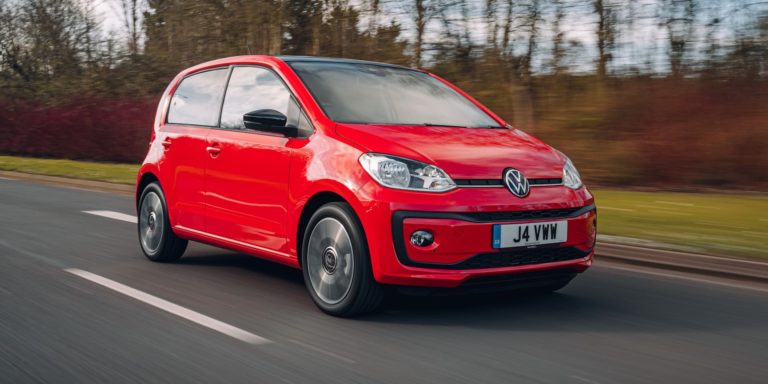
The Volkswagen Up! has been one of the stars in the city car segment for some time. Offering clever packaging as well as traditionally dependable build quality, it’s been one of the best small cars out there. However, the game has moved on since the Up! first arrived, with key contenders like the new Kia Picanto and Hyundai i10 hitting the forecourts.
In response, Volkswagen has updated the little Up! as well as refining its choice of engines while offering more kit. Has it done enough though? We’ve been behind the wheel to find out.
As we’ve just mentioned, the list of engines has been trimmed down to just two, giving buyers less of a headache when it comes to powertrains. There’s also the all-electric e-Up!, which means people have an electrified option too.
But Volkswagen hasn’t messed with the outright formula much. The packaging is still clever, the dimensions still compact and the cabin still not overloaded with buttons. The German manufacturer knows, however, that a car brimmed with features isn’t what this segment wants – value reigns supreme here, after all.
How does it look?
Smart, dinky and well-proportioned, the Up! is a surprisingly premium-looking way of getting around. It’s a well-finished design, that’s for sure. Despite having been around since 2011 – and remaining relatively unchanged during that period – it’s not showing its age whatsoever, and still looks on par with rivals introduced more recently.
There are a variety of colour options for drivers to choose for meaning personalisation – which is a key concern in this segment – is well catered for.
What’s the spec like?
Volkswagen has tried hard to build up the level of standard equipment accompanying the Up!, meaning people don’t have to stray too far into the optional extras list. All cars get a five-inch colour touchscreen system – but there’s no ‘central’ system.
Instead, Volkswagen has fitted a smartphone cradle in which you place your phone and access the car’s main functions via an app. Connected at all times, it can relay information like fuel station locations, driving style analysis and even most recent parking locations – all on your phone.
Our test car did come with a select number of options – a multifunction leather steering wheel came in at £280, for instance, and though we could do without that, we’d highly advise spending the £270 for the climate control pack.
Safety-wise, the Volkswagen Up! has fallen behind the times. When the car was first launched, way back in 2011, it scored a benchmark five-star safety rating from Euro NCAP. But standards have improved and the Up! no longer meets the requirements for a five-star score. When the car was re-tested in 2019, it was re-classified with a three-star safety rating.
What’s it like inside?
The cabin of the Up! is an area which really impresses. It’s akin to a shrunken-down version of some of Volkswagen’s larger cars, which means that the build quality is solid and the layout of controls is superbly intuitive. Since the Up! does without a screen – we’ll get to that in a second – it’s also refreshingly low on displays, which is something you don’t tend to find on most current cars.
The seating position gives you a good view out, while rear-seat passengers get a decent amount of legroom too. It’s certainly not palatial, but it’s a good degree more than you’d expect from a car of this size.
Plus, you get a very useable 251 litres of boot space, and you can increase this up to 951 litres by folding the rear seats flat.
What’s under the bonnet?
All Up! models – save for the range-topping GTI and e-Up – make use of the same 1.0-litre naturally-aspirated petrol engine. Its outputs are modest; there’s just 70hp and 95Nm to call upon when pressing the accelerator, and it means that going from 0-60mph will take a rather sedate 14.7 seconds. Flat-out (if you felt the need) the Up! would get to 101mph – but it would need a rather large run-up to get to this.
That said, economy figures are excellent as a result. Volkswagen claims up to 51.2mpg combined, with CO2 emissions at 100g/km. Though the engine line-up is slim, to say the least, the 1.0-litre on offer certainly delivers what buyers will need; enough performance to make the car accessible around town but, more importantly, great economy figures.
What’s it like to drive?
We’d have to argue that the Up! offers one of the best big-car-in-a-small-car driving experiences around. It’s partly down to the ride – few cars in this segment manage to be quite as comfortable to drive over rough and broken surfaces like the Up! Visibility up front is excellent, and when combined with light steering and a peppy engine make for a car which is well-suited to life around town.
However, areas which require a car to be a little more long-legged – such as when joining a motorway, for example – do tend to unravel the Up! somewhat. There’s no getting away from the fact that this Volkswagen isn’t a powerful one, so merging and overtaking require some serious forward planning.
Verdict
Though the Volkswagen Up! now sits in a market with several other key competitors, it’s still more than good enough a proposition. Cleverly put together and surprisingly refined, it’ll be a great option for those who want a comfortable around-town car which won’t fall over during longer journeys.
The engine does mean it’s reasonably restricted to lower-speed travel, but given that it’s a car aimed for urban drivers then this is unlikely to trouble too many people. With some simple revisions, Volkswagen has ensured that the Up! remains competitive for some time yet.
Car insurance providers have been told to allow for delayed payments and waive fees when necessary, to help customers who are in financial difficulty due to the coronavirus pandemic.
The Financial Conduct Authority (FCA) has told insurers that they must waive the cancellation fees – among others – that customers would traditionally have to pay when making adjustments to their policies. They’ve also been requested to reassess customer risk profiles to see if premiums can be lowered.
It’s been requested that firms also consider whether other products could be better suited to a customer’s needs and revise cover to reflect this.
Sheldon Mills, Interim Executive Director of Strategy and Competition at the FCA, commented: “As with other areas of finance, we have worked quickly to draw up measures to help policyholders in financial difficulty because of coronavirus. The majority of respondents expressed support for the proposals we published at the start of May.
“Many firms in the insurance industry have already taken some of the actions we are suggesting here to support customers, such as premium reductions, discounts, waiving fees, and payment deferrals. The measures confirmed today will provide urgent support to those that need it.”
The new requirements are meant to help drive down the cost of payments for those who pay monthly or give a partial refund for those who pay for their annual premiums in full.
However, if refunds aren’t available or amendments cannot be made to a policy, the FCA is stating that insurers should offer payment deferrals of between one and three months. Firms also have the option to defer payments for more than three months if they believe it’s in the customer’s best interest.
The Kia Rio was a small supermini-class five-door hatchback. This model was the fourth-generation Rio, which arrived in the UK in early 2017 and remained on sale until 2023, when it was discontinued without a replacement.
It shares most of its underpinnings with the Kia Stonic small SUV and the Hyundai i20 hatch. It was originally available with a choice of petrol or diesel power, but the diesel engine was dropped about halfway through the car’s life.
The Rio received mixed reviews from the UK motoring media. Most reviews considered it to be competent but not in the same league as class leaders like the Ford Fiesta and SEAT Ibiza. Some titles, like Which?, marked it down severely due to its sub-par three-star safety rating from Euro NCAP on the entry-level model.
No longer on sale, the Kia Rio holds a Used Car Expert Rating of B, with a score of 68%. This is considerably better than its score when it was still a new car, as our algorithms put more emphasis on reliability and running costs for used cars. The Rio has very low running costs and CO2 emissions, while reliability is about average. However, its safety score and media review scores are very poor.
Body style: Small five-door hatch Engines: petrol Price: From £14,900 on-road
Launched: Spring 2017 Last updated: Spring 2018 Discontinued: 2023
Image gallery
Media reviews
Highlighted reviews and road tests from across the UK automotive media. Click any of the boxes to view.
Auto Express
Model reviewed: Mk4 Score: 6 / 10 “The Kia Rio has come on in leaps and bounds since the no-frills original, but the fourth-generation model isn’t a huge step on from the Mk3. It has merely average ride and refinement, and some hard, cheap-feeling interior plastics that all hurt its cause.” Read review
Model reviewed: Range overview Score: 6 / 10 “The Kia Rio offers good value and practicality, but it’s a safe pair of hands in a talented supermini class” Read review
Model reviewed: 1.4-litre diesel manual Score: 6 / 10 “While the new Kia Rio gets the basics right, it doesn’t do enough to stand out in the competitive supermini sector. We take issue with the unexciting design, mixed cabin quality and so-so ride and refinement. This diesel might sip fuel, but the 1.0-litre turbo petrol would be our choice in the range.” Read review
Model reviewed: 1.0-litre petrol manual 3 Score: 6 / 10 “In isolation the new Kia Rio is a capable supermini, thanks to a neatly designed interior, range of efficient engines and big luggage area. Unfortunately, it’s entering a market with many excellent competitors that beat it in virtually every area, so it’s a tough one to recommend.” Read review
Auto Trader
Model reviewed: Range overview Score: 7.4 / 10 “It’s all too easy to sound like we’re damning the Kia Rio with faint praise, but this really is a very decent car that does its job extremely well. It’s not quite class-leading in any way, but as an overall package, it has an awful lot to recommend it, and no major weaknesses.” Read review
Car
Model reviewed: 1.0-litre petrol manual 3 Score: 6 / 10 “The Kio Rio is a well-equipped, cheap-to run and relatively spacious supermini. As a tool for getting from A to B, it’ll do the job nicely. Yet in class of such broad and varied talent, the Rio is overwhelmed.” Read review
Car Keys
Model reviewed: 1.0-litre petrol manual 3 Score: 7 / 10 “It may not match rivals like the Ford Fiesta but the Kia Rio is a great-value, well-equipped and practical supermini. In top spec ‘3’ grade, it comes with all the kit you’d ever need. The 1.0-litre petrol engine is a fantastic unit, both around town and on the motorway, too.” Read review
Carbuyer
Model reviewed: Range overview Score: 7.8 / 10 “The Kia Rio is a competent supermini, but because it doesn’t excel in any one area, it’s difficult to recommend over the competition.” Read review
Carwow
Model reviewed: Range overview Score: 6 / 10 “Believe it or not, the Kia Rio supermini is the Korean brand’s best-selling model. The latest fourth-generation version wades into a congested field dominated by established rivals including the Ford Fiesta, VW Polo and Skoda Fabia.” Read review
Company Car Today
Model reviewed: 1.0-litre petrol manual 3 “The Kia Rio appeals not for its particular strengths, but in fact for its lack of weaknesses. That might not sound particularly interesting, but will make for a rewarding ownership experience backed up by Kia’s seven-year warranty.” Read review
Green Car Guide
Model reviewed: 1.4-litre diesel manual 3 Eco Score: 7 / 10 “The new Kia Rio is ideal for people buying cars. It’s easy to drive and easy to live with. But it’s rubbish for motoring journalists because there’s nothing to complain about. It just does everything as it should do. There are no quirky, annoying faults.” Read review
Honest John
Model reviewed: Range overview Score: 8 / 10 “It might not have the all-round classiness and capability of the SEAT Ibiza or the dynamic sparkle of the Ford Fiesta, but the Kia Rio is a very capable hatchback that does everything well enough. Factor in the seven-year warranty and it’s a sound buy.” Read review
Motors
Model reviewed: Range overview Score: 7 / 10 “With each generation, the Kia Rio has got better to drive and far better finished, though even in its current guise it’s one of the more basic cars on the market, aimed at those who really value its combination of practicality, affordability and the peace-of-mind offered by its seven-year warranty.” Read review
Parkers
Model reviewed: Range overview Score: 6.8 / 10 “There are few reasons why you wouldn’t buy a Kia Rio, but when the competition is so strong elsewhere it’s hard to recommend it over the rivals.” Read review
The Sun
“I’ve had more fun threading a Kia Rio down my back roads than I would in something expensive.” Read review
The Telegraph
Model reviewed: Range overview Score: 7 / 10 “The Kia Rio might not be the most fun car to drive in its class, or as comfortable as some rivals, but it scores well most other areas, whether it’s in the space on offer, the low running costs, excellent reliability record, or value for money.” Read review
Top Gear
Model reviewed: Range overview Score: 5 / 10 “An appliance carefully targeted at people who are uninterested in cars.” Read review
Safety rating
Independent crash test and safety ratings from Euro NCAP
As of May 2020, the entry-level Kia Rio ‘1’ earned a three-star rating from Euro NCAP in standard form. Models from specification ‘2’ and upwards are fitted with additional safety equipment as standard, which is an additional £350 option on the ‘1’. This additional equipment lifts the Euro NCAP safety score to five stars.
This rating has since expired, as the car no longer meets the increasing standards for a three-star rating.
Eco rating
Independent economy and emissions ratings from Green NCAP
No eco rating
The Kia Rio was not assessed by Green NCAP during its production life.
Reliability rating
Reliability data provided exclusively for The Car Expert by MotorEasy
Total claims: 28 Average repair cost: £673.11 Last updated: April 2025
The Kia Rio has an above-average warranty reliability score, according to extended warranty data provided exclusively to The Car Expert from our partner, MotorEasy.
The key Rio complaint refers to the car’s braking system, which costs a pretty affordable £190 to fix on average. Very expensive engine issues have also been reported though – while they are rare, the average fix cost is close to £3,000. That’s very high for a car of this size.
However, we only have 28 warranty claims on file, which is a small amount. Not only are other superminis like the Vauxhall Corsa more reliable according to MotorEasy, but they have a much larger selection of reported warranty claims, which provides a more accurate breakdown of what is likely to cause issues during the course of ownership.
Running cost rating
Monthly cost of ownership data provided exclusively for The Car Expert by Clear Vehicle Data
Fuel consumption
Average
Score
Petrol models
51 mpg
C
CO₂ output
Average
Score
Variation
Score
Petrol models
127 g/km
B
Insurance group
Average
Score
Variation
Score
All models
7
A
Running costs for the Kia Rio range are a pretty affordable, according to data provided exclusively to The Car Expert by our commercial partner, Clear Vehicle Data.
Though we don’t current have the full picture – with no maintenance and service cost estimates – the car’s fuel consumption which ranges from 44mpg to 54mpg is commendable, and its insurance premiums should be very low.
Awards
Trophies, prizes and awards that the Kia Rio has received
2020
Auto Express Driver Power Awards – Best Supermini
2019
Auto Express Driver Power Awards – Best Supermini
2018
Auto Trader New Car Awards – Best Value New Car + Best Car for New Drivers
2017
iF Design Awards – Product Design Award
Similar cars
If you’re looking at the Kia Rio, you might also be interested in these alternatives
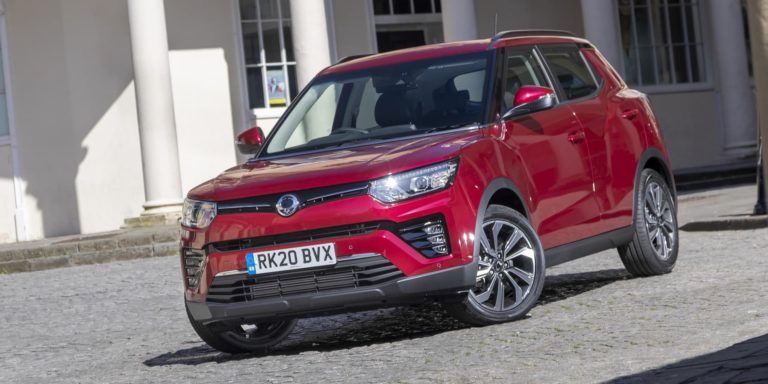
Ssangyong has updated its popular Tivoli model with a sharper look and more interior technology.
Priced from £13,995, the compact SUV has received a mild facelift for the first time since going on sale in 2015. The front of the car has been updated, with sharper lines helping to inject some new life into the model.
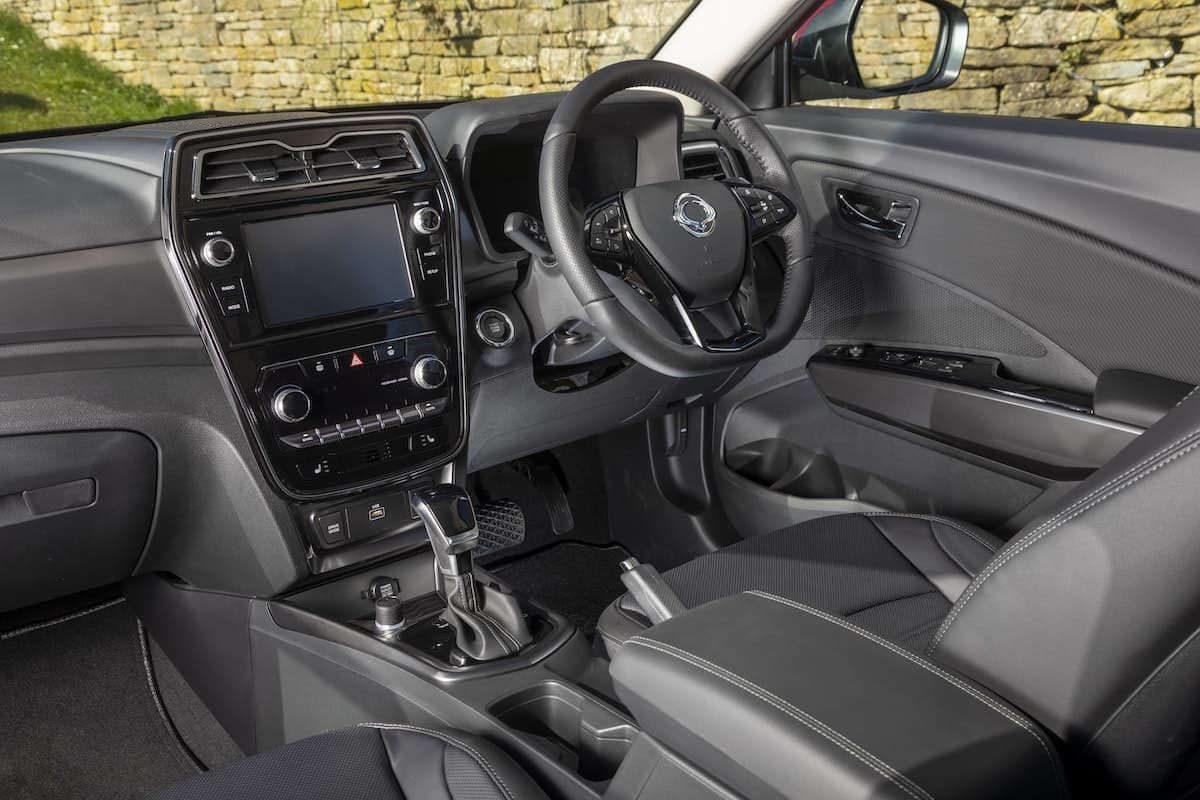
Inside, there’s a new ten-inch LCD instrument cluster located in place of the usual dials – something that has already been seen on the firm’s latest Korando model – which gives drivers the ability to rotate through different menus and graphics. All trim levels get DAB digital radio and Bluetooth connectivity, too.
Three engines are available with the Tivoli, with 1.2-litre and 1.5-litre petrol options joining a 1.6-litre diesel in the line-up. The new 1.2-litre unit is linked to a six-speed manual gearbox, while both the larger 1.5-litre engine and the diesel unit are available with an automatic ‘box.
Three trim levels are available with the Tivoli too – EX, Ventura and Ultimate – with the entry-level specification only available with the 1.2-litre, manual gearbox variant. Even base-spec cars receive air conditioning, tinted glass and electric windows, along with a host of electronic driver safety features including lane departure warning and front collision warning.
Make the jump to top-spec Ultimate trim and you’ll find dual-zone air conditioning, leather seats and 18-inch diamond-cut alloy wheels added alongside the ten-inch instrument cluster. All Tivoli models come with a seven-year or 150,000-mile warranty.
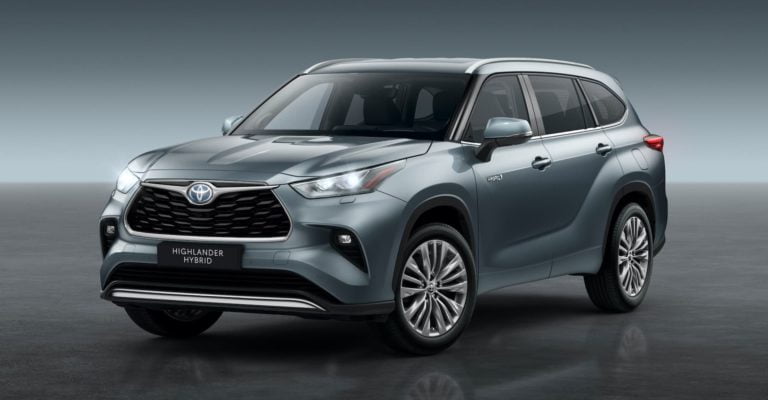
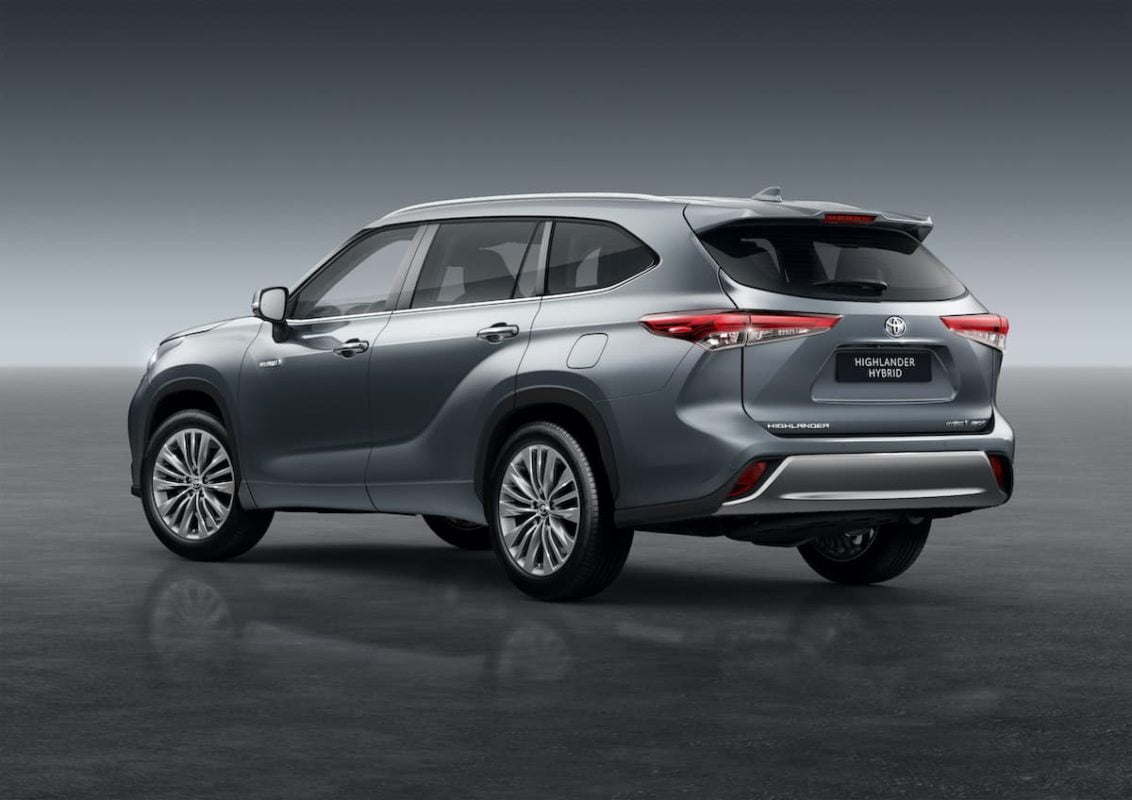
Toyota has announced that it will bring its seven-seat Highlander SUV to the UK for the first time next year.
The Highlander will sit at the top of Toyota’s crossover model range, and is the second new SUV model announced by Toyota in the last month. The small Yaris Cross will also arrive next year to occupy the other end of the range, sandwiching the existing RAV4 and C-HR models.
Although it will be a new addition to the UK range, this is actually the fourth generation of Toyota Highlander and has been sold in several other markets for years. It’s sold as the Toyota Kluger in Japan and Australia because the Highlander name was already trademarked by Hyundai. The current model was launched at last year’s New York motor show.
The seven-seat Land Cruiser 4×4 is expected to remain in the UK line-up for the time being, but that is much more of a niche model that provides far greater off-road capability than the Highlander.
The new Highlander will only be available with four-wheel drive and a hybrid powertrain that uses a 2.5-litre petrol engine and twin electric motors. The total power output is 245hp, with CO2 emissions of 146g/km on the combined cycle and fuel economy of 42.8mpg.
Toyota calls the Highlander ‘an authentic seven seater’ because the second row of seats has a 18cm sliding range that frees up legroom in the third row for two adults.
The boot space measures 658 litres, with extra underfloor storage space available, while folding the second and third rows provides up to 1,909 litres of load area.
In the cabin, there are USB ports for the front and second row passengers, an infotainment system with sat-nav, head-up display, wireless phone charging, and connectivity for both Apple CarPlay and Android Auto.
UK pricing for the Toyota Highlander will be revealed closer to the car’s launch date in early 2021.
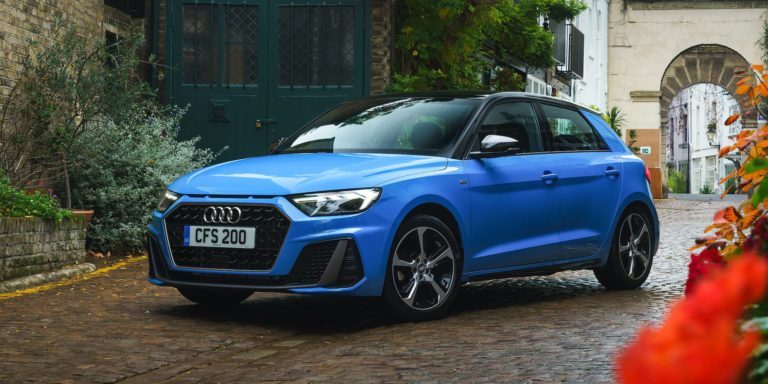
The Audi A1 is a small five-door hatchback, available in regular (A1 Sportback) or crossover (A1 Citycarver) body styles. The current A1 is the second generation, which was launched in the UK in late 2018.
Unlike the original A1, there is no three-door version of the current model and there are no diesel-engined versions. As yet, there are also no higher-performance S1 or RS 1 models.
Generally, the Audi A1 Sportback has received average to poor reviews from the UK motoring media. Its Expert Rating score of C (62%) as of February 2026 also reflects decent running costs and low exhaust emissions. It rates better as a used car, with a Used Car Expert Rating score of B (66%).
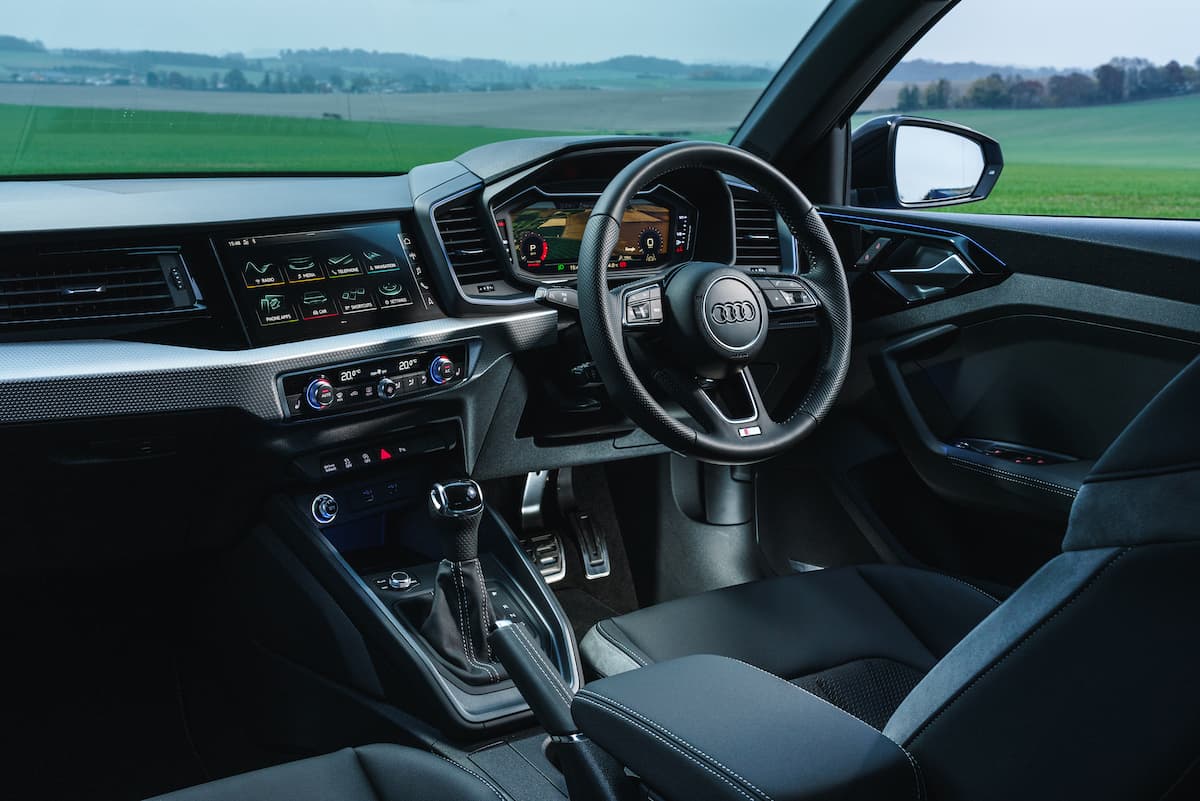
The A1 has been particularly praised for its comfort and technology, but isn’t as enjoyable to drive as its main rival, the Mini hatch.
The (now discontinued) A1 Citycarver also scored poorly compared to the regular A1 Sportback models, particularly because of its high price, which drags down the media rating scores for the overall A1 range.
Highlighted reviews and road tests from across the UK automotive media. Click any of the boxes to view.
The Car Expert
“Some of the interior quality is disappointing, but otherwise the A1 Sportback is an excellent supermini – albeit for a high price.” Read review
Auto Express
Model reviewed: Range overview Score: 8 / 10 “The Audi A1 is a luxurious and sporty-looking small hatch that gives the Mini a run for its money.” (Ben Custard) Read review
Model reviewed: 1.0-litre petrol manual 30 TFSI Citycarver Score: 7 / 10 “The Citycarver costs £1,400 more than an A1 Sport, which comes with a similar level of kit. It’s on this basis that it’s difficult to recommend the Citycarver over the standard car, even if it’s clear the tech offering is the best in this class.” Read review
Auto Trader
Model reviewed: Range overview Score: 8 / 10 “As the most affordable and attainable car Audi makes, the A1 is a very appealing prospect. That’s helped in no small part by sharp looks, decent practicality, nimble handling, punchy engines and impressive economy. This is a good small car that fashion-conscious buyers will be very happy with.” Read review
Car
Model reviewed: Range overview Score: 8 / 10 “The second-generation A1 offers some solid improvements over the outgoing car, especially in terms of space and technology. Its growth spurt and the lack of a three-door variant makes this a more mature, more conventional and less fun-looking car.” Read review
Car Keys
Model reviewed: 2.0-litre petrol automatic 40 TFSI S line Competition Score: 8 / 10 “The Audi A1 S line Competition is certainly an interesting supermini. However, the price is a sore point, and if you’re not set on having the most powerful A1, the 150hp 35 TSI version will feel more than plentiful in just about every scenario.” Read review
Model reviewed: 1.0-litre petrol manual 30 TFSI Citycarver Score: 8 / 10 “While the Audi A1 Citycarver isn’t a model that will suit all buyers, it’s a great addition to the A1 line-up, and offers SUV-obsessed buyers an interesting alternative to a both the regular A1 and other crossovers.” Read review
Model reviewed: A1 Sportback range Score: 8 / 10 “Despite it being at the higher end of the supermini spectrum and the interior finish not as up to scratch as we’d hope, the Audi A1 is a very capable car. It is well-behaved and doesn’t do anything out of the ordinary, while also having sharp looks that are likely to prove popular amongst the masses.” Read review
Carbuyer
Model reviewed: Range overview Score: 8 / 10 “Sporty-looking A1 offers the full Audi experience distilled into a supermini package.” (Andy Goodwin) Read review
Model reviewed: A1 Citycarver range Score: 7.6 / 10 “Improved ride comfort and rugged looks mean the Audi A1 Citycarver isn’t without appeal” Read review
Carwow
Model reviewed: A1 Citycarver “The Audi A1 Citycarver is a bit of an oddball – part sensible hatchback, part high-riding SUV – but it’s packed with all the high-tech creature comforts you’d expect from Audi.” Read review
Model reviewed: Range overview Score: 8 / 10 “The Audi A1 Sportback is a posh small car that is comfortable and practical. It’s easy to drive and has a good range of petrol engines but there aren’t any super-economical diesel units.” Read review
Company Car Today
Model reviewed: 1.5-litre petrol manual Citycarver “The Audi A1 Citycarver looks good, but has to appeal enough to overcome the increased cost of that increased style.” Read review
Model reviewed: 2.0-litre petrol automatic 40 S line Competition “If you want a premium brand city car there’s not a lot of choice, that doesn’t mean half-measures for the smallest Audi, it’s a great, fun little car and with the 200hp 2.0-litre engine, it’s quick too.” Read review
Model reviewed: 1.0-litre petrol manual 30 TFSI S line “The epitome of sensible: good running costs, decent quality, understated looks and a comfortable driving experience. The new Audi A1 is just lacking in a little individual character to make you love rather than respect it.” Read review
Daily Mirror
Model reviewed: 1.0-litre petrol manual Citycarver Score: 6 / 10 “If you really want to go down the crossover route you might as well go the whole way and buy a well-equipped Volkswagen T-Cross or even T-Roc for similar money.” Read review
Green Car Guide
Model reviewed: 1.0-litre petrol automatic 30 TFSI S line Score: 8 / 10 “For a car that’s based on the same platform as other Volkswagen Group vehicles, this is one of the best to drive, but of course it should be, because you’re paying a price premium. “ Read review
Heycar
Model reviewed: A1 Citycarver Score: 7 / 10 “Audi hasn’t strayed too far from its A1 Sportback model to create the Citycarver. This is generally a positive move as the Citycarver’s opposition is also supermini-based in the shapes of the Ford Fiesta Active, BMW X1 and Renault Captur, although those latter two are more dedicated in their styling to distinguish them from their parentage.” Read review
Model reviewed: Range overview Score: 7 / 10 “The second-gen Audi A1 Sportback dares to be a little funkier than its predecessor, placing it ideally between the sobriety of the Volkswagen Polo and the style-led Mini. It makes the A1 a very appealing small hatch as you get much of the looks and all of the quality of larger Audis in a city-busting car.” Read review
Honest John
Model reviewed: 1.0-litre petrol manual 30 TFSI Citycarver “It could be argued that most Audi A1 Citycarver buyers will choose it on looks and style alone, and we’d agree when they say it’s one of the smartest small cars on sale today. But as a value proposition, there are much better ways to spend £22,000.” Read review
Model reviewed: Range overview “The new Audi A1 is longer, wide and lower than before. It’s more angular in its design – a nod to the iconic ur-Quattro rally car from the 1980s, says Audi. We say it looks like a shrunken Q2 with some extra creases added.” Read review
Model reviewed: A1 Citycarver Score: 6 / 10 “The beefed-up A1 Citycarver has an extra 50mm of ground clearance and black wheel arch surrounds to give it a ‘more muscular’ look than the standard car, says Audi. It also has a bespoke front grille, intended to mimic those used on Audi’s Q SUVs.” Read review
Motoring Research
Model reviewed: Range overview Score: 8 / 10 “Overall, this latest Audi A1 is bigger, better and more refined than its predecessor, and it remains one of the most desirable cars in its class.” Read review
Motors
Model reviewed: Range overview Score: 8 / 10 “The interior is perhaps not as you might expect, with disappointing quality in places. While the top of the dash is soft-touch and feels classy, the plastics on the doors and centre console are disappointingly poor, and not what you expect from a car which sits at the top of its class in terms of price.” Read review
Parkers
Model reviewed: Range overview Score: 7.8 / 10 “Smart, high-tech hatch is desirable but not exciting” Read review
Model reviewed: A1 Citycarver review “Rugged Audi A1 Citycarver aims to rival Ford Fiesta Active” Read review
The Sun
Model reviewed: 1.0-litre petrol manual 30 TFSI S line “The build quality of the Audi A1 is as good as any other in the range, and there is a wealth of engine choice.” Read review
The Telegraph
Model reviewed: 1.0-litre petrol manual Score: 8 / 10 “More expressive styling marks the new Audi A1 out, but its recipe for Mini rivalry is virtually unchanged. There’s more space, even more personalisation options and a range of perky petrol engines to choose from.” Read review
Top Gear
Model reviewed: Range overview Score: 7 / 10 “Second-generation A1 is the cheapest way into Audi ownership. Rivals have it licked on driving manners, though.” Read review
Model reviewed: Citycarver Score: 6 / 10 “Apparently only five per cent of people who walk into an Audi showroom to buy an A1 will leave with an A1 Neighbourhoodsnipper.” Read review
Safety rating
Independent crash test and safety ratings from Euro NCAP
Independent economy and emissions ratings from Green NCAP
No eco rating
As of February 2026, the Audi A1 has not been assessed by Green NCAP. If the A1 is put through the Green NCAP lab testing programme, we will publish the results here.
Reliability rating
Reliability data provided exclusively for The Car Expert by MotorEasy
Total claims: 195 Average repair cost: £568.14 Last updated: April 2025
The Audi A1 has a reliability score that’s about average, according to exclusive workshop data provided by our partners at MotorEasy. This score covers both the current-generation A1 and the original (pre-2018) version.
The most commonly reported problems with the A1 relate to its suspension, with an average repair bill of about £350. Engines can also cause problems, and average about £700 to repair. Other areas to look out for are the braking and electrical systems, although the average bills for these are again fairly low. Be aware of gearbox problems, however, – although rare, they are expensive with an average repair bill of more than £2,000.
If you’re looking at a used Audi A1, make sure any extended warranty cover you purchase covers all of these potential problem areas.
Running cost rating
Monthly cost of ownership data provided exclusively for The Car Expert by Clear Vehicle Data
Fuel consumption
Average
Score
Petrol models
50 mpg
C
CO₂ output
Average
Score
Variation
Score
Petrol models
128 g/km
B
Insurance group
Average
Score
Variation
Score
All models
18
A
Service and maintenance
Cost
Score
Year 1
£174
B
Year 2
£482
B
Year 3
£781
B
Year 4
£996
B
Year 5
£1,341
B
Overall
£3,774
B
The Audi A1 should fairly cheap to run on a daily basis, according to data supplied by our technical partner Clear Vehicle Data.
Only available with a petrol powertrain, the A1 offers a decent average fuel efficiency of 48 mpg, which makes it slightly thirstier than rivals like the Volkswagen Polo, Skoda Fabia and Ford Fiesta. Like those rivals though, the hatchback’s insurance premiums should be pretty affordable.
Similar cars
If you’re looking at the Audi A1, you might also be interested in these alternatives
The MG HS is a budget mid-size SUV/crossover, which sits above the smaller ZS in the MG range. Available petrol-powered or as a plug-in hybrid, this first-generation model was launched in the UK in late 2019, and after a mid-life facelift in 2023, it was replaced by a new model in 2024.
Although the HS received better reviews from the UK motoring media than its smaller ZS sibling, the SUV still ranks towards the bottom of our Expert Rating index. It’s main advantage over rivals was its very low price – the HS is was a mid-size SUV for the price of a supermini hatchback from most other brands.
The low price was further enhanced by decent equipment levels, and a lengthy seven-year new car warranty was also a plus point. However, its quality and driving experience were considered to be quite a way off the levels seen in most rivals.
Praising the SUV’s pricing, the Carwow team explained that the HS offered “a lot of toys as standard, but poor boot space and a low-quality interior lets it down.”
Overall, reviewers agree that the HS was rather bland to drive and many of its higher priced rivals offered more interior quality, but if you are simply looking for a spacious and affordable SUV capable of ferrying the family from A to B, this MG is certainly worth considering. “It’s big on value and low on fun”, Parker’s Luke Wilkinson concluded, “but it makes good family transport.”
No longer on sale, the first-generation MG HS holds a Used Car Expert Rating of B, with a score of 65%.
Highlighted reviews and road tests from across the UK automotive media. Click any of the boxes to view.
Auto Express
Model reviewed: Range overview Score: 6 / 10 “At its core, the MG HS is good family transport and, if you can live with its obvious flaws, then its attractive pricing, seven-year warranty and generous equipment levels could just be enough to persuade you.” Author: Ellis Hyde
Model reviewed: 2023 facelift Score: 7 / 10 “The MG HS SUV has been facelifted for 2023, but it still feels dated compared to its main rivals.” Read review
Model reviewed: plug-in hybrid Score: 7 / 10 “MG’s plug-in hybrid is spacious and practical, and comes with a keen list price and the security of one of the longest warranties in the industry. These qualities should outshine a fairly average driving experience to attract not only company car choosers but also private buyers.” Read review
Model reviewed: Range review Score: 6 / 10 “The HS delivers passenger space, a seven-year warranty and a purchase price to set it apart from most rivals, while the interior design and quality are a big improvement over previous MGs, too.” Read review
Auto Trader
Model reviewed: Range overview Score: 7 / 10 “The HS is a big step up in quality from MG, and while it isn’t as accomplished in absolute terms as many of its rivals, it’s capable enough to be very tempting, thanks to high levels of equipment, a stonking warranty and very keen pricing. Opt for an MG HS and you’ll get a lot of car for your money.” Read review
Car
Model reviewed: 1.5-litre petrol manual Exclusive Score: 6 / 10 “MG talks about it being a rival to the Skoda Karoq, Mazda CX-5, Nissan Qashqai and Kia Sportage, but those cars all feel more substantial and drive better than the MG HS. The more relevant comparisons are with the new SsangYong Korando and the Dacia Duster.” Read review
Car Keys
Model reviewed: Plug-in Hybrid range Score: 7 / 10 “Though rivals are better to drive, the HS’s impressive, roomy interior and prospect of low running costs means that it’s certainly worth a look if you’re in the market for a hybrid SUV.” Read review
Model reviewed: Range overview Score: 8 / 10 “The MG HS feels like a big step forward and a move that brings it closer to rivals than ever before. It no longer looks and feels like a ‘cheap’ option, but rather a crossover that deserves to do well against what might be considered as more mainstream rivals.” Read review
Carbuyer
Model reviewed: Range overview Score: 7 / 10 “The MG HS SUV is an affordable, practical and well-equipped family car, but rivals are better to drive.” (Charlie Harvey) Read review
Carwow
Model reviewed: Range overview Score: 5 / 10 “The MG HS presents itself as a good value-for-money SUV. You get a lot of toys as standard, but poor boot space and a low-quality interior lets it down.” Read review
Company Car Today
Model reviewed: 1.5-litre petrol manual Exclusive “Like a well-made unbranded mobile phone, the MG HS offers a compelling package but also some irritations that will grate on a daily basis.”
Daily Mirror
Model reviewed: 1.5-litre petrol manual Exclusive Score: 6 / 10 “Though most people buy new cars using finance deals, they can be uncompetitive on MGs due to the cars’ quite heavy depreciation. So the HS, like other MGs, will appeal most to older cash buyers.” Read review
Driving Electric
Model reviewed: Plug-in Hybrid range Score: 7 / 10 “The MG HS Plug-In is a good-value hybrid family SUV, although it lacks the polish of many of its rivals in certain areas.” Read review
Heycar
Model reviewed: Range overview Score: 7 / 10 “For the price of an MG HS, you could forgive it a long list of flaws. But that won’t be necessary as, even putting its tremendous value for money to one side, it’s still a very strong alternative to the Skoda Karoq and Peugeot 3008. Its boot isn’t the biggest, the petrol engine is coarse and rivals are better to drive, but there’s a lot going for the MG HS.” Read review
Honest John
Model reviewed: 1.5-litre petrol manual “Proof that you don’t need to splash the cash to get behind the wheel of a spacious and comfortable SUV, the MG HS matches its pricier rivals for comfort and practicality while undercutting them on price.”
Motoring Research
Model reviewed: 1.5-litre petrol automatic Trophy Score: 7 / 10 “For those who want an affordable family SUV, and have little time for badge snobbery, the MG HS is hard to ignore. Packed with technology, safe in a crash and backed by a long warranty, it makes a lot of sense for those who buy new cars with their head, instead of their heart.” Author: John Redfern Read review
Parkers
Model reviewed: Range overview Score: 5.4 / 10 “New range-topper is big on value, low on fun – but makes good family transport” Read review
The Sun
Model reviewed: Plug-in hybrid “There’s lots to like about the HS, not least the fact that it is reviving a great British name.” Read review
Model reviewed: Range overview “The MG HS is a big, family SUV priced like a Fiesta yet more sparkly than Strictly Come Dancing’s glitterball.” Read review
The Telegraph
Model reviewed: 1.5-litre petrol manual Exclusive Score: 6 / 10 “For a private buyer wanting a new car in this class, the MG HS, with its seven-year warranty, is worth a look but the case isn’t overwhelming.” Read review
Safety rating
Independent crash test and safety ratings from Euro NCAP
Independent economy and emissions ratings from Green NCAP
No eco rating
As of March 2026, the MG HS has not been lab tested by Green NCAP.
Reliability rating
Reliability data provided exclusively for The Car Expert by MotorEasy
No reliability rating
As of March 2026, we don’t have enough reliability data on the MG HS to generate a reliability rating.
The Car Expert’s reliability information is provided exclusively for us using warranty data from our partner, MotorEasy. As soon as MotorEasy has sufficient data on the HS, we’ll publish the score here.
Running cost rating
Monthly cost of ownership data provided exclusively for The Car Expert by Clear Vehicle Data
Fuel consumption
Average
Score
Petrol models
37 mpg
D
Plug-in hybrid models
156 mpg
A
CO₂ output
Average
Score
Variation
Score
Petrol models
172 g/km
D
Plug-in hybrid models
43 g/km
A
Battery range
Average
Score
Variation
Score
Plug-in hybrid models
32 miles
E
Insurance group
Average
Score
Variation
Score
All models
22
B
Running costs for the MG HS are slightly higher than its smaller ZS SUV sibling, according to numbers provided exclusively to The Car Expert by our data partner, Clear Vehicle Data.
Fuel consumption for petrol models is lower than average, and hybrid models are even thirstier. Like the ZS however, the HS offers some of the cheapest five-year service and maintenance costs in its class. Its insurance grouping is very affordable too.
You might find yourself visiting the pumps more regularly on a day-to-day basis then, but this SUV is likely to save you some cash in the long term when compared to more upmarket SUVs.
Awards
Trophies, prizes and awards that the MG HS has received
2022
Auto Trader New Car Awards – Best Car for City Drivers
Similar cars
If you’re looking at the MG HS, you might also be interested in these alternatives
Though dealerships will remain closed until June 1 at the earliest, people will be able to take delivery of a new car through click and collect services, it has been announced.
In a new government document, rules have been clearly laid out stating which businesses cannot currently open for business – with car dealerships included.
However, it does appear that those retail firms will be able to operate with click and collect services – giving buyers the green light to purchase a new car.
The document states: “All retail, other than those exempt, must close their premises to members of the public.
“However, staff may be present to make deliveries or provide services in response to orders such as those through telephone, online, or mail.
“Click and collect services can also operate, though customers must not enter premises listed in the left-hand column.”
This list includes car showrooms, but goes on to explain that “to reduce social contact, the government has required by law the businesses and venues in the left-hand column to close to members of the public”.
It means that car dealerships will have to remain closed until June 1 at the very earliest – but will be able to trade via click and collect. Though that date is not explicitly stated on the government document, it’s widely believed that dealerships will be allowed to reopen then.
The new click and collect service should be able to free up a backlog of orders which many dealerships have accumulated during lockdown, while consumers will be able to get their hands on cars which they may have ordered prior to or during the lockdown restrictions.
Mercedes-Benz is facing a potential High Court action brought by thousands of motorists over “defeat devices” which were allegedly installed in the manufacturer’s diesel vehicles to “cheat” emissions tests.
Two law firms behind a similar group action against Volkswagen, which was brought in the aftermath of the “dieselgate” emissions scandal, are investigating the possibility of legal action against Mercedes.
Mr Justice Waksman described the software function that allowed Volkswagen vehicles to ‘artificially’ pass EU emissions tests as a “fundamental subversion of the test and the objective behind it”.
Volkswagen – which maintains that “because customers have not suffered any loss, it does not owe them compensation” – is currently pursuing an appeal against that ruling at the Court of Appeal.
Slater and Gordon and Leigh Day are now preparing a case against Mercedes-Benz over vehicles featuring AdBlue technology, which the manufacturer claimed would reduce nitrogen oxide (NOx) emissions to create “our cleanest diesel cars ever”.
The firms say that more than 80,000 people in the UK who own AdBlue vehicles, which they claim contain unlawful “defeat devices”, could join the group claim against Mercedes.
In a statement, Karolina Kupczyk, of Slater and Gordon, said: “There is overwhelming evidence that Mercedes sold highly polluting vehicles which did not comply with regulations intended to reduce emissions of dangerous NOx emissions.
“Customers who bought affected models may have a claim for compensation against Mercedes. We intend to hold this carmaker to account for deceiving the car-buying public. Anyone eligible should join the group action to show these big corporations that they are not above the law.
“Mercedes traded heavily on the image of being green, environmentally friendly and producing efficient diesel cars. We can now see that customers and regulators have been deceived. It is likely that customers have overpaid for their non-compliant vehicles and the resale value will be affected, therefore we believe that customers are entitled to financial compensation.”
Bozena Michalowska Howells, a solicitor with Leigh Day, said: “We have already been approached by Mercedes owners who have received a letter from Mercedes-Benz recalling their vehicle, drivers who had specifically chosen an AdBlue model because of the low emissions promised by the advertising.
“It now seems that the promise of ‘cleaner’ diesel using AdBlue technology does not stand up to scrutiny.
“We believe that vehicle manufacturers should not get away with the prohibited practice of using defeat devices which allows them to trick regulators and consumers across the globe in order to increase or maintain their sale volumes, whilst their vehicles pump out much higher levels of harmful NOx gases than they have advertised.”
A spokeswoman for Mercedes’ parent company Daimler said: “We believe that the claims are without merit and will vigorously defend against any group action.”
The Toyota Aygo was a small city-car class hatchback, which was available with either a conventional roof or a full-length canvas sunroof. This model was the second-generation Aygo, which was launched in 2014 and updated in 2018. It was discontinued in early 2022 to be replaced by the slightly larger Toyota Aygo X.
The Aygo was essentially identical to the Citroën C1 and Peugeot 108, with the three models developed together and built at the same factory in the Czech Republic. Unsurprisingly, all three cars received almost identical reviews and scores throughout their lives.
The Toyota Aygo received mixed reviews from the UK motoring media, with an overall Expert Rating that falls a long way short of the class-leading Hyundai i10. It was praised for its bold front-end styling and low running costs, but criticised for a lack of refinement compared to newer rivals.
No longer on sale, the Toyota Aygo holds a Used CarExpert Rating of A with a score of 68%.
Body style: Small three-door and five-door hatch Engines: petrol Price when new: From £9,495
Launched: Summer 2014 Last updated: Spring 2019 Replaced: Summer 2022
Image gallery
Media reviews
Highlighted reviews and road tests from across the UK automotive media. Click any of the boxes to view.
Auto Express
Model reviewed: Range overview Score: 6 / 10 “The Toyota Aygo is frugal, fun and has fashionable looks, but there’s tough city car competition.” Read review
Auto Trader
Model reviewed: Range overview Score: 6 / 10 “We were surprised with just how many major changes were made to the Toyota Aygo, considering this is really just a facelifted version of a car that’s been on sale since 2014. The 1.0-litre engine has been substantially overhauled, which means that the Aygo is now better to drive and more frugal.” Read review
Car Keys
Model reviewed: Range overview Score: 7 / 10 “This latest version of the Toyota Aygo is an improved continuation of the model which has proved to be quite popular in the city car segment. Its looks are more refined than before but remain cool to attract younger drivers, and technology on offer has also been enhanced.” Read review
Carbuyer
Model reviewed: Range overview Score: 7.4 / 10 “The Toyota Aygo has a bold design, thrifty engine and comes in a varied mix of trims.” Read review
Carwow
Model reviewed: Range overview Score: 6 / 10 “The Toyota Aygo has a funky design that’s easy to personalise to your taste and it’s also fairly quiet on the move, but there are more spacious city cars out there.” Read review
Daily Mail
Model reviewed: 1.0-litre petrol manual Score: 2 / 10 “There’s no fun in this car. I know, I checked, for three days. Three days I’ll never get back.” (Chris Evans) Read review
Green Car Guide
Model reviewed: 1.0-litre petrol manual X-clusive Score: 7 / 10 “The Toyota Aygo lacks the polish and all-round capability of the likes of the VW up! or the Fiat Panda, but it’s well priced, well suited to the urban environment, and fun.” Read review
Heycar
Model reviewed: Range overview Score: 8 / 10 “There’s not much to choose between the Toyota Aygo and its sibling rivals, but the Toyota is arguably the best-looking of the three and has good dealer performance to lean back on too. In x-play trim it is well-equipped, a breeze to drive and cheap to run.” Read review
Honest John
Model reviewed: Range overview Score: 6 / 10 “While the Toyota Aygo doesn’t do anything revolutionary in the same way as the Volkswagen Up trio, it will be an affordable city car to own and an easy one to live with. Of course, being a Toyota, it comes with a five-year warranty as standard, while fuel and insurance costs ought to be low.” Read review
Model reviewed: 1.0-litre petrol manual “There’s no real reason why you shouldn’t sign up for a PCP on a new Toyota Aygo, but many of its rivals are just better. The Aygo falls short slightly on its interior and the engine is noisy and lacks punch, but you may decide that you can live with that for its quirky appearance and low running costs. Read review
Motors
Model reviewed: Range overview Score: 6 / 10 “The big X on the front has been divisive, with some customers loving the bold design and others finding it outlandish and a little too brash. Other than that, though, there’s little about the styling to criticise. The double-bubble roof looks great, and the car is generally well proportioned.” Read review
Parkers
Model reviewed: Range review Score: 7.8 / 10 “Funky city car that’s cheap to run, fuel and finance” Read review
The Sun
Model reviewed: 1.0-litre petrol manual X-Clusive “A combination of classy and cute” Read review
The Sunday Times
Model reviewed: Range overview Score: 8 / 10 “Surprisingly grown-up tiddler” Read review
The Telegraph
Model reviewed: Range overview Score: 6 / 10 “The Toyota Aygo is cheap to buy and run, plus most versions come well equipped. You should also consider the Hyundai i10, which offers a lot more space for similar money, and the VW Up, which is classier inside and better to drive.” Read review
Top Gear
Model reviewed: Range overview Score: 6 / 10 “If you’re expecting the Toyota Aygo’s smallness and cheapness to make it dreary, then you might be surprised to learn it’s quite good fun to drive.” Read review
Safety rating
Independent crash test and safety ratings from Euro NCAP
Notes on safety The Toyota Aygo in standard specification received a three-star safety rating from Euro NCAP. If fitted with the optional Toyota Safety Sense pack, this increases to four stars. The Safety Sense pack was not available on the base X model, was optional on the X-Play, X-Trend and X-City models, and was standard on the top-spec X-Clusiv model.
Eco rating
Independent economy and emissions ratings from Green NCAP
No eco rating
The Toyota Aygo was not lab tested by Green NCAP during its production life.
Reliability rating
Reliability data provided exclusively for The Car Expert by MotorEasy
Total claims: 50 Average repair cost: £267.42 Last updated: April 2025
As of March 2026, the Toyota Aygo family holds an excellent reliability score of 93%, according to workshop and extended warranty data provided exclusively to The Car Expert from our partner, MotorEasy.
Awards
Trophies, prizes and awards that the Toyota Aygo has received
2018
Auto Express Driver Power Award – Best City Car
Similar cars
If you’re looking at the Toyota Aygo, you might also be interested in these alternatives
Order books for the new SEAT Leon have now opened, with prices starting from just under £20,000.
Available as both an estate and a hatchback, there will be three trim levels available, with more joining the line-up later along with diesel and electrified powertrains.
The entry-level SE trim will be priced from £19,855, and SEAT is promoting a PCP (personal contract purchase) finance offer with a headline figure of £195 per month over four years*. The example is for a car with a 110hp 1.0-litre petrol engine and six-speed manual gearbox, with a customer deposit of £4,000 and manufacturer contribution of £1,000.
The most popular model in the UK is expected to be the sporty FR with a 130hp 1.5-litre petrol engine. Prices for this trim start at £23,515 and will be promoted at £249 per month on PCP finance*.
Along with the SE and FR trims, a mid-spec SE Dynamic will also be offered. There are two petrols and one diesel engine with five power outputs between them – including one mild hybrid option – and the choice of automatic or manual transmissions.
Standard equipment on all new Leon models includes keyless start, LED headlights, eight-inch infotainment system and leather steering wheel and gearstick. SE Dynamic adds a digital cockpit, ten-inch infotainment, parking sensors and 17-inch alloy wheels.
The top-spec FR trim gets new bumpers designed to give it a more sporty look, a unique suspension set-up with a lower ride height, LED rear lights, three-zone air conditioning, and wireless phone charging.
*Finance numbers are example offers only for advertising purposes. Buyers can choose different deposit, term and annual mileage from the advertised offer, which will alter the monthly payment amount. Any finance offer is subject to approval. You may not be approved for the advertised offer and may instead be offered an alternative quote.
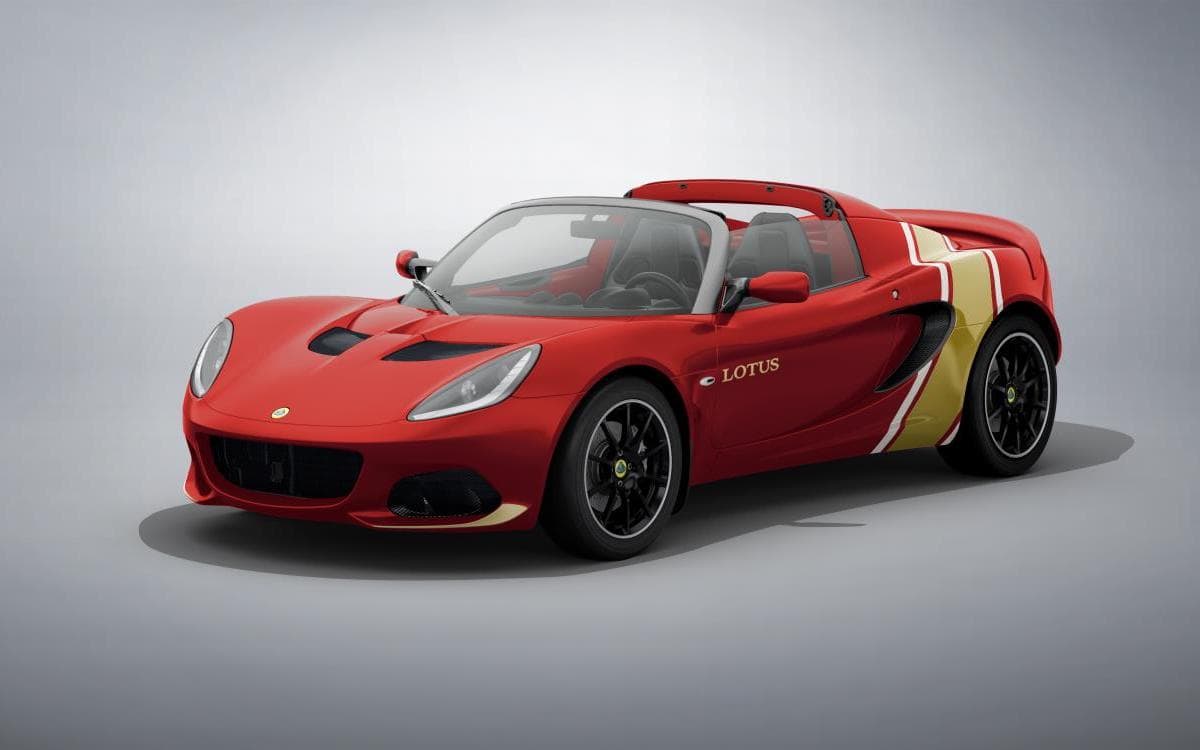
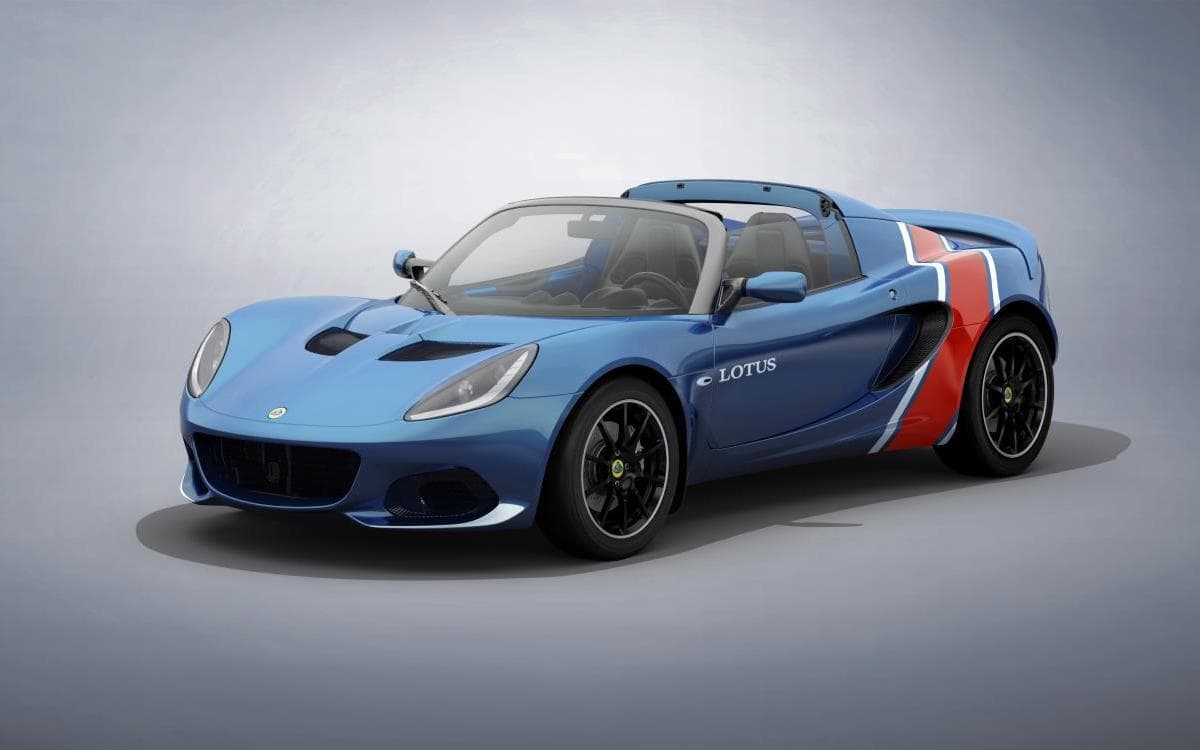
Lotus is paying tribute to its grand prix racing history through the introduction of four new limited-edition versions of its Elise sports car.
Four colour combinations are available with the Classic Heritage Edition cars – of which just 100 are going to be produced – with each harking back to an original livery used by the Team Lotus F1 racing team.
The first is a black-and-gold combination made famous by the Lotus 72D that Emerson Fittipaldi raced to win the 1972 Formula 1 championship. A red, white and gold version pays tribute to the Lotus 49B that Graham Hill took to the title in 1968, while a blue, red and silver car is inspired by the livery applied to the rather less-successful Lotus 81 of 1980, which was used by Nigel Mansell, Elio de Angelis and Mario Andretti.
Finally, a fourth colour combination of blue and white harks back to the design used on the Lotus 18 car of 1960, which was the first Lotus car to achieve a Formula 1 pole position and victory – thanks to some help from the late Sir Stirling Moss.
Lotus 72D (1972)
Lotus 49B (1968)
Lotus 81 (1980)
Lotus 18 (1960)
All cars are based on the Lotus Sport 220, but receive enhanced interior features and touches. Each gets a unique build plaque, too.
In addition, the Classic Heritage Edition cars get a DAB digital radio, air conditioning and cruise control, as well as forged alloy wheels and two-piece disc brakes – features which usually reside on the optional extras list for the Elise.
All four versions are priced at £46,250 which, though commanding a premium of £6,340 over the standard Elise Sport 220, theoretically represent a saving of £11,735 given the value of additional extras they includes. The cars are on sale now.
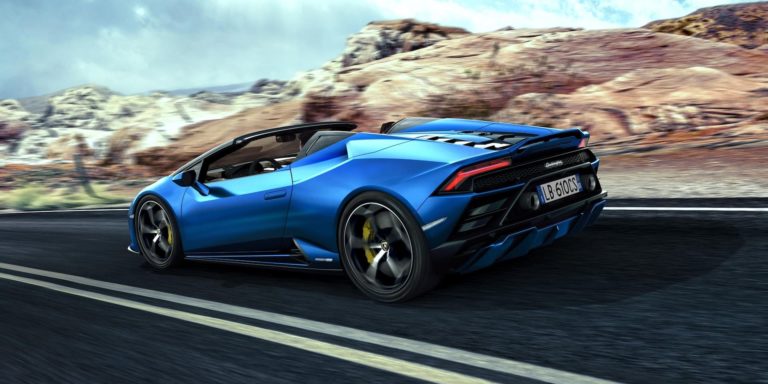
Lamborghini has revealed a rear-wheel drive version of its Huracán Evo Spyder supercar.
The new model expands the Huracán range to four, with coupé and convertible versions in either all-wheel drive or rear-wheel drive. It’s the latest step in the company progressively moving away from its strict all-wheel-drive-only doctrine that came into place when Audi took ownership more than 20 years ago.
The Huracán Evo RWD Spyder uses the same naturally-aspirated V10 engine found in other iterations of the Huracán. It produces 610hp and 560Nm of torque and allowing for a 0-60mph time of 3.5 seconds and a top speed of 201mph.
There’s a specially tuned traction control system, which utilises three drive modes that adapt the experience for different situations. Strada optimises the car for road driving, Sport reduces traction control to make drifting possible, while Corsa optimises the setup for track driving.
The Evo RWD Spyder gets ventilated and cross-drilled steel brakes with 19-inch alloy wheels as standard, with carbon-ceramic brakes and 20-inch alloy wheels available as an option.
The soft top can be stowed in 17 seconds at speeds of up to 31mph and can be specified in a variety of colours. The car itself can be extensively modified using Lamborghini’s Ad Personam programme, which gives buyers an almost limitless choice of colours and specification.
Stefano Domenicali, chairman and CEO of Automobili Lamborghini, said: “The Huracán Evo Rear-Wheel Drive Spyder doubles the driving fun, delivering raw driving pleasure with the opportunity to celebrate life outside.” (It’s not know whether his reference to ‘the opportunity to celebrate life outside’ was deliberately ironic, given the global coronavirus lockdown…)
Anyway, he continued: “The driver is perfectly in touch with Lamborghini’s engineering heritage, experiencing the feedback and engagement from the set-up of a rear-wheel drive car where electronic intrusion is minimised, while enjoying the sense of freedom and spirit of life that only open-top driving provides.”
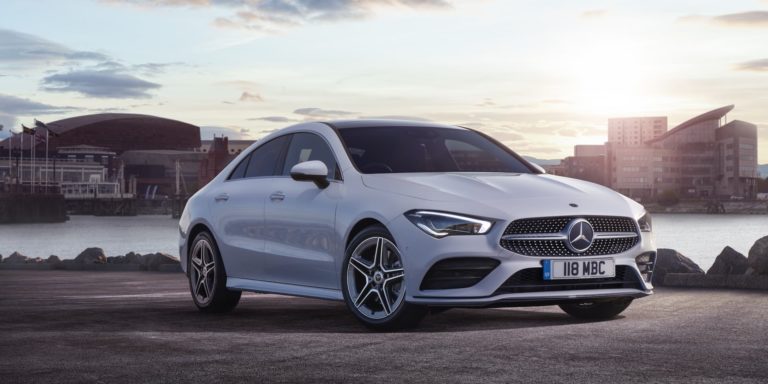
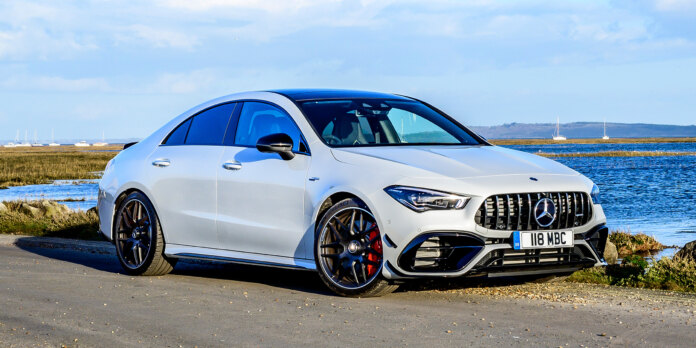
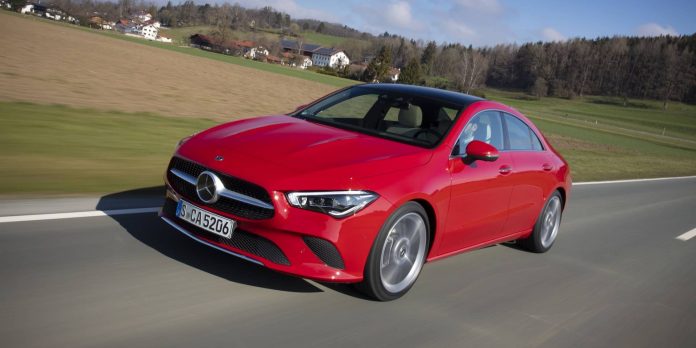
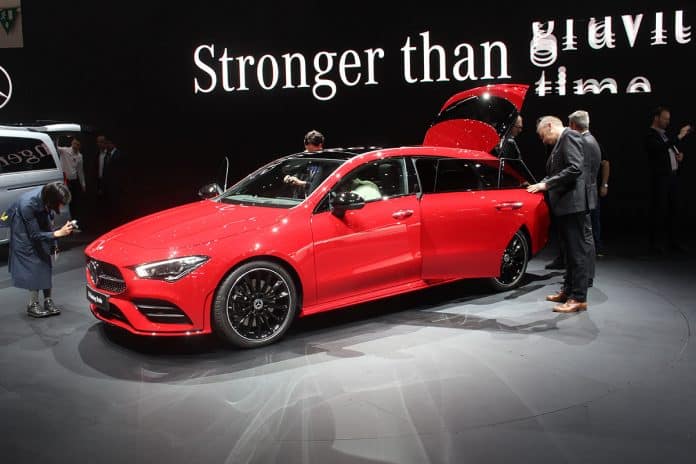
The Mercedes-Benz CLA was a compact saloon and estate model, based on the 2018 Mercedes-Benz A-Class. This model is the second-generation CLA, which was launched in 2019 and sold in the UK until late 2025.
Mercedes-Benz referred to the saloon model as a ‘four-door coupé’ and the estate model as a ‘shooting brake’, however neither is correct and it was simply marketing spin based on the CLA being lower and sleeker (and more expensive) than the A-Class models that it was based on. There were also higher-performance models called the Mercedes-AMG CLA 35 and CLA 45, which are not covered here.
The Mercedes-Benz CLA earned generally positive reviews from the UK motoring media, although the scores awarded tended to be average. It received praise for its styling and high levels of advanced technology. However, its sleek styling compromised its space and general practicality, and consumer titles marked the CLA more harshly than its A-Class siblings as a result. The CLA was available with a choice of petrol, diesel or plug-in hybrid powertrains. The petrol and diesel engines were available from launch in 2019, with the plug-in hybrid version added in early 2020.
A facelifted version of the Mercedes-Benz CLA arrived in the UK in Autumn 2023. This consisted of a collection of minor updates to the existing car, rather than a major upgrade.
An all-new CLA range, including the first all-electric versions, was unveiled in early 2025 and went on sale in the UK over the summer.
As of November 2025, the Mercedes-Benz CLA has a Used Car Expert Rating of C, with a score of 64%. It scores top marks for its low CO2 emissions (helped by the plug-in hybrid version), while its safety rating is also good. However, its media review scores were average and its reliability record has been poor.
Body style: Saloon and estate Engines: petrol, diesel, plug-in hybrid Price when new: From £35,245 on-road
Launched: Summer 2019 Last updated: Autumn 2023 Replaced: Autumn 2025
Image gallery
Media reviews
Highlighted reviews and road tests from across the UK automotive media. Click any of the boxes to view.
Featured reviews
“The Mercedes CLA Coupe is a sleek four-door alternative to the high-tech A-Class hatchback. It’s every bit a tech-laden, but sacrifices space in the name of style.”
Model reviewed: (range review) “The Mercedes-Benz CLA is handsome, good to drive and packed with premium kit. If you want a sleek-looking coupe-esque saloon, this is a fine choice and a rarity in its segment.” Read review
Auto Express
Model reviewed: 1.3-litre petrol automatic AMG Line Premium Plus Score: 7 / 10 “Updates to the Mercedes-Benz CLA have boosted it in some places but spoiled it in others. Ditching the central control panel is the biggest frustration, because not everybody can get along with touchscreens or voice controls, while the touch-sensitive steering wheel buttons are variable in their response. In other respects the CLA still holds appeal – it looks smart, comes with plenty of kit and on the whole is a pleasant and relaxing car to drive.” Author: Pete Baiden Read review
Model reviewed: 250 AMG Line Score: 7 / 10 “The new Mercedes-Benz CLA should sit well with buyers looking for a style-focussed alternative to the A-Class. While the retail price is higher than the hatchback for almost no mechanical benefit, the swoopy styling should help to tempt some buyers.” Read review
Model reviewed: (range review) Score: 8 / 10 “The latest Mercedes CLA is so much more than a rebodied A-Class hatch. Its wider track means it’s genuinely engaging to drive, while its achingly cool design should turn plenty of heads in the company car park.” Read review
Auto Trader
Model reviewed: Shooting Brake (estate) range Score: 8 / 10 “The Mercedes-Benz CLA Shooting Brake is a low-slung and sporty looking estate car that – unusually – puts style ahead of space and practicality. Like the other cars in the family, it has a great interior, drives nicely and is packed with tech.” Read review
Model reviewed: Saloon range Score: 8 / 10 “The Mercedes-Benz CLA Coupe is a more stylish alternative to the A-Class Saloon, and sacrifices a bit of the saloon’s practicality in favour of eye-catching looks that make it seem like a mini CLS. It goes head-to-head with the BMW 2 Series Gran Coupe and the Mazda 3 Saloon.” Read review
Business Car
Model reviewed: Plug-in hybrid Score: 9 / 10 “Mercedes-Benz is rolling out PHEV power across its compact car range and this CLA might be the pick of the bunch.” Read review
Car
Model reviewed: Saloon range Score: 8 / 10 “But in this segment, there is no nicer car to be in, and no cooler four-door coupé to be seen in.” Read review
Car Keys
Model reviewed: Range overview Score: 8 / 10 “The Mercedes-Benz CLA is everything you expect from a stylish and classier version of the A-Class. It’s loaded with tech, refined and good to drive. It’s very similar to its hatchback sibling, but there’s nothing wrong with that.” Read review
Carbuyer
Model reviewed: Saloon range Score: 8 / 10 “The latest Mercedes CLA is better to drive and more stylish than its predecessor.” (Ben Custard) Read review
Model reviewed: Estate range Score: 8.4 / 10 “The Mercedes CLA Shooting Brake favours style over practicality but it’s still more versatile than the saloon” Read review
Carwow
Model reviewed: Estate range “The Mercedes CLA Shooting Brake is a very stylish small estate car with a futuristic interior and bags of high-tech infotainment technology.” Read review
Company Car Today
Model reviewed: CLA 200 AMG Premium Plus saloon “Style will win the Mercedes-Benz CLA favour over more sensible rivals, but it comes at a financial and practical price.” Read review
Daily Mirror
Model reviewed: 1.3-litre petrol automatic 200 AMG Line “You’ll buy the Mercedes-Benz CLA because its styling appeals and probably because you don’t have a family, or at least not one that includes lanky teenagers. The diesel engine and its better gearbox would be my choice. The CLA is not a sports car so a diesel engine wouldn’t be sacrilegious.” Read review
Heycar
Model reviewed: Saloon range Score: 8 / 10 “The Mercedes-Benz CLA is not a cheap option, with prices similar to those of bigger rivals like the Audi A5 Sportback and Volkswagen Arteon. Even so, a very appealing choice that’s well worthy of your consideration.” Read review
Model reviewed: Shooting Brake range Score: 8 / 10 “Answering a question that seemingly few people have asked, the Mercedes-Benz CLA Shooting Brake actually makes a good case for itself. If you like the look, it’s comfortably the most stylish estate that this kind of money can buy, and it manages to do so whilst still being pretty practical. It has a strong engine range, fancy tech that makes it feel thoroughly modern and is decent to drive.” Read review
Honest John
Model reviewed: Range overview “Intended to cater for younger buyers than the typical Mercedes-Benz audience, the CLA is packed with all of the technology that recently made its debut on the A-Class. This includes the A-Class’s trick MBUX multimedia system and ‘Hey Mercedes’ voice control.” Read review
Parkers
Model reviewed: Estate (Shooting Brake) range Score: 5.6 / 10 “Of all the Mercedes based on the A-Class platform, the CLA is the most effective blend of upmarket style with usability. If you’d rather not have the GLA or GLB SUVs, it’s the one to go for if you want a family car.” Author: Graham King Read review
Model reviewed: Saloon range Score: 8.2 / 10 “Stylish alternative to a boring saloon or hatchback” Read review
The Sun
Model reviewed: 2.0-litre petrol automatic CLA 250 AMG Line “The Mercedes CLA is essentially an A-Class but a little bit too clever and complicated” Read review
The Telegraph
Model reviewed: Shooting Brake Score: 8 / 10 “If you need a dose more practicality than you’ll get in a hatchback or coupe, but don’t want to resort to a full-blown estate, the slinky CLA Shooting Brake might be an ideal half-way house.” Read review
Model reviewed: 2.0-litre petrol automatic CLA 220 4Matic Score: 8 / 10 “A good-looking, family-sized coupé with few rivals, a terrific interior and a properly premium badge. The CLA will sell well, but it’s expensive once you’ve specified a “proper” Mercedes engine. Also there are more focussed, if less practical, machines in the market.” Read review
Top Gear
Model reviewed: Shooting Brake (estate) range Score: 7 / 10 “Much better to drive than the A-Class it’s based on, plus it’s more useful than the saloon. Buy one of these, not a crossover.” Read review
Model reviewed: Saloon range Score: 7 / 10 “It’s certainly a massive improvement on the last CLA, and that alone will make a lot of people very happy indeed.” Read review
Safety rating
Independent crash test and safety ratings from Euro NCAP
Independent economy and emissions ratings from Green NCAP
No eco rating
The Mercedes-Benz CLA was not assessed by Euro NCAP during its production life.
Running cost rating
Monthly cost of ownership data provided exclusively for The Car Expert by Clear Vehicle Data
Fuel consumption
Average
Score
Petrol models
45 mpg
C
Diesel models
54 mpg
B
Plug-in hybrid models
316 mpg
A
CO₂ output
Average
Score
Variation
Score
Petrol models
141 g/km
C
Diesel models
138 g/km
C
Plug-in hybrid models
20 g/km
A
Battery range
Average
Score
Variation
Score
Plug-in hybrid models
49 miles
D
Insurance group
Average
Score
Variation
Score
All models
32
C
Service and maintenance
Cost
Score
Year 1
£266
C
Year 2
£647
C
Year 3
£1,203
D
Year 4
£1,387
D
Year 5
£1,861
D
Overall
£5,364
D
Running costs for the Mercedes-Benz CLA are slightly higher than for its A-Class sibling, according to numbers provided exclusively to The Car Expert by our data partner, Clear Vehicle Data.
Fuel consumption for petrol models is average, although diesels are better. The plug-in hybrid looks good on paper, but this is deceptive – every plug-in hybrid looks great in theory, but this is because of rubbish EU/UK government lab testing. You certainly won’t get 248 miles of driving from one gallon (4.5 litres) of fuel and a bit of electricity…
The battery range of the plug-in hybrid is reasonably good, at 42 miles according to the official tests. That’s better than most plug-in hybrids, but you’ll still need to charge it almost daily to get best use out of the electric motor and battery. By comparison, an equivalent mid-size full EV would get more than 200 miles out of its battery so most households would only need to charge it once a week.
Scheduled servicing costs have become more expensive in the last year or so, with our latest data showing that costs are now more expensive than average over the first five years – having slipped from a B to a D grade since we started tracking this data.
Reliability rating
Reliability data provided exclusively for The Car Expert by MotorEasy
Total claims: 107 Average repair cost: £688.96 Last updated: April 2025
As of April 2025 (our most recent data point for reliability), the Mercedes-Benz CLA has a below-average reliability score of 59%, according to workshop and extended warranty data from our partner, MotorEasy, sourced from both official dealerships and independent workshops. This rating covers both this generation (2019 to 2025) and the previous model (2012 to 2019).
The average repair costs to date are also fairly high for this size of car, at just under £700. The most expensive bills so far have been for gearbox repairs, with an eye-watering average bill of more than £3,000. Fortunately, they have not been common.
Engine problems, however, have been both common and expensive with an average bill of about £800.
If you’re thinking about buying a used car warranty for your CLA, make sure that it covers all of the problem areas shown above.
Warranty rating
New car warranty information for the Mercedes-Benz CLA
Overall rating
B
61%
Petrol or diesel models
D
37%
Electric or hybrid models
B
76%
New car warranty duration
3 years
New car warranty mileage
Unlimited miles
Battery warranty duration
8 years
Battery warranty mileage
100,000 miles
Mercedes-Benz’s new car warranty is only average, and not as attractive as some other cars in a similar price bracket as the CLA.
The duration is three years, with no limit on mileage – although, in reality, the mileage numbers are likely to be fairly irrelevant as most cars only cover about 10,000 miles each year.
In addition to the standard new car warranty, the CLA plug-in hybrid models have an eight-year/100,000-mile warranty for the battery components. The overall rating above is a mix of the different models.
Recalls
Official DVSA safety recalls that have been issued for the Mercedes-Benz CLA
2024
2023
2022
2021
2020
Date: May 2024 Recall number: R/2024/166 Model types: All Build dates: 11/2018 to 01/2024 Number of vehicles affected: 52,400 Defect: The backup function of the steering software might not meet specifications. As a result, the steering power support might be impaired and a loss of steerability cannot be ruled out. Remedy: Update the software of the electric steering on the affected vehicles.
Date: April 2023 Recall number: R/2023/116 Model types: All Build dates: 12/2022 Number of vehicles affected: 1 Defect: The tyres might not meet specification, resulting in a leak and possible sudden loss of air pressure. Remedy: Replace the tyres.
Date: August 2022 Recall number: R/2022/195 Model types: All Build dates: 03/2022 Number of vehicles affected: 12 Defect: Bowden cables with an insufficient length might have been installed in the front doors. Remedy: Check the bowden cables of the front doors on the affected vehicles and replace if necessary.
Date: March 2022 Recall number: R/2022/062 Model types: All Build dates: 12/2019 to 11/2021 Number of vehicles affected: 17 Defect: The bolting on the brake caliper housing might not meet torque specifications. Remedy: Check and, if necessary, rework the bolting of the brake caliper housings on the affected vehicles.
Date: March 2022 Recall number: R/2022/061 Model types: All Build dates: 07/2018 to 09/2019 Number of vehicles affected: 26 Defect: A particle in the fuel rail might lead to a leak between the fuel rail and the fuel injector. Remedy: Replace the fuel rail and fuel injectors on the affected vehicles.
Date: January 2022 Recall number: R/2021/444 Model types: All Build dates: 06/2020 to 07/2020 Number of vehicles affected: 113 Defect: The power supply connection of the electric power steering might have been contaminated with melted adhesive. Remedy: Check the connection on the affected vehicles and perform repair measures if necessary.
Date: January 2022 Recall number: R/2021/437 Model types: All Build dates: 01/2020 to 02/2021 Number of vehicles affected: 2,829 Defect: On certain vehicles with an additional door lock, the locking pawl spring of the left side door locks might not be greased according to specifications. Remedy: Conduct greasing of the locking pawl spring on the affected vehicles.
Date: November 2021 Recall number: R/2021/376 Model types: All Build dates: 01/2016 to 01/2021 Number of vehicles affected: 50,390 Defect: The behaviour of the emergency call system might not meet specifications. Remedy: Update the software of the communication module for the emergency call system.
Date: July 2021 Recall number: R/2021/246 Model types: All Build dates: 04/2019 to 05/2019 Number of vehicles affected: 19 Defect: The bolting of a side crash sensor may not meet specifications. Remedy: Check the bolting of the side crash sensor on the affected vehicles and rework it if necessary.
Date: May 2021 Recall number: R/2021/134 Model types: All Build dates: 01/2016 to 01/2021 Number of vehicles affected: 663,406 Defect: The behaviour of the emergency call system might not meet specifications. Remedy: Update the software of the communication module for the emergency call system.
Date: April 2021 Recall number: R/2021/084 Model types: All Build dates: 09/2019 to 08/2020 Number of vehicles affected: 7 Defect: The variant of spark plugs installed may not meet specifications. Remedy: Replace the spark plugs on the affected vehicles.
Date: February 2021 Recall number: R/2021/030 Model types: All Build dates: 07/2020 to 09/2020 Number of vehicles affected: 543 Defect: The ISOFIX bracket might be missing on the right rear seat. Remedy: Check the ISOFIX bracket and replace it if necessary.
Date: October 2020 Recall number: R/2020/277 Model types: All Build dates: 12/2019 to 01/2020 Number of vehicles affected: 37 Defect: An electrical contacting inside the engine control unit might not meet the specification. Remedy: Replace the engine control unit on the affected vehicles.
Date: October 2020 Recall number: R/2020/262 Model types: All Build dates: 10/2019 to 06/2020 Number of vehicles affected: 1,074 Defect: The oil supply line of the turbocharger might leak. Remedy: Check the oil supply line of the turbocharger on the affected vehicles and replace it if necessary.
Date: October 2020 Recall number: R/2020/237 Model types: All Build dates: 10/2019 to 11/2019 Number of vehicles affected: 30 Defect: The air-conditioning system on the affected vehicles might erroneously be filled with the incorrect refrigerant. Remedy: Replace the refrigerant in the air conditioning system on the affected vehicles.
Date: July 2020 Recall number: R/2020/134 Model types: All Build dates: 05/2019 Number of vehicles affected: 134 Defect: The mounting of an argon gas line to the generator of the inerter system might not meet specifications. Remedy: Check the mounting of the gas line to the gas generator on the affected vehicles and rework it if necessary.
As of September 2024 (our most recent data point), there have been 16 DVSA vehicle safety recalls on this generation of the Mercedes-Benz CLA to address different issues.
Not all vehicles are affected by recalls. You can check to see if your car is included in any of the above recalls by visiting the DVLA website or contacting your local Mercedes-Benz dealer.
If your car is affected by a recall, the vehicle must be repaired and you should not be charged for any work required. If you are buying a used CLA, you should insist that any outstanding recall work is completed before you take delivery of the vehicle.
Private new car sales were down 99% in April, with fleet registrations down 97% as well, as the UK endured an entire month of lockdown due to the coronavirus pandemic.
Of those 4,000-ish new cars that did hit streets in April, most were for those who were working in essential industries, with some manufacturers able to supply cars despite dealerships being closed for the entire month. Read our full monthly new car registration report here.
As a result, the monthly list of best-selling cars is almost entirely irrelevant, as it bears almost no resemblance to genuine new car demand or sales that have been cancelled/postponed. Still, with the lowest number of new car registrations since February 1946, April 2020 may go down in history.
Bear in mind that the entire new car market for April wouldn’t have made the top ten list in March, and take the following results as more a matter of interest than anything relevant about the new car market.
The list of best-selling cars for April was possibly the most unexpected in history, as you’ll see. Who knows what May will bring?
The UK’s ten best-selling cars, April 2020
1. Tesla Model 3
To be fair to Tesla, the Model 3 has been selling very well since it was launched last August. Industry sources also suggest that Tesla’s business model of very few showrooms and largely online/home delivery sales process helped it continue delivering new cars after regular bricks-and-mortar showrooms had closed.
The Tesla Model 3 currently holds an Expert Rating of 84% in our New Car Ratings database, which is certainly very good. However, there have been very few local reviews yet so this may vary by quite a bit (either up or down) in coming months.
If Tesla taking the top spot was a surprise, then the Jaguar I-Pace finishing second was even more of an upset. Not coincidentally, Jaguar had recently agreed a deal for 700 I-Paces with NHS Fleet Solutions, as well as supporting an electric car chauffer service in London. As fleet deals, the vehicles would presumably not have passed through the usual dealer channels.
The Jaguar I-Pace has received very strong reviews from the UK motoring media, and currently holds an outstanding Expert Rating score of 87% according to The Car Expert’s unique Expert Rating system.
It may not have been the glorious new model launch that Vauxhall was hoping for, but at it least claim that the new Corsa has outsold the Ford Fiesta…
We don’t have a split of exactly how many Corsas were the electric Corsa-e model, but with a fleet of them arriving in time for the (now postponed) UK media launch, it’s entirely possible that the top three cars in the UK were electric vehicles for the first time ever.
The new Corsa currently holds an Expert Rating of 71% on our unique aggregator scale, based on 19 reviews we have gathered so far. That puts it in the bottom half of the supermini class (ninth out of 13 cars we’ve analysed so far). This may change quite dramatically once more reviewers drive the car on local roads, but it’s still a disappointing score for a brand-new model. The new Peugeot 208, which is mechanically identical to the Corsa, is currently at 78%.
The surprise results keep on rolling as the Vauxhall Crossland X appears in fourth place. It’s the first time in a long time that Vauxhall has had two cars in the top five, although 143 registrations is hardly anything to get too excited about.
The Crossland X holds a fairly poor Expert Rating of 65% in our New Car Ratings aggregator, which is in the bottom half of its market segment and well behind the class leaders.
This is not a Ford Transit Custom van. It’s a Tourneo Custom, which means it’s technically a passenger car. Even though it’s basically a Transit Custom with seats and a few more trinkets. Presumably a few fleet customers with essential business needed some and Ford was able to get them delivered.
We haven’t published an Expert Rating analysis of the Ford Tourneo Custom yet, as we have only one review of the current model from the 21 UK media sources we cover. If you’re interested, What Car? gave it a score of three stars.
What, you’ve never heard of the Peugeot Rifter? It’s officially one of the best-selling cars in the country! Part two of the ‘vans with seats’ section of the top ten list is the passenger version of the Peugeot Partner compact van.
Despite its Postman Pat origins, the Rifter has received reasonably positive reviews from the UK motoring media. It is considerably more space-efficient than a conventional family hatchback, although it can’t match them for overall refinement.
The current SEAT Leon has been around for eight years and is about to be replaced by an all-new model. This may well be the first time in its history that it’s been featured in the UK top ten list, just as it sails off into the sunset.
Despite its age, the Leon stil ranks strongly against most family hatchback rivals, and there will presumably be some good run-out deals available when dealerships reopen.
Despite the whole country being locked down, the Mercedes-Benz A-Class stayed in the top ten. It slipped from seventh to (equal) eighth place, but who’s counting when we’re only taling about 72 units anyway?
The Mercedes-Benz A-Class has an Expert Rating of 77% in The Car Expert’s New Car Rating system. It ranks highly for safety, winning awards from Euro NCAP and Thatchamfor its protective qualities.
The third dedicated electric car in April’s top ten is the Nissan Leaf, which is also the most popular British-built car for the month (Jaguar may be a British brand, but the I-Pace is built in Austria). Although, to be fair, 72 units is probably the lowest number of cars to take that prize since before the Second World War…
The Nissan Leaf has received particular praise for its smooth, quiet operation and generous equipment levels. However, it has been criticised for not matching other electric cars, like the Hyundai Kona Electric and Kia e-Niro, when it comes to overall range.
To round out a bizarre top ten, we have another model that hasn’t seen such dizzying heights in its whole product life, the Peugeot 308. I also have no idea when Peugeot last had two cars in the top ten, but it certainly wasn’t in recent memory.
The second-generation 308 has been around since 2014, and currently holds an Expert Rating of 71% in our aggregated Expert Ratings database. That puts it quite a long way behind most of its rivals, headed by the new Volkswagen Golf.
Alfa Romeo has unveiled its refreshed Giulia and Stelvio Quadrifoglio models.
The update follows on from tweaks made to the standard Giulia and Stelvio models, which tweaked their appearance while bolstering interior technology levels.
The revisions are much the same for these performance-orientated Quadrifoglio models. A larger nine-inch infotainment screen is now the focal point of the cabin, while its revised software includes race-orientated displays and functions.
Inside, new seat designs are available – including carbon-backed buckets – while the overall quality of the cabin has been lifted thanks to higher-end materials and a new leather stitched gear selector.
The exterior has been lifted too thanks to smoked rear lights – on both Giulia and Stevlio models – which now feature a revised design. Several new paint colours have also been introduced – Montreal Green, 6C Villa d’Este Red and a yellow-based shade called GT Junior Ocra – while 21-inch alloy wheels can be optioned on the Stelvio for the first time.
Mopar, the accessories arm of Alfa Romeo’s parent company Fiat Chrysler Automobiles (FCA), will also be supplying a range of additional features for the first time on the Giulia and Stelvio Quadrifoglio. These include carbon-fibre mirror caps and an Akrapovic titanium exhaust with carbon-fibre tailpipes, among others.
Both the Stelvio and Giulia now benefit from enhanced driver assistance systems, with lane-keeping assist, adaptive cruise control and blind-spot monitoring just a few of the included features. Level 2 self-driving ability is also added, though this still requires the driver to keep a hand on the wheel and remain alert.
Both cars retain the same 2.9-litre V6 bi-turbo engine with the same outputs of 510hp and 600Nm of torque.
The new Alfa Romeo Giulia and Stelvio Quadrifoglio are set to go on sale this summer, with full UK pricing and specifications announced closer to that date.
The Peugeot Rifter was a small van-based people carrier. Based on the Peugeot Partner compact van, it was almost identical to the Citroën Berlingo and Vauxhall Combo Life.These combustion-powered Stellantis Group vans were discontinued in early 2022 – the Rifter has been replaced by the e-Rifter in the Peugeot range.
The Rifter was available with either five or seven seats, in either short or long versions. The long model got extra boot space behind the rear seats. The Rifter was pitched as a more flexible vehicle than a conventional car. In five-seat form, it was very similar in length to a family hatchback like the Peugeot 308 but, owing to its van platform, it could carry a lot more kit when you folded the seats down.
The Peugeot Rifter received positive ratings from the UK motoring media. There are not as many reviews available as we would normally see for a family car, but this is more of a niche model. The Rifter was praised for its versatility and practicality, although most reviews point out that its van origins are still evident, particularly in terms of overall refinement and interior quality.
As of March 2026, the Peugeot Rifter holds a Used Car Expert Rating of C, with a score of 62%. It gets good grades for its low running costs, but all its other scores are average to poor.
Body style: Small MPV Engines: petrol, diesel Price when new: From £23,620 on-road
Launched: Summer 2018 Last updated: N/A Replaced: Spring 2022
Image gallery
Media reviews
Highlighted reviews and road tests from across the UK automotive media. Click any of the boxes to view.
Auto Express
Model reviewed: Range overview “Despite its utilitarian roots, the Peugeot Rifter is not just a van with windows, because it’s more accomplished than that. Admittedly a boxy Peugeot probably won’t get the neighbours’ curtains twitching, but the Rifter appeals with its enormous cabin, low running costs and high comfort levels. Even better, there’s the option of electric power alongside the petrol and diesel versions.” (Richard Dredge) Read review
Model reviewed: GT Line Score: 8 / 10 “The new Peugeot Rifter MPV nails its brief by being as practical as possible and ruthlessly well-focused” Read review
Model reviewed: Range overview Score: 8 / 10 “The Peugeot Rifter MPV is cost-effective, family-friendly transport that masks its van roots well” Read review
Auto Trader
Model reviewed: Range overview Score: 8 / 10 “Peugeot has worked hard to make the Rifter MPV look more appealing to young families and, to an extent, the design direction has worked. Inside, the cabin has an upmarket ambience compared to its predecessor, and the Rifter is smooth to drive, making it ideal as a family car.” Read review
Car
Model reviewed: Range overview Score: 6 / 10 “I am definitely not the target demographic for this car, but the Peugeot Rifter is just so refreshingly honest and just a little bit funky.” Read review
Car Keys
Model reviewed: 1.5-litre diesel automatic Score: 7 / 10 “The Peugeot Rifter manages to inject a hint of style into a class that’s usually lacking it, but is still impressively practical and offering all the versatility you would expect from a van-derived MPV.” Read review
Carbuyer
Model reviewed: Range overview Score: 8 / 10 “The Peugeot Rifter is an unpretentious family workhorse that takes everyday tasks in its stride” Read review
Carwow
Model reviewed: Range overview Score: 6 / 10 “The Peugeot Rifter is ideal if you’re looking for a spacious and practical family car but don’t want to pay for an expensive SUV – just don’t expect it to be in any way sophisticated.” Read review
Company Car Today
Model reviewed: 1.5-litre diesel manual GT-Line “For those that need maximum space from their car, the Peugeot Rifter is a viable and appealing alternative to either estate cars, mini-MPVs or SUVs.” Read review
Honest John
Model reviewed: Range overview “Despite its van origins, the Peugeot Rifter is packed with modern kit and all versions are available with touchscreen infotainment, blind-spot warning, adaptive cruise control and Peugeot’s excellent digital i-Cockpit system.” Read review
Parkers
Model reviewed: Range overview Score: 8 / 10 “Practical MPV is a sensible and refreshing SUV alternative” Read review
The Telegraph
Model reviewed: 1.5-litre diesel manual Allure Score: 6 / 10 “Top-notch practicality and versatility, but the Peugeot Rifter often feels as it is – a car based on a van. No bad thing if that’s what you’re after, but the problem is others do it better, for less cash – and without downsides that come with its the faux-SUV ride height.” Read review
Top Gear
Model reviewed: Range overview “You could pack your entire life into this and disappear. Why, there’s even a mains-voltage socket so you can still have the comforts of home when you’re away off-grid. Which is really the pitch for the Peugeot Rifter as a whole: it’s somewhat the outsider, but it’s not too punishing.” Read review
Safety rating
Independent crash test and safety ratings from Euro NCAP
Independent economy and emissions ratings from Green NCAP
No eco rating
The Peugeot Rifter was not lab tested by Green NCAP during its short production life.
Reliability rating
Reliability data provided exclusively for The Car Expert by MotorEasy
No reliability rating
As of March 2026, we don’t have enough reliability data on the Peugeot Rifter to generate a reliability rating.
The Car Expert’s reliability information is provided exclusively to us using extended warranty data from our partner, MotorEasy. As soon as MotorEasy has sufficient data on the Rifter, we’ll publish the score here.
Running cost rating
Monthly cost of ownership data provided exclusively for The Car Expert by Clear Vehicle Data
Fuel consumption
Average
Score
Petrol models
36 mpg
D
Diesel models
49 mpg
C
CO₂ output
Average
Score
Variation
Score
Petrol models
156 g/km
C
Diesel models
145 g/km
C
Insurance group
Average
Score
Variation
Score
All models
19
A
Service and maintenance
Cost
Score
Year 1
£158
A
Year 2
£439
A
Year 3
£659
A
Year 4
£890
A
Year 5
£1,233
A
Overall
£3,379
A
The Peugeot Rifter is a relatively affordable car to own and run, according to whole-life cost numbers provided exclusively to The Car Expert by our data partner, Clear Vehicle Data.
Servicing and maintenance costs are very good, while insurance is also better than average. Fuel consumption from the petrol engine is poor, however.
Awards
Trophies, prizes and awards that the Peugeot Rifter has received
2020
Company Car Today CCT100 Awards – Best MPV
Diesel Car & Eco Car Top 50 – Best Utility Vehicle
2019
UK Car of the Year Awards – Best MPV
Scottish Car of the Year Awards – Best MPV
Company Car Today CCT100 Awards – Best MPV
Parkers Awards – Best Medium Family Car
DieselCar & EcoCar Top 50 – Best Utility Vehicle
Similar cars
If you’re looking at the Peugeot Rifter, you might also be interested in these alternatives
New car registrations for April have been published today, although there’s really not a lot of point discussing the specifics in any great detail. Private new car sales were down 99% as a result of the coronavirus lockdown.
With dealerships all closed and car buyers stuck at home, just over 4,000 new cars were registered in April 2020. That’s a 97% reduction compared to more than 160,000 in the same month last year. Fewer than 900 of those vehicles were bought by private customers, who were presumably key workers in urgent need of a new car.
According to the Society of Motor Manufacturers and Traders (SMMT), which compiles the data each month, you have to go all the way back to February 1946 to find a worse month for new car sales. Although this is hardly surprising, the stark reality of the numbers makes for painful reading.
Source: SMMT
The car industry will be profoundly altered
Today’s numbers have highlighted the impact of the coronavirus shutdown on the car industry. Unlike groceries or small retail goods that can still be delivered by Amazon and other services, the automotive retail industry has ground to almost a complete halt in the last six weeks.
Despite the publicity tales of car companies making ventilators and other medical equipment for the NHS, the reality is that the UK car industry has already lost billions of pounds as a result of the global economic shutdown. The losses accrued to date will almost certainly kill off some familiar names or important suppliers once government furlough and other support funds run out. The longer this situation lasts, the more likely it is that we will see some genuinely big players collapse.
Unsurprisingly, the car industry is calling for car dealerships to be part of the first wave of businesses allowed to re-open, to try and get sales back up and running as soon as possible. Of course, thousands of other industry sectors are also clamouring to re-start operations so the government will be juggling economic goals with the need to keep everybody healthy.
The rest of 2020 is a guessing game
The SMMT has revised its overall 2020 forecast down (again) to less than 1.7 million new car registrations, which is well down on last year’s 2.3 million registrations. However, at this time any forecasting seems like glorified guessing until we know how and when the industry will be able to re-open.
We can safely assume that May is going to be another write-off. Even if the government allowed dealerships to re-open tomorrow, it would still take weeks to get things back up to full speed – and that’s on the hopeful assumption that customers start pouring back in again. No-one is certain how quickly the car manufacturers will be able to ramp up to anything like full production again, especially since their supply chains are global and different parts of the world are in different stages of lockdown.
The other question is one of customer demand. How many people (assuming they still have jobs) are going to celebrate the end of lockdown by rushing out to buy a new car? How many businesses, having watched their cash burning away while the bills keep piling up, are going to rush out to renew their fleets?
Even if the dealers are open, it seems likely that most buyers are likely to hold off until at least the next new registration plate month of September. Realistically, they may well put off any new car purchases for even longer while they wait to see what the post-coronavirus world looks like. There have been suggestions that concerns about social distancing will lead to more people driving cars instead of using public transport, which could help car sales, but economic reality will still be the main determinant for most people.
A bizarre top ten
As with the overall data, analysing the top ten best-sellers list is rather pointless. The entire new car market for April wouldn’t have made the top ten in March, so declaring winners and losers has no meaning at all.
Only two models in this month’s top ten list are regular best-sellers, with the Vauxhall Corsa in third place and the Mercedes-Benz A-Class in eighth. Other than that, it’s a strange old list – mostly defined by a few fleet deliveries.
Interestingly, some Tesla and Jaguar dealers were able to deliver a handful of electric vehicles despite the nationwide lockdown. This created an even more abnormal picture of the overall results. The Tesla Model 3 and Jaguar I-Pace took the top two places, although the numbers were still tiny.
To be fair to Tesla, the Model 3 has been selling very well and has made a couple of appearances in the top ten since it was launched last year. But names like the Ford Tourneo Custom (a Transit van with seats) and Peugeot Rifter (a smaller van with seats) are rather alien to most car buyers.
It’s also interesting that three of the top ten vehicles are dedicated electric cars (with the new Vauxhall Corsa also available as an electric model) given that fuel prices are the lowest they’ve been for years. But this may be more a function of delivery logistics than customer demand, so we won’t read anything more into it than ‘interesting’.
We will still run our monthly feature on the ten best-sellers later this week, mainly for visitors who are interested to read about some different models to the usual top ten than for any kind of analysis.
The BMW 1 Series is a medium-sized five-door hatchback. This model is the third-generation 1 Series, which was launched in2019 and was facelifted in the summer of 2024.
Unlike previous models, the latest version is front-wheel drive rather than rear-wheel drive. This has been controversial among BMW enthusiasts but less so among actual 1 Series customers. Additionally, this generation is only available as a five-door hatchback, with the three-door version being dropped.
The BMW 1 Series has received generally good to very good reviews from the UK motoring media. The more performance-oriented titles have lamented the switch to front-wheel drive, claiming that it has made the car less enjoyable to drive. However, more consumer-oriented titles have been more praiseworthy, highlighting the increased practicality and efficiency of a conventional front-wheel drive layout (which is why every other mid-size hatchback is built that way).
As of February 2026, the BMW 1 Series has a New Car Expert Rating of A, with a score of 71%. It scores top marks for its safety rating, while its media review scores are also good. However, its CO2 emissions and running costs are only average, while its reliability record and BMW’s new car warranty cover are poor.
Highlighted reviews and road tests from across the UK automotive media. Click any of the boxes to view.
Featured reviews
“The latest BMW 1 Series enhances its premium hatchback feel with a new interior design and more aggressive bodywork. It can be a pricey option for a family hatch though.”
Model reviewed: 1.5-litre petrol automatic 120 M Sport
“The BMW 1 Series is more practical than before and gets more tech, but the fact that it’s no longer rear-wheel-drive might upset those who loved the way the old car drove.”
Model reviewed: Range overview Score: 9 / 10 “The latest BMW 1 Series is a well-built and fine handling family hatchback, although practicality isn’t the best.” Author: Alastair Crooks, Max Adams Read review
Model reviewed: M135 (2024 facelift) Score: 8 / 10 “A new look and a revised powertrain for the BMW M135 improve the flagship of the BMW 1 Series range.” Author: Dean Gibson Read review
Model reviewed: M135i xDrive Score: 8 / 10 “The boot is 20 litres bigger than before and there’s more leg and elbow room in all four seats, especially those in the rear.” Read review
Model reviewed: 2.0-litre diesel automatic 118d Sport Score: 8 / 10 “The new BMW 1 Series offers strong performance, decent fuel economy and low emissions. The switch to front-wheel drive has, if anything, enhanced the way it drives, the car behaving much like the larger (rear-wheel-drive) 3 Series in day-to-day running.” Read review
Auto Trader
Model reviewed: Range overview Score: 8 / 10 “BMW’s fresh take on the 1 Series formula adopts the more conventional front-wheel drive layout of its rivals, with the goal of improved interior space and practicality. Technology has also been expanded, with increased connectivity and expanded infotainment functionality.” Read review
Car
Model reviewed: Range overview Score: 8 / 10 “It may be a big departure over what’s come before, but the new 2020 BMW 1 Series has come through its rebirth relatively unscathed. It may not be rear-wheel drive, but most customers will barely know. Practicality has also improved, as has the level of tech on offer.” Read review
Car Keys
Model reviewed: 2.0-litre petrol automatic 128ti Score: 9 / 10 “For BMWs first true attempt at a front-wheel-drive hot hatch, the 128ti is a sterling effort. It’s not just exciting on paper but also when you get it out on the road. Read review
Model reviewed: 2.0-litre petrol automatic M135i Score: 9 / 10 “BMW might have radically changed the formula of its hot hatch on this latest M135i, but we reckon it’s one that has paid off. The slight lack of driver enjoyment will be easily offset by many drivers thanks to its impressive straight-line performance, superb interior and comfort.” Read review
Model reviewed: Range overview Score: 9 / 10 “There was a lot of concern when BMW announced that the new 1 Series will no longer be rear-wheel-drive, but the move makes perfect sense as it increases the car’s interior space and boot room which is crucial with a small family hatchback.” Read review
Carbuyer
Model reviewed: Range overview Score: 8.2 / 10 “The front-wheel drive BMW 1 Series is great to drive and now has more space, making it a great all-rounder” Read review
Company Car Today
Model reviewed: 1.5-litre diesel manual 116d Sport Score: 8 / 10 “The new BMW 1 Series addresses the weaknesses of the previous car, particularly the packaging, and maintains the driving enjoyment despite changing to front drive.” Read review
Model reviewed: 2.0-litre petrol manual 118i M Sport “The switch to front-drive hasn’t significantly numbed the BMW 1 Series’ position as the driver’s car in the sector, although the ride quality is an issue. The better practicality and tech are welcome.” Read review
Daily Mirror
Model reviewed: 118i M Sport Score: 8 / 10 “You can’t tell that this new small BMW is front-wheel drive. The engineers have done an excellent job of removing any vices such as torque steer and the 1-Series corners accurately. In other words, the enthusiasts will be happy.” Read review
Evo
Model reviewed: 128ti 2021 Score: 9 / 10 “BMW’s first front-wheel drive hot hatch, the 128ti, isn’t only good, we think it will have a Golf GTI beat.” Read review
Model reviewed: M135i xDrive Score: 7 / 10 “BMW’s latest hot hatch is a good car, but no longer a unique one, and misses the mark for pure fun.” Read review
Fleetworld
Model reviewed: 118i M Sport “There’s virtually nothing to dislike about the new 1 Series. It’s spacious, practical, comfortable, good to drive, and filled with sensible technology that just works. M Sport isn’t my personal cup of tea, but it certainly looks the business, while the 118i engine option is a sound choice.” Read review
Heycar
Model reviewed: 2024 facelift range Score: 8 / 10 “The new BMW 1 Series is much like its predecessor in many ways, but meaningfully improved in nearly every area, from the way it drives, to the sharp new dashboard design and upgraded technology. It’s no more spacious than before, and with no plug-in model, it’ll be expensive for company users to run. But, prestige-seeking, driving-enthusiast private buyers should love it.” Author: Antony Ingram Read review
Model reviewed: 2019-2023 pre-facelift range Score: 8 / 10 “The latest BMW 1 Series might be, erm, challenging to look at and no longer rear-wheel drive, but it has plenty to recommend it. We reckon it’s got the best interior of any hatchback and the driving experience still stacks up very well.” Author: Andrew Brady Read review
Honest John
Model reviewed: Range overview Score: 10 / 10 “The 2020 BMW 1 Series shares a platform with the X1, X2 and Mini Countryman – meaning, for the first time ever, standard models are now front-wheel drive. This brings it in line with rivals, and offers more space inside – especially in the rear seats and boot.” Read review
Motoring Research
Model reviewed: Range overview Score: 8 / 10 “The new BMW 1 Series is more practical than before, with a larger cabin and increased luggage capacity. Interior quality has also gone up a notch.” Read review
Motors
Score: 9 / 10 “The BMW 1 Series has excellent build quality and good practicality and is fun to drive.” Read review
Parkers
Model reviewed: Range overview Score: 8.6 / 10 “BMW’s smallest model is a great hatch pick” Read review
The Sun
Model reviewed: 1.5-litre petrol automatic 118i M Sport “BMW’s all-new 1 Series adds style and pace but loses its rear-wheel-drive USP.” Read review
The Telegraph
Model reviewed: 2.0-litre petrol automatic 128ti Score: 8 / 10 “What the BMW 128ti manages to do is take the Golf’s all-things-to-all-people recipe, retain much of what makes the GTI such a day-to-day favourite, and mix in a chunk more excitement. That makes it a particularly compelling hot hatch and, at this price, one that feels like a bit of a steal.” Read review
Model reviewed: 1.5-litre petrol automatic 118i M Sport Score: 8 / 10 “Moving to front-wheel drive has made the BMW 1 Series feel more conventional, which has both benefits and downsides. It still isn’t practical enough, but there is at least more room than you got before, and combined with its blend of upmarket tech, unshakeable handling and peppy, frugal engines, that makes it a solid effort – if not a class-leading one.” Read review
Model reviewed: 2.0-litre diesel automatic 118d Score: 8 / 10 “BMW’s experience with the Mini and the Active Tourer has paid dividends in the development of the new front-wheel-drive 1 Series. It isn’t the greatest looking thing and the huge grille is awful, but the driving experience of the middle-ranking diesel is first rate; it also rides well and is economical.” Read review
Top Gear
Model reviewed: Range overview Score: 7 / 10 “BMW’s switch from RWD to FWD for the new hatch is no bad thing. This new BMW 1 Series is a good car from the bottom up.” Read review
Model reviewed: M135i xDrive “It’s a ceaselessly competent all-rounder, which sounds like a brush-off. It’s also fun when you really shake its tree. Which matters. It goes toe-to-toe with its rivals.” Read review
Safety rating
Independent crash test and safety ratings from Euro NCAP
Clean Air Index: 4.5 / 10 Energy Efficiency Index: 5.6 / 10 Greenhouse Gas Index: 4.7 / 10
The BMW 118i 1.5-litre petrol manual received a 2.5 star rating from Green NCAP in February 2021. This rating only applies to the 118i manual and does not imply similar ratings for other engine and gearbox combinations in the range.
Green NCAP said: “The car scores well in the Clean Air Index but is let down by emissions of ammonia, NH3. This pollutant is not regulated by legislation but in Green NCAP’s tests it limits the car’s scores. Energy efficiency is where the BMW scores best, with a index value of 5.6. Control of greenhouse gases is also good and the index of 4.7 gives an average just below what is needed for three stars.
“As it is, the BMW 118i emerges from Green NCAP’s tests with a very creditable 2½ star rating.”
Reliability rating
Reliability data provided exclusively for The Car Expert by MotorEasy
Total claims: 1059 Average repair cost: £674.57 Last updated: April 2025
As of April 2025 (our most recent data point), the BMW 1 Series has a reliability rating of 46%, which is poor. This is based on workshop and warranty claims data provided exclusively to The Car Expert by our commercial partner, MotorEasy, and applies to both the current 1 Series and earlier (pre-2019) models.
Based on quite a large number of claims, the average repair cost for a 1 Series to date is just under £700 – which is obviously a lot more than the cost of a used car warranty so that’s certainly worth considering.
A particular concern is the high number of engine problems, which are also the most expensive kind of problem, with an average repair bill of more than £1,300. Gearbox repairs have also been averaging more than £1,000, although thankfully these are rarer.
Costs for the various other categories are also reasonably expensive compared to similar cars, which is worth keeping in mind if you’re looking at a used BMW 1 Series.
Running cost rating
Monthly cost of ownership data provided exclusively for The Car Expert by Clear Vehicle Data
Fuel consumption
Average
Score
Petrol models
46 mpg
C
Diesel models
58 mpg
B
CO₂ output
Average
Score
Variation
Score
Petrol models
143 g/km
C
Diesel models
128 g/km
B
Insurance group
Average
Score
Variation
Score
All models
24
B
Service and maintenance
Cost
Score
Year 1
£216
C
Year 2
£539
C
Year 3
£887
C
Year 4
£1,205
C
Year 5
£1,583
C
Overall
£4,430
C
The BMW 1 Series has some of the lowest running costs in BMW’s combustion-powered range, according to numbers provided exclusively to The Car Expert by our data partner, Clear Vehicle Data.
Petrol models offer a decent average fuel consumption figure of 45mpg, which is fairly standard for the mid-range hatchback sector, but the data shows that the petrol Audi A3 is a little more efficient overall. A diesel 1 Series is considerably more efficient, offering 58 mpg.
Insurance costs are quite affordable, and service and maintenance costs are excellent over the course of five years of ownership.
Date: December 2021 Model types: All Build dates: 10/2021 only Number of vehicles affected: 38 Defect: The material quality of seat and seatbelt screws may not be according to specification. Remedy: On the affected vehicles the screws will be replaced in specific locations on the seat belts or rear seats.
Date: July 2020 Model types: All Build dates: 02/2020 only Number of vehicles affected: 39 Defect: It is possible that the camshaft bearing cap screws could come loose on the affected vehicles. Remedy: Check and replace camshaft support housing or complete cylinder head as required.
Date: April 2020 Model types: All Build dates: 01/2020 to 03/2020 Number of vehicles affected: 1,121 Defect: The airbag fabric could be damaged by the airbag cover during deployment. Remedy: On the affected vehicles the driver’s airbag will be replaced.
As of September 2024 (our most recent data point), there have been three DVSA vehicle safety recalls on the current BMW 1 Series. The recalls cover seat belts, engine components and airbags on all models – though the number of models affected was often small.
Not all vehicles are affected by recalls. You can check to see if your car is included in any of the above recalls by visiting the DVLA website or contacting your local BMW dealer.
If your car is affected by a recall, the vehicle must be repaired and you should not be charged for any work required. If you are buying a used 1 Series, you should insist that any outstanding recall work is completed before you take delivery of the vehicle.
Audi has revealed its second-generation A3 saloon, which gets electrified powertrains and a tech-filled cabin. Due to arrive in the UK this summer, it will go head-to-head with the Mercedes-Benz A-Class saloon and BMW 2 Series Gran Coupe.
Based on the recently-revealed fourth-generation A3 Sportback, the saloon gets the same styling updates, such as the large front grille, angular headlights and air intakes, while a new body line that extends to the rear bumper is designed to emphasise the extra 15cm of length.
The new saloon’s rear end sits higher than its predecessor’s, which Audi says improves air flow when coupled with the large diffuser, making it more aerodynamically efficient than before.
Inside it’s much like the A3 Sportback, with the ten-inch infotainment touchscreen angled slightly towards the driver and a ten-inch digital instrument panel included as standard. Buyers can upgrade to Audi’s virtual cockpit, which provides a 12-inch screen with dynamic layouts.
The top infotainment system features the firm’s latest generation technology, which it claims is ten times faster than before. It also includes a Wi-Fi Hotspot, smartphone connectivity, and Car-to-X services that allow vehicles to ‘talk’ to each other to report hazards, for example. From the middle of the year, Amazon’s Alexa personal assistant will also be included.
There will be one diesel engine and one petrol engine at launch. The petrol is a 1.5-litre unit making 150hp, and is available with a six-speed manual or dual-clutch automatic transmission. Both gearbox options also see the engine get a 48-volt mild hybrid system to improve economy.
The 2.0-litre diesel engine also generates 150hp and is available with the seven-speed automatic gearbox. These engines will be joined by a 115hp version of the diesel engine and a 110hp 1.0-litre petrol unit shortly after launch.
UK pricing for the Audi A3 saloon is not yet available but the entry-level 35 TFSI model will start at €29,800 (circa £26k) in Germany when it goes on sale at the end of April. Deliveries should begin in the summer.
Toyota has entered the hotly-contested compact SUV segment with the all-new Yaris Cross.
Originally due to be revealed at the cancelled Geneva motor show last month, the new Yaris Cross was revealed via an online presentation. Built in France alongside the new Yaris hatchback, the Yaris Cross aims to blend SUV styling with a more compact design than a traditional four-wheel-drive vehicle.
It’s the second model to use Toyota’s latest GA-B platform, which allows for more interior space and practicality within compact exterior dimensions. It’s 24cm longer than the Yaris (despite sharing the same length wheelbase), with overhangs which are 6cm more at the front and 18cm at the rear. A raised driving position is gained thanks to a bump in a ground clearance of 3cm – while the whole vehicle is 9cm taller than the Yaris.
Toyota expects to produce 150,000 Yaris Cross models a year.
Powered by a hybrid powertrain, the Yaris Cross combines a 1.5-litre, three-cylinder Atkinson cycle petrol engine with an electric motor and batteries. Toyota claims that this hybrid technology is more efficient than ever, with emissions for the front-wheel-drive model ‘below 90g/km of CO2’ and 100g/km for the all-wheel-drive version.
Interior pictures of the car show a cabin dominated by a large central screen, which appears to show the inclusion of Apple CarPlay smartphone connectivity.
That all-wheel-drive version has been designed to offer more stability in poor conditions and on slippery surfaces. In standard driving, the Yaris Cross is predominantly front-wheel-drive, but when low-grip surfaces are detected, it switches automatically to power the rear wheels too.
Though prices are yet to be announced, expect the Yaris Cross to command a premium over the standard Yaris which comes in from £17,765.
Expert analysis:The small SUV segment is one of the busiest in the new car market. According to The Car Expert’s unque Expert Rating analyser, which aggregates reviews from 21 of the top UK motoring websites, the Ford Puma is the highest-rated car in this class – just ahead of the Volkswagen T-Cross and about 20 other rivals. So the Yaris Cross will have a job ahead of it to stand out in a tough crowd.
With the UK on lockdown, countless companies have taken advantage of the government’s furlough scheme to help ease the financial burden they’re facing.
Furloughed staff are not allowed to do any work that is related to their job or benefits the company during this time. They are, however, allowed to undertake training to keep themselves engaged in work before they return.
If you run a company car that includes personal use but you’ve been furloughed, you might be concerned that because you’re temporarily away from the business, you’re not allowed to drive the vehicle.
However, according to Nona Bowkis at legal consultancy Lawgistics, that’s not the case: “There is no reason why an employee cannot continue to drive the car as long as the employer is happy for them to do so and the contract allows for it.
“No amounts in respect of the vehicle can be used to calculate any furlough payment as is the case with any other benefits in kind.
“Employers should check with their insurance company to ensure the car remains covered while the employee is not working for them. We haven’t heard any reports of this being an issue but it is best practice to check to avoid any losses.
“We have heard of an issue where the employer had taken a payment holiday on the car finance which led to the employee not being able to access the usual breakdown cover for reason of default. This was resolved but is something to check for.”
Earlier this week, Chancellor Rishi Sunak revealed more than 140,000 companies had applied for the furlough scheme on its first day, with applications averaging 17,500 per hour.