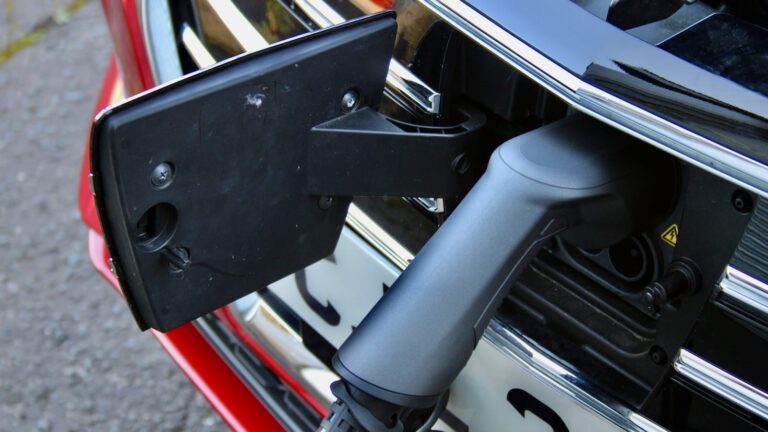
Vauxhall has become the first manufacturer to react to the reduction of the government’s plug-in car grant, slashing the price of its electric Corsa and Mokka modelsby £3,000.
On 16th December, the government announced an immediate cut of £1,000 in the plug-in car grant designed to attract buyers towards electric vehicles EVs. The grant was reduced to £1,500 and now only applies to models costing less than £32,000, the price threshold lowered from the previous £35,000.
The government move, said to target aid at buyers of more affordable plug-in vehicles and made as EVs claimed 30% of monthly new car sales, sparked great criticism across the car industry. But now in a move that will be watched very carefully by other EV makers, Vauxhall has cut £3,000 from the prices of the Corsa-e supermini and Mokka-e small SUV.
Corsa-e prices with the grant applied will now start from £25.8k and range up to £29.4k. Previously the prices with grant ranged from £27.8k to £31.4k, and the official on-the-road price (without grant) of the Elite variant, at £33.9k, would have excluded it from any government help following the 16th December changes.
Similarly the Mokka-e price list with the grant aid applied ranges from £29.4k to £30.5k. Under the new price threshold none of the Mokka-e range would have qualified for the grant at their previous prices.
Vauxhall managing director Paul Willcox said the changes had been made to help move the UK to electric motoring as quickly as possible.
“With more attainable pricing from significant reductions on both models, as well as the grant, we hope to put zero-emissions-in-use motoring within the reach of even more British motorists,” he said.
Vauxhall recently announced improved electric range figures for both the Corsa-e and Mokka-e. The WLTP-certified figures see the Corsa-e range increased by 13 miles to up to 222 miles while the Mokka-e increases from 201 to 209 miles.
Trying to select the one best new car each year is a debate that causes endless arguments among motoring journalists. Every magazine and/or website has its own ideas about how such a title should be awarded.
Every reviewer is a human being with their own ideas and preferences. Every car review is one person’s (or one group of people’s) opinion of how good or bad a car is. If you’re only relying on one source, you’re not getting the full picture.
Our approach at The Car Expert is simple. We have tracked new car reviews from 25 of the top motoring websites over the last 12 months and compiled all of the scores awarded to each new model. And we’ve used that data to put together our list of the very best new cars of 2021.
We’ll be revealing the winners, including our first overall Car of the Year title, at 10 on Tuesday 21 December.
Best new cars and class champions
Shiny new cars certainly grab all of the attention in the motoring media, but that doesn’t necessarily mean that they’re better than what’s already available.
In each of our award categories, we’ve recognised not just the best model launched in the last 12 months but also the top-ranked cars overall. In some cases, a new model has jumped straight to the top of the pile while, in others, an existing car is still top dog.
To help our readers appreciate the relative quality of the best newcomers, we’ve come up with Best New Models and Class Champions for each category. And, recognising the rapid growth of electric cars against the decline of petrol and diesel versions, we have separate class champion recignition for the very best electric and internal combustion cars.
Eligibility
There are a couple of conditions attached to our awards. A new model is a car that has arrived in the UK in the last 12 months – which means cars on the road and registered, not just announced or available to order. You should be able to pop down to your local dealer and see any of our award winners in the metal – and buy on one the spot, if you like (and if the dealer actually has any stock available, obviously!).
The second condition is that we will only award cars that have a current, valid Euro NCAP safety rating of at least four stars. That might not go down too well with some manufacturers, particularly if a newly-launched model hasn’t yet been tested by Euro NCAP, but it’s a point that we’re committing to.
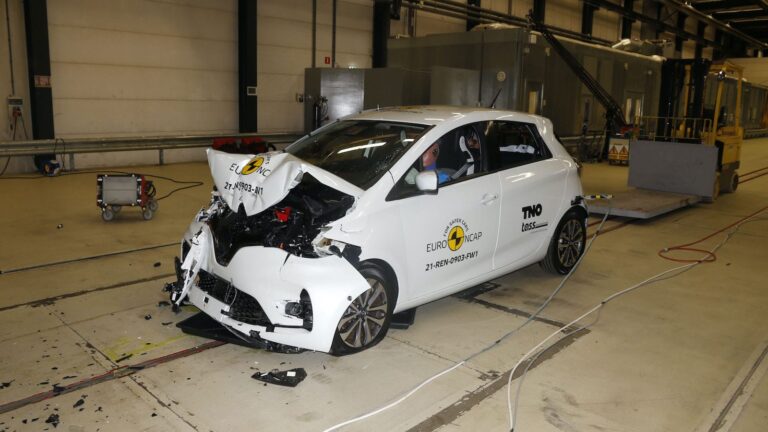
Twice this year, we’ve seen cars publicly awarded trophies by magazines and then subsequently discovered that they have sub-par safety ratings. Dacia had to hand back a high-profile Car of the Year award in April (and hurriedly change a lot of its advertising material) after the new Sandero only scored two stars from Euro NCAP. The Renault Zoe was even worse – having been awarded plenty of trophies over the last couple of years, it recently scored a completely unacceptable zero stars from Euro NCAP.
We reject any arguments from car makers who say that Euro NCAP results are not relevant, especially when those same brands have been happy to trumpet their previous five-star scores.
The best cars of 2021
So that’s how we assess the candidates. The complete list of the best new cars on sale is now live, thanks to the unparalleled data of our Expert Rating Index.
Have you found yourself looking recently at the classifieds, or staring longingly through showroom windows at sports cars or off-roaders that you would never have dreamed of buying a few years ago?
Do you wish you could fire up the ignition, select first gear and just blast away up the road, probably with the roof down for maximum wind-in-the-hair effect?
Are you considering buying yourself a car that doesn’t really match your lifestyle, but which you have decided you’ve ‘just got to have’?
Yes to any of these? Don’t worry, you’re simply going through a mid-life crisis.
Nothing wrong with that. When they hit 40-something, millions of people have the same thoughts and feelings. And one of the best ways to deal with it is to get yourself a mid-life crisis car.
So what are the popular mid-life crisis cars?
We’ve previously look at the best sites for buying a fairly conventional car, luxury cars, and cheap used cars. This time, we’re going a bit left-field. We’re looking both sites that sell popular performance or lifesyle cars, as well as some unconventional options that give you the chance to really express yourself, or buy something no-one else in your street is ever likely to have.
Whether it’s a European super saloon, an American pick-up truck, a Japanese performance car or a big off-roader, here’s our pick of the top sites you should start with. Some are nationwide online providers, while otehrs have dedicated showrooms so you can have a look and test drive in person.
The best sites for buying a mid-life crisis car 2026
URL: autolabuk.co.uk They say: “Providing vehicles to suit every requirement”
We like: Modern, smart website design We don’t like: Not the easiest search mechanism
Formed in 2014, Blackburn-based AutoLab is an established used car dealership specialising in finding high-end used cars for their clients. Working with its customers, it sources prestige vehicles, tailors finance packages and carries out upgrades to finish with a car unique to the client.
The stocklist contains just six brands: Audi, BMW, Lamborghini, Land Rover, Mercedes and Volkswagen, but the examples offered are beautifully prepared and well-presented. Strangely, if you type in ‘BMW’ the next drop-down section, ‘Model’, contains all the other brands’ models too, such as Aventador, Discovery or SQ7.
However, click through to ‘correct’ model and you are taken to any available cars with a nice initial picture and short overview. Click on this and you go to a more detailed page with further pictures, more details and long list of features. There’s a message section to send any further enquiries.
Among the list of other services provided by AutoLab are part exchange, upgrades to interiors, exteriors and tyres, and a suite of finance options. This is a smaller, more limited set-up but the cars offered look excellently prepared.
We like: Friendly, straightforward website We don’t like: Not as easy to find your chosen car as some sites
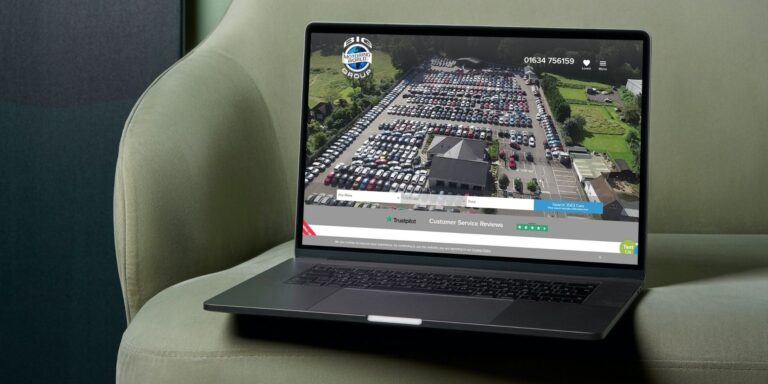
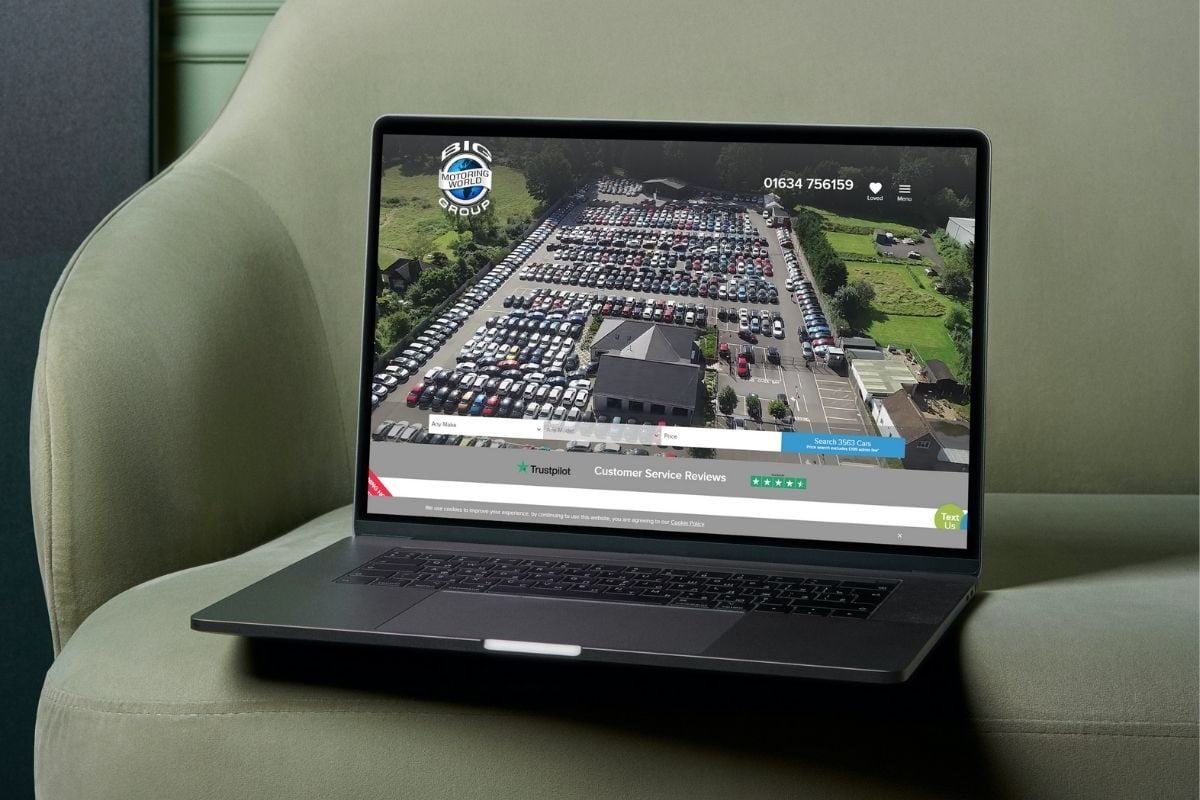
Big by name and big by nature. The landing page immediately takes you on a drone-style flight over the firm’s Enfield site to display a huge car park full of cars, all prepared and ready to go. Inside, a warehouse-style showroom houses further, highly desirable models.
Formed in 1986 by Peter Waddell, who initially traded from home and then bought a small car showroom, Big Motoring World has grown into a leading used car dealer with more than 300 staff. Having started selling used BMWs the company set out to become the UK’s largest independent BMW dealer, which it achieved in 2011. In recent years, it’s also branched out into other – predominantly German – brands.
Today Big Motoring World runs the Enfield ‘car supermarket’ with more than 800 vehicles to choose from, and a massive preparation centre in Peterborough where it can process 6,000 cars a month.
Go to ‘Used Cars’ and you’re taken to a drop down menu were you select from age, mileage, price, mpg figure or by make. However you can only search by A-Z or Z-A, so if you want end a car that’s mid-alphabet, you’d have to do a lot of scrolling. Thankfully there’s a section highlighting most popular makes to go straight through to.
Click on a chosen car and you’ll get plenty of pictures, lots of detail and a vehicle inspection graphic showing that the car has been looked at and ‘passed’. Cars are shown with a full price and an optional monthly payment figure. The company are big on finance and there’s a whole section on the subject along with warranty, part exchange and other topics.
There are lots of ‘standard’ cars here but there’s also a good chance to find a dream mid-life crisis car – especially if you like BMWs.
Clive Sutton Ltd
URL:clivesutton.co.uk They say: “We will help find you the perfect car”
We like: Interesting site with great pictures We don’t like: Some details ‘manufacturer specification only’
A former Chrysler and Jeep franchised dealer, Clive Sutton now specialises in sourcing pretty much any car, from anywhere in the world, and delivering it to you.
They are well-known for their ability to find American cars, in particular, and are the UK’s official Shelby American distributor. If you’re looking for a Dodge Charger, Cadillac Escalade or Ford Bronco, it would be worth looking at Clive Sutton’s website. Indeed there is a drop-down section devoted to US vehicles.
It’s a simple site to navigate around: click on ‘Inventory’ and you’ll find a ready-made list of available cars to view – there’s Porsche, Bentley and BMW listed alongside Lincoln, Dodge and Chevrolet.
Choose a brand and from there you’re taken to a list of cars in stock and ready to buy; as-new (100 miles on the clock) and used. In the Ford section for example, there’s a 1967 Mustang and a 2021 Mustang, along with a host of other interesting machinery such as F150 Raptors and new Broncos.
Clive Sutton sells vehicles for clients too and offers a range of bespoke services such as modifications, customisation and performance upgrades. For a mid-life crisis buyer, it’s worth a visit.
Jap Import Cars
URL:japimportcars.co.uk They say: “The UK’s leading Jap performance specialists”
We like: Honest, straightforward website We don’t like: Scant in some detail
If US cars aren’t your thing but Japanese performance machinery is, here’s a site worth visiting. Rather like 51st State Autos and American cars, Jap Import Cars does as its title suggests – they find and import cars for customers.
There’s also a stocklist of vehicles currently available from them. This is fairly small and includes not just Japanese favourites such as Honda, Mitsubishi and Toyota, but European machinery too including Jaguar, Porsche and TVR. The ‘Looking for the perfect car?’ section shows a Mercedes even though there were none listed when we looked. Presumably the stock changes regularly.
There are some quite special cars for sale such as highly tuned sport models, modified cars and concourse condition collectors pieces. But they will only sell cars that are available now with UK title of ownership and number plates, and which are ready to drive away. In other words, they won’t sell a car that is abroad and you’ve never seen it.
The website doesn’t offer a huge amount of information when compared with other sites, but the detail on the cars they do have on sale is good and there are some nice pictures. There are tabs to request a test drive, print off an e-brochure or request more information about any car.
Motors.co.uk*
URL:motors.co.uk They say: “Search less. Live more.”
We like: Lots of good advice and news We don’t like: Some pictures are low quality
Here is another online offering that doesn’t own all the cars it shows; it acts as an agent for dealers across the UK for some, although there are private sellers in there too.
It’s a huge business with a lot of used car deals on its books – nearly 300,000 cars in total. You would want to break that down of course, and you can do that immediately by entering your postcode in the initial search box.
That will bring the number down drastically and you go from there: as you enter more detail in terms of make, model and so on, the number of available and relevant cars drops massively to leave you with a manageable number to consider. Bentley Continental GT, for example, brought up 46 examples. Some car details are better than others (beware of the jargon: ‘drives like a dream’ says one) but most are well pictured.
Not sure of the exact model? Check out ‘Popular makes’ and go from there. The site makes for interesting reading and there is plenty of advice, news and features, plus car evaluations and also a section showing video reviews. The helpful advice section includes tips on electric vehicles, a driving theory test, an ‘ask the experts’ section and more. There’s also a fuel calculator, car finance guide and a ‘smart search’ to find the best car match for you.
We like: Lots to read and enjoy We don’t like: Big block of initial car description
PistonHeads, one of the oldest and most popular motoring websites going, is another news-led site with used car buying as a sort of side line.
With its unique offering of enthusiast marketplace, extensive news and the famous motoring forum, PistonHeads has amassed a staggering 20 million-plus posts from car fans and industry watchers.
It’s full of motoring news, features and reviews written by well-known experts and isn’t just a place to go to find a dream car. There’s so much more. You can spend hours in the forum reading up on your favourite models written by enthusiast owners covering all kinds of subjects such as common faults, great roads and classic rebuilds and custom work.
If you are looking for an unusual model or special edition, this is a good place to be. From supercars to prestige cars to classics, there is a great choice to see and the vehicles often have more extensive descriptions than found elsewhere.
If you know what you want you can go straight to ‘Popular makes’: the four big ones are Porsche, Mercedes, Audi and BMW but under those are around 45 other brands each showing how many version of each are available to view.
Up comes a list of relevant vehicles, linking you direct to the dealer who’s selling each – you can phone them or send a message. There are plenty of photographs with car descriptions – some more comprehensive than others.
There’s plenty of fun news and features and some useful links to car finance, car insurance and gap insurance too.
The Car Warehouse
URL:thecarwarehouse.co.uk They say: “One of Europe’s largest suppliers of used modern classics”
We like: Good mix of cars from rare to everyday We don’t like: Limited stock compared with some
The Car Warehouse specialises in looking for the unusual, or limited in numbers, so if you’re after something like that as your mid-life crisis car, this could be a good place to start.
They carefully hand pick their stock and have agents around the world looking out for them. Cars such as Mazda Bongo, Nissan S-Cargo, Figaro and Estima are all targets for The Car Warehouse. They buy good quality examples and then have a team of re-trimmers to prepare and refurbish them to a high standard.
Go to ‘Showroom’’ and you’ll find a wonderful mixture of unusual and sought after cars: Rolls-Royce Phantom, a Renault 5 GT Turbo, VW T1 Kombi, MG RV8, and many others – all excellent mid-life crisis cars.
If you love unusual motors, it’s a great place to go browsing. Photography is good and, click for more details and you’ll be presented with a fine selection of pictures and a decent and detailed overview of the car you’ve chosen including mileage, body type, engine size, number of seats and other information, with a further written report.
The site also offers finance, part exchange, details of its import scheme and even a section of collector’s items, some automotive related and some not. It’s certainly a site worth looking around, even if you don’t buy one of their cars.
51st State Autos
URL:51stateautos.com They say: “The UK’s leading supplier of American Autos.”
We like: Easy to use, simple website We don’t like: Not much car detail to begin with
If it’s an American car that’s on your mid-life crisis wish list, then this is as good a place to start as any.
Formed in 2004 by Charles Partos, Essex-based 51st State Autos’ mission hasn’t really changed much in that time: to specify, find and deliver the US-style car that you’re looking for.
There’s a good selection of used cars in stock but it’s more than that: 51st State will go through all the available options with you to tailor a car that meets your exacting wishes. They don’t mind how long that takes – there’s even a hotel next door!
We’re talking proper US muscle here – Dodge Ram, Chevrolet Corvette, GNC Sierra, Cadillac Escalade – there’s not an enormous list but what there is, it’s pure US magic.
Basic information is initially shown such as year, mileage, engine size, number of owners (if it’s a used car) and fuel type, with the price. Click for more details and you get further background information, more pictures and the opportunity to call 51st State or leave an email address for them to contact you. It’s quite a limited amount of detail about the cars so if you’re genuinely interested in something, you would have to take either of these routes.
Other services offered by 51st state include warranties, part exchanges, finance, car checks and servicing.
And if you need inspiration…
Car Throttle
URL: carthrottle.com They say: “The internet’s largest community for car enthusiasts”
We like: Fun, busy site filled with things to read We don’t like: Not a conventional way to buy your next car
Car Throttle is neither a dealership nor a sales website. It’s a community of car lovers, fans and enthusiasts, sharing their news, thoughts and questions.
Formed in 2009 by Adnan Ebrahim for like-minded young car enthusiasts it has grown into a massive community, all following on social media. The site is certainly popular: there are more than 6.7 million fans on Facebook and nearly three million YouTube subscribers. Today it is part of the Dennis media organisation which includes Auto Express, EVO and Carbuyer.
It’s an interesting and fun way to learn about new and used cars. There’s a brilliant section on rare and unusual used vehicles featuring former race cars, damaged supercars for repair and limited edition models, along with news and blogs.
When it comes to buying, or looking for, a car, most of the news stories finish with a link to similar makes or models that are available for purchase, operated through the online car dealership BuyaCar, which is also owner by Dennis.
And if you still want more, there’s a ‘Discussion’ section and a great series of videos to keep you entertained.
This article was originally published in December 2021. Last updated January 2024.
*The Car Expert has commercial partnerships with Motors.co.uk. If you click through to its website and view any vehicles, we may receive a small commission. We do not receive any payment or commission if you proceed to buy a car or sign an agreement.
We have all set off on winter journeys in freezing temperatures and, if you travel to work every morning, you are likely used to the routine once December rolls around; defrost the car, set off a few minutes earlier, and drive with caution, on the lookout for blankets of snow and icy roads.
But can you de-ice your car using hot water? Does your car need a few minutes to warm up before driving off? Do you turn into the skid to correct your car sliding on the road?
We have developed plenty of myths about driving safely in adverse conditions, and with snow already falling and Christmas not too far around the corner, we have debunked ten of the most common beliefs about winter driving and maintenance. Were your notions around car journeys in the cold season TRUE or FALSE? Find out below.
FALSE – setting off in snowy conditions on a road that is already gritted with salt can give you piece of mind, but you should still travel at a lower speed than you would normally and take extra care.
Salt does not dissolve ice immediately, and needs cars driving over it to turn it into an effective solution. In addition, salted roads can refreeze, and any part of the road ahead could potentially be untreated.
TRUE – if your car suddenly stops working in very cold temperatures, there is a good chance that your engine has frozen, but trying to run the engine to warm it up is definitely not a good idea.
Turning the engine over could cause it to overheat, so park your car somewhere warm and wait a few days for your engine to properly thaw before starting it again. To help avoid frozen engines, add a 50-50 mix of anti-freeze and water to the engine’s cooling system.
TRUE – should you encounter a skid while driving, you should gently turn the steering wheel in the direction of the skid. For example, if your car has started to slide to the left, then gently turn the wheel to the left. Although it can be quite the alarming situation, try not to panic.
Slamming the brakes will only make the skidding worse, and overcorrecting by steering too much could cause your car to spin. Remember your speed; If you are starting to skid, it’s a sign that you are driving too fast for the road conditions.
FALSE – stopping distances are indeed longer, but many drivers are not prepared for just how much longer they can be. Depending on your car and its tyres, stopping distances can be ten times longer in on winter roads.
You can increase your car’s traction and braking distance in cold temperatures by fitting winter tyres (and snow sock covers for those tyres in more snowy conditions), which have deeper grooves than standard tyres.
TRUE – while you may have needed to let a car ‘warm up’ previously, modern cars have computers or fuel injection systems that can compensate during cold temperatures.
If you let your car idle you are likely to be using more fuel which can make driving more expensive. In reality, your car generally needs about 20 seconds to properly lubricate engine components in cold conditions.
FALSE – 4×4 drivers certainly do have the advantage when driving in the colder months of the year, but this can give some drivers a false sense of security.
Yes, your car will have more power to help you get moving on slick surfaces, but more power doesn’t mean that you will brake any faster. Always respect the road ahead, and leave plenty of space between your car and the vehicle in front.
TRUE – this one is unlikely to happen to us in the UK, but for those of us enduring the most bone-chilling temperatures the British Isles can muster, this is something to keep an eye out for.
Leaving too much empty space inside your fuel tank can lead to the water vapour in your fuel lines freezing on particularly cold nights; stopping fuel from reaching the combustion chamber of your engine.
FALSE – if only it was that easy! Sure, hot water will break up the ice on your windscreen, but it can crack to windscreen too. This is because, although the glass used to make your windscreen and windows are (usually) reinforced, it isn’t designed to handle dramatic changes in temperature like this; from freezing cold to searing hot.
Buy and use a de-icer solution instead, or make a homemade de-icer solution by filling a spray bottle with 2/3rds rubbing alcohol and 1/3rd water.
FALSE – if you are driving when the visibility is decreased, additional lights are likely to make very little difference. In extreme cases a fog light may be beneficial, but more often than not full beam fog lights will actually make the situation worse, as fog reflects light back, further reducing your visibility.
Maintaining dimmed headlights, paired with cautious speeds and vigilance, should be more than enough to spot obstacles and other cars on winter roads.
FALSE – this is a pretty big misbelief, and a dangerous one too. The myth comes from the idea that if you deflate your types a tiny bit you will increase the surface area of your tyres, in turn increasing grip on snow and ice. But this is simply not true, and deflating your tires can have heavy effect your car’s ability to steer correctly.
You should remember to check your tyre pressure every so often during the winter months too, as cold weather can cause the air in your tyres to compact.
*The Car Expert has a commercial partnership with WhoCanFixMyCar.com. If you click through to their website, we may receive a small commission. We do not receive any payment or commission if you proceed with any servicing plan.
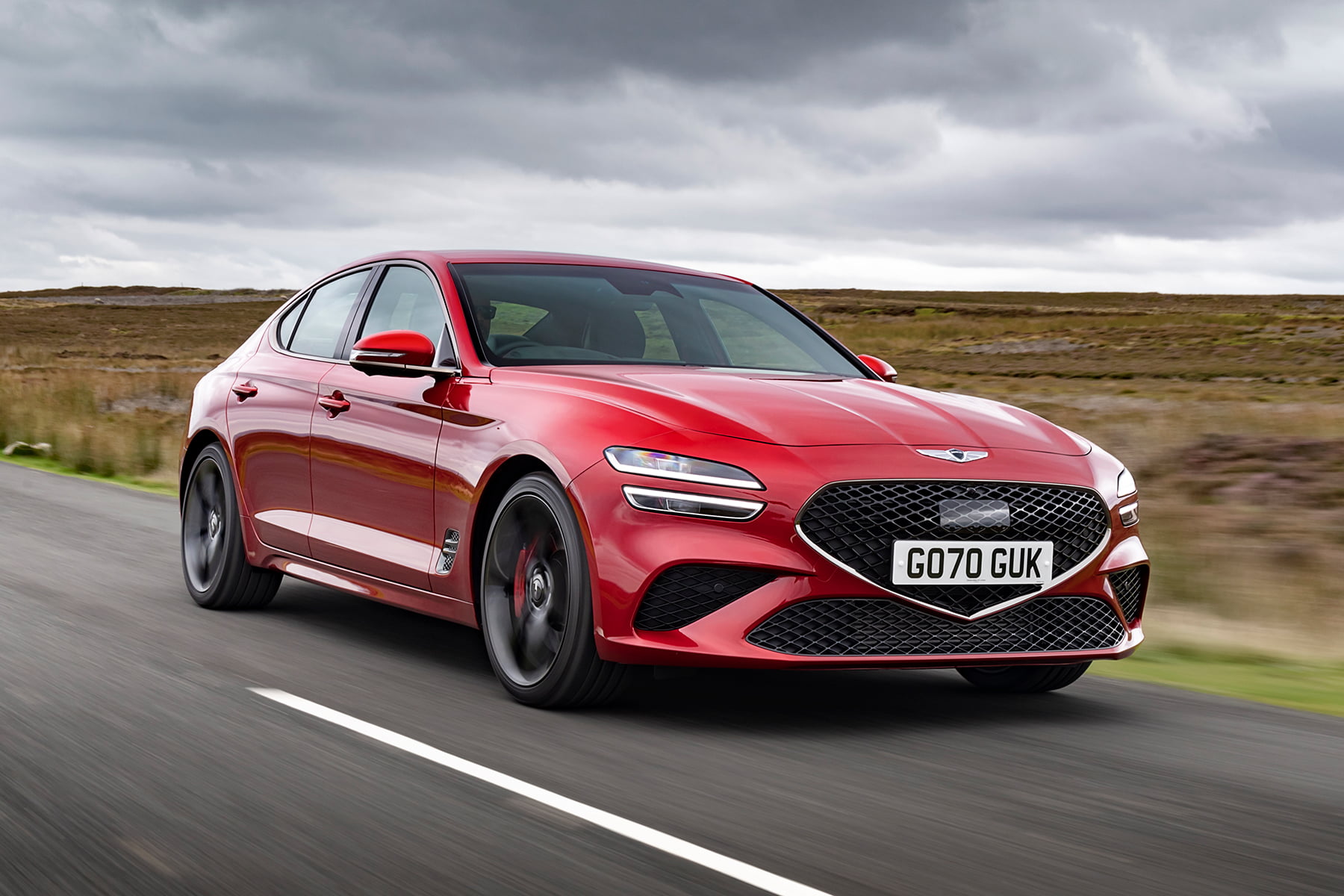
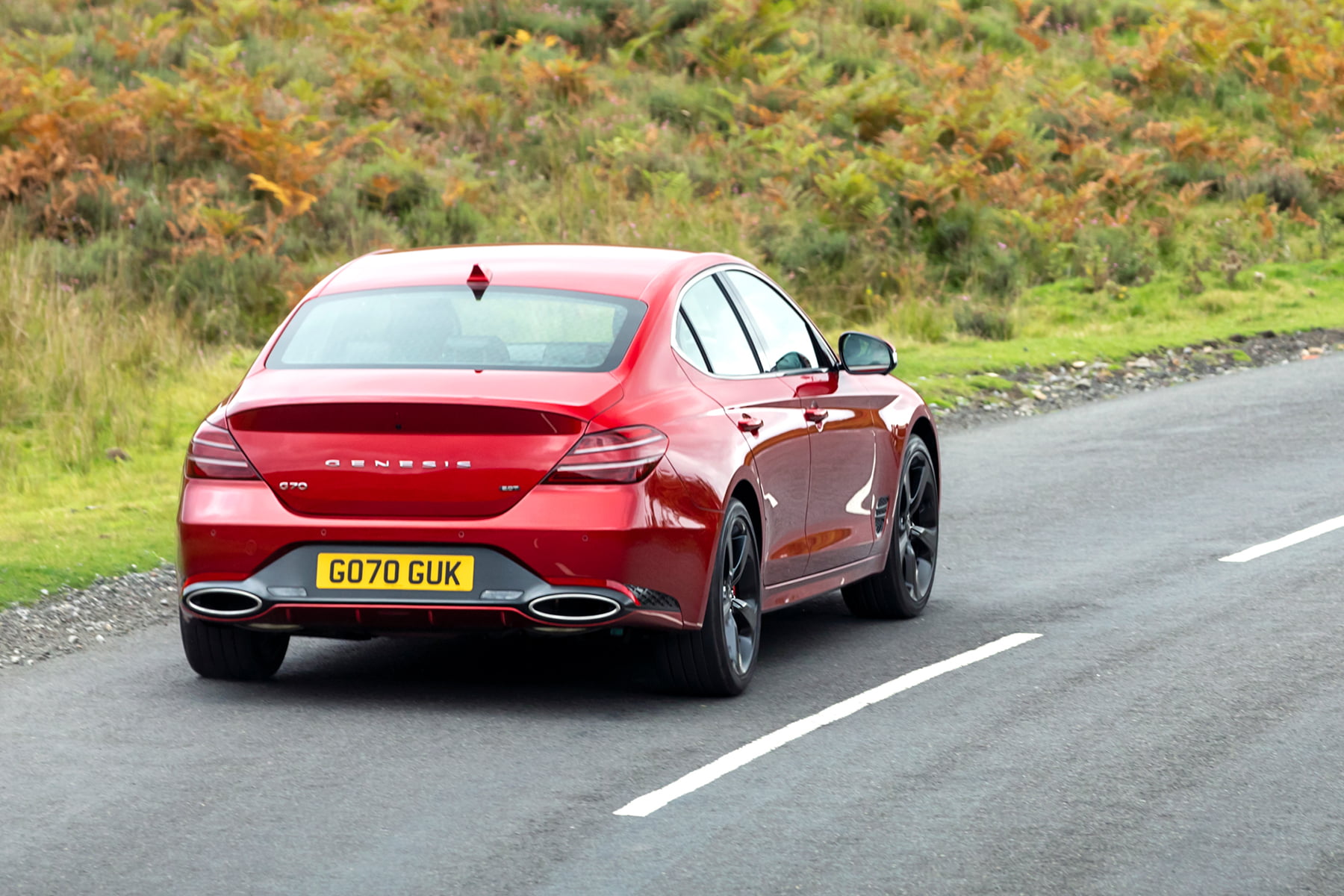
The Genesis G70 was a mid-sized saloon and estate (called a shooting brake, but it’s not really) that arrived in the UK in Autumn 2021, joining the likes of the Audi A4, BMW 3 Series and Mercedes-Benz C-Class. It was discontinued in 2024 as the brand shifted to 100% electric models.
Genesis is a spin-off upmarket brand owned by Hyundai and the G70, alongside the GV70 SUV, is part of its first foray into the European automotive market after successes in Asia and the USA. There is another saloon available in the range, the larger Genesis G80.
All variants of the G70 were fitted with an automatic gearbox, with customers able to choose between a 2.0-litre petrol engine or a 2.2-litre diesel unit. The diesel unit, in particular, came in for criticism for unpleasant noise and vibrations.
Reviewers often commented that, like the rest of the Genesis range so far launched in the UK, the G70 was let down by its weak range of engines.
On the other hand, British reviews of the G70 consistently praised this executive saloon for the impressive amount of equipment included on the base model, and for its high quality interior trim.
Due to a lack of practicality and poor fuel economy in the face of the quality models produced by established premium brands, Car found the G70 hard to recommend: “With interior space being on the tight side and pricing that’s competitive but in no way a bargain, you’d have to really fall for the looks or the promise of a stress-free ownership experience. For some that might be enough, but we want a little more.”
As of February 2026, the Genesis G70 holds a Used Car Expert Ratingof D, with a score of 59%.
Highlighted reviews and road tests from across the UK automotive media. Click any of the boxes to view.
The Car Expert
Model reviewed: 2.0-litre petrol automatic Luxury Line Shooting Brake Score: 7.5 / 10 “The Genesis G70 Shooting Brake is a value-for-money premium estate though it’s not that spacious and lacks any electric powertrain elements.” Read review
Auto Express
Model reviewed: Shooting Brake estate range Score: 7 / 10 “Out of the wide range of models from Genesis, the G70 is the least convincing. It’s competitively priced, but let down by a very cramped cabin that lacks the sense of occasion as other models in the family. Dynamically it lacks a little sophistication to the best premium rivals, too. But if you’re sold on the looks and you can live with the lack of space, then it’s still an intriguing offering.” Read review
Model reviewed: saloon Score: 6 / 10 “After an impressive arrival in the UK, Genesis has taken a sideways step with the G70. While the brand’s other products are real rivals for the premium establishment, the G70 won’t give the average 3 Series or C-Class buyer much to think about.” Read review
Auto Trader
Model reviewed: Shooting Brake estate range Score: 7 / 10 “Overall it’s something a bit different, great value for money and very well equipped but the limited engine line-up and old-school vibe may limit appeal somewhat.” Read review
Model reviewed: Range overview Score: 8 / 10 “A fresh twist on the compact luxury saloon format, the Genesis G70 is a new alternative to established favourites like the BMW 3 Series and Mercedes-Benz C-Class.” Read review
Business Car
Model reviewed: 2.2-litre diesel automatic Sport Line Shooting Brake Score: 7 / 10 “The Genesis G70 Shooting Brake does plenty of things well but, like the saloon, it remains more of a niche choice for now.” Read review
Car
Model reviewed: 2.0-litre petrol automatic estate Shooting Brake Score: 6 / 10 “The Genesis G70 Shooting Brake is a likeable, left-field choice in a sea of me-too designs, and we like it all the more for that. It’s good to drive, with keen handling, but let down by a weak range of engines and a lack of any sort of electrification.” Read review
Model reviewed: Range overview Score: 6 / 10 “With interior space being on the tight side and pricing that’s competitive but in no way a bargain, you’d have to really fall for the looks or the promise of a stress-free ownership experience. For some that might be enough, but we want a little more.” Read review
Carbuyer
Model reviewed: Shooting Brake estate range Score: 6.6 / 10 “The Genesis G70 Shooting Brake offers more style than substance and seems destined to struggle against the best rivals.” Read review
Model reviewed: Saloon range Score: 7.2 / 10 “The Genesis G70 is a comfortable new contender in the hotly fought compact executive class but it’s compromised in some key areas.” Read review
Carwow
Model reviewed: Shooting brake (estate) range Score: 6 / 10 “The Genesis G70 Shooting Brake looks and feels the part, but crucially lacks the practicality of key estate rivals.” Read review
Model reviewed: Saloon range Score: 7 / 10 “The Genesis G70 is a great-looking, well-equipped saloon that’s let down by poor practicality.” Read review
Company Car Today
Model reviewed: Range overview “Distinctive, decent quality and well-specced, the G70 will help ease Genesis into the UK marketplace without making big waves, although interior packaging and running costs are definitely compromised.” Read review
Daily Mail
Model reviewed: 2.2-litre diesel automatic Shooting Brake Sport Line “The new Genesis G70 Shooting Brake from Hyundai’s premium spin-off brand hits all the right notes.” Read review
Eurekar
Model reviewed: 2.2-litre diesel automatic Luxury Line saloon “The Genesis G70 is smooth and nicely balanced to drive, coping confidently with tricky road conditions. Interior design is very much down to personal taste and there are cabins I find more appealing than that of the G70, but there can be no doubting the quality of the soft leather upholstery, the robust plastics and tough switchgear.” Read review
Model reviewed: 2.2-litre diesel automatic Sport Line estate “The Genesis G70 is certainly good enough to compete in a notoriously status-conscious market but whether or not Genesis’ promise of five years of hassle-free motoring with no hidden extras will persuade up-market buyers to make an exodus from Merc, BMW and Audi showrooms remains to be seen.” Read review
Heycar
Model reviewed: Saloon range Score: 7 / 10 “Weird and wonderful premium saloon” Read review
Model reviewed: Shooting Brake Score: 7 / 10 “Sexy but imperfect estate car” Read review
Honest John
Model reviewed: Range overview Score: 6 / 10 “You’re not buying the car, you’re buying the brand experience. That’s probably a good thing as the Genesis G70 is no match for existing competitors.” Read review
Parkers
Model reviewed: Shooting Brake range Score: 7.6 / 10 “Appealing, left-field estate/coupe lacking engine choices” Read review
Model reviewed: Range overview Score: 7.2 / 10 “A decent executive saloon in need of a wider engine range” Read review
The Sun
Model reviewed: 2.2-litre diesel automatic estate Shooting Brake “We all know a BMW 3 Series Touring is superior in almost every department. But the Genesis G70 is a good left-field choice and has its own USP. No showrooms. No salesmen. No fuss. Genesis personal assistants will deliver the car to your door, even for a test drive.” Read review
Model reviewed: Saloon range “The guys and girls at Genesis have worked hard to put together an entry-level car that is a great introduction to the brand. This will be a hit for Genesis.” Read review
The Telegraph
Model reviewed: 2.0-litre petrol automatic Sport Line Score: 6 / 10 “By and large, then, the Genesis G70 is decent enough. If all you ever use it for is to pop to the shops and sit on the motorway, it’ll do the job perfectly well. The trouble is, the premium rivals with which it’s aiming to compete do all that and more.” Read review
Safety rating
Independent crash test and safety ratings from Euro NCAP
Independent economy and emissions ratings from Green NCAP
No eco rating
The Genesis G70 was not assessed by Green NCAP during its production life.
Reliability rating
Reliability data provided exclusively for The Car Expert by MotorEasy
No reliability rating
As of February 2026, we don’t have enough reliability data on the Genesis G70 to generate a reliability rating.
The Car Expert’s reliability information is provided exclusively to us using workshop and extended warranty data from our partner, MotorEasy, sourced from both official dealerships and independent workshops.
As soon as MotorEasy has sufficient data on the G70, we’ll publish the results here.
Running cost rating
Monthly cost of ownership data provided exclusively for The Car Expert by Clear Vehicle Data
Fuel consumption
Average
Score
Petrol models
34 mpg
D
Diesel models
44 mpg
C
CO₂ output
Average
Score
Variation
Score
Petrol models
190 g/km
D
Diesel models
175 g/km
D
Insurance group
Average
Score
Variation
Score
All models
35
D
We only have limited running cost data on the Genesis G70 at this time, but the scores we do have are average to poor. We’ve also cross-checked with other sources, which confirm that the G70 is an expensive car to run.
Check back again soon for a more comprehensive breakdown of running cost data.
Awards
Significant UK trophies and awards that the Genesis G70 has received
2022
UK Car of the Year Awards – Best Estate
Similar cars
If you’re looking at the Genesis G70, you might also be interested in these alternatives
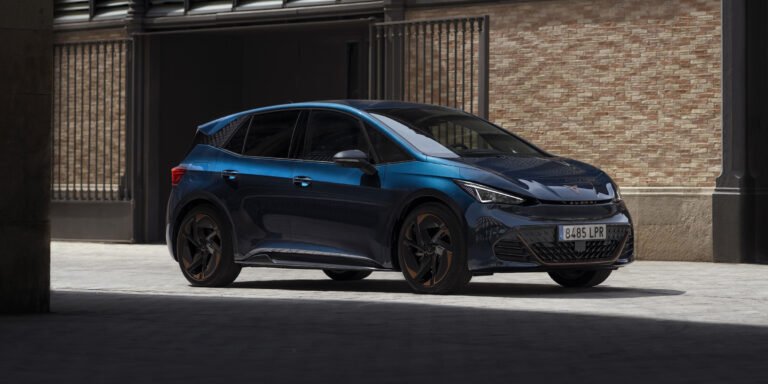
SEAT’s performance brand Cupra has announced the pricing and specification for the all-electric Born hatchback, with customers able to buy a model from the new range ahead of its early 2022 arrival.
Officially unveiled back in May, the Born is essentially Cupra’s version of the Volkswagen ID.3. It will have a range of three different battery sizes to choose from by the end of 2022. However, the Born is initially available with the mid-range 58kWh battery only.
A cheaper 45kWh version and a more expensive 77kWh variant are planned to be offered later in the year, with pricing for those models coming in the new year.
For now, the 58kWh Cupra Born has a range of three trim levels to choose from, consisting of the standard ‘V1’ trim, the midrange ‘V2’ trim, and the range-topping ‘V3’ trim.
For just under £34k, the standard model includes 18-inch alloy wheels, LED headlights and taillights, heated door mirrors, a 12-inch infotainment console with navigation, a 5-inch digital cockpit behind the steering wheel, adaptive cruise control, lane-keeping assistance and keyless entry.
The V2 trim, which costs an extra £450, comes with 19-inch alloys and adds rear window tint, heated seats, and Cupra’s augmented reality head-up display which projects graphics onto the car’s windscreen while you are driving.
Fitted with 20-inch alloys, the top-spec starts at just over £37K and swaps out the standard leather seats for sportier bucket seats that are heated and fitted with a massage function.
Although the Born EV is available to order now, Cupra expects that customers will have to wait until around March 2022 for their order to be fulfilled, and the manufacturer concedes that the ongoing semi-conductor chip shortage may cause further delays.
It’s been a predictable story for years now, and all it really does is make the car industry look silly – government reduces grant allowance, car industry complains, world doesn’t end and EV sales keep increasing anyway.
This week, the government announced that it was reducing the Plug-in Car Grant allowance for EVs once again. This is probably about the fifth or sixth time that this has happened since the grant was first announced about a decade ago, when it started out as a £5,000 taxpayer contribution towards every new electric car.
The grant allowance has steadily decreased over the years, and this week the level dropped from £2,500 down to £1,500. In parallel, the the price threshold for eligible vehicles has been decreasing and the focus has shifted from all plug-in cars to only pure EVs.
This was always the plan. The government was quite clear that the grant allowance would reduce over time as electric cars became more affordable, and that’s what has happened. The overall pool of money isn’t decreasing, but it’s being targeted at lower-priced EVs rather than luxury cars. It’s a rare case of the government actually sticking with a policy and keeping a promise.
Yet every time the grant allowance is reduced, we get the same cut-and-paste moaning from the same sources within the car industry, predicting that everyone will stop buying EVs. And every time, the market share of EVs just keeps increasing.
The car industry is its own worst enemy
The grant was last reduced back in March, from £3,000 to £2,500, and the threshold for eligibility dropped from £40K to £35K. The industry howled. And what happened? EV sales have continued skyrocketing without so much as a blip.
That simply reinforces the government’s approach. Sales of new EVs certainly haven’t tanked as was suggested, so the goverment will justifiably see the industry as crying wolf (again).
Yet the car industry undermined its own argument even further. When the last £500 reduction was announced, a number of car companies immediately cut their prices by £500 to offset the grant reduction. Others slashed the prices of their cars so they’d still qualify for the grant. A similar scenario will almost certainly play out this time.
Again, this just strengthens the government’s argument that decreasing the grant is the right way to go.
If you’re in the Treasury and you see car companies willingly reducing new car prices by £500 to match your grant reduction, or cutting prices even further to maintain the grant funding, you’d understandably assume that they didn’t really need that grant money in the first place.
EVs are no longer a niche market
New EV sales are currently at just under 20% of the overall market share and growing each month – a year ago it was 9%. EV market share was about double that of diesel in November, which is again a consistent direction of travel. So everything’s basically going according to plan.
Electric cars are still more expensive than petrol cars, although the gap is shrinking quickly. This is particularly felt at the lowest price points of the new car market, so it makes sense that any government grant money should be targeting cheaper EVs rather than more expensive ones.
As we pointed out in our inaugural Expert Rating Index report last month, there are currently more than 40 different new electric cars already on the market with more arriving each month. There are also clear tax benefits for company car users that make EVs more affordable than petrol or diesel cars – which are far more valuable than the plug-in grant – so there are still plenty of opportunities for car manufacturers to get more people into electric cars.
Tackle charging rather than crying for handouts
The biggest area where the car industry can, and should, pressure the government on its ‘net-zero’ plan is to accelerate the roll-out of EV charging points. Although the UK is better than most countries in this regard, it can do better and will need to do better as the car market shifts towards electrification.
The Society of Motor Manufacturers and Traders (SMMT) recently bemoaned the number of charging points per EV in the UK (it’s currently one point for every 16 EVs), but it didn’t set out any kind of target for what it thinks that number should be. For comparison, the best country is South Korea with a 3:1 ratio while the Netherlands is 5:1. Germany (Europe’s largest new car market) is 17:1, so just behind the UK.
Various studies have shown that the biggest hurdle to faster EV adoption is uncertainty over charging. Cost is obviously a factor, but it’s no longer the top concern car buyers considering a switch to electric power.
As we’ve previously written here, an electric car is a viable proposition for most households if you can charge at home. But if you have to rely on public charging, it’s much less attractive. So the industry should channel all its lobbying into getting more charging points in more places.
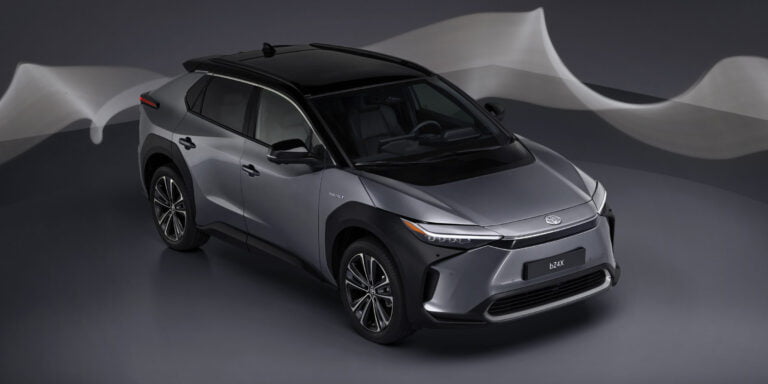
Toyota has released new details about the first car to arrive from its forthcoming range of new electric cars, the bZ4X SUV, with full UK pricing and specifications.
The Toyota bZ4X is the Japanese manufacturer’s first purpose-built electric vehicle, and is also the basis for the technically identical Subaru Solterra.
This pricing and trim level news comes after Toyota announced 11 new EV concepts in line with its ‘Beyond Zero’ strategy, including three other ‘bZ’ models that are planned to eventually sit alongside the bZ4X in Toyota showrooms.
The bZ4X was unveiled for the first time in October, featuring a new chassis design that Toyota claims is “class-leading” interior space, and plans to eventually offer the bZ4X with electronic ‘steer-by-wire’ steering, similar to the yoke control used by some aircraft.
All models have the same 71kWh battery and a range of 280 miles, with customers able to choose between four-wheel drive and ‘X-Mode’ all-wheel drive models.
The new bZ4X range includes four trim levels. The entry-level ‘Pure’ trim starts at just under £42K and is only available with front-wheel drive. It includes 18-inch alloy wheels, an eight-inch infotainment console, seven-inch digital cockpit behind the steering wheel, a reversing camera, climate control and keyless entry.
The mid-range ‘Motion’ trim, which costs just under £46K in front-wheel drive and £48K in all-wheel drive, adds a rear spoiler, rear privacy glass, parking sensors, heated front seats, ambient lighting in the cabin and a wireless charging tray.
£48K will also buy you the front-wheel drive version of the ‘Vision’ trim, which additionally includes a remotely controlled parking assist system, leather seat upholstery, a heated steering wheel, and a digital key allowing the car to be unlocked and started with the driver’s smartphone. The ‘Vision’ trim with all-wheel drive will cost £50k.
Top of the range is the all-wheel drive only ‘Premiere Edition’ trim, which features a nine-speaker JBL premium sound system and a panoramic roof, costs £51.5K.
The ‘Premiere Edition’ will only be available through Toyota’s online retail service, and the manufacturer says it has more information on the way about the bZ4X before its arrival on UK roads sometime in early 2022.
The latest cut in the government’s Plug-in Car Grant has sparked predictable criticism from the UK automotive industry, despite it being precisely in line with long-standing government policy.
The grant, designed to encourage consumers to replace their petrol or diesel cars with electric vehicles (EVs), has been reduced by £1,000, from £2,500 to £1,500. It applies to cars under the price threshold that produce CO2 emissions of less than 50g/km and can travel at least 70 miles with no CO2 emissions.
The price threshold of qualifying cars has also been cut – previously any car with a recommended retail price of up to £35,000 was eligible, now the upper limit is £32,000. The changes came into effect immediately.
Announcing the changes, the government said that the scheme was being re-focused to target less expensive models, allowing the funding to go further and to help more people make the switch to an EV.
“The market is charging ahead in the switch to electric vehicles,” said transport minister, Trudy Harrison. “This, together with the increasing choice of new vehicles and growing demand from customers, means that we are refocusing our vehicle grants on the more affordable vehicles and reducing grant rates to allow more people to benefit, and enable taxpayers’ money to go further.”
The minister added that new rules would also be introduced to make it easier to find EV charge points and to make payments at them.
This week’s reductions are simply the latest changes to the application of the Plug-in Car Grant, which was initially a maximum £5,000 and available for both EVs and plug-in hybrids. It was always intended to reduce over time as the cost of electric cars reduced, and the government has steadily followed that path over several years.
As usual, industry bodies criticised both the changes and the speed of them, just as they have done on every other occasion that the grant has been reduced. Society of Motor Manufacturers & Traders (SMMT) chief executive Mike Hawes argued that the changes could not come at a worse time, “with inflation at a ten-year high and pandemic-related economic uncertainty looming large.”
Vauxhall managing director Paul Willcox claimed that the changes provided a confusing message to UK consumers. “(They) will harm EV adoption at a time when we need to be doing all we possibly can if we are to stand a chance to move the UK to electrified only vehicles by 2030,” he said, adding that EVs still represent only a small percentage of UK vehicle sales.
Other industry observers argue, however, that with plug-in vehicles now claiming 30% of sales figures and growing in popularity each month, there is less need to subsidise the market, while it’s right that any grants available should be targeted at the most affordable EVs.
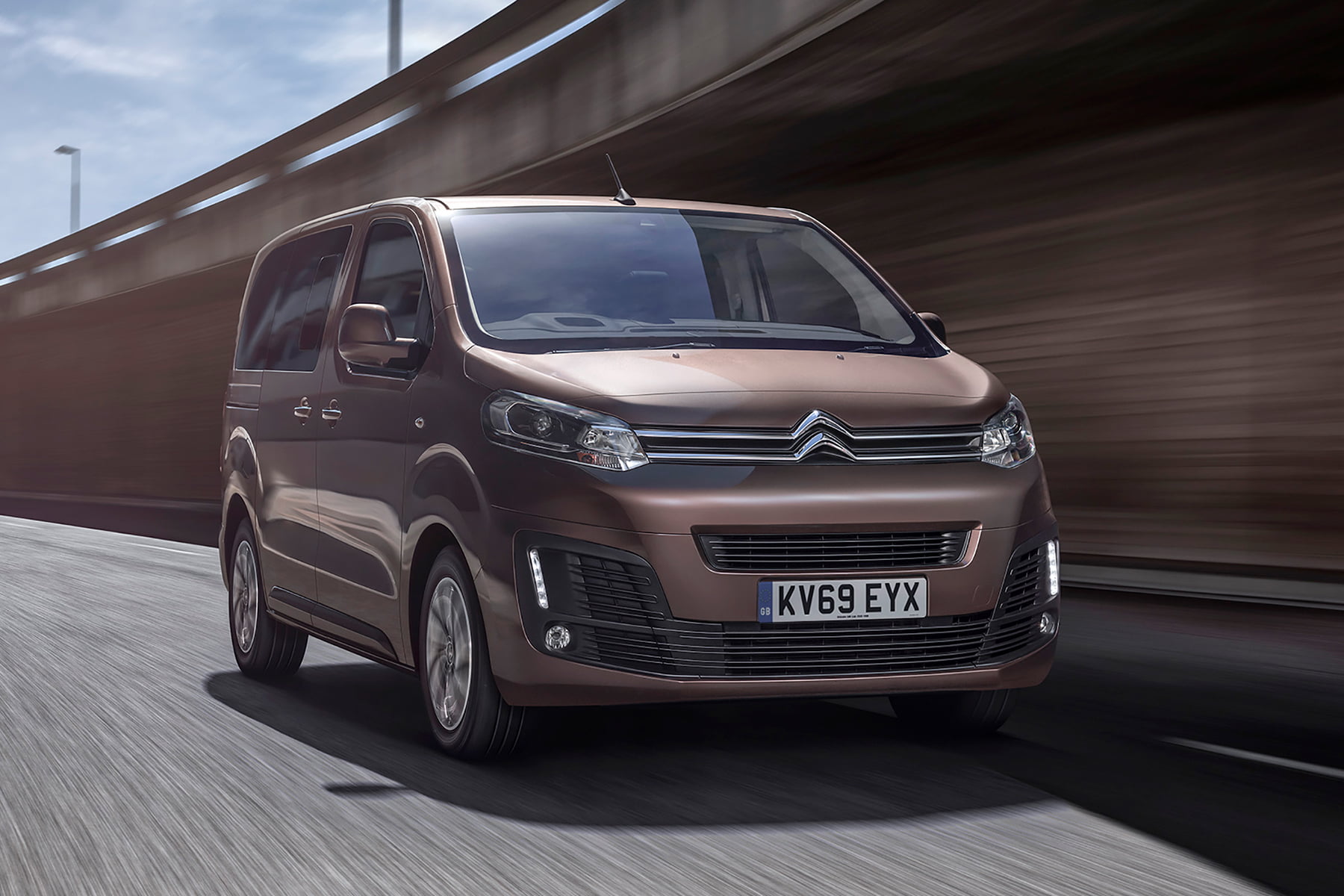
The nine-seater Citroën SpaceTourer MPV arrived in the UK in late 2016, and is a passenger version of the Citroën Dispatch mid-size delivery van. It was discontinued in 2022 as Citroën shifts to an electric future.
Developed by parent company Stellantis, the SpaceTourer is essentially identical to the Peugeot Traveller, Vauxhall Vivaro Life, Toyota Proace Verso and Fiat Ulysse.
First unveiled at the 2016 Geneva motor show, the Citroën SpaceTourer line-up consisted of two diesel powertrains, with both manual and automatic transmission variants available. The electric version called the ë-SpaceTourer was launched in 2020 and has essentially replaced this conventionally powered version.
Customers could choose between the standard ‘M’ trim, and the longer ‘XL’ trim, but reviewers generally concluded that the interior quality of both options was rather basic. “It feels cheap in places and looks very dull inside”, Carwow concluded, adding that the Citroën SpaceTourer’s back-to-basics cabin was likely to disappoint buyers that were more accustomed to driving traditional people carrier models, like the Citroën C4 SpaceTourer.
“It will suit people whose family has outgrown a conventional MPV or SUV”, Auto Trader deduced, “but more likely, it’ll be snapped up by airport taxi firms and private hire companies who need to transport lots of people and baggage comfortably, quickly and without fuss.”
As of February 2026, the Citroën SpaceTourer holds a Used Car Expert Rating of D, with a score of 60%. It gets good grades for its low running costs, but its CO2 emissions are only average and its media score and safety rating are poor.
Body style: Large people carrier Engines: diesel Price when new: From £34,495 on-road
Launched: Autumn 2016 Last updated: Autumn 2020 Discontinued: Spring 2022
Image gallery
Media reviews
Highlighted reviews and road tests from across the UK automotive media. Click any of the boxes to view.
Auto Express
Model reviewed: Range overview Score: 8 / 10 “The Citroen SpaceTourer MPV trades on its big capacity and masks its van origins well.” Read review
Auto Trader
Model reviewed: Range overview Score: 7 / 10 “The Citroen Spacetourer will suit people whose family has outgrown a conventional MPV or SUV, but more likely, it’ll be snapped up by airport taxi firms and private hire companies who need to transport lots of people and baggage comfortably, quickly and without fuss.” Read review
Business Car
Model reviewed: 2.0-litre diesel automatic Business Score: 8 / 10 “Cost-effective and well thought out addition to a sector lacking in choice.” Read review
Car Keys
Model reviewed: 1.6-litre BlueHDi Feel MPV Score: 8 / 10 “The Citroen SpaceTourer is the next step for those who feel a seven-seat MPV just isn’t big enough. It’s easy to drive, comfortable to be driven in and it’s fairly economical.” Read review
Carbuyer
Model reviewed: Score: 7.6 / 10 “The Citroen SpaceTourer offers versatility, efficient engines and a touch of style, but struggles to shrug off its delivery-van origins.” Read review
Carwow
Model reviewed: Range overview Score: 6 / 10 “The Citroen SpaceTourer is a huge van-based MPV with a roomy cabin that can be had with up to nine seats. It feels cheap in places and looks very dull inside, though.” Read review
Eurekar
Model reviewed: 2.0-litre diesel automatic Flair “The Citroën SpaceTourer handles surprisingly well. It feels well planted when cornering and feels very car-like despite its van-like capacity. It is also very well built with soft-touch finish and robust switchgear, while all eight seats are comfortable and this case leather-trimmed.” Read review
Model reviewed: 1.6-litre diesel automatic Feel “The Citroën SpaceTourer is not exactly a van, although derived from one, but more a people carrier, or MPV, or mini-bus, and pretty luxurious at that. It looks good, is well equipped with economical engines and most importantly of all is hugely practical.” Read review
Heycar
Model reviewed: Range overview Score: 8 / 10 “It might not be the most fashionable of family cars, but when it comes to affordable running costs, value for money and eight seater practicality, few MPVs can match the Citroen SpaceTourer.” Read review
Honest John
Model reviewed: Range overview Score: 8 / 10 “The Citroën Spacetourer is a comfortable and family-friendly MPV, with lots of interior space for up to eight adults, and is well equipped as standard.” Read review
Motors
Model reviewed: Range overview Score: 3 / 10 “The Citroën Spacetourer is very spacious, well equipped and has frugal engines but the interior quality is not the best and seats are hard to remove.”
Read review
The Sun
Model reviewed: 2.0-litre diesel automatic Business “If you are looking for bags of space without admitting you need a commercial vehicle, the Citroen SpaceTourer should be on your shopping list.” Read review
The Telegraph
Model reviewed: 2.0-litre diesel automatic Flair Score: 6 / 10 “It’s better than you’d expect, the Citroën Spacetourer, and certainly in this top-spec form, it makes a decent fist of hiding its humble roots. But there’s no getting around the fact that, at nearly £50,000, it’s a lot to pay for a van with windows. Even if it is a very nice van with windows.” Read review
Safety rating
Independent crash test and safety ratings from Euro NCAP
Independent economy and emissions ratings from Green NCAP
No eco rating
The Citroën SpaceTourer was not tested by Green NCAP during its production life.
Reliability rating
Reliability data provided exclusively for The Car Expert by MotorEasy
No reliability rating
As of February 2026, we don’t have enough reliability data on the Citroën SpaceTourer to generate a reliability rating.
The Car Expert’s reliability information is provided exclusively to us using extended warranty data from our partner, MotorEasy. As soon as MotorEasy has sufficient data on the SpaceTourer, we’ll publish the score here.
Awards
Trophies, prizes and awards that the Citroën SpaceTourer has received
2017
Red Dot Awards – Design Award
Similar cars
If you’re looking at the Citroën SpaceTourer, you might also be interested in these alternatives
In yet another hectic month for new car sales, the Mini hatch topped the best-sellers chart as car registrations grew 2% in November.
Ongoing supply problems continue to plague almost every car brand, with individual results up or down depending on whether manufacturers can get enough computer chips to be able to build cars. Once again, that has led to a jumbled-up best-sellers’ list.
Despite the appearance of the Ford Focus in November’s rankings, it was yet another disastrous month for Ford, which has been struggling to supply its popular Fiesta supermini and Puma crossover models. Across more than 300 UK dealerships, Ford only managed to shift about 101 Fiestas and 126 Pumas in the entire month. Given that these are two cars that would normally be a regular fixture in the top ten, it made a large dent in Ford’s overall numbers – selling 50% fewer cars than November last year.
We’ve published our normal reporton the monthly new car registration figures, with plenty of detail that you won’t find elsewhere. So let’s now look at the mixed-up top ten results for November 2021.
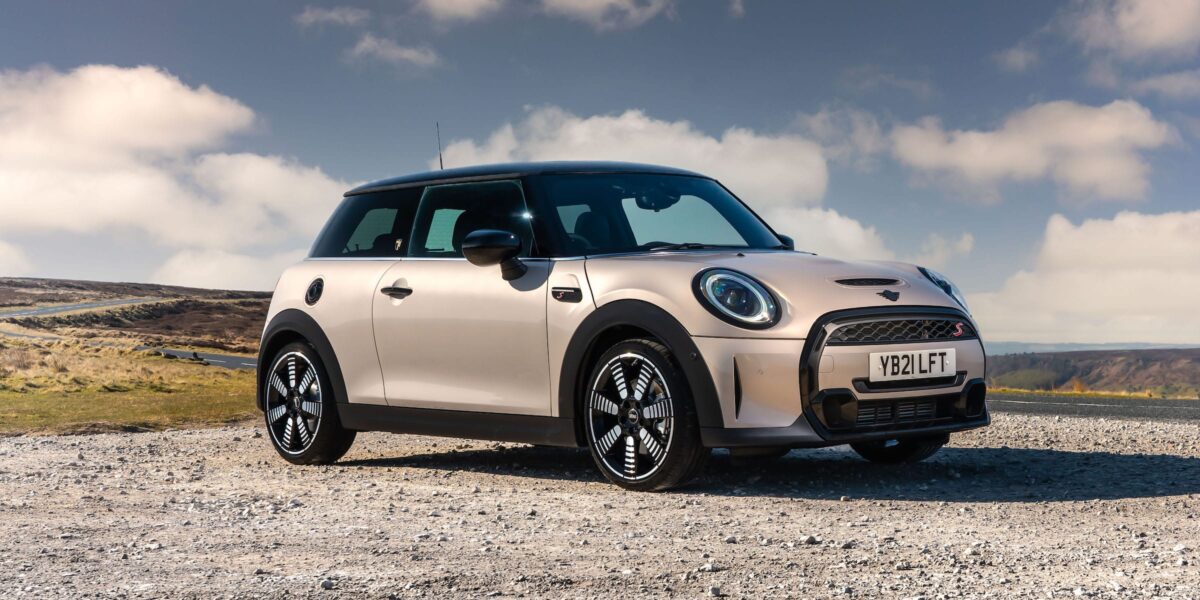
The Mini continued its sales ranking surge to take top spot for November, after just missing out in October. Despite being the oldest car in the top ten, the twice-facelifted Mini continues to sell strongly some seven years after the current model was launched, and its sales performance in the latter half of this year means that it has crept into the 2021 best-sellers list with one month to go.
For patriotic flag wavers, this is the first time in a long time that a British-built car has topped the sales charts, which is welcome news for all of Mini and BMW UK employees.
The Mini hatch still holds a very solid score of 76% in our Expert Ratings index, which is one of the top scores in its class. The electric version doesn’t score so well, with an Expert Rating of only 63% that puts it close to the bottom of its class.
With just a month of 2021 left to go, it’s now beyond doubt the Vauxhall Corsa will be the first car in a dozen years to depose the Ford Fiesta as the UK’s most popular new car.
Securing second place for November, the Corsa extended its lead in the sales race to almost 9,000 units as challengers like the Mercedes-Benz A-Class and Volkswagen Polo failed to close the gap.
Despite its popularity, the petrol and diesel versions of the new Corsa hold a rather poor Expert Rating of 64% on our industry-leading Expert Rating Index, with the all-electric Corsa-e holding the same score. Those scores put the Corsa in the bottom half of the supermini class, suggesting that journalists are not as excited about the Corsa as customers seem to be.
After topping the sales charts in September, the Tesla Model 3 secured another top-three result for November, after being notably absent from the top ten in October. The American company continues to dominate the electric car scene, which will have other manufacturers scratching their heads as to why their own EVs are not selling up a storm in the same way.
On the back of a strong sales showing in October, the Hyundai Tucson improved on its tenth place finish last month to be the fourth best-selling car in the UK for November. Hyundai (including Kia) has managed to maintain its production levels much better than most rivals during the semiconductor crisis, which has no doubt helped Tucson sales compared to many rivals.
It will be interesting to see if the all-new Kia Sportage – closely related to the Tucson – can enjoy a similarly successful launch in coming months.
The Hyundai Tucson currently has an Expert Rating of 76%, which places it well in the top half of all of the medium SUV marketplace according to our industry-leading Expert Rating index.
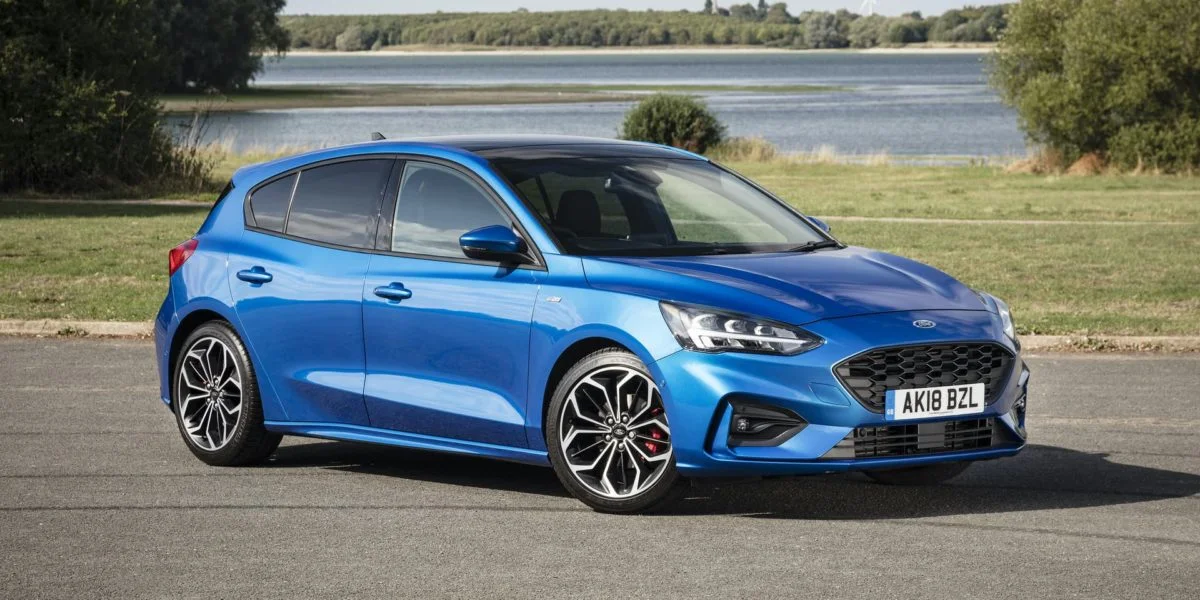
In what was a disastrous month for the Ford brand as a whole, the manufacturer can take some small relief from the resurgence of the Ford Focus, which was ranked fifth in the best-sellers list for November, down from its fourth place finish in October.
Previously one of the most popular cars in the country, the Focus has spent most of this year outside the top ten. It’s due a facelift that will arrive in the UK in early 2022, so this may be the last we see of the current version.
In terms of critical appraisal, the Ford Focus currently holds a score of 76% on our Expert Ratings Index, which is level with its fierce rival, the Volkswagen Golf.
Making its first appearance in the top ten sales rankings, the MG ZS was the sixth best-selling car in the UK for November, as MG continued its impressive sales upswing, selling almost four times more cars in the past month than they could muster in November 2020.
The combustion-powered version of the MG ZS is far more popular with the general public than journalists, as it is currently one of the lowest-rated cars in our Expert Rating Index, with a score of 41%. The all-electric ZS fares better, currently holding a score of 56%.
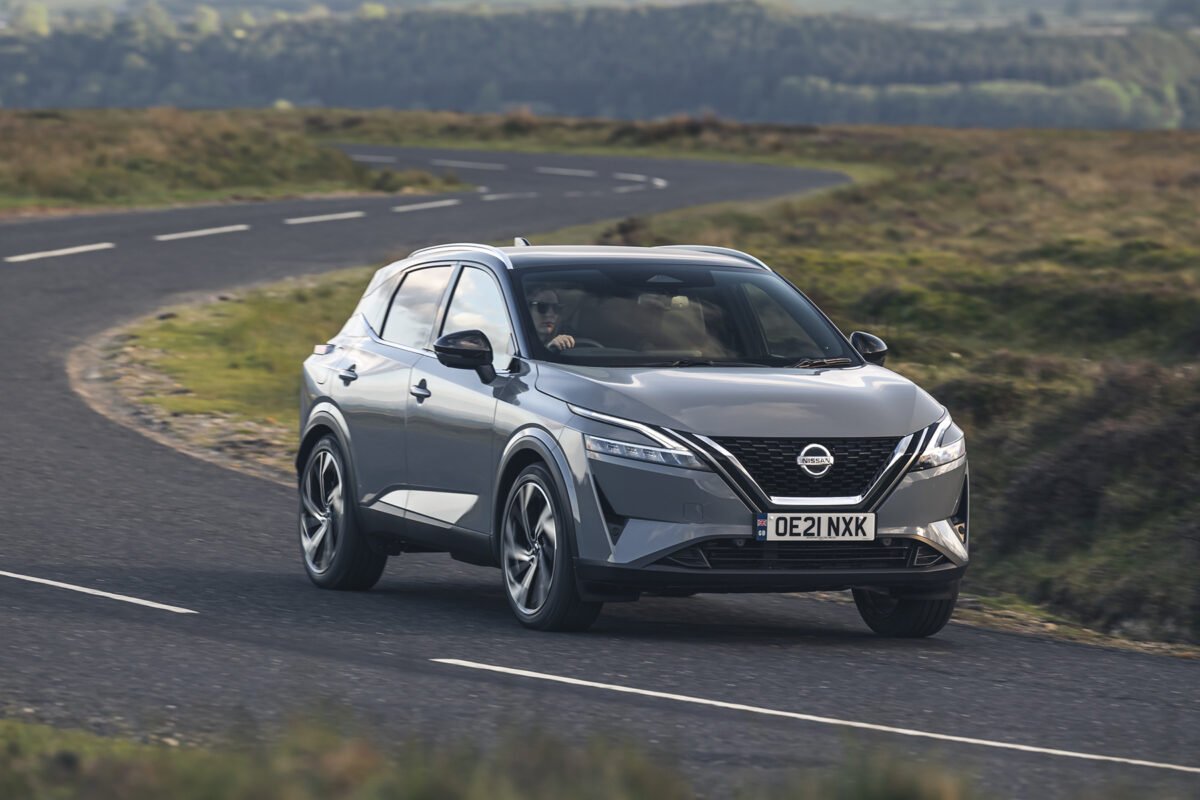
The all-new Nissan Qashqai continued its strong debut by placing in the top ten best-sellers list for the third month running, dropping to seventh in November after securing a top three finish the month prior.
Nissan will be hoping that it can maintain production levels to keep up this momentum heading into the final month of 2021, as the Qashqai is firmly on track to appear in the overall best-sellers list for 2021.
We have compiled our Expert Rating report for the new Qashqai since last month’s registration report, and it puts Nissan’s latest contender right in the midfield with a score of 71%. It’s still early days and there’ll be more reviews to be published, so this could change – either up or down – in coming weeks.
Another commendable month of steady sales sees the Mercedes-Benz A-Class feature in the top ten best-sellers once again, though its eighth-place finish is rather overshadowed by the third place the A-Class earned in the same month last year.
Fortunately for Mercedes, Volkswagen’s top-selling models missed out on the top ten altogether in November. That means that the A-Class has managed to leapfrog both the Golf and the Polo to sit second in the year-to-year sales chart, as the very tight battle between Mercedes-Benz and Volkswagen for the ‘best-of-the-rest’ title heads into the final month of the year.
The A-Class has an Expert Rating of 69% in The Car Expert’s unique aggregated Expert Rating index. It ranks highly for safety, winning awards from Euro NCAP and Thatcham over the years for its protective qualities.
Although the Golf and Polo failed to rank in the top ten in November, the Volkswagen T-Roc crossover was able to secure a ninth-place finish, its first appearance in the top-sellers list since February. As Volkwagen shifts the remainder of its 2021 T-Roc stock, this is likely the last we will see of the current model, before the crossover gets a facelift in early 2022.
The T-Roc currently holds an Expert Rating of 71% in our industry-leading Expert Ratings index, which puts in the top half of the small SUV field.
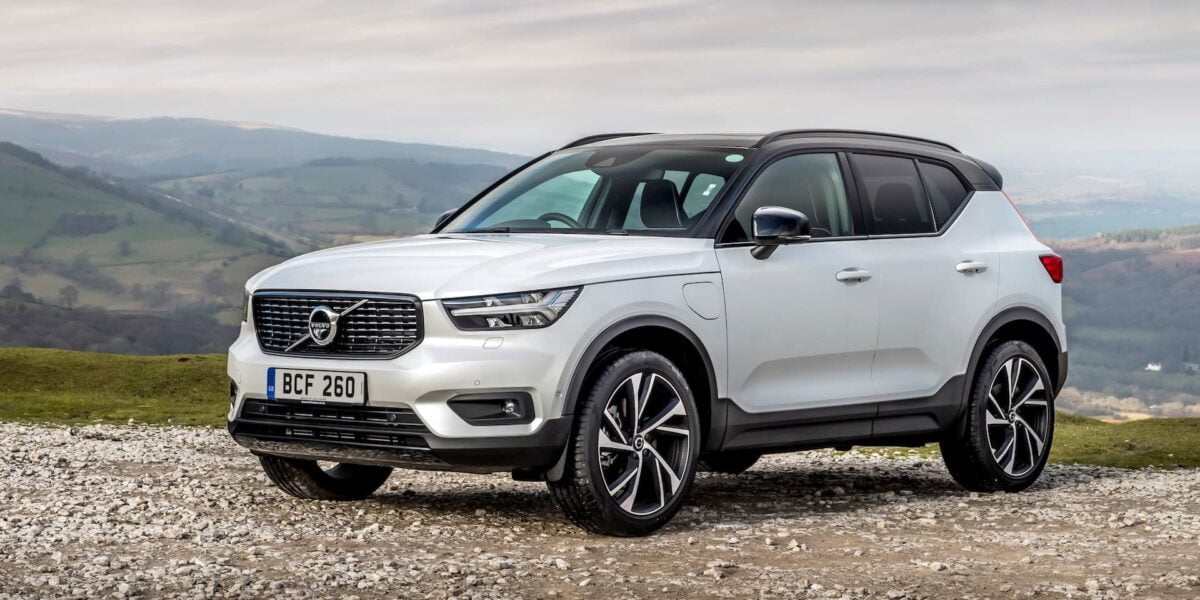
The Volvo XC40 rounds out the top ten best-selling cars for November, its second appearance in these rankings in two months. Despite being on sale for nearly four years, the XC40 continues to sell well and remains highly rated by critics.
The XC40 is the class leader among premium small SUV/crossover models, with an Expert Rating of 79%, for the petrol/diesel/plug-in hybrid version. The new electric XC40 Recharge doesn’t fare quite so well, with an Expert Rating of 68%.
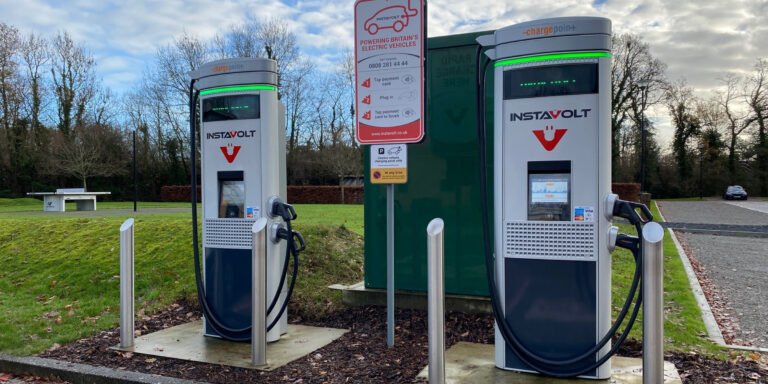
EV mapping service Zap-Map has published its annual rankings of charging networks, based on satisfaction ratings from British EV owners.
Instavolt, which is the country’s third-largest public charging network, was voted as best in a survey of more than 3,000 plug-in car owners.
Naming the top 20 charging networks in Britain, Zap-Map’s satisfaction rankings are now in their fourth year. For the first time, the survey doesn’t include the Tesla Supercharge network as it is exclusive to the Tesla brand and not open to all cars.
InstaVolt came top of the pile with an overall rating of 4.4 stars, and it was the fourth year in a row that InstaVolt has finished in the top two. The network was praised by EV owners for its reliable chargers and convenient contactless payment system.
Ranked second was MFG EV Power, a new entrant making its first appearance in the rankings, while Osprey, who finished 3rd in last year’s Zap-Map rankings, once again completed the podium.
Source: Zap-Map
Conversely, the UK’s largest network, BP Pulse, ranked a poor 16th. Survey participants citing price rises, poor customer service, and the unreliability of their charging points as the key reasons for this low ranking. The Charge Your Car network, which is also owned by BP Pulse, fared even worse, placing 17th.
It must be noted that the rankings do not take into account the size of each network, mixing nationwide brands with smaller regional networks.
As the number of charging points continues to grow in an effort to keep up with the steep increase in new electric cars being registered for UK roads, Zap-Map expects that there will continue to be a high level of investment from these competing brands in the coming year.
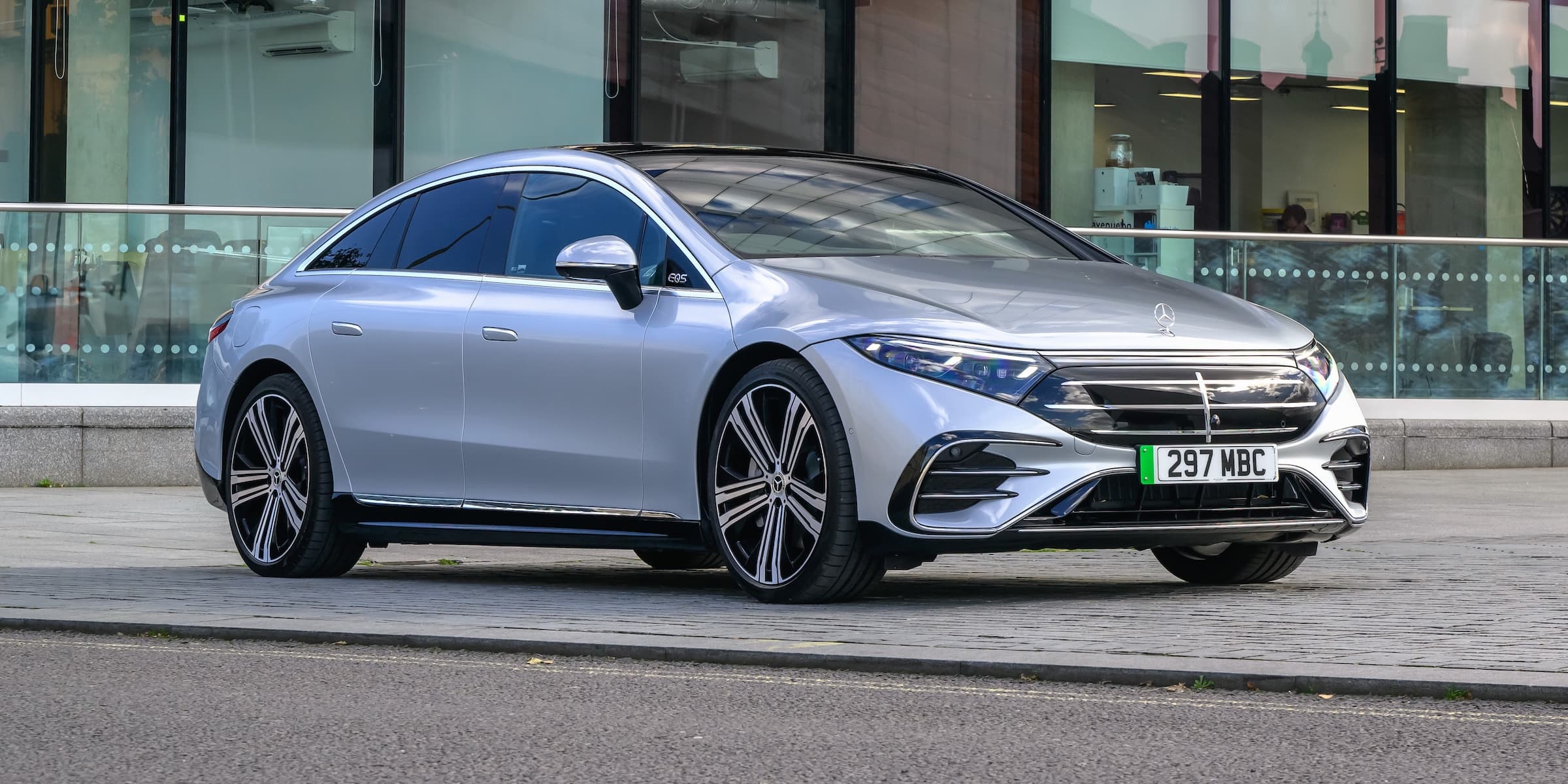
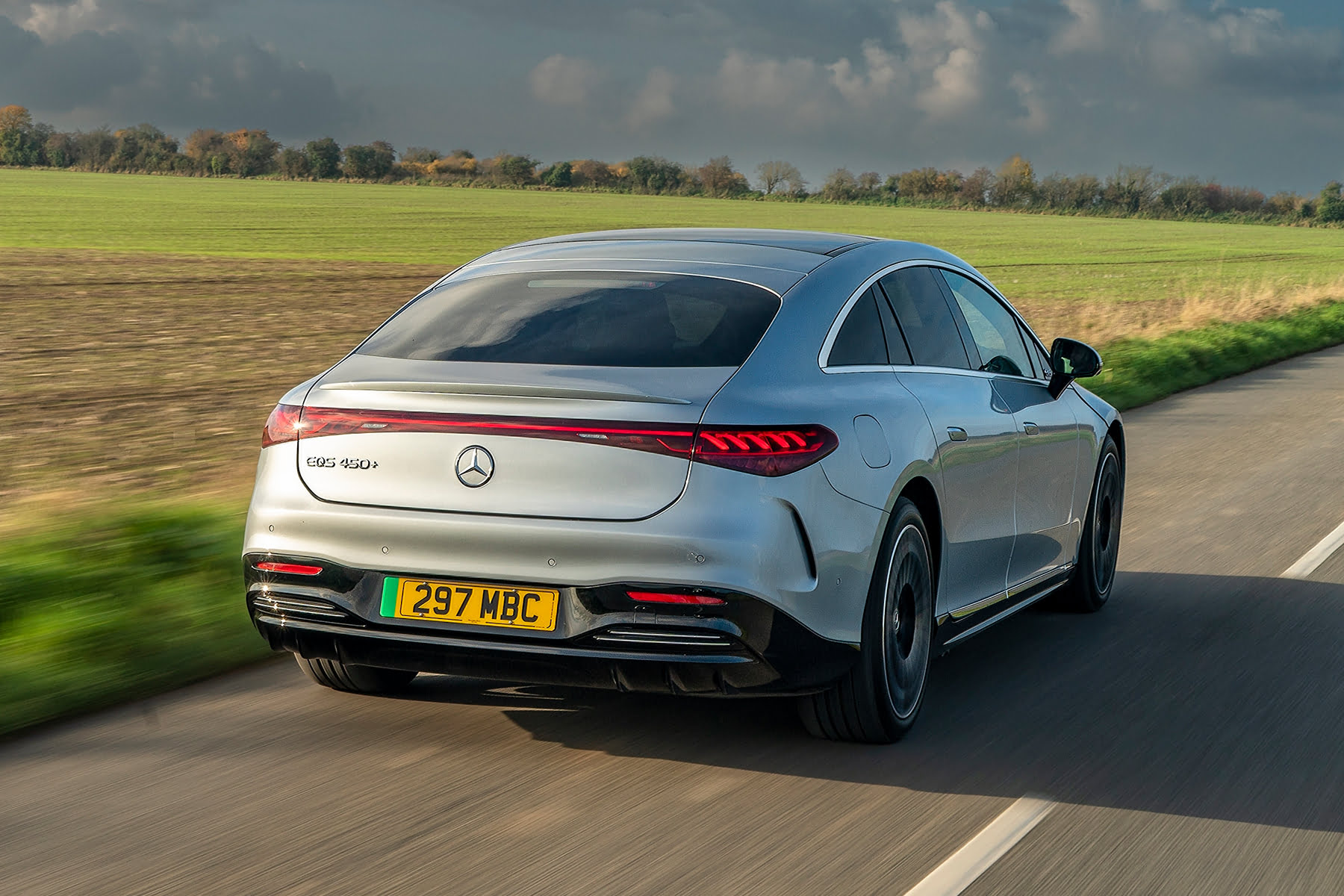
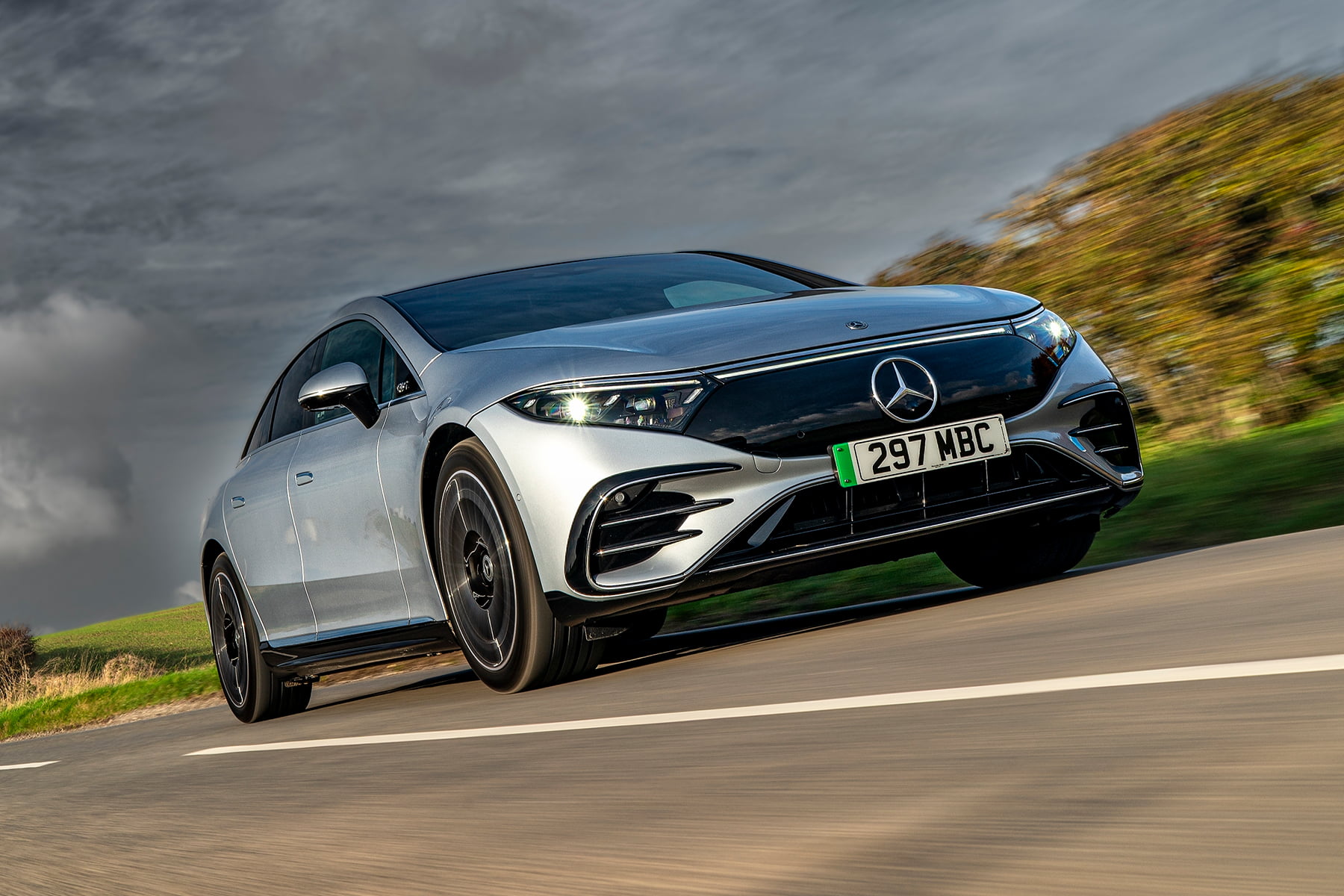
The Mercedes-Benz EQS is a luxury executive saloon that is currently the flagship model in the Mercedes-EQ family, positioned as the electric alternative and eventual successor to the acclaimed Mercedes-Benz S-Class.
The EQS has a very smooth exterior design, with the car’s silhouette being one continuous line from bonnet to boot. This unusual styling means that the EQS is currently the most aerodynamic road car in production, and one of the factors behind why this high-end saloon can travel an advertised 453 miles from full charge, other than the fact that it has the biggest battery ever fitted to a production car.
“The EQS is going to really push forward the electric car benchmark in terms of range, refinement and technology”, comments Electrifying.com. “It’s a surprise that it doesn’t try to challenge Tesla or Audi in terms of performance though.”
There are other EVs around the Mercedes-Benz EQS’s £100,000 price tag with more speed and acceleration to offer, but Carbuyer points out that the EQS is not a sports saloon, and isn’t trying to be. “While other models like the Porsche Taycan and Tesla Model S may be faster, nothing comes close to matching its luxury or sheer opulence.”
The Mercedes-Benz EQS has arrived in the UK with a very positive reception from the UK media, primarily due to its luxurious and tech-filled interior, though not all were that impressed. “Whether all the electronic trickery is worth it is not so clear-cut. The voice control isn’t bad, while £8,000 for the Hyperscreen dashboard seems like a load of hype,” comments The Telegraph.
All of the impressive on-board features and battery technology found in the EQS is planned to appear on future EQ models, including the smaller and cheaper Merecedes-Benz EQE, so it might be worth waiting a while longer if you are interested in buying an all-electric Mercedes-Benz. “Still, if you like the idea of a silent, super luxurious electric limousine that’s jam-packed with impressive technology”, concludes Carwow, “then you’ll love the EQS.”
An updated EQS was revealed in Spring 2024, which offers more battery range, improved technology systems and styling tweaks.
As of July 2025, the Mercedes-Benz EQS holds a New Car Expert Rating of A, with a score of 76%. It scores top marks for its excellent safety rating, zero tailpipe emissions and outstanding media reviews. The only poor score is for running costs, which is not surprising for a £100K luxury saloon.
Body style: Large five-door executive saloon Engines: electric motor, battery-powered Price: From £105,610 on-road
Launched: Winter 2021/22 Last updated: Spring 2024 Replacement due: TBA
Image gallery
Media reviews
Highlighted reviews and road tests from across the UK automotive media. Click any of the boxes to view.
Featured reviews
“The EQS is Mercedes first attempt at a proper, high-end, luxury car with electric power and it’s brilliant. It’s pretty hefty on the road, though, and is very expensive.”
Model reviewed: Range overview Score: 7 / 10 “The Mercedes EQS is luxurious and quiet but can’t match rivals from the other German car makers.” Author: Sam Naylor Read review
Model reviewed: EQS 450+ AMG Line Score: 9 / 10 “At low speeds the EQS is genuinely near silent, with just a little wind whistle appearing around the A-pillars as you approach or exceed the motorway limit.”
Auto Trader
Model reviewed: Range overview Score: 10 / 10 “The EQS is Mercedes’ electric flagship and a stunning example of zero-emissions luxury motoring. It’s an expensive four-door saloon showcasing the very best technology and comfort from the German brand, and is a highly covetable tour de force that puts it well ahead of the competition.” (Erin Baker) Read review
Car
Model reviewed: Range overview Score: 8 / 10 “Mercedes’ first electric car to sit on bespoke EV architecture, the EQS is a significant step up and represents the most luxurious EV Mercedes provides. Full of technology, more so than the standard S-class, and with a strong range and good EV-esque acceleration, it’s pretty much everything you’d expect from an electric S-class.” Author: Phil McNamara Read review
Driving Electric
Model reviewed: Range overview Score: 7 / 10 “The Mercedes EQS electric flagship doesn’t disappoint when it comes to interior quality or on-board technology, although ride comfort can’t quite match that of the traditional S-Class.” Author: Richard Ingram Read review
Electrifying.com
Model reviewed: Score: 9 / 10 “The EQS is going to really push forward the electric car benchmark in terms of range, refinement and technology. It’s a surprise that it doesn’t try to challenge Tesla or Audi in terms of performance though.” Read review
Green Car Guide
Model reviewed: EQS 450+ Luxury Score: 10 / 10 “The Mercedes-Benz EQS isn’t cheap, but if you want an all-electric luxury saloon that does most things very well, at the moment the EQS is the one to go for.” (Paul Clarke) Read review
Heycar
Model reviewed: Range overview Score: 9 / 10 “The Mercedes EQS is more than just a desirable electric car. It’s the German brand showing off its capabilities – a big two fingers at Tesla, if you like, signposting the direction for its rapidly expanding electric vehicle line-up.” Read review
Honest John
Model reviewed: “Impressive 453-miles battery range, but for a very expensive price tag.” Read review
Motoring Research
Model reviewed: EQS 450+ Luxury Score: 10 / 10 “Just as the S-Class has often been cited as the ‘best car in the world’, so the Mercedes-Benz EQS lays a decent claim to being the best EV. It’s a car to admire, rather than fall in love with, but Mercedes-Benz came good in the end. Your move, Elon.” Read review
Parkers
Model reviewed: EQS 450+ AMG Line Score: 9 / 10 “It is excellent to drive, beautiful to ride in, and its electronic features range from the fun to the smart to the highly intelligent. The existing S-Class is still for many the first choice for presidents and plutocrats, but there’s a new kid in town.” Read review
Regit
Model reviewed: EQS 450+ Luxury Score: 9 / 10 “The Mercedes EQS faces stiff opposition but has plenty to shout about too. It oozes class, is packed with high-end fixtures and fittings and is fabulous to drive. And with a wealth of safety equipment and driver assistance aids, this Mercedes was awarded a maximum five-star rating when tested by Euro NCAP.” Author: Maxine Ashford Read review
The Independent
Model reviewed: Range overview Score: 6 / 10 “When it comes to luxury, nobody does it better than Mercedes. The EQS blends upmarket appeal with the latest tech – perhaps too much tech at times.” Author: Steve Fowler Read review
The Sun
Model reviewed: “The EQS is based on a dedicated battery-electric platform, where everything is optimised and scalable for smaller cars in future. The most important Merc for decades, then? Absolutely.” Read review
The Telegraph
Model reviewed: Score: 8 / 10 “Expensive, striking, spacious and amazing, the Mercedes-Benz EQS is one of the finest-riding vehicles in the world, though it’s beaten by the S-class. Whether all the electronic trickery is worth it is not so clear cut. The voice control isn’t bad, while £8K for the Hyperscreen dashboard seems like a load of hype.” Read review
Top Gear
Model reviewed: Score: 9 / 10 “If sheer refinement is what matters to you in a luxury car, this is the new champion. The EQS fuses Merc’s old school lux with new-age propulsion.” Read review
Safety rating
Independent crash test and safety ratings from Euro NCAP
Independent economy and emissions ratings from Green NCAP
No eco rating
As of July 2025, the Mercedes-Benz EQS has not been assessed by Green NCAP.
The Green NCAP programme measures exhaust pollution (which is zero for an electric car) and energy efficiency. Electric cars are much more energy-efficient than combustion cars, so the EQS is likely to score very highly in Green NCAP testing whenever it ever takes place. Check back again soon.
Reliability rating
Reliability data provided exclusively for The Car Expert by MotorEasy
No reliability rating
As of July 2025, we don’t have enough reliability data on the Mercedes-Benz EQS to generate a reliability rating.
The Car Expert’s reliability information is provided exclusively to us using workshop and extended warranty data from our partner, MotorEasy, sourced from both official dealerships and independent workshops.
As soon as MotorEasy has sufficient data on the EQS, we’ll publish the results here.
Running cost rating
Monthly cost of ownership data provided exclusively for The Car Expert by Clear Vehicle Data
Battery range
Average
Score
Variation
Score
EV models
433 miles
A
379 – 481 miles
A – A
Electrical efficiency
Average
Score
Variation
Score
EV models
4 m/KWh
C
3.4 – 4.4 m/KWh
B – E
Insurance group
Average
Score
Variation
Score
All models
50
F
50 – 50
F – F
Service and maintenance
Cost
Score
Year 1
£395
C
Year 2
£852
C
Year 3
£1,324
C
Year 4
£1,608
C
Year 5
£2,057
C
Overall
£6,236
C
It’s probably not surprising that a very expensive car (more than £100K) also costs a lot to run – even though it’s an electric car.
The Mercedes-Benz EQS is fairly poor when it comes to electrical efficiency (the EV equivalent of miles per gallon for a petrol or diesel car), while insurance costs will be high as the EQS is in the very top group. Servicing is also expensive, especially after the first year.
The good news is that, despite the relative inefficiency of the electric motor, the battery range is still exemplary. The model average is 400 miles (based on official lab figures), ranging from 324 miles to 464 miles depending on which model you choose.
Awards
Significant UK trophies and awards that the Mercedes-Benz EQS has received.
2023
EcoCar Electrified Top 50 – Best Electric Luxury Car
If you’re looking to buy a new or used Mercedes-Benz EQS, The Car Expert’s partners can help you find the right car
Find your next used car with Motors.co.uk. Find out more
Find your next new or used car with Auto Trader. Find out more
Find your next new or used car with Carwow. Find out more
Lease a Mercedes-Benz EQS
If you’re looking to lease a new Mercedes-Benz EQS, The Car Expert’s partners can help you find a competitive deal
Personal contract hire deals from Carparison Leasing. Find out more
Personal contract hire deals from Leasing.com. Find out more
Personal contract hire deals from Select Car Leasing. Find out more
Subscribe to a Mercedes-Benz EQS
Subscriptions are becoming a very popular way for consumers to try an electric car for a few weeks or months to help decide whether it’s a suitable alternative to a petrol car. If you’re interested in a car subscription, The Car Expert’s partners can help. (PS: What’s a car subscription?)
New cars are safer than ever, and are getting safer every year. More technology to help drivers stay safe is being included in vehicles at all price points, while manufacturers continue to find new ways to improve the safety of their cars.
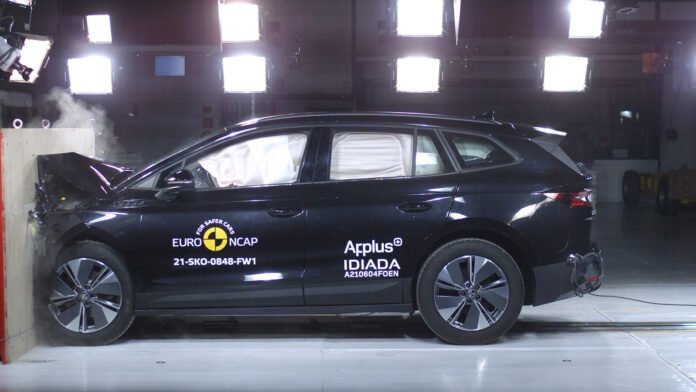
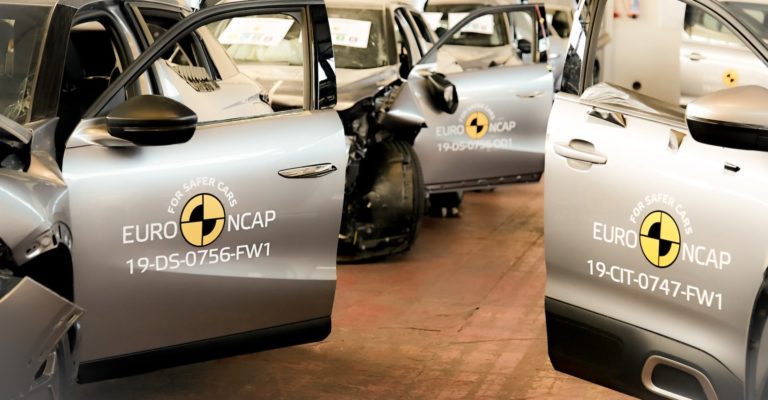
To help consumers understand how safe new cars really are, an independent testing organisation called Euro NCAP gives new cars from Europe ratings for how well they avoid accidents and protect in an impact. However, all the information can be a bit tricky to understand at times, which is why we’ve put together this guide that explains what it all means in plain English.
The UK is part of Euro NCAP (European New Car Assessment Programme) – in fact, Euro NCAP was established by the UK’s Transport Research Laboratory (now called TRL) on behalf of the Department for Transport in 1997. Today, management of the organisation is handled from Brussels while UK testing is undertaken by Thatcham Research.
Euro NCAP is based on an American programme called NCAP, and similar sister organisation have launched in other parts of the world, including Australia (ANCAP) and China (C-NCAP). There is also a global organisation (Global NCAP), also based in the UK, that concentrates on improving car safety in developing countries. Through its 14 member bodies like Thatcham Research, Euro NCAP thoroughly crash tests a large number of new cars each year and awards an overall rating depending on how well a car meets certain safety criteria.
Here at The Car Expert, we firmly believe that safety is a core component of any new car. Unlike most new car reviews elsewhere that only report the headline score and don’t bother updating it over time, our unique Expert Rating analysis includes the full Euro NCAP results for all cars tested and is kept up to date as ratings change or expire. We’ll explain below why we think this is so important.
Euro NCAP star rating system
Euro NCAP safety ratings are easy to recognise, and are based on a simple five-star system. Five stars is best, zero is the worst and there are no half-star ratings. Pleasingly, most new cars these days tend to score four or five stars, and it tends to be more newsworthy when a new car doesn’t actually score top marks – as happened this week when the Renault Zoe scored zero stars.
The testing standards go above and beyond minimum legal requirements, so a car can perform dismally in Euro NCAP testing but still meet legal requirements in the UK and across Europe – as well as the Renault Zoe scoring zero stars in 2021, the Fiat Panda scored zero stars in 2018. Despite these abysmal results, they’re both still on sale and perfectly legal. However, if you were a customer comparing two new cars – one with a five-star safety rating and the other with a zero-star rating – it would be difficult to justify picking the zero-star car.
Testing processes are also upgraded regularly, with minor enhancements each year and significant changes implemented every few years. This means that a five-star rating awarded a few years ago is not necessarily equivalent to a five-star rating awarded today.
Euro NCAP reviews the results of previous tests on an annual basis, and ratings will eventually expire when a car no longer meets the requirements to maintain its original rating against newer testing standards. For example, the Citroën C1 was tested back in 2014 and was awarded a four-star rating. However, this rating expired in January 2021 as it no longer met the criteria for a five-star car. With this expiry, the C1 effectively has no current safety rating.
Sometimes a car will be re-tested after several years on sale: the Volkswagen Up was tested in 2011, when it was first launched, and scored five stars. However, standards have evolved and the same model was tested again in 2019, with the result being that it was downgraded to only three stars.
Once a rating expires, a car manufacturer can no longer promote a car’s Euro NCAP score, but unfortunately the motoring media rarely update their reporting to reflect this.
Older ratings are obviously still important if you are looking at buying an older car, and the results for all tests remain available on the Euro NCAP website.
Here at The Car Expert, we regularly check the Euro NCAP database to remove ratings that have expired from our Expert Rating reports. We still provide a link to the original safety rating on the Euro NCAP website, but we make it very clear that the rating is no longer valid. We are the only UK automotive site that does this.
Which cars are tested?
Not every new car is put through the Euro NCAP safety testing protocol. It’s not compulsory and Euro NCAP can’t afford to test every new car on the market. The testing process requires four cars, all of which will be written off in high-impact collisions. That tends to rule out the organisation purchasing a few Bentleys or Lamborghinis to crash into walls and poles.
On top of the costs of the cars themselves, the cost of conducting the tests and maintaining the laboratories is substantial, so it’s simply not possible to assess every new car. As a result, the organisation has to decide which cars it will choose to test. This inevitably means taking the most popular models on sale, and cheaper rather than more expensive models.
In addition to cars that Euro NCAP purchases with its own money, car manufacturers can submit vehicles for testing. This usually happens when a new model is released (and when a car company is confident of achieving a good score), so that the manufacturer can – hopefully – promote a five-star rating as soon as the new model goes on sale.
Euro NCAP works with the car companies to make sure it is testing the most popular and most representative variants, and usually a rating will apply across all versions of that model sold across all European markets (including both left-hand drive and right-hand drive) and across different body styles.
For example, the Audi A4 has a five-star rating based on Euro NCAP testing of the saloon model. The scores apply to the estate versions as well because the cars are structurally identical for the purposes of testing – and Audi was required to show evidence of this to Euro NCAP in order for the rating to be applied to all models. Incidentally, the Audi A4’s rating also applies to the A5 coupé and A5 Sportback models as they are also structurally identical, but not the A5 Cabriolet, which has substantial differences (not having a roof, and the alterations required to the rest of the car to compensate for that).
There are circumstances where ratings only apply to specific versions of a car. For example, the Hyundai Kona has a five-star rating that applies to all petrol, diesel and hybrid models. However, that score does not apply to the Hyundai Kona Electric model, as there are too many changes to the vehicle that would affect how it performs in the tests.
Dual ratings
In 2016, Euro NCAP introduced the concept of a dual rating, as many cars have advanced safety equipment that may only be available on more expensive trim levels or as an extra-cost option. As a result, an entry-level model may not perform as well as a top-spec version of the same vehicle.
In such cases, Euro NCAP will run separate tests for cars with and without the additional safety equipment, and will award separate ratings. The first score reflects the car’s safety levels when fitted with standard equipment. According to Euro NCAP, it ‘reflects the minimum amount of safety you can normally expect from any car sold anywhere in the European Union’. The second rating reflects cars fitted with an additional safety pack available at extra cost.
An example of this is the Peugeot 2008, where the lower-spec ‘Active’ and ‘Active Premium’ models are not fitted with certain safety kit, and as a result they only get a four-star rating. Higher-spec models have this extra kit included, so they get a five-star score.
Some cars, like the Nissan Micra, have two separate ratings from Euro NCAP (four stars and five stars, depending on specification) but all models sold in the UK get the full suite of safety equipment as standard, so all UK-spec Nissan Micras are rated five stars while those in Europe may have a lesser score.
Here at The Car Expert, our Expert Rating reports will always display the standard rating for entry-level UK-spec cars in full, with additional notes about extra safety kit being available and a link to any separate Euro NCAP rating for cars with the extra kit. So for the Peugeot 2008 example above, we show the car as having a four-star rating, regardless of how many models are sold in that specification.
The four rating categories
The Euro NCAP rating is based on four separate categories, covering adults, children, vulnerable road users and safety assistance systems. All four scores are expressed as a percentage.
Adult occupancy protection
Adult occupancy measures how safe both an adult driver and front passenger are kept in the event of an accident. Tests are conducted for frontal impact, side impact and whiplash.
Child occupant protection
Child occupant testing measures how safe children are kept in the rear seats in the event of a crash. Euro NCAP uses crash test dummies to represent children six and ten years of age, and also assesses mounting points for child seats.
Vulnerable road user protection
Previously called pedestrian protection, this section was expanded in recent years to include cyclists. The purpose of the tests is to assess the potential injuries to a pedestrian’s head, pelvis, upper and lower leg in an impact.
Cars gain additional points if they have an autonomous emergency braking (AEB) system that recognises both pedestrians and cyclists.
Safety assist
Safety assistance systems that help avoid an accident (or at least reduce the impact) have improved massively over the last decade. Euro NCAP has placed increasing importance on this technology in recent years – after all, it’s better to avoid an accident altogether than to survive one.
The testing measures systems for autonomous emergency braking, speed limit assistance, land-keeping assistance, seatbelt warnings and driver fatigue detection.
Why all four scores are important
The headline star rating gives a good overall picture for each car, but it doesn’t necessarily provide the best answer for every situation as not every score will be relevant to every buyer.
A good example of this is the Ford Mustang. In 2017, the Mustang was widely criticised after scoring a dismal two stars in Euro NCAP testing. Essentially, it performed reasonably well for adult occupants but was poor in the other three tests – particularly for child protection. Ford quickly made some specification changes to the car, adding improved autonomous braking to benefit vulnerable road users and avoid rear-end collisions, and resubmitted the Mustang to Euro NCAP for a second round of testing.
In the new tests, the Mustang improved to a three-star score – better, but still a poor overall result. However, by looking at the four individual categories it becomes clear that the Mustang improved considerably in the vulnerable road user and safety assist scores, while adult occupant protection remained the same. The main weakness remained child protection in the rear seats, which was something that Ford was unable to suitably rectify without a wholesale redesign.
So if you have kids, a Mustang is probably one of the worst new cars you could buy to protect them. But if you don’t ever intend to put children in the back seats, the Mustang is a much safer car than its three-star rating suggests. Personally, I’d happily drive a Mustang myself but I wouldn’t buy one for our household as I have a five-year-old son who would be riding in the back several times a week.
Similarly, vulnerable road user protection is a much bigger issue for driving in city environments where there are lots of pedestrians and cyclists, compared to many rural settings where there may be very few. In terms of safety assistance systems, driver fatigue systems won’t really register if you only ever take short journeys. Speed assistance systems are particularly beneficial if you don’t know the local speed limits, but less so if you tend to only travel on the same roads for most of your journeys.
All four categories measure different aspects of a car’s overall safety, but not every buyer needs their car to do well in all of those tests. That’s why our Expert Rating reports show all four scores for each car, allowing you to see the full picture and make the best decision for your needs.
This article was originally published in June 2020, and most recently updated in December 2021 with new information. Additional reporting by Jack Evans, PA Media
First unveiled at the 2018 Paris motor show, the BMW iX is a high-end all-electric SUV and the flagship model in the German manufacturer’s premium ‘i’ line-up. It is known for its polarising styling, but the mechanical package underneath is quite compelling.
Unlike the BMW iX3 SUV, the iX is built from the ground up, the first purpose-built electric car that BMW has released since the i3 city car almost ten years ago.
At launch, there were two powertrain options available on the iX, but this subsequently expanded to four. A mid-life update in 2025 saw improvements in performance and battery range across the board. All models offer all-wheel drive.
Depending on motor and specification, BMW claims a maximum driving range of 366 to 426 miles in government lab tests. In real-world driving, 300-350 miles should comfortably be achievable.
The mid-life update in 2025 saw some styling revisions both inside and out, higher power outputs on some models and improvements in driving range.
Reviewers from UK media outlets have given the BMW iX a very warm reception, singling out the EV’s ride comfort, plush and tech-laden interior, and driving experience for particular praise.
British journalists agree that the iX has some very bold exterior styling – a little too bold if anything. “This is a face that knows people hate it. And tells them to get used to it”, says The Sun.
“Even if the garnish is a little too strong in some places, the not-so-basic basics are spot on”, concludes Car. “The BMW iX is good to drive, good to sit in and good at making you feel like you’ve just slightly stepped into the near future. Which is surely what a modern high-end electric car should be.”
As of September 2025, the BMW iX holds a New Car Expert Rating of A, with a score of 74%. It scores top marks for its excellent media review scores, zero tailpipe emissions and BMW’s new EV warranty coverage, while its safety rating is also good. Running costs are average overall, which is a decent result for a large luxury SUV that starts at £75K. Insurance premiums can be expensive, though.
Body style: Large SUV/crossover Engines: electric motors, battery-powered Price: From £70,985 on-road
Launched: Winter 2021/22 Last updated: N/A Replacement due: TBA
Image gallery
Media reviews
Reviews, road tests and comparisons from across the UK automotive media. Click any of the boxes to view.
Featured reviews
“The BMW iX, freshly updated for 2025, is intended to appeal to a minority of customers, not the majority. Whatever you think of the polarising styling, you can’t argue with the driving experience or the cabin ambience. It has a hefty price tag, but it’s a fantastic car.”
Model reviewed: iX M70 (facelift version) Score: 9 / 10 “The superb BMW iX gets a range of useful updates, but the pricey M70 isn’t the pick of the range.” Author: Alex Ingram Read review
Model reviewed: Range overview Score: 9 / 10 “Remarkably capable in almost every area, the BMW iX is expensive to buy, but is a deeply impressive all-electric family SUV.” Author: Ellis Hyde Read review
Model reviewed: Score: 8 / 10 “The M60 offers outstanding performance for a car of its size, but it doesn’t completely outshine the lower-priced members of the iX range.” (Alex Ingram) Read review
Model reviewed: xDrive50 Score: 9 / 10 “The new BMW iX xDrive50 is a seriously impressive electric car. With the bigger 105kWh battery, this bells-and-whistles SUV now has a real-world range to match its exemplary motorway manners. The standard-fit air suspension transforms the way the iX drives, too, making it feel either plush or pointy, depending on your mood. It’s expensive, but it raises the bar in what is becoming an increasingly competitive area of the new-car market.” Author: Richard Ingram Read review
Model reviewed: xDrive50 Score: 8 / 10 “Supreme refinement is what characterises the BMW iX. It’s quiet and comfortable, which provides a cornerstone for its other abilities, which include practicality, quality and excellent tech. Of course, this is reflected in the price, and for the money we’d like more range and faster charging. However, these points are unlikely to impact iX owners every day. This is a superb effort at a premium electric SUV.” Author: Sean Carson Read review
Auto Trader
Model reviewed: 2025 facelift range Score: 9 / 10 “BMW updates its big, fancy electric SUV and makes it even more appealing – especially when it comes to battery range.” Author: Mark Nichol Read review
Model reviewed: Pre-facelift (2021 – 2024) range Score: 9 / 10 “Combining luxury and technology in one boldly styled package, the BMW iX is an electrified premium SUV with a difference.” Read review
Business Car
Model reviewed: 2025 facelift, 45 M Sport Score: 8 / 10 “The BMW iX’s exterior styling is still controversial but doesn’t stand out so much after four years. If you can get past the styling (we could!), this facelifted, big BMW EV is an impressive car. The interior feels special, spacious and beautifully detailed, it drives well, has enough performance, yet remains superbly refined, and few rivals can match the substantial range.” Author: Martyn Collins Read review
Car
Model reviewed: Range overview Score: 8 / 10 “Above everything else, the BMW iX is incredibly intriguing. It’s such a dramatic step in its design inside and out for BMW (even by its own recent radical standards) and yet still has plenty of the brand’s DNA sewn into it. Even if the garnish is a little too strong in some places, the not-so-basic basics are spot on – the iX is good to drive, good to sit in and good at making you feel like you’ve just slightly stepped into the near future.” Read review
Car Keys
Model reviewed: Range overview Score: 9 / 10 “Not only is it impressively comfortable, but it’s well made both inside and out and surprisingly fun on a windy road, too. The top-spec model brings a huge amount of range, while even the lower-powered model will slot into everyday life for those making the change to an EV.” Read review
Carbuyer
Model reviewed: Range overview Score: 8.2 / 10 “The BMW iX SUV boasts an impressive range and cutting-edge interior but is expensive.” Read review
Discover EV
Model reviewed: xDrive40 M Sport Score: 9 / 10 “The BMW iX is our pick of the bunch when it comes to a high-end, luxury electric SUV. So if you’ve got deep-enough pockets and want to shout about your move to zero emissions this is the EV to go for – that’s, of course, if you can live with the controversial styling!” Read review
Driving Electric
Model reviewed: Range overview Score: 9 / 10 “BMW’s flagship electric SUV boasts love-it-or-hate-it styling, but to drive, it’s a thoroughly impressive all-rounder that gives the Tesla Model X a run for its money.” Read review
Electrifying.com
Model reviewed: Score: 9 / 10 “What ever you think of the looks, there’s no doubt that the BMW iX is an impressive engineering achievement and brilliant electric car.” Read review
Green Car Guide
Model reviewed: xDrive50 M Sport Score: 9 / 10 “The BMW iX is big, boxy and heavy. However, if you need to drive long distances with lots of stuff, then there are few cars that can do this as comfortably or as effortlessly as the iX. And if you need to get past something quickly, performance is huge.” (Paul Clarke) Read review
Heycar
Model reviewed: Range overview Score: 9 / 10 “The BMW iX’s 2025 facelift is unlikely to sway those put off by the car originally but the refresh has improved an already hugely talented car in other areas. Range and performance have improved and there are a few more options too, but the iX remains one of the most relaxing and refined cars on sale at any price, and its cabin is still enormously welcoming and well-built. The BMW iX is still one of the most desirable electric vehicles on the market.” Author: Antony Ingram Read review
Honest John
Model reviewed: Range overview “The BMW iX is a flagship electric SUV with an impressive 375-mile battery range, set to rival the Tesla Model X, Audi e-tron and Mercedes EQC.” Read review
Parkers
Model reviewed: Range overview Score: 8.8 / 10 “If you want a stand-out, high-price, high-quality electric car, close to the cutting edge of the current state of battery electric vehicle technology then the BMW iX could well be for you. The look of the thing is sure to raise more than a few eyebrows, but as a statement-maker that may be exactly what you’re looking for anyway.” Author: Tom Wiltshire Read review
The Sun
Model reviewed: xDrive 50 “If you were expecting some sort of cuddly-wuddly tree-huggers’ special, just look at the photos. This is a face that knows people hate it. And tells them to get used to it.” Read review
The Sunday Times
Model reviewed: xDrive50 Score: 8 / 10 “Many will write off the iX because of its controversial appearance, which is a shame as underneath the divisive body is an incredible statement of intent by BMW, one that previews a range of future electric cars that are beautifully made, packed with technology, incredibly civilised and yet, somehow, still good to drive.”
Read review
The Telegraph
Model reviewed: xDrive40 M Sport Score: 6 / 10 “If you want a big, fancy car that can fit the family with space to spare, runs on electricity and feels like a boutique hotel inside, the BMW iX delivers. But there are alternatives that are quieter, smoother, more spacious, and still others that are sweeter to drive. And most of them don’t look quite this… well, let’s give it the benefit of the doubt and call it ‘challenging’.” Read review
Model reviewed: xDrive50 Score: 8 / 10 “The BMW iX displays such assured body control, a decent enough ride and a very powerful and reasonably efficient battery-electric drivetrain.” Read review
Model reviewed: xDrive50 Score: 8 / 10 “Uncannily quiet and refined, super-fast and with a great ride, the iX debuts a lot of future technologies coming out of BMW. Did they all have to be crammed into a huge and expensive SUV, though? Discuss…” Read review
Top Gear
Model reviewed: iX xDrive40 Score: 7 / 10 “Well, the iX 50 lists at £91,905 and the 40 at £69,850 without options, so that’s a truly hefty saving. And although the iX 50 gets 200kW charging ability, you’ll have to find a charger big enough to feed it, and they aren’t as common as you think.” Read review
Safety rating
Independent crash test and safety ratings from Euro NCAP
Independent economy and emissions ratings from Green NCAP
No eco rating
As of September 2025, the BMW iX has not been lab tested by Green NCAP.
The Green NCAP programme measures exhaust pollution (which is zero for an electric car) and energy efficiency. Electric cars are much more energy-efficient than combustion cars, so the iX is likely to score very highly in Green NCAP testing whenever it ever takes place. Check back again soon.
Running cost rating
Monthly cost of ownership data provided exclusively for The Car Expert by Clear Vehicle Data
Battery range
Average
Score
Variation
Score
EV models
303 miles
A
Electrical efficiency
Average
Score
Variation
Score
EV models
3.4 m/KWh
E
Insurance group
Average
Score
Variation
Score
All models
48
E
Service and maintenance
Cost
Score
Year 1
£446
E
Year 2
£824
D
Year 3
£1,221
D
Year 4
£1,534
D
Year 5
£1,934
D
Overall
£5,959
D
As well as being an expensive vehicle to buy, the BMW iX is quite an expensive EV to run. In particular, its electrical efficiency (the EV equivalent of miles per gallon for a petrol or diesel car) is relatively poor, so it uses more electricity than most EVs.
It’s also an expensive car to insure and to service. While it might cost less to run than a large fossil-fuel SUV, it will still require a fair amount of money to run.
If you can charge your iX at home or work, rather than relying on public charging, it should still be significantly more economical to run than a similarly sized SUV like a BMW X5.
Reliability rating
Reliability data provided exclusively for The Car Expert by MotorEasy
No reliability rating
As of September 2025, we don’t have enough reliability data on the BMW iX to generate a reliability rating.
The Car Expert’s reliability information is provided exclusively to us using workshop and extended warranty data from our partner, MotorEasy, sourced from both official dealerships and independent workshops.
As soon as MotorEasy has sufficient data on the iX, we’ll publish the results here.
Warranty rating
New car warranty information for the BMW iX
Overall rating
A
82%
New car warranty duration
3 years
New car warranty mileage
Unlimited miles
Battery warranty duration
8 years
Battery warranty mileage
100,000 miles
BMW’s new car warranty is only average, and not as attractive as some other cars in a similar price bracket as the iX.
The duration is three years, with no limit on mileage – although, in reality, the mileage numbers are likely to be fairly irrelevant as most cars only cover about 10,000 miles each year.
In addition to the standard new car warranty, there’s an eight-year/100,000-mile warranty for the battery components.
Warranty on a used BMW iX
If you are buying an ‘Approved Used’ BMW iX from an official BMW dealership, you will get a minimum 12-month warranty included.
If you are buying a used BMW iX from an independent dealership, any warranty offered will vary and will probably be managed by a third-party warranty company.
If you are buying a used BMW iX from a private seller, there are no warranty protections beyond any remaining portion of the original new car warranty.
If you’re looking to buy any used car that is approaching the end of its warranty period, a used car warranty is usually a worthwhile investment. Check out The Car Expert’s guide to the best used car warranty providers, which will probably be cheaper than a warranty sold by a dealer.
Date: August 2023 Recall number: R/2023/235 Model types: All Build dates: 06/2022 to 09/2022 Number of vehicles affected: 27 Defect: On affected vehicles, due to a supplier component production process error, a damaged Combined Charging Unit may have been installed. Remedy: Replace the Combined Charging Unit.
Date: May 2023 Recall number: R/2023/133 Model types: All Build dates: 11/2021 to 01/2023 Number of vehicles affected: 28 Defect: A cable bridge connection connecting two circuit boards within the cell supervision circuit (CSC) might not have been installed properly. Remedy: On the affected vehicles the cell supervision circuit (CSC) inside the high-voltage battery will be replaced.
Date: October 2022 Recall number: R/2022/330 Model types: All Build dates: 07/2021 to 08/2022 Number of vehicles affected: 211 Defect: During assembly of the high-voltage battery cell, the cathode plate may have been damaged and a broken piece may have entered the interior of the cell. BMW strongly recommends refraining from charging the high-voltage battery and to not use the vehicles until the repair is performed. BMW also recommends parking the vehicle outdoors and not in the immediate vicinity of buildings. Remedy: On the affected vehicles the defective cell modules of the high-voltage battery will be replaced.
Date: October 2022 Recall number: R/2022/282 Model types: All Build dates: 02/2021 to 06/2022 Number of vehicles affected: 4,313 Defect: In the event of a restraint system fault, the airbag warning light or warning message is not displayed to the driver due to a software error. Remedy: On the affected vehicles the airbag control unit (ACSM6) will be reprogrammed with new software.
Date: May 2022 Recall number: R/2022/282 Model types: All Build dates: 02/2021 to 05/2022 Number of vehicles affected: 3,023 Defect: If a failure is detected by the control unit, the airbag warning light and check control message would not be illuminated and activated. Remedy: The airbag control unit (ACSM6) will be reprogrammed with new software.
Date: October 2021 Recall number: R/2021/362 Model types: All Build dates: 02/2021 to 09/2021 Number of vehicles affected: 7 Defect: The A-pillar cover holder may not have been correctly fastened. Remedy: The screw connection of the A-pillar cover holder will be checked and reworked.
As of September 2024 (our most recent data point), there have been six DVSA vehicle safety recalls on the BMW iX. These cover battery, airbag and interior trim issues.
Not all vehicles are affected by recalls. You can check to see if your car is included in any of the above recalls by visiting the DVLA website or contacting your local BMW dealer.
If your car is affected by a recall, the vehicle must be repaired and you should not be charged for any work required. If you are buying a used iX, you should insist that any outstanding recall work is completed before you take delivery of the vehicle.
Awards
Trophies, prizes and awards that the BMW iX has received
2025
Caravan and Motorhome Club Awards – Best Towcar (2,000kg+ caravan) + Best Electric Towcar
2023
Auto Express Awards – Best Large Company Car
EcoCar Electrified Top 50 – Best Luxury Electric SUV
2022
Auto Trader New Car Awards – Rory Reid Award
EcoCar Electrified Top 50 – Best Luxury Electric SUV
Top Gear Electric Awards – Best Luxury Electric Car
Discover great deals available on both new and used cars. Find out more
Search for your next new or used car with Auto Trader. Find out more
Lease a BMW iX
If you’re looking to lease a new BMW iX, The Car Expert’s partners can help you find a competitive deal
Personal contract hire deals from Leasing.com. Find out more
Personal contract hire deals from Carwow. Find out more
Personal contract hire deals from Select Car Leasing. Find out more
Subscribe to a BMW iX
Subscriptions are becoming a very popular way for consumers to try an electric car for a few weeks or months to help decide whether it’s a suitable alternative to a petrol car. If you’re interested in a car subscription, The Car Expert’s partners can help. (PS: What’s a car subscription?)
The Toyota Yaris Cross launches into an overcrowded market but does offer something new, extending Toyota’s hybrid SUV range and becoming its smallest member, with the result that buyers of small cars can now join the rush to SUVs.
The Yaris Cross is actually a modern successor to a car produced briefly by Toyota between 2009 and 12 – the Urban Cruiser, effectively a small crossover, was not a success but could now arguably be described as ahead of its time. Today everyone wants SUV-style cars and Toyota’s second attempt at extending such choice to the supermini market is a rather better package.
There is a simple principle behind this car – take the already popular Yaris supermini and repackage all the key bits, including the hybrid drivetrain, into a compact SUV body. Then give this body a distinctive look with major overtones of the larger and long-established Toyota SUV, the RAV4.
Built on the same chassis as the Yaris supermini, the Yaris Cross becomes the smallest member of an expanded Toyota hybrid SUV line-up that ranges right up to the seven-seat Highlander. It’s slightly larger all round than its supermini inspiration though with the same wheelbase, and stands a couple of centimetres higher off the ground.
Toyota also takes the opportunity with this new model to finally do something about its infotainment systems, the new ‘Smart Connect’ unit fitted to the Yaris Cross a major improvement of what the Japanese manufacturer has offered previously, and not a moment before time…
How does it look?
The Yaris Cross is quite distinctive in its visuals, Toyota differentiating it from the standard Yaris with a blunt front and rear-end treatment, vertical and large daytime-running lights and squared-off wheel arches.
The result is a presence which is good on the eye and quite stylish, while not extending to looks that would be divisive. The belt line of the body, which rises towards the rear of the car, does restrict the side view from the rear seats, especially for children.
What’s the spec like?
Toyota offers the Yaris Cross in four main grades dubbed Icon, Design, Excel and Dynamic. Additionally, a limited-edition, top-spec ‘Premiere Edition’ is also currently available. Only Dynamic and Premiere Edition versions can be bought with the all-wheel-drive powertrain.
Even base-level Icon models are well-equipped, including auto wipers and lights, push-button entry and starting, electric windows all round and a rear-view camera. Design versions, as in our test car, add LED lights, 17-inch wheels, privacy glass and a seven-inch driver’s display panel.
The top-level Excel and Dynamic models are pitched respectively as comfort or sporty variants. Heated front seats, dual-zone air conditioning and powered adjustment on the driver’s seat are common to both and they also boast bespoke interior finishes.
You need to choose either of the top models to gain the new Smart Sense multimedia system (a desirable as we will see shortly) – we are able to try it in our Design test car as it’s a £300 option.
Common to all versions of the Yaris Cross is an impressive safety package, grouped under Toyota’s ‘Safety Sense’ banner. It includes a wide selection of active safety aids – autonomous emergency braking is present of course but with a number of extras including a new system dubbed ‘Intersection Turn Assistance’ – this warns of and tries to prevent collisions when turning, either with other traffic or pedestrians.
All this comes as standard on all models but the Excel specification adds a blind-spot monitor and rear cross-traffic alert, while parking sensors with auto braking and a 360-degree around-view camera are options.
What’s the Toyota Yaris Cross like inside?
Considering this is a small SUV, the Yaris Cross does offer a reasonable amount of space inside, including for rear-seat passengers – it’s actually larger than the Yaris name suggests it should be.
The boot is impressive in its versatility – as well as the 40:20:20 folding rear seats the boot floor itself splits 60:40, easing the transport of taller items while also providing a hidden space for valuable items.
The car is generally comfortable to travel in, especially sitting in the front seats, while the cabin design is innocuous – there’s nothing particularly memorable about the layout of the dash, though in this market nor does there particularly need to be. The materials are mostly suited to purpose though the use of some hard plastics does jar the overall effect.
One major improvement is in the infotainment system. The Yaris Cross debuts Toyota’s new Smart Connect multimedia platform, based around a nine-inch high-definition touchscreen in the centre console and a long overdue update – it’s a shame that it’s only offered on top-spec versions or as an option.
Most users these days will simply plug their smartphone into it – the system is fully compatible with Android Auto and Apple CarPlay (which the previous Toyota infotainment wasn’t) and with wireless capability. But even if you rely on Toyota electronics the navigation is vastly better than the over-coloured and not exactly user-friendly ‘last generation’ maps still fitted to such recent cars as the Highlander.
What’s under the bonnet?
just one self-charging hybrid powertrain is available for the Toyota Yaris Cross, though it’s offered in two varieties. The front-wheel-drive versions of the car unit combine a 1.5-litre three-cylinder petrol engine with a 59kW electric motor, for a combined output of 116hp.
Dynamic and Premiere Edition versions can also be bought with a second 3.9kW electric motor on the rear axle, providing all-wheel-drive capability which is ‘intelligent’ – the rear-axle motor only cuts in when road conditions require. Whether front or all-wheel-drive all versions drive through an automatic transmission.
Toyota quotes an 11.2-second 0-62mph time for the front-wheel drive Yaris Cross, extended to 11.8 seconds for the all-wheel drive version. Officially, fuel economy ranges from 54.6 to 64.2mpg on the industry test, with corresponding CO2 emissions from 100 to 116g/km.
What’s the Toyota Yaris Cross like to drive?
On the road you have three driving modes to play with, the standard one sandwiched by Eco and Power settings, which do make a noticeable difference to the engine’s responses. The car will spend most of its time in the standard mode, however, defaulting to it each time you restart the engine.
In such mode the Yaris Cross glides away virtually silently from rest with the electric motor doing all the work, the petrol engine cutting in at around 30mph, or if you accelerate very swiftly.
The change is almost seamless – the only obvious indicator is a slight increase in the audio note, unless one watches the oddly addictive display on the centre console showing which bits of the drivetrain are in operation – electric, power or a combination of both with the car’s efficient ECU making all the decisions. This does actually help you to adapt your driving style to make more use of electricity, with running cost savings as a result.
It’s not exactly rapid, but acceleration is as assured as one gets with instant electric torque – it feels more perky from behind the wheel than it actually is. The overall impression on the road is of a relaxed drive with no surprises – it is generally cosseting at lower speeds, only being unsettled by larger bumps, and these in turn smooth out at higher speeds for comfortable progress.
In corners the Yaris Cross is quite surprising for an SUV, – steering response is pretty instant and the car easy to place, holding its pose with little body roll. It’s not quite as sharp as the supermini Yaris, but pretty close and actually reasonably fun to drive.
Verdict
The Toyota Yaris Cross competes in an increasingly competitive environment with the number of rivals to it steadily growing, prime competitors including the Hyundai Kona Hybrid and Renault Captur E-Tech. And the new Toyota becomes a prime contender in its segment, basically because it follows the mantra of previous Toyota hybrid models – making no grand statements but being an extremely easy car to live with.
With prices starting from £22,515 the car is also good value for money – there are few minus points of any significance and a lot to like about the Toyota Yaris Cross.
The Nissan Ariya will hit UK roads in summer 2022, and we now have prices and specifications for the new electric crossover.
Assuming the role of the brand’s range-topper, the Ariya is the latest electric family-friendly EV to line up against the likes of the Kia EV6, Skoda Enyaq and Volkswagen ID.4.
It is also being heavily promoted as a performance car – its electric drivetrain has been designed to aid handling and much development carried out on underbody aerodynamics.
The Ariya will be offered in four versions with two battery capacities and official battery ranges of up to 310 miles.
The entry-level ‘Advance’ model with a 63kWh battery and a 217hp power output, will start at just under £42K and will offer a range of up to 223 miles alongside a 0-62mph time of 7.5 seconds. ‘Evolve’ trim, starting from £51K, adds a higher-capacity 87kWh battery, which extends the range to 310 miles. Power is also boosted to 306hp.
Two all-wheel-drive versions top the range, with a second motor in the rear axle and both employing the larger battery. The ‘e-4ORCE Evolve’, with a total output of 306hp, starts just under £54K and combines a 285-mile range with a 5.7-second 0-62mph time.
The 394hp ‘e-4ORCE Performance’ version, costing from just over £58K and will complete a 0-62mph sprint in 5.1 seconds with a battery range of 248 miles. As the range-topper it has an extended specification including a ten-speaker Bose sound system, digital head-up display and electric panoramic sunroof.
Dealers have started taking orders for the Ariya, which is expected on UK roads in the summer of 2022.
Further signs of the growing importance of electric cars and vans in the UK was seen last month (November) when the Government announced that all new homes and offices will be required to have EV charging points installed from next year.
As eco-friendly new-build houses continue to rise in popularity, the ability to charge your car or van at home will become not only part of the future house-hunting consideration, but normality in the next five to ten years.
A recent motor industry report from the Society of Motor Manufacturers and Traders (SMMT) showed that, as EVs continue to grow in status, the ratio of car charging points to vehicles has reduced by 31%. In 2019, one public charging point was potentially shared by 11 plug-in vehicles, whereas by the end of 2020, that had dropped to one point per 16 EVs.
While most people currently buying an electric vehicle are likely to be able to plug in at home – on their driveway or a designated domestic parking bay – achieving ‘net zero’ in Britain will require all drivers to make the switch, including those who depend on on-street parking.
The new legislation will affect new-build homes and offices, but also house conversions into flats, where off-street parking spaces with apartment buildings for example, will also have to incorporate some charging points within their car parking areas.
They will be well-used: around 60% of drivers in the UK have a driveway and, of those who can have a charge point fitted, 90% of their charging is done at home, says environment-minded car benefit company Tusker, which welcomed the new-build news. Those figures not only make this latest initiative even more important, but support the decision of thousands of drivers who have already installed a personal charge box.
The prime minister made the announcement at a recent Confederation of British Industry (CBI) conference, and the issue was also covered during last month’s COP26 international conference where nations discussed what moves they were prepared to make in the bid to become ‘net zero’. The UK has already pledged to end the sale of new petrol and diesel cars by 2030, while many other countries have promised the same by 2040.
The details of the new homes plan have not been fully revealed so it’s unclear what type of charging points will be specified and with what output. Currently there are three types available: rapid, fast and slow. The higher the output is (in kWs), the quicker the charge.
Rapid chargers are 50 or even 100kW, fast chargers are around 10 to 20kW and slow chargers – usually found at home – are 3 to 6kW. They charge in one hour, 2-6 hours and 6-12 hours respectively. So, as long as you have easy access to a fast or rapid charger, it’s still possible to own an EV while living in a flat or apartment. When the new house building rules come into force, it will get even easier.
For businessmen and women, charging their car at work will become more commonplace as greater numbers of workers adopt an EV as their company car.
Plug-in vehicles now account for around one in every six new cars registered in 2021. While the public charging infrastructure required to service them will have to keep up with EV registrations – charging point suppliers continue to invest in top-up stations – it’s clear that greater numbers of home-charging points needed to be made available to house buyers.
Having a charger at home makes the whole owning experience of an electric vehicle so much more convenient and worthwhile. According to the RAC motoring organisation, it costs around £800 to fit a charger at your home, although there are grants available to help with the outlay.
A single charge to top up your car can last for days, which is often what most owners require. Earlier this year, Tusker revealed that the majority of UK motorists drive less than 150 miles a week and only undertake a journey of more than 100 miles once a month.
In its study, Tusker found that a quarter (24%) of their customers drove between 50 and 1000 miles a week, a fifth (21%) travelled 101 to 150 miles, 10% went more than 200 miles and only 5% did over 300 miles a week.
That means that, with most electric cars being capable of at least 200 miles, home-charged cars will only need to be topped up once a week – indeed only 10% of home chargers are used every day, says Tusker. And with more home-based chargers on the horizon it means more public charging station spaces will be available for users who can’t yet top up at home.
So powering up your car with a rapid charger will be an option for thousands of property owners who live in a flat or apartment – until, of course, they move to a new-build…
A zero-star Euro NCAP score from any car manufacturer, at any price point, is simply unacceptable. The Renault Zoe has been held up as a pioneer of electric motoring, and highly regarded by motoring titles. But these results now mean it is impossible to recommend the Zoe to anyone. It performed terribly in all four categories as assessed by Euro NCAP, which is frankly atrocious.
There has been plenty of media coverage about the Zoe’s safety results today, but it’s not the only car from Renault Group to receive terrible safety scores this year.
Also in today’s results, the new Dacia Spring electric SUV (not currently on sale in the UK) from Renault’s budget brand only managed to score one star, which Euro NCAP described as “downright problematic” and, in certain cases, “life-threatening”.
Meanwhile, back in April, the popular Dacia Sandero was awarded a sub-par two stars, which Euro NCAP said “shows little ambition, even for a low-cost product”.
The UK’s leading safety organisation, Thatcham Research, itself a member of Euro NCAP, was equally scathing. Matthew Avery, the chief research strategy officer, said: “The adult occupant score of 43% for the Renault Zoe is the lowest we have seen in 11 years.”
Euro NCAP today suggested that Renault’s safety legacy was now “ruined”, and it’s hard to disagree. The Dacia Sandero is currently the biggest-selling car in Europe, while the Renault Zoe has been a poster child for EV adoption over the last decade. Yet both are genuinely problematic when it comes to safety.
What’s wrong with the Renault Zoe?
The current Renault Zoe was launched in 2019, and is a substantial update to the original version launched in 2013 (rather than an all-new replacement).
As part of the 2019 update, Renault downgraded the specification of crucial side impact airbags, removing head protection coverage for driver and passengers. This resulted in very poor side impact scores, especially in pole-impact tests (representing a side-on collision with a telegraph pole or similar). Pole-impact collisions are particularly nasty, with a third resulting in death or serious injury, so removing head airbags from the Zoe is a very dangerous decision by Renault.
Renault has also failed to fit the Zoe with critical accident avoidance technology like autonomous emergency braking, which can apply the brakes automatically to prevent collisions if the driver fails to act. At higher speeds, where an accident is unavoidable, it can significantly reduce the impact speed. This technology is relatively cheap and has been around for several years, yet it is not available – even as an option – on the Zoe.
Euro NCAP test cars in four categories: adult protection, child protection, vulnerable road users (pedestrians and cyclists), and safety assist (accident avoidance technology). On all four counts, the Zoe was simply awful.
Basically, you do not want to have an accident in a Zoe. You do not want your kids to be in a Zoe if it is involved in an accident. The Zoe is not good enough at avoiding pedestrians or cyclists. And the Zoe is woeful at avoiding accidents with other vehicles.
By comparison, Reanult also offers the Clio, which is a very similar size to the Zoe but powered by either a petrol engine or a petrol-electric hybrid combination. It scores excellent marks in every category and is a fine choice for you and your kids (and for everyone else on the roads around you). It’s also nearly £10K cheaper than a Zoe.
Yes, electric cars are more expensive to produce than petrol cars. But pinching pennies on readily available safety kit is simply not acceptable. And if public opinion swings against the Zoe, it could end up costing Renault a lot more money in lost sales.
Euro NCAP says: “The new Zoe offers poor protection in crashes overall, poor vulnerable road user protection and lacks meaningful crash avoidance technology, disqualifying it for any stars.”
We asked Renault UK for comments on the Zoe’s zero-star score, and this is the response in full:
“Renault takes note of the results published by EuroNCAP following specific tests on Zoe E-Tech Electric according to its new protocol implemented in 2020.
“First of all, Renault reaffirms that Zoe E-Tech Electric is a safe vehicle, which complies with all regulatory safety standards. These standards are constantly evolving and are becoming more stringent in all domains, especially in safety. Renault therefore continually improves its offer in order to comply with the regulations applicable where its vehicles are sold.
“Zoe was launched in 2013 and received 5 stars with EuroNCAP protocol at that time. The EuroNCAP protocol has since 2013 undergone 5 changes. With the same equipment, a model can lose up to 2 stars in each protocol change.
“The evolution of the current Zoe was decided in 2017 adapting the passive safety equipment to real accidentology and updating the car with state of the art ADAS equipment such as Advanced Emergency Braking with Pedestrian and Cyclist Detection, Lane Departure Alert and Lane Keeping Assist, using a radar and a camera.”
With regard to that last paragraph, it should be pointed out that the entry level Zoe Play does not get the additional equipment mentioned (and you can’t pay extra to have it), but the mid-level Zoe Iconic and top-spec Zoe GT Edition do.
Dacia is just as bad as Renault
Maybe it’s not surprising that if Renault is going cheap on safety for its own cars, then it will go even cheaper on safety for its budget brand Dacia.
Alongside the Renault Zoe’s zero-star result, the new Dacia Spring (an electric small SUV sold in Europe but not yet available in the UK) scored one star. Euro NCAP summarised it as follows:
“Its performance in crash tests is downright problematic, with a high risk of life-threatening injuries for driver chest and rear passenger head in frontal crash tests and marginal chest protection in side impact.”
Well, that doesn’t sound encouraging, does it?
One popular model that Dacia does sell in the UK is the new Sandero, which arrived last winter and was promptly awarded the What Car? Car of the Year awards in January 2021. In a fairly major embarrassment to both What Car? and Dacia, the award was revoked after Euro NCAP published its test results in April and only gave the Sandero two stars.
Euro NCAP’s secretary general, Michiel van Ratingen, said:
“Clearly, Dacia have found their market and they’re sticking to it, but a two-star rating shows little ambition, even for a low-cost product.”
The award may have been quietly withdrawn, but not before Dacia had spent three months actively promoting its big win. How many people bought a Sandeo on the strength of that heavily-advertised success and are unaware that it was subsequently revoked because of a poor safety rating?
It’s also worth pointing out that the Zoe has received a number of awards, including one from What Car? and several other titles. Presumably we can expect What Car? to be asking for that one back soon as well…
Is Renault deliberately misleading buyers on safety tech?
To make matters even worse, the Renault website uses misleading graphics that suggest the Zoe is fitted with autonomous emergency braking (which it isn’t) and lane-keeping assistance (which isn’t fitted to the entry-level model but is included in more expensive versions).
These images and icons are shown on Renault’s site, both of which are more commonly used to illustrate competely different technologies.
The first image and its corresponding icon (on the left or on top, depending on your screen size) looks for all the world like a generic visual representation of autonomous emergency braking (AEB), which automatically applies the car’s brakes to avoid a collision if the driver fails to act. But it’s actually supposed to be a graphic to illustrate anti-lock brakes, which have been around since the 1980s, and emergency braking assist, which boosts brake pressure in a maximum braking scenario.
The second image (on the right or the bottom) seems to be a clear visual description of lane-keeping assist, which helps to keep the car centred in your lane if the driver starts drifting onto the white line. But no, it’s actually supposed to represent electronic stability control and traction control, more old-news technology that help to maintain steering under braking and traction when accelerating in slippery conditions.
At best, these are poorly-chosen illustrations to depict the respective technologies. At worst, it looks like Renault is deliberately trying to mislead potential customers into thinking that the Zoe is fitted with contemporary accident avoidance technology, which it most certainly isn’t.
Being generous, it looks like the second graphic is an error. Renault has used a similar graphic with other models in its range to describe lane-keeping assist, although it’s certainly not consistent and uses different graphics for different cars. The braking graphic, however, is highly dubious.
The graphics are, intentionally or otherwise, highly misleading. Renault needs to remove them from its website immediately and replace them with more appropriate images and icons to describe the systems.
We have flagged this with Renault’s UK communications team and they are currently investigating. We’ll update this article with any outcomes.
UPDATE, January 2022: We have noticed that Renault has removed the offending images above from its website and replaced them with better images. There is still inconsistency in how Renault describes safety technology on its website, but it’s no longer blatantly misleading.
Can these ratings be fixed?
Yes and no. In March 2022, the European Union will be introducting its next General Safety Regulations, which will also apply to the UK. This will force Renault and Dacia to fit basic safety equipment like autonomous emergency braking to all of its new cars.
However, that’s not going to turn a zero-star car into a five-star car. Realistically, it might add another star to both the Renault Zoe and the Dacia Sandero. Small improvements, but hardly praiseworthy – especially when its a regulatory requirement rather than a voluntary effort.
If Renault has chosen to remove head airbags from the Zoe, presumably it can decide to reinstate them. Whether it will act in response to Euro NCAP’s testing results remains to be seen.
Not on our watch
Next week, The Car Expert will be publishing its first annual rankings of the best new cars on sale – effectively, our Car of the Year awards. They’ll be based on our industry-leading Expert Rating Index, and will recognise both the best new models launched in 2021 and the very best new cars on sale in each category and price point.
As a matter of principle, we will not be including any family or high-volume car that scores three stars or lower, or does not have a current Euro NCAP safety rating.
The all-electric Renault Zoe has been heavily criticised by safety organisations after being awarded the worst-possible result of zero stars by Euro NCAP.
The current Renault Zoe, which has been on sale since 2019, is an evolution of the original model that was launched back in 2013. However, both Euro NCAP and UK safety organisation Thatcham Research have slammed Renault’s decision to remove key safety equipment from the latest version.
The Zoe is only the third car in Euro NCAP history, which dates back to 1997, to have received a zero-star rating. In more bad news for the Renault Group, the Dacia Spring – an all-electric SUV not currently available in the UK – scored a paltry one star.
Renault Zoe Euro NCAP results
Independent crash test and safety ratings from Euro NCAP
Euro NCAP was scathing in its summary of the Zoe’s result: “The new Zoe offers poor protection in crashes overall, poor vulnerable road user protection and lacks meaningful crash avoidance technology, disqualifying it for any stars.”
The original Renault Zoe scored five stars from Euro NCAP when it was first launched in 2013. However, Euro NCAP’s standards have been raised significantly since then, meaning manufacturers need to continually improve their vehicles to maintain or improve their scores.
Euro NCAP says that Renault has not only failed to make any improvements to the Zoe’s safety equipment over the last eight years, it has actually removed crucual head protection airbags from the Zoe when it was updated in 2019.
While the original Zoe was fitted with airbags in the front seats that inflated to protect both the head and thorax (chest) of the driver or passenger. On the new model, this was changed to only cover the chest area, leaving the head exposed. This has significantly reduced protection for front seat occupants in side-impact collisions.
As well as making the Zoe less safe in a collision, Renault has done nothing over the last eight years to help it avoid a collision in the first place. Accident avoidance technology, known as active safety, has become the main focus of car safety as it’s obviously better to avoid an accident altogether than to survive one.
Active safety technology, like autonomous emergency braking systems that can apply the car’s brakes if a driver fails to slow down when approaching a hazard (like another car, a pedestrian or a cyclist) has become almost universal in recent years, and has been credited with saving countless lives, yet is not available on the Zoe.
Poor scores in every category
While the headline star rating is what gets most attention, Euro NCAP testing is divided into four categories – and the Zoe performed very badly in every category. We’ve compared its results with the Renault Clio, which is about the same size and from the same company, but powered by a petrol or hybrid motor.
For adult protection, the Zoe scored 43%. The Clio scored an absolutely excellent 96%.
Matthew Avery, who is the chief research strategy officer at the UK’s Thatcham Research, said: “The adult occupant score of 43% for the Renault Zoe is the lowest we have seen in 11 years.”
For child protection (based on two child dummies, representing a six-year-old and a ten-year-old, sitting in the rear seats in age-appropriate child seats), the Zoe scored 52%. The Clio scored 89%.
For vulnerable road user protection (pedestrians and cyclists), the Zoe scored 41% while the Clio scored 72%.
For safety assist (accident avoidance systems), the Zoe scored a shocking 14%. The Clio scored 75%, which is also the average score for supermini-sized small cars tested this year.
Is the Renault Zoe still legal?
Yes. The Renault Zoe has passed all legal requirements to be sold in the UK and across the European Union, and today’s results do not affect its legality.
Euro NCAP is an indepenent body, whose testing goes above and beyond the basic standards set for vehicle legality. It performs multiple crash tests from different angles and at higher impact speeds than the minimum legal requirement. It also assesses the ability of a car to avoid accidents using technology like autonomous emergency braking and blind-spot assistance systems.
Here in the UK, Euro NCAP’s member organisation is Thatcham Research. Thatcham conducts safety testing on behalf of Euro NCAP as well as running its own research and testing programmes to help make cars and roads safer.
Comments from safety organisations
Euro NCAP secretary general, Michiel van Ratingen: “Renault was once synonymous with safety. The Laguna was the first car to get five stars, back in 2001. But these disappointing results for the Zoe and the Dacia Spring show that safety has now become collateral damage in the group’s transition to electric cars.”
Thatcham Research chief research strategy officer, Matthew Avery: “It is a serious concern to see results like this in 2021, especially from a carmaker who has previously performed well in Euro NCAP testing.
“Renault was the first to achieve the full five-star rating in 2001, in part because it was also the first to include a combined head and thorax airbag in the Laguna. Although this was a new and revolutionary safety measure at the time, today this airbag is available on most modern cars.
“Unfortunately, a conscious decision has been made to remove the head protection from this vital passive safety feature, by the brand that pioneered the use of it. As a result, the safety of occupants within the vehicle has been severely impacted.
“It’s a shame to see Renault threaten a safety pedigree built from the inception of the rating.”
Response from Renault UK
We reached out to Renault UK’s communications team about the Zoe’s Euro NCAP score. This is their response in full:
“Renault takes note of the results published by EuroNCAP following specific tests on Zoe E-Tech Electric according to its new protocol implemented in 2020.
“First of all, Renault reaffirms that Zoe E-Tech Electric is a safe vehicle, which complies with all regulatory safety standards. These standards are constantly evolving and are becoming more stringent in all domains, especially in safety. Renault therefore continually improves its offer in order to comply with the regulations applicable where its vehicles are sold.
“Zoe was launched in 2013 and received 5 stars with EuroNCAP protocol at that time. The EuroNCAP protocol has since 2013 undergone 5 changes. With the same equipment, a model can lose up to 2 stars in each protocol change.
“The evolution of the current Zoe was decided in 2017 adapting the passive safety equipment to real accidentology and updating the car with state of the art ADAS equipment such as Advanced Emergency Braking with Pedestrian and Cyclist Detection, Lane Departure Alert and Lane Keeping Assist, using a radar and a camera.”
Delight at the top safety ratings awarded to seven cars in Euro NCAP’s final 2021 series of crash tests has been tempered by the zero stars gained by the Renault Zoe.
Following the shocking results of the electric Renault supermini, together with the one-star rating awarded to the new Dacia Spring electric SUV from Renault’s budget brand, the safety body described its 2021 programme as “ending on a downer” despite the excellent performances of other models across the tests.
The seven cars awarded five-star ratings included two electric vehicles, the BMW iX SUV and Mercedes-Benz EQS. The G70 saloon and its sister GV70 SUV from new Korean upmarket brand Genesis also gained the top accolade, as did the latest versions of the Nissan Qashqai SUV, the Skoda Fabia small car and the van-based Volkswagen Caddy MPV.
Euro NCAP highlighted the fact that top awards were earned by cars right across the market, “from affordable supermini and small MPV to high-end executive electric cars.
“Despite having different powertrains and price tickets, all five-star cars performed very well overall in terms of crash protection and crash avoidance,” the report from the safety body added, also highlighting two ‘standout’ results from the safety assistance technology fitted to the new Nissan Qashqai and the adult and child occupant protection provided by the Mercedes-EQS.
Two cars tested achieved four-star ratings – the results from Fiat’s new 500e electric supermini and the MG Marvel R, an electric SUV still to be confirmed for UK sale, were described as ‘commendable’ by Euro NCAP.
Welcoming the overall results, Euro NCAP secretary general Michiel van Ratingen commented; “Bravo to these manufacturers for giving consumers the levels of safety they have come to expect – these results once more make clear that safety is all about good engineering and less about the type of powertrain or price per se.”
One of the greatest worries an owner of an electric vehicle can have – being able to charge up while out on the road – is in the news following an industry announcement about the number of available charging points in the UK.
New analysis by the Society of Motor Manufacturers and Traders (SMMT) claims that the ratio of vehicle charging points to plug-in cars dropped by 31% during 2020. The group says that at the end of 2019, 11 plug-in vehicles potentially shared a standard public charge point – compared with the end of 2020, when the ratio was one charger for every 16 plug-ins.
This might be eased from next year when fresh rules over new house builds come into force, requiring new homes and offices to have EV charging points installed.
Source: SMMT
While most people who currently buy an electric vehicle are likely to be able to plug in at home, on a driveway or designated parking bay, achieving ‘net zero’ requires all drivers to make the switch, including those who depend on on-street parking.
The SMMT claims that only 4,109 new standard public charge points installed between January and September 2021, although data from respected EV site Zap-Map suggests that 7,002 public charge points have been installed between January and 7 December 2021, which is a higher monthly run rate.
What the SMMT has not suggested is a number that it thinks the UK should be targeting. At 16 plug-in cars for every plug, the UK is still one of the world leaders for EV infrastructure roll-out, although not generous as the very best in the world (South Korea has 3 plugs for every plug-in car, while the Netherlands has a 5:1 ratio).
There are also significant regional disparities in the current provision of standard public charging points. London has the best ratio of cars to chargers at 10:1 – although this in itself fell from 5:1 in 2019. Meanwhile, the East of England has the lowest availability, with just one standard public charger for every 49 plug-in vehicles.
Wales beats the national average with a ratio of 12:1, while Scotland weighs in at 17:1 (which, incidentally, is the same as Germany, another leader in EV motoring).
Investments are being made in public charging with the Government’s Rapid Charging Fund allocating £950 million to rapid and ultra-rapid charge points, the £620 million for zero-emission vehicle grants and infrastructure announced in the Net Zero Strategy, along with the commitment that all new build homes will include an EV charging point.
“Appetite for electric vehicles has never been higher, but making Britain a net zero nation means convincing everyone, wherever they live, that an electric car can meet their needs,” says Mike Hawes, SMMT Chief Executive.
“Those who can’t have their own home charge point need the confidence that they can still charge as conveniently as they can refuel. A deteriorating ratio of public charge points to cars will drain that confidence.”
The Honda HR-V is a five-door compact SUV which sits below the larger CR-V in the Honda family. The HR-V name dates back to the 1990s, disappearing and then reappearing in the last decade. The newest iteration arrived in the UK in late 2021.
Honda only has plans to sell the HR-V in petrol-electric hybrid format in the UK at the moment. A traditional petrol model is on sale in Japan, and an all-electric version is currently in development.
The hybrid Honda HR-V has only one powertrain option available across its range of trims, pairing a four-cylinder 1.5-litre petrol engine with an electric motor. Like all hybrid vehicles, the only transmission options is an automatic gearbox.
Thie third-generation HR-V has accumulated a mixed set of reviews from the UK motoring media, with scores ranging from average to very good. Reviewers often single out its impressive levels of standard equipment and ride comfort for particular praise.
“Driving the hybrid-only HR-V is effortless, almost zen-like”, says The Sun. “You’ll spend most of your time coasting around town in EV mode. Steering is feather-light, visibility is excellent, and when the 1.5-litre petrol engine does kick in, you’ll hardly notice it.”
Many reviews mention how seemless the transition between combustion and electric power is, as well as how efficient the HR-V’s petrol/electric hybrid unit is overall. Conversely, those same reviewers note that the engine is particularly loud when accelerating.
For the biggest critics of the Honda HR-V, this is one of many drawbacks that limit its appeal in a SUV/crossover market that is already overcrowded. Business Car conclude that, “Although the HR-V has some likeable elements, it also has plenty of flaws, and we can only imagine these weaknesses will be exposed by superior rivals in what is a hugely competitive sector.”
These flaws include a small boot and limited headroom, and so-so performance in comparison to more engaging rivals like the Nissan Juke and Ford Puma. That said, the HR-V is cheaper from launch than other eco-friendly SUV alternatives, costing around £1,000 less than the similar Toyota C-HR.
As of February 2026, the Honda HR-V holds a New CarExpert Rating of C with a score of 60%.
Body style: Small SUV/crossover Engines: petrol/electric hybrid Price: From £29,410 on-road
Launched: Winter 2021/22 Last updated: N/A Replacement due: TBA
Image gallery
Media reviews
Highlighted reviews and road tests from across the UK automotive media. Click any of the boxes to view.
Auto Express
Model reviewed: Score: 8 / 10 “The Honda HR-V is a reasonably practical option for buyers wanting a compact SUV that delivers great fuel economy and useful interior space. Its family car credentials are boosted further by excellent safety kit and decent on-board tech, while the HR-V isn’t too bad to look at, either.” Read review
Model reviewed: Range overview Score: 8 / 10 “Ingeniously practical, well-built and impressively frugal, the HR-V ticks many of the compact SUV boxes. Our time driving in the UK has put to bed question marks over fuel efficiency – few cars in this class can offer the HR-V’s potential. It even drives smartly too, although it isn’t quite class-leading in any one area.” Read review
Auto Trader
Model reviewed: Range overview Score: 8 / 10 ” Honda’s new HR-V perhaps seems a little conservative compared with funkier rivals like the Nissan Juke or Ford Puma but its new hybrid system is effective and efficient and there’s tons of space in the back for kids and kit.” Read review
Business Car
Model reviewed: Range overview Score: 6 / 10 “Although the HR-V has some likeable elements but it also has plenty of flaws and we can only imagine these weaknesses will be exposed by superior rivals in what is a hugely competitive sector.” Read review
Car
Model reviewed: Range overview Score: 6 / 10 “There’s precisely nothing here to stir the soul, but very little about the HR-V is going to annoy you either.” Read review
Car Keys
Model reviewed: Range overview Score: 8 / 10 “The HR-V feels like a fitting extension of Honda’s current range of cars. It’ll no doubt appeal to those who are looking for a comfortable and refined driving experience, as well as those who see a Jazz as too small and a CR-V too large.” Read review
Carbuyer
Model reviewed: Range overview Score: 7.6 / 10 “The Honda HR-V has evolved into a hybrid-only SUV with smooth styling but it’s a shame boot space has shrunk.” Author: Charlie Harvey, Andy Goodwin Read review
Carwow
Model reviewed: Range overview Score: 7 / 10 “The third generation Honda HR-V is the most stylish version yet and is super spacious in the cabin. You may tire of the engine noise under acceleration though, and the boot isn’t as practical as you might hope.”
Read review
Daily Mirror
Model reviewed: 1.5-litre petrol/electric hybrid Advance Style Score: 8 / 10 “The Honda HR-V is a comfy crossover with plenty of panache.” Author: Gareth Butterfield Read review
Driving Electric
Model reviewed: Range overview Score: 8 / 10 “The Honda HR-V’s styling, cabin, infotainment and efficiency make it a strong alternative to the Toyota Yaris Cross and other compact SUVs.” Author: Ellis Hyde Read review
Evo
Model reviewed: Range overview Score: 6 / 10 “Curious hybrid arrangement has gaps in its repertoire, but the HR-V is otherwise a rounded and efficient everyday driver.” Read review
Heycar
Model reviewed: Range overview Score: 7 / 10 “The latest Honda HR-V is a surprisingly appealing alternative to more mainstream small SUVs. Combining stylish looks and an impressive interior with impressive efficiency and versatile Magic Seats, the HR-V will tick a lot of boxes for a lot of buyers.” Read review
Honest John
Model reviewed: Range overview Score: 6 / 10 “The new Honda HR-V is an attractive small SUV that’s easy to drive and cheap to run. It looks expensive compared to competitors like the Ford Puma and Volkswagen T-Roc, but you do get a lot for your money – including generous equipment levels and a hybrid powertrain.” Read review
Parkers
Model reviewed: Range overview Score: 6 / 10 “The HR-V is only for you if you value reliability and simplicity above all else and are particularly keen on the styling. Otherwise, a Ford Puma or Skoda Kamiq makes much more sense.” Read review
The Sun
Model reviewed: Range overview “Driving the hybrid-only HR-V is effortless. Almost zen-like. You’ll spend most of your time coasting around town in EV mode. Steering is feather-light, visibility is excellent, and when the 1.5-litre petrol engine does kick in, you’ll hardly notice it.” Read review
The Telegraph
Model reviewed: Range overview Score: 8 / 10 “Quite the best Honda HR-V so far and pretty good to drive, too. The engine is too noisy and the hybrid system allows it to rev uncontrollably at times, but this is an economical and fine-riding crossover with a decent equipment levels, although it is rather expensive.” Read review
Top Gear
Model reviewed: Range overview Score: 7 / 10 “There are better drives out there, and probably better styled cars depending on your tastes, but the HR-V is a decent all-round package. Sadly, it’s likely to be overlooked beyond those wanting to upgrade from a smaller Honda.” Read review
Safety rating
Independent crash test and safety ratings from Euro NCAP
The Honda HR-V has a good reliability rating of 79%, according to warranty data provided exclusively to us by our commercial partner, MotorEasy. This score applies to both this generation HR-V and previous (pre-2021) generations, which is good news if you are considering a used Honda HR-V.
Although we don’t have a huge number of data points yet, the repair bills claimed under warranty to date have been very inexpensive. All in all, the HR-V looks like being a reliable choice as a used car.
Running cost rating
Monthly cost of ownership data provided exclusively for The Car Expert by Clear Vehicle Data
Fuel consumption
Average
Score
Hybrid models
52 mpg
B
CO₂ output
Average
Score
Variation
Score
Hybrid models
122 g/km
B
Insurance group
Average
Score
Variation
Score
All models
38
D
The Honda HR-V is a relatively new model, and therefore we have little running cost data to display at the moment. However, we do know that the hybrid’s insurance premiums aren’t likely to be higher than the average car.
Similar cars
If you’re looking at the Honda HR-V, you might also be interested in these alternatives
Pictures showing cars crushed by fallen trees, flooded by high tides and even pummeled by falling piles of bricks have been making a strong case for motorists taking out GAP insurance, in the wake of the devastation of Storm Arwen.
Guaranteed Asset Protection (GAP) insurance is typically described as a product that protects your wallet in the event of your car being stolen or written off in a car accident. As such, some conscientious car owners have argued that they don’t need GAP as their car is stored securely, or they drive carefully or have low annual mileages so are unlikely to get involved in a car crash.
But the events of Storm Arwen showed that even the most fastidious owners can’t protect against every circumstance. There will always be some situations that could easily result in your car being declared a Total Loss – even if it’s parked securely in your own garage. In cases where your house is damaged and you may be without power for several days, do you really want the added hassle of worrying about the value of your car insuance payout?
GAP insurance is an addition layer of cover on top of your normal car insurance. Since the price you paid for your car is likely to be different from the vehicle’s value at the time of the Total Loss, GAP insurance offers to bridge the difference so you’re not facing a situation where you have outstanding finance on a car you can’t afford to replace it like-for-like.
Add an outstanding finance agreement to that, which the payout from the primary insurer is unlikely to fully cover, and you could find yourself overwhelmed with an unexpected debt, no means of getting back to ‘normal’ life and no deposit or savings to put towards a replacement motor.
GAP insurance tends to be offered at a dealership at a vastly overpriced rate, at which points drivers are already spending a good chunk of money. There is a mandatory two-day wait required between a dealer selling a car and offering you GAP insurance, with legislation brought in to enable drivers to shop around for better prices on their GAP insurance. Unfortunately, many drivers (although obviously not our readers!) don’t always use this opportunity.
Obviously events like Storm Arwen won’t come along very often, but if you’re taking finance over three or four years (or more), that’s a long time to be without financial protection to fully cover your debt to the finance company. So even if you look after your car and drive it carefully, it might still be worth getting a GAP insurance quote to protect your investment.
This confusing situation is a result of Mazda needing to reduce its average CO2 emissions, which it’s unable to do with its car as the company has lagged a long way behind in electrifying its model range. Facing enormous fines from the European Union, Mazda needed a quick way to head off the problem.
As a result, it has turned to Toyota to rebadge the hybrid-powered Yaris as the Mazda 2 Hybrid, creating a bizarre naming situation with entirely different cars sharing essentially the same name. The resulting ‘Yazda’ is a Europe-only model and will not be sold in Japan or other world markets.
Mazda 2 Hybrid
Toyota Yaris
Mazda 2
The mechanical specification is unsurprisingly identical to the Toyota Yaris, with the Mazda 2 Hybrid powered by a 1.5-litre petrol engine combined with an 59kW electric motor. Being a hybrid, transmission will be automatic only with no manual version.
Overall power is 116hp, which will propel the Yazda from rest to 62mph in just under ten seconds. CO2 emissions will be low, ranging from 87 – 93 g/km depending on wheels and specification.
Mazda is yet to confirm UK pricing, specifications or even an on-sale date, although it may depend on whenever Toyota can spare some production, as Yaris sales have slumped since September as a result of the industry’s ongoing semiconductor shortage.
The 2 Hybrid will be sold in three trim levels, called Pure, Agile and Select. Given that Mazda doesn’t even look to have bothered redesigning the Toyota “Hybrid” badge on the boot, it’s likely that the equipment lists will look an awful lot like those on the Yaris.
If you’re going to rebadge someone else’s supermini, the Yaris is probably a good shout. It’s very modern, very economical and recently won the European Car of the Year award. It has an outstanding Euro NCAP safety score and was also highly rated for emissions by Green NCAP.
Meanwhile, the other Mazda 2 (the one actually made by Mazda and on sale since 2014) carries on alongside the Mazda 2 Hybrid in what will be a confusing time for both customers and sales executives. The Mazda Mazda2 has been given a nip and tuck recently, although there’s nothing especially new to mention.
Further information on the Mazda 2 Hybrid will be provided closer to the car’s on-sale date. Or, if you don’t want to wait, you could just download a Toyota Yaris brochure…