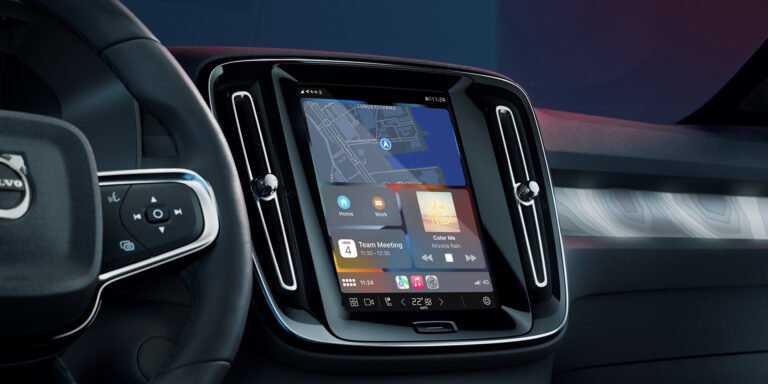
Volvo has rolled out an over-the-air update for its Google-powered infotainment system in the UK, which allows iPhone owners to finally use Apple CarPlay.
This update comes more than a year after the brand switched its latest models to an Android Automotive-powered infotainment system for its new cars, which alienated iPhone users who would prefer to use Apple applications to power their Volvo’s navigation and music.
This update, which compatible Volvo cars can download remotely while sitting in the driveway, adds Apple CarPlay to the infotainment system’s functions – allowing customers to connect their iPhone to the central console via a USB cable.
Volvo says that its last over-the-air update that was released back in April, which added new navigation, charging and parking assistance apps to the infotainment’s Google Play catalogue, was downloaded by around 197,000 Volvo cars worldwide.
Further infotainment updates are planned for this year, including the addition of a Google-powered video streaming feature.
Readers might find the title to this piece confusing and slightly worrying – while an electric car might be very different to a combustion-engined car in many ways, surely driving an electric vehicle (EV) is a similar experience, not some journey into the unknown?
Well yes, it is – or at least it can be. You can quite happily live with an EV by jumping into it, pushing the start button, selecting drive (electric cars don’t have conventional gearboxes), pressing the accelerator pedal and gliding away. It’s basically just like driving any modern petrol or diesel car with an automatic gearbox.
But there are few things about driving an electric car that are a bit different from a conventional petrol or diesel car, so here are a couple of things to bear in mind.
One of the differences to get used to with an EV is that nothing seems to happen when you start it – press the power button and the dashboard screens will light up but there’s no engine sound.
Accelerate away from rest and you may hear a low whine as the car starts to move. And the noise doesn’t get significantly louder, either inside or outside so, as a result, regulations now require new EVs to emit a warning noise of some sort to alert pedestrians and cyclists who otherwise wouldn’t hear you coming.
Instant performance
An electric car will accelerate quite swiftly from a standstill compared to petrol and diesel cars. Electric motors generate all of their torque (pulling power) instantly, so EVs are highly responsive if you stand on the accelerator. A petrol or diesel engine, by comparison, needs to rev up to its optimal working range, which is why you are always changing gears up and down to keep it in the right zone.
An EV doesn’t have a traditional gearbox, so the more you push down on the accelerator, the faster the engine spins and the faster the wheels turn.
Drive your EV this way and you won’t have any problems – but you also won’t be getting the best from it, and you won’t be getting anywhere near the range between battery charges manufacturers quote. Yes, we all know that in the real world you are not going to achieve the miles stated in the glossy brochures before you have to plug in (just as petrol cars pretty much never get near their claimed mpg figures), but you can get a lot closer to the official numbers just by doing some simple things and changing a few ways in which you drive.
(Re)generating miles
The buzzword here is regeneration (knows as regen). While it might sound like a phrase extracted from an episode of Star Trek, it’s actually a crucial part of the design of electric vehicles (and hybrids).
The clever thing about an electric motor is that it works two ways. Pass electricity through it and it will rotate to generate propulsion, which drives your wheels. But if you reverse the process, using the momentum of the moving car (kinetic energy) to turn the motor, it will generate its own electricity which is then sent to the battery.
Virtually all electric cars (and hybrids/plug-in hybrids) regenerate energy at all times when not accelerating – so whenever you lift off and coast towards the next set of traffic lights, or when you hit the brakes. How you can make use of this feature can significantly affect your range – it will only add a tiny amount of electricity each time, but add those times up and it means you have to plug in a little less frequently.
The key to maximising this regeneration is a smooth driving style. Instead of heavily accelerating and then heavily braking, you accelerate to your desired speed smoothly and then coast whenever possible, such as when descending hills. This will not only waste less electricity to start with, but will also aid the regen process to recover a bit of the electricity you’ve used. As a bonus, it’s also kinder to your car in not wearing your brakes so quickly.
Single-pedal driving
Most EVs allow you to increase the amount of regeneration. Cheaper models are likely to have a simple eco or ‘regen’ button – press this and as soon as you lift off the accelerator you will feel the car slow, like you’re applying the brakes. This is caused by increased friction of the motor turning and regenerating more electricity.
Once you get used to this, you can drive the car in almost a ‘single-pedal’ manner, using regeneration to slow the car in most driving situations. You only really need to use the brakes to actually bring the car to a halt or in an emergency situation where more rapid slowing is required.
More expensive EVs have multi-level regeneration, often selected from steering wheel paddles. This enables you to set a more precise level of regeneration according to the type of roads you are driving on. While full regen (where the car slows significantly every time you lift off the accelerator) is fine around a busy town, when at speed on a motorway you don’t want to lift off the pedal and start suddenly slowing – it is better to choose a lower level that allows the car to coast and maintain a reasonable speed.
Many factors affect the usefulness of regenerative braking but the driving environment is the most significant. A couple of years ago, your author road-tested an electric Volkswagen e-Golf on two 45-minute routes, the first involving a stretch of motorway and the second the constant stop-start urban environment of Bicester. After the first, the car’s range had dropped as expected – on completing the second it actually had more indicated range than had been present when setting off, solely due to the regenerative energy produced when slowing for junctions and traffic lights.
Terms and pre-conditions
One useful way to boost your driving range in an EV is by what is called pre-conditioning.
The majority of EVs today are linked to an app you download for your smartphone and it’s worth getting to know it. It can be used for various things like loading a journey into the car’s navigation and finding out where charging stations are available, but perhaps the most useful are the various things you can set the car to do even before you get into it in the morning.
Through the app you can ‘pre-condition’ the car for your journey before you even step outside your front door. This includes heating or cooling the interior to your preferred temperature, switching on your heated seats and such, so it’s perfectly ready for you when you get in it.
While your car is plugged into a charging point in your driveway or work parking space, it means that your heater or air-con are using electricity from the mains supply rather than from your battery. That saves you using crucial battery supply to heat or cool the car once your on the move, helping to maximise your battery range.
Pre-conditioning is good for your car’s battery, too. The lithium-ion batteries used in EVs work best at an optimal temperature range, which means you usually get less driving range in the middle of winter than in the middle of summer. When you set up a pre-conditioning programme on your smartphone app, it doesn’t just warm up the cabin for your benefit but also warms up the batteries so that they’re at their ideal temperature before you start off. This gives you more range and also helps protect the battery over the longer term of your ownership.
Other factors
There are a few more things to consider to make living with an EV a totally happy experience – none of these are essential but all useful.
Once you’re on the move, any electrical item activated in the car will be drawing off the battery and affecting your driving range. So turn off the heated seats as soon as you are warm enough and be sparing with the air conditioning where practical.
There are other things you can do to keep your EV’s range at its best, but they mirror what you should do in a petrol or diesel car to prevent wasting fuel, such as ensuring your tyres are at the optimum pressure, and not leaving lots of heavy items in your boot to be lugged around on every journey.
So yes, driving an electric car doesn’t have to be any different to driving any other type of vehicle – but there are a few simple things you can do to get the very best out of it.
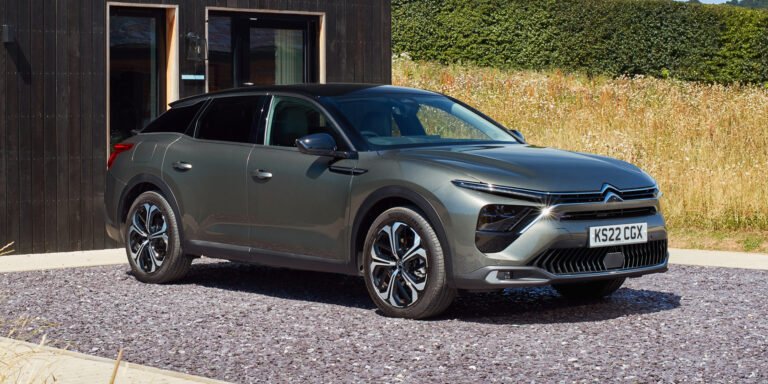
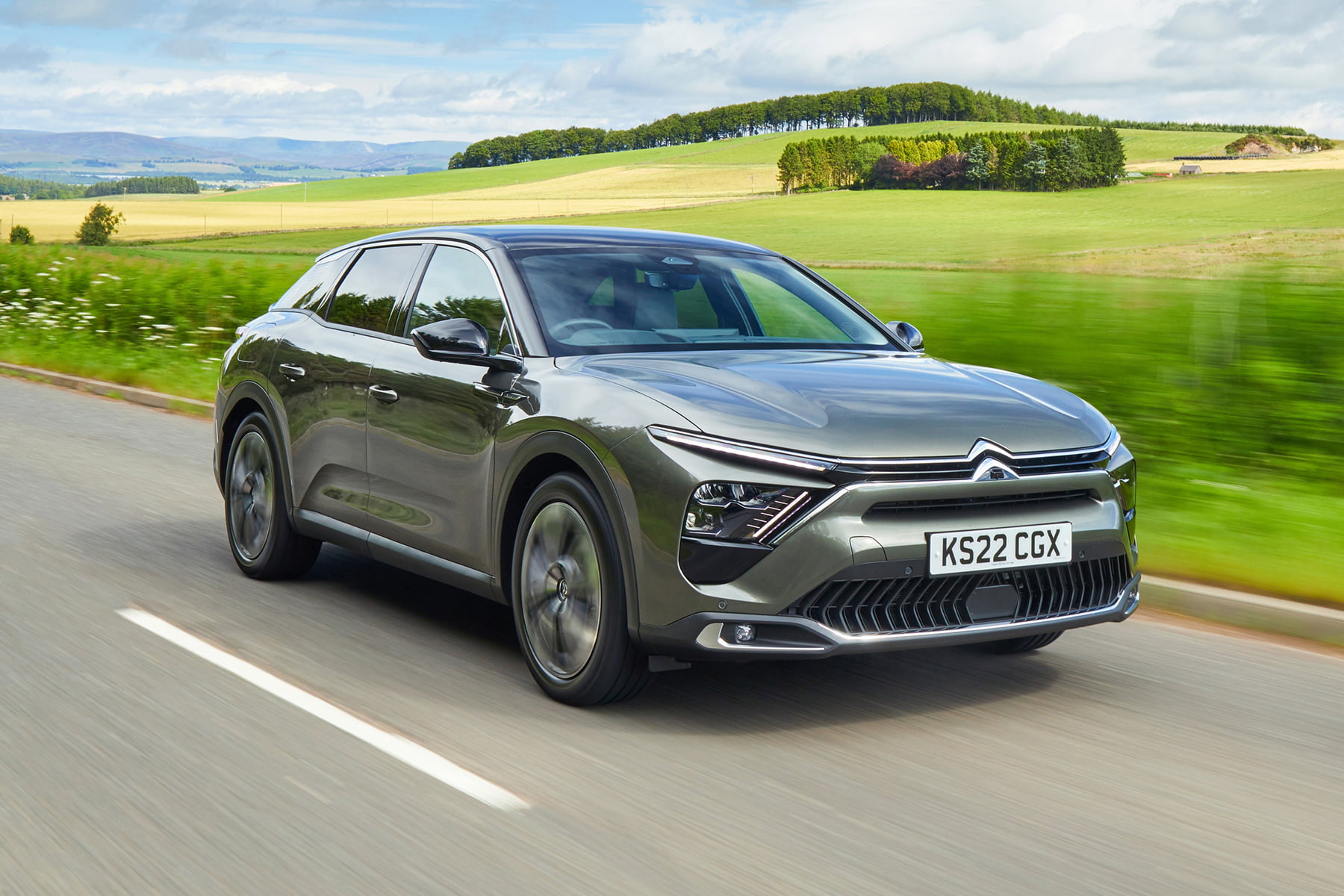
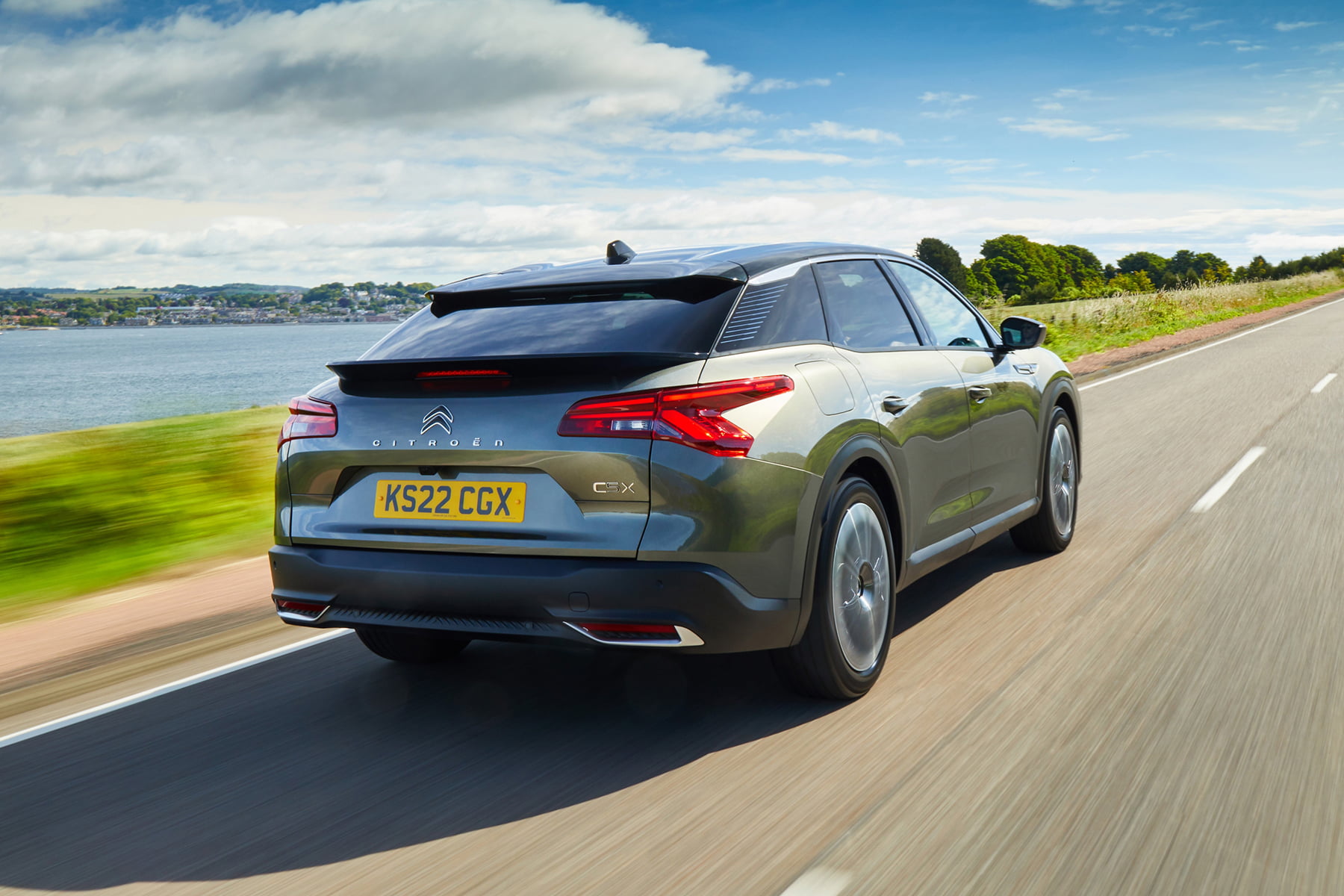
Arriving in the UK in Spring 2022, the Citroën C5 X is a five-door liftback which sits somewhere between a conventional car and a crossover/SUV vehicle.
The successor to the long-gone Citroën C5 and C6 large car models, the C5 X is only available with an eight-speed automatic gearbox. A selection of petrol engines are available, as is a range-topping plug-in hybrid model that uses the same technology as the Peugeot 508 plug-in hybrid saloon.
Reviewers have been in disagreement over how to classify the C5 X, with some labelling it a crossover estate and others an SUV. Like an increasing number of new cars, it sits taller than a conventional saloon or estate but lower than a regular SUV, in much the same way as the smaller Citroën C4.
The Citroën C5 X has received very consistent review scores from its international launch, with every review concluding that it is a very good addition to the Citroën range, and that it offers an interesting alternative to the crowded crossover market.
“Whatever it is, it’s the best Citroën we’ve driven in years”, Heycar comments, highlighting the C5 X for its practical and refined interior. The Telegraph agrees, and adds that the C5 X’s combination of distinctive looks, generous equipment levels and long-distance comfort make the keenly-priced entry-level petrol model an attractive proposition.
That said, many reviewers, including The Telegraph, state that the cheapest model is the best option. While journalists welcome the addition of a plug-in hybrid to the range, a majority of the reviews criticise this top-of-the-range model for its expensive price tag and its fairly average electric range of 34 miles.
While admitting that conventional plug-in hybrid rivals like the Skoda Octavia, Seat Leon and Peugeot 3008 offer a longer battery range, Car asserts that the C5 X is “a breath of fresh air – a calming, spacious and supremely comfortable vehicle”.
As of February 2026, the Citroën C5 X holds a New Car Expert Rating of B, with a score of 67%. It earns top marks for its low running costs and CO2 emissions, while its safety score and media reviews are also good. However, it’s worth noting that we don’t currently have reliability data for the C5 X, so check back again soon.
Body style: Large five-door liftback Engines: petrol, plug-in hybrid Price: From £28,695 on-road
Launched: Spring 2022 Last updated: N/A Replacement due: TBA
Image gallery
Media reviews
Highlighted reviews and road tests from across the UK automotive media. Click any of the boxes to view.
Featured reviews
“The Citroën C5 X defines its own car segment that takes the best of an estate and mixes it with a higher stance on the road. It’s quirky yet practical, and offers a relaxing driving experience.”
Model reviewed: 1.6-litre petrol/electric plug-in hybrid Shine Plus
“The Citroen C5 X is a difficult car to pigeonhole – it combines elements of estate cars, SUVs and hatchbacks. It certainly stands out in a crowd, and is well priced.”
Model reviewed: 1.2-litre petrol automatic Shine Score: 8 / 10 “This PureTech petrol model loses a little of its ride comfort when compared with the plug-in hybrid C5 X, but it improves on that version in other areas, with a larger, more practical boot and an even more affordable price tag given the equipment and space on offer.” Read review
Model reviewed: 1.2-litre petrol automatic Shine Score: 8 / 10 “The petrol Citroen C5 X loses a little of its ride comfort when compared with the plug-in hybrid, but it improves in other areas, with a larger, more practical boot and a more affordable price tag. With stronger tech than ever from Citroen, plus a unique design that doesn’t compromise usability, the C5 X is a solid family car for those who’ve decided that they definitely don’t want an SUV.” (Sean Carson) Read review
Model reviewed: 1.6-litre petrol/electric plug-in hybrid Score: 8 / 10 “The new Citroen C5 X is a well-equipped and comfortable cruiser, although the range-topping plug-in hybrid isn’t cheap.” Read review
Auto Trader
Model reviewed: Range overview Score: 8 / 10 “It’s certainly a distinctive alternative to more conventional rivals like the Skoda Octavia while offering similar advantages of huge interior space at a very appealing price. A convincing plug-in hybrid variant is an attractive, if more expensive, part of the line-up and a flexible electrified alternative for drivers not yet ready to go fully battery powered.” (Dan Trent) Read review
Business Car
Model reviewed: 1.2-litre petrol/electric plug-in hybrid Shine Plus Score: 8 / 10 “We salute Citroën for offering the C5 X – in hybrid form with its low running costs, it provides another option to what seems like a default SUV choice. A great long-distance driver, the C5 X also has attractive and distinctive styling, has impressive levels of comfort in the well-made, spacious, and practical interior, all at a price that seems good value.” Author: Martyn Collins Read review
Model reviewed: Range overview Score: 8 / 10 “The C5X has distinctive styling, offers impressive levels of comfort in the well-made, spacious and practical interior and all with keen pricing levels. The plug-in version in particular has especially low running costs.” Read review
Car
Model reviewed: 1.6-litre petrol/electric plug-in hybrid Score: 8 / 10 “The Citroën C5X is a breath of fresh air. It squarely nails its brief to offer a calming, spacious and supremely comfortable vehicle. And it’s keenly priced too. Citroën is one of the first car makers to show a credible vision for a post-SUV bodystyle, with some of its practical benefits but improved aerodynamic efficiency.” Author: Alan Taylor-Jones Read review
Car Keys
Model reviewed: Range overview Score: 9 / 10 “Citroen’s previous large saloons have been a bit hit-and-miss, but the C5 X feels right on target. It brings lots of style, spaciousness and quality, yet still at a relatively affordable price. The plug-in hybrid is a pleasing all-rounder too, though the petrol options might make more sense depending on your usage.” (Ted Welford) Read review
Carbuyer
Model reviewed: Range overview Score: 8 / 10 “The Citroen C5 X is a comfortable and intriguing mix of body styles, and is worth considering against the usual German executives.” (Ben Custard)
Read review
Driving Electric
Model reviewed: 1.6-litre petrol/electric plug-in hybrid Score: 8 / 10 “Citroen’s new plug-in flagship is a comfortable cruiser with plenty of electric range for most commutes, however it can’t match cheaper SUVs when it comes to boot space.” Read review
Electrifying.com
Model reviewed: 1.6-litre petrol/electric plug-in hybrid Score: 8 / 10 “Citroen has pulled off a bit of a coup with the C5 X as it could have felt like a big car with an identity crisis, but it doesn’t. In many respects, it’s a welcome alternative for those bored with plug-in hybrid SUVs.” Read review
Heycar
Model reviewed: Range overview Score: 8 / 10 “The Citroen C5 X is a new type of car from a French brand known for innovating. Is it a big hatchback? Is it a svelte estate? Is it a low-slung SUV? Whatever it is, and despite its challenging looks, it’s the best Citroen we’ve driven in years.” Read review
Honest John
Model reviewed: Range overview Score: 8 / 10 “The Citroen C5 X is part large hatchback, part estate and part SUV. It’s Citroen thinking outside the box, but despite its challenging looks it’s also one of the best cars the French brand has made in a long time.” Read review
Parkers
Model reviewed: Range overview Score: 8.4 / 10 “It sticks to Citroen’s commitment to comfort – seating and ride are very good, and there’s also more than enough room front and rear to take care of all but the largest families. It’s also striking to look at, and an individualistic choice in a market filling up with me-too SUVs.” Read review
The Sun
Model reviewed: Range overview “Citroen is trying to break that habit. It has deliberately priced this C5 X from £27,790 to compete against Qashqai and Sportage. It will be hard to tempt people away from these much-loved SUVs.
But if you really do fancy something different, C5 X is worth a look.” Read review
Model reviewed: 1.2-litre petrol automatic Shine Plus “The Citroen C5 X smells of committee design. It looks like the chairperson wanted a big hatchback. But then the secretary argued for an estate. And finally the treasurer chipped in and said it had to have some crossover about it. The plug-in hybrid version should be avoided, but the simple petrol-engined version shows the C5 X committee actually passed a clever motion.” Read review
The Telegraph
Model reviewed: Score: 8 / 10 “This could be Citroen’s last stab at building the kind of large, urbane estate it’s always done so well. If it is, we should shed a tear, because we’ll be losing the sort of car that delivered family-friendly long-distance motoring in a way few others could. It runs the risk of being the worst kind of compromise, but the C5 X impressively blends the disparate demands of modern motoring” (Alex Robbins) Read review
Model reviewed: 1.2-litre petrol automatic Shine Score: 8 / 10 “There’s merit in this new Citroen, especially for a big family looking for long-distance comfort. I rather liked this car, which has an attractive combination of looks and ride although, as is so often the case, the best model is the cheapest one.” Read review
Top Gear
Model reviewed: Range overview Score: 8 / 10 “It’s also a very pleasant thing to sit in, to ride in and – more of a surprise this – to drive. It doesn’t feel like a re-dressed Peugeot 508 either. It has a definite, comfortable character of its own.” Read review
Safety rating
Independent crash test and safety ratings from Euro NCAP
Independent economy and emissions ratings from Green NCAP
No eco rating
As of February 2026, the Citroën C5 X has not been tested by Green NCAP.
Reliability rating
Reliability data provided exclusively for The Car Expert by MotorEasy
No reliability rating
As of February 2026, we don’t have enough reliability data on the Citroën C5 X to generate a reliability rating.
The Car Expert’s reliability information is provided exclusively to us using workshop and extended warranty data from our partner, MotorEasy, sourced from both official dealerships and independent workshops.
As soon as MotorEasy has sufficient data on the C5 X, we’ll publish the results here.
Running cost rating
Monthly cost of ownership data provided exclusively for The Car Expert by Clear Vehicle Data
Fuel consumption
Average
Score
Petrol models
45 mpg
C
Hybrid models
53 mpg
B
Plug-in hybrid models
211 mpg
A
CO₂ output
Average
Score
Variation
Score
Petrol models
147 g/km
C
Hybrid models
125 g/km
B
Plug-in hybrid models
32 g/km
A
Battery range
Average
Score
Variation
Score
Plug-in hybrid models
34 miles
E
Insurance group
Average
Score
Variation
Score
All models
26
C
Service and maintenance
Cost
Score
Year 1
£210
B
Year 2
£611
C
Year 3
£970
C
Year 4
£1,224
C
Year 5
£1,658
C
Overall
£4,673
C
The Citroën C5 X should be a relatively affordable car to own and run, according to whole-life cost data provided exclusively to The Car Expert by our technical partner, Clear Vehicle Data.
Fuel economy for the petrol models is good, and even better for the hybrid versions. The plug-in hybrid looks great on paper, but that’s due to the woeful EU/UK government lab tests that are completely useless at measuring a plug-in hybrid…
The plug-in hybrid battery range looks poor, but it’s fairly average for this sort of car. A fully electric car of similar size, by comparison, will usually have about 250-300 miles of range.
Insurance costs are very good, as are servicing and maintenance over the first five years.
Awards
Trophies, prizes and awards that the Citroën C5 X has received
If you’re looking to buy a new car (or near-new car), then car reviews are a great way to help you understand which car might be right for you. But there are literally tens of thousands of car reviews – just from UK sources – on the internet. So which reviews should you trust?
Every website will tell you that their reviews are the best in the business but, at the end of the day, they all have their good and bad points.
Each review will be one website’s (well, usually one person’s) opinion of that car. Some motoring journalists drive lots of cars each year, and have been doing so for decades. Others might review a few cars here and there along with various other roles.
Each website will have its own methods for reviewing cars, as well as its own way of measuring and scoring cars. Some sites update their reviews on a regular basis to account for changes to each model and the overall marketplace, while others don’t. And most websites don’t review every car available, or they use a number of different journalists to review different cars, so it all gets a bit hit-and-miss very quickly.
We built a better solution
The Car Expert has been bringing real-world, practical advice to car buyers and car owners for more than a decade. There’s no car industry spin and no favouritism; just honest, independent and impartial consumer advice on every aspect of buying, financing, owning and selling your car.
Now, we’ve applied our expert guidance to not just how to buy a car, but which car to buy. Our unique Expert Rating Index is the new gold standard for ranking new cars for consumers.
Pieces of a puzzle
All those thousands of car reviews on the internet and in car magazines are like individual pieces of a jigsaw puzzle. To really work out what the best car in your price range is, you need to put all the pieces of that puzzle together. So if you’re only relying on one or two sources, you’re not getting the full picture.
To help you do that, The Car Expert has created our Expert Rating Index.
We compile and analyse new car reviews from 30 of the UK’s leading automotive websites. As of July 2022, we have indexed more than 13,000 new car reviews and we’ve published comprehensive Expert Ratings on more than 400 new cars – including all the biggest-selling cars in every price bracket.
Rather than reading one or two reviews of a couple of different cars in your price range, you can see every review published from the 30 sources we monitor at a single glance.
We pull together dozens of reviews for every car on the market and use an advanced algorithm to analyse all those reviews, compare different scoring systems and adjust for the age of each review. It’s a complex process, but all of this effort produces a definitive score for each car.
Bringing science and data to your car buying choices
Think of our Expert Rating Index as “the Rotten Tomatoes of new car reviews”. By aggregating dozens of reviews for each car, you get a consensus of expert opinion, not just one journalist’s thoughts.
The Expert Rating Index brings a level of sophistication never before seen in ranking the best and worst new cars in the UK. It’s the most accurate and reliable method ever developed to rate and rank every new car on sale.
We’re bringing science and data analysis to the subjective and old-fashioned world of reviewing new cars, using established aggregating principles in a similar fashion to sites like Rotten Tomatoes or Metacritic.
As well as media reviews, we also show you complete safety ratings from Euro NCAP (not just the headline score) and eco data from Green NCAP. Where applicable, we also have security ratings from Thatcham Research and reliability data from MotorEasy. And we’re currently working on bringing even more data to help build an even better overall picture for each car.
If you like what you see for a particular car, we can then link you straight to some of the top sales sites in the UK, like Cazoo, Carwow and Motors.co.uk so that you can check out prices.
If you’d like a lease quote, we have links to all the latest deals on offer from industry-leading leasing providers like Carparison, Hippo Leasing, Moneyshake and more.
If you’re interested in the rapidly-growing world of car subscriptions, we have partnerships with industry leaders , Elmo and Wagonex.
In other words, we give you the most reliable information on every new car, then put you in touch with the best people to help you put one on your driveway.
The Car Expert’s aggregated ratings technology is already generating excitement within the car industry. Leasing.com, one of the UK’s top car leasing websites, is now using a custom algorithm and bespoke integration from The Car Expert to power its new car rating scores. More sites will be adding this functionality in coming months.
No spin, no favouritism. Just the answers you need
Check out our latest analysis of the following new car sectors:
So if you really want to know whether Car A is better or worse than Car B, we have the definitive answer. Whatever sort of car you’re looking for, you can use our Expert Ratings to help you choose.
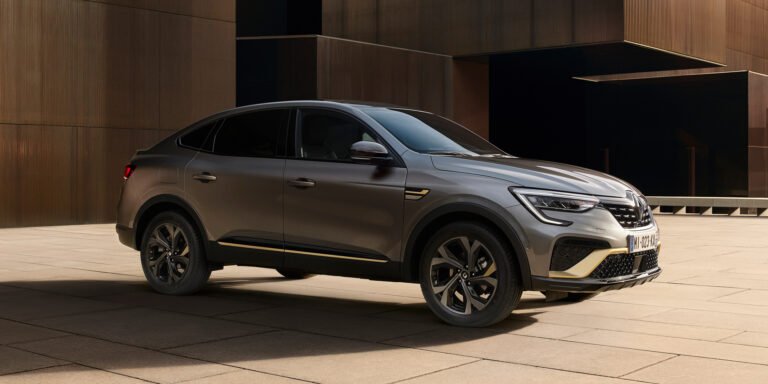
Despite having only been on sale for a short time, the Renault Arkana coupé-SUV has already received a price hike and revised specifications.
The entry-level ‘Iconic’ trim has been replaced by the very similar ‘Evolution’ trim, while the mid-spec ‘S Edition’ grade has been replaced by ‘Tecno’. ‘R.S Line’ trim continues on unchanged, while a new ‘E-Tech engineered’ trim now sites at the top of the tree – but only if you choose the 1.6-litre hybrid powertrain.
The new Iconic and Tecno models have had some minor specification changes compared to the previous versions, but nothing particularly significant. There are no changes to the R.S Line specification.
The new E-Tech engineered trim is recognisable thanks to different 18-inch alloy wheel design and gold accents on the car’s bumpers and side skirts. Inside, there’s a semi-autonomous parking function and adaptive cruise control over and above the R.S Line specification.
Renault Clio E-Tech engineeredRenault Captur E-Tech engineered
The E-Tech engineered trim is also being added to the Clio hatchback and Captur crossover model lines, replacing the R.S Line trim for hybrid and plug-in hybrid models. These top-spec models come with the same gold exterior accents, revised front and rear bumpers, and black and gold interior colour scheme.
With this minor update for the Arkana comes a price hike. Entry-level models now cost nearly £27k – an increase of more than £1k since last year.
It is fair to say that the Arkana has received a rather mixed bag of reviews after being on sale for around a year now, praised for its looks and efficient hybrid models, but criticised for its bumpy ride comfort at low speeds, and its unimpressive lead-in petrol models. As of July 2022, it holds an Expert Rating of 59%, which puts it well down the order in our ranking of Best Small SUVs based on new car reviews from 30 of the UK’s top motoring sites.
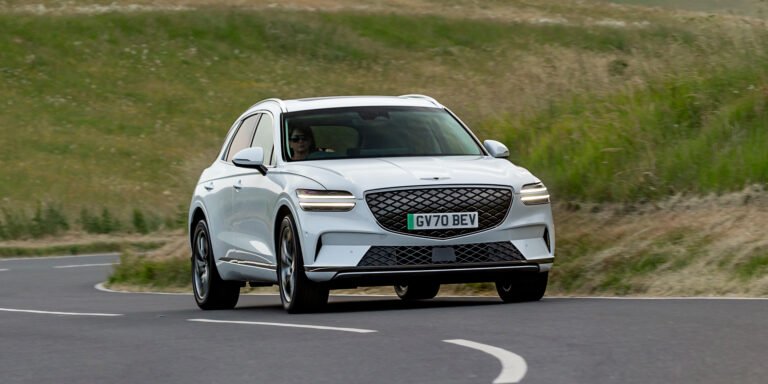
Genesis has released UK pricing for the electric version of its GV70 mid-sized SUV, which is now available to order as the company continues its European expansion.
With a starting price of just over £64k, the ‘Electrified GV70’, this is the third all-electric model announced by Genesis – an upmarket spin-off brand owned by Hyundai.
The premium SUV is powered by a 77kWh battery (the same size as the battery that powers the top-spec versions of the Hyundai Ioniq 5), paired with two electric motors to provide a promised battery range of 283 miles from full charge. By comparison, similarly-priced versions of the new Nissan Ariya have an official range of 329 miles, while the Mercedes-Benz EQC can officially only muster 252 miles on a full battery.
The Electrified GV70 is visually identical to the standard combustion-powered GV70 range, so you’ll need to look for the EV registration plates to tell the difference in a car park.
Like the standard GV70 range, there’s plenty of customisation options available, with 15 exterior paint colour options and six different interior colour schemes to choose from (three of which are only available with the nappa leather upholstery upgrade package).
However, while the regular trim consists of three different trim grades with prices starting at just under £40k, Genesis has taken an all or nothing approach to packaging the Electrified GV70, which is only available in the top-spec Sport trim.
This includes an off-road driving mode that uses a front-mounted camera to detect difficult terrain ahead by and pre-emptively adjust the suspension settings to suit. The GV70 comes standard with 19-inch alloy wheels, while 20-inch wheels are an optional extra.
Inside, the EV comes with a heated steering wheel, heated front seats with leather upholstery, ambient cabin lighting, dual-zone climate control with an air filter that keeps out harmful bacteria and privacy glass for the side rear and back windows.
This range-topping trim and its extensive equipment list, combined with the cost of the car’s electric powertrain, mean that this model costs close to £25k more than the entry-level GV70.
The Genesis Electrified GV70 is now available to order using the brand’s online configurator, with pricing starting at £64,405. The first cars are expected to be delivered to UK customers in October.
Highlighted for its comfort and generous equipment levels, as well as the brand’s lengthy customer care package, the Genesis GV70 has been well-received by the British motoring media since its 2021 arrival. It currently holds an Expert Rating of 68%, which is hindered by the fact that its rivals are slightly more spacious overall.
The handsome-looking family SUV here is the long-awaited Nissan Ariya. The main reason it’s ‘long-awaited’ is that we were expecting to see it on UK roads about two years ago, but Covid and then the global chip shortage forced Nissan to repeatedly delay the Ariya’s launch until now. So was it worth the wait?
Nissan was the first big-name car manufacturer to build a commercially successful electric car. But despite the Leaf being a massive success, now nearing the end of its second generation and with a third generation under development, it’s taken Nissan a long time to get around to building another EV passenger car to join it.
The Ariya has received positive reviews over the last month since the press launch, ranging from mild enthusiasm to Car of the Year awards. So where do we stand on it? Read on…
The Nissan Ariya looks and feels like a Nissan Qashqai from the future. It’s slightly bigger (just under 20cm longer, and about two-thirds of that is in the cabin) and fully electric, but it’s still a familiar format – a family-sized SUV/crossover style vehicle that seats five with a decent boot.
The Ariya doesn’t replace the Qashqai in the Nissan family – far from it. The Sunderland-built Qashqai is the company’s most popular model, which is likely to continue for a few years yet. Instead, the Ariya is a clear and promising sign of Nissan’s EV intentions.
Customer get a choice of two trim levels (Advance and Evolve) and three powertrains, which are:
160kW motor, 63kWh battery, front-wheel drive
187kW motor, 87kWh battery, front-wheel drive
225kW motor, 87kWh battery, all-wheel drive
Not all versions will be available at launch. The entry-level motor will only be available with the higher-spec trim, while the two more powerful models will only be available with the lower trim grade. Yes, that’s confusing but you can pre-order the other versions to arrive at a later date.
First impressions
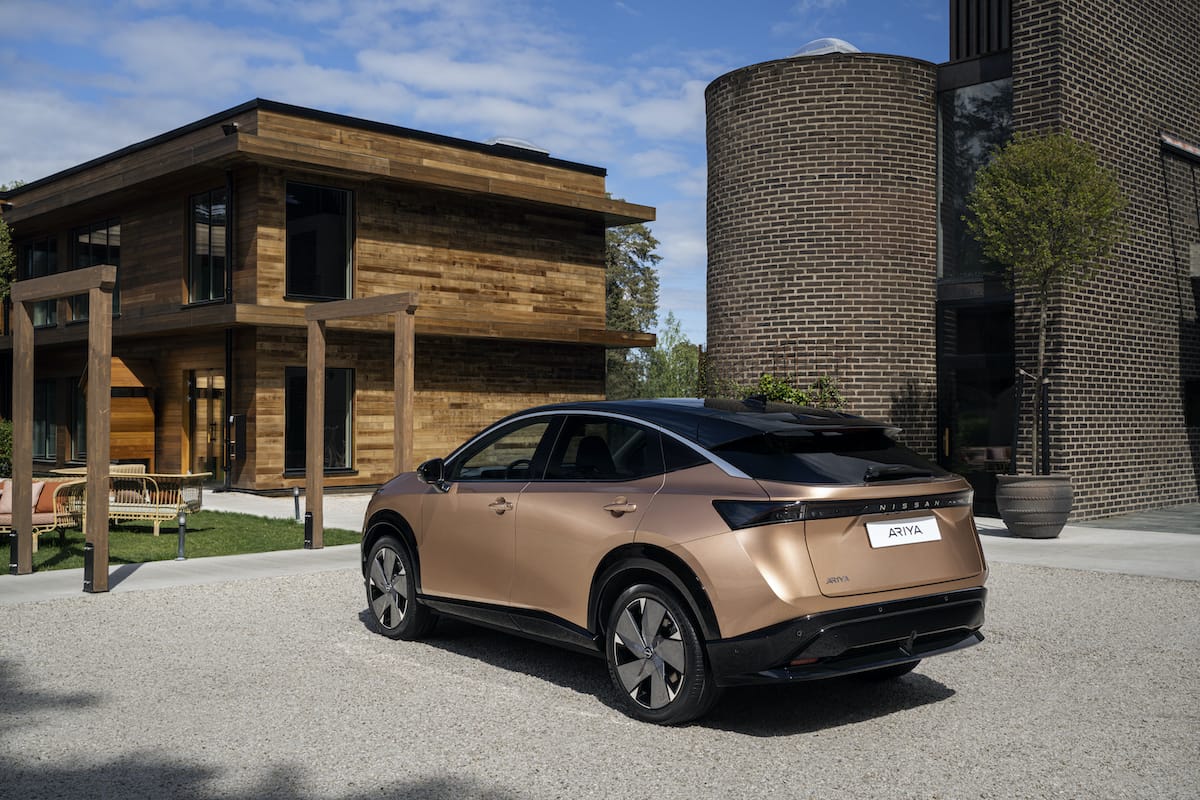
It’s a good-looking vehicle, the new Ariya, and that’s quite the rarity in modern car design. The exterior has a smooth and seamless design, and looks good from pretty much every angle. Most cars tend to look horribly overstyled in comparison, while Tesla manages to achieve the opposite with its cars, which look unfinished. The Ariya strikes a happy balance.
It’s quite surprising given that Nissan’s two other EVs, the Leaf and the e-NV200, don’t look like they’ve been styled so much as beaten repeatedly with the ugly stick. And let’s not even mention the original Nissan Juke…
Yes, there’s still a pointless big black ‘grille’ that dominates the nose, but Nissan pulls it off much better than the likes of Mercedes-Benz, let alone BMW or Audi. Our test car was black, which disguises the fake grille but also hides the overall style. Nissan also had some cars in the copper colour you see in the pictures here, which looked far more appealing.
Step inside and the good news continues. The minimalist look has become pretty common now that car manufacturers have put almost all the controls onto a central touchscreen, but Nissan manages to make minimalism look expensive rather than cheap. Our car featured blue Nappa leather upholstery, which sounded hideous in the briefing but turned out to be a very dark blue that works very well in practice – a bit different to the usual black, but still dark enough to cover dirt and other stains that children will inevitably leave all over the back seats.
The stand-out design elements in the cabin are two sets of controls embedded into the (fake) woodgrain trim. Functionally, they’re no better than normal touchscreen controls, which means they’re not as good as physical buttons for using on the move, but they certainly look cool.
We like: Styling, both inside and out We don’t like: Touch controls will never be as good as physical controls
What do you get for your money?
Once we’ve got the first impressions out of the way, it’s time to look a bit harder at exactly what you’re getting for your money with the Nissan Ariya.
The line-up kicks off with the 160kW Advance with the smaller 63kW battery for just under £44K (except that it’s not available from launch). According to official lab tests, this will give you a battery range of 250 miles, so you can expect 200+ miles in most real-world driving conditions. The posher Evolve trim is a £4K upgrade at nearly £48K on-road, and you lose about 3 miles of range due to the weight of £4,000 worth of extra kit.
To go a bit quicker and further, the 187kW Advance with the 87kW battery is nearly £6K dearer at £49.6K, which again jumps by £4K for the Evolve trim level. This gives an official battery range of 329 miles (again, slightly less for the Evolve version) so you can expect a comfortable 250+ miles in real-world driving.
Finally, the 225kW Advance model in all-wheel drive and the 87kW battery hits the road at just over £52K, with another £4K step for the plusher model. Battery ranges for these models have not yet been confirmed but should be about 310 miles official and 250-ish miles in the real world.
The Advance specification is a pretty good starting point, with most of the niceties you’d expect to see on a £40K+ new car. Dual-zone climate control, a pair of big screens for driving displays and infotainment, heated front seats, adaptive cruise control with lane-keeping assistance (which Nissan calls ProPilot), all the usual driver assistance safety systems and 360-degree parking cameras are all present and correct. Apple CarPlay is wireless (as is phone charging), but Android Auto users will still have to plug in.
For that extra £4K upgrade, the Evolve specification is actually decent value. You get a panoramic glass sunroof, adaptive high beam, a Bose sound system, head-up display, ventilated front seats and heated (but not ventilated) rear seats, and memory for your seats/steering wheel/mirrors/infotainment settings and even the centre console, which is electrically adjustable on the Evolve (we’ll get back to that bit shortly).
We like: Simple, clear trim levels. All the safety kit is standard on all models rather than at additional cost. We don’t like: Entry-level model not available from Day 1.
What’s the Nissan Ariya like inside?
Having been impressed by the Ariya’s cabin at first glance, it’s time to explore things in more detail. We drove the higher-level Evolve model, but most of the crucial kits is standard on the lower-spec Advance trim.
The front half of the cabin is very spacious, with plenty of legroom all the way across the cabin. There’s no gearbox to get in the way, like in a petrol car, and Nissan has moved all of the heating and air-con systems under the bonnet where the petrol engine would normally live. That frees up a lot of space between the driver and front passenger, and certainly makes the car feel more spacious.
The centre console on the Evolve model can move forwards and backward by a few centimetres, and it’s electric so it’s linked to the memory function for the seats and mirrors. The idea is that you can move it back if there’s no-one in the middle rear seat, or move it forward if there is. It does seem like the novelty would wear off pretty quickly, so I’m not sure how many owners would really get a lot of use out of this function.
Even sillier is the electrically-powered drawer in the centre of the dashboard, with a little plastic lid to turn it into a very small table. This definitely wins the prize for most pointless electrification of a simple task since BMW and Mercedes fitted electric interior rear-view mirrors to their top-spec luxury cars in the 1990s. The drawer also felt pretty flimsy, so a few weeks with the kids might leave you with an expensive bill to fix or replace it. A good ol’ manually-opening drawer would have been perfectly adequate here.
Now that I’ve finished my old man ranting, the rest of the cabin is a genuinely lovely place. A particular highlight is the ambient lighting, which is designed to evoke a traditional Japanese paper lantern – it sounds kitsch, but it works surprisingly well.
All of the information is set out across two 12-inch screens (designed to look like one very long screen) laid out side-by-side across the top of the dash. It’s becoming a common layout on new cars and works very well. One screen is directly in front of the driver and contains all of the usual instrument information like speed, battery level, distance to empty and any warning lights or messages. Alongside sits the second screen, which has all of your music, satnav guidance and other information.
Because all of the information is up high and across one level, you don’t have to look down towards the bottom half of the dashboard to see anything like you do on some cars. Everything is close to the driver’s eyeline so you spend less time with your eyes away from the road, and as car companies adopt touchscreens for basically everything, this is more important than ever.
The screen graphics are also easy to read and use bold colours – design sophisticates may sniff, but a navigation map that uses bold primary colours (rather than varying shades of green, red, orange and greenish-reddish orange) is much easier to read on the move when you’re colourblind.
Back-seat room is decent as well. Again, the floor is nice and flat as there’s no exhaust system or driveshaft like you’d get on a petrol car, so all three rear seat occupants get adequate room for their legs and feet. Headroom is also pretty good, partly because the Ariya’s batteries, which live under the floor, are 33% slimmer than those on the Leaf, so the seats can be mounted lower to give more headspace.
The boot is reasonable without being class-leading. The two-wheel drive models get just under 470 litre of boot space, but the shape is square and flat so it makes best use of the space available. All-wheel drive models lose a chunk of boot space, which is reduced to just under 410 litres – in other words, you lose about a mid-sized suitcase’s worth of space.
We like: Loads of legroom up front, lovely cabin ambience We don’t like: Powered drawer in dashboard is unnecessarily silly
What’s the Nissan Ariya like to drive?
The ten-second answer is that the Ariya drives perfectly satisfactorily. Smooth, quiet and refined, like most EVs. If you’d like more detail, then read on.
Even by electric car standards, the Ariya is quiet. So much so that you start to notice the engine noise made by other cars and trucks around you. When you get up to motorway speeds, there’s inevitably more road noise and wind noise, but it’s still quieter than a petrol car like the Qashqai.
Being electric, there are no vibrations from the engine or gearbox so it’s all very smooth – assuming the roads are halfway reasonable. EVs are heavy compared to petrol cars and you notice this when you bounce off a pothole or speed bump, and large wheels with low-profile tyres don’t help this. However, the Ariya copes as well as any other EV and better than most.
We drove the lower-spec 160kW model in front-wheel drive and it has more than enough performance for most households. Higher-performance models will give more explosive acceleration, but that’s not really what a family SUV is all about.
Nissan talked a lot about the Ariya being “fun to drive” but – spoiler alert – it really isn’t. It’s a very comfortable family-size SUV. It’s smooth and whisper-quiet. It’s refined apart from bouncing hard through larger potholes. But it’s not “fun to drive”. You point it in the direction you want to go and steer as required. That’s not a criticism, because it’s what most buyers actually want, so why bother with the whole “fun” pretence?
Like most electric cars, you can adjust the amount of regeneration provided. If you’re new to EVs, regeneration occurs whenever you lift your foot off the accelerator pedal to coast. The car converts some of the kinetic energy (the wheels turning) into electricical energy, giving you a small boost of charge to your battery.
By default, very little energy is converted and the Ariya will coast much like a petrol car would. However, you can increase this regeneration, which means the car will slow down more quickly and send more electricity back to the battery. On top of that, Nissan has a function called e-Pedal for maximum regeneration, which effectively applies the brakes whenever you lift off the accelerator. That means you can mostly drive the Ariya without using the brake pedal until you are almost stopped, and even more electricity is sent back to the battery every time you slow down.
The e-Pedal function takes some getting used to, as you need to lift off gradually to avoid the car slowing dramatically (as it would if you suddenly hit the brakes at 30mph). Some drivers love it, others prefer the more conventional coasting function. What is unhelpful is that Nissan separates the e-Pedal from the regeneration controls in the gear lever, rather than having a dial or switch to set regeneration from minimum (coasting) to maximum (e-Pedal).
We like: Super smooth, super quiet We don’t like: Confusing layout for regeneration and e-Pedal controls
Charging the Nissan Ariya
If you’re charging from a wallbox at home, Nissan advises that it will take about ten hours to charge the battery from 10% to full. So even if you are driving a couple of hundred miles every day, you can still comfortably charge overnight and be good to go again next day. In reality, the average household does about 100 miles a week, so its not a problem.
If you go for one of the larger 87kWh battery Arias, the same charge will take more than 13 hours. If you have access to 22kW charging (most homes don’t, but a lot of office and on-street chargers do), this drops to under four hours and five hours, respectively.
If you’re out and about and charging from a public charging station, the Ariya can take up to 130kW of rapid charging, which can get you from 20% to 80% of battery charge in half an hour. To put it another way, that’s about 160 miles (for the 63kWh version) or more than 200 miles (87kWh versions) of charge in half an hour. So long journeys are certainly manageable with a little planning – and this will only get better over time as more rapid charging points are installed all over the country.
Verdict
The Nissan Ariya is a fine family car. If you’re making the switch from a petrol or diesel car to an EV, it’s a very enjoyable experience that is unlikely to cause you any regret.
It’s not cheap, especially as you start running up the model range and find you’re looking at a £50K+ family car. However, Nissan is confident that residual values will be very strong so monthly PCP or lease payments should at least be competitive with other family EVs.
In pure pricing and specification terms, the Ariya is not the best in class. Other cars, like the Kia EV6 or Hyundai Ioniq 5, give you more for less. However, the Nissan is better looking and slightly more comfortable. The interior is a nicer place to spend time and, given that it’s still competitive in every area that matters, that makes the Ariya well worth considering.
Model tested: Nissan Ariya Evolve Price (as tested): £47,840 Motor unit: 160kW single electric motor Gearbox: Single-speed automatic Power: 160kW (218hp) Torque: 300 Nm
Top speed: 100 mph 0-60 mph: 7.5 seconds Battery size: 63 kWh Battery range: 250 miles Euro NCAP safety rating: Not yet tested (as of July 2022) TCE Expert Rating: 78% (as of July 2022)
Buy a Nissan Ariya
If you’re looking to buy a new or used Nissan Ariya, The Car Expert’s partners can help you find the right car
Find your next used car with Motors.co.uk. Find out more
Search for your next new or used car with Auto Trader. Find out more
Discover great deals available on both new and used cars. Find out more
Lease a Nissan Ariya
If you’re looking to lease a new Nissan Ariya, The Car Expert’s partners can help you find a competitive deal
Personal contract hire deals from Carparison Leasing. Find out more
Personal contract hire deals from Leasing.com. Find out more
Personal contract hire deals from Select Car Leasing. Find out more
Subscribe to a Nissan Ariya
Subscriptions are becoming a very popular way for consumers to try an electric car for a few weeks or months to help decide whether it’s a suitable alternative to a petrol car. If you’re interested in a car subscription, The Car Expert’s partners can help. (PS: What’s a car subscription?)
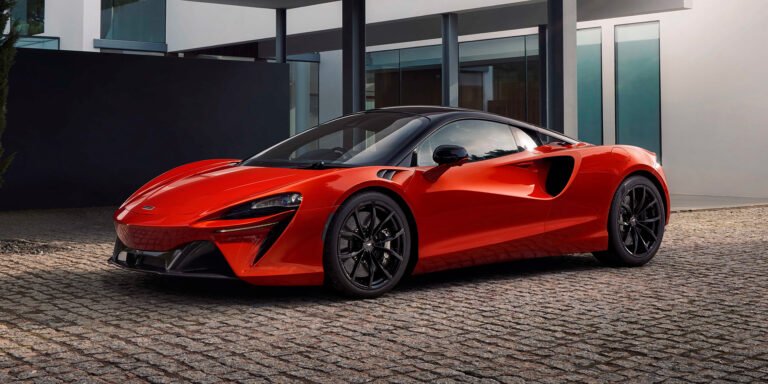
The McLaren Artura is a mid-engined coupé and the first plug-in hybrid supercar to join the McLaren range. It replaces the successful 540/570/600 Sports Series range and sits below the 750 Super Series range.
As a plug-in hybrid, the new Artura will go head-to-head with the acclaimed new Ferrari 296 GTB. So far, only a coupé model has been announced, although a folding-top Spider version seems inevitable.
The Artura combines a twin-turbocharged petrol V6 with an electric motor for a combined output of 671hp, meaning it can complete a 0-62mph sprint in under three seconds.
“The car itself is terrific to drive – mostly”, Auto Express explains. While British reviewers are collectively impressed by the Artura’s pace and acceleration, as well as its comfort and potential as a long-distance cruiser, many journalists reported technical issues after their test drive that raise questions about the supercar’s reliability day-to-day.
Evo reports that test cars suffered from “software glitches, with a few succumbing to more serious mechanical failures.” Driving Electric and Auto Express also found these problems frustrating, but both note that these are issues that can be ironed out, and concluded that, while the Ferrari 296 GTB is the better choice at the moment, the McLaren is comparatively much cheaper.
An entry-level Artura model can be purchased for around £100k less than the cheapest 296 GTB, and while the McLaren provides less power than the Ferrari overall, it has a higher all-electric range of 19 miles.
As of August 2025, the McLaren Artura holds a New Car Expert Rating of B, with a score of 65%. It scores top marks for its excellent media review scores, while its CO2 emissions are also very low as it’s a plug-in hybrid. McLaren’s standard warranty coverage is basic, but the battery components are more comprehensively covered. Unsurprisingly, high running costs drag down the overall score,m and we don’t have any Euro NCAP safety data.
Body style: Mid-engined coupé Engines:plug-in hybrid Price:From £185,500 on-road
Launched: Summer 2022 Last updated: N/A Replacement due: TBA
Image gallery
Media reviews
Highlighted reviews and road tests from across the UK automotive media. Click any of the boxes to view.
Featured reviews
“The McLaren Artura is a triumph. It may have had a difficult, protracted birth, but it’s evolved into a truly great supercar – at this price its feedback and involvement are unrivaled. A Maserati MC20 is more ferocious and full of drama, but the McLaren pulls you in with its stunning steering, poise across the ground and the massive hit from its hybrid V6.”
“The McLaren Artura mixes V6 turbo and plug-in hybrid power to great effect — it’s properly fast, and brilliant to drive in Sport mode, although the hybrid setup can be infuriating at times.”
Model reviewed: Range overview Score: 9 / 10 “The McLaren Artura offers simply sublime ride and handling. However, while the powertrain is good, it’s not great; effective and punchy, but still lacking a little refinement and finesse, it seems. It’s a small issue that can’t take the shine off an otherwise deeply impressive piece of engineering that evolves what McLaren stands for when it comes to tech and design.” Author: Sean Carson Read review
Model reviewed: Score: 8 / 10 “This is painful to report but we’re not convinced the Artura is ready to go on sale just yet. The car itself is terrific to drive, mostly. It’s fast and exciting and has an excellent new cabin, even if it might be a touch clinical emotionally. But we experienced several reliability issues with our test car on the launch event – and we were not the only ones to do so.” Read review
Auto Trader
Model reviewed: Score: 6 / 10 “Going electric was never going to be easy for a supercar brand for whom motorsport-inspired lightweight engineering is a core belief. But needs must and the McLaren Artura is a plug-in hybrid supercar. With a maximum of just 19 miles of pure electric driving, however, that small battery is there to boost performance rather than save the planet. A seemingly half-hearted approach that rather sums this car up.” (Erin Baker) Read review
Car
Model reviewed: Score: 8 / 10 “The Artura is a nuanced car with an impressive bandwidth of abilities. It’s genuinely capable over long journeys – we covered more than 300 miles during our test without discomfort, and like previous McLarens it has very generous luggage space within the front boot.” Read review
Daily Mirror
“The McLaren Artura is a hybrid supercar that doesn’t annoy envious neighbours.” Author: Stephen Jones Read review
Driving Electric
Model reviewed: Range overview Score: 8 / 10 “The latest plug-in hybrid supercar from McLaren is fast and comfortable, with a usable new interior to boot – but it feels like there’s still work to be done.” Read review
Evo
Model reviewed: Artura Spider Score: 10 / 10 “More power, comprehensive chassis updates and a new Spider model makes the McLaren Artura impossible to ignore for those in the junior supercar market.” Author: Stuart Gallagher Read review
The Sunday Times
Model reviewed: 3.0-litre petrol/electric plug-in hybrid coupé “The Ferrari 296 is more exciting but the McLaren Artura is more civilised. The Ferrari is better looking and a bit faster. But the McLaren is noticeably less expensive and much easier to use. Really, I guess it comes down to who you prefer, Lando Norris or Charles Leclerc. And that doesn’t help either, as both seem to be good eggs. I’d take the McLaren but I wouldn’t blame you if you did the opposite.” (Jeremy Clarkson) Read review
Model reviewed: Score: 9 / 10 ” It’s a glorious concoction of petrol and electric, mechanical grip and electronic stability control, comfort and aggression. It may sit in the supercar line but it’s also a track weapon, a GT that can be driven in comfort across continents and an everyday cruiser.” Read review
Top Gear
Model reviewed: Score: 9 / 10 “Hybrid power is integrated slickly and the Artura is very easy to get on with. Feels like it’s been pegged back though.”
Read review
Safety rating
Independent crash test and safety ratings from Euro NCAP
No safety rating
As of August 2025, the McLaren Artura has not been crash tested by Euro NCAP. Due to its price and exclusivity, it is unlikely to ever happen.
Eco rating
Independent economy and emissions ratings from Green NCAP
No eco rating
As of August 2025, the McLaren Artura has not been lab tested by Green NCAP. Due to its price and exclusivity, it’s not likely to be a priority.
Running cost rating
Monthly cost of ownership data provided exclusively for The Car Expert by Clear Vehicle Data
Fuel consumption
Average
Score
Plug-in hybrid models
62 mpg
A
CO₂ output
Average
Score
Variation
Score
Plug-in hybrid models
104 g/km
A
Battery range
Average
Score
Variation
Score
Plug-in hybrid models
19 miles
E
Insurance group
Average
Score
Variation
Score
All models
50
F
Running costs for the McLaren Artura range are quite expensive, according to data provided exclusively to The Car Expert by our commercial partner, Clear Vehicle Data.
The plug-in hybrid supercar’s fuel economy looks amazing on paper, but this is largely thanks to ridiculous EU/UK government lab tests that are completely inadequate for plug-in hybrids. With its petrol V6, there is no way you will ever travel for 62 miles on a single gallon (4.5 litres) of fuel and some electricity…
The car’s electric-only driving range of 19 miles won’t get you far either without the petrol engine kicking back in. Last but not least, insurance costs are likely to be very high, based on data from the UK’s insurance group assessor, Thatcham Research.
Reliability rating
Reliability data provided exclusively for The Car Expert by MotorEasy
No reliability rating
As of August 2025, we don’t have enough reliability data on the McLaren Artura to generate a reliability rating.
The Car Expert’s reliability information is provided exclusively to us using extended warranty data from our partner, MotorEasy. As soon as MotorEasy has sufficient data on the Artura, we’ll publish the score here.
Warranty rating
New car warranty information for the McLaren Artura
Overall rating
A
82%
New car warranty duration
3 years
New car warranty mileage
Unlimited miles
Battery warranty duration
8 years
Battery warranty mileage
100,000 miles
McLaren’s standard new car warranty is fairly basic, running for three years – albeit with no limit on mileage. McLaren does offer extended warranty options up until the car is 15 years old, but this is at extra cost.
In addition to the standard new car warranty, the Artura has an eight-year/100,000-mile warranty for the plug-in hybrid’s battery components.
Warranty on a used McLaren Artura
If you are buying a ‘Qualified Pre-Owned’ Artura from an official McLaren dealership, you will get a minimum 12-month warranty included.
If you are buying a used Artura from an independent dealership, any warranty offered will vary and will probably be managed by a third-party warranty company.
If you are buying a used Artura from a private seller, there are no warranty protections beyond any remaining portion of the original new car warranty.
If you’re looking to buy a used car that is approaching the end of its warranty period, a used car warranty is usually a worthwhile investment. Check out The Car Expert’s guide to the best used car warranty providers, which will probably be cheaper than a warranty sold by a dealer.
Date: December 2023 Recall number: R/2023/339 Model types: All Build dates: 07/2022 to 11/2023 Number of vehicles affected: 69 Defect: A defective pipe within the low-pressure fuel pipe assembly can potentially become disconnected, particularly during the engine start process. Remedy: Do not operate the vehicle in any powertrain mode, including the electric mode. Replace the low-pressure fuel pipe assembly with a new low-pressure fuel pipe assembly.
Date: December 2022 Recall number: R/2022/353 Model types: All Build dates: 09/2022 to 11/2022 Number of vehicles affected: 42 Defect: The nut of the high-pressure fuel pipe can potentially loosen from the direct injection fuel pump, leading to a fuel leak. Remedy: Replace the high-pressure fuel pipes with new pipes equipped with new 16.5mm machined nuts.
As of September 2024 (our most recent data point), there have been two DVSA vehicle safety recalls on the McLaren Artura.
Not all vehicles are affected by recalls. You can check to see if your car is included in any of the above recalls by visiting the DVLA website or contacting your local McLaren dealer.
If your car is affected by a recall, the vehicle must be repaired and you should not be charged for any work required. If you are buying a used Artura, you should insist that any outstanding recall work is completed before you take delivery of the vehicle.
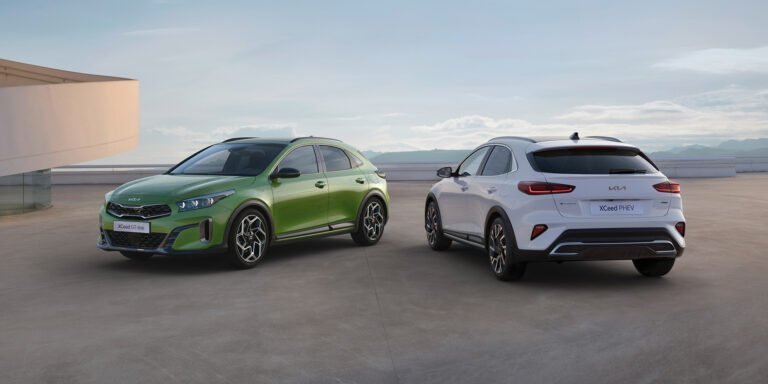
The Kia XCeed crossover range has been given a minor facelift, with the updated model set to go on sale in September this year.
The updates include revised exterior styling, small tweaks to its driving dynamics, an infotainment graphics upgrade and the addition of a ‘GT-line’ trim level.
The changes begin with the car’s front end, which features a smaller grille with revised chrome details, LED headlights and redesigned lower air intakes that Kia says improve the car’s fuel efficiency.
Regarded as rather bumpy around town by a few British reviewers, the Kia XCeed has also received some minor tweaks to its suspension and steering to improve ride comfort and responsiveness.
Unsurprisingly, there will be no diesel models in the revised line-up, while the 1.0-litre and 1.5-litre petrol engines are carried over, along with the range-topping 1.6-litre plug-in hybrid (PHEV) version..
Not much has changed inside the cabin, either, with the main improvement being a software update to the infotainment system with new graphics and better connectivity to provide live traffic information, weather forecasts and parking availability at your destination.
The XCeed’s adaptive cruise control, which follows the speed of the car in front, now uses data from the navigation system to essentially prevent the car from speeding up in the corners when the car in front promptly changes lane or exits a junction.
Finally, Kia has announced that a new ‘GT-line’ trim will be added to the range, which doesn’t include any performance enhancements but does come with styling differences and larger alloy wheels.
UK pricing and specifications have not yet been announced, so we don’t know what will be included as standard – or what may have been dropped from the current equipment list as new car prices continue to increase.
As the most prevalent criticism of the XCeed has been that it has rather cramped rear seating, this minor facelift is not likely to significantly improve its current Expert Rating of 67% in coming months.
The ‘low battery’ dashboard symbol had been blinking for the last ten miles, but you thought you could squeeze a few more miles out of your car to get home or to the next charging station.
Perhaps you weren’t paying attention, or the last charging station was too far out of the way. Either way, things haven’t gone to plan and you are now out of juice at the side of the road.
This scenario is more common than you might expect, particularly in areas where electric car charging networks are a little sparse, and you rely on your charging port at home to get you from A to B. You can’t exactly walk to a petrol station for fuel (unless you drive a plug-in hybrid), so it’s clear you need to call for roadside assistance. The question is, will your breakdown provider charge you for helping you get on your way?
In short, if you have an active breakdown cover policy for your electric or plug-in hybrid car, there is no need to worry about any callout charges if you are within ten miles of your destination or a charging station. If you are in an isolated area where recovery will take more than ten miles of travel, you may have to pay an additional fee, depending on your breakdown provider.
Breakdown providers respond to these ‘out of charge’ roadside assistance requests in different ways. If you are a policy holder with the AA or Green Flag for example, the mobile technicians will tow your vehicle to the nearest charging station (or home if it’s nearer) with no additional cost.
However, if the RAC is your breakdown assistance provider, your car will be visited by a patrol van that is dedicated to charging electric cars. The technicians that drive these ‘RAC EV Boost’ vans will hook up your conked-out electric car to a 5kW charger, giving it up to ten extra miles of charge so you can get on the move.
The RAC says that it now has around 200 of these vans on patrol across the UK, which is roughly a fifth of its entire patrol fleet, so wait times shouldn’t be too long.
Contacts for breakdown assistance:
AA: 0800 88 77 66 – technicians will tow your electric car to the nearest charging station or home.
RAC: 03301 598 751 – technicians will give your car up to ten miles of charge, if more is needed there may be an additional cost.
Green Flag: 0800 400600 – technicians will tow your electric car to the nearest charging station or home with a limit of ten miles – longer recovery distances may incur an additional fee, but it says that if running out of juice late at night where nothing is open or somewhere remote, this limit won’t apply.
Start Rescue: 0333 320 0975 – technicians will tow your electric car to the nearest charging station or home with a limit of ten miles – longer recovery distances will incur an additional fee.
Rescue My Car: 01423 535 795 – technicians will tow your electric car to the nearest charging station or home with a limit of ten miles – longer recovery distances will incur an additional fee.
GEM Motoring Rescue: 01342 825 676 – technicians will tow your electric car to the nearest charging station or home – does not clarify whether there is a distance limit.
Contact details correct as of July 2022
Please note that most standard policies do not include roadside recovery for vehicles less than a quarter of mile from your home – this is usually included in more expensive breakdown cover plans.
If you don’t have a breakdown policy with any of these providers, you can still get urgent assistance but for an upfront fee. They will expect you to pay over the phone for the callout, which could end up being rather expensive.
Preventative measures should always be taken in the first place, though. Carefully plan your route and find the nearest charging station as soon as your ‘low battery’ of ‘limited performance’ light comes on.
My ‘low battery’ light has just turned on – how far can I go?
If the orange ‘low battery’ light is on, which looks like a petrol pump with a plug-shaped charging cable, this usually means you have only around 8 to 15 miles of battery power remaining, depending on how fast you are driving and other variables (like if climate control is on in the cabin, or how cold it is outside, etc.).
Some electric cars can push on for a few miles when the car’s computer tells you it’s on 0% charge, but it really isn’t wise to test this theory far from home.
I’m nearly out of charge and the car can’t accelerate as fast as normal, what is happening?
Has a little turtle-shaped light illuminated on the dashboard? This means your car is running on limited power, and in turn, your car’s performance is affected as a result.
This is likely to be caused by the car’s being low on charge, but please note that this dashboard light could indicate that there is an electrical fault that is far more serious. If the light is still on after the car has been charged, it’s highly recommended that you immediately take the car to an approved dealer for them to check and fix the issue.
Is it illegal to run out of charge?
Not really – you’re not breaking any UK law by running out of charge. That said, running flat and obstructing the road for other drivers is indeed illegal, and you may receive a £100 fine and three points on your licence. If you are on the motorway, the law cites running out of charge as one of the reasons you’re allowed to use the hard shoulder.
Is running out of charge bad for my car?
Like running out of fuel in a combustion-powered car, running flat in an electric car has the potential to cause some damage. Running completely out of power can lead to the battery deteriorating, reducing its performance and range.
That said, the health of your car should not be your first priority – look after yourself! Being stationary on the roadside can be quite dangerous, particularly if you are parked up on the hard shoulder of a busy motorway. Remember to exit your car from the door furthest from traffic, walk away from the hard shoulder and out of the way of other vehicles.
If you are planning on towing your electric car yourself due to a flat battery, you will need a flatbed truck. Do not tow the car with a rope or a lift, as this can damage the traction motors that power the car through regenerative braking.
Running out of charge has caused a road accident, does my breakdown policy cover my car’s recovery?
While your breakdown policy will cover you if you run out of power, it will not recover your car for free after it has caused accidents attended by emergency services, and your insurance policy will not cover the car’s damage either. If you have caused an accident when running flat or obstructing the road, you could be taken to court, or issued with nine points on your licence and an unlimited fine.
Hyundai has revealed more details about its upcoming Ioniq 6 saloon, which is set to challenge the likes of the BMW i4, Polestar 2 and Tesla Model 3 when it arrives in the UK in 2023.
As The Car Expert reported two weeks ago, the Ioniq 6 – with its streamlined, aerodynamic silhouette and pixel-style LED lights – will be offered with 58kWh and 77kWh battery pack options like its Ioniq 5 hatchback sibling. Hyundai now says that the latter of these battery options can provide an impressive all-electric range of 379 miles from full charge.
This means that, despite being slightly longer than its rivals from BMW, Polestar and Tesla (and thus in theory a bit more spacious), the 77kWh version of this curvy Hyundai saloon trumps the maximum battery range of its key competitors, despite the fact that these rivals all use slightly bigger battery packs.
Model
Length of the cabin
Official battery range
Hyundai Ioniq 6 (77kWh)
3.0m
379 miles
BMW i4 (84kWh)
2.9m
367 miles
Polestar 2 (78kWh)
2.7m
341 miles
Tesla Model 3 (82kWh)
2.9m
374 miles
Details are still rather thin on the ground when it comes to the entry-level 58kWh powertrain – other than Hyundai’s claim that it is “one of the most energy-efficient” models ever made. This 58kWh battery uses around 225kW of energy for every mile, which makes it more efficient than small city cars like the Fiat 500 Electric.
Hyundai says that this smaller battery option will only be available in a single-motor rear-wheel drive configuration, but that the larger 77kWh versions can be specced with an all-wheel drive setup that features two electric motors. This range-topping configuration can reportedly complete a 0-62mph sprint in 5.1 seconds.
Like the Ioniq 5, It has also been announced that the saloon will come with a vehicle-to-load (V2L) function that allows you to charge and power external devices like e-bikes and camping equipment using the car’s battery, and the driver will be able to adjust the car’s steering responsiveness, motor power and accelerator pedal sensitivity in the settings menus.
There will be 12 different exterior colour options to choose from when the car goes on sale, as well as four different interior colour choices. Customers will also be able to select either 18-inch alloy wheels or 20-inch alloy wheels.
More details have been released about the car’s interior too, which features one connected display that links the 12-inch infotainment console to the 12-inch instrument cluster, flanked by displays for the digital side mirrors at each end of the dashboard – a feature that has recently been added to the Ioniq 5 equipment list.
Like most new electric cars, this infotainment system is compatible with over-the-air updates, meaning it can download future updates while sitting in your driveway. The navigation software plans your route in real-time depending on how much charge it has left (your charge level being denoted by the four LED dots on the steering wheel), so if you are running low, it will request a charging station detor in an effort to avoid running flat.
Android Auto and Apple CarPlay are also available, and the saloon comes with an eight-speaker Bose sound system as standard.
Speaking of on-board tech, the Ioniq 6 comes with a long list of driving assistance and safety features, including a ‘smart’ cruise control function that learns and mimics the owner’s driving style. A more straightforward lane-centring cruise control also comes as standard.
Other semi-autonomous driving features include a speed-limiter that adjusts vehicle speed to match the speed limit, and a safety feature that automatically steers the car out of the path of road obstacles and pedestrians in potential crash scenarios.
The car also monitors its blind spot and steps in to avoid collisions, and the driver can view the saloon’s blind spots through the infotainment system.
Hyundai is yet to announce the car’s UK pricing and trim level specifics – these are likely to be released later this year. We also don’t know when the car will be available to order at the moment, but the manufacturer says that it plans to start making Ioniq 6 models in Autumn this year.
As 2022 progresses, things are looking up for the electric car market. More zero-emission options are available than ever before as brands continue their efforts to swap fossil-fuel cars for battery-powered alternatives.
EV sales are still growing rapidly, up 56% for the first six months of the year compared to the same period last year. In fact, EVs are the only types of car that are growing in number – one in seven new cars registered this year has been an electric car.
That said, things aren’t all rosy for the consumer at the moment. Rising demand and supply shortages have caused significant price rises across the board in recent months, with nearly every model range costing at least £2,000 more than they did at the start of year.
We’ve analysed all the electric cars available at key price points in the new car market, and consulted our industry-leading Expert Rating Index to see which models have the highest review scores from across the UK motoring media.
With comprehensive review data backing our recommendations, you can be confident that this is the definitive guide to the best new electric cars for every budget that are on sale in the UK right now.
We admit that the Smart EQ Fortwo is not the most impressive new electric city car around – in fact it is one of the lowest rated cars in our Expert Rating Index – but no other manufacturer can come close to matching the pricing of Smart’s EVs.
With prices starting at around £22,000, the EQ Fortwo is ideal for short commutes and city excursions. It’s an agile option for tight urban streets and heavy traffic, it charges quickly and it doesn’t cost much to run day-to-day. While reviewers aren’t that impressed overall, a few begrudgingly admit that it is pretty fun to drive too.
As of July 2022, the Smart EQ Fortwo has a rather poor Expert Rating of 44%, hindered by its limited battery range, modest performance and dated on-board tech. Despite its low price point, some reviewers also argue that the Fortwo is expensive for its size.
If you are looking for something slightly bigger, the Smart EQ Forfour is also a capable city car but with room for two more passengers in the rear. It doesn’t improve on the small boot of its cheaper sibling though.
Recent price hikes mean that there aren’t too many brand-new EVs that you can pick up for less than £30,000. However, if this is how far your budget can stretch, Nissan has you covered.
The Nissan Leaf continues to be one of the most popular electric cars around the world and, considering its value-for-money, it’s not that hard to see why. Nissan offers the Leaf at a starting price of just under £29,000 – for that price you get a recently facelifted mid-sized family car with intuitive on-board tech for cheaper than some pint-sized electric city cars.
As of July 2022, the Nissan Leaf has an Expert Rating of 72%, with reviewers commending its leisurely driving experience and low running costs. That said, although the Leaf certainly gives you a lot of car for your money, its battery range is less than many newer EV alternatives.
If you consider a city car with more style to be more interesting, the Fiat 500 Electric is also now priced just below the £30,000 mark. It has been praised for its driving dynamics and interior quality – both of which are significant improvements over the regular petrol-powered Fiat 500.
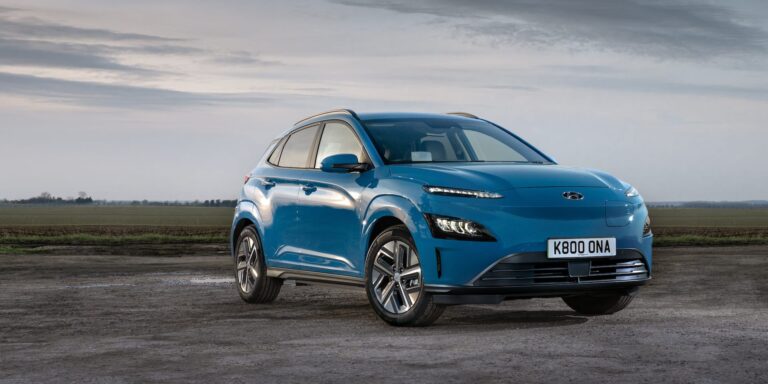
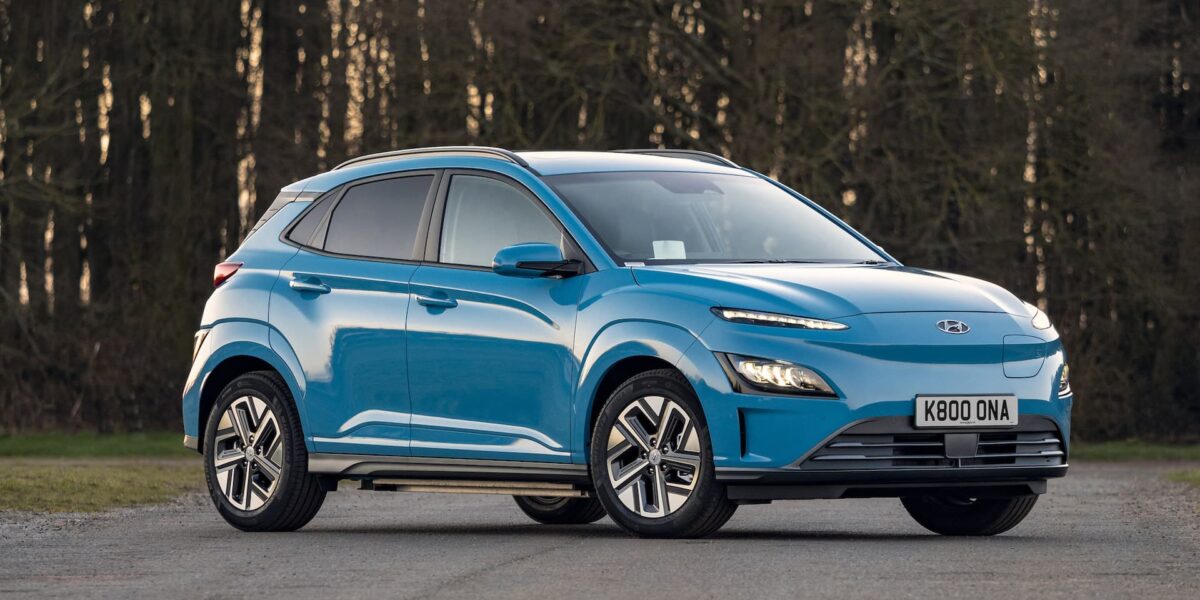
Another great value-for-money package is the Hyundai Kona Electric – the cheapest model in Hyundai’s highly-regarded all-electric line-up. It is slightly more expensive than the Nissan Leaf, costing a smidge over £30,000, but the Kona Electric has a longer battery range and several reviewers comment that it is a fun performance package that offers more driver appeal.
As of July 2022, the Hyundai Kona Electric holds an Expert Rating of 78%, praised for its generous standard equipment list and competitive pricing, but criticised for its rather rigid ride quality and cheap interior plastics.
If you’d prefer something slightly smaller, the Kia Soul EV is another capable choice in this price bracket. It is equally commended for its nippy performance and competitive battery range. Journalists pose the same questions about the Soul EV’s interior, though, and it’s more expensive than the Kona.
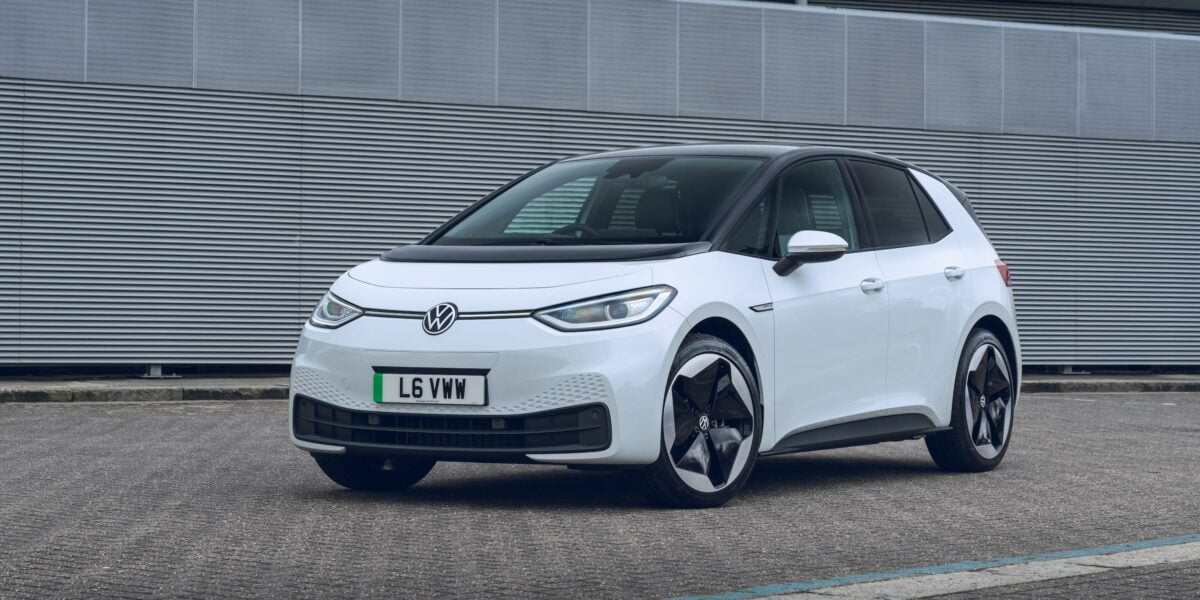
The £40,000 threshold is where the all-electric market starts to get really competitive, and at the moment, our Expert Rating Index says that the Volkswagen ID.3 is the best choice that sits below that threshold.
A serial award winner, unanimously considered to be one of the leading examples of the emerging electric car era, the ID.3 hatchback is positioned as an electric alternative to the Golf. Available for just over £36,000 new, the ID.3 has been praised for its performance and decent battery range, and is regarded as one of the safest and most comfortable models in its class.
Despite receiving consistent criticism for its confusing and fiddly infotainment system, the Volkswagen ID.3 holds an Expert Rating of 77% – a score that is also aided by the car’s strong resale values and low running costs.
Sticking within the ID family, the Volkswagen ID.4 SUV is a more spacious package on offer for around £1,000 extra, though it does come with the same infotainment issues and its acceleration is said to be a little sluggish by EV standards.
The Kia EV6 is a very important model for its Korean manufacturer – the first of a new breed of all-electric Kia cars – and judging by its review scores, this family-sized crossover fits the bill and then some.
The EV6 arrived in the UK last year to universally positive media reception . It has received high praise for its sharp driving dynamics and impressive design inside and out, as well as its battery range and charging capabilities which set the benchmark for EVs in this price range.
As of July 2022, the Kia EV6 holds an outstanding Expert Rating of 87%, which means that it is currently the highest-ranked medium car in our Expert Rating Index, with the similarly-priced Hyundai Ioniq 5 not far behind.
Recognised for its retro-futuristic design, the Ioniq 5 has become a fan favourite among the media, commended for its spacious and practical interior and its impressive infotainment, as well as its battery range. On the other hand, both the EV6 and Ioniq 5 have pretty firm suspension that makes riding over larger potholes an uncomfortable experience.
The Jaguar I-Pace has won countless awards since it was launched in 2018, and is still widely considered to be one of the best premium electric SUVs on sale. As Jaguar’s first all-electric model, the I-Pace has been praised for its outstandingly fun performance, its good looks, and its everyday practicality.
With a starting price of just over £66,000, the Jaguar I-Pace has an excellent Expert Rating of 85% from 18 reviews, which makes it the highest-ranked medium SUV in our Expert Rating Index.
If you would prefer to opt for a saloon instead, prices for the BMW i4 range start at just over £53,000. Equipped with BMW’s latest tech innovations and an impressive powertrain that delivers pacy performance and class-leading battery range, the i4 has also received overwhelmingly positive review scores, though its rivals have more cabin space in the rear.
Delivering blistering performance in near silence, the Audi e-tron GT is an all-electric sports saloon that combines the alluring looks of a hypercar and the practicality of a four-door family car.
With an entry-level price tag that surpasses £84,000 (and trim levels that can easily pass the £100,000 mark), it is sure to burn a pretty large whole in your pocket. But, if that cost is within your means, you would be purchasing one of the most rewarding, powerful and comfortable new cars on the market, which has received plenty of praise for its handsome exterior, as well as its battery range and charging capabilities.
Although reviewers generally agree that alternatives are more spacious, the Audi e-tron GT holds an excellent Expert Rating of 85%, which means that it is currently the equal highest-ranked Audi model in our Expert Rating Index, alongside the petrol-powered R8 sports car.
If you can see past its polarising front end looks, the BMW iX SUV offers a more relaxed and assured driving experience for the cheaper lead-in price of around £77,000 – praised for its luxurious interior which is packed with user-friendly tech.
If you are looking for a family car and your budget can easily stretch beyond the six figure mark, our Expert Rating Index recommends that you take the Porsche Taycan Cross Turismo for a test drive. It is truly in a class of its own – who knew an estate car could be supremely cool and outstandingly quick?
Like the regular Porsche Taycan, which is an excellent EV choice itself, the Cross Turismo embodies all that we have come to love about Porsche performance in an all-electric package, but with 80 litres of extra boot space over the standard Taycan. The Turbo S variant is the range-topping spec, and for the price of £141,000, you get an estate car that can complete a 0-62mph sprint in less than three seconds. – that will give almost any petrol-powered supercar a run for its money.
The entry-level Cross Turismo models are priced at £84,000, but given Porsche’s tendency for putting most of the features you want on the options list, you’ll struggle to actually put one on the road for anywhere near that price.
If money is no object it is also worth taking a look at the Mercedes-Benz EQS executive saloon, which offers unparalleled interior opulence for the price of £102,000 and up, and won The Car Expert’s Car of the Year award for 2021.
The electric car market is evolving rapidly, and there are plenty of new models at every price point on their way before the end of 2022 and into next year. Here’s just a few of the new models planned for launch over the next 12 months.
Car enthusiasts will see an increase in the number of EV models specifically tuned for performance, like the Hyundai Ioniq 5 N and the Kia EV6 GT.
There will be more electric models from mainstream brands on offer as well. MG Motors is launching its MG 4 hatchback this autumn, while the Genesis GV60 crossover is already starting to arrive in the UK. The Subaru Solterra is also on its way and Kia is launching its next-generation Niro EV very shortly.
Premium brands will continue to add more electric models to their line-ups. BMW will be launching an electric version of its 7 Series saloon (the i7), and Mercedes-Benz is set to release the electric equivalent of its E-Class saloon (the EQE). Lexus has announced that it will be launching a new electric SUV called the RZ, and Polestar will also double its current line-up with the Polestar 3 SUV this year.
As the electrification of large cars increases, Volkswagen is attempting to turn heads with the upcoming launch of its all-electric ID.Buzz people carrier.
For the definitive rankings of the best new electric cars for every budget, we’ve used The Car Expert’s industry-leading Expert Rating Index. The index analyses new car reviews from 30 of the top UK motoring websites, using an advanced algorithm that we have developed specifically to compare review scores.
It constantly recalculates and updates the Expert Rating score for every single car in real time to make sure you’re getting the most accurate and reliable ratings for every new car.
First published: October 2021 Last updated: July 2022
MG Motors has announced the pricing and trim level specifications for its revised electric MG 5 estate, with prices starting around £31k and two trim levels to choose from.
This new-look range is available to order now, either in the lead-in ‘SE’ guise or the range-topping ‘Trophy’ trim, which replace the pre-facelift ‘Meteor’ and ‘Exclusive’ trim grades.
Key trim level features
Entry-level ‘SE’ (£30,995)
LED headlights and taillights
16-inch alloy wheels
Roof rails
Ten-inch infotainment console compatible with Android Auto/Apple CarPlay
Vehicle-To-Load (V2L) function that can power external electric devices
Rear parking camera
Adaptive cruise control
Traffic jam assistance feature that allows the car to automatically follow the vehicle in front
Lane keeping assistance with lane departure warning
Blind spot monitoring
Rear traffic alert for reversing
Traffic sign recognition
Top-spec ‘Trophy’ (£33,495)
All ‘SE’ features that are not replaced
17-inch alloy wheels
Heated and electrically-adjustable front seats
Leather upholstery
Rear privacy glass
Automatic climate control
Rain sensing wipers
360-degree parking camera
Introduced as part of the MG 5’s last update last year, the revised model comes with ‘MG Pilot’ – a rather generous safety features package that includes adaptive cruise control, lane keeping assistance, blind spot monitoring and traffic sign recognition.
The standard ‘SE’ spec also includes a revised 10-inch infotainment console, as well as a ‘Vehicle-To-Load’ (V2L) function which allows you to charge or power devices like e-bikes, portable heaters or camping equipment using the car’s battery. Roof rails also feature as standard, these previously being reserved for the top-spec model.
Like the old range-topping ‘Exclusive’ trim, the ‘Trophy’ trim grade adds heated and electrically-adjustable front seats trimmed in leather, increases the size of the alloy wheels and upgrades the parking camera.
With a promised battery range of 250 miles from full charge, the revamped MG 5 is now available for just under £31k – a price increase of more than £4k over the pre-facelift range.
Currently holding an Expert Rating of 63%, the most prominent criticism of the MG 5 has centred around the car’s driving dynamics, which have not been addressed by this recent update. Therefore, this largely cosmetic range of updates is not likely to alter its review scores by any large margin in the coming months.
The Skoda Karoq SUV has been given another slight update, which adds a digital instrument cluster to the standard equipment list, and includes optional safety features now available.
This minor range refresh comes just a few months after the SUV’s mid-life facelift, which consisted of small exterior design tweaks, new interior trim detailing and new on-board tech additions.
Keeping the Karoq competitive with the likes of the popular Nissan Qashqai and Hyundai Tucson, Skoda has made the digital instrument cluster previously found on higher-spec models standard across the range.
Replacing the manual gauges behind the steering wheel, this eight-inch digital screen can display information on fuel economy and navigation, as well as displaying traditional readings like your speed and fuel level.
This update introduces a new £480 ‘Safety Package’ to the additional options list, which includes front and rear curtain side airbags and a feature that Skoda calls ‘Crew Protect Assist’, which closes the side windows and tightens seatbelts in the event of an imminent crash.
Skoda also says that the range-topping Karoq Sportline model can be specced with an optional £1,495 ‘Travel Assist Plus Package’ for the first time, which includes adaptive cruise control, blind spot monitoring, traffic sign recognition and lane-keeping assistance, as well as an additional USB-C charging port above the rear view mirror.
The Sportline also gets a revised pattern for its 19-inch alloy wheels. Otherwise, the Skoda Karoq range remains the same, with the same three trim levels and five engine options, and no further exterior styling changes. The good news is that the SUV’s pricing hasn’t changed either. Now available to order, prices for the updated Karoq start at £26,255.
Since its arrival in 2017, the Skoda Karoq has been well-received by the British press, particularly praised for its practicality and value for money, while also being labelled as bland or charmless by some journalists. The Karoq currently holds an Expert Rating of 78% in our Expert Rating Index, making it one of the highest-scoring models in the medium SUV class.
The new Volkswagen ID. Buzz people carrier range is now available to order in the UK, which consists of three trim levels.
The range begins at just over £57k with the entry-level ‘Life’ trim. These standard versions come with the same ten-inch infotainment system that you can find in an ID.3 hatchback, equipped with the brand’s own navigation software and a gesture control feature, which allows you to control a number of the people carrier’s functions by swiping your hand left or right.
The standard spec also includes LED headlights, ambient lighting for the cabin, wireless charging for your smartphone and heated front seats, as well as a removable storage console that Volkswagen is calling the ‘Buzz box’.
Opting for the near £62k ‘Style’ trim means that you gain upgraded Matrix LED headlights and more exterior light fixtures running between the headlights and across the boot lid. This trim also swaps out the standard model’s foot pedals for steel ones that have ‘play’ and ‘pause’ markings on the accelerator and brake – a feature that is included as standard on the ID.3.
Key trim level features
Entry-level ‘Life’ (£57,115)
LED Headlights
19-inch alloy wheels
Removable storage console
Ambient interior lighting
Ten-inch infotainment system with navigation and gesture control
Wireless charging
Heated and height-adjustable front seats
Heated windscreen
Rear view parking camera
Mid-range ‘Style’ (£61,915)
All ‘Life’ features that are not replaced
LED matrix headlights
20-inch alloy wheels
More exterior lighting on the front and rear fascia
Stainless steel foot pedals with ‘play’ and ‘pause’ sign markings
Range-topping ‘1st Edition‘ (£62,995)
All ‘Life’ and ‘Style’ features that are not replaced
21-inch alloy wheels
Heated and height-adjustable front seats with memory function and electrically-adjustable lumbar support
12-inch infotainment system with upgraded navigation and gesture control
Priced at just under £63k, the top-of-the-line ‘1st Edition’ trim features a bigger 12-inch version of the same infotainment system and adds lumbar support for the front seats.
Regardless of trim choice, every ID. Buzz model uses the same 77kWh battery which works in tandem with a rear-mounted electric motor to produce 201hp and a promised 258-mile range from full charge. The people carrier seats five, with space for 1,121 litres of luggage, increasing to 2,205 litres with the rear seats folded down.
Volkswagen says that customers who placed a pre-booking deposit in June will now be invited to spec their model in the brand’s online configurator, which anyone can now use. While Volkswagen is now taking orders, it has not specified how long wait times currently are, and when the first orders will arrive in the UK.
The sides – or sidewalls – of car tyres have a tough job, supporting the weight of the car, flexing against kerbs and speed bumps and absorbing the impact from potholes while keeping the tyre sealed to the wheel rim.
They’re strengthened for these ordeals, but can still pick up cuts, cracks and bulges. Ignoring such damage increases the risk of tyre failure at some point in the future, possibly disintegration of the sidewall and a blowout.
As you’re advised to regularly look over the tyre tread for wear, this is also the time to get a look at the sidewall. Remember to check the inside of the tread/sidewall as well. Where it’s safe to do so, lie on your back and use a torch to help you.
How to check for sidewall damage
A tyre sidewall is not always perfectly even; sometimes there will be dimples and indentations. Indentations are harmless and aren’t detrimental to either driving or safety characteristics. The dimples are superficial. You’re looking for bulges and splits.
At the MOT test, as well as checking for the minimum legal tread depth across at least ¾ of the width of the tyre (1.6mm) tyres are also expected for visible damage.
For cuts, the government’s vehicle inspection manual advises testers to fail if any ply or cord (the inner construction of the tyre) can be seen without touching the tyre or it can be seen by folding back rubber or opening a cut with a blunt instrument.
When assessing lumps or bulges testers are advised to distinguish between normal undulations resulting from manufacturing, and lumps or bulges caused by structural deterioration.
A pronounced external bulge on the sidewall of the tyre indicates that strengthening cords inside have been destroyed within the carcass. This is a fail and will need replacement.
When you’re checking the sidewall, continue over the top to the tread and look for objects such as nails or glass sticking out of the tyre. You can expect some pieces of gravel to lodge between the treads, but sharp stones can also lead to a slow puncture.
The Ferrari SF90 Stradale was a two-door mid-engined ‘Berlinetta’ coupé and ‘Spider’ convertible, which was the Italian brand’s first plug-in hybrid. It was sold until late 2025, when it was replaced by a substantially updated model called the 849 Testarossa.
Going on sale in 2019 as Ferrari’s flagship production model, the SF90 Stradale shared its name with the F1 race car from the same year – ‘SF90’ standing for the 90th anniversary of the Scuderia Ferrari racing team. The most powerful production model in Ferrari’s modern range, it used a 4.0-litre turbocharged V8 paired with three electric motors for a combined output that was just shy of 1,000hp.
Although it was longer and heavier than the rest of the Ferrari range, the SF90 Stradale could complete a 0-62 sprint in 2.5 seconds, which was four-tenths of a second faster than the F8 Tributo. Using just the electric motors and battery, the SF90 could travel a maximum of 16 miles from full charge, the same as the newer 296 GTB plug-in hybrid.
Both coupé and convertible variants received very favourable review scores from the British media – Auto Express called the SF90 Stradale “intoxicating”, Top Gear simply described it as “stunning”, and Driving Electric argued that it “sets a new benchmark in the high-end supercar market”, displaying what the future of the Ferrari brand should look like.
Despite its power and performance, a number of reviewers took issue with the car’s driving dynamics, and commented that cheaper Ferrari sports cars were arguably more fun to drive. Auto Express argued that alternatives within the Ferrari arsenal were more involving, with more “delicacy” in high-speed corners. That said, anyone searching for ferocious amounts of mid-engined power didn’t need to look elsewhere. “If you want the ultimate Ferrari road car, the SF90 is it. Roof open or closed.”
As of March 2026, the Ferrari SF90 Stradale holds a Used Car Expert Rating of B with a score of 64%. This includes both the coupé and Spider versions. It scores top marks for its strong media review scores and Ferrari’s excellent warranty coverage, while its CO2 emissions are decent on the official government lab tests as it’s a plug-in hybrid. However, overall running costs are predictably expensive.
Highlighted reviews and road tests from across the UK automotive media. Click any of the boxes to view.
Featured reviews
“As a technical exercise, the Ferrari SF90 remains a marvel of engineering and a car that, regardless of your thoughts about machines that deliver horsepower figures that were once the sole domain of F1 paddocks, is an enigma. You can’t help but be drawn to it, almost blind to what it represents. A 296 GTB is a better, more rounded, more involving car, but for some the SF90’s top-billing status will appeal above all else, and if it does, you won’t get any criticism from us.”
“The Ferrari SF90 Stradale is an astonishing machine. Never before has a 1,000bhp car possessed the capacity to flatter inexperienced hands as readily as it offers a challenge to the expert driver.”
Model reviewed: SF90 Spider Score: 9 / 10 “Ferrari’s most powerful, complex and fastest road car to date loses none of its excitement, thrills and intoxicating level of performance in SF90 Spider form. It lacks the delicacy of modern-era Ferraris as it harnesses a ferocious powertrain that sets the blueprint for every next-generation model from the Italian firm.” Read review
Car
Model reviewed: Coupe Score: 10 / 10 “The Ferrari SF90 Stradale is a complex car, and not just from a technical standpoint. It’s a car you struggle to do justice to in a couple of hours behind the wheel or a few hundred words of story. But it’s engineering like this that’s going to ensure the survival of the supercar when laws, and even the mindset of some owners, are changing to reflect a greater concern for the environment.” Author: Chris Chilton Read review
Driving Electric
Model reviewed: Coupe Score: 9 / 10 “As one of the fastest, most futuristic Ferraris ever made, the SF90 Stradale sets a new benchmark in the high-end supercar market, offering hypercar performance and fantastically well sorted plug-in hybrid technology. It’s not the most efficient PHEV around by a long stretch, but it’s certainly the most fun.” Read review
Evo
Model reviewed: Assetto Fiorano coupé Score: 9 / 10 “With time and space, the Ferrari SF90 Stradale finally shows its true colours, but it takes the Assetto Fiorano package and some real dedication to find them.” Read review
Model reviewed: SF90 Stradale coupé Score: 9 / 10 “Such is its potency and advanced technology it’s hard to believe the Ferrari SF90 Stradale is a series production car. With its introduction, the supercar arms race enters a blistering new phase, in which a showroom-spec supercar boasts hypercar performance.” Author: Richard Meaden Read review
Top Gear
Score: 9 / 10 “As an object lesson in corralling the discordant forces of petrol and electricity, it’s stunning.” Read review
Safety rating
Independent crash test and safety ratings from Euro NCAP
No safety rating
As with every other Ferrari, the SF90 was not assessed by Euro NCAP during its production life.
Eco rating
Independent economy and emissions ratings from Green NCAP
No eco rating
The Ferrari SF90 was not assessed by Green NCAP during its production life.
Reliability rating
Reliability data provided exclusively for The Car Expert by MotorEasy
No reliability rating
As of March 2026, we don’t have enough reliability data on the Ferrari SF90 Stradale to generate a reliability rating.
The Car Expert’s reliability information is provided exclusively to us using workshop and extended warranty data from our partner, MotorEasy, sourced from both official dealerships and independent workshops.
As soon as MotorEasy has sufficient data on the SF90 Stradale, we’ll publish the score here.
Running cost rating
Monthly cost of ownership data provided exclusively for The Car Expert by Clear Vehicle Data
Fuel consumption
Average
Score
Plug-in hybrid models
46 mpg
C
CO₂ output
Average
Score
Variation
Score
Plug-in hybrid models
156 g/km
C
Insurance group
Average
Score
Variation
Score
All models
50
F
Service and maintenance
Cost
Score
Year 1
£1
A
Year 2
£1
A
Year 3
£1
A
Year 4
£1
A
Year 5
£1
A
Overall
£5
A
There’s good and bad news on running costs for the Ferrari SF90 Stradale and Spider, according to whole-life cost numbers provided exclusively to The Car Expert by our data partner, Clear Vehicle Data.
All new Ferraris include seven years of scheduled servicing and maintenance, which means there’s no excuse for owners not to get their cars serviced on time, every time. We have listed the cost here as £1 each year as our system can’t currently cope with a zero figure for this category.
Being a plug-in hybrid, the official CO2 emissions score is very low. Over time, this may prove to be valuable as governments start to regulate cars more heavily based on their emissions outputs.
Of course, insurance bills are going to be exactly as expensive as you’d expect on a mid-engined Ferrari with a price tag exceeding a quarter of a million pounds. Meanwhile, if you drive the SF90 nicely then fuel economy is likely to be reasonable (again, helped by the plug-in hybrid system as long as you have electricity in the battery). But if you have any plans to unleash its considerable performance, that official fuel economy of 46mpg will deteriorate quickly.
Warranty Rating
New car warranty information for the Ferrari SF90 Stradale and SF90 Spider
Overall rating
A
100%
New car warranty duration
4 years
New car warranty mileage
Unlimited miles
Battery warranty duration
16 years
Battery warranty mileage
Unlimited miles
For a plug-in hybrid model, Ferrari’s new car warranty is the best in the business. In addition to the usual four-year/unlimited-mileage warranty that is offered on Ferrari’s pure petrol models, the battery component of the Ferrari SF90 gets up to 16 years of coverage from Ferrari, again without any mileage restrictions.
Ferrari will replace the SF90’s battery after eight years with a brand-new battery, and will do the same again after 16 years. No other manufacturer offers this level of support for its batteries.
Awards
Trophies, prizes and awards that the Ferrari SF90 Stradale has received
2020
iF Design Awards – Gold Award
Red Dot Awards – Best of the Best Design Award
Top Gear Awards – Eco-Warrior of the Year
Similar cars
If you’re looking at the Ferrari SF90 Stradale, you might also be interested in these alternatives
The Alfa Romeo 4C was a mid-engined sports coupé and convertible (Spider) which rivalled the likes of the Lotus Elise and Porsche 718 Cayman before it was discontinued in 2020.
First unveiled at the 2013 Geneva motor show, the sports car’s name, ‘4C’, referred to its turbocharged four-cylinder engine which produced 240hp and a 0-62mph sprint time of 4.5 seconds.
“The looks, engine and badge to make it a superb sports car”, Carwow commented, while praising the 4C for its agile handling that was aided by its lightweight chassis.
That said, Carwow and many other outlets concluded that the 4C was dynamically flawed, with a lethargic throttle response and unruly driving manners that made the car difficult to keep in a straight line. “It’s way too demanding, exhausting and, at times, downright scary”, Auto Express explained.
While some journalists found the 4C’s driving dynamics problematic, almost all reviewers expressed their disappointment with the sports car’s interior, which Top Gear said displayed a “lack of attention to detail”, while pointing to the interior’s “plasticky trim and numerous exposed screw-heads”.
With interior comfort and quality lacking, it’s no great surprise that the motoring media also took issue with the 4C’s price tag.
As of February 2026, the Alfa Romeo 4C holds a Used Car Expert Rating of D, with a score of 59%.
Highlighted reviews and road tests from across the UK automotive media. Click any of the boxes to view.
Auto Express
Model reviewed: Score: 6 / 10 “While the Alfa Romeo 4C’s looks caused a sensation and marked a revival of the brand as a thoroughbred sports car manufacturer, the reality is that this Alfa doesn’t deliver the kind of driver involvement and engagement that a pure-bred Italian sports car should serve.” Read review
Model reviewed: Spider (2016) Score: 4 / 10 “Alfa gives 4C sports car more appeal with drop-top roof, but same problems remain.” Read review
Model reviewed: Spider Score: 6 / 10 “Alfa 4C Spider looks sublime, and gets some mechanical updates too – but it costs £8,000 more than the coupe.” Read review
Auto Trader
Model reviewed: (2017) Score: 4.8 / 10 “While some will find the Alfa Romeo 4C Spider’s driving manners to be engaging in a very raw, energetic and intense way, far more people will find it way too demanding, exhausting and, at times, downright scary.” Read review
Car
Model reviewed: Spider (2015) Score: 6 / 10 “The Alfa Romeo 4C, even in evolved Spider form, remains a car that feels like it’s yet to realise its full potential. That said it’s one that manages to gloss every journey with a pretty priceless sense of occasion.” Read review
Model reviewed: Score: 8 / 10 The Alfa Romeo 4C is special and exotic – and that exposed carbonfibre monocoque is a constant reminder of both.” Read review
Model reviewed: Score: 8 / 10 “The 4C has its faults, but it’s also an exciting, scintillating little sports car that proves Alfa Romeo still has the ability to make a vehicle to excite the enthusiasts that have so long believed in it.” Read review
Carbuyer
Model reviewed: Score: 5 / 10 “The Alfa Romeo 4C is blisteringly quick, but a handful to drive.” Read review
Carwow
Model reviewed: Spider Score: 5 / 10 “The Alfa Romeo 4C Spider has the looks, engine and badge to make it a superb open-top sports car. The trouble is, it isn’t much fun to drive, is uncomfortable and has a low-rent interior.” Read review
Evo
Model reviewed: Score: 7 / 10 “Removeable roof and styling tweaks add a new layer to the Alfa Romeo 4C’s appeal, but the Spider is still a flawed sports car.” Read review
Model reviewed: Score: 8 / 10 “No doubt the Alfa Romeo 4C is a quality item. Beautiful, and beautifully put together, it feels worth every penny of its £45,000 asking price.” Read review
Honest John
Model reviewed: 4C Score: 1 / 10 “The Alfa Romeo 4C offers impressive performance from 1750 turbocharged engine; exotic specification of carbon fibre tub construction; and good looks and rarity.” Read review
Motors
Model reviewed: Score: 7 / 10 “Weighing less than most city cars, the 4C is designed to make the most of its 1.7-litre 237hp turbocharged petrol engine – and with that comes good performance, impressive handling and good fuel economy.” Read review
Parkers
Model reviewed: Score: 8 / 10 “While the 4C’s looks caused a sensation and marked a revival of the brand as a thoroughbred sports car manufacturer, the reality is that this Alfa doesn’t deliver the kind of driver involvement and engagement that a pure-bred Italian sports car should serve.” Read review
Model reviewed: Score: 8 / 10 “The Alfa Romeo 4C is incredibly stiff and lightweight, and enthusiasts will appreciate being able to see the bare carbon weave of the tub from inside the car.” Read review
The Sun
Model reviewed: “The Alfa Romeo 4C Spider is a sexy, slightly flawed genius.” Read review
The Sunday Times
Model reviewed: Score: 5 / 10 “As a car the Alfa Romeo 4C gets two stars; one for having a fabulously clever stereo system and one for being very economical. But as a thing, I’d give it six.” Read review
The Telegraph
Model reviewed: Spider Score: 6 / 10 “Beautiful to behold and with an exotic specification, but the Alfa 4C Spider leaves you feeling a bit disappointed.” Read review
Top Gear
Model reviewed: Score: 5 / 10 “The Alfa Romeo 4C is everything we wanted a lightweight Italian sports car to be, right down to the traditional Alfa flaws.” Read review
Safety rating
Independent crash test and safety ratings from Euro NCAP
No safety rating
Due to its price tag and very small sales volume, the Alfa Romeo 4C was not tested by Euro NCAP during its life cycle.
Eco rating
Independent economy and emissions ratings from Green NCAP
No eco rating
The Alfa Romeo 4C was not tested by Green NCAP during its production life cycle.
Reliability rating
Reliability data provided exclusively for The Car Expert by MotorEasy
No reliability rating
As of February 2026, we don’t have enough reliability data on the Alfa Romeo 4C to generate a reliability rating.
The Car Expert’s reliability information is provided exclusively to us using workshop and extended warranty data from our partner, MotorEasy, sourced from both official dealerships and independent workshops.
As soon as MotorEasy has sufficient data on the 4C, we’ll publish the results here.
Running cost rating
Monthly cost of ownership data provided exclusively for The Car Expert by Clear Vehicle Data
No data yet
As of February 2026, we don’t have independently verified data available for the Alfa Romeo 4C. Check back again soon.
Similar cars
If you’re looking at the Alfa Romeo 4C, you might also be interested in these alternatives
As we charge into July, we can look back on the first half of 2022 to review what’s been happening in the new car market and assess the state of play, as well as predict what to expect for the second half of the year.
It’s been another chaotic year for new car sales – the third in a row, all thanks to Covid. The car industry is certainly suffering from its own version of Long Covid as the knock-on effects of the global pandemic continue to wreak havoc on both supply and demand for new cars. Then, of course, just when it looked like things were starting to improve, Vladimir Putin decided to flatten Ukraine with catastrophic results for Ukrainians and broader consequences for the whole world.
How many new cars have been sold?
Just over 800,000 new cars have hit UK streets in the first six months of this year. The first half is usually stronger than the second half, and the Society of Motor Manufacturers and Traders (SMMT) is currently predicting that the full-year total will reach about 1.7 million – although that may be downgraded next month since the market is underperforming against that outlook.
For comparison, last year almost a million cars had been registered by the end of June, however the market collapsed in the second half of the year to a final total of just over 1.6 million by the end of the year.
Year-on-year comparisons are difficult because the last two years have been absolutely chaotic thanks to shutdowns and supply shortages, so there’s little point agonising over the specific percentage increases and decreases each month. But to give you an idea of how much the industry is struggling, the average new car registrations for January to June for the last decade (2010 to 2019) was more than 1.2 million – or about 50% more than this year’s performance.
What does this mean for consumers?
The current problem for car buyers is a serious lack of new car supply. Many of the most popular new models have very long waiting lists – in some cases, more than a year. In some cases, car companies won’t even take orders for certain models because the waiting list is already too long. The most high-profile example of this is Ford, which is currently not accepting orders for either the Fiesta or Focus, two of its best-selling models.
This obviously makes planning your next new car purchase or lease very difficult, as most car buyers have a PCP or PCH agreement with an end date when they will need to change their car. As a result, buyers have been snapping up whichever models are available within the right timeframe, or switching to a used car.
It’s also driving prices up for both new and used cars. With few cars to sell, car companies don’t need to offer any great discounts to lure in customers. They’re also prioritising consumer sales rather than fleet sales, as fleets generally expect discounts of up to 40% in return for ordering hundreds (or even thousands) of cars.
Despite low production numbers, many car companies are actually making more money than they have for years because they’re able to sell their cars at full price. So although it’s making cars more expensive for buyers, it’s creating a more sustainable car industry. This obviously won’t last, and they’ll resume their price wars as soon as production increases again…
Customers are going smaller, greener and cheaper
As we’ve pointed out a few times in recent months, there are some clear trends emerging in the new car marketplace.
Electric cars are continuing to find more and more homes, with the biggest limitation being supply. Despite concerns over public charging infrastructure and the sheer cost of new electric vehicles, the switch to electric power is well and truly underway.
Interestingly, consumer desire seems to be for fully electric cars rather than plug-in hybrids, which are not growing at anywhere near the same rate. There may well be supply issues affecting this, but it’s certainly true that car companies are very much putting most of their efforts into pure EVs rather than part-time EVs.
Budget brands are doing very well, with both Dacia and MG enjoying enormous sales growth against a market that is down 12% year-to-date. This is not just a 2022 story, either, as both brands have seen steady growth for several years.
We’ve discussed this before as well, but cars have been getting ever more expensive for years, while customers’ spending power has been pretty static. As a result, car buyers are tending to trade down to cheaper models when their PCP or PCH contract ends, in order to keep their monthly payments at a manageable level.
We saw a similar thing happen in the financial crisis of more than a decade ago, when then-budget brands Hyundai and Kia started making significant inroads into the UK new car market. If MG and Dacia can replicate the Korean siblings’ success over the next decade, their futures look very bright indeed.
Small cars continue to dominate the UK new car market. The Vauxhall Corsa is gradually extending its lead in the 2022 sales race, looking good to defend its 2021 crown. The Mini hatch also continues to sell strongly despite being near the end of its life, with a new model expected to make its debut next year.
Meanwhile, Ford might be unable to supply new Fiestas but the (Fiesta-based) Puma small SUV is going great guns. The market for mini SUVs is one of the hottest in the new car industry, with pretty much every car manufacturer having something to offer buyers.
Winners and losers in 2022 so far
At the halfway point of the year, the overall market is down about 12% on the same point last year. But within the bigger picture, some car companies are doing better than average while others are struggling.
Overall, Ford is back on top in terms of overall new car registrations for the year to date, after slumping to fourth last year. Kia is second, ahead of Volkswagen, Audi, BMW, Toyota, Vauxhall, Mercedes-Benz, Hyundai and Peugeot.
How is this affecting the used car market?
We’ve now had more than two years of significantly reduced new car production thanks to Covid shutdowns and then supply shortages. With car companies trying to deliver every available set of wheels to paying customers, that’s meant fewer demonstrator vehicles, service loan vehicles, press fleet vehicles, head office management vehicles, and so on. A lot of these cars end up being sold as near-new used cars, so the supply of these vehicles has largely disappeared.
With thousands of customers looking to change their cars at the end of PCP contracts every month, that’s meant that a lot of them have been buying used cars instead of new ones, swallowing up the limited supply of near-new cars and driving prices up significantly.
In turn, that has a knock-on effect for slightly older used cars, when affects even older cars, and so on all the way down the line to decade-old vehicles and even older. And it’s going to keep used car prices high until new car production starts returning to more normal levels.
What can we expect for the rest of this year?
In short, more of the same. Some car companies are reportedly starting to get their supply chains back under control and are hoping to increase production in coming months, but realistically new car waiting lists are not going to magically disappear anytime soon.
The good news is that – unless Putin really loses his marbles and attacks NATO – we’re unlikely to see the sort of acute production shortages we saw at the end of last year, so hopefully we’ll have a less chaotic Christmas sales period in 2022.
For the used car market, we’re going to see high prices for at least another year. The industry can’t suddenly replace two years of new car production, so in 2023 and 2024 there will be far fewer three-year-old cars in the used car marketplace, which will keep prices inflated – not to the extent we’re seeing prices jacked up right now, but still higher than normal.
The bad news is that increasing cost-of-living pressures will put many thousands of households under real financial strain, which could significantly increase car finance defaults. We saw a similar pattern starting during the early days of the Covid pandemic, when millions of workers were suddenly furloughed.
Well, you thought you could squeeze a few more miles out of your car to get home or to the next petrol station, and it hasn’t gone to plan. Perhaps you weren’t keeping an eye on the fuel gauge, or your car has conked out earlier than you anticipated. Either way, you’ve run out of fuel at the side of the road.
This scenario is more common than you might expect, particularly in recent months with the surging prices of fuel that have caused lengthy queues and dry pumps to become a common sight at petrol stations across the UK.
In short, it really depends on your breakdown policy. According to research from financial information company Defaqto, 89% of breakdown policies in the UK do provide cover for motorists who run out of fuel. This does mean that one in ten drivers are not covered by their policies when they run dry on the road however.
If your breakdown policy provider is the AA, RAC or Green Flag – good news! All three providers state online that they regularly assist their policyholders who have run out of fuel, though you should note that Green Flag will expect you to pay for the cost of the additional fuel, and your policy may be the same.
Contacts for breakdown assistance:
AA: 0800 88 77 66 (coverage includes running out of fuel, additional fuel is free)
RAC: 03301 598 751 (coverage includes running out of fuel, does not note whether additional fuel is free)
Green Flag: 0800 400600 (coverage includes running out of fuel, expects policy holder to pay for additional fuel)
Start Rescue: 0333 320 0975 (coverage includes running out of fuel, will tow you to the nearest petrol station)
Rescue My Car: 01423 535 795 (coverage includes running out of fuel, only free if a petrol station is with ten miles)
GEM Motoring Rescue: 01342 825 676 (coverage includes running out of fuel, does not note whether additional fuel is free)
Contact details as of July 2022
If you are reading this article at home, it’s a good idea to skim through your car documents looking for what your breakdown policy actually covers overall. If you are stuck at the side of the road with a dry tank, call your policy provider anyway – they will tell you whether you are covered.
If you are not actually covered for scenarios like this, or you don’t even have a breakdown policy, you can still get urgent assistance but for an upfront fee. They will expect you to pay over the phone for the callout and the additional fuel, which could end up being rather expensive.
The AA has recently recorded that the number of its members running out of fuel has surged in line with rising fuel prices, and although it will assist all of these members on request and top up their tanks for free, the company recommends pre-emptive measures above all.
Carefully plan your route and find the nearest petrol station as soon as your fuel light comes on.
Fuel rescue – other questions to consider
My fuel light has just turned on – how far can I go?
The fuel light turning on usually indicates that your fuel tank is only 10-15% full – how far your car can go once the light is on depends on the car. A survey published by TankOnEmpty.com in 2019 suggests that a Ford Fiesta can travel 37 miles on average when its fuel light is on, while a BMW 3 Series can travel 44 miles.
In actuality, how far you can go also depends on factors like the condition of the road, how accurate your car’s computer is at calculating fuel levels, what gear you are usually in and tyre pressure. So, if you are trying to do the maths in your head and planning on playing petrol station roulette, the odds are probably stacked against you.
I’m on empty and the engine is starting to splutter and bang, what is happening?
The engine is now misfiring, and this means that some of the engine cylinders aren’t getting enough petrol to burn. This won’t continue for too long – if the engine has started misfiring you don’t have long before the car conks out all together. Find the safest place to park on the side of the road at short notice.
Is it illegal to run out of fuel?
Not really – you’re not breaking any UK law by running out of fuel. That said, running out of fuel and obstructing the road for other drivers is indeed illegal, and you may receive a £100 fine and three points on your licence. If you are on the motorway, the law cites running out of fuel as one of the reasons you’re allowed to use the hard shoulder.
Is running out of fuel bad for my car?
If this is your first time running out of fuel in a relatively new car, you likely have nothing to worry about. If this is your four, fifth or sixth time running dry in an older car, you should be a bit more concerned.
Older cars can have debris that’s accumulated over the years at the bottom of the fuel tank. There are filters designed to prevent this debris from making it into the engine. But running out of fuel has the potential to clog these filters and other components, which can eventually impede the flow of fuel. Repeatedly running dry could also cause your fuel pump to overheat, wearing it out prematurely.
That said, the health of your car should not be your first priority – look after yourself! Being stationary on the roadside can be quite dangerous, particularly if you are parked up on the hard shoulder of a busy motorway. Remember to exit your car from the door furthest from traffic, walk away from the hard shoulder and out of the way of other vehicles.
Running out of fuel has caused a road accident, does my insurance cover this?
While most car insurance policies will cover you if you run out of fuel, they won’t cover you for accidents caused by running out of fuel. If you have caused an accident when running out of fuel or obstructing the road, you could be taken to court, or issued with nine points on your licence and an unlimited fine.
Safety body Euro NCAP has released its fourth batch of crash test ratings this year, with favourable results for the latest models from Alfa Romeo, Cupra, Kia, Mercedes-Benz, and Toyota.
Top marks have been given to the latest iteration of the Kia Sportage and the brand-new Alfa Romeo Tonale, both SUV/crossovers arriving in 2022.
Built on the same foundations as the Hyundai Tucson SUV that was awarded top marks last year, the Kia Sportage achieved the exact same adult and child occupant crash safety scores as its Tucson twin. That said, the Sportage received a slightly better safety assistance technology score, indicating that it is slightly better at preventing an accident in the first place.
Kia SportageAlfa Romeo Tonale
Crash tester Euro NCAP is equally impressed by the high-scoring Alfa Romeo Tonale. Testers commented that the SUV performs well in potential car-on-car and vulnerable road user crash avoidance tests, but also said that its crash protection scores are not the highest in its class as the car “lacks centre airbags and proves to be an aggressive collision partner in frontal crashes.”
Crash tests were also conducted on the new Mercedes-Benz T-Class people carrier, which was awarded a full five-star rating and the highest safety assistance technology score in this latest batch of results.
The all-electric Cupra Born is the last of this latest batch to receive top marks, with higher collision protection scores than the Volkswagen ID.3 hatchback it is based on, but inferior vulnerable road user protection results than its Volkswagen stablemate.
Mercedes-Benz T-ClassCupra Born
This batch of Euro NCAP crash tests also included another electric model – the BMW i4 saloon, which was awarded a four-star safety rating, suggesting that the five-star BMW 3 Series that it is based on is safer to drive overall.
The i4 has lower collision safety scores than the 3 Series that was tested by Euro NCAP in 2019, likely due to the significant structural differences caused by the engine, gearbox and associated mechanicals being swapped out for an electric motor and batteries.
The i4’s safety assistance technology score was also surprisingly short of BMW’s recent standards – substantially lower in fact than the safety assist score given to the new Toyota Aygo X city car, which is a much smaller and cheaper car.
BMW i4Toyota Aygo X
Given a four-star rating, the Aygo X has improved on the three-star rating given by Euro NCAP to the Aygo city car that was discontinued this year. However, it lacks some of the more advanced safety systems fitted to the slightly larger Yaris hatchback, which was awarded a five-star rating in 2020.
In the UK, the minimum legal tread depth (the height of the side of the tread above the base of the tyre) is 1.6mm across the central three quarters of the tyre. When new, a typical tyre has 8mm of tread depth.
However, manufacturers and road safety organisations recommend a minimum tread depth of 3mm. A low tread depth dramatically increases the distance needed to stop in wet weather. With 3mm, from 50mph to rest takes 113m but with 1.6mm this increases to 151m. Also, if below the legal level, you can be fined up to £2,500 per tyre – and receive penalty points on your licence.
The widely accepted way to test your tread depth is to insert a 20p coin at different points across the tread pattern and around the circumference. If any of the coin’s rim is visible, the tyre is likely to have to be changed.
How long should a tyre last?
This depends on how the car is driven, how the tyres are maintained and also the quality of the tyres. According to the AA, under normal driving conditions, you should get a minimum of 20,000 miles out of front tyres on a front-wheel-drive car (common for most cars). For rear tyres, it can be double that – around 40,000 miles.
All of the above applies to petrol and diesel cars. Do heavier, electric cars will wear out their tyres sooner? No. Their tyres are designed specifically for the extra battery weight with a specific rubber compound, greater sidewall, tread and groove strength. Kwik Fit says that according to recent studies, conventional tyres actually wear down 30% quicker than their electric vehicle counterparts.
Under-inflation will damage the structure of a tyre but over-inflated tyres will wear out sooner. They have a smaller contact area with the road, leading to increased stopping distance and reduced grip and also get a lot more wear across the central part of the tyre, leading to a shorter lifespan.
Assuming they are all set to the same correct pressure and are correctly aligned; tyres will wear out at the same rate according to whether they are the front pair or the rear.
If the engine drives the front wheels, the fronts will wear out sooner as they are both pulling the car along and being turned for steering and parking. Front tyres in general can also wear out more quickly due to wheel alignment problems where the car does not run straight because the steering and suspension has taken a knock.
On rear-drive cars there’s no steering (apart from some cars which have limited rear-steering) so less wear. On four-wheel drive cars the front set can still wear faster than the rears.
If the front wheels are out of alignment, typically having been knocked against a kerb, they will wear more quickly either on the outer or inner edges. This can also happen when cars are customised by their owners to lower the ride height by modifying the suspension. A specialist will need to re-align the tyres.
Should you rotate your car tyres?
In the days when many people did their own car maintenance, it was common to ‘rotate’ the front and back set of wheels to even out tyre wear, but few of us will probably do this now.
Tyre maker Pirelli says that under normal driving conditions, tyres should be rotated every 5,000 to 8,000 miles. If you have experienced alignment issues, balance problems or other tyre damage, it is best to also rotate your tyres when you fix this issue.
The tyres must be rotated in a set combination, not randomly. The best pattern for your vehicle will depend on its drive train. For example, for front-wheel drive vehicles an X-pattern where each tyre moves diagonally across.
This, however, assumes that your tyres are the same size for both front and rear. Your tyres also need to be ‘unidirectional’, meaning they can be fitted to either left or right wheels, if you’re swapping them from one side of the car to the other. ‘Directional’ tyres can be rotated front to rear on the same side of the car, as long as they are the same size for both front and rear.
Most cars run unidrectional tyres that are the same size all round, so any tyre can be mounted to any wheel and go on any corner of the car. However, some performance cars may have rear wheels that are larger and/or wider than the fronts, so you can’t rotate them. Directional tyre treads were popular on high-performance cars in the 1980s and 1990s, but are less common today.
Are your tyres too old?
If your vehicle doesn’t get driven much, it’s possible for the tyres to need replacing due to ageing rather than wearing out. Age-related damage is usually more common on caravan or trailer tyres, especially if left outside in the sun and rain.
The AA advises checking for signs of cracking on the sidewalls of tyres 4 or 5 years old if your car’s parked outside. You can find out how old your tyres are by checking for a code on the side of the tyre.
At the end of the DOT sequence of numbers there will be a 4 digit number code. For example, 1018 means the 10th week of 2018. Tyres over ten years old at the time of an MOT test will be failed if they are on any front steered axle.
The Toyota Highlander SUV will soon receive a minor update consisting of on-board tech upgrades and additions.
These are the first revisions made to the seven-seat Highlander since it first went on sale in early 2021, as Toyota tries to keep its biggest SUV competitive with the likes of the Hyundai Santa Fe and Kia Sorento.
The most notable change is the revised infotainment system on the centre of the dashboard. The old eight-inch multimedia console, equipped with Toyota’s navigation software and compatible with Apple CarPlay and Android Auto, will be replaced by a newer 12-inch system installed with several upgrades that also featured in the recent Toyota RAV4 update.
This infotainment is equipped with a voice control function, which can respond to a range of spoken requests such as to adjust the climate control, choose or adjust the volume of music tracks and other media, make a phone call, or open and close the windows.
The navigation software uses the brand’s online cloud network to provide live traffic and road incident updates, as well as speed camera locations, and this feature is accessible without the need to pair your smartphone.
On the topic of smartphones, Apple CarPlay will be wireless, but if you use an Android smartphone then you’ll still need to plug it in to use the Android Auto feature. Toyota also says that all Highlander models will come with a wireless smartphone charging tray as standard too.
Toyota can install more features from afar at its discretion, as this infotainment is compatible with over-the-air updates, which allows the car to automatically download updates from the internet while sitting on your driveway.
Other than the infotainment, the digital instrument cluster behind the steering wheel has been revised and widened to 12 inches, and a head-up display which projects driving information onto the windscreen is also shown in the promotional material, but it is not known if this feature is included as standard.
The update does include one additional exterior styling option – 20-inch gloss black alloy wheels will soon be available. Toyota says that it will announce UK pricing for the updated Highlander later in the year.
The Toyota Highlander has already received praise for its impressive standard equipment levels and high-quality fit and finish. That said, this update is rather unlikely to affect its current Expert Rating of 63% by any large margin, as the most common criticisms of the SUV refer to its dull exterior styling and its expensive pricing.
Sales of MG and Dacia models are rocketing as the cost-of-living crisis continues to fuel demand for small and affordable cars, says The Car Expert.
Despite a year-to-date drop in overall new car sales of 12% compared to the first half of last year, according to the latest figures from the SMMT, sales of cars to consumers are up by over 4%.
While many mainstream and premium manufacturers struggle to sell cars due to faltering demand and supply chain issues, sales of electric vehicles continue to surge, reaching a market share of over 16% in June and over 14% for the year-to-date.
“Although there’s been a lot of disappointment surrounding the government axing the plug-in car grant, the reality is that demand for electric cars is still greater than what the manufacturers can supply. If supply was not such a significant hurdle, we could easily see an EV market share of over 20%” commented Stuart Masson, Editorial Director at The Car Expert.
The rising popularity of smaller, greener and cheaper vehicles has seen UK brand MG increase its sales by over 84% so far this year. Another value brand, Dacia, has experienced a sales boon of nearly 76%, and the compact Vauxhall Corsa city car is the best seller so far this year.
“It is really encouraging to see that the consumer market for new cars is actually doing better than is being reported. It is easy to paint a picture of negativity about the overall reduction in sales, but with more people buying electric cars than ever before and small, affordable vehicles proving popular with consumers, there’s a lot to celebrate as well,” continued Stuart.
“The two ends of the car-buying spectrum are thriving: on the one hand cheaper, smaller cars are doing very well, and on the other, luxury brands like Bentley and Porsche are booming.”
“As we saw during the financial crisis more than 10 years ago, the current squeeze on the cost of living is opening the door to new brands that represent great value. Back then, Hyundai and Kia were the beneficiaries and are now well established, this time around both MG and Dacia may emerge as popular options in the long term.”
Manufacturers are also prioritising their most profitable cars due to parts supply issues, meaning some brands are halting orders on popular vehicles, including Ford which is limiting sales of its popular Fiesta and Focus models among others.
While consumer sales are up, sales to fleets have dropped by over 26% in the year-to-date, which means the overall market is still down. That is likely to mean that used car prices will remain high in the long term as the ongoing shortage of new cars flows into the used car market.
ENDS
The Car Expert
Founded in 2011, The Car Expert is the UK’s most comprehensive automotive consumer advice site. With an audience of over two million readers a year, The Car Expert provides independent and impartial advice on every aspect of buying, financing, owning, and selling new or used vehicles.
The Rotten Tomatoes equivalent for the automotive world, The Car Expert consolidates reviews from 30 of the UK’s top automotive websites to create the Expert Rating Index. Bringing together science and data analysis, the index calculates a weighted average to give an aggregated score – Expert Rating – that is comparable across different brands and models.
The Expert Rating Index factors in the age of each review, so that newer reviews carry more weight than older reviews. It also breaks down the complex web of different scoring systems that various websites use in their reviews.
The Car Expert has logged over 12,000 reviews covering more than 400 cars and over 50 manufacturers, with its Expert Rating Index now trusted as the gold standard for rating and ranking new cars in the UK.
It was a familiar story for new car sales today, with June’s results showing that supply chain shortages are continuing to restrict the supply of new vehicles.
According to number published this morning by the Society of Motor Manufacturers and Traders (SMMT), consumer new car sales were down by a substantial 22% compared to the same month last year, while fleet registrations were down 28%, meaning the overall market was down about 24% on last June. It’s the first such fall for consumer new car sales for a few months, which have been propping up the new car market this year.
Of course, the last two years have been anything but normal so it’s probably more relevant to note that the overall market was down about 40% on pre-pandemic levels. It’s also important to note that some of this is decline is due to an ongoing market contraction that has been evident since 2015/16 when the car finance bubble burst, so it’s not all just about a lack of supply right now.
Source: SMMT
EV sales keep on growing despite industry negativity
Electric car registrations increased again in June, despite the government ending the plug-in car grant subsidy in the middle of the month. And – despite all the negative commentary from the car industry about that – EV sales would be even higher if manufacturers could just supply more of them.
Elon Musk recently described his Tesla factories as “gigantic money furnaces” because they can’t build anywhere near enough cars to be profitable. Meanwhile, waiting lists on most EVs are stretching into next year. Uner those circumstances, it’s not surprising that the government doesn’t feel the need to throw millions of pounds subsidising EV uptake.
Source: SMMT
Good month, bad month
Despite an overall market fall of nearly a quarter, some car companies are managing better than others – often depending on how well they can manage their supply chains.
Volkswagen was comfortably the best-selling brand overall, although ironically it was also one of the worst performers compared to the same month last year, being down 40% compared to a market fall of 24%. In fact, all of the Volkswagen Group volume brands (VW, Audi, SEAT and Skoda) underachieved against the market.
Some of the biggest winners continue to be the budget brands, with Dacia and MG reporting massive increases in registrations for both June and for the first six months of the year. As cost-of-living increases continue to hit households hard, this trend is only going to grow.
As we reach the halfway point of the year, the Vauxhall Corsa is steadily strengthening its chances of retaining the trophy for the UK’s best-seling car. The Corsa topped the charts again in June, while its nearest challenger – the Ford Puma – fell to sixth.
Another boatload from Tesla disrupted the top ten list, although this time it was only the new Model Y crossover and not the Model 3 saloon. It was enough to push the Model Y back into the top ten for year-to-date sales, and we eagerly await the next boatload from the gigantic money furnaces.
Lastly, there was one new face in the top ten as the MG HS made its chart debut, further highlighting the growing popularity of the British(ish) budget brand as living costs skyrocket.
We’ll have our usual comprehensive update of the top ten, as well as an overall half-year analysis of the new car market, in coming days.