They have been trialled and now they are part of Welsh motoring law – Wales now has a default 20mph speed limit on most roads in residential and built-up areas.
These controversial new 20mph speed limits quietly came into law in the middle of September, with the Welsh Senedd claiming that they will reduce road deaths and noise, and encourage more people to walk or cycle for their daily commute.
The new limits have been highly unpopular. Despite support from those who have sadly lost loved ones in motoring accidents, ministers are now facing a petition against the new 20mph speed limits with around a quarter of a million signatures from Welsh residents. The issue remains a hotbed of discussion on the Senedd floor.
Beyond the politics, Welsh drivers – as well as anyone visiting Wales – will have many questions as to how these lower speed limits will affect them on a daily basis. Here’s what you need to know.
Why the change?
The Welsh government cites the successful implementation of 20mph (approximately 30km/h) limits in several European countries in recent years. It predicts that reducing the default speed limit to 20mph will lead to 40% fewer collisions on Welsh roads, and 1,200 to 2,000 people avoiding injury each year.
The government says the new policy will make streets safer for playing, walking and cycling, reduce pollution in built-up areas, and will encourage more people to walk or cycle instead of using the car.
If you live in Wales, you might have noticed that the government has recently been trialling new 20mph speed limits across the country. With those trials now complete, it reports that the average speed decreased by 3mph on those roads. It also argues that for every 1mph reduction in speed, the number of collisions in urdan environments reduces by an average of 6%.
Where is the 20mph speed limit in effect?
20mph is the new default speed limit, so if you are driving on a residential road with no speed signage, you must assume that the limit is 20mph.
However, it’s a bit more complicated than that. There are many roads across the country that are exempt from the new limits, and still have the old 30mph speed limit. They should have the correct signage in place by now, but this map will show you where those exemptions are.
Will we see more speed bumps installed in Wales?
Governments all over the world regularly use speed bumps (or ‘sleeping policemen’) to slow traffic in residential areas, and there has been concern that the lower speed limits will be accompanied by more of these traffic-calming measures.
The government says this won’t be the case, but we’ll have to wait and see.
Will I be fined for sticking to the old limit?
In short, yes. If you are caught driving 30mph on a 20mph residential road you could be pulled over by the police and, in theory, be fined a minimum £100 and get three penalty points.
The police have explained that they will be proportionate and reasonable for the first 12 months, although this is obviously not an excuse to ignore the new speed limits.
“We won’t be taking enforcement action against those people who are actually engaging with us and trying to bring their speed down”, says South Wales Police assistant chief constable Mark Travis, “so they won’t receive a fine.”
Speed cameras in Wales, which are operated by a company called GoSafe, have been adjusted to reflect the new speed limit. The company has announced that its cameras will only penalise those driving at 26mph and over while the public get used to the change. Again, that’s not an excuse to exceed the speed limit, and the old excuse about “my speedometer said I was under the limit” won’t fly…
Will the lowering of the speed limit add to my journey times?
This is the key point of criticism brought forward by the petition, which suggests the scheme will cause ‘absolute carnage’ on the roads. While that language may be a touch strong, it’s obvious that driving at 20mph rather than 30mph will mean journeys take longer.
The Welsh government strongly refutes this (which suggests ministers have a different understanding of how maths works from the rest of us). It argues that a similar policy in Spain, which reduced limits to 20mph on single carriageways, had no such effect.
Why are bicycles allowed to overtake me when I am driving at 20mph?
The Highway Code in Wales has been updated so that the default speed limit for motorists is 20mph, but this does not include cyclists. Strictly speaking, there is no speed limit for cyclists, and so they are free to overtake cars in 20mph zones.
Peugeot has announced that an all-electric range of models has now joined its 308 line-up, which already includes petrol, diesel and plug-in hybrid variants.
The new Peugeot e-308 inherits the exterior styling of its combustion-powered 308 counterpart, but is instead powered by a new electric powertrain that pairs a 54kWh battery with 156hp motor to produce a promised all-electric battery range of 257 miles from full charge.
The electric hatchback versions are now available to order in the UK – the ‘SW’ estate variants will join the range later in 2023. An 11 kW charger is provided with the e-308 as standard, and the manufacturer adds that 100kW rapid charging is also available, which can reportedly charge the battery from 20% to 80% in 25 minutes.
While the standard petrol-powered 308 is available with five trim choices, the new e-308 is only offered with the mid-range ‘Allure’ and ‘GT’ trim grades. That said, ‘First Edition’ e-308 models are also included at launch – this being a limited-volume special model available for a higher fee.
Starting with the ‘Allure’ trim, this lead-in grade includes redesigned 18-inch alloy wheels that Peugeot says “improves aerodynamic efficiency”, a chrome finish for the front grille, heated front seats and a heated steering wheel. A reversing camera also comes as standard, as does a ten-inch infotainment touchscreen that comes with a dedicated display mode for monitoring all aspects of the electric powertrain.
‘GT’ models introduce more advanced Matrix LED headlights and LED taillights, a ‘GT’ specific grille pattern, wider side sills, Alcantara leather seats and an aluminium trim on the dashboard and door panels. An eight-colour ambient lighting system is also included with this grade, as are front parking sensors.
Limited-run ‘First Edition’ models come with all of the tech previously mentioned, but with a unique interior finish that combines cloth, leather effect and Alcantara materials, and front headrests are embossed with the Peugeot logo.
Now on offer, pricing for the Peugeot e-308 starts at just above £40k. This is markedly more expensive than key rivals like the MG 4 and Volkswagen ID.3.
Awarded the accolade of ‘Women’s World Car of the Year’ in 2022, the Peugeot 308 hatchback and estate model have both received a warm reception from the UK motoring media. The range currently holds an Expert Rating of 70%.
Audi has given its Q8 and SQ8 SUV range a small mid-life refresh, including cosmetic changes and an infotainment upgrade.
This update follows on from the all-electric Q8 e-tron’s facelift last year (formerly named the ‘e-tron’), and introduces some minor exterior alterations to the Q8 range, to keep the car competitive with rivals like the Mercedes-Benz GLC and BMW X6.
The most notable styling change is the updated front grille, which now sports a different pattern with wider slats. The LED headlights are the same shape but have a new light signature pattern, and the alloy wheels have been given a new design too to keep the model looking fresh.
OLED tail lights will be available as an option in the rear for the first time. The headlights and these optional tail lights can both be customised using the infotainment screen on the dashboard.
2023 Audi Q8
This infotainment has also been given a small app update that sees the likes of Spotify and Amazon Music built in for the first time. The digital instrument cluster behind the steering wheel also displays sharper HD graphics. Otherwise, the interior layout is practically the same, as are the infotainment screen and climate control screen on the dashboard.
The Sportier Audi SQ8 model has been given the same grille and headlights treatment, but with the addition of some silver grille and air intake surrounds and a silver rear diffuser, with the latter installed above a quad tailpipe exhaust system.
2023 Audi SQ8
The engine options remain the same. The Q8 range consists of two 3.0-litre diesels or a 3.0-litre V6 petrol, while the more powerful SQ8 is powered by a 507hp 4.0-litre V8 engine, which can complete a 0-60mph in a reported 4.1 seconds.
Three trims will make up the standard grade choices – ‘S line’, ‘Black Edition’ and ‘Vorsprung’. Audi adds that a limited-run ‘Launch Edition’ will also be available to order when the updated Q8 officially arrives on 10th October. The first customer deliveries are scheduled for early next year.
Audi has announced that pricing for the new range will start north of £75k when the facelift becomes available to order, rising to just shy of £100k for the top-spec model. The sportier SQ8 range instead starts at £97k, rising to £117k for the ‘Vorsprung’ edition.
The Audi Q8 has been widely praised for its practicality and strong performance, though reviewers also point out that the car’s most desirable features are optional extras that seriously hike up the final price, and some outlets are not fans of its rather polarising front end styling. The SUV currently holds an Expert Rating of 65%.
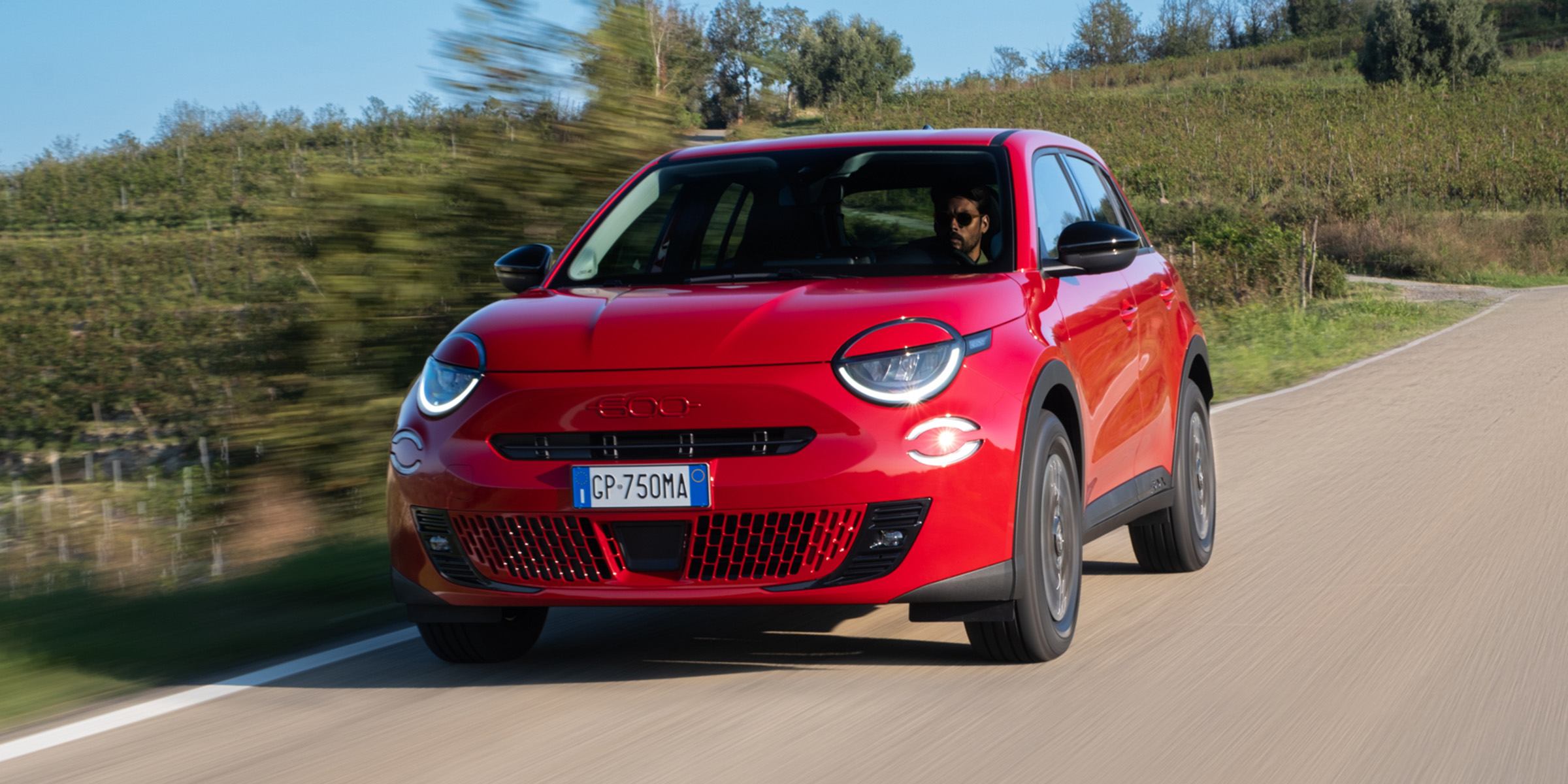
Fiat has expanded its all-electric range with the addition of the compact Fiat 600e crossover, which will be available to order in the UKnext month.
Sharing its foundations with other Stellantis group offerings like the electric Jeep Avenger and Vauxhall Mokka Electric, the 600e will rival the likes of the new Hyundai Kona Electric and Kia Niro EV upon arrival.
Sporting many of the same styling cues as its smaller 500 city car sibling, the crossover will be available with alloy wheels up to 18-inches in size. Fiat adds that the car’s turning circle is 10.5 metres – “which is among the best in this class” – and that the new 600e is around 10% lighter than Fiat’s current compact crossover option, the 500X.
Powered by a 54kWh battery and 154hp electric motor pairing, Fiat claims the new crossover will be able to muster “more than 250 miles” on a single charge. The model can reportedly accelerate from 0-62mph in nine seconds flat.
The car comes with an 11kW charger as standard and can also charge at speeds of up to 100kW. At this speed, the battery can charge from 0% to 80% in around half an hour.
Inside, the 600e comes equipped with a seven-inch digital instrument cluster behind the steering wheel and a ten-inch infotainment system in the centre of the dashboard. The boot will offer 360 litres of storage space – five litres more than the similar Jeep Avenger.
Two trims will be available at launch – the entry-level ‘Red’ edition and the range-topping ‘La Prima’. LED headlights and LE daytime running lights are included as standard, as are rear parking sensors, a synthetic leather steering wheel and keyless entry.
The ‘La Prima’ features upholstery trimmed in the same synthetic leather, replacing the standard black fabric. This trim also adds adjustable heated door mirrors, a electronically-powered boot lid, blind spot detection and a wireless charging pad for smartphones.
Key trim level features
Lead-in ‘Red’ (from £32,995)
16-inch alloy wheels
Red dashboard fascia
Synthetic leather steering wheel
Automatic climate control
Automatic LED headlights and wipers
Rear parking sensors
Keyless entry
Black fabric seats
LED daytime running lights
Cruise control
Lane keeping assistance
Seven-inch digital instrument cluster
Ten-inch infotainment touchscreen
Wireless Apple CarPlay and Android Auto
Four-speaker audio system
Top-spec ‘La Prima’ (from £36,995)
All ‘Red’ feature that are not replaced
18-inch alloy wheels
Matt ivory dashboard fascia
Front and side parking sensors with 180-degree rearview camera
Ivory synthetic leather seats
Heated front seats
Electrically foldable and adjustable heated door mirrors
Frameless rear view mirror
Adjustable boot floor
Electronically-powered boot lid
Adaptive cruise control
Blind spot detection
Six-Speaker audio system
Wireless charging pad for smartphones
UK pricing has been confirmed to start at just under £33k. Fiat says that the crossover will be available to order in the UK from next month, with the first customer orders arriving early next year. The brand adds that the 600 will also be available as a hybrid from the middle of next year, which will be powered by a 1.2-litre petrol engine that can deliver up to 100 hp and a small 21kW electric motor.
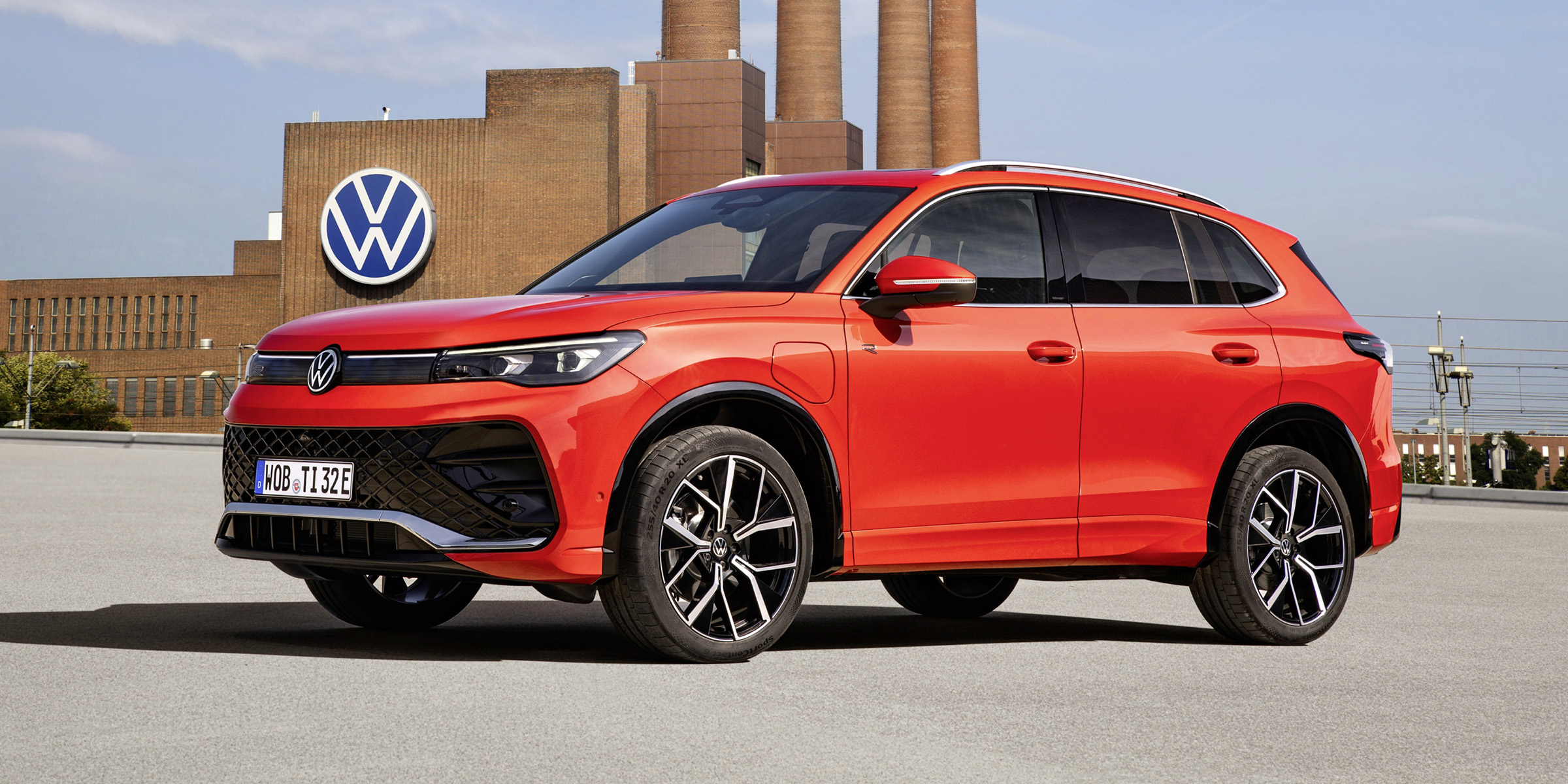
Volkswagen has unveiled its third-generation Tiguan SUV, which is a bit bigger than its predecessor and offers an infotainment overhaul.
Set to challenge the high-selling Hyundai Tucson and Kia Sportage like the current Tiguan which is still on sale, this new model is set to arrive at German dealerships in February next year sporting fresh exterior looks that mirror some of the brand’s newer models.
The slimmer LED headlights are connected by a full-width light bar and black panel, which sits above large C-shaped air intakes on the front bumper, much like the latest Mk8 Golf hatchback and the similarly-sized all-electric ID.4 SUV. The rear has also had a redesign, as a new full-width LED taillight is installed below a smaller rear window which is framed by a more prominent rear spoiler.
Volkswagen says that the new Tiguan is three centimetres longer than the current model, and buyers should find that there is more headroom for passengers inside too. Boot space has also grown by 37 litres to 652 litres total.
Stepping inside, the most notable upgrade is the new infotainment system – a 13- or 15-inch touchscreen that floats above the dashboard panel with backlighting for the volume slider and temperature controls. The brand adds that this console is more “intuitive” than the software in the current model, with “an entirely new menu structure and graphics.”
Above the modified ten-inch digital instrument cluster behind the steering wheel, the new Tiguan can also be specced with a head-up display that projects driving information onto the windscreen. A new rotary dial features on the centre console, which allows the driver to choose between various ‘atmospheres’ that adjust the interior lighting, suspension and engine setup.
Now onto the engines. The range will begin with two 1.5-litre petrol engines (and one diesel) offering either 130hp or 150hp like the current Tiguan line-up, with 48V of mild-hybrid assistance that allows for engine-off coasting. Two petrol 2.0-litre turbocharged units also feature, offering either 200hp or 260hp, as well as a 190hp turbocharged 2.0-litre diesel – these three being all-wheel drive.
The range-toppers are two 1.5-litre turbocharged plug-in hybrids that can provide 200hp and 270hp respectively. These plug-in hybrids can reportedly muster up to 62 miles of electric-only driving (30 miles more than the current Tiguan plug-in hybrids) and are compatible with rapid charging at up to 50kW, charging the battery from 10% to 80% in around 25 minutes.
Four trim specifications will be available at launch, including ‘Life’, ‘Elegance’ and ‘R-Line’ models. Volkswagen is yet to announce the SUV’s UK trim specifications and pricing, or its official British arrival date. These details are sure to follow in the coming months.
Peugeot has revealed its new mid-sized electric e-3008 SUV, which is set to replace the current combustion-powered 3008 SUV range next year.
Set to challenge the likes of the Skoda Enyaq and Volkswagen ID.4 on arrival, the e-3008 will be offered from February with the choice of two different trim levels and three different electric-only powertrains. From the compact e-208 hatch to to the new e-3008, Peugeot CEO Linda Jackson asserts that the brand will soon offer “the widest range of mainstream electric vehicles on the market.”
Built using the same design ethos that was first unveiled with the brand’s 408 liftback, the SUV sports slim LED headlights and claw-mark daytime running lights that frame a front grille of diagonal body-coloured dashes that get smaller towards the latest Peugeot branding in the centre.
A “floating” rear spoiler features in the rear, and the car sits on either 19- or 20-inch alloy wheels. Six different body colours will be available, including the dichromatic blue finish shown above that can appear green depending on the lighting.
The e-3008 is slightly larger than the soon-to-be-discontinued 3008 SUV, and it comes with the same amount of boot space – 520 litres of rear luggage room in total.
Inside, a 21-inch panoramic screen juts out of the dashboard, and a series of customisable touch-sensitive buttons feature next to the steering wheel. The car’s LED cabin lighting has eight different colour options and two paddles behind the steering wheel allow the driver to choose from three levels of regenerative braking.
Peugeot is yet to announce more about the SUV’s two trim grades, which are called ‘Allure’ and ‘GT’, but we do know that three different electric powertrain options will be available to order from February, starting with the entry-level front-wheel drive 210hp ‘Standard Range’.
Other options include the 230hp ‘Long Range’ and the top-spec all-wheel drive 320hp ‘Dual Motor’, and the former can reportedly muster up to 435 miles of range on a single charge. A 11kW AC charging cable comes as standard, a faster 22kW AC charging cable is available for an extra fee, and the SUV is compatible with DC charging speeds of up to 160kW, which Peugeot says charges the battery from 20% to 80% in 30 minutes.
For those who are not interested in making the all-electric switch just yet, Peugeot adds that hybrid and plug-in hybrid models will also be available to purchase at a later date.
That sums up what we know about the new Peugeot e-3008 so far – more details, including UK pricing and trim specifications are sure to follow in the coming months.
Make and model: BYD Atto 3 Description: Electric compact SUV Price range: £36,490-£38,990
BYD says: “The BYD Atto 3 combines modern aesthetics with exceptional intelligence and efficiency derived from pioneering electric vehicle technology and smart connectivity.”
We say: A fair first effort from a new badge to the UK, with some distinctive elements.
Latest in the swathe of new EVs coming from a host of equally new to the UK and mostly Chinese brands is the Atto 3 from BYD – which stands for ‘Build Your Dreams’.
The Atto 3 is the first UK launch from BYD which while new to British roads globally is a big name. BYD has produced more than five million electric vehicles so far but is even better known as a manufacturer of batteries – the power pack in one in five smartphones came out of a BYD factory.
You might not have heard of BYD but the brand intends that you soon will. Major UK car dealer groups are being signed up to sell the cars and BYD plans to have 30 outlets by the end of 2023, growing to closer to a hundred in the following 12 months.
Those dealers will be showing off three models by the end of the year – the Atto 3 will be joined by a mid-sized hatchback called the Dolphin and then the Seal, a ‘sports saloon’ with the top versions promising sub four-second 0-62mph times. It’s believed a hardcore off-roader will be added to the line-up next year.
What is it?
The Atto 3 (just in case you are wondering, an atto is one quintillionth of a second) is a compact SUV with the likes of the Kia Niro EV, MG ZS EV, Skoda Enyaq and Volkswagen ID.4 in its cross-hairs. As such, it dives into an extremely competitive market that’s growing almost every week.
BYD believes it can attract customers, however, with distinct elements including a different, high-tech and arguably greener battery pack. Another potential advantage over rival brands will be fact that BYD makes every part of its cars, and especially the batteries, meaning customers are likely to get their cars sooner after ordering them.
How does it look?
On the outside the Atto 3 looks, well pretty much like any other car of its size, the styling pretty conservative particularly in the EV market. There are some distinctive touches – the headlamp shape is said to reference a Chinese dragon with a similar treatment applied at the rear – once it’s pointed out, you can see the idea.
Less conservative, or attractive, is the entire ‘Build Your Dreams’ brand message written as a script across the car’s rear flank, just below the screen. BYD has, however, reacted quickly to customer feedback and this branding is now a no-cost option.
According to the man from BYD, some people actually liked it. Most, we’d assume, will prefer not to have it…
We like: General exterior styling is pleasingly normal We don’t like: ‘Build your Dreams’ across the rear – thankfully now not mandatory
What are the specs like?
Deciphering specification lists and what one gets for the money is a familiar chore of car buying, but not with BYD. There are three versions of the Atto 3 and a virtually non-existent options list – even the five different body colours don’t cost any more money.
The starting point for the range is the ‘Active’ trim at £37,195 (as of September 2023). It comes with lots of toys you wouldn’t expect to find on a base model, such as vegan leather upholstery, a 360-degree around-view monitor, front seats that are both electrically adjustable and heated, a panoramic sunroof and even adaptive cruise control.
An extra £500 buys the ‘Comfort’ version, with the only difference being a faster 11kW on-board charger – however, this assumes that your overnight charging point (usually home) can provide the extra charging speed. The range is topped by the ‘Design’ trim level at £39,695 – that’s £2,500 over the base model, to save you the maths – and for this you get a much larger interior touchscreen (more on which in a moment), an electric tailgate, some extra interior lighting and a more advanced air purfication system for the cabin.
BYD also ticks the boxes on safety. It’s no surprise that the Atto 3 scored a five-star Euro-NCAP safety rating when tested in 2022 as every version comes with an extensive suite of active safety systems.
We like: Long standard equipment list We don’t like: Not the cheapest out there
What’s it like inside?
Remember we said the exterior styling was conservative? You can’t say that about the inside…
According to BYD, the style is influenced by a gymnasium – the surfaces are finished to represent that of a treadmill, the air vents hint at weights, the gear selector a kettle bell. Framing them all is vegan leather upholstery in an anything-but-ordinary blue and cream finish.
Some of these design references are more recognisable than others, and we don’t quite get the gym connections in the guitar strings forming the door bins – these are apparently tuned, by the way, and we did get a passable note or two on them! It’s certainly not dull – to be honest, it’s oddly appealing.
You can’t fail to miss the central touchscreen, especially if you choose the top model as it measures a gargantuan 16 inches. The other two versions get 13-inch units, which is still pretty large.
A novel touch is that this screen rotates between landscape and portrait format, either at the press of a button or by asking the car to “rotate screen” by voice command. Gimmicky? Maybe, but particularly when using sat-nav, a vertical screen does seem more sensible. The only problem is the larger screen aligned this way does start intruding on the windscreen view.
This screen controls most of the car’s important functions – the few buttons on the dash are for more peripheral functions. There do seem to be an over-complex number of sub-menus to traverse when making changes, but these will no doubt become second nature with daily use. Smartphone capability for both Apple and Android is included, though in our short test we were unable to confirm stories that such functions are not as user-friendly as in some rivals.
One related positive, though, is that BYD is heavily into over-the-air software updates and so bugs can be addressed pretty quickly, the same way you update your smartphone.
BYD has done a good job of getting the essentials right. The interior fit and finish is of suitable quality and the space in the car, both for occupants and their luggage, is adequate if not generous. There’s 440 litres on offer in the boot, which has a two-level floor, and dropping the rear seats extends the volume to 1,338 litres.
It’s a bright space to be in too, thanks to the standard-fit panoramic sunroof, and this does not intrude too much on headroom, as in some other cars.
We like: Distinctive styling, though some might be less impressed We don’t like: Complex menus on a screen that’s perhaps a bit too big…
Under the bonnet
The powertrain is where the Atto 3, and the BYD models to follow it, will create most interest. Yes it’s an electric vehicle, but BYD does batteries rather differently to other manufacturers.
BYD’s battery is called a Blade and rather than having various individual cells, it looks more like planks of wood joined together. This layout is strong and safe – BYD has proven this with videos showing nails being driven into the pack and trucks running over it. Just as importantly it uses no cobalt – the most controversial of the rare-earth minerals employed in traditional lithium-ion battery packs.
The battery is the largest of all the essential EV elements which BYD integrates into a single unit, these elements including a heat pump which helps with battery efficiency in colder temperatures. Incidentally, if you want a heat pump on a Skoda Enyaq or Volkswagen ID.4, it will cost you an additional £1,000. On a Kia Niro EV, it’s £900 extra and then only on selected models.
There’s only one battery size available for the Atto 3, a 60kWh unit that provides in an offical driving range of 260 miles. Rival EVs go further but such a range will be enough for most, and in stop-start city driving it can increase to more than 350 miles if you’re really trying.
In terms of charging, all variants can be charged with a 150kW DC unit (that capability costs an extra £324 on a Porsche Taycan…), which results in a boost from 10% to 80% charge in 44 minutes, taking a bit longer than rivals. For overnight charging, the entry-level model has a 7kW charger taking ten hours for a full charge while the other two are fitted with 11kW versions, cutting the wait to less than seven hours.
How does it drive?
Generally, the BYD Atto 3 displays on-road performance that’s entirely familiar for an EV. It moves away smoothly and (almost) silently and then accelerates swiftly thanks to the instant torque of the electric motor. Then cruising along, even at motorway speeds, it behaves itself well.
The suspension is quite soft compared to some rivals, which adds to the comfort of slow-speed progress around town, though if you try to indulge in more enthusiastic driving the body roll in corners becomes noticeable, if controllable.
In truth, this is not a car that you’ll want to be over-enthusiastic in, anyway. The Atto comes with the choice of three drive modes dubbed ‘Normal’, ‘Economy’ and ‘Sport’ plus a mode for slippery surfaces such as snow, and we found the Sport mode was actually the most satisfying. It’s not really sporty, though, so don’t expect a lot of feedback through the steering wheel in corners.
There are quirks too, most pertinently the regenerative braking – initially we thought “what regenerative braking?”. With a full battery, there’s none of any note to be had – once you’ve gone a few miles you can swipe though three levels of retardation, but it’s nothing like as noticeable as traditional rival EVs. This is certainly not a car to be driven on a single pedal.
Like others, the Atto makes a low-speed noise to warn other road users and pedestrians of its approach, but the low hum is not a very nice tone and could have benefited from some input from whoever tuned those interior guitar strings.
The safety package includes one of those assistants that provides voice alerts to changes of speed limit, whether you are exceeding it and such. Said voice is, however, very abrupt and rather intrusive. Thankfully, dialling through enough of those sub-menus can turn it off…
We like: Smooth drive with enough potency We don’t like: Odd regen and overbearing alert messages
Verdict
As a first contender from an all-new name, the BYD Atto 3 offers enough to make the car worth looking at among those considering the switch to electric motoring. It fulfils most of the practical needs one looks for in a new car and offers some distinction (at least on the inside) while for those seriously concerned about their carbon footprint, the battery technology and lack of cobalt will be an attraction – it’s a newcomer definitely worth checking out.
Model tested: BYD Atto 3 Design Price (as tested): £38,990 Motor unit: 150kW electric Gearbox: Automatic Power: 204 hp Torque: 310 Nm
Top speed: 99 mph 0-60 mph: 7.8 seconds Battery range: 262 miles (WLTP combined) Euro NCAP safety rating:Five stars (October 2022) TCE Expert Rating: 65% (as of September 2023)
Buy a BYD Atto 3
If you’re looking to buy a new or used BYD Atto 3, The Car Expert’s partners can help you find the right car
Discover great deals available on both new and used cars. Find out more
Search for your next new or used car with Auto Trader. Find out more
Lease a BYD Atto 3
If you’re looking to lease a new BYD Atto 3, The Car Expert’s partners can help you find a competitive deal
Personal contract hire deals from Carparison Leasing. Find out more
Subscribe to a BYD Atto 3
Subscriptions are becoming a very popular way for consumers to try an electric car for a few weeks or months to help decide whether it’s a suitable alternative to a petrol car. If you’re interested in a car subscription, The Car Expert’s partners can help. (PS: What’s a car subscription?)
Road markings: the UK’s byways are covered with them. Some are in better condition than others, but whatever their state, painted lines are there for a reason.
Many drivers believe they are there to keep traffic on the correct side of the road and they certainly do help to keep traffic in the right place, especially at night or when visibility is compromised.
But the type of lines and the way they are space out on the road surface tell a greater story – and it’s one that thousands of drivers don’t fully understand. A recent survey by road safety and breakdown organisation GEM Motoring Assist revealed that many of its members are confused by the different types of road lines and what they all mean.
But not knowing the meaning of a particular marking could land you in trouble with traffic police, with a resulting fine or endorsement a great possibility.
Lines that travel along the road surface in a longitudinal fashion are not just there to divide up the route equally – the way in which they are painted also warns of hazards ahead such as an approaching junction. And lines that go across the road surface (transverse) have another role to play such as showing where to stop or ‘give way’.
And the road markings are not just for moving vehicles – they also give instructions about where you can legally stop or park your car. Knowing your road lines and what they mean could help you avoid an unwelcome penalty ticket and even points on your licence, says GEM.
“We know from the member inquiries we receive that there is confusion over what’s allowed and what isn’t when it comes to lines in the road,” adds Neil Worth, GEM chief executive. “Not even emergency vehicles using blue lights are exempt from certain road lines and markings.”
GEM has assembled a line-by-line guide to staying safe, designed to reduce risk and help drivers steer clear of trouble with the police and local authorities.
Line ‘em up. What the road markings mean:
Broken line
It’s legal to cross a broken white line down the middle of a road if you are overtaking or turning. Ensure the road is clear and you can complete the manoeuvre safely.
Longer lines
When the broken lines lengthen and the gaps between them shorten, that’s a warning of a hazard ahead. However, it’s still legal to cross the line.
Double white, with broken on your side
As long as the line nearer to you is broken, it is legal to cross it if you are overtaking. You must be back on your side of the road before reaching the start of a solid white line on your side.
White ‘return’ arrows
These arrows warn you to get back onto your side of the road because a solid white line system is about to start.
Double white, solid on your side
It’s an offence to cross or straddle a double white line where the line nearer to you is solid, unless you are turning right into a side street or a driveway. Overtaking is not allowed, unless you’re going past a stationary vehicle, a cyclist, horse and rider or road maintenance vehicle travelling at 10mph or less.
The offence carries a £100 fine and three penalty points but if the police deem your overtaking manoeuvre particularly risky, you could face a more serious offence of dangerous driving.
Double line parking
It’s an offence to park at the side of a road marked with central double white lines, even when a broken white line is on your side of the road. You are, though, allowed to drop off or pick up passengers, or to load or unload goods.
Zig-zag lines at crossings
It’s an offence to park on the zig-zag lines found on each side of pedestrian crossings. This carries a £100 fine and three penalty points.
Source: GEM Motoring Assist
Parking markings
Double yellow lines
Most drivers know that double yellow lines mean ‘no parking’ – you can’t leave your car at the side of the road with double yellows at any time. However, loading and unloading is usually permitted, as is dropping off or picking up passengers. Check any localised roadside signs to be sure.
Single yellow lines
These are less restrictive than their ‘double’ counterparts, but care should still be taken when leaving your car parked on one. They are usually restricted by time and the permitted hours will be shown on roadside markings.
Double red lines
Often seen on major through routes, they forbid parking, stopping or loading. There are exemptions though, and these will be shown on roadside signs.
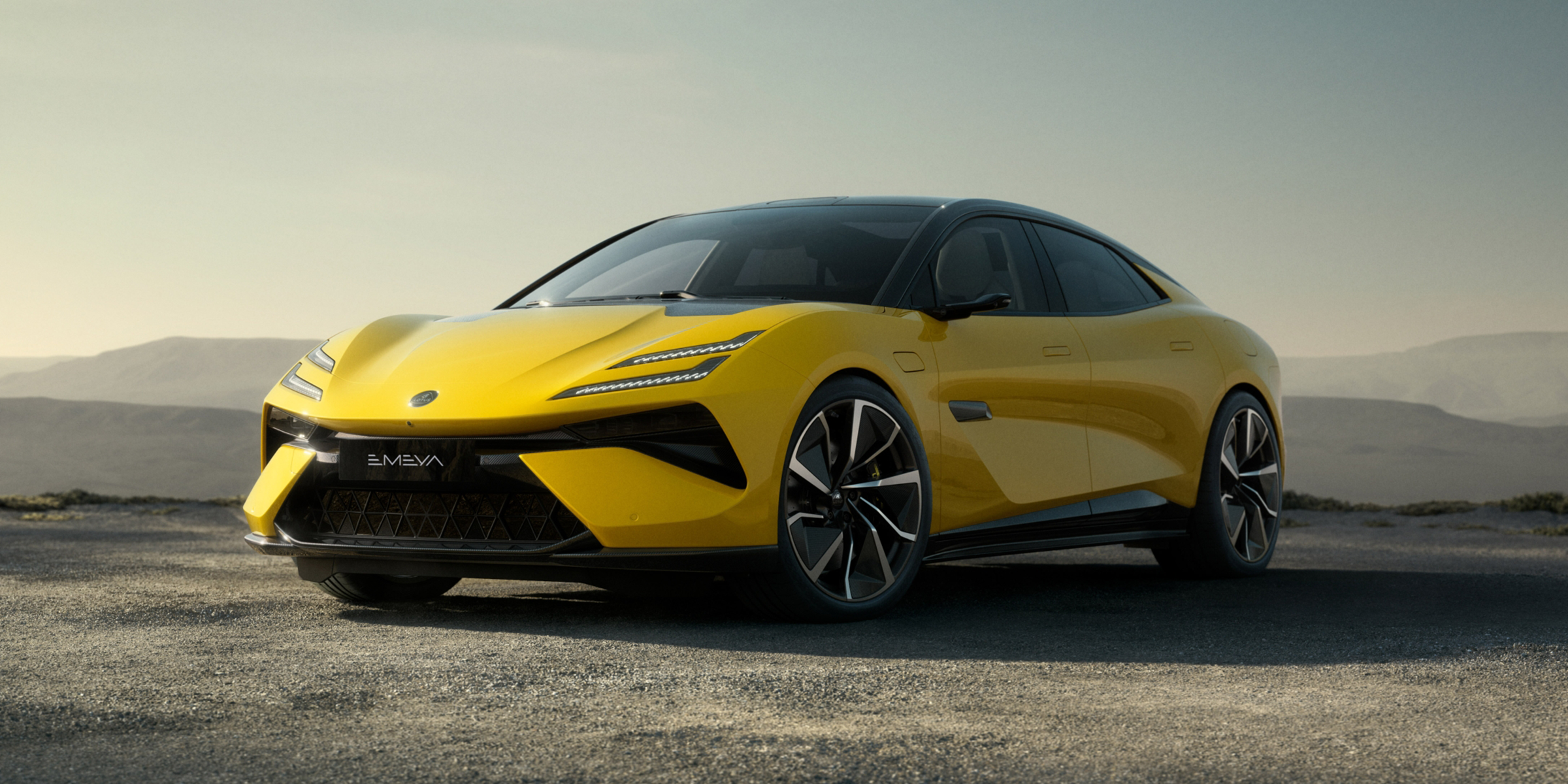
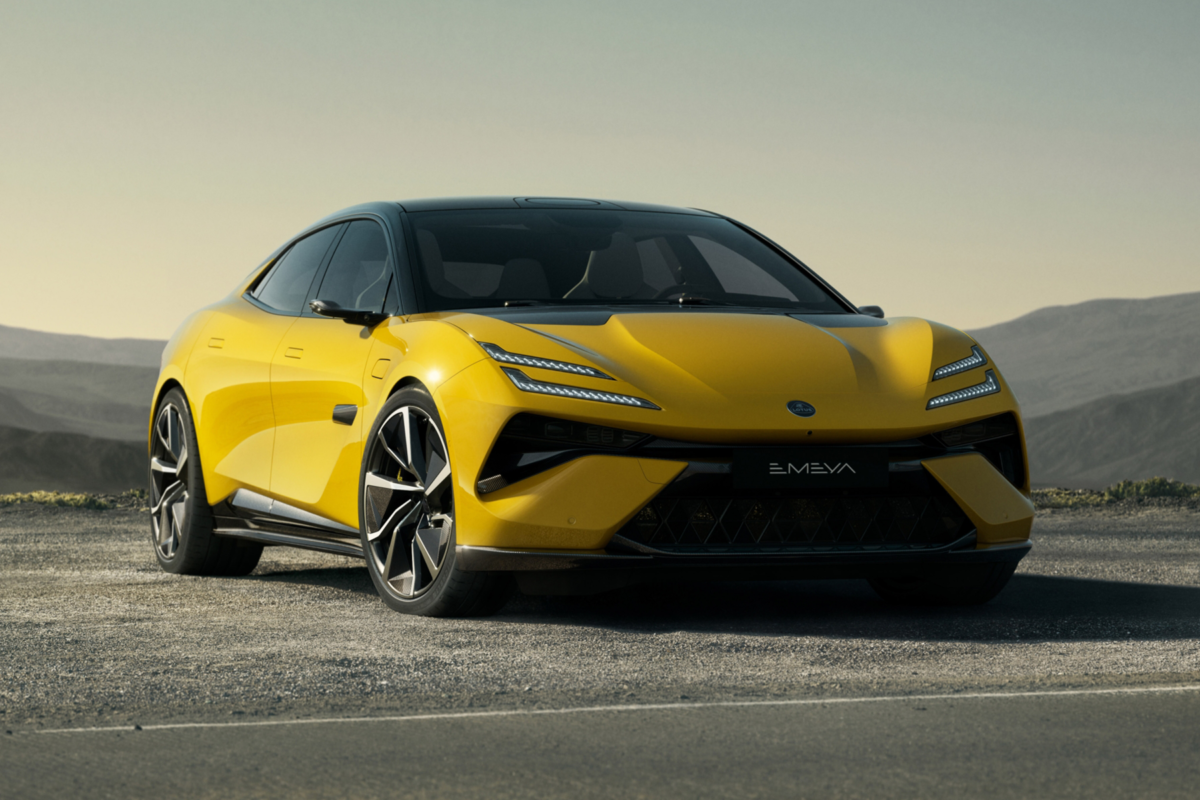
Lotus has debuted its new flagship model – the all-electric Emeya saloon – which the brand calls its first four-door ‘hyper-GT’.
Following the launch of the electric Eletre SUV, the Emeya is the first battery-powered saloon that Lotus has ever made. The brand is marketing the new car as a Grand Tourer that “pushes the boundaries for how a luxury electric vehicle should look and handle.”
Set to challenge the likes of the Porsche Taycan, Audi e-tron GT and Tesla Model S, the Emeya will be one of the fastest electric saloons on the market when it eventually arrives next year.
It is powered by the same 905hp dual-motor setup as the top-spec Eletre R, and can reportedly complete a 0-62mph sprint in 2.8 seconds. It also makes use of the Eletre’s large 102kW battery pack, which can charge from near empty to 80% charge in around 18 minutes using a 350kW DC charging station.
Lotus is yet to announce the car’s maximum battery range, but it is likely to slightly surpass the Eletre’s 304 miles maximum, due to its lower, more aerodynamic silhouette.
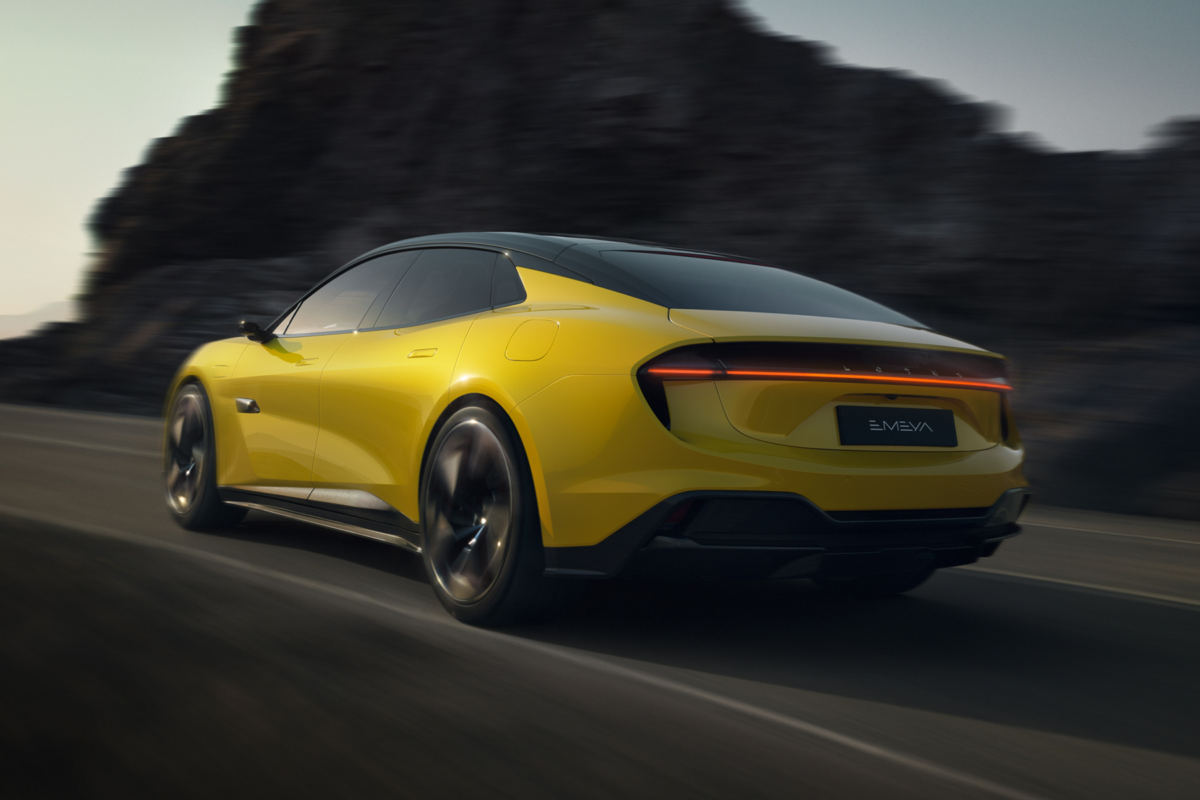
The Emeya takes several design cues from the Eletre, including narrow angular LED headlights (though the saloon has two strips on either side of the bonnet), deep bonnet contours, a large lower grille and a muscular curvy side profile. Like the Eletre, the saloon also has a two-tone bodywork finish that paints the roof and window pillars in black.
In the rear, Lotus has installed a full-width LED tail light that sits above air vents on either side of the rear fascia.
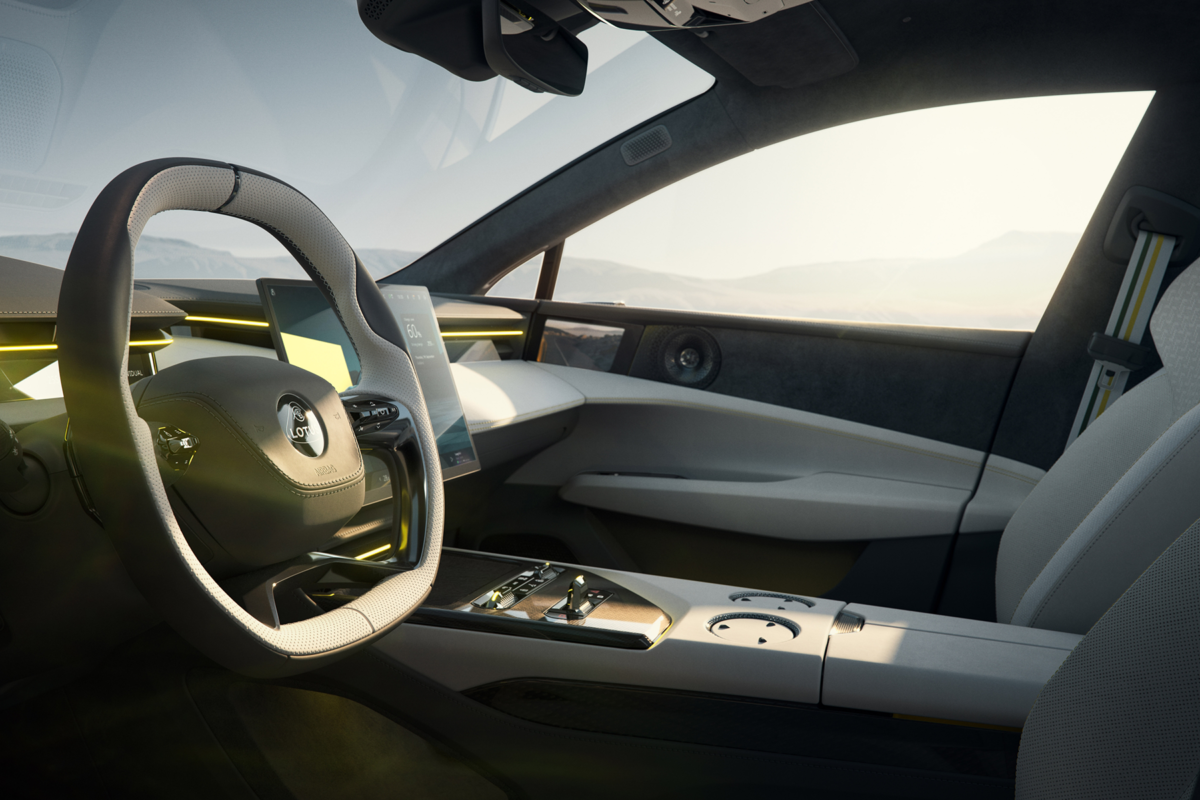
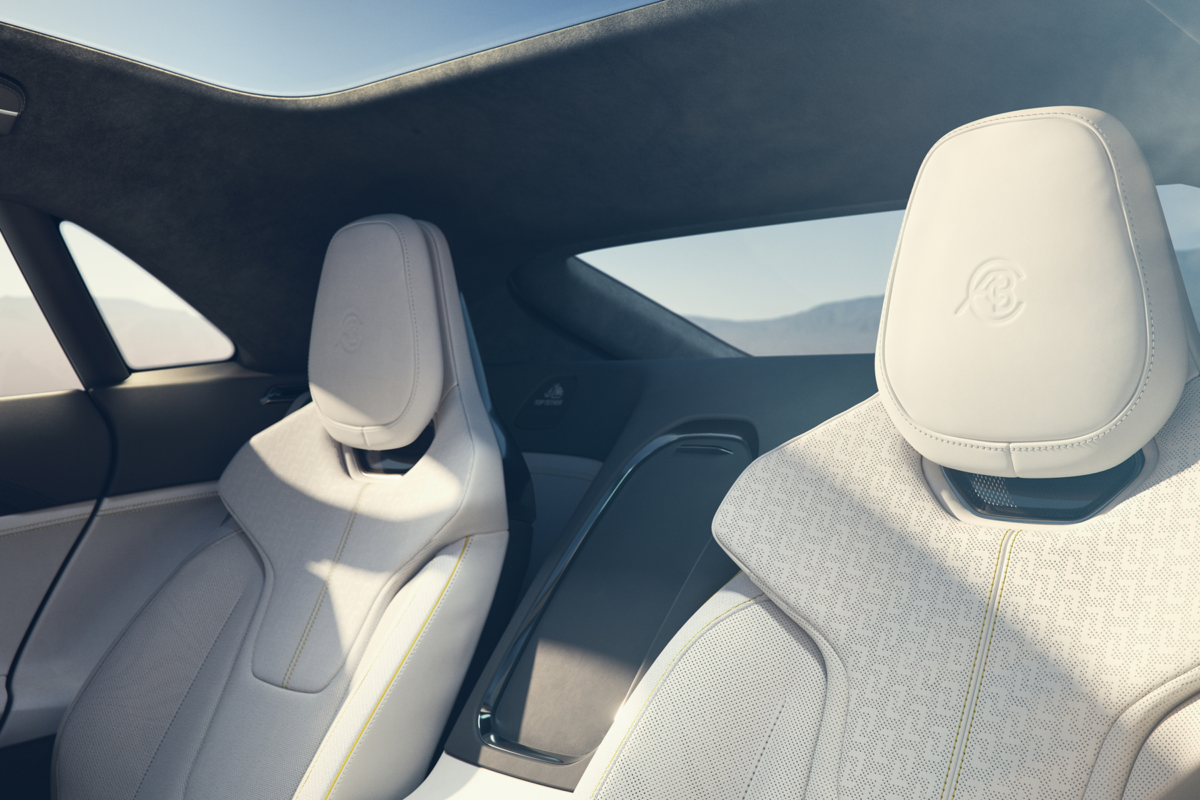
Inside, the four-seater comes with an over-shaped steering wheel and a large infotainment screen that floats above the dashboard. The digital instrument cluster behind the steering wheel is quite narrow, which frees up windscreen space for the huge 55-inch head-up display that projects driving information onto the front window.
That just about sums up what we know about the new Eletre so far. The new saloon is making its debut in New York this week, and will enter production in 2024. More details including UK trim specifications and pricing, will be announced in the coming months.
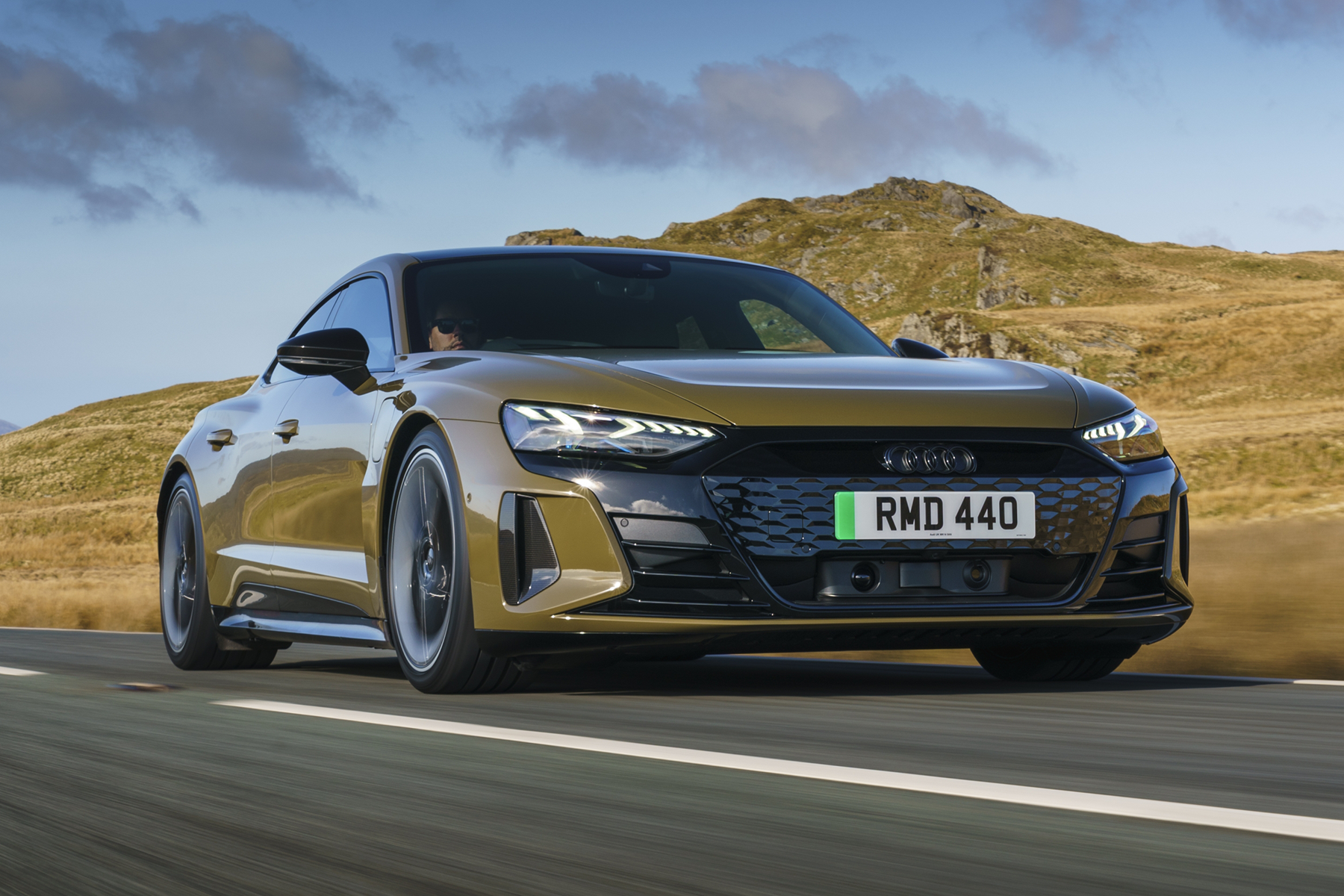
The Audi RS e-tron GT is a high-performance version of the regular Audi e-tron GT sports saloon, which has been on sale since early 2021.
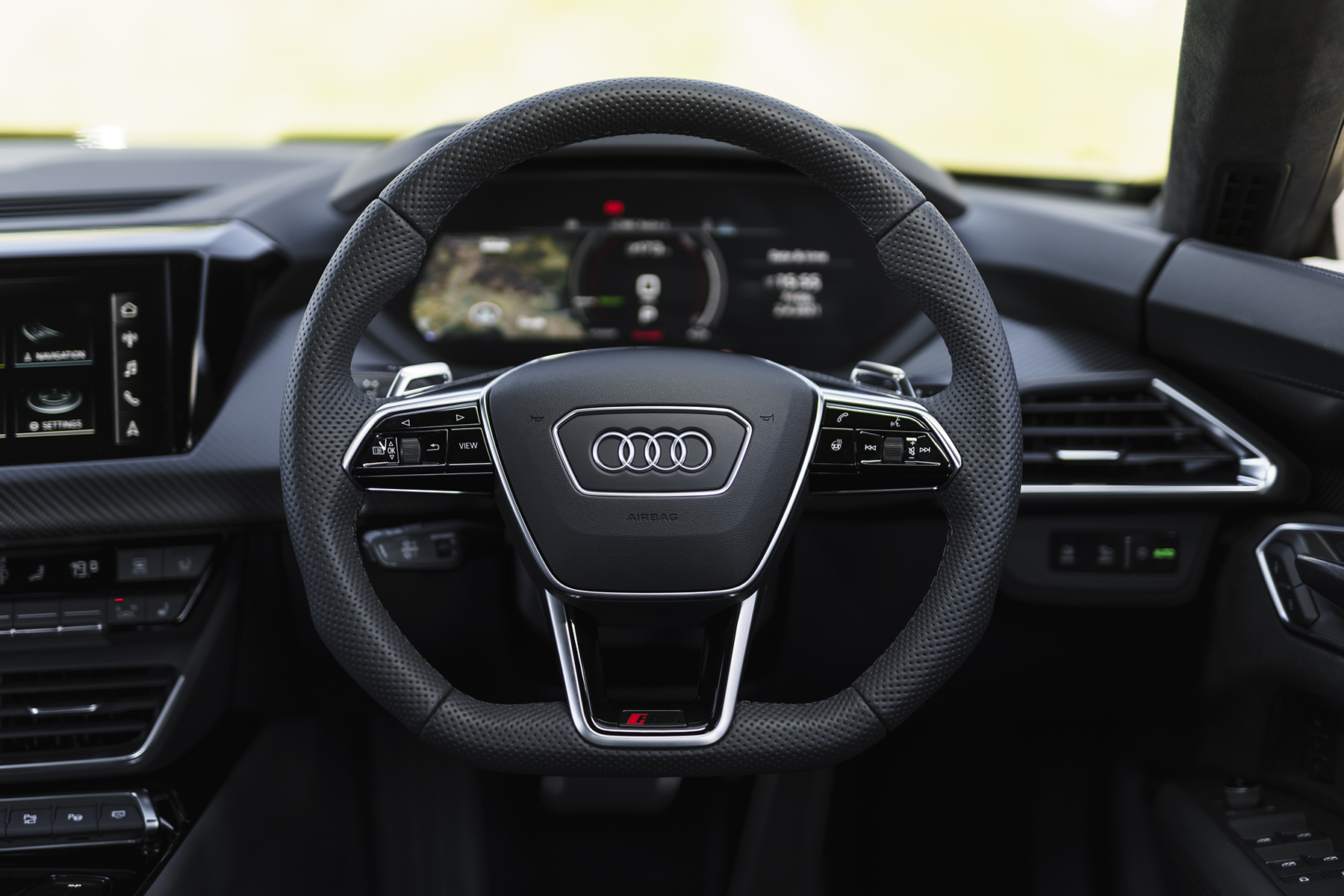
Jointly developed with the Porsche Taycan, the standard e-tron GT is already extremely fast. The RS e-tron GT takes this even further, with a 0-62mph sprint in 3.3 seconds. Beyond the added power, the RS also comes with some extra features, including more agile four-wheel steering, a suspension upgrade, a sound generator that mimics a petrol engine and larger alloy wheels. As part of a 2024 facelift, an even faster RS e-tronc GT Performance model was added to the range.
Top Gear concludes that this sports saloon offers “a belting turn of pace that’s more than worthy of the RS badge”, but most reviewers struggle to recommend this RS model over the regular e-tron GT, which already comes with a long list of standard equipment, and still offers thrilling acceleration and pace.
When compared to other high-performance electric saloon rivals like the Tesla Model S Plaid and Porsche Taycan Turbo S, Carwow points out that the Tesla offers a longer battery range, while most reviewers prefer the Porsche’s more agile steering.
As of February 2026, the Audi RS e-tron GT holds a New CarExpert Rating of B with a score of 67%.
Body style: Large saloon Engines:electric, battery-powered Price:From £119,950 on-road
Launched: Spring 2021 Last updated: Summer 2024 Replacement due: TBA
Image gallery
Media reviews
Highlighted reviews and road tests from across the UK automotive media. Click any of the boxes to view.
Auto Trader
Model reviewed: Score: 8 / 10 “Although it shares much with Porsche’s Taycan, the Audi RS e-tron GT more akin to an electrified spin on the Audi RS 7 given it’s a very fast, large, four-door GT. That just happens to be electric.” Read review
Carwow
Model reviewed: Range overview Score: 8 / 10 “The electric Audi RS e-tron GT has more performance than you’ll ever need and the ability to entertain on a twisty road, but Tesla still does a longer electric range.” Read review
Daily Mail
Model reviewed: “Launch control lets the more powerful racing inspired RS jump from 598 horse-power (440kW) to a mighty 646 horse-power (475kW), increasing 0 to 62mph acceleration to just 3.3 seconds up to a top speed restricted to 155mph.” Read review
Evo
Model reviewed: Score: 8 / 10 “Range-topping Audi RS e-tron GT benefits from Porsche Taycan DNA to be a superb grand tourer.” Read review
Green Car Guide
Model reviewed: Score: 10 / 10 “Anyone who still says that electric cars aren’t as good to drive as petrol cars needs to drive the all-electric Audi RS e-tron GT, which can be a very refined five-seater luxury saloon, or a crazy zero emission racing car.” (Paul Clarke) Read review
Honest John
Model reviewed: Score: 8 / 10 “An electrically charged sports car with a GT character, the Audi RS e-tron GT combines practicality with driving thrills. All this doesn’t come cheap, though.” Read review
Motoring Research
Score: 9 / 10 “I’m not convinced the Audi RS e-tron GT’s cabin feels special enough to justify a six-figure price tag. There’s no shortage of technology, including a brilliant Bang & Olufsen audio system, and many of the touch-points are swathed in tactile Alcantara. Yet it doesn’t feel hugely different to an A5 coupe, and headroom is pretty limited in the back.” Author: Tim Pitt Read review
The Telegraph
Model reviewed: Score: 6 / 10 “It looks wonderful but the high-performance version of Audi’s flagship EV is more assault with battery than eco-friendly family transport.” Read review
Top Gear
Model reviewed: Score: 8 / 10 “The Audi RS e-tron GT is a belting turn of pace that’s more than worthy of the RS badge.” Read review
Safety rating
Independent crash test and safety ratings from Euro NCAP
No safety rating
As of February2026, the Audi RS e-tron GT has not been assessed by Euro NCAP.
Eco rating
Independent economy and emissions ratings from Green NCAP
No eco rating
As of February 2026, the Audi RS e-tron GT has not been tested by Green NCAP.
The Green NCAP programme measures exhaust pollution (which is zero for an electric car) and energy efficiency. Electric cars are much more energy-efficient than combustion cars, so the RS e-tron GT is likely to score very highly in Green NCAP testing whenever it ever takes place.
Reliability rating
Reliability data provided exclusively for The Car Expert by MotorEasy
No reliability rating
As of February 2026, we don’t have enough reliability data on the Audi RS e-tron GT to generate a reliability rating.
The Car Expert’s reliability information is provided exclusively to us using extended warranty data from our partner, MotorEasy. As soon as MotorEasy has sufficient data on the RS e-tron GT, we’ll publish the score here.
Running cost rating
Monthly cost of ownership data provided exclusively for The Car Expert by Clear Vehicle Data
Battery range
Average
Score
Variation
Score
EV models
362 miles
A
Electrical efficiency
Average
Score
Variation
Score
EV models
3.4 m/KWh
E
Insurance group
Average
Score
Variation
Score
All models
50
F
Service and maintenance
Cost
Score
Year 1
£544
E
Year 2
£953
E
Year 3
£1,380
D
Year 4
£1,686
D
Year 5
£2,333
E
Overall
£6,896
E
The Audi RS e-tron GT is an expensive car to buy, and it’s also expensive to own according to five-year running cost information provided exclusively to The Car Expert by our technical partner, Clear Vehicle Data.
Electrical efficiency (the EV equivalent of fuel consumption for a petrol or diesel car) is poor, although a large battery means that driving range is still very good.
Servicing and maintenance are about average, which is not bad given the car’s price tag and sophistication but still fairly expensive for an EV. And insurance is predictably expensive, which is what you’d expect on any Audi RS model.
Similar cars
If you’re looking at the Audi RS e-tron GT, you might also be interested in these alternatives.
Earlier this year, China overtook Japan as the world’s largest exporter of new cars. This marks a big global economic shift.
Historically, Japan and Germany have dominated the export charts, which helps to explain why German and Japanese cars tend to have such high reputations around the world. But industry reports from the first quarter of 2023 show that China exported about 1.07 million vehicles to the rest of the world, compared to Japan’s 950-odd thousand. This is likely to accelerate in coming years.
What has caused this shift?
After the second world war, Europe and America led the way in car production and development. America was largely taken up in meeting massive domestic demand, with less attention paid to global markets, while Europe was generally more export-focussed.
Car production was seen as a key way to help Germany rebuild its economy. Mercedes-Benz and Volkswagen emerged as hugely successful companies at the high and low ends of the car market, respectively.
Japan followed the German example of using the car industry to create economic growth, which led to the Japanese car industry emerging as a successful export business for the country – although it took decades to come to fruition, having started decades behind the Europeans and Americans.
Communist powers like China and the Soviet Union were largely closed off to global exports and imports. Combined with generally poorer populations who couldn’t afford their own cars, the Chinese and Russian automotive industries failed to develop in the same manner as their Western counterparts.
China’s opening up in recent decades has seen its attitudes shift. The country could certainly build cars cheaply, but bridging the technological gap to compete with established car companies in terms of quality and design was a huge challenge.
Government intervention helped, forcing foreign car companies to partner with local Chinese companies. In short, if you wanted to sell a large number of cars in China then you had to build cars in China through Chinese-owned companies. This led to almost every major Western car company establishing partnerships with local firms, and opened a lot of doors for Chinese companies to learn more about developing better cars.
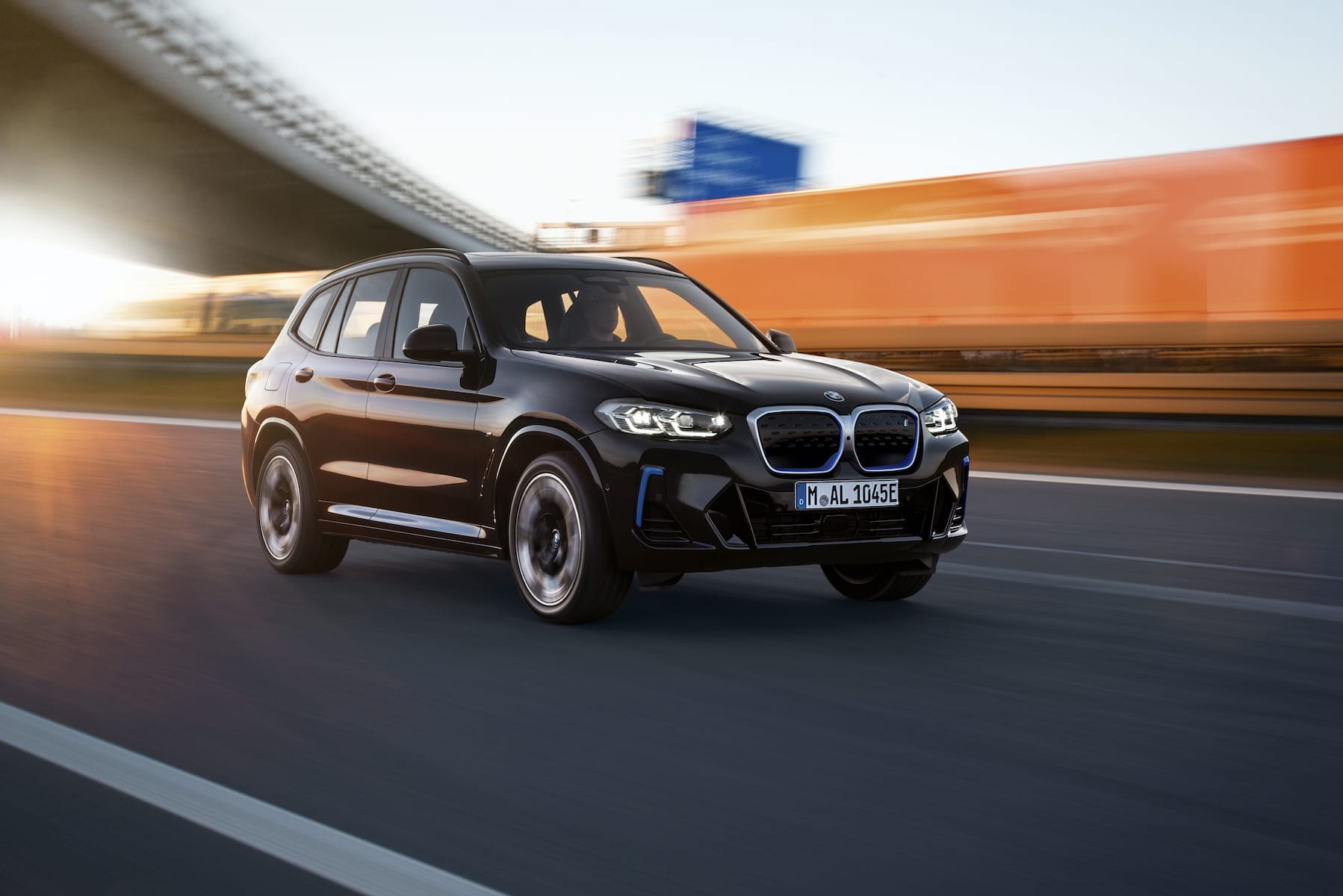
As Chinese car manufacturing has improved, Western brands have started to sell their Chinese-built models around the world, rather than only in China and other developing markets. For example, the BMW iX3 electric SUV is being made exclusively in China, while several Volvo models and all Polestars currently come from China.
But it’s the current global shift towards electric vehicles that has presented Chinese car companies with an opportunity to leapfrog Western brands and take a global lead.
How did China become a leader in electric vehicles?
While Western car companies threw billions of pounds into meeting ever-stricter environmental requirements for petrol and diesel engines around the world, Chinese firms were investing heavily in electric power.
This was partly self-serving and partly opportunistic. As recently as a decade ago, cities like Beijing and Shanghai suffered from ever-increasing pollution problems. Remember the Beijing Olympics in 2008? The government banned half the city’s cars from driving each day before and during the Games, to help reduce pollution and make the city look better on TV.
The Chinese authorities realised that relying on better fossil-fuel engines wouldn’t solve the country’s urban pollution problems. Electric motors, on the other hand, produce no tailpipe emissions and provided China with a much faster route to cleaning up its cities.
While Western companies (and governments) largely saw electric cars as theoretical future technology, China’s leaders made it a present-day reality, directing enormous resources to the development of an entire EV industry.
So instead of individuals like Tesla founder Elon Musk having to blaze an electric trail against enormous opposition in America, China made it a national priority to develop electric vehicles – also realising that the rest of the world was waking up to the same problems but would take longer to act.
The changing reputation of Chinese cars
As EVs require fewer mechanical components and are easier to make, China has excelled with these vehicles in its own market before tackling exports. Previously, Chinese brands struggled to secure enough sales to justify their presence elsewhere, but this is gradually changing.
Chinese vehicles used to have a reputation for poor safety standards but modern Chinese cars are now regularly achieving five-star Euro NCAP ratings, equal to the best European manufacturers (and better than others…).
Such is the Chinese expertise in electric vehicles, German powerhouse brands Volkswagen and Audi have recently announced plans to purchase Chinese EV platforms for future models instead of developing their own.
One ongoing hurdle for Chinese car companies to overcome is negative consumer sentiment towards the Chinese government, which has been heightened in recent years over trade disputes and the country’s support for Russia’s invasion of Ukraine. In fact, start-up premium Chinese brand Omoda specifically launched in Russia 12 months ago to exploit the withdrawal of Western car manufacturers from the Russian market.
In the short term, these negative attitudes about China could affect its success in wider Europe. However, similar sorts of criticisms were launched at Japanese car companies in the 1970s and 1980s, with ill-feeling lingering from the second world war, and these were eventually overcome. While the two situations are not necessarily similar, the longer-term acceptance over time should be the same.
The Chinese brands competing for your attention
Over the past two years several Chinese car manufacturers have started selling their products, or are set to come to the UK soon, including the likes of BYD, Nio, GWM Ora, Omoda and Aiways.
Although there might be concerns over the Chinese government, these new brands are significantly undercutting European and American companies on price. Often buyers are unaware of the origin of a vehicle and instead, price points and performance are the deciding factors.
Aiways U5
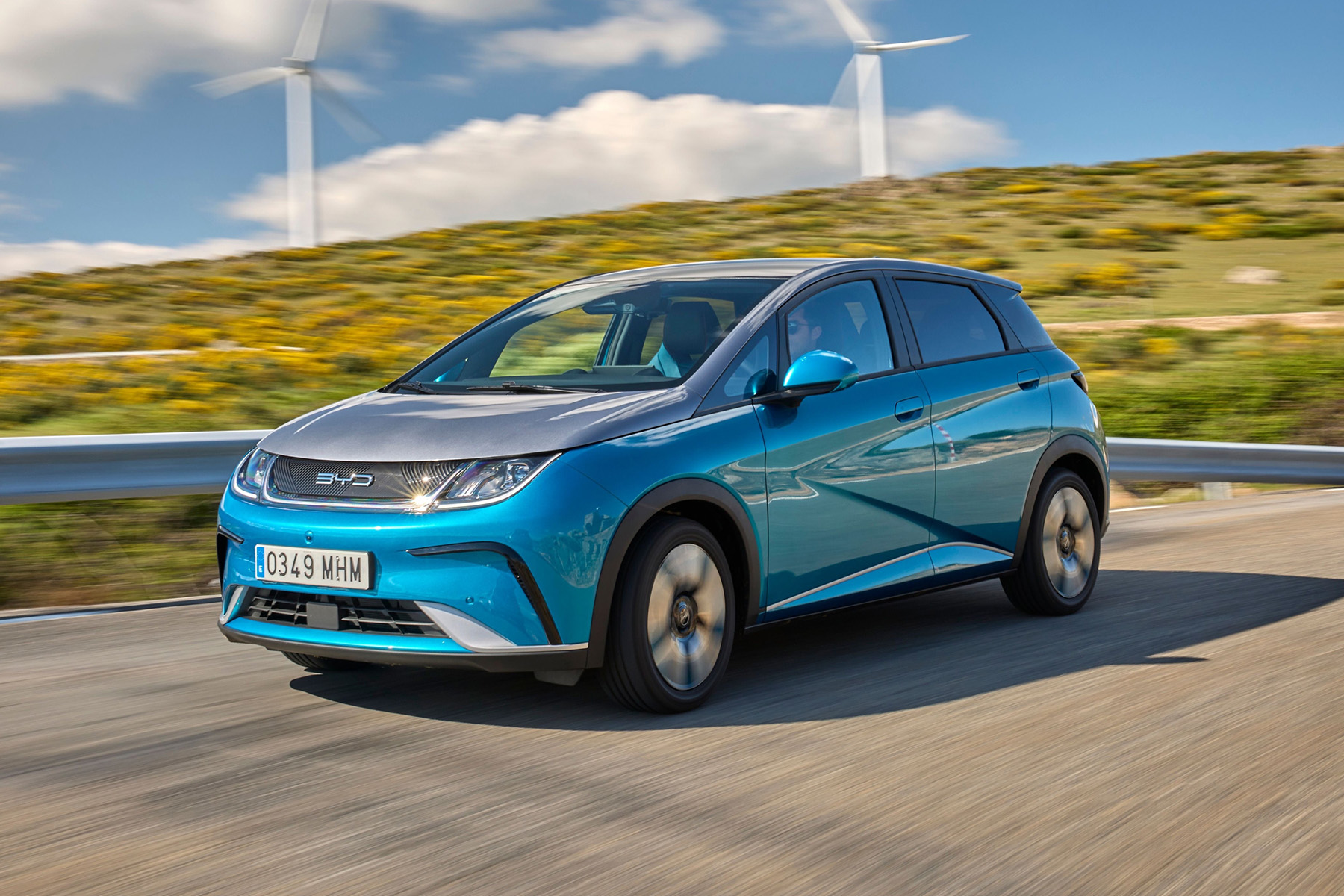
BYD Dolpin
Nio EL6
Omodoa 5
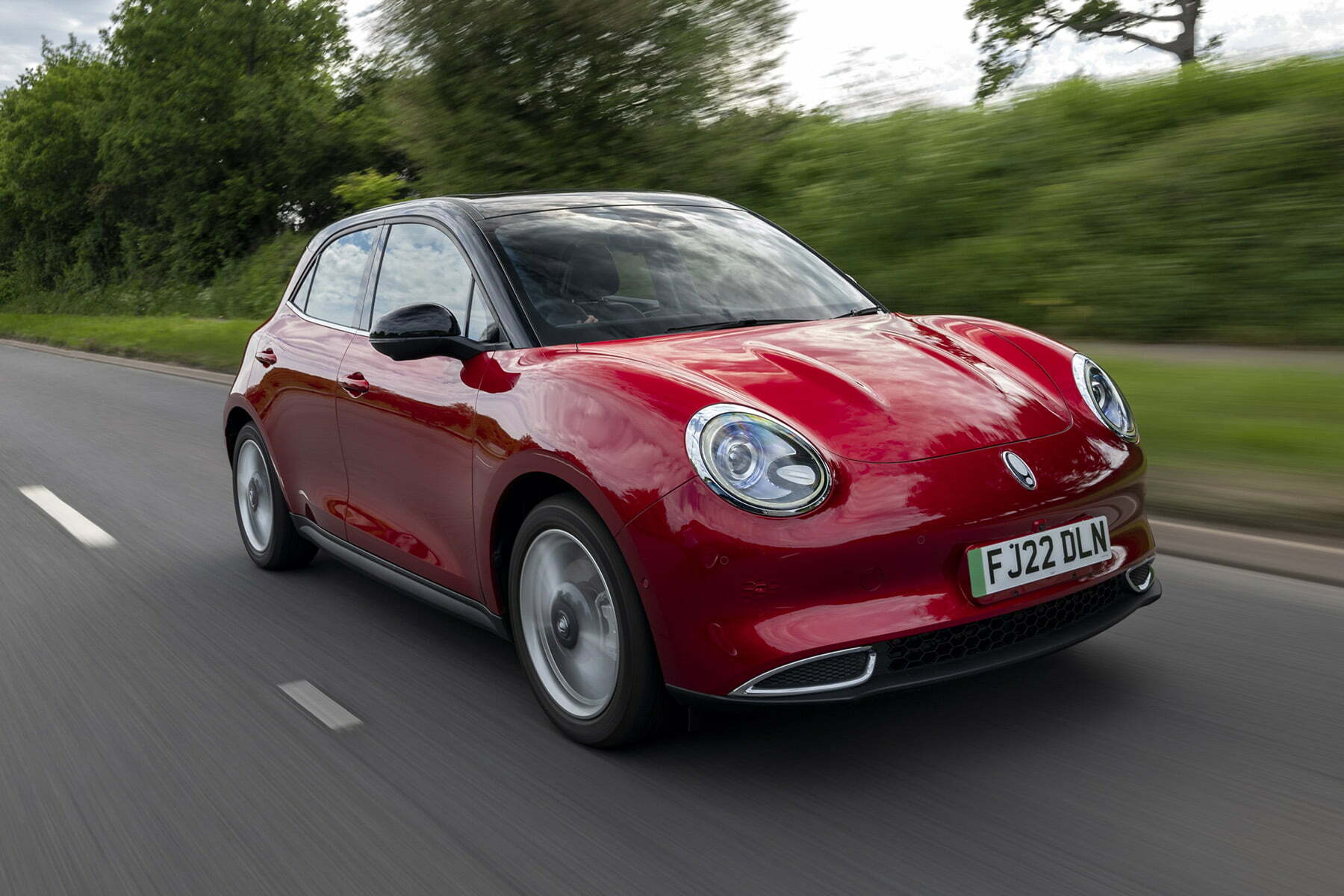
Ora Funky Cat
How European are those Euro car brands really?
As well as home-grown brands, Chinese companies have been buying up more familiar European names. Here in the UK, the best-known example of this is British brand, MG. After the Rover-owned company collapsed in the mid-2000s, it was bought by the Chinese state-owned SAIC Motor and resurrected with a range of new petrol, hybrid and electric family cars. Initially, some vehicles continued to be assembled in the Midlands, but eventually all production was transferred to China. SAIC also owns Maxus (formerly the British LDV van company) and has joint venture projects with Volkswagen, Audi and Skoda.
Other Chinese companies have been making big moves in the global automotive industry as well. The largest player is Geely, which has its own brand in China but also now owns: Volvo, its performance sister Polestar, London Electric Vehicle Company (makers of the iconic London Taxi), Lotus, Proton, and Lynk & Co. Geely also owns 50% of Smart, and is a significant shareholder in Mercedes-Benz and Aston Martin.
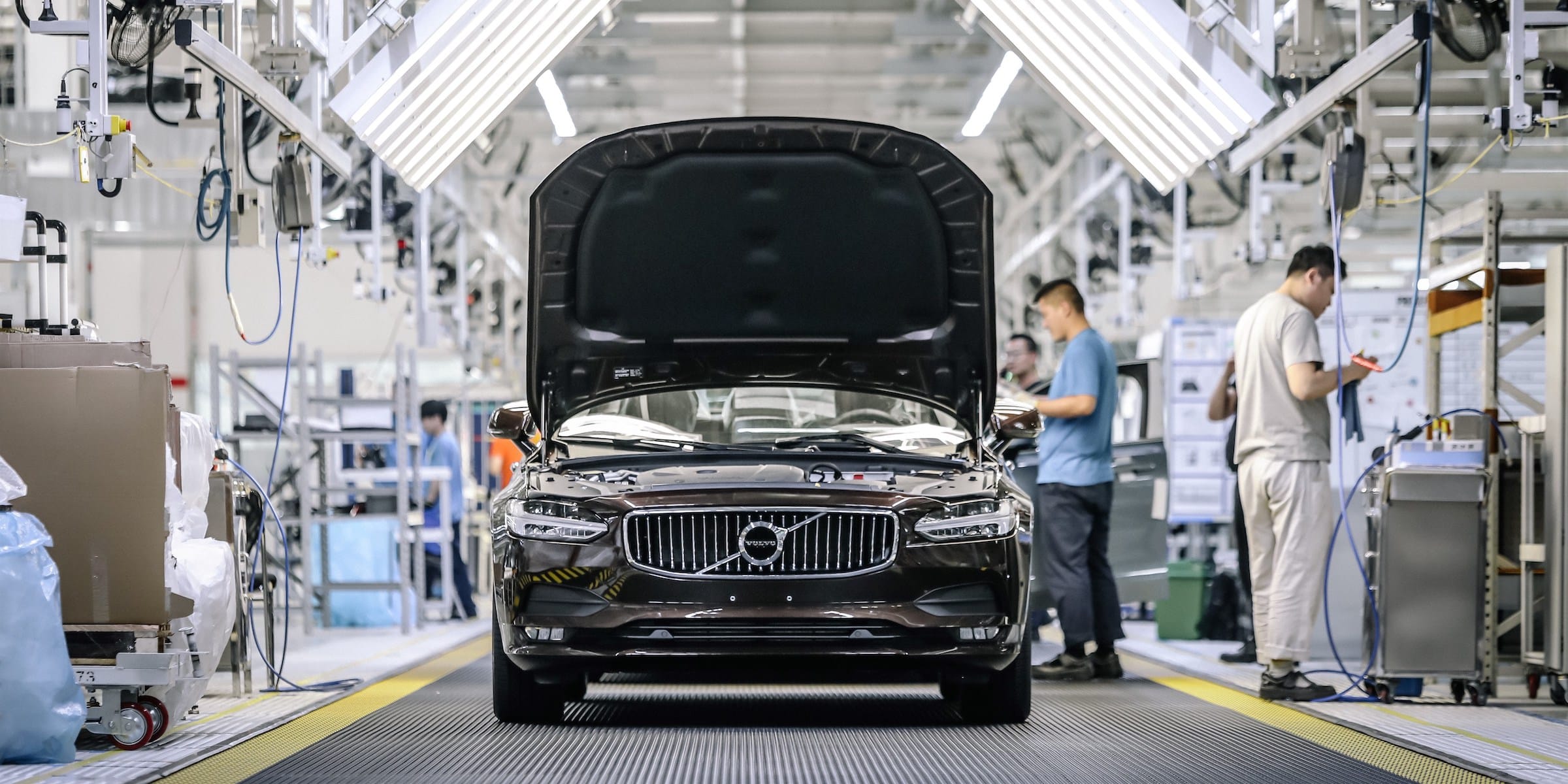
Whilst Volvo is still headquartered in Sweden, its vehicle manufacturing is spread across Europe, China (our main image at the top of this page) and America. Its EV spin-off Polestar is also based in Sweden but all of its cars are currently made in China. Due to trade restrictions on Chinese products, Polestar also plans to begin manufacturing in America in 2024.
The new Smart #1 was engineered by Mercedes-Benz but is built by Geely in China. It’s closely related to the upcoming Volvo EX30 (which will also be built in Volvo’s production facilities in China). Future Smart models are expected to follow a similar pattern.
Even brands that are not backed by Chinese companies are setting up manufacturing facilities there. Tesla has a gigafactory in Shanghai which supplies vehicles to Japan and Europe. It can produce up to 1.25 million vehicles annually and has scope to increase its capacity. In fact, Teslas produced in China have consistently proved to be better-built than the same cars produced in America.
Of course, outsourcing production away from your home country is nothing new. German brands Volkswagen, BMW and Mercedes-Benz have all been building cars in South Africa and the USA for decades, while Jaguar Land Rover has a factory in Slovakia that can build more cars than it currently assembles in all three of its UK factories combined. Thought your new Defender or Discovery was proudly ‘Built in Britain’? Nope…
Major car companies are global monnoliths, and will move production to wherever gives the best results for the least money. And at the moment, that means a lot of cars are built in China.
BMW iX3
Polestar 2
Smart #1
Tesla Model 3
Volvo EX30
Crucial links in the supply chain
In addition to building entire cars, the other area where car companies from all over the world are increasingly reliant on China is in their supply chains. Many automotive components are made in China, regardless of whether your car is badged as ‘Made in the UK’ or ‘Made in Germany’, and this is increasing year-on-year.
As well as electric powertrains, China has built up considerable expertise and manufacturing prowess in electronics. It’s almost a guarantee that the phone, tablet or computer that you’re using to reading this article was built in China, and the same applies to the crucial electronic components that keep your car running.
Summary
Regardless of whether your next is from a Chinese brand, it may well be manufactured there. Even if it’s not, there’s a very good chance that a huge number of components that make up your car will be sourced from China.
Over the years, Chinese-made vehicles have come on leaps and bounds in terms of quality and safety, as evidenced by Euro NCAP results, so these vehicles no longer represent poor quality cars.
Instead, you’ll need to decide to what extent concerns around the Chinese government will factor into your buying decisions. But don’t assume that snubbing a Chinese brand in favour of a familiar European brand will actually achieve that result…
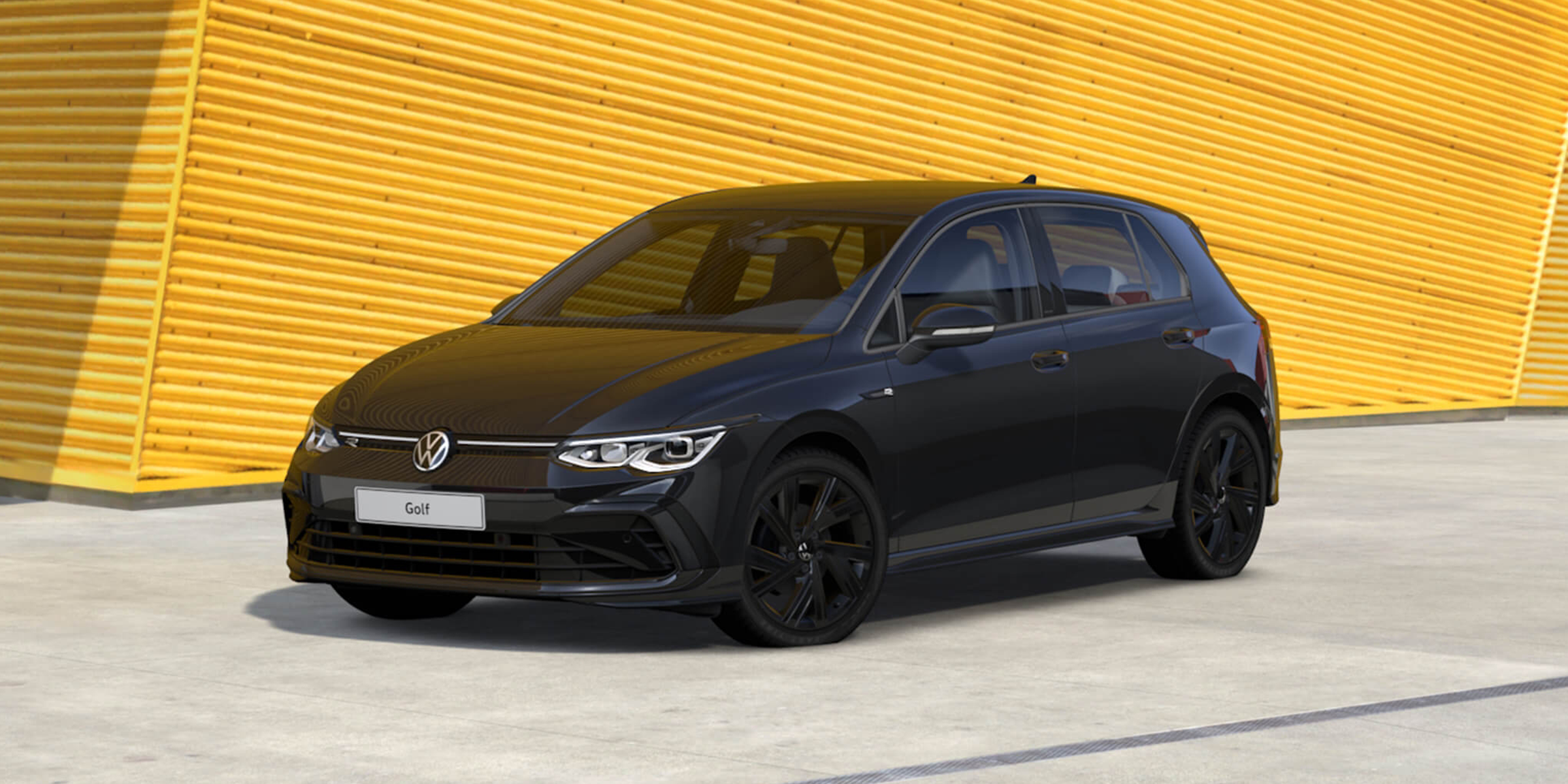
Volkswagen has added a new model to its Golf hatchback line-up – the Golf Black Edition – which sports some unique cosmetic features.
The ‘Black Edition’ is now available to order in the UK, and sits above the ‘Life’, ‘Style’ and ‘R-Line’ in the core combustion-powered Golf range, and is cheaper than the plug-in hybrid ‘GTE’ model and the high-performance ‘GTI’ variant.
This new trim essentially builds on the ‘R-line’ specification, which already includes LED headlights, a leather-trimmed steering wheel, keyless entry, a 10-inch digital instrument cluster, ambient lighting in the cabin, adaptive cruise control and parking sensors in the front and rear.
The Volkswagen ‘Black Edition’ adds larger 18-inch alloy wheels finished in black – which Volkswagen says are not available with any other Golf in the UK – and a ‘Black Style’ pack which includes an illuminated strip between the headlights, recessed and illuminated door handles, and black wing mirrors.
This new trim also comes with a ‘Winter’ pack, which adds a rear-view parking camera. Rear privacy glass is included, and there are five exterior bodywork colours to choose from.
The ‘Black Edition’ line-up begins with a 150hp 1.5-litre petrol model which makes use of a six-speed manual gearbox. A mild-hybrid model that uses the same 1.5-litre petrol unit and a seven speed automatic transmission is also available. The top-spec model is a all-wheel drive 190hp 2.0-litre petrol model which is also a seven-speed automatic.
This new trim addition costs £2k more than the ‘R-Line’, and £5k more than the entry-level Golf ‘Life’. Now available, prices for the Golf ‘Black Edition’ start at just under £32k.
The Mk8 Volkswagen Golf has received praise for being better to drive than its acclaimed predecessor, although its ‘all-digital’ interior has received generally poor reviews from almost all reviewers for not being anywhere as user-friendly as previous models. It currently holds an Expert Rating of 75%.
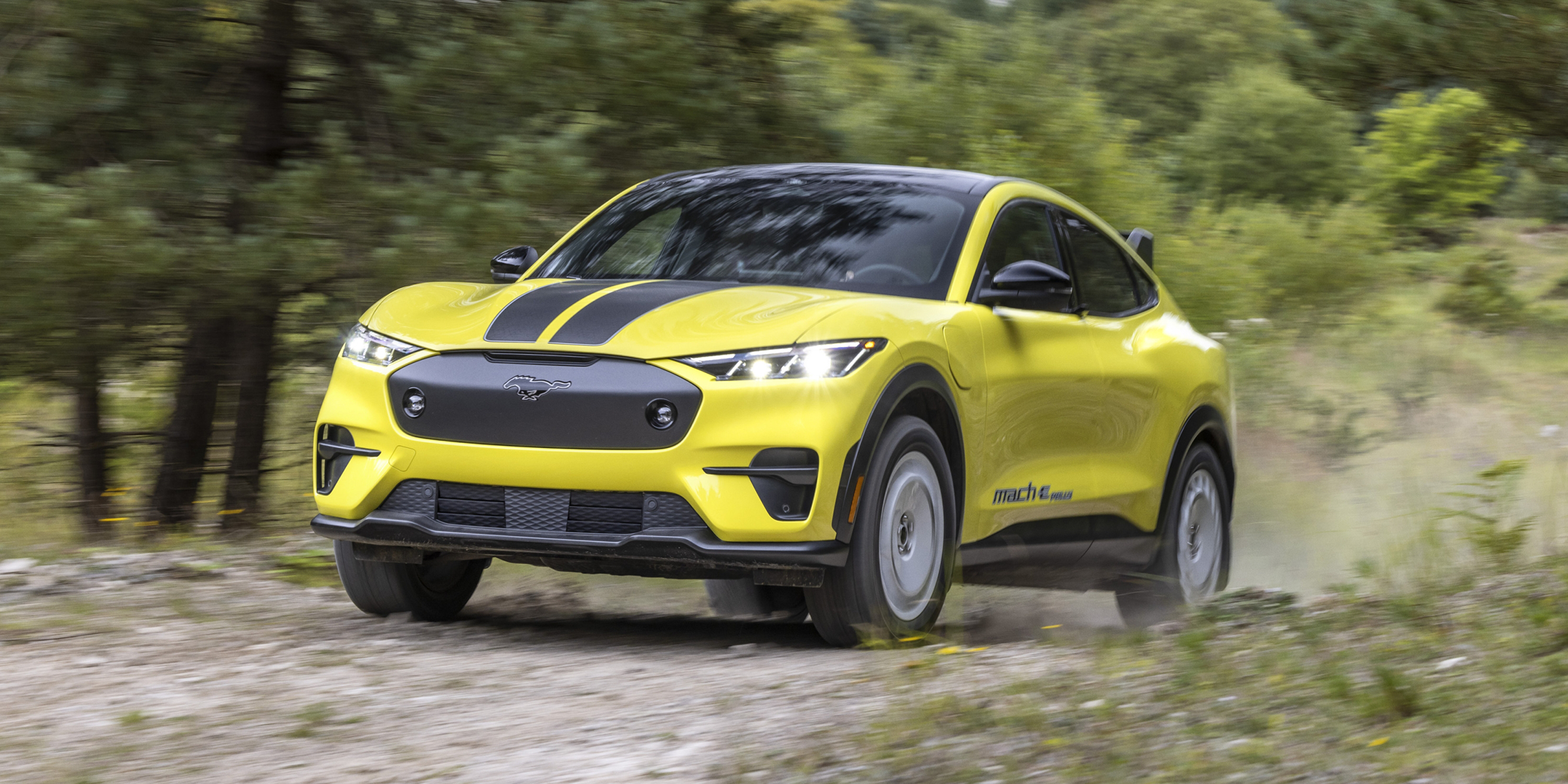
Ford has announced that it will soon be selling its first “first-ever rally-inspired EV”, which will expand the Mustang Mach-E SUV range when it arrives early next year.
This new variant is powered by the same 91kWh battery pack and 480hp twin electric motor setup as the equally powerful Mustang Mach-E GT model, but with several cosmetic and technical alterations.
The SUV comes with a rally-tuned suspension with an extra two centimetres of ground clearance with re-tuned springs and magnetically-controlled shock absorbers. Brembo brake callipers finished in red also feature, like on the GT editions.
The Mach-E Rally sits on white 19‑inch alloy wheels which Ford says is inspired by the brand’s history of rally vehicles, which are wrapped in Michelin Cross Climate tyres that have thicker sidewalls to boost grip on loose surfaces.
Besides the black dual racing stripe bodywork finish, exterior alterations include a unique front splitter, a black steel roof, built-in fog lights on the front fascia and a large spoiler above the rear window that the manufacturer says takes inspiration from the now-discontinued Focus RS hot hatch.
On the move, the driver can turn on a new ‘RallySport Drive’ mode that adapts electronic control systems to allow bigger slides, modifies linear throttle response for better control, and stiffens the suspension for better handling in loose corners.
Inside, the interior layout and trim is mostly unchanged. White accents feature on the dash, the lower spokes of the steering wheel, the seatbacks and the stitching on the doors. ‘Mach-E Rally’ branding is embossed on the seats.
That sums up what we know about the Ford Mustang Mach-E Rally so far. Pricing and trim specifications are yet to be confirmed, but Ford has said that the model will be available to order in early 2024, with the first orders arriving on UK roads shortly after that. For comparison, the range-topping Mach-E GT is currently priced at over £74k.
The Ford Mustang Mach-E range has been praised by the British motoring media for its straight-line performance and its spacious interior, but the SUV’s ride quality has been criticised, and some reviewers have concluded that its handling is not as good as some rivals. It currently holds an Expert Rating of 75%.
BMW has bolstered its all-electric iX1 range with the addition of a second powertrain choice. Called the iX1 ‘eDrive20’, this variant is available to order now, with the first UK deliveries planned for November.
Prior to this range update, the compact BMW iX1 was only available in its ‘xDrive30’ guise. BMW says this new alternative ‘eDrive20’ powertrain choice is more economical – offering “the same attractive design and spacious interior together with an increased fully-electric range.”
The ‘eDrive20’ isn’t as powerful as the 313hp ‘xDrive30’ – powered by 204hp electric motor and 65kWh battery pairing – but BMW says it can muster up to 296 miles of battery range on a single charge, around 30 miles more than the powertrain already on sale.
The car is compatible with up to 22kW AC and 130kW DC charging, the latter charging the battery from 10% to 80% in a reported 29 minutes. A 0-62mph sprint takes 8.4 seconds, and the SUV’s top speed is electronically limited at 106mph.
The other notable difference between the two powertrains is price. The new ‘eDrive20’ is now priced at around £45k, which lowers the price of the iX1 range by over £10k.
The BMW iX1 has been highlighted by British reviewers as the best choice in the new third-generation X1 SUV range – praised for its pace and acceleration, as well as its spacious upmarket interior that is fitted with the brand’s latest user-friendly on-board tech.
This new addition to the range has the potential to raise the SUV’s current Expert Rating of 72%, as two key criticisms of the model have related to its price tag and limited powertrain choices.
August saw a sharp downturn in private new car sales, which dropped 8% compared to the same month last year, in what will be a concerning result for the car industry.
Data published this morning by the Society of Motor Manufacturers and Traders (SMMT) shows that overall new car registrations were up 24% year-on-year in August, but that was driven by a 58% growth in fleet registrations. This was the 12th consecutive month of growth for fleets, which is a reflection of the massive falls in fleet numbers from the previous 12 months.
Are poor private sales a blip or a warning?
August is a notoriously difficult month for making predictions, as it’s the second-smallest month of the year (just above February). Both months lead into new number plate months in March and September, which are the two biggest months of the year. As such, relatively small swings in sales up or down can distort the data by a large degree.
However, there’s no arguing the fact that August 2023 was the slowest August for private new car sales since 2012 – when most of the country was more interested in watching the London 2012 Olympic Games than running out to buy a new car.
With ever-increasing interest rates and new car prices following a similar trajectory, it’s entirely reasonable to expect that consumers to be reining in their new car spending. All year, we’ve seen private new car sales up or down by a couple of percentage points, but an 8% drop is more significant. But we’ll have to wait and see what happens in September for a better assessment. Private sales in March, the other headline month of the year, were underwhelming and we’re not expecting anything massive for September or the rest of this year.
August
Buyer
August 2023
August 2022
% change
Market share 2023
Market share 2022
Private
32,071
34,891
-8.1%
37.4%
50.7%
Fleet
51,951
32,794
58.4%
60.7%
47.6%
Business
1,635
1,173
39.4%
1.9%
1.7%
Total
84,657
68,858
24.4%
Source: SMMT
Year to date
Buyer
YTD 2023
YTD 2022
% change
Market share 2023
Market share 2022
Private
527,442
522,840
0.9%
44.7%
53.2%
Fleet
623,637
437,280
42.6%
52.9%
44.5%
Business
28,219
22,979
22.8%
2.4%
2.3%
Total
1,179,298
983,099
20.0%
Source: SMMT
Electric car sales improving, although not definitive
It looked to be a good month for electric car sales, which took 20% of the market in August. That’s up on the year-to-date average of 16%, but again it’s difficult to judge anything on August data alone – especially for EVs. Tesla had two cars in the top ten this month, and the American brand accounted for almost half of the EV growth in August.
Plug-in hybrids continue their improved form from the last couple of months, although regular hybrids slipped back a bit. Diesel sales endured yet another ‘worst month ever’, with market share falling to a new low of 6.5%. And obviously, everything else was petrol as usual.
New car registrations by fuel type – August
Fuel
August 2023
August 2022
% change
Market share 2023
Market share 2022
Petrol*
47,688
39,979
19.3%
55.7%
58.0%
Electric
17,243
10,006
72.3%
20.1%
14.5%
Hybrid
8,551
8,007
6.8%
10.0%
11.6%
Plug-in hybrid
6,601
3,884
70.0%
7.7%
5.6%
Diesel*
5,574
6,982
-20.1%
6.5%
10.1%
Total
85,657
68,858
28.3%
*includes mild hybrids Source: SMMT
New car registrations by fuel type – Year to date
Fuel
YTD 2023
YTD 2022
% change
Market share 2023
Market share 2022
Petrol*
669,034
566,412
18.1%
56.7%
57.6%
Electric
193,221
137,498
40.5%
16.4%
14.0%
Hybrid
144,542
113,339
27.5%
12.3%
11.5%
Diesel*
92,043
104,170
-11.6%
7.8%
10.6%
Plug-in hybrid
80,458
61,680
30.4%
6.8%
6.3%
Total
1,179,298
983,099
20.0%
*includes mild hybrids Source: SMMT
Good month, bad month
There’s always quite a lot of fluctuation in August, as car manufacturers and dealerships either hold cars back for September or push to get them out the door beforehand. But in an overall market that was up 24% compared to the same month last year, there were plenty of winners and losers across the board.
Volkswagen was the biggest-selling brand in August ahead of Ford and Audi, which was the same as last month. Vauxhall was fourth, replacing Kia, while BMW was again fifth.
All eyes will now be on the crucial September results…
The Ford Puma was again the best-selling car in August, further extending its lead in the 2023 sales race. Tesla had a strong month, with both of its cars in the top ten, while Ford also had the Kuga and outgoing Fiesta in the best-sellers list as well.
Notably missing from the top ten was Nissan, with neither the Qashqai nor the Juke making an appearance in August. This means that the Qashqai has now slipped to fourth in the year-to-date sales race, overtaken by the Tesla Model Y. However, it may be worth pointing out that the same thing happened last year, with the Qashqai nowhere to be seen in August then topping the charts with a massive month in September. Is Nissan trying to pull the same trick again this year?
The Ford Fiesta made what could well be its final appearance in the top ten in August, unless Ford is holding a lot of stock back for September. Now that the Fiesta is out of production, it’s unlikely to reappear.
We’ll have our usual full analysis of the top ten shortly.
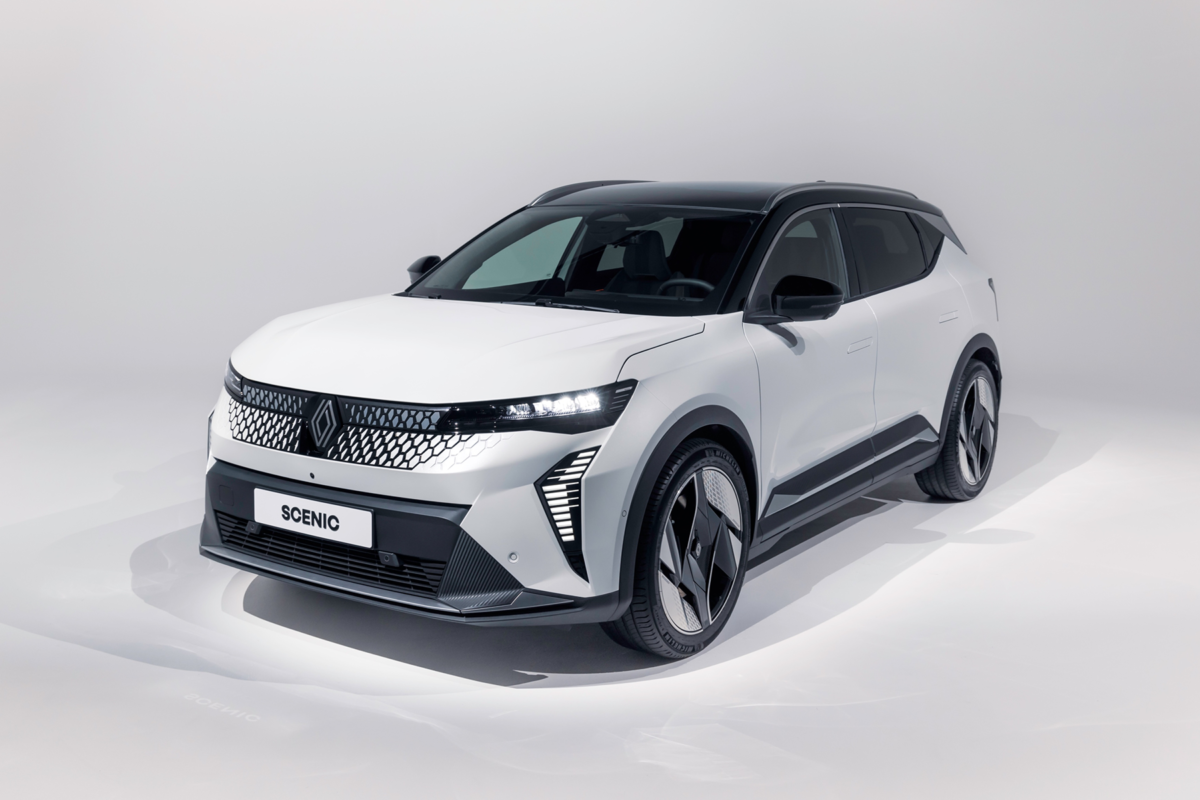
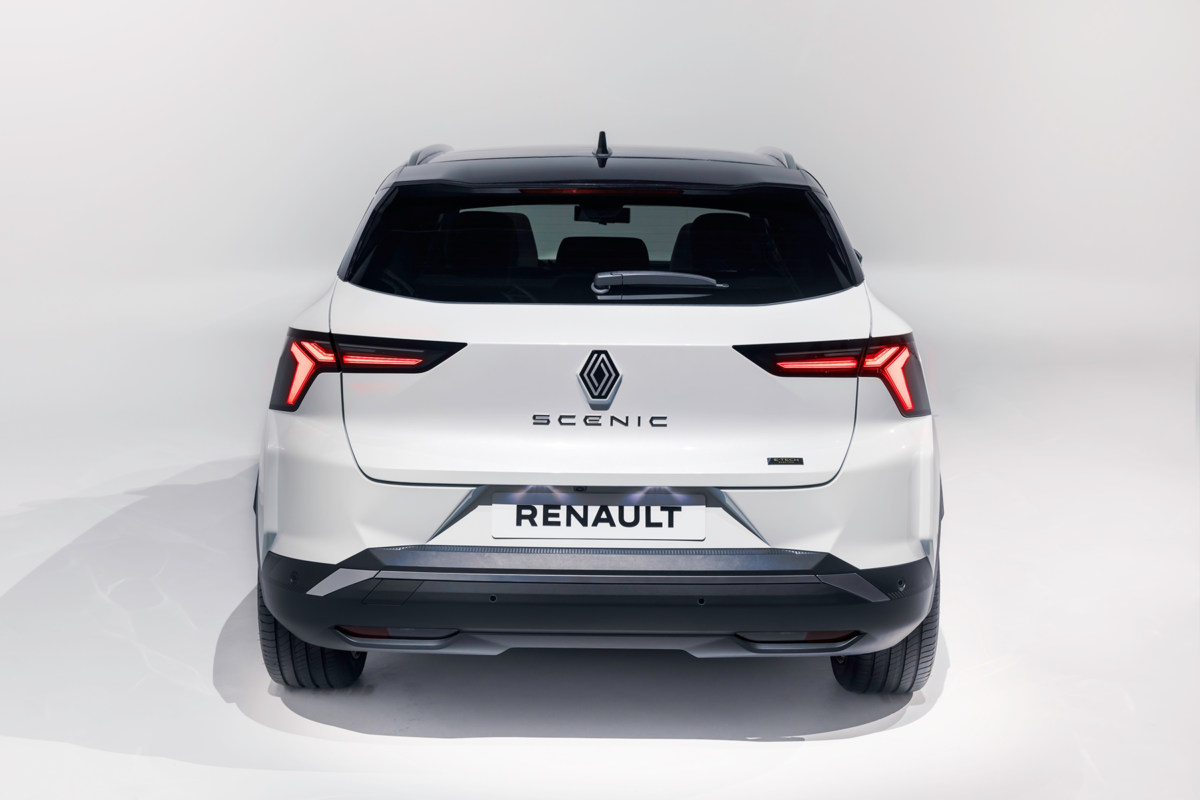
After a four-year absence, the Renault Scenic nameplate will return to the UK market in early 2024, but the former combustion-powered people carrier we knew is long gone.
The Scenic was retired in 2019 due to the declining popularity of people carriers in the UK. This new model is instead a large SUV, and an all-electric one at that – marketed as the ‘Scenic E-Tech’. It shares its foundations with the smaller Mégane E-Tech and the Nissan Ariya.
Unveiled this week at the Munich motor show, the new Scenic has been “designed around families and their need to travel freely and safely”, Renault adding that it has a keen focus on sustainability. 24% of the new model’s materials are reportedly recycled and, when the car is eventually put out to pasture, 90% of its mass is recyclable.
This new iteration has a slightly longer cabin than the former Scenic people carrier, which should boost rear legroom, but has a shorter stance as the roofline is a few centimetres lower. Opening the boot reveals 545 litres of storage space, which is 27 litres less than the people carrier, but 89 litres more than the Nissan Ariya.
Renault adds that the car’s cabin is “fully flat”, and that it sits on 19-inch alloy wheels as standard, though 20-inch alloy wheels will also be available. Following the latest design trends, the Scenic’s door handles are flush with the body. The grille, which features Renault’s latest branding, is composed of small diamonds, which appear and disappear depending on the light and angle.
Inside, a 12-inch portrait-oriented touchscreen is angled towards the driver on the dashboard, sitting next to a 12-inch digital instrument cluster behind the steering wheel. The central screen comes with Google Play installed, offering more than 50 different apps, “from music quizzes and family games to journey planning”.
Two different powertrain options will be offered. The first uses a 170hp electric motor and a 60kWh battery pack pairing to deliver an estimated range of 260 miles. The second features a more powerful 220hp electric motor, coupled with a larger 87kWh pack that Renault says can travel up to 379 miles on a single charge.
That just about sums up what we know about the new Renault Scenic E-Tech. More details, including UK pricing and full trim specifications, will be announced closer to the car’s official arrival early next year.
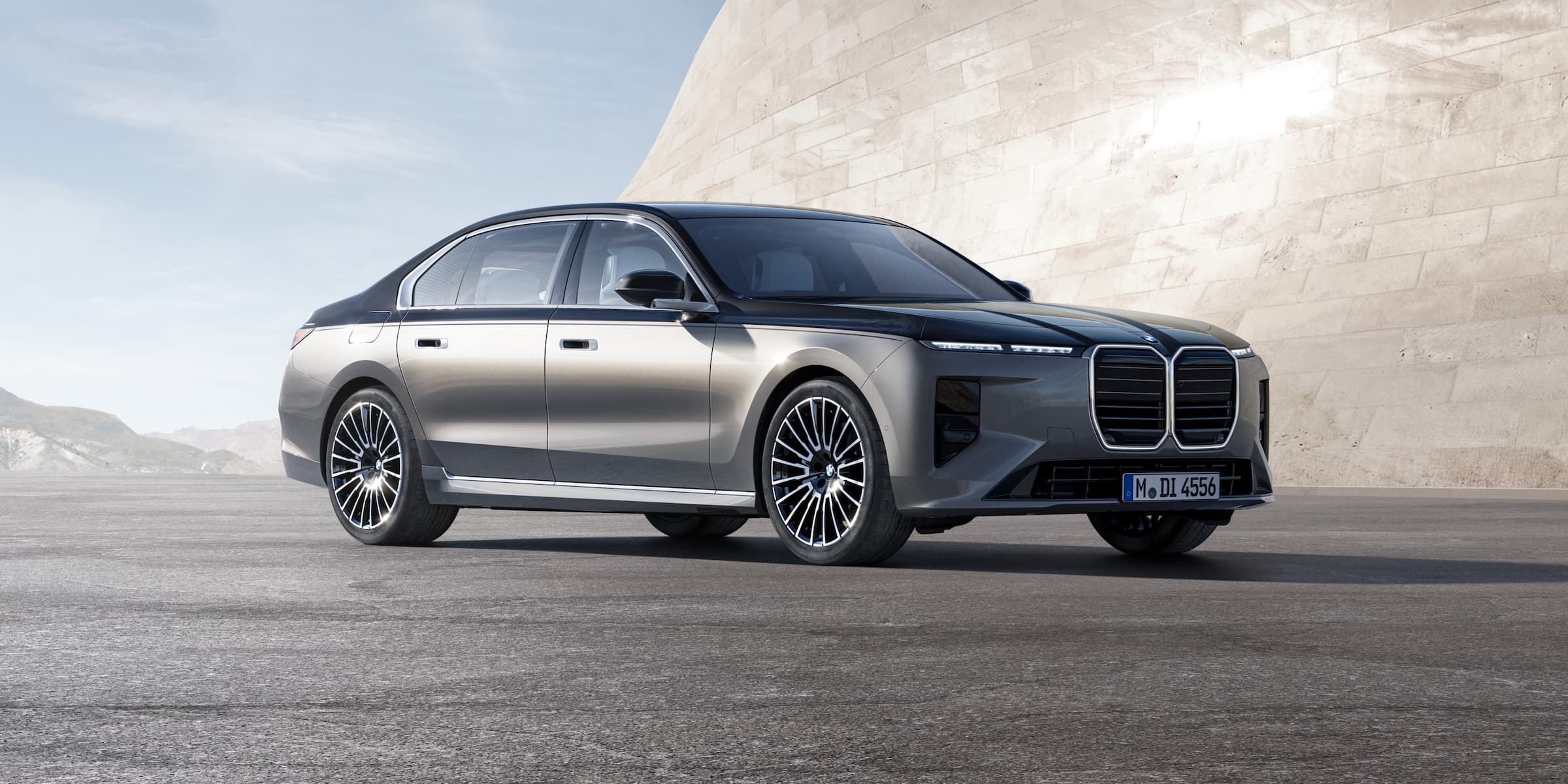
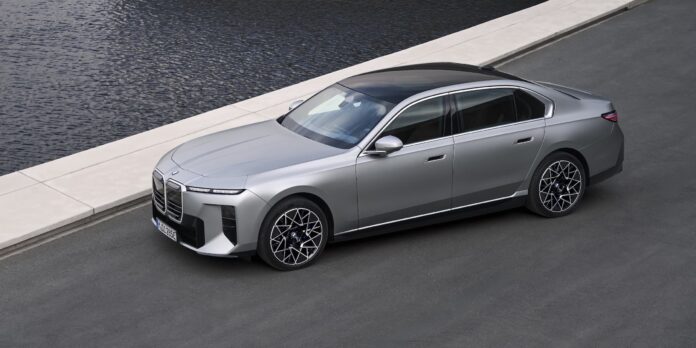
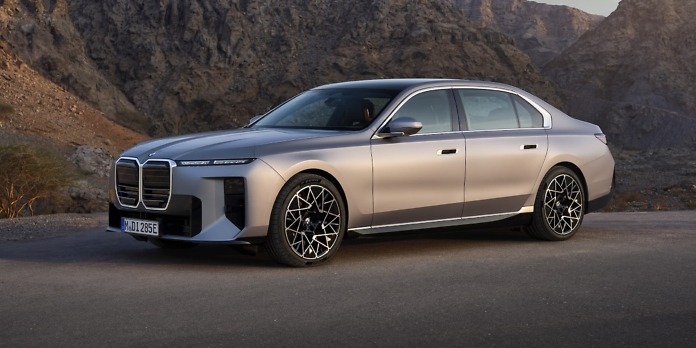
On sale in different guises since 1977, the BMW 7 Series is the German brand’s largest luxury saloon. This is the latest seventh-generation model, which became available to order at the start of 2023. The range also includes the all-electric i7 saloon, which is instead covered here.
The new 7 Series offers one of the most luxurious driving experiences around, with innovative on-board tech that makes it stand out from its rivals. Yet British reviewers are yet to give the plug-in hybrid full marks, with many preferring the electric i7 for being marginally more comfortable.
Motoring outlets have also criticised the BMW’s divisive exterior styling and eye-watering six-figure price tag – complaints that also apply to the i7 – but all agree that the cabin is of the highest quality. “It has arguably the finest interior in the automotive world”, asserts Top Gear‘s Jason Barlow. “You can argue among yourselves about the exterior design, but inside is a knock-out.”
The 7 Series received a major mid-life update in the spring of 2026. This is set to arrive in the UK before the end of the year.
As of August 2026, the BMW 7 Series holds a New Car Expert Rating of C, with a score of 62%. This is somewhat lower than the all-electric i7, which is due to higher running costs and slightly lower review scores from the UK motoring media.
“The BMW 7 Series is a high-end saloon that’s filled to the brim with kit and is very comfortable throughout. Looks will divide people though, and it certainly isn’t cheap.”
Model reviewed: Range overview Score: 8 / 10 “Divisive styling doesn’t change the fact that the BMW 7 Series is one of the most impressive luxury vehicles on sale today.” Author: Max Adams, Shane Wilkinson Read review
Auto Trader
Model reviewed: Range overview Score: 8 / 10 “The BMW 7 Series sells in tiny numbers in the UK and Europe but has a bigger role to play as a global ambassador for the brand’s latest tech, design and innovation.” (Dan Trent) Read review
Car
Model reviewed: 3.0-litre petrol/electric plug-in hybrid M760e Score: 10 / 10 “We find BMW’s approach to the new 7 Series generally appealing – instead of building a bespoke electric car, it’s engineered its latest flagship right from the start to accept every kind of powertrain. That means that every 7 Series customer knows that they’re getting the best of BMW’s best, no matter which kind of engine suits their needs and lifestyle.” Author: Alan Taylor-Jones Read review
Heycar
Model reviewed: Range overview Score: 8 / 10 “The BMW 7 Series makes a statement in the way it looks and drives, and with a cabin packed full of technology. Not everyone loves the styling, but the big 7 remains at the pinnacle of the BMW range for comfort and class.” Author: Al Suttie Read review
Honest John
Model reviewed: Range overview Score: 8 / 10 “Luxury and technology abound in the BMW 7 Series, with a truly first class experience for those in the back. Look beyond the divisive design and you’ll find a limousine that’s as good to drive as it is to be driven in.” Read review
Parkers
Model reviewed: Range overview Score: 8.8 / 10 “Its design may put some off, but it may attract others. But what really sets the BMW 7 Series apart is the impressive build quality of its interior and the technology available to the buyer.” (CJ Hubbard) Read review
RAC
Model reviewed: Range overview Score: 6.9 / 10 “With this seventh generation 7 Series saloon, BMW elevates itself back into contention at the top end of the boardroom-level luxury sedan segment.” (Jonathan Crouch) Read review
Top Gear
Model reviewed: Range overview Score: 9 / 10 “The new 7 Series has arguably the finest interior in the automotive world, beautifully executed, well-made and imaginative. You can argue among yourselves about the exterior design, but inside is a knock-out.” (Jason Barlow) Read review
Safety rating
Independent crash test and safety ratings from Euro NCAP
No safety rating
As of August 2026, the BMW 7 Series has not been tested by Euro NCAP.
Eco rating
Independent economy and emissions ratings from Green NCAP
No eco rating
As of August 2026, the BMW 7 Series has not been tested by Green NCAP.
Reliability rating
Reliability data provided exclusively for The Car Expert by MotorEasy
Total claims: 245 Average repair cost: £899.34 Last updated: August 2026
The BMW 7 Series has a historically poor reliability record, according to workshop and extended warranty data provided by our partner, MotorEasy. However, it’s worth noting that most of the data will relate to the previous (pre-2022) generations of 7 Series, rather than the current car,
The average repair bill to date has been about £900, with suspension problems being the most common faults. Engine problems have also been common, and they’re more expensive to repair with an average bill of £1,300.
Running cost rating
Monthly cost of ownership data provided exclusively for The Car Expert by Clear Vehicle Data
Fuel consumption
Average
Score
Plug-in hybrid models
255 mpg
A
CO₂ output
Average
Score
Variation
Score
Plug-in hybrid models
25 g/km
A
Battery range
Average
Score
Variation
Score
Plug-in hybrid models
48 miles
D
Insurance group
Average
Score
Variation
Score
All models
50
F
Service and maintenance
Cost
Score
Year 1
£504
E
Year 2
£1,022
E
Year 3
£1,567
E
Year 4
£1,871
E
Year 5
£2,471
E
Overall
£7,435
E
The seventh-generation BMW 7 Series is quite an expensive to run and own, according to whole-life cost data provided exclusively to The Car Expert by our technical partner, Clear Vehicle Data.
The 7 Series is only offered as a plug-in hybrid in the UK, which means that the official fuel consumption and CO2 emissions figures look amazing, but they won’t be anything like that in real-world driving. There’s no way you’ll ever manage to travel 259 miles on one gallon (4.5 litres) of petrol and a full battery. In our own review of the 750e model, we averaged 35-40mpg over a week of driving.
The car’s insurance premiums also reflect its eye-watering price tag, although service and maintenance costs over five years of ownership are predicted to be around the market average, and a bit cheaper to maintain than key rivals like the Mercedes-Benz S-Class.
Warranty rating
New car warranty information for the BMW 7 Series
Overall rating
B
78%
New car warranty duration
3 years
New car warranty mileage
Unlimited miles
Battery warranty duration
8 years
Battery warranty mileage
100,000 miles
BMW’s new car warranty is fairly average, running for three years, with no limit on mileage. That’s better than Audi (three years/60,000 miles) and the same as Mercedes.
In addition to the standard new car warranty, the 7 Series has an eight-year/100,000-mile warranty for the plug-in hybrid battery components.
If you are purchasing an ‘Approved Used’ BMW 7 Series from an official BMW dealership, you should get a minimum 12-month/unlimited mileage warranty included. If you are buying a used 7 Series from an independent dealership, any warranty offered will probably be managed by a third-party warranty company and the terms may vary. If you are buying a used 7 Series from a private seller, there are no warranty protections beyond anything that may be left on the original new car warranty.
If you’re looking to buy a used car that is approaching the end of its warranty period, a used car warranty is usually a worthwhile investment. Check out The Car Expert’s guide to the best used car warranty providers, which will probably be cheaper than a warranty sold by a dealer.
Similar cars
If you’re looking at the BMW 7 Series, you might also be interested in these alternatives.
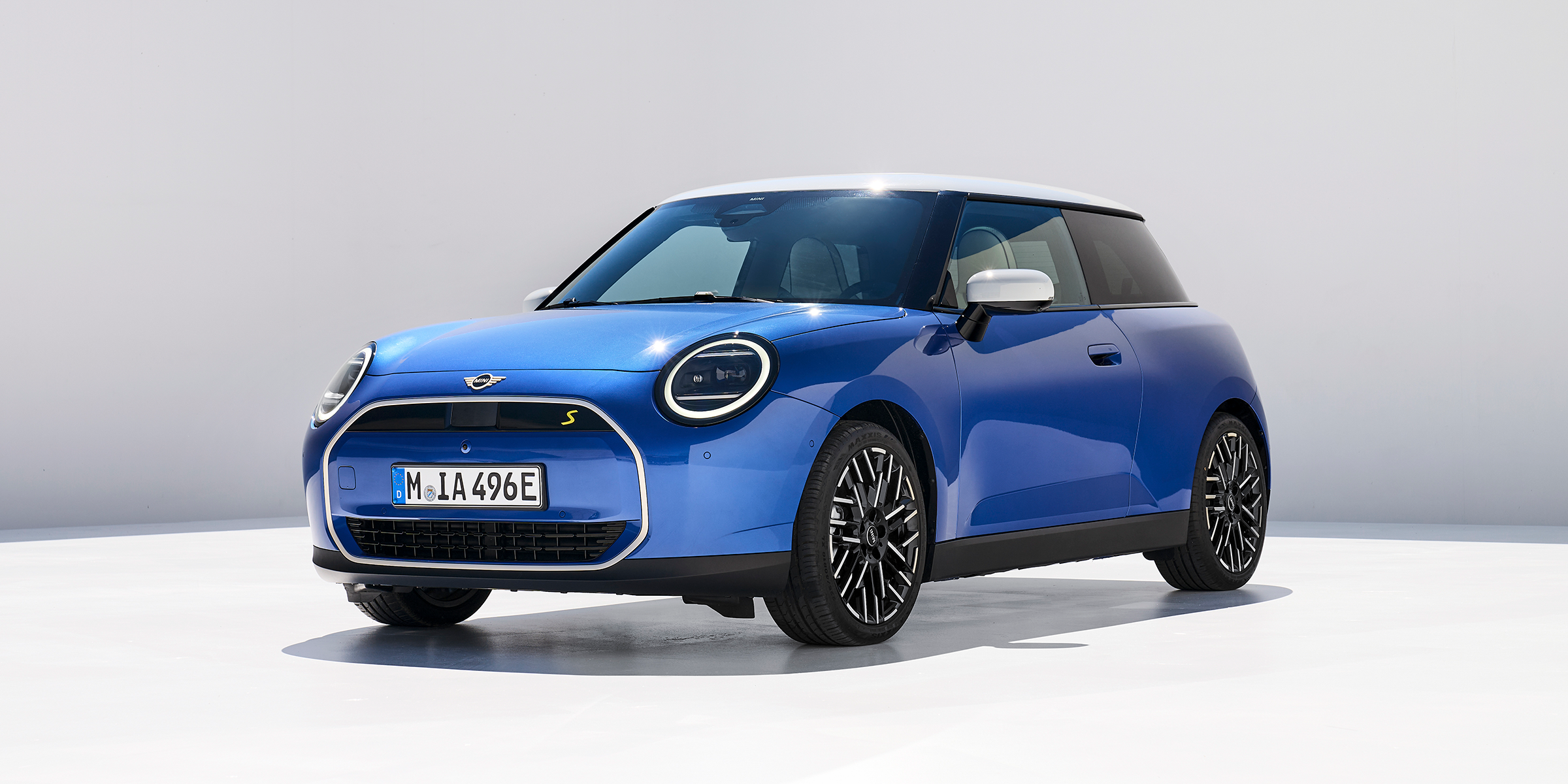
Mini has shown off its fifth-generation Electric hatchback at the Munich motor show, which the brand says offers a “major step forward in technology” over the current range.
An unmistakable Mini, this new model sports the oval-shaped LED headlights and two-tone paintwork that has become synonymous with the British brand, in a simplistic exterior design that Mini says is a “reinvention” of the Mini Electric that has been on sale in the UK since 2020.
The ‘Cooper’ nameplate is set to make a return too, as Mini has decided to revive the well-known moniker for all of its next-generation compact hatchbacks, whether they are all-electric or petrol-powered.
Exterior design changes include flush door handles, the removal of wheel arch plastics and air vents in favour of giving the car a smoother front bumper, and more notably new taillights in the rear, replacing the current model’s Union Flag design. The lights are customisable though, and customers can choose between three different light signatures, including a more patriotic option.
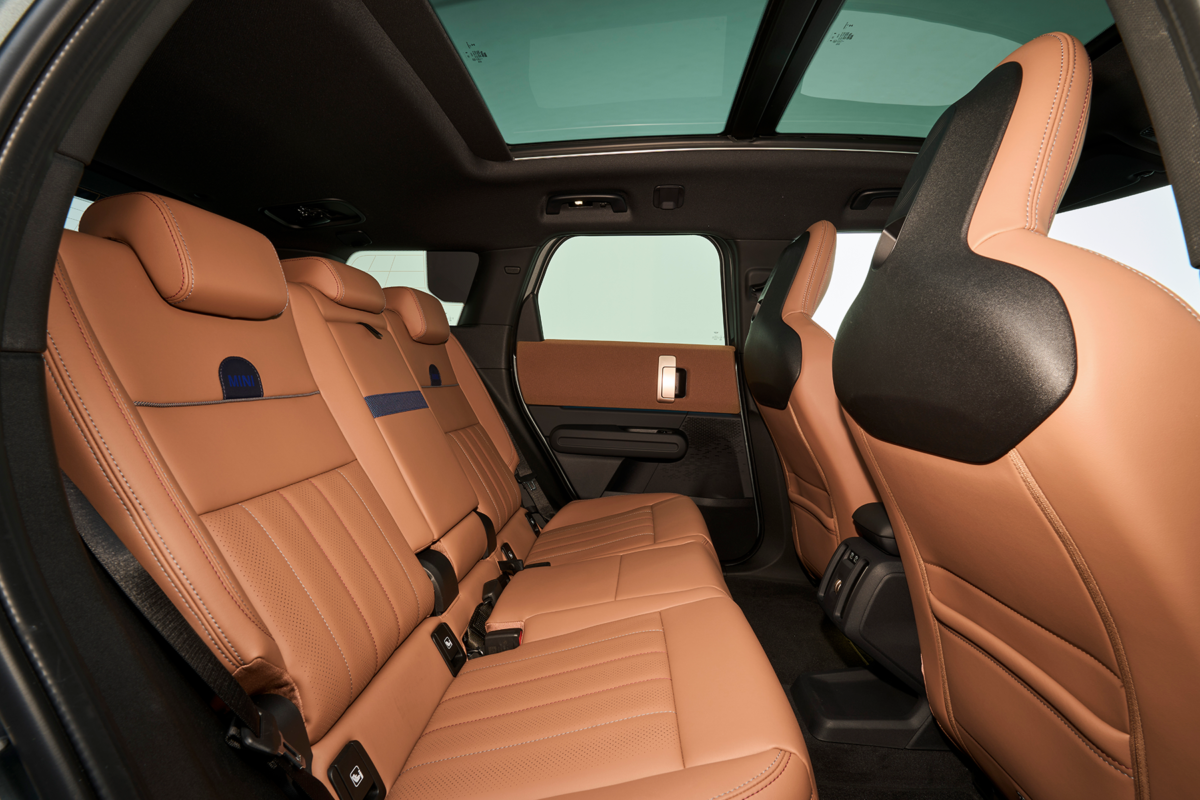
Mini says that it has made the tyre tracks wider to aid steering and road traction, and adds that the new model is slightly longer than the current iteration, which should provide more legroom in the cabin – particularly for passengers in the back. 200 litres of luggage space can be found in the boot (11 litres less than the current Mini Electric), which extends to 800 litres with the rear seats folded.
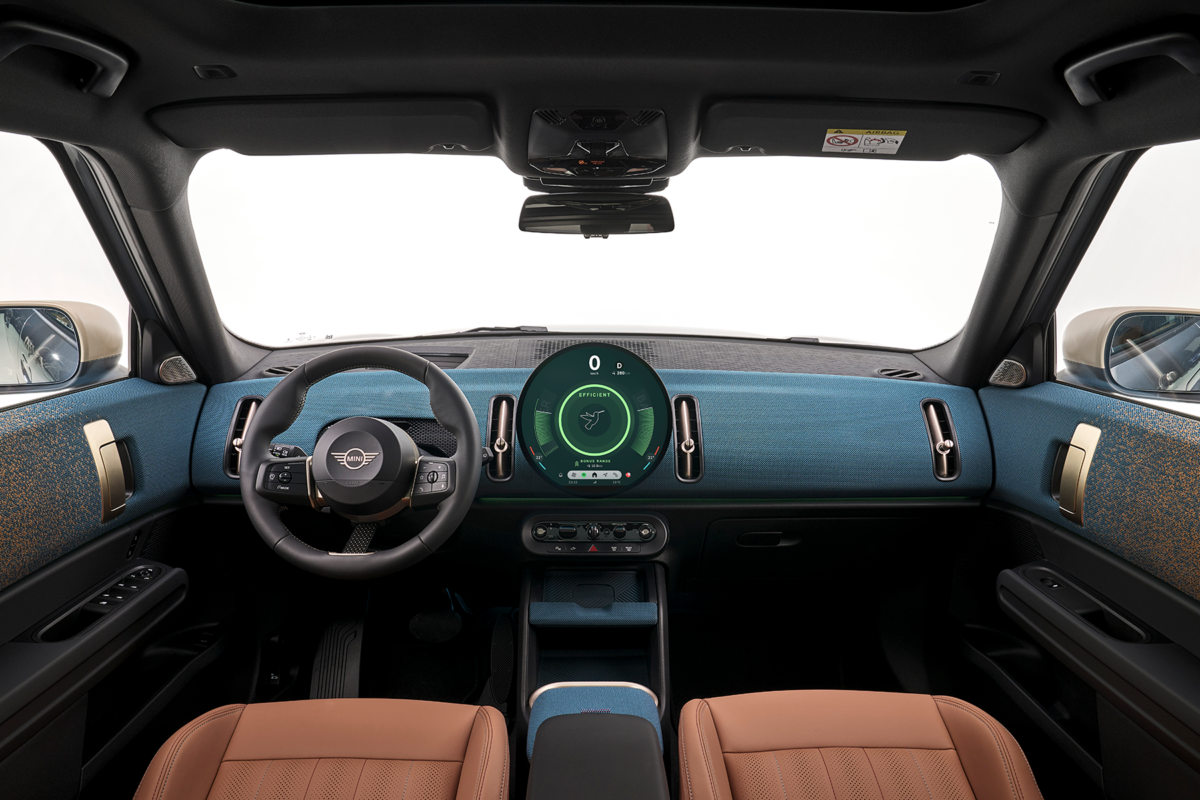
Stepping inside, the Cooper Electric comes with a circular central screen like its predecessor, but the display has been given more prominence on the dashboard.
This nine-inch console comes with seven different ‘experience modes’ that change the display style and the colour of the lighting that’s projected onto the knitted dashboard. It is also where driving information and navigation is displayed, as there is no digital instrument cluster behind the steering wheel. A head-up display is available for an additional fee though, which projects driving information onto the windscreen.
These ‘experience modes’ also alter the car’s driving behaviour. ‘Go-Kart’ mode, for example, modifies steering response and the intervention limits of traction control for more driving fun, while ‘Green’ mode optimises the battery efficiency to provide a longer range.
Two different powertrains will be available, starting with the lead-in ‘E’. This model makes use of a 41kWh battery and a 184hp electric motor to provide an official range of up to 190 miles and a 0-62mph sprint time of 7.3 seconds.
The top-spec ‘SE’ can complete the same run in a reported 6.7 seconds, thanks to its larger 54kWh battery and its more powerful 218hp electric motor. It also has a longer maximum range – 250 miles.
Once you have selected your desired battery option, you will have three trims to choose from – ‘Classic’, ‘Exclusive’ and ‘Sport’. The full trim specifications are yet to be released, but each trim has several unique cosmetic features.
That just about sums up what we know about the new electric Cooper range so far. Mini is yet to announce exactly when the new model will go on sale, but has said that it plans to deliver the first customer orders in Spring next year.
Pricing begins at a flat £30k for the Cooper Electric ‘E’, rising to above £34k for the ‘SE’ powertrain.
Mini has debuted the next iteration of its Countryman crossover at the Munich motor show, which will be offered a family-sized electric (EV) option for the first time.
The new Countryman is not so ‘mini’ either, as it is six centimetres taller and 13 centimetres longer than its predecessor, which should increase shoulder room and legroom in the cabin. The car sits on 17-inch alloy wheels as standard, but bigger 19- and 20-inch alloy wheels will also be offered for an additional fee.
The new Countryman compared with its predecessors
Starting with the petrol models, the new Countryman range begins with the 170hp ‘C’ model, followed by the 218hp all-wheel drive ‘S ALL4’. The range also includes a high-performance Countryman ‘JCW ALL4’ model, which provides 300hp and a 0-62mph sprint time of 5.4 seconds.
Two electric models will be offered, which both use the same 65kWh battery to deliver a “go-kart feel” driving experience. The 204hp ‘E’ is equipped with a single electric motor and can muster a reported 287 miles of range on a single charge, while the more expensive 313hp all-wheel drive ‘SE ALL4’ has an official battery range of 269 miles.
Electric versions are compatible with 22kW AC charging optionally and 130kW DC charging, and the brand says that the latter charges the battery from 10% to 80% in under 30 minutes.
Inside, the Countryman adopts the same circular OLED central screen on the dash as the Mini Electric. There is no instrument cluster behind the steering wheel, with the driving information displayed on the central screen or the optional head-up display that projects data onto the windscreen.
The display is customisable, with different display modes to choose from including a ‘personal mode’ which allows you to pick any picture to use as the screen’s background, and the optional projector hidden behind the screen will then pick out the dominant colours and display them across the knitted dashboard.
Customers in the UK have the choice of three trims – ‘Classic’, ‘Exclusive’ and ‘Sport’ – with the exact specifications of these trim grades yet to be confirmed. The new Countryman isn’t available to order just yet, but Mini says that the first customer orders should be delivered by February next year.
Prices begin at over £28k for the entry-level ‘C’, while pricing for the electric range begins at over £41k. The most expensive model will be the ‘SE ALL4’, which will cost close to £47k before trim levels are considered.
Volkswagen has unveiled its ninth-generation Passat estate-only family car, which will be available with either petrol or plug-in hybrid power.
Set to rival the Mercedes-Benz C-Class estate and BMW 3 Series Touring like the current Passat estate model, the new version will join the Volkswagen range next year, sitting alongside the cheaper Golf estate and more expensive Arteon Shooting Brake.
The current Passat generation was available as a saloon when it first launched in 2015, but this saloon version was discontinued, and this next-generation range follows suit. The current line-up did also include a more rugged Passat Alltrack estate model, but there is no word if that model will be carried forward either.
Making its public debut at the Munich motor show next week, the new Passat builds on the exterior design of its predecessor, with sharper body contours, slimmer LED headlights and taillights that stretch across the boot lid in the rear.
The new model is reportedly more aerodynamic – which will marginally improve the estate’s fuel efficiency – and it is bigger too. There is an extra five centimetres of length between the front and rear wheels, which increases legroom for passengers in the back. There is also an additional 40 litres of boot space when compared to the current eighth-generation – 690 litres in total.
Four different engine options will arrive in the UK, starting with a new 150hp 2.0-litre petrol mild-hybrid option which allows the car to coast without using the combustion engine. This will be followed by two plug-in hybrid models that use the same 1.5-litre turbo petrol engine and 20kW battery pairing, providing an output of 204hp and 272hp respectively.
The current range includes a plug-in hybrid version, but Volkswagen says that these ninth-generation plug-in hybrids are “newly developed”, offering an all-electric range of up to 62 miles for the first time.
Topping the range is a four-wheel drive turbocharged 2.0-litre petrol. Diesel models are set to go on sale in Germany, but they will not be coming to the UK. All models are fitted with an automatic gearbox.
Inside, a 13-inch central touchscreen running Volkswagen’s latest infotainment software is paired with a ten-inch digital instrument cluster behind the steering wheel. A larger 15-inch infotainment console is also available on the options list.
The drive selector has been moved to the steering wheel column, freeing up more space for storage cubbies on the centre console. Matrix LED headlights and a semi-autonomous parking assistance feature that can park the car using the driver’s smartphone are also offered for an additional fee.
That sums up what we know about the new Passat at the moment. The estate has been priced at just under €40k in Germany, with UK pricing, trims and exact arrival date yet to be confirmed. The details are sure to follow in the coming months.
In development since 2021, Alfa Romeo has unveiled the new 33 Stradale supercar, which will be delivered to a select number of wealthy customers next year.
Viewed by its designers as a stylish modern interpretation of the 1967 33 Stradale, Alfa Romeo says that the new supercar links the internal combustion engines of its past with the brand’s all-electric future.
Handcrafted by bespoke coachbuilder Carrozzeria Touring Superleggera, the new 33 Stradale marks Alfa Romeo’s return to custom-built limited-edition cars, or “fuoriserie”, for the first time in over 50 years. This supercar will be the first in a series of custom-built models that display what the brand can achieve while paying tribute to its history.
This will no doubt be Alfa’s final combustion-powered supercar, but it is also the manufacturer’s first electric car (EV). Buyers could have either opted for a more traditional 620hp twin-turbocharged 3.0-litre V6 petrol engine, or a 750hp fully-electric configuration with a maximum battery range of 280 miles.
The petrol engine option is essentially an upgraded version of the powerful petrol unit in Alfa’s Giulia Quadrifoglio and Stelvio Quadrifoglio, while the EV has a similar tri-motor four-wheel-drive setup as the Maserati’s upcoming GranTurismo Folgore, and will have artificial engine sounds as a feature in the cabin.
The petrol version can reportedly muster a 0-62mph sprint time of “under three seconds” and a top speed of 207mph. The EV can complete the same sprint in “under two-and-a-half seconds”.
Besides performance, Alfa Romeo also wanted to optimise the supercar’s drivability and comfort, and therefore every model produced will be tested and certified by a team of dedicated engineers, working with F1 driver Valtteri Bottas.
The car has aluminium chassis and carbon fibre monocoque foundations to keep the weight low and provide agile cornering, and comes with a new four-wheel steering system that Alfa has developed which can reportedly filter out rough road surfaces to boost driving comfort.
There are two driving modes to choose from – ‘Strada’ (road) and ‘Pista’ (track). The former gives the driver a more comfortable ride with slower throttle response, and softer suspension. Track mode, meanwhile, sharpens the throttle response, stiffens the suspension and keeps the exhaust valve open constantly.
Interested? Well here comes the bad news. This model costs an estimated £1.7 million… and it’s already sold out. The first sketches of the supercar were shown off to prospective customers at last year’s Monza Grand Prix, and within two weeks Alfa had filled the order list with specially selected customers who respect “the car’s history and iconicity”.
In keeping with the supercar’s nameplate, only 33 models will go into production, making this a very exclusive performance car. Those chosen customers will have to wait though – the first model will be delivered in December 2024, and it could take until 2026 to deliver all 33 cars.
The brand-new electric Fisker Pear SUV/crossover is set for a UK arrival, which will sit below the larger Ocean SUV in Fisker’s British offering.
While the Ocean is set to go on sale in the next few months, buyers will have to wait longer for the more “affordable” Pear, which is likely to arrive on British roads in 2024 or early 2025.
The crossover will be available with two different battery options – an entry-level model with a maximum range of 180 miles on a single charge, and a top-spec variant that can reportedly muster up to 320 miles on a full battery. Fisker adds that a high-performance model – the Pear ‘Extreme’ – will also join the range.
For the standard car, Fisker quotes a 0-60mph time of 6.3 seconds, and says that both front-wheel drive and all-wheel drive models will be available. The Pear sits on 20-inch alloy wheels as standard, but 22-inch alloy wheels will also be offered for an additional fee.
The compact crossover will seat up to six, with two rows of three seats. With no centre console in the front, the passenger bench next to the driver’s seat has space for two, and can be folded down in what Fisker calls ‘lounge mode’, allowing rear passengers to watch media on the car’s 17-inch rotating screen.
The car’s interior – which is trimmed using some recycled and bio-based materials – has been reportedly designed with long-term durability in mind, “with no fragile moving parts”. The crossover has front boot storage space which can be optionally insulated to keep stored items hot or cold.
The show model features some hollow fixtures on either side of the dashboard – this is presumably where the manufacturer tends to install wing mirror cameras – tech that the brand says is still under review. The crossover will also feature 5G connectivity.
One of the car’s most unique features is its ‘houdini’ boot lid. To allow access to the rear boot space, the car’s rear window slides down into the boot lid (like how windows operate on side doors), and then the boot lid panel moves down into the lower bumper. Fisker says that this design aids tight street parking situations and avoids damage in parking structures with low ceilings.
Set to rival the likes of the Renault Mégane E-Tech, Kia Niro EV, and Volkswagen ID.3 the Pear has been priced at just under $30k in the US. UK pricing has not been announced, but this converts to around £24k.
That sums up what we know about the Fisker Pear so far, more details are sure to follow in the coming months.
The Honda ZR-V is a mid-sized family SUV/crossover that joins the Honda range in Autumn 2023, sitting between the compact HR-V and larger CR-V SUVs.
It has received a rather mixed bag or review scores so far from the British motoring media, with many outlets praising the car for its economical hybrid powertrain, but still struggling to recommend it over the cheaper Civic hybrid hatchback.
Parker‘s Luke Wilkinson concludes that “the only reason you’d buy the ZR-V over the Civic is because you want an SUV”, and Top Gear‘s Greg Potts agrees, suggesting that buyers “just get it in the Civic rather than messing about with a heavier, uglier SUV.”
If you are looking for a crossover with more ride height however, reviewers agree that this mid-sized Honda makes a strong case against rivals like the popular Nissan Qashqai and Kia Sportage. Car‘s Tim Pollard says the ZR-V offers “a great driving experience, good comfort levels, and a spacious interior that’s loaded with technology”, though “its boot space might be a little lacklustre.”
Another key sticking point for motoring journalists is the SUV’s price tag, as there bigger vehicles available on the market for less money. However, as Martyn Collins of Business Car sums up, “If you like the way the Civic drives, but need an SUV, the Honda ZR-V is a good compromise.”
As of February 2026, the Honda ZR-V holds a New CarExpert Rating of C with a score of 62%. It scores top marks for its excellent safety rating and low CO2 emissions, however its media review scores and running costs are both poor.
Highlighted reviews and road tests from across the UK automotive media. Click any of the boxes to view.
Featured reviews
“The Honda ZR-V is a solid medium SUV with an economical hybrid engine, but it doesn’t really stand out from a crowded family car market in any particular area.”
Model reviewed: Range overview Score: 8 / 10 “Honda’s answer to the Nissan Qashqai features a slick hybrid setup and generous cabin space, but it’s not without its flaws.” Author: Ellis Hyde, Alex Ingram Read review
Model reviewed: 2.0-litre petrol/electric hybrid Sport Score: 8 / 10 “Honda’s new ZR-V has the fundamentals needed to make it a compelling C-segment SUV option. It’s spacious, well built and has very impressive real-world efficiency, so is easy to recommend.” Author: Jordan Katsianis Read review
Business Car
Model reviewed: 2.0-litre petrol/electric hybrid Advance Score: 8 / 10 “If you like the way the Civic drives, but need an SUV, the Honda ZR-V is a good compromise.” Author: Martyn Collins Read review
Car
Model reviewed: Range overview Score: 6 / 10 “The Honda ZR-V makes an excellent case for itself when compared against its SUV rivals. Its boot space might be a little lacklustre alongside the likes of the Kia Sportage and Nissan Qashqai, but it compensates for that with a great driving experience, good comfort levels, impressive fuel economy and a spacious interior that’s loaded with technology.” Author: Tim Pollard Read review
Carbuyer
Model reviewed: Range overview Score: 7.6 / 10 “The ZR-V is a good effort from Honda but not a class-leading SUV. It scores well for space, equipment levels and comfort, and the in-car tech is easy to use. However, there isn’t the polish here we’ve come to expect from Honda.” Author: Jordan Katsianis, Andy Goodwin Read review
Daily Mirror
Model reviewed: 2.0-litre petrol/electric hybrid Advance Score: 6 / 10 “The Honda ZR-V is a practical performer, but pretty pricey.” Author: Gareth Butterfield Read review
Heycar
Model reviewed: Range overview Score: 8 / 10 “Honda has put its own unique slant on the family SUV. The ZR-V is good to drive, efficient to run and packed with plenty of intuitive technology.” Author: Richard Aucock Read review
Honest John
Model reviewed: Range overview Score: 8 / 10 “The Honda ZR-V is a likeable family SUV with an upmarket interior and efficient hybrid powertrain. Its bland looks won’t do it any favours though, and nor will its relatively high start price.” Read review
Parkers
Model reviewed: Range overview Score: 7.8 / 10 “The only reason you’d buy the ZR-V over the Civic is because you want an SUV. The ZR-V is a good SUV, but the Civic is a much better car.” (Luke Wilkinson) Read review
The Sunday Times
Model reviewed: Range overview Score: 6 / 10 “In many ways, the new ZR-V is brilliant. The powertrain is as refined as it is clever, the cabin is roomy and well built, and the driving experience offers comfort and stability.” (James Fossdyke) Read review
The Telegraph
Model reviewed: Range overview Score: 6 / 10 “Whatever you think of Honda’s legendary reliability, clever marketing and this almost-brilliant hybrid system, when all’s said there are better and bigger vehicles out there for less money; one of them even carries a Honda badge.” (Andrew English) Read review
Top Gear
Model reviewed: Range overview Score: 6 / 10 “Honda’s hybrid powertrain is still impressive, but just get it in the Civic rather than messing about with a heavier, uglier SUV.” (Greg Potts) Read review
Safety rating
Independent crash test and safety ratings from Euro NCAP
Independent economy and emissions ratings from Green NCAP
No eco rating
As of February 2026, the Honda ZR-V has not been assessed by Green NCAP.
Reliability rating
Reliability data provided exclusively for The Car Expert by MotorEasy
No reliability rating
As of February 2026, we don’t have enough reliability data on the Honda ZR-V to generate a reliability rating.
The Car Expert’s reliability information is provided exclusively to us using extended warranty data from our partner, MotorEasy. As soon as MotorEasy has sufficient data on the ZR-V, we’ll publish the score here.
Running cost rating
Monthly cost of ownership data provided exclusively for The Car Expert by Clear Vehicle Data
Fuel consumption
Average
Score
Hybrid models
49 mpg
C
CO₂ output
Average
Score
Variation
Score
Hybrid models
131 g/km
B
Insurance group
Average
Score
Variation
Score
All models
35
D
Service and maintenance
Cost
Score
Year 1
£169
B
Year 2
£440
A
Year 3
£709
A
Year 4
£912
A
Year 5
£1,292
B
Overall
£3,522
A
The Honda ZR-V has a mixed bag of running costs, according to five-year ownership cost data provided exclusively to The Car Expert by our technical partner, Clear Vehicle Data.
For a relatively compact hybrid vehicle, fuel consumption isn’t great – and that’s the biggest running costs for most people. Servicing and maintenance bills, however, should be very good compared to most vehicles.
Similar cars
If you’re looking at the Honda ZR-V, you might also be interested in these alternatives.
Citroën has decided to scrap its current trim naming strategy to make its model line-ups “easier to understand”, and will soon offer a slightly slimmer range of trims which it says will improve model delivery times.
From the start of September, the French manufacturer will offer each of its models with and entry-level ‘You’, mid-range ‘Plus’ and a top-spec ‘Max’ trim grade. Some models, like the ë-C4, ë-C4 X, and C5 Aircross, will also be available with an additional ‘Collection’ trim spec.
This comes as the existing trim names – ‘Sense’, ‘Sense Plus’, ‘Shine’ and ‘Shine Plus’ – have been deemed a bit too confusing by the brand, which wants to “simplify the customer purchase process to enhance consumer trust”, now hoping that the new trim naming strategy promotes “a better understanding of the range, its trim levels, and the options available.”
With transparency in mind, Citroën says it has also altered the design of its website to make the differences between the trims easier to understand, and make the site easier to navigate, again to make the ordering process a bit smoother.
The manufacturer is yet to publish the exact specifications for each model trim, but says that these new trim grades have been designed to meet different customer preferences and lifestyles.
For example, the lead-in ‘You’ grade in the C4 and C4 X model lines will comes with the brand’s ‘comfort’ seats and suspension packs, while the ‘mid-range’ ‘Plus’ trim introduces several on-board tech features, including a head-up display, a rear-view camera, and Citroën’s navigation software. Finally, the top-spec ‘Max’ adds adaptive cruise control, rear privacy glass and larger alloy wheels.
Moving from a four-trim line-up to three trims will reportedly shorten customer delivery times, and Citroën adds that it plans to reduce the entry-level pricing of some of its models, though the brand has not revealed any more information on price cuts as of yet.
Hyundai has announced pricing and specifications for its refreshed i20 hatchback, which has gained an updated exterior and a few tech additions.
This mid-life facelift, which was announced in May, includes a redesigned front end, with a lower nose that moves the brand’s logo from the front grille to the bonnet. Alongside a new-look rear bumper, the refreshed i20 also features thicker LED lights in the front and rear and new-look 16-inch or 17-inch alloy wheels.
The hatchback’s options list will also include three new paint colours – a metallic lime green, a metallic blue and a grey.
The updated range begins with the ‘Advance’ trim, which comes with LED headlights, front and rear parking sensors with a rear view camera, an eight-inch infotainment touchscreen and a ten-inch instrument cluster behind the steering wheel. To meet the UK’s most recent safety regulation changes, the car now comes with lane-keeping assistance as standard too.
Key trim features
Entry-level ‘Advance’ (from £20,770)
16-inch alloy wheels
LED headlights
Eight-inch infotainment touchscreen
Ten-inch instrument cluster
Cruise control with a speed limiter
Leather steering wheel
Front and rear parking sensors
Rear view parking camera
Adjustable heated wing mirrors
Lane-keeping assistance
Mid-range ‘Premium’ (from £22,570)
All ‘Advance’ features plus:
17-inch alloy wheels
Front fog lamps
Privacy glass
Automatic wipers
Ambient interior lighting
Heated front seats
Heated steering wheel
Front armrest
Ten-inch infotainment touchscreen
Top-sped ‘Ultimate’ (from £24,070)
All ‘Advance’ and ‘Premium’ features plus:
Keyless entry
Wireless smartphone charger
Blind spot monitoring
Bose sound system upgrade
The mid-range ‘Premium’ grade adds rear privacy glass and heating for the steering wheel and front seats. This trim also comes with a larger ten-inch infotainment console in the centre of the dashboard, and automatic wipers.
The top-spec ‘Ultimate’ introduces an eight-speaker Bose sound system with “‘dynamic speed compensation technology” which monitors vehicle speed and automatically adjusts music levels, as well as a wireless smartphone charger, blind spot monitoring and keyless entry.
Prices for the refreshed i20 start at under £21k, rising to just over £24k for the ‘Ultimate’.
The Hyundai i20 has received praise for being a significant improvement over the previous model. Reviewers have particularly noted its styling and interior quality, although it’s still not considered to be on a par with rivals like the SEAT Ibiza and Ford Fiesta. It currently holds an Expert Rating of 62%.