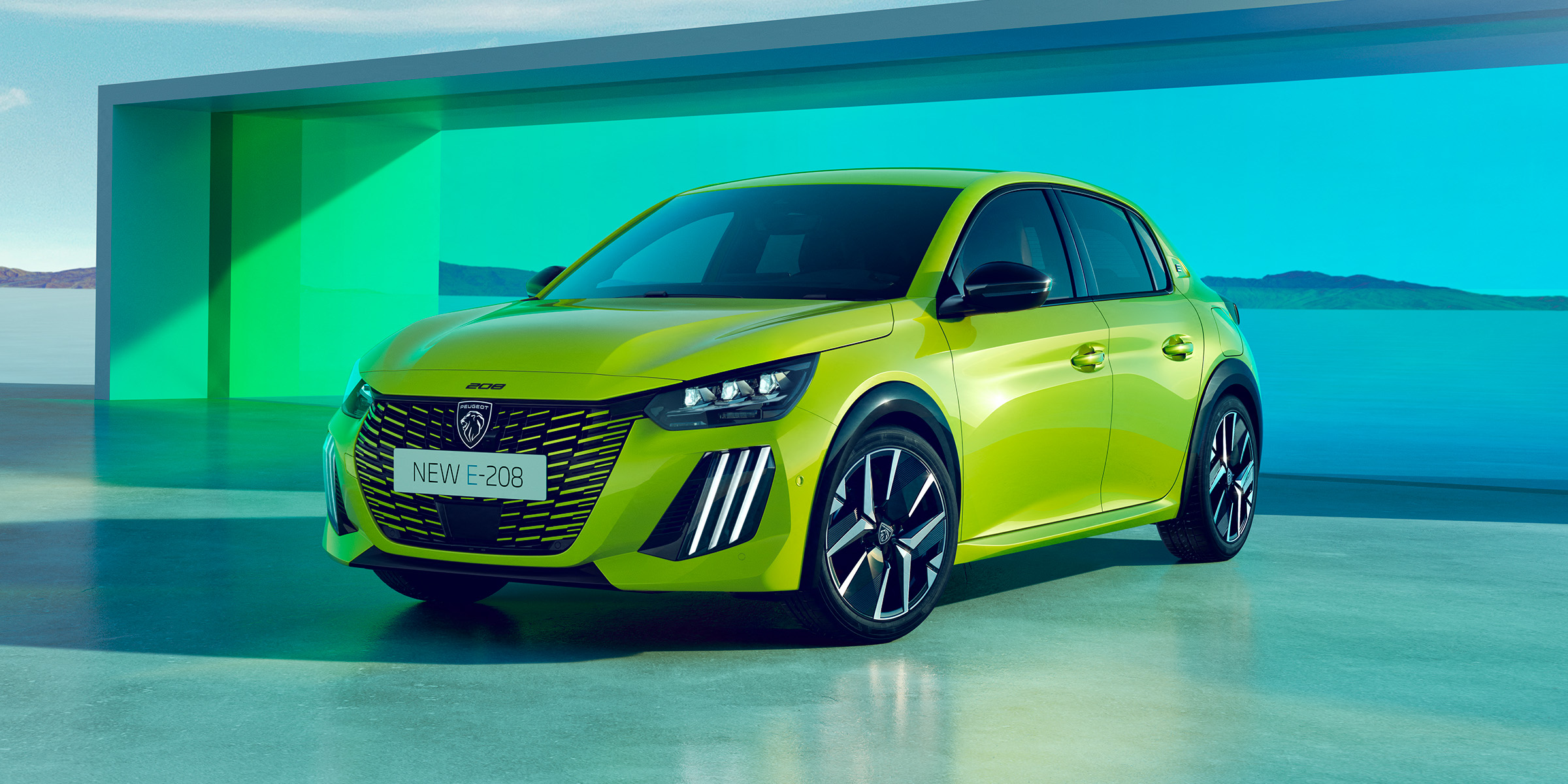
Peugeot’s 208 supermini range has been given a minor mid-life update, including a few cosmetic tweaks, engine and infotainment changes.
Refreshed in order to keep the supermini competitive with rivals like the Skoda Fabia, Volkswagen Polo and SEAT Ibiza, the Peugeot 208 has been given a few front-end design tweaks.
The grille, which features the brand’s new logo, is now wider with a new angular dash pattern design, and the ‘claw’ light signatures on either side of the bumper have been shifted outwards to make the car appear wider – the design of which differs depending on the model you choose.
In the rear, the supermini is essentially unchanged, apart from a small update for the rear tail lights, which now have horizontal LED strips, instead of vertical. Seven exterior colours are available, including two additional options – a grey and a yellow.
The same trim levels remain – the ‘Active’, ‘Allure’, ‘GT’ and the limited-run e-208 ‘E-Style’ – but the equipment levels of these trims have been revised, which has brought price increases.
A ten-inch infotainment screen now comes as standard on the dashboard (replacing the old seven-inch console), which can now mirror devices wirelessly, and includes a TomTom navigation system and a voice assistant. Peugeot adds that the screen’s graphics have a higher resolution and the display layout with different colours or information.
The range of powertrain options has seen more dramatic changes. The lead-in 75hp and 100hp 1.2-litre petrol options have been carried over from the previous model range, but two extra petrol mild-hybrids have also been introduced, offering 100hp and 136hp respectively.
The electric e-208 range still includes both older 50kWh and newer 51kWh models. The latter was introduced earlier this year, and can muster a distance of 248 miles from full charge, up from the former’s 225-mile range.
Now available to order in the UK, pricing for the facelifted 208 starts at over £20k for the entry-level petrol, and at over £32k for the e-208.
Praised for its design inside and out, as well as its low running costs, the Peugeot 208 currently holds an Expert Rating of 70%. The electric e-208 has received similar praise and holds a higher Expert Rating of 73%.
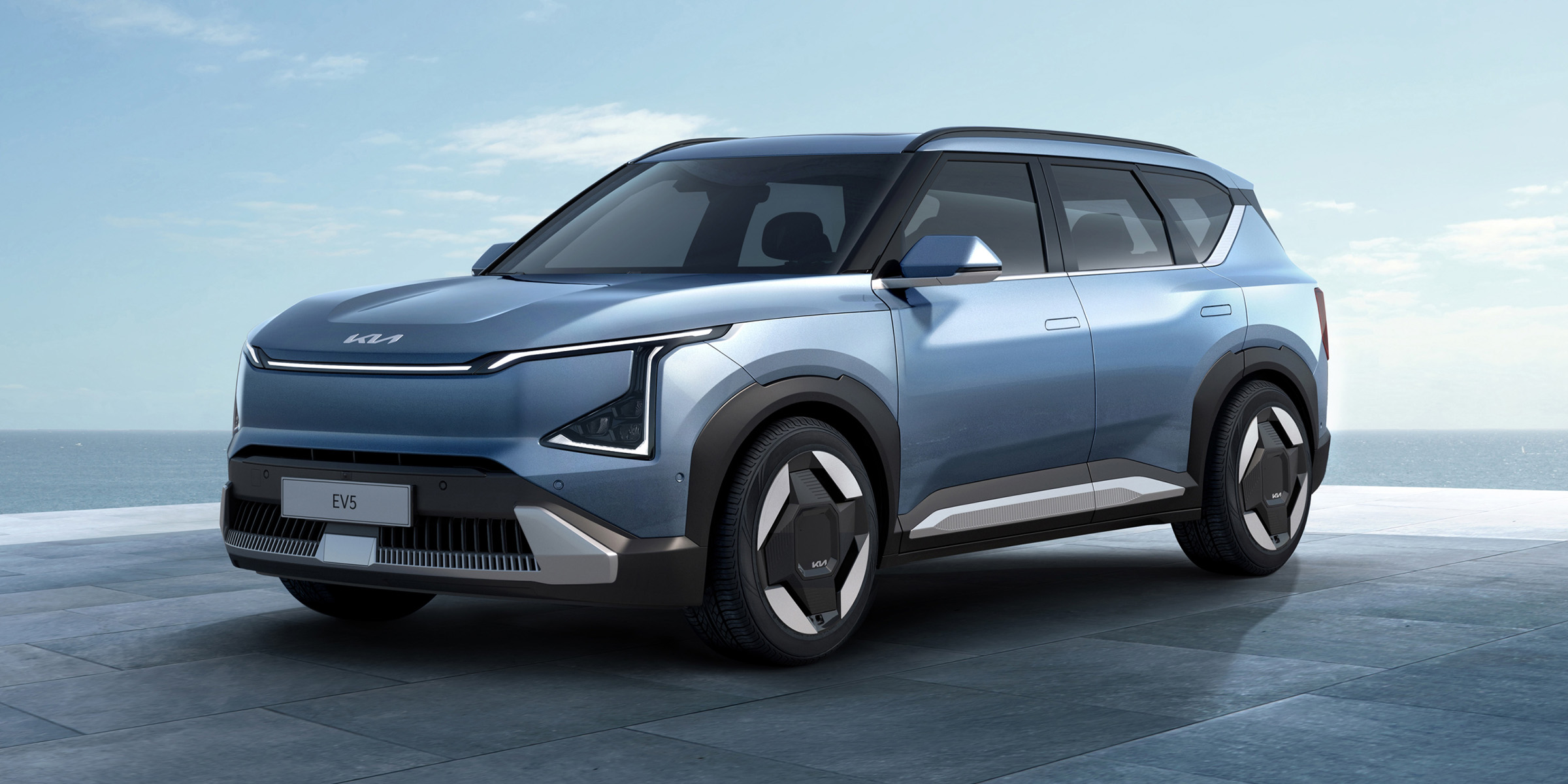
Kia has announced that it will be expanding its highly-regarded electric (EV) line-up with the introduction of the EV5 – a compact SUV that will sit below the flagship EV9 in Kia’s battery-powered range.
The model was unveiled for the first time at the Chinese Chengdu motor show back in April, but Kia has now announced that the electric SUV will be sold globally, and adds that British buyers should expect the EV5 to become available to order in 2025.
The EV5 will be built on the same foundations as the Kia EV6 crossover – The Car Expert’s ‘Car of the Year’ in 2022 – but while the EV6 uses the brand’s 800V battery architecture, the new EV5 will make use of a less powerful 400V unit. This will reduce Kia’s production costs (which could in turn lower the pricing), but expect this SUV to charge at a slower rate than its acclaimed crossover counterpart.
With the SUV’s arrival date a couple of years away, Kia is yet to confirm the EV5’s pricing as of yet, but it says that it plans to sell a range of EVs in the lower £30k to £40k bracket, to help accelerate the widespread adoption of electric cars. These plans include the EV5, as well as the smaller EV3 and EV4 models which are still in the concept stage.
Kia says that two different battery pack options will be available in the UK at launch – an entry-level ‘standard’ 58kWh battery unit, and the ‘Long-Range’ 81kWh battery. Front-wheel drive models make use of a 160kW front-mounted electric motor, while all-wheel drive is only available with the larger battery, and adds an additional 70kW motor to the rear axle.
We don’t know what the battery range of these model options will be as of yet, but Kia says the range “will be tailored to meet the market demands” in Europe, to keep the EV5 competitive with similar electric SUVs.
The EV5 has a ‘Tiger face’ exterior design which bears some resemblance to the large EV9 SUV which is now on sale, and the similarities continue inside. A continuous dashboard display combines a 12-inch digital instrument cluster with a 12-inch infotainment touchscreen that both sit either side of a five-inch segment display that provides driving information.
Like its larger sibling, Kia has decided to keep physical buttons to a minimum inside the EV5, with the large majority of vehicle functions controlled through the display. This has freed up room on the centre console for additional storage space and a table. A head-up display, which projects driving information onto the windscreen, will be an optional extra.
All versions will feature “an advanced heat pump”, and the car’s driving settings will include a single-pedal mode.
The car’s ‘digital key’ feature offers keyless entry and start, as well as a remote autonomous parking function that can park the car without a further prompt. Kia says that there will be a few different upholstery options, including an ‘eco-friendly’ selection made of recycled plastics and synthetic leathers.
The brand also asserts that you will be able to “effectively transform the rear of the vehicle into a bedroom” thanks to the second-row ‘camping’ seat that can fold flat, and the car can also be specced with a refrigerator/warmer in the rear.
That sums up what we know about the EV5 so far. We will no doubt learn more about Kia’s upcoming EVs, including the EV3 and EV4 in the coming months. Check back soon!
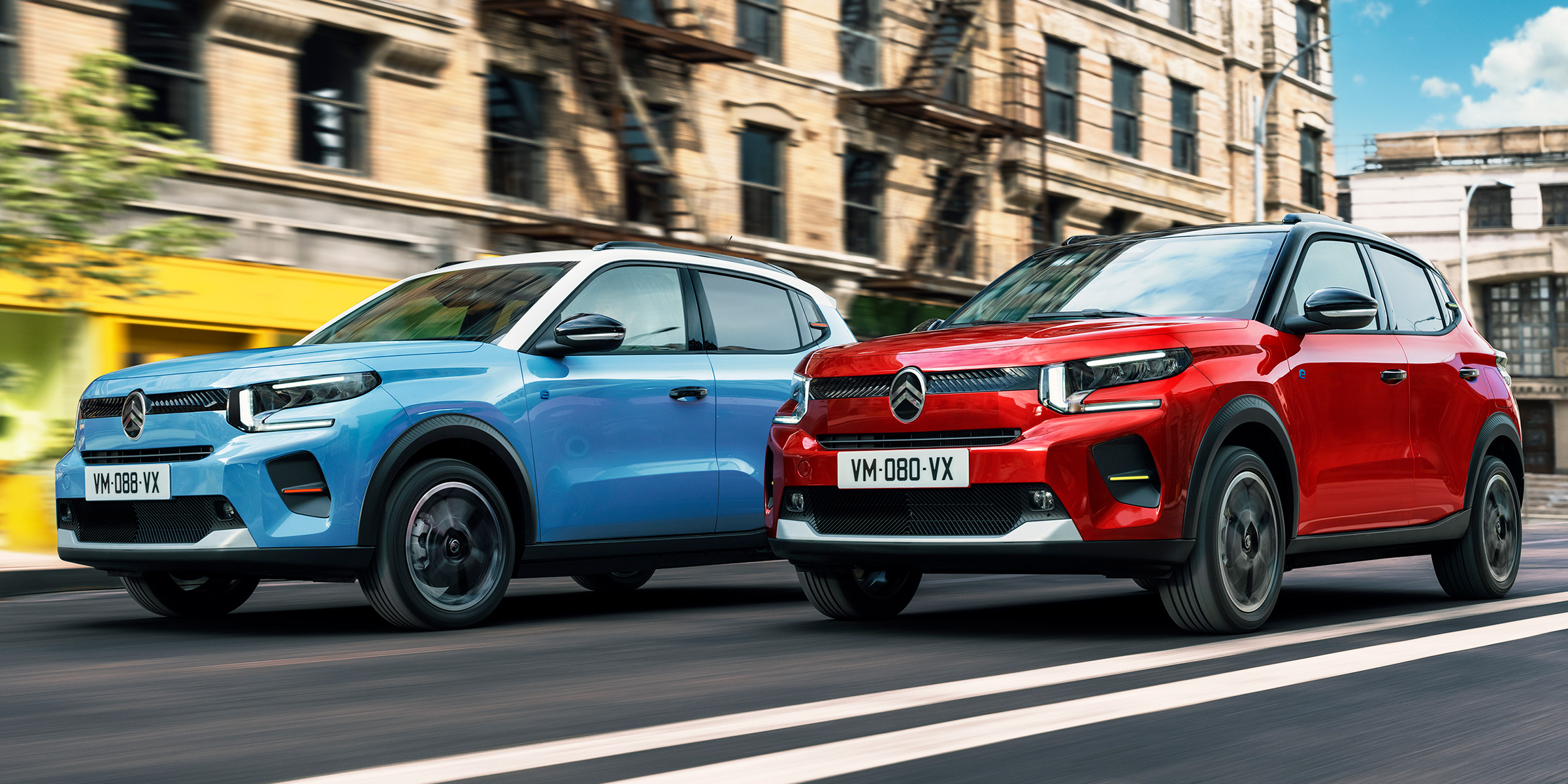
Citroën has revealed its new electric-only ë-C3 – a compact crossover that is set to become one of the cheapest electric cars on the UK market.
This new electric model is a major departure from the current combustion-powered C3 range that is currently available. For starters, the ë-C3 is a taller compact crossover, instead of a hatchback like its predecessor, and it is slightly longer and wider than the C3 hatch too.
The brand says that these changes give the ë-C3 a more commanding driving position, better visibility, more elbow room, and claims that the crossover will offer “best-in-class” rear knee room.
Citroën has decided to take the new car’s styling in an entirely different direction too, as it ditches the C3’s curved silhouette in favour of a more squared-off exterior look that is similar to that of the Jeep Avenger – another compact electric crossover from a Stellantis-owned brand.
The ë-C3 also marks the introduction of Citroën’s latest oval-shaped logo, and comes with the brand’s ‘advanced comfort’ suspension tech, which uses hydraulic ‘cushions’ to counteract harsher bumps and jolts on the road. The car sits on 16- or 17-inch alloy wheels, depending on your trim choice.
Inside, the fabric-wrapped dashboard comes with a floating 10-inch infotainment console (unless you opt for the lead-in ‘YOU!’ trim which comes with a smartphone holder and app instead), and Citroën’s ‘advanced comfort’ seats also feature, which are designed with more padding and lumbar support for ‘optimal driving comfort’.
The multi-function steering wheel has been made smaller, which the brand says makes it easier to handle, and helps to ensure that the optional head-up display is easier to see when operational.
What Citroën hasn’t changed is its budget pricing strategy. Marketed by the manufacturer as “the first affordable European electric car”, the ë-C3 is powered by a 44kWh battery pack and will be able to muster up to a reported 199 miles of travel on a single charge, and will cost under £23k.
At this price, the crossover will undercut smaller budget EVs like the BYD Dolphin, and Citroën adds that it has plans for an even cheaper ë-C3 version with a 124-mile range, which will arrive in 2025.
That sums up the key details we know about the new Citroën ë-C3 – the full trim specs have not been announced as of yet, and Citroën hasn’t decided on the crossover’s pricing or arrival date either at the time of writing. These details are sure to follow in the coming months – check back soon!
Using the power of our industry-leading Expert Rating Index, The Car Expert consistently highlights the most impressive, efficient and affordable cars available in the UK, to help readers find the best new cars to meet their needs. But what about the cars you should avoid?
By aggregating more than 15,000 new car reviews from 35 different media titles, our award-winning Expert Rating Index now includes more than 500 different cars across an automotive industry that is constantly trying to evolve and innovate with the times.
It’s inevitable that some new cars will struggle to compete. Often, these are older models that have fallen behind the curve as newer rivals have arrived, while other models have simply been sub-standard from the start.
Using the Expert Rating Index, we’ve listed the ten worst new cars on sale in the UK, as judged by the country’s top motoring websites.
All of these cars are (or have been) available for sale in 2023, although a few will be withdrawn or replaced before the end of the year. The good news is that you can pick most of these cars for a relative bargain – either brand new or second-hand – which makes them a lot more attractive.
Sitting at the bottom of the rankings in last year’s list, the Nissan e-NV200 Combi and Smart’s compact EQ range have now been retired. Six of the cars below have carried over their inclusion from this undistinguished list from last year, however.
With comprehensive review data backing the rankings below, you can be confident that this is the definitive guide to the worst new cars in the UK.
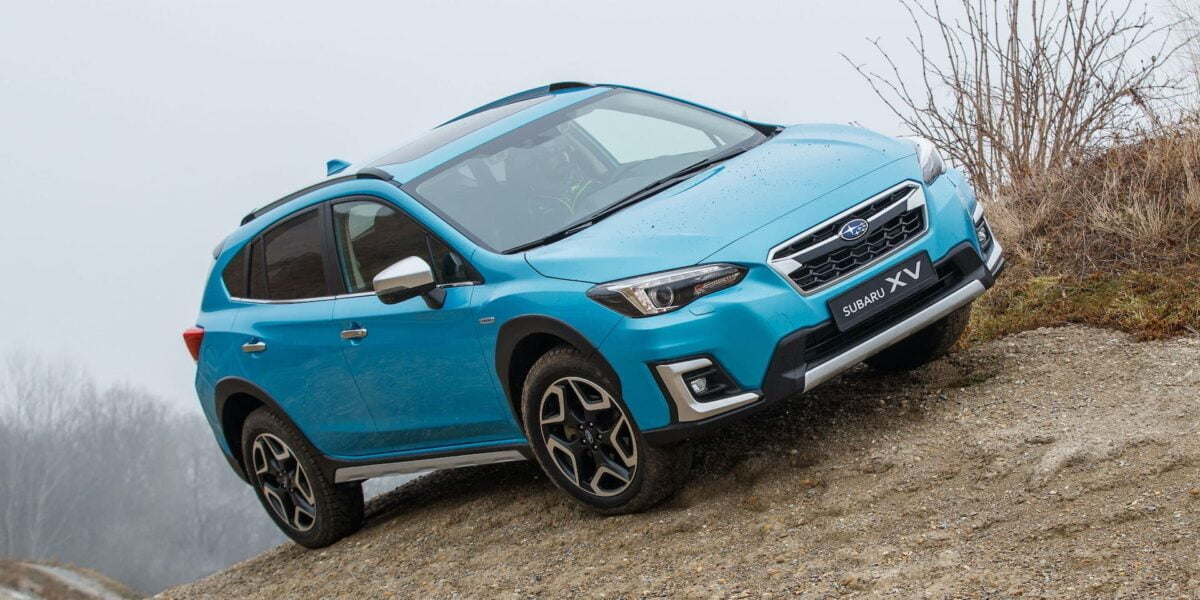
On sale since 2017, the second-generation Subaru XV SUV has not had much love from the UK media. Journalists generally conclude that the XV is a competent car in isolation and, like most Subarus, it’s a highly capable off-roader. But if you rarely leave the bitumen, other choices in this segment are more practical, less expensive to buy and cheaper to run.
Powered by a mild hybrid petrol engine (‘e-Boxer’ in Subaru marketing parlance), improvements to the XV have made it slightly more appealing to UK buyers in recent years. But it’s not enough to make the Subaru XV stand out in the medium SUV class, a highly competitive segment that basically lists all the most popular family cars on sale today.
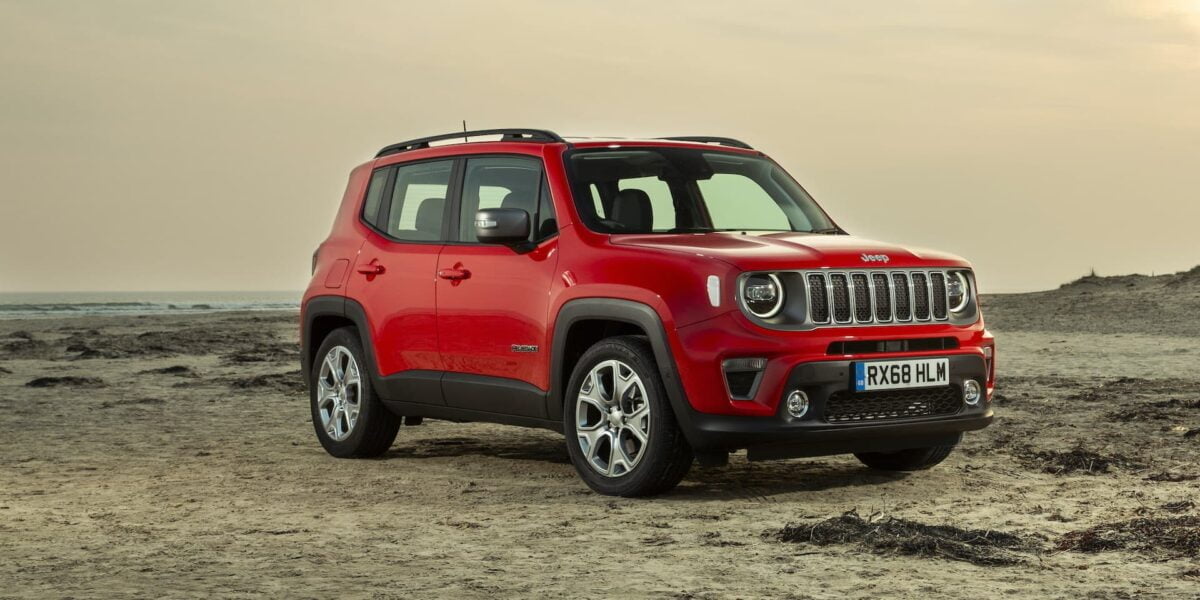
The Jeep Renegade is quite a unique choice in the small SUV class – it offers off-road solutions that no other car in the sector can quite manage. It should also be quite cheap to run daily, but beyond that, reviewers find little else to praise.
This chunky-looking crossover isn’t very fun to drive, its interior is cheap in places and cramped in the rear, motorway cruises produce plenty of wind noise and its three-star Euro NCAP safety rating is below-par compared to its rivals. The Renegade’s biggest issue, however, is its pricing. In a highly competitive small SUV sector, there are more comfortable and refined alternatives available for less money.
Another accomplished off-roader, the robust second-generation SsangYong Rexton is a big improvement over its predecessor and is likely to pleasantly surprise those familiar with the brand, offering an enormous seven-seat interior with an upmarket fit and finish.
But most buyers are not too bothered with off-roading ability. If you’re looking for an SUV for the road, with car-like handling and great efficiency, then the Rexton is not for you. While it makes plenty of sense as an agricultural workhorse, the handling is heavy, the diesel engine can be expensive to run and several reviewers report that the Rexton is rather uncomfortable on tarmac, which can make long-distance journeys quite taxing.
A high-performance BMW model in the bottom ten? You’d better believe it. The expensive BMW XM is the most powerful car ever produced by BMW’s famed ‘M’ division, and beyond its divisive exterior design, reviewers conclusively agree that BMW’s engineers have missed the mark.
The XM is certainly a capable SUV, but several reviews have concluded that it offers the weakest driving experience of all the choices in the high-power BMW M family. The SUV has also been heavily criticised for its punishing ride, hesitant automatic gearbox and very poor fuel economy, which is even more disappointing when you consider its sky-high price tag.
This is one Panda that we think actually should be extinct. On sale since 2012 and rarely updated since, the current-generation Fiat Panda has long passed its sell-by date – one of the oldest models on this list and well off the pace of newer vehicles in its class. This is highlighted by its abysmal zero-star Euro NCAP safety rating, with some of the worst scores ever recorded by the safety organisation.
It’s a shame that Fiat hasn’t given the Panda the significant updates needed to meet the evolving standards of modern cars in the years gone by, because the small hatchback is a great fit for tight inner-city streets, and it’s actually very reliable and cheap to run.
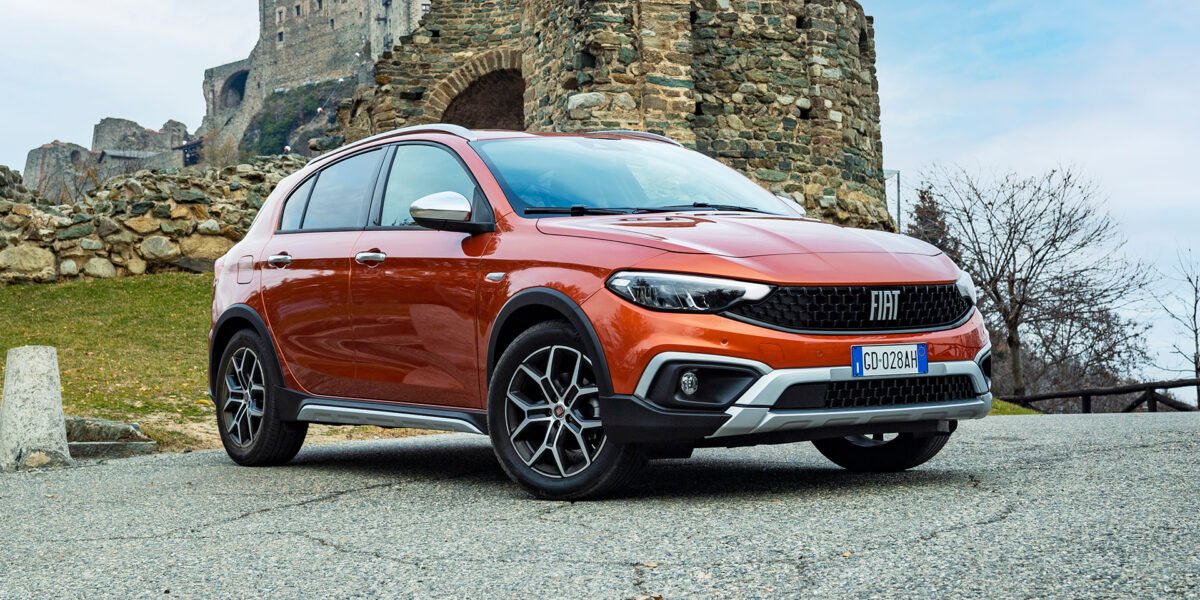
Another Fiat that has been widely criticised by the UK motoring media, the Tipo is the company’s competitor in the budget end of the crowded family hatchback class. In its favour, it has been commended for keen pricing, a spacious cabin and good levels of standard equipment.
However, the Tipo’s cheap price tag has caused compromises in other areas. It’s regarded by reviewers as dull to drive and cheaply fitted inside. The engine is not as efficient to run as other budget alternatives, which raises running costs in the long term.
The Tipo also has a sub-par three-star Euro NCAP safety rating and, when you look to sell it, the resale values won’t be very strong either. The hatchback will soon be discontinued and is currently only available new in the chunkier and top-spec Tipo Cross guise, which is more expensive than the standard model that was previously available.
The quirky Abarth 695 hot hatch is the range-topping petrol model in the brand’s performance-focused range. Its punchy performance, sporty styling and exclusive limited-run model releases offer an exciting driving experience that far exceeds its humble Fiat 500 origins. It’s also available in hatchback and fabric roll-back roofed ‘convertible’ versions.
But, inevitably, an expensive high-performance version of a long-outdated city car platform comes with plenty of limitations. Practicality is unsurprisingly poor, especially if you buy the ‘Biposto’ two-seat mode, which trades the rear seats for a roll cage. But regardless of which version of the Abarth 695 you choose, reviewers tend to agree that you can have just as much fun in the more comfortable Ford Fiesta ST for thousands of pounds less.
MG has made large strides recently with its latest models, like the highly praised MG 4 electric family hatch, but the ageing MG 3 is a relic from previous generations. Originally launched in 2014 and facelifted in 2019, it has received fairly negative reviews throughout its lifespan.
The MG 3 has been praised for its affordability and extensive warranty, and did show some promise as the budget alternative in the supermini class. But that was before the arrival of the latest Dacia Sandero, which is a better car in every aspect for a slightly cheaper price.
Reviewers have marked down the MG 3 for its uninspiring driving experience, led by a wheezy and underpowered engine. They also report that the interior finish is cheap and that it lacks basic safety features and infotainment gadgets, culminating in a very underwhelming car.
MG has been a sales success over the last few years, with the petrol-powered MG ZS leading that charge, but media reviewers haven’t been as kind as customers. The petrol ZS languishes with an Expert Rating score of just 39% – although the electric ZS EV version does markedly better, with a score of 58%.
One of the unique positives of the MG ZS is its seven-year new car warranty, and this budget SUV does offer great value for money, offering a starting price far lower than its rivals. However, MG has been outclassed again by Dacia, as the Dacia Duster is a better package than the MG ZS in every category, and all for a cheaper price.
Much like the MG 3 supermini, the MG ZS has received criticism from the UK media for its cheap build quality, poor safety rating and inferior engine quality. In summary, it’s good value but not really a great car.
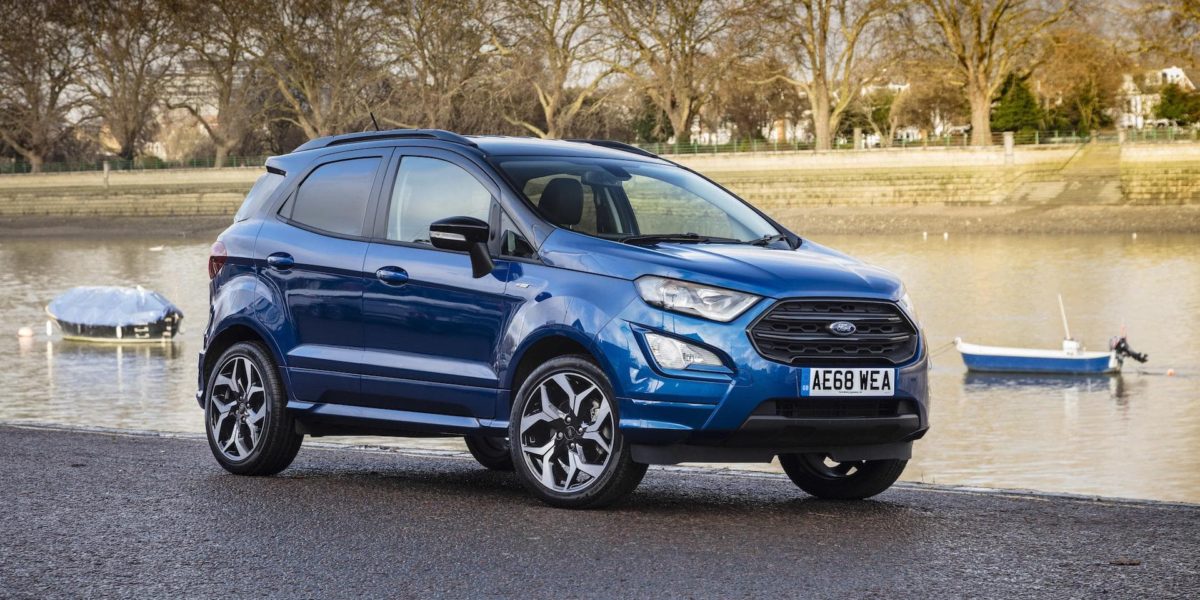
Last, and actually least in this case, the Ford EcoSport is currently the lowest-ranked model in our Expert Rating Index. Recently discontinued, the small SUV has been poorly received by the UK motoring media from its 2013 launch until its retirement, as it’s a sub-standard package in pretty much every area.
The EcoSport was markedly improved by its 2017 facelift, which greatly improved its interior trim, exterior design, and tech feature line-up, but it still faced very tough competition from SUV alternatives with more value for money, more practical features, and better performance.
The 2020 arrival of the similarly sized, but vastly superior, Ford Puma made the EcoSport’s shortcomings even more apparent. The only real surprise is that it took three more years before the EcoSport was retired.
For the definitive rankings of the worst new cars on sale in 2023, we’ve used The Car Expert‘s award-winning Expert Rating index. The index analyses new car reviews from 35 of the top UK motoring websites, using an advanced algorithm that we have developed specifically to compare review scores.
It constantly recalculates and updates the Expert Rating score for every single car every time a new review is added to our database to make sure you’re getting the most accurate and reliable ratings for every new car. The Expert Rating Index is now the definitive ranking for every new car on sale in the UK.
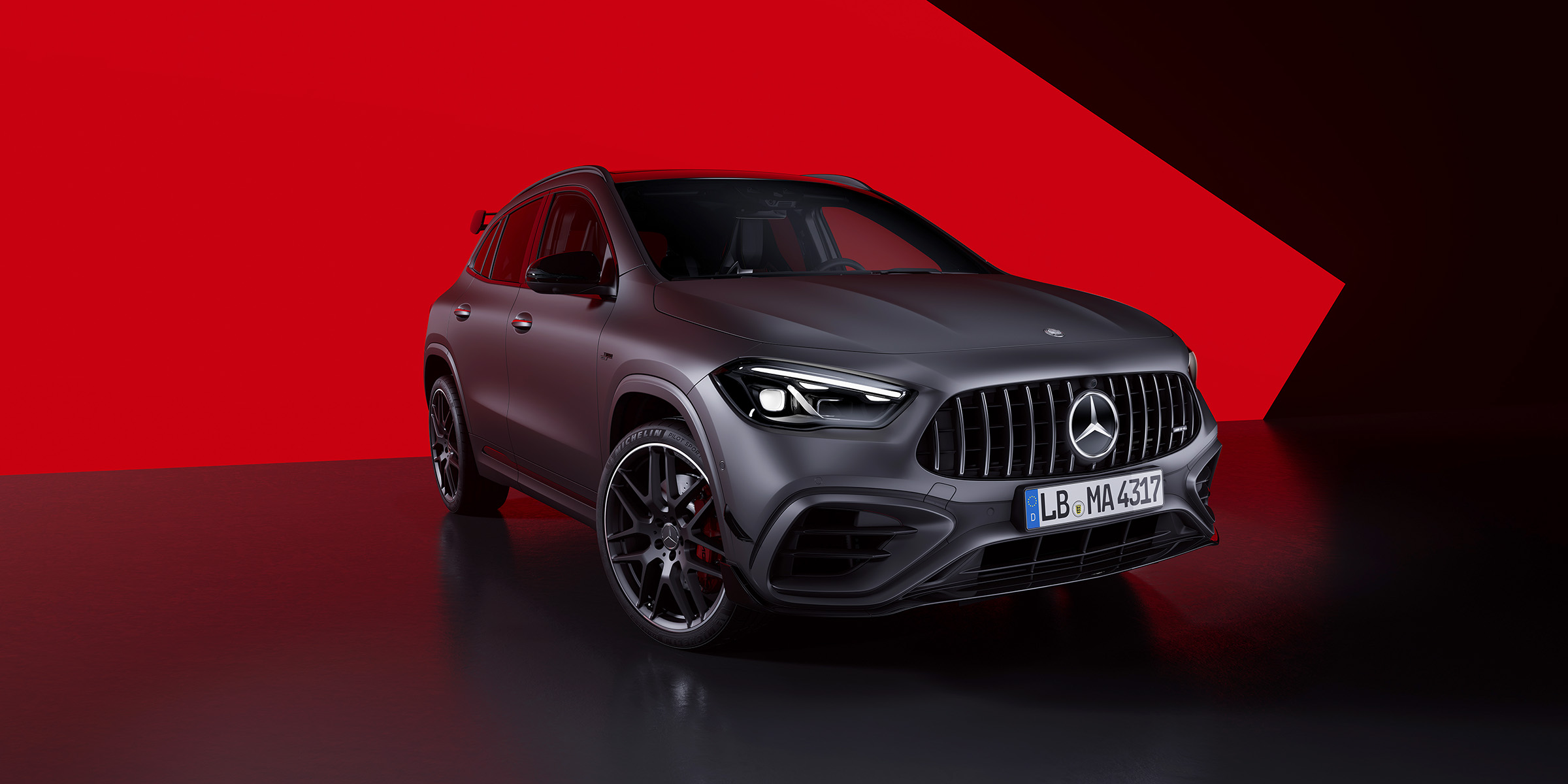
Mercedes-Benz has announced that its compact AMG GLA 45 performance SUV will be getting some small exterior alterations, as well as an expanded entry-level equipment list.
This update follows the standard GLA crossover’s mid-life facelift back in March, which included minor modifications to the front bumper. The more powerful AMG model now gets similar treatment, now sporting a revised front bumper and an AMG crest on the bonnet.
The exterior design is largely the same after the update, but Mercedes has altered the design of the LED headlights and taillights, and the car’s wheel arches are now body-coloured, instead of being finished in black. Larger 21-inch alloy wheels are now also fitted as standard.
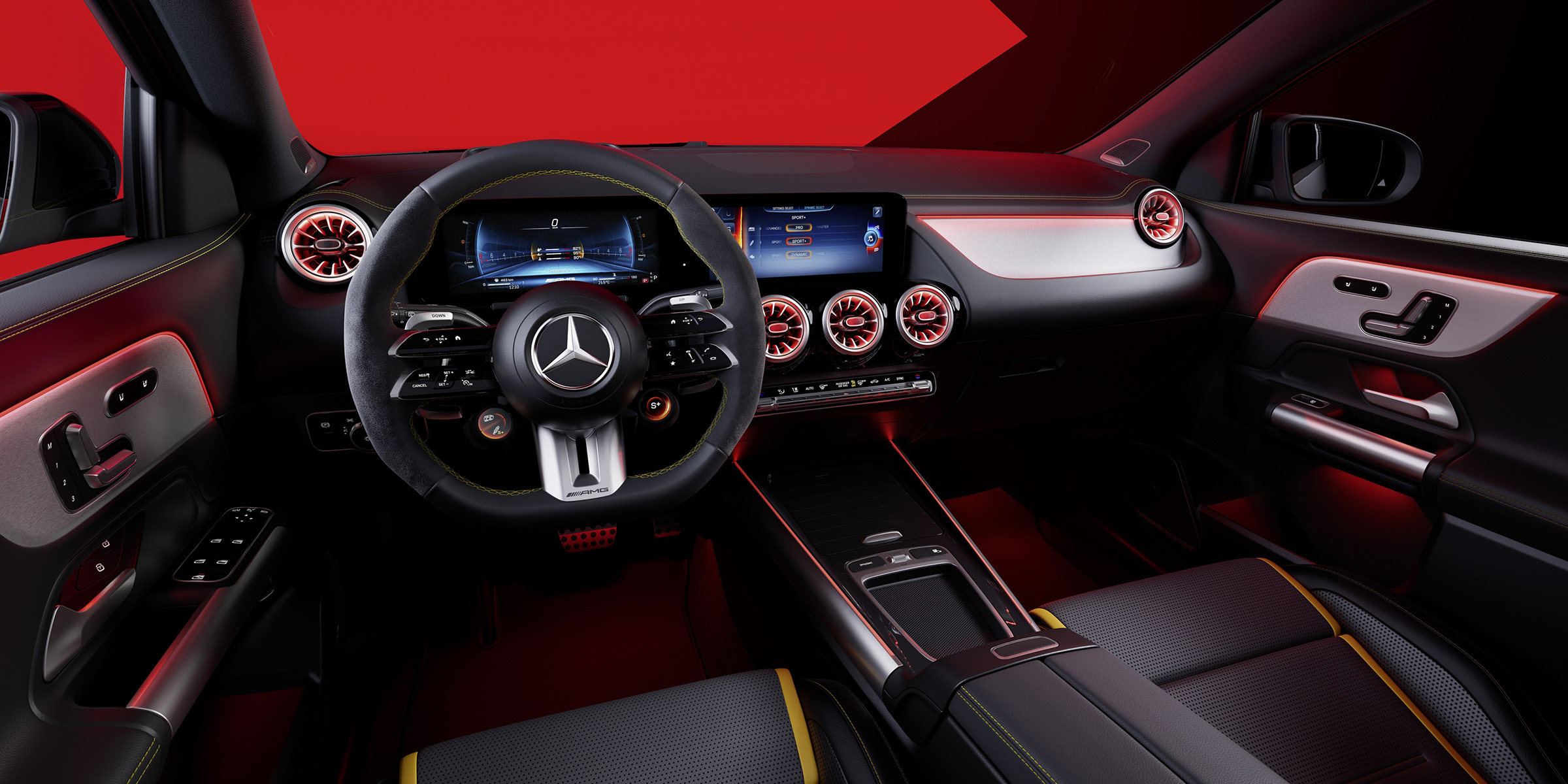
Interior changes are also minimal. The updated AMG GLA will come with an ‘AMG Performance’ steering wheel as standard, which allows the driver to control several driving functions using physical buttons, and Mercedes reports that the infotainment has been given a new graphic design.
Apple CarPlay and Android Auto are still wirelessly compatible with the infotainment screen, but should you want to plug your phone in to charge, Mercedes has also added an additional USB-C port.
The engine is unchanged – a turbocharged 2.0-litre petrol that provides 421hp and can complete a 0-62mph sprint in 4.3 seconds. Top speed is electronically limited at 168mph.
That sums up what we know about the Mercedes-AMG GLA refresh. Some details are still missing, like the car’s full specification list, its pricing, and its UK arrival date. These are sure to follow in the coming months.
It is more than likely that the average UK car buyer won’t have heard of Maxus – but they might have noticed the name on the van making their latest delivery of Amazon parcels or supermarket shopping.
Remarkably, what is today Maxus was once the commercial division of British Leyland, the nationalised UK car maker. Today as one of the former British brands snapped up by the Chinese, the brand has re-established itself on the UK commercial vehicle market and is forging a reputation for its electric vans.
Now, Maxus is looking towards car buyers, having added a new people carrier to its range alongside a pick-up truck, with the possibility of more to come.
So who or what is Maxus?
Sports car manufacturer MG and commercial vehicle maker Leyland Trucks were both swallowed up by the conglomerate that became the much-maligned British Leyland. Today the pair are together again, among the several brands owned by another state-owned automotive giant, but this time a Chinese one – SAIC, the Shanghai Automotive Industry Corporation.
In 1987, Leyland Trucks merged with Dutch maker DAF to become Leyland DAF, and this was rebranded as LDV in 1994, launching a range of vans under the model name Maxus that were built in Birmingham. After LDV collapsed in 2008, the rights to the firm were bought by SAIC, which started building LDV Maxus vans in China.
When did Maxus launch in the UK?
If you consider the company’s history then it’s been around since the dawn of motoring – the first Leyland Motors product was a steam van launched at the end of the 19th century alongside its range of steam lawnmowers!
SAIC relaunched the LDV brand in the UK in 2016, managed by the Dublin-based Harris Group. In 2020, the LDV name was dropped in favour of Maxus, which was already being used in other markets.
In terms of offering passenger cars, Maxus is a very new entrant to the UK market.
What models does Maxus have and what else is coming?
Maxis is best known for its commercial vehicle range, which consists of three different panel vans and an electric pick-up. For prospective car buyers, the conpamy has just one option right now, the MIFA 9 people carrier. The name stands for ‘Maximum, Intelligent, Friendly and Artistic’.
Launched in the UK, rather ironically, at the 2022 Comercial Vehicle Show, Maxus describes the MIFA 9 as “the world’s first full-size pure electric MPV”. Although it’s a passenger vehicle, the target audience for the MIFA 9 is the professional chauffeur market, which is currently served by vehicles like the van-based Mercedes-Benz V-Class.
This is a big vehicle, measuring some five metres long and with seven adult-sized seats, and boasts a range of up to 320 miles between charges. It’s also intended to be a top-specification luxury model with such niceties as electric sliding doors and tailgate, which probably goes some way to justifying the price, starting at around £65,000…
If you think a luxury people carrier is an odd choice for a new brand, it’s worth pointing out that both Lexus and Volvo have recently announced brand-new luxury people carrier models as well. Maybe we’re on track for a resurgence in the MPV marketplace?
At the same event, Maxus also pulled the covers off its electric pick-up truck. The T90EV is a right-hand drive version of a model already sold in China, has a two-wheel-drive powertrain and a range of close to 200 miles.
There could be more to come. Maxus has indicated it will launch at least three new EVs over the next couple of years, but has given no clue as to whether they will be vans or cars.
Maxus MIFA 9Maxus T90EV
Where can I try a Maxus car?
Unlike many of the new Asian brands, Maxus does have plenty of dealers. As of mid-2023 the brand had opened more than 60 outlets across the UK and is still expanding. Note, however, that most of these will be more used to van customers so a car buyer might find the dealer experience not quite what they’re used to…
What’s particularly significant about this company?
The speed at which Maxis is growing in the UK is remarkable, particularly considering the challenges thrown at the automotive industry in recent years. Harris Group opened a sparkling new UK headquarters for Maxus in Warrington in 2021 – less than two years later, the company has found itself replacing that facility with another one four times larger in Liverpool. Maxus registrations were up 52% in 2022 and the brand anticipates the pace further accelerating.
One aspect that separates Maxus from the clutch of other Chinese brands now targeting British buyers is that its UK operation is owned by a long-established European company focused on a very specialist portfolio of vehicles.
Some Chinese manufacturers, such as MG, have chosen to set up their own operations, while others such as Nio and GWM Ora have signed up with major dealer groups where the new models have to fight for recognition alongside established mainstream manufacturers.
Maxus is one of the six brands distributed by Dublin-based Harris Group, all of which are commercial vehicles. Only Isuzu’s pick-ups come close to having any crossover with Maxus vehicles that might appeal to the non-commercial buyer, and Harris only handles Isuzu distribution in Ireland.
Summary
Maxus has an established reputation in the UK commercial vehicle sector with household names such as DPD running the brand’s vans, and a rapidly growing appreciation of its electric vehicle range. In the UK car market, however, this is a virtually unknown name.
With its one consumer vehicle so far announced being a top-spec and therefore top-price people-carrier, at a time when most manufacturers have dropped their MPVs in favour of even more SUVs, it’s unlikely that Maxus will be causing many ripples among UK car buyers any time soon.
Following the launch of the closely-related electric iX1 SUV last year, BMW has announced that it now offers an all-electric version of its X2 coupé-SUV.
The new iX2 shares many components with the iX1 – including the SUV’s 65kWh dual-motor drivetrain – but has a different exterior design and body shape, sporting more muscular bonnet contours, hexagonal kidney grilles outlined in silver, a sloping rear roofline with a ducktail spoiler and a new rear tail light design. 19-inch alloy wheels come as standard.
The entry-level iX1 ‘eDrive20’ configuration is currently not included in the iX2 range – only the top-spec all-wheel drive ‘xDrive30 M Sport’. It offers slightly punchier performance than the equivalent iX1 ‘M Sport’ version though – 313hp in total – and can reportedly complete a 0-62mph sprint in 5.6 seconds. Top speed is capped at 112mph.
BMW says that its new electric coupé-SUV can muster up to 266 miles of travel on a single charge, which falls short of the Mercedes-Benz EQA‘s 324-mile maximum.
New all-electric BMW iX2
The battery can be charged from 10% to 80% in around 29 minutes using a 130kW DC charging station. If you prefer to charge at home, a 11kW AC charger comes as standard (full charge taking six-and-a-half hours) and a quicker 22kW AC charger (full charge in under four hours) is available on the options list.
While BMW has taken a different approach for the iX2’s exterior design, the coupé-SUV’s interior is practically identical to the insides of the iX1. A curved dual-screen display juts out of the dashboard, housing the ten-inch digital instrument cluster and 11-inch infotainment display. The latter allows the occupants to stream videos and play video games when stationary, and is compatible with both Android Auto and Apple CarPlay.
A reversing parking camera comes as standard, as does ambient cabin lighting and climate control. The car has been displayed with a large panoramic sunroof, which is an optional extra.
Opting for the extra ‘Technology’ pack on the options list adds adaptive LED headlights, electric folding door mirrors and a frameless auto-dimming rear view mirror. The more expensive ‘Technology Plus’ pack adds a heads-up display that projects driving information onto the windscreen.
The introduction of the electric iX2 is part of the larger second-generation X2 range which is now on sale. While the current X2 crossover has a conventional SUV shape with a hatchback tailgate, BMW has decided to opt for a coupé-SUV body style for the second-generation, styling the new X2 as a smaller version of the X4.
The car’s ride height has been raised by around six centimetres, and its 19 centimetres longer and two centimetres wider than its predecessor too. BMW says that the X2’s larger size adds more shoulder and knee room for rear passengers.
The boot can accommodate 560 litres of luggage (525 litres in the iX2) – 90 litres more than the current model. The steering has been reconfigured to tighten the car’s turning circle by 15%, and the suspension system is adjustable, raising or lowering to improve either agility or long-distance comfort.
New second-generation BMW X2 in top-spec ‘M35i’ guise
If you would prefer a petrol-powered X2, you have two models to choose from. The range begins with the 170hp ‘sDrive20i’ which comes with a 48V mild-hybrid boost. The sportier choice is the 300hp ‘M35i xDrive’ which adds bucket seats, larger 20-inch alloy wheels and a quad-tailpipe exhaust system. While it isn’t as powerful as the iX2 ‘xDrive30’, the ‘M35i’ is faster, completing a 0-62mph run in 5.4 seconds.
Prices begin at just over £39k for the entry-level X2 and at over £56k for the iX2. The range is now available to order here in the UK, with the first customer orders set to arrive in March next year.
Jeep has announced that its Wrangler 4×4 is set for a minor update in 2024, which includes infotainment and safety equipment upgrades.
Jeep has only mentioned the four-door version of the Wrangler in its update announcement – there is currently no word as to whether the smaller two-door models that were available before the update will be removed from sale.
This small refresh does include some small cosmetic tweaks. Changes include the addition of body-coloured surrounds on the seven-slot grille, and each slot has an altered mesh design that Jeep says improves engine cooling. The steel radio antenna has been integrated into the windshield, and the updated model sports some new alloy wheel designs, which will come in sizes from 17- to 20-inches in diameter, depending on the model you choose.
Inside, Jeep has opted to give the Wrangler a larger infotainment screen on the dashboard, replacing the current model’s standard eight-inch touchscreen with a new 12-inch console. The manufacturer adds that the new system’s operating speeds are five times faster when compared to the previous generation. A voice assistant feature will also be included on the entry-level equipment list.
It seems Jeep’s main focus has been the car’s safety though. While the current model only has side airbags for the front seats, the updated Wrangler will come with side airbags for the rear passengers as standard too. The refresh also introduces further bits of safety assistance tech, including a ‘drowsy driver alert’, a lane departure warning, and traffic sign recognition.
The brand adds that it has made structural changes to the 4×4 to improve side-impact performance. That said, Euro NCAP reported in its 2018 assessment of the Wrangler that the Jeep actually scored full marks in its side collision test, adding that passengers were more vulnerable in a frontal collision. Whether this update will improve the Wrangler’s poor one-star Euro NCAP safety rating remains to be seen.
The update will also slim down the range of trims available. The mid-range ‘Overland’ trim will be removed, leaving the lead-in ‘Sahara’ and range-topping ‘Rubicon’ grades.
Jeep says that the first customer orders of the refreshed Wrangler will be delivered in the first half of next year, with prices starting at just over £60k.
The Jeep Wrangler has received mixed reviews from the UK media, and currently holds an Expert Rating of 59%. It has been highly praised for its off-road ability and for keeping true to its heritage, while it has also been criticised for its poor on-road driving dynamics and safety.
The Peugeot 408 is in a two-car race with its cousin the Citroën C5 X. Both cars entered the market with completely new body styles that sit somewhere between conventional SUVs and sloping coupe-style bodies.
A plug-in hybrid powertrain makes the 408 an attractive choice for company car buyers and Peugeot has confirmed an all-electric version will follow soon. In the Peugeot model range the 408 sits between the 508 saloon and 3008 crossover.
As of September 2023, media reviews of the Peugeot 408 have earned the car an overall Expert Rating of 69% on The Car Expert’s award-winning Expert Rating Index.
What is the Peugeot 408?
Peugeot described the 408 as a cross between an SUV and a fastback. Essentially it’s a squished SUV with a sweeping rear roofline and large boot opening. The motoring press has dubbed it a ‘liftback’ model which is a hatchback with a sloping roof up to where the boot hinge is.
Its SUV characteristics mean it sits higher off the ground than a saloon car which means it’s a convenient height to get in and out of. There are few direct competitors for the 408 outside of the Citroën C5 X but estates like the Skoda Superb or Volkswagen Arteon Shooting Brake could be seen as alternatives. If the rear silhouette is the main attraction then consider the likes of the Audi A5 Sportback or BMW 4 Series Gran Coupé.
First impressions
The 408 has curb appeal in spades. Take a seat inside and the stylistic bodywork is paired with a suitably swish, high-quality interior. Taking a lead from emerging EV design and Peugeot’s new corporate style guide, the 408 feels futuristic and ready to embrace an electric version. Funky metallic paint jobs really help the lines to pop and it’s the type of car you look back at in the car park.
Although the bodystyle is fairly unusual, the higher ride height makes easy to hop in and out of the driver’s seat. The sloping rear roofline is visually interesting from the outside but it does limit visibility out the back.
We like: Eye-catching exterior styling We don’t like: Limited rear visibility
What do you get for your money?
There are three trim options to choose from: Allure, Allure Premium and GT. Starting from £31,225, entry-level Allure is fairly well equipped with rear parking sensors, a ten-inch touchscreen display and lane-keeping assist.
Allure Premium would be our pick to add adaptive cruise control, blind spot monitoring, front parking sensors, keyless entry and 19-inch alloy wheels. This spec starts from just over £32,000 with a petrol engine or from £41,000 as a plug-in hybrid.
Range-topping GT trim includes a heated steering wheel, powered boot and styling upgrades throughout. Prices start at £35,000 for a petrol engine and rise to £43,500 for a hybrid. All trim levels come with wireless Apple CarPlay and Android Auto functionality, DAB radio and USB ports to charge phones.
Although the 408 has standard safety equipment including automatic emergency braking, driver attention warning, intelligent speed adaption and automatic hazard lights under hard braking, it missed out on a full five-star rating from Euro NCAP.
The 408 comes with a three-year, 60,000-mile warranty.
We like: Affordable jumps between trim levels We don’t like: Four-star safety rating
What’s the Peugeot 408 like inside?
To complement the sporty exterior styling the 408 has a small steering wheel which drivers are supposed to gaze over to see the dashboard. For shorter drivers, this could mean the steering wheel blocks your view so we’d suggest test driving one to make sure the steering wheel doesn’t obstruct the dash. The seat offers good adjustability to tweak the driving position accordingly.
It’s a comfortable space to get acquainted with and the touchscreen has dynamic graphics that are customisable depending on the user. Different profiles allow you to set personal shortcut buttons to things like driver assistance systems, climate control and media screens. The shortcuts make it simple to navigate the system and this configurability dramatically reduces distractions out on the road – as long as they are configured before you set off.
The touchscreen and shortcut panel can smudge easily but a grubby screen is an acceptable trade-off for better accessibility. All versions come with wireless Apple CarPlay and Android Auto that connects quickly. The centre console is simple thanks to a small gear selector and a dedicated phone shelf beneath the screen. This leaves the cupholders free for cups and there’s a useful tray to put your keys in too.
We like: Accessible customised media screen We don’t like: Shortcut buttons get smudged quickly
What’s under the bonnet?
Just like the trim options, the 408 is available with three different engines to choose from. The entry-level petrol engine is a 1.2-litre unit with 131hp and an eight-speed automatic gearbox. All engines only come with an automatic gearbox and there will be an all-electric e-408 coming soon.
The plug-in hybrid comes with a choice of 180hp or 225hp powertrains, with the more powerful option only available with Allure Premium and GT trims. The hybrid 180 has a 150hp petrol engine and an 81kW electric motor, the hybrid 225 gets the same electric motor with a 180hp petrol engine.
The hybrid battery can be charged from a 7kW home wallbox in three and a half hours using the 3.7kW onboard charger or in an hour and 40 minutes using an optional 7.4kWh charger. From a three-pin plug, it can fully charge in five and a half hours.
A manually retractable tow bar is optional on all trim levels and, if specified, comes with a trailer sway mitigation system. The petrol can tow braked trailers up to 1,200kg and the hybrids can handle up to 1,400kg.
What’s the Peugeot 408 like to drive?
On the road the petrol-engined 408 is a little less enthusiastic than its sporty styling would lead you to believe. Put your foot down decisively and the engine can be a bit noisy but for everyday driving this shouldn’t be an issue. The hybrids smooth out power delivery and give a boost of acceleration when called upon.
The petrol engine delivers between 41 to 48 mpg and the hybrids offer between 210 and 270 mpg on the official tests. A plug-in hybrid engine will always return better fuel economy and smoother performance than a standard petrol engine but plugging it in is essential. Installing a wallbox at home or having access to charging at work will make it easier to guarantee impressive fuel economy from hybrid examples.
Although the 408 has firmer suspension than the CX 5, it doesn’t make the ride uncomfortable. It feels well-planted and settled on the road. Around bends lateral grip can be a bit jerky over potholed surfaces but on smooth roads it’s composed and offers very little body roll. Despite the higher driving position, it feels well connected to the road.
Out of the back window, visibility is slightly better than the rear view from the CX 5 but all trim levels come with a reversing camera which makes manoeuvring easier. Long-range blind spot detection is included from Allure Premium upwards and helps with all-round awareness.
We like: Settled ride and minimal body roll We don’t like: Engine can be a bit noisy
Verdict
As a company car pick, a new family wagon or a car for around town, the 408 is well worth considering. Hybrid engines make it a no-brainer for short commutes and Allure Premium has a good bundle of tech and safety features so it’s the trim option we’d go for. Unfortunately, the 408 missed out on the top rating from Euro NCAP and was awarded four stars.
Nevertheless, it’s an upmarket offering from Peugeot that has an impressive, accessible media set up inside. Although it might not fit into a traditional body style, it makes perfect sense behind the wheel. It’s a funky alternative to an estate or SUV and is predicted to hold its value reasonably well.
408 highlights
Standout exterior looks
Stylish interior
Generous rear legroom
PHEV models offer competitive battery range
408 lowlights
No four-wheel drive
Not much rear headroom
Citroën C5 X is cheaper
Boot space is fairly average
Similar cars
If you’re looking at the Peugeot 408, you might also be interested in these alternatives.
This week’s release of new car sales data for the all-important month of September (one of the two biggest months of the year for new car sales) will have sent shivers down spines all over the car industry.
Without wanting to sound too gloomy, the good news wasn’t as good as it needed to be, and the bad news was worse than expected.
We reported on the September results earlier this week, but the main points were: the overall market was up 21% year-on-year for the month (fleets up 41%, private sales up 6%); hybrid and plug-in hybrids saw the strongest market share growth (up 31% and 51%, respectively); while EV sales were up 19% (2% less than the overall market), although consumer EV sales were down 14%. This last point is the most troubling.
Despite all the positive noises about 14 consecutive months of market growth, the news isn’t all that great. The continued growth over the last year is simply a partial post-Covid recovery from the fleet sector, which was hit much harder than the consumer market. Outperforming one of the worst years on record isn’t a spectacular achievement.
During 2020 and into 2021, many businesses were holding off any unnecessary spending. A prime example of that was reducing or even halting the turnover of vehicles in their fleets, which caused national fleet new car registrations to plunge.
From 2021 through most of 2022, the problem became very restricted supply of new vehicles. Most car companies used this limited number of new cars to prioritise private customers, who usually pay full price or close to it. Fleet customers demand, and usually get, substantial discounts on the sticker prices of the cars they buy. For car companies with few cars to sell, choosing to sell those cars at full price rather than discounting them by up to 40% was a no-brainer.
Now that car factories are mostly running at full speed again, and most larger businesses are also back to normal business as well, the traditional model of fleets buying heavily discounted new cars has returned. However, the sales numbers are still well below pre-pandemic levels from 2019 and earlier and are unlikely to ever return to those heady days.
EV sales are off target, and the prime minister has made things much worse
After nine months of the year, sales of new EVs are up 36%, against an overall market that’s up 20%. Sounds good, right? Well, yes, but…
For 2022 overall, EVs recorded an overall market share of 16.6%. This was helped by strong growth in the second half of the year, peaking in December when EVs took 32% of all new car sales. As of September 2023, the year-to-date market share for EVs is 16.4% – in other words, just behind the full-year share for 2022.
This level of market share has been pretty flat all year, with most months hovering around 16% and relatively little variation. We’re certainly not seeing the steady and continual growth that had been evident over the last few years, and were not likely to see the same end-of-year spike we saw last year.
The main reason for the current flatlining of EV market share is declining consumer EV sales counteracting growing EV fleet sales. In the second-biggest month of the year (March and September are the two big months), consumer sales of new EVs were down 14% against overall consumer market growth of 6%. This is a big problem.
Consumer new car sales traditionally make up about 45% of all sales, with fleets making up the other 55% or so. Given that consumers generally pay much more for their cars than fleets do, they make more money for the car companies. So if consumers are shying away from buying electric cars, it drags the whole EV market down and costs the industry a lot of money.
There is one important caveat to the September results, and that’s Tesla. The UK’s biggest seller of electric cars doesn’t operate like other car companies, and its sales tend to fluctuate wildly from month to month. In September, Tesla registrations were down by 36% compared to the same month last year, although we don’t know if this affected private sales any differently from fleet sales. It seems unlikely, but we can’t say. Over a full year, these fluctuations tend to even out and Tesla sales are up 23% after nine months of the year.
Consumer confidence in EVs is being destroyed
Given that consumer sales make up nearly half of the new car market, selling more EVs to ordinary punters is critical for car companies to keep doing business in the UK. If we’re going to increase the number of EV sales by a third in a matter of months, we can’t rely on fleets to save the day.
Rishi Sunak’s decision to delay the new car petrol/diesel ban from 2030 to 2035 had been teased through the Tory-friendly media for weeks, so it wasn’t a huge surprise when he finally made his announcement. There has also been a concerted attack on anything related to electric cars from the same media sources for many months, with baseless suggestions of bridges and car parks collapsing, nationwide power shortages, terrible resale values and much more – none of which are remotely factual.
All of this has been eroding consumer confidence in new EVs, and we are now starting to see the effect on sales. A 14% drop in sales is a big hit when the target is to increase sales dramatically. While this may be a one-off reaction that corrects itself quickly, it seems unlikely.
Private car sales tend to be quite emotional decisions, with common sense tending to play second fiddle. As one example, the old excuse of “my old car was costing too much to service so I bought a new car” is usually a case of spending thousands to save hundreds. Constant negative publicity of EVs will undoubtedly be influencing buying decisions for consumers.
This negative media coverage is less likely to influence fleet buying decisions, as fleet buyers tend to be more hard-nosed and objective. Procurement managers pore over detailed data to analyse upfront prices, running costs and predicted residual values to make the best business decisions, and electric cars are chosen because they represent better value over the necessary number of years.
Why is this a problem?
Put aside your personal feelings about whether climate change is real, or whether the government is right to ban petrol and diesel cars, or whether you like electric cars, for just a few moments.
The shift from fossil-fuel cars to electric cars is a global movement, and nothing that the UK’s prime minister or his troublesome backbenchers say is going to change that. The choice for the UK is to be part of that change or to be left behind.
Of all the car companies that sell significant numbers of new cars in the UK, none are developing new petrol or diesel vehicles. There are still some new fossil-fuel cars scheduled to be released over the next couple of years, but those are already pretty much signed off and in the process of being prepared for production. That process takes time, so they may not hit the streets until 2026 or so. But after that, we’re unlikely to see any genuinely new petrol or diesel cars – just facelifts and updates to existing models that will soldier on until it becomes uneconomical or illegal to sell them.
All of the new passenger cars that are currently being designed and developed for the UK and Europe (and most other developed countries in the world) are battery-powered electric cars. There’s no going back now. Whether you like it or not, it’s already happening.
Despite Rishi Sunak’s recent public u-turn on the government’s policy to phase out new petrol and diesel car sales by 2030, the government knows that it can’t hold back the future. That’s why it has kept its 2030 Zero Emission Vehicle mandate in place.
This little-known government directive requires that at least 22% of new car sales for every major car company must be zero-emission vehicles (ie – electric cars) in 2024, rising each year to 80% in 2030. Specifically, it looks like this:
The targets above were set by the government based on the 2030 deadline for ending petrol and diesel car sales, so the expectation was that 80% of new cars would be electric, and the remaining 20% would be plug-in hybrids.
The government has confirmed that the targets above remain in place, despite Sunak granting a five-year extension to the sale of petrol and diesel cars (which Labour says it will repeal if it wins the general election next year). If car manufacturers fail to hit these targets, they will be fined £15,000 per car.
To recap, we’re currently averaging about 16% market share for new electric vehicles, a number that’s been pretty flat all year. Yet for 2024 that has to increase to 22% and, in just over four years, electric cars will become the default with a target of 52% for 2028.
To put it more bluntly, EV sales will have to increase by a third over current levels, and in just three months’ time. And the prime minister has basically gone on national television and radio to more or less tell the people of the UK not to bother switching to electric vehicles. It all sounds like a storyline from “The Thick of It” or “Yes, Minister”, except not as funny.
Either the 2030 deadline needs to stay to match the mandate, or the mandate targets need to be pushed out to 2035 to match the revised petrol/diesel deadline. Trying to keep two separate targets, five years apart, is nonsensical for both customers and the car industry.
‘Aligning with the EU’ really means falling behind the EU
Many commentators have pointed out that shifting back the deadline for banning fossil-fuel cars to 2035 brings the UK into line with the EU’s deadlines. The prime minister also mentioned this the other week, although being a post-Brexit Tory PM, he couldn’t say that we’re just following the EU’s plan – so he highlighted this ‘alignment’ with a few individually named countries like Germany, France and Spain instead…
The reality is that aligning the UK’s deadline date with the EU puts us at the back of the queue. Most cars in the world – including those designed, developed and built by British car companies here in the UK – are designed first and foremost to be left-hand-drive cars, because the vast majority of the world drives on the other side of the road. The designs are then adapted to suit the small number of right-hand-drive markets like ours.
New models from most car brands usually go on sale in Europe about six months before landing here. Some models don’t even make it here because the requirements of adapting them for right-hand drive are not worth the cost and effort.
By setting the UK’s date a few years ahead of the EU and other markets, car companies were effectively forced to prioritise right-hand-drive development to bring their new EVs to market in the UK by 2030. If the 2035 date sticks, they’ll simply go back to concentrating on left-hand-drive cars first. An opportunity missed.
What should the government be doing?
Assuming that the prime minister isn’t going to backpedal on his last u-turn, there are still a couple of key things that the government needs to do to help the transition to EVs.
There’s been a lot of suggestion about re-introducing subsidies for electric cars, like the plug-in car grant, or scrappage schemes to remove older fossil-fuel cars in favour of electric vehicles. We don’t think that re-introducing the plug-in car grant is necessary, nor best use of public money. EV prices are coming down steadily, and the total cost of ownership over a four-to-five-year period is already swinging to favour electric cars.
There are already significant tax advantages for electric company cars or anyone eligible for a salary sacrifice plan. On salary sacrifice, many people can already get an EV for less than an equivalent petrol car thanks to this tax break. It is unfair that fleet buyers have a substantial tax advantage as well as their massive buying discounts, while consumers have to pay a double whammy of more tax and higher prices, but this is unlikely to be rebalanced anytime soon.
Where the government does need to be doing more is providing better education. Rather than publicly sowing fear and doubt into people’s minds, it needs to be running public information campaigns to help explain why the switch to EVs is happening, and what customers can do to integrate an electric car smoothly into their lives.
A proper education campaign would also help to combat the disinformation that has been splashed across both mainstream and fringe media channels about electric cars.
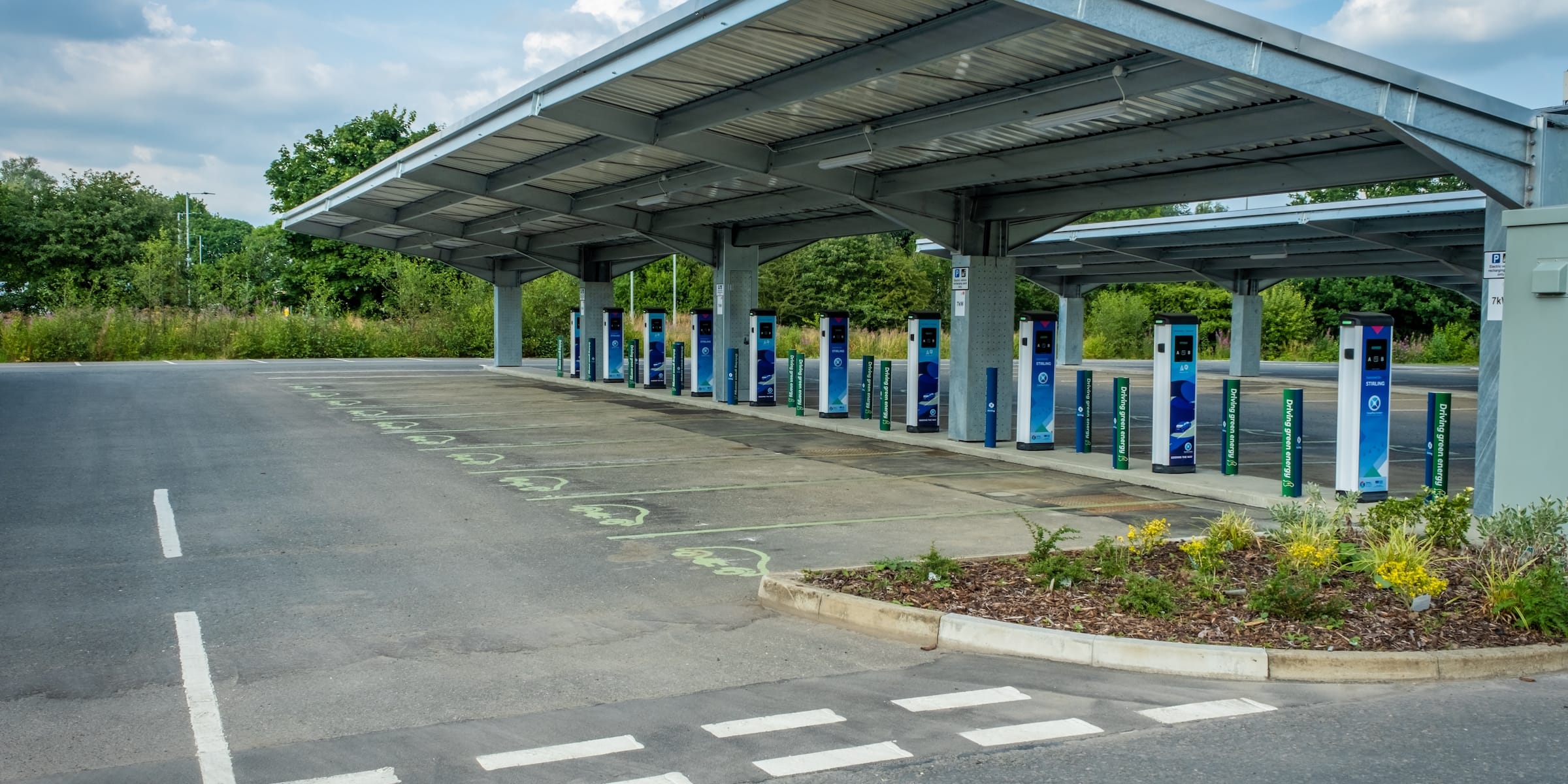
The other area where the government needs to do better is accelerating the roll-out of public charging infrastructure. If we’re serious about improving access to electric vehicles for everyone in Britain, then everyone needs to be able to charge their cars – anywhere they go, any time of day or night.
The government needs a proper charging infrastructure task force to accelerate the roll-out of charging points, co-ordinating private investment with local councils, land owners and National Grid. In rural areas, where there are fewer cars on the roads and therefore there’s less interest from private investors, the government needs to take on the burden of paying for EV chargers as a public service.
In an electric world, charging points are as much a part of the road network as tarmac and traffic lights. The government needs to treat them as such, yet there is little evidence of this happening.
In closing
We have a government which seems determined to bash EVs in public while also requiring car manufacturers to sell more of them. This is not a coherent strategy to support UK consumers or businesses, or the car industry. It is thoroughly confusing and counterproductive.
The prime minister’s anti-EV messaging is driving customers away from some of the best new cars on the market, yet it still expects those customers to buy significantly more EVs in just three months’ time. This is lunacy. It is already undermining the car industry, and could even lead to car manufacturers simply abandoning the UK altogether.
Skoda has revealed its second-generation large Kodiaq SUV, which the brand says delivers “more space, more features, and more efficiency” than the current SUV range.
Set to rival the latest iteration of the Volkswagen Tiguan that was revealed last month, the new Kodiaq is built on the same foundations as its Volkswagen counterpart, and is fitted with several of the same tech features.
The new SUV shows off Skoda’s new ‘Modern Solid’ design ethos and sports more rugged exterior looks, including squared-off wheel arches, a larger grille outlined with chrome accents, and prominent bonnet contours.
The second-generation Kodiaq also shows off Skoda’s new logo, and a daytime running light that stretches across the front end is available as an option extra, much like the electric Enyaq SUV. The brand’s latest Matrix LED headlight tech also features on the options list.
To increase interior and boot space, Skoda has made the Kodiaq six centimetres longer and claims that passengers sitting in the optional third row of seats in the back will see an increase in headroom. Boot space stands at 340 litres with the third row of seats up, and at 910 litres in a five-seat configuration.
Despite its larger size, Skoda also claims that the new Kodiaq is more aerodynamic, which in turn should make it more fuel efficient than the current model. The manufacturer says that the new SUV introduces some “major aerodynamic advancements”, pointing to the sloping roofline, active engine cooling shutters on the front bumper, and the new wing mirror design.
Stepping inside, a ten- or 13-inch infotainment screen juts out of the dashboard (depending on trim) and a head-up display that projects driving information onto the windscreen is optionally available for the first time. The gear selector has been moved to the steering wheel column, freeing up some space on the centre console for an extra storage cubby.
The headline new feature is the introduction of the brand’s ‘smart dials’ that sit above the centre console. These are rotary controls for the climate control, media volume and driving modes that have their own three-centimetre digital display.
Four different interior trim packages will be available, including two ‘EcoSuite’ upholstery trims made of a sustainably treated leather. Highlighting Skoda’s eco-friendly focus, the new Kodiaq’s interior does not have any chrome accents, the carpets and roof headliner are made of 100% recycled polyester or 40% natural wool, and the brand’s ‘Simply Clever’ features like the umbrella and ice scraper are said to be made of sustainable materials too.
Skoda adds that several new safety assistance systems will be introduced with the Kodiaq, including more powerful radar sensors and an ‘intelligent park assist’ function that can automatically park the Kodiaq in end-on and parallel parking spaces, and can stop without manual input if the system detects an obstacle.
Five different powertrain options will be available at launch, starting with a 150hp 1.5-litre petrol with a mild-hybrid boost. A more powerful 204hp 2.0-litre petrol unit will also be offered, as well as two 2.0-litre diesel options, offering 150hp and 193hp respectively.
The range-topper is a 204hp 1.5-litre petrol plug-in hybrid model, which can muster a maximum of 62 miles of electric-only driving. The top-spec petrol and diesel models come with all-wheel drive as standard, and all models are fitted with an automatic gearbox – manual models will not be offered.
Alongside the standard range, Skoda has also revealed the latest iteration of its high-performance Kodiaq vRS model. The brand has not released much about this vRS version as of yet, but we do know that it will be a pure-petrol model.
Expected to arrive in UK dealerships in the middle of next year, pricing for the new Kodiaq is yet to be announced. More details are sure to follow in the coming months.
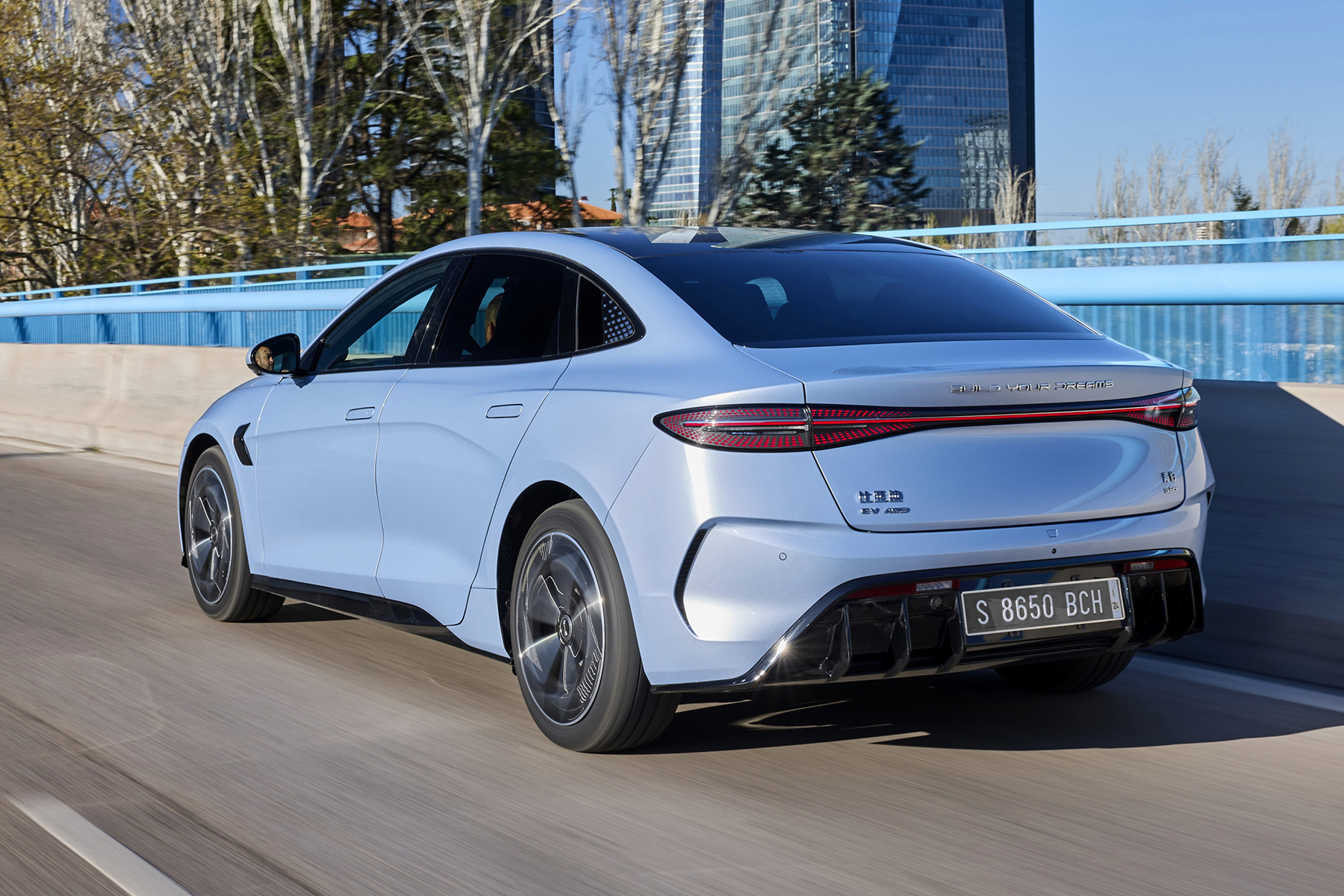
The BYD Seal is an all-electric executive saloon and the third model BYD has launched in the UK. As the brand’s flagship model, the Seal poses direct competition to the likes of the Tesla Model 3, BMW i4 and Polestar 2.
“On price and equipment alone, the BYD Seal is an attractive proposition”, says Dave Humphreys of The Sunday Times, who adds that the car also drives with a similar degree of quality and finesse to its established rivals.
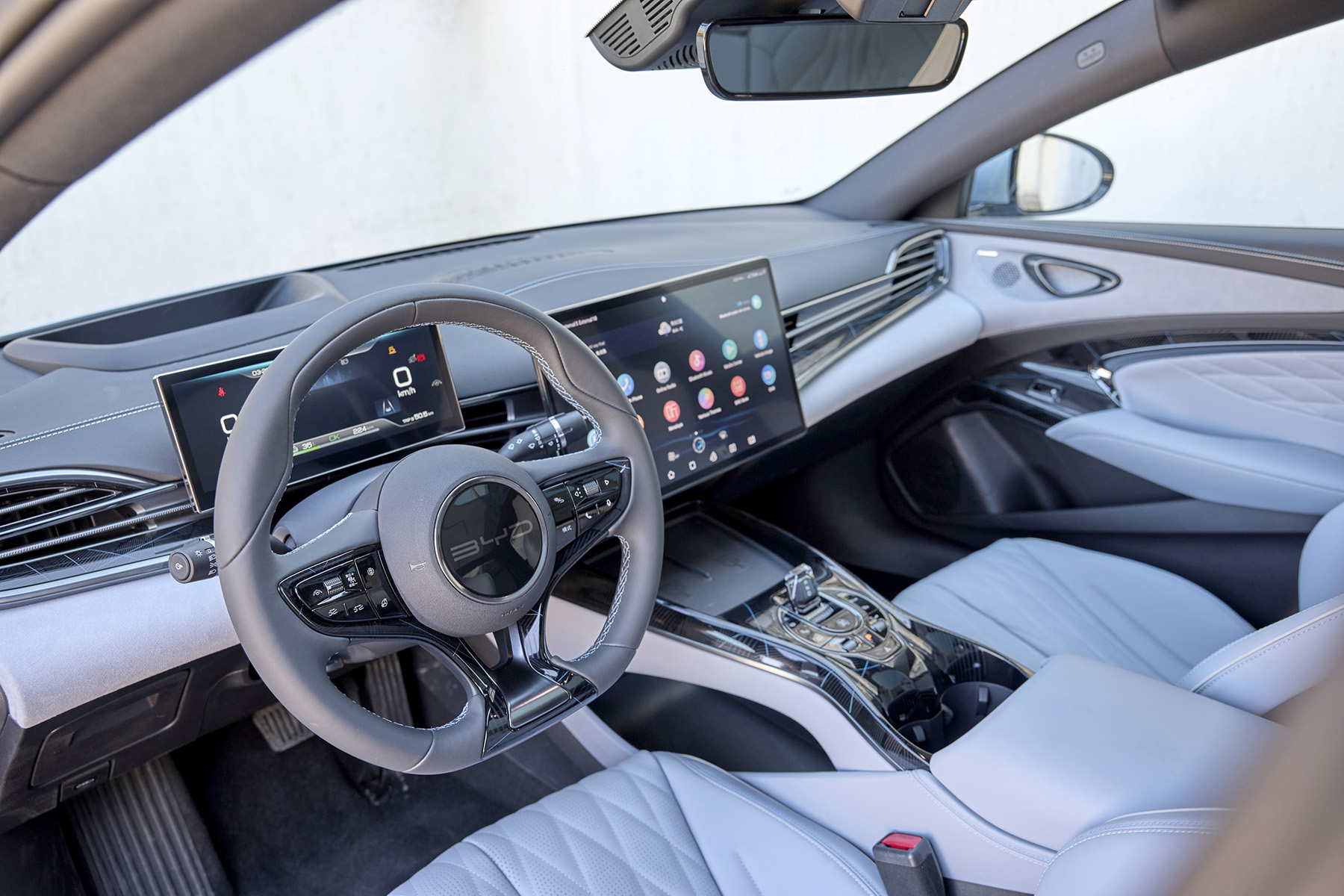
Car‘s Keith Adams explains that the Seal is more efficient than the BMW i4, more responsive than the Hyundai Ioniq 6, and has a higher interior quality than the Tesla Model 3. That said, Adams also concludes in his Parkers review that “the BMW i4 outdrives it, the Hyundai Ioniq 6 is more comfortable, and the Polestar 2 has a funkier interior and better infotainment.”
John McIlroy of Auto Express says that BYD has “a real star on its hands”, praising the saloon for its “generous” standard equipment list, its “solid” battery range and “respectable” charging speeds. On the other hand, several reviewers comment that the car’s rather intrusive safety assistance systems need some work. Evo‘s Sam Jenkins says this tech may prove to “be a sticking point for many.”
As of February 2026, the BYD Seal holds a New Car Expert Rating of A, with a score of 74%. It gets top marks for its excellent safety rating and it produces zero tailpipe emissions. Please note, however, that the overall rating is still incomplete as we are awaiting full running cost data, and we obviously won’t get any meaningful reliability data for some time as the Seal is a brand-new car.
“The BYD Seal EV is fast and great fun to drive. It comes with plenty of equipment, too, but the touchscreen-dominated controls are too tricky to use on the move.”
Model reviewed: Range overview Score: 7 / 10 “The BYD Seal is the Chinese brand’s most impressive UK offering to date, with excellent range, efficiency, and performance. It even has a well-finished interior with lots of standard equipment to give it the feel of a premium electric vehicle, so much so that it might make you think twice about a Tesla Model 3.” Author: Richard Ingram, Max Adams Read review
Auto Trader
Model reviewed: Range overview Score: 8 / 10 “Not only is the BYD Seal stylish throughout, but it comes with a generous helping of standard equipment and a straightforward model line-up – there’s even a high-performance version that rivals the BMW i4 and Tesla Model 3. Some of its driver assistance systems still have a way to go to provide a better user experience, but it drives well and matches its closest competitors for build quality and performance.” Read review
Business Car
Model reviewed: RWD 82 kWh Score: 7 / 10 “As good as the BYD Seal looks, feels and performs, given the ultimate convenience and the exclusivity of Tesla’s charging network, we suspect BYD will still have an uphill battle for hearts and minds if it is to upstage Tesla’s EV pre-eminence.” Author: Pete Tullin Read review
Car
Model reviewed: Range overview Score: 8 / 10 “The BYD Seal is a convincing proposition against a Model 3, Polestar 2, BMW i4 or Ioniq 6. It’s more efficient than the BMW, more responsive than the Hyundai, roomier than the Polestar and better built than the Tesla. That is quite a reflection of the astonishing pace the Chinese motor industry has moved towards a dominant position in the electric car market.” Author: Keith Adams Read review
Carbuyer
Model reviewed: Score: 8.2 / 10 “BYD’s Tesla Model 3 rival shows how quickly the brand is improving, with a long range and impressive cabin.” Author: Richard Ingram, John McIlroy Read review
Daily Mirror
Model reviewed: Range overview Score: 8 / 10 “BYD’s new sporty saloon moves the electric-car game on (surprisingly quickly).” Author: Gareth Butterfield Read review
Driving Electric
Model reviewed: Range overview “The BYD Seal is an electric saloon car that looks to have all the right ingredients to take on the all-conquering Tesla Model 3 – indeed, if the Chinese maker can get the price right, it could even beat the industry stalwart at its own game. Strong range, decent practicality, an agreeable drive and plenty of kit set the BYD Seal up very nicely indeed.” Author: Richard Ingram, John McIlroy Read review
Electrifying.com
Model reviewed: Range overview Score: 8 / 10 “The BYD Seal is a sleek, premium saloon car and from my first drive I think BYD has come up with a worthy alternative to the world’s best-selling car.” Author: Ginny Buckley Read review
Evo
Model reviewed: Range overview Score: 7 / 10 “The all-electric BYD Seal offers punchy performance, range and an abundance of tech, but intrusive assistance systems will be a sticking point for many.” Author: Sam Jenkins Read review
Fleetworld
Model reviewed: Excellence “Quick charging is becoming easier in my part of the world, and the BYD Seal made light work of this while I grabbed a coffee. Checking the numbers for the BYD Seal Excellence also showed it has stayed true to its claims about mileage and range. What you see on the screen is what you will get on the road, which is very unusual with EVs in my experience. That alone makes the BYD Seal one of my favourite electric cars.” Author: Alisdair Suttie Read review
Green Car Guide
Model reviewed: Excellence AWD Score: 9 / 10 “Many people may have preconceptions about cars from Chinese companies that are new to the UK, for example in terms of the expected levels of quality. The BYD Seal should dispel such myths. It’s excellent to drive, the interior has a premium feel, and it features BYD’s Blade battery, which promises a 300-mile+ range along with high levels of safety. And then there’s the Seal’s competitive price. So manufacturers of other electric saloons should take BYD and its Seal seriously.” Author: Paul Clarke Read review
Heycar
Score: 9 / 10 “Not everyone will take the BYD Seal seriously (its biggest obstacle is probably its name), but you only need to look at MG to see that Chinese electric vehicle manufacturers have the potential to shake up the UK market. But with a long range, superb interior finish and lots of standard equipment, we think the BYD Seal is a surprisingly appealing choice.” Read review
Parkers
Model reviewed: Range overview Score: 8.2 / 10 “It’s easily the best product the company makes, and is the most impressive start-up product we can remember since Tesla or Polestar – and that alone makes it very tempting indeed.” Author: Keith Adams Read review
The Sunday Times
Model reviewed: Range overview Score: 8 / 10 “On price and equipment alone, the BYD Seal is an attractive proposition so it’s a welcome bonus that it also drives mostly with a similar degree of quality and finesse as its closest rivals, though some improvement is required in its driver assistance systems.” Author: Dave Humphreys Read review
The Telegraph
Model reviewed: Range overview Score: 8 / 10 “The BYD Seal is good enough to claim a few hearts and wallets with its dynamic ability and calm but well-appointed and spacious cabin.” Author: Andrew English Read review
Top Gear
Model reviewed: Range overview Score: 6 / 10 “Smart styling and deft to drive, but this is an EV you’ll buy with your head rather than heart.” Author: Stephen Dobie Read review
Safety rating
Independent crash test and safety ratings from Euro NCAP
Independent economy and emissions ratings from Green NCAP
No eco rating
As of February 2026, the BYD Seal has not been tested by Green NCAP.
The Green NCAP programme measures exhaust pollution (which is zero for an electric car) and energy efficiency. Electric cars are much more energy-efficient than combustion cars, so the Seal is likely to score very highly in Green NCAP testing whenever it ever takes place. Check back again soon.
Reliability rating
Reliability data provided exclusively for The Car Expert by MotorEasy
No reliability rating
As of February 2026, we don’t have enough reliability data on the BYD Seal to generate a reliability rating.
The Car Expert’s reliability information is provided exclusively to us using workshop and extended warranty data from our partner, MotorEasy, sourced from both official dealerships and independent workshops.
As soon as MotorEasy has sufficient data on the Seal, we’ll publish the results here.
Running cost rating
Monthly cost of ownership data provided exclusively for The Car Expert by Clear Vehicle Data
Battery range
Average
Score
Variation
Score
EV models
339 miles
A
Electrical efficiency
Average
Score
Variation
Score
EV models
4.1 m/KWh
C
Insurance group
Average
Score
Variation
Score
All models
50
F
The BYD Seal is not the cheapest electric car to run, according to whole life cost data provided exclusively to The Car Expert from our data partner, Clear Vehicle Data.
Electrical efficiency (the EV equivalent of miles per gallon or a diesel or petrol car) is only average, although a large battery means that driving rage is still excellent between recharging stops.
Insurance costs are high, although this is likely to improve as insurance companies get more real-world data about claims from BYD customers compared to other brands.
Similar cars
If you’re looking at the BYD Seal, you might also be interested in these alternatives.
Find your next new or used car with Auto Trader. Find out more
Find your next new or used car with Carwow. Find out more
Lease a BYD Seal
If you’re looking to lease a new BYD Seal, The Car Expert’s partners can help you find a competitive deal.
Personal contract hire deals from Carparison Leasing. Find out more
Personal contract hire deals from Leasing.com. Find out more
Personal contract hire deals from Carwow. Find out more
Subscribe to a BYD Seal
Subscriptions are becoming a very popular way for consumers to try an electric car for a few weeks or months to help decide whether it’s a suitable alternative to a petrol car. If you’re interested in a car subscription, The Car Expert’s partners can help. (PS: What’s a car subscription?)
Sales of new electric cars to private buyers fell by 14% in September, while overall consumer new car sales rose by 6% in one of the two biggest months of the year for new car sales.
According to data published this morning by the Society of Motor Manufacturers and Traders (SMMT) the overall new car market grew by 21% in September compared to the same month last year. However, this was mostly driven by strong increases in the fleet sector, which was up by 41%.
As we’ve mentioned pretty much every month for the last year, the impressive-looking growth in the fleet numbers is more of a recovery, as fleet sales were hit much harder than private sales during and after the Covid-19 pandemic. The overall balance between fleet and private registrations in 2023 is far more in line with ‘normal’ data than what we saw from 2020 to 2022.
We’ll have more to say about the slump in consumer EV sales separately but, in summary, the government seems to be willing to undermine the car industry in order to try and win a few votes at the coming general election.
September
Buyer
September 2023
September 2022
% change
Market share 2023
Market share 2022
Private
122,944
116,227
5.8%
45.1%
51.6%
Fleet
143,256
101,761
40.8%
52.5%
45.2%
Business
6,410
7,281
-12.0%
2.4%
3.2%
Total
272,610
225,269
21.0%
Source: SMMT
Year to date
Buyer
YTD 2023
YTD 2022
% change
Market share 2023
Market share 2022
Private
650,386
639,067
1.8%
44.8%
52.9%
Fleet
766,893
539,041
42.3%
52.8%
44.6%
Business
34,629
30,260
14.4%
2.4%
2.5%
Total
1,451,908
1,208, 368
20.2%
Source: SMMT
Consumer EV sales crash is a big headache for car industry
Although there is one big mitigating factor – Tesla – in the September results, there’s no good news from falling consumer sales of new electric cars. New EV sales are being propped up by the fleet market, but 2023 results overall still put EV’s market share behind 2022’s full-year results. So unless we get a massive rush for new EVs between now and Christmas, the market will be going backwards.
It’s possible that we will see more growth over the last three months of the year, especially since Tesla had a surprisingly quiet September. But given that the prime minister seems desperate to talk down EVs and encourage people to keep buying petrol cars, that would appear unlikely.
So it’s a big stretch to suggest that 2023’s EV results will show real growth over 2022. That’s a problem, because new quotas come into effect in just three months’ time, which require the car manufacturers to sell at least 22% EVs next year. Currently, the EV market share is just over 16% year-to-date and the government appears to have no idea (or interest) in growing that to help meet the targets it has imposed on the car industry.
While it’s too early to say how many car buyers were directly put off by the prime minister’s recent U-turn on the 2030 ban on new petrol and diesel car sales, it’s surely no coincidence that consumer EV sales dropped so significantly in September. Even diesel’s market share increased slightly, which reverses a long-term trend of declining sales.
New car registrations by fuel type – September
Fuel
September 2023
September 2022
% change
Market share 2023
Market share 2022
Petrol*
151,846
126,873
19.7%
55.7%
56.3%
Electric
45,323
35,194
18.9%
16.6%
16.9%
Hybrid
38,014
29,088
30.7%
13.9%
12.9%
Plug-in hybrid
18,535
12,281
50.9%
6.8%
5.5%
Diesel*
18,892
18,911
-20.1%
6.9%
10.1%
Total
272,610
225,269
21.0%
*includes mild hybrids Source: SMMT
New car registrations by fuel type – Year to date
Fuel
YTD 2023
YTD 2022
% change
Market share 2023
Market share 2022
Petrol*
820,880
693,285
18.4%
56.5%
57.4%
Electric
238,544
175,614
35.8%
16.4%
14.5%
Hybrid
182,556
142,427
28.2%
12.6%
11.8%
Diesel*
110,935
123,081
-9.9%
7.6%
10.2%
Plug-in hybrid
98,993
73,961
33.8%
6.8%
6.1%
Total
1,451,908
1,208,368
20.2%
*includes mild hybrids Source: SMMT
Good month, bad month
Even with a 21% overall market growth in one of the two biggest months of the year, it wasn’t sunshine and rainbows for everyone in September. Some car manufacturers saw significantly less growth than the market average, while others saw sales fall dramatically.
The most notable brand in September was Tesla, which saw numbers down 36% compared to the same month last year. But if judging any brand based on one month is difficult, with Tesla it’s even harder as the company doesn’t have stabe monthly supply pipelines like most brands. It works on more of a boom/bust nature, with huge months followed by much smaller months. So it may just be that Tesla’s production and delivery cycle didn’t yield as many cars for September, and we may see the Model Y back atop the sales charts next month.
That means that the following brands were more or less where you’d expect them to be in terms of markest share: Citroën, Jaguar, Kia, Land Rover, Mazda and Volkswagen.
Volkswagen was the biggest-selling brand in September, ahead of Ford, Audi, Kia and Toyota. Incidentally, that’s the same top five in year-to-date sales as well.
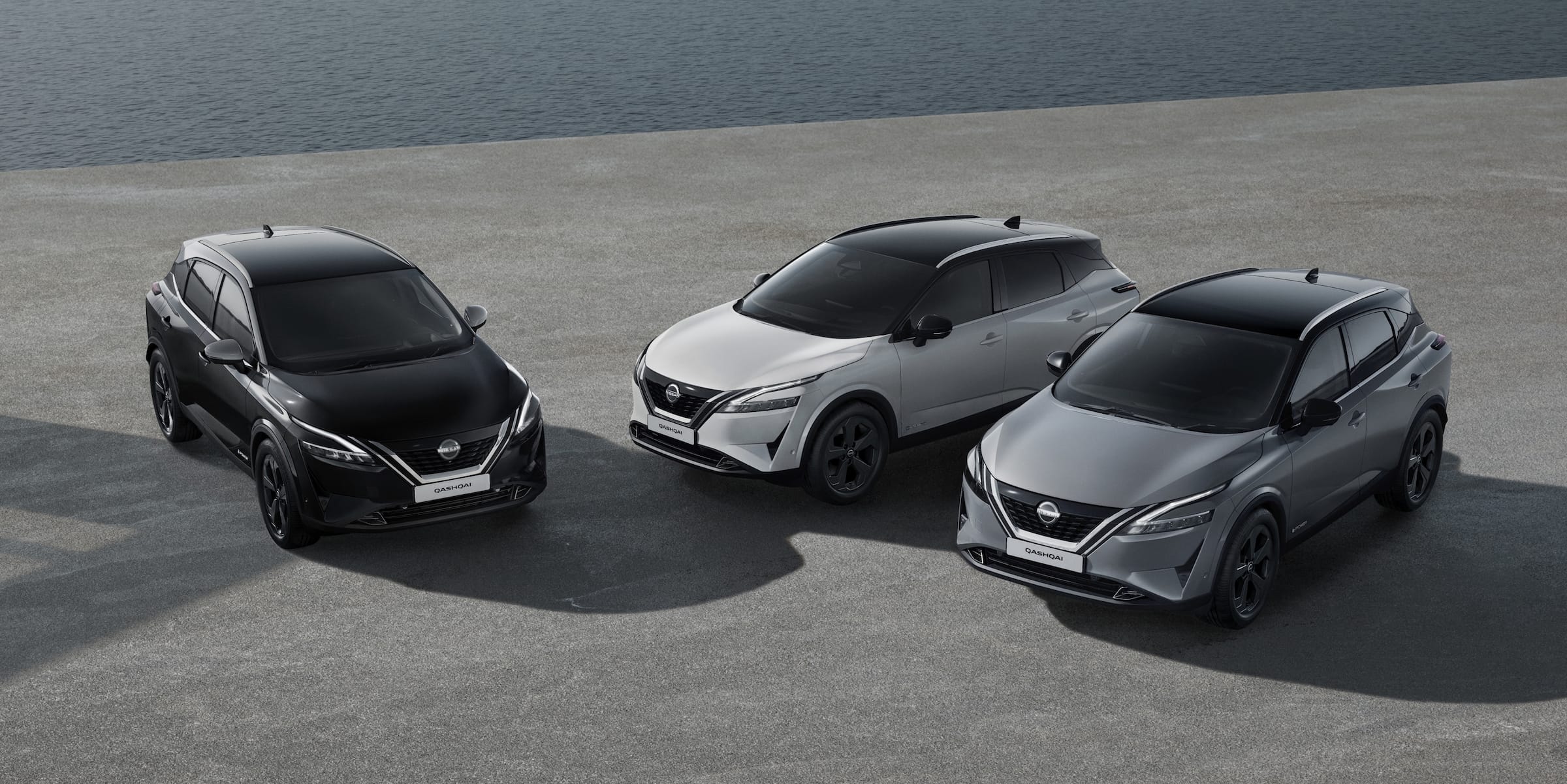
Just like last year, the Nissan Qashqai topped the sales charts in September (rebounding from a slow month in August, also like last year). Its numbers were down slightly on last year’s result, but still good enough to keep the Ford Puma off the top of the charts despite a very strong month from Ford’s new best-selling model.
Eight of the top ten cars were small or medium SUVs, with just two supermini-sized hatchbacks (the Vauxhall Corsa and Volkswagen Polo) making the cut in the lower regions of the chart. It was a good month for MG with two models in the top ten.
With nine months of the year gone, the Ford Puma has increased its lead in the 2023 sales race after a subdued month for both the Corsa and the Tesla Model Y. The Qashqai’s strong September has pushed it up to second place, while the Kia Sportage has overtaken its Hyundai Tucson cousin for fifth place. At the bottom end of the top ten, the Mini hatch has swapped places with the Ford Fiesta for the ninth and tenth spots.
We’ll have our usual monthly analysis of the top ten shortly.
Skoda has given its high-performance Enyaq vRS a battery boost that increases the electric SUV’s power and battery range.
This update, which stands for both SUV and coupé-SUV versions of the Enyaq vRS, increases the car’s power output from 299hp to 340hp – which Skoda says is the highest output figure ever for a production Škoda model. This performance boost makes the model a second quicker in a 0-62mph sprint – 5.5 seconds in total.
Skoda adds that the SUV is more efficient after the range refresh. Powertrain tweaks and the introduction of new power management software ups the car’s maximum range to 336 miles for the SUV – a 15 mile increase. The more aerodynamic coupé-SUV model can instead reportedly muster 340 miles on a single charge. The maximum DC battery charging speed has also increased from 135kW to 175kW.
The car’s standard equipment list has also been revised, and features like walk away locking, rear side airbags, rear window blinds, and rear USB-C charging ports are now included without an additional fee.
Other improvements include further refinements to the infotainment and optional head-up display. Skoda says the central infotainment screen has been redesigned to be easier to use and deliver more information, while the head-up display gains new graphics that have been introduced to make them easier to read while driving.
The Skoda Enyaq vRS has been praised by the British motoring media for its smart exterior looks and impressive battery range. That said, several reviewers conclude that the ‘hot SUV’ is too pricey, and that the Standard Enyaq offers more value-for-money. It currently holds an Expert Rating of 57%.
Mazda has updated the looks of its ‘Mazda2 Hybrid’ compact hatchback, including a revised front bumper and grille design.
The change comes as Mazda attempts to give this hybrid model a “fresh and independent look”. Entirely separate from the standard Mazda 2 range, this model is directly related to the Toyota Yaris hybrid, and the current version has a very similar exterior design to the Toyota.
To distinguish the ‘Mazda2 Hybrid’ from its Toyota counterpart, Mazda has decided to give the supermini a different headlight shape and a smaller front grille, which makes room for a new front splitter design on the front bumper. Mazda adds that it has slightly altered the design of the boot lid in the rear, and the model will also come with a refreshed alloy wheel design, which will differ depending on the trim level you choose.
Speaking of trim levels, the manufacturer has also revised the trim levels available to mirror the grades offered in the standard ICE-powered Mazda 2 line-up. The range will begin with the lead-in ‘Centre-Line’, and will be followed by the ‘Exclusive-Line’, ‘Homura’ and top-spec ‘Homura Plus’ grades.
The brand has not made any changes to the interior design or the car’s 1.5-litre petrol-electric powertrain.
Mazda is yet to announce the specifications for these trims, and has not published UK pricing yet for the update either. The range refresh will arrive in March next year – these details are sure to follow as this facelift nears its UK arrival.
Skoda has decided to roll out a small update for its Scala hatchback and Kamiq crossover – two compact models built on the same foundations – which will be available to order in the UK from early October.
The update includes a few minor exterior design alterations, as both cars have been given a larger front grille and slimmer LED headlights, much like the latest iteration of the Fabia hatchback.
Changes also include tweaks to the hatchback and crossover’s front and rear bumper designs, and new pattern designs for the alloy wheels. Skoda says that these changes have been made to make the Scala look more like the brand’s 2018 Vision RS hatchback concept, and give the Kamiq a more “rugged SUV appeal”.
2023 Skoda Scala
Both model ranges will consist of three trim levels – ‘SE’, ‘SE L’ and the range-topping ‘Monte Carlo’ – and Skoda says that these trims have been revised to offer higher levels of standard equipment.
Both models will come with an eight-inch digital instrument cluster and an eight-inch infotainment screen as standard, while mid-range ‘SE L’ models will feature a larger ten-inch digital instrument cluster and a nine-inch infotainment screen package. LED headlights with LED daytime running lights are now also standard equipment, as are rear parking sensors and keyless entry.
More advanced Matrix LED headlights are also available for both models for the first time, as part of the ‘Monte Carlo’ trim. Other new additions include a foot-gesture control for versions equipped with the optional powered tailgate, smartphone storage pockets on the back of the front seats, and a removable box on the centre console that includes a cup holder.
2023 Skoda Kamiq
Pricing for the new Scala range will begin at just over £22k, while an entry-level Kamiq ‘SE’ will be priced at just north of £24k. Sportier ‘Monte Carlo’ versions will cost £5k more than the lead-in price.
The engine options remain essentially the same. Both the Scala and Kamiq will be available with three different petrol unit options ranging from 95hp to 150hp. Skoda’s engineers increased the power output of the mid-range petrol engine option though – it now produces 116hp instead of 110hp.
Both Skodas have been praised by the motoring media for their practicality, spaciousness and value-for-money, but reviewers conclude that they lack some of the interior refinement of their respective rivals. The Scala currently holds an Expert Rating of 62%, while the Kamiq holds an Expert Rating of 71%, falling a few points short of the class-leading Ford Puma.
The Honda CR-V is a medium-sized five-seat SUV/crossover, available as either a petrol-electric hybrid or as a plug-in hybrid. This is the sixth-generation model, which arrived in the UK in the second half of 2023.
The SUV has been given a rather mixed bag of reviews so far, and was unveiled as The Sunday Times James Fossdyke says “the outgoing CR-V was beginning to feel a bit dated” – this new model arrivng to address the old CR-V’s infotainment and interior quality criticisms and “build on the existing car’s impressive space and hybrid system.”
Parker‘s Tom Wiltshire also points to Honda’s “stellar” reliability record, but highlights the SUV’s key disadvantage when compared to rivals like the Toyota RAV4 – “Its price is more what you’d expect from premium competitors like the BMW X3 or Lexus NX.”
Some reviewers have also called the car’s exterior styling bland, while others have voiced their disappointment that this new model isn’t available in a seven-seat configuration like its predecessor.
As of February 2026, the Honda CR-V holds a New Car Expert Rating of B, with a score of 68%. It scores top marks for its five-star Euro NCAP safety rating as well as its low CO2 emissions (helped by the plug-in hybrid model). However, media review scores and overall running costs are poor.
Body style: Five-door SUV/crossover Engines:hybrid, plug-in hybrid Price:From £45,895 on-road
Launched: Autumn 2023 Last updated: N/A Replacement due: TBA
Image gallery
Media reviews
Highlighted reviews and road tests from across the UK automotive media. Click any of the boxes to view.
Auto Express
Model reviewed: Range overview Score: 7 / 10 “The CR-V is a spacious, well-equipped SUV that’s also packed with safety technology to keep you and your loved ones safe. Mind you, it should come stacked with equipment, considering its premium pricing.” Author: Max Adams, Alex Ingram Read review
Model reviewed: 2.0-litre petrol/electric hybrid Advance Score: 7 / 10 “The new Honda CR-V’s price reflects not only an increase in size, but also a move upmarket. However, at almost £50,000, customers can rightfully put rivals like the BMW X3 and Volvo XC60 into the mix, at which point, Honda’s flagship becomes harder to justify. It’s spacious and comfortable, but otherwise struggles to stand out in any one area. Still interested? You certainly won’t be left wanting for standard kit – the CR-V is exceptionally well appointed inside and out.” Author: Richard Ingram Read review
Model reviewed: 2.0-litre petrol/electric plug-in hybrid Advance Tech Score: 6 / 10 “The sixth-generation Honda CR-V is bigger and much more clever than its predecessor, but in practice the new plug-in hybrid variant is going to be tricky to recommend. Its closest rival, the Toyota RAV4 PHEV, offers much more power and better road manners for significantly less money. Unless you’re a company car user benefiting from the excellent Benefit in Kind costs, the cheaper regular hybrid models will make much more sense.” Author: Alex Ingram Read review
Car
Model reviewed: Range overview Score: 6 / 10 “If you’re after a dependable family SUV with loads of space, excellent efficiency and an interior that’s unlikely to ever annoy you, the Honda CR-V makes a sound choice – it’s just one without much sparkle.” Author: Tom Wiltshire Read review
Carbuyer
Model reviewed: Range overview Score: 7.4 / 10 “The Honda CR-V is smooth to drive, with low running costs and a practical cabin. But it’s more expensive to buy and insure than most rivals.” Author: Andy Goodwin, Alex Ingram Read review
Carwow
Model reviewed: Range overview Score: 7 / 10 “The Honda CR-V is a handsome, comfortable family SUV, but it’s quite expensive and alternatives have bigger boots.” Read review
Daily Mail
Model reviewed: 2.0-litre petrol/electric plug-in hybrid “My initial reaction on seeing the new and larger sixth-generation Honda CR-V was: ‘My, how you’ve grown.’ But after driving it I’m more tempted to say: ‘My, how you’ve grown up.'”(Ray Massey) Read review
Heycar
Model reviewed: Range overview Score: 8 / 10 “The sixth-generation Honda CR-V delivers a well-rounded family SUV experience, with the choice of two efficient hybrid powertrains. It looks expensive against its closest rivals, though.” Author: Richard Aucock Read review
Honest John
Model reviewed: Range overview Score: 8 / 10 “The Honda CR-V is a very good family SUV, with bags of space, a stylish interior and plenty of features as standard. The two hybrid engines should also prove to be very efficient.” Read review
Parkers
Model reviewed: Range overview Score: 7.6 / 10 “Honda’s reliability record is stellar, and the CR-V is nothing if not easy to live with – from the straightforward interior to the smooth and efficient powertrains. What it’s not is cheap.” (Tom Wiltshire) Read review
The Sunday Times
Model reviewed: Range overview Score: 8 / 10 “With the new CR-V, Honda has managed to eliminate almost all the old car’s weaknesses while still carrying over its strengths. The result is one of the best big, five-seat family SUVs on the market, offering comfort, efficiency and a bit of newfound style — particularly on the inside.” Author: James Fossdyke Read review
The Telegraph
Model reviewed: Range overview “It’s business as usual here for the CR-V, with an offering that’s dull, but solid and well engineered. Be warned, however – it’s expensive, and the latest Toyota RAV4 is just as good with a PHEV version that’s bewilderingly fast.” Author: Andrew English Read review
Top Gear
Model reviewed: Range overview Score: 7 / 10 “The latest version of the CR-V doesn’t mess with the car’s winning formula, adding a dash of practicality and a plug-in hybrid powertrain that will appeal to those on company car schemes. It doesn’t hurt that the car is reasonably fun to drive, too, so everyone will find something to like about it.” (Sam Burnett) Read review
Safety rating
Independent crash test and safety ratings from Euro NCAP
Clean Air Index: 7.3 / 10 Energy Efficiency Index: 3.7 / 10 Greenhouse Gas Index: 2.4 / 10
Reliability rating
Reliability data provided exclusively for The Car Expert by MotorEasy
No reliability rating
As of February 2026, we don’t have enough reliability data on the Honda CR-V to generate a reliability rating.
The Car Expert’s reliability information is provided exclusively to us using extended warranty data from our partner, MotorEasy. As soon as MotorEasy has sufficient data on the CR-V, we’ll publish the score here.
Running cost rating
Monthly cost of ownership data provided exclusively for The Car Expert by Clear Vehicle Data
Fuel consumption
Average
Score
Hybrid models
43 mpg
C
Plug-in hybrid models
353 mpg
A
CO₂ output
Average
Score
Variation
Score
Hybrid models
151 g/km
C
Plug-in hybrid models
18 g/km
A
Battery range
Average
Score
Variation
Score
Plug-in hybrid models
51 miles
D
Insurance group
Average
Score
Variation
Score
All models
35
D
Service and maintenance
Cost
Score
Year 1
£182
B
Year 2
£459
B
Year 3
£772
B
Year 4
£974
B
Year 5
£1,360
B
Overall
£3,747
B
The Honda CR-V has mixed results for running costs, according to whole-life cost calculations provided exclusively to The Car Expert by our technical partner, Clear Vehicle Data.
Fuel consumption for the standard hybrid model is only average, with many rivals scoring better. Battery range is also quite good for the plug-in hybrid model, although you need to drive gently to avoid waking the petrol engine.
The best news for prospective CR-V buyers is that servicing costs are excellent for the first five years of ownership, which is particularly good for a mid-sized SUV.
Similar cars
If you’re looking at the Honda CR-V, you might also be interested in these alternatives.
There are different ways in which your company can provide you with a car, depending on whether it’s just for business use, just for private use, or a combination of both.
Employers have run company car schemes which fall into three types; company-owned vehicles, employee car allowances or an employee salary sacrifice scheme.
We’ll run through them here, but firstly, unless it is used entirely for business, a company car is considered a perk of a job for tax purposes, so is subject to a ‘Benefit-in-Kind’ (BiK) tax based on a set rate.
Traditional company car schemes vs. salary sacrifice
Benefit in kind (BiK) describes any goods or services provided to an you as an employee by your employer for free, or at greatly reduced cost, on top of your regular salary.
Although you’re not paying for this benefit, you still have to pay tax on it. The amount of tax is determined by several factors. These are:
the price of the car (its P11D value, which is list price without delivery and road tax but with any options plus VAT)
The car’s official CO2 emissions rating
the type of fuel your car uses
The emissions part can make a huge difference to how much tax you will pay.
The calculation to work out your annual BiK tax is as follows:
(P11D value of the car) x (BiK tax band) x (your income tax bracket).
What is a traditional company car scheme?
In a traditional company car scheme, the employer owns a fleet of cars (or, more commonly, operates a fleet of cars which are leased or on subscription). All documentation and insurance is handled by the company.
The employees then use the cars for either their work, just for their private use, or a combination of both. Fuel (petrol, diesel, electricity) may also be paid for by the employer for each of these uses.
The company deducts the necessary tax from your salary and keeps records for HMRC. You as the employee don’t need to do anything.
Company car allowance (cash allowance)
A company car allowance is a cash sum which is added to your salary for you to subscribe to or lease a car of your choice. You are charged tax on it as additional salary, not as a BiK, although you need to keep your own records of business mileage vs private mileage.
A business mileage allowance may be available in addition or, if not offered, you can claim business mileage against tax yourself at a flat rate.
However, leasing company Leaseplan warns that ‘while employees may prefer the greater flexibility of cash allowance policies, employers will find it more difficult to ensure that their drivers have cars that are well maintained and appropriately insured… providing cash can encourage employees to drive older, and often more polluting vehicles.’
This can be a problem if the employer has environmental policies relating to vehicles or its corporate CO2 output.
Employee car ownership (ECO) schemes
An employee car ownership (ECO) scheme, which can also be called an employee car purchase scheme, is another way in which businesses provide their employees with cars and has its own definition with HMRC. An ECO is not a traditional company car scheme but is designed to give employees similar benefits to a company car in a way that means BiK doesn’t apply.
Employers usually set up and run their own ECO schemes or they’re set up by specialist third parties. Unlike company car packages, employees don’t have to pay BiK tax because the employee – not the employer – is the registered car owner and pays for it. The employer normally increases taxable pay to compensate.
The employer ‘sells’ a car to an employee under a credit sale agreement (CSA) of a fixed length and mileage. The employee can get a car from any reputable source without becoming involved in the purchasing or financing arrangements in any way but can take advantage of any supplier the employer may use. The employer pays any deposit, but to qualify for an ECO scheme, employees may be subject to credit checks.
Servicing, maintenance, and breakdown cover can all be handled and expensed by the company, which must maintain detailed business mileage records for each driver. As it is the employee’s ‘own’ car, the employer can pay mileage allowance payments (MAPs) for using their own vehicle for business journeys.
The employer is allowed to pay the employee a certain number of MAPs each year without having to report them to HMRC. This is called an ‘approved amount’.
Salary sacrifice – why this can be a win-win
We write a lot about salary sacrifice at The Car Expert, because it has become a very popular way for companies to offer their employees a car as a benefit because of current government policy on electric vehicles (EVs).
Salary sacrifice (or salsac) is a formal agreement where an employee agrees to accept a lower salary and, in return, receives a benefit from their employer which can be benefits such as such as childcare vouchers, free healthcare screening, or cycle-to-work schemes. Salary sacrifice as a whole has been a key feature of UK employment since the 1970s but company cars were added in 2008.
The employee doesn’t pay income tax or Class 1 National Insurance Contributions (NIC) on the portion of salary ‘sacrificed’ but still pays a BiK based on the value of the car and the private fuel it uses. The employer saves the cost of the sacrificed salary and the NIC, incurs the cost of leasing (or subscribing to) the car and pays the NIC on the BiK.
Once the car has been delivered the employer reduces the employee’s gross salary by the amount sacrificed. The reduction is designed to cover the cost of providing the car and running it (servicing, insurance, admin).
EVs and salary sacrifice
As mentioned earlier, your car’s CO2 emissions rating significantly affects its BiK tax rate. The government uses a sliding scale range from a minimum level of 0 g/km to a top level of 170+ g/km, with tax rates that range from 2% to 37%.
EVs emit 0 g/km, so they incur a BiK tax rate of only 2%, whereas to a similarly sized petrol or diesel car will usually have a tax rate of at least 25%. This can save you hundreds of pounds a month on an electric car, and it’s now the driving factor in EV sales.
Overall UK company car emissions are falling. According to June 2023 stats from the government, the average reported CO2 emission of company cars (including electric cars) was 86 g/km, compared to 99 g/km in the previous tax year. For cars with internal combustion engines (which includes plug-in hybrids), the average was 103 g/km. In the tax year 2021 to 2022, only around 2% of company cars had reported CO2 emissions in excess of 165 g/km.
EV BiK rates will increase by 1% per year until 2028, so by the 2027/28 tax year electric cars will be rated at 5%. Pure petrol (non-hybrid) and diesel cars will change very little: for example, those in the 100-104 g/km backet will go from 25 to 26%. So although EV users will start paying more tax, they’ll still benefit massively compared to petrol/diesel/hybrid car users.
This tax certainty (until at least 2028) was campaigned for by the British Vehicle Rental and Leasing Association (BVRLA). It’s a very big deal. The BiK rates for EVs are now seen as crucial for the Government meeting future CO2 emissions targets, and it also helps drive electric cars through to the used car market in a few years’ time once they’ve completed their initial lease agreements with the original customer.
Where once the only way to get a very low BiK company car was to have a very small petrol car, people can now get into a larger EV. The EV-friendly policy also appears to be providing people on average salaries their first chance to drive a new car, especially as EVs are still more expensive than petrol or diesel cars.
In a 2022 BVRLA podcast, Fiona Howarth, CEO of Octopus Electric Vehicles (a partner of ours at The Car Expert) said 60% of its customers taking salary sacrifice packages were 20% tax rate payers.
It seems people love salary sacrifice for a car – not just for the low tax, but because all the admin is taken care of: insurance, servicing, repair bills and home charge points are usually dealt with. That said, traditional company car schemes also usually took care of this.
For employers, offering a salary sacrifice scheme is proving key to staff retention, said Ian Hughes, the CEO of Zenith, a car and van leasing and fleet management company, in the same podcast. “The employee makes a sort of a notional contract with the employer about the duration that they intend to stay with the organisation.”
As an employee, you can sacrifice however much salary you want so long as this does not bring the gross salary below the national minimum wage. You should also check whether the drop is salary is going to harm other finances such as private and state pension contributions, holiday pay, or your ability to pay a mortgage.
But what if I really want a petrol, hybrid, or diesel company car with salary sacrifice?
Even though the growth in salary sacrifice is entirely geared towards EVs (and succeeding in a major way) not everybody wants to drive an EV. Petrol and diesel cars are going to be available new for at least another seven years (possibly twelve…), and some people still strongly prefer their familiarity.
In August 2023, diesel cars made up less than 7% of the market, a share that has been steadily falling for years. Audi, BMW, Land Rover and Mercedes-Benz accounted for 56% of diesel car sales in the first half of 2023 in the UK, amid a continued decline in popularity of the fuel.
Diesel cars accounted for just over one third of company cars in 2021 to 2022 following a steady decline from 80% of company cars in 2017.
Petrol, diesel or electric car tax examples
If a petrol or diesel is going to cost you more in tax, how much more expensive might this be? Let’s take a premium brand petrol and diesel car and their nearest electric equivalent staying with the same brand/size of car (which is admittedly getting harder to do). We used BMW’s and Kia’s own company car tax calculators as of September 2023.
BMW 3 Seriespetrol
Trim: BMW 320i petrol Sport saloon P11D price: £39,295 CO2 emissions: 147 g/km Fuel economy: 43.5 mpg BiK charge (34%): £13,360 Monthly tax (20%): £223 Monthly tax (40%): £445
BMW 3 Seriesdiesel
Trim: BMW 320d diesel Sport saloon P11D price: £42,290 CO2 emissions: 127 g/km Fuel economy: 58.9 mpg BiK charge (30%): £12,687 Monthly tax (20%): £211 Monthly tax (40%): £423
BMW i4electric
Trim: BMW i4 eDrive35 Sport liftback P11D price: £49,940 CO2 emissions: 0 g/km Fuel economy: n/a BiK charge (2%): £999 Monthly tax (20%): £17 Monthly tax (40%): £33
Hybrid (petrol) or plug-in hybrid (petrol) tax examples
A hybrid is a car powered by both a petrol engine and an electric motor which can run on the power of a small battery for a very short range (charged by the petrol engine). Diesel hybrids are a dying breed.
A plug-in hybrid has a larger battery and a longer electric-only range and can be charged from a charger. There are significant tax incentives for plug-in hybrids.
The only way to have a company-funded petrol, hybrid or diesel may be via a cash allowance with which you lease your own car, but it will need to be much larger than you would have paid in tax if the car was owned by the company and provided to you.
Going back to the BMW 320d diesel Sport Saloon, with our Expert Partner Rivervale a BMW 3 320d M Sport automatic with Tech Pack has a P11D list price of £44,685. On a 48-month lease it is £659.72 with VAT and an initial rental of £5,937.48 with VAT
But – and it’s a big but – whichever type of funding scheme, many companies may simply refuse to provide employees with a petrol or diesel as part of an overall environmental commitment, and/or because the deals they can get from car providers for their employees are the best on EVs.
Kia has expanded its Sorento range with the addition of a cheaper ‘Vision’ trim, which is now available as a diesel, hybrid or plug-in hybrid.
In July last year Kia made the decision to drop the entry- and mid-level specifications from the Sorento range last year in favour of a single top-end ‘Edition’ trim level. This change made the Sorento’s lead-in price tag jump by nearly £10K.
The brand has announced that it is now offering its largest model in a cheaper ‘Vision’ guise, that is available with the same engine options as the top-spec model, but with less equipment.
The ‘Vision’ equipment list includes a panoramic sunroof with electric roll blinds, front and rear parking sensors, a reversing camera system and interior features like ambient lighting, a ten-inch infotainment screen, heated seats and a heated steering wheel, but does not include the head-up display, ventilated Nappa leather upholstery and the 360-degree surround view monitor that comes with the ‘Edition’ as standard.
Prices for the new trim start at just under £45k for diesel versions, rising to over £51k for plug-in hybrid variants. Equivalent versions of the ‘Edition’ cost around £5k more.
The winner of several industry awards in recent years, the Kia Sorento currently holds an Expert Rating of 71% – praised for its interior space and quality, but criticised by some for its rather stiff suspension.
The Maserati GranTurismo is a luxurious two-door coupé. Launched in 2023, it’s the second generation to carry the GranTurismo name but the latest in a long line of Maserati grand touring coupés.
It’s powered by a 3.0-litre twin-turbocharged V6 petrol engine, although an all-electric version called the GranTurismo Folgore will join the range soon. We’re building a separate Expert Rating for this model, so check back soon.
The new GranTurismo has been well-received by UK reviewers, with Autotrader explaining that the coupé is “more high-tech, more eco-friendly and more precise” than its predecessor, without losing the essential sense of glamour. As with the previous model, which was produced from 2007 to 2019, it’s a 2+2 coupé with two front seats plus two (fairly cramped) rear seats.
That said, several outlets conclude that the GranTurismo isn’t the most lavish grand tourer on the market, nor does it deliver the driving thrills of other upmarket coupés.
Despite the strength of the competition however, reviewers agree that the Maserati is an engaging and well-engineered package that is certainly a capable match for the daily commute. As the Top Gear team sums up, “it feels, acts and drives expensively and comes across as better engineered and developed than any Maserati in living memory.”
As of March 2026, the Maserati GranTurismo holds a New CarExpert Rating of E with a score of 52%. Although its media review scores are generally good, the overall rating is inevitably dragged down by high CO2 emissions and very high running costs.
Interior quality doesn’t quite match the price tag
Key specifications
Body style: 2+2 coupé Engines:petrol Price:From £141,565 on-road
Launched: Winter 2023/24 Last updated: N/A Replacement due: TBA
Image gallery
Media reviews
Highlighted reviews and road tests from across the UK automotive media. Click any of the boxes to view.
Featured reviews
“A brutally effective powertrain, an accomplished chassis and stunning looks make the Maserati GranTurismo Trofeo a desirable grand tourer, although it’s not perfect.”
“It might look similar to the previous model, but the new Maserati GranTurismo is streets ahead in every measurable way. The new coupé has a superb ride and handling balance, along with an impressive turn of speed. But with the sacrifice of two cylinders for the sake of a couple of turbochargers, some buyers may feel there has been a slight dampening of its appeal.”
Model reviewed: Score: 9 / 10 “The new Maserati GranTurismo is more high-tech, more eco-friendly and more precise than before without losing the essential sense of glamour.” Read review
Car
Model reviewed: Trofeo Score: 8 / 10 “The new Maserati GranTurismo is a massive step forward over the old car. It’s more comfortable. It’s more usable. It’s more approachable. But I’m not sure whether it really has what it takes to go toe-to-toe with the likes of Ferrari and Bentley. It’s just feels too cheap for the money.” Author: Luke Wilkinson Read review
Carwow
Model reviewed: Range overview Score: 6 / 10 “The Maserati GranTurismo is a hugely stylish long-distance cruiser with a superb-sounding V8 engine but alternatives are more comfortable, better to drive and come with more kit.” Read review
Honest John
Model reviewed: Range overview Score: 8 / 10 “Elegant, exclusive, exceptionally rapid and reassuringly expensive, the Maserati GranTurismo is everything you’d expect. It’s been created to devour entire continents in superior comfort with effortless pace and lashings of Latin style.” Read review
Motoring Research
Model reviewed: 3.0-litre petrol automatic Trofeo Score: 8 / 10 “Maserati’s V6 feels like a tool for the job, not an engine to give you goosebumps, so even committed petrolheads may feel conflicted. Also, the EV is faster and seems more exotic somehow, helped by its unique status in the sector. For me, though, until battery tech or the charging network improves, the Folgore’s limited ‘grand touring’ ability means the best GranTurismo is the cheapest one: the entry-level Modena.” Author: Tim Pitt Read review
Parkers
Model reviewed: Range overview Score: 8.4 / 10 “Your many thousands of pounds buys you a beautiful, exotic grand tourer – one that, on your annual trip to your pied a terre in the south of France, will be equally at home on the M25 as it is on the Route Napoleon.” Author: Tom Wiltshire Read review
The Sunday Times
Model reviewed: Range overview Score: 8 / 10 “The Maserati GranTurismo is a beautifully judged grand tourer that doesn’t come cheap.” Author: James Fossdyke Read review
Top Gear
Model reviewed: Range overview Score: 8 / 10 “Maserati reinvents itself for the electric age… with a car that doesn’t look too different from the old GranTurismo and can still be had with a bonkers twin-turbo V6.” Read review
Safety rating
Independent crash test and safety ratings from Euro NCAP
No safety rating
As of March 2026, the Maserati GranTurismo has not been tested by Euro NCAP.
Eco rating
Independent economy and emissions ratings from Green NCAP
No eco rating
As of March 2026, the Maserati GranTurismo has not been tested by Green NCAP.
Running cost rating
Monthly cost of ownership data provided exclusively for The Car Expert by Clear Vehicle Data
Fuel consumption
Average
Score
Petrol models
28 mpg
E
CO₂ output
Average
Score
Variation
Score
Petrol models
228 g/km
E
Insurance group
Average
Score
Variation
Score
All models
50
F
Service and maintenance
Cost
Score
Year 1
£642
E
Year 2
£1,552
E
Year 3
£2,302
E
Year 4
£2,670
E
Year 5
£3,664
E
Overall
£10,830
E
The Maserati GranTurismo is an expensive car to run, according to five-year ownership information provided exclusively to The Car Expert by our technical partner, Clear Vehicle Data.
Fuel economy is unsurprisingly poor, as are CO2 emissions. Servicing costs are expensive and car insurance premiums are in the highest bracket.
Reliability rating
Reliability data provided exclusively for The Car Expert by MotorEasy
No reliability rating
As of March 2026, we don’t have enough reliability data on the Maserati GranTurismo to generate a reliability rating.
The Car Expert’s reliability information is provided exclusively to us using workshop and extended warranty data from our partner, MotorEasy, sourced from both official dealerships and independent workshops.
As soon as MotorEasy has sufficient data on the GranTurismo, we’ll publish the results here.
Recalls
Official DVSA safety recalls that have been issued for the Maserati GranTurismo
As of March 2026, we are not aware of any DVSA vehicle safety recalls affecting the Maserati GranTurismo. However, this information is updated very regularly so this may have changed.
You can check to see if your car has any outstanding recalls by visiting the DVLA website or contacting your local Maserati dealer.
Among the clutch of new automotive names arriving on the UK market in 2023 one of the most unfamiliar may be Fisker. And part of that is likely due to the fact that Fisker is not even that well known yet in the nation of its birth, the USA, because this is another very young and also quite unusual automotive manufacturer.
Fisker being an American brand may immediately spark hesitation among many UK consumers, because historically bids to bring the US way of doing things automotive to European buyers have ended in failure. Who remembers Dodge, Cadillac, and even Chrysler? All massive names Stateside, and names that crashed and burned in Europe and particularly the UK.
The big exception to the rule is, of course, Tesla – but part of that could be because Tesla has done the whole car manufacturer thing differently from traditional brands. Fisker is another brand putting its fate in electric vehicles (EVs), and will be hoping for similar levels of success to the EV standard-bearer, but again in a different way.
So who or what is Fisker?
The name may be new but the man behind it isn’t. Henrik Fisker is a Danish automotive engineer with quite a CV – before setting out on his own he worked at BMW and Ford. At the Munich design studio of BMW, he was centrally involved in the creation of the Z8 roadster and BMW’s first SUV, the X5. After moving to Ford, in 2001 he was appointed design director of Aston Martin (which Ford then owned) – the Aston Martin DB9 and Vantage V8 were Fisker’s work.
Fisker also briefly worked for Tesla before deciding to set up on his own as an EV manufacturer – and it took him two attempts. Fisker Automotive, launched in 2007, produced in 2012 the Karma, a plug-in hybrid sports coupe. But the company could not meet production deadlines due to difficulties with its battery supplier and Henrik resigned in 2013 shortly before Fisker Automotive declared bankruptcy. Its assets were bought by Chinese automotive component maker Wanxiang – they renamed the brand after the car which continued in production as the Karma Revero.
Henrik was back in 2016 with a new company, Fisker Inc. which he launched with his wife Geeta Gupta-Fisher. Initially he tried to develop solid-state battery technology, but abandoned this in 2021 to focus on development of the new brand’s first vehicle, a fully electric SUV called the Ocean. Since then Fisker has been expanding around the world and recently announced plans to produce vehicles in China.
Fisker CEO Henrik Fisker
When did Fisker launch in the UK?
Well, it hasn’t properly done so yet – the first examples of the Ocean launch model have only just started landing with customers in the US and the cars are not expected here until the end of 2023.
Indeed it does seem that the brand needs to do quite a bit of work on its awareness among UK buyers – a report released in August 2023 showed that just 11% of UK buyers had even heard of Fisker.
What models does Fisker have and what else is coming?
Fisker’s launch vehicle is the Ocean, so far the only product from the company to have reached the roads. Starting from a very affordable just under £36,000 it’s an all-electric compact SUV, designed in America but built in Europe at the Magna Steyr plant in Austria. It’s also said to be very Euro-pitched, with one observer describing it as looking like “a slightly squatter, stretched Range Rover Evoque.”
The Ocean comes in rear-wheel or dual-motor all-wheel-drive form, has a range of up to 440 miles with the most potent battery and is available in three trim levels, not including the ‘Ocean One’ launch model that sold out pretty quickly.
The choices do include an Extreme model with a 0-60mph time of under four seconds and a price tag of just under £61,000, while Fisker has recently announced that there will also be a ‘Force E’ variant designed for serious off-roading, boasting such signature features as skid plates and knobbly tyres.
Fisker has also unveiled plans for three more EVs, and they couldn’t be more different to one another. The Pear is a compact crossover with seating for five or six, the Alaska a four-door pick-up, while the Ronin is described as the world’s first all-electric four-door convertible GT sports car. It’ll have a pretty electric price tag too, well north of £300,000…
Fisker is also following the same route as Chinese brand BYD in investing in battery-swapping, the idea being that instead of recharging your battery you pull into a special facility and swap the entire pack for a fully-charged new one, which takes just four minutes. The brand hopes to have battery-swap stations in Europe from 2024.
Fisker Ocean
Fisker Pear
Fisker Ronin
Where can I try a Fisker car?
Good question. Fisker is one of the brands going down the direct-sales route, which means you order and fully specify your car on the brand’s website and then you can either go and pick it up from a specified location or have it delivered directly to you.
There will be a number of ‘lounges’ set up, where potential buyers can see the car in the metal and no doubt take test drives. There’s just one of these so far in the UK, in the Westfield shopping centre in west London.
What’s particularly significant about this company?
Fisker has built its entire brand image on environmental awareness. From the start the company has insisted that it wants to build the most sustainable vehicles on earth, a message it was putting out even before other manufacturers cottoned on to meeting the increasing environmental concerns of buyers.
This extends to sourcing components to build its cars from responsible suppliers and using upcycled sustainable materials. Fisker was one of the first manufacturers to state its interiors were vegan, while we’re told the plastics used inside are recycled from plastic bottles, rubber waste, worn-out t-shirts and even abandoned fishing nets pulled out of the ocean…
What makes Fisker different to the rest?
Fisker has gone the solar-panel route that other manufacturers have always claimed would add so much weight that their free energy benefits would be nullified. Called SolarSky and available on the range-topping version of the Ocean, these roofs are claimed to make possible more than 1,500 miles of completely emissions-free motoring each year.
That and other niche features, such as a ‘doggie window’ mode to keep travelling pets safe in hot weather and a rotating central infotainment screen – an idea that Fisker revealed before Chinese new arrival BYD did – adds to the sense of novelty about this US brand that will resonate with some buyers.
Summary
Fisker is an intriguing new name on UK roads. Yes it’s a start-up with not much of a reputation yet, which might be slightly off-putting to some, but others will likely respond to the environmental message that appears to underpin everything the brand does.
Apart from all that, the initial reaction to the actual product seems to be one of well-built vehicles with plenty of performance and range, and crucially, highly competitive pricing. The Ocean comes onto the market cheaper than more mainstream rivals which it outstrips in the crucial aspect of how far it will go before needing recharging. This could be a brand that becomes rather more familiar, rather quickly.
Make and model: Genesis GV60 168kW RWD Premium Description: Mid-sized SUV, electric Price range: £53,905 (plus options)
Genesis says: “Setting a new standard for luxury electric car design”
We say: You might not have heard of Genesis, but you should certainly have a look at the GV60 if you’re in the market for an electric car from other premium brands
This week we’re driving the new Genesis GV60, which is the star of the Genesis show. It’s the company’s first dedicated electric car (rather than converting an existing petrol vehicle to electric power, which it has done with the GV70 SUV and G80 saloon).
If you’re still catching up on exactly who or what Genesis is, then we have a handy cheat-sheet here. But basically it’s the new premium brand from the Hyundai Group, which sits above Hyundai and Kia in the family and is aimed at existing premium car brands like Audi/BMW/Mercedes.
The GV60 is the car that’s really putting Genesis on the new car map in the UK. It’s the first Genesis model designed specifically for Europe rather than for America, and that very much shows in almost every aspect of how the car looks and drives.
What is it?
The Genesis GV60 is a mid-sized electric hatchback, which competes against premium electric rivals like the BMW i4, Polestar 2 and Tesla Model 3. It also has to compete for customers with hybrid alternatives like the Mercedes-Benz C-Class or BMW 3 Series.
It’s built on the same platform as the excellent EVs from Genesis’ sister companies within the Hyundai group – the Hyundai Ioniq 5 and Ioniq 6, and the Kia EV6 – but offers its own distinct style and set of features.
The GV60 went on sale in 2022, and has already received a few tech updates earlier this year. It’s available in three different versions, with either one electric motor (driving the rear wheels) or two motors (one for the front wheels and one for the rear wheels).
Who is this car aimed at?
Genesis is to Hyundai as Lexus is to Toyota or Audi is to Volkswagen. So the GV60 is aimed at customers looking for a premium label and experience rather than a mainstream name from the same overall company.
The company puts a lot of focus on its customer experience, with its customer-facing staff acting more like a hotel concierge than a car salesperson. With most cars on the market being perfectly decent vehicles, Genesis is aiming to make everything else around buying and maintaining your car as effortless as possible.
Genesis is also one of the first car companies to embrace car subscriptions. This is still a niche means of funding a new car, but is growing in popularity and other car brands are starting to pile in.
So if you can afford a nice new car but you’re time-poor and/or don’t want the hassle of managing a car, Genesis can take all of that drama off your hands so you can simply get on with your life.
Who won’t like it?
Anyone who prefers the security blanket of a familiar German badge, or believes that the Koreans can’t do luxury cars. They’re wrong, but they’re never likely to find out for themselves or believe anyone that tells them otherwise.
First impressions
Bring a press vehicle, we didn’t get to experience the famed ‘Genesis Difference’ customer experience that actual buyers get, with the designer-label showroom ambience and your own concierge to arrange collection and return of your car when it’s due for a service, or to help otherwise manage the various boring aspects of owning a car. We had a very nice bloke who dropped the car off but that’s about it…
If you’re ever wondering how to spot a car that’s been designed from the ground up as an EV, rather than a car that was originally designed as a petrol car but is also available with electric power, the Genesis GV60 offers a textbook example.
Looking from the side, the wheelbase (the bit of the car between the front and rear wheels) is quite long, while the overhangs (the bits ahead of the front wheels and behind the rear wheels) are quite short. This is because most of the big, heavy electric components – the motor, the battery and other bits – are mounted between the front and rear wheels, so there’s less stuff to hang out the front or out the back.
At the front, an electric motor is far more compact than a petrol or diesel engine, so everything is packaged up more neatly. Similarly at the rear, there’s no exhaust and no fuel tank to squeeze in so there’s less metal around and behind the rear wheels.
The GV60 isn’t really a tall SUV, but it’s also not really a low-down conventional hatchback – it’s kind of a halfway house, which is also becoming very standard for electric cars. This is because you’re sitting on top of the battery pack, which runs along the floor, so you’re sitting slightly taller than in a normal car but a bit lower than in most SUVs.
Styling-wise, the GV60 is very en vogue for an EV, with no gawping front grille that makes many petrol cars (such as other Genesis models) look like hungry whales. But is it really any more than just a ‘Taste the Difference’ Kia EV6? Let’s find out.
What do you get for your money?
Once we’ve got the first impressions out of the way, it’s time to look a bit harder at exactly what you’re getting for your money with the Genesis GV60.
The range starts with the ‘Premium’ model, which has a single 168kW (230hp) electric motor driving the rear wheels – this is the model we’re reviewing here. Pricing starts at about £54K.
Middle of the range is the ‘Sport’, which adds a second electric motor for the front wheels to provide all-wheel drive, and offers a total of 234kW (320hp) between the two motors. This adds an extra £4.5K, bringing you to about £58.4K.
Top of the tree is the Sports Plus, also all-wheel drive but with a substantially higher total power output of 320kW (460hp), which can be boosted up to 360kW (490hp) for ten seconds – you know, for those special occasions when 460hp just isn’t enough. Pricing also jumps substantially, starting at £67.5K.
Official driving range from the 77kWh battery is about 320 miles for the single-motor Premium model, and about 290 miles for the all-wheel drive models. The batteries can take a 350kW ultra-rapid charge (if you can find one in the UK), which would allow you to charge from 10% to 80% in less than 20 minutes. On a more common 50kW charger, you’re looking at about 1 hr 15 mins for the same charge.
Equipment levels are pretty decent on all models. Premium and Sport models get leatherette trim for the seats rather than actual cowhide, while top-spec Sport Plus offers soft Nappa leather (a £2,300 option on the lower models). You get 19-inch wheels on the Premium and 20-inch wheels on the Sport, while the Sport Plus gets 21-inch wheels and more advanced suspension.
New for the GV60 in 2023 is a bit of new tech called Face Connect. It’s a facial recognition system activated by a camera built into the B-pillar (the pillar behind the front door) that recognises your face, unlocks the car and allows you to drive away – without even having the key present. It sounds convenient and clever, but in our experience it worked about half the time, which is not good enough for you to be confident in leaving home without the car key. Speaking of keys, you can also use your phone as a digital car key, and share the code with four other people to allow them to unlock and drive away in your car.
We like: Decent equipment levels on all models, and all the key safety kit is standard as well We don’t like: Top-spec model looks a bit pricey compared to the other two. Face Connect not reliable.
Face Connect in action
What’s the Genesis GV60 like inside?
Like many EVs, there’s more room inside the Genesis GV60 than you’d expect by looking at the car – although boot space is better described as adequate than enormous.
The driving position is nice and, as mentioned earlier, you sit bit higher than in a regular saloon or estate. The view out the rear window is pretty limited due to a rear wing and the shape of the rear window. Our car had conventional wing mirrors, but you can optionally replace those with cameras and internal screens.
The seats have massaging abilities that range from mild to intense, with the idea being that it helps maintain circulation on longer journeys. We didn’t have any long journeys over the week to see whather they did reduce that numb-bum feeling, but in normal everyday driving the sensation wasn’t particularly enjoyable.
As is the case with a lot of new cars, the Genesis GV60 has two screens mounted side-by-side across the top of the dashboard – one for the driver’s instruments and information, and one for infotainment. There are a lot of settings you can play with here, and the manual isn’t especially helpful in guiding you through the myriad of menus and functions. Even after a week with the GV60, we hadn’t explored all of them in detail.
A good example of this is the in-cabin sound effects. You can choose from three different sounds for the car to play to replace the lack of traditional engine noise. So if you want your GV60 to sound like a spaceship, or a racing car, or to play some general sort of humming sound, you can. You can also adjust the volume and intensity of the sound. Or, as I did and most owners will probably do, turn the sound effects off altogether and enjoy the silent running that only an EV offers.
If you like the idea of delving deep into your car’s settings to get everything absolutely perfect, then you’ll love the personalisation available on the GV60. You can also save your settings to your individual driver profile, coded to your fingerprint so that everything is configured for you when you start the car. But if you just want to get in and drive without having to take lessons in how the operating system works, it’s not that intuitive.
One function that may come in useful is the ability to maneuvre the car forwards or backwards using the key as a remote control. It’s designed to help you get the car in or out of a tight parking spot but, over the course of our week with the GV60, it was far more useful at entertaining a six-year-old child every time we went out to the car…
We like: Substantial personalisation available for each driver We don’t like: Learning curve can be daunting and user manual isn’t particularly helpful
What’s the Genesis GV60 like to drive?
Lke most EVs, the GV60 can be as simple as you like to drive – get in, select D for drive, and away you go. Accelerate, brake, steer. Easy.
If you want more involvement, various settings and controls can come into play. Evo, Comfort and Sport may as well be described as slow, medium and fast, with the only noticeable difference being the response when you put your foot down.
Like most EVs, the GV60 allows you to adjust the amount of regeneration you get. If you’re an EV novice, that means you can adjust how quickly the car slows down when you lift off the accelerator pedal. You can let it coast like a normal petrol car, or you can set it to slow down more quickly (it feels like the brakes are being applied lightly), which returns more electricity to the battery. You can even drive it as a one-pedal vehicle a lot of the time (so it feels like you’re hitting the brakes just by lifting off the accelerator), without having to touch the brake pedal much at all.
The GV60 allows you to adjust these settings from paddles behind the steering wheel, much like the gearshift paddles on sporty petrol cars. This works well, and you can easily adjust how much braking effect you want by clicking the paddles for more or less braking effect – much like downshifting to increase your engine braking on a petrol car when going down a hill. Depending on your driving conditions, you can eke out a few extra miles from every charge by adjusting the braking effect to suit the conditions.
Despite the trim names Sport and Sport Plus, Genesis focuses more on luxury than performance. Most of the time, that sums up the GV60 driving experience well enough, as it’s a car that prefers a motorway to a twisty B-road. The ride on the Premium model is reasonable enough, although potholed roads still jar more than you’d like for a car that claims to be luxury-oriented.
Straight-line performance from the Premium model is plenty for most poeple. These days, 230hp (although EVs tend to use metric power figures, which is 168kW) isn’t a whole lot, although with EVs that power arrives instantly, rather than having to rev up to it as you do in a fossil-fuel car. It means a decent shove in the back when you put your foot down, but nothing overwhelming and it fades reasonably quickly if you keep accelerating. We have driven the Sport Plus version, which has twice the power, separately and it has a far more Tesla-like explosion of acceleration when you prod the accelerator pedal.
Regardless of acceleration, it’s not a memorable driving experience – but then, most customers aren’t looking for that. Being rear-wheel drive is certainly nicer than front-wheel drive when the weather’s good, although a front-drive car is easier to handle when the roads get icy in winter.
We like: Gearshift paddles allow to you precisely adjust the engine braking/regeneration levels from corner to corner We don’t like: Not as enjoyable to drive as a similarly priced BMW i4
How safe is the Genesis GV60?
Safety-wise, it’s all good news for the GV60. It was tested by Euro NCAP in September 2022 and awarded a five-star Euro NCAP safety rating with very good scores in every category. These scores cover adult protection, child production, vulnerable road user protection (basically minimising damage to pedestrians and cyclists in an accident) and, probably most importantly, the tech that helps you avoid an accident in the first place.
Importantly, every model gets all the safety kit, rather than key items being shoved onto the options list. Top marks to Genesis for that from us.
Charging the Genesis GV60
If you’re charging the single-motor GV60 from a wallbox at home, Genesis says that it will take about seven-and-a-half hours to charge the battery from 10% to full. So even if you are driving a couple of hundred miles every day, you can still comfortably charge overnight and be good to go again next day. In reality, the average household does about 100 miles a week, so its not a problem.
If you’re out and about and charging from a public charging station, the GV60 can take up to 350kW of rapid charging, which can get you from 10% to 80% of battery charge (equivalent to about 200 miles of charge) in 18 minutes. You won’t find a car that can charge much faster than that, although you’ll struggle to find a charging point that can deliver charge that quickly.
At a 50kW charging point, which is more common for public charging locations, charging up from 10% to 80% should take 73 minutes.
So long journeys are certainly manageable with a little planning – and this will only get better over time as more rapid charging points are installed all over the country.
The GV60 comes with two cables; a Type 2 cable for wallbox or public charging, and a Type 3 cable for connecting the car to a regular three-pin plug (although that would take more than a day to charge the battery). Both cables are about 5m long, which is about average. The charging point is on the right-hand side of the car, behind the rear wheel, which is a similar location to the petrol filler on many cars.
An optional extra on the GV60 is a V2L (vehicle-to-load) pack. This is a an adaptor that allows you to use the car’s battery to power electrical devices, like an outdoor fridge or light if you’re camping. It might be convenient if you do a lot of outdoorsy stuff, but it’s pricey at nearly £900.
To make paying for your electricity more convenient (although no cheaper), Genesis is rolling out an integrated Europe-wide charging payment system. That means you can charge your car at many public charging points without the need for dozens of different mobile apps or payment cards. We haven’t tried this, so can’t vouch for its effectiveness, but if it works well then it takes a significant hassle out of public charging.
Verdict
We drove the Genesis GV60 for a week immediately after driving the Nissan Ariya for a week, and the differences in the nature of the two vehicles (which were very similarly priced) was revealing.
We often hear that electric cars are ‘all the same’ and that they lack the individual character of a petrol car. Most of that is anti-EV nonsense, from people who have probably never driven an electric car for more than 15 minutes, but there’s no doubting that EVs are fundamentally alike in how they deliver their power. So it was surprising to feel such a noticeable difference between the GV60 and the Ariya.
The GV60 definitely feels like it has more layers to it, that you work your way through over time. A lot of that comes from the configuration settings. The Ariya feels more plug-and-play, and there are far fewer settings to play with. Which you prefer will depend on how much you tend to engage with your car – I loved fiddling with the various settings, whereas my other half thought it was all a bit unnecessary and overblown.
The rear-drive GV60 was also more enjoyable to drive, although still not as engaging as an old-school petrol car with a manual gearbox (not that many of those still exist on the new car market anymore).
Back to a question I posed earlier: Is it more than just a tarted-up Kia EV6 or Hyundai Ioniq 5? Yes and no. The driving experience isn’t significantly different, but the interior and overall character of the car do feel different – certainly moreso than the difference between an Audi Q4 e-tron and the Volkswagen ID.4, which is a very similar comparison as those two vehicles are basically the same car as well. And it’s better than either of those German EVs.
Model tested: Genesis GV60 168 RWD Single Motor Premium Price (as tested): £61,115 (including £7,210 in optional extras) Engine: single electric motor Gearbox: Single-speed automatic
Power: 168 kW / 230 hp Torque: 350 Nm Top speed: 115 mph 0-60 mph: 7.8 seconds
Electric range: 321 miles CO2 emissions: 0 g/km Euro NCAP safety rating:Five stars (Sept 2022) TCE Expert Rating:77% (as of Sep 2023)
Buy a Genesis GV60
If you’re looking to buy a new or used Genesis GV60, The Car Expert’s partners can help you find the right car.
Discover great deals available on both new and used cars. Find out more
Search for your next new or used car with Auto Trader. Find out more
Find your next used car with Motors.co.uk. Find out more
If you’re looking to lease a new Genesis GV60, The Car Expert’s partners can help you find a competitive deal
Personal contract hire deals from Carparison Leasing. Find out more
Personal contract hire deals from Hippo Leasing. Find out more
Personal contract hire deals from Rivervale Leasing. Find out more
Personal contract hire deals from LeaseLoco. Find out more
Subscribe to a Genesis GV60
Subscriptions are becoming a very popular way for consumers to try an electric car for a few weeks or months to help decide whether it’s a suitable alternative to a petrol car. If you’re interested in a car subscription, The Car Expert’s partners can help. (PS: What’s a car subscription?)
The high-performance Mercedes-AMG GLC will soon be available in both SUV and coupé-SUV body styles, with two uprated powertrains to choose from.
This ‘hot SUV’ now sits at the top of the second-generation Mercedes-Benz GLC line-up, which first went on sale at the end of last year. This new high-performance four-wheel drive GLC model line is currently limited to just the SUV bodystyle which arrived in August, but Mercedes has announced that ‘Coupé’ models are also set to go on sale in the UK.
The brand says that the new AMG GLC Coupé is the final model addition to the second-generation GLC range. This coupé-SUV has the same exterior looks as the standard SUV model, but with a sloping roofline and a more prominent lip spoiler in the rear.
Like the AMG SUV, the ‘Coupé’ line-up consists of two engine options. The range starts with the GLC 43 4Matic, which is powered by a 2.0-litre turbocharged petrol engine, producing 421hp (with an extra 14hp provided by a belt-driven starter/generator) and a 0-62mph sprint time of 4.8 seconds. Top speed is electronically limited at 155mph.
The top-spec option is a hybrid – the GLC 63 S E Performance. This hybrid pairs a 2.0-litre petrol engine with a rear-mounted electric motor and a 6kWh battery pack, providing up to 680hp. This model can reach 62mph in a reported 3.5 seconds and also has a higher top speed – 170mph. Both models are fitted with a nine-speed automatic gearbox.
The Mercedes-AMG team adds that it has been able to improve the hybrid’s battery efficiency, giving this AMG GLC range lower emissions and lower consumption figures.
Performance-boosting alterations include a limited slip differential to increase traction at high speeds, a ‘AMG Dynamics’ package which improves electronic stability and steering response, and a ‘AMG Ride Control’ pack that adjusts the suspension to improve comfort on uneven road surfaces.
The coupé-SUV also comes with rear-axle steering as standard for shorter turning circles and a sporty exhaust system upgrade that amplifies the sound of the engine.
That sums up what we know about the Mercedes-AMG GLC Coupé at the moment. The model’s UK pricing and official arrival date are yet to be announced, but are sure to follow in the coming weeks.
Sitting between the smaller GLA and larger GLE in the Mercedes-Benz SUV family, the GLC currently holds an Expert Rating of 71%. The range is praised for its class-leading infotainment and its spacious and well-equipped interior, though some reviewers have explained that the car has slightly firm ride comfort.
This week has seen a flurry of news for the car industry as a result of the prime minister, Rishi Sunak, announcing that the ban on new petrol and diesel cars would be pushed back from 2030 to 2035. But everything isn’t quite as it seems…
A combination of long lead times for car manufacturers, the government’s upcoming Zero Emission Vehicle mandate (explained below), and next year’s general election, means that not much is really going to change as a result of the government’s latest policy u-turn.
What did the prime minister announce?
On Wednesday, Rishi Sunak announced that the government’s ban on the sale of new petrol and diesel cars (and hybrids) was being pushed back from 2030 to 2035.
This reverses the previous plan championed by former prime minister, Boris Johnson, which said that no new petrol/diesel/hybrid cars could be sold from 2030 onwards, with new plug-in hybrid sales phased out in 2035. Johnson had pulled the deadline forward from its original date of 2040.
Under the new plan, there will be a single deadline for all new petrol, diesel, hybrid and plug-in hybrid vehicles of 2035. After that, it will be zero-emission cars only – which currently means battery-powered electric vehicles.
This is the same timeframe that has been adopted by the EU and many other governments, whereas the UK had previously been ahead of the curve in phasing out new fossil-fuel cars.
Sunak also stressed that you’ll still be able to buy used petrol and disel cars after 2035, which he tried to make sound like an additional gift to us all. But that was always the case anyway so it changed absolutely nothing.
So – in theory – you’ll still be able to buy a new petrol or diesel car right through until 31 December 2034. The reality, however, may well be quite different.
Why did he do this?
Despite the best attempts of Downing Street to make it sound like the prime minister was doing us all a favour and that it was in some way connected to the cost-of-living crisis, it was nothing of the sort.
This u-turn is nothing more than an attempt to shore up Sunak’s support from a rebellious Tory back bench, and a desperate attempt to cash in on EV uncertainty ahead of a general election next year.
Various Conservative MPs are worried that they’ll lose their seats at the next election due to public fear and misguided belief about being forced to give up their petrol cars in six years’ time (which is not and has never been the case). Helped by regular EV bashing from the right-wing media, they think they’ve now succeeded in pushing back against the enemy of ‘Net Zero’. In reality, they’ve done nothing of the sort.
This fear and doubt has been stirred up by the massive expansion of the London Ultra Low Emission Zone, a deeply unpopular move by the Mayor of London, Sadiq Khan (a Labour politician), to tax older petrol and (not that old) diesel cars entering pretty much any road inside the M25.
In the one by-election the Tories haven’t lost this year (in a seat that Labour hasn’t won for about 50 years), ULEZ was a highly contentious issue. Having completely misunderstood why the ULEZ expansion has been so unpopular, the geniuses inside Downing Street decided to weaponise climate change scepticism on a national level in order to help their re-election chances.
So we have ended up with the bizarre scenario where a small number of Boris-loving, Brexiteer backbenchers have forced the prime minister to abandon Boris Johnson’s policy in favour of copying the EU. You couldn’t make it up…
How did the car industry react?
Unsurprisingly, not well. Ford was first out of the blocks with a statement even before the prime minister had made his u-turn, saying: “Our business needs three things from the UK government: ambition, commitment and consistency. A relaxation of 2030 would undermine all three”.
In the hours after the prime minister’s announcement, my inbox and LinkedIn feed filled with similar statements from across the industry. The only one that was unequivocally in favour of the decision was – unsurprisingly – from the Petrol Retailers’ Assocication.
For the automotive industry, these sort of blatantly political games are hugely destabilising for their planning, especially for those companies who have invested heavily in the UK – or have announced plans to do so. You can be sure that there have been a number of urgent high-level board meetings in car company offices around the world, with executives questioning whether or not investing money in the UK is a sensible idea.
So car companies will now keep selling petrol cars for another five years?
Not necessarily. There might be some, but these are likely to be niche manufacturers. So if you’re currently saving for a new petrol-engined Ferrari and expect to have enough money by 2032, you might be in luck.
Most big-volume car companies won’t be radically changing their plans just yet. For a start, there’s always the possibility that the government could make yet another u-turn. Then there’s next year’s general election to think about, and also the ‘Zero Emission Vehicle mandate’ (we’re coming to that). Plus, many car companies will simply decide that it’s too late to significantly change their plans.
Building cars is a long-lead business, with complex supply chains and enormous investments over long periods of time. It takes seven to ten years to take a new car from an initial idea to full production, and that car will usually be in production for about seven or eight years, with a few updates along the way.
That means that car companies are already working on their post-2030 cars, and have already locked in their plans for winding down production of their fossil-fuel models between now and 2030. Those plans can’t easily be changed.
Car manufacturers have already phased out most diesel models and are currently spending billions of pounds rolling out new EVs to progressively replace their petrol and hybrid models. That’s not something they can simply pause for another five years.
As an example, Vauxhall announced a year or so ago that it would only sell EVs by 2028, with no new petrol, diesel, hybrid or plug-in hybrid models beyond that date. Going back on that would be logistically difficult at this late stage.
Some car companies may be able to continue selling some petrol and diesel cars up until 2035, but others won’t.
What is the Zero Emission Vehicle mandate and why does it matter?
When Boris Johnson announced the date for the ban on new petrol and diesel cars was being pulled forward to 2030, he didn’t actually put any plan in place to make it happen. He simply announced a policy and then left everyone else to sort it out.
Belatedly, the government came up with the idea of a Zero Emission Vehicle mandate. This forces car manufacturers to sell a minimum number of electric cars each year, starting at 22% in 2024 and increasing each year up to 80% in 2030. If the car companies fail to hit their targets, they can be fined up to £15,000 per car.
Despite this week’s announced delay to phasing out new petrol and diesel cars, the government says that the mandate will be continuing (although it hasn’t even been formally confirmed in the first place, and we’re only about three months from it coming into effect).
If the mandate continues unaltered, then this week’s announcement is almost meaningless. The same number of EVs will have to be sold by 2030 (80% of all new car sales), with the only difference being that the remaining 20% can still include petrol/diesel/hybrid cars, rather than only plug-in hybrids.
Will this hurt the car industry?
By undermining consumer and business confidence in EVs, Sunak is making it harder for car companies to sell them at exactly the time they need to be ramping up EV sales to hit the mandate targets.
That, in turn, means that they will be forced to sell fewer petrol/diesel/hybrid cars or pay enormous fines. This will hurt existing big-name car companies the most, as they’re also facing the threat of new EV-only Chinese brands arriving en masse to undercut them on price. That will inevitably make it even harder for them to hit their mandate targets.
There will be some horse trading of credits (car companies will be able to buy and sell their EV credits among one another), but it could well mean that some struggling European and Japanese companies get pushed out of the UK altogether.
What will Labour do if it wins the next election?
There will be a general election in the UK next year (or at the latest by January 2025, so there will certainly be an election campaign if not the vote itself). Currently, Labour is the hot favourite to win that election.
In the wake of Sunak’s press conference, Labour confirmed that it would revert to the 2030 date if it wins the election. That simply provides another reason for car companies not to change any of their plans just yet.
Media misinformation
There has been a concerted campaign from much of the right-wing-leaning media to demonise electric vehicles at every opportunity. Almost daily, there’s another article bashing EVs or calling for the abandonment of the government’s targets for achieving Net Zero across the country by 2050.
There is plenty of concern from the public about the cost of electric cars and the question of being able to charge them, as we covered when we took an EV on a 1,000-mile road trip in summer. There are also entirely understandable questions about things like battery life and fires.
But the reality is that most of these concerns and questions have been answered and explained. There are positives and there are negatives to the shift from fossil fuels to electric power, but the overall move is a step forward – even if it’s two steps forward and one step back.
The anti-EV sections of the media also tend to assume that the current state of EV technology and charging will simply continue forward, when there’s actually enormous development going on that is rigorously addressing every weakness in EV tech while continuing to advance the strengths.
What about buying a used car?
Roughly 90% of households buy used cars rather than new cars, which means that the 2030/2035 deadline is largely irrelevant anyway. Of the approximately 10 million cars and vans sold in the UK each year, only about 2 million are new – and fewer than half of those are bought by private customers, with the majority being bought by fleets.
That means that only about 10% of familes would potentially be affected by the shift in the fossil-fuel deadline, and they are usually wealthier households with more disposable income to spend on a car.
You will still be able to buy and sell used cars of any kind well after the 2035 deadline. That has always been the case, and nothing has changed.
Realistically, the supply of near-new petrol cars will start drying up in the early 2030s as the majority of new cars become electric. The supply of near-new diesel cars is already showing this, as these are already being phased out by most car manufacturers (apart from large SUVs, where they still sell in reasonable numbers).
Older petrol and diesel cars will remain in plentiful supply until they finally wear out, or when the day comes when they are forced to be scrapped.
When will I have to give up my petrol car?
At this stage, there is no date for the removal of existing fossil-fuel cars from our roads. The general guess is 2050, simply because that’s when the government has to be at ‘Net Zero’ emissions, and fossil-fuel cars can’t meet that requirement.
By the time that anyone is ‘forced’ to buy an electric car, the technology and charging infrastructure will have both developed substantially – and costs will have also come down. If it’s not right for you right now, you can continue driving your fossil-fuel or hybrid car for as long as you like before you make the switch.
Summary
So what has the prime minister’s bombshell annoucement achieved?
He has undermined businesses confidence in the UK, which will almost certainly slow down the roll-out of vital new charging infrastructure. It may even see car companies redirecting investment out of the UK and into other countries.
He has undermined consumer confidence in electric vehicles, which will reduce demand in the short term. That means that if you already own an EV, he’s probably knocked a few thousand quid off the value of of your car. If you’re a car company or dealer selling EVs, your job just got harder.
Notably, he hasn’t offered any new money to help accelerate the roll-out of more charging infrastructure, which remains the number one obstacle to faster adoption of electric vehicles.
And in the end, he’s not actually going to slow down the shift from fossil-fuel cars to electric vehicles because the key policy that dictates how EV sales must be ramped up by 2030 is apparently not going to be changed. So any new petrol/diesel/hybrid car sales after 2030 must be coming at the expense of plug-in hybrids, which is frankly no great loss anyway.
That means that Rishi Sunak has announced a policy that has undermined the entire automotive industry, raised serious concerns about the value of investing in the UK, damaged consumer sentiment about electric vehicles and made Britain look weak on environmental issues – all to achieve nothing at all, except for temporarily appeasing a small number of climate-change-denying Tory MPs.
The Fiat 600e is an electric compact SUV/crossover with similar exterior styling to its smaller 500 hatchback sibling which shares its foundations and powertrain with the Jeep Avenger crossover.
British reviewers conclude that the Fiat is stylish, competitively priced and offers a comfortable driving experience, but that it is ultimately hard to recommend. While the SUV is considered a good pick when compared to other electric crossovers from the likes of Jeep, Peugeot and Vauxhall in the Stellantis group, the class-leading Kia Niro EV is deemed to be a better choice.
“The 600e is the high watermark in a crashing sea of mediocrity from Stellantis”, says Parker‘s Luke Wilkinson. “If you look outside the group, you’ll find plenty of objectively better small electric SUVs that we think you should consider first.”
“Fiat needs to try harder”, says the Top Gear team, which concludes that its rivals are better to drive and more interesting. Other outlets take issue with the 600e’s compact size, Tom Jervis of Driving Electric explaining that the crossover has a “cramped interior.”
As of August 2025, the Fiat 600e holds a New Car Expert Rating of B with a score of 68%. It scores top marks for its low running costs and zero tailpipe emissions, but its new car warranty is only average and its media reviews to date have been poor. As yet, we don’t have a Euro NCAP safety rating for the 600e and it’s too new to have any meaningful reliability data.
Model reviewed: Range overview Score: 8 / 10 “It’s decent to drive, retains just about enough of the Italian brand’s style-focused dolce vita, and while it’s not the last word in practicality, there should be enough space here for many customers looking at small SUVs.” (John McIlroy) Read review
Auto Trader
Model reviewed: Range overview Score: 8 / 10 “The Fiat 600e compact electric crossover is a keenly priced and stylish player in the increasingly competitive small EV market.” Author: Dan Trent Read review
Business Car
Model reviewed: La Prima 54kWh Score: 7 / 10 “Fiat aims to capitalise on the success of its 500e with a larger model – the result is a decent all-round EV package. The Fiat 600e is a clever extension of the brand using Stellantis knowhow, but whilst its sister car the Jeep Avenger costs more, it is also the more capable drive.” Author: Martyn Collins Read review
Car
Model reviewed: Range overview Score: 6 / 10 “The 600e is a good first effort from Fiat, but the company still has a long way to go before it can even think about squaring up to the best small electric SUVs on sale.” Author: Luke Wilkinson Read review
Carbuyer
Score: 8 / 10 “The Fiat 600e is not without its faults, but is good to drive and brings a touch of trendiness to the electric SUV class.” Author: John McIlroy, Charlie Harvey Read review
Driving Electric
Model reviewed: Range overview Score: 8 / 10 “Almost as stylish as the smaller 500e, the Fiat 600e is a desirable small electric crossover with decent range, but a cramped interior.” Author: Tom Jervis Read review
Electrifying.com
Model reviewed: Range overview Score: 9 / 10 “The Fiat 600e shares most of its hardware and powertrain with the Jeep Avenger, is well equipped and competitively priced. We also love that it’s genuinely quite small; it’s in between a VW Polo and VW Golf in length.” Author: Vicky Parrott Read review
Heycar
Model reviewed: Range overview (including petrol and hybrid models) Score: 7 / 10 “The Fiat 600 has a cheery and likeable character, and should appeal to many thanks to the offering of both electric and hybrid versions. Just don’t go expecting it to be the most practical or enjoyable car of its type.” Author: Matt Robinson Read review
Honest John
Score: 6 / 10 “The Fiat 600e is a likeable electric SUV, offered with a simple range line-up and efficient electric motor. We don’t think it’s quite as appealing as the smaller 500e, though, while rivals like the Hyundai Kona Electric are better all-rounders.” Read review
Parkers
Model reviewed: Range overview Score: 6 / 10 “The 600e is the high watermark in a crashing sea of mediocrity from Stellantis. If you look outside the group, you’ll find plenty of objectively better small electric SUVs.” (Luke Wilkinson) Read review
Regit
Score: 8 / 10 “The Fiat 600e is a fabulous five-door car that oozes charm and is very easy to drive while ticking lots of practicality boxes along the way. It has a decent driving range between charges and is also competitively priced.” Author: Maxine Ashford Read review
The Sunday Times
Model reviewed: Range overview Score: 6 / 10 “It looks good on the outside, it’s terrific value for money, and the interior is cheerful with some nice heritage touches. It can’t be ignored that in terms of driving manners the 600e isn’t quite as good as other Stellantis cars using the same hardware.” Author: Matt Robinson Read review
The Telegraph
Model reviewed: La Prima Score: 6 / 10 “There’s quite a lot to like about the Fiat 600e, an electric family car which is neither rocket-ship fast, nor so stiffly suspended it rattles out your fillings, nor so expensive it’s only really unattainable by the well-heeled upper classes. Yet, since it costs the same to make a great-looking car as a bland one, you wonder why Fiat’s designers didn’t opt for the former. Those brakes are a pain and the steering could have been a lot better. It’s cheap, spacious and comfy, and a decent if more expensive rival for the MG4 and BYD Dolphin.” Author: Andrew English Read review
Top Gear
Model reviewed: Range overview Score: 6 / 10 “Ticks all the rational boxes, but rivals are better to drive and more interesting. Fiat needs to try harder.” Read review
Which EV?
Model reviewed: Range overview Score: 7.3 / 10 “There’s plenty to like about the Fiat 600e. It manages to have some Fiat style despite its compact SUV form. The price isn’t hideous, albeit not cheap either, and it’s a comfortable ride. However, range and performance are behind similarly priced competitors. The rear seat and boot space are also less than other options. In other words, there are lots of alternatives from other brands you could consider instead.” Author: James Morris Read review
Safety rating
Independent crash test and safety ratings from Euro NCAP
No safety rating
As of August 2025, the Fiat 600e has not been tested by Euro NCAP.
Eco rating
Independent economy and emissions ratings from Green NCAP
No eco rating
As of August 2025, the Fiat 600e has not been tested by Green NCAP.
The Green NCAP programme measures exhaust pollution (which is zero for an electric car) and energy efficiency. Electric cars are much more energy-efficient than combustion cars, so the 600e is likely to score very highly in Green NCAP testing if and when it takes place. Check back again soon.
Running cost rating
Monthly cost of ownership data provided exclusively for The Car Expert by Clear Vehicle Data
Battery range
Average
Score
Variation
Score
EV models
253 miles
B
Electrical efficiency
Average
Score
Variation
Score
EV models
4.7 m/KWh
A
Insurance group
Average
Score
Variation
Score
All models
26
C
Service and maintenance
Cost
Score
Year 1
£153
A
Year 2
£359
A
Year 3
£608
A
Year 4
£743
A
Year 5
£1,016
A
Overall
£2,879
A
The Fiat 600e is a very affordable car to won and run, according to five-year running cost data provided exclusively to The Car Expert by our technical partner, Clear Vehicle Data.
Electrical efficiency (the EV equivalent of fuel economy in a petrol or diesel car) is excellent, allowing the 600e to have a very good driving range despite a relatively small battery size.
Servicing and maintenance costs should be very good for the first five years, while insurance costs should also be competitive.
Reliability rating
Reliability data provided exclusively for The Car Expert by MotorEasy
No reliability rating
As of August 2025, we don’t have enough reliability data on the Fiat 600e to generate a reliability rating.
The Car Expert’s reliability information is provided exclusively to us using extended warranty data from our partner, MotorEasy. As soon as MotorEasy has sufficient data on the 600e, we’ll publish the score here.
Warranty rating
New car warranty information for the Fiat 600e
Overall rating
C
58%
New car warranty duration
3 years
New car warranty mileage
100,000 miles
Battery warranty duration
8 years
Battery warranty mileage
100,000 miles
Fiat’s new car warranty is pretty much the bare minimum offered in the UK, with a duration of three years and a limit of 60,000 miles. Other rivals in the price bracket do better (and in some cases, much better).
In addition to the standard new car warranty, the 600e has an eight-year/100,000-mile warranty for the battery components.
Buying a used Fiat 600e
If you are purchasing an ‘Approved Used’ Fiat 600e from an official Fiat dealership, you will get a minimum six-month warranty included.
If you are buying a used Fiat 600e from an independent dealership, any warranty offered will vary and will probably be managed by a third-party warranty company.
If you are buying a used Fiat 600e from a private seller, there are no warranty protections beyond any remaining portion of the original new car warranty.
If you’re looking to buy a used car that is approaching the end of its warranty period, a used car warranty is usually a worthwhile investment. Check out The Car Expert’s guide to the best used car warranty providers, which will probably be cheaper than a warranty sold by a dealer.
Similar cars
If you’re looking at the Fiat 600e, you might also be interested in these alternatives.
Find your next new or used car with Auto Trader. Find out more
Find your next new or used car with Carwow. Find out more
Lease a Fiat 600e
If you’re looking to lease a new Fiat 600e, The Car Expert’s partners can help you find a competitive deal.
Personal contract hire deals from Leasing.com. Find out more
Personal contract hire deals from Carwow. Find out more
Personal contract hire deals from Select Car Leasing. Find out more
Subscribe to a Fiat 600e
Subscriptions are becoming a very popular way for consumers to try an electric car for a few weeks or months to help decide whether it’s a suitable alternative to a petrol car. If you’re interested in a car subscription, The Car Expert’s partners can help. (PS: What’s a car subscription?)