Responding to “the wishes of customers”, Volkswagen has given its electric ID.3 a mid-life facelift after nearly three years on sale, the hatchback receiving an exterior styling refresh, more soft-touch materials in the cabin and an infotainment update.
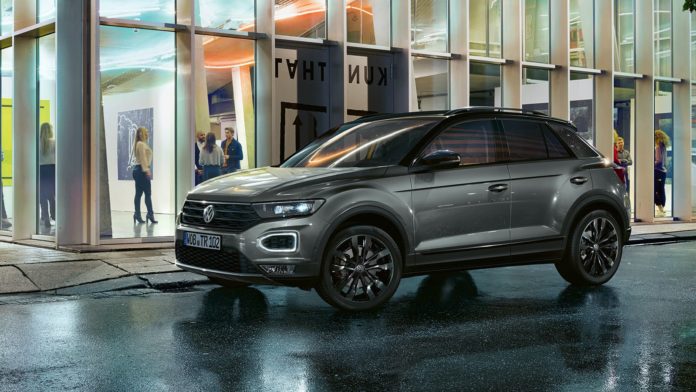
To keep the model competitive with newer compact rivals like the Cupra Born and the Kia Niro EV, Volkswagen has given the ID.3 “sharpened” exterior styling including a re-shaped front bumper with new air vents, which the manufacturer says improve air flow around the front wheels, making the car more aerodynamic.
The large black strip below the windscreen has been removed. Instead, the body-coloured bonnet now extends all the way up to the windscreen.
The car’s rear end looks practically identical to that of the version currently on sale, but Volkswagen adds that it has also tweaked the design of the ID.3’s LED tail lights too. New exterior colours will be available when the update launches, including the olive green colour shown below.
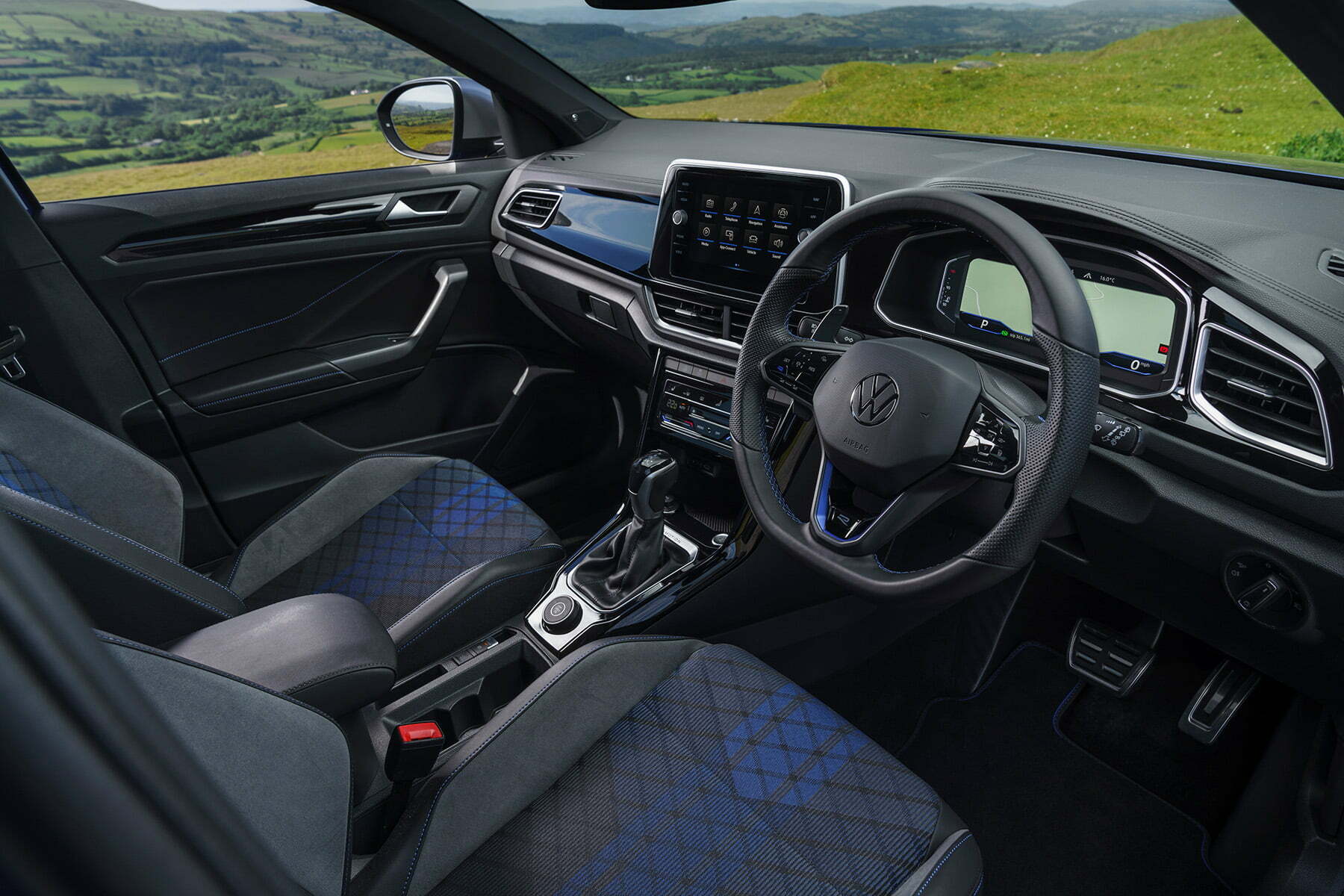
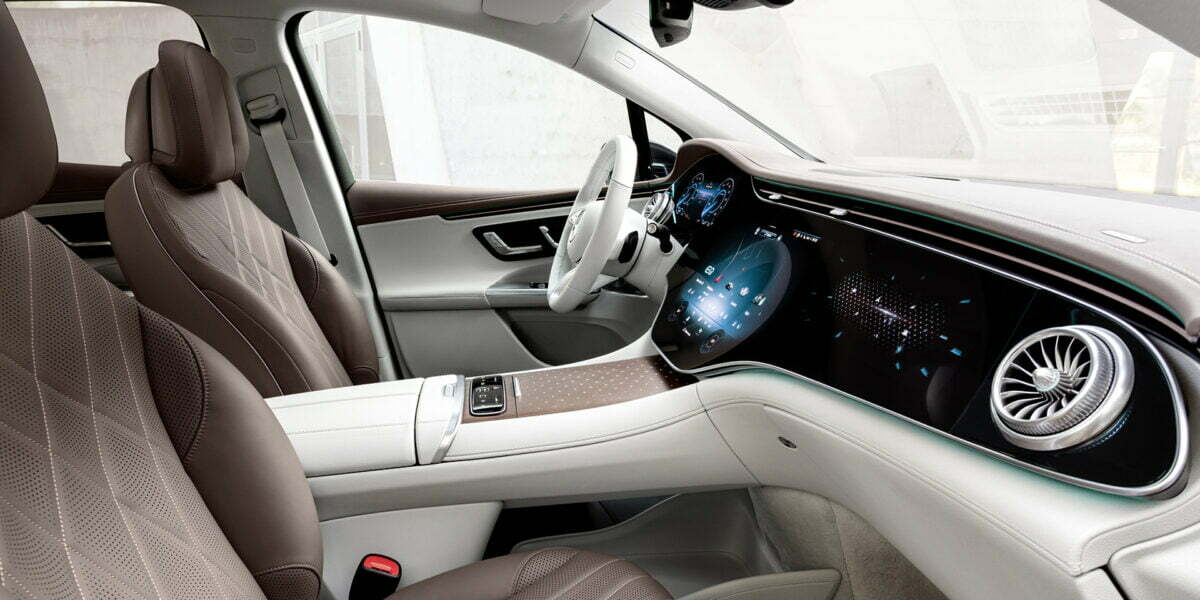
In the cabin, the ID.3 has been given a few tech revisions in response to customer feedback. The previous ten-inch infotainment screen has been replaced by a larger 12-inch display that runs the latest version of the brand’s ID software package, with revised menus that are designed to be more user-friendly, and less confusing.
The infotainment voice assistant is also reportedly improved, responding faster to queries. This software package is also compatible with over-the-air updates, and can therefore download further updates and software installations remotely from the owner’s driveway.
Volkswagen says that it also implemented new cabin materials after customer suggestions. Soft, foam-backed surfaces feature throughout the cabin, including the soft-touch door panels.
Volkswagen is yet to announce exactly when the facelifted ID.3 will be available to order, and hasn’t given us an indication of what the pricing will be either – these details will soon follow.
This update is likely to impact the Volkswagen ID.3’s Expert Rating of 75% in the coming months, as reviewers have previously criticised the car’s interior quality and infotainment system on a frequent basis.
With the growth of car buying services, selling your car privately may have fallen from favour, but plenty of people still sell their cars themselves.
By selling privately, you might achieve a higher price than part exchange from a dealer or possibly a car buying service. Here are our tips for going it alone.
What’s it worth?
The year of registration, exact type of car, mileage and option will determine your car’s value. You can look at examples of the same types of car for sale but the prices might be just what the sellers would like to get – not what they actually might get.
You can use the free valuations offered by car buying sites such as our Expert Partners Motorway or Cazoo, but this will be nearer to a part exchange/trade price, lower than private sale. Paid access to the online valuation guide of sites such as Parkers will give you a value for your car under set headings: original price; franchised dealer; independent dealer; private good; private poor and part exchange. You’ll need the latter two.
A private poor car will have some mechanical or bodywork problems, no service history and need work to make good. A private good car will have service history, possibly a full MOT and be smartly presented.
For a more precise value we’d advise paying for a month of valuations – it also works for cars you might want to buy. Paid valuations also allow you to enter your car’s exact mileage and any options which add value, both of which can significantly affect value.
Most people car hunting will have used the same car valuation service to work out what they should be paying, so be realistic setting yours, with some room for haggling.
The time of year matters a little. If you can pick your time, you might have more luck selling a convertible in the spring. Similarly, people tend to not change cars just before Christmas and rein in their spending in January. And get your own timing right. Don’t place an ad if you’re going on holiday just after it ends as you may not have time to conclude the sale or need to extend it.
Some regional newspapers carry classified advertisements for cars in the physical paper. If it’s widely sold and covers a big area, this may find you a buyer. It’s easier than online because the number of words is small and only one image is required. However, for most used car sales, the process has now largely moved online, adding multiple pictures and video walk-rounds.
The Auto Trader Group claims to be UK and Ireland’s largest automotive marketplace, offering new and used vehicles both from dealers and private sellers with 51 million views a month. It provides a free valuation service and as of early 2023 prices ranged from £39 to £84 from (two weeks to until sold).
Exchange & Mart online ranges from £5 for two weeks or £10 for five weeks. Gumtree, which is owned by the Ebay auction site, claims to be one of the largest private motors markets in the UK, and its ads are free to private sellers unless you pay extra for features to boost its visibility.
All these outlets will help you putting together an advertisement and provide tips on how to deal with callers and what to do if the car isn’t selling.
Ebay Motors also offers auctions or fixed price listings called ‘buy it now’. The process for composing the listing is the same as an ad. You can start the first bid at either an eye-catching low point (and set a reserve) or you make the first bid the very lowest amount you’d be prepared to accept. Ebay Motors will handle the payment from your buyer whether you are selling for a fixed price or by auction.
Preparing the paperwork and the car
The crucial bit of paper is the logbook, called the V5C, which proves you are the owner. This should be two sheets of A4 folded, with non of the tear-off sections missing. Showing a paper MOT certificate no longer applies as they went online from January 2021. Any buyer can check the MOT and road tax status by putting the registration into the gov.uk website, but you might like to show them the receipt and any advisory notes (which they can also see online).
While we’re on the subject of MOTs, buyers still like to see a lot of months to run until the next test. If the MOT is due to run out in a month’s time have the car tested early and then boast that you have a full MOT. Also, if you have to renew the road tax near the time you are selling just buy the minimum six months. When a car transfers ownership sold, you cancel your tax and get a refund for any whole unused months and the new owner taxes the car afresh.
To show the car has been cared for, stamps in a service book are ideal but physical service books are less common now, as franchised dealers keep digital records which their whole network can access. So, get together any bills and invoices which shows you had work or servicing done in your ownership (taking off any identification such as credit card slips). If It’s showing a warning light for a service, best have at least an oil change done. Also, find the handbook and the second set of keys.
After a car is a few years old you can expect a few small scratches and the odd scuffed alloy wheel, and most buyers will expect them, but if you are asking, say, over £10,000 and it has a very noticeable bumper scrape there are companies such as Chipsaway which can make good small scratches, smarten scuffed alloy wheels and remove small dents (minor enough to be pulled out without needing new paintwork).
If it’s not too much trouble you can get a quote online, decide how much you’re prepared to pay to get your car shipshape, show the flaws and be prepared to be knocked down. However for minor parking rub marks, paint restoration kits available online are easy to use and work quite well.
Putting the ad together
We’ll assume that you’re either selling via an online advert of an auction site with lots of words and pictures on offer. Consider a full valet or give the car a clear out and wash inside and out before taking the sale photos.
Online sales sites will allow you to start off by entering the registration number to show what it is., Then there will be drop-down options to choose things like number of doors, engine size, manual or automatic gearbox, fuel type (including electric) and its year of registration.
Description
Now to the description you write. Here are some things potential buyers like to see:
Important optional extras like sunroofs, upgraded stereos.
A low number of owners or if you’ve owned it for a long time.
Lots of months left on the MoT.
A full service history, all the better if at a franchised dealer or a specialist for that make.
Say if there’s been a recent service, especially if a costly item like a cam belt has been replaced (see our feature on what’s important in a service history).
Reason for sale. If the car’s that marvellous why sell it? You may say need a bigger car, moving house etc, new car on the way or having a company car.
No noticeable dents and scuffs.
If it has been in a serious accident and been repaired this will come up in a data search, so be honest. Insurance Category S and Cat N cars can be repaired. You must tell the Driver and Vehicle Licencing Agency (DVLA) if your vehicle has been written off by your insurance company or face a fine.
Photos
Online adverts and auctions include the chance to upload a generous amount of photos in the standard price (Auto Ttrader allows 100 at all prices). Make the most of this – Autotrader says that customers who have 20 photos increase their advert views by 39%.
Clean the car, de-personalise it, and put it in a place where there’s not too distracting or unattractive a background. Lots of cars parked behind could make it look like a car dealership (traders often put their cars on a posh gravel drive). Take photos from front, back and sides, front and rear seats from either side and the boot. If there’s a space-saver spare wheel, some people will want to see that.
Again, honesty will be appreciated. If there are still scrapes to the bodywork or the wheels, show them. Provided you’ve allowed for this in your end price, they shouldn’t be a problem.
Increased aggression between car drivers and cyclists is putting lives at risk in the UK with 65% of drivers saying aggressive cyclists have been a threat to their personal safety, according to a new survey.
The research also shows that 78% of drivers claim other motorists have threatened them. And it comes as new Department for Transport (DfT) figures reveal that one in 12 of the 1,339 deaths on Britain’s roads in 2021 were linked to aggressive behaviour.
The findings, from safety charity IAM RoadSmart, show that the aggression problem is worsening on both sides of the road-using rivalry, with 60% of drivers surveyed believing that aggressive cyclists are a bigger problem now, than compared with three years ago. A further 63% of drivers said they thought aggressive motorists have become more of an issue over the same time period.
Demonstrating the conflict between motorists and cyclists, a driving safety report by the charity found that there was limited support for a new law which would assume that the driver is always responsible for any collision with a cyclist or pedestrian in an urban area – 61 per cent of those questioned were against this.
“The government has introduced a range of laws in recent years in an effort to fix the daily conflicts we see between motorists and cyclists,” says Neil Greig, director of policy and research at IAM RoadSmart. “But if our research is anything to go by, this has largely been to no avail, with the majority of respondents still reporting aggression and conflict among road users.
“There is no quick-fix to this issue, but our findings shed light on the urgent need for the government to maintain its education campaigns on the new Highway Code, and continue to invest in safe road markings for more vulnerable road users to minimise the chance of conflict wherever possible.
“In the meantime all road users, whether on two or four wheels, should exercise calmness and restraint to help us all use Britain’s roads safely.”
Modern cars are larger than their 1980s, ’90s and ’00s predecessors, while car park spaces have got smaller as developers try to squeeze more vehicles into their supermarkets, shopping centres and multi-storeys.
And while the convenience of finding a spare bay in a crowded car park is a fist-pumping celebration, it’s tempered by the annoyance and inconvenience of returning to find your pristine car later to find a knock or dent in a door, caused by someone else.
Minor damage, while small, is still frustrating and it might even be your fault. It’s not difficult to accidentally open your driver’s door against a wall, misjudge the placement of a bollard or scratch your car with a wayward supermarket trolley.
Just driving around on the UK’s roads can bring its own damage problems, thanks to stone chips, motorway gritting lorries and unforgiving country lane hedges and verges. Before you know it, your pride and joy has a nasty scratch or dent.
You know it’s not worth claiming on your normal car insurance to have it repaired. Most of those carry an excess, which you might have voluntarily agreed to set at, say, £300. So you are still left with the cost of having the repair done for you privately. And even a relatively small fix can still run into hundreds of pounds.
Is there an answer?
So what’s the answer to this quandry? It’s called ‘scratch and dent cover’, otherwise known as cosmetic repair insurance. But is it worth having?
A scratch and dent policy will often be offered when you buy a new car from a dealer, although you can buy it later. For a separate premium, it protects you against the cost of minor cosmetic repairs to the bodywork of your car for a set period – you usually choose one, two or three years’ worth of cover.
It’s really for the kind of damage that a mobile repairer can deal with on the driveway of your house and doesn’t cover you for major dealer workshop repairs. These are blemishes on the bodywork that can usually be fixed by SMART (small-medium area repair technology) repairs. This is quick, specialist repair work that can be fixed simply and efficiently.
Some cover providers will allow you to make as many claims as you need, as long as the total cost of all repairs doesn’t exceed an agreed amount, while other insurers prefer to allow a set number of claims per year. If damage is deemed too serious for a minor repair, many policies will offer a contribution, perhaps £250, towards the cost of a larger, bodyshop repair.
What’s not covered?
However, there are lots of items that are not covered by scratch and dent insurance, so it is worth reading any policy’s terms carefully before signing up to anything.
Repairs to cracked or deformed bumpers are not covered, nor are headlamps, other lights, windscreen or wheels. Any damage that came about as a result of a road accident won’t make the cut, and don’t even think about claiming against damaged tyres, wheel trims, locks or handles.
If your car was scratched during a theft or attempted theft, that doesn’t count either, although some insurers do allow repairs to so-called ‘keying’ vandalism. Anything that the insurer considers ‘fair wear and tear’ won’t be paid for. And if you have received a special paint job or had your car ‘wrapped’, you’re unlikely to get protection there either.
This type of insurance is for private use vehicles so a car that is used as a taxi or for deliveries probably won’t get cover.
This is another competitive sector of the insurance market place and providers will vie with each either to offer attractive deals, so it’s worth having a look around. Details will differ: the length of a scratch that can be repaired (for example 30cm) is one selling point, allowing damage across more than one panel is another while others won’t stipulate a time limit (and labour costs) for a repair to be done.
Do you need it?
The answer is no, you do not need scratch and dent cover. It’s not a legal requirement and nobody can force you to buy it – although enthusiastic car salespeople will often try to cajole you into it, but that’s because they make a healthy commission from selling it…
However, you might want it, and there are many benefits to having this insurance if you wish to keep your car’s bodywork looking as pristine as it was on the day you drove it away from the showroom. If you’re considering signing up for cover, have a good look at the policies being offered and decide whether it’s worth the money.
Your main car insurer might need to know if and when you make any scratch and dent claims to keep your policy valid, so it’s worth at least checking with them the first time you do.
If you are interested in cosmetic repair insurance, a car dealership is about the most expensive place to buy it (much like GAP insurance or tyres). There are plenty of providers around, so you’ll almost certainly find a much better deal online.
Are there any other reasons for buying scratch and dent cover?
There are two main arguments for buying a scratch and dent policy beyond “keeping your car looking nice”.
Firstly, if you have a PCP or PCH agreement that requires you to give the car back in good condition, it can often be a cheaper way of tidying up minor damage than simply returning the car and paying the finance company a penalty for the repairs.
Secondly, if you’re selling the car yourself (or part-exchanging it at a dealership), the few hundred you spend on a scratch and dent policy could well repay you in terms of a higher selling price.
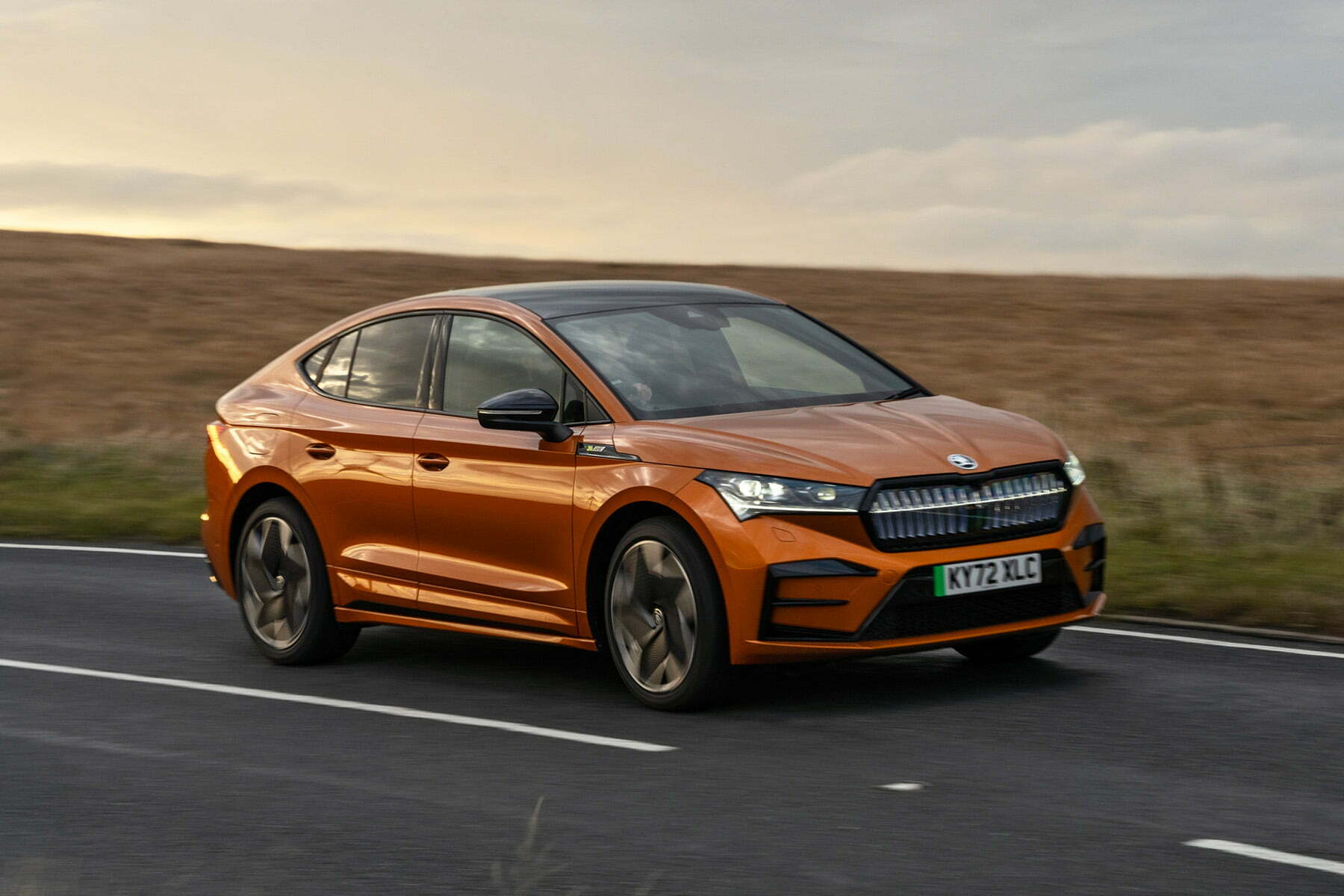
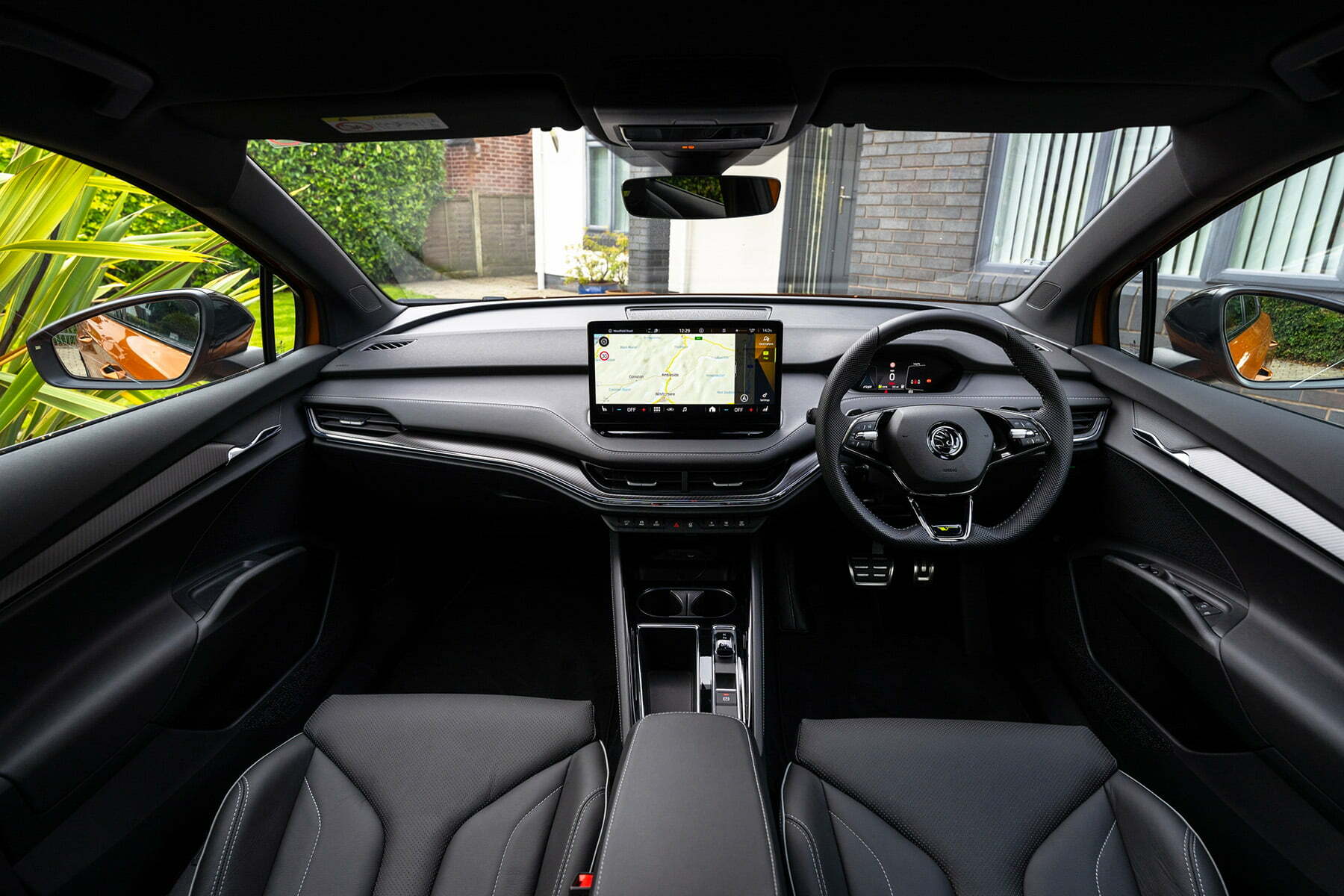
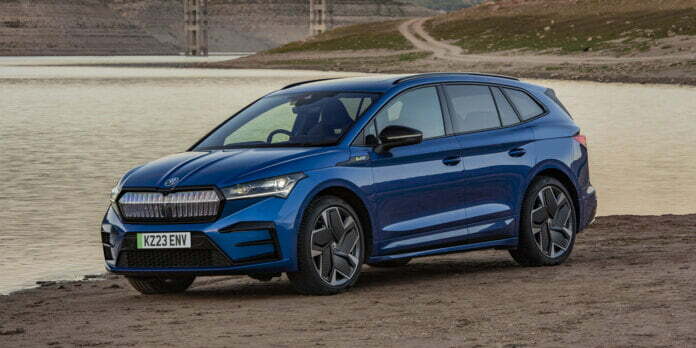
The Skoda Enyaq iV vRS is the performance-enhanced version of the all-electric Enyaq range which became available to order in the UK at the start of 2023.
The vRS holds many of the traits that made the regular Enyaq SUV a serial award-winner, including an excellent battery range, a spacious and tech-laden interior, and a large boot, but almost all British outlets take issue this sporty SUV’s rather underwhelming performance.
“It doesn’t feel fast, engaging or exciting enough to wear the vRS badge”, says Matt Robinson of Auto Express, while the Top Gear team reports that the Enyaq vRS is “barely distinguishable from the standard car” in the corners.
Other reviewers take issue with the sporty SUV’s price tag. Apart from a few extra bits of equipment, mechanical tweaks and flashier exterior looks, reviewers argue that the vRS doesn’t offer much over high-spec Enyaq models. Because of this, Heycar‘s advice is rather simple – “Just buy a regular Enyaq.”
A facelifted version of the Enyaq vRS was announced in May 2025 and will arrive in the UK in coming months.
As of May 2025, the Skoda Enyaq vRS holds an Expert Rating of C, with a score of 62%. This is significantly lower than the 80% currently held by the standard Enyaq.
Highlighted reviews and road tests from across the UK automotive media. Click any of the boxes to view.
Featured reviews
“Viewed in isolation, the Skoda Enyaq vRS has plenty going for it. It looks sharp, yet subtle. It’s incredibly practical, and both comfortable and relaxing to drive. Yet it really feels little different to a standard model from lower down the range. Combined with the high price, it’s a hard car to justify over the cheaper and still very appealing mainstream Enyaq.”
“It’s reasonably quick and very practical, but the Enyaq vRS isn’t as engaging as a performance car should be. We prefer the more comfortable ride and lower price tag of regular Enyaq models.”
Model reviewed: Coupé vRS Score: 7 / 10 “It doesn’t feel fast, engaging or exciting enough to wear the vRS badge, and even with its extra standard equipment, it’s not worth the premium over lesser-powered derivatives of Skoda’s first bespoke EV.” Author: Matt Robinson Read review
Business Car
Model reviewed: vRS Coupe 82kWh Score: 8 / 10 “The Skoda Enyaq iV vRS is generally a comfortable and refined long-distance companion, just don’t expect any performance fireworks past motorway speeds. If you’re after the ultimate Enyaq, this is it.” Author: Martyn Collins Read review
Model reviewed: Suite Score: 7 / 10 “Effectively what we are looking at here is a gilding of what is already a very impressive Enyaq lily. Whether the modest performance gains and enhanced eye candy are worthy of the additional outlay remains an age-old conundrum.” Author: Pete Tullin Read review
Car
Model reviewed: vRS SUV Score: 6 / 10 “In a strange way, the Skoda Enyaq vRS would have been better if it was worse. If Skoda’s engineers had placed less importance on the car’s maximum range and piled a whole lot more power into its electric powertrain, it would be infinitely more recommendable.” Author: Luke Wilkinson Read review
Model reviewed: Coupé vRS Score: 8 / 10 “The vRS is the best driving Enyaq we’ve experienced, and it’ll be available in both bodystyles before long. However, the Coupe is more expensive than the SUV and less practical. Whether those looks make those penalties worthwhile is your call.” Read review
Electrifying.com
Model reviewed: Coupé vRS Score: 9 / 10 “I’ve always had a soft spot for fast Skodas and I’m a huge fan of the Enyaq, so this is the perfect combination. I’ll admit, the price comes as a shock at first, but when you compare it to the mechanically-identical Volkswagen ID.5 GTX, the Skoda Enyaq Coupé vRS starts to look pretty good value.” Author: Ginny Buckley Read review
Evo
Model reviewed: Coupé vRS Score: 6 / 10 “Skoda’s first electric vRS model arrives with nearly 300bhp and a sharp coupe body, but it lacks that vRS character we’ve come to admire.”
Author: Stuart Gallagher Read review
Green Car Guide
Model reviewed: Range overview Score: 9 / 10 “The standard Skoda Enyaq iV SUV is a good car; the Coupe body style gives the Enyaq a more sporty appearance, and the vRS model means that the Enyaq is more of a driver’s car. You still get decent amounts of space for occupants and luggage, and the vRS is still comfortable to drive on most road surfaces.” Author: Paul Clarke Read review
Heycar
Model reviewed: Range overview Score: 7 / 10 “Just buy a regular Enyaq.” Author: Lawrence Allan Read review
Honest John
Model reviewed: Coupé vRS Score: 6 / 10 “The sporty Enyaq Coupe iV vRS looks pretty flash, but isn’t as sporty as you might think.” Read review
The Sun
Model reviewed: vRS SUV “In short, the vRS isn’t much faster or much more enjoyable to drive than other, less expensive Enyaqs.” Author: James Fossdyke Read review
The Sunday Times
Model reviewed: vRS SUV Score: 8 / 10 “While it has the vRS badge, this Enyaq isn’t much quicker or sportier than most other electric SUVs out there, and in some cases slower. Think of it more as a sharpened up family hauler, though, and it is a pleasing thing to own and drive.” Author: James Fossdyke Read review
Top Gear
Model reviewed: Coupé vRS Score: 6 / 10 “Perfectly brisk in a straight line, but arrive at a corner and it’s barely distinguishable from the standard car. Nor is there much in the way of steering feel, so instead of picking a line through a corner you just sort of bounce from one side of your lane to the other. Meh.” Author: Joe Holding Read review
Which EV?
Model reviewed: Coupe Score: 7.5 / 10 “There’s something appealing about the Skoda Enyaq Coupe iV vRS, with a bit of the Saab Turbo fastback about it, except this time in SUV form. The equipment level is strong across the Coupe range, and comprehensive with the vRS. Despite the sporty pretence, however, this is basically a great family EV, with a bit of extra performance and fun.” Author: James Morris Read review
Safety rating
Independent crash test and safety ratings from Euro NCAP
The Skoda Enyaq vRS shares its safety rating with the regular Enyaq range, which was tested in 2021, gaining a five-star Euro NCAP rating.
Testers praised the robust structure to protect occupants and the high-voltage battery, and the plentiful airbags, the car achieving over 90% for adult occupant protection and high scores too for protection of children and vulnerable road users such as cyclists and pedestrians.
Eco rating
Independent economy and emissions ratings from Green NCAP
No eco rating
As of May 2025, the Skoda Enyaq vRS has not been lab tested by Green NCAP.
Reliability rating
Reliability data provided exclusively for The Car Expert by MotorEasy
No reliability rating
As of May 2025, we don’t have enough reliability data on the Skoda Enyaq vRS to generate a reliability rating.
The Car Expert’s reliability information is provided exclusively to us using extended warranty data from our partner, MotorEasy. As soon as MotorEasy has sufficient data on the Enyaq vRS, we’ll publish the score here.
Running cost rating
Monthly cost of ownership data provided exclusively for The Car Expert by Clear Vehicle Data
Battery range
Average
Score
Variation
Score
EV models
339 miles
A
312 – 341 miles
A – A
Electrical efficiency
Average
Score
Variation
Score
EV models
4.1 m/KWh
C
3.8 – 4.1 m/KWh
C – C
Insurance group
Average
Score
Variation
Score
All models
37
C
36 – 38
C – C
Service and maintenance
Cost
Score
Year 1
£334
C
Year 2
£637
B
Year 3
£987
B
Year 4
£1,226
B
Year 5
£1,545
B
Overall
£4,729
B
The Skoda Enyaq vRS is a pretty cheap car to run overall, although its electrical efficiency (the equivalent of miles per gallon for a petrol or diesel car) isn’t as good as some other electric cars. Insurance costs should be affordable by ‘hot SUV’ standards, however, while scheduled servicing costs are excellent compared to rivals.
In other good news, the battery range for the Enyaq is also top-notch. Depending on which model you choose, the range runs from 246 miles (good) to 345 miles (excellent), and the vRS averages around 322 miles. That means you won’t have to worry about running out of electricity in day-to-day driving.
Similar cars
If you’re looking at the Skoda Enyaq vRS, you might also be interested in these alternatives.
Find your next new or used car with Auto Trader. Find out more
Find your next new or used car with Carwow. Find out more
Lease a Skoda Enyaq
If you’re looking to lease a new Skoda Enyaq, The Car Expert’s partners can help you find a competitive deal
Personal contract hire deals from Leasing.com. Find out more
Personal contract hire deals from Carparison Leasing. Find out more
Personal contract hire deals from Select Car Leasing. Find out more
Subscribe to a Skoda Enyaq
Subscriptions are becoming a very popular way for consumers to try an electric car for a few weeks or months to help decide whether it’s a suitable alternative to a petrol car. If you’re interested in a car subscription, The Car Expert’s partners can help. (PS: What’s a car subscription?)
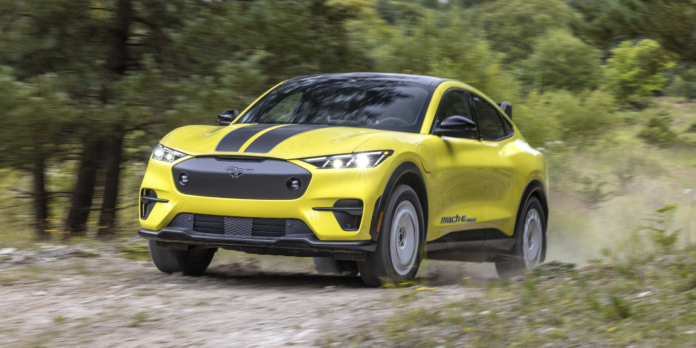
The Ford Mustang Mach-E GT is a performance model that sits at the top of the all-electric Mustang Mach-E SUV range, which first arrived in the UK in 2021.
This performance version is powered by an 88kWh battery pack, paired with two electric motors to provide an output of 480hp – 210hp more than the entry-level Mustang Mach-E model. According to the Top Gear team: “The GT’s monstrous pace isn’t in doubt, and it’s a better handling, comfier, prettier machine than the base car.”
That said, the majority of reviewers find the Mach-E GT’s steep pricing hard to justify, particularly as the standard Mach-E already offers strong straight-line performance.
As of February 2026, the Ford Mustang Mach-E GT holds a New Car Expert Rating of B, with a score of 67%. As a used car, this slips to a C, with a score of 62%. It scores highly for safety and its lack of any tailpipe emissions, while media reviews are fairly middling and running costs are rather high for an electric car.
Body style: Medium SUV/crossover Engines:electric motor, battery-powered Price:From £67,540 on-road
Launched: Autumn 2021 Last updated: N/A Replacement due: TBA
Image gallery
Media reviews
Highlighted reviews and road tests from across the UK automotive media. Click any of the boxes to view.
Auto Express
Model reviewed: BlueCruise (2023) Score: 8 / 10 “Taking your hands off the steering wheel will be counterintuitive to most drivers, but the attraction of BlueCruise is that it doesn’t force you to do anything that you don’t want to. It engages automatically – so it’s just as easy to use as regular cruise control – while the presence of safety systems is reassuring.” Read review
Model reviewed: Range overview Score: 8 / 10 “Ford’s Mustang Mach-E GT is an impressive electric car with acceleration to rival the fastest Teslas, but driving engagement doesn’t quite honour the pony badge, plus it’s expensive and doesn’t score well for practicality.” (Alastair Crooks) Read review
Daily Mirror
Model reviewed: Range overview “The Ford Mach-E GT is impressive on paper and looks the business, but it’s expensive and has performance that’s unusable on a public road. The normal Mach-E is more than adequate.” Read review
Driving Electric
Model reviewed: Range overview Score: 8 / 10 “The new Ford Mustang Mach-E GT is a solid effort at a first zero-emissions ‘fast Ford’, but although it’s quick, it’s not really engaging enough to warrant wearing that badge.” Author: Richard Ingram Read review
Electrifying.com
Model reviewed: Score: 9 / 10 “Wow – this is the Mustang we’ve been waiting for. I’ve loved fast Fords since I was a kid, and I’m really impressed with the job they’ve done with the Ford Mustang Mach-E GT. Yes, it’s a lot of money for a Ford, but there’s no questioning the quality of the car or the performance it delivers.” (Ginny Buckley) Read review
Evo
Model reviewed: Range overview Score: 8 / 10 “It’s quiet and refined on a motorway, delivering that serenity that only an EV can. There’s plenty of room inside, too, and some of the materials used in place of plastics are a nice nod to today’s consumer product expectations.” (Stuart Gallagher) Read review
Green Car Guide
Model reviewed: Score: 9 / 10 “The standard Ford Mustang Mach-E is a very good car, offering decent performance and a comfortable ride. The GT model adds more performance – which isn’t fully usable in everyday driving – and the result is more power than grip on wet and cold winter roads. The ride quality isn’t as comfortable, and the driving range is reduced. And then there’s the higher price for a car that doesn’t have the ‘premium’ interior of many rivals” (Paul Clarke) Read review
The Telegraph
Model reviewed: Range overview Score: 6 / 10 “While this is a fast, competent electric SUV, it doesn’t feel as though that’s enough to justify the not-inconsiderable price tag.” (Alex Robbins) Read review
Top Gear
Model reviewed: Range overview Score: 7 / 10 “The GT’s monstrous pace isn’t in doubt, and it’s a better handling, comfier, prettier machine than the base car. But are those parameters top of the EV wish-list right now? Range, charging speed and entry price are what get people talking at the moment. The GT is an old-school approach to a new-world problem.” (Ollie Kew) Read review
Safety rating
Independent crash test and safety ratings from Euro NCAP
The Mustang Mach-E line-up, including the Mach-E GT, comes with all of the safety kit you’d expect to protect you in the event of an accident and – even better – avoid one in the first place, so it comes as no surprise that Euro NCAP gave the Mustang Mach-e a five-star rating.
Eco rating
Independent economy and emissions ratings from Green NCAP
Clean Air Index: 10 / 10 Energy Efficiency Index: 9.4 / 10 Greenhouse Gas Index: 10 / 10
Emissions tester Green NCAP ran a four-wheel drive version of the Ford Mustang Mach-E through its paces in 2021, awarding the car a full five-star rating. This model is powered by a 88kWh battery pack, like the top-spec Mach-E GT, but the Mach-E GT’s drivetrain has been tweaked to provide more performance.
This means that, should the Mach-E GT ever be tested individually, its scores may differ from those shown above. But, as electric cars are much more energy-efficient than combustion cars, this performance-enhanced variant would still almost certainly score very highly in Green NCAP testing.
Reliability rating
Reliability data provided exclusively for The Car Expert by MotorEasy
No reliability rating
As of February 2026, we don’t have enough reliability data on the Ford Mustang Mach-E GT to generate a reliability rating.
The Car Expert’s reliability information is provided exclusively to us using workshop and extended warranty data from our partner, MotorEasy, sourced from both official dealerships and independent workshops.
As soon as MotorEasy has sufficient data on the Mustang Mach-E, we’ll publish the score here.
Running cost rating
Monthly cost of ownership data provided exclusively for The Car Expert by Clear Vehicle Data
Battery range
Average
Score
Variation
Score
EV models
318 miles
A
Electrical efficiency
Average
Score
Variation
Score
EV models
3.2 m/KWh
E
Insurance group
Average
Score
Variation
Score
All models
47
E
Service and maintenance
Cost
Score
Year 1
£433
E
Year 2
£751
D
Year 3
£1,115
D
Year 4
£1,279
C
Year 5
£1,751
D
Overall
£5,329
D
The Ford Mustang Mach-E is a relatively expensive car to own and run – especially compared to regular Mustang Mach-E models – according to whole-life cost numbers provided exclusively to The Car Expert by our data partner, Clear Vehicle Data.
Electrical efficiency (the EV equivalent of miles per gallon for a petrol or diesel car) is poor, but a large battery means that driving range is still more than 300 miles on the official EU/UK government lab tests.
Insurance is likely to be fairly expensive, while servicing and maintenance costs are mixed across the first five years from new – starting off quite expensive in the first year but improving after that.
Recalls
Official DVSA safety recalls that have been issued for the Ford Mustang Mach-E GT
2023
2022
2021
Date: June 2023 Recall number: R/2023/187 Model types: All Build dates: 06/2022 Number of vehicles affected: 35 Defect: Certain vehicles have been produced with a mismatch of information between Vehicle Identification Number (VIN) label Certificate of Conformity (CoC) and Registration documents regarding towing. Remedy: Affected vehicles need to have a new VIN label, exchanged Certificate of Conformity, or updated registration.
Date: June 2023 Recall number: R/2023/183 Model types: Mustang Mach-E GT Build dates: 06/2021 to 10/2022 Number of vehicles affected: 373 Defect: Certain Mach-E GT vehicles may have an incorrectly configured Headlamp Control Module (HCM). Remedy: Install a new software update to restore feature functionality.
Date: June 2022 Recall number: R/2022/194 Model types: All Build dates: 09/2020 to 05/2022 Number of vehicles affected: 6,535 Defect: It is possible that the high voltage battery main contactors may overheat. Remedy: Dealers are required to update the Powertrain Control Module (PCM) on all vehicles.
Date: January 2022 Recall number: R/2022/015 Model types: All Build dates: 10/2021 to 11/2021 Number of vehicles affected: 46 Defect: The rear seat belt buckle anchorage attachments may not meet the design specification. Remedy: Inspect and repair the seat belt anchorage points using a Helicoil repair kit.
Date: January 2022 Recall number: R/2022/014 Model types: All Build dates: 02/2020 to 06/2021 Number of vehicles affected: 2,437 Defect: Inadequate front windshield adhesion to the vehicle body structure. Remedy: Remove & re-install the windscreen ensuring correct adhesion. Renew windscreen if damage occurs during the repair process.
Date: December 2021 Recall number: R/2021/397 Model types: All Build dates: 02/2020 to 06/2021 Number of vehicles affected: 1,540 Defect: Vehicles could develop wind noise & water leaks around the panoramic glass roof. Should the roof glass loosen there is a risk that the glass could become detached from the vehicle. Remedy: Add additional urethane adhesive between the vehicle body and roof glass.
Date: June 2021 Recall number: R/2021/225 Model types: All Build dates: 10/2020 to 06/2021 Number of vehicles affected: 1,835 Defect: Incorrect location information may be sent from the eCall system. Remedy: A software update is required to SYNC module.
As of September 2024 (our most recent data point), there have been seven DVSA vehicle safety recalls on the Ford Mustang Mach-E GT – six of which are shared with regular Mustang Mach-E models and one that’s unique to the GT version.
Not all vehicles are affected by recalls. You can check to see if your car is included in any of the above recalls by visiting the DVLA website or contacting your local Ford dealer.
If your car is affected by a recall, the vehicle must be repaired and you should not be charged for any work required. If you are buying a used Mustang Mach-E GT, you should insist that any outstanding recall work is completed before you take delivery of the vehicle.
If you’re looking to buy a new or used Ford Mustang Mach-E GT, The Car Expert’s partners can help.
Find your next used car with Motors.co.uk. Find out more
Find your next new or used car with Auto Trader. Find out more
Find your next new or used car with Carwow. Find out more
Lease a Ford Mustang Mach-E GT
If you’re looking to lease a new Ford Mustang Mach-E GT, The Car Expert’s partners can help.
Personal contract hire deals from Carparison Leasing. Find out more
Personal contract hire deals from Leasing.com. Find out more
Personal contract hire deals from Carwow. Find out more
Subscribe to a Ford Mustang Mach-E GT
Subscriptions are becoming a very popular way for consumers to try an electric car for a few weeks or months to help decide whether it’s a suitable alternative to a petrol car. If you’re interested in a car subscription, The Car Expert’s partners can help. (PS: What’s a car subscription?)
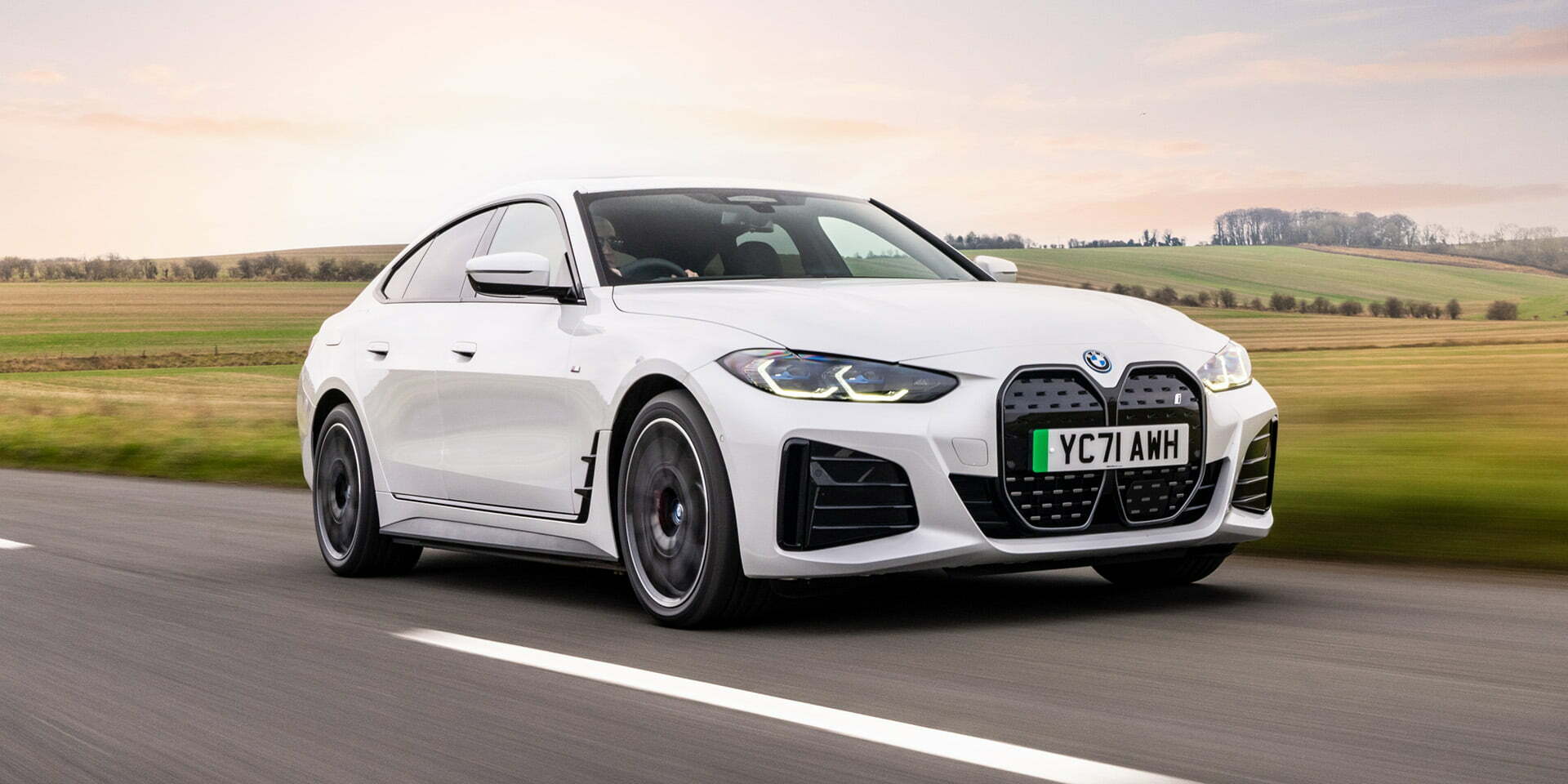
BMW has announced that the all-electric i4 saloon is now available to order in the UK in its ‘eDrive35’ guise, which is not as powerful as the other drivetrain options, but is now the cheapest of the bunch.
Joining the ‘eDrive40’ and sporty ‘M50’ trims that have been on sale since the launch of the i4 in 2021, the ‘eDrive35’ makes use of a 67kWh battery and rear-mounted motor pairing to produce 286hp and a reported electric range of up to 299 miles.
The saloon can complete a 0-62mph sprint in six seconds. Using a 11kW AC charger, the ‘eDrive35’ takes seven hours to fully charge from 0% to 100% battery.
BMW i4 ‘eDrive35’
BMW i4 ‘eDrive40’
Power output
286hp
340hp
Drive type
Rear-wheel drive
Rear-wheel drive
Battery size
67kWh
82kWh
Battery range
up to 299 miles
up to 365 miles
Max AC charger (and charge time)
11kW (7 hrs)
11kW (8 hrs, 15 mins)
Max DC charger (and charge time)
180kW (32 mins)
205kW (31 mins)
Acceleration
6 seconds (0-62mph)
5.7 seconds (0-62mph)
Gearbox
Automatic
Automatic
Trims levels available
‘Sport’, ‘M Sport’
‘Sport’, ‘M Sport’
The ‘eDrive35’ is now available with the entry-level ‘Sport’ and mid-range ‘M Sport’ trim packages. LED Headlights and 18-inch alloy wheels are fitted as standard, as well as heated seats in the front.
Pricing for this additional drivetrain starts at a smidge below £50k, which is nearly £8k cheaper than the more powerful ‘eDrive40’ already on sale.
With the all-electric i7 saloon arriving in the UK in recent months, and the smaller i5 saloon also set to arrive on British roads later in 2023, BMW says it is now aiming for electric cars to make up half of its production volume this year, with the i4 ‘eDrive35’ being a key contributor.
Reviewers largely conclude that the BMW i4 is not as enjoyable to drive as its combustion-powered equivalent, the 4 Series Gran Coupe, but also agree that the saloon is still a pacy performer which features BMW’s latest on-board tech innovation and a class-leading battery range. It currently holds an Expert Rating of 84%.
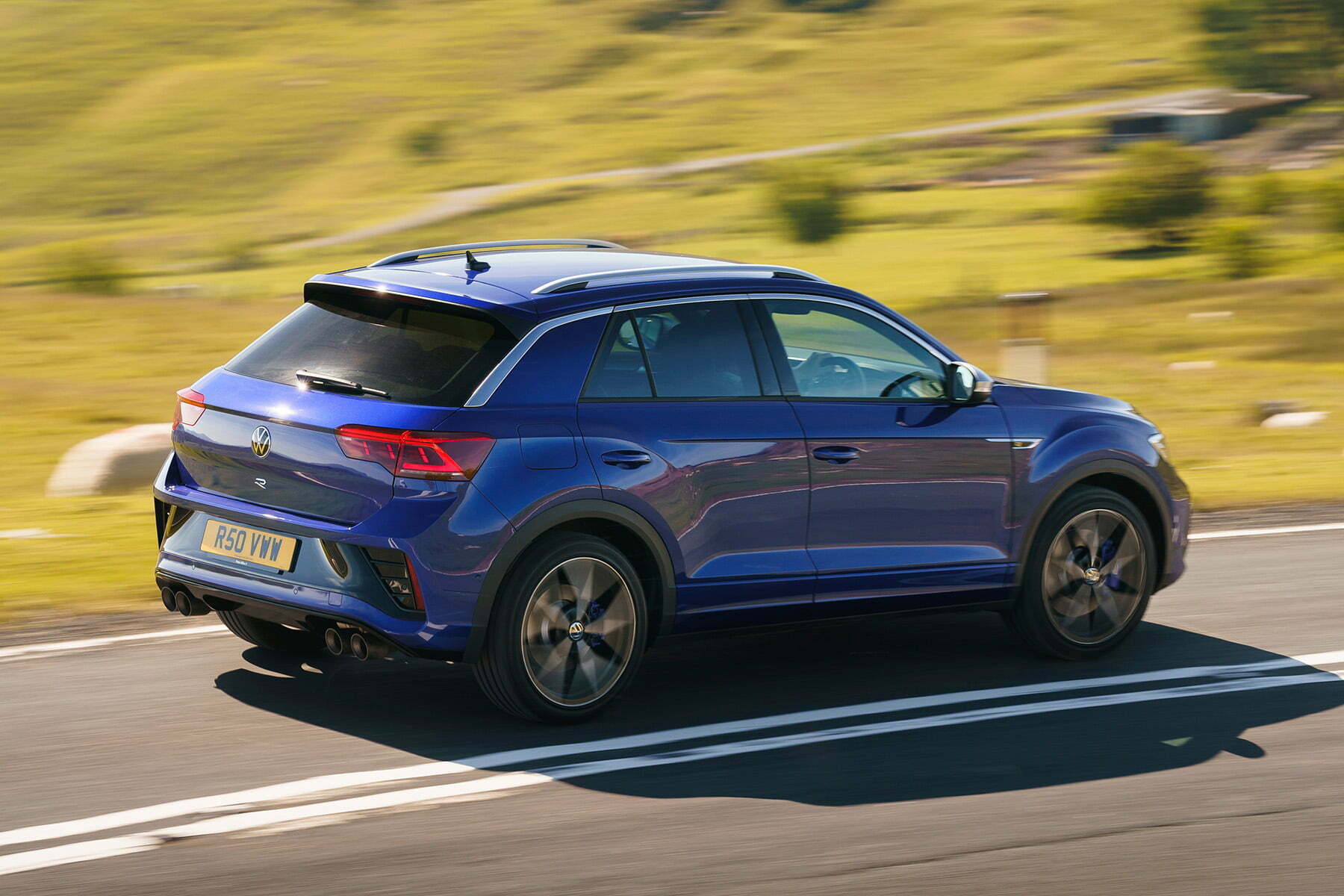
The Volkswagen T-Roc R was a high-performance compact SUV that sat at the top of the T-Roc range. It was the smallest performance SUV that Volkswagen offered as part of its ‘R’ family, below the larger Tiguan R.
The T-Roc was launched in 2019, and was on sale until 2025. We have yet to see a replacement model based on the latest T-Roc, although it may appear in 2027.
Just one specification was available throughout the car’s life, powered by the same 300hp 2.0-litre petrol engine found in the similarly sized Golf R hatchback and estate. Many reviewers outlined this drivetrain as a real highlight, like Ted Welford of Car Keys, who praised the ‘hot SUV’ for its “rapid performance” above all else.
That said, T-Roc R’s most decisive advantage over its competitors was in the way it handled. The majority of motoring outlets still regarded the Golf R as the better option overall, and Alex Ingram of Auto Express concluded that the hatchback “offers more performance and excitement while making more financial sense.”
While it wasn’t as popular with reviewers, the Cupra Ateca was slightly cheaper than the T-Roc R, and you could pick up a larger Tiguan R or a Porsche Macan for only a few thousand more.
As of February 2026, the Volkswagen T-Roc R holds a Used CarExpert Rating of D with a score of 5%.
Body style: Compact SUV/crossover Engines:petrol Price:From £42,285 on-road
Launched: Spring 2019 Last updated: Spring 2022 Discontinued: Spring 2025
Image gallery
Media reviews
Reviews, road test and comparisons from across the UK automotive media. Click any of the boxes to view.
Auto Express
Model reviewed: Facelift model Score: 7 / 10 “As before, the Volkswagen T-Roc R is a very effective point-to-point performance car, offering up great straight-line speed and strong grip. It’s not the most thrilling car to drive though, and the Golf R offers more performance and excitement while making more financial sense.” Read review
Model reviewed: Range review Score: 8 / 10 “The new Volkswagen T-Roc R ticks all the boxes on paper, sharing its underpinnings and chassis with the talented Golf R hot hatch, but packed inside a fashionably taller silhouette.” Read review
Car
Model reviewed: Range review Score: 8 / 10 “Super quick, deft handling qualities and plenty of kit in a trendy crossover package.” (Jake Groves) Read review
Car Keys
Score: 8 / 10 “The Volkswagen T-Roc R is undoubtedly one of the best performance crossovers to date. It corners, steers and responds in an impressive fashion, but at the same time it’s comfortable and practical. It’s only the price that could prove to be a sticking point.” Read review
Carbuyer
Model reviewed: Score: 7.6 / 10 “The Volkswagen T-Roc looks good, drives well and offers plenty of space, but it’s pricey and some rivals have a nicer interior.” (Andy Goodwin) Read review
Carwow
Model reviewed: Range overview Score: 8 / 10 “Big, fast SUVs are nothing new, but the VW T-Roc R is still one of the first compact crossovers that aim to offer hot-hatch thrills in a more upright, family-focused package.” (Mat Watson) Read review
Evo
Model reviewed: Range overview Score: 8 / 10 “The T-Roc R’s shortcoming against a Golf, or any hot hatch for that matter, is that it feels like you’re sat on the car rather than in it. It means you never feel confident to push as hard as you would in a hatch because you feel a step removed from what’s happening beneath you.” (Antony Ingram) Read review
Parkers
Model reviewed: Range overview Score: 7 / 10 “It offers bags of performance, handling and features and is a genuinely interesting alternative to more traditional hot hatches. It’s a good small family car, with a decent boot and reasonable room for a young family.” (Keith Adams) Read review
The Sunday Times
Model reviewed: R-Line 1.5 TSI Evo DSG Score: 8 / 10 “It’s a tall Golf.” Read review
Top Gear
Model reviewed: Range overview Score: 8 / 10 “It’s an extremely confident, quick and grippy thing, although the noise and clinical interior might make it difficult to fall in love with. The Golf R is a cooler car, but if you’ve really got your heart set on a crossover then the T-Roc R should make any shortlist.” Read review
Safety rating
Independent crash test and safety ratings from Euro NCAP
The Volkswagen T-Roc R has not been specifically tested by safety body Euro NCAP, but this performance-enhanced crossover does share the standard T-Roc’s five-star crash test rating which was awarded in 2017.
Eco rating
Independent economy and emissions ratings from Green NCAP
No eco rating
The Volkswagen T-Roc R was not assessed by Green NCAP during its production life.
Reliability rating
Reliability data provided exclusively for The Car Expert by MotorEasy
No reliability rating
As of February 2026, we don’t have enough reliability data on the Volkswagen T-Roc R to generate a reliability rating.
The Car Expert’s reliability information is provided exclusively to us using extended warranty data from our partner, MotorEasy. As soon as MotorEasy has sufficient data on the T-Roc R, we’ll publish the score here.
Running cost rating
Monthly cost of ownership data provided exclusively for The Car Expert by Clear Vehicle Data
Fuel consumption
Average
Score
Petrol models
33 mpg
D
CO₂ output
Average
Score
Variation
Score
Petrol models
197 g/km
D
Insurance group
Average
Score
Variation
Score
All models
35
D
Service and maintenance
Cost
Score
Year 1
£271
C
Year 2
£674
D
Year 3
£1,105
D
Year 4
£1,429
D
Year 5
£1,865
D
Overall
£5,344
D
The Volkswagen T-Roc R is a bit of a mixed bag when it comes to running costs, according to whole-life cost numbers provided exclusively to The Car Expert by our data partner, Clear Vehicle Data.
Insurance costs for the ‘hot’ SUV are pretty average, and service and maintenance costs are predicted by be fairly affordable for the first five years of ownership.
Similar cars
If you’re looking at the Volkswagen T-Roc R, you might also be interested in these alternatives.
Despite fewer new and used car sales, the amount we borrowed to pay for those cars hit a new record in 2022 as total car finance debt continued to increase, according to full-year data published in recent days by the Finance and Leasing Association (FLA).
Total car finance borrowing for 2022 ended up at almost £41 billion, which was up £4 billion compared to the previous year.
More than 2.2 million customers took out car finance agreements last year, about 3% up on the previous year. But the total amount borrowed increased by 9%, with the average finance amount hitting new records for both new and used cars over the course of the year.
There were quite a few interesting points revealed in the data, showing the changing nature of car finance that also suggests further change is on the way this year.
New car finance
2022
2021
% change
Number of cars
684,129
737,053
-7%
Total borrowing
£17.3 billion
£17.5 billion
-1%
Average borrowing
£25,325
£23,746
+6%
Source: FLA
Used car finance
2022
2021
% change
Number of cars
1,530,572
1,361,878
+8%
Total borrowing
£23.4 billion
£19.2 billion
+18%
Average borrowing
£15,475
£14,113
+10%
Source: FLA
Total car finance
2022
2021
% change
Number of cars
2,214,701
2,098,031
+3%
Total borrowing
£40.7 billion
£36.7 billion
+9%
Source: FLA
New cars – fewer finance deals thanks to EV shift
Consumer new car registrations were up about 16,000 units in 2022, according to the full-year results published by the Society of Motor Manufacturers and Traders (SMMT) last month. But the number of new car finance deals fell by more than 50,000, which meant it was the lowest number of new cars financed for a decade – even below the chaotic 2020 results.
For the previous four years, more than 90% of new car buyers financed their car through dealer-sourced finance. This is usually provided by the car manufacturer’s official finance company – so, for example, a new Volkswagen customer would almost always finance their vehicle through Volkswagen Financial Services.
In 2022, this number fell to less than 84%, the lowest this has been since 2015. The decline actually started to become noticeable in the second half of 2021 but accelerated through last year.
So what’s the reason for roughly 70,000 new car buyers choosing to finance their cars elsewhere? The answer is the rapidly growing number of new electric vehicle sales, which are often financed differently for tax reasons.
Year
Consumer new car sales
Consumer new car finance deals
Finance penetration
2017
1,123,885
990,029
88%
2018
1,052,202
959,729
91%
2019
1,018,258
933,417
92%
2020
747,507
696,737
93%
2021
802,504
737,053
92%
2022
818,192
684,327
84%
Source: SMMT (sales data) and FLA (finance data)
EV customers favouring salary sacrifice over traditional car finance
The FLA’s director of research and chief economist, Geraldine Kilkelly, told The Car Expert that about half of new EV buyers are choosing salary sacrifice over traditional car finance (PCP, HP, etc.).
“We estimate that just under 50% of consumer EV purchases are financed by FLA members, with many opting for salary sacrifice schemes instead for EV purchases,” she said.
Salary sacrifice (known as sal-sac) is attractive for private electric vehicle buyers because of significant tax benefits. With a salary sacrifice scheme, the car payments are taken from an employee’s pre-tax salary so you are literally sacrificing a portion of your salary for a non-cash benefit – in this case, a car.
You have to pay tax on the value of that car, but the taxation rate (called Benefit-in-Kind, or BiK) is much lower for EVs than it is for petrol or diesel cars. Plug-in hybrids used to enjoy a similar benefit, but this has significantly reduced in recent years.
A permanent shift in how new cars are financed?
We explain this in more detail in our handy guide to salary sacrifice for EVs, but the net result is that car companies are not seeing anywhere near as much revenue from customer EV finance agreements.
As EVs are only going to get more popular in coming years, we are likely to see a permanent shift into how new cars are financed. That is, unless the government decides to eliminate this tax benefit…
So far, the chancellor has pledged that new EVs will maintain their Benefit-in-Kind advantage through until at least 2028, so that provides some kind of assurance. But don’t forget that governments (especially this one) can u-turn at a moment’s notice, so don’t necessarily get too comfortable.
By 2028, the new car marketplace is likely to look very different anyway, with EVs likely to be the most dominant type of new car on sale. That’s likely to mean that future governments will start to ratchet up the BiK rate to something more comparable to petrol cars.
Used car finance data impacted by new car shortage
The used car marketplace saw the reverse of new cars, with fewer cars sold overall but more financed via dealership-sourced lenders.
About 600,000 fewer used cars – a 9% decrease – changed hands in 2022 compared to the previous year, according to SMMT data published earlier this month. However, the number of cars financed via FLA members (which is basically all of the main car finance lenders) increased by more than 130,000, which is almost 10%. On top of that, the average amount borrowed jumped substantially.
One of the key factors for this increase in used car financing was the acute shortage of new cars facing most of the car industry during 2022. With hundreds of thousands of customers with expiring PCP finance deals needing to change their cars, there simply weren’t enough new vehicles available. As a result, many people switched to a near-new used car.
This increased demand for used cars has driven up prices significantly right across the marketplace over the last couple of years as more buyers compete for fewer available vehicles.
Two million ‘missing’ cars
Looking back on the last six years of SMMT new car sales data (as shown in the table above), about 2.3 million fewer new cars were sold in the last three years (2020 to 2022) than the previous pre-pandemic years (2017 to 2019).
Even allowing for a gradual decline in new car sales that has been happening since 2016*, that’s still about two million new cars that simply never existed, which will then never flow into the used car market. That, in turn, has a knock-on effect on older new car pricing and will continue to affect used car pricing for years to come.
Over the course of this year, we expect to see used car pricing start to soften as a result of new car production increasing again, which has the twin effects of increasing used car supply and reducing demand. But it could take years for depreciation rates to fall back to what we used to see pre-pandemic.
*I know what 48% of you are thinking, but it’s not (only) a Brexit thing. A large part of declining new car sales has been lengthening car finance cycles as the UK’s PCP car finance boom reached saturation point in the new car market.
Used car market will be more reliant on finance due to EVs
The rapid growth of new EV sales will inevitably result in flow-on growth in the used car market, which will really start to become more noticeable in 2023.
With EVs being substantially more expensive than fossil-fuel cars, and without salary sacrifice or other subsidised finance offers to bring the purchase prices down, that will mean used car buyers will be borrowing more money if they want to drive an electric car.
This means that we’re likely to see used car borrowing continuing to go upwards despite the supply benefits mentioned above.
More finance options than ever before
After a decade of car dealers trying to railroad every customer into a PCP finance agreement, we’re starting to see more awareness of the different finance choices in both the new and used car market. This is a good thing for customers, as better awareness of their options increases the likelihood of them making better decisions for their needs.
In the new car market, there has been some growth in PCH (personal contract hire) leasing, with many leasing companies able to offer lower monthly payments than dealers can offer on a PCP. Some leasing companies are also starting to offer used car leasing, which gives used car customers another option.
As mentioned above, salary sacrifice is taking a large chunk of new EV financing, while car subscriptions continue to make inroads for both new and used car customers.
Although only a small percentage of the overall market, subscriptions can be an excellent gateway for customers who are undecided about switching to an electric car. A short-term subscription of a few months might mean a high monthly payment, but it offers a very low risk compared to thousands of pounds upfront and then a four-year contract for a car that might prove unsuitable.
The BMW X5 M Competition SUV and X6 M Competition coupé-SUV have both received mild mid-life facelifts, including exterior styling updates, additional driver assistance tech as standard, and some extra engine power in the form of 48V of mild-hybrid assistance.
Both on sale since 2019, the performance-enhanced X5 M and X6 M are still only available in the top-spec ‘Competition’ guise here in the UK. These high-riding performance cars are practically identical, apart from their rear-end styling – the X5 M has a boxy SUV tailgate, while the X6 M has a sloping rear roof-line.
Starting with the cosmetic tweaks, both models now have slimmer matrix LED headlights with daytime running lights in the shape of chevrons that also act as turning signals. The re-shaped kidney-grilles finished in black, as are the wing mirrors, and the air intakes and spoiler lip on the front bumper.
2023 BMW X5 M Competition
The rear lights that stretch across the boot lid have also been re-designed, with different designs for both models. A black diffuser plate juts out of the lower rear fascia of both SUVs, sitting above four exhaust pipes finished in black chrome.
The updated models sit on 21-inch alloy wheels in the front and 22-inch alloy wheels in the rear. BMW has also added three further exterior paint colours to the options list.
Moving on to the powertrain, the X5 M and X6 M are powered by the same 4.4-litre V8 petrol engine as before the facelift, but with the addition of a small electric motor and a 48V battery that adds 12hp of extra power and aids the SUVs when setting off or in low-speed traffic.
BMW’s M division engineers have also tweaked and swapped out a few of the engine’s components to lower emissions. The engine can now muster a maximum of 635hp, meaning that the X5 M and X6 M can complete a 0-62mph sprint in 3.9 seconds. This acceleration is actually a fraction of a second slower than the outgoing versions.
The top speed is electronically limited at 155mph – if you opt for the optional ‘M Driver’s pack’, this is extended to 180mph.
2023 BMW X6 M Competition
The eight-speed automatic gearbox has also been slightly modified – BMW reporting that gear shifting is now sharper than before, and that this transmission is more efficient and can better handle high temperatures caused by pushing the engine to its limit. The dampers in the suspension system have been tweaked to provide more on-the-road comfort.
Stepping inside, the interior of both SUVs is nearly identical after the update. The seats, steering wheel, dashboard and doors are trimmed in the same leather as before, though BMW has added an additional white and grey colour scheme to the options list.
Behind the steering wheel, BMW’s ‘iDrive’ curved display juts out of the dashboard, combining a 12-inch digital instrument cluster and a 15-inch infotainment touchscreen. A new ambient light bar features on the front passenger side of the dashboard, and the paddle shifters on the steering wheel are now made of carbon fibre.
Four-zone climate control comes as standard, as does electrically adjustable and heated door mirrors, and wireless smartphone charging. Soft-close doors, a heated steering wheel, and heated armrests are available for an extra fee.
In addition to the adaptive cruise control, a front collision warning and lane keeping assistance, the X5 M and X6 M now also come with BMW’s ‘parking assistant professional’ package as standard, which includes a rear parking camera and takes care of parking manoeuvres into and out of spaces either parallel or perpendicular to the road.
Manufactured in the brand’s plant in South Carolina, USA, the facelifted X5 M Competition and X6 M Competition are now available to order here in the UK. Pricing for the X5 M begins at just over £123k, while the latest version of the X6 M now costs £126k.
The Mercedes-Benz GLE SUV has been given a mid-life update, including a minor exterior styling refresh, an infotainment upgrade, and an updated engine line-up.
Available in SUV and SUV-coupé body styles, the GLE has been on sale in the UK since 2019. This mid-life facelift comes as Mercedes-Benz tries to keep the model up to date with the latest iteration of the smaller GLC, which recently launched with many of the same exterior styling traits.
The updated model features revised front bumper and LED light designs, along with a new-look front grille with chrome inserts and a diamond-themed pattern. The SUV sits on 19- or 20-inch alloy wheels with a unique five-twin-spoke design.
Inside, the GLE now comes with a different multi-function steering wheel with touch-sensitive button controls, and customers can choose between two additional trim colour combinations.
The updated range comes with the same 12-inch digital instrument cluster and 12-inch infotainment screen, but with some software upgrades. Android Auto and Apple CarPlay is now wireless, and a few new camera views and information graphics can be selected on the infotainment screen.
The update also includes the Mercedes-Benz ‘Smart Home’ function, which is operated using the car’s voice assistant. This feature allows the driver to monitor and control a number of smart devices at the user’s home, including thermostats, lights, shutters, cameras and motion detectors, all from the driver’s seat.
The GLE engine range has also been revised. The entry-level option is now a 269hp diesel mild hybrid, which comes with 48 volts of electrical assistance. More powerful mild hybrid options are also available – a 381hp petrol unit and a 367hp diesel version.
The range is topped by a 252hp petrol plug-in hybrid and a 197hp diesel plug-in hybrid, which offer up to 68 miles of all-electric driving (coupé-SUV models are slightly more aerodynamic, and thus offer slightly more battery driving range). These are the engine options that we know are arriving in Europe – UK specifications will arrive later this year. All models come with four-wheel drive as standard.
Like the new GLC, the updated GLE range will be manufactured at the brand’s factory in Alabama, USA. Now available to order in the UK, the first models are set to arrive in British dealerships in the summer.
Prices start at just under £78k for the entry-level ‘AMG Line’ GLE SUV. The coupé-SUV GLE body style is only currently available with the top-spec ‘AMG Line Premium Plus’, being priced at under £93k.
The Mercedes-Benz GLE has received particular praise for its interior design and quality, as well as its comfortable ride. However, it has been criticised for tight third-row seating and unimpressive handling. It currently holds an Expert Rating of 68%.
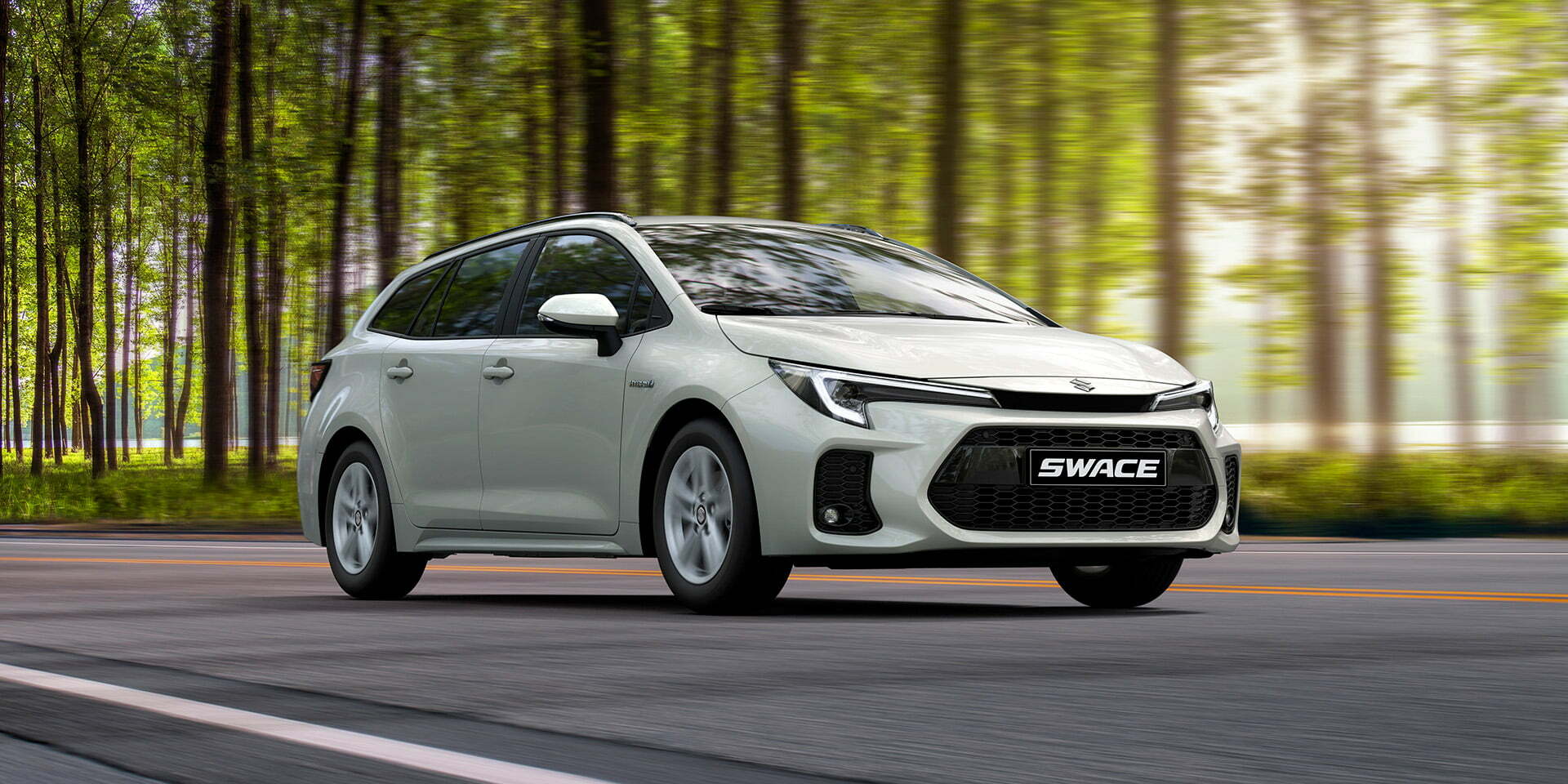
Suzuki is rolling out a mild update for its Swace estate car, which includes an engine upgrade, additional on-board tech and some minor cosmetic tweaks.
This update comes as Suzuki attempts to keep the Swace competitive with rivals like the closely-related Toyota Corolla Touring Sports, which has received a facelift within the last year.
Starting with the estate’s engine, Suzuki has modified the car’s 1.8-litre hybrid unit to increase the power output by 15%, without impacting the car’s emissions levels. The electric motor will produce 94hp after the update goes on sale, up from 72hp. Working in tandem with the petrol engine, the updated Swace can muster 140hp overall.
This performance boost means that the estate will reportedly complete a 0-62mph sprint time in 9.4 seconds – 1.7 seconds faster than the prior Swace version.
Suzuki has also re-configured the car’s trim grades. The previous ‘SZ-T’ and ‘SZ5’ are no more – replaced by the more memorable ‘Motion’ and ‘Ultra’ trim choices, which will come with an enhanced safety equipment offering and infotainment upgrades.
This additional safety tech includes a driver-monitoring system to keep the driver’s attention on the road, and a ‘safe exit assist’ feature that warns passengers if they’re about to open a door into the path of a cyclist or a car approaching from the rear. The car’s collision-warning system will also have a larger detection range too.
Suzuki adds that the infotainment screen will have higher-definition graphics, and Apple CarPlay connectivity, which is currently wired-only, will soon be wireless.
Finally, the manufacturer has revised the estate’s rear end, installing a new-look rear bumper and new LED tail lights. Top-spec ‘Ultra’ models also come with LED daytime running lights.
Suzuki is yet to announce when the model will be available to order in the UK, but has announced that prices for the range will start at £29k, rising to under £31k for the range-topping ‘Ultra’.
The Suzuki Swace has been highlighted by the British motoring media for its impressive fuel economy, spacious cabin, and long-term reliability. That said, the estate’s Expert Rating of 63% is hindered by poor petrol engine performance and the lack of engine and body style options in the Swace range.
First introduced back in 1998, the Audi TT coupé and roadster range is now nearing retirement after the launch of the TT Final Edition, a limited-run model that comes with a few cosmetic tweaks and additional styling and equipment packs.
Starting with exterior looks, the TT Final Edition comes Audi’s ‘black styling’ pack, meaning that the car’s Audi branding is finished in black, as are the wing mirrors, exhaust tips and rear spoiler. Convertible ‘roadster’ versions also come with black rollover bars behind the seats.
Both coupé and convertible models sit on grey 20-inch alloy wheels with red brake callipers. Customers can choose between red, white and grey body colour options.
Stepping inside, the steering wheel is trimmed in Alcantara leather with red stitching, as part of the included ‘leather pack’ which also adds a leather finish to the doors panels, door pull handles and the centre console.
Red accents feature on the seats, centre console and dashboard air vents. Alcantara leather seats can be specced as an optional extra, and floor mats with red piping are available for an additional fee too.
Finally, the TT Final Edition comes with Audi’s ‘technology pack’, which is optional in the standard TT range. This adds the brand’s own navigation software with additional info like live local fuel prices and weather forecasts. Opting for the more powerful (but more expensive) TTS Final Edition model adds an upgraded sound system and a parking camera.
Available to order from March onwards in the UK, the TT Final Edition coupé is priced at just south of £42k, while prices for the roadster version start at around £44k. Opting for the TTS version will instead set you back over £54k.
Besides its performance and confident road manners, the Audi TT has been frequently praised by the UK media for its distinctive styling and high-quality interior. That said, its Expert Rating of 75% is hindered by its expensive price tag and cramped rear seating.
There’s plenty of ways to save pennies on running your car, whether it’s getting another quote for your insurance premium or using the cheapest petrol station in town. Getting more miles per gallon (MPG) is another way to save money on motoring.
MPG is a way to quantify fuel economy, so the higher the number the more efficient a vehicle is. Improving MPG is a good way to make a daily effort towards reducing fuel costs. Here’s some tips and tricks on how to get better MPG.
Vehicle health
Following the manufacturer’s advised service intervals will ensure the vehicle stays in good condition. Regular maintenance helps the engine to keep performing at its best, skipping services could affect engine efficiency and cause greater fuel consumption.
Tyre health is also a key maintenance consideration to keep on top of. As the only part of the vehicle that comes into contact with the road, it’s important that your tyres are well looked after and optimised for fuel economy.
The correct tyre pressure varies depends on the weight in the vehicle. The correct pressures can usually be found on the inside of the driver’s door – or on the fuel cap or in the vehicle handbook – and indicate different pressures for heavier loads. Make sure to regularly check tyre pressure is at the correct level, plus checking regularly will also help to detect slow punctures that you might not notice in normal driving.
Over-inflated tyres are more prone to punctures and excess wear. Under-inflated tyres have a greater surface area on the road that increases rolling resistance. Higher rolling resistance means there’s more friction between the tyre and road, causing the engine to work harder to overcome these forces.
Tyres now come with efficiency ratings, ‘A’ being the most efficient and ‘E’ the least efficient. When it comes time to replace tyres, these ratings are good indicators for tyres that will support better MPG.
Driving style
The way you drive is the main way to influence fuel economy. Causing the engine to work harder than it needs to uses more fuel and decreases MPG. Smooth acceleration keeps fuel consumption consistent but this means racing off the line is not an option.
In cars with manual gearboxes, being in the right gear gives the engine sufficient power without burning unnecessary fuel. At motorway speeds it’s a good idea to use cruise control to maintain a consistent speed. In vehicles with adaptive cruise control, the car can be slowed down and acceleration can be applied more smoothly.
Other tech that can aid fuel economy include ‘eco’ driving modes and start/stop engines. ‘Eco’ modes conserve fuel and sometimes employ regenerative braking to capture the energy lost to braking. Automatic start/stop systems cut the engine when the vehicle is at a standstill, often in traffic. Turning the engine off, limits the amount of time a vehicle sits idling and burning fuel without going anywhere.
Planning your route can help to avoid idling in traffic jams and some sat navs now show the most economical route to take. This might not be the shortest or fastest route but should be the most fuel efficient option.
Conserve energy
As well as utilising tech to save fuel, there’s simple practical changes that can influence MPG. Cars are designed to be aerodynamic but the addition of roof boxes and bike racks disrupts airflow, creating more drag. This also increases the weight of the car, making the engine work harder to shift a heavier vehicle.
When not in use, remove roof boxes and additional baggage to restore the vehicle to its intended aerodynamic design and weight. At high speeds having the windows down can also create drag. Whilst the use of air conditioning at lower speeds has a negative impact on MPG, cooling down using air conditioning at high speeds is better than putting the windows down.
Using electrical components like heating and air conditioning drain energy from the battery that needs to be replenished by the engine. Only using these when necessary means the battery doesn’t need to draw on the engine as much to recharge.
If you buy a new car from a showroom, you’ll get at least three years warranty (or even up to seven in some cases) for at least the next 60,000 miles (or more). That give you peace of mind that if your car breaks, you’re covered.
But what if you’re buying a used car?
By its very nature, a used car has had a life before you bought it. That brings inevitable wear and tear, and quite possibly some mechanical trauma that has yet to surface.
A near-new vehicle, like an ex-demonstrator or an ex-rental car, will probably still have a couple years still left on its new car warranty. But what happens when that runs out, or the car you’re buying is already out of it manufacturer warranty?
As cars get older, the chances of something going bang inevitably increases. Car dealers know this, which is why older cars usually come with a very limited warranty policy – or even no warranty at all. Even if a used car dealership is conscientious about inspecting and preparing its cars before selling them, it’s still very easy for faults to go unnoticed until after the buyer has driven off the forecourt.
What about buying your own used car warranty policy?
So you consider taking out a used car warranty yourself. Even though it’s going to add to the cost of the car buying experience, the peace of mind alone may be well worth the outlay. And, if you do have to make a claim in the event of a problem, it could well save you a lot more than you paid in premiums.
But just how protected are you really?
A car warranty – or mechanical breakdown insurance – is designed to protect you in the event of an unforeseen failure. While the actual level of cover can vary from policy to policy, car warranties will usually cover the most important parts. Being covered by a car warranty means you aren’t left alone to deal with the mess.
And a warranty policy don’t just take care of the cost of replacement parts. They can also cover labour and (depending on your level of cover) important extras such as car hire. So, for many motorists, particularly those that drive long distances or rely on their car every day, it can prove a smart investment.
Time to check the fine print of your warranty policy
Before you sign up to any warranty policy, what should you look for? What is covered and what is not included? The important thing is to take your time checking the terms and conditions of the policy you’ve been offered.
Plenty of people buy a used car warranty without properly looking at what they’re getting, then find themselves disappointed when it comes to making a claim. That’s according to warranty specialists ALA Insurance, one of the largest suppliers of motor insurance-related products in the UK (and a commercial partner of The Car Expert).
The team at ALA say there are important details you should look for or consider when thinking about a used car warranty. They include:
Make sure you choose a level of cover that you are comfortable with and you are clear on what is included. If in doubt, ask for advice and don’t agree to anything until it has been explained to you.
Ensure you know what’s not covered. These will include: serviceable parts that wear out; accessories; items claimable under a manufacturer’s warranty; and any repair that is greater than the purchase price of the vehicle.
Look for cover that includes consequential damage – where one part of your car breaks down and causes the mechanical failure of another part. Many warranty providers will exclude this type of damage from cover.
Always check the claim limit – many policies are restricted, perhaps to £5,000 or even £1,000 regardless of the damage. Make sure you know what you would get in the event of a big repair bill.
Stay away from betterment clauses. Ensure your warranty does not contain a betterment clause, where the insurer considers that a replacement part is greater quality than the broken part it is replacing and is therefore ‘better’. Under these clauses you could be asked to contribute towards a repair.
Find a policy that is only restricted by the vehicle’s value – it’s a real positive and gives you greater peace of mind.
Maintain your car well. It’s important to keep your vehicle in good condition because you could lose out on a claim if you haven’t carried out routine maintenance such as oil changes or regular servicing.
Keep all the receipts of any products you’ve bought or any work you have had done, just in case you’re asked to offer proof.
Ensure you have an up-to-date full service history or, at least, some partial history documents, and that you are familiar with them.
Read the fine print thoroughly, understand all the terms and conditions, and ask the provider to explain anything you are not clear not on. There’s no such thing as a stupid question.
Take your time to go through and read any literature provided.
“When buying a warranty policy, the important thing is not to be rushed and to consider your options,” says Simon England, managing director of ALA Insurance.
“There should be no pressure to purchase any product. Certainly at ALA, even if one of our team has been discussing and talking through a policy with a customer for an hour on the phone, there is still zero pressure. It’s important that customers can make an informed, unbiased decision that is right for them and their circumstances.”
Here at The Car Expert, we have some fantastic warranty offers for our readers provided by our commercial partners. If you’re interested in a used car warranty, you should check these out:
ALA Insurance provides used car warranties in conjunction with the RAC
MotorEasy offers warranties and many other types of cover for car owners
Given initials that stand for ‘Radical Coupé’, Lexus RC was a compact two-door coupé that first arrived on UK roads towards the end of 2015, later being removed from sale in 2020. An uprated version, the RC F, is still available new in the UK, but that will be given its own Expert Rating, coming soon.
Besides its unique exterior design, the RC stood out from other premium competitors like the BMW 4 Series Coupé and Audi A5 as it was the only coupé model of its size to be offered with a petrol-hybrid engine option.
“If you’re looking for a hybrid driver’s car then the Lexus RC is one of the best options”, said Green Car Guide‘s Paul Clarke, while also praising the coupé for its “rewarding rear-wheel drive handling” and its “sporty interior”.
The Top Gear team were not so enthused. “Forgettable engine and transmission in a sporty-looking package. A sheep in wolf’s clothing.” This conclusion was shared by several outlets – the Lexus RC certainly looked fast but it couldn’t match the pace of its coupé competitors.
Some reviewers also took issue with the car’s infotainment, which Carwow called “infuriating”, and Parkers said was “dated” even while on sale. Finally, despite the high build quality of the RC’s upmarket interior, reviewers frequently commented that its cabin was not very practical for those making a daily commute, and the rear seating was rather cramped.
No longer on sale, the Lexus RC holds a Used Car Expert Rating of D, with a score of 56%. Its scores are average to poor in all the categories for which we currently have data.
Body style: Coupé Engines:petrol, petrol hybrid Price when new:From £36,995 on-road
Launched: Autumn 2015 Last updated: Summer 2018 Removed from sale: 2020
Image gallery
Media reviews
Highlighted reviews and road tests from across the UK automotive media. Click any of the boxes to view.
Auto Express
Model reviewed: Score: 6 / 10 “The Lexus RC coupe has the looks to take on the best.” Read review
Model reviewed: Score: 6 / 10 “Striking Lexus RC is one of the most imposing four-seat coupes around, but also has a high-quality cabin and efficient hybrid.” Read review
Model reviewed: 300h F-Sport Score: 6 / 10 “In terms of road manners, the Lexus RC doesn’t feel as fun or involving to drive as a BMW 4 Series or even a Mercedes C-Class Coupe.” Read review
Model reviewed: 300h (2016) Score: 6 / 10 “The RC 300h is far from the most thrilling car to drive, but the hybrid is a more rational choice because it’s smooth and costs much less to run than the petrol 200t.” Read review
Auto Trader
Score: 6 / 10 “The RC makes its case with individual – not to mention pretty handsome – styling, impressive build quality and an intriguing financial proposition thanks to its hybrid drive system. Unfortunately, it’s not as polished to drive as its main rivals, and it has some pretty fundamental ergonomic issues.” Read review
Business Car
Model reviewed: 300h (2016) Score: 7 / 10 “The Lexus 300h beats rivals on style, comfort and refinement. Misses out on costs and performance.” Read review
Car
Model reviewed: 200t F Sport Score: 7 / 10 “More GT than sports car, but those swayed by the RC’s looks will find it a stylish, swift and relaxed car to live with.” Read review
Car Keys
Model reviewed: 300h Score: 7 / 10 “The Lexus RC 300h offers hybrid efficiency and one of the most serene driving experiences that money can buy. And did we mention how good it looks?” Read review
Carbuyer
Model reviewed: (2014-2020) Score: 6.6 / 10 “The rakish Lexus RC is a well-built luxury coupe, but it’s not as fun as rivals.” Read review
Carwow
Model reviewed: Score: 6 / 10 “The Lexus RC hybrid is a sharp-suited coupe that offers an eye-catching alternative to conventional petrol and diesel-powered alternatives. But it doesn’t have the pace to match its looks.” Read review
Driving Electric
Model reviewed: 300h Score: 5 / 10 “The Lexus RC 300h was an unusual prospect – a hybrid coupe – but it was neither the best hybrid nor the best coupe you could buy.” Read review
Evo
Score: 8 / 10 “The Lexus RC F might seem old fashioned, but its recipe still holds lots of appeal.” Read review
Model reviewed: 300h Score: 6 / 10 “Lexus’ sporty coupe looks sharp and drives tolerably, but is a better GT than a sports car.” Read review
Model reviewed: 200t F Sport Score: 7 / 10 “More GT than sports car, but those swayed by the RC’s looks will find it a stylish, swift and relaxed car to live with.’ Read review
Fleetworld
Model reviewed: Score: 6 / 10 “The Lexus RC takes the idea of niche models to the extreme by offering you a GT coupe fitted with either a 223PS 2.5-litre hybrid petrol engine that sips fuel or a 464PS naturally-aspirated 5.0-litre V8 petrol, which definitely doesn’t.” Read review
Model reviewed: 200t F-Sport “The RC 300h is a no-brainer for company car drivers against the 200t; as good as it is, the latter just doesn’t offer enough driver appeal to forego the economy of the hybrid drivetrain.” Read review
Model reviewed: “Not really a sporty coupe nor a necessarily luxurious one, the RC’s appeal is more a combination of its unmistakeable looks, low speed refinement and high equipment levels.” Read review
Green Car Guide
Model reviewed: 300h F Sport Score: 8 / 10 “If you’re looking for a hybrid driver’s car then the Lexus RC is one of the best options.” Read review
Honest John
Model reviewed: Score: 6 / 10 “The Lexus RC is a dramatic looking coupe. Will turn more heads than popular alternatives. It’s likely to be very reliable.” Read review
Motoring Research
Model reviewed: Score: 7 / 10 “If we were judging the merits of a coupe on the strength of its styling and equipment, the Lexus RC would be the class-leader.” Read review
Motors
Model reviewed: Score: 6 / 10 “The RC 300h makes more sense on the used market.” Read review
Parkers
Model reviewed: Score: 7.6 / 10 “The Lexus RC boasts great rakish coupe looks, but handling falls short of rivals’ standards.” Read review
The Sun
Model reviewed: “Nip ‘n’ tuck has transformed Lexus RC 300h into a hottie with superb sound system and aggressive styling.” Read review
Top Gear
Model reviewed: Range overview Score: 5 / 10 “Forgettable engine and transmission in a sporty-looking package. A sheep in wolf’s clothing.” Read review
Model reviewed: 300h Score: 5 / 10 “Forgettable engine and transmission in a sporty-looking package; the RC 300h is a sheep in wolf’s clothing.” Read review
Safety rating
Independent crash test and safety ratings from Euro NCAP
No safety rating
The Lexus RC was not crash tested by Euro NCAP during its production life.
Eco rating
Independent economy and emissions ratings from Green NCAP
No eco rating
The Lexus RC was not lab tested by Green NCAP during its production life.
Reliability rating
Reliability data provided exclusively for The Car Expert by MotorEasy
No reliability rating
As of March 2026, we don’t have enough reliability data on the Lexus RC to generate a reliability rating.
The Car Expert’s reliability information is provided exclusively to us using extended warranty data from our partner, MotorEasy. As soon as MotorEasy has sufficient data on the RC, we’ll publish the score here.
Running cost rating
Monthly cost of ownership data provided exclusively for The Car Expert by Clear Vehicle Data
Fuel consumption
Average
Score
Hybrid models
45 mpg
C
CO₂ output
Average
Score
Variation
Score
Hybrid models
144 g/km
C
Insurance group
Average
Score
Variation
Score
All models
32
C
The Lexus RC is fairly average when it comes to ownership costs, according to whole-life cost numbers provided exclusively to The Car Expert by our data partner, Clear Vehicle Data. However, it must be noted that we don’t have servicing costs because the car has been out of production for some time.
Similar cars
If you’re looking at the Lexus RC, you might also be interested in these alternatives.
Mercedes-Benz has announced that its large EQE SUV is now available to order in the UK, not to be confused with the EQE saloon that is already available – the model this new SUV is based on.
Since the electric SUV’s unveiling back in October, Mercedes-Benz has announced the EQE SUV powertrain options and trims that will be arriving in the UK, as well as the pricing of the new line-up.
First off, the entry-level ‘350+’ rear-wheel drive configuration will not be coming to the UK – the EQE SUV is four-wheel drive as standard in Britain, with the ‘350 4Matic’ and ‘500 4Matic’ powertrain options to choose from. This means that the SUV has a higher lead-in price tag here than elsewhere in Europe.
Both powertrains use the same 89kWh battery pack, but the ‘350 4Matic’ is paired with two electric motors that produce 288hp, while the more expensive ‘500 4Matic’ has a dual motor setup that can muster 402hp.
Since the unveiling, Mercedes-Benz has also revised its official battery range figures – the ‘350 4Matic’ can now reportedly handle 334 miles on a single charge, while the ‘500 4Matic’ now has a maximum range of 324 miles.
Four trim grades are available, starting with the cheapest ‘AMG Line’ specification. The standard trim sits on 20-inch alloy wheels, and includes leather sports seats and a keyless entry function. These lead-in models come specced with a 12-inch digital instrument cluster and 13-inch infotainment touchscreen on the dashboard.
The more expensive ‘AMG Line Premium’ trim adds a dashcam that provides a feed to the infotainment screen. The brand’s ‘MBUX Augmented Reality’ software then overlays navigation information onto the live camera feed. Opting for this trim also means opting for larger 21-inch wheels and a panoramic sunroof.
Key trim level features
‘AMG Line’ (from £90,560)
High-performance LED Headlights
20-inch alloy wheels
Keyless entry
Leather sports seats with memory function
12-inch digital instrument cluster
13-inch infotainment touchscreen
‘AMG Line Premium’ (from £99,260)
All ‘AMG Line’ features that are not replaced
21-inch alloy wheels
Burmester surround sound speaker system
Dashcam
‘MBUX Augmented Reality’ navigation overlay
Panoramic sunroof
‘AMG Line Premium Plus’ (from £112,260)
All ‘AMG Line’ and ‘AMG Line Premium’ features that are not replaced
22-inch alloy wheels
MBUX Hyperscreen display
Rear axle steering
Head-up display
Infotainment voice assistant
Insulation upgrade for windows and windscreen
‘Digital Light’ LED headlights that project driving information
‘Business Class’ (from £112,260)
All ‘AMG Line’ and ‘AMG Line Premium’ features that are not replaced
MBUX Hyperscreen display with TV apps
Rear axle steering
Heated steering wheel
Heated seats
Improved air conditioning with ‘fragrance flask’
The large Hyperscreen dashboard display that is featured in all of the promotional material is available as an option with the ‘AMG Line Premium’ spec, but comes as standard with the ‘AMG Line Premium Plus’ trim. This trim package also includes 22-inch wheels, a head-up display and ‘Digital Light’ LED headlights that project driving information onto the road ahead.
The ‘Business Class’ trim costs the same price as the ‘AMG Line Premium Plus’, but is said to have more of a focus on interior comfort. This trim option gets the same Hyperscreen but with an extra app that allows you to watch TV, and the steering wheel and leather seats are heated.
Both range-topping trims also come with rear axle steering, which allows the SUV to turn its rear wheels by up to ten degrees for more agile cornering.
Prices for the EQE SUV now start at over £90k, stretching to just north of £112k for top-spec models (and before optional extras). Mercedes-Benz has announced that the new SUV is available to order, but at the time of writing, the brand does not have any EQE SUV or larger EQS SUV models available online. The online configuration tool for both models is also disabled.
Most of us have done it; drifted out of our lane or misjudged a corner and crossed the central white line. It normally results in horn blowing but it can cause a crash or at least a smashed wing mirror.
Lane-keep assist is technology designed to warn and steer the driver back into line. It’s one of a package of electronic safety systems fitted to current cars, but the technology isn’t perfect and varies from car to car.
Most lane keeping systems use a forward-facing camera mounted at the top of the windscreen by the rear view mirror to identify the lane markings and see if they are crossed. The same camera also works with adaptive cruise control systems.
Jargon explained
Lane-keeping assistance systems are a kind of technology known as Advanced Driver Assistance Systems (ADAS). The idea is to use modern technology to help prevent accidents, rather than just making cars better at coping with collisions – after all, it’s always better to avoid an accident altogether than to have even a minor one.
Euro NCAP, probably the world’s foremost authority on car safety and provider of safety ratings for new cars, is increasingly prioritising this sort of technology in new cars. New car safety scores have a specific category for accident avoidance technology, and it contributes significantly to a new car’s overall Euro NCAP safety rating.
There are three parts to lane-related assistance systems: Lane Departure Warning (LDW), with typical warnings which include a flashing symbol on the dashboard display, an audible alert or a vibration at the rim of the steering wheel.
The next, building on LDW systems is Lane Keep Assist Systems (LKAS). These steer the car to keep a central position between lane markings. The systems will apply a small amount of steering to stop the vehicle from leaving its lane.
The last are Emergency Lane Keeping (ELK) systems, which intervene much more aggressively. For example, ELK will apply a large steering input if it senses that a car is about to run off the road. On tighter bends, if lane markings are poor or the driver takes their hand off the steering wheel, LKAS automatically suspends itself.
Standard fit
In July 2022, new EU regulations were introduced with the effect that all new cars and light commercial vehicles (small to medium-sized vans and pick-ups) are now required to have – amongst other things – advanced emergency braking systems, intelligent speed assistance, emergency lane‐keeping systems, driver drowsiness and attention warning, advanced driver distraction warning and reversing detection.
The UK remains aligned with the EU on new vehicle standards despite Brexit, so the new regulations apply here as well.
A lot of car manufacturers were already fitting these features to gain the maximum five-star safety rating awarded by Euro NCAP, which rates LKA and ELK based on a standard set of tests on a test track.
Both types of system are tested against various types of road-markings, including solid lines and dashed lines, and in situations where the road edge is not marked by a line. The performance is evaluated by considering the proximity of the vehicle to the edge of a lane marking or road edge at the time of intervention. Additional points are awarded to cars equipped with a Lane Departure Warning system and a Blind Spot Monitoring system.
Are there any downsides?
No advanced drivers assistance system can allow for every situation and the driver needs to be ready to step in at any time. This similar to the semi-autonomous cars which will do a limited amount of steering for you – you still need your hands to touch the wheel.
Most people get that it’s good to have safety systems to protect you, your passengers and people outside the car but today’s lane-keeping assistance systems can still get confused.
Not all straight roads have nicely painted white lines, so some systems can’t see them anyway. Narrow crowded roadworks lanes where you really don’t want to drift very tend to have worn out markings or old lines which cross over temporary lines. The system may also not detect lane markings when driving too close to the vehicle ahead.
Heavy rain, snow and fog can limit the system’s ability to function as well as mud or dirt on the camera lens (so keep the windscreen clear). Some systems cut out below 30mph so aren’t of use in town where if you’re not paying attention you could veer into a cycle or bus lane.
Country roads can be a particular tussle for keen drivers, who if they can see the road ahead is clear like to take the cleanest line through a corner but which means going over the white line. Having the steering wheel violently fight back can be quite a distraction.
Not all as good
The only way to know whether your next car might be too enthusiastic in its corrections is to study car magazine/website road tests, especially those called ‘long term’ where a journalist has lived with a car for a few months.
The Car Expert’s road test editor Andrew Charman says: “The actual Lane-Keeping Assist devices do vary in both their function and their effectiveness – I was particularly impressed the first time I tried a Volvo system when going from the M42 to the M5 north and it calmly steered me round and over the bridge!
“Most of the major systems are effective in their use but they’re not foolproof – you (rightly) can’t use them as an excuse for not concentrating on the wheel. They’re a good safety aid for that rare moment when the concentration wavers. One or two of the systems don’t seem to react quite as accurately or as quickly as others, but I’ve not found a truly useless one yet.”
Can I get round it?
If there are unwanted or excessive lane departure warnings, or the system steers too abruptly, drivers often want to turn it off. You can do this (and the legislation has this written in), but you can’t pick which part you want to turn off, it’s the whole system apart from emergency braking.
Some cars have a button which does this but others force you to go through a series of steps on a central touchscreen, which could be dangerously distracting in itself. However, the car will default back to ‘on’ every time the ignition is switched on.
Don’t understand it? You’re not alone
The Fédération Internationale de l’Automobile (FIA) – which most famously governs Formula 1 and other motorsport categories – is also very active in road safety. In 2020 it commissioned a survey of more than 9,000 drivers to see how well they understood Advanced Driver Assistance Systems and their limitations. ‘Not enough’ was the answer for the majority and the report laid the blame both on the manufacturers, their websites and their salespeople.
It said: ‘The manuals mostly consist of all kinds of warning messages and legal disclaimers. The contents of the manuals seem to be focused more on shifting responsibility from the car manufacturer to the car driver, instead of informing the car driver. Car dealerships tend to provide quite limited amounts of information about ADAS until they notice that the customer has some level of interest in these systems.’
Nearer to home, Thatcham Research – which is Euro NCAP’s UK member organisation and funded by the insurance industry – says that ‘before we can embrace the automated mobility model of the future, it’s vital that we get Assisted Driving right and use today’s technology safely. This can only happen if consumers understand what today’s Assisted Driving systems can and can’t do – as well as remembering their own responsibilities behind the wheel.’
Last year it launched the world’s first Assisted Driving Grading, putting today’s Assisted Driving systems through their paces to independently assess their strengths and weaknesses. The top rated car of May 2022 was the Nissan Qashqai.
Mini has unveiled an electric version of its convertible model that will be available to order in April this year, but only 150 models are destined for a UK arrival.
Inspired by the sales success of the Mini Electric hatchback, which Mini now says accounts for 20% of the brand’s total sales, these electric convertibles are part of a limited run series that will see just 999 units in all created for all of Europe.
The Mini Electric Convertible arrives on the scene right at the end of the current model’s life, with an all-new Mini hatch likely to be revealed this year, which will inevitably spawn a convertible version. The next-gen Mini will also be specifically designed to accommodate an electric powertrain, while the current model had an electric motor and batteries fitted into a design that was never intended to hold them.
This limited-run special will be available with one fixed trim specification and two exterior colour options – black or silver. The door handles, side sills and light surrounds are finished in bronze. The car sits on 17-inch alloy wheels with the same pattern design as the Mini Electric hatchback.
Inside, the seats and heated steering wheel are trimmed in black leather – offset by yellow accents around the infotainment console and on the centre console. Opening the door reveals unique numbering on the door sill that tells you the model’s position on the production line.
The one trim available comes with the brand’s ‘eDrive’ infotainment software, which displays energy consumption and battery range data, a head-up display, an electric parking brake and camera-guided automatic cruise control.
The Mini Electric Convertible is powered by the same 33kWh battery and 184hp electric motor pairing as its hatchback counterpart. Mini claims that the convertible can produce a 0-62mph sprint time of 8.2 seconds, and a maximum battery range of 124 miles. Beyond the cabin and roof mechanism, the model offers 160 litres of boot space.
Those already looking at the Mini Electric hatchback, or the petrol-powered Mini Convertible already on sale, might be surprised by this new model’s steep pricing.
Taking advantage of the convertible’s exclusivity, Mini has priced the Electric Convertible at over £52k. For comparison, the Mini Electric hatchback is currently available from £29k and up, while the regular Mini Convertible is priced at around £25k.
Holding an Expert Rating of 63%, the Mini Electric has been praised for retaining traditional Mini characteristics, especially in the way it drives. The biggest criticisms centre around its relatively poor range compared to similarly-priced electric cars.
The Mini Convertible has been slightly more popular with the motoring media, currently holding an Expert Rating of 71%. It has been consistently commended for its fun driving dynamics and impressive interior trim, though reviewers often comment that the car isn’t the most practical option for the daily commute.
Close to seven million used cars changed hands in the UK last year, over 600,000 less than the year prior, as the used car market shrank by 9%.
According to the latest data published this week by the Society of Motor Manufacturers and Traders (SMMT), the used car market is also still 13% smaller than pre-pandemic 2019, as the squeeze on new car supply – primarily due to the global shortage of semiconductors – restricted stock entering the second-hand market.
Used sales did improve towards the end of the year however, as easing supply restrictions led to more vehicles entering used car stock.
UK used car sales 2021
UK used car sales 2022
% change
7,530,956
6,890,777
-9%
Despite the decline, used electric cars (EVs) bucked the overall trend. Over 71,000 used EVs found new owners in 2022, an annual record, and a rise of 38% when compared to 2021’s total.
That said, EVs still only account for 4% of all used car sales – petrol and diesel engines are still by far the most common choice. Plug-in hybrid models (PHEVs) also account for around 4% of the used car market.
The supermini was 2022’s most popular used body style, followed by medium-sized family cars. While Ford struggles to meet the consistent demand for its compact Fiesta on the new car market, the supermini continues to lead the used car market as 2022’s best-seller.
The similarly-sized Vauxhall Corsa comes in second, followed by the larger Volkswagen Golf and Ford Focus. The annual top ten also features a few premium models that sold in high quantities, such as the BMW 1 Series hatch and 3 Series saloon, as well as the Audi A3.
While SUVs currently dominate the new car registration rankings, including 2022’s new car best-seller the Nissan Qashqai, no SUV managed to make the used top ten.
Up until about the 1990s, retread tyres were a common sight in the UK. When it was time to replace your tyres, you’d routinely be asked “new or remoulds?”. Retreading old car tyres to create what in those days were dubbed remoulds was a familiar part of the retail motor industry with many consumers saving money by buying retreaded rubber.
Today, however, retreaded car tyres are much harder to find. Over the last couple of decades, budget-priced new tyres manufactured in the Far East, especially China, became much easier to buy in the UK. With new tyres available for potentially less than the cost of a retreaded old tyre, buying retreads became a less attractive option for customers on a budget.
And as the availability of retread tyres has declined, myths and misunderstandings have grown – that retreads are less safe than ‘proper’ tyres – they are more likely to burst, that you can’t balance them like normal tyres, and you’ll be taking a risk if you replace your original rubber with retreads.
But should we be taking more notice of retreaded tyres? The answer is yes, for three very good reasons.
Firstly, the safety scare stories have no basis in fact to back them up. Retreaded tyres, prepared correctly, should be no less safe than new tyres.
Secondly, retread tyres are cheaper than replacing with brand-new rubber at a time when we are all looking to save money.
And thirdly, they are much greener, being significantly more environmentally friendly than brand-new tyres, which is ever more an important point in today’s world.
The retreading process
First, what is retreading? Contrary to some misguided beliefs, it’s not simply cutting new tread into a tyre once the original tread has worn down. Tyre manufacturers don’t routinely coat a new tyre in twice as much rubber than it needs, so there’s no extra rubber to cut into.
A typical tyre structure is called a carcass, which encases a woven steel structure. Around the carcass is a band of rubber with the tread moulded into it. The retreading process sees the rubber band with the worn tread on it removed, usually by buffing it away, and then replacing this with a completely new band in which the new tread is moulded. This is attached to the carcass, typically by either a cold or hot-curing process.
Only certain tyres are suitable for retreading – the tyre must have a speed rating of at least 84mph (135km/h), but it tends to be higher. Apart from a few specialist examples, such as off-road or winter tyres, all retreaded passenger tyres are speed-rated to at least 112mph (200km/h).
Before the process begins a strict series of checks is carried out to the carcass to ensure that it has picked up no damage during its time on the vehicle – the slightest issue will see the tyre rejected and sent for recycling. The carcass of the tyre must also be at least as thick as the replacement band that will be applied to it.
No part of a retread is worn – such things are known as part-worn tyres, nothing to do with retreading and a market we would advise readers not to go anywhere near.
Safety first
As the retreading process re-uses up to 85% of the original tyre, including the expensive woven steel structure, the potential cost savings over manufacturing new tyres are huge. And all this comes with no safety issues, because the part of the tyre that makes contact with the road and thus wears away is the part that’s replaced.
How safe? Well retreads might not be so common these days on cars, but they are routinely used on vehicles that typically put their tyres under much greater stresses – heavy-goods vehicles, buses, and even passenger aircraft.
Retreading is a professional, global industry that is strictly regulated. All UK retreading operators and their processes are certified by the Vehicle Certification Agency (VCA). Since 2004, all retreaded tyres sold in the UK have had to meet a United Nations EU compliance document – there are different ones for passenger car and commercial retreaded tyres. Retreaded tyres also all carry identification numbers showing exactly which facility they have come from.
Perhaps the clearest sign that retreading is not a dangerous option is that, in the commercial vehicle market, many original tyre manufacturers carry out the process themselves. For example, Hankook Tyres recently showed off its rebuilt retreading plant in Germany, which has been doubled in size to take its retreading capacity to 100,000 tyres per year.
Michelin has its own UK retreading plant at Stoke-on-Trent and offers substantial support to specialist retreading companies, but again this is principally in the commercial vehicle sector.
Green gains
What finally tips the balance in favour of retreading, however, is the green aspect, as extending tyre life in this way offers massive environmental advantages.
The basic problem is that a used tyre is a very hard thing to recycle. It’s bulky and suitable for not a lot else – you can’t even take it down the tip as tyres have been banned from landfill sites since 2006.
Figures produced by the British Tyre Manufacturers Association (BTMA), show that currently just 15% of UK tyres are re-used by means of retreading. Another 25% go to make rubber crumb, which is used for soft surfaces in such places as children’s playgrounds and in the manufacture of moulded rubber components.
Another 15% of waste tyres are incinerated in the UK as part of the manufacture of cement, while the biggest proportion, 35% are exported to be incinerated elsewhere. Environmental concerns over such exports are rising, both here in the UK and in the countries we export our waste tyres to. So cutting the numbers of waste tyres would be a significant green move, and retreading could be one answer.
It’s difficult to find constituent figures for car tyre retreading but those for a typical bus or truck tyre are compelling. Around 85% of the original tyre is re-used, the process saving 30kg of rubber – and 30% of a typical truck or bus tyre is natural rubber, classified as an EU critical raw material with future demand likely to outstrip supply.
Each retreaded truck tyre also saves up to 20kg of steel and 60kg of CO2 emissions, while giving the tyre a potential total life of more than 375,000 miles – 15 times around the globe. Imagine the environmental benefits of applying such figures across the billions of car tyres that are replaced with new across the globe…
So, retreading is a good idea? Yes, but that’s where the problems start… One potential issue is some less than enlightened insurers have been known to use the presence of retreaded tyres to invalidate policies, so if you are going to buy such tyres you need to check your insurance allows you to fit them.
The main problem, however, is likely to be finding such tyres to buy. Doing an online search, for example, will leave you very confused – you won’t find the slightest mention of retreads on the sites of the big car tyre suppliers such as Kwik-Fit, ATS or National Tyres. In fact elsewhere on the net we found more than one multi-outlet supplier providing ‘information’ on retreading clearly designed to sway buyers towards more expensive new tyres.
Retreads tend to be sold by specialist suppliers and finding car tyre suppliers is a challenge as the vast majority of such specialists deal with the commercial vehicle industry where retreads are far more common.
Currently the only guaranteed way for a car owner to make use of the potential benefits of going retreaded appears to require a lot of work – firstly establishing what type of tyres that fit their car will be suitable for retreading, and then once they wear finding a specialist supplier to do the job for them.
Two decades ago, the UK car retread industry was virtually killed off by consumers preferring cheap new tyres from the Far East. In recent years the commercial retread industry has come under similar threat, and as a result the industry has fought back hard, led by such bodies as the BTMA. But all remain focused on the potential benefits for the commercial sector, with the possibilities for the consumer car market ignored.
Until government, the tyre industry and tyre buyers all start seeing the benefits of retreaded tyres, they look set to remain a benefit we largely can’t have.
The Kia EV6 GT is an all-electric (EV) performance car, and the uprated version of the regular Kia EV6, which was awarded The Car Expert’s Car of the Year title for 2022.
The EV6 GT is powered by the same battery as the regular EV6, which means 77kWh in the original version and 84kWh in the 2025 facelifted model. The battery is paired with two electric motors, this potent saloon delivers 585hp in the pre-facelift model, and 650hp in the facelifted model.
The EV6 GT isn’t anywhere near as expensive as the Porsche Taycan, but some reviewers still find the car’s price tag hard to justify, particularly as the standard EV6 range is already known for its strong performance.
“We suspect most people will find the regular dual-motor EV6 more than quick enough, and its far greater range even more appealing”, Parker’s Alan Taylor-Jones explains. The EV6 GT can muster 263 miles on a single charge (279 in the facelifted model) – somewhat short of the standard EV6’s maximum battery range, which exceeds 300 miles.
But those looking for the best performance electric power can offer, the EV6 is certainly worth shortlisting, alongside the Porsche Taycan and Audi e-tron GT. As Car‘s Jake Groves concludes, “the GT is the ultimate example of one of the very best EVs on sale today at any price point. It really is mind-bendingly quick without losing any usability.”
The regular EV6 range was updated in 2024 with light restyling and technical improvements, although the corresponding changes didn’t filter through to the GT model until Spring 2025.
As of March 2026, the Kia EV6 GT holds an Expert Rating of 77%. It scores top marks for its positive media reviews, zero tailpipe emissions and seven-year new car warranty, while its safety rating is also good. However, running costs are only average and notably more expensive than regular EV6 models.
Body style: Medium SUV/crossover Engines:electric, battery-powered Price:From £62,645 on-road
Launched: Winter 2022/23 Last updated: N/A Replacement due: TBA
Image gallery
Media reviews
Highlighted reviews and road tests from across the UK automotive media. Click any of the boxes to view.
Featured reviews
“Enhancements to the Kia EV6 GT driving experience haven’t been entirely successful, but it still delivers an impressive combination of rapid acceleration and long-distance comfort, while the price cut could tempt some buyers away from the rival Hyundai Ioniq 5 N. In reality the two cars deliver different characters, with the Kia missing out on the most focused elements that the Hyundai delivers in favour of a grand touring feel.”
“The GT isn’t just a pleasing car in its own right, but a promising beacon that electric vehicles can – and will – exhibit character and sparkle beneath their layers of tech.”
Model reviewed: Range overview Score: 8 / 10 “The new EV6 GT can be viewed in two ways: as an exclusive, expensive and exceptionally engineered Kia, or as a cheaper, better value, but almost as entertaining Porsche Taycan rival.” (Richard Ingram) Read review
Business Car
Model reviewed: Score: 7 / 10 “The Kia EV6 GT remains a very good EV and range-topper, but slower single and twin-motor versions are more fun to drive because there’s not the performance expectation – plus they have more usable range.” Author: Martyn Collins Read review
Car
Model reviewed: Range overview Score: 10 / 10 “Truly, the EV6 GT is impressive. Being pragmatic, the normal EV6 is all the electric car you need. But there’s always appeal in having the very best of something, and the GT is the ultimate example of one of the very best EVs on sale today at any price point. It hasn’t missed a beat on this voyage and if speed’s what you’re after, it really is mind-bendingly quick without losing any usability.” (Jake Groves) Read review
Carbuyer
Model reviewed: Range overview (standard range and GT) Score: 8.8 / 10 “The EV6 GT is the most powerful production Kia to date, and with 577bhp it’s certainly not slow.” Read review
Daily Mirror
Score: 10 / 10 “The Kia EV6 GT offers supercar speed for a performance car price.” Author: Gareth Butterfield Read review
Driving Electric
Model reviewed: Score: 8 / 10 “The flagship Kia EV6 GT is the most powerful Kia ever, with enough performance on tap to rival a Porsche Taycan GTS.” Author: Richard Ingram Read review
Electrifying.com
Model reviewed: Score: 9 / 10 “Supercar performance, family car practicality. The Kia EV6 GT looks like a bit of a bargain – even after the recent price rises – and it’s better to drive than some more expensive rivals too.” Author: Tom Ford Read review
Green Car Guide
Model reviewed: 2025 facelifted model Score: 10 / 10 “The original Kia EV6 GT didn’t quite live up to our expectations. The updated model addresses all of our main issues with the previous car, and also throws in other bonuses such as more power and torque, which we didn’t even know we needed. So the updated EV6 GT offers a longer range, even faster charging, more comfortable ride quality, and a more engaging and addictive driving experience thanks to the simulated gear change and simulated noise. And of course, the existing excellent interior remains.” Author: Paul Clarke Read review
Model reviewed: Pre-facelift (2023-2024) model Score: 10 / 10 “The Kia EV6 GT shows that the company can produce an EV that can compete with supercars on a track. And it is yet further evidence that other manufacturers should be worried about what else Kia could do.” Author: Paul Clarke Read review
Motoring Research
Score: 8 / 10 “With its calm balance and urgent speed, driving the Kia EV6 GT feels like being at the eye of a storm. It’s exhilarating and exhausting, and definitely the most fun I’ve had in an electric car. The EV6 GT is something else entirely: a fitting flagship for a company that has come so far, so fast.” Author: Tim Pitt Read review
Parkers
Model reviewed: Range overview Score: 8 / 10 “There’s no doubting that the Kia EV6 is a fantastic electric car, with the GT giving buyers even more choice. However, we suspect most people will find the regular dual motor EV6’s 320+ hp more than quick enough, and its far greater range even more appealing.” Read review
The Scotsman
Score: 8 / 10 “The EV6 GT proves that EVs can be fun. It’s eye-openingly quick, with immediate steering and surprising agility for such a big vehicle. And with space and time to get to know it, it’ll put a smile on your face going straight ahead or sideways. But despite the pace, poise and abilities, it still lacks the analogue thrill of a good ICE car.” Author: Matt Allan Read review
Top Gear
Model reviewed: Range overview Score: 8 / 10 “Otherwise there are a raft of interior and exterior upgrades to make the EV6 GT feel a bit special. The exterior ones are subtler, with upgraded bumpers, 21in alloy wheels and a neat-looking spoiler.” Read review
Safety rating
Independent crash test and safety ratings from Euro NCAP
While the Kia EV6 GT has not been specifically tested by Euro NCAP, the performance model shares a safety rating with the standard EV6 range, which was awarded a full five-star rating in May 2022.
Eco rating
Independent economy and emissions ratings from Green NCAP
No eco rating
As of March 2026, the Kia EV6 GT has not been assessed by Green NCAP.
The Green NCAP programme measures exhaust pollution (which is zero for an electric car) and energy efficiency. Electric cars are much more energy-efficient than combustion cars, so the EV6 GT is likely to score very highly in Green NCAP testing whenever it ever takes place. Check back again soon.
Reliability rating
Reliability data provided exclusively for The Car Expert by MotorEasy
No reliability rating
As of March 2026, we don’t have enough reliability data on the Kia EV6 range to generate a reliability rating.
The Car Expert’s reliability information is provided exclusively to us using extended warranty data from our partner, MotorEasy. As soon as MotorEasy has sufficient data on the EV6, we’ll publish the score here.
Running cost rating
Monthly cost of ownership data provided exclusively for The Car Expert by Clear Vehicle Data
Battery range
Average
Score
Variation
Score
EV models
235 miles
C
Electrical efficiency
Average
Score
Variation
Score
EV models
3.4 m/KWh
E
Insurance group
Average
Score
Variation
Score
All models
45
E
Service and maintenance
Cost
Score
Year 1
£449
E
Year 2
£806
D
Year 3
£1,181
D
Year 4
£1,324
D
Year 5
£1,748
D
Overall
£5,508
D
The Kia EV6 GT should be a reasonably cheap car to own and run, according to whole-life cost data provided exclusively to The Car Expert by our technical partner, Clear Vehicle Data.
Electrical efficiency (the EV equivalent of miles per gallon for a petrol or diesel car) is average, but a decent battery size mean that the EV6 GT still gives plenty of range between charges – with the model offering an official driving range of at least 263 miles.
Insurance premiums will cost more than the standard EV6, and predicted servicing costs are more expensive too, but still hover around the market average, which is reassuring for both new and used EV6 GT buyers.
Warranty rating
New car warranty information for the Kia EV6 GT
Overall rating
A
98%
New car warranty duration
7 years
New car warranty mileage
100,000 miles
Battery warranty duration
8 years
Battery warranty mileage
100,000 miles
Kia’s new car warranty is one of the best in the new car market, and better than pretty much any rival brands in a similar price bracket to the EV3.
The duration is seven years, with a limit of 100,000 miles. This is good news for both new and used car buyers, as it helps the residual value of the EV3 for new car buyers when they come to sell the car, and it gives near-new car buyers confidence that they are covered for years to come.
In addition to the overall new car warranty, battery components benefit from a separate eight-year/100,000-mile warranty. This is pretty much standard for all new EVs on sale in the UK, but is an extra reassurance that petrol and diesel cars don’t get.
If you’re looking to buy a used car that is approaching the end of its warranty period, a used car warranty is usually a worthwhile investment. Check out The Car Expert’s guide to the best used car warranty providers, which will probably be cheaper than a warranty sold by a dealer.
Awards
Trophies, prizes and awards that the Kia EV6 GT has received
2023
World Car Awards – World Performance Car
News UK Motoring Awards – Best Company Car
Scottish Car of the Year Awards – Best Performance Car
2022
Driving Electric Awards – Best Electric Performance Car
Similar cars
If you’re looking at the Kia EV6 GT, you might also be interested in these alternatives
If you’re looking to buy a new or used Kia EV6 GT, The Car Expert’s partners can help you find the right car.
Search less, live more. We make finding the right car simple. Find out more
Search for your next new or used car with Auto Trader. Find out more
Discover great deals available on both new and used cars. Find out more
Lease a Kia EV6 GT
If you’re looking to lease a new Kia EV6 GT, The Car Expert’s partners can help you find a competitive deal.
Personal contract hire deals from Leasing.com. Find out more
Personal contract hire deals from Carwow. Find out more
Personal contract hire deals from Select Car Leasing. Find out more
Subscribe to a Kia EV6 GT
Subscriptions are becoming a very popular way for consumers to try an electric car for a few weeks or months to help decide whether it’s a suitable alternative to a petrol car. If you’re interested in a car subscription, The Car Expert’s partners can help. (PS: What’s a car subscription?)
Make and model: Toyota Aygo X Description: Compact city car Price range: £15,975 to £20,545 (before options)
Toyota says: “The ultimate car for navigating modern urban spaces”
We say: For those still in the market for petrol power – perhaps unable to access an EV charge point – and not wanting something quite as big as a Toyota Yaris, the Aygo X is worth sticking on the shortlist
In a world where SUVs are the go-to choice for families, the humble city car can sometimes be neglected. Enter the crossover – a compact mix giving drivers the benefits of both worlds.
The Aygo X (pronounced “Aygo Cross”) isn’t a car that will suit everone, but it has great appeal for its target market. Aimed at urban dwellers and smaller families looking for something that’s easy to park, cheap to run and looks great, the Aygo X ticks all those boxes.
From the kerb side, it sheds the ‘dinky’ tag of the previous-generation Aygo with a chunkier, meatier stance and an air of sportiness.
What’s new about this car?
The all-new Aygo X went on sale in spring 2022 in the UK, replacing the previous Aygo. Made predominantly for the European market, that beefier appearance is actually a lot of smart illusory design. It gains only a smidge over 20 cm extra length than the original Aygo, for all its ‘SUV-like’ styling, so it’s still firmly in the city car class.
But it’s actually this ‘bigger’ image that works so well. Sadly, in certain circles, city cars are falling out of favour. Superminis are getting harder to produce at a price point that works for all parties involved. The previous Aygo was actually a joint venture with Peugeot and Citroën, and was basically identical to the Peugeot 108 and Citroën C1. This time around, the French brands have bailed out and Toyota has gone it alone with the Aygo X.
By souping the Aygo into a car of bigger proportions, however marginal, Toyota is very cleverly tapping into a market for which there are fewer and fewer rivals, year-on-year.
How does it look?
The Toyota Aygo X looks good. It’s different enough from anything else on the road, in the supermini category, to be distinctive without being kooky. It’s well-proportioned so the nose, rear and roof dimensions are easy-on-the-eye.
There are sporty styling cues and a decent selection of body colours to choose from, which can be personalised to a limited degree. The X across the grille, which stood out more on older Aygo and Yaris designs, has been softened and made more subtle, which gives a sense that this is a much more grown-up car than the Aygo.
If the Aygo was the teenager, the Aygo X is now the mature young adult – and definitely of the TikTok generation, where the contrary positions of being bold in red, or more camouflage in khaki green, are entirely acceptable.
Better than: Fiat Panda, Fiat 500 and Smart Fortwo/Forfour Not as good as: Volkswagen Up, Kia Picanto
What are the specs like?
The Toyota Aygo X was tested by Euro NCAP in 2022 and received a four-star rating, where both adult and child occupants had 78% protection. This is an improvement from the 2017 test on the Aygo, which only received three stars, had poorer child protection and a much lower ‘Safety Assist’. That refers to the driver assistance technologies, of which there’s a decent amount of tech kit in the Aygo X. The Aygo X climbed to 81% from 25% in the Aygo for Safety Assist. It’s also worth noting there are two Isofix points available for child seats.
What’s it like inside?
Up front, the Toyota Aygo X is super spacious. To stick with that SUV feel, the riding position is slightly higher. The seats offer a decent amount of comfort, though might feel a bit unyielding on longer journeys, especially for taller drivers. There’s no adjustment either, which is a bit disappointing.
Fortunately, there’s a truckload of legroom for the passenger and driver. In the rear, things are not so roomy. This is a five-door car, where the rear seat door handles are obscured by the black styling around the rear windows. Not only is sliding in and out of the door a mission if you’re any bigger than Tom Thumb, but once ensconced in the back, the knees of adult humans press against the front seats. It’s not especially comfortable for any real amount of time, but completely acceptable for the school run and pretty much par for the course in the city car class.
The boot space is similarly acceptable for a car in this category. It’ll haul a couple of travel bags without grumbling in a capacity of 231 litres, extending to over 800 with the rear seats folded.
The cockpit of the Aygo X splits opinion. On the one hand, the build quality is respectable – that is to say, there’s no awkward rattles and the switchgear feels sturdy. The dash has been kept very practical, with lots of surfaces that are easily wiped down. Yet, on the other hand, none of this family-friendly set-up exudes the refinement we’d expect for the price tag of the vehicle. Toyota has tried to boost the appearance, with high-gloss accents in various places but these show fingerprints easily so will look dirty very quickly.
The touchscreen (either seven or nine inches in size, depending on how much money you want to spend) features Toyota’s latest software and is easy enough to figure out. Menus are simple, there’s remotely updating navigation and integration with Android Auto and Apple CarPlay, which will have huge appeal. Toyota has been fairly generous with the standard kit in the Aygo X, despite the fact there’s only one USB port. Wireless charging is only available on the top ‘Exclusive’ trim level.
Air-con, electric windows and Toyota’s Safety Sense suite, which features adaptive cruise control, traffic sign recognition, lane-keep assist and forward collision warning are offered as standard.
Better than: Fiat Panda, Fiat 500 and Smart Fortwo/Forfour Not as good as: Volkswagen Up, Kia Picanto
Under the bonnet
There’s only one choice of engine, which keeps things nice and simple, but will be a dealbreaker for some. The 1.0-litre three-cylinder petrol engine is probably where the Aygo X lets itself down the most. There’s not a great deal of torque and it lacks urgency. Where it’s still punchy enough around town, the Aygo X lacks grunt on the motorway – especially if you have a passenger or two on board.
What’s more, it can be pretty noisy – at times making you feel like you’re driving a diesel. That said, like a diesel, it offers good fuel economy (around 56-59mpg) so there is still something to write home about.
There’s no electrification here, in the form of a hybrid or even a mild hybrid option, but this isn’t actually a disadvantage in real-world driving. Fiat brands its 500 and Panda models as ‘hybrids’, but in reality they are only mild hybrids that add little in terms of performance or fuel economy.
We’d recommend opting for the manual gearbox, giving you half a chance on hills and when overtaking, but the automatic transmission offers a slightly better fuel economy, so provided you’re patient, this is still on the table.
Better than: Fiat Panda, Suzuki Ignis Not as good as: Hyundai i10, Volkswagen Up
How does it drive?
The low centre of gravity that the Aygo X has makes it pretty nimble. There’s not a great deal of body roll, though you can notice it in corners if you have your foot down.
It’s great around town, completes a U-turn almost as quickly as the UK government and it only produces 110g/km of CO2 emissions. When it comes to visibility, the rear vision is a bit cramped but the size of the car bolsters driver confidence. Despite its larger dimensions, the Aygo X will slot in almost any tight parking spot and the parking sensors really help avoid any damage.
Better than: Fiat Panda, Smart Fortwo/Forfour Not as good as: Hyundai i10, Volkswagen Up
Verdict
With prices starting from about £14.5K, the Toyota Aygo X might prove a bit too pricey once any extras are factored in. As mentioned, it’s getting hard for car makers to justify putting smaller cars into serious volume production, as the market moves towards bigger and more electrified vehicles.
Bigger doesn’t always mean better, though – especially if you make heavy use of public transport throughout the week and your car remains parked up for the duration. While the supermini segment is pretty healthy for larger cars, like the Skoda Fabia and VW Polo, there are fewer direct rivals to the Toyota Aygo X than ever before.
The push for electric cars makes a compelling case for the funky Honda e or Fiat 500e (which is a completely different vehicle to the familiar petrol Fiat 500), but their prices are about double that of the Toyota Aygo X. For those in the market for petrol power – which is likely to be most people in this sector – and not wanting something quite as big as a Toyota Yaris, the Aygo X is worth sticking on the shortlist.
Part of the seventh-generation 7 Series range, the BMW i7 is a luxury electric saloon that arrived in the UK at the start of 2023, rivalling the similarly-priced Mercedes-Benz EQS. A more powerful M70 variant will arrive in the UK later this year.
One of the most comfortable and luxurious cars on the market, the i7 has received near-universal praise from the UK media since its arrival, with its spacious and tech-laden cabin being earmarked as a particular highlight.
“The BMW i7 is a prime example of a truly luxurious saloon successfully transitioning to the electric age”, says Dave Humphreys of The Sunday Times, adding that “its driving qualities and range make it one of the most appealing prospects in its class.”
Most reviewers have been enthused by the saloon’s advanced technology, including an optional 8K resolution cinema screen that folds down from the roof in the rear. Matt Robinson of Auto Express calls this tech “cutting edge”, although this view wasn’t unanimously shared – Carbuyer‘s Richard Ingram thought that some of these features are “a bit of a gimmick”.
The saloon’s exterior styling has also split reviewer (and social media) opinion, but Car‘s James Dennison argues: “to write it off for those reasons really would be an injustice of proportions matched only by the car’s radiator grille.”
Offering interior comfort that has been frequently compared to a Rolls-Royce (the British luxury brand is also owned by BMW), reviewers agree that the i7 is a convincing EV showcase that justifies its expensive price tag.
As of February 2026, the BMW i7 holds a New Car Expert Rating of B, with a score of 69%. It scores top marks for its excellent media review scores and its lack of any tailpipe emissions, although running costs are high.
Body style: Large saloon Engines:electric, battery-powered Price:From £101,765 on-road
Launched: Winter 2022/23 Last updated: N/A Replacement due: TBA
Image gallery
Media reviews
Reviews, road tests and comparisons from across the UK automotive media. Click any of the boxes to view.
Auto Express
Model reviewed: M70 xDrive Score: 8 / 10 “The BMW i7 M70 is much like lesser i7 models bar for the ridiculous straight-line performance, but it costs more than £160,000, so it’s a pricey car that only few will value. However, for those that do, it’ll hit the spot, even if it feels more like a tweaked standard car than even a true M Performance model.” Author: Sean Carson Read review
Model reviewed: xDrive60 M Sport Score: 8 / 10 “You’ll either love or loathe the styling, but the BMW i7 is a supremely comfortable and capable luxury EV.” Author: Adam Towler, Matt Robinson Read review
Model reviewed: xDrive60 Excellence Score: 8 / 10 “Once you look past some of the more gimmicky elements of the BMW i7’s technology offering, you realise it’s probably the best luxury car this side of a Rolls-Royce. The smooth, quiet and powerful electric powertrain is a great match for the car’s exceptional ride comfort on UK roads, wonderful refinement and spacious rear cabin. The price soon balloons with options, but the i7 more than justifies its high cost.” Author: Matt Robinson Read review
Auto Trader
Model reviewed: Score: 8 / 10 “BMW goes all-in with the first all-electric limo, the super luxurious i7 showcasing the latest in the brand’s design, engineering and technology.” Read review
Business Car
Model reviewed: xDrive60 M Sport Score: 8 / 10 “Get past the looks and it’s hard not to be impressed by the BMW i7, we’d certainly choose it over the Mercedes EQS – even if that has the longer range.” Author: Martyn Collins Read review
Car
Model reviewed: Range overview Score: 10 / 10 “On the face of it, the BMW i7 is another super-expensive, controversially styled, ultra-heavy EV. Yet to write it off for those reasons really would be an injustice of proportions matched only by the car’s radiator grille. As a technical showcase it’s supreme, as a luxury car it’s bettered only by sister company Rolls Royce and as an EV it’s a convincing showcase for the future.” Read review
Carbuyer
Model reviewed: Range overview Score: 9 / 10 “The electric-only BMW i7 uses the same platform and body as the plug-in hybrid 7 Series, but without all the usual practicality and efficiency compromises.”
Author: Charlie Harvey, Alex Ingram Read review
Carwow
Score: 9 / 10 “The BMW i7 is an excellent EV limo that will take you everywhere in luxury, but it’s rather expensive and it won’t go quite as far on a charge as a Mercedes EQS.” Read review
Driving Electric
Model reviewed: Range overview Score: 9 / 10 “Taking a different approach to its Mercedes arch rival, BMW hits the nail on the head with the first electric 7 Series.” Author: Tom Jervis Read review
Electrifying.com
Model reviewed: Score: 8 / 10 “The BMW i7’s looks are controversial to say the least. But the interior is just gorgeous, and the massive cinema-like screen for rear passengers is a really cool party trick to offer VIP chauffeur passengers. It’s incredibly quiet and comfy, too.” Author: Ginny Buckley Read review
Green Car Guide
Model reviewed: xDrive60 Score: 9 / 10 “The BMW i7 is a very impressive car to drive, offering good performance, a useful official range, and an extremely refined and comfortable experience on long journeys.” Author: Paul Clarke Read review
Heycar
Model reviewed: Range overview Score: 8 / 10 “Luxury limousines don’t get any better than the BMW i7. It delivers peerless comfort and refinement and it has the quality to make rivals feel positively second-rate. If your pockets are deep enough, it also offers a level of technology and entertainment functionality that’ll make your jaw drop, but even without all that stuff, it’s still the best car of its type.” Author: Ivan Aistrop Read review
Honest John
Model reviewed: Range overview Score: 10 / 10 “The BMW i7 is probably the most impressive saloon car we’ve even driven – and that includes Bentleys and Rolls-Royces. Its electric powertrain adds to the luxury, with incredible refinement and punchy performance. We like it a lot.” Read review
Parkers
Model reviewed: Range overview Score: 8 / 10 “If you’re in the market for a luxury EV, the i7 should be right near the top of your list. Yes, it’s expensive before you’ve even raided the options list and rivals can go farther, yet the i7’s opulent interior and impeccable driving manners more than make up for it.” Author: Alan Taylor-Jones Read review
The Sunday Times
Model reviewed: Range overview Score: 8 / 10 “The BMW i7 is a prime example of a truly luxurious saloon successfully transitioning to the electric age. It retains all of the expected creative comforts, mixes in a generous blend of new technology and while its styling won’t be to everyone’s taste, its driving qualities and range make it one of the most appealing prospects in its class.” Author: Dave Humphreys Read review
Top Gear
Model reviewed: i7 range overview Score: 9 / 10 “BMW, it appears, is on a rapid upward trajectory with its EVs, and the i7 is a phenomenally accomplished machine. You can argue about the exterior design but inside is a knock-out. It’s blissfully smooth, fast and easy to drive, and impressively efficient for such a large car. A lot of clever, highly motivated people have dug very deep here and you can tell. The BMW i7 is one hell of a car.” Author: Jason Barlow Read review
Which EV?
Model reviewed: xDrive60 Score: 7.5 / 10 “The BMW i7 is an incredibly luxurious vehicle with one of the best interiors you will experience, although it might be a little showy for some. Whether you’re in the front or back, you can travel in extreme comfort with exceptional ride quality. The Tesla Model S is faster, and the Mercedes EQS has longer range, but if you want ultimate high-speed luxury and you’re willing to pay for it, the BMW i7 certainly delivers.” Author: James Morris Read review
Safety rating
Independent crash test and safety ratings from Euro NCAP
No safety rating
As of February 2026, the BMW i7 has not been tested by Euro NCAP. This is usually the case for a vehicle at this price point.
Eco rating
Independent economy and emissions ratings from Green NCAP
No eco rating
As of February 2026, the BMW i7 has not been tested by Green NCAP.
The Green NCAP programme measures exhaust pollution (which is zero for an electric car) and energy efficiency. Electric cars are much more energy-efficient than combustion cars, so the i7 is likely to score very highly in Green NCAP testing whenever it ever takes place. Check back again soon.
Reliability rating
Reliability data provided exclusively for The Car Expert by MotorEasy
No reliability rating
As of February 2026, we don’t have enough reliability data on the BMW i7 to generate a reliability rating.
The Car Expert’s reliability information is provided exclusively to us using extended warranty data from our partner, MotorEasy. As soon as MotorEasy has sufficient data on the i7, we’ll publish the score here.
Running cost rating
Monthly cost of ownership data provided exclusively for The Car Expert by Clear Vehicle Data
Battery range
Average
Score
Variation
Score
EV models
367 miles
A
Electrical efficiency
Average
Score
Variation
Score
EV models
3.5 m/KWh
D
Insurance group
Average
Score
Variation
Score
All models
50
F
Service and maintenance
Cost
Score
Year 1
£480
E
Year 2
£854
D
Year 3
£1,210
D
Year 4
£1,448
D
Year 5
£1,885
D
Overall
£5,877
D
Running costs for the BMW i7 are a bit of a mixed bag according to numbers provided exclusively to The Car Expert by our data partner, Clear Vehicle Data.
The saloon’s official battery range of 371 miles is well above average. So you shouldn’t need to worry about running out of charge in normal day-to-day driving. Its electrical efficiency (the EV equivalent of miles per gallon for a petrol or diesel car) is lower than the market average, but that is understandable given the car’s size and weight.
Insurance costs reflect the expensive price tag, but service and maintenance costs over five years of ownership are good, particularly when compared to its closest rival the Mercedes-Benz EQS which data suggests is more expensive to maintain long-term.
Date: October 2023 Recall number: R/2023/288 Model types: All i7 xDrive models Build dates: 10/2022 to 01/2023 Number of vehicles affected: 100 Defect: On affected vehicles under certain conditions due to an increased loading on the wiper arm it may result in the loss of movement of the wipers. Remedy: Inspect the wiper mechanism on affected vehicles and replace if necessary.
As of September 2024 (our most recent data point), there have been one DVSA vehicle safety recall on the BMW i7, addressing faulty windscreen wipers.
Not all vehicles are affected by recalls. You can check to see if your car is included in any of the above recalls by visiting the DVLA website or contacting your local BMW dealer.
If your car is affected by a recall, the vehicle must be repaired and you should not be charged for any work required. If you are buying a used BMW, you should insist that any outstanding recall work is completed before you take delivery of the vehicle.
Externally, BMW has given both models slimmer LED headlight designs with chevron-shaped daytime running lights that also act as turning signals. The X5 and X6 feature slightly altered front kidney grilles that can now be illuminated with the optional ‘M Sport Pro’ pack.
The front and rear bumpers have also been redesigned with more pronounced air intakes, and range-topping M Sport models have gained a more aggressive look with black gloss paint on the wing mirrors, roof rails, lower front bumper and grille.
2023 BMW X52023 BMW X6
The updated models also feature interior changes, most notably the curved ‘iDrive’ dashboard display that BMW has been gradually rolling out across its range, consisting of a 15-inch digital instrument cluster behind the steering wheel and a 12-inch infotainment touchscreen.
The climate control buttons on the leather-trimmed dash have been removed – these settings can now be altered through the touchscreen. The dashboard also features a new ambient lighting strip on the front passenger side, and slimmer air vents.
Finally, the latest iteration of the X5 and X6 will be available with an improved range of engine options. Standard petrol- and diesel-powered models now come with 48V of mild-hybrid assistance, while the lone plug-in hybrid variant – only available in the X5 range – now produces 490hp, 96hp more than the outgoing model.
This performance boost also means more all-electric battery range – BMW claims that its updated X5 ‘xDrive50e’ can muster up to ten extra miles of electric range of a single charge, 68 miles total.
The flagship M Sport models have also received a performance boost. Powered by a 4.4-litre V8 petrol engine, the X5 and X6 ‘M60i xDrive’ variants get the same mild-hybrid assistance, upping their output to 530hp. All models come with a re-tuned eight-speed automatic gearbox, that BMW says has faster gear shifting, and comes with a launch control function on M Sport models.
These facelifted models are now available to order. The first models are set to arrive in UK showrooms around April, and an extra diesel powertrain option will arrive later in the summer.
The BMW X5 and X6 have been praised by the UK motoring media for their strong on-road performance and low running costs, but reviewers often comment that the X6 is less practical than X5, and less exciting to drive than its looks suggest. The X5, widely-regarded as one of the top large SUVs on the market, holds an Expert Rating of 78%, while the X6 holds an Expert Rating of 62%.