The new year has started with mixed results for new car registrations, with fleet sales bouncing back from a poor January last year (and the January before that). Private new car sales were down, however, although this was also something of a correction from last year.
The good news headline for the car industry is that overall new car registrations were up 15% in January compared to the same month last year. As always, there are specific numbers that skew the overall data and we’ll explore these in more detail below.
Fleet sales continue to bounce back
The headline growth figures were thanks to far more deliveries being made to fleet customers, which were up 37% over the same month last year. A large chunk of that is market correction, however, as car companies were heavily restricting availability to fleets a year ago due to significant supply shortages.
Private new car sales were down 4% on last year, which is not a bad result given that last January was an unusually strong performance and customers are facing significant cost-of-living pressures, which is impacting on their new car purchasing choices.
The net result is that the market share for private and fleet customers have now both returned to what we would normally expect to see. As usual, ‘business’ purchases make up only a tiny number of overall sales, as most businesses will lease cars rather than buying them and these numbers are contained within the fleet column.
New car registrations by buyer type
Buyer
Jan 2023
Jan 2022
% change
Market share 2023
Market share 2022
Private
59,639
62,337
-4.3%
45.2%
54.2%
Fleet
69,540
50,817
36.8%
52.7%
44.2%
Business
2,815
1,933
45.6%
2.1%
1.7%
Total
131,994
115,087
14.7%
Source: SMMT
Hybrids and EVs perform strongly
It was a very strong month for conventional hybrid cars (the non-plugged type), which recorded year-on-year growth of 41%. A lot of that improvement is likely to come from Nissan’s unique e-Power system that is available in the big-selling Qashqai, as well as the Kia Niro, which had a strong month.
Fully electric car sales grew by 20% compared to the same month last year, outperforming the overall market despite a non-appearance by Tesla. This is a very good sign for the EV sector, which will see growth spike again the next time a boatload of Teslas arrives (probably in March).
[For new readers who haven’t followed our monthly analysis, Tesla works very differently to other car manufacturers and its registrations come in enormous waves every few months rather than in a steady stream each month. For example, Tesla registered more than 16,000 new cars in December. In January, it was fewer than 600 cars.]
Plug-in hybrids continue to struggle
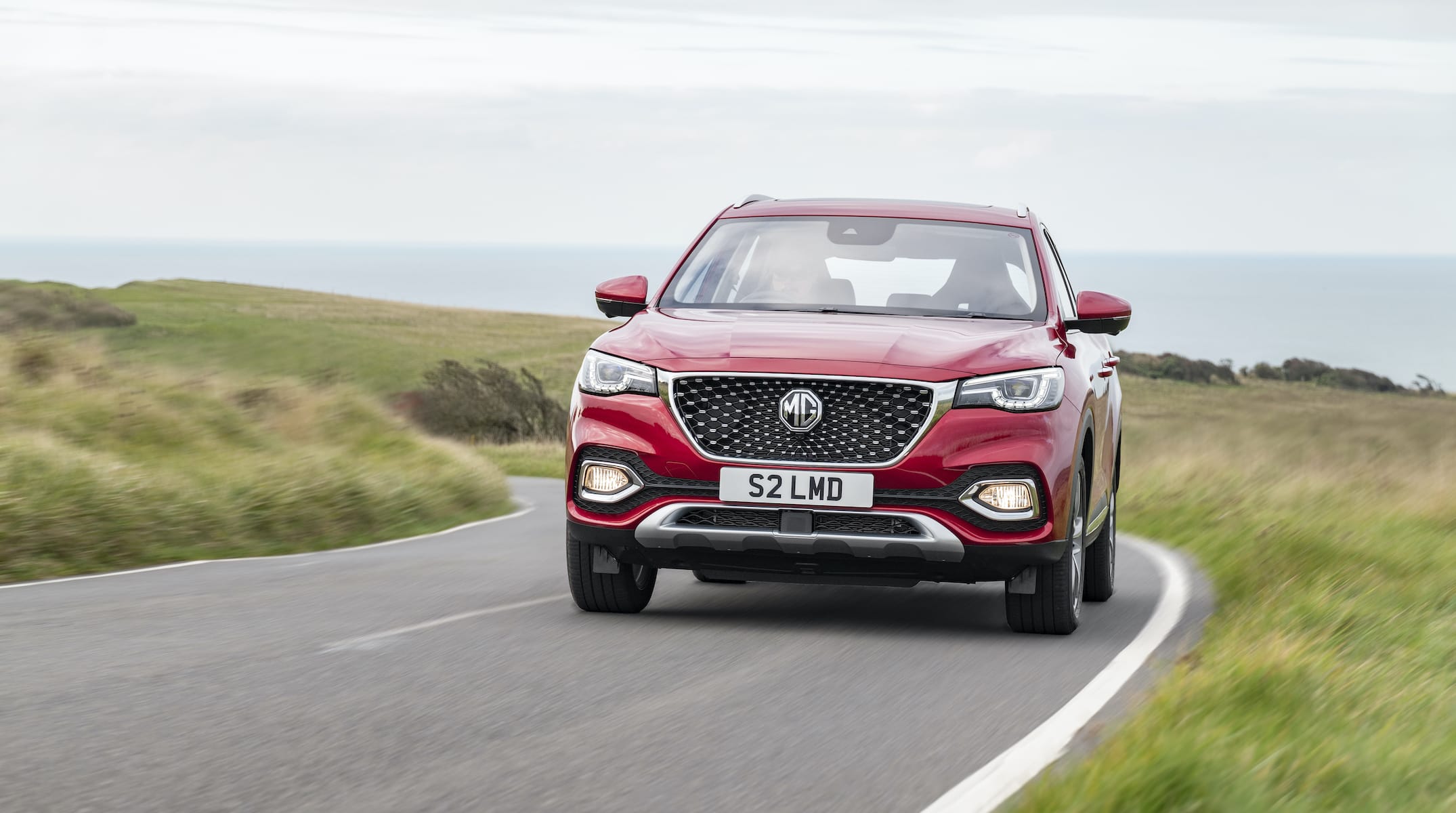
Plug-in hybrids continue to underachieve against the overall market, showing less than 1% improvement in a market that grew by 15%, meaning they underperformed significantly. This is despite the MG HS – one the UK’s cheapest models with a plug-in option – topping the sales charts and the Kia Niro finishing fourth.
It was a poor month for ‘premium’ brands, with Audi, BMW, Mercedes-Benz and Land Rover all underperforming against the overall market. These brands also offer a large number of plug-in hybrid models, and it’s currently hard to tell whether their poor results hurt plug-in numbers or whether lack of demand (or supply) for plug-in hybrids hurt their sales. Given that plug-in hybrid sales have been tanking for a year now, it’s probably more of the latter than the former.
New car registrations by fuel type
Fuel
Jan 2023
Jan 2022
% change
Market share 2023
Market share 2022
Petrol*
76,216
66,375
14.8%
57.7%
57.7%
Hybrid
18,976
13,492
40.6%
14.4%
11.7%
Electric
17,294
14,433
19.8%
13.1%
12.5%
Diesel*
10,399
11,740
-11.4%
7.9%
10.2%
Plug-in hybrid
9,109
9,047
0.7%
6.9%
7.9%
Total
131,994
115,017
14.7%
*includes mild hybrids Source: SMMT
Good month, bad month
Regardless of whether the overall market moves up or down, there are always individual car brands that do better or worse than average. This month, the overall market was up almost 15% year-on-year.
When assessing who had a ‘good’ month or a ‘bad’ ‘month, we look for brands that have overachieved or underachieved against the overall market by at least 10%. So this month, a ‘good’ result means an increase of at least 25% compared to last January, while a ‘bad’ month means an increase of less than 5% (and in some cases, an actual decrease).
That means that Audi, Ford, Hyundai, Land Rover, Mazda, Subaru and Toyota were all – more or less – in a similar position to last year in the overall marketplace. And we don’t have monthly registration data for low-volume brands like Rolls-Royce, McLaren, Ferrari and so on.
Volkswagen was the biggest-selling brand for January, ahead of Ford, Audi, Kia and Toyota. MG had a massive result, more than doubling its sales numbers from the same month last year.
Although there is inevitably variation and we’re only looking at the first month of the year, it’s interesting that ‘premium’ tended to perform poorly while ‘value’ brands tended to do well. We’ll keep an eye on this as the year progresses, but this has been the case for a few months now. It may well be that a growing number of customers are abandoning a posh badge in favour of something cheaper.
It was a surprise new name at the top of the sales charts in January as the MG HS started the year with a bang. Since the company’s rebirth under its Chinese ownership, it has made the odd appearance at the bottom end of the top ten in the past, but this is the first time – probably in the brand’s 99-year history – that MG has snared top spot.
It wasn’t just the mid-sized HS SUV that sold well for MG in January, as the smaller ZS SUV also popped up in eighth place. The brand has expressed confidence in recent months that it will be able to ramp up supply across most of its range, so we can expect to see repeat performances throughout 2023.
Eight of the ten best-selling cars in January were small- to medium-sized SUVs, with just the Vauxhall Corsa and Ford Fiesta flying the flag for the humble hatchback.
We’ll publish our usual full round-up of the month’s best selling cars shortly.
What to expect for 2023
Although it was almost entirely absent from January’s sales figures, Tesla continues to massively influence the new car market. Over the Christmas holiday period, the company announced an immediate price cut for both its UK models (the Model 3 and Model Y), by an average of about £7,000.
Apart from annoying anyone who recently bought a new Tesla before the hefty price cuts, it will inevitably have an effect on almost every other EV in the marketplace, since they are all now effectively about £7,000 dearer. This significantly changes the value equation for a Tesla compared to other EVs.
Some manufacturers have already publicly said that they won’t be attempting to match Tesla’s price cuts, but it seems likely that they will be forced into some sort of response before too long.
In addition, we’re expecting to see a number of new electric car brands – mostly from China – arriving in the UK in 2023. You’ve probably never heard of Aiways, BYD, Fisker, Lucid, Lynk & Co, Nio or Ora, but you soon will. In addition to Chinese-owned MG ramping up production of its EV models (MG 4, MG 5, MG ZS EV), this will put additional pricing pressure on other brands to reduce the prices of their electric cars.
All of this is hopefully good news for customers looking at a new EV in 2023. With more cars to choose from and improving production numbers from existing brands, the inevitable competition should see price drops and more discounting in the marketplace. It will take longer to feed through into the used car market, but the direction of travel will be the same.
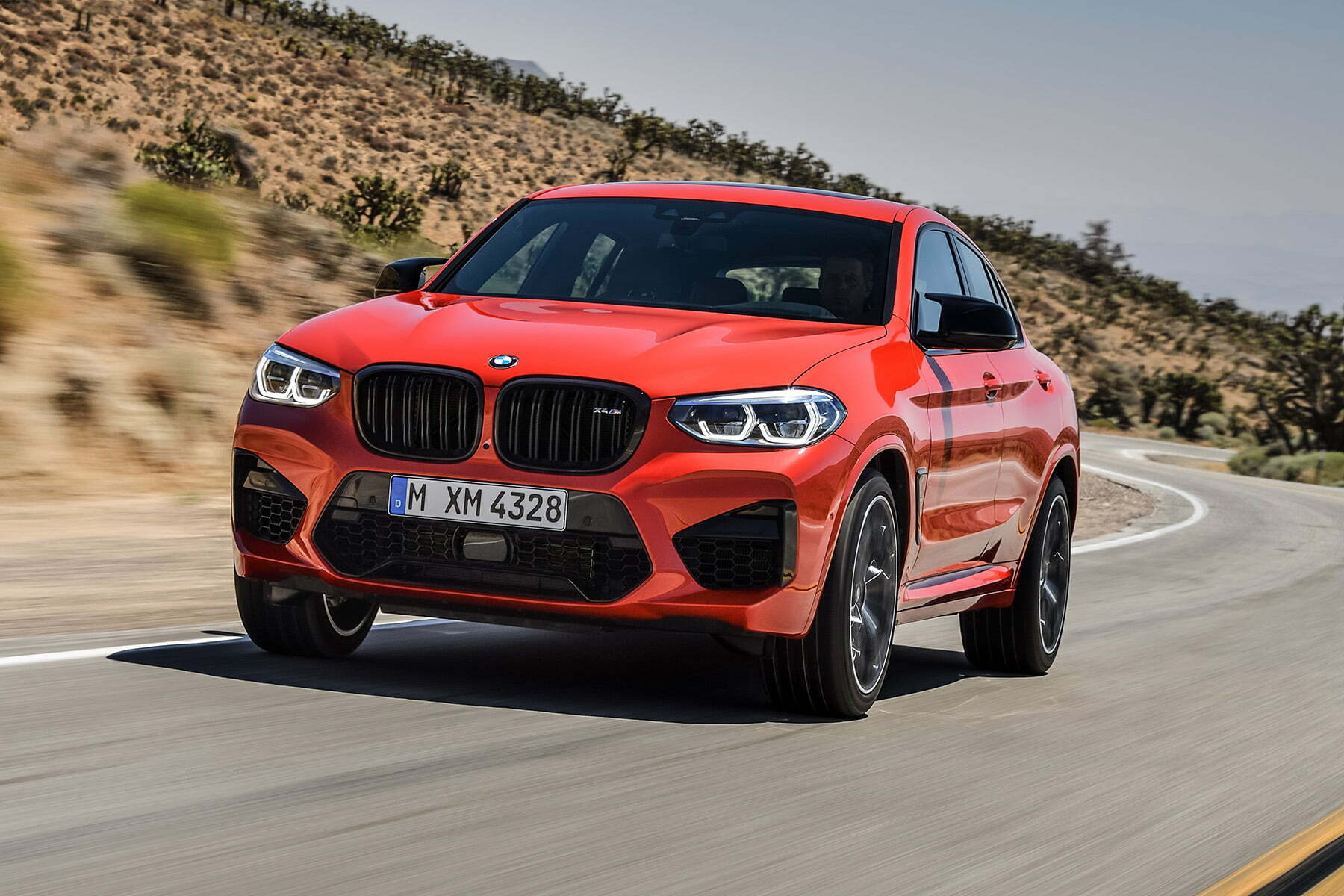
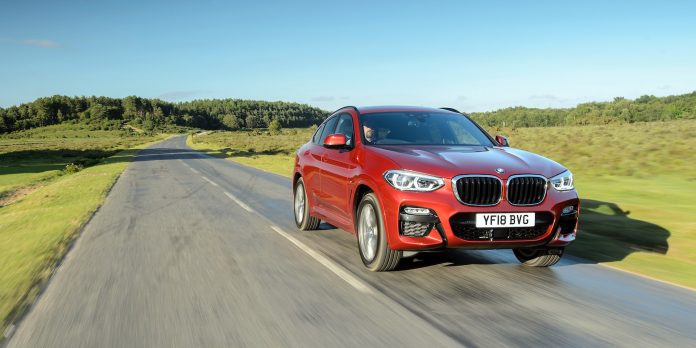
The BMW X4 M is a mid-size SUV/crossover and the performance-enhanced version of the regular second-generation X4 coupé-SUV. First arriving on UK roads in 2019, the X4 M is effectively the X3 M SUV in a less boxy shape, featuring a sloping roofline and a liftback tailgate.
Like the X3 M line-up, the X4 M range consists of three models – the petrol-powered 360hp ‘M40i’ and diesel-engined 340hp ‘M40d’, and the range-topping 510hp ‘M Competition’ trim grade.
Auto Trader explains that BMW’s X4 M aim was simple, “to take the basic X4 model and make it as monstrous to drive as the M4 sports car“, and several UK motoring outlets conclude that the German brand has succeeded. Carwow comments that the X4 M is “more agile than an SUV has any right to be.”
That said, reviewers cite the same issues that hindered the X3 M’s review scores. James Brodie of Auto Express argues that the car’s suspension is “rock hard”, while others say that the car’s powerful engines lack character.
Should you want to opt for the X4 M’s raked rear-end styling over the X3 M’s boxy SUV looks, you will have to contend with its more expensive price tag, too. As Carwow concludes, the “X3 M Competition is cheaper, more practical and every bit as good to drive.”
As of February 2026, the BMW X4 M holds a poor New Car Expert Rating of E, with a score of just 44%. It scores D and E grades in every category, and is one of the worst-performing new cars on sale.
Reviews, road tests and comparisons from across the UK automotive media. Click any of the boxes to view.
Auto Express
Model reviewed: Score: 7 / 10 “The BMW X4 M is an assured all-wheel-drive system that does well to control and allow you to play a little with the weight, precise steering, a likeable, indulgent six-cylinder powertrain but a ride that’s rock hard.” Read review
Auto Trader
Model reviewed: “The BMW X4 M Competition offers the space and practicality of an SUV and the power of a sports car. BMW’s aim was simple: to take the basic X4 model and make it as monstrous to drive as the M4.” Read review
Carwow
Model reviewed: Competition Score: 7 / 10 “The BMW X4 M Competition is hugely fast and more agile than an SUV has any right to be. An X3 M Competition is cheaper, more practical and every bit as good to drive, though.” Read review
Heycar
Model reviewed: Score: 7 / 10 “If the BMW X4 M Competition was an item of clothing it would be a pair of Y fronts to the X3 M Competition’s boxer shorts. It takes the roomy and comfortable shape of the X3 and makes it less roomy and less comfortable in the name of, er, style.” Read review
The Sun
Model reviewed: Competition “The BMW X4 M delivers precision, grip and body control, and a lush and luxurious interior.” Read review
Top Gear
Model reviewed: Score: 5 / 10 “The speed is undeniable. But with all its shouty styling and insanely complicated drive modes, it always seems to be egging you into a driving style that doesn’t really suit it.” Read review
Safety rating
Independent crash test and safety ratings from Euro NCAP
The BMW X4 family, including the X4 M, shares its safety rating with the near-identical X3 SUV, which was assessed by Euro NCAP back in 2017 and awarded a five-star rating. Rather than physically crashing several X4s, Euro NCAP would have required BMW to submit specific data to show that the changes made to the X4’s roofline would not affect how it performs in an accident.
However, this rating expired in January 2024 and is no longer valid as the car no longer meets the standards required for such a rating. This is normal practice, as Euro NCAP reviews its ratings on most cars annually with most ratings expiring after about six or seven years.
However, if you are comparing a used X4 M to vehicles of similar age, whose ratings will have probably also expired, its safety rating score is still useful.
Eco rating
Independent economy and emissions ratings from Green NCAP
No eco rating
As of February 2026, the BMW X4 M has not been assessed by Green NCAP.
Reliability rating
Reliability data provided exclusively for The Car Expert by MotorEasy
Total claims: 35 Average repair cost: £1000.51 Last updated: April 2025
Reliability data provided exclusively for The Car Expert by MotorEasy
The BMW X4 family (including the X4 M) has a poor reliability score of 54%, according to workshop and warranty data provided exclusively to The Car Expert by our partner, MotorEasy. This score applies to the current (2018 onwards) X4 as well as to older models.
The biggest concern for X4 owners is the engine. Although there have been very few warranty claims, the average repair bill is an eye-watering £3,700. Other repairs, for suspension, electrics and braking, have been very cheap.
If you own a BMW X4 M or are interested in buying a used X4 of any variety, you’d do well to make sure that any used car warranty you buy has adequate cover for engine failures and faults.
Running cost rating
Monthly cost of ownership data provided exclusively for The Car Expert by Clear Vehicle Data
Fuel consumption
Average
Score
Petrol models
26 mpg
E
CO₂ output
Average
Score
Variation
Score
Petrol models
245 g/km
E
Insurance group
Average
Score
Variation
Score
All models
48
E
Service and maintenance
Cost
Score
Year 1
£755
E
Year 2
£1,679
E
Year 3
£2,591
E
Year 4
£2,811
E
Year 5
£3,679
E
Overall
£11,515
E
The BMW X4 M is an expensive car to own and run, according to whole-life cost numbers provided exclusively to The Car Expert by our data partner, Clear Vehicle Data.
Fuel economy, which is your main cost each month, is poor. Your annual bills for servicing, insurance and road tax are going to be high as well.
Similar cars
If you’re looking at the BMW X4 M, you might also be interested in these alternatives.
Badge snobbery evaporates as buyers choose value marques over status symbols
January new car registrations rise by 15% year-on-year as cheaper brands take hold of the top-10 best sellers list
Battery electric vehicle (BEV) registrations represented 13% of new registrations in January – marginally below the average recorded for 2022
2023 could be the year in which EVs become more accessible for more consumers after price cuts by Tesla and improved finance offers by other brands
Badge snobbery could be a thing of the past as affordable brands dominated January’s sales charts and new car registrations grew by nearly 15%, says The Car Expert.
The trend for cheaper and greener vehicles which emerged last year saw MG secure two spots in the top ten and other value marques overshadow their prestige counterparts, with Vauxhall, Kia, Hyundai and Ford all featuring among the best sellers in January.
However, the latest data from the Society of Motor Manufacturers and Traders (SMMT) revealed a drop in private new car sales (4.3%), albeit a small one considering the ongoing squeeze on household budgets.
Fleet sales, meanwhile, surged again, recording a significant year-on-year uplift of nearly 37% fuelled improved supply and greater confidence.
The monthly statistics signify the best start to the year since January 2020, before the Covid-19 pandemic impacted the market. The results also represent the sixth successive month of growth.
Battery electric vehicle (BEV) registrations rose by nearly 20% year-on-year, achieving 13% of new registrations which was slightly below the average recorded for 2022.
However, after a record December in which it sold around 15,000 cars, Tesla’s alternative approach – which sees large peaks and troughs in sales across the year – skewed electric car results in January after it shifted just 600 units during the month.
Plug-in hybrid vehicles (PHEVs) recorded a 0.7% rise, although their share of the market fell to below 7%.
Stuart Masson, Editorial Director at The Car Expert, said: “We may be speaking too soon but it looks like badge snobbery could be on its way out. Consumers who would usually opt for a prestige model are looking elsewhere – they want value for money, not a status symbol.
“While buyers are increasingly unconcerned by the badge, the likes of MG, Dacia, Ford and the Korean brands are capitalising. And this desire to maximise value for money might translate to EVs soon as 2023 may be the year in which they finally become more accessible to more buyers.
“With Tesla recently slashing prices by upwards of £7,000 and brands like Vauxhall offering zero per cent finance deals on all of its models – including EVs – this will have an impact on the rest of the market, forcing other brands to reduce the cost of their electric vehicles. The used car market for EVs is also set to improve, with new car prices dropping and more used EVs available second hand, there will be greater supply.”
With buoyant fleet sales yet again, this should mean that supply issues continue to ease, meaning reduced waiting times and better new car deals as well as lower used car prices later in 2023.
For expert and impartial advice relating to car finance or tips for purchasing a used vehicle, please visit: www.thecarexpert.co.uk/
ENDS
The Car Expert
Founded in 2011, The Car Expert is the UK’s most comprehensive automotive consumer advice site. With an audience of over two million readers a year, The Car Expert provides independent and impartial advice on every aspect of buying, financing, owning, and selling new or used vehicles.
The Rotten Tomatoes equivalent for the automotive world, The Car Expert consolidates reviews from 30 of the UK’s top automotive websites to create the Expert Rating Index. Bringing together science and data analysis, the index calculates a weighted average to give an aggregated score – Expert Rating – that is comparable across different brands and models.
The Expert Rating Index factors in the age of each review, so that newer reviews carry more weight than older reviews. It also breaks down the complex web of different scoring systems that various websites use in their reviews.
The Car Expert has logged over 14,000 reviews covering more than 400 cars and over 50 manufacturers, with its Expert Rating Index now trusted as the gold standard for rating and ranking new cars in the UK.
For media enquiries, please contact Performance Communications:
After solid growth in recent years, sales of plug-in hybrids nosedived in 2022, falling well below expectations. Nevertheless, for drivers who want to go greener but are not ready to make the jump in to a fully electric car, the plug-in hybrid (usually abbreviated to PHEV) fills a valuable niche.
The number of plug-in hybrid cars on UK roads has increased rapidly in the last few years years, although that has partly because they help manufacturers to cut their average CO2 emissions (on paper, at least) to comply with EU legislation and avoid the threat of large fines.
However, the last year has seen momentum shifting firmly in favour of fully electric vehicles. For most households with the ability to charge at home, a full EV has more than enough battery range to cover the vast majority of their driving needs. The plug-in hybrid appeals to those who regularly need to drive long distances and can’t afford to spend time charging at motorway services.
As a result, there are now many more EVs being launched in the market than plug-in hybrids. Despite that, there is still a definite demand for the plug-in hybrid and there are more models set to grace UK roads over the next 12 months. Here’s our round-up of all the plug-in hybrid cars currently on sale in the UK, and what’s on the way.
Alfa Romeo’s first plug-in model, the Tonale small SUV, is finally expected in showrooms in March, a year later than was predicted when it was first unveiled. It’s the first Alfa Romeo with any form of electricity and we don’t know yet what’s to follow it, though the brand insists it will offer a fully electric range by 2027.
Aston Martin’s electrification plans remain shrouded in secrecy, chairman Lawrence Stroll only saying that the brand will launch its first EV in 2025, and by 2026, be “fully electrified” – to what extent this includes plug-in hybrid models is yet to be revealed.
Whatever form the electrification takes, its first mainstream application is likely to be to the DBX SUV. However, there will be a plug-in hybrid before that, with the Valhalla hypercar (above) finally expected to reach production in 2023 – with a £600K price tag… It’s changed quite a lot from the original concept developed with Aston Martin’s former partner, champion F1 team Red Bull Racing, and will now rely much more heavily on Mercedes-Benz componentry than was originally planned.
Audi has embraced plug-in hybrids with enthusiasm and plenty of models in its line-up include a PHEV option these days. From the A3 hatchback to the A8 lucury saloon, and the Q3 and Q5 SUV models, plug-ins are a core part of the line-up.
A big missing link in the range is the A4, once the car every middle manager desired if they weren’t into the BMW 3 Series. The next generation A4 is expected in 2023 in both saloon and Avant (estate) form, with a plug-in hybrid and possibly a full electric version in the mix.
Also set to launch this year is the latest generation of what is now Audi’s most popular model, the Q5 SUV, and again it will include a PHEV version.
Bentley’s plug-in hybrid range doubled in 2022 when the hybrid Bentayga SUV was joined by a partly electrified version of the Flying Spur saloon. The two systems are bespoke to their models, the Bentayga’s electric motor joined to a 3.0-litre petrol engine, the Flying Spur’s to a 2.9-litre unit.
Bentley has stated that its entire range will offer plug-in models by 2024 ahead of the first full electric car in 2025. This basically means adding plug-in hybrid options to the Continental GT coupé and convertible, but there is no indication that we will see these this year.
BMW offers PHEVs right across its line-up alongside a growing range of all-electric models. Only the smallest 1 Series and 2 Series Coupé and Gran Coupé models currently come without any plug-in assistance, though a new 2 Series Active Tourer PHEV went on sale in 2022.
The most noteworthy upcoming BMW arrival is the new 7 Series saloon (above), which is now available to order – a line-up that includes plug-in hybrid models, as well as the headline all-electric i7 saloon.
2023 also marks 50 years of BMW’s M performance range, and as part of the celebrations the German brand has unveiled the XM plug-in ‘super SUV’ with a twin-turbo V8 and electric motor for a combined 650hp, which is soon available for with a £146,000 price tag.
Also expected is the next generation of BMW’s best-selling 5 Series executive saloon, with a wide range of powertrains including an expanded choice of PHEVS, extending for the first time to the performance M5 variant.
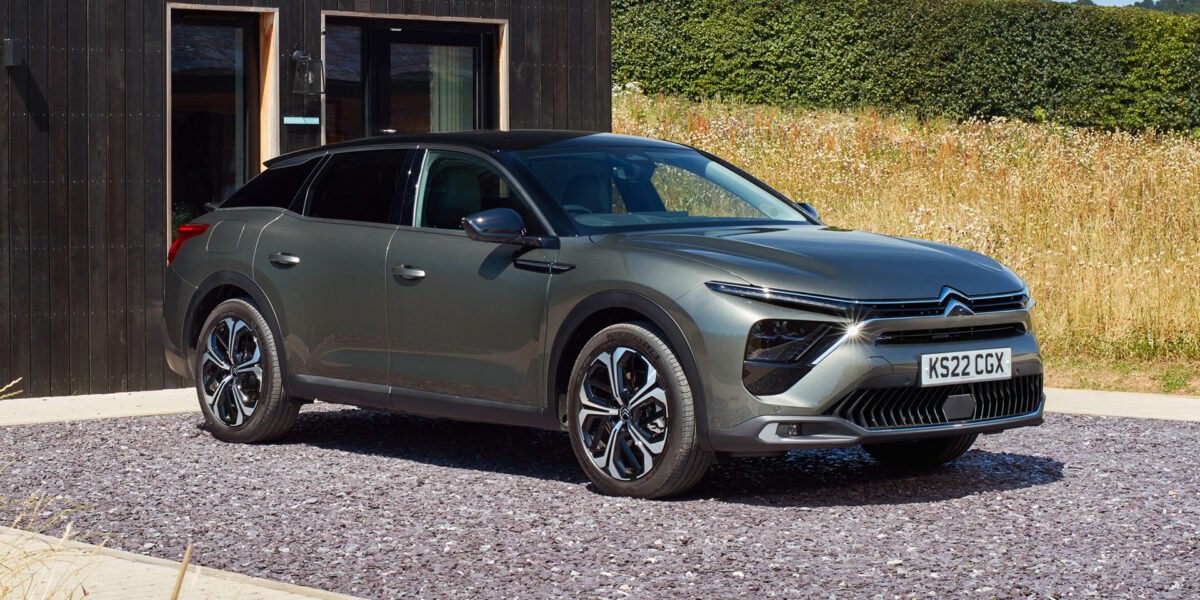
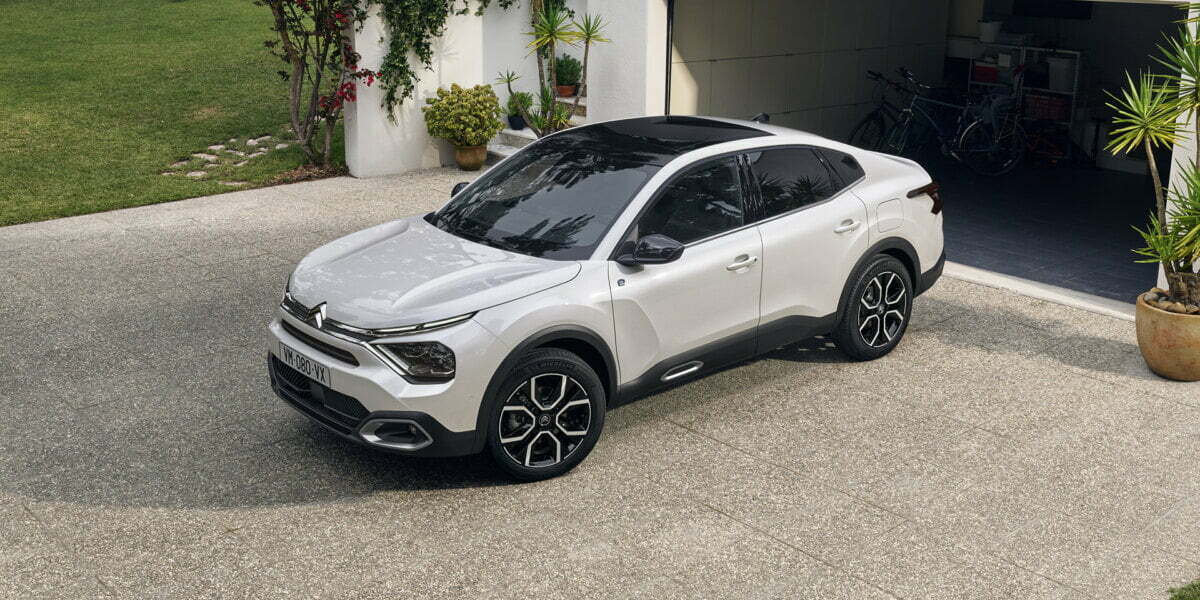
Citroën’s plug-in hybrid options became a family of two in 2022 when the C5 Aircross SUV was joined by the C5 X (above), a surprising move to offer a new flagship large saloon at a time when such models are rapidly declining in popularity.
Two new full-electric models are expected from Citroën in 2023, the ë-C3 and ë-C4 X crossover, but apparently no more plug-in hybrids.
SEAT’s performance-pitched spin-off brand Cupra has been selling its Leon and Formentor in plug-in form for a couple of years now, and these were joined in 2022 by the all-electric Cupra Born.
The next PHEV model will be the brand’s first electrified SUV and could be called the Tarramar, but we don’t expect to see it on sale until at least 2024.
Dacia has no apparent plans for any serious electrification of its UK line-up, with only a non-plug-in hybrid offering set to be made availabble for the seven-seat Jogger. It still remains unclear if or when the all-electric Spring will go on UK sale, and Dacia is apparently concerned that adding hybrid tech to the rest of its models could compromise the brand’s main selling pitch of affordability.
Nothing new to see here in terms of Citroen’s spin-off upmarket brand – the same three plug-in hybrid models that were on sale at the start of 2022 remain in the showroom today, although the DS 7 Crossback SUV has undergone a mild facelift, dropping the Crossback part of its name and its only pure petrol engine. The powertrain line-up for the revised DS 7 (above) now consists of 225hp, 300hp and 360hp plug-in hybrids options, as well as a diesel engine.
The world’s most iconic supercar manufacturer now has not one but two plug-in hybrid models in its range, the first being the mid-engined 296 (above), available as either the 296 GTB coupé or 296 GTS targa. This arrived in 2022 with a 2.9-litre petrol engine and electric motor combining for 830bhp and a sub three-second 0-62mph time.
The 296 is the little brother to the even-more-potent SF90 Stradale, which shares its name with Ferrari’s 2019 F1 car – the SF part of the name celebrates the 90th anniversary of the brand’s racing team, Scuderia Ferrari. Total output is 1,000hp through a twin-turbo V8 and no less than three electric motors. What it will be followed by is open to question – Ferrari’s big launch of 2023 is set to be the Purosangue SUV, which will launch with V12 petrol power and no hint of electrification.
Fiat’s range still includes no plug-in hybrid models and only one fully electric car, the 500e supermini. The brand describes itself as ‘fully-electrified’ because its entire model range has some form of electrification, but other than the aforementioned 5003 EV, the rest are only mild hybrids with a bare minimum of electrical assistance.
Ford’s slow march to electrification of any kind has so far seen just a plug-in hybrid version of the Kuga SUV and Tourneo Custom van-based MPV alongside the full-electric Mustang Mach-e in the UK model range. And in 2023 we can expect little to change with Ford’s much-vaunted electric programme focused on 2024 and beyond.
The brand says it will be all-electric by 2030 and “zero-emissions capable” by 2026, which could mean new plug-in hybrid models, but no details are yet forthcoming with hints from Ford personnel suggesting that the blue oval will focus more on all-electric cars.
Hyundai’s upstart and upmarket sister brand significantly added to its electric credentials in 2022 with three EVs launched including the all-new GV60 mid-sized crossover. But there were no plug-in hybrids announced and there currently seems little to suggest that the brand has any plans in this area.
Honda CR-V (2023 US version, presumably similar to what we will see in the UK)
Honda is a hybrid veteran, its experience in such drivetrains going back as far as that of prime rival Toyota. But a succession of Honda cars have been regular hybrids with minimal electric-only ability, with no plug-in versions. Finally in 2023, that is set to change.
The latest sixth generation of the CR-V SUV, already on sale in the USA, will arrive here during the year, initially with the basic hybrid setup of predecessors. But at some point Honda’s first plug-in hybrid will join the range, though no details of this powertrain have been released yet.
Hyundai’s current electric range includes a trio of plug-ins, among the model line-ups of the Tucson and Santa Fe SUVs and the original Ioniq family hatch. And there don’t currently appear to be any plans to add more, the Korean brand much more focused on further expanding its rapidly growing range of all-electric cars including an Ioniq 7 flagship large SUV.
Do not expect to see any exciting electric news of any kind from Jaguar in 2023, and particularly not any plug-in hybrids joining the current E-Pace and F-Pace SUVs in the line-up. Working with sister brand Land Rover, a new platform is under development to form the basis of all future electric models, but we are not likely to see any of these before 2025 and there’s no clue as to whether any will be hybrids.
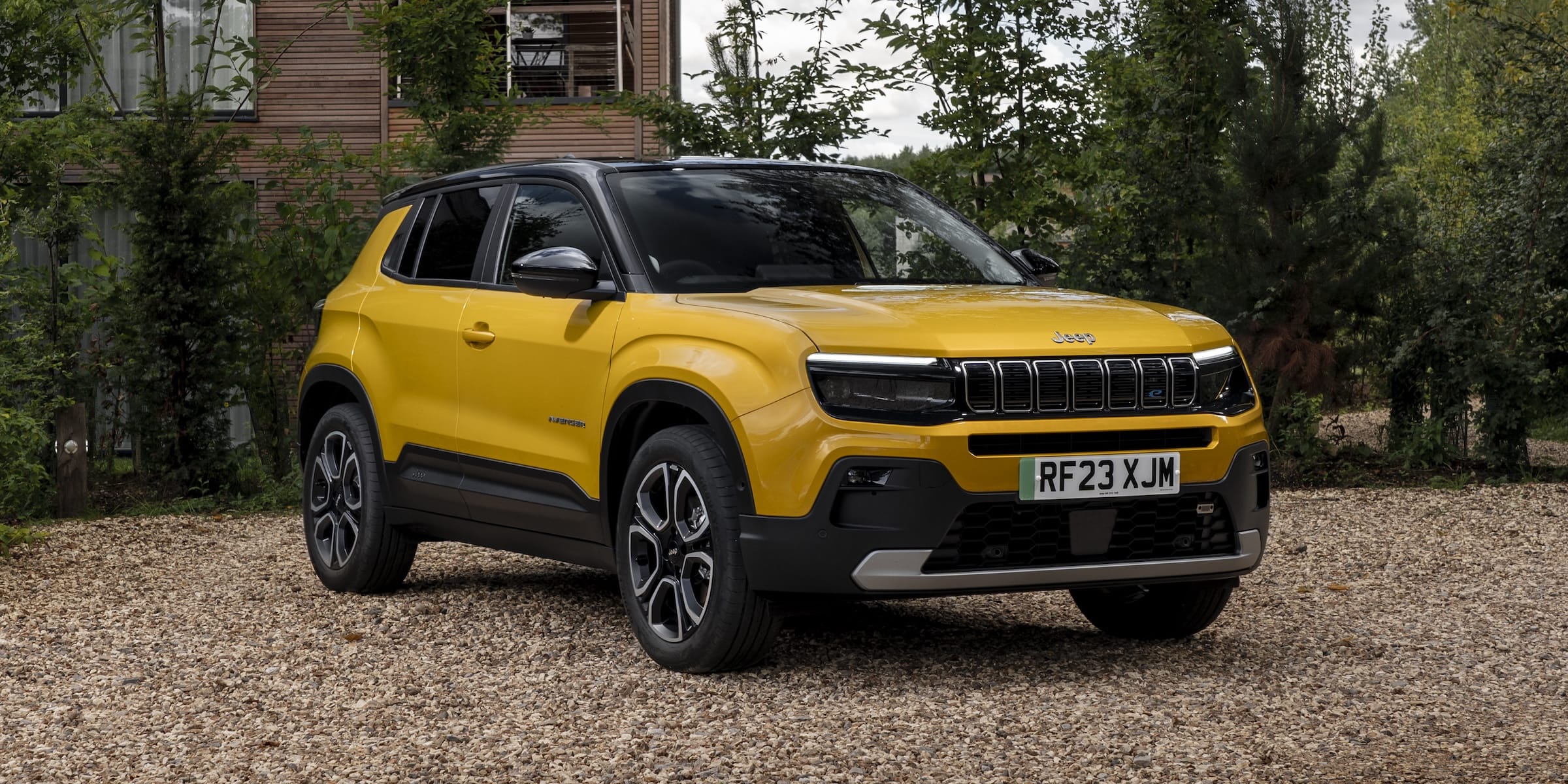
Jeep’s two plug-in hybrid options, in the Compass and Renegade small SUV model ranges, were joined by a plug-in hybrid version of the latest Grand Cherokee large SUV – offering 380hp – in late 2022. A new all-electric model, the Avenger, arrives in showrooms this Spring and more full-electric models will follow, but there are no indications of Jeep offering further hybrids.
Kia has embraced all aspects of electric power with enthusiasm, and alongside a clutch of full electric cars its model range boasts four plug-in hybrids – the XCeed, Sportage and Sorento SUVs and an all-new version of the Niro which launched last year.
Kia has committed to launching nine all-electric cars in the UK by 2027, starting with the large flagship SUV the EV9, but has not yet revealed any plans for further plug-in hybrids.
Land Rover considers itself an ‘electrified brand’ and puts sister Jaguar to shame – every single one of Land Rover’s six model lines now includes a plug-in hybrid variant, including the latest version of the flagship Range Rover which arrived in 2022.
Future plans for hybrid models are less certain. Land Rover is working towards fully electric models using a new platform being developed with Jaguar, but these are thought to be more than a year away yet.
Lexus added its first plug-in model to the range in 2021 in the form of the new NX, the second generation of the brand’s best-selling SUV.
Due to arrive in 2023 is the all-new RX large SUV, which will also feature a plug-in version. After that, we’re more likely to see a raft of new electric models as Toyota and Lexus play catch-up to the rest of the car industry in rolling out a full line-up of EVs.
A year ago the word was that Maserati’s forthcoming mid-sized SUV, the Grecale, could include the brand’s first plug-in hybrid drivetrain. But, like other Maseratis, only mild-hybrid assistance is an option on the newcomer at the moment, with a full-electric model to come in future.
In fact Maserati seems very turned off by the whole plug-in hybrid equation, indicating that the weight penalties outweigh the perceived benefits. Instead the Italian brand is pledging its future on fully electric ‘Folgore’ models.
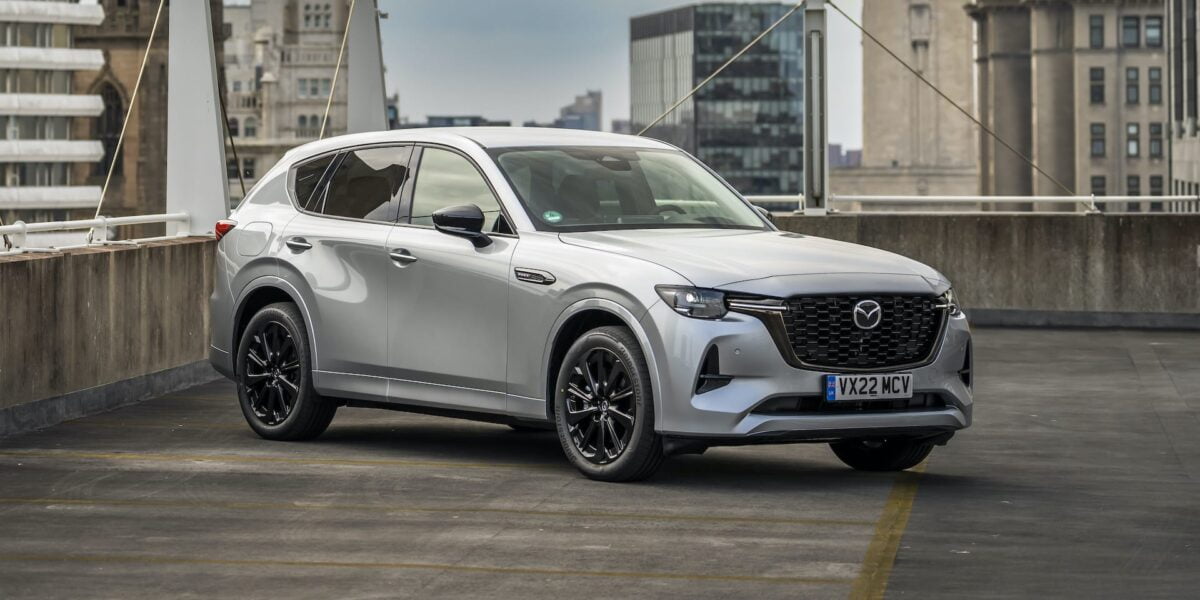
Mazda has become a loud advocate of squeezing more efficiency from conventional combustion engines rather than following the battery electric path of the rest of the car industry. The first EV, the MX-30, launched only a couple of years ago and the first PHEV, the CX-60, in 2022. Unfortunately, this has simply seen Mazda lose ground on its rivals, a direction that it is now belatedly trying to reverse.
In 2023 we expect to see a bigger seven-seat sister to the CX-60, dubbed the CX-80 and also offering a plug-in hybrid version. Mazda will also further demonstrate its desire to be different with a range-extender version of the electric MX-30. This adds a smaller, modern version of the classic rotary engine that once powered the RX-7 sports car. In the MX-30, however, it will merely generate electricity to replenish the car’s depleted battery. Whether it helps to resurrect MX-30 sales remains to be seen.
You can now buy a plug-in McLaren. It’s called the Artura (above), a two-door coupe with a 3-litre V6 petrol engine joined to the electric motor for more than 670hp and a three-second 0-62mph time. It also has a £185,000 price tag.
The Artura is said by many to set the future of McLaren. There are expected to be more versions of it, and its petrol/electric powertrain could also extend to other models, some say eventually including a crossover model. For now, McLaren is not saying, and any major changes are unlikely to happen in 2023.
With Mercedes-Benz, it’s quicker to list the model ranges that don’t have plug-in hybrid options. The German executive brand has embraced the technology with enthusiasm, with the large majority of its model lines including PHEV versions.
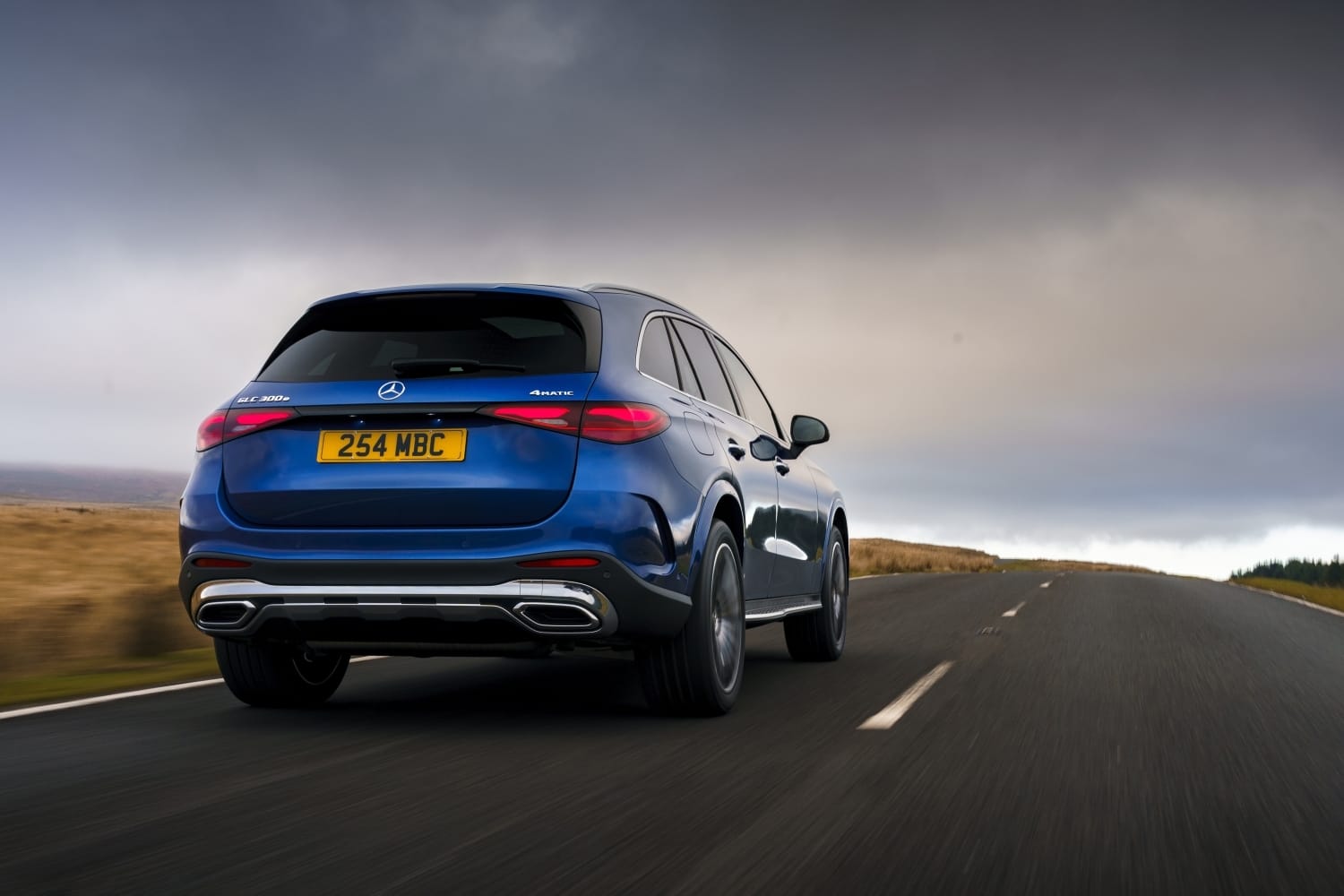
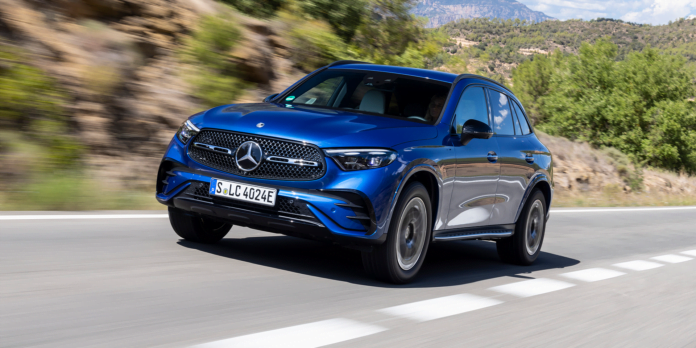
Last year saw the arrival of the second-generation GLC mid-sized SUV (above), while this year should see the launch of an all-new E-Class family. Its plug-in versions getting a new battery with a battery range of more than 60 miles, but we are only expecting saloon and estate versions this time around, with the coupé and cabriolet versions being dropped.
MG’s range still includes only one plug-in hybrid model, the highly affordable if slightly downmarket HS. This is not likely to change any time soon, with the brand focusing more on fully electric models – led by the minicab-friendly MG 5 and highly praised MG 4 family hatchback models.
The ageing Mini family soldiers on with only one plug-in hybrid model, the Countryman crossover Apparently, its days are numbered as Mini begins a range renewal in 2023.
The Mini hatch will kick off this rebirth with a new and much more effective electric model, which – controversially – will be built in Austria rather than Mini’s traditional home of Oxfordshire. An all-new third-generation Countryman will follow either this year or (probably) next, and industry sources say it will offer electric and mild hybrid variants but not a plug-in hybrid. In 2021 Mini’s then-boss suggested that the brand does not see much of a market for plug-in drivetrains for its models.
Nissan is a rare brand not to have taken the plug-in hybrid route. Even the mass-selling Qashqai SUV has never been offered as a plug-in hybrid, instead going with the brand’s bespoke ‘e-Power’ hybrid drivetrain, which is effectively a petrol-powered electric car that uses a petrol engine to generate electricity for the electric motor.
The company has publicly delcared that it views e-Power as a better stepping stone to full EVs than conventional hybrids, with or without plugs. The e-Power drivetrains are currently available in both the Qashqai and X-Trail SUV models, in either front-wheel drive or (the awfully named) ‘e-4orce’ all-wheel drive.
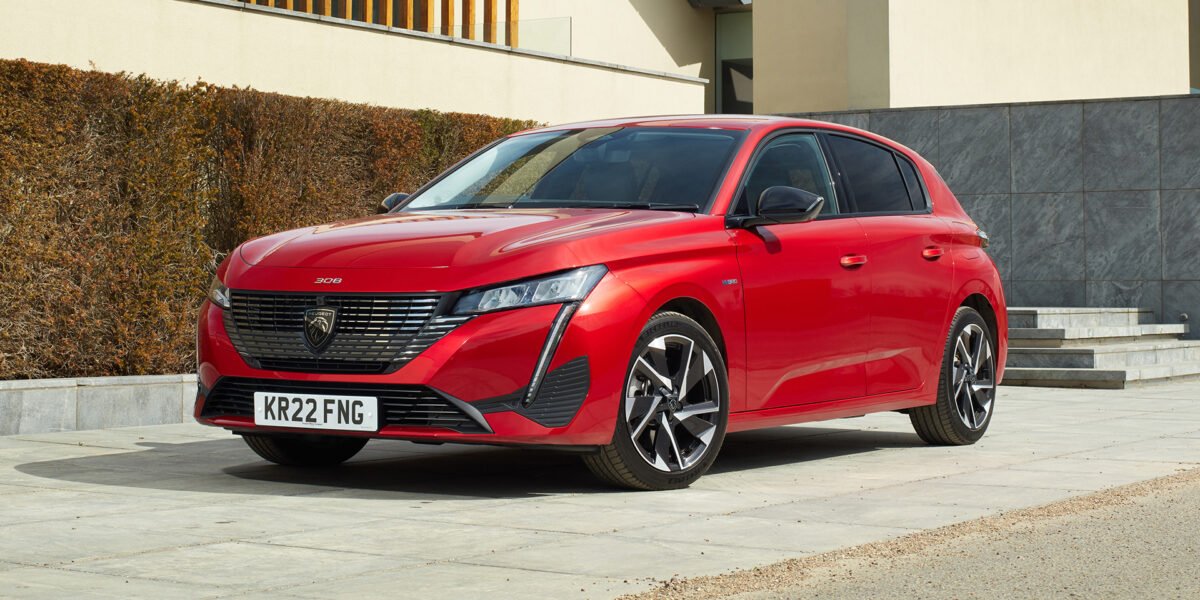
Peugeot’s 508 family car and the 3008 SUV both include plug-in hybrid options, and the somewhat delayed new generation of the 308 launching this year is also being offered as a plug-in hybrid in both hatch and estate versions.
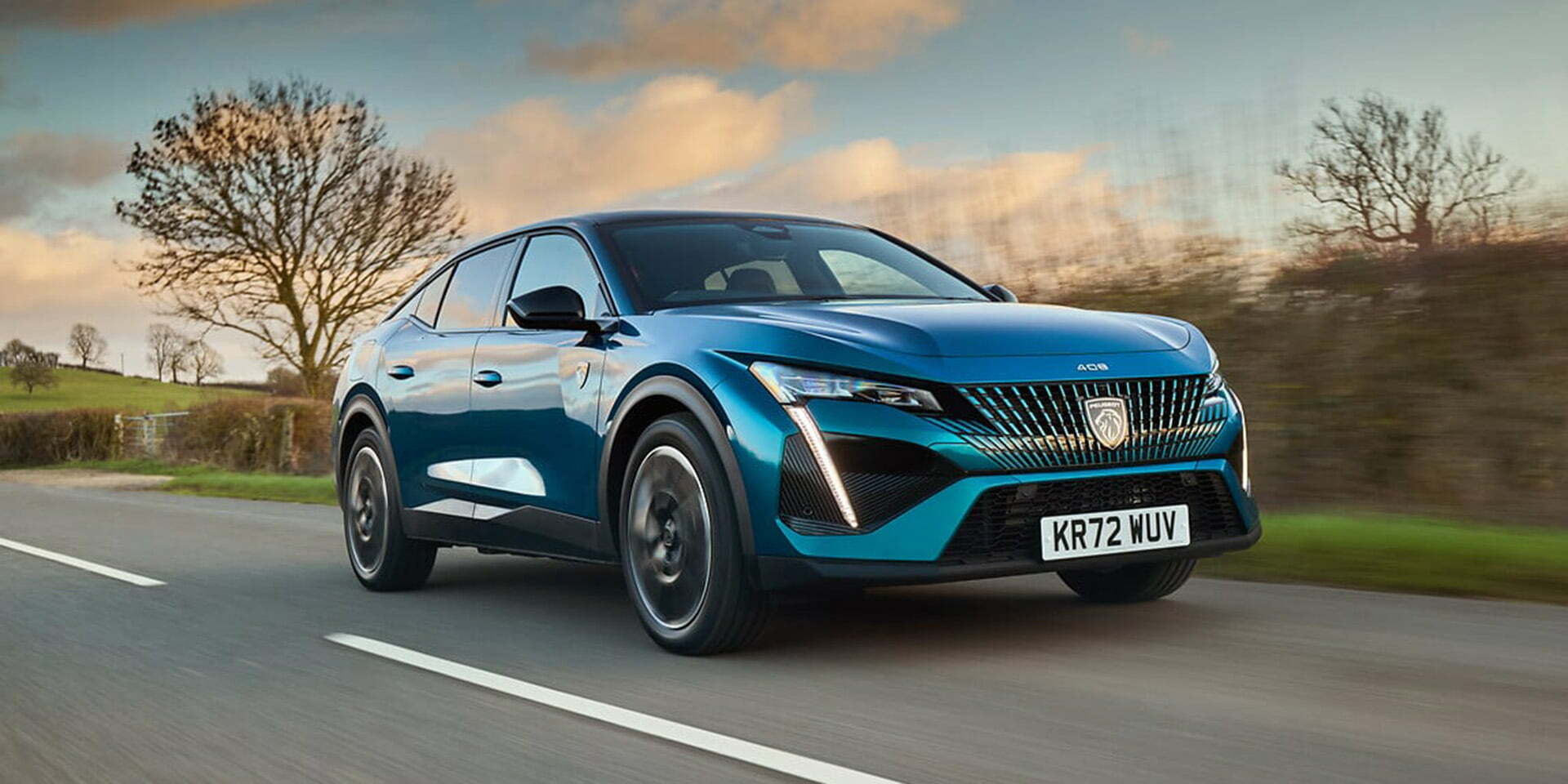
We will see another new Peugeot in showrooms, the 408 fastback. This will include two plug-in hybrids in its powertrain choices, combining the electric motors with 1.6-litre petrol engines and offering either 180 or 225hp. Now available to order, the 408 is later expected to eventually gain an all-electric model too.
The plug-in hybrid era of new Volvo spin-off brand Polestar has been a short one, as only the limited-edition Polestar 1 was offered with a combination of petrol and electricity and all have now been sold. The Polestar 2 hatch and the Polestar 3 SUV which launches at the end of 2023 are both fully electric vehicles, as will be all future Polestars.
Porsche fans who want plug-in hybrid propulsion have the same choice they did a year ago – the Panamera saloon, also available as an estate, and the brand’s biggest success story of recent years, the Cayenne SUV.
This is not likely to change any time soon, though both models are expected to undergo facelifts in 2023. That to the Cayenne will be significant, with changes to the drivetrain boosting power by 40hp and also offering more energy storage in the battery.
There are suggestions an all-new Panamera could launch by 2025, though its powertrains are yet to be revealed. Given the spectacular success of the similarly sized all-electric Taycan, Porsche will presumably want to take the Panamera in a different direction to separate it from the EV model.
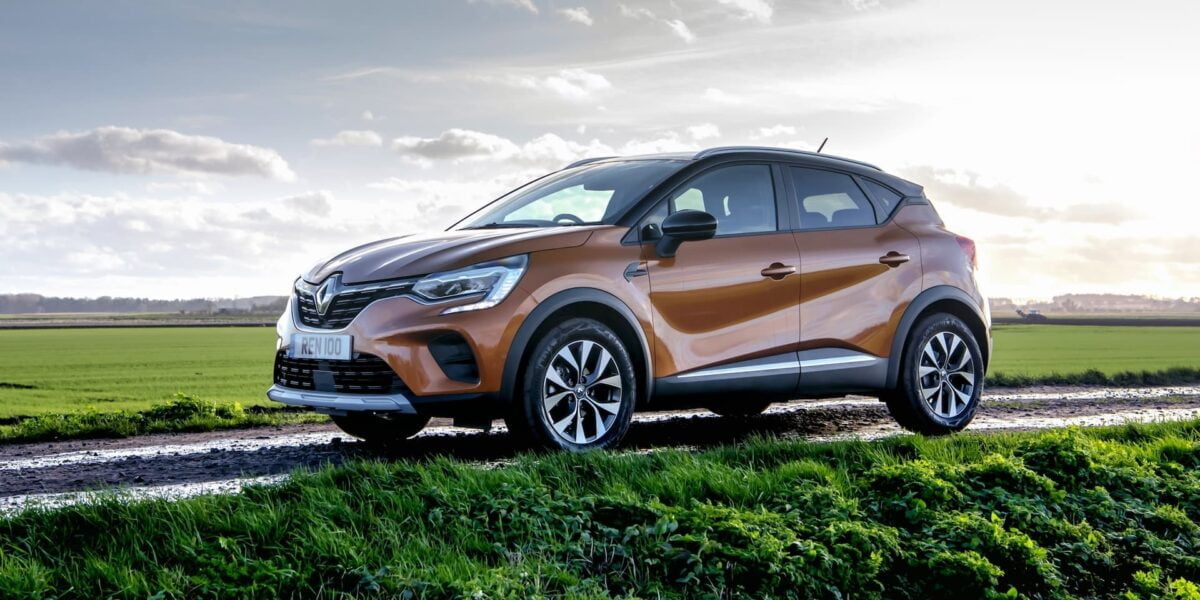
Renault’s choice of two plug-in hybrids dropped to one in 2022. The replacement of the Megane family hatch by the all-electric Megane E-Tech Electric left only the Captur small SUV available to plug-in hybrid fans, the model remaining popular as rival makers don’t appear to like offering their small SUVs as plug-ins.
The second-generation Captur arrived back in 2019, with the 160hp plug-in hybrid version arriving about a year later and offering close to 30 miles on electric-only power. But there is no sign of Renault extending the plug-in hybrid tech to other models in 2023. The all-new Austral is a replacement for the departed Kadjar SUV, but that will only be offered in basic hybrid form with no plug when it arrives at some point later this year.
The Sussex-based maker of the most luxurious cars intends to transform into a fully electric brand by 2030, and the first model will be the Spectre, a coupe replacing the Wraith. But plug-in hybrids will not form part of that journey, Rolls-Royce preferring to go straight to all-electric powertrains.
SEAT’s plug-in hybrid option remains just the VW Golf-based Leon family hatch – industry suggestions that updates to the seven-seat Tarraco SUV would include a hybrid model have not come to pass. And there appears to be no electric news of any kind on the horizon for SEAT, sources suggesting that the brand has once again become a ‘problem child’ of parent the Volkswagen Group, which prefers to focus on the sporty spin-off Cupra brand.
Another brand in which the plug-in hybrid picture at the start of 2023 looks exactly the same as a year earlier – the Octavia large family car and Superb executive saloon can both be had as plug-in hybrids.
The ageing Superb is set to be replaced with an all-new model in 2023 – powertrains are not confirmed but industry sources expect the plug-in hybrid option to remain as the model is not expected to go all-electric yet. But there are no new models on the horizon as Skoda goes down the route of full electrification. An all-new version of the Kodiaq seven-seat SUV is also expected towards the end of the year with both mild and plug-in hybrid options.
Nothing to see here for SsangYong, which dipped its toe into the electric pool in 2022 with the Korando e-Motion, an electric version of the Korean brand’s SUV.
There also appears to be nothing on the way in terms of a plug-in hybrid model, as SsangYong looks like another brand set to bypass hybrids in favour of going straight to 100% electric models.
Subaru seems to sell so few cars in the UK these days that you’d be forgiven for thinking it had disappeared altogether. There are no plug-in hybrid models on the books and apparently none on the way.
The only EV model available is the Solterra SUV, which is basically a reskinned Toyota bZ4X, although the launch of these EV twins was badly affected by a worldwide recall before the cars had even gone on sale in the UK.
Suzuki’s very slow march towards electrification has so far produced just one plug-in hybrid offering, and the Across SUV is actually a rebadged Toyota RAV4. There’s no suggestion that any further petrol/electric models are on the way any time soon – in fact only in January this year did Suzuki show its first electric concept car, not expected to reach production before 2025.
Not surprisingly as the perceived standard-bearer for all-electric motoring, Tesla has never flirted with plug-in hybrid drivetrains and apparently has no plans to.
Given the long success that Toyota has had with basic hybrid models (marketed as ‘self-charging’ but that’s a load of nonsense), it’s a surprise that the company has never gone large on plug-in hybrids.
The last Prius hybrid was available with or without a plug, but that was discontinued last year and the all-new one won’t be coming to the UK. That leaves the RAV4 SUV as the only plug-in hybrid that Toyota currently offers.
Not much is expected to change this picture in 2023 as the world’s largest car brand tries to make up lost ground on fully electric models, having previously snubbed battery cars in favour of hydrogen fuel cells. With that looking very much like a dead-end road for the current time, Toyota has belatedly announced billions of pounds to develop an entire family of battery electric cars ahead of various global deadlines to phase out petrol and diesel vehicles.
The next generation of the C-HR small SUV is due at the end of the year and may be offered with a plug-in hybrid option, but Toyota’s focus is now very much on EVs.
Vauxhall has offered its Grandland SUV as a plug-in hybrid for some time, and a significantly facelifted version arrived in 2022 with the plug-in model slashed in price.
The hybrid options stepped up a gear in 2022 with the launch of the latest Astra family hatch range, the new line-up including a plug-in hybrid ahead of the launch of a fully electric version in 2023.
Volkswagen some time ago adopted plug-in hybrid powertrains with enthusiasm and currently you can get them in the Golf, Passat, Arteon, Tiguan and Touareg ranges. But this choice is set to decline soon as VW shifts its attention to EVs instead.
The company’s line-up of EVs is even more impressive than its plug-in hybrids and the next of these will be the ID.7, a four-door saloon that will replace the Passat. The demise of the Passat is likely to be followed shortly after by the closely related Arteon (basically a sleeker Passat), while the current Golf range will be updated for as long as it remains viable to keep selling its famous family hatch in fossil-fuel and hybrid formats.
Volvo is another brand progressing in similar fashion to Volkswagen – plug-in hybrid options currently extend right through the Swedish brand’s seven-strong model range but their days are numbered as the next generation of all these models are likely to be fully electric.
The brand’s largest SUV, the seven-seat XC90, was recently given its final facelift to see it out. It will be replaced by the all-new, all-electric EX90 next year, although the XC90 may soldier on alongside the new EV for a while before finally bowing out.
The mid-sized S60 saloon was discontinued in the UK “temporarily” in 2022, although no-one in the automotive media really expects to see it return. The larger S90 saloon is only available as a plug-in hybrid, with petrol and diesel models dropped a while ago, while the V60 and V90 estate models still sell in better numbers so are available in a wider range of trims and engines.
It’s required by law, but car insurance tends to be regarded as a necessary evil by many car owners. As such, everyone’s always looking to save a few pennies come renewal time.
But some of the conventional wisdom about car insurance and how to save money isn’t necessarily true. Not only that, but it can significantly degrade or invalidate your coverage should you actually need to make a claim.
With help from motoring marketplace Your Red Car, The Car Expert has set out to answer some of the commonly asked questions about what you can and can’t do when looking for car insurance.
FALSE – This often used to be the case, but policies that allow you to do this are increasingly rare. Therefore, it is wise to check the ‘driving other cars’ (DOC) section of your policy documents before getting behind the wheel of a car that your insurer does not know about.
If you are allowed, keep in mind that you are usually only covered for third-party liability, so any potential damage done to the car you are driving will have to be paid for out of your pocket.
You may also find that this isn’t offered to drivers under the age of 25. You shouldn’t drive another vehicle unless you are sure you will be covered, and you must always ask permission from the vehicle owner.
FALSE – Third-party cover is the minimum level of cover required by law. This will cover damage to another person’s car along with compensation for anyone injured but not for yourself or your own vehicle if the accident is your fault.
It may seem logical that the minimum level of cover will come at a minimum cost, but this isn’t always the case. High-risk drivers tend to opt for the lowest price cover so as a result, this has driven the price of third-party-only cover-up.
It’s wise to do as much research as possible to find the best price for the best level of cover. It’s possible that fully comprehensive cover can end up costing the same or even less than third-party cover and it comes with the bonus that, if you are in an accident, your vehicle will be covered if it is damaged.
TRUE – If you no longer use your car, and you have no plans to use it in the future, it is true that you don’t have to have an active car insurance policy on that car. However, the story doesn’t end there…
Since the Continuous Insurance Enforcement (CIE) act came into effect in the UK in 2011, all cars must be insured unless they have been declared off-road with a Statutory Off Road Notification, known as a ‘SORN’. This must be applied for via the DVLA.
Your unused car can only be declared SORN if it is kept off the side of the road on private property like a drive or garage. This means that if you park on the street, you will still have to pay for car insurance for that vehicle, whether you use it or not.
Another point worth mentioning is that if you car is under finance, you will almost certainly need to have comprehensive insurance cover, even if you’re not driving the vehicle for a period of time.
FALSE – A safe space to park your car may seem like it would reduce your insurance policy but again, this is not always the case. In the eyes of the insurer, this could be deemed riskier than the driveway. Manoeuvring in and out of a garage potentially increases the chance of bumping your vehicle.
It’s all based on statistics and how many claims are made because of this reason. For example, if the area you’re in has seen an increase in claims made because of garage-related accidents then this could impact your price. It is worth comparing quotes for driveway and garage parking if you have both options, and working out which is more convenient.
TRUE – It can be difficult to find the money to pay for a year’s cover in one go, but paying it all upfront usually works out much cheaper than paying in monthly instalments.
While it might seem sensible to spread the cost of the insurance policy with monthly payments, it almost always costs more in the long run as there will usually be fees and/or interest to pay your car insurance in instalments.
FALSE – It may seem like an innocent way to reduce the financial burden on a young family member who has just started driving, this practice is known as ‘fronting’ and is certainly illegal.
It is fine for a parent to be a named (secondary) driver on a young driver’s car insurance policy, and some insurers offer a discount for doing so, but instances where a parent is named as the main policyholder can lead to quite serious consequences, including penalty points, disqualification, and fines of up to £5,000 if the case reaches the courts.
TRUE – While it can be a bother to change your insurance provider when the time comes each year, car insurers rarely reward you for your continued loyalty. Even if your quote is cheaper this time around, you are always best served shopping around to double-check that you are getting the best deal.
Even if you can’t find a cheaper quote, you may be able to find a policy for the same fee with better coverage.
FALSE – You won’t lose your no claims bonus if you make a claim and you’ve paid to protect it, but your premium could still rise as if your insurer considers you a higher risk after the accident.
Your no claims bonus is a discount that is applied to your car insurance premium, but if your premium rises you will still end up paying more. This discount also won’t protect you from general cost increases that your insurer gives to every policyholder.
Also, keep in mind that there’s a limit to no claims bonus protection – if you make more than one claim in a year, you might find that your insurer still removes a year or two’s from the bonus you have accumulated.
FALSE – Unfortunately, the truth is that if your car is hit by an uninsured driver or falls victim to a hit-and-run incident, you will still be required to pay the excess. This also applies if you find your car damaged in a car park.
FALSE – No matter how short the journey is, you must be insured. Under no circumstance can you drive – or even park – on a public road without your car being covered by a minimum of third-party insurance.
Renault has added an extra range-topping trim to its all-electric Mégane E-Tech range, which adds more exterior colour choice and a heat pump for increased efficiency.
Featuring bulky exterior styling and raised ground clearance, the Mégane E-Tech crossover-style hatchback hasn’t been on sale for long. In fact, the high-spec ‘Launch Edition’ trim is still available to British buyers, featuring 20-inch alloy wheels, a front bumper finished in gold, a nine-speaker premium speaker system and a 360-degree parking camera.
This additional ‘Iconic’ trim level, which now sits at the top of the range, builds on this ‘Launch Edition’ spec by adding an “innovative” heat pump which captures and reuses “wasted heat” from the battery and electric motor to warm the cabin and optimise battery range.
Renault says that on days when the temperature is below 10°C, E-Tech models with this heat pump can produce up to 9% more battery range on motorway journeys, essentially adding around 25 miles to the car’s maximum single-charge distance of 280 miles.
The manufacturer adds that this new trim is available with some additional exterior colour options, including solid, metallic, and special metallic paint finishes. These colours are not included in the car’s base price however, and can add more than £1k to the total cost.
While the entry-level Mégane E-Tech currently costs just under £37k, this ‘Iconic’ version is now available to order in the UK from £42k.
The Renault Mégane E-Tech has been well-received by the British motoring media so far. Currently holding an Expert Rating of 74%, it has been praised for its stylish design, competitive battery range and intuitive tech, though some reviewers comment that it is not all that exciting to drive.
Over the last couple of years, many conventional petrol and diesel engines have been upgraded to mild hybrid units, in an attempt to meet tougher EU (and UK) legislation on exhaust emissions. But what exactly is a mild hybrid and what are its benefits for car owners?
There are various kinds of hybrid engines for new cars, which is not helped by marketing departments all trying to jump on the eco-bandwagon with confusing names that make their hybrids sound more impressive than they really are.
In this guide, we will explain how a mild hybrid engine works and how it compares to other types of hybrid cars.
A mild hybrid engine is the simplest and smallest way to get an electrical boost for a petrol or diesel engine. However, it’s also the lowest level of electrification and offers the least benefits compared to a regular hybrid or plug-in hybrid. As you can see on the table below, it offers few real differences to a regular petrol or diesel engine.
Type of car
Internal combustion
Mild hybrid
Regular hybrid
Plug-in hybrid
Electric car
Powertrain
Petrol or diesel engine only
Petrol or diesel engine with electrical assistance
Petrol or diesel engine with separate electric motor
Petrol or diesel engine with separate electric motor
Electric motor(s) only
Battery size
None
Small
Medium
Large
Very large
Electric-only range
None
None*
Minor (a few miles)
Good (20-50 miles)
Very good (100-300+ miles)
Charge from plug
No
No
No
Yes
Yes
Battery charging time
N/A
N/A
N/A
Short (a few hours)
Long (several hours)
*some mild hybrids have the ability to creep in stop-start traffic on electric power, but it’s literally only for a few metres
How does a mild hybrid work?
Modern cars can have a lot of electrical systems, like the stereo, electric windows, power steering, headlights, heated seats and many other creature comforts. All of these systems require electrical power to function. In a regular petrol or diesel car, an alternator draws energy from the engine and converts it to electricity to power these. However, this means that a certain percentage of your engine’s workload is always required to power all these systems. This is called parasitic accessory load, and it reduces your car’s fuel economy and performance.
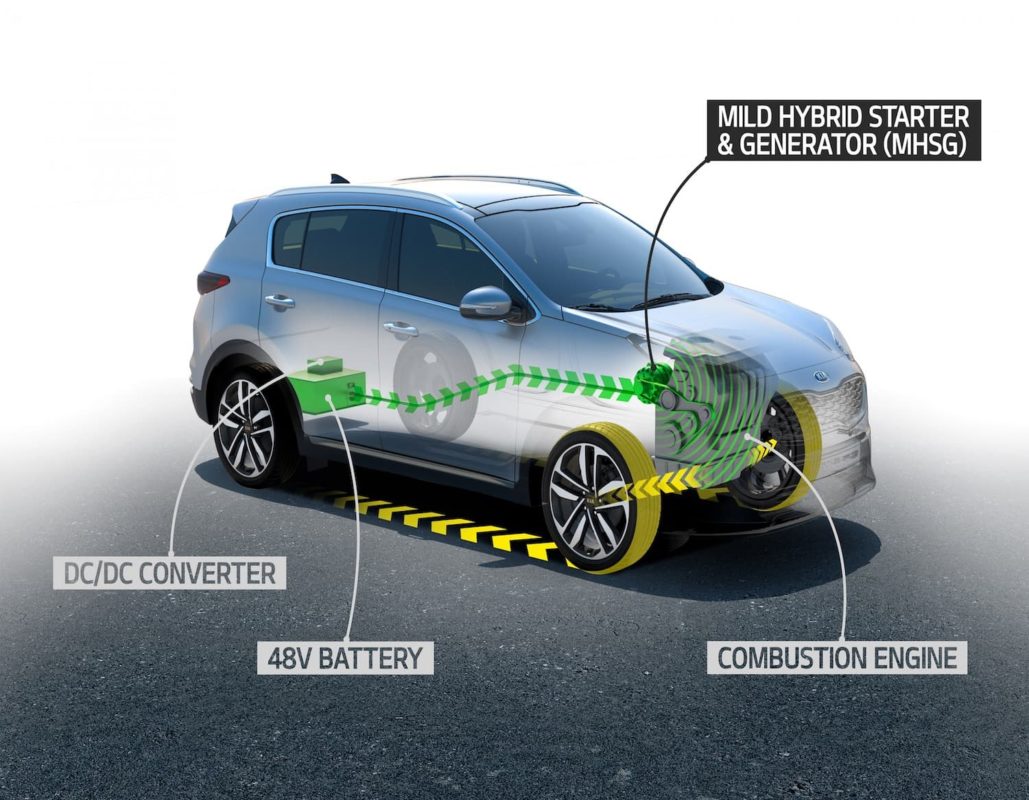
A mild hybrid replaces the alternator and starter motor with a small electric motor (called the MHSG in the image below) and a battery. This unit can start the engine and powers the various ‘parasitic’ electrical systems, which means the engine spends more of its energy driving the wheels. As a result, it uses less fuel and may provide slightly better performance.
A small battery stores energy for the electric motor, which is charged whenever you coast or brake. The battery is significantly smaller and lighter than found on a regular or plug-in hybrid, as it doesn’t need to store anywhere near as much electricity.
Some systems can provide a power boost to the engine under acceleration, however a mild hybrid cannot drive the car on electrical power alone. (Some can allow the car to creep for a few metres in stop-start traffic, but it’s literally a handful of metres and only up to about 5mph, so it’s basically nothing.)
What’s the difference between a mild hybrid and other hybrid cars?
A small electric motor assists the petrol or diesel engine by reducing the amount of work that the engine has to do. However, unlike a regular or plug-in hybrid vehicle the electric motor on a mild hybrid cannot drive the vehicle itself – the petrol or diesel engine will always drive the wheels. On a regular or plug-in hybrid, the petrol engine can shut down while the car runs purely on electric power – even up to motorway speeds – as long as there is electricity in the battery.
This also means that mild hybrid works perfectly happily with a manual gearbox as there is no electric motor driving the wheels. Full hybrid or plug-in hybrid cars are only available with an automatic transmission.
Like a regular hybrid, and unlike a plug-in hybrid or fully-electric car, you can’t connect a mild hybrid vehicle to an outside electrical source to charge the battery – it only charges while driving. Some car companies refer to this as “self-charging”, but that’s just marketing bollocks and rather misleading.
What’s the benefit of a mild hybrid system over a regular petrol car?
A mild hybrid will feel almost exactly the same as a regular petrol or diesel car to drive. If you have a car with a start-stop system that cuts the engine when the car is stopped, you’ve basically got most of a mild hybrid system anyway.
By cutting the engine whenever it’s not needed, and by reducing the need for the engine to power all the accessories, a mild hybrid system can improve fuel economy by up to about 10%.
For car companies, a mild hybrid system is relatively cheap compared to a full hybrid setup, and it’s fairly easy way to help them achieve their legally-binding emissions targets. Most of their existing petrol or diesel models can be adapted to a mild hybrid setup at a much lower cost than alternative ways of improving their efficiency.
What are the disadvantages of a mild hybrid?
There are no real disadvantages to a mild hybrid system compared to a normal petrol car, although they’re generally a bit more expensive. It drives in exactly the same fashion – especially if you’re used to a car with a start-stop system.
Compared to a full hybrid, you get much less electrical power and the car can’t be powered by electricity alone, so the regular internal combustion engine must always be running to turn the wheels.
Which cars are available as mild hybrids?
Most manufacturers are gradually replacing their regular petrol and diesel engines with mild hybrid versions. You can already find mild hybrid versions of many of the UK’s most popular models, and more are going on sale every month. For 2022, mild hybrids only made up about 14% of the new car market, but this will keep growing as more car brands fit them to more of their models.
Within a couple of years, almost every new petrol or diesel car on sale will have a mild hybrid system and there will be almost no new cars around without at least some form of electrification, from the cheapest superminis to the most expensive supercars.
Ultimately, it’s only a stop-gap solution as petrol and diesel engines will disappear from the UK’s new car market by 2030 – apart from plug-in hybrids, which will run until 2035.
Now in its seventh generation, the Mercedes SL (or SL-Class) is an upmarket two-door convertible and the latest in a long line of SL models dating back to the original 300 SL ‘Gullwing’ of the 1950s.
This latest iteration shares its platform with the second-generation AMG GT, and is the first SL to be sold under the performance ‘Mercedes-AMG’ brand rather than the traditional ‘Mercedes-Benz’ name.
Powered by a 4.0-litre V8 with an impressive 0-62mph sprint time of 3.6 seconds, and with the availability of all-wheel drive for the first time in an SL, the new model places more emphasis on performance and handling than the last few SL iterations, which prioritised comfort and luxury.
Despite its greater emphasis on sporting prowess, the SL still offers a refined interior that draws many luxuries from the flagship Mercedes-Benz S-Class saloon. As a result, several reviewers conclude that the SL struggles to successfully occupy a middle ground between a relaxing grand tourer and an adrenaline-packed sports car, to its detriment.
“We can’t help but feel the new SL sits in a bit of a no-man’s land”, admits Heycar‘s Lawrence Allan, “unable to offer the true plushness and interior richness of a proper luxury car while not quite delivering the properly sorted driving experience of the best sports cars.”
Should you be looking for a luxury cruiser, Georg Kacher of Parkers instead recommends Bentley, and adds that Aston Martin, Porsche and Ferrari make more engaging sports cars than this Mercedes. That said, he still concludes that the SL is a “highly accomplished” package that is easy to like and recommend, provided you can afford its lofty six-figure price tag.
As of March 2026, the Mercedes-AMG SL holds a New Car Expert Rating of E, with a score of 53%. Its media review scores to date have been average, as are its CO2 emissions, while running costs are inevitably high.
Body style: 2+2 roadster Engines:petrol, petrol mild-hybrid Price:From £108,165 on-road
Launched: Winter 2022/23 Last updated: N/A Replacement due: TBA
Image gallery
Media reviews
Reviews, road tests and comparisons from across the UK automotive media. Click any of the boxes to view.
Featured reviews
“The new Mercedes-AMG SL should serve as both refined cruiser and engaging sports car, thanks to development from performance division AMG. It nearly gets there, but in compromising to try and hit both targets, it’s not quite as good as it could be at either.”
Model reviewed: SL 63 Score: 8 / 10 “The pricey Mercedes-AMG SL 63 makes more sense when you realise the next-generation AMG GT won’t be offered as a roadster. It should sit neatly as a soft-top alternative to the AMG GT because there’s no question over the levels of performance, but it comes at a cost to the SL’s traditional comfort-oriented approach.” Author: Alastair Crooks Read review
Model reviewed: SL 43 Score: 7 / 10 “The Mercedes-AMG SL 43 has all the kerbside appeal of its more expensive siblings and some extra usability, but with AMG taking the reins for this generation of SL we’d hoped for a little more excitement from behind the wheel.” Author: Alastair Crooks Read review
Model reviewed: SL 55 Score: 8 / 10 “The new four-wheel-drive Mercedes-AMG SL 55 AMG is surprisingly sharp to drive for a two-tonne, open-topped car and its hood-up refinement is also deeply impressive. But its interior, although extremely well equipped, lacks design maturity – and if ever a car could have too many toys to play with (or become confused by) this is it. We like the new SL, but we don’t love it.” (Steve Sutcliffe) Read review
Auto Trader
Model reviewed: Range overview Score: 9 / 10 “The latest in a long line of Mercedes SLs is sportier and more advanced than ever, a new four-cylinder option an intriguing twist on the formula.” (Dan Trent) Read review
Car
Model reviewed: SL 55 Score: 8 / 10 “Don’t be fooled by the name, the new Affalterbach-engineered SL is more aggressive than ever before. Although it’s kept most of its manners on the road, a new chassis packed with tricks such as active ride and rear-wheel steering has given it a new suite of abilities.” Read review
Carbuyer
Model reviewed: Range overview Score: 7.8 / 10 “Considering the size and weight of the SL, it’s impressive that it’s so agile. Twisty roads and long, fast corners are now much more involving, even if the SL can occasionally feel a little twitchy on the motorway.” Read review
Evo
Model reviewed: SL55 4Matic Score: 7 / 10 “Merc’s new SL roadster sits between chilled-out cruiser and AMG hot rod, but doesn’t quite nail either personality trait…” (Stuart Gallagher) Read review
Heycar
Model reviewed: Range overview “WIth the extremely high standards set by the competition we can’t help but feel the new SL sits in a bit of a no-mans land, unable to offer the true plushness and interior richness of a proper luxury car while not quite delivering the properly sorted driving experience of the best sports cars.” (Lawrence Allan) Read review
Motoring Research
Model reviewed: SL 55 Score: 8 / 10 “The Mercedes-AMG SL 55 isn’t supercar-quick, although you never feel short-changed on the road. Factor in four-wheel drive, a nine-speed auto gearbox and stability-enhancing rear-wheel steering, and the result is confident and very rapid progress. However, its steering feels oddly artificial and no amount of electronics can entirely mask its weight. But not everyone wants to drive like their pants are on fire and the SL still does the long-striding, luxurious GT thing very well. Overall, the Mercedes-AMG SL is an easy car to admire, but a harder one to love.” Author: Tim Pitt Read review
Parkers
Model reviewed: Range overview “As far as potent luxury cruisers go, a Bentley Continental GT might perhaps be a smarter buy. As an open-top sports car, any Aston Martin, Porsche or Ferrari is the more involving drive. But somewhere in the middle of that lies the new Mercedes-AMG SL as a highly accomplished new occupant of the middle ground – and as such it’s an easy car to like and recommend if you’re not looking for thrills and spills.” Read review
Top Gear
Model reviewed: Range overview Score: 8 / 10 “A car of impressive abilities, the Mercedes SL combines real performance with GT-like refinement and tech.” Read review
Safety rating
Independent crash test and safety ratings from Euro NCAP
No safety rating
As of March 2026, the Mercedes-AMG SL has not been assessed by Euro NCAP. Considering its hefty price tag, it is unlikely to ever be tested.
Eco rating
Independent economy and emissions ratings from Green NCAP
No eco rating
As of March 2026, the Mercedes-AMG SL has not been assessed by Green NCAP.
Reliability rating
Reliability data provided exclusively for The Car Expert by MotorEasy
No reliability rating
As of March 2026, we don’t have enough reliability data on the Mercedes-AMG SL to generate a reliability rating.
The Car Expert’s reliability information is provided exclusively to us using workshop and extended warranty data from our partner, MotorEasy, sourced from both official dealerships and independent workshops.
As soon as MotorEasy has sufficient data on the SL, we’ll publish the results here.
Running cost rating
Monthly cost of ownership data provided exclusively for The Car Expert by Clear Vehicle Data
Fuel consumption
Average
Score
Petrol models
26 mpg
E
Plug-in hybrid models
37 mpg
D
CO₂ output
Average
Score
Variation
Score
Petrol models
258 g/km
E
Plug-in hybrid models
175 g/km
D
Insurance group
Average
Score
Variation
Score
All models
50
F
Service and maintenance
Cost
Score
Year 1
£557
E
Year 2
£1,380
E
Year 3
£2,140
E
Year 4
£2,467
E
Year 5
£3,242
E
Overall
£9,786
E
Unsurprisingly, the Mercedes-AMG SL is an expensive car to own and run, according to whole-life cost numbers provided exclusively to The Car Expert by our data partner, Clear Vehicle Data.
The car’s fuel economy is poor, raising daily costs, and its insurance premiums here in the UK are in the highest bracket.
Awards
Trophies, prizes and awards that the Mercedes-AMG SL has received.
2023
News UK Motoring Awards – Legend Car of the Year
Similar cars
If you’re looking at the Mercedes-AMG SL, you might also be interested in these alternatives.
Imagine an electric car which has a range of 400 miles, can be refuelled almost as fast as a petrol or diesel car yet emits only water. Those are the upsides of a hydrogen fuel cell car (known as a fuel cell electric vehicle, or FCEV). So why aren’t they everywhere?
There is a dedicated core of FCEV supporters who insist that hydrogen-powered EVs are better than battery-powered EVs, and that the world is crazy for ignoring them. Unfortunately, a hydrogen fuel cell offers few advantages over a battery, with several deal-breaking disadvantages.
The problems that show no sign of really being overcome include cost, lack of infrastructure and relative inefficiencies in delivering hydrogen to customers.
But let’s start with a bit of background into FCEVs.
What’s a hydrogen car?
A hydrogen fuel cell car is a type of electric vehicle, using a similar electric motor system to drive the car as used by a battery electric vehicle. The key difference is how the electricity is generated and stored.
In a battery electric vehicle – which is any EV you can currently buy on the market – the electricity to power the car comes from an external source (usually the national electricity grid) and is stored in a large battery, most often placed along the floor of the car underneath your feet.
In comparison, a hydrogen fuel cell car is fuelled with hydrogen from a fuelling station, in a similar way to filling a petrol car. The hydrogen is then used to create electricity on the go to power the electric motor.
How a hydrogen fuel cell car works
In simple terms, a fuel cell car consists of several pressurised fuel tanks which supply what is known as a fuel cell stack. The stack is made up of individual cells which each produce less than one volt of electricity, so hundreds of them are connected together to produce the necessary voltage to power the electric motor.
The fuel cell generates electricity by forcing hydrogen to react with oxygen. The only output is water.
Hydrogen is used because it’s a great energy carrier, meaning a small amount can release a lot of energy to drive the vehicle. That also means hydrogen is highly explosive if it leaks, which is why you inevitably read and see references to the 1937 Hindenberg airship explosion anytime anyone mentions hydrogen-powered cars.
However, that was 86 years ago and a lot has changed about how hydrogen is used and stored. Modern hydrogen fuel tanks are just as safe, if not safer, than petrol tanks (petrol being another highly explosive product we are quite happy living with on a daily basis). They typically have a carbon fibre shell surrounded by a glass fibre layer. They can withstand double their normal operating pressures and are surrounded by sensors.
Tiny choice, high price
Car makers who have already built production hydrogen fuel cell cars have tended to be those who want to showcase their technical expertise rather than make a profit from them.
Honda FCX Clarity (2008 to 2016)Toyota Mirai (2015 to 2020)
In 2008, the Honda FCX Clarity was the first full production fuel cell-powered car in the world. However, it was made in tiny numbers and only available to lease in Japan and California. A second generation appeared in 2016, but that was never available in the UK either and ended production in 2021.
The government claims there are over 300 hydrogen vehicles on UK roads, mostly passenger cars and buses, but the buses far outnumber the cars. There are currently only two hydrogen fuel cell cars in the UK: the Toyota Mirai saloon and the Hyundai Nexo SUV.
Toyota introduced its first Mirai (Japanese for ‘future’) in 2015, which was replaced by a second generation from 2020. The current Mirai has three tanks and a claimed real-world driving range of 400 miles. Two versions can currently be ordered at £54K and £65K respectively, and two leasing deals are on offer.
Since 2020, Toyota has sold 60 in the UK and global cumulative sales since launch stand at about 20,000 (to the end of October 2022). A total of about 160 Mirais have been registered in the UK across both generations, although 45 of those have already been declared SORN (in other words, they are currently not registered and cannot be used on public roads).
Toyota is also leading a consortium to develop a prototype hydrogen fuel cell-powered version of its Hilux pick-up at the company’s UK vehicle plant in Burnaston, Derbyshire.
Hyundai launched its second-generation fuel cell car, the Nexo, in the UK in 2019. In 2021 it was £65K including the now-discontinued Plug-In Car Grant. Hyundai claimed that after attaching the hydrogen 700 bar nozzle to the car and locking it shut refuelling would be completed in approximately five minutes when the hydrogen tanks were full for up to 413 miles of driving range.
The Nexo is still listed on the UK website, but with no price and has been reported as being only available for business customers. We weren’t able to establish how many have been sold, although How Many Left, a UK registration database estimates that a grand total of 29 cars have been registered. Take out the cars that Hyundai UK would keep for its own needs and not that many have actually gone to customers.
Other car makers are dabbling with fuel cells or have given up. BMW has just started small scale manufacture of iX5 Hydrogen SUVs in Germany but only for a worldwide test fleet, with no talk of UK sales. Mercedes gave up on its entire hydrogen car programme in 2020 but went into partnership with Volvo to developed fuel cell heavy goods vehicles.
Globally, hydrogen cars aren’t really happening. Data collected by JATO Dynamics in 2021 stated that global sales of hydrogen fuel-cell cars totalled 15,500 units around the world.
Toyota Mirai (2020 onwards)Hyundai Nexo (2019 onwards)
Falling down on refuelling
The battery electric car’s supreme advantage is being able to ‘refuel’ at every place there is an electricity supply, even if a charge at home is still measured in hours. As for public chargers, according to Zap Map, at the end of December 2022, there were more than 37,000 electric vehicle charging points across the UK, across 22,000 charging locations.
More electric charging points are being added each day (though many say not enough for the 2030 deadline) but should you have a fuel cell car the amount of hydrogen refuelling stops is woeful.
Hydrogen storage demands purpose-built facilities, which can’t simply be pluged into the national grid like a battery charging point – and the current cost to build one hydrogen station is estimated to be £2 million.
To have a viable national network of hydrogen that would cover all the UK’s major roads, the government suggests we would need at least 1,000 filling stations (at a cost of around £2 billion). So how close are we to hitting this? Well, not very close at all.
As of January 2023, there are just 11 places in the UK to fill up your fuel cell car. To make matters worse, the number is going in the wrong direction and is actually a decrease of three stations over the last 12 months, as Shell closed its three sites last year.
Of the remaining sites, most are on industrial estates, at council premises or next to research institutes – not particularly convenient to general use by the public. And it appears that there are currently no new sites in the pipeline. Even if a massive new investment was to be announced tomorrow, it would take many years to build a sufficient number of sites to make hydrogen power viable.
Although many people bemoan the lack of electric charging points currently available for battery electric cars, the reality is that is much easier to ramp up in a short timeframe than rolling out more than a thousand dedicated hydrogen fuelling stations all over the country.
It’s a similar situation for every other country in Europe, which effectively rules out hydrogen as a viable option for consumers any time in the near future.
Not so green
Current UK hydrogen production and use is heavily concentrated in chemicals and refineries This hydrogen, largely produced from natural gas, is used to make other chemicals and plays a variety of roles in refineries to convert crude oil into different end products. In these two sectors, production and use of hydrogen usually happen on the same site, often integrated into a single industrial facility.
In August 2021, the UK government launched its plan for a ‘world-leading hydrogen economy’. Its own analysis suggests that 20-35% of the UK’s energy consumption by 2050 could be hydrogen-based. One target is to replace natural gas in powering around three million homes by 2030.
The aim is to replace up to one fifth of natural gas with ‘green’ hydrogen, powered by renewable energy to split water into hydrogen and oxygen. The strategy also depends on ‘blue’ hydrogen, produced from natural gas and steam. Blue hydrogen is not emissions-free, but the carbon emissions can be captured, stored and used in other applications.
A truckload of tankers
On top of generating the hydrogen, there’s also the matter of delivering it to service stations all over the country unless you can produce hydrogen on-site. That requires a multitude of tanker trucks running up and down motorways all day, every day, which means you’re using a lot of fuel just to deliver fuel.
It might be a familiar method of delivery since that’s how we have delivered petrol and diesel for the last hundred years, but if you’re going to start from scratch with a new energy source, it’s not exactly the best way to go about it. In comparison, delivering electricity via the national grid is far more efficient and eco-friendly.
Battery electric cars are already extensively fuelled by ‘green’ electricity. Renewable energy sources made up 43% of the UK’s total electricity generation between October and December 2021, and that percentage is growing.
A more viable option for heavy vehicles
Large commercial vehicles are a different story, however. Hydrogen already powers buses in many countries, including the UK. This is seen as a more viable future path as the refuelling/charging equation is far more favourable for these sort of vehicles.
In the future, this could include trucks, trains and other highly energy-consuming vehicles – even aircraft – which need to cover long distances without stopping and can be refuelled where they are based. That means a relatively small number of private filling stations without relying heavily on public refuelling infrastructure, which is far more achievable.
That’s where all the UK research effort is going. The transport part of the UK government’s hydrogen strategy is geared towards trains, commercial vehicles and planes, rather than cars. The strategy aims for 4,000 new zero emission buses, either hydrogen or battery electric, and the infrastructure needed to support them.
Hydrogen is seen as a viable alternative to battery electric trucks, but both HGV charging points and hydrogen refuelling stations are still very sparse. Expected to be fully operational by 2025, the Tees Valley Hydrogen Transport Hub will be a large facility for the production, storage and distribution of green hydrogen and seen as a testbed.
The battery has won out for passenger cars
While the push to increase the use of hydrogen for homes and heavy transport is welcome, the prospect of roads brimming with hydrogen cars still looks like a fairytale – pretty much as it has been for the last 50 years.
Even before you allow for the very high list price and choice of only two models, the lack of refuelling stations makes them a non-starter for private users.
There’s a way to go before a battery electric car is viable for everyone but, given the pace of development forced by the end of combustion engine sales, batteries will give longer ranges and charging times will continue to speed up. The amount of progress that has been made over the last decade is significant, and will continue to evolve at rapid rate in years to come.
That’s not to say that there won’t be hydrogen fuel cell vehicles available in the future – for some customers, a fuel cell EV would be a better choice than a battery EV if the infrastructure was available. But even if it becomes an alternative, it’s only ever likely to be a niche choice. For everyone else, battery EVs are the obvious answer.
Dashboard cameras, know more commonly as dash cams, have been regular features in vans, trucks and emergency vehicles for years, but their high price kept them out of the reach of most private motorists.
But with the need for proof of innocence (or negligence) in a road accident as vital as ever when it comes to settling insurance claims, more drivers are considering fitting one to the inside windscreen of their car.
They can protect you in many instances, for example when there’s a seemingly 50-50 coming together between two vehicles, when you’re an innocent participant in an accident, or if you are targeted by unscrupulous car crooks and insurance scammers.
Prices have plummeted in the last few years and a good value dash cam can be bought from around £30 today. They are readily available from automotive parts stores and internet sites. Having a dash cam can save you money on your future insurance premiums so the investment could well be worth it.
While overall standards of driving and safety in the UK are among the highest in the world, the country’s roads are crowded in many parts and collisions continue to happen every day.
One driver’s account of what occurred in an accident is likely to be different from another’s, according to roads safety campaigners GEM Motoring Assist.
“If you’re a safe, conscientious driver, a dash cam helps protect your no-claims bonus, as well as guarding against dangerous drivers, road rage incidents, ‘crash-for-cash’ scams and even minor car park knocks,” says Neil Worth, GEM chief executive.
“Insurers love the clear and irrefutable information a dash cam provides. Fitting a dash cam is a good move for road safety,” he says. “Once installed, it’s good to know it can protect you in incidents where it might otherwise be your word against someone else’s.
Still not sure you need a dash cam? Here’s what you need to know:
What is a dash cam?
A dash cam is a video camera that is mounted on the dashboard or windscreen of a car. Generally powered by the car’s 12v system, it continuously records the view of the road and traffic through the windscreen.
How does it store footage?
Typically a dash cam continuously records video footage either on an internal memory or a removable card (such as an SD card). When the memory fills, the camera automatically overwrites the oldest files. So you should be able to set it up then leave it until you need it.
Do I have to tell others that I’m using a dash cam to record?
No. In the UK, if the car is yours and yours alone, and you are not using it for business (such as taxi work), it is legal to use one without notifying anyone else that you’re recording.
How many are in use in the UK?
Latest estimates suggest around one in five vehicles now use a dash cam.
Where’s the best place to fit it?
Fit your dash cam in the centre of your windscreen, behind the rear view mirror. Ensure it does not obstruct your forward vision.
What are the advantages of a dash cam?
As fraudulent insurance claims increase, a dash cam provides vital evidence of what actually happened and who may have been involved. Following a collision or incident on the road, a driver’s memory of events or the position and action of other motorists can sometimes be unclear, while a dishonest motorist may be less likely to pursue a claim knowing that video evidence is available.
Can I save on insurance?
The installation of a dash cam could see a discount (typically 10% but sometimes as much as 25%) from some insurance company, so it is always worth asking what they can offer. You don’t have to tell your insurer you’re using a dash cam, as it is not considered a vehicle modification.
Can I share my footage with the police?
Yes. You can upload your footage to any police force in England and Wales using the National Dash Cam Safety Portal. There have been plans for a Police Scotland portal but these remain under review.
Could the footage recorded on my dash cam be used against me?
Yes. If you’re involved in a collision, or are stopped by the police for committing an offence, then officers could seize your dash cam or could require you to present its footage for them to review.
BMW has given us a first look at a new limited edition version of its sporty M3 saloon. Called the M3 CS, this range-topping variant offers more engine power, a bespoke chassis setupand more aggressive exterior looks.
The new CS is powered by the same twin-turbocharged 3.0-litre petrol engine as the M3 Competition which has been on sale in the UK since 2021, but BMW’s M Division engineers have modified this six-cylinder powertrain to produce an extra 40hp – 550hp in total.
This limited-run saloon is four-wheel drive as standard, and fitted with an eight-speed automatic gearbox. This engine upgrade, along with weight-saving carbon fibre-reinforced plastic components and a re-tuned chassis setup, means that the BMW M3 CS can reportedly complete a 0-62mph in 3.4 seconds – around three tenths of a second faster than the M3 Competition can muster.
BMW’s ‘M Drive’ package is included at no extra charge, which means that the saloon’s top speed is electronically limited at 188mph.
Like the limited-edition BMW M4 CSL coupé that was unveiled last year, the M3 CS distinguishes itself from the standard range by sporting a more prominent front splitter design and unique ‘V-spoke’ alloy wheels (19-inch alloys in the front, 20-inch in the rear). The large kidney grilles remain, but carry fewer internal vanes to give the sports saloon a meaner look.
The car is fitted with yellow LED headlights – a clear nod to the championship-winning BMW racing cars of the 1970s – and a special two-tone colour scheme highlights the indents in the bonnet. The BMW branding on the bodywork is outlined in red, mirroring the red brake callipers.
Splashes of red also feature inside on the carbon bucket seats and Alcantara-leather steering wheel. ‘CS’ branding appears on the centre console and seat belts, as well as the door sills.
BMW’s ‘iDrive’ curved display juts out of the dashboard, combining a 15-inch digital instrument cluster and a 12-inch infotainment touchscreen. BMW’s own navigation software comes as standard, as well as voice assistance tech. The system is also compatible with Android Auto and Apple CarPlay and a wireless smartphone charger is fitted below the dashboard.
Other tech features include a premium speaker system, two-zone automatic climate control, a head-up display and lane-keeping and parking assistance software.
To get your hands on this latest BMW special edition, you will have to part with just under £116k. This is a price increase of over £50k when compared to the lead-in M3 Competition. BMW says that the saloon will be manufactured in Munich, Germany, and adds that it will start taking M3 CS orders from March onwards.
The M3 has had a very positive reception from the British media since its arrival at the start of 2021, with all of the reviews we track commending the saloon for its impressive performance despite this latest generation being heavier and bulkier than its predecessors. It currently holds an Expert Rating of 84%.
Vauxhall is now taking UK orders from its new plug-in hybrid ‘Grand Sport Electric’ model range, which currently includes the Astra GSe and Grandland GSe.
The British manufacturer announced the introduction of this new sporty sub-brand back in September last year. Vauxhall has not had a performance-focused line-up since the VXR range that was discontinued in 2017, and this new GSe marque will only produce electrified models moving forward, starting with the Astra and Grandland.
The Vauxhall Astra GSe uses the same 1.6-litre turbocharged petrol engine and 12kWh battery pairing that can be found in the regular Astra line-up, but the brand’s engineers have tuned this setup to produce 225hp – an increase of 45hp.
Hatchback versions of the Astra GSe are available to order now in the UK, while ‘Sports Tourer’ estate car versions are set to join the range later this year.
The 300hp Vauxhall Grandland GSe SUV is also now on offer, which is powered by a 1.6-litre turbocharged petrol engine paired with two electric motors, producing 75hp more than the standard Grandland range.
All of these plug-in hybrid GSe models offer around 40 miles of all-electric range, and come with suspension upgrades and steering calibration adjustments to make it more agile and comfortable while turning.
Vauxhall GrandlandVauxhall Grandland
Above the standard line-ups, GSe cars feature minor exterior styling tweaks and GSe branding, and Alcantara-trimmed performance seats for the driver and front passenger.
Prices for the Astra GSe currently start at under £41k, while the Grandland GSe is priced at around £44k.
Now in its eighth generation, the Vauxhall Astra has been widely praised for its attractive exterior styling and the competitive battery range and efficiency of plug-in hybrid models. It currently holds an Expert Rating of 70% – a score hindered by Vauxhall’s use of some cheap interior plastics.
The Vauxhall Grandland has been praised for its family-friendly practicality and safety features, but overall it is generally not regarded to be as good as several rivals in a fiercely competitive SUV sector. It currently holds an Expert Rating of 57%.
The all-electric Polestar 2 is now available to order with rear-wheel drive, as part of a model update that introduces minor exterior styling changes, more power and an increased battery range.
One of the most popular all-electric cars sold in the UK last year, the Polestar 2 has been given a front-end styling refresh, as the car adopts similar exterior styling to that of the upcoming Polestar 3 SUV. The front grille has been replaced with the brand’s ‘SmartZone’ panel, which houses some of the vehicle’s active safety features.
The electric saloon has also been given a pretty substantial mechanical update, as Polestar has decided to make the front-wheel drive single-motor versions of the car rear-wheel drive, which the manufacturer says improves battery efficiency and range.
The previous electric motor has also been replaced, its replacement offering a 50kW power increase, bringing the output of single-motor models up to 220kW. With this performance upgrade, the car can reportedly complete a 0-62mph sprint in 6.2 seconds – over a second faster than before the update.
More powerful dual-motor models also benefit from the update. The rear electric motor is now the main power source, which is supported by a smaller motor on the front axle to provide a maximum output of 310kW, up from 300kW before the update, and a 0-62mph sprint time of 4.5 seconds.
Polestar has swapped out the car’s battery too. Long-range models now come with a larger 82kWh pack, providing up to 65 miles of extra range for the dual-motor variant (to 368 miles) and 52 miles for the single-motor (to 395 miles). Long-range cars can now charge at rates up to 205kW, a 55kW improvement.
Available to order now, prices for the updated Polestar 2 range now start at just under £45k for single-motor models – a price increase of close to £3k. The manufacturer expects to deliver the first UK orders in Autumn this year.
The Polestar 2 has received many positive reviews from the UK motoring media, as it has been particularly praised for its design, both internal and external, as well as for its performance and outstanding Euro NCAP safety scores. It currently holds an Expert Rating of 75%.
Based on the 308 hatchback and estate car, the Peugeot 408 is a five-door liftback which sits somewhere between a conventional car and a crossover/SUV vehicle.
Like an increasing number of new cars, it sits taller than a conventional saloon car but lower than a regular SUV. The 408 range includes traditional petrol and plug-in hybrid models, all paired with an eight-speed automatic gearbox.
The 408 line-up also include the all-electric E-408, and we will have a separate Expert Rating for that model shortly.
The Peugeot 408 has had a mixed bag of media reviews since it was launched. Most of the positive comments have been regarding its stylish exterior looks, which the Sun‘s Rob Lewis compares favourably to the much more expensive Lamborghini Urus SUV.
The Carbuyer team concludes that the crossover “has even more space and style than the 308 hatchback”, while Carwow is more impressed by the car’s interior refinement, commenting that “material quality is really good across the board.”
While Business Car‘s Martyn Collins agrees that the 408 is a sharp alternative to the increasingly overcrowded SUV market, he also questions whether Peugeot’s parent company Stellantis is cannibalising its own sales – “is it too close in execution to the Citroën C5 X?”
As of September 2025, the Peugeot 408 holds a New Car Expert Rating of B, with a score of 66%. It scores top marks for its low average CO2 emissions (thanks to the plug-in hybrid model), while it also has a good safety rating. However, running costs and media review scores are only average, and Peugeot’s new car warranty offering is poor. As yet, we don’t have reliability data to include in our analysis.
Model reviewed: Range overview Score: 8 / 10 “The Peugeot 408 is a niche but appealing alternative to traditional family hatchbacks, taking the inoffensive ingredients of the smaller 308 and reinventing them in a more practical and stylish package.” Author: Steve Walker Read review
Model reviewed: 1.2-litre petrol automatic GT Score: 8 / 10 “The unusual positioning of the 408 hatchback means it’s likely to remain something of a niche choice for most buyers, but those who take the plunge will find plenty to appreciate thanks to its comfortable ride, spacious rear quarters and a lovely cabin. If you’re a private buyer, the PureTech petrol model is the pick of the range.” Author: Alex Ingram Read review
Model reviewed: 1.6-litre petrol/electric plug-in hybrid GT Score: 8 / 10 “The Peugeot 408 will suit those who don’t like the idea of an SUV, as well as Peugeot fans who fancy a 308 but find it a little too pokey inside. Either way, you’re getting a car which is comfortable, decent to drive and has a smart, premium-feeling cabin. The top trim levels and the PHEV are pricey, though.” Author: Alex Ingram Read review
Auto Trader
Model reviewed: Score: 7 / 10 “Stylish, spacious and distinctive, the Peugeot 408 is a sleek alternative for those stepping away from SUVs and crossovers.” Author: Erin Baker Read review
Business Car
Model reviewed: Puretech 130 Score: 8 / 10 “This Peugeot remains a niche option in the D-segment, but on top of the sharp looks and practicality, if you can live without the hybrid kit, the Puretech 130 is the best driving 408 we’ve driven.” Author: Martyn Collins Read review
Model reviewed: 1.6-litre petrol/electric hybrid GT Score: 8 / 10 “Should you go for a Peugeot 408 or 308? The 408 is a niche option in the C-segment, but on top of the sharp looks, it is still a practical alternative to an SUV, wrapped in sharp styling. But is it too close in execution to the Citroen C5 X?” Author: Martyn Collins Read review
Car
Model reviewed: Range overview Score: 8 / 10 “The fundamental question is about the 408 Hybrid 225’s design: do you feel allure or allergic? If it’s the former, and you relish a comfortable ride, then this novel choice could prove a sophisticated way to travel – and get you well and truly noticed in the company car park.” Author: Phil McNamara Read review
Car Keys
Model reviewed: Range overview Score: 8 / 10 “Bringing plenty in the way of style and quality, the Peugeot 408 is very practical and would make a great family car if you’re looking for something a little different to a typical SUV.” Author: Ted Welford Read review
Carbuyer
Model reviewed: Range overview Score: 8.2 / 10 “The Peugeot 408 blurs the lines between SUVs, hatchbacks and even saloons, combining style with practicality in the process.” Author: Charlie Harvey, Sam Naylor Read review
Daily Mirror
Model reviewed: Range overview “The Peugeot 408 is a great long-distance car, with a spacious interior, responsive driving dynamics, and excellent fuel economy.” Author: Stephen Jones Read review
Heycar
Model reviewed: Range overview Score: 8 / 10 “The new Peugeot 408 is a segment-spanning family car with impressive practicality, stylish design and efficient electrified powertrains. We’re not entirely convinced buyers will be quick to trade in their versatile SUVs, but the Peugeot 408 certainly holds an element of left-field appeal.” Author: Andrew Brady Read review
Honest John
Model reviewed: Range overview Score: 6 / 10 “Emphasis is placed on the quality of the interior space and on connectivity, with the latest technologies making the driving and travelling experience more intuitive and rewarding.” Read review
Motoring Research
Model reviewed: 1.6-litre petrol/electric plug-in hybrid “Despite inherent compromises, the Peugeot 408 feels aligned with the zeitgeist. You wouldn’t call it beautiful, but we have to applaud Peugeot’s sheer chutzpah; few £40,000 family cars will turn more heads. Besides, if you’re going to sacrifice space for a style, why not stand out from the crowd? Particularly when many of them are already driving a coupe SUV.” Author: Tim Pitt Read review
Parkers
Model reviewed: Range overview Score: 8 / 10 “The fundamental question to ask yourself about the 408 is, do you love or hate the design? If it’s the former, and you relish a comfortable ride, then this novel choice will prove a sophisticated way to travel. If you don’t gel with the looks, there are better options out there.” Author: James Dennison Read review
The Sun
Model reviewed: Range overview “The steering is well-weighted and surprisingly direct which, combined with Peugeot’s continued penchant for a tiny steering wheels, makes for a pleasingly engaging drive. The ride resists being overly firm or soft, dealing with sub-par road surfaces rather well.” Author: Rob Lewis Read review
The Sunday Times
Model reviewed: 1.6-litre petrol/electric plug-in hybrid Score: 6 / 10 “Like all plug-in hybrids, the 408 PHEV will only make sense to a specific sort of driver. While the styling isn’t to our tastes, many people we’ve spoken with think it looks good, and the interior quality is impressive. It’s a shame that tall people will find neither the driving position nor headroom in the rear acceptable, but performance, handling, refinement and ride quality are all aspects of the 408 Hybrid that drivers will appreciate.” Author: Will Dron Read review
The Telegraph
Model reviewed: 1.2-litre petrol automatic Premium Score: 8 / 10 “You won’t love the way the Peugeot 408 drives, but perhaps that’s the price you pay. Because far from having an identity crisis, the 408 knows exactly what it is – and it’s really quite clever. It isn’t an SUV coupé, despite the appearance of one. Beneath the skin, it’s a fairly unobjectionable, sensible family car. Think of it as a more conventional 508 with cladding and a hatchback.” Author: Alex Robbins Read review
Model reviewed: Range overview Score: 8 / 10 “This striking large family hatchback is refreshingly different but lacks a certain je ne sais quoi when it comes to finesse.”
Author: Andrew English Read review
Top Gear
Model reviewed: Range overview Score: 7 / 10 “The Peugeot 408 turns out to be a tempting concept. It also drives more engagingly than most crossovers.” Read review
Safety rating
Independent crash test and safety ratings from Euro NCAP
In December 2022, the Peugeot 408 has received a four-star crash safety rating from Euro NCAP. The safety body says that it carried over many of the assessments made on the structurally similar 308 to give the 408 this set of scores.
Eco rating
Independent economy and emissions ratings from Green NCAP
No eco rating
As of September 2025, the Peugeot 408 has not been lab tested by Green NCAP.
Running cost rating
Monthly cost of ownership data provided exclusively for The Car Expert by Clear Vehicle Data
Fuel consumption
Average
Score
Petrol models
44 mpg
C
Hybrid models
53 mpg
B
Plug-in hybrid models
203 mpg
A
CO₂ output
Average
Score
Variation
Score
Petrol models
125 g/km
B
Hybrid models
121 g/km
B
Plug-in hybrid models
31 g/km
A
Battery range
Average
Score
Variation
Score
Plug-in hybrid models
34 miles
E
Insurance group
Average
Score
Variation
Score
All models
27
C
Service and maintenance
Cost
Score
Year 1
£206
B
Year 2
£552
C
Year 3
£865
C
Year 4
£1,063
B
Year 5
£1,404
B
Overall
£4,090
B
The Peugeot 408’s running costs are about average, according to five-year cost numbers provided exclusively to The Car Expert by our data partner, Clear Vehicle Data.
The plug-in hybrid models have great fuel economy and CO2 emissions on paper, but this very much depends on how often you can run the car on electricity, which depends on how often you can charge the small battery.
Reliability rating
Reliability data provided exclusively for The Car Expert by MotorEasy
No reliability rating
As of September 2025, we don’t have enough reliability data on the Peugeot 408 to generate a reliability rating as it is still a new model.
The Car Expert’s reliability information is provided exclusively to us using extended warranty data from our partner, MotorEasy. As soon as MotorEasy has sufficient data on the 408, we’ll publish the score here.
Warranty rating
New car warranty information for the Peugeot 408
Overall rating
D
31%
Petrol or diesel models
E
17%
Electric or hybrid models
C
56%
New car warranty duration
3 years
New car warranty mileage
60,000 miles
Battery warranty duration
8 years
Battery warranty mileage
100,000 miles
Peugeot’s new car warranty is pretty much the bare minimum offered in the UK, with a duration of three years and a limit of 60,000 miles. Other rivals in the price bracket do better (and in some cases, much better).
In addition to the standard new car warranty, hybrid versions of the 408 have an eight-year/100,000-mile warranty for the battery components.
Warranty on a used Peugeot 408
If you are purchasing an ‘Approved Used’ 408 from an official Peugeot dealership, you will get a minimum six-month warranty included.
If you are buying a used 408 from an independent dealership, any warranty offered will vary and will probably be managed by a third-party warranty company.
If you are buying a used 408 from a private seller, there are no warranty protections beyond any remaining portion of the original new car warranty.
If you’re looking to buy a used car that is approaching the end of its warranty period, a used car warranty is usually a worthwhile investment. Check out The Car Expert’s guide to the best used car warranty providers, which will probably be cheaper than a warranty sold by a dealer.
Date: February 2023 Recall number: R/2023/058 Model types: All Build dates: 09/2022 to 01/2023 Number of vehicles affected: 9 Defect: Affected vehicles may have an incorrect torque on several fixation points, which could result in reduced control of the vehicle and overheating of electrical connections. Remedy: Check and tighten fixings to correct torque.
As of September 2024 (our most recent data point), there has been one DVSA vehicle recall on the Peugeot 408 – and that only affected nine cars.
Not all vehicles are affected by recalls. You can check to see if your car is included in any of the above recalls by visiting the DVLA website or contacting your local Peugeot dealer.
If your car is affected by a recall, the vehicle must be repaired and you should not be charged for any work required. If you are buying a used 408, you should insist that any outstanding recall work is completed before you take delivery of the vehicle.
Of all the issues we discuss here at The Car Expert, the topic that generates the largest number of questions is rejecting a car that is faulty or is not as advertised.
Based on the hundreds of questions we’ve received, we have written this comprehensive article to provide direct answers to your questions and explain the processes as clearly as possible.
In this article, we cover the following areas for rejecting a car:
What the law says and the time frames for rejecting a car
Since October 2015, the Consumer Rights Act 2015 has been the legislation that covers consumer retail sales in the UK. It replaced the old Sale of Goods Act that dates back to the 1970s.
The Act does cover new and used cars bought from a trader for consumer (private) use. A trader can be either a franchised dealer or an independent garage.
The Act does not cover vehicles bought by private sale, vehicles bought at an auction or vehicles bought for business use.
Can you reject your car for any fault you find?
The Consumer Rights Act provides both buyers and sellers with clearer guidance about a customer’s rights than the old Sale of Goods Act. In particular, it covers how a customer can reject a car that is faulty or not fit for purpose.
However, it’s important to remember that motor cars are complicated machines. They have hundreds of thousands of components working under a variety of hostile conditions. Not every fault in a vehicle is going to mean you can simply give the car back and expect a full refund. This particularly applies to used cars, which have already been used and abused by someone else before you.
In short, a car with a fault is not necessarily a faulty car.
Understandably, a dealer will want to inspect your car for themselves before agreeing to refund your money, rather than simply taking your word for it.
A customer rejecting a car can be very expensive for a car dealer. They have to buy the car back from you at the original price and fix whatever the problem is, before selling it on again for probably less money. As a result, the dealer is likely to dispute your rejection unless you can make a clear and confident case.
If the dealership refuses to accept your rejection, you will need to take legal action to reject the vehicle. This means engaging a solicitor and potentially taking the dealer to court. It will be expensive, and there is no guarantee you will win.
If you do have valid grounds to reject your vehicle, then your specific rights will depend on how long you have owned the car.
The Consumer Rights Act allows for three options:
Your short-term right to reject, which lasts for 30 days after taking delivery of your car
Your final right to reject, which covers you for six months from purchase
Your final right to reject after the first six months
Short-term right to reject – the first 30 days
If your new or used car has a significant fault that was present when you bought it (as opposed to developing afterwards), you can reject the car within the first 30 days and get a full refund.
You do not have to accept a repair or replacement vehicle (although you can if you want to).
If you have part-exchanged your previous car on the new one, you will not get it back. Instead, you will be entitled to the full invoice price of the car (including road tax, VAT, etc).
You are entitled to a full refund by the same method in which you paid for the car. The dealer cannot charge for usage, wear and tear, collection of the vehicle or anything else.
It is the dealer’s obligation to collect the vehicle, unless your sales contract includes a clause obliging you to return the car. You only have to make sure the car is available to collect.
Be reasonable about this and work with the dealer if you want to get your money back with minimal fuss. Make their lives difficult and you can be sure they will return the favour…
Final right to reject – the first six months
If you have had the car for more than 30 days but less than six months, you have to give the selling dealer one attempt to fix the fault before moving to reject the vehicle. If the repair has not fixed the fault, you can reject the vehicle.
If you part-exchanged your old car on the new one, you will not get it back. Instead, you will get a cash value for the new car. However, unlike the short-term right to reject, it may not be the full value.
In this instance, the dealer is able to claim a reduction in the value of the vehicle. This is based on the mileage covered and time elapsed. There is no guidance on how much they can charge you, so be prepared to negotiate this with the dealer. If it goes to court, the judge will decide.
As above, it is the dealer’s obligation to collect the vehicle under the Act. You cannot be charged for return costs or be forced to return the vehicle yourself.
Rejecting a car after six months
You are legally entitled to pursue a rejection after the first six months, but the law swings from being in your favour to being in the dealer’s favour.
The onus on you is now to prove that the fault was present when you bought the car, and that is difficult when you have had the car for a reasonable length of time and probably covered thousands of miles in that period.
In practice, this is difficult unless you have some solid proof that the fault was there at time of purchase – which is not easy. Trying to prove that a fault was present at time of purchase rather than occurring the day afterwards is very difficult when you’re several months down the line.
Rejecting a car should not be your first move
If you discover a fault with a car you’ve just bought, don’t automatically move to reject it. The fault may be relatively easy to fix. You’ll save a lot of time and hassle compared to trying to reject the vehicle.
Despite the Act providing a clear right to reject a faulty car, it isn’t as simple as going back to the dealer and walking out with a nice fat cheque. The dealer will want to conduct their own assessment of the vehicle. They may well not agree with your contention that the vehicle should be rejected.
If they refuse to accept your rejection, you will need to take some form of action to pursue the matter. Some dealers are signed up to a voluntary Ombudsman’s code, which allows for independent mediation. But usually you will need to take legal action against the dealer. You will probably also need to get written reports from another garage to back up your claim.
When you are rejecting a car, the dealer has to buy it back from you for the same price you paid for it. You have to sign the registration forms back over. If you have finance on the vehicle, that has to be cancelled as well.
A car purchase can be complicated to unwind, and you might not get your money back for several weeks.
The dealer may offer to repair the fault and potentially even offer you some form of compensation as well. This may be a better result than pursuing a rejection. It may save you a lot of hassle as well, since you won’t have to go through the process of buying another car.
The Audi A7 is a large upmarket liftback which is based on the contemporary Audi A6 saloon. This is the original model which arrived on UK roads in 2011, before being facelifted in 2014, and then discontinued in 2018 to make way for the current second-generation model.
Available with either a petrol or diesel engine, the A7 was highly regarded by the UK press during its time on sale, often complemented for its attractive looks and premium interior fit and finish.
“The Audi A7 is a car that can appeal to both your head and your heart”, said The Telegraph‘s Chris Knapman, who was impressed by the liftback’s powerful engine options and its “spacious” and “sleek” cabin.
If you’re on the lookout for some high-octane thrills, reviewers often warned that the A7 was built to favour comfort over performance, and several outlets added that the liftback’s rear visibility was quite poor. Others took issue with the car’s price.
While the car did come with “a decent amount of equipment”, David Finlay of Car Keys reported that “typical Audi strategy means you have to pay a lot of money for a full set of toys. Exceeding the list price by £10,000 is easy, and doing so by double that is not difficult.”
As of January 2025, the original Audi A7 holds a Used Car Expert Rating of D, with a score of 56%. Its media review scores were only average and very poor reliability lets it down.
Body style: Large five-door liftback Engines:petrol, diesel Price when new:From £41,045 on-road
Launched: Spring 2011 Last updated: Autumn 2014 Replaced: Spring 2018
Image gallery
Media reviews
Highlighted reviews and road tests from across the UK automotive media. Click any of the boxes to view.
Auto Express
+
Model reviewed: (2010-17) “Luxurious and crammed with tech, the A7 is generally reliable but running costs can be high.” Read review
Model reviewed: Sportback (2010-17) Score: 8 / 10 “Sleek styling and hatchback practicality set the Audi A7 Sportback apart from the usual executive saloon car suspects.” Read review
Auto Trader
+
Model reviewed: Score: 7.4 / 10 “Distinctive styling and some affordable engines make the A7 an appealing buy, but remember that it will cost a fair bit more to buy than the equivalent saloon.” Read review
Model reviewed: (2010-) Score: 8 / 10 “Good looks alone are reason enough to buy the Audi A7, though it has many other talents, especially if you opt for a diesel version.” Read review
Business Car
+
Model reviewed: Score: 8 / 10 “High P11D makes buying an Audi A7 an emotion-led decision.” Read review
Car
+
Model reviewed: 3.0 TDI Ultra (2014) Score: 8 / 10 “The Audi A7 is an incredibly practical four-door, four-seater with a humungous hatchback boot, and in Ultra guise it’s cleaner, lighter and pretty good value.” Read review
Model reviewed: 3.0 TDI Quattro SE S tronic (2012) Score: 8 / 10 “With 367 lb.ft of torque summoning 62mph in just 6.3 seconds, it goes without saying that Audi’s silky 3.0 V6 turbodiesel provides pretty much all the thrust you could ever wish for, and the 7-speed automatic transmission is slush personified.” Read review
Model reviewed: Score: 8 / 10 “If you can stomach paying £10k for an opening rear hatch (Vauxhall charges the same for 4dr and 5dr Insignias), aren’t bothered about behind-the-wheel entertainment and love gadgets, you’ll enjoy the new 2010 Audi A7.” Read review
Car Keys
+
Model reviewed: Score: 6 / 10 “The Audi A7 Sportback is a luxury car with the looks of a four-door coupe, but a practical hatchback and generous boot. It’s available with powerful diesel engines, blending performance and efficiency to a tee.” Read review
Carbuyer
+
Model reviewed: Score: 7.4 / 10 “The Audi A7 has the appearance of a low-slung coupe, but look more closely and it’s a spacious five-door executive car.” Read review
Carwow
+
Model reviewed: Sportback (2014-17) Score: 7 / 10 “The Audi A7 is a better-looking alternative to the A6.” Read review
Evo
+
Model reviewed: Sportback Score: 8 / 10 “If you’re in the market for something like an Audi A8, BMW 7-series or Mercedes-Benz S-class, but you really don’t like three-box saloons, then the Audi A7 Sportback is for you.” Read review
Green Car Guide
+
Model reviewed: Sportback 3.0 TDI Ultra (2014) “The new Audi A7 Sportback 3.0 TDI ultra will be capable of 60.1mpg – highly impressive for a 3-litre V6 diesel.” Read review
Heycar
+
Model reviewed: Score: 8 / 10 “The bold details and crisp creases combine with the swooping roofline at the back of the Audi A7 to create some proper visual drama.” Read review
Honest John
+
Model reviewed: Sportback (2011-18) Score: 8 / 10 “The A7 Sportback also features Audi’s best engines, all of which offer strong performance with good economy, helped by an automatic stop/start system.” Read review
Motors
+
Model reviewed: Score: 7 / 10 “The sloping roofline and incredibly stylish interior means the A7 has plenty going for it and with the executive coupe market rather limited it can certainly make a mark.” Read review
Parkers
+
Model reviewed: Score: 8 / 10 “The Audi A7 has huge amounts of grip, refined petrol and diesel engines, and excellent build quality.” Read review
The Sunday Times
+
Model reviewed: Sportback (2010-18) Score: 8 / 10 “The Audi A7 Sportback is so much better-looking than a BMW 5-series GT but still impressively practical, provided you plump for the five-seater one.” Read review
The Telegraph
+
Model reviewed: A7 Score: 8 / 10 “The Audi A7 is a car that can appeal to both your head and your heart, with a smooth yet efficient V6 engine, lots of space and sleek styling.” Read review
Model reviewed: “The Audi A7 is charming, sophisticated and damn good looking.” Read review
Top Gear
+
Model reviewed: Sportback Score: 6 / 10 “Great-looking and groaning with tech, if a bit stolid on the road, the A7 takes the fight to the Merc CLS and wins.” Read review
Model reviewed: 3.0 TDI 5dr Multitronic Score: 6 / 10 “A7 drivers will be firmly wedged in the driver’s seat, and a thoroughly ritzy place it is too. Audi makes some of the best cabins in the business, and this is one of the best of the best.” Read review
Safety rating
Independent crash test and safety ratings from Euro NCAP
No safety rating
The original Audi A7 was never tested by Euro NCAP. Despite being based on the 2011 – 2018 A6 saloon, and sharing much of that car’s safety technology, the A7 does not share the A6’s safety score.
Eco rating
Independent economy and emissions ratings from Green NCAP
No eco rating
The first-generation Audi A7 was not tested by Green NCAP during its production life, as it pre-dated the Green NCAP programme’s creation.
Reliability rating
Reliability data provided exclusively for The Car Expert by MotorEasy
Total claims: 215 Average repair cost: £1364.46 Last updated: October 2024
The Audi A7 has a poor reliability score of just 13% as of October 2024, according to exclusive extended warranty data provided by our partners at MotorEasy. This score covers both this original A7 and the current (2018 onwards) model.
As well as being considered unreliable, the average repair costs is a hefty £1,400. That’s far more than the cost of a used car warranty, which is well worth bearing in mind if you own an A7 or are considering a used one.
Around a fifth of all reported problems with the A7 relate to its engine, and repairs of this nature have an average repair bill of about £1,400. Be aware of gearbox issues too – they are expensive and almost as common, with an eye-watering average repair bill of more than £3,100.
If you’re looking at a used Audi A7, make sure any extended warranty cover you purchase covers all of these potential problem areas.
Running cost rating
Monthly cost of ownership data provided exclusively for The Car Expert by Clear Vehicle Data
No data yet
Due to its age, we don’t have our usual five-year ownership cost ratings for the original Audi A7.
Date: May 2022 Recall number: R/2022/132 Model types: All Build dates: 05/2012 to 03/2017 Number of vehicles affected: 4,690 Defect: The mesh size of the oil strainer in the oil supply for both turbochargers is too small. Remedy: The oil strainer will be replaced with a revised version with a larger mesh size.
Date: June 2021 Recall number: R/2021/204 Model types: All Build dates: 12/2015 to 12/2018 Number of vehicles affected: 263 Defect: Vehicles may have been fitted with a hinged towing bracket on which the locking mechanism in the hinge module could be faulty. Remedy: The hinge module for the towing bracket must be checked and where necessary replaced on the vehicles affected.
Date: June 2020 Recall number: R/2020/138 Model types: All Build dates: 06/2017 to 03/2020 Number of vehicles affected: 34,982 Defect: It is possible that moisture may enter the belt-driven starter-alternator. Remedy: The starter-alternator must be replaced on the affected vehicles.
Date: June 2019 Recall number: R/2019/175 Model types: All Build dates: 12/2015 to 12/2018 Number of vehicles affected: 135 Defect: Hinged towing bracket on which the locking mechanism in the hinge module could be faulty. Remedy: The hinge module for the towing bracket must be checked and replaced if required.
Date: March 2019 Recall number: R/2019/099 Model types: All Build dates: 02/2014 to 09/2016 Number of vehicles affected: 2,763 Defect: It is possible that fuel may escape from one or both fuel rails (low-pressure side). Remedy: The fuel rails for the low-pressure side of both cylinder banks must be replaced on the affected vehicles.
Date: February 2019 Recall number: R/2019/060 Model types: All Build dates: 07/2014 to 10/2014 Number of vehicles affected: 4,907 Defect: The auxiliary heater element connection in the air conditioner may fail. Remedy: Check the auxiliary heater connector and replace the element if required.
Date: February 2017 Recall number: R/2017/078 Model types: All Build dates: 05/2016 to 10/2016 Number of vehicles affected: 2,622 Defect: Due to an error in the manufacturing process the air bag and/or seat belt pretensioner may not trigger in the event of a collision. Remedy: On affected vehicles replace air bag assembly and seta belt pretensioner where necessary.
Date: April 2015 Recall number: R/2015/031 Model types: All Build dates: 04/2011 to 04/2012 Number of vehicles affected: 1,073 Defect: Fuel may leak from the injector rails. Drivers may notice a smell of fuel and or evidence of a leak. Remedy: On affected vehicles replace injector rails and seals.
Date: October 2014 Recall number: R/2014/098 Model types: All Build dates: 01/2012 to 08/2014 Number of vehicles affected: 5,755 Defect: On affected vehicles engine oil may in isolated instances enter the brake servo via the vacuum feed lie.This may cause the brake servo diaphragm to rupture and loss of brake servo assistance. Remedy: Replace vacuum line on affected vehicles.
Date: October 2013 Recall number: R/2013/112 Model types: S7 models Build dates: 01/2012 to 08/2013 Number of vehicles affected: 452 Defect: Due to manufacturing tolerance the fuel line may become damaged in individual cases and within a specific manufacturing period. In the worst case this can cause leakage. Remedy: Recall the affected vehicles within the range quoted and replace the fuel line.
As of September 2024, there have been ten DVSA vehicle safety recalls on the Audi A7. These cover sunroof motors, tyre size data, software and different battery issues.
Not all vehicles are affected by recalls. You can check to see if your car is included in any of the above recalls by visiting the DVLA website or contacting your local Audi dealer.
If your car is affected by a recall, the vehicle must be repaired and you should not be charged for any work required. If you are buying a used A7, you should insist that any outstanding recall work is completed before you take delivery of the vehicle.
Alfa Romeo has announced that a plug-in hybrid version of its compact Tonale SUV is now on sale, which the brand claims is the most fuel efficient model it has ever made.
Joining the mild hybrid powertrain currently on sale, this more expensive all-wheel drive plug-in hybrid (PHEV) setup pairs a 1.3-litre turbocharged petrol engine and a rear-mounted electric motor to produce 280hp and 49 miles of all-electric range.
Called the ‘Q4’, Alfa Romeo says that this PHEV can offer up to 217mpg, and its battery can be fully charged in under three hours using a 7kW charger.
Fitted with a six-speed automatic gearbox, the car can be driven in three different driving modes – ‘Dynamic’, which prioritises the vehicle’s performance, ‘Natural’, which balances efficiency and performance by using both the engine and the electric motor, and ‘Advanced Efficiency’, which prioritises the electric motor to maximise energy efficiency.
The last mode also makes use of a ‘decent control’ function, which automatically maintains a constant speed of 31mph when the car is driving downhill.
Like the model already on offer, UK buyers interested in the Tonale PHEV will have a choice of entry-level ‘Ti’ and top-spec ‘Veloce’ trim grades, as well as a limited-production launch edition trim called the ‘Speciale’.
The ‘Speciale’ distinguishes itself from the regular range thanks to its gloss black bodywork with titanium inserts, as well as black Alfa Romeo badges and ‘Speciale’ branding. This limited edition model sits on 20-inch alloy wheels and features red Brembo brake callipers.
The ‘Q4’ is essentially identical inside when compared to the mild-hybrid Tonale, but does come with some extra infotainment software that controls various functions of the plug-in hybrid powertrain.
‘Dynamic range mapping’ lets you know how far you can travel with the battery charge remaining, and if you need to recharge, the infotainment screen also displays the nearest charging stations in your vicinity. Charging and climate control settings can also be controlled through the brand’s ‘My Alfa Connect’ smartphone app.
Prices for the Alfa Romeo Q4 ‘Speciale’ edition start at around £45k, while PHEV versions of the top-spec ‘Veloce’ PHEV are now available to order for over £48k. The entry-level ‘Ti’ version will arrive later this year.
The Alfa Romeo Tonale has received several plaudits for its stylish exterior design which stands out in the small SUV class, but its cabin quality makes it hard to recommend over established premium family cars. It currently holds an Expert Rating of 56%.
A host of new electric cars arrived on the UK market in the past year – despite challenging times for manufacturers with issues including the continued shortage of semiconductors and more fall-out from the recent Covid pandemic forcing delays in the release of some new models.
The rise of the EV shows little sign of abating – the 12% share of the UK market that battery-electric vehicles held at the end of 2021 had jumped more than 40% a year later to 17%, with more than 267,000 cars registered – and the pace is increasing with December registrations 50% higher than in the same month a year earlier (thanks largely to a huge month from Tesla).
Manufacturers are responding not only to customer demand but also the looming Government deadline of 2030 when sales of new petrol and diesel cars are due to be banned. There is an ever-widening choice of new EVs, the launch of cars delayed from last year added to a host of models that were always planned to reach the market in 2023.
So, what electric vehicles does your favourite car brand offer? Our annual guide reveals what’s already in the showroom, and what’s on the way over the coming year.
Most of the car companies you already know are currently shifting from fossil-fuel vehicles to electric ones. Here’s what they already have on the market and what they’ll be bringing to showrooms over the next 12 months.
Abarth
Abarth 500e
The Fiat sub-brand renowned for making go-faster versions of the lifestyle-heavy 500 supermini has finally got around to joining the electric market – the Abarth 500e was unveiled at the end of 2022.
Arriving this spring, the Abarth version boasts several upgrades over the stock Fiat 500e, including better weight distribution, more widely spaced wheels to improve handling and more potent torque. Weirdly, it also has a sound generator that will reproduce the essential petrol engine roar of a performance car…
A brand increasingly being left behind by electrification – while Alfa Romeo claims it will offer a fully electric model range by 2027, there are still no full EVs on offer yet. The first are likely to be SUVs and a replacement for the Giulia mid-sized saloon, which it is said will have a range close to 500 miles between charges.
Currently the only Alfa with any electricity is the Tonale, a plug-in hybrid launching in March. There will be an all-new sports car based on the Maserati MC20 unveiled later this year, which may include an electric version.
Aston Martin will launch its first EV in 2025, and by 2026, according to chairman Lawrence Stroll, will be “fully electrified” – so far, that’s all we know. The company is working with a range of investors that could give it access to EV technology from the likes of Mercedes-Benz and McLaren – the smart money says that the first mainstream EV will be a version of the DBX SUV.
Audi will attempt to untangle a confusion in its electric range this year. The brand’s original EV was a large SUV called the e-tron, which was subsequently joined by the completey unrelated e-tron GT saloon.
Now the original e-tron has been updated and will henceforth be known as the Q8 e-tron, a sensible move identifying it as the company’s flagship electric SUV and bringing it into line with the smaller Q4 e-tron SUV and other Q models in the family. Unfortunately, Audi already has a completely unrelated petrol SUV flagship called the Q8, so it has simply moved from one confusion to another…
Other than a revised name, the main changes are to the drivetrain, including range increases to more than 340 miles (depending on model). The range includes a Sportback variant and will be on UK roads in April.
Expected a bit later in 2023 is the Audi Q6 e-tron, which as you might guess is another SUV sized midway between the Q4 and Q8 and taking on the likes of the BMW iX3 and Tesla Model Y. It will also get a Sportback version, but don’t expect to see this on the roads until 2024.
It’s more than a year since Bentley announced plans to launch its first full EV in 2025 and follow this up with a new all-electric model each year until 2030, and the plans do not seem to have changed. The British luxury brand does say its entire range will be electrified by 2025, but they will all be hybrids of some form. Some reports even suggest that the first EV, expected to be a smaller SUV to go alongside the highly successful Bentayga, might not appear until 2026.
BMW has now discontinued its original EV, the i3 city car, but offers a growing range of electric cars under the i banner, comprising the iX3 small SUV, the huge iX SUV with a front end only a mother could love, and the iX1 SUV. They’ll be joined by the flagship i7 big luxury saloon (above) in the coming months.
Later in 2023, we will see the arrival of the much-awaited i5. The BMW 5 Series, the world’s best-selling executive car, moves to its eighth generation this year and gains its first all-electric variant. Exactly when is yet to be revealed by BMW, though we do know the EV will be offered in both saloon and estate form. BMW is also thought to be working on an i3 replacement as part of the next generation of the 3 Series, but we don’t expect to see this until 2025.
The Citroën electric launch in 2022 that caused lots of excitement was of the tiny two-seat Ami, which technically is not even a car but a quadricycle. The van-based ë-Berlingo and ë-SpaceTourer MPVs, and the ë-C4 mid-sized hatch remain in the range, and the latter is gaining a crossover version called the ë-C4 X (above). Around £1,000 more expensive than its hatch sibling, the newcomer is expected on UK roads this spring.
The big Citroën news is expected towards the end of the year with the launch of the ë-C3. It will be part of a replacement of the entire C3 supermini hatchback range, which has only been on sale since 2016 but has a chassis that doesn’t make electrification easy. The new model will use the CMP platform that is already under electric models from Citroën’s partners in the huge Stellantis Group, Peugeot and Vauxhall.
SEAT’s more sporty spin-off brand Cupra put its first all-electric car on sale in 2022 – the Cupra Born is effectively a more powerful version of the ID.3 from sister brand Volkswagen.
It doesn’t look as if there will be any new electric reveals from Cupra this year – all-electric city cars and SUVs dubbed the Urban Rebel and Tavascan are in the future plans, but not until at least 2024.
Romanian-based and Renault-owned budget brand Dacia has been hinting for some time that it could bring its Spring, a small electric SUV sold in Europe, to the UK market. Dacia now says the car will come to the UK, but not until 2024. However, it has a serious concern over its safety, with a paltry one star score from Euro NCAP.
This time last year Citroën’s lifestyle-pitched spin-off brand DS Automobiles had just the one electric car in its range, and nothing change. What has changed is that the DS 3 Crossback E-Tense has now dropped the ‘Crossback’ bit as part of a mid-life facelift across the entire DS 3 range (above).
More importantly the new DS 3 E-Tense gets a more powerful range and a bigger battery pack, claimed to be capable of 250 miles between charges, close to 18% better than the old one. And while the car’s range is bettered by several rivals, the DS 3 will replenish its battery faster thanks to its 100kWh charging capability.
The Fiat 500e continues to wave the only electric flag among the Italian maker’s line-up, and there is still little sign as to when the popular little supermini is going to be joined by sister EVs as part of Fiat’s long-vaunted electric offensive supposedly focused on affordability. The brand announced last July that it was now fully electrified, but that’s because most of its models are hybrids.
The big push is likely to be from 2025, with Fiat becoming a pure electric manufacturer by 2030. No clues as to what these cars will be have been released yet, but they are likely to include the Panda supermini. The next Punto family hatch, which may appear towards the end of 2023 and may not be called a Punto, is also expected to offer an EV version.
One of the most recognisable car brands in the world still only has one electric car on sale in the UK, the Mustang Mach-E. And that won’t be changing any time soon, Ford’s electric programme not really kicking in until around the end of the year.
Electric Fords will in the immediate future use Volkswagen’s MEB platform in a deal between the two huge brands. Over Christmas Ford was heavily hinting that it will reveal the first of these new models in the Spring – it will be a mid-sized crossover closely related to the Volkswagen ID.4 and will apparently carry a ‘historically significant’ Ford name.
Other MEB-based electric models will follow in 2024 and beyond but we are getting one more Ford EV towards the end of this year – the van-based e-Tourneo Custom MPV. Using the same EV architecture as the successful e-Transit the new people-carrier will both replace the outgoing Ford S-Max and Galaxy.
Hyundai’s still very young upmarket sister brand Genesis upped its electric credentials significantly in 2022, not only offering electric versions of two of its launch models, the G80 large saloon and GV70 mid-sized SUV, but launching an all-new electric-only model in the GV60 mid-sized crossover (above) – basically the Kia EV6 with luxury detailing.
Currently there don’t seem to be any plans for more new EV models from Genesis in 2023 – a drop-top concept called the X Convertible was unveiled late in 2022 but with no clues as to whether it’s slated for production as part of the brand’s aim to be all-electric from 2025.
Honda is playing catch-up – while offering hybrids across its range, the only all-electric model launched so far is the Honda e, which is a two-seat city car that prioritises looks over such practical considerations as range.
That should change this year with the launch of a new small electric and as-yet-unnamed SUV. The Honda e NY1 prototype was unveiled last March, promising more space, versatility and crucially, range compared to the Honda e. It will be Honda’s first mainstream EV and is expected to become a core model in the Japanese brand’s UK line-up.
Hyundai is regarded as a mainstream maker of EVs, which started with the launch of the first Ioniq in 2017. Now the Ioniq 5 crossover sits alongside the Kona Electric small SUV, while the Ioniq 6 (above), a large and slippery electric saloon, has just gone on sale.
Set to join the range in 2023 is a sportier version of the Ioniq 5 under Hyundai’s ‘N’ performance brand. There are also plans for an Ioniq 7, a big flagship SUV with seven seats and effectively a sister to the Kia EV9, but we are not likely to see this until at least much later in the year and possibly not until 2024.
Ever since plans for a new all-electric version of the XJ saloon were consigned to the bin at a very late stage, Jaguar’s only EV offering has remained the I-Pace, promoted as a ‘performance SUV’.
That’s not likely to change in 2023 – Jaguar is developing an all-new platform to put under its future electric models as part of a grand plan to reinvigorate the brand as a whole. The platform will underpin not one but three new electric crossover models, and we won’t see the first of them until 2025.
Jeep finally has an EV on the way to slot in alongside its range of plug-in hybrids. The Jeep Avenger will be on UK roads in the Spring and has already gained a big boost to its credibility, having just taken the much-desired European Car of the Year title for 2023.
Jeep’s smallest model of modern times, the Avenger is built on the same underpinnings as the 2008 and DS 3 from sister brands Peugeot and DS Automobiles. It’s on sale initially in front-wheel-drive form – but, being a Jeep, all-wheel-drive variants will be following soon.
Kia’s solid electric vehicle range includes the Niro EV small SUV in two motor sizes, the quirky Soul and the most recent arrival, the stylish and potent EV6 – The Car Expert’s 2022 Car of the Year.
Plans for the future include initially a shorter-range and therefore cheaper version of the Soul – dubbed the Urban and expected on the road imminently it will use a 39kWh battery giving a range of around 170 miles. Much more exciting is the Kia EV9, the Korean brand’s biggest electric model yet with seven seats, and likely to go on sale towards the end of 2023.
For Land Rover, read Jaguar – the 4×4 brand is undergoing the same reinvention as its sporty-imaged sister, with new hardware on the way to build its electric models on. These are set to include initially EV variants of the Defender and the Range Rover, but we are not likely to see them until 2024 at the earliest.
Lexus continues to trade on its long-established hybrid platform rather than full electric models. An all-electric version of the UX small SUV has been on sale since 2019, but the arrival of the first model designed as an EV from the ground up has been to say the least requiring patience. We will finally see the Lexus RZ (above) in showrooms in 2023, likely in the late Spring.
Lotus plans don’t tend to happen as quickly as they are announced. So the all-electric Evija, a 2,000hp hypercar due in 2022, is actually arriving in 2023 but the delay doesn’t really matter as only 130 are being built, at more than £2 million each, and they’re all sold out.
The more sensible Lotus Eletre (above), the brand’s first SUV, will also be with us in 2023, though the first of three versions with the equivalent of 595hp on tap will cost from £89,500. Expect to spot one on the roads from around the middle of the year.
Maserati’s EV-free model line-up should change in 2023, though not until towards the end of the year with the arrival of the first cars dubbed ‘Folgore’ – the badge the brand is applying to its electric models and Italian for lightning.
The first Folgore is expected to be the GranTurismo coupe (above), which will launch in the autumn a few months after the latest petrol-propelled versions. It will be followed by and electric version of the Grecale mid-sized SUV and, maybe before the end of 2023, the Grancabrio Folgore, the drop-top a rare thing in the electric market.
An electric version of the stunning Maserati MC20 has also been on the cards for a while, and is now expected to launch in 2024.
Mazda continues to plough its own furrow, and this theory has even rubbed off on the brand’s first proper EV, the MX-30. It features a notably smaller battery than most similar small SUVs, resulting in an improved driving experience but very limited driving range.
To this end, the company has announced a new lease of life for its fabled rotary petrol engine, only this time to be used as a range-extending electricity generator for the MX-30 – effectively an alternative to a conventional plug-in hybrid.
Mercedes-Benz has become a prime advocate of electric power in recent years. The company groups its EVs under the EQ banner and its current range includes the EQA small crossover, EQB seven-seat SUV, the EQC (a larger SUV), the EQE and EQS luxury saloons, and the EQV (a large MPV based on the Vito delivery van).
Joining the line-up this year are a clutch of new models, and just to confuse matters one of them is the EQS, but this time as a luxury SUV (above). Then there is the EQE, effectively a smaller sibling to the EQS and yes offered in both saloon and SUV form. Finally there’s the EQT, another van-based EV people-carrier, but not as big as the EQV…
Before 2022 MG’s electric credentials focused on the MG 5 estate and two EV versions of the ZS small SUV. And then along came the MG 4 (above), a family hatch designed from the ground up as an EV and surprising everyone who got in it with its combination of practical performance and affordability – several have followed, with more likely during 2023.
It’s likely to be a quiet year for MG in terms of new models, although we do expect a more potent all-wheel-drive version of the MG 4 towards the end of the year. More exciting is a proposed new electric two-seat roadster known as the Cyberster, a model that would reconnect the brand to its affordable sports car heritage. We likely won’t see it in the UK until 2024, which just happens to be MG’s centenary…
The currently available and anything but memorable electric version of the Mini will be consigned to history in 2023, as the new Mini hatch range arrives, with an electric version part of the line-up and designed from the ground up as an EV – though controversially the new electric model is being built in China and not Cowley, Oxfordshire which has always been the home of the BMW Mini.
We don’t expect to be shown the new car until right at the end of the year, and you likely won’t see one on the roads until 2024. More electric versions are likely to follow, including the Countryman SUV and a five-seater with a Top Gun-like name, the Aceman.
Having long relied on the pioneering Leaf for its EV credentials, Nissan finally added a second mainstream electric model to its range in 2022 with the Ariya (above), a mid-sized SUV of similar size to the Qashqai. It was held up for a couple of years by Covid but finally reached showrooms this year, with plenty of positive reviews and awards (including The Car Expert’s Best Medium SUV award for 2022) along the way.
Nissan also killed off its woeful e-NV200 Combi van-based electric people carrier in 2022, which held the dubious honour of the worst-rated new car on our Expert Rating Index. The all-new Nissan Townstar replaces it for 2023 – it’s still a van-based people carrier but a vast improvement. Other than that, 2023 looks to be a quiet year for the Nissan’s EV progress before things ramp up in 2024 with new models, including a new electric Micra supermini.
Peugeot had a quiet 2022 for electric vehicles, relying on its existing e-208 small hatch and its small SUV sister the e-2008, alongside the van-based e-Rifter and e-Traveller. The e-208 did get a range increase but there were no newcomers to attract buyers.
This should change in 2023 with firstly another and more substantial update to the e-208, which includes a larger battery. This will increase power by 20hp to just shy of 160hp and the range to close to 250 miles. The e-208 will later be joined by a big sister, the e-308 family car (above) finally going on sale in both hatch and estate variants. This uses the same electric architecture as the equally new Astra Electric from sister brand Vauxhall, promising a range of “over 248 miles…”
The rapidly growing performance brand launched by Swedish giant Volvo has been winning praise and building a solid following with its Polestar 2 electric five-door hatch, which launched in 2020 after the limited edition Polestar 1 that introduced the brand.
The 2 was expected to be joined by an SUV, the Polestar 3 (above), at the end of 2022 but this much-anticipated new model will now arrive around the end of this year as a performance model to challenge the likes of the Audi Q8 e-tron and Jaguar I-Pace. A smaller model will follow in 2024, called, you guessed it, the Polestar 4.
Porsche’s full-electric credentials have so far been focused on the Taycan, a model built from the start as an EV and now on sale in saloon and estate variants.
The next major electric model for the brand will be the Macan SUV, which will be sold alongside the existing combustion-engined version. This project has been much delayed – production was supposed to start in mid-2022 but the car is now set to debut at the Los Angeles motor show in November.
Renault was an early adopter of electric propulsion with its Zoe small family car, which remains on sale despite Euro NCAP giving a zero-star safety rating to the most recent version. The Mégane family car was reborn as an electric SUV in the Autumn of 2022, taking the name Mégane E-Tech Electric (above).
This year looks to be a quiet one for the French brand – we know the Scenic MPV is to be reborn as again an SUV with an all-electric powertrain based on the chassis of the Nissan Ariya, but this won’t go on sale until 2024. Perhaps the most awaited new model is the Renault 5, a iconic badge that will be attached to a new all-electric small car, though again it’s one we’ll likely not see until at least 2024.
This year sees the arrival of the much-awaited all-electric Rolls-Royce, the Spectre, a coupe replacing the Wraith. Details of just how the Sussex-based maker of ultimate and very heavy luxury cars was going to maintain its standards but still produce an acceptable battery range were finally revealed right at the end of 2022.
Expected to start being delivered to customers with plus-£330,000 budgets at the very end of the year, the Spectre will offer all the opulence and performance of previous Rolls-Royce models, with a 580hp powertrain and a sub five-second 0-60mph time. While the battery size has not been confirmed, we are told the car will have a range of 320 miles between charges.
SEAT is that rarity in today’s market, a mainstream brand without a full electric car ever since sales of the Mii Electric, a version of the Volkswagen e-Up! small car with a range of under 100 miles, ended in 2021. The SEAT version of the Volkswagen ID.3 was nicked by the brand’s offspring to become the Cupra Born.
Currently there appears little sign that this situation will change in 2023, with no future electric SEAT models revealed so far. Some commentators even suggest that the future of SEAT as a brand is uncertain.
After dipping its toe in the electric pond with the Citigo small car, a version of Volkswagen’s e-Up!, Skoda went mainstream with the Enyaq SUV in 2022 and right at the end of 2022 it gained a sister model in the form of the Enyaq Coupe, as well as go-faster versions of both called the Enyaq vRS.
The brand’s big launch for 2023 will be the latest Superb large saloon but this won’t be offered an an EV. In fact we are not likely to see the next all-electric models from Skoda until at least 2026. Future plans are believed to include a new crossover, a small ‘urban’ SUV and a large SUV, as well as electric versions of the Fabia supermini and Octavia family car.
Smart has been selling an electric version of its distinctive Fortwo for some time, a costly option for a car with only two seats. 2023 will finally see the launch of the much-awaited #1 (pronounced “Hashtag One”. Yes, really.) which is crucial to the future of the quirky brand.
Looking much more normal than we’ve been used to from Smart, the #1 (no, we’re not joking) is a small crossover of around Hyundai Kona or Kia Niro size. All of the hardware comes from Smart’s Chinese partner Geely, owner of Volvo and gives the Hashtag One a 6.7-second 0-62mph time and a range of up to 273 miles. A twin-engined Brabus model is also on the cards.
SsangYong launched its first electric vehicle in 2022, the Korando e-Motion a version of the brand’s compact SUV with prices ranging from just over £30,000.
In recent times the Korean brand has been most focused on paying off long-standing debts but is now moving forward with its future model plans. The first of these will be the Torres, a new and off-road looking SUV to take on the likes of the Land Rover Defender and Toyota bZ4X – there will be an electric version, but likely not until at least the end of 2023.
Another newcomer to electric powertrains in 2022, Subaru launched the Solterra (above), a mid-sized electric SUV which is a joint project with Toyota and a sister to the Toyota bZ4X. You probably haven’t seen on on the roads yet, and there are very few reviews to date, but apparently you can go to a Subaru dealer and buy one.
The brand is planning future electric vehicles and even a factory to build them in towards the end of the decade, but few details have been released so far and we are not likely to see anything new in 2023.
Suzuki still has no electric vehicles in its line-up and is not very close to changing this situation, though just days before these words were penned the Japanese brand unveiled its full-electric car, the e-VX concept, at the Delhi Auto Expo in India (Suzuki has a massive slice of the Indian car market).
The e-VX is a small SUV about the size of a Suzuki S-Cross, and is said to have a range of 340 miles from its 60kWh battery, but any production version is not likely to be seen before 2025. Suzuki could also expand its agreement with Toyota, that has resulted in the Suzuki Swace and Across hybrids, to encompass full-electric models, but nothing appears imminent.
The brand most identified with electric power, Tesla expanded its range to four in 2022, adding the Y small SUV to the 3 mid-sized car, S larger car and X large SUV.
Tesla’s 2023 plans currently appear to be focused on a surprise swathe of price cuts rather than new models. We know that work is being done on a new roadster hypercar while in October Elon Musk revealed that development of an entry-level hatchback is also underway, prices for which could start at as little as £18,000. Musk reckons the new model could eventually sell more than all Tesla’s other vehicles combined – but don’t expect to see it or the roadster in 2023.
Having long been a standard-bearer for hybrid engines, Toyota finally joined the all-electric market in 2022 with the launch of the bZ4X (above), a RAV4-sized SUV built in a joint programme with Subaru.
The Japanese giant is promising to launch five new EVs in the next four years but we are only likely to see one of them in 2023. This will be the bZ Compact, revealed recently as a concept and effectively an electric version of the C-HR crossover, which will launch its latest version this year. After that it’s one new EV per year to 2025 and two in 2026, but what they will be, Toyota is not yet saying.
Vauxhall has seen solid sales for its two mainstream electric models, the Corsa Electric (previously called the Corsa-e) supermini and Mokka Electric (you guessed it, previously the Mokka-e) SUV, as well as the Combo Electric Life and Vivaro Electric Life van-based people carriers.
In 2023, they’ll be joined by the new Vauxhall Astra Electric (above), initially as a hatchback and then followed by the estate later. What will follow these is yet to be revealed – Vauxhall has committed to making only EVs from 2028, and is converting its UK factory at Ellesmere Port into an electric powertrain plant, but is not yet giving details of the next models.
Volkswagen has established an extensive EV range with its ID line which by the end of 2022 had grown to four, the ID.5 coupé SUV and ID. Buzz people-carrier joining the ID.3 mid-sized hatch and ID.4 crossover in showrooms. One departure was the e-Up, production of the city car finally discontinued.
VW recently unveiled a prototype of its next EV, the ID.7 four-door saloon that is likely to replace the venerable Passat. Described as the most aerodynamic Volkswagen ever produced, this car could go on sale this year, while also expected is a four-wheel-drive version of the throwback to the iconic Microbus, the ID. Buzz.
Volvo’s only electric model, a version of the XC40 small SUV called the Recharge (a name also taken, confusingly, by the plug-in hybrid model), has now been joined by the C40 Recharge. This is effectively a coupé-ish version of the XC40 but only available as an EV, in either single-motor 235hp or twin-motor 405hp form – the latter is very potent, hitting 62mph in just over four seconds.
Volvo plans to make half its sales fully electric by 2025 and all of them by 2030. There will be a new model each year, and while not confirmed the 2023 arrival could be a new small SUV, to sit under the XC40 in the range. The EX90, a flagship large SUV that will replace the enduring XC90, was unveiled late last year but may not reach UK showrooms until early 2024.
Part of the electric revolution is the proliferation of new car manufacturers hoping to muscle their way into the market. You may not have heard of these yet, but they’ll all be here in the UK soon. Notwithstanding the current controversies over alleged Chinese spyware in car components used by UK politicians, 2023 looks set to be the year when Chinese manufacturers invade Britain.
Aiways
Chinese brand (and easily mis-spelt) Aiways intended to launch its U5 model here in 2020 before Covid put paid to its plans.
Now the EV – a mid-sized SUV rivalling the likes of the Skoda Enyaq – is expected on sale in around the middle of the year. It has a single electric motor and a potential range between charges of 250 miles.
EVs on sale now
None
EVs launching this year
Aiways U5
BYD
BYD is one of the giants of China’s automotive industry and will start selling the Atto 3 in the UK this spring. Major dealer groups Arnold Clark, Lookers, LSH and Pendragon have been signed up to represent the brand, with more to come.
The Atto 3 is an SUV, sized to take on the likes of Kia’s EV6 and the Volkswagen ID.4, and offering a range of around 260 miles. It’s expected to be priced at just over £30K and will be followed by a larger sister SUV, the Tang, and a saloon called the Han.
EVs on sale now
None
EVs launching this year
BYD Atto 3
BYD Tang
BYD Han
Fisker
Fisker is a US company set up to launch what it describes as a car focused on sustainability, extending to a “fully vegan interior” employing recycled products.
The Fisker Ocean is an all-electric SUV targeting the likes of the Audi Q4 e-tron and BMW iX3, and built in Austria. Production started in November and it’s expected on UK roads around the middle of the year.
EVs on sale now
None
EVs launching this year
Fisker Ocean
Lucid
Lucid is an American brand with an electric model and big ambitions to take on the old guard – sound familiar? The Lucid Air is a saloon targeting not only Tesla’s finest but those from Germany, such as the Mercedes-Benz S-Class.
The Air is expected in the UK towards the end of 2023 and will be offered with power options ranging from 480 to 933hp. The biggest talking point, however, is its battery range, which Lucid claims can stretch to a massive 520 miles.
EVs on sale now
None
EVs launching this year
Lucid Air
Nio
Another Chinese newcomer is Nio, whose ET5 is a mid-size family car that will go on sale towards the end of 2023. It will be followed by another small car, although Nio is yet to provide details.
One point of difference is Nio’s plan to set up a network of ‘battery swap’ stations around the UK, where owners will be able to swap out their car’s battery instead of recharging it, the whole process taking around five minutes…
EVs on sale now
None
EVs launching this year
Nio ET5
Ora
Ora is a Chinese brand produced by Great Wall Motors. It aims to open a new showroom in the UK every month this year.
The company’s first model is now on sale and called the Funky Cat. Initial reviews have found it to be a spacious five-door hatch with capable performance. It also has a top five-star Euro NCAP safety rating.
Both cheaper and more expensive longer-range variants are set to join the line-up, followed by a larger saloon model called the Next Cat.
More than two-thirds of all cars bought in 2022 came in a monochrome hue of some kind, with grey getting even more popular while black and white were second and third choice among motorists.
It’s the fifth year in a row that drivers have made grey the most popular colour option, with black, white and silver still popular as well. Combined, they made up about 69% of all new cars registered in 2022, according to figures published this week by the Society of Motor Manufacturers and Traders (SMMT).
More than 415,000 grey cars were registered last year, representing 26% of total sales. That was 2% up on 2022, proving that the colour has lost none of its lustre among car buyers.
In fact, the ranking of the top ten colour choices was exactly the same for 2022 as it was for 2021, with very little variation in terms of popularity. If you like colourful cars, it makes for rather a depressing read.
Source: SMMT
Red, although retaining its fifth-place ranking, also recorded a decline to reach its lowest market share since 2008, at 137,000 units, accounting for around 9% of all cars registered. At the other end of the spectrum, the least popular shades were maroon, pink, and cream which, combined, recorded less than 1% of all registrations.
Pink cars tallied their lowest number since 2009, while other niche paints, such as orange, yellow, bronze, turquoise and mauve, all posted growth, hinting at a changing trend, even though combined, the colours only make up just over 3% of the market.
Green enjoyed a resurgence in popularity to a level not seen for 16 years. It was up by a huge 74% on 2021’s figures – the largest volume growth of all colours. Sales of green cars were up around 13,000 units to 31,000 – perhaps fittingly, a quarter of these could be plugged in.
Should a car’s first MOT test be at four years old, instead of the current three? Do we need to test pollutants such as NOX as part of the examination? Should better checks be made on engine noise? What new inspections might be carried out on the UK’s growing number of electric vehicles (EVs)?
These are all questions which the Department for Transport (DfT) has asked for public opinion on, as it launches a major consultation on the country’s compulsory MOT test.
Since the test was introduced in 1960 to improve the roadworthiness of the UK’s then growing number of vehicles, cars have improved dramatically in terms of safety and in technological aids.
More recently, electric and hybrid vehicles have been introduced, which require different types of inspection, including the safety and reliability of their batteries, while the DfT is looking for a balance between keeping our cars safe and ensuring owners can afford to run them.
Public opinion
Now the department is asking for public opinion on where to take the MOT test to help bring it up to date and in line with so many automotive changes. Its consultation document sets out three major goals.
“We are seeking views on whether the first date for a MOT test should be changed,” says the DfT’s website. “We are keen to understand:
when people think the first date should be
how making a change to this date will affect businesses
whether we should introduce any other changes to MOT testing
And it adds: “We will use this evidence to inform updates to policy, guidance, best practice and other policy tools across government.”
Months or miles?
The government wants to ensure MOTs remain fit for the future, which is why this consultation requires views on proposals to change the date at which the first MOT for new light vehicles is required.
As well as the proposed increase for a car’s first MOT test to four years, the consultation asks whether the safety check could be mileage-related rather than time-related. With UK motorists’ annual mileage dropping on average, longer periods between tests could help reduce costs on MOTs that don’t need to be carried out. Equally, it asks if high-usage vehicles should be tested more regularly.
Most cars already have a service schedule that specifies either time or mileage intervals between services, depending on which comes first. It’s entirely reasonable to suggest that MOT testing could follow a similar concept so that cars that are driven less are tested less often, while the cars that are on the roads more often are tested more regularly.
The average MOT costs £40 and the move could save motorists across Britain around £100 million a year in MOT fees, say government experts.
“If the government is looking to improve the MOT, now is the ideal time to take into account how much a vehicle is driven, alongside the number of years it’s been on the road,” said Nicholas Lyes, head of roads policy at the RAC. “While we’re not opposed to delaying a new vehicle’s first MOT, we believe there should be a requirement for particularly high mileage vehicles to be tested sooner.”
“The question of MOT testing frequency is part of the consultation; an important issue that has dominated conversation about testing for some time,” said Hayley Pells, policy manager at the Institute of the Motor Industry professional body. “What is important to ensure is that a focus on cost-saving does not put road users at heightened risk.”
Three or four years?
A major part of the consultation is about whether the date of a car’s first MOT test could be extended from three to four years. The DfT’s own research has shown that around 85% of new vehicles pass their first MOT test at three years. The most common reasons for failure include lights, tyres and brake faults.
“With the number of casualties in car collisions due to vehicle defects remaining low, government analysis shows the change from three to four years for the first MOT should not impact road safety,” says the DfT.
Roadworthiness testing four years after a vehicle’s registration is already standard practice across many European countries including Belgium, Denmark, France, Italy, Spain, and Portugal.
“With one in ten cars failing their first MOT, we strongly discourage the government from extending a car’s first MOT to the fourth anniversary due to road safety concerns,” says Edmund King, president of the AA.
“When this proposal was last considered in 2017-18, the four-year policy did not obtain public support, with many citing concerns over vehicle safety as the main reason for opposing the move. We do not believe this to have changed over time. Safety items like tyres and brakes can often be deficient after three years.”
Kwik-Fit, the UK’s largest MOT testing organisation, agreed on the issue of efficiency of car components such as tyres – although it obviously has a vested interest in maintaining the status quo.
“We don’t believe that delaying a car’s first test beyond three years is a risk worth taking,” said Eric Smith, Kwik-Fit’s MOT scheme manager. “The reality is that the annual MOT fee is a very small proportion of a driver’s annual expenditure and the test supports drivers with a timely and regular check on important safety components – not least the condition of tyres.
“Of the vehicle defects listed as contributory factors to accidents, the government data shows that tyres are most common, and tyre condition can be unrelated to vehicle age. Our experience shows that an annual check remains vital in not only improving the safety of our roads but extending vehicle life and reducing drivers’ overall maintenance costs.”
And Mike Hawes, chief executive of the SMMT trade body, added, “Although today’s vehicles are safer and more reliable than ever, safety critical components such as brakes and tyres continue to wear through normal use and lead to millions of MOT failures every year, including at the current first test at year three.
“Stretching MOT intervals will shrink the safety net and jeopardise the UK’s record of having some of the safest roads in the world in exchange for a small saving, which could actually cost consumers more in the long run as complex faults can develop over time.”
Duplication of inspection
What none of these people mentioned is that all of these areas of concern are routinely checked as part of a car’s regular servicing and maintenance. So if your car is being serviced on time, every time, then components like brakes and tyres will be inspected annually (or at regular mileage intervals) anyway. That means there is certainly a level of duplication between your car’s annual service and its annual MOT test.
Industry campaigners will rightly point out that servicing is not a legal requirement, so the MOT test provides a clear obligation for all cars to be inspected for roadworthiness after three years of use. But servicing your car in accordance with the manufacturer’s schedule is a condition of most PCP and leasing contracts, which make up the vast majority of new and near-new consumer car registrations.
Adherence to servicing schedules is also highest on newer cars, with owners tending to pay less heed to keeping their cars serviced on time as they get older. So it makes sense that an MOT inspection remains compulsory for older and higher-mileage cars, but less critical for a car at the three-year-old point.
Technology changes
Modern cars might run on the same basic principles as those from the 1960s, when the MOT test was first introduced, but the way they operate has advanced enormously.
Officials will be studying the current test and looking to see where improvements or additions to its check-list can be made to accommodate the new technology that’s becoming more common in today’s modern cars. Features such as autonomous braking, lane-keeping sensors and parking assist equipment will all be discussed, while EV components like batteries, new noise legislation and emissions controls will also be considered.
Today, most vehicle functions are controlled or overseen by a number of powerful computers built into the vehicle, rather than simple mechanical systems. These computers help to make your car safer and more efficient, by monitoring everything going on in your vehicle using thousands of different sensors.
It also means that your car can recognise a wide range of problems long before you notice anything behind the wheel. A simple example is tyre pressure monitoring, now a common feature on new cars. These systems can usually detect a tyre starting to lose air and flash up a warning on the dashboard long before most drivers would feel anything behind the wheel or spot on a visual inspection.
Systems like this manage almost every aspect of new cars. While they don’t eliminate the need for human inspection, they do reduce that need. An MOT test involves a technician inspecting a car once a year – modern cars will monitor crucial systems dozens of times per second.
A growing number of new cars can also report remotely back to the manufacturer, so the owner can be booked in for any remedial work immediately if there is a problem. That’s a far cry from a potential safety issue going unnoticed for months before a car presents for its annual MOT inspection.
Looking ahead
What is agreed is that the MOT needs to adapt for future-proofing with changes made to the way cars are tested and on the methods used to carry out the variety of necessary checks. Advances in technology, especially in recent years, and the proliferation of EVs will mean big changes are needed to develop the compulsory safety test and make it more relevant to modern motoring.
“The MOT will need to adapt accordingly in the future,” said the RAC’s Nicholas Lyes. “Certainly, moves to check for faulty or removed diesel particulate filters will improve air quality by targeting dirty vehicles.”
The Independent Garage Association (IGA) agreed: “Vehicles are becoming more complex and the environmental impact of road transport plays an ever-increasing role in the government’s commitment to Net Zero,” said chief executive Stuart James.
“While the number of plug-in hybrids and electric vehicles on the road relates to less than 2.5% of all vehicles on the road, it is inevitable that the MOT will need to adapt to provide a 21st-century solution to these challenges.”
And Sue Robinson, chief executive of the National Franchised Dealers Association (NFDA) said: “With advancements in technology and testing, cars and commercials are increasingly becoming safer off the production line, particularly with components such as autonomous emergency braking systems becoming more widely adopted.
“It is critical that the MOT system evolves and adapts in tandem with the rapidly developing technology used in automotive vehicles today.”
How to log your view
There are several ways to respond to this consultation.
The Jeep Avenger Electric is a compact five-door SUV and the first all-electric model to join the Jeep range. It hit UK roads in Summer 2023.
The smallest option in Jeep’s line-up, this new electric SUV shares its foundations with the Peugeot e-2008 and Vauxhall Mokka Electric. However, the Avenger is more compact – at just over four metres long, the SUV is around the same length as a Volkswagen Polo.
Designed with the European market in mind, the Avenger has received a very warm welcome from the media, achieving review scores from good to outstanding. It was also awarded ‘European Car of the Year’ for 2023.
The Electrifying.com team are impressed with how the Avenger handles the average urban commute. They conclude that the SUV is comfortable, has fun styling, and that “it’s great for around-town manoeuvring and better than most other compact SUVs that are noticeably bigger”.
The Avenger offers a battery range that keeps up with its competitors too, but some of these rivals offer a few miles extra from full charge, and for a cheaper price too.
As of May 2026, the Jeep Avenger Electric holds a New CarExpert Rating of B with a score of 68%. It earns top marks for its zero tailpipe emissions and low running costs, but its media review scores and safety rating are only average, and Jeep’s new car warranty offering is poor.
A price cut and trim restructuring in early 2026 has made the Avenger much more competitive in the rapidly expanding small electric SUV segment, but there are now far more competitors to choose from than when the Avenger was first launched.
Body style: Small SUV Engines:electric, battery-powered Price:From £29,999 on-road
Launched: Spring 2023 Last updated: Winter 2025/26 Replacement due: TBA
Image gallery
Media reviews
Highlighted reviews and road tests from across the UK automotive media. Click any of the boxes to view.
Featured reviews
“We have no doubt more than a few examples of Jeep’s little bundle of joy will be sold based solely on how it looks, but the Jeep Avenger boasts much better tech than any of the brand’s previous offerings we’ve tested so far, and the EV version offers a usable range.”
Model reviewed: Range overview (includes petrol versions)
Model reviewed: Summit Score: 8 / 10 “If you can live with the relatively small rear seats, then the Jeep Avenger is a great little electric SUV. It offers head-turning looks and a long driving range, while the compact dimensions mean it’s more suited to the cut and thrust of urban driving than the overlanding trails that Jeep is synonymous with. This top-spec Summit edition looks pricey, but it’s packed with kit.” Author: Dean Gibson Read review
Model reviewed: First Edition Score: 8 / 10 “Jeep’s first truly European offering deserves to find customers. We suspect the Avenger’s sweetest spot may not be the fully laden First Edition driven here but, on the whole, this is a surprisingly practical and well-sorted small SUV, with enough technical and aesthetic differences to make it stand out in the market.” (John McIlroy) Read review
Auto Trader
Model reviewed: Score: 9 / 10 “The first all-electric Jeep is a cracker, combining compact, city-friendly size and suitably tough looks for a competitive price.” (Dan Trent) Read review
Business Car
Model reviewed: Score: 8 / 10 “Too small for America, the Jeep Avenger is capable enough on and off-road to justify the Jeep badge.” Author: Martyn Collins Read review
Car
Model reviewed: First Edition Score: 8 / 10 “The fact is that the Jeep Avenger doesn’t excel in any area and there are plenty of similarly priced rivals that can offer you more for your money. With your rational hat on, you’d never buy the Jeep. But we’re sure those sharp looks will encourage plenty of drivers to take the plunge.” Author: Luke Wilkinson Read review
Carbuyer
Model reviewed: Range overview, including petrol models Score: 8.4 / 10 “The Jeep Avenger is a refreshing take on the small electric SUV, that also looks like good value.” Author: Andy Goodwin, Richard Ingram Read review
Model reviewed: Firdt Edition Score: 8.4 / 10 “The Jeep Avenger is a refreshing take on the small electric SUV, although early models look expensive.” Read review
Driving Electric
Model reviewed: Range overview Score: 8 / 10 “Suitably named, the Jeep Avenger is an impressive all-rounder and seems to have saved the day for a brand stuck in the dark ages.” Author: Tom Jervis Read review
Electrifying.com
Model reviewed: Score: 8 / 10 “The Jeep Avenger is a fantastic small electric car that’s fun, comfortable, practical and characterful. Being only a touch longer than a VW Polo, it’s great for around-town manoeuvring and better than most other compact SUVs that are noticeably bigger than the Avenger. An official range of 248 miles means it’s efficient and should be fine for long journeys, too.” Author: Tom Barnard Read review
Green Car Guide
Score: 9 / 10 “The Jeep Avenger is another welcome addition to the choice of electric cars for consumers. It has a platform that has been proven in other Stellantis models to be fun to drive, and the official combined electric driving range of 249 miles is likely to be sufficient for many people. The Jeep has its own design style, both outside and inside, but the brand’s go-anywhere image doesn’t translate to the actual abilities of this car, thanks to the front-wheel drive only powertrain and the lack of tyres that can cope with off-road terrain.” Author: Paul Clarke Read review
Honest John
Model reviewed: Range overview Score: 8 / 10 “The Jeep Avenger is ideal for electric SUV buyers seeking something with a little personality. It’s not the most practical choice but it’s easy to drive and represents decent value for money. We like it more than the Fiat 600e.” Read review
Parkers
Model reviewed: Range overview Score: 6 / 10 “If all you want is a funky small electric car with a modicum of off-road ability, then the Jeep Avenger could be perfect for you. However, if you value a sharp driving experience, or you have a family to cart around, we think you’ll be much better served by one of the Avenger’s many rivals.” Author: Luke Wilkinson Read review
RAC
Model reviewed: Range overview Score: 6.9 / 10 “The brief here – to create a fun, boxy Jeep that’s all- electric – has been delivered with the kind of flair likely customers will be looking for. And the Avenger’s ‘Selec-Terrain’ system delivers the kind of poor weather driving confidence that most of this car’s competitors lack. You could argue of course that for all kinds of reasons, it’s not ‘a real Jeep’. But there’s no question that it’s really what the brand needs right now.” (Jonathan Crouch) Read review
The Sun
Model reviewed: First Edition “The new Jeep Avenger was engineered to give owners an intro to off-road freedom and back-woods adventure. But it also turns out to be a brilliant city car. It has big wheels, short overhangs and long-travel suspension, good for soaking up uneven terrain. And excellent over city speed-bumps.” (Rob Gill) Read review
The Telegraph
Score: 8 / 10 “For most buyers, the front-wheel-drive Avenger will do and they’ll probably like it; this is a car that’s more convincingly in tune with European tastes than any recent Jeep. While it may be the one with the least American DNA – or perhaps because of that – this is the best Jeep in years. It’s practical and great to drive, but above all else, this is a feel-good car that makes you grin from the moment you first set eyes on it.” Author: Alex Robbins Read review
Model reviewed: First Edition Score: 8 / 10 “The Jeep Avenger is a nicely engineered and finished battery vehicle that will suit a lot of folk right down to the ground. I’d be interested in what the 4×4 is like to drive, but as a suburban run-around with the capability of going to see far-flung relatives, it will do nicely.” Author: Andrew English Read review
The Times
Model reviewed: 51kWh Summit Score: 6 / 10 “The Jeep Avenger is a solid first all-electric effort. It won’t top any list of long-range EVs, but it has adequate range for the target market. Likewise, while the cabin looks enticing, it is the least practical of all Jeep models for family use. Style-wise, it’s definitely a winner, and that should be enough to provoke a small whiff of envy in those who’ve gone for a less-rugged-looking crossover.” Author: Liam Shard Read review
Top Gear
Model reviewed: Range overview Score: 7 / 10 “Jeep has built a top-notch city car, with OK range and quick-enough rapid charging.” Read review
Which EV?
Score: 7.7 / 10 “The Jeep Avenger feels like more than the sum of its parts, with driving and usage enjoyment that transcend the on-paper EV specification. The exterior looks and interior build give the impression of a car you could take anywhere, and the offroad modes really work, despite this only being a front-wheel-drive vehicle. But it’s not quite a must-have EV in an increasingly competitive market.” Author: James Morris Read review
Safety rating
Independent crash test and safety ratings from Euro NCAP
Clean Air Index: 10 / 10 Energy Efficiency Index: 9.4 / 10 Greenhouse Gas Index: 9.7 / 10
Running cost rating
Monthly cost of ownership data provided exclusively for The Car Expert by Clear Vehicle Data
Battery range
Average
Score
Variation
Score
EV models
248 miles
B
Electrical efficiency
Average
Score
Variation
Score
EV models
4.6 m/KWh
A
Insurance group
Average
Score
Variation
Score
All models
27
C
Service and maintenance
Cost
Score
Year 1
£169
B
Year 2
£407
A
Year 3
£639
A
Year 4
£780
A
Year 5
£1,063
A
Overall
£3,058
A
The Jeep Avenger Electric is a very affordable car to own and run, according to whole-life cost numbers provided exclusively to The Car Expert by our data partner, Clear Vehicle Data.
Electrical efficiency (the EV equivalent of miles per gallon in a petrol or diesel car) is outstanding, which helps the Avenger achieve an official driving range of nearly 250 miles from a modestly sized battery. In real-world driving, you should have no problem hitting more than 200 miles between charges.
Insurance costs should also be very good, while servicing and maintenance over the Avenger’s first five years is expected to be excellent. All up, it’s a great running costs scorecard for Jeep’s first EV.
Reliability rating
Reliability data provided exclusively for The Car Expert by MotorEasy
No reliability rating
As of May 2026, we don’t have enough reliability data on the Jeep Avenger to generate a reliability rating.
The Car Expert’s reliability information is provided exclusively to us using extended warranty data from our partner, MotorEasy. As soon as MotorEasy has sufficient data on the Avenger, we’ll publish the score here.
Warranty rating
New car warranty information for the Jeep Avenger Electric
Overall rating
D
29%
New car warranty duration
3 years
New car warranty mileage
36,000 miles
Battery warranty duration
8 years
Battery warranty mileage
100,000 miles
Jeep’s new car warranty is pretty much the bare minimum you’ll find from a car manufacturer, and a long way short of what some rivals offer.
The duration is three years, with a limit of 36,000 miles. By comparison, some brands are offering seven years/100,000 miles.
In addition to the standard new car warranty, the Avenger has an eight-year/100,000-mile warranty for the battery components.
Warranty on a used Jeep Avenger
If you are buying an ‘Approved Used’ Jeep Avenger Electric from an official Jeep dealership, you will get a minimum six-month warranty included.
If you are buying a used Jeep Avenger Electric from an independent dealership, any warranty offered will vary and will probably be managed by a third-party warranty company.
If you are buying a used Jeep Avenger Electric from a private seller, there are no warranty protections beyond any remaining portion of the original new car warranty.
If you’re looking to buy any used car that is approaching the end of its warranty period, a used car warranty is usually a worthwhile investment. Check out The Car Expert’s guide to the best used car warranty providers, which will probably be cheaper than a warranty sold by a dealer.
Awards
Trophies, prizes and awards that the Jeep Avenger has received
2023
European Car of the Year
Similar cars
If you’re looking at the Jeep Avenger, you might also be interested in these alternatives.
Find your next new or used car with Auto Trader. Find out more
Find your next new or used car with Carwow. Find out more
Lease a Jeep Avenger
If you’re looking to lease a new Jeep Avenger Electric, The Car Expert’s partners can help you find a competitive deal.
Personal contract hire deals from Leasing.com. Find out more
Personal contract hire deals from Carwow. Find out more
Personal contract hire deals from Select Car Leasing. Find out more
Subscribe to a Jeep Avenger
Subscriptions are becoming a very popular way for consumers to try an electric car for a few weeks or months to help decide whether it’s a suitable alternative to a petrol car. If you’re interested in a car subscription, The Car Expert’s partners can help. (PS: What’s a car subscription?)
The Mercedes-Benz GLC is a medium-sized premium SUV/crossover, which sits between the smaller GLA and larger GLE in the Mercedes-Benz SUV family. This is the second-generation model, which went on sale in the final months of 2022.
Fitted with the latest infotainment tech and combustion-powered drivetrains that Mercedes-Benz has to offer, the latest GLC is described by several reviewers as an evolution of the outgoing model.
Carbuyer‘s Tom Jervis claims that it has “one of the most high-tech cabins in the class”, while concluding that “the already-spacious GLC is even more practical than before”. The Top Gear team praises the SUV for its “more elegant and sophisticated” exterior styling.
In terms of build quality, Honest John says that the interior, while classy, does feature some cheap materials in places, despite its rather expensive price tag.
As of July 2025, the Mercedes-Benz GLC holds a New Car Expert Rating of B, with a score of 66%. It scores highly for safety and it has low CO2 emissions (thanks largely to the plug-in hybrid model). However, its running costs are very high, and we don’t yet have reliability data for this model.
“The Mercedes GLC is one of the most hi-tech cars in the premium mid-size SUV class, and features a fantastic, luxurious interior that ensures it looks as good on the inside as it does on the outside. If you’re looking for a family SUV with a focus on luxury, the GLC should definitely be on your shortlist. The plug-in hybrid models are also impressively efficient, making them particularly appealing to company car buyers.”
Model reviewed: 2.0-litre petrol automatic GLC Coupe 300 Premium Plus Score: 6 / 10 “A little practicality is lost but otherwise, the Mercedes-Benz GLC Coupe has all of the impressive attributes seen on the new GLC with a premium interior, refinement and a comfy ride. It’s extremely difficult to recommend the Coupe over the SUV model based on these qualities, however, and that’s before you get to the price tag.” Author: Alastair Crooks Read review
Model reviewed: 2.0-litre diesel automatic GLC 200d 4Matic Score: 8 / 10 “The new Mercedes-Benz GLC appears to have improved in every area over the old model, but unfortunately you’re likely to incur a hefty price increase for this newfound ability. The GLC has class-leading technology on board and feels more premium, but perhaps most surprisingly, it drives as well as any of its rivals.” Read review
Model reviewed: 2.0-litre diesel automatic GLC 300 de 4Matic Score: 9 / 10 “The most expensive version of the Mercedes-Benz GLC could be the best. The plug-in hybrid system is one of the best around, however it’s a shame the impressive technology, refinement and efficiency has caused the weight to shoot up. It’s an improvement on the old car in all key areas, so the GLC’s global success looks set to continue.” Author: Alastair Crooks Read review
Model reviewed: 2.0-litre petrol-electric plug-in hybrid 300 e AMG Line Score: 9 / 10 “With this 300 e model, Mercedes has shown it’s capable of developing class-leading technology in the plug-in hybrid sector, while retaining that all-important focus on refinement. Plenty of rivals are more fun to drive, however, and with the firm pushing more towards the premium end of the market, the GLC’s pricing could be a tough pill to swallow.” Author: Alastair Crooks Read review
Auto Trader
Model reviewed: Range overview Score: 9 / 10 “Latest generation of the popular mid-size Mercedes SUV is posh, packed with tech and especially impressive as a hybrid.” (Dan Trent) Read review
Business Car
Model reviewed: 300e AMG Line Premium Plus (2023) Score: 8 / 10 “Petrol plug-in hybrid version of the new GLC SUV adds impressive efficiency to the mid-size SUV segment at a price.” (Martyn Collins) Read review
Car
Model reviewed: Range overview Score: 6 / 10 “We can see the reason why the Mercedes-Benz GLC is one of its best-sellers in the UK and Europe. It’s got that three-pointed star on the front, it’s capable of competitive efficiency and features plenty of technology inside. But if these criteria aren’t high priorities, the GLC shouldn’t be on your shortlist. It’s not a remotely satisfying car to drive, with unrefined engines, a busier ride than we’ve experienced on some hardcore hot hatchbacks and a middling interior when it comes to quality and user-friendliness.” Author: Jake Groves Read review
Model reviewed: GLC Coupé range Score: 6 / 10 “We’d recommend you avoid the Mercedes-Benz GLC Coupe. It doesn’t drive any better than the standard car, which means it’s of little interest to petrolheads, and the practicality sacrifices it makes dampen its appeal for family buyers. If you want a mid-sized Mercedes SUV, just stick with the standard GLC SUV. But if you’re hell-bent on owning a mid-sized coupe SUV, you’d be better served by the BMW X4 or Audi Q5 Sportback.” Author: Luke Wilkinson Read review
Carbuyer
Model reviewed: Range overview Score: 8.8 / 10 “Just like its smaller sibling, the C-Class, the Mercedes GLC excels in almost every area and is a superb choice for company car buyers.” (Tom Jervis) Read review
Carwow
Model reviewed: Coupe range Score: 7 / 10 “The Mercedes-Benz GLC Coupe is a stylish alternative to the standard GLC that’s just as nice to travel in, but alternatives have more spacious cabins, bigger boots and better infotainment.” Read review
Heycar
Model reviewed: Range overview Score: 8 / 10 “The Mercedes-Benz GLC sits slap bang in the middle of the brand’s SUV lineup, and the new second-generation car should be a popular one. Classy, clever and with some impressive hybrid options, it’s only a shame that progress doesn’t come cheap.” Read review
Honest John
Model reviewed: Range overview Score: 8 / 10 “The new Mercedes-Benz GLC will no doubt continue the model’s success. Majoring on space, technology and refinement, it also offers supreme efficiency from its long-range plug-in hybrid options. It doesn’t stand head-and-shoulders above rivals on the road, though, and there’s been quite a price jump over the old model.” Read review
Parkers
Model reviewed: GLC Coupé range Score: 6 / 10 “Mercedes’s intention for the GLC Coupe was to inject a bit of style and sportiness into its rather sensible GLC SUV, but we fear the car will miss the mark in the UK. For starters, there aren’t any mechanical differences between the Coupe and the SUV, so it feels just like the standard car to drive. That seems a bit dishonest considering it’s around £6,500 more expensive.” Author: Luke Wilkinson Read review
Model reviewed: SUV range Score: 7 / 10 “There’s certainly plenty to recommend the Mercedes-Benz GLC, with the impressive electric-only range of the 300e beating rivals comfortably. We suspect plenty will love the techno-flash interior design and space for passengers is decent, too. However, while it’s comfortable on the motorway, there are better-driving SUVs in the class and bigger ones, too.” Author: Alan Taylor-Jones Read review
The Telegraph
Model reviewed: 2.0-litre petrol/electric plug-in hybrid GLC 300e AMG Line Premium Plus Score: 6 / 10 “For the company-car driver with off-street parking and a home wallbox, the favourable tax treatment of the Mercedes-Benz GLC 300 e and its potential fuel savings should offset the high price, though not by much. I quite like the GLC but, despite the technical virtuosity shown in this plug-in model, I’d prefer a diesel-engined version.” (Andrew English) Read review
Model reviewed: 2.0-litre diesel/electric plug-in hybrid GLC 300 de AMG Line Score: 8 / 10 “From the outside, this expensive family SUV looks just another affectation of the wealthy, but underneath it’s quite a piece of work, with (in PHEV form) a long range in electric mode, decent economy, tidy ride and handling (at least in the cars we drove) and a comfortable and well-finished interior.” (Andrew English) Read review
Top Gear
Model reviewed: Range overview Score: 7 / 10 “The GLC is a great all-rounder that will slot painlessly into the lives of its buyers and provides a useful entry point into electric motoring. Of course, we’ll always say you’d be better off getting a nice C-Class estate,” Read review
Safety rating
Independent crash test and safety ratings from Euro NCAP
The latest generation of Mercedes-Benz GLC was awarded an impressive set of scores as part of its Euro NCAP crash safety assessment conducted at the end of 2022, and was also awarded a Euro NCAP Advanced award for its intuitive on-board tech that is not yet factor into the safety body’s assessments.
Eco rating
Independent economy and emissions ratings from Green NCAP
No eco rating
As of July 2025, the Mercedes-Benz GLC has not been assessed by Green NCAP.
Reliability rating
Reliability data provided exclusively for The Car Expert by MotorEasy
No reliability rating
As of July 2025, we don’t have enough reliability data on the second-generation Mercedes-Benz GLC to generate a reliability rating.
The Car Expert’s reliability information is provided exclusively to us using extended warranty data from our partner, MotorEasy. As soon as MotorEasy has sufficient data on the GLC, we’ll publish the score here.
Running cost rating
Monthly cost of ownership data provided exclusively for The Car Expert by Clear Vehicle Data
Fuel consumption
Average
Score
Petrol models
37 mpg
D
Diesel models
51 mpg
B
Plug-in hybrid models
526 mpg
A
CO₂ output
Average
Score
Variation
Score
Petrol models
172 g/km
C
Diesel models
145 g/km
B
Plug-in hybrid models
13 g/km
A
Battery range
Average
Score
Variation
Score
Plug-in hybrid models
81 miles
C
Insurance group
Average
Score
Variation
Score
All models
46
D
Service and maintenance
Cost
Score
Year 1
£393
C
Year 2
£1,033
D
Year 3
£1,725
D
Year 4
£2,149
D
Year 5
£2,880
D
Overall
£8,180
D
The Mercedes-Benz GLC is an expensive car to run, according to numbers provided exclusively to The Car Expert by our data partner, Clear Vehicle Data.
Fuel consumption is disappointingly poor for petrol models, and only average for diesels. The plug-in hybrid stats look good on paper, but this is largely a function of misleading EU/UK government lab tests that make every plug-in hybrid look amazing. There are no real-world situations where you’re going to get 381 miles out of a single gallon (4.5 litres) of fuel and a bit of electricity.
Battery range on the plug-in hybrid is quite good, with an official range of 56 miles – although this depends on which model you choose. If you are able to charge the GLC every day, you may well be able to do all of your day-to-day driving purely on electrical power. On longer trips, you’ll still probably run out of charge fairly quickly.
Insurance and scheduled servicing costs for the GLC are likely to be high, especially compared to similarly sized cars from other brands.
Warranty rating
New car warranty information for the Mercedes-Benz GLC
Overall rating
B
68%
Petrol or diesel models
C
41%
Hybrid or plug-in hybrid models
A
82%
New car warranty duration
3 years
New car warranty mileage
Unlimited miles
Battery warranty duration
8 years
Battery warranty mileage
100,000 miles
Mercedes-Benz’s new car warranty is only average, and not as attractive as some other cars in a similar price bracket as the GLC.
The duration is three years, with no limit on mileage – although, in reality, the mileage numbers are likely to be fairly irrelevant as most cars only cover about 10,000 miles each year.
In addition to the standard new car warranty, the GLC plug-in hybrid models have an eight-year/100,000-mile warranty for the battery components. The overall rating above is a mix of the different models.
Recalls
Official DVSA safety recalls that have been issued for the Mercedes-Benz GLC
2024
2023
2022
Date: March 2024 Recall number: R/2024/130 Model types: All Build dates: 03/2023 to 10/2023 Number of vehicles affected: 2,450 Defect: Some 80-amp fuses installed might not meet requirements. Remedy: Replace the respective main fuse boxes on the affected vehicles.
Date: January 2024 Recall number: R/2024/013 Model types: All Build dates: 04/2023 Number of vehicles affected: 1 Defect: The bolting of the high-pressure fuel pump might not meet specifications. Remedy: Replace the high-pressure fuel pump.
Date: December 2023 Recall number: R/2023/328 Model types: All Build dates: 09/2023 Number of vehicles affected: 14 Defect: The bonding of the front, rear, and fixed side windows might not meet specifications. Remedy: Replace the windows.
Date: November 2023 Recall number: R/2023/291 Model types: All Build dates: 07/2022 to 12/2023 Number of vehicles affected: 2,110 Defect:The socket for the front towing device might not meet specifications. Remedy: Check the towing device and replace the front cross member if necessary.
Date: November 2023 Recall number: R/2023/226 Model types: All Build dates: 06/2022 to 09/2022 Number of vehicles affected: 4 Defect:The length of the transmission wiring harness might not meet specifications. Remedy: Check transmission wiring harness routing and rework if necessary.
Date: August 2023 Recall number: R/2023/223 Model types: All Build dates: 08/2021 to 12/2022 Number of vehicles affected: 9,925 Defect:The fuel pump impeller might not meet specifications and may deform. Remedy: Replace the fuel pump module.
Date: June 2023 Recall number: R/2023/162 Model types: All Build dates: 06/2022 to 03/2023 Number of vehicles affected: 820 Defect:The stabilisation of the footwell cover in the area of the accelerator pedal might be insufficient. Remedy: Rework the footwell cover.
Date: July 2023 Recall number: R/2023/143 Model types: All Build dates: 03/2023 Number of vehicles affected: 3 Defect:The wheel and brake bleed bolts might not have been tightened with the required torque. Remedy: Check the wheel and brake bleed bolts and tighten to the correct torque.
Date: October 2022 Recall number: R/2022/296 Model types: All Build dates: 09/2022 Number of vehicles affected: 1 Defect:The mounting of an acoustic pad on the B-pillar might not meet specifications. Remedy: Remove the acoustic pads and check the seat belt retractors and replace if necessary.
Date: October 2022 Recall number: R/2022/276 Model types: All Build dates: 09/2022 Number of vehicles affected: 1 Defect:The support of the window airbag in the B-pillar might not meet specifications. Remedy: Check the window airbag support and replace it if necessary.
As of September 2024 (our most recent data point), there have been ten DVSA vehicle safety recalls on the Mercedes-Benz GLC to address different issues.
Not all vehicles are affected by recalls. You can check to see if your car is included in any of the above recalls by visiting the DVLA website or contacting your local Mercedes-Benz dealer.
If your car is affected by a recall, the vehicle must be repaired and you should not be charged for any work required. If you are buying a used GLC, you should insist that any outstanding recall work is completed before you take delivery of the vehicle.
Following the A-Class hatchback’s mid-life facelift last year, the Mercedes-Benz CLA compact saloon and Shooting Brake estate range has received a range of small updates, including an exterior refresh, on-board tech upgrades and powertrain improvements.
The CLA saloon, which Mercedes-Benz labels a ‘Coupé’ thanks to its sloping roofline, and CLA Shooting Brake estate have been given some slight exterior alterations as we head into 2023, including a reshaped front bumper and radiator grille and a very slight rear diffuser modification.
The manufacturer has updated the alloy wheel designs on offer too – the CLA sits on 17-inch alloy wheels as standard, but 18- and 19-inch alloys are also available for an extra fee.
Under the bonnet, all petrol-powered CLA models will be fitted with 48-volts of mild-hybrid assistance after the update, adding 14 extra horsepower.
Mercedes-Benz claims that this additional mild-hybrid tech “noticeably improves customer comfort and experience”, as it reduces vibration and noise in the cabin when the car is starting up or cruising at speed.
The performance plug-in hybrid (PHEV) models has also been improved – Mercedes-Benz engineers have upped the voltage of the PHEV battery to produce 80kW, an increase of 5kW or 7hp.
Charging speeds for the CLA PHEV have also been shortened, as 11kW AC charging cables can now be used, up from the previous 7kW maximum (22kW DC charging still available).
Stepping inside, the interior changes are also quite minimal. The ‘Mercedes-AMG Performance’ steering wheel now comes as standard, and the infotainment system now runs the latest version of the brand’s ‘MBUX’ software, which allows the driver to customise the display design and colour of their infotainment screen.
Apple CarPlay and Android Auto are now wireless, but if you prefer to plug in, the car’s USB ports are illuminated and can reportedly charge your phone at a faster rate.
Mercedes-Benz is yet to announce exactly when this updated model range will become available to order in the UK, and hasn’t announced their pricing yet either. These details will be revealed in the coming months.
The Mercedes-Benz CLA has received praise for its styling and high levels of advanced technology, but as it is not as spacious or practical as the A-Class hatchback it is based on, it has been marked more harshly by the UK media. It currently holds an Expert Rating of 69%.
Volvo has rolled out a small update for its electric C40 and XC40 SUVs which increases battery range and introduces two additional rear-wheel drive powertrain options.The brand adds that it now sells other models in its range with faster charging tech too.
Please note that this is not an over-the-air update, and thus does not apply to C40 and XC40 models already sold. Combustion-powered XC40 models, whether old or new, are also unchanged.
Starting with cheaper single-motor models, battery cooling improvements have increased the C40’s maximum range to 296 miles, while the XC40 Recharge can now reportedly muster 286 miles on a single charge – an increase of around 20 miles for both cars.
More expensive dual-motor models are also impacted by the update. Replacing the two 150kW electric motors previously used, Volvo has opted to install a more powerful 183kW motor on the rear axle, while the motor in the front has had its power reduced to 117kW.
This, paired with cooling improvements, means that the twin-motor C40 can reportedly travel 315 miles on a full battery, while the twin-motor XC40 Recharge can manage 311 miles, over 35 miles extra for each model after the update.
This small update also sees Volvo re-introduce rear-wheel drive drivetrain options to its line-up for the first time in 25 years. The power and range of these C40 and XC40 models are presumably identical to single-motor front wheel drive models.
Volvo C40Volvo XC40
Elsewhere in the Volvo range, plug-in hybrid versions of the S60, V60, S90 and V90 are now sold with a new on-board charger with almost twice the capacity of the outgoing version, allowing these cars to charge faster using more powerful charging cables.
That sums up this update, Volvo has not yet announced whether the pricing for its mechanically-altered C40 and XC40 line-ups will change. At the moment, prices for the C40 start at just over £48k, while the all-electric XC40 is priced at under £47k.
With its sloping roofline, the Volvo C40 coupé-SUV has received a mixed set of reviews from the British media since its arrival last year – it’s just as comfortable, powerful and refined as the XC40 Recharge SUV, but offers less practicality for a slightly larger price tag. The C40 currently holds an Expert Rating of 60%, while the XC40 Recharge is more in favour with reviewers, maintaining an Expert Rating of 67%.
Aston Martin has revealed that production of its DBS coupé and convertible will end with the 770 Ultimate – an exclusive variant which the brand says is the most powerful production car it has ever made.
The latest and last version of the DBS, formerly called the DBS Superleggera, comes with a few styling tweaks, including a new-look front splitter and a deeper rear diffuser, which the brand says improves engine cooling and aerodynamic balance.
A new carbon fibre side sill fitted by the rear wheel arch lowers the side profile of the DBS, while the car’s 21-inch alloy wheels feature a unique multi-spoke design, wrapped with high performance Pirelli tyres.
The same 5.2-litre twin-turbocharged V12 petrol engine features, but Aston Martin’s engineers have managed to coax an extra 45hp out of this unit compared to the original DBS Superleggera that launched in 2018, offering 770hp in total.
The car’s eight-speed automatic gearbox has been modified to slightly improve gear shifting speed, and the chassis has been bolstered by a thicker rear undertray to stiffen the front end – which is said to enhance the car’s handling and pace in high-speed corners.
The manufacturer has also fitted the 770 Ultimate with a “solid mounted” steering column, with the purpose of giving the driver more precise feedback and confidence in the front tyres. The steering column also comes fitted with carbon fibre gear shift paddles.
Elsewhere in the cabin, Aston Martin’s ‘Sports Plus’ seats trimmed in alcantara leather come as standard, and a tailor-made strap and buckle badge featuring a laser-etched ‘DBS 770 Ultimate’ logo can be found on the centre arm rest.
This final edition of the DBS will be quite rare – Aston Martin will only be making 300 coupé and 199 ‘Volante’ convertible models for global sale, with each model’s place in the production queue denoted by a plaque fitted in the car’s interior.
Unfortunately, there are no more models up for grabs – Aston Martin has announced that its pre-order list for the DBS 770 Ultimate is now full. The first of these orders are expected to arrive in the UK in the second half of this year.
An incredibly powerful and very comfortable long-distance cruiser, the Aston Martin DBS has received consistent high praise from the British motoring media during its time on sale. It currently holds an Expert Rating of 84% – a score hindered by the car’s expensive price tag and rather average infotainment software.