Find an Expert Rating: 
Home Blog Page 65

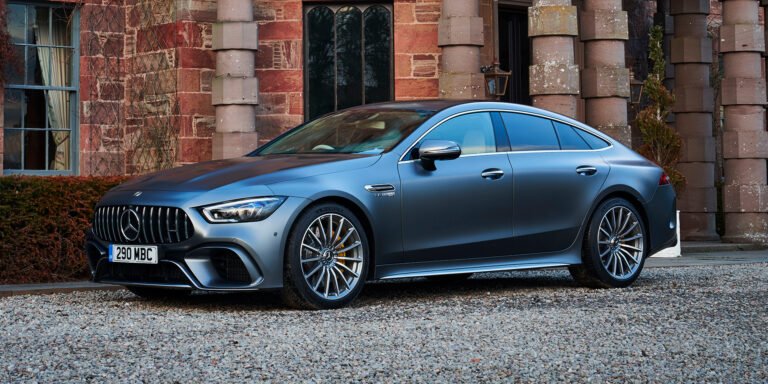
Mercedes-AMG GT 4 Door

Summary

The Mercedes-AMG GT 4 Door is a luxury liftback that combines sports car performance with the cabin luxuries and practicalities of a high-end executive car – rivalling upmarket sports saloons like the Porsche Panamera.

While the GT 4 Door is marketed alongside the cheaper GT Coupé sports car, it is actually built on the same platform as the Mercedes-Benz E-Class executive saloon. While the definition of a coupé model usually boils down to a two-door car, Mercedes-AMG insists on calling this liftback model the GT 4 Door Coupé, due to its sporty sloping roofline.

First arriving on UK roads in the middle of 2018, the entry-level Mercedes-AMG GT 4 Door is powered by a supercharged V6 engine with mild-hybrid technology. The range also includes more powerful twin-turbocharged V8 models, and a flagship plug-in hybrid model, called the E-Performance.

The GT 4 Door has been warmly received by the British motoring media since its arrival, particularly enthusiast-focused titles who are impressed by the car’s exciting driving dynamics and pace, as well as its alluring looks. “It looks great and goes like hell”, says Top Gear.

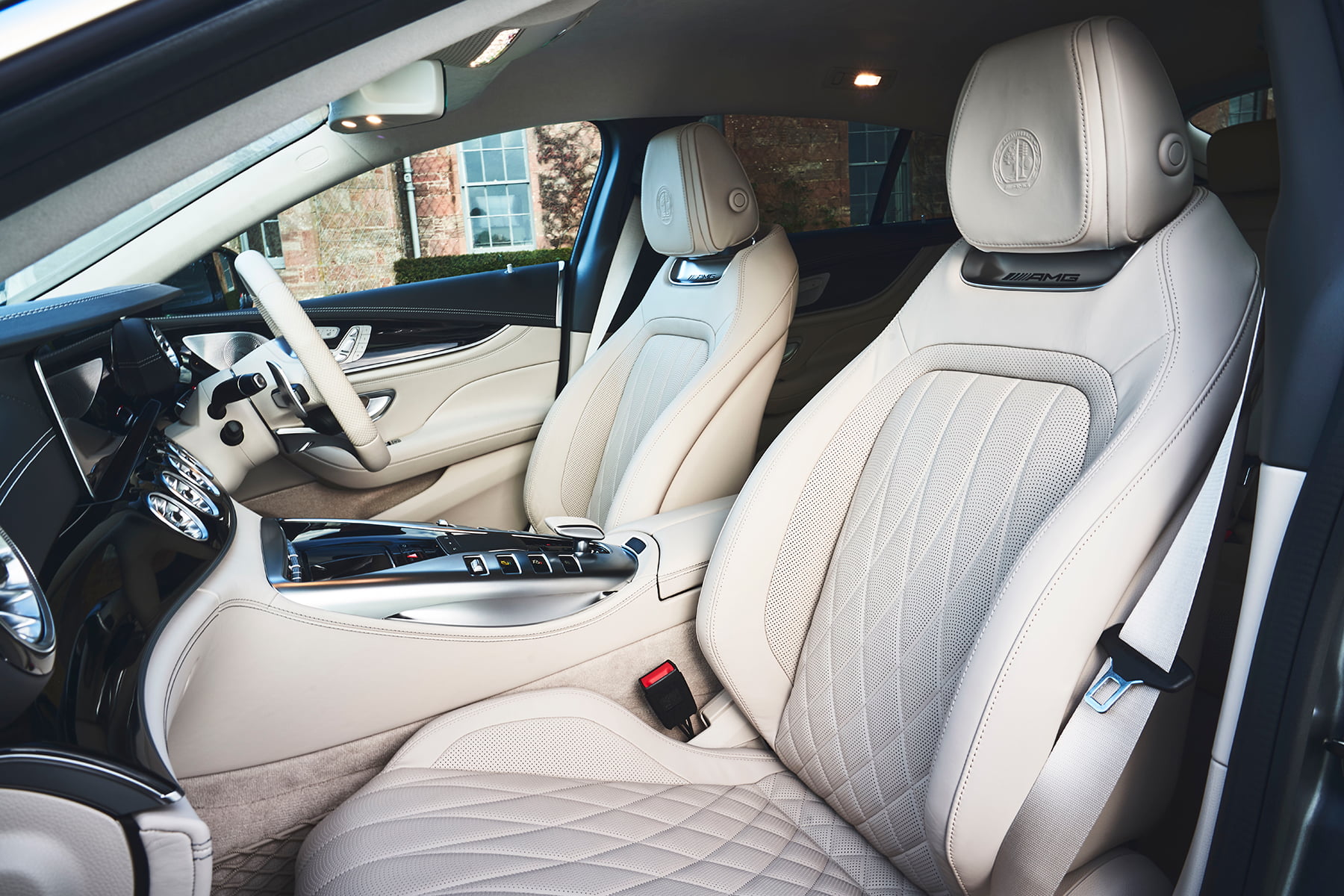
That said, more consumer-centric motoring outlets don’t see the Mercedes-AMG GT 4 Door in the same light. For example, Carwow comments that the liftback’s interior “looks like an AMG greatest hits album”, with a heap of stylish touches taken from other models in the range.

The car’s six-figure price is another big sticking point for reviewers – which has led many journalists to recommend the Porsche Panamera over the GT 4 Door, as it is considered to be the better all-round choice, and for a cheaper upfront cost.

As of March 2026, the Mercedes-AMG GT 4 Door holds a New Car Expert Rating of E, with a score of 53%. Although it gets good grades from media reviews, it is hampered by very high running costs and poor CO2 emissions. It’s also worth noting that we don’t have safety or reliability data at this time.

GT 4 Door highlights

  • Alluring engine soundtrack
  • Powerful performance
  • Efficient plug-in hybrid powertrain
  • Spacious cabin and boot
  • Surprisingly agile for a car of this size

GT 4 Door lowlights

  • Plug-in hybrid’s small electric range
  • Firm suspension hinders comfort
  • Loud road noise
  • Exceptionally expensive
  • Porsche Panamera is a better all-rounder

Key specifications

Body style: Large five-door liftback
Engines:
petrol, plug-in hybrid
Price:
From £173,705 on-road

Launched: Summer 2018
Last updated: Winter 2018/19
Replacement due: TBA

Media reviews

Reviews, road tests and comparisons from across the UK automotive media. Click any of the boxes to view.

Featured reviews

More reviews

Auto Express

Auto Trader

Car

Carbuyer

Driving Electric

Evo

Heycar

Honest John

Parkers

The Sun

The Telegraph

Top Gear

Safety rating

Independent crash test and safety ratings from Euro NCAP

No safety rating

As of March 2026, the Mercedes-AMG GT 4 Door has not been assessed by Euro NCAP.

Eco rating

Independent economy and emissions ratings from Green NCAP

No eco rating

As of March 2026, the Mercedes-AMG GT 4 Door has not been assessed by Green NCAP.

Similar cars

If you’re looking at the Mercedes-AMG GT 4 Door, you might also be interested in these alternatives

Audi e-tron GT | Audi RS 7 Sportback | BMW M8 Gran Coupé | Mercedes-AMG CLS 53 | Porsche PanameraPorsche Taycan | Tesla Model S

Buy a Mercedes-AMG GT 4 Door

If you’re looking to buy a new or used Mercedes-AMG GT 4 Door, The Car Expert’s partners can help you find the right car

Motors 600x300

Find your next used car with Motors. Find out more

Auto Trader logo 600x300

Find your next new or used car with Auto Trader. Find out more

Carwow logo 600x300

Find your next new or used car with Carwow. Find out more

Lease a Mercedes-AMG GT 4 Door

If you’re looking to lease a new Mercedes-AMG 4 Door, The Car Expert’s partners can help you find a competitive deal.

Leasing-com logo

Personal contract hire deals from Leasing.com. Find out more

Carwow logo 600x300

Personal contract hire deals from Carwow. Find out more

Select Car Leasing logo

Personal contract hire deals from Select Car Leasing. Find out more

Subscribe to a Mercedes-AMG GT 4 Door

If you’re interested in a car subscription, The Car Expert’s partners can help (PS: What’s a car subscription?)

Cocoon Vehicles logo 600x300

Car subscriptions from Cocoon.
Find out more

Just Vehicle Solutions logo 600x300

Car subscriptions from Just Vehicle Solutions.
Find out more

Flexible Vehicle Contracts logo 600x300px

Car subscriptions from Flexible Vehicle Contracts.
Find out more
Abarth 695 line-up bolstered by new Rally-inspired trim

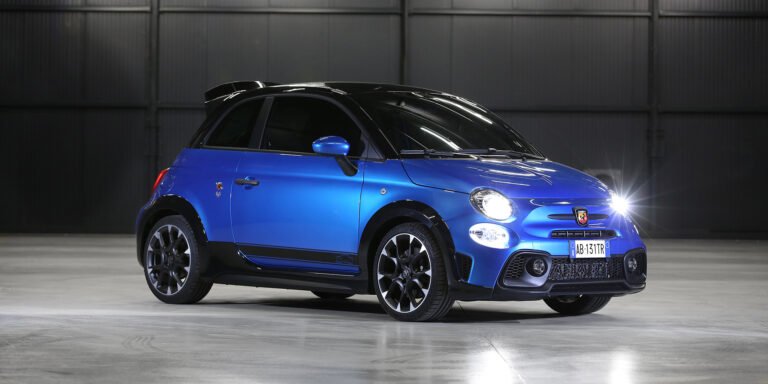
A new limited edition trim, called the Tributo 131 Rally, will feature at the top of the Abarth 695 range from late Spring 2022, which the manufacturer says pays homage to the championship-winning Fiat 131 Abarth Rally car, which completed its last competitive race over 40 years ago.

Abarth says that the Tributo 131 Rally trim gives the 695 hot hatch a “redefined look”, with a unique two-tone colour scheme inspired by the Rally car’s original blue livery from the 1970s, which contrasts the wheel arches, side skirts, and roof in a glossy black.

The most notable difference is the addition of a large roof spoiler in the rear which is branded with bold ‘Abarth’ lettering. The manufacturer says that this lip spoiler allows the driver to adjust the aerodynamics of the hatch, with 12 different angle settings between 0 and 60 degrees.

The 2022 Tributo 131 Rally is fitted with 17-inch alloy wheels like the standard hot hatch, but with a unique diamond cut design. Like the top-spec 695 Competizione trim, this new rally-inspired trim gets an uprated suspension system from specialists Koni, and more powerful Brembo brakes visible behind the alloys.

Abarth’s sportiest exhaust system is also present on this new trim. Called the ‘Record Monza Sovrapposto’, this four-pipe sports exhaust which can be made quieter or louder using a button on the dashboard.

Stepping inside, the interior trim of the Tributo 131 Rally is identical to the standard Abarth 695, apart from some blue accents and stitching on the seats.

This new limited edition uses the same 1.4-litre four-cylinder petrol engine as the rest of the 695 range, which has recently been updated for 2022. This engine is capable of producing 180hp and 250Nm of torque.

Abarth describes this limited run model as a collector’s edition – 695 models will be made for purchase worldwide, and some of these will reach the UK, with pricing starting at £32,325.

Although it has collected plenty of reviewer recommendations for its driver appeal, the 695 has faced the same issues since its arrival in 2016, many reviewers concluding that it was outdated and expensive when compared to newer hot hatch rivals. The Abarth 695 currently holds an Expert Rating of 49%.

Peugeot 508 PSE

Summary

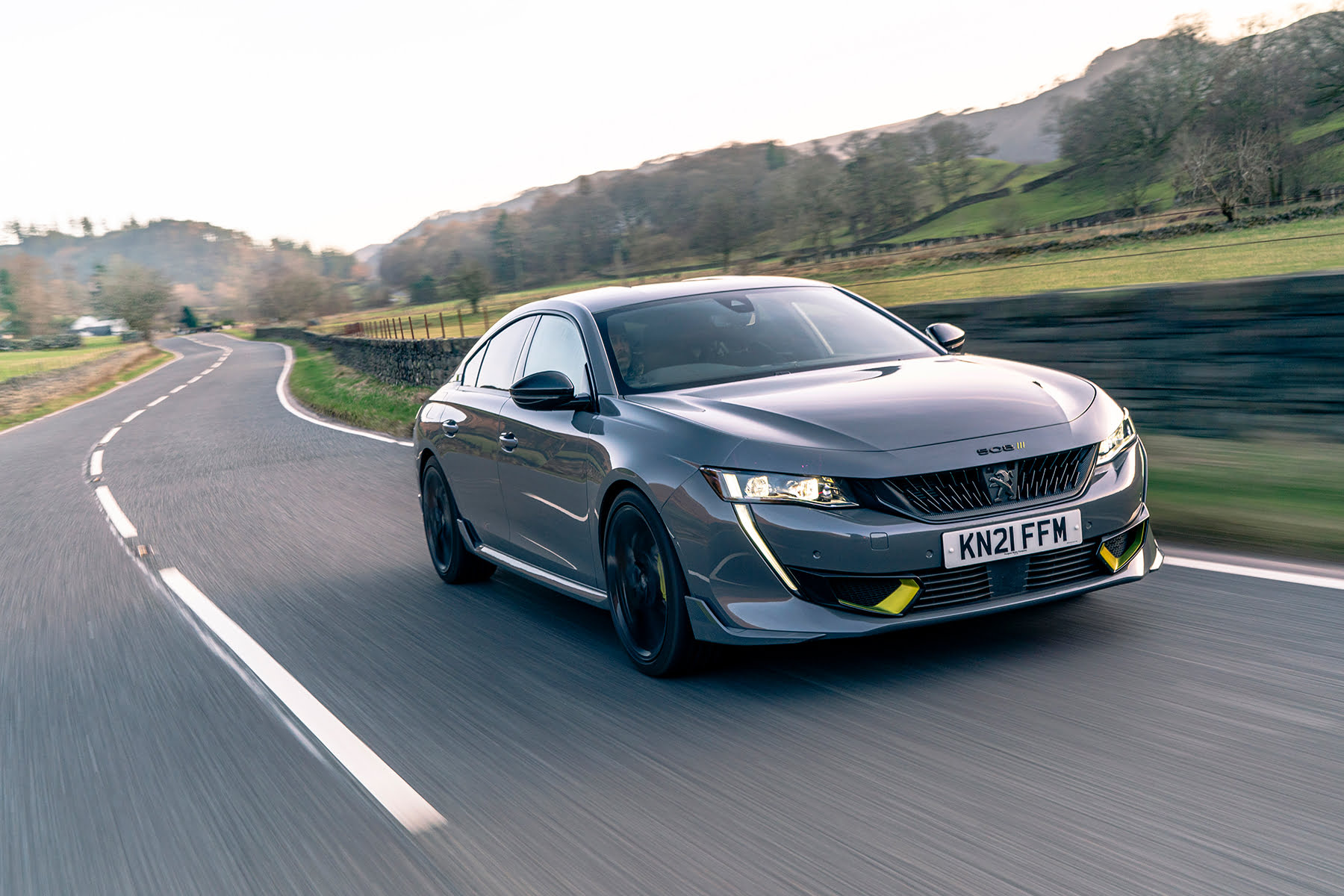
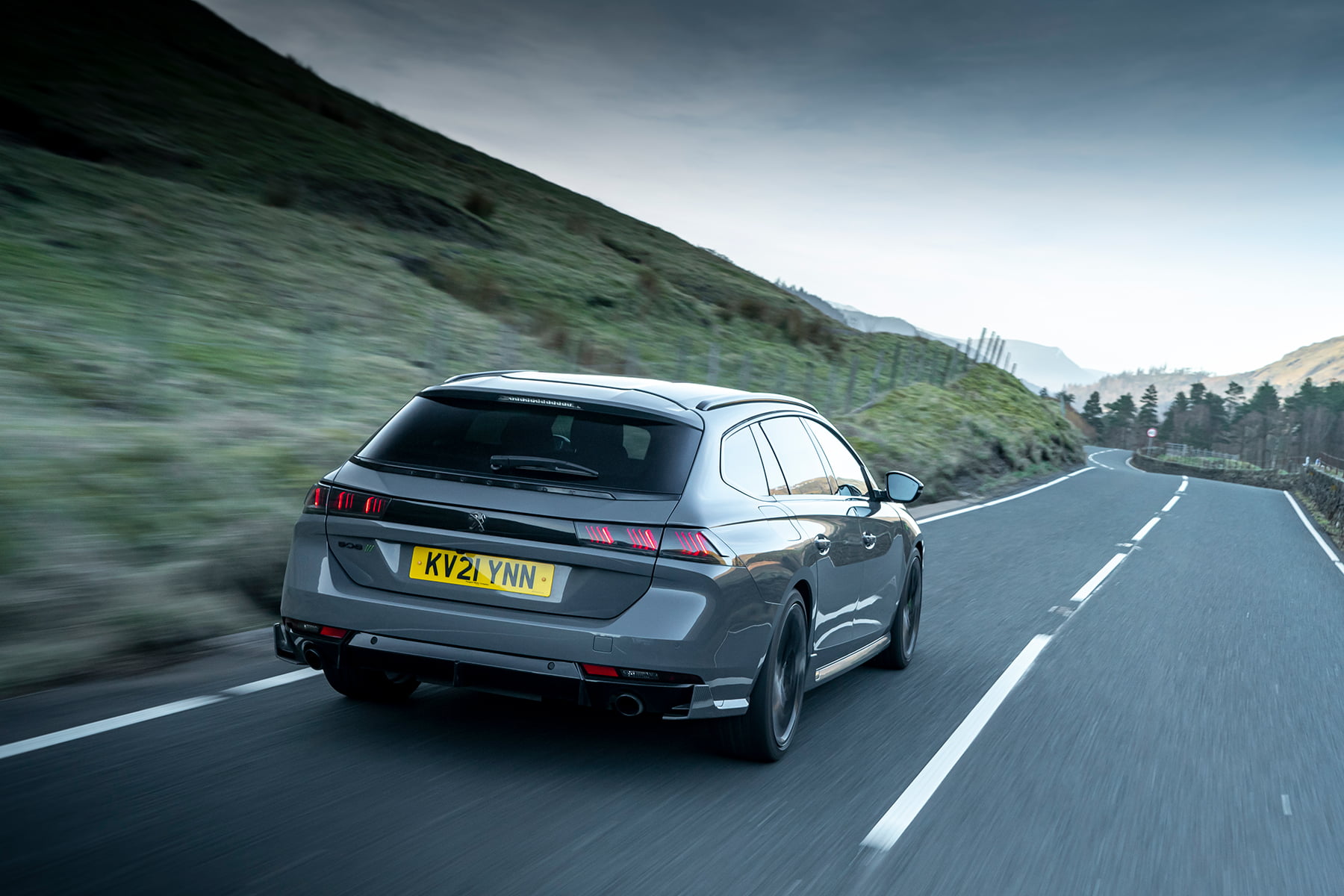
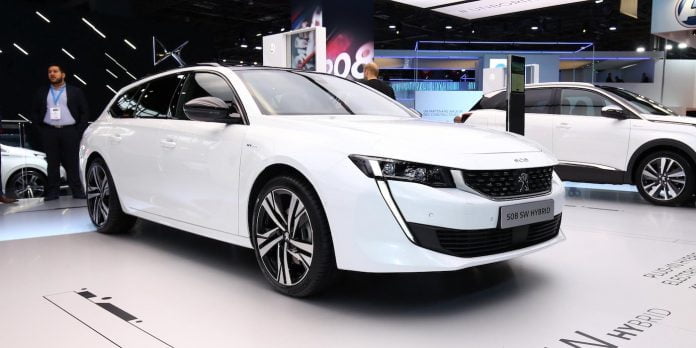
A high-performance plug-in hybrid, the Peugeot 508 PSE (Peugeot Sport Engineered) is the flagship version of the Peugeot 508, offered in both liftback and estate body styles.

As well as the car’s sportier bodywork that the manufacturer says improves aerodynamics, the Peugeot 508 PSE produces more than double the power of the standard 508 saloon, thanks to its 355hp plug-in hybrid powertrain which combines a petrol engine with two electric motors.

Peugeot says that the 508 PSE can complete a 0-60mph sprint in 5.2 seconds, and travel a maximum of 26 miles on just electric power.

This is the most expensive model that Peugeot has ever sold, and by current plug-in hybrid standards, that all-electric range is middling. The cheaper Volvo V60 Recharge comparatively has an electric range of 54 miles.

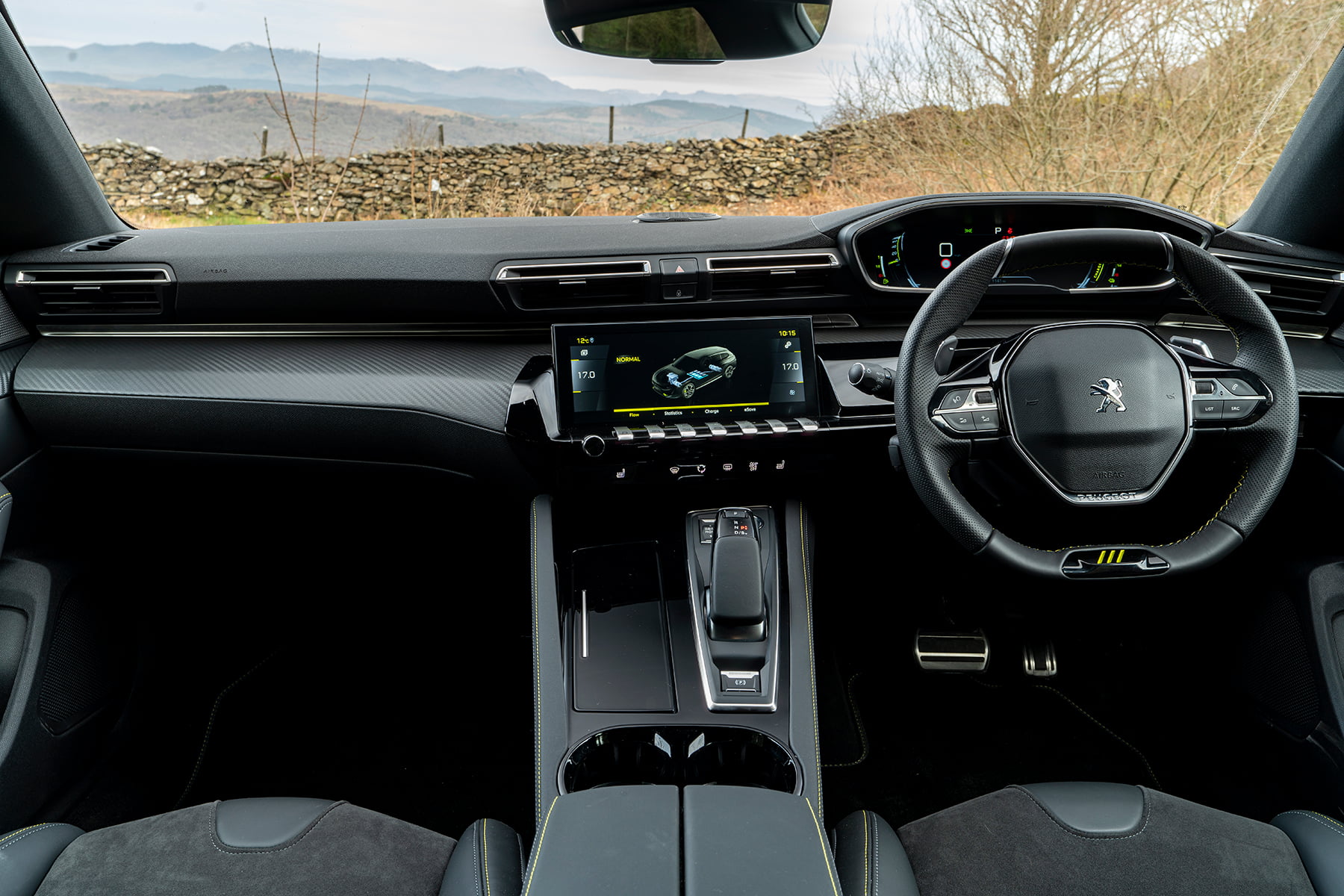
Although its review scores have been quite poor compared to similarly priced cars from other brands, a number of outlets argue that the 508 PSE has some charms – Carwow explains that this sports saloon and estate is “extremely handsome, fast and comfortable”, while Auto Express says that this is “a versatile machine loaded with kit that also boasts strong efficiency”.

If you find this flagship performance model intriguing, you may be deterred by its price tag. Parkers comments that, “with a list price of more than £50,000, the 508 PSE is a tough sell for private buyers”.

A facelifted version of the 508 PSE arrived in the second half of 2023, and the model was discontinued in 2025. As of September 2025, you can still find new car stock at Peugeot dealers but you can’t order a new vehicle from the factory.

As of September 2025, the Peugeot 508 PSE holds a New Car Expert Rating of B, with a score of 64%. Being a plug-in hybrid, it has very low official CO2 emissions. Its safety rating and new car warranty score are only average, and its running costs are media review scores are poor.

508 PSE highlights

  • Impressive performance
  • Low running costs
  • Agile handling and body control
  • Comfortable on long cruises
  • Distinctive styling

508 PSE lowlights

  • Average interior quality
  • Small battery range
  • Unreasonably expensive to buy outright
  • Slightly cramped rear seating
  • Infotainment lags behind rivals

Key specifications

Body style: Mid-sized liftback and estate
Engines:
Plug-in hybrid
Price:
From £53,975 on-road

Launched: Autumn 2020
Last updated: Spring 2023
Replacement due: TBA

Media reviews

Highlighted reviews and road tests from across the UK automotive media. Click any of the boxes to view.

Featured reviews

More reviews

Auto Express

Car

Company Car Today

Driving Electric

Evo

Motoring Research

Parkers

The Sun

Top Gear

Safety rating

Independent crash test and safety ratings from Euro NCAP

Overall score: 5 stars
Date tested: December 2018
Date expired: January 2025
Read the full Euro NCAP review

Adult protection: 96%
Child protection: 86%
Vulnerable road users: 71%
Safety assist: 79%

Notes on safety rating

The Peugeot 508 range – including the 508 PSE – was tested by Euro NCAP back in 2018 and awarded a five-star rating. However, this rating expired in January 2025 and is no longer valid as the car no longer meets the standards required for such a rating. This is normal practice, as Euro NCAP reviews its ratings on most cars annually with most ratings expiring after about six or seven years.

Although the rating has now expired, the score is still useful if you are comparing a used 508 PSE to vehicles of similar age – whose ratings will have probably also expired.

Eco rating

Independent economy and emissions ratings from Green NCAP

No eco rating

As of September 2025, the Peugeot 508 PSE has not been lab tested by Green NCAP.

Running cost rating

Clear Vehicle Data logo close crop

Monthly cost of ownership data provided exclusively for The Car Expert by Clear Vehicle Data

Fuel consumptionAverageScore
Plug-in hybrid models159 mpgA
CO₂ outputAverageScoreVariationScore
Plug-in hybrid models43 g/kmA
Battery rangeAverageScoreVariationScore
Plug-in hybrid models32 milesE
Insurance groupAverageScoreVariationScore
All models42E
Service and maintenanceCostScore
Year 1£356D
Year 2£834D
Year 3£1,221D
Year 4£1,388D
Year 5£1,850D
Overall£5,649D

Running costs for the Peugeot 508 PSE are generally expensive, according to five-year cost data provided exclusively to The Car Expert by our technical partner, Clear Vehicle Data.

Being a plug-in hybrid, fuel economy and CO2 emissions look great on paper, but that’s due to the woeful EU/UK goverment lab tests that are completely useless at measuring a plug-in hybrid…

Battery range also looks woeful, but it’s fairly average for a plug-in hybrid. A fully electric car of similar size, by comparison, will usually have about 250-300 miles of range.

Insurance costs are expensive compared to the regular 508 models, while servicing and maintenance costs over the first five years are also worse than average.

Warranty rating

New car warranty information for the Peugeot 508 PSE

Overall ratingC56%
New car warranty duration3 years
New car warranty mileage60,000 miles
Battery warranty duration8 years
Battery warranty mileage100,000 miles

Peugeot’s new car warranty is pretty much the bare minimum offered in the UK, with a duration of three years and a limit of 60,000 miles. Other rivals in the price bracket do better (and in some cases, much better).

In addition to the standard new car warranty, the battery components of the 508 PSE have an eight-year/100,000-mile warranty for the battery components.

Warranty on a used Peugeot 508 PSE

  • If you are purchasing an ‘Approved Used’ 508 PSE from an official Peugeot dealership, you will get a minimum six-month warranty included.
  • If you are buying a used 508 PSE from an independent dealership, any warranty offered will vary and will probably be managed by a third-party warranty company.
  • If you are buying a used 508 PSE from a private seller, there are no warranty protections beyond any remaining portion of the original new car warranty.

If you’re looking to buy a used car that is approaching the end of its warranty period, a used car warranty is usually a worthwhile investment. Check out The Car Expert’s guide to the best used car warranty providers, which will probably be cheaper than a warranty sold by a dealer.

Recalls

Official DVSA safety recalls that have been issued for the Peugeot 508 range

Date: August 2021
Recall number: R/2021/275
Model types: All
Build dates: 01/2018 to 06/2021
Number of vehicles affected: 3,376
Defect: The accessory roof rack for the Peugeot 508 saloon could detach from the vehicle if used to carry items other than a roof box.
Remedy: A full refund will be offered by the selling retailer (return of the roof rack and receipt) and recommend the customer purchase another solution to transport bicycle(s).

Date: November 2020
Recall number: R/2020/331
Model types: All
Build dates: 04/2019 to 07/2019
Number of vehicles affected: 959
Defect: The filtering performance of the diesel particle filter (DPF) may not meet the required specification.
Remedy: Replace the DPF on affected vehicles.

Date: February 2020
Recall number: R/2020/052
Model types: All
Build dates: 10/2019 to 01/2020
Number of vehicles affected: 78
Defect: Certain rear suspension fixing bolts may not conform to specification, which could cause them to break.
Remedy: Replace the affected bolts.

As of September 2024 (our most recent data point), there have been three DVSA vehicle safety recalls on the current Peugeot 508 range to address different issues.

Not all vehicles are affected by recalls. You can check to see if your car is included in any of the above recalls by visiting the DVLA website or contacting your local Peugeot dealer.

If your car is affected by a recall, the vehicle must be repaired and you should not be charged for any work required. If you are buying a used Peugeot 508 PSE, you should insist that any outstanding recall work is completed before you take delivery of the vehicle.

Similar cars

If you’re looking at the Peugeot 508 PSE, you might also be interested in these alternatives

Current models: Alfa Romeo Giulia Quadrifoglio | Audi S5 | BMW 3 Series | BMW 4 Series Gran Coupé | BMW M3 | Cupra Leon Estate | Mercedes-AMG CLA 35 | Mercedes-AG CLA 45 | Mercedes-AMG C 63 | Porsche Taycan Cross Turismo | Skoda Octavia vRS | Volvo V60 Recharge

Discontinued models: Audi S4

More news, reviews and information about the Peugeot 508 family at The Car Expert

Everything you need to know about Peugeot

Everything you need to know about Peugeot

Peugeot 508 (2011 to 2018)

Peugeot 508 (2011 to 2018)

Peugeot offers up to £7K off 508 PSE models

Peugeot offers up to £7K off 508 PSE models

Peugeot 508 SW review

Peugeot 508 SW review

Peugeot 508

Peugeot 508

Geneva debut for potent Peugeot 508 hybrid

Geneva debut for potent Peugeot 508 hybrid

The ten safest new cars for 2019

The ten safest new cars for 2019

Five-star safety ratings for seven new models

Five-star safety ratings for seven new models

Peugeot 508 review

Peugeot 508 review

Peugeot reveals 508 SW estate in Paris

Peugeot reveals 508 SW estate in Paris

First look – the real Geneva show stars

Peugeot 508 shapes up to fight SUVs

Peugeot 508 shapes up to fight SUVs

Buy a Peugeot 508 PSE

If you’re looking to buy a new or used Peugeot 508 PSE, The Car Expert’s partners can help you find the right car

Motors 600x300

Find your next used car with Motors. Find out more

Auto Trader logo 600x300

Find your next new or used car with Auto Trader. Find out more

Carwow logo 600x300

Find your next new or used car with Carwow. Find out more

Lease a Peugeot 508 PSE

If you’re looking to lease a new Peugeot 508 PSE, The Car Expert’s partners can help you find a competitive deal

Leasing-com logo

Personal contract hire deals from Leasing.com. Find out more

Carwow logo 600x300

Personal contract hire deals from Carwow. Find out more
Select Car Leasing logo

Personal contract hire deals from Select Car Leasing. Find out more
Subscribe to a Peugeot 508 PSE

If you’re interested in a car subscription, The Car Expert’s partners can help (PS: What’s a car subscription?)

SelfDrive UK logo

Car subscriptions from SelfDrive.
Find out more
Drive Fuze logo 600x300

Car subscriptions from DriveFuze.
Find out more

Cocoon Vehicles logo 600x300

Car subscriptions from Cocoon.
Find out more
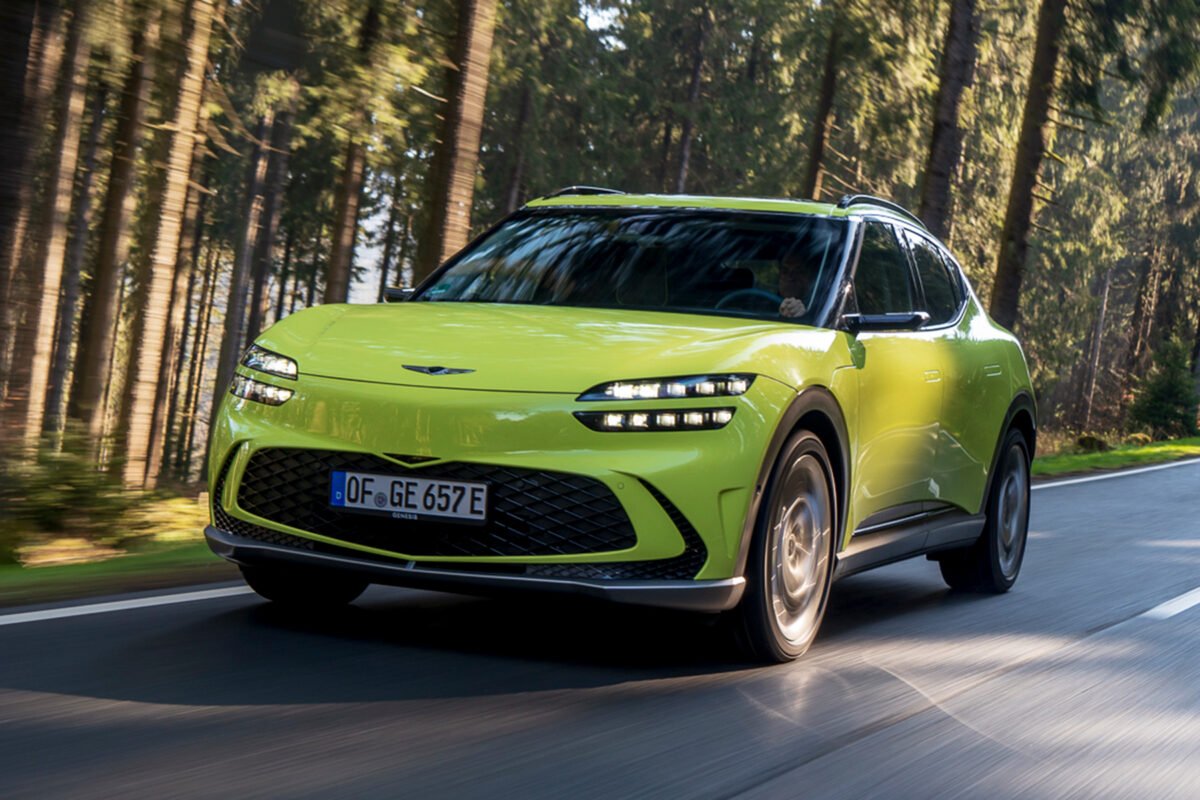
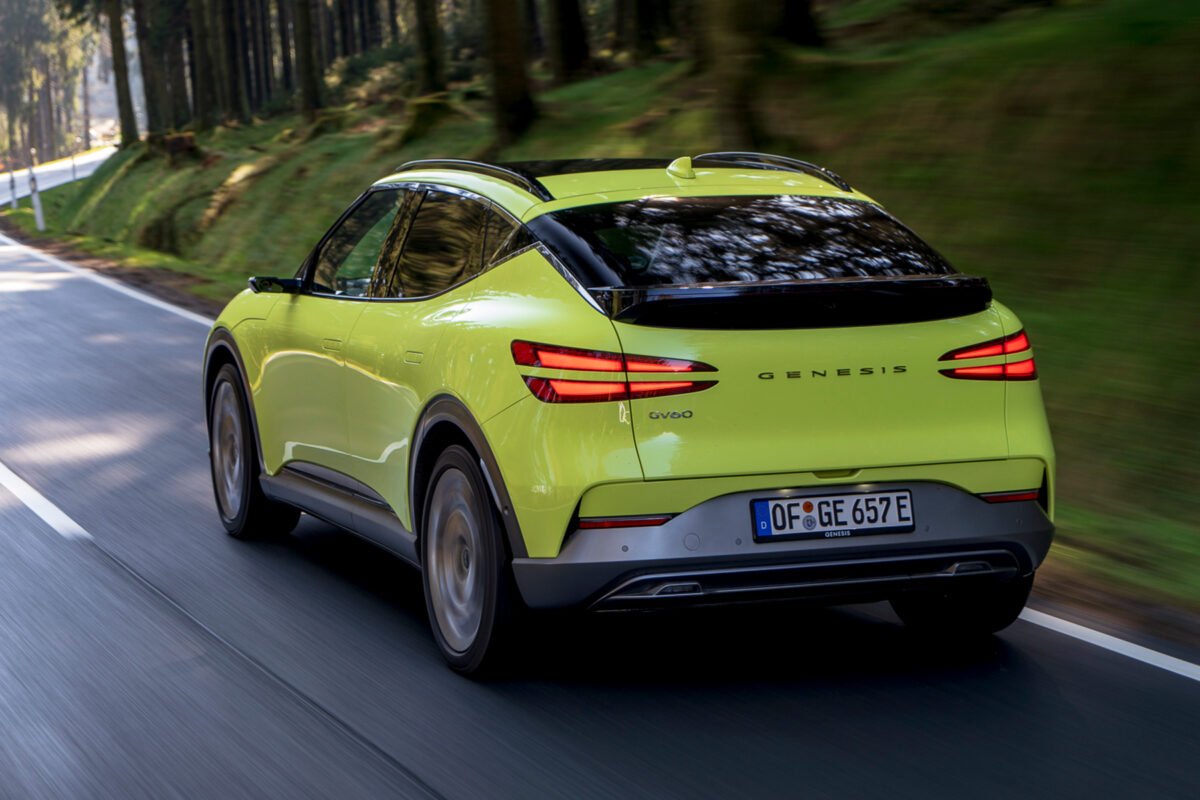
Genesis releases price list for all-electric GV60

Genesis has announced the full UK pricing and specification for the GV60, the sixth European but first all-electric model from Hyundai’s upmarket sister brand.

Pre-orders for the mid-sized crossover, built on the same underpinnings as the Kia EV6 and Hyundai Ioniq 5, are now being taken.

The entry-level GV60 employs a single 168kW motor mounted on the rear axle and is priced from £47,005.

The all-wheel-drive Sport version, which adds a second 74kW motor on the front axle, will cost from £53,605 and the range-topping Sport Plus, with 360kW all-wheel-drive, starts at £65,405.

Genesis claims a range of up to 321 miles between charges for the single-motor GV60, with the dual-motor Sport variants rated at 292 miles, just three miles more than the Sport Plus despite the extra power of the top model.

Charging options available for the car will include 350kW rapid charging taking 18 minutes to replenish the battery pack from 10 to 80%.

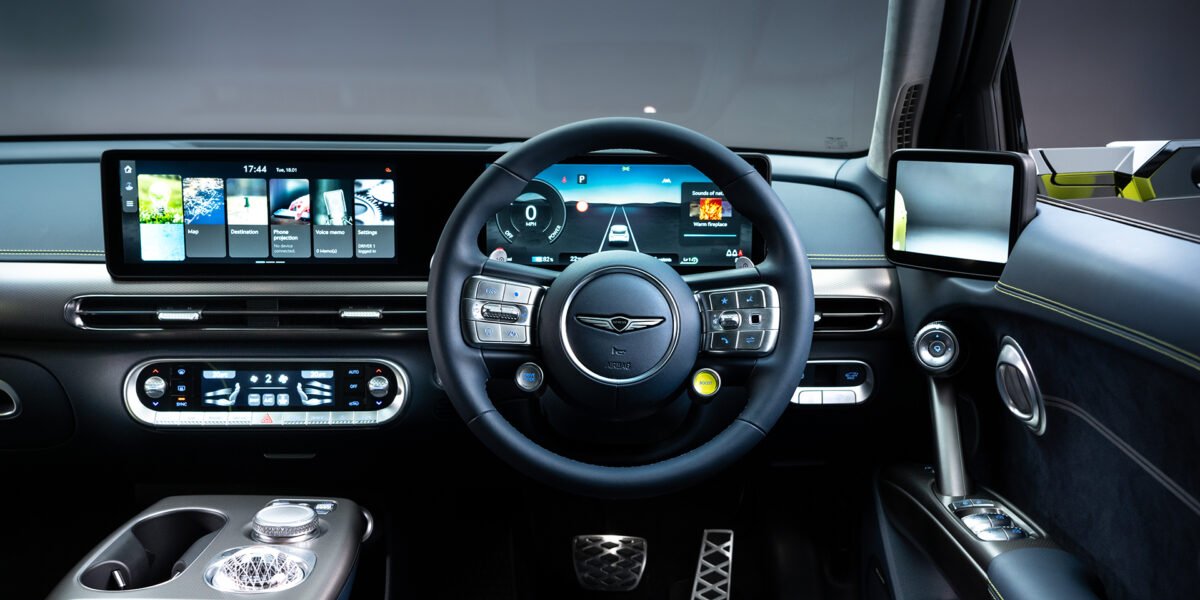
Standard equipment on all versions includes a range of active safety systems, dual 12-inch infotainment screens for front-seat passengers and wireless phone charging.

A range of six option packs will also be available for the car, ranging from an ‘Innovation Package’ for an extra £2K which includes additional active safety systems, parking aids and a head-up display, to comfort and leather seat packs and an ‘Outdoor Pack’ that adds a roof rack and plug sockets to power electrical equipment outside the car.

Further options available for the GV60 as part of the packages will include a panoramic sunroof and digital rear-view mirrors.

Genesis plans to quickly ramp up its electric range – the existing G80 saloon and GV70 SUV will be next to be offered in EV form, with the brand planning to launch only electric models from 2025.

The first GV60 customers are expected to receive their cars next month.

Ford Mustang Mach-E test drive

0

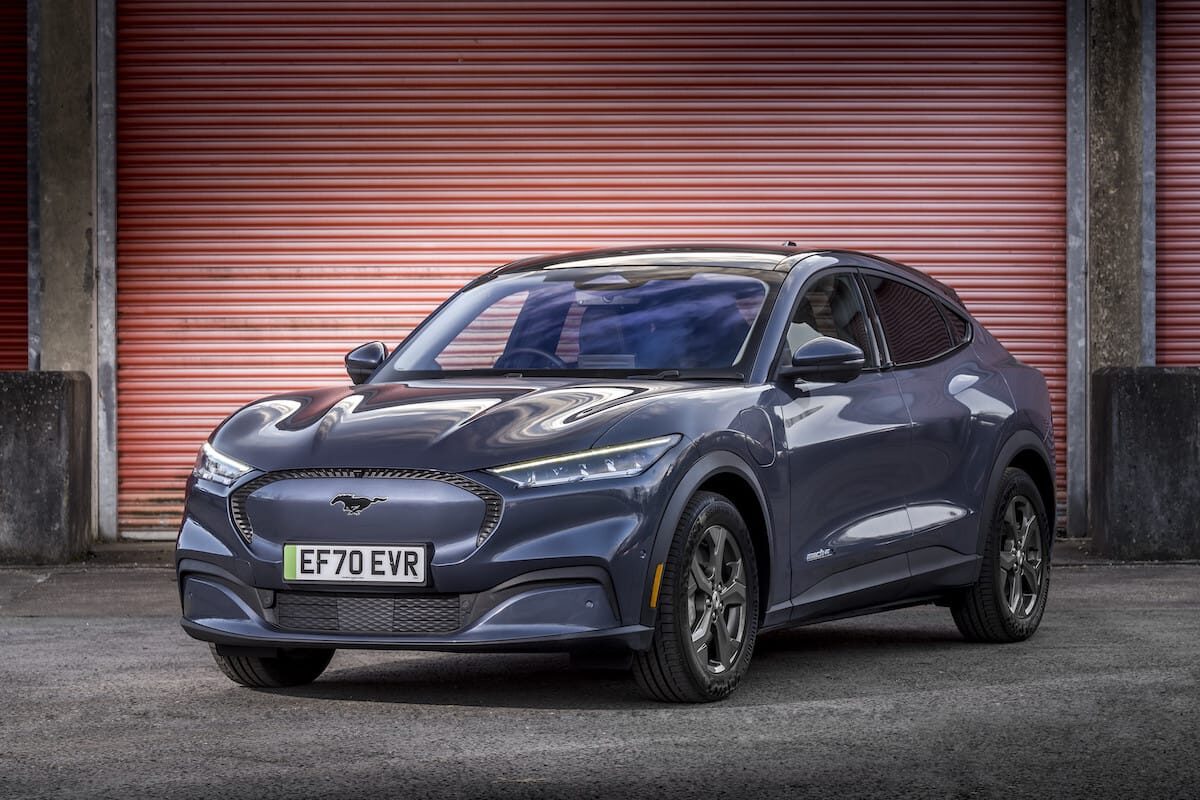
The choice of electric vehicles (EVs) is getting broader and broader as more manufacturers decarbonise existing models and create swanky new models. The Ford Mustang Mach-E is one model falling into the latter category here.

Built from the ground up to be nothing but pure electric, the fact Ford has called it a ‘Mustang’ tells you all you need to know about the kind of drivers they’re looking to attract with the Mach-E.

Not to be confused with any model of razor blade, the Mustang Mach-E has great kerb appeal. Sitting in the large SUV category, the design lines carry real elegance, mitigating the chunkiness that can often be associated with SUVs. It’s a car squarely aimed at taking on rival models like the Volkswagen ID.4, Jaguar I-Pace and anything in the Tesla range, but also luring petrol drivers of cars like the Hyundai Tucson, Nissan Qashqai and Kia Sportage over to the world of pure electric. 

The Mustang Mach-E has been well received by the motoring media, so we’re keen to find out more about what it’s like to live with and whether it should be on your new car shopping list.

What’s new?

Everything. Ford has taken what it knows about building cars – it turns out, quite a bit – and combined that knowledge with its comparatively fledgling progress in electric vehicle technology development. The Mustang Mach-E is Ford’s first all-electric car; but it’s not a pre-existing model that’s been turned electric, it’s brand spanking new.

How does it look?

Really smart. The body shape is big, but it’s more Captain America than Incredible Hulk. That is to say, it’s proportionate. The tail-lights with their three-stripe indicator and brake illumination feature the unmistakable modern Mustang flair and this design has been integrated into parts of the cabin display too.

The door handles aren’t your traditional pull handle, neither are they retractable ‘hidden’ ones featured in early versions of the Tesla Model S and current Jaguar i-Pace. There’s a circular button on the door near the B-pillar combined with a pull-lip immediately below it, which makes access to the car swift and easy, albeit not conventional. On the driver’s side, there’s also a keypad, giving you a way of accessing and driving the car using a PIN, completely key- and mobile-free.

How does it compare with rivals? Styling is always a subjective thing, but we think the Ford Mustang Mach-E looks better than the Tesla Model X, Hyundai Kona or MG ZS EV. But it’s not as good as the Jaguar i-Pace or Porsche Macan.

What’s the spec like?

Standard spec is generally very generous on Ford models, which continues with the Mustang Mach-E; the latest version of the company’s SYNC infotainment suite joins features such as dual-zone climate control, heated steering wheel and heated front seats, which are electronically adjustable.

The Pre-Collision Assist safety suite is partnered with the Technology Pack to earn a five-star safety Euro NCAP test score, where adult safety is an excellent 92%, child safety 86% and safety assist is assessed at a respectable 82%.

Red brake calipers peek cheekily from behind the 19” black alloys and design touches, such as the Mustang Logo puddle light projections, speak to the fancy sportiness of the marque – all as standard. The car looks sharp in the daytime and the dark.

Privacy glass and the optional ‘Carbonised Grey’ body colour, exclusive to the Mustang Mach-E, engender a sense of understated prestige, which transitions into the vehicle’s cabin too.

How does it compare with rivals? Equipment-wise, the Ford Mustang Mach-E is better kitted out than Citroen e-C4 but not as good as what Tesla offers in any of its models.

What’s the Mach-E like inside?

Stepping into the cabin, there’s an unmissable 15-inch iPad-like screen, reminiscent again of early Tesla Model S models. Tesla has since changed its highly controversial screen from portrait to landscape, to cater for the TV streaming services the brand has started offering. But Ford’s efforts here are more like a digital amalgamation of the climate control panel and a regular infotainment touchscreen. It looks clean and minimalist, particularly with the speaker integrated into the dash, but it’s not a perfect solution.

The home page of the central display offers all the selections for switching between FM radio, DAB, Bluetooth, telephone, navigation and other services. It’s a customisable experience, so you can ensure your home page is always configured for when you drive, if you share your car with other householders. It’ll remember your preferred seat position and your favourite radio stations too. Nothing innovative there, but it’s easier than many other cars to set it all up.

Trying to select anything on the move without voice control, though, just feels far too hazardous. Your eyes leave the road for a beat too long and there’s no buttons to develop any muscle memory, so there’s no way of seeing how this might improve over time. There is a reasonably responsive voice control, however.

A ten-inch digital instrument display sits directly in front of the driver. This works well since it only delivers the simplest information; clock, digital speed, navigation cues and safety alerts. Conversely, this display will be preferred by drivers who don’t like the lack of any driver display in the Tesla Model 3 and Model Y cabins.

Wireless Android Auto and Apple Carplay connectivity reduce the need for a clutch of cables littering the central console area, as does the wireless mobile charging pad, enabling drivers to arrive at their destination with juice. Notwithstanding, there are USB ports if you still need them.

There’s also cubby space on a non-slip mat for sunglasses, keys and other detritus. Practicalities such as cup holders, armrest storage and rear seat climate control complement the top-quality contrast-stitched fabric interior. The build quality and selected materials feel as impressive as the Mach-E looks.

And there’s a decent amount of space too. Rear seat passengers won’t feel cramped, even 39 weeks’ pregnant. While the boot of the Mach-E isn’t the biggest, compared with rivals, 502 litres (equivalent to over 220 four-pint milk cartons, so….a lot of space) provides enough convenience to throw your world into the back and get on the road pronto.

How does it compare with rivals? We rate the Ford Mustang Mach-E cabin as better than the Tesla Model 3, Peugeot 3008 and Volkswagen ID.4, though not as good as the Porsche Macan, Land Rover Discovery or Land Rover Defender

What’s under the bonnet?

Trick question – under the bonnet is a ‘frunk’, or front truck, as the Americanised portmanteau goes. Instead of a petrol engine mounted at the front of the car, everything to power the Mach-E is located between the axles (well, as close as humanly possible) to ensure perfect weight distribution.

When it comes to the choice of battery size and motoring configuration, however, that depends on how frequently you’re willing to stop to charge on longer journeys, how often you do longer journeys and whether you need all-wheel-drive (AWD), which requires an extra electric motor on the front axle in addition to the one found on the rear as standard.

Specifically, there’s a choice of five set-ups; RWD with Standard (68kW) or Long Range (88kW) battery, AWD with Standard or Extended Range. The Extended or Long Range option claims 379 miles. Unsurprisingly, the bigger the battery, the more expensive the car. A pricey GT option with the bigger battery tops the list of five, at £67,000.

Our test model was the AWD without extended range; it was noticeable. The claimed 248 miles was more like 200. A little more energy could be eked out with more conservative driving along more scenic roads, since regenerative braking technology (i.e. the tech capturing the energy lost in braking and putting it back in the batteries) doesn’t make a happy bedfellow with motorways, where the battery gauge drops almost before your eyes. Unlike a conventional petrol or diesel car, an EV tends to get best economy in stop-start urban driving rather than constant motorway speeds.

How does it compare with rivals? We rate the Ford Mustang Mach-E powertrain as better than BMW i4, Kia e-Niro, MG ZS EV and Citroën e-C4, but not as good as the Mercedes Benz EQC, BMW iX or any Teslas.

What’s the Ford Mustang Mach-E like to drive?

For the miles you do get from the batteries, the driving experience is spirited and the steering is light. Like all electric cars, the acceleration is instant, so the sizeable Mustang Mach-E makes easy work of getting off the line at traffic lights and roundabouts. There’s not a lot of body roll in corners either, which coupled with the comfortable ride height and great visibility makes it a reassuring car to drive.

Since it’s been given its own button, we were hoping for a bit of self-parking magic. Alas, the Park Assist feature is simply a reversing camera and sensors. Still, the Mustang Mach-E manouevred easily and the turning circle was relatively tight.

Initiating cruise control was straightforward and the digital menu gives you the option to select different cruise control modes; standard (you just want the car to maintain a constant speed), adaptive (you want the car to maintain a specified distance from the car in front) or intelligently adaptive (you want the car to cruise at the set speed, maintaining the distance with the car in front AND keep to the centre of the lane using Lane Keep Assist).

Of course, to mitigate distraction these preferences need setting before you start your journey, but it’s heartening for drivers, not buying into the new-fangled future of autonomous driving, to have the chance to opt out if they wish.

How does it compare with rivals? The Ford Mustang Mach-E is better to drive than the MG ZS EV but not as good as the BMW iX, Mercedes EQC or Tesla’s models.

What about charging it?

The charging experience was one of the best we’ve had in an EV. Ford claims it can go from 10% battery to 80% in just over 35 minutes, which we found to be an accurate gauge. In fact, it felt faster, but we did use rapid chargers to top up.

Impressively, Ford has integrated a button next to the plug port to force the charging to stop and release the plug from the car. This means if the charge point provider’s app is not communicating properly with the charging station, the situation can be managed by the driver. Since the alternative is a frustrating altercation with the charging device’s touchscreen, a unpredicable wait until all devices decide to disengage, or a call to the EV charging network provider for assistance which may never come, we really really liked this feature.

One charge a week should suffice for most drivers, though, it might push out to two, if you drive mid-week and run around at weekends. Our one longer charge cost £15 from a rapid Pod Point at Lidl, a figure that should halve using a home charger (despite rising energy bills).

Verdict

There is no hiding our enthusiasm for the Ford Mustang Mach-E, as it’s one of the best EVs we’ve driven in a while. From the sleek styling on the outside to the comfort, convenience and practicality on the inside, this car ticks a lot of boxes for busy drivers with lively family lifestyles or hectic outdoorsy hobbies.

Drivers who aren’t tech-savvy are going to be really put off by the unequivocal commitment to digitisation here. The centre screen is massive. While the menus seem intuitive, they’ll take a bit of time to get used to.

Similar cars

If you’re looking at the Ford Mustang Mach-E, you might also be interested in these alternatives

Audi e-tron | Audi Q4 e-tron | BMW iX3 | Hyundai Ioniq 5 | Jaguar I-Pace | Kia EV6 | Mercedes-Benz EQC | Nissan Ariya | Polestar 2 | Skoda Enyaq | Tesla Model Y | Volkswagen ID.4

Key specifications

Model tested: Ford Mustang Mach-E AWD Standard Range
Price (as tested): £52,000
Motor unit: Two electric motors
Gearbox:
Single-speed automatic
Power:
269hp
Torque:
580 Nm

Top speed: 111 mph
0-60 mph: 6.3 seconds
Battery size: 68 kWh
Battery range: 248 miles
Euro NCAP safety rating: Five stars (2020)
TCE Expert Rating: 77% (as of May 2022)

British-built cars top the sales charts in April

Although the new car registration results for April were something of a mixed bag for the car industry, there was good news for British car manufacturing as two of the three best-selling new cars were built here in the UK.

The April data, published this morning by the Society of Motor Manufacturers and Traders (SMMT), showed that private new car sales were slightly up compared to results for last April, but fleet registrations were down by a third. That ended up dragging down the overall results by 16% compared to the same month last year.

New car sales continue to be heavily limited by the supply of crucial components, particularly semiconductor chips that are used in many different areas of a car. Some manufacturers are now also being hampered the Russian invasion of Ukraine, which has affected supplies of other vehicle components that are produced in Ukrainian factories.

However, it’s not all doom and gloom for the car industry. The production problems of the last two years, firstly from Covid shutdowns and now through parts shortages, have led to dramatic changes in how car companies sell their cars. This is actually a much healthier position for the car industry to be in.

After decades of heavy discounting and financial incentives to artificially stimulate demand for new models, car companies currently enjoy the luxury of being able to sell their products at full price – meaning that most of them are actually making more money now than they have in a long time, despite building and selling far fewer cars.

For customers, unfortunately, this means that prices are significantly higher simply because there are simply fewer discounts available. This is particularly impacting fleet sales, as car companies are less inclined to offer massive discounts to fleet companies who purchase many thousands of cars – if you can’t supply the cars anyway, there’s no need to discount them.

Source: SMMT

Electric growth slows

After a buoyant start to the year for electric and plug-in hybrid car sales, April wasn’t quite as strong as expected; EV registrations were still up by 41% compared to the same month last year, but that’s less growth than we’ve seen in recent months. Plug-in hybrid sales were down 37%, but this is more likely to be a blip than a long-term trend.

For fully electric cars, the numbers are heavily influenced by Tesla, which operates very differently to most car manufacturers by not having a traditional dealer network. As such, its sales numbers fluctuate far more than other car companies. After holding the top two spots on the best-sellers list in March, Tesla pretty much vanished from the sales charts altogether in April with almost no reported sales whatsoever (after registering about 13,000 new car sales in March, it appears that Tesla sold no more than a few hundred in April).

Year-to-date, sales of electric cars are still up by nearly 90% as more and more new models enter the new car market. Plug-in hybrid sales are pretty flat compared to the same period for 2021, but renewed growth is likely in the second half of the year.

Source: SMMT

Good month, bad month

Ford powered back to the top of the sales charts for the first time in a long time in April, off the back of strong sales for its Puma and Kuga SUVs. Audi was close behind in second place, with Kia dropping to third after being the biggest-selling manufacturer in March. Ford also took the overall sales lead for 2022 as a result, although the margin to Kia is miniscule.

Despite the overall market being down 16% compared to April last year, there was considerable variation throughout the industry as car companies battled their supply chain demons.

It was a good month for Alfa Romeo, Alpine, Bentley, Cupra, Dacia, DS Automobiles, Fiat, Honda, Hyundai, Kia, Maserati, Mazda, MG, Mini, Nissan, Polestar, Renault, SsangYong and Suzuki. All of these outperformed the overall market by at least 10%.

Meanwhile, life wasn’t as rosy for Jaguar, Jeep, Land Rover, Lexus, Peugeot, SEAT, Skoda, Subaru, Vauxhall, Volkswagen and Volvo – all of whom underachieved against the market by at least 10%.

A notable ongoing absence from each month’s data is Tesla, which doesn’t report its overall numbers to the SMMT.

Qashqai and Mini fly the flag for Britain

Once again, the top ten chart in April was a bit of a mix-up and that pattern is only going to continue in coming months.

It was good news for workers in Sunderland as the Nissan Qashqai took the title of the UK’s best-selling new car in April. Meanwhile, their compatriots in Oxford enjoyed yet another good month for the Mini hatchback, which was the country’s third best-selling new car.

Ford enjoyed a strong performance from the Puma small SUV, while the Kuga mid-size SUV popped up again in tenth place. The Fiesta is still absent from the top ten charts, however.

There were two surprise entries in the top ten, as the Peugeot 208 popped up in sixth place while the Audi A3 was eighth.

In overall year-to-date registrations, the Vauxhall Corsa remains in the top spot ahead of the Ford Puma, while the Nissan Qashqai has surged from eighth place last month to third.

We’ll have our usual monthly analysis of the top ten out shortly.

Source: SMMT

Market correction continues as new car sales decline in April

  • Market correction continues as new car sales decline in April
  • However, car manufacturer profitability is strong as cars get more expensive for consumers

The release of the latest new car sales data from the Society of Motor Manufacturers and Traders (SMMT) reveals that sales in April fell by 16% compared to the same month last year. Electric car sales slipped compared to previous months; the notable absence of Tesla models in the top-10 sellers list for April reveals its impact on the market, affecting new car sales and the EV market share. 

Stuart Masson, Editorial Director at The Car Expert, is available for interview or to provide commentary and analysis on request. The Car Expert is the UK’s most comprehensive automotive consumer advice site.

Commenting on the state of industry, Stuart Masson said: “While many bemoan the downward trend in new car sales, the fact is that vehicle manufacturers are in a healthy state; profitability is strong – both BMW and Stellantis announced strong revenue growth today despite falling sales – and we are hopefully moving towards a more sustainable industry which is less focussed on heating up the market with oversupply of vehicles and heavy discounting.”

With fewer discounts available, Masson added: “More people are paying full price for their cars this year, fewer discounts are available as supply tightens and car companies focus their efforts on private sales rather than selling to large fleets, which almost always expect large reductions on price. The knock-on of this is that finance deals that were typically three years on average are now four years, or you simply don’t get a discount when paying up front.”

“What’s is also great to see, from a UK PLC point of view, is that two of the top three performing models in April (both in the top five YTD) are British built – the Nissan Qashqai was the country’s best-selling car in April and the Mini hatchback was third.”

Masson continued: “Telsa has a remarkable ability to affect the electric vehicle market, its sales fluctuate dramatically. Two of its cars, the Model 3 and the Model Y, have appeared at the top of the sales charts previously but this month they were notable for their absence. This is because Tesla’s sales strategy is completely different. It is direct, bypassing dealers, and its sales can fluctuate greatly from month to month. With the rise in demand for electric cars, it is in a very powerful position.”

The SMMT’s April report can be found here: https://www.smmt.co.uk/2022/05/april-new-car-market-declines-15-8-as-supply-constraints-see-2022-outlook-downgraded/

As well as looking more deeply into the data and the impact this has on the industry, analysis from The Car Expert focusses on the issues most likely to matter to consumers in the market for a new car.

ENDS

The Car Expert

Founded in 2011, The Car Expert is the UK’s most comprehensive automotive consumer advice site. With an audience of over two million readers a year, The Car Expert provides independent and impartial advice on every aspect of buying, financing, owning, and selling new or used vehicles.

The Rotten Tomatoes equivalent for the automotive world, The Car Expert consolidates reviews from 30 of the UK’s top automotive websites to create the Expert Rating Index. Bringing together science and data analysis, the index calculates a weighted average to give an aggregated score – Expert Rating – that is comparable across different brands and models.

The Expert Rating Index factors in the age of each review, so that newer reviews carry more weight than older reviews. It also breaks down the complex web of different scoring systems that various websites use in their reviews.

For media enquiries, please contact Performance Communications:

Melissa Lodge: melissa@performancecomms.com
Richard Tanner: richard@performancecomms.com

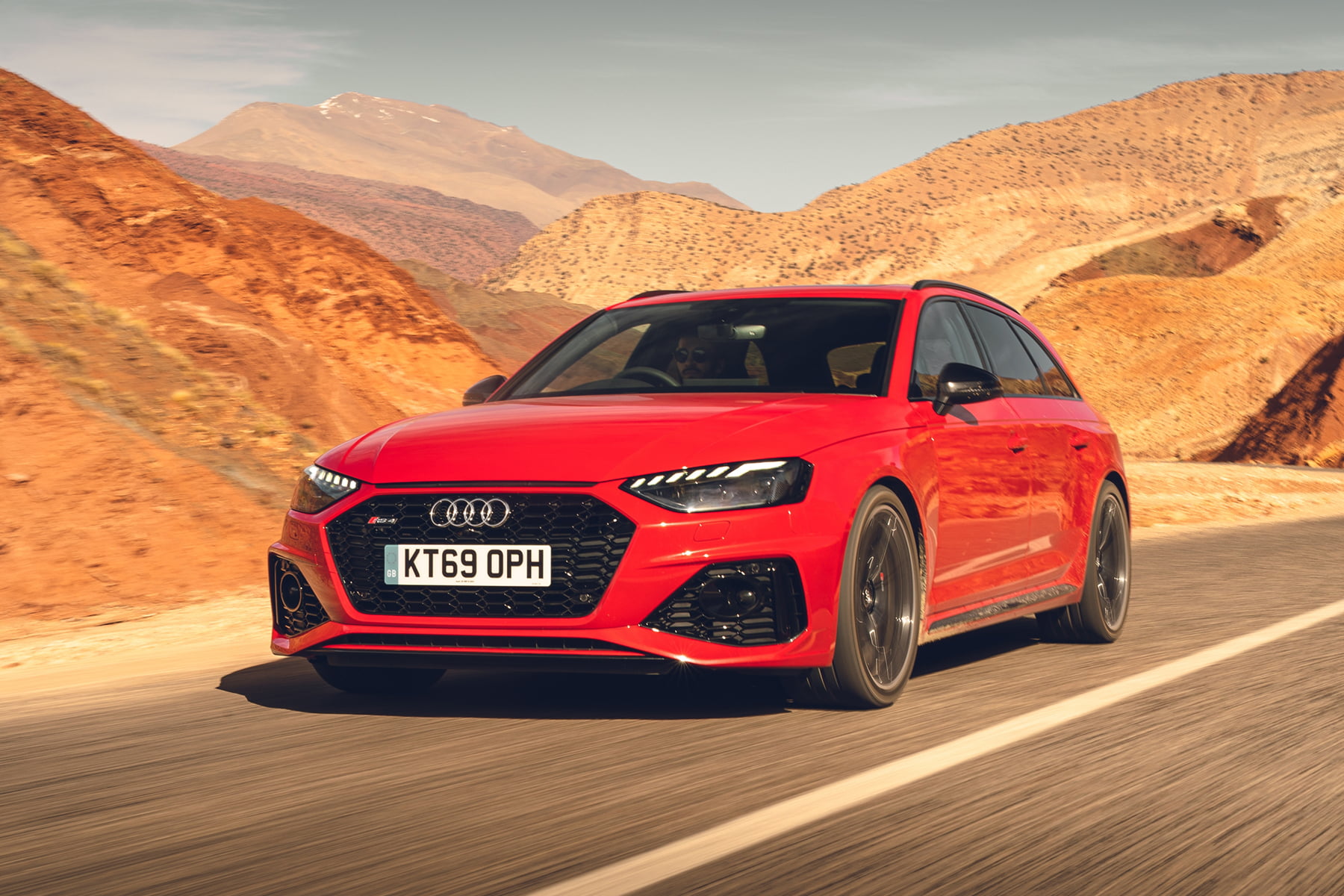
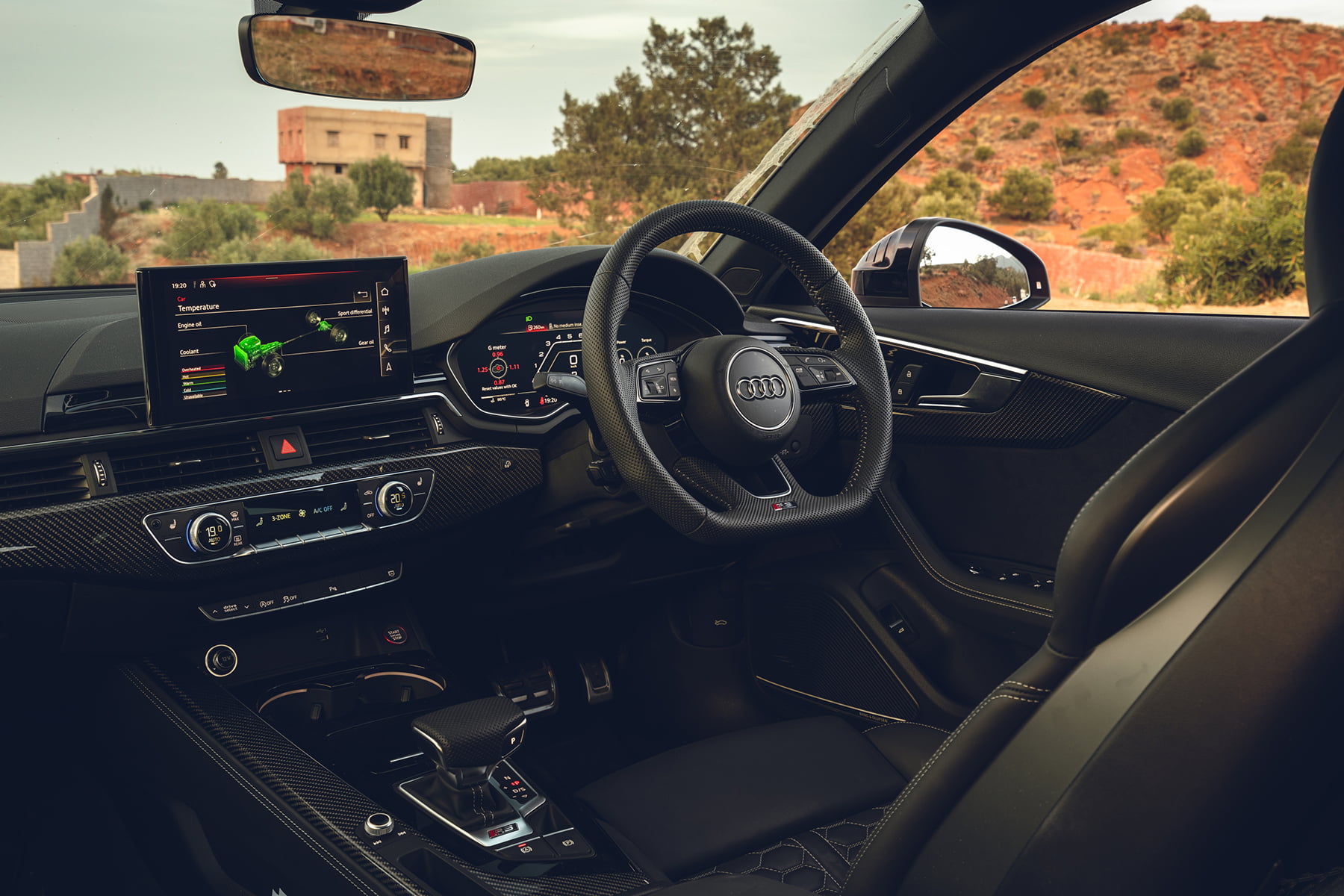
Audi RS 4 (2020 to 2025)

Summary

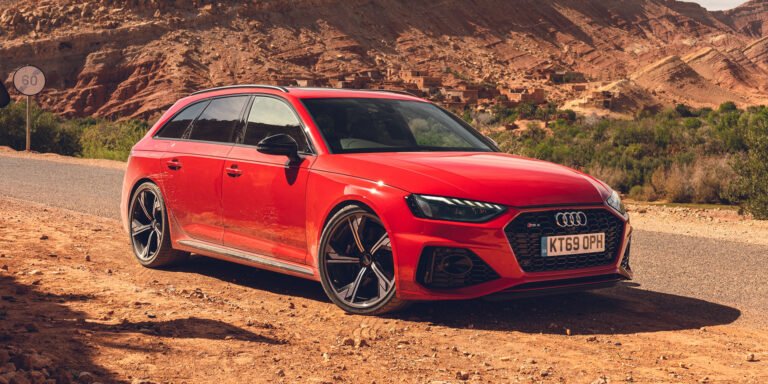
The Audi RS 4 was a performance-focused estate car based on the regular A4 range. This was the fourth generation of the Audi RS 4, which arrived in the UK in early 2020.

Available only as an eight-speed automatic, the RS 4 distinguished itself from the standard A4 Avant with its sportier styling and its powerful 2.9-litre V6 twin-turbo petrol engine, which was capable of producing 450hp and accelerating from 0-62mph in 3.9 seconds.

Unlike some earlier generations of the RS 4, this model was only available in an estate bodyshell. The Audi RS 5 Coupé and RS 5 Sportback were mechanically identical if you’re not keen on the estate styling.

Described by Carwow as “a practical car with ballistic-missile performance”, the Audi RS 4 was praised by many motoring journalists as an upmarket all-rounder, offering practical space for all the family in a cabin with great build-quality, all while providing supercar levels of pace and acceleration.

Carbuyer added that the RS 4 was easy to drive, explaining that the car “behaves in a benign way that gives even ‘normal’ drivers confidence”, while Car Keys commented that the estate car was quite comfortable on uneven road surfaces, thanks to its adaptive damper technology, and wind noise was minimal at high speeds too.

Despite its reputation as a great performance-tuned all-rounder, the RS 4 was criticised for not particularly standing out in any one area – Carwow preferred the exciting engine sounds and bolder exterior styling of the Mercedes-AMG C 63, while other reviewers argued that the Alfa Romeo Giulia Quadrifoglio had far superior handling and body control and the Porsche Taycan Cross Turismo was more comfortable on the road.

As of February 2026, the Audi RS 4 holds a Used Car Expert Rating of E with a score of 41%.

RS 4 highlights

  • Well-built and refined interior
  • Rapid straight-line speed
  • Class-leading infotainment
  • Comfortable ride
  • Spacious cabin with plenty of boot space

RS 4 lowlights

  • Expensive to run
  • Rivals have more responsive handling
  • Styling doesn’t match mighty performance
  • Optional extras get pricey
  • Alternatives offer more driver appeal

Key specifications

Body style: Five-door estate car
Engines:
petrol
Price:
From £66,465 on-road

Launched: Spring 2020
Last updated: Spring 2021
Replacement due: 2025?

Media reviews

Highlighted reviews and road tests from across the UK automotive media. Click any of the boxes to view.

Auto Express

Car

Car Keys

Carbuyer

Carwow

Evo

Heycar

Honest John

Motors

The Sunday Times

The Telegraph

Top Gear

Safety rating

Independent crash test and safety ratings from Euro NCAP

Overall score: 5 stars
Date tested: November 2016
Date expired: January 2022
Read the full Euro NCAP review

Adult protection: 89%
Child protection: 87%
Vulnerable road users: 75%
Safety assist: 75%

The Audi RS 4 has not specifically been assessed by Euro NCAP, but it shares its safety rating with the regular Audi A4 range which was awarded a five-star rating in 2015. However, this rating expired in January 2022 and is no longer valid as the car no longer meets the standards required for such a rating.

Eco rating

Independent economy and emissions ratings from Green NCAP

No eco rating

As of February 2026, the Audi RS 4 has not been tested by Green NCAP.

Reliability rating

MotorEasy logo 600x167

Reliability data provided exclusively for The Car Expert by MotorEasy

All data based on MotorEasy average workshop costs for extended car warranty claims

The Audi A4 range (including the RS 4) has a poor reliability score, according to workshop data from our commercial partner MotorEasy.

The most common problems reported for A4 owners relate to the engine – these are also expensive, with an average repair bill of more than £1,000. Suspension and braking problems are also quite common, although usually much cheaper to repair.

Most concerningly, there are plenty of reports of gearbox problems with an average repair bill of more than £1,600. If you own an Audi A4 or are looking at purchasing a used one, it’s certainly worth considering a used car warranty that covers all these problem areas.

Running cost rating

Clear Vehicle Data logo close crop

Monthly cost of ownership data provided exclusively for The Car Expert by Clear Vehicle Data

Fuel consumptionAverageScore
Petrol models29 mpgE
CO₂ outputAverageScoreVariationScore
Petrol models224 g/kmE
Insurance groupAverageScoreVariationScore
All models46E
Service and maintenanceCostScore
Year 1£551E
Year 2£1,291E
Year 3£2,081E
Year 4£2,366E
Year 5£3,256E
Overall£9,545E

The running costs for the Audi RS 4 can get quite expensive, according to full-life costings provided by our commercial partner Clear Vehicle Data.

Fuel consumption is poor and insurance costs can get quite expensive. Finally, scheduled servicing and maintenance costs over the first five years are predicted to be more expensive than the average car.

Similar cars

If you’re looking at the Audi RS 4, you might also be interested in these alternatives

Alfa Romeo Giulia QuadrifoglioAudi RS 5 | BMW B3 Alpina Touring | BMW M3BMW M4 | Cupra Leon Estate | Ford Mustang | Jaguar XE Project 8 | Lexus RC F | Mercedes-AMG C 63 | Porsche Taycan Cross Turismo

Buy an Audi RS 4

If you’re looking to buy a new or used Audi RS 4, The Car Expert’s partners can help you find the right car

Motors 600x300

Find your next used car with Motors. Find out more

Auto Trader logo 600x300

Find your next new or used car with Auto Trader. Find out more

Carwow logo 600x300

Find your next new or used car with Carwow. Find out more

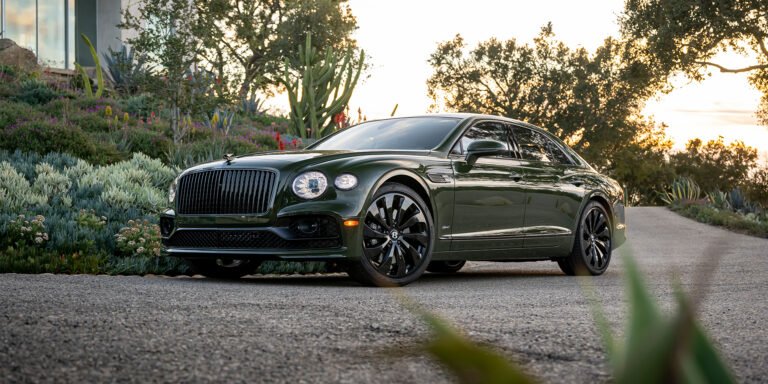
Bentley Flying Spur hybrid plugs into electrified market

Bentley has started taking orders for the plug-in hybrid version of its Flying Spur saloon, describing the model as the ‘most efficient’ car the luxury manufacturer has yet produced.

The Flying Spur is the second Bentley hybrid model after the Bentayga SUV, with the brand intending to offer petrol-electric drivetrains across its entire range by 2024 ahead of the launch of its first fully electric car in 2025.

Under official government measurements, the Bentley Flying Spur Hybrid returns a combined emissions figure of 75g/km. While such a figure and official range of 500 miles (with up to 26 miles possible on electric power alone) is unlikely to be achieved in real-world driving, the Flying Spur will certainly go further between fill-ups than is typical for a Bentley.

More pertinently to potential buyers, the figures will make a major difference to tax bills. Some observers predicti that running a Flying Spur Hybrid as a company car could slash benefit-in-kind tax demands by as much as half.

The power is likely to appeal to the target market, too. With a combined 544hp and 750Nm of torque, the Flying Spur Hybrid is the most powerful hybrid unit so far offered in a production Bentley, just over 90hp more potent than that offered in the Bentayga.

The car’s drivetrain, similar to one used by Bentley’s sister Volkswagen-owned brand Porsche in the Panamera, combines a 2.9-litre V6 petrol engine with an electric motor. This is powered by a 18kWh battery which depending on charging source can, according to Bentley, be fully recharged in two and a half hours.

Visually, the only clues differentiating the hybrid are some discreet badging and an extra cap on the rear wing to access the battery charging port. The interior is to the same finish and offers no change in space over other Flying Spur models.

The Bentley Flying Spur Hybrid will go on sale alongside the existing V8, W12 and Mulliner versions of the car. The price is yet to be officially announced but is expected to be from around £170,000.

The existing petrol-powered Flying Spur saloon arrived in 2019 and is the third generation of this model. With an Expert Rating of 83%, the Bentley Flying Spur has received glowing reports from the UK media praising its luxury and driving dynamics, though consumer-focused titles have commented that the saloon is not a value for money proposition, and that it has poor fuel economy.

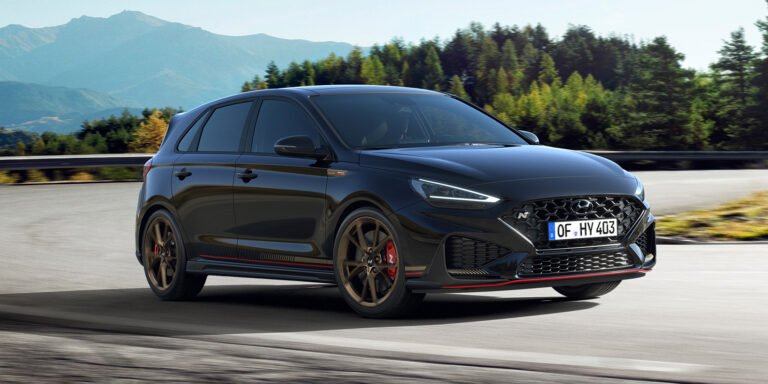
Hyundai unveils limited-edition i30 N

Hyundai has announced a new limited-run trim for its i30 N hot hatch range, featuring a number of cosmetic tweaks.

Called the Drive-N, this new trim subtly distinguishes itself from the rest of the i30 N range thanks to ‘Drive-N’ decals on the sides, front and rear, and Hyundai branding finished in black. There are two paint colours to choose from – white or black – and the Drive-N has its 19-inch alloy wheels trimmed in dark bronze.

Hyundai says that the badges on the Drive-N trim include the GPS coordinates for the Hyundai Motor Europe Test Centre at Nürburgring in Germany, where the i30 N was tested and developed – if you are ever interested in visiting.

Inside, the Hyundai i30N Drive-N interior is trimmed in Alcantara with red stitching, replacing the leather upholstery of the standard model. The seatbelts, the buttons on the steering wheel, and other dashboard accents are finished in red, and the trim gets Drive-N branded floor mats.

Only 75 Drive-N models are scheduled for a UK arrival, and each car gets a unique numbered badge, denoting its position within the trim’s limited run stock of 800 models worldwide.

Other than these cosmetic changes, the Drive-N is essentially the same as the standard ‘N-Performance’ trim. Equipped with a 2.0-litre petrol engine, the Hyundai i30 N has a maximum power output of 280hp. While the i30 N range does include a six-speed manual model, the ‘Drive-N’ can only be ordered with the eight-speed automatic gearbox.

Hyundai has not yet announced when the Drive-N will arrive, or what it will be priced at, but expect it to cost more than the standard automatic Hyundai i30 N, which currently costs £36,070.

Since arriving on UK roads in early 2018, the Hyundai i30 N hot hatch has been highlighted by the motoring media for being exciting to drive, but just as easy to live with, and currently holds an Expert Rating of 79%. That said, it is not as fast as some of its key rivals, and the entry-level models have some cheap interior plastics.

Rising costs lead drivers to question breakdown cover

An increase in the cost of living has left drivers looking for savings in their motoring costs – including now cancelling their breakdown recovery, worrying new research has discovered.

Rising fuel costs, increases in parts and labour prices and a general upsurge in the cost of living is hitting motorists hard and they are looking for areas in which to claw back some everyday outgoings.

Now new research has revealed that one of those considerations is to cancel their breakdown insurance.

The findings, from road safety charity, IAM RoadSmart, has revealed that one in five (21%) of the 1,000 drivers surveyed are considering cancelling their recovery cover.

Within the findings, half (50%) of 18-24 year olds questioned said they have considered cancelling their cover, compared with just 14% of 55-64 year olds and only 7% of drivers over 65.

Answers also varied according to region, with nearly half (44%) of Londoners stating they’re thinking of cancelling – the most likely to cut these costs – compared with just one in ten (10%) of residents from the North East.

Though it saves money in the short term, cancelling your breakdown recovery outright could prove to be quite counter-productive. In the unfortunate event that you become stranded by the roadside, without cover, you could end up paying through the nose to sign up for a membership on the spot in an effort to get on your way as soon as possible.

In addition, the longer you spend on the roadside, the more exposed you are to potentially fatal accidents. “Most fatalities on motorways involve a stationary vehicle, so having cover means you are more likely to be rescued quicker, reducing your chances of being hit on the hard shoulder or in a running lane,” says Neil Greig, Director of Policy and Research at IAM RoadSmart.

Read More:

There are ways to save money by altering your breakdown cover instead of cancelling it – keeping you on the road while putting a dent in your expenses:

Breakdown recovery policies can essentially be split into two types in the UK – personal cover, where you can claim on any vehicle (as long as it meets the requirements stated in your policy) whether you are the driver or a passenger, and vehicle cover, which lets you claim for a specific vehicle.

If you have a personal cover policy, choosing to cover just one vehicle instead could net you a big saving – potentially cutting your monthly spend on breakdown cover in half.

The large majority of breakdown cover policies in the UK are national – covering drivers across the UK should their cars start to faulter. However, if you only use the car to nip around town and not much else, a local cover policy may be more appropriate, and cheaper too.

The next step up from national coverage, some providers offer European breakdown cover. These policies are quite expensive, and definitely not necessary unless you travel by car in mainland Europe on a monthly basis.

If you currently have European breakdown cover, consider the savings you could make opting for a local or national cover policy, and only consider upgrading to European cover when it’s time for the family holiday.

Breakdown policy providers also offer a few optional policy extras that can hike up your monthly payments, including key replacement, battery replacement, tyre replacement, and cover for when you use the wrong fuel at the pumps. If you have any of these, it’s a good idea to assess if these are really necessary.

Also, remember to update your policy so that it reflects your current status. Have you sold your second car? Then you need to change that multi-car breakdown policy. No longer using the trailer or getting rid of the caravan? Then they need to be removed from your breakdown recovery policy.

With cost-cutting in mind, it is crucial to repeat your shopping around every year before accepting your renewal quote. It’s a common ploy from the big providers to offer you a cheap rate when you first sign up, then jack the price up to double or more when you need to renew it a year later.

When it’s time to renew, check the best offers elsewhere then call your current provider and demand that they match the best price you can find, even if it’s a big difference. It’s almost certain that they’ll do so, or at least offer you something competitive.

If you conclude that your car’s breakdown cover is still too expensive to keep, Neil Greig explains that there are a number of things you can regularly do to avoid breaking down in the first place.

“While we will always urge motorists to take out breakdown cover, those who are unable to afford it during such straitened times should carry out a series of regular vehicle checks themselves, which may prevent any avoidable breakdowns.

“These include ensuring engine oil is topped up, checking tyres daily, practising good driving habits and paying attention to warning lights and strange noises.”

Additional reporting by Sean Rees

To key or not to key?

This article is brought to you by

Tusker 600x300

There’s something still rather futuristic, and certainly highly convenient, about walking up to your car, touching the door handle to open it, jumping inside and pushing a button on the dashboard to start the engine (or in the case of electric vehicles, to wake up the system).

You haven’t once touched the car’s keys. No fumbling about in your pockets or wading through your handbag to find them. You still have a fob of some sort to operate your car, but you don’t physically have to take it out and use it.

It’s all clever stuff and one of the fastest growing features on today’s modern cars as manufacturers vie with each other to keep up with latest trends and advances in equipment.

But not having a key for your car can cause its own problems – certainly in the case of security, where crooks looking for easy pickings, have contributed to a recent rise in the number of thefts of vehicles with no keys.

While the Covid pandemic and subsequent national lockdowns saw a drop in car crime, since the end of restrictions, the number of drive-offs has risen sharply again.

The high-tech key fobs on a keyless car use a transmitter to unlock and start the vehicle, rather than a physical key, so it can be easy for thieves to use technology to ‘tap into’ the key’s signal, copy it and use it to their advantage. This practice, known as a relay attack, is responsible for a growing number of car thefts.

A relay attack involves two criminals with clever – but cheap and easily available – electronic devices. One thief lurks outside your home or office to ‘steal’ the unlock signal from your key while you’re inside. He or she transfers it to another thief with a similar device next to the car, relaying the key’s signal to unlock and start the car. The theft can take place in minutes, with the car in your driveway, with you being completely unaware of what’s going on.

Nearly 50,000 vehicles were stolen in the UK in 2021, according to the Driver and Vehicle Licensing Agency (DVLA) and thousands of these were attributed to keyless car thefts. Keyless technology used to be reserved for more expensive, higher end cars but are becoming more commonplace across all models.

That means that the majority of luxury, highly desirable models are likely to have keyless entry and go… and they are exactly the ones that are featuring on car gangs’ shopping lists.

It’s worrying and distressful for owners and is also a great expense for the motor industry generally, including vehicle leasing companies and insurance organisations.

For a vehicle provider such as Tusker, the award-winning company car and salary sacrifice scheme organisation, car theft prevention is paramount as insurance implications can affect them as much as the vehicle user. The company is urging its customers to be vigilant to the keyless entry threat and to take steps to help lock it out for good.

Keyless entry relay theft | The Car Expert
Source: PA Media

So what can you do to prevent it?

Keep your distance: When you’re not using them, store your keys away from the car, and well inside your house, away from doors and windows. That will make it harder for thieves to identify and pick up the device’s signal.

Block buster: Putting your keys in a biscuit tin or similar container that blocks the signal from seeking devices can work and there are specialist items you can buy, such as a Faraday pouch, which will do the job. The fridge can have a similar effect and putting your keys in the microwave oven has also been suggested, but don’t cook them by accident!

Switch off: Some key fobs can be temporarily disarmed when not in use. The car’s manual will explain how, or the dealer should be able to help.

Post haste: Locking your car away in the garage overnight is a top way to protect your asset, but if you can’t do that, physical deterrents such as a post or bollard, professionally fitted across the exit of your driveway, will go a long way towards putting would-be crooks off.

Doubling up: If you own two cars, and one of them needs keys to open it, park that one behind the keyless model.

Lock and go: A visual steering wheel lock, a wheel clamp over one of the car’s wheels or a security device that protects the vehicle’s pedals are all useful ideas in the fight against crime.

Make tracks: Most cars have alarms and immobilisers fitted now but these can be overcome. It’s worth considering a tracking device to make things easier for the police if your pride and joy does go missing.

“We supply great cars to our customers and we want them to stay with their rightful keepers so we’re asking all our clients, big and small, to do everything they can to help reduce this worrying rise in car theft,” says Paul Gilshan, CEO of Tusker.

“Why should someone else enjoy the car that you or I have worked hard to achieve, so let’s slam the door firmly in the face of car thieves – and lock it for good.”

The best new family cars for every budget in 2022

From spacious hatchbacks to high-riding SUVs to seven-seat estate cars, there is a wide array of options capable of ferrying around the family on the market right now, and if you have the money for a new car, there is something for every budget.

We’ve analysed all the family cars available at key price points in the new car market, and consulted our industry-leading Expert Rating Index to see which models have the highest review scores from across the UK motoring media.

With comprehensive review data backing our recommendations – based on nearly 12,000 new car reviews from 30 of the UK’s top motoring websites – you can be confident that this is the definitive guide to the best new family cars for every budget that are on sale right now.

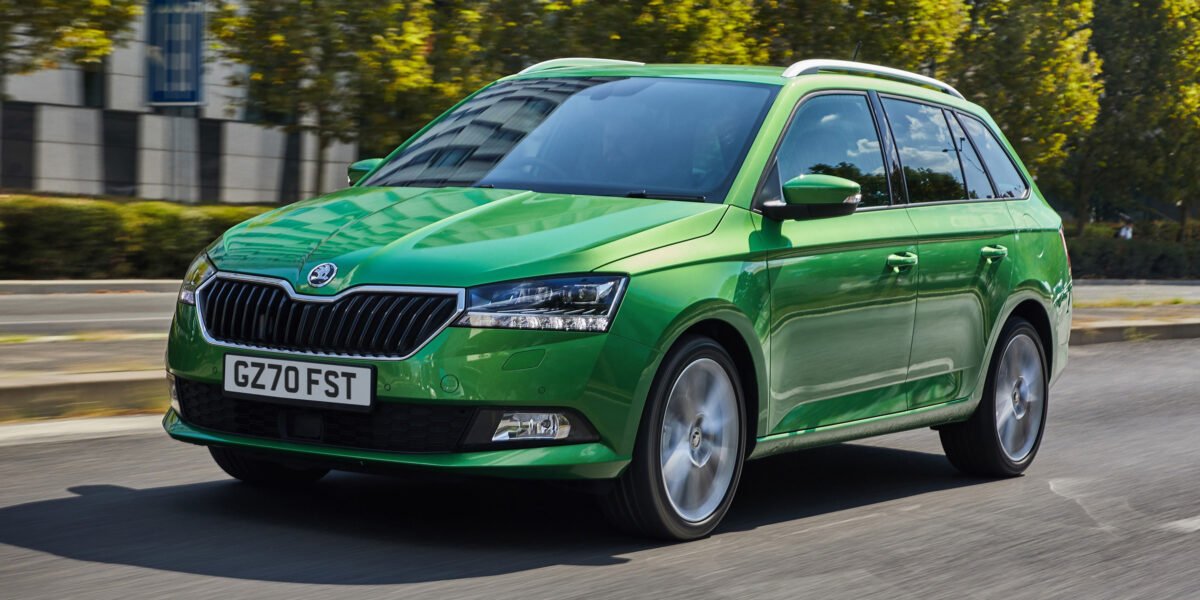
Best new family car under £20,000: Skoda Fabia Estate

Skoda is offering some great value-for-money options across its range at the moment, including the award-winning estate version of its Fabia hatchback.

This spacious five-seat estate car is based on the old-generation Fabia hatch that has recently ended production, but it is still a great example of the Czech brand’s ‘Simply Clever’ ethos, with a whole host of practical features, a comfortable interior, polite road manners and an enormous boot, all in an affordable package.

Reviewers have consistently noted a couple of trade-offs for the estate car’s value-for-money – it is not all that exciting to drive, and fairly bland in the looks department too. The third-generation Skoda Fabia holds an Expert Rating of 70%, and if you would like a test drive in this estate variant, you will have to act quickly – Skoda is in the process of selling the last of its stock.

If you are looking for a bigger cabin, the seven-seat Dacia Jogger would appear to offer great value for money, but cannot be recommended due to its abysmal one-star Euro NCAP safety rating. If you would prefer more ride height, check out the Nissan Juke, which is one of the most affordable options in the small SUV class.

Best new family car under £25,000: Skoda Octavia

Skoda Octavia hatchback (2017) new car ratings and reviews | The Car Expert

The new family car market starts to get very competitive passing the £20k mark, but if your budget maxes out at around £25k, then opting for a Skoda is still your best bet.

The Skoda range has plenty of great all-round performers at affordable prices – one of the main reasons that The Car Expert named the Czech Republic as the best car-producing country this year, all thanks to the Skoda brand.

This Skoda Octavia, which currently holds an Expert Rating of 76%, has been well-received by the British media since its arrival in 2020, highlighted for its spacious cabin, low running costs and leisurely driving experience. On the other hand, reviewers have labelled the Octavia’s infotainment “confusing”, and its performance is nothing to write home about.

If you would prefer an alternative with more driver appeal, the compact Ford Puma SUV comes with the mild-hybrid technology of much more expensive family cars – praised for its surprisingly impressive practicality and its grin-inducing driving dynamics and performance.

Best new family car under £30,000: Skoda Superb

Skoda Superb | Best used family car for under £20,000

Yes, it’s another Skoda… Despite being one of the oldest models still on sale in this price bracket, the Skoda Superb really is the perfect economical family car, which rivals upmarket executive saloons at a more mainstream price. Available as either a liftback or estate, the fact that this car is called ‘Superb’ is no exaggeration. It has won more than 50 UK awards since its launch in 2015.

Praised for its practicality, design and value for money, the Skoda Superb has an Expert Rating of 83%. Its infotainment system is a bit harder to use on the move however, and other large saloons offer more driver appeal.

The Skoda Karoq is another comfortable and economical option at this price point, just in SUV form, and if you would rather opt for a more premium brand with great resale value, the BMW 1 Series hatchback is highlighted for its class-leading interior quality and infotainment, as well as its practicality and ride comfort.

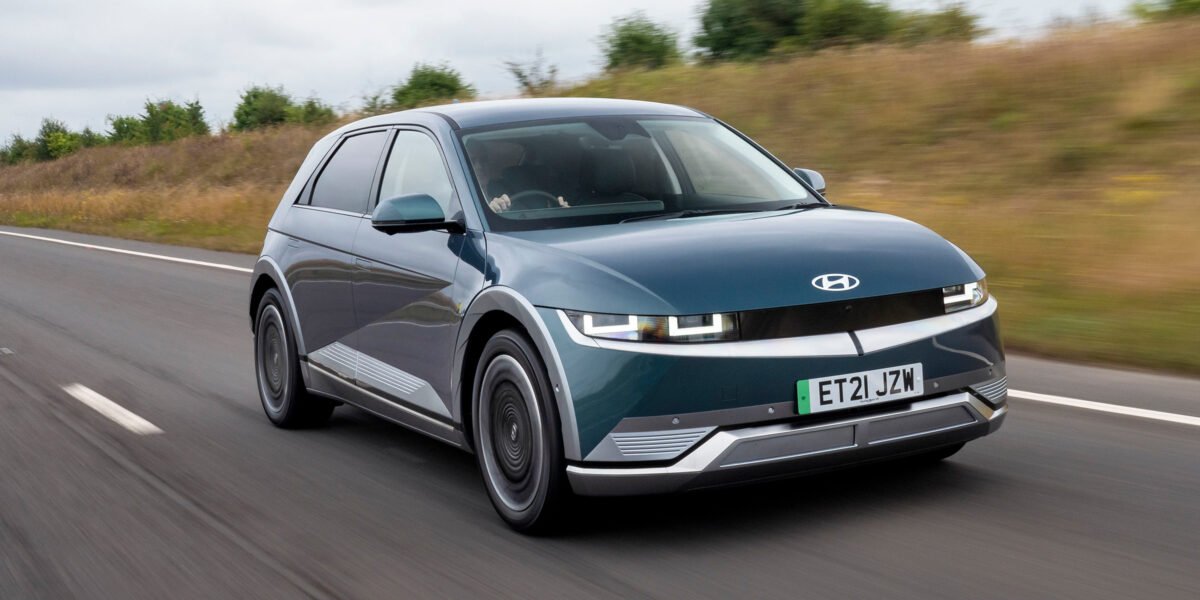
Best new family car under £40,000: Hyundai Ioniq 5

The first electric entrant on this list, the Hyundai Ioniq 5 became a favourite among motoring journalists in 2021, thanks to its unique retro-futuristic exterior styling, as well as its competitive battery range and charging ability.

It may look like it’s the size of your average hatchback, but looks can be deceiving – the distance between the front and rear wheels is actually a huge three metres, meaning that there is plenty of cabin space for five passengers.

The cabin floor is completely flat, meaning that there is a nice amount of legroom for passengers in the rear middle seat, and there is decent storage space in the boot and under the bonnet. Add to this equation the Ioniq 5’s intuitive infotainment and punchy performance and you get one of the most impressive family cars on the market – if not one of the most intriguing.

If you are not ready to make the switch to all-electric motoring, the BMW 3 Series saloon and Touring estate is highlighted for its driving dynamics and upmarket interior.

Best new family car under £50,000: BMW 5 Series Touring

Known for its impressive build quality, great performance and lavish looks inside and out, the BMW 5 Series is the current benchmark for cars in the premium saloon class, and the BMW 5 Series Touring is particularly talented at ferrying around the family with poise.

The 5 Series has an Expert Rating of 87%, and has won over 25 different industry awards since 2017. With entry-level models costing just over £40k, UK buyers with a £50k budget have plenty of room to opt for higher trim levels and optional extras – though these can get expensive rather quickly.

The 5 Series Touring adds a fair chunk of extra boot space over the standard saloon, and both the saloon and Touring estate have mild-hybrid technology as standard – offering fuel economy that is likely to save you a few pounds at the pumps.

For a little more money than it costs to get behind the wheel of an entry-level 5 Series Touring, you can pick up a new Tesla Model 3, which has been the best-selling electric car in the UK in recent months thanks to its tech-laden interior and the brand’s exclusive Supercharger network.

Best new family car over £50,000: Jaguar I-Pace

First arriving on UK roads back in 2018, I-Pace was Jaguar’s first attempt at an all-electric luxury SUV, and if British reviewers can agree on anything, it is that it certainly hit the nail on the head the first time around.

With attractive upmarket exterior styling, a great battery range, excellent safety features, sports car performance and a polished and practical cabin with plenty of space for the family, the Jaguar I-Pace was named World Car of the Year in 2019, and currently holds an Expert Rating of 85%.

It is fair to say that the I-Pace is one of the most desirable large family cars on the market right now, though its pricing is likely to deter many – entry-level models cost just over £65k with the I-Pace price list reaching as high as £77k without optional extras.

Reviewers also comment that the I-Pace’s infotainment lags behind rivals like the Tesla Model Y. This electric SUV launched in early 2022 and is already proving to be a sales hit in the UK, praised for its innovative on-board tech, impressive performance and family-friendly interior – all for £10k less than the I-Pace.

For the definitive rankings of the best new family cars for every budget, we’ve used The Car Expert’s industry-leading Expert Rating index. The index analyses new car reviews from 30 of the top UK motoring websites, using an advanced algorithm that we have developed specifically to compare review scores.

It constantly recalculates and updates the Expert Rating score for every single car in real time to make sure you’re getting the most accurate and reliable ratings for every new car.

Death of the city car?

Are we seeing the long, slow death of the city car? They may be the smallest cars on the market, but such vehicles have until recently also proven some of the most popular, only outsold by their slightly larger sisters the superminis.

Their popularity has been based on one simple fact – they’re cheap. The typical city car buyer tends to be a young person looking for their first car, or elderly people not needing space to carry the family around, or a second (or third car) for a household.

Traditionally city cars have also been fitted with small, not very powerful petrol engines which, as a result, use very little fuel and produce low emissions figures – so seemingly the perfect choice in these cost and environmentally-conscious times?

Yet over the past three years, city cars have started disappearing – and increasingly rapidly. Car manufacturers appear to be in an unseemly rush to get out of a market that has previously produced some of their biggest volumes. Why? Having decimated other markets such as large family cars (goodbye, Ford Mondeo), are the SUVs that seemingly everyone wants these days now marching all over the city car sector?

Well no, actually, SUVs aren’t to blame the slow demise of the city car – what has turned manufacturers off is the cost of meeting increasingly strict emissions legislation.

City cars in our Expert Rating Index

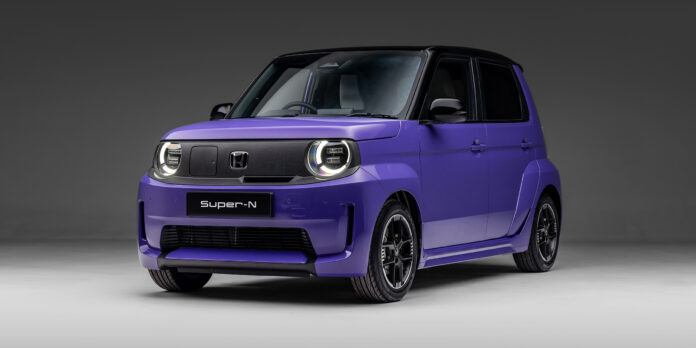
Honda Super-N

Honda Super-N

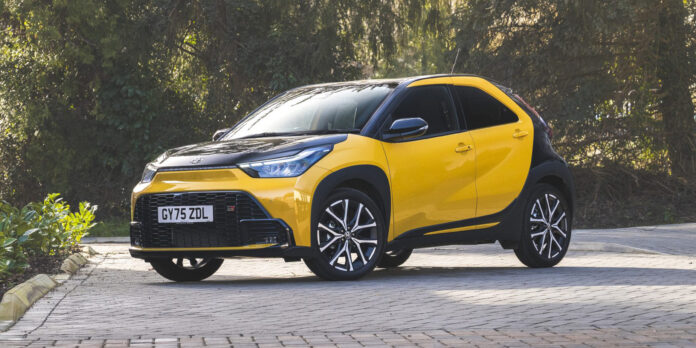
Toyota Aygo X Hybrid

Toyota Aygo X Hybrid

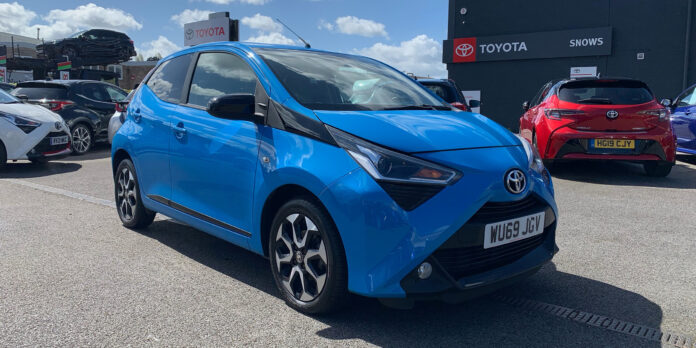
Toyota Aygo (2014 to 2022)

Toyota Aygo (2014 to 2022)

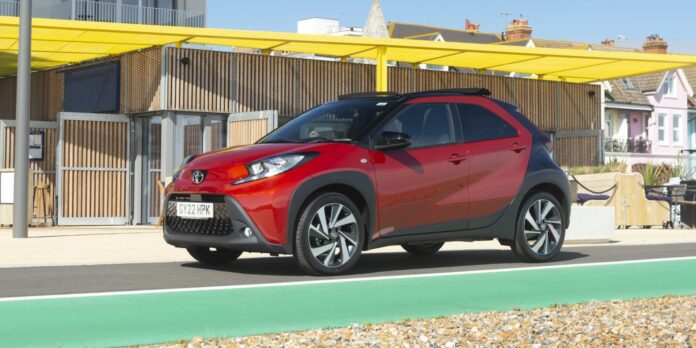
Toyota Aygo X (2022 to 2025)

Toyota Aygo X (2022 to 2025)

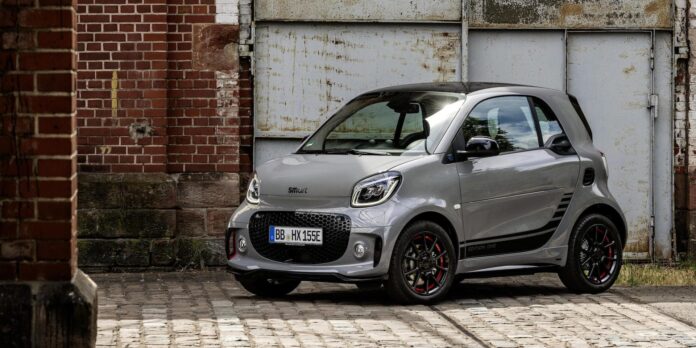
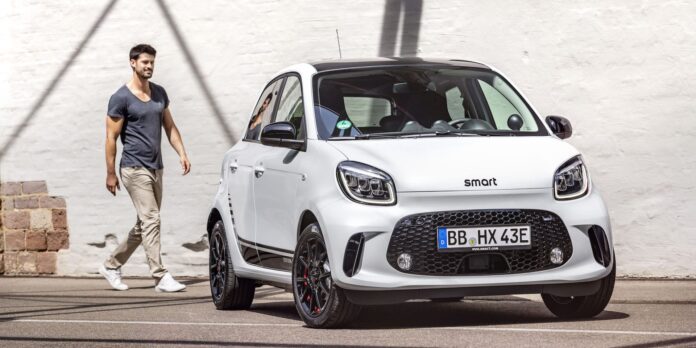
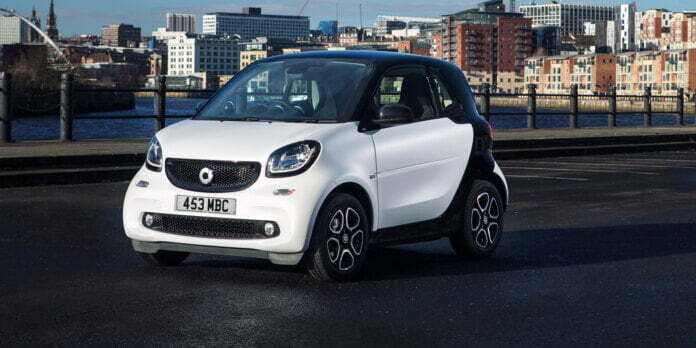
Smart EQ Fortwo (2015 to 2022)

Smart EQ Fortwo (2015 to 2022)

Smart EQ Forfour (2017 to 2022)

Smart EQ Forfour (2017 to 2022)

Smart Fortwo (2014 to 2018)

Smart Fortwo (2014 to 2018)

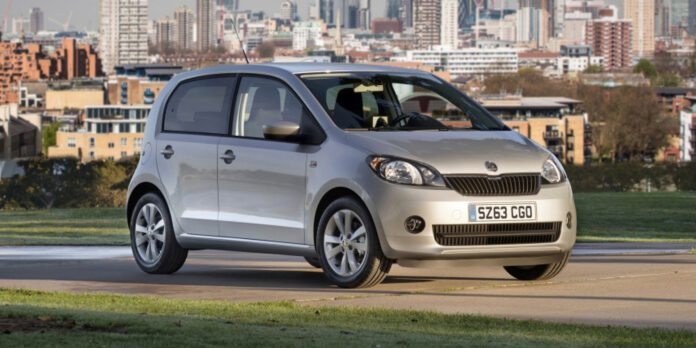
Skoda Citigo (2012 to 2019)

Skoda Citigo (2012 to 2019)

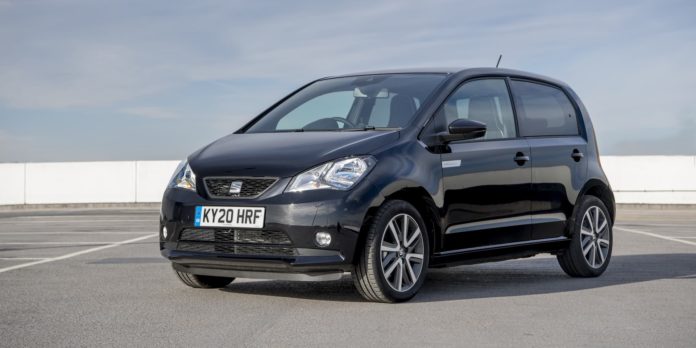
SEAT Mii Electric (2019 to 2021)

SEAT Mii Electric (2019 to 2021)

Renault Twingo (2014 to 2019)

Renault Twingo (2014 to 2019)

While city cars and superminis dominated the popularity charts for years, big sales didn’t translate into big profits for their makers. In a hugely competitive market mainly consisting of buyers with limited budgets, they had to be priced to compete, which meant very little mark-ups for their manufacturers.

A few years ago the European Union announced its intention to fine manufacturers who could not achieve average CO2 emissions across their range of 95g/km. All cars on sale had to be modified to have any hope of their makers meeting the targets. And weirdly the rules are most demanding for the small low-powered cars, those producing low emissions anyway, making it tougher, and so more expensive, to modify them.

With the small cars earning very little money anyway, the extra cost of modification made them a far less viable proposition for their manufacturers. Back in 2019, Peugeot boss Carlos Tavares was quoted as saying that all ‘A-segment’ cars would disappear because there would be no profit in them. “Putting the price up makes them sustainable but then younger generations cannot afford them,” he said.

Small cars are also more difficult to electrify. Battery packs and electric motors are expensive, which makes them very uncompetitive in such a price-sensitive market. And hybrids are just as problematic – as well as the cost of a (smaller) battery and electric motor, there’s very little room in which to fit it all in.

So the future looks bleak for the city car, particularly as it’s been made clear that the emissions regulations and penalties are only going to get tougher. Search for new city cars online and you will find many a manufacturer now describing superminis such as the Mazda2 and the Dacia Sandero as ‘city cars’ when they really aren’t.

There still could be some hope for a future revival, however – if someone can invent a very small, very light and very cheap battery pack…

Despite all this there are still come city cars to be had, and good ones too. Let’s have a look at the leading city car manufacturers, and what’s on offer today.

Citroën

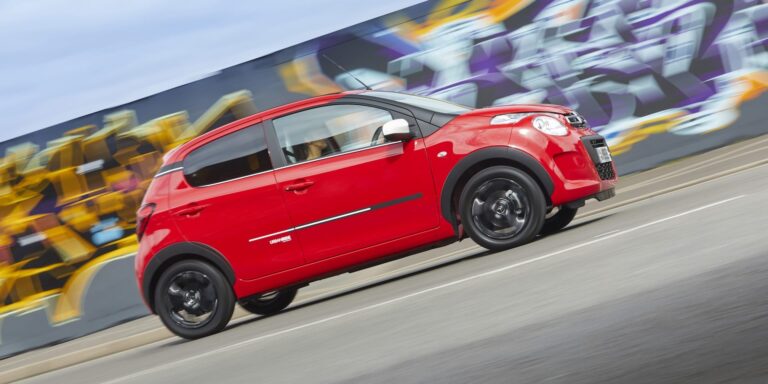
Used to sell: The C1 (above), a joint effort with sister brand Peugeot and Toyota, also producing the almost identical and equally successful Peugeot 108 and Toyota Aygo.

Sells now: Citroën no longer lists the C1, thought you may find one or two still in dealer stock. The brand now describes the C3 as its ‘city car’, which it patently isn’t, and is about to introduce a tiny new electric model called the Ami, which is actually a quadricycle rather than a car. What’s a quadricycle? Well, it has two seats, left-hand drive, a range of just 60 miles and a top speed of 28mph, which means it’s only going to be useful in an urban environment. But, crucially, a quadricycle doesn’t have to meet the same safety regulations that a normal car does.

Fiat

Best electric car under £20K – Fiat 500e

Used to sell: The Fiat 500, a model that scores on its lifestyle appeal as much as its small-car credentials, and the slightly larger and more square Panda.

Sells now: The 500 is still in showrooms and likely to carry on for a while yet. It now runs a mild hybrid petrol engine, and sits alongside the all-new and fully electric Fiat 500e (above). The ancient Fiat Panda is still around too, also powered by a mild hybrid engine and still available with a 4×4 option. It has a zero-star crash rating, though, so probably best avoided.

Ford

Used to sell: The Ka, a curvy city car once famously described as looking like a teapot by Jeremy Clarkson at the UK motor show.

Sells now: No city cars – the Ka, latterly dubbed the Ka+ in its unloved second generation (above), disappeared in 2020. Now the smallest available model is the Fiesta supermini, which has just ben updated – although current waiting lists apparently stretch for months due to ongoing supply problems.

Honda

Used to sell: The Jazz, a car that sort of plugs the gap between city car and supermini in the Honda range and has long had a reputation as the preferred transport of the more mature driver.

Sells now: You can still buy the Jazz and it continues to maintain its fan base, but it’s not Honda’s smallest car any more, that going to the quirky, electric but limited-range Honda e.

Hyundai

2020 Hyundai i10 - Expert Rating | The Car Expert

Used to sell: The i10, launched in 2004 to replace the Atos and scoring on its interior space.

Sells now: Hyundai stills sells an i10 – in fact, an all-new third-generation version was launched in 2020 and is flying in the face of trends, with Hyundai insisting that the little car is still a very important part of the line-up even as it expands its electric Ioniq range.

Kia

Kia Picanto (2018) new car ratings and reviews | The Car Expert

Used to sell: The Picanto, a city car which is a model not paid a lot of attention to but which should be. Like its sister, the Hyundai i10, the little Kia is one of the most spacious in the class.

Sells now: The current Picanto has been on sale since 2017. It’s powered by a 1.0-litre petrol engine and, at under £12,000, still fulfils the city car aim of being among the cheapest new buys. It’s one of Kia’s global models and thought to have a future with hints of an electric version being produced.

Peugeot

Used to sell: The 108, the almost identical triplet to Citroën’s C1 and the Toyota Aygo.

Sells now: The 108 and sister Citroën C1 have now ceased to exist as the model reached the end of production. The factory was sold off to Toyota to build the new Aygo X (see below), but the joint venture programme for Peugeot and Citroën to take their own new-generation city cars was not renewed.

Renault

Renault Twingo GT on road front 34

Used to sell: The Twingo, which passed through three generations – the final of which was a joint venture with Mercedes that also resulted in the Smart Forfour.

Sells now: The Twingo was taken off UK sale in 2019. Renault now offers the Zoe as a city car model which, as a small electric vehicle, is ideally suited to urban driving. However, the Zoe is actually about the same size as the Renualt Clio supermini, so larger than a typical city car. It also has a zero-star safety rating from Euro NCAP, so probably not a good choice if you enjoy living.

Renault is planning an all-electric revival of its famous Renault 5 city car in the next few years, which could share its platform with a budget electric city car from Dacia.

SEAT

Used to sell: The Arosa – a badge-engineered version of the Volkswagen Lupo was SEAT’s small car until VW stopped making the Lupo in 2004. In 2011 SEAT returned to the market with the Mii, effectively an identical sister to the Volkswagen Up and Skoda Citigo. There was an electric version as well, but it vanished at some point last year.

Sells now: Nothing for the moment, although a rebadged version of the forthcoming Volkswagen ID.1 (see below) could be forthcoming. The smallest car in the range is the supermini-sized SEAT Ibiza.

Skoda

Used to sell: Like SEAT, the Skoda Citigo was a clone of the Volkswagen Up, first introduced in 2011. Again, there was a short-lived electric version called the Citigo iV.

Sells now: Like SEAT, we may see a Skoda-badged version of the forthcoming electric Volkswagen ID.1. For now, the smallest Skoda is the supermini-class Skoda Fabia.

Smart

Used to sell: The Smart Fortwo and Forfour (above) were – as the names suggest – two-seat/two-door and four-seat/four-door city cars. The Fortwo went through three generations, with the most recent being launched in 2014.

The Forfour was re-introduced for a second time in 2014 after the flop of the first version, which was sold between 2004 and 2006 and was basically a rebadged Mitsubishi. The later one shared its chassis with the Fortwo and the Renault Twingo, and proved rather more popular.

Both models ended in 2019 when Smart stopped making petrol-powered cars as part of a range overhaul.

Sells now: You can still buy electric versions of both the current Fortwo and Forfour, although probably not for too much longer as they are both old models and are thoroughly outclassed by newer electric cars.

An all-new small crossover called the Smart #1 was launched in early 2022, and marks yet another fresh start for Mercedes’ perpetually struggling small car company.

Toyota

Used to sell: The Aygo (above), product of the highly successful tie-up with Peugeot group that also produced the Citroen C1 and Peugeot 108. Toyota’s small car was one of the most popular especially among young, cash-strapped buyers.

Sells now: Toyota replaced the Aygo with the all-new Aygo X, a small crossover. It’s slightly larger and now has a pseudo-SUV style, but it’s basically a fairly convenional city car underneath.

Vauxhall

Used to sell: The Viva, a car aimed squarely at low-budget buyers; the Adam, a lifestyle-pitched small car; and the Agila, bridging the gap between city car and small MPV.

Sells now: All three were gone by 2020 and Vauxhall’s smallest car is now the Corsa supermini. Don’t hold your breath waiting for any new city cars.

Volkswagen

Used to sell: VW’s city car history includes the oddly-named Lupo and from 2005 the equally uninspiring and Brazilian-built Fox. The Volkswagen Up (above, in GTI spec) launched in 2011, proved far more popular with both critics and car buyers.

Sells now: The Up is still with us – VW took petrol versions off sale in 2019 in favour of the electric e-Up, but then appeared to change its mind, and today both three and five-door petrol models are on the VW website, while the e-Up now seems to have vanished. However the model’s days are numbered, likely to be replaced by a new electric small car, the Volkswagen ID. 1, in 2025 with sister brands SEAT and Skoda potentially offering their own versions.

New Mercedes-AMG C 43 unveiled

0

Powered by a 408hp engine with mild-hybrid technology, the performance-focused Mercedes-AMG C 43 will go on sale in the UK in May, available as either a saloon or estate car.

The 2022 Mercedes-AMG C 43 is essentially a sportier, more powerful version of the current-generation Mercedes-Benz C-Class, which arrived in the UK in Autumn 2021.

Instead of the 1.5-litre engine found in the entry-level C-Class, the C 43 uses the same 2.0-litre petrol engine unit found in the powerful Mercedes-AMG A 45 S hot hatch, but with the addition of mild hybrid technology, for a total power output of 408hp.

This means that the saloon version of the C 43 can complete a 0-62mph sprint in 4.6 seconds, while the estate can complete the same run in 4.7 seconds. Both variants are all-wheel drive, and are fitted with a nine-speed automatic transmission.

To cope with this added power, Mercedes-AMG has given the C 43 upgraded brakes, and fitted with a sportier exhaust system, which feeds the sound of the engine into the cabin to give the driver ” a particularly emotive sound experience.”

Adaptive dampers as standard, which automatically adjust the suspension as you drive to suit your driving style and the conditions of the road ahead. The car has a number of drive modes to choose from, including ‘Sport’ and ‘Sport+’ modes which Mercedes-Benz says makes the engine more responsive, the steering more agile and makes gear shifting faster.

If you have driven a Mercedes-AMG model before, the C 43’s black faux-leather upholstery with red stitching is likely to give you some deja-vu. The C 43 uses the same infotainment software as the standard C-Class range, and also features a digital instrument cluster behind the AMG-branded steering wheel with aluminium paddle shifters.

The Mercedes-AMG C 43 also comes with the brand’s ‘Track Pace’ data logger feature, which can gather data on your speed, acceleration, steering angle and more when you are darting around a test track.

The Mercedes-AMG C 43 will go on sale in May, though pricing for the range is yet to be released. The next iteration of the more powerful Mercedes-AMG C 63 is also expected to be unveiled soon – Mercedes-Benz have already confirmed that the next C 63 will be a plug-in hybrid.

Pricing and specs announced for Ineos Grenadier 4×4

0

Start-up 4×4 manufacturer Ineos Automotive has announced that its upcoming Grenadier 4×4 SUV will be available to order from the next month, this new boxy station wagon set to challenge upmarket rivals like the Land Rover Defender.

With the first customer orders expected to arrive in the UK in late Autumn or Winter 2022, the Grenadier is the brainchild of Ineos head Jim Ratcliffe. He conceived the vehicle as a tough go-anywhere replacement for the original Defender, which was dropped by Land Rover in 2016 ahead of the launch of an all-new design in 2020.

With both petrol and diesel models available, the Grenadier is powered by a 3.0-litre six-cylinder engine supplied BMW that has been tuned to provide ‘optimal’ off-road performance. The petrol version produces up to 286hp for tackling difficult terrain, while the diesel can muster 249hp. Both variants use an eight-speed automatic gearbox.

Available as both a two-seater commercial wagon and a five-seater passenger SUV, the Grenadier can tow up to 3,500kg and winch up to 5,500kg of weight. The passenger version has 1152 litres of rear load space thanks to the 4X4’s boxy silhouette, and Ineos says that its fledgling 4×4 will be customisable, with an “extensive choice of accessories” on offer.

Above the standard model, Ineos has also partnered with outdoor clothing company Belstaff to produce two top-spec special edition variants of the new Grenadier. The Trialmaster Edition comes with a number of mechanical upgrades with extreme off-roading in mind, while the Fieldmaster Edition comes with interior upgrades and additional on-board tech – offering more comfort and convenience in off-road scenarios.

Prices for the standard five-seater Grenadier 4×4 start at £52,000, and can be ordered online from the 18th May 2022. A few months later, Ineos says it will begin selling the Grenadier at a number of dealer locations across the UK.

Ineos says that its UK locations include “established dealer groups, 4×4 specialists and agricultural outlets” – several of the initial 24 are in groups alongside outlets for upmarket brands Audi, BMW and Ferrari, with others being placed with dealer groups holding Ford franchises.

The first dealer will open in June and Ineos intends to add a further ten UK outlets to the initial 24, as part of a network that will initially consist of 160 locations globally.

By the end of 2022, the brand expects to grow its global network to 200 locations and is also setting up a number of aftersales service centres following an agreement with Bosch. In the UK the stated aim is that customers will never be more than 45 minutes from a dealer.

Additional reporting by Andrew Charman

Citroën Grand C4 SpaceTourer ends production

The Citroën Grand C4 SpaceTourer will soon join the ever-growing list of people carrier models that have been discontinued, after nine years on sale.

Originally known as the C4 and Grand C4 Picasso, the range was facelifted and renamed C4 SpaceTourer in 2018. The smaller C4 version was subsequently dropped, leaving only the larger Grand C4 model to soldier on in recent years.

The decision to drop the Grand C4 SpaceTourer leaves Citroën with two van-based electric people carrier models in its line-up – the ë-Berlingo or ë-SpaceTourer.

There is no direct replacemet model lined up from the Grand C4 SpaceTourer, with Citroën unwilling to develop an all-new model for a severely diminished peopler carrier market. Seven-seat SUV models have basically destroyed the people carrier market in recent years, with most car manufacturers having already abandoned it.

Peugeot relaunched its 3008 and 5008 people carriers as SUVs in 2016 to meet rising demand, while Renault gave its Grand Scenic people carrier an SUV makeover to attract punters before ending its lifespan in 2019.

In fact, with the Citroën saying farewell to the Grand C4, there are now very few car-based people carriers left on the market. The Ford S-Max, Ford Galaxy and Volkswagen Touran are still available, although the all-electric retro-styled ID.Buzz will soon replace the Touran, which is likely to end production soon.

The final Grand C4 SpaceTourer is scheduled to roll off the production line at the French brand’s factory in Vigo, Spain, in July. Praised for its value-for-money and its comfortable ride, the Citroën Grand C4 SpaceTourer currently holds an Expert Rating of 71%, this score hindered mainly by its lack of driver appeal.

Car owners losing money to avoid hassle when selling

Two thirds of car owners are willing to accept less money when selling their car if it means saving them time and hassle, new research has revealed.

Motorists admit they are daunted by the thought of selling their car on the second-hand market and are willing to take less for their pride and joy than it’s worth, just to get the deal out of the way and get on with their lives.

Nearly 70% of drivers questioned by online used car marketplace (and our commercial partner) Motorway said they would accept less money for their car if it made the process more straightforward. Of those who have already sold their car, more than half (54%) believe they sold it for an average of almost £1,000 (£977) less than it was probably worth.

At a time when used car prices are at an all-time high, thousands of drivers simply can’t face the prospect of going through the car-selling motions and are looking for easy ways out – which usually means letting their car go for a snip.

Getting the best price is now easy

However, getting the best possible price for your car has never been easier. There are a number of online selling options available, all of which can give you an instant valuation, then arrange collection from your home and full payment within days.

The survey by Motorway found that three quarters (76%) of Brits find the process of selling their car daunting, while seven out of ten (70%) are knowingly compromising on cash for a quick sale.

With a third (32%) saying they don’t have the time to find the best price and one in four (28%) accepting the first offer for their car, the research shows that drivers are not getting the best value when it comes to selling their vehicles.

In fact, nearly nine out of ten (85%) admitted that the priority when selling their car was simply to get rid of it as quickly as possible. As time is of the essence for sellers, almost half (49%) are likely to have lost money when parting with their car because they didn’t do simple things such as buying new floor mats, changing the oil or making small repairs.

Other issues among the 2,000 people polled included: not having an up-to-date service history (14%), not having their car valued before sale (12%), and struggling with paperwork (10%).

Seven out of ten drivers admitted putting off selling their car altogether because of the hassle, while it emerged that over two thirds (69%) have felt out of depth when selling their vehicle. Hundreds have ended up feeling they had been ripped off.

When selling their car, only 14% felt very confident they had achieved a good price, with an acceptance by 69% that they would be willing to take an offer less than market value in order to make the process easier.

More than 60% admitted they regret rushing to sell a car in the past because they received less money as a result.

*The Car Expert has a commercial partnership with Motorway. If you click through to the Motorway website and proceed to sell your car, we may receive a commission. This does not affect the amount you receive.

Electric car myth-busting 

This article is brought to you by

Carparison 600x300

If you’re considering an electric car lease, you’ve probably had to deal with some conflicting theories and myths about how practical they are to live with.

Unsurprisingly, many of those common myths you see bandied around are false and we’re here today to finally bust those myths and put your mind at ease.

‘Electric cars can’t travel far’

As the electric car sector continues to evolve, manufacturers are constantly pushing the boundaries of engineering to create the best possible EV.

From Skoda to Volkswagen and Tesla, there are now several 300+ mile range electric cars readily available on the market. 

The real-world range of these will of course be dictated by conditions and driving habits, but you no longer have to break the bank to find an EV that can go the distance.

‘Electric cars are too expensive’

While the likes of Mercedes, Tesla and Audi may steal the headlines with their top of the range electric cars, there are plenty of more affordable options available.

Top manufacturers like Volkswagen, Smart and Fiat offer cost-effective electric cars for a more affordable electric driving experience.

Nissan Leaf lease is another valuable option for an electric car that doesn’t have to come with a humungous monthly payment and still has a range of up to 239 miles.  

‘Electric cars break down more often’

Despite what many people might think, there’s no evidence to say electric cars break down more frequently than their combustion engine alternatives.

They are built with significantly fewer moving parts than their diesel or petrol alternatives, so in theory, they can result in less maintenance.

Gone are the days of worrying about your engine oil or an expensive clutch replacement, but the car’s battery will need to be maintained in place of the engine.

‘Electric cars take too long to charge’

There isn’t one set way to charge your electric car, giving you the freedom to charge your car at a speed that suits you. 

Depending on the method you choose to charge your EV will determine how long it takes.

The most basic method to charge an EV is with a three-pin plug. This is not often advised as it will be the slowest method.

Wallbox chargers at home can operate at up to 7kW and depending on your battery size, might take anywhere between 6 and 8 hours. 

Many modern electric cars can now rapid charge at up 120kW, which allows a car to charge from 20-80% in as a little as 30 minutes.

Take out a Tesla Model 3 lease and you’ll recoup up to 175 miles in just 15 minutes at your nearest Supercharger. 

‘Electric vehicles can’t be driven or charged in the rain’

Historically, we’re always taught that electricity and water combined is bad news, so we understand why many people might have concerns about driving an EV in wet conditions.

Fear not, though, they’re perfectly safe to drive in the rain. Follow traditional road safety advice when it comes to driving in the wet, as you would with a combustion engine. 

‘You can’t tow with an electric car’

Despite what you might think, many electric cars come with very competitive towing capacities.

Higher torque figures have always made diesel cars the go-to choice when towing something like a caravan. This is where an EV comes in, the combination of instant torque and regenerative braking means there are many advantages that come with towing with an EV.

Carparison’s best car lease deals can suit your every need. Contact their leasing experts at www.carparisonleasing.co.uk for more information.

‘Fan pressure’ sees Toyota Supra go manual

The Toyota GR Supra will now be offered with a manual gearbox, according to the Japanese brand the result of “listening to sports car fans and customers.”

The two-seater sports car launched in 2019 as the first model in the performance-pitched GR range – named after Toyota’s motorsport division, Gazoo Racing.

The Supra was initially offered with a 3.0-litre six-cylinder petrol engine of 340hp, which was joined a yeaar later by a cheaper 2.0-litre unit offering 257hp. But until now, both have only been available with an auto transmission.

Now the 3.0-litre version of the Supra is to be offered with a six-speed ‘intelligent manual’ gearbox, following the example of Toyota’s other two GR models – the Yaris and GR86. According to its makers, the new unit has been specifically developed for the car, with a larger diameter clutch to cope with the engine’s power and software that produces the most performance-friendly shifts.

The traction control system has also been modified – improvements include measures to ensure that there is less chance of wheelspin when pulling away in first gear, more potency when taking uphill hairpin bends and an anti-roll programme.

Toyota has not released performance figures for the manual version of the Supra but it should be slightly quicker than the auto, as it is around 40kg lighter. The new transmission saves around 22kg, while a changed audio system and the removing the leather upholstery and power adjustment from the seats has cut another 16kg.

Further changes to the Supra include returned suspension, with stiffer front and rear anti-roll bars and dampers.

Toyota is yet to release prices and final specifications for the manual GR Supra but does expect it to become the most popular version of the car.

With particular praise for its comfort, performance and overall balance, the Toyota GR Supra has received consistently positive reviews from the British media since its arrival in early 2019, and holds an Expert Rating of 74%.

Jaguar XE and XF gain range-topping 300 Sport models

0

Jaguar has announced that new performance-focused 300 Sport models are available at the top of its XF and XE saloon line-ups, and that every new XF and XE model now comes with Amazon Alexa voice command software installed.

While entry-level XF and XE models are powered by a 204hp 2.0-litre four-cylinder diesel engine with mild hybrid technology, the new range-topping 300 Sport versions use an uprated 300hp petrol version – both capable of a top speed of 155mph.

The Jaguar XF 300 Sport, which is available as either a saloon or estate car, can complete a 0-62mph sprint in 5.8 seconds, while the smaller XE 300 Sport saloon has a slightly quicker sprint time of 5.6 seconds. These top-spec models are all-wheel drive only, and make use of an eight-speed automatic transmission.

As well as enhanced performance, 300 Sport models have been given Jaguar’s ‘Black Pack’ treatment, distinguished from entry-level variants by a gloss black roof, tinted privacy glass and a subtle rear spoiler. While the standard XF and XE models come with a choice of 18 or 19-inch alloy wheels, range-topping 300 Sport versions feature larger 20-inch alloys that can be trimmed in either grey, silver or black.

In the cabin, the XF 300 Sport’s interior is finished in an aluminium colour tone, while the XE 300 Sport is trimmed in an ash-coloured grey. Both new trims include metal shift paddles behind the steering wheel, and foot pedals are finished in a bright metallic colour.

The XF and XE 300 Sport, as well as the rest of the XF and XE model line, also come with Amazon Alexa software installed, allowing the driver and passengers to manage navigation, play music or check the news or weather using voice commands. The software is integrated into the brand’s Pivi Pro infotainment system, which is already compatible with Android Auto and Apple CarPlay.

Prices for the Jaguar XF 300 Sport start at £47,730, while entry-level models can be purchased for £33,985. The smaller XE 300 Sport is more than £5,000 cheaper at £42,345, but this is still over £12,000 more expensive than the standard Jaguar XE.

A capable alternative to the class-leading BMW 3 Series, the Jaguar XE has received particular praise for its driving dynamics and upmarket interior trim, though criticisms have been directed at its cramped rear cabin space. It currently holds an Expert Rating of 74%.

The larger Jaguar XF challenges the likes of the BMW 5 Series, and like the XE, reviewers generally conclude that the saloon is decent, but a long way behind BMW standards. Praised for its generous equipment levels fitted as standard, the XF holds an Expert Rating of 73%.

Renault Clio (2012 to 2019)

Summary

On sale in the UK from the end of 2012 to early 2019, the fourth-generation Renault Clio was a compact five-door hatchback built on the same platform as the smaller Renault Zoe. It was replaced by the current fifth-generation Clio in 2019.

Rivalling other mainstream superminis like the Ford Fiesta, Vauxhall Corsa and Volkswagen Polo, the fourth-generation Clio was available as a petrol, diesel or hybrid model, with both manual and automatic gearboxes available.

This iteration of the Clio had a more spacious cabin than its predecessor thanks to a longer wheelbase. The hatchback was given a mild mid-life facelift in the middle of 2016, consisting of exterior styling tweaks, new interior trim details and functions, infotainment updates and the addition of LED headlights.

There was a performance-tuned version called the Renault Clio R.S., but that’s not covered here. The Renault Clio was also sold as an estate elsewhere in Europe, but this version was not sold in the UK.

Throughout its lifespan, the fourth-generation Clio received average to very good reviews scores from the British media – affordable, well-equipped and comfortable, Parkers concluded that the Clio didn’t have “any particular weaknesses” when it was on sale. However, now off sale, many reviewers comment that the Clio’s interior is now looking dated.

Carwow explained that “newer models have simpler designs, bigger screens and better infotainment systems”, while Carbuyer said that the Clio’s cheap interior plastics meant that the car’s interior build quality was somewhat inferior to the likes of the Volkswagen Polo.

Most reviewers agreed that the Clio was a stylish hatchback and a good value-for-money package – a great all-rounder that proved to be a capable alternative to the supermini class leaders during its tenure.

Now no longer on sale, the fourth-generation Renault Clio holds a Used Car Expert Rating of C, with a score of 62%. It scores top marks for its excellent reliability record and also gets good grades for its low running costs. However, its media review scores were poor and its safety rating has long expired due to age.

Clio highlights

  • Distinctive styling still looks modern
  • Value-for-money package with plenty of tech
  • Efficient engines
  • Wide range of models to choose from
  • Comfortable drive

Clio lowlights

  • Cheap interior plastics and dated tech
  • Newer rivals have more boot space
  • Optional extras can get pricey
  • Slow entry-level models
  • Slightly cramped rear seating

Key specifications

Body style: Five-door hatch
Engines:
petrol, diesel
Price when new:
From £13,870 on-road

Launched: Winter 2012/13
Last updated: Summer 2016
Replaced: Spring 2019

Media reviews

Highlighted reviews and road tests from across the UK automotive media. Click any of the boxes to view.

Auto Express

Auto Trader

Business Car

Car Keys

Carbuyer

Carwow

Daily Mirror

Eurekar

Evo

Fleetworld

Heycar

Honest John

Motoring Research

Parkers

The Sun

The Sunday Times

The Telegraph

Top Gear

Safety rating

Independent crash test and safety ratings from Euro NCAP

Overall score: 5 stars
Date tested: August 2012
Date expired: January 2019
Read the full Euro NCAP review

Adult protection: 88%
Child protection: 89%
Vulnerable road users: 66%
Safety assist: 99%

Note on safety rating

The fourth-generation Renault Clio was originally crash tested by Euro NCAP back in 2012 and awarded a five-star rating. However, this rating expired in January 2018 and is no longer valid. This is normal practice, as Euro NCAP reviews its ratings on most cars annually with most ratings expiring after about six or seven years.

However, if you are comparing a used Clio to vehicles of similar age, whose ratings will have probably also expired, its safety rating score is still useful.

Eco rating

Independent economy and emissions ratings from Green NCAP

No eco rating

The fourth-generation Renault Clio was not lab tested by Green NCAP during its production life.

Reliability rating

MotorEasy logo 600x167

Reliability data provided exclusively for The Car Expert by MotorEasy

All data based on MotorEasy average workshop costs for extended car warranty claims

As of April 2025 (our most recent data point), the Renault Clio has an excellent reliability score of 87%, according to workshop and extended warranty data provided exclusively to The Car Expert by our partner, MotorEasy. This score covers not only this generation of Clio, but also newer (2019 onwards) and older (pre-2012) models.

Average repair costs for the Clio are very reasonable at less than £300. The only thing to really watch out for is gearbox issues, as the average repair bill for these is nearly £1,300 to date.

If you are looking to buy a used Clio, make sure any used car warranty you purchase covers all of the potential problem areas shown above.

Similar cars

If you’re looking at the Renault Clio, you might also be interested in these alternatives

Audi A1 | Citroën C3 | Dacia Sandero | Ford Fiesta | Honda Jazz | Hyundai i20 | Kia Rio | Mazda 2 | MG 3 | Mini hatch | Mitsubishi Mirage | Nissan Micra | Peugeot 208 | SEAT Ibiza | Skoda Fabia | Suzuki Swift | Toyota Yaris | Vauxhall Corsa | Volkswagen Polo

More news, reviews and information about the Renault Clio at The Car Expert

Renault Clio

Renault Clio

New Renault Clio hatchback debuts

New Renault Clio hatchback debuts

Everything you need to know about Renault

Everything you need to know about Renault

Renault Clio TCe 90 review

Renault Clio TCe 90 review

Renault Clio refresh now available

Renault Clio refresh now available

Renault Clio refresh to arrive this summer

Renault Clio refresh to arrive this summer

Clio Renault Sport gets new Black Edition

Clio Renault Sport gets new Black Edition

The UK’s most underappreciated small cars

The UK’s most underappreciated small cars

Renault Arkana gets price hike and trim changes

Renault Arkana gets price hike and trim changes

Renault revamps its big-selling Clio

Renault revamps its big-selling Clio

Refreshed Renault Clio on sale in October

Refreshed Renault Clio on sale in October

Renault releases details of Clio and Captur hybrid models

Renault releases details of Clio and Captur hybrid models

Buy a Renault Clio

If you’re looking to buy a used Renault Clio, The Car Expert’s partners can help you find the right car

Motors 600x300

Search less, live more. We make finding the right car simple. Find out more

Auto Trader logo 600x300

Search for your next new or used car with Auto Trader. Find out more

Carwow logo 600x300

Discover great deals available on both new and used cars. Find out more

Hyundai Ioniq 5 gets more power and range

Hyundai has updated its Ioniq 5, adding a new battery pack that gives the electric car more range and power.

Installed just over a year after the Ioniq 5 went on sale in the UK, the new 77kWh battery pack will add the equivalent of 11hp when compared to the previous range-topping 73kWh pack, and extend the maximum projected range between charges from 299 to 315 miles.

Cars fitted with the 77kWh battery pack will now form a new range-topping trim level dubbed Namsan Edition, named after a mountain in Seoul, the capital of South Korea.

Equipment in Namsan Edition models also includes a full-length panoramic roof, leather upholstery and for the first time on European Hyundais, digital side mirrors – these reduce air resistance, helping to increase range, and offer a better view than traditional mirrors particularly in poor weather.

Alongside the new battery Hyundai has revamped the entire Ioniq 5 range – the entry-level SE Connect model is now priced from £39,400 with a 58kWh battery giving a range of up to 238 miles.

Premium trim variants of the car start from £41,900 and now come with more standard equipment, including the Vehicle to Load (V2L) system which allows use of the car’s electrics to power AC tools. Premium models also add a camera to the rear spoiler, projecting an image onto the rear-view mirror which compared to a typical reflected view is unobstructed by rear-seat occupants.

Premium versions of the Ioniq 5 can be specified with either the 58kWh or new 77kWh battery pack, while the options list includes a heat pump. This helps maintain battery efficiency in cold conditions by heating the interior rather than employing the car’s main battery to do so.

Ultimate trim level starts from £48,400 and now includes as standard previous safety options of blind and surround-view monitors, while the range-topping Namsan Edition models cost from £52,900.

The Hyundai Ioniq 5 currently holds an Expert Rating of 86%, praised for its battery range and handing but criticised for its ride quality.

Alfa Romeo Mito (2009 to 2018)

Summary

The Alfa Romeo Mito was a compact three-door supermini that arrived in the UK in 2009 as an alternative to premium rivals like the Audi A1 and Mini hatch – built on the same platform as the third-generation Fiat Punto.

Named after the cities of Milan, where the car was designed, and Turin, where the car was manufactured, the Mito range consisted of several petrol engines, the most expensive being turbocharged, and a more economical diesel engine. Both manual and automatic transmission models were sold.

Discontinued in 2018 with no direct replacement, the Alfa Romeo Mito received average to poor review scores over its lifetime. Some reviewers commented that the hatchback aged gracefully, while others asserted that it was a flawed model that never really lived up to the Alfa Romeo badge.

Most media reviewers praised its distinctive styling that stood out in a very crowded supermini class, but tended to conclude that the driving dynamics didn’t live up to the styling’s promises.

Several outlets also added that, while the Mito was well-equipped for a car of its age, the interior build quality was poor and cabin space in the front and back was limited compared to other superminis.

Parkers asserted that the turbocharged petrol engines at the top of the range were a highlight, while the diesel option “saps the fun” out of the driving experience. Lastly, some reviews questioned the reliability of the Mito – citing Alfa Romeo’s patchy history of reliability and a 2012 Mito recall that was triggered by braking system issues.

As of February 2026, the Alfa Romeo Mito holds a Used Car Expert Rating of D, with a score of 59%.

Mito highlights

  • Distinctive exterior styling
  • Lively turbocharged engines
  • Decent fuel economy
  • Well-equipped

Mito lowlights

  • Uncomfortable suspension
  • Cramped rear seating
  • Cheap interior materials
  • Questionable reliability

Key specifications

Body style: Three-door hatchback
Engines:
petrol, diesel
Price when new:
From £12,705 on-road

Launched: Summer 2009
Last updated: Autumn 2016
Replaced: Winter 2018/19

Media reviews

Highlighted reviews and road tests from across the UK automotive media. Click any of the boxes to view.

Auto Express

Business Car

Car

Car Keys

Carwow

Daily Mirror

Eurekar

Evo

Green Car Guide

Heycar

Honest John

Motors

Parkers

The Sun

The Sunday Times

Top Gear

Safety rating

Independent crash test and safety ratings from Euro NCAP

No safety rating

The Alfa Romeo Mito was originally tested by Euro NCAP back in 2008, and was awarded five stars for adult occupant safety. However, this rating expired in January 2014 and is no longer valid as the car no longer meets the standards required for such a rating. This is normal practice, as Euro NCAP reviews its ratings on most cars annually with most ratings expiring after about six or seven years.

However, if you are comparing a used Mito to vehicles of similar age, whose ratings will have probably also expired, its safety rating score is still useful.

Eco rating

Independent economy and emissions ratings from Green NCAP

No eco rating

The Alfa Romeo Mito preceded Green NCAP by about a decade and ended production before Green NCAP commenced, so it was never tested during its production cycle.

Reliability rating

MotorEasy logo 600x167

Reliability data provided exclusively for The Car Expert by MotorEasy

All data based on MotorEasy average workshop costs for extended car warranty claims

As of April 2025, the Alfa Romeo Mito has an average reliability score of 60%. This score applies to all Mito models in MotorEasy’s database, registered from 2008 to 2018.

The average repair cost to date is just over £400, which is more than the cost of a used car warranty, so that’s certainly worth keeping in mind.

The most common problems to data relate to suspension issues, with an average repair bill of only £180. However, gearbox problems are significantly more expensive, with an average repair bill of more than £1,000.

If you’re looking at a used Mito, make sure that any used car warranty covers all of the potential problem areas shown above.

Recalls

Official DVSA safety recalls that have been issued for the Alfa Romeo Mito

Date: November 2017
Model types: All
Build dates: 09/2016 to 03/2017
Number of vehicles affected: 352
Defect: Due to a potential non-conformity in the supplier’s production process the front seat belt pretensioner could malfunction and the front seat belt pretensioner may not function as intended in the event of a deployment. The locking mechanism operates independently from the pretensioner therefore locking mechanism functionality is still guaranteed.
Remedy: Fit new seat belt assembly to either the driver or passenger front seat or both. The seat belt assembly to be replaced will be determined on the vehicle VIN/ chassis number which will be checked against a list to ensure the correct operation carried out.

Date: December 2012
Model types: All
Build dates: 06/2012 to 09/2012
Number of vehicles affected: 268
Defect: A connector on the brake servo pipe may fail and cause a loss of vacuum assistance necessitating the driver to include additional effort when braking.
Remedy: Recall the vehicles that are likely to be affected to fit a new brake servo pipe.

As of August 2024, there have been two DVSA vehicle safety recalls on the Alfa Romeo Mito. These cover seat belts and brakes. These date from 2017 and 2012, respectively, so any required remedial work should have been done long ago.

Not all vehicles are affected by recalls. You can check to see if your car is included in any of the above recalls by visiting the DVLA website or contacting your local Alfa Romeo dealer.

If your car is affected by a recall, the vehicle must be repaired and you should not be charged for any work required. If you are buying a used Mito, you should insist that any outstanding recall work is completed before you take delivery of the vehicle.

Running cost rating

Clear Vehicle Data logo close crop

Monthly cost of ownership data provided exclusively for The Car Expert by Clear Vehicle Data

No data yet

Due to its age, we don’t have whole-life running cost data available for the Alfa Romeo Mito.

Similar cars

If you’re looking at the Alfa Romeo Mito, you might also be interested in these alternatives

Audi A1Citroën C3 | Ford Fiesta | Mazda 2 | Mini hatch | Peugeot 208 | Renault Clio | SEAT Ibiza | Skoda Fabia | Volkswagen Polo

More news, reviews and information about the Alfa Romeo Mito at The Car Expert

Everything you need to know about Alfa Romeo

Everything you need to know about Alfa Romeo

Alfa Romeo offers extra £2,000 deposit contribution on selected models

Alfa Romeo offers extra £2,000 deposit contribution on selected models

£13K buys new-look Alfa Romeo Mito

£13K buys new-look Alfa Romeo Mito

Buy an Alfa Romeo Mito

If you’re looking to buy a used Alfa Romeo Mito, The Car Expert’s partners can help you find the right car.

Motors 600x300

Find your next used car with Motors. Find out more

Auto Trader logo 600x300

Find your next new or used car with Auto Trader. Find out more

Carwow logo 600x300

Find your next new or used car with Carwow. Find out more

Subscriptions for company cars

Car subscriptions offer a new way of providing company cars which can work well for both employers and employees.

A car subscription is halfway between a lease and long-term car rental. You or your employer can pay for a car (or a van) from 28 days to 36 months, with the ability to get exactly the car you want, change it when you like – subject to conditions – and have insurance and maintenance included.

Unlike a lease there is no major upfront charge (such as nine months’ advance payment) but the monthly charges are higher than a fixed-term lease. There are also short-term leases on offer – between three and 12 months – but the choice of car may be limited. In all cases, neither you nor your employer own the car or will have the option to do so.

Vehicle subscriptions for employers

Traditionally employers have run company car schemes which fall into three types; company-owned vehicles, employee car allowances or an employee salary sacrifice scheme. We explain them here.

For business owners and fleet managers, using car subscriptions is suggested as a way to have a flexible fleet of vehicles which can be quickly scaled up or down without being tied into lease cycles of several years. There are no ‘start-up’ costs to buying a fleet of cars, then taxing, insuring and maintaining them. You can also use them to make a job offer more appealing.

“The modern working world has changed immeasurably in the last two years,” says Duncan Chumley, chief executive officer of our partner, Mycardirect. “A car/van subscription gives your company the agility to change with it. Car subscription offers short term contracts that can be cancelled any time, so if your business is disrupted by external forces, you aren’t stuck with a fleet of company vehicles gathering dust, unused and unwanted.”

Subscriptions could be offered to contractors on temporary contracts, or new staff still in their probationary periods. New businesses may not be able to afford large downpayments on the start of a traditional lease and may not yet have a good credit record. This also applies to commercial vehicles.

Now, with the current delays on new cars (2022), a subscription or flexible short term contract can cover shortfalls in a vehicle fleet while drivers are waiting for a particular car to arrive. Subscriptions provide the opportunity to change cars and try out different models, which traditional leasing can’t offer.

Most providers allow you to swap between cars and vans and some may be set up to administer subscriptions for business users with for example one invoice for subscriptions for a number of cars and favourable rates. Dependent on the company’s financial set up they can claim back VAT (in line with HRMC rules), which is why the subscription is in the name of the employer as the agreement is taken out in the company name.

Subscriptions from the employee’s point of view

You may be driving a subscription car – or more likely a van – just for work, but when a company car is made available for the private use of an employee a Benefit in Kind (BiK) value is calculated in relation to the value car (and to the fuel if that is also made available for private use). As subscription cars are subject to change, like any company car it is up to the company/employee to advise the HRMC of the car that the employee is driving.

Under salary sacrifice the cost of the subscription is taken off your pre-tax salary. You don’t pay income tax or national insurance contributions on the portion of your salary you have ‘sacrificed’. You still pay a BiK based on the value of the car and the private fuel it uses

The traditional company car allowance is a cash sum which is added to your salary, to subscribe to a car of your choice. You are charged tax on it as additional salary, not as a BiK, although you need to keep your own records of business mileage versus private mileage. A business mileage allowance may be available in addition or if not offered you can claim business mileage against tax yourself at a flat rate.

Using a company car allowance to buy a subscription could work to your advantage, depending on the terms your employer sets. If you don’t need a car for a prolonged period such as a month or two working abroad, you could hand the subscription car back and start with a new one when your return. You could also save your allowance by changing to a cheaper car if that suits. Remember, though, that as the subscription will be in your name you’ll be subject to the same conditions as other users, such as damage above normal wear and tear or excess mileage.

Electric incentive

Most companies having been looking at subscriptions as a way to introduce electric vehicles (EVs) into their fleet. They may have corporate policies on reducing CO2 emissions and an electric car subscription offers the chance to try out how they match the businesses’ needs and the best vehicles for the job.

There’s a big tax benefit for both sides. Users of zero-emission cars pay only 1% BiK. This means that if you have a car included with your role, both you and your employer can save money on tax. However, the tax benefit may be doubtful if you have no way to charge at home overnight because you live in a flat or have no off-street parking.

Taking advantage of the 1% BiK, some electric car providers are targeting both employers and employees. Octopus Electric Vehicles provides leases to employers – and helps them set up salary sacrifice schemes – and the employee then chooses the car.

As an EV subscription example, electric-only provider Onto has a salary sacrifice calculator. Calculated at the start of April 2022, on a subscription for a Hyundai Ioniq Premium 38kwh (list price £33,895) an employee earning £40,000 had the monthly subscription (paid by the employer) of £499 deduced from their gross pay (salary sacrifice). There is a tax and National Insurance saving of £166, leaving a monthly BiK of £11.