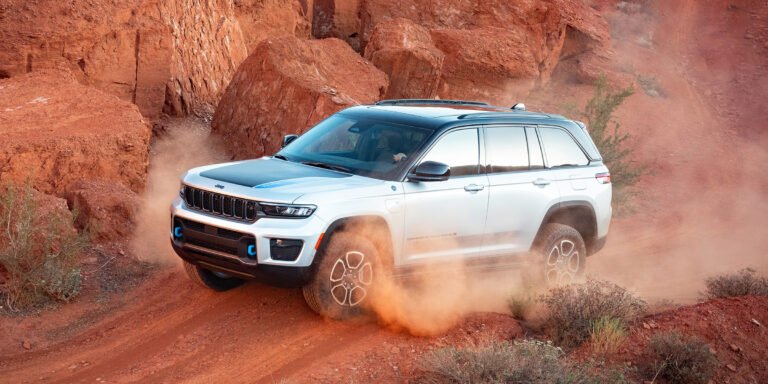
Jeep has revealed an all-new Grand Cherokee, which is expected to arrive in the UK late next year.
The 2022 Grand Cherokee will be the fourth plug-in hybrid model, or ‘4xe’, added to the Jeep line-up, as Jeep aims to catch up to its competitors in the plug-in market, eventually targeting the release of an all-electric range by 2025.
Other highlights include exterior style updates, a new interior design, and a number of tech additions that improve the infotainment and driving experience.
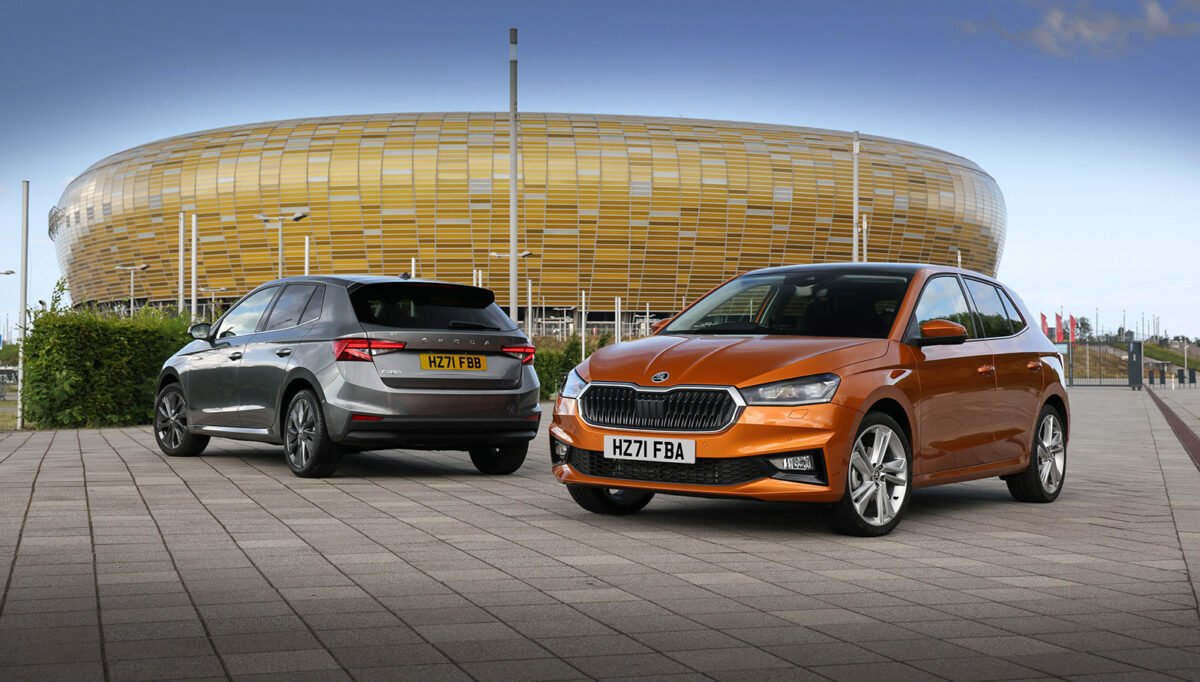
2014 fourth-generation Grand Cherokee vs. 2022 fifth-generation Grand Cherokee
Powertrains
Using similar plug-in hybrid technology to that in the hybrid Wrangler released earlier this year, the Grand Cherokee has a turbocharged 2.0-litre engine working in tandem with two electric motors to produce 375hp and an impressive towing capability of up to 6,000lbs.
The hybrid powertrain comes with three modes, allowing the driver to choose between pure petrol power, pure electric power, or a blend of both.
Jeep claims that the Grand Cherokee’s electric motors can achieve a range of 25 miles on their own, and the car can travel a maximum distance of 440 miles with the help of the petrol engine.
If you prefer pure petrol power, Jeep will also be offering Grand Cherokee petrol variants on launch. American customers will get to choose between the standard 3.6-litre V6 engine, and a more powerful 5.7-litre V8 engine, but the V8 variant is not likely to reach the UK.
The Grand Cherokee Trailhawk, marketed by Jeep as the ultimate off-roader, comes with a two-speed transfer box, a limited-slip differential and Jeep’s Selec-Terrain traction management system.
Interior and exterior updates
The Jeep Grand Cherokee line-up consists of the Laredo, Altitude, Limited, Overland, Trailhawk, Summit and Summit Reserve trims. The PHEV powertrain is available on the Limited, Trailhawk, Overland, Summit and Summit Reserve models.
The rather sleek exterior design includes a lower roofline, a wider seven-slot grille with active grille shutters, air curtains and a remodelling of the rear pillars, all implemented to boost aerodynamic efficiency.
The new Grand Cherokee is also over an inch wider than its predecessor, to improve handling, and there are eight different wheel sizes to choose from, the biggest being 21-inch diameter wheels. The 2022 model is also more roomy, with over 4m3 of extra cabin space compared to the last generation.
Jeep says that this is the most luxurious Grand Cherokee model to date, the top-end Summit Reserve trim featuring a Palermo leather interior 19-speaker audio system. Up to three ten-inch infotainment screens are available for customers, including a screen for the front passenger and another for the rear seats, all with Apple CarPlay and wireless phone charging included.
Tech enhancements
Jeep boasts that the 2022 Grand Cherokee has more than 110 advanced safety and security features, including active driving assist with hands-on automated driving, and a 360-degree surround view and night vision cameras.
Other features include a drowsy driver detection system, a parking assistance system, and adaptive cruise control with traffic sign recognition. Jeep has also installed Amazon Alexa as a virtual assistant, and the Grand Cherokee comes with its own 4G hotspot for up to 8 devices.
The UK specifications, including the price of the Grand Cherokee and its various trim choices, will be announced closer to its 2022 launch.
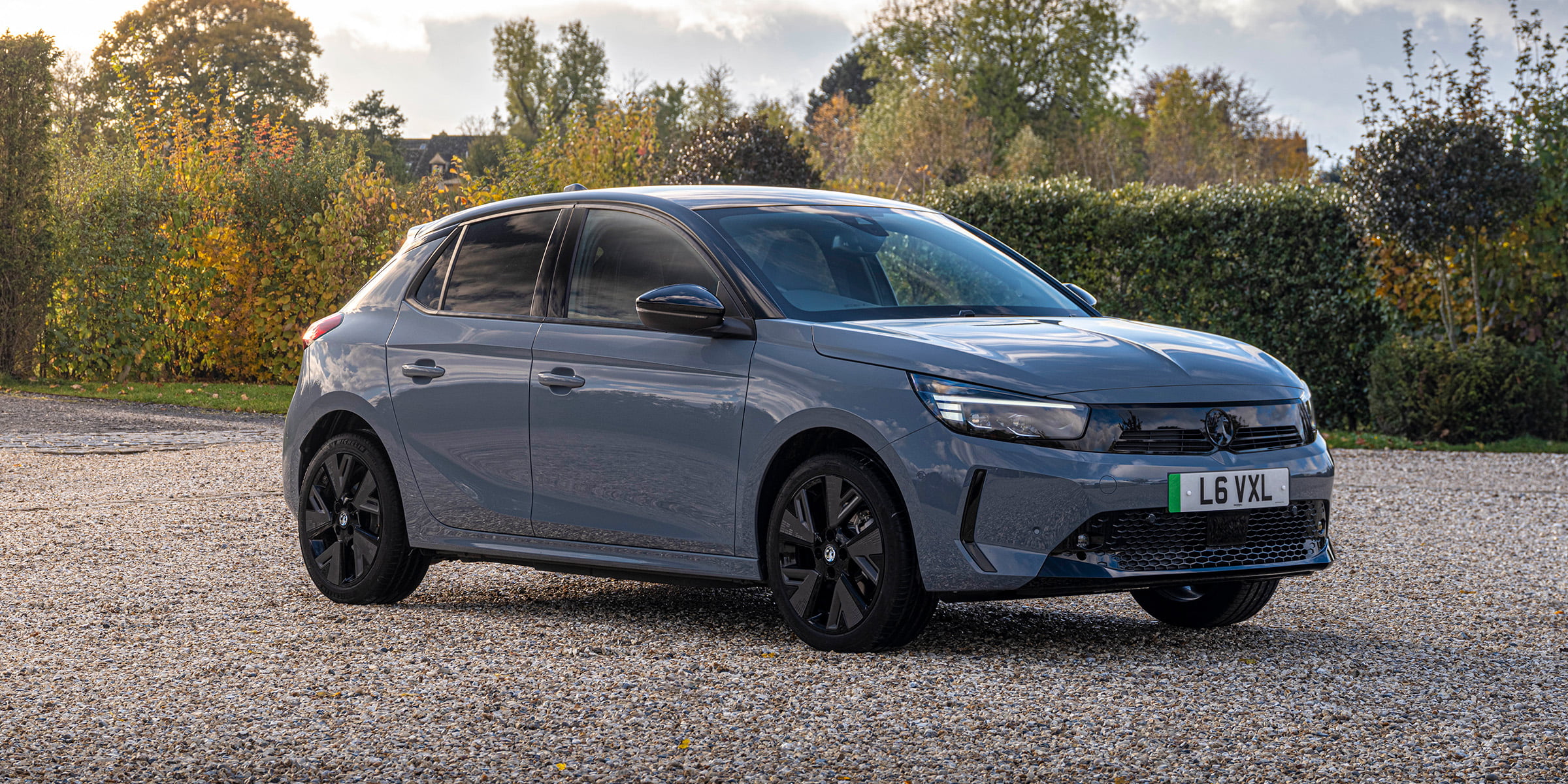
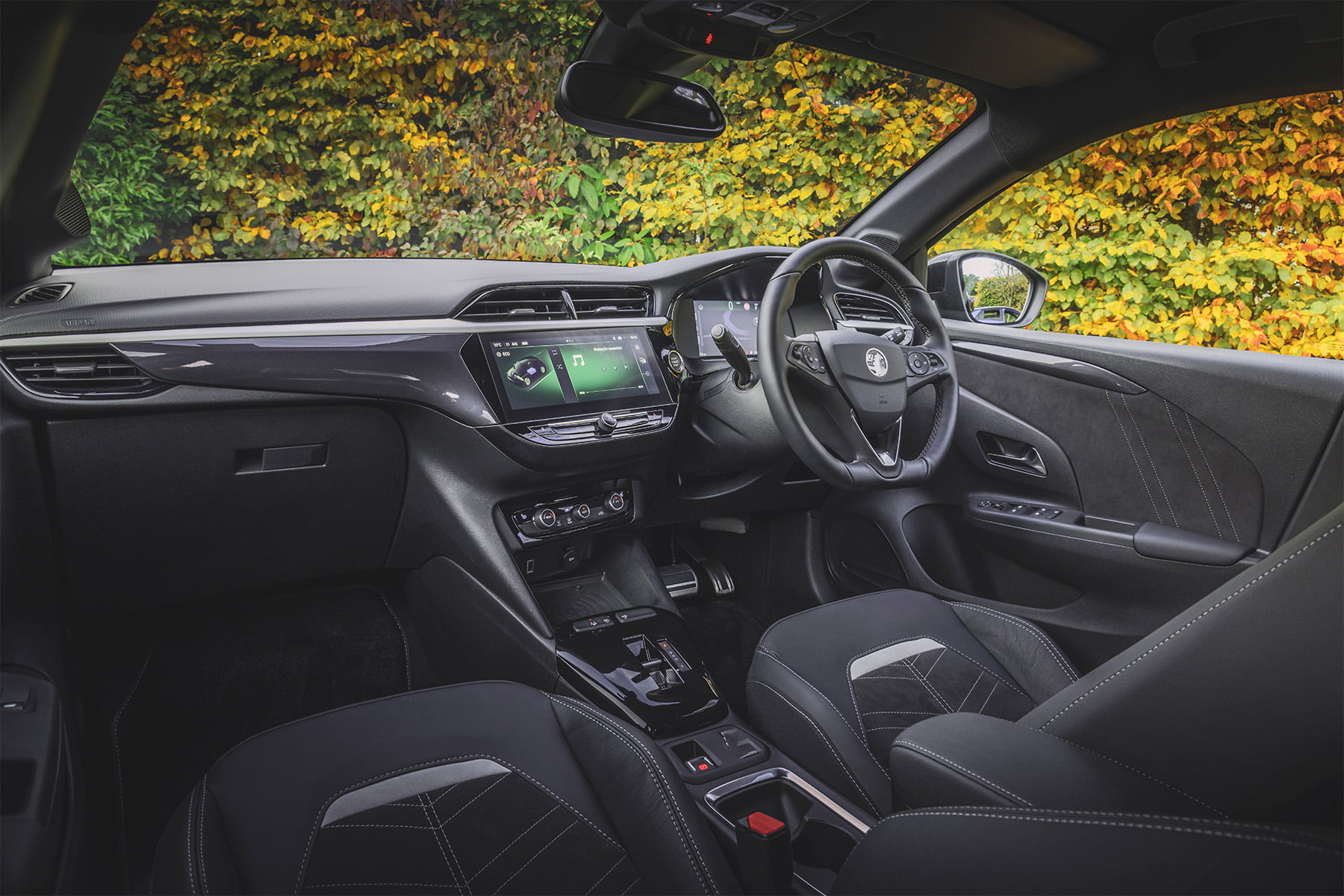
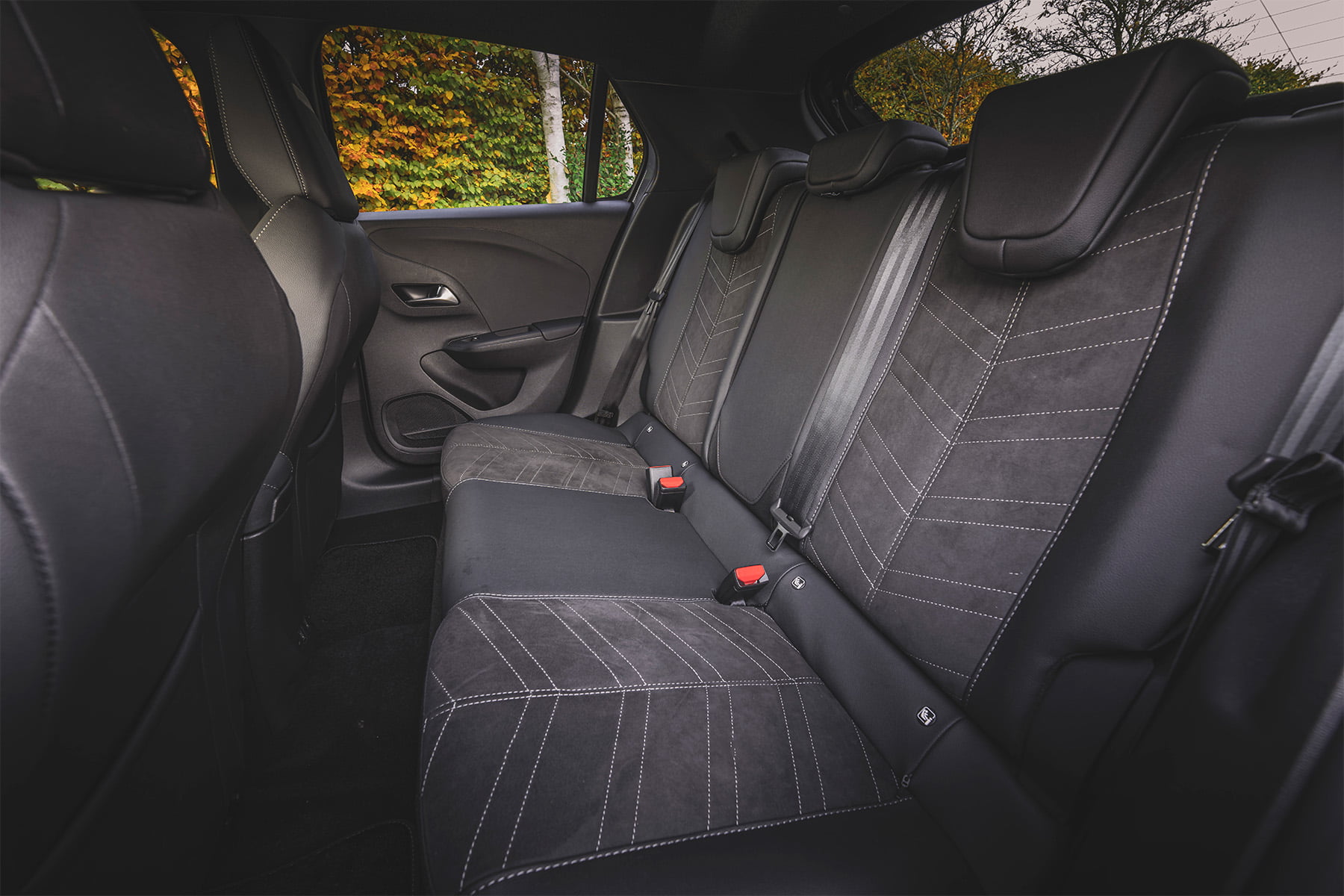
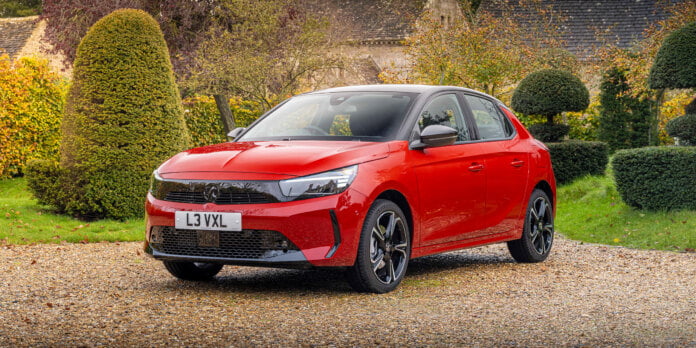
The Vauxhall Corsa Electric is a fully-electric version of the conventional Corsa supermini hatchback. It was launched alongside the conventional petrol and diesel models in late 2019, with first UK deliveries arriving in early 2020.
Up until about summer 2022, the Corsa Electric was known as the Corsa-e. A similar rebranding has been applied to all of the company’s electric models (Mokka, Combo, Vivaro and Astra).
The new Corsa and Corsa Electric are the first built under PSA’s ownership of Vauxhall, after previous owners GM sold the brand to PSA in 2017. As a result, the Corsa Electric shares most of its components, including its electric motor and battery, with the Peugeot e-208.
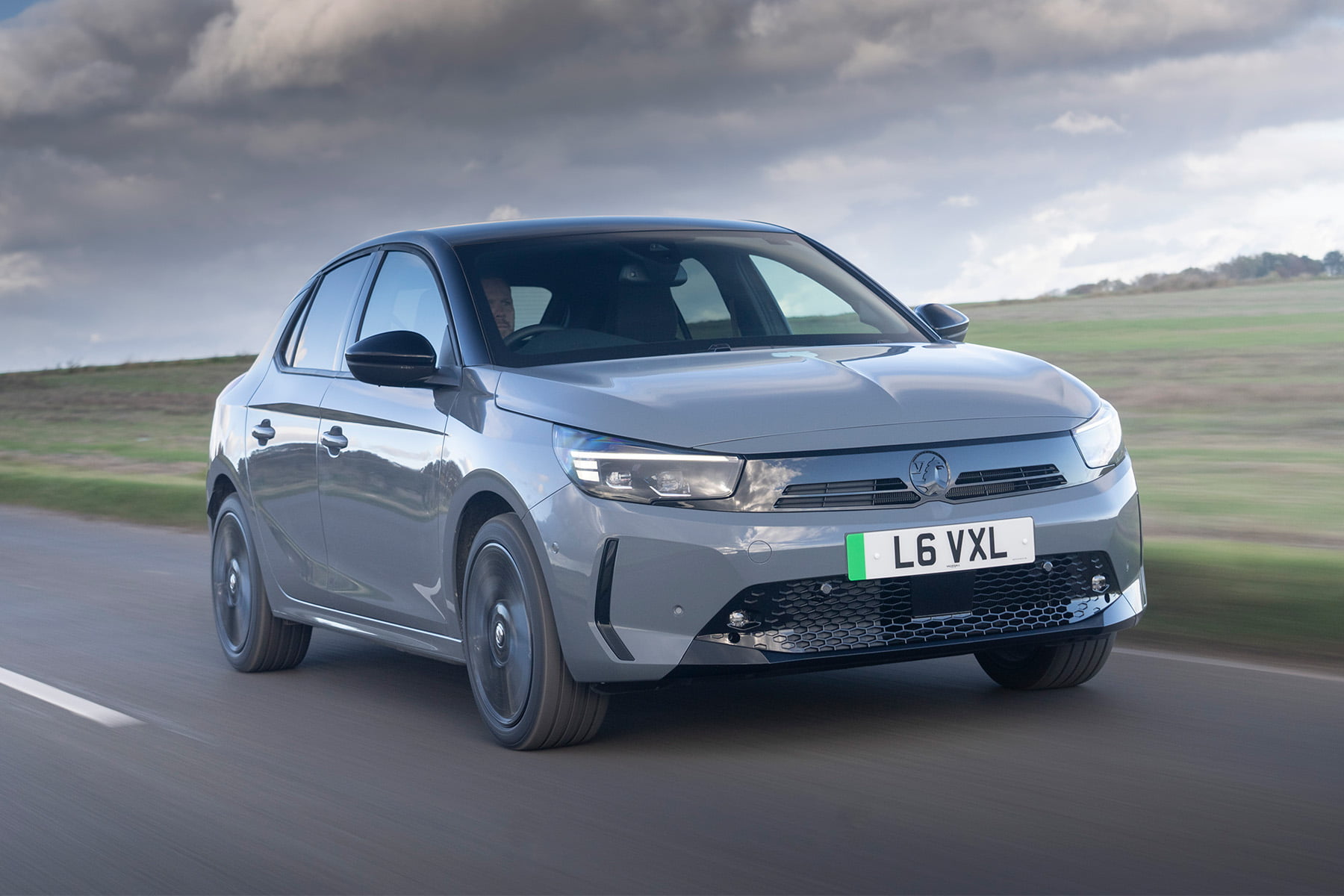
An updated Vauxhall Corsa range arrived in the UK late in 2023. This is a facelift to the existing car, rather than an all-new model. The most obvious difference is revised front-end styling that brings the Corsa into line with Vauxhall’s newer models.
The Corsa Electric has been praised for its overall comfort and general feeling of familarity, which could be reassuring for buyers who are unsure about making the jump to an electric car. However, it’s not considered as stylish and appealing as the closely-related Peugeot e-208, and it’s also expensive to purchase compared to a regular petrol Corsa.
As of August 2025, the Vauxhall Corsa Electric has a New Car Expert Rating of B, with a score of 68%. It scores top marks for its low running costs and zero tailpipe emissions, while the Corsa’s historic reliability record is also food. However, its safety rating and Vauxhall’s new car warranty coverage are only average, and media reviews have been poor – although this has been improving with the facelifted model from late 2023 onwards.
Model reviewed: Range overview “The Vauxhall Corsa-e is a great all-rounder. It’s not the cheapest small electric car, but it has an impressive range and great on-board equipment. Its interior is quite dull, but it can charge very quickly and gets a home charger included in the price.” Read review
Auto Express
Model reviewed: Ultimate Score: 8 / 10 “The all-electric Corsa is better than ever – but then it needs to be to justify the price rise. The areas where Vauxhall has focused its improvements are welcome, with decent infotainment, plus a battery and powertrain combination that rivals any in the segment. As ever, keen finance deals will be crucial to maintaining the Corsa’s popularity.” Author: Alastair Crooks Read review
Model reviewed: Anniversary Edition Score: 8 / 10 “Vauxhall’s celebratory Corsa-e marks a milestone birthday for the brand’s supermini. It’s come a long way over the past four decades, and it’s easy to see why this latest model is Britain’s best-selling car – especially in all-electric form. The range updates for 2022 are solid and the Anniversary Edition looks great and feels like a bit of fun, but it’s backed up by ability.” (Sean Carson) Read review
Model reviewed: Range overview Score: 7.4 / 10 “Vauxhall’s electric supermini has brisk performance and offers plenty of equipment, but some rivals are better value for money.” (Andy Ingram) Read review
Auto Trader
Model reviewed: 2023 facelift range Score: 8 / 10 “The Vauxhall Corsa Electric’s no-nonsense vision of zero emissions motoring was always appealing – sharper looks and improved tech sweeten the deal further.” Author: Dan Trent Read review
Model reviewed: Pre-facelift (2019 to 2023) range Score: 7 / 10 “The Vauxhall Corsa-e is very expensive to buy, compared with a standard petrol-engined Corsa, especially if you’re paying outright. However, over the three years you’ll probably own it, that cost will be offset by the lower running costs.” Read review
Car
Model reviewed: Facelift range Score: 6 / 10 “Vauxhall’s facelift tweaks have made the Corsa Electric a much more desirable car. Its styling now stands up to the likes of the razor-sharp Peugeot e-208 and updated Renault Clio, while its new electric powertrain promises to make the car more usable day-to-day. The problem with the Corsa (and, indeed, most small electric cars from the western world) is its price. We’re concerned that buyers won’t spend the extra money on a Corsa Electric when faced with the wave of cheaper, equally talented Chinese rivals, especially in the current financial climate.” Author: Luke Wilkinson Read review
Car Keys
Model reviewed: Range overview Score: 8 / 10 “This electric Corsa continues doing everything this supermini has earned a reputation for over the years – being easy to live with, well-equipped and a generally excellent all-rounder.” Read review
Carbuyer
Model reviewed: Facelift range Score: 7.6 / 10 “A useful range and huge dealer network add to the appeal of the Vauxhall Corsa Electric, but several electric rivals feel more special.” Author: Alastair Crooks, Ivan Aistrop Read review
Carwow
Model reviewed: Pre-facelift model Score: 6 / 10 “The Vauxhall Corsa Electric is a small EV car with a decent range and good amounts of kit, but it’s expensive for a Corsa and the interior could be more exciting.” Read review
Company Car Today
Model reviewed: Elite Nav “A range of more than 200 miles makes for a stress-free EV experience, and the Vauxhall Corsa-e is good to drive, tidily styled and well-equipped, especially in higher-spec Elite form.” Read review
Daily Mirror
Score: 6 / 10 “The Vauxhall Corsa-e is the perfect car for those wanting to take the plunge into EV ownership while doing it in something that feels reassuringly familiar.” Read review
Discover EV
Model reviewed: Elite Nav Score: 7 / 10 “If you’re considering making the switch to an EV, the Vauxhall Corsa-e boasts decent range, impressive technology and an ease of use and familiarity that will appeal to those who are also a little risk-averse.” Read review
Driving Electric
Model reviewed: 2023 facelift range Score: 8 / 10 “The evergreen Vauxhall Corsa Electric is much more expensive than the petrol version, but is comfortable, spacious and has a solid range nonetheless.” Author: Tom Jervis Read review
Electrifying.com
Model reviewed: Score: 7 / 10 “Closely related to the Peugeot e208, there’s a lot to like about the new Vauxhall Corsa e – not least that for those new to pure EV ownership, it doesn’t look, feel or drive very differently to any of its stablemates. But it’s decent 200+mile range helps, too.” Read review
Green Car Guide
Score: 9 / 10 “Although it’s built on the same platform as the Peugeot e-208, the Vauxhall Corsa-e is designed to appeal to Vauxhall buyers.” Read review
Heycar
Model reviewed: Score: 7 / 10 “Decent EV, but dull cabin.” Read review
Honest John
Model reviewed: Score: 8 / 10 “The Vauxhall Corsa-e certainly has a straightforward, no-nonsense appeal, but it also has the same drawbacks as its key rivals of cost and recharging times.” Read review
Parkers
Model reviewed: Score: 8.2 / 10 “Vauxhall’s fully-electric car is an excellent gateway to EVs” Read review
The Sun
“With good body control and direct steering, the electric Vauxhall Corsa-e is a lot of fun” Read review
The Sunday Times
Model reviewed: GS Long Range (2023 facelift) Score: 8 / 10 “There’s a lot to like about the new Vauxhall Corsa, not least the fact that it still exists (in both petrol and electric form), when old rival Ford has chosen to ditch traditional hatchbacks altogether in this new electrified era. Time will tell whether the end of the Fiesta means the rise of the Corsa, but those choosing to buy Vauxhall’s supermini will be very happy with the strong mix of attractive design, choice of fuel type, practicality and impressive ride comfort.” Author: Will Dron Read review
The Telegraph
Model reviewed: Yes Score: 6 / 10 “This new extra-value EV is likeable, good-looking and decent to drive – but it’s not cheap enough to fend off stiff competition.” Author: Alex Robbins Read review
Score: 6 / 10 “Its dour, cramped interior is still the Vauxhall Corsa-e’s major failing. But you might just be able to see your way past this flaw if you’re crying out for a small electric car that’s good fun to drive, because the Corsa is just that.” Read review
Score: 8 / 10 “Smart, grown up and comfortable, the Corsa-e also provides a more sensible trade-off between performance and range than the current breed of super battery saloons. It’s a brilliant second car, but that 209 miles of range isn’t really enough to justify the Corsa-e as your only car.” Read review
Top Gear
Model reviewed: Score: 7 / 10 “The Vauxhall Corsa’s gone EV with as little risk as possible, and ought to be a doddle to drive every day as a result” Read review
Which EV?
Model reviewed: Score: 6 / 10 “The Corsa-e channels some of the Vauxhall SRi heritage into a quasi-hot-hatch driving experience. But there are rough edges around the control system and instrumentation, while the range is behind Renault’s New Zoe, making this less of a practical EV choice.” (James Morris) Read review
Safety rating
Independent crash test and safety ratings from Euro NCAP
In May 2021, Euro NCAP confirmed that the Corsa Electric is now included in the overall Vauxhall Corsa safety rating. The regular combustion-engined Corsa (ie – all petrol and diesel models) was tested back in 2019, and its four-star score now applies to the Corsa Electric.
Euro NCAP requires either separate testing or substantial evidence from car manufacturers before applying a safety rating to an electric version of a petrol/diesel car. This is because of the substantial differences in the car’s composition resulting from replacing the engine, gearbox and fuel system with an electric motor and battery.
Eco rating
Independent economy and emissions ratings from Green NCAP
No eco rating
As of August 2025, the Vauxhall Corsa Electric has not yet been lab tested by Green NCAP.
The Green NCAP programme measures exhaust pollution (which is zero for an electric car) and energy efficiency. Electric cars are much more energy-efficient than combustion cars, so the Corsa Electric is likely to score very highly in Green NCAP testing if and when it ever takes place. Check back again soon.
Running cost rating
Monthly cost of ownership data provided exclusively for The Car Expert by Clear Vehicle Data
Battery range
Average
Score
Variation
Score
EV models
231 miles
C
Electrical efficiency
Average
Score
Variation
Score
EV models
4.6 m/KWh
A
Insurance group
Average
Score
Variation
Score
All models
27
C
Service and maintenance
Cost
Score
Year 1
£117
A
Year 2
£317
A
Year 3
£485
A
Year 4
£682
A
Year 5
£944
A
Overall
£2,545
A
The Vauxhall Corsa Electric is a pretty cheap car to run, according to running cost data provided exclusively to The Car Expert by our commercial partner, Clear Vehicle Data.
Electricial efficiency (the EV equivalent of miles per gallon for petrol or diesel cars) is pretty good, which helps the Corsa to squeeze more than 220 miles out of a battery, on average. This is based on EU/UK government lab testing, so real-world driving will be lower, but is still decent for a small hatchback.
Servicing and insurance costs should be very good as well, so running a Vauxhall Corsa Electric should hopefully be a relatively painless experience.
Warranty rating
New car warranty information for the Vauxhall Corsa Electric
Overall rating
C
56%
New car warranty duration
3 years
New car warranty mileage
60,000 miles
Battery warranty duration
8 years
Battery warranty mileage
100,000 miles
Vauxhall’s new car warranty is pretty much the bare minimum offered in the UK, with a duration of three years and a limit of 60,000 miles. Other rivals in the price bracket do better (and in some cases, much better).
In addition to the standard new car warranty, the Corsa Electric has an eight-year/100,000-mile warranty for the battery components.
Warranty on a used Vauxhall Corsa Electric
If you are purchasing an ‘Approved Used’ Corsa from an official Vauxhall dealership, you will get a minimum six-month warranty included.
If you are buying a used Corsa from an independent dealership, any warranty offered will vary and will probably be managed by a third-party warranty company.
If you are buying a used Corsa from a private seller, there are no warranty protections beyond any remaining portion of the original new car warranty.
If you’re looking to buy a used car that is approaching the end of its warranty period, a used car warranty is usually a worthwhile investment. Check out The Car Expert’s guide to the best used car warranty providers, which will probably be cheaper than a warranty sold by a dealer.
Reliability rating
Reliability data provided exclusively for The Car Expert by MotorEasy
No reliability rating
As of August 2025, we don’t have enough reliability data on the Vauxhall Corsa Electric to generate a rating.
The Car Expert’s reliability information is provided exclusively to us using workshop and extended warranty data from our partner, MotorEasy, sourced from both official dealerships and independent workshops.
As soon as MotorEasy has sufficient data on the Corsa Electric, we’ll publish the results here.
Recalls
Official DVSA safety recalls that have been issued for the Vauxhall Corsa Electric
2024
2023
2022
Date: April 2024 Model types: All Build dates: 12/2023 to 02/2024 Number of vehicles affected: 265 Defect: Incorrect MCU (Motor Control Unit) calibration may result in a loss of propulsion while driving. Remedy: Update the MCU (Motor Control Unit) calibration.
Date: May 2023 Model types: All Build dates: 10/2019 to 11/2022 Number of vehicles affected: 34,528 Defect: The AC compressor stator wiring could develop a fault, leading to current loss inside the AC compressor that could result in a vehicle powertrain shutdown when driving. Remedy: Reprogram the Powertrain Diagnosis ECU with updated software.
Date:January 2023 Model types:All Build dates:08/2022 to 12/2022 Number of vehicles affected:3,666 Defect:There is an error in the software calibration of the traction battery control unit which could result in a loss of propulsion when driving. Remedy:Update the software of the traction battery control unit.
Date: October 2022 Model types: All Build dates: 11/2019 to 05/2022 Number of vehicles affected: 6,361 Defect: Software does not allow the authorities to test according to regulation. Remedy: Re-flash the Body Control software.
Date: February 2022 Model types: All Build dates: 11/2019 to 09/2020 Number of vehicles affected: 450 Defect: A potential for an intermittent internal connection issue on the DC/DC chip of the on-board charger. Remedy: Check and, if necessary, replace the on-board charger, and update with the latest software.
As of September 2024 (our most recent data point), there have been five DVSA vehicle safety recalls on the Vauxhall Corsa Electric. These mostly cover software faults that control different aspects of the vehicle.
Not all vehicles are affected by recalls. You can check to see if your car is included in any of the above recalls by visiting the DVLA website or contacting your local Vauxhall dealer.
If your car is affected by a recall, the vehicle must be repaired and you should not be charged for any work required. If you are buying a used Corsa-e or Corsa Electric, you should insist that any outstanding recall work is completed before you take delivery of the vehicle.
The Vauxhall Corsa Electric hasn’t specifically been tested for anti-theft protection by Thatcham Research, but the regular petrol Corsa has and it shares its technology with the Corsa Electric so the same rating applies.
The Corsa automatically received a Poor rating from Thatcham because it failed a relay attack test, which measures the security of a car’s keyless entry and/or keyless start system. The Vauxhall Corsa and Corsa Electric models are susceptible to thieves intercepting the car’s keyless signal and using it to steal the car.
Awards
Trophies, prizes and awards that the Vauxhall Corsa Electric has received
2022
Carbuyer Awards – Used Car of the Year + Best Used Small Car
2020
The Sun Motor Awards – Car of the Year
Similar cars
If you’re looking at a new or used Vauxhall Corsa Electric, you might also be interested in these alternatives
If you’re looking to buy a new or used Vauxhall Corsa Electric, The Car Expert’s partners can help you find the right car
Search less, live more. We make finding the right car simple. Find out more
Discover great deals available on both new and used cars. Find out more
Search for your next new or used car with Auto Trader. Find out more
Lease a Vauxhall Corsa Electric
If you’re looking to lease a new Vauxhall Corsa Electric, The Car Expert’s partners can help you find a competitive deal
Personal contract hire deals from Leasing.com. Find out more
Personal contract hire deals from Carwow. Find out more
Personal contract hire deals from Select Car Leasing. Find out more
Subscribe to a Vauxhall Corsa Electric
Subscriptions are becoming a very popular way for consumers to try an electric car for a few weeks or months to help decide whether it’s a suitable alternative to a petrol car. If you’re interested in a car subscription, The Car Expert’s partners can help (PS: What’s a car subscription?)
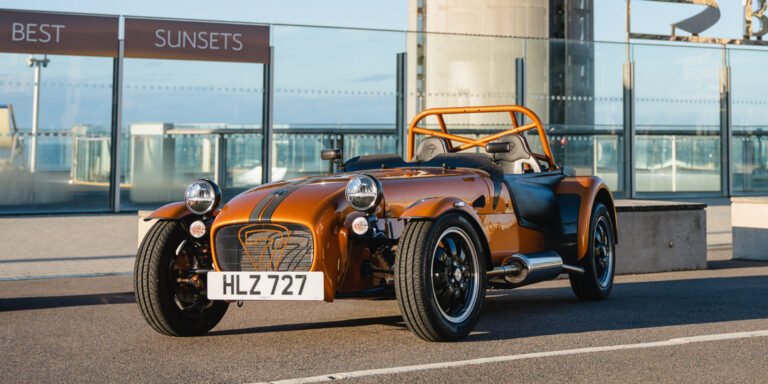
British manufacturer Caterham has released the Seven 170, the lightest production car it has ever produced.
Available either as a complete kit or as a factory build, Caterham Seven 170 weighs just 440kg, 50kg lighter than its predecessor the Seven 160. Caterham has shed this weight so that the new Seven complies with Japanese Kei car regulations.
This weight reduction, coupled with the Seven 170’s 86hp turbocharged Suzuki engine, means that Caterham’s new model churns out an impressive 0-60mph time of seven seconds, and a top-speed of 105mph. Less weight also means less pollution; with a CO2 figure of 109g/km, the Caterham Seven 170 is greener than some hybrid vehicles.
The 2013 Seven 160 vs The 2021 Seven 170
Caterham customers are able to choose from two different trim options for the Seven 170. The entry-level S trim package, which is designed for the road, comes with their road suspension pack and black leather seats.
For customers looking for a Caterham built for the track, the Seven 170 R trim package comes with a sports suspension pack, a four-point race harness, composite race seats, a carbon-fibre dashboard, and a limited-slip differential for more traction through tight corners.
Both trim options have the same five-speed manual gearbox and 14-inch silver alloy wheels. The Caterham Seven 170 also comes with an AC Cobra-inspired stripe design, and four standard paint options.
The announcement of the Seven 170 comes just days after the manufacturer dropped its mid-range 270 and Super Seven 1600 models, as the Ford Sigma engine required for their assembly is no longer available.
Caterham CEO, Graham Macdonald, said: “The Seven 170 really distils the brand’s reputation for offering accessible, simple, light-weight sports cars. Given the popularity of the 160, we’re really excited by the potential the Seven 170 offers customers.”
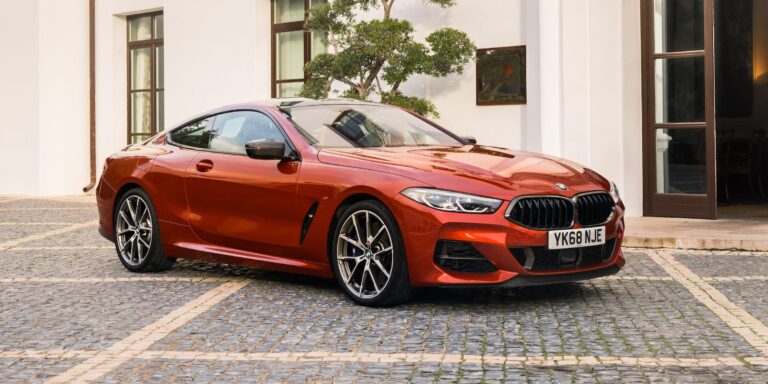
The original BMW 8 Series first appeared in 1990 as the German brand’s largest two-door coupe, but by 1999 it was not selling well and was dropped.
Two decades later, BMW decided there was now room for a luxury grand tourer with enormous power, in 2018 launching an all-new 8 Series in coupe and soft-top convertible body styles. Later a four-door Gran Coupe was added to the range – we are building a separate page for this version, so check back soon.
There are two petrol engine options or a diesel and all are potent. The 840i puts out 333hp, while diesel fans get 340hp and an all-wheel drive powertrain.
Most rapid of all is the M850i ,with 530hp, put through the all-wheel-drive to produce a blistering 3.8-second 0-62mph time. It’s not the quickest, however, as BMW also offers an the M8 (also not covered by this rating; we’ll add this to our index soon).
Reviewers focus on the 8 Series’ luxury, its potency and price – the Telegraph believes BMW has pitched its car as “a piece of high-performance automotive art, with the emphasis on performance”. Mind you the review adds that such cars with big engines are about to be killed by emissions regulations.
The price exercises the Mirror’s reviewer too, who argues that the 8 Series might “depreciate savagely and within a decade you’ll be able to pick one up for pennies.”
Top Gear sums the 8 Series as possibly the ultimate car for those who like BMWs – “but it is less special than its rivals”. However the Daily Mail, testing the convertible with its top that opens or closes in just 15 seconds, argues that it is; “a sensational luxury grand tourer for those old and experienced enough to appreciate the good things in life – more mature than a regular sports car.”
As of February 2026, the BMW 8 Series holds a New Car Expert Rating of D, with a score of 53%. Although the media reviews have been positive, the 8 Series is a brutally expensive car to live with. Currently, we don’t have safety or reliability data, so check back soon.
“The BMW 8 Series is a superbly fast and surprisingly comfortable four-seat sports car but it doesn’t look quite as dramatic as some more expensive alternatives.”
Model reviewed: Coupe “The 8 Series is a seriously impressive coupe and one that shows BMW’s ability to blend the luxurious with the sporting is still alive and well.” Read review
Auto Express
Model reviewed: M850i xDrive Convertible Score: 8 / 10 “Despite being a large and heavy open-top car, the new BMW 8 Series Convertible feels tight, agile and hugely composed.” Read review
Car
Model reviewed: M850i Score: 8 / 10 “The days of big coupes with big engines may be numbered; perhaps we should enjoy, and admire, this car while we can.” Read review
Model reviewed: Convertible Score: 8 / 10 “That big V8 can be revved out but in reality does all its best work in the mid-range, meaning it piles on pace in a romantically effortless way.” Read review
Carbuyer
Model reviewed: Coupé range Score: 8 / 10 “The luxurious BMW 8 Series coupe is most at home on a long, fast motorway trip, but it’s competent on a twisty route home too.” Read review
Model reviewed: Convertible Score: 8 / 10 “The BMW 8 Series Convertible adds some extra excitement to the formula of the Coupe with very few sacrifices.” Read review
Carwow
Model reviewed: Convertible range Score: 8 / 10 “The BMW 8 Series Convertible is a rare thing: a luxurious open-top GT that’ll put a smile on your face around corners. There’s only really room for two, though, and it’s thirsty.” Read review
Daily Mail
Model reviewed: M850i xDrive Convertible “If you are of a certain age, have made a bob or two, risk getting a perma-tan from all that time on the golf course, and fancy a motor that’s more mature than a regular sports car, this could be just the job for you.” Read review
Daily Mirror
Model reviewed: 840d xDrive Score: 8 / 10 “Iconic super coupe is back with style.” Read review
Evo
Model reviewed: 840d xDrive Convertible Score: 8 / 10 “Fixtures and fittings are top notch and there’s some nice detailing such as the stitched leather dash.” Read review
Heycar
Model reviewed: Coupé range Score: 8 / 10 “The BMW 8 Series is handsome to look at and pleasant to sit in, and it delivers an appealing blend of sporty handling and long-distance comfort. The engines are great, too, with everything from refined to raucous to give the car broad appeal.” Author: Andrew Brady Read review
Model reviewed: Convertible range Score: 8 / 10 “If only the best will do, then perhaps BMW’s flagship model is the right car for your driveway. The open-top version of the 8 Series certainly makes a pitch for being one of the grandest tourers around.” Read review
Honest John
Model reviewed: Coupé range Score: 8 / 10 “Whichever BMW 8 Series you go for, though, you’ll get a car that’s handsome to look at, a joy to sit in and stuffed full of luxury kit, including the best infotainment system in the business.” Read review
Model reviewed: Convertible range Score: 8 / 10 “The 8 Series Convertible is one of BMW’s best contemporary styling efforts and with a well-appointed interior, it meets the brief for opulent indulgence.” Read review
Motoring Research
Model reviewed: Range overview (coupé, convertible, Gran Coupé) Score: 8 / 10 “As a flagship coupe or convertible, the BMW 8 Series ticks many boxes. It’s loaded with technology, features a luxurious cabin and has proper presence on the road. It’s let down by a lack of handling sharpness, cramped rear seats and eye-watering prices.” Read review
Parkers
Model reviewed: Convertible range Score: 8.2 / 10 “BMW 8 Series loses roof but not refinement.” Read review
Model reviewed: Coupé range Score: 8.8 / 10 “Large and luxurious grand tourer, but it’s pricey.” Read review
The Sunday Times
Model reviewed: 3.0-litre diesel automatic 840d xDrive M Sport “The diesel-powered 8 Series is a car in which it’s best to just turn on the radio and sit there until you arrive at your destination.” (Jeremy Clarkson) Read review
The Telegraph
Model reviewed: Convertible “For all its remarkable qualities, however, I found it hard to love this car. There’s a slight end-of-days ostentation about it, which seems to bring out the worst in fellow road users. You might even observe that this car is too expensive and too accomplished to be a “proper” sports car, which should extract a penalty in practicality and accommodation.” Read review
Model reviewed: M850i xDrive coupe Score: 8 / 10 “Something of an iron fist in a velvet glove. Technology allows this two-door luxury coupé to have a dual personality, which combines old-school road-burning performance with a refined and comfortable cruising ability. This isn’t a big market, but BMW has invested heavily to get back into it and the BMW 8 Series is a credible contender.” Read review
Top Gear
Model reviewed: 840i sDrive Gran Coupe Score: 7 / 10 “In BMW language, a GC is a four-door coupe-ish thing. In this case a version of the ritzy 8 Series coupe, with added doors. It’s not just some lazy stretch job. Every exterior panel is different aft of the windscreen.” Read review
Model reviewed: Coupé range Score: 7 / 10 ““It’s very competent across the board, but not greatly different from the rest of the BMW range.” Read review
Safety rating
Independent crash test and safety ratings from Euro NCAP
No safety rating
As of February 2026, the BMW 8 Series has not been tested by Euro NCAP. This is not surprising, given its high price tag and limited production numbers.
Eco rating
Independent economy and emissions ratings from Green NCAP
No eco rating
As of February 2026, the BMW 8 Series has not been tested by Green NCAP.
Reliability rating
Reliability data provided exclusively for The Car Expert by MotorEasy
Total claims: 14 Average repair cost: £1087.62 Last updated: April 2025
As of April 2025 (our most recent data point), the BMW 8 Series family has a poor reliability score of 41%, according to workshop and extended warranty data provided by our partner, MotorEasy.
However, it must be noted that this score is currently based on a relatively small number of vehicle records, so this score may fluctuate more than normal as more data becomes available.
Running cost rating
Monthly cost of ownership data provided exclusively for The Car Expert by Clear Vehicle Data
Fuel consumption
Average
Score
Petrol models
29 mpg
E
Diesel models
42 mpg
C
CO₂ output
Average
Score
Variation
Score
Petrol models
221 g/km
D
Diesel models
176 g/km
D
Insurance group
Average
Score
Variation
Score
All models
49
E
Service and maintenance
Cost
Score
Year 1
£507
E
Year 2
£1,046
E
Year 3
£1,610
E
Year 4
£1,986
E
Year 5
£2,627
E
Overall
£7,776
E
The BMW 8 Series has expensive running costs, according to data exclusively provided by our partner Clear Vehicle Data. Petrol models offer 30mpg, which is low compared with the rest of the market. Diesel variants are much more efficient.
Insurance premiums are predictably more expensive than the market average, and service and maintenance costs over five years are more expensive than other models in BMW’s range.
Similar cars
If you’re looking at the BMW 8 Series, you might also be interested in these alternatives
The closest direct rival to the 8 Series – at least in convertible form – is the Mercedes-AMG SL, but it also poses a viable alternative to a host of other upmarket performance machines such as the Porsche 911 or the Lexus LC.
So, you are on the lookout for a practical car for the family that doesn’t break the bank? Whatever your budget, we have you covered with our list of the best used family cars for every budget.
We’ve analysed all the used family cars available at each price point using the thousands of cars for sale from our partners at Cazoo, heycar, Motors, CarShop and Carsnip. Then, we have consulted our industry-leading Expert Rating index to see which models have the highest review scores from across the UK motoring media.
Every car listed below has used models available to purchase now, each model being reasonably new; no older than three years old.
With comprehensive review data backing our recommendations, you can be confident that this is the definitive guide to the best used family cars for every budget that are on sale in the UK right now.
Best used family car under £10,000: Volkswagen Golf
If you have a maximum of £10,000 to spend, you have a wide array of reliable used hatchbacks to choose from, the best option being the dependable Volkswagen Golf Mk7.
Available as both a hatchback and an estate car, the Golf Mk7 was replaced by the new generation of Mk8 Golf models in 2020. However, the older model was regarded more highly – the Volkswagen Golf Mk7 had an Expert Rating of 81% at the end of its model life, which is markedly higher than the 75% rating that the new model currently holds.
The Golf has received plenty of praise for its value for money, refinement and practicality, all while offering a performance-packed engine that is great fun to drive.
A key rival to the Volkswagen Golf Mk7 on the used market is the Skoda Octavia. Much like the Golf, the older now-decommissioned model of the Octavia has a better Expert Rating than the current model, recognised for its fantastic value for money and practicality when faced with day-to-day family life.
A fantastic all-rounder, the Skoda Superb really is the perfect low-cost family car, with an abundance of recent used models available to purchase from our partners from under £20,000. Available as either a liftback or estate, the fact that this car is called ‘Superb’ is no exaggeration. It has won more than 50 UK awards since its launch in 2015.
Praised for its practicality, design and value for money, the Skoda Superb has an Expert Rating of 82%, as of September 2021, which is based on 47 reviews from the media.
If you prefer a hatchback, the Ford Focus is always a great choice for the family in this price range, with an abundance of used models available for purchase with our partners below. The Focus is one of the most common cars on British roads, notable for its impressive driving dynamics and advanced safety systems.
Known for its impressive build quality, great performance and lavish looks inside and out, the BMW 5 Series is the current benchmark for cars in the premium saloon class, and the BMW 5 Series Touring (shown above) is particularly talented at ferrying around the family with poise.
As of September 2021, the BMW 5 Series has an Expert Rating of 87% based on 52 reviews from the British media, and has won over 25 different industry awards since 2017. Our partners have a wide selection of used Series 5 models available below, but it must be said that the large majority of the models priced under £30,000 are diesel variants.
If an SUV is more your style, it is worth searching for a Kia e-Niro with our partners below. This all-electric alternative is efficient for your pocket and the planet, while being commended by reviewers for its family-friendly comfort and practicality.
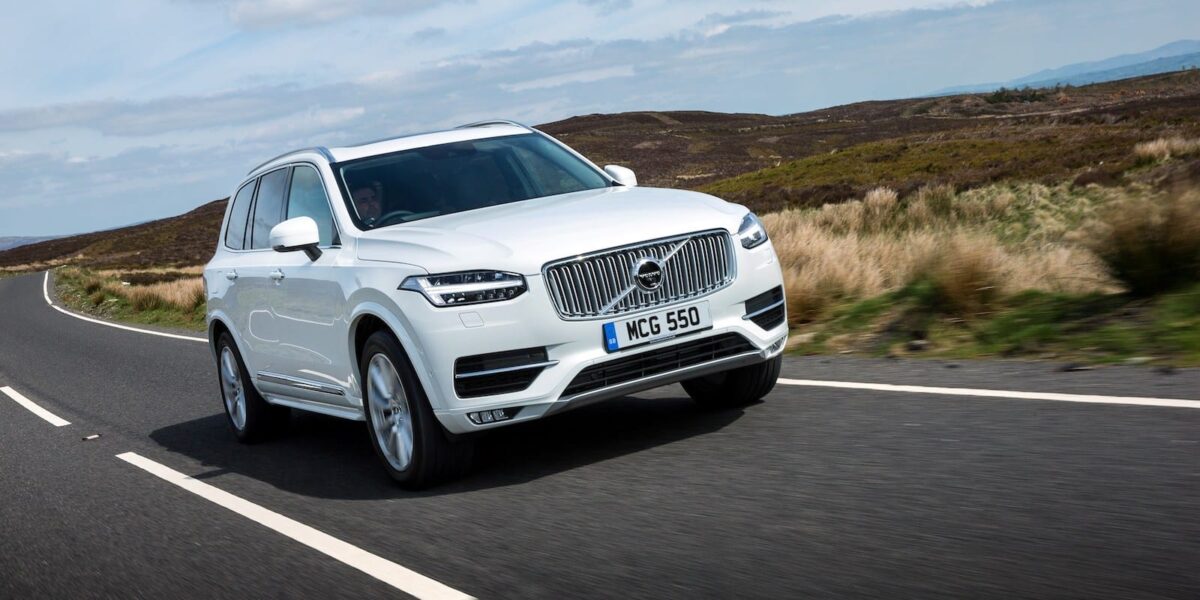
As we approach the premium end of the used car market, there are not many options that offer comfort, practicality and efficiency like the Volvo XC90.
For Volvo, safety for the driver and their family is the focal selling point for the XC90, the manufacturer claiming that “not a single Volvo XC90 occupant has died in a car-to-car accident in the UK” since the original model was launched in 2002.”
Boasting seven seats and a premium interior trim, the XC90 has an Expert Rating of 79% from 38 reviews as of September 2021, receiving plaudits for its attractive styling, roomy and comfortable interior and excellent safety technology.
Another contender on the used market in this price range is the Audi A8, which is a lavish luxury saloon, commended for its overall comfort and on-board technology. The good news if you’re looking for a second-hand example is that it tends to suffer from savage depreciation compared to the Mercedes-Benz S-Class, so it’s something of a bargain.
Best used family car under £50,000: Land Rover Discovery
The Land Rover Discovery matches the sensibilities and style of the Volvo XC90, and adds off-road ability and powerful performance to the equation.
The latest generation of the Discovery’s 35-year history is by far the most expensive and luxurious. This premium SUV has also received praise for its top of the line infotainment and luxury comfort, capable of keeping all of the family occupied and relaxed for even the longest of journeys.
As of September 2021, the Land Rover Discovery has an Expert Rating of 79% based on a total of 29 reviews, which offer some conflicting conclusions.
Some reviewers take issue with ongoing reliability problems, while others were deterred by its ever-increasing price tag. Much like the 5 Series, you will be hard-pressed to find a used petrol variant in this price range, with diesels being far more common.
Should off-roading be of no interest to you, the Tesla Model S is another fantastic choice on the used market. The Model S is a very capable family saloon car and a pioneering vehicle for the image of electric cars, almost single-handedly responsible for changing the perception of electric vehicles having poor performance and range.
Best used family car over £50,000: Land Rover Defender
The new Land Rover Defender has taken even more of a leap upmarket than the Discovery. No longer a utilitarian farmer’s tool, the Defender is now a luxury family SUV that shares a moniker with several British off-roading classics, and can trace its lineage back to the first Land Rover sold in 1948.
Launched in 2020, it has retained the robust temperament and off-road aspirations as the Land Rovers of yesteryear, although there has been a marked change in its target audience as it challenges other luxury alternatives with its grand interior trim, expensive tech and everyday practicality.
Despite rather consistent doubts about the fuel economy of the Defender, this top-of-the-line SUV has an Expert Rating of 85%, based on 34 reviews from UK media sources. The only catch is you’re unlikely to find any real used car bargains, as high demand keeps second-hand prices higher than you’d normally expect.
If you do have over £50,000 to spend on a used car for the family, it is also worth checking out another mainstay of the Land Rover range, the Range Rover, which has received particular praise for its ability to combine off-road ability, practicality and opulence into a single package.
For the definitive rankings of the best used family cars for every budget, we’ve used The Car Expert’s industry-leading Expert Rating index. The index analyses new car reviews from more than 30 of the top UK motoring websites, using an advanced algorithm that we have developed specifically to compare review scores.
It constantly recalculates and updates the Expert Rating score for every single car in real time to make sure you’re getting the most accurate and reliable ratings for every new car.
Do you like heavy rock, or are you more of a jazz person? Are you buoyed by pop but can’t stand classical?
Your answers could have as much an impact on your driving as it does on your listening pleasure, because a new study has found that different types of music can influence your ability to drive safely.
The research, from a quartet of expert bodies comprising Brunel University London, Coventry University, the Economic and Social Research Council, and insurer Direct Line, reveals the potential influence that factors such as volume and lyrics, can have on a driver’s ability to focus effectively in towns and cities.
It shows that soft music with a slow to moderate tempo and no lyrics can have a beneficial impact on drivers, whereas loud music makes drivers more mentally stimulated – which can have a negative impact when driving in urban areas.
Turning up the volume button on your car’s stereo has the most significant impact on a driver’s mind-set. The study found that motorists listening to soft, instrumental music reported 14% lower mental arousal – which can optimise urban driving focus – than those listening to loud instrumental music, and 21% lower than when listening to soft, lyrical music.
The findings are important, because music plays a big part in UK motorists’ driving lives.
Direct Line research found that 80% of drivers often listen to music when driving, while nearly half (48%) only listen to music when they’re behind the wheel.
And, as 17% say that they only listen to loud music with complex lyrics, such as some pop and rap, it means that nearly a fifth of the UK’s motorists may not be fully concentrating when driving.
Emotional triggers in music can make us feel either angry or aggressive, or even break down in teams. Listening to this sort of music while driving can resulted in heightened danger, can distract a driver to the point where they have a near miss with another vehicle or even a collision.
“The most important thing to consider when listening to music while driving is to ensure you are not mentally overloaded,” says Professor Costas Karageorghis from Brunel University London.
“A number of internal and external factors can influence this, but one of the easiest to control is our choice of auditory stimulation, whether it be talk radio, podcasts or music. Through minimising distractions, motorists are much better able to focus on the road and therefore stand a better chance of identifying potential hazards in good time.
“Drivers should consider the use of soft, non-lyrical music to optimise their mental state when driving in a stressful urban environment.”
Simon Henrick, from Direct Line, adds: “Music often plays an integral role in driving, from making the experience more enjoyable to improving our mood. These findings are therefore really interesting from a safety perspective, as they show that music can influence your level of focus when behind the wheel.
“The great thing about music is that it caters to everyone, so while we’re not telling drivers to change their preferences, we want to highlight the impact it can have on how someone drives. We would suggest that people are mindful of what they’re listening to and how it could affect both their emotions and their levels of concentration, especially in towns and cities.”
Top five tips for listening to music while driving
Keep it calm. Avoid aggressive lyrics as these can prompt dangerous and risk-taking driving behaviours such as jumping red lights and speeding
Keep it simple. Music that is highly syncopated or rhythmically complicated should also be avoided
Keep it quieter. The music volume shouldn’t be excessive and kept at under 75 decibels, otherwise there is an increased risk of missing important sounds, such as an approaching motorcycle
Keep it classic. It is advisable to use familiar, well-known tracks or those from the driver’s preferred genre, which are likely to have more of a feel-good flavour
Keep it light. Avoid music that might have a negative impact on emotional state
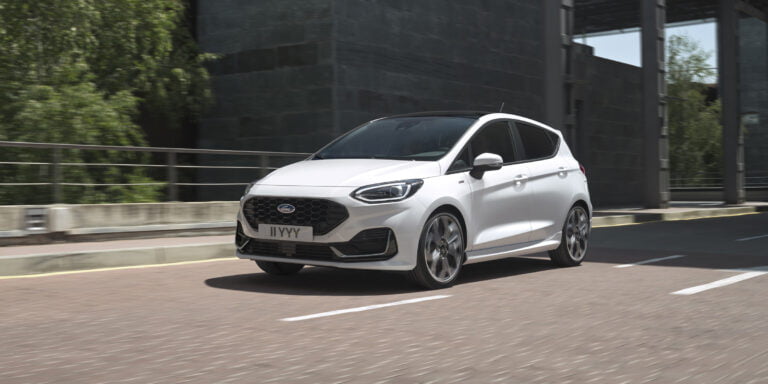
Since its launch four years ago, the seventh-generation Fiesta has always been more highly rated than its Vauxhall rival. As of September 2021, it has an Expert Rating of 78% on our industry-leading Expert Rating index, which is well above the Corsa’s 63%. Ford will be hoping that these upgrades will bring more buyers back into showrooms.
Exterior updates
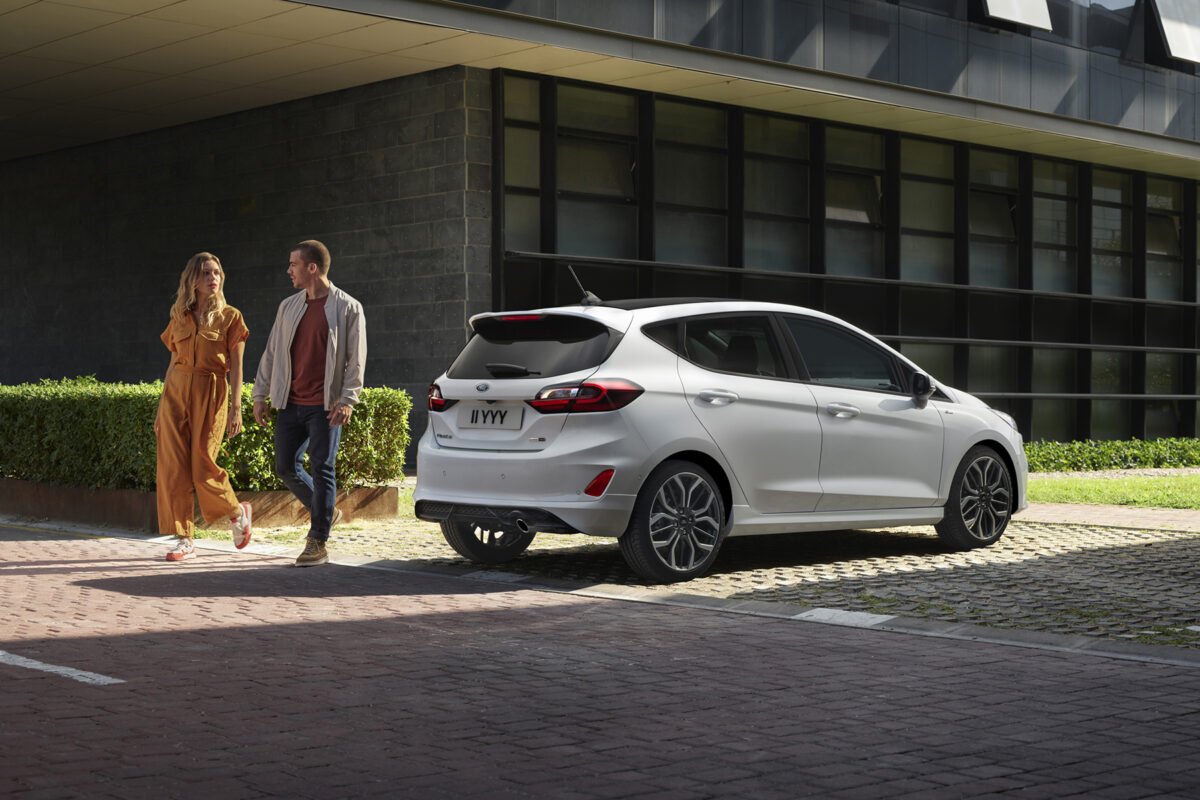
The Fiesta’s exterior overhaul consists of a bolder new bonnet design with a larger grille. The Ford badge has moved from the bonnet to the grille. The headlights and rear lights have also had the LED treatment, giving the car a more serious expression.
Customers interested in the Fiesta can also opt for upgraded matrix LED headlights, which illuminate more of the road while reducing glare for oncoming drivers. Other tech upgrades include a new 12-inch digital instrument display to replace the traditional analogue dials.
As well as the usual speed and rev information, the digital instrument display can present local hazard information to the driver. There’s also a wrong way alert system, which provides drivers with an audible and visual warning should they drive through two ‘No Entry’ signs on a motorway ramp.
Trim level tweaks
Ford has made a few changes to the trim choices for the new Fiesta. The Trend, Titanium, ST-Line and Active models remain with their own unique exterior subtleties. The more lavish Vignale model is no more, with ‘Vignale’ now relegated to an additional option pack which adds 17 or 18-inch alloy wheels and premium leather seats.
The engine choices were updated last year and are carried over in the facelifted model, consisting of petrol units with or without mild hybrid assistance. The mild hybrid unit is available with 125hp and 155hp power outputs, combined with a six-speed manual transmission.
The 125hp version is also available with a seven-speed automatic transmission, which provides improved fuel efficiency and rapid downshifts for faster overtaking. The entry-level 1.0-litre petrol remains, producing 100hp.
Safety upgrades
Much like the previous Fiesta model, the 2022 facelifted model has adaptive cruise control with Stop & Go, which can automatically bring the car to a complete halt and pull away again in stop-start traffic. It can also recognise and follow speed limit signs.
Other safety features that have been carried over include active park assist, the blind spot information system and and a more advanced autonomous emergency braking system.
New to the Fiesta is the rear occupant alert safety feature, which reminds drivers to check their back seats to avoid leaving children or pets in their vehicle.
The growing number of electric vehicles coming on to the UK’s roads is leading to a change in young motorists’ future driving ambitions.
New research shows that the ‘green march’ of EVs is massively influencing driving attitudes of young people aged 17-24. More than 60% of 1,000 young drivers questioned by road safety charity IAM Roadsmart said they plan to apply for an automatic-only driving licence.
The ban on new petrol and diesel vehicle sales from 2030 and the absence of manual gearboxes in electric vehicles, has led to the huge swing towards gearstick-less training and driving, while also translating into a new wave of expected buying behaviour.
More than 80% of respondents said they were likely to buy an electric vehicle as their next car. Only a very small number (5%) declared they were very unlikely to purchase an EV.
The acceptance of electric vehicles has charged ahead so much that 70% of the young people questioned believes that they are easier to charge, compared with filling a traditional fuel tank, saying it’s similar to topping up a smartphone or tablet.
“Our research highlights how young people are being proactive, not reactive, to climate issues and the changes to the automotive industry set to come by 2030, which is great to see,” says Neil Greig, Director of Policy and Research at IAM RoadSmart.
“What these figures demonstrate is that the traditional split between manual and automatic driving licences is becoming less and less relevant to modern motoring. It’s time that this artificial distinction was ditched as part of an overall review of learning to drive that prioritises experience in all traffic conditions over the type of gearbox you have.”
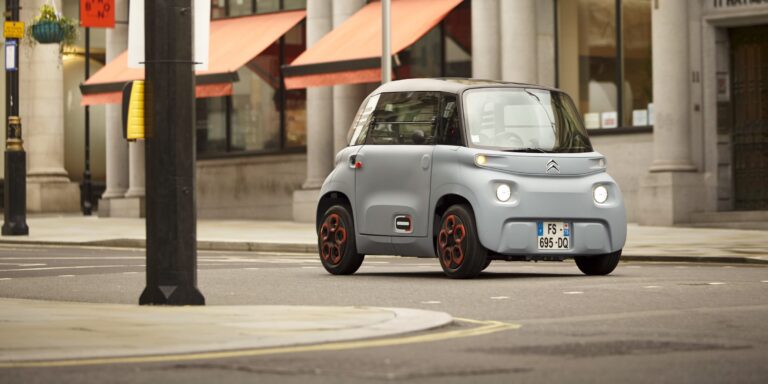
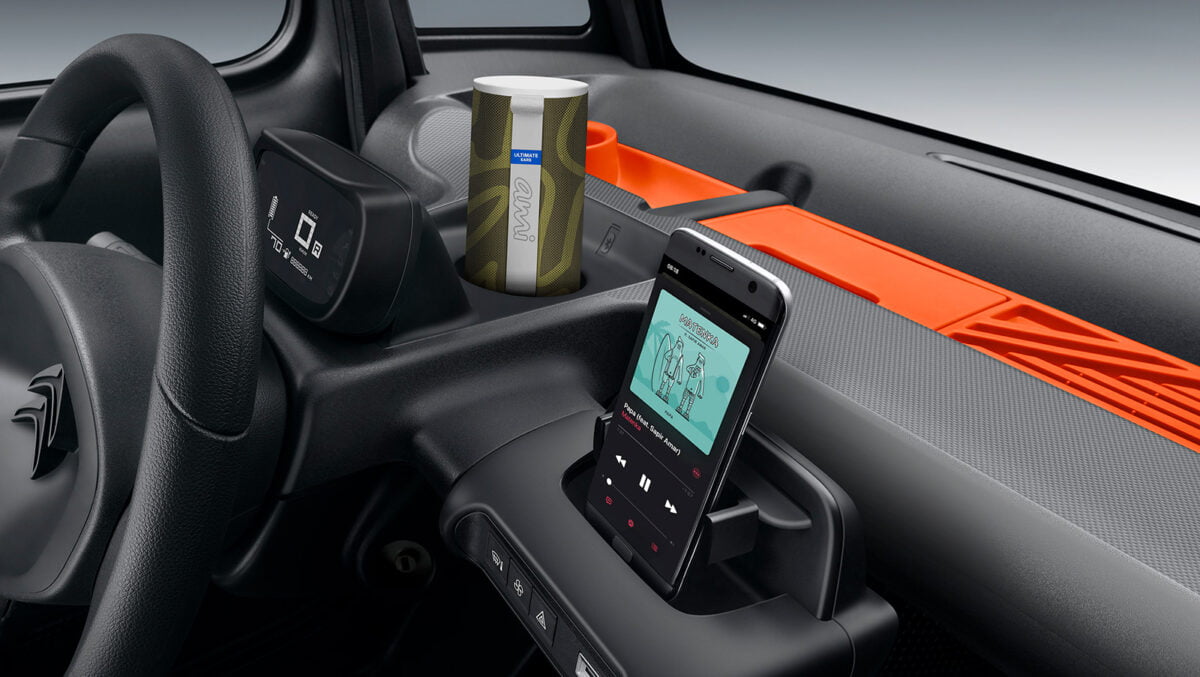
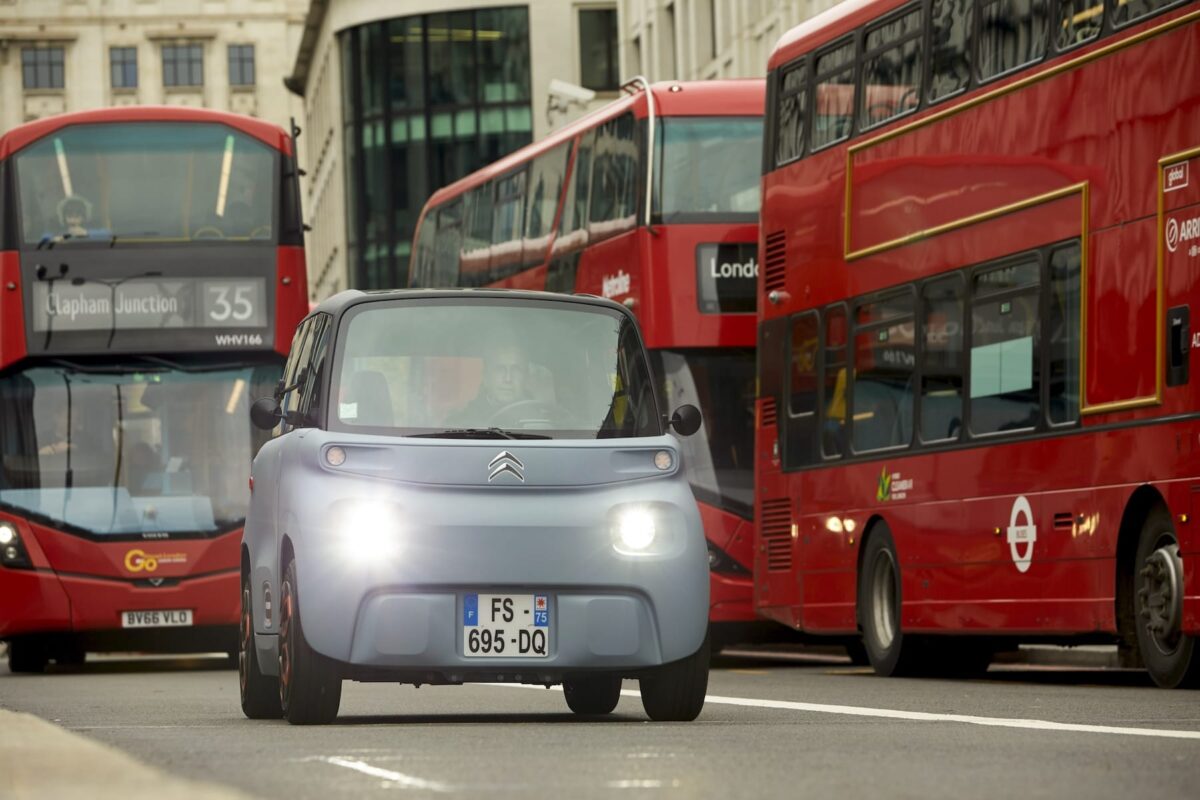
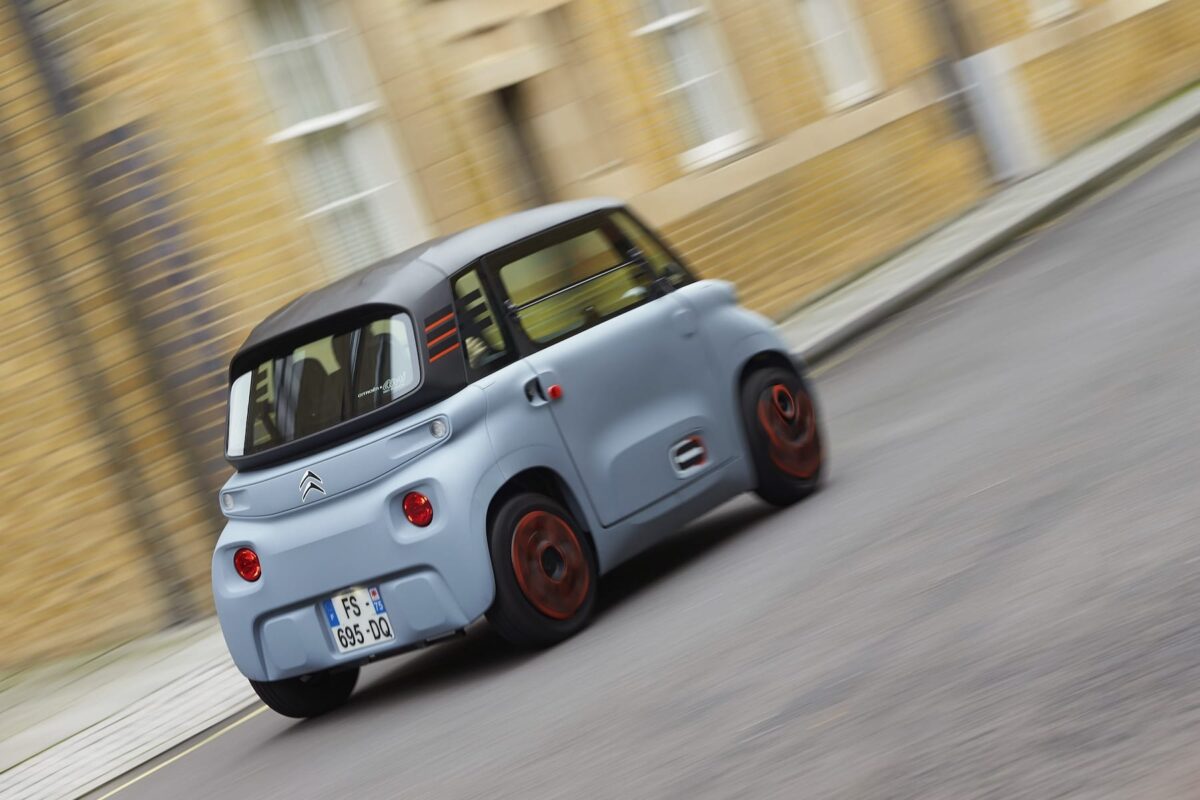
The Citroën Ami will be going on sale in the UK, after the French brand reported ‘unprecedented customer demand’ for the electric microcar.
The quirky little EV, which is technically not a car but a quadricycle, was first unveiled in February 2020 and is a rival to the Renault Twizy.
At the time, Citroën insisted that it had no intentions to make the Ami available in the UK. However, the brand claims that more than 12,000 potential customers in Britain have expressed interest in the Ami, which Citroën describes as part of its quest “to deliver affordable and clean mobility solutions that are accessible to all.”
The two-seater is designed for short journeys in very urban environments – it has no boot and Citroën says there is space for the driver, a passenger “and one small item of luggage”.
It carries a 5.5kWh battery that can be recharged in three hours to give a range of up to 46 miles at speeds up to 28mph. The vehicle measures only 2.4 metres long and also offers a very tight turning circle of just 7.2 metres.
A full UK driving licence will be required to drive the Ami – in some continental countries users as young as 14 are permitted to drive it.
While it will be sold in the UK, only left-hand drive versions will be available. However the car’s all-round visibility and width of just 1.4 metres mean that the seating position should be less of a problem for UK drivers.
Citroën is understood to be planning a series of personalisation options for the Ami, including a range of replacements for the lightweight plastic body panels – a tactic used by another microcar manufacturer, Smart, in the past.
In total the vehicle weighs just 485kg while the design also includes a nod to Citroën’s iconic 2CV, the side windows opened by flipping the glass up to a raised position.
Industry sources suggest prices of the Ami will be likely to start around £6,000. As it is classed as a quadricycle, it will not be eligible for the UK Government’s plug-in car grant scheme.
Customers who have not already expressed interest in the AMI are able to now reserve one with payment of a £250 refundable fee.
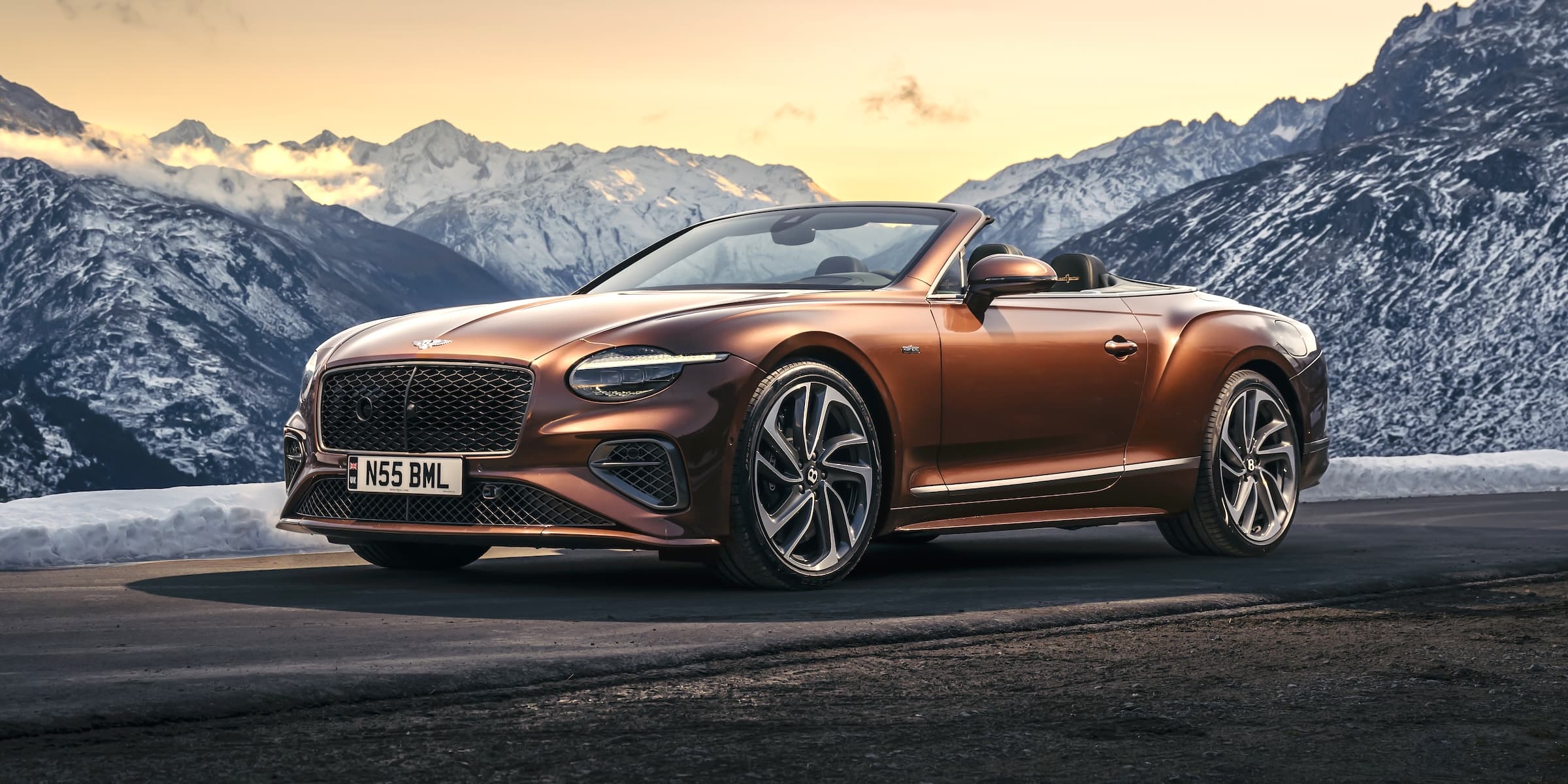
The Bentley Continental GT Convertible – widely known as the GTC – first appeared in 2006 as an open-top version of the luxury brand’s then-new first-generation Continental GT coupe.
The current model is the third generation, making its debut in 2018 and given a major update in 2024. It was originally launched with a 6.0-litre W12 engine, which was subsequently joined by a 4.0-litre V8 engine that most reviewers preferred. With the 2024 update, the W12 engine has been discontinued and the V8 engine has been paired with an electric motor as a plug-in hybrid. This offers even greater performance while also giving a silent drive in electric mode and considerably better fuel economy.
Reviewers have been highly complimentary about Bentley’s drop-top ever since it was launched. Auto Express describes it as “incredibly expensive” but adds, “You get what you pay for.”
Car magazine believes that many buyers will actually prefer the less powerful V8 engine, dubbing the W12 curious, “with neither the analogue ferocity of a big, turbo-free V12 nor the bear-hug charm of a big-capacity V8.”
There are compromises compared to the coupé version – the drop-top folds with electric smoothness in 19 seconds at speeds up to 30mph, but the boot space is cut from 358 to 250 litres, which Car describes as “tragically half as useful.” But the roof impresses, Evo saying it folds away in virtual silence, “no cheapo whirring of motors here.”
The Continental GT Convertible is stiffer yet lighter than its predecessor but it still tips the scales at 2.4 tonnes. Despite this, testers like its road manners; “It rides like it is coasting on the back of a magic carpet,” says The Sun, while The Telegraph says in corners there is not a great deal of steering feedback but adds; “the grip from the wide tyres on 22-inch wheels is humungous.”
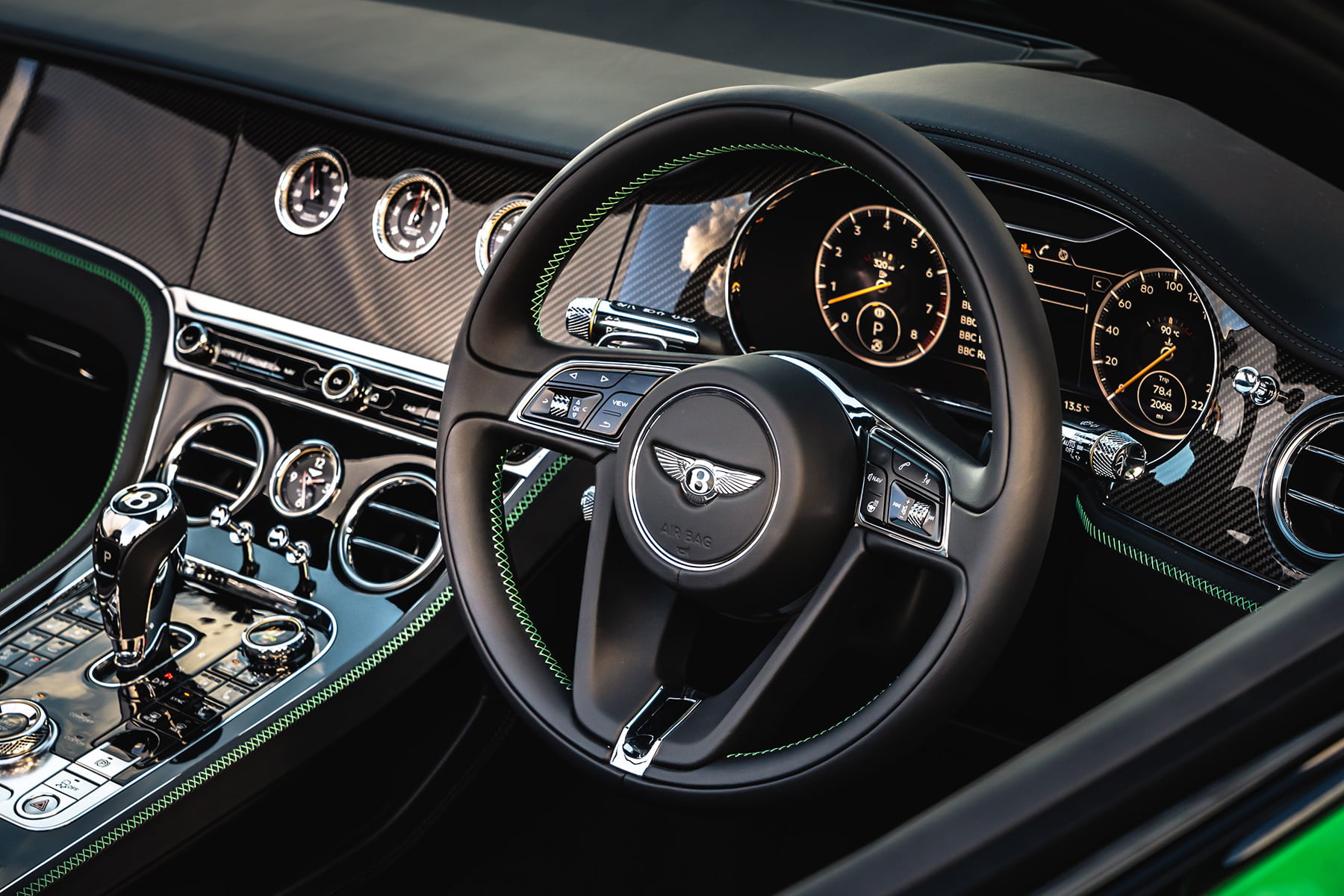
Of course being a Bentley, luxury is assured – “the quality of craftmanship of every switch, wooden veneer and leather covering separates the Continental GT Convertible from its rivals,” says Carbuyer.
As of February 2026, the Bentley Continental GT Convertible currently holds a New Car Expert Rating of E with a score of 54%. This is somewhat inevitable, given the car’s high running costs and poor CO2 emissions, but reliability has also not been a strong point of the Continental family over the last three generations.
Highlighted reviews and road tests from across the UK automotive media. Click any of the boxes to view.
Auto Express
Model reviewed: 2024 facelift Score: 9 / 10 “The new plug-in hybrid V8 that Bentley is rolling out across the model range feels well-matched to the drop-top Bentley Continental GTC. The engine is flexible and will excite on an open road, while giving you the rich background sound you expect of a Bentley convertible. Couple this with the extra refinement of electric running around town, and the GTC’s driving experience provides more layers than ever.” Author: Alastair Crooks Read review
Model reviewed: Range review Score: 9 / 10 “Refinement and comfort are excellent, it even handles well, and there’s a deep reserve of performance.” Read review
Score: 9 / 10 “It’s heavy, thirsty and not immune from scuttle shake, but for those in the market, there are few cars that do the job better.” Read review
Auto Trader
Model reviewed: 2024 facelift Score: 10 / 10 “New front and rear lights for this masterclass in British luxury grand touring gives the Bentley Continental GT Convertible a strikingly different look, but it’s the switch from a gas guzzling 12-cylinder petrol engine to a V8 plug-in hybrid powertrain that is the real game changer.” Author: Erin Baker Read review
Model reviewed: Range overview Score: 9 / 10 “The Continental GT has long been the ultimate luxury grand tourer, combining effortless power with incredible refinement and a luxurious interior. The convertible version puts the cherry on the Continental cake, creating a peerless way of crossing continents in supreme comfort.” Read review
Car
Score: 8 / 10 “A Porsche 911 Cabriolet will stop, turn and go with more alacrity, but that’s hardly the point. The point is the Bentley doesn’t endure such roads but savours them, while remaining a long-distance machine of almost peerless ability and extraordinary charm.” Read review
Carbuyer
Score: 7.8 / 10 “The Bentley Continental GT Convertible has always been luxurious, but it now drives more like a sports car, too.” Read review
Carwow
Model reviewed: Range overview Score: 9 / 10 “The Bentley Continental GT Convertible is an imposing droptop that’s beautifully made and wonderful to drive. But space in the back is so tight that the rear seats aren’t comfortable.” Read review
Daily Mail
“There are few more exquisite pleasures in life than being behind the wheel of a £200,000 open-topped Bentley, as the sun kisses your forehead and the wind blows through what remains of your locks.” Read review
Evo
Score: 9 / 10 “One of the world’s finest GTs, made even more appealing – for some – without a roof.” Read review
Motoring Research
Model reviewed: Range overview (coupé and convertible) Score: 9 / 10 “A near-perfect GT car – with or without a roof. Few cars offer such a rich blend of luxury, comfort and performance.” Read review
The Sun
“The lower and longer profile, elongated bonnet and more pronounced power lines give this motor an athletic appearance on the road.” Read review
The Sunday Times
Model reviewed: “When you climb in the Continental GT, it’s like climbing into Lewis Hamilton’s head” (Jeremy Clarkson) Read review
The Telegraph
Model reviewed: W12 Score: 8 / 10 “Opulent and ostentatious, this third iteration of the drophead Bentley Continental GT is a better-looking car than its predecessor and the interior is quite lovely. It rides acceptably, and handles pretty well, but it is too heavy and its fuel consumption is simply not acceptable in these times.” Read review
Top Gear
Model reviewed: Range overview Score: 9 / 10 “Top class. The GT in the Continental’s name is there for a reason.” Read review
Model reviewed: Range review Score: 8 / 10 “The GTC is Bentley’s big, heavyweight convertible grand tourer, with a ‘z’ fold fabric roof that opens and closes in just 19 seconds at up to 30mph.” Read review
Safety rating
Independent crash test and safety ratings from Euro NCAP
No safety rating
Like most upmarket low-volume cars, the Bentley Continental GT Convertible has not been tested by Euro NCAP.
Eco rating
Independent economy and emissions ratings from Green NCAP
No eco rating
As of February 2026, the Bentley Continental GT Convertible has not been tested by Green NCAP.
With very high CO2 emissions, the Continental GTC inevitably has a poor eco score according to our Rating Index. The updated plug-in hybrid versions perform better, but this will never be an eco-friendly vehicle.
Reliability rating
Reliability data provided exclusively for The Car Expert by MotorEasy
Total claims: 22 Average repair cost: £2437.41 Last updated: October 2024
The Bentley Continental range (GT, GTC and Flying Spur across the last two generations) is very poor when it comes to reliability, with a reliability score of only 13% according to extended warranty data provided by our commercial partner, MotorEasy. This covers both the current (2018 onwards) model as well as earlier generations.
However, it’s not just us to find the Continental range to be sub-par when it comes to reliability. In August 2022, a report from car warranty provider Warrantywise rated the Continental GT as the seventh most unreliable used car on sale in the UK.
Suspension problems are the most common issues for the Continental, with more than a third of MotorEasy’s warranty claims addressing these.
If you own or are considering a used Bentley Continental GT, make sure any used car warranty you purchase covers these particular trouble spots.
Recalls
Official DVSA safety recalls that have been issued for the Bentley Continental GT Convertible
2023
2022
2021
Date: March 2023 Recall number: R/2023/064 Model types: All Build dates: 03/2019 to 01/2021 Number of vehicles affected: 742 Defect: When riveting the airbag deflector bracket to the seat frame a sharp edge on the rivet could be created. In the event of the seat airbags being deployed it is possible that the airbag material could become torn reducing the effectiveness of occupant protection. Remedy: A check of each front seat and rework carried out where necessary.
Date: February 2023 Recall number: R/2023/037 Model types: All Build dates: 06/2018 to 09/2019 Number of vehicles affected: 1,218 Defect: The water pump concept can create a vacuum within the electrical area of the pump. As a result liquid from the coolant system can permeate through the pump housing onto the electrical circuit board and connector. Remedy: A hardware change of the water pump.
Date: March 2022 Recall number: R/2022/078 Model types: All Build dates: 06/2018 to 08/2021 Number of vehicles affected: 32 Defect: Incorrect front passenger seat belt assemblies without an automatic locking retractor (ALR) function may have been installed. Remedy: Inspect the affected front seat belt assemblies and replace if necessary.
Date: July 2021 Recall number: R/2021/276 Model types: All Build dates: 02/2018 to 06/2021 Number of vehicles affected: 2,293 Defect: The front seat software could result in trapping of a rear occupant’s legs. Remedy: Update the software for the front seats.
Date: June 2021 Recall number: R/2021/221 Model types: All Build dates: 06/2018 to 05/2021 Number of vehicles affected: 2,462 Defect: Inconsistent fitment of the fuse box and the electrical harness may prevent the accelerator pedal from returning to its resting position. Remedy: Check and if necessary rework the A-post lower trim ensuring correct clearance of the trim to the accelerator pedal.
Date: January 2021 Recall number: R/2020/373 Model types: All Build dates: 08/2019 to 11/2020 Number of vehicles affected: 393 Defect: The convertible roof can be activated using the key fob at distances exceeding six metres which contravenes an internal safety guidance measure. Remedy: Update the software parameters within the Body Control Module 2 to disable the activation of the convertible roof via the key fob and update the Owner’s Handbook.
As of September 2024 (our most recent data point), there have been six DVSA vehicle safety recalls on the Bentley Continental GT Convertible – four of them shared with the coupé model – to address various issues.
Not all vehicles are affected by recalls. You can check to see if your car is included in any of the above recalls by visiting the DVLA website or contacting your local Bentley dealer.
If your car is affected by a recall, the vehicle must be repaired and you should not be charged for any work required. If you are buying a used Continental GT Convertible, you should insist that any outstanding recall work is completed before you take delivery of the vehicle.
Monthly cost of ownership data provided exclusively for The Car Expert by Clear Vehicle Data
Fuel consumption
Average
Score
Petrol models
21 mpg
E
CO₂ output
Average
Score
Variation
Score
Petrol models
301 g/km
E
Insurance group
Average
Score
Variation
Score
All models
50
F
The Bentley Continental GTC is a very expensive car to own and run, according to whole-life cost numbers provided exclusively to The Car Expert by our data partner, Clear Vehicle Data.
The car’s fuel economy of 21 mpg is one of the poorest fuel consumption stats in our Expert Rating Index, and insurance premiums are in the most expensive bracket too. We don’t yet have latest numbers for the plug-in hybrid model introduced as part of the 2024 update, but this will help somewhat.
Bentley doesn’t provide servicing cost numbers, but you’re probably safe to assume that it’s going to be at the top end of the scale…
Similar cars
If you’re looking at the Bentley Continental GT Convertible, you might also be interested in these alternatives
There are plenty of upmarket performance convertibles around and models such as the Porsche 911 Cabriolet and Mercedes-AMG SL can be considered rivals to the Bentley. But in terms of high luxury and very high price the options are rather less, ranging across the likes of the Aston Martin DB12 Volante and Ferrari Roma Spider.
As we have advised previously here at The Car Expert, it is well worth considering a used car warranty if you have bought yourself a new (to you) car.
You wouldn’t buy a brand new model and not expect at least three years of cover against something going wrong, so why think about doing that, just because your new wheels are second hand?
There are several warranty providers offering cover for parts and labour, and each has different terms and conditions, so it’s worth taking the time to read the small print to see exactly what you are signing up for and what you can expect in the future if something does go ‘bang’.
But what is it you’re looking at? And do you understand all the terms and jargon used in a warranty document? It’s important not to assume that, just because you have paid good money for your plan, every part of the car is going to be covered. That’s not the case, and the plan providers will outline, with specific clauses what is, and what isn’t covered by your agreement.
Here are some of the main items to look for and what they mean.
Here at The Car Expert, we have some fantastic warranty offers for our readers provided by our commercial partners. If you’re interested in a used car warranty, you should check these out:
ALA Insurance provides used car warranties in conjunction with the RAC
Warrantywise is a long-established and multi-award-winning warranty provider
MotorEasy offers warranties and many other types of cover for car owners
Age limit
Many warranties have an age limit for cars – perhaps 10 or 12 years – so if your motor is getting on, it might not be worth insuring against breakdown.
Betterment
If a repair makes your car worth more than it was, your provider might not pay for the whole bill, leaving you to find some of the money.
Claim limit
There will be set thresholds on how much you can expect back for each component and repair. It’s also worth checking at what point you can make a first claim. That could be weeks or even months after your policy’s start.
Consequential damage
If something fails and then damages another part, the warranty might not cover both components, so it’s important to get your car into the repair shop for a look-over as soon as you suspect there’s a fault developing.
Excess
Many policies will allow you to opt to pay for some of the damage yourself with the insurer topping up the final bill. The more you pay, the smaller your premium will be, so it’s a good consideration if you’re not sure about spending big money on a warranty. Some excesses are compulsory, especially in higher mileage cars.
Labour rate
Some repairers charge an hourly rate that insurers are simply not prepared to pay. The provider will have a maximum allowed labour rate. After that, you pay the rest.
Mileage allowance
Rather like age limit, the higher your total mileage gets, the less insurable your car becomes. You might have to stay within a set mileage range to keep your warranty operating.
Ombudsman
If you’re ever unhappy about the claim settlement you are being offered, or about the way you have been treated by a warranty provider, you can take your case to the Financial Ombudsman Service. They consider all the evidence and have powers to settle claims.
Previous faults
The warranty might not cover damaged parts that were already there when you took out the warranty.
Regulated
A regulated warranty is usually more expensive than an unregulated warranty, but there are benefits to the extra cost.
Regulated warranty providers must report to the Financial Conduct Authority (FCA) twice a year to give an account of their solvency situation, their financial resources and accountability, so it’s worth looking for this particular form of peace of mind.
Here at The Car Expert, we have some fantastic warranty offers for our readers provided by our commercial partners. If you’re interested in a used car warranty, you should check these out:
ALA Insurance provides used car warranties in conjunction with the RAC
MotorEasy offers warranties and many other types of cover for car owners
Warrantywise is a long-established and multi-award-winning warranty provider
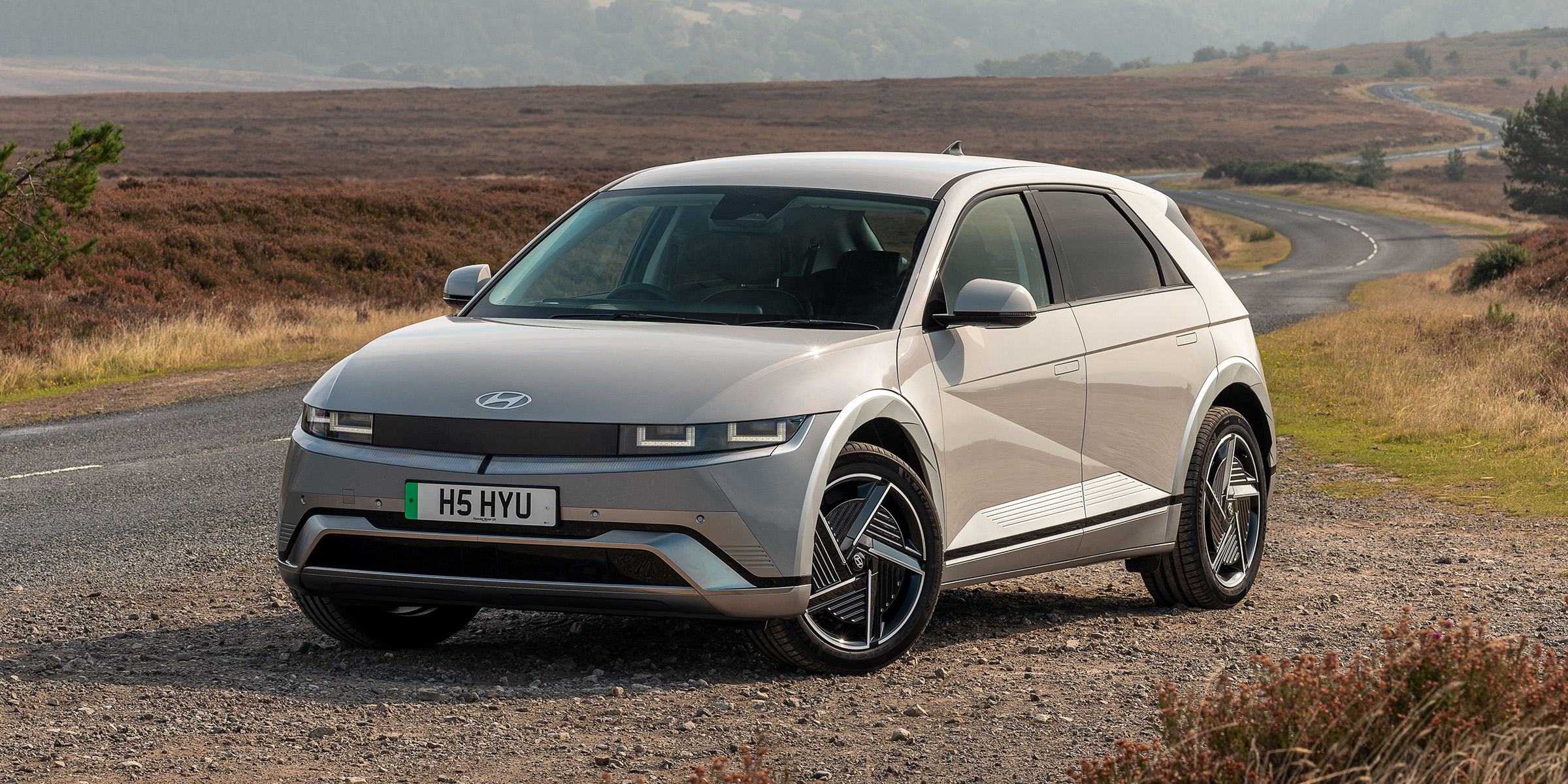
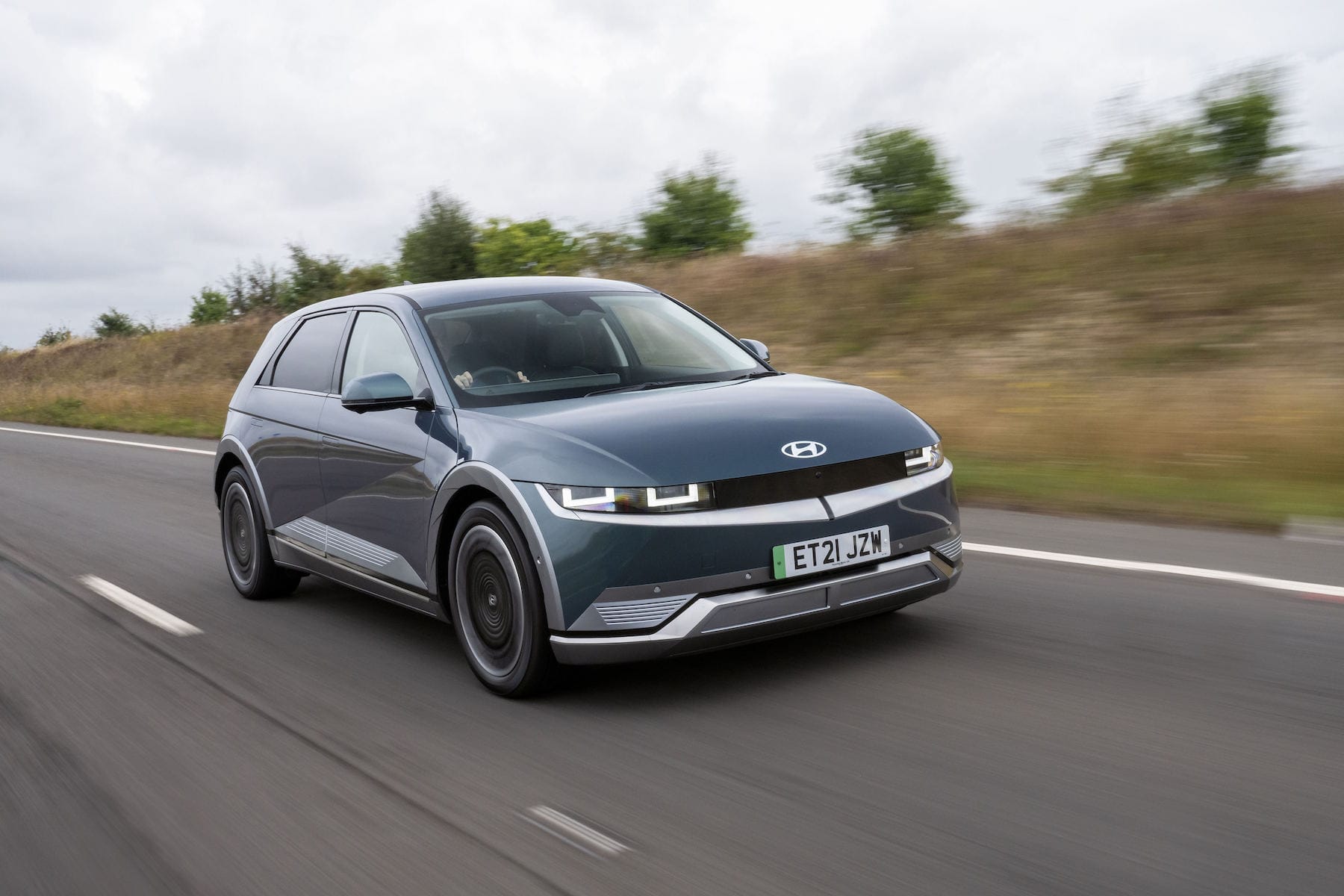
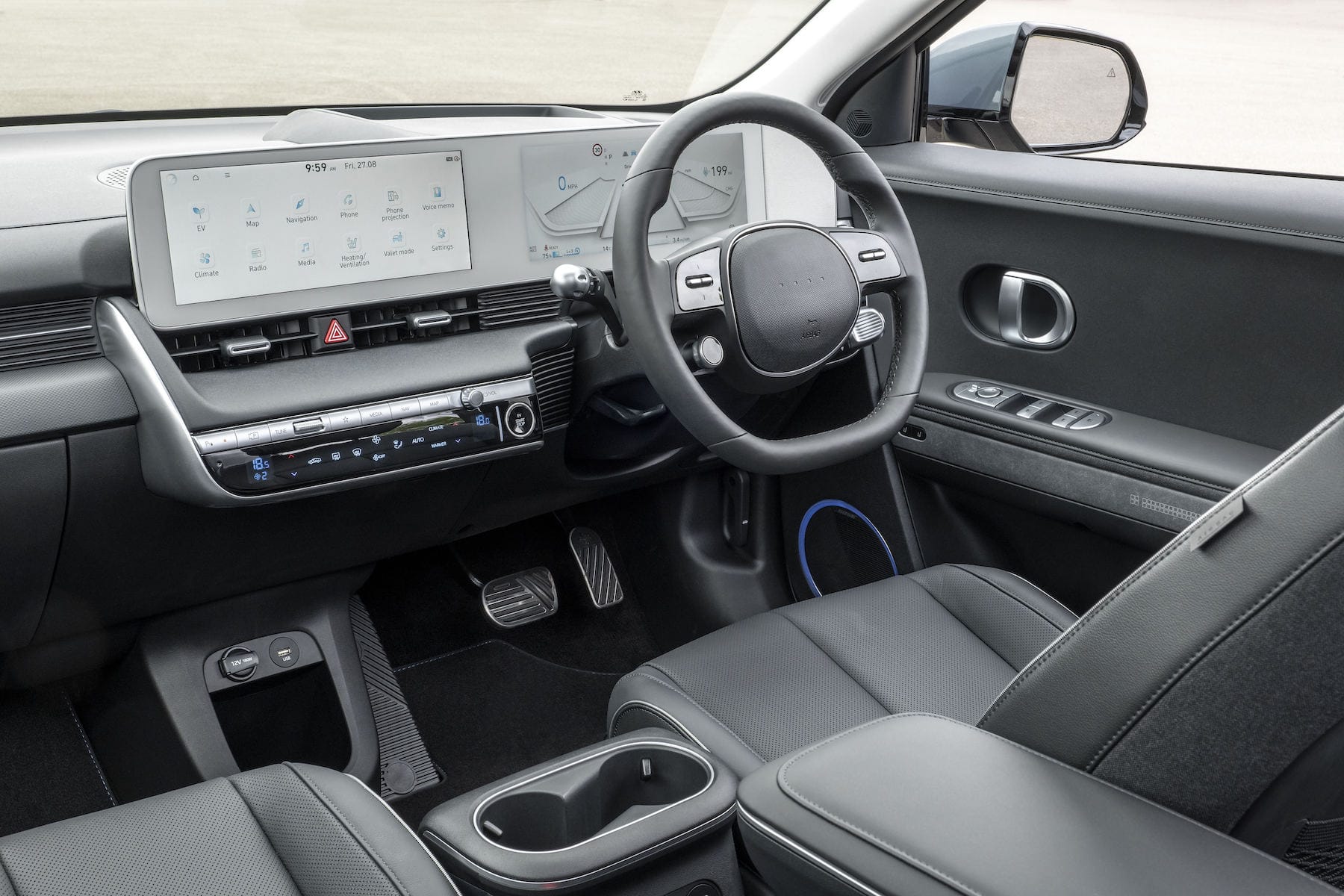
The Hyundai Ioniq 5 is the company’s first purpose-built electric car and heralds the start of Hyundai’s new Ioniq EV sub-brand. The Ioniq 5 has been collecting plenty of admirers since its 2021 release, as Hyundai sets its sights on becoming a mainstream EV brand.
With a unique retro-futuristic exterior design that looks like it comes straight from the concept art of the Back to the Future movies, the Hyundai Ioniq 5 became a highlight for the motoring media in 2021. It also won Best Medium Car at our 2021 Car of the Year Awards, before going on to be named World Car of the Year for 2022.
Top Gear has called the Ioniq 5’s design “sensational”, while The Sunday Times commented that “If a vehicle were judged solely on its looks, the Ioniq 5 would be the car of the decade.”
Borrowing the ‘Ioniq’ moniker from predecessors like the Hyundai Ioniq Electric, the Ioniq 5 his being heralded by many as a key model in the development of the electric car. Along with the closely related Kia EV6, it looks set to challenge more expensive models like the Tesla Model 3 and Model Y, and the Polestar 2.
The Hyundai Ioniq 5 has earned praise from Auto Express for its “practical battery range and charging ability that sets it apart from its rivals.” The Ioniq 5 supports ultra-fast charging, capable of taking the battery from 10-80% in less than 20 minutes, something no other EV in its price range can match.
As of July 2025, the Hyundai Ioniq 5 has a New Car Expert Rating of A, with an excellent score of 81%. Its media reviews are excellent and it produces zero tailpipe emissions, while its new car warranty score is excellent. Its running costs are also good, as is its safety rating. Overall, the Ioniq 5 has one of the highest Expert Rating scores of any new car in the UK.
Body style: Medium hatchback Power unit: electric motor, battery-powered Price: From £39,900 on-road
Launched: Spring 2021 Last updated: Autumn 2024 Replacement due: TBA
Image gallery
Media reviews
Highlighted reviews and road tests from across the UK automotive media. Click any of the boxes to view.
Featured reviews
“It’s more than three years old now, but the Hyundai Ioniq 5 is still one of the best new EVs you can buy. It’s whisper-quiet, smooth and relaxing to drive, while the sharp styling is still a stand-out feature and looks like nothing else on the road. The tech is good and everything works well, so your EV learning curve should be relatively short.”
“The Hyundai Ioniq 5’s incredible retro styling really stands out, and it has a plush, comfortable interior that’s very spacious. Alternatives can go further on a charge, though.”
Model reviewed: 2024 facelift range Score: 9 / 10 “Striking Hyundai Ioniq 5 EV has received a mid-life makeover and remains as competitive as ever.” Author: Dean Gibson Read review
Model reviewed: 84 kWh N Line S (2024 facelift) Score: 9 / 10 “The Hyundai Ioniq 5 was already a brilliant all-electric family car, but has been made even better by a series of small, carefully selected upgrades that make a big difference when taken together. Meanwhile, the new N Line version offers some extra sporty flair.” Author: Ellis Hyde Read review
Auto Trader
Model reviewed: Score: 10 / 10 “The Hyundai Ioniq 5 is an impressive all-electric family car, with loads of space inside, stylish looks and plenty of range.” Read review
Business Car
Model reviewed: Namsan Edition (2023) Score: 8 / 10 “We’re not sure the Namsan showcases the mechanical upgrades at their best. This Ioniq 5 doesn’t feel short of power, but this Hyundai EV already felt hefty – even without the extra weight from the improved battery pack.” (Martyn Collins) Read review
Model reviewed: Premium 73kWh RWD Score: 9 / 10 “Hyundai really is at the top of its game with the Hyundai Ioniq 5. A deserving award winner, it really will give EV rivals a headache as it’s such a complete car and thankfully very different proposition to its Kia EV6 sister car.” Read review
Model reviewed: 73kWh Premium Score: 9 / 10 “The Ioniq 5 catapults Hyundai – already a manufacturer with strong EV credentials – toward the top of the class, even among some very talented rivals, such as the Skoda Enyaq iV and Ford Mustang Mach-E.” Read review
Car
Model reviewed: Score: 10 / 10 “The Hyundai Ioniq 5 is an absolute show-stopper to look at, it has a thoroughly usable, spacious and appealing interior brimming with technology and neat tricks, it’s quick and its handling treads a fine balance between sporty and comfortable. We’d recommend a Premium-spec one with the 77kWh battery pack for the most range and a long equipment list.” (Tim Pollard) Read review
Car Keys
Model reviewed: 310hp Ultimate AWD Score: 10 / 10 “With its incredibly cool styling and refreshing approach to interior design, the Hyundai Ioniq 5 is an EV that stands out from the crowd. In its most powerful form, it’s a lot of fun to drive too, while the long electric range and stand-out rapid charging speeds really put it into a league of its own.” Read review
Carbuyer
Model reviewed: Range overview Score: 9 / 10 “The Hyundai Ioniq 5 is the first purpose-built electric car for Hyundai’s EV brand, and it’s a cracker.” Read review
Company Car Today
Model reviewed: Hyundai Ioniq 5 AWD 73kWh Ultimate “Striking design, well-crafted interior and performance that stacks up against some top-notch compact premium executive EV competition.” Read review
Daily Mail
Model reviewed: Hyundai Ioniq 5 AWD 73kWh Ultimate “Stepping into the elegant cabin of Hyundai’s Ioniq 5, I half expected to hear the epic strains of Also Sprach Zarathustra — the stirring music used in Stanley Kubrick’s sci-fi classic 2001: A Space Odyssey.” Read review
Discover EV
Model reviewed: Range overview Score: 8 / 10 “With standout retro looks, spacious and practical interior and a good range the Hyundai Ioniq 5 is a fine family car and stands out against premium electric rivals.” Read review
Driving Electric
Model reviewed: Range overview Score: 10 / 10 “With more presence than most supercars, ultra-rapid charging capability and luxury-car-like ride quality and interior comfort, the Hyundai Ioniq 5 is hard to fault.” Author: Ellis Hyde Read review
Fleetworld
Model reviewed: 58kWh SE Connect Score: 8 / 10 “Stylish, impressive interior space and it’s capable of super-fast charging speeds. The Ioniq 5 will change perceptions of the Hyundai brand.” Read review
Green Car Guide
Model reviewed: 73kWh Premium Score: 10 / 10 “The Hyundai Ioniq 5 is a very impressive all-round car. It has a refined, premium feel, distinctive looks, it’s spacious, and it has a range of almost 300 miles. It’s also more affordable than many rivals.” (Paul Clarke) Read review
Model reviewed: Hyundai Ioniq 5 AWD 73kWh Ultimate Score: 9 / 10 “While the Ioniq 5’s styling will undoubtedly polarise some opinions, it’s better value than the Audi Q4 and arguably makes far more of a statement than the likes of the Skoda Enyaq or VW ID.4. You certainly couldn’t mistake it for anything else.” Read review
Heycar
Model reviewed: Range overview Score: 9 / 10 “The Hyundai Ioniq 5 is one of the most appealing electric cars. Not only does it look both futuristic and retro at the same time, it’s more than competitive in terms of electric range and its interior is surprisingly spacious. Our biggest criticism is the most desirable versions are as expensive as premium rivals.” Author: Andrew Brady Read review
Honest John
Model reviewed: Range overview “Good battery range of up to 298 miles. Rapid charging as standard, able to add 62 miles of driving range in five minutes.” Read review
Parkers
Model reviewed: Range overview Score: 9 / 10 “There’s so much to recommend the Hyundai Ioniq 5 for, and very little to criticise, but its biggest problem is that the Kia EV6 does everything just a little bit better. That’s not to say you should dismiss this car – it’s close enough to its Korean sister car to still be worth a very close look.” Author: Keith Adams Read review
The Sun
Model reviewed: Range overview “The mega-fast 800v charging tech adds 62 miles of range in just five minutes. The only other car that can do that today is a Porsche Taycan. But this isn’t Porsche money. This is a £37k Hyundai.” Read review
The Sunday Times
Model reviewed: Hyundai Ioniq 5 AWD 73kWh Ultimate Score: 8 / 10 “If a vehicle were judged solely on its looks, the Ioniq 5 would be the car of the decade. The exterior is a masterpiece of modern retro design, while the interior is beautifully laid out and fabulously practical.” Read review
The Telegraph
Model reviewed: 73kWh Premium AWD Score: 10 / 10 “Few people buy electric cars like this to hurl them at back roads. The Hyundai Ioniq 5 instead scores where it matters; it’s spacious, versatile, and practical, and in Premium form at least, it’s comfortable around town and on the motorway. It also handles tidily, if not particularly excitingly.” Read review
Model reviewed: 73kWh 4×4 Ultimate Score: 8 / 10 “The terrific looks and lovely interior are the main attractions of the Hyundai Ioniq 5, but are they attractive enough to justify the dreadful ride quality? While you might think so, I feel it’s too high a price to pay on this model, although smaller wheels on a rear-wheel-drive model might change my mind.” Read review
Top Gear
Model reviewed: Range overview Score: 8 / 10 “A sensational-looking all-electric crossover that blurs boundaries, challenges the status quo, and makes us yearn for a Korean hatchback.” Read review
Which EV?
Model reviewed: Range overview Score: 8.7 / 10 “The Ioniq 5 makes a real statement about Hyundai’s position in the market: this isn’t just a great value car, it’s a great car full stop. The AWD version is superb to drive, and all cars have an immensely practical amount of space for passengers and cargo. The technology is cutting edge with lots of welcome touches. Maybe this isn’t the direct Tesla competitor some have called it, but the Ioniq 5 is still one of the best EVs on the market.” (James Morris) Read review
Safety rating
Independent crash test and safety ratings from Euro NCAP
Clean Air Index: 10 / 10 Energy Efficiency Index: 9.1 / 10 Greenhouse Gas Index: 9.3 / 10
The Green NCAP programme measures exhaust pollution (which is zero for an electric car) and energy efficiency. Electric cars are much more energy-efficient than combustion cars, so the Ioniq 5 has scored very highly in Green NCAP testing, achieving a full five-star rating.
Reliability rating
Reliability data provided exclusively for The Car Expert by MotorEasy
No reliability rating
As of July 2025, we don’t have enough reliability data on the Hyundai Ioniq 5 to generate a reliability rating.
The Car Expert’s reliability information is provided exclusively for us using extended warranty data from our partner, MotorEasy. As soon as MotorEasy has sufficient data on the Ioniq 5, we’ll publish the score here.
Running cost rating
Monthly cost of ownership data provided exclusively for The Car Expert by Clear Vehicle Data
Battery range
Average
Score
Variation
Score
EV models
317 miles
A
Electrical efficiency
Average
Score
Variation
Score
EV models
3.9 m/KWh
D
Insurance group
Average
Score
Variation
Score
All models
38
D
Service and maintenance
Cost
Score
Year 1
£300
D
Year 2
£584
C
Year 3
£934
C
Year 4
£1,153
C
Year 5
£1,451
C
Overall
£4,422
C
The Hyundai Ioniq 5 should be a reasonably cheap car to own and run, according to whole-life cost data provided exclusively to The Car Expert by our technical partner, Clear Vehicle Data.
Electrical efficiency (the EV equivalent of miles per gallon for a petrol or diesel car) is poor, but decent battery sizes mean that the Ioniq 5 still gives plenty of range between charges. It’s also still considerably cheaper to run than a petrol or diesel car, assuming you have the ability to charge at home rather than relying on public charging.
Warranty rating
New car warranty information for the Hyundai Ioniq 5
Overall rating
A
96%
New car warranty duration
5 years
New car warranty mileage
Unlimited miles
Battery warranty duration
8 years
Battery warranty mileage
100,000 miles
Hyundai’s new car warranty is better than average, and better than rival brands in a similar price bracket as the Ioniq 5.
The duration is five years, with no limit on mileage. In addition to the standard new car warranty, there is a separate eight-year/100,000-mile warranty for the battery components.
If you’re looking to buy a used car that is approaching the end of its warranty period, a used car warranty is usually a worthwhile investment. Check out The Car Expert’s guide to the best used car warranty providers, which will probably be cheaper than a warranty sold by a dealer.
Date: May 2024 Recall number: R/2024/169 Model types: All Build dates: 01/2023 to 02/2023 Number of vehicles affected: 134 Defect: On affected vehicles the rear inner driveshaft may develop noise resulting in a loss of drive. Remedy: On all affected vehicles replace the affected driveshaft and check properly fastened
Date: May 2024 Recall number: R/2024/164 Model types: All Build dates: 01/2021 to 02/2024 Number of vehicles affected: 16,297 Defect: On affected vehicles, the Integrated Charging Control Unit (ICCU) may be come defective and stop charging the 12-volt battery. This can result in the vehicle entering a failsafe driving mode Remedy: On all affected vehicles, update the ICCU software and check and replace, if necessary, the ICCU and fuse.
Date: May 2024 Recall number: R/2023/041 Model types: All Build dates: 07/2022 to 11/2022 Number of vehicles affected: 1,078 Defect: The vehicle identification number label may not have the correct maximum permissible laden mass printed on the VIN label. Remedy: Replace the vehicle identification number label with an amended VIN label.
Date: June 2022 Recall number: R/2022/160 Model types: All Build dates: 09/2020 to 05/2022 Number of vehicles affected: 6,061 Defect: The electronic parking pawl actuator system may disengage the Park (“P”) position. Remedy: A software update will be applied to the SCU (shift-by-wire control unit) to prevent the issue from occurring.
As of September 2024 (our most recent data point), there have been four DVSA vehicle safety recalls on the Hyundai Ioniq 5, covering various issues.
Not all vehicles are affected by recalls. You can check to see if your car is included in any of the above recalls by visiting the DVLA website or contacting your local Hyundai dealer.
If your car is affected by a recall, the vehicle must be repaired and you should not be charged for any work required. If you are buying a used Ioniq 5, you should insist that any outstanding recall work is completed before you take delivery of the vehicle.
Awards
Trophies, prizes and awards that the Hyundai Ioniq 5 has received
2025
Autotrader Awards – Best Car for City Drivers
2023
Auto Trader Awards – Most Loved Car
Company Car and Van Awards – Best Large Electric Car
2022
World Car Awards – World Car of the Year + World Electric Vehicle of the Year + World Car Design of the Year
UK Car of the Year Awards – Car of the Year + Best Family Car
Company Car Today CCT100 Awards – Car of the Year + Best Premium EV
If you’re looking to buy a new or used Hyundai Ioniq 5, The Car Expert’s partners can help you find the right car
Search less, live more. We make finding the right car simple. Find out more
Search for your next new or used car with Auto Trader. Find out more
Discover great deals available on both new and used cars. Find out more
Lease a Hyundai Ioniq 5
If you’re looking to lease a new Hyundai Ioniq 5, The Car Expert’s partners can help you find a competitive deal
Personal contract hire deals from Leasing.com. Find out more
Personal contract hire deals from Carwow. Find out more
Personal contract hire deals from Select Car Leasing. Find out more
Subscribe to a Hyundai Ioniq 5
Subscriptions are becoming a very popular way for consumers to try an electric car for a few weeks or months to help decide whether it’s a suitable alternative to a petrol car. If you’re interested in a car subscription, The Car Expert’s partners can help. (PS: What’s a car subscription?)
Mercedes-Benz has started taking orders for the first luxury saloon in its EQ electric range, the EQS, withthe first UK deliveries expected in late 2021.
The car, which becomes the flagship of the German brand’s battery-electric line-up, has a starting price of £100K (well, £99,995 to be precise). This price will buy the EQS 450+ in entry-level trim, but prices escalate quickly if you want all of the gadgets highlighted at the car’s launch.
The EQS is built on an all-new Mercedes-Benz modular platform specifically designed for large luxury electric vehicles. Its 108 kWh lithium-ion battery powers a 333hp motor, offering an official battery range of up to 453 miles.
A built-in 200kWh onboard charger replenishes the battery from 10 to 80% capacity in just half an hour, while Mercedes claims that rapid charging at that rate for 15 minutes will deliver a 186-mile range extension.
Highlights among the standard equipment list include a panoramic sunroof, heated seats in the front and rear, a 12-inch driver display and a 13-inch central display controlling the multimedia system and navigation.
This ‘hyperscreen’ dashboard is an £8,000 optional extra…
Four more trim levels are available, adding such elements as a digital light system, a head-up display, remote parking, massage seats and gesture control of the interior systems.
The top of the range Exclusive Luxury trim, which costs £21,000 more than the entry level AMG Line model, gives you the option to spend a further £3,995 on a rear-seat ‘luxury lounge’ package, which includes electrically adjustable rear seats with massage functions, a rear armrest with wireless smartphone charging, an Android tablet and climate control for the rear seats.
Likely to be the most desirable option, however will be the £7,995 ‘hyperscreen’ dashboard. Available on all but entry-level versions, this merges all the various dash displays and functions under one full-width curved glass screen more than 1.4 metres wide.
Buyers of the EQS will receive a three-year subscription to Mercedes me Charge, which provides access to green charging from many public charging providers under one single account. Also included is a one-year subscription to Ionity, which offers free rapid charging.
Skoda has announced full UK pricing and specification information for the all-new Skoda Fabia, which goes on sale at the end of September.
The fourth-generation Skoda Fabia is very different to its predecessor. It promises greater efficiency, more style and 50 litres more boot space.
Buyers will have a choice of four engine options, all petrol. The 65 and 85hp versions are combined with a five-speed manual gearbox, the 95hp with a six-speed version and the range-topping 110hp with a seven-speed automatic transmission.
There will be four different trim options available at launch, dubbed S, SE-L, Comfort and Colour Edition. A sports-styled Monte Carlo variant will be added in early 2022.
S versions start at £14,905 and include LED headlights, manual air conditioning and a seven-inch colour screen infotainment system with DAB digital radio.
The safety specification looks strong too, although the new Fabia has yet to be tested by independent safety body Euro NCAP. Standard across the Fabia range is autonomous emergency braking with pedestrian protection, and an advanced lane-assistance systen that also detects the road edge. Also fitted is a system that establishes an audio and data connection to a dedicated emergency call centre if sensors within the car detect a major accident.
Upgrading to SE Comfort costs an extra £1,800 and among the extra equipment are 15-inch alloy wheels, fog lights, rear parking sensors, leather steering wheel and extra front seat adjustment.
SE L versions, from £18,980, adds a host of extra trim, larger 16-inch alloy wheels, dual-zone air conditioning, front and rear electric windows and a 9-inch display screen with navigation.
The Colour Edition, from £17,495, is intended to be personalised – the car’s roof, wing mirror caps and alloy wheels can be finished in either metallic Graphite Grey or pearl-effect Magic Black to contrast with the main body colour.
Colour Edition models also get the Volkswagen Group ‘Digital Cockpit’ through a ten-inch screen, keyless start/stop and the signature example of Skoda’s ‘Simply Clever’ details, an umbrella mounted in the door pocket.
Dealers start taking orders for the new Fabia at the end of September, with first cars expected on UK roads before the end of the year.
The Land Rover Defender is truly an off-roader for the ages, which can trace its heritage back to the original Land Rover launched in 1948. It was designed under the premise of being an inexpensive, all-purpose vehicle that could conquer any terrain.
That original Land Rover evolved over the decades to become the Land Rover Defender, which continued the model’s success until finally ending production in 2016.
An all-new Defender finally entered production in 2020, bringing a new focus to the famous nameplate that is a far cry from the utilitarian role of the original Land Rover.
From its ancestry to the modern day, we take a look at the evolutions and revolutions of one of Britain’s most famous motor cars.
Series I (1948 – 1957)
The first Land Rover was launched at the Amsterdam motor show in April 1948. This model would later become known as the Series I. It had a 1.6-litre petrol engine from the Rover P3 that produced all of 50hp, and the first verions were built with a pick-up body style.
After a year, 8,000 had been built and the British Army ordered its first trial cars, while selectable two- and four-wheel-drive was added in 1951. In 1952, the engine was increased to a 52bhp 2.0-litre unit, while a new long-wheelbase version was added.
Series II (1958 – 1974)
The second generation model was introduced in 1958, featuring a lightly updated body and a 2.25-litre petrol engine. A facelifted version called the Series IIA, arrived in 1961 and brought a new 62bhp 2.3-litre diesel engine option.
Ever popular, it would be the Series IIA that would influence the British public’s perception of Land Rover for the decade to come. It’s remembered for both its rugged strength and its many appearances in popular films and television documentaries in the 1960s.
This popularity soon led to Land Rover production surpassing half a million vehicles in 1968. At around that same time, the headlights were moved out to the front wings to meet various new safety regulations around the world.
Series III (1971 – 1985)
The next evolution in the Land Rover story launched in 1971 with the Series III. This generation is recognisable by its plastic grille, flatter door hinges and a full-width dashboard. To demonstrate its increasing popularity, production hit 750,000 in 1971 and then one million by 1976.
In a small glimpse of what the future would hold, Land Rover started to offer new interior trim options with the release of the Series III, looking to attract buyers who wanted a more comfortable driving experience.
The Defender is born (1990 – 2016)
In 1983, the Series III underwent some modernisation, evolving into the new 90 (short wheelbase) and 110 (medium wheelbase) and 127 (long wheelbase) models being introduced. Coil springs replaced the original leaf spring units, along with new four-cylinder engines that connected to a full synchromesh five-speed manual gearbox.
In 1990, the range was renamed Defender, although the 90, 110 and 130 length designations remained. A new diesel engine was also offered. Gradually, more creature comforts were added and several special editions were released, all of which were more lifestyle models than workhorses.
The next major milestone for the Defender didn’t come until 2007, with a major overhaul that was largely aimed at complying with new safety and emissions rules. It consisted of a new four-cylinder diesel engine with a six-speed manual gearbox, updated dashboard, and minor body alterations.
In 2015, Land Rover celebrated ‘The Year of the Defender’ with three new Limited Edition models being launched, as well as recreating the Series I production line in Solihull. Production finally came to an end in January 2016 after nearly 68 years of gradual evolution.
The car’s design may have seemed static, but in reality it was anything but. By the time the Defender ended production in 2016, there were very few parts that could actually fit onto the older Land Rover Series I and Series II models as almost every component on the car had been redesigned over the years.
The end of production in 2016 genuinely marked the end of an era for both Land Rover and the British motor industry. It may have become most popular as a rather ridiculous urban SUV by the end of its life, but it remained a remarkably flexible vehicle design.
The number of different uses for adapted Land Rover Series I – III and Defenders was almost endless – fire tender, ambulance, military transport, recovery vehicle, emergency response, exploration vehicle and mobile workshop are just some of its many careers.
New Defender (2019 – present)
At the 2019 Frankfurt motor show, an new Defender broke cover, sporting an all-new platform, advanced off-road technology and a cool, retro-inspired look. The model hit UK streets in early 2020.
Some purists were disappointed to see the interior move upmarket as the traditional model was known for being easy to clean when being used as a true workhorse. But the new Defender boasts some of the most advanced off-road technology ever fitted to a production car to make it capable on any terrain, while also being pleasant inside for families who want a practical SUV.
Successes continue to mount for the ever-popular Defender. Among a string of local and international awards, it was recently named 2021 World Car Design of the Year at the annual World Car Awards.
Highlighting Land Rover’s ongoing ties to the silver screen, a new James Bond edition of the Defender has been unveiled in 2021, marking the release of the new Bond flick, No Time To Die.
Looking to the future, electric models will be the way forward for Land Rover and the Defender. In Summer 2021, Land Rover released the Defender P400e, the first plug-in hybrid model to be added to the Defender family.
The current Land Rover Defender is part of our industry-leading Expert Ratings index, where it has achieved an outstanding Expert Rating of 87% based on 34 reviews from UK media sources. Check out the Expert Rating for the Land Rover Defender here.
Buy or lease a Land Rover Defender
If you’re interested in a new Land Rover Defender, or a used Defender in either the current or classic shape, The Car Expert’s commercial partners have hundreds of cars to choose from.
Buy a car online from your sofa. We’ll deliver it. Find out more
We only have the best used cars from selected dealers. Find out more
There seems to be a belief among some car buyers that GAP insurance is only valuable for those customers buying a brand-new vehicle with some sort of finance. But it can be equally valable for used car buyers as well.
If you’re buying a cheap used car for a couple of thousand pounds or less, it may not be that beneficial. But if you’re spending more than that, and especially if you are borrowing money to help you pay for the car, GAP (guaranteed asset protection) insurance is well worth considering.
Over the last decade, the number of people buying used cars on dealer-sourced finance has tripled. According to data published by the Finance and Leasing Association (FLA), more than 2.1 million used cars have been financed through dealerships in the 12 months to July 2021. That compares to less than 700,000 used cars ten years ago in 2011.
As well as massive growth in the number of people financing a used car, the amount being borrowed has increased rapidly as well. Back in 2011, the average amount borrowed on a used car was just over £9,000. In 2021, that has increased to just under £17,000 – an 80% increase in value. And it’s accelerating as more consumers switch from new to used cars.
More borrowing means more debt risk
While the used car market used to be primarily a cash business, it’s now shifted to be dominated by car finance. That has increased the financial risk for car buyers.
Traditionally, used vehicles don’t depreciate at the same rate as new vehicles. But if you’re using a finance deal to purchase a used vehicle, you’re usually borrowing a lot of money and paying a significant amount of interest on top of your borrowing. That means GAP insurance for used cars is becoming an increasingly important consideration.
GAP insurance is the cover that bridges the gap between what your main insurer will pay out and what you paid for your vehicle, in the event your car is a total loss (ie – stolen or written off).
While your primary car insurance will pay out the market value for your car at the time it was stolen or written off, that’s a lot less than what you paid for the car originally. The cheque offered is also unlikely to cover your finance settlement completely, leaving you with no car and, potentially, a debt of thousands of pounds.
GAP insurance for used cars – your options
GAP insurance can be useful for any owner with a vehicle less than ten years old, whether the car bought is new or used. And even if you’re a cash buyer, if you’re particular about your vehicle being replaced like-for-like, you’ll still have to factor some depreciation in.
Return To Invoice GAP is traditionally the most common form of GAP insurance for used cars. If your car is a total loss, it covers the difference between your car insurance payout and the original purchase price.
Finance GAP covers the difference between your car insurance payout and your finance settlement, ensuring that any PCP hanging over you is completely paid off.
Vehicle Replacement GAP covers the difference between your car insurance payout and the replacement cost for a similar vehicle. This is helpful as used cars get increasingly more expensive, as a like-for-like replacement may cost a lot more in three years time than it does today, so you’re covered for any price increases.
Ultimately, insurance is there to get you out of a pickle when things go bad. While GAP insurance doesn’t suit all used vehicle purchases, given how intrinsic a car purchase is to a life of convenience, it’s worth considering all options.
No longer in production, the Citroën Grand C4 SpaceTourer was a rarity on the UK car market – a seven-seat MPV. Originally known as the Grand C4 Picasso, this model ultimately dates back to 2013.
The seven-seater Grand C4 SpaceTourer was based on the smaller five-seat C4 SpaceTourer model, which is also no longer on sale in the UK.
Despite its age, the car still sold in sufficient numbers up until it was finally discontinued in 2022, and continued to win awards as well. The people carrier received its final update in October 2021, though it was mostly about ‘streamlining’ the trim choices, with either a petrol or diesel engine each of 130hp.
Reviewers tended to like the Grand C4 SpaceTourer, with the body shape earning praise. “With modern, stylish looks, it shows an MPV doesn’t have to be boring,” said Carbuyer. Meanwhile, Eurekar dubbed the Grand C4 SpaceTourer “incredibly versatile” and “proof that there is still room in the market for a well-thought-out MPV”.
As of February 2026, the Citroën Grand C4 SpaceTourer holds a Used Car Expert Rating of C, with a score of 61%. It gets good grades for its low running costs and low CO2 emissions. However, its reliability score and media reviews are only average, while its safety score is poor.
Body style: Large MPV Engines: petrol, diesel Price when new: From £28,630 on-road
Launched: Autumn 2018 Last updated: Autumn 2019 Production ended: Summer 2022
Image gallery
Media reviews
Highlighted reviews and road tests from across the UK automotive media. Click any of the boxes to view.
Auto Express
Model reviewed: Range overview Score: 8 / 10 “Bold Citroen Grand C4 SpaceTourer, formerly Picasso, mixes comfort, style, practicality and efficiency to great effect.” Read review
Auto Trader
Model reviewed: Range overview Score: 7 / 10 “MPVs aren’t as common as they used to be, but it’s hard to knock the Citroen Grand C4 Spacetourer for its blend of space and style. It’s as quirky as a Citroen should be and hugely roomy inside, and very affordable for this type of car.” Read review
Business Car
Model reviewed: Score: 8 / 10 “The Citroën Grand C4 Spacetourer is a cost-effective and well thought out addition to a sector lacking in choice.” Read review
Car Keys
Model reviewed: Score: 9 / 10 “It would also be impossible to find an SUV with the flexibility and versatility for the same price as in the Citroën Grand C4 Spacetourer.” Read review
Carbuyer
Model reviewed: Range overview Score: 8.6 / 10 “With modern, stylish looks, the Citroën Grand C4 SpaceTourer shows an MPV doesn’t have to be boring” Read review
Carwow
Model reviewed: Score: 7 / 10 “The Citroen C4 Grand SpaceTourer is a spacious and very practical seven-seat MPV with a cool, futuristic design, but it’s not quite as good to drive as many alternatives.” Read review
Eurekar
Model reviewed: 1.2-litre petrol automatic Flair “The incredibly versatile Citroen Grand C4 SpaceTourer is proof that, despite the rise of the SUV, there is still a place in the family car market for a well-thought out MPV – especially when holiday time comes around.” Read review
Model reviewed: Range overview “Many seven-seaters can prove cramped, but the design of the longer wheelbase Citroen Grand C4 SpaceTourer is such that the middle row of three individual seats slide separately and even when fully slid back – which provides a huge degree of legroom – there’s still a substantial boot area.” Read review
Model reviewed: 2.0-litre diesel automatic Flair “A touchscreen-heavy dashboard with too few buttons was an annoying demerit but the biggest windscreen in the business lets you enjoy passing cloud formations and a dash readout of 45.5mpg brought a feeling of contentment in a high-mileage session at the wheel.” Read review
Model reviewed: 2.0-litre diesel automatic Feel “With all the versatility and practicality of a minibus but the light handling and easy driving capabilities of a large family car, the Citroen Grand C4 SpaceTourer is the ideal vehicle for an active family that needs to transport up to seven people in style.” Read review
Green Car Guide
Model reviewed: 1.5-litre diesel automatic Flair Score: 7 / 10 “If you need a seven-seater people carrier that’s spacious, relatively efficient and affordable then the Citroën Grand C4 SpaceTourer could be your answer.” Read review
Heycar
Model reviewed: Range overview Score: 7 / 10 “The Citroen Grand C4 SpaceTourer is an MPV or multi-purpose vehicle, which is just another way of saying it’s a great family car. It’s one of the best. Perfect if you’re looking for a car that’s got loads of room, doesn’t come with eye-watering running costs and even manages to look relatively stylish.” Read review
Honest John
Model reviewed: Range overview “Citroen renamed its Picasso range – with the Grand C4 SpaceTourer replacing the Grand C4 Picasso. It’s in a bid to bring the MPVs in-line with the SpaceTourer van-based people carrier.” Read review
Motors
Model reviewed: Score: 8 / 10 “The Citroën Grand C4 Spacetourer is stylish, good value, and delivers a superb ride.”
Read review
Parkers
Model reviewed: Range overview Score: 8 / 10 “As a 7-seater, the Citroen Grand C4 SpaceTourer (Picasso) is not quite at the pinnacle of quality, and it’s by no means the best equipped, but we can see why it would be a popular choice among consumers.” Read review
The Sun
Model reviewed: “If you are looking for bags of space without admitting you need a commercial vehicle, the Citroen SpaceTourer should be on your shopping list.” Read review
Safety rating
Independent crash test and safety ratings from Euro NCAP
The Citroën Grand C4 SpaceTourer was originally tested by Euro NCAP back in 2013 and awarded a five-star rating. It was then known as the Grand C4 Picasso, and the score applies to both the smaller C4 Picasso/SpaceTourer and larger Grand C4 Picasso/SpaceTourer
However, this rating expired in January 2020 and is no longer valid as the car no longer meets the standards required for such a rating. This is normal practice, as Euro NCAP reviews its ratings on most cars annually with most ratings expiring after about six or seven years.
If you are comparing a used Grand C4 SpaceTourer or Picasso to vehicles of similar age, whose ratings will have probably also expired, its safety rating score is still useful.
Eco rating
Independent economy and emissions ratings from Green NCAP
No eco rating
The Citroën Grand C4 SpaceTourer was not tested by Green NCAP during its production life.
Reliability rating
Reliability data provided exclusively for The Car Expert by MotorEasy
Total claims: 334 Average repair cost: £441.40 Last updated: April 2025
As of April 2025 (our most recent data point), the Citroën C4 family has a fairly average reliability record. That’s according to workshop and extended warranty data provided exclusively to The Car Expert by our partner MotorEasy.
The average repair bill to date has been about £450, which is better than average. Watch our for gearbox issues, however, which have an average bill of more than £1,200.
Awards
Trophies, prizes and awards that the Citroën Grand C4 SpaceTourer has received
2022
Auto Express Awards – Best Used MPV
2020
Carbuyer Awards – Best Seven-Seat Car
2019
Carbuyer Awards – Best MPV
2018
Business Car Awards – Best MPV
Auto Express Awards – Best MPV
Carbuyer Awards – Best MPV
2017
Auto Express Awards – Best MPV
Carbuyer Awards – Best Seven-Seater
DieselCar Magazine ‘Top 50’ – Best MPV
Leasing.com Awards – Best MPV
2016
Auto Express Awards – Best MPV
DieselCar Magazine ‘Top 50’ – Best MPV
FleetWorld Awards – Best MPV
2015
Auto Express Awards – Best MPV
FleetWorld Awards – Best MPV
Fleet News Awards – Best Seven-Seat People Carrier
Telegraph Car Awards – Best Seven-Seater
2014
Auto Express Awards – Best MPV
DieselCar Magazine ‘Top 50’ – Best MPV
Scottish Car of the Year Awards – Best MPV
Tow Car Awards – Best MPV
UK Car of the Year Awards – Best MPV
2013
Top Gear Awards – Best Family Car
Similar cars
If you’re looking at the Citroën Grand C4 SpaceTourer, you might also be interested in these alternatives
Rivals to the Citroën Grand C4 SpaceTourer have been falling by the wayside as buyers decamp to SUVs – we’ve lost prime contenders such as the Renault Grand Scenic, Volkswagen Sharan and SEAT Alhambra in recent years. Some remain, however, and among the most popular is the Ford S-Max.
Launched in 2021, the Audi Q4 e-tronisa mid-sized electric SUV and the fourth addition to Audi’s EV line-up.
Available in both SUV and Sportback versions, the Q4 e-tron built on one of Volkswagen Group’s dedicated electric vehicle platforms, just like the similarly sized Volkswagen ID.4 and the Skoda Enyaq.
The Audi Q4 e-tron offers plenty of choice, with two battery options and three power levels on offer. The entry-level 125kW ’35’ and mid-range 150kW ’40’ versions both have a single electric motor driving the rear wheels, while the top-spec 220kW ’50’ models are powered by two electric motors that drive all four wheels.
The Audi Q4 e-tron has been praised for its starting price but criticised for its costly options packages, which can take the price up to more than £65,000.
The Q4 e-tron Sportback is mechanically identical to the more conventional SUV version, with the main difference being a more sharply raked roofline that sacrifices some boot space and rear headroom for slightly sleeker styling. Top Gear concludes that there’s little point opting for the Sportback variant of the Q4 e-tron, saying that “the Sportback e-tron gives you less for more”.
Overall, the Q4 e-tron has had a lot of praise from across the media for its high levels of build quality, comfortable driving experience and roomy interior. Auto Express is impressed, suggesting that the Q4 e-tron will “become the German company’s biggest seller behind the A3 hatchback.”
As of February 2026, the Audi Q4 e-tron has an Expert Rating score of A for both new and used car calculations (with scores of 75% and 69%, respectively). The only caveat to this excellent set of results is that we don’t yet have any meaningful reliability data, as the model simply hasn’t been around long enough.
“The Audi Q4 e-tron is good to drive, has understated handsome looks and the interior is fairly posh, but top models aren’t that comfortable and alternatives have more range.”
Model reviewed: Sportback range Score: 8 / 10 “Most people will choose the Audi Q4 Sportback e-tron for the way it looks. But the big news here is that if you want the sleek styling of a coupe SUV but aren’t prepared to compromise when it comes to space or practicality, then it comes alarmingly close to being a zero compromise family car.” Read review
Model reviewed: SUV range Score: 9 / 10 “The Q4 e-tron is an impressive EV and one of the best cars on the MEB platform yet. It answers the issues of ride comfort, build quality and iffy infotainment that blight VW’s own ID models in a really appealing package with a decent real-world range, too.” Read review
Auto Trader
Model reviewed: Sportback range Score: 6 / 10 “The Audi Q4 competes with the likes of the Polestar 2, Volvo C40, Tesla Model Y and Jaguar I-Pace, even if the Sportback can’t currently match any of them for power or performance. It’s more expensive and less practical than the standard Q4 e-tron as well, and for these reasons this would remain our pick of the two.” Read review
Model reviewed: SUV range Score: 7 / 10 “The Audi Q4 e-tron is Audi’s twist the shared electric platform used by relatives like the ID.4, Skoda Enyaq and Cupra Born. It’s got the image and performance to compete but the VW, Skoda and Cupra variations on the theme arguably offer more for your money for essentially the same car.” Read review
Business Car
Model reviewed: Range overview Score: 9 / 10 “The Audi Q4 e-tron offers great build quality and long range, but high-end versions have lofty pricing.” Read review
Car
Model reviewed: Range overview Score: 8 / 10 “The Audi Q4 e-Tron hits the trendy new targets of EV ownership (range over power, charging speed over top speed) with aplomb. Its footprint is small enough for it to pass as planet-friendly urbanite and to calm the social acceptance watchdogs.” Read review
Car Keys
Model reviewed: Sportback range Score: 8 / 10 “This Sportback model brings extra style to what is already a very competent electric SUV. Managing to bring sleeker looks at a relatively mild price increase – and with no significant practicality disadvantage, it is a great option.” Read review
Model reviewed: Range overview Score: 9 / 10 “The Audi Q4 e-tron is another accomplished electric car that will easily slot into customers’ lives, and it feels like a turning point for this German firm as it starts to make EVs more accessible.” Read review
Carbuyer
Model reviewed: Range overview Score: 8.6 / 10 “The Audi Q4 e-tron is the first affordable electric model from Audi, boasting an upmarket interior and design to help set it apart from rivals.” Read review
Company Car Today
Model reviewed: Q4 40 e-tron 77kWh battery “The Audi Q4 e-tron does all the things it will need to in order to become one of Audi’s biggest sellers, especially with its impressive range figures.” Read review
Discover EV
Model reviewed: Range overview Score: 8 / 10 “Audi’s newest entry-level electric SUV is very good as an everyday car and in this guise it is an enticing prospect for anyone making the transition to electric – prioritising range over power, and charging speed over top speed.” Read review
Electrifying.com
Model reviewed: Range overview Score: 8 / 10 “Audi’s first electric car to be designed from the ground up takes all the best bits of VW’s new electric cars and puts them in a higher-quality package. It’s instantly desirable.” Read review
Fleetworld
Model reviewed: 40 Launch Edition Score: 8 / 10 “Refined, spacious and good to drive, the Q4 e-tron is exactly the mass-market EV we expected Audi to make.” Read review
Green Car Guide
Model reviewed: 50 Sportback S line Score: 10 / 10 “The Audi Q4 Sportback 50 e-tron quattro 299PS 220kW S line is an excellent all-round car. It looks stylish, it’s good to drive, the interior is well designed, high quality and functional, and we particularly like the physical buttons for key controls on the dashboard.” (Paul Clarke) Read review
Model reviewed: Q4 e-tron 50 quattro 220kWh battery S line Score: 10 / 10 “The Audi Q4 e-tron 50 quattro is one of the best EVs that you can buy at the moment.” Read review
Model reviewed: Q4 40 e-tron 77kWh battery Score: 8 / 10 “Audi is right to be bullish about its latest electric SUV. While the Q4 40 e-tron is the model that obviously makes the most sense, the choices of two battery options and three power levels gives some great choice to EV buyers that’s impossible to fault.” Read review
Heycar
Model reviewed: Q4 Sportback range Score: 7 / 10 “We like the Audi Q4 e-tron, but what of the Sportback version? Well, you pay a bit more for a bit less practicality. But its still a well-sorted and high quality electric SUV that will make sense for a lot of people. Our Audi Q4 Sportback e-tron review delves deeper into it.” Author: Lawrence Allan Read review
Model reviewed: Range overview Score: 8 / 10 “The Audi Q4 e-tron is a thoroughly impressive premium, electric SUV. Buy one with the bigger battery and it’ll cover more than 300 miles between charges, while its plush interior justifies the price hike over the Volkswagen ID.4 and Skoda Enyaq iV.” Author: Andrew Brady Read review
Honest John
Model reviewed: Range overview Score: 8 / 10 “Audi’s premium electric SUV is expensive but lavishly kitted out. Its interior is almost unbeatable while a choice of drivetrains cater for a wide range of buyers.” Read review
Parkers
Model reviewed: Sportback range Score: 8 / 10 “Sleeker version of Audi’s electric SUV drives well and looks good.” Read review
Model reviewed: SUV range Score: 8 / 10 “Audi’s take on the electric family SUV is cool and classy.” Read review
The Independent
Model reviewed: Sportback range Score: 8 / 10 “The Audi Q4 Sportback e-tron is the stretched-out, more dynamically designed version of the Q4 e-tron SUV. It’s a very comfortable motorway cruiser, but can also hold its own on more testing roads.” Author: Maxine Ashford Read review
The Sunday Times
Model reviewed: 40 Launch Edition Score: 8 / 10 “like the Q5, the Audi Q4 e-tron exudes levels of quality that most other manufacturers can’t reach. It’s quiet, refined, well screwed-together and looks impressive inside and out. It can be recharged quickly and if you buy the larger battery model, it’ll go a long way between charges, too.” Read review
Top Gear
Model reviewed: Sportback range Score: 8 / 10 “A coupe-ified SUV that isn’t massively less practical than the car on which it’s based. But you still want the SUV.” Read review
Model reviewed: SUV range Score: 8 / 10 “The Audi Q4 e-tron truly heralds the next generation of electric vehicles – not because of any new technology, or space age looks, but rather in its overwhelming ordinariness.” Read review
Safety rating
Independent crash test and safety ratings from Euro NCAP
Clean Air Index: 10 / 10 Energy Efficiency Index: 9.2 / 10 Greenhouse Gas Index: 9.5 / 10
The Audi Q4 e-tron had its emissions tested in Summer 2022 – the top-of-the-line version receiving a full five-star rating. Compared to other electric SUVs, Green NCAP says that the Q4 “demonstrates high powertrain and climatization management efficiency together with an efficient charging process.”
Reliability rating
Reliability data provided exclusively for The Car Expert by MotorEasy
No reliability rating
As of February 2026, we don’t have enough reliability data on the Audi Q4 e-tron to generate a reliability rating.
The Car Expert’s reliability information is provided exclusively to us using extended warranty data from our partner, MotorEasy. As soon as MotorEasy has sufficient data on the Q4 e-tron, we’ll publish the score here.
Running cost rating
Monthly cost of ownership data provided exclusively for The Car Expert by Clear Vehicle Data
Battery range
Average
Score
Variation
Score
EV models
300 miles
B
Electrical efficiency
Average
Score
Variation
Score
EV models
3.9 m/KWh
C
Insurance group
Average
Score
Variation
Score
All models
41
D
Service and maintenance
Cost
Score
Year 1
£309
D
Year 2
£616
C
Year 3
£928
C
Year 4
£1,212
C
Year 5
£1,519
C
Overall
£4,584
C
Particularly when compared to petrol-powered Audi SUVs, the Q4 e-tron is pretty cheap to run, according to data exclusively provided by out technical partner Clear Vehicle Data.
It’s electrical efficiency (the EV equivalent of miles per gallon for a petrol or diesel car) meets the market average, while insurance premiums should be good compared to upmarket rivals as well. But the even better news is that scheduled servicing costs for the Q4 e-tron are very good.
In addition, an official battery range of 313 miles (which varies from 198 miles to 328 miles, depending on which model you choose) is well above average. So you shouldn’t need to worry about running out of charge in normal day-to-day driving.
Date: May 2024 Recall number: R/2024/224 Model types: All Build dates: 04/2024 Number of vehicles affected: 7 Defect: On affected vehicles the electronic stabilisation control (ESC) unit may fail resulting in the loss of braking effort it may also affect the operation of the ESC and anti-lock braking system (ABS). If a red brake fault warning is displayed, safely stop the vehicle immediately the electronic parking brake (EPB) can always be used to stop the vehicle if required and do not use vehicle until obtained further advice from the manufacturer. Remedy: On affected vehicles, the electronic stabilisation control (ESC) unit will be checked and replaced if necessary.
As of September 2024 (our most recent data point), we are aware of only one DVSA vehicle safety recall on the Audi Q4 e-tron addressing various different issues.
Not all vehicles are affected by recalls. You can check to see if your car is included in any of the above recalls by visiting the DVLA website or contacting your local Audi dealer.
If your car is affected by a recall, the vehicle must be repaired and you should not be charged for any work required. If you are buying a used Q4 e-tron, you should insist that any outstanding recall work is completed before you take delivery of the vehicle.
Electric crossovers are rapidly growing in number, and the Audi Q4 e-tron sits between a number of potential rivals that are slightly cheaper or slightly more expensive, or slightly smaller or slightly larger.
Safety body Euro NCAP has praised the safety technology being applied to new electrified cars after giving out top five-star ratings across its latest round of crash tests.
Five new models were tested and only one of them, the Subaru Outback, did not include some form of electrification in its powertrain.
The vehicles ratings published this week covered the new Audi Q4 e-tron, Subaru Outback and Toyota Mirai, all of which are now available in the UK.
Also tested were two new models from China, which will be going on sale in Europe as soon as next year and are expected to make their way to the UK at some point. The Lynk & Co 01 is available as a hybrid or plug-in hybrid, while the Nio ES8 is a battery-powered electric vehicle.
High praise for Audi Q4 e-tron, Subaru Outback and Toyota Mirai
Unsurprisingly, the Audi Q4 e-tron EV replicated the top five-star ratings of its Volkswagen Group siblings, the Volkswagen ID.4 and Skoda Enyaq, and achieved similar scores across the board. Meanwhile, the Subaru Outback returned a 95% score in the Safety Assist category, dubbed “outstanding” by testers who highlighted its driver fatigue warning feature (one it shares with the Nio).
Attracting great interest was the Toyota Mirai, one of the first cars that has its electric motor powered by a hydrogen fuel cell rather than a battery pack. There have been some misgivings about the safety of fuel cell vehicles in an accident, as hydrogen is a highly explosive substance – even far more more than petrol.
“With a high-pressure tank storing the hydrogen, safety is of paramount importance and the latest generation Mirai ensures this with a top five-star rating,” Euro NCAP said.
The safety body paid extra attention to the crash and post-crash safety of the Mirai but found that its hydrogen powertrain had no effect on its inherent safety.
The hydrogen fuel-cell drivetrain of the Toyota Mirai has no effect on its strong safety performance.
Impressive results from latest Chinese models
Lynk & Co is owned by Geely, which also owns Volvo, and the 01 shares its chassis with the Volvo XC40. Crash-testers described the car’s results as “impressive” and added “its 96% score for adult occupant protection, including a maximum score for side impact, stands out.”
The car’s full specification of standard-fit active safety features were also praised.
The Nio ES8 also earned accolades for its active safety, with testers highlighting the “excellent results” for its autonomous emergency braking system. This helped it to earn a 92% score for Safety Assist.
The Nio ES8, seen here in the side-pole test, was also praised for its active safety.
Euro NCAP secretary general Michiel van Ratingen said that while some of the wave of new Chinese-built cars heading for Europe were less than transparent in their safety, “Lynk & Co and Nio show that ‘Made in China’ is not any longer a pejorative term when it comes to car safety.
“It’s clear that all manufacturers know that Euro NCAP will hold them to high standards if they want to sell cars in Europe and gratifying that they are prepared to make the investment to get the best safety ratings,” van Ratingen added.
While the drivetrains of these cars are driven by environmental concerns, Von Ratingen said, they also have some of the very latest active safety technology; “This, too, is part of a trend that has been going on for some time and will continue to do so, to save lives on Europe’s roads.
“The manufacturers of these cars don’t ask you to choose between saving the planet or saving your family, and nor should you be asked to,” he added.
It was another topsy-turvy month for new car sales, with shortages of crucial computer chips mking life difficult for car manufacturers.
August is also traditionally one of the quiestest months of the year, ahead of new number plates in September, so some manufacturers may have preferred to hold back a bit in order to have more stock available next month.
Some manufacturers have been coping with the chip shortage better than others. The Volkswagen and Hyundai groups have so far maintained sales at or ahead of the overall market, as have Toyota and Lexus. Others have not have such a good time – Ford and Renault are both big brands that have been well off the pace by their own standards.
We’ve published our normal report on the monthly new car registration figures, with plenty of detail that you won’t find elsewhere. So let’s now look at the mixed-up top ten results for August 2021.
The UK’s top-selling cars, August 2021
1. Ford Puma
The Ford Puma topped the charts in August, becoming the sixth different monthly sales champ in eight months of 2021 to date (only the Vauxhall Corsa has spent more than one month on top).
The Fiesta-based SUV’s success is coming at the direct expense of its hatchback sister, however, as the Fiesta endures its most challenging sales year in about a decade in looks ever-more likely to lose its tag as the UK’s best-selling car at the end of 2021.
Ford’s junior crossover has been popular with critics, currently holding a rating of 76% on our unique Expert Rating index. This has slipped a few points as a result of our algorithm update, but the Puma remains the highest-rated mainstream petrol small SUV, with only a couple of electric models and the more expensive Volvo XC40 ranked higher.
After topping the charts last month, it was another great month for the Volkswagen Polo to take second place in August. Once again, the Polo was helped by struggles for both the Vauxhall Corsa and Ford Fiesta, and presumbly some runout deals from Volkswagen Finance to help shift stock of the current model ahead of the updated Polo’s arrival in time for the September sales rush.
The Polo currently holds an Expert Rating of 76%, which makes it one of the top-rated small cars according to our industry-leading Expert Rating index.
Like the VW Polo, it was another great month for the Toyota Yaris in August despite dropping a place. Third in the best-sellers chart is still an excellent result for the Yaris and it retains eighth place in year-to-date registrations. However, September is a huge month so could turn everything on its head all over again.
The Yaris currently holds an overall score of 67% on our Expert Rating index, which has dropped from its previous rating of 76% since we updated our top-secret algorithm. This is a bigger fall than affected the Polo or Fiesta, but still keeps it four points above the Corsa.
Another fantastic result for another car in run-out mode. The current Kia Sportage has been around since 2015, and is set to be replaced by an all-new model before the end of 2021. The only downside for Kia was the the Volkswagen Polo had an even stronger month, so the Sportage has slipped back from sixth to seventh in year-to-date sales.
The Sportage currently holds an Expert Rating of 64% in our industry-leading Expert Ratings index, which has dropped three points from 67% as a result of our updated scoring system. That puts it firmly in the bottom half of the medium SUV sector, so Kia will hoping that its boldly styled replacment can improve on this score.
The BMW 3 Series is back in the top ten for the second time in three months. Fifth place this month has seen it re-take ninth in year-to-date sales over the Nissan Qashqai.
The 3 Series currently rates two points better than the electric Tesla Model 3 in our Expert Rating index, and a long way ahead of other petrol/diesel/plug-in rivals from Audi, Mercedes and others. As of September 2021, it has an overall score of 85%, which is exceptionally high.
The first new face in this month’s top ten is the all-new Hyundai Tucson. It edged out the Vauxhall Corsa for sixth place by a mere three units.
The new Tucson has drawn attention with its bold front-end styling, so it will be interesting to see if Hyundai can maintain this registration rate once we get into the big-sales month of September.
The Hyundai Tucson currently has an Expert Rating of 75%, which places it well in the top half of all of the medium SUV marketplace according to our industry-leading Expert Rating index.
Despite another poor month (although a lot better than last month, when it vanished from the top ten altogether), the Vauxhall Corsa has extended its year-to-date sales lead over the Ford Fiesta and looks ever-more likely to end the year as the UK’s most popular new car.
The petrol and diesel versions of the new Corsa currently hold an Expert Rating of 63% on our industry-leading Expert Rating index, as does the all-electric Corsa-e. That score puts it in the bottom half of the supermini class, suggesting that journalists are not as excited about the Corsa as customers seem to be.
The Puma’s success at the top of the sales charts will be bittersweet for Ford executives, because it’s at least partly responsible for the 12-year reign of the Fiesta as the UK’s most popular new car coming to an imminent end.
Eighth place in August is actually one place better than the Fiesta managed in July, but it still lost ground to the Vauxhall Corsa. With only four months to go, Ford will need a herculean effort (and plenty of supply of stock) to close a near-3,000 unit gap to its Vauxhall rival.
The Fiesta currently holds an Expert Rating of 78% in The Car Expert’s unique Expert Rating index, which aggregates reviews from 25 of the UK’s top motoring websites, which makes it one of the very best small hatchbacks on sale.
The Mercedes-Benz A-Class is another big-selling car that has run into sales problems over the last few months due to a lack of computer chips to supply vehicles.
Fortunately for Mercedes, the Volkswagen Golf performed even worse than than the A-Class, falling out of the top ten altogether. That means that the race for third place in overall 2021 new car sales is incredibly close, with the A-Class less than 300 units behind the Golf and less than 100 units ahead of the ever-improving Ford Puma.
The A-Class has an Expert Rating of 71% in The Car Expert’s unique aggregated Expert Rating index, which is a five-point drop as a result of our new calculations. It ranks highly for safety, winning awards from Euro NCAP and Thatcham over the years for its protective qualities.
The British-built Toyota Corolla makes its top ten debut this month, giving Toyota two cars in the best-sellers list for the first time in a long, long time. Maybe ever? We honestly stopped looking through old data after about 30 seconds. If you know the answer, please feel free to berate our ignorance on social media, as our comments section is currently down due to technical issues.
This also makes the Corolla this month’s biggest-selling British-built car, as neither the Nissan Qashqai or the Mini hatch made the list. The Mini usually does well in September, however, so the Corolla’s glory may be short-lived.
The Toyota Corolla has an Expert Rating of 66% in The Car Expert’s unique aggregated Expert Rating index, which is a nine-point drop as a result of our new calculations.
The fifth generation of the Kia Sportage has made its European debut at the Munich motor show, the Korean brand confirming that plug-in hybrid and pure hybrid powertrains will be available for the SUV.
The Sportage is sharing the limelight with Kia’s new EV6, also making its European debut, in a pod-like stand specially built outside in Munich’s Odeonsplatz.
The new Sportage is the first version of Kia’s highly popular SUV built specifically for the European market.
Its styling shows a strong family resemblance to the EV6, with a dominant full-face version of the signature ‘Tiger Nose’ grille and sharply pointed headlamps. The side profile is also distinctly different to older Sportage models without the windows in the rear screen pillars.
Plug-in hybrid models will pair a 1.6-litre petrol engine with a 13.8kWh electric motor, offering a combined output rated at 265hp. Electric-only range is expected to be close to 35 miles.
Petrol versions will be powered by a new 1.6-litre engine in either 150hp or 180hp output levels, both with mild hybrid technology to improve performance and economy. Two diesel variants are also available; a 1.6-litre engine with outputs of either 115hp or 136hp.
Kia apparently does not intend to offer a full-electric Sportage to avoid taking sales from the new EV6, which is a bespoke electric crossover model.
The interior of the Sportage is also inspired by the EV6, the front dominated by a pair of 12-inch touchscreens. It also features ‘multi-mode’ buttons which change their function according to which aspect of the car they are controlling.
The new Sportage will be available to order in the UK before the end of 2021 with the first cars expected to hit our roads early next year.
Chinese car maker Wey could be heading to the UK in coming years with a new plug-in hybrid SUV called the Coffee 01 as the brand eyes an expansion into Europe.
The brand, which was set up as an upmarket division of Chinese automotive giant Great Wall, intends to rival executive brands such as Audi and BMW.
Unveiled at this week’s Munich motor show, the Coffee 01 will go on sale in European next year, starting in Germany and then moving onto Spain, Italy and then the rest of Europe. The company plans to eventually open a European production plant for the Coffee 01.
The launch of the Wey brand marks a change in direction for Great Wall, which has previously tried and failed to establish itself in Europe, including the UK, by selling versions of the budget pick-up vehicles with which the manufacturer has topped the Chinese market for several years.
Sized between medium and large SUVs like the BMW X3 and X5, the Coffee 01 is intended to be Wey’s flagship model. It is powered by a 204hp 2.0-litre petrol engine combined with two electric motors, one on each axle to give the SUV all-wheel-drive capability, and a nine-speed auto transmission.
Combined output is said to be 475hp, the car boasting a sub five-second 0-62mph time, with an all-electric range of up to 93 miles.
The Coffee 01’s interior boasts the high-specification technology expected in the sector, including 5G wi-fi, facial recognition software and up to four touchscreens. The interior is also made from sustainable materials.
In case you are enthused by its unusual name – Wey has not confirmed that European versions of the SUV will retain the Coffee tag. Wey believes the Coffee phrase is recognisable around the world, but will poll potential buyers on the car’s final name before its international launch.
The march continues. Every month, every registration number change, every year: more and more UK drivers are switching to electric or plug-in hybrid vehicles.
As we have reported previously here at The Car Expert, motorists are very quickly coming to terms with this new form of transport: the speed and performance of a powerful EV, the lack of engine noise, the fuel savings, lower motoring taxes, the benefits to the environment.
Recent reports have shown the number of motorists now considering an electric vehicle as their next purchase rising by 32% in the last year, and when hybrid vehicles are included, the number of drivers anticipating opting for a low emission model for their next vehicle goes up to 37%.
Greater choice of charging points
Motorists’ fears about battery range and the number of places to charge their vehicle, if they owned one, are steadily diminishing. In short, the electric vehicle age has arrived – and probably earlier than expected, too.
The government has decreed that from 2030, all new cars will have to be either fully electric or plug-in hybrid models. Initially, many drivers thought: “that’s less than ten years away, what am I going to do?”
But as people come around to the fact that the electric charge is gathering pace, suppliers are also stepping up their game to bring greater supply and choice to the nation’s EV charging infrastructure.
So are you now happy that you would have sufficient charging options if you changed over to an electric vehicle? Do you already have an EV that you charge at home but are not sure what awaits you if and when you hit the A-roads and motorways? Or are you still unsure about charging a car at all, and can’t bear to consider that prospect at present?
Many who have taken to their electric car completely have a charger already installed at their home. Others are able to make use of one of charging points at their place of work. As petrol cars sit idle in the office car park, an electric car can be charged while it’s parked, giving the driver a useful additional boost to the battery range while they work.
Range worries driven off
With most electric vehicles now capable of driving ranges well beyond the regular day-to-day journeys undertaken by most drivers, worries about running out of electricity on a day-to-day basis have almost disappeared.
Recent findings by car benefit scheme experts Tusker, showed that the majority of UK motorists drive less than 100 miles a week and only undertake a journey of more than 100 miles once a month. So with the average range of an electric car currently standing at around 180 miles – and many cars being able to far exceed this – most commuters are comfortably within this range. For town users, their car might only need charging at home once a week.
Tusker, a carbon neutral business that’s committed to lowering emissions, actively encourages its customers to consider switching to an electric vehicle saying that, with the growing number of charging stations, range anxiety should now be a thing of the past.
The main issue for an EV owner is when they are faced with a much longer journey. It’s at that point that a bit of careful planning is needed. Even though there are now more than 16,000 electric vehicle charging locations in the UK, compared with about 8,000 petrol station locations, it’s still not as quick or convenient to pull up to a charger on the motorway as it is to pull into a service station for a tankful of petrol or diesel.
Fee not free
Where charging points were once free to top up at, suppliers have now introduced fees for their use. Charging for charging, in other words. It’s not surprising when you consider how many more people are looking to top up their cars with electricity. However, this increased cost, compared with plugging in your car at home, has put many drivers off using shopping centre, motorway service areas and town centre chargers.
There are, at least, steps being made to make charging up away from home easier for everyone. The government has asked for rapid chargers to be made payable by contactless card, taking away the need for drivers to have different accounts and cards with several suppliers.
The best way to find a charging point on your route is to use an App such as ZapMap or Opencharge Map. Other planning tools such as Google Maps also include the option of finding charging points. Some car manufacturers, such as Tesla, also have charging point locations built into their satnav software and can even plan you a route, stopping off at the correct times for a charge.
Charging points can be gategorised as slow, fast or rapid. Slow chargers, either from a mains point (at 3kWh) or via a specially fitted wall box (7kWh), are commonly used at home or work, as an electric car can be left to trickle away for hours using cables supplied as standard by the manufacturer. There are grants of up to 75% of the cost available to help you pay for these.
Depending on your electricity supplier and tariff, it will cost you about 14 pence per kilowatt hour (kWh) to charge at home, according to Zap-Map. That results in about £5 to £10 to fully charge a car overnight, depending on your car’s battery size and your electricity tariff.
Fast chargers and rapid chargers (which are faster than fast chargers) cost more money to use, reflecting their convenience factor. These are the ones you’re likely to find at public charging stations.
Charging points across the UK: who are the main suppliers and what do they cost to use?
To give you a quick comparison of the cost of charging with different providers, we’ll use a Tesla Model 3 – the most popular electric car in the UK in 2021. For the purposes of this comparison, we’re using the base model (called Standard Range Plus) with a battery capacity of about 50kWh that generates a real-world driving range of about 200 miles.
Charging costs are based on a complete battery charge from flat to 100% (which you’re unlikely to do very often). To fully charge the Tesla at home would cost about £7, so how does that compare with public charging prices?
BP Pulse (formerly BP Chargemaster)
BP subscription holders pay £7.85 per month (which is about £1.80 per week), which gets you tariffs starting at 16 pence per kilowatt hour (kWh) and free charging on selected BP Pulse points. New members get the first three months free. Pay-as-you-go tariffs start at 26 pence per kWh.
To fully charge our Tesla Model 3, you’d be looking at a cost of about £8 if you’re a subscriber and £13 on pay-as-you-go. if you’re a subscriber, you also need to add nearly £2/week to your cost.
Ecotricity
Ecotricity’s Electric Highway chargers are usually found at motorway service areas, with more than 300 charging points across the UK. The charge is 15p per kWh if you are an Ecotricity home electricity customer and double that if not, accessed via a smartphone app.
So if you have an Ecotricity account, charging the Tesla would cost £7.50. If not, it’s £15.
Gridserve
Gridserve operates the Electric Forecourts, which have multiple rapid chargers powered by renewable solar energy, starting from 24 pence per kWh.
No membership is required and users can pay with contactless cards at the charging point. A membership scheme is planned but there’s no obligation to sign up.
To fully charge our Tesla up at Gridserve, you’d be looking at £12.
Ionity
This joint, pan-European venture between several car makers has 335 ultra-rapid charging points across the continent and has linked up with Octopus Energy to provide more in the UK’s motorway service areas.
Ionity’s chargers operate at a much higher output than most other providers (350 kW compared to the average of 22kW at most public charging points), but not every car is compatible with such a rapid charging input.
No contract is necessary and you charge your vehicle and pay directly with a smartphone. The cost is 69 pence per kWh. MSP (Mobility Service Providers) customers can access and authenticate payments directly from the service’s smartphone app.
A full charge of the Tesla Model 3 from Ionity would cost about £35. Yes, that’s a lot pricier than other providers, but the charging is quite a bit faster as well.
InstaVolt
The company claims to have the simplest EV charging network in the UK. Its rapid chargers cost 40 pence per kWh on a pay as you go basis.
There’s no connection fee nor a membership fee, and payment can be made with contactless card. Charging points can be found on a map on its website.
To fully charge our Model 3 with InstaVolt would set you back about £20.
Pod Point
Pod Point charging centres can be found at supermarkets and shopping centre car parks and are sometimes free to use. Their rapid charge points cost around 17 pence per kWh and feature at busy travel sites such as motorway services.
A full charge of the Tesla with Pod Point is about £8.50.
Shell Recharge
Shell’s network is now made up of 108 charging points with plans for 200 by the end of 2021 and 5,000 points by 2025. You can use a Recharge card, a contactless payment card or Shells App to use them.
They cost 41 pence per kWh with no subscription, which means charging our Tesla would cost about £20.50.
Tesla
The world’s most famous electric car company operates two nationwide networks for the exclusive used of its own brand vehicles. The famous Supercharger network costs around 28 pence per kWh and the chargers are very fast (up to 150kW compared to the average of 22kW of most public chargers). These chargers are found on well-travelled routes, such as motorways.
Tesla’s other network is called Destination, and its charging points feature at popular places such as hotels, restaurants and shopping centres. The price will vary depending on the venue, and it’s often free. These charge your Tesla at a more sedate 22kW
Tesla CEO Elon Musk has suggested that the company may open up its charging network to non-Tesla vehicles in the future, but it remains to be seen if or when this happens.
Charging the Tesla with a Supercharger will set you back about £14, with the added bonus that it’s much faster than most public charging. Destination charge pricing will vary – it may even be free, although you’re normally spending money at the venue where you’re charging anyway.
Zero Carbon World
Zerco Carbon World’s ZeroNet network of pay-as-you-go charging points is available for the hospitality industry such as pubs, clubs and hotels. There are no subscriptions or access fees and many chargers are free to use. Others will vary according to the venue’s owners.
Because there is no fixed pricing, the cost to fully charge your car will vary from free to similar pricing to other charging points.
Summary
So, to travel about 200 miles in a Tesla Model 3 will cost you anywhere from £7 if charging at home to £34 using the most expensive charging provider – with a usual public charging price of about £10-£15.
By comparison, a similarly sized petrol car, like a BMW 3 Series or Audi A4, will probably cost you about £35-£40 in fuel to go the same distance.
The Maserati Quattroporte name dates back to 1963 and has always been applied to the Italian luxury brand’s flagship saloon with quattro porte – four doors. The last and sixth generation launched in 2013, with production ending at the end of 2023.
This generation of Quattroporte was a considerably larger car than any of its predecessors and shared its mechanical underpinnings with the smaller Ghibli.
Three versions of the Quattroporte were offered, all rear-wheel-drive. The entry-level GT and Modena models employed a V6 engine of 350hp and 430hp, respectively, while the range-topping Trofeo offered a 203mph top speed from its Ferrari V8 powerplant of 530hp. When first launched there was a diesel option but this disappeared midway through the model’s life.
Some reviewers argued that Maserati traded on its motorsport heritage, the Sunday Times commenting; “the luxury sports saloon car has been known for its elegant styling, wonderful engine note, power and – some would say – soul,” but added that the latest Quattroporte is the best yet, particularly with updates made since its launch.
Opinions were split on the road dynamics – The Telegraph commented that the car “has a more settled ride than the smaller Maserati Ghibli… but it’s nowhere near as good as a BMW 7-series or Mercedes S-class at dealing with larger bumps – these send shudders through the car’s structure.”
No longer on sale, the Maserati Quattroporte holds a Used CarExpert Rating of E, with a score of 41%. This is well off the pace of contemporary rivals like the Audi A8 and BMW 7 Series.
Body style: Large saloon Engines: petrol Price when new: From £87,900 on-road
Launched: Spring 2013 Last updated: Summer 2019 Production ended: Autumn 2023
Image gallery
Media reviews
Highlighted reviews and road tests from across the UK automotive media. Click any of the boxes to view.
Auto Express
Model reviewed: Range overview Score: 6 / 10 “If you want a sporty limousine, the Maserati Quattroporte offers something distinctly different.” Read review
Auto Trader
Model reviewed: Range overview Score: 6.4 / 10 “Both in terms of the way it looks and how it drives, the Maserati Quattroporte is a thoroughly distinctive executive saloon. Trouble is, we think some of its weaknesses are in areas prospective buyers will consider must-haves, while the things it offers are not things people in this part of the market want.” Read review
Car
Model reviewed: GranSport S Score: 8 / 10 “Pore over the statistics and the Maserati Quattroporte is unlikely to vanquish the competition. Fortunately, the Quattroporte’s appeal is one to the heart rather than the mind. Factor in exclusivity, and that feel-good factor of owning a Maserati, and your head will soon get on board.” Read review
Carbuyer
Model reviewed: Range overiew Score: 6.8 / 10 “The V8 Maserati Quattroporte is a great driver’s luxury saloon, with sharp handling and blistering performance, but it’s starting to feel its age.” Read review
Carwow
Model reviewed: Range overview Score: 6 / 10 “The Maserati Quattroporte is a stylish luxury saloon with a pair of smooth V6 engines but its interior can’t hold a candle to the more tech-savvy German alternatives.” Read review
Evo
Model reviewed: GTS GranSport Score: 6 / 10 “Maserati’s limousine is more competent than it’s ever been, but still has faults and lacks the character of its predecessor.” Read review
Heycar
Model reviewed: Range overview Score: 8 / 10 “Maserati’s Quattroporte name doesn’t sound as exotic when translated into English, simply meaning ‘four door’. Yet, this is one high performance luxury saloon that has all the Italian charisma and style you’d expect from the famous brand.” Author: Andrew Brady Read review
Honest John
Model reviewed: Range overview Score: 8 / 10 “The Maserati Quattroporte brought a sporting side to the luxury car market long before anyone else.” Read review
Parkers
Model reviewed: Range overview Score: 8 / 10 “Luxury Italian saloon offers something a bit different” Read review
The Sun
Model reviewed: 3.0-litre diesel automatic “The Maserati Quattroporte is all about the driving experience. From behind the wheel, you feel like you’re playing a part in The Godfather or Sopranos. With three wing air vents and sleek profile, it has the feel of a machine gun.” Read review
The Sunday Times
Model reviewed: Score: 8 / 10 “Not the best in any one area, but in a class of its own.” Read review
The Telegraph
Model reviewed: Range overview Score: 6 / 10 “Plenty of luxury saloons are quieter, more comfortable and cheaper to run, while some are also better to drive. And yet the Maserati Quattroporte’s mix of space, pace and style gives it definite appeal. It’s a car you buy with your heart more than your head, but we can see why you might be tempted.” Read review
Top Gear
Model reviewed: Range overview Score: 7 / 10 “The entertaining and imposing Maserati Quattroporte could be our limo of choice.” Read review
Safety rating
Independent crash test and safety ratings from Euro NCAP
No safety rating
The Maserati Quattroporte was not tested by Euro NCAP during its production life.
Eco rating
Independent economy and emissions ratings from Green NCAP
No eco rating
The Maserati Quattroporte was not tested by Green NCAP during its production life.
Reliability rating
Reliability data provided exclusively for The Car Expert by MotorEasy
No reliability rating
As of March 2026, we don’t have enough reliability data on the Maserati Quattroporte to generate a reliability rating.
The Car Expert’s reliability information is provided exclusively to us using workshop and extended warranty data from our partner, MotorEasy, sourced from both official dealerships and independent workshops.
As soon as MotorEasy has sufficient data on the Quattroporte, we’ll publish the results here.
Running cost rating
Monthly cost of ownership data provided exclusively for The Car Expert by Clear Vehicle Data
Fuel consumption
Average
Score
Petrol models
25 mpg
E
CO₂ output
Average
Score
Variation
Score
Petrol models
268 g/km
E
Insurance group
Average
Score
Variation
Score
All models
50
F
Service and maintenance
Cost
Score
Year 1
£637
E
Year 2
£1,540
E
Year 3
£2,304
E
Year 4
£2,723
E
Year 5
£3,625
E
Overall
£10,829
E
The Maserati Quattroporte is an unsurprisingly expensive car to own and run, according to whole-life cost numbers provided exclusively to The Car Expert by our data partner, Clear Vehicle Data.
We don’t have independently verified fuel economy data, but the CO2 emission scores are poor, and those are closely linked to fuel economy.
Insurance costs are likely to be high as the Quattroporte is categorised in the highest group 50, while servicing and maintenance over the first five years is also expensive.
Similar cars
If you’re looking at the Maserati Quattroporte, you might also be interested in these alternatives
It will be offered with two power options, either 96kW (130hp) or 160kW (218hp) and a choice of battery capacities – the 40kWh version will give a driving range of 186 miles and the 60kWh is claimed to go for 292 miles between charges.
The battery pack is a brand-new design which is 40% smaller than the existing battery used in the Renault Zoe – at just 11cm high it is claimed to be one of the thinnest in the market. It has been specially designed to fit the Renault Group’s new electric car platform, which also makes its debut with the new Megane E-Tech.
As well as its smaller dimensions freeing up interior space and weight, the battery also offers improved charging – the Megane will be available with multiple charging methods and using a 130kWh fast-charger will be able to recover up to 186 miles of range in 30 minutes.
While taking the Megane name, the newcomer is slightly shorter than the traditional family hatch, but with potentially more interior space due to the wheels being placed closer the car’s corners with much shorter overhangs.
The interior is distinctive too, the instrument panel and centre console screen joined in an L-shaped arrangement with both the driver’s screen and the centre touchscreen measuring 12 inches. Sustainability is highlighted with most models using fabric seats completely made from recycled plastics.
One new safety feature is ‘Fireman Access’ – developed by Renault in collaboration with the French fire service, it allows a battery fire to be doused in just five minutes, where typically it can take more than an hour.
The new Renault Megane E-Tech is predicted to cost from around £30,000 and take on such cars as the Peugeot e-2008.