Find an Expert Rating: 
Home Blog Page 78

Porsche Panamera

Summary

The first Porsche Panamera debuted in 2009 as a large four-seater saloon that borrowed as many 911 design cues as possible. it looked rather ungainly but proved very popular, leading to a second-generation model in 2017.

The Panamera is now available in petrol variants ranging from 330 to 630hp and plug-in hybrid versions from 462 to 700hp, and with rear or all-wheel drive. The second generation also saw the launch of the ‘Sport Turismo’, which is Porsche-speak for estate. The diesel versions were dropped a few years ago.

A substantial update in 2020 brought noticeable differences. Drivers of Panameras will feel and see the difference – testers generally agree that the car’s looks, always divisive, have been greatly improved in the latest version. “Despite still being a big car, its styling is far more cohesive,” says Carbuyer. “You’d now buy one because of its looks, not in spite of them.”

According to Top Gear, the latest version is “no smaller physically, but it feels smaller to drive, plus rides better and handles more nimbly – it’s a thorough sort out.”

Auto Express adds that the GTS version of the car is “more capable than ever, more engaging to travel in and just better to drive,” though the review also dubs the Panamera “a sports car pretending to be a limousine.”

Drawbacks? The more desirable plug-in hybrid versions are expensive, and while efficient, the electric hardware cuts boot space by around 20%. And there are still those who fail to see the point of the Panamera. Meanwhile, a 2022 report from warranty provider Warrantywise found the Panamera to be the fourth least-reliable used car on sale.

Despite this, Company Car Today describes the hybrid Panamera as “about as sensible as Porsches get – the most affordable of the three plug-in hybrid models is rapid and nimble, but also efficient (if regularly plugged in) and practical.”

As of March 2026, the Porsche Panamera holds a lowly New Car Expert Rating of E, with a score of 53%. Like all Porsche models, it gets strong reviews from motoring journalists for its driving dynamics, comfort and luxury. But ownership scores drag the overall rating down, and the Panamera is a very expensive car to live with.

Panamera highlights

  • Handles well
  • Efficient but potent hybrid models
  • Comfortable to travel in
  • Plenty of rear seat space
  • Latest model looks better than the old model

Panamera lowlights

  • Hybrids have big price tags
  • Hybrids have smaller boots
  • Looks still divide opinion

Key specifications

Body style: Large saloon and estate
Powertrain: petrol, plug-in hybrid
Price: From £79,500 on-road

Launched: Winter 2016/17
Last updated: Autumn 2020
Update due: TBA

Media reviews

Highlighted reviews and road tests from across the UK automotive media. Click any of the boxes to view.

Auto Express

Auto Trader

Car

Carbuyer

Carwow

Company Car Today

Daily Mail

Daily Mirror

Discover EV

Eurekar

Evo

Honest John

Motors

Parkers

The Sunday Times

The Telegraph

Top Gear

Safety rating

Independent crash test and safety ratings from Euro NCAP

No safety rating

As of January 2025, the Porsche Panamera has not been subjected to a Euro NCAP crash test programme – which is not surprising, given its price tag.

Eco rating

Independent economy and emissions ratings from Green NCAP

No eco rating

As of March 2026, the Porsche Panamera has not been lab tested by Green NCAP.

Given that the Panamera is a high-performance sports saloon that prioritises performance over economy, it’s unlikely to win any environmental awards.

Reliability rating

Reliability data provided exclusively for The Car Expert by MotorEasy

All data based on MotorEasy average workshop costs for extended car warranty claims

As of April 2025 (our most recent data point), the Porsche Panamera has a very poor reliability score of 15%, according to workshop and warranty data provided exclusively to The Car Expert from our commercial partner MotorEasy. This score applies to both the current, second-generation, Panamera as well as the original model. It’s one of the lowest scores of any car we currently track.

Similarly, a report in August 2022 from warranty provider Warrantywise found the Panamera to be the fourth least-reliable used car on sale up to ten years old.

A third of all reported issues with the Panamera relate to its suspension, with repair costs higher than average at about £1,100. More concerningly, a quarter of all problems relate to engine issues, which have an average repair cost of £2,600.

So if you own or are considering buying a used Porsche Panamera, it’s certainly worth considering a used car warranty that covers all of the potential trouble spots shown in the charts above.

Running cost rating

Clear Vehicle Data logo close crop

Monthly cost of ownership data provided exclusively for The Car Expert by Clear Vehicle Data

Fuel consumptionAverageScore
Petrol models25 mpgE
CO₂ outputAverageScoreVariationScore
Petrol models250 g/kmE
Plug-in hybrid models35 g/kmA
Insurance groupAverageScoreVariationScore
All models50F
Service and maintenanceCostScore
Year 1£600E
Year 2£1,352E
Year 3£2,073E
Year 4£2,579E
Year 5£3,260E
Overall£9,864E

The Porsche Panamera is a very expensive car to own and run, according to whole-life cost numbers provided exclusively to The Car Expert by our data partner, Clear Vehicle Data.

The plug-in hybrid models help to make the average CO2 emissions from the overall Panamera range look good, but this is largely due to the ineffective UK/EU government lab tests that don’t properly assess the real-world emissions of plug-in hybrids.

Unsurprisingly, insurance and servicing costs are both going be be expensive – not that this is likely to put off too many potential Panamera customers.

Awards

Trophies, prizes and awards that the Porsche Panamera has received

2019

  • Honest John Awards – Best Luxury Car

Similar cars

If you’re looking at the Porsche Panamera, you might also be interested in these alternatives

Audi e-tron GT | Audi RS 7 Sportback | BMW M8 Gran Coupé | Mercedes-AMG CLS 53 | Mercedes-AMG GT 4-Door | Porsche Taycan | Tesla Model S

The Panamera is a bit of a one-off and testers struggle to suggest proper rivals for it. In recent years, Mercedes-AMG has introduced its AMG GT 4-door, while Audi has the RS 7 Sportback and BMW has the M8 Gran Coupe – although these are all based on more humble saloon models in their respective families.

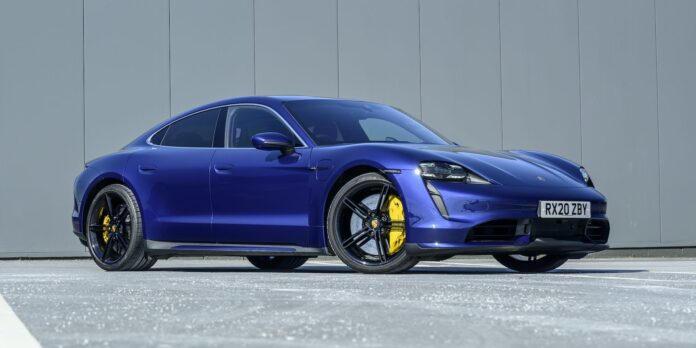
If you like the idea of an electrified performance saloon, you can also compare the Panamera with the fully electric Porsche Taycan or Tesla Model S.

Buy a Porsche Panamera

If you’re looking to buy a new or used Porsche Panamera, The Car Expert’s partners can help you find the right car

Motors 600x300

Find your next used car with Motors. Find out more

Auto Trader logo 600x300

Find your next new or used car with Auto Trader. Find out more

Carwow logo 600x300

Find your next new or used car with Carwow. Find out more

Lease a Porsche Panamera

If you’re looking to arrange lease a new Porsche Panamera, The Car Expert’s partners can help

Leasing-com logo

Personal contract hire deals from Leasing.com. Find out more

Carwow logo 600x300

Personal contract hire deals from Carwow. Find out more

Select Car Leasing logo

Personal contract hire deals from Select Car Leasing. Find out more

Car subscriptions

If you’re interested in a car subscription, The Car Expert’s partners can help (PS: What’s a car subscription?)

Cocoon Vehicles logo 600x300

Car subscriptions from Cocoon.
Find out more

Just Vehicle Solutions logo 600x300

Car subscriptions from Just Vehicle Solutions.
Find out more

Flexible Vehicle Contracts logo 600x300px

Car subscriptions from Flexible Vehicle Contracts.
Find out more

Skoda Enyaq

Summary

The Skoda Enyaq launched in 2021 as the first model from the Czech brand designed from the start as an electric car. It received a mid-life update in Spring 2025. It was originally named the ‘Enyaq iV’, but the ‘iV’ bit was dropped after a while.

The electric SUV comes with either 63kWh or 82kWh battery packs powering a single electric motor in lower-spec models and dual electric motors in top-spec models. Depending on your chosen model, the official battery range is between 268 miles and 365 miles in official government lab tests. The 2025 facelifted models perform slightly better than the original versions thanks to more efficient electric motors and improved aerodynamics.

Available in both regular SUV and coupé SUV body styles, the Skoda Enyaq has gained overwhelmingly positive reviews and almost universal praise. Green Car Guide questions the car’s designation as an SUV, suggesting it’s more of an estate, but adds; “It’s a very spacious five-seater, with lots of legroom for the three rear seat passengers and a huge boot.”

The driving performance ticks boxes too. While the weight of the electric powertrain can become noticeable on uneven roads, says Honest John, it’s not enough to cause problems, and the car is “pleasingly unintimidating to drive, even if you’re a reluctant electric car convert.”

More plus points for the equipment  – The Sun says that not only does the car come with plenty of Skoda’s ‘Simply Clever’ niceties such as the ice scraper in the boot door, “there are more safety systems than you could shake a sonic screwdriver at and an impressive new head-up display which features augmented reality projected on to the windscreen.”

As of November 2025, the Skoda Enyaq holds a New Car Expert Rating of A, with a score of 77%. It scores top marks for its excellent media review scores, low running costs and zero tailpipe emissions, while its safety rating is also good. However, Skoda’s new car warranty offering is only average.

Skoda Enyaq highlights

  • Excellent range
  • Easy to drive
  • Roomy inside with huge boot
  • Lots of tech
  • Affordable against rivals

Skoda Enyaq lowlights

  • Slightly light steering
  • Poor roads emphasise weight
  • Visually not that special looking
  • Is the cost of the bigger battery really worth it?

Key specifications

Body style: Medium SUV/crossover
Engines: electric motor, battery-powered
Price: From £38,970 on-road

Launched: Summer 2021
Last updated: Spring 2025
Next update due: TBA

Media reviews

Highlighted reviews and road tests from across the UK automotive media. Click any of the boxes to view.

Featured reviews

More reviews

Auto Express

Auto Trader

Business Car

Car

Car Keys

Carbuyer

Company Car Today

Daily Mirror

Discover EV

Eurekar

Green Car Guide

Heycar

Honest John

Parkers

The Sun

The Sunday Times

The Telegraph

Top Gear

Safety rating

Independent crash test and safety ratings from Euro NCAP

Overall score: 5 stars
Date tested: November 2025
Read the full Euro NCAP review

Adult protection: 90%
Child protection: 87%
Vulnerable road users: 77%
Safety assist: 78%

The Skoda Enyaq was originally tested back in 2021 when it was launched, gaining a five-star Euro NCAP rating. It was re-tested in November 2025, reaffirming its five-star score.

Eco rating

Independent economy and emissions ratings from Green NCAP

Model tested:

Overall score: 5 stars
Date tested: March 2024
Read the full Green NCAP review

Clean Air Index: 10 / 10
Energy Efficiency Index: 9.4 / 10
Greenhouse Gas Index: 9.6 / 10

The Skoda Enyaq was tested by Green NCAP in 2024, in top-spec 85 version. This has a 77kWh battery, with a power output of 210kW (285hp).

The testers at Green NCAP noted that battery range in good conditions was about 510km (315 miles). But “even during motorway driving or in very cold and unfavourable conditions” – both worst-case scenarios for EVs – the Enyaq’s driving range remained at about 300km (186 miles), which is more than enough for most households.

Green NCAP also noted that the Enyaq’s electrical efficiency was “better than those of other large electric SUVs” they had tested to date.

The score above is only applicable to the 85-spec Enyaq, although other versions are likely to achieve similar scores in the same testing.

Running cost rating

Clear Vehicle Data logo close crop

Monthly cost of ownership data provided exclusively for The Car Expert by Clear Vehicle Data

Battery rangeAverageScoreVariationScore
EV models319 milesA
Electrical efficiencyAverageScoreVariationScore
EV models4.2 m/KWhC
Insurance groupAverageScoreVariationScore
All models31C
Service and maintenanceCostScore
Year 1£269C
Year 2£530B
Year 3£812B
Year 4£1,053B
Year 5£1,329B
Overall£3,993B

The Skoda Enyaq is a pretty cheap car to run overall, although its electrical efficiency (the equivalent of miles per gallon for a petrol or diesel car) isn’t as good as some other electric cars. Insurance costs should be very good, however, while scheduled servicing costs are excellent compared to rivals.

In other good news, the battery range for the Enyaq is also top-notch. Depending on which model you choose, the range runs from 246 miles (good) to 345 miles (excellent), with a model average of 320 miles. That means you won’t have to worry about running out of electricity in day-to-day driving.

Reliability rating

MotorEasy logo 600x167

Reliability data provided exclusively for The Car Expert by MotorEasy

No reliability rating

As of November 2025, we don’t have enough reliability data on the Skoda Enyaq to generate a reliability rating.

The Car Expert’s reliability information is provided exclusively for us using extended warranty data from our partner, MotorEasy. As soon as MotorEasy has sufficient data on the Enyaq, we’ll publish the score here.

Warranty rating

New car warranty information for the Skoda Enyaq

Overall ratingC50%
New car warranty duration3 years
New car warranty mileage60,000 miles
Battery warranty duration8 years
Battery warranty mileage100,000 miles

Skoda’s new car warranty is pretty much the bare minimum offered in the UK, with a duration of three years and a limit of 60,000 miles. Other rivals in the price bracket do better (and in some cases, much better).

In addition to the standard new car warranty, the Enyaq has an eight-year/100,000-mile warranty for the battery components.

If you’re looking to buy a used car that is approaching the end of its warranty period, a used car warranty is usually a worthwhile investment. Check out The Car Expert’s guide to the best used car warranty providers, which will probably be cheaper than a warranty sold by a dealer.

Recalls

Official DVSA safety recalls that have been issued for the Skoda Enyaq

As of November 2025, we are not aware of any DVSA vehicle safety recalls affecting the Skoda Enyaq. However, this information is updated very regularly so this may have changed.

You can check to see if your car has any outstanding recalls by visiting the DVLA website or contacting your local Skoda dealer.

Awards

Trophies, prizes and awards that the Skoda Enyaq has received

2025

  • Caravan and Motorhome Club Awards – Best Towcar (<1,300kg caravan)
  • Carwow Awards – Smart Spender Award

2023

  • EcoCar Electrified Top 50 – Best Electric Large SUV

2022

  • UK Car of the Year Awards – Best Medium Crossover
  • Auto Trader New Car Awards – Best Value Electric Car
  • DrivingElectric Awards – Best Electric Family Car

2021

Similar cars

If you’re looking at the Skoda Enyaq, you might also be interested in these alternatives

Audi Q4 e-tron | BMW iX3 | BYD Sealion 7 | Cupra Tavascan | Ford Mustang Mach-E | Hyundai Ioniq 5 | KGM Torres EVX | Kia EV5 | Kia EV6 | Leapmotor C10 | Mercedes-Benz EQA | MG S6 EV | Mini Countryman Electric | Nissan Ariya | Peugeot e-3008 | Renault Scenic E-Tech | Subaru Solterra | Tesla Model Y | Toyota bZ4X | Vauxhall Grandland Electric | Volkswagen ID.4 | Volvo EX40

More news, reviews and information about the Skoda Enyaq at The Car Expert

Electric car grant – all the EVs with discounts in 2026

Electric car grant – all the EVs with discounts in 2026

Skoda Enyaq range expanded with ‘SE L 85’ trim

Skoda Enyaq range expanded with ‘SE L 85’ trim

The best used family cars for every budget in 2025

The best used family cars for every budget in 2025

Skoda Enyaq range bolstered by ‘Sportline 85’ trim

Skoda Enyaq range bolstered by ‘Sportline 85’ trim

Škoda prices up refreshed Enyaq range

Škoda prices up refreshed Enyaq range

Everything you need to know about Skoda

Everything you need to know about Skoda

The best used EV bargains in 2024

The best used EV bargains in 2024

Skoda Enyaq range bolstered by new cheaper trims

Skoda Enyaq range bolstered by new cheaper trims

The best new electric cars for every budget 2024

The best new electric cars for every budget 2024

The best family cars for every budget in 2023

The best family cars for every budget in 2023

Skoda Enyaq vRS gains battery upgrade

Skoda Enyaq vRS gains battery upgrade

Skoda Enyaq iV vRS

Skoda Enyaq iV vRS

Buy a Skoda Enyaq

If you’re looking to buy a new or used Skoda Enyaq, The Car Expert’s partners can help you find the right car

Motors 600x300

Search less, live more. We make finding the right car simple. Find out more

Auto Trader logo 600x300

Search for your next new or used car with Auto Trader. Find out more

Carwow logo 600x300

Discover great deals available on both new and used cars. Find out more

Lease a Skoda Enyaq

If you’re looking to lease a new Skoda Enyaq, The Car Expert’s partners can help you find a competitive deal

Leasing-com logo

Personal contract hire deals from Leasing.com. Find out more

Carwow logo 600x300

Personal contract hire deals from Carwow. Find out more

Select Car Leasing logo

Personal contract hire deals from Select Car Leasing. Find out more

Subscribe to a Skoda Enyaq

Subscriptions are becoming a very popular way for consumers to try an electric car for a few weeks or months to help decide whether it’s a suitable alternative to a petrol car. If you’re interested in a car subscription, The Car Expert’s partners can help. (PS: What’s a car subscription?)

SelfDrive UK logo

Car subscriptions from SelfDrive.
Find out more

Cocoon Vehicles logo 600x300

Car subscriptions from Cocoon.
Find out more

Just Vehicle Solutions logo 600x300

Car subscriptions from Just Vehicle Solutions.
Find out more

Is a used car warranty really worth the money? 

0

It’s the big question you not only get asked by car sales staff, but you probably also ask yourself: should I take out a warranty policy on my used car?

Unlike car insurance, there is no legal requirement to buy a warranty, or mechanical breakdown insurance, for your motor. It’s entirely up to you whether you want to cover yourself financially if your used car suffers a mechanical breakdown or failure.

Like most insurance, it’s all about risk and, in that respect, buying a car warranty is a bit of a gamble. You have to consider several things:

  1. Are you willing to cross your fingers and hope that nothing goes wrong with your car?
  2. If something does go ‘bang’, do you have the available cash to pay for the repairs, no matter how catastrophic?
  3. Would you rather save a little money each month to put aside in case if anything goes wrong with your car – rather like having your own ‘warranty plan’.
  4. Or do you not like unpleasant and potentially expensive surprises, and would rather play it safe, with some sort of warranty cover?

Ever-increasing odds of breakdown

You wouldn’t buy a new car without having some sort of warranty to protect you, but are you prepared to accept that just because it’s a used car?

It’s somewhat ironic that a brand-new car has a warranty to cover it for the first few years when it’s much less likely to break down, but an older car has no legally required warranty cover when it’s far more likely to have problems.

The older your car gets and the more miles it covers, the greater the chance of something needing replacing. Cars are complicated machines that gradually wear out and, no matter how reliable the manufacturer is, you can’t expect a vehicle to go on forever without some attention. However, as cars get older they devalue quite rapidly.

Looking after your car, getting regular servicing carried out and doing your own checks on oil, water and tyre pressures, will certainly help to keep your pride and joy running smoothly, but you can’t guarantee it for ever.

New cars will usually come with at least three years of manufacturer and dealer warranty, and sometimes more. Buy a used car from an official dealer and you’re likely to get a warranty throw in, maybe for up to a year. If you purchase from an independent car showroom, that cover is more likely to be three months.

After all of these different terms are expired, you’re on your own. So if you have spent good money on a used car, it’s well worth considering some warranty cover for your car.

Car finance complications

Car finance is becoming a big consideration, with about half of all used cars sold by dealers now being financed with a PCP or similar finance product. This can have important repercussions for you if your car develops a fault.

We have had many car owners seeking help and advice from The Car Expert because their car has broken down and they can’t afford to fix it, yet they’re still having to pay the finance company every month for a car they can’t drive.

If you’re taking out car finance because you don’t have the cash to buy a car outright, it’s also likely that you won’t have the cash available to pay for an expensive repair. You also can’t voluntarily terminate your agreement, return the car to the finance company or part-exchange it to a dealer if it’s broken.

A broken car is also inevitably worth a lot less money than a working car, so you also can’t usually afford to sell the car to pay off the finance company, as the broken car’s sale price will almost certainly be a lot less than your finance debt.

Understand your policy

Don’t automatically assume that every working part in your car is going to be covered by a warranty. Plan providers have specific clauses saying what is, and what isn’t, covered. It’s important to read them, understand them, and make sure your policy is right for you. There are many things to look out for:

Age limit: Many warranties have an age limit for cars, so if your motor is getting on, it might not be worth insuring against breakdown.

Claim limit: There will be set thresholds on how much you can expect back for each repair.

Consequential damage: if something breaks and damages another part, the warranty might not cover both components.

Excess: Many policies will allow you to opt to pay for some of the damage yourself with the insurer topping up. This will reduce the premium so it’s a good option if you’re not sure about spending big money on a warranty.

Workshop choice: You can’t always go to whatever repair shop you choose. Many warranty providers have their own ‘approved’ garages.

Mileage allowance: You might have to stay within a set mileage range to keep your warranty operating.

Betterment: If a repair makes your car worth more than it was, you might have to find some of the repair money.

Previous faults: The warranty might not cover damaged parts that were already there when you took out the warranty.

Service book: Insurers expect you to keep your car serviced according to the manufacturer’s recommendations.

Warning lights: Don’t ignore warnings on your dashboard. If you do, the warranty might become invalid.

Wear and tear: Don’t expect brake pads, tyres and clutch plates to be covered. These, and other ‘consumables’, won’t count in the cover.

Conclusion

As always, it’s not our place to say that you should or shouldn’t buy a used car warranty. We want to help you understand what you’re buying if you do decide to buy a warranty, and what you’re risking if you don’t.

Like most insurance policies, you have to weigh up the cost of the policy against the likelihood that you will need to make a claim on it. Cars are expensive to buy and expensive to run, and adding another expense on top of your other costs may not seem very attractive.

The flipside is that a relatively small cost now could save you a lot of money down the line or prevent you being left with a broken car that you can’t afford to fix.

Weigh up your position, get some quotes and look at the detail of each policy. We have five warranty partners below who can give you a quote for your car, so you can make sure you’re getting the best possible price if you do decide that it’s the right call for you.

Here at The Car Expert, we have some fantastic warranty offers for our readers provided by our commercial partners. If you’re interested in a used car warranty, you should check these out:

  • ALA Insurance provides used car warranties in conjunction with the RAC
  • MotorEasy offers warranties and many other types of cover for car owners
  • Warrantywise is a long-established and multi-award-winning warranty provider

More car warranty information

Is a used car warranty required by law?

Is a used car warranty required by law?

The UK’s best used car warranty providers

The UK’s best used car warranty providers

How to handle a dispute with a car dealer

How to handle a dispute with a car dealer

Used car warranty – the law and your rights

Used car warranty – the law and your rights

Spares or repairs – and other dodgy trader tricks

Spares or repairs – and other dodgy trader tricks

Additional reporting by Stuart Masson.

Audi R8

Summary

Audi surprised the world with the first R8 in 2006. The mid-engined two-seater coupe, created to rival the Porsche 911, was unlike anything Audi had ever made, and instantly topped desirability lists – and it gained more fans two years later when the Audi R8 Spyder (convertible) joined the line-up.

The second-generation Audi R8 was introduced in 2015 and facelifted in 2019. The biggest change was the dropping of the ‘entry-level’ V8 version, the car now only powered by a V10 petrol engine with either 562 or 612hp. As a result, the car moved up a class to start rivalling junior supercars from the likes of Lamborghini and Ferrari.

Testers liked the R8 and generally agreed that it was a hassle-free supercar, usable every day, which split opinions. Carbuyer said it was “reliable and as easy to drive around town as a Volkswagen Golf,” which caused the Sunday Times’s Jeremy Clarkson to claim he’d rather pay a rather pay a lot more for a Lamborghini Huracan, which shared its platform and V10 engine with the Audi. And Carwow says; “It’s well built and easy to drive but can’t match others for exclusivity.”

Opinions of the interior followed a similar theme; “the R8’s sensible cabin lacks the pizzazz of the Hurracan’s bonkers interior,” added Carwow. And the modest luggage space was also marked down.

However, these were mere gripes – testers as a whole liked the potent but refined engine, loved its sound, and enjoyed the car’s predictable handling and road holding, typified by Evo; “Huge grip nuanced with a delicacy and adjustability make the R8 as sweet to drive as ever.”  

The Audi R8 ended production in early 2024. It will not be replaced, as Audi concentrates its efforts on developing new electric models.

As of January 2025, the Audi R8 holds a poor Used Car Expert Rating of E with a score of 56%. Although it received consistently outstanding media reviews, its high running costs and poor reliability record drag its overall score down. This is normal for a high-performance sports car, and unlikely to deter many potential customers.

Audi R8 highlights

  • Visually arresting
  • V10 engine makes lovely noise
  • Easy to live with for a supercar
  • Choice of coupé or roadster models

Audi R8 lowlights

  • Expensive to buy, not cheap to run
  • Steering a bit soft
  • Limited luggage space
  • Should a supercar be usable every day?

Key specifications

Body style: Mid-engined coupé and roadster
Engines: petrol
Price: From £129,785 on-road

Launched: Summer 2015
Last updated: Spring 2019
Replacement due: TBA

Media reviews

Highlighted reviews and road tests from across the UK automotive media. Click any of the boxes to view.

The Car Expert

+

Auto Express

+

Auto Trader

+

Car

+

Carbuyer

+

Carwow

+

Daily Mail

+

Evo

+

Heycar

+

Motoring Research

+

Motors

+

Parkers

+

The Sun

+

The Sunday Times

+

The Telegraph

+

Top Gear

+

Safety rating

Independent crash test and safety ratings from Euro NCAP

No safety rating

The Audi R8 was not tested by Euro NCAP during its production life.

Eco rating

Independent economy and emissions ratings from Green NCAP

No eco rating

The Audi R8 was not tested by Green NCAP during its production life.

The R8 was powered by a large V10 petrol engine producing 600hp, plus or minus, so it’s not going to win over any polar bears.

Reliability rating

MotorEasy logo 600x167

Reliability data provided exclusively for The Car Expert by MotorEasy

All data based on MotorEasy average workshop costs for extended car warranty claims

The Audi R8 has an poor reliability rating of 42%, according to warranty and workshop data provided exclusively to us by our commercial partner, MotorEasy. This covers both generations of R8 models, the 2009-2015 model and the 2015-2024 model.

Based on a small number of warranty claims, the average repair cost is about £800, so a used car warranty is well worth considering if you own or are considering an R8. Suspension faults are surprisingly the most expensive problems, and are not uncommon.

Make sure that any used car warranty you purchase covers all of these problem areas.

Running cost rating

Clear Vehicle Data logo close crop

Monthly cost of ownership data provided exclusively for The Car Expert by Clear Vehicle Data

Fuel consumptionAverageScoreVariationScore
Petrol models22 mpgE19 – 22 mpgE – E
CO₂ outputAverageScoreVariationScore
Petrol models290 g/kmD286 – 340 g/kmD – D
Insurance groupAverageScoreVariationScore
All models50F50 – 50F – F
Service and maintenanceCostScore
Year 1£646D
Year 2£1,607D
Year 3£2,653D
Year 4£3,113D
Year 5£4,007D
Overall£12,026D

The Audi R8 is a very expensive car to own and run, according to whole-life cost numbers provided exclusively to The Car Expert by our data partner, Clear Vehicle Data.

The car’s fuel economy of 21 mpg is one of the poorest fuel consumption stats in our Expert Rating Index, and insurance premiums are in the most expensive bracket too. Servicing and maintenance costs are also higher than the market average over the course of five years of ownership.

Recalls

Official DVSA safety recalls that have been issued for the Audi R8

Date: April 2022
Recall number: R/2024/129
Model types: All
Build dates: 01/2021
Number of vehicles affected: 1
Defect: The level of oil in the gearbox may be insufficient.
Remedy: The gear oil level on the affected vehicles must be checked and topped up if necessary.

Date: September 2018
Recall number: R/2018/255
Model types: All
Build dates: 10/2015 to 11/2017
Number of vehicles affected: 968
Defect: Oil leakage may occur at the gearbox breather when the vehicle is being driven on a racetrack and extreme driving manoeuvres are being undertaken. As a result, smoke may be produced and a vehicle fire cannot be ruled out.
Remedy: On the vehicles affected the single breather pipe for the gearbox breather system must be replaced by a dual breather pipe.

As of September 2024, there have been two DVSA vehicle safety recalls on the second-generation Audi R8.

Not all vehicles are affected by recalls. You can check to see if your car is included in any of the above recalls by visiting the DVLA website or contacting your local Audi dealer.

If your car is affected by a recall, the vehicle must be repaired and you should not be charged for any work required. If you are buying a used R8, you should insist that any outstanding recall work is completed before you take delivery of the vehicle.

Awards

Trophies, prizes and awards that the Audi R8 has received

2016

  • World Car Awards – World Performance Car

Similar cars

If you’re looking at the Audi R8, you might also be interested in these alternatives

Aston Martin Vantage | Ferrari Portofino | Ferrari Roma | Honda NSX | Lamborghini Huracan | McLaren 570S | Mercedes-AMG GT | Porsche 911

The Audi R8 is the kind of car you buy because you want an R8, especially since its more powerful engine became the only option and it moved upmarket. But rivals remain – not least the Lamborghini Hurracan, which shares its platform with the Audi but is substantially more expensive. And McLaren’s Sport Series cars offer arguably more desirability.

Among the more mainstream names, the Mercedes-AMG GT is a rival, while the Porsche 911, the car the Audi was conceived to beat, also remains a contender, at least in potent Turbo S form.

More news, reviews and information about the Audi R8 at The Car Expert

Everything you need to know about Audi

Everything you need to know about Audi

£130K buys Audi’s latest R8 drop-top

£130K buys Audi’s latest R8 drop-top

Audi R8 review

Audi R8 review

Audi R8 V10 plus – Last Drive

Audi R8 V10 plus – Last Drive

Rear-wheel drive Audi R8 roars in

Rear-wheel drive Audi R8 roars in

2019 Audi R8 facelift brings fresh look and more power

2019 Audi R8 facelift brings fresh look and more power

Race-bred Audi R8 goes rear-wheel-drive

Race-bred Audi R8 goes rear-wheel-drive

Audi R8 Spyder – plus power, minus roof

Audi R8 Spyder – plus power, minus roof

Buy an Audi R8

If you’re looking to buy new or used Audi R8, The Car Expert’s partners can help you find the right car

Motors 600x300

Find your next used car with Motors. Find out more

Auto Trader logo 600x300

Find your next new or used car with Auto Trader. Find out more

Carwow logo 600x300

Find your next new or used car with Carwow. Find out more

The cost of speeding

0

Road safety experts are encouraging drivers to continue keeping a close eye on their speedo and stick to legal limits, after a recent UK-wide police operation targeted speeding drivers.

Campaigners say that driving above the legal limit brings extra risk to drivers and anyone else around them. They add that driving within the limits can bring savings in terms of fuel and wear on your vehicle, and it removes the chance of landing yourself with a hefty fine and points on your licence.

Safety and breakdown organisation GEM Motoring Assist says the decisions we make as drivers are entirely our own and driving at legal speeds bring benefits for our safety, our frame of mind and for the environment.

Speeding in built-up areas

Recent statistics released by the Department for Transport showed that more than 50% of drivers stopped for speeding, were doing so in 30mph built-up areas.

During the more free flowing traffic conditions of Covid lockdown periods in 2020, 56% of cars exceeded the speed limit on 30mph roads (compared to 54% in 2019), 53% were speeding on motorways (up from 50% in 2019) and 12% broke the limit on single carriageway roads (up from 9% in 2019).

While cars (55%), vans (55%) and motorcycles (58%) were the worst offenders on motorways, larger vehicles, HGVs and buses scored the highest on national speed limit single carriageways.

Lower costs and emissions

“The speeds we use are entirely our own choice. No one else controls the speed of the vehicles we drive,” says Neil Worth, GEM chief executive.

“Even modest reductions bring lower fuel costs and reduced emissions. Slowing down gives you more time to anticipate and plan when you’re driving, as well as more time to react to hazards and to stop safely if necessary.

“Reducing the speeds you use will lower the stress on journeys. By leaving a bit earlier, you will be less tempted into the sort of high-risk manoeuvres seen by some drivers as vital for clawing back precious seconds when they’re late on journeys.

“We don’t have any control over the traffic around us; we ARE the traffic. So there really is nothing to be gained from trying to go faster – and trying to make others go faster or forcing them out of the way.”

“It is worrying that one in two drivers on motorways and 30mph roads exceeded the speed limit in 2020 when they were given greater opportunity,” says Neil Greig, IAM RoadSmart charity, Director of Policy & Research.

“Getting back on track will require greater investment in roads policing but for now the goal of making speeding as anti-social as drink driving looks far from being achieved.”

Higher penalties

A ‘speeding ticket’ will result in three points on your driving licence and a fine of £100. However, fines changed in April 2017, when a three-band system was introduced. Serious speeders (with Band C offences) now face fines of up to 150 per cent of their weekly salary, with six penalty points and/or disqualifications of between seven and 56 days.

Top tips for safer speeds

  • Make sure you always know the speed limit for the stretch of road you’re on.
  • If there are lamp posts, you should assume the limit is 30mph.
  • Even if the limit is 30mph, you’ll reduce risk considerably by choosing 20mph, especially when there are likely to be children playing.
  • Check your speedometer frequently.
  • Give yourself plenty of time on journeys. Leave early to help reduce stress.
  • Think ahead, scan ahead. Look for clues that a speed limit might be about to change.
  • Be particularly observant when leaving motorways or other fast roads, even if dropping to 30mph might feel very slow.
Source: GEM Motoring Assist

Skoda’s all-new and very different Fabia

0

An all-new Skoda Fabia will reach the UK before the end of this year, marking a major step forward for a model previously best known for its value-for-money.

Visually, the new fourth-generation model looks sleeker than its rather utilitarian predecessor, which has been on sale in the UK since 2015. It’s also a lot more aerodynamic, according to Skoda, which should make it both quieter and more fuel efficient.

It’s bigger, too. This is the first Fabia to exceed four metres in length, being 11cm longer than the outgoing model as well as 5cm wider. This is all made possible by the use of the group’s latest platform, also under such cars as the Volkswagen Polo supermini and T-Cross small SUV.

The biggest changes, however, are to the interior. Almost all that extra length has gone into the interior space, particularly freeing up more room in the rear seats. The boot is now a generous 380 litres in capacity, 50 litres more than the old Fabia and even larger than the boot of the much larger Ford Focus.

The driver’s surroundings have also been totally redesigned and upgraded in line with the sleeker exterior. While entry-level models retain traditional analogue dials for speed and revs, higher-spec versions can optionally be ordered with a digital instrument display (as shown in the image below) alongside the central touchscreen.

2021 Skoda Fabia interior

The new Fabia will be offered with a choice of five petrol engines, ranging from 65 to 150hp. There are no diesels, which is not surprising, but also no sign of any electrification – even mild hybrid options – which is rather more surprising.

Skoda describes the new Fabia as one of the safest vehicles in its segment, although the car has yet to be independently tested by Euro NCAP so we’ll await their impartial verdict. Up to nine airbags will be available depending on model specified, as well as a comprehensive package of driver assistance systems to help avoid accidents in the first place.

As well as the standard-fit autonomous emergency braking, among the new active safety systems available is Travel Assist. This encompasses a number of systems including adaptive cruise control, lane guidance and traffic sign recognition.

The new Skoda Fabia will launch in four trim options late in 2021, with a sports-pitched Monte Carlo variant following later. Prices have yet to be announced.

2021 Skoda Fabia front and rear

Mercedes-Benz G-Class

Summary

The Mercedes-Benz G-Class may be a luxury SUV but it is also a proper, tough 4×4, its makers dubbing it “stronger than time.”

It was developed as a military vehicle in the 1970s, the first passenger version revealed in 1979 and in those days very spartan. Mercedes turned it into a luxury vehicle in 1990, and the current second generation launched in 2019 – still with its body on a box-section frame for going far off-road in comfort.

“This is no mere posing machine” says Parkers, pointing to the three lockable differentials and low-range transfer gearbox, while adding that such ability comes at a cost. There are only two engine options, a 3.0-litre 326hp diesel or the outrageous AMG petrol of 577hp and a purchase price above £150,000. A 420hp petrol variant is rumoured, but not around yet.

Testers praise the levels of luxury inside the G-Class, and the extensive equipment. “All models come fully loaded,” says Motors.co.uk, highlighting 20-inch alloy wheels, LED headlights, keyless entry, mood lighting and climate control, plus two 12-inch display screens with Apple CarPlay and Android Auto as standard. 

But where the latest G-Class has really scored is on its driveability. Compared to its predecessor, Top Gear calls it “a revelation”, adding that the ride, steering and drive are on another level, even before you take it off the road.

Finally, while everything about the G-Class screams expense, Motors points out that it’s so desirable that when you come to sell it, you will get more money than usual back.

As of July 2025, the Mercedes-Benz G-Class holds a New Car Expert Rating of D, with a score of 56%. Inevitably, the big G-Class scores poorly for running costs and CO2 emissions, while media review scores have only been average. But this is not a car that anyone buys for logical reasons, so a poor score from us is unlikely to hurt sales…

G-Class highlights

  • Genuinely tough off-roader
  • Surprisingly competent on the road
  • Quality fit and finish
  • Lots of equipment

G-Class lowlights

  • Pricey – to buy and to run
  • Needs a sensible petrol engine
  • Anything but subtle
  • Not that much rear seat room

Key specifications

Body style: Large SUV
Engines: petrol, diesel
Price: From £131,095 on-road

Launched: Summer 2018
Last updated: Summer 2019
Replacement due: TBA

Media reviews

Highlighted reviews and road tests from across the UK automotive media. Click any of the boxes to view.

Featured reviews

More reviews

Auto Express

Auto Trader

Car

Carbuyer

Daily Mail

Eurekar

Heycar

Motors

Parkers

The Sunday Times

Top Gear

Safety rating

Independent crash test and safety ratings from Euro NCAP

Overall score: 5 stars
Date tested: February 2019
Read the full Euro NCAP review

Adult protection: 90%
Child protection: 83%
Vulnerable road users: 78%
Safety assist: 72%

The current Mercedes-Benz G-Class was crash-tested by Euro NCAP in 2019 and gained a five-star rating. Testers highlighted the performance in the side barrier and side pole impact tests, in which the car scored maximum points, and also praised the standard-fit autonomous emergency braking, which can detect pedestrians and cyclists.

There were some concerns, however, with chest protection of rear-seat passengers in a frontal offside impact.

Eco rating

Independent economy and emissions ratings from Green NCAP

No eco rating

As of July 2025, the Mercedes-Benz G-Class has not been assessed by Green NCAP. But it’s a 2.5-tonne SUV with either a big diesel or massive petrol engine, so it’s only slightly more eco-friendly than a coal-fired power station on wheels.

If the G-Class is selected for assessment, we’ll publish the results here.

Reliability rating

MotorEasy logo 600x167

Reliability data provided exclusively for The Car Expert by MotorEasy

No reliability rating

As of July 2025, we don’t have enough reliability data on the Mercedes-Benz G-Class to generate a reliability rating.

The Car Expert’s reliability information is provided exclusively to us using extended warranty data from our partner, MotorEasy. As soon as MotorEasy has sufficient data on the G-Class, we’ll publish the score here.

Running cost rating

Clear Vehicle Data logo close crop

Monthly cost of ownership data provided exclusively for The Car Expert by Clear Vehicle Data

Fuel consumptionAverageScoreVariationScore
Petrol models25 mpgE25 – 25 mpgE – E
Diesel models31 mpgE26 – 32 mpgE – E
CO₂ outputAverageScoreVariationScore
Petrol models257 g/kmD257 – 257 g/kmD – D
Diesel models237 g/kmD235 – 290 g/kmD – D
Insurance groupAverageScoreVariationScore
All models49E48 – 50D – F
Service and maintenanceCostScore
Year 1£406C
Year 2£1,086D
Year 3£1,761D
Year 4£2,218D
Year 5£2,917D
Overall£8,388D

As you might expect, the Mercedes-Benz G-Class is certainly not cheap to run, according to data exclusively provided by our commercial partner Clear Vehicle Data.

With an average fuel consumption of 25 mpg, the economy of petrol models is terrible, and diesel models are not much better. Emissions are high, service and maintenance costs over the course of five years of ownership are quite expensive, and the SUV’s insurance premiums are some of the highest on the market.

Awards

Significant UK trophies and awards that the Mercedes-Benz G-Class has received

2021

  • Auto Trader New Car Awards – Best Luxury Car

Similar cars

If you’re looking at the Mercedes-Benz G-Class, you might also be interested in these alternatives

Audi Q7 | Bentley Bentayga | BMW X5 | Lamborghini Urus | Land Rover Defender | Mercedes-Benz GLE | Porsche Cayenne | Range Rover | Toyota Land Cruiser

There are lots of luxury SUVs around but step off road and the G-Class will eat most of them for breakfast. Few rivals can combine its off-road ability and its plushness. The likes of the Land Rover Defender or the Toyota Land Cruiser might do the off-road bit, while the Bentley Bentayga, Porsche Cayenne or Range Rover tick the luxury box.

But for the best mix of both, the G-Class has few rivals – so long as you can bear its huge costs.

Buy a Mercedes-Benz G-Class

If you’re looking to buy a Mercedes-Benz G-Class, The Car Expert’s partners can help you find the right car

Motors 600x300

Search less, live more. We make finding the right car simple. Find out more

Carwow logo 600x300

Discover great deals available on both new and used cars. Find out more

Auto Trader logo 600x300

Search for your next new or used car with Auto Trader. Find out more

Lease a Mercedes-Benz G-Class

If you’re looking to lease a new Mercedes-Benz G-Class, The Car Expert’s partners can help you find a competitive deal.

Leasing-com logo

Personal contract hire deals from Leasing.com. Find out more

Select Car Leasing logo

Personal contract hire deals from Select Car Leasing. Find out more

DreamLease logo 600x300

Personal contract hire deals from DreamLease. Find out more

Subscribe to a Mercedes-Benz G-Class

If you’re interested in a car subscription, The Car Expert’s partners can help (PS: What’s a car subscription?)

SelfDrive UK logo

Car subscriptions from SelfDrive.
Find out more

Drive Fuze logo 600x300

Car subscriptions from DriveFuze.
Find out more

Cocoon Vehicles logo 600x300

Car subscriptions from Cocoon.
Find out more

Cold comfort: looking after your car’s air conditioning

It keeps your temperatures down and your comfort levels up, but your car’s air conditioning needs looking after too.

We’re having a fairly good summer in the UK this year, so you probably don’t think twice about flicking on the air conditioning in your car (or, more likely during the warmer months, leaving the switch in the ‘on’ position for weeks on end).
It was once a feature on only the most expensive cars, but today air con can be found in all but the most basic of run-arounds. It’s one of the most popular items on any modern car’s checklist and almost everyone will look for it before buying a car. It’s even a standard listing in most vans and trucks today.

The saviour on any hot day, air conditioning is not just there for cooling down – switch it on to clear a misty windscreen on a frosty morning and the glass will clear much quicker than if your a/c wasn’t being used.
But while many drivers will enjoy the feature during the summer months, and be thankful for it, few motorists really know what air con is or how it works. And when it comes to winter, and the a/c unit is switched off and forgotten, that’s when problems can arise.

Air conditioning units need to be used regularly or they can fail, leaving you with an unwanted repair bill, so let yours run for at least ten minutes every week – even in the middle of winter.

Adjusting your car's air conditioning

It’s a technical piece of kit – a compressor pumps refrigerant gas to a condenser, which turns it into a cold liquid. From here it passes to a drier and then to an expansion valve which allows the driver to control the temperature of the car. The liquid then turns to vapour as it passes through an evaporator and is blown into the cabin.

With the refrigerant now back in a gas form, it returns to the compressor to start all over again.

To work well, this complex system needs to be turned on regularly. It will help to keep the gas pressure up and will allow working parts to keep moving, thereby reducing the risk of something seizing or failing.

Idle air con units can also suffer from a build-up of mildew from moisture that has to been allowed to collect. This can eventually start to give off stale or unpleasant smells, and you’ll be letting less fresh air into your cabin.

It pays to keep the interior of your car clean. The air conditioning system will pick up dirt and debris and suck it in, leaving bacteria and germs lurking in the inner workings. This is another reason for those bad odours when the a/c unit is turned on for the first time in months.

Some air conditioning recharge services will include a de-bug option which will help to get rid of the smells and freshen the system up.

The refrigerant is important and needs to be charged as it will diminish and escape over time. If this happens, the unit will have to work harder to cool the air and this extra work uses more fuel as the system draws power from the engine.

The refrigerant also keeps the compressor cool while it’s at work. If there’s not enough refrigerant, the compressor could overheat and will need replacing.

Your car’s service schedule or manual will tell you when you should have your air conditioning checked and recharged and it’s well worth following this guidance.

Ignore it, and it’s you who could be left out in the cold…

BMW X6

Summary

The first BMW X6 launched in 2008, effectively taking the mechanics of the large X5 SUV and enclosing them in a more aggressive body shape with a heavily sloping rear roof line.

After an initial flurry of interest and debate around the relevance of a liftback-style large SUV, the X6 has settled into more of a niche role in the BMW line-up. The current model is the third generation, unveiled in Germany in late 2019 before arriving in the UK in early 2020.

Generally regarded by reviewers as a significant improvement on its predecessors, the latest X6 comes with both petrol and diesel engine options. There are no hybrid or plug-in hybrid versions currently available, and none are expected anytime soon.

The car’s polarising nature is reflected in comments from reviewers. Honest John says that it is not as useful as an X5 “and people will make assumptions about you”. Others concur, Parkers describing it as a car “for those who want to stand out from the crowd”, while Auto Express says it’s “either the perfect interpretation of the sports SUV format or a needlessly heavy and aggressive vehicle”.

The steeply raked rear roof line does come with some compromises, with rear seat headroom and luggage capacity lagging behind the more practical X5. But it’s not as bad as many expect, Auto Express again commenting that the third-generation X6 has liberated more rear interior space than the previous models.

On the road, the BMW X6 is described as competent without being as exciting as it should be, given its powerful engines and sporty pretentions. “Other SUVs do that better,” says Top Gear, highlighting a lack of feedback through the steering wheel. Carbuyer comments on the X6’s big engines; “it’s as fast as a hot hatch.”

One particular concern for current or would-be X6 owners is that its reliability score is very poor. Our own reliability data presents significant concerns, while in August 2022 Warrantywise rated the X6 as the fifth most unreliable used car on sale in the UK. Full details in the ‘Reliability rating’ section below.

As of February 2026, the BMW X6 holds a New Car Expert Rating of E, with a score of just 49%. Its Used Car Expert Rating is even worse, with a score of just 41%. The X6 scores poorly in pretty much every category – reviewers don’t like it, reliability is poor, and it’s brutally expensive to live with.

X6 highlights

  • Surprising interior space
  • Mildly sporty, competent drive
  • Potent engines
  • Quality cabin with lots of tech

X6 lowlights

  • Less practical than X5
  • Less exciting to drive than looks suggest
  • Expensive to buy and to run
  • Historically poor reliability

Key specifications

Body style: Large SUV
Engines: petrol, diesel
Price: From £75,760

Launched: Winter 2019/20
Last updated: Spring 2023
Replacement due: TBA

Media reviews

Reviews, road test and comparisons from across the UK automotive media. Click any of the boxes to view.

Auto Express

Car

Car Keys

Carbuyer

Carwow

Company Car Today

Eurekar

Fleetworld

Heycar

Honest John

Motoring Research

Parkers

Top Gear

Safety rating

Independent crash test and safety ratings from Euro NCAP

No safety rating

As of February 2026, the BMW X6 has not been crash tested by Euro NCAP. Although the mechanically identical X5 SUV was tested and awarded a five-star rating in 2018, this rating does not carry over to the X6.

The changes to the roofline and pillars from X5 to X6 will inevitably alter the way that the car performs in a side impact, meaning that the X6 would need to be either partially or completely tested separately to be rated. If this happens, we will publish the results here.

Eco rating

Independent economy and emissions ratings from Green NCAP

No eco rating

As of February 2026, the BMW X6 has not been lab tested by Green NCAP.

Ultimately, the X6 is a big, heavy SUV powered by large petrol and diesel engines, so it’s unlikely to do well in environmental testing. If Green NCAP selects the X6 for assessment, we will publish the results here.

Reliability rating

Reliability data provided exclusively for The Car Expert by MotorEasy

All data based on MotorEasy average workshop costs for extended car warranty claims

The BMW X6 has a poor reliability score as of April 2025 (our most recent data point), with a reliability score of just 16%, according to workshop and warranty data provided exclusively to The Car Expert by our commercial partner, MotorEasy. This covers both the current (2019 onwards) model and earlier generations.

The most common problems reported for the X6 relate to the engine, which are also expensive, with an average repair bill of about £1,600. Gearbox repairs have been even more expensive but appear to be rarer.

Suspension and electrical systems are also frequently-cited problems, although these have been much cheaper to repair to date.

It’s not just our data that has flagged reliability issues with the BMW X6. In 2022, warranty provider Warrantywise ranked the X6 fifth in the least reliable used cars (up to ten years old) on sale in the UK. So, if you own a BMW X6 or are considering buying a used X6, it’s certainly worth considering a used car warranty that covers all of the potential trouble spots shown in the charts above.

Running cost rating

Monthly cost of ownership data provided exclusively for The Car Expert by Clear Vehicle Data

Fuel consumptionAverageScore
Petrol models29 mpgE
Diesel models39 mpgD
CO₂ outputAverageScoreVariationScore
Petrol models217 g/kmD
Diesel models190 g/kmD
Insurance groupAverageScoreVariationScore
All models50F
Service and maintenanceCostScore
Year 1£496E
Year 2£1,063E
Year 3£1,728E
Year 4£2,211E
Year 5£2,784E
Overall£8,282E

It shouldn’t come as any real surprise to find that such a big, heavy SUV costs a lot of money to run. Fuel consumption is high, as are servicing and maintenance costs.

All versions of the BMW X6 are in the top insurance group (Group 50), meaning it’s expensive to insure as well. But all of these costs are in the same ball park as what you’d pay on other similar vehicles.

Similar cars

If you’re looking at the BMW X6, you might also be interested in these alternatives

Audi Q8 | Maserati Levante | Mercedes-Benz GLE Coupe | Porsche Cayenne Coupe | Range Rover Sport

More news, reviews and information about the BMW X6 at The Car Expert

Revised BMW iX SUV unveiled

Revised BMW iX SUV unveiled

Everything you need to know about BMW

Everything you need to know about BMW

BMW X5 and X6 given mid-life refresh

BMW X5 and X6 given mid-life refresh

Range Rover named the UK’s most unreliable used car

Range Rover named the UK’s most unreliable used car

BMW UK recalls 268,000 diesel cars over risk of fire

BMW UK recalls 268,000 diesel cars over risk of fire

Buy a BMW X6

If you’re looking to buy a new or used BMW X6, The Car Expert’s partners can help you find the right car

Motors 600x300

Find your next used car with Motors. Find out more
Auto Trader logo 600x300

Find your next new or used car with Auto Trader. Find out more
Carwow logo 600x300

Find your next new or used car with Carwow. Find out more

Lease a BMW X6

If you’re looking to lease a new BMW X6, The Car Expert’s partners can help you find a competitive deal

Leasing-com logo

Personal contract hire deals from Leasing.com. Find out more
Carparison 600x300

Personal contract hire deals from Carparison Leasing. Find out more

Select Car Leasing logo

Personal contract hire deals from Select Car Leasing. Find out more

Sun cream, towels, luggage, tyres…

With fewer people flying abroad this year for a holiday more families are, as expected, hitting the roads and opting for a ‘staycation’ somewhere in the UK instead.

But as cars are loaded to the roof lining with suitcases, bags, pushchairs, pets – and not to mention children – worrying new research has shown that most drivers aren’t checking their car’s suitably for the journey ahead.

A new study by automotive repair company Kwik Fit reveals that only one in three drivers (32%) setting off on a family holiday adjusts their tyre pressures to allow for the extra weight of a full load. Wrongly inflated tyres can seriously affect a car’s handling.

Researchers found that families setting off for a UK holiday pack their car with an average of 2.3 suitcases, 2.4 items of hand luggage, 1.4 prams or travel cots and 1.2 bicycles.  The average total weight adds up to around 126kg extra for  their car, even before accounting for other weighty items such as food, taken by 44% of holidaying families, and beer and wine, packed by 32%.

It’s not just safety that is affected by under-inflated tyres and a heavy car – the increased rolling resistance means that an additional load of 45kg can reduce a car’s fuel economy by 1%.

Kwik Fit’s study also revealed that as well as forgetting to adjust the pressure of their tyres for the extra load, the vast majority of drivers are also neglecting the tyre itself.  Only three in ten drivers (30%) say they check their tyre tread before going on a UK family holiday. 

“Increasing fuel consumption by a few per cent might not seem much, but with British families expecting to travel an average of 323 miles on their UK holidays, the total extra fuel consumption from underinflated tyres will be significant,” says Roger Griggs, director of communications at Kwik Fit.

“We urge drivers to check their pressures are correct for the car’s load – they will usually be able to find the recommended pressures on a sticker inside the drivers’ door.”

Audi TT (2014 to 2023)

Summary

The original Audi TT certainly turned heads when it first launched in 1998, the distinctive and stylish small sports car immediately finding a big fan base, particularly here in the UK. Even towards the end of its 25-year history over three generations, the UK continued to account for a third of all TT sales.

This model is the third and final generation of the TT. It was launched in 2014, mildly facelifted in 2019 and finally retired in late 2023. No replacement is planned as Audi shifts its emphasis to electric vehicles.

As with the first two generations, the TT was available as either as a 2+2 coupé or a two-seater roadster with a folding fabric roof.

According to reviewers, the Audi TT always flattered to deceive as a sports car, but the latest version was a far more accomplished drive than its predecessors.

While Evo said that “its Bauhaus style and design cleverness made 90% of the car market look stale and uninteresting,” they added that on the road “it always played the understudy to sports car rivals.”

Top Gear added: “The Audi TT is a safe, almost sensible coupé that’s always been a decent drive but a long way from heroic levels of sporting ability.”

Inside, the TT earned praise for its quality and surprising practicality, as well as the way the dash was focused around the driver. “The interior feels a little sparse but you can’t fault the quality of it,” we said here at The Car Expert, while Carwow offered “the TT’s interior looks absolutely fantastic and comes with lots of neat features.” However, several reviewers also pointed out that the coupe’s rear seats were small and cramped, and largely useless for carrying humans.

As of January 2025, the Audi TT holds a poor Used Car Expert Rating of D, with a score of just 57%. Unfortunately the car’s ownership experience doesn’t match the driving enjoyment, with high running costs dragging the overall score down.

Audi TT highlights

  • Sharp, distinctive styling
  • Top-quality interior
  • Confident road manners

Audi TT lowlights

  • Not particularly sporty to drive
  • Rear seats cramped
  • Expensive to run
  • History of reliability issues

Key specifications

Body style: Small coupé and roadster
Engines: petrol
Price when new: From £36,365 on-road

Launched: Autumn 2014
Last updated: Autumn 2019
End of production: Autumn 2023

Media reviews

Highlighted reviews and road tests from across the UK automotive media. Click any of the boxes to view.

The Car Expert

+

Auto Express

+

Auto Trader

+

Business Car

+

Car

+

Car Keys

+

Carbuyer

+

Carwow

+

Company Car Today

+

Daily Mail

+

Daily Mirror

+

Eurekar

+

Evo

+

Green Car Guide

+

Heycar

+

Honest John

+

Motoring Research

+

Motors

+

Parkers

+

The Sun

+

The Sunday Times

+

The Telegraph

+

Top Gear

+

Safety rating

Independent crash test and safety ratings from Euro NCAP

Overall score: 4 stars
Date tested: February 2015
Date expired: January 2022
Read the full Euro NCAP review

Adult protection: 81%
Child protection: 68%
Vulnerable road users: 82%
Safety assist: 64%

Notes on safety rating

The Audi TT was crash-tested by Euro NCAP back in 2015 when it was first launched, being awarded a four-star rating. However, this rating expired in January 2022 and is no longer valid. This is normal practice, as Euro NCAP reviews its ratings on most cars annually with most ratings expiring after about six or seven years.

However, if you are comparing a used Audi TT to vehicles of similar age, whose ratings will have probably also expired, its safety rating score is still useful.

As part of its Euro NCAP testing, the TT’s performance in side impact tests was particularly praised. It scored maximum points in impacts against a barrier and the more severe side pole test. The TT does not, however, have autonomous emergency braking.  

Eco rating

Independent economy and emissions ratings from Green NCAP

No eco rating

The Audi TT was not tested by Green NCAP during its production life.

Running cost rating

Clear Vehicle Data logo close crop

Monthly cost of ownership data provided exclusively for The Car Expert by Clear Vehicle Data

Fuel consumptionAverageScoreVariationScore
Petrol models37 mpgD30 – 42 mpgD – E
CO₂ outputAverageScoreVariationScore
Petrol models173 g/kmC153 – 215 g/kmB – D
Insurance groupAverageScoreVariationScore
All models41D35 – 47C – D
Service and maintenanceCostScore
Year 1£318C
Year 2£809C
Year 3£1,365C
Year 4£1,664C
Year 5£2,159C
Overall£6,315C

The Audi TT is relatively expensive to own and run, although probably not so much compared to other sports cars. That’s according to whole-life cost data provided exclusively to The Car Expert by our technical partner, Clear Vehicle Data.

Fuel consumption is certainly nothing special, while insurance premiums are also likely to be high. Servicing is average, but prices tend to go up quite quickly as the car gets older.

Reliability rating

MotorEasy logo 600x167

Reliability data provided exclusively for The Car Expert by MotorEasy

All data based on MotorEasy average workshop costs for extended car warranty claims

As of October 2024, the Audi TT has a fairly average reliability score of 43%, according to workshop data provided exclusively to The Car Expert by our partner MotorEasy. This score covers all generations of TT, not just this one.

The TT has shown a wide range of problems across its life, but does not appear to have any one significant issue. Average repair bills are very competitive at about £350, which is better than most similar vehicles.

If you own an Audi TT or are interested in purchasing a used TT, make sure any extended warranty cover you purchase covers all of the potential problem areas shown above.

Recalls

Official DVSA safety recalls that have been issued for the Audi TT

Date: August 2023
Recall number: R/2023/258
Model types: All TT models
Build dates: 02/2023 to 05/2023
Number of vehicles affected: 580
Defect: It is possible the guide channel for the front passenger’s airbag may not have been welded to the dash panel according to specifications.
Remedy: Check the serial number of the dash panel and replace if required.

Date: February 2023
Recall number: R/2023/054
Model types: All TT models
Build dates: 07/2015 to 06/2016
Number of vehicles affected: 6
Defect: If a front airbag is deployed it is possible that the gas generator housing in which the propellant is generated may burst on vehicles manufactured within a limited period.
Remedy: As a precautionary safety measure it is necessary to replace the airbag unit on the driver side.

Date: March 2022
Recall number: R/2022/073
Model types: All TT models
Build dates: 11/2020 to 03/2022
Number of vehicles affected: 1,762
Defect: The design trim on the power unit can become detached from its retainers.
Remedy: The design trim on the power unit must be removed on the affected vehicles.

Date: October 2020
Recall number: R/2020/304
Model types: All TT models
Build dates: 02/2020 to 03/2020
Number of vehicles affected: 3
Defect: A curtain airbag which cannot be guaranteed to provide the intended protection in the event of an accident.
Remedy: The curtain airbag must be checked on the vehicles affected and replaced if necessary.

Date: March 2020
Recall number: R/2020/087
Model types: All TT models
Build dates: 04/2014 to 05/2019
Number of vehicles affected: 11,950
Defect: The fuel tank could be damaged and leak in the event of an accident.
Remedy: A component protector must be fitted to a bracket on the body of the vehicles affected.

As of October 2024, there have been five DVSA vehicle safety recalls on the Audi TT addressing various different issues.

Not all vehicles are affected by recalls. You can check to see if your car is included in any of the above recalls by visiting the DVLA website or contacting your local Audi dealer.

If your car is affected by a recall, the vehicle must be repaired and you should not be charged for any work required. If you are buying a used TT, you should insist that any outstanding recall work is completed before you take delivery of the vehicle.

Awards

Trophies, prizes and awards that the Audi TT has received

2023

  • Carbuyer Awards – Best Used Sports Car

2015

  • Auto Express Awards – Best Coupé
  • DieselCar Awards – Best Sports Car
  • Scottish Car of the Year Awards – Best Coupé

2014

  • Top Gear Magazine Awards – Best Coupé

Similar cars

If you’re looking at the Audi TT, you might also be interested in these alternatives

Alfa Romeo 4C | Alpine A110 | BMW Z4 | Mazda MX-5 | Mercedes-Benz SLC | Porsche 718 Boxster | Porsche 718 Cayman | Subaru BRZ | Toyota GR86 | Toyota GT86

More news, reviews and information about the Audi TT at The Car Expert

Audi TT near retirement with launch of Final Edition model

Audi TT near retirement with launch of Final Edition model

Audi TT RS (2016 to 2023)

Audi TT RS (2016 to 2023)

The best new convertibles for every budget

The best new convertibles for every budget

Thieves can “steal keyless cars in ten seconds”

The best used V6 cars for under £10,000

The best used V6 cars for under £10,000

Audi TT Roadster test drive

Audi TT Roadster test drive

Audi TT RS returns with refreshed styling

Audi TT RS returns with refreshed styling

Order books open for most powerful Audi TT

Order books open for most powerful Audi TT

Audi’s fastest TT drop-top debuts in UK

Audi’s fastest TT drop-top debuts in UK

Audi TTS review

Audi TTS review

Audi TT coupé review

Audi TT coupé review

Buy an Audi TT

If you’re looking to buy a used Audi TT, The Car Expert’s partners can help you find the right car

Motors 600x300

Search less, live more. We make finding the right car simple. Find out more

Auto Trader logo 600x300

Find your next new or used car with Auto Trader. Find out more

Carwow logo 600x300

Find your next new or used car with Carwow. Find out more

Car subscriptions

If you’re interested in a car subscription, The Car Expert’s partners can help (PS: What’s a car subscription?)

Wagonex logo 2023 600x300

Car subscriptions from Wagonex.
Find out more

Drive Fuze logo 600x300

Car subscriptions from DriveFuze.
Find out more
Cocoon Vehicles logo 600x300

Car subscriptions from Cocoon.
Find out more

Volkswagen Sharan (2010 to 2021)

Summary

Once, large MPVs were loved by families needing to transport several children around. Then along came seven-seat SUVs, and buyers were encouraged to fall out of love with MPVs. The Volkswagen Sharan was one of few remaining contenders chasing a much smaller market of mainly executive private travel operators, and fighting principally the Ford Galaxy for sales.

Not for much longer, however. VW has now stopped making Sharans, and currently there appears to be no replacement model on the horizon as the market shifts towards seven-seat SUVs instead of MPV people carriers.

This Sharan model dates all the way back to 2010 – an eternity in new car terms. It was given a major update in 2015 and enjoyed several tweaks and minor improvements towards the end of its lifespan.

The Sharan was always a leading player in the market, especially with private hire firms. If you live in London, you’ve probably seen thousands of black Sharans ferrying passengers to and from airports. It received plenty of praise for its generous space – The Telegraph commented that the seven seats, in three rows, are all full size and with them all in place there is still a usable boot. It also praised the fit and finish of the interior, saying that to criticise the vast dash “would be splitting hairs.” 

Others believe the Volkswagen is a complete package; “You can always rely on Volkswagen’s Sharan to give you build quality, performance, quality and no little style,” says The Sun. “While some MPVs can look and feel heavy, the Sharan is surprisingly nimble and neat.”

The final Sharan models offered just one engine, a 1.4-litre petrol unit of 150hp. Diesels used to dominate for this model, but all three diesel engines were discontinued earlier in the MPV’s lifetime. Testers found the petrol unit to be lively, though they add that its fuel economy does not match up to more recent powertrains.

The Telegraph praised this MPV’s road manners; “slow, consistent steering, a light clutch and progressive brakes make the Sharan incredibly easy to drive, despite its size.”

The interior finish also ticked boxes – Carbuyer called it “imaginative”, though several testers concluded that overall the Sharan is quite expensive for what it is.

No longer on sale, the Volkswagen Sharan holds a Used Car Expert Rating of B, with a score of 66%.

Sharan highlights

  • Lots of space
  • Seven full-size seats, and a boot
  • Versatile middle row
  • Electric sliding doors

Sharan lowlights

  • Low-speed ride a bit jittery
  • Engine note can be intrusive
  • Interior could be brighter
  • It’s due for the chop

Key specifications

Body style: Large MPV
Engines: petrol
Price: From £34,720

Launched: Autumn 2010
Last updated: Autumn 2015
Production ended: Spring 2021

Media reviews

Reviews, road tests and comparisons from across the UK automotive media. Click any of the boxes to view.

Auto Express

Auto Trader

Business Car

Carbuyer

Carwow

Motoring Research

Motors

Parkers

The Sun

The Sunday Times

The Telegraph

Top Gear

Safety rating

Independent crash test and safety ratings from Euro NCAP

Overall score: 4 stars
Date tested: December 2019
Date expired: January 2026
Read the full Euro NCAP review

Adult protection: 89%
Child protection: 78%
Vulnerable road users: 59%
Safety assist: 62%

This generation of Volkswagen Sharan was tested by Euro NCAP in 2019 and was awarded a four-star rating.

It scored well across the test protocols but was penalised for its rear-seat passenger protection in one of the tests, and for the rear door becoming detached during the side pole impact test. It does have autonomous emergency braking as standard. 

Eco rating

Independent economy and emissions ratings from Green NCAP

No eco rating

The Volkswagen Sharan was not lab tested by Green NCAP during its production life.

Reliability rating

Reliability data provided exclusively for The Car Expert by MotorEasy

All data based on MotorEasy average workshop costs for extended car warranty claims

As of April 2025 (our most recent data point), the Volkswagen Sharan has a reliability score that’s slightly below average, according to exclusive extended warranty data provided by our partners at MotorEasy.

The good news is that faults to date have been relatively inexpensive to fix across the board for Sharan owners, with an average repair bill of less than £400.

If you’re looking at a used Volkswagen Sharan, make sure any extended warranty cover you purchase covers all of the potential problem areas shown above.

Running cost rating

Clear Vehicle Data logo close crop

Monthly cost of ownership data provided exclusively for The Car Expert by Clear Vehicle Data

CO₂ outputAverageScoreVariationScore
Petrol models182 g/kmD
Diesel models177 g/kmD
Insurance groupAverageScoreVariationScore
All models20B

Similar cars

If you’re looking at the Volkswagen Sharan, you might also be interested in these alternatives

Citroën Grand C4 SpaceTourer | Citroën SpaceTourer | Ford Galaxy | Ford S-Max | Ford Tourneo Custom | Mercedes-Benz V-Class | Peugeot Traveller | Toyota Proace Verso | Vauxhall Vivaro Life | Volkswagen Caravelle

Buy a used Volkswagen Sharan

If you’re looking for a used VW Sharan, The Car Expert’s partners can help you find the right car or a competitive finance deal

Motors 600x300

Search less, live more. We make finding the right car simple. Find out more

Auto Trader logo 600x300

Find your next new or used car with Auto Trader. Find out more

Carwow logo 600x300

Find your next new or used car with Carwow. Find out more

BMW iX3 gets world’s fastest facelift

BMW has announced a range of updates to its new iX3 electric SUV – before the first UK buyers even see their cars.

The iX3 was unveiled in July 2020 as BMW’s first electric SUV and a potential rival to the Jaguar i-Pace. It’s based on the conventional fossil-fuelled BMW X3 but employs a rear-mounted electric motor and 74kWh battery pack, giving an official driving range of up to 285 miles between charges.

In September BMW announced UK specifications for the model, which was due to cost from £58,850 and be with its first buyers in the “summer of 2021.”

Now that initial delivery date has been pushed back to December 2021, and at the same time a range of mainly subtle styling changes have been announced. According to BMW these create “a more visually striking appearance” and bring the car into line with its fellow electric models, the iX and i4.

The major change is to the front end which has evolved into a far more complex structure, with an even larger version of the already prominent grille. This is now a single-piece frame and finished in a pearl-effect chrome with blue accents.

BMW iX3 facelift v original
Which do you prefer – the new (left) or the one it replaced (right)?

Other styling tweaks include slimmer headlamps but a larger lower air intake, and blue-painted L-shaped ‘air curtains’ on the edges of the intake, along with various detail and colour changes along the flanks of the car.

The two specification levels originally announced for UK buyers, ‘Premier Edition’ and ‘Premier Edition Pro’ have also been dropped, BMW deciding instead to apply its widely used perofrmance-pitched styling treatment, M Sport, to its new EV.

Some things remain the same, including most of the specification. Both M Sport and M Sport Pro versions will be available in a choice of four exterior colours, but the trim detailing will be in a high gloss black as standard – previously brushed aluminium was also on offer. The standard-fit wheels have also shrunk, now 19 inches in diameter instead of the 20 originally announced.

Equipment levels do follow the original announcement with M Sport cars including an automatic tailgate, adaptive suspension, heated steering wheel and panoramic sunroof.

There remains a choice of four colours for the standard leather trim, while other standard equipment includes electric and heated front seats, wireless phone charging, and BMW’s latest assistance technology stretching to semi-autonomous driving, parking assistance and a digital cockpit.

BMW iX3 (2022 facelift) – rear view
BMW iX3 (2022 facelift)

iX3 M Sport Pro versions add a head-up display, surround sound audio, gesture control allowing controls to be changed without actually touching them, darkened headlights with an auto high-beam, and a ‘Comfort Access’ package providing extra seat adjustment.

BMW claims that the addition of the M Sport package has “further enhanced the already high specification,” of the iX3 and so it is perhaps no surprise that prices have risen too by almost £1,000 – the entry model now costs from £59,730 and the M Sport Pro £62,730.

Mercedes-Benz S-Class

Summary

The Mercedes-Benz S-Class dates back to 1972 and has long been the benchmark big executive saloon, debuting such innovations as anti-lock brakes and automotive double glazing. But deadly rival BMW has been trying very hard to catch up with and the most recent 7 Series has raised its technology game. So the seventh-generation S-Class, only reaching buyers in 2021, has to stay ahead.

Generally reviewers believe that it does, Auto Trader commenting that the new model “takes technology and interiors to a new level entirely and stretches the lead between the S-Class and its rivals.”

There is a wide choice of models – the range stretches across two body lengths, three trim levels, two diesel and one petrol engine with power outputs from 286 to 435hp and four-wheel-drive on one of the diesels. A plug-in hybrid version is also due on sale before the end of 2021.

This market is all about refinement, comfort and technology and testers reckon the S-Class meets the challenge. “Even the entry-level AMG Line model is well equipped,” says Parkers, “with 19-inch wheels, air suspension with self-levelling, keyless go with seamless door handles, intelligent LED headlights, a parking package with reversing camera and power-closing doors and bootlid.” The review adds that dip into the options list “and the sky’s the limit.”

The technology particularly impresses, Top Gear highlighting the autonomy that, among many features, can allow the car to both find a parking space and park itself.  

Most of the minus marks are minor niggles, Top Gear again suggesting the exterior design may be too cautious and some of the materials used “a touch showy.” And Auto Express adds that a 3D augmented reality display in the cabin “is gimmicky.”

As of July 2025, the Mercedes-Benz S-Class holds a New Car Expert Rating of C, with a score of 61%. It scores top marks for its strong media reviews and low CO2 emissions (helped by the plug-in hybrid version), but the overall score is dragged down by very high running costs and poor reliability.

S-Class highlights

  • Refinement
  • Technology levels
  • Two body lengths
  • Good standard equipment levels

S-Class lowlights

  • Dull exterior
  • Fussy interior
  • Over-showy use of materials
  • Options list can seriously boost cost

Key specifications

Body style: Large saloon
Engines: petrol, diesel, plug-in hybrid
Price: From £86,145 on-road

Launched: Autumn 2020
Last updated: Summer 2021
Replacement due: TBA

Media reviews

Highlighted reviews and road tests from across the UK automotive media. Click any of the boxes to view.

Featured reviews

More reviews

Auto Express

Auto Trader

Business Car

Car

Carbuyer

Daily Mail

Driving Electric

Evo

Heycar

Honest John

Motoring Research

Motors

Parkers

The Sunday Times

The Telegraph

Top Gear

Safety rating

Independent crash test and safety ratings from Euro NCAP

No safety rating

As of July 2025, the Mercedes-Benz S-Class has not been assessed by Euro NCAP. This is not unusual – previous generations of the S-Class were never tested, and neither are rivals like the BMW 7 Series or Audi A8. This is simply down to their higher prices and relatively low sales numbers.

Eco rating

Independent crash test and safety ratings from Euro NCAP

No eco rating

As of July 2025, the Mercedes-Benz S-Class has not been assessed by Green NCAP.

Reliability rating

MotorEasy logo 600x167

Reliability data provided exclusively for The Car Expert by MotorEasy

All data based on MotorEasy average workshop costs for extended car warranty claims

As of April 2025 (our most recent data point), the Mercedes-Benz S-Class has a poor reliability rating of 17%, according to workshop and warranty data provided exclusively to The Car Expert by our commercial partner, MotorEasy. This score applies to both the current S-Class and also to previous generations, which is worth considering if you are considering a used Mercedes-Benz S-Class.

Based on more than 200 warranty claims, the average repair cost is just over £800 so a used car warranty is well worth considering if you own or are considering an S-Class. The largest number of claims concern the electrical system, with an average bill of abobut £400. Engine faults are unsurprisingly the most expensive problems – at about £2,100 – and are also relatively common in the S-Class.

If you own a Mercedes-Benz S-Class or are considering buying a used one, make sure that any used car warranty you purchase covers all of these problem areas.

Running cost rating

Monthly cost of ownership data provided exclusively for The Car Expert by Clear Vehicle Data

Fuel consumptionAverageScore
Petrol models32 mpgE
Diesel models43 mpgC
Plug-in hybrid models364 mpgA
CO₂ outputAverageScoreVariationScore
Petrol models199 g/kmD
Diesel models172 g/kmC
Plug-in hybrid models18 g/kmA
Battery rangeAverageScoreVariationScore
Plug-in hybrid models64 milesC
Insurance groupAverageScoreVariationScore
All models50F
Service and maintenanceCostScore
Year 1£502D
Year 2£1,186D
Year 3£1,862D
Year 4£2,232D
Year 5£2,927D
Overall£8,709D

The Mercedes-Benz S-Class is a very expensive car to run, according to numbers provided exclusively to The Car Expert by our data partner, Clear Vehicle Data.

Fuel consumption is unsurprisingly very poor for both petrol and diesel models. The plug-in hybrid stats look good on paper, but this is largely a function of misleading EU/UK government lab tests that make every plug-in hybrid look amazing. There are no real-world situations where you’re going to get 403 miles out of a single gallon (4.5 litres) of fuel and a bit of electricity.

Battery range on the plug-in hybrid is quite good. If you are able to charge it every day, you may well be able to do all of your day-to-day driving purely on electrical power. On longer trips, you’ll still run out of charge fairly quickly.

Insurance and scheduled servicing costs for the S-Class are likely to be high, which is to be expected from a car this expensive and sophisticated.

Warranty rating

New car warranty information for the Mercedes-Benz S-Class

Overall ratingB68%
Petrol or diesel modelsC41%
Hybrid or plug-in hybrid modelsA82%
New car warranty duration3 years
New car warranty mileageUnlimited miles
Battery warranty duration8 years
Battery warranty mileage100,000 miles

Mercedes-Benz’s new car warranty is only average, and not as attractive as some brands offer.

The duration is three years, with no limit on mileage – although, in reality, the mileage numbers are likely to be fairly irrelevant as most cars only cover about 10,000 miles each year. This may not be the case for chauffeur-driven cars, which is an important market for the S-Class, but you’ll need to check your warranty fine print to check if there are any exclusions for business use.

In addition to the standard new car warranty, the S-Class plug-in hybrid models have an eight-year/100,000-mile warranty for the battery components. The overall rating above is a mix of the different models.

Awards

Significant UK trophies and awards that the Mercedes-Benz S-Class has received

2022

  • Fleet World Awards – Best Luxury Car

2021

  • World Car Awards – World Luxury Car
  • Parkers New Car Awards – Best Luxury Car
  • Fleet World Awards – Best Luxury Car

Similar cars

If you’re looking at the Mercedes-Benz S-Class, you might also be interested in these alternatives

Audi A8 | Bentley Flying Spur | BMW 7 Series | Lexus LS | Maserati Quattroporte | Range Rover | Rolls-Royce Ghost | Rolls-Royce Wraith

The long-lasting reputation of the Mercedes-Benz S-Class has also meant it has few real rivals, but technology upgrades to the BMW 7 Series have made the most recent versions more competitive alternatives to the Merc. The Audi A8 is also a rival but without the provenance of its fellow German heavyweights, while the likes of Range Rover also target the big Mercedes.

If a badge matters, then the Bentley Flying Spur or even the Rolls-Royce Ghost will be very tempting – at a cost.

More news, reviews and information about the Mercedes-Benz S-Class at The Car Expert

Mercedes-Benz S-Class gets tech refresh and new V8 engine

Mercedes-Benz S-Class gets tech refresh and new V8 engine

Last days of the dinosaurs: the best petrol cars under £75K

Last days of the dinosaurs: the best petrol cars under £75K

Mercedes-AMG unveils uprated S-Class

Mercedes-AMG unveils uprated S-Class

New Mercedes-Benz S-Class revealed with heavy focus on luxury and technology

New Mercedes-Benz S-Class revealed with heavy focus on luxury and technology

The best cars for hauling presents this Christmas

The best cars for hauling presents this Christmas

£104K buys Mercedes-Benz S-Class Coupe

£104K buys Mercedes-Benz S-Class Coupe

Mercedes-Benz S-Class lines up six

Mercedes-Benz S-Class lines up six

Buy a Mercedes-Benz S-Class

If you’re looking to buy a new or used Mercedes-Benz S-Class, The Car Expert’s partners can help

Motors 600x300

Find your next used car with Motors. Find out more

Auto Trader logo 600x300

Find your next new or used car with Auto Trader. Find out more

Carwow logo 600x300

Find your next new or used car with Carwow. Find out more

Lease a Mercedes-Benz S-Class

If you’re looking to lease a new Mercedes-Benz S-Class, The Car Expert’s partners can help

Leasing-com logo

Personal contract hire deals from Leasing.com. Find out more

Select Car Leasing logo

Personal contract hire deals from Select Car Leasing. Find out more

Carwow logo 600x300

Personal contract hire deals from Carwow. Find out more

Subscribe to a Mercedes-Benz S-Class

If you’re interested in a car subscription, The Car Expert’s partners can help (PS: What’s a car subscription?)

SelfDrive UK logo

Car subscriptions from SelfDrive.
Find out more

Drive Fuze logo 600x300

Car subscriptions from DriveFuze.
Find out more

Cocoon Vehicles logo 600x300

Car subscriptions from Cocoon.
Find out more

Audi prices up potent RS 3 pair

0

Audi has announced prices for the latest RS 3 performance models, which will be available in both Saloon and Sportback (hatchback) form.

The RS 3 Sportback will cost from £50,900 while the saloon will set you back an extra £1,000.

Both cars employ a five-cylinder 2.5-litre petrol engine – the unit, already nine times a winner of an International Engine of the Year award, has been further boosted for its latest application, now producing 400hp and 500Nm of torque.

Audi claims best-in-class acceleration and top speed figures for the RS 3, with a 0-62mph time of 3.8 seconds. While the standard versions of the car are electronically limited to a maximum speed of 155mph, the two top trim levels have the limiter removed to allow 174mph. An options package can further boost top speed to 180mph.

RS 3 models will be available in four trim levels dubbed RS 3, Carbon Black, Launch Edition and Vorsprung. Only 96 examples of the Launch Edition variant have been allocated for UK sale, at £6,000 more than the base model.

Audi RS 3 cockpit

Standard equipment on all cars includes 19-inch alloy wheels, heated front sport seats in leather with embossed logos, dual-zone climate control, cruise control, and Audi’s Virtual cockpit with 12.3-inch and 10.1-inch screens.

The RS 3 is also the first Audi fitted as standard with a new RS Torque splitter, replacing the rear axle differential and the previous multiple disc clutch on the rear axle – individual multiple disc clutches are now mounted on each driveshaft.

In corners the torque splitter will increase the drive to the outer rear wheel that is under heavier load. As a result the car will be less likely to understeer, producing sharper, more precise cornering.

As the RS 3 is a performance model likely to be used off the public road at track days, Audi has included a mode in the torque splitter that will send all torque to just one rear wheel, making the sport of ‘drifting’ much easier to undertake.

The driving dynamics electronics also include a race track-specific RS Performance driving mode alongside the selectable comfort, auto, dynamic, RS Individual, and efficiency modes.

First deliveries of the Audi RS 3 are expected in November.

Audi RS 3 Saloon fore

Top 10 drink-driving myths

0

The police have heard them all before: “I was only sitting in the car”, “I didn’t realise how much alcohol was in my cocktail” and “I was just moving to a safer place”.

These are just some of the many excuses motorists come up with when they have been stopped by the traffic cops for suspected drinking and driving. Many of the explanations are just ways for drivers to get away with their tippling transgression, some are plain stupidity and yet more are simple myths that drivers really believed would make them immune to drink drive prosecution.

Every year around 55,000 people in England and Wales are convicted of drink-driving related offences, according to Department of Transport statistics. And with recent figures showing that each year on average 7,860 people are seriously injured and 280 are killed due to drink-driving, getting behind the wheel after drinking alcohol is a more serious offence than some might think. The courts don’t: the offence carries a minimum 12-month driving ban.

Now an expert motoring lawyer has shed some light on the top ten reasons why people are convicted of drink driving. And whether they are fact, fiction or just stupidity, they can all land the driver with a serious penalty.

Manjinder Kang, of Birmingham-based motoring specialists Kang & Co Solicitors, helps to bust some of the myths around the offence to raise awareness of why it should always be “none for the road”.

1. I only moved the car 10 metres

How far you drive the car is irrelevant. Being behind the wheel of a car while under the influence of alcohol is an offence.

When you have alcohol in your system, your reaction times and perceptions are impaired – which means that even moving your car a short distance to park it carries a risk.

2. I didn’t think I would still have alcohol in my system

This is one of the most common misconceptions. People think that once they have slept they won’t have alcohol in their system the next day.

It can take on average an hour for every unit of alcohol you drink to leave your system. However, there are no hard rules and it relies on many factors including metabolism, alcohol strength and body mass index.

Check your alcohol levels: AlcoSense Ultra personal breathalyser review

3. I had a big meal so it should have sobered me up

Nothing but time will help to get rid of the alcohol in your system as your liver chemically breaks down the alcohol and eliminates it from your body.

So even if you have a coffee, a cold shower or eat your body weight in nachos it will not help sober you up any quicker.

4. I was only sitting in the car listening to music

It is an offence to be drunk in charge of a vehicle, ie in possession of the keys – even if you are not driving. So, sitting in the car without the engine on is not a defence.

5. I only had two drinks so I wasn’t drunk

The legal limit is 35mg of alcohol in breath and not related to the number of drinks you consume. There is no way of knowing how much alcohol you can drink and still be under the drink-drive limit.

There are many factors that influence how alcohol is absorbed in your body including; how much you drink, how fast you’re drinking, your body mass index, your metabolism, and the strength of alcohol in your drinks. A pint of shandy is not the same as a large glass of wine or a cocktail, but not drinking any alcohol while driving will always be the safest option.

6. It was only a quick drink to settle my nerves

Known as the ‘hip flask’ defence some drivers reach for the bottle to steady their nerves after a crash. They may not have been drinking when they had the accident but when the police turn up the driver is tested and over the limit.

If you are involved in an accident, never be tempted to try to steady your nerves with alcohol – you could find yourself in a much worse position.

7. I thought I would get points on my licence; why did I get a driving ban?

A drink-driving conviction carries a minimum 12-month driving ban and can go up to three years and result in a prison sentence – even for a first offence. If you are caught drink driving twice within a ten-year period, your second offence also carries a minimum three-year driving ban.

As a criminal conviction, any offence will also need to be declared to your employer and will show on future DBS checks for up to five years. A driving conviction will also need to be declared on your car insurance until it is spent and will probably increase your premiums.

8. If I refuse to be breathalysed they cannot prosecute me

If you are tempted to refuse to be breathalysed to avoid being caught, think again. Refusing to provide a specimen will be classed as obstructing a police officer and the penalty will automatically be harsher – whether you were actually over the limit or not.

9. They can’t ban me from driving if it is going to cause family hardship

There are cases where you can put forward an argument in court which is called ‘exceptional hardship’. If you can show a ban would cause increased hardship to your family by resulting in you losing your job, risk you losing your home or being unable to provide for your family, the courts can show leniency and revoke a ban.

This is not possible with a drink-driving offence. Regardless of the impact, the minimum driving ban for drink-driving is 12 months and you cannot argue ‘exceptional hardship’ to avoid or lower a ban.

10. I won’t get prosecuted as long as I’m under the limit

Even if you produce a specimen that shows that you are under the legal blood or in breath alcohol limit, you can still be prosecuted for being impaired through drink or drugs.

As alcohol affects everyone differently, many drivers can be significantly impaired below the legal limit of 80mg in 100ml of blood. Police will carry out a Field Impairment Test and if you are shown to be ‘impaired’ due to alcohol then you will still receive a year’s ban.

‘None for the road’ is always best

“The message is simple. If you are looking to get behind the wheel of a car no alcohol is always best,” says Manjinder Kang. “It is surprising how many people do not understand the law when it comes to drinking and driving, and the ongoing consequences you face if convicted.

“Alcohol impairs your judgement and carries substantial risk, which is why if you are driving it is always best to have none for the road.”

BMW 4 Series Coupé

Summary

The BMW 4 Series joined the German upmarket brand’s range in 2013 – except that it didn’t really. Before then, the two-door version of the mass-selling 3 Series was called the 3 Series Coupé. Now it’s the 4 Series Coupé – and just to confuse matters there is also a four-door 4 Series called the Gran Coupé…   

The current (2020 onwards) 4 Series Coupé has a lower roofline and more ‘planted’ stance than its 3 Series sister, but it’s the front end that divides opinions. Honest John begins its review with “if you can see past the enormous grille…” and Top Gear offers “Life’s pretty great inside the new 4, not just because you don’t have to look at it…” 

Beyond that enormous grille, the BMW scores highly with both reviewers and buyers, already selling very well. “The 4 Series manages to seamlessly combine impressive performance, attractive economy and a driver-focused quality that is hard to beat,” says Auto Express.

Most of the several petrol and diesel engine options are four-cylinder units, with all-wheel drive available on selected versions. There are also more potent M versions, and Business Car states: “The engine line-up ranges from truly impressive to absolute cracker.”

The car maintains the BMW record for on-road prowess, while there’s also widespread praise for the interior quality, design and practicality. The Telegraph concludes: “You shouldn’t discount it as practical transport, with a good-sized boot and room enough for a couple of adults in the back.”

As of February 2026, the BMW 4 Series Coupé holds a New Car Expert Rating of B, with a score of 70%. It scores top marks for its excellent media reviews and safety rating, while CO2 emissions are also good, but as with most BMW models, the reliability record is only average and running costs are high.

4 Series highlights

  • More distinctive than 3 Series sister
  • Wide choice of engines
  • Excellent road manners
  • Comfortable, high-quality interior

4 Series lowlights

  • Marmite looks, especially at front
  • No plug-in hybrid models
  • Options can drive up the final price
  • Running costs are higher than most cars

Key specifications

Body style: 2+2 coupé
Engines: petrol, diesel
Price: From £44,180 on-road

Launched: Autumn 2020
Last updated: N/A
Replacement due: TBA

Media reviews

Reviews, road tests and comparisons from across the UK automotive media. Click any of the boxes to view.

Featured reviews

More reviews

Auto Express

Auto Trader

Business Car

Car

Car Keys

Carbuyer

Company Car Today

Heycar

Honest John

Parkers

The Sunday Times

The Telegraph

Top Gear

Safety rating

Independent crash test and safety ratings from Euro NCAP

Overall score: 5 stars
Date tested: May 2021
Read the full Euro NCAP review

Adult protection: 97%
Child protection: 83%
Vulnerable road users: 93%
Safety assist: 72%

The safety rating for the BMW 4 Series Coupé is based on the testing conducted on the 3 Series saloon in 2019. The car scored maximum points in several of the tests and Euro NCAP also highlighted the effectiveness of the active bonnet in helping to protect pedestrians.

Eco rating

Independent economy and emissions ratings from Green NCAP

No eco rating

As of February 2026, the BMW 4 Series has not been tested by Green NCAP.

Reliability rating

MotorEasy logo 600x167

Reliability data provided exclusively for The Car Expert by MotorEasy

All data based on MotorEasy average workshop costs for extended car warranty claims

The BMW 4 Series family has an average reputation for reliability, according to workshop and warranty data provided exclusively to The Car Expert by our partners at MotorEasy. This score covers all versions of the current-generation 4 Series (Convertible, Coupé and Gran Coupé) as well as the original (pre-2020) models.

The average repair bill to date has been just under £850, which is obviously a lot more than a used car warranty – so bear that in mind if you already own a BMW 4 Series or are looking at buying a used 4 Series.

The most common faults with 4 Series models to date have been engine-related. These are also the most expensive to repair, with an average bill of £2,000. Gearbox repairs are even more expensive, averaging more than £2,600, but are thankfully not as common. Other faults – like suspension, fuel system, electrics and brakes – have much lower repair bills.

Awards

Trophies, prizes and awards that the BMW 4 Series has received

2021

  • Carbuyer Awards – Best Sports Car
  • Scottish Car of the Year Awards – Best Executive Car

Similar cars

If you’re looking at the BMW 4 Series, you might also be interested in these alternatives

Audi A5 | Ford Mustang | Lexus RC | Mercedes-Benz CLE Coupé

Within the executive car market, there are several distinctly more practical alternatives to the 4 Series Coupe, not least its sister, the seminal 3 Series. Rivals, however, are getting fewer and further between. Mercedes-Benz offers its CLE in coupe form, but the Audi A5 coupé and Lexus RC have both been discontinued.

More news, reviews and information about the BMW 4 Series family at The Car Expert

BMW 4 Series Convertible (2014 to 2020)

BMW 4 Series Convertible (2014 to 2020)

BMW 4 Series Coupé (2013 to 2020)

BMW 4 Series Coupé (2013 to 2020)

BMW M4

BMW M4

BMW 4 Series Gran Coupé

BMW 4 Series Gran Coupé

BMW 4 Series Convertible

BMW 4 Series Convertible

BMW i4

BMW i4

Electric cars – what’s on sale and what’s coming in 2024?

Electric cars – what’s on sale and what’s coming in 2024?

The best new electric cars for every budget 2023

The best new electric cars for every budget 2023

Everything you need to know about BMW

Everything you need to know about BMW

Last days of the dinosaurs: the best petrol cars under £50K

Last days of the dinosaurs: the best petrol cars under £50K

New high-power BMW M4 CS unveiled

New high-power BMW M4 CS unveiled

Small refresh for BMW i4 saloon

Small refresh for BMW i4 saloon

Buy a BMW 4 Series

If you’re looking to buy a new or used BMW 4 Series, The Car Expert’s partners can help you find the right car

Motors 600x300

Find your next used car with Motors. Find out more

Auto Trader logo 600x300

Find your next new or used car with Auto Trader. Find out more

Carwow logo 600x300

Find your next new or used car with Carwow. Find out more

Lease a BMW 4 Series

If you’re looking to lease a new BMW 4 Series Gran Coupé, The Car Expert’s partners can help you find a competitive deal

Leasing-com logo

Personal contract hire deals from Leasing.com. Find out more

Carparison 600x300

Personal contract hire deals from Carparison Leasing. Find out more

Select Car Leasing logo

Personal contract hire deals from Select Car Leasing. Find out more

What sort of GAP policy is best if I have a PCP?

0

Choosing a GAP (guaranteed asset protection) insurance policy can feel overwhelming if you’re not familiar with the options out there and how they all work.

Return to Invoice, Vehicle Replacement and Finance Hire GAP are all policy types available to buyers who use a PCP (personal contract purchase).

Arguably, if you are a PCP buyer then you’re a highly suitable candidate for GAP insurance because the vehicle will lose value faster than you are paying off your debt to the finance company. There is a very good chance that, if your car is stolen or written off (called a Total Loss), the payout from your car insurance won’t be enough to cover your finance debt. That means you won’t have a car but you could still owe the finance company thousands of pounds.

GAP insurance is a solution to these concerns, as it bridges the difference between what your car insurance pays out and what you need to top up for. That exact amount you are eligible for will depend on the type of policy you’ve selected, so let’s take a closer look at what these policies do.

To help illustrate the difference between the different types of GAP insurance, we’re going to look at a car that was bought new a year ago and has now been written off. These are the details:

New car price: £20,000
Initial payment: £5,000
Insurance write-off value: £12,000
Outstanding finance debt: £17,000

Return to Invoice

A Return-to-Invoice policy is the original GAP insurance. This essentially puts you back in the position you would have been had you not bought the vehicle, based on the original price of the car. However, it doesn’t take your finance debt into account.

So in our scenario above: Your car cost £20,000 new a year ago, using £5,000 of your own money for a deposit and borrowing the rest. Now the insurance company is giving your £12,000 for it after it has been written off. Your Return to Invoice GAP policy would give you an extra £8,000 to cover the shortfall between your insurance payout and the original price of the car, so you end up with £20,000 again.

However, your finance debt is £17,000, so you have to pay that off from your combined insurance payments, leaving you with £3,000 in your pocket.

Because you spent £5K of your own money on a deposit for your car, you’re now £2K worse off than before you started, but that’s a lot better than without GAP, where you would have lost that original £5K plus you’d have had to find another £5K to clear your finance debt.

Finance GAP

These policies operate exactly the same as the policies used for contract hire and hire purchase, although some of the T&Cs may vary. In essence, they cover the money outstanding on the finance agreement over and above the insurance payout value if your car is a total loss.

In our hypothetical scenario above, you’ve received a car insurance cheque for £12,000 but you still owe the finance company £17,000. A Finance GAP policy would cover you for the £5,000 shortfall between your insurance payout and your finance debt, so you can now clear your debt.

You’re left with nothing afterwards, so that £5,000 deposit you put in originally is gone, but you’re not having to find money to clear your debt to the finance company.

In the example above, you get less GAP payout from Finance GAp than you would with Return to Invoice policy. However, Finance GAP cover is particularly valuable if your car is stolen or written off in the first few weeks or months of your ownership, which is where your debt position is greatest.

Because of the nature of how PCP finance works, with interest and fees all added into the mix, you could end up owing the finance company more than the original price of the car if you lose it in the first few months of ownership. Finance GAP makes sure that you’re protect against that, whereas a Return to Invoice policy might not cover all of your finance debt.

Vehicle Replacement

A vehicle replacement GAP policy goes above and beyond bringing you back to the original price of your car by covering the shortfall up to any increased price of that car today.

Once gain, the original price of the car was £20,000 and you’ve received a cheque for £12,000 from your car insurer. But in the time since you bought your car, the price has increased to £22,000 – an extra £2K from what it was a year ago.

A vehicle replacement GAP policy would pay you £10,000 to cover the difference between your £12K insurance payout and the new £22K price for a replacement car. That’s £2K more than you’d get from a Return to Invoice policy on the same car.

You still have to pay £17K to the finance company to clear your PCP debt, but you’ll be left with £5K in your pocket to put towards another car like the one you’ve just lost.

Since this kind of cover gives you more of a payout, it’s inevitably going to be more expensive.

What about a used car on PCP?

GAP policies can be purchased for either a new or a used car. GAP insurers will have certain T&Cs regarding age and mileage on a used car, but otherwise the policy works in the same way.

Combined policies

Many GAP policies are now ‘combined’ policies, which basically makes sure you get the highest figure from either the invoice price or your finance debt.

Usually this means that a Return to Invoice or Vehicle Replacement policy is combined with a Finance GAP policy to ensure you’re covered for either the price of a new car or your finance debt, whichever is higher.

So which is the best choice?

Inevitably, the ‘best’ policy will depend on your circumstances and the prices involved. The higher the level of cover and payout offered, the more the policy is likely to cost. So a vehicle replacement policy that includes finance cover is going to cost more than just a finance policy on its own, but you’ll get a larger payout if you need to make that claim.

Whichever type of policy you plump for, a GAP insurance product will almost cetainly save you a lot of money should the worst happen and your car is lost.

More GAP insurance information

The UK’s best GAP insurance providers

The UK’s best GAP insurance providers

Are you paying too much for GAP insurance?

Car finance jargon confuses UK drivers

Car finance jargon confuses UK drivers

Can you buy GAP insurance in 2024?

Can you buy GAP insurance in 2024?

What is GAP insurance and should you have it?

What is GAP insurance and should you have it?

Britain’s best-selling new cars, July 2021

Ongoing shortages in the supply of electronic components has once again thrown a massive curveball into the new car market. July’s sales results show some very unexpected results, with market leaders going AWOL and some struggling brands enjoying a brief respite.

We published our report on the overall market earlier this week, which showed that the overall market was down by about 30% on the same month last year. However, within those results was an enormous variation in performance from different car manufacturers.

Read more: Production delays hamper new car sales in July

Of the major conglomerates, the Volkswagen Group seems to be coping best with supply issues so far, with all its volume brands (VW, Audi, SEAT and Skoda) out performing the overall market. Once again, VW and Audi were the top two brands in the UK for sales. Hyundai (which includes Kia) also seems to be managing well, as does Toyota (and Lexus).

On the other side, Ford has been struggling for a few months – the perennial market leader has fallen back to third since May. Renault is also having an atrocious time, with July 2021 registrations down 80% on the same month last year. The company has also warned that things are going to get worse before they get better.

The huge new Stellantis group is an interesting case, with the company’s former PSA volume brands (Peugeot, Citroën and Vauxhall) all struggling badly in July, while its former FCA brands (Fiat, Jeep, Abarth) tended to perform better than the market average – although Alfa Romeo was slightly below average.

Among the top ten best-sellers list, there was also significant movement. The headline news was the complete disappearance of the year’s best-selling car to date, the Vauxhall Corsa. Fortunately for Vauxhall, the Ford Fiesta had another poor month so the Corsa’s overall sales lead for the year was barely affected. But there were also a few other shifts, so let’s have a look in more detail.


The UK’s top-selling cars, July 2021

1. Volkswagen Polo

Volkswagen Polo (2018 onwards) Expert Rating

It was another new face at the top of the charts as the Volkswagen Polo took sales honours in July. We certainly can’t remember the last time the Polo was the country’s best-selling car, but if you can tell us when it last happened then do so in the comments below. There are zero prizes on offer other than our everlasting repect and admiration.

The Polo was helped by the vanishing Vauxhall Corsa and ongoing sales difficulties for the Ford Fiesta, and presumbly some runout deals from Volkswagen Finance to help shift stock of the current model ahead of the updated Polo’s arrival in time for the September sales rush.

We’ve just updated our Expert Rating algorithm, which we’ll be telling you all about in the next week, but it has generally pulled scored down for most cars. The Polo now holds an Expert Rating of 76%, which is down slightly from its previous score of 80%.

2. Toyota Yaris

2020 Toyota Yaris review - front

It was a great month for the Toyota Yaris in July, reaching the dizzying heights of second and only just shaded by the Polo for top spot. This also helped the Yaris leapfrog the BMW 3 Series and Nissan Qashqai in year-to-date sales, where it now sits eighth.

The Yaris currently holds an overall score of 67% on our Expert Rating index, which has dropped from its previous rating of 76% since we updated our top-secret algorithm. This is a bigger fall than affected the Polo or Fiesta, but still keeps it four points above the Corsa.

3. Kia Sportage

Kia Sportage (2015 - 2021) - Expert Rating

Another fantastic result for another car in run-out mode. The current Kia Sportage has been around since 2015, and is set to be replaced by an all-new model before the end of 2021. July’s strong sales also helped the Sportage jump the Nissan Qashqai for sixth place in year-to-date registrations. Whether it can sustain that position will depend on how many Sportages Kia has left before the new model arrives.

The Sportage currently holds an Expert Rating of 64% in our industry-leading Expert Ratings index, which has dropped three points from 67% as a result of our updated scoring system. That puts it firmly in the bottom half of the medium SUV sector, so Kia will hoping that its boldly styled replacment can improve on this score.

4. Ford Puma

Ford Puma (2020 onwards) Expert Rating

Once again, the top-selling Ford was the talented little Puma SUV, although it did slip from third place in June to fourth in July. On one hand, it’s good news for Ford to have another big-selling model in the family. But on the other hand, this is hurting sales of the Fiesta, which is looking less and less likely to catch the Vauxhall Corsa in sales by the end of the year.

Ford’s junior crossover has been popular with critics, currently holding a rating of 76% on our unique Expert Rating index. This has slipped a few points as a result of our algorithm update, but the Puma remains the highest-rated mainstream petrol small SUV, with only a couple of electric models and the more-expensive Volvo XC40 ranked higher.

5. Volkswagen Golf

Volkswagen Golf – Britain's best-selling cars of 2020

Although it has slipped a couple of places since last month, the Volkswagen Golf was still the UK’s most popular family hatchback in July. It edged slightly further ahead of the Mercedes A-Class in year-to-date sales but it remains a close race.

The Golf’s Expert Rating of 74% has fallen by six points as a result of our new scoring calculations, which has also dropped it a point behind the Ford Focus. However, it remains a few points better than either the A-Class or the Audi A3.

6. Audi A3

Audi A3 (2020 onwards)

Making a return to the top ten for the first time since May, it was a great month for the Audi A3 to place sixth ahead of the Mercedes A-Class.

It was another great month for Audi overall, maintaining its second place in overall manufacturer registrations behind its Volkswagen overlord. Not only was it considerably better than eternal rivals Mercedes-Benz and BMW, but more Audis were registered than Fords for the third month in a row.

The Audi A3 has received generally good reviews from the UK media since it was launched, although its Expert Rating has slipped from 78% to 70% as a result of our August update, which means it has dropped a point behind the A-Class and falls further behing the BMW 1 Series, which only dropped four points in the update.

7. Mercedes-Benz A-Class

Mercedes-Benz A-Class hatch – Britain's best-selling cars of 2020

The Mercedes-Benz A-Class bounced back into the top ten in July after falling out in June, presumably the result of production problems rather than any sudden unpopularity. Having ceded third place in year-to-date sales to the Golf last month, the A-Class was a couple of hundreds sales behind its VW rival in July but remains close.

The A-Class has an Expert Rating of 71% in The Car Expert’s unique aggregated Expert Rating index, which is a five-point drop as a result of our new calculations. It ranks highly for safety, winning awards from Euro NCAP and Thatcham over the years for its protective qualities.

8. Mini hatch

Minii 3-door wallpaper 2021

Like the A-Class above it, July saw the reappearance of the Mini hatch after disappearing in June. Supplies of the once-again-facelifted Mini seem to be keeping up with demand at present, although it remains outside the top ten in year-to-date sales.

Despite being the oldest car in the top ten, the Mini hatch still holds a very solid score of 76% in our Expert Ratings index, which only dropped four points in our huge August algorithm update, and is one of the top scores in its class. The electric version doesn’t score so well, with a new Expert Rating of only 63% that has dropped by ten points in the latest update and sits close to the bottom of its class.

9. Ford Fiesta

Ford Fiesta – Britain's best-selling car 2020

Another very poor month for the Ford Fiesta in July saw it end up in ninth place. The only good news for Ford was that the Vauxhall Corsa did even worse and fell out of the top ten altogether. However, that only allowed the Fiesta to pull back a couple of hundred sales on the Corsa, so it’s still 2,700 units behind with only five months of the year to go.

The Blue Oval brand’s dominance of the new car market has also slipped by its usual lofty standards. Once again, Ford was third in registrations for June, behind Volkswagen and Audi and more than 30% off VW’s registration results.

Despite its 2021 sales struggles, the Fiesta remains popular with the critics. Most of the nearly 300 cars in our index fell by at least five points as a result of new and improved algorithm, but the Fiesta only dropped by three points and remains just one point off the top of the class (a position still held by the SEAT Ibiza). It currently holds an Expert Rating of 78%, which is some 15 points better than the Vauxhall Corsa.

10. Hyundai Kona

Hyundai Kona (2021 facelift) - Expert Rating

Rounding out the top ten for July is a new entry – the Hyundai Kona. As far as we can tell, the Kona has never made it into the top ten since it was launched back in 2017.

The Kona has recently received a facelift, easily detected by its smoother new nose. Both the petrol/hybrid version and the Kona Electric have been updated.

The Kona Electric has been highly praised by reviewers, and is considered to be significantly better than the petrol-powered Kona. After our new Expert Rating algorithm was applied, the Kona Electric’s rating of 79% puts it right at the top end of the sector, just one point behind the close-related Kia e-Niro. Meanwhile, the regular Hyundai Kona is a massive 20% behind its electric sibling, with its score of 59% score putting it firmly in the bottom half of the field.

Kia Stinger (2018 to 2022)

Summary

When the Kia Stinger launched in the winter of 2017/18, it was something very different and distinctive from the Korean brand, described by its designers as a Grand Tourer for long-distance motoring and with an exterior shape apparently partially inspired by a Coca-Cola bottle.

Most reviewers praised the Stinger as evidence of how far Kia has progressed as a manufacturer. When first on sale in 2017, the Stinger was available with two petrol or a diesel engine. However as part of an update in 2020 only the 3.3-litre turbo petrol unit was retained, its 370hp put through an eight-speed auto-manual gearbox and Kia quoting a 4.9-second 0-62mph time.

Testers liked the potency of this engine. Carbuyer said it beat its sportiest rival in the Audi range for power and added; “We reckon the Kia is even more entertaining to drive than the four-wheel-drive Audi RS5 Sportback quattro, which is far more expensive.”   

The Kia’s price became even more attractive when its specifications were taken into account; “It comes loaded with equipment,” said Carbuyer, pointing out the wireless phone charging, powered tailgate, 360-degree camera, sunroof and top-level sound system, as well as the Kia standard seven-year warranty.

That body shape did have some drawbacks, however. While rear seat headroom was better than one might expect, Motors.co.uk pointed out that the 406-litre boot “is a bit behind the rest of the class.”

Overall, however, the car’s distinctive looks and exclusivity won it fans, Top Gear concluding; “There’s more than enough to like here for the Kia Stinger to deserve its albeit small following.”

Kia announced in November 2022 that the Stinger had been permanently withdrawn from sale in the UK, although it remained available in other markets around the world for a while longer.

As of March 2026, the Kia Stinger holds a Used Car Expert Rating of D, with a score of 57%. It gets average grades for its safety rating, CO2 emissions and media review scores, while its running costs are very high.

Stinger highlights

  • Distinctive, bold looks
  • Rear-drive powertrain aids handling
  • Seven-year warranty
  • Extensive equipment adds value

Stinger lowlights

  • Badge still turns some off
  • Big engine costs in economy and emissions
  • Boot not as big as rivals
  • Intrusive stability and traction electronics

Key specifications

Body style: Five-door liftback
Engines: petrol
Price when new: From £42,655 on-road

Launched: Winter 2017/18
Last updated: Summer 2020
End of production: Late 2022

Media reviews

Highlighted reviews and road tests from across the UK automotive media. Click any of the boxes to view.

Featured reviews

More reviews

Auto Express

Auto Trader

Business Car

Carbuyer

Carwow

Company Car Today

Evo

Green Car Guide

Honest John

Motors

Parkers

The Sun

The Sunday Times

The Telegraph

Top Gear

Safety rating

Independent crash test and safety ratings from Euro NCAP

Overall score: 5 stars
Date tested: December 2017
Date expired: January 2024
Read the full Euro NCAP review

Adult protection: 93%
Child protection: 81%
Vulnerable road users: 78%
Safety assist: 82%

Notes on safety rating

The Kia Stinger was originally crash tested by Euro NCAP back in 2017 and awarded a five-star rating. Testers praised the standard-fit autonomous emergency braking system, awarding it maximum points in one of the tests. However its rear passenger protection was criticised in one test simulating an impact with a full-width barrier.  

However, this rating expired in January 2024 and is no longer valid as the car no longer meets the standards required for such a rating. This is normal practice, as Euro NCAP reviews its ratings on most cars annually with most ratings expiring after about six or seven years.

Although the rating has now expired, the score is still useful if you are comparing a used Stinger to vehicles of similar age – whose ratings will have probably also expired.

Eco rating

Independent economy and emissions ratings from Green NCAP

No eco rating

The Kia Sportage was not lab tested by Green NCAP during its production life. However, being a performance car powered a 3.3-litre petrol V6 engine, it didn’t win any environmental awards…

Reliability rating

MotorEasy logo 600x167

Reliability data provided exclusively for The Car Expert by MotorEasy

No reliability rating

As of March 2026, we don’t have enough reliability data on the Kia Stinger to generate a reliability rating.

The Car Expert’s reliability information is provided exclusively to us using extended warranty data from our partner, MotorEasy. As soon as MotorEasy has sufficient data on the Stinger, we’ll publish the score here.

Awards

Trophies, prizes and awards that the Kia Stinger has received

2018

  • UK Car of the Year Awards – Best Performance Car
  • iF Design Awards – Product Design
  • Motor Trader Awards – New Car of the Year
  • Tow Car Awards – Best Petrol Tow Car

Similar cars

If you’re looking at the Kia Stinger, you might also be interested in these alternatives

Alfa Romeo Giulia | Audi A4 | Audi A5 Sportback | BMW 4 Series Gran Coupé | Mercedes-Benz CLA | Peugeot 508 | Volkswagen Arteon

More news, reviews and information about the Kia Stinger at The Car Expert

Everything you need to know about Kia

Everything you need to know about Kia

Kia Stinger gets tech upgrades and styling tweaks

Kia Stinger gets tech upgrades and styling tweaks

Kia Stinger GT-Line test drive

Kia Stinger GT-Line test drive

Kia Stinger GT S review

Kia Stinger GT S review

£32K buys Kia Stinger flagship GT

£32K buys Kia Stinger flagship GT

Detroit show: Kia Stinger targets the Germans

Detroit show: Kia Stinger targets the Germans

Buy a Kia Stinger

If you’re looking to buy a used Kia Stinger, The Car Expert’s partners can help you find the right car

Motors 600x300

Search less, live more. We make finding the right car simple. Find out more

Auto Trader logo 600x300

Search for your next new or used car with Auto Trader. Find out more

Carwow logo 600x300

Discover great deals available on both new and used cars. Find out more

Ineos Grenadier shows off its insides

0

Development of the Ineos Grenadier has moved into a new stage with the revealing of the interior of the new 4×4, expected on sale in mid 2022.

Potential buyers and media are being shown the latest stage in the new model’s gestation in a series of ride events across the UK, though with the car still under development no-one outside Ineos is yet being allowed to drive it.

The Grenadier project was born in 2016 following the demise of the Land Rover Defender, which Jim Ratcliffe, head of the multinational chemicals giant, was a fan of. Initially Ratcliffe approached Land Rover with a proposal to continue manufacturing the Defender, but then decided to start his own project.

The Grenadier will be targeted at users who need a robust, go-anywhere vehicle and who are not impressed with Land Rover’s new Defender, which launched in 2020. The Ineos project gained an element of notoriety when original plans to build the 4×4 in south Wales were dropped after a redundant Mercedes-Benz production line became available in France.

According to Ineos, the new 4×4 will not be a replica of the Defender but will reflect its philosophy, while offering a step change in terms of build quality and reliability based on consultation with Defender users.

The car’s global target market is said to include agriculture and forestry workers, explorers and adventurers and anyone who wants a full-blown off-roader. “Ineos is determined that its new vehicle will offer a real and pure alternative to the current crop of standardised ‘jelly-mould’ SUVs,” said Dirk Heilmann, CEO of Ineos Automotive.

Ineos Grenadier interior
Customer feedback led to fitting of second panel on inside of roof.

The consultation with Defender drivers is indicative in the interior – according to Ineos user feedback has led to the separation of the centre console controls into two panels, one of them on the inside of the roof between the front-seat occupants.

While the Grenadier will have a touchscreen, all the essential controls are in the form of large knobs, primarily so they can be operated while wearing gloves. Controls are all separated into sub panels on the main console, so that if one fails the entire console does not have to be removed to replace the faulty part.

Ineos Grenadier dash panel
Individual panels on main console aid replacement of faulty parts without needing to remove the entire console.

Full technical details of the Grenadier are still to be released – we do know it will use BMW petrol and diesel engines of 3.0-litre capacity, while Ineos has also signed a memorandum of understanding with Hyundai to develop hydrogen fuel-cell powertrains.

A ride in a development vehicle suggested that the Grenadier will have all the off-road capabilities of the Defender – we will report its on-road performance once we carry out our first test drives, a date for which is still to be revealed.

Also not yet apparent is how Ineos will sell its new 4×4 – as a car manufacturer start-up it has no dealer network or aftersales operation. More details on sales are expected in September.

Ineos Grenadier ride
Our man enjoyed his ride – though frustrated at not being allowed to drive it yet…

Hyundai i30 N

Summary

Hyundai had no performance reputation to speak of before it launched the i30 N hot hatch, which landed in the UK at the start of 2018. It was updated in 2020 and eventually discontinued in 2024.

With modest expectations, particularly as the N is based on the fairly uninspiring standard i30 hatchback range, reviewers were caught by surprise as to just how complete a package it was.

“This is a car that has been honed by bona-fide driving enthusiasts without yielding to marketing departments and the like,” enthused Top Gear.

The i30 N was powered by a 2.0-litre turbo engine driving through the front wheels, controlled as standard by a six-speed manual gearbox. Originally one could choose from two outputs but following an update in 2020 just the more powerful version was retained, now putting out 280hp and with the option of an eight-speed paddle shift transmission.

The i30 N was also available with a Fastback body style alongside the five-door hatch – reviewers pointed out that the way the car is totally docile when needed makes it a hot hatch that could also be an everyday family car.

One minor minus point of the first i30 N was its firm performance on UK road surfaces, but this was addressed in the update, and according to Auto Express “it does feel a little bit more capable on UK tarmac.”

The interior came in for mixed comments – reviewers were impressed by the user-friendly technology and such touches as the blue instrument illumination, less so by too much grey plastic. The Telegraph also highlighted a steering wheel that was “a little bit labyrinthine,” thanks to its several large buttons.     

Generally, however, testers praised the i30 N’s recipe of potent performance in a practical package. “Hyundai’s first full-strength performance car and it’s nailed it,” concluded Top Gear, “few hot hatches are this fun to drive.”

As of March 2026, the Hyundai i30 N holds a New Car Expert Rating of C, with a score of 64%. It scores well in media reviews and the i30 range has an excellent reliability record, but running costs are high and the Euro NCAP safety rating has now expired due to age.

i30 N highlights

  • Exciting to drive…
  • …but just as easy to live with
  • Improved ride quality from update
  • User-friendly interior tech

i30 N lowlights

  • Not as fast as some rivals
  • Interior plastics slightly dull
  • Big extra buttons on steering wheel

Key specifications

Body style: Medium five-door hatchback and liftback
Engines: petrol
Price: From £33,745 on-road

Launched: Winter 2017/18
Last updated: Autumn 2020
Next update due: TBA

Media reviews

Highlighted reviews and road tests from across the UK automotive media. Click any of the boxes to view.

Featured reviews

More reviews

Auto Express

Auto Trader

Car

Carbuyer

Carwow

Daily Mirror

Evo

Honest John

Parkers

The Sunday Times

The Telegraph

Top Gear

Safety rating

Independent crash test and safety ratings from Euro NCAP

Overall score: 5 stars
Date tested: July 2017
Date expired: January 2024
Read the full Euro NCAP review

Adult protection: 88%
Child protection: 84%
Vulnerable road users: 64%
Safety assist: 68%

Notes on safety rating

The Hyundai i30 N shares its safety rating with the regular i30 model range, which was originally tested by Euro NCAP back in 2017 and awarded a five-star rating.

However, this rating expired in January 2024 and is no longer valid as the car no longer meets the standards required for such a rating. This is normal practice, as Euro NCAP reviews its ratings on most cars annually with most ratings expiring after about six or seven years.

However, if you are comparing a used i30 N to vehicles of similar age, whose ratings will have probably also expired, its safety rating score is still useful.

Eco rating

Independent economy and emissions ratings from Green NCAP

No eco rating

The Hyundai i30 N was not assessed by Green NCAP during its production life.

Reliability rating

Reliability data provided exclusively for The Car Expert by MotorEasy

All data based on MotorEasy average workshop costs for extended car warranty claims

The Hyundai i30 family, including the i30 N, has a very good reliability score of 89% as of April 2025 (our most recent data point), according to workshop and warranty data provided exclusively to The Car Expert by our partner, MotorEasy.

The i30 range has shown to have few problems to date. In addition, the average repair cost has been very low at less than £200. So far, the most common problem area is the braking system, but again repairs have been very inexpensive.

Awards

Trophies, prizes and awards that the Hyundai i30 N has received

2019

  • Business Car Awards – Driver’s Choice

2018

  • UK Car of the Year Awards – Best Hot Hatch
  • GQ Car Awards – Life and Seoul of the Party Award

2017

  • Carbuyer Awards – Best Hot Hatch + Best Cheap Sports Car

Similar cars

If you’re looking at the Hyundai i30 N, you might also be interested in these alternatives

Audi RS 3 | BMW M140i | Cupra Leon | Ford Focus ST | Honda Civic Type R | Mercedes-AMG A 35 | Mini Countryman John Cooper Works | Renault Megane RS | Skoda Octavia vRS | Toyota GR Yaris | Volkswagen Golf GTI

The Hyundai i30 N holds its own in a small class of family hot hatches, competing against such signature models as the Volkswagen Golf GTI and Renaultsport Megane, and the Fastback version in particular seen as rivalling more extreme models such as the Honda Civic Type R and the Ford Focus ST. The Hyundai does not match some of these on pace, but on the fun-to-drive factor it beats some of the biggest names.    

Buy a Hyundai i30 N

If you’re looking to buy a new or used Hyundai i30, The Car Expert’s partners can help you find the right car.

Motors 600x300

Find your next used car with Motors. Find out more

Auto Trader logo 600x300

Find your next new or used car with Auto Trader. Find out more

Carwow logo 600x300

Find your next new or used car with Carwow. Find out more

Production delays hamper new car sales in July

July 2021 was a frustrating month for the UK car industry. Easing of Covid-19 restrictions meant that all dealerships across the country were able to trade at close to maximum capacity – but they couldn’t get enough cars.

A shortage of semiconductors has been playing havoc across the global car industry in recent months. These tiny electronic components are critical to the computers that run every aspect of a modern car, and every bit as essential as a steering wheel.

The current shortage is a result of Covid production stoppages in the electronics supply chain, and is expected to continue for at least the rest of this year. Last week, BMW reported that it has about 10,000 cars that it can’t finish building while it awaits supply of semiconductors. Every car manufacturer is affected, although some worse than others as we will see below.

Fleet registrations down more than consumer sales

Year-on-year analysis of the monthly SMMT registration data is currently pretty pointless due to the mess of lockdowns, stoppages and now production shortages that have affected the world since the start of 2020. July last year was also a particularly strong month as the UK had recently re-opened after the first Covid lockdown last spring, which makes year-on-year data look worse.

Overall, the new car market was down nearly 30% on the same month last year. Although that number may not be particularly relevant, the breakdowns within the overall figure are interesting. Fleet registrations were hit harder than private registrations (down 33% and 25%, respectively), which is a reversal of the last few months were fleet sales have been much stronger.

Whether this is a temporary blip associated with supply problems or an indication that large fleets have now caught up with delayed orders from the last year remains to be seen.

Source: SMMT

Diesels down, electrics up

Yet again, diesel’s market share plumbed new depths in July, falling to less than 13%. Any hopes the industry had that diesel sales would level off seem long gone as the oily fuel continues its slide from being the dominant player in UK new car sales to a niche choice.

Electrified cars hit new highs (also yet again), as more and more electric and plug-in hybrid models go on sale. Regular hybrid sales are also continuing to grow, with a combination of existing models doing very well (Toyota Yaris) and a growing number of hybrid models now available.

Petrol cars remain by far the dominant choice, although their market share is also gradually falling against the growth of electrified vehicles.

Source: SMMT

Good month, bad month

So far, the Volkswagen Group seems to be riding out the semiconductor crisis better than most other car manufacturers. VW remains the biggest-selling brand, but only just ahead of premium sibling Audi, which again comfortably out-sold traditional market leader Ford. SEAT and Skoda also performed well ahead of the overall market.

Ford has had a rough ride over the last few months, and July was another struggle. Against an overall market that was down 30%, Ford sales were down by more than 54%. Vauxhall had been taking advantage of its traditional rival’s struggles, but in July its sales were also down 49% as the Corsa – 2021’s best-selling car to date – fell out of the top ten altogether (see below). Among other volume brands, Renault had a horrendous month (down 80%) and Peugeot was pretty awful as well (down 59%).

It was a good month for Abarth, Alpine, Audi, DS Automobiles, Fiat, Honda, Hyundai, Jeep, Kia, Lexus, Maserati, Mazda, MG, SEAT, Skoda, Subaru, Suzuki, Toyota, Volkswagen and Volvo – all of these brands outperformed the overall market by at least 10%.

On the gloomier side of the street, life wasn’t as peachy for Citroën, Ford, Jaguar, Land Rover, Mitsubishi, Nissan, Peugeot, Porsche, Renault, SsangYong and Vauxhall – all of these brands were at least 10% worse than the overall market result.

Polo season in full swing

The Volkswagen Polo was the UK’s best-selling car in July, where the top ten reflected the supply difficulties that the industry is facing. This year’s top-selling car to date, the Vauxhall Corsa, disappeared from the top ten altogether.

The Polo and the Toyota Yaris seemed to be the main beneficiaries of poor months for the Corsa and the Ford Fiesta, while the Audi A3 improved as the Mercedes-Benz A-Class struggled. It was also a good month for the outgoing Kia Sportage, potentially taking sales from the Nissan Qashqai as supplies of the current Qashqai run out ahead of the all-new model’s upcoming launch.

We’ll have our usual analysis of the top ten in the next few days.

Source: SMMT

UK prices and specs for all-new Honda HR-V

0

Honda has revealed prices for its all-new HR-V SUV, which will arrive in showrooms at the end of 2021.

The new third-generation car, regarded as a rival to the big-selling Nissan Juke, will cost from £26,960.

It will only be available with a hybrid drivetrain, based on the unit fitted to Honda’s Jazz supermini. The first hybrid to be fitted to the HR-V, it combines a 1.5-litre four-cylinder petrol engine with two electric motors, producing 131hp.

Honda claims CO2 emission levels of 122g/km and fuel economy of 52mpg for the new HR-V. The car can be driven in one of three modes, Eco, Normal and Sport.

These modes are automatically selected based on the driving conditions, but designed to have the electric motors providing the majority of the power – the petrol engine primarily acts as an electricity generator, propelling the car at higher consistent speeds such as on a motorway.

More up-to-date packaging of the electric system has allowed significant design improvements – while of similar size to its predecessor and a coupe-pitched body shape, with a 20mm lower roof, the new HR-V offers increased space in the back and a larger boot.

Three trim levels will be available, starting with Elegance. The standard equipment list includes LED headlamps, heated front seats, 18-inch alloy wheels and Apple CarPlay and Android Auto smartphone connectivity based on a nine-inch centre console touchscreen.

Advance trim, which adds a bit over £2,000 to the base spec, adds a powered tailgate with hands-free access, heated steering wheel and synthetic leather and fabric upholstery. Top of the range is Advance Style, upgrading the audio system and adding extra styling details on exterior and interior including a two-tone paint finish.

All HR-Vs also include Honda’s Sensing safety technologies and driver aids. New to these with the new model is Hill Descent Control.

Toyota Highlander (2021 to 2023)

Summary

The Toyota Highlander was the Japanese brand’s largest SUV – bigger than the RAV4 and with its seven-seat capacity not as off-road pitched as the Land Cruiser.

On sale in other markets since 2019, the Highlander first arrived in the UK in 2021, and was only on sale for a short two-year stint, having been removed from Toyota’s range in the middle of 2023. A new generation of the Highlander is now on sale in the US, but there is currently no indication that this model will arrive in Britain.

Carbuyer called the Highlander “Toyota’s ultimate family vehicle” while The Sun commented; “It’s quiet, efficient, easy, super-comfy, spacious, swimming in kit and surprisingly easy to place on the road.”

Space and how it was used earned the most plus points amongst Highlander reviewers. As well as the useful rear row of seats, the middle row slid forwards and backwards by some 18cm. The flexibility, many storage spaces and lots of equipment also ticked the boxes, though Top Gear commented that the fit and finish “feels a couple of generations old, especially in terms of the graphics on the displays – not as slick or as pretty as the competition.”

The Highlander’s hybrid powertrain combined a 2.5-litre petrol engine with electric motors on both axles, so it was not short of power.  The ride comfort was praised too, though you could feel its size when cornering.

Equipment levels were impressive, extending to panoramic sunroofs, multimedia displays and 11-speaker sound systems. But as reviewers pointed out, all the kit makes it a big, expensive SUV against favourites such as the Kia Sorento, while also bringing within range tempting premium badges from the likes of Audi and Volvo. And against some stylish opposition, the Highlander’s somewhat bland visual presence became all the more obvious.

Based on UK reviews and data supplied exclusively to The Car Expert, Toyota Highlander holds a Used Car Expert Rating of D with a score of 55% as of March 2026.

Highlander highlights

  • Lots of interior space and versatility
  • Efficient and potent hybrid powertrain
  • Quality fit and finish
  • Extensive equipment list

Highlander lowlights

  • Extensive kit makes car pricey
  • Struggles for identity among many rivals
  • Exterior dull
  • Interior feels previous-generation

Key specifications

Body style: Large seven-seat SUV
Engines: petrol-electric hybrid
Price when new: From £50,110

Launched: Spring 2021
Last updated: N/A
Discontinued: Summer 2023

Media reviews

Highlighted reviews and road tests from across the UK automotive media. Click any of the boxes to view.

Auto Express

Auto Trader

Car

Car Keys

Carbuyer

Company Car Today

Parkers

The Sun

The Telegraph

Top Gear

Safety rating

Independent crash test and safety ratings from Euro NCAP

No safety rating

The Toyota Highlander was not assessed by Euro NCAP during its production life.

Eco rating

Independent economy and emissions ratings from Green NCAP

No eco rating

The Toyota Highlander was not assessed by Green NCAP during its production life.

Reliability rating

MotorEasy logo 600x167

Reliability data provided exclusively for The Car Expert by MotorEasy

No reliability rating

As of March 2026, we don’t have enough reliability data on the Toyota Highlander to generate a reliability rating.

The Car Expert’s reliability information is provided exclusively to us using workshop and extended warranty data from our partner, MotorEasy. As soon as MotorEasy has sufficient data on the Highlander, we’ll publish the score here.

Similar cars

If you’re looking at the Toyota Highlander, you might also be interested in these alternatives

Audi Q7 | Hyundai Santa Fe | Kia Sorento | Land Rover Discovery | Lexus RX L | Nissan X-TrailPeugeot 5008 | SEAT Tarraco | Skoda Kodiaq | SsangYong Rexton | Volkswagen Touareg | Volvo XC90

The Toyota Highlander takes on a great many rivals with big reputations. Reviewers conclude that against established favourites such as the Kia Sorento, Nissan X-Trail and Skoda Kodiaq, the big Toyota will struggle to establish itself. Its price also puts premium SUVs such as the Land Rover Discovery and Volvo XC90 into the same consideration pot, and their badges may tempt buyers away from the Toyota.

More news, reviews and information about the Toyota Highlander at The Car Expert

Everything you need to know about Toyota

Everything you need to know about Toyota

Toyota Highlander gets tech refresh

Toyota Highlander gets tech refresh

Toyota Highlander review

Toyota Highlander review

Seven-seat Toyota Highlander coming to the UK

Seven-seat Toyota Highlander coming to the UK

Buy a Toyota Highlander

If you’re looking to buy a used Toyota Highlander, The Car Expert’s partners can help you find the right car.

Motors 600x300

Find your next used car with Motors. Find out more

Auto Trader logo 600x300

Find your next new or used car with Auto Trader. Find out more

Carwow logo 600x300

Find your next new or used car with Carwow. Find out more