Find an Expert Rating: 
Home Blog Page 9

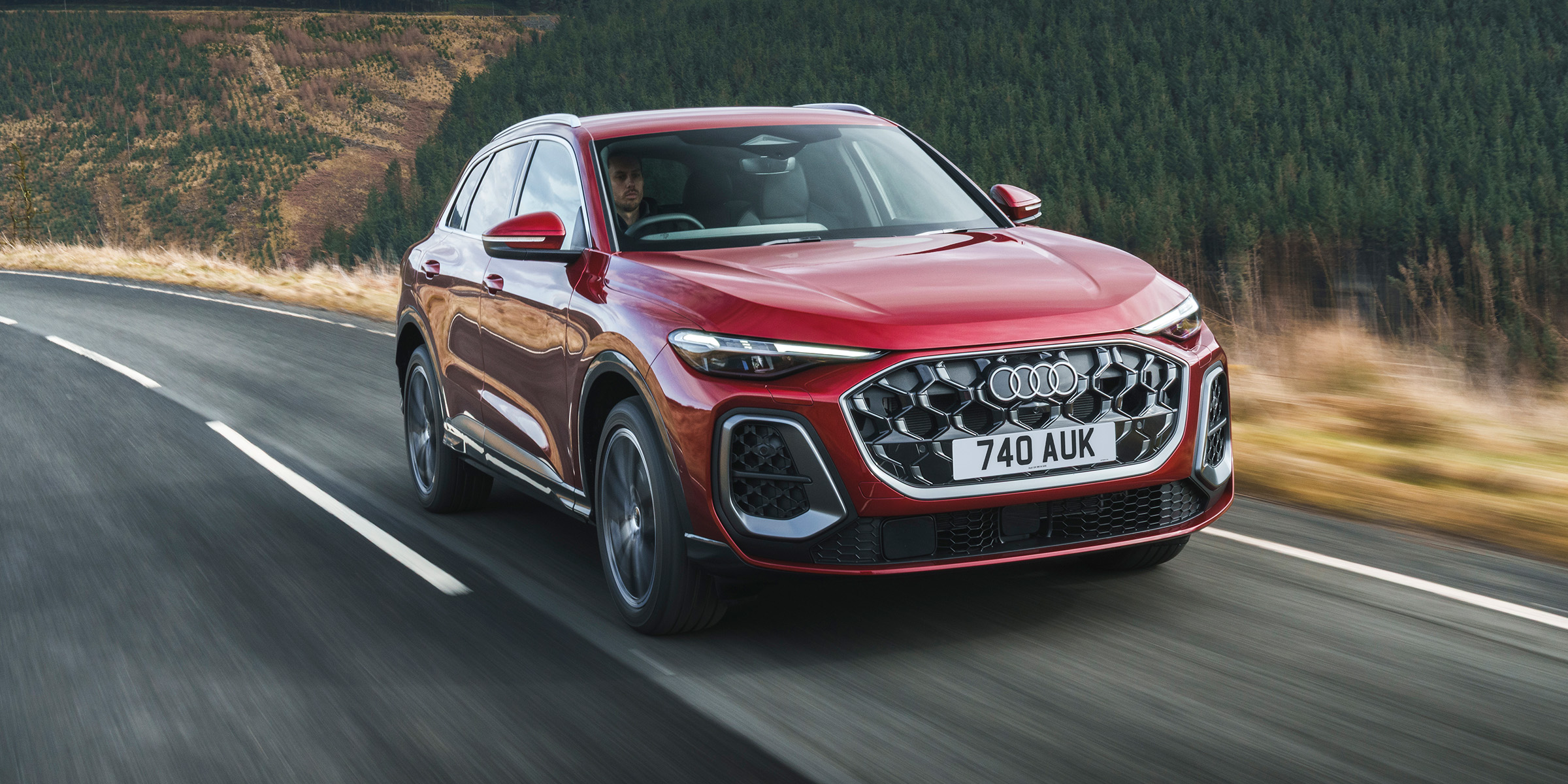
Audi Q5 review

0

Make and model: Audi Q5 Launch Edition 2.0 TDI
Description: Diesel SUV
Price range: £63,060 (plus options)

Audi says: “A striking, sloping roofline, sporty appearance and SUV proportions – the new Q5 Sportback is here, and it’s designed for life.”
We say: Good-looking with decent performance, but expensive for what it is.


Introduction

The Q5 name has been around for years now, with the first model launched way back in 2008. This here is the third-generation model, which arrived in the UK last year. As before, Audi is targeting cars like the Mercedes-Benz GLC and BMW X3 with its latest variant. And while the Launch Edition, as tested here, has recently been dropped for Audi’s lineup, there are three trim levels to choose from and just two engines — nice and simple.

What is it?

The Audi Q5 is a mid-sized SUV that sits snug between the smaller Q3 and larger Q7. It also shares its underpinnings with the A5 and A6 saloons, and each powertrain offered with the Q5 comes loaded with Audi’s mild hybrid system, tech that allows a very small amount of very low-speed electric driving, while helping to boost performance and fuel economy from the petrol or diesel engine.

As well this conventional SUV version, there’s also the Audi Q5 Sportback, which offers a sleeker profile at the expense of some load space. We’re not covering the Sportback here, but it drives the same so most of what you’ll read about the SUV version will apply equally to the Sportback.

Who is this car aimed at?

Like previous Audi Q5s, the latest generation targets smaller families who like premium brands. It’s got a large 520-litre boot, although this falls short of its Mercedes and BMW rivals, and is wide enough for prams and large boxes.

It comes with an electric tailgate as standard, which also features a road projection light, showing you where to wiggle your foot to open the boot when your hands are full.  

You can also fold the rear 40:20:40 rear seats completely flat, meaning you can still carry two rear passengers and fit a longer load between them.

Who won’t like it?

Dig deeper into the Q5’s interior, and you’ll soon find some questionable materials, but more on that later. This said, anyone who enjoys a bit of bang for their buck will quickly realise that products from Skoda can be just as good for a lot less.

First impressions

It’s a good-looking SUV, but it’ll still blend in with regular traffic, and many won’t see its £60K price tag from outside.

Even behind the wheel, we struggled to see why it costs so much, but we live in such times where chocolate bars almost require a mortgage to buy. Therefore, a car with a premium badge will be out of reach for many.

Still, the Q5 is a decent performer, especially when equipped with the 2.0-litre diesel. It’s also economical when driven sensibly, and there’s enough room inside for five. Likewise, it’s quiet enough at motorway speeds.

What do you get for your money?

There are six overall Audi Q5 variants to choose from. The entry-level model (just called Q5) is the cheapest, while the fast SQ5 is the most expensive. There’s also a hybrid option, although it’s worth noting you’ll have a smaller boot if you opt for this.

Focusing on the SUV, there are three trim levels: Sport, S line, and Edition 1, while the Q5 Launch Edition was only sold for a small period before being pulled.

Standard tech on the entry-level Sport includes 19-inch alloy wheels, high beam assist, front sport seats, adaptive cruise control, Audi Virtual cockpit plus, an Audi sound system, wireless phone charging, heated front seats, and lots of safety systems like a reversing camera and lane departure warning. The Sport kicks off at £52,260.

Spend an additional £2,600, and you can have the S line. This adds extra exterior trimmings such as 20-inch alloy wheels and wider front air vents. It also gets sport suspension, fancier aluminium interior inlays, a three-spoke steering wheel with multi-function buttons and a storage and luggage compartment pack.

The range-topping Edition 1, costing £59,060, includes all the S line’s trim but adds 21-inch alloys, matrix LED headlights, red brake calipers, a top view camera, and power-adjustable front seats.

Pricing for each of the above is with the entry-level petrol engine. If you want the diesel, you’ll need to spend an extra £1,650 – although, with diesel’s market share vanishing by the day, most people won’t.

There are also a host of options, such as extended warranties, foldable towbars, adaptive air suspension, a panoramic roof, and various paints. Go wild, and you’ll soon be north of £70,000.

We like: Good choice of powertrain and trim levels. Decent standard tech.
We don’t like: Can become ludicrously expensive, especially if selecting options.

What’s the Audi Q5 like inside?

The Q5 follows the brand’s latest design themes, especially inside. If you’ve been in a Q6 e-tron, A6 or A5 recently, you’ll feel right at home. All of these share the same large 14-inch touchscreen, which stretches across the car’s dashboard.

The touchscreen is clear and responsive, which is more than can be said for some other brands. The screen is fairly easy to use, but it’s loaded with functions, meaning you’ll spend a bit of time going through it.

As for the climate settings, there are no physical controls, but Audi has placed them on a permanent taskbar at the bottom of the touchscreen. It does have a voice command, but it often struggles with the simplest tasks, like changing the radio station and adjusting the cabin temperature.

The Q5 is comfortable on longer journeys, with even entry-level cars getting a four-way adjustable driver’s seat.

It’s posh, but as you look beyond the fancy screens and shiny plastic, you’ll notice some questionable materials. Of course, the largest surfaces feel squishy and nice, but things like air vents and the lower section of the dashboard don’t feel good enough for a £50,000-plus car.

Truthfully, the Q5 has taken a step back in this department, as the previous model felt much more solid.

We like: Responsive touchscreen and comfortable seats.
We don’t like: Some parts are let down by cheaper-feeling plastics and too many screens.

What’s the Audi Q5 like to drive?

We’ve only driven the 204hp 2.0-litre diesel, but the petrol version has the same power output and is fractionally quicker to 62 mph, but only by a fraction of a second and something that you absolutely won’t notice in the real world. The diesel’s mid-range is impressive, and there’s plenty of get-up-and-go whenever a swift overtake is required.

Both powertrains come with all-wheel drive, something of a saving grace during Scotland’s wet autumn weather. There’s plenty of grip on wetter roads and minimal body lean, giving a feeling of stability through twisty bends.

It’s quiet enough on the motorway, too, and there’s plenty of low-down shove. Similarly, it’s efficient, meaning you’ll regularly see upwards of 40 mpg. This, paired with adaptive cruise control, comfortable seats, and lane-keeping aids, really takes the sting out of long motorway hauls.  

We like: Punchy powertrain, comfortable motorway cruiser, good grip and efficiency.
We don’t like: Not quite as fun to drive as a BMW X3

How safe is the Audi Q5

The Audi Q5 scored five stars in Euro NCAP’s safety testing, where it excelled at keeping adult and child passengers safe.

As with most new Audi products, the Q5 comes with a three-year/60,000-mile warranty. This is about the bare minimum offered by a car manufacturer in the UK, and many newer rivals offer longer warranties. You can extend the Audi warranty to four or five years, but you’ll have to pay extra.

All cars come equipped with autonomous emergency braking, adaptive cruise control, camera-based traffic sign recognition, a reversing camera, lane departure warning, and a driver’s attention monitor.

Verdict

The Audi Q5 is handsome, safe, packed with tech, and will return a good blend of efficiency and performance. Still, a Skoda Kodiaq equipped with the plug-in hybrid powertrain also manages all of this and for significantly less.

Likewise, we’re not entirely sure that the interior quality mirrors the £50,000-plus price tag; however, it’s miles ahead of the latest Range Rover Velar in this field. Therefore, you would really need to want an Audi to consider the Q5 over some of its rivals.

Similar cars

Alfa Romeo Stelvio | BMW X3 | BMW X4 | DS 7 | Genesis GV70 | Lexus NX | Mercedes-Benz GLC | Porsche Macan | Range Rover Velar | Volkswagen Tiguan | Volvo XC60

Key specifications

Model tested: Audi Q5 Launch Edition
Price as tested: £63,060
Powertrain: 2.0-litre diesel, all-wheel drive
Gearbox: Seven-speed automatic

Power: 204 hp
Torque: 400 Nm
Top speed: 140 mph
0-62mph: 7.4 seconds

Fuel efficiency: 44.1 mpg
CO2 emissions: 167 g/km
Euro NCAP safety rating: Five stars (May 2025)
TCE Expert rating: B, 65% (as of January 2026)   

Buy an Audi Q5

If you’re looking to buy a new or used Audi Q5, The Car Expert’s partners can help you find the right car.

Motors 600x300

Find your next used car with Motors. Find out more

Auto Trader logo 600x300

Find your next new or used car with Auto Trader. Find out more

Carwow logo 600x300

Find your next new or used car with Carwow. Find out more

Limited-run Volkswagen Golf GTI Edition 50 now on sale

0

Volkswagen has released a special limited-run ‘Edition 50’ version of its Golf GTI hot hatch, to celebrate the 50th anniversary of the brand’s first ‘GTI’ performance car.

Based on the high-spec Golf GTI Clubsport but with a power boost and unique cosmetic touches, the Edition 50’s release signifies that it has been half a century since the very first 1976 Golf GTI, and celebrates the two and a half million Golf GTI models that have been produced across eight generations since.

The trim includes 19-inch ‘Queenstown’ red alloy wheels, ‘GTI 50’ badges on the roof spoiler, exterior mirrors, steering wheel and door sills, and three exterior colour options – red, dark green (exclusive to this model) and white. Inside, the ‘Edition 50’ differentiates itself from the standard Golf GTi thanks to a unique seat trim with decorative inserts, as well as pedals and seatbelts finished in red.

Like the Clubsport variant, the hot hatch is powered by a turbocharged inline-four 2.0-litre petrol engine paired with an automatic gearbox, but with a 25hp boost – 325hp in total. That’s 3hp short of the range-topping Golf R hot hatch.

First unveiled at the Nurburgring 24-hour race in Germany in late November, the Edition 50 was the fastest production Golf to complete a lap of the famous winding Nordschleife circuit. The limited-run hot hatch can complete a 0-62mph sprint in 5.3 sec, reaching a top speed of 168mph.

Beyond the engine, Volkswagen has also revised the steering and tuned the suspension’s active dampers, as well as lowering the ride height by around two centimetres. The car also comes with a unique ‘Nurburgring’ driving mode designed for track outings, and a new manual ‘M+’ mode prevents the car automatically upshifting at higher revs.

An optional ‘Performance’ package reduces weight further and introduces semi-slick tyres, ‘Warmenau’ 19-inch black alloy wheels, and a twin Akrapovič exhaust system.

Now on sale, but expected to be in high demand, pricing for the Golf GTI Edition 50 now begins at just south of £48k.

The Volkswagen Golf GTI currently holds a New Car Expert Rating of B, with a score of 68%. It scores top marks for its excellent safety rating, while media review scores are also good. However, ownership costs drag the overall score down from an even better ranking, while Volkswagen’s new car warranty coverage is poor compared to some other brands.

Can you sell your car if it has outstanding finance?

Most new and used cars are purchased using some kind of finance agreement, but it’s very common for owners to want or need to change their car before the finance has been paid off. This can be tricky, but we’ve got some key tips to help you out.

If you want to sell or part-exchange your car while it is still under a finance agreement, you first need to know what type of agreement it is.

The majority of new or used car finance agreements are either a hire purchase (HP) or personal contract purchase (PCP) agreement. These are called secured loans, which means that the car is secured against the finance – much like a mortgage on a house. That means that until the car’s finance is paid off, it’s not really yours to sell. However, as we’ll explain, there are some other options.

If you bought your car with a bank or credit card loan, this is called an unsecured loan, meaning that the bank does not have an interest in the car. You are the legal owner of the car in clear title and can sell it on as you wish.

If you are buying a used car and want to check if it’s currently on a finance agreement (for which you don’t want to become liable), finance companies use agencies to register their interest in vehicles that are the subject of a finance agreement.

Most vehicle history check companies will tell you if finance has been secured on the vehicle and if it still needs to be paid. If finance is recorded, you will be able to find out which company it is with, when it was taken out, how long for and what type of finance it is. Some of these services are free, while others will require a small fee (less than £20).

The checks can also include whether it has been involved in an accident, its true mileage or if it has been an insurance write-off. Used car dealers usually advertise if they have carried out one of these checks, but ask for a copy of the check, or keep a copy of the advert stating this when you buy.

So let’s look at the types of finance products, and the implications for selling your car, in more detail.

Unsecured loans – bank loan or credit card

Let’s get this one out of the way first, as it’s quite simple.

If you borrowed the money to buy your car on a personal loan from a bank or building society, that’s called an unsecured loan. The bank has lent you a sum of money, and you have used that money to go and buy a car. The loan is not secured against the car, so you can sell it as you like.

Likewise, if you’ve used a credit card to pay for your car, that’s also unsecured and you can sell the car as you wish.

However, you’ll still have to keep up your monthly loan or card payments until the debt is cleared. Obviously, you can use the money you’ve got from selling the car to put towards this, or you can continue paying it off each month as before. If you’ve used a credit card, the interest rates are usually quite high so settling as early as possible could save you thousands of pounds in interest.

Secured car finance

Unlike a personal loan, car finance agreements (usually HP or PCP) are secured against the car, which means the finance company retains a financial interest in the vehicle until the last penny has paid off – and means you can’t sell it without their agreement. Once the loan is fully repaid, it’s your car and you can do what you like with it.

Under a hire purchase (HP) agreement, you pay off the loan in equal monthly instalments. When all payments have been made, the HP agreement ends and you own the car. Even if you’ve repaid £29,990 of a £30,000 loan, you can’t sell it as the finance company retains a financial interest that effectively blocks you from selling it.

The personal contract purchase (PCP) is the most popular form of car finance, and it’s a specific form of HP. You pay a smaller monthly fee for the same car compared to an HP because part of the amount borrowed is deferred – this is usually known as the ‘balloon’. At the end of the agreement, you choose whether to pay this deferred ‘balloon’ amount to finally own the car, or hand it back to the finance company, or part-exchange it on another car. We have lots of specific information on PCP finance so we won’t go into more detail here.

Since it is a form of HP, a PCP is also secured against the car. The finance company remains the owner until the end of the term unless you pay the final balloon payment to own the car, or you hand it back.

If you want to sell the car, you need to pay off the outstanding balance or sell it to a recognised trade buyer who will pay it off as part of the sale.

Settling an HP or PCP agreement early

You can add up your remaining payments to work out roughly how much you still owe, but it’s not a precise number. A settlement figure will be a different total because you may get a reduction of interest and charges. Whether you can settle or not depends on the agreement.

The finance company should be able to provide you with a formal settlement figure for an HP or PCP agreement in writing. This doesn’t oblige you to settle once you get the reply letter. The settlement figure will only be valid for a couple of weeks, because it changes with every monthy payment you make. A settlement letter will be essential if a dealer offers to settle your car’s finance for you, as will a letter proving you have settled and the ownership of the car has passed to you.

If you’re looking to change cars while a finance agreement is still running, voluntary termination is not likely to apply here. This is a legal right to end your finance agreement early, set at 50% of the total amount payable including interest and fees. It can be complicated to understand – see our complete guide here.

Settling a PCP early works in much the same way as an HP, but it includes the balloon payment which has been deferred until the end of the term. The same principle applies – the finance company can provide you with your current settlement figure, which changes every month as you make your regular payments. Voluntary termination also applies to PCPs, although it is generally nowhere near as helpful as with a regular HP, and we explain the options on ending a PCP early here.

Having a dealer settle a finance agreement for you

Most car dealers will settle the finance for you to take your car as part exchange. The settlement figure is then subtracted from the value of your car. So if your car is worth £12K but you still owe the finance company £10K, you’ll get the remaining £2K to put towards your next car.

If the settlement figure is higher than the car’s value, you will need to pay the difference. To reverse the position above, if your car is worth £10K but you still owe the finance company £12K, you’ll need to find an additional £2K to settle the outstanding finance.

Some finance companies will allow you to add that additional money onto your next car finance agreement – this is called negative equity and is best avoided if possible, as all you’re doing is making a bigger problem down the line.

The dealer will work with you to agree the value of the settlement (but it is still useful for you to have obtained your settlement letter) and what extra you’ll need to contribute. There is, of course, an incentive for that dealer to get you to take out a new finance agreement.

Car-buying services (we’ve listed the best here) will arrange for a dealer to buy your car and settle any finance, so that’s another avenue worth exploring – often, you may get a better deal than by part-exchanging it.

One thing you generally can’t do is sell your car privately if it has outstanding finance. Some finance companies may allow it if the buyer pays them directly before taking your car, but most will simply say no.

Additional reporting by Russell Hayes. This article was originally published in January 2022, and was last updated in January 2026.

Electric Zeekr 7GT coming to the UK

0

Chinese newcomer Zeekr is set to land in the UK with its debut model – the 7GT – an electric family car set to rival the MG 4 and Kia EV6.

Following hot on the heels of Chinese brands like BYD, Jaecoo, and Omoda that launched in the UK to considerable sales success, Geely-owned Zeekr is now looking claim a slice of the British market with this new high-riding family-sized hatchback that is expected to arrive in the UK sometime this year.

Built on the same foundations as the Zeekr 007 saloon, Zeekr says that the 7GT has been designed and tuned for European roads, promising buyers a ‘responsive’ driving experience.

The 7GT will be offered with two powertrain choices – an entry-level 75kWh unit and a top-spec 100kWh battery. Built on 800V architecture, reporting suggests that the 7GT will be one of the fastest-charging EVs on sale when it arrives, with a 10% to 80% battery top-up taking around 13 minutes when the car is plugged in to a 480 kW DC rapid charging station.

Zeekr is yet to announce exactly how much travel distance each battery option can muster, but the brand’s 100kW 007 saloon can muster up to 540 miles on a single charge. We expect that the 100kW 7GT will have a nearly identical electric range. The Chinese brand adds that this family car can complete a 0-62mph sprint in 3.3 seconds – that’s supercar fast, but two tenths slower than the Tesla Model 3 Performance.

The car’s upmarket interior features plenty of leather interior trim – from the seating to the centre console, steering wheel and dashboard. The most eye-catching cabin fixture is the large central infotainment touchscreen that floats over the dashboard, which could be the brand’s ‘Sunflower’ screen that can be tilted towards the driver.

The car also comes with a 13-inch digital instrument cluster behind the steering wheel, and a 36-inch head-up display with the same augmented-reality tech as the latest Volkswagen models, projecting driving information and graphics onto the windscreen.

That just about sums up the upcoming Zeekr 7GT, with the car’s arrival date, full specifications and UK price list currently being kept under wraps. More information is likely to drop in the coming months, check back soon!

The best websites for buying a new or used car

Researching and buying a car has never been easier, thanks to the power of the internet. All the information required to make an informed purchase of a new or used car is available online: consumer car buying advice sites like The Car Expert; owners’ forums where other people discuss the good and bad points of their cars; manufacturer sites with all the technical information for the latest models; and sites where you can buy a new or used car online, without having to set foot in a car dealership.

The days of buyers rocking up at a dealership to kick a few tyres and be sold a car by a suited salesperson are pretty much over. Very few customers these days visit more than one dealership once they’re serious about buying a car, meaning they already know what they want before setting foot on a dealer’s forecourt.

If it’s a used car, a buyer can find out what the dealer has in stock, how vehicles are priced compared with the rest of the market, what they can get for their part-exchange and how much the purchase is going to cost if they opt for a finance deal – right from their computer or smartphone.

New car customers are similarly empowered. Simple online research will show which new cars a dealer has in stock, how much a personal contract purchase (PCP) or personal contract hire (PCH) deal will cost per month, and how much they can expect to receive for their trade-in.

Online car sales rocketed during the pandemic-enforced lockdowns, and all indications are that they’ve not really dropped off since. As such, we’ve been regularly updating our round-up of the top sites for you to buy a new or used car from the comfort of your own sofa. They’re not ranked, but we think they’re all worth a look.

One thing to note is that many of these sites are owned by companies trying to sell you something, rather than traditional listings where dealers pay for advertising space for their stock. They’ll earn commission on many of these sales, which can influence the results you see.

Please note that several of the companies listed below have an asterisk next to their name – they are commercial partners of The Car Expert, which means that we may get a small commission if you click through to their website. This doesn’t affect the deals you are offered or the price you pay; it just helps us to keep running our site.

Motors*

Motors mock-up 2024 1200x800px

Used cars: YES (297,076 cars as of January 2026)
New cars: NO

Although not quite the largest site in overall numbers (that honour remains with Auto Trader), Motors has made great strides in recent years with high-profile TV advertising campaigns that have successfully attracted visitors and stock to its recently refreshed site.

Motors was first to market with the ability to view by monthly payments and is supremely user-friendly, with the clever use of eye-catching graphics enabling buyers to select their criteria according to practicality, budget, road tax and creature comforts. Stock is sourced from a wide range of franchised and independent dealers from across the UK.

Like several other sites, Motors also provides car reviews on various models. However, we have found several of these to be out of date and not necessarily representative of the latest models.

Auto Trader*

Auto Trader website (The Car Expert)

Used cars: YES (427,645 cars as of January 2026)
New cars: YES (23,238 cars as of January 2026)

Auto Trader has dominated the used car market for decades. Although the print publication was discontinued in 2013, the online version has evolved into the most visited car website in the UK, thanks to its use of cutting-edge online technology and its ability to attract the country’s biggest listing of used cars. It also lists new cars for most makes and models, although these won’t necessarily be in stock and ready for immediate purchase.

Despite new challengers arriving to chake up the marketplace, Auto Trader it is still the largest used car classifieds site in the UK. As a generalisation, cars that appear on various other sites will also be on Auto Trader, but there are lots of cars on Auto Trader that don’t appear anywhere else. Unlike most other similar sites, Auto Trader also has plenty of private sellers as well as car dealers.

Buyers can fine tune their search by vehicle size, fuel type, economy, emission levels and much more. There is also the ability to search by monthly finance cost, an essential function as car buying has moved increasingly to the PCP monthly payment model. Bear in mind that the finance payments are only examples, and may often require large up-front deposits to achive the monthly payments shown. For more information about car finance quotes, we have a comprehensive guide to understanding a PCP quotation.

The vast majority of cars (about 90%) are sourced from car dealers, although it remains a popular site for private sellers to advertise their cars.

RAC Cars*

The best sites for buying a new or used car – RAC Cars

Used cars: YES (54,358 cars as of January 2026)
New cars: YES (9,488 cars as of January 2026)

RAC Cars is a fairly new addition to the RAC motoring portfolio, although the service is actually provided by Heycar (you’ll find them further down this list). As such, it looks and works exactly like the Heycar site.

The advantage of RAC Cars over using Heycar directly is the close integration with RAC’s other services, such as breakdown cover, servicing, and vehicle inspections.

Like Heycar, all the used cars listed are from traders (in this case, RAC-approved dealers), rather than private sellers, and all will be less than ten years old. You start by entering your postcode and then you can filter by price, new or used, body style and so on.

Also like Heycar, the site is very heavily skewed towards Volkswagen Group vehicles. Starting a search using our home postcode, we didn’t find a car other than an Audi or Volkswagen until page three of the site’s listings. We tried again, this time using a central London postcode as our address, and it took until page nine to find a car that wasn’t made by the Volkswagen Group.

Carwow*

The best sites for buying a new or used car - Carwow

Used cars: 57,464 (as of January 2026)
New cars: N/A

Launched in 2013, Carwow it is aimed primarily at buyers in the market for a new car, with all stock provided by franchised dealers. You select your make, model and specification, then Carwow invites its partner dealers to make you an offer.

The search facility is easy to navigate with budgets ranging from £8,000 to over £80,000 and there’s plenty of consumer friendly advice on what to choose, complete with a large and growing car review section.

What differentiates Carwow is that once the buyer has chosen the model they are interested in, it’s then up to dealers to come up with the best price. This process is done by email and removes the need for haggling. A lot of the best deals are dependent on you taking the dealer’s finance, which can cause confusion for some buyers.

Carwow is growing its used car section, although it’s still small compared to some of the better-known used car marketplaces. It has also branched out into leasing and commercial vehicles.

Cazoo*

The best sites for buying a used car – Cazoo

Used cars: 257,298 (as of January 2026)
New cars: NO

This is the second coming of Cazoo, under new ownership by Motors (see above). This time around, there’s less focus on countless high-profile sporting sponsorships and more on providing a high-quality used-car marketplace.

The site claims to strip out the jargon from other car marketplaces (much like we do here at The Car Expert!) to ensure everything is clear and easy to understand.

There are more than a quarter of a million cars on the site, ranging from £10 parts-only wrecks to multi-million-pound supercars.You can narrow down your search with one of the more detailed filters of the sites on these pages, such as compliance with London’s ULEZ scheme or fast-changing times for EVs.

Cazoo has a growing library of car reviews – not simply copied and pasted from Motors, but separate reviews, which is nice. Although, as with Motors, you do need to check to make sure that the review is about the specific model you’re looking for, rather than an older or newer version.

Insider Car Deals*

The best sites for buying a new or used car – Insider Car Deals

Used cars: NO
New cars: N/A

Unlike the other sites in this list, Insider Car Deals is not a marketplace. It’s an automotive research business that tracks the very best deals available on almost any new car in the UK, covering both car pricing and finance offers.

Unlike brokers, who earn money from car manufacturers and dealers, Insider Car Deals charges you a fee for its exclusive pricing research. Starting at a very reasonable £95, you could save hundreds or even thousands of pounds on the price of your preferred new car simply by being armed with all the crucial information about the offers available – especially the ones that dealers don’t tell you about.

For an additional fee, Insider Car Deals can even negotiate on your behalf to secure you a new car at the best price indicated, so all you need to do is turn up and collect the car.

CarGurus

The best sites for buying a used car - CarGurus

Used cars: YES (177,450 cars as of January 2026)
New cars: NO

Launched in the UK in 2016 by the co-founder of TripAdvisor. After becoming the biggest online marketplace for used cars in the US, CarGurus is in a position to use online technology and tools that have been road-tested in the US and Canada to give UK car buyers a new online shopping experience.

All cars are sourced from franchised and independent dealers with the site offering price transparency as buyers are advised whether the price is in line with market values. It also shows any price drops and will tell you if the price reflects a “Great” or “Fair” deal.

What’s clever about the search facility is that cars are listed according to the accuracy of their market pricing as well as the reputation of the dealer, as car retailers cannot pay extra to be listed first.

PistonHeads

The best sites for buying a used car – Pistonheads

Used cars:  YES (212,979 cars as of January 2026)
New cars: NO

PistonHeads is one of the oldest and most popular motoring websites with a unique offering of an enthusiast marketplace, extensive news and the famous motoring forum, which has a staggering 20 million-plus posts from car enthusiasts. 

If you are looking for a special edition or rare vehicle, this is definitely a good place to look. From supercars to prestige editions to classics, there is a great choice and thew vehicle often have more extensive descriptions than found elsewhere. Be warned – you can spend hours in the forum reading up on your dream car from the enthusiast owners posting everything from common faults, favourite drives and rebuild photos.

Whilst there are fewer private cars on the site today, there is still a good mix of major dealer groups, independents and specialists that cater for this market. PistonHeads is a car buying website with a clear identify and differentiation. 

Heycar

The best sites for buying a new or used car – Heycar

Used cars: YES (78,573 cars as of January 2026)
New cars: YES (9,584 cars as of January 2026)

Launched in 2019, Heycar is owned by Volkswagen Financial Services. Why is VW in the used car classifieds scene? Presumably to help its dealers more cars, and to direct more of your spending into their dealerships. There are no ads for third-party providers of finance, GAP insurance or other services, as you’ll see on Auto Trader, so it looks much cleaner.

Heycar only works with ‘selected dealerships’, which means it’s mainly big franchise operations rather than smaller local garages. All cars must also be less than eight years old and have covered less than 100,000 miles, which is exactly the sort of stock that franchised dealers carry anyway.

When you go to the Heycar site, you may notice that the list of ‘most popular makes’ starts off with Volkswagen, Audi, Skoda, Cupra and SEAT – all of which are Volkswagen Group brands. After that, it goes onto Ford, Vauxhall et al, but that probably gives you some indication of the site’s priorities…

Cinch

Used cars:  YES (13,270 cars as of January 2026)
New cars: NO

Cinch has a good selection of cars and multiple ways to narrow down your search. But if you’re not sure what you want, there’s a good ‘Help Me Choose’ tool on the site to help you make up your mind based on your driving preferences.

Cinch promises a 225-point quality check along with a 14-day ‘faff-free’ money-back guarantee. You can have your new car delivered anywhere in mainland UK within a two-hour timeslot. All its cars are under seven years old and have travelled fewer than 70,000 miles.

Finance packages are offered including monthly payments and HP and PCP deals and you can arrange to part-exchange a car as long as you have bought one of Cinch’s models online. There is a separate list of cars available for sale through approved dealers. This section looks a little disjointed mainly as the pictures of the cars are taken from different angles and don’t have that smart, uniform look of the rest of the site.

Motorpoint*

The best sites for buying. anew or used car - Motorpoint

Used cars: YES (7,089 cars as of January 2026)
New cars: NO

Motorpoint sells ‘nearly new’ cars which all come with a warranty. As well as the website, Motorpoint has 21 stores across the UK.

Click on ‘browse cars’ and you’re taken to a page offering lots of options, from car makes, to bodies, lifestyle (4x4s, automatics), finance (how much per month) and ‘Economical driving’ (low cost, high mpg or hybrids).

You get a picture of each car, the outright price and monthly finance cost, and brief details including year, mileage, warranty length, and fuel type. Click through on ‘full details’ for your chosen model and you’re given more pictures, inside and out including one wheel, and a list of features.

Some details are assumed or taken from official manufacturer figures so it’s worth checking with the supplying dealer if you are taking your choice further. Some of the offered cars could have been rental or lease vehicles so again that’s worth confirming. You can reserve any car online for £149.

Motorpoint has made significant efforts to add and update its car reviews in recent years, which is a major area of improvement.

Vertu Motors

Best sites for buying a used car – Vertu Motors

Used cars: YES (7,795 cars as of January 2026)
New cars: YES

As one of the largest car (and van) retailers in the UK, Vertu is well placed to offer a wide range of both new and used vehicles. The company also handles MOT, servicing and repairs too, across its network of dealerships, providing everything you need to keep mobile.

There are plenty of makes and models to choose from, with each car carrying a photo and brief details such as engine and fuel type, body style, age, colour, miles covered, cash price and monthly PCP cost. It also states where in the country the car is being held. There’s also a ‘special offers’ section for both new and used cars.

Nationwide delivery is offered – it’s free up to 30 miles from the dealership – along with mechanical inspections, after-sales help and a customer service department for assistance with buying a car.

Sytner Select

The best sites for buying a used car - Sytner Select

Used cars: YES (2,853 cars as of January 2026)
New cars: NO

Sytner Select is the new name for CarShop, operating from eight locations around the UK. Sytner is one of the UK’s largest dealer groups, and Sytner Select is the name for its multi-brand used car supermarkets.

Again the search engine is easy to use and the descriptions of each car extensive including around 30 photos. All vehicles come with a minimum six-month warranty, although many will still be under their new car warranty anyway.

If you see a car you like you can reserve it for a refundable £99. Sytner offers PCP and HP finance options, and there’s a home-delivery option – though the site warns that this might be subject to an extra charge.

*The Car Expert has commercial partnerships with Auto Trader, Carwow, Cazoo, Insider Car Deals, Motors, Motorpoint and RAC Cars. If you click through to their websites and view any of their vehicles, or proceed to purchase a vehicle, we may receive a commission. This does not affect the price you pay.

Additional reporting by Andrew Charman, Curtis Hutchinson, Tom Johnston, Sean Rees and Lee Williams. Originally published in January 2018, most recently updated January 2026.

Electric Mazda CX-6e SUV arriving in late 2026

0

Mazda is set to bolster its electric car line-up with the new CX-6e – a mid-sized upmarket SUV built in collaboration with Chinese car brand Changan.

Now on display at the Brussels motor show, the CX-6e is Mazda’s answer to the Audi Q6 e-tron, Ford Explorer and Tesla Model Y, and under the hood the SUV is structurally identical to the Changan Deepal 07 which is already on sale here.

Essentially the all-electric equivalent of the brand’s petrol-powered CX-60 – though slighting longer and with a lower ride height – the CX-6e makes use of a 78kWh battery and 258hp rear-mounted e-motor pairing that provides up to 300 miles on a single charge. Compatible with DC charging speeds of up to 195kW, the SUV’s battery can be topped up from 10% to 80% in around 24 minutes.

Top speed is electronically-capped at 115mph, with a 0-62mph sprint taking a reported 7.9 seconds. Opening the boot reveals 468 litres of boot space. That’s 100 litres less than the CX-60, but you do also get 80 litres of ‘frunk’ space under the bonnet.

A clear example of Mazda’s efforts to attract buyers away from premium brands, the SUV’s white and purple interior (top-spec ‘Takumi Plus’ only, also available in black and beige) features a large 26-inch infotainment touchscreen stretching from the steering wheel to passenger side on the dashboard.

Instead of physical buttons, the car’s climate control, media playback and navigation is set through this screen, which is also compatible with Android Auto and Apple CarPlay. The car also comes with gesture and voice control tech, allowing you to cycle songs or change your navigation route through a wave of a hand or spoken word.

A first for Mazda – the car doesn’t have a digital instrument cluster or traditional gauges behind the steering wheel. Instead, the car comes with a head-up display that projects driving information on to the windscreen. The car’s tech suite also includes lane keeping assistance and blind spot monitoring.

Built on the same production line as the Deepal 07 in China and already on sale in China and Australia as the ‘EZ-60’, the CX-6e is set to arrive in the UK towards the end of the year, six months after it launches in mainland Europe.

That sums up what we know about the new Mazda CX-6e at the moment, with the SUV’s full specifications list and UK pricing sure to follow in the coming months.

Kia expands GT range with sporty EV3, EV4 and EV5

0

Kia has debuted its new performance-enhanced EV3 GT, EV4 GT, and EV5 GT models at the Brussels motor show, all of which are likely become available to order in the UK this year.

Joining Kia’s GT range of models that currently consists of the EV6 GT and EV9 GT, these new models come with several performance-focused modifications over the standard versions – including dual-motor powertrains that offer extra power – and cosmetic flair in the form of neon green exterior and interior design touches.

Kia EV3 GT

Powered by a 81kWh dual-motor all-wheel drive powertrain that musters up to 288hp, the EV3 GT can reportedly accelerate from stationary to 62mph in 5.7 seconds. The same size battery powers the top-spec ‘Long Range’ model in the standard EV3 range.

Kia hasn’t yet announced the GT’s battery range, but we do know that this performance model comes with several technical upgrades, including electronically controlled suspension, improve cornering stability and unique 20-inch alloy wheels and neon green brake callipers, wrapped in ‘performance-oriented tyres’.

The car also has a unique ‘GT’ driving model which the manufacturer says delivers ‘a more focused and immersive driving character’, adjusting the power delivery, steering response and suspension in real time.

The brand’s ‘virtual gear shift’ tech – which is also offered with the Hyundai Ioniq 5 N hot hatch – is also included, which simulates a traditional automatic transmission’s gear changes, offering paddle shifters for manual control and audible cues, enhancing driver engagement. This GT drive mode also alters the ambient lighting in the cabin.

Also found in inside are sporty semi-bucket seats that Kia says is inspired by those found in the EV9 GT, as well as neon green cosmetic touches on the seats, dashboard, centre console, seatbelts and door panels.

Kia EV4 GT

Available in both hatchback and fastback bodystyles like the standard EV4 range, the EV4 GT is powered by the same 81kWh dual-motor 288hp electric powertrain as the EV3 GT, but with a slightly quicker 0-62mph sprint time of 5.6 seconds.

It comes with the same GT drive mode and technical upgrades, and the same semi-bucket seats and neon touches inside and out, as well as a unique three-spoke steering wheel.

Kia EV5 GT

The largest and most powerful of the three, the new Kia EV5 GT can complete a 0-62mph run in 6.2 seconds, thanks to its all-wheel drive dual-motor 88kWh powertrain with a 302hp electric motor pairing.

Kia adds that it has modified the EV5‘s chassis with electronically controlled suspension and a ‘road preview’ system that can automatically adjust to bumps or curves ahead. Like its sister models it comes with performance tyres, semi bucket sport seats and the new GT drive mode. Kia is yet to announce the car’s battery range.

That just about sums up Kia’s new GT offerings. The UK pricing and official launch dates of all three are yet to be confirmed – they are set to enter production around this Spring – but these important details are sure to follow in the coming months. Check back soon!

Britain’s best-selling cars of 2025

The ever-popular Ford Puma is now confirmed as the UK’s best-selling new car of 2025, continuing its sales dominance after its table-topping performance in 2024.

According to results published this morning by the Society of Motor Manufacturers and Traders (SMMT), 2025 was a year of steady but slow sales growth for the new car market, with total registrations growing by 4% year-on-year to surpass two million sales for the first time since pre-covid 2019.

In year-to-date sales, the Puma finished the year with a sales buffer of around 7,700 new models – a confident sales lead over the Kia Sportage, which was resigned to second place for the second year running.

Besides the small Ford SUV outselling cars of all shapes and sizes in the past year, the biggest sales story of 2025 has been the rise of Chinese automotive newcomers, at the expense of established brands. Chery-owned brands Omoda and Jaecoo are becoming a popular choice for UK buyers, and while it’s yet to make the annual top ten, the Jaecoo 7 is becoming a regular monthly top ten sales contender, which bodes well for its Chinese manufacturer heading into 2026.

Meanwhile, US automaker Tesla is in decline, with sales falling 10%. While two Tesla models made the December top ten – the Model Y and Model 3 – those models finished in first and second place in December 2024, instead of last month’s second and ninth. Tesla isn’t the only brand with falling sales however – Citroën, Fiat, Honda, SEAT, Suzuki and Toyota recorded even sharper sales declines in 2025.

Nissan also saw its sales fall by 10% when compared to the year prior, but its Qashqai SUV and Juke crossover still recorded third and fifth place finishes respectively in the annual chart. The British-built Qashqai was the UK’s best-selling new car not that long ago, but has lost out to the Puma and Sportage for two consecutive years now.

Another former UK best-seller, the Vauxhall Corsa finished the year in fourth as the only supermini-class model in the top ten. Small and mid-sized SUVs proved to be far more popular with UK buyers at dealerships than any other body style in 2025.

Volkswagen still holds the biggest share of the UK’s new car market, recording a 7% sales bump last year. The German brand’s Golf and Tiguan models were mainstays in sales leaderboard throughout 2025.

Top ten best-sellers chart, December 2025

RankBrandRegistrations
1Ford Puma4,680
2Tesla Model Y3,737
3Volvo XC403,319
4MG ZS3,294
5Nissan Qashqai2,887
6Jaecoo 72,863
7MG HS2,803
8Mini Cooper2,581
9Tesla Model 32,549
10Nissan Juke2,326
Source: SMMT

Top ten best-sellers chart for 2025

RankBrandRegistrations
1Ford Puma55,488
2Kia Sportage47,788
3Nissan Qashqai41,141
4Vauxhall Corsa35,947
5Nissan Juke34,773
6Volkswagen Golf32,478
7Volvo XC4030,404
8MG HS30,191
9Volkswagen Tiguan29,857
10Hyundai Tucson28,613
Source: SMMT

Britain’s best-selling cars of 2024

1. Ford Puma

The Ford Puma has sold in impressive numbers throughout 2025, and while the car’s sales form has dipped here and there, it has held on to the top spot for most of last year, and finished 2025 with almost 8,000 more new sales than any other car in the UK.

The Puma has received plenty of praise from the UK motoring media, and currently holds a New Car Expert Rating of B, with a score of 65% on our unique Expert Rating Index.

2. Kia Sportage

The Kia Sportage was so close to taking the UK’s best-selling car title in 2024, before the SUV fell at the final sales hurdle in December. 2025 was a similar story, with the race for first not being as close. While the Kia SUV sold in impressive numbers last year, finishing top of the monthly charts on several occasions in 2025, it couldn’t match the sales consistency of the Puma.

The new Kia Sportage currently holds a New Car Expert Rating of A, with a score of 72% on our award-winning Expert Rating Index.

3. Nissan Qashqai

The Nissan Qashqai remains one of the nation’s most popular cars – a claim validated by the SUV’s top ten sales consistency. Formerly the UK’s best-selling car in 2022, the mid-sized family car was bested by the similarly-sized Kia Sportage last year.

The Qashqai is the current jewel in the crown of the British car manufacturing industry – designed in London, developed in the Midlands and built in Sunderland. It’s also the UK’s best-selling British-built car. On sale since Autumn 2021, the Qashqai holds a New Car Expert Rating of A, with a score of 74%.

4. Vauxhall Corsa

Best-selling cars of 2022 – Vauxhall Corsa

Compact and affordable – the Vauxhall Corsa supermini is a British favourite. While the hatchback has now been surpassed by the Ford Puma, the Corsa is still posting strong registrations totals, but still sits behind the Nissan Qashqai finishing fourth in 2025.

The Vauxhall Corsa currently holds a New Car Expert Rating of C, with a score of 65%, while its all-electric counterpart holds a New Car Expert Rating of A, with a score of 71%.

5. Nissan Juke

On sale since 2019, the UK-built Nissan Juke has established itself as a popular choice of British motorists in the last year, as a cheaper and more compact alternative to the bigger Qashqai.

While the compact crossover couldn’t quite match the sales numbers of its larger sibling throughout 2025, it remains a top ten contender, which is another impressive sales feat for Nissan.

The Juke currently holds a New Car Expert Rating of B, with a score of 68%. That puts it squarely in the middle of a crowded compact SUV class.

6. Volkswagen Golf

Volkswagen is the UK’s most popular car manufacturer by total sales numbers, but it took until last year for one of its models to firmly cement itself in the top ten places. That model is the mid-sized Golf, held on to finish in sixth. The family car has never recorded table-topping registration totals, but sold in very consistent numbers throughout 2025, earning its place in the mid-table.

The Volkswagen Golf currently holds an excellent New Car Expert Rating of A, with a score of 77%.

7. Volvo XC40

Volvo XC40 800x600

One of Volvo’s oldest but also cheapest models, the XC40 has sold in commendable but inconsistent numbers in the UK this year. The biggest sales totals surprise in December, the XC40 managed to jump three places up the annual table in the final month of the year to snatch seventh.

The Volvo XC40 currently holds a New Car Expert Rating of B, with a score of 66% in our Expert Rating index.

8. MG HS

Focusing on offering value-for-money models with pricing that undercuts other brands, MG proved to be quite a popular motoring marque last year – the large HS currently being its most popular offering. The large SUV finished in eighth, not far behind the XC40.

The MG HS currently holds a New Car Expert Rating of A, with a score of 75% in our Expert Rating index.

9. Volkswagen Tiguan

Volkswagen’s answer to the popular Qashqai, the Tiguan was yo-yoing between 8th and 10th on the annual leaderboard in the Summer months. After being absent from the top ten in both May and June, and much improved sales form towards the end of the year, the SUV fell two places at the final hurdle – loosing out to the XC40 and HS.

The Volkswagen Tiguan currently holds a commendable New Car Expert Rating of A, with a score of 76% in our industry-leading Expert Rating Index.

10. Hyundai Tucson

2024 Hyundai Tucson

A key rival of the Kia Sportage an Nissan Qashqai, the Hyundai Tucson has been a regular top ten performer in recent years. The SUV finished in tenth in the annual sales charts, after spending most of the Spring outside this best-sellers list.

The Hyundai Tucson currently holds a New Car Expert Rating of A, with a score of 74% in our Expert Rating Index.

That’s 2025 over and done with! But the new car sales don’t stop. We will be back with January’s new car registration results in the first week of February, as the 2026 race for the Uk’s best-selling car accolade commences. Check back soon!

Electric Kia EV2 crossover entering production in February

0

Currently on display at the Brussels motor show, the electric small Kia EV2 family car is set to enter production in Europe, with British buyers eventually able to choose from two different EV2 powertrain options.

The EV2 will be Kia’s smallest and cheapest electric model when it arrives in the UK this year, sitting below the larger EV3 which was awarded The Car Expert’sCar of the Year‘ accolade in 2024.

The crossover is set to challenge compact SUVs like the Renault 4 E-Tech and Ford Puma Gen-E, but has slightly smaller supermini measurements, being a similar length and width to the Mini Cooper Electric but with more ground clearance.

Kia’s brief for the EV2 is offering the brand’s electric powertrain tech and intuitive on-board tech offered with the EV3 and EV4 in a ‘more accessible’ package, while still offering the interior space and versatility required for family ferrying.

The car’s boxy silhouette and exterior design draws many parallels to the larger EV5 SUV, including the brand’s ‘Star Map’ daytime running lights and chunky wheel arches. Opting for the ‘GT-Line’ trim level also adds black high gloss accents (shown below) to the car’s front end.

The car will be available in both four-seat and five-seat configurations, the former coming with sliding and reclining rear seating. The car sits on 16- to 19-inch alloy wheels and opening the boot lid reveals 403 litres of luggage space – 57 litres less than the Kia EV3. The crossover also has 15 litres of ‘frunk’ space under the bonnet.

Built on 400V architecture (not the more advanced 800V architecture that features in the much larger EV6 and EV9), the EV2 range will include two different powertrain options – an entry-level 42kWh ‘Standard Range’ unit delivering a reported 197 miles on a single charge, and a more expensive 61kWh ‘Long Range’ battery allowing up to 278 miles without charging.

Both are compatible with DC rapid charging, the ‘Standard Range’ taking 29 minutes to charge the battery from 10% to 80%.

Stepping inside, the crossover has a triple-screen infotainment setup, consisting of a 12-inch driver display behind the steering wheel, a 12-inch central touchscreen and a five-inch climate control screen in between. This infotainment setup will be compatible with over-the-air updates, meaning Kia can update or add new features to the car’s tech suite from your driveway in the future.

‘Standard Range’ models are set to enter production at Kia’s factory in Slovakia next month, with ‘Long Range’ and ‘GT-Line’ variants starting to roll of the production line later in June. Kia is yet to announce the EV2’s UK price list, or exactly when the car will be available to order, but considering that prices for the larger EV3 currently start at £33k, we expect the EV2’s pricing to start under the £30k mark.

Electric Alpine A390 coupé-SUV debuts

0

On display at the Brussels motor show this week, the electric Alpine A390 range will arrive in the UK this Spring with three trim levels to choose from.

Rivalling the likes of the Ford Mustang Mach-E, Skoda Enyaq vRS and Porsche Macan Electric, the sporty and sleek family car – which Alpine refers to as an ‘electric sport fastback’ – is powered by an 89kWh battery and is all-wheel drive as standard.

The lead-in ‘GT’ and limited-run ‘Premiere Edition’ are powered by electric motors with the combined output of 400hp, completing a 0-62mph sprint in 4.8 seconds. These models have an official battery range of 345 miles, and top speed is capped at 124mph.

The top-spec ‘GTS’ trim grade comes with a more powerful 470hp set of electric motors, which cuts the car’s 0-62mph sprint time to 3.9 seconds and battery range to 319 miles. This range-topper also has a higher top speed of 136mph.

All trims are compatible with rapid DC charging up to 190kW, with a 15% to 80% battery top-up taking around 25 minutes. The car also comes with a feature the brand calls AATV, or ‘Alpine Active Torque Vectoring’, which distributes torque between the rear wheels in real time to ‘enhance’ traction, handling, and stability.

While Alpine hasn’t finalised its UK price list just yet, but the SUV is now on sale in Europe with pricing that begins at €67.5k (£59k).

BYD Seal 6 test drive

0

Make and model: BYD Seal 6 DM-i
Description: Mid-size range-extender saloon and estate
Price range: From £33,990 (saloon), £34,990 (estate)

BYD says: “The Seal 6 DM-i is a perfect choice for both business and private customers seeking an EV driving experience with the real-world flexibility of a Super Hybrid…”
We say: Enthusiastic drivers won’t like the BYD Seal 6, but those looking for a practical EV for not so much outlay could well be attracted to it.


Introduction

BYD has, without doubt, made the biggest impact of the clutch of Chinese brands launching into the UK. Not much more than two years after arrival, it’s rapidly growing a significant slice of the UK market, shifting more than 51,000 cars in 2025.

This has been achieved partly through heavy marketing – withlots of highly visible sponsorship of sporting events, for example – but mainly due to an aggressive launch programme. The Seal 6, which arrived on our roads in December 2025, is the eighth BYD model launched so far in the UK. And with the BYD UK dealer network already numbering more than 100 outlets, it will be easy to check out.  

This is the third Seal model, the 6 number distinguishing it from the Seal ‘super saloon’ launched in 2023 and with which the newcomer shares no significant mechanics, and the more recent Seal U plug-in hybrid SUV, which employs the same chassis at the 6. Available in saloon and estate forms and priced to significantly undercut the competition, the new model is likely to keep BYD’s progress on track. 

What is it?

On top of that Seal U plug-in hybrid chassis is a choice of saloon or estate body styles (the latter dubbed Touring). The estate is likely to be the higher seller of the two body styles by quite a margin, as British buyers are notoriously shy of buying saloons – except in the premium market, a status which BYD may aspire to but which it has not reached yet.   

Who is this car aimed at?

These two new offerings from BYD are typical of the kind of cars that the likes of Audi, BMW and Mercedes-Benz have been doing for years – executive saloons with estate options for those who need more practicality than a car with a boot offers.

The car’s makers will no doubt be hoping to attract some of those who have previously bought in the premium sector, to boost both overall sales and the general image of BYD. More likely, however, the car will prove attractive to more mainstream buyers, especially in estate form where it will stack up well against other electric contenders.

One major attraction will be the price, which undercuts comparable upmarket rivals by at least £10,000 more. That alone will persuade many buyers to look at the Seal 6, while it’s also significantly cheaper than rivals from the likes of Skoda and Volkswagen while offering comparable quality of build and practicality.

BYD’s big challenge will be to get potential buyers to try the car in the first place, but judging by the brand’s sales figures so far, it’s managing this rather well.  

Who won’t like it?

Likely to be less impressed by the BYD are those who regard Chinese-built cars with a degree of suspicion, but more pertinently, those who really enjoy driving their cars. While few of the currently mushrooming choice of electric vehicles offer much driving pleasure and feel through the steering, the BYD Seal 6 is particularly innocuous in this respect.

The car also suffers from the over-zealous driver warnings that seem to be particularly intrusive on cars coming out of China – while European law requires that these warnings are fitted, traditional European manufacturers seem to be doing a better job of dialling down the irritation factor.  

First impressions

The Seal 6 is a big car, both versions measuring up at more than 4.8 metres long and having wheelbases of close to 2.8 metres, claimed to be longer than any of their rivals.

In terms of looks, some have dismissed the 6 as bland, but this reviewer thinks the designers have done a better job than many, with none of those awkward flat panels that some EVs replace grilles with. BYD claims class-leading aerodynamic figures for its new model and even the Touring estate version looks suitably swoopy. 

Having said that, in a rapidly growing world of electric cars the Seal 6 offers little to nothing in its exterior design to mark it out from the crowd.

We like: Easy on the eye exterior design, spacious
We don’t like: Nothing that distinctive to make the car instantly recognisable

What do you get for your money?

Two trim levels are available for the Seal 6, dubbed Boost and Comfort, with saloon versions costing from £34K and the Touring £35K. Opt for the higher trim Comfort specification and you add £3K to the price, which many might want to do as it adds significant powertrain upgrades as well as equipment additions.

Highlights of the entry-level specification include 17-inch alloy wheels, metallic paint, a 13-inch central touchscreen with a separate nine-inch digital display for the driver, rear parking sensors and camera and a vehicle-to-load function, allowing external electrical equipment to be powered by the car.

Comfort variants come with a larger battery, which means a virtually doubled range on electric power only, and faster onboard AC charging.

The alloy wheels expand by an inch, other niceties including a heated steering wheel, heating and ventilation on the front seats, ambient lighting, wireless phone charging, a panoramic sunroof and a more upmarket audio system. The central touchscreen gets bigger too, to 16 inches, though one can choose to specify a ‘Comfort Lite’ model which retains the smaller screen.

The list of accident-avoidance driver aids is as long as one expects these days, and it’s little surprise that the Seal 6 clocked up a top-level 5-star rating in its Euro NCAP crash tests, scoring highly in all categories.

Overall, the Comfort model appears the one to go for, the extras on offer fully justifying the £3,000 price hike, particularly if you’re financing the car through a PCP or lease, since the monthly payment step is likely to be minimal.

Like all BYD models, the Seal 6 comes with a six-year warranty, with eight years on all the electric powertrain bits. 

We like: Highly competitive pricing
We don’t like: Electric range compromise on Boost models

What’s the BYD Seal 6 like inside?

The large impression of the BYD Seal 6 translates to a feeling of roominess inside, particularly in the rear cabin which is seriously spacious for a mid-sized car, even above the head with the panoramic sunroof fitted to Comfort trim versions.

Fit and finish is to a reasonably high standard too, the textured vegan leather upholstery complemented by some quality surface treatment and a complete lack of scratchy plastic. It’s not to the best executive car stands but it compares well with mainstream rivals.

Saloon buyers get a boot of 491 litres, which when one folds down the 60:40 folding rear seats jumps to 1,370 litres. This is not bad, particularly when you consider the car does not have the underfloor stowage of its sister. The boot opening is significantly narrower than that of the Touring, however.

The Touring naturally accommodates rather more, though the space available doesn’t come close to matching some admittedly much more expensive European rivals.

You get 500 litres if loaded to the level of the parcel shelf, 675 when packed to the roof and 1,535 with the rear seats dropped. Fold those seats, using a handy lever in the bootspace, and the floor is completely flat, unlike in the saloon, while all Tourings also come with a powered tailgate and aluminium roof rails as standard.

As with virtually all of today’s new vehicles the driver’s environment is dominated by a central touchscreen, of 13 or 16 inches depending on the trim level selected. Unlike previous BYD offerings, this one doesn’t swivel from landscape to portrait mode, being fixed in its ‘floating’ form ahead of the fascia. It’s reasonably user-friendly but physical buttons for some of the more frequently-used functions would be preferable.

We like: Rear seat space particularly impressive.
We don’t like: Saloon is less practical than Touring

What’s under the bonnet?

The BYD Seal 6 employs the same basically plug-in hybrid technology that arrived with the Seal U SUV in 2024. Technically, it’s a range-extender – the two electric motors do all the work of putting power to the road, while there is a 1.5-litre engine purely as a support, both generating power when needed to replenish the battery and supplying energy directly to the motor when required.

BYD calls its drivetrain ‘Super Hybrid with DM Technology’, the DM standing for dual mode as the powertrain can operate in ‘Series Hybrid’ or ‘Parallel Hybrid’ form, selecting said mode automatically and also able to be selected manually via a button on the steering wheel – should for example one want to use the car in electric-only mode.

How it all works is not particularly important to the average driver, who instead will appreciate that the presence of the engine means that there will never be any fear of running out of range, even if you forget to plug the car in overnight.

On paper the electric range figures don’t rate higher than other more traditional plug-in hybrids but the BYD technology ensures that the electric part plays a role throughout the journey and not simply at the start before becoming a heavy weight draining fuel economy.  

The car will spend most of its time in use running like a full EV and the Comfort versions, which use a larger 19kWh battery, can travel more than 60 miles on electric power alone – the Boost with its 10kWh unit only manages 34 miles.

With a full battery and full tank of fuel both models claim remarkable official total ranges in excess of 900 miles, with the Boost managing around 30 miles further than its more specification-heavy sibling. You won’t get such figures in real-world use but you will go a long way without needing to fill up.

Both versions are suitably swift too – sprinting from zero to 62mph is accomplished in under nine seconds and they can go on to 111mph.

In terms of recharging, Boost models have only a 3kW onboard AC charger, Comfort versions 7kW, which means a full at-home recharge will take three hours for a Boost, and about 20 minutes less on the Comfort. All versions can go from 30 to 80% in 23 minutes using a suitable DC charger.

What’s the BYD Seal 6 like to drive?

Getting going in the BYD Seal 6 is designed to be easy – with the app installed on one’s smartphone a simple tap on the mirror unlocks the car and brings it to life. And general progress is equally as simple as modern EVs provide – points where the petrol engine wakes up smooth enough to be virtually unnoticeable.

The Seal 6 does, however, feel a little too floaty – while the ride comfort is generally agreeable, and cruising for example on a motorway very comfortable, poor surfaces will rather too easily unsettle the car and running over any potholes or depressions will certainly be felt by the cabin occupants as the suspension struggles to catch up.

Over-light steering is an EV trait and the Seal 6 maintains the trend. However it does stay pleasingly planted and upright even when cornered at speed.

In the driver’s seat more physical buttons apart from the touchscreen would be nice – while BYD bigs up the ease of use of said screen, simple tasks such as reducing the cabin temperature take too much looking at said screen and not at the road ahead.

And as ever, the driver alerts continue to be a source of irritation and this car’s particularly so, notably the instruction to keep one’s eyes on the road, and turning it off is not the matter of a moment. Manufacturers really need to understand that drivers do need to look sideways on a regular basis, particularly at junctions…

We like: Very easy to start and drive
We don’t like: Ride quality easily unsettled on poor roads

Verdict

The BYD Seal 6 is another competent package from this still new to the UK brand, which is yet to completely drop the ball on any of its releases. The saloon will attract a niche audience, the Touring a rather wider clientele and while some will be turned off by sometimes iffy ride quality, what this car offers for the money and the general quality of its build could attract plenty of customers.

Similar cars

BMW 330e | Mercedes-Benz C-Class PHEV | Skoda Octavia iV | Toyota Corolla Touring Sports | Volkswagen Passat eHybrid

Key specifications

Model tested: BYD Seal 6 DM-I Boost Saloon / Comfort Touring
Price as tested: From £33,990
Powertrain: Hybrid – two electric motors, 1.5-litre engine
Gearbox: Automatic

Power: 135 / 156 kW (184 / 212 hp)
Torque: 300 Nm
Top speed: 111 mph
0-62mph: 8.9 / 8.5 seconds

Range: 935 / 839 miles (WLTP)
CO2 emissions: 52 / 38 g/km
Euro NCAP safety rating: Five stars (November 2025)
TCE Expert rating: Not yet rated (December 2025)   

Buy a BYD Seal

If you’re looking to buy a new or used BYD Seal, The Car Expert’s partners can help you find the right car.

Motors 600x300

Find your next used car with Motors. Find out more

Auto Trader logo 600x300

Find your next new or used car with Auto Trader. Find out more

Carwow logo 600x300

Find your next new or used car with Carwow. Find out more

Renault 4 E-Tech review

Make and model: Renault 4 E-Tech Iconic
Description: Electric crossover SUV
Price: £28,595 (including options)

Kia says: “Renault 4 is back and it’s electric. E-Tech powertrain with up to 150 hp, a driving range of up to 249 miles and quick charging. Experience a new level of freedom and driving pleasure.”
We say: Lovely retro looks, but its real-world range lets it down.


Introduction

The Renault 4 has joined the brand’s resurrected electrified line-up as a crossover SUV. The R4 is larger than its Renault 5 sibling, and its rivals include the Mini Aceman, Ford Puma Gen-E, and Jeep Avenger Electric.

Priced from £23.4K, the R4 undercuts all the above. However, it’s only available with one powertrain and battery.

What is it?

Remember the 1961 Renault 4? Well, the latest R4 takes stylistic inspiration from just that, and Renault has done a fine job at modernising it. Unlike the original, which was primarily used by French farmers, the R4 performs best on the tarmac, despite its off-road physique.

Underneath its pretty bodywork lies the R5’s underpinnings and powertrain, meaning the only real difference is that the R4 is around 8 cm longer than its counterpart.

Who is this car aimed at?

If you’re looking at any of its rivals and are thinking “That’s just not special enough,” then the Renault 4 might be for you. It’s stylistically cooler than any of its rivals. It’s also perfect for those who like the idea of the R5 but require more room.

It’s also ideal for those who enjoy getting a lot of bang for their buck, as the R4 is packed with tech out of the box. More on that later.

Who won’t like it?

Its styling may not be for everyone, and its range is relatively poor. Therefore, if your daily commute is more than 50 miles each way, you may want to look elsewhere unless you have access to a charging station.   

First impressions

The Renault 4 stood out amongst the Mini Coopers and Fiat 500s in my estate. It’s a real eye-catcher, but the diamond-black paintwork, a £650 option, looked a bit meh. There are so many other cool colours available that really enhance the R4’s retro styling, but black isn’t one of them.

The R4 also looks great from every angle; I often turned to look at it after locking it up. Like the R5, the R4 also has plenty of interior quirks, but if that’s not enough, you can spec a wicker baguette holder for £120.

Its front seats are comfortable on longer journeys and offer plenty of adjustment; however, like the R5, the rear is best kept for shorter trips.

We like: Quirky looks and optional extras.
We don’t like: Legroom in the rear is tight.

What do you get for your money?

Buyers can choose from three trim levels: evolution+, techno+, and iconic+. Entry-level cars get 18-inch alloys, a 10.1-inch touchscreen, wireless Apple CarPlay and Android Auto, a rear-view camera, a driver attention alert, cruise control, automatic high beam, manual seat adjustment, and a heat pump.

Upgrade to the techno+ for an extra £2,500, and you’ll get a black styling pack, adaptive cruise control, ambient lighting and an autodimming rear-view mirror.

Iconic+ costs £2,000 more, but it adds heated front seats, a heated steering wheel, a heap of safety systems, an electrically powered tailgate, and privacy glass.

A top-spec R4 still undercuts many of its entry-level rivals, making it a great choice if you have the cash to spend. Just don’t go too crazy with the optional baguette holders.

All cars come with a 52kWh battery, 11kW AC charging, and 100kW DC rapid charging. A 150bhp motor also makes for swift performance.

We like: Decent performance. Lots of standard tech. Top-spec is affordable.
We don’t like: Only one motor and battery available. Options can be expensive.

What’s the Renault 4 like inside?

‘Splendid’ best describes the R4’s interior. There are many similarities between the R5, such as the dashboard with its leather padding, and the controls and plastics. Those who are familiar with the R5 will know about a special button near the driver’s door called Perso.

Perso allows the driver to set customisable driving modes, so it can be configured to turn off all the annoying safety systems. There’s also a multi-sense feature on the Renault 4’s steering wheel, which allows you to flick between the car’s drive modes.

The touchscreen is crisp and fast. Like everything, it’ll take some time to get used to where everything lives, but I was scrolling through menus quickly by my third day with the car.

Except for the shallow door bins, there’s enough storage in the R4’s cabin, including a 36-litre underfloor bin ideal for stashing the charging cable.

Unfortunately, the rear seats don’t fold flat, and although the cabin feels relatively plush, it doesn’t take long to find cheaper materials; however, this is a cheap-ish car, after all.

We like: Fresh and distinctive interior. Customisable drive mode button. Underfloor storage.
We don’t like: Seats don’t fold flat. Some questionable materials in places.

What’s the Renault 4 like to drive?

150 bhp won’t impress your mates, but then the R4 isn’t a performance car. However, it’ll manage the 0-62 mph run in a respectable 8.6 seconds, and there’s plenty of mid-range punch for overtaking slower traffic.

The R4 gets unsettled over deeper ruts and bumps, like most smaller cars, but its suspension soaks up the average pothole and drain cover well.

It’s also comfortable on longer motorway journeys, and not once did I experience any back pain. Sadly, your motorway journeys had best be short. With a fully charged battery, the R4 showed 182 miles, 65 miles off Renault’s claimed figure. Range then rapidly dropped to 167 miles after a few minutes of calm driving.

Over a 126-mile run, the car returned 2.8m/kWh while switching between eco and comfort modes, despite the outside temperature being roughly 10 degrees Celsius. No matter what I tried — barely touching the throttle or brakes, and utilising the car’s regen — I couldn’t get close to Renault’s 4.0m/kWh figure.

Thankfully, it doesn’t take long to charge. A 30-100% charge via my 7kWh home wallbox took around five hours. At a meatier charger, the car managed a little over 100kW, dropping to 70kW after passing 60%. It also charged from 15 to 80% in just over 30 minutes.

We like: Reasonable performance. Doesn’t take long to charge. Comfortable.
We don’t like: Questionable range and efficiency.

Verdict

I couldn’t be mad at the R4; that would’ve been the equivalent of scolding a puppy that’s peed on the floor. It’s still a young car, and like the R5, I feel the R4 has a great future.

That said, what we have here is more than just the bones of an electric crossover. It smashes its rivals in most fields, and it’s the one I’d pick. However, I feel a larger battery with faster DC charging would be more than welcome.  

Similar cars

BYD Dolphin | Citroën ë-C3 | Fiat 500e | GWM Ora 03 | Mini Cooper Electric | Peugeot e-208 | Renault 5 E-TechVauxhall Corsa Electric

Key specifications

Model tested: Renault 4 E-Tech Iconic
Price as tested: £28,595
Powertrain: Electric motor, front-wheel-drive
Gearbox: Single-speed automatic

Power: 150 hp
Torque: 245 Nm
Top speed: 93 mph
0-62mph: 8.5 seconds

Range: 247 miles
CO2 emissions: 0 g/km
Euro NCAP safety rating: Five stars (May 2025)
TCE Expert rating: A, 77% (December 2025)   

Buy a Renault 4 E-Tech

If you’re looking to buy a new or used Renault 4 E-Tech, The Car Expert’s partners can help you find the right car.

Motors 600x300

Find your next used car with Motors. Find out more

Auto Trader logo 600x300

Find your next new or used car with Auto Trader. Find out more

Carwow logo 600x300

Find your next new or used car with Carwow. Find out more

Lease a Renault 4 E-Tech

If you’re looking to lease a new Renault 4 E-Tech, The Car Expert’s partners can help you find a competitive deal.

Leasing-com logo

Personal contract hire deals from Leasing.com. Find out more

Carwow logo 600x300

Personal contract hire deals from Carwow. Find out more

Select Car Leasing logo

Personal contract hire deals from Select Car Leasing. Find out more

Private sales salvage December new car results

A very mixed year for new car sales came to an unsurprisingly mixed end in December, according to data published today by the Society of Motor Manufacturers and Traders (SMMT).

Private new car sales were strong, with the best results in three years after poor showings in 2023 and 2024. However, this was partially offset by another slowdown in fleet registrations. Overall, the market was up 4% on the same month last year, with private sales up 16% but fleet registrations down 2%.

Source: SMMT

December’s results were slightly better than the full-year result, which saw an overall market growth of 3.5%. This comprised a 4.5% increase for private sales and a 2.5% increase for fleets. It means that total registrations broke the two million mark for the first time since 2019, back before Brexit kicked in and the Covid pandemic struck. It’s still well down on the peak numbers from a decade ago, fuelled by lots of 0% finance on three-year PCP deals, but it is another small step forward from the depths of the Covid years.

Chinese takeaway is a sweet and sour result

However, within the modest overall growth, the market has seen enormous change. While most of the focus and noise has revolved around EV sales and government mandates, the biggest single story of 2025 has been the long-expected arrival of the Chinese car industry in full force.

After years of preparations and some small-scale launches, 2025 was the year when Chinese car brands arrived in force, with a significant impact on the market and representing a real threat to any number of established ‘legacy’ car brands.

BYD, for example, registered about 8,800 cars in 2024. Last year, that jumped to more than 51,000. Chery Group (Chery, Jaecoo, Omoda) saw even more dramatic growth, from 3,600 cars in 2024 to more than 53,000 in 2025. Meanwhile, MG (a very old British brand but now building all its cars in China) continued more than a decade of growth, putting more than 85,000 new cars on the road last year.

These are the ‘Big Three’ of the Chinese brands in the UK, and all have big plans for considerably more growth next year. But there will also more from 2025’s other new arrivals – Leapmotor (part of the Stellantis family), Geely (which also owns Volvo, Polestar and Lotus), Changan and Xpeng. And then there are more brands that will arrive in 2026, like Aion, Zeekr and Denza (which is BYD’s premium brand, a bit like Lexus is to Toyota).

While the overall new car market grew by about 67,000 cars last year, those Chinese brands grew by about 110,000 cars – meaning that the ‘legacy’ non-Chinese brands actually lost more than 40,000 sales compared to the year before. The prospects for 2026 is more of the same, with Chinese brands muscling struggling European and Japanese brands out of the way.

The good news for consumers – at least in the short term) is that this has led to significant price cutting and discounting, both on EVs and fossil-fuel cars.

EVs hit their mandate target – despite what you may have heard

The UK government’s ZEV (zero emissions vehicle) mandate calls for an ever-increasing number of new cars to be electric each year. The target for 2025 was 28% of all new cars, whereas the final number ended up at about 23%. This has led to certain parties with vested interests to regard the result as a failure, but it actually wasn’t.

Source: SMMT

The mandate has allowances and loopholes to allow car companies other ways to hit their targets, like reducing overall CO2 emissions, buying credits from other companies, and more. Once all of these flexibilities are taken into account, the real target was approximately 20-22% (depending on who you ask, as each car manufacturer had its own targets to meet to make the final numbers work). So, the result of 23% was safely above the net mandate target.

More than 56% of all new car registrations in December were ‘electrified’ (regular hybrids + plug-in hybrids + electric cars), which is a record. This will keep on growing each year as we continue to transition from purely fossil-fuel cars to purely electric cars. This change is accelerating, not just thanks to EVs but also due to a resurgence in plug-in hybrids. Again, this is likely to continue into 2026.

Good month, bad month

We’ll look at the full-year results in a dedicated feature, but each month sees brands overachieve and underachieve, and this is how they all fared in December. The overall market was up by 3.5% compared to the same month in 2024, but there was plenty of good and bad news inside that overall result.

It was a good end to the year for Alfa Romeo, Alpine, Audi, BYD, Ford, GWM, Jaecoo, Maserati, MG, Omoda, Polestar, Skywell, Smart and Suzuki. All of these brands outperformed the overall market by at least 10% (so grew by at least 13.5%).

Meanwhile, Christmas wasn’t quite as enjoyable for Abarth, Bentley, Citroën, Dacia, DS Automobiles, Fiat, Genesis, Honda, Ineos, Jeep, Lexus, Maxus, Mazda, Mercedes-Benz, Mini, Nissan, Peugeot, Porsche, SEAT, Skoda, Subaru, Tesla, Toyota and Vauxhall. All of these underperformed against the overall market, meaning their registrations were down by at least 6.5%.

That meant that the following brands were about where you’d expect them to be in December: BMW, Cupra, Hyundai, KGM, Kia, Land Rover, Renault, Volkswagen and Volvo. All of these brands were within +/-10% of the overall market.

In terms of volume, BYD had the largest growth with an extra 6,300 cars put on the road compared to last December – a 467% increase. Going in the other direction, Tesla was a surprise for the month’s biggest loser, dropping almost 2,400 cars compared to the previous December. The company has recorded huge sales in December for the last five years, so this was quite a turnaround. Whether this was a one-off performance or a sign of things to come for 2026 remains to be seen, but it’s certainly been a controversial year for Elon Musk’s company.

As usual, Volkswagen was the UK’s best-selling brand in December (and for the whole year), ahead of MG, Ford, BMW and Audi.

Ford Puma retains its sales crown

For the second year in a row, the Ford Puma was the UK’s best-selling new car. Once again, it defeated the Kia Sportage, which once again went curiously AWOL in December. The result was more decisive than in the previous year, with the Puma outselling the Sportage by more than 7,500 units (compared to just 1,200 last year).

Source: SMMT

The biggest surprise of the month was a relatively subdued result for Tesla, which had dominated the December sales charts for the previous five years. The Model Y did finish second in December, while the Model 3 was down in ninth. Last year, they were first and second, as they were in 2022.

MG had a strong month, with the ZS small SUV placing fourth and the HS mid-sized SUV in seventh. We’ll have a usual full analysis of the top ten cars for 2025 shortly.

Mini John Cooper Works Electric

Summary

The Mini John Cooper Works Electric, or JCW Electric, is an all-electric hot hatch that sits at the top of the highly-regarded Mini Cooper Electric hatchback range. First arriving on UK roads in late 2024, this latest John Cooper Works range also includes petrol models, which we cover separately.

While many reviewers would agree with Alex Ingram of Auto Express when he concludes that the battery-powered JCW “provides bucketloads of fun”, the British motoring media’s collective view of the electric hot hatch isn’t exactly positive.

As Parker’s Alan Taylor-Jones reports, the JCW Electric has the exciting turn of pace you’d expect from a hot hatch, but concludes that the Mini “is just too unnecessarily firm to live with as a daily, especially in urban environments where it should be most at home.”

Evo’s Yousuf Ashraf says that the JCW Electric has “a more vibrant and frenetic character” than rivals like the Alpine A290, but he would still recommend the latter. “The Alpine is a more mature, accomplished and rounded hatch, more enjoyable more of the time.”

As of March 2026, the Mini John Cooper Works Electric holds an Expert Rating of A, with a score of 72%. Beyond the car’s lower-than-average media reviews, the Mini has excellent safety credentials, low predicted running costs, and a more generous warranty than some rivals.

JCW Electric highlights

  • Exciting driving experience
  • Handsome looks and quality cabin finish
  • Energy efficient with a decent battery range

JCW Electric lowlights

  • Rough ride comfort
  • Cramped rear seating
  • Hard to justify over standard Cooper Electric

Key specifications

Body style: Small hatchback
Engines:
electric, battery-powered
Price:
From £33,405 on-road

Launched: Autumn 2024
Last updated: N/A
Replacement due: TBA

Media reviews

Highlighted reviews and road tests from across the UK automotive media. Click any of the boxes to view.

Featured reviews

More reviews

Business Car

Car

Evo

Green Car Guide

Parkers

The Independent

The Scotsman

The Sunday Times

Safety rating

Independent crash test and safety ratings from Euro NCAP

Overall score: 5 stars
Date tested: March 2025
Read the full Euro NCAP review

Adult protection: 89%
Child protection: 87%
Vulnerable road users: 77%
Safety assist: 79%

Eco rating

Independent economy and emissions ratings from Green NCAP

No eco rating

As of December 2025, the Mini John Cooper Works Electric has not been assessed by Green NCAP.

The Green NCAP programme measures exhaust pollution (which is zero for an electric car) and energy efficiency. Electric cars are much more energy-efficient than combustion cars, so the John Cooper Works Electric is likely to score very highly in Green NCAP testing if and when it takes place. Check back again soon.

Running cost rating

Clear Vehicle Data logo close crop

Monthly cost of ownership data provided exclusively for The Car Expert by Clear Vehicle Data

Battery rangeAverageScoreVariationScore
EV models251 milesB
Electrical efficiencyAverageScoreVariationScore
EV models4.4 m/KWhB
Insurance groupAverageScoreVariationScore
All models26C

The Mini John Cooper Works Electric is a relatively affordable car to own and run when compared to other performance cars, according to whole-life cost numbers provided exclusively to The Car Expert by our data partner, Clear Vehicle Data.

This performance-focused JCW model offers a similar electrical efficiency to the standard Cooper Electric, but with a longer 251-mile official battery range. The car’s predicted insurance bracket is also in a middling bracket, and expected to be slightly more expensive to insure than the average car.

Reliability rating

MotorEasy logo 600x167

Reliability data provided exclusively for The Car Expert by MotorEasy

No reliability rating

As of December 2025, we don’t have enough reliability data on the Mini John Cooper Works Electric to generate a reliability rating.

The Car Expert’s reliability information is provided exclusively to us using workshop and extended warranty data from our partner, MotorEasy, sourced from both official dealerships and independent workshops. 

As soon as MotorEasy has sufficient data on the John Cooper Works Electric, we’ll publish the results here.

Warranty rating

New car warranty information for the Mini John Cooper Works Electric

Overall ratingB76%
New car warranty duration3 years
New car warranty mileageUnlimited miles
Battery warranty duration8 years
Battery warranty mileage100,000 miles

Mini’s new car warranty is better than the industry minimum, and better than some rival brands in a similar price bracket as the John Cooper Works Electric.

The duration is three years, with no limit on mileage. In addition to the standard new car warranty, the John Cooper Works Electric has an eight-year/100,000-mile warranty for the battery components.

Warranty on a used Mini John Cooper Works Electric

  • If you are buying an ‘Approved Used’ Mini John Cooper Works Electric from an official Mini dealership, you will get a minimum one-year warranty included.
  • If you are buying a used Mini John Cooper Works Electric from an independent dealership, any warranty offered will vary and will probably be managed by a third-party warranty company.
  • If you are buying a used Mini John Cooper Works Electric from a private seller, there are no warranty protections beyond any remaining portion of the original new car warranty.

If you’re looking to buy any used car that is approaching the end of its warranty period, a used car warranty is usually a worthwhile investment. Check out The Car Expert’s guide to the best used car warranty providers, which will probably be cheaper than a warranty sold by a dealer.

Recalls

Official DVSA safety recalls that have been issued for the Mini John Cooper Works Electric

As of December 2025, we are not aware of any DVSA vehicle safety recalls affecting the Mini John Cooper Works Electric. However, recall information is updated very regularly, so this may have changed.

You can check to see if your car has any outstanding recalls by visiting the DVLA website or contacting your local Mini dealer.

Similar cars

If you’re looking at a new or used Mini John Cooper Works Electric, you might also be interested in these alternatives

Abarth 500e | Alpine A290Cupra Born | Hyundai Ioniq 5 N | MG 4 XPowerRenault 5 E-Tech | Volkswagen ID.3 GTX

More information

More news, reviews and information about Mini’s John Cooper Works range at The Car Expert

Mini John Cooper Works

Mini John Cooper Works

Mini JCW GP (2019 to 2020)

Mini JCW GP (2019 to 2020)

Mini hatch John Cooper Works (2015 to 2024)

Mini hatch John Cooper Works (2015 to 2024)

New high-power MINI JCW Countryman revealed

New high-power MINI JCW Countryman revealed

Mini GP John Cooper Works pricing announced

Mini GP John Cooper Works pricing announced

Mini John Cooper Works GP revealed as two-seat ultra-hot hatch

Mini John Cooper Works GP revealed as two-seat ultra-hot hatch

Mini Clubman John Cooper Works test drive

Mini Clubman John Cooper Works test drive

Mini teases upcoming John Cooper Works GP model

Mini teases upcoming John Cooper Works GP model

Mini Countryman and Clubman JCW models updated

Mini Countryman and Clubman JCW models updated

Mini John Cooper Works models updated

Mini John Cooper Works models updated

Buy a Mini John Cooper Works Electric

If you’re looking to buy a new or used Mini John Cooper Works Electric, The Car Expert’s partners can help you find the right car.

Motors 600x300

Find your next used car with Motors. Find out more

Auto Trader logo 600x300

Find your next new or used car with Auto Trader. Find out more

Carwow logo 600x300

Find your next new or used car with Carwow. Find out more

Lease a Mini John Cooper Works Electric

If you’re looking to lease a new Mini John Cooper Works Electric, The Car Expert’s partners can help you find a competitive deal.

Leasing-com logo

Personal contract hire deals from Leasing.com. Find out more

Carwow logo 600x300

Personal contract hire deals from Carwow. Find out more

Select Car Leasing logo

Personal contract hire deals from Select Car Leasing. Find out more

Subscribe to a Mini John Cooper Works Electric

Subscriptions are becoming a very popular way for consumers to try an electric car for a few weeks or months to help decide whether it’s a suitable alternative to a petrol car. If you’re interested in a car subscription, The Car Expert’s partners can help. (PS: What’s a car subscription?)

SelfDrive UK logo

Car subscriptions from SelfDrive.
Find out more

Cocoon Vehicles logo 600x300

Car subscriptions from Cocoon.
Find out more

Just Vehicle Solutions logo 600x300

Car subscriptions from Just Vehicle Solutions.
Find out more

Toyota bZ4X review

0

Make and model: Toyota bZ4X, 2025 update
Description: Medium electric SUV
Price range: from £39,995

Toyota says: “The new bZ4X benefits from significant technical upgrades, increased customer choice, new equipment features, refreshed design and enhanced dynamic performance and ride comfort.”

We say: The mid-life update to the Toyota bZ4X has addressed many of the flaws that niggled the original version, while enhancing Toyota’s reputation for practicality and user-friendliness.


Introduction

Time does fly. It’s been three years since Toyota launched its first EV, the bZ4X. It landed pretty much in the middle of a rapidly growing market of mid-sized electric SUVs, offering some good qualities but not class-leading in any way. And over the last three years, there have been at least a dozen new models that have mostly surpassed the bZ4X in key ownership criteria. Toyota needed to respond, and this is the result.

Visually, there’s been a modest makeover – although it’s still far from the prettiest new car on the market. The most notable change is at the front, with a redesign to bring the bZ4X in line with the company’s latest design themes. Inside, there’s also been a bit of a makeover but, again, it’s nothing radically different. The biggest changes are under the skin, and we’ll explore them in detail.

What is it?

The Toyota bZ4X is a mid-to-large electric SUV, similar in size to the likes of the Nissan Ariya and Skoda Enyaq. It’s Toyota’s first EV, with the world’s largest car brand being well behind the curve in launching dedicated electric models. The company is finally starting to catch up, with a couple more models set to join the bZ4X in 2026 and more expansion set to follow each year.

The bZ4X was developed in conjunction with Subaru, so the Subaru Solterra is basically the same car with some minor visual differences. It also forms the basis for the more upmarket Lexus RZ.

The most significant part of the 2025 updates is a much better driving range, thanks to battery and electric motor developments. Other changes are the usual mid-life visual and specification tweaks, and some useful improvements that may be minor but are still welcome.

First impressions

The Toyota bZ4X was notably angular and somewhat visually challenging when it was first launched, and the update hasn’t really changed things too much. Externally, the nose and headlights have been restyled to match other new models in the Toyota family, while the cladding panels around the wheels are now gloss black rather than a dark matt grey.

It all looks purposeful rather than pretty, which is an impression that continues inside. Toyota has reworked the dashboard and centre console quite a bit, though you’d need before-and-after photos to appreciate the difference. Functionally, it all works sensibly and practically, but it generally looks and feels like you’re sitting in a large household appliance rather than a motor car.

We like: Interior improvements are small but worthwhile
We don’t like: Why does it have to be so ugly?

What do you get for your money?

As part of the 2025 update, Toyota has reworked its trim levels to align them with the rest of its range. So out go ‘Pure’, ‘Motion’ and ‘Vision’, and in come the more familiar (for Toyota customers) ‘Icon’, ‘Design’ and ‘Excel’.

Other than trim, the big news with the update is in the powertrain. This was the weakest point of the original bZ4X, so it was a crucial element for Toyota to improve, and this has been achieved. There are now two battery sizes, three motor options and a choice of front-wheel drive or all-wheel drive – although the varaious configurations are spread across the three trim levels.

While the original version was only available with one battery size (71kWh), the updated model now offers an entry-level version with a smaller 58kWh battery. This is only available in the base Icon specification. The Design and Excel models now offer a slightly larger 73kWh battery – although driving range has improved by more than you’d expect, which we’ll explore below. While all versions are offered in front-wheel drive, only the top Excel model is available with all-wheel drive.

The upshot is that the official government-lab-test driving range for the most popular versions (Design and Excel in front-wheel drive) has improved from 317 miles to a far more useful 352 miles, which should also be more achievable in real-world driving thanks to other mechanical improvements. The entry-level model has an official driving range of 275 miles, while the top-spec all-wheel drive model loses range compared to the front-wheel drive version, dropping to 291 miles.

Pricing officially starts at £40K for the entry-level Icon with the smaller battery, but realistically most customers are going to skip over that and head to either the Design or Excel models, which come with the bigger battery and are priced at £45.6K and £49K, respectively. If you really need the extra performance of the all-wheel drive version, you’re looking at £51.5K.

Bear in mind that, as with any new EV at the moment, there will be plenty of deals around that will bring these prices down. As of December 2025, Toyota is offering up to £4,000 as a deposit contribution and 0% APR on consumer PCP car finance deals, but check with your dealer as terms and conditions will obviously apply. The deals will also change over time, so always check for the best deals available before signing up to anything.

In terms of what you’re getting for your money, all trims are decently equipped and competitive with what you get from other brands. However, the smaller battery and less powerful motor make the entry-level Icon look like a price-leader – in other words, it attracts attention by being priced at £39,995, but you’re probably much better off with the Design model that’s £5,600 dearer. It’s also worth pointing out that the smaller battery will probably hurt resale value if you want to sell the car in a few years.

The bZ4X comes with a three-year / 60,000-mile warranty as standard, which is pretty much the bare minimum offered by any manufacturer in the UK. However, the warranty period can be extended up to a maximum of ten years / 100,000 miles if you service the car with an official Toyota dealer each year. The battery is under warranty for eight years / 100,000 miles. 

We like: Improved battery range and efficiency
We don’t like: Entry-level Icon model will probably be less attractive at resale time

What’s the Toyota bZ4X like inside?

Toyota has made quite a few improvements to the bZ4X cabin, but you’re not going to really spot them unless you’ve jumped from an older model. The biggest changes are down the middle of the front of the cabin – the central touchscreen is larger than before, while the centre console has been redesigned and now sits a bit lower than before, which makes things a bit roomier and more comfortable. The overall look is certainly cleaner, although the materials still tend to be dominated by hard, grey plastic – a Toyota trademark, although not one to be particularly proud of.

The driver’s display is set back on the dashboard and above the top of the steering wheel, so it’s a cross between a head-up display and a traditional instrument binnacle – much like most new Peugeots, although the implementation seems to work better. This makes it very easy to glance down and see your speed, as well as other info like remaining range. The steering wheel has loads of buttons in two groups, one either side of the central horn. In practice, they work well and are certainly better than the haptic swipe controls you see on some other brands.

Climate controls are a mix of physical dials and large touchscreen buttons, which are better than many other new cars to operate on the move. All models get wireless Apple CarPlay and Android Auto, along with two charging pads on the centre console. Unfortunately, these are just hard, flat plastic pads and your phone will fly across the cabin if you swerve or brake hard. Softer, gripper charging pads would be more useful. 

There’s a decent amount of storage space inside with door bins, space under the central armrest and so on. The boot is on the smaller side than many other cars in this class, although there’s room for charging cables beneath the floor so these don’t clutter load space (as long as you don’t need to empty the boot to get the cables out…). A frunk would be nice to store your cables away from your luggage, but you don’t get one.

In the back, bZ4X has a flat floor and plenty of legroom for tall rear passengers. The seat backs can be set to a more upright or reclined position depending on preference, or they fold down to extend the rear loading space. After a couple of hours of driving, the front seats still felt comfortable and supportive, which is good.

We like: Spacious interior for front and rear passengers
We don’t like: No frunk or glovebox

What’s under the bonnet?

The upgraded Toyota bZ4X is available with three different powertrain configurations:

  • 167hp (123kW) motor, front-wheel drive, 58kWh battery, up to 275 miles of range (Icon trim)
  • 224hp (165kW) motor, front-wheel drive, 73kWh battery, up to 352 miles of range (Design or Excel trim)
  • 343hp (252kW) motor, front-wheel drive, 73kWh battery, up to 291 miles of range (Excel trim)

As well as more performance, the all-wheel drive model can tow twice as much weight as the front-wheel drive models (1,500kg braked trailer vs. 750kg). But if you don’t need the extra performance, traction or towing capacity, then the sweet spot of the range is the mid-level powertrain configuration. This provides plenty of real-world performance and driving range for most households, and a choice of two trim levels.

The biggest shortcoming of the bZ4X range previously was poor battery range, which often fell well short of the claimed maximum 317 miles. This has been the main focus of the mid-life upgrade, and the results appear to show a number of significant improvements.

As well as a slightly larger battery than before, the configuration of the battery is also more efficient. That means better driving range and quicker charging times across all weather conditions. You can also pre-condition the battery to reduce charging times, either scheduling it before charging is due to begin at home overnight, or when you have programmed a fast-charging point as a navigation destination (assuming you’re using the car’s nav system, rather than Apple or Google maps).

The electric motors have also been developed for better performance and greater efficiency. Toyota has improved the maximum power output of the motors by about 11%, as well as reducing energy losses in the system to improve range. The all-wheel drive model has been further enhanced for performance and handling, as well as off-road performance.

What’s the Toyota bZ4X like to drive?

We drove both the mid-spec front-wheel drive model and the top-spec all-wheel drive model at the European launch in Spain. Apart from the steering wheel being on the other side, these were both the same sort of specs that we are getting in the UK.

For normal family driving, the mid-spec model (224hp, front-wheel drive) has plenty of performance and also offers the best range. Being an EV, you get instant response for the cut and thrust of normal driving, and you’re only going to notice it starting to run out of puff if you’re loaded up with passengers trying to overtake uphill at motorway speeds. For the other 99% of the time, it’s more than enough.

If you do want or need more performance, the all-wheel drive model bumps things up to 343hp, making it one of the most powerful models Toyota has ever offered in the UK. About two-thirds of the drive still comes from the front, with a smaller second motor at the back providing up to about a third of the maximum power. It’s mainly useful for helping to spread the load around in slippery conditions, like wet or icy roads, or when you’re off-road and may be struggling for traction on a loose surface.

Toyota has used special ‘acoustic glass’ in the front side windows to help reduce wind noise, along with foam insulation at key points in the body frame to help reduce road noise. There are also additional silencers and sound-absorbing materials in the panel lining, reducing noise from the (now quieter) electric motors. All of this adds up to a very quiet and refined cabin, even by normal EV standards. You get very little noise from your own car, while also being beautifully insulated from wind, road and traffic noise coming from outside.

The new Toyota bZ4X has also received some suspension tuning to improve both comfort and handling. The company claims that rear-seat passengers will particularly notice a more comfortable ride, but we didn’t get to ride out back to confirm this. Overall, it’s certainly a comfortable thing to drive on mostly very good Spanish roads, while handling through a windy mountain section was predictable and stable.

As with most new cars, you may as well enjoy the comfort as there’s very little actual driving enjoyment to be had. The battery is mounted low in the car, under your feet, so the centre of gravity is very low. That helps to minimise any kind of body roll and can make it feel like you’re going quite slowly when you’ve actually barrelled into a corner a bit too quickly. The brakes are reassuringly powerful and there’s no drama if you need to hit them hard in a hurry. In other words, it’s an excellent family car.

We tried a relatively mild off-road route in the all-wheel drive model, which was hardly trekking through a jungle but which did bounce the car around quite a lot. The bZ4X stayed composed and went exactly where it was told with no complaints or wild moments, so it should suit anyone with typical rural environments in the UK.

The bZ4X comes with Toyota’s latest suite of preventative safety systems, which generally work well and don’t drive you crazy – unlike more than a few rivals. As with all new cars, some of these can’t be permanently disabled so you have to deactivate them at the start of each trip. Blame the EU for this latest nanny-state tech, which now plagues every new car. The fact that every car manufacturer is now offering shortcuts to disable these systems as easily as possible shows how poorly thought-out this stuff is.

We like: Very quiet, refined and smooth at all speeds
We don’t like: Not much fun to be had for the driver

Verdict

Toyota’s first attempt with the bZ4X was good in most areas but crucially off the pace in key areas like battery range. The original shortcomings have been addressed quite thoroughly and commendably; rather than just slinging in a bigger, heavier battery and calling it a day, Toyota engineers have clearly taken time to evolve almost every aspect of the car’s powertrain to get better performance while sipping on less electricity than before. These improvements alone are enough to elevate the bZ4X’s status from an also-ran to a genuine contender.

The interior improvements follow a similar path. Toyota has worked to make the cabin experience better in many ways, rather than just popping in a bigger screen and some new seat trims. Changing most of the dashboard and centre console would have been an expensive decision, but it makes the car much better.

This is now the car that the Toyota bZ4X should have been three years ago. It’s still not the prettiest car in its class – although it’s certainly more distinctive than most – but everything follows the usual Toyota pattern of excellent functionality with somewhat clunky styling. If you’ve been driving something like a RAV4 or a Camry and are now looking for an EV, you’ll feel right at home and probably very happy with the new bZ4X – and it’s now a car we’re very happy to recommend.

Similar cars

If you’re looking at the Toyota bZ4X, you might also be interested in these new and used alternatives

BYD Sealion 7 | Changan Deepal S07 | Citroën ë-C5 Aircross | Ford Mustang Mach-E | Hyundai Ioniq 5 | Hyundai Kona Electric | Kia EV5 | Leapmotor C10 | MG S6 EV | Mini Countryman Electric | Nissan Ariya | Peugeot E-5008 | Renault Scenic E-Tech | Skoda Enyaq | Subaru Solterra | Tesla Model Y | Vauxhall Grandland Electric | Volkswagen ID.4 | Xpeng G6

Key specifications

Model tested: Toyota bZ4X Design
Price (as tested): £45,795
Engine: Single electric motor, front-wheel drive
Range: 
352 miles

Power: 224 hp (165 kW)
Torque: 269 Nm
Top speed: 99 mph
0-60 mph: 7.4 seconds

CO2 emissions: 0 g/km
Euro NCAP safety rating: Five stars (2022)
TCE Expert Rating: A (74%) as of December 2025)

Best Small Car 2026

0

Although larger crossovers and SUVs are now more popular in the UK, small hatchbacks still make up a decent chunk of new car sales in the UK.

Only four new models bolstered the small car category in the last twelve months, and all of these were battery-powered. With most providing an affordable pathway to electric car ownership, the eligible cars this year were:

Unlike medium and large cars, we still distinguish between ‘regular’ cars (hatchbacks, basically) and SUVs or crossovers in the small segment.

Our awards recognise both the best new models launched over the last 12 months and the best overall cars in each category – because newest doesn’t always mean best, as you can see below.

Best new small car: Hyundai Inster

Arriving this year to plenty of reviewer praise, the narrow but nevertheless spacious Hyundai Inster serves as a fantastic entryway to electric car ownership.

Combining a competitive battery range and a practical well-built interior in an affordable sub-£25k package, the compact Korean hatchback offers a straight-forward and comfortable driving experience that makes the car really easy to live with.

Rivals like the BYD Dolphin SurfCitroën ë-C3 and Dacia Spring do have cheaper starting prices, but the Inster is better equipped as standard, and higher trim models offer fantastic interior versatility, with rear seats that can slide forward and back to provide either a bigger boot or plenty of rear legroom.

Class champions

Although the Hyundai Inster is the top-rated small car launched in the last 12 months, that doesn’t mean it immediately moves to the top of the small car pile. As of December 2025, another small EV still carries a higher Expert Rating score.

Class champion, electric: Renault 5 E-Tech

Renault 5 E-Tech (2025 onwards) ER wallpaper

After such an enormous amount of hype for the Renault 5’s return, it seemed impossible that the car would actually live up to expectations.

Yet reviewers have been bowled over by the 5’s driving dynamics and sheer charm. Winner of this Best Small Car award last year, the 5 E-Tech has been widely praised for its charm, driving experience and its value-for-money. At a starting price of £23K, it makes many rivals look boring and overpriced.

Class champion, petrol/diesel/hybrid: Skoda Fabia

Skoda Fabia | Expert Rating

Maintaining its class champion title for another year, the Skoda Fabia does exactly what you’d expect a Skoda to do – deliver great value for money in a largely unassuming package.

Unlike the Renault, no-one’s likely to be captivated by the Fabia’s anonymous styling. But you can’t go past the Fabia if you’re looking for a petrol-powered car that gives you maximum bang for your buck.

The Car Expert Awards 2026– all the category winners

Car of the Year 2026

0

This year has been a tough one for most of the car industry, with established brands facing up to an onslaught of new names, mostly from China. But while that’s made life difficult for manufacturers, it has led to some great deals for consumers.

With 2025 coming to a close, it’s now time to round up the very best new cars launched in the last 12 months for our annual Car of the Year awards, to help you decide what car you should be buying over the next year.

In a sea of different new car awards, what makes The Car Expert Awards 2026 different? We have the power of our unique Expert Rating Index.

Rather than just give you our opinion on a new car, we manually curate reviews and scores from more than 30 of the UK’s leading motoring websites (including our own), with more than 17,500 car reviews from all of these titles. On top of that, we gather safety ratings from Euro NCAP, official CO2 emissions, running costs from our partners at Clear Vehicle Data, reliability data from our partners at MotorEasy, and new car warranty data for every vehicle.

Since we’re only looking at models launched in the last 12 months for our Best Car Awards, we have created a bespoke algorithm that’s different to our usual Expert Rating Index, as we don’t have reliability data for brand-new vehicles and we don’t have complete servicing cost information for every model.

While it hasn’t been quite as hectic as last year, our class of 2026 consists of 58 new entries to the UK car market, 34 of which are electric vehicles. Our cut-off date is 31 October, so some of the cars eligible this year actually went on sale at the end of last year.

And the winner is…

Our Expert Rating Index, based on reviews from more than 30 of the UK’s leading motoring websites, shows that electric vehicles continue to earn higher review scores than their petrol and diesel equivalents. This has been evident for the last few years, and has continued to be the case this year. For the fifth consecutive year, our overall winner is an electric car.

Based on all of the car reviews published by the UK motoring media over the last year, The Car Expert’s Car of the Year 2026 is the Skoda Elroq.

Awards 2026 CotY ER Skoda Elroq

The Car Expert Car of the Year 2026: Skoda Elroq

The Skoda Elroq is the ideal new family car for 2026, so it’s no surprise to see it winning our top award.

It’s well-designed, cost-effective to run, and has a five-star safety rating from Euro NCAP. It offers a smart, spacious interior with clever, practical features, and the driving experience is refined and comfortable. 

All of this comes at a very competitive price, making it an all-round champion and worthy winner of The Car Expert’s Car of the Year 2026 Award. It also picks up our Best Small Crossover 2026 award.

The Car Expert Awards 2026 – all the category winners

We’ve updated the award categories for this year to reflect the evolving new-car market and the diverse range of car buyers’ wants and needs.

This year, we have introduced three new award categories:

  • ‘Best Value Family Car’ – for those looking for the best new family runaround on a budget
  • ‘Best Petrol Family Car’ – for new car buyers who would prefer to stick with petrol power for their next family-friendly set of wheels
  • ‘Best Plug-in Hybrid Family Car’ – for those interested in plug-in hybrid vehicles that offer the best of both worlds

Best Small Crossover 2026

0

Even at the smallest end of the market, conventional hatchbacks are making way for SUV-styled vehicles – although most of them will never see a road surface more challenging than a gravel driveway, and probably couldn’t cope if they did.

Unlike medium and large cars, we still distinguish between ‘regular’ cars (hatchbacks, basically) and SUVs or crossovers in the small segment. As with larger vehicles, buyers of smaller cars are frequently choosing models that sit higher off the road and have bulkier styling – even if they’re no more practical and no more spacious than an equivalent hatchback.

This year we saw plenty of new entrants in this category. The eligible cars this year were:

Our awards recognise both the best new models launched over the last 12 months and the best overall cars in each category – because newest doesn’t always mean best, as you can see below.

Best new small crossover: Skoda Elroq

Picking up overwhelming reviewer acclaim since its UK arrival at the turn of the year, the Skoda Elroq distills the bits features of its larger Enyaq SUV sibling into a smaller and but more affordable package, catering to those who don’t necessarily need all the space the larger Enyaq offers.

It’s hard not to like the Elroq, simply because of how competent it is. A smart interior packed with clever practical features, good build quality, refined ride and handling balance, a roomy cabin and a competitive battery range – the Elroq is a great all-rounder that ticks every family car box.

A testament to the Skoda Elroq’s class-leading credentials, it is also the winner of The Car Expert’s Car of the Year 2026 award.

Class champions

Although the Skoda Elroq is the top-rated small crossover launched in the last 12 months, that doesn’t mean it immediately moves to the top of the small crossover pile. As of December 2025, another model still carries a higher Expert Rating score.

Class champion, electric: Kia EV3

Kia EV3 | Expert Rating

The champion of our Expert Rating Index small crossover category is the highly-regarded Kia EV3, which received The Car Expert’s Car of The Year award last year.

More than just being another bar-raising new car from Kia, the EV3 shows how electric cars can be objectively superior to fossil-fuel cars in most of the ways that really count. It’s a compact SUV with more cabin and boot space than many larger vehicles.

It’s smooth, quiet, comfortable and refined to drive. It has more than enough battery range for the vast majority of UK driving habits. It throws in plenty of standard kit at a very competitive price. And it’s intelligently designed for family car needs. 

Class champion, petrol/diesel/hybrid: Dacia Duster

Dacia Duster | Expert Rating

According to the vast collection of aggregated review scores in our Expert Rating index, the best fossil-fuel-powered small crossover on sale right now is the Dacia Duster.

With sharper styling and more sophisticated technology than the SUV it replaces, UK reviewers agree that the latest-generation Duster is a significant improvement over its predecessor, while retaining its value-for-money credentials.

The budget-end family car is let down by its poor Euro NCAP safety rating and low-rent interior, but it is both practical and comfortable, and the 4×4 version delivers solid off-road performance.

The Car Expert Awards 2026 – all the category winners

Best Medium Car 2026

0

This medium car category is the most competitive sector of the UK’s new car market, and a large bulk of the class of 2026 belong in this category.

Our medium car category includes mid-sized hatchbacks, saloons and SUVs. Last year, The Car Expert came to the conclusion that the line between ‘car’ and ‘SUV’ has become so blurred that it’s effectively pointless, so we’ve grouped them all together.

Instead, we’ve separated medium cars into mainstream and premium, as that tends to better reflect how real-world car buyers look for their next vehicle. The badge and feature list tend to be more important than the body style, although customers are overwhelmingly choosing SUV-style cars instead of conventional hatchback/saloon/estate models – even if they’re no more practical and no more spacious (and have zero off-roading capabilities).
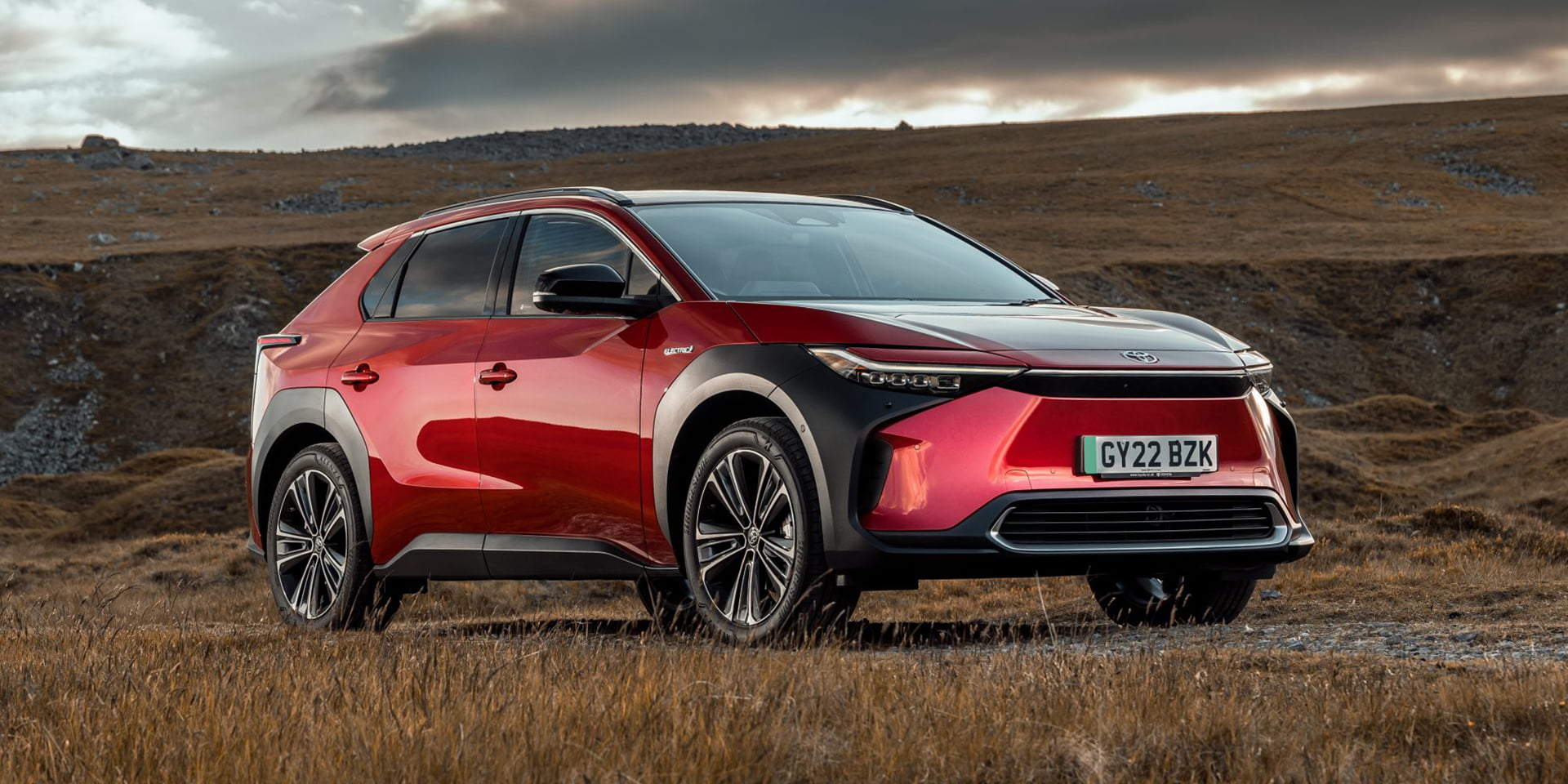
This category is one of the largest in our awards this year, with 13 new models. The eligible cars this year were:

Our awards recognise both the best new models launched over the last 12 months and the best overall cars in each category – because newest doesn’t always mean best, as you can see below.

Best new medium car: Kia EV4

Kia is on a roll. Hot on the heels of the Kia EV3 hatchback – winner of The Car Expert’s Car of the Year 2025 – the Korean manufacturer launched its larger EV4 saloon and hatchback range this year, which has been given an overwhelmingly positive reception of its own.

The EV4 is another knockout electric model from Kia, and continues the brand’s determination to challenge in every sector with its signature combination of striking design and advanced technology. 

The EV4 brings much-needed new inspiration to the mid-sized car category, and is a fresh alternative to the endless sea of SUVs and crossovers. Available in a space-age fastback design or slightly more conventional five-door hatchback, it offers buyers a comfortable ride with driving dynamics that are a cut above the class average.

Kia is firmly establishing itself as a leading light in the EV revolution, and the new EV4 will only enhance that reputation.

In many ways, the EV4 is a smaller, more affordable alternative to The Car Expert’s Car of the Year 2022, the Kia EV6, and has picked up plenty of reviewer praise for its well-designed, spacious interior, sprightly handling, comfortable driving experience, and competitive battery range.

Class champions

Although the Kia EV4 is the top-rated medium car launched in the last 12 months, that doesn’t mean it immediately moves to the top of the pile. As of December 2025, another model still carries a higher Expert Rating score.

Class champion, electric: Hyundai Ioniq 5

Hyundai Ioniq 5 N Line (2024 facelift) – ER wallpaper

The new Kia EV4 might be a great car, but it’s not the outright best electric car in this category. Instead, it’s the retro-futuristic Hyundai Ioniq 5 that scores highest on our Expert Rating Index – just edging its Kia EV6 twin to top spot.

The Ioniq 5 is around £5k more expensive than the smaller EV4, but that extra money gets you two of the finest medium-sized EVs on the new car market. So if your budget stretches to £40K or more, the Hyundai Ioniq 5 remains the best car in this segment.

Class champion, petrol/diesel/hybrid: Volkswagen Golf

Volkswagen Golf R-Line (2024 update) ER wallpaper

The Mk8 Volkswagen Golf has been a popular and dependable choice for UK buyers for years now, and became a regular fixture in the UK’s top ten new car sales charts again this year.

The highest-ranked medium car in our Expert Rating index by Media Rating, the Volkswagen Golf was most recently updated in the summer of last year, and has been widely commended for its great ride comfort, excellent safety standards, and its handling and refinement.

The Car Expert Awards 2026 – all the category winners

Best Premium Medium Car 2026

0

In the mid-sized family vehicle segment, the line between ‘car’ and ‘SUV’ has become so blurred that it’s effectively pointless. So, as we did last year, we’ve grouped them together.

Instead, we separated medium cars into mainstream and premium, as that tends to better reflect how real-world car buyers look for their next vehicle. The badge and feature list tend to be more important than the body style, although customers are overwhelmingly choosing SUV-style cars instead of conventional hatchback/saloon/estate models – even if they’re no more practical and no more spacious (and have zero off-roading capabilities).

The premium category is inevitably smaller than the mainstream category, and there was inevitably debate about where to draw the line between mainstream and premium. In the end, the eligible cars this year were:

Our awards recognise both the best new models launched over the last 12 months and the best overall cars in each category – because newest doesn’t always mean best.

Best new premium medium car: Mercedes-Benz CLA EQ

Built on a brand-new electric platform, the new Mercedes-Benz CLA EQ launches the world’s oldest car company into an all-new generation of electric power, and it’s a winner. 

The CLA EQ offers everything a compact Mercedes saloon should have – class-leading technology, refinement, comfort and desirability – and makes other cars in this segment look a bit old-hat. It puts any questions about battery range firmly to rest, and it offers a genuinely luxurious experience for driver and passengers.

The electric car industry is evolving rapidly, and the CLA shows that Mercedes-Benz plans to remain at the forefront of this new automotive landscape for the long term.

While several outlets mark the car down for its rather tight rear legroom and its subdued driving character, the saloon’s powertrain technology and serene driving experience make it a new premium benchmark for the rest of the industry to chase. 

Class champions

Although the Mercedes-Benz CLA EQ is the top-rated premium medium car launched in the last 12 months, that doesn’t mean it immediately moves to the top of the pile. As of December 2025, another model still carries a higher Expert Rating score.

Class champion, electric: Tesla Model 3

Tesla Model 3 – Expert Rating 2024 wallpaper

The new Mercedes-Benz CLA EQ might be a great car, but it’s not the outright best electric car in this category. Instead, it’s the updated Tesla Model 3 saloon that scores top marks among premium medium cars on our Expert Rating Index.

Tesla has weathered a number of controversies over the last year, but what’s beyond doubt is that the company continues to refine and improve its electric cars to keep them at the top of the pile. The Model 3 edges its crossover sibling, the Model Y, but a couple of points, but both are excellent choices.

Class champion, petrol/diesel/hybrid: Audi A5

Audi A5 | Expert Rating

The all-new Audi A5 didn’t score highly enough to win our Best Premium Medium Car 2026 award, but it is now the highest-scoring petrol/diesel/hybrid car in this segment.

If you’re confused about the name, this car replaces the previous Audi A4, rather than the previous A5 models. It’s part of a confusing and now-abandoned naming plan to separate fossil-fuel Audis from electric ones. Anyway, the new A5 builds on the strengths of the old A4 with a comfortable and stylish interior, and Audi’s usual high standards of fit and finish.

The Car Expert Awards 2026 – all the category winners

Best Premium Large Car 2026

0

In the large family vehicle segment, the line between ‘car’ and ‘SUV’ has become so blurred in many cases that it’s effectively pointless. So, as we did last year, we’ve grouped them together.

Instead, we separated large cars into mainstream and premium as that tends to better reflect how real-world car buyers look for their next vehicle. The badge and feature list tend to be more important than the body style, although customers are overwhelmingly choosing SUV-style cars instead of conventional hatchback/saloon/estate models – even if they’re no more practical and no more spacious (and have zero off-roading capabilities).

The premium category is inevitably smaller than the mainstream category, and there was inevitably debate about where to draw the line between mainstream and premium. In the end, the eligible cars this year were:

The eligible cars this year were:

Our awards recognise both the best new models launched over the last 12 months and the best overall cars in each category – because newest doesn’t always mean best.

Best new premium large car: Audi A6 e-tron

Available in both ‘Sportback’ saloon and ‘Avant’ estate bodystyles, the well-rounded Audi A6 e-tron is a lavish electric executive car that not only looks the part, but delivers a class-leading battery range and a smooth driving experience with rewarding rear-wheel drive handling.

Reviewers agree that the Audi stacks up well against rivals like the Mercedes-Benz EQE and BMW i5, and the car has also received plenty of praise for its intuitive on-board tech and straight-line performance, which make it feel worthy of its upmarket price tag.

The A6 e-tron also jumps straight to the top of the pile as our class champion for large premium electric cars.

Class champions

As of December 2025, the new Audi A6 e-tron tops our Expert Rating Index for best large premium car, but if you don’t want an EV, then you’ll need to look elsewhere.

Class champion, petrol/diesel/hybrid: BMW 5 Series

BMW 5 Series | Expert Rating

The BMW 5 Series has always been a class leader, and the current eighth-generation model is no different. Now offered with a choice of petrol or plug-in hybrid power (the electric i5 is ranked separately), the 5 Series continues to outperform its major rivals – the Mercedes-Benz E-Class and Audi A6 – in almost every way.

The Car Expert Awards 2026 – all the category winners

Best Hot Hatch 2026

0

The hot hatch is a UK institution, with generations of pocket rockets that cram genuine sports car performance into a shopping trolley hatchback body.

Once a category of cars heavily resisting the shift to electrification, the electric age is now in full swing, and there is more than a handful of performance-focused battery-powered hatchbacks promising pace and agility in equal measure.

As you might expect, new hot hatch launches were few in number over the last 12 months. There were only three, and all of them were electric. The eligible cars this year were:

  • Mini Cooper JCW Electric

Our awards recognise both the best new models launched over the last 12 months and the best overall cars in each category – because newest doesn’t always mean best, as you can see below.

Best new hot hatch: Alpine A290

The Alpine A290 takes all that’s good about the Renault 5 (our Best Small Car Award winner last year) and dials everything up a couple of notches.

For many people, the A290 will be their first experience with the Alpine brand, so it was important for the company to get it right. And it’s more than done that. The A290 blends retro-futuristic style, sharp handling and a massive want factor that makes a Mini Cooper look rather old-hat.

While it’s not the best choice for those looking for ample cabin space or long battery range, the car’s sleek styling and driver entertainment make it one of the most desirable compact cars on sale right now.

Class champion, electric: Hyundai Ioniq 5 N

Winner of our Best Performance Car award in 2025, the Hyundai Ioniq 5 N set a new benchmark for performance EVs when it arrived on UK roads last year. Staggering performance and superb handling, all while retaining the same practicality as a regular Ioniq 5

Anyone who still says that EVs can’t be fun to drive needs to get behind the wheel of the Ioniq 5 N.

Class champion, petrol/diesel: Toyota GR Yaris

Toyota GR Yaris (2020 onwards) - Expert Rating

While our Expert Rating Index doesn’t rank the Toyota GR Yaris well in the eco, running cost and warranty categories, it has an exceptional Media Rating score. Reviewers truly adore this petrol-powered three-door pocket rocket, which was originally designed for entry World Rally Championship.

The British motoring media have near-universal praise for the way the GR Yaris drives, with particular acclaim for its performance and handling. The key issue here is availability. While not technically retired, you can’t currently buy one from a Toyota dealership at the time of writing. Toyota now sells the car in small batches, which means newsletter sign-ups, higher price tags and long waiting lists.

The Car Expert Awards 2026 – all the category winners

Best Family Petrol Car 2026

0

The Best Family Petrol Car award represents the very best of family-friendly petrol-powered models launched in the past 12 months.

The number of new petrol models entering the UK market has been gradually shrinking year-on-year, but 2025 saw several new arrivals that caught the attention of buyers interested only in combustion engines.

This category includes a handful of models marketed as ‘hybrids’ by their manufacturers, but they aren’t full-fat hybrids. In truth, they are mild-hybrids – petrol cars with a small battery that slightly boosts fuel efficiency.

Every car included here is powered predominantly by petrol, though some are also available as petrol-electric hybrid or plug-in hybrids too. The eligible cars this year were:

Best new family petrol car: Citroën C5 Aircross

The all-new Citroën C5 Aircross is an ideal family car for the half of all UK households who are not yet ready to make the jump into an EV. 

Powered by a petrol engine with mild-hybrid support, the C5 Aircross delivers strong fuel economy at an affordable price. It’s also comfortable, spacious and comes loaded with kit in a way that makes some rivals look stingy. 

There’s a big focus on comfort, providing a relaxing drive that seems perfectly designed for family road trips. And all this comes at a very competitive price, meaning you can enjoy driving the C5 Aircross even more.

The Car Expert Awards 2026 – all the category winners

Best Value Family Car 2026

0

The Best Value Family Car award is given to the best value-for-money purchase capable of ferrying the family from A to B.

The common denominator in this category is price tag, and from there, the vast collection of aggregated media review scores in our Expert Rating Index indicates which of these budget-end runarounds is best suited to becoming a new member of the family.

Size and powertrain aren’t taken into account here, with pint-sized electric city cars and large, bulky petrol SUVs all in the mix for this award. The eligible cars this year were:

Best new value family car: Citroën ë-C3 Aircross

The Citroën ë-C3 Aircross serves up a top value family car that should be at the top of your shopping list in 2026 – especially when you look at the price tag.

It packs plenty of practicality into a compact footprint, with more space than you’ll find in many larger cars. The electric motor is smooth and refined, beautifully complementing the comfortable ride, and the equipment levels are far beyond what you’d expect for the money.

Citroën has done a genuinely impressive job with the ë-C3 Aircross. It makes budget-brand offerings look cheap and other mainstream rivals overpriced. With household budgets getting ever-tighter, this could be the smartest car-buying decision you could make in 2026.

The Car Expert Awards 2026 – all the category winners

Best Family Plug-In Hybrid Car 2026

0

The Best Family Plug-In Hybrid Car award represents the very best of family-friendly plug-in hybrid models launched in the past 12 months.

Offering the best of both worlds, plug-in hybrids essentially serve as a halfway house between traditional petrol power and all-electric motoring. Powered by both a combustion engine and electric motors, plug-in hybrids are more fuel efficient than your average petrol car, and can drive on electric power alone for extended periods, provided that you top up the car’s battery regularly.

Plug-in hybrids have been growing in popularity in the UK in recent years, and every year there is usually a healthy selection of brand new plug-in hybrid arrivals worthy of your attention. The eligible cars this year were:

Best new family plug-in hybrid car: Omoda 9

The Omoda 9 is here to ride the wave of a resurgence in plug-in hybrid car sales, and it very much looks like the right car at the right time. 

If you’re looking for a plug-in hybrid that majors on electric driving, the Omoda 9 offers up to 90 miles of EV range. Plus it can rapid charge at a public charging point, while most plug-in hybrids can only slow charge. 

On top of that, you get a luxurious SUV that’s loaded with tech and spacious enough for a family road trip. It’s quiet and smooth in either EV or petrol mode, and has a five-star Euro NCAP safety rating.

The Chancellor’s proposed new tax on electric car mileage makes plug-in hybrids suddenly look like a smart choice, and the Omoda 9 has an enormous electric driving range that means you can do most of your driving on electric power while paying half the mileage tax of a pure EV. Plus, for those longer journeys, you have the reassurance of a petrol engine to keep you motoring for hundreds of miles.

The Car Expert Awards 2026 – all the category winners