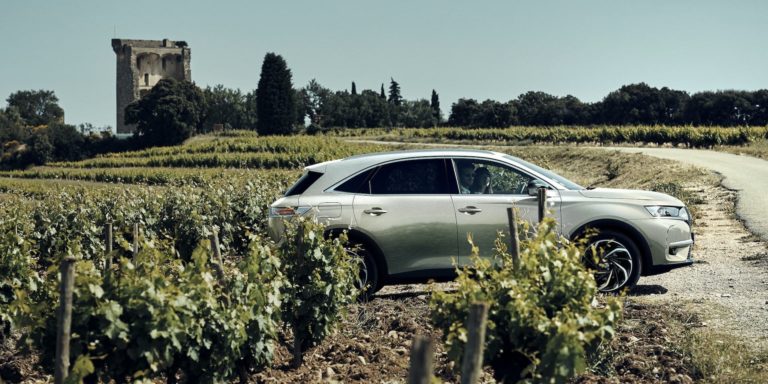
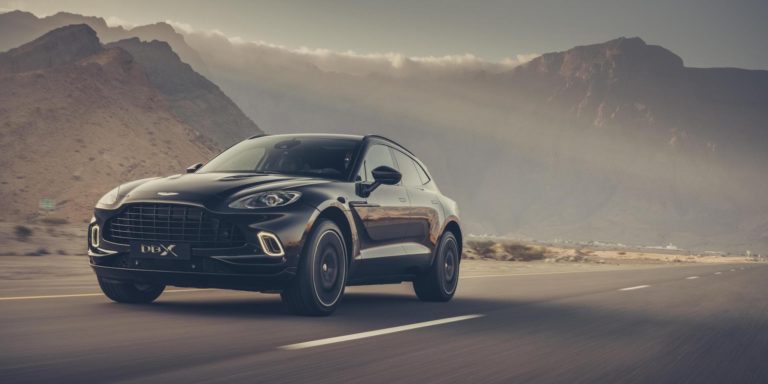
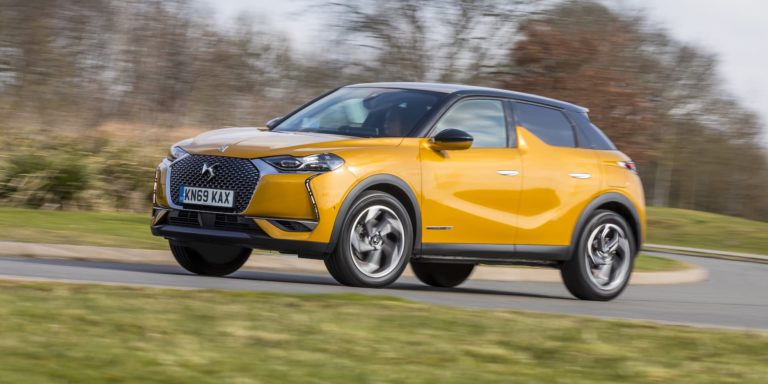
DS 7 Crossback buyers now have more electrification options available thanks to the addition of a second plug-in hybrid variant.
The new E-Tense 225 will sit below the existing E-Tense 4×4 in the DS 7 Crossback range. While both models use a petrol-electric powertrain, the new model is front-wheel drive and makes a combined 225hp, compared with the 300hp all-wheel-drive alternative.
The E-Tense 225 gets an eight-speed automatic gearbox, and can be driven on electric-only power at speeds of up to 84mph. Its 13.2kWh battery provides an electric range of up to 34 miles, or up to 45 miles if speeds are kept low.
Running costs should be low too, with official figures measuring CO2 emissions at 36g/km, while fuel economy is up to 202mpg.
The battery can be charged at wall sockets or public charge points, but also regenerates energy on the move through the engine and deceleration. DS has fitted an engine mode that will ensure a minimum of 12 miles of electric range is stored in the battery to provide zero-emission driving at the end of a journey.
The DS 7 Crossback E-Tense 225 gets the French firm’s active suspension system, which scans the road surface ahead and prepares the suspension for bumps, as well as night vision, parking assistance, advanced cruise control systems and LED lighting.
Equipment-wise, the new E-Tense 225 powertrain is available across all DS trim levels and gets 19-inch alloy wheels as standard.
Two options for plug-in plus petrol power
Not one, but two plug-in hybrid options is unique for pretty much any new car currently on sale in the UK. It could help DS Automobiles position the DS 7 Crossback as the perfect car to take advantage of consumers’ growing desire for electrified transport.
The DS 7 Crossback range has been praised for a comfortable ride by the UK media and the active suspension on the plug-in hybrid models should help keep things smooth. The driving experience hasn’t been rated as highly, however. According to our unique Expert Rating system, which has aggregated 17 UK reviews of the DS 7 Crossback, it has an overall Expert Rating of 66%. That puts it in the bottom half of the premium mid-size SUV field, a long way behind the class-leading Audi Q5 and Volvo XC60. Stuart Masson, Editor
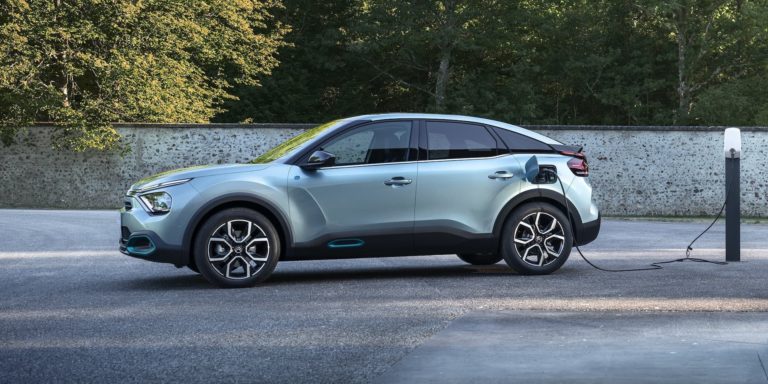
Citroën has previewed an electric version of its all-new C4 hatchback ahead of the car’s full reveal at the end of this month.
The company hasn’t revealed many details about the new car, but says it will offer fully electric, petrol and diesel options – but no hybrids.
Further powertrain information will likely not be confirmed until the car’s full reveal on June 30, but expect the electric version to use a similar powertrain to the Peugeot e-208 supermini, which has a range of more than 200 miles between charges.
Both the new C4 and ë-C4 get chunky body work and a high window line giving the car a crossover-style appearance. The styling is inspired by Citroën’s SUV models (and also bears a resemblance to the incredibly unsuccessful Citroën/DS Automobiles DS 4 Crossback from a few years ago, which wasn’t mentioned in the press release…).
From what little Citroën is giving away, it appears comfort will be high on the agenda, with the firm’s Advanced Comfort seats and Progressive Hydraulic Cushion suspension technology being included.
It also claims to be spacious and practical inside, with ‘an innovation for the front passenger’ to be disclosed later.
The new Citroën C4 is expected to go on sale early in 2021, with prices increasing over the existing C4 Cactus’s £22,190 starting price on account of the technology improvements. The electric Citroën ë-C4 will likely be in the ballpark of £30,000 to compete on price with its rivals.
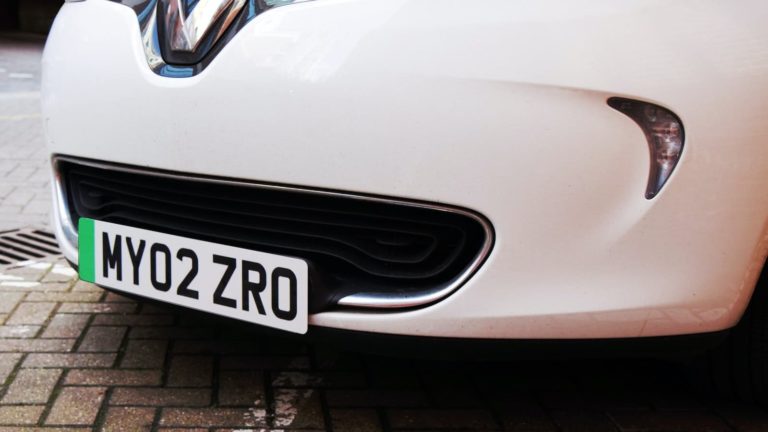
Drivers of zero-emission cars are to be given distinctive green number plates which could make them eligible to by-pass congestion zone charges or secure cheaper parking.
Transport secretary, Grant Shapps, said the decision to print a green ‘flash’ on the left-hand side of number plates on zero-emission cars from the autumn would help “show people that a greener transport future is within our grasp”. This green flash would go where UK number plates previously (optionally) showed a blue EU country identifier.
The move, which could allow motorists to tap into special incentives, is designed to make switching to electric vehicles more appealing, as the government looks to meet its target of achieving net zero emissions by 2050.
Mr Shapps said: “A green recovery is key to helping us achieve our net zero carbon commitments while also promoting economic growth.
“Green number plates could unlock a number of incentives for drivers and increase awareness of cleaner vehicles on our roads, showing people that a greener transport future is within our grasp.
“We’re supporting small businesses to develop the transport tech of the future through a multimillion pound investment, ensuring that UK businesses remain at the forefront of low-carbon innovation and research.”
A better commute for green-plates EVs?
The Department for Transport (DfT) said the green strip on number plates would make electric vehicles more easily identifiable to local authorities who want to offer schemes such as allowing drivers of such vehicles to use bus lanes, charging them less for parking or cost-free entry into zero-emission zones.
The announcement follows a consultation, started in October, with councils, industry and the public.
Special number plates have been trialled in Canada, where drivers of electric vehicles in Ontario were given free access to toll lanes and high-occupancy vehicle lanes. The city subsequently saw an increase in electric vehicle registrations.
Mr Shapps’ announcement follows reports last week claiming the prime minister was said to be considering plans to give drivers up to £6,000 to exchange their petrol or diesel car for an electric model.
The Daily Telegraph reported that, despite the government reducing the maximum grant available for electric car buyers under the Plug-In Car Grant, by £500 to £3,000, in March, Boris Johnson was being urged to help manufacturers hit hard by the coronavirus crisis, with sales of new cars down nearly 90% in May compared with the same month in 2019.
Edmund King, president of AA, said he welcomed the switch to partially green numbers plates and said that 37% of his organisation’s members had voiced support for the change.
“Having a green flash on the number plate may become a badge of honour for some drivers,” said Mr King. “We support this concept, which shows that the electric vehicle revolution is now moving from amber to green.”
But the RAC said it was not convinced the new plates would provide much incentive for motorists to opt for greener cars. Rod Dennis, a spokesman for the organisation, said: “While this is well-intentioned, we don’t believe green number plates on their own will do much to make people switch to an electric car.
“We’d much prefer the government looked at things like bringing in the right financial incentives.”
On top of giving green number plates the go-ahead, the DfT also announced that £12 million was being made available for further zero-emission vehicle research.
The funding, made through the Office for Low Emission Vehicles (OLEV) and delivered through Innovate UK, will see £10 million for a new zero-emission vehicle innovation competition.
The scheme will invite applicants to bid for project funding to support advancements in both battery electric and hydrogen vehicles, as well as charging infrastructure.
A further £2 million will be provided by OLEV to UK small and medium businesses to support their research into zero-emission vehicles in areas such as battery technology, which could be used by major vehicle manufacturers in future electric vehicle production, said DfT.
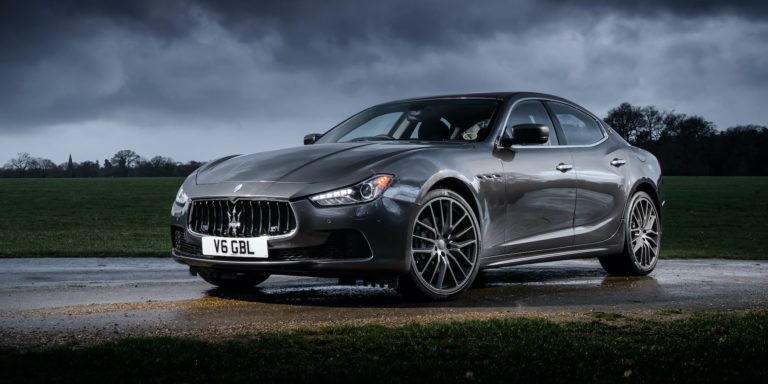
The Maserati Ghibli was a large executive saloon, which launched in 2013 and was substantially updated in late 2017. It finally ended production at the end of 2023, after more than ten years on sale.
Along with engines for other Maserati models, the Ghibli’s twin-turbo petrol V6 motors were built for Maserati by Ferrari in Maranello. This arrangement came to an end when the Ghibli finished production, as Ferrari and Maserati are no longer part of the same overarching Fiat Group. A diesel engine was initially offered but was dropped from the range along the way.
The Maserati Ghibli received fairly average reviews from the UK motoring media, although its worth pointing out that its cause was not helped by its rivals being some of the best cars on the market – the class-leading BMW 5 Series was considered to be the best car that BMW mad, while the Mercedes-Benz E-Class and Audi A6 were similary superior to most cars in their respective families. So the Ghibli was a good car in a field dominated by outstanding cars.
The Ghibli was praised for its style and image, as well as its Ferrari-sourced petrol V6 engine. However, it was criticised for not matching the level of comfort and quality that the best cars in its class displayed.
No longer on sale, the Maserati Ghibli holds a very poor Used Car Expert Rating of E, with a score of 38%.
Highlighted reviews and road tests from across the UK automotive media. Click any of the boxes to view.
Featured reviews
“Maserati is a bit of a hidden gem. The Ghibli serves up every bit as much luxury as perhaps better-known rivals, but with a diesel engine offering fuel consumption figures close to 50mpg it is also a surprisingly sensible purchase, especially in the corporate market.”
Model reviewed: 2.0-litre petrol (mild hybrid) automatic Ghibli Hybrid Gransport Score: 5 / 10 “On paper, the new Ghibli Hybrid seems like a great way to keep Maserati relevant yet desirable. In reality, it’s something of a disappointment, with uncompetitive hybrid technology failing to provide either the economy or the emissions it needs to keep pace, nor the driver appeal of its best rivals.” Read review
Model reviewed: Range overview Score: 6 / 10 “The Maserati Ghibli combines style and quality with sharp handling to rival the BMW 5 Series and Mercedes E-Class” Read review
Model reviewed: 3.0-litre petrol automatic Score: 8 / 10 “It’s not Maserati’s finest hour, but it’s a breath of fresh air in this often straight-laced market.” Read review
Auto Trader
Model reviewed: Range overview Score: 6 / 10 “The Maserati Ghibli offers an Italian alternative to the popular German premium saloons, albeit at a higher price. It struggles to match those rivals for quality and doesn’t drive as well either, but the engines are strong, the badge is a proper luxury draw and its exotic looks really make it pop.” Read review
Business Car
Model reviewed: Trofeo Score: 7 / 10 “Against rivals from BMW, Mercedes and Porsche, the Maserati feels charming but dated – with the powerful V8 engine being the highest point.” (Martyn Collins) Read review
Car
Model reviewed: Range overview Score: 8 / 10 “If you want an upmarket diesel saloon, it’s hard to make a case for the Maserati Ghibli as the competition is so well-rounded, and also much cheaper in some cases, with better interior quality. If you want a nutcase saloon to thrash through the mountains at the weekend and sit on the motorway during the week, it’s an intriguing option that does feel special to look at.” Read review
Model reviewed: 3.0-litre diesel automatic Score: 8 / 10 “The Maserati Ghibli remains pragmatically almost impossible to recommend, but easy to fall for. Buy one and you won’t have the cheapest, comfiest or most tech-laden car in your street, but you will be safe in the knowledge that you’ve got the most stylish and probably the most interesting.” Read review
Carbuyer
Model reviewed: Range overview Score: 6.8 / 10 “The Maserati Ghibli is hugely alluring in many ways, but it comes with a higher price tag and more compromises than other large executive saloons.” Read review
Carwow
Model reviewed: Range overview Score: 6 / 10 “The Maserati Ghibli is a sleek and sporty alternative to more mainstream executive cars from Audi, BMW and Mercedes, but it’s comparatively expensive to run.” Read review
Eurekar
Model reviewed: Ghibli Hybrid “Maserati has little choice but to venture down the hybrid technology route, but whether it will win over the die-hard V6 and V8 fans that have been such loyal followers, remains to be seen.” Read review
Evo
Model reviewed: 3.0-litre diesel automatic Score: 7 / 10 “Stylish and dripping with badge appeal, but off the pace of class best” Read review
Heycar
Model reviewed: Range overview Score: 5 / 10 “Traditionally, Maserati has been a brand associated with style, glamour and exclusivity. With the Ghibli, however, the Italian manufacturer looked to change things up a bit.” Author: Andrew Brady Read review
Parkers
Model reviewed: Range review Score: 7.6 / 10 “Stunning saloon is great to drive, but pricey” Read review
The Sun
Model reviewed: 3.0-litre diesel automatic “I loved driving this saloon. For all its faults, the Maserati Ghibli is a heart-rules-over-the-head buy. It’s the only car in this sector that can give its pin-stripe suitors a bit of passion.” Read review
The Sunday Times
Model reviewed: 3.0-litre petrol automatic Ghibli S Score: 6 / 10 “It’s comfortable and it’s practical and it’s quiet and, I have to say, it’s also a lovely place to sit. Apart from the beeping. And on top of all that, it’s a Maserati. Which means you can say to your husband, ‘Shall we take the Maserati tonight?’, which will make you feel extremely warm and fuzzy.” (Jeremy Clarkson) Read review
The Telegraph
Model reviewed: 2.0-litre petrol (mild hybrid) automatic Score: 4 / 10 “A great-looking car with an evocative name, and a surprisingly adept mild hybrid system, although it doesn’t seem to confer any substantial economy benefits. But the ride quality on UK roads is simply unacceptable and Maserati faces hugely competent rivals with full hybrid drivetrains.” Read review
Model reviewed: Range overview Score: 6 / 10 “The allure of this exotic Italian brand is undoubtedly strong, plus the Maserati Ghibli looks suitably special inside and out. However, its diesel engine and ride comfort are disappointing, while the BMW 5 Series and Jaguar XF are both more enjoyable to drive. As is so often the case with Maserati, it’s a case of whether you let your heart overrule your head.” Read review
Top Gear
Model reviewed: Range overview Score: 5 / 10 “Don’t fancy a German four-door? There’s an updated, eccentric Italian alternative… but you need to really want one.” Read review
Model reviewed: Range overview “If you’re overly familiar with its established foes (most of them German), and the Maserati Ghibli diesel is sitting on the company car list among them, it may prove difficult to resist its more superficial charms. Head further up the range, though, and it’s hard to escape that Alfa Romeo now makes a better fast four-door than Maserati.” Read review
Model reviewed: 3.0-litre diesel automatic Score: 7 / 10 “It boils down to one simple question: should you? In isolation, the Ghibli is convincingly seductive and perfectly credible. As it stands, the diesel emits 158g/km CO2 and sits in the 26 per cent company car tax band, so it’s there or thereabouts. But forget all that, and do me a favour when you get to the end of this paragraph: just say the last word out loud – Maserati.” Read review
Safety rating
Independent crash test and safety ratings from Euro NCAP
The Maserati Ghibli was tested by Euro NCAP in 2013 and was awarded a five-star rating. This rating expired in January 2020 and is no longer valid. This is normal practice, as Euro NCAP reviews its ratings on most cars annually with most ratings expiring after about six or seven years.
However, if you are comparing a used Ghibli to vehicles of similar age, whose ratings will have probably also expired, its safety rating score is still useful.
Eco rating
Independent economy and emissions ratings from Green NCAP
No eco rating
The Maserati Ghibli was not tested by Green NCAP during its production life.
Running cost rating
Monthly cost of ownership data provided exclusively for The Car Expert by Clear Vehicle Data
Fuel consumption
Average
Score
Petrol models
22 mpg
E
CO₂ output
Average
Score
Variation
Score
Petrol models
240 g/km
E
Insurance group
Average
Score
Variation
Score
All models
50
F
Service and maintenance
Cost
Score
Year 1
£596
E
Year 2
£1,472
E
Year 3
£2,192
E
Year 4
£2,625
E
Year 5
£3,495
E
Overall
£10,380
E
The Maserati Ghibli is a rather expensive car to own and run, according to whole-life cost numbers provided exclusively to The Car Expert by our data partner, Clear Vehicle Data.
Fuel economy is very poor, with an average score of E ranking it in the bottom 20% of all cars in our database. CO2 emissions are also poor.
Insurance costs are likely to be high as the Ghibli is categorised in the highest group 50, while servicing and maintenance over the first five years is also expensive.
Reliability rating
Reliability data provided exclusively for The Car Expert by MotorEasy
No reliability rating
As of March 2026, we don’t have enough reliability data on the Maserati Ghibli to generate a reliability rating.
The Car Expert’s reliability information is provided exclusively to us using extended warranty data from our partner, MotorEasy. As soon as we have sufficient data on the Ghibli, we’ll publish the score here.
Date: June 2024 Recall number: R/2024/206 Model types: All Build dates: 04/2021 to 08/2021 Number of vehicles affected: 6 Defect: On affected vehicles, the pressure/temperature sensor within the short fuel line may cause a possible fuel leakage in the engine bay. This may lead to a loss of power and, in the worst case, a potential fire. Remedy: Replacement of the short fuel line containing the pressure sensor.
Date: December 2021 Recall number: R/2021/441 Model types: All Build dates: 09/2021 Number of vehicles affected: 37 Defect: Wrong TVV (Type-Variant-Version) on statutory plate. Remedy: Replace label located on B-pillar
Date: June 2020 Recall number: R/2020/185 Model types: All Build dates: 01/2019 to 02/2019 Number of vehicles affected: 2 Defect: Engine code marked on diesel engine replaced in aftersales is different from the homologated and production code. Remedy: Documentation will be provided to the customer stating the Italian transport authority confirms this marking is an administration error.
Date: July 2019 Recall number: R/2019/239 Model types: All Build dates: 08/2017 to 02/2019 Number of vehicles affected: 320 Defect: Front headlamps full LED version headlamp vertical beam out of compliance. Remedy: Check adjustment of the front headlamp vertical beam.
Date: February 2019 Recall number: R/2019/042 Model types: All Build dates: 08/2017 to 12/2017 Number of vehicles affected: 126 Defect: There is a possibility that a leak may occur in the fuel line. Remedy: Replacement of the fuel delivery line.
Date: January 2018 Recall number: R/2018/022 Model types: All Build dates: 08/2017 to 12/2017 Number of vehicles affected: 53 Defect: Due to material imperfections, the fuel delivery line may leak at line unions. This is more likely after prolonged use. Remedy: On affected vehicles replace the fuel delivery line.
Date: July 2017 Recall number: R/2017/235 Model types: All Build dates: 02/2013 to 11/2016 Number of vehicles affected: 3,844 Defect: An incorrect driver seat wiring harness layout can cause the seat wiring harness to rub against metal points on the seat/seat frame assembly through normal seat adjustment operation. Over time this can lead to an inoperative seat adjustment system and, in rare cases, a potential risk of fire due to an electrical short to ground between the seat wiring harness and the seat adjustment motor assembly. Remedy: Replace 2 seat circuit breakers with 25-amp mini-fuses check harness apply protective barrier and reposition if undamaged. If damaged, replace harness and then ensure repositioned and protective barrier applied.
Date: March 2017 Recall number: R/2017/235 Model types: All Build dates: 07/2013 to 10/2014 Number of vehicles affected: 283 Defect: A leak may occur in the fuel delivery line. Prolonged use of the car could result in the possibility of a fuel leak at the engine end of the pipe where the quick-release connector is fitted. Remedy: Replace the complete fuel delivery line.
Date: February 2017 Recall number: R/2017/051 Model types: All Build dates: 11/2013 to 07/2014 Number of vehicles affected: 1,039 Defect: The gearshift lever resting position may mislead drivers into believing the vehicle’s transmission is in the park position when actually it is still in a drive gear. This could result in the vehicle moving off without the driver being in the vehicle. Remedy: Replace the driver’s door lock and update the software to introduce a drive-away inhibition strategy.
Date: December 2016 Recall number: R/2016/278 Model types: All Build dates: 09/2016 Number of vehicles affected: 30 Defect: The locking nut of the differential pinion may not have been tightened to the correct specification. This will be identified to the driver by noise generated from the differential and also possible vibration. Prolonged use in this condition could result in failure/locking of the differential and the subsequent loss of control of the vehicle. Remedy: Check the tightness of the locking nut on the differential pinion. If found to be incorrect, the differential will be replaced and possibly the driveshaft if projections or metal contaminates are found in the differential rear cover.
Date: October 2016 Recall number: R/2016/226 Model types: All Build dates: 04/2015 Number of vehicles affected: 5 Defect: Due to a manufacturing issue, the front wheel bearing can become noisy and vibrate. If the driver does not take notice of these warnings, the bearing could fail and cause loss of control of the vehicle. Remedy: Check and, if required, replace the front wheel bearing.
Date: June 2016 Recall number: R/2016/122 Model types: All Build dates: 12/2013 to 09/2015 Number of vehicles affected: 2,453 Defect: In extreme and hard driving conditions it is possible for the rear tie rod fixing bolt to become loose which can ultimately result in loss of vehicle control. Remedy: Replace both rear toe-in tie rod bolts and washers. Fixing points will be inspected and rear hub assembly replaced if unserviceable.
Date: March 2016 Recall number: R/2016/046 Model types: All Build dates: 04/2013 to 12/2015 Number of vehicles affected: 2,773 Defect: Throttle pedal may jam in any position. This can lead to a heightened risk of a collision. Remedy: Replace the throttle pedal cover carpet mats carpet mat fixings modify floor covering depending on VIN list and inspection.
As of September 2024 (our most recent data point), there have been 13 DVSA vehicle safety recalls on the Maserati Ghibli to address various issues.
Not all vehicles are affected by recalls. You can check to see if your car is included in any of the above recalls by visiting the DVLA website or contacting your local Maserati dealer.
If your car is affected by a recall, the vehicle must be repaired and you should not be charged for any work required. If you are buying a used Ghibli, you should insist that any outstanding recall work is completed before you take delivery of the vehicle.
Toyota built its 4.5 millionth car in Britain last week, with the landmark model (a 1.8-litre Corolla) rolling off the production line at its Derbyshire plant on Friday.
Production resumed at the factory on May 26 following Covid-19-related shutdowns, with Toyota implementing revised health and safety procedures at its locations.
At its full capacity, the facility in Burnaston – south-west of Derby – produces a car every 89 seconds. That equates to an average of 3,000 cars per week and 150,000 cars per year.
Toyota says about 90% of the cars produced in Burnaston are exported to overseas markets, particularly Europe. To highlight the point, the landmark Corolla was a left-hand-drive model destined for Poland.
Jim Crosbie, Toyota Manufacturing UK (TMUK) managing director, said: “Seeing our 4.5 millionth car come off the line gives everyone at TMUK a sense of pride in what we have achieved in almost 30 years of high-quality manufacturing.
“It also symbolises the great commitment and team spirit of all our members to overcome the challenges we have faced and secure our future as a competitive and highly efficient business.”
Burnaston was the first Toyota manufacturing centre in Europe when it opened in 1992. Today, it is the European production centre for the Toyota Corolla Hatchback and Touring Sports models, and employs more than 3,100 people.
A timely reminder for British politicians
Despite the current preoccupation with the coronavirus pandemic, the issue of Britain’s future relationship with the EU remains a big headache for the British car industry.
While some car manufacturers and industry lobbyists have been very keen to tell the media that a no-deal trading relationship would be catastrophic, Toyota has publicly remained very low-key. It prefers to talk up the great job that its workers in Burnaston do rather than threatening to leave every couple of months. But this week’s announcement carried a pointed message for our politicians: 90% of all Corollas that roll off the Burnaston production line – including car number 4,500,000 – are built for export.
With the government still threatening to walk away from any potential agreement with the EU, and also considering a scrappage allowance for electric vehicles (despite most electric vehicles being imported rather than built locally), Toyota is making the point that the local car industry plays a key role in the overall British economy. Is anyone in Westminster listening? Stuart Masson, Editor
The Peugeot 2008 is a small SUV/crossover, based on the new Peugeot 208 supermini hatchback. The current model was launched in late 2019 and arrived in UK showrooms in February 2020.
The new 2008 is also available with an electric motor in a model called the E-2008, which is rated separately to the regular 2008 models.
Media review scores for the 2008 so far have been generally average, with praise for its design and overall quality. However, some titles have criticised its price as too expensive compared to rivals, while low-spec models miss out on some safety kit and therefore only get a four-star safety rating.
As of September 2025, the Peugeot 2008 has a New Car Expert Rating of B, with a score of 64%. It gets good grades for its low running costs and CO2 emissions, and good reliability record. However, safety and media review scores are only average, while Peugeot’s new car warranty offering is pretty much the bare minimum you’ll get from any manufacturer.
Entry-level models miss out on the best safety kit
Distinctive dashboard design not universally popular
More expensive than many rivals
Key specifications
Body style: Small SUV/crossover Engines: petrol, diesel Price: From £28,790 on-road
Launched: Winter 2019/20 Last updated: Summer 2023 Replacement due: TBA
Image gallery
Media reviews
Highlighted reviews and road tests from across the UK automotive media. Click any of the boxes to view.
Featured reviews
“If you’re looking for a small SUV that’s a bit more interesting than most of the near-identical models on the market, you’ll no doubt be swayed by the brilliant styling of the Peugeot 2008 – inside and out. The fact it backs it up with a great driving experience and decent practicality means it’s certainly worthy of your attention.”
Model reviewed: 1.2-litre petrol manual 130hp GT Line
Model reviewed: Range overview Score: 8 / 10 “Building on a recent run of form from Peugeot, the new 2008 inherits the sharp design language that’s made such a success of its 3008 big brother. The 2008’s combination of style and the choice of powertrains is impressive, likewise its user-friendly controls, practicality and excellent ride.” Read review
Car
Model reviewed: Range review Score: 8 / 10 “With an appealing engine range and decent dynamics, the polished 2008 is among the best B-SUVs.” Read review
Car Keys
Model reviewed: 1.3-litre petrol manual GT Line Score: 8 / 10 “Most will be drawn to the Peugeot 2008 for its stunning looks and impressive interior, but this is more than a one-trick pony, being good to drive and brimmed with technology. It’s not the most comfortable or spacious option, but the 2008 is still a great choice and a worthy crossover that should be on your shopping list. Read review
Carbuyer
Model reviewed: Range overview Score: 8.2 / 10 “The Peugeot 2008 is a striking crossover with a great interior that offers more space than the equivalent supermini.” (Richard Ingram) Read review
Carwow
Model reviewed: Range overview Score: 9 / 10 “The Peugeot 2008 is an SUV you can buy with your heart and your head. It looks cool, is cheap to run, easy to drive and has a big boot. But it’s a shame the back seats aren’t roomier.” Read review
Company Car Today
Model reviewed: 1.2-litre petrol automatic GT “The 2008 is a very credible next step for Peugeot in a rapidly growing segment, bringing the small crossover in line with the improvements seen on the 3008, 5008 and 508 models in particular.” Read review
Daily Mirror
Model reviewed: 1.5-litre diesel manual GT Line Score: 8 / 10 “The quiet and refined Peugeot 2008 is very good looking and quiet on the motorway with little wind or engine noise – and can give you up to 62mpg.” Read review
Fleetworld
Model reviewed: Range overview Score: 8 / 10 “The previous Peugeot 2008 did well in fleet and the new car deserves to do even better. Great to drive and look at, practical and the e-2008 will be an asset moving forward.” Read review
Heycar
Model reviewed: Range overview Score: 8 / 10 “The Peugeot 2008 will be right up your street if you find the SUVs from Skoda, SEAT and Volkswagen about as exciting as a weekend away at an accountancy convention. The Peugeot oozes with brio from its striking exterior to its high-tech interior.” Read review
Honest John
Model reviewed: 1.2 Puretech 130 “We really like the new Peugeot 2008. It’s a massive improvement on the outgoing model, and now up there with the best in the segment. Its interior is superb, it’s very practical and there’s an engine for everyone. The catch? That’ll be the price, with entry-level cars starting £20,150 at higher-spec models reaching more than £30,000.” Read review
Model reviewed: Range overview “Peugeot’s answer to the SEAT Arona and Nissan Juke, the 2008 looks like a smaller version of the 3008 and, along with petrol, diesel and electric power.” Read review
Motoring Research
Model reviewed: Range overview Score: 8 / 10 “One of the best compact crossovers.” Read review
Parkers
Model reviewed: Range overview Score: 8.8 / 10 “Second-gen 2008 turns on the style and tech” Read review
The Sun
Model reviewed: 1.2-litre petrol manual GT Line “Peugeot is back on form with new 2008 GT-Line – it’s sharp, spacious and refined.” Read review
The Sunday Times
Model reviewed: Range overview Score: 8 / 10 “Not like the other small SUVs, and all the better for it” Read review
The Telegraph
Model reviewed: 1.2-litre petrol manual GT Line Score: 6 / 10 “The real issue with the Peugeot 2008 is how much it costs, either to buy or to finance. Which is a shame, because in this form, the 2008 is a great car to drive, buoyed up by a terrific engine, enjoyable handling, and a comfortable, composed way of dealing with lumps and bumps in the road.” Read review
Top Gear
Model reviewed: Range overview Score: 7 / 10 “Small SUVs launch in abundance but thanks to electric power and great interior tech, this is among the most interesting.” Read review
Model reviewed: 1.2-litre petrol automatic GT Score: 6 / 10 “The GT is the best Peugeot 2008 on paper, but you’ll save some money and get a better ride if you venture back down the price list. If you really must have family practicality mixed with a hint of sportiness, you could always get yourself a nice estate. Y’know, one of those cars that people used to buy.” Read review
Safety rating
Independent crash test and safety ratings from Euro NCAP
Note on safety rating The entry-level ‘Active’ and ‘Active Premium’ Peugeot 2008 models miss out on some of the more advanced collision-avoidance technology that is included on more expensive models, which means they only get a four-star rating from Euro NCAP. This particularly affects the Vulnerable Road Users and Safety Assist ratings above, rather than the Adult Occupant and Child Occupant scores.
The ‘Allure’ and ‘GT-Line’ models get a five-star rating, although some advanced safety equipment is still optional. Only the top-spec ‘GT’ model gets the car’s full complement of safety equipment as standard.
Eco rating
Independent economy and emissions ratings from Green NCAP
No eco rating
As of September 2025, the Peugeot 2008 has not been lab tested by Green NCAP. If and when the Peugeot 2008 is tested, we’ll publish the results here.
Running cost rating
Monthly cost of ownership data provided exclusively for The Car Expert by Clear Vehicle Data
Fuel consumption
Average
Score
Petrol models
49 mpg
C
Diesel models
62 mpg
A
Hybrid models
56 mpg
B
CO₂ output
Average
Score
Variation
Score
Petrol models
118 g/km
B
Diesel models
118 g/km
B
Hybrid models
114 g/km
B
Insurance group
Average
Score
Variation
Score
All models
15
A
Service and maintenance
Cost
Score
Year 1
£176
B
Year 2
£523
B
Year 3
£782
B
Year 4
£1,023
B
Year 5
£1,407
B
Overall
£3,911
B
The Peugeot 2008 should be a relatively affordable car to own and run, according to whole-life cost data provided exclusively to The Car Expert by our technical partner, Clear Vehicle Data.
The petrol models are only average for fuel consumption, which is not as good as some small SUV rivals. The hybrid and (now discontinued) diesel versions are better.
Insurance ratings are in some of the lowest groups, so your annual car insurance premium should be low, while servicing and maintenance costs over the first five years are decent for this category of car.
Reliability rating
Reliability data provided exclusively for The Car Expert by MotorEasy
Total claims: 141 Average repair cost: £410.75 Last updated: April 2025
As of April 2025 (our most recent data point), the Peugeot 2008 is above-average when it comes to reliability with a score of 76%, according to extended warranty data provided by our commercial partner, MotorEasy. This covers both the current (2019 onwards) model and earlier generations.
The average repair cost is also about average at about £400.
The most common problems reported for the Peugeot 2008 refer to the car’s suspension. While the average repair costs for these are reasonable, it’s worth noting that the average repair bill for engine problems is much more expensive £1,200.
Make sure that any used car warranty you are purchasing covers all of these potential problem areas.
Warranty rating
New car warranty information for the Peugeot 2008
Overall rating
E
17%
New car warranty duration
3 years
New car warranty mileage
60,000 miles
Peugeot’s new car warranty is pretty much the bare minimum offered in the UK, with a duration of three years and a limit of 60,000 miles. Other rivals in the price bracket do better (and in some cases, much better).
In addition to the standard new car warranty, hybrid versions of the 2008 have an eight-year/100,000-mile warranty for the battery components.
Warranty on a used Peugeot 2008
If you are purchasing an ‘Approved Used’ 2008 from an official Peugeot dealership, you will get a minimum six-month warranty included.
If you are buying a used 2008 from an independent dealership, any warranty offered will vary and will probably be managed by a third-party warranty company.
If you are buying a used 2008 from a private seller, there are no warranty protections beyond any remaining portion of the original new car warranty.
If you’re looking to buy a used car that is approaching the end of its warranty period, a used car warranty is usually a worthwhile investment. Check out The Car Expert’s guide to the best used car warranty providers, which will probably be cheaper than a warranty sold by a dealer.
Date: March 2024 Recall number: R/2024/135 Model types: All Build dates: 01/2022 to 10/2022 Number of vehicles affected: 377 Defect: Below 12,500 miles, under certain conditions, engine emissions may lead to non-compliance with regulatory requirements. Remedy: Check the mileage of the vehicle and update the ECU (engine control unit) calibration on vehicles below 12,500 miles.
Date: May 2023 Recall number: R/2023/140 Model types: All Build dates: 11/2019 to 10/2022 Number of vehicles affected: 29,537 Defect: The AC compressor stator wiring could develop a fault, leading to current loss inside the AC compressor that could result in a vehicle powertrain shutdown when driving. Remedy: Reprogram the Powertrain Diagnosis ECU with updated software.
Date: December 2020 Recall number: R/2020/356 Model types: All Build dates: 10/2019 to 09/2020 Number of vehicles affected: 773 Defect: There may be a defect in the operation of the urea injector, which may become blocked, leading to NOX emissions exceeding regulatory limits. Remedy: Update the ECU software to avoid the blockage of the urea injector.
As of September 2024 (our most recent data point), there have been three DVSA vehicle safety recalls on the current-generation Peugeot 2008 to address different issues.
Not all vehicles are affected by recalls. You can check to see if your car is included in any of the above recalls by visiting the DVLA website or contacting your local Peugeot dealer.
If your car is affected by a recall, the vehicle must be repaired and you should not be charged for any work required. If you are buying a used 2008, you should insist that any outstanding recall work is completed before you take delivery of the vehicle.
SEAT has given its Ateca SUV a mid-life refresh, bolstering its appeal with an updated look and more technology than before.
First released in 2016, the Ateca was one of the firm’s first SUV models and has now been joined by Tarraco and Arona models. Popular from the off, more than 300,000 units have been sold since it first launched – with 35,000 in the UK alone.
Now, it’s been updated for 2020. Redesigned front and rear bumpers add an extra 2cm of length, but width and all interior dimensions are unchanged. A new front grille has been added, while the full-LED headlamps have been refreshed in terms of design too.
Around the back, the Ateca gets dynamic ‘sweeping’ indicators and new exhaust pipe covers. One of the most notable touches is the inclusion of the Ateca nameplate in a handwriting-style font, similar to that seen on the new Leon.
A new trim level has been added too. Xperience – which replaces the previously top-spec Xcellence specification – brings black front and rear bumpers along with body-coloured wheel arch surrounds and aluminium effect side mouldings.
Inside, the infotainment system – available with either eight-inch or nine-inch screens – has been upgraded and repositioned for easier use. The steering wheel has also been given a new look. A new voice recognition has been fitted, which can be woken by the driver saying ‘hola hola’ to it. Apple CarPlay and Android Auto are both included as standard too.
A new cold-weather windscreen heating system has been incorporated too. It sees the screen coated in an invisible layer which allows it to be defrosted almost immediately.
The Ateca’s safety levels have been bolstered too thanks to the inclusion of a range of new driver assistance systems such as predictive adaptive cruise control, pre-crash assist and an updated emergency assist which can bring the car to a complete stop if it deems the driver unresponsive.
Five petrol engines will be available with the Ateca, starting off with a turbocharged 1.0-litre unit, through a 1.5-litre powerplant and ending with a 2.0-litre engine with all-wheel-drive.
There’s just one diesel available – a 2.0-litre unit – though it’s available in two states of tune, and can be linked to either a six-speed manual or DSG dual-clutch automatic gearbox.
Nip and tuck for popular SEAT Ateca
The SEAT Ateca has been popular with both customers and critics over the last four years. It currently holds an Expert Rating of 78% based on 18 UK reviews that we’ve analysed, which isn’t quite best-in-class but is still one of the better mid-size crossover models available.
We’ll have to wait and see exactly what UK pricing and specification look like closer to the updated Ateca’s arrival, but hopefully the upgraded safety kit finds its way into the base models as standard rather than being reserved for higher-spec cars or only available for extra cost. Presumably, there’ll be an updated Cupra Ateca performance version appearing shortly as well. Stuart Masson, Editor
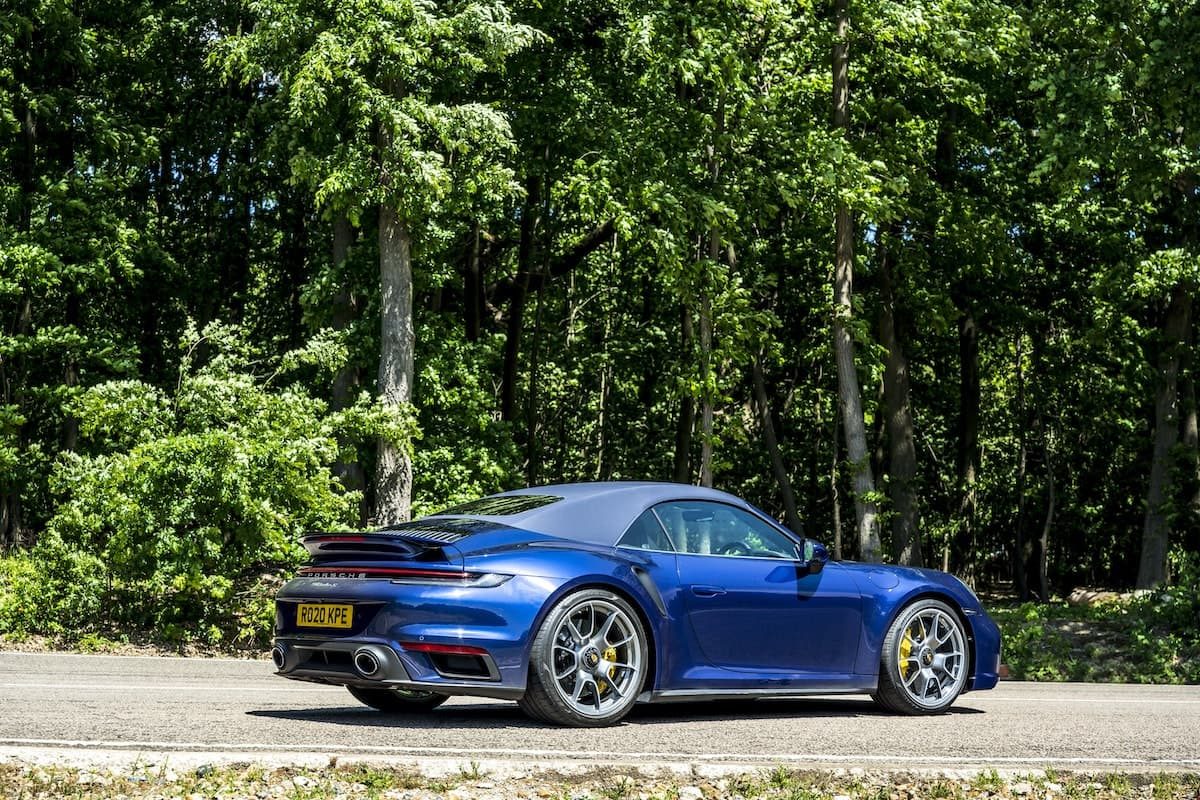
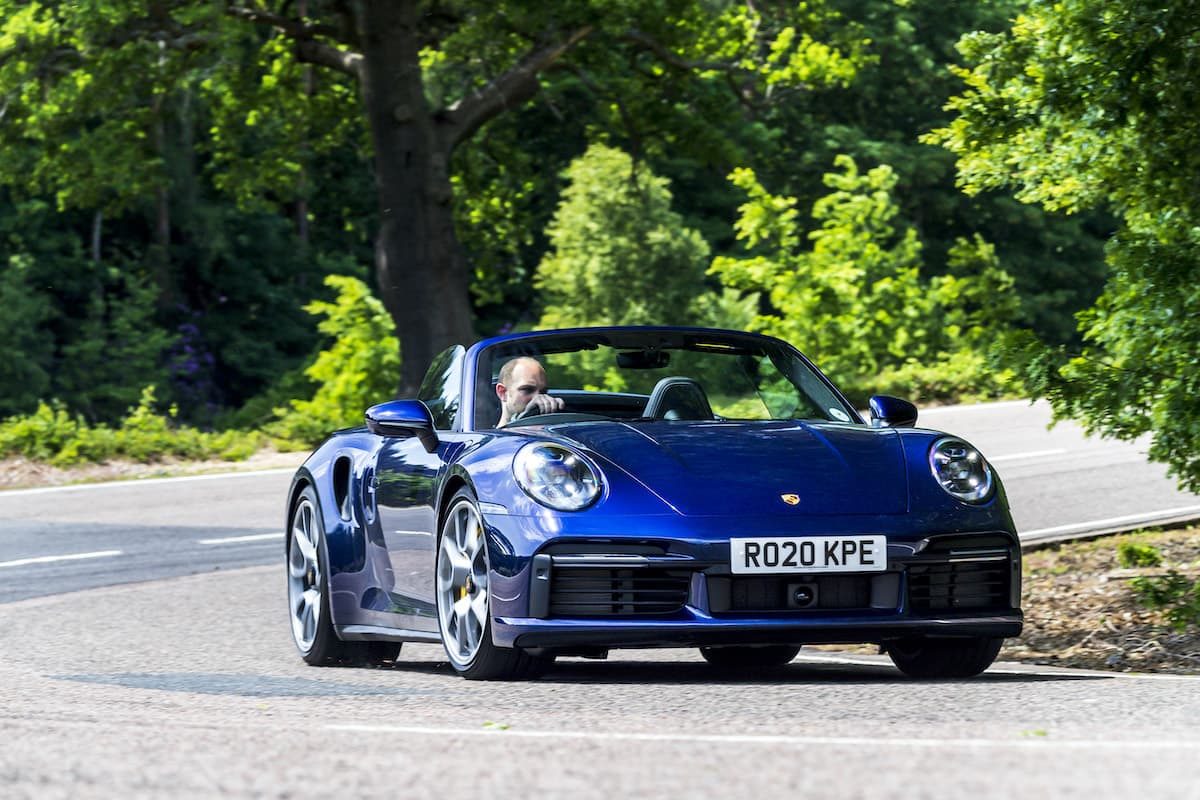
This is the Porsche 911 Turbo S – the biggest, baddest 911 you can buy right now. The Turbo name has long been synonymous with being the ultimate incarnation of this famous sports car outside of the more racey GT models, but with this generation, Porsche has ramped the lunacy up to 11. Its performance figures are frankly astonishing.
The question it has to answer is this: What’s the point of the Turbo S? Now that all Porsche models have turbocharged engines the name merely denotes a model variant rather than a stand out mechanical feature, and at well north of £150k it’s competing with arguably more exotic machinery in the form of the Audi R8 and McLaren 570S.
Also, do you really need 650hp? The appeal of non-GT 911s is their ability to be fast but also commutable. You could buy a still-fast 911 Carrera 4S and get a Porsche Cayman for the weekends for the price of one 911 Turbo S.
And that’s all before we mention the electric Taycan, which is slightly less expensive but even more violent in its acceleration, but with none of the environmental guilt. There’s a lot to unpack here, so let’s dive in.
Aside from the engine, which we’ll go into detail on below, the most significant change is perhaps the size. Even Porsche says it’s ‘significantly’ larger than before, being almost 5cm wider above the front axle and 2cm wider at the rear to allow for a wider track to improve handling.
Other changes designed to improve the way the car drives include improved aerodynamics, mixed-size tyres for the first time, the option of Porsche Active Suspension Management that improves handling and lowers the car by a centimetre, and a sports exhaust system with adjustable flaps to control the sound.
How does it look?
There’s been a long-standing joke that the Porsche 911 looks the same every time it gets updated, but with its position as one of the most popular sports car ever made, if it ain’t broke, don’t fix it. Taken at face value the idea that this car is understated is hilarious, with its massive rear arches and prominent brake calipers making it clear there’s performance on tap. But compared with exotic rivals in this price and performance point it definitely flies under the radar, giving it a different appeal to the likes of the Audi R8 and McLaren 570S.
Drink in the details though, and the relative subtlety has to be admired. Up front there are wider intakes that contribute to a more purposeful look, while prominent intakes in the rear wheel arches that are visible in the wing mirrors are a nicely aggressive touch to set the 911 Turbo S out from the rest of the range. And while the front end might be subtle there’s no denying the rear is more aggressive, with a prominent spoiler, chunky vents and a quad-exit exhaust.
What’s the spec like?
Prices for the 911 Turbo S start at £155,970 or £165,127 for this Cabriolet we’re driving. Standard equipment includes 20-inch alloy wheels up front and 21-inch at the rear, Porsche’s various stability and chassis control systems, ceramic composite brakes, active aerodynamics, a Bose surround sound system, a subscription-based tracking system, LED headlights, cruise control, adaptive sports seats and two-zone climate control.
Our test car came with a long list of optional extras that took the price up to £178,414 and included highlights such as sport suspension (£1,052) that lowers the ride by 10mm, sports exhaust (£2,180), ‘Exclusive Design’ wheels (£1,608), adaptive cruise control (£1,203) and the Burmester surround sound system (£2,256).
What’s it like inside?
It’s exquisitely Porsche inside, feeling enclosed without being claustrophobic. It’s ergonomically brilliant, with everything falling to hand as it should and there’s just the right combination of physical buttons and touchscreen controls too.
The materials are excellent as well, and the infotainment screen is clear and easy to use. Once you get used to seeing it, even the odd stubby gear lever becomes normal. Naturally, being a 2+2 rather than a strict four-seater means those in the back will struggle for leg room, but this being a serious sports car it’s difficult to mark it down for that.
What’s under the bonnet?
Performance comes from a rear-mounted 3.8-litre petrol engine, which is based on the existing 911 unit but with an extensive performance-focused overhaul. It gets a new charge air cooling system, new larger turbochargers and new injectors, as well as an updated intake system that improves airflow to the engine while creating less resistance.
The result is astonishing. Pin the throttle and there’s a momentary lag in response before the engine comes alive and catapults you forward. The engine note isn’t the sweetest but it’s all-encompassing and really adds to the attack on the senses this car provides.
With 650hp and 800Nm of torque going to all four wheels, Porsche quotes a 0-124mph time of just 8.9 seconds – and that’s entirely believable. The surge in speed is incredible and it accelerates harder as the speed increases. Honestly? It’s too much for the road, but it’s an engineering marvel and the kind of performance you just have to keep tapping into again and again.
What’s it like to drive?
The unique selling point of the Porsche 911 has always been its ability to soak up daily duties with ease while also being great fun to point down a twisty road, and that’s still true here despite its ludicrous performance.
Drop into the familiar surroundings and the engine feels perfectly happy to pootle around town at 30mph, with no juddering or a sense it would prefer to be at higher revs. There are some concessions to performance though, with the ride becoming quite jiggly on rougher roads, while the fact it’s so wide can make it a little intimidating on narrow streets or country lanes.
When you’re making the most of the performance, though, it comes alive. If you want a car that’s light and agile down a British B road then the 911 Turbo S is not the right car, especially in Cabriolet form as we’re testing here. It feels heavy and the front end isn’t as eager to turn in as you’d hope. But take it easy in the corners and unleash that six-cylinder engine when the road opens up and you’ll get a grin from ear to ear.
Verdict
There’s no denying that the Porsche 911 Turbo S Cabriolet is a highly desirable sports car. It treads a fine line between being understated compared to its rivals while also making it clear it’s a serious performance car… while also combining everyday practicalities with the kind of pace you couldn’t buy for any money a few decades ago.
It’s ridiculously capable in corners, but it’s so big, heavy and insanely fast that for most mere mortals extracting that performance will require an overdose of brave pills. For those looking for the ultimate ‘driver’s car’, a GT3 RS would be a better option – though we’re yet to see the latest 992-generation version of this. But for those who will happily sacrifice a little agility and focus of purpose in favour of warp-speed performance then look no further.
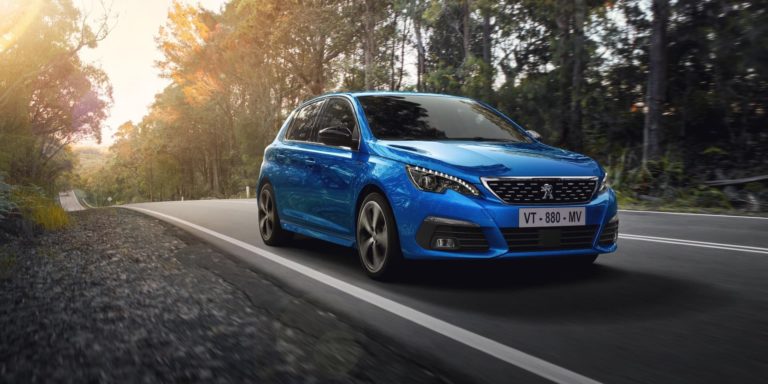
Peugeot has refreshed its popular 308 hatchback for 2020, offering a new colour, exterior design options, an updated interior and the latest generation of engines.
Also available in ‘SW’ estate form, the updated 308 gets some new exterior design choices such as a Vertigo Blue paint job, while the Allure trim gets a new 16-inch alloy wheel option. Top trim levels get a new 18-inch alloy wheel design and a black pack, which changes most of the chrome trim to gloss black.
Peugeot’s i-Cockpit digital instrument cluster will be fitted as standard. It also gets a ten-inch infotainment screen with updated graphics and a capacitive touch screen that ‘follows the example of the latest generation of smartphones’.
There are three engine options available with a combination of power outputs and gearboxes. The 1.2-litre petrol is available with 110hp and a six-speed manual transmission, or 130hp with the choice of manual or an eight-speed automatic.
A 1.5-litre diesel can be had with 100hp and the manual, or 130hp and a choice between manual and automatic.
The 308 GTI completes the engine and trim line-ups, using a 1.6-litre petrol engine that makes 260hp and 340Nm of torque.
Peugeot says it has sold over 1.5 million units of the latest 308 generation, and will be hoping these updates continue its success. It will be available through showrooms and Peugeot’s Buy Online service.
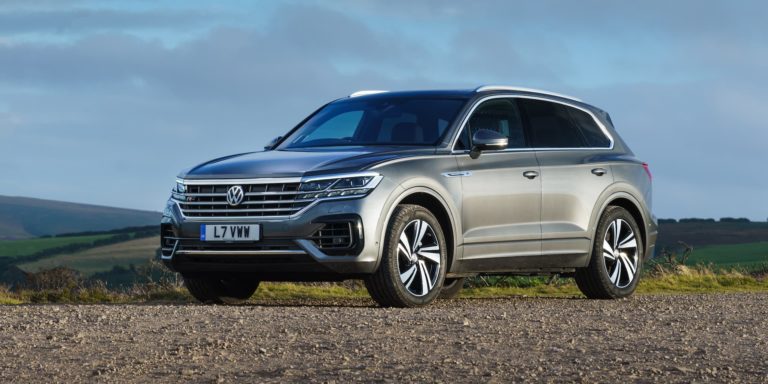
The Volkswagen Touareg is a large SUV, which is the largest model in the VW family. It sits above the Tayron, which is a seven-seat SUV compare3d to the Touareg’s five seats, but the Touareg is a heavier-duty model with better off-roading capability.
The current model is the third generation, which was launched in 2018. Like previous Touaregs, it shares much of its componentry with the Audi Q7 and Porsche Cayenne – and all are built on the same production line in Slovakia.
A higher-performance plug-in hybrid model called the Touareg R was launched in early 2020, which is not covered here.
The Volkswagen Touareg has received mixed reviews from the UK media, varying from average to very good and with contrasting opinions regarding the car’s comfort and value for money.
Volkswagen has announced that the current Touareg will be the last one, and that it will end production for UK sales in 2027. It intends to leave the Tayron as its largest SUV model from this point onwards.
As of October 2025, the Volkswagen Touareg holds a New Car Expert Rating of E, with a score of 52%. Its best scores are only average, with C grades for its safety rating and media reviews. However, its CO2 emissions and reliability record are poor, while its running costs are very high and Volkswagen’s new car warranty offering is one of the worst in the UK new car market.
“The Volkswagen Touareg is a large premium SUV with a spacious cabin, a practical boot and a bang-up-to-date infotainment system, but it still doesn’t feel as posh inside as some alternatives.”
Model reviewed: 3.0-litre diesel automatic SEL Tech “The Volkswagen Touareg might represent somewhat of an old guard of SUVs, but it’s still a wonderfully well-rounded choice in the segment. It’s comfortable, practical and well-styled while also being exceptionally well-appointed inside.” Author: Jack Evans Read review
Auto Trader
Model reviewed: Range overview Score: 8 / 10 “The third-generation Volkswagen Touareg is quiet and smooth on the road, and comes with an impressively powerful engine and lots of advanced technology. A modern look and roomy cabin should make it popular with business and family buyers alike, even if it lacks the option of seven seats.” Read review
Car
Model reviewed: Range review Score: 6 / 10 “Minor changes from the 2023 facelift kept the Volkswagen Touareg in the game, but it’s struggling to keep pace with newer plug-in rivals. The cabin remains spacious and well built, and it’s still a superb long-distance cruiser with a healthy towing capacity. However, the base model’s ride can feel brittle on steel springs, and the plug-in hybrid versions now look dated compared to rivals boasting much longer EV ranges and lower tax bills.” Author: Alan Taylor-Jones, Keith Adams Read review
Car Keys
Model reviewed: 3.0-litre diesel automatic R-Line Tech Score: 9 / 10 “This third generation of the Volkswagen Touareg is a very capable car and despite its chassis siblings being particularly excellent, the Volkswagen holds its own – even if the Audi Q7 is only marginally more expensive.” Read review
Carbuyer
Model reviewed: Range overview Score: 8 / 10 “The Volkswagen Touareg has a superb interior and lots of convenience and safety-boosting technology, but it’s not a thrilling drivers’ car.” (Ben Custard) Read review
Company Car Today
Model reviewed: 3.0-litre diesel automatic R-Line Tech “The new Volkswagen Touareg is rightly described as the pinnacle by VW, and it drives nicely, looks great and is packed with technology at the higher trim levels. But it’s also not cheap, and efficiency is an issue as it sits in the maximum BIK band.” Read review
Evo
Model reviewed: 3.0-litre petrol automatic R-Line Score: 6 / 10 “The Volkswagen Touareg isn’t for the fashion-conscious SUV buyer, and what its new V6 petrol engine offers in refinement and pace, it loses in thirst.” Read review
Honest John
Model reviewed: Range overview Score: 8 / 10 “Despite its gargantuan size, the Volkswagen Touareg feels surprisingly light-footed at slow speeds – the optional four-wheel steering giving it the same turning circle as a VW Golf. This means it’s easy to guide this large SUV into a parking bay or driveway.” Read review
Model reviewed: 3.0-litre diesel automatic “The Volkswagen Touareg comes with all-wheel steering to make it feel more agile around town, while trick active roll compensation means it remains remarkably composed in bends. It’s not as fun to drive as the Porsche Cayenne, obviously, but you could easily forget you’re driving a two-tonne SUV.” Read review
Motoring Research
Model reviewed: Range overview Score: 8 / 10 “When you consider the company it keeps, the Volkswagen Touareg is a bit of a bargain.” Read review
Parkers
Model reviewed: Range overview Score: 8.4 / 10 “Impressively luxurious full-size SUV majors on comfort and tech” Read review
The Sun
Model reviewed: 3.0-litre diesel automatic R-Line “Dashing new VW Touareg finally catches the eye after 16 years of ‘ordinary’” Read review
Model reviewed: 3.0-litre diesel automatic “In the company of the Porsche Cayenne, Bentley Bentayga and Audi Q7, you might think the Volkswagen Touareg would wilt — but instead it pretty much rules the roost.” Read review
The Sunday Times
Model reviewed: 3.0-litre diesel automatic R-Line Tech Score: 8 / 10 “If you’re not too picky about the badge on the front, the Volkswagen will do very nicely. It may have triggered a fit of boredom in Jeremy Clarkson, but it’s still a very nice car.” Read review
The Telegraph
Model reviewed: 3.0-litre petrol automatic SEL Score: 6 / 10 “The Volkswagen Touareg was already immensely spacious and decent value; with this new engine, it’s genuinely fast, and sounds rather pleasing into the bargain. But that isn’t quite enough to make it feel special enough to tempt you away from its more expensive rivals.” Read review
Model reviewed: 3.0-litre diesel automatic R-Line Tech Score: 8 / 10 “Volkswagen set out to make the Touareg its most sophisticated and technically advanced car yet, and has delivered. Smooth and powerful to drive, luxuriously refined and with a standout interior, the Touareg has a wow factor that could see it stealing sales from more upmarket rivals.” Read review
Top Gear
Model reviewed: Range overview Score: 8 / 10 ““VW’s flagship SUV is a strong all-rounder and hugely capable both on- and off-road, but it’s no cheaper than its premium badged rivals.” Read review
Model reviewed: Range review Score: 6 / 10 “Definitely worth considering though, if you want a big, high-quality SUV and want to slip past largely unnoticed.” Read review
Safety rating
Independent crash test and safety ratings from Euro NCAP
The Volkswagen Touareg was tested by Euro NCAP back in 2018 and awarded a five-star rating. However, this rating expired in January 2025 and is no longer valid as the car no longer meets the standards required for such a rating. This is normal practice, as Euro NCAP reviews its ratings on most cars annually with most ratings expiring after about six or seven years.
Although the rating has now expired, the score is still useful if you are comparing a used Touareg to vehicles of similar age – whose ratings will have probably also expired.
Eco rating
Independent economy and emissions ratings from Green NCAP
No eco rating
As of October 2025, the Volkswagen Touareg has not been lab tested by Green NCAP.
If and when the Touareg is tested by Green NCAP, we’ll publish the results here.
Running cost rating
Monthly cost of ownership data provided exclusively for The Car Expert by Clear Vehicle Data
Fuel consumption
Average
Score
Petrol models
26 mpg
E
Diesel models
34 mpg
D
CO₂ output
Average
Score
Variation
Score
Petrol models
251 g/km
E
Diesel models
215 g/km
D
Plug-in hybrid models
51 g/km
A
Battery range
Average
Score
Variation
Score
Plug-in hybrid models
32 miles
E
Insurance group
Average
Score
Variation
Score
All models
44
E
Service and maintenance
Cost
Score
Year 1
£342
D
Year 2
£846
D
Year 3
£1,397
D
Year 4
£1,721
E
Year 5
£2,243
D
Overall
£6,549
D
The Volkswagen Touareg is a relatively expensive car to own and run, according to whole-life cost numbers provided exclusively to The Car Expert by our data partner, Clear Vehicle Data.
Fuel economy is disappointing for both petrol (now discontinued) and diesel models, though the latter will carry you a few extra miles per gallon. We don’t yet have independently verified fuel consumption for the plug-in hybrid models.
Insurance premiums are around the market average, while servicing and maintenance costs should be relatively affordable, though slightly on the expensive side.
Reliability rating
Reliability data provided exclusively for The Car Expert by MotorEasy
Total claims: 197 Average repair cost: £808.72 Last updated: April 2025
The Volkswagen Touareg has a poor reliability score of 36%, according to exclusive extended warranty data provided to The Car Expert by our partner MotorEasy. This score covers both the current-generation model and previous (pre-2018) models).
The most commonly reported problems to date have been engine-related, which are also the most expensive with an average repair bill of more than £1,400. Also common are electrical system problems, although these are much cheaper to fix with an average bill of just £300.
Given the below-average reliability score and potentially expensive bills, make sure any extended warranty cover you purchase for a Volkswagen Touareg covers all of these potential problem areas.
Warranty rating
New car warranty information for the Volkswagen Touareg
Overall rating
E
15%
New car warranty duration
3 years
New car warranty mileage
60,000 miles
Battery warranty duration
0 years
Battery warranty mileage
0 miles
Volkswagen’s new car warranty is pretty much the bare minimum offered by car manufacturers in the UK, and worse than some rival brands in a similar price bracket as the Touareg. The duration is three years, with a limit of 60,000 miles, which is pretty basic. Some rivals offer up to seven years of cover.
In addition to the standard new car warranty, the Touareg plug-in hybrid version has an eight-year/100,000-mile warranty for the battery components.
Warranty on a used Volkswagen Touareg
If you are buying an ‘Approved Used’ Volkswagen Touareg from an official Volkswagen dealership, you will get a minimum 12-month warranty included.
If you are buying a used Volkswagen Touareg from an independent dealership, any warranty offered will vary and will probably be managed by a third-party warranty company.
If you are buying a used Volkswagen Touareg from a private seller, there are no warranty protections beyond any remaining portion of the original new car warranty.
If you’re looking to buy any used car that is approaching the end of its warranty period, a used car warranty is usually a worthwhile investment. Check out The Car Expert’s guide to the best used car warranty providers, which will probably be cheaper than a warranty sold by a dealer.
Recalls
Official DVSA safety recalls that have been issued for the Volkswagen Touareg
2023
2021
2020
2019
2018
Date: December 2023 Recall number: R/2023/356 Model types: All Build dates: 08/2023 to 10/2023 Number of vehicles affected: 89 Defect: The side airbag fitted in the seat (front left) may not have been correctly secured onto the seat frame. Remedy: Inspect the side airbag unit and, where necessary, remove and correctly reinstall the side airbag.
Date: October 2021 Recall number: R/2021/391 Model types: All Build dates: 01/2019 Number of vehicles affected: 209 Defect: If the rear lid is opened and manually pushed up too far, the electric spindle drive can suddenly separate and expand. Remedy: The drive unit(s) for the rear lid are to be checked and, if within the affected range, replaced.
Date: June 2021 Recall number: R/2021/391 Model types: All Build dates: 09/2020 to 11/2020 Number of vehicles affected: 87 Defect: Nuts of deviating material quality were fitted in the bolted connection of the right and left transverse link on the bottom of the multi-link rear axle. Remedy: The nuts of the right and left transverse link on the bottom of the multi-link rear axle will be replaced.
Date: May 2020 Recall number: R/2020/132 Model types: All Build dates: 09/2019 to 11/2019 Number of vehicles affected: 255 Defect: A welded connection of the gearbox oil pipe can cause a leak of gear oil. Remedy: Check whether the gearbox oil pipe is within the affected production period. If this is the case the pipe is replaced.
Date: March 2020 Recall number: R/2020/079 Model types: All Build dates: 04/2018 to 01/2019 Number of vehicles affected: 22 Defect: The bolted connection between the steering shaft and the steering rack may not have been tightened to the correct torque. Remedy: The bolted connection of the intermediate steering shaft has to be replaced.
Date: February 2019 Recall number: R/2019/064 Model types: All Build dates: 12/2018 Number of vehicles affected: 10 Defect: A casting process error may affect the rigidity of the front shock absorber fork. Remedy: Replace the affected shock absorber forks.
Date: November 2018 Recall number: R/2018/334 Model types: All Build dates: 08/2018 to 10/2018 Number of vehicles affected: 110 Defect: The seat belt buckle holder of the right rear seat may not meet specification. Remedy: Check and replace seat belt buckle assembly.
As of September 2024 (our most recent data point), there have been seven DVSA vehicle safety recalls on the Volkswagen Touareg to address different issues.
Not all vehicles are affected by recalls. You can check to see if your car is included in any of the above recalls by visiting the DVLA website or contacting your local Volkswagen dealer.
If your car is affected by a recall, the vehicle must be repaired and you should not be charged for any work required. If you are buying a used Touareg, you should insist that any outstanding recall work is completed before you take delivery of the vehicle.
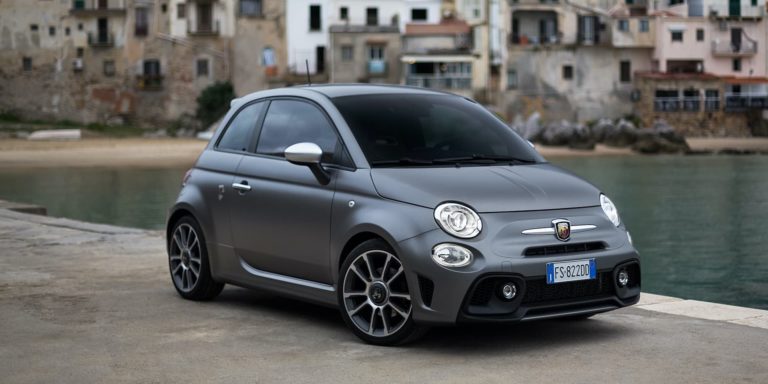
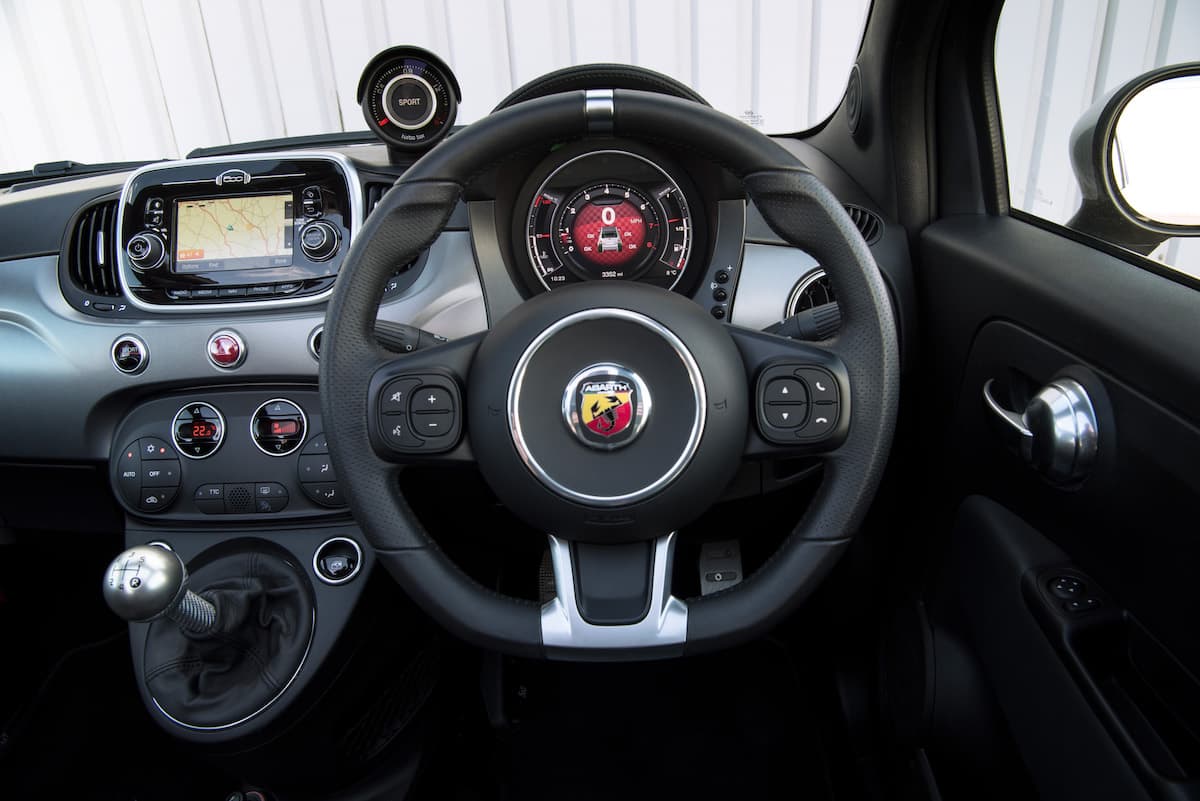
The Abarth 595 was a performance model based on the Fiat 500 city car. It was available in either hatchback or cabriolet (Abarth 595C) body styles.
First launched way back in 2007, it was given a substantial update in 2015 and continued on sale through until 2024 before finally ending production.
The petrol versions of the Abarth 500 (the 595 and 695) were very different to the much newer Abarth 500e electric model. The 500e is a completely different vehicle, meaning the Abarth 595 (and 695) were the last of their kind.
There were various versions of the Abarth 595, as well as many limited-edition models over its lifetime. These include the Abarth 595 Turismo, 595 Pista, 595 Competizione and 595 Esseesse. The higher-performance Abarth 695 sat above it in the Abarth range, which is covered on its own page.
Even as a used car, the Abarth 595 is very much a car that you buy with your heart rather than your head. As of February 2026, its poor overall Used Car Expert Rating of E, with a score of just 46%, reflects its obvious shortcomings as a practical vehicle and relatively high price tag. Despite that, the 595 received much praise for being great fun to drive.
Body style: Small three-door hatch Engines: petrol Price: From £21,325 on-road
Launched: Autumn 2015 Last updated: Spring 2022 End of production: Late 2024
Image gallery
Media reviews
Highlighted reviews and road tests from across the UK automotive media. Click any of the boxes to view.
Featured reviews
“As something to simply give you a bit of a laugh behind the wheel of, the Abarth 595 Esseesse is a compelling option. Its raucous exhaust note and brutal engine are particular highlights, and it has the head-turning looks that makes it so popular with Instagram influencers if that’s your thing.”
“There’s nothing shy or retiring about the way the Abarth 595 looks and drives, but other small hot hatches are roomier inside and easier to live with.”
Model reviewed: Range overview (595 and 695) Score: 6 / 10 “The Abarth 595 is a racy hot hatchback with the sweet looks of the iconic city car – but a firm ride lets it down” Read review
Model reviewed: Hatchback Score: 5.5 / 10 “Great little car!” Read review
Model reviewed: Esseesse Score: 6 / 10 “Climb aboard the 595 Esseesse and the first thing you’ll notice are those new leather trimmed Sabelt bucket seats.” Read review
Auto Trader
Model reviewed: Range overview Score: 6 / 10 “The Abarth 595 is definitely not without its flaws – pricey, short on safety kit, hard ride – but it delivers a raucously fun driving experience. While most city cars opt for comfort and economy, the Abarth 595 is a very nippy car which keeps its retro, stylish looks, but adds a big dose of aggression.” Read review
Car
Model reviewed: Range overview Score: 8 / 10 “Whether or not you should buy an Abarth 595 depends an awful lot on your willingness to make sacrifices. If you can live without the latest technology and don’t regularly need to transport household appliances, I’d say it’s well worth a look. You’ll struggle to find anything else in its class that’s as entertaining to drive.” (Luke Wilkinson) Read review
Model reviewed: 595C Competizione Cabriolet Score: 8 / 10 “The Abarth 595C Competizione is one of those cars that makes little logical sense, but nevertheless brightens the automotive landscape – the kind of car that inspires a nod of respect whenever you pass someone enamoured enough to have put down the funds.” Read review
Car Keys
Model reviewed: 595 esseesse Score: 8 / 10 “If you want a characterful and fun hot hatch, the Abarth brand more than delivers.” Read review
Model reviewed: 595C Turismo Cabriolet Score: 8 / 10 “While it mightn’t be the fastest or the best-driving small hot hatch out there, the Abarth 595 Turismo more than makes up for it with its big personality, the fact that it makes a big noise and the fact that it feels like a genuine sports car in a dinky Matchbox-style package.” Read review
Carbuyer
Model reviewed: Range overview Score: 6 / 10 “The Abarth 595 is a sporty hatchback based on the Fiat 500 that is characterful and fun to drive.” Author: Andy Goodwin Read review
Model reviewed: 595C Cabriolet Score: 6.4 / 10 “The Abarth 595C isn’t the best car in its class, but it can claim to be the one with the most character” Read review
Carwow
Model reviewed: 595C Cabriolet Score: 6 / 10 “The Abarth 595C is one of the only small hot hatches on sale which comes with a folding fabric roof. It’s great fun to drive, but its cramped cabin means it isn’t all that easy to live with.” Read review
Company Car Today
Model reviewed: 595 Competizione “This is a baby car with a menacing growl. The very head-turning bark on start-up is completely out of kilter with the cute Fiat 500 on which it’s based. In this spec you have a small car with a 180hp 1.4-litre engine, which is plenty. Especially when it sounds like a touring car.” Read review
Evo
Model reviewed: Esseesse Score: 7 / 10 “Objectively compromised, but subjectively a hugely likeable hot hatchback.” Read review
Model reviewed: Range overview Score: 7 / 10 “Low on sophistication, high on fun – Abarth’s hatch isn’t for everyone, but some will love it.” Read review
Heycar
Model reviewed: Range overview Score: 6 / 10 “The Abarth 595 is a raw little car that delivers a big hit of fun and driving thrills. You only need to hear the noise it makes when you turn the key to start the engine to know it’s a little bit special. After all, why have a pint-sized hot hatch if it’s not going to make you smile every time you get in it?” Read review
Honest John
Model reviewed: 595 hatchback range Score: 6 / 10 “The Abarth 595, created by Fiat’s in house tuning arm, turned the cute and fashionable Fiat 500 into a storming little hot hatch with the requisite sporty looks as well as more power.” Read review
Model reviewed: 595C Cabriolet Score: 6 / 10 “It’s certainly quick enough on the move and has a real buzzy feel about it. Thanks to the sports exhaust pipes, there’s also suitably raspy exhaust note when you accelerate, something which can be even more appreciated with the roof down.” Read review
Motoring Research
Model reviewed: 595 and 695 Score: 6 / 10 “In isolation, there’s much to like about the Abarth 595. It looks great and is fun to chuck about… but is also pricey and old.” Read review
Parkers
Model reviewed: Range overview Score: 6.4 / 10 “Stylish and exciting, but not for everyone” Read review
Model reviewed: Range overview Score: 7 / 10 “An addictive little begger that is much better than its list of failings would have you believe.” Read review
Safety rating
Independent crash test and safety ratings from Euro NCAP
Note on safety rating The Abarth 595’s safety rating is assessed on the regular Fiat 500 model range, upon which the Abarth 595 is based.
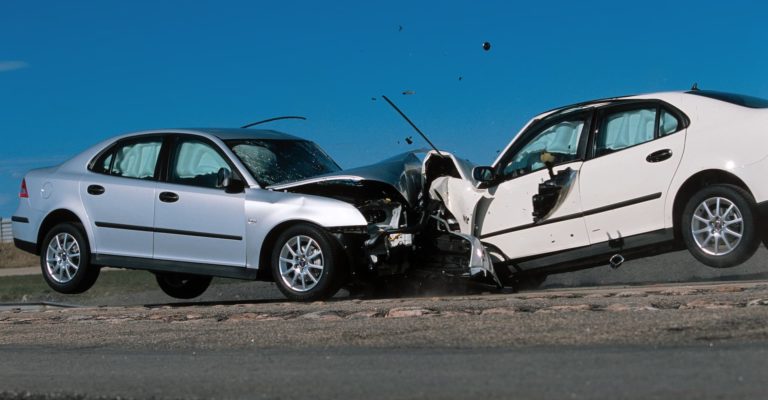
The Fiat 500 was crash tested by Euro NCAP back in 2017 and awarded a sub-par three-star rating. However, this rating expired in January 2024 and is no longer valid as the car no longer meets the standards required for such a rating. This is normal practice, as Euro NCAP reviews its ratings on most cars annually with most ratings expiring after about six or seven years.
Although the rating has now expired, the score is still useful if you are comparing a used Abarth 595 to vehicles of similar age – whose ratings will have probably also expired.
Eco rating
Independent economy and emissions ratings from Green NCAP
No eco rating
The Abarth 595 was not assessed by Green NCAP during its production life.
Reliability rating
Reliability data provided exclusively for The Car Expert by MotorEasy
Total claims: 22 Average repair cost: £860.08 Last updated: April 2025
As of April 2025, the Abarth 500 family (including both the 595 and 695) has a poor reliability score of 32%, according to reliability data provided exclusively to us using workshop and extended warranty data from our partner, MotorEasy, sourced from both official dealerships and independent workshops.
It should be noted that the scores above are based on a relatively small number of vehicles to date, however the overall data is quite similar to the regular Fiat 500 range so it can be taken with a reasonable degree of confidence.
Engine repairs have been notably more expensive than other areas for the 595 to date, with an eye-watering average repair bill of about £2,200, so make sure any used car warranty you purchase covers that.
Running cost rating
Monthly cost of ownership data provided exclusively for The Car Expert by Clear Vehicle Data
Fuel consumption
Average
Score
Petrol models
40 mpg
D
CO₂ output
Average
Score
Variation
Score
Petrol models
158 g/km
C
Insurance group
Average
Score
Variation
Score
All models
27
C
Service and maintenance
Cost
Score
Year 1
£200
B
Year 2
£534
C
Year 3
£871
C
Year 4
£1,088
C
Year 5
£1,473
C
Overall
£4,166
C
The Abarth 595 has a mixed bag when it comes to running costs, according to whole-life cost numbers provided exclusively to The Car Expert by our data partner, Clear Vehicle Data.
The hatchback’s insurance premiums are about average when compared to the rest of the market, while servicing and maintenance costs are excellent over the course of five years of ownership.
Fuel consumption, however, isn’t great, which drags down the 595’s running cost score as it’s the biggest recurring cost item of most cars.
Date: September 2022 Model types: All Build dates: 03/202 Number of vehicles affected: 1 Defect: Vehicles may have been produced with ineffective/incorrect tightening of a lock nut on the steering gear rod. Remedy: Check for the correct tightening of the lock nut and check/adjust wheel alignment if tightening was required.
Date: February 2021 Model types: All Build dates: 03/2020 to 07/2020 Number of vehicles affected: 30 Defect: The “Sport” mode system may not be set correctly and therefore may not comply with type approval requirements. Remedy: The proxi file must be updated to solve the non conformity.
Date: September 2016 Model types: All Build dates: 12/2015 to 06/2016 Number of vehicles affected: 1,045 Defect: The seat may not remain in position when subjected to greater than normal driving forces such as those involved in an impact. This may possibly cause injury to the driver/passenger seated in the right hand front seat. The right hand front seat guides may not conform to design specification and installation specifications. Remedy: Recall the vehicles that are likely to be affected and check the installation of the original seat guide. If it does not conform replace the seat cushion structure (guide).
As of September 2024 (our most recent data point), there have been three DVSA vehicle safety recalls on the current Abarth 500 range (including both the 595 and 695). These cover steering, seat belt and software issues.
Not all vehicles are affected by recalls. You can check to see if your car is included in any of the above recalls by visiting the DVLA website or contacting your local Abarth dealer.
If your car is affected by a recall, the vehicle must be repaired and you should not be charged for any work required. If you are buying a used 595, you should insist that any outstanding recall work is completed before you take delivery of the vehicle.
Similar cars
If you’re looking at the Abarth 595, you might also be interested in these alternatives
Mercedes-Benz has revealed pricing and specifications for its new B-Class B250e plug-in hybrid.
Priced from £35,280, the B250e utilises a 1.3-litre petrol engine linked to a 75kW electric motor and a 15.6kWh lithium-ion battery pack. When combined, the setup develops 215hp and 450Nm overall, which helps with a 0-60mph time of 6.6 seconds. Power is sent through an eight-speed automatic transmission.
Mercedes claims that the B250e can travel up to 42 miles on electric power alone, while fuel consumption sits at a claimed 235.4mpg, with CO2 emissions of just 27g/km. In terms of charging, it should take just one hour and 45 minutes to get the B250e from 10% to 100%, though getting from 10% to 80% can take as little as 25 minutes when using a DC fast charger.
Three specifications will be available from launch – AMG Line Executive, AMG Line Premium and AMG Line Premium Plus. The entry price point of £35,280 nets an AMG Line Executive, rising to £36,780 for the AMG Line Premium and £38,280 for AMG Line Premium Plus cars.
Even entry-level cars benefit from Mercedes’ full MBUX multimedia system, heated front seats, climate control and 18-inch alloy wheels. All B250e models also have Android Auto and Apple CarPlay fitted as standard, as well as a ten-inch infotainment screen.
AMG Line Premium cars benefit from an additional ten-inch digital cockpit – which replaces the traditional dials – while AMG Line Premium Plus vehicles boast features such as a panoramic sunroof, LED headlights and memory seats for both driver and passenger.
First deliveries of the B250e are expected to start this summer.
Motoring and environmental groups have welcomed the prospect of a new car scrappage bonus scheme encouraging motorists to switch to electric vehicles.
The AA described it as “fantastic” while Greenpeace said it would be “moving in the right direction”.
Boris Johnson is considering launching plans to give drivers up to £6,000 to exchange their petrol or diesel car for an electric model, the Daily Telegraph reported.
In March, the government reduced the maximum grant available for electric car buyers under the Plug-In Car Grant by £500, from £3,500 to £3,000.
But it has been urged to help manufacturers hit hard by the coronavirus crisis, with sales of new cars down nearly 90% in May compared with the same month in 2019.
The Daily Telegraph reported that the prime minister may use a speech on the economy on July 6 to set out his plans for a scrappage scheme.
A spokeswoman for the government confirmed it is “considering the long-term future of incentives for zero-emission vehicles”.
AA president, Edmund King, called on drivers to “take up the deal” if it goes ahead, as it would “help both car manufacturers and air quality”.
He called for more charging points to “convince drivers that they can always get home” and for the UK to build gigafactories to develop the batteries fitted in electric cars.
RAC head of roads policy, Nicholas Lyes, predicted that a scrappage bonus “might be the game-changing boost the automotive sector needs”.
He went on: “Drivers’ concerns about emissions are becoming ever stronger and interest in zero-emission vehicles is increasing.
“But many continue to say that the upfront cost of electric vehicles compared to those of similarly sized conventional vehicles is a barrier to them switching so any sort of scheme which tackles this would be very welcome.”
Rosie Rogers, of Greenpeace UK, said: “The government would be moving in the right direction by favouring electric vehicles over polluting diesel and petrol. But they need to go further to really see clean transport drive the green recovery.
“Any scrappage scheme should also give people the option to use public transport instead of a new vehicle, or to purchase the likes of e-bikes as an alternative to their car.”
A previous initiative launched in 2009 saw motorists get £2,000 for trading in old cars for new models.
Half the money came from the government, with the other half from manufacturers.
Figures published by the Society of Motor Manufacturers and Traders (SMMT) show that pure battery-electric new cars held just a 1.6% share of the new car market last year.
Transport Secretary, Grant Shapps, has said the ban on sales of new petrol, diesel and hybrid cars and vans could be brought forward from 2040 to as early as 2032 in a bid to meet carbon reduction targets.
This sparked criticism from the automotive industry, which claimed it would take more than industry investment to achieve such a timetable.
Car safety has improved continuously throughout the history of the motor vehicle, and that pace is only accelerating. No longer is having a ‘big’ car the sole way of adding protection for occupants, while advanced technology has helped to fill in the gaps between driver and machine.
Over the years, there have been numerous key developments among thousands of smaller improvements. All car manufacturers have enormous R&D budgets devoted to improving the safety of their vehicles, although brands like Mercedes-Benz and Volvo have taken that even further over the years, with thousands and thousands of patents for life-saving safety systems – most of which have been freely shared with other car companies to improve safety for all road users.
Let’s take a look at how things have changed and the direction car safety is taking.
The early years of motoring
It will come as no surprise that the early years of motoring weren’t the most safety-conscious. In the rush to make cars go, little thought was given to stopping them again or how they would behave in an accident.
Windscreen wipers were first introduced in 1903, while it wasn’t until 1914 that indicators – or turn signals – were brought in.
When it came to crash testing, it took until 1934 for General Motors to undertake the first test, while the first crash test dummy – called Sierra Sam – was put to work in the early 1950s.
Interestingly, early research on airbags began prior to 1920, although it would take decades before this progressed to the point where it was suitable for use in a car.
Early Chevrolet involved in a car accident
In the 1930s, the idea of the crumple zone was developed, with the idea that the front of the car should deform progressively to absorb and deflect energy away from the occupants in a collision. This was followed in the 1940s and 50s by ideas like the deformable steering column, which was designed to be telescope and collapse on impact instead of being a rigid pole pointed directly at the driver’s heart…
1950s – We start buckling up with seatbelts
The single most important safety technology ever invented – the simple three-point seatbelt
It was after the second world war that car safety development really began to ramp up. GM led the charge in America, while Mercedes-Benz did likewise in Europe.
Béla Barényi was head of the pre-development department for Mercedes-Benz from 1939 to 1972, and it is claimed that he filed more than 2,000 patents for car safety inventions before his retirement.
Undoubtedly, the single greatest car safety development was born in the 1950s, although it didn’t come from Mercedes-Benz. In 1959, Volvo launched the three-point seatbelt, which set the benchmark for safety technology for years to come.
Like many other safety patents, Volvo felt the technology was so important that it gave away the idea for free – a move that has been claimed to have directly saved more than a million lives over the last 60 years.
In 1963, inertia reels were added to the seatbelt system, and the overall design was so effective that it’s remained largely unchanged ever since.
In the UK, it became compulsory for all new cars to be fitted with front seatbelts in 1968. However, it wasn’t until 1983 that it became compulsory to actually wear them. It wasn’t until 1986 that it became compulsory for manufacturers to fit rear seat belts, and it was only in 1991 that it became law that they had to be worn. Many people still don’t bother to wear a seatbelt when riding in a taxi.
Unbelievably, wearing a seatbelt is still not enforced in 2020 in some parts of America. In several states (about 15 out of 50), it is considered a secondary offence, which means that you can’t be pulled over for not wearing a seatbelt. However, if you are pulled over for another reason (say, running a red light), you can be fined for not wearing a seatbelt.
1970s – Advanced safety technology
Safety technology took a huge leap forward in the 1970s and 80s. Anti-lock brakes (ABS) were first introduced on the Mercedes-Benz S-Class in 1978. They help drivers to maintain control and steer during emergency braking, rather than locking the wheels and sliding straight to the scene of the accident.
Airbags finally started appearing in the 1970s after years of development. There was considerable difference in how airbags were designed between America and Europe – in America, airbags were used as a substitute for seatbelts, whereas in Europe they were designed to work with seatbelts, which was much safer.
It took another couple of decades for America to figure that out.
Anti-lock brakes (ABS) allow a driver to steer a car while braking heavily
In Europe, airbags were always intended to work in conjunction with seatbelts. This meant that airbags could be smaller and could deploy more slowly, as the seatbelt holds the driver or passenger in place during an accident. In America, airbags were designed to be a substitute for seatbelts. That means they had to be much larger and had to deploy much faster, as there was nothing to restrain an occupant in a crash.
The physics required to inflate a large airbag incredibly rapidly meant that airbags actually injured and even killed many Americans over the years. Not really what you want from a device that’s intended to save your life.
1990s – Independent crash tests and safety ratings
Early Euro NCAP crash testing, late 1990s
The 1990s were dominated by several safety innovations that helped to make cars even safer. Mercedes-Benz introduced its game-changing electronic stability control in 1995, which took anti-lock braking a step further to help prevent a car from sliding during cornering. Within a decade, it would become standard on almost all new cars in the western world.
Volvo developed a side-impact protection system in 1991, which – as the name suggests – aimed to better protect occupants in a side collision by absorbing and distributing energy across the whole length of the car instead of relying on the central B-pillar to absorb the impact.
In 1997, Euro NCAP was established, helping to improve European car safety through independent crash tests and ratings. The Renault Laguna became the first car to achieve a five-star rating in 2001.
Here in the UK, Euro NCAP testing is undertaken by Thatcham Research, an independent research body that conducts crash testing, lab testing and track testing on dozens of new cars each year. Thatcham also sets insurance ratings for new cars, as well as providing anti-theft ratings for new cars and vehicle repair data.
Today, we pretty much take a Euro NCAP five-star rating on a new car for granted, and only really notice when a new car doesn’t score five stars. Euro NCAP has continually beefed up its safety standards over the last 20 years, and recently announced even tougher new requirements for new cars to attain a five-star rating.
Car safety in the 21st century
The 21st century has seen rapid development in the field of autonomous assistance, with modern cars able to brake and steer on their own to help avoid an accident or – if an accident is unavoidable – to reduce its severity.
Once again, Volvo has been a pioneer of new safety technology, and was the first to develop autonomous emergency braking. Like anti-lock brakes and stability control, this technology has quickly filtered through to even the cheapest cars on sale in the UK
Autonomous emergency braking (AEB) helps avoid or reduce front-to-rear collisions.
Volvo’s most recent safety announcement has been somewhat more controversial than most in its history. It has introduced a 112mph speed limit for all of its new cars, arguing that there is no need for any car to ever go faster than that. This has inevitably provoked much discussion and debate, but as of 2020 all new Volvos are limited to a top speed of 112mph (180km/h in the metric world).
What does the future hold?
The future – being able to review profitability charts from the comfort of your car.
The pace of car safety development has not slowed down, and it will continue to advance in coming years.
While we might have to wait a bit longer for our cars to drive themselves everywhere, certain levels of autonomous assistance are now becoming available on many new cars. Systems like lane-keeping assist and adaptive cruise control can accelerate, brake and steer a car within certain limitations and still require a human driver in control of the vehicle.
Driver monitoring technology can also assess a driver to see if they’re concentrating enough, and it’s likely that it won’t be too long before your car will be able to detect whether you’ve had too much to drink (or taken any other mind-altering substances) and prevent you from starting the car.
Autonomous technology may be a hot topic at the moment, and these systems are being intensively tested all around the world. However, we’re still some way from privately-owned driverless cars roaming the streets. Getting the basics of self-driving technology is one thing, but developing a car that can handle the complex requirements for driving on public roads among other cars/pedestrians/cyclists/animals is significantly more difficult.
However, the push towards autonomous vehicles is relentless. Most safety experts agree that about 90% of all car accidents are caused by a driver, so taking the driver out of the equation is ultimately the long-term plan to reduce fatalities and injuries on our roads. That’s the inevitable direction of travel – driving will become a leisure activity or a sport, much like horse riding and horse racing. Driving for commuting or business purposes will eventually become a thing of the past.
Aston Martin says it plans to offer more variations of its DBX SUV because the existing model has proved hugely popular already.
The news came from new executive chairman Lawrence Stroll during the British firm’s first-quarter financial report, with the Canadian billionaire stating that the order book was looking good into the future.
Stroll said: “With St Athan reopened safely last week, I’m extremely pleased that the DBX remains on track for deliveries in the summer and has a strong order book behind it extending into 2021.
“Based on these successful initial orders for the DBX, we plan to unveil future derivatives starting from 2021.”
Aston Martin has revealed it has considered the potential of different body styles for the DBX in the past. The SUV sits on a new platform developed specifically for the vehicle, with Autocar reporting that the company wants to expand the number of models that use it to maximise its cost effectiveness.
Marek Reichman, executive vice-president and chief creative officer at Aston Martin, recently told Australian motoring site GoAuto that the company would not make a small version of the platform. However, it could make a smaller body but keep the wheelbase the same, while making a larger version of the DBX is ‘relatively simple’.
Later, the DBX could get a hybrid powertrain. The Aston Martin Valhalla, the firm’s mid-engined hypercar, uses a V6 hybrid powertrain that is expected to eventually replace the current Mercedes-AMG-sourced V8 currently found in Aston’s sports cars and SUV.
Fiat has opened reservations for the all-new electric 500 hatchback, which joins the zero-emission convertible version in the firm’s line-up.
The ‘la Prima’ launch edition is priced at £26,995 including the plug-in car grant and comes with a Wallbox that can be fitted at home to deliver up to 3kW of charging power. This can be upgraded to 7.4kW, which can provide a full charge in just over six hours.
The electric Fiat 500 has a maximum charge rate of 85kW, which Fiat says can add a usable 30 miles of range in five minutes, or can top the battery up to 80% in 35 minutes. Its 42kWh battery has a maximum range of 199 miles.
The electric motor’s output is 87kW and provides a top speed of 93mph, with a 0-60mph time of nine seconds.
In this la Prima specification, the new electric 500 comes with a panoramic glass sunroof, a more pronounced rear spoiler, three paint choices, full LED headlights, 17-inch alloy wheels, chrome-plated inserts, and eco-leather upholstery.
The electric 500 gets a new look compared with the petrol-powered versions because it sits on Fiat Chrysler Automobiles’ first bespoke electric car platform. It’s 6cm longer and 6cm wider than before, and features a more rounded, curvy look.
There are three drive modes available: Normal, Range and Sherpa. Normal aims to give a driving experience similar to that of a petrol vehicle, while Range ramps up the amount of energy recouped by the car, meaning it decelerates quickly when the accelerator is lifted to provided ‘one pedal driving’.
Sherpa mode, named after Himalayan Sherpas who take charge of an expedition, optimises the driving experience based on battery levels and the distance to the destination.
It also comes with adaptive cruise control and the new UConnect 5 infotainment system, which comes integrated with Android Auto and Apple CarPlay. It is controlled through a ten-inch touchscreen in the dashboard.
Reservations for the all-new electric Fiat 500 are now open for UK customers, and both the hatchback and convertible can be ordered with no deposit.
Ford has added light electrification to the Fiesta for the first time.
Britain’s favourite supermini can now be ordered with a mild hybrid system, which uses a 48-volt motor to assist the petrol engine. Ford claims fuel efficiency is improved by 5% while also making it more powerful and responsive to drive.
For this powertrain, the traditional alternator is replaced with a belt-driven starter generator, which enables recovery of energy usually lost during braking and coasting. This energy can then be redeployed to boost the engine under acceleration or take over running the vehicle’s electrical ancillaries.
It is available in two power outputs of 125hp and 155hp. The former emits 109g/km of CO2 and promises 57.6mpg, while the latter emits 116g/km of CO2 and achieves 55.4mpg.
It’s part of Ford’s plan to offer an electrified version of every passenger vehicle it makes and plans to have 18 electrified models on sale by the end of 2021.
Roelant de Waard, vice president of marketing, sales and service at Ford of Europe, said: “Adding EcoBoost Hybrid technology to Fiesta’s best-in-class driving dynamics means customers can have even more power and still go further on a tank of fuel.
“The Fiesta EcoBoost Hybrid will help Ford bring the benefits of electrification to more drivers than ever before.”
As well as being the best-selling car in Britain for the last decade, the Fiesta is also the top-rated supermini according to The Car Expert’s unique Expert Rating analyser. Based on 22 UK reviews, the Fiesta has an overall Expert Rating of 84%, with particular praise for its driving dynamics.
The mild-hybrid Ford Fiesta will be available on the Titanium trim level with prices starting at £19,860. Equipment on this model includes adaptive cruise control with stop and go and speed sign recognition.
What do you know DS best for? That iconic ‘60s Citroën model that this brand is essentially named after, or the rebadged Citroëns that existed between 2010 and 2017? After a lukewarm start, DS Automobiles is aiming to carve out its own niche, with the brand’s bespoke models starting in 2017 with the DS 7 Crossback SUV.
Following on from that model is the new DS 3 Crossback – a compact crossover that aims to inject a bit of French luxury into the premium end of this sector. It replaces the original DS 3 supermini and aims to combine the style of what made that model so popular with the all-important crossover looks that buyers crave.
To date, the DS 3 Crossback range has received fairly average reviews from the UK motoring media. According to The Car Expert’s unique Expert Rating system, which aggregates new car reviews from 21 different UK websites, the DS 3 Crossback currently has an overall Expert Rating score of 66%, which puts it in the bottom half of the small crossover class.
Here we’re trying it in the stylish Performance Line grade. Will it be eough to lift the DS 3 Crossback to a higher level?
The DS 3 Crossback is only the second bespoke model to come from DS since it split from Citroën.
It’s the first model to sit on the PSA Group’s new CMP platform, which is also underpinning the new Vauxhall Corsa and Peugeot 208. It means that, in addition to the usual petrol and diesel engines, the DS 3 Crossback is available with an all-electric powertrain. We’ll hopefully have a drive report on the electric version for you soon.
It’s also featuring a whole host of tech that’s exclusive to this segment – including Matrix LED headlights, as well as fancy pop-out door handles.
How does it look?
Many criticise modern cars for all looking too similar, but that is most certainly not the case with this DS. Distinctive design is part of the company’s strategy for setting DS Automobiles apart from the pack – and thanks to the DS 3’s pop-out door handles, large alloy wheels and chunky design, there is little else that looks quite like it on the road.
While all DS 3 Crossbacks look the part, the Performance Line version is undoubtedly the one to go for if you prefer that sportier looks – achieved through the black styling pack, unique 17-inch alloy wheels and revised bumpers.
What’s the spec like?
All DS 3 Crossbacks come well-equipped, though admittedly you pay more in the first place, with models starting from £22,120.
In Performance Line grade you get 3D LED rear lights, along with a black styling pack and tinted windows, to name but a few features. Upgrading to the Prestige brings a 10-inch touchscreen with a 3D satellite navigation, front sensors and full leather upholstery, while Ultra Prestige features a head-up display, 18-inch alloy wheels, massaging front seats and Matrix LED headlights.
The costly La Premiere launch edition meanwhile features adaptive cruise control, fancier leather upholstery and blind-spot monitoring.
What’s it like inside?
Look inside to the DS 3 Crossback and it’s clear that the French brand has completely thrown out of the typical cabin rulebook. On first glance it looks like an ergonomic nightmare – there are buttons everywhere. But think of it like from moving from a bungalow to a two-storey house – at first it feels bizarre, but you soon adjust to its quirks and differences.
But don’t go buying the DS 3 Crossback if you’re wanting something spacious and practical as this is one of the least roomy interiors in its class – the rear seats offer little space for adults and the 350-litre boot is small next to many of its rivals.
What’s under the bonnet?
The DS 3 Crossback Performance Line is available with a choice of three petrol engines and one diesel unit – the petrol variants making up the bulk of sales.
It’s certainly more powerful than the other two – delivering smooth performance that enables a 0-60mph time of eight seconds and a claimed top speed of 126mph. The engine feels equally as good around town as it does on the motorway, though it can feel a bit gruff under heavy acceleration. It uses an eight-speed automatic transmission which is responsive and pleasant to use, while paddles are also on the steering wheel if you’d prefer to change gear yourself.
What’s it like to drive?
For an urban-aimed model, the DS 3 Crossback’s low-speed ride around town is a little disappointing, and instead it seems to be on the motorway where this model seems to feel the most settled and comfortable, with the sports seats offering plenty of support.
But it’s also surprisingly good to drive on more twisty roads, with sharp steering and minimal body roll making this feel like one of the more dynamic models in its sector.
Though the Performance Line’s minimal tweaks might give it a sportier look, the changes when it comes to driving are small. Though with no hot version likely to follow, this is the trim to go for if you want that sportier feel.
Verdict
It’s easy to criticise the DS 3 Crossback for its odd interior layout, practicality misgivings and high list price, yet somehow despite these issues, this French crossover is remarkably appealing – particularly in this Performance Line trim.
Next to other models in this somewhat bland segment, the DS 3 Crossback Performance Line deserves high praise for establishing its own path against the likes of premium established players from Audi and Mini.
It’s not going to tempt buyers out of those cars just yet, but if you’re looking for a more upmarket and exclusive crossover than the run-of-the-mill offerings, this is a worthy option.
It was another tough month for car companies and their dealers in May. Private new car sales were down 84% in April, with fleet registrations down 93% as well, as the UK endured a second month of lockdown.
Things were slighly better than April, as some manufacturers and dealerships were able to operate click-and-collect sales, but that still only resulted in about 20,000 registrations compared to more than 183,000 for the same month last year. Read our full monthly new car registration report here.
Hopefully, May’s results were the first step towards a more substantial recovery in June, now that showrooms in England have re-opened.
The UK’s ten best-selling cars, May 2020
1. Tesla Model 3
The Tesla Model 3 topped the charts again in May, continuing its successful run during the downturn. The numbers are still small, but Tesla’s early adoption of online car buying is certainly paying off at the moment – and will probably continue to do so in months to come.
The Tesla Model 3 currently holds an Expert Rating of 84% in our New Car Ratings database, which is certainly very good. However, there have been very few local reviews yet so this may vary by quite a bit (either up or down) in coming months.
The new Vauxhall Corsa had another strong month (relatively speaking; it was still only 790 cars), moving up from third last month to second this month. And it gets bragging rights over the Fiesta for the second month in a row.
The new Corsa currently holds an Expert Rating of 70% on our unique aggregator scale, based on 22 reviews we have gathered so far. That puts it in the bottom half of the supermini class (ninth out of 14 cars we’ve analysed so far). This may change quite dramatically once more reviewers drive the car on local roads, but it’s still a disappointing score for a brand-new model. The new Peugeot 208, which is mechanically identical to the Corsa, is currently at 78%.
After falling out of the top ten altogether last month, the Ford Fiesta popped back up into third place in May. It wasn’t a lot of cars (just 760 units), but with the Volkswagen Golf not featuring in the top ten again, the Fiesta edges a bit further ahead in the year-to-date registration numbers.
The Fiesta currently holds an Expert Rating of 84% in The Car Expert’s New Car Ratings database, which compares reviews from across the UK motoring media. This is higher than any other car in the supermini class – just ahead of the SEAT Ibiza – so it seems that motoring journalists and the buying public are in agreement on the Fiesta’s qualities.
Mercedes-Benz seems to have done a good job in getting its click-and-collect operations up and running in May, as the company had three cars in this month’s top ten (which must be a first, surely?). Predictably, the A-Class leads the way, in fourth place overall, as 552 people managed to take possession in May.
The Mercedes-Benz A-Class has an Expert Rating of 78% in The Car Expert’s New Car Rating system. It ranks highly for safety, winning awards from Euro NCAP and Thatchamfor its protective qualities.
Like its little brother, the Ford Focus reappeared in May. Its fifth-placing ranking translated to only 502 registrations, which brings it to less than 400 units behind the Volkswagen Golf in year-to-date registrations.
The Ford Focus currently holds an Expert Rating of 80% in our New Car Ratings database, which is better than most rivals but still 4% off the all-new Volkswagen Golf based on its initial launch reviews.
The brilliant little Volvo XC40 pops up in sixth place, making its first appearance in the top ten list. Like many cars over the last two months, it might be an achievement to savour as it’s unlikely to remain in the best-sellers list once life starts returning to normal.
The XC40 is the class leader among small SUV/crossover models, with an Expert Rating of 85%. A new plug-in hybrid model has recently joined the range, while a fully-electric version is set to arrive either later this year or early 2021.
The new 1 Series hatchback breaks with long-held BMW tradition by being front-wheel drive instead of rear-wheel drive, a point that has caused consternation among BMW enthusiasts but has been well received by most of the motoring media. However, it definitely follows modern BMW tradition by being really ugly…
The good news is that it drives better than it looks. It has been generally praised for its driving dynamics, despite the switch to front-wheel drive, and currently holds an Expert Rating of 81%.
It’s another top ten debut in eighth place, as the Mercedes-Benz GLC makes its first appearance on this list. Again, it’s probably more a reflection of Mercedes being able to supply cars quickly during lockdown rather than huge demand for the recently-facelifted SUV, so don’t expect the GLC to remain in the top ten once showroom sales resume in June.
The Mercedes GLC has received generally positive reviews from the UK motoring media, with scores ranging from average to outstanding. According to The Car Expert’s unique Expert Rating system, the GLC is currently ranked above average compared to its premium SUV rivals, but falls well short of the best-in-class Audi Q5.
The all-new Ford Kuga’s UK launch was taking place just as the country moved into lockdown, so it was rather an inauspicious start for a car that Ford expects to be one of its biggest sellers over the next few years. The 300 registrations for May will probably include any last examples of the old Kuga, as well as first registrations of the new model.
The lockdown has also meant that there have been relatively few media reviews of the new Kuga for us to analyse, and all of those have been the plug-in hybrid version rather than the traditional petrol or diesel models. Based on a dozen or so initial reviews, the new Kuga has received generally good scores and currently holds an Expert Rating of 80% – however, you can probably expect that to shift by a few points as we get more reviews of the whole range in coming months.
To round out this month’s best-seller list, it’s a third entry from Mercedes-Benz. I can’t imagine that we’ve ever had three Mercedes in the top ten before, but then there’s a lot about the current period in time that can be considered highly unusual.
The Mercedes-Benz E-Class is the highest-rated car from Mercedes that we have analysed to date, currently holding an overall Expert Rating of 84%. A facelifted model is due to arrive over the summer, right about the same time that an updated BMW 5 Series hits the streets. Probably not a coincidence…
The Ford Kuga is a mid-sized SUV/crossover model, that sits above the Puma in the Ford SUV range. The current model is the third generation, which was launched in the UK in early 2020.
The Kuga was updated in early 2024, with the most noticeable difference being a redesigned front end.
Unlike the previous generation, the current Kuga is available with a petrol/electric plug-in hybrid powertrain, as well as traditional petrol and diesel engines.
Media reviews for the Kuga have been generally positive, with the plug-in hybrid models tending to score better than the regular petrol and diesel models. All models have been praised for their driving dynamics, with most reviewers declaring the Kuga better to drive than other family SUVs. However, cabin refinement isn’t as plush as some rivals, wjhich has dragged down some review scores.
As of July 2025, the Ford Kuga holds a New Car Expert Rating of B, with a score of 66%. It scores top marks for its low CO2 emissions (helped by the plug-in hybrid model), while its safety rating and overall running costs are also good. However, its media review scores are only average, while its reliability record is poor and Ford’s new car warranty coverage is less than you get from many rivals.
“The Ford Kuga is a spacious, practical family SUV that’s great to drive. You’ll find alternatives with nicer cabins, though, and better infotainment systems.”
Model reviewed: Range overview Score: 6 / 10 “Ford’s third attempt at the Kuga is easily the best yet. The latest iteration of its family SUV blends great driving dynamics with useful on-board tech, good safety kit and plenty of practicality.” Read review
Model reviewed: PHEV Score: 8 / 10 “Ford’s hybrid technology is a useful addition to the Kuga SUV range with the ‘FHEV’ model offering a sharp drive and plenty of kit along with strong economy.” Read review
Model reviewed: 2.5-litre petrol/electric plug-in hybrid ST-Line Score: 7 / 10 “The Ford Kuga PHEV is at its best when running around in its pure-EV mode. The engine is a little intrusive when it kicks in, and the CVT gearbox doesn’t do the driving experience any favours. Thankfully, the Kuga has a usable electric range, plus enough space for all the family.” Read review
Auto Trader
Model reviewed: Range overview Score: 7 / 10 “With a plug-in hybrid option as well as the regular petrol and diesel options, the Ford Kuga adds affordable running costs to an already appealing proposition.” Read review
Business Car
Model reviewed: 1.5-litre diesel manual Titanium Score: 8 / 10 “Ford has gone for a rather conservative middle-ground approach in the dynamics department with the Kuga – but we think that’s a good thing. The 1.5-litre 120hp diesel we tested is of a similar ilk; it does what it’s supposed to, to a sensible family car standard.” Read review
Car
Model reviewed: 2.5-litre petrol/electric plug-in hybrid ST-Line Score: 8 / 10 “In benefit-in-kind terms, a 20% rate payer’s only going to be looking at a £60 monthly bill to run one as a company car. Expect to see a lot of these on the roads this year, just as soon as supply allows post-Coronavirus.” Read review
Car Keys
Model reviewed: 2.5-litre petrol/electric plug-in hybrid ST-Line Score: 8 / 10 “The Ford Kuga PHEV is a seriously credible and well-executed model. Not only does it represent good value for money and have a seriously spacious interior, but you also get the possibility of some exceptionally low running costs. If you want a comfortable plug-in hybrid family SUV that could cost you hardly anything to run, this Kuga should definitely be considered.” Read review
Carbuyer
Model reviewed: Range overview Score: 8 / 10 “Like most Fords, the Kuga is rather good to drive and a mid-life facelift has helped it feel sharp versus rivals.” Author: Charlie Harvey Read review
Company Car Today
Model reviewed: 2.5-litre petrol/electric plug-in hybrid automatic Vignale “The new Ford Kuga is a versatile range to suit every powertrain requirement, and offers increased technology and in particular interior accommodation, while retaining the fine-handling character of previous Kugas.” Read review
Fleetworld
Model reviewed: 1.5-litre petrol-electric plug-in hybrid ST-Line Score: 8 / 10 “Good to drive, cheap to run and the move to the Focus floorpan equals an impressively spacious interior. Needs more performance and sharper looks to be king.” Read review
Heycar
Model reviewed: 2024 facelift range Score: 7 / 10 “Recent updates to the Ford Kuga mean it’s a stronger choice than ever before, thanks to up-to-date technology and a more attractive exterior design. Its wide range of engines – including petrol, hybrid and plug-in hybrid power – mean there’s a Kuga to suit almost every buyer, too.” Author: Andrew Brady Read review
Honest John
Model reviewed: Range overview “Longer and wider than the current model, the Kuga offers more room inside for front and rear passengers. Despite being lower, it also has more headroom than before. The rear seats can be moved backwards for extra legroom, or forwards to increase boot capacity.” Read review
Parkers
Model reviewed: Range overview Score: 8.8 / 10 “Focus-based SUV is good, but lacks the Puma’s sparkle” Read review
The Sun
Model reviewed: 2.5-litre petrol/electric plug-in hybrid ST-Line “To sum up, then: It looks like a Ford, drives like a Ford but, best of all, it is future-proof. Go check it out.” Read review
The Telegraph
Model reviewed: 2.5-litre petrol/electric hybrid ST-Line X Edition Score: 8 / 10 “The Ford Kuga is well equipped, smart to look at, easy to drive and rather more involving than a hybrid SUV has any right to be. If you want to be sensible, look elsewhere – but if you’re prepared to throw a little bit of caution to the wind in favour of a grin on your face from time to time, the Kuga should be on your list.” Read review
Top Gear
Model reviewed: Range overview Score: 8 / 10 “At long last, Ford’s crossover family has inherited the all-conquering genes from its hatchback set.” Read review
Safety rating
Independent crash test and safety ratings from Euro NCAP
Clean Air Index: 4.7 / 10 Energy Efficiency Index: 5.8 / 10 Greenhouse Gas Index: 1.8 / 10
The Ford Kuga 2.0-litre diesel manual ST-Line received a 2.5 star rating from Green NCAP in February 2021. We are currently updating our Euro NCAP database, as the organisation changed its rating system and we need to change our database accordingly to be able to display the new scores.
Green NCAP said: “The Ford Kuga is tested here with a 2.0 litre diesel engine equipped with 48-volt mild hybrid technology. In general, the car performs well, and energy efficiency is impressive for a vehicle in this size category.
“However, despite being equipped with a lean NOx trap, designed to reduce emissions of the oxides of Nitrogen, these remain a weak-point, reducing the indexes for both Clean Air and Greenhouse Gases and limiting the rating to 2½ stars.”
This rating only applies to the 2.0-litre diesel manual version of the Ford Kuga, and does not imply similar ratings for other engine and gearbox combinations in the range.
Running cost rating
Monthly cost of ownership data provided exclusively for The Car Expert by Clear Vehicle Data
Fuel consumption
Average
Score
Petrol models
42 mpg
C
Diesel models
52 mpg
B
Plug-in hybrid models
302 mpg
A
CO₂ output
Average
Score
Variation
Score
Petrol models
152 g/km
B
Diesel models
140 g/km
B
Plug-in hybrid models
22 g/km
A
Battery range
Average
Score
Variation
Score
Plug-in hybrid models
42 miles
D
Insurance group
Average
Score
Variation
Score
All models
22
A
Service and maintenance
Cost
Score
Year 1
£229
B
Year 2
£527
A
Year 3
£860
A
Year 4
£1,109
B
Year 5
£1,463
B
Overall
£4,188
B
The Ford Kuga should be an affordable car to own and run, according to whole-life running cost data provided exclusively to The Car Expert by our technical partner, Clear Vehicle Data.
The plug-in hybrid model boost the overall range averages quite a lot, as its fuel economy and emissions figures are flattered by the useless UK/EU government lab test protocols. Under normal driving circumstances, you’ll never travel 302 miles on one gallon (4.5 litres) of petrol and some electricity…
Servicing and insurance costs are competitive as well, so you shouldn’t have to dread either of those annual bills.
Reliability rating
Reliability data provided exclusively for The Car Expert by MotorEasy
Total claims: 306 Average repair cost: £780.94 Last updated: October 2024
The Ford Kuga has a fairly average reliability score of 62%, according to workshop and warranty data provided exclusively to The Car Expert by our partner, MotorEasy. This score applies to both the current model (2020 onwards) and the previous Kuga (2013 to 2019).
The big item to look out for is the gearbox. Faults here are both reasonably common and eye-wateringly expensive, with an average repair bill of about £2,500. Engine problems are also fairly common, with an average bill of almost £900.
Most other faults tend to be cheaper to repair. Electric system problems are the most commonly reported issues, with an average repair bill of just under £400.
If you own a Ford Kuga, or you’re looking at buying a used Kuga, a used car warranty would be a sensible investment. Makes sure that any warranty you purchase covers these key problem areas.
Warranty rating
New car warranty information for the Ford Kuga
Overall rating
D
31%
Petrol or diesel models
E
17%
Electric or hybrid models
C
56%
New car warranty duration
3 years
New car warranty mileage
60,000 miles
Battery warranty duration
8 years
Battery warranty mileage
100,000 miles
Ford’s new car warranty is pretty much the bare minimum offered in the UK, with a duration of three years and a limit of 60,000 miles. Other rivals in the price bracket do better (and in some cases, much better). Audi does offer an additional year or two years of warranty at extra cost when you buy the car from new.
In addition to the standard new car warranty, the Kuga hybrid and plug-in hybrid versions have an eight-year/100,000-mile warranty for the battery components, which is why they get a better score than the standard petrol models.
If you are purchasing a ‘Ford Direct’ Kuga from an official Ford dealership, you will get a minimum two-year/unlimited-mileage warranty included, which is better than most brands offer.
If you are buying a used Kuga from an independent dealership, any warranty offered will vary and will probably be managed by a third-party warranty company. If you are buying a used Kuga from a private seller, there are no warranty protections beyond anything that may be left on the original new car warranty.
If you’re looking to buy a used car that is approaching the end of its warranty period, a used car warranty is usually a worthwhile investment. Check out The Car Expert’s guide to the best used car warranty providers, which will probably be cheaper than a warranty sold by a dealer.
Date: June 2024 Recall number: R/2024/260 Model types: Kuga plug-in hybrid models Build dates: 01/2020 to 10/2022 Number of vehicles affected: 1,153 Defect: A recent update to the Power Control Module (PCM) software could result in the vehicle shifting into neutral and coasting to a stop. The subsequent limp-home mode results in unintended acceleration or ‘supercreep’. Remedy: Update the Powertrain Control Module (PCM) software.
Date: March 2024 Recall number: R/2024/141 Model types: All Kuga models Build dates: 11/2022 to 01/2023 Number of vehicles affected: 1,136 Defect: A small number of vehicles on which the fuel injectors may crack and leak. In the event of an injector failing this may result in fuel accumulating on the top of the engine. The accumulation of fuel could become the catalyst for a fire due to the proximity to the exhaust system and lack of an escape route for the leaking fuel. Remedy: The dealer will fit a specially developed drain tube which will safely drain any leaking fuel away from hot surfaces like the cylinder head or exhaust. Also the vehicle software will be updated which will allow any drop in fuel pressure to be detected. This software will reduce the power of the engine if a drop in fuel pressure is detected and a warning light will be illuminated in the instrument cluster.
Date: February 2024 Recall number: R/2023/341 Model types: All Kuga models Build dates: 01/2021 to 09/2021 Number of vehicles affected: 5,154 Defect: The steering gear could potentially develop excessive movement. Over time a wear condition may manifest in an audible noise increased steering efforts and the steering wheel not returning to the centre position. In rare circumstances if the issue of noise increased steering efforts and the steering wheel not returning to the centre position are not addressed the excessive movement in the steering gear may lead to the pinion shaft becoming disconnected from the steering rack. Remedy: Replace affected components.
Date: February 2024 Recall number: R/2023/175 Model types: All Build dates: 07/2019 to 12/2022 Number of vehicles affected: 24,762 Defect: Engine failure that may lead to a breach of the engine oil sump or engine block. Remedy: Software update.
Date: March 2023 Recall number: R/2023/080 Model types: All Build dates: 07/2019 to 12/2022 Number of vehicles affected: 13,671 Defect: In the event of a fuel injector failing this will potentially cause a fuel leak. Remedy: A drain tube will need to be installed to allow safe passage of the fuel away from hot surfaces in the event of a leak occurring. Also the dealer will perform a PCM software update that will reduce the engine power if a drop in fuel pressure is detected and a warning light will be illuminated to make the user aware.
Date: February 2023 Recall number: R/2023/042 Model types: All Build dates: 06/2022 to 07/2022 Number of vehicles affected: 142 Defect: A small number of vehicles may be fitted with tyres that do not meet the high specification expected. Remedy: Conduct a visual inspection of the summer tyres to identify known and specific build codes. If, after inspecting the vehicle, a tyre(s) is identified as one of the known specific build numbers that falls in the suspect build range the Dealer will replace the affected tyre free of charge.
Date: November 2022 Recall number: R/2022/325 Model types: All Kuga models Build dates: 04/2021 to 11/2021 Number of vehicles affected: 2,359 Defect: Some Kuga vehicles with a panoramic roof may have a fixed glass panel with poor adhesion to the roof frame assembly. As a result there is a possibility that the fixed glass panel could detach during driving causing a hazard to vehicle occupants and other road users. Remedy: Check the panoramic roof frame If an affected date is present the fixed glass roof panel will need to be removed to inspect the integrity of the adhesive. If the adhesive is found to be compromised a new roof frame assembly will need to be installed.
Date: October 2022 Recall number: R/2022/304 Model types: All Build dates: 11/2019 to 04/2021 Number of vehicles affected: 35 Defect: The lower front seatbelt bolt may not be correctly tightened to specification. Remedy: Inspect and re-torque the front lower seatbelt bolts to specification.
Date: July 2022 Recall number: R/2022/239 Model types: All Kuga models Build dates: 02/2022 to 06/2022 Number of vehicles affected: 9,388 Defect: It may be possible that the eCall feature will stop functioning due to a malfunction. Remedy: The Telecommunication Module will need to be replaced.
Date: July 2022 Recall number: R/2022/231 Model types: All Kuga models Build dates: 01/2020 to 07/2022 Number of vehicles affected: 16,155 Defect: Under certain operating conditions an oil and/or fuel vapour leak in the presence of an ignition source may result in an engine compartment or vehicle fire localized melting or smoke. Remedy: Modification of the engine undertray and active grill assemblies.
Date: July 2022 Recall number: R/2022/167 Model types: Kuga plug-in hybrid models Build dates: 07/2020 to 04/2021 Number of vehicles affected: 760 Defect: A number of Kuga PHEV (Plug-in Hybrid Electric Vehicle) have a High Voltage (HV) battery that may have an internal fault with one of the battery arrays causing overheating. Remedy: A new HV battery must be installed.
Date: April 2022 Recall number: R/2022/171 Model types: All Kuga models Build dates: 02/2020 to 02/2022 Number of vehicles affected: 9,818 Defect: Certain vehicles could have an engine oil separator that may have been damaged prior to engine assembly. Remedy: Inspect the engine oil separator and if found to be damaged and/or leaking a replacement engine oil separator must be installed.
Date: February 2022 Recall number: R/2022/003 Model types: Kuga plug-in hybrid models Build dates: 02/2020 to 09/2021 Number of vehicles affected: 14 Defect: A battery may have an incorrectly positioned/welded busbar in one of the battery arrays. Remedy: Install a new High Voltage battery.
Date: May 2021 Recall number: R/2021/177 Model types: All Build dates: 07/2019 to 02/2021 Number of vehicles affected: 100 Defect: Vehicles may have an issue with the current software that controls the functionality of the eCall system. Remedy: Carry out a software update.
Date: December 2020 Recall number: R/2020/317 Model types: Kuga plug-in hybrid models Build dates: 01/2020 to 09/2020 Number of vehicles affected: 2,326 Defect: Particle contamination can cause internal short circuiting of high-voltage battery cells. Remedy: The HV battery pack will be replaced on affected vehicles.
Date: September 2020 Recall number: R/2020/224 Model types: All Build dates: 07/2019 to 09/2020 Number of vehicles affected: 5,046 Defect: The HV battery pack can overheat and result in the venting of hot gas which can ignite vehicle components or in extreme cases the entire vehicle. Remedy: To prevent a vehicle fire the vehicles should not be charged using the external charging cable and the vehicles should only be driven using the default Auto EV mode only.
Date: September 2020 Recall number: R/2020/214 Model types: All Build dates: 11/2019 to 06/2020 Number of vehicles affected: 1 Defect: The Fuel Operated Heater could start inadvertently. Remedy: New SYNC system software must be applied.
Date: July 2020 Recall number: R/2020/196 Model types: All Build dates: 07/2019 to 07/2020 Number of vehicles affected: 30,202 Defect: The High Voltage Battery Control Charger Module (BCCM) connector may be damaged. Remedy: An inspection of the BCCM is required to confirm an undamaged connector. If a failed inspection occurs the vehicle must be reworked with a replacement BCCM and charge cable.
As of October 2024 (our most recent data point), there have been 18 DVSA vehicle safety recalls on the current-generation Ford Kuga, addressing various different issues. Four recalls are specific to plug-in hybrid models.
Not all vehicles are affected by recalls. You can check to see if your car is included in any of the above recalls by visiting the DVLA website or contacting your local Ford dealer.
If your car is affected by a recall, the vehicle must be repaired and you should not be charged for any work required. If you are buying a used Kuga, you should insist that any outstanding recall work is completed before you take delivery of the vehicle.
The Jeep Compass has been given a refresh, with a new engine that promises to make the SUV cleaner and more efficient than before.
The headline change is the addition of a new 1.3-litre turbocharged petrol engine available in two outputs of either 130hp or 150hp. The former sends drive through a six-speed manual gearbox, while the latter utlises a six-speed automatic ‘box instead.
It marks the first time that an automatic gearbox has been available with the Compass, while all new cars utilise a front-wheel-drive layout.
The new powertrain replaces the older 1.4-litre petrol engine, which was available with either 140hp or 170hp. Jeep claims that the new setup is now 30% more efficient than the one it replaces while ensuring lower CO2 emissions without a reduction in performance.
Cars with an automatic transmission also receive a new ‘Sport’ driving mode which adds weight to the steering while also sharpening the throttle response.
Jeep says that it has also revised the Compass’ steering system while also improving the suspension system for a better ride.
A 1.6-litre diesel unit remains in the lineup and is combined with a front-wheel-drive layout once again.
A hybrid version – badged 4xe – will also be arriving in European showrooms during the second half of the year and will be four-wheel-drive only.
The Mercedes-Benz E-Class was a large executive car, available in either saloon and estate body styles. This model was launched in 2016, with a facelifted model arriving in the UK in the second half of 2020. It was discontinued in summer 2023, replaced by an all-new model.
The E-Class was available with a range of petrol and diesel engines, as well as a petrol/electric plug-in hybrid and an unusual diesel/electric plug-in hybrid option.
The E-Class was available in coupé and cabriolet body styles, which are not covered here as we have separate pages for these models. There was also a flagship high-performance model called the Mercedes-AMG E 63, which is also not covered here.
The Mercedes-Benz E-Class received consistently positive reviews from the UK motoring media. It was highly praised for its comfort and refinement, although it wasn’t as dynamic to drive as the BMW 5 Series.
The All-Terrain estate version, which has a raised ride height and all-wheel drive, didn’t score as highly and was considered expensive compared to the regular models.
No longer on sale, the Mercedes-Benz E-Class holds a Used Car Expert Rating of D, with a score of 56%. It scores top marks for its low CO2 emissions and media review scores, but its safety score is now only average (its Euro NCAP rating has expired due to age) and its running costs are high. The E-Class also has a poor reliability record, although this applies to older models as well as this one.
Body style: Large saloon and estate Engines: petrol, diesel, plug-in hybrid Price when new: From £48,775 on-road
Launched: Summer 2016 Last updated: Summer 2020 Replaced: Autumn 2023
Image gallery
E-Class estate (2016-2020)
E-Class All-Terrain (2016-2020)
E-Class saloon (2016-2020)
E-Class saloon (2020 onwards)
E-Class saloon (2016-2020)
E-Class saloon (2020 onwards)
Media reviews
Highlighted reviews and road tests from across the UK automotive media. Click any of the boxes to view.
Auto Express
Model reviewed: Used E-Class overview “The most difficult thing about shopping for a Mercedes-Benz E-Class is pinning down which model to buy. The range is incredibly complex, with petrol and diesel engines both available in regular, hybrid and plug-in-hybrid forms. Add in four different bodystyles, several trim levels, plus a huge array of extra-cost options as well as option packs, and your head will be spinning just trying to work out what to go for.” (Richard Dredge) Read review
Model reviewed: Saloon range Score: 9 / 10 “The Mercedes E-Class saloon blends sumptuous comfort, refinement and tech in a stylish executive package.”
Model reviewed: E 300 e 2021 Score: 8 / 10 “The new E 300 e is a great executive saloon that’s loaded with tech. It offers strong enough EV range and good efficiency.” Read review
Model reviewed: 2.0-litre petrol/electric plug-in hybrid E 300 e saloon Score: 8 / 10 “The Mercedes-Benz E-Class facelift is limited to a few minor styling changes and some tweaks to the cabin, but it remains an all-round impressive package. It’s still not as sharp as a BMW 5 Series to drive, but the interior blows its rival out the park.” Read review
Model reviewed: E 300 de Score: 8 / 10 “The E 300 de is a very worthy alternative to the petrol-electric E 300 e.” Read review
Auto Trader
Model reviewed: Estate range Score: 9.2 / 10 “The Mercedes-Benz E-Class estate expertly combines luxury, practicality, technology and engines to suit all requirements in a quietly stylish package that leaves SUVs looking rather clunky.” Read review
Model reviewed: Saloon range Score: 9 / 10 “The Mercedes-Benz E-Class is a peerless executive saloon in the classic mould, combining a sumptuous interior with the latest tech and petrol, diesel and hybrid engines to suit all tastes and budgets.” Read review
Model reviewed: All-Terrain estate “The Mercedes E-Class All-Terrain is a very good all-rounder. It looks smart, has a beautifully appointed interior and is exceptionally practical. It’s also very good to drive, with a cosseting ride, capable handling and decent refinement.” Read review
Business Car
Model reviewed: E300e Score: 8 / 10 “Plug-in E-Class offers space, refinement, comfort, strong efficiency and good range.” (Martyn Collins) Read review
Model reviewed: E 300e AMG Line Edition Score: 8 / 10 “The Mercedes-Benz E-Class remains a benchmark in the large executive saloon and estate market, with peerless comfort, up-to-date tech, and a wide range of frugal engines, including the only plug-in hybrid diesel on sale.” Read review
Car
Model reviewed: E 350d All-Terrain estate Score: 8 / 10 “Comfortable, classy and – when it comes to semi-autonomous driving – a little too clever for its own good, the Mercedes E-Class All-Terrain makes a very respectable fist indeed of disguising how little it actually differs at heart from the standard estate.” Read review
Model reviewed: 2.0-litre diesel automatic E220d AMG Line estate Score: 10 / 10 “Let’s not beat about the bush here – it may as well be dug up and slotted into the colossal loadspace instead. Some estates are more engaging to drive, but none are as accomplished an all-rounder as the Mercedes E-Class Estate.” Read review
Model reviewed: 2.0-litre diesel automatic E220d saloon Score: 8 / 10 “A Jaguar XF is more entertaining to drive but if it was us staring down the barrel of four years grinding a pair of furrows in the M1 motorway, we’d struggle to look past this impressive new Mercedes-Benz E-class.” Read review
Car Keys
Model reviewed: Range overview Score: 10 / 10 “If you view a model like the Mercedes-Benz E-Class as a luxury car on a lower budget, then it really does hit the nail right on the hand. With a fantastic interior, especially comfortable ride and huge range of standard kit, it truly excels in this class at being a premium saloon.” Read review
Model reviewed: 2.0-litre diesel/electric plug-in hybrid automatic E 300 de saloon Score: 9 / 10 “The E 300 de is a superbly efficient model that makes a lot of sense to buyers who don’t cover a lot of miles each day, but have the additional benefit of a more efficient diesel engine on longer trips. We just question whether it’s worth nearly £10,000 more than the E 220d.” Read review
Model reviewed: All-Terrain estate Score: 8 / 10 “The looks may not be to everyone’s liking, but that is a necessary addition to make the car more capable off the beaten track. It copes as well on the moors we tested it on as it does on the motorway and can mean it is a true all-rounder.” Read review
Model reviewed: 2.0-litre diesel automatic E 220d AMG Line saloon Score: 9 / 10 “If you want to get from London to Inverness in serene comfort, with every conceivable gadget, it’s hard to argue with the might of the E-Class. Drive it, and you get a sense of the evolution and thousands (perhaps millions?) of man-hours spent engineering and developing this powerhouse of a car.” Read review
Model reviewed: 3.0-litre diesel automatic E 350d AMG Line estate Score: 9 / 10 “The Mercedes-Benz E-Class Estate is one of the most grown-up, comfortable, well-kitted cars on sale, and as opposed to merely matching its rivals in the all-important luxury department, it exceeds expectations.” Read review
Carbuyer
Model reviewed: Score: 8 / 10 “The Mercedes E-Class is a large executive car with a winning focus on comfort, luxury and technology.” (Sam Naylor) Read review
Model reviewed: plug-in hybrid models Score: 8.4 / 10 “The smooth and quick Mercedes E-Class plug-in hybrids combine luxury with impressive fuel efficiency.” (Andy Goodwin) Read review
Model reviewed: Saloon range Score: 9 / 10 “The Mercedes E-Class majors on superb refinement and technological innovation in the large executive car class” Read review
Model reviewed: Estate range Score: 9.2 / 10 “The Mercedes-Benz E-Class Estate is a seriously practical car with a luxurious interior and the latest technology” Read review
Model reviewed: All-Terrain estate Score: 9 / 10 “The Mercedes E-Class All-Terrain adds excellent rough-road capability to the estate’s already long list of talents” Read review
Carwow
Model reviewed: Saloon range Score: 8 / 10 “The Mercedes E-Class is built for comfort and comes with an interior that oozes luxury, but if you’re after a big saloon that’s fun to drive then you’d better look elsewhere.”
Model reviewed: Estate range Score: 8 / 10 “The Mercedes E-Class Estate is a luxurious, comfortable car that’s also very practical – just don’t expect it to be huge fun to drive.”
Model reviewed: All-Terrain estate Score: 7 / 10 “The Mercedes E-Class All-Terrain is a posh, comfortable estate car that can deal with driving down rough roads and is also pretty good for towing. It has comfy raised air suspension and four-wheel drive as standard.”
Company Car Today
Model reviewed: 2.0-litre petrol/electric plug-in hybrid automatic E 300 e saloon “Minor E-Class update brings some subtle upgrades inside and out, but probably isn’t enough to sway the choice for or against the Merc versus its talented rivals.” Read review
Model reviewed: Range overview “Minor E-Class update brings some subtle upgrades inside and out, but probably isn’t enough to sway the choice for or against the Merc versus its talented rivals.” Read review
Model reviewed: 2.0-litre diesel/electric plug-in hybrid automatic E 300 de saloon AMG Line “Much cheaper on tax and national insurance but significantly more expensive to buy, the PHEV diesel E-Class will make sense for the right drivers and is a big step in terms of making PHEVs a logical option for more people.” Read review
Model reviewed: E 350 d All-Terrain estate “High price and very high emissions compared with those of rivals are problems for the All-Terrain.” Read review
Daily Mail
Model reviewed: 2.0-litre diesel automatic E 220 d SE “If your shopping list must-haves include an upmarket feel, an undemanding cossetting character and a strong powertrain, the E220d will fulfil your expectations.” Read review
Daily Mirror
Model reviewed: 3.0-litre diesel automatic E 400d AMG Line estate “I owned a 1993 Mercedes-Benz E-Class estate about ten years ago and still regret the day we sold it. If I bought this E400d estate, I wouldn’t make that mistake again.” Read review
Evo
Model reviewed: Range overview Score: 8 / 10 “The E-class is more diverse, multi-talented and capable than ever, but still retains those key Mercedes attributes.” Read review
Green Car Guide
Model reviewed: 2.0-litre diesel hybrid automatic saloon E300 de AMG Line Score: 8 / 10 “In the current ‘anti-diesel’ climate, Mercedes is being brave offering a diesel-electric plug-in hybrid, but it’s a welcome choice for people who drive up to 25-30 miles locally, which can be done on zero tailpipe emission electric power, and who also drive long motorway distances.” Read review
Heycar
Model reviewed: Saloon range Score: 9 / 10 “This Mercedes-Benz E-Class is among the most sophisticated cars the German brand has ever made. It even gives the luxury S-Class something to think about such is the level of comfort, space, quality and technology now included with this executive contender to the likes of the Audi A6 and BMW 5 Series.” Read review
Model reviewed: Estate range Score: 9 / 10 “The E-Class Estate is a car that perfectly encapsulates what Mercedes-Benz is all about. It feels luxurious and has presence but isn’t ostentatious. It’s comfortable and spacious inside but is practical, and is loaded with modern technology without bombarding the driver with complication. It’s not the most satisfying car in the class to drive and isn’t cheap, but if you take the plunge you’re unlikely to be disappointed.” Read review
Honest John
Model reviewed: Estate range Score: 10 / 10 “No matter how you look at it, the Mercedes-Benz E-Class Estate costs more than its rivals. But for a premium estate car that sets a new benchmark for luxury, practicality and is on par with its rivals when it comes to handling, it might just be worth it.” Read review
Model reviewed: Saloon range Score: 10 / 10 “More a shrunken S-Class than an inflated C-Class, with the very best from the Mercedes-Benz technology and safety catalogue. The result is a new class leader, a car more refined, of higher quality and significantly more luxurious than the Audi A6 and BMW 5 Series with which it competes.” Read review
Model reviewed: All-Terrain estate Score: 8 / 10 “The E-Class All Terrain is the newest, plushest and the best in its class, but with such a prohibitively high cost it’s likely to be a little more exclusive than Mercedes-Benz would probably like it to be. Shame.” Read review
Motors
Model reviewed: Range overview Score: 8 / 10 “The Mercedes-Benz E-Class is a big car, and though that makes it a bit awkward to slot into supermarket car parking bays, it’s good news when it comes to interior space.” Read review
Parkers
Model reviewed: Saloon range Score: 9.2 / 10 “Luxurious, practical executive car brimming with clever tech” Read review
Model reviewed: All-Terrain estate Score: 8 / 10 “The Mercedes-Benz E-Class All-Terrain makes a very respectable fist indeed of disguising how little it actually differs at heart from the standard estate.” Read review
Model reviewed: Estate range Score: 8.8 / 10 “The best premium estate car you can buy” Read review
The Sun
Model reviewed: All-Terrain estate “The interior is too lovely for muddy boots — but the car is a refreshing alternative to the gazillions of SUVs on offer.” Read review
The Sunday Times
Model reviewed: 2.0-litre diesel automatic E 220 d AMG Line estate Score: 8 / 10 “On style, it’s a class above” Read review
Model reviewed: 2.0-litre diesel automatic E 220d AMG Line estate Score: 8 / 10 “Run the numbers and you’ll know it makes sense” (Jeremy Clarkson) Read review
The Telegraph
Model reviewed: 2.0-litre petrol-electric plug-in hybrid E 300 e EQ saloon Score: 8 / 10 “Grand, grown-up (and expensive if you tick the options boxes), in this air-suspended PHEV form the facelifted Mercedes-Benz E-class is, more than ever, a brilliantly engineered combination of performance saloon and economical and comfortable mile-eater.” Read review
Model reviewed: Estate range Score: 9 / 10 “The E-class Estate does pretty much everything a family will ask from it. Mercedes has left the sporty handling to the manufacturers that do it best, instead focusing on supple, wafty ride and all-round ease-of-use.” Read review
Model reviewed: Saloon range Score: 9 / 10 “The E-class is not a sporty car, and for that it makes no apologies. Good, we say; leave the handling to the sports cars and let big saloons be about comfort and tranquility. Specify the air suspension and you’ll end up with a beautifully-made car that soothes the senses whenever you drive it.” Read review
Top Gear
Model reviewed: All-Terrain Score: 8 / 10 “It’s not revolutionary, but in refocusing the dynamics to deliver a more relaxed driving experience, the All-Terrain is the most compelling E-Class estate out there.” Read review
Model reviewed: Estate range Score: 9 / 10 “One of the most practical, sensible and desirable large estates.” Read review
Model reviewed: Saloon range Score: 8 / 10 “Mercedes has thrown everything it knows into the new E-Class. You can tell.” Read review
Model reviewed: 300 de” diesel-electric hybrid ” The electric propulsion in the E300de is a foot in the door to demonstrate what electricity can do and maybe change a few minds in the process.” Read review
Safety rating
Independent crash test and safety ratings from Euro NCAP
As of April 2025 (our most recent data point), the Mercedes-Benz E-Class has a below-average reliability rating of 45%, according to warranty data provided exclusively to us by our commercial partner, MotorEasy. This score applies to both this generation of E-Class and also to previous models, which is worth considering if you are considering a used Mercedes-Benz E-Class.
Based on more than 800 warranty claims, the average repair cost is just over £700 so a used car warranty is well worth considering if you own or are considering an E-Class. More than 35% of claims concern the electrical system, with an average bill of more than £500. Engine and gearbox faults are unsurprisingly the most expensive problems, and are not uncommon in the E-Class.
Make sure that any used car warranty you purchase covers all of these problem areas.
Running cost rating
Monthly cost of ownership data provided exclusively for The Car Expert by Clear Vehicle Data
Fuel consumption
Average
Score
Petrol models
36 mpg
D
Diesel models
48 mpg
C
Plug-in hybrid models
193 mpg
A
CO₂ output
Average
Score
Variation
Score
Petrol models
177 g/km
D
Diesel models
156 g/km
C
Plug-in hybrid models
36 g/km
A
Battery range
Average
Score
Variation
Score
Plug-in hybrid models
33 miles
E
Insurance group
Average
Score
Variation
Score
All models
45
E
Service and maintenance
Cost
Score
Year 1
£319
D
Year 2
£743
D
Year 3
£1,245
D
Year 4
£1,503
D
Year 5
£2,015
D
Overall
£5,825
D
Running costs for the Mercedes-Benz E-Class are likely to be relatively high, according to data provided exclusively to The Car Expert by our commercial partner, Clear Vehicle Data.
Fuel consumption for the petrol models is poor, while the diesels are average (although some smaller-engined disel models are quite good). The plug-in hybrid models look great on paper, but this is largely due to the vagaries of EU/UK government lab testing – almost every plug-in hybrid car scores an ‘A’, but real-world fuel consumption is not that impressive.
Battery range on the plug-in hybrid is no longer anywhere near best-in-class, either. You’ll need to be plugging the car in every day and you’ll still be unlikely to get through most of your day-to-day driving on electrical power alone.
Insurance is also likely to be fairly expensive, with most E-Class models carrying high insurance group ratings, while servicing costs are likely to be average for the first five years.
Awards
Trophies, prizes and awards that the Mercedes-Benz E-Class has received
2023
Carbuyer Awards – Best Used Plug-In hybrid
2022
Carbuyer Awards – Best Used Plug-In hybrid
DrivingElectric Awards – Best Used Plug-In Hybrid Car
2021
Auto Express Awards – Best Large Company Car + Best Premium Hybrid Car
2020
Auto Express Awards – Best Executive Car + Best Premium Hybrid Car
Fleet World Awards – Best Executive Car
2019
Auto Express Awards – Best Premium Hybrid Car
Auto Trader Awards – Most Recommended Car
JD Power Vehicle Dependability Study – Most Dependable Large and Luxury Car
2017
UK Car of the Year Awards – Car of the Year
World Car Awards – World Luxury Car
Carbuyer Awards – Most Comfortable Car + Best In-Car Connectivity
Honest John Awards – Best Premium Large Car
Fleet News Awards – Best Executive Car + Best New Company Car
Fleet World Honours – Best New Car + Best Executive Car
Professional Driver Awards – Car of the Year
2016
Auto Express Awards – Best Executive Car
Professional Driver Awards – Best Executive Car
Tow Car of the Year Awards – Best tow car, £35K to £45K
Telegraph Cars Awards – Best Business Car
Similar cars
If you’re looking at the Mercedes-Benz E-Class, you might also be interested in these alternatives
It was another month of agonisingly low new car sales in May, with just over 20,000 new vehicles registered – compared to nearly 184,000 in the same month last year.
The only good news is that it was a considerable improvement on April’s numbers, when only about 4,000 new cars were registered. The five-fold increase was due to the government allowing car dealers to operate on a ‘click-and-collect’ basis, meaning dealers and manufacturers who had systems in place to support this could at least get a limited number of cars out the door.
According to data released this morning by the Society of Motor Manufacturers and Traders (SMMT), it was private buyers and small business who really took advantage of online new car purchasing. Private buyers normally make up just over 40% of new car registrations each month – in May it was nearly 64%, with private sales almost doubling fleet registrations.
It was still the worst set of results for May since 1952, when the world was a very different place. However, with dealerships in England allowed to open again from the start of this week, we can at least expect that June’s results will show another step forward as the country tries to ease back towards some kind of normality.
New market trends or anomalies?
With a market that was still 89% off last year’s levels, and two months of showrooms and car factories being closed, it would be foolish to read too much into some of the big changes in market share for different vehicles. The numbers are likely to be more representative of what vehicles were available and able to be delivered, rather than genuine customer demand. Nevertheless, the industry is keen to understand how consumer and business appetites are changing. Will the sort of cars that were popular pre-lockdown still be as popular post-lockdown?
A superficial look at the registration data shows a record market share for electric vehicles and a new low for diesels. Realistically, both of those results are in line with predicted trends, but the scale of the shift is somewhat overstated. One of the leading click-and-collect automotive brands is Tesla, which is an electric-only car company and therefore significantly influences the overall data. This also helped the Tesla Model 3 to be the best-selling car in the UK in May (although it has certainly been a very popular car since it was launched here last year).
It’s certainly likely that the coronavirus shutdowns and market collapses around the world will accelerate car makers’ plans to phase out diesel models as part of inevitable cost-cutting measures that will be rolled out, but the ability to ramp up production of new electic models is likely to also be impaired, so we may see further short-term growth in the popularity of petrol power at the expense of diesel before electric models can really start to grow their market share.
Who will benefit once car sales resume?
If we rewind a decade or so, the government introduced a scrappage scheme to help the car industry recover from the 2008 financial crisis. It’s only in recent years that we have seen how profoundly this permanently changed the new car market. The two brands who benefitted most from the scrappage scheme were Hyundai and Kia, as a combination of £2,000 scrappage deposit and a little-understood finance product called a PCP helped thousands of people to get into a new car for as little as £99 a month.
This gave both brands a massive boost, which helped establish them as big players in the industry over the last decade. The free deposit/low monthly payment attraction of PCP finance also saw a seismic shift in how consumers bought cars. Luxury brands like Mercedes-Benz, BMW and Audi all benefitted as their cars became afforable for more people, while mainstream brands – particularly Vauxhall – were squeezed hard.
There will be potentially be even more profound changes to the new car market that arise from the coronavirus pandemic. Several already-struggling car brands are reported to be considering whether to exit the European market altogether Some car companies may not survive at all.
Those brands who can built strong online sales divisions are likely to benefit, and those who have electric cars immediately available to capture rapidly-growing demand will also prosper. Tesla ticks both of those boxes, so it should really start to make inroads. There will now be a mad scramble from other brands to fast-track new electric models, assuming they have enough cash left to invest…
Will we see another scrappage scheme?
Possibly, although it may not happen in the next few months. If it does, there is likely to be pressure on government to prioritise low-emissions models rather than the blanket approach used last time (where you could claim a £2,000 deposit towards a new Lamborghini or Rolls-Royce).
And now that Britain is no longer going to be bound by EU regulations on state support, there will also be calls for any government contributions to favour British-built cars rather than imported vehicles.
Top ten is slightly less bizarre than last month
Last month’s best-sellers list was one of the most unusual ever seen. This month we have a few more familiar names in the top ten, even if the order is still more jumbled than normal.
The Tesla Model 3 takes top honours, as the company enjoys the dual benefit of consumer demand for electric vehicles and a far more sophisticated online buying process than any rival brand. The new Vauxhall Corsa pipped its arch-rival, the Ford Fiesta, for second place.
After a number of unexpected top ten debuts last month (all of which disappeared again this month), we have more new entries in May. The Volvo XC40 was sixth, while the Mercedes-Benz GLC and E-Class models appeared in eighth and tenth places, respectively.
There was not a single British-built car in the top ten in May, so hopefully that will be an anomaly rather than a trend once production resumes and sales start to return to something approaching normal.
We’ll run our usual analysis of the top ten in the next few days.
BMW has revealed its latest-generation 4 Series Coupé, debuting a dramatic new design ahead of its market launch in October.
The two-door version of the current-generation 3 Series, the 4 Series Coupé arrives with an eye-catching look which incorporates a huge new front grille. A concept car previewed the new look at the 2019 Frankfurt motor show, and the production version has followed that pretty closely. It’s already caused considerable discusion on social media and motoring websites, with most of it pretty negative.
BMW explains the new look as “a modern interpretation of the classic BMW kidney grille”, and it’s certainly one of the most noticeable aspects of the new car’s design.
Slim LED headlights sit at the front of the car, while at the rear the lights have been designed into L-shaped bars.
A series of petrol and diesel engines will be available from launch – three petrol and two diesel – while a further pair of six-cylinder diesel engines will join the line-up in March next year.
All diesel engines, as well as the six-cylinder petrol which currently tops the range, benefit from mild-hybrid technology that uses a 48-volt starter-generator to aid with efficiency while improving engine response. All cars come with an eight-speed automatic transmission as standard too.
The range is kicked off by the 2.0-litre petrol-powered 420i and is followed by the 430i, which uses the same engine but with power increased from 184hp to 258hp. The range is topped by the M440i xDrive Coupé, which uses a 3.0-litre straight-six engine with 374hp.
From launch, the single diesel available will sit in the 420d xDrive Coupe, with the four-cylinder unit producing 190hp and 400Nm of torque.
Longer, wider, more advanced
To give the 4 Series a sportier feel, BMW has given it a lower centre of gravity than the 3 Series saloon, while the rear track is a couple of centimetres wider than the four-door upon which it is based. Compared to the previous-generation 4 Series Coupé, the new car is some 13cm longer and about 3cm wider
The suspension features tuning bespoke to the 4 Series, while M Sport suspension remains an optional extra for those who want a firmer ride. Electronically-controlled dampers can be fitted at extra cost, too.
Inside, there’s a 10-inch central infotainment screen, while a 12-inch instrument cluster can be added as an optional extra. BMW has also included acoustic glass in the windscreen to create a more hushed cabin, while the glass roof is a couple of centimetres longer than that on the old car to help create a lighter interior.
Full UK pricing and specification for the new BMW 4 Series Coupé will be released closer to the car’s arrival in local dealers. There will also be the inevitable separate launches for the 4 Series Convertible and 4 Series Gran Coupé models as well over the coming months, followed by the M4 versions of each.
The Hyundai Kona Electric was a fully-electric version of the Kona small SUV/crossover, and was also closely related to the Kia e-Niro. It arrived in the UK in late 2018, and was removed from sale five years later to make way for a new version of the Kona Electric.
The Kona Electric received high praise from the UK motoring media and, now out of production, it holds a strong Used Car Expert Rating of A, with a score of 76%. This is in stark contrast to the regular petrol Kona model range, which sat in the bottom half of the small SUV market when new and hasn’t really improved as a used car.
According to Hyundai’s official figures, the Kona Electric with a 64kWh battery (the larger of the two battery choices) was capable of covering 279 miles on a single charge. Based on independent research, this is likely to translate to a real-world driving figure of about 250 miles.
The Hyundai Kona Electric was praised for its driving range, which is more than comfortable enough for most car buyers, as well as its overall practicality. Critics rated the similar (but now also replaced) Kia e-Niro more highly, although it’s also more expensive than the Hyundai.
An all-new Hyundai Kona range arrived in the UK in Summer 2023. It is based on the new Kia Niro range, and is slightly larger to provide more room for rear-seat passengers.
“The Hyundai Kona Electric is still one of our favourite EVs – punchy performance, a genuinely useful range and decent levels of comfort and practicality make it a great all-rounder. The mid-spec Premium model offers the best value for money, in our opinion.”
Model reviewed: Range overview
Score: 8 / 10
Auto Express
More reviews
Auto Express
Model reviewed: Range overview Score: 9 / 10 “The popular Hyundai Kona Electric SUV has been updated for 2020 and it’s now better than ever” Read review
Auto Trader
Model reviewed: Range overview Score: 8 / 10 “The Hyundai Kona Electric’s chunky design makes it one of the more distinctive-looking offerings in the small SUV segment, but it is the choice of two versions, both with a decent driving range, that makes it a winner in our eyes.” Read review
Car
Model reviewed: Range overview Score: 8 / 10 “It might be based upon a middling family car in ICE form, but as an EV, the Hyundai Kona Electric really is an astounding effort. As a state-of-the-art EV that’ll go harder, and faster than all of its rivals, this is the one to go for – some achievement considering it’s far from the newest option available.” Read review
Car Keys
Model reviewed: Range overview Score: 9 / 10 “We take our hats off to Hyundai for making an EV that has an impressive real-world range, but at a reasonable price. It’s one of the most usable electric cars on the market, and while it’s not without fault, it could be the driving force that people need to get into something electric.” Read review
Carbuyer
Model reviewed: Range overview Score: 8.6 / 10 “The Hyundai Kona is a car transformed by the switch to electric power, making it a great choice for affordable family motoring.” Read review
Carwow
Score: 8 / 10 “The Hyundai Kona Electric offers punchy performance, a raised driving position and lots of equipment, but there are more spacious EV alternatives.” Read review
Company Car Today
Model reviewed: Premium SE 64 kWh Score: 8 / 10 “A genuine step forward for EVs thanks to a battery that removes range concerns for a greater size of the driving population, in a car that’s ‘normal’ in every other way.” Read review
Discover EV
Model reviewed: Ultimate 64kWh (facelifted model) “The Hyundai Kona Electric has been a key player in the UK’s EV market and these latest updates should help to meet consumers growing demands of what they want from an electric car in terms of cost, range and equipment levels.” Read review
Model reviewed: Ultimate 64kWh (pre-facelift) Score: 8 / 10 “With 278 miles of a range and a starting price of 35,900, the Hyundai Electric Kona almost matches the distance you can travel in your regular car and at a fairly reasonable price point, too.” Read review
Green Car Guide
Model reviewed: Premium SE 64 kWh Score: 10 / 10 “The Hyundai Kona Electric is the first car to address all the normal objections to electric cars for the average motorist. It has a 279-mile electric range, zero tailpipe emissions, it’s excellent to drive, it’s well equipped, it has a practical body style, and it’s relatively affordable.” Read review
Heycar
Model reviewed: Range overview Score: 8 / 10 “The Hyundai Kona Electric is one of the best electric cars on the market. It’ll travel far enough between charges to keep most of us happy, and you get a load of standard equipment for your money. It’s so desirable that actually finding one might be tricky, and you’ll pay a premium for it.” Read review
Honest John
Model reviewed: Range overview Score: 10 / 10 “By offering Tesla-rivalling electric range in a desirable crossover package for an affordable price, Hyundai has already proven it’s onto a winner with the Kona Electric. It has its flaws – a small boot, for example – but it’s still a massively appealing electric car.” Read review
Parkers
Model reviewed: Range overview Score: 8 / 10 “The state-of-the-art of family electric cars” Read review
The Sun
“Hyundai’s all-electric Kona is handsome – and packed with tech from infotainment system to USB ports. With a range of 259 miles and a £30k price tag, the new Kona is the first genuine long-range electric car for the masses.” Read review
The Sunday Times
Model reviewed: Premium SE 64kWh Score: 8 / 10 “Hyundai has produced the first viable answer to Tesla’s Model 3… but not enough of them to go around. In such a fast-moving car market, that could prove to be a big problem for the Kona Electric’s prospects.” Read review
The Telegraph
Model reviewed: 39kWh Premium Score: 6 / 10 “The Hyundai Kona Electric is still a likeable little car. With this smaller battery, it certainly makes a good case for itself as a sensible second car or runaround. The trouble is, by and large, its rivals are smarter and roomier, and some also throw a greater range into the bargain too.” Read review
Top Gear
Model reviewed: Premium 64kWh Score: 9 / 10 “A proper tipping point BEV [battery electric vehicle]: genuine 300-mile (ish) range in a small SUV for under £30k. Consider it.” Read review
Safety rating
Independent crash test and safety ratings from Euro NCAP
No safety rating
The Hyundai Kona Electric was not awarded a safety rating by Euro NCAP.
The conventional petrol and diesel Kona models were awarded a five-star safety rating back in 2017, but that score was not applied to the Kona Electric because of the substantial differences in the electric motor and battery layout compared to a regular engine and fuel tank.
Eco rating
Independent economy and emissions ratings from Green NCAP
Clean Air Index: 10 / 10 Energy Efficiency Index: 10 / 10
Reliability rating
Reliability data provided exclusively for The Car Expert by MotorEasy
No reliability rating
As of March 2026, we don’t have enough reliability data on the Hyundai Kona Electric to generate a reliability rating.
The Car Expert’s reliability information is provided exclusively to us using workshop and extended warranty data from our partner, MotorEasy, sourced from both official dealerships and independent workshops.
As soon as MotorEasy has sufficient data on the Kona Electric, we’ll publish the results here.
Running cost rating
Monthly cost of ownership data provided exclusively for The Car Expert by Clear Vehicle Data
Battery range
Average
Score
Variation
Score
EV models
246 miles
B
Electrical efficiency
Average
Score
Variation
Score
EV models
4.6 m/KWh
A
Insurance group
Average
Score
Variation
Score
All models
24
B
The Hyundai Kona Electric is both cheap to run and pretty efficient, according to running cost data provided exclusively by our partner Clear Vehicle Data. Its maximum battery range is competitive with the electric car market at large, and its insurance premiums are lower than average too.
Recalls
Official DVSA safety recalls that have been issued for the Hyundai Kona Electric
Jun 2023
Apr 2021
Jan 2021
Feb 2021
Oct 2020
May 2019
Jan 2019
Date: June 2023 Recall number: R/2023/134 Model types: Kona EV Build dates: 06/2020 to 09/2020 Number of vehicles affected: 1,121 Defect: Subject vehicles may experience a loss of coolant within the electronic power control unit. Remedy: Inspect the electronic power control unit and replace the component if required.
Date: April 2021 Recall number: R/2021/087 Model types: Kona EV Build dates: 05/2018 to 03/2020 Number of vehicles affected: 1,214 Defect: Potential electrical short in the lithium-ion battery. Remedy: Initial step to limit the charge state followed by eventual complete replacement of the battery assembly.
Date: January 2021 Recall number: R/2020/382 Model types: Kona EV and hybrid Build dates: 01/2018 to 11/2020 Number of vehicles affected: 12,835 Defect: If an abnormality is registered within the IEB system that might illuminate the malfunction indicator lamp (MIL) on the vehicle cluster braking performance may be reduced. Remedy: A software upgrade to the ESC (electronic stability control) system.
Date: February 2021 Recall number: R/2021/014 Model types: All Kona models Build dates: 09/2020 to 12/2020 Number of vehicles affected: 1,879 Defect: The vehicle VIN information may not be registered correctly within the E-call unit. Remedy: Register the VIN information within the vehicle by resetting the E-call unit and updating.
Date: October 2020 Recall number: R/2020/308 Model types: Kona EV Build dates: 01/2018 to 11/2020 Number of vehicles affected: 1,672 Defect: The high voltage battery system may have a faulty battery management system (BMS) or in extreme cases may exhibit internal damage to certain cells of the lithium-ion battery. Remedy: A software upgrade to the BMS inspection of lithium-ion battery data and if required replacement of a faulty battery module or complete battery assembly.
Date: May 2019 Recall number: R2019/115 Model types: All Kona models Build dates: 04/2017 to 09/2018 Number of vehicles affected: 1,522 Defect: A right-front brake fluid line and air-conditioning tube may become damaged and leak. Remedy: The brake pipe and air-conditioning pipe will be inspected for damage. If the pipes are damaged they will be replaced.
Date: January 2019 Recall number: R/2019/001 Model types: All Kona models Build dates: 05/2018 to 12/2018 Number of vehicles affected: 416 Defect: The airbag may not deploy properly during a crash due to a programming issue. Remedy: Upgrade the software in the Airbag Control Unit.
As of September 2024 (our most recent data point), there have been six DVSA vehicle safety recalls on the Hyundai Kona Electric – two of which apply to all Kona models, not just the EV versions. These cover software, battery and braking issues.
Not all vehicles are affected by recalls. You can check to see if your car is included in any of the above recalls by visiting the DVLA website or contacting your local Hyundai dealer.
If your car is affected by a recall, the vehicle must be repaired and you should not be charged for any work required. If you are buying a used Kona Electric, you should insist that any outstanding recall work is completed before you take delivery of the vehicle.
Similar cars
If you’re looking at the Hyundai Kona Electric, you might also be interested in these alternatives