Find an Expert Rating: 
Home Blog Page 19

What is a hybrid?

In a market where just about every car manufacturer seems to be promoting ‘electrified’ models, it can be hard to decipher just exactly what technology they’re referring to. In this article, we’ll be taking a look at hybrid cars and running through some of the benefits and drawbacks of this technology. 

The word ‘hybrid’ can mean various different things in the car industry, which can be very unhelpful to customers. The general idea is that it refers to a vehicle that has both an internal combustion (petrol or diesel) engine and an electric motor, rather than just one or the other. But that’s just a starting point.

Broadly speaking, there are three recognised categories of hybrid vehicles: regular hybrid, mild hybrid and plug-in hybrid. This article will concentrate on the regular hybrid, which is the original hybrid vehicle and has been around for almost 30 years now.

Thanks to car company marketing jargon, regular hybrid cars may be known as full hybrids or (falsely) ‘self-charging’ hybrids. You may also see the abbreviation HEV, which stands for hybrid electric vehicle and is also misleading (it’s still predominantly a petrol vehicle, not an electric vehicle).

[Here at The Car Expert, the only descriptions we accept are regular hybrid or basic hybrid. All the rest is misleading marketing crap – ed]

A regular hybrid pairs a petrol (or, rarely, a diesel) engine and an electric motor, which gets its energy from a small battery. The car can drive on either petrol or electric power, or a mix of both at the same time.

The battery cannot be plugged into an external source, so all of its electricity comes either directly or indirectly from the petrol engine. We’ll come back to that shortly. A hybrid can run on its electric motor for a few miles without using the petrol engine, but only if you’re being gentle with the accelerator.

Other types of hybrid

There are two other types of hybrid that you may encounter: the mild hybrid and the plug-in hybrid.

A mild hybrid uses a small electric motor to assist a petrol or diesel engine, taking on some of the load to reduce the work that the engine has to do. This improves a car’s performance and/or fuel economy, but usually not by much. A mild hybrid can’t run on electric power alone as the electric motor is not connected to the wheels – it simply acts to support the engine. There’s also usually no battery, so the electric motor relies on the petrol/diesel engine to generate its electricity.

Here at The Car Expert, we generally don’t bother mentioning mild hybrids as they tend to provide very little practical benefit, and you drive the car like a conventional petrol or diesel vehicle anyway. We will usually describe a mild hybrid car as “a petrol (or diesel) car with mild hybrid assistance” as it’s more accurate.

A plug-in hybrid works similarly to a regular hybrid but is more developed in every way. The battery is bigger and, as the name suggests, can be plugged into an external charging point. That means you can charge the car at home or at a public charging point to fill up the battery, which you’ll need to do if you want to maximise the benefit of having a larger battery.

The electric motor is also usually bigger and more powerful, so can take more of the driving load on its own. Most plug-in hybrids can do at least 20 miles just on the electric motor and battery without calling on the petrol engine, and some of the latest models can do more than 50 miles.

How does a hybrid system work? 

A regular or plug-in hybrid has two power sources to drive the car: a petrol engine and an electric motor. There have been some diesel hybrids and plug-in hybrids over the years, but very few (Mercedes still perseveres with them today, but most other manufacturers have given up on diesel altogether).

Depending on your driving circumstances and how much electricity is in the battery, the car can drive as a regular petrol car, a fully electric car, or use both sources at the same time for maximum performance. By using whichever power source gives the best result for your current driving need, a hybrid can maximise efficiency to reduce CO2 emissions and fuel bills. However, its effectiveness will depend on the sophistication of the car and how well it integrates petrol and electric motors. Newer hybrids do this much better than older models, giving a much better driving experience and better fuel economy.

The battery supplies electricity to the electric motor. While a plug-in hybrid allows you to connect the car to an external charger, a regular hybrid doesn’t have a plug so you can’t do that. Car companies also use misleading phrases like “no need to plug in!” when talking about a regular hybrid, as if that’s some kind of advantage. It’s not. It just means that the electricity has to come from the car itself, which it achieves in two ways.

Firstly, whenever you coast or brake in a hybrid vehicle, the car is able to generate a small amount of electricity that is sent to the battery. This is called regeneration, and what car company marketing people describe as “self-charging” and act like it’s magic. In reality, all you’re doing is recouping a small percentage of the energy you’ve already spent accelerating the car in the first place. So you might spend ten units of fuel energy to accelerate your car from rest to 30mph, and then get one unit of electrical energy back again as you slow back down to a stop. The electricity you’ve gained has been provided indirectly from the petrol engine.

Secondly, the car can use the petrol engine as a generator, burning petrol to create electricity. This is often described as forced regeneration. Some hybrid cars will have a button in the cabin somewhere that the driver can use to activate this function, while other cars handle it automatically.

How does a regular hybrid compare to a plug-in hybrid? 

A regular hybrid system features a battery large enough to drive the vehicle using electric power only for short periods of time. That means a few miles, at most, before you run out of electricity in the battery and the petrol engine needs to take over.

Unlike plug-in hybrids, which have a quoted electric-only driving range, regular hybrids don’t tend to have a specified electric-only range. They excel on urban routes, managing the use of electric power and petrol power as necessary. Because you’re stopping and starting regularly, it maximises the regeneration of electricity to the battery, helping to improve your overall fuel economy. And when the car is running on purely electric power, it is usually much quieter and smoother than running as a petrol car.

When a hybrid is travelling at motorway speeds, it generally relies on the petrol engine alone while the electric motor is not used – so you’re effectively carrying a couple of hundred kilograms of ballast from a motor and battery that are not being used. That means your motorway fuel economy may not be as good as a pure petrol car.

A plug-in hybrid usually has a more powerful electric motor, so it can handle more of the driving duties – even at motorway speeds, if there’s juice in the battery. It still probably won’t be as economical for long-distance motorway cruising, however.

Regular hybrids are likely to be a better option for drivers who don’t have easy access to charging, since you’re not going to get the benefit of a plug-in hybrid if you can’t plug it in. If you do have access to home or work charging, a plug-in hybrid will give you more electricity more cheaply, which will significantly reduce your running costs.

Do hybrid cars use petrol?

Most hybrid cars have a petrol engine as their primary source of power to turn the wheels. There have only been a small number of diesel hybrids over the years (a few more diesel plug-in hybrids) as diesel engines are not as well suited to regular start-stop behaviour, so they don’t deliver the same level of economy and emissions benefits in a hybrid format.

As well as using the petrol engine to drive the car, hybrids can also use it to charge the battery, which then provides electricity to power the electric motor.

The amount of petrol you use, relative to the amount of electricity, will depend on a few factors such as your driving style, the driving environment and the car itself. If you’re driving gently in an urban setting and your car has an efficient electric motor, you will spend more of your journey using electrical power instead of petrol power. But when you put your foot down hard on the accelerator, or head out onto a motorway, you’ll be driving a petrol car.

What are the pros and cons of a hybrid car?

Having both a petrol engine and an electric motor can offer either the best of both worlds, or the worst of both worlds. For a regular hybrid, here’s an idea of some of the the pros and cons compared to a regular petrol car.

Pros

  • Better economy than a petrol car in urban driving
  • Smooth, quiet EV driving at low speeds
  • Lower emissions rating than an equivalent petrol car, which usually means lower road tax bills
  • Some benefits of a full EV without needing access to a charging point or changing your driving habits
  • Combined petrol and electric power provides additional performance
  • Relatively simple to provide part-time four-wheel drive, using petrol motor to drive front wheels and electric motor for the rear wheels (or the other way round)

Cons

  • Motorway fuel economy no better than a petrol car, and often worse
  • Transition between electric and petrol power under acceleration can often be clunky
  • No manual gearbox option
  • Very limited electric driving range thanks to small battery and electric motor
  • Boot space and/or rear cabin space often compromised to fit battery and associated components
  • Higher maintenance costs than equivalent petrol car, which can offset fuel savings

As part of the global transition from fossil fuels to electric vehicles, governments around the world are encouraging people to buy electric vehicles. But while EV sales are steadily growing, there’s no doubt that a percentage of the car buying public is still not ready to make the leap from pure petrol or diesel power to pure electric power. If that sounds like you, a hybrid may be a good compromise.

Here in the UK, sales of new hybrid and plug-in hybrid cars are growing, pretty much directly at the expensive of petrol and diesel cars.

As of mid-2025, petrol cars now make up about half of all new car sales, a market share that is steadily declining. Diesel cars are almost extinct in new car terms, making up less than 5% of the market. Electric cars make up nearly 25%, regular hybrids about 15% and plug-in hybrids 10%.

By contrast, if you look back to 2017, diesel sales made up more than half of all new car sales, with petrol taking another 40%. EV, hybrid and plug-in hybrid made up less than 10% of all sales.

We’re probably at the period of peak hybrid in terms of new car sales. According to the government’s roadmap, EVs are targeted to make up 80% of all new car sales by 2030, with the remaining 20% split between regular and plug-in hybrids. They will then be phased out from new car sales by 2035.

When will new hybrid cars be banned in the UK? 

The UK government is banning the sale of new petrol and diesel cars from 2030. Regular hybrids and plug-in hybrids can still be offered until 2035. There is no plan to remove used cars from UK roads, so these dates only apply to the sale of new cars.

Under the previous Conservative government, the rules around which hybrid cars would be permitted to be sold after 2030 were unclear. The Labour government has confirmed both plug-in hybrid and regular hybrid cars can be sold until 2035, after which time only electric cars will be allowed. 

Additional reporting by Stuart Masson

Read more:

High-performance Aston Martin DBX S now available to order

0

Aston Martin has announced that its new ‘special’ DBX S performance SUV is now available to order in the UK, which is the most powerful SUV the brand has ever produced.

Powered by a 727hp 4.0-Litre V8 petrol engine with powertrain technology transferred from the forthcoming Valhalla supercar, the introduction of the DBX S means that Aston Martin now once again offers the most powerful ICE-powered SUV on the market – this high-riding Aston having 12hp more than the V12-powered Ferrari Purosangue.

This isn’t the first time that the British manufacturer has used the ‘S’ moniker for a new high-performance version of an existing model – Aston has been using the suffix since the launch of the Vanquish S sports car in the noughties.

The DBX S makes use of the same twin-turbocharged engine as the DBX 707 – the previous high-performance range-topper – but with several improvements that boost the power output by 20hp. Aston has also made the DBX S up to 47kg lighter than the DBX 707 thanks to a new optional carbon fibre roof and optional 23-inch magnesium alloy wheels.

Despite these changes, the manufacturer says that the new ‘S’ can complete a 0-62mph sprint in 3.3 seconds, which is the same sprint time as the DBX 707 and a tenth of a second off the Ferrari Purosangue’s 0-62mph sprint time. That said, Aston claims that the DBS S is 0-3 seconds faster in a 0-124mph sprint than its ‘707’ sibling.

This all-wheel drive SUV makes use of a nine-speed automatic gearbox. Aston adds that steering tweaks have made the car’s handling more responsive, and that the car’s turning circle has been decreased by around half a metre down to 12 metres.

On the exterior styling front, this ‘S’ version has a revised jet black front grille design, a splitter, diffuser and side skirts finished in black and red, and a revised rear bumper that sits above vertically-stacked quad mount exhausts that reportedly make the V8 engine louder.

Inside, the seats are trimmed in Alcantara leather (semi-aniline leather upholstery and red seatbelts are optional) and an ‘entirely bespoke’ infotainment touchscreen is mounted on the centre of the dashboard that Aston says it has designed in-house. A 14-speaker sound system comes as standard, but the car can otherwise be specced with a 23-speaker Bowers & Wilkins system for an extra fee.

That sums up what we know about the new DBX S. The SUV is now available to order in the UK, though Aston Martin is yet to confirm the model’s pricing. The DBX 707 currently costs £205k, and the price tag of the new ‘S’ is likely to exceed that number.

Which new cars are built in China?

Although many people don’t realise it, China has been the world’s largest producer of motor vehicles since 2008. Today, its automotive industry dwarfs every other country in the world, with an annual production in excess of 30 million vehicles. Next best is the USA, on about 10 million.

A few more numbers illustrate the scale of the Chinese car industry. One in three motor vehicles worldwide (31+ million out of 95 million) is built in China, and the other two-thirds are loaded with Chinese components. China built more motor vehicles last year than the UK has built over the last 25 years combined.

As well as a rapidly growing number of Chinese car brands, many European and American car companies also build cars in China for export around the world. You could be buying a new BMW, Mini or Tesla and not know that it’s assembled in China.

The shift to electric vehicles is only accelerating China’s dominance in the global car industry. The EV sector in China is far more developed than here in Europe, with about half of all new cars being electric. The country has also developed a stranglehold on many of the crucial raw materials required for producing EV batteries, which is likely to cement its position in coming years.

Chinese brands selling in the UK

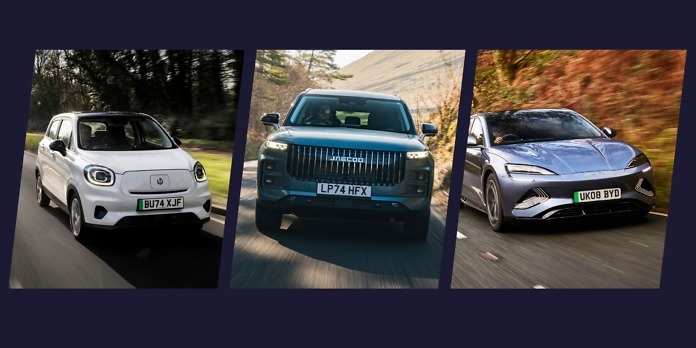
Chinese car brands are establishing a presence in the UK at a rapid pace, with six different Chinese manufacturers already selling new models in the UK and several more on the way. This also includes MG, a well-known British car brand that has been fully owned by the Chinese company SAIC Motor since 2007.

BYD

Entire range built in Asia

BYD seal

With its factories located in China, Thailand and India, you can be confident that any of the growing number of BYD cars on British roads started their life on an Asian production line.

The range now includes the Dolphin hatchback, Seal saloon, Atto 3 SUV and Seal U SUV, with the larger Sealion 7 SUV also on the way. BYD surpassed Tesla as the world’s fastest-growing car brand last year, recording over 8,700 new car sales in the UK in 2024.

GWM

Entire range built in Asia

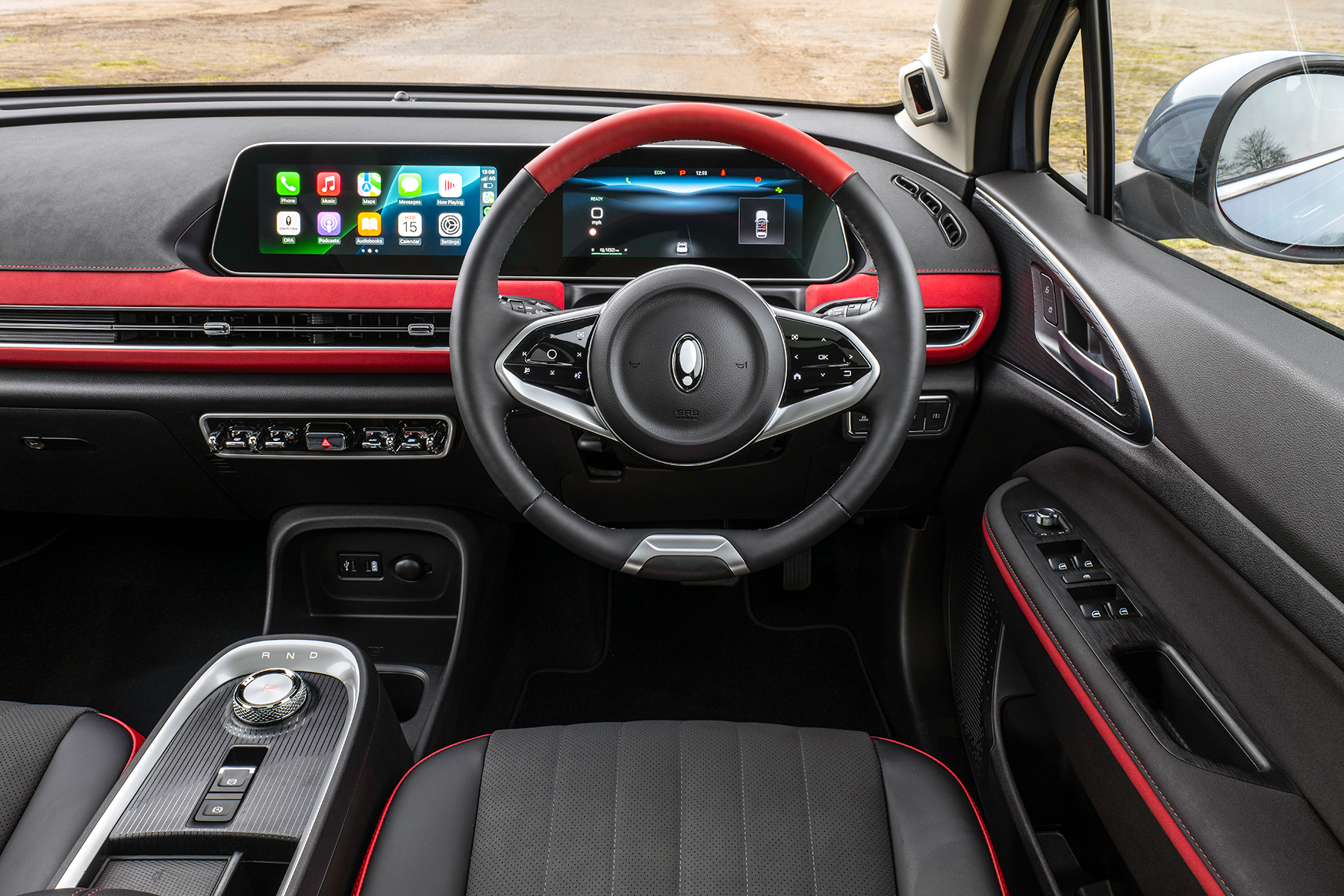
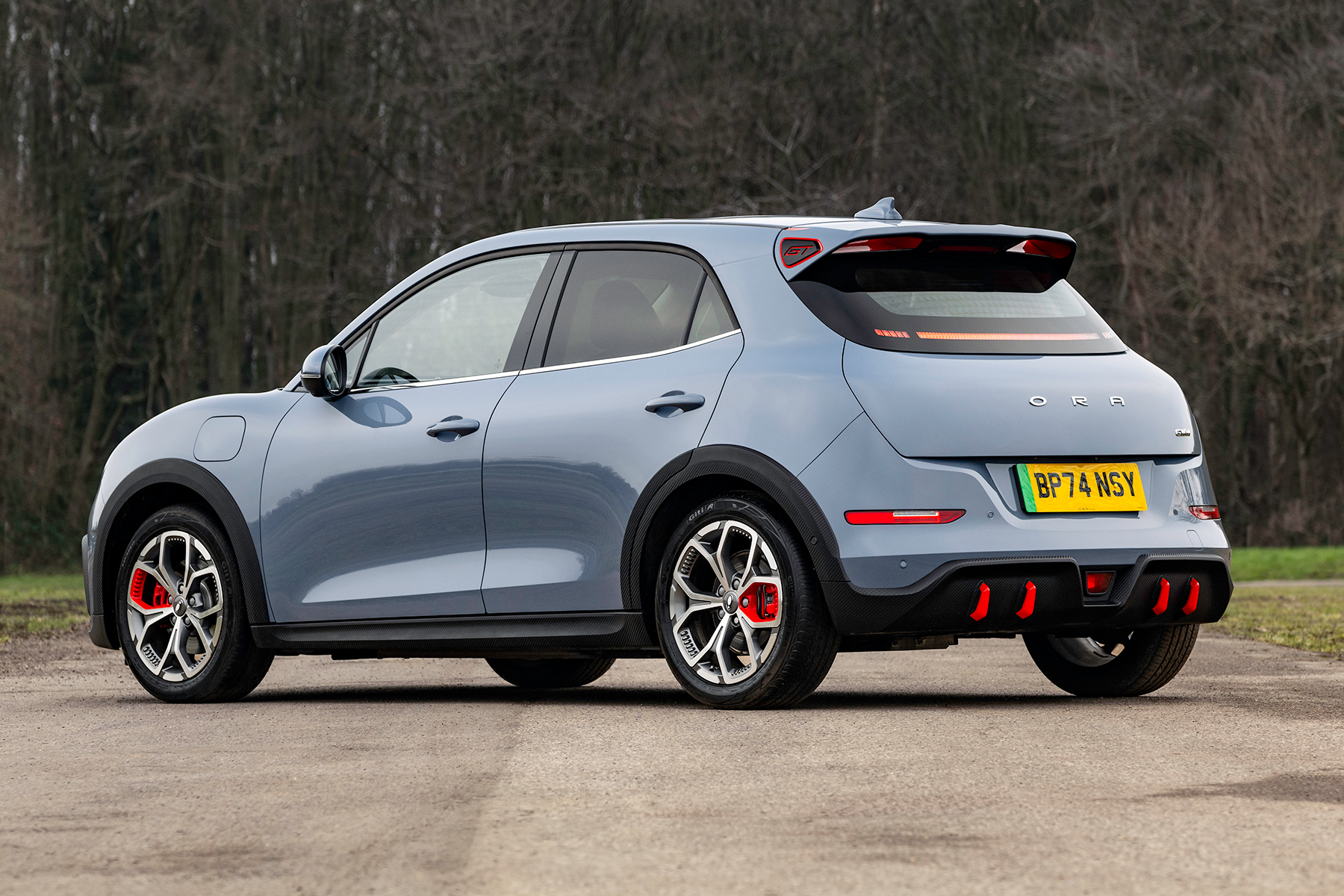
GWM Ora 03

BYD wasn’t the first Chinese brand to arrive in the UK – that was Great Wall Motors’ sub-brand Ora. The cute Ora 03 electric hatchback launched in 2022 (originally called the Funky Cat) and is still the brand’s only offering to British buyers three years later. It is assembled in both China and Thailand.

Another Chinese GWM brand, Haval, is launching its new Jolion Pro SUV in the UK in the coming months.

Jaecoo

Entire range built in Asia

Jaecoo 7

You may not yet have heard of Jaecoo, as the Chery-owned brand has just arrived, but it’s quickly building up its UK presence.

Jaecoo launched its first car in the UK, the petrol and plug-in hybrid Jaecoo 7 SUV, in February this year. It’s been a successful launch, with more than 2,000 cars sold in the first couple of months on sale.

Next up is the Jaecoo 5 range – available with either petrol or electric power – which is set to arrive over summer. Also rumoured to be on the way are the seven-seat Jaecoo 8 SUV and at least one other model.

Leapmotor

Builds its T03 hatchback in both Poland and China

Leapmotor T03

Leapmotor arrived in the UK last year with two new electric models – the pint-sized T03 city car and C10 mid-sized SUV. It will also soon bolster its fledgling UK range with q compact B10 electric crossover.

The brand is the only Chinese manufacturer to assemble some of its cars in Europe. Due to its partnership with Stellantis – which owns 20% of Leapmotor – the T03 is manufactured in Poland for the European market, while the B10 and C10 are both built in China.

MG

Entire range built in Asia

MG 4 (2022 onwards) – front view dynamic
MG 4

Althogh it was founded in Oxford in 1924, MG has been owned by Chinese giant SAIC Motor for 18 years. Most of its cars are assembled in China, although SAIC also has plants in Thailand, Indonesia and Taiwan, and the company retains a design centre in London.

Under its Chinese ownership, MG’s range has blossomed to encompass petrol, hybrid and electric models. Although it no longer builds affordable sports roadsters, the company is probably more profitable and stable than it has ever been.

Omoda

Entire range built in Asia

Omoda 5 - static, front
Omoda 5

Another brand owned by Chinese giant Chery, Omoda arrived in the UK last year and is a sister brand to Jaecoo.

The marque’s range currently includes the petrol-powered 5 and electric E5 SUVs. Arriving shortly is the larger Omoda 9, to be followed later in the year by the Omoda 7 and probably next year by the smaller Omoda 3 – all of which are built in China.

Skywell

Entire range built in China

Skywell BE11

A fledgling Chinese brand that has just arrived on British roads, Skywell has one offering so far in the electric BE11 SUV. The car is built in Nanjing, China.

Compared to other Chinese rivals that are pushing hard to corner the market with keen pricing and aggressive dealership expansion, Skywell has had a more cautious UK launch with a smaller dealer network.

XPeng

Entire range built in China

XPeng G6

XPeng (pronounced ‘Xiao Peng’) landed in the UK back in March with the launch of its mid-sized electric G6 SUV. The marque also plans to bring its P7+ saloon, seven-seater X9 people carrier and flagship G9 SUV to the UK market in the near future.

The brand’s entire range is built at the company’s factory in Guangzhou, China.

Other brands that build cars in China

Several big European names have strong and long-established connections to Chinese manufacturing. Volkswagen Group, for example, has been making some of its cars in China since 1978. In 2025, the vast majority of Chinese-built cars from European and US brands are all-electric models, and are built in China as part of a partnership with a Chinese automotive company, or because electric car battery production is cheaper there, or because a Chinese brand partly owns the European marque.

There are several models not mentioned below, like the Audi Q4 e-tron, Volkswagen ID.3, and Mercedes-Benz E-Class and many more, that are manufactured in both Europe and China, with Chinese manufacturing generally reserved for the Chinese domestic market and other Asian countries.

BMW

Builds its iX3 SUV in China

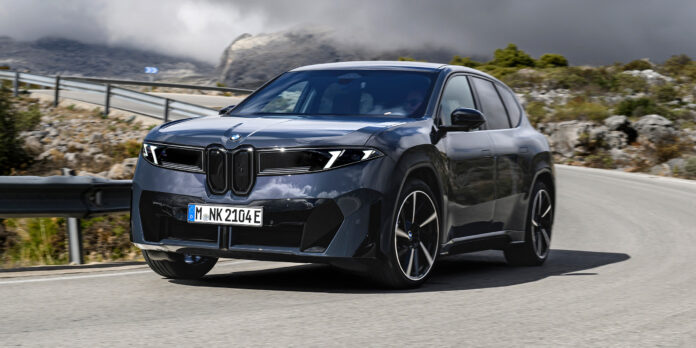
BMW iX3

The BMW iX3 was the brand’s first electric SUV, which arrived in the UK in 2021. It was also BMW’s first model built for export to the UK and Europe from the brand’s factory in Shenyang, China.

Now approaching the end of its model life, the iX3 is set to be replaced by the new iX3 Neue Klasse SUV which is entering production in both China and South Africa. The majority of BMW electric models, including the i4, i5, i7 and flagship iX, are assembled in Germany.

Citroën

Builds its C5 X liftback in China

Citroën C5 X

While the majority of models in Citroën’s current range is built in Europe, the French brand has been building cars in the Chinese city of Wuhan for decades, though not necessarily for the European market.

That changed in 2022 with the introduction of the brand’s upmarket C5 X liftback, which is exclusively built in Chengdu, China as part of a partnership between parent company Stellantis and Chinese company Dongfeng.

Cupra

Builds its Tavascan SUV in China

Cupra Tavascan front view | Expert Rating
Cupra Tavascan

Sporty SEAT sub-brand Cupra has recently launched its new Tavascan SUV in the UK – an electric car that is only built at Volkswagen’s Hefei factory in China.

The rest of Cupra’s current range – including the Ateca SUV, Leon hatchback and estate, all-electric Born hatchback and the upcoming Terramar SUV – are built in Europe.

Dacia

Builds its Spring crossover in China

Dacia Spring front view | Expert Rating
Dacia Spring

Known for its unparalleled value-for-money pricing, Dacia builds most of its model range in its home nation of Romania. However, to keep pricing for its all-electric Spring hatchback as low as possible, Dacia decided to move the car’s manufacturing abroad.

The Spring is assembled in Shiyan, China as part of a joint venture with parent company Renault, Chinese automaker Dongfeng, and Nissan.

Lotus

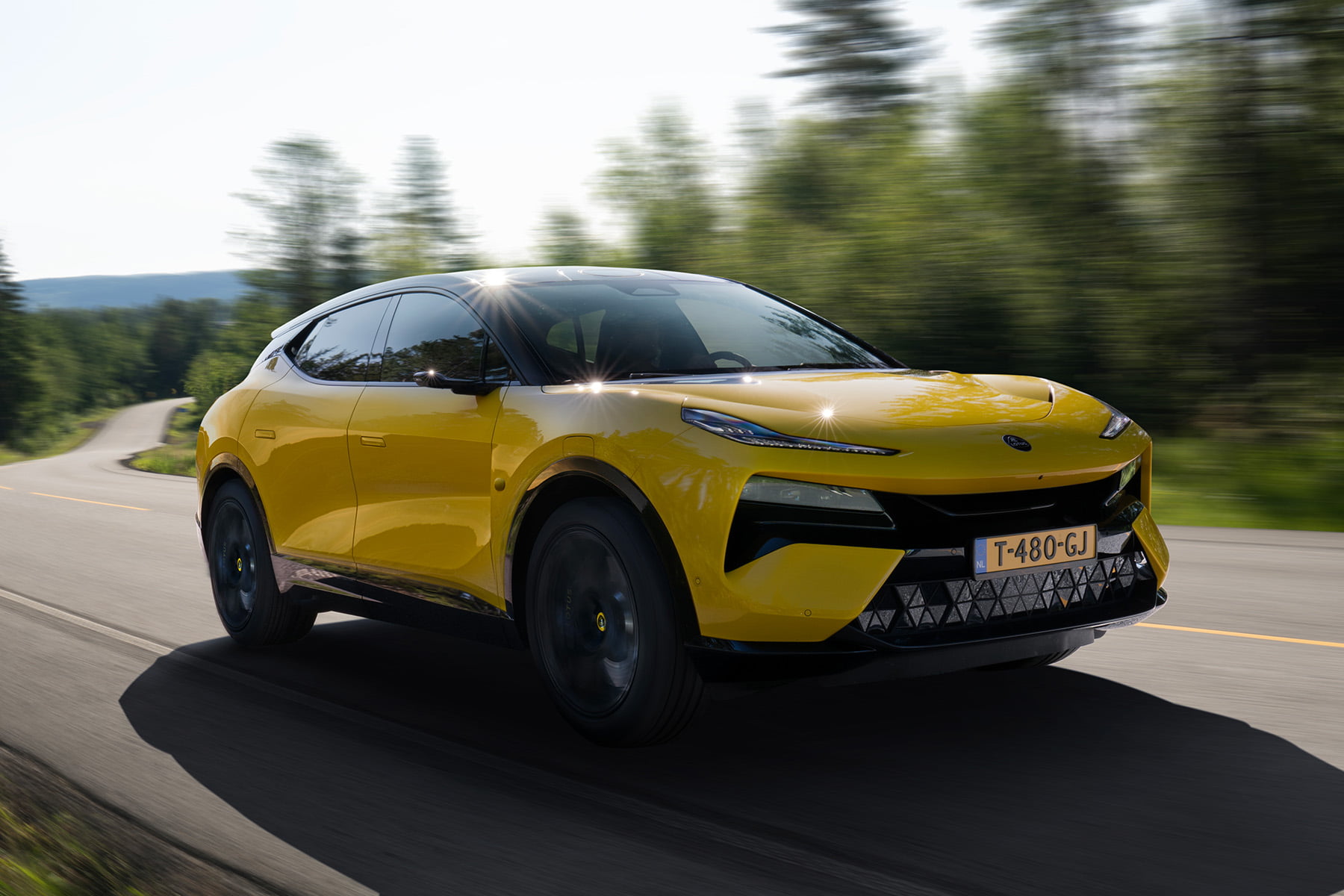
Builds its Emeya and Eletre in China

Lotus Eletre front view | Expert Rating
Lotus Eletre

Another renowned British automotive name that is not exactly British anymore, Lotus is backed by Chinese brand Geely, which owns a controlling 51% of the luxury marque.

While the petrol-powered Lotus Emira sports car is assembled in Norfolk, the brand’s all-electric Emeya grand tourer and Eletre SUV are built in Wuhan, China.

Mini

Builds its Aceman and Cooper Electric in China

Mini Aceman

Back in 2020, BMW began a joint venture with Great Wall Motor to produce all-electric Mini models in China. This partnership continues today, with Mini’s Aceman crossover and new Cooper Electric hatchback assembled in the city of Zhangjiagang.

BMW did have plans to start manufacturing these electric models at Mini’s Oxford plant in the UK where the ICE-powered Mini Cooper is built, but has delayed the investment needed for this project due to “market uncertainty” – and presumably the fact that it already builds the car in China for less than it can do in the UK.

Polestar

Entire range built in China

Polestar 4

Since its establishmentd in 2017, Volvo spin-off Polestar has always built its models in China.

The Polestar 2 saloon is currently built in Zhejiang, the Polestar 3 SUV is built in Chengdu, and the Polestar 4 is built in the city of Ningbo. Like parent company Volvo, Chinese giant Geely owns a large stake in Polestar, recently increasing its share to become the largest stakeholder in the upmarket all-electric brand.

Smart

Entire range built in China

Smart #1 front view | Expert Rating
Smart #1

Originally under the Mercedes-Benz umbrella, Chinese automaker Geely bought a 50% stake in Smart in 2019.

This joint Mercedes-Geely partnership has rejuvenated the Smart brand, and sees the marque’s #1, #3 and upcoming #5 SUVs assembled in Xi’an, China. Mercedes-Benz provides the exterior and interior design, while Geely handles the engineering and manufacturing of the models.

Tesla

Builds its Model 3 saloon in China

Tesla Model 3 (2024 onwards) – front
Tesla Model 3

Despite the ongoing US-China tariff war, American all-electric marque Tesla has recently opened its second large factory in Shanghai, where it builds the Model 3 saloon.

Tesla also builds its popular Model Y SUV in China, but UK and European vehicles are supplied from the company’s German factory in Berlin.

Volvo

Builds its S90, EX30, EX90 and EM90 in China

Volvo EX30 front view | Expert Rating
Volvo EX30

Swedish brand Volvo has been building cars in China many years, with full ownership of three different Chinese factories. Geely owns a large stake in the company.

The brand’s compact EX30 crossover is built exclusively in Chengdu, China – though production is planned to be moved to Belgium in 2026 – and the brand’s large EX90 SUV, EM90 people carrier and S90 saloon are assembled in China.

Volvo also builds its XC40 and EX40 SUV in China, but also builds them in Belgium for sale in Europe and the UK.

Read more:

Hyundai Inster

Summary

The Hyundai Inster is The Car Expert’s Best Small Car 2026!

The Hyundai Inster is a small budget-end battery-powered hatchback and the entry-level all-electric model in Hyundai’s UK range. The range also includes a beefier Inster Cross variant that is more suited to off-road ‘adventures’.

Described as an “impressive package” by the Daily Mail’s Rob Hull, Auto Trader’s Dan Trent argues that the Inster is a great addition to the sub-£25k budget EV market that is “generously equipped and proves affordable doesn’t have to look cheap.”

Also praised for its stylish exterior looks by several reviewers, the car is also praised by many for its competitive battery range. “It’s not as cheap as we had hoped”, says Steve Fowler of The Independent, pointing to the fact that rivals like the Renault 5, Citroën ë-C3 and Dacia Spring are cheaper as standard.

As of February 2026, the Hyundai Inster holds a New Car Expert Rating of A, with a score of 79%. It scores top marks for its media review scores, low running costs, zero tailpipe emissions and warranty coverage, while its Euro NCAP safety rating is also good.

Inster highlights

  • Roomy well-built cabin
  • Competitive battery range
  • Easy to drive and comfortable
  • Attractive pricing

Inster lowlights

  • Some cheap interior plastics
  • Rather soft brake pedal
  • Sliding rear seats reserved for higher trims
  • Styling won’t appeal to all

Key specifications

Body style: Small hatchback
Engines:
electric, battery-powered
Price:
From £23,495 on-road

Launched: Spring 2025
Last updated: N/A
Replacement due: TBA

Media reviews

Highlighted reviews and road tests from across the UK automotive media. Click any of the boxes to view.

Featured reviews

More reviews

Auto Express

Auto Trader

Business Car

Car

Carbuyer

Daily Mail

Driving Electric

Electrifying.com

Green Car Guide

Heycar

Honest John

Parkers

The Independent

The Sunday Times

The Telegraph

Top Gear

Which EV?

Safety rating

Independent crash test and safety ratings from Euro NCAP

Overall score: 4 stars
Date tested: July 2025
Read the full Euro NCAP review

Adult protection: 70%
Child protection: 81%
Vulnerable road users: 70%
Safety assist: 67%

Eco rating

Independent economy and emissions ratings from Green NCAP

No eco rating

As of February 2026, the Hyundai Inster has not been assessed by Green NCAP.

The Green NCAP programme measures exhaust pollution (which is zero for an electric car) and energy efficiency. Electric cars are much more energy-efficient than combustion cars, so the Inster is likely to score very highly in Green NCAP testing if and when it takes place. Check back again soon.

Running cost rating

Clear Vehicle Data logo close crop

Monthly cost of ownership data provided exclusively for The Car Expert by Clear Vehicle Data

Battery rangeAverageScoreVariationScore
EV models218 milesC
Electrical efficiencyAverageScoreVariationScore
EV models4.2 m/KWhC
Insurance groupAverageScoreVariationScore
All models22B

As of February 2026, we only have limited information about the Hyundai Inster’s running costs. Its electrical efficiency (the EV equivalent of fuel economy for a petrol or diesel car) is good, which helps to deliver a decent battery range for this class of car.

We should be getting servicing and insurance cost data shortly, so check back again soon.

Reliability rating

MotorEasy logo 600x167

Reliability data provided exclusively for The Car Expert by MotorEasy

No reliability rating

As of February 2026, we don’t have enough reliability data on the Hyundai Inster to generate a reliability rating.

The Car Expert’s reliability information is provided exclusively to us using workshop and extended warranty data from our partner, MotorEasy, sourced from both official dealerships and independent workshops. 

As soon as MotorEasy has sufficient data on the Inster, we’ll publish the results here.

Warranty rating

New car warranty information for the Hyundai Inster

Overall ratingA95%
New car warranty duration5 years
New car warranty mileageUnlimited miles
Battery warranty duration8 years
Battery warranty mileage100,000 miles

Hyundai’s new car warranty is better than average, and better than rival brands in a similar price bracket as the Inster.

The duration is five years, with no limit on mileage. In addition to the standard new car warranty, there is a separate eight-year/100,000-mile warranty for the battery components.

If you’re looking to buy a used car that is approaching the end of its warranty period, a used car warranty is usually a worthwhile investment. Check out The Car Expert’s guide to the best used car warranty providers, which will probably be cheaper than a warranty sold by a dealer.

Recalls

Official DVSA safety recalls that have been issued for the Hyundai Inster

As of February 2026, we are not aware of any DVSA vehicle safety recalls affecting the Hyundai Inster. However, this information is updated very regularly so this may have changed.

You can check to see if your car has any outstanding recalls by visiting the DVLA website or contacting your local Hyundai dealer.

Awards

Significant UK trophies and awards that the Hyundai Inster has received

Awards 2026 Small Car feature Hyundai Inster

Similar cars

If you’re looking at the Hyundai Inster, you might also be interested in these alternatives.

BYD Dolphin | Citroën ë-C3Dacia Spring | Fiat 500e | GWM Ora 03 | Kia EV2 | Leapmotor T03Mini Cooper Electric | Peugeot e-208 | Renault 5 | Vauxhall Corsa Electric

More news, reviews and information about the Hyundai Inster at The Car Expert

Electric car grant – all the EVs with discounts in 2026

Electric car grant – all the EVs with discounts in 2026

Hyundai Inster review – first UK drive

Hyundai Inster review – first UK drive

Best Small Car 2026

Best Small Car 2026

Electric Hyundai Inster Cross pricing announced

Electric Hyundai Inster Cross pricing announced

All-new Hyundai Inster UK pricing and specs announced

All-new Hyundai Inster UK pricing and specs announced

Buy a Hyundai Inster

If you’re looking to buy a new or used Hyundai Inster, The Car Expert’s partners can help you find the right car.

Motors 600x300

Find your next used car with Motors. Find out more

Auto Trader logo 600x300

Find your next new or used car with Auto Trader. Find out more

Carwow logo 600x300

Find your next new or used car with Carwow. Find out more

Lease a Hyundai Inster

If you’re looking to lease a new Hyundai Inster, The Car Expert’s partners can help you find a competitive deal.

Leasing-com logo

Personal contract hire deals from Leasing.com. Find out more

Carwow logo 600x300

Personal contract hire deals from Carwow. Find out more

Select Car Leasing logo

Personal contract hire deals from Select Car Leasing. Find out more

Subscribe to a Hyundai Inster

Subscriptions are becoming a very popular way for consumers to try an electric car for a few weeks or months to help decide whether it’s a suitable alternative to a petrol car. If you’re interested in a car subscription, The Car Expert’s partners can help. (PS: What’s a car subscription?)

Cocoon Vehicles logo 600x300

Car subscriptions from Cocoon.
Find out more

Just Vehicle Solutions logo 600x300

Car subscriptions from Just Vehicle Solutions.
Find out more

Flexible Vehicle Contracts logo 600x300px

Car subscriptions from Flexible Vehicle Contracts.
Find out more

New Lexus ES saloon to arrive early next year

0

The new Lexus ES saloon range is set to go on sale in the UK early next year with both hybrid and all-electric models to choose from.

Replacing the current petrol-electric hybrid ES saloon range which has been on sale since 2019, this new eighth-generation line-up sports the brand’s latest exterior design language. Somewhat resembling the RX SUV, the saloon has a long bonnet with deep contours, flanked by slim LED headlights and large air intakes on the front bumper.

Sharp protruding lines above the side skirts and on the rear bumper, as well as the near LED tail light bar that stretches across the car’s rear, highlight what Lexus calls a “bold” but “minimalist” approach to design.

Broadly built on the same foundations as the current ES, this new saloon range will include two 2.5-litre petrol-electric hybrid models – the 201hp ‘300h’ and 247hp ‘350h’, both of which will be available with either front-wheel drive or all-wheel drive. Lexus adds that it only plans to offer the ‘300h’ in Western Europe at launch, with the ‘350h’ reserved for eastern markets.

Compared to the previous range, Lexus says that it has improved the output of the car’s hybrid battery. Keep in mind that this isn’t a plug-in hybrid model – the petrol engine is aided by a small battery and electric motor which boosts fuel efficiency.

Should you prefer a fully-electric model, the range will also include the battery-powered front-wheel drive ‘350e’ and all-wheel drive ‘500e’. While Lexus is yet to announce the size of the battery, the 224hp ‘350e’ can reportedly muster up to 426 miles on a single charge, while the faster 343hp ‘500e’ can handle a reduced maximum range of 379 miles.

Both electric models are compatible with 150kW DC rapid charging stations, with a 10% to 80% battery top-up taking around 30 minutes.

Inside, the saloon has a 14-inch central infotainment touchscreen that juts out of the dashboard, above ‘hidden tech’ switches that control various functions and only light up when the car is turned on. A 12-inch digital instrument cluster features behind the steering wheel.

Lexus says its goal was to “design a cabin that is exceptionally comfortable and relaxing”, and to that end the rear cabin can be fitted with reclining seats and the front passenger seat can fold forward to increase rear leg room and improve the view.

That sums up what we know about the new Lexus ES so far. More details are to follow closer to the car’s official arrival in Spring next year, including UK pricing and trim specifications. Check back soon!

New Bentley Continental GT and Flying Spur models unveiled

0

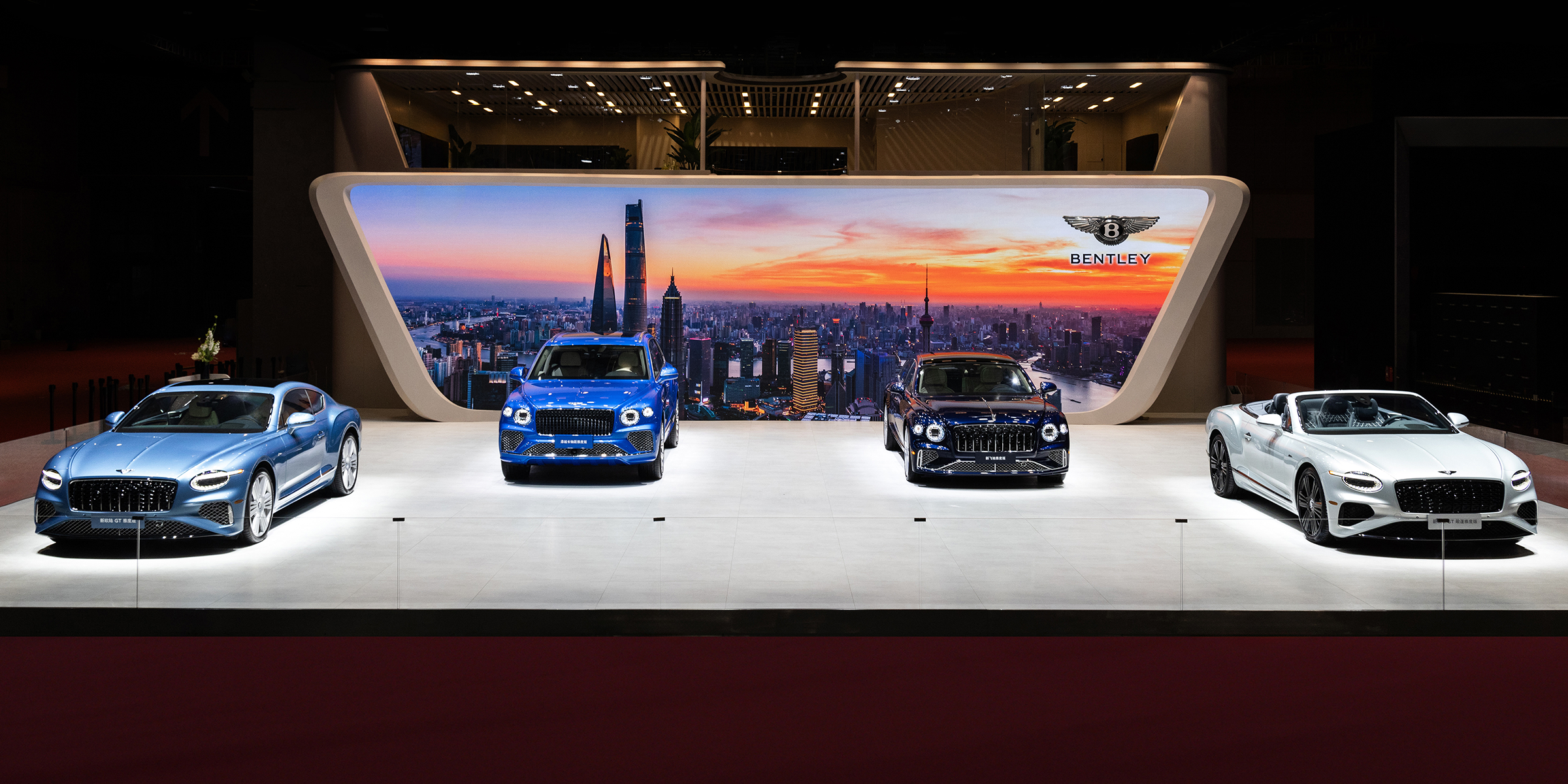
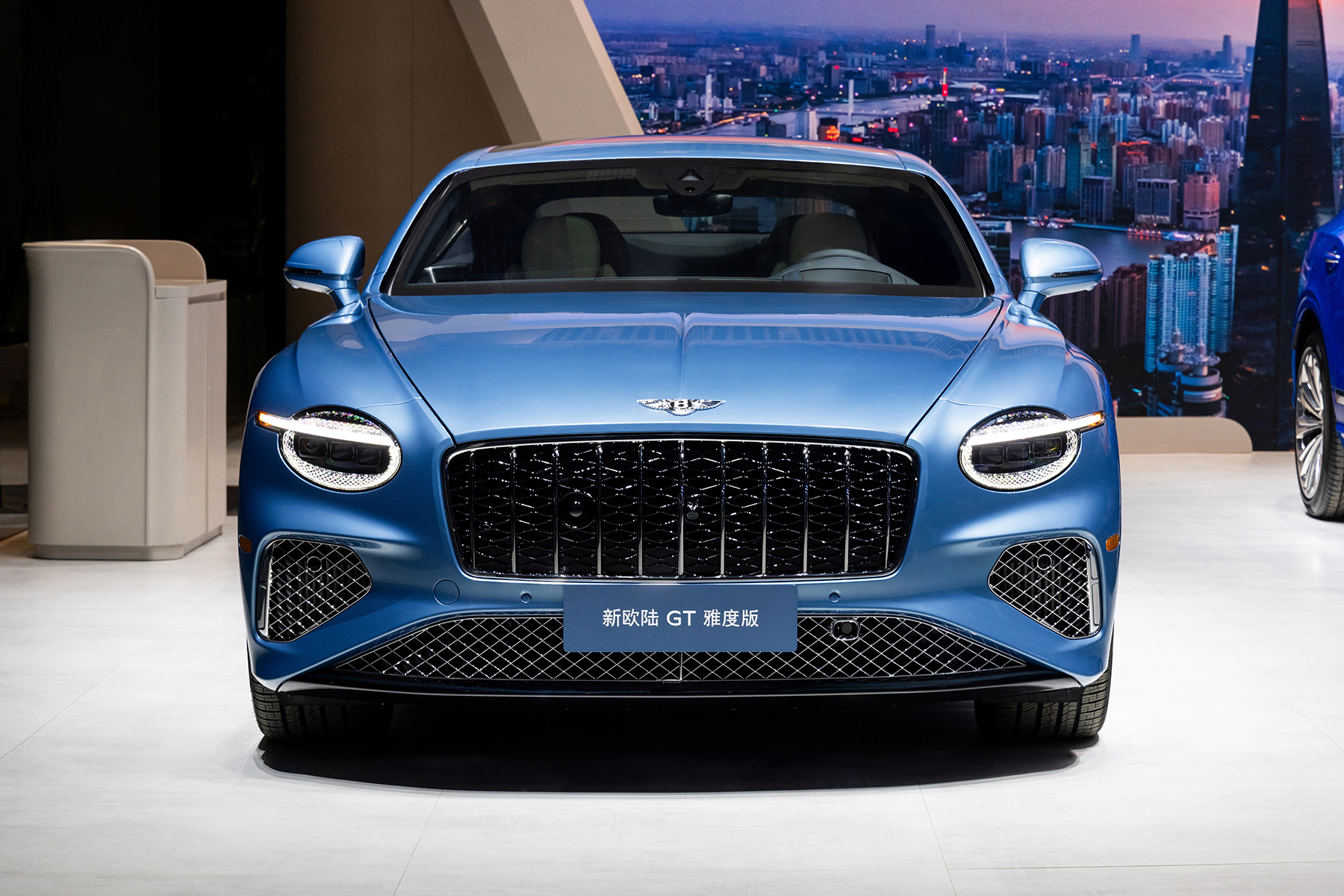
Bentley has put its new fourth-generation Continental GT, Continental GT Convertible and Flying Spur models on display at the Shanghai motor show, which are all powered by a new ‘high performance’ hybrid powertrain.

This new ‘high performance’ engine – which features in both the Continental GT and Flying Spur range – is a detuned version of the ‘Ultra High Performance’ set-up that replaced the long-standing W12 engine last year. These plug-in hybrids pair a twin-turbocharged 4.0-litre V8 engine with an electric motor and a 26kWh battery, producing 680hp and an electric-only driving range of around 50 miles.

With this new engine setup, the Continental GT can reportedly complete a 0 to 60mph sprint in 3.5 seconds (3.8 seconds for the convertible), while the Flying Spur can complete the same run in a reported 3.8 seconds.

The trim choices for both model ranges have also been revised, with a standard ‘core’ trim sitting below a range-topping ‘Azure’ trim grade. The Azure version adds a few exterior tweaks like a gloss black grille, chrome exterior accents and a unique 22-inch alloy wheel design, as well as diamond-shaped upholstery quilting and embroidered ‘Azure’ logos inside.

New Omoda 7 and Jaecoo 5 SUVs debut

0

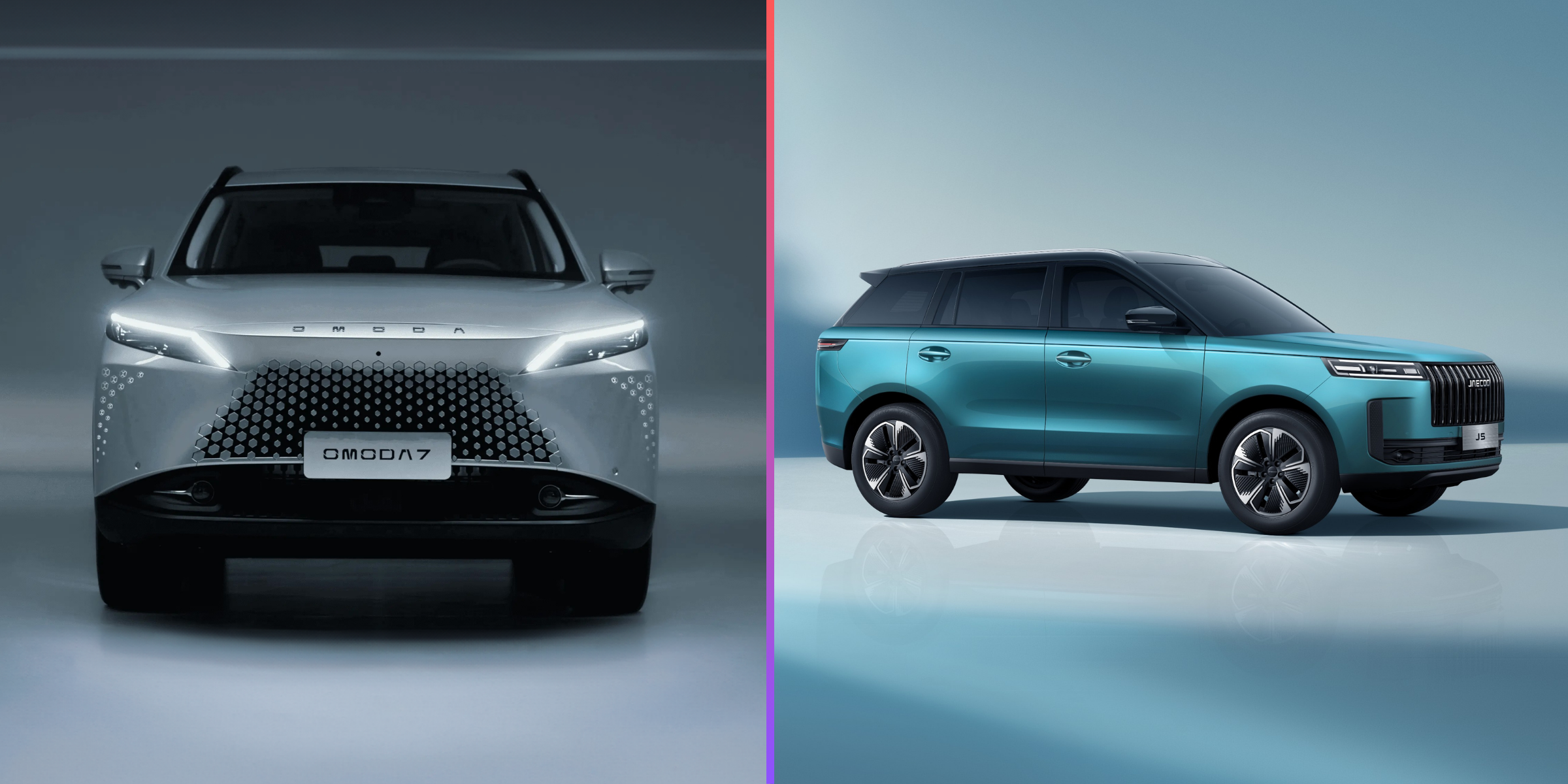
The new Omoda 7 and Jaecoo 5 SUVs have debuted at this week’s Shanghai motor show, both of which are scheduled to arrive in the UK this summer.

Omoda and Jaecoo are new export-oriented brands from China’s Chery Automobile, one of the the country’s largest car manufacturers. Omoda launched in the UK last year with the Omoda 5 and Omoda E5 models, while Jaecoo launched at the start of this year with the Jaecoo 7 SUV.

Chery has big expansion plans for both brands, with several new models set to arrive in the UK later this year and into next year. We’ll have a more detailed breakdown coming separately very soon, as our editor Stuart Masson is currently in China with Omoda and Jaecoo to drive some of the new models and find out more about what’s on the way.

Omoda 7

Sitting between the Omoda 5 and upcoming Omoda 9 SUV, the new Omoda 7 SHS (Super Hybrid System) is powered by an advanced plug-in hybrid powertrain, consisting of a 1.5-litre turbocharged petrol engine and electric motor that combine to produce 340hp, and can muster up to 745 miles of driving on a full tank and a charged battery. That’s 45 miles more than Omoda claims the larger 9 SHS can provide.

Omoda is yet to confirm the size of the hybrid’s battery, but we do know that the car can handle up to 56 miles of electric-only driving, can charge from 30% to 80% battery in around 20 minutes, and can complete a 0-62mph sprint in a reported 8.5 seconds. Full UK pricing and specification are expected in coming weeks.

Jaecoo 5

The new Jaecoo 5 SUV will be available in either petrol or electric versions, and is also set to reach the UK later this year. Externally, it looks very much like a smaller version of the Jaecoo 7, which only launched in February and has already racked up about 2,000 registrations here in the UK.

The Jaecoo 5 will offer a choice of a 1.5-litre petrol engine or a fully electric model. Once again, full UK pricing and specification will be available in coming weeks.

Jaecoo is a more premium offering than Omoda, so pricing is set to be a few thousand pounds more than equivalent petrol Omoda 5 (£26-£28K) or Omoda E5 (£33-£35K) models. Like the larger Jaecoo 7, we expect a very high level of specification at very competitive prices.

All Omoda and Jaecoo models come with a seven-year/100,000-mile new car warranty, and the company has alreayd built a network of around 70 dealerships around the UK.

Subaru Solterra update improves battery tech

0

Subaru has unveiled a design refresh for its flagship electric Solterra SUV – including battery technology improvements and exterior cosmetic tweaks – as well as a new Trailseeker SUV.

On display at the New York motor show, the refreshed Solterra – which is still only available with a single all-wheel drive 71kWh battery configuration – will reportedly be able to travel more than 25% further on a single charge than the pre-facelift version. This should boost the SUV’s electric range from 289 miles to over 360 miles between charges.

Charging at up to 150kW with a DC charger, Subaru says that it takes around 35 minutes to top up the battery from 10% to 80%.

The most notable change is the refreshed exterior, which features narrower LED headlights and the new front bumper design. The fog lights have been moved further up the front fascia, the air intake on the lower front bumper is smaller, and Subaru has decided to remove much of the chunky black bumper cladding.

The refreshed Solterra is set to go on sale in the UK in early 2026, with a new electric Trailseeker SUV scheduled to arrive a few months later. While the ‘Trailseeker’ moniker is yet to be confirmed for the UK (it could be called something else when it arrives here), we do know that it will be larger than the Solterra with more ground clearance and interior room.

Both the Solterra and Trailseeker will come with 14-inch central infotainment touchscreens on the dashboard inside, as well as a wireless smartphone charging pad that comes as standard. The entry-level equipment list will also include blind spot monitoring and lane keeping assistance tech, as well as the brand’s ‘X-mode’ driving modes for off-road terrain.

The Subaru Solterra holds a New Car Expert Rating of A, with a score of 75%. This is the same rating, but four points short of the 79% held by its sister model, the Toyota bZ4X.

MG S5 EV review

0

Make and model: MG S5 EV
Description: Small-medium electric SUV
Price range: from £28,495

MG says: “The MGS5 EV is a new generation of versatile SUV, combining rapid charging, generous cabin space, intelligent driver controls, exciting driving dynamics, and abundant safety features all as standard.”

We say: The MG S5 EV is a practical and well-equipped electric family car that offers excellent value for money, although it’s not the most exciting to drive.


Introduction

MG has been on a roll for the last couple of years, renewing pretty every car in its range as well as adding new models like the Cyberster electric sports car and a high-performance hot hatch version of its family-friendly MG 4. This is the latest model to join the family, the S5 (styled by the company as the MGS5 EV).

The pace of MG’s development has been frenetic – the new S5 EV replaces the MG ZS EV, which was on sale for less than six years. That’s about two years quicker than the average industry lifespan for a vehicle. It also sort-of replaces the MG 5 electric estate, which was only launched in 2020 and then massively updated in 2022.

This rapid development has only been possible thanks to massive investment from MG’s Chinese owners, SAIC. Some people insist that MG today is nothing like the old MG of the past, and they’re absolutely right – just not for the reasons that they think. Today’s MG is far more profitable, far more financially secure and selling more cars than ever before. Once you take off the rose-tinted glasses, there’s no comparison.

What is it?

The MG S5 EV is a new small electric SUV from MG, replacing the previous MG ZS EV that has been on sale for the last six years. It shares a lot of its underpinnings with the MG 4 electric family hatchback, but moves development on another step or two.

The small electric SUV market is growing steadily, and the S5 is facing an ever-increasing number of competitors. These include the Kia EV3, Hyundai Kona Electric, Skoda Elroq, Ford Puma Gen-E, Peugeot e-2008, Vauxhall Mokka and more. As is typical for MG, the S5’s pricing undercuts its rivals by a few thousand pounds while also beating them on standard equipment.

The S5 is a dedicated electric car, so there is no petrol or hybrid alternative. That job falls to the new MG ZS, which is a similar size but based around a traditional petrol engine, with or without hybrid assistance. That means the company has been able to make the most of the packaging advantages of an EV, resulting in more cabin and boot space than in the ZS. This is a different approach to the likes of Stellantis (Vauxhall, Peugeot, Citroën, Fiat, etc.), which tends to offer the same model in either fossil-fuel or electric versions.

Funnily enough, from certain angles, the nose of the MG S5 looks a lot like the previous-generation Hyundai Kona Electric. However, we suspect that you’re going to see a lot more S5s than old Konas on the road before long…

What do you get for your money?

As is usual for MG, there are two trim levels available on the S5 called SE and Trophy. Both trims have the same electric motor, but the SE is available with a choice of two battery sizes – a 49kWh Standard Range version with 211 miles of battery range, and a 64kWh Long Range that extends this to 298 miles and also bumps up the power from the electric motor. The Trophy is only available in Long Range, higher-output form.

The entry-level MG S5 EV SE Standard Range is priced at £28.5K, which steps up by an extra £2,500 to £31K if you want the Long Range battery and a bit more power. However, the company expects 60%-65% of sales to be the higher-spec MG S5 EV Trophy model, which is priced at £33.5K. In any of the three models, the only extra-cost option is premium paint.

The SE spec gets things off to a good start, with a full suite of safety systems (although we don’t have a Euro NCAP safety score at time of writing) and connectivity features. The upholstery is cloth throughout, without electric adjustment or heating for either the seats or steering wheel. In the centre of the dashboard is a 13-inch touchscreen for controlling infotainment systems, with a ten-inch screen in front of the driver for speed and other information.

Trophy spec means getting 18-inch alloy wheels instead of 17-inch versions, plus faux-leather seats with heating and electric adjustment for the driver, wireless phone charging, a couple more speakers for the stereo, privacy glass, 360-degree cameras and a few more bits. Have a read through the brochure before making a decision, but the higher-spec Trophy certainly seems to be worth the extra £2.5K over the SE Long Range.

In terms of warranty, MG has one of the best offerings in the market. You get a standard seven-year/100,000-mile new car warranty, which is equal to Kia and Omoda, and comfortably better than every other brand.

As with most electric cars, the battery is additionally covered by an eight-year/100,000-mile warranty from new.

Expert tips

  • All safety kit is standard on all models, so you don’t have to pay more to get the best tech
  • Top-spec Trophy and bottom-spec SE Standard Range look better value than mid-spec SE Long Range.
  • Long seven-year warranty is valuable for used car buyers

What’s the MG S5 like inside?

Compared to the old ZS EV, the new S5 is a huge leap forward. The interior design, the quality of the materials, and the fit and finish are all significantly better than the old car. Even compared to the closely related MG 4, the S5 is a step up. Whereas the ZS felt good “for a budget car”, the S5 simply looks perfectly competitive with competitors from other brands.

The cabin is a sea of drab grey plastic, which is a bit bland and a shame as the layout and design are quite good. There’s a splashing of fake suede and fake carbon fibre, but they look like afterthoughts and don’t enhance the overall ambience. There’s no sunroof option on the S5, so it can feel a bit dark on a glum British day.

The infotainment system and central touchscreen are a big improvement over previous MG models, which is welcome as it was very much needed. Most functions are controlled through the touchscreen, although heating and cooling functions have real buttons located in a strip underneath the screen. Wireless connection for Apple CarPlay and Android Auto are standard on all models, but only the Trophy gets wireless phone charging as well.

A ten-inch digital screen replaces traditional analogue gauges in front of the driver. As with most brands, many of the fonts are too small and manufacturers would do better to display less information more clearly, rather than trying to cram too much onto the screen.

Helpfully, there’s a new function called MG Pilot Custom that allows you to pre-set which EU nannies you’d like to disable on each journey. You still need to swipe and press every single time you start the car, but you can disable multiple functions in one go rather than having to switch them off individually. In other good news, the speed limit detection cameras seem to be improved over other MGs and many rival cars. We only had a short drive, but the system managed to avoid reading the wrong signs or ignoring valid signs. Small mercies, but we’re stuck with this half-baked tech legislation now thanks to incompetent bureaucrats, so manufacturers need to make it work as well as possible.

The cabin is spacious in both the front and rear, with more room than you’ll find in many larger fossil-fuel SUVs. Being a dedicated EV, there’s no hump running down the middle of the floor, which means more room for storage in the front and a flat floor for the middle passengers in the back. The boot is also a decent size, with a claimed volume of about 450 litres.

Expert tips

  • Being a dedicated EV, the cabin is more spacious than some electric rivals that are based on petrol-powered models
  • Well-designed cabin, but all-grey layout is a bit dull
  • If you’re coming from an older MG model, you’ll notice an enormous improvement

What’s the MG S5 like to drive?

We drove the Trophy model, which has a higher output (170kW, which is 231hp) than the entry-level SE Standard Range (125kW/170hp). That makes it substantially quicker in acceleration, able to hit 60mph from rest in just over six seconds, which is about two seconds quicker than the base model. It also gets a chunk more torque, which means that it will maintain its performance better when fully loaded with passengers and/or luggage.

As with any EV, the MG S5 is smooth and quiet as an electric motor is inherently better in these areas than any petrol or diesel engine on the planet. But the S5 has really upped the level of refinement compared to the old ZS EV, and is better than MG’s other models in this area as well. Wind and road noise are well damped, even at motorway speeds. It’s not as hushed as a luxury EV like a BMW iX or Mercedes-Benz EQE, but it’s certainly competitive with anything its price bracket.

The steering is light and feels numb, but then you can say that about almost any family SUV on the market today, regardless of whether it’s an EV or a petrol car. It’s a car for cruising along comfortably rather than hustling, but that will be absolutely fine for its intended audience.

The ride is mostly good, although it can get a bit bouncy when the road surface is uneven. At urban speeds, it’s generally very well composed. When speed picks up to motorway pace, it feels stable and unflustered by crosswinds, so longer trips should be fairly relaxing.

Expert tips

  • 230hp motor in Trophy and SE Long Range models is easily punchy enough for most households
  • Refinement is easily on a par with other small SUVs in a similar price bracket
  • Not worth trying to hustle along, as there’s no fun to be had. So settle down and waft along comfortably…

How safe is the MG S5?

As of April 2025, the MG S5 EV has not been assessed by Euro NCAP so we can’t give you a definitive answer of how safe it is (Euro NCAP testing assesses new cars over and above minimum legal safety requirements). If and when this testing takes place, we’ll update the information and safety score here.

The S5 is kitted out with plenty of latest-generation ADAS (advanced driver assistance systems) kit, and they all work well enough – although we thankfully didn’t need to test them in genuine emergency conditions. This is certainly not the case in all small cars, so MG deserves praise for making the systems as unobtrusive as possible.

As with all new cars, you still need to deactivate certain systems – speed limit warnings and so on – every time you start the car if you don’t want to be beeped and bonged at for your entire journey, but MG has at least made it simple to deactivate multiple systems in one go, rather than having to do them individually.

Expert tips

  • The MG S5 has not yet been rated by Euro NCAP (as of April 2025)
  • Driver assistance systems are less annoying than in many other new models
  • Speed limit sign detection seems to work better than in many cars. but we’d need a longer review to be sure

MG S5 economy, battery range and charging

The MG S5 EV comes with a choice of two batteries. The smaller one is a 49kWh unit in the SE Standard Range, which is good for about 211 miles of driving in the official EU/UK lab tests. Step up to the SE Long Range or Trophy models, however, and you get a 62kWh battery that provides for 298 miles (SE Long Range) or 288 miles (Trophy) of driving on the official test programme. Knock 20% off both numbers (so about 170 miles and 240 miles, respectively) for cold conditions or harder driving, but if you’re happy to be gentle with your right foot and spend most of your time in urban areas, you should get close to these numbers.

Electrical efficiency (the EV equivalent of fuel economy in a petrol or diesel car) is only average, rating a C-grade according to our unique Expert Rating Index, although not that many other small electric SUVs are much better. There’s no heat pump included or available, which means range may suffer in very cold conditions. While we wouldn’t expect a heat pump to be included as standard, it’s a shame that you can’t pay extra for one.

At public chargers, the S5 can accept a maximum charging speed of 150kW, which is better than many other small SUVs. Assuming you are plugged into a 150kW charger, that means that you can get a charge from 10% to 80% in less than half an hour. If you’re charging at home with a 7kW wallbox, a full charge from 0-100% will take about 8.5 hours for the 49kWh battery and 11.5 hours for the 62kWh battery.

The charging port is in the left-rear corner of the car, so you’ll want to reverse into charging bays rather than driving in forwards. If you’re charging at home, the S5 is short enough that your cable will probably reach the charging plug regardless of which way round you park.

Expert tips

  • Official battery range of 211-298 miles, depending on specification. Around town, this is probably achievable but motorway driving will reduce this significantly.
  • Driving range should be plenty for its intended customer base (average household mileage in the UK is about 120 miles/week).
  • The charging port is in the left-rear of the car, which means reverse parking in most charging bays will be better.
  • Comes standard with the usual Type-2-to-Type-2 charging cable for plugging into a dedicated charging unit, but not a Type-2-to-Type-3 cable for plugging into a standard three-point electricity plug.

Verdict

The MG S5 EV is a sensible choice for your next family EV. It’s spacious, generously kitted out and well priced. If you’re coming out of an existing MG model, like the MG ZS EV or MG 5, you’ll find it a massive step forward in terms of quality and technology. It’s far and away the best car that MG currently makes.

It’s not the most exciting car to look at or drive, but it is practical and affordable compared to other SUVs – as well as plenty of small petrol or hybrid SUVs. Perfomance from the bigger-battery versions is good, although the smaller-battery version is somewhat more sedate.

The top-spec Trophy model is expected to take more than half of all sales, although its price tag of £33.5K does stray close to cars from bigger-name brands. However, once you price up a rival of comparable specification, you’ll likely find that the MG is still £3K-£5K cheaper.

We haven’t yet got safety data, but most other MG models in recent years have tended to score five-star ratings from Euro NCAP. We hope that the S5 will repeat this level of performance, but we’ll have to wait and see.

Overall, the MG S5 EV is a practical and well-equipped electric family car that – assuming it performs well in Euro NCAP safety testing, whenever that happens – we can highly recommend.

Expert recommendations

  • Battery range is more than suitable for intended market
  • Can’t confirm safety performance until Euro NCAP conducts its tests
  • An impressive new family EV from MG

Similar cars

Alfa Romeo Junior Elettrica | BYD Atto 2 | Citroën ë-C3 Aircross | DS 3 E-Tense | Fiat 600e | Ford Puma Gen-E | Honda e:Ny1 | Hyundai Kona Electric Jeep Avenger | Kia EV3 | Mazda MX-30 | Omoda E5 | Peugeot e-2008 | Renault Mégane E-Tech | Smart #1 | Suzuki e-Vitara | Toyota Urban Cruiser | Vauxhall Mokka Electric

Key specifications

Model tested: MG S5 EV Trophy
Price: £33,495
Engine: Single electric motor
Gearbox: 
Single-speed automatic

Power: 170 kW (231 hp)
Torque: 350 Nm
Top speed: 101 mph
0-60 mph: 6.3 seconds

Battery range: 288 miles
CO2 emissions: 0 g/km
Euro NCAP safety rating: Not yet tested
TCE Expert Rating: Not yet rated

Buy an MG S5

If you’re looking to buy a new or used MG S5, The Car Expert’s partners can help you find the right car.

Motors 600x300

Find your next used car with Motors. Find out more

Auto Trader logo 600x300

Find your next new or used car with Auto Trader. Find out more

Carwow logo 600x300

Find your next new or used car with Carwow. Find out more

Lease an MG S5

If you’re looking to lease a new MG S5, The Car Expert’s partners can help you find a competitive deal.

Carparison 600x300

Personal contract hire deals from Carparison Leasing. Find out more

Leasing-com logo

Personal contract hire deals from Leasing.com. Find out more

Select Car Leasing logo

Personal contract hire deals from Select Car Leasing. Find out more

Subscribe to an MG S5

Subscriptions are becoming a very popular way for consumers to try an electric car for a few weeks or months to help decide whether it’s a suitable alternative to a petrol car. If you’re interested in a car subscription, The Car Expert’s partners can help. (PS: What’s a car subscription?)

SelfDrive UK logo

Car subscriptions from SelfDrive.
Find out more

Drive Fuze logo 600x300

Car subscriptions from DriveFuze.
Find out more

Cocoon Vehicles logo 600x300

Car subscriptions from Cocoon.
Find out more

Jaecoo 7

Summary

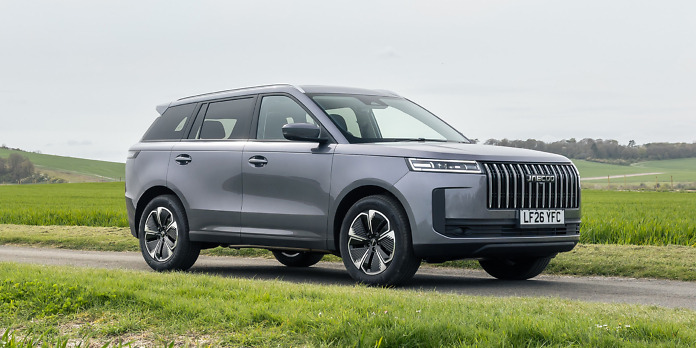
The Jaecoo 7 is a mid-sized SUV/crossover, with the aim of competing with cars like the Range Rover Evoque and Audi Q3, but for the price of something more like a Nissan Qashqai or Kia Sportage.

It’s the first model for new Chinese car brand Jaecoo, which launched in the UK in early 2025 and is the sister brand to Omoda, which itself only launched in 2024. Both are owned by Chinese giant Chery, and have plans for rapid growth in the UK in coming years.

The Jaecoo 7 was launched with a choice of a petrol engine or petrol/electric plug-in hybrid powertrain, and two trim levels. The company says that it remains flexible with regard to future powertrain options, so if there is demand for a basic (no plug) hybrid, for example, it can react quickly to customer demand.

Initial reviews at the car’s UK launch were broadly positive, with scores that are average to good. Mark Nichol at Auto Trader points out that the Jaecoo 7 “feels a lot of car for the money, and – vitally – a lot of pretty good car at that”.

Our own editor at The Car Expert, Stuart Masson, described the 7 as “an impressive new entrant into the compact SUV segment” and “well-placed to succeed”.

As of April 2025, the Jaecoo 7 holds a New Car Expert Rating of B, with a score of 68%. It scores top marks for its excellent safety rating and low CO2 emissions, although its media review scores are currently poor based on the launch event in February 2025. This may improve over time once longer reviews are published, so keep checking back for the latest information.

We also don’t yet have complete running cost data, while we won’t get valid reliability information for a couple of years as it’s a brand-new car.

Jaecoo 7 highlights

  • Very good value for money
  • Fit and finish more than a match for rivals
  • Excellent EV range on plug-in hybrid

Jaecoo 7 lowlights

  • Fuel economy not great on petrol models
  • Plug-in hybrid loses almost 90 litres of boot space
  • Petrol engine not particularly refined

Key specifications

Body style: Small-medium SUV
Engines:
petrol, plug-in hybrid
Price:
From £25,035 on-road

Launched: Winter 2024/25
Last updated: N/A
Next update due: TBA

Media reviews

Highlighted reviews and road tests from across the UK automotive media. Click any of the boxes to view.

Featured reviews

More reviews

Auto Express

Auto Trader

Business Car

Car

Carbuyer

Electrifying.com

Heycar

Honest John

Parkers

The Independent

Top Gear

Safety rating

Independent crash test and safety ratings from Euro NCAP

Overall score: 5 stars
Date tested: April 2025
Read the full Euro NCAP review

Adult protection: 81%
Child protection: 80%
Vulnerable road users: 80%
Safety assist: 80%

Independent crash test and safety ratings from Euro NCAP

Eco rating

Independent economy and emissions ratings from Green NCAP

No eco rating

As of April 2025, the Jaecoo 7 has not been assessed by Green NCAP.

Running cost rating

Clear Vehicle Data logo close crop

Monthly cost of ownership data provided exclusively for The Car Expert by Clear Vehicle Data

Fuel consumptionAverageScoreVariationScore
Petrol models37 mpgD35 – 38 mpgD – D
Plug-in hybrid models403 mpgA403 – 403 mpgA – A
CO₂ outputAverageScoreVariationScore
Petrol models176 g/kmC169 – 182 g/kmC – C
Plug-in hybrid models23 g/kmA23 – 23 g/kmA – A
Battery rangeAverageScoreVariationScore
Plug-in hybrid models56 milesC56 – 56 milesC – C
Insurance groupAverageScoreVariationScore
All models25B21 – 31A – C

The Jaecoo 7 has a mixed bag of running costs, according to whole-life cost numbers provided exclusively to The Car Expert by our data partner, Clear Vehicle Data.

Fuel consumption and CO2 emissions for the petrol-engined models are sub-par for this category, while the plug-in hybrid looks fantastic on paper but will very much depend on how much driving you can do on EV power rather than petrol power.

Insurance, on the other hand, looks pretty good. However, we don’t yet have servicing and maintenance data so check back again soon.

Reliability rating

MotorEasy logo 600x167

No reliability rating

As of April 2025, we don’t have enough reliability data on the Jaecoo 7 to generate a reliability rating. Being a brand-new model, we won’t have any meaningful data for some time yet.

The Car Expert’s reliability information is provided exclusively to us using workshop and extended warranty data from our partner, MotorEasy, sourced from both official dealerships and independent workshops. 

As soon as MotorEasy has sufficient data on the Jaecoo 7, we’ll publish the results here.

Recalls

Official DVSA safety recalls that have been issued for the Jaecoo 7

As of April 2025, we are not aware of any DVSA vehicle safety recalls affecting the Jaecoo 7. However, this information is updated very regularly so this may have changed.

You can check to see if your car has any outstanding recalls by visiting the DVLA website or contacting your local Jaecoo dealer.

Similar cars

If you’re looking at the Jaecoo 7, you might also be interested in these alternatives.

Audi Q3 | BMW X1 | BMW X2 | Cupra Ateca | DS 3 | Honda ZR-V | Hyundai Tucson | Kia Sportage | Lexus UX | Mercedes-Benz GLA | Mini Countryman | Nissan Qashqai | Omoda 5 | Peugeot 3008 | Range Rover Evoque | Skoda Karoq | Toyota C-HR | Volkswagen T-Roc | Volvo XC40

More news, reviews and information about Jaecoo at The Car Expert

The UK is becoming a battleground for Chinese car brands

The UK is becoming a battleground for Chinese car brands

Why UK buyers need to start taking Chinese cars seriously

Why UK buyers need to start taking Chinese cars seriously

Jaecoo 5 range bolstered by new hybrid model

Jaecoo 5 range bolstered by new hybrid model

Jaecoo 7 range expanded with new hybrid model

Jaecoo 7 range expanded with new hybrid model

Jaecoo 8

Jaecoo 8

Jaecoo 5

Jaecoo 5

Jaecoo 8 plug-in hybrid now available to order

Jaecoo 8 plug-in hybrid now available to order

Jaecoo E5

Jaecoo E5

New cars – what’s coming in 2026

New cars – what’s coming in 2026

It’s time to reveal the best cars of the year…

It’s time to reveal the best cars of the year…

Three more Chinese car brands coming to the UK this year

Three more Chinese car brands coming to the UK this year

China – the world’s new automotive superpower

China – the world’s new automotive superpower

Buy a Jaecoo 7

If you’re looking to buy a new or used Jaecoo 7, The Car Expert’s partners can help you find the right car.

Motors 600x300

Find your next used car with Motors. Find out more

Auto Trader logo 600x300

Find your next new or used car with Auto Trader. Find out more

Carwow logo 600x300

Find your next new or used car with Carwow. Find out more

Lease a Jaecoo 7

If you’re looking to lease a new Jaecoo 7, The Car Expert’s partners can help you find a competitive deal.

Leasing-com logo

Personal contract hire deals from Leasing.com. Find out more

Carparison 600x300

Personal contract hire deals from Carparison Leasing. Find out more

Select Car Leasing logo

Personal contract hire deals from Select Car Leasing. Find out more

Subscribe to a Jaecoo 7

If you’re interested in a car subscription, The Car Expert’s partners can help. (PS: What’s a car subscription?)

SelfDrive UK logo

Car subscriptions from SelfDrive.
Find out more

Drive Fuze logo 600x300

Car subscriptions from DriveFuze.
Find out more

Cocoon Vehicles logo 600x300

Car subscriptions from Cocoon.
Find out more

Special Mercedes G-Class honours original

A limited-edition retro-styled version of the Mercedes-Benz G-Class SUV has been revealed, with a global production run limited to 460 models.

The Mercedes-Benz G-Class Edition ‘Stronger Than The 1980s’ special edition model comes with colours, styling and equipment elements from the legendary 280 GE.

It is a tribute to the first Mercedes G-Wagen model series W460, which captured people’s hearts in the 1980s with its combination of superior on- and off-road capability, and laid the foundations for the decades-long success story and cult status of the “Gelandewagen” icon.

To highlight the retro appearance, various design elements have been taken from the 1980s-era G-Wagens. Customers can choose between two 1980s-inspired colours, Agave Green or Colorado Beige. The indicator units, which are mounted on top of the front wings, are orange-tinted rather than clear, also echoing the 1980s style. The entire front end, including radiator grille and bumpers, are finished in Night Black Magno – one of Mercedes’ exclusive extra-cost colours. The flared wheel arches and exterior mirror housings are finished in the same treatment, echoing the more robust look of the first G‑Class before it found a cult as a luxury car.

Inside, there’s a chequered grey fabric pattern on the seats, along with various badges and lettering to proclaim the new car as being “STRONGER THAN THE 1980s” (yes, in all caps).

The special edition model will be available in either G 450d diesel or G 500 petrol forms, with prices starting at just under £153K.

The second-generation G-Class, which was launched in 2018, shared most of the original model’s styling but is a vastly modernised vehicle underneath. It struggles in our Expert Rating Index with an overall D grade, largely thanks to its very high running costs and poor CO2 emissions performance.

New Audi A6 saloon on sale in May

0

Audi has unveiled its new A6 saloon, which will be available to order in May with both petrol and diesel power and three different trim choices to choose from.

Following on from the news that the new A6 ‘Avant’ estate is now on sale in the UK and the launch of the electric A6 e-tron range towards the end of last year, the ICE-powered A6 saloon is more aerodynamic and has better sound insulation for cutting out road noise than the previous model, and while the engine options aren’t exactly new, Audi says that it has made a few tweaks to make the estate’s powertrain choices more efficient than before.

There will be two powertrain options available at launch – the petrol ‘TSFI’ and diesel ‘TDI’ – and both have an output of 204hp while the latter is assisted by 48V of mild-hybrid technology. This extra mild-hybrid battery doesn’t make the A6 ‘TDI’ a proper hybrid – instead this 2kWh ‘MHEV plus’ tech assists the diesel engine by providing a small 24hp boost when overtaking, slightly improving fuel economy, and can handle slow-moving traffic and parking without burning fuel.

While the petrol variant is front-wheel drive, the diesel is a ‘quattro’ all-wheel drive model as standard. Top speed is electronically capped at 150mph. Audi adds that plug-in hybrid versions and a sportier S6 saloon will follow sometime after launch.

Audi has given the saloon sharper LED headlights with a new pixel-style light signature, smaller air intakes on the front bumper and a wider grille with honeycomb-shape detailing finished in black. The car sits on 18-inch alloy wheels as standard – though 19-, 20- and 21-inch alloys are also available – and the car comes with thicker wheel arches and a light strip that runs across the boot lid in the rear.

Stepping inside, Audi has installed a larger 15-inch infotainment screen that juts out of the centre of the dashboard, which is paired with a 12-inch digital instrument cluster behind the steering wheel.

The display model above also shows off a 12-inch media screen for the front passenger, which can stream video content and browse the internet, but this is reserved for the top-spec ‘Edition 1’ trim. A head-up display that projects driving information onto the windscreen is also available for an additional fee.

The interior is trimmed in what Audi calls ‘Softwrap’ – from the seats to the dashboard – and the brand adds that recycled sustainable material options are also available.

UK pricing for the new Audi A6 saloon will begin at around £50k when the model becomes available to order on the 13th of May. The ‘TDI’ diesel is £4k more expensive than the petrol ‘TSFI’ regardless of the model you choose, and pricing will rise to over £62k for the ‘TDI’ in its top-spec ‘Edition 1’ guise.

MG S5 EV

Summary

The MG S5 EV is a small all-electric SUV/crossover that arrived in UK showrooms in 2025 as the replacement for the now-retired MG ZS EV.

Since the previous ZS was launched in 2019, the small electric SUV market has exploded in size and quality. There are now far more choices for buyers, and the S5 needed to be significantly better than the ZS just to hold position in the marketplace. Fortunately for MG, it has delivered this and a lot more.

Built on the same foundations as the highly-regarded MG 4 hatchback, the MG S5 EV is probably now the most complete model in the MG family, and presents a compelling offer for its price tag.

“It’s comfortable on the road, has a smart, high-quality interior and it undercuts pretty much all rivals on price”, says Car’s Seth Walton. That said, Pete Tullin of Business Car takes issue with the pricing of the top-spec S5 EV model, which is “very close” to the pricing of the Skoda Elroq and Kia EV3, “both of which are more rounded vehicles overall.”

Top Gear’s Paul Horrell argues that the S5 EV has “vanishingly little charisma” on the road, but is “competent and cheap enough” to be on your family car shortlist.

Our own editor at The Car Expert, Stuart Masson, summarises that “the MG S5 EV is a practical and well-equipped electric family car that offers excellent value for money, even if it’s not the most exciting car to drive.”

MG also offers one of the best new-car warranties in the business, with its cars covered for seven years of 100,000 miles, whichever comes first.

As of September 2025, the MG S5 EV holds a New Car Expert Rating of A, with a score of 79%. It scores top marks for its excellent five-star safety rating, its low running costs and for producing zero tailpipe emissions. However, motoring journalists have marked it down due to an underwhelming driving experience.

S5 EV highlights

  • Value-for-money entry-level trim
  • Spacious cabin with good build quality
  • Generous warranty

S5 EV lowlights

  • Top-spec model’s pricing harder to justify
  • Unsettled ride quality
  • Loud road noise at speed

Key specifications

Body style: Small SUV
Engines:
electric, battery-powered
Price:
From £28,495 on-road

Launched: Spring 2025
Last updated: N/A
Replacement due: TBA

Media reviews

Highlighted reviews and road tests from across the UK automotive media. Click any of the boxes to view.

Featured reviews

More reviews

Auto Express

Business Car

Car

Daily Mail

Driving Electric

Electrifying.com

Honest John

Parkers

Top Gear

Safety rating

Independent crash test and safety ratings from Euro NCAP

Overall score: 5 stars
Date tested: May 2025
Read the full Euro NCAP review

Adult protection: 90%
Child protection: 82%
Vulnerable road users: 82%
Safety assist: 78%

The MG S5 EV was assessed by Euro NCAP in 2025 according to the safety organisation’s latest testing protocols. A five-star score, therefore, makes the S5 one of the safest new cars on the road.

Like all new cars, the S5 is equipped with a suite of latest-generation ADAS (advanced driver assistance systems) kit, which means the car will beep and bong at you pretty much constantly if you leave the settings in their default configurations.

MG has made it simple to deactivate multiple systems in one go, rather than having to do them all individually, but you still need to do it every time you start the car. You can thank the EU for that…

Eco rating

Independent economy and emissions ratings from Green NCAP

No eco rating

As of August 2025, the MG S5 EV has not been assessed by Green NCAP.

The Green NCAP programme measures exhaust pollution (which is zero for an electric car) and energy efficiency. Electric cars are much more energy-efficient than combustion cars, so the S5 EV is likely to score very highly in Green NCAP testing if and when it takes place. Check back again soon.

Running cost rating

Clear Vehicle Data logo close crop

Monthly cost of ownership data provided exclusively for The Car Expert by Clear Vehicle Data

Battery rangeAverageScoreVariationScore
EV models275 milesB
Electrical efficiencyAverageScoreVariationScore
EV models3.8 m/KWhD
Insurance groupAverageScoreVariationScore
All models30C

The MG S5 EV is a fairly cheap new car to run when compared to petrol or diesel SUVs, but some other EVs are cheaper.

Electrical efficiency (the EV equivalent of fuel economy in a fossil-fuel car) is average, although a decent battery size means you should have plenty of driving range for the vast majority of UK household requirements. Insurance is also average, but some other EVs are better.

We don’t yet have five-year servicing and maintenance costs, but MG is generally very competitive in this area for all its electric vehicles, so we are confident that this will continue with the S5.

Reliability rating

MotorEasy logo 600x167

Reliability data provided exclusively for The Car Expert by MotorEasy

No reliability rating

As of August 2025, we don’t have enough reliability data on the MG S5 EV to generate a reliability rating.

The Car Expert’s reliability information is provided exclusively to us using workshop and extended warranty data from our partner, MotorEasy, sourced from both official dealerships and independent workshops. 

As soon as MotorEasy has sufficient data on the S5 EV, we’ll publish the results here.

Warranty rating

New car warranty information for the MG S5 EV

Overall ratingA97%
New car warranty duration7 years
New car warranty mileage80,000 miles
Battery warranty duration8 years
Battery warranty mileage100,000 miles

MG’s new car warranty is one of the best in the new car market, and better than pretty much any rival brands in a similar price bracket to the MG 4.

The duration is seven years, with a limit of 80,000 miles. This is good news for both new and used car buyers, as it helps the residual value of the EV3 for new car buyers when they come to sell the car, and it gives near-new car buyers confidence that they are covered for years to come.

In addition to the overall new car warranty, battery components benefit from an additional eight-year/100,000-mile warranty. This is pretty much standard for all new EVs on sale in the UK, but is an extra reassurance that petrol and diesel cars don’t get.

If you’re looking to buy a used car that is approaching the end of its warranty period, a used car warranty is usually a worthwhile investment. Check out The Car Expert’s guide to the best used car warranty providers, which will probably be cheaper than a warranty sold by a dealer.

Recalls

Official DVSA safety recalls that have been issued for the MG S5 EV

As of August 2025, we are not aware of any DVSA vehicle safety recalls affecting the S5 EV. However, this information is updated very regularly so this may have changed.

You can check to see if your car has any outstanding recalls by visiting the DVLA website or contacting your local MG dealer.

Similar cars

If you’re looking at the MG S5 EV, you might also be interested in these alternatives.

Alfa Romeo Junior Elettrica | BMW iX1| BYD Atto 2 | Citroën ë-C3 Aircross | Cupra Born | DS 3 E-Tense | Fiat 600e | Ford Puma Gen-E | Honda e:Ny1 | Hyundai Kona Electric Jeep Avenger | Kia Niro EV | Mazda MX-30 | Mercedes-Benz EQA MG ZS EV | Omoda E5 | Peugeot e-2008 | Renault Mégane E-Tech | Smart #1 | Suzuki e Vitara | Toyota Urban Cruiser | Vauxhall Mokka Electric | Volkswagen ID.3 | Volkswagen ID.4 | Volvo EX30

More news, reviews and information about the MG S5 EV at The Car Expert

Electric car grant – all the EVs with discounts in 2026

Electric car grant – all the EVs with discounts in 2026

Who or what is MG?

Who or what is MG?

MG S5 EV review

MG S5 EV review

New electric MG S5 EV SUV arriving this month

New electric MG S5 EV SUV arriving this month

Buy an MG S5 EV

If you’re looking to buy a new or used MG S5 EV, The Car Expert’s partners can help you find the right car.

Motors 600x300

Find your next used car with Motors. Find out more

Auto Trader logo 600x300

Find your next new or used car with Auto Trader. Find out more

Carwow logo 600x300

Find your next new or used car with Carwow. Find out more

Lease an MG S5 EV

If you’re looking to lease a new MG S5 EV, The Car Expert’s partners can help you find a competitive deal.

Leasing-com logo

Personal contract hire deals from Leasing.com. Find out more

Carwow logo 600x300

Personal contract hire deals from Carwow. Find out more

Select Car Leasing logo

Personal contract hire deals from Select Car Leasing. Find out more

Subscribe to an MG S5 EV

Subscriptions are becoming a very popular way for consumers to try an electric car for a few weeks or months to help decide whether it’s a suitable alternative to a petrol car. If you’re interested in a car subscription, The Car Expert’s partners can help. (PS: What’s a car subscription?)

SelfDrive UK logo

Car subscriptions from SelfDrive.
Find out more

Drive Fuze logo 600x300

Car subscriptions from DriveFuze.
Find out more

Cocoon Vehicles logo 600x300

Car subscriptions from Cocoon.
Find out more

New Smart #5 Brabus to arrive by the end of the year

0

Smart has previewed its upcoming electric #5 Brabus performance SUV which the brand says will become available to order in the UK towards the end of this year.

This high-power electric SUV is Smart’s fastest and most powerful model to date. It is powered by the same 100kWh battery as the high-spec #5 ‘Premium’ model, but this Brabus variant has a dual-motor all-wheel drive powertrain producing 637hp.

While the SUV weighs around 2.4 tonnes, it can reportedly complete a 0-62mph sprint in 3.8 seconds. Top speed is electronically capped at 130mph. The battery supports DC rapid charging speeds of up to 400kW, Smart adding at a 10% to 80% battery top up takes around 18 minutes while charging at 100kW.

The manufacturer adds that the 100kWh battery can muster up to 335 miles of travel on a single charge – around 30 miles less than the #5 ‘Premium’ – and the car comes with a launch function and a ‘Brabus’ driving mode that produces simulated engine sounds in the cabin.

Compared the the lead-in #5 SUV model, the #5 Brabus has a few unique styling changes, including sportier front and rear bumpers, large 21-inch alloy wheels and red brake callipers, and further red accents on the wing mirrors, roof, bumpers, and side skirts.

Smart has also hinted that the Brabus comes with a suspension upgrade, and the display model has been shown off with a panoramic sunroof – a feature that may be included as standard.

The red detailing continues in the cabin, which features heated and ventilated microfibre trim seats, and an Alcantara leather steering wheel. A ten-inch digital instrument cluster behind the steering wheel is joined by two 13-inch displays for the central infotainment system and passenger screen on the dashboard.

That sums up what we know about the Smart #5 Brabus so far. UK pricing and trim specifications are yet to be confirmed, and will follow in the coming months. Smart says that the performance SUV will become available to order in the UK before the end of the year.

Revised Renault Mégane and Scenic E-Tech trim line-up lowers price

0

Renault has revised its electric Mégane E-Tech and Scenic E-Tech trim ranges as part of an update that lowers the entry-level price tag of both models and introduces a one-pedal driving feature.

First off, the Mégane E-Tech’s entry-level ‘Evolution’ trim is set to be scrapped, with the mid-range ‘Techno’ taking its place as the cheapest option in the range. This hasn’t raised the entry-level price however. The ‘Techno’, with its longer equipment list, will actually be £1,500 cheaper than the outgoing Mégane E-Tech ‘Evolution’.

Prices have been cut by £300 for the lead-in Scenic E-Tech ‘Techno’ too, in order to make the brand’s flagship all-electric SUV a more appealing proposition for UK buyers.

The current top-spec Mégane E-Tech ‘Iconic’ trim will also be replaced by a ‘Techno Esprit Alpine’ trim and new range-topping ‘Iconic Esprit Alpine’ trim level which comes with sportier exterior styling, 20-inch alloy wheels, and gloss black exterior accents. This new top-spec model will also be £1,000 cheaper than the outgoing ‘Iconic’.

The Scenic E-Tech – winner of The Car Expert’s ‘Best Medium Car Award 2025’ – has received the same trim level tweaks, with the ‘Techno’ joined by mid-range ‘Techno Esprit Alpine’ and top-spec ‘Iconic Esprit Alpine’ trim grades. That said, the entry-level 60kWh battery choice will no longer be available, leaving the larger 87kWh unit as the only powertrain option available.

A one pedal driving mode has been added as standard for both cars, which decelerates the car smoothly when the driver releases the accelerator pedal. Renault has also given both cars V2L (vehicle-to-load) functionality which can charge appliances like laptops, kettles and even other electric cars at up to 230V.

The updated model ranges will be available to order from the end of April. Pricing for the Mégane E-Tech will start at around £32k, while the lead-in price tag of the Scenic E-Tech has been reduced to £37k.

The Renault Mégane E-Tech currently holds a New Car Expert Rating of A, with a score of 77% in our Expert Rating index, while the larger Scenic E-Tech holds a New Car Expert Rating of A with a score of 84%. Both cars have been praised by the British motoring media for their spacious and practical cabins, as well as their competitive battery range.

Everything you need to know about Renault

One of the world’s oldest and most familiar car brands is Renault. With its distinctive diamond logo, this is one of very few car manufacturers that can trace its history back as far as the 19th Century, and which very quickly expanded beyond its French beginnings to have a major influence across the globe. 

From its earliest days as the launchpad for a visionary young engineer, through years of state ownership and control by figures both inspired and controversial, Renault has charted a convoluted course through history, but always managed to claim a major slice of the market – and not just in cars.

Today, Renault maintains its place among the biggest names in the car industry, having in recent years lurched from triumphs to troubles and back again. The brand remains oh-so-French but appears to be on the way up once again.    

So who or what is Renault?

The Renault company is one of the oldest in the automotive industry, founded in 1899 as Société Renault Frères, the ‘Renault Brothers’ being Louis, Marcel and Fernand. Louis was a skilled young engineer and built the cars for his business-savvy brothers to sell.

Within five years, the company was building its own engines rather than buying them from elsewhere. It then received a big boost when it sold several vehicles for taxi use. Soon, most taxis in both Paris and London were Renault vehicles, while several were also sold to the US, and they were also used extensively by the French military in the first world war.

Competing in motorsport brought Renault great success but also tragedy when Marcel was killed in 1903. Four years later, ill health forced Fernand to retire, and he died in 1909. Now in sole charge, Louis renamed the company as Société Automobiles Renault and swiftly grew it – he was keen on innovation and quickly adopted the moving production line techniques made famous by Henry Ford.

Renault also diversified – into buses and trucks, and then aero engines where it enjoyed great success, while in the First World War ammunition and military vehicles were also produced, earning Louis France’s highest medal, the Legion de Honneur. Then once the war ended the company added tractors and industrial machinery to its output.

By the 1930s, Renault was producing two separate types of car: an ‘Economy’ line with four-cylinder engines, called Quatre; and upmarket six-cylinder models, called ‘Stella’. There were eight different body styles available, in addition to custom designs built by specialist coachmakers. Renault was selling close to 46,000 cars a year, many of them in London.

Renault even started producing aircraft, called Caudrons, and took a stake in national airline Air France, until the Great Depression caused the company to get rid of its extra businesses and focus on automobiles, while crushing worker disputes along the way.

Renault’s factories were heavily bombed during the second world war and, as soon as it ended, Louis Renault was accused of collaborating with the German forces and arrested. The government of General De Gaulle requisitioned the company’s plants and, after Louis died in prison while awaiting trial, the Renault company was nationalised.

Renault again made rapid progress, despite the French government trying to convert it to a manufacturer of only commercial vehicles. The rear-engined 4CV small car of 1946 proved a success, as did the Renault 4, launched in 1961 as a rival to Citroën’s 2CV. By 1970 the likes of the 6, 12 and 16 had boosted Renault’s annual production to more than a million cars.

The 1970s and ‘80s saw further expansion. The company launched the widely praised Renault 5 small car, acquiried sports car maker Alpine, worked with Peugeot and Volvo on projects, and created a new subsidiary in Romania called Dacia. A partnership with US maker AMC, which owned Jeep, led to Jeeps being sold in Europe. 

Renault also innovated, with its Espace of 1984 kicking off a craze for people carriers. But by the mid 1980s, the company was losing money at the rate of a billion francs a month. The government installed a new chairman and a wave of cuts halved the losses, before the chairman was assassinated by French terrorist group Action Directe in 1987. The cuts continued, including the sale of AMC to Jeep later the same year. A plan was hatched to merge with Swedish brand Volvo in 1990, but Volvo backed out.

The new slimline Renault continued to launch well-received cars, not least the replacement for the 5, the Renault Clio. The Laguna large car, launched in 2000, and its mid-sized sister the Megane also earned wide praise, by which time Renault had been privatised and had entered an unprecedented partnership with Japanese maker Nissan. 

The architect of all this was CEO Carlos Ghosn, whose cost-cutting transformation of the company made him a star of the automotive industry. That didn’t last, however. Ghosn resigned in 2018 after being arrested for fraud in Japan. In a bizarre tale, he eventually escaped to his home country of Lebanon after being smuggled aboard an aeroplane inside an audio equipment box…

Renault gave up its controlling interest in Nissan in 2023, although the two companies continue to work together on vehicle projects around the world.

What models does Renault have and what else is coming?

The current Renault range includes a couple of models with long-lived names, as well as two classic badges making a return. 

The Clio remains as one of the most successful superminis and the current version, which went on sale in 2019, is the fifth generation. These days you can only buy it as a five-door hatch with hybrid power. It remains a very popular car, scoring a top A mark from The Car Expert’s unique Expert Rating Index.

Renault’s mid-sized car for many years, the Mégane, was reborn in late 2022 as the Mégane E-Tech, a crossover-style hatchback with a full-electric drivetrain. It, too, has plenty of fans, another with an Expert Rating grade of A.

Renault offers plenty of combustion-engined SUV models, the longest-lived being the Captur. Sitting on the same underpinning as the Clio, it’s now in its second generation, launched in 2020 and updated in 2024. You can have it with a petrol or hybrid engine, though curiously a plug-in hybrid option was dropped as part of the 2024 revamp. It still matches its sisters with an Expert Rating A mark.

Renault also offers effectively a coupe version of the Captur, called the Arkana. Launched in 2019 it’s rather more aerodynamic with either mid or full hybrid engines. However reviewers concluding that there are better alternatives does see the Arkana let the side down somewhat with only a B-level Expert Rating. 

Mid-sized sister to the Captur is the Austral, which was launched in mid 2023 as a hybrid. Its lazy gearbox and lack of excitement also sees it earn only a B expert rating. The Renault range has also been recently bolstered by a coupé-SUV alternative to the Austral, called the Rafale.

Renault is in the midst of an aggressive launch programme at present and a new EV arrived in 2024, reviving the Scenic badge – the former MPV is now an electric SUV which has earned widespread praise, winning the European Car of the Year prize and best medium car in The Car Expert Awards for 2025.

Current Renault range on our Expert Rating Index

Renault 5 E-Tech

Renault 5 E-Tech

Renault Arkana (2021 to 2025)

Renault Arkana (2021 to 2025)

Renault Austral

Renault Austral

Renault Captur

Renault Captur

Renault Clio

Renault Clio

Renault Mégane E-Tech

Renault Mégane E-Tech

Renault Rafale

Renault Rafale

Renault Scenic E-Tech

Renault Scenic E-Tech

The most anticipated arrival from Renault, an all-new Renault 5, has matched the achievements of its sister, locking up the 2025 European Car of the Year trophy and best small car in The Car Expert Awards. It’s now a five-door fully-electric supermini, with the first examples arriving in showrooms in early 2025.

The Renault 5 will also get a city car sister, as the even older Renault 4 badge will return once again as another all-electric vehicle, expected to offer two battery options and two power outputs. It is set to go on sale sometime in 2025. 

Where can I try a Renault car?

Renault is a mainstream manufacturer so there are plenty of dealerships across the country in which to check out the model range, but not as many as there once were. The company had 144 outlets before mid 2023, when a severe rationalisation programme reduced the numbers to around 115. 

What makes Renault different to the rest?

Renault is one of the few brands that combines technology, style and practicality to a high degree of success. 

While the brand has always had an image that is sporty, with its high-profile motorsport programmes, and full of innovation, from creating new mainstream model designs such as the people carriers to quirky electric vehicles such as the single-seat Twizy, it also produces generally quality vehicles that are seldom considered dull.

Particularly with recent launches in the electric market, Renault is a company that appears to be ticking all the right boxes.   

A Renault fact to impress your friends

While its recent efforts in Formula One have not made headlines either with its own car or the more recent Alpine-branded version, Renault enjoys a near-50-year history in the sport.

The company introduced turbochargers to F1 in 1977 and its engines have powered 11 world champions, including Brits Nigel Mansell in 1992 and Damon Hill in 1996.

The Renault RS01 – the first F1 car powered by a turbocharged engine

Summary 

Renault is one of the best-known car manufacturers around and while it has at times endured a chequered history, it today continues to exert a great deal of influence way beyond its French homeland. With brand-new models such as the Scenic and Renault 5 being very well received, the ‘Regie’ appears to be on the up.  

Buy a Renault

If you’re looking to buy a new or used Renault, The Car Expert’s partners can help you find the right car.

Motors 600x300

Find a used Alfa Romeo with Motors. Find out more

Auto Trader logo 600x300

Find a new or used Alfa Romeo with Auto Trader. Find out more

Carwow logo 600x300

Find a new or used Alfa Romeo with Carwow. Find out more

Lease a Renault

If you’re looking to lease a new Renault, The Car Expert’s partners can help you find a competitive deal.

Leasing-com logo

Personal contract hire deals from Leasing.com. Find out more

Carparison 600x300

Personal contract hire deals from Carparison Leasing. Find out more

Select Car Leasing logo

Personal contract hire deals from Select Car Leasing. Find out more

What are agency car sales? Explaining the pros and cons

How would you like to buy your next new car? The traditional method, of course, is to go into a dealership, try one out, negotiate a price and maybe place an order. But is it still the way to go in 2025?

Would you prefer to see a car in a shopping centre rather than an out-of-town estate, avoid the negotiation and order your car direct from the manufacturer at the same fixed price that everybody else will pay? You can then get it delivered to home or a dealership.

This is the essence of a big debate that’s been going on in motor industry circles over the last few years; the traditional car-buying method of purchasing from a franchised dealership versus ‘agency sales’ or ‘direct sales’, where the manufacturer sells the car direct and sets the price, with the dealer – if there is one – acting as the ‘agent’.

The agency concept gained momentum after the Covid-19 pandemic when we got used to the idea of buying cars at a fixed price online and then having them delivered to our homes, and from feedback which said most people found haggling stressful.

The franchised or traditional dealership model

Franchised car dealerships have showrooms and service buildings that they own and run, according to designs and standards set by the brand.

Most manufacturers now allow you to ‘configure’ or ‘build’ your car, and give a sample finance quote, online from their websites. At the end of the process, your details are passed onto your nearest dealership with a summary to test drive and tailor the finance. But the dealer is still responsible for selling you the car.

The dealer buys in a stock of cars wholesale from the manufacturer. Although it is guided by the manufacturer’s retail list price, the dealer can then discount the selling price to suit a customer if it chooses to do so because it owns the vehicle. The dealer can also agree on a price to part exchange your old car against the price of the new car, so you can simply hand over the keys to your old car when you collect the new one.

Dealers are required to buy a minimum number of cars from the manufacturer every month. If a dealer finds itself forced to buy in more cars than it wants (perhaps to boost sales figures or clear the way for a new model), it will inevitably have to discount those cars to move them out again.

The dealership is also linked to a finance company (usually owned by, or working on behalf of, the manufacturer) and sets up any finance deal with the customer, again with room to manoeuvre in order to clinch the sale.

The stores-not-showrooms agency model

The drive to the ‘agency model’ was also spurred on by car manufacturers wanting greater control over the sales process – as well as a greater share of the profit. This has coincided with, although is not limited to, the growth of electric vehicles, which have been more expensive and require clearer explanations to customers unfamiliar with EVs.

Tesla really shook up the market as it spread around the world, as it launched with an agency sales model in most markets. This helped it to keep costs down compared to ‘legacy’ car manufacturers that had huge dealer networks and accompanying infrastructure. Tesla has spaces both in retail parks and inside shopping centres, or you can buy a Tesla from the comfort of your home without having to even walk out the front door.

Other new players like Polestar, also an EV-only brand like Tesla, followed suit. Polestar launched the first of what it calls its ‘Spaces’ in London’s Westfield shopping centre in 2020. It says: ‘Whether you’re a first-time car buyer or an old hand, our experts are on hand to give you as much or as little help as you need, not meet sales targets.’ Should you want to test drive a Polestar, one will be delivered to you.

For those agency cars sales that take place in traditional dealer showrooms, ‘retail partners’ rather than salespeople do all the talking to the customer, answering any questions they might have, but the customer then completes the transaction directly with the manufacturer.

The incentive for the ‘retail partner’ or ‘agent’ is a fixed commission, reported to be around 5% of the car’s value. Where there is a conventional showroom, the customer still turns up to take possession and have a handover as before rather than have the car delivered. Mercedes-Benz has been operating this model for the last few years and is finding it successful after a rocky start.

The agency model means a fixed price

As well as convenience and a desire for increased profit, manufacturers have also pursued agency car sales in a belief that customers tend to dislike the dealership experience. The chance to buy a car without visiting a dealership appeals to plenty of potential car buyers.

A large survey back in 2020 by management consultancy Capgemini Invent found that 80% of UK consumers expected to be able to purchase their next car online. And 64% of UK consumers complained that, on average, it took 2.5 visits at different dealers to ensure the best possible price. Additionally, 78% preferred fixed prices being the same online as in a dealership

An ‘agency’ manufacturer needs to offer a valuation tool for any potential trade-ins and be able to take the cars into stock, but while it will provide an indicative valuation, the end price may or may not be determined at the dealership.

Polestar doesn’t offer a valuation or part exchange process for new cars on its website. It only refers to part exchange in relation to approved used Polestars, saying: “We work with our partners to provide trade-in solutions. Should you wish to trade-in your current car, then please either contact the Space team where you are purchasing your new pre-owned car, or alternatively for further guidance, please contact Polestar Support.”

Tesla offers to completely take charge of the trade-in process, and once provided with the details you submit, it then gives you a sum off the new car (a valuation can be provided before or during your new car order). When the new Tesla is delivered, your trade-in is collected.

Alternatively, of course, you don’t have to part-exchange your current car. You may find that you can get a better price by selling it to a dedicated car-buying service, like the ones in our popular guide.

Pros of agency sales

  • There’s no haggling on price. That’s good if you’re not a haggler or just want to know that the price you’re paying is fair and wouldn’t change if you went to another dealer.
  • You dictate the pace of the buying process, with no pressure from a salesperson or manager. You can go away and come back as many times as you like without anyone trying to twist your arm into signing up on the spot.
  • There’s no spin on car finance because the manufacturer sets the rate and presents all the relevant contractual details in a logical and orderly process for you to read and review at your leisure. Considering the bad publicity car dealers are getting now about hidden commissions, more people may be feeling wary of dealer finance.
  • You’re not going to get a hard sell on the endless parade of extras that dealers try to include with every car purchase, from overpriced paint protection to a plethora of different insurances.
  • If you’re used to buying things online – as most of us are – it’s pretty much as easy to buy a car as a pair of shoes or a new phone. Both the car and the finance are taken care of, with the car turning up on your doorstep like any Amazon purchase.

Cons of agency sales

  • Quite a lot of people actually do like going to a car dealership and enjoy the personal touch. If you’re the sort of person that prefers to make big decisions based on a personal connection, an online form can’t help you much.
  • It’s not very interesting if you like the feeling of even getting a little bit of a deal. You won’t get any extras thrown in to sweeten the deal because the dealership’s not concluding it. It’s very much a take-it-or-leave-it scenario.
  • There’s usually more help available from a dealer when it comes to explaining how the many functions of your new car work, especially if you want to go back with questions in the days and weeks after you’ve taken delivery of the car.
  • The part-exchange value that a manufacturer offers you in an agency model may be less than what a dealer will give you, as dealers need used cars to sell as well.
  • The dealer has less incentive to sell you a car as they’re likely to be making less money than via a traditional model.

Going cold on agency sales

In the UK, Mercedes was first ‘legacy’ car manufacturer to start agency sales in early 2023, followed by Volvo. Several other brands also planned to go the same way – Jaguar Land Rover announced that it was going to overhaul its showrooms to feel more luxurious and less formal as it planned to move to agency sales by the end of 2024. BMW was planning to start its ‘new sales model’ with Mini; Ford had started in the Netherlands; Honda was going agency later in 2023 with its e:NY1 electric SUV; and Toyota was eyeing it up as well.

However, things have slowed down since then and some manufacturers are even swinging back towards the traditional dealer model. Franchised dealers were reported to have been unhappy about having made huge investments in their buildings only to see their ability to control their own profits slipping away, while the car makers realised they needed to hold a large number of new cars in stock themselves, which they weren’t used to (having previously offloaded them to the dealers) and were not used to running sales campaigns locally.

Last year, the giant Stellantis group (Fiat/Peugeot/Vauxhall/Citroen/Jeep/Alfa Romeo/DS/Abarth) said it wasn’t going to retailer agency agreements until late 2026 at the earliest. After two years under agency, Lotus returned to a franchised model.

Earlier this year, Volkswagen also made an about-face. It had been selling its EV models in dealerships but via an agency model, while its conventional petrol/diesel/hybrid models were sold via traditional dealer models. In theory, the customer would have noticed no difference at the showroom, as the dealer staff could help them with either. But the fact that dealers were making more money from selling fossil-fuel vehicles than EVs meant that they inevitably pushed customers towards those cars, which was the exact opposite of what Volkswagen wanted. The company has now decided to sell its EV models in the same way as the rest of its cars and vans, which also applies to Audi and Skoda.

Jaguar Land Rover (JLR) recently told its dealers that it was now sticking with the traditional wholesale model after all (although there are currently no new Jaguars on sale to worry about), so customers can either buy their cars online or via the dealer.

Firms such as Toyota, Renault, Hyundai, Kia and Mazda have been wary of upsetting what they felt was a good relationship between dealers and their customers, and have stuck with traditional sales.

Getting warmer

It’s unsure how many of those carmakers who have postponed their agency plans are still intending to follow through eventually. Having already moved to agency in ten European markets last year, Mini UK has now made the switch and its parent BMW is set to follow next year.

Mercedes has declared that its customers and dealers are delighted with its agency selling based on customer reviews. Customers can search for and buy their new car either online or in-store at their local Mercedes-Benz showroom – they will be offered the same price wherever they choose to buy. Mercedes and its dealers still offer national finance offers and incentives, and local marketing.

Even with agency models, dealerships are not going to disappear. In 2024 Polestar had nine ‘Spaces’ across the UK – which isn’t a lot compared to some brands, but in 2025, on a push to increase sales it said it would add to the Spaces with showrooms – expanding from nine Spaces to 17, usually next to Volvo showrooms. It has admitted that it needs dealers to sell more cars.

What’s more likely is a kind of agency/franchise hybrid. You might not know whether your preferred car brand is operating agency sales until the point where would normally start talking about the price and then be steered back to the manufacturer’s online services.

In any case, a lot of car buyers enjoy shopping around for the best price online. If you don’t want to approach dealerships themselves, comparison sites (like our Expert Partner, Carwow) can do it for you, finding the best deal and putting you in touch with that dealer.

Read more:

New Skoda Elroq vRS revealed

0

Skoda has unveiled a range-topping ‘vRS’ performance version of its new compact Elroq crossover, which the brand says will become the fastest car in its UK range.

Set to debut at the Milan motor show this year, the sporty all-electric Elroq vRS is all-wheel drive, with an electric motor on each axle. This 340hp motor pairing is powered by a 84kWh battery which can charge at speeds of up to 185kW at DC fast-charging stations, with a 10% to 80% battery top up taking around 26 minutes.

Dubbed by Skoda as its “fastest charging and accelerating production model to date”, the crossover can reportedly complete a 0-62mph sprint in 5.4 seconds, with the car’s top speed electronically capped at 111mph. That makes it a tenth of a second quicker to 62mph than the larger Enyaq vRS. The manufacturer adds that the Elroq vRS can muster up to 340 miles of travel on a single charge.

By comparison, the 77kWh Elroq ‘model ‘Edition 85’, which was the top-spec package before the scheduled arrival of the vRS, can travel up to 360 miles on a single charge, and completes the same 0-62mph sprint in 6.6 seconds.

The vRS differs from the lead-in Elroq trim choice thanks to black wing mirrors and window surrounds, new-look front bumper air intakes, a full-width reflector strip on the redesigned rear bumper and five-spoke alloy wheels that are available in sizes up to 21-inches.

Maxtrix LED headlights are included as part of the vRS package, as is rear privacy glass and LED rear lights with dynamic indicators.

Inside, the car comes with a 13-inch infotainment display that juts out of the dashboard and a 5-inch digital instrument cluster behind the steering wheel. An electrically adjustable driver’s seat with massage function also comes as standard. The front seats also have a heating function.

The seats are trimmed in a ‘Suedia’ microfibre material with lime green contrast stitching. The steering wheel is heated and trimmed in perforated leather, and the car comes with a wireless smartphone charging pad and three-zone climate control. Opening the rear tailgate reveals 470 litres of boot space.

That sums up what we know about the new Skoda Elroq vRS so far. UK pricing details will be announced later this month, with the first customer orders scheduled for delivery this Summer.

Renault Austral given styling and tech updates

0

Renault has given its mid-size Austral SUV a mid-life facelift, including an exterior styling refresh, more on-board tech and a quieter driving experience.

The SUV – only available as a petrol-electric hybrid – has been given a redesigned diamond pattern front grille, new-look bumpers, a different bonnet shape and slimmer LED headlights which make the Austral more closely resemble the similarly-sized Rafale coupé-SUV that arrived in the UK last year.

The update as also added two new exterior paint options – a blue and a pearl white – and Renault has also updated the car’s 19- and 20-inch alloy wheel design. Renault has also installed new shock absorbers too, which should make the car a bit more comfortable when driving over potholes.

Stepping inside, Renault says that the SUV is now quieter on the move thanks to improved sound insulation for the door seals and under the bonnet. The Austral’s refresh also comes with ‘more ergonomic’ front seats trimmed in a 98% recycled material as standard.

On the tech front, the update adds a new digital rear-view camera and ‘contextual’ cruise control that adapts to the road ahead. As before, the SUV comes with a 12-inch digital instrument cluster and a 12-inch infotainment touchscreen mounted on the dashboard, with a nine-inch head-up display that projects driving information onto the windscreen reserved for higher trims. 

The SUV is powered by a 200hp 1.2-litre turbocharged petrol engine and dual electric motor hybrid configuration – no changes there. The SUV can complete a 0-62mph sprint in 8.4 seconds and returns up to 60mpg.

Manufactured at Renault’s factory in Palencia, Spain, the refreshed Austral is set to arrive in the UK in the second half of 2025. UK pricing is set to be announced, but is sure to follow in the coming months.

The Renault Austral currently holds a New Car Expert Rating of B, with a score of 69%. It gets top marks for its safety rating and low CO2 emissions, while running costs are also good. However, its media review scores are poor when compared to its closest rivals.

GWM Ora 03 GT test drive

Make and model: GWM Ora 03 GT
Description: Small five-door hatchback
Price range: from £24,995

GWM says: “The all-electric GWM Ora 03 is at home on the urban streets as it is on winding rural roads.”

We say: As an urban runabout, the electric GWM 03 is spacious for a supermini, has an excellent safety rating and comes with an impressive equipment list.


Introduction

The Chinese brand, GWM, returned to the UK market in 2023 with the Ora Funky Cat. Before 2016, GWM had been selling the Steed pickup truck in the UK but stopped selling it due to issues meeting the new Euro 6 emissions standards.

A year after the brand’s relaunch with its electric model, the small hatchback was renamed the Ora 03, in preparation for the arrival of a larger range of models. 

The GWM Ora 03 has earned a New Car Expert Rating of A, with a score of 72%. Our Expert Rating Index scores cars based on media reviews, safety, eco, reliability and running costs. The Ora 03 has a poor media rating of 51%, a very good safety rating of 90%, eco rating of 100% (thanks to producing zero tailpipe emissions) and a very good running cost rating at 81%. Since the model is still quite new, we don’t yet have robust reliability data. 

What is the GWM Ora 03 GT?

Formerly known as the Funky Cat, the GWM Ora 03 is a small electric hatchback. For 2025 the range has been extended with a new top-level GT model added. Pricing on lower-levels models has also been reduced – we’ll look at the new trim structure and pricing later on. 

There’s an increasing number of small electric cars coming to the UK with a number from competing Chinese manufacturers. Similar cars in this segment include the BYD Dolphin, Citroën ë-C3 and Vauxhall Corsa Electric. Other models to consider are the Volkswagen ID.3, Peugeot e-208 and the Cupra Born.  

First impressions

The Ora 03 feels like it takes a lot of inspiration from the Mini Cooper. Its buggish headlights and interior switches strike clear similarities with the Mini. 

The new GT version adds a hot hatch flair to the standard specification with carbon fibre-style exterior trim, new front and rear bumpers, extended wheel arches and a rear spoiler. 

It’s easy to see why the model was originally named the Funky Cat in the UK, funky seems like an apt description. 

We like: Fun exterior styling, especially on new GT model
We don’t like: Aside from switches, interior lacks personality

What do you get for your money?

The Ora 03 range has been overhauled to drop pricing from between £32K to £35K down to £25K to £33K. There are three trim options to choose from: Pure, Pro and GT. 

In the interest of keeping the range simple, there are no optional extras, which means even in its entry-level specification, the Ora 03 is well-equipped. Drivers get a choice of four colours: Aurora Green, Starry Black, Moonlight White and Mars Red.

In its base form, the Ora 03 has a 48kWh battery to offer up to 192 miles of range. Apple CarPlay and Android Auto are included along with wireless charging, electrically adjustable front seats, a 360-degree surround camera and rear parking sensors. 

At £29K, Pro specification gets a larger 63kWh battery to extend driving range up to about 260 miles. Additions for this trim include leatherette seats, heated front seats and front parking sensors. 

Aside from the obvious styling changes, GT benefits from heated and ventilated massage front seats, and an opening sunroof with a blind. 

The vehicle comes with a five-year, unlimited-mileage warranty and an eight-year / 100,000-mile battery warranty. 

We like: Impressive amount of equipment for the price
We don’t like: Limited interior colour scheme options 

What’s the GWM Ora 03 GT like inside?

For a small car, the Ora 03’s cabin feels spacious, thanks to the space in front of the centre console. The wireless charging pad is positioned right next to the armrest, minimising distractions as it’s not in your eyeline when you’re driving. Since wireless Apple CarPlay and Android Auto come as standard these will likely be the best media systems to use on a regular basis. 

The ten-inch central media display is integrated into the same screen panel as the driver’s display which is the same size. Both screens have crisp graphics and bright displays.

On the move, the driver’s display turns into a video game-like scene where the car detects and shows other cars on the road. This is particularly useful for dual carriageway or motorway driving, when a vehicle is in your blind spot, the screen shows the position of the other car and highlights an orange area in its direction. 

The media screen itself can be frustrating to operate. Most of the icons and text are quite small and the system lags, so it’s not always easy to tell if you’ve pressed hard enough or accurately enough to elicit the response you’re looking for. For the most part, using a smartphone mirroring system improves the user experience. 

The four switches below the air vents are climate control shortcuts. The majority of the climate control system is operated using the touchscreen display. When connected to Android Auto, for example, the system’s native shortcut menu along the right-hand side of the screen disappears.

To access the climate controls, you either have to exit the platform or flick one of the climate control switches to bring up the menu. Since everything from heated seats to fan position and speed are located in this menu, it can be more difficult than necessary to change the settings. 

Passengers in the back will have more than enough legroom, and headroom for most will also be okay. The roof has quite a square shape so outer rear passengers don’t lose any space to a sloping roof line. The same can’t be said for the boot, though. Its strong point is depth rather than maximum carrying capacity. The weekly shop will sit low down on the dropped boot floor, but bulkier items will likely need the rear seats folded down. 

We like: Spacious feeling cabin space and loads of rear legroom
We don’t like: Fiddly media screen interaction and small display icons and text

What’s under the bonnet?

Two battery options are available across the GWM 03 range. Entry-level Pure trim gets the smaller 48kWh battery with a maximum official range up to 193 miles. The Pro and GT specifications come with a 63kWh battery, which ups range to 260 miles. Performance figures across the two batteries are almost identical with the same amount of power and a top speed of 99mph. The larger battery is said to be a tenth of a second quicker to 62mph at 8.2 seconds rather than 8.3 seconds. 

Charging times and speeds are the main differences between each battery. The 48kWh battery will take around five and a half hours to charge from 15% to 80% at 7kW, if you’re charging from a home wallbox. At an 11kW charger, charge time drops to just over three hours. Its maximum charging speed is 64kW which would charge from 15% to 80% in under 45 minutes. 

The larger 63kWh battery takes slightly longer to charge. Home charging will take just over seven hours to achieve 80% from 15% and 11kW charging takes closer to three and a half hours. This battery can accept faster charging up to 100kW, which will take its charge from 15% to 80% in under 50 minutes.

What’s the GWM Ora 03 GT like to drive?

As a small electric car, the GWM Ora 03 is likely to spend most of its life doing short journeys in urban environments. It’s well suited to these types of areas thanks to its light steering feel and easy manoeuvrability. All-round visibility is very good and blind spot monitors are also included. Since the rear window is so small it doesn’t come with a wiper, in wet and muddy conditions it might be worth keeping a rag in the car to wipe it down when it gets a bit grubby. 

On motorways, tyre noise is initially the overriding sound until the car gets up to speed, then wind noise is just as loud. Over long distances this could get quite wearing. Since it uses an electric motor, the GWM Ora 03 feels comfortably powerful enough for everyday journeys. 

At slow speeds, its cameras kick in and give a good view around the vehicle. When you’re parking the camera even shows an estimated distance away from an object behind to help you judge how far to go back. These extra tech features give you confidence to attack tight parallel parking spaces and the like. 

We like: Cameras and visibility make it easy to park
We don’t like: Noisy experience at motorway speeds

Verdict

With a lower entry point to the GWM Ora 03 range, the model is a more affordable option for drivers looking for a city runaround. Rear passenger space is very good for a car of this size and the distinctive design helps its curb appeal. If long journeys are a regular feature in your diary, then something like the MG 4 might be better suited. 

Since all trim levels are well-equipped, most buyers will be satisfied with the mid-range Pro trim, which comes with a larger battery. For an added bit of sporty styling flair, the GT model will make sure you stand out in a carpark. 

Similar cars

If you’re looking at the GWM Ora 03, you might also be interested in these alternatives.

BYD Dolphin | Citroën ë-C3 | Cupra Born | Fiat 500 Electric | Honda e | MG 4 | Mini Electric | Nissan Leaf | Peugeot e-208 | Renault Zoe | Renault Mégane E-Tech | Vauxhall Corsa Electric | Volkswagen ID.3

Key specifications

Model tested: GWM Ora 03 GT
Price as tested: £32,995
Engine: 63kWh battery
Range: 260 miles

Power: 168 bhp
Torque: 250 Nm
Top speed: 99 mph
0-62 mph: 8.2 seconds

CO2 emissions: 0 g/km
Euro NCAP safety rating: Five stars
TCE Expert Rating: A (72%)

Buy a GWM Ora 03

If you’re looking to buy a new or used GWM Ora 03, The Car Expert’s partners can help you find the right car

Motors 600x300

Find your next used car with Motors. Find out more

Auto Trader logo 600x300

Find your next new or used car with Auto Trader. Find out more

Carwow logo 600x300

Find your next new or used car with Carwow. Find out more

Lease a GWM Ora 03

If you’re looking to lease a new GWM Ora 03, The Car Expert’s partners can help you find a competitive deal

Leasing-com logo

Personal contract hire deals from Leasing.com. Find out more

Carparison 600x300

Personal contract hire deals from Carparison Leasing. Find out more

Select Car Leasing logo

Personal contract hire deals from Select Car Leasing. Find out more

Subscribe to a GWM Ora 03

Subscriptions are becoming a very popular way for consumers to try an electric car for a few weeks or months to help decide whether it’s a suitable alternative to a petrol car. If you’re interested in a car subscription, The Car Expert’s partners can help. (PS: What’s a car subscription?)

SelfDrive UK logo

Car subscriptions from SelfDrive.
Find out more

Drive Fuze logo 600x300

Car subscriptions from DriveFuze.
Find out more

Cocoon Vehicles logo 600x300

Car subscriptions from Cocoon.
Find out more

Hyundai Ioniq 6 facelift debuts

0

Hyundai has unveiled its updated Ioniq 6 saloon with refreshed exterior looks and a few cosmetic interior tweaks.

On display at the Seoul motor show in South Korea, the facelifted Ioniq 6 has thinner pixel-style daytime running lights and the main headlights have moved from the bonnet to the front bumper.

Hyundai has also modified the design of the car’s ducktail spoiler in the rear which the manufacturer says gives the saloon a “smoother, more refined silhouette.” The manufacturer has also refreshed the bumper designs and given the car a new-look five-spoke alloy wheel pattern.

Inside, the refreshed car has been given a redesigned steering wheel and a more plush material finish on the door panels, as well as new centre console layout between the front seats. Hyundai says it has also enlarged the climate control display on the dashboard to make it easier to use.

Hyundai has also announced as part of this facelift debut that a sportier Ioniq 6 N model is also on the way, which will make its debut in June this year.

Government tweaks electric car mandate

The UK government has announced some adjustments to the country’s pathway towards electric cars, designed to offer manufacturers more flexibility over the coming decade.

There will inevitably be crowing from the usual right-wing, anti-EV rags about the regulations being ‘watered down’, but the reality is that the changes being made to the zero-emissions vehicle (ZEV) mandate are fairly minor. Here’s a brief summary:

  • 2030 ban for new petrol and diesel cars remains unchanged
  • hybrid cars will continue to be allowed until 2035
  • manufacturers to be given more flexibility for over- or under-achieving on EV targets before 2030
  • low-volume manufacturers (McLaren, Aston Martin, etc.) will be exempted
  • manufacturers will be allowed to balance electric car and van sales to help with overall targets
  • fines for non-compliance to be reduced

The changes will be welcomed by car manufacturers who have struggled to hit their EV sales targets to date, while they’ll be less warmly received by those brands who invested earlier and harder into EVs and are currently enjoying a sales advantage as a result. Similarly, associated companies who are heavily invested in the EV transition will be displeased, while businesses who depend on fossil fuel cars continuing for as long as possible will be happy.

Expect a flurry of statements from ‘industry figures’ in the next few days, but the overwhelming sentiment will be self-interest rather than anyone actually caring about what car buyers might want…

Headline 2030 date remains unchanged

The headline date for ending the sale of new petrol and diesel cars has not changed – these will still be banned from 2030. This date was originally set at 2040 under Theresa May, pulled forward to 2035 and then 2030 under Boris Johnson, pushed back out to 2035 (with some major caveats) by Rishi Sunak and brought back to 2030 under Keir Starmer.

Unlike the back-and-forth dates set by the Tories, Labour has been consistent about a 2030 cut-off date for new petrol and diesel car sales. Given that many car manufacturers never unwound their 2030 plans when Sunak tried to walk the cut-off date back to 2035, this didn’t result in much change when Labour came to power last year.

Hybrid regulations clarified

The Labour government has now clarified regulations for hybrid cars that the previous Tory government had left unresolved. In short, new hybrid cars (petrol + electric) will continue to be allowed to be sold until 2035.

The Tories had indicated that hybrids that provided a ‘significant’ amount of power from the electric motor would be allowed from 2030 to 2035. The implication was that plug-in hybrids would be allowed, but not basic (non-plugged) hybrids, but they never got around to quantifying what they actually meant

Labour has now said that all hybrid vehicles will be allowed until 2035, which broadens that scope considerably. However, this will presumably exclude so-called mild hybrids, which are not really hybrids at all and can’t drive on electric power alone. They just use a small electric motor to boost the petrol or diesel engine, which improves performance and reduces fuel consumption.

More flexibility for manufacturers before 2030

Under the ZEV mandate, electric cars must make up a minimum percentage of all sales for each manufacturer. Last year, that was 22%, while this year it’s 28%. The targets keep going up until 2030, when at least 80% of all new cars must be EVs and the remaining 20% can be hybrids.

Those numbers, however, are gross targets. Car manufacturers have several flexibilities and loopholes to help them along, which reduces the net target for each brand depending on other factors – like selling larger numbers of low-emissions hybrid cars, buying credits from overachieving brands, banking credits for future years from overachieving in earlier years, ‘borrowing’ credits from future year targets, and swapping credits within groups (eg – Stellantis can pool its numbers across Vauxhall, Peugeot, Citroën, Jeep, Alfa Romeo, Abarth, DS Automobiles, Maserati and Leapmotor).

As a result, the overall 28% gross mandate figure for 2025 is likely to be a net figure of about 23% across the whole industry once it all shakes out, but each manufacturer will have individual targets to hit depending on the flexibilities and loopholes mentioned above.

Previously, some of these adjustments were scheduled to end by 2026, like borrowing credits and counting hybrid models. These will now be extended to 2029, giving car companies as much flexibility as possible up until the 2030 deadline.

Additionally, the fines for non-compliance will be reduced from £15,000 per car to £12,000 per car. In practice, this won’t make a lot of difference to any car company calculations as the fines are still far greater than the cost of complying.

Low-volume manufacturers to be exempted

One significant new measure is that low-volume car manufacturers will be exempted from the interim targets up until 2029, and will continue to be able to sell petrol or diesel cars from 2030 until 2035. The government will continue discussing ongoing reductions of CO2 levels with each manufacturer.

This will apply to UK manufacturers like McLaren, Aston Martin and Morgan, as well as low-volume foreign brands, with annual sales of fewer than 2,500 vehicles.

More flexibility for vans

Light commercial vehicles (LCVs) have a different ZEV mandate to cars, which reflects a very different market environment. Rather than an EV target for this year of 28% as it is for cars, increasing to 80% by 2030, the LCV target is 16% for 2025 and increasing through to 70% by 2030.

To help manufacturers, the government will now allow credit swapping between cars and vans according to a specific ratio (it’s not a simple 1:1 swap). Van credits are more valuable than car credits, with one van credit buying two car credits, and one car credit buying 0.4 van credits.

The end date for new diesel and petrol vans will also now be extended to 2035 instead of 2030. Although no reason was given for the extension, it’s likely due to a lack of hybrid powertrains available in the van market – the only major manufacturer offering a plug-in hybrid van is Ford with its Transit Custom model.

Ongoing tax breaks for EVs, but no more incentives yet

The government confirmed that tax breaks for EVs as company cars or on salary sacrifice programmes will continue, although this is nothing new. There is currently no additional funding for helping consumers switch from fossil-fuel cars to EVs.

The government has said that it will announce its industrial strategy over the summer, and will also keep support for the car industry under review as car companies wait to feel the effects of America’s new tariff war against the rest of the world.

Volkswagen ID.7 review

Make and model: Volkswagen ID.7
Description: Large electric executive car
Price range: £51,500 to £62,010

Volkswagen says: “This flagship ID. model demonstrates our commitment to offering our customers the comfort, space, safety and style that is synonymous with this great brand and its cars – no matter what the fuel.”

We say: The Volkswagen ID.7 is pricey compared to some rivals but that price buys high quality – it’s comfortable, well-built and will go a long way before it needs to be plugged in.


Introduction

Not everyone wants an SUV these days, whether powered by fossil fuels or electricity. The traditional car still survives, particularly in the executive market, where company users where the likes of the BMW 5 Series and its Audi and Mercedes rivals still hold sway – and if they can be electric then all the better, enabling company drivers to make the most of their benefit-in-kind tax advantages.

Volkswagen has long made large cars too, and believes it can punch above the mainstream with its most recent, the ID.7 – not only the biggest but the most powerful of its EVs and with the biggest battery. But would one really turn down an Audi or BMW for a Volkswagen?  

What is the Volkswagen ID.7

The Volkswagen ID.7 can be very simply described as an electric version of the Passat, the oldest surviving model name in the VW range and long-regarded as the flagship model in the German brand’s traditional car range. The newcomer assumes the same role in the electric line-up but also has a much greater task – stealing sales from rivals in the next market up.

Mainstream brand VW believes that the ID.7 should appeal to those more used to buying executive cars – from German mass players BMW, Mercedes-Benz and VW Group sister brand Audi, and – of course – the American imposter, Tesla. The ID.7 is pitched to offer everything such buyers demand – quality fit and finish, lots of upmarket technology and being an electric car, a plentiful range.  

First impressions

The ID.7 surprises many who view it for the first time, as they think they are looking at a premium-style saloon but on getting up close discover that it’s actually a hatchback. There is also, by the way, an estate version on offer, known in VW-speak as a Tourer and costing around £700 more than the hatch.

Visually the ID.7 slightly divides opinions. There’s no argument about the quality of this large car, measuring close to five metres in length, but some contend that it is too easy on the eye, with no stand-out features in its exterior looks.

Perhaps the side panels are a little bland, with no creases or curves to break them up, but the slippery body style does present an elegance that in this reviewer’s opinion is just understated enough.

Inside the quality impression continues, the minimalist theme with a seriously thin front fascia design adding to the upmarket credentials. 

We like: Looks and feels like a quality upmarket saloon
We don’t like: Could do with slightly more distinctive visuals 

What do you get for your money?

Perhaps one less-pleasing aspect of the market VW is targeting is the price of the ID.7. Our test car is to entry-level Pro Match specification with a price tag of £51.5K – so well into the +£40K ‘Expensive Car Supplement’ that now applies to EVs and add more than £2K to an owner’s tax costs over five years.

Several of the ID.7’s perceived rivals can offer a buyer an all-wheel-drive car for the same money one will pay for an ID.7. You can get all-wheel-drive on this car, but it will hike the price by more than £10,000.

On the other hand, all versions of the ID.7 come with lots of equipment as standard, including technology such as matrix LED headlights with auto high beams, air conditioning with three zones, and seats with electric adjustment in several directions plus a massage function and heating. The steering wheel is heated too, and there are front and rear parking sensors, a 360-degree around view monitor and an automatic parking function.

The safety package is particularly impressive, with a full suite of ADAS (advanced driver assistance systems) driver aids – the ID.7 earned a top five-star rating when crash-tested by Euro NCAP in 2023 and was also highlighted as one of the best-scoring vehicles tested by the safety body that year.

While today’s options selections are a lot fewer than those of yesteryear, one piece of equipment that it is disappointing to see on the list is a heat pump – the feature that greatly aids battery efficiency can only be had with a £1050 extra cost. There is also a tempting desirable available as an option – a ‘Smart Glass’ panoramic sunroof that uses electronics in the glass to instantly go from clear to opaque.

We like: Excellent safety specification
We don’t like: Heat pump an expensive option

What’s the Volkswagen ID.7 like inside?

The Volkswagen ID.7 feels big inside because it is, whether sitting in the front or back seats. The boot is almost cavernous, with more space than direct rivals. The 532 litres extends to 1,586 litres with the rear seats folded down, while practical features include a ‘ski hatch’ for carrying long, narrow items without losing the whole of the rear cabin.

Fit and finish is to the usual high Volkswagen standards, while the minimalist design, particularly the slimline format of the front fascia, looks smart. You do, however, sacrifice some practicality as a result – the centre infotainment screen is a 15-inch landscape format device with as many functions as possible incorporated into it to remove physical switches. 

This becomes irritating when, for example, one has to dive into the touchscreen to adjust the air vents – something that would be a job of seconds with a physical item becomes too dangerous to adequately do on the move. The company has recently said that it is now moving away from pushing all controls onto the touchscreen, so we hope that future Volkswagen models improve in this area.

The operating software of the screen has been improved over its previous, somewhat criticised, incarnation and the driver doesn’t lack for information – a standard-fit head-up display ensures that, enabling one to keep an eye on essentials such as speed without taking the eyes off the road ahead. 

Plenty of electrified movement in the driver’s seat makes it easy to get comfortable and the all-round view out of the car is very good, helped by slim pillars. As mentioned, the seat even boasts a massage function to ease those back muscles when on the move…  

We like: Quality fit and finish, space
We don’t like: Too much on the touchscreen

What’s under the bonnet?

As with any electric vehicle, there’s not much of interest under the bonnet – especially since the single electric motor of our test car is built into the rear axle. Volkswagen’s most powerful when launched, the 210kW motor produces the equivalent of 286hp alongside 545Nm of torque – a figure that before the electric age would have been considered gargantuan. All this translates to a 0-62mph time of 6.5 seconds with a top speed of 112mph.

The 77 kWh battery is larger than what has been the norm too, giving the ID.7 an official UK/EU driving range of 380 miles between charges – more than enough for the vast majority of users. When it does need charging the car, will accept 175kW rapid charging if you can find such a fast charger, which will fill the battery from 5% to 80% in less than half an hour – plug it in for ten minutes and you’ll add around 120 miles to the range. At home on an 11kW AC wallbox a full charge, will take eight hours.

Two more versions of the ID.7 are also available. The Match Pro S employs a larger 86 kWh battery pack extending the potential range to 430 miles and including some extra equipment for a cost close to an additional £4K, while the £62K GTX adds an extra motor to the front wheel for all-wheel-drive capability, the less than significant compromise being a drop in range to 365 miles. 

What’s the Volkswagen ID.7 like to drive?

Cars aimed at the executive market need to be comfortable and the ID.7 fills this brief admirably. It glides along with very little noise while also ensuring very little of the UK’s typically awful road surfaces make themselves felt in the cabin. You can choose to fit Volkswagen’s Dynamic Chassis Control active suspension, which is said to up the comfort even further, but coming as part of the Exterior Pack Plus, a £1,000 option on all but the GTX, we wonder if it’s really worth the extra.

Throttle response is good, making use of all that power for swift overtaking moves, while the steering is pretty responsive too, with good feel. Having said that, tackle a series of twisting corners on a country B road and you will remember that the ID.7 is a big car, most at home eating up mile after mile of motorway.     

We like: Comfortable ride, excellent range 
We don’t like: Feels big on twisty B roads

Verdict

For those seeking an upmarket-looking, reliable large executive car with no vices, and wanting to follow the electric trend, the Volkswagen ID.7 offers a lot to like. 

It’s not cheap, however, and one might be swayed by some of its lower-priced rivals, but this is a car that feels of high quality as soon as one slips into it. It also doesn’t disappoint once out on the road – a car one feels will easily complete the very long journeys that its range allows with its occupants in complete comfort all the way.  

Similar cars

BMW i4 | BYD Seal | Hyundai Ioniq 6 | Kia EV6 | Polestar 2 | Tesla Model 3

Key specifications

Model tested: Volkswagen ID.7 Pro Match 77 kWh
Price as tested: £52,600
Motor: single electric motor, rear-wheel drive
Gearbox: Single-speed automatic

Power: 210 kW (286 hp)
Torque: 545 Nm
Top speed: 112 mph
0-62mph: 6.5 seconds

CO2 emissions: 0 g/km
Euro NCAP safety rating: 5 stars
TCE Expert rating: A (82%)

Buy a Volkswagen ID.7

If you’re looking to buy a new or used Volkswagen ID.7, The Car Expert’s partners can help you find the right car.

Motors 600x300

Find your next used car with Motors. Find out more

Auto Trader logo 600x300

Find your next new or used car with Auto Trader. Find out more

Carwow logo 600x300

Find your next new or used car with Carwow. Find out more

Lease a Volkswagen ID.7

If you’re looking to lease a new Volkswagen ID.7, The Car Expert’s partners can help you find a competitive deal.

Carparison 600x300

Personal contract hire deals from Carparison Leasing. Find out more

Leasing-com logo

Personal contract hire deals from Leasing.com. Find out more

Rivervale Leasing logo 2022

Personal contract hire deals from Rivervale Leasing. Find out more

Subscribe to a Volkswagen ID.7

Subscriptions are becoming a very popular way for consumers to try an electric car for a few weeks or months to help decide whether it’s a suitable alternative to a petrol car. If you’re interested in a car subscription, The Car Expert’s partners can help. (PS: What’s a car subscription?)

SelfDrive UK logo

Car subscriptions from SelfDrive.
Find out more

Drive Fuze logo 600x300

Car subscriptions from DriveFuze.
Find out more

Cocoon Vehicles logo 600x300

Car subscriptions from Cocoon.
Find out more

New Nissan Leaf and Micra unveiled

0

Nissan has announced that its new electric Leaf and Micra models will arrive in the UK this year, as well as revisions for the brand’s Qashqai e-Power hybrid.

Once the most popular electric car the world over, the Nissan Leaf will be returning in the second half of 2025 as a high-riding coupé-SUV and a smaller sibling to the Nissan Ariya. Set to rival the likes of the new Kia EV3, Skoda Elroq and Volvo EX30, the compact EV has been given the brand’s ‘boomerang’ headlight design, flush door handles and a sloping rear roofline.

Not much else is known about the new Leaf, apart from the announcement that the model will be manufactured at the Nissan plant in Sunderland – the same factory that will be manufacturing upgraded versions of the Qashqai e-Power hybrid SUV this year, which Nissan says have improved emissions, efficiency and refinement.

Before the arrival of the Leaf however, Nissan says that it will launch a new battery-powered iteration of its Micra hatchback, based on the same foundations as the Renault 5 E-Tech. The range will include two different powertrain options – 40kWh and 52kWh – with the latter providing a maximum battery range of over 248 miles.

That just about sums up what we know about the new Leaf and Micra at the moment, Nissan adding that it has plans to launch a new third-generation version of its popular Juke crossover sometime in 2026. More details are sure to follow in the coming months – check back soon to find out more!

Better month for new car sales in March

It was a much better month for new car sales in March, with both private and fleet registrations up significantly and EV registrations hitting another new record.

New car registrations were the best March result since before the Covid-19 pandemic, according to data published this morning by the Society of Motor Manufacturers and Traders (SMMT). That’s certainly good news for the industry, although it’s still more than 20% down on pre-pandemic sales levels, which shows how dramatically the new car market has changed in the last five years.

Just over 357,000 new cars were registered in March, an increase of 12% on the same month last year. Private sales grew by 15%, while fleet registrations grew by 12%. That means that after the first quarter of the year, private registrations are up 10% for the year.

Whether this year’s growth can be sustained is almost completely unknown, however, with the current level of global chaos brought on by America’s current trade war against the rest of the world. It’s too soon to know how it will all play out, with car makers around the world urgently reviewing their plans as a result of increasing tariffs and counter-tariffs. We could see some car prices increase while others decrease, depending on supply costs and global market forces. It’s going to be a roller-coaster ride, so stay tuned…

Source: SMMT

Electric car registrations continue to surge

It was another record month for electric car registrations, up 43% on the same month last year. Although the SMMT release doesn’t mention it, market intelligence provided to The Car Expert by a major car manufacturer indicates that private EV sales are up by about 60% this year.

Market share of EVs in March was 19%, which was down slightly compared to January and February, so after three months of 2025, the overall market share is about 21%. That’s down on the gross target of 28% that the government has mandated for the year, but only about 2-3% off the net target that car manufacturers will actually have to hit once all of the concessions and loopholes are taken into account. With more new low-cost EVs set to hit the market in coming months, including the electric version of the Ford Puma, the industry remains on track to hit its mandate target for the year.

Source: SMMT

Good month, bad month

Despite an overall market improvement of 12%, it wasn’t the same for every car brand.

It was good news for Alfa Romeo, BYD, Chevrolet, Cupra, Ford, Genesis, Jeep, Maxus, Mazda, MG, Peugeot, Polestar, Renault, Skoda, Smart, Volkswagen and Volvo. All of these brands outperformed the overall market by at least 10%, which means their registrations were up by at least 24%.

Meanwhile, things weren’t as successful for Abarth, Alpine, Audi, DS Automobiles, GWM, Honda, Jaguar, KGM, Lexus, Maserati, Mercedes-Benz, Mini, Nissan, SEAT and Subaru. All of these brands underachieved against the overall market by at least 10%, which means they grew by less than 2% or declined in sales.

That means that the following brands were about where you’d expect them to be: Bentley, BMW, Dacia, Fiat, Hyundai, Ineos, Kia, Land Rover, Porsche, Suzuki, Tesla, Toyota and Vauxhall. That means their registrations were within 10% (plus or minus) of the overall market.

As usual, Volkswagen was the UK’s biggest-selling brand – as well as the biggest overall improver, with registration growth of more than 9,000 units – ahead of Ford, BMW, Kia and Toyota.

Puma back on top after a huge month

The Ford Puma was the best-selling new car in March after what was, as far as we can find, the largest single month ever for a single car. More than 11,100 new Pumas hit the streets in March, which exceeds the 10,700 Tesla Model Y registrations in December 2022.

The Kia Sportage was a distant second, but it wasn’t enough to stop the Puma from overtaking it for the overall lead in the 2025 sales race. It was also a good month for the Vauxhall Corsa, pipping the Nissan Qashqai for third place – although the Qashqai remains a few units ahead in year-to-date registrations.

The Qashqai and the smaller Nissan Juke were the only two British-built cars in the top ten, in fourth and fifth places, with no sign of the Mini Cooper.

We’ll have our usual breakdown of the top ten in a separate article shortly.

Source: SMMT