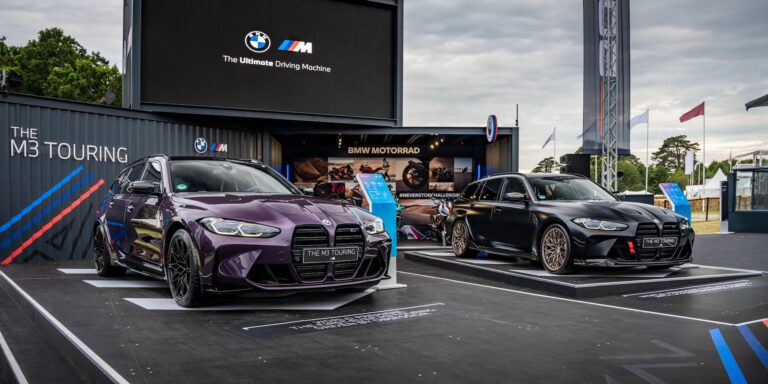
BMW has released the first details about its M3 Touring, with the car making its public debut at this weekend’s Goodwood Festival of Speed before going on sale in September.
The new BMW M3 Touring will be the first ever estate version of the M3 to go into production, powered by the same 3.0-litre straight-six petrol engine as the M3 saloon, driving through an eight-speed automatic gearbox.
Like the saloon range, the M3 Touring will only be available in the UK in its range-topping ‘Competition’ guise. Only the all-wheel drive ‘xDrive’ configuration is available, to ensure that the estate car has sufficient traction on the road, accounting for its heavier rear end. That said, switching off the car’s ‘Dynamic Stability Control’ function essentially makes the M3 Touring rear-wheel drive.
BMW says that this new estate car can complete a 0-62mph sprint in 3.6 seconds, which means that it is faster off the line than its closest market rivals, the Audi RS 4 and the soon-to-be replaced Mercedes-AMG C63, which can complete the same run in 4.1 seconds and 4.0 seconds respectively.
The manufacturer has capped the M3 Touring’s top speed at 155mph, but opting for the optional ‘M Driver’s Package’ will increase this figure to 174mph. Adaptive ‘M’ suspension technology with electronically controlled shock absorbers are available as standard, and the M3 Touring can be specced with carbon ceramic brakes and track tyres for an extra fee.
Apart from its extended estate car rear end, the exterior of the BMW M3 Touring is identical to its saloon twin, with the same enormous kidney grilles that extend from the lower front bumper up to the bonnet, sporty bumpers, side skirts and flared wheel arches, and a large four-pipe exhaust spread across the car’s rear diffuser. 19-inch alloy wheels feature in the front, with 20-inch alloy wheels in the rear.
Like estate versions of the standard BMW 3 Series, the M3 Touring has three full seats in the rear. The electrically-operated tailgate includes a rear window that can be opened independently of the boot lid.
When it comes to storage, the estate car has 500 litres of boot space (five litres more than the Audi RS 4), which becomes 1,510 litres with the rear seats folded. Anti-slip rails that rise up automatically from the boot floor to stop luggage from sliding in tight bends can be ordered as an option.
The BMW M3 Touring has the same ‘M’-themed interior design trimmed in leather as the M3 saloon, except for the curved digital console that features prominently on the dashboard – connecting a 12-inch digital cluster to a 15-inch infotainment screen – software that also features in the all-electric BMW i4 saloon.
Further carbon fibre elements with carbon bucket front seats can be added to the interior for an additional price.
At around £5,000 more than its saloon sibling, the M3 Touring Competition is priced at £80,550, which is over £14,000 more expensive than the Audi RS 4, and over £40,000 more than an entry-level BMW 3 Series Touring.
BMW says it will start taking orders for its new performance-enhanced estate car in September this year, ahead of the model going into production in November.
The BMW M3 saloon has been on sale for over a year now, praised for its thrilling performance but criticised for its polarising front-end styling. It currently holds an Expert Rating of 85%.
The Toyota GT86 was a compact sports car, only available as a 2+2 coupé, that first arrived on UK roads in 2012. Discontinued in 2021, it was replaced by the GR86 coupé.
The fruit of a collaboration between Toyota and Subaru, the GT86 is essentially identical to the Subaru BRZ coupé, using the same 200hp 2.0-litre petrol engine from launch, which received further tuning to increase its output to 205hp after the GT86’s mid-life facelift in 2017. Drive went to the rear wheels and produced a 0-60mph sprint time of around six seconds.
Competitively priced at less than £25K when new, the Toyota GT86 was highly regarded by motoring journalists from the get go, winning three separate ‘Car of the Year’ awards during its first year on sale in the UK.
“The GT86 is hugely enjoyable and involving to drive, with great amounts of grip and superb handling”, said Honest John, while Parkers found that the coupé was “surprisingly comfortable” and “generously equipped”. Also impressed, Carwow predicted that the GT86 could be a future classic.
“While it is simply brilliant to drive, but it’s rather low on polish and finesse”, Carbuyer concluded, explaining in its review that while the GT86 was a value-for-money coupé, its interior design and on-board tech were dated, and the rear seating was cramped.
Other titles noted that the GT86 did not have the best fuel economy, and that there was not much opportunity for customers to personalise their cars through options or accessories. But as Car Keys summed up, “What the GT86 lacks in refinement, it makes up for in visceral personality.”
As of March 2026, the Toyota GT86 holds a Used CarExpert Rating of D with a score of 58%. Although it received plenty of positive media reviews, its high running costs and CO2 emissions drag its overall rating down.
“The Toyota GT86 was developed by a team that wanted to produce the best driver’s car – and very effective they’ve been. But, it’s not the easiest thing to live with in everyday life.”
Model reviewed: “The GT96 shows that just 197bhp is plenty to create a fun coupe.” Read review
Model reviewed: Score: 8 / 10 “The Toyota GT86 combines great fun and excellent value in a good-looking package.” Read review
Model reviewed: Score: 8 / 10 “Minor tweaks to the GT 86 formula ensure that it stays at the top of the handling pecking order.” Read review
Auto Trader
Model reviewed: Score: 8 / 10 “For the price of a hot hatch the Toyota GT86 offers a true sports coupe experience. Its entertaining handling, distinctive looks and purist focus restrict its appeal to a hardcore of enthusiasts and it suffers in comparison on performance, practicality and running costs.” Read review
Car
Model reviewed: Aero (2015) Score: 6 / 10 “The Toyota GT86 Aero has essentially taken a very good car, not addressed any of its flaws and made it less likable.” Read review
Model reviewed: Score: 8 / 10 “What we have here a is very fine sports car indeed, actually shackled by the quality of its own dynamic abilities: amateurs will want more grunt to extract traction-free entertainment at lower speeds, the more talented will want more grunt because… Well, they always do.” Read review
Car Keys
Model reviewed: Score: 7 / 10 “Unless Toyota comes up with a more flexible engine and sorts out the front suspension we’d rather have a Mazda MX-5 instead.” Read review
Model reviewed: 2.0-litre Score: 8 / 10 “What the GT86 lacks in refinement it makes up for in visceral personality.” Read review
Score: 8 / 10 “You either get the Toyota GT86, or you don’t. Sure, its interior is lacking some polish, there’s not much practicality and it’s not the fastest coupe on the market, but for what it lacks in refinement it makes up for in visceral personality.” Read review
Model reviewed: Automatic Score: 8 / 10 “Another few days’ work on the suspension and you’d have something that would be both easier and better to drive.” Read review
Carbuyer
Model reviewed: Score: 9.8 / 10 “The Toyota GT 86 is a real back-to-basics sports coupe. It’s rather low on polish and finesse, but is simply brilliant to drive.” Read review
Daily Mirror
Model reviewed: “The revised Toyota GT86 has the characteristics every self-proclaimed petrol head should lust after.” Read review
Eurekar
Model reviewed: 2.0 “In busy town centres, the car is guaranteed to turn heads as it coasts by and out on faster lanes, it eats up the miles with ease.” Read review
Model reviewed: “The shape of the GT86 compared to the AE86 is much more rakish but the formula of pedigree road holding, bags of fun and a reasonable price tag remains consistent.” Read review
Model reviewed: 2.0 “The GT86 is the almost perfect combination of style, power, economy and desirability.” Read review
Evo
Model reviewed: Range review Score: 8 / 10 “Rarely does something in the motoring world feel ‘just right’ and while the GT86 isn’t without its issues, it comes very close.” Read review
Fleetworld
Model reviewed: “The GT86 is a reminder that huge power really isn’t the base requirement for an entertaining driver’s car.” Read review
Green Car Guide
Model reviewed: Score: 10 / 10 “The Toyota GT86 may not be an obvious green car , but it’s one of the best driver’s cars currently on sale , it’s a fraction of the cost of many sports cars, and we managed to get 50mpg out of it – so it gets a 10 out of 10 rating.” Read review
Heycar
Model reviewed: Score: 7 / 10 “The GT86 is a purist, joyous, Toyota sports car.” Read review
Honest John
Model reviewed: Score: 8 / 10 “The GT86 is hugely enjoyable and involving to drive, with great amounts of grip and superb handling.” Read review
Motoring Research
Model reviewed: Score: 8 / 10 “The GT86 costs around half the price of a new Toyota Supra, but it doesn’t deliver half the thrills.” Read review
Model reviewed: “For a generation who grew up playing Need for Speed, there is simply nothing currently for sale that has the same potential to reward enthusiastic driving than the GT86.” Read review
Motors
Model reviewed: Score: 9 / 10 “The GT86 coupe uses the classic sports car layout – front-engine, rear-drive – while also boasting low centre of gravity and good weight balance to achieve the most smiles-per-gallon possible.” Read review
Parkers
Model reviewed: Range review Score: 8.4 / 10 “Enthusiast-sating sports coupe with a degree of practicality” Read review
The Sun
Model reviewed: “Sensible has made way for sensational and this is it… the much-awaited GT86.” Read review
Model reviewed: “The GT86 is a motor that puts a bloody big smile on your face.” Read review
The Sunday Times
Model reviewed: Score: 10 / 10 “The GT86 is a simply phenomenal drive.” Read review
The Telegraph
Score: 6 / 10 “The Toyota GT86 brings slithery, nimble, rear-wheel-drive entertainment into the realm of road-legal speeds. It’s a fabulous enthusiast’s car and an absolute hoot to drive on the right road. Unfortunately, on every other road it’s a bit of a chore.” Read review
Top Gear
Model reviewed: Blue Score: 9 / 10 “The GT86 may be more fun eight years on from launch.” Read review
Model reviewed: Range overview Score: 8 / 10 “The simplest and most exciting Toyota in years is also a real pleasure to drive.” Read review
Safety rating
Independent crash test and safety ratings from Euro NCAP
No safety rating
The Toyota GT86 was not assessed by Euro NCAP during its production life.
Eco rating
Independent economy and emissions ratings from Green NCAP
No eco rating
The Toyota GT86 was not assessed by Green NCAP during its production life.
Reliability rating
Reliability data provided exclusively for The Car Expert by MotorEasy
No reliability rating
As of March 2026, we don’t have enough reliability data on the Toyota GT86 to generate a reliability rating.
The Car Expert’s reliability information is provided to us exclusively from workshop and extended warranty data from our partner, MotorEasy. As soon as MotorEasy has sufficient data on the GT86, we’ll publish the score here.
Awards
Trophies, prizes and awards that the Toyota GT86 has received
2014
Carbuyer Awards – Best Coupé
Honest John Awards – Best Performance Car
The Telegraph Motoring Awards – Best Sports Car
2013
Auto Express Awards – Best Performance Car
Carbuyer Awards – Best Coupé
Fleet World Awards – Road Test Editor’s Award
2012
Auto Express Awards – Best Performance Car
Pistonheads Awards – Car of the Year
Scottish Car of the Year Awards – Best Coupé
Top Gear Awards – Car of the Year + Best Coupé
Vehicle Dynamics International Awards – Car of the Year
Similar cars
If you’re looking at the Toyota GT86, you might also be interested in these alternatives
Peugeot has unveiled a new crossover model called the 408, which fits into the brand’s compact family car range between the 308 hatchback and the 3008 SUV.
Initially available with either petrol or plug-in hybrid power, this new model sits somewhere between a conventional saloon and an urban SUV, with a sloping fastback roofline at the rear and more ground clearance than a conventional car – rather like the Citroën C5 X or Polestar 2.
While the new Peugeot 408 shares its foundations and many components with the new 308 hatch, it is 44cm longer than its hatchback sibling, which allows for more passenger legroom in the rear seats.
The exterior design takes plenty of cues from the 308 too, including its angled LED headlights and narrow daytime running lights that stretch down the car’s front bumper. The grille design also follows the latest Peugeot family look, with diagonal body-coloured dashes framing the updated Peugeot logo.
At the rear, the sloping roofline ends with a subtle spoiler, which sits above teardrop LED tail lights that are connected by black detailing that runs across the length of the boot lid. Six different body colours will be available at launch and there will be a choice of alloy wheels sized from 17 to 20 inches.
Peugeot says the 408’s aerodynamic shape means that it requires less fuel to push through air on the road than the significantly smaller 208 supermini.
Under the bonnet, a 1.2-litre petrol and two different plug-in hybrid (PHEV) powertrains are available. While the petrol engine produces 130hp, the PHEVs can muster 150hp and 180hp respectively. All models are equipped with an eight-speed automatic gearbox.
Peugeot has not yet mentioned how far these plug-in hybrid models can travel on just electric power, but PHEV variants of the 308, which use the same 81kW electric motor, have an all-electric range of around 37 miles.
The manufacturer also plans to swap out the entry-level straight petrol engine for a mild hybrid alternative sometime next year, and an all-electric ‘e-408’ version is also in the works.
Inside the cabin, all models are fitted with Peugeot’s ten-inch ‘i-Cockpit’ infotainment screen with wireless Apple CarPlay and Android Auto, which also comes as standard in the 308. Customisable touchscreen buttons sit below the central screen, which allow the owner to set shortcuts for the car’s controls for ease of use.
The standard spec also includes a ten-speaker stereo, four USB ports and wireless charging, while a ten-inch digital cluster behind the steering wheel will be available on higher-end models. In the rear, the electrically-powered boot lid opens up by use of a foot-activated sensor to reveal 536 litres of boot space with the rear seats up (the raised floor of the PHEV version means that this is reduced to 471 litres).
Finally, the new Peugeot 408 comes with a list of driving assistance and safety tech, including adaptive cruise control, a rear traffic alert system, a lane keeping assistance feature that can correct the path of the car, road sign recognition, blind spot monitoring and a ‘night vision’ feature that can detect animals or pedestrians in the dark that are over 200m in front of the car. How much of this is included as standard remains to be seen.
Peugeot has not announced any UK pricing or gone into depth about the 408’s trim levels just yet. More information will be released before the car starts appearing in showrooms around the beginning of 2023.
The Toyota RAV4 SUV is set to receive some tech enhancements, including the brand’s latest infotainment software, a customisable digital instrument display, and some pre-emptive safety features that help avoid a range of common road accident risks.
The ten-inch infotainment console, which is slightly bigger than the consoles that feature in the current range, comes installed with wireless Apple CarPlay/Android Auto integration and Toyota’s navigation software with live traffic and road incident updates, which will also tell you how busy an area is and how likely you are to find a parking space at your destination.
This multimedia system also comes with a voice control function, which can respond to a range of spoken requests such as to adjust the climate control, choose or adjust the volume of music tracks and other media, make a phone call, or open and close the windows.
The system will be able to download new features in the future through over-the-air updates, and can be connected to a smartphone app that tracks your driving stats and has a ‘find my car’ feature that can guide you back to your RAV4 in a crowded car park.
Toyota is also planning to offer the RAV4 with a more advanced version of this infotainment package, with offline navigation and a feature that alerts the driver when the SUV has entered restricted low emission zones.
The updated RAV4 also gets a digital instrument cluster behind the steering wheel, which the driver can customise to show the most relevant information to them while on the road. The entry-level ‘Icon’ trim will receive a seven-inch version of this digital cluster as standard, while higher grades will get a larger 12-inch screen.
The RAV4 already comes with a pre-collision system which uses a front-facing camera and laser to detect objects in your path and alert you when it’s time to brake, but this system will be enhanced by the upcoming update to include ‘intersection support’ technology that helps the driver make safer turns at junctions.
The update adds an emergency steering assistance feature too, which is designed to keep the car stable in its lane when braking to avoid hitting an object on the car’s path.
Lastly, there’s an additional white exterior colour, but other than that there are no visual changes to the RAV4 as part of this update. The powertrain choices will also remain the same, with both regular hybrid and plug-in hybrid models.
Toyota says that the updated RAV4 will enter production in Autumn this year. Details about its UK arrival, as well as pricing and specifications, will be released in coming months.
The Toyota RAV4 has received generally good reviews from the UK automotive media, praised for practicality and comfort. With a current Expert Rating of 66%, it ranks several points behind the best in its class. Although these improvements will be welcomed, they’re unlikely to boost that rating very much.
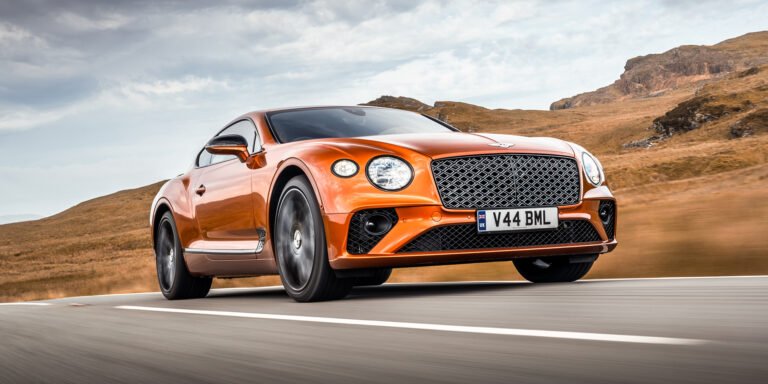
The Bentley Continental GT Mulliner, which is the fastest and most luxurious trim choice in the two-door Continental range, has received a few minor visual alterations, additional customisation options and an uprated engine.
The updated Mulliner model will only be available with Bentley’s flagship 6.0-litre 12-cylinder petrol engine, which has been tuned to produce an extra 33hp – now almost 660hp in total.
This increase shaves a fraction of a second off the grand tourer’s 0-60mph sprint time, which now stands at 3.5 seconds, and gives it a tiny top speed increase to 208mph.
The most prominent exterior styling tweak is the new-look ‘double diamond’ grille, which is matched by ‘Mulliner’ branded side vents with the same pattern. The ten-spoke design for the trim’s 22-inch alloy wheels remains the same, apart from the fact that these alloys now feature self-levelling Bentley badges in the centre caps, which remain upright when the car is in motion – an idea Rolls-Royce has been using for nearly 20 years on its Phantom saloon.
The previous two-tone interior colour schemes have been replaced by a range of three-colour split choices, with eight options in total. Further interior customisation options include a selection of 88 different wood veneers and a wide array of colour choices for the seat stitching.
The Continental GT Mulliner is set to make its debut alongside the recently revealed ‘S’ trim at this year’s Goodwood Festival of Speed, but no pricing has been announced as of yet for the updated trim.
Sharing its underpinnings with the Porsche Panamera, the Bentley Continental GT arrived in the UK in 2018, and has received unanimously positive reviews since. The luxury saloon variant currently holds an Expert Rating of 84%, while the GTC convertible holds an Expert Rating of 81%.
The Audi Q3 is a mid-sized SUV/crossover, built on the same platform as the Volkswagen Tiguan. This was the first-generation model, first launched in 2011 and replaced by the current Q3 generation in 2018.
Available with either a manual or automatic gearbox, the original Q3 range was praised by reviewers from launch thanks to its wide selection of both petrol and diesel engines, which were said to be quite economical when compared to class rivals like the BMW X2 and Mercedes-Benz GLA.
The Q3 was also commended for its polite road manners and assured handling, but many journalists commented that this made the car rather dull to drive, with Car Keys concluding that it was “too sensible for its own good.”
Auto Express labelled the Audi Q3 “a competent if uninspiring performer”, while Car said its test drive was a “decent, but hardly memorable drive.”
Overall, reviewers generally agreed that the original Q3 was a car that you buy with your head rather than your heart, particularly as it was slightly cheaper than its BMW and Mercedes-Benz competition at the time.
By the end of the Q3’s production life, however, a few motoring outlets were saying that its infotainment system and interior trim were starting to look dated. “The Audi Q3 is a bit of a dinosaur”, Carwow concluded, “but it still looks good and feels well put together.”
As of January 2025, the first-generation Audi Q3 holds a Used Car Expert Rating of D, with a score of 60%. It gets good grades for its excellent reliability record, but its running costs are merely average and contemporary media reviews were poor. Its safety score is also long out of date compared to newer vehicles.
Highlighted reviews and road tests from across the UK automotive media. Click any of the boxes to view.
Auto Express
+
Model reviewed: (2011) Score: 6 / 10 “The Audi Q3 Mk1 impresses with its classy cabin and efficient engines, but it’s neither the roomiest nor most affordable small SUV out there.” Read review
Model reviewed: Score: 8 / 10 “The Q3’s visual facelift is handsome, and the new 1.4 petrol is smoother, quieter and nearly as punchy as a diesel, making it cheap to run for private and company car buyers.” Read review
Auto Trader
+
Model reviewed: (2014-18) Score: 7.2 / 10 “The Audi Q3 offers the economy and versatility of a hatchback, with the added style and luxury feel of a premium 4×4.” Read review
Model reviewed: Score: 7.8 / 10 “The Audi Q3 is certainly one of the most advanced and efficient SUCs, and it’s also cracking to drive.” Read review
Business Car
+
Model reviewed: 2.0 TDI Score: 8 / 10 “The Audi Q3 is a quality small 4×4 package with impressive running costs but P11D price isn’t cheap.” Read review
Model reviewed: “At £1,430 less than the equivalent 4×4 model, and a BIK saving of £28 per month for a higher rate tax payer, the 2WD Q3 is a very fleet-friendly addition.” Read review
Car
+
Model reviewed: Performance (2016) Score: 6 / 10 “The price premium over the standard car has been judged with fiendish brilliance: the Performance is only a bit quicker, but it is quicker. It only looks a bit cooler, but it does look cooler.” Read review
Model reviewed: 1.4 TFSI S-line (2014) Score: 6 / 10 “The 1.4 TFSI is an entertaining yet efficient motor. With the Audi Q3 a capable chassis, albeit a little dull in terms of steering and a tad rough on ride quality, its hatch-like character wins you over.” Read review
Model reviewed: Score: 6 / 10 “The latest 2012 Audi Q3 is a very decent, if hardly memorable drive.” Read review
Model reviewed: TDI 138bhp FWD SE (2012) Score: 6 / 10 “For the majority of buyers, a hyper-polished, restrained slug of quality wearing an Audi Q3 badge will be quite enough.” Read review
Model reviewed: 2.0 TDI Quattro (2011) Score: 6 / 10 “Cabin quality, refinement, all the usual things that appeal about Audis, are present and correct in the Q3. Disregard the petrol engines and it’s a case of less is more though: the entry-level 138bhp 2.0 TDI is by far the best model.” Read review
Car Keys
+
Model reviewed: (2015) Score: 8 / 10 “More power, greater efficiency and a subtle redesign are all present and correct for the 2015 Audi Q3.” Read review
Carbuyer
+
Model reviewed: Score: 4.2 / 10 “The Audi Q3 is a small SUV with an upmarket design and interior, which goes head-to-head with the BMW X1 and Mercedes GLA.” Read review
Carwow
+
Model reviewed: Score: 7 / 10 “The Audi Q3 is a well-built SUV that’s reasonably spacious, has low running costs and is easy to drive, but has a dated interior and infotainment system.” Read review
Evo
+
Model reviewed: 2.0 TFSI Quattro Score: 8 / 10 “The Audi Q3 is quick, clean and good to drive.” Read review
Green Car Guide
+
Model reviewed: 2.0 TDI (177PS) quattro SE S tronic Score: 8 / 10 “The Audi Q3 2.0 TDI Quattro is a very refined four-wheel drive SUV crossover that can achieve 47.9mpg.” Read review
Honest John
+
Model reviewed: Score: 6 / 10 “The Audi Q3 is a stylish, compact SUV with impressive fuel economy and low CO2.” Read review
Parkers
+
Model reviewed: Score: 8 / 10 “The Audi Q3 is a capable mini-SUV.” Read review
The Sunday Times
+
Model reviewed: Score: 8 / 10 “The Q3 offers Audi prestige with a big range of engines, good road manners and the choice of 2WD and 4WD.” Read review
Model reviewed: 2.0 TDI quattro SE S tronic (2012) “The Audi Q3 is not practical, not nice to drive, and technologically, not thought out well, either.” Read review
The Telegraph
+
Model reviewed: Score: 6 / 10 “The Q3 is a decent enough family SUV, but it lacks charm. The cheap-feeling interior isn’t up to Audi’s usual high standards, while the unsupportive seats make long trips hard work, and the boot isn’t as large as you’d hope.” Read review
Safety rating
Independent crash test and safety ratings from Euro NCAP
The first-generation Audi Q3 was originally tested by Euro NCAP back in 2011 and awarded a five-star safety rating. However, this rating expired in January 2018 and is no longer valid as the car no longer meets the standards required for such a rating. This is normal practice, as Euro NCAP reviews its ratings on most cars annually with most ratings expiring after about six or seven years.
However, if you are comparing a used Audi Q3 to vehicles of similar age, whose ratings will have probably also expired, its safety rating score is still useful.
Eco rating
Independent economy and emissions ratings from Green NCAP
No eco rating
The first-generation Audi Q3 was not lab tested by Green NCAP as its production life pre-dated the organisation’s founding in 2019.
Reliability rating
Reliability data provided exclusively for The Car Expert by MotorEasy
Total claims: 114 Average repair cost: £399.90 Last updated: October 2024
As of October 2024, the Audi Q3 has a very good reliability score of 76%, according to exclusive extended warranty data provided by our partners at MotorEasy. This score covers both this version of the Q3 and the newer (2018 onwards) generation.
Average repair bills are very competitive, at about £400. However, that’s still more than the cost of a used car warranty so that’s worth keeping in mind if you’re looking at a used Q3.
Of particular note is the average gearbox repair bill, which is more than £3,300. However, these problems have been rare to date. Other repair bills are far more reasonable when compared with similar cars from other brands.
If you’re looking at a used Audi Q3, make sure any extended warranty cover you purchase covers all of these potential problem areas.
Running cost rating
Monthly cost of ownership data provided exclusively for The Car Expert by Clear Vehicle Data
No data
Due to its age, we don’t have servicing or other life costs for this generation of Audi Q3.
Date: August 2019 Recall number: R/2019/260 Model types: All Build dates: 12/2014 to 07/2018 Number of vehicles affected: 45,677 Defect: A failure of the front LED turn signal may not always be detected in certain circumstances. Remedy: A software update of the on-board supply control unit.
Date: February 2018 Recall number: R/2018/044 Model types: All Build dates: 09/2016 to 11/2016 Number of vehicles affected: 58 Defect: A connection between the detonator and generator in the front passenger airbag module may not be correctly welded. Therefore the airbag may not be triggered in the event of a collision. Remedy: Recall the vehicles that are likely to be affected and replace the front passenger airbag module.
Date: July 2017 Recall number: R/2017/218 Model types: All Build dates: 10/2014 to 09/2016 Number of vehicles affected: 17,074 Defect: Due to a software error the brake lights may not function during an emergency operation of the electronic parking brake. The normal foundation brake lights will still function as intended. Remedy: On affected vehicles update software to correct this.
As of September 2024, there have been three DVSA vehicle safety recalls on this generation of the Audi Q3, addressing various different issues.
Not all vehicles are affected by recalls. You can check to see if your car is included in any of the above recalls by visiting the DVLA website or contacting your local Audi dealer.
If your car is affected by a recall, the vehicle must be repaired and you should not be charged for any work required. If you are buying a used Q3, you should insist that any outstanding recall work is completed before you take delivery of the vehicle.
Featuring a few exterior design tweaks and a tartan upholstery design, the Vauxhall Corsa-e Anniversary Edition trim will soon be available to order online.
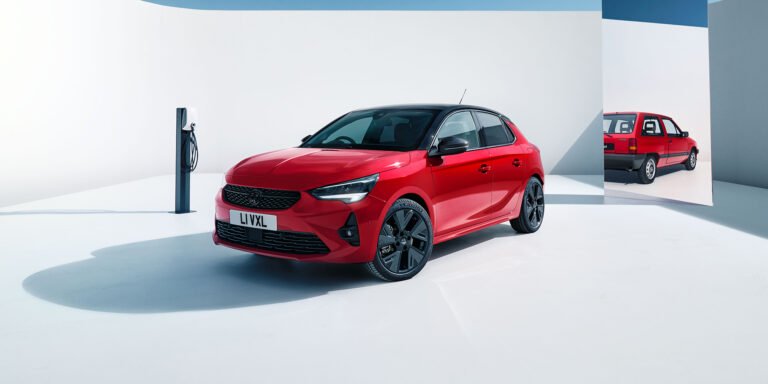
Marking 40 years of Vauxhall superminis sold in the UK, the Anniversary Edition takes a number of styling cues from the Corsa’s motoring heritage – particularly the Vauxhall Nova that first arrived on British roads in 1982.
A limited run trim, only 1,000 Corsa-e Anniversary Edition models will be sold in the UK. This trim is electric only – it will not feature in the cheaper combustion-powered Corsa range.
Mirroring the red tones of the old Nova, the Anniversary Edition comes in a metallic exterior colour that the brand is calling ‘record red’. Like the rest of the range, the roof and wing mirrors are finished in black, but this trim extends the black detailing to the grille and 17-inch alloy wheels, as well as the Vauxhall branding.
Stepping inside, the cabin is almost identical to the standard Corsa-e, except for the tartan pattern design on the front seats, which the brand says is a ‘a modern interpretation’ of the Nova’s original tartan seat fabric. A plaque has also been fitted to the passenger side of the dashboard, which displays your model’s number in the limited range of models made.
Vauxhall says that the Anniversary Edition is based on the entry-level GS Line trim, which includes a seven-inch infotainment console, a rear-view camera with rear parking sensors and blind spot monitoring technology. However, the Anniversary spec also includes a few extra features taken from the range-topping Ultimate trim, including heated seats, a heated steering wheel, and electric wing mirrors.
There’s on other unusual extra feature. as well. If you are intrigued by the idea of sporting Vauxhall upholstery on your person, or if your sock drawer is a little light, each Anniversary Edition model comes with four pairs of socks with the same Nova-inspired tartan patterning. Unfortunately, it’s a week too late for Father’s Day…
While prices for the Corsa-e GS Line start at £28,555, Vauxhall will charge £31,000 for the Anniversary Edition, which is only available to order online. Vauxhall has not specified when it will begin taking orders, but the trim will arrive this year.
Sharing many of its components with the Peugeot e-208, the Vauxhall Corsa-e currently holds an Expert Rating of 65% – praised for its overall comfort, but also considered to be an expensive purchase compared to a regular petrol Corsa.
Every car and light commercial vehicle (LCV – such as a small van), new or old, falls into a particular insurance group, which dictates – to an extent – how much it will be to insure. The higher the group number, the higher the cost contribution, before the driver, address and other factors are taken into account.
Insurers use these groups to help quantify the risk associated with that particular vehicle. Until 2006 there were 20, but now there are 50, to deal with the breadth of models offered by some manufacturers, often dozens in the same range.
How are insurance ratings worked out?
Thatcham Research in Berkshire was set up by the insurance industry and tests vehicles and examines data which it then passes to the Group Rating Panel of the Association of British Insurers (ABI). There are just over 110,000 different derivatives on Thatcham’s vehicle database, comprising vehicles from as far back as the early 1930s to the latest Polestars and Teslas of today.
This is used to establish an advisory insurance group score. Thatcham stresses its ratings are only recommendations only. Individual insurers use the recommendations but factor in their own experience of particular cars, based on how many claims they have had. The data is updated every week, as new cars come onto the market.
Group rating scores currently include, but are subject to constant review, the cost and time it would take to return a vehicle to its original condition after an accident, the new price of the vehicle – reflecting variations in trim levels (back to those big ranges), the cost of settlement in the event of a total loss, the vehicle’s performance – including its 0-60mph acceleration time and top speed, and the sophistication of the vehicle’s standard fit security equipment.
Also taken into consideration is parts pricing – Thatcham uses a standard list of 23 parts which are deemed to be the most commonly damaged panels and components in an accident – and the standard fitment and performance of autonomous emergency braking (AEB) systems, sometimes called city braking by some car makers.
But what decides a group is more complicated than just high value and performance. Sometimes manufacturers put a high value component – such as an autonomous safety senor – behind a bumper where it can easily get damaged in even a low speed shunt. While these can be expensive to repair, the safety rating is increased, therefore the insurance group is lowered. When a car is facelifted or updated a whole combination of factors, such as acceleration, weight and repair times affect the group.
David Alder, senior product manager at Thatcham Research says: “A car’s grouping is important but it’s only part of the overall makeup of an insurance quote. What the customer pays for insurance is also influenced by the person driving the car, where they live, their occupation, credit score and many other risk factors.”
Some sample cars and their groups
The current Hyundai i10 is a city car with a small 1.0-litre engine and costs from around £13,000 new. Its various versions are covered in groups 1 to 7. The Nissan Juke small SUV goes from Group 11 to 14.
For the Volkswagen Golf range, it’s 14 to 24. As you’d expect, the high performance versions of family hatchbacks, will be more to ensure because they are the most expensive in the range to buy, and faster.
The Land Rover Discovery range comes in groups 33 to 45. The Audi Q5 SUV is 23 to 42 and – no surprises here – any Bentley will be rated in the highest level of Group 50.
In addition, Thatcham assigns a letter to each grouping which tells the owner/buyer how it rates the car’s security. An A means it meets security requirement for this group. D means it does not and raises the group by one or two. and E is given where it exceeds the security requirement for a car of this type and the group rating is reduced.
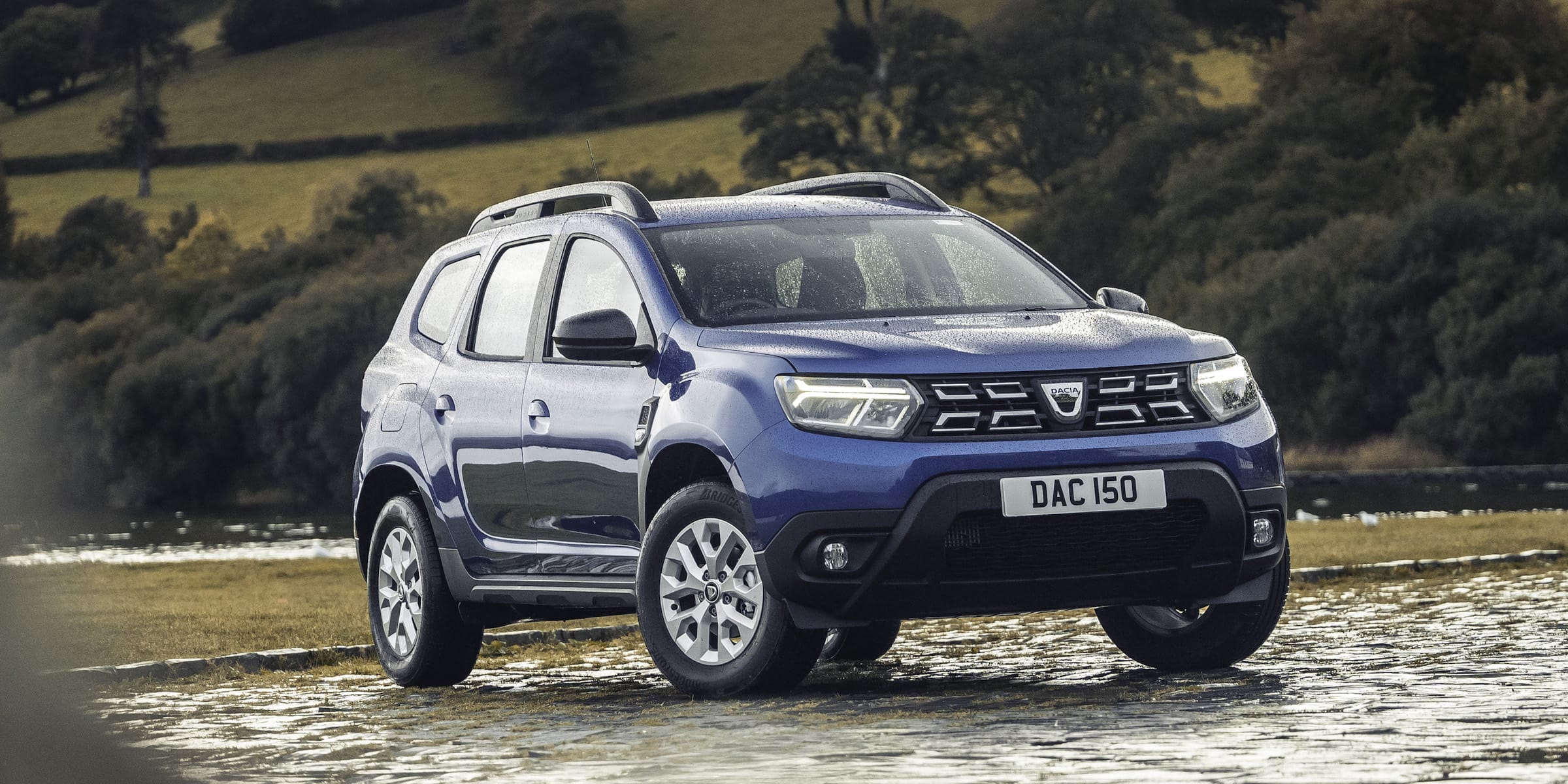
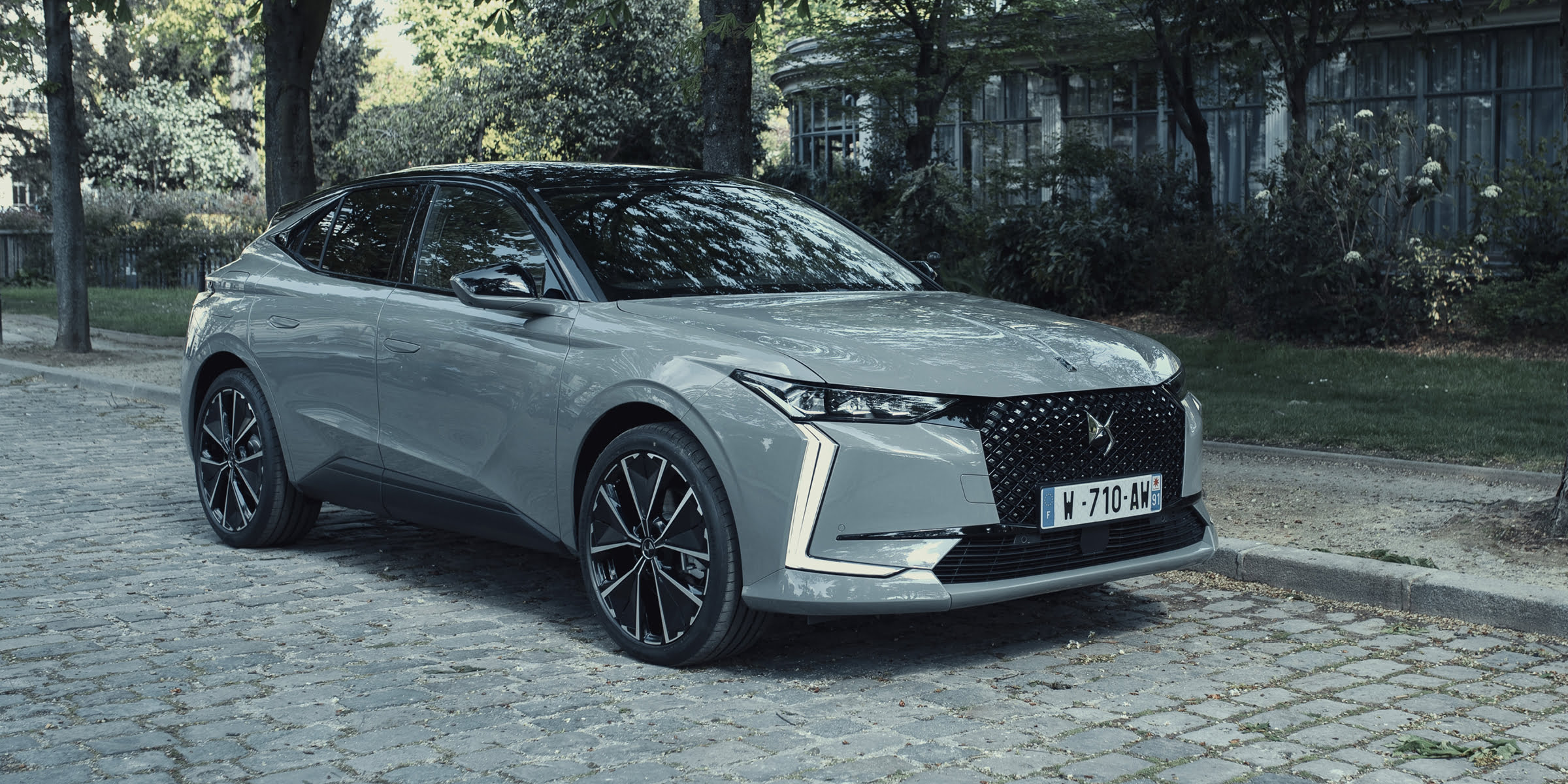
For example, a 2021 Dacia Duster Prestige TCe rates at 22D and has a list price of just over £20,000. Of similar size and power, the comparable E example is the 2021 DS 4 Bastille +PureTech, which has a list price of just over £25, 000 but rates at 19E.
The Dacia Duster gets an insurance penalty for poor security, while the DS 4 gets a discount for high security
Electric cars introduce different factors into the group rating calculation. They are often heavier, typically accelerate faster and the replacement cost of batteries can be as much as 50% of the car. They are also generally more expensive than their internal combustion engine counterparts, all elements that influence calculation. A 1.2-litre petrol Vauxhall Corsa automatic Ultimate Nav is currently £26,075 and group 17E. An electric Corsa-e Ultimate Nav is £29,660 and group 25E.
How do I check a car’s insurance group?
Many new car buying websites, magazines and the specifications part of new car brochures will show the insurance group, although it is always best to check the official source as the ratings can change. Thatcham has its own group rating search facilitywhich will provide the group number and, where available, Euro NCAP safety ratings for both new and older cars.
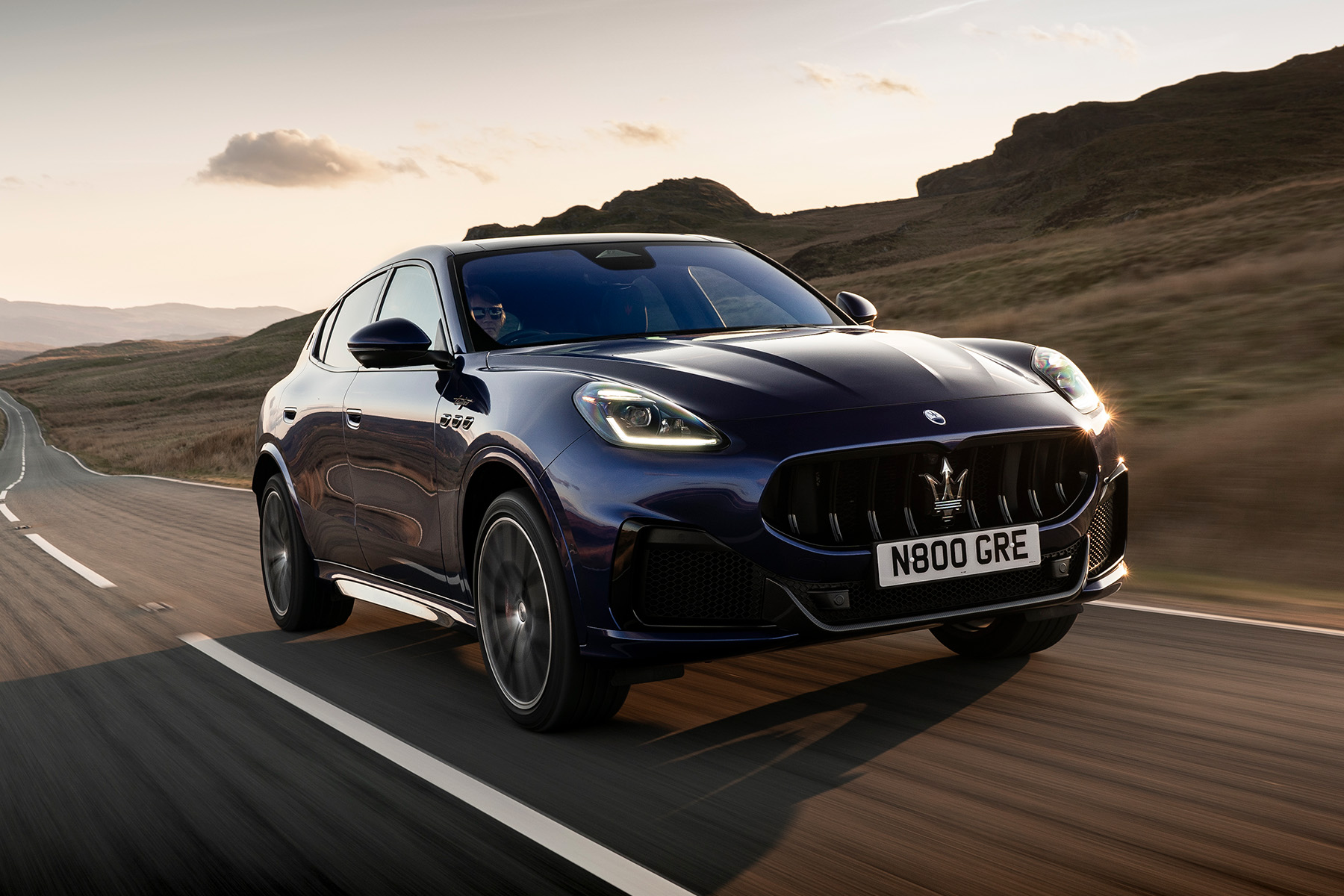
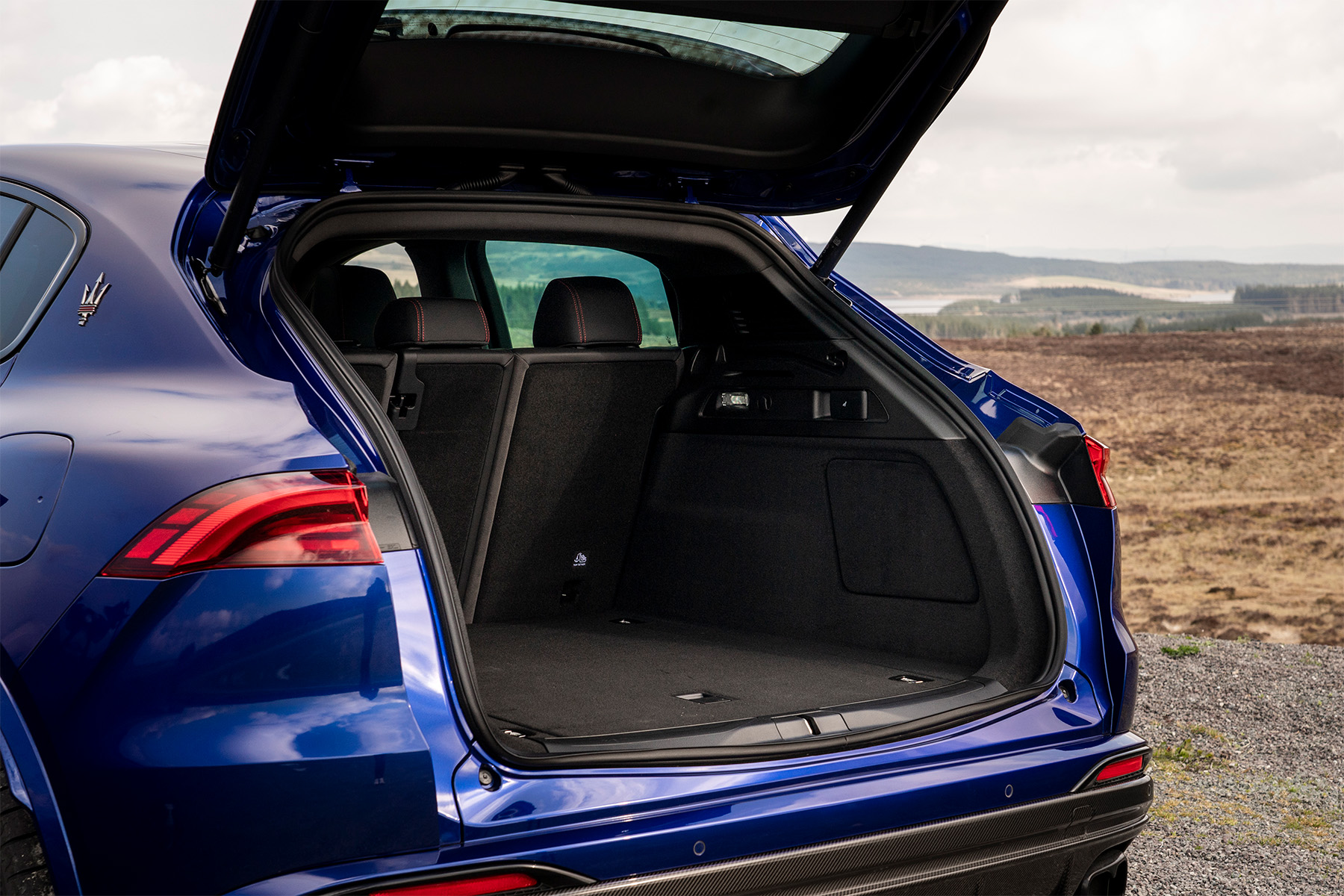
The Maserati Grecale is a premium medium SUV, launched in early 2022 and based on the same platform as the Alfa Romeo Stelvio and the latest Jeep Grand Cherokee.
Sitting below the larger Levante in Maserati’s SUV line-up, the Grecale is the Italian brand’s first attempt at producing a rival for the Porsche Macan, Jaguar F-Pace and BMW X3.
The range includes two petrol engine options at launch. The volume seller will be a 300hp four-cylinder unit, while the top-end choice is a 530hp petrol V6, which is a modified version of the engine found in the Maserati MC20 supercar. An all-electric variant, called the ‘Grecale Folgore’, is expected in 2024.
Carwow praises the SUV’s Android-based infotainment system, while Car Keys says that the Grecale’s interior “feels like a big step forward for Maserati, both in terms of quality and technology.”
That said, while many reviewers agree that the SUV’s interior is on par with its German rivals, a number of journalists comment that Grecale’s driving dynamics are a few steps behind the likes of the Porsche Macan.
Auto Express explains that “it could be more polished”, pointing to the Grecale’s firm suspension, while other outlets expected the car’s exterior styling to be a bit more exciting.
However, The Sunday Times sums up its review by saying that these are only minor issues, and that “if you’re hooked on the Maserati badge, you won’t have too much to complain about.”
As of March 2026, the Maserati Grecale holds a low New CarExpert Rating of E with a score of 49%. Like the other models in the Maserati line-up, the Grecale’s overall rating is hampered by low ownership scores, but unlike the other Maserati models, it doesn’t have strong media review scores to counter that negativity.
Body style: Medium SUV/crossover Engines:petrol, petrol mild-hybrid Price:From £58,500 on-road
Launched: Spring 2022 Last updated: N/A Replacement due: TBA
Image gallery
Media reviews
Highlighted reviews and road tests from across the UK automotive media. Click any of the boxes to view.
Featured reviews
“If you’re looking for something a little different than the usual fare, the Maserati Grecale is definitely worth some consideration. It’s a relaxing space to be in if your daily commute involves motorway driving or a lot of sitting in traffic.”
“For those who have become weary of fast, German SUVs, the Maserati Grecale makes for a compelling alternative. We love the cabin quality and design, it’s spacious, and while the chassis isn’t the most accomplished in its segment, it’s a fine effort overall. However, the four-cylinder powertrain isn’t particularly thrilling, especially when you consider that, for much less money, you could have a Porsche Macan with a V6 instead.”
Model reviewed: Trofeo (2023) Score: 7 / 10 “Maserati has introduced the Grecale Trofeo trim which brings some welcome upgrades, but it still falls short in some areas.” Read review
Model reviewed: Range overview Score: 7 / 10 “Maserati finally arrives in the mid-size premium SUV class with the stylish Grecale but matching the Porsche Macan for substance isn’t easy.” Read review
Auto Trader
Model reviewed: (2022) Score: 6 / 10 “The Maserati Grecale’s dull design doesn’t do the stunning drive justice.” (Erin Baker) Read review
Business Car
Model reviewed: Score: 8 / 10 “It’s an impressive debut for the Maserati Grecale, but for fleet buyers the best it would seem is yet to come, with the all-electric Folgore due later this year, that boasts the same keen drive at 2% BIK.” (Martyn Collins) Read review
Car
Model reviewed: Range overview Score: 8 / 10 “The Maserati Grecale is a flawed but interesting alternative to the countless other options you can buy in this class. But it’s likeable and gets under your skin, and is likely to successfully lure you in with its charm.” Author: Jake Groves Read review
Car Keys
Model reviewed: Range overview Score: 8 / 10 “Though the proof will be in the pudding when we’re able to try the Grecale on UK roads, its combination of spaciousness, quality and sportiness is one that will likely be appreciated by many in this class.” Read review
Carbuyer
Model reviewed: Range overview Score: 7.2 / 10 “Maserati’s long-awaited rival to the Porsche Macan is great in some respects, but its four-cylinder engines aren’t especially exciting.” (Andy Goodwin) Read review
Carwow
Model reviewed: Range overview Score: 7 / 10 “The Maserati Grecale will make for an interesting alternative choice if you’re after a fast, sporty family SUV. And if you like to be a bit different, there’s plenty to be impressed with here.”
Read review
Heycar
Model reviewed: Range overview Score: 7 / 10 “Maserati has finally got a worthy fast SUV in its line-up with the Grecale, which makes a far stronger case for itself than the Levante. Should you take one over a Porsche Macan? That’s a tougher ask.” Author: Al Suttie Read review
Parkers
Model reviewed: Range overview Score: 8 / 10 “Regular versions of the Grecale have the potential to outclass every other premium SUV on sale today – and our stint behind the wheel of the Trofeo model backs up company’s claims about the car’s performance for the rest of the model range are accurate.” Read review
Regit
Score: 9 / 10 “The Maserati Grecale is a beautifully-styled, well-equipped vehicle that is big on space, appeal and performance.” Author: Maxine Ashford Read review
The Scotsman
Model reviewed: Range overview Score: 8 / 10 “Maserati says it’s not chasing volumes with the Grecale, which is possibly just as well given its pricing. But there’s no reason it can’t challenge any of its stated competitors, offering an impressive balance of performance, poise and top-end quality for buyers seeking a distinctly individual flavour.” Author: Matt Allan Read review
The Sunday Times
Model reviewed: Range overview Score: 7 / 10 “The Grecale is an accomplished premium SUV that’s short on real weaknesses. Some of the plastics are a bit suspect and it’s hardly going to be cheap, but if you’re hooked on the Maserati badge, you won’t have too much to complain about. But badge aside, the Grecale doesn’t have any major strengths to make it stand out alongside its accomplished rivals.” Read review
The Telegraph
Model reviewed: Range overview Score: 8 / 10 “The Maserati Grecale is good-looking, with a fine combination of ride and handling, while the overall dynamics are impressive. But this is an expensive car, and you can have a desirable Porsche Macan with a V6 engine for less. ” (Andrew English) Read review
Top Gear
Model reviewed: Range overview Score: 6 / 10 “Maserati’s take on the ubiquitous medium-sized SUV hits plenty of targets, yet feels like a car designed to do just that.”
Read review
Safety rating
Independent crash test and safety ratings from Euro NCAP
No safety rating
As of March 2026, the Maserati Grecale has not been crash tested by Euro NCAP.
Eco rating
Independent economy and emissions ratings from Green NCAP
No eco rating
As of March 2026, the Maserati Grecale has not been lab tested by Green NCAP.
Reliability rating
Reliability data provided exclusively for The Car Expert by MotorEasy
No reliability rating
We don’t yet have any reliability data on the Maserati Grecale.
The Car Expert’s reliability information is provided from extended warranty data from our partner, MotorEasy. Once we have sufficient data on the Grecale, we’ll publish the score here.
Running cost rating
Monthly cost of ownership data provided exclusively for The Car Expert by Clear Vehicle Data
Fuel consumption
Average
Score
Petrol models
25 mpg
E
CO₂ output
Average
Score
Variation
Score
Petrol models
218 g/km
D
Insurance group
Average
Score
Variation
Score
All models
48
E
Service and maintenance
Cost
Score
Year 1
£519
E
Year 2
£1,316
E
Year 3
£2,006
E
Year 4
£2,443
E
Year 5
£3,289
E
Overall
£9,573
E
The Maserati Grecale is a rather expensive car to own and run, according to whole-life cost numbers provided exclusively to The Car Expert by our data partner, Clear Vehicle Data.
Fuel consumption is poor, falling in the bottom 20% of all cars in our database, while insurance premiums are likely to be very high. Servicing and maintenance costs over the first five years are also higher than most cars, which is not surprising for a vehicle at this price point.
Similar cars
If you’re looking at the Maserati Grecale, you might also be interested in these alternatives
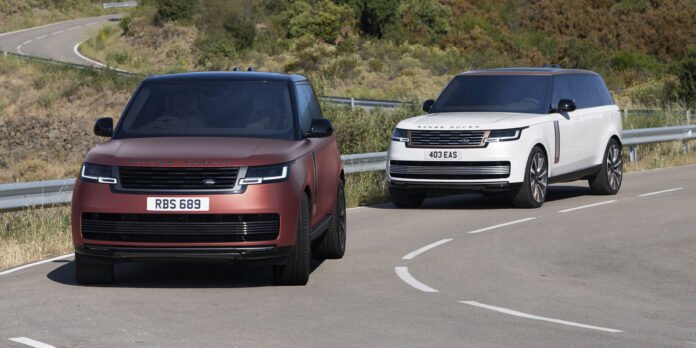
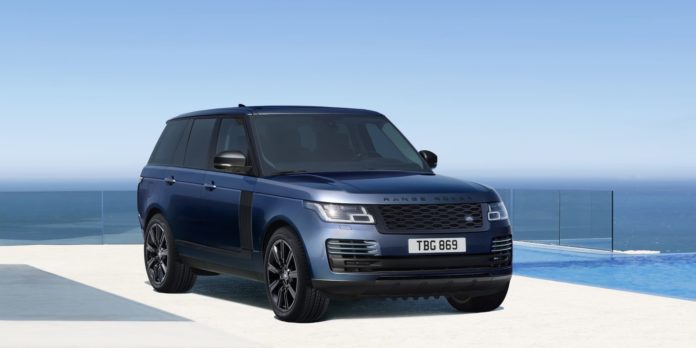
The Range Rover is the flagship model in the Land Rover 4×4 line-up, a position it has held since the first model was launched more than 50 years ago.
The latest version shown here is the fifth-generation model, which reached UK roads in the first half of 2022 and replaced the model that had been on sale since 2013.
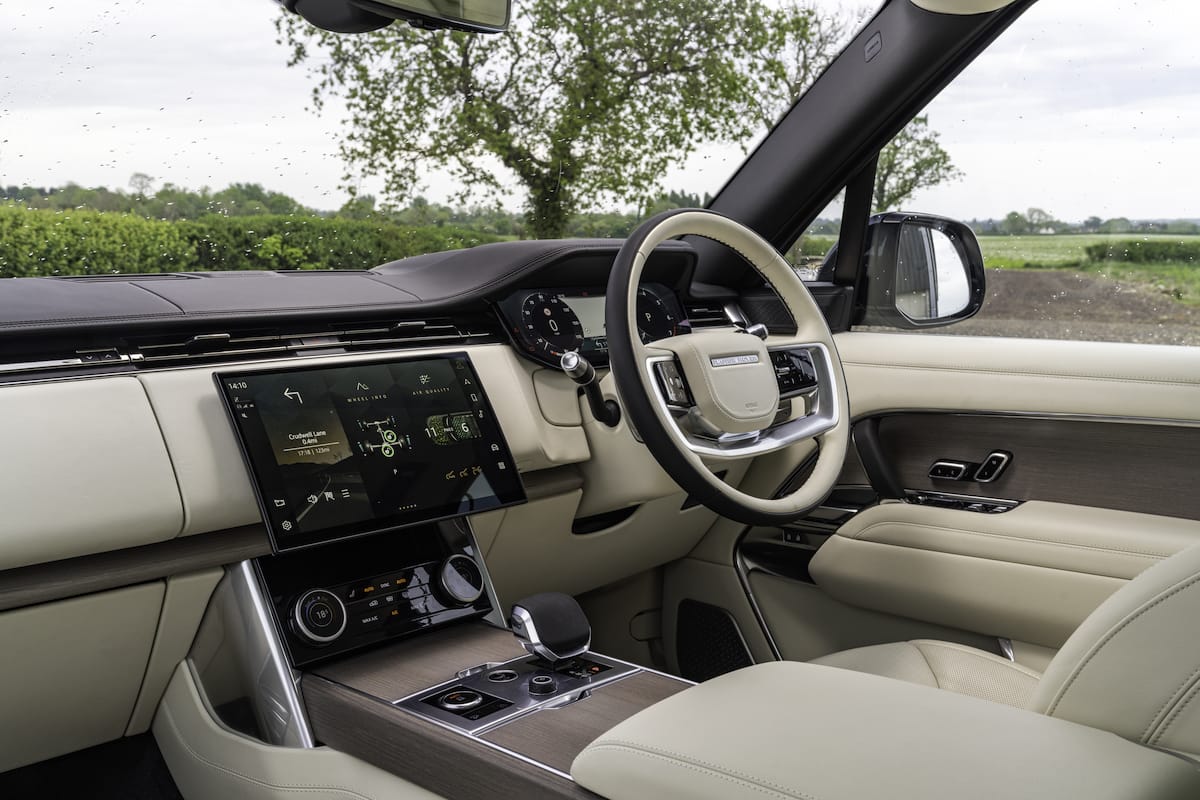
Available with a range of petrol, diesel and plug-in hybrid powertrain options, the new Range Rover is more spacious, with a larger cabin and boot. It is also available in a seven-seat configuration for the first time.
The latest Range Rover has received overwhelmingly positive reviews from the British media. Many reviewers claim that it is the new benchmark for luxury SUVs, with overall qualities that exceed even the substantially more expensive Bentley Bentayga and Rolls-Royce Cullinan. Top Gear, for example, says that it is “cleverly conceived, intelligently engineered and breathtakingly well designed”.
Parkers says that the Range Rover “has taken great strides over the outgoing car”, thanks to its “opulent” and tech-laden interior. Carbuyer states that the Range Rover is “uncharacteristically manoeuvrable around urban areas”, while Car adds that the fifth-generation Range Rover is pretty “easy on the eye”, and feels rewarding to drive.
That said, this impressive package comes at a steep price. Prices start at around the six-figure mark, which is significantly higher than the pricing for the old model, and running costs are still quite high overall. In addition, those interested in purchasing an all-electric version of the Range Rover will have to wait until 2024.
As of March 2026, the fifth-generation Range Rover holds a New Car Expert Rating of C, with a score of 63%. It scores highly for its safety rating and has been praised for its comfort and luxury by motoring journalists, and its average CO2 emissions are good (helped by the plug-in hybrid version). But running costs are very expensive, which drag down its used car rating. And we haven’t even discussed the Range Rover’s historically woeful reliability record…
Body style:Large SUV Engines:petrol, diesel, plug-in hybrid Price:From £99,375 on-road
Launched: Summer 2022 Last updated: N/A Replacement due: TBA
Image gallery
Media reviews
Highlighted reviews and road tests from across the UK automotive media. Click any of the boxes to view.
Featured reviews
“For those that can afford it, the fifth-generation Range Rover represents a further shift upmarket for the iconic 4×4. It feels supremely capable, whether on- or off-road.”
“The Range Rover is one of the best luxury SUVs in the game thanks to its smooth drive, posh interior and fantastic looks. It’s a big car, though, and not everyone will like that.”
Model reviewed: 3.0-litre petrol-electric plug-in hybrid P510e Score: 9 / 10 “This plug-in hybrid model is the most relaxing Range Rover yet. Adding a significant dollop of electric torque to boost refinement further still, making the P510e serene on the move. The ride is (mostly) great and it handles surprisingly well for such a big machine.” Read review
Model reviewed: Range Rover D350 Autobiography Score: 9 / 10 “A UK drive in the high-spec Autobiography trim reveals a few chinks in the 2022 Range Rover’s armour, but it remains an incredibly convincing luxury car overall, with a vast breadth of abilities.” Read review
Auto Trader
Model reviewed: Range overview Score: 10 / 10 “Having arguably invented the whole luxury SUV genre the latest Range Rover moves the game on with incredible style, luxury and tech.” (Erin Baker) Read review
Business Car
Model reviewed: P440e Score: 9 / 10 “Is the P440e plug-in hybrid version of the latest seventh-generation Range Rover the pick of the range? We believe so, as there seem to be few compromises, making an already complete luxury package far more affordable to run.” (Martyn Collins) Read review
Car
Model reviewed: Range overview Score: 10 / 10 “This new Range Rover has taken great strides over the outgoing car, itself no slouch. Easier on the eye inside and out, the L460 is also infinitely more capable and rewarding to drive on the road, no less capable off it, roomier, more practical and quieter.” Read review
Carbuyer
Model reviewed: Range overview Score: 8.8 / 10 “The Range Rover is an outstanding all-rounder that blends luxury, practicality and go-anywhere ability.” (Tom Jervis) Read review
Driving Electric
Model reviewed: 3.0-litre petrol/electric plug-in hybrid P400e Score: 9 / 10 “Once again, the Range Rover PHEV is the most refined and relaxing version to drive in the luxury SUV’s line-up.” Read review
Evo
Model reviewed: Range overview Score: 8 / 10 “Doubling down on a Range Rover’s best bits, while polishing some of its worst – the all-new model is everything you expected, and hoped, it would be.” (Richard Porter) Read review
Parkers
Model reviewed: Range overview Score: 9 / 10 “This new Range Rover has taken great strides over the outgoing car, itself no slouch. Easier on the eye inside and out, it’s also infinitely more capable and rewarding to drive on the road, no less capable off it, roomier, more practical and quieter.” Read review
The Sun
Model reviewed: 3.0-litre diesel (mild hybrid) automatic HSE “The new Range Rover is completely faultless. Expensive but faultless. Hovercraft-smooth. Whisper-quiet. Supremely comfortable. Safe. And an absolute doddle to drive.” Read review
The Sunday Times
Model reviewed: Range overview Score: 9 / 10 “Range Rovers must look and feel imperious on the road while being able to transport you in luxury across bumpy tracks and surfaces. More than 50 years after its introduction, the new model is the ultimate expression of that winning mix of off-road ability and opulence.” Read review
The Telegraph
Model reviewed: Range overview Score: 8 / 10 “This fifth-generation Range Rover looks very distant from its innovative beginnings half a century ago, but there’s no denying the refined looks and technology give it stunning capability and comfort – as long as it all keeps working, of course. And while it will go off-road just as well as before, it might be best not to mention mud!” (Andrew English) Read review
Top Gear
Model reviewed: Range Rover D350 HSE Score: 9 / 10 “It’s a magnificent bit of kit, and a refreshing modern luxury car, because it doesn’t seek to bombard you with gadgets and woo you with technology. It’s Jeeves with wellies on, not Elon Musk.” Read review
Model reviewed: Range overview Score: 9 / 10 “This is a car that will be at its imperious best sweeping along the motorway like an automotive super-yacht. The car’s rear end taps into that idea, and is the area of the car that’s most obviously different.” Read review
Safety rating
Independent crash test and safety ratings from Euro NCAP
Clean Air Index: 6.7 / 10 Energy Efficiency Index: 1 / 10
Running cost rating
Monthly cost of ownership data provided exclusively for The Car Expert by Clear Vehicle Data
Fuel consumption
Average
Score
Petrol models
24 mpg
E
Diesel models
38 mpg
D
Plug-in hybrid models
355 mpg
A
CO₂ output
Average
Score
Variation
Score
Petrol models
264 g/km
E
Diesel models
198 g/km
D
Plug-in hybrid models
18 g/km
A
Battery range
Average
Score
Variation
Score
Plug-in hybrid models
71 miles
D
Insurance group
Average
Score
Variation
Score
All models
50
F
Service and maintenance
Cost
Score
Year 1
£618
E
Year 2
£1,366
E
Year 3
£2,064
E
Year 4
£2,390
E
Year 5
£3,253
E
Overall
£9,691
E
It’s unsurprising that a £100K-plus, almost-three-tonne luxury SUV costs a lot of money to run. Luckily, Range Rover owners tend to have deep pockets.
Fuel consumption is inevitably poor for both the petrol and diesel models. Don’t be fooled by the impressive-looking scores for the plug-in hybrid, as this is simply a result of unrepresentative EU/UK goverment lab testing protocols. There is no way on this planet that a plug-in hybrid Range Rover will do 323 miles on a single gallon of petrol and some electricity…
However, battery range is actually very good for the plug-in hybrid, so you should hopefully be able to do most of your day-to-day running on electric power alone if you drive gently.
Insurance will also be expensive, with every model in the range being hit with a Group 50 insurance rating from Thatcham. And to round out the bills, scheduled servicing over the first five years is likely to be pricey as well.
Reliability rating
Reliability data provided exclusively for The Car Expert by MotorEasy
No reliability rating
As of March 2026, we don’t have enough reliability data on the Range Rover to generate a reliability rating.
The Car Expert’s reliability information is provided exclusively to us using workshop and extended warranty data from our partner, MotorEasy, sourced from both official dealerships and independent workshops.
As soon as MotorEasy has sufficient data on the Range Rover, we’ll publish the results here.
Date: June 2024 Recall number: R/2024/255 Model types: All Build dates: 11/2023 to 03/2024 Number of vehicles affected: 278 Defect: The incorrect specification of plastic was used to manufacture the oil filter housing. This housing may over time and with vehicle use crack. This could result in oil under pressure leaking and coming into contact with hot components of the engine which may result in a fire. Additionally oil may leak onto the road surface posing a skid hazard. Remedy: Replace the oil filter housing complete with filter and associated O-rings.
Date: July 2024 Recall number: R/2024/227 Model types: All Build dates: 09/2023 to 12/2023 Number of vehicles affected: 22 Defect: For affected vehicles the clutch plates within the hybrid transmission may have been manufactured with a flatness out of tolerance to the engineering specification. Remedy: Diagnostic test to determine whether the clutch packs within the transmission are operating as expected. Any transmissions which fail the test will be replaced.
Date: April 2024 Recall number: R/2024/167 Model types: All Build dates: 01/2024 Number of vehicles affected: 1 Defect: There is an inadequate depth of weld (penetration) between the busbar and the anode in the module of the plug-in hybrid battery. Remedy: Replacement of the traction battery.
Date: March 2024 Recall number: R/2024/147 Model types: All Build dates: 09/2020 to 02/2024 Number of vehicles affected: 14,517 Defect: The manufacturer has developed a software enhancement to further increase vehicle security. Remedy: The software enhancement will deploy this update and reduce the theft risk.
Date: March 2024 Recall number: R/2024/100 Model types: All Build dates: 11/2023 Number of vehicles affected: 1 Defect: A concern has been identified where the clamps used to secure the fuel injectors into the cylinder head on certain AJ20-D6 engines may crack allowing the injector to come loose. This loose injector could become unseated allowing fuel to be pushed past the injector seal from the combustion chamber or the fuel feed system. Remedy: A fuel leak in this area could result in fuel spill onto hot engine components which may result in a fire.
Date: January 2024 Recall number: R/2023/360 Model types: All Build dates: 10/2023 Number of vehicles affected: 4 Defect: The structural adhesive applied to the bodyshell has been mis-applied. Remedy: Install two rivets and seal with approved sealant.
Date: December 2023 Recall number: R/2023/338 Model types: All Build dates: 09/2023 to 10/2023 Number of vehicles affected: 67 Defect: On vehicles fitted with V8 Gasoline NC11 engines, the fixings used to secure the engine mounted oil cooler hoses have been found to have inadequate thread engagement. Remedy: Vehicles will have the engine oil cooler pipe fixings inspected and replaced if required.
Date: August 2023 Recall number: R/2023/244 Model types: All Build dates: 01/2023 to 02/2023 Number of vehicles affected: 2 Defect: The bolt connecting the busbar to the traction battery module connector has not achieved the required clamp force. Arcing at the joint and excessive heat generation cannot be ruled out with the consequence that this may lead to a vehicle fire. Remedy: Replacement of the high-voltage battery.
Date: July 2023 Recall number: R/2023/163 Model types: All Build dates: 09/2020 to 11/2022 Number of vehicles affected: 5,299 Defect: The external rear lamp mounted in the body could partially or permanently fail to operate resulting in one or more of the light sources not working. Remedy: Affected vehicles will have the foam block mounted in the bodyshell removed. The rear lamp mounted in the body and rear tail lamp link lead wiring will be checked for their condition. Where the lamp and wiring are qualified OK no further remedy is required. Where the lamp or wiring are qualified Not OK the lamp will be replaced.
Date: June 2023 Recall number: R/2023/097 Model types: All Build dates: 12/2021 to 07/2022 Number of vehicles affected: 192 Defect: The second row 60% seat frame may have a latch installed with a defective weld. In vehicles that have a defective weld on the second row 60% seat frame latch the seat may not be correctly secured. Remedy: The rear seat base latch will be inspected. Where the inspection reveals a not OK condition the rear seat 60% frame and associated components will be replaced.
Date: May 2023 Recall number: R/2023/044 Model types: All Build dates: 08/2022 to 01/2023 Number of vehicles affected: 499 Defect: For certain 3.0L AJ20-P6 vehicles, a small number of engines the cam carrier oil gallery hasn’t been fully drilled. As a result, the oil channel could be blocked, leading to accumulation of oil against the pressure control valve rubber membrane and subsequently an external oil leak or increased oil carryover into the air intake system. Remedy: The engine cam carrier will be inspected and where an incorrectly machined cam carrier is found replace it with a correctly machined component. Depending on mileage and engine conditions further associated components may require replacement.
As of September 2024 (our most recent data point), there have been 11 DVSA vehicle safety recalls on the current-generation Range Rover addressing various different issues.
Not all vehicles are affected by recalls. You can check to see if your car is included in any of the above recalls by visiting the DVLA website or contacting your local Land Rover dealer.
If your car is affected by a recall, the vehicle must be repaired and you should not be charged for any work required. If you are buying a used Range Rover, you should insist that any outstanding recall work is completed before you take delivery of the vehicle.
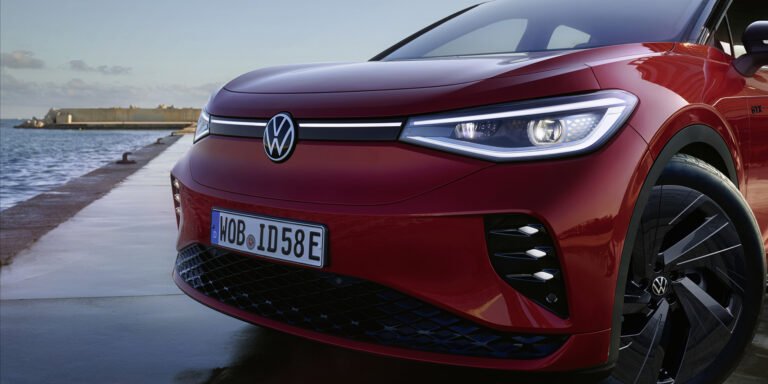
Volkswagen has made some minor alterations to its GTX-spec ID.4 and ID.5 models, with more standard equipment and a few design tweaks inside and out.
The ID.4 GTX SUV and ID.5 GTX coupé-SUV, which sit at the top of the ID.4 and ID.5 model ranges with enhanced performance and sportier exterior styling, now come with Volkswagen’s ‘Design’ and ‘Comfort’ packages as standard – previously optional extras.
This means that Volkswagen GTX variants now come with an intelligent ‘climate comfort’ windscreen for no extra cost, which can de-ice itself by heating up in cold conditions and shield the cabin from heat by cooling itself on hot days.
GTX models also now come with tinted side and rear windows and an automatic climate control system with air purification, which Volkswagen says keeps pollen, fungal spores and other airborne bacteria from entering the car. Drivers can also set the temperature of the front of the cabin to be different to the back, with a two-zone temperature control feature.
The GTX models also now come with heated seats and two USB-C charging ports as standard.
In contrast to the exterior colour of your choosing (six options available), the roof, roof rails, C-pillars and window surrounds are all now finished in black, as are the wing mirrors and the diffuser at the bottom of the rear bumper. Volkswagen says this black theme can be extended to the 21-inch alloy wheels fitted to GTX variants on request.
The dark colour palette continues into the cabin, where the dashboard and door panels are now trimmed in black, replacing the grey tones of the launch spec. The leather steering wheel and upholstery are finished in black too, while optional ‘premium’ sports seats add further red detailing to the interior.
Currently holding an Expert Rating of 70%, the all-electric Volkswagen ID.4 SUV has garnered media praise for its spacious interior and clean exterior styling, but has also received widespread criticism relating to its rather confusing infotainment system.
The ID.5, which is structurally identical to its ID.4 sibling apart from its sloping roofline in the rear, is regarded as overpriced by some in the motoring media – while the car has plenty of on-board tech and a spacious interior, some reviewers have concluded that there is no compelling reason to choose the ID.5 over cheaper alternatives. It holds an Expert Rating of 58%.
The first of a new generation of Renault electric vehicles (EVs) built on the same platform, the Renault Mégane E-Tech crossover-style hatchback is now available to order in the UK, with three trims to choose from.
Set to join an increasingly crowded EV market, Renault is hoping that its Mégane E-Tech will be able to challenge the sales of other all-electric hatchbacks, like the Volkswagen ID.3, Kia EV6, and Hyundai Ioniq 5.
First unveiled at last year’s Munich motor show, the Renault Mégane E-Tech is a similar size to the combustion-powered Captur crossover, and uses a 60kWh battery to produce 220hp and a promised battery range of 280 miles. Top speed is capped at 99mph.
Renault says that the Mégane E-Tech’s battery can charge at up to 130kW, and that it is the thinnest battery on the market – 40% smaller than what you would find in the Zoe supermini. This means that the Mégane E-Tech has a low centre of gravity, and is therefore agile on the road.
In fact, Renault claims that its new all-electric hatchback is around 100kg lighter than any car in its class. At around 200kg lighter than the Volkswagen ID.3, the Mégane E-Tech is slightly more efficient on the road, and by Renault’s estimates can travel a further 20 miles on one charge.
With three trim to choose from, the range at launch begins with the lead-in ‘Equilibre’ trim, which includes LED headlights, 18-inch alloy wheels, a 12-inch digital cluster behind the steering wheel, a nine-inch portrait-oriented infotainment display, and with heated front seats and a heated steering wheel. Prices start at £35,240.
The Mégane E-Tech also comes with keyless entry as standard, as well as a number of parking and safety tech features, including rear parking sensors, a rear-view parking camera, traffic sign recognition, and a lane keeping assistance feature that can also detect when you are too close to the edge of the road.
The mid-rang ‘Techno’ trim is priced at £37,740, and comes fitted with bigger 20-inch alloy wheels and adaptive LED headlights. This trim also adds a dual-climate control function in the cabin, with electrically-adjustable front seats trimmed in synthetic leather and recycled materials and wireless smartphone charging.
Blind spot monitoring also comes with this package, as well as a rear cross traffic alert feature which is handy for reversing on to busy roads, and parking sensors in the front.
Entry-level ‘Equilibre’ (£35,240)
18-inch alloy wheels
LED headlights
Ambient lighting in the cabin
Heated steering wheel
Heated front seats
Rear parking sensors
Rear-view parking camera
12-inch digital cluster behind the steering wheel
Nine-inch infotainment display with Renault’s navigation
Wireless smartphone connectivity with both Android Auto and Apple CarPlay
Four-speaker audio system
Two USB-C ports
Keyless entry
Traffic sign recognition
Cruise control with speed limiter
Lane keeping assistance with road-edge detection
Mid-range ‘Techno’ (£37,740)
All ‘Equilibre’ features that are not replaced
20-inch alloy wheels
Adaptive LED headlights
Contrasting door mirrors
Shark fin antenna
Upholstery made from synthetic leather and recycled materials
Tinted rear windows
Auto-dimming rear-view mirror
48-colour ambient lighting in the cabin
Dual-zone climate control
Electrically-adjustable front seats
Wireless smartphone charging
Six-speaker audio system
Adaptive cruise control
Blind spot monitoring
Rear cross traffic alert with automatic braking
Front and rear parking sensors
Range-topping ‘Launch Edition’ (£39,240)
All ‘Equilibre’ and ‘Techno’ features that are not replaced
Nine-speaker audio system
Smart rear-view mirror
360-degree parking camera
At the top of the range sits the ‘Launch Edition’ trim, which adds a smart rear-view mirror that allows the driver to check parking and traffic conditions using a high-resolution 360-degree camera.
Every model comes with a five-year warranty and an eight-year battery warranty, and Renault is offering home charger installation services through its Mobilize charging solution provider. This home charger, which can be controlled through a smartphone app, costs £1,170 with installation included – a charge which can be added to a PCP agreement at the customer’s request.
The Renault Mégane E-Tech is now available to order at UK dealerships or on the brand’s website, with the first deliveries expected to arrive later this year.
The John Cooper Works GP (JCW GP) was a limited edition hot hatch based on the popular three-door Mini hatch, proclaimed by the company to be its fastest model ever.
Topping Mini’s John Cooper Works (JCW) performance range, the JCW GP was an even faster limited-edition hot hatch with 3,000 vehicles built for sale worldwide, of which only 575 were allocated to the UK.
Described by Auto Express as “a car that delights and frustrates in equal measure”, the JCW GP was powered by a 306hp 2.0-litre petrol engine, paired with an eight-speed automatic gearbox that was frequently labelled as “slow” by British reviewers.
However, the key criticism levelled against the JCW GP was that it had unruly road manners. “Just leaf through the bible of absolute automotive no-gos, and the vices are all there in abundance”, Car explained. “Steering fight, torque steer, waywardness at any speed and marginal ride comfort.”
Carbuyer added that the car’s distinctively sporty bodywork, with carbon fibre inserts over the wheel arches and on the front and rear bumper, looked like “an afterthought rather than an essential addition”. It also criticised the GP for a lack of practicality on a day-to-day basis, as it only offered two seats – the normal Mini rear seats were not installed to save weight.
“Love or hate it, there’s no denying that on the right road it’s a ballistic missile”, The Telegraph concluded, while suggesting that the Mini JCW GP would make a “mighty” track car.
The Sunday Times agreed, adding that the hot hatch had a high-quality interior and that, considering it was an exclusive model, it was “extremely good value” – with new prices starting at just north of £35,000 when it went on sale.
As of March 2026, the Mini John Cooper Works GP holds a Used Car Expert Rating of E, with a score of 50%. Although it has low CO2 emissions, its running costs are high and its media review scores were poor. Its safety rating has also long expired.
Body style: Three-door hatchback Engines:petrol Price when new:From £35,345 on-road
Launched: Autumn 2019 Last updated: N/A Discontinued: Spring 2020 (limited run model)
Image gallery
Media reviews
Highlighted reviews and road tests from across the UK automotive media. Click any of the boxes to view.
Auto Express
Score: 7 / 10 “The Mini GP is a car that delights and frustrates in equal measure. The performance from its 2.0-litre engine is phenomenal, while it feels like a miniature touring car thanks to its handling set-up. What hinders the GP is its slow automatic gearbox and overly firm ride.” Read review
Car
Model reviewed: Score: 10 / 10 “The GP hits the bullseye by enabling the reincarnation of puberty and overt childishness regardless of birth date – and that’s the number one thing we want in a hot hatch.” Read review
Car Keys
Model reviewed: Score: 7 / 10 “Given the reputation of its predecessors, it’s fair to say that the new Mini John Cooper Works GP has arrived on the scene weighed down with a lot of reputation. And while it might not be quite as accomplished to drive as the second-generation car, it’s certainly involving and, most importantly, exciting.” Read review
Carbuyer
Model reviewed: Score: 7.6 / 10 “It might not be the most polished hot hatchback but the MINI JCW GP is fast and exciting.” Read review
Evo
Model reviewed: Score: 6 / 10 “In great weather and on perfectly smooth roads the Works GP could be great, but it struggles where our favourite hatches shine brightest.” Read review
Motoring Research
Model reviewed: “In hindsight, riding a plastic Bucking Bronco at a friend’s wedding felt oddly like driving the Mini John Cooper Works GP. Both are fun in small doses. Both left me exhilarated and exhausted.” Read review
The Sun
“You’ll buy the Mini JCW GP for the looks and performance.” Read review
The Sunday Times
Model reviewed: Score: 10 / 10 ” When other firms launch a limited-run car such as this, they tend to go a bit berserk with the price tag. But this Mini is less than £35,500. That is extremely good value, principally because most of the time it’s much, much more fun than cars costing 10 times the price.” Read review
The Telegraph
Model reviewed: Score: 6 / 10 “You’ll either love or hate this top-of-the-range hot hatchback, but there’s no denying that on the right road it’s a ballistic missile.” Read review
Top Gear
Model reviewed: Score: 6 / 10 “The third JCW to get the stripped and spoiler treatment is the fastest, most powerful car Mini has ever made, but far from the most fun.” Read review
Safety rating
Independent crash test and safety ratings from Euro NCAP
The Mini hatch John Cooper Works GP shared its Euro NCAP safety score with the regular Mini hatch, which was assessed in December 2014 and awarded a four-star rating.
However, this rating expired in January 2020 and is no longer valid as the car no longer meets the standards required for such a rating. This is normal practice, as Euro NCAP reviews its ratings on most cars annually with most ratings expiring after about six or seven years.
However, if you are comparing a used Mini hatch of any variety to vehicles of similar age, whose ratings will have probably also expired, its safety rating score is still useful.
Eco rating
Independent economy and emissions ratings from Green NCAP
No eco rating
The Mini JCW GP was not assessed by Green NCAP during its production life.
Reliability rating
Reliability data provided exclusively for The Car Expert by MotorEasy
Total claims: 488 Average repair cost: £458.26 Last updated: April 2025
Across all three generations, the Mini hatch has a reliability score that is slightly below average, according to workshop and warranty data from our commercial partner, MotorEasy.
The biggest concern is that the most common problem is also one of the most expensive – engine issues. The average repair cost is about £700, so it’s worth carefully inspecting a used car or making sure you purchase an extended warranty for your Mini to cover you once the factory new car warranty runs out.
Awards
Trophies, prizes and awards that the Mini John Cooper Works GP has received
2020
The Sunday Times Motor Awards – Jeremy Clarkson’s People’s Car of the Year
Similar cars
If you’re looking at the Mini John Cooper Works GP, you might also be interested in these alternatives
Peugeot has given its van-based e-Rifter people carrier a light mid-life update, consisting of a few exterior styling alterations and a new entry-level trim.
The Rifter people carrier range consists of two lengths, a five-seat and a seven-seat configuration as before, but the lead-in trim level has been altered, now coming with independent seats in the second row as standard – previously an optional extra.
This new entry-level ‘Allure’ trim, which replaces the outgoing ‘Allure Premium’, reduces the starting price of the range by £350, and also comes with a key fob that features a new button that only unlocks the boot.
Other than a new white exterior colour option, the equipment list remains the same, with 16-inch alloy wheels, LED daytime running lights, electrically folding door mirrors, black roof bars for extra storage, electrically folding door mirrors, front and rear parking sensors and a lane departure warning system available on the standard model.
Able to tow up to 750kg of weight, the Peugeot e-Rifter also comes with trailer stability technology that reduces the speed of the car when it detects the trailer has started to swerve.
The specifications for the range-topping ‘GT’ trim remains the same, including 17-inch alloy wheels, sportier exterior styling tweaks and automatic dual-zone climate control, though Peugeot has cut its price by £1,060.
The powertrain is also unchanged – all e-Rifter models are powered by a 50kWh battery pack mated to a 100kW electric motor, producing 136hp and a promised all-electric range of 172 miles from full charge. With the battery fitted beneath the cabin floor, the e-Rifter offers 775 litres of boot space, and an extra 186 litres of space in cubbies throughout the cabin.
This range update follows the decision to make the Rifter people carrier range electric-only, like other van-based people carriers built on the same Stellantis platform, such as the Citroën e-Berlingo and Vauxhall Combo-e Life.
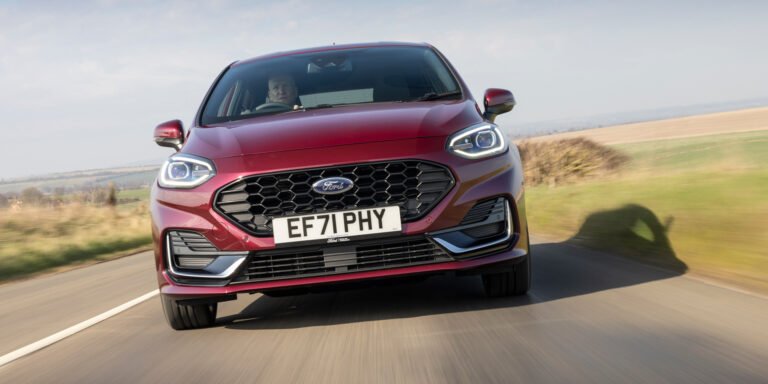
Ford has announced that it has stopped taking customer orders for its Fiesta supermini, Focus hatchback, and S-Max and Galaxy people carriers until further notice. The brand also says that it can only take a limited amount of orders for the all-electric Mustang Mach-E for the time being.
This news, first reported by Car Dealer magazine, comes as Ford continues to struggle with supply chain issues caused by the global semiconductor shortage and by Russia’s invasion of Ukraine.
The Fiesta supermini, which was the UK’s best-selling car for 12 years running before the start of the Covid-19 pandemic, was in short supply through 2021 and has been missing from the monthly UK best-sellers list since the year began.
Ford FiestaFord FocusFord S-MaxFord Galaxy
In a statement to the PA news agency, Ford said that existing orders of the Fiesta “now constitute more than six months of production”. Both the Fiesta and Focus model lines have only recently been updated, in an effort to re-ignite market interest.
Ford has not provided a date as to when it will resume taking orders for the Fiesta, Focus, S-Max and Galaxy again, but the company told PA that it anticipates current supply chain issues to “improve throughout the year”.
With a current Expert Rating of 79%, the Ford Fiesta is currently one of the top-rated options in the supermini class, praised for its well-equipped cabin, low running costs and driver appeal. The Focus has also been commended for its driver appeal, as well as its advanced safety features, and holds an Expert Rating of 77%.
I was looking at a new Ford – what are my options now?
If you’re coming to the end of your PCP agreement and had been planning to order a new Fiesta or Focus, there are plenty of alternatives in the market (see below – although some other cars may be in short supply as well, as this is an industry-wide problem). If you’re looking for alternatives to the S-Max or Galaxy, your options are far more limited as the people carrier sector has few players at the moment. Your best bet are van-based people carriers, but these don’t have the same car-like driving experience that the S-Max and Galaxy offer.
Alternatives to the Ford Fiesta
The Ford Fiesta is a great small car, with an Expert Rating of 79% as of June 2022. However, the supermini sector has plenty of good options to consider. We recommend having a look at these, based on their Expert Rating scores and comparable safety ratings (four- or five-star Euro NCAP scores):
The Ford Focus has been a mainstay of the family car market over four generations now. As of June 2022, it holds an Expert Rating of 77%, which is excellent for this sector. However, there are still plenty of other choices and the cars below may suit your needs:
The Vauxhall Zafira Tourer was a seven-seat people carrier that first arrived on UK roads at the end of 2011. It was discontinued in mid-2018 as Vauxhall looked to target the SUV market instead.
Available as a petrol or diesel model, the Zafira Tourer had the same basic underpinnings as the last-generation Astra, and many reviewers commented that this had a positive impact on the Zafira Tourer’s driving abilities.
As well as being surprisingly agile, the Vauxhall Zafira Tourer was praised for its comfortable cabin and an efficient range of engines, though some found the ride comfort to be rather firm and the diesel powertrains to be quite noisy at speed.
A few reviews tabled criticisms of the Zafira’s infotainment too, which Vauxhall updated as part of the car’s 2016 facelift, but the newer system has not aged very well either.
That said, motoring outlets collectively agreed at the Zafira Tourer was an affordable option for long-distance seven-seater travel with little fuss. “It has everything a family could need”, Auto Express concluded. “It offers smart looks, a spacious cabin and, apart from entry-level models, lots of equipment.”
As of March 2026, the Vauxhall Zafira Tourer holds a Used Car Expert Rating of D, with a score of 54%.
Highlighted reviews and road tests from across the UK automotive media. Click any of the boxes to view.
Auto Express
Model reviewed: Score: 6 / 10 “The Vauxhall Zafira Tourer is a spacious and luxurious seven-seater that’s designed to rival the Ford S-MAX.” Read review
Model reviewed: “The Zafira Tourer has everything a family could need. It offers smart looks, a spacious cabin and, apart from entry-level models, lots of equipment.” Read review
Model reviewed: 2016 Score: 8 / 10 “Keeping the Zafira Tourer at the top of its game is Vauxhall’s priority with this midlife update, which replaces the distinctive front-end treatment of the seven-seat MPV with a more sober, corporate face.” Read review
Auto Trader
Model reviewed: Score: 6.8 / 10 “The Zafira Tourer is a capable seven-seat MPV, albeit one that’s showing its age despite a 2016 refresh in its design.” Read review
Model reviewed: Score: 7.2 / 10 “The Vauxhall Zafira Tourer scores points for being an attractive MPV with its swish design. It’s also pleasant to drive, making it a worthy rival to the Ford S-MAX.” Read review
Business Car
Model reviewed: Tech Line 2.0 CDTi 170hp Score: 7 / 10 “A marked improvement over the outgoing model, the Zafira Tourer remains a practical and well-equipped option in the seven-seat MPV sector.” Read review
Model reviewed: 1.6 CDTi Score: 8 / 10 “The Zafira Tourer takes Vauxhall straight to the front of the numbers game.” Read review
Car
Model reviewed: 2.0 CDTi (2011) Score: 8 / 10 “The new Vauxhall Zafira Tourer is an accomplished MPV. It won’t set an enthusiast’s pants on fire like a Ford C- or S-Max, but it’s well conceived and well judged for its target market.” Read review
Car Keys
Model reviewed: 1.4-litre Turbo SRi Score: 7 / 10 “If you want an affordable MPV that can get the job done with zero fuss, then you should definitely check out the Vauxhall Zafira Tourer.” Read review
Model reviewed: Score: 7 / 10 “The Vauxhall Zafira Tourer’s strongest asset is its highly flexible seating, allowing it to transform from an airport shuttle into a medium-sized van in a matter of seconds.” Read review
Model reviewed: Elite Score: 8 / 10 “There is much cleverness in the Tourer range, but not all of it is available in all models. That can’t be said, however, of the range-topping Elite reviewed here, which gets the full set.” Read review
Carbuyer
Model reviewed: Score: 7.8 / 10 “The Vauxhall Zafira Tourer is a seven-seat MPV that’s good to drive, affordable to run and handsomely styled.” Read review
Carwow
Model reviewed: Score: 6 / 10 “The Vauxhall Zafira Tourer is a spacious, well-made and attractive MPV.” Read review
Eurekar
Model reviewed: “The Zafira is not the most scintillating MPV to drive but the Flexride chassis borrowed from the Insignia matches most of the others in the class to give decent handing and good road-holding.” Read review
Model reviewed: SRi Nav 1.4i Turbo “The 1.4-litre 140ps four-cylinder turbocharged petrol engine gives the Vauxhall Zafira Tourer more than adequate performance.” Read review
Model reviewed: SE 1.6 CDTi ecoFLEX “The Zafira Tourer averaged about 50mpg in many miles of mixed motoring in town and on the motorway. The oil burner is also quiet and smooth.” Read review
Fleetworld
Model reviewed: 2.0 CDTi (168bhp) Tech Line “Even with the effort of changing gear manually, the big engine suits the Zafira Tourer. It’s better suited to being fully loaded than the 1.6-litre, which is just about powerful enough to carry heavy loads, and fuel economy of around 50mpg is typical at motorway speeds.” Read review
Model reviewed: 1.6 CDTi Tech Line “Stylish, good to drive and as versatile inside as buyers in this segment demand, the Zafira Tourer has always had plenty going for it.” Read review
Heycar
Model reviewed: Range overview Score: 6 / 10 “The Vauxhall Zafira Tourer isn’t the most practical, the most versatile or the best-to-drive car of its type. It’s not the highest in quality or the most generously equipped, either. However, it’s still a good all-rounder that does a very solid job in all these areas, and it’s good value for money, too.” Read review
Honest John
Model reviewed: Score: 6 / 10 “While the Zafira Tourer isn’t exactly a stand-out class-leader in any given area, it’s competitive in pretty much all of them, and it’s also an affordable choice.” Read review
Motors
Model reviewed: Score: 7 / 10 “While the current Zafira is still a competent and fairly attractive-looking MPV, it doesn’t quite match rivals such as the Ford Galaxy and Seat Alhambra in terms of out and out space.” Read review
Parkers
Model reviewed: Score: 8 / 10 “The road the Zafira Tourer offers a sedate and hassle-free driving experience. Bumps and potholes are soaked up very well, although it’s not even slightly sporty.” Read review
The Sun
Model reviewed: “The comfortable and practival Vauxhall Zafira Tourer feels like a sporty estate — it’s surprisingly nimble.” Read review
The Sunday Times
Model reviewed: Score: 6 / 10 “The Zafira is feeling dated now, even in its new-look Tourer guise, and there are more sophisticated and comfortable choices out there. It’s one of the cheapest ways to carry seven, though.” Read review
Model reviewed: 1.6 CDTi Tech Line Score: 10 / 10 “The Zafira is a great Vauzhall.” Read review
Model reviewed: Score: 6 / 10 “Much sharper looks bring Vauxhall’s Zafira Tourer MPV up to date.” Read review
The Telegraph
Model reviewed: Score: 8 / 10 “The Vauxhall Zafira Tourer is better to drive than many rivals, including the Citroen Grand C4 Picasso. And while it’s not as airy or practical as the Citroen, it still has space for adults in all three rows.” Read review
Top Gear
Model reviewed: Score: 7 / 10 “The Zafira turns premium with a sleek look and super-luxurious interior – but has prices to match.” Read review
Safety rating
Independent crash test and safety ratings from Euro NCAP
The Vauxhall Zafira was awarded a five-star safety rating from Euro NCAP back when this model was launched in 2011. However, this rating expired in January 2018 and is no longer valid, as the Zafira no longer met the requirements for a five-star car. This is normal practice, as Euro NCAP reviews its ratings on most cars annually with most ratings expiring after about six or seven years.
However, if you are comparing a used Vauxhall Zafira Tourer to vehicles of similar age, whose ratings will have probably also expired, its safety rating score is still useful.
Eco rating
Independent economy and emissions ratings from Green NCAP
No eco rating
The Vauxhall Zafira Tourer was never lab tested by Green NCAP as its production cycle pre-dated the progamme.
Reliability rating
Reliability data provided exclusively for The Car Expert by MotorEasy
Total claims: 162 Average repair cost: £462.20 Last updated: April 2025
As of January 2024, the Vauxhall Zafira Tourer has an average reliability score of 60%, according to exclusive extended warranty data provided by our partners at MotorEasy. The average repair cost for a Zafira Tourer is also good at less than £500, which is good news if you are considering a used Zafira Tourer.
The most common faults to date have related to the suspension and the engine, although average repair costs for both compare well with similar vehicles. Most other faults have been relatively inexpensive to fix as well.
If you’re looking at a used Vauxhall Zafira Tourer, make sure any extended warranty cover you purchase covers all of the potential problem areas shown in the charts above.
Awards
Trophies, prizes and awards that the Vauxhall Zafira Tourer has received
2016
BusinessCarAwards – Best Mini-MPV
2013
CarSite Awards – Best Large MPV
Fleet News Awards –Best Full-size People Carrier
2012
Towcar Awards – Best MPV
Similar cars
If you’re looking at the Vauxhall Zafira Tourer, you might also be interested in these alternatives
The UK government has announced this morning that it is ending the plug-in car grant (PiCG) with immediate effect, which basically means that prices of the cheapest new EVs should now increase by £1,500.
The plug-in car grant has been around for more than a decade, introduced back in 2011 to provide a subsidy of up to £5,000 on any new electric car. The plan was always for the subsidy to reduce over time as the price of electric cars (and, initially, plug-in hybrids) came down until it eventually ended.
This happened in a number of reductions of £500 or £1,000 every few years. For the last year or so, the level has been set at £1,500. Along the way, subsidies for plug-in hybrid vehcles was dropped and the maximum price threshold for eligible cars was steadily reduced to concentrate the money on more affordable EVs rather than luxury models.
Which new cars are affected?
Today’s news means that several cars will theoretically become £1,500 dearer. These include:
The grant has been ended with immediate effect, which means that the price of any of these cars should be £1,500 dearer today than they were yesterday. However, there are two things that may affect this.
Firstly, if you’ve been looking at one of these cars at your local dealership but not yet signed on the dotted line, chances are that the dealer or manufacturer will offer to cover the cost of the price rise as an unofficial ‘goodwill gesture’.
Secondly, it should be noted that manufacturers have tended to drop their prices whenever the goverment has previously reduced the plug-in car grant. Assuming that the same will happen again, at least some of the above cars will shortly see their recommended retail prices reduced by up to £1,500.
Assuming that one or both of the above happen (and it’s been the case every single time the grant has been reduced previously), the overall impact on car buyers will be less than you might expect.
Is there any good news to soften the blow?
Yes, there should be. Obviously, if you were planning to buy one of the cars above in the next few weeks then it may have just got dearer. But if you’re thinking about switching to an electric car in the next few months or years, then it’s potentially good news.
The government has said that money saved from scrapping the plug-in car grant will be redirected into improving public charging infrastructure. This is good news for all consumers, as a lack of on-street charging is now probably the biggest barrier to broader EV adoption.
Spending money on charging infrastructure also benefits all electric car owners, particularly used car buyers who have never enjoyed a government handout anyway, rather than just new car buyers.
Are any vehicles still eligible for a grant?
Not consumer passenger vehicles. The plug-in car grant will still continue for light commercial vehicles (like delivery vans and taxis) for the time being. This is a good thing as these vehicles tend to do a lot of driving in built-up urban areas and are traditionally powered by diesel engines.
Axing of Plug-in car grant scheme may leave consumers disappointed, however the change may come as a benefit to electric car-buyers, according to The Car Expert
Manufacturers likely to absorb cost of the financial advantages of the grant by reducing the price of electric vehicles
Overall impact of the cut to the Government scheme should see investments re-directed to benefit electric vehicle owners with improvements to the UKs EV infrastructure
While many consumers may be faced with disappointment following the axing of the Government plug-in car grant scheme, those looking to purchase an electric vehicle could actually benefit from the change in legislation, according to The Car Expert.
At a time when the sales of fully electric, plug-in and hybrid vehicles are at an all time high, the end to the Government plug-in car grant scheme – introduced with immediate effect – will inevitably leave electric car-buyers frustrated with the potential financial loss resulting from the withdrawal of the grant.
However, according to The Car Expert, the pattern of the automotive industry over time suggests that this cost is likely to be absorbed by car manufacturers who will in turn reduce the cost of electric vehicles accordingly to minimise the cost impact on customers.
As car manufacturers adjust pricing on electric vehicles, the re-direction of Government investment into its electrification strategy will likely have wider a positive impact on public infrastructure.
The result may lead to an evening of the distribution of electric charge points across the UK, an increase of on-street charging for those without home charging facilities and a general increase of charge points to relive pressure from the already overcrowded public charging available, ultimately benefiting the consumer.
“Although the axing of the plug-in grant may initially be seen as a blow, the end of the scheme is unlikely to see a dramatic effect on new EV sales. Sales have been steadily increasing every month for years, despite ongoing reductions to the plug-in car grant. The onus will fall on manufacturers to swallow the cost by reducing the soaring prices of electric vehicles if they wish to retain a firm position in the market,” commented Stuart Masson, Editorial Director at The Car Expert
He continued: “What we will see in turn is that the Government handouts, which for the most part were designed to support manufacturers, will be re-routed into areas of the industry that have fallen desperately behind that of passenger cars, such as vans, LCVs and commercial sector.”
The Rotten Tomatoes equivalent for the automotive world, The Car Expert consolidates reviews from 30 of the UK’s top automotive websites to create the Expert Rating Index. Bringing together science and data analysis, the index calculates a weighted average to give an aggregated score – Expert Rating – that is comparable across different brands and models.
The Expert Rating Index factors in the age of each review, so that newer reviews carry more weight than older reviews. It also breaks down the complex web of different scoring systems that various websites use in their reviews.
The Car Expert has logged over 12,000 reviews covering more than 400 cars and over 50 manufacturers, with its Expert Rating Index now trusted as the gold standard for rating and ranking new cars in the UK.
For media enquiries, please contact Performance Communications:
Cars being stolen to order and sent abroad or stripped for valuable parts are being blamed for a rise in vehicle thefts across Britain.
New figures published this week by the PA News Agency show that the number of vehicle thefts in the last 12 months across the UK have reached 90,000. Most police forces around Britain have recorded an increase in thefts, thought to be driven by a lack of parts.
Thieves are stealing cars ‘to order’ and stripping them of components such as semi-conductors, the microchips used in cars to run infotainment and safety control equipment, which have been the subject of a worldwide shortage.
New cars generally are in short supply and gangs are stealing them in broad daylight to send them to new ‘owners’ – sometimes in other countries.
Now, with your car being one of the most expensive purchases you are likely to make (after your home), experts are calling on owners to exercise even greater care when leaving their vehicles unattended.
Aside from the usual security features fitted to most new cars such as alarms and immobilisers, there are many simple things you can do to reduce the chance of your car being targeted by crooks.
Reducing the risk
Here are 10 top tips, compiled with help of transport charityIAM RoadSmart, which won’t just remove the heartbreak of losing your car, but could save you money in potential losses from forfeiting your insurance no-claims discount.
1. Park in a secure area if possible
Your car will be most secure if it’s kept in a locked garage or secure car park. But if that’s not possible try to get it off the road and on a driveway. Consider installing a CCTV camera or motion detector light to deter criminals. If you have to park on the street, make it a well-lit one.
2. Keep valuables out of sight
Hide expensive or desirable objects – ideally don’t leave them in the car at all. Even low value items can tempt thieves and, while they might not cost a lot to replace, you could end up losing your no claims bonus by making a claim for a forced lock or broken window.
3.Get a car alarm and tracker
Many vehicles are fitted with a factory fitted alarm and immobiliser; but think about an additional alarm to offer maximum security. If you feel you’re more vulnerable to car thieves and would like more peace of mind, investing in a vehicle tracker is a good idea. These can make it much easier to trace and recover your vehicle.
4.Keep your keys safe
Keep your car key away from the home’s window and not in an expected place, such as a hall table. Consider taking them to your bedroom at night. If your car has a keyless entry system, put the fob in a signal blocking bag so thieves can’t copy your own key to signal jump and gain access to your car. If you buy a car and only a single key is offered, get a professional to reprogramme the vehicle just in case the seller plans to ‘take the car back’ at some point.
5.Invest in a steering wheel lock
While steering wheel locks may have become less popular over the years, they are still an effective way of stopping thieves as they provide another layer of security to crack. They can also stop high-tech thieves in their tracks as they tend to target the car’s electronic systems rather than heavy duty lock devices.
6.Locking wheel nuts
Modern alloy wheels can cost hundreds of pounds each and are an easy target for thieves. Locking wheel nuts are cheap, easy to fit, and can act as an effective deterrent for criminals. Keep the special socket or key somewhere safe within your vehicle and out of sight.
7. Lock your car
It may seem like a basic security tip but remember to lock your car whenever you leave it, such as when paying for fuel. Many people admit to leaving their car unlocked, even leaving their keys in the ignition, so prevent any risk by locking the car when it’s left unattended.
8. Do your research
Be aware of the crime trends in your area. Have there been reports of catalytic converter thefts in your town? Which models are most likely to be taken in your local region? Often high-end cars are the ones that organised gangs go for so extra care may be needed if you own one.
9. Beware of car-jackers
Just because you’re in your car doesn’t mean you won’t get targeted. In traffic, drive with your doors locked and leave enough space in front of you if you have to get out of trouble quickly. If you are bumped from behind get out where there are plenty of people around and if you’re not sure, call the police.
10. Look for strange tow trucks
One way to steal a car is to lift it – literally. If you see a tow truck lurking in your area and you think it’s suspicious, report it to the police. Is the vehicle branded? Are the crew wearing any uniform? If not, they could be a threat. The police won’t mind if you get it wrong.
The Audi RS 6 was a performance-focused estate car based on the regular A6 range. This was the fourth generation of the RS 6, arriving in the UK in early 2020 and ending production in late 2025.
Available only as an eight-speed automatic, the RS 6 distinguished itself from the standard A6 Avant with its sportier styling and its powerful 4.0-litre V6 twin-turbo petrol engine, which was capable of producing 600hp and accelerating from 0-62mph in 3.6 seconds.
Described by Auto Express as a “beguiling mix of supercar performance with limousine-like refinement and space”, the RS 6 was highlighted by reviewers for being a talented all-rounder that also provided impressive straight-line speed. “It’s monstrously quick”, Carwow commented, “yet also quiet, comfortable and roomy inside.”
That said, a few titles said that alternatives are more exciting to drive overall. “For all its incredible ability, it’s a bit devoid of excitement”, Heycar explained. Other reviewers concluded that the Mercedes-AMG E63 Estate offered more driver appeal and was more spacious inside as well.
Price was also a sticking point for a few reviewers, particularly as the smaller Audi RS 4 estate was over £30,000 cheaper. “If you’re in the market for a seriously fast estate car, then the Audi RS 6 remains the benchmark”, Parkers explained. “Just expect to pay six figures for the privilege.”
As of February 2026, the Audi RS 6 holds a Used CarExpert Rating of E with a score of 40%. Despite receiving excellent review scores from the motoring media, the car’s high running costs hinder its rating.
Body style: Five-door estate car Engines:petrol Price:From £114,890 on-road
Launched: Spring 2020 Last updated: Spring 2021 Replacement due: TBA
Image gallery
Media reviews
Highlighted reviews and road tests from across the UK automotive media. Click any of the boxes to view.
Auto Express
Model reviewed: Avant Score: 8 / 10 “It doesn’t come cheap, but those people who can afford one will get a beguiling mix of supercar performance with limousine-like refinement and useable space. If there’s one car to do it all, then this may just be it.” Read review
Auto Trader
Model reviewed: Score: 9 / 10 “Roominess, all-weather four-wheel drive and a thumping 600 horsepower engine play to Audi RS6 tradition but this latest one is also impressively luxurious and would make the perfect accompaniment to a fleet of supercars if you want your daily driver as fast as it is discreet.” (Dan Trent) Read review
Car
Model reviewed: Avant Score: 10 / 10 “Should you buy one? Absolutely.” Read review
Carbuyer
Model reviewed: 2020 Score: 8 / 10 “The Audi RS6 Avant is a rapid estate that shows off performance Audis at their finest.” Read review
Carwow
Model reviewed: Score: 9 / 10 “The Audi RS6 Avant is the car that does it all. It’s monstrously quick, yet also quiet, comfortable and roomy inside. A Mercedes E63 S Estate is roomier still, mind.” Read review
Evo
Model reviewed: Avant Score: 9 / 10 “First impressions of the RS6 are of its refinement more than anything else.” Read review
Heycar
Model reviewed: Score: 8 / 10 “Audi has a long, established history of producing shockingly quick estate cars, and the RS6 is exactly that. All the space and grace of a regular A6 Avant too. Where it’s lacking is in relation to engagement, it is fast, surefooted and able, but for all its incredible ability it’s a bit devoid of excitement.” Read review
Motors
Model reviewed: Score: 8 / 10 “Audi RS 6 offers incredible performance, huge practicality and an luxurious interior.”
Read review
Parkers
Model reviewed: Avant 2020 Score: 9.6 / 10 “The Audi RS 6 is a fast, spacious, practical daily – and now fun to drive.” Read review
Top Gear
Score: 9 / 10 “Audi’s fast five-door family estate now has more brains to go with all that brawn, making it a consummate all-rounder.” Read review
Safety rating
Independent crash test and safety ratings from Euro NCAP
The Audi RS 6 has not specifically been assessed by Euro NCAP, but it shares its safety rating with the regular Audi A6 range, which was awarded a five-star rating in 2018. However, this rating expired in January 2025 and is no longer valid as the car no longer meets the standards required for such a rating. This is normal practice, as Euro NCAP reviews its ratings on most cars annually with most ratings expiring after about six or seven years.
Although the rating has now expired, the score is still useful if you are comparing a used RS 6 to vehicles of similar age – whose ratings will have probably also expired.
Eco rating
Independent economy and emissions ratings from Green NCAP
No eco rating
As of February 2026, the Audi RS 6 has not been assessed by Green NCAP.
Running cost rating
Monthly cost of ownership data provided exclusively for The Car Expert by Clear Vehicle Data
Fuel consumption
Average
Score
Petrol models
23 mpg
E
CO₂ output
Average
Score
Variation
Score
Petrol models
282 g/km
E
Insurance group
Average
Score
Variation
Score
All models
50
F
Service and maintenance
Cost
Score
Year 1
£625
E
Year 2
£1,468
E
Year 3
£2,335
E
Year 4
£2,588
E
Year 5
£3,523
E
Overall
£10,539
E
Running costs for the Audi RS 6 Avant are unsurprisingly high, according to numbers provided exclusively to The Car Expert by our data partner, Clear Vehicle Data.
Given that it’s powered by a 600hp, twin-turbocharged 4.0-litre V8 petrol engine, the RS 6’s woeful fuel consumption and CO2 figures (which are used to determine road tax) are to be expected. Likewise, its performance and price tag mean that insurance costs will be at the top end of town.
Finally, scheduled servicing costs will also be expensive – although not quite as pricey as some other cars in this price bracket.
Reliability rating
Reliability data provided exclusively for The Car Expert by MotorEasy
Total claims: 519 Average repair cost: £1101.06 Last updated: April 2025
The Audi A6 range, which includes the RS 6, has a very poor reliability score of just 19%, according to workshop and warranty data provided exclusively to The Car Expert by our partners at MotorEasy. Please note that this score covers both the current-generation A6 family and the previous (pre-2018) iterations.
Almost a quarter of all reported problems with the A6 relate to its electrical system, with an average repair bill of £430. Engine problems are (unsurprisingly) expensive, and are unfortunately rather common too, costing around £1,800 on average. Warranty claims relating to the car’s gearbox also have an average cost of around £3,000 and they’re certainly not uncommon.
If you own an Audi RS 6 or you’re looking at purchasing a used RS 6, make sure any extended warranty cover you purchase covers all of these potential problem areas.
Date: December 2020 Recall number: R/2020/372 Model types: All Build dates: 07/2020 to 09/2020 Number of vehicles affected: 31 Defect: Faulty crash sensors for airbag / restraint systems may have been fitted in both of the front doors. Remedy: The crash sensors for the side airbags (front) must be checked on the vehicles affected and replaced if necessary.
As of September 2024 (our most recent data point), there has only been one DVSA vehicle safety recall specifically for the current Audi RS 6. However, there may be some additional recalls for the Audi A6 family (which has had ten recalls to date) that also affect the RS 6.
Not all vehicles are affected by recalls. You can check to see if your car is included in any of the above recalls by visiting the DVLA website or contacting your local Audi dealer.
If your car is affected by a recall, the vehicle must be repaired and you should not be charged for any work required. If you are buying a used RS 6, you should insist that any outstanding recall work is completed before you take delivery of the vehicle.
The fruit of Citroën’s third collaboration with surfing brand Rip Curl, the C3 Aircross Rip Curl trim has broken cover, with unique styling quirks inside and out.
Based on the ‘Shine Plus’, previously the most expensive trim package in the C3 Aircross SUV range, the latest ‘Rip Curl’ trim can be distinguished from the standard model thanks to its ‘anodised blue’ door mirrors and skid plate (under the front bumper).
With surfers in mind, the Rip Curl package comes with black 17-inch alloy wheels with a unique design, and all-season tyres for added grip when on the beach front. Available with a choice of four exterior colour options (white, black, and two shades of grey), the model also features the Rip Curl branding on the boot lid.
In the cabin, Citroën has fitted its ‘Advanced Comfort’ seats, which are designed with more padding and lumbar support for ‘optimal driving comfort’, trimmed ‘sapphire blue’ leather-effect and cloth materials. Splashes of blue also feature on the dashboard, centre console and air vent surrounds, as well as the floor mats marked with Rip Curl lettering.
The Rip Curl trim also features a panoramic sunroof with an electric sunblind, as well as the brand’s ‘Sight & Sound’ pack, which includes an upgraded speaker system, and head-up display which sits above the steering wheel on the dashboard.
For an extra cost, the C3 Aircross Rip Curl can be specced with hill descent technology for tackling muddy slopes or sandy dunes. The Rip Curl trim is available with either a 110hp petrol engine with a manual gearbox, a 130hp petrol engine with an automatic gearbox, or a 110hp diesel engine with a manual gearbox – the same powertrain range as the Shine Plus trim.
While the Shine Plus trim can be bought for £22.6K, prices for the C3 Aircross Rip Curl start at £23.8K. Citroën says it is now taking orders for the new trim.
The smallest SUV/crossover model in the Citroën range, the C3 Aircross currently holds an Expert Rating of 63%. While reviewers agree that the car’s versatility and individual styling distinguishes it from many of its rivals, but has been criticised for a lack of refinement and relatively poor standard specification.
The Nissan Qashqai SUV range has received a minor update for 2022, consisting of equipment additions, slight exterior changes and pricing revisions.
Externally, the Qashqai gets an entirely different shde of grey for the bumpers and Nissan’s new logo. And that’s about it.
Inside, the manufacturer says that there are several new enhancements to its ‘Nissan Connect Services’ that can be accessed through the Qashqai’s infotainment, including a digital owners manual, and voice control with an Amazon Alexa personal assistant.
The first of these updated models are now arrivingin dealerships, and although the brand says that it has increased its deposit contribution to £1,000 for those who buy using Nissan Finance, there has been a price increase across the range.
2022 Nissan Qashqai pricing
Trim level
UK starting price
Visia
£25,505
Acenta Premium
£28,105
N-Connecta
£30,275
Tekna
£32,815
Tekna+
£36,325
The revised range begins with the £25.5K Visia trim – a price increase of around £1,500 when compared to the entry-level price when the car was launched in 2021.
The mid-range N-Connecta trim, which is now priced at just over £30K, is fitted with a bigger 12-inch infotainment screen, and can be specced with a glass roof and roof rails for the additional price of £650.
The top of the Qashqai range has seen a price increase of over £2,000 since last year – the top-spec Tekna+ trim has prices starting from more than £36K. This grade does now come with LED front fog lights as standard, previously an optional extra.
The Qashqai is the first model to get the new Nissan logo
Built in Nissan’s Sunderland factory in the UK, the Qashqai is proving to be one of Britain’s most popular SUV options as 2022 progresses. With a current Expert Rating of 73%, the Nissan Qashqai has been commended by UK reviewers for its extensive user-friendly tech and impressive safety kit, though some journalists conclude that the SUV has an irritating manual gearbox.
Featuring a few subtle driver-focused enhancements and exterior styling tweaks, Bentley has unveiled a new ‘S’ trim for the Continental GT saloon, Continental GTC convertible and Flying Spur saloon, which the brand says provides enhanced driving performance and visual presence.
This sporty new variant of the two-door Continental GT luxury saloon and Continental GTC convertible is based on the V8-powered versions of each model, and comes with a few cosmetic changes, as well as featuring a new exhaust system and Bentley’s ‘Dynamic Ride’ suspension setup.
This suspension package – already available with the ‘GT Speed’ trim – uses an electronic anti-roll system that increases the car’s stability when cornering at speed, while minimising bumps and vibrations in more relaxed cruising situations.
The new Bentley Continental GT S and GTC S models use the same 4.0-litre twin-turbocharged V8 found on the standard model, but the new exhaust system amplifies the noise level under acceleration.
Bentley Continental GTC S
Distinguishing itself from the regular Continental, the ‘S’ trim features a black gloss radiator grille with ‘S’ branding above the wheel arches in the front. The headlights and tail lights have a dark tint that Bentley says emphasises the trim’s “sporting character”, and the ‘S’ can be configured with unique 22-inch alloy wheels painted in black chrome.
In the cabin, the interior upholstery has a two-tone colour scheme, trimmed in leather and a suede-like material called dinamica. The headrests are adorned with more ‘S’ trim branding, and the tread plates are marked with the same lettering. Additionally, the Continental GT S and GTC S come with a digital instrument cluster behind the steering wheel, a feature found on range-topping models.
Bentley Continental GT S interior
Bentley has not yet released pricing for the ‘S’ trim, but the layout of the brand’s website suggests that it will slot into the middle of the trim range, below the range-topping ‘GT Speed’ and ‘GT Mulliner’ trims. The entry-level price for a Bentley Continental GT stands at £157,900.
Sharing its underpinnings with the Porsche Panamera, the Bentley Continental GT arrived in the UK in 2018, and has received unanimously positive reviews since. The luxury saloon variant currently holds an Expert Rating of 84%, while the GTC convertible holds an Expert Rating of 81%.
Bentley Flying Spur S
The new Bentley Flying Spur S is available with the same 4.0-litre V8 as the Continental GT range, or with a six-cylinder hybrid powertrain. This new ‘S’ variant of the Flying Spur gets similar visual tweaks too, with black trim replacing most of the exterior chrome and the headlights and tail lights with a dark tint.
The same ‘S’ badging is present on the saloon’s front wheel arches, and the Flying Spur S can be specced with five-spoke 22-inch alloy wheels – a unique feature for the trim level. Inside, the upholstery is trimmed in the same leather and a suede-like materials, and the Flying Spur S is also equipped with Bentley’s ‘Dynamic Ride’ suspension setup.
On sale since 2019, the Bentley Flying Spur currently holds an Expert Rating of 83%, having received glowing reports for its luxury and driving dynamics. That said, consumer-oriented titles have pointed out its obvious shortcomings in areas like value for money and fuel economy.
Following on from last year’s launch of the new C-Class saloon, Mercedes-Benz has unveiled the high-riding GLC SUV built on the same platform.
The new GLC will go on sale in the UK later this year and is marginally larger than the previous version. It will be available with three plug-in hybrid powertrain choices and features a new interior that follows the dashboard layout seen in the S-Class and C-Class models.
Externally, the new GLC follows the styling themes of the larger GLE and GLS models. Most obvious is a larger grille, flanked by more powerful LED headlights, while at the rear you’ll find narrower LED tail lights running the full width of the tailgate.
Mercedes-Benz says the new GLC is more aerodynamic than the last, creating less drag to hopefully save you a few pennies at the pumps.
The tailgate is electrically powered as standard across the range, which opens to reveal a boot with 50 litres more load volume than the previous version, giving a total of 600 litres with the rear seats up.
Inside the cabin, the new GLC has had a dramatic interior transformation to bring it in line with the brand’s latest models. The thick centre console between the driver and front passenger curves up to meet the floating 12-inch portrait-orientated infotainment touchscreen, just as it does on the new C-Class.
A fully digital instrument display sits behind a new-look steering wheel, while a head-up display that projects information onto the windscreen is optional.
The infotainment console, which can be updated with new features while sitting on your driveway thanks to over-the-air updates, has a fingerprint scanner to select your personalised driver profile. In addition, the new GLC has wireless smartphone charging and heated seats as standard.
Like the latest C-Class range, the entry-level petrol and diesel GLC models are equipped with a four-cylinder mild hybrid petrol engine. All models come with a nine-speed automatic transmission, while all-wheel drive is also standard.
Three plug-in hybrid powertrains are available – two petrol and diesel, all using the same 31kWh battery. Mercedes-Benz claims that these plug-in models can travel more than 62 miles on electric power. There’s also a a new off-road driving mode to improve the GLC’s performance away from the tarmac.
There’s no news on UK pricing or specification yet, but we expect these to be announced in coming weeks ahead of the GLC’s UK arrival later this year.
Mercedes-Benz will be hoping that the new GLC represents enough of a step forward over the previous model to improve its ratings from UK reviewers. The current model has an Expert Rating of 68%, which falls short of most of its key rivals in the medium SUV segment – like the Volvo XC60 (77%), BMW X3 (75%), Lexus NX (75%), Audi Q5 (72%), Jaguar F-Pace (72%) and Range Rover Velar (72%).
The Peugeot 208 is a compact five-door hatchback and a leftfield rival to established supermini class leaders like the Ford Fiesta and Volkswagen Polo. This page is dedicated to the first-generation model which first arrived in 2012, which was replaced by the current generation at the end of 2019.
The 208 range included a number of petrol and diesel engine options fitted with either a manual or automatic gearbox, and was topped by the performance-tuned 208 GTI model. The supermini had a mild update in early 2015, consisting of new on-board tech additions and revisions to its engine line-up.
A direct successor to the popular Peugeot 207 supermini, the 208 needed to be bold to live up to Peugeot’s successful supermini lineage, and Top Gear concluded that it met those high expectations. “Its reinvention of the supermini, a car that looks back to the 205 for design cues but also looks forward in finish, engineering and interior features.”
Auto Trader complemented the 208 for its smart exterior styling and its interior comfort, but nevertheless explained that the hatchback is “way too compromised in too many other areas to trouble the class leaders.”
The motoring media often note that the Ford Fiesta has better driving dynamics and more driver appeal, and that the 208 has some rather noisy petrol engine options.
No longer on sale, the Peugeot 208 holds a Used Car Expert Rating of D, with a score of 56%.
Body style: Five-door hatchback Engines:petrol, diesel Price when new:From £11,695 on-road
Launched: Autumn 2012 Last updated: Spring 2015 Replaced: Winter 2019/20
Image gallery
Media reviews
Highlighted reviews and road tests from across the UK automotive media. Click any of the boxes to view.
Auto Express
Model reviewed: “The efficiency updates for the BlueHDi diesels are a welcome addition to the Peugeot 208, but overall there are more talented rivals in the marketplace.” Read review
Model reviewed: Score: 5 / 10 “The Peugeot 208 Mk1 is a stylish supermini with good equipment levels and efficient engines, but some alternatives are nicer to drive” Read review
Model reviewed: Style Score: 6 / 10 “The Peugeot 208 Style is a special edition and so it comes equipped with a host of standard kit including electric windows, cruise control, rear parking sensors, sat nav with DAB and Peugeot’s Cielo panoramic glass roof to name a few.” Read review
Auto Trader
Model reviewed: Allure 2015 Score: 5.6 / 10 “The personalisation options inject new appeal into the strong-selling supermini. The three-cylinder turbo offers enough to become our pick of the updated 208 range.” Read review
Model reviewed: Score: 6 / 10 “The Peugeot 208 has its plus points, such as the way it looks and the quality feel of the interior; but it’s way too compromised in too many other areas to trouble the class leaders.” Read review
Business Car
Model reviewed: 2015 update Score: 8 / 10 “Efficiency improvements give 208 a boost in a sector full of good product.” Read review
Model reviewed: Score: 8 / 10 “The Peugeot 208 offers a great interior and impressive economy.” Read review
Car
Model reviewed: Score: 8 / 10 “The new Peugeot 208 offers something sufficiently distinctive to make Brits question their devotion to the stuck-in-a-rut Ford Fiesta, and sufficiently samey to pose a dilemma for Vauxhall Corsa loyalists.” Read review
Car Keys
Model reviewed: 2015 Score: 7 / 10 “Eye-catching looks and a strong engine line-up are just a couple of things that support the 208’s cause.” Read review
Carbuyer
Model reviewed: Allure “The 208 is comfortable and quiet inside. It’s a hatchback that’s designed to be easy to live with and comfortable on the road, so it’s perfect for buyers who want little fuss from their car.” Read review
Carwow
Model reviewed: Score: 7 / 10 “The Peugeot 208 drives like a small city car should: it’s fairly fun at lower speeds, but is also surprisingly capable at long-distance driving thanks to a comfy ride.” Read review
Fleetworld
Model reviewed: “The 208 is a well-built hatchback with a fine choice of engines, delivering impressive fuel and CO2 figures. There should be something to suit all tastes.” Read review
Model reviewed: “Peugeot has injected some style and excitement back into its B-segment offering with the 208, and with female buyers targeted it’s become an affordable and stylish car.” Read review
Green Car Guide
Model reviewed: 1.6 BlueHDi 100 Score: 7 / 10 “The Peugeot 208 has had a mid-life refresh, but the highlights are still the small steering wheel and the potential 83.1mpg economy from the 1.6 BlueHDi 100 diesel engine.” Read review
Model reviewed: Score: 7 / 10 “The Peugeot 208 is a good-looking new supermini that’s lighter than the 207 that it replaces, and it has some efficient powertrains including a 3-cylinder petrol unit returning 65.7mpg along with 99g/km CO2 emissions.” Read review
Heycar
Model reviewed: Score: 8 / 10 “”The Peugeot 208 is an upmarket-looking small hatch that is really ageing well.” Read review
Honest John
Model reviewed: Score: 8 / 10 “The 208 is an appealing hatchback. The styling has aged as well as any of its rivals, and running costs should be low.” Read review
Motoring Research
Model reviewed: 208 “The 208 is a strong contender, but ultimately we still prefer the Fiesta for its engaging handling.” Read review
Parkers
Model reviewed: Score: 8 / 10 “The Peugeot 208 is attractively styled and well-equipped.” Read review
The Sun
Model reviewed: “The Peugeot 208 is clearly a serious contender.” Read review
Model reviewed: 2012 “The Peugeot 208 definitely has the styling, although the Fiesta remains the better driving car — but not by much.” Read review
The Sunday Times
Model reviewed: Score: 6 / 10 “The 208 is the best small Peugeot in years, but still a flawed proposition.” Read review
Model reviewed: Score: 8 / 10 “The Peugeot 208 is significantly lighter, to the benefit of the ride and handling, and of course efficiency. One of the stars of the line-up is the new three-cylinder petrol engine tested here.” Read review
The Telegraph
Model reviewed: Score: 6 / 10 “One of the classiest small cars on sale, the Peugeot 208 is also an affordable choice.” Read review
Top Gear
Model reviewed: Score: 7 / 10 “Peugeot needed to be bold to regain ground in a sector it once led. The 208 delivers.” Read review
Safety rating
Independent crash test and safety ratings from Euro NCAP
The first-generation Peugeot 208 was originally crash tested by Euro NCAP back in 2012 and awarded a five-star rating. However, this rating expired in January 2018 and is no longer valid. This is normal practice, as Euro NCAP reviews its ratings on most cars annually with most ratings expiring after about six or seven years.
However, if you are comparing a used Peugeot 208 to vehicles of similar age, whose ratings will have probably also expired, its safety rating score is still useful.
Eco rating
Independent economy and emissions ratings from Green NCAP
No eco rating
The Peugeot 208 range was not lab tested by Green NCAP during its production life.
Reliability rating
Reliability data provided exclusively for The Car Expert by MotorEasy
Total claims: 206 Average repair cost: £556.36 Last updated: April 2025
The Peugeot 208 has a reliability score that’s about average, according to workshop and warranty data provided by our partners at MotorEasy. This score covers both this 208 and the previous (pre-2019) versions.
Unfortunately, the most frequently reported problems with the 208 relate to its engine, with an average repair cost of £1,200. A common car on UK roads, MotorEasy has received several warranty claims for electrical system, suspension and braking system faults, but these types of repairs are comparatively much cheaper to fix.
If you’re looking at a used Peugeot 208, make sure any extended warranty cover you purchase covers all of these potential problem areas.
Running cost rating
Monthly cost of ownership data provided exclusively for The Car Expert by Clear Vehicle Data
No data
Due to its age, we don’t have any running-cost data for the Peugeot 208.
Awards
Trophies, prizes and awards that the Peugeot 208 has received
2015
Next Green Car Awards – Best Supermini
2014
Fleet News Awards – Best Small Car
2013
Car of the Year Awards – Car of the Year
CarSite Awards – Best Supermini
2012
Auto Express Awards – Best Supermini
Company Car of the Year Awards – Most Cost-Efficient Car
Fleet News Awards – Best Small Car
Similar cars
If you’re looking at the Peugeot 208, you might also be interested in these alternatives