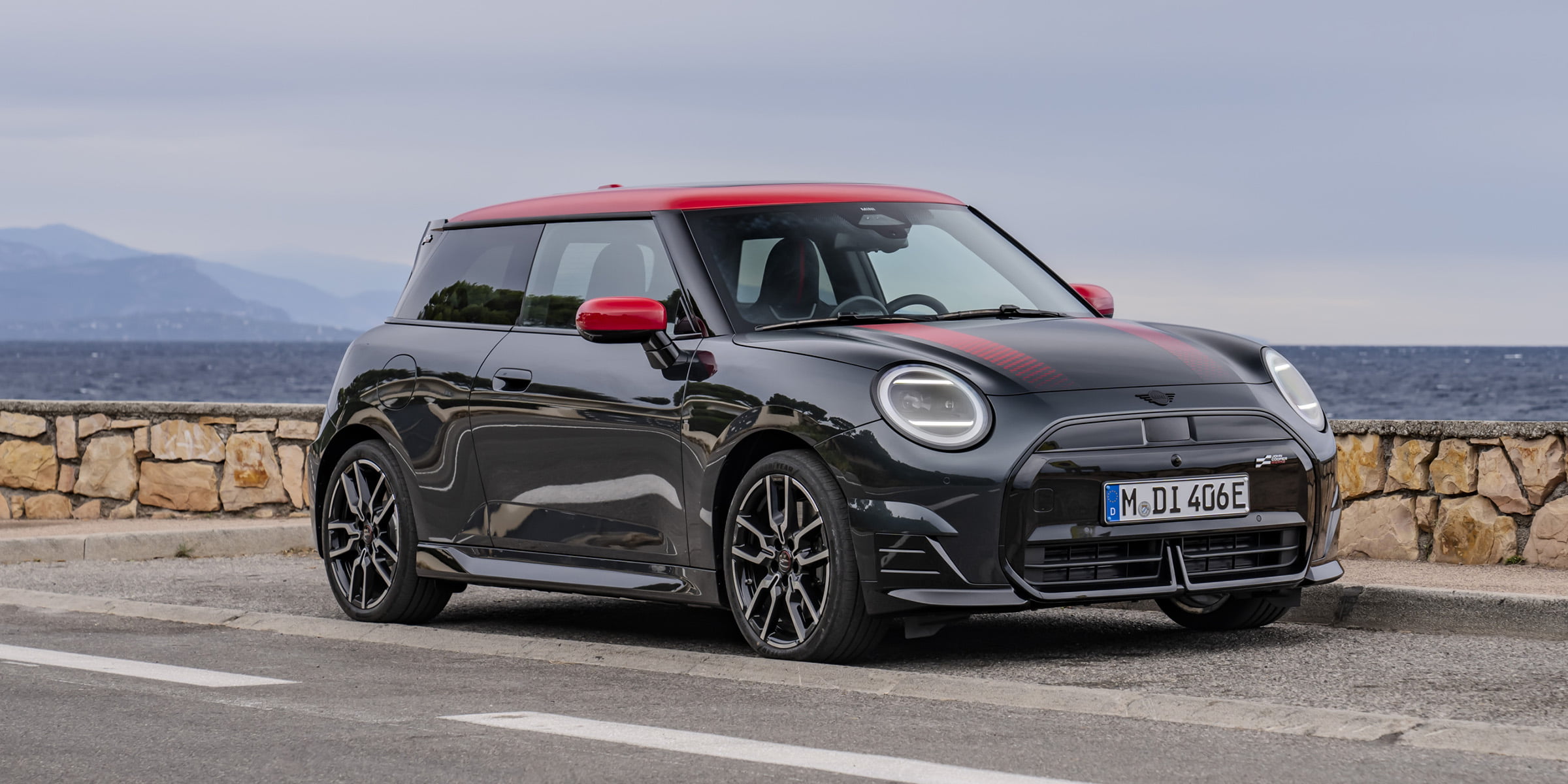
Following the unveiling of the upcoming fifth-generation Mini Cooper Electric range in September, Mini has shown off the new hatchback in its top-spec ‘Sport’ guise, which it says is inspired by its performance-focused John Cooper Works models.
We should mention here that this isn’t a proper JCW model, and there isn’t a performance boost over the standard hatch. Instead, it’s a range-topping trim that features some sporty exterior touches and a ‘racing-inspired interior’ finish.
As announced a few months ago, the ‘Cooper’ nameplate is set to make a return for this next-generation electric range, as Mini has decided to revive the well-known moniker for all of its compact hatchbacks, whether they are all-electric or petrol-powered.
The red and black colour scheme now synonymous with JCW models features here, including red racing stripes, wing mirrors and JCW brake callipers, as well as a red roof. The front grille surround and Mini logo are finished in black.
This ‘Sport’ trim also includes new body-coloured front and rear diffusers and side skirts, and sits on larger 18-inch ten-spoke alloy wheels. The model also comes with a more pronounced rear spoiler adorned with the new John Cooper Works logo.
The red and black colour scheme continues inside, with red stitching on the synthetic leather upholstery and red infotainment display and ambient lighting.
The Cooper Electric powertrain is unchanged, offering 218hp and a 0-62mph sprint time of 6.7 seconds. The 54kWh battery offers up 250 miles of range and charging of up to 95kW.
That sums up what this new trim introduces to the range. Pricing for the ‘Sport’ is yet to be announced – prices for the standard Cooper Electric will start at a flat £30k, and the ‘Sport’ is likely to cost a few thousand more than this.
A new high-power Mini Cooper JCW is also likely to be on the way, particularly as Mini has recently debuted a JCW performance variant of the larger Countryman. That said, we have no details on that front just yet.
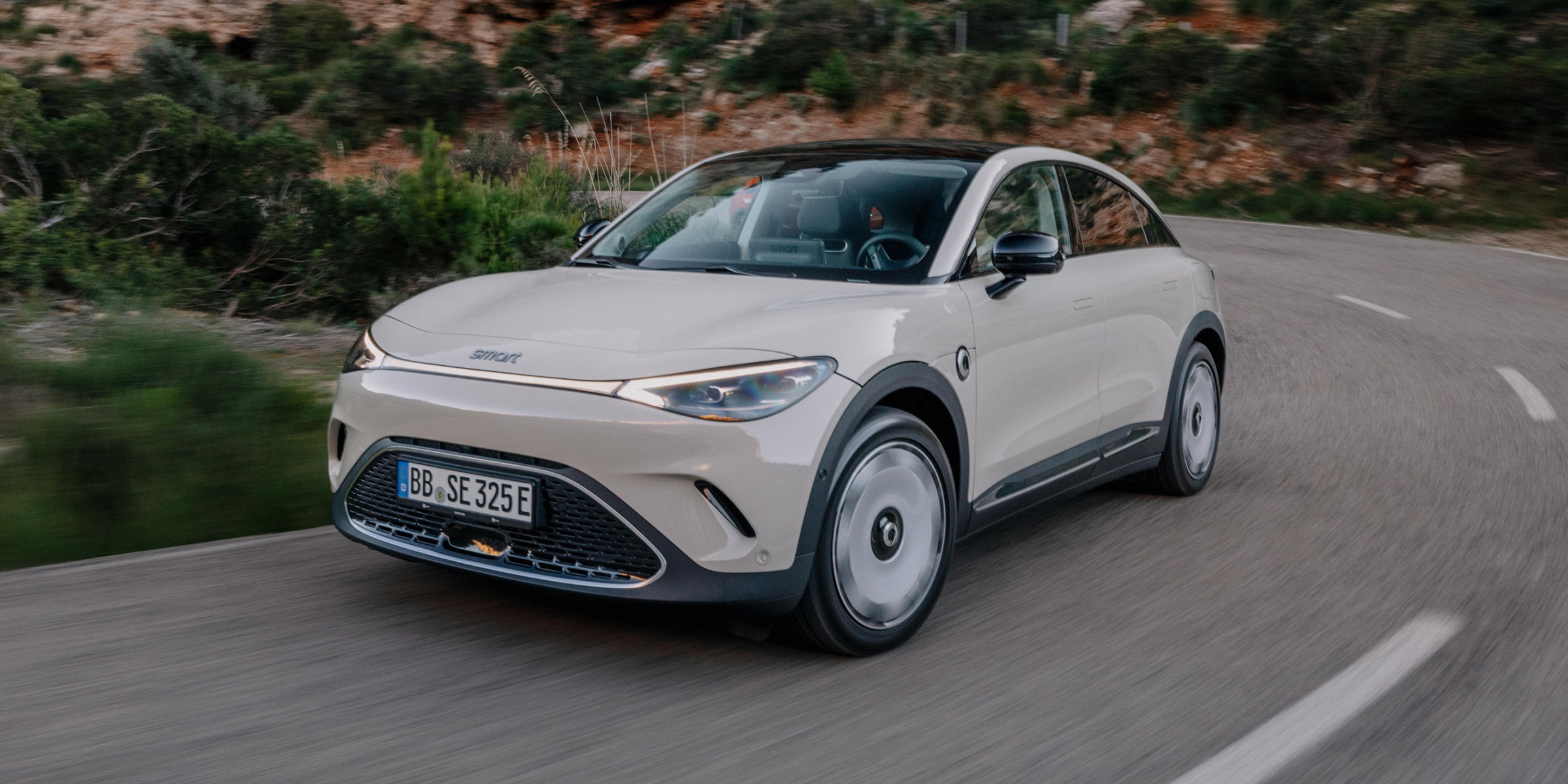
Smart has announced pricing for its new #3 (pronounced ‘hashtag three’) SUV, which will launch as the largest offering in the brand’s line-up in early next year.
Called a “sports utility coupé” by its manufacturer, the Smart #3 crossover will launch as a direct rival of the electric Volkswagen ID.5 coupé-SUV, and sports a similar exterior design to the smaller #1 hatchback.
As part of this pricing announcement, Smart has also shared more details about the trims that will be available, and the car’s electric powertrain. The entry-level ‘Pro’ grade is powered by a 272hp battery unit – the same as the smaller Smart #1 – which provides a 0-62mph sprint time of 5.8 seconds and a 202-mile range.
Higher trims offer a longer range – the ‘Pro+’ has a maximum range of 270 miles, while the ‘Premium’ can reportedly muster up to 283 miles on a single charge.
This new range will also include a high-power ‘Brabus’ model, which is capable of completing a 0-62mph sprint in 3.7 seconds, thanks to its 428hp powertrain. Faster pace and acceleration comes with a trade-off – this top-spec model has a reduced battery range of 258 miles.
Pricing for the Smart #3 will start at just under £33k for the ‘Pro’, rising to £37k and £40k for the ‘Pro+’ and ‘Premium’ respectively. The limited-run ‘Anniversary Edition’ will cost £41k, while the ‘Brabus’ price list starts at over £45k.
There have been a lot of scare stories recently about EVs being more expensive to insure than petrol or diesel cars. We cut through what’s going on and what you can do about it.
In general, all motor insurance costs have been rising for a number of reasons as we reported here. New car prices have been steadily increasing, which means that premiums have increased to cover the values of the vehicles insured and used car values have been at historically high levels, which means that insurers have had to pay out much more in the event of a write-off.
But it is true that EVs cost more to insure. In July 2023 automotive risk intelligence company Thatcham Research – which is funded by the insurance industry – published a report funded by the UK government’s innovation agency (Innovate UK).
It found that all parts of the motor insurance claims process still need to adapt to EVs in the face of a ‘concerning lack of affordable or available repair solutions and post-accident diagnostics.’
Thatcham Research’s data showed that, in 2022, 9,400 vehicles were potentially involved in collisions resulting in battery inclusion in the repair. This is estimated to reach up to 260,000 vehicles annually by 2035.
BEV (battery electric vehicle) incident claims were 25.5% more expensive than their ICE (internal combustion engine) equivalents and could take 14% longer to repair, which means higher courtesy car costs.
What’s different about EVs?
For a start, they cost more new. It’s not always possible to compare like-for-like with a petrol car, but sometimes you can get close. A Vauxhall Corsa Electric currently starts at £32K for an entry-level model, while an equivalent petrol-powered Vauxhall Corsa with similar trim and performance is about £25K. The top-spec petrol Corsa Ultimate is about £28K. Similarly, the Kia Niro EV starts at about £37K while the petrol-electric hybrid Kia Niro tops out at £35K.
All EVs can accelerate rapidly, because an electric motor can deliver all of its power straight off with no gears. And with the weight of the battery, they are generally heavier than an equivalent petrol/diesel car so can do more damage when they hit something.
The majority of EVs have their battery in the centre of the car between front and rear wheels under the floor. This is good for the weight distribution and helps with boot space. In this position, they are also protected within what is called the passenger survival cell – a frame designed to protect you inside your car in the event of an impact. This gives excellent protection from front and rear impacts, but inevitably less so in side impacts as there is no bonnet or boot to absorb the impact.
All EV makers have made sure that the battery is thoroughly protected from impacts. As we’ve said before, it’s an urban myth the EVs catch fire more readily than petrol or diesel cars, although extinguishing the fire is more of a challenge.
An EV battery is made up of individual cells grouped together in packs inside a giant casing. But even though an impact may only bend a corner of a casing rather than doing any damage to the cells inside it, the default and very expensive option is to replace the entire thing because there isn’t yet enough knowledge or training to be able to open up a battery and transfer the contents to a new casing.
“Currently, the cost of a replacement BEV battery is causing a significant increase in the risk of ‘total loss’ or write-offs,” said Adrian Watson, head of engineering research at Thatcham Research. “The cost of EV batteries varies widely from high-end vehicles, currently costing £29,500, to the low-end costing £14,200. The ‘depreciation curve’ of battery cost versus average used value, shows that the cost of a replacement battery is more than the used price of the vehicle after only one year.”
As we’ve reported in features on warranty claims, training people to assess problems with EVs is taking time, and often the right equipment is lacking. Repairers might have limited access to battery diagnostics to enable a better understanding of battery health and potential repair options, and bodyshops need to make costly investments in specialised repair skills and equipment. “Without meaningful change, there is a strong likelihood that claims costs will continue to rise disproportionally,” Watson said.
EVs can also get hit by higher insurance costs because accident damaged cars need to be stored in a particular way, says Thatcham.
Government guidelines state that due to potential fire risk, damaged EVs awaiting repair should be stored in an outside quarantine area, at a safe distance of 15 metres from other nearby objects, so an outside storage space with capacity for 100 petrol/diesel cars would allow for the safe quarantine of just two EVs its says, severely reducing the amount of EVs which a repairer can work on.
The report stated that the cost incurred through following recommended quarantine protocols of 48 hours will add a minimum of £60 to every claim.
What sort of difference in premium are we talking?
We asked the insurance comparison site Compare the Market to look at the Vauxhall Corsa and Kia Niro models mentioned earlier in this article. It provided the average comprehensive car insurance premium paid for those models in October 2023.
Petrol version or hybrid version
Electric version
Vauxhall Corsa ultimate automatic – £880
Vauxhall Corsa e Design – £1,267
Kia Niro Hybrid 4 – £580
Kia Niro EV 2 – £602
It’s also worth pointing out that the EV models are more expensive than the ICE versions, so you’d naturally expect the insurance premiums to be higher. While the difference for the Kia is minimal, the Corsa Electric is 43% dearer than the petrol version which is substantially more than the price difference between the two cars (about 14%).
Are Teslas worse than other brands?
In September 2023, The Guardian reported that some Tesla owners were being quoted £5,000 to insure their Tesla Model Ys or were simply refused cover. One owner told the paper that having insured his Model Y with Aviva for one year at renewal time the company sent a letter saying they were no longer prepared to cover the Model Y. No explanation was given from Aviva.
Other media joined in – as there’s usually quite an appetite for negative Tesla stories – but there’s no hard evidence to say that all Teslas will be hard to insure. Every premium quoted as an individual example will have depended on the circumstances and claims record of that particular driver.
Also, many Teslas are run as company cars, so are on fleet insurance policies. Coming out of any company car and going back to insuring privately can be a shock for any driver as they will not have built up a claims record.
We also asked Compare the Market for a couple of Tesla quotes. In October 2023 it found the average comprehensive premium paid for a Tesla Model 3 was £1,216 and a Model Y £1,463.
Insurance moves fast
The insurance market is fluid and premiums can change from month to month. If, at a particular time, a particular insurer feels that the payout costs on a specific model are getting too high for their own economics, they may refuse to take any more of that model on or quote a price which is likely to put people off.
This applies to crash damage and theft – some of us remember the times when insurers simply wouldn’t cover hot hatchbacks. But those decisions aren’t always permanent.
There are blips in insurance premiums. “As of October this year, the average car insurance premium for petrol-fuelled cars has surpassed the cost of insuring an electric vehicle,” says Julie Daniels, motor insurance expert at Compare the Market.
“Nevertheless, on average over the past few months, our data has shown electric vehicles are typically more expensive to insure than petrol or diesel cars. Car insurance for electric vehicles can be higher as these cars are often more expensive to purchase and therefore replace.
“It’s up to each insurer to decide which customers they want to insure. As some EV models could be considered high performance or attractive to potential car thieves, these vehicles may be more difficult to insure. In these circumstances, drivers may need to shop around for high-risk car insurance – sometimes called non-standard car insurance or specialist car insurance.”
There are specialist EV-only insurers, but Julie says these should not be necessary in future. “Most mainstream insurers now provide cover for EVs after integrating these cars into their quotation systems. This will benefit drivers as insuring an electric vehicle is essentially as straightforward as insuring a combustion-engine car.”
Same old advice – shop around
Electric vehicle insurance premiums will come down, but this needs to be quicker to encourage buyers who are thinking of switching. Meanwhile, if you want to get the best insurance premium for any car the best advice is still tom shop around every time your policy comes up for renewal. Based on online independent research by Consumer Intelligence during August 2023, 51% of customers could save up to £516 on their car insurance through Compare the Market.
Also, there are well-known tips to lower the cost of insuring any car such as paying a higher voluntary excess, parking off the road or lowering the mileage. If you can afford the whole premium but just not in one go, there is also the option of paying monthly, although this will make the overall cost higher.
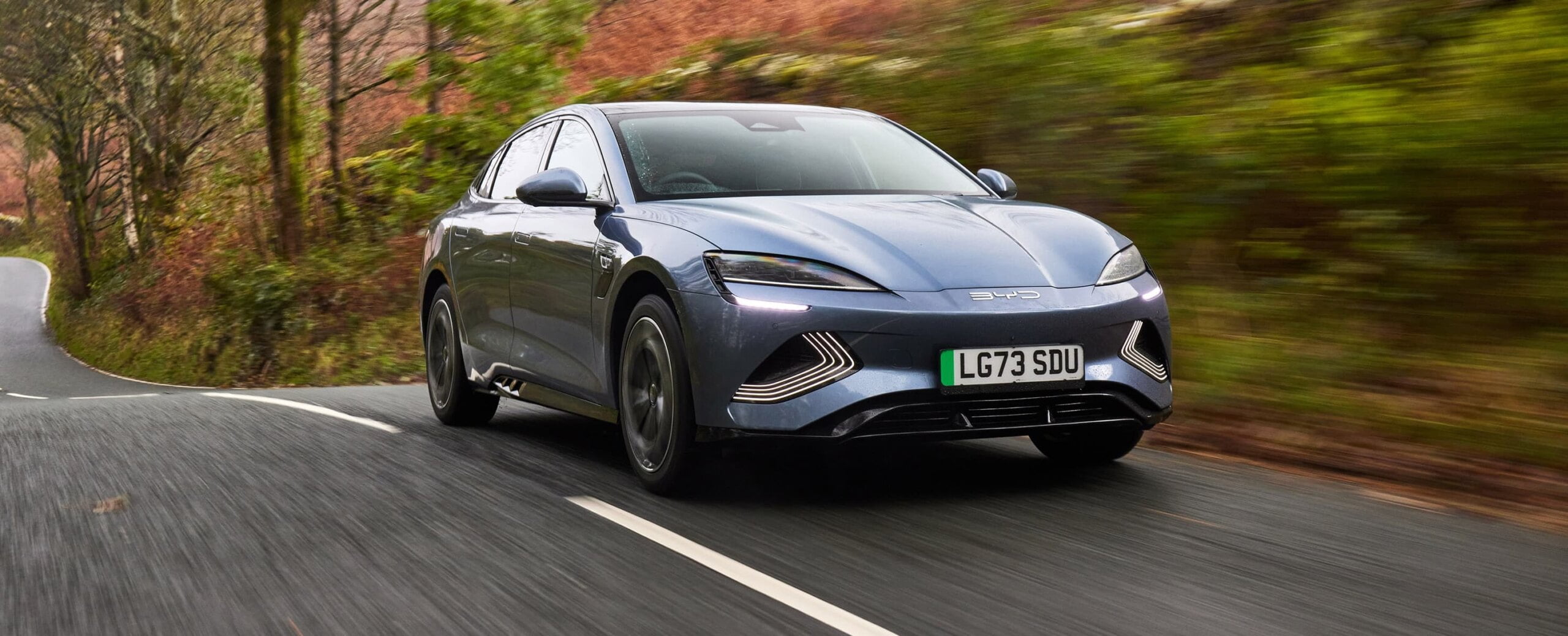
BYD says: “Sleek and athletic in appearance, the perfectly proportioned BYD Seal is eye-catching from every angle, with impressive performance and handling to match.”
We say: Amongst a flood of new electric cars currently hitting the market, the BYD Seal stands out as a definite challenger to the big-hitters from Germany and that EV standard-bearer, Tesla.
Anyone who regularly browses The Car Expert cannot have failed to have noticed the arrival of new Chinese brand BYD – Build Your Dreams – in the UK.
In little more than six months we’ve seen the launch of two all-new electric cars, plus an aggressive dealer opening programme which already includes a showroom in London’s Mayfair amongst the likes of Rolls-Royce, Ferrari and Bugatti.
The Seal, however, is the BYD many have been waiting for. The brand’s third release is also pitched as its flagship, a big upmarket saloon with 0-62mph times in supercar territory, plush interiors and lots of equipment, all in a package costing less than £50,000.
This is the car designed to take on the executive heavyweight players and particularly that signature producer of upmarket EVs, Tesla. And on the evidence of our first drive of a UK-specification Seal, it’s going to be a contender.
What is this car?
The Seal is the third model from new-to-the-UK Chinese brand BYD, which has long been renowned globally for its batteries. It produces the power for one in five smartphones and half the world’s iPads.
BYD’s reputation in cars has grown rapidly in recent times, the first manufacturer to produce more than five million electric vehicles and now the fourth largest global car brand in terms of sales.
The arrival of the Seal concludes a frenetic first phase on the UK market for BYD, but while the Atto 3 mid-sized SUV launched in March 2023, and the Dolphin hatchback on sale just six months later are both mainstream models, the Seal takes BYD into new UK market territory.
BYD’s new flagship product is a large executive saloon with highly impressive performance, targeted firmly at the premium sector and designed to attract those who would normally buy cars from the likes of Audi, BMW, Mercedes-Benz and particularly Tesla.
How does it look?
The Seal is a purposeful-looking saloon. It’s a low, slippery shape based around new ‘cell to body’ technology, integrating the battery into the body structure – more on which shortly.
This allows a slightly lower exterior height without sacrificing any interior space. Combined with streamlined styling, the Seal cuts through the air very smoothly with one of the most aerodynamic shapes on the market. This is all the more important on electric cars as reducing drag improves the battery range – one good reason for the natty door handles that disappear into the body as the car moves away.
BYD likes to evoke elements of the model name in the visual design of all its cars and we are told the front of the Seal boasts an X-shape that “represents the ocean and the unknown,” the body contours providing “a sense of the momentum of the waves”.
Even if you ignore all that, visually the Seal is certainly a head-turner in a positive way. There are none of the featureless bluff panels that several EVs are afflicted by but instead quality detailing, from the strong converging lines up front to the light panel on a vaguely Polestar-esque rear end.
There are a couple of oddities. The boot of the upper-spec all-wheel-drive version carries a badge stating ‘BYD Seal 3.8 S’ which sounds like an engine size but actually refers to its 0-62mph time. And even more confusingly all versions carry discreet ‘BYD Design’ badges on their flanks, whether you are driving the AWD model, which is actually called the Excellence, or the lesser rear-wheel-drive version, dubbed, you guessed it, Design. That should confuse used-car dealers a few years down the line…
We like: Distinctive shape that gives car true identity We don’t like: Confusing badges
What are the specs like?
With the previous Atto 3 and Dolphin models we quickly learnt that BYD does not like to do options lists. So the Seal comes with an array of equipment as standard, topped by a stand-out list of safety features, including 18 active electronic systems – little wonder the car scored a five-star rating when crash-tested by Euro NCAP in October 2023. The safety body commented that in its most stringent testing yet the car proved well-equipped with an impressive range of safety technologies, including lane and speed assistance.
Mind you the standard safety specification does include BYD’s now better but still over-aggressive ‘aids’ – the scolding voice should you dare to stray even slightly over the speed limit or drive too near a school has thankfully been replaced by a single note of warning, but it can become repetitive and irritating.
Plenty of other equipment that the executive buyer will expect, but also expect to pay for, comes at no extra cost on the Seal, such as keyless entry and start, an electric tailgate, upmarket audio, electric seats that adjust in multiple directions, voice control, wireless phone charging – the list stretches long and even includes a full length panoramic glass roof on every model. All versions also offer ‘vehicle to load’, allowing use of the battery to power electrical equipment outside of the car, this at the launch event being a DJ’s record decks…
Then you look at the price – the choice comes down to the rear-wheel-drive Design, which costs £45,695, or the AWD Excellence at £48,695. The £3,000 pays for a more powerful battery and faster acceleration, as we’ll see shortly, while sacrificing a little range, but these are highly competitive prices event before one factors in what you get for the money.
We understand, by the way, that BYD is also planning a more entry-level Seal, dubbed the Comfort, but there’s no clue yet as to whether it will be sold in the UK.
We like: Standard equipment list, especially safety aids We don’t like: Audio safety ‘advice’ by means of bongs
What’s it like inside?
Executive cars must feel plush when one slips inside them and the Seal certainly meets the brief. The interior is finished to a high level in muted shades that compliment the car, while the delicate stitching in the seats is just one of many upmarket elements.
We’re told that the centre console design represents a seal leaping from the sea. Not quite sure about that one, but it is a sensibly laid out design, dominated as in all BYD models by the gargantuan (15-inch plus) and rotatable infotainment screen in its centre. Even in vertical mode this screen actually seems most at home in this car – put Google Maps in satellite mode on it and it looks quite something…
Talking of mobile phones, there are not one but two wireless charging points in the front centre console, preventing potential occupant arguments. And while the car follows the trend of just about everything being done via menus on touchscreens, using them soon becomes second nature.
One aspect that certainly impresses, mostly, is the interior space, something that BYD has promoted as an advantage of using its different to the norm Blade battery system.
Front and rear-seat passengers have plenty of room to stretch out and one can easily imagine eating up lots of motorway miles carrying five adults in the Seal. There’s plenty of luggage room too, 402 litres in the boot plus a little usefully hidden 53-litre compartment under the bonnet which BYD dubs a ‘frunk’.
The only area in which space is slightly compromised is above the head. All Seals come with an enormous sunroof as standard, basically the whole upper surface is glass, and this does make things a little cosy for taller occupants. Mind you it does also make for a very bright and airy interior.
We like: Overall space and airy feel, fit and finish We don’t like: Compared to other measurements headroom is not that generous
Under the bonnet
In our previous launch reports on the Atto-3 and Dolphin we’ve explained BYD’s rather different battery technology, the Blade, which is more effective and rather safer than a traditional EV battery pack, while not using the controversial rare-earth minerals, especially cobalt, required for typical lithium-ion cell productions.
The Seal takes the technology rather further, being the first BYD car to actually incorporate the battery into the structure of the body shell, adding significantly to its rigidity which is better for both safety and handling.
This ‘Cell to body’ technology has caused questions in some quarters as to what might happen when or if the battery needs replacing. BYD answered this in emphatic fashion with a video at the launch event which showed the battery pack of a crash-tested Seal being simply unbolted, bolted into a new chassis and then driven away.
The drivetrain of the Seal follows BYD’s established ‘8 in one’ methods which incorporate all the elements required for electric propulsion into one integrated unit. Included as standard is a heat pump which greatly reduces the fall-off in performance that typical EV battery packs suffer in cold temperatures.
The rear-wheel-drive Seal has a single 230kW motor driving the rear wheels, while the all-wheel-drive version adds an extra 160kW motor on the front axle. This makes for some astonishing acceleration – 5.9 seconds to 62mph for the RWD model is fast enough, but the official 3.8 -second time of the AWD model is up with the best performance sports models. And on a closed track and using the ‘launch control’ feature that comes fitted to the car, your correspondent actually managed 3.7 seconds…
The extra power of the AWD model does mean a slight reduction in range, but a WLTP-certified 323 miles is still well out of range-anxiety territory – how many owners will routinely need to do more than 320 miles in a day? The RWD version will go up to 354 miles before needing plugging in.
In terms of charging all Seals carry an 11kW three-phase onboard charger as standard, while also boasting technology to suit the 420 to 750-volt range of the most modern chargers – plugged into a 150kW DC fast charger the battery can be boosted from 30 to 80% in just under half an hour.
How does it drive?
When one steps into a car with the knowledge that it will sprint from rest past 60mph in under four seconds, it’s very easy to wax lyrical about such performance.
At the UK launch, BYD positively encouraged this by basing the launch at the Cumbrian headquarters of a professional motorsport organisation with its own private test track.
A few laps around this track with the AWD Seal proved that for a large car it is surprisingly agile as well as being swift. Such prowess is no doubt aided by BYD’s ‘iTAC’, which stands for Intelligent Torque Adaption Control – this system basically monitors such things as wheel and motor speeds, we are told some 300 times faster than any previous technology, and can predict such situations as a loss of traction and accordingly reset all the dynamics, adjusting power, increasing or reducing torque, to prevent any issues.
All of which means the Seal is a capable performance car – not quite as satisfying to drive on the limit as some rivals, but not far off. However, very few owners will of course routinely be hustling their car around race tracks – the Seal’s natural environment will be mile after mile of motorway, and no matter how much power it has it will need to sit in traffic jams like everything else.
Extensive road driving in both versions on the UK launch event proved that there has been no sacrificing of on-road versatility for performance headlines. The Seal is an equally capable machine on motorway or A-road, a supremely comfortable car to travel in or drive. It cruises along in a refined and totally unflustered manner, with the very useful extra of when necessary being able to dispatch a crawling vehicle in front in very few seconds indeed.
One surprise of the road route test was the performance of the rear-drive version. This is of course under-powered when compared to its sibling, but feels nothing of the sort, relaxed and smooth except when one requires it to be very perky indeed, when it answers the throttle with great eagerness.
That said, the Seal RWD is only £3,000 less than the AWD version. If one is spending more than £40,000 on an electric car, is the extra really too much to find when it will reward you yes with more potency but crucially the extra security all-wheel-drive brings, especially in the kind of wintry weather that much of the UK encounters each year?
We like: Versatility – relaxed cruising with potency when needed We don’t like: Restricted view from small rear window
Verdict
So many new electric cars have arrived on the market in recent times, especially from China and bearing names unrecognisable to UK buyers, that it’s easy to be hesitant when shopping. But the BYD Seal is definitely a newcomer that should not be passed by, particularly for those in the executive market.
The Seal does the upmarket necessities of comfort, quality and tech very well, stirs in a whole lot of performance, and packages it all with a price that will buy something much more ordinary from a European manufacturer. Would you rather drive a Tesla Model 3 or Hyundai Ioniq 6 than something called a Seal? You could well be missing out…
Range: 323 miles (AWD); 354 miles (RWD) CO2 emissions: 0 g/km Euro NCAP safety rating:Five stars (2023) TCE Expert rating:69% (as of November 2023)
Buy a BYD Seal
If you’re looking to buy a new or used BYD Seal, The Car Expert’s partners can help you find the right car.
Find your next new or used car with Auto Trader. Find out more
Find your next new or used car with Carwow. Find out more
Subscribe to a BYD Seal
Subscriptions are becoming a very popular way for consumers to try an electric car for a few weeks or months to help decide whether it’s a suitable alternative to a petrol car. If you’re interested in a car subscription, The Car Expert’s partners can help. (PS: What’s a car subscription?)
November’s new car registration results saw an acceleration of a growing trend for 2023 – private sales were down while fleet registrations enjoyed yet another strong month.
Data published this morning by the Society of Motor Manufacturers and Traders (SMMT) reported that the overall new car market grew by 9.5% compared to the same month last year. However, it’s a story of very different results for consumer and fleet markets – private new car registrations were down 6%, while fleet registrations were up 39%.
The fleet results were the best for November registrations since 2016, which pulled the overall market up well beyond what we would expect. November generally isn’t a big month for the car industry, caught between the new-registration-plate month of September and the end-of-year promotions (if any) of December, so we could see quite different results next month. But the data does reflect the trend we’ve seen developing all year – generally poor private sales contrasting with strong growth in the fleet market.
New car registrations by buyer type – November
Buyer
November 2023
November 2022
% change
Market share 2023
Market share 2022
Private
60,506
64,291
-5.9%
38.7%
45.0%
Fleet
93,049
74,185
25.4%
59.4%
51.9%
Business
2,970
4,413
-32.7%
1.9%
3.1%
Total
156,525
142,889
9.5%
Source: SMMT
Year to date
Buyer
YTD 2023
YTD 2022
% change
Market share 2023
Market share 2022
Private
773,807
766,096
1.0%
43.9%
51.6%
Fleet
947,422
681,137
39.1%
53.8%
45.8%
Business
40,733
38,368
6.2%
2.3%
2.6%
Total
1,761,962
1,485,601
18.6%
Source: SMMT
What’s causing the private new car sales slump?
As has been widely reported in the media all year, interest rates have been rising to address persistently high levels of inflation. Cars are also getting more expensive, particularly as cheaper petrol models gradually disappear in favour of more expensive electric models.
Consumers continue to avoid electric cars, with only 23% of new EV sales going to private customers – compared to 39% of all vehicles. (Thanks, Rishi.)
Interestingly, some budget brands suffered the most in terms of falling sales, relative to more premium brands that you’d imagine would be finding life difficult with household budget squeezes. Dacia and Fiat were both well off the pace in November, although MG continues to go from strength to strength.
Looking at the data for different car brands, there may be some strategic games being played as well. Tesla, for example, has chosen to register a lot of new cars in December over the last couple of years, and that may be the case again this year. The EV brand reported numbers that were well down on last November (about 1,500 cars this year vs. 6,000 last year), so it may be holding some back to boost December numbers.
Hybrids have a strong month, EVs falling behind
Plug-in hybrids had another strong month, as did regular hybrids (the ones you can’t plug in). However, fully electric models saw a significant decline in sales compared to the same month last year.
There are reasons for this. Tesla had a strong month last November while it was well down this year, selling less than 1,000 of its popular Model Y. Polestar also saw a significant sales drop, although it’s a much smaller brand in terms of volume. But the drop for these two EV-only brands more than accounts for the fall in EV sales compared to last November.
The growth in plug-in hybrid sales over the last few months is interesting, as this was a sector that has been struggling for the last couple of years. It’s partly a result of declining diesel SUV sales, where plug-in hybrids have emerged as the most eco-friendly option given the lack of all-electric large SUVs on the market. But it’s also partly from customers wanting to go electric but not prepared to jump all the way to an electric-only vehicle.
As usual, diesel cars had their worst month ever in terms of market share (probably; we’ve given up checking as the numbers are getting so low), while petrol cars increased their market share.
New car registrations by fuel type – November
Fuel
November 2023
November 2022
% change
Market share 2023
Market share 2022
Petrol*
85,275
75,519
12.9%
54.4%
52.8%
Electric
24,359
29,372
-17.1%
15.6%
20.6%
Hybrid
20,525
16,066
27.8%
13.1%
11.2%
Plug-in hybrid
15,871
10,186
55.8%
10.1%
7.1%
Diesel*
10,495
11,746
-11.7%
6.7%
8.2%
Total
156,525
142,889
9.5%
*includes mild hybrids Source: SMMT
New car registrations by fuel type – Year to date
Fuel
YTD 2023
YTD 2022
% change
Market share 2023
Market share 2022
Petrol*
990,606
846,790
17.0%
56.3%
57.0%
Electric
286,846
224,919
27.5%
16.3%
15.1%
Hybrid
222,655
174,205
27.8%
12.6%
11.7%
Diesel*
132,706
146,640
-9.5%
7.6%
9.9%
Plug-in hybrid
129,149
93,047
38.8%
7.3%
6.3%
Total
1,761,962
1,485,601
18.6%
*includes mild hybrids Source: SMMT
Good month, bad month
Although the overall market was up by almost 10% compared to last November, not everyone had a great month.
That means that the following brands were more or less where you’d expect them to be: Audi, BMW, Ford, Hyundai, Lexus, Porsche, Toyota and Volvo. They were all within 10% (positive or negative) of the overall market.
Volkswagen was the best-selling brand, as usual, ahead of BMW, Ford, Audi and Vauxhall. Peugeot had the most growth of all the major brands, selling nearly 3,500 more cars this November than last. Going in the other direction, Tesla had the largest fall, shifting nearly 4,500 fewer cars year-on-year – largely because it registered fewer than 1,000 Model Ys. However, Tesla numbers are never consistent so we can’t really judge month-by-month data. We can also expect the company to do much better in December.
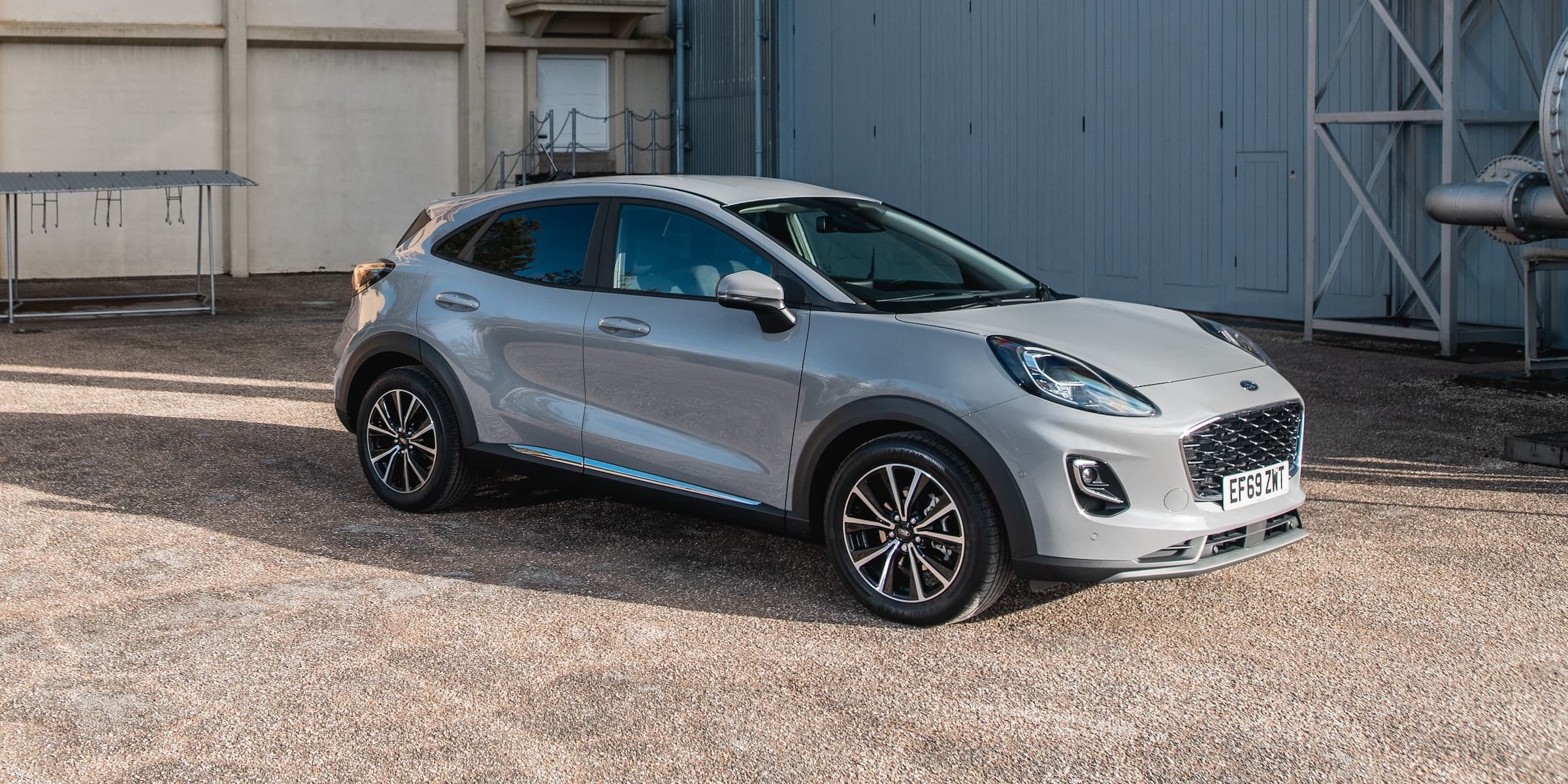
Barring any completely ridiculous scenarios, the Ford Puma will be the UK’s best-selling new car in 2023. After another top-scoring month in November and with only one month to go for the year, it now leads the sales race by nearly 7,500 units over the Nissan Qashqai.
Despite being ancient by new car standards, and facing replacement in the next couple of months, the Mini hatch had another strong month to finish fourth in November, which also helped it to jump the Nissan Juke for seventh place in year-to-date sales. The Hyundai Tucson also jumped the Tesla Model Y for fifth, but that could easily be reversed next month.
We’ll have our usual detailed look at the top ten shortly.
As another year draws to a close, we reach that exciting time where we round up the very best new cars on sale for our annual Car of the Year awards. But in a sea of different new car awards, what makes The Car Expert Awards 2024 different?
Rather than just give you our opinion, we manually curate reviews and scores from 35 of the UK’s leading motoring websites (including our own), with more than 15,000 car reviews from all of these sources in our database.
Every score from every review is fed into our sophisticated algorithm, which adjusts them for date and normalises them to account for all the different scoring systems used. That gives us a definitive score for every new car on sale in the UK. So our awards don’t just give you the opinion of one source, but a consensus of all the top motoring titles in the UK.
Regular readers will notice that we’ve dated the awards to reflect the coming year (2024) rather than the year just ending (2023). Since the results will be of more benefit to anyone buying a new car in 2024 than people who’ve already bought a car this year, we feel it’s a more relevant way to do it. This caused some internal debate, but ultimately consumer benefit won out over strict technical accuracy.
Our eligibility rules
A new model is a car that has arrived in the UK in the last 12 months – which means cars on the road and registered, not just announced or available to order but arriving sometime next year. You should be able to pop down to your local dealer and see any of our award winners in the metal – and buy on one the spot.
In previous years, we have insisted that all winners must have a current, valid Euro NCAP safety rating of at least four stars. Unfortunately, we’ve had to remove that requirement for this year because there simply haven’t been enough new cars rated by Euro NCAP by the time our entries closed.
Last year, the safety organisation tested 66 different new cars. This year, it’s only six (although another six or so results will be published after our deadline has passed). That means that most of the new cars launched this year would be ineligible, which would be highly unfair.
A few cars were ineligible last year because they hadn’t been tested, but have since received a complying Euro NCAP score so they included in this year’s awards. Assuming that there are a suitable number of ratings published next year by Euro NCAP, we hope that this requirement will return for next year’s awards.
And the winner is…
Our Expert Rating Index, based on reviews from 35 of the UK’s best motoring websites, shows that electric vehicles are continuing to achieve better review scores than their petrol and diesel equivalents. This was evident last year, and has strengthened further this year. And for the third year in a row, our overall winner is an electric car.
Based on all of the car reviews published by the UK motoring media over the last year, The Car Expert’s Car of the Year 2024 is the MG 4.
The Car Expert Car of the Year 2024: MG 4
The MG 4 is, quite simply, a remarkable car. It’s fully electric, with a battery range of more than 300 miles on some versions. It has a five-star safety rating. It’s very well kitted out. It comes with a seven-year warranty. And its pricing makes every other family car on the road, let alone other electric cars, look silly.
Over the last decade, there have been plenty of good and even great EVs, but only two seminal electric cars. The first was the Tesla Model S, which showed the world how capable electric cars can be. And the second is the MG 4, which is bringing electric motoring within reach of every new car buyer. The Tesla changed the car industry, but it’s the MG 4 that could genuinely deliver on all the promises of the EV revolution.
As well as taking the overall prize for Car of the Year 2024, the MG 4 also wins our Best Medium Car award.
The MG 4 wasn’t launched in 2023, but was ineligible last year as it hadn’t received its Euro NCAP stamp of approval as required by our 2022 rules until after our deadline. However, it was awarded a five-star safety rating in December last year so became eligible for this year’s awards.
Despite the ever-increasing numbers of crossovers and SUVs, small hatchbacks still make up a large chunk of new car sales in the UK.
However, small cars are gradually disappearing from new car showrooms. The best-known example is the Ford Fiesta, which ended production this year. And not many new models are coming along to replace those that have been discontinued.
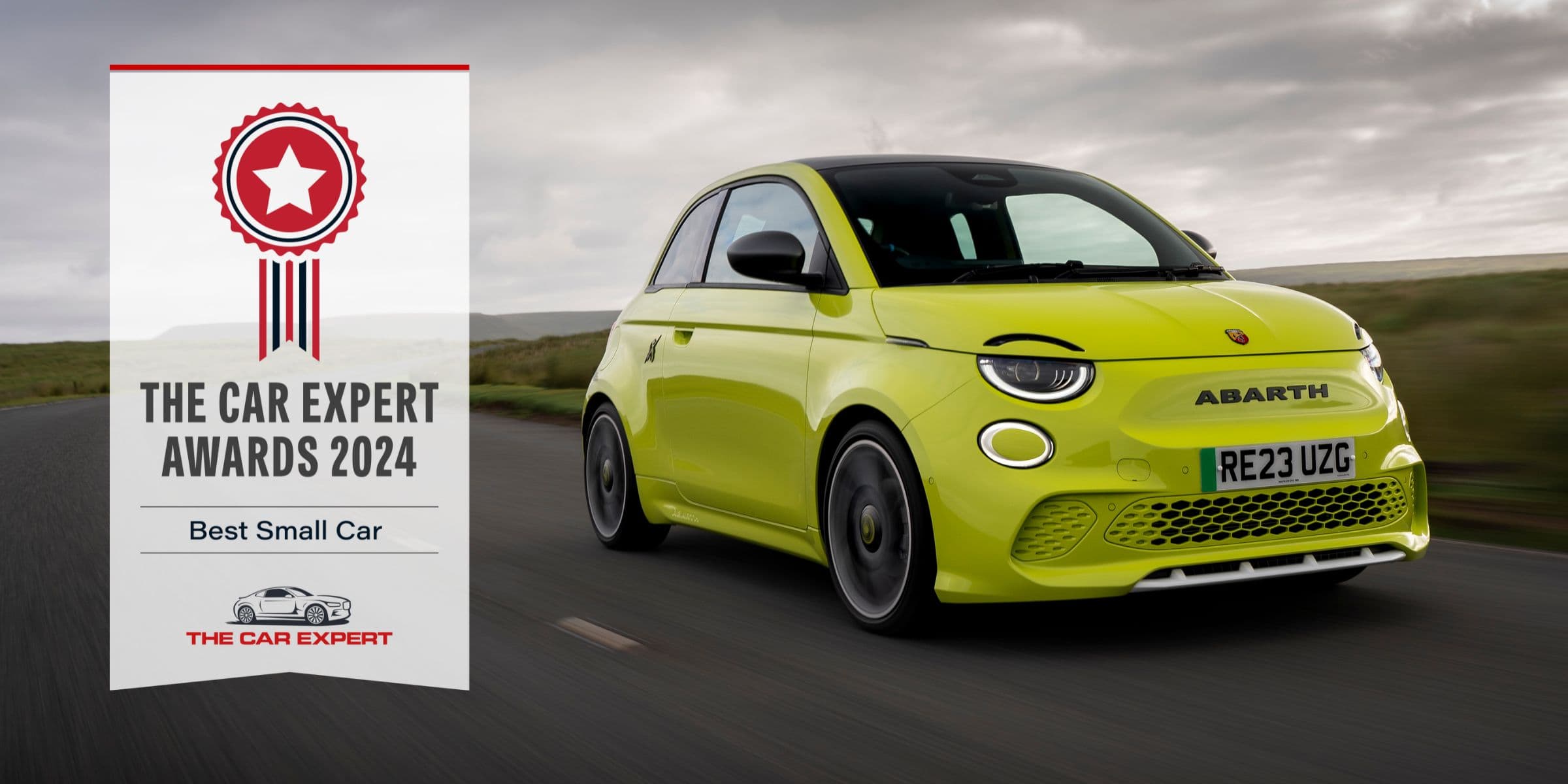
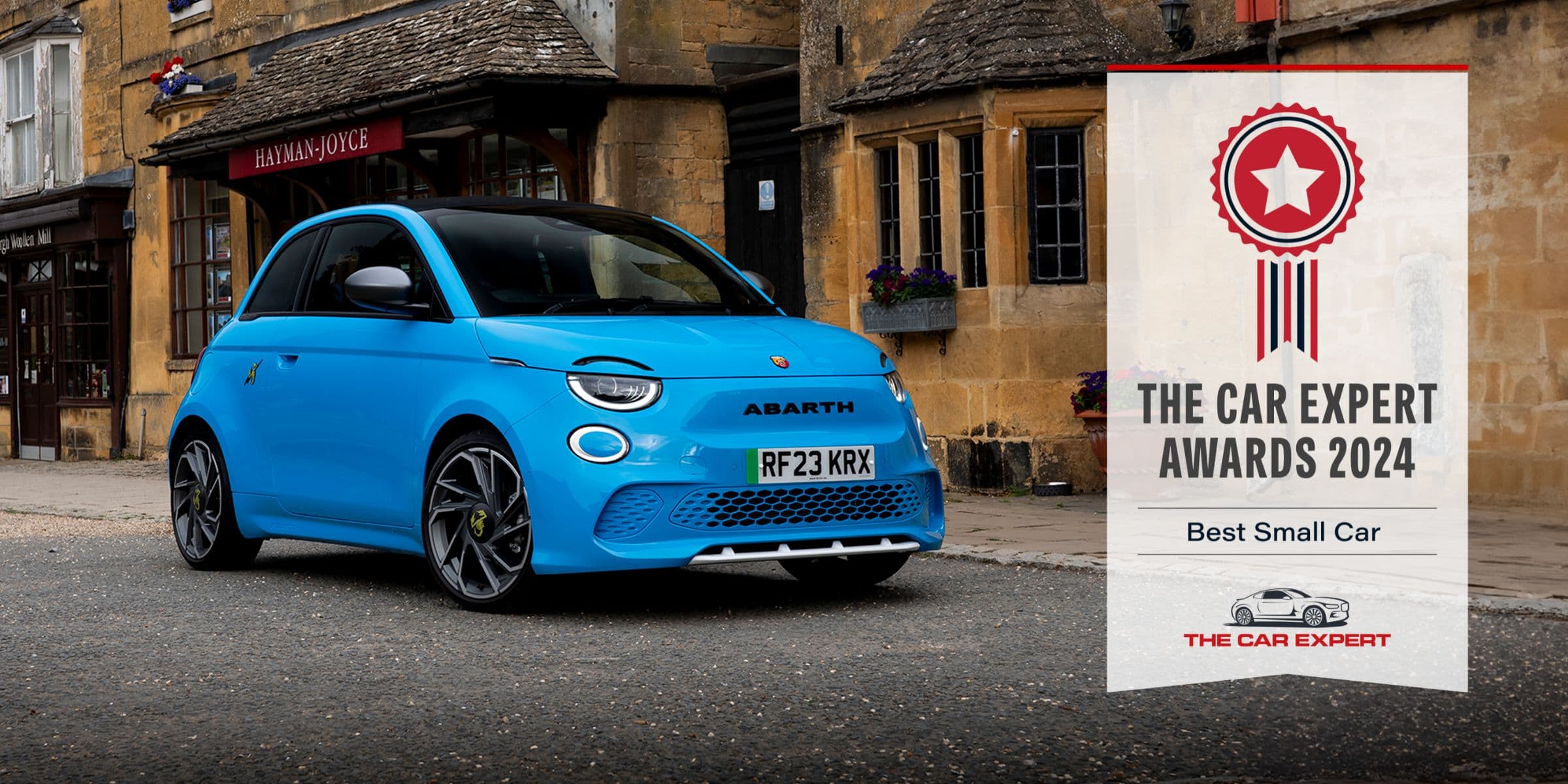
It was a very quiet year for small cars, with only the Abarth 500e, BYD Dolphin and GWM Ora Funky Cat (soon to be re-named the GWM Ora 03) arriving in the last 12 months. There was also the Mazda 2 Hybrid, but that’s literally a rebadged Toyota Yaris so it’s not surprising that almost no-one noticed.
Next year should see improvement, however. We know that there’ll be a new Citroën C3, a new Mini hatch (now formally known as the Mini Cooper, which is what most people have always called it anyway) and a new Suzuki Swift. We’re also expecting to see a new Renault 5, and there may also be a new Renault Twingo, too. Fiat is due to release a new Panda next summer, but we’ll have to wait and see whether it reaches the UK in time for next year’s awards.
Our awards recognise both the best new models to have been launched over the last 12 months, but also the best overall cars in each category – because newest doesn’t always mean best, as you can see below.
Many people thought that electric cars might be the end of Abarth, but the new 500e has proved the doubters well and truly wrong. Like its petrol predecessors, the Abarth 500e takes the fine starting point of a Fiat 500 and transforms it into a real pocket rocket that’s fun to drive and full of character – just as you’d expect from any car wearing the scorpion badge.
But the all-electric Abarth 500e also brings new sophistication and day-to-day ease of use, making it far easier to live with on those days when you just need to get from A to B. Who said electric cars were all boring?
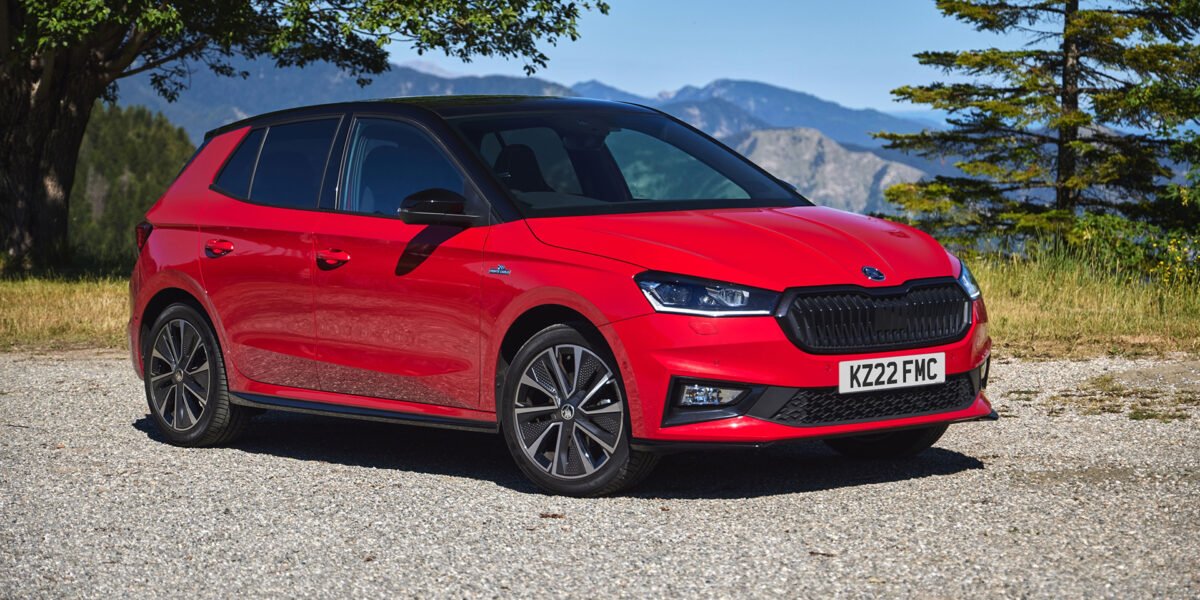
The Skoda Fabia does exactly what you’d expect a Skoda to do – deliver great value for money in a largely unassuming package. Unlike the Abarth, no-one’s likely to be captivated by the Fabia’s anonymous styling. But if you’re looking for a supermini-sized car that gives you maximum bang for your buck, you can’t go past the Fabia.
The Fabia just edges the recently-discontinued Volkswagen up by less than 0.2%, according to our Expert Rating Index.
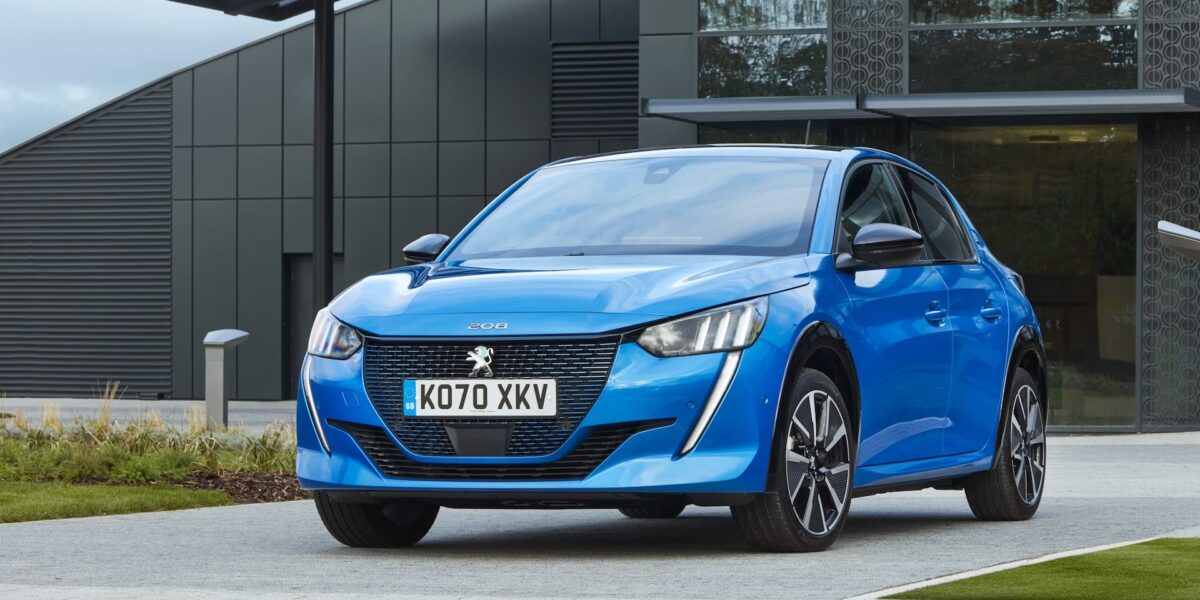
A facelift in 2023 has boosted the Peugeot e-208’s rating in recent months. The updated cars are just starting to reach the UK as these words are written.
With refreshed styling and upgraded interior equipment, the revised e-208 is a bit sharper to look at and spend time in, helped by improved battery technology that pushes range out to nearly 250 miles on official lab tests. Mechanically, it’s still identical to the (also recently updated) Vauxhall Corsa, but the Peugeot rates more highly with reviewers.
If you’re looking for variety, medium-sized cars have it in spades. This category spans a wide range of body styles and price points, so there’s something for everyone.
Many brands have more than one vehicle in this category (or in BMW’s case, six…), with a variety of body styles like hatchbacks, saloons, estates, liftbacks, higher-riding MPV-ish things and more. Plus, you can choose between petrol, diesel, hybrid or electric power.
Unsurprisingly, most of the new models launched in the last year have been electric. This is only going to increase in coming years, although there will still be some very good petrol and diesel cars available for years to come.
Our awards recognise both the best new models to have been launched over the last 12 months, but also the best overall cars in each category – because newer doesn’t always mean better, as you can see below.
Given that it won the overall Car of the Year trophy, it’s no surprise that the MG 4 EV has won its category award as well. But our awards are just the latest in a heaving cabinet of trophies that the MG 4 has picked up this year. Given what you’re getting for your money, that’s no surprise.
For about the same price as a petrol-powered Ford Focus, Vauxhall Astra or Volkswagen Golf – and £10K less than the Golf-sized Volkswagen ID.3 – the MG 4 delivers outstanding value and low running costs, all backed up by a seven-year warranty.
The MG 4 might be a great car, but it’s not the outright best electric car in this category. Last year’s Car of the Year, the Kia EV6, is still the top-ranked mid-sized car overall with an outstanding Expert Rating score of 88%, just edging the closely related Hyundai Ioniq 5 by a scant 0.2%.
The Hyundai/Kia twins are considerably more expensive than the MG, but that money gets you more performance, more driving range, more space, more standard equipment and better build quality. So if your budget stretches to £45K or more, the Kia EV6 remains the best car in this segment.
Once again, the BMW 3 Series is the go-to mid-size car for anyone who wants to stick with an internal combustion engine rather than an EV. The 3 Series has long been the dynamic benchmark for small-to-medium saloons, and the latest edition adds additional refinement to match. It has been the petrol/diesel class champion for the last two years, and comfortably retains that title this year.
The 3 Series holds an Expert Rating of 85% as of December 2023. Its score covers petrol, diesel and plug-in hybrid versions in both saloon and Touring (estate) body styles, but doesn’t include the M3 super saloon.
The large car sector is one that’s suffered significantly in the face of ever-more SUVs in recent years. But there are still plenty of outstanding vehicles available if you prefer a low-riding car to a high-riding SUV.
This year, we’ve created a separate Best Luxury Car category to better filter between the broadly attainable and the mortgage-your-house-and-sell-your-children vehicles.
As with most other categories, there’s an ongoing shift from fossil-fuel power to electricity. But your choices are steadily reducing, regardless of your preferred choice of propulsion.
Best new large car + class champion, electric: BMW i5 (81%)
The arrival of an all-new BMW 5 Series is always a seminal moment for the car industry, but this one has been particularly significant as it has brought the first all-electric version, the BMW i5. And once again, BMW has delivered. The i5 has moved straight to the top of the premium executive class, with a sublime mix of comfort, quality and advanced technology.
Reviewers have agrees that the talented BMW i5 is one of the most well-rounded electric saloons on the market, although rivals like the Mercedes-Benz EQE offer more battery range.
After eight years of winning just about every award the industry has ever devised, the current-generation Skoda Superb heads into retirement still at the top of its game. As of December 2023, it’s still the highest-rated large petrol/diesel car with a vaguely affordable price tag – and it outscores a lot of cars with price tags many, many times more expensive.
For next year, we’ll have an all-new Skoda Superb on the streets. It has some very big shoes to fill.
Offering around the same interior space as a hatchback but with a higher driving position, small SUVs are proving to be seriously popular in the UK, and the wide range of compact crossover choices got even more competitive in the last 12 months.
As small cars have begun to gradually disappear from manufacturer model rosters, new small SUVs have been filling these empty spots on the showroom floor, and more often than not they are all-electric.
Next year is likely to bring an even larger class of new small SUVs battling for your attention. On the budget end, Dacia has announced that the next iteration of its Duster SUV is on the way, and has confirmed that its electric Spring SUV will arrive next year too.
Continuing the all-electric trend, the Volvo EX30 and new battery-powered Mini Countryman will launch next year, as will the Toyota bZ3X. There are a few new hybrid models coming soon too, including the second-generation Toyota C-HR and the Lexus LBX.
Our awards recognise both the best new models to have been launched over the last 12 months, but also the best overall cars in each category – because newest doesn’t always mean best, as you can see below.
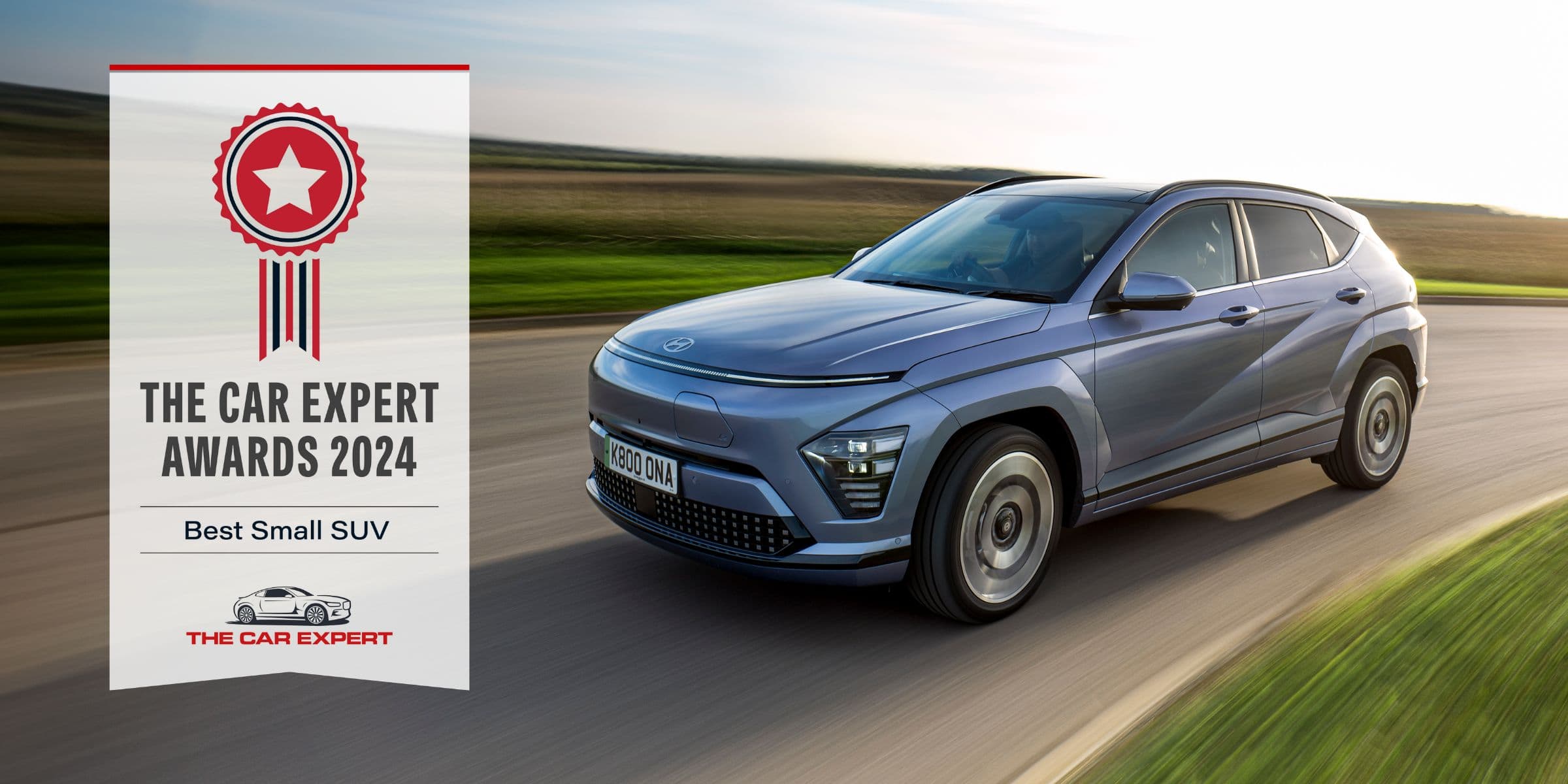
The second-generation Hyundai Kona range is a stand-out contender in the small SUV segment, and the Kona Electric has once again led the way. The previous model was already considered a leading light in this category, but the all-new Kona Electric has leapt ahead in both its design and its substance. It’s the latest addition to Hyundai’s stellar line-up of EVs, and makes a compelling case for families considering the switch from fossil-fuel power to electricity
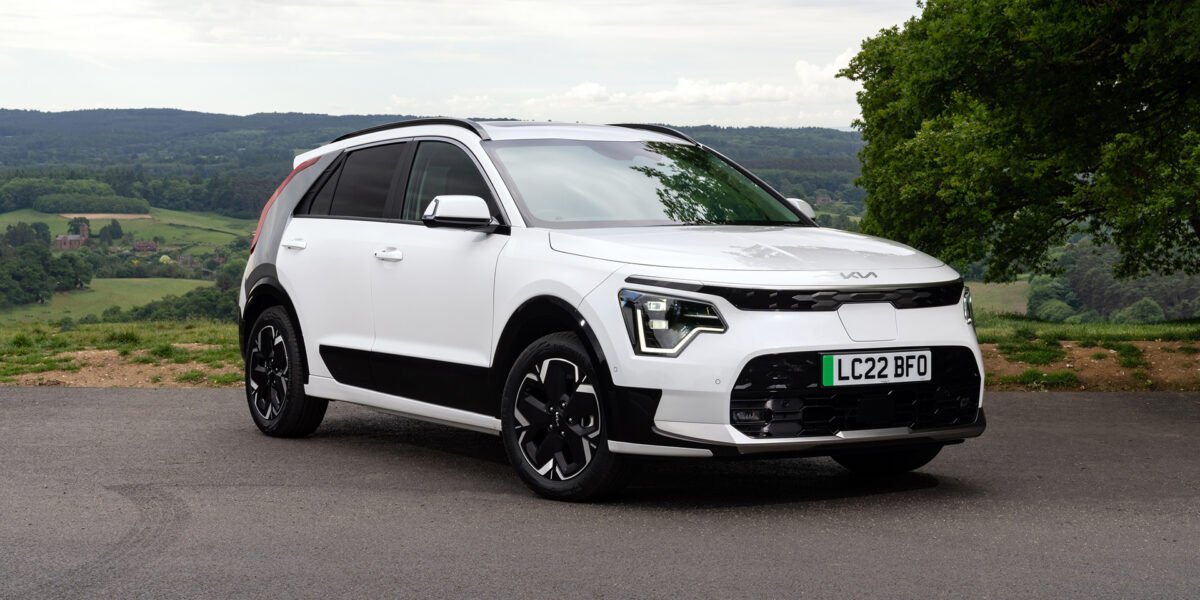
Like the similar Kia Niro EV, which was awarded The Car Expert’s ‘Best Small SUV’ title last year, the Kona Electric’s electric powertrain is a key highlight, with a battery range that will exceed 300 miles. This means that it can travel further on a single charge than many of its compact crossover rivals.
Launched in 2022, the Kia Niro EV still sits in pole position in the small SUV section of our Expert Rating Index, and apart from the recently-arrived Hyundai Kona Electric, no other electric model comes close.
For buyers looking for an easy-to-drive and user-friendly electric family car, the Kia Niro EV is certainly worthy of a test drive, and offers a practical and comfortable cabin, a competitive battery range, generous levels of equipment and a large boot capacity.
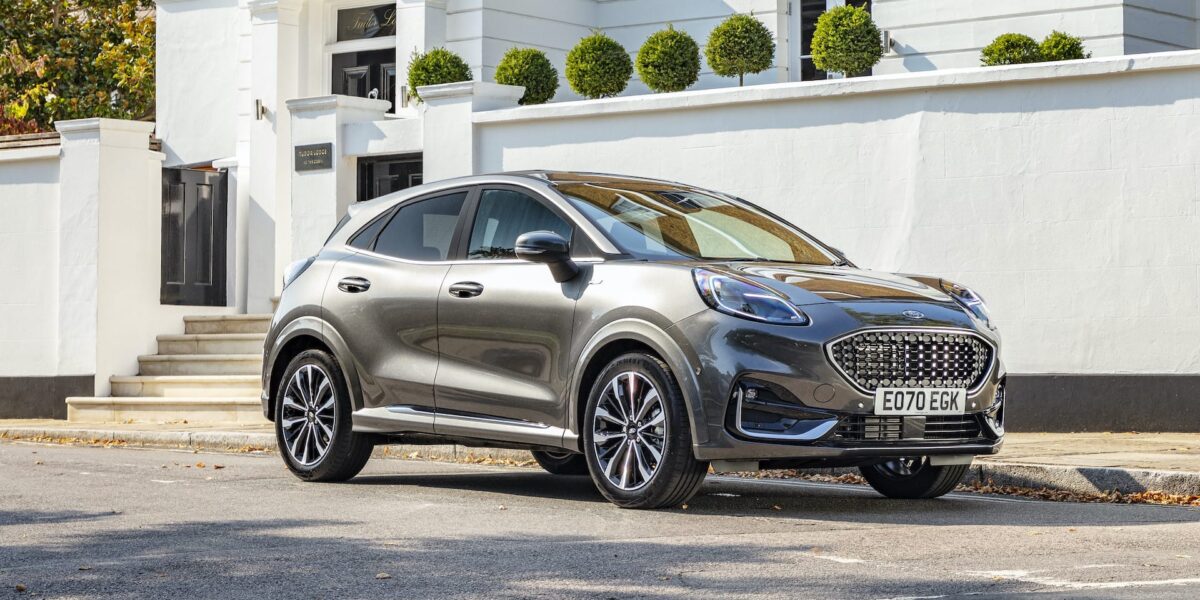
The Ford Puma has proved to be a popular choice for British buyers throughout 2023, and has received plenty of praise from UK reviewers since it first arrived on UK roads in 2020. This petrol mild-hybrid SUV has been commended for its outstanding driving experience and surprising practicality, especially in its boot capacity and layout. While its looks won’t appeal to everyone, it is a fuel efficient choice for the daily commute too.
The Puma has also played a part in killing off the smaller Ford Fiesta hatchback, with Ford, like many other manufacturers, very much prioritising small SUV models over superminis.
Looking for a car fit to ferry a family of five? Well, the medium SUV class is a good place to start your search. As saloons and estates decline in popularity, family-focused British buyers are increasingly interested in a new SUV, and this mid-sized SUV category is now one of the most competitive on the market.
All vying for your attention, nine new medium SUVs joined our Expert Rating Index in 2023 – the majority being EVs. Chinese brand BYD announced its arrival in the UK with its electric Atto 3 SUV, Lexus launched its battery-powered RZ, and the Subaru Solterra and high-power Skoda Enyaq vRS also became available to order.
The wide range of hybrid models grew too, with the arrival of the Renault Austral and two new Honda models – the ZR-V and the sixth-generation CR-V.
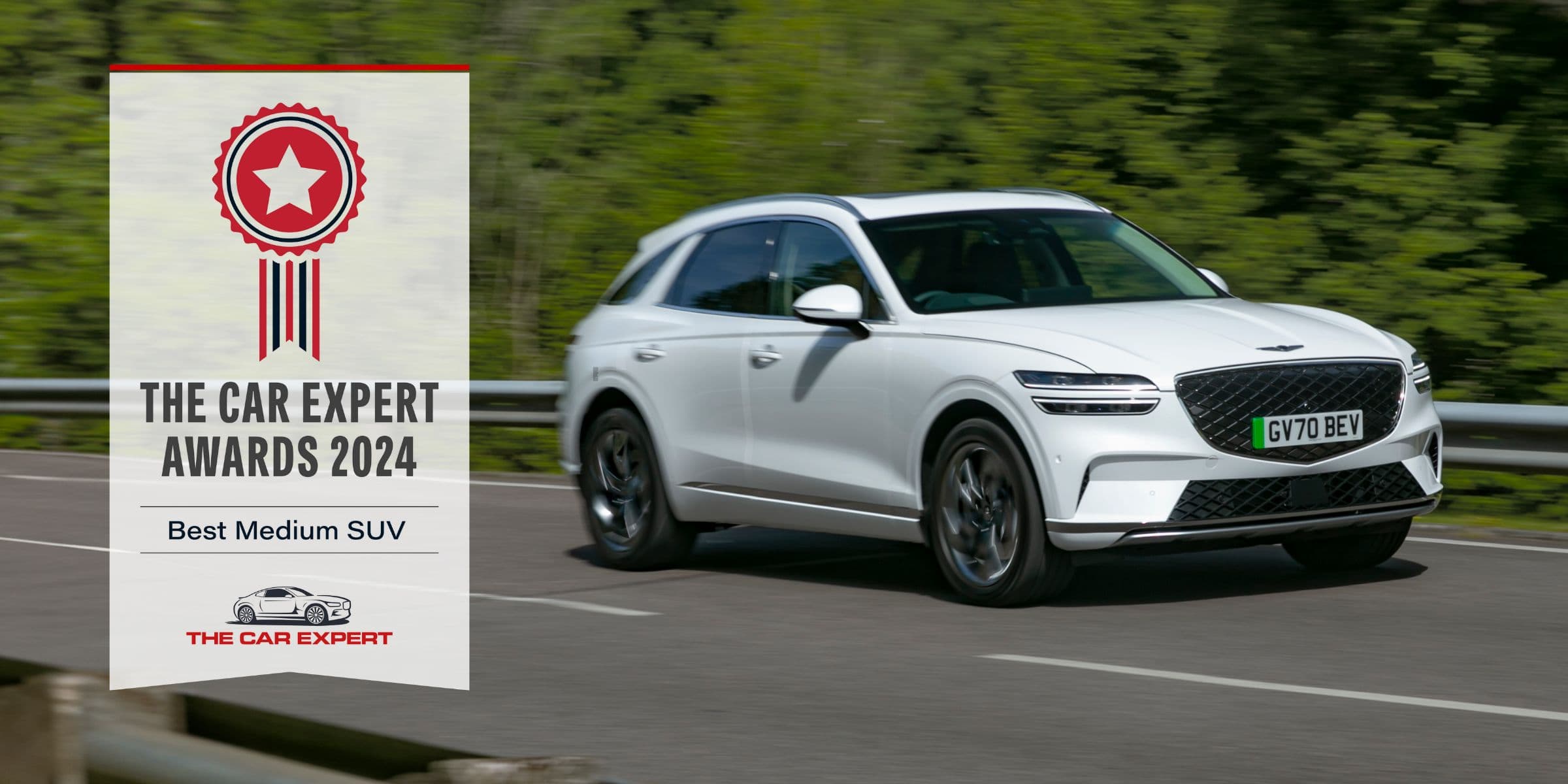
The winner of this year’s ‘Best Medium SUV’ title actually goes to a model released towards the end of 2022. The Genesis Electrified GV70 just missed out on entry to our shortlist last year, and now that the car shares the full five-star safety rating Euro NCAP awarded to the ICE-Powered GV70, we can be confident in our recommendation.
A sign of how competitive this medium SUV class is at the moment, these new entrants have mostly been given good to average review scores, and sit in the middle of the pack in our Expert Rating Index. Looking to next year, upcoming models like the Audi Q6 e-tron, Smart #3, Cupra Tavascan, and Fisker Ocean have the potential to capture more consumer attention.
Our awards recognise both the best new models to have been launched over the last 12 months, but also the best overall cars in each category – because newest doesn’t always mean best, as you can see below.
Best new medium SUV: Genesis Electrified GV70 (73%)
Based on the upmarket Genesis GV70 SUV that first arrived in the UK in 2021, the Electrified GV70 inherits the positives of its combustion-powered twin, including a lavish and comfortable interior and impressive on-board tech, but has a more efficient electric powertrain that offers a competitive 283-mile range.
The Electrified GV70 has been a quiet success story for Genesis in 2023. It’s smooth and sophisticated, and shows how an electric motor and battery can elevate a car beyond the traditional fossil-fuel experience. The Electrified GV70, together with the Genesis concierge approach to customer service, fits around you – rather than the usual car company behaviour of expecting you to fit around the car. A great car, combined with a great ownership experience. It’s a winner.
When it comes to electric SUVs, the Skoda Enyaq is the benchmark that other automotive manufacturers are trying to reach. The class-leading mid-sized SUV has gained overwhelmingly positive reviews and almost universal praise from the UK motoring media, and has also picked up industry awards every year since its 2021 arrival.
The Enyaq has been widely praised for its excellent battery range, interior space, affordable pricing, and is well-equipped as standard too, meaning cheaper entry-level trims still make a great family car choice.
Class champion, petrol/electric: Porsche Macan (76%)
On sale since 2014, the Porsche Macan is a talented SUV that, despite its age, has kept pace with much newer medium SUV rivals thanks to multiple facelifts.
The Macan has been continually highlighted by UK motoring outlets as a class-leader, thanks to its refined and comfortable cabin, punchy performance and sleek exterior styling.
If you think this high-riding petrol-powered Porsche is an intriguing proposition, you might have to act quickly, as the next-generation Macan will be an electric vehicle and we expect to see it revealed next year.
The large SUV segment is moving more slowly than the rest of the new car market in the shift to electrification. Plug-in hybrids are growing in number, and a couple of large electric SUVs arrived in 2023, though battery-powered choices remain limited.
It’s been a pretty quiet year for large SUVs – arrivals include the Lexus RX, the Mercedes-Benz EQS SUV, and Kia EV9. A larger batch of new models are scheduled for a UK arrival in the next 12 months, including the Volvo EX90, Polestar 3, the next iterations of the Hyundai Santa Fe, Skoda Kodiaq and Volkswagen Touareg.
Our awards recognise both the best new models to have been launched over the last 12 months, but also the best overall cars in each category – because newest doesn’t always mean best.
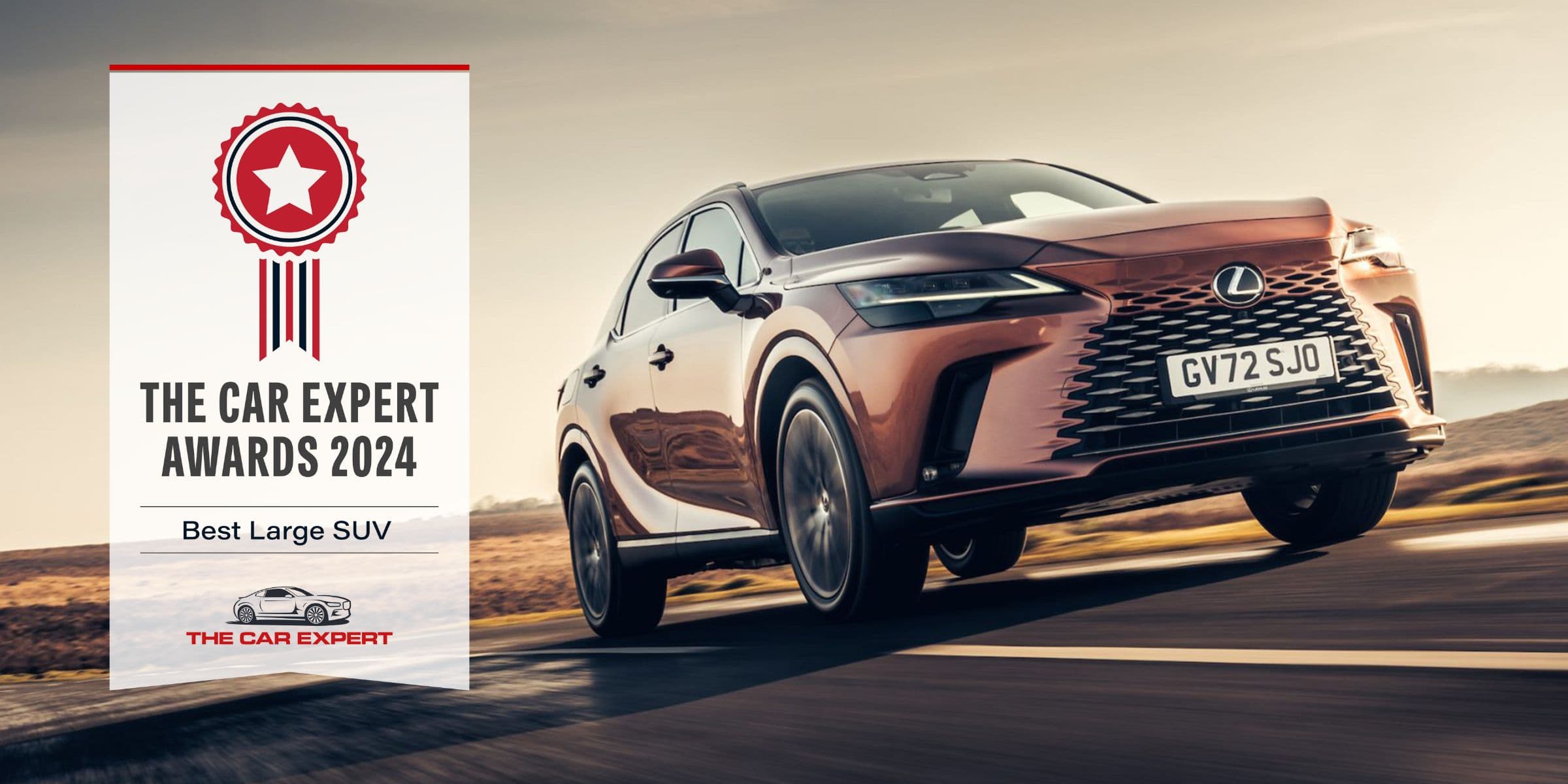
If you’re looking for a large SUV and you prefer luxurious comfort to the usual heavy-handed brutalism, the Lexus RX is for you. It’s beautifully built and well equipped, which we’ve come to expect from Lexus, with impressive technology and delightful details throughout the cabin. To top it off, a choice of regular hybrid or plug-in hybrid engine options combine silent urban running with plenty of long-range capability and better-than-expected fuel economy.
Reviewers comment that the Lexus offers a comfortable driving experience, and its efficient engine range also offers strong performance. It has also garnered praise for its intuitive infotainment, and undercuts some key rivals on price, too.
The Tesla Model X is quite the trailblazer. While most manufacturers have only recently turned to the development of large electric SUVs, Tesla has been selling the battery-powered Model X for quite some time now – since 2016 to be exact.
Seating up to seven people, the SUV has received consistent praise for its combination of thrilling performance and commendable safety features, making it an excellent family car choice. Its unique exterior styling is sure to turn some heads in the car park too, including its innovative ‘Falcon’ wing rear door design.
Please note that the Model X range is now more limited here in the UK, with only the high-performance Plaid spec currently available in left-hand drive.
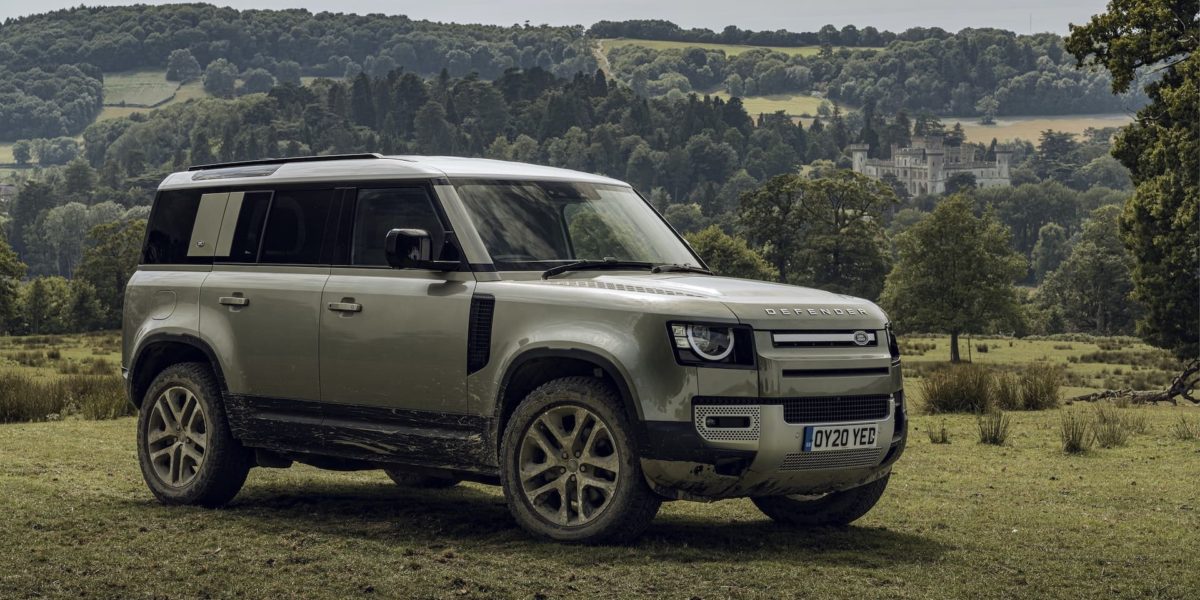
Class champion, petrol/diesel: Land Rover Defender (79%)
No longer a utilitarian farmer’s tool, the Land Rover Defender is now a luxury family SUV that just happens to carry the same name as its illustrious forebear.
On sale since 2020, the new Defender retains the superb off-roading ability as Land Rovers of yesteryear, although it combines that with grand interior trim, expensive tech and everyday practicality.
One of three new awards for this year, the Best Luxury Car award covers some of the finest saloons available to buy at any price.
Despite the cost-of-living pressures affecting most households, the luxury car market remains in rude health. While we obviously don’t see the same volume of new cars each year as in mainstream categories, the quality of new vehicles is always high. As with every part of the new car market, the shift from fossil-fuel power to electricity is visible – and has led to some quite stunning luxury EVs that are very well suited to electric power.
Our awards recognise both the best new models to have been launched over the last 12 months, but also the best overall cars in each category – because newer doesn’t always mean better, as you can see below.
Best new luxury car: BMW i7 (81%)
The BMW i7 has received near-universal praise from the UK media since its arrival, with its spacious and tech-laden cabin being earmarked as a particular highlight. In fact, frequent comparisons have been drawn between the i7 and a Rolls-Royce, such are its levels of opulence and refinement.
A typically bold BMW flagship, the i7 celebrates all the qualities the brand has come to represent and leads it into the electric age. If BMW’s stylists could achieve the same level of elegance that the engineers have managed, the i7’s Expert Rating score of 81% would surely jump several points higher.
Even in its most basic form, the Porsche Taycan qualifies as a performance car. But in top-spec Turbo S spec, it offers 760hp – a number that puts it into genuine supercar territory.
Car enthusiasts have long feared that EVs will mean the death of sports cars, super saloons and hot hatches. But the Taycan, along with its closely related cousin, the Audi e-tron GT, have shown that this doesn’t have to be the case. Sure, things will certainly be different. But the future is much brighter than the doomsdayers would have you believe.
Class champion, petrol/diesel: Rolls-Royce Phantom (91%)
The eighth-generation Rolls-Royce Phantom is comfortably the most expensive saloon car on sale in the UK, and the company claims that most owners will spend substantial money over and above the starting price to personalise their cars in various ways.
The Phantom has been particularly complimented for its build quality and unparalleled luxury, with the only criticisms being that it is very expensive (obviously) and the running costs are similarly eye-watering.
A new award for 2024, the Best Luxury SUV trophy covers one of the industry’s fastest-growing segments. It’s not just mainstream car buyers who are embracing SUV design – luxury car buyers want the same thin and car manufacturers are meeting that challenge.
It’s unlikely that many of these vehicles will ever head off-road, but some certainly have the capabilities to do so. Mostly, however, they offer the same sort of practicality and space that have made SUVs popular at every size and price point in the UK. Most are either petrol- or diesel-powered, with plug-in hybrids available and all-electric models starting to appear as well.
Our awards recognise both the best new models to have been launched over the last 12 months, but also the best overall cars in each category – because newer doesn’t always mean better, as you can see below.
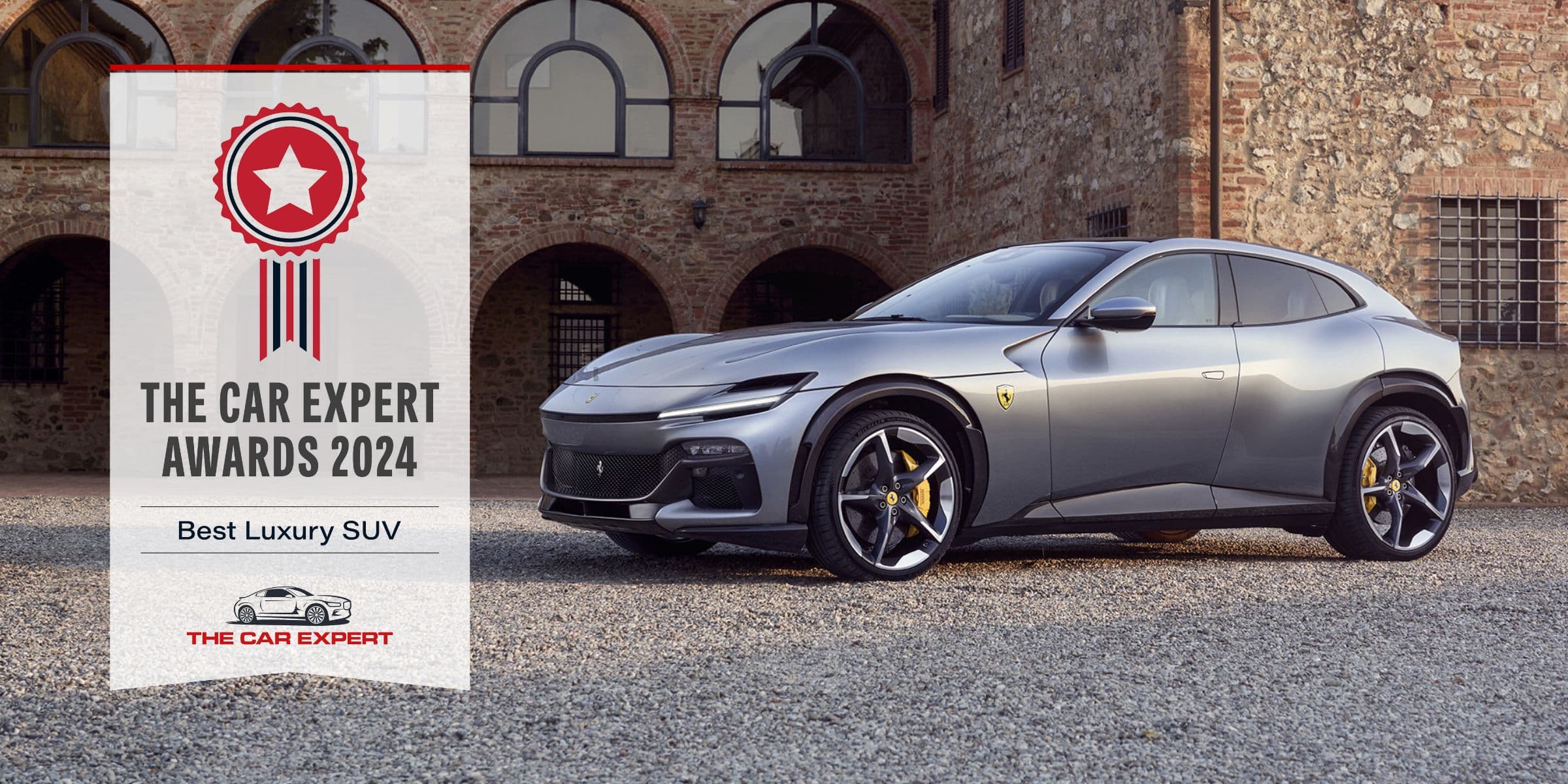
Best new luxury SUV: Ferrari Purosangue (81%)
We know that Ferrari doesn’t like describing the Purosangue as an SUV. But, honestly, has any other vehicle ever offered both sport and utility at anything like this level? All of the usual Ferrari hallmarks are present, combining a thrilling driving experience with sublime luxury – all powered by a superb 6.5-litre V12 engine.
Purists may be horrified, but then Porsche received a similar reaction when it launched the first Cayenne SUV 20 years ago. More than a million cars and three generations later, it’s one of the most successful models in the brand’s history. In 20 years’ time, how will we look back on the Purosangue? Unsurprisingly, it’s sold out until about 2025, so the signs are good.
Land Rover’s flagship model has built a formidable reputation over more than 50 years, and the latest Range Rover is no exception with overwhelmingly positive reviews from the British media (as well as our Best Large SUV title last year). Many reviewers claim that it is the new benchmark for luxury SUVs, with overall qualities that exceed even the substantially more expensive Bentley Bentayga and Rolls-Royce Cullinan.
Available with a range of petrol, diesel and plug-in hybrid powertrain options, the Range Rover is more spacious than the previous model, with a larger cabin and boot. It’s also available in a seven-seat configuration for the first time, and in 2024 the range will be completed with an EV version.
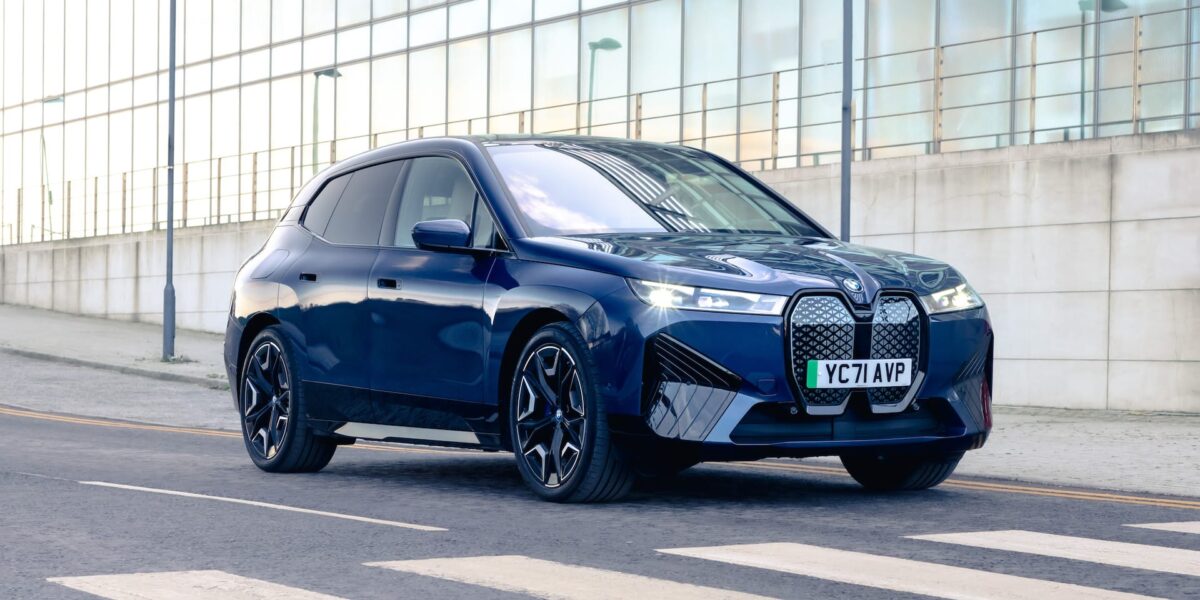
Once you get past the bizarre styling, the BMW iX is an excellent car. It won our Best Large SUV award back in 2021 and continues to rate better than more recent arrivals on the Luxury EV SUV scene. Critics have praised the quality of engineering beneath that curiously shaped bodywork, awarding it high marks for the way it drives and the quality of its interior.
As well as being good to drive, the BMW iX has plenty of battery range to quell any range anxiety, with nearly 400 miles in top-spec models.
A new award for 2024, the Best Luxury Sports Car award represents the hero cars of the marketplace: exotic brand names associated with extravagant lifestyles, hefty price tags and outrageous performance.
You’ll find coupés and convertibles here, with the engines either out front or behind the driver. Petrol power is a given, with as many as 12 cylinders, although some models are now available as plug-in hybrids. Full electric power will be arriving soon, but isn’t here yet.
Our awards recognise both the best new models to have been launched over the last 12 months, but also the best overall cars in each category – because newer doesn’t always mean better, as you can see below.
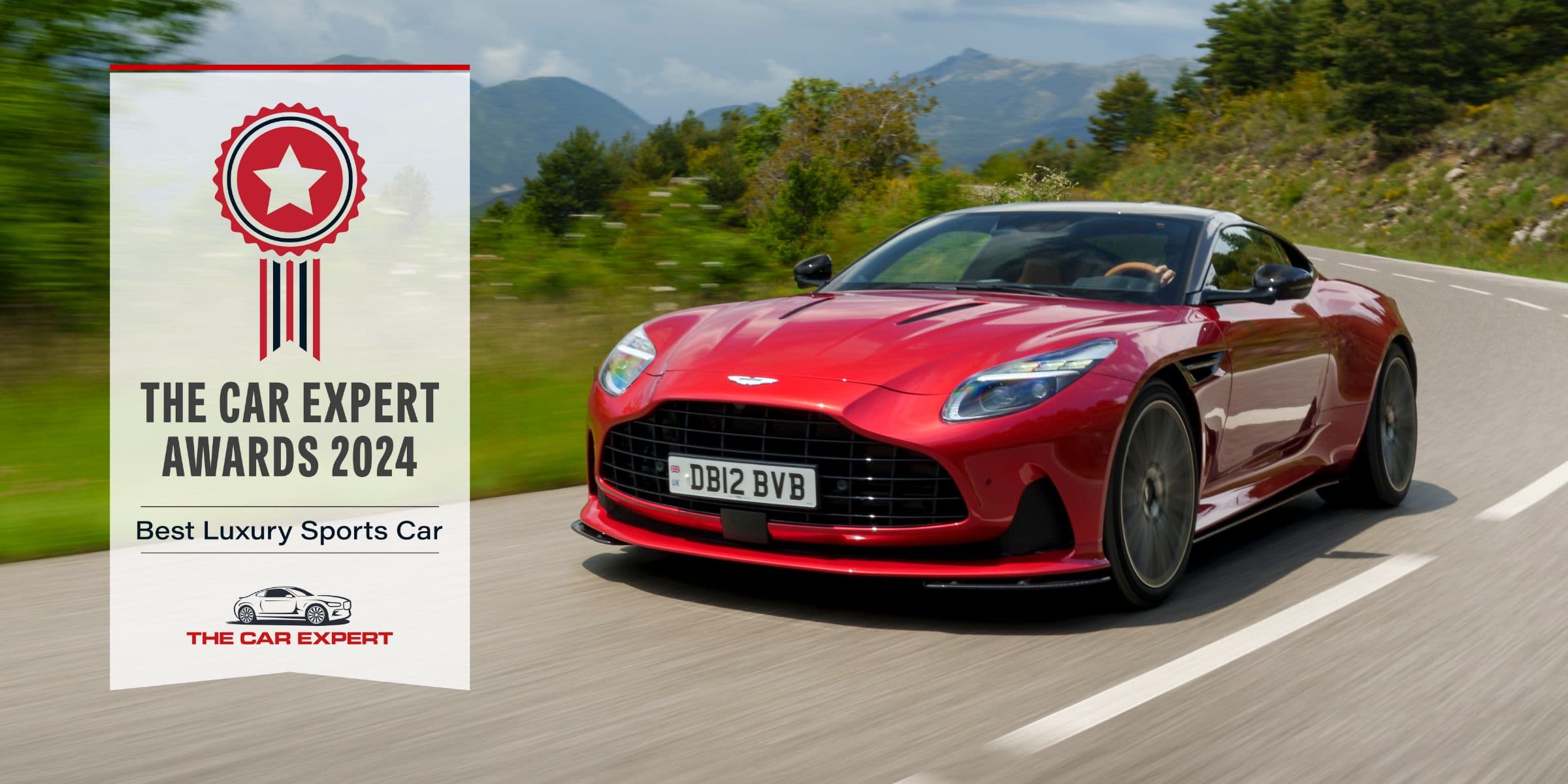
Best new luxury sports car: Aston Martin DB12 (85%)
It’s true that the Aston Martin DB12 carries a lot over from its predecessor, the DB11. But that’s not unusual for plenty of cars touted as ‘all-new’. It is, however, a significant step forward over the DB11 in virtually every way and has impressed reviewers.
Better to drive and much nicer inside the luxurious cabin, the DB12 is a wonderful machine. If you’re looking for the quintessential luxury GT, this is it. The Aston Martin DB12 combines vastly improved comfort and devastating performance in a stunningly-styled package.
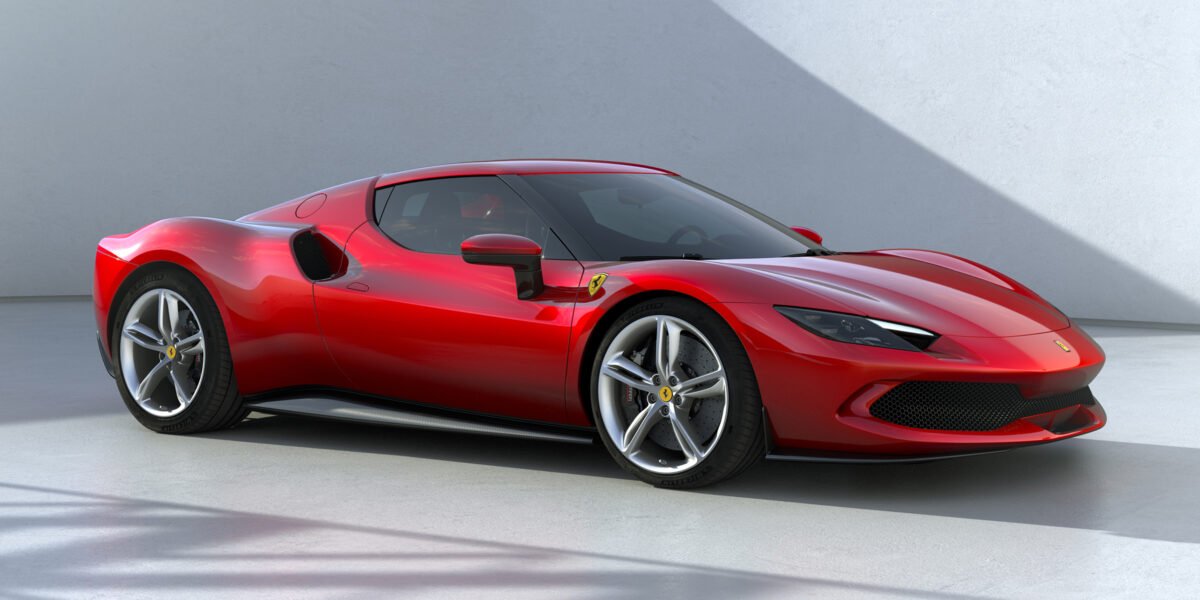
The DB12 may be a wonderful car, but the class champion for luxury sports cars is also the highest-rated new car in the Expert Rating Index. The Ferrari 296 has a frankly astonishing Expert Rating of 96% from 18 different reviews, which means that almost every single review has awarded it a maximum score.
The Ferrari 296 remains the world’s benchmark supercar – you can certainly buy more expensive cars, from Ferrari and other brands, but they are not regarded as highly as this one. It’s available with either a fixed coupé roof or a targa format with removable centre section, both of which get similar adulation from the media. It’s also a plug-in hybrid, so it can cruise silently through the city if you want it to.
The hot hatch is a UK institution, with generations of pocket rockets that cram genuine sports car performance into a shopping trolley hatchback body.
It’s also a category of cars that has so far resisted the shift to electrification much longer than other categories, although that dam broke last year and the floodwaters are starting to find their way through.
The hot hatch market has changed dramatically over the decades, with fewer budget hotches providing cheap thrills and minimal frills. Instead, we have a growing number of more expensive, more outlandish, more *everything* models from premium brands.
Our awards recognise both the best new models to have been launched over the last 12 months, but also the best overall cars in each category – because newer doesn’t always mean better.
Best new hot hatch: Honda Civic Type R (90%)
If this is going to be the last petrol-powered Honda Civic Type R, then what a send-off! Many people didn’t think it was possible for Honda to improve on the previous model, but the latest Type R has raised the bar even higher. That’s reflected in its stellar Expert Rating score of 90%.
The new Honda Civic Type R manages to maintain the superlative driving characteristics we’ve come to know and love from anything wearing the famous red Type R badge, but adds a new level of maturity and sophistication that is shared with the entire Civic range. Mind you, with a starting price of about £50K, it would want to be pretty good…
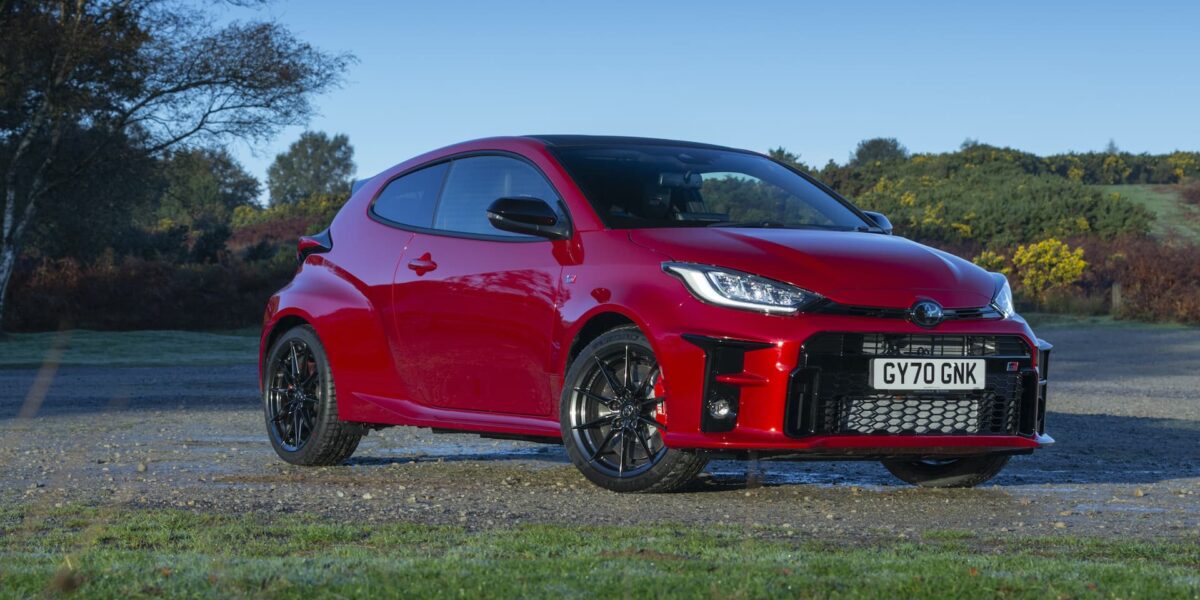
Class champion, petrol/diesel: Toyota GR Yaris (91%)
What sort of car could impress motoring journalists even more than the new Civic Type R? Well, you’re looking at it. The Toyota GR Yaris isn’t your typical Yaris hatchback – it started development as a rally homologation model and sports the world’s most powerful three-cylinder engine, a one-litre unit pushing out 260hp via all four wheels.
This powerful performance combined with agile handling has lead to universal acclaim from the British motoring media. The key issue facing UK buyers is availability – you will have to act quickly whenever there are new models in stock.
We fully realise that plenty of people won’t consider the Cupra Born to be a hot hatch, and not just because it’s electric. It lacks the raw, entertaining edge of an old-school Peugeot 205 GTi or modern Ford Fiesta ST – or the warp-speed performance of a Meredes-AMG A 45 or Audi RS 3. But maybe it’s perceptions of what a hot hatch should be that need to change.
As an electric vehicle, the Born can’t expect to generate the aural buzz of a snarling four-cylinder petrol engine. But it takes the regular Volkswagen ID.3 underpinnings and elevates them to a higher level of performance and driving enjoyment. It’s no coincidence that the Born was originally intended to be a SEAT model, but was transferred to the Spanish brand’s performance offshoot instead as it was a more appropriate home for an electric hot hatch.
When it comes to the Best Performance Car award, we’re looking at high-performance versions of ordinary cars, rather than dedicated exotic luxury coupés and supercars.
Last year, we said that the BMW 2 Series Coupé proves you can have a great driver’s car without needing 500hp on tap. But what if it did have (almost) 500hp? Well, this year’s results have answered that very question.
Our awards recognise both the best new models to have been launched over the last 12 months, but also the best overall cars in each category – because newer doesn’t always mean better, as you can see below.
Best new performance car: BMW M2 (79%)
BMW has made our performance car award its own, with three different models in the last three years. This year, it’s the new BMW M2 that takes the trophy, and if this is the last purely petrol BMW coupé, then it’s a fine way to finish. A straight-six engine, driven through the rear wheels, has always been a recipe for success at BMW and the new M2 continues that legacy in the finest possible way. Its performance will scare a few supercars, both in a straight line and through the trickiest of corners. A triumph.
The previous-generation BMW M2 was a firm favourite among motoring journalists, and the new model picks up where the old one left off.
Class champion, petrol: Alfa Romeo Giulia Quadrifoglio (88%)
It’s now seven years since the Alfa Romeo Giulia Quadrifoglio blazed its way onto the world’s roads, which means that retirement is coming sooner rather than later. Yet it still rates more highly than pretty much anything with a price tag under £100K – and its score doesn’t include the even-faster-but-much-pricier GTA and GTAm models.
Developed by a team of Alfa and Ferrari engineers, the twin-turbo, 500hp Giulia Quadrifoglio has the sort of performance that can shame plenty of supercars – and the sort of style that makes you wish BMW could draw cars like this. With a stellar Expert Rating of 88%, the Ferrari-engined Giulia represents the last of its kind for one of the world’s oldest and most storied car companies. Get one soon before they’re gone forever.
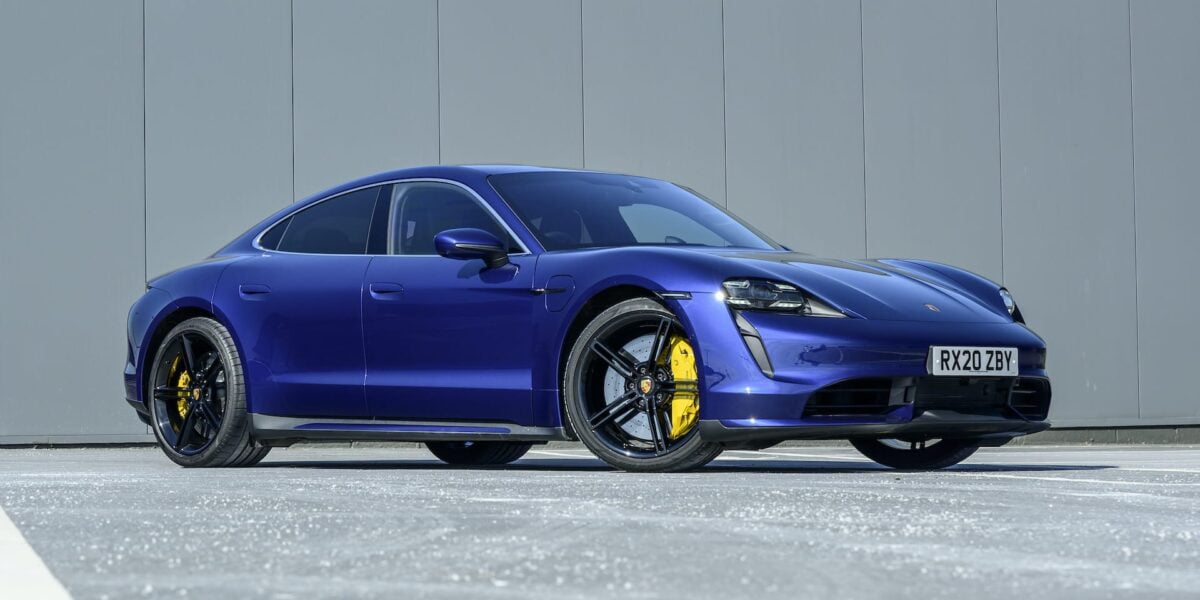
Even the entry-level Porsche Taycan qualifies as a performance car. But in top-of-the-range Turbo S spec, it offers 760hp – a number that puts it into genuine supercar territory.
Car enthusiasts have long feared that EVs will mean the death of sports cars, super saloons and hot hatches. But the Taycan, along with its closely related cousin, the Audi e-tron GT, have shown that this doesn’t have to be the case. Sure, things will certainly be different. But the future is much brighter than the doomsdayers would have you believe.
The Taycan offers superb driving dynamics for enthusiasts, combined with comfort and practicality for more mundane tasks like urban commuting. Plus you get the choice of liftback or estate body styles. What’s not to like? Other than the £100K-plus price tag, obviously…
Dacia has unveiled the next generation of its best-selling model, which has been given an on-board tech overhaul, new hybrid engine options, more interior space and a fresh but pretty familiar exterior design.
Sporting the Romanian brand’s latest insignia, this new Duster is built on a different platform – the same foundations that underpin the current Renault Clio and Dacia Sandero.
This makes the SUV a bit wider and lower than the current iteration, and Dacia says that there is an extra three centimetres of legroom in the back and a bit more luggage space in the boot – 472 litres in total. The driving position is higher too, thanks to around a centimetre of extra ground clearance.
The SUV’s exterior looks are more of an evolution of the previous design, instead of a complete departure. Dacia says it has given the car a “more assertive” appearance to make the SUV look tougher and durable.
The chunky wheel arch cladding and front bumper lip are thicker, and the Y-Shaped headlights are narrower to match the thinner width of the front grille. Dacia has also decided to give the Duster a lower roofline to improve fuel efficiency and a rear spoiler, which sits above new Y-shaped tail lights that replace the old square light signatures.
You might have also noticed that Dacia has fitted an extra panel on the bodywork below the wing mirrors, which is made of the brand’s ‘Starkle’ material, which is made of up to 20% recycled materials. That panel and the rest of the plastic cladding is already coloured before it is moulded too, meaning that Dacia saves on paint costs and customers don’t have to worry much about scrapes and scratches, as they won’t alter the original colour.
While the outside is mildly familiar, the interior certainly isn’t. This third-generation Duster has had a dashboard overhaul that introduces an angled 10-inch infotainment touchscreen with wireless Android Auto and Apple CarPlay connectivity and a seven-inch digital instrument cluster, though these come with the middling ‘Expression’ trim and up.
Buyers looking at the lead-in ‘Essential’ grade should expect a smaller four-inch media screen behind the steering wheel and smartphone holder in the centre of the dash that uses your phone to run the infotainment functions. That said, entry-level models do still come with a decent on-board tech offering, including cruise control and rear parking sensors. Upgrading to the ‘Expression’ adds larger 17-inch alloy wheels and a reversing camera.
Sitting at the top of the range is the ‘Journey’ and ‘Extreme’ trim duo. The former gets bigger 18-inch alloy wheels, fog lights, automatic air-con, keyless entry, a wireless smartphone charger and a sound system upgrade. The latter focuses more on off-road practicality, with washable upholstery and rubber floor mats in the cabin and boot. The ‘Extreme’ also comes with electric folding door mirrors and some extra ‘Copper Brown’ styling touches, inside and out.
Speaking of off-roading, Dacia adds that it has improved the SUV’s ability on loose terrain by adding new driving modes, including ‘Snow’ which optimises traction for slippery surfaces, and ‘Mud/Sand’ for more grip in unsteady terrain. The car also comes with a ‘downhill speed control’ function which kicks in to keep the vehicle’s speed under control when driving down an incline, regardless of the gear selected (including reverse).
The Duster also comes with some of Dacia’s new ‘YouClip’ interior clips which allow you to fix accessories like lights, screens, bottles and keys to the interior front and back, with each clip able to hold up to 8kg.
Now on to the revised engine line-up. Like the Dacia Jogger people carrier, the Duster will soon be available with the brand’s ‘Hybrid 140’ engine, which pairs a 1.6-litre petrol engine with an electric motor and starter-generator for a total output of 140hp. This will sit alongside the more conventional (and presumably cheaper) 1.2-litre ‘TCe 130’ petrol which comes with a 48V mild-hybrid boost and the ‘TCe 100 Bi-Fuel’ which runs on liquefied petroleum gas (LPG) as well as regular unleaded.
That sums up the broad strokes of Dacia’s Duster announcement – pricing for the new SUV has not yet been announced, but the brand says that it still intends to offer “the best value for money in this market segment.” The car is set to arrive in UK showrooms in the second half of 2024.
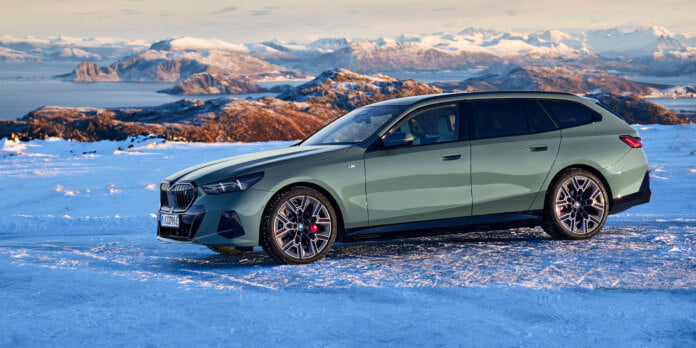
The BMW i5 is the electric version of the latest eight-generation BMW 5 Series executive saloon. It sits between the smaller i4 and the larger i7 in the electric ‘BMW i’ range.
Initially launched as a saloon, an i5 Touring (estate) joined the range in the summer of 2024. It has received very similar reviews from motoring journalists, while other data points like safety and running costs are also very similar to the saloon.
While the highly-regarded seventh-generation 5 Series range is a tough act to follow, the i5 has been earmarked by UK reviewers as a compelling class leader – offering some of the i7’s interior opulence as part of a cheaper and more engaging package.
Vicky Parrott of Electrifying.com explains that the saloon “strikes a fantastic happy medium”, offering a blend of “executive slicker and occasional country-road thriller.” Parkers‘ Tom Wiltshire agrees, arguing that the BMW is “the most engaging EV in its size class, and even gives outright sports EVs such as the Porsche Taycan a run for driving dynamics.”
James Fossdyke of the Sunday Times praises the car’s “clean”, “well-built” and “very high tech” interior design, while Sean Carson of Auto Express asserts that no other electric saloon can match the i5’s refinement and infotainment features. That said, the Top Gear team adds that this high-tech cabin “can be a bewildering place to navigate.”
Some outlets suggest that the i5 isn’t as fun to drive as its petrol-powered predecessors, while others take issue with the saloon’s expensive price tag. The most frequent criticism refers to the car’s battery range, which Carbuyer describes as “adequate”. The i5 can reportedly muster up to 357 miles on a single charge, while rivals like the Mercedes-Benz EQE and Tesla Model S can travel up to 376 miles and 405 miles, respectively.
As of April 2026, the BMW i5 holds a New Car Expert Rating of A, with a score of 77%. This reflects its excellent media reviews and safety rating, as well as its zero tailpipe emissions. Running costs are also good, although car insurance premiums are likely to be fairly expensive.
Reviews, road tests and comparisons from across the UK automotive media. Click any of the boxes to view.
Featured reviews
“The BMW i5 is supremely well-finished inside, comes with an array of high-end technology, and can travel around 300 miles on a single charge. We’d like a little improvement to overall efficiency, and it could be a touch more fun to drive, but if you’re after a refined long-distance EV, it’s one of the more complete options.”
Model reviewed: Estate (Touring) range Score: 9 / 10 “The electrified 5 Series Touring is a fine car with a wonderful cabin, but its range is compromised.” Author: Alex Ingram, Dean Gibson Read review
Model reviewed: Range overview Score: 8 / 10 “The i5 is a car that brings the BMW 5 Series closer to its 7 Series sibling than ever before – not only in terms of comfort and refinement, but also on price. While business buyers can write off much of that initial outlay, its appeal is harder to justify for private drivers. This is an excellent car for business users, but private buyers might prefer a 520i.” Author: Richard Ingram Read review
Auto Trader
Model reviewed: i5 Touring estate Score: 9 / 10 “Sleek, practical and packed with tech the all-electric BMW i5 Touring shows there’s life beyond SUVs, at a price.” Author: Dan Trent Read review
Model reviewed: Range overview Score: 8 / 10 “New i5 completes the electrification of BMW’s traditional saloon family with a powerful demonstration of technological prowess.” Author: Dan Trent Read review
Car
Model reviewed: Touring (estate) range Score: 8 / 10 “Elegantly styled and superbly refined, the BMW i5 is an impressive piece of kit and a welcome alternative to the glut of electric family SUVs. Both versions appeal, with the 40’s keener price and slightly better range giving it the edge. But few fast family cars have ever flattered quite like the i5 M60, a car that combines extraordinary performance with remarkable refinement.” Author: Ben Miller Read review
Model reviewed: Range overview Score: 8 / 10 “The BMW i5 is fast, it’s fantastic to drive and to sit in, and it feels as thoroughly engineered as the car it replaces, which is no mean feat. Not all of the driver assistance tech works quite as expected, and no, it’s not a looker – but in our opinion, it runs circles around the Mercedes EQE or Tesla Model S.” Author: Tom Wiltshire Read review
Carbuyer
Model reviewed: i5 Touring (estate) range Score: 8.6 / 10 “The BMW i5 Touring sets the bar high in the niche electric estate car market.” Author: Charlie Harvey, Alex Ingram Read review
Model reviewed: Range overview Score: 8.4 / 10 “The BMW i5 is refined and good to drive, making it one of the most well-rounded electric saloon cars currently on sale.” Author: Richard Ingram, Ivan Aistrop Read review
Driving Electric
Model reviewed: Range overview Score: 9 / 10 “Plush, poised and packed full of the latest tech, BMW has once again set the bar high with the first electric 5 Series.” Author: Tom Jervis, Richard Ingram Read review
Electrifying.com
Model reviewed: i5 eDrive40 Score: 9 / 10 “As a blend of executive slicker and occasional country-road thriller, the BMW i5 strikes a fantastic happy medium – even in the more modest eDrive40 that we favour.” Author: VIcky Parrott Read review
Evo
Model reviewed: i5 eDrive40 Score: 8 / 10 “If you’re a fleet driver and have been holding out for an EV in this sector the i5 offers the strongest and most compelling proposition of them all, carrying on the strong work established by the impressive i4.” (Stuart Gallagher) Read review
Heycar
Model reviewed: Estate (Touring) range Score: 9 / 10 “Take the BMW 5 Series Touring and i5, combine them and you get the i5 Touring. It’s an obvious addition to the BMW range, but no less impressive for that, and this handsome executive EV estate makes for a very tempting alternative to the raft of electric SUVs around.” Author: Al Suttie Read review
Model reviewed: Range overview Score: 9 / 10 “BMW is serious about electric cars, and while models like the iX, XM and i7 have given us an idea of the brand’s abilities, the BMW i5, an electric 5 Series, shows BMW can get its core models right too – it’s an impressive car that should appeal to existing 5 Series owners and those new to the brand alike.” Read review
Honest John
Model reviewed: Range overview Score: 8 / 10 “As accomplished to drive as you would hope and expect a BMW to be, the i5 – an all-electric version of the 5 Series – makes a very strong case for itself against some worthy rivals.” Read review
Parkers
Model reviewed: Range overview Score: 9 / 10 “The i5 is a hoot to throw around in the corners but is as relaxed as you could hope for on the motorway. It’s by some measure the most engaging EV in its size class, and even gives outright sports EVs such as the Porsche Taycan a run for driving dynamics.” (Tom Wiltshire) Read review
The Independent
Model reviewed: Touring (estate) range Score: 9 / 10 “The BMW i5 Touring is a sleek electric estate car, one of the few on the market right now. It builds on the dynamic strengths of the i5 saloon with more space and practicality in the rear.” Author: Richard Aucock Read review
The Times
Model reviewed: Range overview Score: 9 / 10 “In many ways, the BMW i5 isn’t that remarkable. Not because it isn’t a great car — it is — but because it’s exactly what we expected it to be. Great to drive, well-built overall and very high tech.” Author: James Fossdyke Read review
Top Gear
Model reviewed: Range overview Score: 9 / 10 “BMW i5 is part car, part ecosystem. Even so, it’s rewarding to drive and the cabin is world class.” (Jason Barlow)
Read review
Which EV?
Model reviewed: Range overview Score: 7.8 / 10 “The BMW i5 translates the magic of the autobahn-storming 5-series into electric form with great competence. It’s exceedingly comfortable and quick on long journeys with plenty of driver engagement available if you feel like having a bit more fun. BMW’s technology is increasingly competent too.” Author: James Morris Read review
Safety rating
Independent crash test and safety ratings from Euro NCAP
Independent economy and emissions ratings from Green NCAP
No eco rating
As of April 2026, the BMW i5 has not been tested by Green NCAP.
The Green NCAP programme measures exhaust pollution (which is zero for an electric car) and energy efficiency. Electric cars are much more energy-efficient than combustion cars, so the i5 is likely to score very highly in Green NCAP testing whenever it ever takes place. Check back again soon.
Running cost rating
Monthly cost of ownership data provided exclusively for The Car Expert by Clear Vehicle Data
Battery range
Average
Score
Variation
Score
EV models
337 miles
A
Electrical efficiency
Average
Score
Variation
Score
EV models
4.1 m/KWh
C
Insurance group
Average
Score
Variation
Score
All models
44
E
Service and maintenance
Cost
Score
Year 1
£373
D
Year 2
£714
D
Year 3
£1,016
C
Year 4
£1,322
D
Year 5
£1,645
C
Overall
£5,070
D
The BMW i5 is a reasonably expensive car to run and own, according to whole-life cost data provided exclusively to The Car Expert by our technical partner, Clear Vehicle Data. However, it’s still cheaper to live with than a conventionally powered saloon of similar size and sophistication – like the regular BMW 5 Series.
Electrical efficiency (the EV equivalent of miles per gallon in a petrol or diesel car) is only average, although a large battery means that driving range between charges is very good.
Insurance costs are inevitably high (as they are for any 5 Series), while servicing and maintenance costs are not bad for this level of price and luxury.
Reliability rating
Reliability data provided exclusively for The Car Expert by MotorEasy
No reliability rating
As of April 2026, we don’t have enough data on the BMW i5 family to generate a reliability rating.
The Car Expert’s reliability information is provided exclusively to us using workshop and extended warranty data from our partner, MotorEasy, sourced from both official dealerships and independent workshops.
As soon as MotorEasy has sufficient data on the i5, we’ll publish the score here.
Date: February 2024 Recall number: R/2024/211 Model types: All Build dates: 12/2023 only Number of vehicles affected: 1 Defect: On affected vehicles if faulty cell modules have been installed then a malfunction may occur in the high voltage battery. Remedy: On the affected vehicles the faulty cell modules in the High Voltage battery will be replaced.
As of September 2024 (our most recent data point), there has been one DVSA vehicle safety recall on the BMW i5 – and only affecting one vehicle – addressing a battery issue.
Not all vehicles are affected by recalls. You can check to see if your car is included in any of the above recalls by visiting the DVLA website or contacting your local BMW dealer.
If your car is affected by a recall, the vehicle must be repaired and you should not be charged for any work required. If you are buying a used i5, you should insist that any outstanding recall work is completed before you take delivery of the vehicle.
Find your next new or used car with Auto Trader. Find out more
Find your next new or used car with Carwow. Find out more
Lease a BMW i5
If you’re looking to lease a new BMW i5, The Car Expert’s partners can help you find a competitive deal.
Personal contract hire deals from Leasing.com. Find out more
Personal contract hire deals from Carwow. Find out more
Personal contract hire deals from Select Car Leasing. Find out more
Subscribe to a BMW i5
Subscriptions are becoming a very popular way for consumers to try an electric car for a few weeks or months to help decide whether it’s a suitable alternative to a petrol car. If you’re interested in a car subscription, The Car Expert’s partners can help. (PS: What’s a car subscription?)
The family-sized Hyundai Tucson range is set for a mild refresh in the new year, which introduces several cosmetic changes and tweaks to the car’s dashboard layout.
Tucson owners won’t notice many exterior differences – the update includes a small tweak to the slim LED headlight shape and the dashed daytime running lights take up a bit more space on the front grille, but otherwise the SUV’s looks remain largely the same after the update. The alloy wheel design has been updated too.
The most notable changes are inside, with a new dashboard layout and infotainment spread that gives the SUV a more upmarket look. Like the latest iteration of the smaller Kona crossover, the digital instrument cluster and central infotainment console are connected in one continuous screen and the steering wheel has been changed too, again based on the design of the Kona.
To make the Tucson’s more user-friendly, Hyundai has decided to get rid of the touch-sensitive sliders in favour of dial controls and switches for the climate control functions. The gear-selector buttons have been moved from the centre console, freeing up more storage space.
That sums up this minor refresh – the powertrain options remain the same. The SUV’s UK pricing list may change though, but we have no indication of this just yet. Pricing details will follow in the coming months – closer to the update’s arrival early next year.
Reviews for the Tucson have been universally positive to date – the SUV has been widely praised for its interior quality and space, as well as its safety tech. It currently holds an Expert Rating of 75%, which is hindered by criticisms of its pretty bland driving experience.
The compact Toyota Yaris Cross crossover range will soon gain an additional hybrid engine option and some on-board tech upgrades – in line with the smaller Yaris hatchback’s refresh in June.
This being the first modification to the crossover range since the introduction of the sportier ‘GR Sport’ trim in August last year, Toyota says that this round of enhancements “focuses on the top purchase considerations for customers”, keeping the car competitive with rivals like the popular Ford Puma and Nissan Juke.
Toyota says that the most important change is the expansion of its engine choices. The update adds an extra petrol-electric hybrid option – a more powerful 130hp 1.5-litre unit that is half a second quicker to 62mph than the single powertrain option currently on sale – 10.7 seconds in total.
This engine will be available with top-spec ‘GR Sport’ and new ‘Premiere Edition’ versions. This new trim is said to “enhance” the car’s “visual appeal” by introducing a new paint colour, ‘Urban Khaki’, which is shown above. Like the ‘GR Sport’, ‘Premiere Edition’ models have a two-tone exterior with black elements and 18-inch alloy wheels. Other than that, the car’s exterior looks remain the same. Inside, this trim spec matches the interior stitching with the green body colour.
Toyota adds that a new ‘Juniper Blue’ exterior colour has been added to the full range of trims, and that seat upholstery has also been refreshed with a new pattern and a soft-material lower instrument panel covering has been introduced. The manufacturer has also attempted to reduce engine and wind noise in the cabin, using thicker windscreen and side window glass and engine dampers.
Now onto the tech. Like the Yaris, the Yaris Cross will be getting the brand’s ‘digital key’ software, which allows the driver to lock, unlock and start the car from their smartphone.
The entry-level models come with a nine-inch central screen (formerly of higher trims), while higher trims will feature a larger 11-inch infotainment console, as opposed to the eight- and nine-inch systems currently available. Toyota says the infotainment software is more ‘intuitive and reactive’ after the update, and that it is wirelessly compatible with Android Auto and Apple CarPlay.
The four-inch LCD driving information screen behind the steering wheel has also been replaced by either a seven- or 12-inch digital instrument cluster, depending on the trim you choose. The car’s safety tech has been tweaked too – the camera and radar system can reportedly scan further and wider than before when detecting potential hazards on the move.
The safety tech is also said to be improved thanks to the introduction of an upgraded camera and radar system which can scan further and wider than before, increasing scope for the detection of accident risks. There is also a new ’emergency driving stop system’ which stops the car, turns on the hazard lights and unlocks the doors if it detects no input from the driver after an extended period of time and after a warning sound.
Finally, Toyota says that the car’s adaptive cruise control has been revised to respond more quickly and “operate with a more natural feel”.
UK pricing and arrival date are yet to be announced, but we do know that these revised Yaris Cross details will arrive in December. The lead-in price for the range currently sits at under £25k before the update’s arrival.
As the key criticisms of the Yaris Cross relate to its modest performance and slow infotainment, this minor facelift could potentially impact the car’s current Expert Rating of 69%.
Vauxhall has announced that its full all-electric Astra range is now available to order in the UK, with the arrival of the Astra Sports Tourer Electric estate car.
Unveiled at the end of last year, the Vauxhall Astra Electric (hatchback and estate bodystyles) is powered by a 54kWh battery and a 156hp electric motor pairing, which the manufacturers says can muster a maximum electric range of 258 miles on a single charge (256 miles for Sports Tourer).
The exterior styling and interior layout of the Astra Electric range is almost identical to the entry-level petrol model, apart from the absence of exhaust pipes in the rear, and the larger 18-inch alloy wheels that come as standard.
The ‘GS’ grade comes with LED headlights, tail lights and daytime running lights, as well as LED front fog lights. The car sits on 18-inch alloy wheels as standard, and features dark-tinted privacy glass for the rear windows.
Lead-in tech includes a ten-inch infotainment touchscreen that can run Apple CarPlay and Android Auto – like the combustion-powered Astra – and dual-zone climate control. The steering wheel, front seats and folding door mirrors are all heated with the ‘GS’ spec, and the car can be opened using a keyless entry function.
Opting for the ‘Ultimate’ adds more advanced Matrix LED headlights, as well as a panoramic sunroof and leather upholstery. A head-up display projects driving information onto the heated windscreen, and a wireless charging pad for smartphones is also included.
Pricing for the hatch starts at over £37k for the hatchback version, while lead-in versions of the larger Sports Tourer are priced at just under £40k.
This Vauxhall Astra Electric range has largely failed to stand out in what is a very competitive family EV sector so far. While models are well-equipped as standard and the car’s efficient battery offers a long range, reviewers add that its pricing is comparatively expensive, and rivals are more engaging on the road. The Astra Electric currently holds an Expert Rating of 55%.
Jeep has announced that its compact Avenger crossover line-up is no longer electric-only, with additional petrol mild-hybrid and limited-run traditional petrol models on offer from the end of November.
Previously only available as a 156hp electric car, Jeep says that the Avenger will soon also be sold with its ‘e-Hybrid’ powertrain – a 100hp mild-hybrid setup that pairs a 1.2-litre petrol engine with a 21kW electric motor and 48V of extra mild-hybrid assistance.
This new variant of the crossover can also drive on electric power only – but only for up to just over half a mile when cruising in traffic at under 18mph. Heavy traffic is also where Jeep’s ‘e-creeping’ function comes into play, allowing for a series of short forward movements without accelerator input. Like the fully-electric model already on sale, this ‘e-Hybrid’ uses an automatic gearbox. Acceleration from 0-62mph takes 11 seconds.
Other than the engine, the ‘e-Hybrid’ also offers a few other new features, including the brand’s ‘open-air’ panoramic sunroof and an electronically-powered driver seat with a massage function. On the dashboard, drivers can choose between a seven-inch or ten-inch digital instrument cluster, which displays ‘e-Hybrid’ information such as drive mode, engine status feedback and power metre readings.
For a limited time, UK buyers can also opt for a conventional 1.2-litre turbocharged petrol model tied to the middling ‘Altitude’ trim. Called the ‘Altitude Plus’, this model also offers an output of 100hp and the package includes Jeep’s navigation software, a reversing camera, 18-inch alloy wheels, heated seats and blind spot monitoring tech.
On sale from the end of this month, Jeep is yet to finalise the UK price list.
The Jeep Avenger has received a very warm welcome from the British motoring media – praised for attractive styling, competitive battery range and its off-road capability, while being criticised for its pricing. It currently holds an Expert Rating of 74%.
Make and model: Land Rover Discovery D300 Description: Large seven-seat SUV, diesel Price range: £60,540 (plus options)
Land Rover says: “Discovery combines an exceptional design evolution with a versatile and intelligently packaged interior which embodies the spirit of family adventure.”
We say: Undoubtedly competent and supremely comfortable, but it’s big, expensive, heavy and inefficient.
Like the other grandee names in the Land Rover family – Defender and Range Rover – the Land Rover Discovery has come a long way from its utilitarian origins.
Now in its fifth generation, the Discovery is a sophisticated seven-seat SUV that has to appeal to buyers who will rarely venture off the beaten track. Yet, at the same time, it needs to be worthy of the Land Rover name by being perfectly capable in the sorts of off-road situations that would embarrass most SUVs from other brands.
For the purposes of our review, we’re going to take the Discovery’s off-road talents as a given. What we’re interested in finding out is whether they compromise the Disco’s abilities on-road, since that’s where it will inevitably spend the vast majority of its time with most of its customers.
What is it?
The Land Rover Discovery is a large, seven-seat 4×4 with a starting price of just over £60K. It used to be the biggest model in the Land Rover family, but has been overtaken by the latest Range Rover and Defender models. Unlike those models, the Discovery is only available in one size and seating configuration.
The current Discovery has been around since 2017, and this is the fifth generation of vehicle to carry the name (Land Rover die-hards, we’re going with what the company says so we’re not going to argue whether it’s really only the third generation…). It had a major update in late 2020, although visually there wasn’t a great deal of change.
Customers have a choice of diesel or petrol power for the Discovery, although exact engine availability will depend on which of the four trim options you choose.
Not UK-spec cars
Who is this car aimed at?
Unusually, Land Rover offers not one, but two large seven-seat SUVs in the same price bracket. The Discovery and Defender 110 are similar in price, size and equipment levels. So what gives?
The Discovery is more subtle in styling, if you can ever call a five-metre-long SUV subtle, while the Defender pays homage to its famous predecessor with its squared-off styling. The Disco follows the last decade of Land Rover’s Russian doll approach to styling, with everything looking like a larger version of the original Range Rover Evoque.
It’s fair to suggest that the new Defender isn’t really a replacement for the old Defender at all, but rather a replacement for the old Discovery. Meanwhile the Discovery has moved more upmarket, looking and feeling like an entry-level Range Rover.
Who won’t like it?
Land Rover is very much a premium brand these days, competing in the same space as Mercedes-Benz, BMW and Audi. So, like those brands, it’s not about value for money. If you’d like to tick most of the same boxes on the spec sheet for a little over half the price, you should be looking at a Skoda Kodiaq.
It’s also a very large, near-three-tonne SUV (once you put a couple of people in it and fill up the tank with diesel), so it’s not going to win any awards from climate change campaigners. The Defender and Range Rover models are available with plug-in hybrid powertrains, but the Discovery has not been blessed with these.
First impressions
The Discovery may no longer be the largest model in the Land Rover family, but it’s still big. Really big. Which is great news if you you want to take up to six passengers with you, because most seven-seaters are rather cramped once you fill up all the available seats.
Of course, if you don’t need the third row of seats, they fold flat into the floor and you have a big, square boot space. The rear of the car even lowers down at the touch of a button to make loading easier, as the Disco sits very high up off the ground (more on that later).
Styling-wise, it’s a mixed bag. The front half is all quite neat and smooth, and far better resolved than any SUV from BMW (admittedly, that’s a low bar to clear). It all looks like an Evoque XXL. But the back half of the car isn’t anywhere near as attractive. For such a wide vehicle, it manages to look very tall and narrow, and the silly offset number plate doesn’t look any better now than it did six years ago.
Our car was finished in an attractive metallic greyish-blue colour called Byron Blue, with silver alloy wheels. It was a nice change from the usual dark grey or black cars with dark grey or black wheels that you usually see on the roads or at your local Land Rover dealer. Why can’t more customers pick brighter colours for their cars and wheels?
What do you get for your money?
Once we’ve got the first impressions out of the way, it’s time to look a bit harder at exactly what you’re getting for your money with the Land Rover Discovery.
As of late 2023, the range starts with the Discovery S, only available with a 300hp diesel engine (yes, they still exist) and with a starting price of just over £60K. It’s actually pretty well equipped and is certainly not just a price-leader model that no-one is likely to ever buy.
The 3.0-litre diesel engine is hooked up to an automatic transmission, with no manual alternative. It’s a proper four-wheel-drive vehicle, meaning that all wheels are driven all the time – although the amount of drive going to each wheel will vary depending on the conditions.
In terms of standard equipment, the Discovery S has all the basics you’ll need, although obviously the niceties are kept for more expensive models. It’s good to see that all the safety kit is standard rather than costing extra, which isn’t always the case.
Above this model is the Dynamic SE trim, with either or diesel or petrol power and starting at about £68K with same diesel engine. Then comes Dynamic HSE trim, which bumps the price to just over £72K, and finally the top-spec Metropolitan Edition for £77K.
The interior is where most of Land Rover’s money went during the mid-life update. If you’re looking for a used Discovery, you’ll see a big difference between the pre-facelift (2017 to 2020) models and the post-facelift (2021 onwards) versions.
There’s plenty of room for everyone, with good headroom and legroom in the first two rows. Inevitably the third row is tighter, but you could still carry two adults back there for relatively short trips. The middle-row seats don’t slide and fold as quickly as you’d like, so if you’re using the third row regularly you’ll get tired of waiting for the partially electric seat to get out of the way.
The biggest single improvement on post-2020 models is the new infotainment system, which Land Rover calls Pivi Pro. The screen is larger (11 inches) and more responsive than on older cars, and the whole thing runs much more smoothly. That said, it’s still not as user-friendly as some systems on other cars, and you’ll probably end up just running Apple CarPlay or Android Auto rather than the fairly fiddly built-in systems.
The dashboard layout is fairly conventional and logical in its layout, although it’s starting to look dated compared to rivals. There are lots of storage spots all throughout the cabin, which is great. Unfortunately, several of them were very reluctant to open when their buttons were pressed, which suggests that Land Rover’s build quality is still not up to scratch. Budget cars get this sort of stuff right, so it’s unacceptable in a £60K+ premium vehicle.
Boot space is great with the rear row of seats down – the square shape of the Discovery’s back end maximises load space compared to the en vogue coupé SUVs found elsewhere. With all three rows in use, you obviously lose the vast majority of your boot, so you’ll only be able to fit a few smaller bags back there.
Standard-fit air suspension means you can lower the back end of the car at the touch of a button. This is helpful if you’re loading heavy bags or bulky objects, as the Discovery sits quite high – you definitely climb up into it. The motorised tailgate can also be opened or closed remotely with your car key.
What’s under the bonnet?
The only engine choice for the Discovery S is a 3.0-litre diesel unit, helped along with mild hybrid assistance. It’s called a D300 in Land Rover lingo. The company does emphasise the mild hybrid bit quite a lot on its website, but don’t get too excited. Most diesel engines are now mild hybrids, and it just means that the engine gets a bit of electrical support to hopefully provide a small improvement to fuel economy.
In practical terms, it’s still a near-three-tonne SUV so don’t be expecting a Christmas card from Greta Thunberg. Over the course of a week of mixed driving on roads we use regularly, we saw fuel economy of about 29mpg. Our usual petrol estate would probably achieve somewhere close to 40mpg for the same sort of driving.
Being a big diesel engine, it produces loads of torque, so you can expect that the Discovery will maintain its performance well regardless of how much you load it up with passengers and luggage, and your fuel consumption won’t suffer as much as it would on a petrol vehicle. You can get a Discovery with a petrol engine, but I can’t imagine why you’d want to unless you have your own private oil refinery.
The gearbox is an automatic transmission, which shifts smoothly between its eight gears. This is a proper four-wheel drive, so all four wheels drive the car at all times. Some SUVs are two-wheel drive only, or may only use all four wheels on occasion. The Discovery can apportion drive to each wheel depending on how much grip is available at the time, so traction is always maximised. There’s nothing you need to do to assist or control this, it’s all done by the car.
At this point in the review, it’s probably time to address the elephant in the room when it comes to Land Rover – reliability. According to data supplied to The Car Expert by our partner MotorEasy, the Discovery has a very poor reliability rating.
What’s the Land Rover Discovery like to drive?
As said right at the top, we’re only evaluating the Discovery’s on-road ability here. There are plenty of good 4WD websites and magazines that can give you plenty of detail about how good it is off the road, but that’s not where the vast majority of Discoveries spend their time.
We’re interested in assessing how well the Disco copes with ordinary day-to-day driving and road trips, which is exactly how most families will use it. We found plenty of good and not-so-good in this regard.
Firstly, the driving position is great once you get there. It’s definitely a step up to get into the Discovery, and you’ll find that you actually look down on almost every other car on the road – plus most delivery vans apart from the really big ones. That gives you plenty of visibility down the road to see what’s coming.
Being diesel-powered and weighing more than 2.5 tonnes, the Discovery is sluggish to respond off the mark but does then pick up speed rather quickly if you keep the throttle pedal floored. Combined with its large dimensions and huge turning circle, it’s a clumsy thing for city driving. This is not the ideal car for negotiating car parks, stop-start traffic and narrow laneways, notwithstanding the fact that plenty of owners do use them in these environments on a daily basis.
Find your way free of the urban jungle and the Discovery is far more comfortable. The ride is generally quite good – our car rode on 20-inch alloy wheels, but if you pay extra for larger wheels then you can expect the ride to become bumpier. Corners, however, feel quite roly-poly. This is a combination of relatively soft suspension and sitting quite high up. It doesn’t detract from the car’s overall ability, but it’s noticeable if you’re used to a low-slung saloon or hatchback or estate car.
In comparison, big SUVs from the German trio of Mercedes, BMW and Audi tend to be less comfortable in ride, but feel more planted in corners. There’s no real right or wrong way to go about it, just a different approach. Be sure to take a good test drive in any car you’re thinking of buying to make sure you’re comfortable with how it drives.
The front and middle-row seats were certainly comfortable, even after a couple of hours on longer runs. We only tried the third row briefly, but it was better than expected. You still wouldn’t want to travel over great distances back there as an adult, but for shorter trips it was perfectly reasonable. Steering is light, as it is on most
The diesel engine grumbles along with more noise than you’d get from a similar petrol unit, and the tyres are also quite noisy. Once you get up to motorway speeds, a fair amount of wind noise is also audible. Overall, it’s not an overly noisy car but others are quieter.
How safe is the Land Rover Discovery?
The Land Rover Discovery was assessed by Euro NCAP back in March 2017 and awarded a five-star safety rating, with a very good set of scores in every category – both in how it avoids an accident in the first place, and how it copes with an accident if impact is unavoidable.
It’s worth pointing out that this rating is due to expire in January 2024, which is normal practice for Euro NCAP (the ratings usually expire the January after the sixth anniversary of the initial publication).
Verdict
With Land Rover now offering four different seven-seat SUVs in its range (Discovery, Discovery Sport, Defender and Range Rover), it’s getting hard to see how the Discovery can stand out in its own family, let alone among rivals from other brands.
Would you choose a Discovery over a Defender 110 with the same engine and similar spec for similar money? Or how about a near-new (last-generation) Range Rover, which would also be a similar price?
After a week of driving the big Disco, the overall impression was of a car with undoubted competence but little real character. It certainly did everything we needed it to do, and in considerable comfort. But the driving experience was fairly average and the fuel economy was poor. And then there’s the historically poor reliability of the Discovery across all generations.
The off-roading capabilities are certainly overkill for the needs of most households, but you’re paying for them in both the price of the car and the additional running costs every month. If your driving circumstances involve travelling a fair distance off-road, then a Land Rover Discovery would be a great all-round vehicle. But if you never venture any further off the tarmac than a National Trust car park or well-maintained campsite, there are more suitable alternatives available.
Similar cars
If you’re looking at the Land Rover Discovery, you might also be interested in these alternatives
Alfa Romeo has announced that its Guilia, Tonale and Stelvio models are now available with a limited-run ‘Tributo Italiano’ trim, which the brand says pays homage to its Italian origins.
These ‘Tributo Italiano’ editions are positioned at the top of their respective model ranges, and offer a few cosmetic alterations over range-topping ‘Veloce’ and ‘Competizione’ trims. Three exclusive exterior body colours are available, which as you might have already guessed, follow the colour scheme of the Italian flag. The roof and wing mirrors are instead finished in black.
Alfa Romeo has made other exterior alterations, but they are more subtle, starting with the black grille surrounds, which are chrome on standard models. Behind the alloy wheels (19-inch on the Giulia, 20-inch on the Tonale and 21-inch on the Stelvio) ‘Tributo Italiano’ models also get red Brembo brake callipers.
There are more cosmetic tweaks unique to the Tonale version, including body-coloured bumper cladding from front to back that is usually black. Chrome-plated twin exhaust tailpipes also feature on the ‘Q4’ plug-in hybrid variant.
Inside, sports seats are trimmed in black perforated leather with red accents, and the headrests are embroidered with the brand’s logo and ‘Tributo Italiano’ lettering. Red stitching also appears on the dashboard, seats and door panels.
Again focusing on the Tonale, Alfa adds that the Tonale ‘Tributo Italiano’ also comes with a new carbon design dashboard fascia, with the Alfa Romeo logo and ambient lighting.
Prices for this limited edition trim now start at over £45k for the Tonale variant, around £48k for the Giulia version, and £54k for the Stelvio ‘Tributo Italiano’.