Find an Expert Rating: 
Home Blog Page 13

Hyundai Ioniq 9

The Hyundai Ioniq 9 is The Car Expert’s Best Large Car 2026!

The Hyundai Ioniq 9 is a large upmarket SUV and the new flagship electric model in Hyundai’s UK range.

Built on the same foundations as the Ioniq 5 and Ioniq 6, as well as its key rival, the Kia EV9, the seven-seat Ioniq 9 has been warmly received by the British motoring media based on foreign test drive review scores.

Praising the large family car for its “clever” design and practicality, Top Gear’s Jason Barlow says that the Ioniq 9 is “another Hyundai whose design flair is backed up by some genuinely useful thinking.”

While he conceeds that the SUV’s ride comfort is somewhat “choppy”, Carbuyer’s Charlie Harvey adds that the car’s driving experience is “very refined and quiet, while it feels more upmarket than Hyundais that have come before it.”

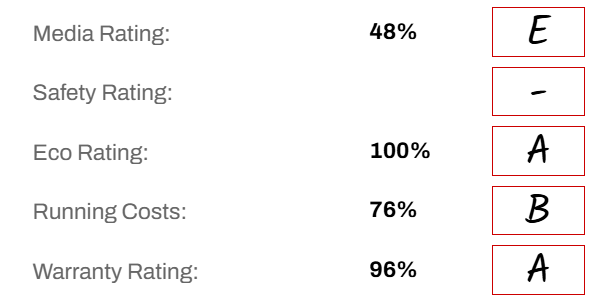
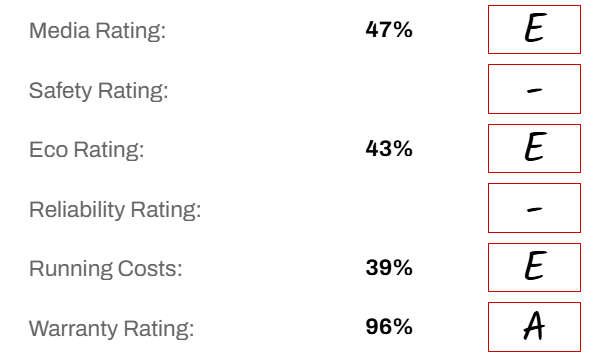
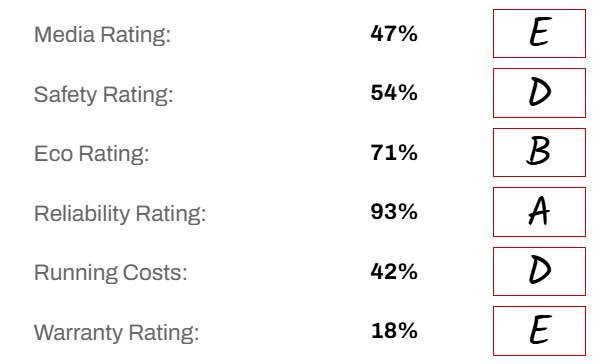
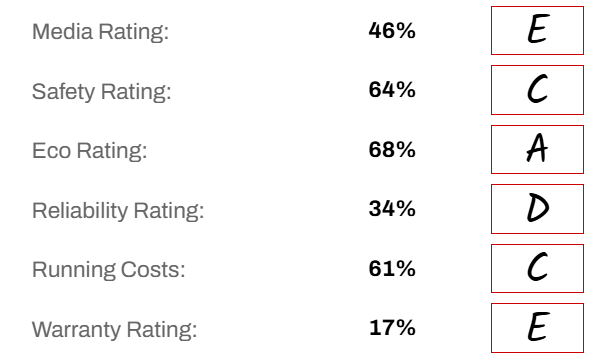
As of December 2025, the large Hyundai Ioniq 9 holds a New Car Expert Rating of A, with a score of 80%. Beyond the SUV’s positive set of review scores, this overall rating is bolstered by excellent Euro NCAP safety credentials and Hyundai’s five-year warranty. The only less-than-stellar score is for running costs, which are inevitably high on such a large car.

Ioniq 9 highlights

  • Long battery range from its large battery
  • Class-leading seven-seat practicality
  • Refined and quiet driving experience

Ioniq 9 lowlights

  • Rather firm ride comfort
  • Infotainment can be a bit frustrating
  • Lots of body roll in tighter bends

Key specifications

Body style: Large SUV
Engines:
electric, battery-powered
Price:
£64,995 on-road

Launched: Autumn 2025
Last updated: N/A
Replacement due: TBA

Media reviews

Highlighted reviews and road tests from across the UK automotive media. Click any of the boxes to view.

Featured reviews

More reviews

Business Car

Car

Carbuyer

Electrifying.com

Green Car Guide

Honest John

Parkers

The Independent

Top Gear

Safety rating

Independent crash test and safety ratings from Euro NCAP

Overall score: 5 stars
Date tested: September 2025
Read the full Euro NCAP review

Adult protection: 84%
Child protection: 87%
Vulnerable road users: 77%
Safety assist: 83%

Eco rating

Independent economy and emissions ratings from Green NCAP

No eco rating

As of December 2025, the Hyundai Ioniq 9 has not been assessed by Green NCAP.

The Green NCAP programme measures exhaust pollution (which is zero for an electric car) and energy efficiency. Electric cars are much more energy-efficient than combustion cars, so the Ioniq 9 is likely to score very highly in Green NCAP testing if and when it takes place. Check back again soon.

Running cost rating

Clear Vehicle Data logo close crop

Monthly cost of ownership data provided exclusively for The Car Expert by Clear Vehicle Data

Battery rangeAverageScoreVariationScore
EV models375 milesA
Electrical efficiencyAverageScoreVariationScore
EV models3 m/KWhE
Insurance groupAverageScoreVariationScore
All models46E

The Hyundai Ioniq 9 is a relatively expensive car to own and run, according to whole-life cost numbers provided exclusively to The Car Expert by our data partner, Clear Vehicle Data.

While we are yet to receive servicing and maintenance cost estimations for the model, we do know that the SUV’s average electrical efficiency of 3 m/kWh is rather poor. While this is to be expected for a car this size and weight, rivals like the Kia EV9 and Volvo EX90 are slightly more power-efficient. The car’s predicted insurance premiums are also on the expensive end.

That said, the Ioniq 9’s 375-mile battery range (between 372 and 385 miles depending on the model) is very competitive in the large EV category.

Reliability rating

MotorEasy logo 600x167

Reliability data provided exclusively for The Car Expert by MotorEasy

No reliability rating

As of December 2025, we don’t have enough reliability data on the Hyundai Ioniq 9 to generate a reliability rating.

The Car Expert’s reliability information is provided exclusively to us using workshop and extended warranty data from our partner, MotorEasy, sourced from both official dealerships and independent workshops. 

As soon as MotorEasy has sufficient data on the Ioniq 9, we’ll publish the results here.

Warranty rating

New car warranty information for the Hyundai Ioniq 9

Overall ratingA95%
New car warranty duration5 years
New car warranty mileageUnlimited miles
Battery warranty duration8 years
Battery warranty mileage100,000 miles

Hyundai’s new car warranty is better than most brands, and the Ioniq 9 will have better warranty coverage than most other cars in a similar price bracket.

The duration is five years, with no limit on mileage.

In addition to the overall new car warranty, battery components benefit from an additional eight-year/100,000-mile warranty. This is pretty much standard for all new EVs on sale in the UK, but is an extra reassurance that petrol and diesel cars don’t get.

Recalls

Official DVSA safety recalls that have been issued for the Hyundai Ioniq 9

As of December 2025, we are not aware of any DVSA vehicle safety recalls affecting the Hyundai Ioniq 9. However, recall information is updated very regularly, so this may have changed.

You can check to see if your car has any outstanding recalls by visiting the DVLA website or contacting your local Hyundai dealer.

Awards

Significant UK trophies and awards that the Hyundai Ioniq 9 has received

Awards 2026 Large Car feature Hyundai Ioniq 9

2025

Similar cars

If you’re looking at the Hyundai Ioniq 9, you might also be interested in these alternatives.

BMW iX | Kia EV9Land Rover Defender | Land Rover Discovery | Mercedes-Benz EQS SUV | Range Rover plug-in hybrid | Tesla Model X | Volkswagen ID. Buzz | Volvo EX90

More information

More news, reviews and information about the Hyundai range at The Car Expert
Electric car grant – all the EVs with discounts in 2026

Electric car grant – all the EVs with discounts in 2026

Electric Hyundai Ioniq 3 revealed

Electric Hyundai Ioniq 3 revealed

Hyundai Bayon review – first UK drive

Hyundai Bayon review – first UK drive

Hyundai i30 N review

Hyundai i30 N review

Hyundai Bayon

Hyundai Bayon

Hyundai Kona N (2021 to 2023)

Hyundai Kona N (2021 to 2023)

Hyundai Tucson (2015 to 2020)

Hyundai Tucson (2015 to 2020)

Hyundai Santa Fe (2018 to 2024)

Hyundai Santa Fe (2018 to 2024)

Hyundai Kona (2017 to 2023)

Hyundai Kona (2017 to 2023)

Hyundai Ioniq (2016 to 2022)

Hyundai Ioniq (2016 to 2022)

Hyundai Ioniq Electric (2016 to 2022)

Hyundai Ioniq Electric (2016 to 2022)

Hyundai Kona Electric (2018 to 2023)

Hyundai Kona Electric (2018 to 2023)

Buy a Hyundai Ioniq 9

If you’re looking to buy a new or used Hyundai Ioniq 9, The Car Expert’s partners can help you find the right car.

Motors 600x300

Find your next used car with Motors. Find out more

Auto Trader logo 600x300

Find your next new or used car with Auto Trader. Find out more

Carwow logo 600x300

Find your next new or used car with Carwow. Find out more

Lease a Hyundai Ioniq 9

If you’re looking to lease a new Hyundai Ioniq 9, The Car Expert’s partners can help you find a competitive deal.

Leasing-com logo

Personal contract hire deals from Leasing.com. Find out more

Carwow logo 600x300

Personal contract hire deals from Carwow. Find out more

Select Car Leasing logo

Personal contract hire deals from Select Car Leasing. Find out more

Subscribe to a Hyundai Ioniq 9

Subscriptions are becoming a very popular way for consumers to try an electric car for a few weeks or months to help decide whether it’s a suitable alternative to a petrol car. If you’re interested in a car subscription, The Car Expert’s partners can help. (PS: What’s a car subscription?)

SelfDrive UK logo

Car subscriptions from SelfDrive.
Find out more

Cocoon Vehicles logo 600x300

Car subscriptions from Cocoon.
Find out more

Just Vehicle Solutions logo 600x300

Car subscriptions from Just Vehicle Solutions.
Find out more

The ten worst new cars on sale in 2025

Here at The Car Expert, we consistently highlight the very best new cars you can buy right now. Whether you are looking for a supermini or an SUV, a petrol car or something electric, we have you covered. But what about the new cars you should avoid?

Using our unique Expert Rating Index, we’ve listed the ten worst new cars on sale in the UK, as judged by the country’s top motoring websites.

By aggregating more than 17,000 new car reviews from 35 different media titles, our award-winning Expert Rating Index now includes over 600 different cars from 60 different car brands. While we will be limiting our focus to UK review scores – or Media Rating – in this article, our Expert Rating Index also includes safety, eco, reliability, and now running cost and warranty ratings, so you can be sure that you are getting the full picture when researching your next car.

It’s inevitable that some new cars will struggle to compete. While the cars on this list are the lowest-ranked cars in our Expert Rating Index, it doesn’t mean that they are inherently bad new car choices. Often, these are older models that have fallen behind the curve as newer rivals have arrived. That said, some have simply been sub-standard from the start.

All of these cars are available new from their respective dealerships in 2025, although a few may be withdrawn or replaced before the end of the year. The good news is that you can pick up most of these cars for a relative bargain – either brand-new or second-hand – which makes them a lot more attractive.

With comprehensive review data backing the rankings below, you can be confident that this is the definitive guide to the worst new cars in the UK.

10th place: Jeep Wrangler (55%)

The first stop on our list of the worst new cars on sale in the UK is the rugged Jeep Wrangler, which has been on sale in the UK since 2018. While this model is still widely regarded as one of the best 4×4 off-roaders on the market, that comes at the expense of on-road comfort.

For a price tag that exceeds £60k, the Wrangler delivers a low-rent interior fit and finish, poor ride comfort and an abysmal one-star Euro NCAP safety rating.

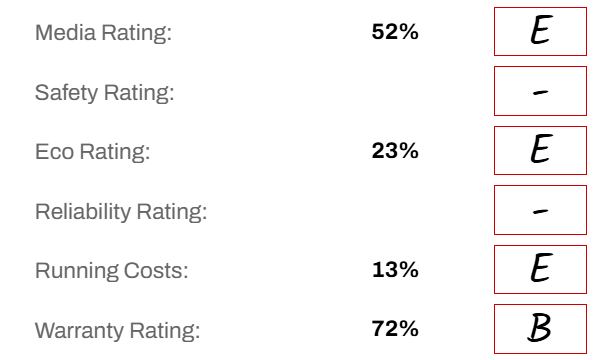
The Jeep Wrangler holds a Media Rating of 55% and a New Car Expert Rating of E with a score of 54% in our Expert Rating Index, which places it near the bottom of the large SUV class.

9th place: Ineos Grenadier (52%)

Another 4×4 that excels off-road and is rather uninspiring on it, the Ineos Grenadier is the brainchild of Ineos founder Sir Jim Ratcliffe, who desired a modern successor for the boxy Land Rover Defender of old.

While widely praised for its durability and retro charm, UK reviewers largely agree that similarly priced rivals offered a greater breadth of ability. The Grenadier can’t match the on-road comfort and interior quality of the likes of the current Land Rover Defender, and the 4×4 has a rather steep price list.

The Ineos Grenadier holds a Media Rating of 52% and a low New Car Expert Rating of E with a score of 48%, its poor review scores compounded by very high running costs.

8th place: Suzuki S-Cross (50%)

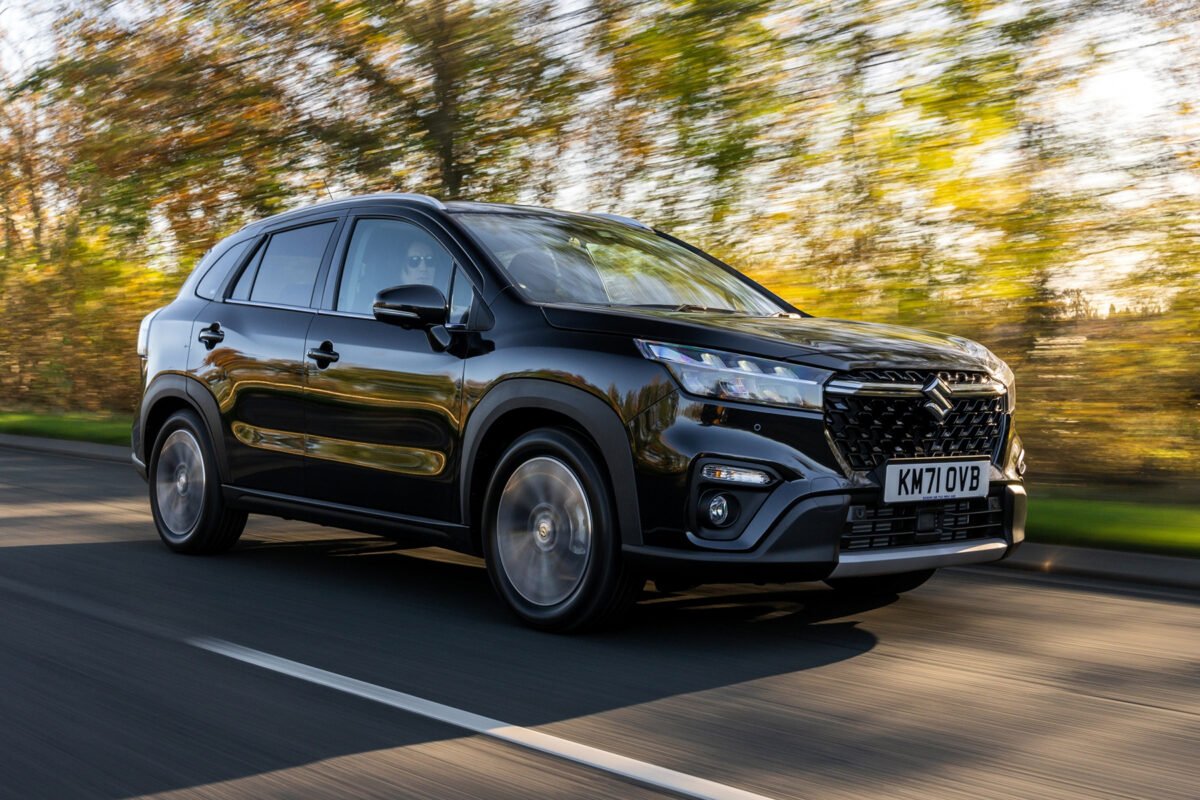
Suzuki S-Cross front view | Expert Rating

First arriving in 2022, the British motoring media largely conclude that the Suzuki S-Cross struggles to stand out in a very competitive medium SUV class that includes best-sellers like the Nissan Qashqai and Kia Sportage.

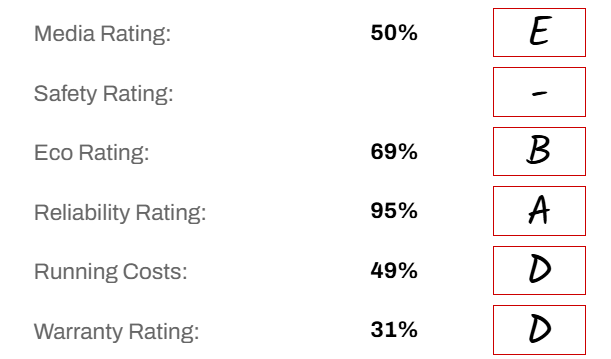
Often described as ‘dull’ or ‘basic’, the S-Cross has been criticised for its rather cheap interior trim and laggy infotainment tech, as well as its interior space. That said, the Suzuki is still a good value-for-money option with a stellar reliability record.

The Suzuki S-Cross holds a Media Rating of 50% and a low New Car Expert Rating of D with a score of 56% in our Expert Rating Index.

7th place: Jeep Compass (48%)

Jeep Compass (2018) - front view | The Car Expert

The second long-standing Jeep model on this list to face consistent criticism from British automotive outlets, the soon-to-be-replaced Jeep Compass has been criticised for its poor handling, underpowered engines and dull interior.

On the other hand, the Jeep one of the few SUVs that is actually comfortable on anything tougher than a gravel driveway, and has also been praised for its fuel efficiency.

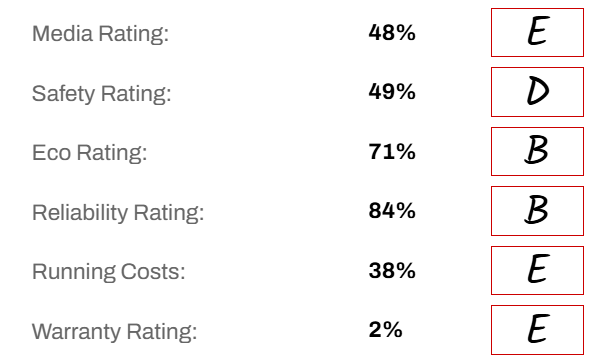
As well as a poor Media Rating of 48%, the Jeep Compass holds an even worse overall New Car Expert Rating of E with a score of 40% in our Expert Rating Index.

6th place: KGM Torres EVX (48%)

KGM Torres EVX front view | Expert Rating

Korean marque SsangYong rebranded as KGM Motors in 2023, launching the brand’s first electric car – the Torres EVX – not long after.

While the SUV has picked up praise for its spacious interior and large boot, reviewers generally agree that the SUV has vague handling and a frustrating infotainment system. In a very competitive electric SUV category, the Torres EVX is hard to recommend when compared to more impressive alternatives that offer better value-for-money.

Despite the overwhelmingly negative reviewer consensus resulting in a Media Rating of 48%, the KGM Torres EVX holds a respectable New Car Expert Rating of B with a score of 65% in our Expert Rating Index, thanks to the car’s low running costs and KGM’s excellent five-year warranty.

5th place: KGM Rexton (47%)

2021 Ssangyong Rexton front view | Expert Rating

Enormous, plush and robust, the KGM Rexton is an accomplished off-roader with an upmarket seven-seat interior.

If you’re looking for an SUV for the road, with car-like handling and great efficiency, the Rexton is not for you. Reviewers conclude that its handling is heavy, the diesel engine can be expensive to run and several outlets report that the Rexton is rather uncomfortable on tarmac, which can make long-distance journeys quite taxing.

The KGM Rexton holds a poor Media Rating of 47% and an overall New Car Expert Rating of D with a score of 54% in our Expert Rating Index.

4th place: Jeep Renegade (47%)

The Jeep Renegade is unique in the small SUV class – it offers off-road solutions that no other car in the sector can quite manage. It should also be quite cheap to run daily, but beyond that, reviewers find little else to praise.

This chunky-looking crossover isn’t fun to drive, and its interior is cheap in places and cramped in the rear. The Renegade’s biggest issue, however, is its pricing. In a highly competitive small SUV sector, there are more comfortable and refined alternatives available for less money.

The Jeep Renegade holds a very poor Media Rating of 47% and an overall New Car Expert Rating of E with a score of 53% in our Expert Rating Index.

3rd place: DS 3 (46%)

Criticised by the British motoring media for prioritising style over substance, the DS 3 is a capable family car that simply isn’t as appealing as its rivals in the small SUV pack.

While the car is well-equipped as standard, its interior fit and finish does not match its price tag, and alternatives are more practical. Reviewers also take issue with the car’s driving dynamics, criticising its ride comfort and handling.

The DS 3 holds a very poor Media Rating of 46%, with an overall New Car Expert Rating of E with a score of 54% in our Expert Rating Index, which puts it near the bottom of the small car segment.

2nd place: BMW XM (42%)

A high-performance BMW model in the bottom two? You’d better believe it. The expensive BMW XM is the most powerful car ever produced by BMW’s famed ‘M’ division, and beyond its divisive exterior design, reviewers agree that BMW’s engineers have missed the mark.

The SUV has been heavily criticised for its punishing ride, hesitant automatic gearbox and very poor fuel economy, which is even more disappointing when you consider its sky-high price tag. And then, of course, there’s the styling…

The BMW XM currently holds a very poor Media Rating of 42%, and an overall New Car Expert Rating of D with a score of 55% in our Expert Rating Index.

1st place: Skywell BE11

Skywell BE11 front view | Expert Rating

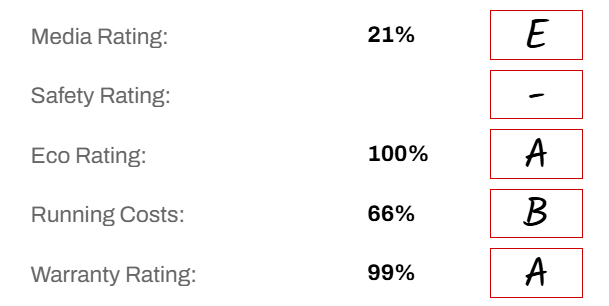
Dead last in our Media Rating rankings this year is the all-electric BE11 SUV from fledgling Chinese marque Skywell, with a woeful score of 21% – some 20% lower than the next-worst car. Reviewers agree that the battery-powered family car is both spacious and well-equipped as standard, and the SUV is highlighted for Skywell’s generous seven-year new car warranty.

Unfortunately for Skywell, the British motoring media found little else to praise. Summed up by The Car Expert’s own Andrew Charman as “a car that underestimates the UK market”, the BE11 has been criticised for its poor driving dynamics, out-of-date safety credentials, cheap interior fit and finish, questionable pricing and fiddly infotainment system.

The Skywell BE11 holds a New Car Expert Rating of D with a score of 56%, and is the lowest-ranked electric car in our Expert Rating Index.

Check out the worst new cars from previous years:

For the definitive rankings of the worst new cars on sale in 2025, we’ve used more than 17,000 new car reviews from The Car Expert‘s award-winning Expert Rating index. The index analyses new car reviews from 30 of the top UK motoring websites, using an advanced algorithm that we have developed specifically to compare review scores. We also factor in safety and eco ratings, plus reliability and running cost data to give you the full picture of any new car on sale.

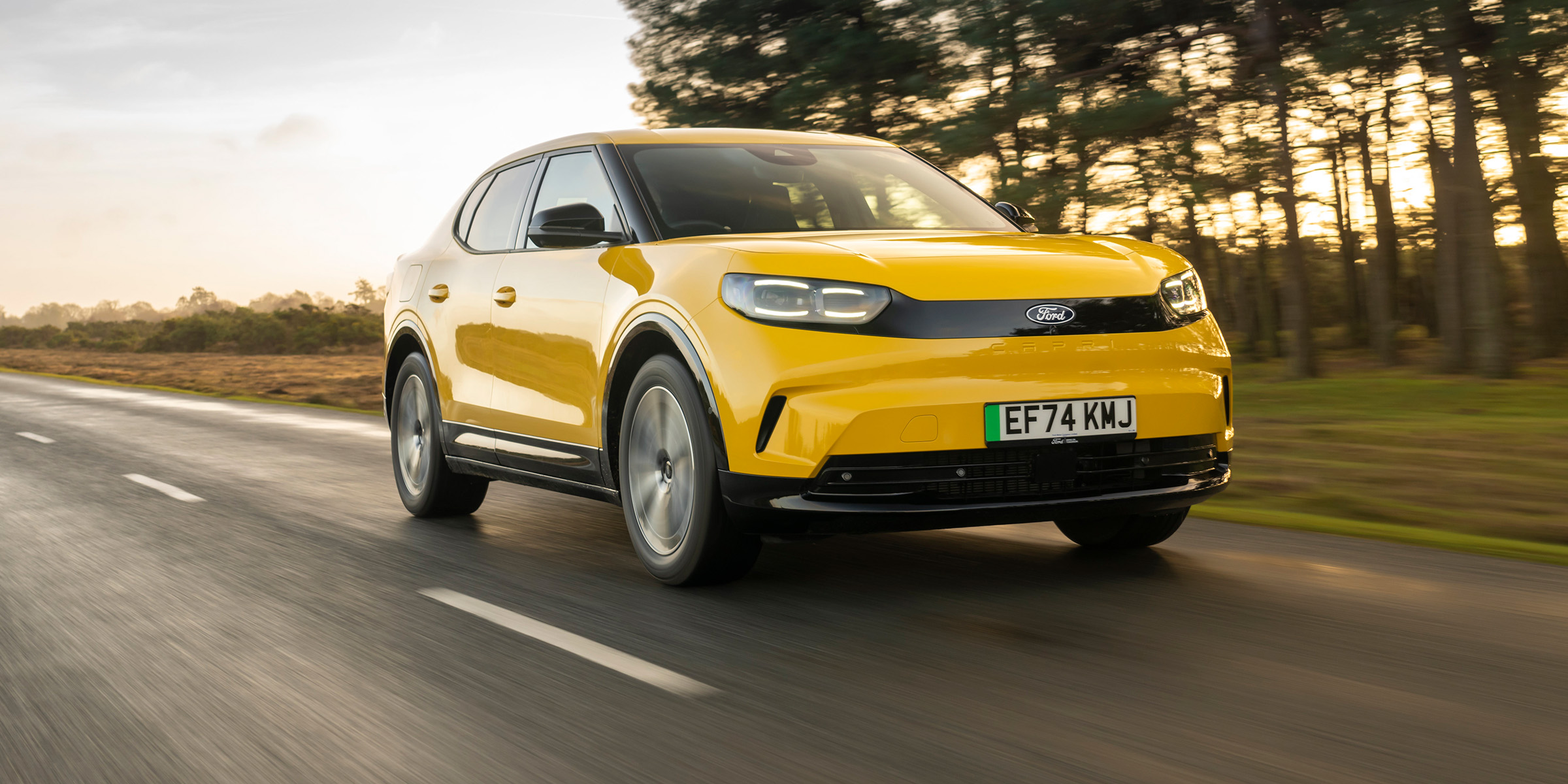
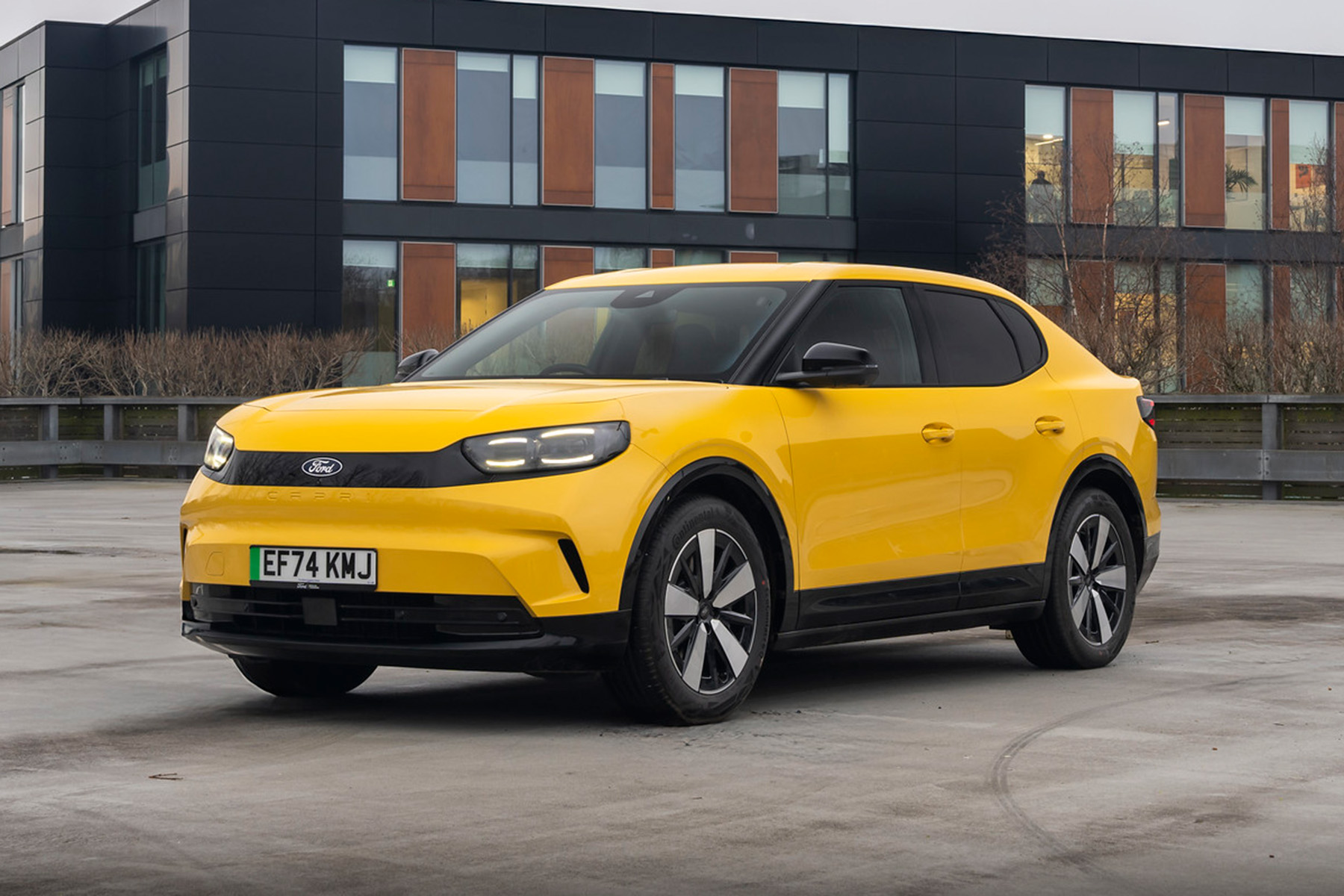
Ford Capri review

0

Make and model: Ford Capri
Description: Electric mid-sized coupe SUV
Price range: £41,485 to £56,185

Ford says: “Celebrating our past while reinventing our future, a car that only Ford could build – the legend is back”.

We say: Forget the fuss about the name. The Ford Capri is a reasonably stylish, reasonably practical EV for those who prefer their cars to look more coupe-like.


Introduction

Ford came late to the electric party but is now earning itself a slice of the market with four models. The Gen-E version of the Puma small SUV will no doubt help it hold onto its status as Britain’s best-selling car, while the Explorer is a mid-sized SUV borrowing its name from a much larger vehicle in the USA.

Both now sit in showrooms alongside Ford’s first mainstream electric vehicle (EV), the Mustang Mach-E. Like the Capri, it also caused a lot of controversy when launched, with fans of US muscle cars horrified that the company had decided to call its newcomer a Mustang. But having weathered that storm, Ford is now confident enough to annoy fans of a British icon of the 1970s and ’80s, with a new coupe SUV called the Capri.

It’s fair to say that the naming of this newcomer has dominated discussion of the new car, with some observers refusing even to consider looking at a car named after a machine that, in its day, achieved cult status amongst UK enthusiasts. In the two weeks The Car Expert spent with the new Capri, we had to endure “That’s not a Capri” comments daily.

Ford will no doubt be confident in its strategy. All the controversy has certainly got the new Capri noticed, while plenty of examples of the Mustang Mach-E have been sold, and there’s even talk of other names such as Fiesta and Focus being revived.

Finally, there is the pertinent argument that most buyers of today’s Capri won’t even remember or even know about the original. Now that we have addressed the naming issue, is the Capri actually a good car? 

What is the Ford Capri?

The new Ford Capri is a coupe-styled SUV with close relations to both another Ford model and another manufacturer. Underneath the styling is basically the hardware of the Ford Explorer, which in turn is the product of a tie-up between Ford and Volkswagen – for Explorer read Volkswagen ID.4, and for Capri Volkswagen ID.5.

For now, the Capri comes in three trim levels and with either a single-motor rear-wheel-drive or dual-motor all-wheel-drive powertrain. There are also two battery capacities – the standard is 52kWh, while there is an alternative dubbed ‘Extended Range’ of 77kWh in 2WD cars and 79kWh in the AWD version.

First impressions

The Capri is built on the technical hardware of the Explorer but boasts a rather more distinctive body style, particularly in the way that the rear roof line slants down to the tailgate.

Ford claims that the style evokes the original Capri, from profile to front and rear ends and the window shapes, and even down to details such as the quadruple headlamps. But creating a coupe version of an SUV is a rather longer stretch than the original coupe version of the Ford Cortina – the looks are certainly sharper than the Explorer, but this is certainly not the sports car that Ford claims it is.

Inside the (mostly Volkswagen-sourced) surroundings appear to be of high quality, while the controls follow the minimalist look that is so prevalent in today’s market. Despite the fastback body shape, it’s roomy too, so not that much less practical than the Explorer.   

We like: As a more stylish version of the Explorer, it ticks many boxes
We don’t like: The name – it shares nothing significant with the original

What do you get for your money?

The three Capri trim levels are dubbed Style, Select and Premium and prices range from £41,485 to £56,185 – all above the Expensive Car Supplement, which translates to paying an extra £425 annually in Vehicle Excise Duty between years two and six.

Standard specification includes a seven-speaker sound system, cloth interior trim, dual-zone climate control and adaptive cruise control, parking sensors and camera as part of the safety aids. Both the entry-level Style and mid-range Select variants come as standard with 19-inch wheels. 

The price jump between Style and Select is some £6,600, but as well as the longer-range battery (the Select is only available with the larger unit), buyers gain a lot more equipment. Highlights include keyless entry and starting, a 12-way power adjustable driver’s seat with memory and a massage function, heated front seats and steering wheel, wireless phone charging and partial faux leather upholstery.

The cheapest Capri in Premium specification starts at just over £46K, but that’s with the lower-capacity battery. The 77kWh variant is £52K, a £4K price hike over the Select. For that, you get matrix LED headlamps, an audio upgrade to a 10-speaker Bang & Olufsen unit with a subwoofer and soundbar, ambient lighting offering a range of ten colours, a powered tailgate and a panoramic sunroof.

Many of the upper-spec features are offered as options on the more entry-level versions, including an upgrade from the 19-inch standard wheels to the 20-inch variants which come with the Premium. There is also a 21-inch version offered as an option – but this will affect the car’s range, and potentially the ride comfort.

The safety specification is strong, as one expects in today’s market, and the Capri earned a five-star rating from Euro NCAP in November 2024. The safety body took the existing rating of the effectively identical Ford Explorer as a basis, although some extra tests were also carried out on the Capri where there were notable differences between the two cars.

Standard safety equipment includes a range of driver aids, controlled by a total of 12 ultrasonic and three radar sensors and a quintet of cameras. Adaptive cruise control is standard and includes a stop-and-go function, while the menu also includes the usual diet of parking sensors and cameras. It’s notable, however, that several functions are optional extras, including lane-centring, traffic sign recognition, a windscreen head-up display and a 360-degree surround-view camera.

Also only available on the options list is a heat pump to help maintain range in colder temperatures, and it’s expensive at £1,050.  

We like: Adaptive cruise control on entry models
We don’t like: Heat pump only available as a pricy option

What’s the Ford Capri like inside?

Like most new cars, and especially EVs, the initial impression when sliding behind the wheel of the new Ford Capri is one of minimalism. Ford even uses this – rather dubiously – as one of the name justifications, stating that any driver of a classic Capri would expect nothing less.

Explorer drivers will find the interior layout very familiar. So the central touchscreen is common to all versions and huge, in this case 15 inches, Ford choosing a vertical format rather than the more commonly found horizontal. It means lowering your eyes for a fraction longer, but it puts more of the screen within easy reach so you don’t have to stretch while driving.

While the screen contains a whole lot of functions, there’s a line of useful buttons along its base. Ford’s system offers user-friendly activation, so using the screen becomes second nature, although some of the submenus can be a bit cumbersome. Voice control and connected navigation are also included, while the system is fully compatible with Apple CarPlay and Android Auto smartphones.

The driver also gets a separate five-inch digital display providing the most essential information without affecting line of sight of the road ahead, and there are also proper button panels on the steering wheel.

A novel touch is that the base of the central screen slides, so one can have it more upright or on a gentle slope, which places it in usefully close proximity to one’s left hand. The sliding process conceals an equally useful storage area beneath it, where there is space for two phones and on all but Style trims wireless charging for one of them.

Storage is a notable factor – there’s a very deep box between the front seats, big enough to conceal a large laptop, while the standard 572-litre boot space expands to 1,505 litres with the rear seats folded.   

As to the most basic requirement, interior space, the car is surprisingly roomy given its exterior profile, with adequate headroom – even in the back, where taller occupants might expect to feel restricted. Our test car also felt bright and airy, not least due to the enormous panoramic sunroof.    

We like: Sensible design of central touchscreen
We don’t like: Some screen functions can be less than user-friendly

What’s under the bonnet?

As is typical with EVs, the Capri mounts its motors in the axles, its battery pack under the floor. The standard rear-wheel-drive version offers the equivalent of 170hp with 310Nm of torque – this gives the car a 0-62mph time of 8.7 seconds, and a quoted average driving range of 242 miles.

The vehicle tested by The Car Expert was supplied with the single motor but the more potent battery. Power increases to 286hp while torque mushrooms to 545Nm, cutting some 2.3 seconds from the 62mph sprint time. It also has a quoted range of up to 389 miles.

The all-wheel-drive version is also the most powerful, at 340hp with 679Nm of torque. It will go from 0 to 62mph in a mere 5.3 seconds but the extra power and weight impacts the range, reducing it to 368 miles.

If you’re charging at a public charging station, the Capri offers up to 135kW on single motor versions and 185kW on the dual motor, with a quoted 10 to 80% recharge on all versions of less than 30 minutes. When the weather turns cold, however, we could do with that expensive optional heat pump.

What’s the Ford Capri like to drive?

An extended two-week test of the new Capri provided a wide variety of driving environments to try it out in. The car follows the EV norm of being very easy to drive, competent and well-behaved, whether clocking up hundreds of miles on the motorway, tackling a challenging country B-road or inching its way slowly through busy urban environments.

Ford has a long-held reputation for the excellent driving dynamics of its cars and the Capri does its best to hold this up alongside the more simple characteristics of EVs. Efficiency remains the prime feature, rather than driving excitement, as one would expect – it rides in comfort and corners effectively with well-damped body control.

Four driving modes are available in the Capri – they are dubbed Comfort, Sport and Eco with the fourth individually customisable to the driver’s preferences. On the evidence of the test drive, however, the difference between modes is nothing very dramatic.

The test car offered just the right balance between potency and practicality – it was simple to drive but also able to power past slow-moving traffic in moments.

In terms of range, our car returned figures not too far shy of the official figures, though this was in high summer, while the test vehicle’s specification did include that optional heat pump. The maximum DC recharging rate of 135kW is a little slower than the best in today’s market.

We made use of the brake regeneration facilities fitted but these are somewhat limited, with no steering wheel paddles and just two modes – it’s certainly not possible to effectively drive the car on a single pedal.    

We like: More steering feel than many recent EV arrivals
We don’t like: Limited brake regen effectiveness

Verdict

The new Ford Capri is a notable addition to the mid-sized electric SUV segment. It will appeal to those who want something a little more distinctive than a typical SUV, especially since opting for sharper looks does not mean compromising on practicality.

Choose a mid-range Select model as the minimum and the Capri’s combination of equipment, build quality and driving experience should make it worthy of consideration by many buyers.

Similar cars

Audi Q4 Sportback e-tron | BMW iX3 | Ford Mustang Mach-E | Hyundai Ioniq 5 | Kia EV6 | Mercedes-Benz EQA | Polestar 2 | Skoda Enyaq Coupé | Tesla Model Y | Volvo EC40 | Volkswagen ID.5

Key specifications

Model tested: Ford Capri Premium RWD
Price: £56,335
Engine: single electric motor, rear-wheel drive
Gearbox: 
Automatic

Power: 210 kW / 286 hp
Torque: 545 Nm
Top speed: 111 mph
0-60 mph: 6.4 seconds

Range: 346 miles
CO2 emissions: 0 g/km
Euro NCAP safety rating: Five stars (November 2024)
TCE Expert Rating: A, 77% (September 2025)

Buy a Ford Capri

If you’re looking to buy a new or used Ford Capri, The Car Expert’s partners can help you find the right car.

Motors 600x300

Find your next used car with Motors. Find out more

Auto Trader logo 600x300

Find your next new or used car with Auto Trader. Find out more

Carwow logo 600x300

Find your next new or used car with Carwow. Find out more

Lease a Ford Capri

If you’re looking to lease a new Ford Capri, The Car Expert’s partners can help you find a competitive deal.

Leasing-com logo

Personal contract hire deals from Leasing.com. Find out more

Carwow logo 600x300

Personal contract hire deals from Carwow. Find out more

Select Car Leasing logo

Personal contract hire deals from Select Car Leasing. Find out more

Tech upgrade for large Volvo EX90

0

The all-electric Volvo EX90 SUV has been given a minor model refresh, including a faster battery charging speed and an expanded suite of safety tech.

While this model update doesn’t include any cosmetic changes, this is a significant hardware upgrade for the EX90, which has moved on to new 800V architecture – new tech that underpins the car’s powertrain, improving the car’s maximum charging speed, electrical efficiency and acceleration.

To be clear, this isn’t an ‘over-the-air’ update that can be remotely installed by current EX90 owners, this change has been made for car’s in the 2026 model-year which are rolling off the production line now.

800V architecture is fast becoming the industry benchmark that mainstream manufacturers are slowly rolling out across their model line-ups as electronic components steadily become cheaper to manufacture. Beyond the EX90, Volvo adds that its upcoming EX60 SUV and ES90 saloon models will also be 800V electric cars.

Originally launched with 400V architecture which could DC charge at speeds up to 250kW, the 800V EX90 instead has a maximum DC charging speed of up to 350kW. The manufacturer adds that it takes ten minutes of charging at that speed to top-up 155 miles of range.

Beyond the powertrain hardware, this update also introduces the electrochromic panoramic roof first shown off on the upcoming ES90. Occupants can adjust the transparency of this glass roof, helping to “reduce glare or boost privacy at the touch of a button”.

The car’s computer has also been upgraded with a quicker response time, and the car will display new safety alerts for slippery roads, hazards ahead, and accidents ahead. Other updates include improved automatic emergency steering on dark roads and the brand’s ‘Park Pilot’ assist for parallel parking. Unlike the powertrain changes, these car computer upgrades are offered to existing EX90 owners free of charge, although the work needed requires a visit to a Volvo dealership.

Does a seller have to declare damage on a car?

9

One of the most common complaints we get asked about at The Car Expert is that a customer has bought a car (usually a used car, but not always) and then discovered later that the vehicle appears to have suffered some sort of damage.

This is then usually followed by the buyer getting very upset, arguments with the seller and requests for help here at The Car Expert in order to get a refund/compensation/vengeance.

But what are the rules about any damage being declared on a car you’re buying? Well, it depends…

Buying a car from a private seller

If you’re buying a used car from a private seller, you’re always going to struggle to win any argument or court case unless you can conclusively show that the seller has lied to you or misled you about the car’s condition.

A private seller is not considered to be an automotive professional, so the argument of “I didn’t know it was damaged” is considered far more acceptable than it would be from a car dealer.

Unless you have proof to show that the seller declared the car was not damaged (such as email correspondence or the seller’s original advertisement for the vehicle) and proof to show that the seller was lying (like a receipt for repairs undertaken during the seller’s ownership of the vehicle), it’s a tough case to win any claim.

Buying a car from a car dealer

Car dealers, on the other hand, must abide by various laws, including the Consumer Protection from Unfair Trading Regulations 2008. That means you do have some consumer protection, although it can still be difficult to win an argument to reject a car or claim compensation if you feel that you’ve been deceived into buying a damaged car.

The law does not specify what sort of damage must be declared by a seller. Instead, it talks about unfair trading practices, and the language is fairly broad and open to interpretation.

Basically, anything that would cause the average consumer to buy a car when they wouldn’t have otherwise done so is considered unfair. So a dealer failing to disclose damage could be seen as unfair if it means that you bought a car in the belief that it had not been damaged and repaired, and wouldn’t have bought the car if you knew it had been damaged.

But that’s not very clear. What sort of damage would cause the ‘average consumer’ to not buy a car, even if it was properly repaired? A small scratch? A dent? Mechanical damage?

If I told you that the used car you’re looking at had had a door repainted because of a minor dent, but that the damage was miniscule and the repair work was done by a manufacturer-approved body shop, would it stop you from buying the car?

There’s no clear line in the sand, and what will seem acceptable to one customer will be totally unacceptable to another. So the ‘average consumer’ definition is a lawyer’s delight but generally unhelpful to the rest of us.

Does it matter whether it’s a new car or used car?

In the eyes of the law, the principles of unfair selling are exactly the same whether you’re buying a new car or a used car. The only real difference is what level of damage should be disclosed to the ‘average consumer’. Obviously, there will be far more leeway applied to a used car with previous owners and mileage.

Damage to a new car prior to sale

You’d assume a new car would have to be pristine and perfect when you first take delivery, with not a hint of repair work to be found. Well, you’d also be wrong.

New cars get damaged all the time as they are transported from a factory in one country to a dealership in another country. From the moment a new car rolls off the production line, it could end up being moved around on several trucks, trains and ships to get to the dealership where you get to see it for the first time. There are plenty of points along that journey where a new car can be damaged, and car manufacturers all have designated repair centres near their holding facilities just for new cars to be repaired and repainted because of damage in transit.

It’s actually really common for new cars to be damaged, which may sound surprising but is simply a factor of hundreds of thousands of cars being in transit at any one time. Plus cars get knocked or scratched at dealerships on a regular basis, again simply because there are lots of cars in very close proximity being moved around in tight spaces.

Despite (or because of) this, very few customers are ever told that their car has been damaged in transit. Minor repairs are simply conducted without any disclosure. As with many aspects of the automotive supply chain, this allows for plenty of plausible deniabilty. So when the sales executive tells you that they had no idea that the bonnet on your brand new car needed repairing and repainting as a result of hail damage, they may genuinely be telling the truth.

The good news is any damage is likely to be superficial and entirely cosmetic, rather than structural. In addition, the requirement to deliver a car to a ‘brand new’ standard means that there’s very little wiggle room for a dealership or manufacturer to allow a sub-par repair job.

Because buyers have higher expectations of the condition of a new car, you’d think that they would be more concerned about it. But the reality seems to be that it doesn’t even enter most buyers’ thoughts that their brand new car may have been damaged so they don’t think to ask about it.

Cars awaiting shipping
Thousands of new cars are moved around all day long in close proximity to one another. A lot of them will be damaged at some stage.

Damage to a used car prior to sale

It’s far more reasonable to expect that a used car will have suffered some form of significant damage and repair during its life, as a result of an accident, corrosion or mechanical failure. This awareness means that customers are more likely to expect a dealer to disclose any damage. It’s also more likely that any work will be done to a less-than-acceptable standard, depending on who paid for the repairs.

Legally, the same principles apply to used cars as to new ones – the law talks about principles of unfair selling rather than detailing what sort of damage must be declared. Again, minor damage won’t usually be declared upfront, but insurance write-offs must be declared.

As a buyer, you should be looking closely at a vehicle for any signs of repair work, rather than simply asking the salesperson if the car has ever been damaged. Asking that sort of question will simply elicit an answer along the lines of “Not that we’re aware of”, or “Not to the best of my knowledge”, which is absolutely useless to you.

Insurance write-offs

It’s perfectly legal to sell certain cars that have been declared write-offs for insurance purposes, depending on the severity of the damage. We discuss the details of insurance write-offs here, but in a nutshell there are four levels of write-off and the lower two (Cat S and Cat N, previously called Cat C and Cat D) allow for a car to be repaired and returned to the road.

An insurance write-off must always be declared at point of sale and included in any advertisement. It will also be noted in a history check on the vehicle from CAP-HPI or other providers. It’s not good enough for the seller to only provide this information when asked about it.

You may also like: Should I buy a Cat S or Cat N vehicle?

Damaged car on a recovery truck

Buyer beware

With any concerns you may have about a car you’re buying, it’s up to you to take all reasonable action to protect your money. If the salesperson seems like they’re trying to hide something when you ask questions, take that as a sign to leave.

Ideally, you should get the salesperson’s email address and ask them in writing whether the car has had any repair work done – along with any other questions you have about the vehicle. That way, you have written correspondence you can refer back to at a later date if necessary. A verbal conversation is no guarantee of anything, and can easily be denied later.

It’s far better all round for you to be aware of any damage before you buy the car, rather than discover it later on and try to seek some form of redress from the seller.

But I’ve already bought the car!

If you’ve already bought your car and only noticed afterwards that there is evidence of damage and repair, you’re on the back foot in terms of any dispute with the car dealer. Once you hand over your money and take possession of the vehicle, you’re accepting it as-is unless you can prove that you’ve been treated unfairly in the eyes of the law.

Generally speaking, your chances of getting a refund or some form of compensation are going to be slim unless you have overwhelming proof that you’ve been deceived. Make sure you gather up whatever documentation you have to support your case. Ideally, you want a copy of the original advertisement for the vehicle – especially if it mentions that the vehicle is in “excellent condition” or something similar. If you have any correspondence with the dealer, dig that out as well.

You may also want a written report from a third-party body shop or garage to declare that, in their opinion, the car was clearly repaired and the damage would certainly have happened before you bought it.

If you have all of that information, you might have a reasonable chance of getting some redress. Legal assistance will help you, as a lawyer will almost certainly be able to make a better legal argument than you will. It doesn’t matter how obvious it looks to you, it has to be obvious according to the letter of the law.

This article was originally published in September 2020. Last updated September 2025.

Kia Stonic given exterior design overhaul

0

The compact Kia Stonic family car has been given its second mid-life facelift, including a revised exterior design and on-board tech upgrades.

The headline change is the Korean crossover’s revised exterior styling, including slimmer LED headlights and daytime running lights, and new-look front and rear bumpers, bringing the model up to date with the brand’s current design ethos displayed on the smaller Kia Picanto and bigger Kia Sportage.

While the Stonic is largely the same size post-update, the revised family car is close to three centimetres longer than the current iteration, and will be offered with new 16- and 17-inch alloy wheel designs. The exterior colour options have also been updated, with the addition of ‘Adventurous Green’ and ‘Yacht Blue’.

Inside, the Stonic gains a larger 12-inch central infotainment touchscreen and 12-inch digital instrument cluster paired in one display that juts out of the dashboard. The revamped interior layout also includes USB-C charging ports, a wireless smartphone charging pad and ambient lighting.

The facelifted Stonic will be available with either a 100hp petrol or 115hp petrol mild-hybrid engine, and both variants can be specced with either a six-speed manual or seven-speed automatic gearbox.

That just about sums up what we know about the updated Kia Stonic so far. Further details, including the car’s official arrival date and UK pricing, are sure to follow in the coming weeks.

Volkswagen Tayron

Summary

The Volkswagen Tayron (pronounced ‘Tie-ron’) is a large five- or seven-seat SUV that sits between the smaller Tiguan and larger Touareg SUVs in Volkswagen’s UK range.

Available with a choice of petrol, diesel or plug-in hybrid power, the Tayron is built on the same foundations as the Tiguan, as well as perhaps its closest rival, the large Skoda Kodiaq.

“The Tayron’s real issue is that the Kodiaq offers exactly the same, just that little more stylishly and affordably”, says Autotrader’s Dan Trent. On the other hand, Carwow’s Mario Christou argues that, while the Tayron is on par with the Kodiaq in terms of practicality, “its posh interior and fancier design makes it a viable alternative to more premium cars” like the Volvo XC40.

Comparisons aside, the Top Gear team concludes that the Tayron is “a deeply impressive thing”, praising the SUV for its flexible seven-seater layout, “utterly cavernous” interior and quiet driving experience. Meanwhile, Alastair Crooks of Auto Express commends the large SUV for its “strong variety” of engine choices and its “excellent” standard equipment list.

That said, as Charlie Harvey of Carbuyer points out, “the plug-in hybrids can’t be had with seven seats, which makes them seem rather redundant compared to the equivalent Tiguan five-seater plug-in hybrids.”

As of September 2025, the Volkswagen Tayron holds a New Car Expert Rating of A, with a score of 73%. It achieves top marks for its excellent Euro NCAP safety rating and its low CO2 emissions (helped by the plug-in hybrid version), while its media review scores have also been good. However, its overall running costs are only average and Volkswagen’s new car warranty offering is poor.

Tayron highlights

  • Seriously spacious interior
  • Good build quality and plenty of standard equipment
  • Wide range of engine options

Tayron lowlights

  • Peugeot 5008 has more third row legroom
  • Plug-in hybrid models not available with seven seats
  • Skoda Kodiaq has a cheaper lead-in price tag

Key specifications

Body style: Large SUV
Engines:
petrol, diesel, plug-in hybrid
Price:
From £xx,xxx on-road

Launched: Spring 2025
Last updated: N/A
Replacement due: TBA

Media reviews

Highlighted reviews and road tests from across the UK automotive media. Click any of the boxes to view.

Featured reviews

More reviews

Auto Express

Auto Trader

Business Car

Carbuyer

Heycar

Parkers

Top Gear

Safety rating

Independent crash test and safety ratings from Euro NCAP

Overall score: 5 stars
Date tested: May 2025
Read the full Euro NCAP review

Adult protection: 87%
Child protection: 85%
Vulnerable road users: 83%
Safety assist: 80%

Eco rating

Independent economy and emissions ratings from Green NCAP

No eco rating

As of September 2025, the Volkswagen Tayron has not been assessed by Green NCAP.

Running cost rating

Clear Vehicle Data logo close crop

Monthly cost of ownership data provided exclusively for The Car Expert by Clear Vehicle Data

Fuel consumptionAverageScore
Petrol models41 mpgC
Diesel models50 mpgC
Plug-in hybrid models668 mpgA
CO₂ outputAverageScoreVariationScore
Petrol models159 g/kmC
Diesel models147 g/kmC
Plug-in hybrid models10 g/kmA
Battery rangeAverageScoreVariationScore
Plug-in hybrid models72 milesC
Insurance groupAverageScoreVariationScore
All models28C

Most of the running cost information we currently have for the Volkswagen Tayron puts it firmly in the middle of the overall new car market. Fuel consumption, CO2 emissions and insurance groups are all C-grade scores.

The plug-in hybrid looks impressive on paper, with an official fuel consumption average of more than 660mpg. However, this is the result of poor UK/EU government lab testing methodology. In the real world, there’s no way you’re going to travel more than 600 miles on a gallon (4.5 litres) of petrol and a full charge of electricity.

As of September 2025, we don’t have independently verified five-year servicing and maintenance costs for the Volkswagen Tayron. As soon as this information is available, we’ll update this section.

Reliability rating

MotorEasy logo 600x167

Reliability data provided exclusively for The Car Expert by MotorEasy

No reliability rating

As of September 2025, we don’t have enough reliability data on the Volkswagen Tayron to generate a reliability rating.

The Car Expert’s reliability information is provided exclusively to us using workshop and extended warranty data from our partner, MotorEasy, sourced from both official dealerships and independent workshops. 

As soon as MotorEasy has sufficient data on the Tayron, we’ll publish the results here.

Warranty rating

New car warranty information for the Volkswagen Tayron

Overall ratingD31%
Petrol or diesel modelsE17%
Electric or hybrid modelsC56%
New car warranty duration3 years
New car warranty mileage60,000 miles
Battery warranty duration8 years
Battery warranty mileage100,000 miles

Volkswagen’s new car warranty is pretty much the bare minimum offered by any car manufacturer in the UK, and far less comprehensive than rival brands in a similar price bracket as the Tayron.

The duration is three years, with a limit of 60,000 miles. Some other manufacturers offer up to seven years of cover.

In addition to the standard new car warranty, the Tayron plug-in hybrid version has an eight-year/100,000-mile warranty for the battery components.

Warranty on a used Volkswagen Tayron

  • As of September 2025, any used Volkswagen Tayron should still be covered by its original new car warranty. The first cars arrived in the UK in early 2025, meaning that their warranty cover will expire in early 2028 (unless a car has hit its 60,000-mile limit before then)

If you’re looking to buy any used car that is approaching the end of its warranty period, a used car warranty is usually a worthwhile investment. Check out The Car Expert’s guide to the best used car warranty providers, which will probably be cheaper than a warranty sold by a dealer.

Recalls

Official DVSA safety recalls that have been issued for the Volkswagen Tayron

As of September 2025, we are not aware of any DVSA vehicle safety recalls affecting the Volkswagen Tayron. However, this information is updated very regularly so this may have changed.

You can check to see if your car has any outstanding recalls by visiting the DVLA website or contacting your local Volkswagen dealer.

Similar cars

If you’re looking at the Volkswagen Tayron, you might also be interested in these alternatives.

Citroën C5 Aircross | Honda CR-V | Hyundai Santa Fe | Kia Sorento | Land Rover Discovery Sport | Nissan X-Trail | Peugeot 5008 | SEAT Tarraco | Skoda KodiaqKGM Rexton | Suzuki Across | Toyota RAV4

More news, reviews and information about the Volkswagen Tayron at The Car Expert

Volkswagen Tayron test drive

Volkswagen Tayron test drive

Large Volkswagen Tayron SUV now on sale

Large Volkswagen Tayron SUV now on sale

New seven-seat Volkswagen Tayron to arrive next year

New seven-seat Volkswagen Tayron to arrive next year

Buy a Volkswagen Tayron

If you’re looking to buy a new or used Volkswagen Tayron, The Car Expert’s partners can help you find the right car.

Motors 600x300

Find your next used car with Motors. Find out more

Auto Trader logo 600x300

Find your next new or used car with Auto Trader. Find out more

Carwow logo 600x300

Find your next new or used car with Carwow. Find out more

Lease a Volkswagen Tayron

If you’re looking to lease a new Volkswagen Tayron, The Car Expert’s partners can help you find a competitive deal.

Leasing-com logo

Personal contract hire deals from Leasing.com. Find out more

Carparison 600x300

Personal contract hire deals from Carparison Leasing. Find out more

Select Car Leasing logo

Personal contract hire deals from Select Car Leasing. Find out more

Subscribe to a Volkswagen Tayron

If you’re interested in a car subscription, The Car Expert’s partners can help. (PS: What’s a car subscription?)

SelfDrive UK logo

Car subscriptions from SelfDrive.
Find out more

Drive Fuze logo 600x300

Car subscriptions from DriveFuze.
Find out more

Cocoon Vehicles logo 600x300

Car subscriptions from Cocoon.
Find out more

Audi A6 Avant e-tron review

0

Make and model: Audi A6 Avant e-tron Edition 1
Description: Upmarket estate car, battery-powered EV
Price: £87,360 (plus options)

Audi says: “Performance in a new light.”
We say: Good looking, with decent performance, but lacks physical buttons.


Introduction

A bit of quick explanation before we get stuck in. Audi has two different cars that both carry the name ‘A6’. The one reviewed here is the electric model, called the A6 e-tron. However, there’s another one arriving shortly, which is the next generation of the long-serving petrol/diesel/plug-in hybrid A6 family. The two A6 models are similar in size but otherwise unrelated.

Under a previous Audi plan, the new fossil-fuel-powered car was going to be called the A7, but the plan was abandoned and it will keep its familiar A6 name instead. Apparently, having two completely different cars sharing the same name is meant to reduce confusion…

The A6 Avant is the largest estate car Audi offers. Buyers can choose from a petrol and diesel engine or the all-electric powertrain as tested here. Audi also offers the A6 saloon if you don’t require the masses of space offered by the estate version.

What is it?

The Audi A6 e-tron Avant is an executive all-electric estate that rivals cars like the BMW i5 Touring, Mercedes-Benz EQE, and Porsche Taycan.

It’s available in three trims: Sport, S line and Edition 1. There are also three electric powertrains: ‘e-tron’, ‘e-tron Performance’ and ‘e-tron quattro’. Prices start from £64k and stretch to £100k for the fast S6 Avant.

Who is this car aimed at?

Like previous Audi estates, the A6 e-tron Avant is designed for those who require extra space over the saloon, catering to families, construction site managers, dog owners, and everyone in between. It will also appeal to tech-savvy drivers who seek a balance between practicality and sportiness.

Similarly, caravan owners will be pleased to hear that the Audi A6 e-tron Avant will tow up to 2.1 tonnes.

Who won’t like it?

Being an executive all-electric car from a premium brand means the entry-level car is already expensive, and those on a budget should consider the Peugeot e-308 SW or Vauxhall Astra Electric Sports Tourer.

Then there’s the lack of physical buttons, and although it’s not as bad as a Ford Mustang Mach-E, which has very little, most of the car’s settings are controlled via one of its many screens. Therefore, if an overly technical, futuristic interior is not for you, look elsewhere.

First impressions

The Audi A6 e-tron looks good from almost every angle, and its fresh and modern design will surely age well.

Its large boot easily swallows prams and two large dogs, despite it being slightly smaller than its BMW i5 rival. Pop the bonnet, and you’ll find a deep storage area that’s perfect for stashing charging cables. Likewise, there’s enough room for six-foot-tall adults.

What do you get for your money?

The range kicks off with the Sport, which features 20-inch alloy wheels, LED headlights, heated front seats, high-beam assist, 360-degree cameras, adaptive cruise control, and an Audi sound system.

Upgrading to the S line, which costs an extra £3.5k, adds sportier exterior bits, privacy glass, front sports seats, and a fancier steering wheel with paddle shifters to control brake regeneration.

And finally, there’s the Edition 1 as tested here. Costing nearly £73k, it adds black exterior trim, red brake callipers, electrically adjustable front seats, steering wheel heating and 21-inch alloy wheels.

We feel the Sport and S line trim levels are best. You might not get a heated steering wheel unless you opt for the Edition 1, which is odd considering the A6 e-tron’s base price, but both offer decent standard equipment levels.

The base e-tron also has the smallest battery (83kWh), while the performance and quattro have larger batteries (95kWh). Audi quotes between 325 and 363 miles of range for the e-tron, 392 to 438 miles with the performance, and 378 to 417 miles for the quattro.

All A6 e-trons come with a three-year warranty or 60,000 miles, covering mechanical defects, while a separate eight-year 100,000-mile warranty covers the battery.

We like: Decent equipment levels on entry-level models and a good battery warranty
We don’t like: No heated steering wheel unless you opt for expensive Edition 1 trim

What’s the Audi A6 Avant e-tron like inside?

Although its interior is snazzy, there’s a lot going on, especially when equipped in Edition 1 trim. Almost everywhere you look, there’s a screen.

Suede covers the doors and seats. There are also door-integrated monitors for the rather useless camera side mirrors, as well as a passenger screen that can control the sat-nav and radio. Buy a car without the extra screen and you get a slab of black plastic instead.

Likewise, while most of its interior feels solid, scratchy plastics can be felt low on the doors and under the dashboard, and the cup holder, a small detail, is covered by a cheap plasticky shutter.

Oddly, despite its low-slung exterior, the Audi A6 e-tron has a high driving position. Still, the seats are comfortable and supportive for long-distance journeys.

It also feels remarkably airy for a cabin cloaked with darker material, but this is because of Audi’s large panoramic sunroof, which comes as standard.

We like: Feels solid and has comfortable seats
We don’t like: Some parts are let down by cheaper-feeling plastics and too many screens

What’s the Audi A6 Avant e-tron like to drive?

We’ve only driven the 370hp e-tron performance version, although the standard 281hp e-tron will be enough for most daily situations.

As with most electric cars, the A6 Avant e-tron is no slouch. In our testing, the performance version managed 0-62mph in 5.6 seconds, while 30-70mph took 4.2 seconds, meaning overtaking is swift.

It’s also remarkably quiet at motorway speeds. We recorded 64dB at 70 mph, putting it just 1dB behind a Bentley Flying Spur plug-in hybrid.

Topping up the car’s battery doesn’t take long, and charging via a rapid charger from 10-80% takes around 20-30 minutes. When full, our test car showed 305 miles, which is 87 miles off Audi’s claimed figure.

And despite driving mostly in its Efficiency Plus setting, the A6 Avant e-tron returned just 3.1mi/kWh. However, this is a large, powerful and comfortable electric estate car packed with all sorts of mod-cons, after all.

While cool, the camera mirror novelty will soon wear off. The screens that cast the camera’s image allow the driver to adjust their angle, like you would on a normal car, but there’s very little adjustment in comparison to a regular mirror.

There’s also a slight delay in it feeding real-time motion to the screens, and hideous blind spots. A Lamborghini Countach would be easier to park in Central London than one of these would. If you can, our advice would be to stick with the regular mirrors.

We like: Punchy powertrain, fast charging and incredibly quiet at motorway speeds
We don’t like: mediocre efficiency and real-world range, silly camera mirrors

How safe is the Audi A6 Avant e-tron?

The Audi A6 Avant e-tron secured a five-star Euro NCAP safety rating, scoring 92% in adult occupancy, 91% in child occupancy and 80% for safety assistance.

It comes packed with standard safety kit like 360-degree cameras, collision avoidance, lane-keep assist and autonomous braking.

Verdict

The Audi A6 Avant e-tron is an attractive car packed with modern tech. It’s also incredibly spacious, is offered with decent standard equipment, is comfortable over long distances and charges quickly. It’s also nearly £6k cheaper than the equivalent BMW i5. This said, it can get expensive.

Its range isn’t terrible, but 3.1mi/kWh isn’t the best either, despite its bodywork being carved in a wind tunnel to make it as slippery as possible. Then there are the screens, lack of buttons and camera mirrors. It’s all just a bit much.
Be in no doubt, the Audi is a fine car, but the i5 Touring edges slightly ahead.

It’s a better car to drive, has a slightly larger boot, and it isn’t trying to reinvent itself. It’s just a posh electric estate car that does its job well.

Similar cars

Audi e-tron GT | BMW i5 Touring BMW i7 | Citroën C5 X | Hyundai Ioniq 6 | Kia EV6 | Mercedes-Benz EQE | Polestar 5 | Porsche Taycan Cross Turismo | Tesla Model S | Volkswagen ID.7 Tourer

Key specifications

Model tested: Audi A6 Avant e-tron Edition 1
Price: £87,360 (plus options)
Drivetrain: 100 kWh ‘quattro’ all-wheel drive
Gearbox: 
single-speed automatic

Power: 428 hp
Torque: 580 Nm
Top speed: 130 mph
0-60 mph: 5.4 seconds

Fuel economy : 437 miles CO2 emissions: 0 g/km
Euro NCAP safety rating: Five stars (March 2025)
TCE Expert Rating: A (82%)

Buy a Audi A6 e-tron

If you’re looking to buy a new or used Audi A6 e-tron, The Car Expert’s partners can help you find the right car

Motors 600x300

Find your next used car with Motors. Find out more

Auto Trader logo 600x300

Find your next new or used car with Auto Trader. Find out more

Carwow logo 600x300

Find your next new or used car with Carwow. Find out more

Lease a Audi A6 e-tron

If you’re looking to lease a new Audi A6 e-tron, The Car Expert’s partners can help you find a competitive deal

Leasing-com logo

Personal contract hire deals from Leasing.com. Find out more

Carwow logo 600x300

Personal contract hire deals from Carwow. Find out more

Select Car Leasing logo

Personal contract hire deals from Select Car Leasing. Find out more

Subscribe to a Audi A6 e-tron

If you’re interested in a car subscription, The Car Expert’s partners can help (PS: What’s a car subscription?)

SelfDrive UK logo

Car subscriptions from SelfDrive.
Find out more

Drive Fuze logo 600x300

Car subscriptions from DriveFuze.
Find out more

Cocoon Vehicles logo 600x300

Car subscriptions from Cocoon.
Find out more

BYD Dolphin Surf

Summary

The BYD Dolphin Surf is a small electric city car that was launched in the UK in the summer of 2025. Despite the name, it’s a different car from the larger BYD Dolphin.

In China, this car is called the BYD Seagull, part of the company’s ongoing ‘Ocean’ naming series. However, BYD’s marketing department (probably wisely) decided that European customers are not really as fond of seagulls as Chinese customers and the name could be a hindrance, so we get the name Dolphin Surf. In some other markets, it’s called the Dolphin Mini instead.

The BYD Dolphin Surf falls into the city car category, so it’s about the same size as small EVs like the Dacia Spring and Leapmotor T03. Like these two rivals, the Dolphin Surf was designed as a dedicated EV, rather than being adapted from a petrol car, so there’s more cabin and boot space than you’d expect from such a small car.

The Dolphin Surf is offered in three trim levels – Active, Boost and Comfort – with a very competitive list of standard equipment at each level. Pricing in the UK ranges from about £19K to £24K. That makes it slightly more expensive than the Dacia and Leapmotor, but cheaper than European rivals like the Fiat 500e.

Initial media reviews have been mixed, with generally average-to-low scores from most reviewers. It has been praised for its space and levels of standard equipment, but criticised for a perceived lack of quality. The first local media drives took place around a short urban route in London, so we may see score change (for better or worse) once media titles have spent more time with the car on a wider range of local roads.

As of September 2025, the BYD Dolphion Surf holds a New Car Expert Rating of A, with a score of 71%. It achieves top marks for its low running costs, zero tailpipe emissions and BYD’s excellent new car warranty offering. However, the overall rating is dragged down by the Dolphin Surf’s poor media review scores. We also don’t have Euro NCAP safety rating data at this time, so this could affect the rating when it is published.

Key specifications

Body style: Small five-door hatchback
Engines:
Single electric motor
Price:
From £18,650 on-road

Launched: Summer 2025
Last updated: N/A
Next update due: TBA

Media reviews

Highlighted reviews and road tests from across the UK automotive media. Click any of the boxes to view.

Featured reviews

More reviews

Auto Express

Auto Trader

Business Car

Car

Electrifying.com

Green Car Guide

Heycar

Honest John

Parkers

The Independent

The Telegraph

Top Gear

Safety rating

Independent crash test and safety ratings from Euro NCAP

No safety rating

As of September 2025, the BYD Dolphin Surf has not been assessed by Euro NCAP.

Eco rating

Independent economy and emissions ratings from Green NCAP

No eco rating

As of September 2025, the BYD Dolphin Surf has not been assessed by Green NCAP.

The Green NCAP programme measures exhaust pollution (which is zero for an electric car) and energy efficiency. Electric cars are much more energy-efficient than combustion cars, so the Dolphin Surf is likely to score very highly in Green NCAP testing if and when it takes place. Check back again soon.

Running cost rating

Clear Vehicle Data logo close crop

Monthly cost of ownership data provided exclusively for The Car Expert by Clear Vehicle Data

Battery rangeAverageScoreVariationScore
EV models177 milesC
Electrical efficiencyAverageScoreVariationScore
EV models4 m/KWhC
Insurance groupAverageScoreVariationScore
All models16A

Based on initial analysis, the BYD Dolphin Surf has very low running costs in terms of its electrical efficiency and insurance group ratings.

However, we don’t yet have verified five-year service and maintenance costs, so our running cost score is currently incomplete. As soon as we have more information, we’ll publish it here.

Reliability rating

MotorEasy logo 600x167

Reliability data provided exclusively for The Car Expert by MotorEasy

No reliability rating

The BYD Dolphin Surf is a brand-new car, so we won’t have enough reliability data to generate a reliability rating for some time.

The Car Expert’s reliability information is provided exclusively to us using workshop and extended warranty data from our partner, MotorEasy, sourced from both official dealerships and independent workshops. 

As soon as MotorEasy has sufficient data on the Dolphin Surf, we’ll publish the results here.

Warranty rating

New car warranty information for the BYD Dolphin Surf

BYD’s new car warranty is better than average and better than rival brands in a similar price bracket as the Dolphin Surf.

The duration is six years, with a limit of 93,750 miles. In addition, there’s an eight-year/125,000-mile warranty for the battery components.

Warranty on a used BYD Dolphin Surf

  • Given that the Dolphin Surf is a new car only launched in 2025, the first cars won’t reach the end of their new car warranty until 2031 (unless they hit the 93,750-mile limit before that)

If you’re looking to buy a used car that is approaching the end of its warranty period, a used car warranty is usually a worthwhile investment. Check out The Car Expert’s guide to the best used car warranty providers, which will probably be cheaper than a warranty sold by a dealer.

Recalls

Official DVSA safety recalls that have been issued for the BYD Dolphin Surf

As of September 2025, we are not aware of any DVSA vehicle safety recalls affecting the BYD Dolphin Surf. However, this information is updated very regularly so this may have changed.

You can check to see if your car has any outstanding recalls by visiting the DVLA website or contacting your local BYD dealer.

Awards

Significant UK trophies and awards that the BYD Dolphin Surf has received

2025

  • World Car Awards – Best Urban Car

Similar cars

If you’re looking at the BYD Dolphin Surf, you might also be interested in these alternatives.

Current models: BYD Dolphin | Dacia Spring | Fiat 500e | Hyundai Inster | Leapmotor T03

Discontinued models: SEAT Mii Electric | Skoda Citigo-e | Volkswagen e-Up

The electric city car market has started really growing in the mid-2020s after years of not really going anywhere. Inspired by the success of its fellow Chinese small cars, the Dacia Spring and Leapmotor T03, the Chinese-market BYD Seagull was rebranded as the Dolphin Surf for its European launch.

More information

More news, reviews and information about BYD at The Car Expert

BYD Atto 3 Evo review – first UK drive

BYD Atto 3 Evo review – first UK drive

The UK is becoming a battleground for Chinese car brands

The UK is becoming a battleground for Chinese car brands

Seven-seat BYD Ti7 set for UK arrival

Seven-seat BYD Ti7 set for UK arrival

Why UK buyers need to start taking Chinese cars seriously

Why UK buyers need to start taking Chinese cars seriously

BYD Seal U review

BYD Seal U review

BYD Seal U

BYD Seal U

Five of the safest new small cars on sale in 2025

Five of the safest new small cars on sale in 2025

Pricing announced for BYD Atto 3 ‘Evo’

Pricing announced for BYD Atto 3 ‘Evo’

BYD Atto 3

BYD Atto 3

BYD Seal

BYD Seal

BYD Dolphin

BYD Dolphin

BYD Sealion 5 review – first UK drive

BYD Sealion 5 review – first UK drive

Buy a BYD Dolphin Surf

If you’re looking to buy a new or used BYD Dolphin Surf, The Car Expert’s partners can help you find the right car.

Motors 600x300

Find your next used car with Motors. Find out more

Auto Trader logo 600x300

Find your next new or used car with Auto Trader. Find out more

Carwow logo 600x300

Find your next new or used car with Carwow. Find out more

Lease a BYD Dolphin Surf

If you’re looking to lease a new BYD Dolphin Surf, The Car Expert’s partners can help you find a competitive deal.

Leasing-com logo

Personal contract hire deals from Leasing.com. Find out more

Carparison 600x300

Personal contract hire deals from Carparison Leasing. Find out more

Select Car Leasing logo

Personal contract hire deals from Select Car Leasing. Find out more

Subscribe to a BYD Dolphin Surf

Subscriptions are becoming a very popular way for consumers to try an electric car for a few weeks or months to help decide whether it’s a suitable alternative to a petrol car. If you’re interested in a car subscription, The Car Expert’s partners can help. (PS: What’s a car subscription?)

SelfDrive UK logo

Car subscriptions from SelfDrive.
Find out more

Drive Fuze logo 600x300

Car subscriptions from DriveFuze.
Find out more

Cocoon Vehicles logo 600x300

Car subscriptions from Cocoon.
Find out more

Alpine A290

Summary

The Alpine A290 is a performance version of the Renault 5 E-Tech small electric hatchback. It was launched in the summer of 2024, with the first customer cars arriving in the UK in the spring of 2025.

The A290 is the second model in Alpine’s range under its rebirth, alongside the longstanding Alpine A110 sports car. Unlike the A110, however, the A290 is based on a Renault rather than being a bespoke model – in this case, the reborn Renault 5 electric hatch.

There are five trim levels: GT, GT Premium, GT Performance, GTS and Première Edition. The first two get a 180hp electric motor, while the top three levels get an upgraded 220hp motor. The battery is the same size for all models at 52kWh. This gives the 180hp models an official driving range of 236 models, while the higher-performance model officially gets 226 miles from a full charge.

Early media reviews have been positive, although actual review scores have been fairly average. While journalists have praised the A290’s performance and styling, the consensus is that the Alpine deserves a bigger performance advantage over the ordinary Renault 5 to make it worth the extra money.

As of December 2025, the Alpine A290 has a New Car Expert Rating of A, with a score of 75%. It scores top marks for its low running costs and zero tailpipe emissions, while its safety rating and media review scores to date have also been good. However, Alpine’s new car warranty coverage is only average. with other brands offering more.

Key specifications

Body style: Small hatchback
Engines:
Single electric motor
Price:
From £33,500

Launched: Summer 2024
Last updated: N/A
Next update due: TBA

Media reviews

Highlighted reviews and road tests from across the UK automotive media. Click any of the boxes to view.

Featured reviews

More reviews

Auto Express

Auto Trader

Business Car

Car

Carbuyer

Driving Electric

Electrifying.com

Evo

Fleetworld

Green Car Guide

Honest John

Motoring Research

Parkers

The Independent

The Sunday Times

Top Gear

Safety rating

Independent crash test and safety ratings from Euro NCAP

Overall score: 4 stars
Date tested: December 2024
Read the full Euro NCAP review

Adult protection: 80%
Child protection: 80%
Vulnerable road users: 76%
Safety assist: 68%

The Alpine A290 shares its safety rating with the Renault 5, which was assessed by Euro NCAP in December 2024 and scored a four-star safety rating. While it meets the 80% threshold for five stars in adult impact protection and child impact protection, and the 70% threshold for five stars for vulnerable road user protection (pedestrians and cyclists), it fell short of the 70% threshold for accident-avoidance technology.

However, it should be noted that Euro NCAP testing gets tougher almost every year, so a four-star score in 2024 can possibly be a better result than a five-star score from five years ago, depending on results from each test.

Eco rating

Independent economy and emissions ratings from Green NCAP

No eco rating

As of December 2025, the Alpine A290 has not been assessed by Green NCAP.

The Green NCAP programme measures exhaust pollution (which is zero for an electric car) and energy efficiency. Electric cars are much more energy-efficient than combustion cars, so the [Model] is likely to score very highly in Green NCAP testing if and when it takes place. Check back again soon.

Running cost rating

Clear Vehicle Data logo close crop

Monthly cost of ownership data provided exclusively for The Car Expert by Clear Vehicle Data

Battery rangeAverageScoreVariationScore
EV models231 milesC
Electrical efficiencyAverageScoreVariationScore
EV models4.4 m/KWhB
Insurance groupAverageScoreVariationScore
All models28C

The Alpine A290 is a relatively affordable car to own and run, according to whole-life cost numbers provided exclusively to The Car Expert by our data partner, Clear Vehicle Data. As with any electric car, this is quite dependent on where you charge your car – if you can charge at home or work with cheap electricity tariffs, it will cost peanuts in energy compared to buying petrol or diesel. If you’re relying on public charging all the time, the advantage is much less.

Electrical efficiency (the EV equivalent of fuel consumption in a petrol car) is pretty good, while insurance should also be competitive. However, as yet we don’t have official servicing cost data so we’ll update this section once that becomes available.

Reliability rating

MotorEasy logo 600x167

Reliability data provided exclusively for The Car Expert by MotorEasy

No reliability rating

The Alpine A290 is a brand-new model, we don’t have enough data to generate a reliability rating.

The Car Expert’s reliability information is provided exclusively to us using workshop and extended warranty data from our partner, MotorEasy, sourced from both official dealerships and independent workshops. 

As soon as MotorEasy has sufficient data on the A290, we’ll publish the results here.

Recalls

Official DVSA safety recalls that have been issued for the Alpine A290

As of December 2025, we are not aware of any DVSA vehicle safety recalls affecting the Alpine A290. However, this information is updated very regularly so this may have changed.

You can check to see if your car has any outstanding recalls by visiting the DVLA website or contacting your local Alpine dealer.

Awards

Significant UK trophies and awards that the Alpine A290 has received

Awards 2026 Hot Hatch feature Alpine A290

2025

Similar cars

If you’re looking at the Alpine A290, you might also be interested in these alternatives.

Abarth 500e | Abarth 600e | Cupra Born | MG 4 XPower | Mini John Cooper Works Electric | Renault 5 E-Tech | Volkswagen ID.3 GTX

The number of electric hot hatches is gradually increasing, although not as fast as other areas of the new car market.

More news, reviews and information about Alpine at The Car Expert

Alpine A110

Alpine A110

Everything you need to know about Alpine

Everything you need to know about Alpine

Alpine A390

Alpine A390

New cars – what’s coming in 2026

New cars – what’s coming in 2026

Electric Alpine A390 coupé-SUV debuts

Electric Alpine A390 coupé-SUV debuts

Best Hot Hatch 2026

Best Hot Hatch 2026

It’s time to reveal the best cars of the year…

It’s time to reveal the best cars of the year…

Alpine A290 GTS test drive

Alpine A290 GTS test drive

Electric cars – what’s on sale and what’s coming in 2024?

Electric cars – what’s on sale and what’s coming in 2024?

2024 half-year report – who’s up and who’s down?

2024 half-year report – who’s up and who’s down?

All the new cars launched at Goodwood 2025

All the new cars launched at Goodwood 2025

Alpine A390 crossover makes its debut

Alpine A390 crossover makes its debut

Buy an Alpine A290

If you’re looking to buy a new or used Alpine A290, The Car Expert’s partners can help you find the right car.

Motors 600x300

Find your next used car with Motors. Find out more

Auto Trader logo 600x300

Find your next new or used car with Auto Trader. Find out more

Carwow logo 600x300

Find your next new or used car with Carwow. Find out more

Lease an Alpine A290

If you’re looking to lease a new Alpine A290, The Car Expert’s partners can help you find a competitive deal.

Leasing-com logo

Personal contract hire deals from Leasing.com. Find out more

Carparison 600x300

Personal contract hire deals from Carparison Leasing. Find out more

Select Car Leasing logo

Personal contract hire deals from Select Car Leasing. Find out more

Subscribe to an Alpine A290

Subscriptions are becoming a very popular way for consumers to try an electric car for a few weeks or months to help decide whether it’s a suitable alternative to a petrol car. If you’re interested in a car subscription, The Car Expert’s partners can help. (PS: What’s a car subscription?)

SelfDrive UK logo

Car subscriptions from SelfDrive.
Find out more

Cocoon Vehicles logo 600x300

Car subscriptions from Cocoon.
Find out more

Just Vehicle Solutions logo 600x300

Car subscriptions from Just Vehicle Solutions.
Find out more

Who or what is Changan?

Hardly a month seems to go by without a new Chinese car manufacturer announcing its arrival on the UK market and it’s pretty likely that very few car buyers in Britain will have heard of Changan, dismissing it as “just another of those Chinese brands.”

The launch of Changan and its initial Deepal S07 car is, however, more significant than it looks. Not only is this one of China’s oldest and largest automotive manufacturers, it is a brand that has been in Europe, and the UK, for a long time – just not selling cars.

Changan arrived in Europe almost a quarter of a century ago when it opened a design studio in Turin, choosing Italy as the country is renowned as the spiritual home of the best car designers. The UK has always been equally renowned for its automotive technical excellence and so a research and development centre was set up in Birmingham in 2016.

Both have not just contributed but taken major responsibility for the Deepal 07 and its successors, allowing Changan to claim with some justification that its products will be rather more European than those of most of its Chinese rivals.   

So who or what is Changan?

Changan describes itself as China’s oldest passenger car manufacturer, having been producing them since 1984. The company itself, however, is much older, dating back 163 years to 1862 and the setting up of a military supply facility called the Shanghai Foreign Gun Bureau.

Soon renamed the Suzhou Arsenal, the company moved to Nanjing and quickly became one of China’s foremost military manufacturers, with more than 1,700 employees. It was considered so important by the Chinese Government that when in 1937 Nanjing came under threat during the second Sino-Japanese War, the whole operation was moved to Chongqing – today the largest city in the world, said to be the size of Austria with 36 million inhabitants, remains Changan’s home.

By the mid-1950s, activities had been expanded beyond defence into other industries and, in 1959, this saw one of the company’s entities, Chonqing Changan Arsenal, making the Changjiang Type 46, described as the first production vehicle in China.

The real change, however, came in 1984 when Changan signed a technical tie-up with Suzuki. This saw the launch of the first Changan vehicles, the SC112 MPV and SC110 truck. From this point, Changan focused on automotive rather than military production.

The progress since then has been rapid as Changan expanded to become one of the largest automobile groups in China. Cars are sold today under the Changan, Changan Deepal and Avatr brands, while there are also joint ventures with Ford, Mazda and JMC.  

Changan has become a global player in the process. Today, the group has 39 plants around the world, employing around 145,000 and exporting to some 103 countries. Annual global sales are now more than 3 million, with the Deepal and Avatr brands accounting for 85% of them.

Until now, however, Changan has not sold cars in Europe – but the launch is currently underway with the start of UK sales following launches earlier this year in Germany and the Netherlands.

A European design centre was established in Turin, Italy in 2001 and now employs more than 300 designers. It was followed by a UK research and development facility in 2010 employing 100+ engineers, and Changan’s European models have been created in these facilities.

The latest move has seen a second design studio opened in Munich, Germany for Changan’s forthcoming Avatr ‘sports luxury’ brand. Plans for manufacturing in Europe are also progressing rapidly, no doubt encouraged by the recent imposition of tariffs on Chinese exports, and a European Changan plant is expected to become reality in the near future. 

When did Changan launch in the UK?

Changan as a UK commercial sales operation is launching in September 2025 – the company has been in Britain, however, almost 15 years. The research and development centre set up in 2010 moved to a site close to Birmingham airport in 2015, when £22 million was invested in building a new test centre.

What models does Changan have and what else is coming?

Changan has two brands that it plans to sell in the UK – Deepal is launching now and its more upmarket sibling Avatr is expected to follow in a year or so.

The first Deepal model is a mid-sized electric SUV, the 07. Initially, it is only available in single-motor rear-wheel-drive form with a driving range of up to 295 miles and a five-star Euro NCAP rating. In line with Changan’s sales structure, the only option available is an electric towbar, and so the car is priced at, not from, £39,990. It also comes with a seven-year warranty, with eight years on the battery.

Before the end of 2025, the Deepal 07 should be joined by a slightly smaller sister, the 05, and both vehicles will later be offered with both full-electric and range-extender powertrains, small petrol engines acting as generators for the battery.

Changan believes that the internal combustion engine has a role to play in future products, while the company also has plans for smaller cars with hybrid engines to cover a range of price points.

Where can I try a Changan car?

One aspect that Changan shares with its Chinese rivals is an intention to establish a traditional UK dealer network, and quickly.

So far, more than 30 outlets have been agreed with ten major dealer groups around the UK.  The first Changan showroom opened in Birmingham in September, and the company aims to have more than 60 sites by the end of 2025.

What’s particularly significant about this company?

Changan may be a virtually unknown company in the UK, but this is very much not the case in China or indeed globally, prime aspects of the group being the scale of its operation and the long history, outstretching virtually all rivals.

Seemingly late to the party in the UK expansion of Chinese brands, Changan is actually following a determined path of preparation before launch, believing that establishing a European infrastructure before selling any cars is the best course of action.  

What makes Changan different to the rest?

In a UK market currently dominated by new Chinese names, Changan stands out from its rivals in the importance of its British operation to the entire company. Not only has Changan been in Britain since 2011, its UK presence has involved much more than being an assembly and distribution hub for products created entirely in China.

The Birmingham R&D centre now employs more than 100 engineers working in five separate buildings. These buildings house high-tech testing and development hardware for everything from electric motors to hybridised engines and full vehicles. Several engines have been designed from clean sheets of paper in the UK centre and have been employed in Changan’s models across the world, including in China.

The R&D centre is currently expanding to also house training facilities for the UK dealer network, alongside a major parts facility established at the East Midlands Airport in Derbyshire.

Changan states that the hardware of the Deepal 07 and 05 has effectively been created in the UK, but the look of the cars is equally European-sourced, from the design centre in Turin.

While other Chinese brands are aggressively representing themselves as new kids on the block Changan claims that its buyers will now see the results of something around two decades in the making.    

Summary

On the face of it, Changan has rather more going for it than many of its rivals, especially the ones from its home market of China – the company has been around longer than those competitors, and the only reason it’s following them onto the UK market is through several years of preparation and ‘Euro-proofing’ its product.

With such qualities, it’s easy to see Changan becoming a major player on the UK market – if it can meet the challenge of persuading potential car buyers to look at its products at a time when they are more than spoiled for choice.  

Read more:

New Kia K4 hatchback arriving this year

0

Billed as the upcoming successor to the Ceed family car, the Kia K4 hatchback will arrive in the UK before the end of the year, offering “class-leading legroom and boot space.”

The K4 will be offered with petrol and petrol mild-hybrid engine options at launch, with a petrol-electric hybrid variant planned for launch in 2026. While Kia notes that the K4 is not related to the now-retired Ceed, this new addition to Kia’s UK range will take the Ceed’s place in the medium car class – below the long-standing XCeed which is still on sale – rivalling the likes of the Ford Focus, Volkswagen Golf and Skoda Octavia.

The lead-in powertrain option will be a turbocharged 115hp 1.0-litre petrol engine, and will be available with either a six-speed manual or a seven-speed automatic gearbox and mild-hybrid technology. The powertrain list also includes two turbocharged 1.6-litre petrols, with an output of 150hp and 180hp respectively, only available with a seven-speed auto.

Inside, the K4 has a similar interior layout and tech package as the all-electric EV4, with a continuous display that stretches across the dashboard housing a 12-inch digital instrument cluster, a five-inch climate control screen and a 12-inch infotainment touchscreen wirelessly compatible with Android Auto and Apple CarPlay.

Kia says that the K4’s designers aimed to maximise passenger space inside, with a focus on rear legroom and a high roofline for generous head room. Opening the boot lid reveals 438 litres of luggage space – 43 litres more than the Ceed could handle.

Kia is yet to announce the K4’s UK price list or its official arrival date just yet. Built at Kia’s factory in Mexico, there is also a saloon version of the K4, but whether that version will reach the UK remains to be seen. Interested? More details are sure to follow in the coming weeks, check back soon!

Best EV salary sacrifice providers

As we have reported previously in The Car Expert, more new car customers are turning to EV salary sacrifice schemes to take advantage of considerable tax benefits compared to other forms of financing.

This trend is accelerating rapidly, with a large percentage of EVs now financed via salary sacrifice. If you are eligible for a salary sacrifice plan through your employer and you want a new EV, it’s almost a no-brainer to go down this path.

Since the introduction of valuable Benefit in Kind tax savings for low-emission cars, the demand for electric vehicles has rocketed, and an EV salary sacrifice scheme can offer big savings on income tax and National Insurance. While you can take a petrol or diesel car on salary sacrifice as well, there are comparatively few financial advantages to doing so these days.

Salary sacrifice, known as ‘sal-sac’, allows employees to reduce their cash earnings in return for a non-cash benefit, which can include a car. And because the deduction is made before income tax is applied, the scheme can represent a significant saving, especially when that’s set alongside the lower car tax (VED) which zero-emission EVs attract.

One of the biggest problems with EV salary sacrifice is that it is quite difficult to understand compared to traditional PCP car finance or PCH car leasing. Your employer needs to be signed up to a salary sacrifice programme, and the monthly cost of a car will depend on how much you earn and how you earn it (unlike a PCP or lease, where the monthly payment is going to be the same no matter what your salary is).

However, a number of new start-up companies have made great headway in helping potential customers understand the costs involved, as well as making it easier for small businesses to sign up to salary sacrifice programmes. Combined with the tax savings in salary sacrifice for electric cars, it’s proving to be a very favourable way for customers to make the switch from petrol power to electricity.

So where should you go for more information and a chance to sign up for a new car under an EV salary sacrifice scheme? Here, The Car Expert sets out the websites of some of the best providers currently available, to give a broad overview of the service currently being provided to companies and their employees.

Some of the companies below are marked with an asterisk* – these companies are commercial partners of The Car Expert, so we may receive a small commission if you click through to their websites to find out more. This does not affect the price you pay, but helps us to keep the site running. The rest of the sites are listed alphabetically.

SalSac*

SalSac mock-up 1200x675px

URL: salsac.co.uk

The first and most obvious point is that SalSac does exactly what its name suggests, providing ‘sal-sac’ vehicles for both small and large employers. The website concentrates on electric vehicles, but it can offer salary sacrifice on any type of vehicle if you’d prefer a petrol, diesel or hybrid car.

The site is full of clearly explained information about how salary sacrifice works, even including an example payslip that shows how your net pay will look if you take up a vehicle. This really helps people considering salary sacrifice for the first time to understand exactly how it would work and whether it would be right for them.

A range of electric vehicles is shown, with indications of how much you’d save on petrol costs and how much your electricity is likely to cost for each car over a three-year period. Even allowing for these numbers being a general guide that will depend on your circumstances, it’s helpful for your budget calculations when making your decision. There’s also an indication of total savings over a three-year period.

Pricing includes the vehicle plus comprehensive insurance, servicing and road tax for the entire duration of the agreement. SalSac will also deliver the car to your door.

Octopus*

URL: octopusev.com

Octopus says it realised how good EV salary sacrifice was and decided to design a scheme that makes it easy and cost-neutral for companies to set up and run. That’s the group’s vision, and the website goes on to explain more about that goal. You can click on ‘employer’ or ‘employee’ from the landing page for more detailed information but the general ‘Salary Sacrifice’ drop-down menu offers information on how sal-sac works and what you get with an Octopus scheme.

That includes the new car, insurance, servicing, maintenance, breakdown cover plus 4,000 miles of free charging and a home charger installed. There are useful sections explaining how businesses can sign up with Octopus, how the scheme will affect net income and what effect it will have on your tax returns.

The ‘employer’ section provides plenty of information about how the scheme can work for your company, while the ‘employee’ route even has a tab entitled ‘convince your company’ with a call to ‘join the electric revolution’ and help get more businesses to switch over to EVs.

Fleet Alliance*

Fleet Alliance mock-up 1200x675

URL: fleetalliance.co.uk

Fleet Alliance is a Glasgow-based fleet management and funding specialist, and has now brought its expertise into the EV salary sacrifice market. The company is concentrating on electric vehicles only for its salary sacrifice offering, as that’s where the best savings are available for employees.

The site has loads of helpful information for both employees and employers, with both an FAQ section and explainer videos. There are some good example calculations of how much different cars cost with salary sacrifice compared to traditional leasing. However, you’ll need to be registered to be able to log in and see all the latest offers on the full range of electric cars.

Fleet Alliance also promises plenty of back-up service and support for employers, which is reassuring for companies that are taking their first steps into salary sacrifice.

Pink Salary Exchange*

Pink Salary exchange screenshot

URL: pinksalaryexchange.co.uk

Pink Salary Exchange offers a range of electric vehicles via salary sacrifice, working with a panel of lenders to ensure customers are getting the best deal on whichever car they choose.

There are terms available from as little as six months, if you only need a car for a short period of time, up to four years if you’re comfortable with committing that far in advance (which is the same term as the most popular PCP or leasing deals anyway).

The site shows you indicative monthly costs for every car for each tax bracket, which is quite helpful. There’s also a ‘Community’ section aimed at helping to transfer cars between employers when an employee leaves the business.

Select Car Leasing*

Select Car Leasing sal-sac

URL: selectcarleasing.co.uk/salary-sacrifice

Select Car Leasing is one of the UK’s leading providers of personal and business leasing, and is now a top choice for salary sacrifice as well.

Helpfully, the site provides indicative costs for both 20% and 40% taxpayers, and shows how the monthly cost compares with a standard personal contract hire agreement.

As with the other sites on this page, there;s plenty of helpful information for both employees and employers, as well as an FAQ section .

Driveway Vehicle Solutions*

URL: drivewayvehiclesolutions.co.uk

Driveway Vehicle Solutions is a Nottingham-based fleet management and funding specialist, and has now brought its expertise into the EV salary sacrifice market.

The site has loads of helpful information for both employees and employers, with both an FAQ section and explainer videos. There are some good example calculations of how much different cars cost with salary sacrifice compared to traditional leasing. However, the range of cars available can’t be viewed without logging in to the company’s salary sacrifice portal.

Driveway Vehicle Solutions also promises plenty of back-up service and support for employers, which is reassuring for companies that are taking their first steps into salary sacrifice.

The Electric Car Scheme*

URL: electriccarscheme.com

The Electric Car Scheme was set up to help drivers access government tax incentives for EV salary sacrifice that are ‘hard to access’. The company also says it will find cheaper deals and take some of the risk away from businesses, such as paying early exit fees if employees go on sick or parental leave.

The Scheme works with a selection of car leasing companies to find the best value lease deals for each model. Drop-down menus at the top of the landing page take either companies or employees through the system, explaining how it all works, what’s included with the scheme and calculations on savings.

There’s a good advice section which compares electric vs petrol cars, considers leasing against buying and so on. The site also tackles popular issues such as range anxiety, using charging points and deciding whether to go full electric or hybrid.

To look at specific cars you have to register, but that page offers lots of comparison advice in terms of price, specifications, range and extras.

Love Electric*

URL: loveelectric.cars

Started by a husband and wife partnership, Love Electric claims that its car scheme can halve the monthly cost of any new electric car and the clearly laid-out website explains how this works. The landing page runs through a selection of electric cars that are available to lease and there are helpful sections that explain the different aspects of what’s on offer.

Unusually, Love Electric also runs a used car salary sacrifice scheme, which is calls Reloved. This is a potential way for small businesses, in particular, to get the benefits of salary sacrifice at a lower monthly cost.

The website goes to great lengths to show how simple the scheme can be. Additionally, from the landing page, there are useful news sections and information on the company’s pledge to the environment, a blog section and even a community forum.

Corparison*

Corparison screenshot

URL: corparison.co.uk

Corparison is part of the same group as Carparison (car leasing) and Vanparison (van leasing), so there are plenty of options for whatever you or your business need.

The Corparison site talks about fleet solutions, but it still offers salary sacrifice for companies running just one vehicle.

Being a company that specialises in fleet management, Corparison can take care of all of the admin associated with implementing the scheme and running the vehicles.

Motor Source Group*

Motor Source Group mock-up 1200x800

URL: motorsourcesalarysacrifice.com

Motor Source Group is the salary sacrifice arm of a company called Forces Cars Direct, which was established to help source and lease vehicles for armed forces veterans. However, you don’t have to have served to be a customer of Motor Source Group as it’s open to everyone.

The site is quite a simple one, highlighting the benefits of salary sacrifice for both employers and employees. It’s lighter on detail than many other sites in this list, although the programme will work in much the same way.

Hippo Leasing*

URL: hippoleasing.co.uk

With more than 100 years’ experience in the UK motor industry, Hippo Leasing is probably justified in saying it can find you ‘the right car at the right price’. And one of the ways to do this is through salary sacrifice. From the landing page click on ‘Leasing’ and you’ll find it tucked away at the bottom of a list of leasing arrangements.

The site goes a long way towards explaining what sal-sac is and how it works. It outlines the benefits for employers and employees, and offers to take care of all the paperwork involved in signing up.

There’s even a good case study on how it all works using the popular Tesla Model 3 and a fictitious marketing manager as examples. This also shows how the Hippo deal includes servicing, maintenance and roadside assistance as part of the set-up.

There’s a frequently asked questions section and finally an application form to request a call from the company. The site offers plenty of help and news and outlines the car brands available.

Fleet Evolution

URL: fleetevolution.com

Fleet Evolution claims to have launched the UK’s first electric car salary sacrifice scheme in 2012 and today has a wide range of clients – its smallest customer has three employees and the largest more than 10,000. They have developed a simple approach, they say, that is based on HR department needs, not fleet department.

There’s lots of helpful information explaining how salary sacrifice schemes work and how to set one up for a business. To encourage people who don’t have access to a home charger, Fleet Evolution have schemes where they supply a two-port 22kW charger to a factory or office for employees’ use.

You need to be registered to request a quote for a car but once that’s done it’s a case of using the drop down menus to choose a manufacturer and then a model, before sending send that criteria to receive a quote.

The site also contains helpful information about fleet management, specialist vehicle control and making changes to a company’s vehicle needs so that it becomes more environmentally friendly.

Go Green

URL: gogreenleasing.co.uk

Like its name, which pretty much sums them up, Go Green’s website is simple to navigate. From the landing page you are instantly given the opportunity to search for a make, model, fuel type (electric or hybrid), range or you can just browse through special offers or price bands.

Go Green is part of the Bridle Group, a large vehicle finance broker. They are dedicated to offering only electric or hybrid vehicles, which (probably not coincidentally) are the vehicles that benefit most from salary sacrifice tax advantages.

There is the same amount of space given to electric cars as there is to hybrids. And they say it’s not all about the environment – Go Green says there are real savings to be made and they want to help you find them.

The drop-down menu will assist in finding what you’re looking for, but if you’re still not sure what you want you can request a call back from one of their experts. There are special offers, blogs and a handy section of guides for the most common questions about electric vehicles and leasing including, of course, EV salary sacrifice.

Novuna

URL: novunavehiclesolutions.co.uk

Award-winning Novuna offer all sorts of car leasing and fleet service deals and are committed to cleaner, more efficient motoring. There’s lots of offer from the start but, among the wealth of information on EVs and their use, is a section on salary sacrifice.

It takes a few clicks to get there, but eventually there’s plenty of information for businesses and employees looking to change over to an EV in this way. It explains fully what sal-sac is and how it works and goes on to show the benefits to employees, businesses and the environment when changing over.

Among the plus points offered by a Novuna scheme are a choice of car, a home charger fitted by British Gas, maintenance, road tax and insurance. There’s an ‘EV Hub’ that answers many of the questions and concerns an employee might have, while showing available vehicles within various parameters such as price, range, charging speed and even boot space.

WeVee

URL: wevee.uk

WeVee’s claims its mission is to make the process of getting a new electric car as simple as possible by bringing EVs together and setting up salary sacrifice programmes with employers.

To find your ideal EV click on the drop down menu and search by body style, make or group such as sports cars, SUVs or even vans. The website is geared towards employers and explains how a sal-sac scheme can help bosses attract and retain workers while halving their motoring costs.

For employees there are explanations of how the scheme works – including an entire section on ‘Driving an EV’ – but for more detailed advice WeVee offers special employee advisers to talk rookies through the initial minefield.

There’s a section in EVs currently in stock and ready for delivery and, slightly tongue in cheek, there’s an offer to ‘drive like the boss’ with a range of tempting higher-end models normally seen in the executive car park but which, being electric cars, are available at tempting monthly rates.

Zenith

URL: zenith.co.uk

A leading independent vehicle management business, Zenith specialises in all sorts of leasing and outsourcing programmes, including EV salary sacrifice.

It’s not instantly obvious where sal-sac is from Zenith’s landing page and indeed you have to go via the ‘Business’ drop down menu and then scroll down through ‘Funding’ to find it, such is the breadth and depth of Zenith’s offerings.

Once there, everything is explained: how the scheme works, the tax benefits, the choice of cars, and what’s offered in a Zenith scheme, which includes: insurance, road tax, servicing, maintenance, breakdown cover, replacement tyres, windscreen cover and accident management.

For employers, Zenith’s online management system, called Pulse, gives access to information regarding employees’ cars such as emissions or accidents. And its scheme offers levels of risk mitigation to protect against financial penalties if an employee has to go on a longer-term absence.

Looking for a new electric car? Our Expert Ratings give you the definitive verdict on every new EV on sale in the UK:
Aion V

Aion V

Maserati GranTurismo Folgore

Maserati GranTurismo Folgore

Ford E-Tourneo Courier

Ford E-Tourneo Courier

MG 4 Urban

MG 4 Urban

Nissan Leaf

Nissan Leaf

Additional reporting by Stuart Masson. Originally published in 2022, last updated May 2026.

*The Car Expert has commercial partnerships with Corparison, Driveway Vehicle Solutions, Fleet Alliance, Hippo Leasing, Love Electric, Motor Source Group, Octopus Electric Vehicles, Pink Salary Exchange, SalSac and Select Car Leasing. If you click through to their websites, we may receive a small commission. This does not affect the price you pay.

Mercedes-Benz GLC EQ

Summary

The Mercedes-Benz GLC EQ (“GLC with EQ Technology”, to give it its full name) is a mid-sized electric SUV that was revealed in September 2025 at the Munich motor show. It is set to go on sale in the UK in the first half of 2026.

The GLC EQ effectively replaces the previous Mercedes EQC, which was sold between 2019 and 2023. The new name reflects Mercedes’ latest plan to simplify its complex and confusing naming strategy, where ‘EQ’ names will be phased out and electric models will be aligned with their fossil fuel-powered equivalents.

As such, the GLC EQ is a similar size to the petrol/diesel/hybrid GLC, which was launched in 2022. However, the two cars are completely different vehicles, with the EQ model being designed and constructed as a dedicated EV (rather than being adapted from a petrol model like the company’s smaller SUVs, the EQA and EQB), so we’re not sure if this is really reducing confusion.

The GLC EQ is the first model in a new range of Mercedes-Benz EVs, and showcases the company’s latest design and engineering directions. This is most notable by the enormous light-up chromed grille, along with multiple three-pointed star motifs in the LED headlights and tail lights. You can expect to see the same themes repeated on a whole range of new Mercedes models in coming years.

Mercedes claims significant improvements in performance, efficiency and range from its latest electric powertrain. The launch-edition GLC 400 produces about 490hp and is likely to claim an official battery range of about 440 miles, but final figures will be announced closer to the car’s UK arrival. There will also be more versions added to the range in the coming months, presumably including cheaper models with less power and a smaller battery.

Inside, the new GLC EQ is dominated by an enormous touchscreen that stretches across the entire dashboard. There is also a more advanced voice control system, driven by the compay’s latest software system and powered by advanced processors. Being a dedicated EV, cabin space is a bit better than the petrol GLC in both the front and rear.

The Mercedes-Benz GLC EQ is due to arrive in the UK by the summer of 2026. We’ll have full UK pricing and specification details as soon as they become available.

Mercedes-Benz GLC EQ – need to know

  • Brand-new model, not based on the petrol/diesel/hybrid GLC model
  • First model to carry latest Mercedes styling and engineering themes
  • Slightly larger inside than petrol/diesel/hybrid GLC
  • Significantly better performance and battery range than previous EQC
  • On sale in the UK by Summer 2026

Key specifications

Body style: Medium SUV
Engines:
electric, all-wheel drive or front-wheel drive
Price:
TBA (from approx. £60,000)

Launched: Autumn 2025
UK on sale date: Spring 2026

Media reviews

Highlighted reviews and road tests from across the UK automotive media.

No media rating

As of September 2025, we don’t have any reviews of the upcoming Mercedes-Benz GLC EQ. We expect to see first reviews from the global launch in late 2025, with the first UK-based reviews in early 2026.

Safety rating

Independent crash test and safety ratings from Euro NCAP

No safety rating

As of September 2025, the Mercedes-Benz GLC EQ has not been assessed by Euro NCAP.

Eco rating

Independent economy and emissions ratings from Green NCAP

No eco rating

As of September 2025, the Mercedes-Benz GLC EQ has not been assessed by Green NCAP.

The Green NCAP programme measures exhaust pollution (which is zero for an electric car) and energy efficiency. Electric cars are much more energy-efficient than combustion cars, so the GLC EQ is likely to score very highly in Green NCAP testing if and when it takes place. Check back again soon.

Running cost rating

Clear Vehicle Data logo close crop

Monthly cost of ownership data provided exclusively for The Car Expert by Clear Vehicle Data

No data yet

As of September 2025, we don’t have independently verified data available for the Mercedes-Benz GLC EQ. Check back again soon.

Reliability rating

MotorEasy logo 600x167

Reliability data provided exclusively for The Car Expert by MotorEasy

No reliability rating

The Mercedes-Benz GLC EQ is a brand-new model, so we won’t have enough reliability data to generate a reliability rating for some time.

The Car Expert’s reliability information is provided exclusively to us using workshop and extended warranty data from our partner, MotorEasy, sourced from both official dealerships and independent workshops. 

As soon as MotorEasy has sufficient data on the GLC EQ, we’ll publish the results here.

Warranty rating

New car warranty information for the Mercedes-Benz GLC EQ

Overall ratingA82%
New car warranty duration3 years
New car warranty mileageUnlimited miles
Battery warranty duration8 years
Battery warranty mileage100,000 miles

Mercedes-Benz’s standard new car warranty is not much better than the bare minimum offered by car companies in the UK, running for three years, with no limit on mileage.

In addition to the standard new car warranty, there’s an eight-year/100,000-mile warranty for the battery components.

If you’re looking to buy a used car that is approaching the end of its warranty period, a used car warranty is usually a worthwhile investment. Check out The Car Expert’s guide to the best used car warranty providers, which will probably be cheaper than a warranty sold by a dealer.

Recalls

Official DVSA safety recalls that have been issued for the Mercedes-Benz GLC EQ

As of September 2025, we are not aware of any DVSA vehicle safety recalls affecting the Mercedes-Benz GLC EQ. However, recall information is updated very regularly (even though the car has not yet gone on sale in the UK), so this may have changed.

You can check to see if your car has any outstanding recalls by visiting the DVLA website or contacting your local Mercedes-Benz dealer.

Similar cars

If you’re looking at a new or used Mercedes-Benz GLC EQ, you might also be interested in these alternatives.

Audi Q6 e-tron | BMW iX3Ford Mustang Mach-E | Hyundai Ioniq 5 | Kia EV6Mini Countryman Electric | Nissan Ariya | Peugeot e-3008 | Polestar 2 | Porsche Macan Electric | Skoda Enyaq | Smart #3 | Tesla Model Y | Volkswagen ID.4

More information

More news, reviews and information about the Mercedes-Benz GLC family at The Car Expert

Mercedes-Benz GLC (2015 to 2022)

Mercedes-Benz GLC (2015 to 2022)

Mercedes reveals electric GLC EQ

Mercedes reveals electric GLC EQ

Mercedes-Benz GLC

Mercedes-Benz GLC

Britain’s best-selling cars, May 2020

Britain’s best-selling cars, May 2020

New Mercedes-AMG GLC range unveiled

New Mercedes-AMG GLC range unveiled

Mercedes-Benz adds coupé-SUV to new GLC range

Mercedes-Benz adds coupé-SUV to new GLC range

MG 4 achieves top marks in crash safety test

MG 4 achieves top marks in crash safety test

All-new Mercedes-Benz GLC now on sale

All-new Mercedes-Benz GLC now on sale

Mercedes-Benz expands line-up for E-Class estate and GLC coupé

Mercedes-Benz expands line-up for E-Class estate and GLC coupé

All-new Mercedes-Benz GLC SUV revealed

All-new Mercedes-Benz GLC SUV revealed

Mercedes-AMG GLC 43 heads for Paris

Mercedes-AMG GLC 43 heads for Paris

Buy a Mercedes-Benz GLC EQ

If you’re looking to buy a new or used Mercedes-Benz GLC EQ, The Car Expert’s partners can help you find the right car.

Motors 600x300

Find your next used car with Motors. Find out more
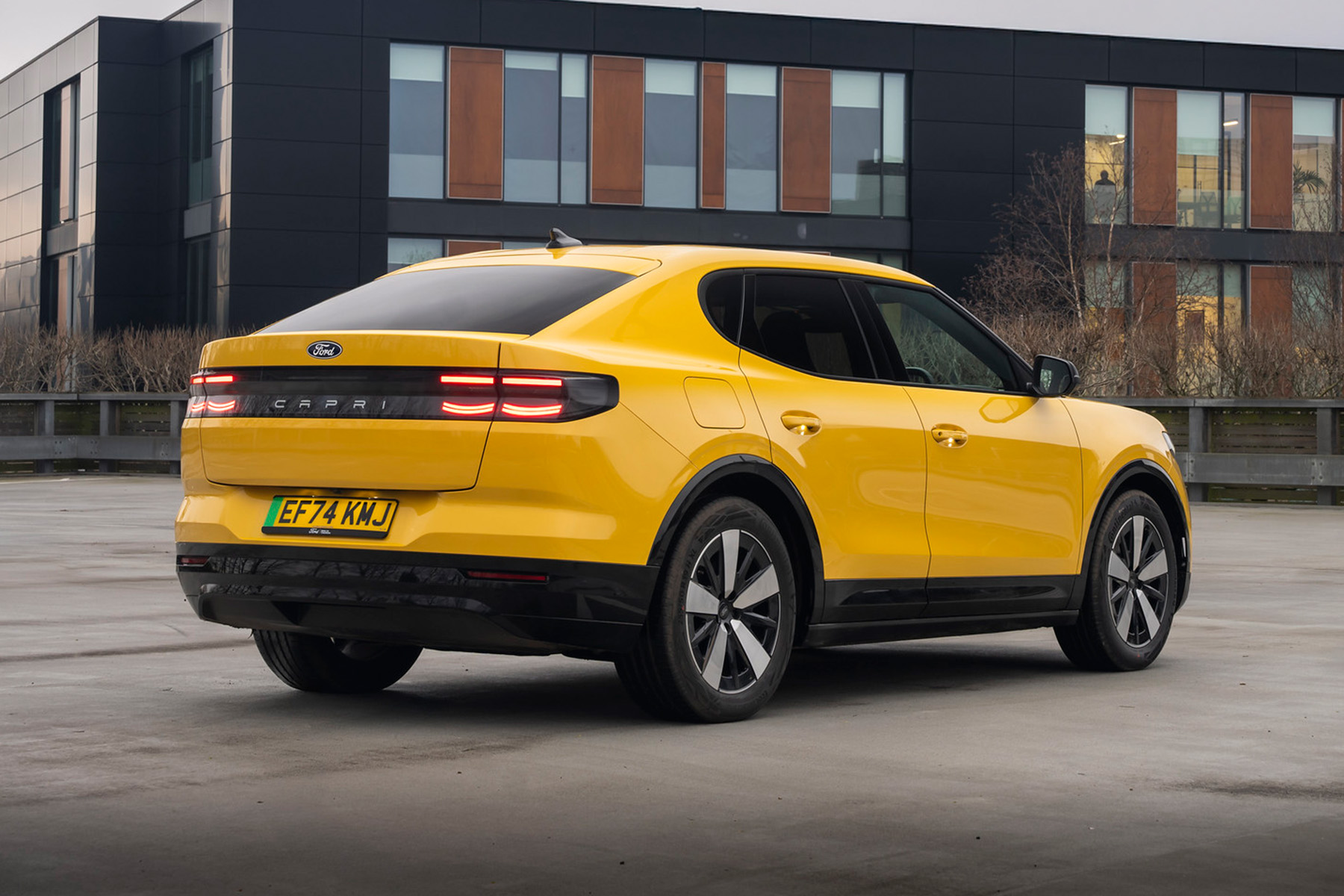
Auto Trader logo 600x300

Find your next new or used car with Auto Trader. Find out more
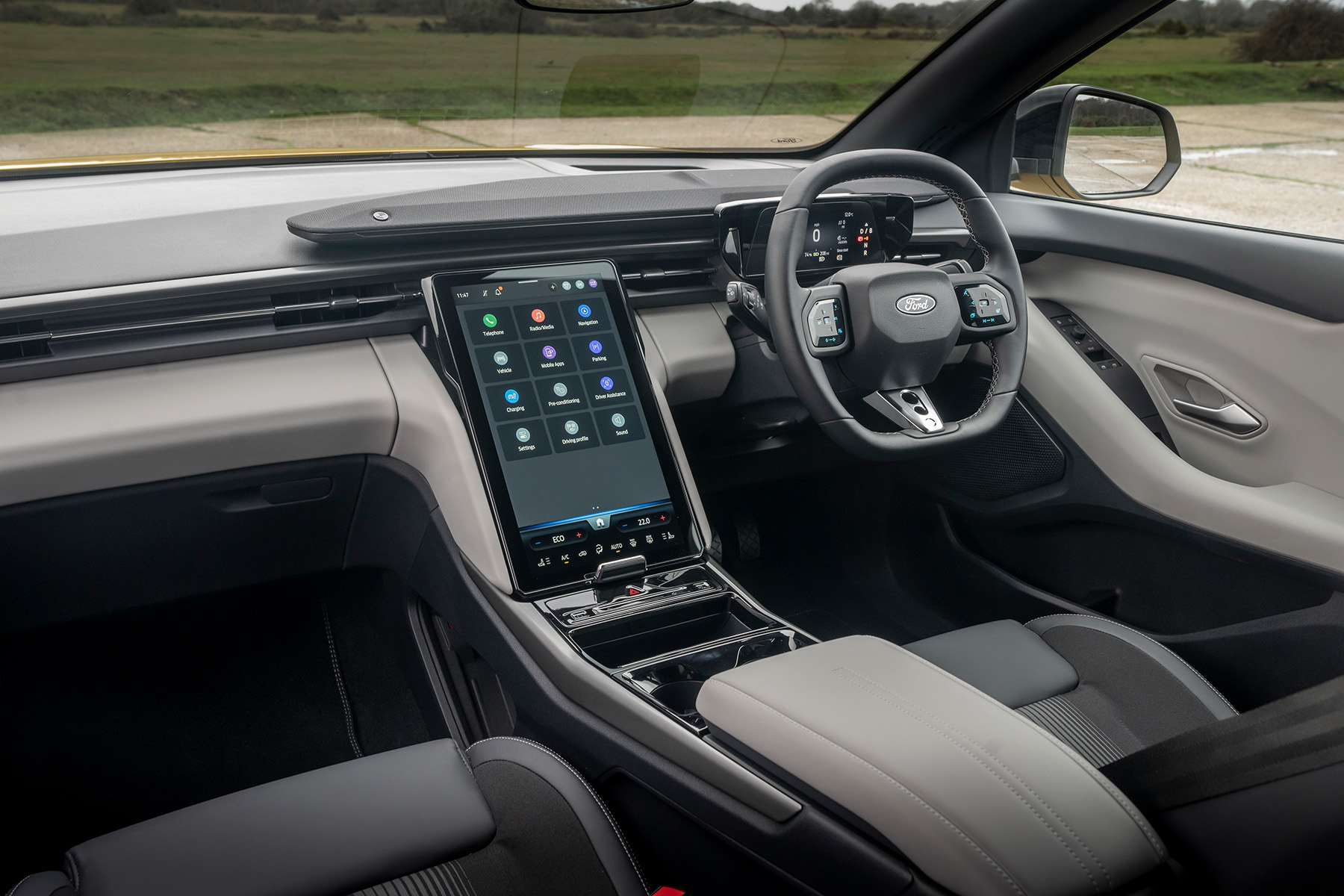
Carwow logo 600x300

Find your next new or used car with Carwow. Find out more
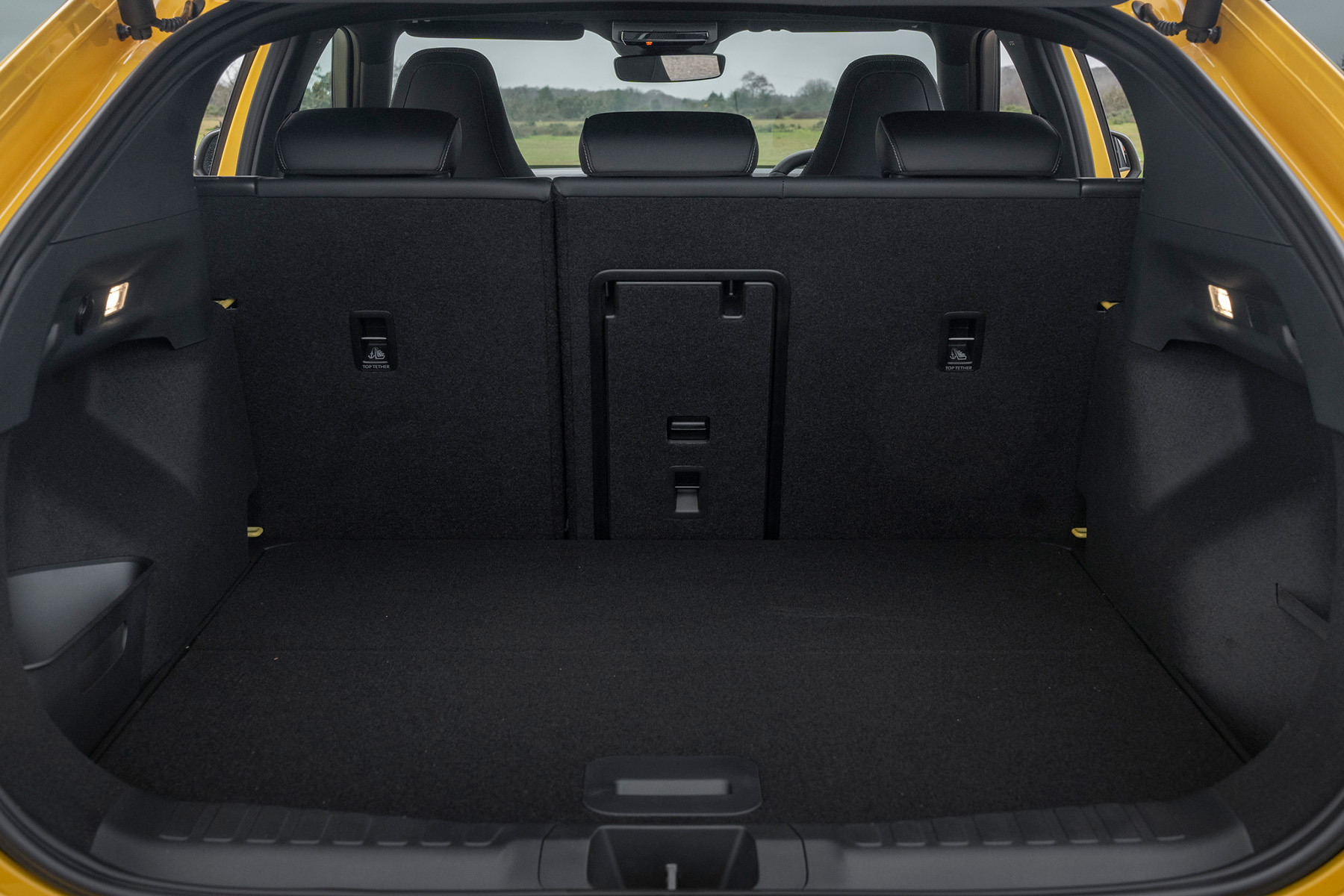
Lease a Mercedes-Benz GLC EQ

If you’re looking to lease a new Mercedes-Benz GLC EQ, The Car Expert’s partners can help you find a competitive deal.

Leasing-com logo

Personal contract hire deals from Leasing.com. Find out more
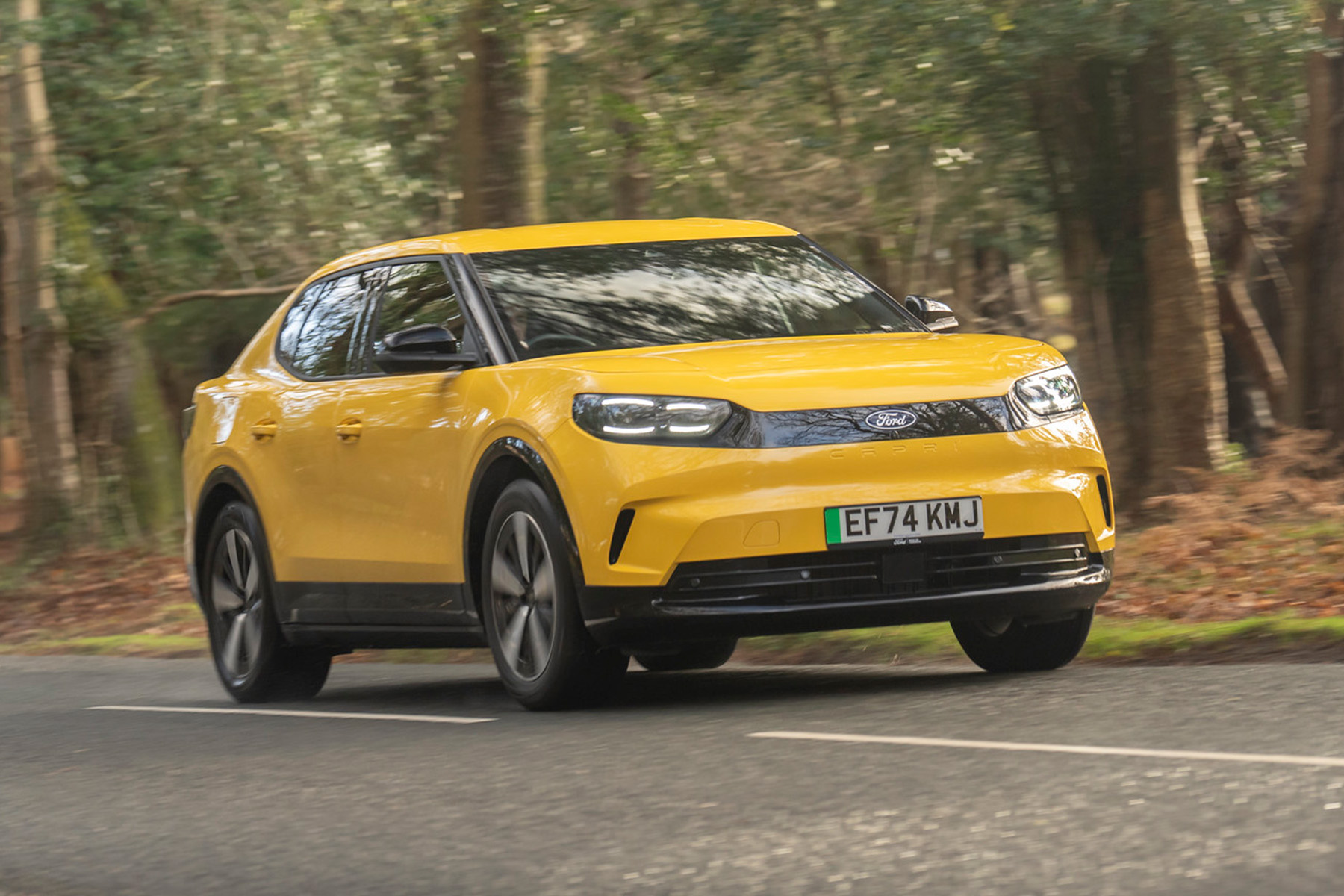
Carwow logo 600x300

Personal contract hire deals from Carwow. Find out more
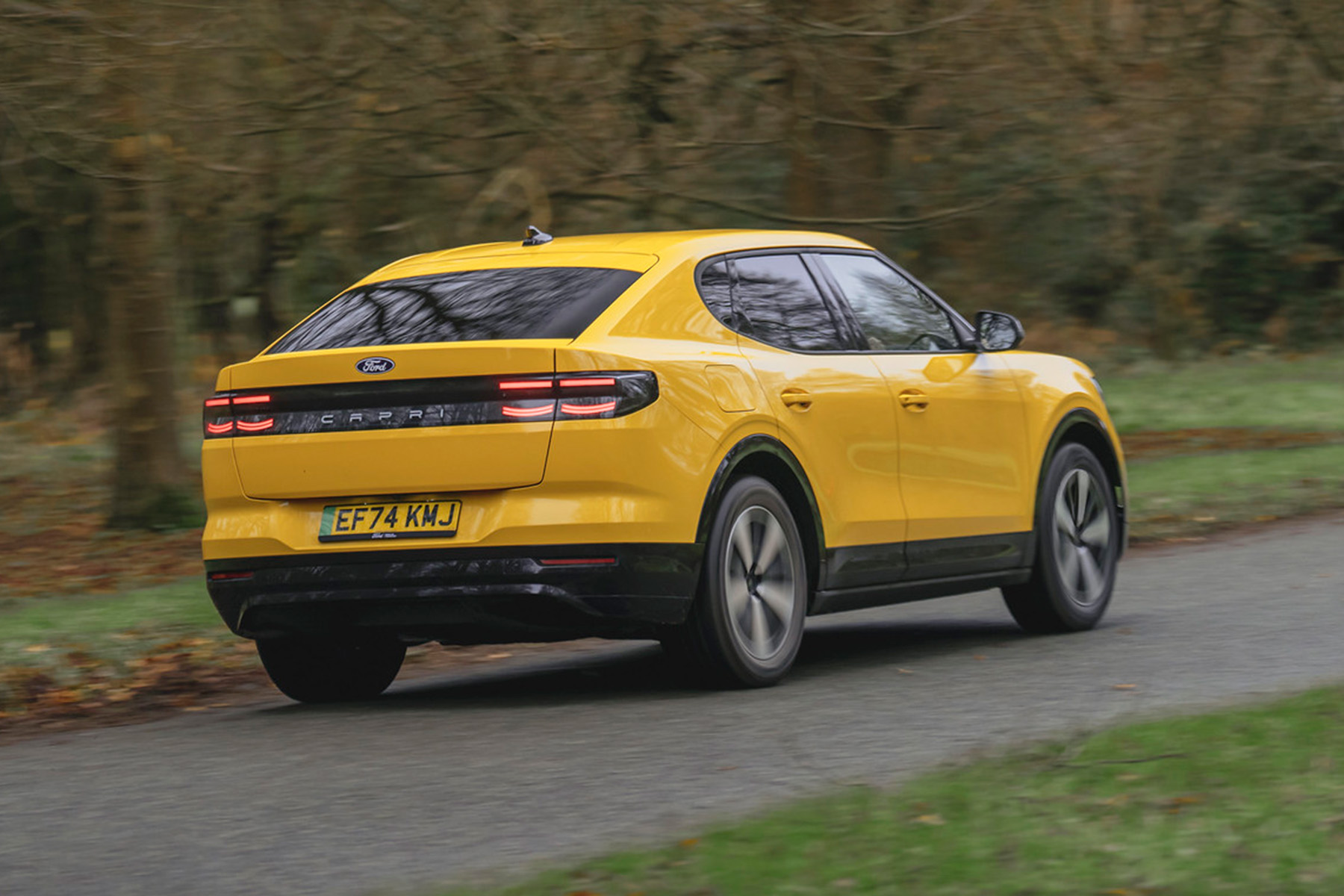
Select Car Leasing logo

Personal contract hire deals from Select Car Leasing. Find out more

Subscribe to a Mercedes-Benz GLC EQ

Subscriptions are becoming a very popular way for consumers to try an electric car for a few weeks or months to help decide whether it’s a suitable alternative to a petrol car. If you’re interested in a car subscription, The Car Expert’s partners can help. (PS: What’s a car subscription?)

SelfDrive UK logo

Car subscriptions from SelfDrive.
Find out more

Drive Fuze logo 600x300

Car subscriptions from DriveFuze.
Find out more

Cocoon Vehicles logo 600x300

Car subscriptions from Cocoon.
Find out more

Mercedes reveals electric GLC EQ

0

A new electric “GLC with EQ Technology” mid-sized SUV has been introduced by Mercedes-Benz at the Munich motor show.

This is an all-new model built on an all-new EV platform, rather than being based on a petrol model like the company’s smaller electric EVs, the EQA and EQB.

It essentially replaces the previous EQC, with the new name reflecting Mercedes’ desire to start cleaning up its confusing naming policy. Dedicated ‘EQ’ model names are being phased out, with new models sharing their names with similarly sized petrol models, even if the vehicles are completely different. So this car is a completely different vehicle to the petrol/diesel/hybrid GLC launched a few years ago. Unfortunately, “GLC with EQ Technology” doesn’t exactly roll off the tongue and normal humans are unlikely to ever refer to it as such, so the naming confusion is unlikely to end soon.

The new electric GLC is set to go head-to-head with the all-new BMW iX3 next year, as well as the still-fresh Audi Q6 e-tron and a multitude of other electric SUVs crowding into the UK market.

As with the BMW iX3, Mercedes claims that the new GLC EQ is the first in a new line of cars, showcasing the company’s new house style and engineering priorities. The most obvious example of this is the enormous light-up chromed grille, along with multiple three-pointed star motifs in the LED headlights and tail lights.

The cabin also reflects Mercedes’ latest design philosophy, featuring a dashboard that’s almost entirely screen-based. This is an evolution of the ‘hyperscreens’ available on the EQE and EQS models, measuring 39 inches in size and spanning the entire dashboard from driver to passenger. There’s also extensive ambient lighting that the driver can customise at length. The whole thing is powered by Mercedes’ latest operating system, which claims to use AI to make voice commands more natural and conversational.

Compared to the fossil fuel-powered GLC, the electric GLC offers more headroom and legroom for both front and rear passengers. As well as the regular boot, which can swallow 570 litres of luggage, there’s an additional frunk (‘front trunk’) under the bonnet that can take a very decent 128 litres – much better than most electric SUVs.

Unsurprisingly for a latest-generation electric vehicle, Mercedes-Benz claims that the new GLC EQ offers significant improvements in performance, efficiency and driving range. The launch model will be the GLC 400, which is all-wheel drive and offers 360kW (490hp) of power. The motor is supplied by a 94kWh battery, which should yield a driving range of about 440 miles on official government lab tests. Exact distances will be available once UK pricing and specification are confirmed.

Further down the road, there will be up to four more GLC EQ variants. We don’t have any more information on these at this time, but they are likely to include entry-level models that should be substantially cheaper than the launch-spec GLC 400.

New Polestar 5 now on sale

0

Upmarket all-electric brand Polestar has introduced its fifth model – the Polestar 5 – which is now on sale in the UK as the Swedish marque’s flagship grand tourer.

Now rivalling the likes of the Audi e-tron GT, Porsche Taycan and Lotus Emeya, this performance-focused grand tourer now sits at the top of the Polestar range, above the slightly shorter Polestar 4 coupé-SUV that launched in the UK last summer.

Built on a unique aluminium platform that reduces overall weight, this sleek grand tourer has been designed for maximum aerodynamic efficiency – in an effort to boost battery range – with 13% of that aluminium used being recycled.

Like the Polestar 3 and 4, the Polestar 5 sports the brand’s ‘SmartZone’ front end with a housing sensors, cameras and radar instead of a traditional front grille, and dual blade LED headlights that stretch up the bonnet.

Like the Polestar 4, this new model also doesn’t feature a rear window. Instead, the rearview mirror in the cabin has a high-definition screen that displays the live feed of a roof-mounted rear camera, which the manufacturer says gives a much wider field of view. This screen can also be disabled, allowing the driver to view passengers in the rear seats when needed.

Inside, the grand tourer features the largest panoramic glass roof of any Polestar so far at just over two metres long, while the seats are designed in collaboration with Recaro. While the 5 is technically a five-seater car, the manufacturer says its design primarily as a four-seater, with the central armrest in its lower position.

A 15-inch portrait-oriented infotainment screen juts out of the dashboard which runs the brand’s Snapdragon software, which features Google Maps, Google Assistant and Google Play as standard. A 21-speaker Bowers & Wilkins audio system is available for an extra fee, replacing the standard ten-speaker system.

On the performance front, there are two different ‘Launch Edition’ powertrain options to choose from. Both are all-wheel drive and powered by a 112kWh battery paired to two electric motors. The lead-in ‘Dual Motor’ model can reportedly muster 748hp – compared to the 544hp output of the standard Polestar 4. The grand tourer has a battery range of 416 miles between charges.

The more expensive 884hp Polestar 5 ‘Performance’ is the fastest model Polestar has ever produced – capable of completing a 0-62mph spirit in 3.2 seconds – 0.7 seconds faster than the ‘Dual Motor’. This added performance comes with a lesser maximum battery range of 351 miles. Top speed is electronically limited to 155mph, and the electric car can charge at DC speeds of up to 350kW, with a 10% to 80% battery top up taking around 22 minutes.

Pricing for the new Polestar 5 now begins at nearly £90k for the ‘Dual Motor’, rising to £105k for the ‘Performance’ edition.

Everything you need to know about McLaren

McLaren versus Ferrari is a battle that has been played out on race tracks around the world since the 1960s. But today it is also a battle that is fought in the most upmarket automotive showrooms.

McLaren dipped its toe into the road market in the early 1990s with a single car that became a legend, called the F1. But it has been a proper road car manufacturer for less than two decades – and in that short time its futuristic factory in Surrey has produced a succession of machines that have each earned a significant place at the very top of the automotive food chain – the supercar sector.

The company has rapidly become a serious competitor to much longer established supercar makers, and none more so than Ferrari. Every time a new McLaren is launched, it is always compared first and foremost to the latest equivalent rival from Maranello.

It hasn’t all been plain sailing for McLaren, however, and very recently the marque has gained new owners as it seeks to move on from profitability issues and find its place in the new automotive electric era.    

So who or what is McLaren?

Like Ferrari, McLaren is a brand with its history firmly in international motorsport. Bruce McLaren was a New Zealand racing driver who came to the UK in 1958 and rose to compete in Formula 1, building his own cars from 1964. Sadly, a promising career was cut short when he was killed testing a sports car at Goodwood in 1970.

Continuing on without its founder and leader, the McLaren team’s form fluctuated through the 1970s, winning the F1 World Championship in 1974 and 1976 (the latter with British driver James Hunt), but struggling badly towards the end of the decade. In 1980, the team merged with a junior racing team run by a young team principal called Ron Dennis – he turned McLaren into the most successful team of the 1980s and ‘90s, winning numerous championships with drivers such as Alain Prost and Ayrton Senna.

In 1988 Gordon Murray, McLaren’s hugely regarded designer of its racing cars, persuaded Dennis to embark on a project to create “the ultimate road-going supercar”. The result was the McLaren F1, a revolutionary mid-engined three-seater in which the passengers sat either side of and slightly behind the driver.

A separate company called McLaren Cars was set up to build the new model. Production lasted only four years between 1992 and 1998 and just 106 were built, the car quickly gaining cult status. Several found their way into international GT racing and a McLaren F1 won the 1995 Le Mans 24 Hours.

McLaren Cars’ next project was to design a car for its F1 engine supplier, Mercedes-Benz. The 626hp V8-engined Mercedes-Benz SLR McLaren was manufactured between 2003 and 2010 at a brand-new technology centre (the company really didn’t like it being called a ‘factory’), designed by famed architect Norman Foster and built in Woking, Surrey. Today, the site is home to both the race team and road car production.

The road car company was relaunched in 2010 and separated more clearly from the race team, taking the name McLaren Automotive. The first car, the 12C, was launched in 2011 as a mid-engined supercar in either coupé or open-top versions. The company quickly expanded its plans to develop a three-pronged range dubbed Sports, Super and Ultimate.

The parent McLaren Group was racked by politics in the 2010s, with Ron Dennis eventually selling his shares and departing. The road car company continued to produce much admired supercars, but struggled to achieve profitability. McLaren Automotive posted an £873 million loss in 2023 and its largest shareholder, the sovereign wealth fund of the Kingdom of Bahrain, acquired the entire McLaren Group in early 2024.

Last December, McLaren Automotive was sold on to CYVN Holdings, an investment firm mostly owned by the government of Abu Dhabi. CYVN also owns around 20% of Chinese electric vehicle brand Nio and also acquired Forseven, a UK-based start-up that had already signed up several prominent talents in electric automotive.

The final element was to acquire Gordon Murray Technologies, a company set up by the former McLaren designer and which had developed innovative new manufacturing processes to make more cost-effective vehicles of lighter weight.

Forseven and McLaren Automotive were merged under the new name of McLaren Group Holdings. The company is now develop the brand’s first electric car, which several sources have speculated could be an SUV, as well as expanding into other areas of the automotive market.       

What models does McLaren have and what else is coming?

McLaren’s cars are exclusive and effectively all limited editions – model ranges do not tend to go on for many years before being replaced with a new model and a new name. The 600LT, for example, was built for only three years between 2018 and 2020 and the 720S lasted five, discontinued in 2022.

Currently there is a four-strong model range, and if anything made by McLaren could be considered entry-level, it is the GTS, effectively an updated version of the GT, a car made between 2019 and 2024 and one that tended to be less of an attraction to the marque’s affluent buyers than its more potent sisters.

The updates encompass more power, less weight and bolder styling, and the GTS is pitched as a grand tourer that anyone who could afford its £185,000 starting price might drive on a daily basis, rather than an out-and-out supercar. It employs the company’s signature drivetrain format of a mid-mounted 4.0-litre V8 engine, with 635hp and a 3.2-second 0-62mph time. 

Current McLaren range on our Expert Rating Index

McLaren 750S

McLaren 750S

McLaren Artura

McLaren Artura

McLaren GTS

McLaren GTS

The Artura is McLaren’s first plug-in hybrid. Launched in 2022 and costing from £223,000, it mates an electric motor to a twin-turbo V6 petrol engine for 671hp. Seen as a prime rival to the Ferrari 296 GTB, the Artura is offered as a coupé or an open-top Spider.

The 750S launched in 2023 as a direct supercar successor to the popular 720S. It uses the mid-mounted 4.0-litre twin-turbo V8 driving the rear wheels and putting out 750 horsepower. Like the Artura it passes 62mph in under three seconds and has a claimed top speed of 206mph. Again, and typical of McLaren, it can also be had as a Spider.

Finally there is the W1, unveiled in October 2024, pitched as a 50th anniversary celebration of McLaren’s first GP victory and the third offering in the brand’s ultimate series – preceeded by the original F1 of the 1990s and the P1 which was made between 2013 and 2015. The W1 pumps out an astonishing 1275hp from its hybrid drivetrain and all of the 399 planned production run are already sold, despite a price tag of “circa £2 million…”

What’s coming next from McLaren is open to speculation. The merger with electric start-up Forseven suggests more electric models are in the pipeline, and company management has promised more details of future McLarens before the end of 2025 – industry sources suggest a wider range could be in the pipeline, with both electric and high performance internal combustion engines. These could include a long-rumoured SUV. 

Where can I try a McLaren car?

Being a niche manufacturer of supercars, McLaren’s dealers are plush, luxury sites but few in number with a couple having reverted from sales to only service in recent times.

There are now just seven retail outlets in the UK, with one in Scotland and none in Wales – and, remarkably, none in central London as its former flagship showroom in Knightsbridge is “temporarily closed”.

The potential buyer with well over six figures burning a hole in their pocket has a choice of Ascot, Birmingham, Glasgow, Hatfield, Leeds, Manchester or the New Forest, while there are also service facilities in Bristol, Guildford and Petersfield.

What makes McLaren different to the rest?

McLaren is a very young supercar maker, competing against marques with some of the most glittering histories such as Aston Martin, Lamborghini and the daddy of them all, Ferrari.

But the upstart manufacturer from Woking has made the most of its own glorious motorsport history to ensure that its road cars are equally special and instantly recognisable – when you see a McLaren on the road, you know what it is. 

A McLaren fact to impress your friends

McLaren has landed on Mars. McLaren Composites, one of the several companies in the group alongside the car manufacturer, produced ultra-light bodyshell parts for the Beagle 2 lander sent to the red planet in 2003.

Sadly contact was lost with the spacecraft just as it approached the surface, but it was found 12 years later, not far from its intended landing point.

Summary

McLaren’s road car ambitions have come a long way in a short time and the manufacturer has established a reputation for models that sits alongside the success of its F1 team.

But McLaren still needs to make more money from its road cars than it currently does, and the recent major changes of ownership suggest that the next few years will be crucial to cement the future for the UK’s leading supercar company.

Buy a McLaren

If you’re looking to buy a new or used McLaren, The Car Expert’s partners can help you find the right car.

Motors 600x300

Find a used McLaren with Motors. Find out more

Auto Trader logo 600x300

Find a new or used McLaren with Auto Trader. Find out more

Carwow logo 600x300

Find a new or used McLaren with Carwow. Find out more

New Renault Clio hatchback debuts

0

Renault has shown off its new sixth-generation Clio hatchback for the first time at the Munich motor show, which will arrive with both pure petrol and hybrid powertrain options.

Introducing overhauled exterior design language and updated on-board tech, this new iteration of the Clio is set to replace the current-generation model on sale since 2019, but won’t arrive until reportedly sometime in 2027. First arriving in 1990, over 1.3 million models have been sold with the Clio nameplate to date.

Starting with the car’s exterior looks, the hatchback sports a shorter more angular front grille, a new LED headlight design and more prominent front bumper air intakes with C-shaped daytime running lights. In comparison to the current model’s softer clam-shell silhouette, the new Clio has sharper body contours, a lip spoiler above the rear windscreen and hexagon-shaped tail lights.

While still smaller than mid-sized hatchbacks like the BMW 1 Series and Volkswagen Golf, Renault has made the Clio around seven centimetres longer and four centimetres wider than the current generation, which should slightly increase passenger room inside.

Renault says it has paid special attention to the car’s interior, using recycled materials to trim the cabin and installing a ten-inch infotainment and ten-inch digital instrument cluster in one continuous display as that juts out of the dashboard – the same system found in the all-electric Renault 4 and 5 model ranges.

Opening the boot lid reveals 391 litres of boot space – identical to the current model. Two powertrain options will be offered, starting with a 115hp 1.2-litre pure petrol engine paired with a six-speed manual gearbox. The latter, more expensive choice will be a 160hp hybrid setup with a 1.8-litre petrol engine and two electric motors working in tandem.

Renault adds that the hybrid has a fuel consumption of 72mpg, and can complete a 0-62mph sprint in 8.3 seconds – a second quicker off the line than the current Clio E-Tech hybrid.

That sums up what we know about the upcoming sixth-generation Renault Clio. More details, including the car’s official launch date, UK pricing and trim specifications, are sure to follow in the coming months. Check back soon!

Slow new car sales in August but EV numbers up again

(Sorry for this being very late, I’ve been in Australia for family reasons over the last three weeks.)

It was a slow month for new car sales in August, with private sales flat and fleet registrations down. However, EV market share continued to grow.

According to data published by the Society of Motor Manufacturers and Traders (SMMT), overall new car registrations were down by 2% in August compared to the same month last year. Private sales were up by about 1% but fleet registrations were down 5%.

It’s important to bear in mind that August is one of the smallest months of the year for new car sales (along with February), so relatively small changes can mean large swings in percentage terms. Just under 83,000 new cars were registered in August, whereas September will probably see more than 270,000 cars registered thanks to the new 75-plate registration change.

Source: SMMT

EV and hybrid numbers continue to climb

August was the first full month of the UK government’s new electric car grant scheme, after its botched rollout in July. This meant that there were a few new EV sales that benefitted from the grant in August, plus quite a lot of EV sales that benefitted from manufacturers’ own ‘grant’ offers.

Plug-in hybrid registrations continued their astonishing growth in 2025, even outperforming regular (non-plugged) hybrids. A particular mention goes to new Chinese brand Jaecoo, whose Jaecoo 7 was the UK’s best-selling plug-in hybrid in August. But again, August is a small month so results can be manipulated to some degree. September will give us a much better idea of how the market is really performing.

The other interesting part of the registration data was that petrol and diesel cars made up 50.3% of sales, while hybrids and EVs made up 49.7%. It’s entirely likely that we will achieve the next milestone of electrification, with electrified cars outselling fossil-fuel cars, at some point before the end of this year.

Source: SMMT

Good month, bad month

Although we repeatedly caution against reading too much into February and August results, we’re still interested in significant increases or decreases for different car brands. And as usual, there were plenty of good and bad results in the UK car market last month. The overall market was down by 2% compared to last August, and we look for brands that are at least 10% better or worse than the overall figure.

It was a good month for the following brands, which all outperformed the overall market by at least 10%: Alfa Romeo, Alpine, Bentley, BMW, BYD, Cupra, GWM, Hyundai, Land Rover, Mini, Omoda, Peugeot and Polestar.

Meanwhile, things were slow for these brands, which all underachieved against the overall market by at least 10%: Abarth, Audi, Citroën, DS Automobiles, Fiat, Genesis, Honda, Ineos, KGM, Kia, Maserati, Mazda, MG, Nissan, SEAT, Smart, Subaru, Suzuki, Toyota, Vauxhall and Volvo.

That means the following brands were about where you’d expect them to be: Dacia, Ford, Jeep, Lexus, Mercedes-Benz, Porsche, Renault, Skoda, Tesla and Volkswagen.

As usual, Volkswagen was the UK’s best-selling brand in August, followed by Ford, BMW, Audi and Mercedes-Benz.

In terms of absolute growth, Jaecoo registered 1,367 cars in August, despite being a new name that did not exist in the UK 12 months ago. Mini was close behind, increasing sales over last August by 1,364 units. Going the other way, Audi recorded the largest fall in registrations compared to last year, dropping nearly 1,400 units. SEAT also lost out big time, dropping nearly 1,200 sales on the same month last year.

Puma extends its lead in August

The UK’s best-selling car continues to be the Ford Puma, which again sat atop the sales charts in August. In second place was once again its nearest challenger from the last couple of years, the Kia Sportage. With four months left to run, the Puma has edged out a lead of nearly 4,000 units over the Sportage in the overall 2025 sales race.

Source: SMMT

Kia had a very strong second half of the year in 2024, right up until December when Sportage sales seemed to come to a screeching halt, allowing the Puma to snatch the overall 2024 sales crown. What will the last four months of this year bring? Well, the Sportage has been freshly facelifted with first cars arriving in September, while the Puma will get a boost from its electric Puma Gen-E model being the only car in its class to get the full £3,750 government grant, meaning it’s very competitively priced. Keep following this battle all the way to the end of the year.

In other news, Tesla had both its cars in the top five, defying suggestions that the company’s sales would collapse over anti-Elon sentiment. The Jaecoo 7 also made a surprising debut appearance in the top ten, popping up in sixth place.

We’ll have our usual analysis of the top ten shortly.

Dacia Duster engine line-up updated

0

Dacia has revised the engine line-up of its compact Duster SUV, replacing two engine options with more powerful and efficient variants.

This mild model update, which arrives this November, removes the current mid-range petrol ‘mild-hybrid 130’ with a new 1.2-litre ‘mild-hybrid 140’ option paired with a six-speed manual gearbox, boosting power output by 10hp.

The second change is the introduction of the ‘hybrid 155’ engine option, also available in the larger Bigster SUV range. Replacing the ‘hybrid 140’, this new 155hp hybrid pairs a four-cylinder petrol engine with two electric motors and an automatic gearbox.

Dacia has also given the Duster a revised interior trim for the ‘Journey’ equipment grade. The ‘Extreme’ trim gains larger 18-inch black alloy wheels. With the hybrid powertrains, both ‘Extreme’ and ‘Journey’ levels are now available with adaptive cruise control as standard.

Pricing for the updated SUV range is yet to be announced, and will be revealed closer to the update’s arrival in November.

The Dacia Duster currently holds a New Car Expert Rating of B, with a score of 68%. It scores top marks for its low CO2 emissions and media review scores, but its safety score is only average. Its running costs are also surprisingly high, which will negate some of the savings on the car’s sticker price.

New electric BMW iX3 revealed

0

BMW has revealed the second-generation iX3 SUV, the first model of its vaunted new ‘Neue Klasse’ programme, ahead of the Munich motor show that starts next week.

The all-new BMW iX3 SUV, which will arrive in the UK in March, is essentially a clean-slate design that marks the beginning of a new generation of BMW models – both electric- and combustion-powered.

‘Neue Klasse’ is a name that BMW enthusiasts will be familiar with as it was originally given to a BMW saloon range launched in the 1960s, which was a similarly substantial break with the company’s past and previewed its next generation of cars.

The original Neue Klasse range was so influential that it went on to influence BMW’s design and engineering principles for the next 40 years. Earmarked as the start of a new era for the brand, BMW has similarly lofty ambitions for a whole host of new models slated for release over the next couple of years.

Although the company built its reputation on compact sports saloons and coupés, it’s no great surprise that the model chosen to debut the latest Neue Klasse philosophy is a mid-sized SUV – after all, this is the contemporary equivalent of a 1990s 3 Series saloon. If you still prefer saloons to SUVs, however, you’ll be pleased to know that the next Neue Klasse model will be the first all-electric 3 Series saloon, due next year.

The iX3’s striking exterior design is a clear departure from BMW styling over the last 20 years. As with many new cars, the exterior is shorn of almost all ornamentation, but BMW eschews soft and rounded styling in favour of crisp and sharp detailing. The kidney grille and trim surrounds may look like chrome in photos, but are actually strips of light.

At launch, only one powertrain option will be available at launch – the top-end, all-wheel drive ‘xDrive 50’, which is powered by two electric motors that produce a combined 470hp. The motor is paired with a huge 109kWh battery, meaning an official driving range of about 500 miles. Further powertrain options will arrive at a later date, including an entry-level, single-engined rear-wheel drive model.

That 500-mile range is a significant boost over the original BMW iX3, whose 80kWh battery was officially rated at 285 miles. BMW claims that its Neue Klasse architecture helps generate these improvements by attacking multiple areas throughout the car. The powertrain is about 40% more efficient than the old model, as well as being 10% lighter, which helps explain how a 36% larger battery leads to a 75% improvement in driving range. It also charges 30% faster and is 20% cheaper to manufacture.

Performance is plenty, with 0-60mph coming up in less than five seconds. More importantly for most potential customers, the new iX3 can charge very quickly at up to 400kW if you can find the right charging station (which we don’t have yet in the UK, but will be coming eventually). At 400kW, the car can add 230 miles of range in just ten minutes. If you’re hooked up to a 350kW charger running at full speed in the UK, that would still give you about 200 miles in ten minutes.

The Neue Klasse models will also include bidirectional charging, including V2L (vehicle-to-load) for powering devices from the car and V2H (vehicle-to-home), which allows you to use your car’s battery to power your house if you have a suitable home wallbox.

While the exterior styling is certainly dramatic, it’s nowhere near as radically redesigned as the interior. The steering wheel is square-shaped and filled with buttons to control various systems, while customisable ambient LED lighting is arranged across the dashboard, door panels and footwells.

In addition to the usual large central touchscreen, there’s also a full-width projection at the base of the windscreen. BMW calls this ‘Panoramic iDrive’ – it looks like a digital screen, but is actually projected like a head-up display. Various sections of this strip can be configured with different information. An augmented reality head-up display feature is available for an extra fee, which projects 3D navigation information onto the windscreen. Underpinning it all is the latest version of BMW’s operating system, which also brings vastly more processing power and entertainment apps like Spotify, YouTube, Disney+ and so on.

While the exact launch date is yet to be announced, the new BMW iX3 will be available in the UK with a choice of three different trim levels: standard, M Sport and M Sport Pro. Standard features include 20-inch alloy wheels, heated front seats, and the brand’s ‘Driving Assistant Plus’ package. Higher trims introduce cosmetic M Sport exterior styling packs, as well as adaptive LED headlights (M Sport Pro only).

UK pricing will begin at just under £59k, with first UK deliveries of the ’50 xDrive’ in March 2026.

Your 3-minute guide to car leasing

If you tend to change your car every three to four years, and you prefer new cars to used cars, leasing is often the most cost-effective way to run it. Many people don’t understand how leasing works, so here’s our simple guide. If you’re looking for more information, we have an entire car leasing hub that can provide you with plenty of details.

If you’re a private customer leasing a car, the type of product is called personal contract hire (PCH). This is different to a personal contract purchase (PCP), although customers often tend to treat them in exactly the same way.

In most cases, PCH works out to be a bit cheaper than PCP on a given new car. It will vary, however, and it depends on the car and your circumstances.

Leasing is usually confined to new cars, although some leasing companies do offer a limited selection of used cars. It is usually managed through dedicated brokers, rather than through regular dealer showrooms.

You might also like: Your 3-minute guide to PCP car finance

How does personal car leasing work?

We cover this in a lot more detail in our dedicated PCH guide, but here’s a quick summary:
Leasing is simply a long-term car rental. You pay an upfront amount, which is often several thousand pounds although it can be much less, followed by regular monthly payments for three or four years. At the end of the lease period, you give the car back to the leasing company.

The car belongs to the leasing company at all times, and you’re simply paying a monthly fee for exclusive use of the vehicle. You’ll have a mileage allowance that you need to stick to – if you hand the car back and you’ve done more miles than allowed in your contract, you’ll have to pay a penalty.

You are responsible for keeping the car in good condition. Wear and tear is acceptable, but any damage beyond that is your responsibility.

You have to pay for car insurance, and you need to make sure that the car is serviced correctly and on time. Some leasing companies will have packages that include insurance and/or servicing, but it’s often cheaper to manage it yourself. If you’re comparing offers from different leasing brokers, always look at what’s included and what’s not – it can make a large difference to your total cost over four years.

Is leasing cheaper than PCP finance?

If you’re looking online, you’ll probably find that the monthly payments for PCH are cheaper than for PCP on the same car. Why is that?

The secret is the starting price of the car. If you walk into a showroom to buy a new car, you’re going to pay full price or pretty close to it – even if there are advertised offers on that car. Leasing companies, however, usually pay much less for the same vehicle. Sometimes they’ll get discounts of up to 40% on new cars, which is way beyond anything private customers get.

This is simply because they’re buying thousands of cars every year and you’re buying one car every four years. If the leasing company is getting a massive discount on the purchase price, they can afford to pass on significant savings to you and still make a tidy profit.

Car leasing pros and cons

Pros:

  • Your monthly payments are usually lower than other types of finance for a given car
  • You can bundle servicing and insurance costs into your lease (for extra cost, obviously)
  • Fixed monthly payments for the life of the contract
  • You give the car back at the end, so no hassle in terms of selling or part-exchanging the car

Cons:

  • You’re simply renting a car rather than paying off a loan, so you never have the opportunity to own the car
  • Strict limitations on mileage and vehicle condition, with hefty penalty fees
  • No early exit provision, so if you have to cancel your lease early it could cost you thousands of pounds
  • Best deals are always on what’s available rather than what you want
  • Mostly limited to brand new vehicles, with very few options for used car leasing

Summary

Personal contract hire has been growing in popularity for several years now. If you have previously bought new cars with PCP finance and you want to change your vehicle every few years with no intention of keeping it, it’s certainly worth looking at leasing instead.

To get the best deals on car leasing, you need to select a car from what’s available. That means you won’t necessarily have as much choice on colour and specification. You can walk into a showroom, choose a car to your perfect specification with all the options you want and get a personal leasing quote from the dealer, but it probably won’t be any cheaper than a PCP.

If you do want to take a personal lease for your next car, make sure you understand your financial commitments, both up-front and throughout the course of the agreement.

Originally published May 2024. Last updated September 2025.

More car leasing information and advice here:

Pricing announced for electric Kia EV5

0

Kia has announced the UK price list for its new electric EV5 SUV, which is now available to order in the UK.

The EV5 is be built on the same foundations as the Kia EV6 crossover – The Car Expert’s ‘Car of the Year’ in 2022 – but while the EV6 uses the brand’s 800V battery architecture, the new EV5 will make use of a less powerful 400V unit. This will reduce Kia’s production costs – and the car’s price list as a result – but this SUV to charges at a slower rate than its acclaimed crossover counterpart.

The SUV, which sits below the larger EV9 in Kia’s battery-powered model range, is powered by a 81kWh battery and 215hp electric motor pairing that can reportedly muster up to 329 miles on a single charge. Using a 150kW DC charging station, the battery can be topped up from 10% to 80% in 30 minutes.

Kia adds that the EV can complete a 0-62mph sprint in 8.4 seconds, with top speed electronically capped at 102mph. Kia had initially announced back in October 2023 that the SUV range could include a cheaper 58kWh powertrain, but this has been dropped from the manufacturer’s UK plans, at least for the car’s launch.

The EV5 has a ‘Tiger face’ exterior design which bears some resemblance its larger EV9 sibling, and the similarities continue inside. A continuous dashboard display combines a 12-inch digital instrument cluster with a 12-inch infotainment touchscreen that both sit either side of a five-inch segment display that provides driving information.

Kia has decided to keep physical buttons to a minimum, with the large majority of vehicle functions controlled through the display. This has freed up room on the centre console for additional storage space and a table.

Key trim level features

Entry-level ‘Air’ (from £39,295)

  • LED headlights and tailights
  • 18-inch alloy wheels
  • Rear privacy glass
  • Rain-sensing windscreen wipers
  • Heated front seats
  • 12-inch digital instrument cluster
  • Five-inch climate control touchscreen
  • 12-inch infotainment touchscreen
  • Front and rear parking sensors
  • Rear-view parking camera
  • Lane-keeping assistance
  • Blind spot monitoring

Mid-range ‘GT-Line’ (from £42,595)

  • All features of the ‘Air’ trim that are not replaced
  • 19-inch alloy wheels
  • ‘GT-line exterior styling pack
  • Adaptive LED headlights
  • Motorised boot lid
  • Heated rear seats
  • Interior ambient lighting
  • Wireless smartphone charging pad
  • Electrically-adjustable front seats

Top-spec ‘GT-Line S’ (from £47,095)

  • All features of lower trims that are not replaced
  • Sunroof
  • Ventilated front seats
  • Harmon Kardon sound system
  • Side parking sensors
  • Digital key and fingerprint recognition
  • Remote parking assistance
  • Head-up display
  • surround-view parking camer with blind-spot view

Compared with the ICE-powered Sportage SUV – one of the UK’s best-selling new cars – the EV5 is slightly taller and longer, with seven centimetres of extra length between the front and rear wheels.

The boot offers up to 566 litres of boot space in the rear – extending to 1,650 litres with the rear seats folded – and an extra 44 litres of ‘frunk’ space below the bonnet. The car also comes with 16 litres of cubby space below the centre console.

Now available to order – with the first customer deliveries expected later this year – the EV5 is now priced at around £39k as standard.

Fiat 600e range bolstered by new ‘Icon’ trim

0

Fiat has expanded its battery-powered 600e crossover range with the introduction of a mid-range ‘Icon’ trim which qualifies for the government’s electric car grant.

This ‘Icon’ grade, which is also already available in the 600 Hybrid range, sits above the lead-in ‘Red’ equipment level which already includes keyless entry, a ten-inch infotainment touchscreen, rear parking sensors and a synthetic leather steering wheel.

In addition, this mid-range trim adds front parking sensors, a rear view parking camera and a wireless smartphone charging pad. The car sits on 17-inch alloys, and comes with black and ivory fabric seat upholstery.

One powertrain choice is available cross the full 600e trim range – a 154hp electric motor and 54kWh battery pairing that Fiat says can muster ‘more than’ 250 miles on a single charge, and can complete a 0-62mph sprint in a reported nine seconds.

Pricing for the Fiat 600e ‘Icon’ now starts at under £32k – around £1,500 more expensive than the lead-in ‘Red’. The ‘Icon’ is also eligible for the government’s electric car grant that has been introduced this Summer, providing a £1,500 discount for UK buyers.
Chery expands UK line-up

Chinese automotive giant Chery Automobile has officially launched its flagship Chery car brand in the UK with a large event in London, unveiling its full line-up of SUVs for UK customers – including two new models.

Marking the start of the next chapter in the company’s assault on the UK car market, Chery will leverage the success of sister brands, Omoda and Jaecoo, which have claimed a significant share of the UK new car market in just 12 months. Chery confirmed it will initially open with 25 franchised dealerships – shared with existing Omoda and Jaecoo outlets – with plans to expand to 100 by 2026.

At the event at London’s O2 Arena, Chery showed its first two cars for the UK – the Chery Tiggo 7 mid-sized SUV and Chery Tiggo 8 large SUV, both available with petrol or plug-in hybrid power. It also announced the next two models to sit above and below these two – the Chery Tiggo 4 small SUV and the flagship Chery Tiggo 9 large SUV.

The company also indicated that it intends to open a new R&D centre ‘in the near future’ to support the long-term development of its three brands – plus any additional brands it may bring to the UK.

As with its Omoda and Jaecoo models, Chery cars are covered by a seven-year new car warranty and aftermarket care, along with RAC roadside assistance for the first three year, (subject to annual servicing terms and conditions).