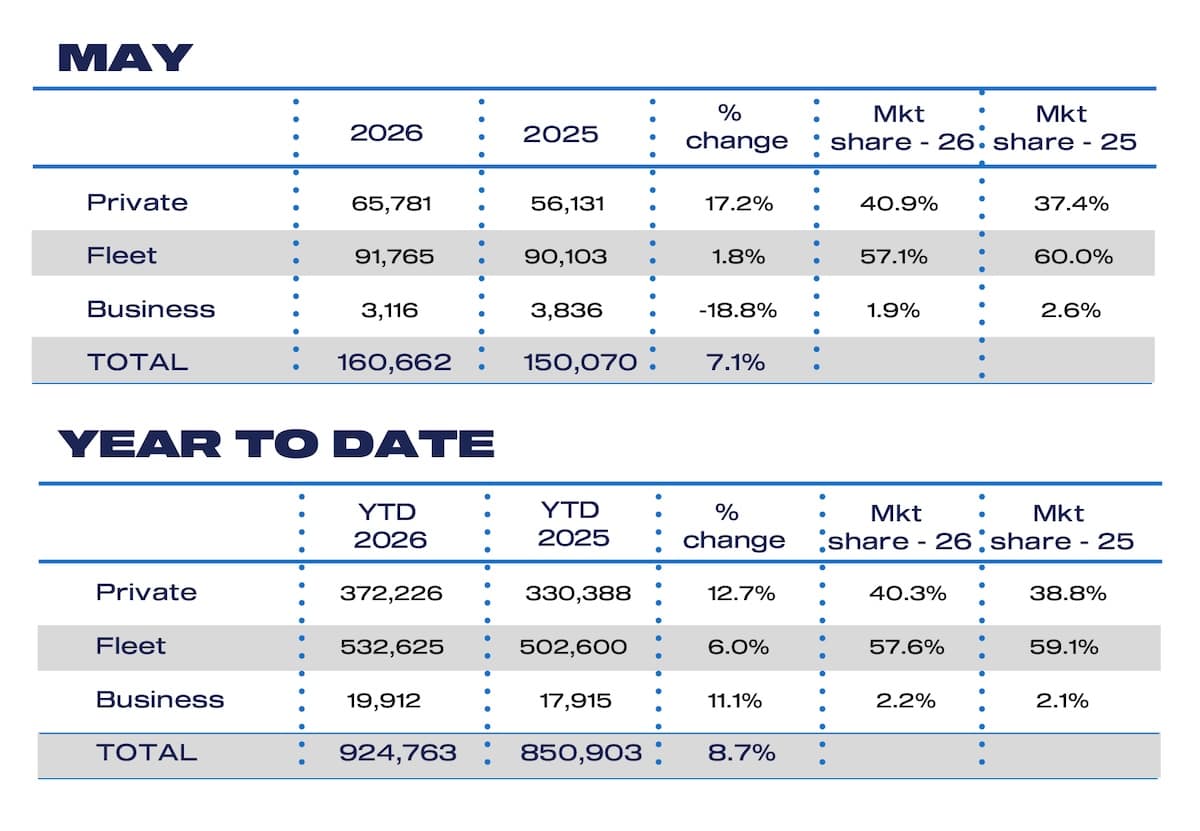
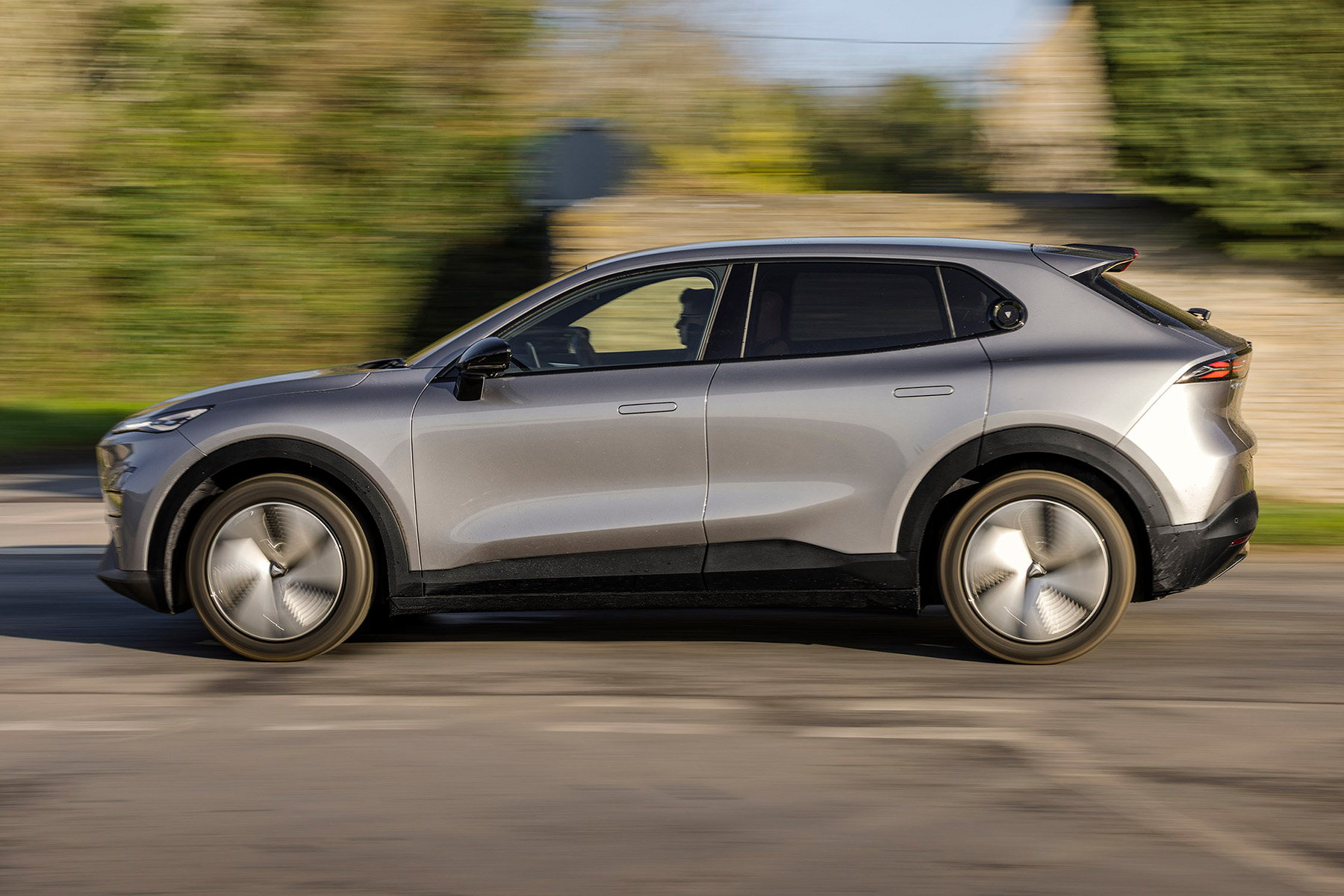
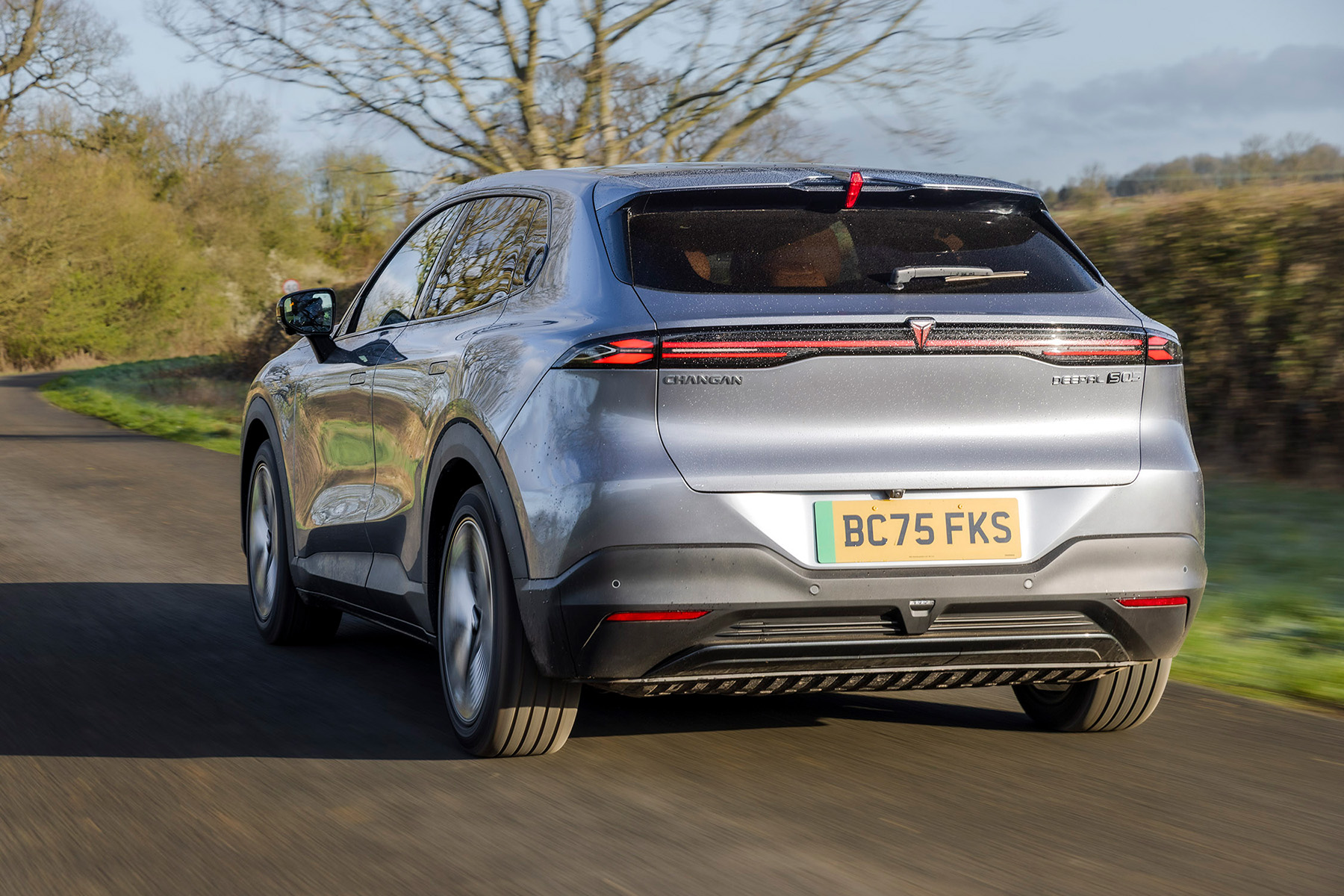
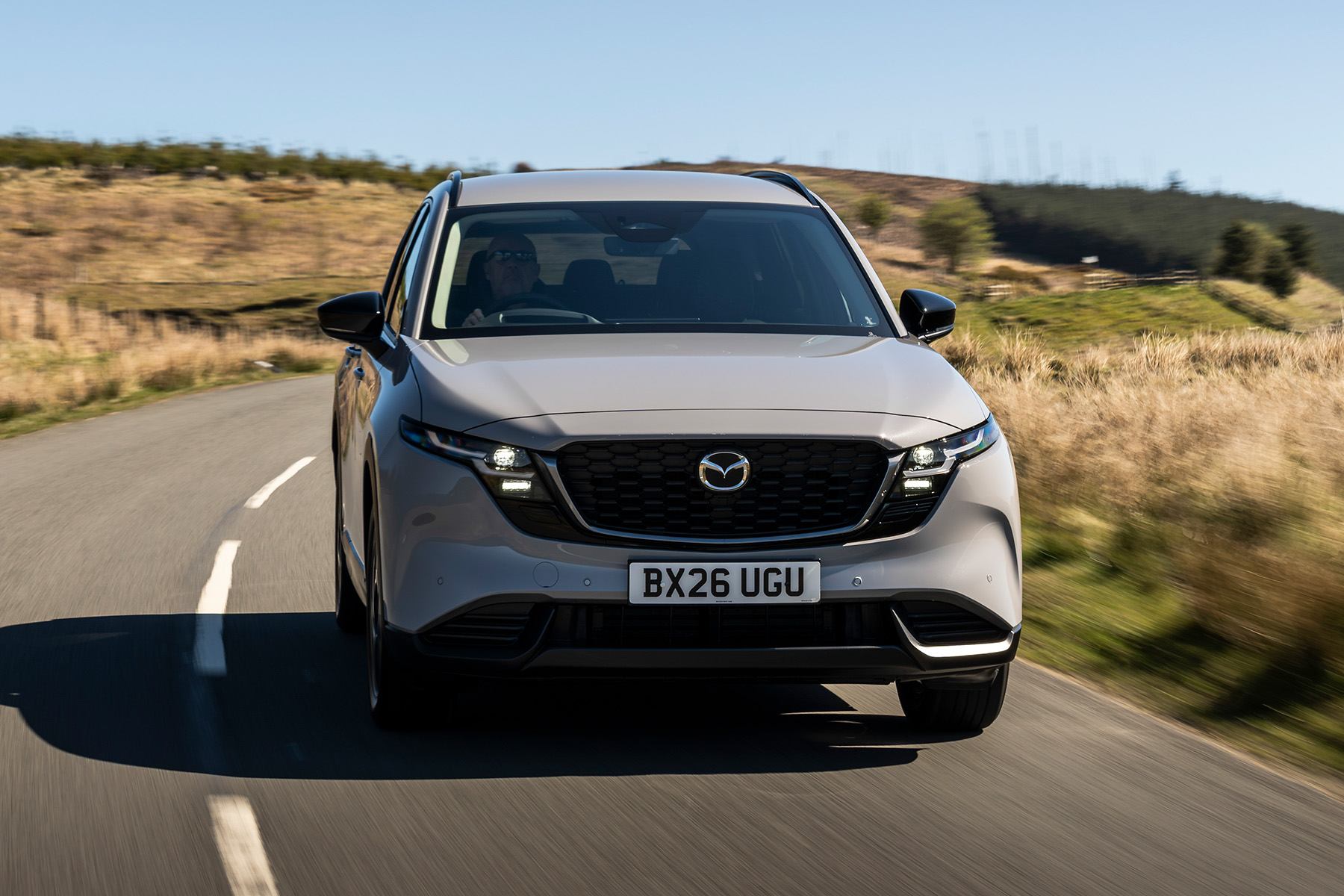
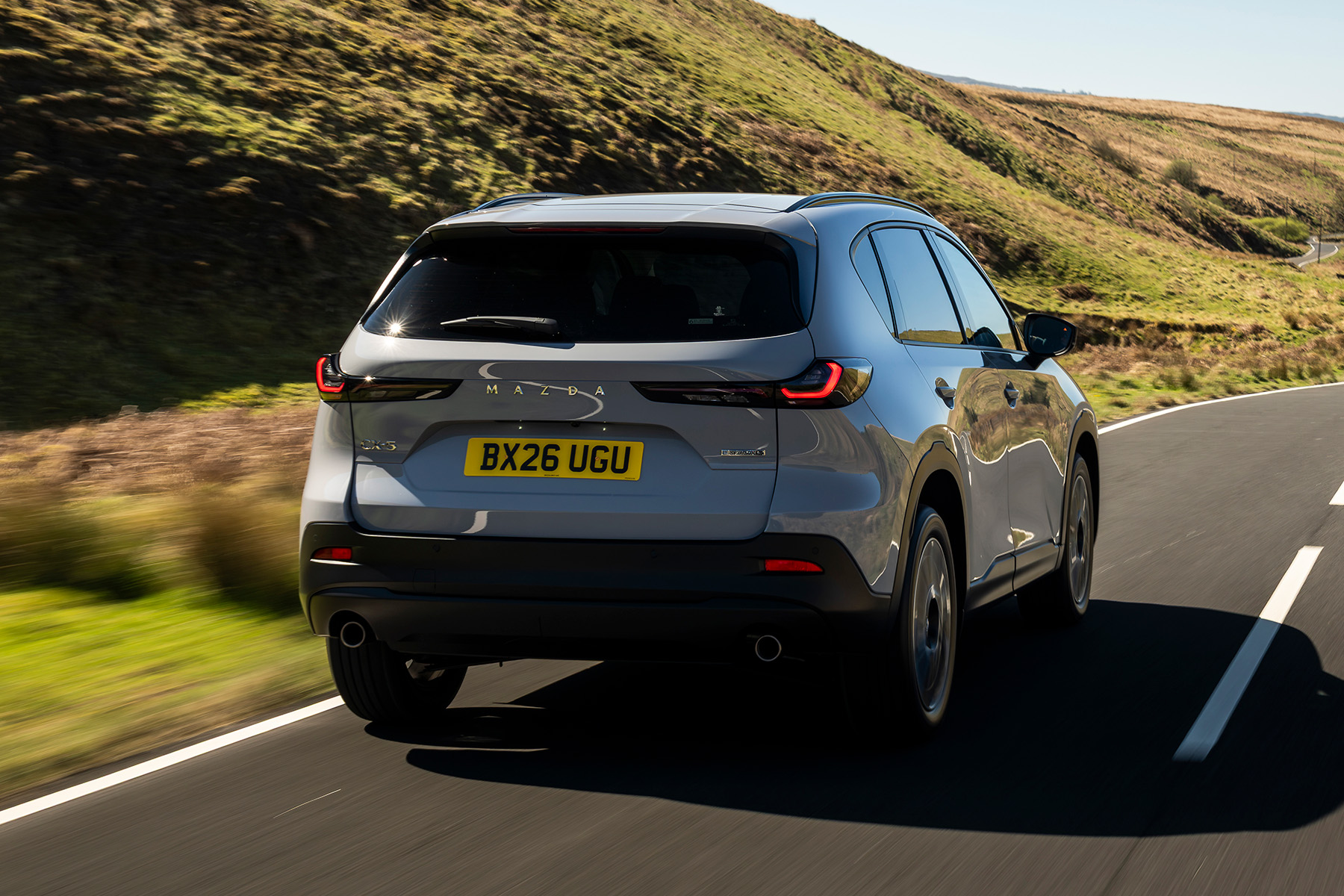
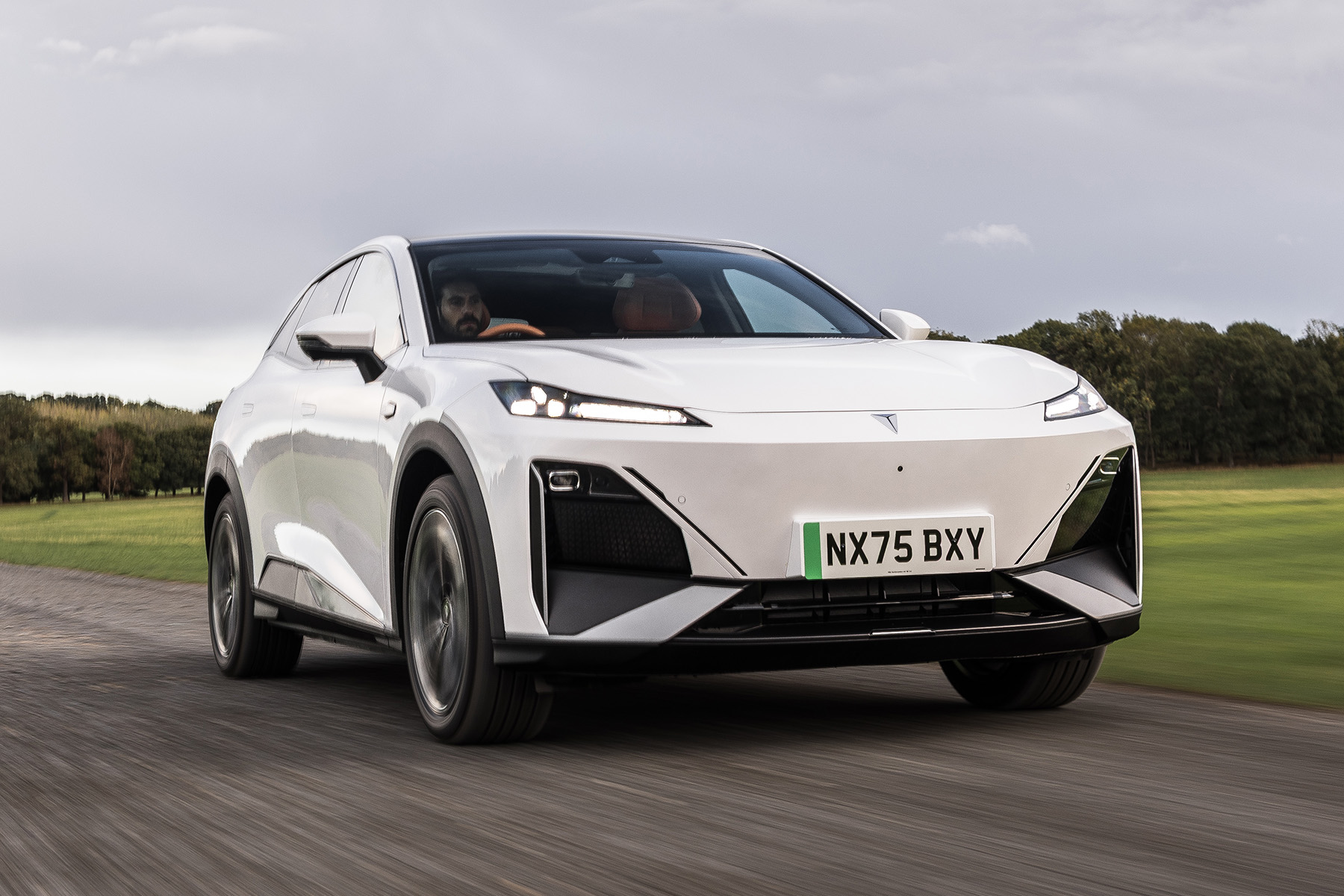
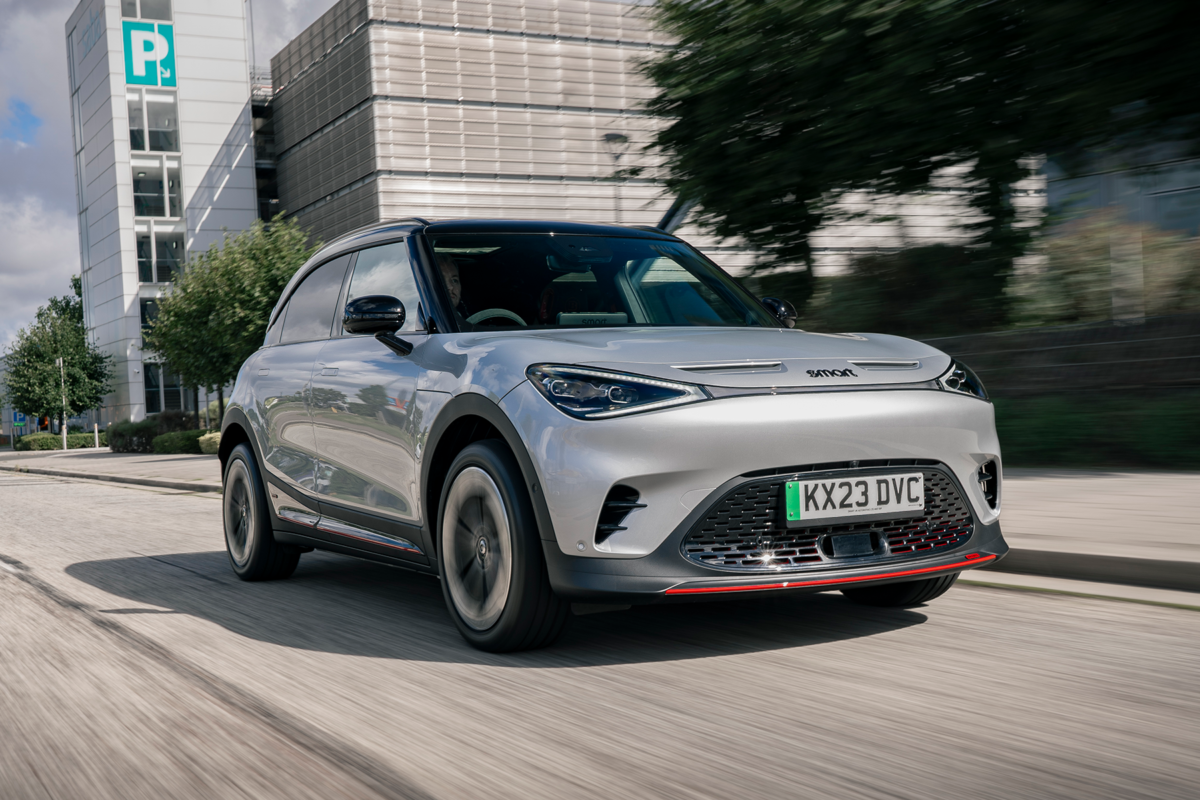
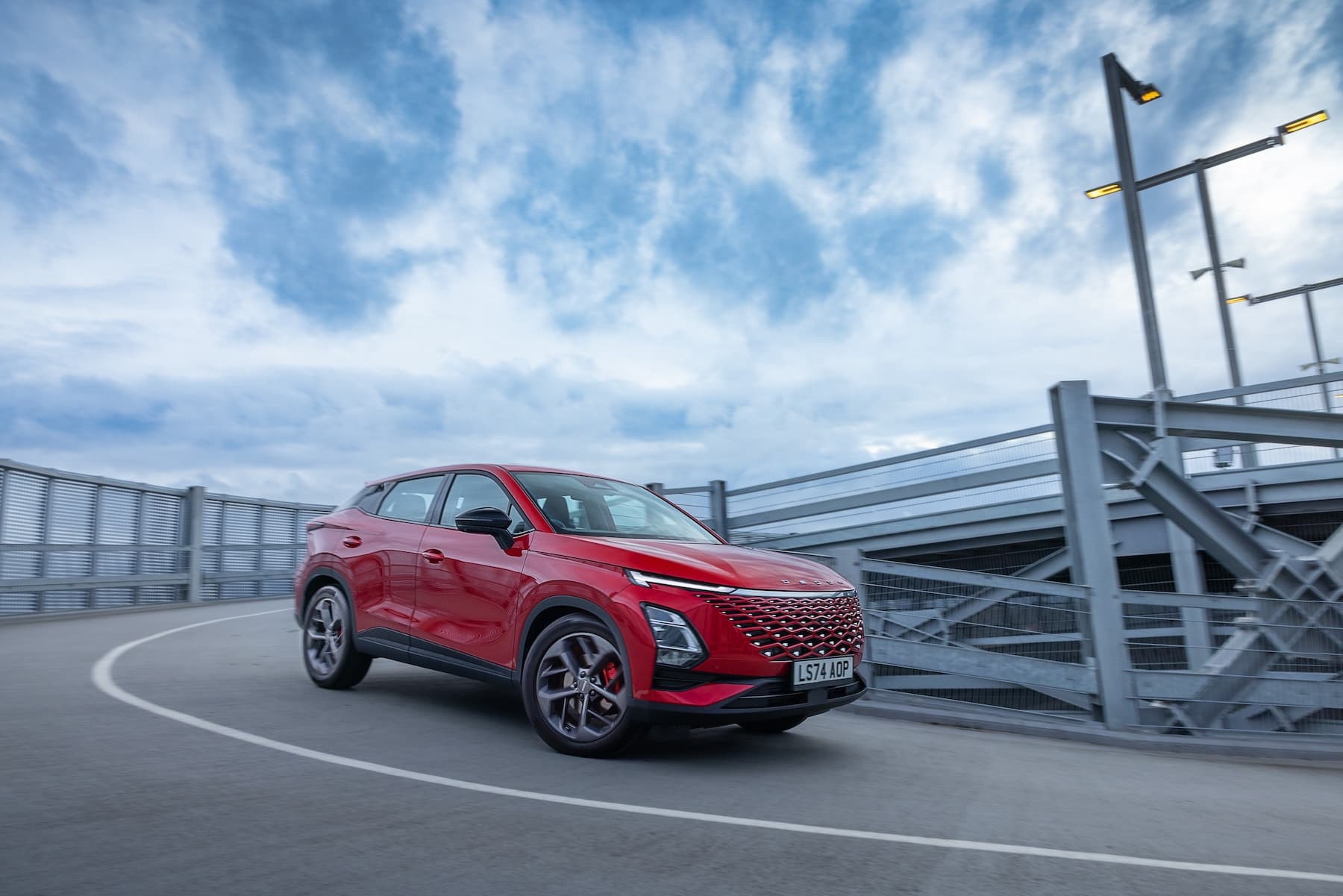
Cars with plugs (EVs and plug-in hybrids) and Chinese brands drove all the growth in May’s new car registration results, according to numbers published this week by the Society of Motor Manufacturers and Traders (SMMT).
Although the overall market was up by about 7% over the same month last year, most of the growth was concentrated on Chinese car brands and plug-in cars. Most European, Japanese and Korean brands saw flat or falling sales in May.
These were also bought by a lot more consumers, with private sales up 17%. Fleet registrations, meanwhile, were up only 2%.
Source: SMMT
EVs and plug-in hybrids see large growth as petrol cars see large fall
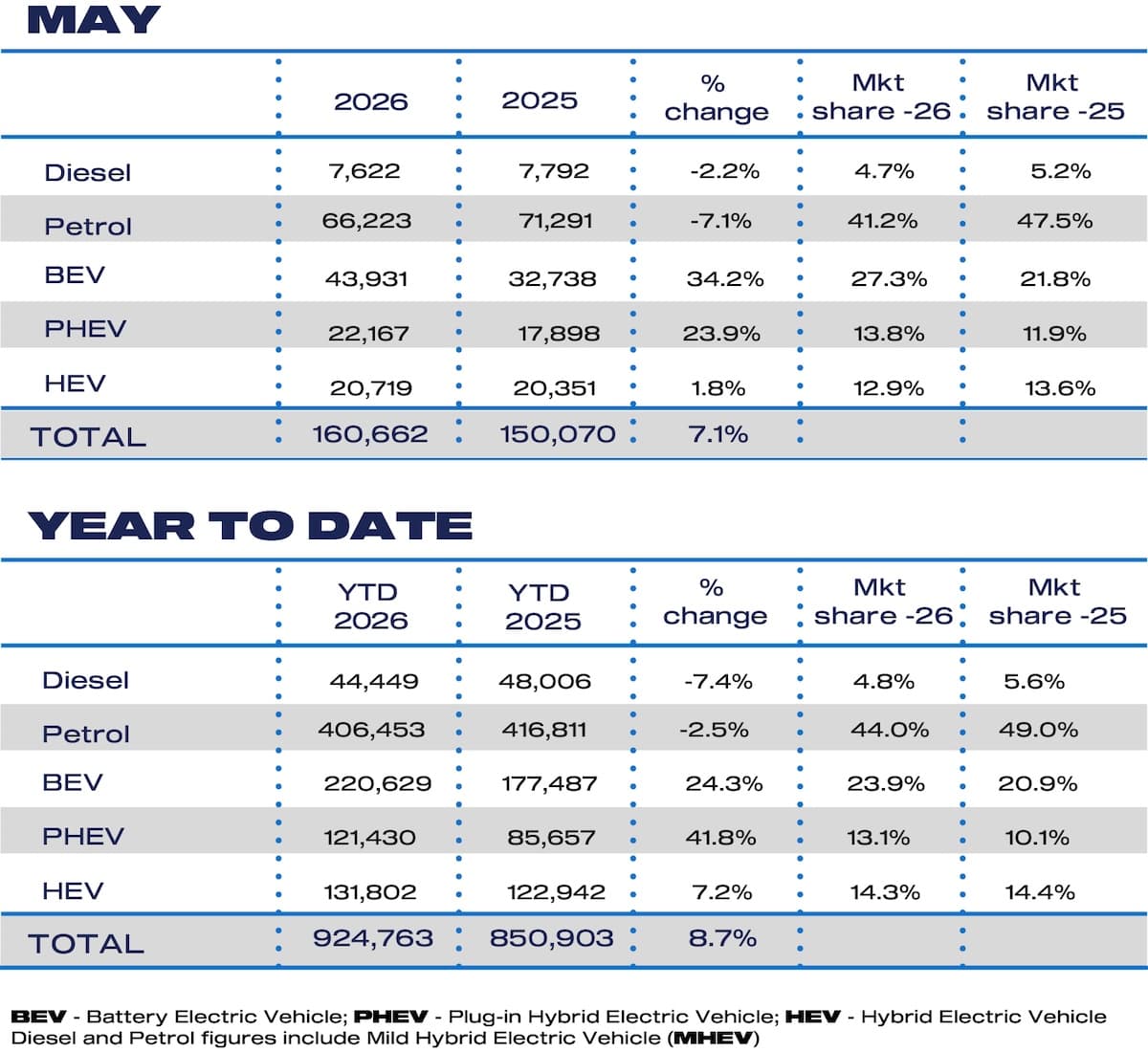
Cars with plugs (EVs and plug-in hybrids) accounted for 41% of all new cars registered in May, up from 34% this time last year. That put them almost equal with purely petrol cars for the first time – give or take 100 cars – which saw a large drop in market share from 48% a year ago.
This was the most significant part of the month’s data, as it suggests customers are increasingly looking for cars that can be plugged into the grid rather than relying on petrol stations. Basic (non-plugged) hybrids have been leapfrogged by plug-in hybrids, which offer a more flexible combination of electric driving for everyday use and petrol backup for longer trips.
America’s war on Iran is obviously a key factor in driving this behavioural shift, and it will be interesting to see how things change if and when petrol prices start falling again. But the longer that the situation in the Middle East drags on without a resolution, the more likely it is that demand for plug-in cars will harden to become a permanent demand.
Source: SMMT
Good month, bad month
Although the overall market was up by 7%, plenty of big-name brands were a long way off the pace in May.
That means that the following brands were about where we’d expect them to be: Audi, Cupra, Kia, Land Rover, MG, Polestar, Porsche, Renault, Vauxhall, Volkswagen and Volvo. All of these brands were within 10% (plus or minus) of the overall market result, which is quite normal.
Volkswagen was, as usual, the best-selling brand in the UK, comfortably ahead of Audi, Kia, BMW and Vauxhall. However, Chery Group’s three connected brands (Chery, Jaecoo, Omoda), which currently operate as one collective brand, would be placed second if they were counted together.
Jaecoo had the largest absolute growth, increasing its sales compared to last year by more than 3,500 cars – a 210% increase. Going in the other direction, the biggest loser by volume was Nissan, registering 2,000 fewer cars in May (down 30%) than in the same month last year.
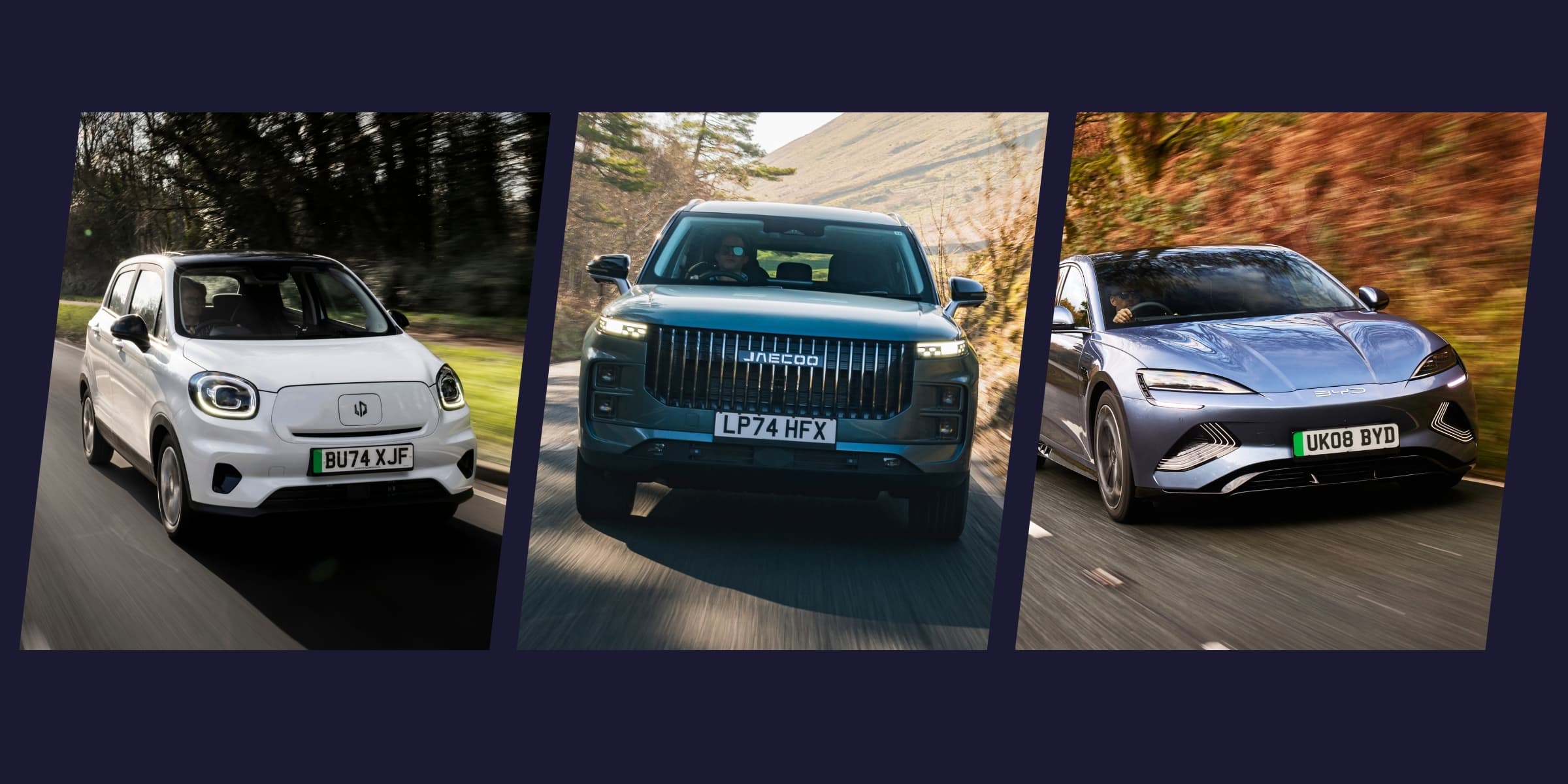
Chinese brands (not including Western brands that build cars in China, such as Tesla or Volvo) saw growth of about 13,500 units compared to last May, which was comfortably more than the overall market growth of 10,600 units. That means that established brands were collectively down by 2% compared to last year, which shows how the market growth is actually Chinese brands displacing more familiar names.
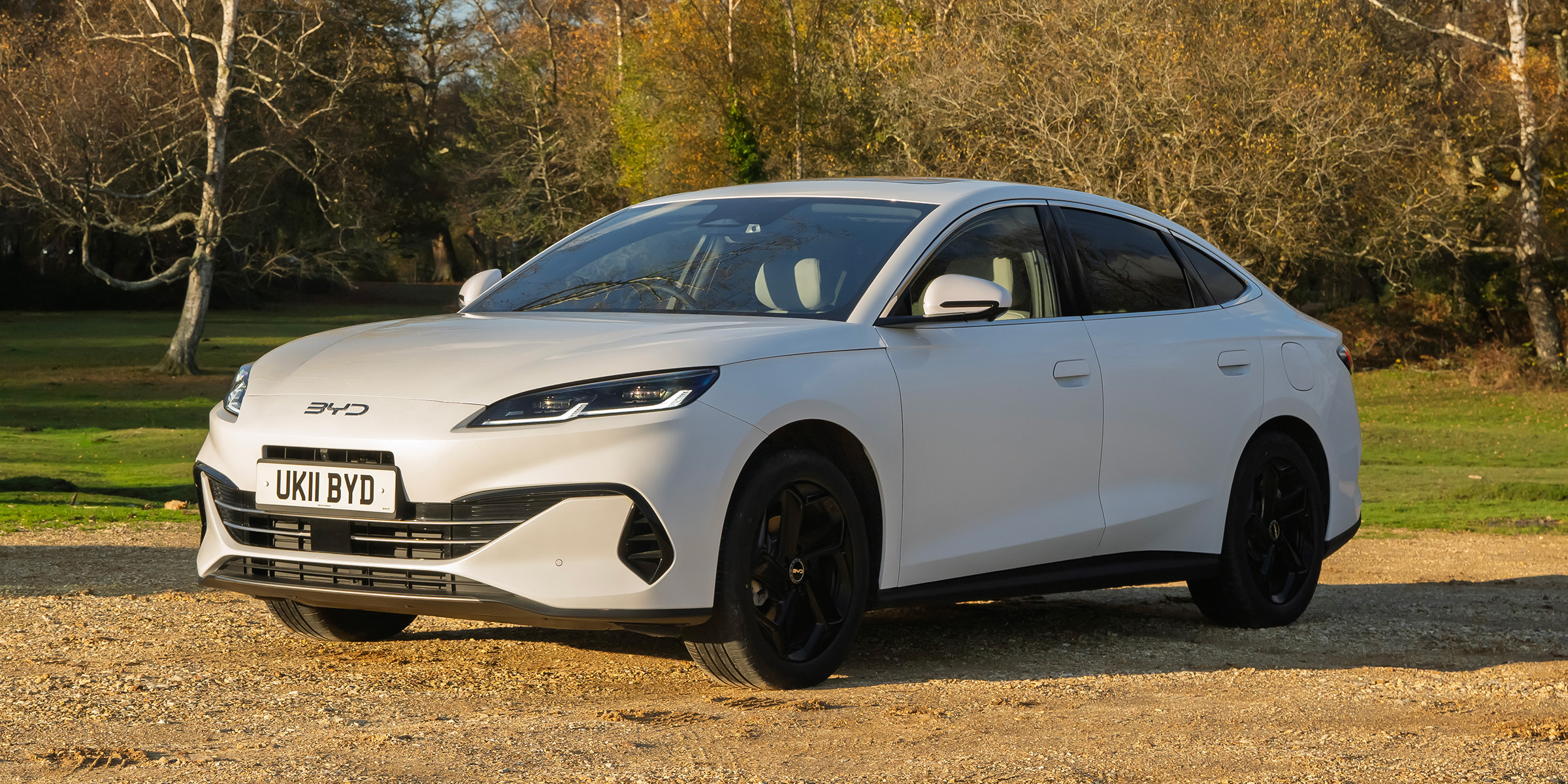
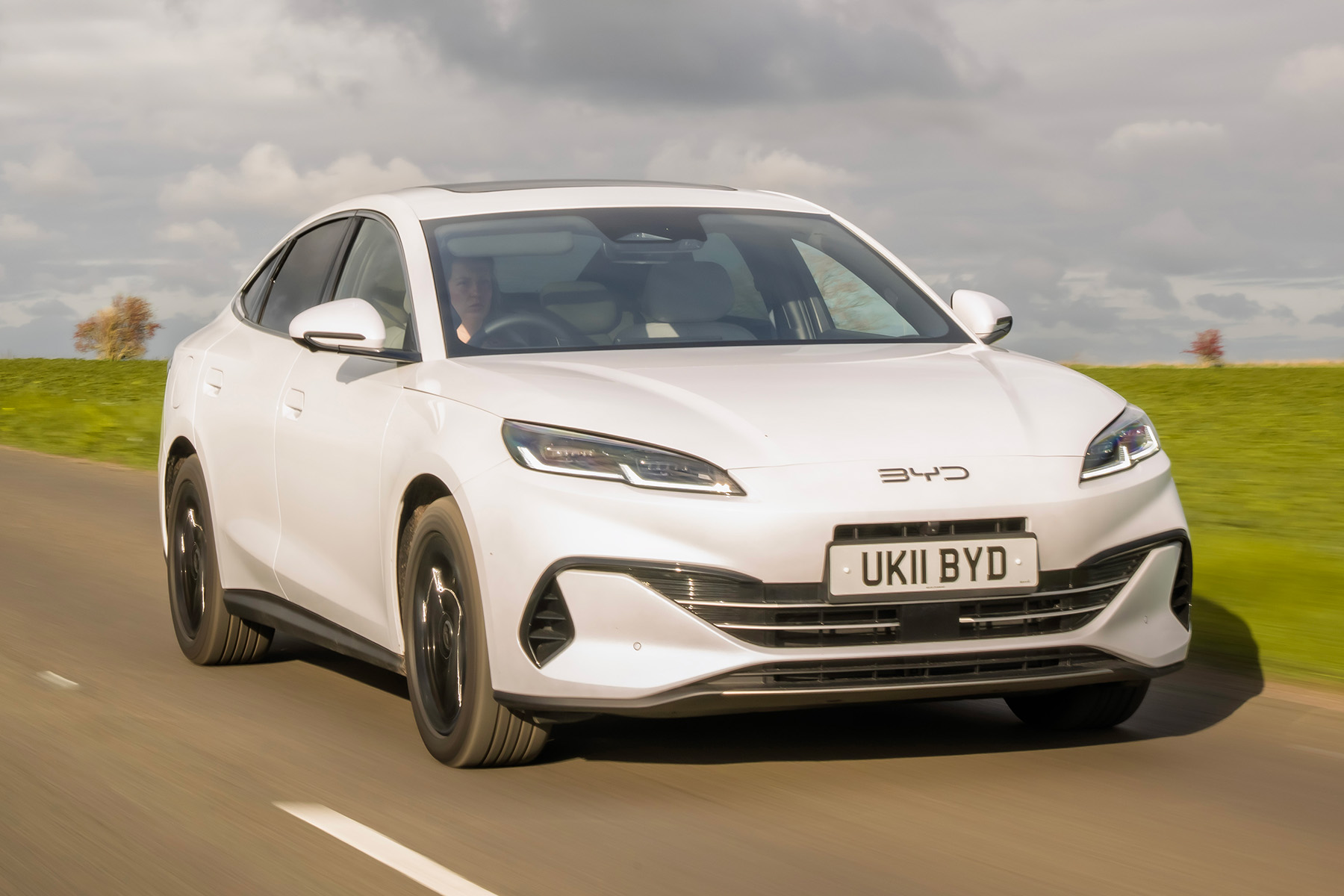
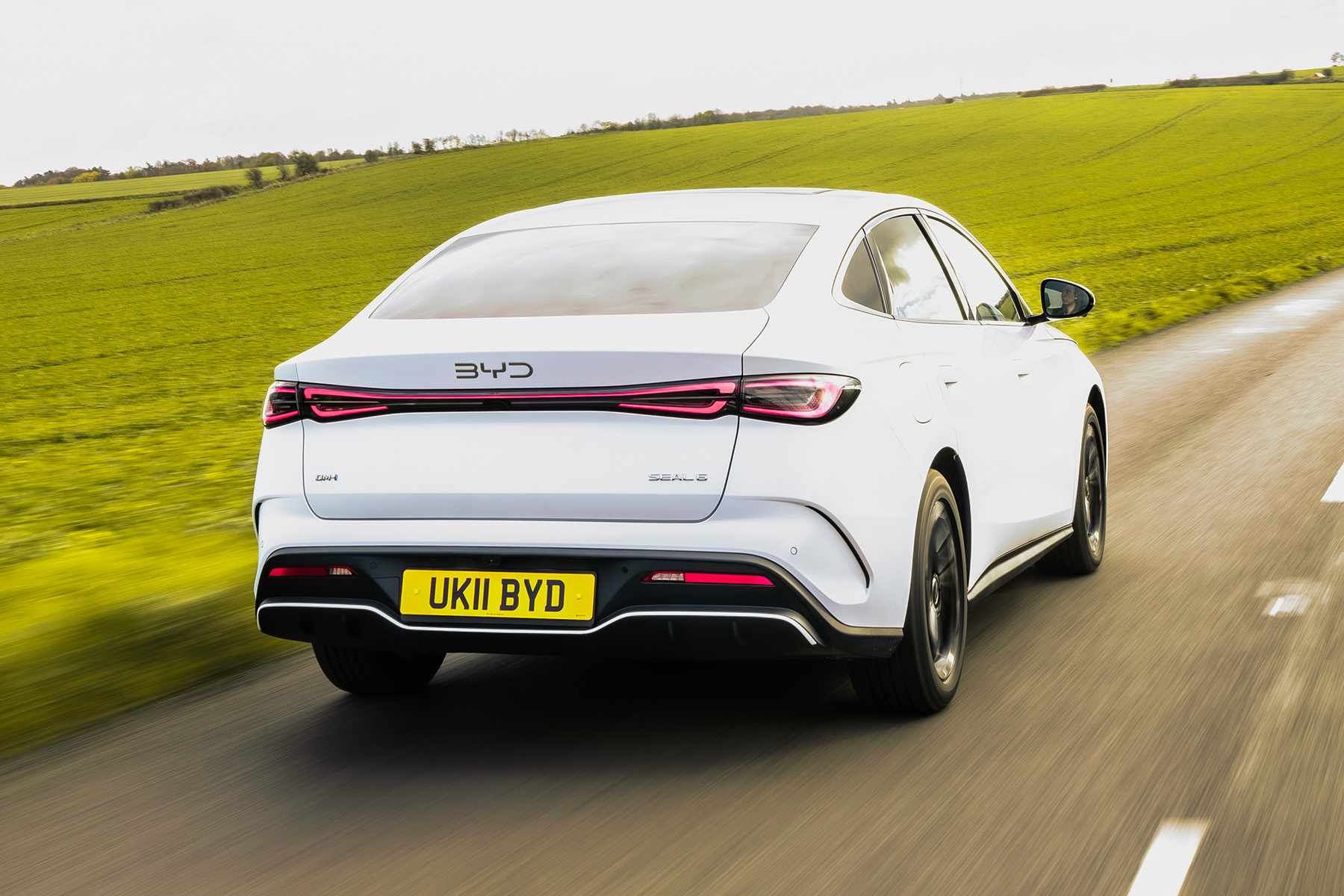
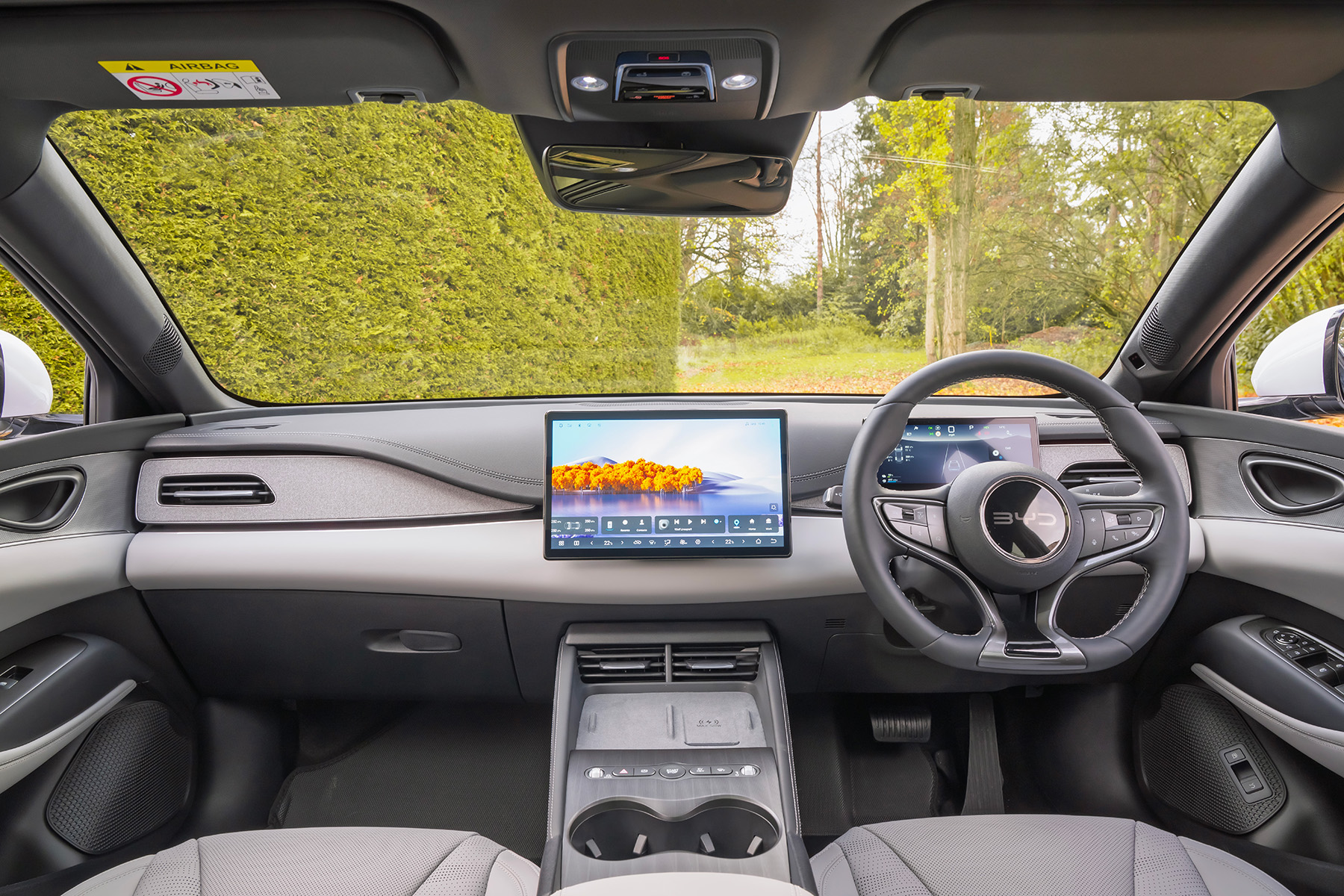
The China-on-China battle is also getting more heated. Jaecoo outsold BYD for the first time (despite BYD’s numbers being up 70%), helped by the fact that Jaecoo now has more than one model contributing proper volume. Chery outsold Omoda, Geely registered more than 1,000 cars despite not existing here this time last year, and Leapmotor went from fewer than 100 registrations to more than 900. And as these new brands start fighting each other harder, it will put everyone else under even more pressure.
Ford Puma stays on top
Source: SMMT
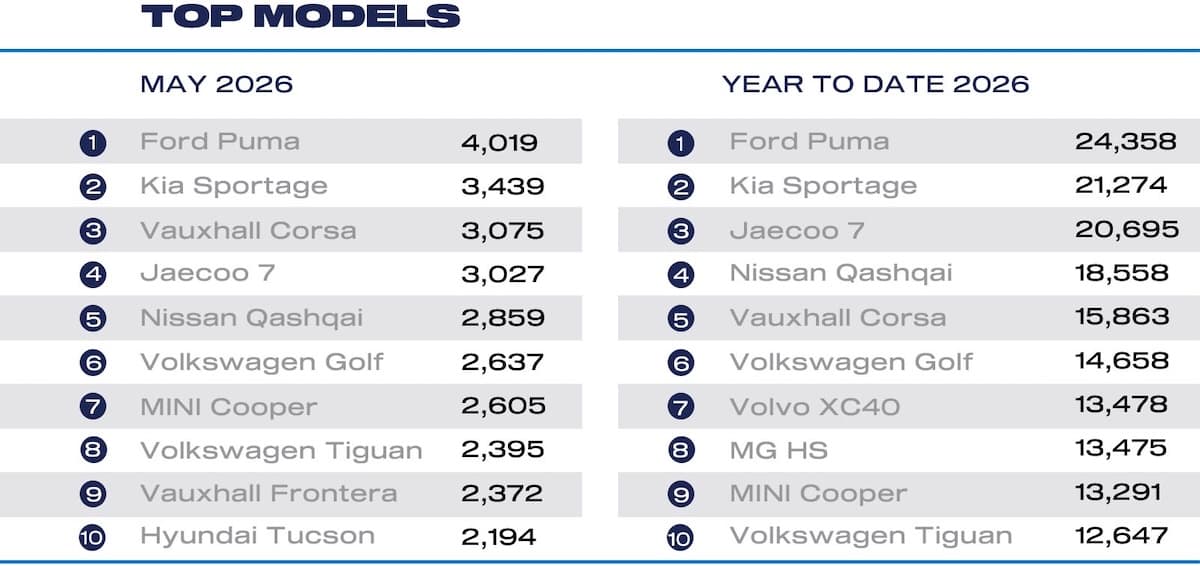
The Ford Puma has extended its lead in the 2026 new car sales race with another best-selling month in May. It finished the month comfortably ahead of its usual rival, the Kia Sportage. The Vauxhall Corsa recorded a strong month in third place, just ahead of the Jaecoo 7.
Both Volkswagen (Golf and Tiguan) and Vauxhall (Corsa and Frontera) had two models in the top ten in May.
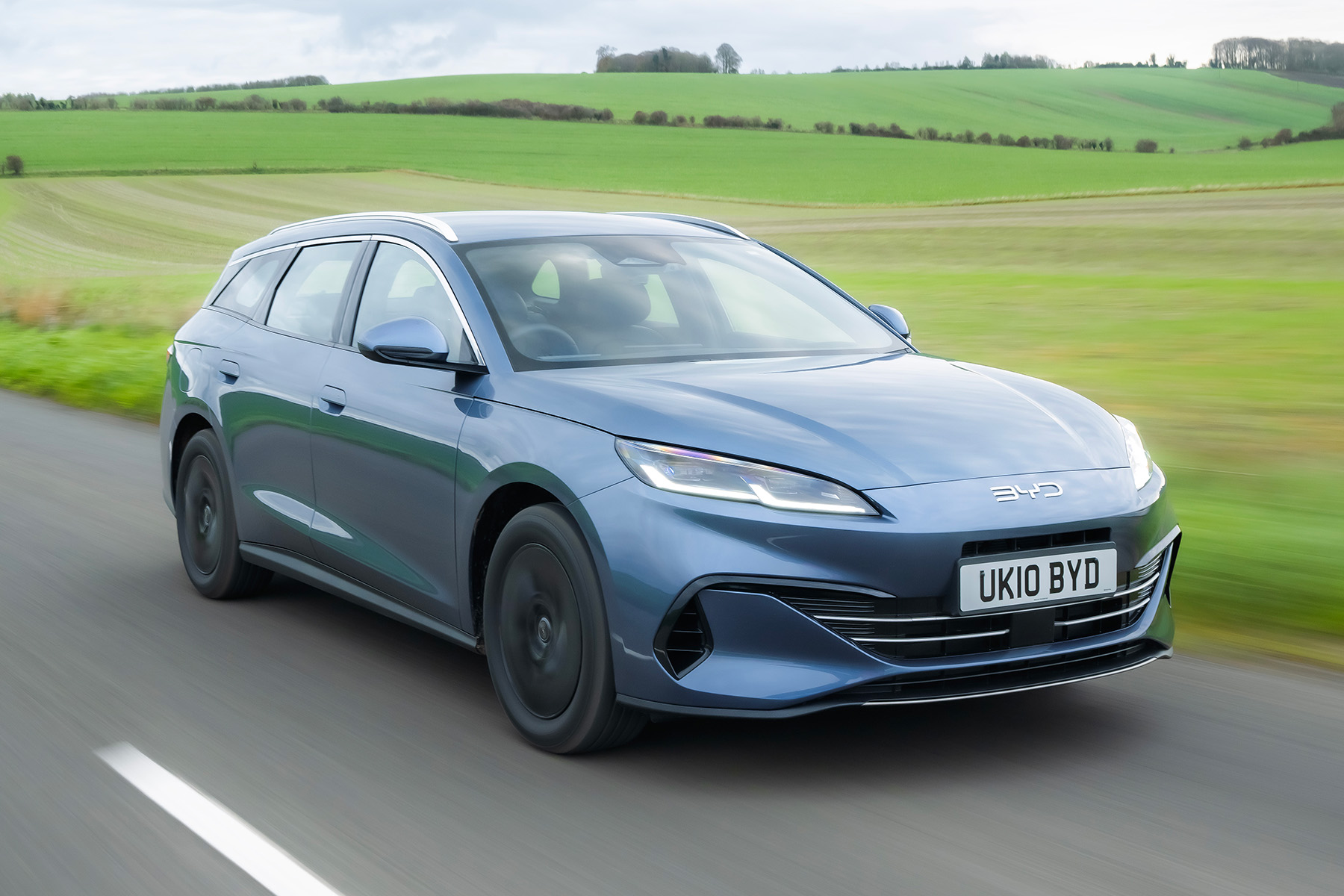
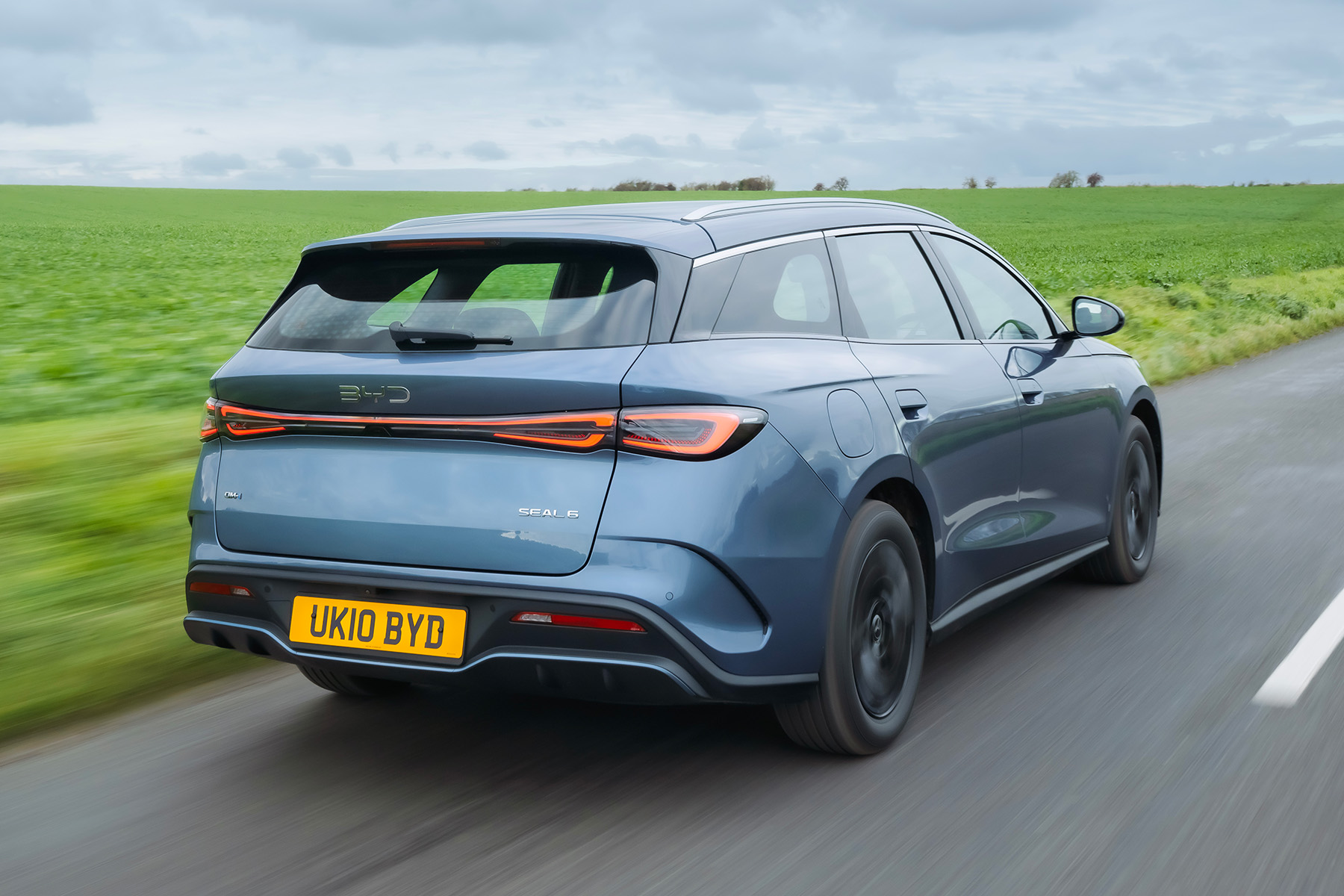
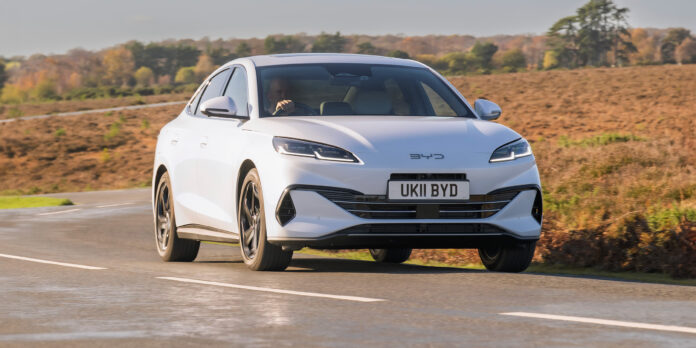
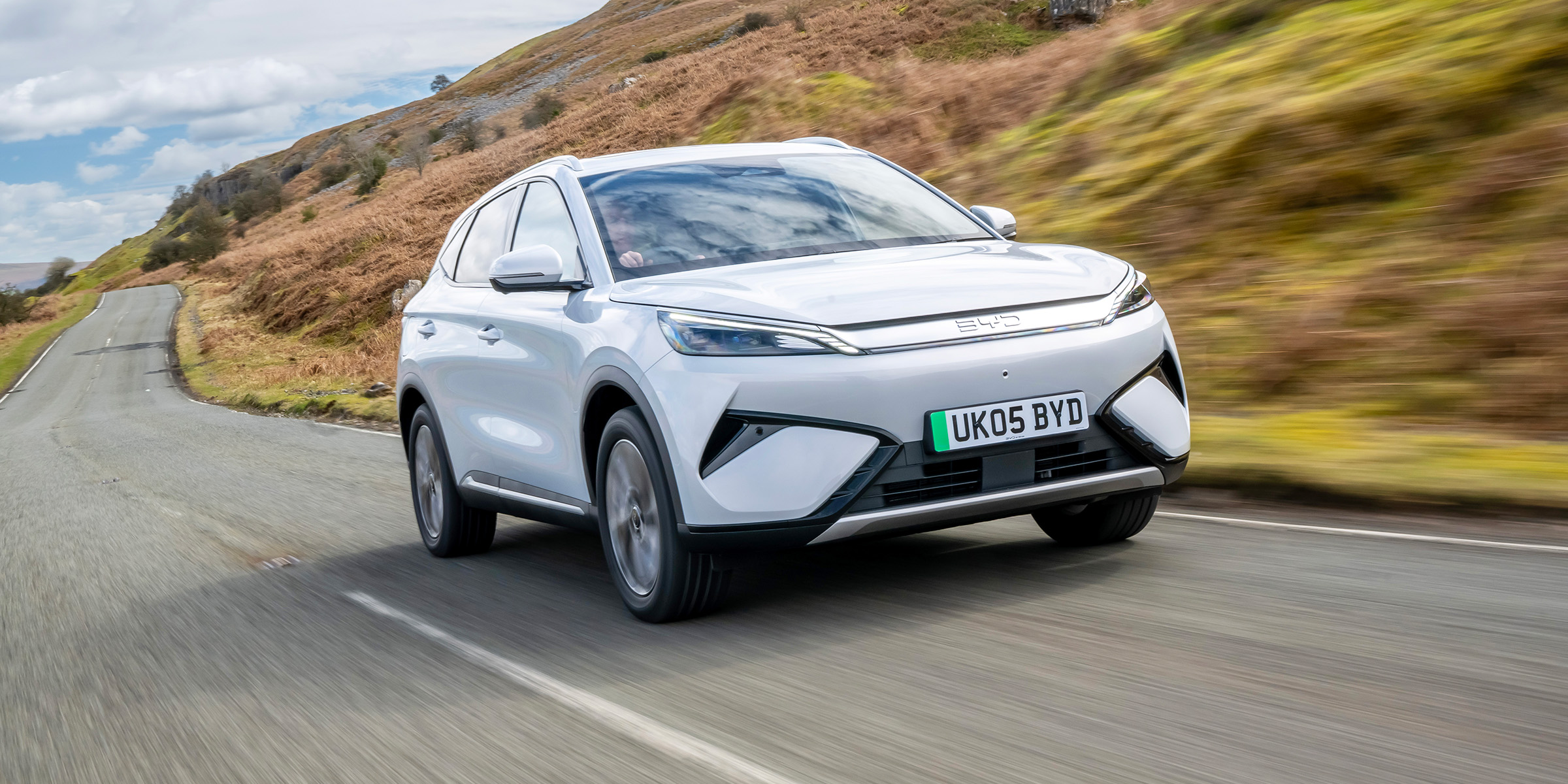
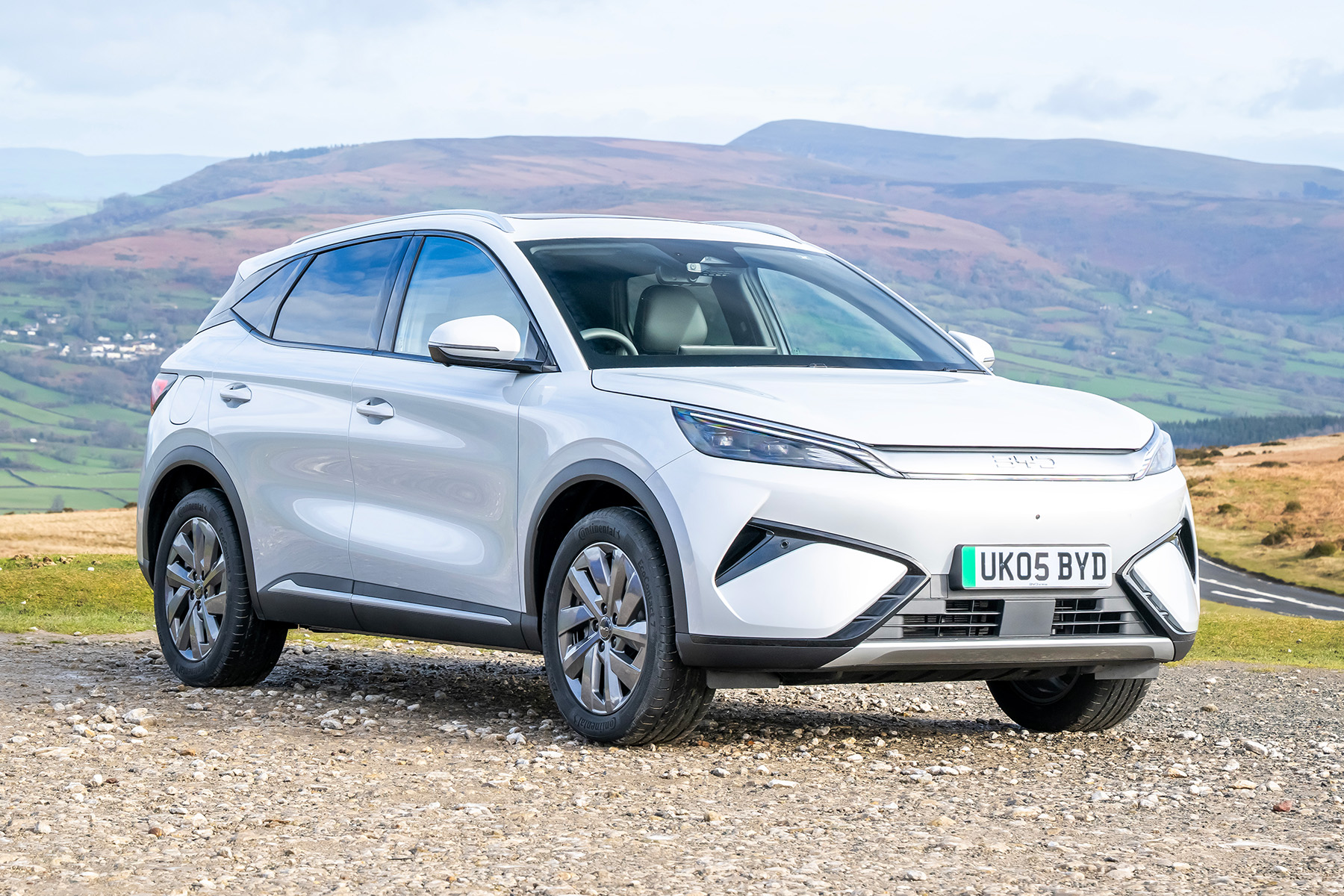
The BYD Seal 6 is a mid-sized saloon and ‘Touring’ estate range, and the petrol plug-in hybrid counterpart to the all-electric BYD Seal.
Officially named the Seal 6 DM-i – ‘DM-i’ being the moniker BYD gives to its plug-in hybrid models, standing for ‘Dual Mode Intelligent’ – the saloon and estate line-up has divided the British motoring media to date, with criticisms of the plug-in hybrid range generally outweighing the positives.
Journalists Alan Taylor-Jones and Luke Wilkinson have published multiple reviews of the Seal 6 across several titles, the pair’s Car reviews concluding that the BYD’s unrefined handling and “thrashy and unpleasant” powertrain means that the Seal 6 “desperately needs to go back to finishing school”, despite the car’s attractive pricing and practicality.
On the other hand, Steve Fowler of The Independent gave the range a much higher review score, praising the saloon and estate for its “excellent” interior quality and its “refined and relaxing” driving experience.
As of June 2026, the BYD Seal 6 holds a New Car Expert Rating of A, with a score of 71%. Beyond the car’s below average reviewer reception, this overall rating is bolstered by the BYD’s excellent safety profile and generous warranty.
Model reviewed: Seal 6 DM-i saloon Score: 7 / 10 “The BYD Seal 6 Saloon boasts strong pricing and efficiency, but the unsettled ride and basic Boost trim limit the appeal.” Author: Paul Barker Read review
Model reviewed: Range overview Score: 8 / 10 “Unlike many plug-in hybrids, the BYD Seal 6 DM-i’s smooth, electric-biased plug-in hybrid powertrain is designed to be efficient regardless of battery charge, and not simply a Benefit-in-Kind tax box-ticking exercise. But there’s plenty else for company car buyers to like; there’s loads of standard kit, a comfortable drive and plenty of cabin space.” Author: Alex Ingram Read review
Auto Trader
Model reviewed: Saloon Score: 7 / 10 “The saloon version of BYD’s Seal 6 DM-i has the same impressive hybrid tech as its estate equivalent but loses out in practicality.” Author: Dan Trent Read review
Model reviewed: Range overview Score: 8 / 10 The Seal 6 DM-i shares a name with BYD’s breakthrough Model 3 rival – but little else, given it’s hybrid rather than full electric and based on the Seal U SUV. There are frustrations with the nagging safety systems and infotainment, and it’s hardly exciting to drive. But, as tested in Touring estate trim, the BYD Seal 6 is practical, comfortable, efficient and a refreshing break from the SUV norm.” Author: Dan Trent Read review
Business Car
Model reviewed: 1.5-litre petrol/electric plug-in hybrid Comfort Lite Score: 7 / 10 “Whilst it’s not that much fun to drive, there’s no doubting the BYD Seal 6’s decent EV range, and it is going to be affordable, with prices expected to range from £33,000 to £38,000, and all versions well-equipped and well-made. Although, like other plug-in hybrids, future changes in taxation might make the Seal EV a more attractive fleet option.” Author: Martyn Collins Read review
Car
Model reviewed: Seal 6 DM-i saloon Score: 4 / 10 “While there’s no arguing with the price, especially given the equipment and tech on offer, practicality and all-electric range, it desperately needs to go back to finishing school.” Author: Alan Taylor-Jones, Luke Wilkinson Read review
Model reviewed: Seal 6 DM-i Touring estate Score: 4 / 10 “The Seal 6 DM-i estate is another strong offering from BYD. The only real issue I have with the car is the way it rides. It’s a little too stiff for my liking, which seems at odds with its brief as a long-legged family car. It also isn’t an especially engaging car to drive quickly, but that’s a fault shared between most of its rivals. At this money, Skoda and Volkswagen have good reason to be worried.” Author: Alan Taylor-Jones, Luke Wilkinson Read review
Carwow
Model reviewed: Seal 6 DM-i Touring estate Score: 6 / 10 “The BYD Seal 6 Touring offers an efficient plug-in hybrid system and generous kit for an affordable price, but it’s not very good to drive.” Author: Mario Christou Read review
Electrifying.com
Model reviewed: Range overview Score: 6 / 10 “The BYD Seal 6 DM-i is fine in terms of its practicality, equipment and pricing, but it is a shame that BYD haven’t made it more comfortable and enjoyable to drive.” Author: Vicky Parrott Read review
Honest John
Model reviewed: Range overview Score: 6 / 10 “There’s a fair bit to like about the BYD Seal 6, but the driving experience is underwhelming, the entry-level engine is rather gutless and the safety systems are overbearing to the point of rage. It feels rather rough around the edges, even accounting for its keen price.” Read review
Parkers
Model reviewed: Seal 6 DM-i Touring estate Score: 5.8 / 10 “We can see the appeal of the Seal 6 if your getting out of a baggy old Mondeo estate, but it just isn’t very good to drive compared to its key rivals. It’s shame as it offers good value and impressive space.” Author: Alan Taylor-Jones, Luke Wilkinson Read review
Model reviewed: Seal 6 DM-i saloon Score: 5.4 / 10 “Great value, but you’ll have to put up with unpolished driving dynamics and relatively sluggish performance if you buy one.” Author: Alan Taylor-Jones, Luke Wilkinson Read review
The Independent
Model reviewed: Range overview Score: 8 / 10 “Every time I drive a new BYD, I come away impressed – and the Seal 6 DM-i is no exception. I drove the Touring, but the same applies to the saloon: quality is excellent, the driving experience is refined and relaxing, and the combination of electric and petrol power works seamlessly.” Author: Steve Fowler Read review
The Sun
Model reviewed: Seal 6 DM-i Touring estate “This is a car that’s been specifically made for British and German tastes and is the antidote to the never-ending flood of lookalike Chinese electro-SUVs.” Author: Rob Gill Read review
The Telegraph
Model reviewed: Seal 6 DM-i Touring estate Score: 8 / 10 “PHEVs may be losing fleet favour, but this model combines economy, comfort and a practical 62-mile electric range.” Author: Andrew English Read review
Safety rating
Independent crash test and safety ratings from Euro NCAP
Independent economy and emissions ratings from Green NCAP
No eco rating
As of June 2026, the BYD Seal 6 has not been assessed by Green NCAP.
Running cost rating
Monthly cost of ownership data provided exclusively for The Car Expert by Clear Vehicle Data
Fuel consumption
Average
Score
Plug-in hybrid models
59 mpg
B
CO₂ output
Average
Score
Variation
Score
Plug-in hybrid models
43 g/km
A
Battery range
Average
Score
Variation
Score
Plug-in hybrid models
43 miles
D
Reliability rating
Reliability data provided exclusively for The Car Expert by MotorEasy
No reliability rating
As of June 2026, we don’t have enough reliability data on the BYD Seal 6 to generate a reliability rating.
The Car Expert’s reliability information is provided exclusively to us using workshop and extended warranty data from our partner, MotorEasy, sourced from both official dealerships and independent workshops.
As soon as MotorEasy has sufficient data on the Seal 6, we’ll publish the results here.
Warranty rating
New car warranty information for the BYD Seal 6
BYD’s new car warranty is better than average, and better than rival brands in a similar price bracket as the Seal 6.
The duration is a six years, with a limit of 93,750 miles. In addition to the standard new car warranty, this plug-in hybrid range has an eight-year/155,350-mile warranty for the battery components.
Warranty on a used BYD Seal 6
If you are buying an ‘Approved Used’ BYD Seal 6 from an official BYD dealership, you will get the remaining balance of the original six-year new car warranty and the eight-year battery warranty, and if the warranty is up, you get a minimum 12-month warranty included.
If you are buying a used BYD Seal 6 from an independent dealership, any warranty offered will vary and will probably be managed by a third-party warranty company.
If you are buying a used BYD Seal 6 from a private seller, there are no warranty protections beyond any remaining portion of the original new car warranty.
If you’re looking to buy any used car that is approaching the end of its warranty period, a used car warranty is usually a worthwhile investment. Check out The Car Expert’s guide to the best used car warranty providers, which will probably be cheaper than a warranty sold by a dealer.
As of June 2026, we are not aware of any DVSA vehicle safety recalls affecting the BYD Seal 6. However, recall information is updated regularly, so this may have changed.
You can check to see if your car has any outstanding recalls by visiting the DVLA website or contacting your local BYD dealer.
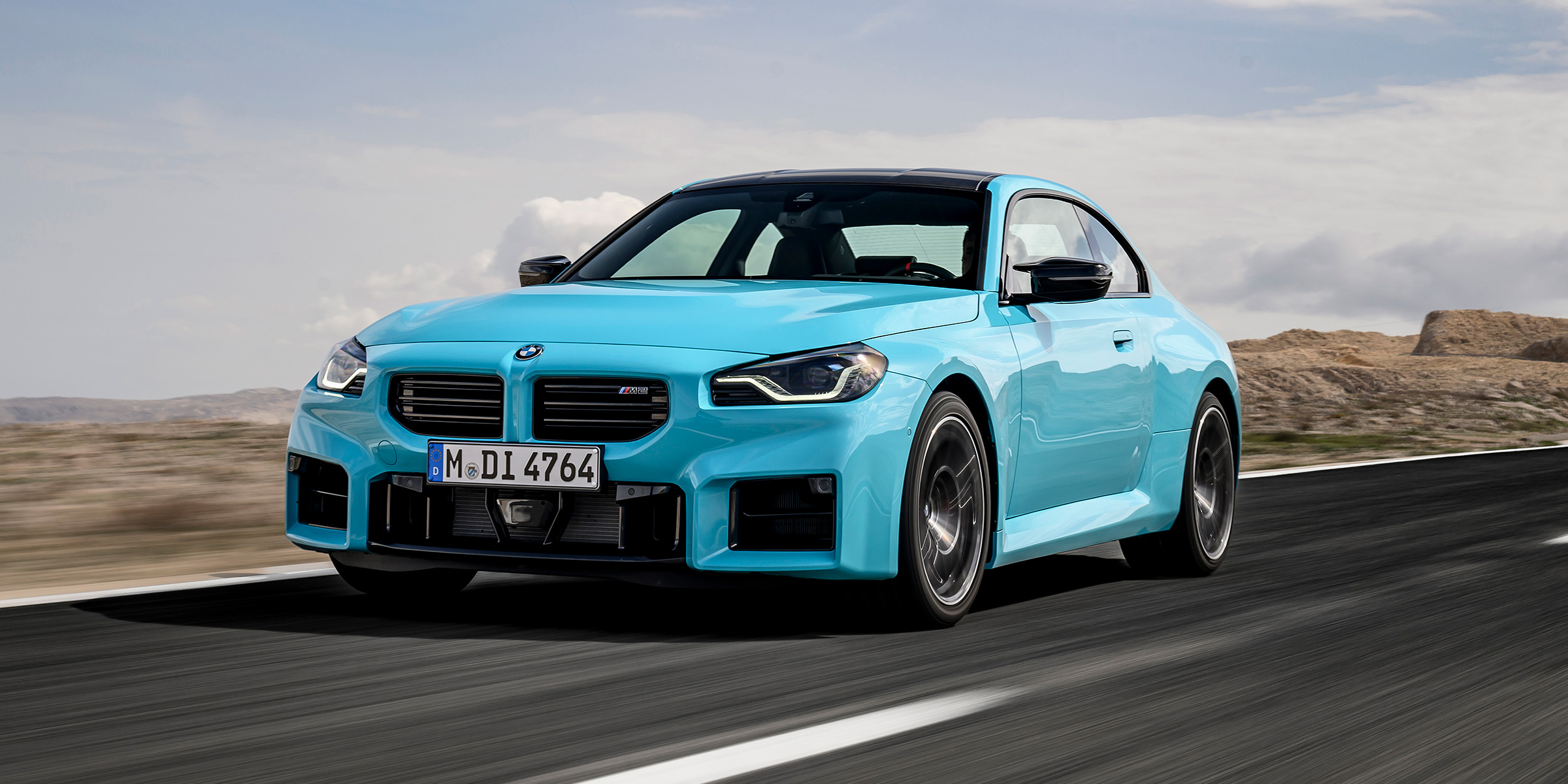
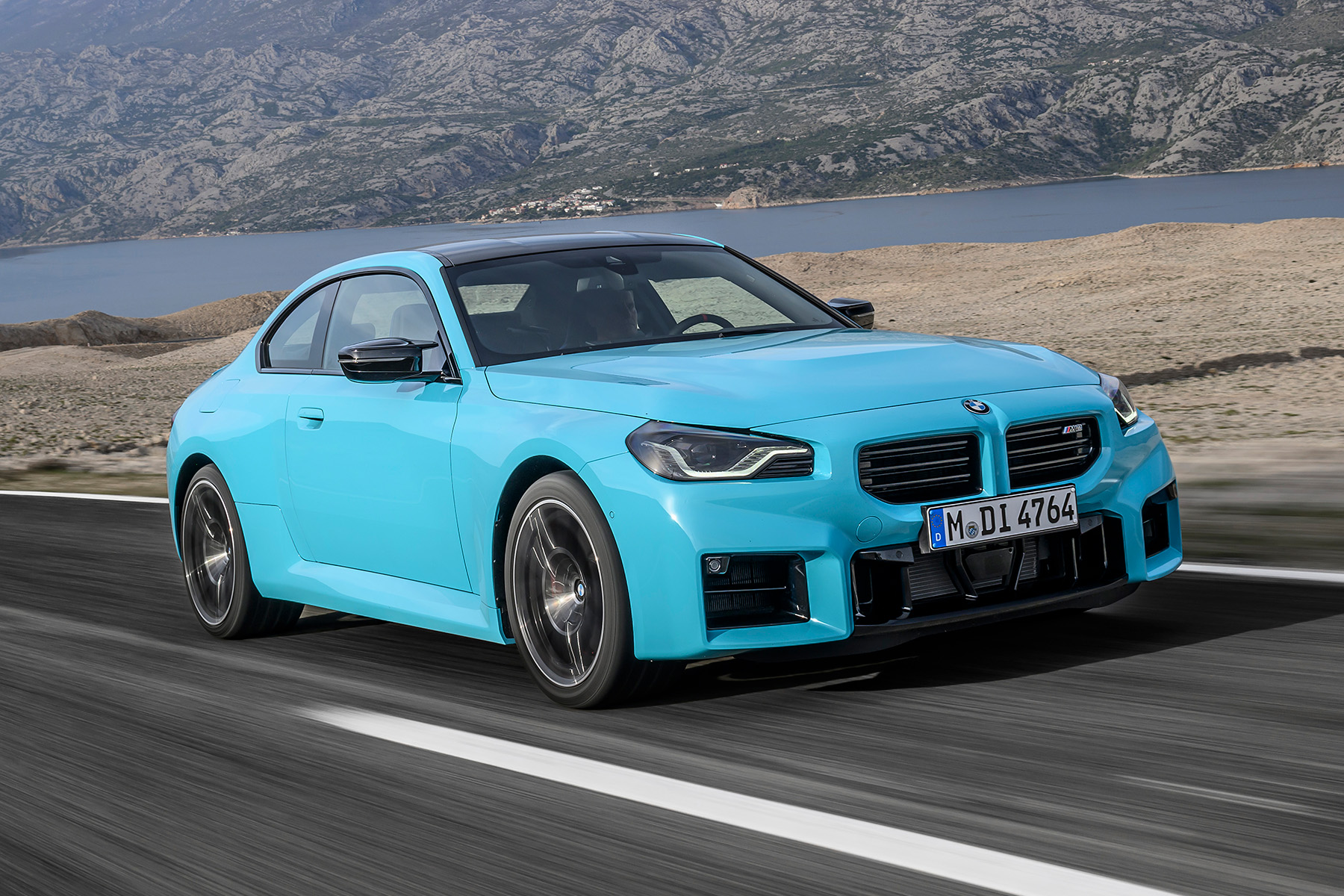
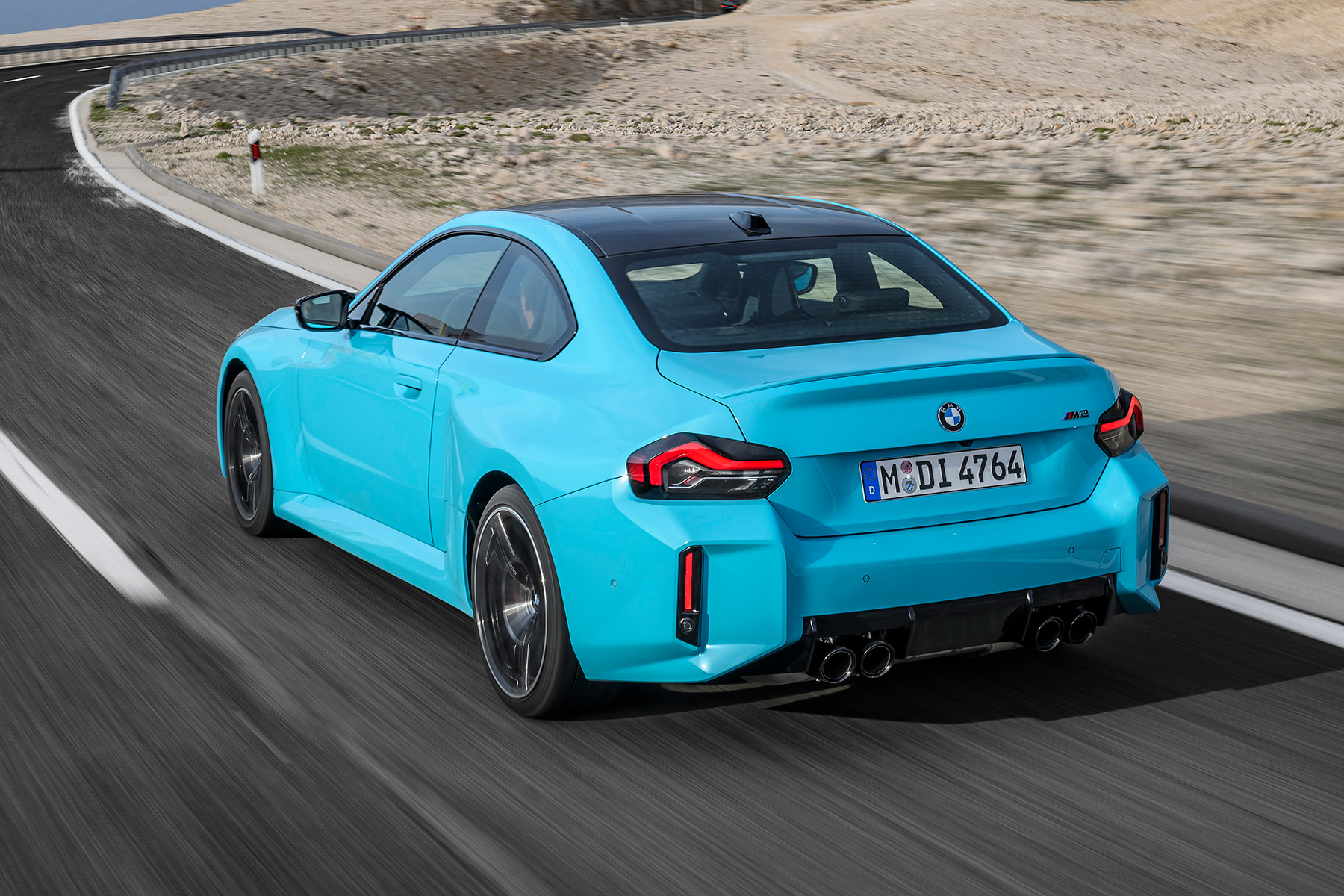
BMW has bolstered its M2 line-up with the introduction of the new ‘M2 xDrive’, marking the first time the compact coupé has been offered with all-wheel drive.
The arrival of xDrive brings the M2 closer to potent all-wheel drive rivals such as the Audi RS 3, Mercedes-AMG CLA 45 S and Porsche 718 Cayman GTS. However, BMW has retained the ability to switch the M2 into a rear-wheel-drive configuration, and paired with the stability control switched off, this provides a more traditional M-car experience.
BMW’s M xDrive system distributes power between the front and rear wheels to maximise grip and stability. Under normal driving conditions, the system sends power exclusively to the rear wheels, only engaging the front axle when extra traction is needed.
More grip, more pace
Power continues to come from BMW’s familiar 3.0-litre twin-turbocharged straight-six petrol engine, producing 480hp. However, thanks to the extra traction provided by xDrive, the new model can sprint from 0-62mph in 3.7 seconds – three-tenths quicker than the rear-wheel-drive M2. Top speed is electronically limited to 155mph, or 177mph when fitted with the optional ‘M Driver’s Package’.
BMW says the new drivetrain makes the M2 more capable in poor weather conditions and on slippery surfaces, while also delivering improved stability and confidence when driving enthusiastically on road or track. An electronically controlled ‘Active M Differential’ continues to manage power delivery across the rear axle, helping sharpen cornering performance and maximise traction.
New engine tech
The M2 xDrive also introduces a new technology called ‘BMW M Ignite’, which will eventually be rolled out across BMW M’s six-cylinder engines.
Inspired by racing engines, the system uses a pre-chamber combustion process designed to improve efficiency under heavy loads, such as during track driving, while helping BMW meet future emissions regulations. According to BMW, the technology allows drivers to spend longer on track before needing to refuel, without compromising performance.
Familiar M2 recipe
Aside from the drivetrain changes, the M2 remains largely unchanged. Standard equipment includes staggered 19-inch front and 20-inch rear alloy wheels, ‘M Compound’ brakes, adaptive chassis settings and BMW’s eight-speed automatic gearbox.
Buyers will also gain access to a wider selection of paint finishes, including ‘Borusan Turkish Blue’, which is being offered on the M2 for the first time.
When is it arriving?
The M2 xDrive arrives in UK showrooms from late summer 2026, priced from just north of £74k. UK deliveries are scheduled to begin soon after.
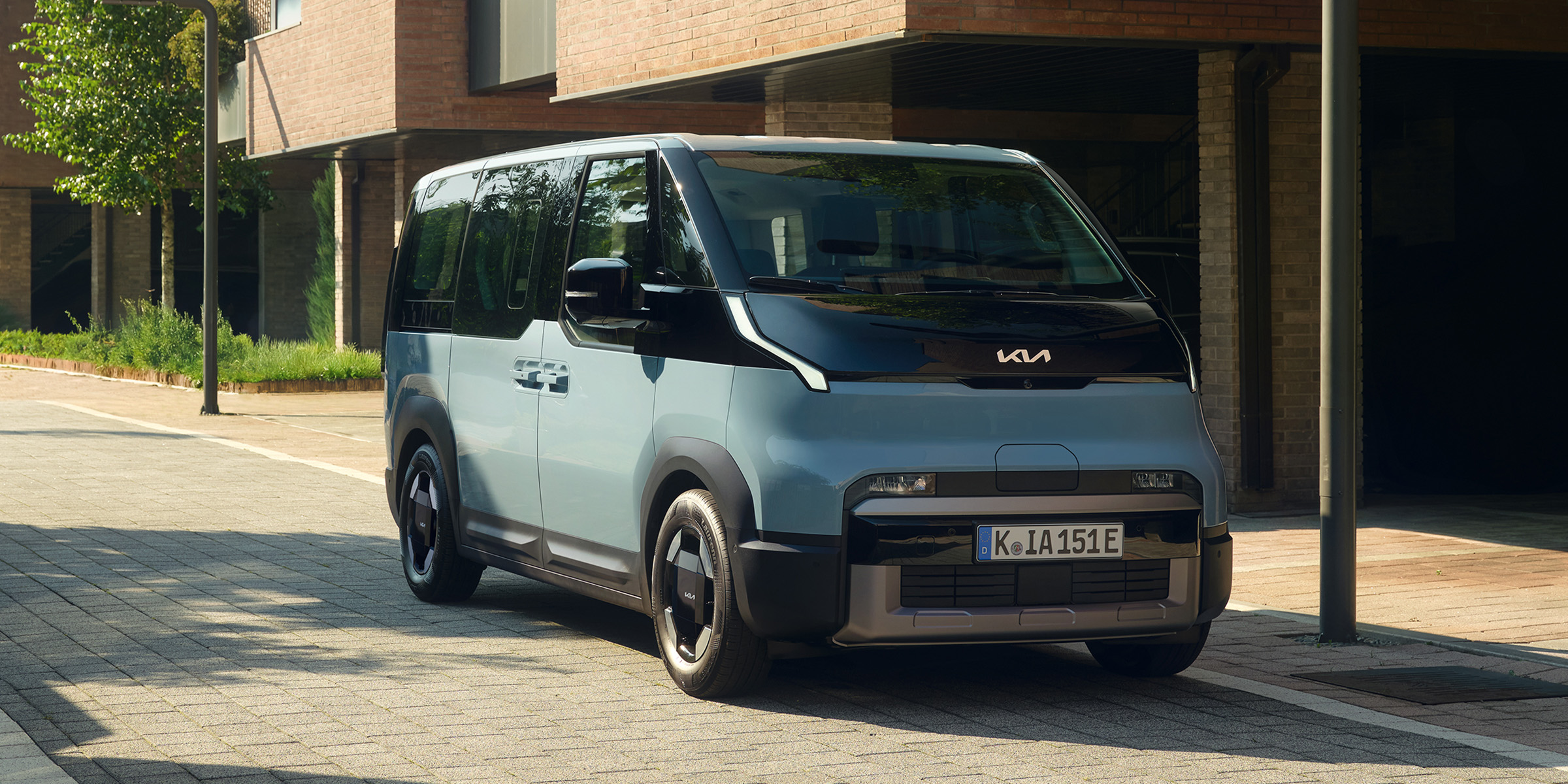
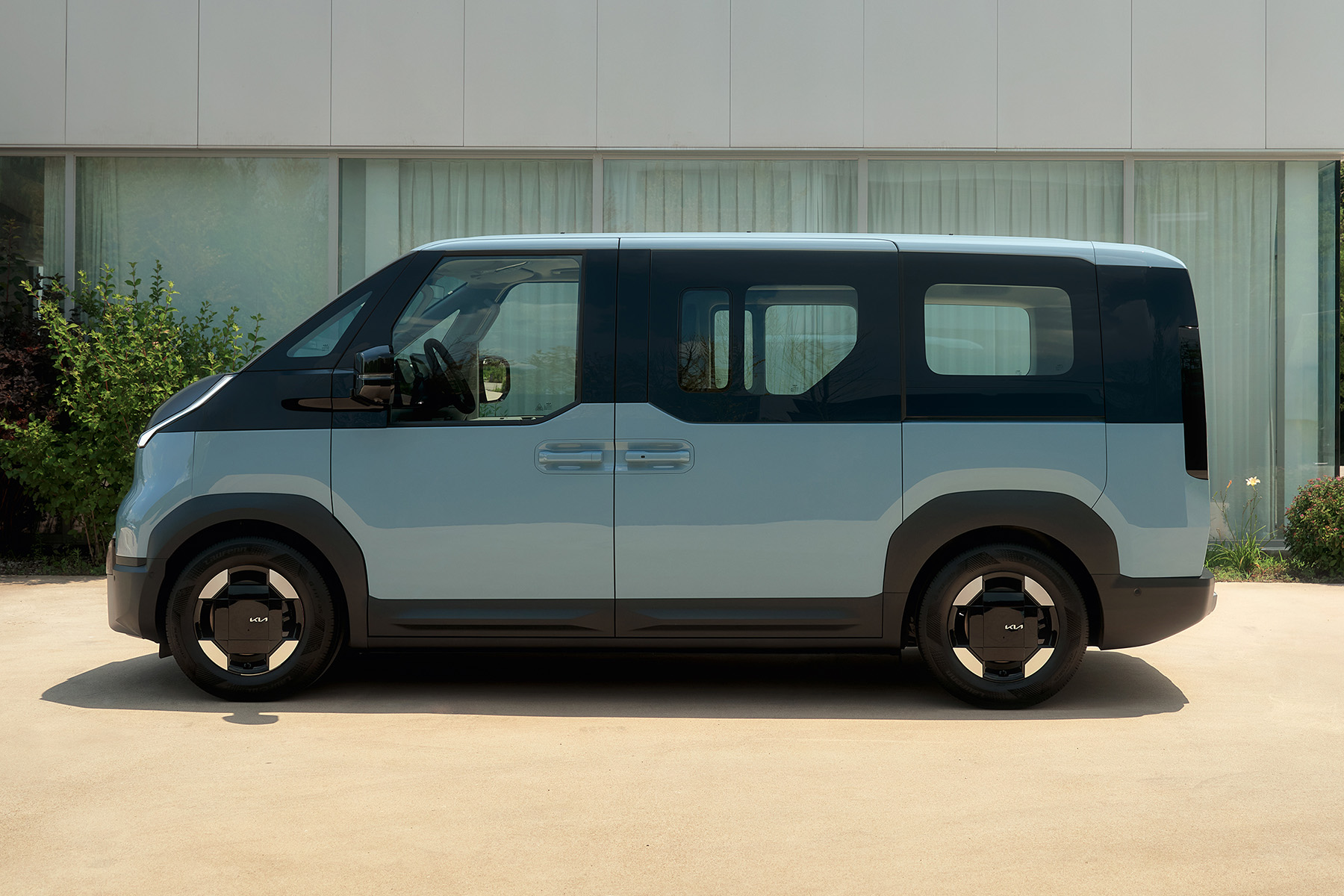
Kia has expanded its all-electric PV5 Passenger range with the introduction of a new seven-seat model and a higher-specification ‘Elite’ trim grade.
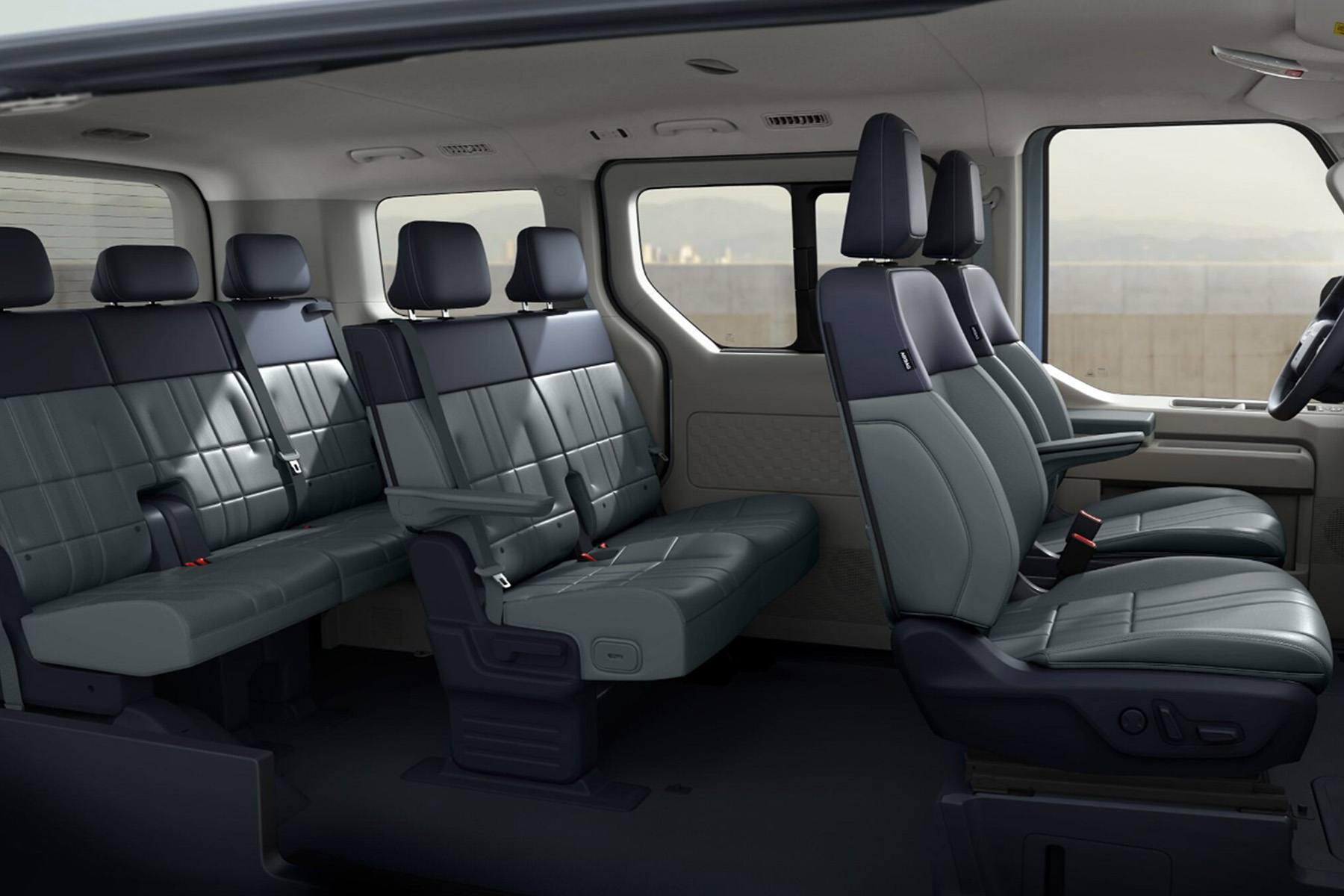
The new PV5 Passenger seven-seater, which joins the existing five-seat version, introduces a more flexible 2-2-3 seating layout. Kia claims that this new layout offers generous passenger space across all three rows, while sliding side doors and a low step-in height should make access easier for children, older passengers and those with limited mobility.
Designed with families and taxi operators in mind
While the PV5 has been developed as a multi-purpose vehicle suitable for private buyers, Kia is also targeting professional users. While the five-seat version could only really be compared to other five-seater electric MPVs like Volkswagen ID. Buzz, the addition of a seven-seat version means that the PV5 becomes a practical challenger to the likes of the Ford E-Tourneo Custom and Mercedes-Benz EQV.
The new variant offers 318 litres of boot space with all seven seats in place, expanding to 785 litres when the third row is folded flat. Kia also claims class-leading interior dimensions, including over a metre of legroom and headroom.
Over 240 miles of range
Unlike the five-seat model, which is available with either a 52kWh or 71kWh battery, the seven-seat PV5 will be sold exclusively with the larger 71kWh unit. Kia says this will deliver more than 240 miles of battery range, with rapid charging allowing a 10% to 80% battery top-up in under 30 minutes when connected to a suitable 150kW charger. By comparison, the five-seat version can muster up to 256 miles with the same battery pack.
The PV5 also supports Vehicle-to-Load (V2L) technology on higher-spec models, allowing owners to power electrical devices directly from the vehicle’s battery — useful for camping trips, outdoor activities or mobile businesses.
New Elite trim joins the range
Alongside the seven-seat model, Kia has introduced a new ‘Elite’ specification above the existing ‘Essential’ and ‘Plus’ trims.
This new flagship trim grade adds:
Electrically operated sliding doors
Ventilated front seats
A surround-view parking camera system
Blind-spot camera monitoring
Side parking sensors
Full artificial leather upholstery
A premium paint finish included as standard
UK pricing
The PV5 Passenger range now starts from around £33k for the five-seat ‘Essential’ model with the smaller 51kWh battery. That version also qualifies for the government’s new Electric Car Grant, reducing its effective price by £1,500.
Pricing for the seven-seater in ‘Essential’ guise instead starts at £36k. Kia says details regarding grant eligibility for the new seven-seat variant will be announced at a later date.
‘Elite’ variants of the five-seater and seven-seater are priced at around £40k and £42k respectively.
Buy yourself a new car and you can expect it to come with at least three years’ warranty on its parts replacement and any repair work. But choose a used car – and more than seven million buyers do that every year in the UK – and you probably won’t get the same benefits.
Certainly, many second hand cars will come with some sort of warranty to cover parts for a short period of time, but that could only be for a few months.
So anyone who has spent hard-saved cash on a decent used vehicle should be thinking about buying a used car warranty of their own. This type ofwarranty covers you for parts and labour repair costs if your car fails dramatically.
They vary greatly and each will have its own terms and conditions in relation to age, mileage and the total amount of payout, so you must look carefully at what’s on offer before signing up to anything.
Deciding whether to buy a warranty is a valid consideration for any used car buyer and it’s important to weigh up the pros and cons of having the cover in the first place. For every owner, the situation will be different.
Some owners might have easy access to parts for their car. Others might be a dab hand at repairs or knows someone who can help them. A few drivers will have bought a cheap car that doesn’t even justify an expensive repair if something was to go seriously wrong with it further down the road.
But for most people, the consideration is this: do I want the peace of mind of having some financial support behind me if my car suddenly needs an expensive fix? Or do I think that the monthly premiums I’d pay for the warranty cover would work out more than the cost of any repair bill I encounter?
Many warranty policies will cover labour costs and other expenses such as car hire if your vehicle is off the road, so these are considerations too.
It’s an interesting balance between extra cost and extra peace of mind and, certainly for buyers of fairly new used cars that are still worth good money, it’s something to think about. And there are several companies that will help you make that decision with a range of offerings. The Car Expert has looked at some of the best.
The cost of a warranty will vary according to the age and value of your car plus the mileage it has already done. The level of cover you require will also have an impact on cost. Getting insurance against repairs beyond the engine, main mechanicals and electrics will raise the premium but, even so, there are lots of extras you can add in.
However, anything that will naturally wear out – tyres, battery, exhaust, clutch – will not normally be covered.
So, if you’ve bought a used car, or your once newly purchased vehicle has reached the end of its original warranty, where should you go to find some cover? All the leading used car warranty providers have good websites to guide you through their offerings. All you have to decide is which one is right for you.
The benefit of all these websites is that they are not aimed at serious car lovers, but people who just want to choose the right policy for their needs. Each company has its own strengths and unique points, but all of them offer the time-saving option of being a one-stop shop for your next used car warranty, and are simple to navigate and use.
They say: A safety net against a wide range of car faults
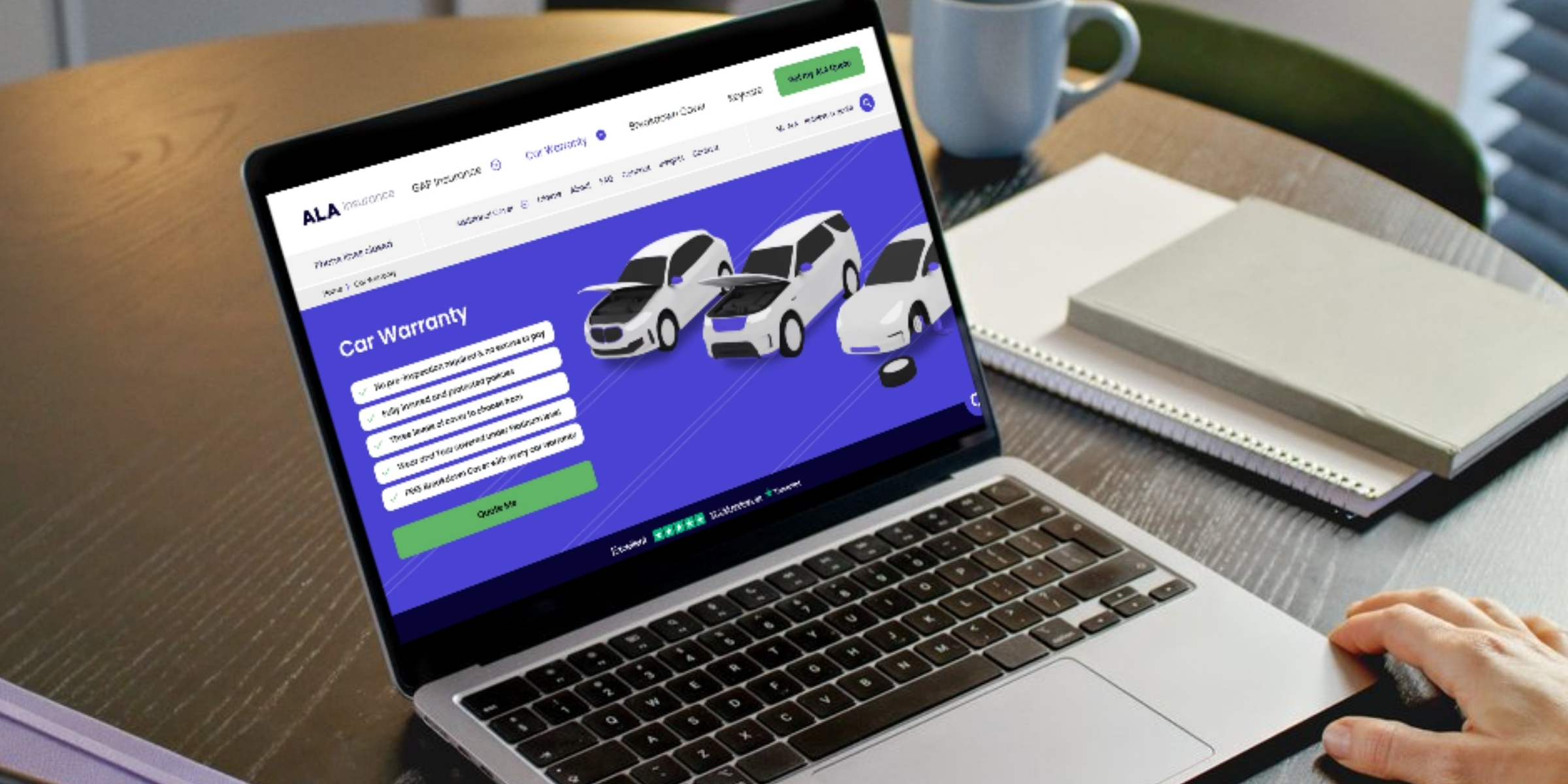
Well-known for its two main products, GAP insurance and warranty cover, ALA recently ‘freshened up’ their brand to be more user-friendly, clear and confident. This has certainly helped them present an easy to use website.
ALA warranty comes in three levels of cover: Silver, Gold and Platinum. Top level Platinum covers most mechanical and electrical components such as steering rack, cylinder head, oil pump and starter motor. It includes wear-and-tear cover for many components, and diagnostics cover up to £150.
There are some exclusions such as non-mechanical and electrical parts, consumables or complex elements like wiring harnesses.
Gold level is comprehensive but covers fewer parts and is not so generous on wear and tear while Silver level covers less than the other two levels but is the cheapest option. It’s available for much longer though – cars can be up to 16 years old and have 150,000 miles on the odometer, which is well worth keeping in mind if you’re looking at buying an older car.
The attractive website promises to do everything for you – founder Duncan McClure Fisher’s vision was to create a value for money service that’s easy to use.
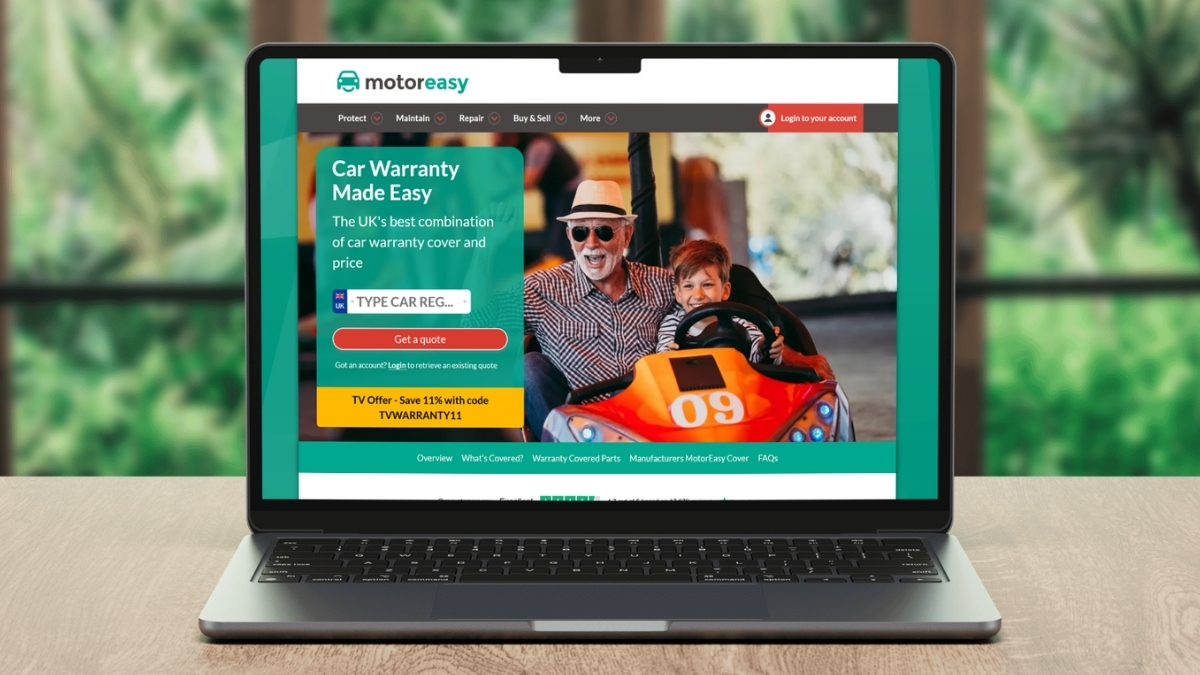
MotorEasy authorises work quickly, handles all the discussions and payment directly with the repairing garage so you won’t be ripped off, works with its own 10,000-strong network of garages and monitors all repairs using a team of experts.
A huge number of potential faults are covered, such as mechanical and electrical, overheating issues, air conditioning, emissions and sat nav problems. But MotorEasy won’t cover consumables such as batteries, tyres, brake pads and filters unless they were faulty from manufacture.
How they come up with a quote is all well explained – make and model, age, mileage and length of cover – while other sections describe the types of cover provided and even ask whether you actually need cover with the help of a ‘Reliability Hub’.
There are three types of policy to choose from – A, B or C – with A being the most comprehensive, but it’s only for newer cars with less than 65,000 miles on the clock. B and C offer less but are for older models – typically five or 13 years old with 100,000 or 130,000 miles covered. There’s also a ‘Lite’ version which offers repairs arising from a roadside breakdown.
Policies are tailored to suit you so each is differently priced. Keep the number of years of cover down or pay some of the costs yourself and the premium will be reduced.
The AA is best known as a roadside assistance company so it’s no surprise that 12 months basic breakdown cover for personal use motoring, is one of the standard features of its used car warranty. Cover is administered through the insurance provider Opteven, and the AA has more than 10 years’ experience in this growing field of vehicle insurance.
Almost all mechanical and electrical faults are covered by an AA warranty, up to the parts’ market value, as well as in-car entertainment and remote key fobs. Hybrids and electric vehicles (EVs) can have AA warranty and there are no limits to the number of claims anyone can make.
Parts not normally covered include diagnostic issues, oils, fluids, and components replaced in pairs such as shock absorbers and springs.
The AA has access to a nationwide network of repair shops, and an adviser will tell you which one to contact if required. If a repair looks like taking more than eight hours, car hire or overnight accommodation is offered in all policies.
Standard cover is called Protect Essential and is available for cars up to 10 years old with less than 100,000 miles. An enhanced package, Protect Plus, adds extra features but is only available for cars up to eight years old and 80,000 miles. AA members get discounts.
Warrantywise are specialists in this field and offer car, van, EV and classic car cover. There are five levels of car cover, based on your vehicle’s age and mileage. It’s simple to follow.
The 04/40 policy, for example, is for cars less than four years old that have done fewer than 40,000 miles while 12/120 cover is for older cars up to 12 years on the road and with 120,000 miles on the clock.
Once you have identified the ideal plan for your car you can then personalise it to suit your own needs. Each has a basic level of help that includes unlimited repairs, car hire, onward travel costs, parts and labour costs and roadside assistance.
Your warranty won’t replace worn parts or any non-mechanical or non-electrical parts. Warrantywise promises to check the market to make sure it covers more parts than its rivals – but choosing to remove some of those from your particular cover will lower your premium.
Among the cover items you can add are airbag, air conditioning, multimedia, emissions failure and the MOT.
Warranty Direct is owned by Firstbase, also known as FBFM, a specialist car warranty company, with everything underwritten by the insurer QBE.
With 20 years in the business, Warrantwise offers two types of policy, Gold and Silver. Both are comprehensive but the Silver offering has fewer benefits and does not cover a long list of ‘Gold’ covered items such as multimedia components, ECU control units, pressure switches, compressors and condensers. Roadside assistance is included in both packages though.
The key features of their packages are broad mechanical and electrical coverage, a streamlined claims process and peace of mind on cost when it comes to finding spare parts. Batteries are not included on EV and hybrid policies.
You can spread the cost of the warranty, giving you a more flexible way to finance the deal. The cost of cover varies significantly depending on car make, model and mileage. Vehicles must be under 12 years old and have covered less than 120,000 miles to qualify for cover.
Dynamo’s website actually starts by asking if you actually need extended warranty. It then goes on to show, in most cases, why you might – that is, protecting yourself from a big bill, being able to choose your own level of cover and buying as little as one year’s cover if you wish. The company’s broad range includes van, motorbike and EV coverage too.
It makes it clear from the off which cars it won’t consider covering and they include high performance brands such as Aston Martin, Rolls Royce, Porsche and Ferrari and specialist models like the Audi R8, Nissan GTR, Subaru WRX and Mazda RX7.
Dynamo offers nationwide coverage from a list of authorised garages and ‘hassle-free’ support. If something on your car breaks down, you simply wait for approval then get your repairs done at one of the chosen garages while Dynamo sorts out the bill.
Its warranty does not cover the costs to replace consumables like tyres, but you can add in ‘wear and tear’ for items that are well used. The company is a socially responsible business and actively supports a range of charities.
*The Car Expert has commercial partnerships with ALA Insurance, the AA, MotorEasy and Warrantywise. If you click through to their websites and proceed to purchase a used car warranty, we may receive a small commission. This does not affect the price you pay.
This article is continually updated to ensure the information is accurate. It was last updated in June 2026.
Electric vehicle technology is improving rapidly. New models generally offer longer driving ranges, faster public charging and more efficient batteries than their predecessors from just a few years ago.
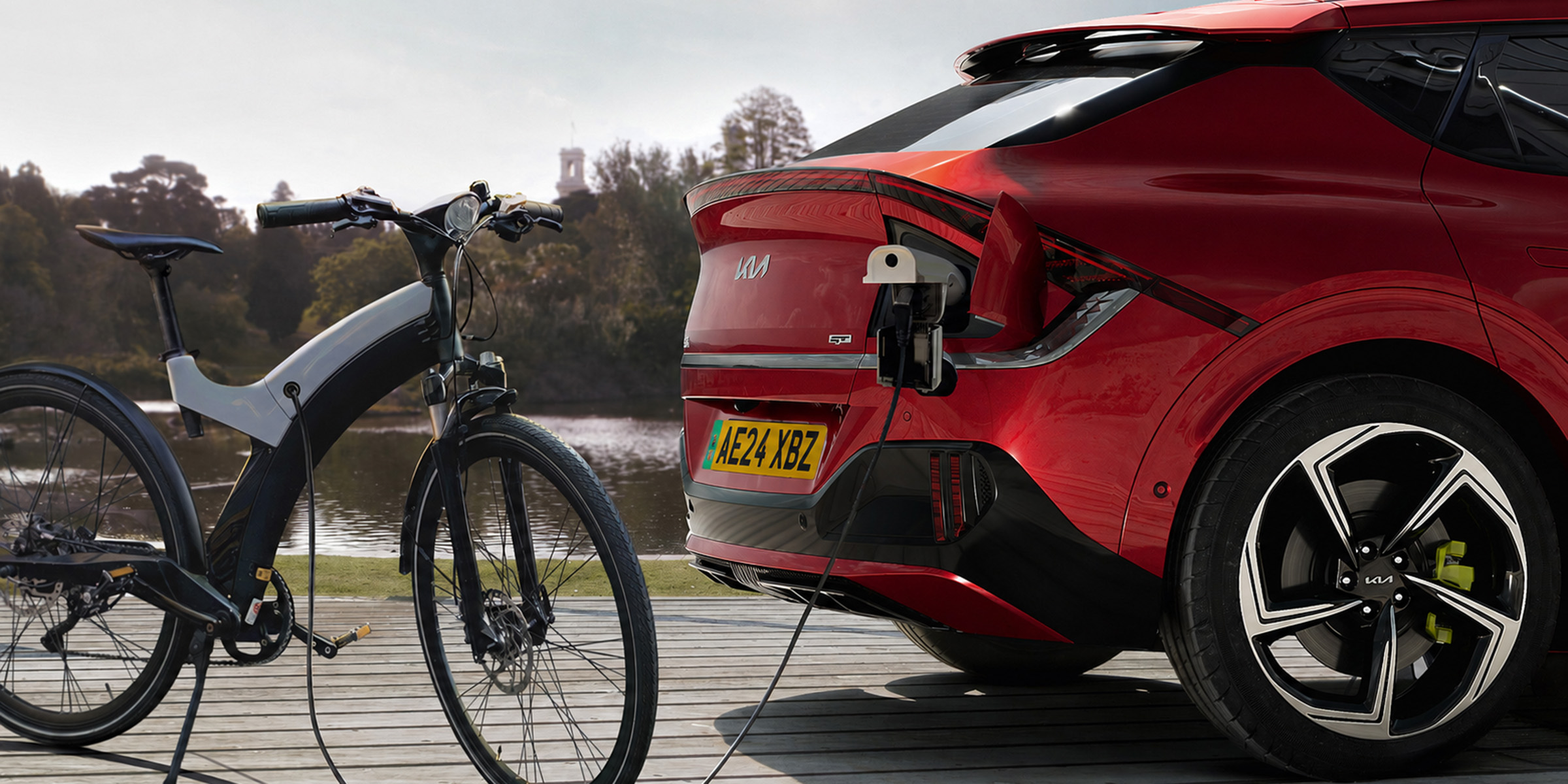
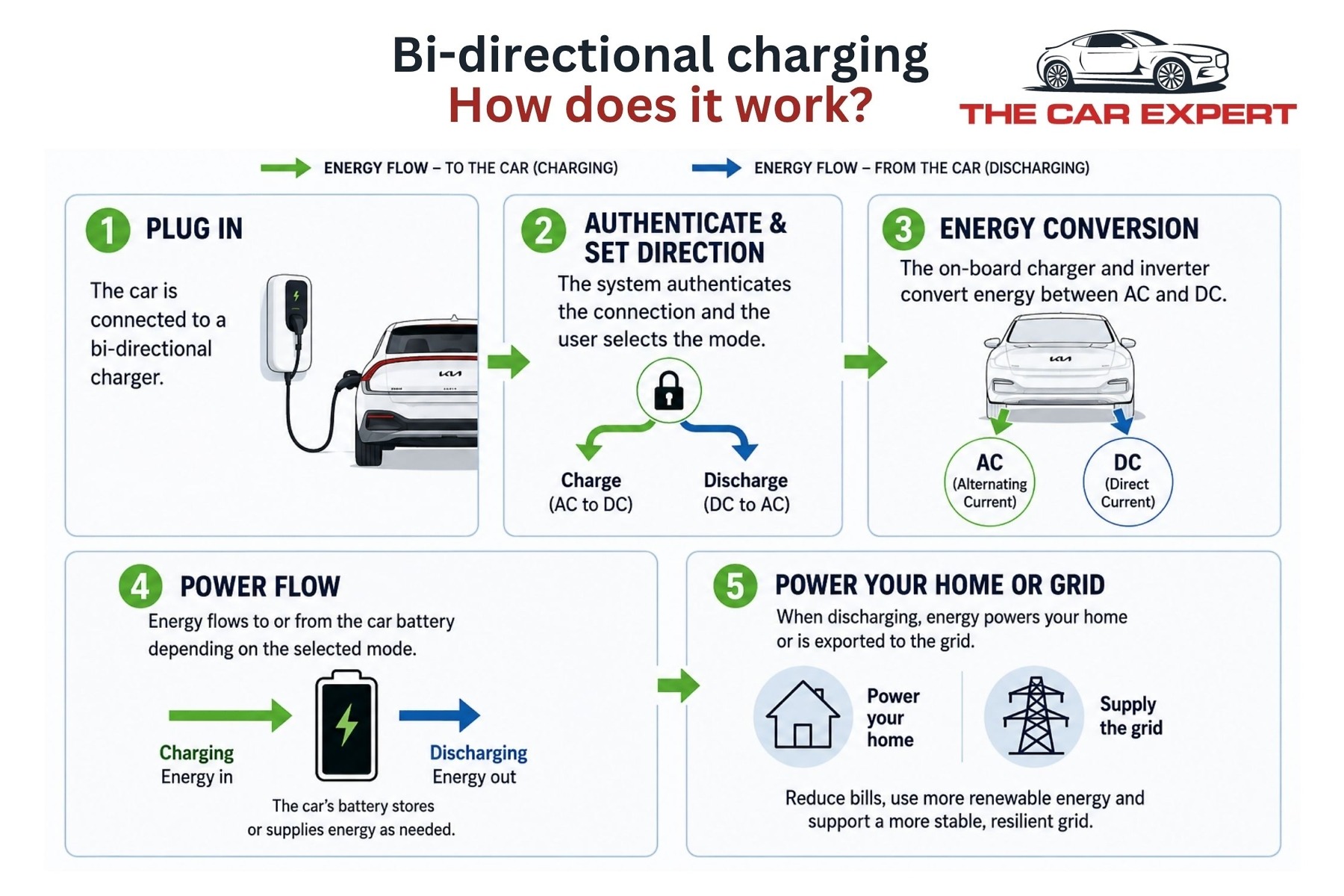
As the technology develops, manufacturers are also finding new ways to use the large batteries fitted to electric cars. One of the most anticipated developments is bi-directional charging, which allows an EV’s battery to do much more than simply power the vehicle.
Instead of electricity only flowing into the battery when the car is charged, bi-directional charging allows energy to flow back out again. That means an electric car can potentially help power your home, run electrical equipment, charge another EV or even supply electricity back to the grid.
Think of it as turning your electric car into a large portable battery that can be used for more than just driving.
For many buyers, bi-directional charging won’t be a deciding factor today. But as the technology becomes more common, it could become an increasingly useful feature when choosing an electric car.
How does bi-directional charging work?
Normally, electricity flows one way – from the charging point to the battery in your electric car. You charge the battery and then use that stored energy to power the car.
Bi-directional charging changes that by allowing electricity to move in both directions. The energy stored in the battery can be used to supply power elsewhere when it’s needed, rather than sitting unused while the car is parked.
To make this possible, specialised equipment converts the vehicle’s direct current (DC) electricity into the alternating current (AC) used by homes and most electrical appliances. The reverse process happens when you charge the vehicle.
The result is that the battery can become a flexible source of power for a range of different uses, which we’ll explore below.
What can bi-directional charging be used for?
The collective name for these applications is V2X, which stands for Vehicle to Everything.
While that sounds technical, the concept is fairly straightforward. It simply describes the different ways electricity stored in an EV battery can be used outside the vehicle itself.
There are four main types of V2X charging.
Vehicle to Home (V2H)
Vehicle to Home allows electricity stored in your car’s battery to be used by your house.
For example, you could charge your car overnight when electricity prices are lower, then use some of that stored energy during more expensive peak periods. It could also provide a useful backup source of electricity during a power cut.
For some households, this could become one of the most valuable uses of bi-directional charging.
Vehicle to Load (V2L)
Vehicle to Load is currently the most common form of bi-directional charging fitted to new electric cars.
It allows the vehicle to power electrical equipment directly from the battery. That might be something as simple as a kettle, camping stove or portable lighting while you’re away from home.
It can also be useful for tradespeople and remote workers who need to power tools or equipment where a conventional electricity supply isn’t available.
For many owners, this is likely to be the V2X feature they use most often.
Vehicle to Grid (V2G)
Vehicle to Grid allows electricity stored in an EV battery to be sent back to the local electricity network.
This can help energy suppliers balance demand on the grid during busy periods, making better use of available electricity supplies.
Depending on the energy provider and tariff, owners may also be able to receive payment for returning electricity to the grid.
While the technology is still developing, many in the energy industry see V2G as one of the most important long-term uses for electric vehicle batteries.
Vehicle to Vehicle (V2V)
Vehicle to Vehicle charging allows one electric car to transfer electricity to another.
The idea is simple. If one vehicle is running low on charge, another compatible EV could provide enough electricity to help it continue its journey.
It’s similar in principle to using jump leads to help start a petrol or diesel car with a flat battery, although transferring energy between EVs takes considerably longer.
While V2V is not yet a common sight on British roads, it has the potential to make range anxiety less of a concern for some drivers.
Which cars offer bi-directional charging?
Bi-directional charging is still not available on every electric vehicle, but the number of compatible models is steadily increasing.
Not every vehicle supports every type of V2X charging, so it’s worth checking the specification carefully if this feature is important to you. A dealer should be able to confirm exactly what a particular model can do.
Should you look for bi-directional charging?
That depends on how you plan to use your electric car. If you simply need an EV for everyday driving, bi-directional charging may not be high on your priority list. But if you’d like your car to power appliances, support your home during a power cut or potentially earn money by supplying electricity back to the grid, it could become a useful extra feature.
At the moment, bi-directional charging remains relatively uncommon. But as battery technology improves and more manufacturers introduce the capability, it’s likely to become a much more familiar part of electric vehicle ownership.
For now, it may be a nice bonus. In a few years’ time, it could be something many EV buyers expect as standard.
If you were driving in the 1990s you might remember the Kia vehicles of the time – they were distinctly bargain-basement cars sold from tiny dealers and offering very little to write home about either in specification or quality.
Fast forward to 2026 and Kia is one of the most highly regarded manufacturers on the global market, regularly topping quality surveys and its product constantly appearing in Car of the Year shortlists – Kia’s EV range features in many of the ‘best car’ rankings in The Car Expert’s industry-leading Expert Rating index, and the cars have racked up many industry awards. Mix in the extra publicity gained from massive levels of sports sponsorship, and the Kia brand today is as well-known as Ford or Volkswagen.
In less than 20 years, Kia has been transformed from a brand on the verge of bankruptcy to a top maker recording more than $4 billion in profit.
This has been masterminded by parent Hyundai, and focused on developing a recognisable and strong brand image. It has led to Kia offering cars that are both practical and of excellent quality,
Kia is the second largest car manufacturer in South Korea, with more than three million annual global sales. It’s only beaten by its parent company Hyundai, which has owned Kia for close to 30 years.
Kia – the name roughly translates as ‘Rising from East Asia’ – was formed in 1944, initially as the catchy ‘Kyungsung Precision Industry’, making steel tubes and bicycle parts. The company’s first vehicle was a bicycle called the Smachuly, launched in 1951.
Licensing deals enabled Kia to manufacture Honda motorcycles from 1957 and, by 1974, it was producing both cars and trucks under licence from Mazda. Similar deals were later done with European makes Fiat and Peugeot but, when dictator Chun Ddo-When came to power in South Korea in 1981, Kia was forced to give up car manufacture.
By 1987 cars were again emerging from Kia plants, now in partnership with Ford, which had taken a stake in Mazda. One of the first Kia models to come to the UK was the Pride three-door hatchback, which was effectively a Mazda 121. The first Kia Sportage, launched in 1993 and the first Korean SUV, was based on the Mazda Bongo van.
Kia products were aimed firmly at the budget market but the company could not sell enough of them and when the Asian financial crisis hit in 1997, Kia faced bankruptcy. At this point, fellow Korean car maker Hyundai entered the picture. It took a 51% stake in its rival and started the process that would transform Kia from budget brand to highly respected mainstream car manufacturer.
1999 Kia Pride vs. 2021 Kia EV62021 Kia Sportage vs. 1999 Kia Sportage
The Sorento mid-sized SUV, launched in 1999, was the first ‘transformative’ Kia. Seven years later, the company shocked the automotive industry by appointing leading car designer Peter Schreyer as its chief design officer – he had previously been working for the Volkswagen Group, creating such design icons as the Audi TT.
Schreyer came up with the ‘tiger nose’ grille design that was a Kia signature for many years and survives today as the ‘Digital Tiger Face’, and led Kia’s new focus on Europe which saw the opening of a major production plant in Slovakia in 2006.
New core models, including the Picanto city car, the Cee’d range of family hatches, and successive generations of the Sportage SUV, accelerated Kia up the car-maker pecking order, fueled by continual improvements in quality and being at the forefront of technology – Kia’s first electric vehicle, the Soul, was launched in 2009 long before EVs became a trend.
By 2016, Kia was winning a host of awards for both its cars and customer satisfaction. The transformed image of Kia has been reflected in the brand’s sales – from 500,000 cars annually in 1998 to more than 3.1 million in 2025.
What models does Kia have and what else is coming?
Kia’s current model range can be split neatly into two – the traditional, mainly combustion-engined, models and the much newer ‘EV’ range designed from the start as electric vehicles and which has mushroomed in numbers over the past few years.
First of the EV range was the EV6, launched in 2022 and claiming The Car Expert Car of the Year award that year. It is a sharply-styled SUV closely related to the Hyundai Ioniq 5 and comes in two or four-wheel-drive form. Buyers are able to choose their model with an emphasis on range or power, with a more potent GT model also on sale. The EV6 was updated in 2025, with an improved range and charging speed, and currently holds a top New Car Expert Rating of A – as does all of the Kia EV range.
Launched late in 2023 was the EV9, a much bigger and blunter model with seven-seat capability and assuming the role of Kia’s flagship offering. It won both the UK and World Car of the Year award in 2024.
Kia followed up the EV9 with the EV3, a compact electric crossover launched in late 2024. The sharply-styled car has attracted overwhelmingly positive reviews with The Car Expert editor Stuart Masson saying that it should be at the top of the list for anyone considering a small SUV or their first EV.
The Kia EV4 and EV5 both launched towards the end of 2025. The EV4 is a mid-sized car, effectively a smaller version of the EV6 and offered as either a five-door hatchback or a saloon-style long-tailed version which Kia calls a Fastback.
The EV5 plugs the SUV gap between the small EV3 and very large EV9, effectively being an EV3 with more interior space.
Just one of Kia’s ‘pre-EV’ electric models remains on sale, the Niro small SUV, which is also available as a hybrid and a plug-in hybrid. It was updated in 2025, adopting the family look of the new EV models, and both the electric and combustion-engined versions earn an New Car Expert Rating of A.
For many years the Ceed family hatch was the core of the Kia traditional range but today just one version remains, the Xceed crossover. Its mantle has been taken by Kia’s long-lasting mid-sized SUV the Sportage – it was the second best-selling car in the UK in 2025, only beaten by the Ford Puma.
The larger Sorento SUV, dating back even further than the Sportage and now in its fourth generation, also remains on sale as does the Picanto small car, updated in 2025, and the Stonic mid-sized SUV. Pitched as a rival to the best-selling Ford Puma and facelifted for a second time in 2025, the Stonic does let the side down somewhat, with a New Car Expert Rating of D.
Kia’s busy launch programme continues apace in 2026, with the EV line-up getting an even smaller model, the EV2. It’s Kia’s version of the Inster from sister brand Hyundai, and one of the latest breed of small and more affordable electric cars.
Like many manufacturers Kia has revised any previous plans to turn its range all-electric and also launching in 2026 is a successor to the Ceed. The Kia K4 is a petrol-powered family car that will be available as a hatchback and an estate ‘Sportswagon’.
Meanwhile Kia has recently moved into the van market with the PB5, the first of a new range of electric light-commercial vehicles. Just as with traditional vans, it’s spawned a people-carrier version and the PV5 Passenger is already earning very positive reviews.
Kia is not yet saying what will follow these, though it is known to be considering producing an electric equivalent to the Picanto which would become the EV1. Meanwhile a ‘super-GT’ concept revealed at the start of 2026 could become a large electric saloon, a spiritual successor to the Kia Stinger and dubbed either EV7 or EV8.
Where can I try a Kia car?
You won’t have too far to go if you fancy trying a Kia for yourself – over the years the brand has grown to become the fifth largest in the UK and its dealer network now numbers more than 180 outlets.
Kia dealerships all have the same quality corporate image but in terms of size and location vary immensely. The flagship outlet in Brentford, London, rises over four floors and towers over the elevated section of the M4 motorway, whereas Gravells, a Welsh group that consistently takes Kia’s top dealer award, has its main showroom in Kidwelly, a town of only around 3,500 people.
What makes Kia different to the rest?
Most car makers produce a model or two that fail to impress, a sense of ‘why did they bother doing that’ but this is not something that can be levelled at today’s Kia – even the Stinger, a large grand tourer-type car very different to typical Kia product and only on sale for five years, had plenty of fans who were sad to see it go.
Kia’s exterior styling with the signature tiger-nose grille is generally positively received, but the cars sell mainly on a combination of quality and technology that is at the forefront of the mainstream market and comparable to some premium offerings.
A Kia fact to impress your friends
Always had a desire to get yourself an example of a 1990s-era Lotus Elan? Check the badges, as it might not be a Lotus…
After the Norfolk maker canned the Elan in 1995, it sold the rights to the car to Kia, which then built it in South Korea between 1996 and 1999.
On the outside, the Kia Elan looked virtually identical to the Lotus version (the main difference being the tail lights), but under the bonnet it had a Kia 1.8-litre petrol engine rather than the 1.6-litre turbo from Isuzu that Lotus used.
Only around 1,000 were made, sold only in Korea and Japan.
Summary
There’s no such thing as a car maker that can do no wrong but Kia appears to come pretty close – once easily dismissed, Kia is an automotive success story with its cars driven by thousands of happy owners.
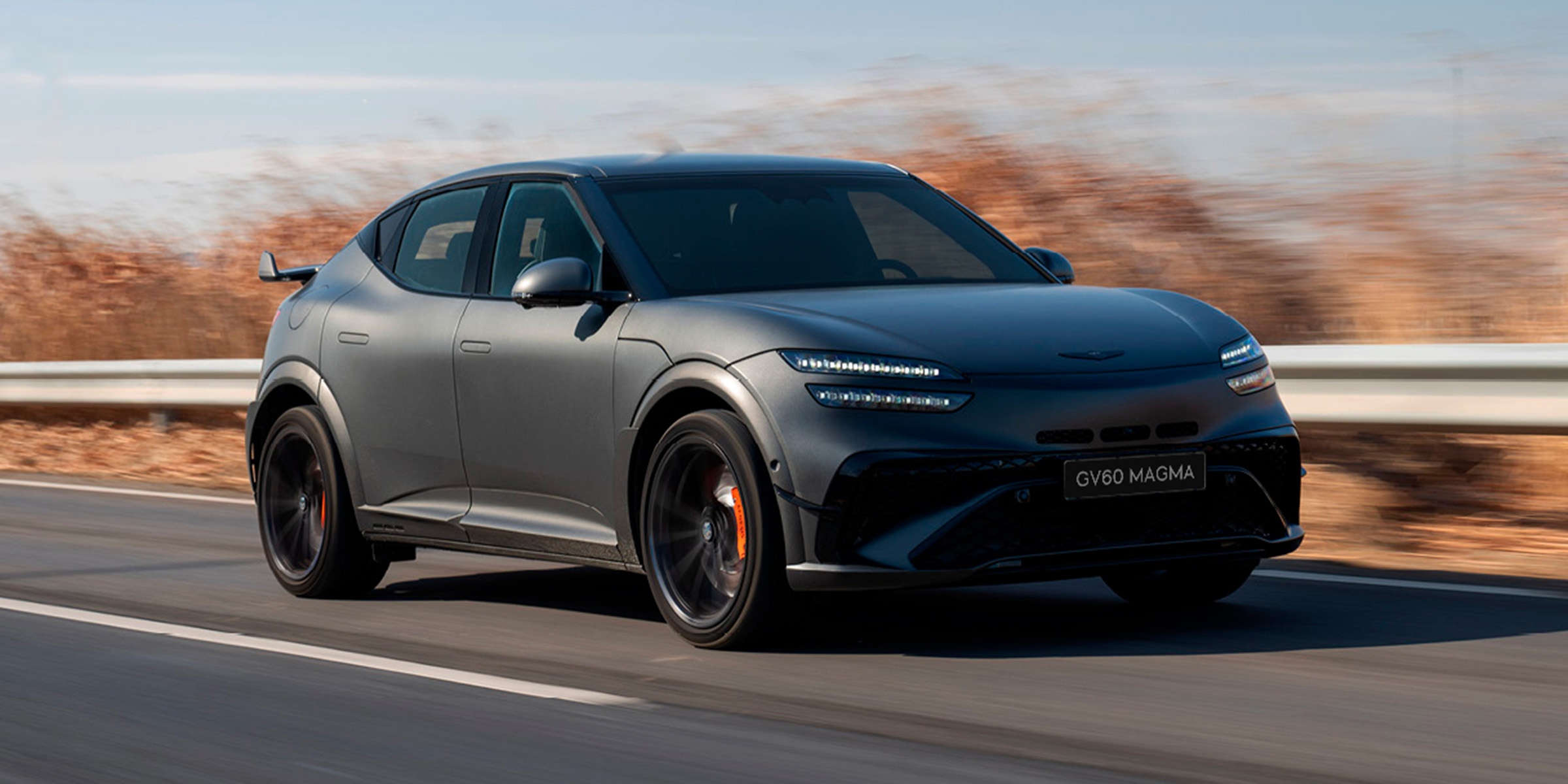
Genesis has announced UK pricing for its first-ever high-performance model, the new GV60 Magma, which will become available to order in the coming weeks.
At the heart of the GV60 Magma is an upgraded dual-motor powertrain producing 650hp. Power comes from an 84kWh battery, enabling the all-wheel-drive SUV to sprint from 0-62mph in 3.4 seconds before reaching a top speed of 164mph.
That makes it marginally quicker than the GV60 ‘Performance’ model and places it firmly among the fastest electric SUVs currently on sale.
Genesis says the electric motors have been upgraded to spin at more than 20,000rpm, while drivers can access dedicated performance settings through a new ‘Magma’ button on the steering wheel, including ‘Sprint Mode’ and ‘GT Mode’.
Chassis upgrades
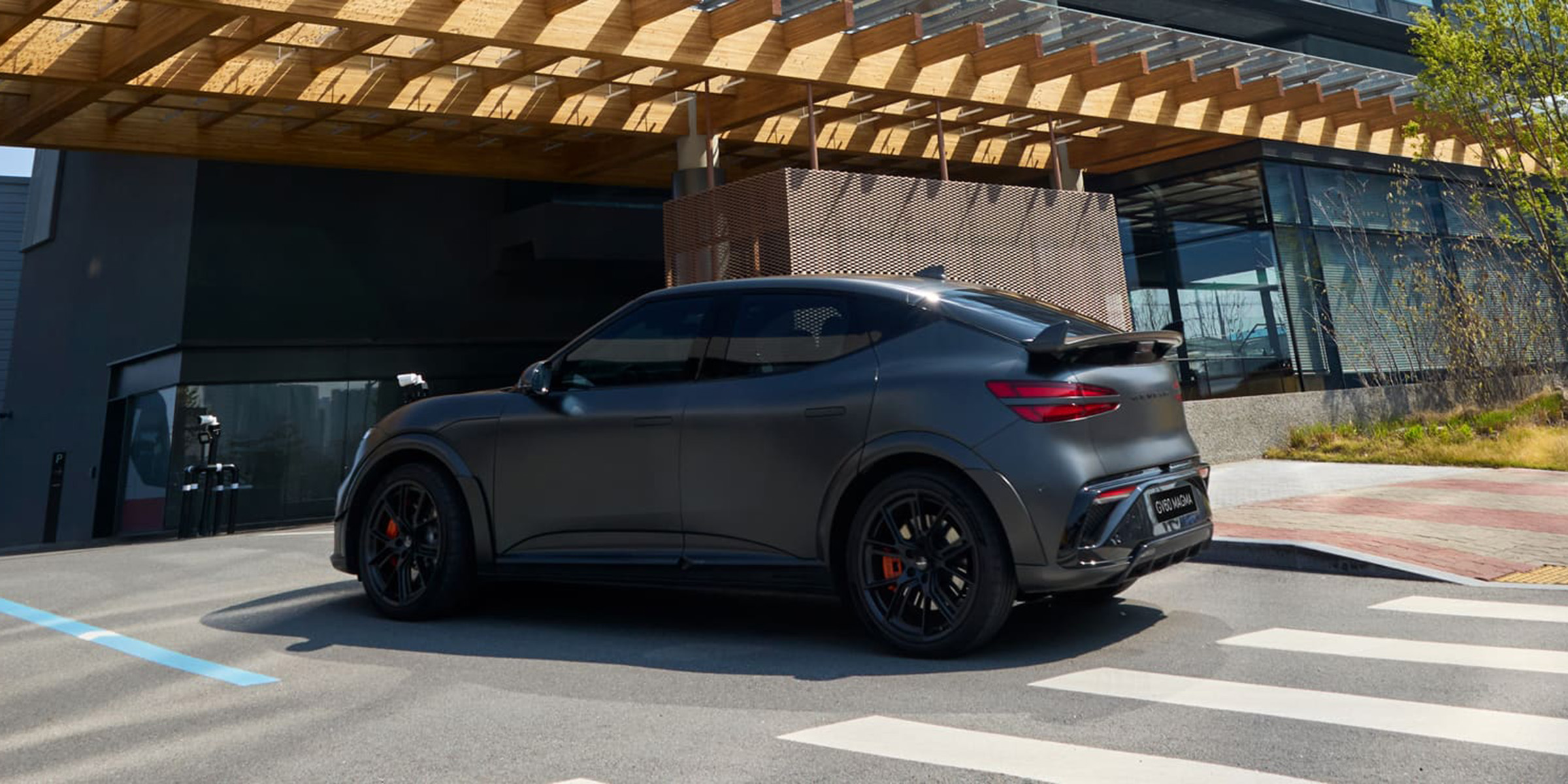
In addition to the higher straight-line speed, Genesis has lowered the SUV’s ground clearance by two centimetres compared with the regular GV60 and fitted a wider track, revised aerodynamics and a new rear wing to improve stability at higher speeds.
Further performance hardware includes:
21-inch forged alloy wheels
Pirelli performance tyres
Four-piston front brake callipers
Large 400mm front brake discs
Genesis claims the upgraded braking system can bring the Magma to a halt from 62mph in just 33.8 metres.
Luxurious cabin with performance touches
Inside, the GV60 Magma retains the premium feel Genesis is known for but adds a more focused, driver-oriented atmosphere.
Highlights include electrically adjustable bucket seats trimmed in artificial suede, aluminium interior detailing and a choice of ‘Magma Orange’ or ‘Ash White’ contrast stitching. A 27-inch panoramic display combines the digital instrument cluster and infotainment system into a single screen, while an artificial sound system has been developed to create a more engaging driving experience.
How does it compare?
Priced at just under £76k, the GV60 Magma undercuts some premium rivals while offering comparable performance. It sits above the £65k Hyundai Ioniq 5 N, but is cheaper than top-spec versions of the Porsche Macan Electric. Its 650hp output also surpasses the 609hp offered by the Kia EV6 GT.
While Genesis has yet to confirm an official WLTP range figure, the Magma’s 84kWh battery is the same size as that used in the latest Hyundai Motor Group performance EVs, suggesting a range comfortably above 250 miles is likely.
One trim grade with customisation options
Unlike many rivals, the GV60 Magma will be offered in a single, generously-equipped trim level. Buyers can choose from nine exterior colours, including exclusive ‘Magma Orange’, along with two interior themes.
Order books are expected to open shortly, with Genesis already inviting customers to register their interest ahead of first deliveries.
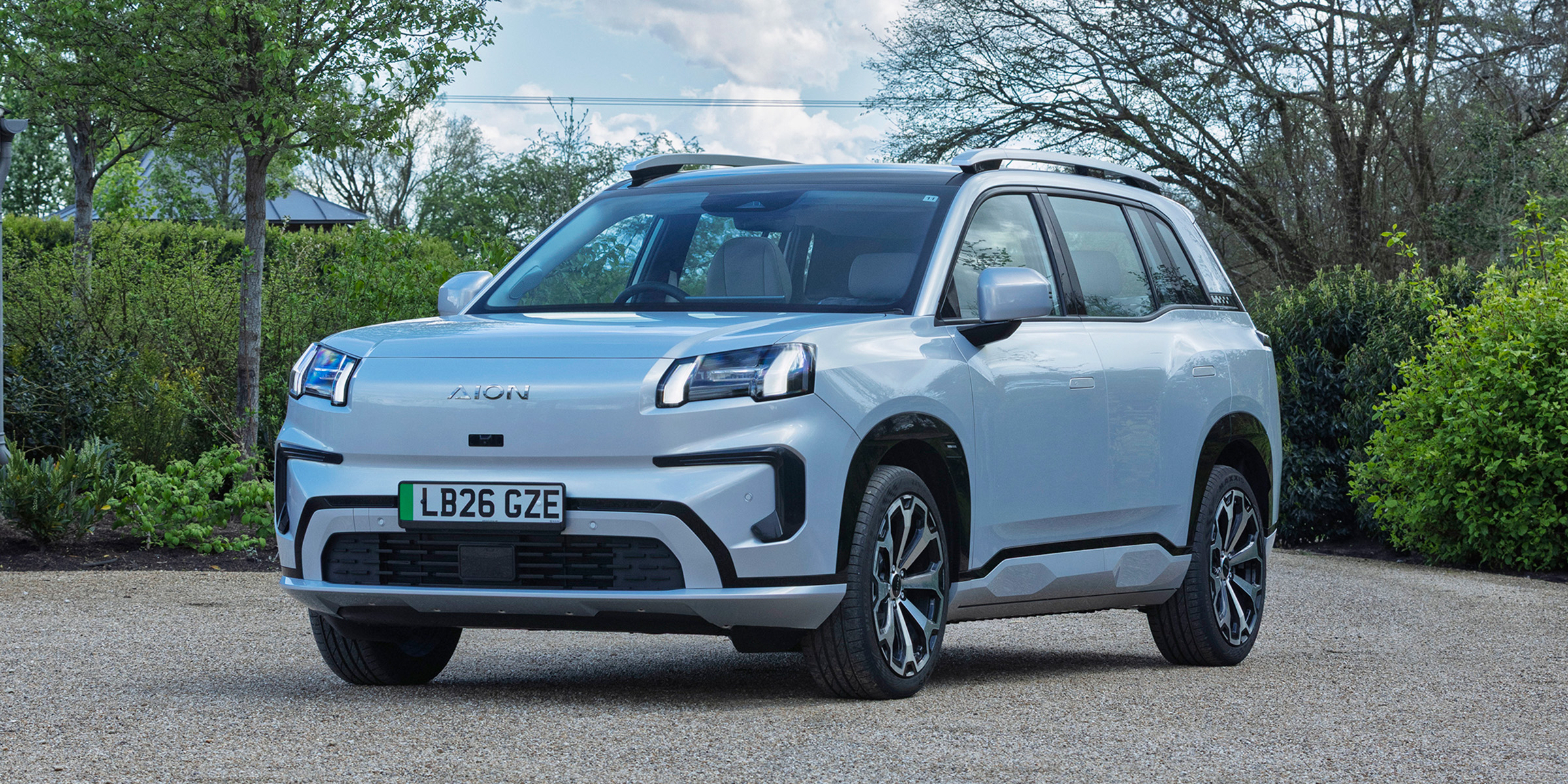
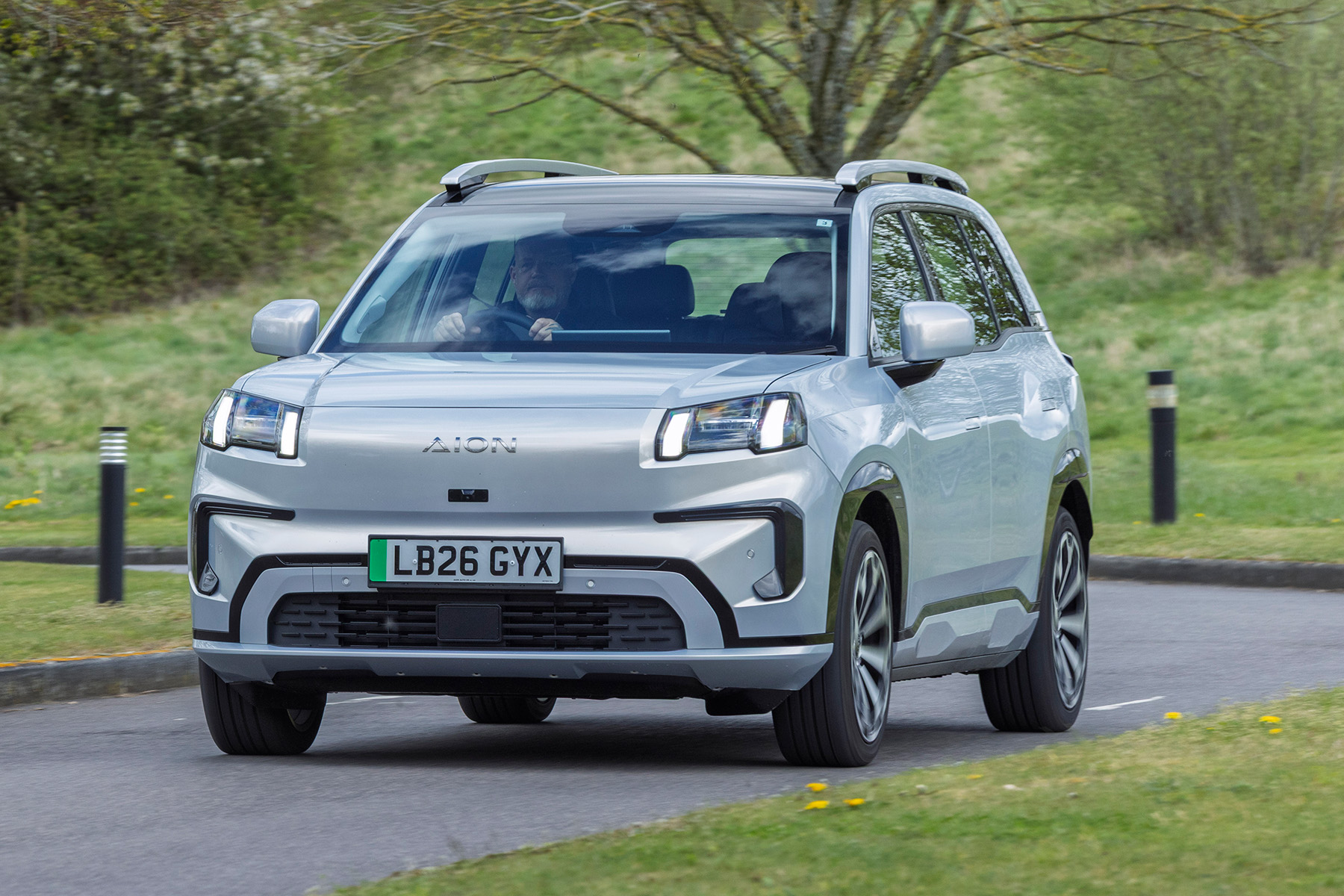
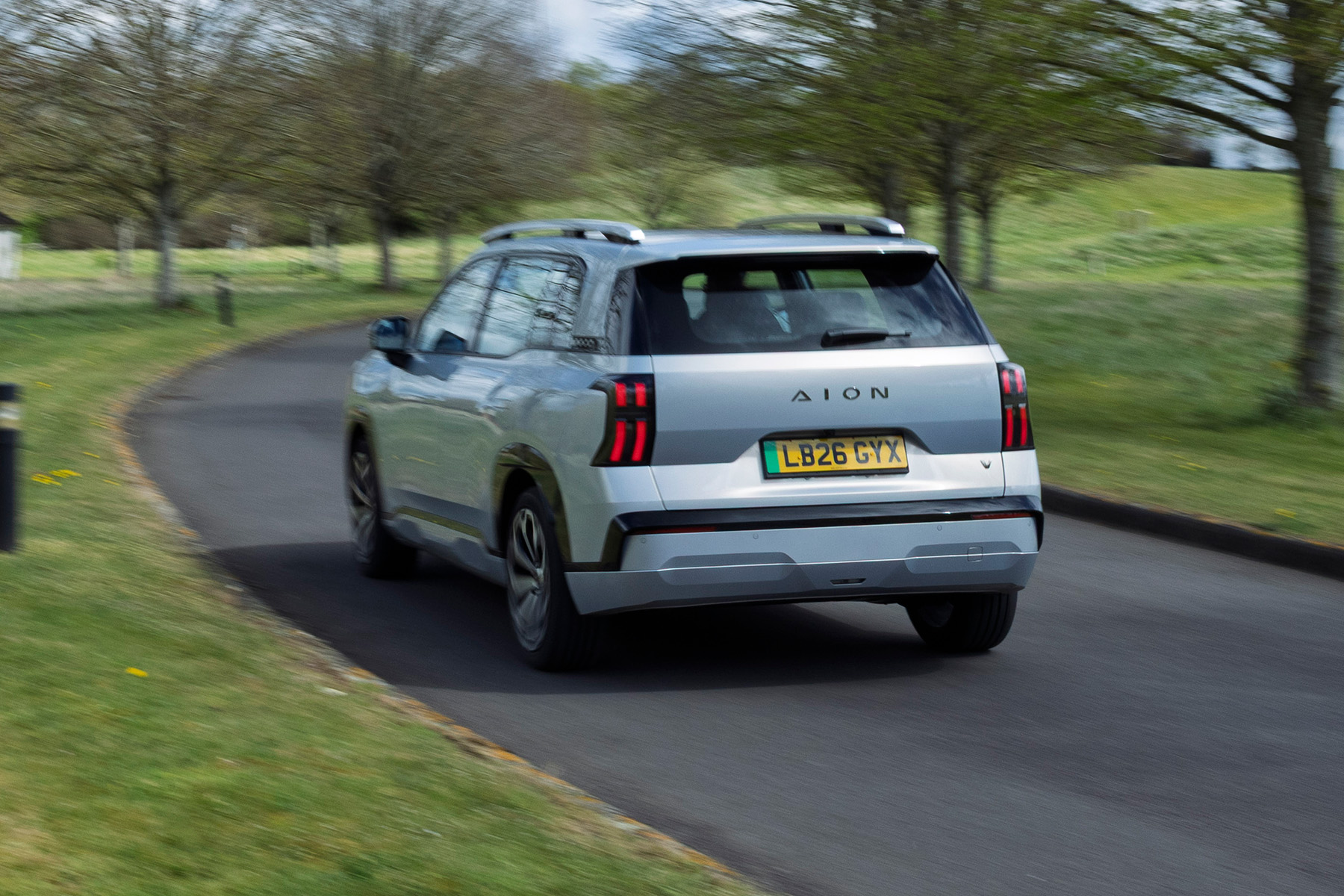
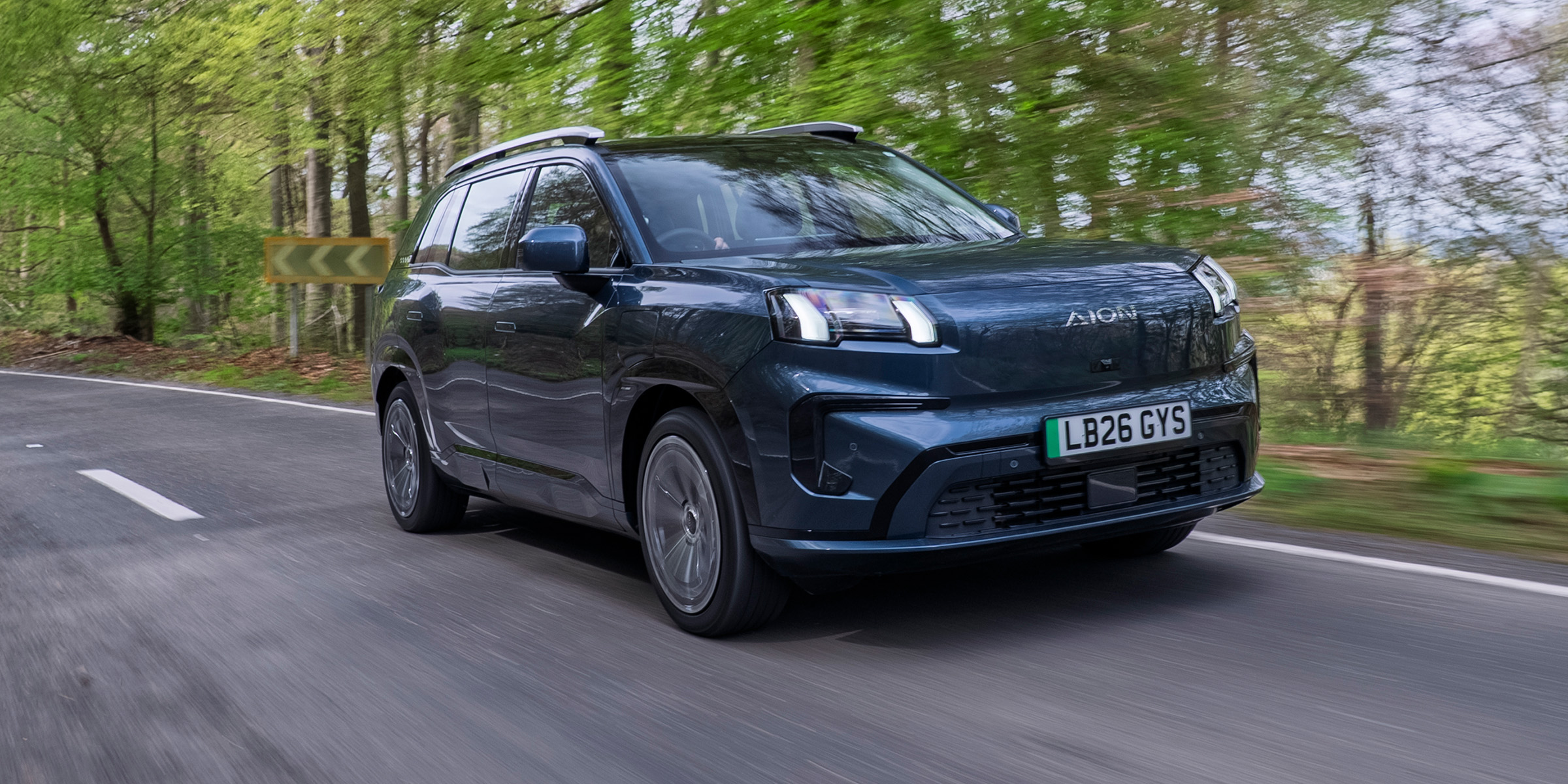
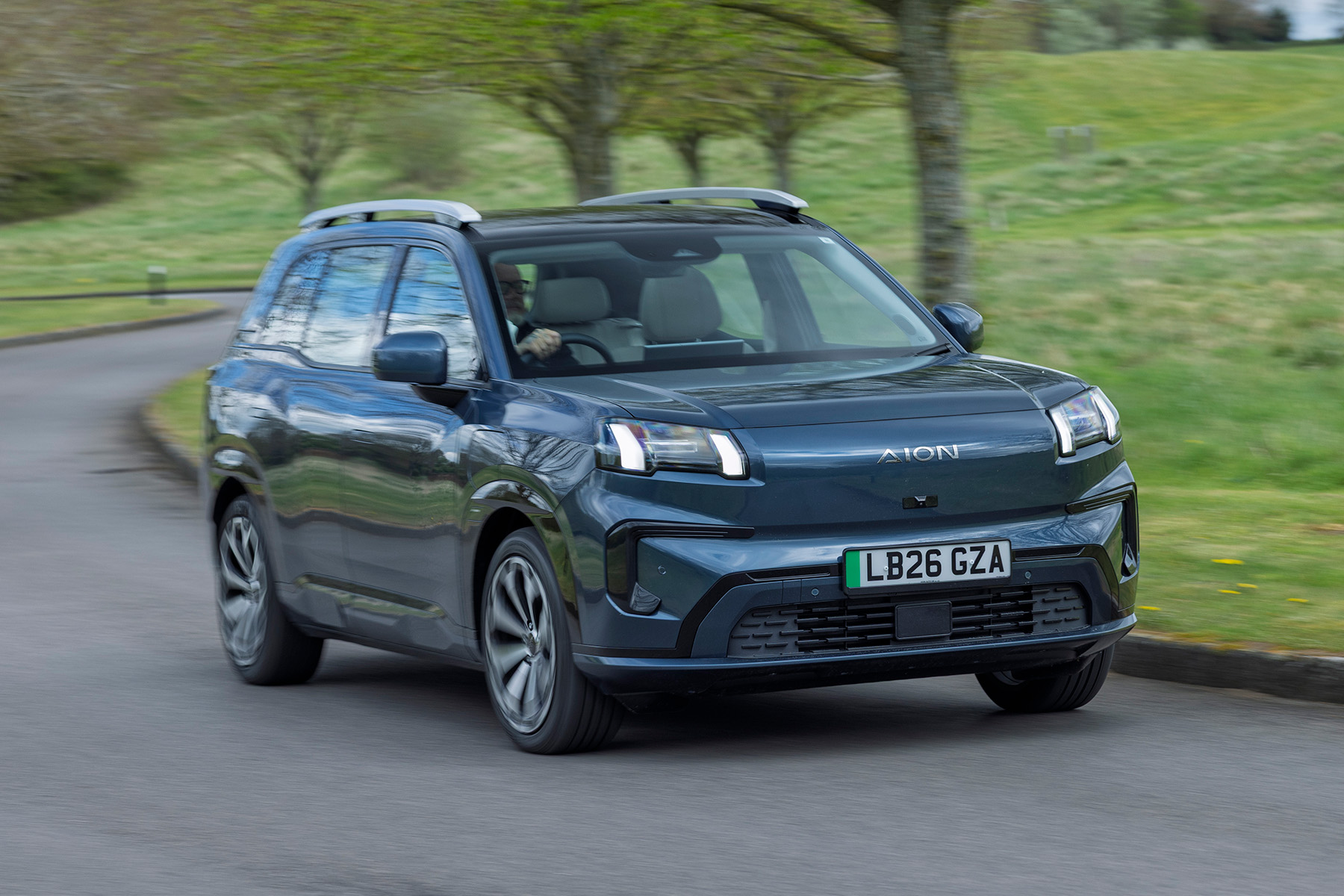
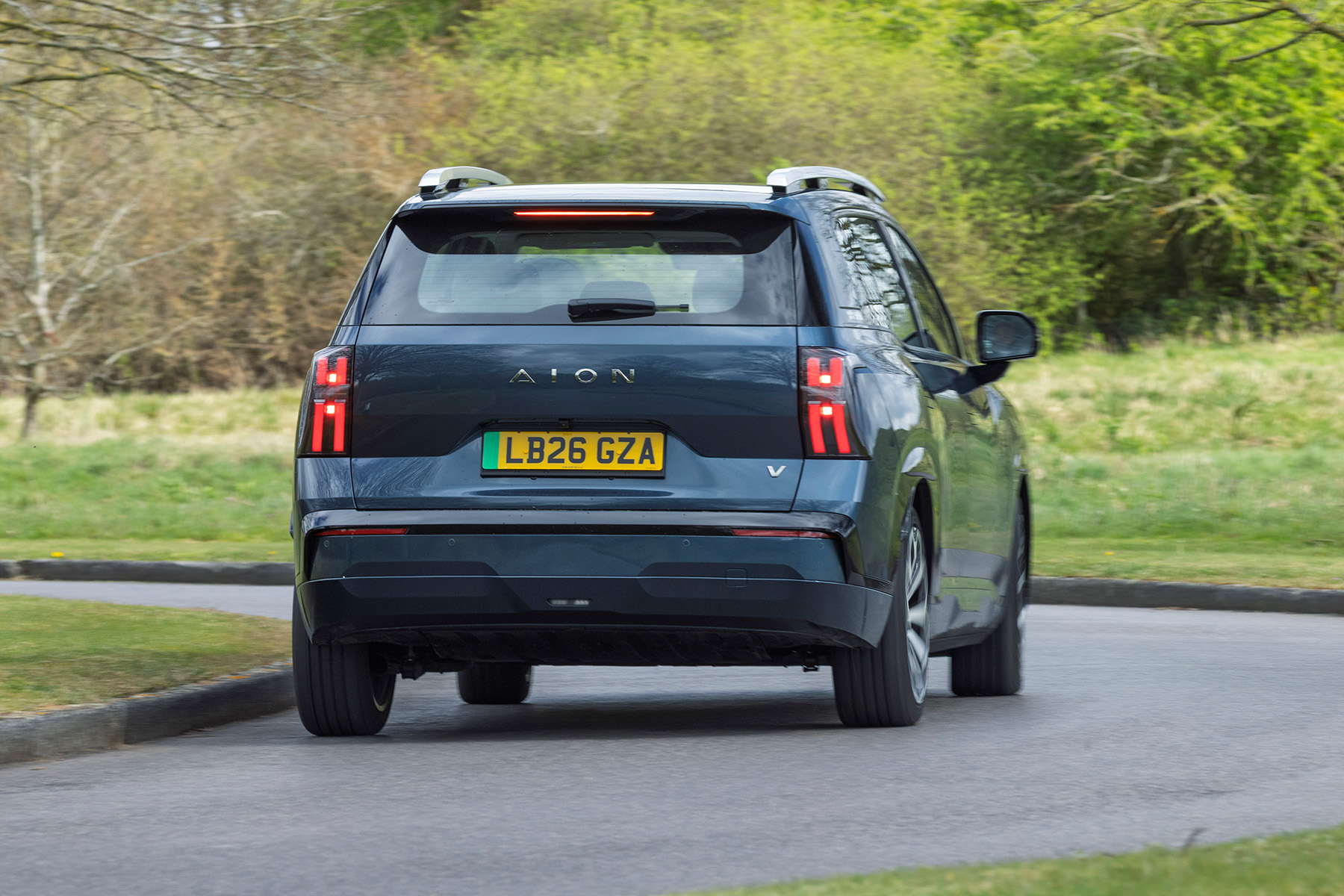
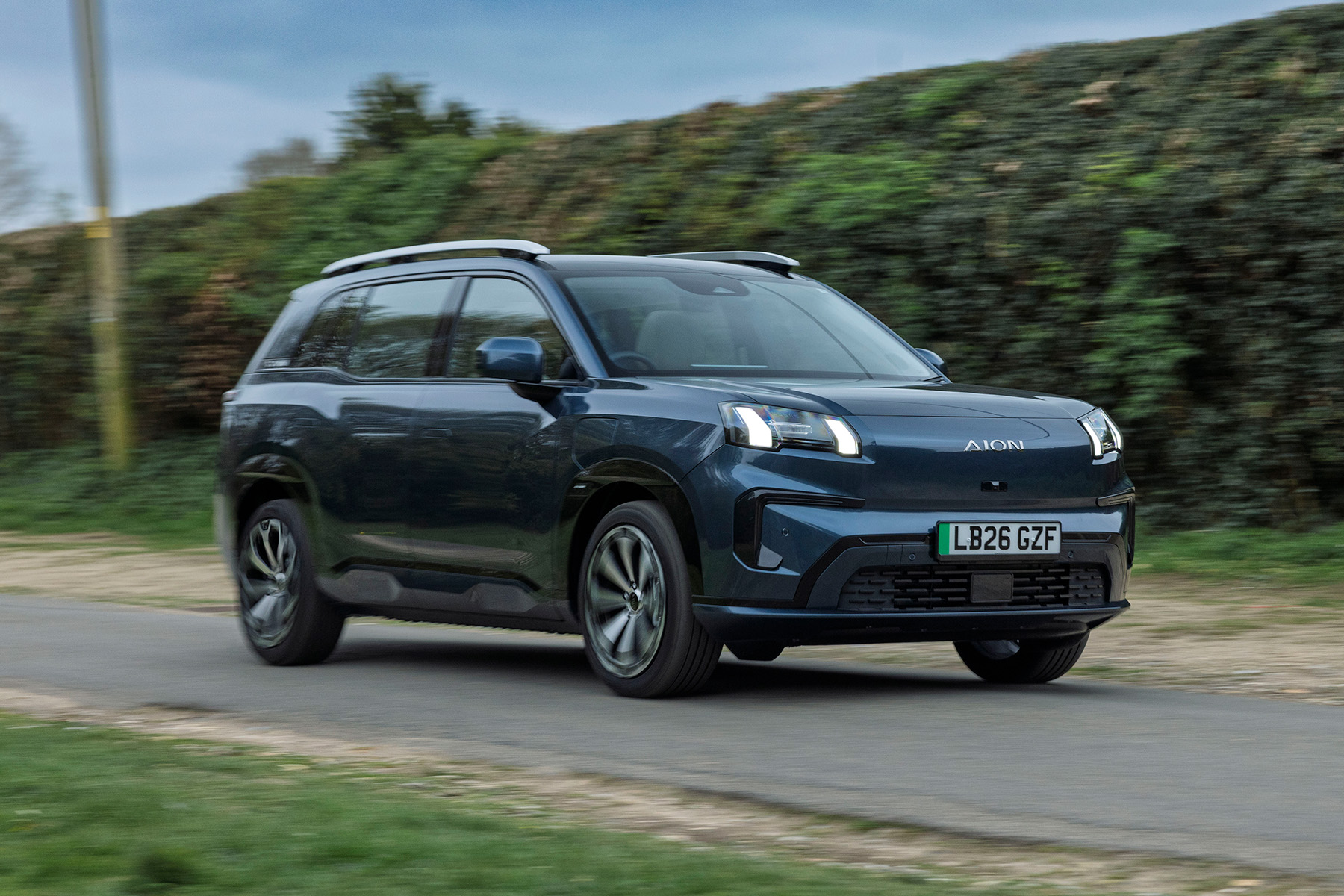
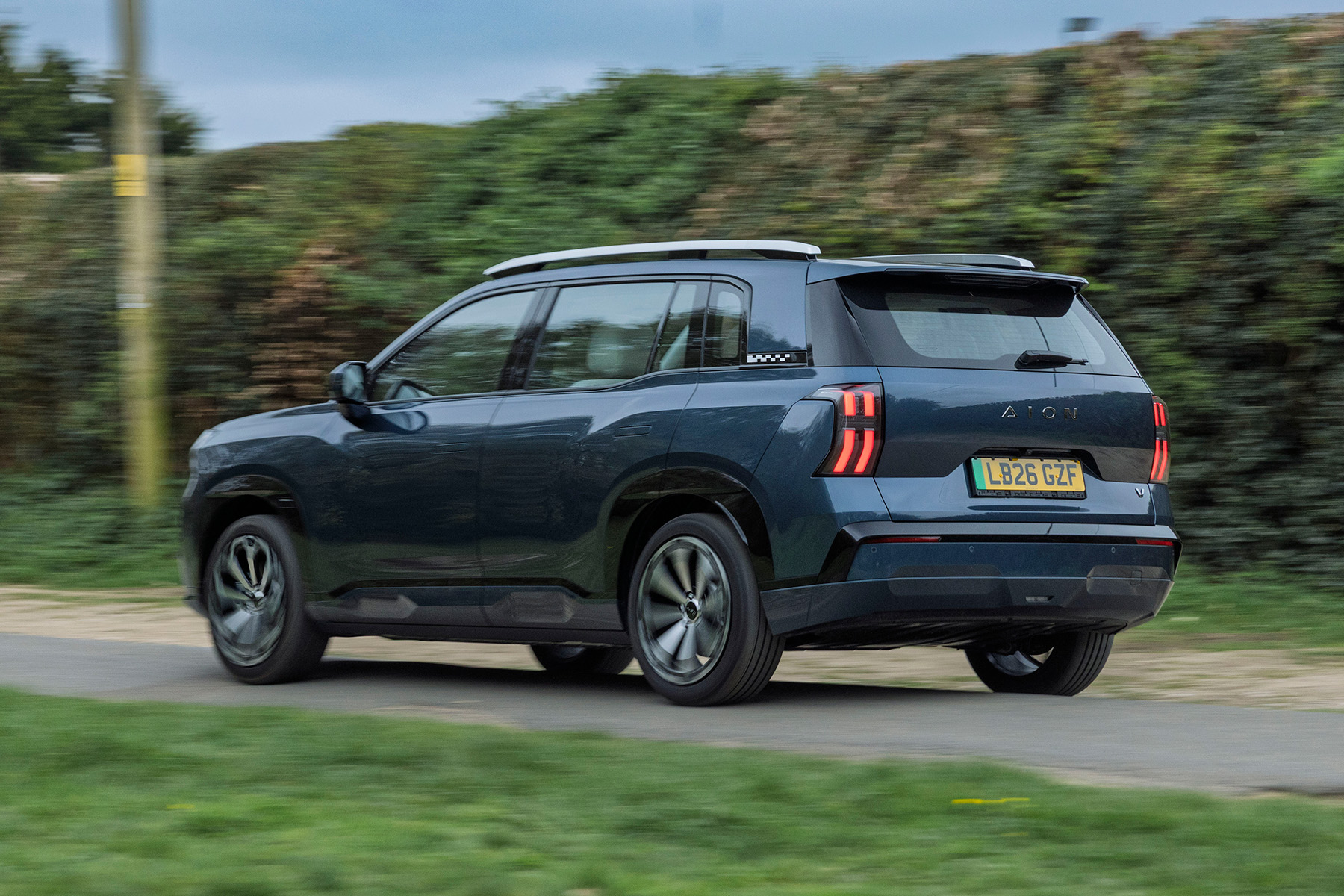
The Aion V is a new all-electric mid-sized SUV from new Chinese marque Aion – the brand was founded in 2017 but the V will be its first foray into the UK market.
Aion is a sub-brand of GAC, the fifth-largest automotive manufacturer in China. Distributor Jameel Motors has been signed up to bring the Chinese brand to customers.
The V SUV – set to rival established mid-sized electric SUVs like the Renault Scenic E-Tech and Toyota bZ4X – the V SUV has received a rather mixed bag of review scores to date, ranging from average to very good.
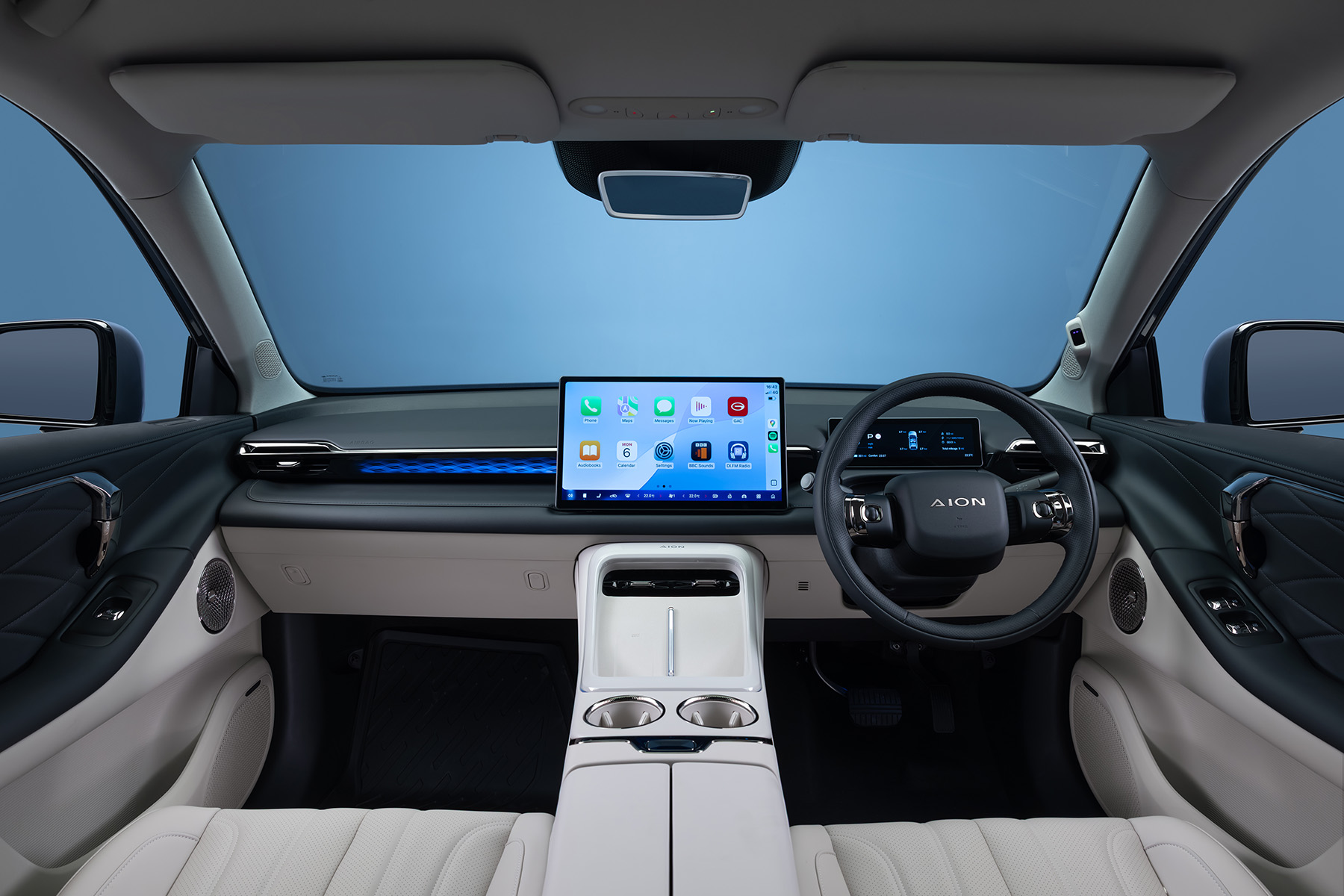
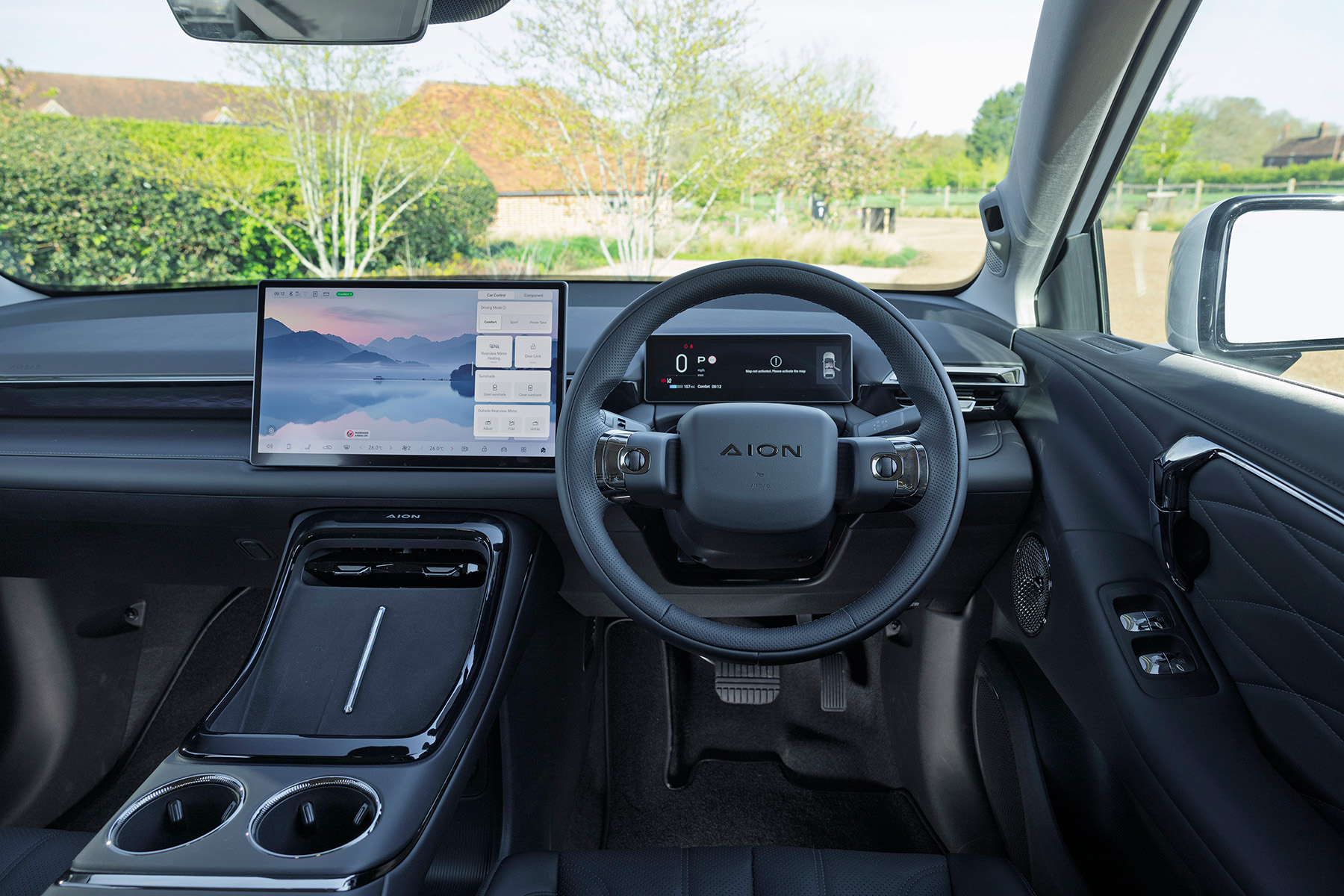
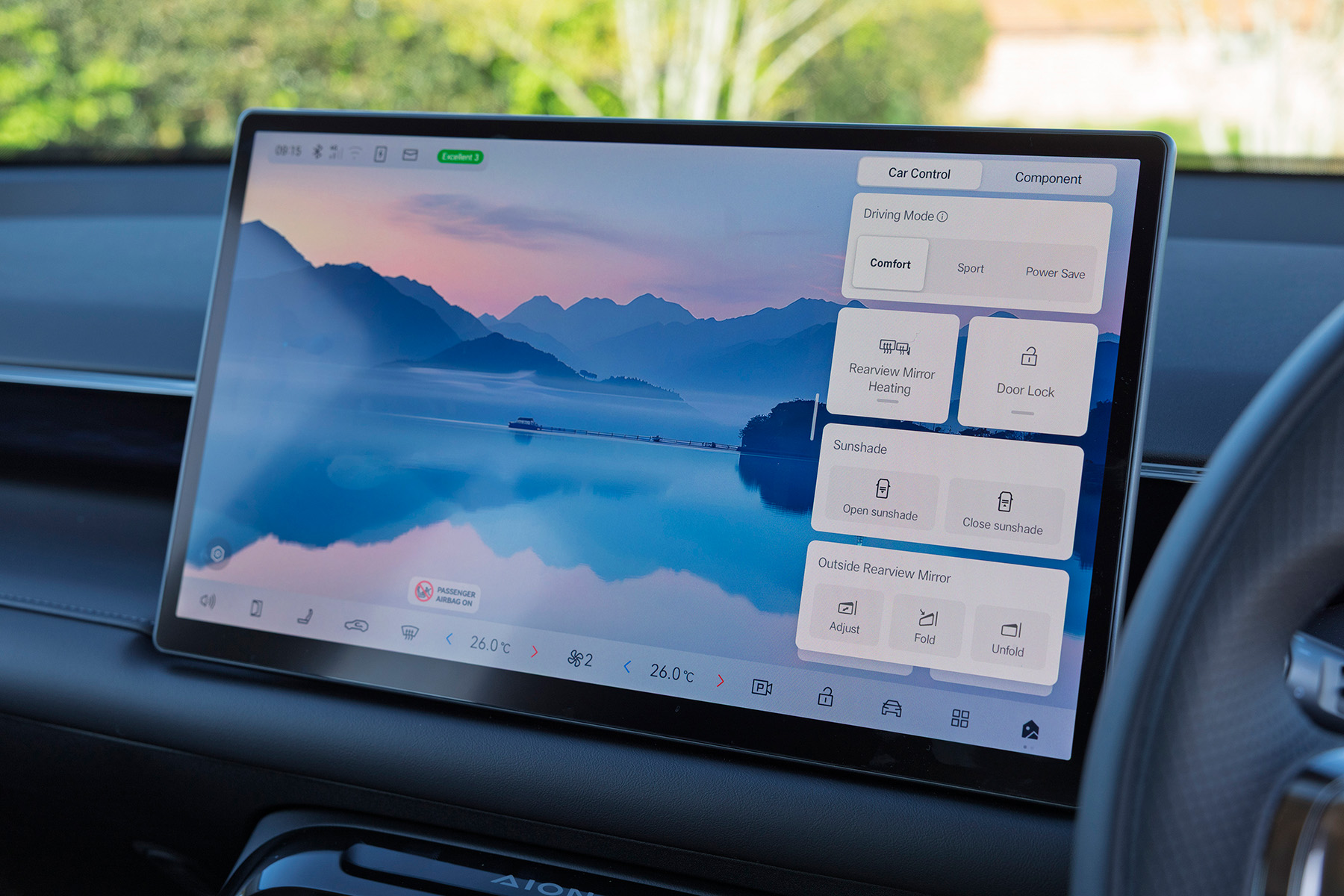
Electrifying.com’s Erin Baker argues that the car is “spacious, well-equipped, comfortable and should prove easy to live with”, even if it “might not be exciting to drive”. The Car Expert’s own Andrew Charman concludes that the Aion would be a class-leading model if not for some “minor irritations”, including fliddly infotainment, a “floaty” ride and the car’s ‘Eco’ driving mode not being comfortable.
“The Aion V is not quite the complete package”, says The Independent’s Steve Fowler, adding that the SUV’s interior is well-trimmed and “packed with kit” as standard, also praising Aion’s aftersale care package, but “it’s not cheap and finds itself up against some really polished, better-known rivals.”
As of May 2026, the Aion V holds a New Car Expert Rating of A, with a score of 77%. Beyond the car’s middling set of review scores, this overall rating is helped by excellent Euro NCAP safety credentials and low predicted running costs.
V highlights
More agile steering than other electric SUVs
Generous eight-year warranty
Spacious cabin with practical touches
V lowlights
Over-reliance on touchscreen controls
Rivals offer longer battery ranges
Some cheaper interior materials
Key specifications
Body style: Medium SUV Engines:electric, battery-powered Price:From £36,450
Launched: Spring 2026 Last updated: N/A Replacement due: TBA
Image gallery
Media reviews
Highlighted reviews and road tests from across the UK automotive media. Click any of the boxes to view.
Featured reviews
“The Aion V is a good value first offering which outscores rivals on the road. Putting right some minor irritations would take it to the top of its class.”
Model reviewed: Range overview Score: 7 / 10 “We really like the amount of kit you get as standard and while the Premium Pack is fun, its use-case for families seems limited. The EV numbers from the Aion V are in the right ballpark and it’ll drive well enough for most people, although the screen-orientated approach and poor safety assist spoils the experience somewhat. Yet the aftersales support from Aion should garner plenty of confidence.” Author: Alastair Crooks Read review
Auto Trader
Model reviewed: Range overview Score: 8 / 10 “Every Aion V gets an eight-year warranty, eight-year roadside assistance, eight-year servicing and eight years of MoT. Pretty wow . Unlike its looks, which are pretty damn ugly, though it’s a bold move to eschew the sleek headlights and sculpted bonnets of every manufacturer out there and go bog-eyed upright.” Author: Erin Baker Read review
Car
Model reviewed: Range overview Score: 6 / 10 “There’s genuine substance and polish to this Chinese electric SUV. Also, it might be a dull point, but the aftersales support is worthy of commendation.” Author: Ryan Gilmore Read review
Electrifying.com
Model reviewed: Range overview Score: 7 / 10 “The Aion V is spacious, well-equipped, comfortable and should prove easy to live with. It might not be exciting to drive, and the brand is still relatively unknown, but as a practical family EV it ticks a lot of boxes. There is no USP, though, so it will be interesting to see whether Brits will rush into Aion showrooms in quite the same way that they have done with some other Chinese newcomer brands.” Author: James Batchelor Read review
Parkers
Model reviewed: Range overview Score: 6 / 10 “I can see exactly what Aion is trying to do here and, in a lot of ways, it works. This feels like a more thought-through electric family SUV than many new arrivals and it does a decent job of hiding the fact it’s from a brand most UK buyers won’t recognise.” Author: Ryan Gilmore Read review
The Independent
Score: 8 / 10 “The Aion V is not quite the complete package. It is seriously upmarket inside, packed with kit and backed by one of the best ownership offers around. But it’s not cheap and finds itself up against some really polished, better-known rivals.” Author: Steve Fowler Read review
Top Gear
Model reviewed: Range overview Score: 6 / 10 “Little for a car enthusiast here. But to a switcher to EVs, or to Chinese brands, the package is reassuring.” Author: Paul Horrell Read review
Safety rating
Independent crash test and safety ratings from Euro NCAP
Independent economy and emissions ratings from Green NCAP
No eco rating
As of May 2026, the Aion V has not been assessed by Green NCAP.
The Green NCAP programme measures exhaust pollution (which is zero for an electric car) and energy efficiency. Electric cars are much more energy-efficient than combustion cars, so the Aion V is likely to score very highly in Green NCAP testing if and when it takes place. Check back again soon.
Running cost rating
Monthly cost of ownership data provided exclusively for The Car Expert by Clear Vehicle Data
Battery range
Average
Score
Variation
Score
EV models
317 miles
A
Electrical efficiency
Average
Score
Variation
Score
EV models
3.7 m/KWh
D
Insurance group
Average
Score
Variation
Score
All models
35
D
Service and maintenance
Cost
Score
Year 1
£0
A
Year 2
£0
A
Year 3
£0
A
Year 4
£0
A
Year 5
£0
A
Overall
£0
A
The Aion V is an affordable car to own and run, according to whole-life cost numbers provided exclusively to The Car Expert by our data partner, Clear Vehicle Data.
In fact, it is one of the cheapest cars to run across the car market, due to the fact that, as part of Aion’s aftersale care package, the Chinese brand will cover the car’s servicing and MOT costs for the full length of the SUV’s eight-year warranty – a perk unique to Aion as the Chinese brand looks to make a name for itself in the UK.
The car’s average electrical efficiency (the battery-powered equivalent of miles per gallon) of 3.7m/KWh doesn’t make it very efficient by the latest EV standards, but its average battery range of 317 miles is competitive in the medium SUV category. On the other hand, the SUV’s predicted insurance costs are higher than average – a drawback of opting for a relatively unknown brand.
Reliability rating
Reliability data provided exclusively for The Car Expert by MotorEasy
No reliability rating
As of May 2026, we don’t have enough reliability data on the Aion V to generate a reliability rating.
The Car Expert’s reliability information is provided exclusively to us using workshop and extended warranty data from our partner, MotorEasy, sourced from both official dealerships and independent workshops.
As soon as MotorEasy has sufficient data on the Aion V, we’ll publish the results here.
Warranty rating
New car warranty information for the Aion V
Overall rating
A
100%
New car warranty duration
8 years
New car warranty mileage
100,000 miles
Battery warranty duration
8 years
Battery warranty mileage
100,000 miles
Aion’s new car warranty is better than average, and better than rival brands in a similar price bracket as the V.
The duration is eight years, with a limit of 100,000 miles. In addition to the standard new car warranty, the V has an eight-year/100,000-mile warranty for the battery components.
As of May 2026, we are not aware of any DVSA vehicle safety recalls affecting the Aion V. However, recall information is updated regularly, so this may have changed.
You can check to see if your car has any outstanding recalls by visiting the DVLA website or contacting your local Aion dealer.
Find your next new or used car with Auto Trader. Find out more
Find your next new or used car with Carwow. Find out more
Lease a Aion V
If you’re looking to lease a new Aion V, The Car Expert’s partners can help you find a competitive deal.
Personal contract hire deals from Leasing.com. Find out more
Personal contract hire deals from Carwow. Find out more
Personal contract hire deals from Select Car Leasing. Find out more
Subscribe to a Aion V
Subscriptions are becoming a very popular way for consumers to try an electric car for a few weeks or months to help decide whether it’s a suitable alternative to a petrol car. If you’re interested in a car subscription, The Car Expert’s partners can help. (PS: What’s a car subscription?)
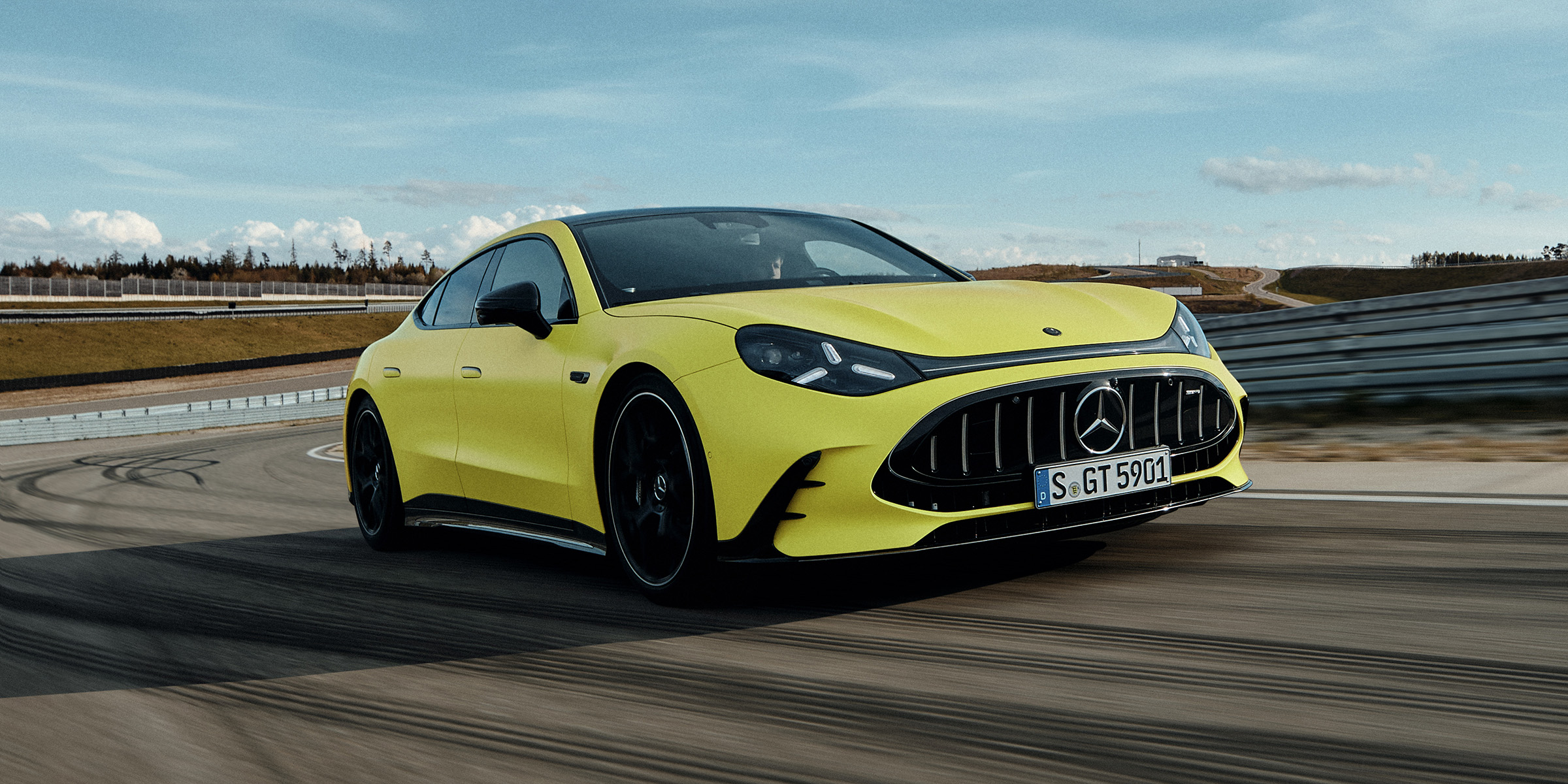
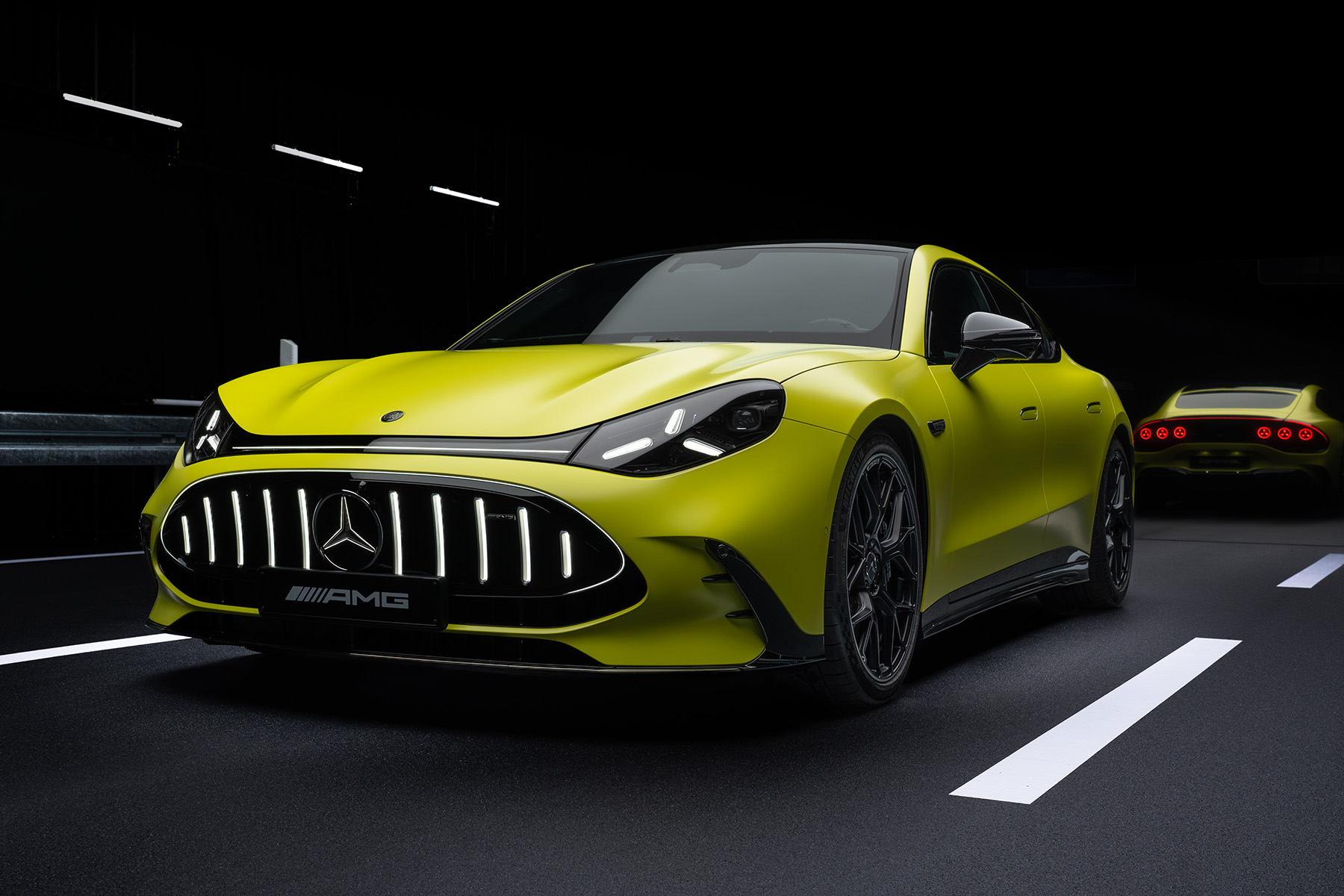
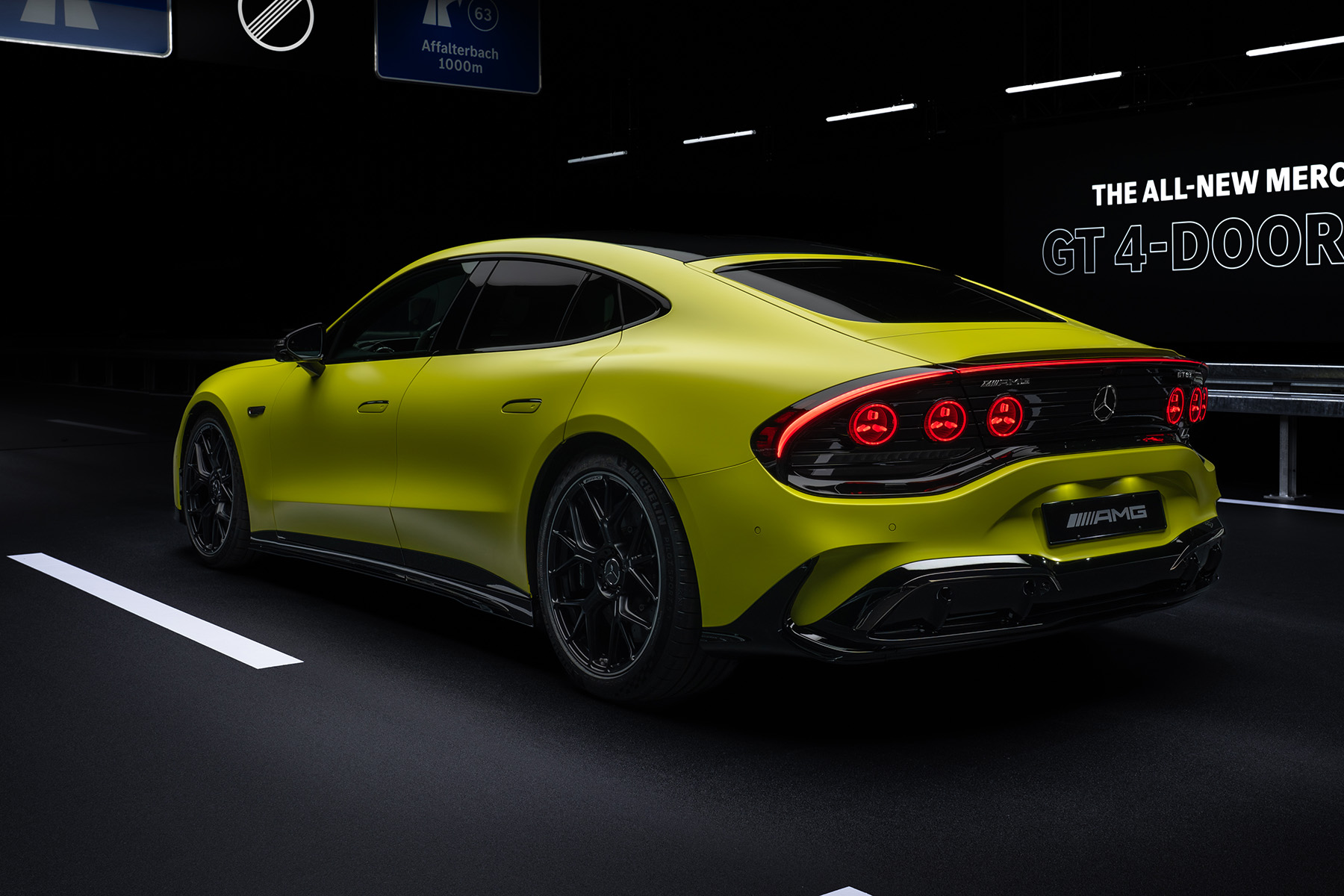
Mercedes-AMG has revealed an new battery-powered replacement for the GT 4-Door Coupé, dropping petrol power for a seriously potent electric powertrain.
The new four-door performance car uses an entirely new electric platform developed by AMG and introduces several technologies that Mercedes says have never before appeared in a production EV. The most eye-catching statistic is the power output: flagship versions produce up to 1,169hp, enough for a claimed 0-62mph time of 2.1 seconds and a top speed of 186mph with the optional ‘Driver’s Package’ fitted.
Rather than using the conventional electric motors found in most EVs, AMG has fitted what are known as axial flux motors. In simple terms, these are more compact and more power-dense than typical electric motors, meaning they can deliver huge performance without taking up as much space or suffering as badly from overheating during repeated hard driving.
The car uses three motors in total — two at the rear axle and one at the front — giving it four-wheel drive and allowing power to be shifted between wheels extremely quickly for better traction and cornering performance.
A major focus has also been placed on sustained performance, addressing one of the biggest criticisms often aimed at high-performance EVs. Mercedes says the new battery system has been engineered to maintain strong performance lap after lap rather than delivering one quick burst before overheating or reducing power.
The battery itself uses technology inspired by Formula 1, including individually cooled cylindrical battery cells designed to better manage heat during aggressive driving or ultra-fast charging sessions.
Mercedes claims the car can recharge enough electricity for around 285 miles of driving in just ten minutes, provided you can find a compatible ultra-rapid charger capable of delivering the required power. A 10% to 80% battery top-up is said to take around 11 minutes.
Despite being electric, AMG clearly wants the car to feel familiar to buyers used to the brand’s V8-powered models. One of the more unusual features is a synthetic driving mode designed to mimic the sound and feel of a traditional AMG V8. In its most aggressive setting, the car generates simulated gearshifts, exhaust-style noises and even physical jolts during acceleration to recreate the sensation of driving a combustion-engined AMG.
Turning to the chassis, the car gets active air suspension, rear-wheel steering and active aerodynamic elements that move automatically depending on speed and driving conditions. There are also adjustable driving dynamics settings that allow drivers to alter how aggressively the car turns into corners, how much traction control intervenes and how responsive the power delivery feels.
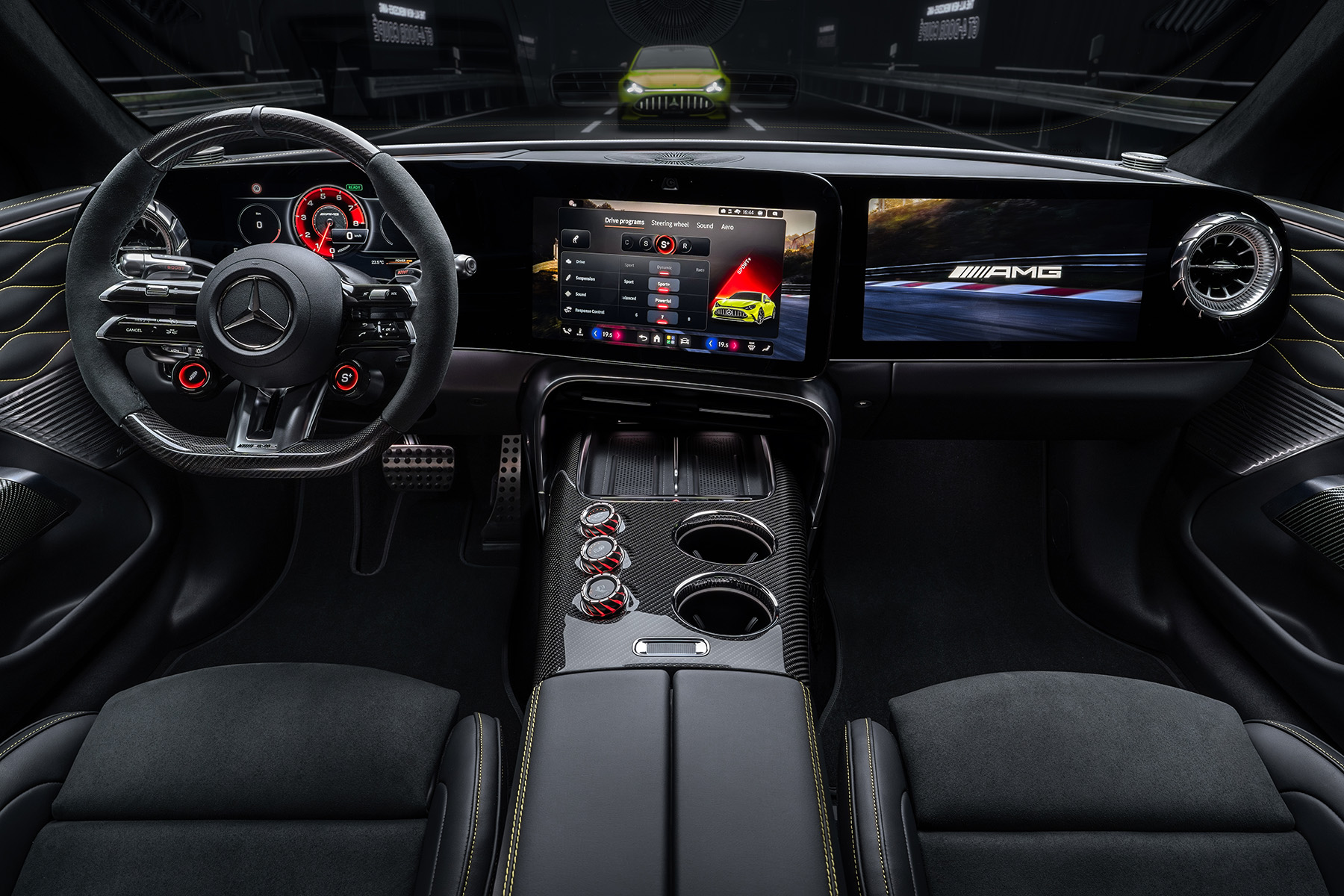
Inside, the coupé’s interior mixes large digital displays with heavily bolstered sports seats and a more driver-focused cockpit layout than most Mercedes EVs. AMG has also retained rear-seat practicality, with space for adults and foldable rear seats to improve luggage capacity.
Two versions will initially be offered — the ‘GT 55 4-Door Coupé’ with 816hp and the range-topping ‘GT 63 4-Door Coupé’ with the full 1,169hp output. Mercedes hasn’t yet confirmed UK pricing, but says costs will broadly align with the outgoing petrol-powered GT 4-Door range. UK deliveries are expected after production begins in summer 2026.
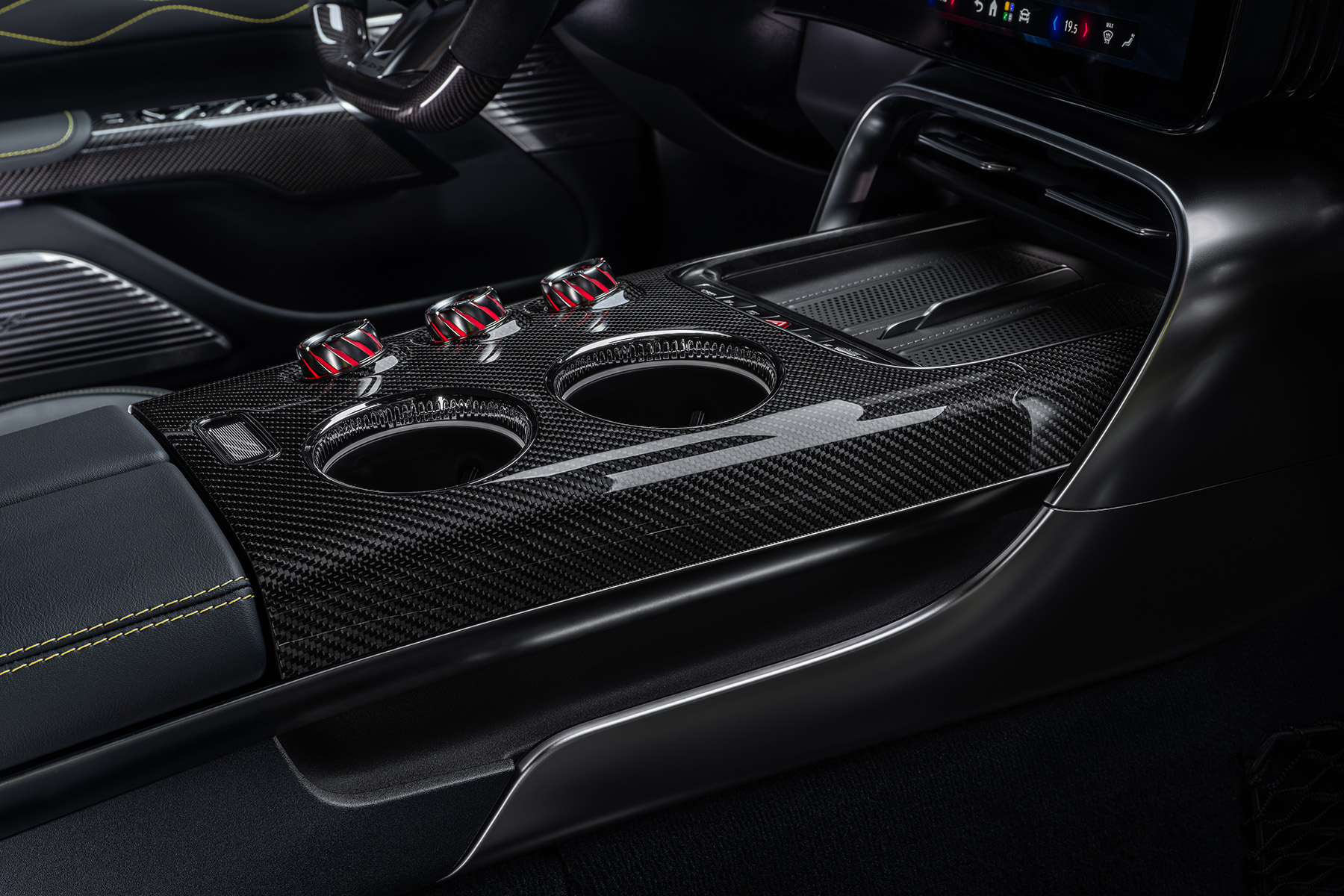
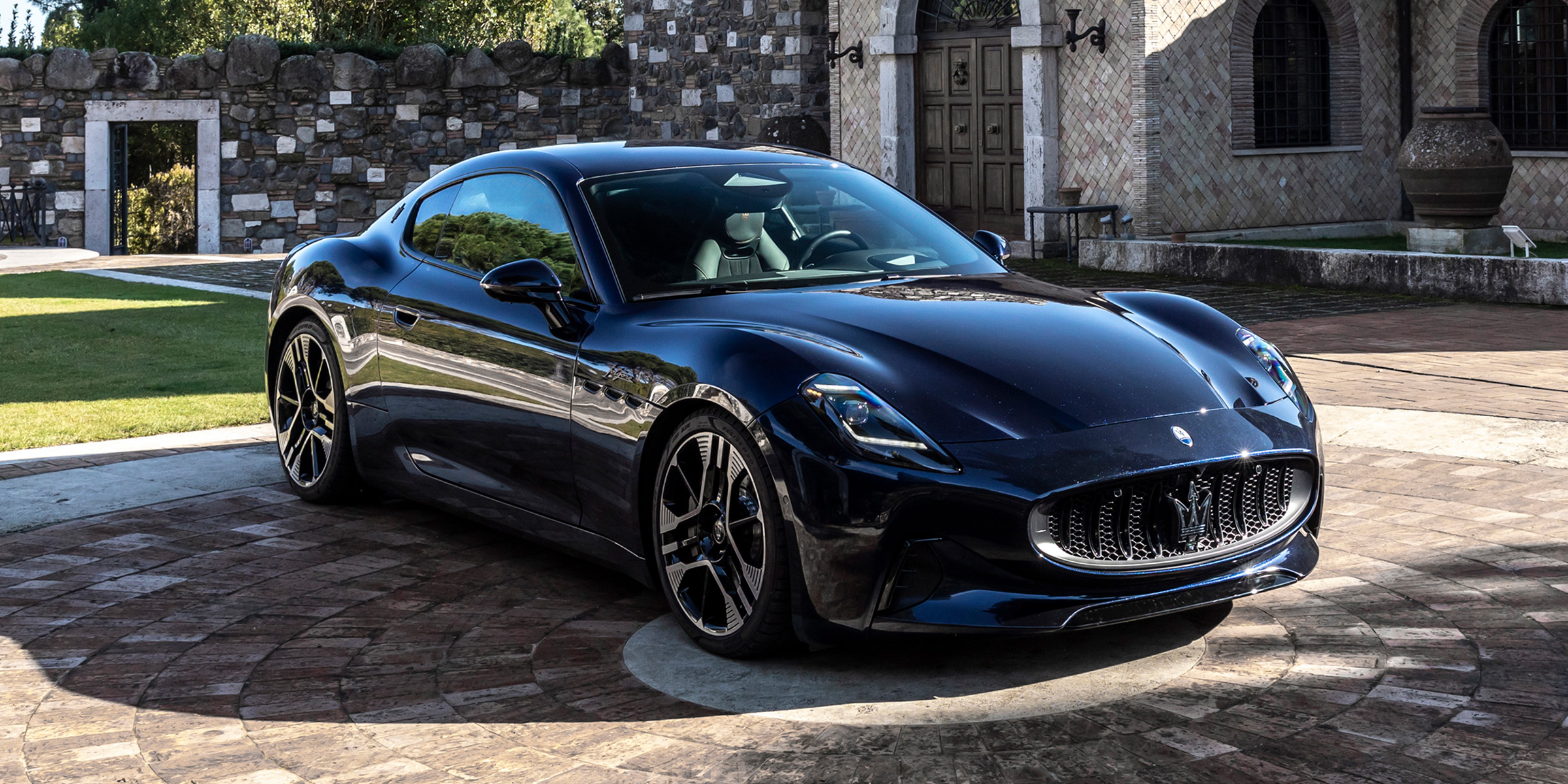
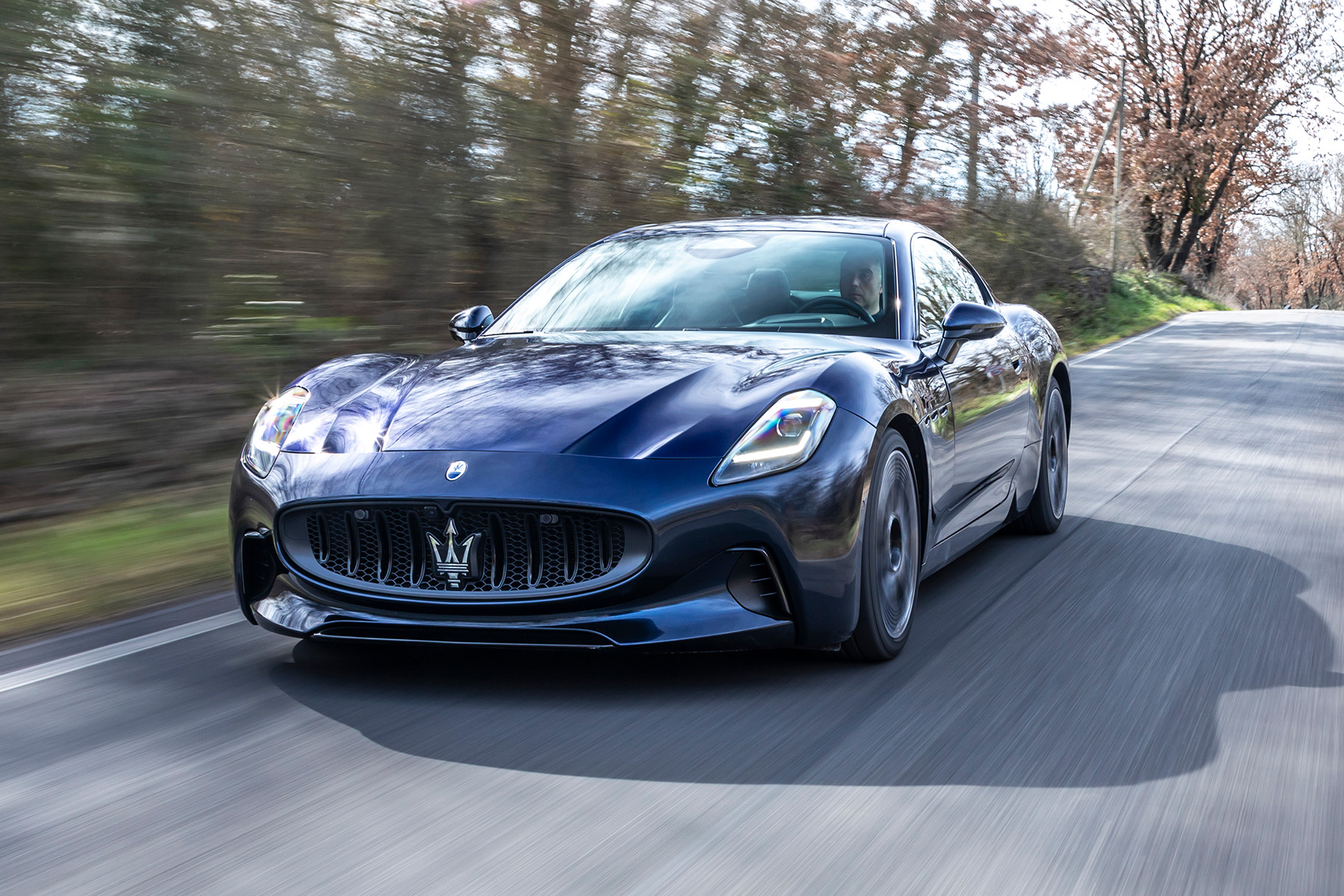
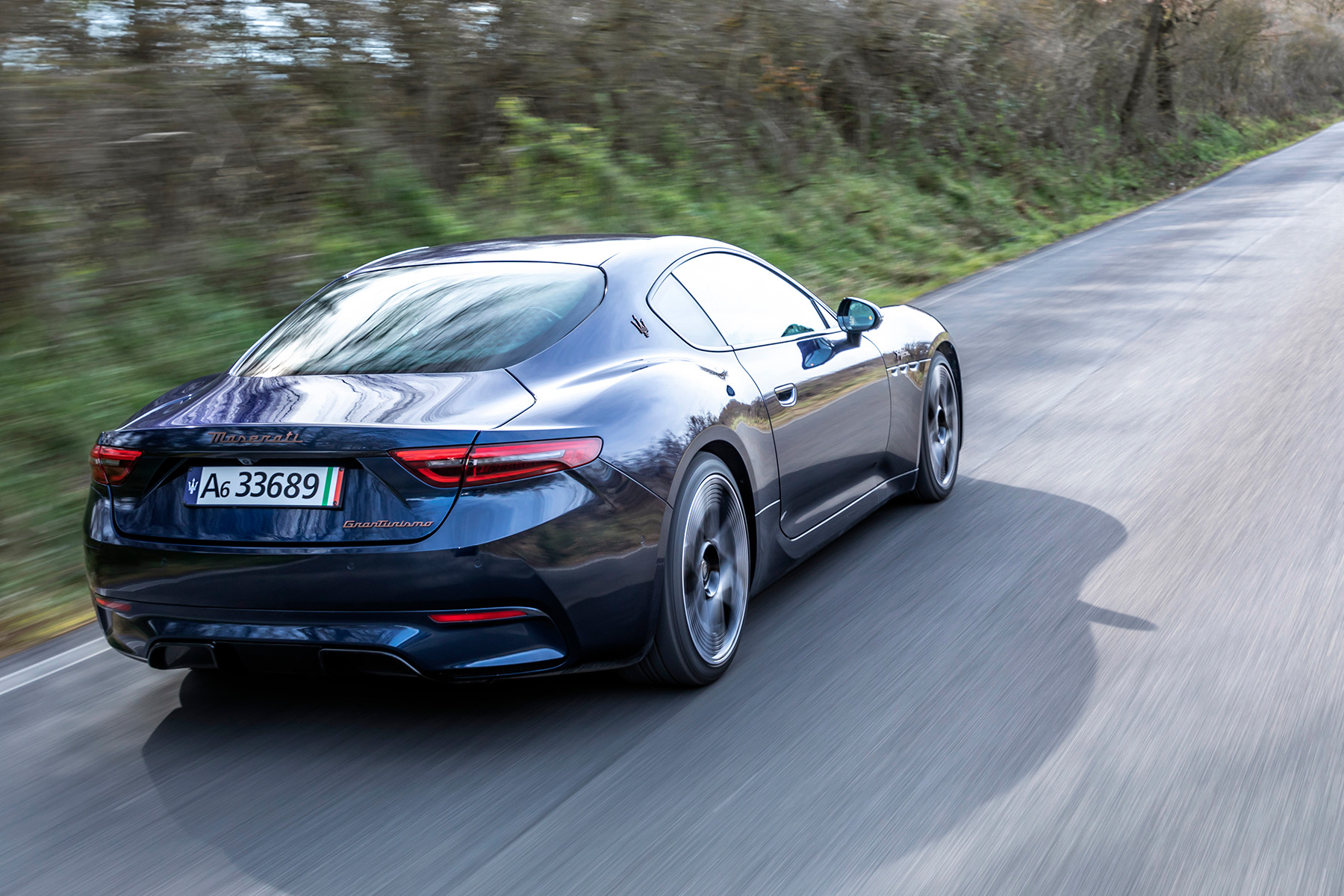
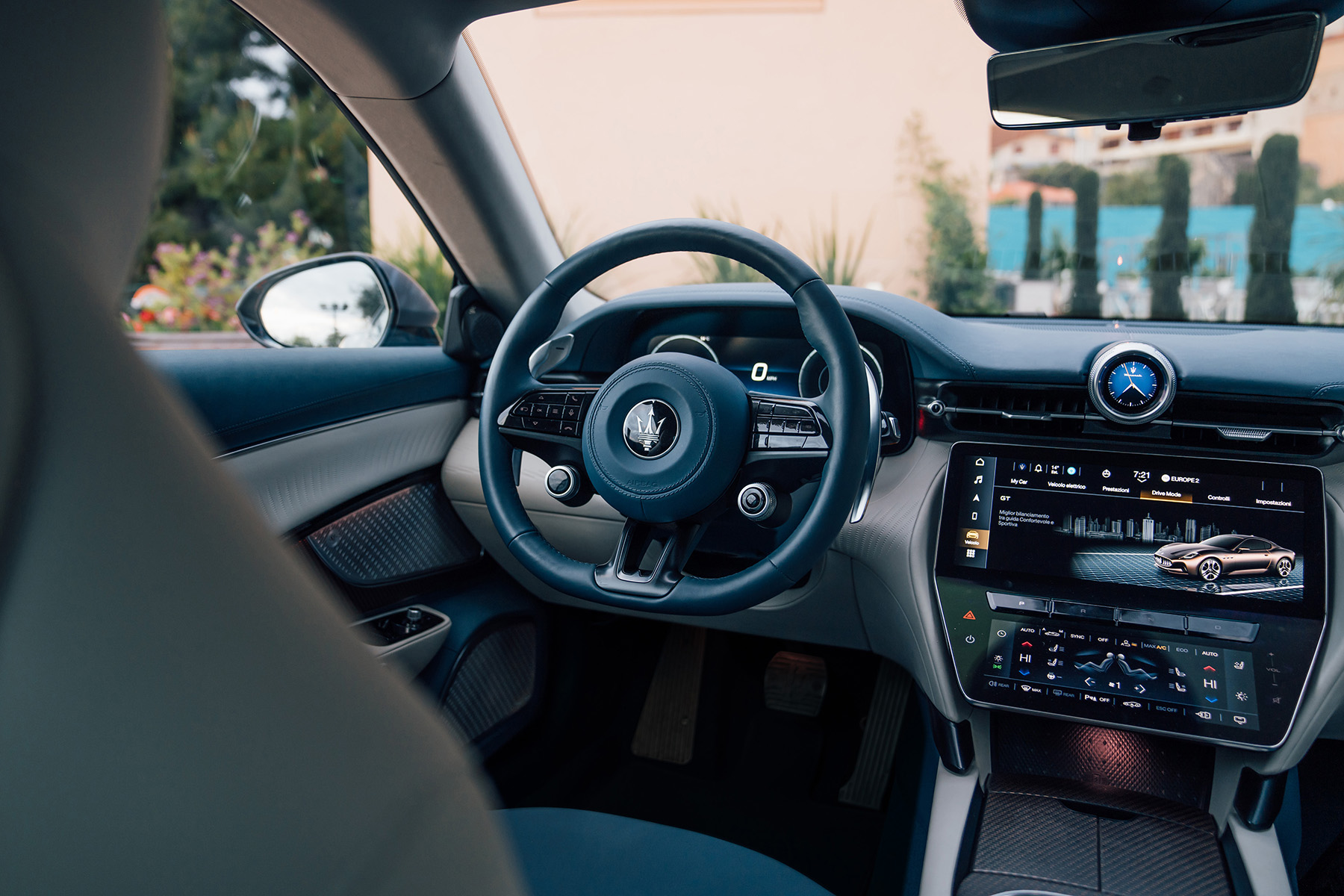
The Maserati GranTurismo is a luxurious two-door coupé, and this Folgore model is the battery-powered version. Launched in 2023, it’s part of the second-generation range to carry the GranTurismo name but the latest in a long line of Maserati grand touring coupés.
The Folgore has been given a broadly positive reviewer reception in the UK, described as “most potent Maserati to date” by Evo’s Sam Jenkins, and as “a bold step into the future for a brand steeped in tradition” by Car Key’s Ishan Sonavane.
Tim Pitt of Motoring Research concludes that the electric Maserati is “classy looking, very comfortable and fantastically fast”, but adds that the GranTurismo Folgore isn’t very appealing as an ownership proposition, due to the car’s “high price, steep depreciation and a below-par range.”
The Car team meanwhile praises the coupé for “superb” ride and handling balance and “impressive” performance and charging tech, but cites “clear quality concerns” and infotainment issues (on the test car) which are particularly jarring when you consider the car’s six-figure pricing.
Despite the high upfront cost, Electrifying.com’s Thomas Geiger argues that “you’ll be paying for a somewhat unique, and future-proof electric coupe with enormous power, poise, and quality.”
As of June 2026, the Maserati GranTurismo Folgore holds a New Car Expert Rating of C, with a score of 62%. Despite the car’s above-average review scores, the overall rating is hindered by the car’s high predicted running costs.
Body style: 2+2 coupé Engines:electric, battery-powered Price:From £176,760
Launched: Winter 2023/24 Last updated: N/A Replacement due: TBA
Image gallery
Media reviews
Highlighted reviews and road tests from across the UK automotive media. Click any of the boxes to view.
Featured reviews
“With all that power, the Maserati GranTurismo Folgore is massively fast, but it’s also deft on a twisty road and easy to drive around town, although the suspension fidgets a bit too much and the range isn’t great.”
Score: 8 / 10 “Overall, the Maserati GranTurismo Folgore is fast, refined and good to drive – although only a few will be lucky enough to run it as a company car.” Author: Martyn Collins Read review
Car
Score: 8 / 10 “It’s taken some significant and time-consuming development to get the Maserati GranTurismo Folgore to drive the way it does, and to disguise its weight so well. The ride and handling balance is superb, as is the execution of its three-motor setup and impressive charging technology. It’s a stellar effort. But in 2025, we don’t think buyers would be happy to put up with a faulty touchscreen or clear quality concerns when spending £180,000. Author: Ted Welford, Seth Walton Read review
Car Keys
Score: 8 / 10 “The Maserati GranTurismo Folgore is a bold step into the future for a brand steeped in tradition. It’s an admirable endeavour to marry past and future, combining Italian flair with cutting-edge technology and performance that can go toe-to-toe with the industry’s best. Its interior, while not revolutionary, provides a comfortable and high-tech environment, and its handling is engineered to deliver a driving experience that should please even the most demanding of enthusiasts.” Author: Ishan Sonavane Read review
Electrifying.com
Score: 7 / 10 “There’s a lot to like about the Maserati GranTurismo Folgore. It’s gorgeous, as a classic coupe uncompromised by its electric powertrain, while the level of performance gives the Porsche Taycan Turbo S something to think about. It’s likely to be a very expensive option though, but you’ll be paying for a somewhat unique, and future-proof electric coupe with enormous power, poise, and quality.” Author: Thomas Geiger Read review
Motoring Research
Score: 7 / 10 “The Maserati GranTurismo Folgore is an easy car to enjoy: classy looking, very comfortable and fantastically fast. As an ownership proposition, it’s less appealing – with a high price, steep depreciation and a below-par range stacking up against it. We’d stick with the cheaper V6 version.” Author: Tim Pitt Read review
Parkers
Model reviewed: Range overview Score: 8 / 10 “It’s a special car to look at, drive and be in, and just so happens to be electric. If you can think you can live without the mighty engine, it represents an interesting proposition.” Author: Adam Binnie Read review
Top Gear
Model reviewed: Folgore EV Score: 9 / 10 “Maserati reinvents itself for the electric age… with a car that looks suspiciously like it’s powered by petrol. Say ciao to the Maserati GranTurismo Folgore.” (Ollie Marriage) Read review
Safety rating
Independent crash test and safety ratings from Euro NCAP
No safety rating
As of June 2026, the Maserati GranTurismo Folgore has not been assessed by Euro NCAP. Due to its hefty six-figure price tag, the coupé is unlikely to ever be tested.
Eco rating
Independent economy and emissions ratings from Green NCAP
No eco rating
As of June 2026, the Maserati GranTurismo Folgore has not been assessed by Green NCAP.
The Green NCAP programme measures exhaust pollution (which is zero for an electric car) and energy efficiency. Electric cars are much more energy-efficient than combustion cars, so the GranTurismo Folgore is likely to score very highly in Green NCAP testing if and when it takes place. Check back again soon.
Running cost rating
Monthly cost of ownership data provided exclusively for The Car Expert by Clear Vehicle Data
Battery range
Average
Score
Variation
Score
EV models
280 miles
B
Electrical efficiency
Average
Score
Variation
Score
EV models
3 m/KWh
E
Insurance group
Average
Score
Variation
Score
All models
50
F
The Maserati GranTurismo Folgore is a very expensive car to own and run, according to whole-life cost numbers provided exclusively to The Car Expert by our data partner, Clear Vehicle Data.
The coupé’s average battery range of 280 miles is higher than the average EV, but comfortably bested by grand tourer rivals like the Porsche Taycan and Lotus Emeya – a drawback highlighted by the Maserati’s comparably low average electrical efficiency of 3m/KWh.
The coupé’s estimated insurance premiums also sit in the most expensive bracket.
Warranty rating
New car warranty information for the Maserati GranTurismo Folgore
Overall rating
C
48%
New car warranty duration
3 years
New car warranty mileage
60,000 miles
Battery warranty duration
8 years
Battery warranty mileage
100,000 miles
Maserati’s new car warranty is fairly boilerplate, and worse than rival brands in a similar price bracket as the GranTurismo Folgore.
The duration is three years, with a limit of 60,000 miles. In addition to the standard new car warranty, the Folgore has an eight-year/100,000-mile warranty for the battery components.
Warranty on a used Maserati GranTurismo Folgore
If you are buying an ‘Approved Used’ Maserati GranTurismo Folgore from an official Maserati dealership, you will typically get a one- or two-year warranty included with unlimited mileage.
If you are buying a used Maserati GranTurismo Folgore from an independent dealership, any warranty offered will vary and will probably be managed by a third-party warranty company.
If you are buying a used Maserati GranTurismo Folgore from a private seller, there are no warranty protections beyond any remaining portion of the original new car warranty.
If you’re looking to buy any used car that is approaching the end of its warranty period, a used car warranty is usually a worthwhile investment. Check out The Car Expert’s guide to the best used car warranty providers, which will probably be cheaper than a warranty sold by a dealer.
Recalls
Official DVSA safety recalls that have been issued for the Maserati GranTurismo Folgore
As of June 2026, we are not aware of any DVSA vehicle safety recalls affecting the Maserati GranTurismo Folgore. However, recall information is updated regularly, so this may have changed.
You can check to see if your car has any outstanding recalls by visiting the DVLA website or contacting your local Maserati dealer.
If you’re looking to buy a new or used Maserati GranTurismo Folgore, The Car Expert’s partners can help you find the right car.
Find your next new or used car with Auto Trader. Find out more
Find your next new or used car with Carwow. Find out more
Subscribe to a Maserati GranTurismo Folgore
Subscriptions are becoming a very popular way for consumers to try an electric car for a few weeks or months to help decide whether it’s a suitable alternative to a petrol car. If you’re interested in a car subscription, The Car Expert’s partners can help. (PS: What’s a car subscription?)
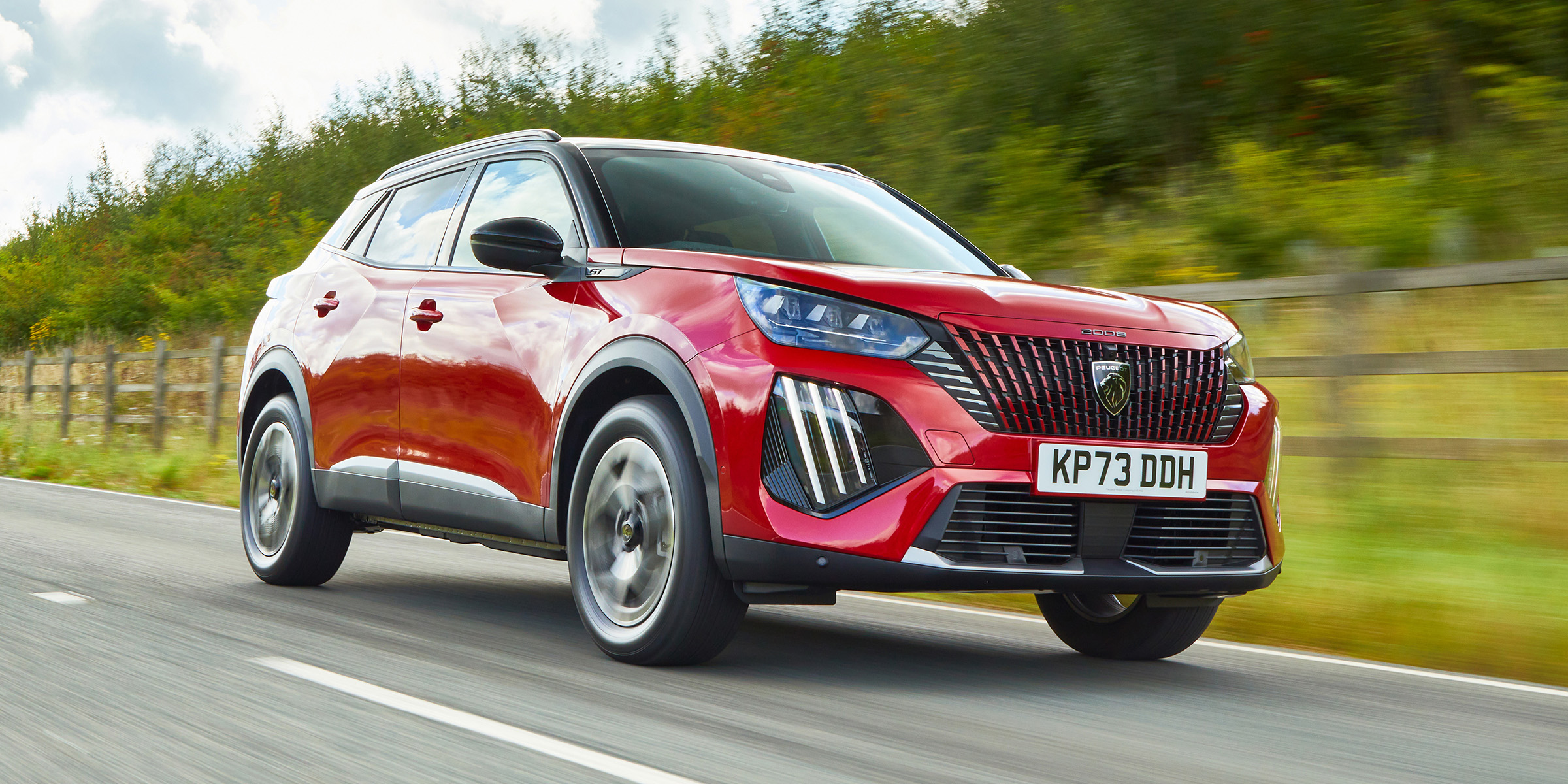
Peugeot has announced a major pricing shake-up across its UK car range, lowering entry prices on key models including the 208, 2008, 3008 and 5008 in a bid to make the brand more competitive for both private and business buyers.
The move follows similar pricing changes introduced recently on the updated Peugeot 308 and 408, with the French manufacturer saying the new structure creates lower entry points across its entire passenger car line-up.
The cheapest Peugeot on sale remains the 208 supermini, which now starts from around £20k, while the larger 5008 SUV range begins at over £38k. Other revised starting prices include under £26k for the 2008 crossover, around £29k for the 308 hatchback, close to £31k for the 308 SW estate, £32k for the 408 fastback and £35k for the 3008 SUV.
Peugeot says the changes apply across petrol, hybrid, plug-in hybrid and electric models, helping improve affordability and strengthen the brand’s appeal in both the retail and fleet sectors.
The revised pricing also brings additional benefits for electric car buyers. Peugeot says every version of the E-3008 and E-5008 now falls below the £50,000 threshold that triggers the Expensive Car Supplement on vehicle excise duty (VED), potentially saving owners £2,200 in road tax over the first six years of ownership. The E-3008 is also the model to see the biggest price drop – a saving of around £9k when compared to the previous list price.
The changes also mean the 73kWh Peugeot E-3008 with its 210hp electric motor now qualifies for the UK Government’s £1,500 Electric Car Grant across all trim levels, making the electric family SUV more competitive against rivals such as the Tesla Model Y, Kia EV5 and Skoda Enyaq.
Peugeot believes the lower list prices will also improve company car tax costs by reducing Benefit-in-Kind (BiK) liabilities, potentially making its electric and low-emission models more attractive to fleet operators and business users.
The new pricing structure is available now across Peugeot’s UK dealer network.
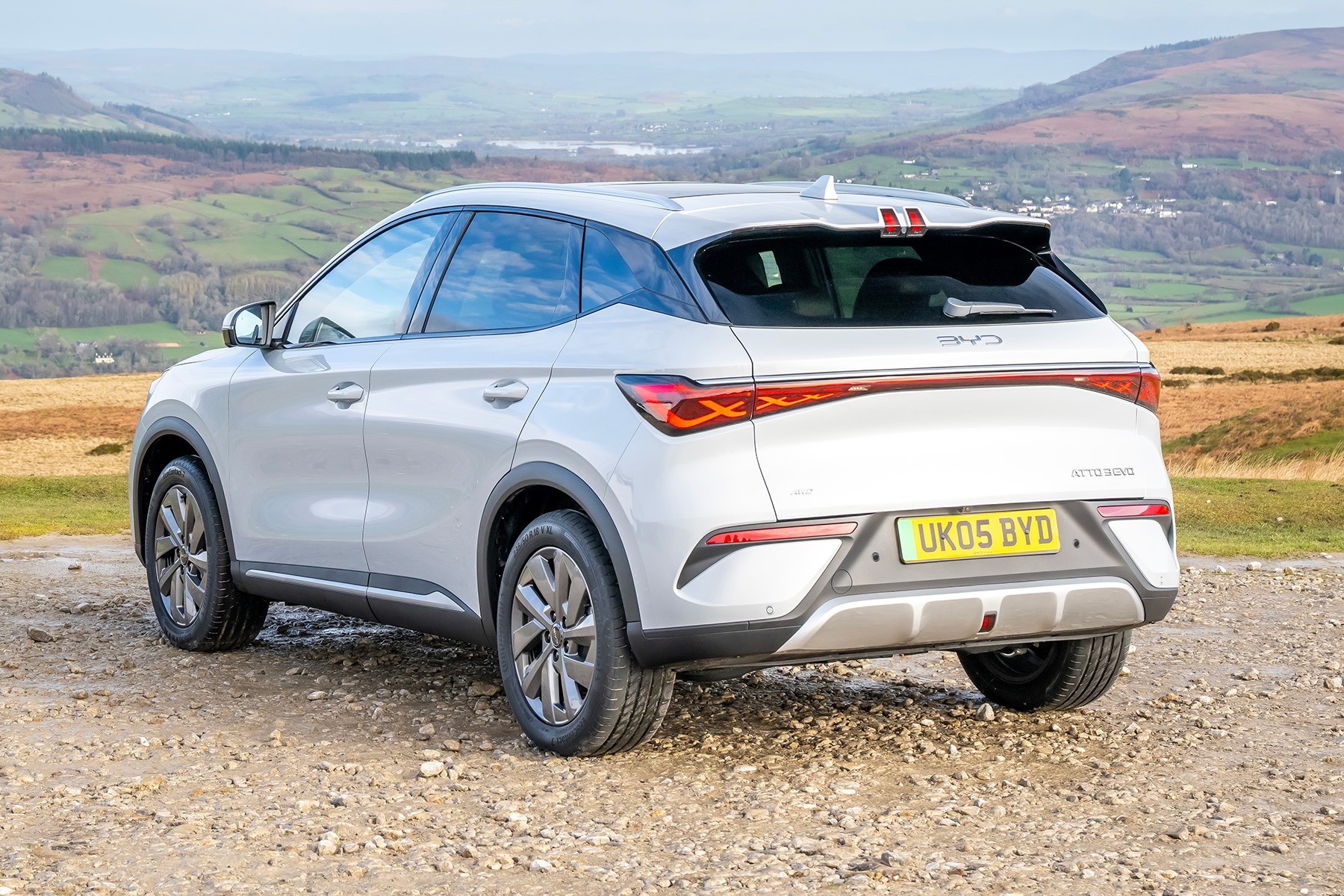
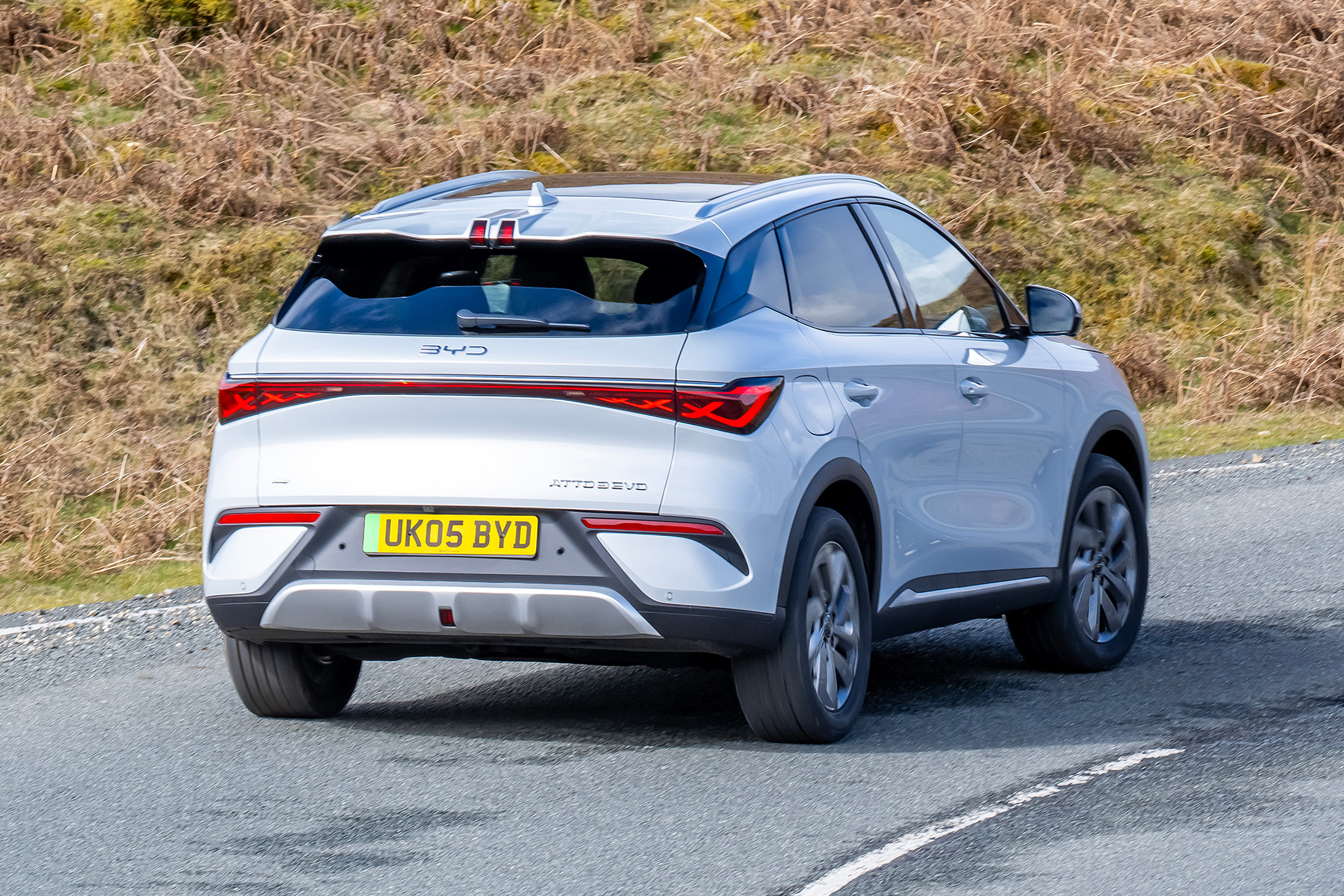
Make and model: BYD Atto 3 Evo Description: Mid-sized electric SUV Price range: £38,990 to £42,730
Summary: BYD’s first UK model was already a solid performer, but a wide range of updates increases the Atto 3’s standing in a market with many rivals.
For a broader ownership picture, see our BYD Atto 3Expert Rating, which combines media reviews, safety data, reliability, running costs and warranty cover.
It was less than three years ago, in August 2023, that The Car Expert drove the first UK launch from BYD, a Chinese brand then unknown to British buyers. The Atto 3 was an electric mid-sized SUV that attracted generally positive reactions.
Fast forward to 2026 and BYD – generally regarded as the first of the ‘new breed’ of Chinese names to arrive in the UK – is firmly established, with more than 125 showrooms offering some eight different models. The brand sits just outside the top ten UK car badges in terms of sales, which is remarkable growth in such a short time.
A clue to such success might be indicated in this latest arrival, effectively a mid-life refresh for the Atto 3. Most reviews, including our own, described the original car as a “solid start” for the brand and, as of April 2026, it has an A-level 73% score in The Car Expert’s industry-leading Expert Rating index. But this update is far more than the usual fare of styling tweaks and colour options.
At the launch event, BYD management reeled off the various aspects of the car that UK buyers have said they didn’t like, and how they’ve been fixed – from extending the range and speeding up the recharging to adding a ‘frunk’ under the bonnet. It seems when changes are needed, they happen quickly…
Price and equipment
Even the trim levels of the Atto 3 have been simplified. The three original trims are now two, dubbed Design and Excellence. The main difference is that the £39K Design uses a single motor, while the £42.7K Excellence is all-wheel-drive with a second motor. As of May 2026, neither qualifies for the government’s EV grant, slightly dulling the value-for-money message typical of Chinese brands.
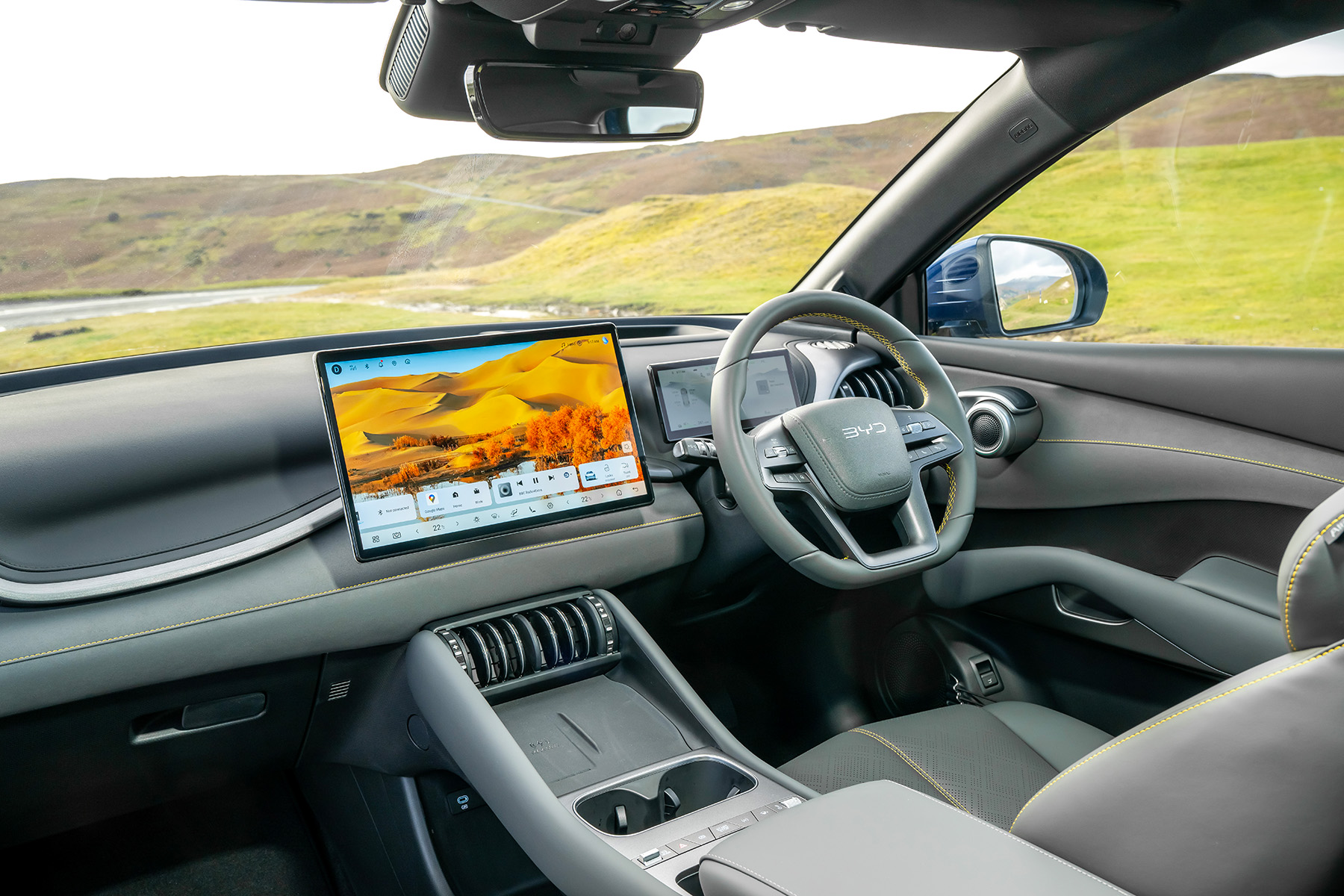
Equipment levels are, however, typically high. Both models include the usual recipe of nine-inch driver’s display panel and 15-inch central touchscreen with lots of Google apps, a wireless phone charging pad plus four USB-C ports, parking sensors front and rear and a surround-view camera, ambient lighting, heated electrically adjustable front seats, 18-inch alloy wheels and a vehicle-to-load capability to power external electric equipment.
Move up to the Excellence you also get heating on the rear seats, a driver’s head-up display and a panoramic sunroof. There is no options list as such but unlike with the first Atto you do now have to pay an extra £750 for anything other than the standard blue exterior paint job.
Both cars also get a heat pump to aid with battery range in winter, which leads into significant powertrain changes. The Design is now rear-wheel drive rather than front, and more powerful, putting out 313hp, more than 100hp up on the first version. The Excellence has 449hp on offer.
All this comes alongside a longer range and radically improved recharging times (see below), previously another minus point with buyers.
There are no major updates to the safety specification in the new model, but it already had a five-star rating from its Euro NCAP crash test in October 2022. Worth mentioning, too, that BYD’s warranty stretches to six years or the odd figure of 93,750 miles [it’s about 150,000km, as most of the world is metric… – ed], with eight years/155,350 miles [250,000km] on the battery.
Inside the car
Getting inside the Atto 3 provides further evidence of the kind of changes typical of an all-new rather than updated car. The general design has undergone a complete revamp, dulling down the original’s apparently gymnasium-inspired detailing. Some aspects have survived, notably the quite natty ‘guitar string’ design of the doorbins, while the general fit and finish remains of a good standard.
Major changes include the gear selector, moved from the traditional position between the front seats to a stalk on the right of the redesigned steering wheel. The freed-up space houses a wireless charging pad, cooled as standard.
The large central touchscreen remains, though it no longer rotates. It does come with Google apps as standard, usefully including Google Maps and better than BYD’s own software.
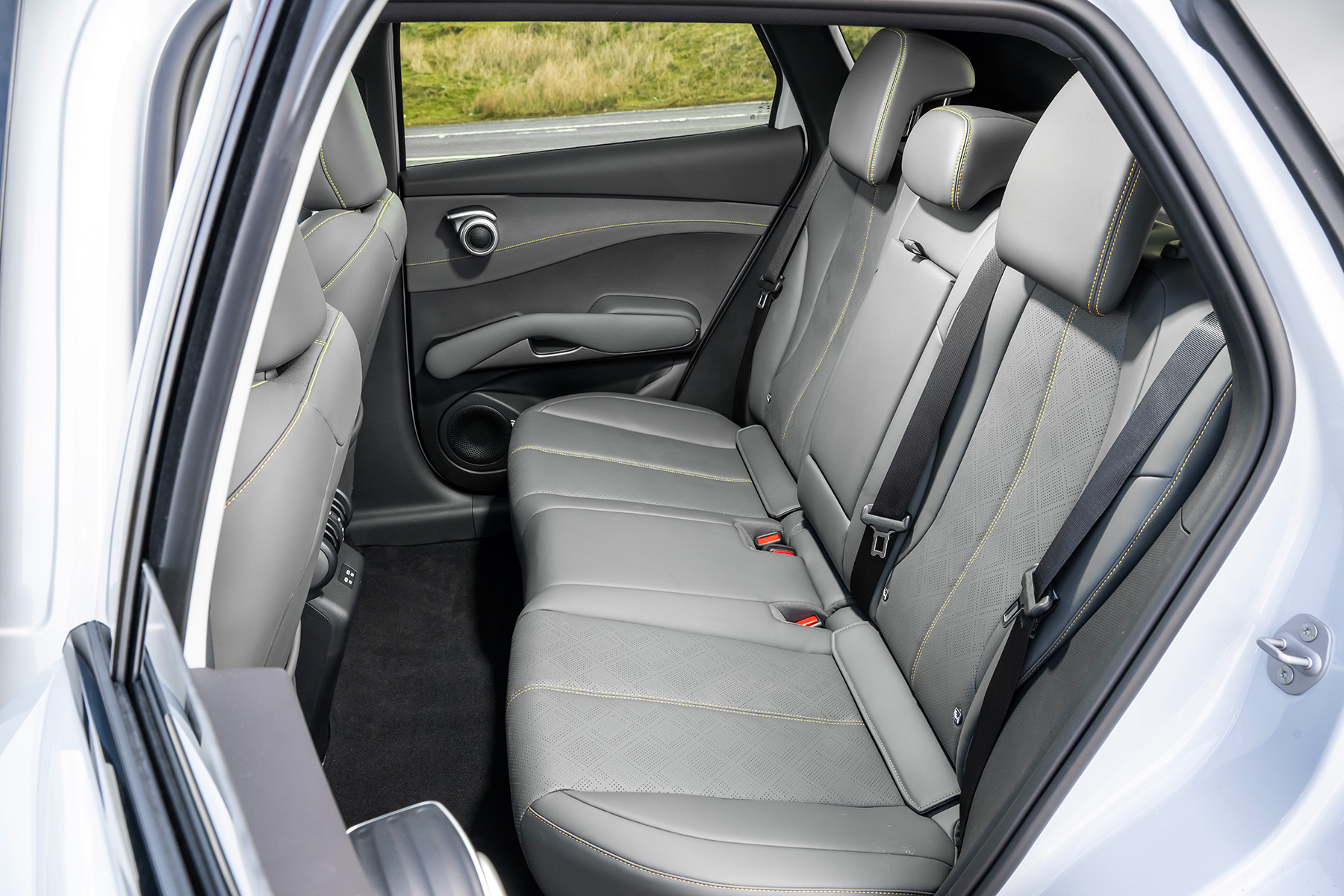
Another complaint with the first Atto – boot space did not compare to rivals. So not only is the boot 50 litres bigger, now 490 litres, there’s now an extra 95 litres in a ‘frunk’ under the bonnet.
Driving range and charging
An increase in battery capacity by 14kWh means that, despite the power boost, the Design quotes an official driving range of 316 miles, which is more than 50 miles better than the original Atto 3. The Excellence, with its extra power and weight, is rated at 292 miles. It’s still not as much as cars such as Renault’s Scenic, but the BYD does significantly now outdo the opposition on charging speed.
Both versions recharge at a suitable public charging point at up to 200kW, with a 10 to 80% charge now taking 25 minutes compared to 45 minutes on the old car. From a 7kW home wallbox, you’ll be looking at a full charge in about ten hours.
One more positive change – the charging port is now mounted in the traditional rear quarter panel position, rather than on the front wing.
On the road
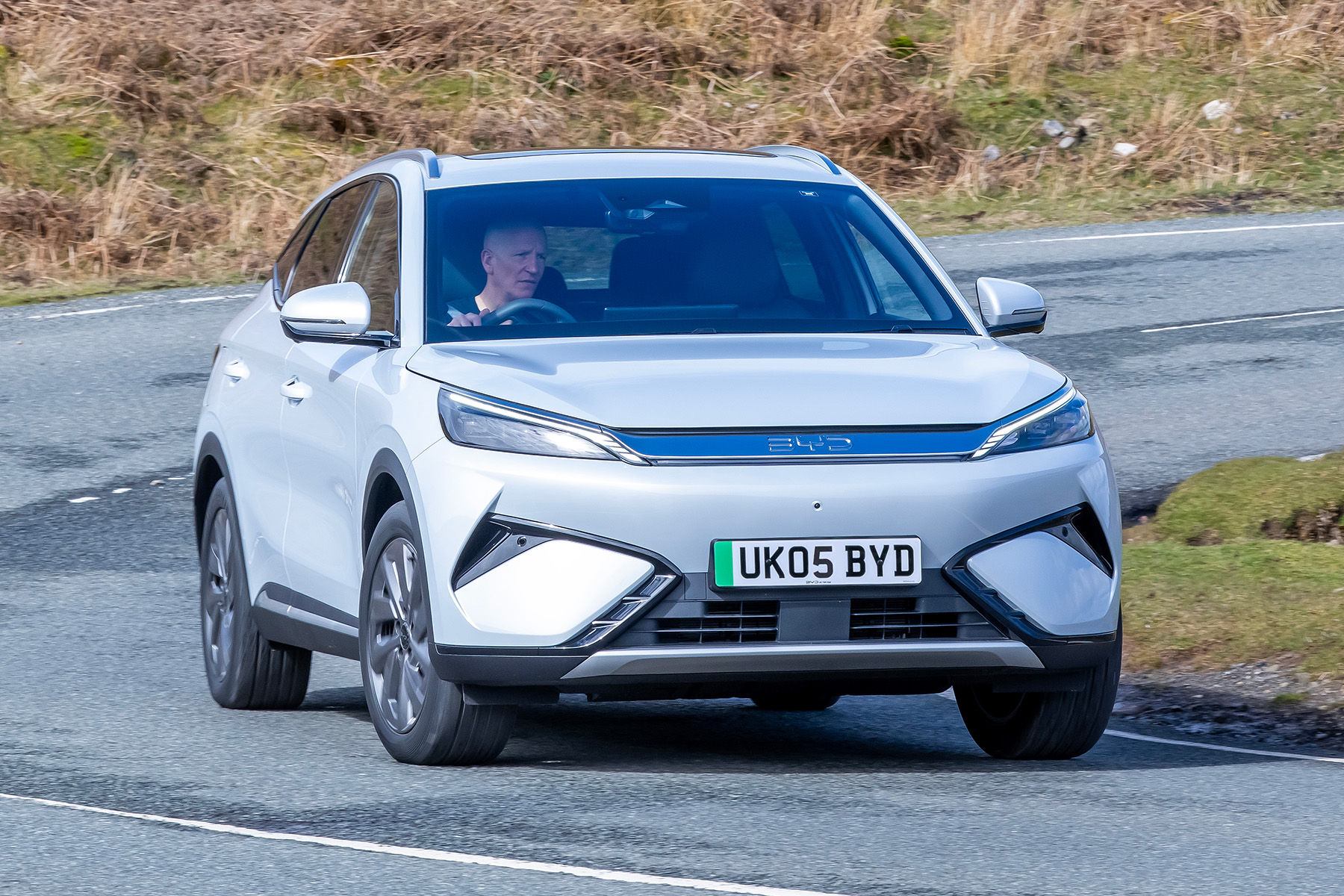
We drove both versions of the Atto 3 at the launch event. The power hikes mean that the rear-wheel drive car has a 5.5-second 0-62mph time, and the all-wheel-drive model accomplishes the same feat in a hair under four seconds.
On the road, this translates to a pretty potent vehicle. One wonders whether the target market for this model really needs supercar acceleration – we could imagine some Excellence buyers attracted by the safety advantages of all-wheel drive being unnerved by the level of response to pressing the accelerator pedal too hard.
Having said that, generally the Atto 3 Evo displays the on-the-road good behaviour that has become typical of mass-market electric vehicles – you don’t have to use the potency, just be aware it’s there. Noticeable at speed, however, is a surprising amount of wind and road noise.
Further changes have been made to the rear suspension, which deliver better travel over less-than-perfect surfaces than the first Atto. However, it’s still not up to the standard of several rivals, and the steering still feels over-light and disconnected from the wheels, which doesn’t help the overall experience.
Verdict
The way in which BYD has updated a model only on sale for less than four years should delight buyers and make rival brands nervous. The BYD Atto 3 Evo is a much bigger step forward than you’d expect for a mid-life refresh.
Those who really enjoy their driving will still want to look elsewhere, but the package of updates has answered almost every criticism of the original Atto 3 in style, producing a car which is a much more attractive proposition for those looking for a mid-sized electric family SUV.
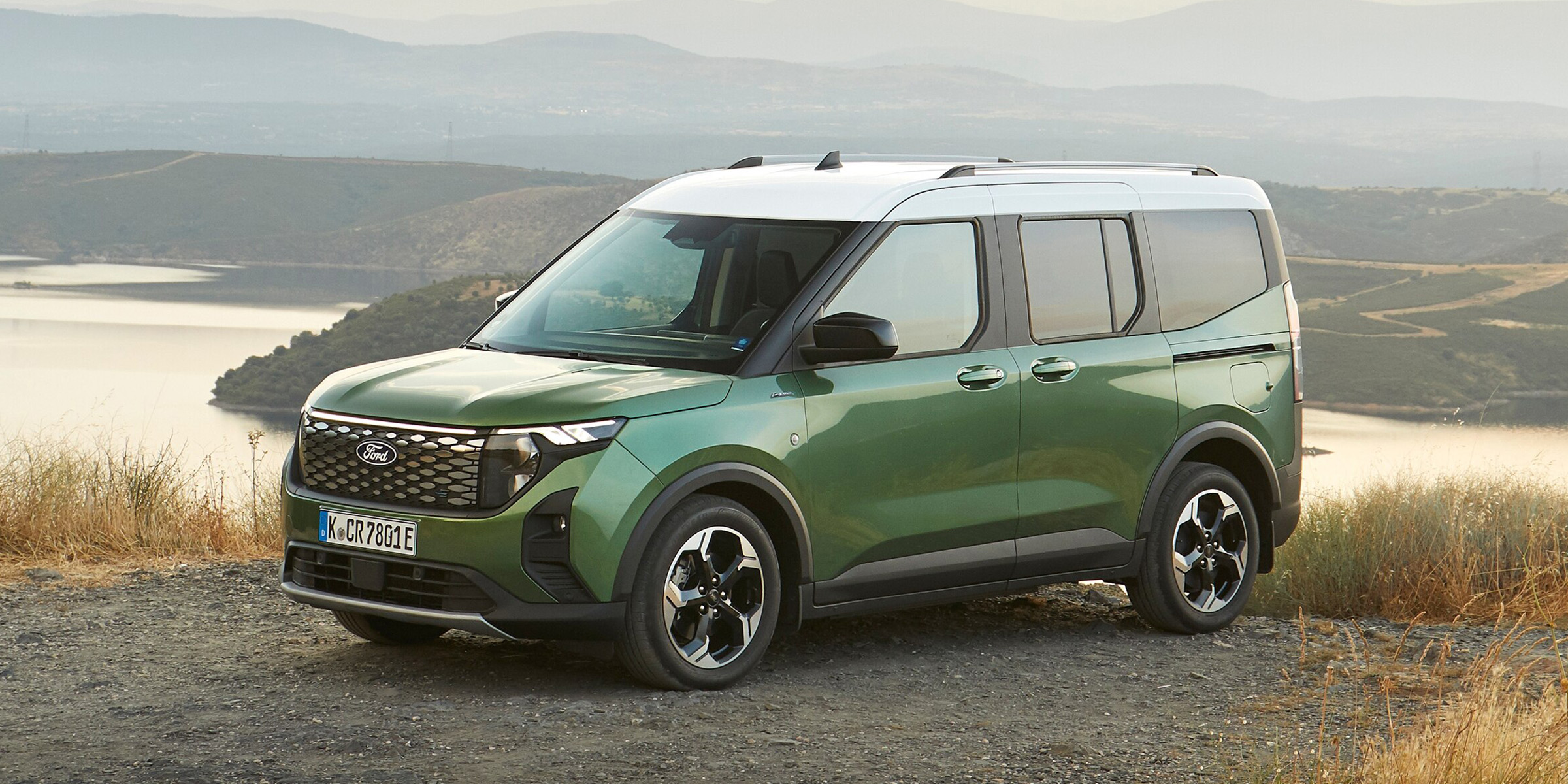
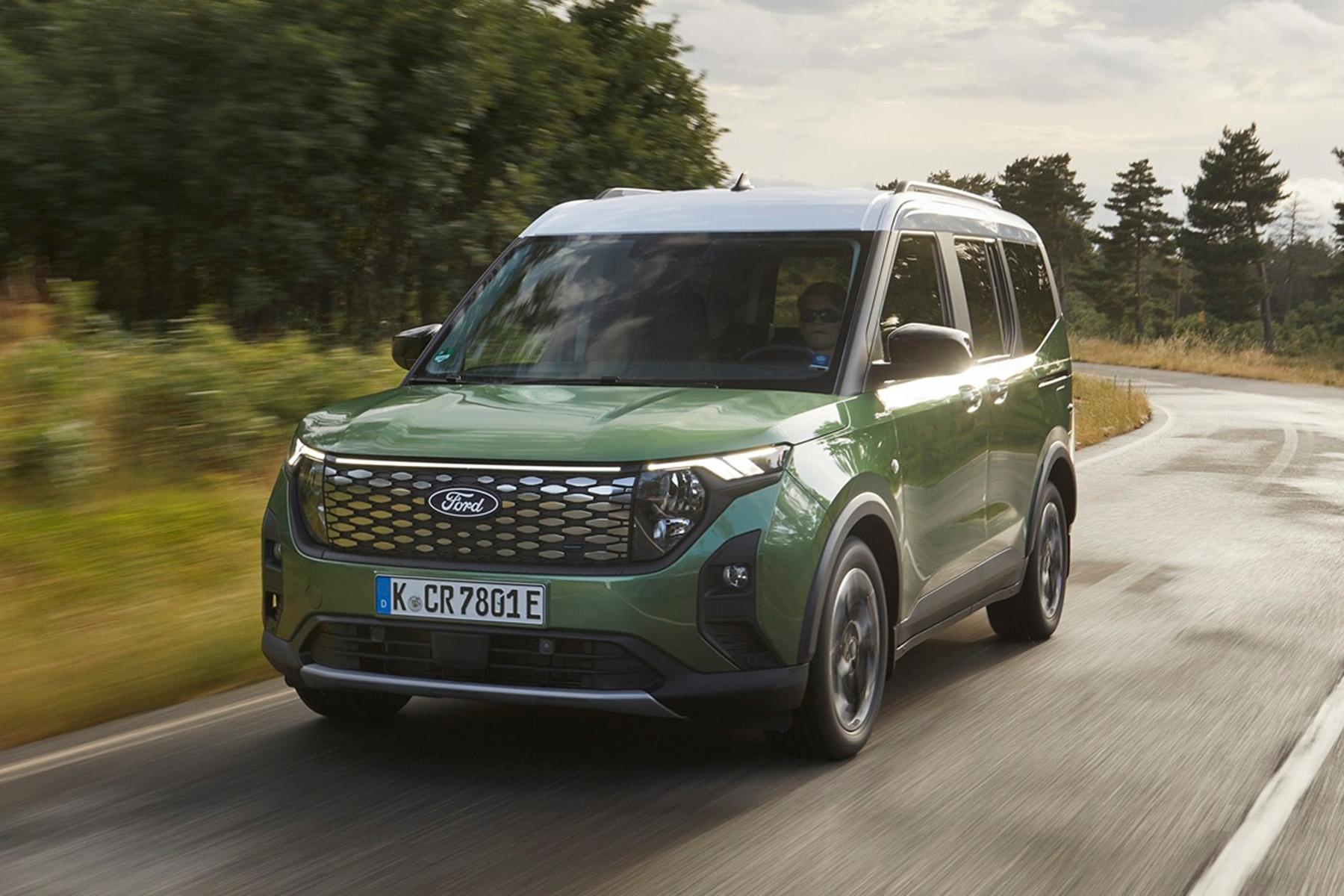
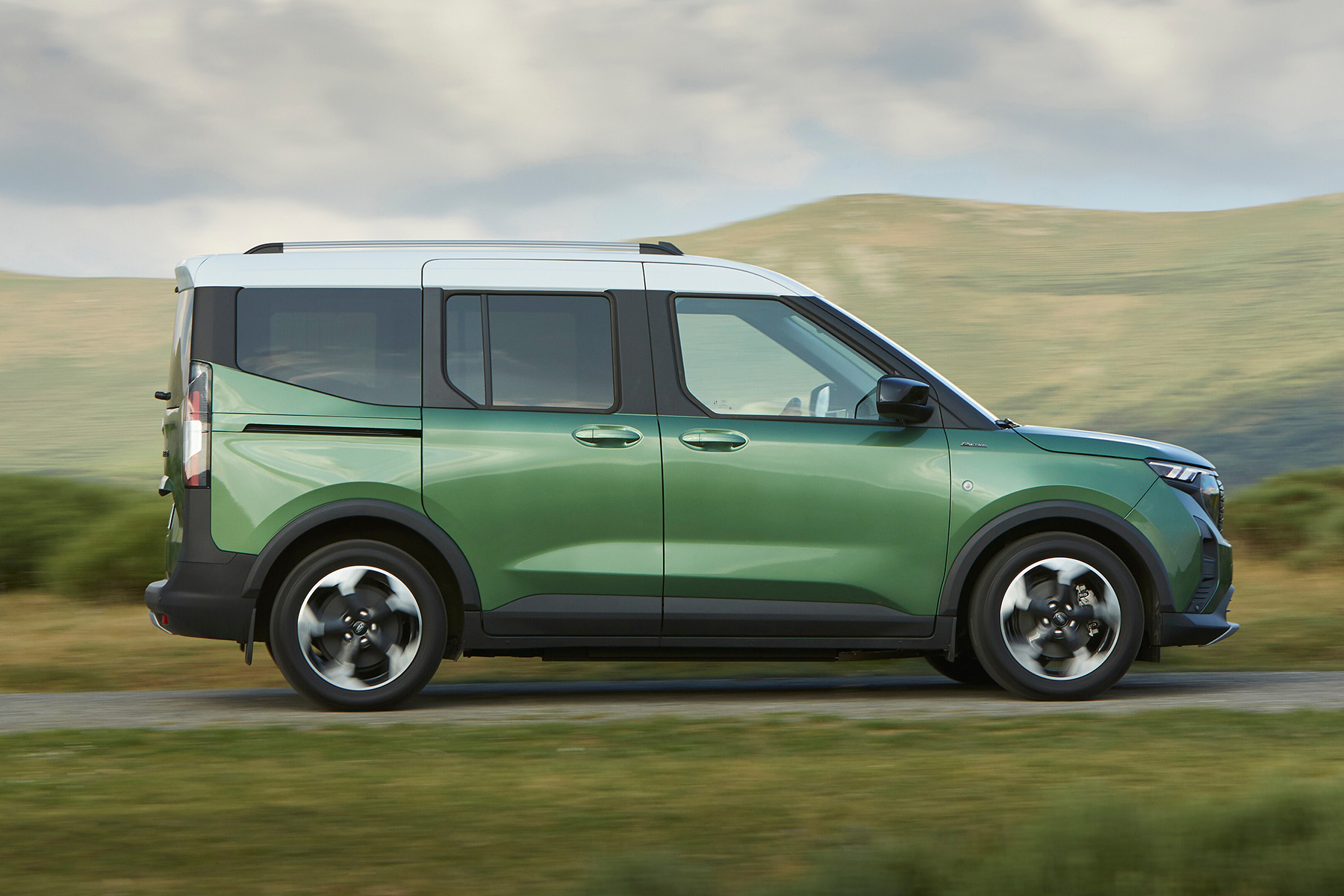
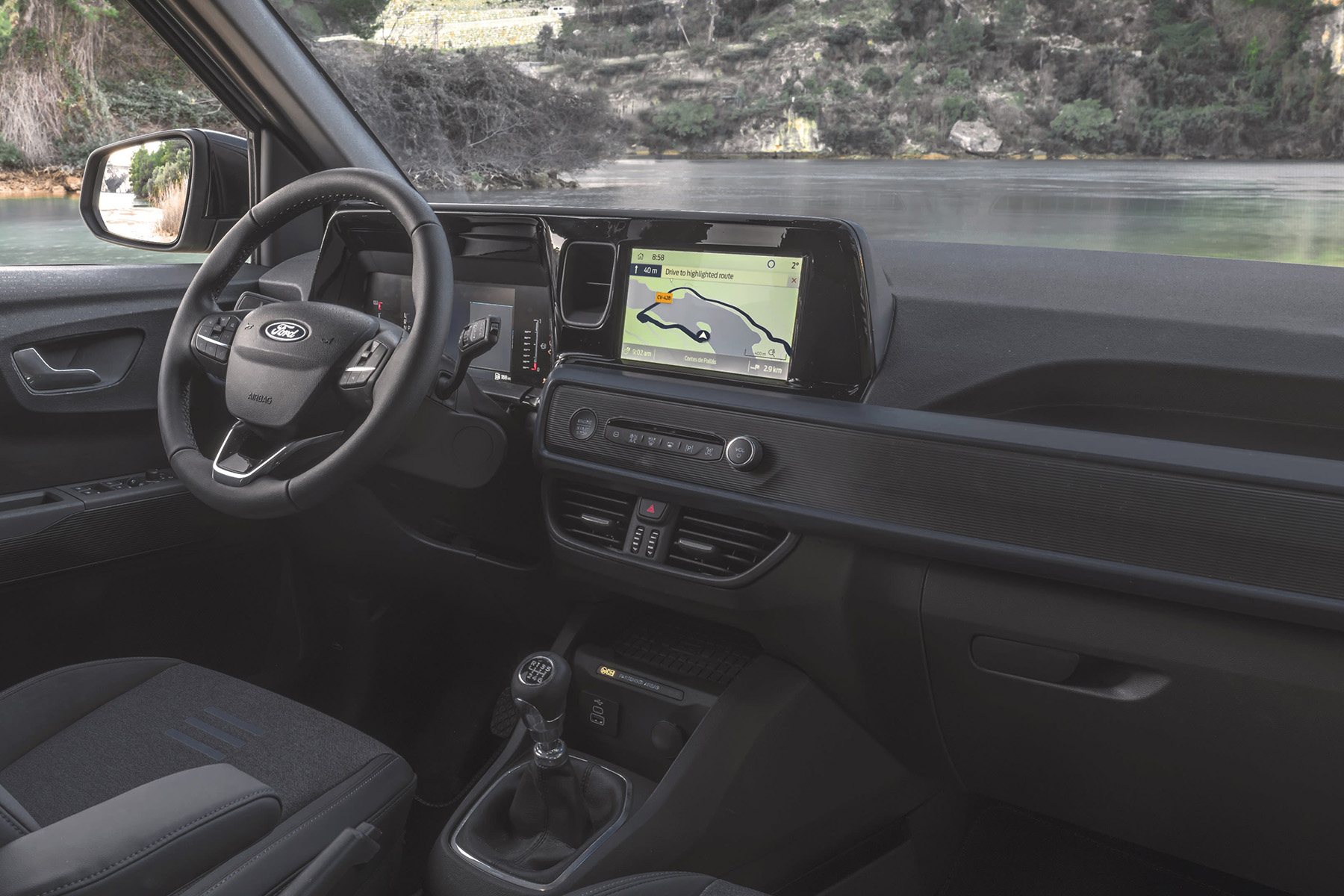
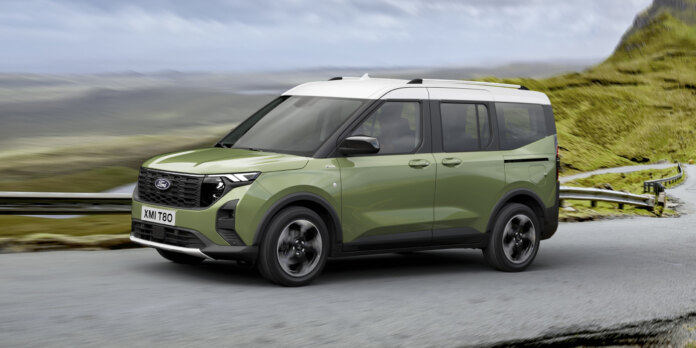
The Ford E-Tourneo Courier is a five-seat all-electric people carrier which is built on the same foundations as the popular Ford Puma Gen-E crossover.
Receiving a small collection of UK-based review scores that are largely positive to date, the Car team says that the electric Tourneo Courier “manages to bring a bit of Puma-like polish” to its driving experience, concluding that the “genuinely enjoyable to drive”.
Electrifying.com’s Sam Burnett adds that the people carrier “loads of space for carrying stuff, a refreshing simplicity to the drive and a decent level of kit as standard.”
Autotrader’s Tom Robert agrees that the Ford “drives well”, but adds that there are drawbacks – its battery range of around 170 miles which is bested by many alternatives, its “limited” luggage space, and “the fact that cars like the Dacia Jogger Hybrid are more affordable and can carry more passengers.”
As of May 2026, the Ford E-Tourneo Courier holds a New Car Expert Rating of A, with a score of 77%.
Body style: People carrier Engines:electric, battery-powered Price:From £29,940
Launched: Winter 2024/25 Last updated: N/A Replacement due: TBA
Image gallery
Media reviews
Highlighted reviews and road tests from across the UK automotive media. Click any of the boxes to view.
Featured reviews
“It’s not just a smartly styled van with windows – it’s genuinely enjoyable to drive, cleverly thought out and easy to live with. That it manages to bring a bit of Puma-like polish to a family-focused package is a triumph in itself.”
Model reviewed: Range overview Score: 7 / 10 “The five-seater Ford E-Tourneo Courier shrugs off the usual ‘van-derived’ hallmarks with its car-like driving habits and good use of space.” Author: Tom Roberts Read review
Electrifying.com
Model reviewed: Range overview Score: 7 / 10 “It’s not a car that will necessarily win anyone over, this – the prevailing winds of fashion have long ceased blowing in this direction. But actually that shows up a snobbery that will mean you’re missing out on a great car – there’s loads of space for carrying stuff, a refreshing simplicity to the drive and a decent level of kit as standard.” Author: Sam Burnett Read review
Green Car Guide
Model reviewed: Range overview Score: 7 / 10 “It features stylish design, it’s good to drive, and it offers lots of luggage space. The official driving range, at 177 miles, could be better.” Author: Paul Clarke Read review
Safety rating
Independent crash test and safety ratings from Euro NCAP
Independent economy and emissions ratings from Green NCAP
No eco rating
As of May 2026, the Ford E-Tourneo Courier has not been assessed by Green NCAP.
The Green NCAP programme measures exhaust pollution (which is zero for an electric car) and energy efficiency. Electric cars are much more energy-efficient than combustion cars, so the E-Tourneo Courier is likely to score very highly in Green NCAP testing if and when it takes place. Check back again soon.
Running cost rating
Monthly cost of ownership data provided exclusively for The Car Expert by Clear Vehicle Data
Battery range
Average
Score
Variation
Score
EV models
177 miles
C
Electrical efficiency
Average
Score
Variation
Score
EV models
3.6 m/KWh
D
Insurance group
Average
Score
Variation
Score
All models
19
A
The Ford E-Tourneo Courier is a relatively affordable car to own and run, according to whole-life cost numbers provided exclusively to The Car Expert by our data partner, Clear Vehicle Data.
The people carrier’s average battery range of 177 miles is a bit below par when compared to other people carriers of this size, as well as family-friendly SUVs around the same price tag. That said, the car’s estimated insurance premiums are in one of the cheapest brackets.
Reliability rating
Reliability data provided exclusively for The Car Expert by MotorEasy
No reliability rating
As of May 2026, we don’t have enough reliability data on the Ford E-Tourneo Courier to generate a reliability rating.
The Car Expert’s reliability information is provided exclusively to us using workshop and extended warranty data from our partner, MotorEasy, sourced from both official dealerships and independent workshops.
As soon as MotorEasy has sufficient data on the E-Tourneo Courier, we’ll publish the results here.
Warranty rating
New car warranty information for the Ford E-Tourneo Courier
Overall rating
C
48%
New car warranty duration
3 years
New car warranty mileage
60,000 miles
Battery warranty duration
8 years
Battery warranty mileage
100,000 miles
Ford’s new car warranty is fairly average, and worse than some rival brands in a similar price bracket as the E-Tourneo Courier.
The duration is three years, with a limit of 60,000 miles. In addition to the standard new car warranty, the electric people carrier has an eight-year/100,000-mile warranty for the battery components.
Warranty on a used Ford E-Tourneo Courier
If you are buying an ‘Approved Used’ Ford E-Tourneo Courier from an official Ford dealership, you will get a minimum one-year warranty included.
If you are buying a used Ford E-Tourneo Courier from an independent dealership, any warranty offered will vary and will probably be managed by a third-party warranty company.
If you are buying a used Ford E-Tourneo Courier from a private seller, there are no warranty protections beyond any remaining portion of the original new car warranty.
If you’re looking to buy any used car that is approaching the end of its warranty period, a used car warranty is usually a worthwhile investment. Check out The Car Expert’s guide to the best used car warranty providers, which will probably be cheaper than a warranty sold by a dealer.
Recalls
Official DVSA safety recalls that have been issued for the Ford E-Tourneo Courier
As of May 2026, we are not aware of any DVSA vehicle safety recalls affecting the Ford E-Tourneo Courier. However, recall information is updated regularly, so this may have changed.
You can check to see if your car has any outstanding recalls by visiting the DVLA website or contacting your local Ford dealer.
Find your next new or used car with Auto Trader. Find out more
Find your next new or used car with Carwow. Find out more
Lease a Ford E-Tourneo Courier
If you’re looking to lease a new Ford E-Tourneo Courier, The Car Expert’s partners can help you find a competitive deal.
Personal contract hire deals from Leasing.com. Find out more
Personal contract hire deals from Carwow. Find out more
Personal contract hire deals from Select Car Leasing. Find out more
Subscribe to a Ford E-Tourneo Courier
Subscriptions are becoming a very popular way for consumers to try an electric car for a few weeks or months to help decide whether it’s a suitable alternative to a petrol car. If you’re interested in a car subscription, The Car Expert’s partners can help. (PS: What’s a car subscription?)
Ferrari’s first EV was always going to upset a lot of people, and it certainly has. Revealed on Monday night, the Ferrari Luce has seen an unprecedented reaction online – almost all of it negative.
If you thought last year’s Jaguar rebranding was controversial, that now looks pretty tame by comparison. Mind you, the Luce could have looked like the most beautiful car ever created and plenty of people would still have declared it a betrayal simply for being an EV.
But the Luce isn’t a svelte, two-seater coupé or convertible. It’s a big saloon-ish thing, with four doors and five seats. It’s more than five metres from nose to tail, which is longer than a Mercedes E-Class. Ferrari doesn’t just make fast cars; it makes dream cars, and I’m not sure who exactly is likely to dream about the Luce.
Rather than using its own design team, Ferrari brought in external guidance from Sir Jony Ive and Marc Newson – the designers responsible for the Apple iPhone and Apple Watch, among other products – with the task of reimagining the entire car, both inside and out.
However, its controversial looks are only one part of the Ferrari Luce story, and not the part that will have the biggest impact on the wider car industry.
Criticised as a Ferrari, copied by everyone else
The Ferrari Luce introduces a very different design language for the brand, with four-door proportions and deliberately unconventional styling
Take away the Ferrari badges, and the Luce’s styling becomes a whole lot less controversial. The question is not whether the Luce contains interesting design ideas, but whether those ideas belong on a Ferrari.
The exterior is clean, if lacking in any real drama, while the interior looks genuinely clever. By next year’s Shanghai motor show, it would not be a surprise to see several new Chinese cars with obvious Luce influences. They probably won’t be sports cars, either. The four-door liftback styling of the Luce will inevitably translate into lookalike luxury saloons, fastback family cars or electric crossovers at a fraction of the price of a Ferrari.
It may be that the Ferrari Luce ultimately serves as a four-wheeled calling card for its celebrity designers, aimed at other car companies that want to rethink their own design principles.
The Ferrari Luce gives EVs a new level of credibility
There have already been plenty of fast electric cars. Tesla proved years ago that EVs could be brutally quick, while the Porsche Taycan showed that an electric car could be engineered seriously by one of the world’s great performance brands.
Ferrari is different, though. It’s not the biggest car company in the world, and it has almost nothing to do with normal household budgets. But for many decades, Ferrari has been recognised as the ultimate symbol of performance, glamour and desire in the automotive world, and its influence on car culture is deep.
That gives the Luce significance beyond the number of units Ferrari will ever sell. If Ferrari has decided that an EV can carry its famous badge – and not as some reluctant compliance car but as a thoroughly engineered flagship project – it becomes harder to keep dismissing EVs as soulless appliances for people who don’t like cars.
The most committed EV haters won’t change their minds. Most of them decided long ago that electric cars are terrible, and no amount of engineering will change their minds. But for people who are less tribal about it, Ferrari’s new EV changes the tone of the argument.
People rarely buy cars on rational grounds alone, even when they claim they do. If Ferrari can make electric power feel aspirational rather than apologetic, it’s likely to move the needle across the whole industry.
Not everyone has to like the Ferrari Luce, and it doesn’t mean that every EV is suddenly more desirable this week than it was last week. But the blanket “EVs can’t be proper performance cars” line looks more dated than it did a week ago.
The engineering is the bit people should be shouting about
We weren’t invited to the Luce’s launch, and no one outside Ferrari has driven it yet, so there’s a limit to how much anyone can judge the car properly at this stage. But on paper, the engineering is deeply impressive.
Ferrari has not simply bought an electric platform from someone else and stuck a prancing horse logo on it. Like its famous petrol engines, all the main EV components of the Luce have been engineered, developed and manufactured in-house in Maranello.
Despite being a large five-seat saloon-ish thing, the Luce’s performance stands above almost every petrol-powered car Ferrari has ever built. But numbers alone are not the interesting part. Plenty of EVs are quick, and some Teslas can accelerate even quicker than the Luce. The harder question is how you make an electric car feel special once the novelty of instant acceleration has worn off.
Ferrari seems to have spent a lot of effort on that problem, although we’ll need to wait for independent drive reviews to see how successful the results are. The Luce uses steering-column paddles to adjust torque levels and brake regeneration, allowing the driver to control how power and regeneration are delivered. It’s a more evolved concept than the usual drive modes and brake regeneration controls that most EVs use, so it should make the Luce feel more natural to drive.
For its EU-mandated noise generator, Ferrari has not taken the easy option of simply pumping out a recording of a Ferrari V12 engine, but has developed an amplified version of the Luce’s own mechanical noises and vibrations, captured from the electric axles and shaped into something more expressive. Ferrari likens this to an electric guitar amplifying the natural noise of an acoustic guitar, which is a useful way to think about it.
Whether it all works in the real world remains to be seen. But the thinking is more interesting than simply making an EV loud for the sake of it. Ferrari appears to be trying to create new forms of engagement rather than pretending electricity is the same as petrol.
The cabin may be more influential than the drivetrain
The Ferrari Luce interior takes a more considered approach to digital displays and physical controls than many modern EV cabins
The most influential part of the Luce may not be the battery, the motors or the exterior styling. It could well be the interior.
Car interiors increasingly have more in common with consumer technology than traditional dashboard design, and most car companies have handled that shift badly. Too many have treated ‘digital’ as an excuse to remove physical controls and stick everything onto a giant touchscreen. It looks clean in press images and can save money in production, but it almost always makes cars more difficult to use on the move.
Ferrari’s interior designs have been haphazard for the last few decades, so it was probably a good idea to look outside the company for inspiration. And while the celebrity duo of Ive and Newson have been widely criticised for the exterior styling, the interior has received far more acclaim.
Given that Ive’s most famous design is basically a pocket-sized touchscreen that eliminated all the traditional buttons found on every other phone up until 2007, it would be easy to assume that LoveFrom’s solution would simply be better touchscreen hardware and software. That’s not what they’ve done, though.
LoveFrom has taken a thoughtful and considered approach to driver and passenger interfaces. Yes, all of the displays are digital screens rather than analogue gauges, but most of the key inputs are made with physical buttons, dials, toggles and switches, all carefully positioned for usability rather than manufacturing convenience.
There’s a surprising number of nods to Ferrari heritage without it looking tacky or forced. The driver display combines digital information with mechanical elements, while the steering wheel and control panels seem to have been designed around actual interaction rather than showroom minimalism.
That sounds obvious, but most of the car industry has spent the last few years completely failing at this. If Ferrari and LoveFrom have found a better balance between digital and analogue controls, the influence could quickly spread across the whole industry, shaping the next decade of car interiors for family cars, SUVs and everyday hatchbacks.
Ferrari still has to make people want it
None of this lets Ferrari off the hook on the styling. A Ferrari cannot simply be technically interesting. It has to be desirable.
That is where the Luce has created the biggest problem for itself. Some of the design thinking may be clever, and some of the ideas may well be copied widely, but Ferrari buyers are not paying for cleverness alone. They are paying for theatre, beauty, status and emotion.
A strange-looking Ferrari is not the same as a strange-looking Toyota or Hyundai. Mainstream cars can get away with awkwardness if they are practical, affordable or efficient enough. Ferrari has a harder job because the car has to work as an object of desire before anyone starts caring about torque vectoring or battery cooling.
There is also a broader question about what Ferrari now wants to be. The Purosangue already stretched the idea of a Ferrari by becoming a high-riding, four-door family Ferrari. The Luce stretches it again by being electric, spacious and visually very different from the mid-engined sports cars that shaped the brand’s image for decades.
That does not automatically make it wrong. Ferrari has survived by changing more than its mythology sometimes admits. But there is a limit to how far any brand can stretch before customers start asking what still makes it special.
In the short term, the Ferrari Luce will quickly sell out production for the next year or two simply because it’s a Ferrari and there will be enough wealthy customers intrigued by it to lay down more than half a million pounds for one. The more interesting question will be how well the Luce sells in three to five years’ time.
Porsche was overwhelmed with demand for its first EV, the Taycan, but sales fell sharply after two years as the early rush faded. Ferrari will hopefully have watched and learned from Porsche’s experience as it plans out Luce production over the next five years.
Is the Ferrari Luce a turning point for EVs?
The Luce may not need to be widely loved as a Ferrari to be influential. Every other car company in the world will be looking closely at this car – not because they all want to build something similar, but because Ferrari has tried to solve problems that everyone else is dealing with in one form or another.
The exterior design language may be adapted more successfully by mainstream brands, while the interior thinking will almost certainly influence the next generations of cars of all sizes and budgets. Ferrari’s approach to sound, torque control and driver interaction may also shape the future of EV performance cars. Most of those issues apply to a £50,000 electric SUV as much as they do to a Ferrari. They just get answered differently.
The Ferrari Luce will not convert every EV sceptic, and it will not make electric cars affordable for more households. It may not even be a commercial success by Ferrari standards if buyers reject the styling or the idea of a five-seat electric Ferrari. But it still feels like an important marker.
Ferrari has decided that electric power is not just something to tolerate, or hide behind hybrid systems, or use for regulatory compliance. It has built an EV with serious engineering effort, a new design language and a cabin philosophy that other manufacturers will be analysing for years.
Maybe the Luce will end up being remembered as an awkward-looking Ferrari that traditionalists never accepted. Or maybe it will be remembered as the point when the world’s most famous performance car brand gave electric cars a different kind of legitimacy.
Ferrari has revealed its first-ever fully electric production car, the new Ferrari Luce, marking one of the biggest moments in the company’s history since the launch of its first road car almost 80 years ago.
Unveiled in Rome, the new Luce isn’t intended to replace Ferrari’s petrol-powered sports cars. Instead, it sits alongside the firm’s existing petrol and hybrid models, and will rival battery-powered alternatives like Porsche Taycan Turbo GT, and Lotus Evija.
The Luce produces a combined 1,050hp from four electric motors – one driving each wheel – allowing it to accelerate from 0-62mph in 2.5 seconds and reach a top speed of more than 190mph. Ferrari also claims a driving range of more than 330 miles on a single charge.
Four motors, four-wheel drive and four-wheel steering
Each wheel is powered by its own electric motor, giving engineers precise control over how much power is sent to each corner of the car. Ferrari says this allows the car to react more quickly and accurately than conventional all-wheel-drive systems.
The car also features four-wheel steering, meaning the rear wheels can turn slightly to improve manoeuvrability at low speeds and stability at higher speeds.
The Ferrari also has a system that allows drivers to manually adjust acceleration and regenerative braking using paddles behind the steering wheel. Unlike many electric cars that simply deliver maximum power instantly, the Luce is designed to give drivers more control over how performance is delivered.
Due to the large battery and electric motors, the Luce is significantly heavier than any traditional Ferrari, with a curb weight of 2,260kg – about as heavy as large SUVs like the Volvo EX90 and Land Rover Defender.
Fast charging and long-distance capability
Power comes from a large 122kWh battery developed in-house by Ferrari.
The company claims the battery can add around 70kWh of charge in 20 minutes when connected to a suitably powerful 350kW rapid charger.
Ferrari says owners will benefit from a dedicated eight-year warranty covering key electric powertrain components, including the battery, motors and charging systems. The Luce will also be included in Ferrari’s existing seven-year servicing programme.
Ferrari wanted it to sound like a Ferrari
Rather than creating an artificial engine note, Ferrari says it has developed a system that amplifies the natural sounds produced by the electric motors and drivetrain. Sensors monitor vibrations and mechanical noises from the powertrain, which are then enhanced and fed both inside and outside the car.
Drivers can choose how prominent the sound is, ranging from near-silent operation to a more engaging soundtrack when driving enthusiastically.
Ferrari’s first five-seat car
Perhaps the biggest surprise is that the Luce isn’t a low-slung two-seat supercar.
Instead, Ferrari has created a large four-door grand tourer with seating for five people. While the Purosangue SUV can carry four occupants, the Luce is the first Ferrari ever to offer five seats, which presumably gives it genuine family-car practicality alongside its supercar performance.
Physical controls make a welcome return
Ferrari worked with LoveFrom, the design company founded by Sir Jony Ive – best known for his work designing the Apple iPhone, iPad and Apple Watch.
The result is a much cleaner and simpler design than most modern Ferraris. The company says the exterior, interior and digital interfaces were all developed together to create a consistent look and feel throughout the car.
Inside, Ferrari has deliberately moved away from the touch-sensitive controls that have attracted criticism on some recent models. Instead, the Luce combines digital displays with proper physical buttons, switches and rotary controls for key functions such as climate control and drive modes.
A glimpse of Ferrari’s future
The Luce is arguably Ferrari’s most important new model since the launch of the original hybrid SF90 Stradale.
While Ferrari has repeatedly stated that petrol-powered V8 and V12 models will remain part of its line-up for the foreseeable future, the Luce demonstrates how seriously the company is taking electrification.
More importantly, Ferrari appears determined to prove that an electric car can still feel like a Ferrari. Whether traditional enthusiasts agree will only become clear once the first customers get behind the wheel, but the numbers alone suggest Maranello’s electric future is going to be anything but slow.
No UK pricing was announced, but given the technology involved and Ferrari’s positioning, a starting price comfortably north of £300,000 seems likely. More details, including the car’s price tag, are sure to follow in the coming months. Check back soon!
The ‘low battery’ dashboard symbol had been blinking for the last ten miles, but you thought you could squeeze a few more miles out of your car to get home or to the next charging station.
Perhaps you weren’t paying attention, or the last charging station was too far out of the way. Either way, things haven’t gone to plan and you are now out of juice at the side of the road.
This scenario is more common than you might expect, particularly in areas where electric car charging networks are a little sparse, and you rely on your charging port at home to get you from A to B. You can’t exactly walk to a petrol station for fuel (unless you drive a plug-in hybrid), so it’s clear you need to call for roadside assistance. The question is, will your breakdown provider charge you for helping you get on your way?
In short, if you have an active breakdown cover policy for your electric or plug-in hybrid car, there is no need to worry about any callout charges if you are within ten miles of your destination or a charging station. If you are in an isolated area where recovery will take more than ten miles of travel, you may have to pay an additional fee, depending on your breakdown provider.
Breakdown providers respond to these ‘out of charge’ roadside assistance requests in different ways. If you are a policy holder with the AA or Green Flag for example, the mobile technicians will tow your vehicle to the nearest charging station (or home if it’s nearer) with no additional cost.
However, if the RAC is your breakdown assistance provider, your car will be visited by a patrol van that is dedicated to charging electric cars. The technicians that drive these ‘RAC EV Boost’ vans will hook up your conked-out electric car to a 5kW charger, giving it up to ten extra miles of charge so you can get on the move.
The RAC says that it now has around 200 of these vans on patrol across the UK, which is roughly a fifth of its entire patrol fleet, so wait times shouldn’t be too long.
Contacts for breakdown assistance:
AA: 0800 88 77 66 – The AA can provide roadside assistance and, if necessary, recover your electric car to a charging point, garage, destination or another suitable location, depending on your level of cover.
RAC: 03301 598 751 – The RAC’s EV Boost service can provide enough charge for around ten miles of driving to help you reach a charging point. If additional assistance is required, recovery options will depend on your level of cover and circumstances.
Green Flag: 0800 400600 – Green Flag can recover your electric car to the nearest suitable charging point or another destination covered by your policy. Recovery limits and any additional charges will depend on your cover level and the distance involved.
Start Rescue: 0333 320 0975 – Start Rescue can recover your electric car to the nearest suitable charging point or your home. Recovery beyond the included distance allowance may incur an additional charge.
Rescue My Car: 01423 535 795 – Rescue My Car can recover your electric car to the nearest suitable charging point or your home. Recovery beyond the included distance allowance may incur an additional charge.
GEM Motoring Rescue: 01342 825 676 – GEM Motoring Assist provides breakdown recovery for electric cars, including transportation to a suitable charging point or destination. Recovery limits and conditions will depend on the policy selected.
Contact details correct as of May 2026.
Please note that most standard policies do not include roadside recovery for vehicles less than a quarter of mile from your home – this is usually included in more expensive breakdown cover plans.
If you don’t have a breakdown policy with any of these providers, you can still get urgent assistance but for an upfront fee. They will expect you to pay over the phone for the callout, which could end up being rather expensive.
Preventative measures should always be taken in the first place, though. Carefully plan your route and find the nearest charging station as soon as your ‘low battery’ of ‘limited performance’ light comes on.
My ‘low battery’ light has just turned on – how far can I go?
If the orange ‘low battery’ light is on, which looks like a petrol pump with a plug-shaped charging cable, this usually means you have only around 8 to 15 miles of battery power remaining, depending on how fast you are driving and other variables (like if climate control is on in the cabin, or how cold it is outside, etc.).
Some electric cars can push on for a few miles when the car’s computer tells you it’s on 0% charge, but it really isn’t wise to test this theory far from home.
I’m nearly out of charge and the car can’t accelerate as fast as normal, what is happening?
Has a little turtle-shaped light illuminated on the dashboard? This means your car is running on limited power, and in turn, your car’s performance is affected as a result.
This is likely to be caused by the car’s being low on charge, but please note that this dashboard light could indicate that there is an electrical fault that is far more serious. If the light is still on after the car has been charged, it’s highly recommended that you immediately take the car to an approved dealer for them to check and fix the issue.
Is it illegal to run out of charge?
Not really – you’re not breaking any UK law by running out of charge. That said, running flat and obstructing the road for other drivers is indeed illegal, and you may receive a £100 fine and three points on your licence. If you are on the motorway, the law cites running out of charge as one of the reasons you’re allowed to use the hard shoulder.
Is running out of charge bad for my car?
Like running out of fuel in a combustion-powered car, running flat in an electric car has the potential to cause some damage. Running completely out of power can lead to the battery deteriorating, reducing its performance and range.
That said, the health of your car should not be your first priority – look after yourself! Being stationary on the roadside can be quite dangerous, particularly if you are parked up on the hard shoulder of a busy motorway. Remember to exit your car from the door furthest from traffic, walk away from the hard shoulder and out of the way of other vehicles.
If you are planning on towing your electric car yourself due to a flat battery, you will need a flatbed truck. Do not tow the car with a rope or a lift, as this can damage the traction motors that power the car through regenerative braking.
Running out of charge has caused a road accident, does my breakdown policy cover my car’s recovery?
While your breakdown policy will cover you if you run out of power, it will not recover your car for free after it has caused accidents attended by emergency services, and your insurance policy will not cover the car’s damage either. If you have caused an accident when running flat or obstructing the road, you could be taken to court, or issued with nine points on your licence and an unlimited fine.
Make and model: Aion V Premium Description: Electric mid-sized SUV Price range: £36,450 to £37,900
Summary: The Aion V is a good value first offering which outscores rivals on the road. Putting right some minor irritations would take it to the top of its class.
For a broader ownership picture, see our Aion V Expert Rating, which combines media reviews, safety data, reliability, running costs and warranty cover.
The Aion V (pronounced ‘Vee’ and not ‘Five’) is the first offering from yet another Chinese automotive brand bidding to take a slice of the UK car market, and one that claims not being first on the roads is an advantage.
As our feature on the brand reveals, Aion is a major player both in car production generally and making electric vehicles (EVs). Its parent company, the fifth largest automotive group in China, builds cars like the Jazz for Honda to export to European buyers, while only Tesla and BYD sell more EVs globally than Aion.
The company claims to have learned much by observing then following others into the UK market, being able to quiz EV users on what they like and don’t like about their cars and then shape their offering accordingly. The result is the Aion V, a mid-sized electric SUV, the first of what should be seven different Aion models on sale by the end of 2027.
So, did the right messages reach the Aion design team?
Price and equipment
Aion is heavily promoting the simplicity of its model offering – just one powertrain choice and two trim levels, with more buyers expected to be attracted by the £38K Premium version over the £36.5K base model.
The only potential additional costs are colours – standard finishes are a pearlescent white or ‘Wilderness Sand Metallic’ while an extra £675 pays for one of three other metallic paint options or an extra ‘Holographic Silver’ shade only available for the Premium. You can also specify ‘French Cream’ or ‘Bright Tan’ interiors for the Premium at a cost of £195.
Standard equipment on every car includes 19-inch alloy wheels, front and rear parking cameras and a surround-view camera, an electric tailgate, a wireless phone charging pad with a cooling fan, a panoramic sunroof and a nine-speaker 360-watt audio system.
The Premium gains full faux-leather upholstery, eight-way adjustable front seats with a massage function offering five modes and three levels of intensity, heating on the steering wheel and all seats (the fronts also vented and the rears able to recline), plus a couple of neat touches.
A quality fold-up table on the back of the front passenger seat is designed to suit working on a laptop (Aion claims it’s modelled on a Bentley item), and between the front seats is a ‘cool hot box’ of almost seven litres, which can freeze items to -14ºC or heat them to 50ºC.
The Aion V was tested by Euro NCAP in September 2025 and clocked up a top-level five-star rating, boasting all of the electronic driver assistance features that are now the norm. A definite further plus is the warranty, all models getting Aion’s ‘Great 8’ promise which alongside eight years or 100,000 miles of warranty cover provides servicing, MoTs and roadside assistance over the same period, the last through the AA. All of this transfers fully to future owners, which should help resale values and monthly finance payments for new car customers.
Inside the car
On getting in the Aion, there is an immediate feeling of quality. The quilted leatherette trim used throughout the cabin has an upmarket soft padded touch to it, and is well integrated into such areas as the door lining. Scratchy plastics are conspicuous by their absence.
The driver’s layout is to the today norm, a nine-inch digital screen ahead of the steering wheel with the essential information, and a large central touchscreen, in this case 15 inches, above a centre console with its wireless phone charger.
Again typical is the fact that almost everything has to be executed through a touchscreen that boasts an initially confusing amount of menus. The most regularly required functions, such as climate control, are usefully grouped along the base of the screen, but there are very few physical buttons, the steering wheel notably possessing only a pair of dials which are not that intuitive to use.
There’s plenty of room in both front and back, while the boot offers 458 litres of space with all seats up, extending to 1,638 litres with the rears folded. A neat touch is an adjustable boot floor, which can be placed higher to store larger items out of sight. There is no ‘frunk’ – one of several enhancements Aion says it is considering for later versions of the car – but chromed roof rails are standard, with a 75kg carrying capacity.
Driving range and charging
The Aion V offers just one powertrain, a 150kW electric motor (equivalent to 204hp), driving the front wheels and powered by a 75kWh battery pack. The official driving range is quoted at 317 miles, which is better than most mid-sized electric SUVs.
The maximum public charging speed is 180kW, which will take 25 minutes to go from 10 to 80% recharged at a suitably powerful charging point. On an 11kW home wallbox, a full charge takes around 8.5 hours (most homes can only offer 7kW, which means it will be slower), and Aion offers an app allowing remote scheduling, starting and stopping of charging without going to the car.
A heat pump comes as standard, aiding battery range in colder weather by keeping the pack at the most efficient operating temperature and heating the cabin, Aion’s unit said to be only half the weight of a typical pump.
On the road
If those questions to EV users produced comments of the innocuous progress their cars make, then they have been largely answered. The Aion V’s on-the-road performance is definitely a positive, a sensible amount of power allied to precise steering with proper feedback – in recent times, something this reviewer has thought EVs just couldn’t do. It’s a bit too soft in the suspension department, to a degree floating along, but overall this is the best EV we’ve driven for some time.
The irritations are small; this is yet another car that suffers from ‘touchscreen-itis’ – it’s good to see that you can physically change the direction of the heating vents, but moving the mirrors, for example, requires diving into those many screen menus. As does cancelling the plethora of driver warnings, though thankfully these are less intrusive than on some recent releases.
Brake regeneration is selected through the touchscreen with no steering wheel paddles or buttons – the stated three levels are actually two (Aion claims the third as ‘off’) and even the ‘high’ option is not particularly noticeable. Having said that, the Eco driving mode does feel as if the system is constantly fighting back against acceleration, and it is not as pleasant to drive with as those on other EVs.
All electric cars these days are required to announce their presence at slow speeds, to avoid pedestrians not hearing one approach and stepping into its path. Aion’s choice of sound, a low crackling sound as if driving slowly over crisps, is a little left-field and will likely generate Marmite reactions.
Verdict
There is a lot to like about the Aion V. For a competitive price you get all of the equipment alongside the usual mainly touchscreen-focused irritations of its mostly Chinese rivals, but you also get an on-the-road performance that is superior to those rivals.
Make and model: Changan Deepal S05 Description: Mid-sized electric SUV Price range: £37,990 to £39,990
Summary: The Changan Deepal S05 slots into the innocuous middle of the mid-sized electric family SUV chart – it scores for space and equipment but these qualities are dulled by less impressive driving manners.
The Changan Deepal S05 is the second model from a manufacturer that might appear to be just another of the many new Chinese brands to arrive in the UK over the past couple of years.
But this is not quite the same as most other Chinese cars entering the market, as its engineering has mostly been developed in the UK, and its styling comes out of a studio in Italy.
Changan has had a footprint here longer than most of its rivals, opening its first R&D centre in Birmingham in 2016. That was all part of long-term plans for a UK sales launch, which eventually happened last year with the arrival of the Deepal S07 mid-sized electric SUV.
Now visitors to Changan’s so-far 60-strong UK dealer network can check out the S07’s slightly smaller sister, the S05. It’s pitched as an alternative to the likes of the Kia EV3, Skoda Elroq and an increasing number of other rivals.
Currently, the Changan S05 is available as a single electric vehicle option with either front or all-wheel drive. Changan also intends to launch a plug-in hybrid version in the next year or so.
According to the design team on the launch, the Deepal S05 has been inspired by aviation, inside and out – we’re not convinced by that, but visually it holds its own against rivals.
Price and equipment
Changan follows the recent trend towards simplified model lines to the letter; there’s only one trim level, but with a choice of drivetrain – a single-motor, rear-wheel drive (RWD) version or a dual-motor, all-wheel drive (AWD) version.
The RWD S05 is priced at £38K, which puts it in the middle of the market cost-wise, while going AWD adds an extra £2K. There is no list of extras – even the Marmite orange interior trim over the standard black adds nothing to the price. The only significant option is a panoramic sunroof – including an electric or voice-controlled sunshade, which costs a hefty £1,000. You can also get a towbar for the car, the S05 offering a towing capacity of up to 1,600kg.
Standard equipment is extensive – every car gets a 15-inch touchscreen, a head-up display, 14-speaker audio, a dual and ventilated wireless smartphone charger, keyless entry, a surround-view camera and heated and vented front seats. The front passenger seat has a ‘zero gravity’ function, reclining almost to flat and extending its leg rest. Also included and useful in these times of increasingly aggressive road manners is a built-in dashcam system.
The Deepal S05 comes with the now increasingly standard long list of electronic safety and driver aids – the car secured a top-level five-star rating in its Euro NCAP crash test. All versions come with a long warranty – seven years/100,000 miles on the car and eight years/124,000 miles for the battery.
Inside the car
It’s another minimalist interior in this car – an enormous touchscreen and a few buttons on the steering wheel, but little else. It does look well put together; lots of faux leather is employed with buyers getting a no-cost choice of black or orange trim – the latter will divide opinions but our reviewer quite liked it. The attention of the Italian design studio shows in neatly stitched upholstery and flowing lines, though it doesn’t take too long to find some hard plastics.
Changan’s USP with its 15-inch touchscreen unit is that it automatically angles itself by up to 15 degrees towards whichever front-seat occupant gets in the car first. It can then be adjusted to tilt towards either the driver or passenger as you prefer.
A row of touch buttons along the base of the screen helps with the most-used functions, but this is again a car where a few more physical buttons would be preferable. The touchscreen menus are somewhat fiddly at times, but the voice control – included as standard – is better than some other recent examples.
Also standard is a head-up display in front of the driver. This can be configured to individual preferences with up to six driver information functions – the cars at the launch event included navigation map graphics to a level of detail that some drivers might find distracting.
In terms of space, there’s plenty up front and an adequate amount in the rear. Luggage storage is also generally good – the 492-litre boot expands to 1,250 litres with the rear seats folded flat. There’s also extra space under the boot floor, with enough room to store the charging cables and hide a laptop.
While some rivals offer bigger boots, you also get a ‘frunk’ under the bonnet. At 159 litres, it’s bigger than most; it will take a suitcase and it has a handy drain plug if you want to pile it high with muddy items and then hose them down before taking them out.
Another neat touch is that among the several in-cabin storage areas, a 13-litre compartment in the centre console can be chilled down to five degrees C.
Driving range and charging
The RWD version employs a single electric motor rated at 272hp, while the AWD variant adds a second on the front axle of 163hp. Both are fed by a single lithium iron phosphate battery of 69kW, which produces an official driving range of 303 miles in the RWD version, 278 miles in the AWD – while adequate, this lags behind several rivals that can exceed 350 miles.
Better than some rivals is the public (DC) charging – the Deepal S05 will charge at up to 200kW, going from 10 to 80% in around 23 minutes. Some rivals can do significantly better than that, but the UK doesn’t have all that many charging stations that can deliver that rapid rate of charging yet. AC charging on a home wallbox is up to 11kW, which is better than most homes can supply anyway.
On the road
The Deepal S05 demonstrates all the ease of use typical of an EV. Acceleration is rapid, and it will then cruise quite happily, with quite a soft ride compared to some rivals. In corners, this softness and rather divorced steering feel makes for less assured progress – even a series of slalom and braking challenges staged by Changan on an airport runway during the launch could not inspire more confidence here. The vaunted UK engineering does not appear to have made the Deepal S05 particularly well-suited to UK road surfaces.
You don’t get brake regeneration paddles behind the steering wheel but you can choose three modes for the level of regenerative braking. The third is known as ‘custom’ and has far too many levels of retardation which have to be selected via the touchscreen, but they don’t include one-pedal driving. You can also feel the difference in retardation between the Eco, Comfort and Sport driving modes.
Verdict
The Changan Deepal S05 is a somewhat curate’s egg car, good in parts. It’s a reasonably roomy car, generally well put together, with tech that is less irritating than has been the case with many recent releases. The one major improvement would be for Changan’s UK-based R&D department to do some more work on the car’s road manners.
Those who value space and a long specification will be drawn to the Deepal S05, but those who enjoy their driving will be less impressed.
Make and model: Mazda CX-5 Description: Hybrid family SUV Price range: from £31,550 to £38,950 (excluding extras)
Summary: The Mazda CX-5 is back, but there’s a few things you should know before parting with hard-earned cash.
For a broader ownership picture, see our Mazda CX-5 Expert Rating, which combines media reviews, safety data, reliability, running costs and warranty cover.
The first-generation Mazda CX-5 appeared in UK showrooms in 2012. It was priced from £21K, was available in diesel and petrol forms, and gave rivals from the Nissan Qashqai to the Audi Q3 a bloody nose.
The second-generation model arrived in 2017 as a more polished, mature car, which continued the theme of quiet success. And now we’re onto the third generation, which unfortunately feels like a bit of a step backwards in comparison. Likewise, its rivals have changed slightly and now include the Toyota RAV4, Honda CR-V, Kia Sportage, Hyundai Tucson and the Nissan Qashqai.
Price and equipment
£31.5K gets you the entry-level Prime-Line with 17-inch alloys, manual seat adjustment, a 13-inch central touchscreen powered by Google, LED headlights, a digital instrument panel, front and rear parking sensors and wired Apple CarPlay and Android Auto.
Spending an extra £2.5K upgrades you to Centre-Line trim, adding bigger alloys, leather seats, a powered tailgate, keyless entry, a heated steering wheel, heads-up display and wireless Android Auto and Apple CarPlay.
Next is the £36.5K Exclusive-Line, adding a better sound system and a 360-degree camera system. And finally, there’s the top-spec Homura. This costs £39K and includes adaptive LED headlights, a larger 16-inch touchscreen, ambient lighting and lower front and rear bumpers.
Overall, CX-5 pricing sits in the middle of the field – more expensive than the Hyundai Tucson and Kia Sportage, but cheaper than the Honda CR-V or Toyota RAV4.
Extras include eight paint choices, three alloy wheel styles, various exterior design packs, scuff plates, cargo boxes, dog guards and bike carriers. If you’re so inclined, a fully-kitted top-spec Mazda CX-5 can cost you around £55k.
Inside the car
The new Mazda CX-5 follows the brand’s latest design cues, as seen in the 6e saloon, meaning it’s rather minimalistic. At first, this may not seem like a bad thing, as the cabin is uncluttered, but those expecting physical switches and an easy-to-use touchscreen will be disappointed.
Like the 6e, Mazda has ditched physical buttons and almost all of the car’s functions are now controlled via its central touchscreen. This runs on Android software, so it’s a lot like using a phone, plus it features built-in Google Maps, the Play Store, and the Google Assistant. But its fiddly climate controls can be annoying to use, and it’s black-over-grey user interface isn’t the easiest to see. That said, it’s still a lot better than those found on the MG HS and Jaecoo 7. Thankfully, Mazda’s included a physical button near the driver’s door which silences those irritating ADAS beeps and bongs.
Material quality is a mixed bag with hard and nasty-feeling plastics on the door sills and centre console. Given that Mazda has spent the last few years trying to position itself as a bit more premium than other Japanese brands, this is disappointing.
As for room, there’s enough of this for drivers of all sizes — and there’s plenty seat and steering wheel adjustment. The CX-5’s rear doors open wide, and lead to a flat floor and high ceiling.
Pop the boot, and you’ll find a 583-litre area with a flat floor for easier loading. Similarly, there’s a bit of underfloor storage, which is always a plus.
On the road
The diesel engines from previous models have disappeared, leaving a rather underwhelming 2.5-litre petrol paired with a six-speed automatic. On paper, such a big engine sounds like it should deliver more, but it only produces about 140 hp – not exactly generous for a car of this size.
It’s also a mild hybrid and will use its engine more than a proper hybrid will. Moreover, it’s not a particularly quiet engine either. Touching the throttle fills the cabin with a loud thrum, fooling those inside into thinking it’s got a bit more oomph underneath. Climbing up to motorway speeds takes a bit more effort and the gearbox can feel sluggish at times.
Things are very different in the corners, as the CX-5 is good fun to drive. Its steering feels accurate, while the suspension feels sporty yet comfortable. It’s also fairly agile for such a large car, too.
We found a farm-like off-road track to test the car’s ground clearance, where it did a great job at clearing taller grass and loose stones. That’s as far as we’d take it, though, as it’s not quite tall enough for anything rougher.
Ownership
The Mazda CX-5 boasts an excellent five-star Euro NCAP rating, scoring 90% in adult occupancy, 89% in child occupancy and 83% in safety assistance.
Mazda has recently upgraded its standard new car warranty from three years to a six-year 100/000-mile offering, which is a significant improvement and better than most European or Japanese brands.
Verdict
The Mazda CX-5 still has a lot of qualities that made it popular to begin with. It’s comfortable, engaging to drive through corners and is spacious.
The tuned chassis mated to an underwhelming engine thing is a bit odd and dampens the CX-5s driving experience a fair bit. This combined with modest fuel economy, alongside the loss of physical controls, and questionable cabin quality feels more like a large step backwards than that of a leap forward. We wouldn’t choose one over a Toyota RAV4, Nissan Qashqai or Hyundai Tucson.
Models tested: Mazda CX-5 Centre-Line Price as tested: £34,050 Powertrain: 2.5-litre petrol with mild-hybrid assistance Gearbox: six-speed automatic
Power: 141 hp Torque: 238 Nm Top speed: 116 mph 0-62mph: 10.5 seconds
Fuel consumption: 40.4 mpg CO2 emissions: 158 g/km Euro NCAP safety rating:Five stars (December 2025) TCE Expert rating: Not yet rated, as of April 2026
Chinese car brands are no longer treating the UK as a distant export opportunity or a small experiment on the edge of Europe. The UK is quickly becoming one of the most important proving grounds for China’s global automotive ambitions.
That shift has been building for a while, but it has accelerated over the last few months as some Chinese brands have shown that the UK market can be cracked much faster than many people expected. BYD is growing quickly, while Chery Group has become a major player almost overnight through Omoda, Jaecoo and Chery. Other Chinese companies are now looking at those results and working out how aggressively they want to move in response.
I spent a week in China at the Beijing motor show and visiting Chery Automobile, where the subject of the UK car market came up repeatedly. Jaecoo’s current success is a source of pride inside Chery, but what was more interesting was the reaction outside the company. At the Beijing show, it was clear that Jaecoo’s sales results had caught the attention of senior executives at rival Chinese manufacturers, who have started asking their own people: if they can do it, why aren’t we doing it?
The next phase of Chinese growth in the UK is now kicking off, and it’s unlikely to be straightforward. This is not one single Chinese push into Britain. It’s multiple large, ambitious and very different companies trying to work out how best to expand their presence, and they’re pursuing quite different strategies to get there.
Different brands, different routes
MG 4 UrbanChangan Deepal S07Smart #1
It’s easy to talk about “Chinese brands” as one giant collective, but that’s quite obviously not the case. The companies arriving from China have different strengths, different levels of patience, different relationships with dealers and fleets, and very different ideas about how quickly they want to grow.
MG is solidly established and has enjoyed a decade of strong growth following its reinvention under Chinese ownership, although its British heritage means many buyers still don’t really think of it as a Chinese brand. That probably helped in the earlier stages, but it also makes MG a slightly different case from companies like BYD and Chery Group, which have had to build familiarity from scratch.
BYD is probably the best-known new Chinese brand in the UK, helped by its global scale, strong EV reputation and growing dealer network. It has also built significant volume through larger fleet channels and rental companies, which helps explain how it has become visible on UK roads so quickly. Its next step is to introduce its new premium brand, Denza, which arrives in the next few months.
Chery’s approach has been different. Omoda, Jaecoo and Chery are separate brands that currently operate as part of one wider group – although they plan to separate more clearly over the next 12 months as the business continues to expand and more brand names join the line-up. The early growth has had a stronger retail element with large numbers of private sales, helped by eye-catching products, long warranties, strong equipment levels and a dealer network that has grown very quickly.
Jaecoo, in particular, has shown how quickly a new name can break through if it captures public attention and then follows up on that demand with a compelling product offer. The Jaecoo 7 has become widely known as the “Temu Range Rover” on social media, a description that would probably have most marketing executives cringing. Instead, Jaecoo has run with it to great success as the car has consistently become one of the UK’s best-selling models over the last six months.
Leapmotor has just celebrated its first birthday in the UK and is planning to grow significantly after a steady start, supported by its relationship with Stellantis. By positioning Leapmotor as part of a wider family that includes Vauxhall, Peugeot, Citroën, Fiat and other household names, the company hopes to leverage the customer familiarity and logistical support of the wider Stellantis network.
Changan is stepping up with more Deepal models and eventually Avatr, while also leaning on a long-standing UK engineering base as Chinese brands start to understand the development work required to improve the way their cars feel on European roads, compared to what Chinese customers want and expect.
Geely has had a low-key start selling cars under its own name, but that’s quite deceptive. This company has enormous resources behind it and has already been present in the UK market for many years through European brand names that are far more familiar to most people – Volvo, Lotus, Polestar, Smart and LEVC (the company that makes London taxis) – and many of those brands now offer cars here that are made in China. As well as expanding its own model range, Geely is also bringing another new brand called Zeekr to the UK market later this year.
GWM (Great Wall Motors) has been here for a while with Ora and Haval models, but you still don’t see many on UK roads. That’s quite different to markets like Australia, where GWM has built a much stronger presence.
Then there are brands that have only been niche players to date. Xpeng is building from a smaller base and had something of a false start due to launching its first UK model just before a major update to the vehicle, but is now regrouping. Skywell has sold only a handful of cars here so far and has already had to upgrade and relaunch its only UK model after significant media criticism.
There are others either already here or likely to follow. Some will succeed, some will struggle and some may not survive for long. For buyers, the main thing to understand is that Chinese car brands are not arriving with one shared playbook. They are experimenting with different ways into the market, and the results of those experiments are now being watched very closely.
The UK is no longer a side project
Several Chinese companies have been operating in Europe for quite a few years without expanding into the UK (like Zeekr, Nio, and Lynk & Co), which made sense for them at the time. Europe is mostly left-hand drive, like China, reducing development costs, and the EU is a much larger market than the UK. But that’s now changing, and changing quickly.
The UK is one of the most open car markets in the world. For decades, our buyers have been far less loyal to domestic British car makers than buyers in countries like Germany or France, which has contributed to the loss of several local car factories over the years. Also, our car industry is entirely foreign-owned, so decisions affecting UK factories are often made in boardrooms in France, Germany, the USA, Japan, China, or elsewhere, and not usually based on what’s best for the UK car manufacturing sector.
That makes the UK a valuable opportunity for new brands hoping to challenge the status quo. If the product, price and dealer network are right, UK buyers have shown they’re willing to give new brands a chance. Asian brands like Hyundai, Kia, Toyota, Nissan and Honda all found more success in the UK than other export markets over previous decades, mostly starting out as budget alternatives before becoming mainstream choices.
The UK is also useful because it remains an important and demanding market. Buyers are familiar with a wide range of brands. The media landscape is active, very much helped by the English language being spoken worldwide. Fleet and company car channels are well developed. The ZEV mandate is pushing manufacturers towards electrified cars, and Chinese brands are usually strongest in exactly those areas: EVs, plug-in hybrids, batteries, software and value-led technology.
If a Chinese car brand can succeed here, it sends a useful signal to other right-hand-drive markets and to Europe more broadly. It also gives the brand a demanding test environment, because UK buyers are open-minded but not necessarily forgiving.
“China speed” is not just a phrase
Chinese brands are trying to capitalise on the UK opportunity, but to achieve in a few years what took Korean and Japanese brands a few decades. They’re helped by a much larger domestic market, faster development cycles and the fact that UK buyers are already used to choosing between brands from all over the world.
The phrase “China speed” gets thrown around a lot in the automotive world. It sounds like a slogan, but it’s an accurate description of how these companies move at a pace that is unlike anything we’ve ever seen. It’s difficult to get your head around from a European perspective, where product development cycles are longer, brand decisions move more slowly and corporate structures are often more complicated.
This does not mean everything China produces is brilliant. Some cars still feel rushed, some interiors are too screen-heavy, and many models still lack the driving polish of the best European rivals. One criticism of early Chinese cars in Europe has been that they were not always properly tuned for local roads or customer expectations. But the important bit is how quickly the weaker areas are being addressed.
Omoda 5Xpeng G6Skywell BE11
Omoda overhauled its Omoda 5 small SUV within a year of launch following media criticism, while Skywell similarly reworked the Skywell BE11. Most European brands, by comparison, would have waited for the usual mid-life update after four years to implement such significant improvements.
Changan is working its UK engineering operation hard to ensure that its Deepal models are up to the task, while Chery is also investing in UK engineering and other brands are doing the same across Europe.
That’s probably the thing that established brands should worry about. The first wave doesn’t have to be perfect if the second and third waves improve quickly.
Why so many brands?
One of the more confusing things for UK buyers is the number of new Chinese brands and sub-brands appearing almost at once. Even within one company, the brand structure can be difficult to follow.
Chery is a good example. In the UK, we now have Omoda, Jaecoo and Chery – with Lepas and Freelander and possibly more on the way. For a customer used to traditional European brands, this can look unnecessarily complicated.
Chery’s view is different. In a roundtable session with senior company leadership, including chairman Yin Tongyue, the explanation was that the car market is no longer built around a small number of mega-brands (like Toyota or Volkswagen) selling a few high-volume models (like Corolla or Golf) to everyone. The company believes that the industry today is far more fragmented, with different customers wanting different things from their cars and their brands.
That helps explain why Omoda, Jaecoo, Lepas and Freelander are being developed as separate ideas rather than different model lines under one Chery badge. Whether UK buyers find that clear or confusing remains to be seen, but it’s not random. It reflects a view that the old idea of one brand trying to be everything to everyone may no longer be enough.
There’s some logic to that, and many other consumer industries work in the same way – food and drink brands in particular, where similar products are sold under a multitude of brand names alongside one another but are all owned by the same conglomerate.
Whether all of these brands can build enough identity in the UK car market is another matter. Chery may be right that modern buyers are more fragmented, but there’s still a risk that too many unfamiliar names arrive too quickly and simply create confusion.
Simple specs, strong value
European brands have spent years training buyers to accept long options lists and expensive upgrades. Chinese brands are coming at it from the other direction, usually offering a simple specification for each car, rather than a matrix of different trim levels, engines, gearboxes, option packages and so on.
At last week’s Financial Times Future of the Car Summit in London, Omoda-Jaecoo’s UK product manager described their two-tier trim structure in refreshingly simple terms. The lower trim level has ‘everything you need’, while the higher level trim has ‘everything you want’.
It’s a simple line, but it explains a lot about how these brands are approaching the market. The aim is not to offer endless variety or flexibility. It’s to make the buying decision as simple as possible, while loading the cars with enough equipment to make established rivals look expensive.
That approach works particularly well in a market where more buyers are focused on monthly payments rather than list prices. If the finance cost is competitive and the car comes with heated and ventilated seats, a panoramic roof, a large screen, driver assistance systems and a long warranty, many buyers will not spend too long worrying about whether the badge has been around for 80 years.
No great appetite for vanity projects
Another striking point from the Chery discussions was the lack of interest in traditional halo models. Many European brands have used sports cars, luxury flagships or limited-run performance models to build image, even when those cars don’t make much money. They create excitement, pull people into showrooms and help define what the brand stands for.
Chery’s approach appears more commercially focused. The message was that every model needs to work and every model needs to make a profit. There doesn’t seem to be much appetite for loss-making vanity projects designed mainly to lift the image of the wider brand.
For enthusiasts, that may sound disappointing. It probably means fewer oddball cars and fewer emotional flagships. But it also fits with the way Chinese brands are attacking export markets: practical models, broad appeal, strong value and rapid launches.
Again, it comes back to the same point. Chinese brands are not trying to win the same argument as European brands. They’re playing a different game.
The UK still has something China wants
This is not simply a story of Chinese companies building cars at scale and sending them to Britain. The UK still has things that Chinese manufacturers value. Chery’s leadership spoke positively about British automotive history, engineering, suppliers, R&D, finance and manufacturing expertise. There was a clear sense that the UK is not just seen as a sales market, but as a source of knowledge and capability.
That was particularly interesting in the context of Freelander, an entirely new brand inspired by one of Land Rover’s less convincing old models. The original Freelander sold well in Europe, but it was never a shining example of British engineering excellence. In export markets like the US and Australia, it was considered poor even against Land Rover’s already sub-par reputation for quality and reliability.
Mr Yin talked about the idea of “revitalising” defunct British brands, pointing to Mini and MG as examples of what can be done when British automotive heritage is combined with foreign investment and industrial scale. The ambition makes sense, even if the choice of Freelander as inspiration still feels odd.
There was also a suggestion that Chery would like to see more cars going from Britain back into China over time. There was nothing concrete behind that, but it fits with recent speculation that Chinese companies may be interested in using spare capacity at UK factories, something several are already doing in mainland Europe.
Whether anything comes of that is another question. There are plenty of hurdles to overcome and numbers to make work. What feels increasingly likely is that the relationship between Britain and Chinese car companies may become more complex than a simple one-way flow of imports.
What this means for UK buyers
For UK car buyers, more Chinese competition should bring some obvious benefits. More brands mean more choice. More competition should mean sharper pricing, better equipment levels and stronger finance offers. It should also accelerate the arrival of more EVs and plug-in hybrids, especially in segments where established manufacturers have been slow or expensive.
It should also force existing brands to respond. If Chinese companies keep offering long warranties, high equipment levels and competitive monthly payments, then European, Japanese and Korean manufacturers will not be able to rely on badge familiarity alone.
But there are downsides as well. More brands also mean more confusion. Some of these names are still unfamiliar, and it’s unlikely that every new entrant will succeed. Buyers will need to pay attention to dealer coverage, insurance costs, parts supply, servicing arrangements and resale values, especially with brands that are still building their UK operations.
There’s also the risk that rapid expansion creates uneven support. Selling cars quickly is one thing, but looking after customers properly over several years is another.
Pressure is building
The first phase of Chinese growth in the UK has already changed the market. The next phase is likely to be broader, messier and even more competitive. BYD and Chery Group have shown that Chinese brands can build momentum very quickly, and that a new name can break through faster than most people expected.
Other Chinese manufacturers are not going to ignore that. Some will push hard for private buyers, while others will chase fleet volume or lean on partnerships with established dealer groups and manufacturers. This growth will come directly at the expense of existing European, Japanese and Korean brands.
For buyers, that should mean more choice and sharper deals, although it will also mean more unfamiliar badges, more confusion and maybe a few brands that disappear as quickly as they arrived.
For established manufacturers, this is no longer theoretical. The competition is already here, and it’s learning quickly. The UK is now a serious battleground for Chinese car brands and the pressure is only going to increase.
They are among the smallest components of any car and yet their importance is massive. For something so vital, how is that car keys are so easy to lose?
It’s a regular occurrence that has surely happened to us all at some time: that sinking feeling as the key goes missing and the house has to be turned upside down to find it.
Of course, some keys get lost for good – dropped and disappeared forever, perhaps fallen through a drain cover, stolen or damaged in some other way.
And it’s not just the inconvenience of losing a key that is so frustrating – there’s a real cost to it too. A modern car key is packed with technology that allows so much more than the ‘old days’ of simply inserting a key into a lock, twisting it and opening your car.
Today, there’s keyless entry which means there’s no need for a door lock at all. You can unlock your vehicle from a distance, open just the boot lid, get in and start the engine without removing the key from your pocket… all this is possible thanks to the transponder inside, which helps the car to recognise its unique key and the code that it’s transmitting.
That’s one of the reasons why millions of motorists now keep their car keys safely in a lead-lined box. That not only keeps the key safe from loss at home; it also blocks its transponder signal, preventing hi-tech thieves from harnessing the unique code and using it to open their next victim’s car.
Modern keys are very clever pieces of equipment, so even a ‘regular’ push-button transponder version can cost up to £250. A new keyless ‘entry and start’ key is likely to be priced between £400 and £600 depending on type and vehicle. Keys for higher end, luxury cars – with specialist security built in – can now cost over £1,000 each. Bentley’s ‘Diamond Key’ is said to cost £8,000, although this is encrusted with jewels.
Key replacement is big business: automotive research shows that two million drivers have lost a car key at least once, while the RAC motoring group found that the annual cost of replacing car keys in the UK is around £180 million.
Key insurance
So are you one of the millions of drivers that has mislaid their car key at least once? Or do you do it often? And is there a way to protect yourself from the cost of replacing this vital and expensive component?
Yes… key insurance, or key cover, is available from various providers. It protects you against the financial loss of your car key, covering simple loss, through to theft or damage. Most policies will also provide you with onward travel in the form of a hire car or use of a taxi or public transport, which is especially useful if you can’t get into your vehicle.
You will almost certainly need alternative transport for a few days anyway, because most modern keys can take a few days to be ordered, set up and delivered.
Key cover does not automatically come with your car’s insurance policy so it’s worth checking what arrangements you have when renewing your vehicle cover. Some policies cover stolen keys only – not lost ones.
However, an insurance policy can be taken out separately with your cover provider, and there are specialist companies available too, to provide you with cover to which you can add other keys – such as your house or business.
The Car Expert has put together this list of potential websites that offer key cover and locked-in peace of mind all year round.
They say: Comprehensive cover for lost or stolen keys
ALA Insurance is best known as a GAP insurance provider, but they offer other forms of cover too, such as car warranty including electric vehicles (EVs), UK-wide breakdown assist and key insurance.
It’s known as ‘Keycare’ and can be found across the top of the landing page, along with ALA’s other insurance offerings. Clicking on the tab takes you to the specialist ‘ALA Keycare’ section.
ALA provides insurance against lost or stolen keys with a 24-hour, 365-day helpline, and will cover missing keys, replacement locks and many associated charges.
There are two types of cover available: one includes a ‘standard’ key fob containing instructions on how to get missing keys back to you if they are found. A reward is paid by the company as an incentive to the finder. The other policy is a more comprehensive service that has a ‘SmartFob’ which links with your mobile phone to make keys easier to locate.
It covers all keys attached to the fob and includes reprogramming of infrared handsets, immobilisers and alarms. Replacement keys and a locksmith, if necessary are included while there’s optional cover for vehicle hire charges.
Cover applies all over the world and is for immediate family who live at the same address as the policyholder, with a maximum £1,500 limit over 12 months. There is no excess charge to pay. Pricing is via a ‘Get my ALA Quote’ tab on the website.
More than two million people have insured their keys with Keycare, the company says. Sign up to the service and you get a unique identifier which can help to reunite you with your car key if it goes missing. The company handles the return to you, and offers a £10 reward to the finder if the keys are handed in.
Of course, some keys never turn up again or are stolen and lost forever. If that happens the Keycare insurance gives up to £1,500 of cover to replace keys, locks and pay for locksmith charges.
There’s a 24-hour emergency helpline, £50 a day for up to three days hire car or a taxi ride, and up to £100 ‘onward transport costs’ to help get you and your car to your original destination.
Keycare starts at £48 a year for the basic package. ‘Keycare Plus’ which extends beyond keys and provides tracking of mobile phone, wallet and/or purse costs £54. And there’s ‘SmartFob’ an app-based system which tracks and traces your keys via your phone, making it more likely you will actually find them. It costs £64.
There are all sorts of products on offer from Arkwright insurance brokers, including more unusual ones such as left-hand-drive cover, kit car, convicted driver and motorhome insurance.
Key insurance is tucked away but, from the landing page, scroll down past all the insurance products until you come to ‘Browse our insurance products’ and it’s there, listed as ‘Keycare cover’.
Covering the cost of lost or damaged keys and locks, the system works using the key fob principle. If your keys are found the company pays a reward to the finder and gets your keys recovered and returned to you, with the help of a 365 days a year helpline number.
‘Approximately’ £1,500 of cover is provided per year which includes all keys attached to the special fob, replacement key, locksmith fees, and reprogramming of immobilisers. There’s also cover of the cost of onward transport or a hire car if your vehicle is not usable.
There is ‘virtually’ no excess to pay and, as it’s a separate policy, your normal No Claims Discount will not be affected if you make a claim. As with many providers, pricing is not given on the site, but you can ask for a price using the ‘Get a quote’ button or by calling the company’s help team.
They say: Take the hassle away from losing your keys
Midlands-based A Choice Insurance specialise in high risk drivers such as learners, young motorists, students and people with driving convictions. But those people are just as likely as anyone else to lose a key so any motor insurance policy taken out with A Choice can be embellished with key cover too – they don’t sell the insurance on its own.
Search for ‘key cover’ and you’re taken to a separate page. The insurance covers key replacement, lock replacement and locksmith charges and includes your house keys as well as your car, up to a total of £1,500. There’s three £40 days of car hire available if yours can’t be driven along with £75 financial assistance for onward transport costs if needed.
There are also accommodation costs of up to £120 if you can’t get into your house and a UK helpline to assist with advice and guidance. There’s no excess to pay.
The policy covers keys belonging to any immediate family member living at the same address as the main policyholder and costs from £17 a year. This cover is separate from any motoring insurance from A Choice and therefore does not affect its No Claims Discount if you had to make a claim on it.
Buy car insurance through Dial Direct and replacement car door and boot locks are covered, as are costs of stolen car keys. However, you can opt to upgrade your policy to include a much wider-ranging offering, called Keycare cover.
It includes your house keys, other vehicles such as motorbikes, business premises locks and even keys you might have for padlocks. There’s a maximum of £1,500 on offer, with access to a national network of locksmiths through a 365 days/24 hours emergency helpline.
You are covered for keys that are permanently lost, stolen or locked in a building or vehicle. The policy will pay for new locks and reprogramming of your car’s immobiliser, with no excess to pay. Wear and tear is not covered and lost keys will only be replaced if they haven’t been found within 48 hours.
As the extra cover only comes with a car insurance policy, pricing is only available when a quote for the vehicle has been obtained. It’s simple to do from the website.
RIAS is best known for its car, home and travel insurance, so you won’t see key cover when you first go to the landing page. Indeed, its formerly optional ‘Key protection’ is no longer available to buy.
Replacement locks and keys are now covered within RIAS’ standard car insurance. It includes cover for new items to be supplied and fitted including up to £500 for lost or stolen car keys.
The cover is subject, though, to a £100 excess charge and it only applies to the vehicle insured on your policy, not extending to other vehicles or property.
There’s a useful on-line ‘Help hub’ for assistance and a ‘News & guides’ section with helpful tips and advice about RIAS and its insurance products.
This article was originally published in July 2023. It was last updated in May 2026.
*The Car Expert has a commercial partnership with ALA Insurance. If you click through to their site and buy anything, we may receive a small commission. This does not affect the price you pay, but helps us keep the site running.
Skoda has confirmed UK pricing and specifications for the new all-electric Epiq, with the compact SUV set to become the brand’s most affordable EV when it becomes available to order in July.
The front-wheel drive Epiq is the first Skoda EV built on Volkswagen Group’s new ‘MEB+’ platform, and will rival small electric SUVs such as the Kia EV3, Hyundai Inster, Volvo EX30 and Renault 4 E-Tech, while offering notably more boot space than many of its competitors.
Boot space stands at 475 litres, and there’s an extra 25 litres of ‘frunk’ front storagespace under the bonnet. Fold-flat rear seats and numerous ‘Simply Clever’ storage solutions also aim to make it a practical family EV.
Two battery options will be available. Entry-level Epiq ’40’ models use a 37kWh battery paired with a 135hp motor and offer a claimed battery range of around 190 miles. The more powerful Epiq ’55’ upgrades to a 52kWh battery and 211hp motor, extending range to up to 272 miles.
Rapid charging capability reaches speeds up to 105kW, allowing a 10% to 80% charge in under 25 minutes. Bidirectional charging is also supported, meaning the Epiq can potentially power external devices or even feed energy back into a home.
Inside, every Epiq features a 13-inch infotainment touchscreen, digital driver display and wireless smartphone connectivity as standard. Higher-spec ‘Edition’ models come with extras such as heated seats, a heated steering wheel, navigation, wireless phone charging and ‘Travel Assist Plus’ driver assistance technology.
Starting from £25k, the Epiq is priced almost identically to the petrol-powered Kamiq, underlining Skoda’s push to make electric cars more accessible to mainstream buyers.
The limited-run ‘First Edition’ tops the range from over £31k, adding unique orange detailing, a black contrast roof, larger 20-inch alloy wheels and a more heavily equipped interior.
BYD has confirmed that its new Ti7 SUV is coming to the UK, giving the rapidly growing Chinese brand its first seven-seat flagship model for British buyers.
The large plug-in hybrid SUV is aimed squarely at family buyers looking for something more rugged and premium than a conventional family-friendly SUV – a leftfield alternative to the Land Rover Defender, Hyundai Santa Fe and Volvo XC90.
At over five metres long, the boxy Ti7 is significantly larger than most SUVs currently sold by BYD in the UK and will sit at the top of the brand’s lineup when it arrives later this year. BYD has also confirmed the UK model will feature three rows of seating and a large boot.
Powered by BYD’s DM-p plug-in hybrid powertrain, which combines a 1.5-litre turbocharged petrol engine with two electric motors driving all four wheels, the Ti7 has surprisingly strong performance for such a large SUV, with BYD claiming a 0-62mph sprint time of 4.8 seconds and an electric-only travel range of up to 79 miles.
That electric range is particularly significant because it comfortably exceeds many rival plug-in hybrids. For context, a Land Rover Defender P400e manages around 27 miles officially, while even newer rivals such as the Volvo XC90 T8 sit closer to 40 to 50 miles.
What makes the Ti7 different?
Although it will wear BYD badges in the UK, the model is actually based on the Fangchengbao Ti7 sold in China — part of BYD’s more premium, lifestyle-focused sub-brand.
That should mean a more luxurious interior and higher levels of technology than existing BYD models sold here. While full UK specifications are still under wraps, overseas versions feature:
Large touchscreen displays
Premium “smart cockpit” technology
Advanced driver assistance systems
Optional LiDAR-based safety tech in some markets
UK launch expected later this year
BYD says full UK pricing and specifications will be announced in the coming weeks, but the Ti7 is expected to arrive in Britain before the end of 2026. Pricing has not yet been confirmed.
Skoda is expanding the Karoq SUV range with a new ‘Design Edition‘ model, positioned between the existing ‘SE Edition‘ and ‘SE L Edition‘ trims.
Available to order in the UK from the start of July, the new version adds sportier styling and extra equipment for £650 more than the standard SE Edition. First customer deliveries are expected by the end of July.
The Design Edition introduces a largely cosmetic list of alterations, with 18-inch black alloy wheels, black exterior trim and roof rails, black Skoda and Karoq badging, and an extended rear spoiler.
Inside, the SUV comes with the brand’s ‘Lodge’ interior design with black fabric upholstery, alongside a strong standard equipment list. Features include:
Heated front seats
Heated leather steering wheel
Ten-inch Virtual Cockpit display
Rear-view parking camera
Keyless entry and start
Satellite navigation with an eight-inch touchscreen
Drive Mode Select with an ECO setting is also included as standard.
Buyers can choose between two petrol engines:
A 1.0-litre petrol engine producing 116hp with a six-speed manual gearbox
A 1.5-litre petrol engine producing 150hp, available with either a manual or seven-speed automatic transmission
Pricing starts at over £31k for the 1.0-litre petrol manual version, rising to over £34k for the 1.5-litre petrol automatic.
The Skoda Karoq currently holds a New CarExpert Rating of C, with a score of 61%. It gets good grades for its media review scores and low running costs, but its CO2 emissions are now only average. In addition, its safety rating has now expired due to age and Skoda’s new car warranty offering is poor.