Find an Expert Rating: 
Home Blog Page 54

Win a Tesla Model Y subscription for three months

TCE The Car Expert logo 600x300
Mycardirect subscriptions – 600x300

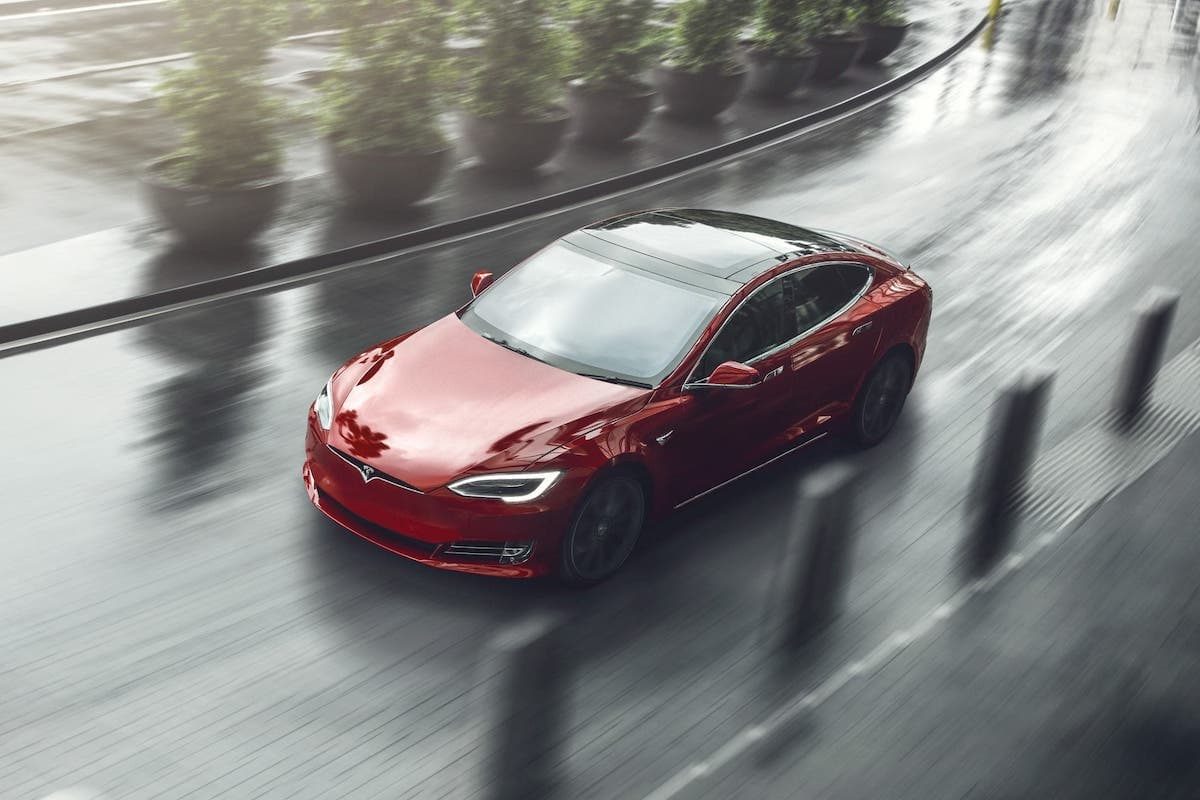
Undoubtedly one of the hottest new cars of 2022 has been the Tesla Model Y. It has taken the mantle of Tesla’s best-selling car from its saloon sister, the Model 3, thanks to its extra practicality and SUV-style driving position.

Now, the UK’s top automotive consumer advice site, The Car Expert, and the UK’s top car subscription provider, Mycardirect, are giving you the chance to win the use of a Tesla Model Y for three months!

That’s right. One lucky subscriber to The Car Expert’s weekly newsletter will win a three-month subscription for a Tesla Model Y thanks to Mycardirect. You could be spending next spring behind the wheel of the UK’s most popular electric car, enjoying the performance and silent luxury as the rest of the country watches with envy.

What’s a car subscription?

If you’re thinking about making the switch to an electric vehicle but not really sure whether it’s the right move for you, a car subscription can be the perfect ‘try before you buy’ option. There’s no hefty deposit to pay up-front, and you’re not locked in for the next three or four years. It’s simply a rolling 30-day contract, so you can stop anytime you like.

You can live with an electric car – whether its the Model Y or any other EV in stock – for a few weeks or a few months to make sure you’re comfortable with it before making a longer-term commitment.

A car subscription also offers you much more flexibility than a regular lease or car finance agreement. Maybe you’d like an EV for most of the year, but would prefer to swap it for a month or two over winter for a 4×4? Maybe you need a van for some summer seasonal work but don’t want to have to be paying for it all year round? Maybe you just like changing your car more often than a conventional lease allows?

Tell me more about the Tesla Model Y

The Tesla Model Y has been praised by motoring journalists for its practicality and excellent battery range – not to mention access to Tesla’s world-class Supercharger recharging network, an exclusive feature that no other car manufacturer offers.

According to The Car Expert’s award-winning Expert Rating Index, the Model Y has an excellent Expert Rating of 79%, making it one of the top mid-sized SUV/crossovers on sale in the UK.

So how do I enter the competition?

All you need to do is sign up to our weekly newsletter. That’s it. There’s no cost to enter, but you can only enter once.

The competition will run until 11.59pm on 28 February 2023. Obviously, the competition has certain terms and conditions that you need to comply with to be eligible, so make sure you read those. Good luck!

WANT AN EXTRA ENTRY? If you sign up to The Van Expert’s monthly newsletter, you will get an extra chance at winning this fantastic prize. Plus you’ll get our expert news and advice, specially tailored for businesses who run a van or pick-up.

New Vauxhall Astra Electric to go on sale in 2023

0

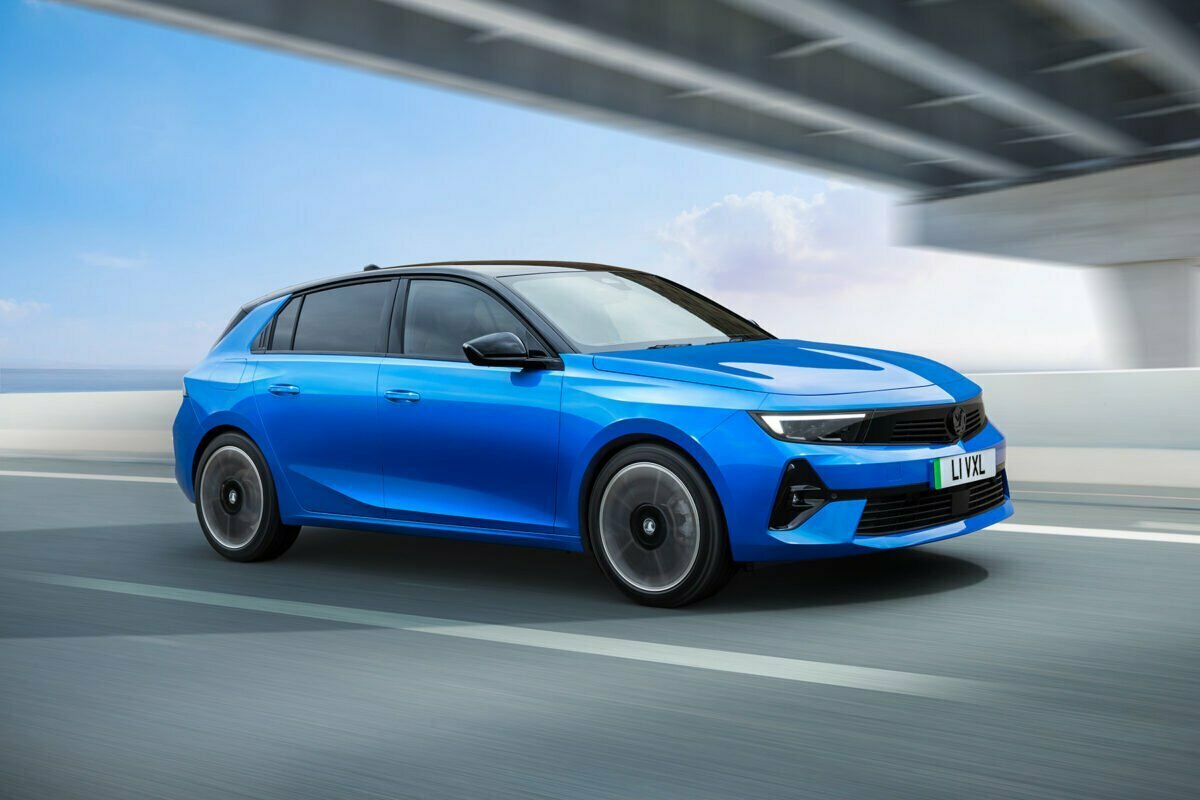
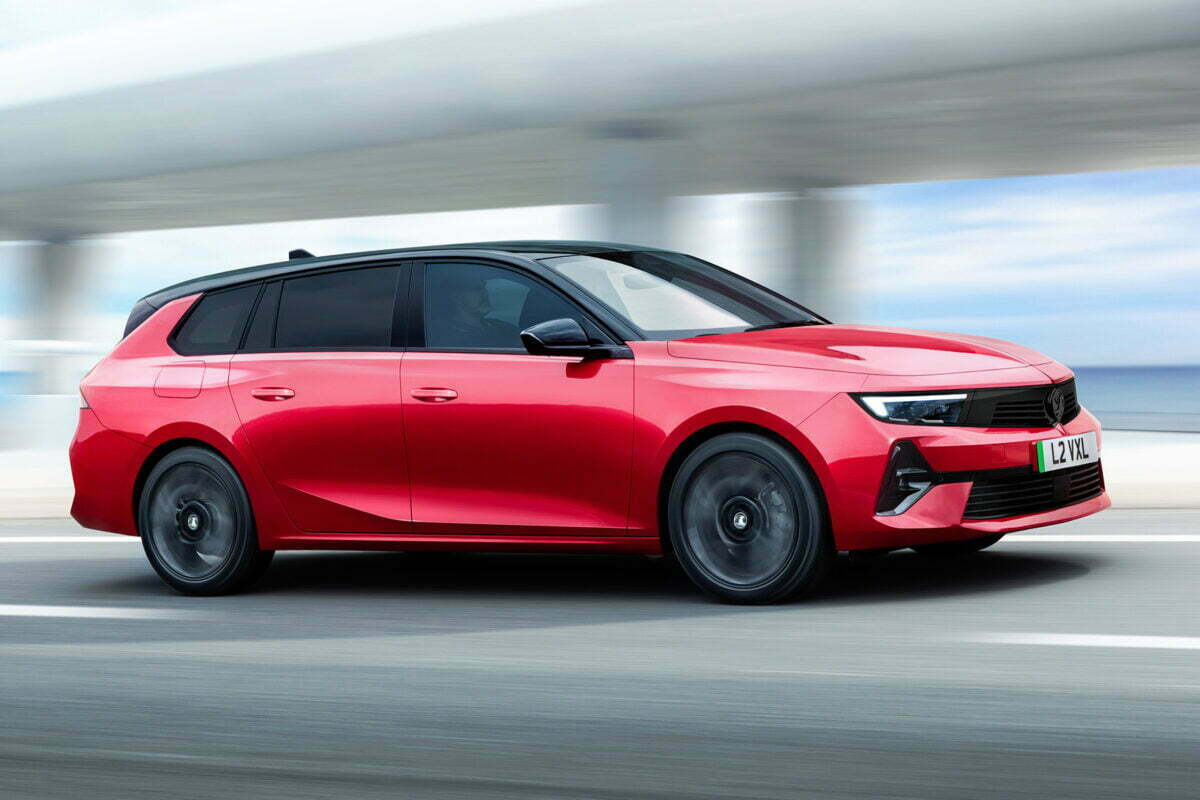
Vauxhall has announced that its new Astra Hatchback and Astra Sports Tourer estate car will be available with an all-electric powertrain from next year, as part of the brand’s goal to be an electric-only manufacturer from 2028.

Bolstering the current Astra range with includes petrol, diesel and plug-in hybrid options, these Vauxhall Astra Electric hatchback and estate models will be powered by a 54kWh battery and a 156hp electric motor pairing, which the manufacturers says can muster a maximum electric range of 258 miles on a single charge, and a top speed of 105mph.

By comparison, the smaller Corsa Electric hatchback makes use of a lighter 50kWh battery, and can travel a maximum of 222 miles from full charge.

Like its Corsa sibling, the Astra Electric is capable of supporting up to 100kW DC rapid charging, and you will reportedly be able to charge the battery from 0% to 80% charge in 30 minutes.

The exterior styling of the Astra Electric range is almost identical to the entry-level petrol model, apart from the absence of exhaust pipes in the rear, and the larger 18-inch alloy wheels that come as standard.

Stepping inside, there are no notable differences between petrol and electric models either, apart from the lack of a gear selector on the centre console that is. The car makes use of a single-speed automatic gearbox.

The Astra Electric comes with the same 10-inch infotainment and digital instrument cluster screens on the dashboard as ICE-powered models, and Vauxhall adds that this new electric variant is just as spacious as plug-in hybrid models, despite housing a much larger battery.

That just about sums up what we know about the Astra Electric range so far – Vauxhall plans to start taking hatchback orders early next year, and estimates that the first orders will arrive in the UK in Summer 2023.

More details, including UK pricing and specifications, will follow in the coming months.

This latest eighth-generation Vauxhall Astra range has been on sale in the UK for a few months now, and has received a largely positive set of review scores from the British motoring media – highlighted for its stylish exterior and generous standard equipment. However, reviewers generally comment that some of its key rivals offer more interior space and performance. The Astra currently holds an Expert Rating of 65%.

Looking for a Vauxhall Astra? The Car Expert’s partners can help

Carwow logo 600x300

Discover great deals available on both new and used cars. Find out more

Auto Trader logo 600x300

Search for your next new or used car with Auto Trader. Find out more

Cazoo 600x300

Buy a car online from your sofa.
We’ll deliver it. Find out more

Motors 600x300

Search less, live more. We make finding the right car simple. Find out more

The UK’s automotive search engine. All the cars in one place. Find out more

heycar 600x300

We’re putting the feel good back into car buying. Find out more

Carparison 600x300

Personal contract hire deals from Carparison Leasing. Find out more

Hippo Leasing 600x300

Personal contract hire deals from Hippo Leasing. Find out more

Moneyshake logo 600x300

Personal contract hire deals from Moneyshake. Find out more

LeaseLoco logo 600x300

Personal contract hire deals from LeaseLoco. Find out more

Ready2Lease logo

Personal contract hire deals from Ready2Lease. Find out more

Rivervale Leasing logo 2022

Personal contract hire deals from Rivervale Leasing. Find out more

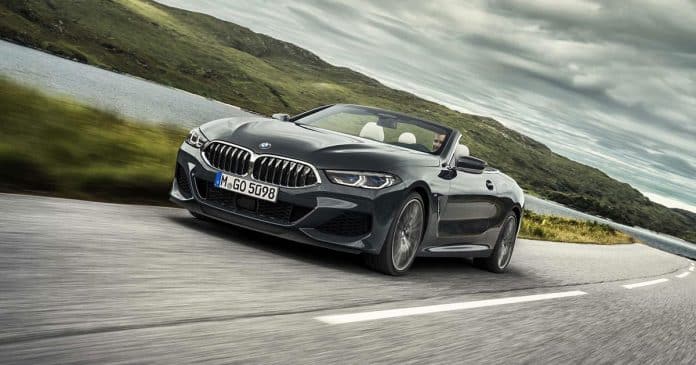
BMW 8 Series Gran Coupé

Summary

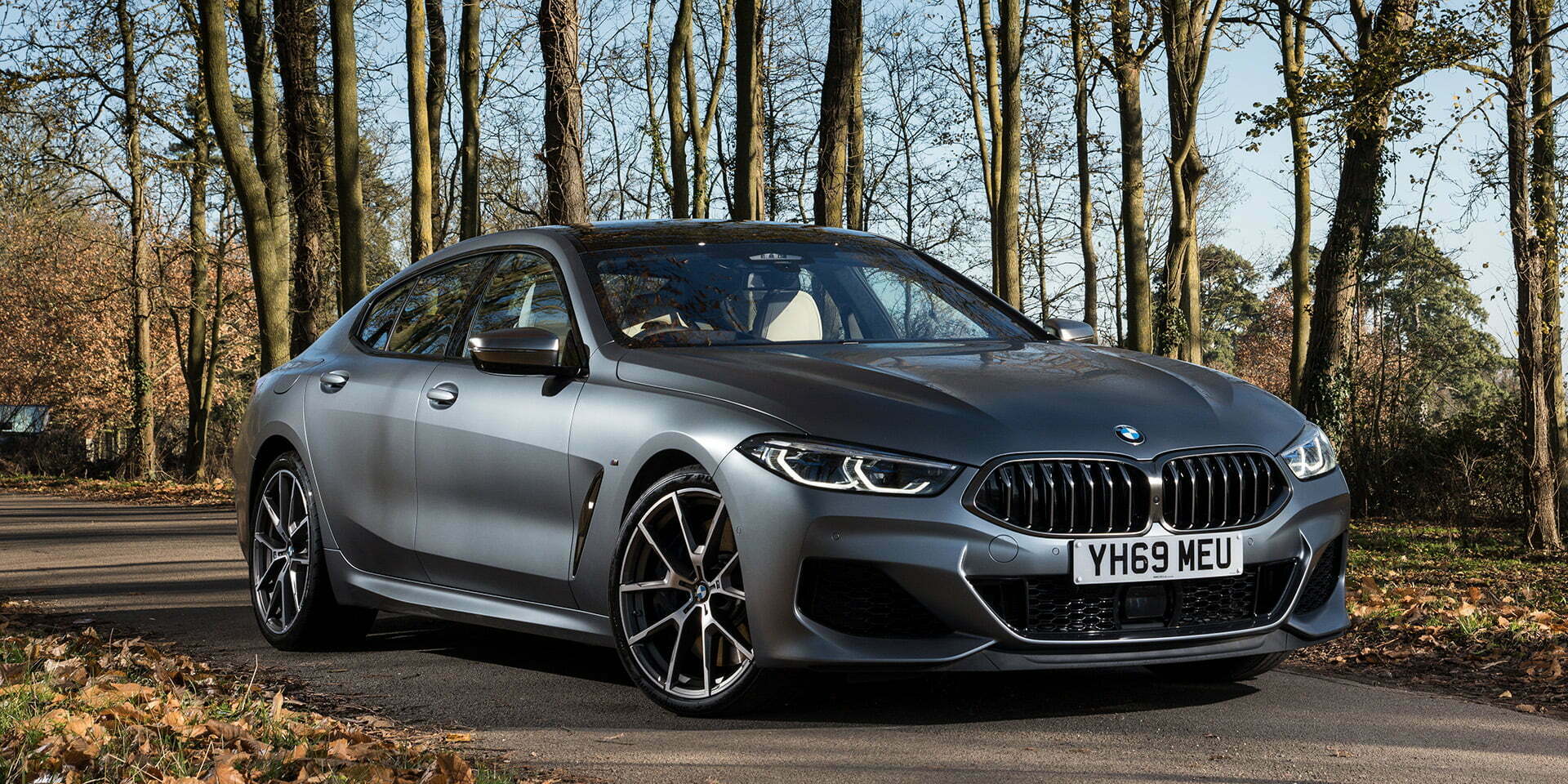
The BMW 8 Series Gran Coupé is a luxurious and powerful grand tourer, and the four-door version of the 8 Series Coupé.

The 8 Series Gran Coupé is available with a choice of two petrol engines – a 3.0-litre six-cylinder unit and a 4.4-litre V8. There is also an even-higher-performance version called the M8 Gran Coupé, but that’s not covered here. We have a separate page for the M8 version coming soon, so keep checking back for the latest information.

On sale since the second half of 2019, the BMW 8 Series Gran Coupé has received a warm welcome from the British motoring media, mostly thanks to its sporty exterior styling that Top Gear says makes it “probably the most handsome car in BMW’s current range.”

Reviewers generally agree that the saloon offers a balanced blend of pacy performance and interior luxury, but that it doesn’t exactly stand out in either area. A common theme is that the Porsche Panamera offers sharper driving dynamics, while the Audi A7 is a more practical and comfort-oriented option in the class.

Motoring Research also takes issue with the Gran Coupé’s “eye-watering prices”, while Carbuyer adds that it is quite expensive to run in the long term too.

As of February 2026, the BMW 8 Series Gran Coupé holds a New Car Expert Rating of D, with a score of 54%. Media review scores are only average, as are CO2 emissions, while running costs are very high. We don’t currently have safety or reliability data for the 8 Series family, so check back again soon.

8 Series Gran Coupé highlights

  • Sporty exterior and luxurious interior
  • Exciting to drive
  • Class-leading infotainment
  • More spacious than 8 Series Coupé

8 Series Gran Coupé lowlights

  • More expensive than Porsche Panamera
  • Audi A7 is more practical day-to-day
  • Thirsty engines
  • Rear seats are a bit cramped

Key specifications

Body style: Large saloon
Engines:
petrol, diesel
Price:
From £81,405 on-road

Launched: Autumn 2019
Last updated: Spring 2022
Replacement due: TBA

Media reviews

Reviews, road tests and comparisons from across the UK automotive media. Click any of the boxes to view.

Auto Express

Car

Car Keys

Carbuyer

Carwow

Evo

Heycar

Honest John

Motoring Research

The Telegraph

Top Gear

Safety rating

Independent crash test and safety ratings from Euro NCAP

No safety rating

As of February 2026, the BMW 8 Series has not been tested by Euro NCAP. This is not surprising, given its high price tag and limited production numbers.

Eco rating

Independent economy and emissions ratings from Green NCAP

No eco rating

As of February 2026, the BMW 8 Series has not been tested by Green NCAP.

Reliability rating

Reliability data provided exclusively for The Car Expert by MotorEasy

All data based on MotorEasy average workshop costs for extended car warranty claims

As of April 2025 (our most recent data point), the BMW 8 Series family has a poor reliability score of 41%, according to workshop and extended warranty data provided by our partner, MotorEasy.

However, it must be noted that this score is currently based on a relatively small number of vehicle records, so this score may fluctuate more than normal as more data becomes available.

Running cost rating

Monthly cost of ownership data provided exclusively for The Car Expert by Clear Vehicle Data

Fuel consumptionAverageScore
Petrol models30 mpgD
Diesel models42 mpgC
CO₂ outputAverageScoreVariationScore
Petrol models221 g/kmD
Diesel models177 g/kmD
Insurance groupAverageScoreVariationScore
All models47E
Service and maintenanceCostScore
Year 1£507E
Year 2£1,046E
Year 3£1,610E
Year 4£1,986E
Year 5£2,627E
Overall£7,776E

The BMW 8 Series is an expensive car to live with, according to running cost data provided exclusively to The Car Expert by our technical partner, Clear Vehicle Data.

CO2 emissions from the diesel models are average, with the petrol models being poor. Fuel economy is also very poor for both engine types.

Unsurprisingly, given its performance, luxury and sophistication, the 8 Series Gran Coupé is expensive to insure and to service.

Awards

Trophies, prizes and awards that the BMW 8 Series Gran Coupé has received.

2020

  • iF Design Award

Similar cars

If you’re looking at the BMW 8 Series Gran Coupé, you might also be interested in these alternatives.

Audi e-tron GT | Audi A7 Sportback | Mercedes-Benz CLSMercedes-AMG GT 4-Door | Porsche PanameraPorsche Taycan | Tesla Model S

More news, reviews and information about the BMW 8 Series at The Car Expert

Everything you need to know about BMW

Everything you need to know about BMW

BMW 8 Series range set for 2022 facelift

BMW 8 Series range set for 2022 facelift

BMW 8 Series

BMW 8 Series

BMW 8 Series Gran Coupe test drive

BMW 8 Series Gran Coupe test drive

Four-door Gran Coupe completes BMW 8 Series range

Four-door Gran Coupe completes BMW 8 Series range

BMW 8 Series Convertible on sale at £83k

BMW 8 Series Convertible on sale at £83k

New cars to look forward to in 2019

New cars to look forward to in 2019

BMW 8 Series coupé pricing and specs announced

BMW 8 Series coupé pricing and specs announced

BMW 8 Series drops its top

BMW 8 Series drops its top

BMW 8 Series test drive

BMW 8 Series test drive

BMW 8 Series Coupe given racy debut

BMW 8 Series Coupe given racy debut

BMW 8 Series put to test on Welsh roads

BMW 8 Series put to test on Welsh roads

Buy a BMW 8 Series

If you’re looking to buy a new or used BMW 8 Series Gran Coupé, The Car Expert’s partners can help you find the right car.

Motors 600x300

Find your next used car with Motors. Find out more

Auto Trader logo 600x300

Find your next new or used car with Auto Trader. Find out more

Carwow logo 600x300

Find your next new or used car with Carwow. Find out more

Lease a BMW 8 Series

If you’re looking to lease a new BMW 8 Series Gran Coupé, The Car Expert’s partners can help you find a competitive deal.

Leasing-com logo

Personal contract hire deals from Leasing.com. Find out more

Carparison 600x300

Personal contract hire deals from Carparison Leasing. Find out more

Select Car Leasing logo

Personal contract hire deals from Select Car Leasing. Find out more

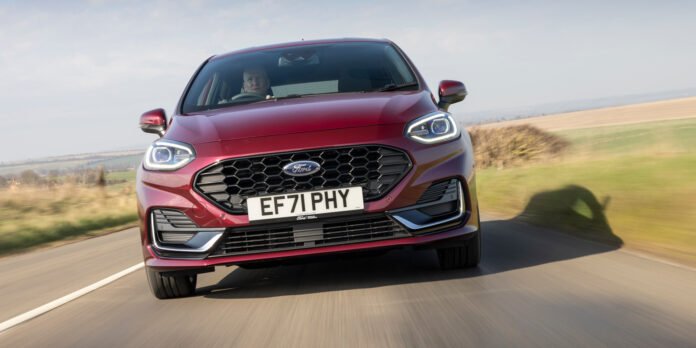
Ford Focus (2011 to 2018)

Summary

The Ford Focus is a medium-sized five-door hatchback and estate. This model is the third-generation version, which first arrived in the UK back in 2011. It was facelifted in 2014 and remained on sale until being replaced by the current Focus in 2018.

There are hot-hatch performance models called the Focus ST and the Focus RS. We don’t currently have pages for these versions so check back soon.

The Focus received consistently positive review scores both before and after its 2014 facelift. Parker‘s Mike Humble described the family car as a “joy to drive”, while Auto Trader‘s Ivan Aistrop added that the Focus line-up included “a range of cracking engines” and “an attractive and useable interior”.

“The Ford Focus is a decent car”, said Alex Robbins of the Telegraph, also conceding that “the Volkswagen Golf is classier and more comfortable; the Nissan Qashqai has a better reliability record; and Skoda’s Octavia offers a lot more space.”

As of February 2026, the third-generation Ford Focus holds a Used Car Expert Rating of D, with a score of 59%. Its running costs are low, but its reliability record and media reviews are only average, while its safety rating has long expired.

Focus highlights

  • An engaging drive
  • Well-equipped as standard
  • Comfortable ride
  • Good value-for-money

Focus lowlights

  • Rivals were more spacious and practical
  • Rather poor rear visibility

Key specifications

Body style: Five-door hatch and estate
Engines:
petrol, diesel
Price:
From £13,865 on-road

Launched: Spring 2011
Last updated: Summer 2014
Replaced: Summer 2018

Media reviews

Highlighted reviews and road tests from across the UK automotive media. Click any of the boxes to view.

Featured reviews

More reviews

Auto Express

Auto Trader

Business Car

Car Keys

Carbuyer

Evo

Fleetworld

Green Car Guide

Heycar

Honest John

Motoring Research

Parkers

The Sunday Times

The Telegraph

Safety rating

Independent crash test and safety ratings from Euro NCAP

Overall score: 5 stars
Date tested: May 2011
Date expired: January 2019
Read the full Euro NCAP review

Adult protection: 92%
Child protection: 82%
Vulnerable road users: 72%
Safety assist: 71%

Notes on safety rating

The third-generation Ford Focus was originally tested by Euro NCAP back in 2011 and awarded a five-star rating. However, this rating expired in January 2019 and is no longer valid as the car no longer meets the standards required for such a rating. This is normal practice, as Euro NCAP reviews its ratings on most cars annually with most ratings expiring after about six or seven years.

However, if you are comparing a used Ford Focus to vehicles of similar age, whose ratings will have probably also expired, its safety rating score is still useful.

Eco rating

Independent economy and emissions ratings from Green NCAP

No eco rating

The Ford Focus was not assessed by Green NCAP during its production cycle as it pre-dated Green NCAP’s formation.

Reliability rating

MotorEasy logo 600x167

Reliability data provided exclusively for The Car Expert by MotorEasy

All data based on MotorEasy average workshop costs for extended car warranty claims

As of April 2025 (our most recent data point), the Ford Focus is about average for reliability with a score of 62%, according to exclusive data provided by our commercial partner, MotorEasy. This covers all Focus models, rather than just this particular generation, which is worth bearing in mind if you’re looking at a used car.

The average repair bill for Ford Focus problems is about £650, which is fairly high for this class of car. Unfortunately, the most common problem on the Focus is also one of the most expensive – the engine, with an average repair bill of more than £1,100. Gearbox repairs are even more expensive, averaging about £1,200.

If you’re looking at a used Ford Focus, make sure any extended warranty cover you purchase covers all the potential problem areas shown above.

Awards

Trophies, prizes and awards that the Ford Focus has received.

2016

  • BusinessCar Awards – Best Lower Medium Car

2015

  • Fleet News AwardsBest Lower Medium Car

2013

  • BusinessCar Awards – Best Lower Medium Car

2012

  • BusinessCar Awards – Best Company Car
  • Car of the Year Awards – Family Car of the Year
  • Fleet News Awards – Best Medium Car
  • Road & Travel Magazine Awards – International Compact Car of the Year

Similar cars

If you’re looking at the Ford Focus, you might also be interested in these alternatives.

Alfa Romeo Giulietta | Citroën C4 | Audi A3 | BMW 1 SeriesCitroën C4 Cactus | Fiat Tipo | Honda Civic | Hyundai i30 | Kia Ceed | Mazda 3 | Mercedes-Benz A-Class | Mini Countryman | Peugeot 308 | Renault MeganeSEAT Leon | Skoda Scala | Skoda Octavia | Suzuki SwaceToyota Corolla | Vauxhall Astra | Volkswagen Golf

More news, reviews and information about the Ford Focus at The Car Expert

The best used family cars for every budget in 2025

The best used family cars for every budget in 2025

Everything you need to know about Ford

Everything you need to know about Ford

The best family cars for every budget in 2023

The best family cars for every budget in 2023

Ford Focus ST (2012 to 2018)

Ford Focus ST (2012 to 2018)

Last days of the dinosaurs: the best petrol cars under £50K

Last days of the dinosaurs: the best petrol cars under £50K

Ford adds ‘Track Pack’ to Focus ST options list

Ford adds ‘Track Pack’ to Focus ST options list

Ford stops taking orders for Fiesta and Focus

Ford stops taking orders for Fiesta and Focus

Ford Focus (2018 to 2025)

Ford Focus (2018 to 2025)

Britain’s best-selling cars, November 2021

Britain’s best-selling cars, November 2021

Britain’s best-selling cars, October 2021

Britain’s best-selling cars, October 2021

Ford Focus freshened up with facelift

Ford Focus freshened up with facelift

Ford Focus ST (2019 to 2025)

Ford Focus ST (2019 to 2025)

Buy a Ford Focus

If you’re looking to buy a used Ford Focus, The Car Expert’s partners can help you find the right car.

Motors 600x300

Search less, live more. We make finding the right car simple. Find out more

Auto Trader logo 600x300

Search for your next new or used car with Auto Trader. Find out more

Carwow logo 600x300

Discover great deals available on both new and used cars. Find out more

Audi unveils RS 6 and RS 7 ‘Performance’ range

0

Audi is set to replace the current RS 6 estate and RS 7 saloon models with an upgraded ‘Performance’ range, which adds a touch more pace and power, as well as extra equipment.

These new ‘Performance’ variants are powered by the same 4.0-litre V8 petrol engine as the outgoing RS 6 and 7 models, but with larger turbochargers that increase the saloon and estate’s power output by 30hp – 630hp in total.

This performance boost makes both the RS 6 and RS 7 slightly quicker in a straight line. Audi says that these ‘Performance’ versions can complete a 0-62mph sprint in 3.4 seconds – that’s two tenths of a second quicker than the current models.

Audi has also changed the electronic speed limiter settings, so that both models now have a top speed of 174mph – up from 155mph. Opting for the additional ‘RS Dynamics Package Plus’ bundle ups this top speed to 189mph, which also comes with a weight reduction and a ceramic braking system.

The manufacturer has also removed some of the sound insulation material between the engine compartment and the interior, to make the engine soundtrack louder in the cabin. Both models sit on ‘matte grey’ 22-inch alloy wheels as standard, fitted with ‘high-performance’ Continental tyres.

The wing mirrors, front spoiler, front side flaps, side sill inserts, roof rails, window surrounds and rear diffuser are also finished in grey as standard. The mid-range ‘Performance Carbon Black’ trim grade changes the colour of the wheels, roof rails and window surrounds to matte black.

Inside, the interior stitching is available in red, grey and (for the first time) blue, in contrast with the black trim of the Alcantara leather steering wheel. All models come with a premium audio setup with 3D sound capabilities, as well as parking assistance technology, a head-up display and 360-degree parking camera.

The 12-inch digital instrument cluster behind the steering wheel has received a small software update, and now features a ‘blinking shift indicator’ that flashes at the optimum time to change gear.

The Audi RS 6 and RS 7 ‘Performance’ model lines will be available to order from December 8th, with prices starting at around £113k for the RS 6 Performance, and £116k for the RS 7 Performance. This is a significant price increase of more than £10k for both models.

Opting for the ‘Carbon Black’ trim adds a further £9k to the price tag, while the range-topping ‘Carbon Vorsprung’ trims both cost over £130k.

The Audi RS 6 and RS 7 have received largely positive reviews from the UK media, both highlighted for their impressive performance and interior refinement. The RS 6 currently holds an Expert Rating of 82%, and is regarded as one of the most practical options in the performance car class, while the RS 7 holds an Expert Rating of 69%.

This new ‘Performance’ range is unlikely to improve these Expert Rating scores – the RS 6 and RS 7 were already said to have steep pricing, and now their price will significantly increase once again.

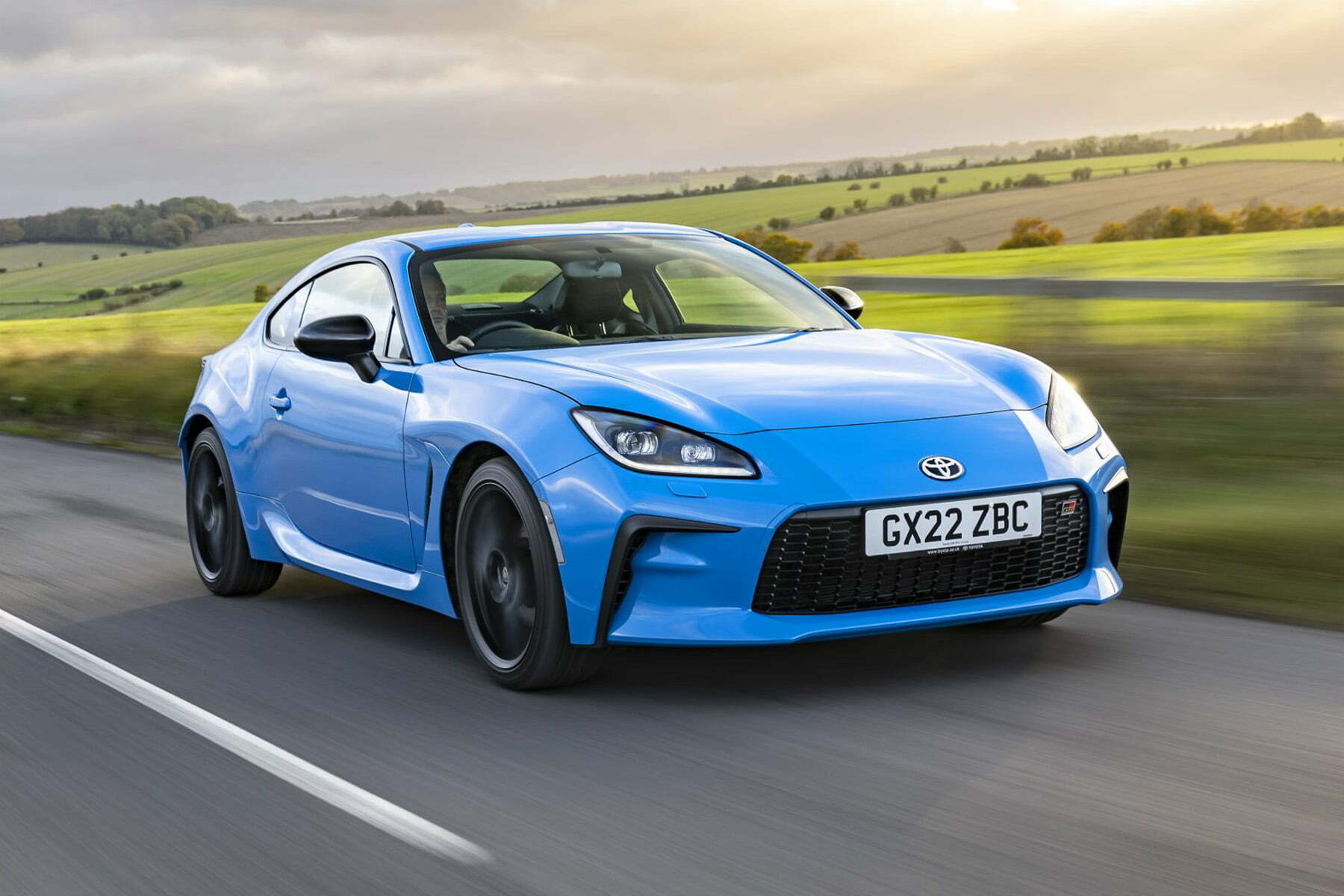
Toyota GR86 (2022 to 2024)

Summary

The Toyota GR86 was a compact sports car, only available as a 2+2 coupé. Arriving on UK roads in 2022, it replaced the similar GT86 coupé. It only had a short life, being discontinued in 2024 as it did not comply with European safety legislation.

Sitting below the more upmarket GR Supra in the Toyota family, the GR86 was the fruit of a collaboration with Subaru that also spawned the essentially identical Subaru BRZ (which was not sold in the UK, unlike the previous generation). The coupé was powered by a 2.0-litre four-cylinder petrol engine that produces 228hp – 28hp more than the previous car. Both manual and automatic models were available.

The Toyota GR86 was well-received by motoring journalists, with British reviewers agreeing that it was a definite improvement over its GT86 predecessor – a highly-regarded model in its own right.

“It improves on the old car without losing any of the original’s charm”, Carwow concluded, while Evo said that “the GR86 just feels planted, potent, pliant and pure of purpose” when compared to “the rather crude and binary nature of the GT86”.

Car added that the GR86 was also a rather “well-rounded and usable” model for day-to-day travel too, even if the rear seating area was quite tight and the interior trim included some cheap plastics. The competing Mazda MX-5 RF range offered more interior quality and customisation options to customers, though Auto Trader said that the GR86 was the “more focused and serious” driver’s package.

A large majority of reviewers also agreed that the Toyota GR86 was competitively priced – a sports car that Top Gear said delivered “real-world giggles at an affordable price”.

“The GR86 is perhaps the best affordable sports car you can buy”, Carbuyer agreed, “if you can get hold of one, that is”. Availability was certainly an issue throughout the car’s short life.

As of March 2026, the Toyota GR86 holds a Used Car Expert Rating of D with a score of 56%. Although it received many glowing press reviews, its ownership costs drag down the overall score.

GR86 highlights

  • Plenty of driver appeal
  • Strong petrol engine
  • Good levels of standard equipment
  • Great value for money

GR86 lowlights

  • Cheap-feeling interior
  • Rivals are faster
  • Cramped rear seating
  • Limited stock in the UK

Key specifications

Body style: Coupé
Engines:
petrol
Price when new:
From £32,495

Launched: Summer 2022
Discontinued: Summer 2024

Media reviews

Highlighted reviews and road tests from across the UK automotive media. Click any of the boxes to view.

Auto Express

Auto Trader

Car

Carbuyer

Carwow

Evo

Honest John

Parkers

The Telegraph

Top Gear

Safety rating

Independent crash test and safety ratings from Euro NCAP

No safety rating

The Toyota GR86 was not assessed by Euro NCAP during its production life.

Eco rating

Independent economy and emissions ratings from Green NCAP

No eco rating

The Toyota GR86 was not assessed by Green NCAP during its production life.

Reliability rating

Reliability data provided exclusively for The Car Expert by MotorEasy

No reliability rating

As of March 2026, we don’t have enough reliability data on the Toyota GR86 to generate a reliability rating.

The Car Expert’s reliability information is provided exclusively from workshop and extended warranty data from our partner, MotorEasy. As soon as MotorEasy has sufficient data on the GR86, we’ll publish the score here.

Running cost rating

Monthly cost of ownership data provided exclusively for The Car Expert by Clear Vehicle Data

Fuel consumptionAverageScore
Petrol models32 mpgD
CO₂ outputAverageScoreVariationScore
Petrol models200 g/kmD
Insurance groupAverageScoreVariationScore
All models42E

The Toyota GR86 might be one of the most affordable sports cars you can buy, but it’s not going to be all that cheap to run according to whole-life cost information provided exclusively to The Car Expert by our data partner, Clear Vehicle Data.

Fuel consumption is very poor – especially considering the GR86 is a fairly small and light car. Insurance is also hefty, however we don’t currently have servicing cost data.

Awards

Significant UK trophies and awards that the Toyota GR86 has received

2023

  • UK Car of the Year Awards – Best Coupé
  • Auto Express Awards – Best Coupé

2022

  • Top Gear Awards – Best Sports Car

Similar cars

If you’re looking at the Toyota GR86, you might also be interested in these alternatives

Abarth 124 Spider | Alpine A110 | Audi TT | BMW Z4 | Fiat 124 Spider | Mazda MX-5

More news, reviews and information about the Toyota GR86 at The Car Expert

Everything you need to know about Toyota

Everything you need to know about Toyota

UK pricing and specs announced for 2022 Toyota GR86

UK pricing and specs announced for 2022 Toyota GR86

Buy a Toyota GR86

If you’re looking to buy a new or used Toyota GR86, The Car Expert’s partners can help you find the right car

Motors 600x300

Find your next used car with Motors. Find out more

Auto Trader logo 600x300

Find your next new or used car with Auto Trader. Find out more

Carwow logo 600x300

Find your next new or used car with Carwow. Find out more

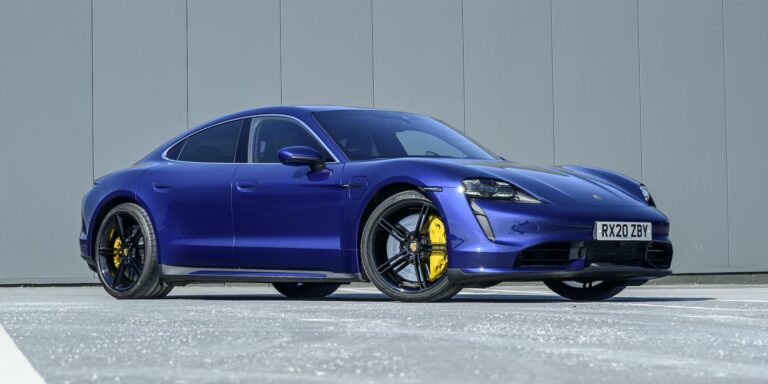
Porsche Taycan

Summary

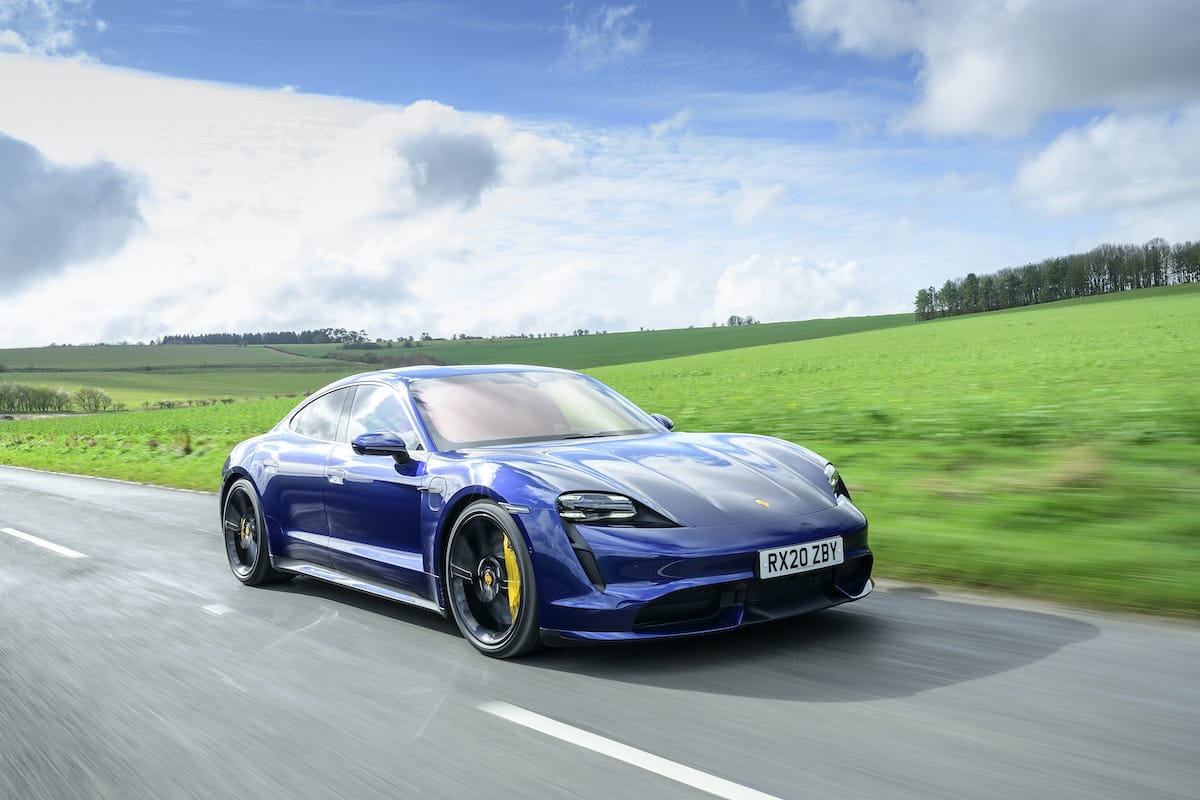
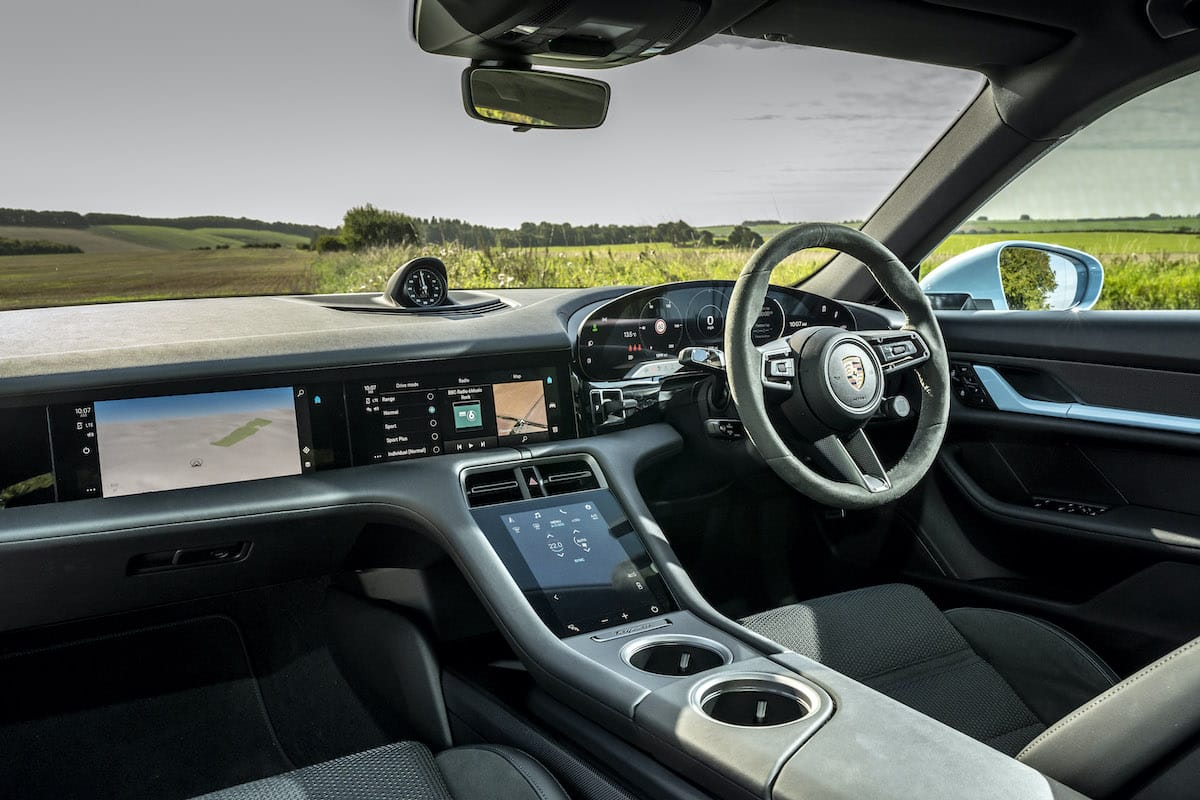
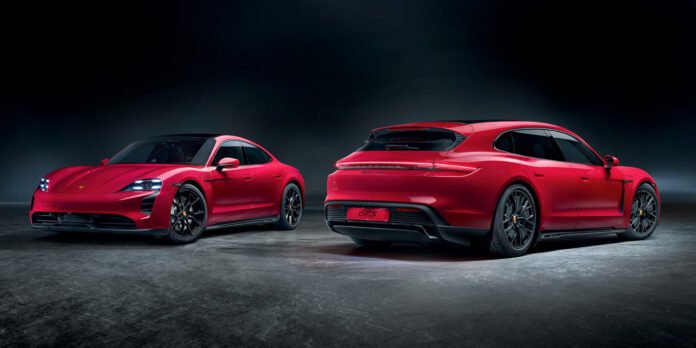
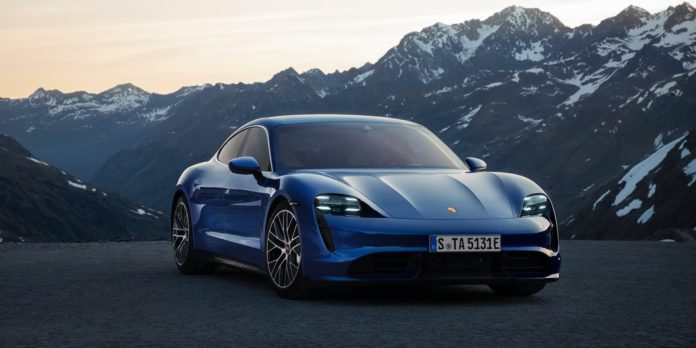
The Porsche Taycan was launched in 2019 as the first production full electric vehicle from the upmarket German brand, and to great acclaim – many reviewers dubbed it a true threat to the standard-bearing performance EVs from Tesla and it sold 20,000 in its first year.

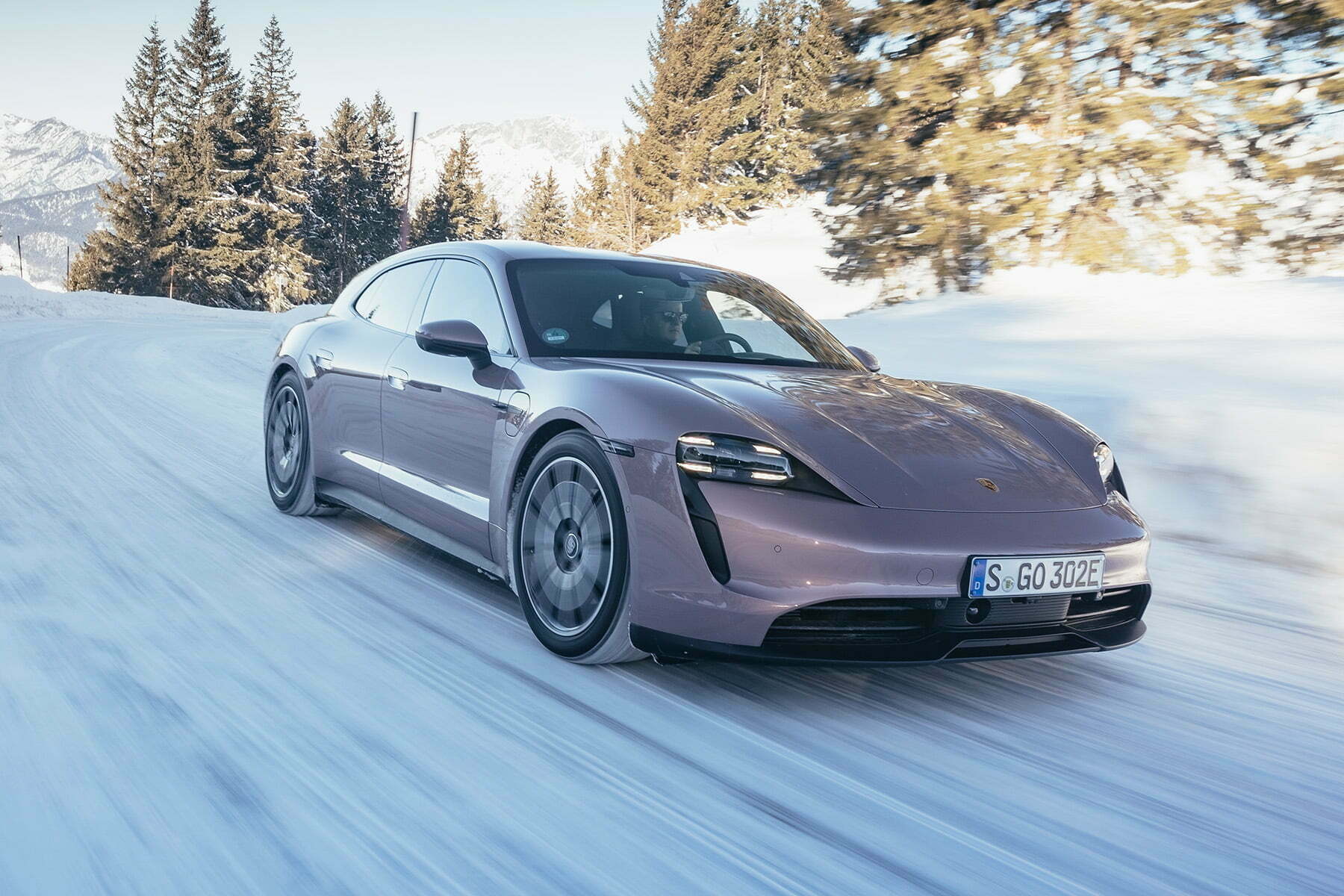
The Taycan was initially offered as a four-door saloon, offered in several versions all focused on high performance – the slowest version passes 62mph from rest in just 5.4 seconds, the fastest in under three seconds. Two estate versions, called the Cross Turismo and Sport Turismo, joined the range in early 2022.

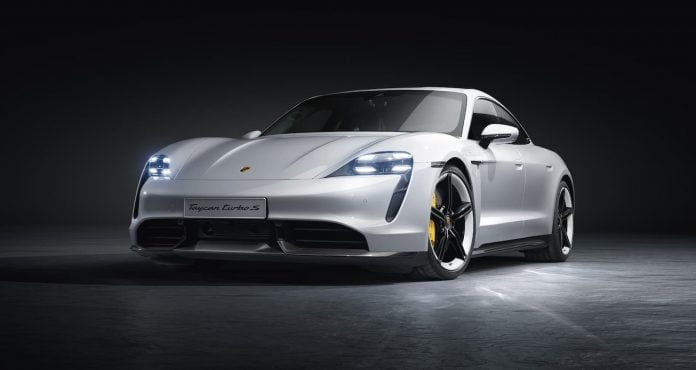
Entry-level is a rear-wheel-drive model with 326hp or 380hp depending on whether the standard 79kWh or larger 93kWh battery is fitted. The 4S adds a second electric motor to the front axle and comes in 435hp and 490hp versions, while the Turbo and Turbo S variants get the larger battery and more power – both offer 625hp but the Turbo S enjoys the greatest uprate, to 761hp, from an overboost function available on all models.

The Taycan has received overwhelmingly positive reviews from the automotive media. Top Gear dubbed the car “a proper Porsche – massively fast, great to drive and practical enough to use every day,” while Auto Express said it “could well be the finest and most complete electric car we’ve ever driven.”

While most reviewers highlight the Taycan’s performance, it also earns praise for ride quality and interior space. It scores highly on practicality too, larger-battery versions of the entry-level model going close to 300 miles between charges and even the Turbo S achieving over 200 miles. And it’s fitted with 270kW charging capacity which when plugged into a suitable charger can replenish 80% capacity in around 20 minutes.   

As of March 2026, the Porsche Taycan holds a New Car Expert Rating of A, with a score of 71%. It earns top marks for its media reviews and zero tailpipe emissions, although its safety rating is now only average and its running costs are high. Also note that we don’t currently have reliability data on the Taycan, so check back again soon.

Taycan highlights

  • Plenty of battery range for most owners
  • Turbo S models are massively fast
  • Surprisingly good ride quality
  • Practical for four adults and some luggage

Taycan lowlights

  • Lots of options that should really be standard
  • Top spec cars are very pricey
  • Weight affects overall handling
  • Shallow windows affect visibility

Key specifications

Body style: Large saloon
Powertrain: electric motor, battery-powered
Price: From £79,200 on-road

Launched: Autumn 2019
Last updated: Spring 2022
Replacement due: TBA

Media reviews

Highlighted reviews and road tests from across the UK automotive media. Click any of the boxes to view.

Featured reviews

More reviews

Auto Express

Auto Trader

Car

Carbuyer

Carwow

Daily Mirror

Discover EV

Driving Electric

Evo

Green Car Guide

Honest John

Parkers

The Telegraph

Top Gear

Safety rating

Independent crash test and safety ratings from Euro NCAP

Overall score: 5 stars
Date tested: December 2019
Date expired: January 2026
Read the full Euro NCAP review

Adult protection: 85%
Child protection: 83%
Vulnerable road users: 70%
Safety assist: 73%

Notes on safety
The Porsche Taycan gained a top five-star rating when tested by Euro NCAP in 2019. It scored maximum points in the side-barrier impact test and its standard-fit autonomous emergency braking performed well in low-speed situations which cause many whiplash injuries. However, it did not receive points for this as the front seats showed marginal whiplash protection in a rear-end collision. 

Eco rating

Independent economy and emissions ratings from Green NCAP

No eco rating

As of March 2026, the Porsche Taycan has not been lab tested by Green NCAP.

The Green NCAP programme measures exhaust pollution (which is zero for an electric car) and energy efficiency. Electric cars are much more energy-efficient than combustion cars, so the Taycan is likely to score very highly in Green NCAP testing whenever it ever takes place. Check back again soon.

Reliability rating

Reliability data provided exclusively for The Car Expert by MotorEasy

No reliability rating

As of March 2026, we don’t have enough reliability data on the Porsche Taycan to generate a reliability rating.

The Car Expert’s reliability information is provided exclusively to us using workshop and extended warranty data from our partner, MotorEasy, sourced from both official dealerships and independent workshops. 

As soon as MotorEasy has sufficient data on the Taycan, we’ll publish the results here.

Running cost rating

Monthly cost of ownership data provided exclusively for The Car Expert by Clear Vehicle Data

Battery rangeAverageScoreVariationScore
EV models272 milesB
Electrical efficiencyAverageScoreVariationScore
EV models2.9 m/KWhE
Insurance groupAverageScoreVariationScore
All models50F

We don’t have a complete data set of running costs for the Porsche Taycan, but the information we do have suggests that the Porsche Taycan will be one of the more expensive cars to run. This is unlikely to be a surprise to anyone who is in a position to afford to buy or lease a Taycan.

Electrical efficiency (the EV equivalent of miles per gallon for petrol and diesel cars) is poor, while insurance groups are high. Combined with what will presumably be eye-watering service bills from your local Porsche garage, it adds up to a pricey car to run – although it’s still likely to be quite a bit cheaper than a petrol-powered Porsche.

Awards

Trophies, prizes and awards that the Porsche Taycan has received

2023

  • EcoCar Electrified Top 50 – Best Electric Sports Car

2022

  • EV Fleet World Awards – Best EV Executive Car

2021

2020

  • World Car Awards – World Performance Car + World Luxury Car
  • Sunday Times Motor Awards – Car of the Year

Similar cars

If you’re looking at the Porsche Taycan, you might also be interested in these alternatives

Audi e-tron GT | BMW M8 Gran Coupé | Mercedes-AMG GT 4-Door | Polestar 1 | Porsche Panamera | Tesla Model S

More news, reviews and information about the Porsche Taycan at The Car Expert

The best new electric cars for every budget 2024

The best new electric cars for every budget 2024

The best new electric cars for every budget 2023

The best new electric cars for every budget 2023

Best performance cars of 2022

Best performance cars of 2022

The best new electric cars for every budget 2022

The best new electric cars for every budget 2022

Porsche Taycan Cross Turismo

Porsche Taycan Cross Turismo

Best performance cars of 2021

Best performance cars of 2021

Best large cars of 2021

Best large cars of 2021

Porsche Taycan Sport Turismo EV joins the family

Porsche Taycan Sport Turismo EV joins the family

Porsche updates Taycan with new features and technology

Porsche updates Taycan with new features and technology

All-electric, 760hp Porsche Taycan revealed

All-electric, 760hp Porsche Taycan revealed

New cars to look forward to in 2019

New cars to look forward to in 2019

Buy a Porsche Taycan

If you’re looking to buy a new or used Porsche Taycan, The Car Expert’s partners can help you find the right car

Motors 600x300

Find your next used car with Motors. Find out more

Auto Trader logo 600x300

Find your next new or used car with Auto Trader. Find out more

Carwow logo 600x300

Find your next new or used car with Carwow. Find out more

Lease a new Porsche Taycan

If you’re looking to lease a new Porsche Taycan, The Car Expert’s partners can help you find a competitive deal

Leasing-com logo

Personal contract hire deals from Leasing.com. Find out more

Carparison 600x300

Personal contract hire deals from Carparison Leasing. Find out more

Carwow logo 600x300

Personal contract hire deals from Carwow. Find out more

Car subscriptions

If you’re interested in a car subscription, The Car Expert’s partners can help (PS: What’s a car subscription?)

Cocoon Vehicles logo 600x300

Car subscriptions from Cocoon.
Find out more

Just Vehicle Solutions logo 600x300

Car subscriptions from Just Vehicle Solutions.
Find out more

Flexible Vehicle Contracts logo 600x300px

Car subscriptions from Flexible Vehicle Contracts.
Find out more

Genesis Electrified GV70

Summary

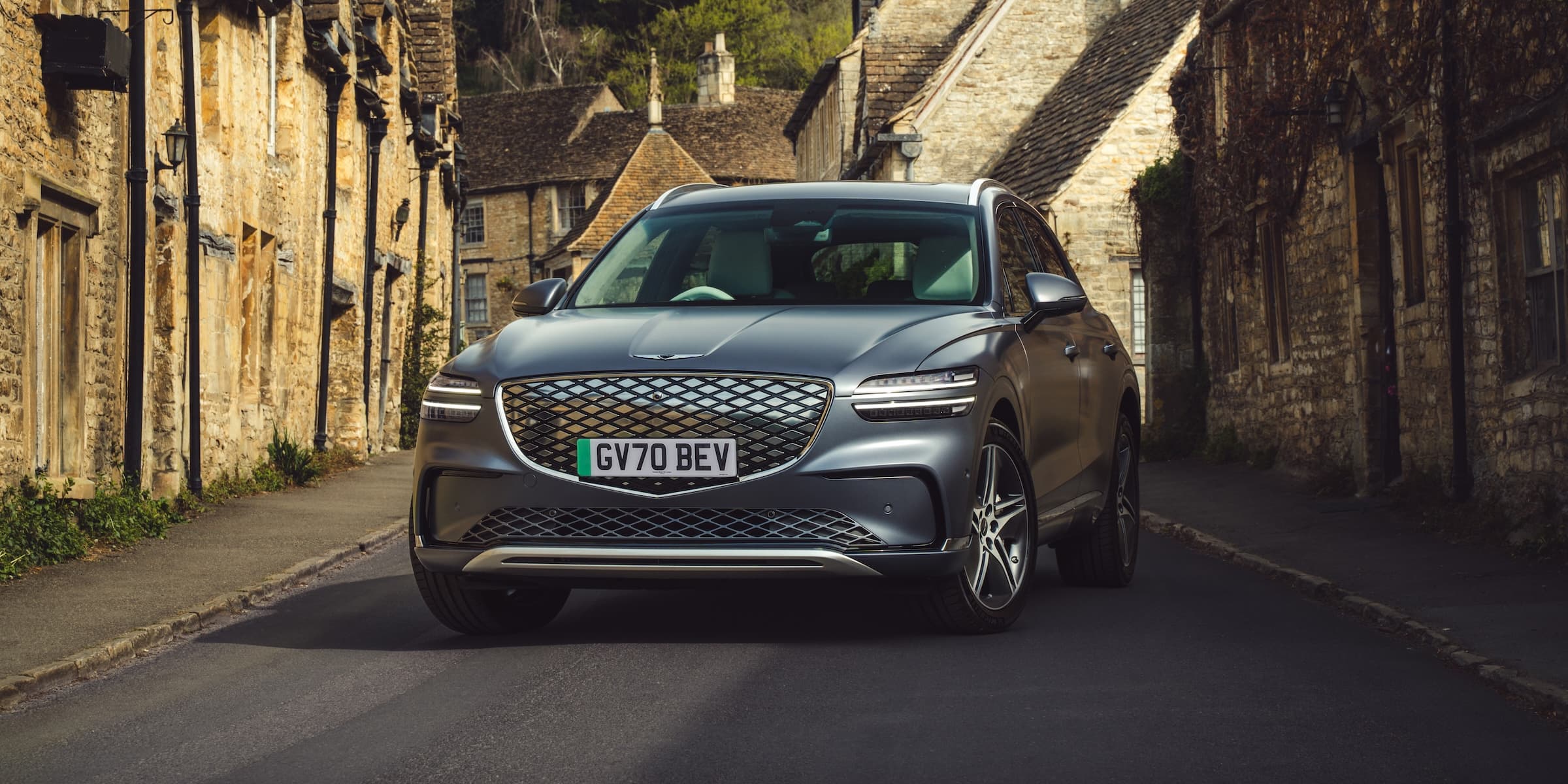
The Genesis Electrified GV70 is the all-electric version of the mid-sized five-door GV70 SUV, pitched as an alternative to the likes of the Audi Q4 e-tronBMW iX3 and Mercedes-Benz EQC in the high-end electrified SUV market.

Genesis is a premium car brand owned by Hyundai, and the Electrified GV70 – alongside the GV60 SUV and Electrifed G80 saloon – is part of its first batch of all-electric models released on the European automotive market after successes in Asia and the USA.

You won’t be able to buy a Genesis at a traditional dealership; orders are delivered to the customer, and cars are collected from the owner for servicing over a standard five-year care plan, as the brand looks to provide an attractive premium ownership experience.

“The petrol GV70 was the most compelling Genesis when the company launched in 2021”, Car‘s Tom Webster explains, “but the Genesis Electrified GV70 is that bit quieter, more efficient and the electric element just seems to suit a newly launched modern SUV more so than a slightly thirsty petrol engine does.”

Only dual-motor models are available, which makes the Electrified GV70 more expensive than many capable alternatives, including the highly-regarded Kia EV6.

Its battery range is competitive, but trumped by the popular Tesla Model Y, and the BMW iX3 does come with more tech features as standard.

As of February 2026, the Genesis Electrified GV70 holds a New Car Expert Rating of A, with a score of 72%. It earns top marks for its zero tailpipe emissions and new car warranty offer, while its safety rating and media review scores are also good. However, running costs are poor thanks to high insurance ratings.

Electrified GV70 highlights

  • Punchy acceleration
  • Impressive on-board tech
  • Well-equipped as standard
  • Five years of free servicing

Electrified GV70 lowlights

  • BMW iX3 gets more kit as standard
  • More expensive than many key rivals
  • Tesla Model Y has longer battery range
  • Shallow boot

Key specifications

Body style: Medium five-door SUV
Engines:
electric, battery-powered
Price:
From £64,405 on-road

Launched: Autumn 2022
Last updated: Summer 2025
Replacement due: TBA

Media reviews

Highlighted reviews and road tests from across the UK automotive media. Click any of the boxes to view.

Featured reviews

More reviews

The Car Expert

Auto Express

Auto Trader

Business Car

Car

Carbuyer

Driving Electric

Green Car Guide

Heycar

Honest John

Parkers

The Telegraph

Top Gear

Which EV?

Safety rating

Independent crash test and safety ratings from Euro NCAP

Overall score: 5 stars
Date tested: December 2021
Read the full Euro NCAP review

Adult protection: 89%
Child protection: 87%
Vulnerable road users: 64%
Safety assist: 87%

Eco rating

Independent economy and emissions ratings from Green NCAP

No eco rating

As of February 2026, the Genesis Electrified GV70 has not been lab tested by Green NCAP.

The Green NCAP programme measures exhaust pollution (which is zero for an electric car) and energy efficiency. Electric cars are much more energy-efficient than combustion cars, so the Electrified GV70 is likely to score very highly in Green NCAP testing, if and when it is tested.

Reliability rating

MotorEasy logo 600x167

Reliability data provided exclusively for The Car Expert by MotorEasy

No reliability rating

As of February 2026, we don’t have enough reliability data on the Genesis Electrified GV70 to generate a reliability rating.

The Car Expert’s reliability information is provided exclusively to us using workshop and extended warranty data from our partner, MotorEasy, sourced from both official dealerships and independent workshops. 

As soon as MotorEasy has sufficient data on the Electrified GV70, we’ll publish the results here.

Running cost rating

Clear Vehicle Data logo close crop

Monthly cost of ownership data provided exclusively for The Car Expert by Clear Vehicle Data

Battery rangeAverageScoreVariationScore
EV models283 milesB
Electrical efficiencyAverageScoreVariationScore
EV models3.7 m/KWhD
Insurance groupAverageScoreVariationScore
All models50F

Running costs for the Genesis Electrified GV70 range are a rather mixed bag, according to data provided exclusively to The Car Expert by our commercial partner, Clear Vehicle Data.

Its powertrain can muster 283 miles of travel on a single charge, which is competitive with other electric models of this size, but its insurance premiums are in the most expensive bracket.

Awards

Trophies, prizes and awards that the Genesis Electrified GV70 has received.

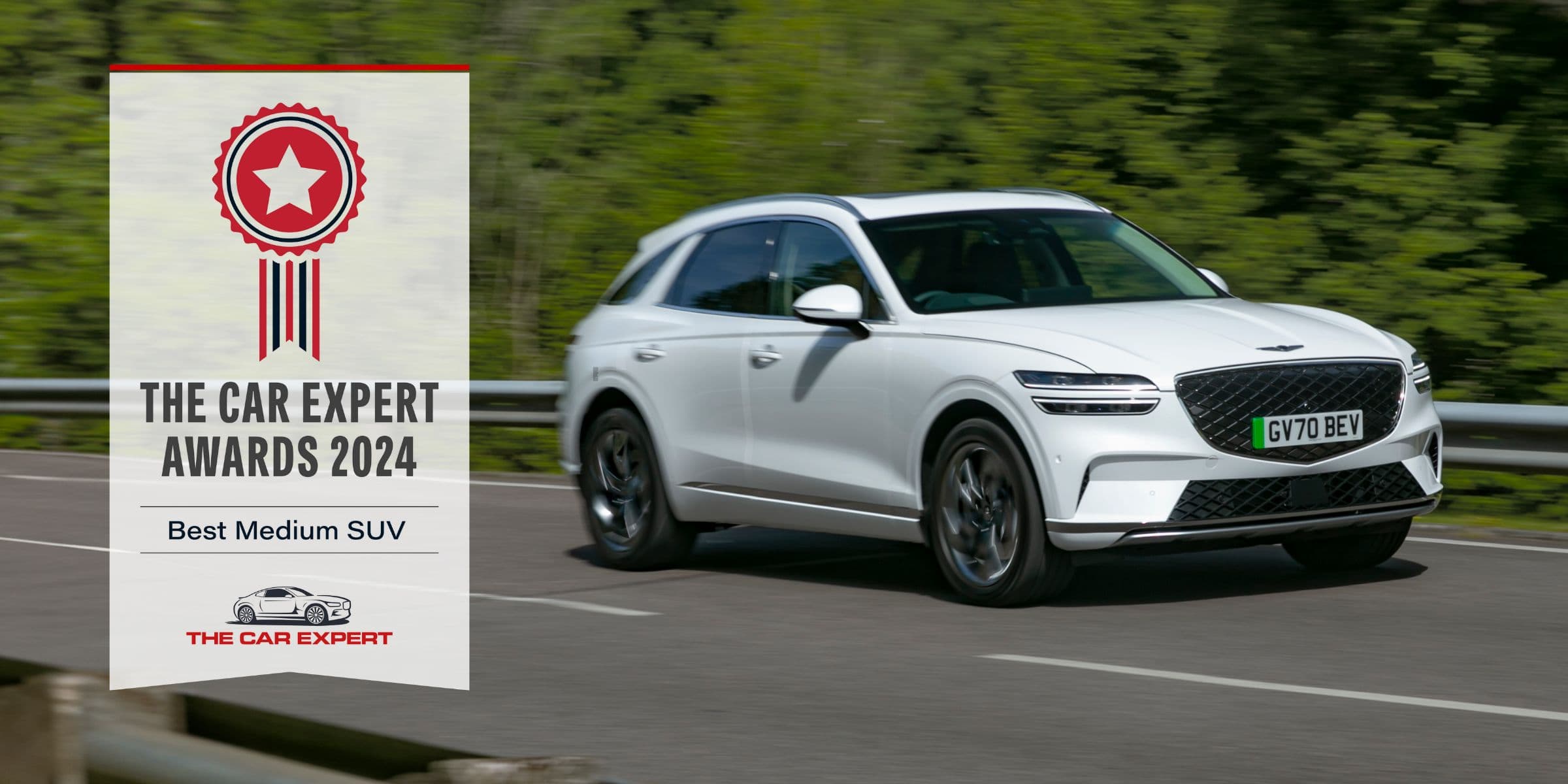
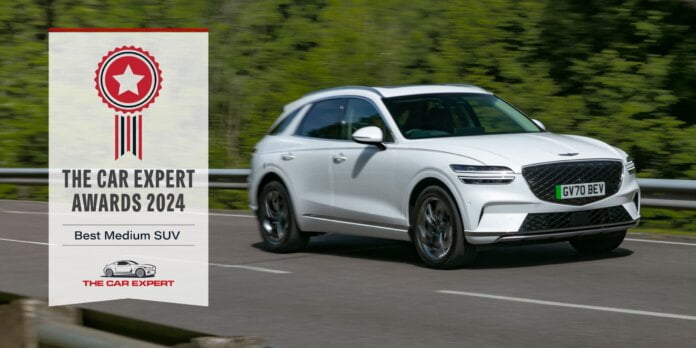
Genesis Electrified GV70 – Best Medium SUV – The Car Expert Awards 2024

Similar cars

If you’re looking at the Genesis Electrified GV70, you might also be interested in these alternatives.

Current models: Alpine A390 | Audi Q4 e-tron | BMW iX3 | BYD Sealion 7 | Changan Deepal S07 | Ford Mustang Mach-E | Genesis GV60 | Hyundai Ioniq 5 | Kia EV6 | Lexus RZ | Mercedes-Benz GLC EQ | MG S6 EV | Nissan Ariya | Peugeot E-5008 | Polestar 2 | Polestar 3 | Porsche Macan Electric | Renault Scenic E-Tech | Skoda Enyaq | Subaru Solterra | Tesla Model Y | Toyota bZ4X | Volkswagen ID.4 | Volvo EX60 | Xpeng G6

Discontinued models: BMW iX3 (2021 to 2025) | Jaguar I-Pace (2018 to 2024) | Mercedes-Benz EQC

More news, reviews and information about Genesis at The Car Expert

Genesis GV60 Pure review

Genesis GV60 Pure review

Everything you need to know about Genesis

Everything you need to know about Genesis

New cars – what’s coming in 2026

New cars – what’s coming in 2026

Genesis Electrified GV70 review

Genesis Electrified GV70 review

The best car subscription providers

The best car subscription providers

2024 half-year report – who’s up and who’s down?

2024 half-year report – who’s up and who’s down?

Electric cars – what’s on sale and what’s coming in 2024?

Electric cars – what’s on sale and what’s coming in 2024?

Best Medium SUV 2024

Best Medium SUV 2024

Genesis GV60 Premium review

Genesis GV60 Premium review

Car manufacturer subscription programmes – 2023 round-up

Car manufacturer subscription programmes – 2023 round-up

Genesis GV60

Genesis GV60

Genesis Electrified G80

Genesis Electrified G80

Buy a Genesis Electrified GV70

If you’re looking to buy a new or used Genesis Electrified GV70, The Car Expert’s partners can help you find the right car.

Motors 600x300

Find your next used car with Motors. Find out more

Auto Trader logo 600x300

Find your next new or used car with Auto Trader. Find out more

Carwow logo 600x300

Find your next new or used car with Carwow. Find out more

Lease a Genesis Electrified GV70

If you’re looking to lease a new Genesis Electrified GV70, The Car Expert’s partners can help you find a competitive deal.

Leasing-com logo

Personal contract hire deals from Leasing.com. Find out more

Carwow logo 600x300

Personal contract hire deals from Carwow. Find out more

Select Car Leasing logo

Personal contract hire deals from Select Car Leasing. Find out more

Subscribe to a Genesis Electrified GV70

Subscriptions are becoming a very popular way for consumers to try an electric car for a few weeks or months to help decide whether it’s a suitable alternative to a petrol car. If you’re interested in a car subscription, The Car Expert’s partners can help. (PS: What’s a car subscription?)

Cocoon Vehicles logo 600x300

Car subscriptions from Cocoon.
Find out more

Just Vehicle Solutions logo 600x300

Car subscriptions from Just Vehicle Solutions.
Find out more

Flexible Vehicle Contracts logo 600x300px

Car subscriptions from Flexible Vehicle Contracts.
Find out more

Last days of the dinosaurs: the best petrol cars under £50K

0

An extinction-level event is on the horizon – one that will, in just seven years’ time, wipe out all new petrol-powered cars in the UK. For internal combustion engines, these really are the last days of the dinosaurs.

This extinction-level event has already started. Most new diesel cars are already gone, apart from lumbering SUVs or fleet cars that regularly cover long distances. Meanwhile, the number of purely petrol-powered cars is starting to dwindle as car companies switch their investments to new electrified vehicles. In fact, there are unlikely to be any major new purely petrol cars released in the UK ever again, as the car industry shifts to hybrid and fully-electric models.

But the ultimate drop-dead date for new petrol cars is still seven years away, so there’s still time to enjoy a new petrol car. If you’re looking for a new or near-new vehicle today and you’re not ready to switch to an electric or plug-in hybrid model, there are still a number of excellent petrol-powered cars available to buy.

In the second of a four-part series celebrating the finest of petrol power, we’re looking at the best new and near-new petrol cars on the market that you can buy for £50K.

Whether you’re in the market for a family-sized hatchback, a lavish SUV, or something a bit sportier, this list has you covered. All of our recommendations are backed by our award-winning Expert Rating Index, which tracks and ranks more than 450 different cars from 51 manufacturers, based on more than 14,000 reviews from 30 of the UK’s top motoring titles.

All fuel consumption and gearbox information relate to the cheapest trim and engine combination on offer. All Expert Rating scores are correct as of November 2022.

Family hatchbacks

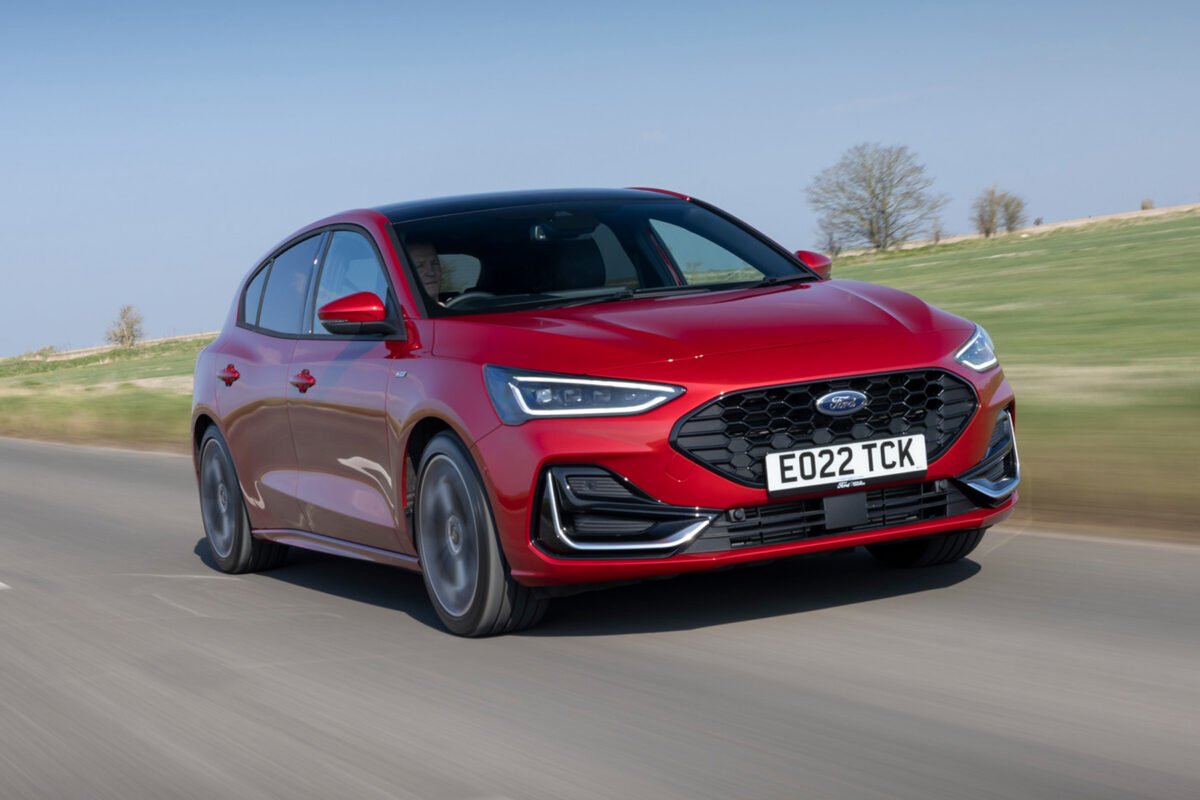
Ford Focus

Available brand-new for less than £50K

Ford Focus (2022-present) front view | Expert Rating

Fun to drive and dependable, the current Ford Focus has been a popular choice for UK buyers since its launch in 2018. With consistently favourable review scores before and after its recent facelift, the hatchback is as comfortable and spacious as it is engaging. Its demise is already on the horizon, however, following its smaller sibling, the Fiesta, into extinction by 2025 at the latest.

With prices starting at £27k, the Ford Focus comfortably slides under our £50K threshold and currently holds an Expert Rating of 75%.

  • Fuel consumption: 52 mpg
  • Gearbox: Manual and automatic
  • Warranty: Three years or 60,000 miles

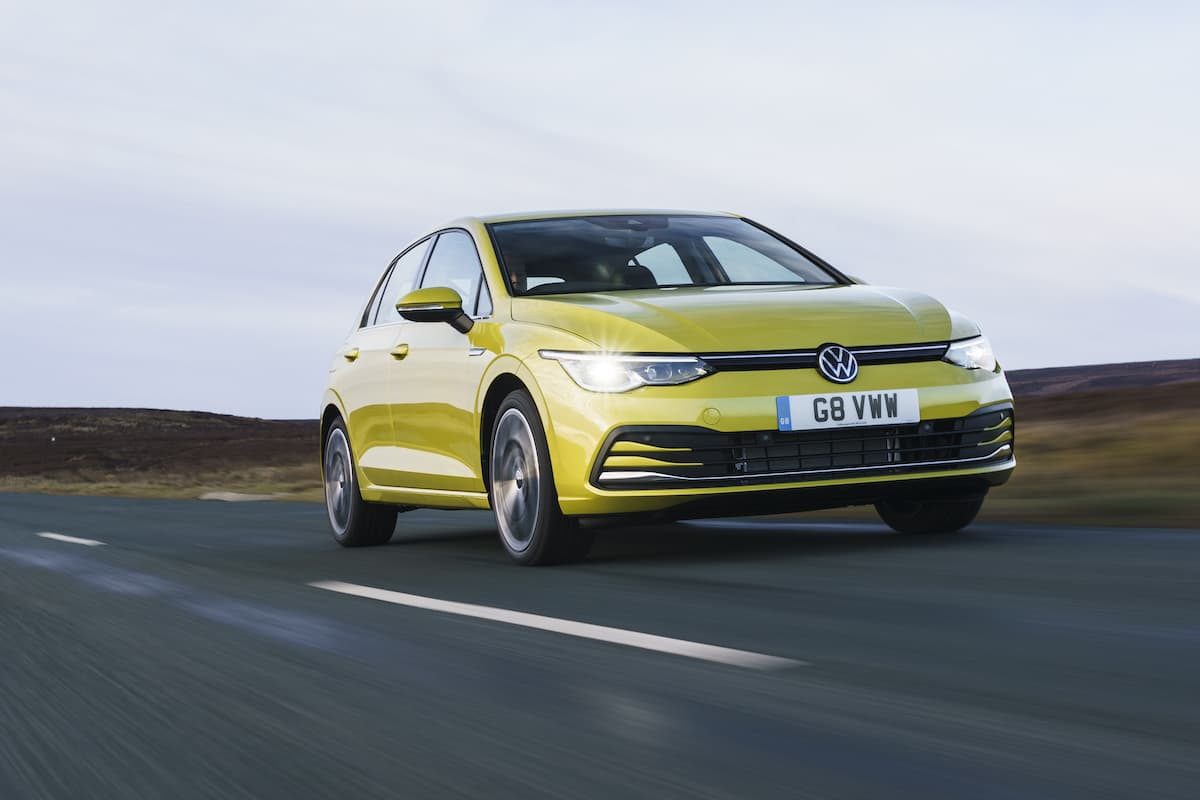
Volkswagen Golf

Available brand-new for less than £50K

Volkswagen Golf (2020 onward) - front view

The eighth-generation Volkswagen Golf is another desirable family car option in the UK, praised for its efficient engines, comfortable cabin and excellent safety standards. The current model was launched in 2020, so it’s likely to survive almost right up to the petrol deadline of 31 December 2029.

Alternatives are more spacious however, and its fiddly infotainment is sure to annoy you on a regular basis. The last petrol-powered generation in the Golf’s lineage, the Golf Mk 8 currently holds an Expert Rating of 75%.

  • Fuel consumption: 52 mpg
  • Gearbox: Manual or automatic
  • Warranty: Three years or 60,000 miles

Family saloons/estates

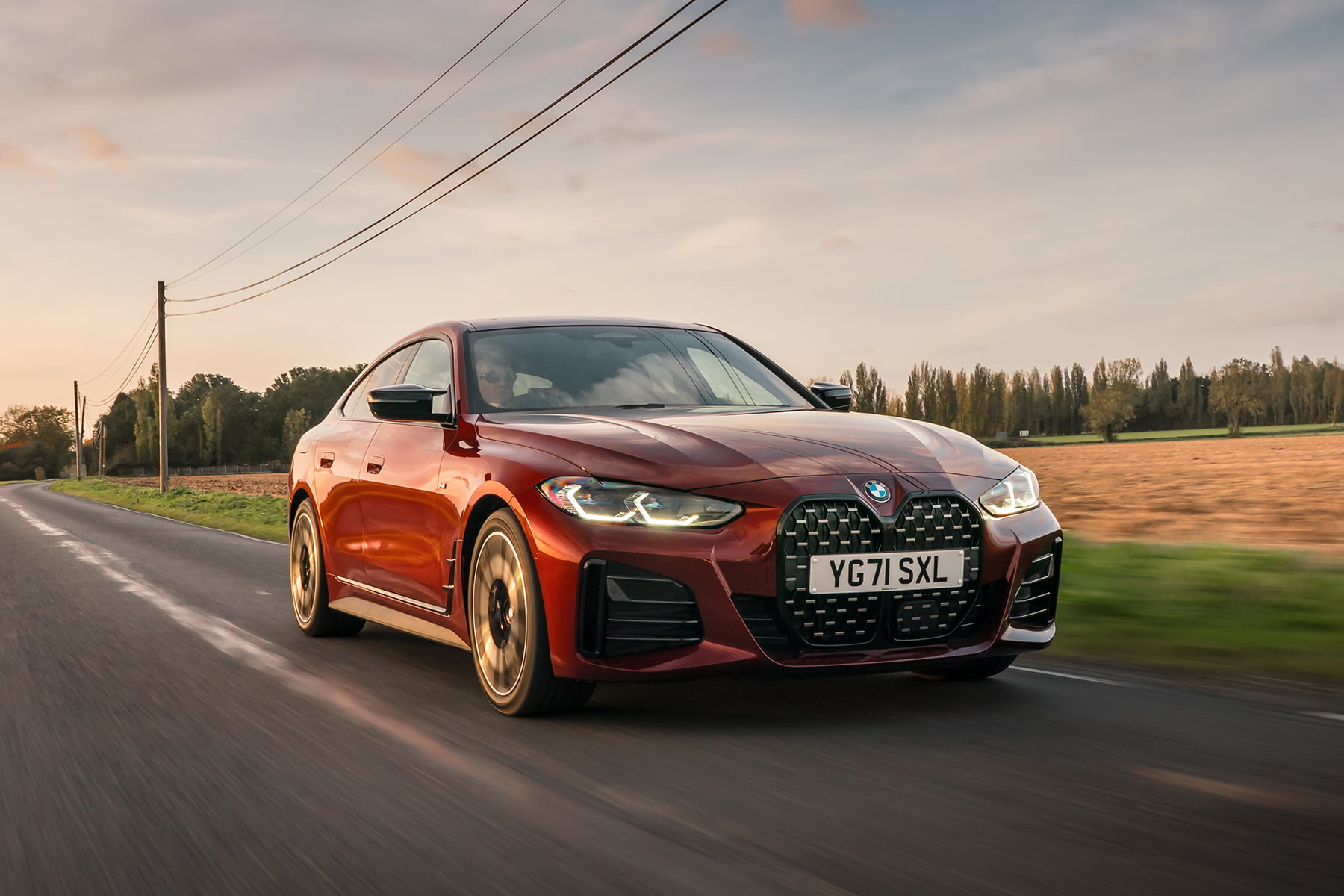
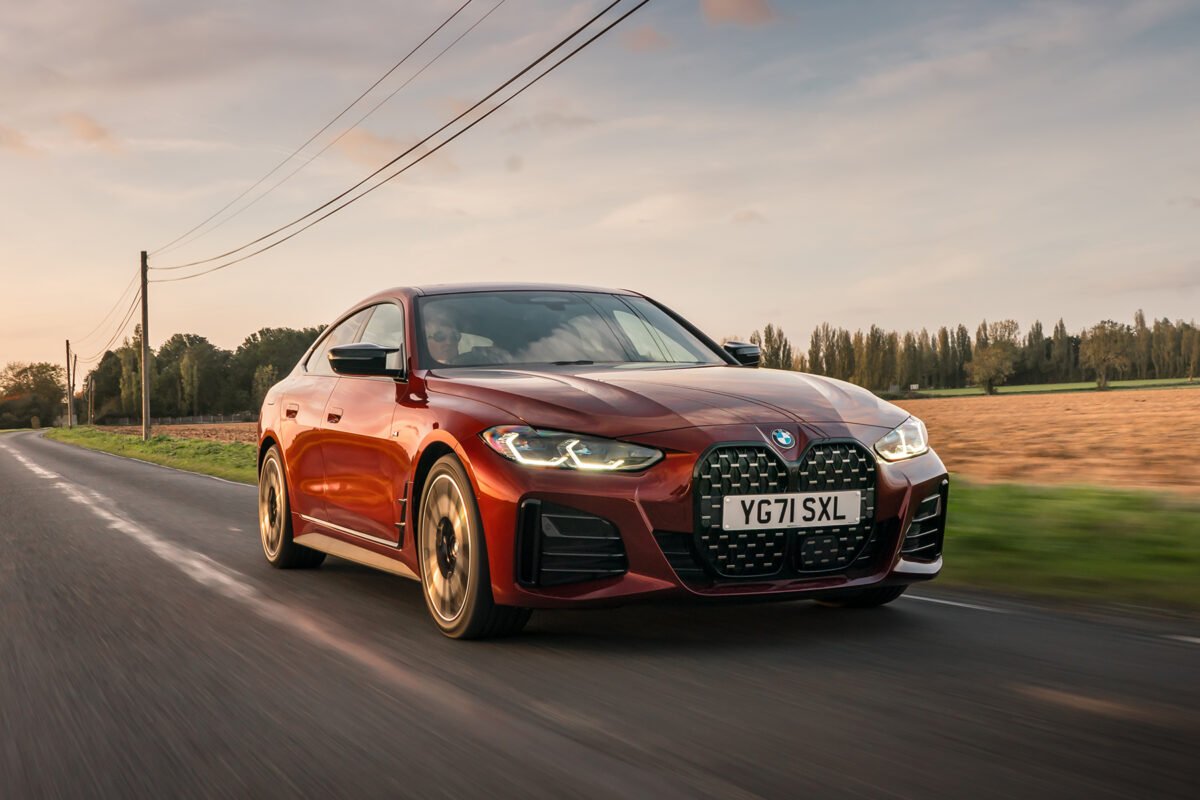
BMW 4 Series Gran Coupé

Available brand-new for less than £50K

BMW 4 Series Gran Coupé front view | Expert Rating

The BMW 3 Series is a fine car, but a bit common. If you’re looking for something more distincitive, BMW has an alternative. Retaining most of the practicality of its saloon sibling with sleeker styling, the BMW 4 Series Gran Coupé has been highlighted by journalists for its refinement, comfort and agile driving dynamics.

That said, the oversized kidney grilles certainly split opinion and, if you’re tall, the rear seats might be a bit cramped. As of November 2022, the 4 Series Gran Coupé holds an Expert Rating of 76%.

  • Fuel consumption: 44 mpg
  • Gearbox: Automatic only
  • Warranty: Three years, unlimited mileage

Volvo V60

Available brand-new for less than £50K

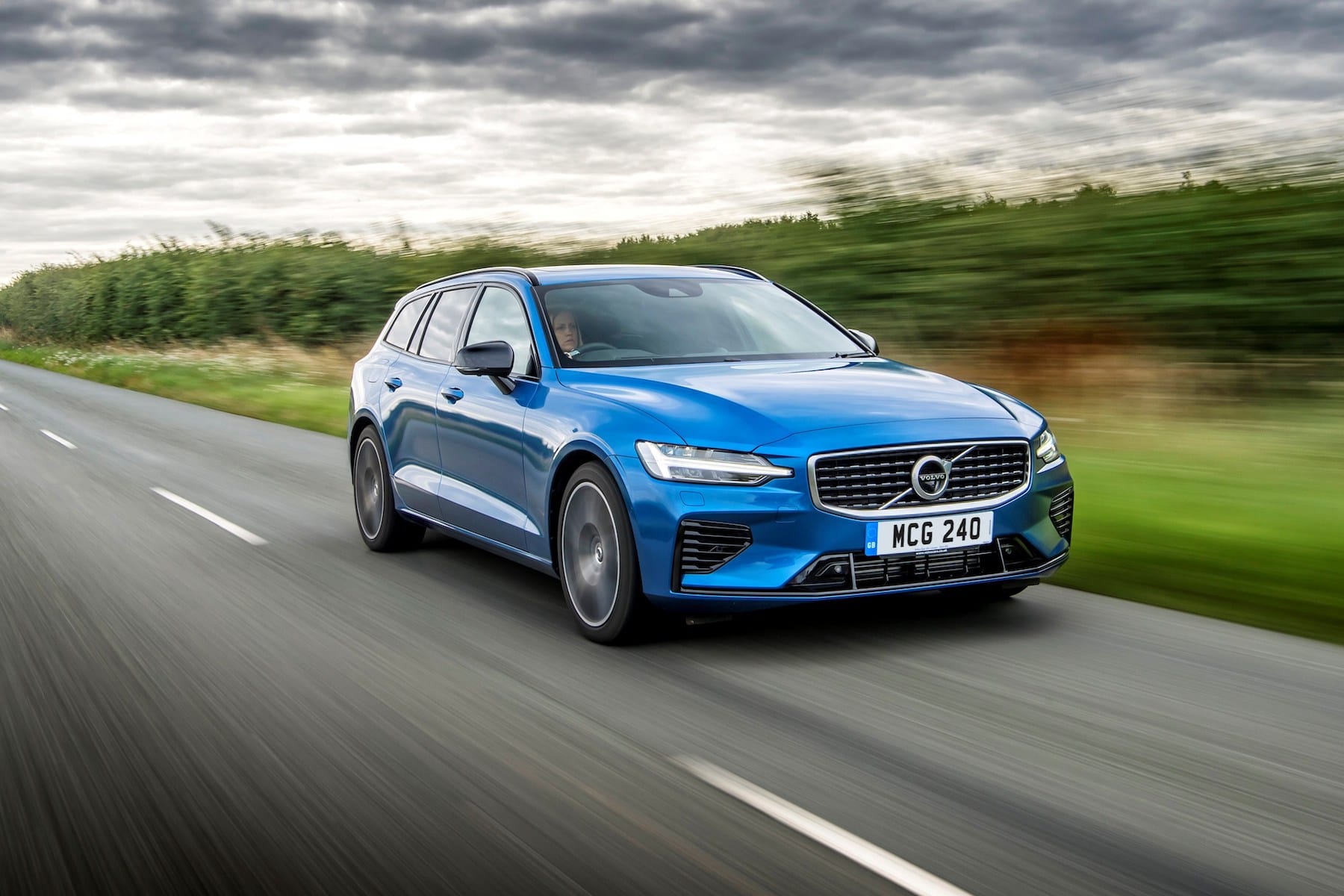
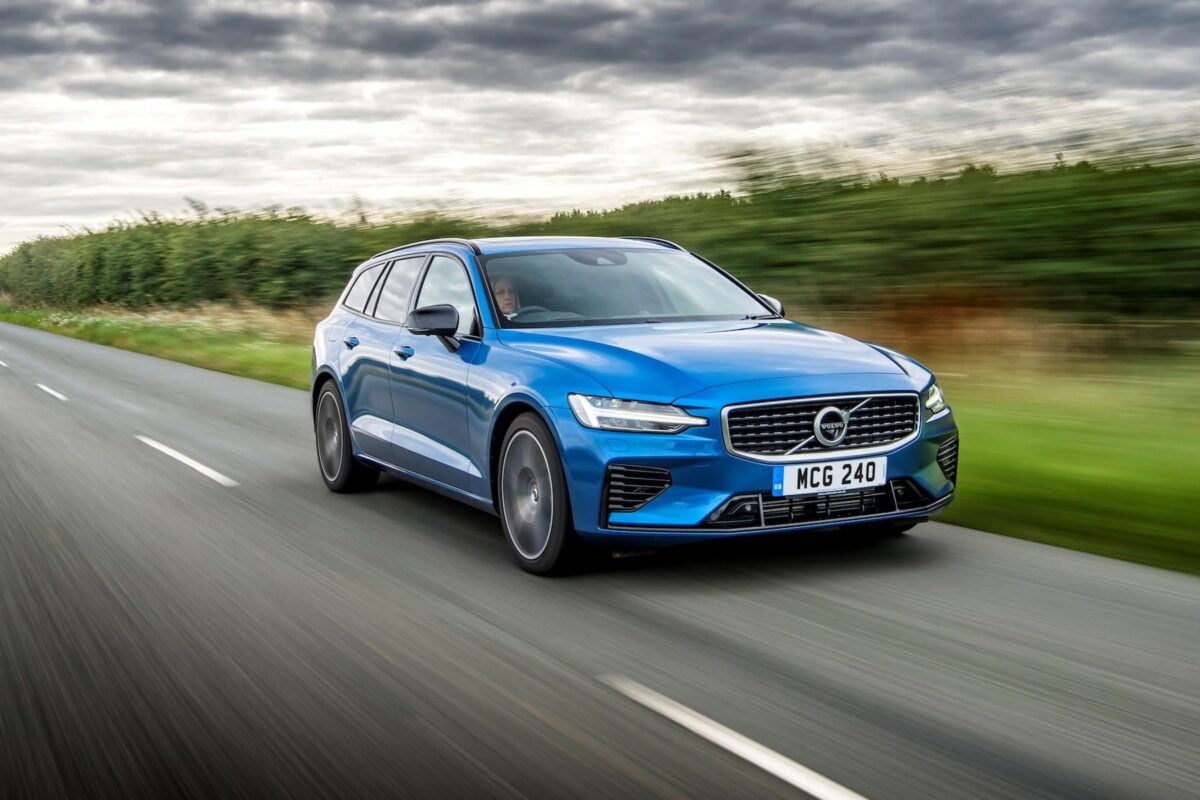
Volvo V60 Bursting Blue

Volvo’s current line-up is full of spacious and stylish cars, and the V60 is no exception. The estate has received widespread praise for its design, both inside and out, as well as its overall comfort.

While it is practical, well-built and spacious, the V60 isn’t the best choice if you are looking for driving thrills. Several outlets report that alternatives are more rewarding to drive, particularly rivals from the BMW range. The V60 currently holds an Expert Rating of 75%.

  • Fuel consumption: 46 mpg
  • Gearbox: Automatic only
  • Warranty: Three years or 60,000 miles

BMW 5 Series

Available brand-new for less than £50K

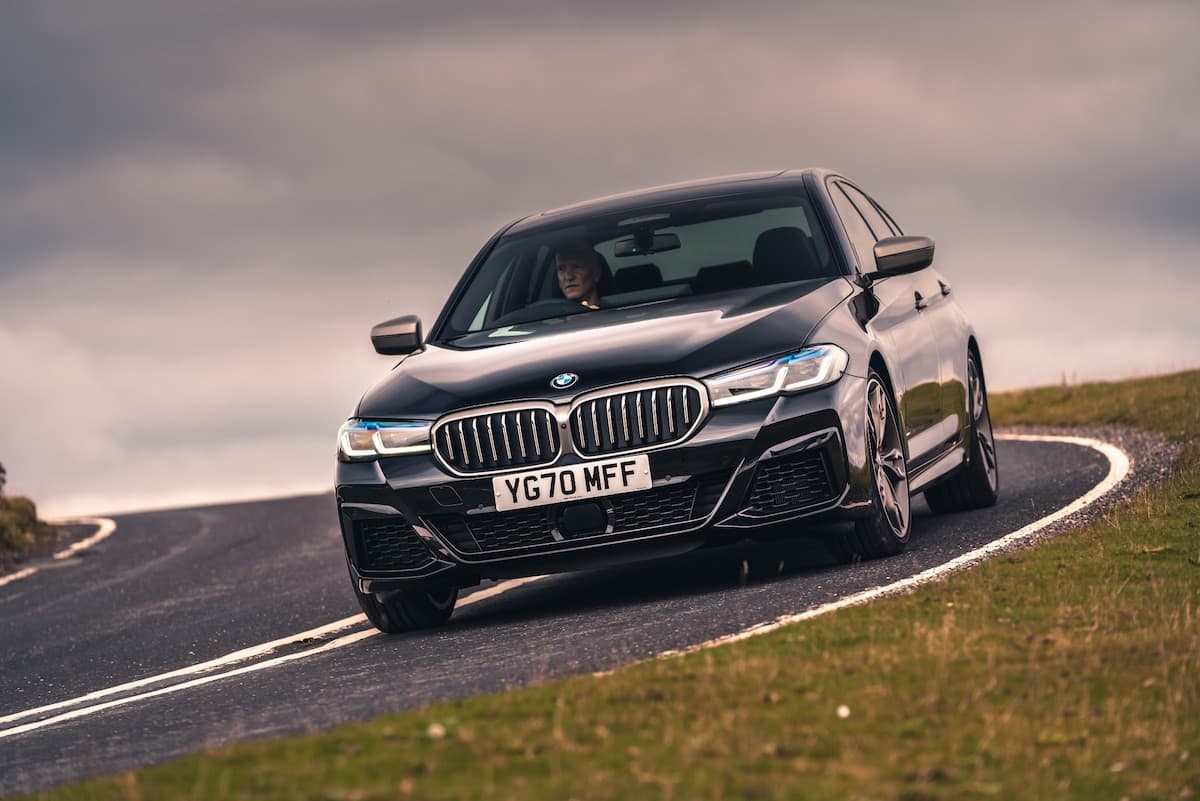
BMW 5 Series saloon (2017) - front

The seven-generation BMW 5 Series has been considered the benchmark model in the combustion-powered executive saloon class since its UK arrival in 2017. An accomplished all-rounder with tidy handling, a luxurious interior and class-leading infotainment, this BMW currently holds an outstanding Expert Rating of 86%.

While both saloon and Touring (estate) models are available new for under £50k, some features on the options list should really be included as standard, and no manual gearbox models are available.

  • Fuel consumption: 59 mpg
  • Gearbox: Automatic only
  • Warranty: Three years, unlimited mileage

Skoda Superb

Available brand-new for less than £50K

Skoda took a rather risky decision when it named its flagship family car the ‘Superb’, but that is actually the perfect descriptor for this impressive saloon and estate. The Superb has received considerable praise for its practicality, design and value for money.

This Skoda is genuinely hard to criticise. That said, its rather bland exterior styling won’t be for everyone. It currently holds a ‘superb’ Expert Rating of 82%.

  • Fuel consumption: 47 mpg
  • Gearbox: Manual only
  • Warranty: Three years or 60,000 miles

SUVs

Range Rover Evoque

Available brand-new for less than £50K

Range Rover Evoque (2019) road test - front | The Car Expert

The smallest model in Land Rover’s line-up, the Range Rover Evoque is a capable off-roader that is regarded as one of the most luxurious small SUVs on the market. Its handling is surprisingly nimble too, and it comes with plenty of on-board safety tech as standard.

However, its Expert Rating of 74% is hindered by its rather cramped rear seating, and – like all Land Rovers – its long-term reliability is questionable.

  • Fuel consumption: 46 mpg
  • Gearbox: Manual only
  • Warranty: Three years, unlimited mileage

Volvo XC60

Available brand-new for less than £50K

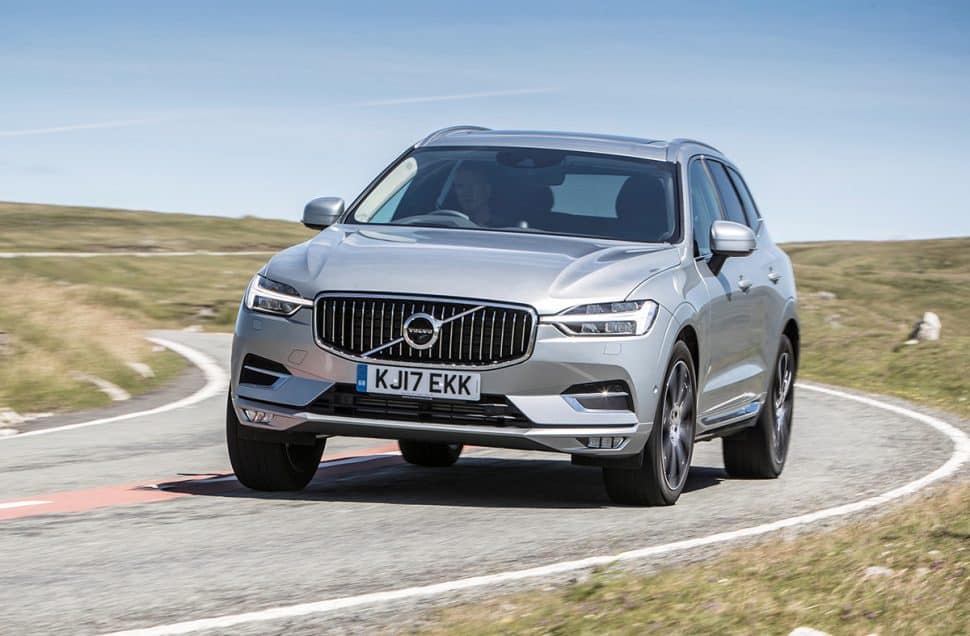
Volvo XC60 dynamic front | The Car Expert

2018’s World Car of the Year, the Volvo XC60 has received plenty of acclaim – widely commended for its exterior and interior design, as well as its class-leading safety tech. Like the V60 estate however, the XC60 is not exactly known for its performance – alternatives are more fun on the road.

Despite coming with mild hybrid assistance as standard, the SUV’s entry-level model also has a rather thirsty petrol-powered engine. The XC60 currently holds an Expert Rating of 75%.

  • Fuel consumption: 36 mpg
  • Gearbox: Automatic only
  • Warranty: Three years or 60,000 miles

Hot hatches

Toyota GR Yaris

Available brand-new for less than £50K

Toyota GR Yaris (2020 onwards) – front view

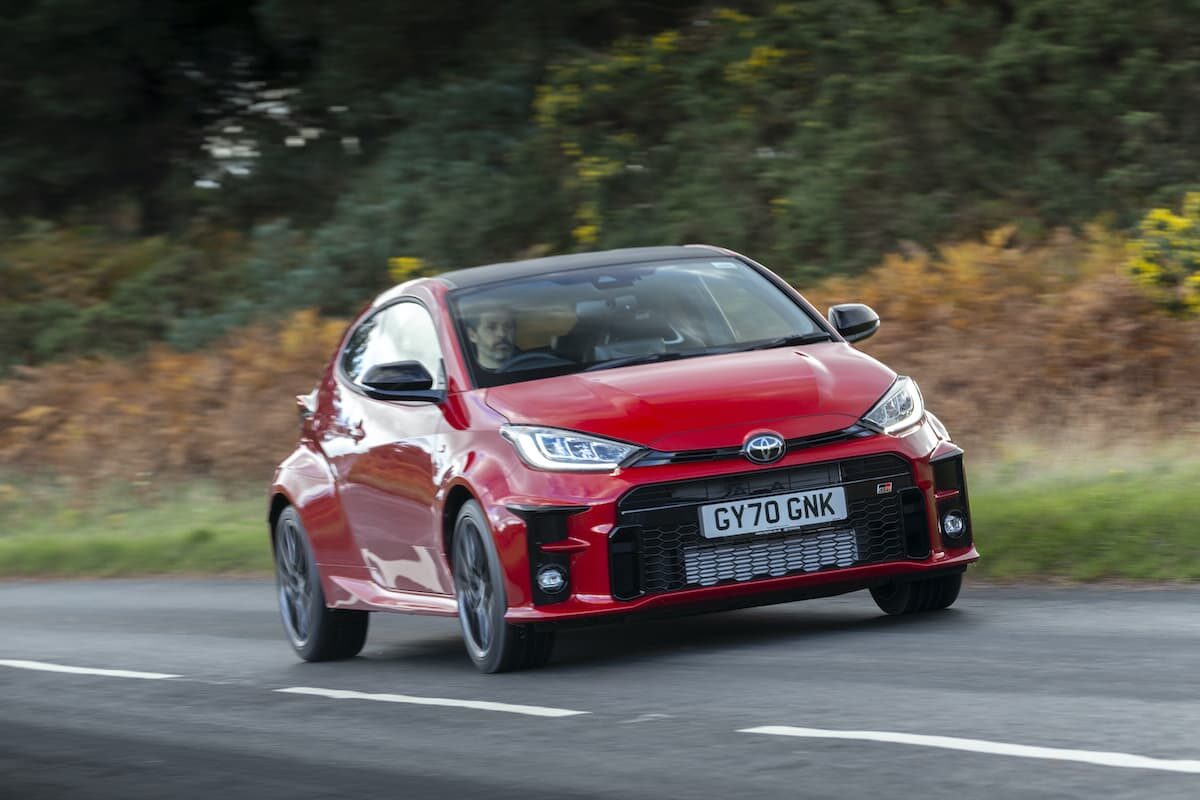
If you’re on the lookout for the ultimate hot hatch, the compact Toyota GR Yaris needs to be on your shortlist. Originally developed for Toyota’s world rally team, this serial award-winner uses the world’s most powerful three-cylinder engine. Combined with sharp four-wheel drive handling, it offers up a seriously fun driving experience.

Available new for comfortably under £50k, the GR Yaris currently holds an outstanding Expert Rating of 90%. The only problem is that UK supply is incredibly scarce…

  • Fuel consumption: 34 mpg
  • Gearbox: Manual and automatic
  • Warranty: Five years or 100,000 miles

Honda Civic Type R

Available near-new for less than £50K

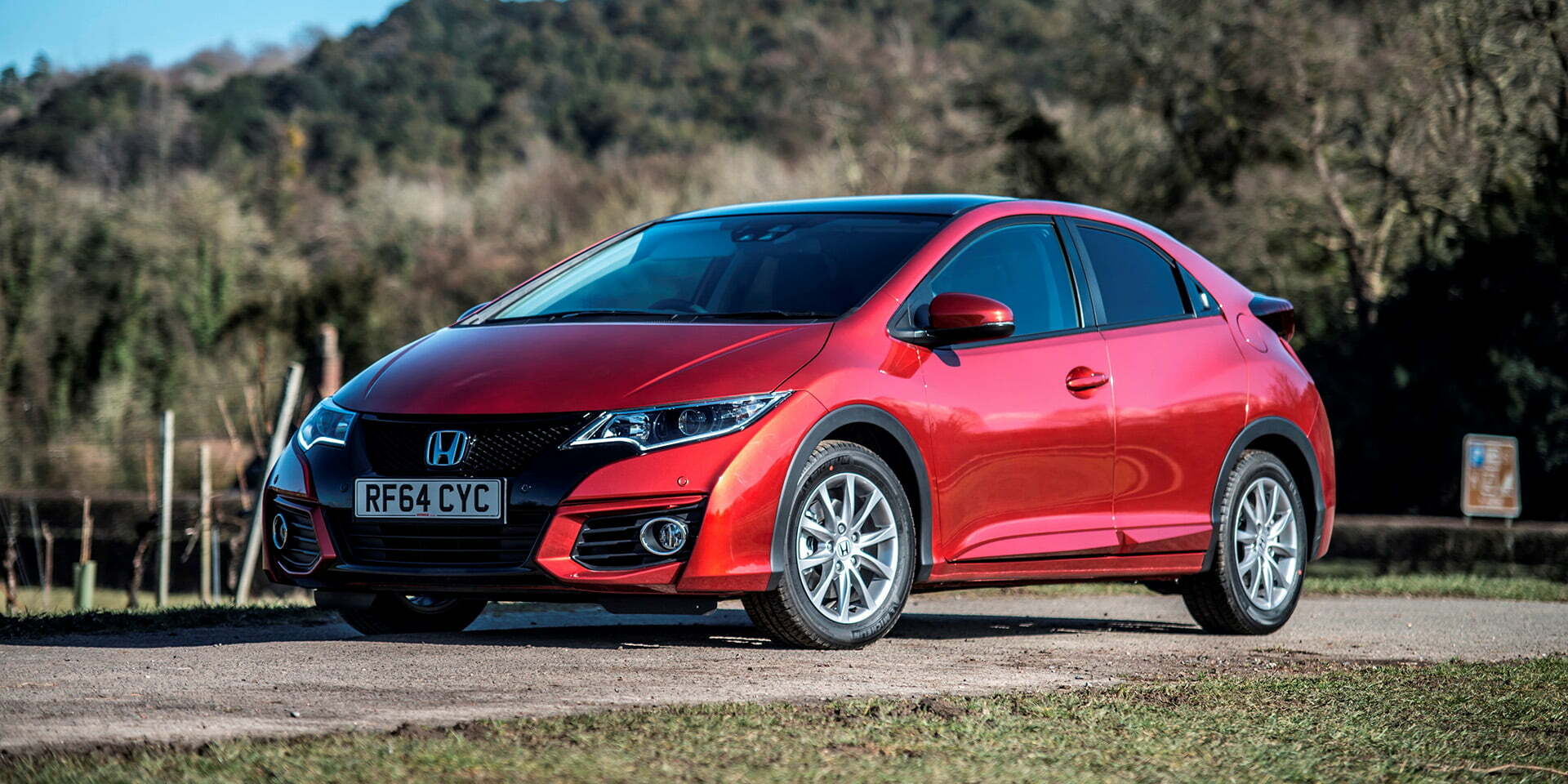
Honda Civic Type R (2017 onwards) – front view

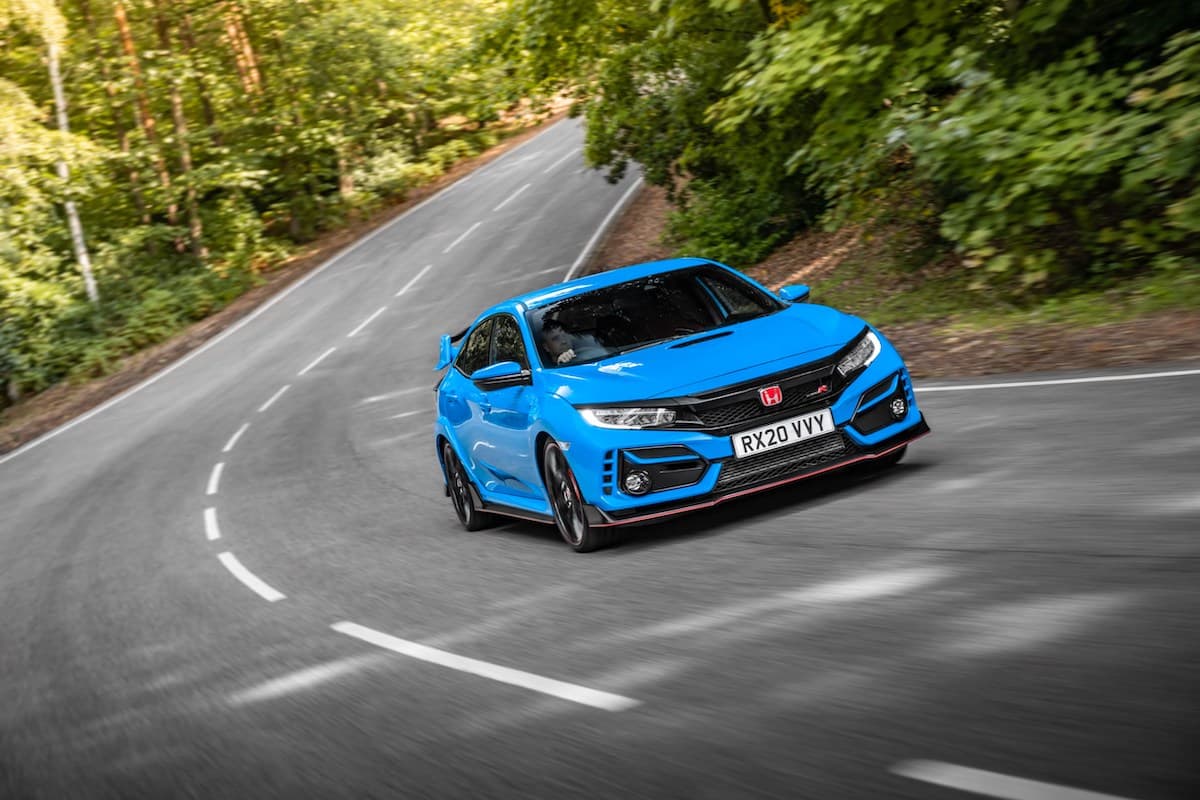
Highlighted for its impressive driving dynamics, performance and comfort, the fifth-generation Honda Civic Type R was considered to be a class-leader in the hot hatch class. Its dramatic styling also means that you’re unlikely to lose it in the car park either.

Honda no longer sells this generation of the Type R, with an all-new model set to arrive in the UK in 2023. However, there are plenty of nearly-new models on the used market listed for much less than £50k. It currently holds an Expert Rating of 87%.

  • Fuel consumption: 33 mpg
  • Gearbox: Manual only
  • Warranty: Three years or 36,000 miles

Mercedes-AMG A 45

Available near-new for less than £50K

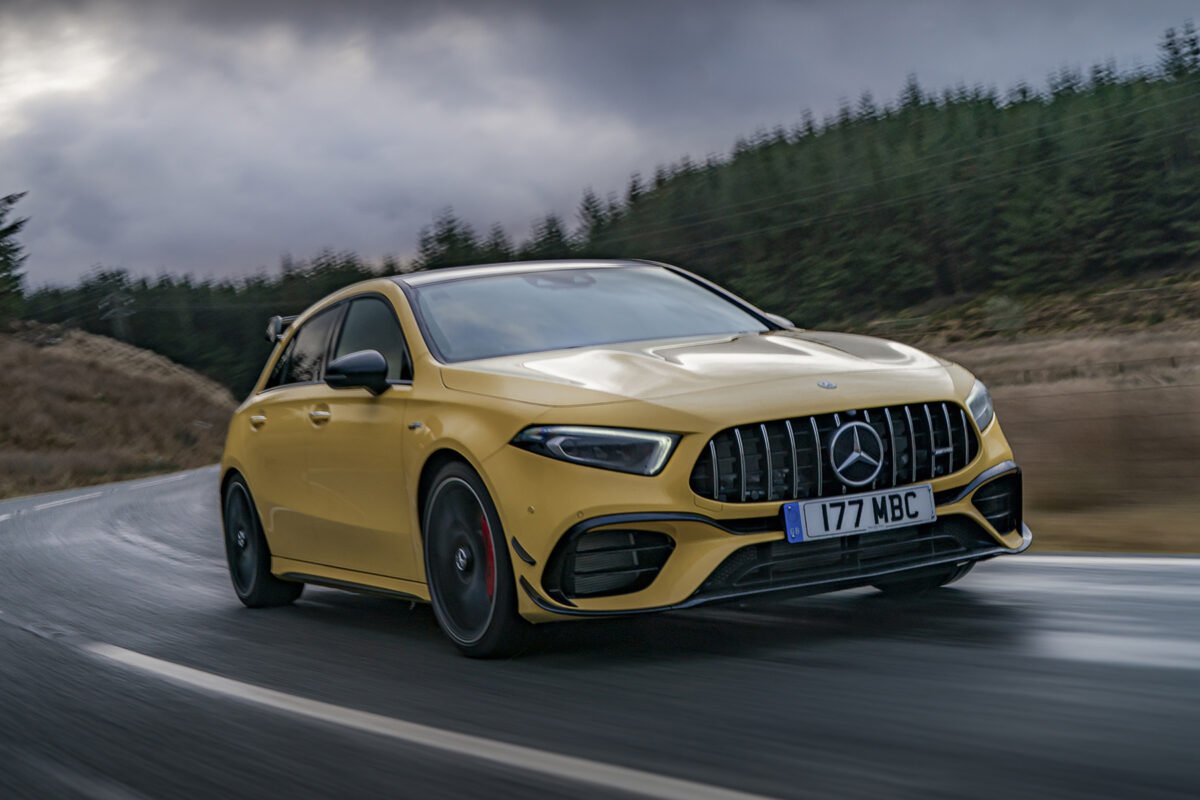
Mercedes-AMG A 45 front view | Expert Rating

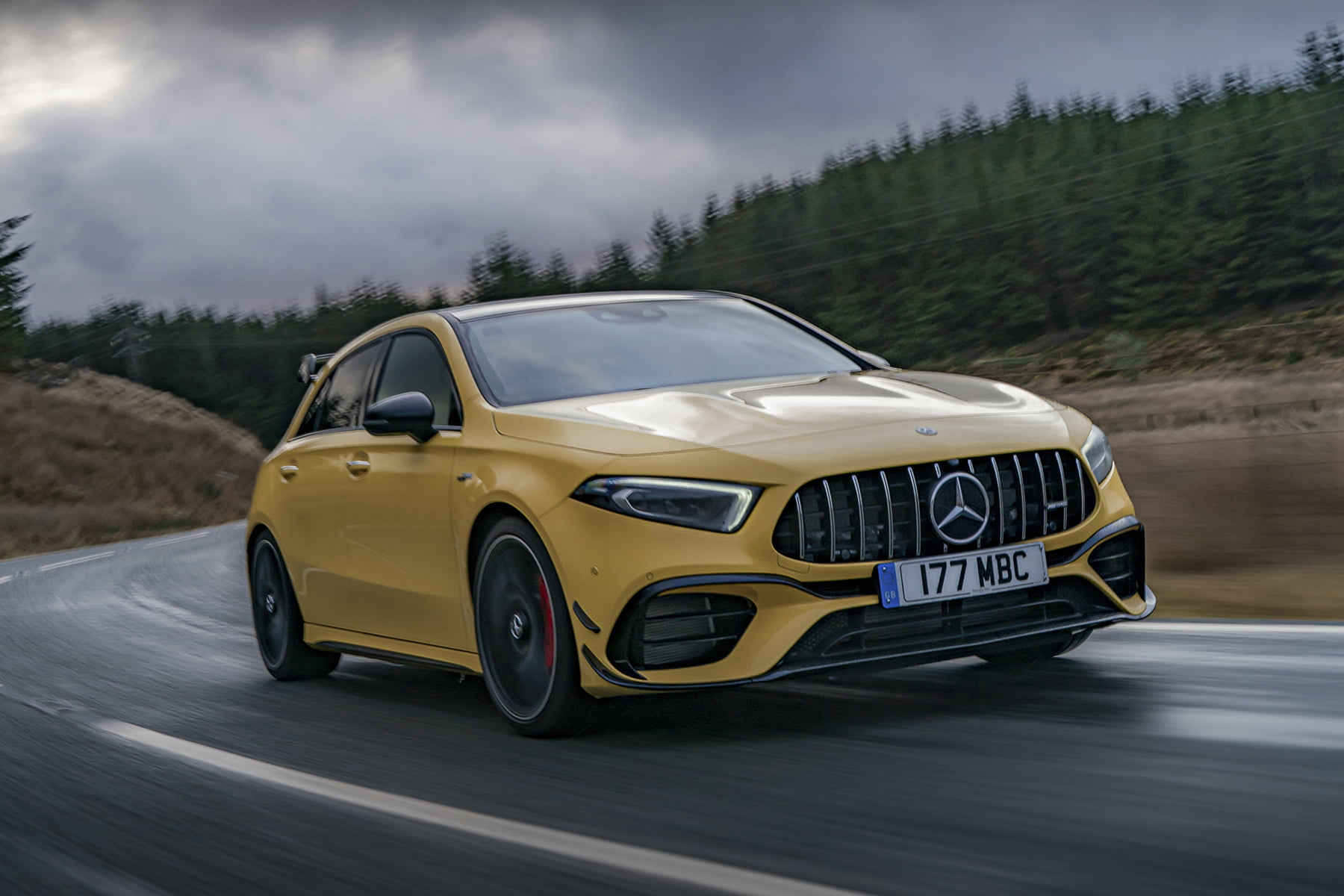
When it comes to brute-force power and straight-line speed, no hot hatch can match the Mercedes-AMG A 45. Currently holding an Expert Rating of 82%, the A 45 is also one of the most practical performance-enhanced options on the market, although the steep pricing will rule out plenty of people.

You won’t be able to pick up a new A 45 on a £50k budget, but there are several vehicles available under that threshold on the near-new market.

  • Fuel consumption: 32 mpg
  • Gearbox: Automatic only
  • Warranty: Three years, unlimited mileage

Sports cars

Alpine A110

Available brand-new for less than £50K

Alpine A110 road test | The Car Expert

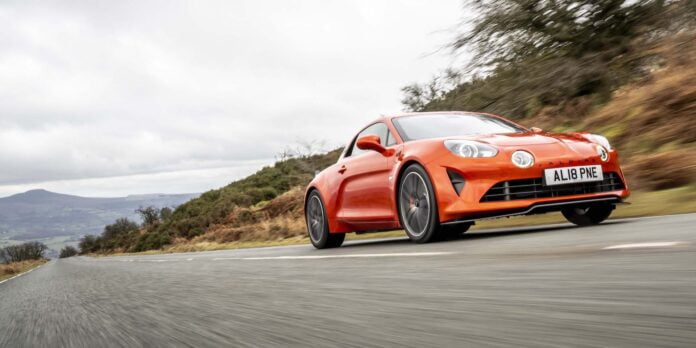
Renault’s performance-focused sub-brand Alpine only sells one model, but it’s a corker. Currently holding an excellent Expert Rating of 87%, the A110 coupé has been unanimously praised for its driving dynamics, with only mild criticisms concerning its obvious lack of practicality and the questionable quality of some interior fixtures.

At the time of writing, this sports car just sneaks in under our £50k budget, with £10 spare to spend on your way home from the dealership.

  • Fuel consumption: 35 mpg
  • Gearbox: Automatic only
  • Warranty: Three years or 60,000 miles

Porsche 718

Available brand-new for less than £50K

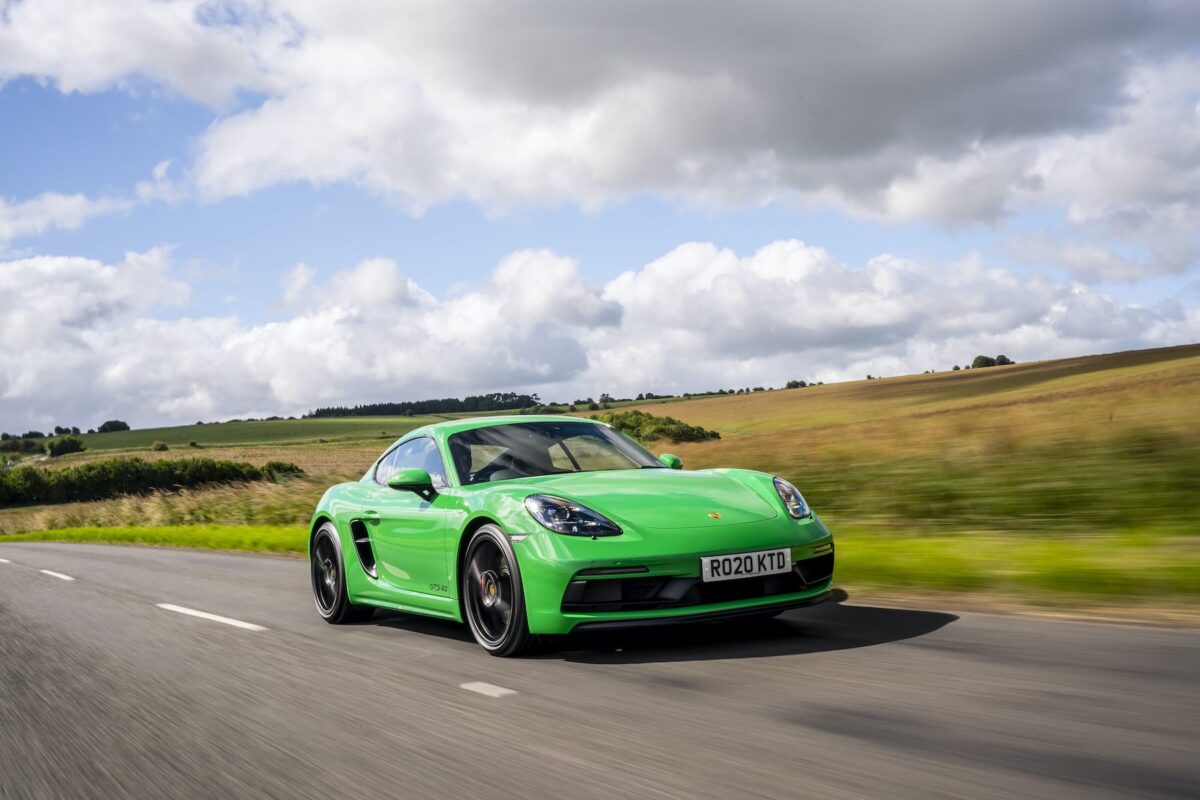
Porsche 718 Cayman GTS 4.0 (2016 onwards) - front view

Consisting of the Boxster (convertible) and Cayman (coupé) models, the Porsche 718 twins have been highly praised by UK reviewers for their classic style, bank-vault build quality and potent performance.

That said, owners regularly have to deal with mechanical reliability issues, and the standard specification is underdone for the money. Both Porsche 718 models currently hold an Expert Rating of 86%.

  • Fuel consumption: 32 mpg
  • Gearbox: Manual only
  • Warranty: Three years, unlimited mileage

Read more:

For the definitive rankings of the best new cars, check out The Car Expert’s industry-leading Expert Rating Index. The index analyses new car reviews from 30 of the top UK motoring websites, using an advanced algorithm that we have developed specifically to compare review scores.

Honda named most reliable car brand

Car warranty provider Warrantywise has named the UK’s most reliable car companies, and Japanese brands dominate the rankings.

Warrantywise, which is also one of The Car Expert’s commercial partners, collected the data from 131,000 UK warranty repair claims on vehicles up to ten years old – excluding very low volume models. This is unlike many consumer reliability reports, which use owner-reported information from incentivised surveys and can be far less reliable.

The data is then used to generate a reliability score for each brand, and the brands are then ranked in the Warrantywise reliability index. These rankings name Honda as the most reliable car brand for UK motorists, followed by Toyota and Suzuki, completing an all-Japanese top three.

Korean brands Kia and Hyundai also scored highly to round out the top five. Confounding typical stereotypes, the most reliable European car brand was Fiat, which ranked sixth ahead of French brands Citroën and Renault. Mazda and Ford complete the top ten most reliable car companies.

Notably, not a single German car company made the top ten, despite their perception of build quality. Cheaper budget brands like Dacia and MG also failed to reach the top ten most reliable car companies.

The UK’s ten most reliable car brands 2022

RankingBrandReliability score
1Honda97
2Toyota91
3Suzuki89
4Kia86
5Hyundai81
6Fiat80
7Citroën74
8Renault73
9Mazda73
10Ford73
Source: Warrantywise

This news follows the Warrantywise car reliability rankings released earlier this year, which named the Honda Jazz as the UK’s most reliable used car, and the last-generation Range Rover the most unreliable.

This reliability ranking correlates with other reliability surveys and reports conducted over the years, as well as The Car Expert’s own data provided for our Expert Rating Index by MotorEasy, which reinforces the findings in this report.

The ten best manufacturers in Warrantywise’s index are all ‘mainstream’ brands rather than premium or luxury names (or budget names, for that matter).

The company will release a list of the ten least reliable brands in coming weeks.

More car warranty information

Is a used car warranty required by law?

Is a used car warranty required by law?

The UK’s best used car warranty providers

The UK’s best used car warranty providers

How to handle a dispute with a car dealer

How to handle a dispute with a car dealer

Used car warranty – the law and your rights

Used car warranty – the law and your rights

Spares or repairs – and other dodgy trader tricks

Spares or repairs – and other dodgy trader tricks

*Warrantywise is a commercial partner of The Car Expert. If you click through to its website and/or proceed to purchase a used car warranty, we may receive a small commission. This does not affect the price you pay.

The weather’s changing – and so should your driving style

0

As drivers, we become used to long, hot summers and, even as the year marches on an extended autumn can lead to continued clear weather and dry roads.

So when winter suddenly does arrive with a vengeance it can take a little time getting used to the renewed, more treacherous conditions. Windscreens become frosty, mornings and evenings are darker sooner and for longer, roads become wetter and more slippery and freezing tyres don’t work as well on sub-zero surfaces.

It’s time then, to slow down and change your driving style to suit the season. Winter brings with it Christmas but that’s where the good cheer ends as it ushers in wintry driving conditions. You have to plan ahead and take longer preparing your car before you even leave your driveway or pull away from the kerbside. And then, once out on the road, it’s even more important for a calm head and considered judgments.

In any weather, driving safely is a complex skill that requires concentration, clear thinking and awareness of the changing situations around you.  But when conditions take a turn for the worse, drivers have to make good decisions in more difficult circumstances with less visual information available. This puts more pressure on them which can be extra stress that many struggle to cope with.

Drive to the conditions, not the speed limit

Common sense tells you that when your visibility is reduced by darkness, rain or anything else, you should reduce your speed to make sure you can see what’s coming with enough time to react. 

It’s perfectly OK to slow down and allow more room for you and the vehicles around you.  So what if you arrive five minutes late?  Better that, than having an avoidable accident because you were in too much of a rush and couldn’t stop in time when you needed to.

Instead of rushing to your next appointment or destination, plan ahead and leave yourself extra time to get to your end point – it’s safer this way and less stressful too.

Visibility, braking and steering reduced in the wet

Not only is your visibility affected in wet weather, braking distances are usually longer and your tyres won’t have as much grip to steer. So not only might you spot danger later, but you won’t be able to stop or steer out of harm’s way as quickly as if it was in the summer.

Those three factors all mean that your chances of having an accident at any given speed are much higher in wet weather than in the dry. So slow down and keep a careful eye on the road conditions and traffic.

You must ensure you can see clearly and all-round out of your windscreen, rear screen and side windows. If your screen is misted up or frosted, take a few minutes to clean it properly so that you can see clearly through the entire window.  Clearing a small patch directly in front of you is not sufficient to provide a safe level of visibility and it’s not something the police look kindly on either.

Driving in fog

Taking to the road in fog is a particularly unpleasant, and potentially dangerous, experience. It goes without saying that visibility is massively compromised which means you can’t see obstacles ahead of you until much later, and your car also can’t be seen by other road users. Driving in fog is stressful and tiring and should be done slowly and carefully.

Your car is probably equipped with front and rear fog lights so use them as required, alongside your normal headlights. You must not use fog lights unless visibility is seriously reduced as, in clear conditions, they can dazzle other road users and might obscure your brake lights. You should switch them off as soon as visibility improves.

Keep a safe distance from the vehicle in front and be aware that rear lights can appear further away than they really are. Check your mirrors regularly and especially before you slow down – touch your brake pedal early so that the brake lights illuminate. If someone appears too close to you, don’t try to accelerate to get away from them.

At a junction, stop in the correct position and be prepared to wind your window down so that you can listen for approaching traffic as well as look. When you are sure it is safe to emerge, do so positively and don’t dawdle in a position that leaves you sitting in the path of approaching vehicles.

Read more:

Salary sacrifice: The ultimate employee benefit

0

This article is brought to you by

Carparison 600x300

A great incentive for an employer to offer, salary sacrifice is a tax-efficient way to provide non-cash benefits to employees.

These can range from pension contributions to childcare vouchers to bicycles or even an electric car lease.

How does salary sacrifice for cars work?

Like the cycle-to-work scheme, a salary sacrifice car scheme is becoming an increasingly attractive way to get a brand-new company car. Due to its advantages for both employer and employee, business car leasing has never been so easy.

Employees can sacrifice a fixed amount of their gross salary and in return, they can lease a brand new environmentally friendly car. The popular scheme works particularly best for ultra-low emission or zero-emission cars as your savings will be maximised.

Three salary sacrifice benefits for employees

Savings on income tax and National Insurance

1. A salary sacrifice comes with impressive tax benefits.

The higher your salary, the more income tax you pay. By exchanging part of your salary for an electric car, the amount of tax you pay each month will be reduced.

You’ll also save money on National Insurance Contributions (NICs). NICs are something you pay when you get your wages. The amount you pay depends on how much you earn in a particular period. Therefore, any non-cash benefit given to an employee is exempt from the NICs payment.

2. No deposit or credit check required

An initial down payment is usually required for a finance car, so this is a cost-saving benefit of a salary sacrifice car.

A credit check is not required either, so you wouldn’t need to worry about not being accepted for finance and it would save you a bit of time too.

3. All-inclusive monthly fee

Your monthly fee typically includes car insurance, maintenance, road tax and breakdown cover.

This is a significant benefit because if you chose to lease your car through a standard personal contract hire package, you would need to pay extra for all the above services.

Three salary sacrifice benefits for employers

1. Retention, reward, and motivation

A salary sacrifice scheme is an attractive benefit for new employees looking to join the business, but it’s also an excellent retention tool for existing staff.

The scheme acts as a reward and should motivate your employees, increasing staff productivity.

2. Sustainability

The scheme encourages low-emission vehicles meaning you can improve your business’s carbon footprint and corporate social responsibility credentials.

3. National Insurance savings

When your employees make use of a salary sacrifice scheme, you’ll make National Insurance savings. This means you can pass this saving on to your employees’ pensions or retain it for yourself and reduce your business costs.

Carparison’s best car lease deals can suit your every need. Contact their leasing specialists at www.carparisonleasing.co.uk for more information.

Limited edition BMW 3.0 CSL revealed

0

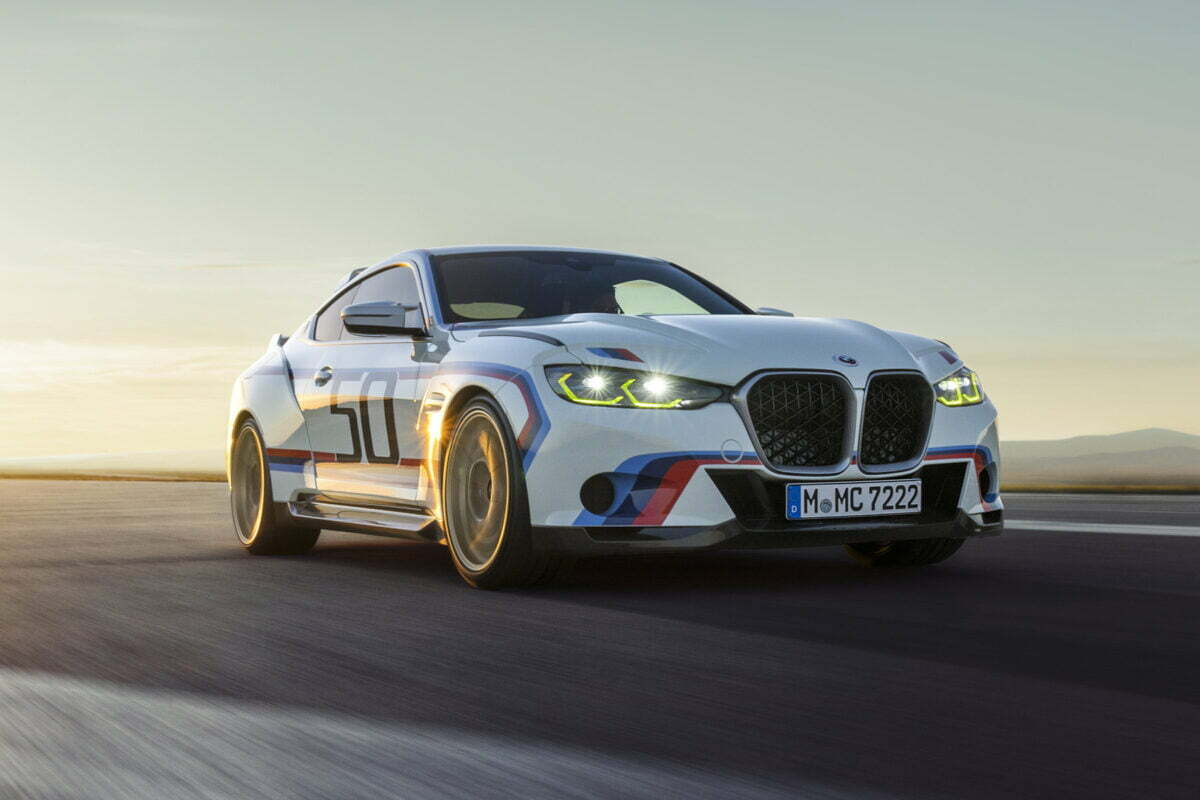
BMW’s M division has unveiled its latest project – the motorsport-inspired 560hp 3.0 CSL coupé – but only 50 models are up for grabs.

The launch of this limited run coupé brings BMW M’s 50th anniversary celebrations to a close, the performance-focused sub-division commenting that the 3.0 CSL is the “most exclusive special model” it has ever produced.

It is also powered by the most powerful straight six engine it has ever put in a road legal car – a 3.0-litre twin-turbocharged powertrain that produces 560hp and 550 Nm of torque. The coupé is only available with a six-speed manual gearbox.

Like the M4 CSL that went on sale earlier this year, the 3.0 CSL is inspired by BMW M’s past motorsport triumphs. The coupé’s design features a number of clear nods to the championship-winning original BMW 3.0 CSL racing car from the 1970s, including the racing livery, yellow-tinted LED headlights, chunky rear fenders and a large rear spoiler.

To save weight, BMW M engineers have opted to make the roof out of carbon fibre, while the bonnet, bootlid, side sills, rear diffuser and the metal frames behind the front and rear bumper are made of an undisclosed “lightweight” material.

The coupé comes with BMW M’s differential and adaptive suspension packages, as well as carbon-ceramic brakes that provide thermal stability and “extremely high” wear resistance.

With larger wheel arches than the BMW M3, the 3.0 CSL sits on 20-inch wheels in the front and 21-inch wheels in the back. The sidewalls of the car’s Michelin tyres will be embossed with the number ’50’, to mark 50 years of BMW M car history.

Stepping inside, the interior features carbon bucket seats, behind which there is a small storage area. The seats, steering wheel and roof liner are wrapped in Alcantara leather, featuring white stitching that mirrors the exterior bodywork. The start/stop button and the M buttons on the steering wheel are finished in red.

Each of the 50 models will be given a number (1 to 50) when it comes off the production line, and this number will be embossed on the passenger side of the dashboard.

That sums up what we know about the BMW 3.0 CSL so far, the manufacturer is yet to announce its pricing, and it is unknown how many of these 50 models will be reserved for UK sale. The coupé will be manufactured at BMW’s Dingolfing plant in Germany, with production taking around three months.

Abarth goes electric as 500e hot hatch debuts

0

Abarth has unveiled its first all-electric model, the 500e, which is a performance-enhanced version of the Fiat 500 Electric that produces 155hp and a 0-62mph sprint time of seven seconds.

This long-awaited electrified hot hatch makes use of the same 42kWh battery as the Fiat it is based on, but the introduction of a more powerful electric motor and other technical upgrades means that the Abarth produces 38hp more than the Fiat 500 Electric, and is around two seconds faster in a 0-62mph sprint too.

The combustion-powered 695 hot hatch, currently the range-topping model in the Abarth line-up, is still a fraction of a second faster to 62 mph, but this new electric hot hatch is faster off the line. The 500e can accelerate from 12mph to 25mph in one second, twice as fast as anything in Abarth’s current offering.

Abarth has also made the 500e two centimetres longer and six centimetres wider than the Fiat 500 Electric, to improve handling performance in high speed corners, and comes with three driving modes. The standard ‘Turismo’ mode is the least taxing, as it limits the car’s power to 100kW to maximise battery efficiency.

The ‘Scorpion Street’ and ‘Scorpion Track’ modes prioritise performance by upping the car’s power to 113kW, though the difference between the two isn’t exactly clear as of yet. Both modes allow for one-pedal driving – the car will decelerate when the accelerator is lifted, and the hot hatch uses regenerative braking to provide further power for the drivetrain.

Well aware that this will be the first model in its 73-year history to come without a petrol-powered soundtrack, Abarth has given the 500e an artificial engine soundtrack that can be heard in the cabin. This can be switched off though at the driver’s discretion, for a quieter driving experience.

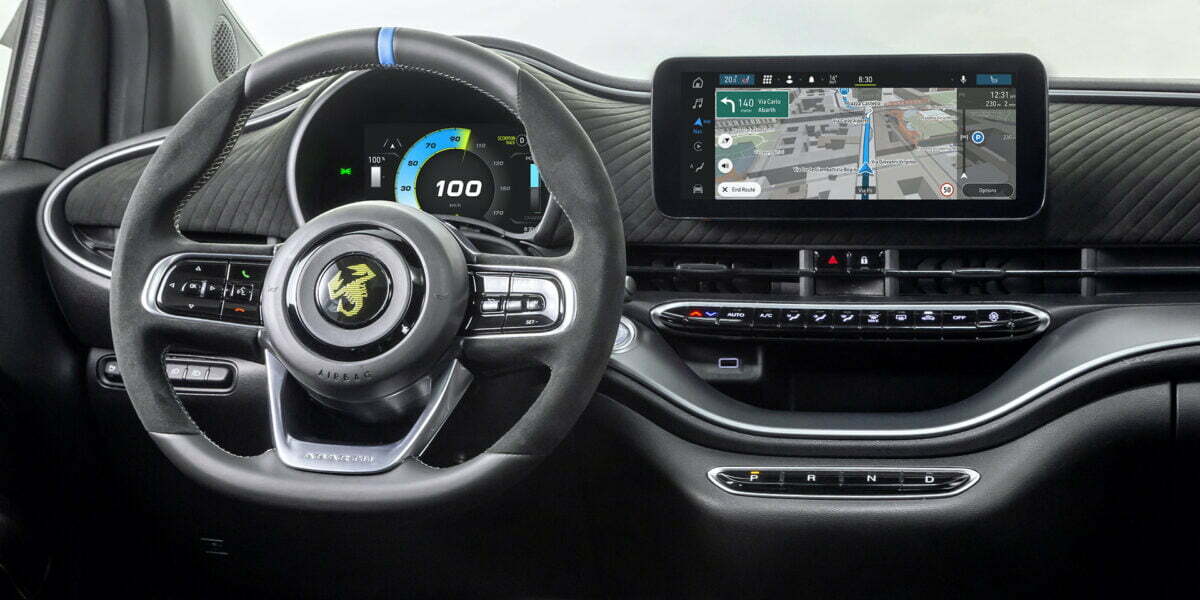
While the Abarth’s exterior styling differs from the Fiat in a few subtle ways, including a slightly wider front end, lower side skirts and the eye-catching ‘Acid Green’ bodywork of the show car, the 500e and 500 Electric are almost identical inside, featuring a seven-inch digital instrument cluster behind the Abarth-branded steering wheel, a 10-inch infotainment screen in the centre of the dashboard that displays the feed of a rear view parking camera.

The 500e range includes a JBL premium sound system and Alcantara leather seats, as well as a wireless smartphone charger and keyless entry, but some of these features will be reserved for top-spec models.

Finally, Abarth says that its 500e will be able to charge its battery to 80% using an 85kW charging cable in an estimated 35 minutes.

The brand has not yet confirmed the EV’s battery range as of yet – by comparison the Fiat 500 Electric can travel a maximum of 143 miles on a single charge.

This, and other details like trim specifications, UK pricing and arrival dates, will be announced in the coming months.

Ford unveils eight-seat E-Tourneo Custom

0

The all-electric Ford E-Tourneo Custom is set to arrive in the UK in the middle of next year – an eight-seat people carrier that is said to offer up to 230 miles of range on a single charge.

Sharing its foundations and front end looks with the E-Transit Custom, the E-Tourneo Custom is powered by the same 74kWh battery and 160kW electric motor pairing as its panel van sibling, producing 218hp and a promised electric range of 230 miles on a single charge.

By comparison, the expensive Mercedes-Benz EQV can muster 213 miles on a full battery, while the Citroën e-Spacetourer can travel a maximum of 136 miles without charging. Volkswagen’s all-electric ID. Buzz does have nearly 30 miles more battery range than the E-Tourneo Custom, but is only available with seven seats maximum.

This eight-seater Ford is compatible with 125kW rapid charging, which allows the battery to charge from 10% to 80% in an estimated 41 minutes. A one-pedal driving mode is also available as standard, which the manufacturer says increases the car’s energy efficiency. The people carrier sits on 19-inch alloy wheels, and Matrix LED headlights are available on top-spec models.

If you are not quite ready to make the all-electric switch, the Tourneo Custom range also includes 136hp, 150hp and 170hp diesel engine options, as well as a plug-in-hybrid model that is powered by a 2.5-litre petrol engine and an electric motor, providing 31 miles of electric-only range.

For those who have a caravan or trailer, the electric E-Tourneo Custom can tow up to 2,000kg on the road, but customers who opt for a diesel version will be able to pull trailers with weights up to 2,500kg. While electric versions are limited to a maximum of eight seats, diesel and plug-in hybrid models can be specced with a nine-seat configuration too.

The sliding side doors are electronically-powered, opening to reveal six seats in the rear – five of which are available with Isofix points for fitting child seats. The second row of seats can swivel round to face the third row in a ‘conference’ layout, and the passenger airbag in the front has been moved from the dashboard to the roof to free up space for an extra storage cubby.

Elsewhere on the dashboard, a 13-inch infotainment console compatible with Android Auto and Apple Carplay is fitted alongside a tilting steering wheel which first featured on the E-Transit van, which folds flat for use as a small table.

The people carrier also comes with vehicle-to-load power sockets that allow you to charge and power electrical devices like laptops and iPads. A wireless smarthpone charging pad is also available. Safety assistance features include adaptive cruise control with lane centring, semi-autonomous parking assistance and a 360-degree parking camera.

That sums up what we know about the Ford E-Tourneo Custom so far – more details, such as UK pricing, will be announced in the coming months. Ford expects to deliver the first of these people carrier models to the UK in Summer 2023.

BMW X1

Summary

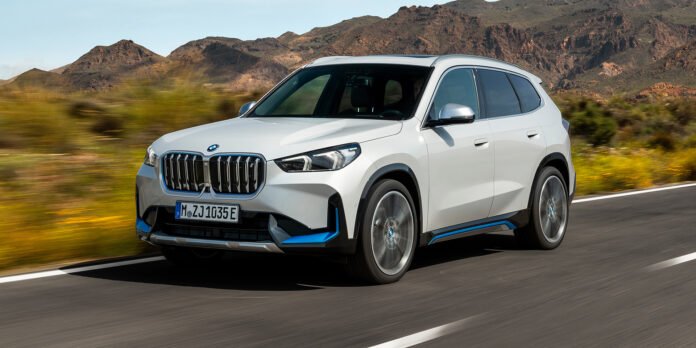
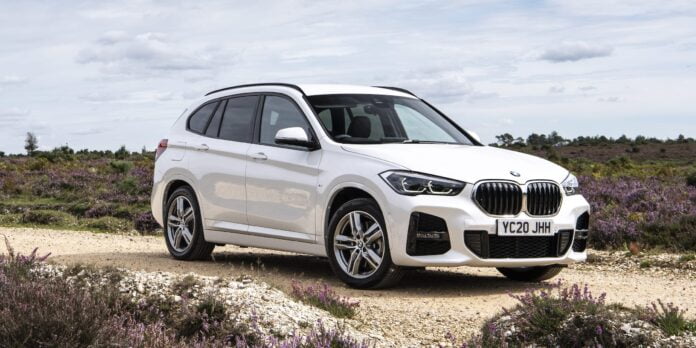
The BMW X1 is a compact five-door crossover and the smallest SUV model in the BMW range. This is the third-generation model, which became available to order in the UK in Autumn 2022. It was unveiled alongside an all-electric version, called the BMW iX1.

Built on the same basic platform as the current BMW 1 Series, the latest iteration of the X1 has received a warm welcome from the British motoring media. “It drives well, has a high-quality interior and is now packed with technology”, Car Key‘s Ted Welford explains, with Tom Jervis of Carbuyer adding that, “thanks to its growth in size, the X1 is now an even better choice for families.”

There is a wide range of X1 engine options, including petrol, diesel and plug-in hybrid powertrains, but several publications have criticised the comparatively high pricing of the line-up, particularly electrified models.

Car‘s Jake Groves explains that upmarket rivals like the Audi Q3 and Mercedes-Benz GLA are cheaper as standard, and the Auto Express team points out that the older but slightly larger BMW X2 has a lower price tag too.

As of February 2026, the third-generation BMW X1 holds a New Car Expert Rating of B, with a score of 69%. It scores top marks for its five-star Euro NCAP safety rating and low CO2 emissions, however its media review scores have only been average. Like most BMW models, running costs are also middling and its reliability record is poor.

BMW X1 highlights

  • Spacious and well-equipped cabin
  • Wide range of engine options
  • Attractive exterior styling
  • Large boot

BMW X1 lowlights

  • Rather firm ride comfort
  • No physical controls for the infotainment
  • Expensive, base price and up
  • Petrol engines could be more refined

Key specifications

Body style: Small SUV
Engines:
petrol, diesel, plug-in hybrid
Price:
From £34,935 on-road

Launched: Autumn 2022
Last updated: N/A
Replacement due: TBA

Media reviews

Reviews, road tests and comparisons from across the UK automotive media. Click any of the boxes to view.

Auto Express

Auto Trader

Car

Car Keys

Carbuyer

Heycar

Honest John

The Scotsman

The Sunday Times

The Telegraph

Top Gear

Safety rating

Independent crash test and safety ratings from Euro NCAP

Overall score: 5 stars
Date tested: October 2022
Read the full Euro NCAP review

Adult protection: 86%
Child protection: 89%
Vulnerable road users: 76%
Safety assist: 92%

Eco rating

Independent economy and emissions ratings from Green NCAP

No eco rating

As of February 2026, the third-generation BMW X1 has not been tested by Green NCAP.

Reliability rating

MotorEasy logo 600x167

Reliability data provided exclusively for The Car Expert by MotorEasy

All data based on MotorEasy average workshop costs for extended car warranty claims

The BMW X1 has a below-average reliability score of 56%, according to workshop and warranty data provided exclusively to The Car Expert by our partner, MotorEasy. This score applies to both the current model X1 (2022 onwards) and previous generations.

The most noteworthy problems faced by X1 owners have been related to the gearbox, with an eye-watering average repair bill of more than £3,800 to date. Electrical and braking issues have been far more common, but the bills for these have been much cheaper. Suspension issues are also fairly common but fairly cheap to repair as well. Engine issues are the most common issue, with an average repair cost of more than £600.

If you own a BMW X1 or are interested in purchasing a used X1, make sure that any used car warranty you choose covers these key areas.

Running cost rating

Clear Vehicle Data logo close crop

Monthly cost of ownership data provided exclusively for The Car Expert by Clear Vehicle Data

Fuel consumptionAverageScore
Petrol models44 mpgC
Diesel models57 mpgB
Plug-in hybrid models358 mpgA
CO₂ outputAverageScoreVariationScore
Petrol models145 g/kmC
Diesel models131 g/kmB
Plug-in hybrid models17 g/kmA
Battery rangeAverageScoreVariationScore
Plug-in hybrid models51 milesD
Insurance groupAverageScoreVariationScore
All models30C
Service and maintenanceCostScore
Year 1£270C
Year 2£618C
Year 3£1,013C
Year 4£1,350D
Year 5£1,762D
Overall£5,013C

The BMW X1 has a mixed bag of running costs, according to five-year ownership data provided exclusively to The Car Expert by our technical partner, Clear Vehicle Data.

Fuel economy for petrol models is only average, although that’s sub-par for the small SUV segment. Diesel models are better, while plug-in hybrid models are flattered by the ridiculous UK/EU testing protocol that gives completely unrealistic results (there’s no way you’ll ever get 358 miles on a gallon – 4.5 litres – of petrol and a full battery).

Insurance premiums and servicing bills will also likely be fairly average across the first five years. Many other small SUVs are cheaper.

Similar cars

If you’re looking at the BMW X1, you might also be interested in these alternatives

Audi Q3 | BMW X2 | DS 3 Crossback | Jaguar E-Pace | Lexus UX | Mercedes-Benz GLA | Mini Countryman | Range Rover Evoque | Volvo XC40

More news, reviews and information about the BMW X1 at The Car Expert

Revised BMW iX SUV unveiled

Revised BMW iX SUV unveiled

Everything you need to know about BMW

Everything you need to know about BMW

The safest new cars on sale in the UK

The safest new cars on sale in the UK

Uprated BMW X1 M35i to arrive in November

Uprated BMW X1 M35i to arrive in November

All-new BMW X1 and electric iX1 revealed

All-new BMW X1 and electric iX1 revealed

BMW X1 (2015 to 2022)

BMW X1 (2015 to 2022)

Updated BMW X1 SUV gets the big grille treatment

Updated BMW X1 SUV gets the big grille treatment

BMW recalls 312,000 cars in UK

BMW recalls 312,000 cars in UK

Buy a BMW X1

If you’re looking to buy a new or used BMW X1, The Car Expert’s partners can help you find the right car

Motors 600x300

Find your next used car with Motors. Find out more

Auto Trader logo 600x300

Find your next new or used car with Auto Trader. Find out more

Carwow logo 600x300

Find your next new or used car with Carwow. Find out more

Lease a BMW X1

If you’re looking to lease a new BMW X1, The Car Expert’s partners can help you find a competitive deal

Leasing-com logo

Personal contract hire deals from Leasing.com. Find out more

Carparison 600x300

Personal contract hire deals from Carparison Leasing. Find out more

Select Car Leasing logo

Personal contract hire deals from Select Car Leasing. Find out more

Autumn statement 2022: what car owners and drivers need to know

This week, the chancellor, Jeremy Hunt, announced a range of new tax hikes and spending cuts in the government’s Autumn Statement, several of which may impact on your car buying and driving decisions for years to come. So let’s look at it in detail.

Plenty has already been written and said in the media about how we’ve come to this point and why taxes will be going up so we don’t need to repeat that in detail. In summary, the last couple of decades of a global borrowing free-for-all has racked up enormous levels of household and government debt. Now the magic money tree has given all it can and we all have to start paying it back. The Autumn Statement is designed to do that, with several impacts for motorists.

The key areas of interest are:

  • road tax (officially called vehicle excise duty, or VED) for electric vehicles
  • benefit-in-kind for cars on company car schemes
  • possible increases in fuel duty
  • the effect of inflation and interest rates

EVs will start paying road tax from 2025

The headline news of the Autumn Statement, from the car industry’s point of view, is that EV owners will have to start paying road tax like everyone else from 2025 onwards. This is currently £165 a year, although it usually goes up each year. By the time this takes effect in 2025, it will probably be geting close to £200 a year.

The supplementary tax for new cars over £40,000 will also apply to new EVs for the first time, again starting in 2025.

What does this mean?

If you currently own an electric car (or buy one during 2023 or 2024), you don’t pay VED. You still have to renew your registration each year, but the charge is £0.

If you buy a new electric car from 2025 onwards, you will pay the designated first-year rate (currently £10) when you purchase the car and then the standard rate (currently £165) in subsequent years.

Basically, this will add about £14 a month to your running costs, based on the current VED rates.

However, there’s an additional sting. New cars over £40,000 pay more road tax in the their first five years – currently it’s an extra £355 a year – before reverting to the standard rate. And, as you have probably already noticed, the majority of new electric cars already sit above that threshold. As more new EVs are launched in coming years, that will add an extra £30 a month to a lot of car owners’ running costs from 2025 onwards.

Benefit-in-kind increases

Benefit-in-kind (BiK) is the tax you pay on a company car and forms an important part of salary sacrifice calculations. The government’s Autumn Statement has set out tax levels for BiK on new cars through until 2028. From 2025, this will start going up for almost all vehicles. The only exception will be the highest-polluting cars, which is because they are already at the highest tax threshold.

At the moment, BiK for an EV is 2% and it will stay that way until April 2025. After that, it will increase by 1% a year for three years – so up to 3% in 2025/26, 4% in 2026/27, and 5% in 2027/28.

For plug-in hybrid vehicles that produce less than 75g/km of CO2, there will also be a 1% BiK increase each year from three years from 2025 to 2028, which should end up with them paying 21% in BiK by 2028. All other vehicles, which already pay much more in BiK, will see a 1% increase for 2025/26 only.

What does this mean?

Again, these moves will see electric cars starting to shoulder more of the overall tax burden for the car industry. However, they will still maintain their considerable tax savings relative to equivalent petrol- or diesel-powered cars.

Salary sacrifice is an increasingly popular way for motorists to switch to an electric car thanks to substanially lower BiK taxation, and this will continue to be the case until 2028.

If you currently pay BiK on your car, nothing will change until 2025. In April 2025, your BiK contribution will go up by 1% on its current level. In April 2026, it may go up again if you have a plug-in hybrid or electric car. Same again in 2027.

Read more: How salary sacrifice makes EVs cheaper

Fuel duty confusion

There was considerable media disquiet after the Autumn Statement about fuel duty, with the suggestion that the chancellor had hidden a 12p/litre increase that is due to come into effect in March 2023. The answer is slightly more complicated.

Fuel duty is the tax you pay on every litre of petrol or diesel you buy. It is supposed to increase in March each year on a regular basis but, almost every year for more than a decade, the chancellor of the day has announced a 12-month freeze to keep it at the current level. When he was chancellor last Spring (about three chancellors ago), Rishi Sunak announced a temporary 5p reduction in fuel duty to help with the current cost-of-living crisis.

So while fuel duty is technically due to increase by 12p/litre in March, precedent suggests that it won’t happen (or at least, it will increase by a much smaller amount).

What does this mean?

We won’t know until February or March, but it’s entirely likely that the chancellor will announce either another freeze at the current level or a much smaller increase, depending on how things go over the next three months. Another discount seems highly unlikely.

Longer-term, it’s inevitable that fuel will get more expensive in coming years as part of a carrot/stick combination approach to shift the vast majority of new car buyers into electric cars. Get used to the idea of fuel prices being more than £2/litre, because it will probably happen sooner rather than later and it will be permanent.

Inflation and interest rates

As every single news outlet has covered extensively, inflation is running rampant across the UK and most of the world. The standard response to that is for central banks everywhere to start cranking up interest rates to make borrowing more expensive and slow down spending.

It is not in the chancellor’s power to set interest rates – that rests with the Bank of England – but the government’s economic policies will affect everyone’s borrowing and spending, which will affect inflation and therefore lead to the Bank of England adjusting interest rates in response.

Interest rates for new and used car finance have increased significantly over the last year, and that’s probably going to keep going for a while yet.

What does this mean?

Rates on car finance are fixed for the life of the agreement, so whatever you signed up to at the start of the agreement is what you’ll pay for the whole term. But it’s highly likely that your next car finance agreement will be more expensive than your current one.

Read more: What will higher interest rates mean for car finance customers?

Summary – what do we think overall?

It was inevitable that EV customers would have to start paying more tax eventually. This is simply a continuation of the incentives for EV buyers that have been progressively reduced for several years now as the cost of electric cars have steadily reduced to be closer to their petrol equivalents.

It is also inevitable and predicable that car industry figures complain whenever the government of the day dares to reduce subsidies or increase taxes on motorists – and most of the press releases that were fired into my inbox by PR companies within minutes of Jeremy Hunt’s Autumn Statement contained rants from various CEOs predicting doom, gloom and the death of electric cars in general. Funnily enough, they all have vested interests in the matter.

It’s also worth pointing that the same industry figures have said much the same thing every time previous governments have reduced subsidies for electric cars. And yet electric cars sales have continued growing, almost entirely unaffected by the elimination of thousand of pounds in subsidies for new EVs over the years.

Overall, it’s probably a fairly judged balance between the need to increase total taxation revenue without completely killing the tax advantages offered to electric cars.

One final point to remember is that most of these new tax increases will not take effect until 2025, which is after the next general election. The next government could completely change all of the above between now and then (and let’s face it, the current mob could easily u-turn on any of it by next week anyway…).

Car buying recommendations from The Car Expert

If you’re currently in the market for a new or used car, nothing has really changed as a result of the Autumn Statement that should make you reconsider the sort of car you are buying. The changes to road tax for EVs won’t take place until 2025, which is also when the rates for BiK will also gradually start to increase for most cars.

The only immediate effect of the Autumn Statement for car buyers is the possibility for interest rates to keep going up or come back down, and we’ll only see that in coming months once the other effects of the Statement are felt and the markets start to respond.

What you can be sure of is that the cost of buying and running a car is likely to keep getting more expensive over the next few years.

Cars will continue to get more expensive, especially as we all start switching to EVs. The cost premium for EVs over petrol cars is coming down, but that’s also because petrol cars are getting dearer as much as electric cars are getting cheaper.

Used car prices remain high but should start to ease during 2023. Good news if you’re selling a car, bad news if you’re buying one.

Energy prices (whether it’s petrol, diesel or electricity) will remain high and probably get higher. Interest rates may settle a bit, but will still be higher than their historic lows of the last decade. Insurance costs will continue creeping up. There will be ever-more taxes for cars to use cities, as London expands its ultra-low emission zone next year and other cities inevitably start to follow.

Last week, we concluded that the average monthly running cost for a petrol or diesel car in the UK is about £220, which is up more than 30% in four years. That figure is likely to keep rising, so make sure you are factoring plenty of breathing room into your budget when buying a new or used car.

We have plenty of tips, explanations and advice on every aspect of buying, financing, owning, running and selling a car here at The Car Expert. Before aking any big decisions, spend some time reading our various articles to help you make a better financial decision.

Can a multi-car insurance policy save you money?

0

We all need car insurance, and there’s no getting around it. But if you own more than one car, is it better to cover them separately or all together in a multi-car policy?

Many households have one or more cars parked on their driveway. And each one has to be insured before you can take it on the road. But they don’t have to be insured separately, and many cover providers will offer attractive multi-car policies to their customers.

It makes sense for them to do that, of course. That way, they earn your custom for not just one vehicle but two or more, and it helps retain that business over a longer period.

But while multi-car polices might seem an attractive way forward, they are not always the best route to take. The premium you pay will depend on several factors, including the vehicles you’re looking to cover and the ages of the people likely to be driving them.

What is multi-car insurance?

This popular programme allows you to combine multiple car insurance policies and put them altogether in one document. Most insurers will offer discounts for each car renewed under such as policy, which could mean noticeable savings for you.

You should get all the benefits offered from an individual car insurance policy (no claims discount, windscreen cover etc.), but with added discounts. Some insurers will offer cover for up to seven vehicles on one policy, which may even include family members that don’t live at the same address.

The terms and conditions will vary according to each insurer, so you’ll need to read your offer and policy documents carefully.

What are the benefits?

Save money: There are the potential financial benefits listed above as insurance providers reward loyal custom – and this is certainly one way of showing that.

Less paperwork: All the vehicles you are covering can be put together on one document, cutting out unnecessary paperwork, form signing, bank detail organising and tracking of different renewal dates.

Multiple addresses: You don’t necessarily have to live at the same address to qualify for multi-car insurance. Some policy providers will allow immediate family members to live at another property. This is convenient for people working away from home, for example, or for college or university students.

And the negatives?

Age limits: If one or more of the drivers you are including on a multi-car policy is young or an inexperienced driver, it could well push up the overall cost for all cars on the policy. Anyone with a poor driving record, or penalty points, might also affect the premium price.

Claims impact: If someone makes a claim on the policy it could affect the premium across all vehicles negatively when it comes to the next renewal day.

Payment: If one car on the multi-car policy is expensive and the others not so valuable, the more costly vehicle will push up the insurance quote. Having several cars coming up on one renewal date can be a bit daunting to pay for in one go. At least when you are covering several cars separately and at different times, you can spread the cost over the year.

Competition: It’s unusual for the same insurance company to offer you the best quote on several different cars if you’re getting individual quotes. So you may be missing out on the best price for each car you’re insuring, which may be more than what you save with a multi-car discount from one insurer.

What’s the verdict on multi-car policies?

There’s a good chance that a multi-car insurance policy will work out well for you and your family, especially if the cars being covered are all approximately the same value, and all drivers are sensible and without driving convictions and points.

It’s certainly helpful in terms of paperwork and admin, and there’s a good chance the deal will claw back some valuable motoring expenses too. It comes down to the drivers and vehicles – adding in restrictions such as ‘all drivers must be over-25’ will help to keep the premium down. Generally speaking, the more cars young have on one policy, the more you could save.

As always, the only way to really come to the right decision for you is to do your homework. That means working out what the cost of insuring every car and each of their drivers separately would cost, and then compare that with a multi-vehicle policy for your household. Based on those findings you can decide whether going multiple is for you or not.

And, it goes without saying, you need to repeat that exercise every year to make sure you’re still getting the best deal. Premiums can change significantly year-on-year, so what was best last year might not be the right solution next year.

Read more:
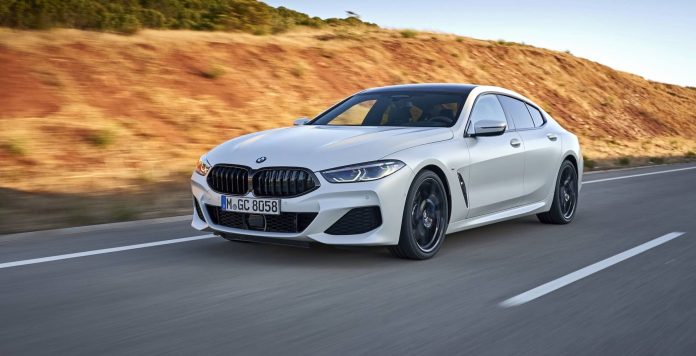
Audi RS Q8

Summary

The Audi RS Q8 is the sporty performance-enhanced version of the regular Q8 range, and the most powerful petrol-powered SUV in Audi’s line-up. It has been on sale in the UK since 2020.

The sporty SUV has received a largely positive reception from the UK media, with frequent plaudits for its pace – for example, the Carbuyer team concludes that the RS Q8 offers “incredible performance”. The Audi shares its engine with the Lamborghini Urus – a 592hp twin-turbo 4.0-litre V8 that produces a 0-62mph sprint time of 3.8 seconds.

The Top Gear team explains that the RS Q8 is “ideal if you need a supercar and an SUV rolled into one”, pointing to the car’s agile handling, as well as its spacious and well-built interior. However, they also find the SUV’s six-figure price tag to be a deterrent. “The Audi RS 6 costs much less, it’s faster, it’s more fuel efficient, boot space is nearly the same and you won’t look like a Premiership footballer when you pull up in one.”

As well as rivals within the Audi range, multiple reviewers have reported that the SUV’s automatic gearbox is rather lethargic. Jonathan Burn of Auto Express also asserts that this heavy-set Audi is “too big to be truly engaging”, while Carwow explains that you will be lucky to get 25mpg out of the SUV’s thirsty engine. “But do you really care about fuel economy in a super-SUV such as this? Probably not.”

As of February 2026, the Audi RS Q8 currently holds a bottom-of-the-barrel Expert Rating of E, with a score of just 46%, which is a result of its poor media reviews, high levels of CO2 emissions and eye-watering running costs.

RS Q8 highlights

  • Seriously quick in a straight line
  • Surprisingly agile in the bends
  • Plenty of on-board tech as standard
  • Comfortable upmarket interior

RS Q8 lowlights

  • Thirsty petrol engine
  • Sluggish automatic gearbox
  • Expensive, base price and options list
  • Cheaper RS 6 is faster and more efficient

Key specifications

Body style: Large SUV/crossover
Engines:
petrol
Price:
From £112,795 on-road

Launched: Spring 2020
Last updated: N/A
Replacement due: TBA

Media reviews

Reviews, road test and comparisons from across theHighlighted reviews and road tests from across the UK automotive media. Click any of the boxes to view. UK automotive media. Click any of the boxes to view.

Auto Express

Auto Trader

Car

Carbuyer

Carwow

Evo

Honest John

Parkers

Top Gear

Safety rating

Independent crash test and safety ratings from Euro NCAP

Overall score: 5 stars
Date tested: December 2019
Date expired: January 2026
Read the full Euro NCAP review

Adult protection: 93%
Child protection: 87%
Vulnerable road users: 71%
Safety assist: 73%

The Audi RS Q8 shares its crash test safety rating with the regular Q8 SUV range, which was awarded a full five-star score in December 2019.

Eco rating

Independent economy and emissions ratings from Green NCAP

No eco rating

As of February 2026, the Audi RS Q8 has not been tested by Green NCAP. However, it’s a huge SUV powered by a 600hp petrol V8 engine producing CO2 emissions of more than 300g/km, so your expectations should be set low…

Reliability rating

MotorEasy logo 600x167

Reliability data provided exclusively for The Car Expert by MotorEasy

No reliability rating

As of February 2026, we don’t have enough reliability data on the Audi Q8 range to generate a reliability rating.

The Car Expert’s reliability information is provided exclusively to us using extended warranty data from our partner, MotorEasy. As soon as MotorEasy has sufficient data on the Q8, we’ll publish the score here.

Running cost rating

Clear Vehicle Data logo close crop

Monthly cost of ownership data provided exclusively for The Car Expert by Clear Vehicle Data

Fuel consumptionAverageScore
Petrol models22 mpgE
CO₂ outputAverageScoreVariationScore
Petrol models297 g/kmE
Insurance groupAverageScoreVariationScore
All models50F
Service and maintenanceCostScore
Year 1£652E
Year 2£1,569E
Year 3£2,510E
Year 4£2,862E
Year 5£3,917E
Overall£11,510E

It should be no surprise that a 600hp, twin-turbocharged petrol SUV is very expensive to run. The Audi RS Q8 has one of the worst Running Cost Ratings of any car in our database.

While this probably won’t deter potential new car customers, given that large SUVs of similar performance and luxury are likely to be just as expensive to run, it’s certainly worth thinking about carefully if you’re looking at purchasing a used RS Q8.

Awards

Trophies, prizes and awards that the Audi RS Q8 has received.

2021

  • World Performance Car Of The Year

Similar cars

If you’re looking at the Audi RS Q8, you might also be interested in these alternatives.

BMW X6 M | Lamborghini UrusMaserati Levante Trofeo | Mercedes-AMG GLE 63 S | Porsche Cayenne Turbo | Range Rover Sport

More news, reviews and information about the Audi Q8 at The Car Expert

Everything you need to know about Audi

Everything you need to know about Audi

Improved battery range for Audi Q7 and Q8 plug-in hybrids

Improved battery range for Audi Q7 and Q8 plug-in hybrids

Audi Q8 set for mid-life facelift

Audi Q8 set for mid-life facelift

Audi revises trim line-up for many models in its range

Audi revises trim line-up for many models in its range

Audi prices up facelifted Q8 e-tron SUV

Audi prices up facelifted Q8 e-tron SUV

Audi Q8

Audi Q8

Audi Q8 test drive

Audi Q8 test drive

New Audi Q8 set to rival Range Rover Sport

New Audi Q8 set to rival Range Rover Sport

Audi electrics & SUVs head bold launch plans

Audi electrics & SUVs head bold launch plans

Audi confirms new Q8 and Q4 models for production

Audi confirms new Q8 and Q4 models for production

Detroit show: Audi Q8 targets Range Rover

Detroit show: Audi Q8 targets Range Rover

Audi Q8 concept heading for Detroit

Buy a Audi RS Q8

If you’re looking to buy a new or used Audi RS Q8, The Car Expert’s partners can help you find the right car.

Motors 600x300

Find your next used car with Motors. Find out more

Auto Trader logo 600x300

Find your next new or used car with Auto Trader. Find out more

Carwow logo 600x300

Find your next new or used car with Carwow. Find out more

Lease a Audi RS Q8

If you’re looking to lease a new Audi RS Q8, The Car Expert’s partners can help you find a competitive deal.

Leasing-com logo

Personal contract hire deals from Leasing.com. Find out more

Carparison 600x300

Personal contract hire deals from Carparison Leasing. Find out more

Select Car Leasing logo

Personal contract hire deals from Select Car Leasing. Find out more

Car share clubs – are they a good idea for you?

Car sharing or car clubs have been around since the late 1990s and are thriving right now. Names come and go, but the common features are that by signing up to a car sharing club, users get access to a fleet of cars and vans parked in street locations across a city or town.

They can be booked by the hour or by the day. Insurance, fuel and city centre charges are generally included. Councils encourage car clubs as a green and economical option, taking cars off the road which sit parking idle for much of the week.

It could be right for you if you don’t want to own, lease or subscribe to a car or want to economise by selling a second car which rarely gets used. Car clubs also offer plans just for business users. With more electric cars on offer, it can be a real no-strings way to try out an electric car for the future.

Car clubs also carry advantages over traditional rentals. You don’t have to wait until an office is open to collect or return your car and you might be able to find a car club car just around the corner from your home.

Finding and joining a car club

Car clubs now divide into two types; fairly new cars/vans of the same type which are owned by the club and parked at fixed points, or the newer trend of peer-to-peer car sharing.

In short, these are privately owned cars whose owners can earn money (and some make it a mini-business) by listing their cars for rental through a car club, which fits them with remote tracking/locking technology, provides the admin, insurance and vetting and pays the owners a portion of each rental. You can find anything from an aged Vauxhall Corsa to an Aston Martin.

A good place to start looking for a car club is to find an accredited member of CoMoUK, the national charity for shared transport.

It runs an accreditation scheme (reviewed annually) for car and bike/e-bike share, to ensure, it says, ‘a collectively agreed set of standards is upheld across the sector to maintain the reputation that these shared transport schemes have gained as a valuable component of sustainable transport’. Accreditation deals with things like fair pricing, good availability and maximum times between full cleans and is policed by random checks. The list of accredited members is here.

Traditional car clubs

Zipcar is probably the best-known name in car sharing. It runs in London, Cambridge, Bristol and Oxford and claims to have 400,000+members in the UK alone. Via an app, users have access to over 3,000 cars and vans. Originally set up in the United States, it still operates there and in Canada, Costa Rica, Iceland, Taiwan and Turkey. You can also book a Zipcar in a foreign country.

The traditional model of car clubs used to be confined to the biggest cities, but availability is now wider. Starting as a small pilot operation in the North East with two cars in 2008, Co Wheels claims to be the UK’s largest community interest car club operator, running pay-as-you go car clubs, pool car fleet management and franchise operations in over 60 towns and cities across the UK. Remarkably, Co Wheels will rent you one of the handful of hydrogen cars in the UK. On a smaller scale, Co Cars runs over 50 electric and low emission cars in Exeter and across the Southwest.

Some big name rental companies now have car club spin-offs. The Enterprise Car Club offers cars and vans to rent from the street, and some are at Enterprise van and car branches. At the time of writing (November 2022) England, Wales and Scotland were covered stretching from St Ives in Cornwall to Thurso at the top of the Scottish mainland.

Ubqeeqo is wholly owned by the Europcar car rental company and has cars in the UK (London and Manchester), Belgium, France, Germany, Italy, Spain and Switzerland. Like Enterprise, its cars are the latest models but from street locations only.

Peer-to-peer clubs

Hiyacar offers both car club cars (which it owns and runs) and peer-to-peer cars. In London, for any search you get a wide range of cars to choose from. It also works with RentYourParkingSpace, which offers bookable parking places from individual driveways hotels and supermarkets. It also is piloting car club cars. Only the car club part of Hiyacar is CoMoUK accredited.

To illustrate how this might work, I searched London for a petrol car for three hours the next day (Sunday, 9am-12pm). I had 50 results, from half a mile to 4.5 miles away. Of these, 29 were recent model cars with Hiyacar Car Club branding, two RentYourParkingSpace-branded car club cars and the rest were private rentals, the oldest of which was a 2011 Volkswagen Polo.

Turo was founded in the US and still operates there and in Canada. In the UK, it has hubs in London, Manchester and Edinburgh. It is not CoMoUK accredited. Turo makes a point of the variety of cars it has on its books, from city cars to sports cars. Using the same three-hour Sunday morning hire search across London brought over 200 results from a 2011 Hyundai i20 supermini to a 2019 electric Tesla Model X.

Costs to join and drive

Joining a car club demands minimal commitment and admin, but the joining cost is related to your age and driving record. Some companies will take on drivers with penalty points but they all display their conditions upfront.

There is sometimes a joining fee and then pre-paid or pay-as-you go plans. For example, Co Wheels members pay an upfront £25 joining fee or a basic Zipcar London plan has no monthly fee and rates from £8.50 an hour.

It’s hard to do a like-for-like comparison on costs but for the car clubs you can pay as little as £3.75 an hour to around £10 (depending on the size of car, time of day) or daily charges of £80 to over £100 a day. While a standard insurance excess is included, you can pay extra to bring this to zero, like traditional rentals.

A set amount of miles is included with each hire, but go over that and you pay for every extra mile travelled. For example, Ubeeqo includes 30 miles in every booking then £0.30 for every additional mile.

Enterprise Car Club electric cars are parked in electric vehicle bays with a dedicated charging post. Instead of a fuel card, they come with a charge card. You use this to unplug the charging cable from the post and in again at the end of the hire. On the move, the card works on the Chargemaster network or other operators and can be claimed back. Zipcar will charge its own cars overnight, so users don’t have to, but they don’t recommend taking them out of London.

Peer-to-peer car lending can be cheaper if you’re prepared to go for a much older or basic car. The price range for the Hiyacar three-hour search was from £15 to £29 but insurance was extra, calculated on the hirer’s record. The same search with Turo, across London, brought results as low as £20 a day (the 2011 Hyundai i20). Fuel is not included in the cost of a peer-to-peer rental.

Collecting a car club car – what’s the damage?

Some you unlock with a credit card, some with your phone and the keys are in the glovebox. A car club car or van comes with a fuel card which you can use to top up the tank if you need to. Users are encouraged to leave at least a quarter of a tank (or get fined), and you can now see on the Zipcar app whether you face having to start your time with a trip to the pumps.

Every car club vehicle will have a comments/logbook in the glovebox where users can note any damage when they arrive. You should always allow enough time to look your hire over for scrapes and dents before you start.

I joined a well-known car club mentioned here as far back as 2008. I own a car so am only a very occasional user or when I need a van to haul some furniture. From experience, I would always call up if I found a big scratch at the start of the hire (the vans often get biffed at the corners) to be sure it was on the record. The snag is, while car club cars are regularly checked over and repaired, you can’t always be sure that the damage you’re looking at wasn’t done several days ago and already logged.

Are they clean?

If you’re worried about a car where other people have been touching the inside it before you, car clubs are probably not for you. All the firms mentioned here advertise enhanced post-Covid cleaning regimes and at regular intervals, cars will be taken away and cleaned. However, that won’t be after every hire. The last user of your booked car may well have spilled crisps all over the seats and while you can report it (and the last user gets a fine) you will have to live with it for your journey, clean it yourself or forget the booking.

I briefly belonged to BMW’s now defunct DriveNow programme, where you could rent a BMW i3, 1 Series or Mini from the street. I enjoyed renting a Mini Clubman but I didn’t enjoy finding an unmentionable item in the rear footwell. I reported it, but never heard back and then the service ended completely.

Like Airbnb, people renting out their own cars have reputations built on reviews. Glancing at a couple of reviews in this search (some had no comments), the previous user leaving a mess seemed a frequent theme.

Timing: be early, not late

Allow enough time ahead of your booking to find the car and check it over. When you prepare your quote, you might find that if you put in more than a certain number of hours you switch from an hourly to a daily rate.

If that rate suits you, you can block out the car for the whole day around the time you actually want it then there are no worries about picking it up or returning it a little late, plus day rates are sometimes discounted.

It can also be wise to allow a little extra time at the end of your booking if you think you might be stuck in traffic. All car club hires carry fines for late returns. You usually have to return the car to the same dedicated parking bay you got it from, but some such as Zipcar have certain cars you can leave in different locations

Watch the mileage

For short journeys, most users will find the standard mileage allowance with a daily rate works well. However, a car club car may not be right for a long weekend away where you might end up racking up more miles if you fancy exploring or have to take a diversion. Some car clubs have a cost calculator based on mileage but a traditional rental comes with unlimited miles.

Read more:
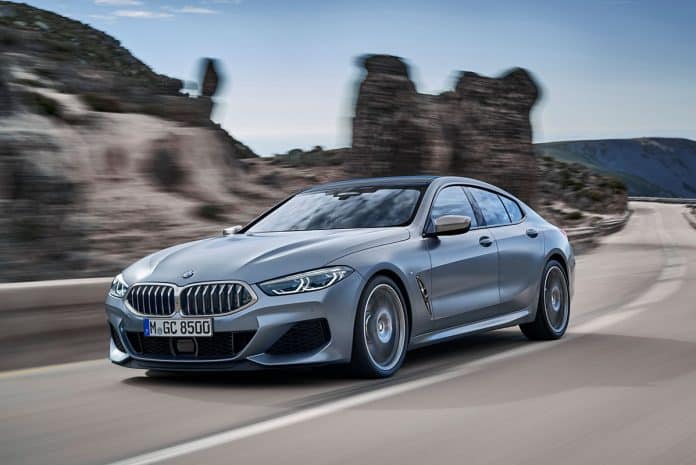
*The Car Expert has an affiliate arrangement with Hiyacar. If you click through to their site, we may receive a small commission. This does not affect the price you pay.

Mazda rolls out small CX-5 refresh

0

All petrol Mazda CX-5 models now come with mild-hybrid tech as standard after the rollout of a minor model update that also includes changes to the trim line-up.

All versions of the 165hp 2.0-litre petrol now come with 24V of mild-hybrid assistance to improve the SUV’s fuel efficiency, and automatic variants of this engine have gained an additional piece of ‘cylinder deactivation’ tech that lowers the car’s emissions. The 150hp 2.2-litre diesel option remains the same.

There are no changes the SUV’s looks or interior layout, but Mazda says that customers who buy a model from the updated CX-5 range will now be able to wirelessly connect their phone to the infotainment to use Android Auto or Apple CarPlay, and adds that it has swapped out the old USB ports for smaller USB-C ones.

An extra paint colour has also been added as part of this minor refresh. Called ‘Rhodium White’, this metallic finish was introduced as part of the CX-60 options list earlier this year.

Finally, Mazda has decided to re-name the CX-5 trim line-up, which still consists of five grades. The entry-level ‘SE-L’ grade is now called the ‘Centre-line’, while the slightly more expensive ‘Newground’ trim retains its branding.

The ‘Sport Edition’ and ‘Sport Black Edition’ trims have been renamed ‘Exclusive-Line’ and ‘Homura’, while the range-topping ‘GT Sport’ is now called the ‘Takumi’, which mirrors the trims available in the larger CX-60 range.

The Mazda is considered to be a strong all-rounder by the British media – receiving particular praise for its clever engineering, strong engines and comfortable cabin. Its review scores are hindered by its long-term reliability however, meaning that it currently holds an Expert Rating of 76%.

Looking for a Mazda CX-5? The Car Expert’s partners can help

Carwow logo 600x300

Discover great deals available on both new and used cars. Find out more

Auto Trader logo 600x300

Search for your next new or used car with Auto Trader. Find out more

Motors 600x300

Search less, live more. We make finding the right car simple. Find out more

Motorpoint logo 600x300

Finding your next car is easy at Motorpoint. Find out more

Carparison 600x300

Personal contract hire deals from Carparison Leasing. Find out more

Hippo Leasing 600x300

Personal contract hire deals from Hippo Leasing. Find out more

Moneyshake logo 600x300

Personal contract hire deals from Moneyshake. Find out more

Rivervale Leasing logo 2022

Personal contract hire deals from Rivervale Leasing. Find out more

LeaseLoco logo 600x300

Personal contract hire deals from LeaseLoco. Find out more

Ready2Lease logo

Personal contract hire deals from Ready2Lease. Find out more

Five-star crash test results for 15 new cars

0

Safety body Euro NCAP has crash tested 16 new cars including models from Tesla, Toyota, Hyundai and Nissan, with all but one achieving top marks.

This batch of Euro NCAP results, consisting of many brand-new models that have either just arrived in the UK or are set to go on sale, includes 15 separate full five-star ratings as several manufacturers continue to up the industry standards for accident safety and assistance technology.

The European crash testers re-assessed Tesla Model S after its 2014 results expired last year, and the large upmarket saloon retains its five-star rating. Facelifted in 2016, the Model S has upped its scores across the board, including a 91% adult occupant crash safety rating and a industry-leading 98% safety assistance technology score.

Also headlining this large batch of results is the new Hyundai Ioniq 6, which has been put through its paces by Euro NCAP for the first time. Its five-star rating includes 97% adult occupant and 90% safety assistance technology scores.

The new electric Toyota bZ4X and Subaru Solterra SUVs were also crash tested – which both achieved the same five-star rating as they are structurally identical. While this rating isn’t quite as impressive as the Model S and Ioniq 6 score sheets, these SUVs were awarded a 91% score for their safety assistance tech – the highest tech score that either brand has ever achieved.

Next up is the latest new additions to the Nissan range, which again achieved top marks. The all-electric Nissan Ariya was awarded good scores in every category, but was out-scored by the recently unveiled X-Trail hybrid in adult and child occupant crash safety (91% and 90%) and on-board safety tech (95%).

Due to its larger size however, Euro NCAP reports that the X-Trail does not offer as much protection for pedestrians and cyclists in accident scenarios as the Ariya, but says that the large SUV’s score in this category is still adequate.

The latest iteration of the Honda Civic and the soon-to-arrive Toyota Corolla Cross were awarded five-stars. Both recorded an impressive crash test showing, with all individual scores surpassing 80%.

Despite their rather steep pricing, Euro NCAP also used its crash test budget to assess the safety of the latest versions of the Range Rover and Range Rover Sport – these being the first Land Rover models to be assessed since the Defender SUV in 2020.

Top marks were awarded to both, but the SUVs recorded fairly average scores for pedestrian and cyclist crash safety.

Five-star ratings were also awarded to the Renault Austral, which is the impending successor to the Kadjar crossover, the WEY Coffee 02 SUV and NIO ET7 saloon, Chinese models that are set for a European arrival, the Smart #1 hatchback that is yet to go on UK sale and the Isuzu D-Max Crew Cab pick-up.

The only car in this batch that failed to achieve top marks with the DS 9 saloon, which was marked down for being an ‘aggressive impact partner’ with other vehicles.

Toyota unveils brand-new Prius

0

The Toyota Prius plug-in hybrid is set to make a return in 2023 with a new design and increased power, but it is currently unknown whether it will arrive on UK roads.

Built on the same foundations as its predecessor that was removed from sale in the UK this year, Toyota says that this new fifth-generation model is almost twice as powerful as the outgoing model. The car is powered by a 2.0-litre petrol engine paired with a 14kWh battery and an electric motor mounted to the front axle, providing a total output of 223hp.

The manufacturer is yet to give a figure for the new liftback’s all-electric range, but says it can travel twice as far in EV mode than the previous model. Small solar panels can also be fitted to the roof for an additional fee, which increases its electric-only range.

The new model inherits the sloping ‘wedge’-shaped silhouette synonymous with the Prius range, but the brand says it has made the car slightly wider, and lowered its height by 5cm. The car’s wheelbase (distance from front tyres to rear tyres) is 5cm longer too, and the new Prius sits on larger 19-inch alloy wheels.

Inside, Toyota has lowered the driving position to give the latest Prius a ‘sportier feel’ and has redesigned the dashboard to improve driver visibility and make things a bit more user-friendly.

The new dashboard looks quite similar to the layout unveiled on the new Toyota bZ4X SUV. A larger infotainment screen juts out of the centre of the dashboard, and a seven-inch digital instrument cluster sits behind the steering wheel – replacing the old driving information screen that stretched across the centre of the dashboard on the old model.

The central screen is illuminated, and this backlighting changes colour when alerting the driver of safety hazards.

That sums up what we know about the new Toyota Prius at this stage. The manufacturer says that the model will arrive in Europe in Spring next year, but has not disclosed whether it will join its UK range as of yet. More details will be announced next month after the car’s official motor show debut.

Its predecessor received a rather mixed bag of reviews from the British media – commended for its fuel efficiency and safety features, but criticised for slow infotainment system and mediocre performance. Now off sale, the fourth-generation Prius plug-in hybrid holds an Expert Rating of 61%.

Looking for a Toyota Prius? The Car Expert’s partners can help

Carwow logo 600x300

Discover great deals available on both new and used cars. Find out more

Auto Trader logo 600x300

Search for your next new or used car with Auto Trader. Find out more

Cazoo 600x300

Buy a car online from your sofa. We’ll deliver it. Find out more

Motors 600x300

Search less, live more. We make finding the right car simple. Find out more

Audi prices up facelifted Q8 e-tron SUV

0

The Audi e-tron has been renamed the ‘Q8 e-tron’, as part of a midlife facelift that introduces minor exterior and interior design changes and battery improvements that increase the SUV’s range. The updated model line is now on sale.

First launched in the UK back in early 2019, the Audi e-tron was the German manufacturer’s first production electric car. Going on sale in the UK this month, Audi is hoping that the Q8 e-tron will be able to challenge the sales of newer large all-electric SUVs like the BMW iX, as well as the Tesla Model Y, which currently occupies a place in the UK’s best-seller’s list.

Like the current e-tron range, the Q8 e-tron will be offered in the regular SUV and ‘Sportback’ coupé-SUV body styles, which both come with drivetrain upgrades and styling tweaks.

The range of trim grades on offer is unchanged, consisting of the entry-level ’50’ model, the mid-range ’55’ and the top-spec ‘S’ trim – all of these variants being four-wheel drive.

The Audi Q8 e-tron range – Sportback model (left) and SUV model (right)

The standard SUV is powered by a 89kWh battery, while the more powerful ’55’ and ‘S’ trims make use of a larger 106kWh battery. ’50’ and ’55’ Q8 e-tron models pair the battery with two electric motors, while the ‘S’ is fitted with three electric motors, which boosts the range-topping model’s power output and top speed.

Trim gradeBattery sizeElectric motorsPower outputTop speedBattery range
Q8 e-tron ’50’89kWhTwo
(one in front, one in rear)
340hp124mph281 miles
(290 miles for Sportback)
Q8 e-tron ’55’106kWhTwo
(one in front, one in rear)
408hp124mph330 miles
(343 miles for Sportback)
Q8 e-tron ‘S’106kWhThree
(one in front, two in rear)
503hp130mph284 miles
(295 miles for Sportback)

When it comes to battery range, the middling ’55’ option can travel the furthest on a single charge – Audi promising a range of 330 miles in SUV guise. Prior to this facelift, the Audi e-tron offered a maximum battery range of 252 miles.

Due to its sloping roofline that improves aerodynamics, Audi claims that Sportback models are more efficient than SUV variants across each trim level, asserting that the ’55’ Sportback can muster a range-leading 343 miles on a full battery.

The manufacturer says that 89kWh models can charge from 10% to 80% in 28 minutes, while 106kWh models can complete this task in 31 minutes.

Exterior styling changes include a new-look front grille that is enclosed by black inserts and re-designed chevron-shaped air intakes on the lower front bumper. While the Matrix LED headlights are the same shape, they come with additional functions, including an orientation light for country roads and a lane light with a direction indicator.

Stepping inside, the cabin looks largely the same post-update, but Audi say that the updated e-tron now features insulation and damping and carpeting made of recycled materials. Parts of the dashboard can be specced in a material made out of recycled plastic bottles too.

Key trim level features

Entry-level ‘Sport’ (from £67,800)

  • 20-inch alloy wheels finished in grey
  • Adaptive air suspension 
  • Matrix LED headlights        
  • LED rear lights
  • Power-operated tailgate 
  • Keyless entry                                                      
  • Electrically adjustable and heated front seats
  • Leather upholstery 
  • Four-spoke leather steering wheel
  • Ten-inch infotainment display compatible with navigation
  • Lower nine-inch touch screen display for car functions
  • Audi Virtual Cockpit          
  • 10-speaker Sound System                             
  • Wireless smartphone charging
  • Cruise control with speed limiter
  • Lane departure warning                   
  • Rear-view camera
  • Front and rear parking sensors
  • Traffic sign recognition

‘S Line’ (from £72,800)

  • All ‘Sport’ features that are not replaced
  • 21-inch alloy wheels finished in grey
  • Adaptive sport air suspension 
  • Sportier front and rear bumper design
  • Rear privacy glass
  • Valcona leather upholstery with ‘S’ branding
  • Three-spoke leather steering wheel with ‘S’ branding

‘Black Edition’ (from £75,150)

  • All features from lower trim levels that are not replaced
  • 21-inch alloy wheels finished in black
  • Audi beam with e-tron logo                                           
  • Door mirrors in black          
  • Black window surrounds and grille and bumper accents

Range-topping ‘Vorsprung’ (from £89,800)

  • All features from lower trim levels that are not replaced
  • 22-inch alloy wheels
  • Digital Matrix Lights                                                     
  • Audi Beam with Vorsprung logo  
  • Virtual door mirrors
  • Automatic windscreen wipers
  • Heated leather steering wheel
  • Electronic steering column adjustment     
  • Audi virtual cockpit plus
  • Technology Pack Pro    
  • Tour Pack      
  • City Assist Pack
  • Parking Assist Pack

The brand says that 40 driver assistance systems are available in the Audi Q8 e-tron, which make use of five radar sensors, five cameras and 12 ultrasonic sensors fitted to the car. A ‘remote park assist plus’ feature will join the optional extras list sometime in 2023, which allows the driver to instruct the car to park on its own by using their smartphone.

Audi is now taking orders for the facelifted SUV this month, with prices starting at just north of £68k. Opting for a Sportback model adds a further £2.5k to the list price. The top-spec SQ8 e-tron in ‘Vorsprung’ guise costs around £115k. The first of these all-electric Q8 deliveries are expected to arrive in the UK in April 2023.

Now almost four years old, the Audi e-tron has received particular praise for its smooth and quiet drivetrain, practicality and overall refinement. As the all-electric SUV has received some reviewer criticism for its battery range, this update has the potential to increase its standing in our Expert Rating Index – it currently holds an Expert Rating of 72%.

Looking for a Audi e-tron? The Car Expert’s partners can help

Carwow logo 600x300

Discover great deals available on both new and used cars. Find out more

Auto Trader logo 600x300

Search for your next new or used car with Auto Trader. Find out more

Motors 600x300

Search less, live more. We make finding the right car simple. Find out more

The UK’s automotive search engine. All the cars in one place. Find out more

Carparison 600x300

Personal contract hire deals from Carparison Leasing. Find out more

Hippo Leasing 600x300

Personal contract hire deals from Hippo Leasing. Find out more

Moneyshake logo 600x300

Personal contract hire deals from Moneyshake. Find out more

LeaseLoco logo 600x300

Personal contract hire deals from LeaseLoco. Find out more

Ready2Lease logo

Personal contract hire deals from Ready2Lease. Find out more

Rivervale Leasing logo 2022

Personal contract hire deals from Rivervale Leasing. Find out more

Mycardirect subscriptions – 600x300

Car subscriptions from Mycardirect.
Find out more

Elmo logo 2022

Electric car subscriptions from Elmo.
Find out more

Wagonex logo 2022

Car subscriptions from Wagonex.
Find out more

I’m not ready for an EV, so should I buy a hybrid?

There’s no doubting the rise in interest and popularity in electric vehicles (EVs) across the UK. In the space of less than five years, hundreds of new EVs of varying styles and capabilities have launched in this country.

And this is just the start. As the public charging point infrastructure improves, more new houses are built with charge points and more businesses switch to electric power for their vehicles, the sheer numbers of EVs driving on our roads will continue to accelerate.

But what if you’re still not convinced? Is there something holding you back? The initial cost? The anxiety of maybe running out of power before reaching your destination? The lack of a charging point at home, or no driveway to park your car off-road overnight?

Or maybe you just don’t really understand the whole topic of EVs and need more information and confidence?

You’re not alone. Thousands of drivers are yet to be convinced that now is the time to switch over permanently to an electric car – maybe for one of the reasons above. But they understand the ‘green’ issue of pollution and cars and want to do their bit to help cut down on CO2. It’s a dilemma.

But there is a solution worth considering – the hybrid.

What is a hybrid?

As well as the pure electric cars available now, many car companies also offer various forms of hybrids. They are cars that have more than one power source – a combustion engine (usually petrol, occasionally diesel) and an electric motor.

Hybrids come in various forms with different names and badging, which can be unhelpful. But, in each case, the electric motor supports the combustion engine in some way, which keeps fuel consumption down and reduces exhaust emissions.

In some cars, the engine simply gets a ‘helping hand’ from the electric motor while, in other cases, the engine shuts down completely and the electric motor powers the car for a period of time.

Some hybrids don’t allow you to charge the battery from mains electricity, while others do (plug-in hybrids, hence the name). A plug-in hybrid will have a bigger battery and can go further on electrical power alone.

All forms of hybrid can use power from the petrol engine to charge the battery for the electric motor as needed. This is usually backed up with extra charging coming from regenerative braking – when you are coasting or braking, kinetic energy from the wheels turning isn’t needed to keep the car accelerating, so it’s converted into electricity to be stored in the battery. It’s like getting a but of free electricity every time you touch the brake pedal.

Best of both worlds

Clever electronics manage the use of both petrol and electrical power to make sure you’re getting the best combination of performance and economy, depending on what you need.

This balancing of fossil fuel and electricity means that your car tends to be working at its most efficient level more of the time than an ordinary petrol or diesel car.

If you’re bombing along a motorway at 70mph, the petrol engine is in charge because the electric motor would empty its battery very quickly. If you’re in morning traffic, stopping and starting and waiting endlessly for the lights to change, the electric motor can operates for more efficiently then a petrol engine.

Under full acceleration, the electric motor works together with the petrol engine to give better performance. You effectively have two power sources combining to deliver better performance than an equivalent petrol or diesel car could produce on its own.

And when you’re coasting downhill without even needing to touch the accelerator, the engine switches off and the electric motor is in charge, so there’s no fuel use at all. This, of course, is the primary attraction of a pure electric vehicle.

Assuming you have enough electricity in the battery, the electric motor can power the car when you’re pottering around and not demanding much acceleration. So if you’re driving around town in stop-start traffic or taking relatively short journeys, your petrol engine may remain switched off for a lot of the time.

And, of course, you don’t have to worry about running out of electricity because the car will simply switch over to petrol power once the battery is empty.

Worst of both worlds

Of course, it’s not all upsides. There are disadvantages to hybrids as well, which (funnily enough) don’t get mentioned in glossy car brochures.

Having two separate power sources in the same car means extra cost, extra weight, extra space and extra complexity. As well as having a petrol or diesel engine (plus gearbox, fuel tank, exhaust system, and everything else that a normal car has), you also have an electric motor (plus battery, equipment to convert energy to electricity, and additional electronics that control the petrol engine and electric motor working either together or separately).

All of this stuff costs money, so a hybrid car is more expensive than a regular petrol car. It’s also a lot of extra stuff to fit inside the car, which usually means that you get less boot space and sometimes less rear cabin space. And the extra weight means using more fuel or electricity to lug it all around.

If you’re battery has run flat, which will happen quite regularly for most owners, then you’re driving around in a petrol car that’s carrying a few hundred kilograms of useless electrical equipment. That means you’re using more fuel than if you had a normal petrol car.

Conversely, if you’re running on electricity, you’re lumping around hundreds of kilograms of idle petrol equipment. That means you’re not going as far on your battery as you would in a normal electric car. So both power sources are compromised by having to carry the other.

Also, if you’ve ever read car reviews of hybrid models, you’ll have probably noticed journalists moaning about the automatic transmissions that hybrids use. A hybrid or plug-in hybrid doesn’t work with a manual gearbox, and usually requires a specific type of automatic transmission called a continually variable transmission (CVT).

We’re not going to bore you with details, but basically they’re very efficient but not very enjoyable to use. If you like driving (like most motoring journalists), they’re not a lot of fun. If you don’t care and you’re just wanting to get from A to B, enjoy the fuel savings.

What are the different types of hybrid?

Mild hybrid

A mild hybrid is basically a petrol or diesel car with a minimal amount of assistance from a very small electric motor. This is the ‘helper’ set-up described above, and it’s rather a stretch to even call it a hybrid at all.

A mild hybrid car uses a very small lithium-ion battery to store the kinetic energy normally lost during braking or deceleration and sends it to a powerful starter motor and generator which helps the petrol engine pull away from rest and accelerate with improved speed, smoothness and economy.

Most mild hybrids can’t run on electricity alone, which means that your petrol or diesel will always be running to drive the wheels. There are a few exceptions, which can use electricity to power the car at very low speeds, such as crawling in heavy traffic. But this will literally exhaust the battery in a few metres, not a few miles.

In reality, a mild hybrid offers hardly any fuel savings over a normal petrol or diesel engine in real-world use. Its main benefit is to help generate improved fuel figures in laboratory testing, which makes the official fuel consumption figures look good but doesn’t carry over to most real driving situations.

The good news is that, because the electric motor isn’t driving the wheels, you can have a mild hybrid car with a conventional manual gearbox or any kind of automatic transmission, rather than the specific CVT automatics that proper hybrids use.

Pro: You can still have a manual gearbox

Con: minimal fuel savings

Want to know more? What is a mild hybrid? The Car Expert explains

Examples of cars available with mild hybrid assistance

Ford Focus (2018 to 2025)

Ford Focus (2018 to 2025)

Suzuki Vitara

Suzuki Vitara

Range Rover Evoque

Range Rover Evoque

Hybrid

The traditional hybrid has been around for more than 20 years now, most famously associated with the Toyota Prius but now available across models from dozens of car brands. There are a few diesel-electric hybrids around, but the vast majority are petrol-electric combinations, because a petrol engine is much better suited to being regularly switched on and off.

As described earlier, you have a full petrol engine setup plus a full electric car setup in the same car, with both units able to work together or separately as required.

Car company marketing departments often refer to these cars as ‘self-charging hybrids’, but this is absolute marketing nonsense and unhelpful to anyone trying to understand how they really work. A battery cannot charge itself, at least not in this universe.

You can’t plug one of these hybrids into a wall, so all of the battery charge ultimately comes from petrol power. Yes, it can be charged by coasting and braking, but ultimately you need the petrol engine to get you up to speed in the first place, so you’re really just recouping some of the energy you’ve previously used from the petrol engine. Ultimately, 100% of the electricity in a hybrid car originates from petrol. That’s not a criticism, just an attempt to deflate the marketing propaganda.

While the total range of a hybrid car in ‘electric’ mode is quite small, you can certainly get a few miles around town using only electricity. An electric motor is much more efficient than any petrol engine, so a hybrid can offer significant fuel savings in the right conditions. Which brings us to Nissan’s latest piece of hybrid tech…

The Nissan e-Power system is a different kind of hybrid. Nissan prefers not to describe it as a hybrid as well, because it’s essentially a petrol-powered electric vehicle. It has a petrol engine, but this is simply a generator for the battery. All of the drive is handled by the electric motor. We’ll cover this in reviews of the latest X-Trail e-Power and Qashqai e-Power models very soon, but it’s a much simpler and smarter way to combine a petrol engine and electric motor.

Pro: potentially good fuel savings

Con: technology pushes up the list price

Examples of cars available as hybrids

Toyota Yaris

Toyota Yaris

Lexus NX

Lexus NX

Honda CR-V (2018 to 2023)

Honda CR-V (2018 to 2023)

Plug-in hybrid

The plug-in hybrid is the ‘most electric’ form of hybrid you can buy. Again, these are mostly a combination of petrol engine and electric motor, rather than diesel-electric. And, as the name suggests, you can plug them into an external charger to take electricity from the grid rather than purely by burning fossil fuels. The industry acronym is PHEV (plug-in hybrid electric vehicle), although most of them still spend more time as petrol cars than electric ones.

A plug-in hybrid have a large on-board battery which will store enough power to drive a reasonable distance in EV mode, with a range that’s usually somewhere between 20 and 50 miles. The electric motor is usually more powerful than you’ll find in a regular hybrid, meaning that it can cope with more demanding driving without having to wake up the petrol engine.

For many drivers this will be enough to get them to work and back (especially as more workplaces are installing their own charging facilities for this very reason). But because the battery is still relatively small compared to a dedicated EV, you need to charge it a lot more often. For most owners, this means plugging it in every day rather than every few days or even weekly like a full EV.

A petrol or diesel engine is also there to take over when the battery runs out. This is a great source of comfort for drivers who are not ready for the ‘range anxiety’ yet and can head off on a long motorway trek without worrying about running out of fuel.

Although they seem like the ‘best’ kind of hybrid, given that they maximise their electrical side and can be charged externally, plug-in hybrid sales have been tanking over the last year. That’s partly a supply issue, but also because many customers are either jumping over them to a full EV or holding back with a regular hybrid that is closer to a conventional petrol car.

Pro: Electric motor is used much more often, giving much better overall fuel economy

Con: They’re usually not cheap, plus you need to charge them regularly to get any real benefit

Additional reporting by Stuart Masson.

Read more: