Find an Expert Rating: 
Home Blog Page 55

Average car now costs almost £220 a month to run

As an impending economic recession looms large over the UK, it is now more important than ever to double check that you can afford to run the car you are looking to buy. The Car Expert has tallied up these monthly costs, and they may be more expensive than you think.

Using data collected from insurance comparison site Compare the Market and financial analytics company NimbleFins, The Car Expert estimates that motorists spend an average of £218.10 each month simply on running a petrol or diesel car each month. That’s not including purchase costs or finance payments.

This has increased by about 34% since 2018, when we last compiled similar data (with the caveat that the sources are different).

Based on £218 per month, the annual running cost of a car averages out at more than £2,600. Obviously, some of those expenses are small, regular amounts like cleaning and parking fees, while others are big-ticket costs like servicing, which have been averaged out over a year for this analysis.

With prices at the pumps continually on the rise, the biggest monthly expense by a considerable margin is fuel, which NimbleFins says now costs more than £1,400 a year for the average motorist.

Compare the Market also reports that the typical car insurance premium has also increased by £51 year-on-year to £570, as supply shortages have made both new and used cars more expensive to buy and repair.

Of course, any of these costs will very much depend on your driving circumstances. If you’re filling your tank every week, your fuel bill could be much higher than suggested here. Likewise, if you have to pay for parking every day, or have to pay the London ULEZ and/or congestion charges on a regular basis, your costs will be much higher

As part of your new or used car purchasing plans, you should look carefully at your likely expenses to make sure you have enough in hand each month to cover your known expenses and put towards any unexpected costs that may pop up. If you don’t have enough of a buffer in your finances to cover these bills when they crop up, it’s very easy to fall into financial trouble.

Car running costs breakdown

The table below shows the average amounts drivers spend each month on their motoring costs:

ItemAverage monthly spend
Fuel£119.58
Car insurance£47.50
Routine maintenance and servicing£22.75
Vehicle excise duty (road tax)£13.75
MOT£4.58
Breakdown cover£1.50
Parking permits and tickets£3.67
Fines£0.35
Cleaning and other costs (like garage rent)£4.42
Monthly average total (excluding purchase costs)£218.10
Source: Compare the Market and NimbleFins (2022 figures)

As you can probably guess, these figures display a significant increase in prices since the start of the Covid-19 pandemic. A similar article from The Car Expert reported that driving expenses cost the average motorist £162 a month in 2018. This suggests a 24% rise in monthly motoring costs in four years, while the average UK earnings have only risen by around 17% in the same period.

The average monthly price of fuel has risen by £52, the typical monthly car insurance premium now costs £16 more than it did in 2018, and maintenance and servicing costs have been creeping up too. Road tax has also increased slightly, but only by a few pence each month (£5 a year).

ItemAverage monthly spend in 2018Average monthly spend in 2022
Fuel£67.63£119.58
Car insurance£31.64£47.50
Routine maintenance and servicing£15.96£22.75
Vehicle excise duty (road tax)£13.26£13.75
Source: KwikFit (2018 figures), Compare the Market and NimbleFins (2022 figures)

Because of these price hikes, Compare the Market’s study finds that 35% of the 2,000 motorists they surveyed had struggled to afford the cost of driving in the past month, and 42% of these drivers think they will need to take on additional debt to keep driving their current car.

What you can do to keep costs at a minimum

Actions to save at the petrol station

Ever-increasing fuel costs are the largest expenditure you will face from month to month, so any savings you can regularly make at the petrol pump can really go the extra mile.

To keep your car as fuel efficient as you can, you should make sure your car’s engine well maintained, and that your tyres are properly inflated. Drive in the highest gear possible to conserve fuel, avoid accelerating or braking too hard, and also keep your steering as smooth as possible.

Many drivers also travel long distances to find the best petrol pump deals, but make sure you weigh up the cheaper fuel prices with the distance you need to travel to the petrol station. Check out our full set of fuel-saving tips here.

Servicing plans – check the fine print

A service plan can be a good way to spread your car’s maintenance expenses over the year, but you need to look carefully to ensure that the terms and conditions suit your needs. Usually you will spend more overall but in more manageable monthly chunks rather than in one big hit each year.

Some plans are quite affordable, but remember to check for limitations in the fine print, such as a maximum value for the car’s age and/or mileage. Some providers offer a multi-year plan but lock you into that specific dealership for servicing, which is no good if you move house to the other side of the country.

Keep some cash handy for unplanned expenses

As we’ve said in our Ten golden rules for buying a car: Any car can go wrong at any time with expensive consequences, so you need to make sure your wallet can cope with it.

It doesn’t have to be a breakdown or failure – it could be a puncture or damaged wheel from hitting a pothole. It could be a broken window from a vandal or thief. It could be that you accidentally put the wrong fuel in your tank during a moment’s inattention, or any sort of unexpected drama.

If you’re so financially stretched that you can’t deal with these inevitable demands on your bank account, you are very likely to hit money troubles at some stage of your car ownership. Instead, you might want to look for a cheaper (or cheaper to run) car.

Read more:

Ford Fiesta (2008 to 2017)

Summary

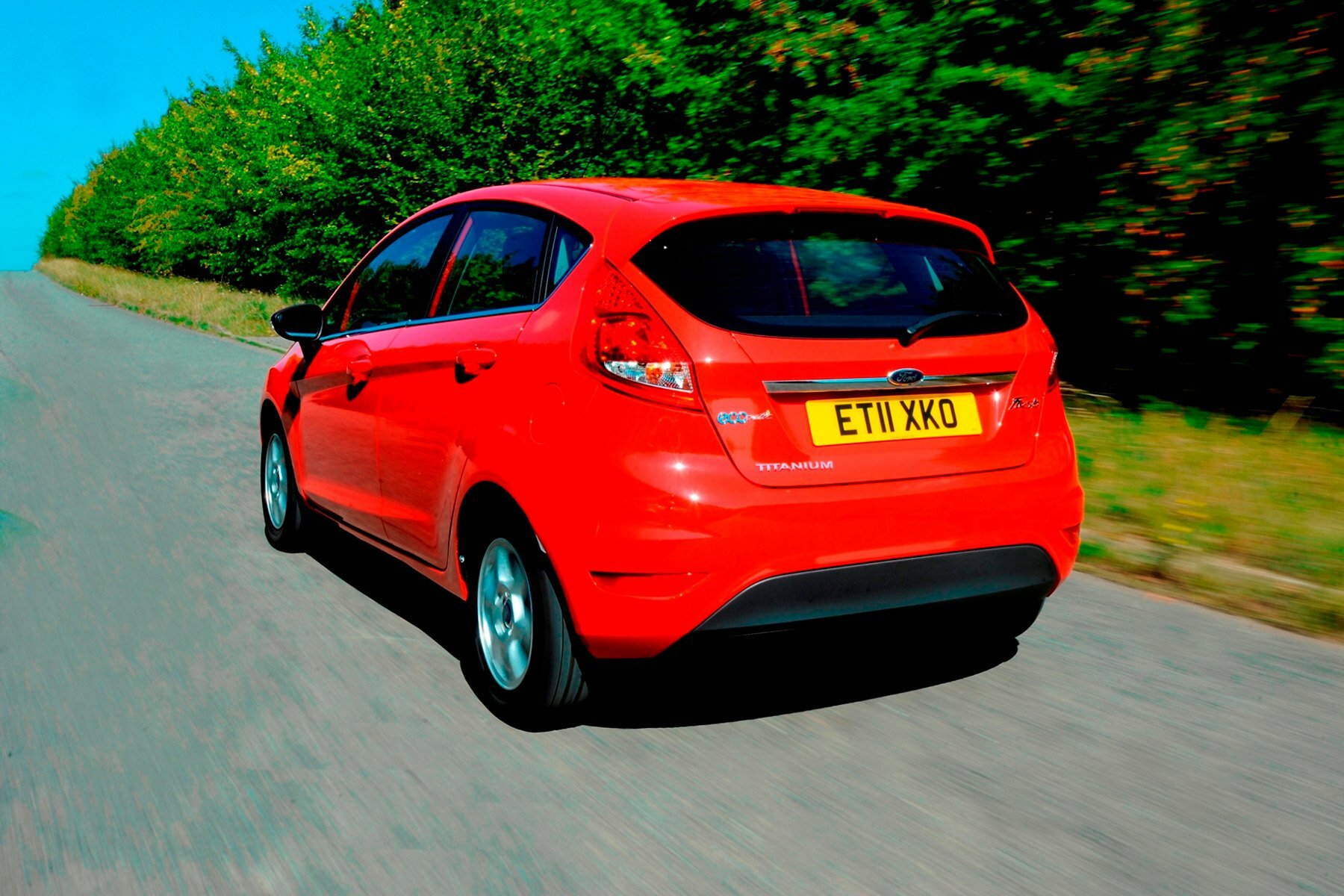
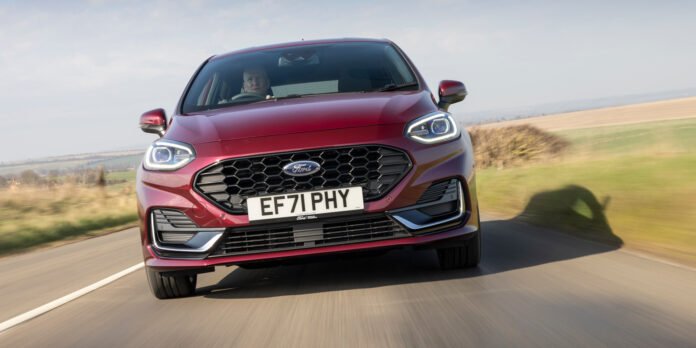
The Ford Fiesta was a small supermini-class hatchback, available in both three- and five-door body styles. This is the former sixth-generation version, which was launched in 2008, facelifted in 2013, and replaced by the current Fiesta iteration in 2017.

Popular with both the media and the public, the previous Fiesta generation received a wide array of excellent review scores, and was the UK’s best-selling car every single year from its launch to its retirement. Its successor model has never managed to match the popularity of this generation.

“It has it all”, Lesley Harris of Auto Express explained, “great looks, amazing driving attributes and a healthy regard for your pocket.” The Fiesta was frequently highlighted for the value-for-money it offered UK buyers, the Carbuyer team adding that it was “easy to park and frugal to run” too.

Most reviewers agreed that the Ford was more fun on the road than key rivals like the Vauxhall Corsa and Volkswagen Polo, but Carwow asserted that the Fiesta struggled to match the infotainment and interior quality standards of such rivals towards the end of its time on sale, citing the car’s “scratchy, cheap-feeling plastics” and “microscopic” screens.

Production ended in 2017 when it was replaced by the seventh-generation model. As of February 2025, the sixth-generation Ford Fiesta holds a Used Car Expert Rating of C, with a score of 64%. It gets good grades for its media reviews, reliability record and running costs, but its safety rating has long expired and is (unsurprisingly) now well behind the latest generation of small cars.

Fiesta highlights

  • Fun to drive
  • Great value-for-money package
  • Low running costs
  • Refined engines

Fiesta lowlights

  • Rivals offered better infotainment
  • Interior became rather dated during its lifespan
  • Not much rear headroom
  • Top-spec engine felt underpowered

Key specifications

Body style: Small hatchback
Engines:
petrol, diesel

Launched: Winter 2008/09
Last updated: Spring 2013
Replaced: Autumn 2017

Media reviews

Highlighted reviews and road tests from across the UK automotive media. Click any of the boxes to view.

Featured reviews

More reviews

Auto Express

Auto Trader

Business Car

Car Keys

Carbuyer

Carwow

Daily Mirror

Evo

Green Car Guide

Heycar

Honest John

Motors

Parkers

The Sun

The Sunday Times

Top Gear

Safety rating

Independent crash test and safety ratings from Euro NCAP

Overall score: 5 stars
Date tested: November 2012
Date expired: January 2019
Read the full Euro NCAP review

Adult protection: 91%
Child protection: 86%
Vulnerable road users: 65%
Safety assist: 71%

Notes on safety rating

The sixth-generation Ford Fiesta was originally crash tested by Euro NCAP upon its launch in 2008, and was awarded a five-star rating.

The facelifted model was tested in 2012 and again awarded a five-star rating against Euro NCAP’s upgraded testing criteria. However, this rating expired in January 2019 and is no longer valid as the car no longer met the standards required for such a rating. This is normal practice, as Euro NCAP reviews its ratings on most cars annually and most ratings expire after about six or seven years.

However, if you are comparing a used Ford Fiesta to vehicles of similar age, whose ratings will have probably also expired, its safety rating score is still useful.

Eco rating

Independent economy and emissions ratings from Green NCAP

No eco rating

The sixth-generation Ford Fiesta was not lab tested by Green NCAP as its entire production life pre-dated the launch of Green NCAP in 2018.

Reliability rating

MotorEasy logo 600x167

Reliability data provided exclusively for The Car Expert by MotorEasy

All data based on MotorEasy average workshop costs for extended car warranty claims

As of April 2025 (our most recent data point), the Ford Fiesta has a reliability score of 80%, which is better than average. This applies to all Fiesta models in MotorEasy’s database, which includes this model as well as newer (2017 onwards) and older (pre-2008) generations.

The most common Fiesta warranty claims relate to suspension issues, but these are relatively inexpensive to fix on average, costing less than £200. Engine and gearbox repairs are the most expensive claims, with an average repair bill of around £1,000 and £950 respectively.

The average repair cost for Ford Fiesta warranty claims is just over £400, which is not bad but still more than the cost of a used car warranty, so it’s certainly worth considering. If you’re looking at a used Fiesta, make sure any extended warranty cover you purchase covers all of the potential problem areas shown above.

Awards

Significant UK trophies and awards that the Ford Fiesta has received.

2015

  • AM Awards Used Car of the Year
  • BusinessCar Awards – Best Mainstream Supermini

2014

  • Auto Express Awards – Best Supermini
  • The Telegraph Motoring Awards – Car of the Year

2013

  • Women’s World Car of the Year

2012

  • CAP Awards – Used Car of the Year
  • Carbuyer Awards – Best Small Car
  • Diesel Car Magazine AwardsUsed Car of the Year
  • Women’s World Car of the Year

2011

  • Auto Express Awards – Best Supermini

2009

  • Auto Express Awards – Best Supermini + Car of the Year
  • Red Dot Design Award

Similar cars

If you’re looking at the Ford Fiesta, you might also be interested in these alternatives.

Alfa Romeo Mito | Audi A1 | Citroën C3 | Dacia Sandero | Honda Jazz | Hyundai i20 | Kia Rio | Mazda 2 | MG 3 | Mini hatch | Mitsubishi Mirage | Nissan Micra | Peugeot 208 | Renault Clio | SEAT Ibiza | Skoda Fabia | Suzuki Swift | Toyota Yaris | Vauxhall Corsa | Volkswagen Polo

More news, reviews and information about the Ford Fiesta at The Car Expert

Everything you need to know about Ford

Everything you need to know about Ford

Ford Fiesta ST (2013 to 2017)

Ford Fiesta ST (2013 to 2017)

Best small cars of 2022

Best small cars of 2022

Last days of the dinosaurs: the best petrol cars under £25K

Last days of the dinosaurs: the best petrol cars under £25K

Ford Fiesta ST (2018 to 2023)

Ford Fiesta ST (2018 to 2023)

Ford Fiesta to be killed off next summer

Ford Fiesta to be killed off next summer

Ford Fiesta – what went wrong?

Ford Fiesta – what went wrong?

Ford stops taking orders for Fiesta and Focus

Ford stops taking orders for Fiesta and Focus

Ford Fiesta (2017 to 2023)

Ford Fiesta (2017 to 2023)

Best small cars of 2021

Best small cars of 2021

Ford Fiesta set for a 2022 facelift

Ford Fiesta set for a 2022 facelift

Britain’s best-selling cars, August 2021

Britain’s best-selling cars, August 2021

Buy a used Ford Fiesta

If you’re looking to buy a Ford Fiesta, The Car Expert’s partners can help you find the right car.

Motors 600x300

Search less, live more. We make finding the right car simple. Find out more

Auto Trader logo 600x300

Search for your next new or used car with Auto Trader. Find out more

Carwow logo 600x300

Discover great deals available on both new and used cars. Find out more

Volkswagen Polo GTI

Summary

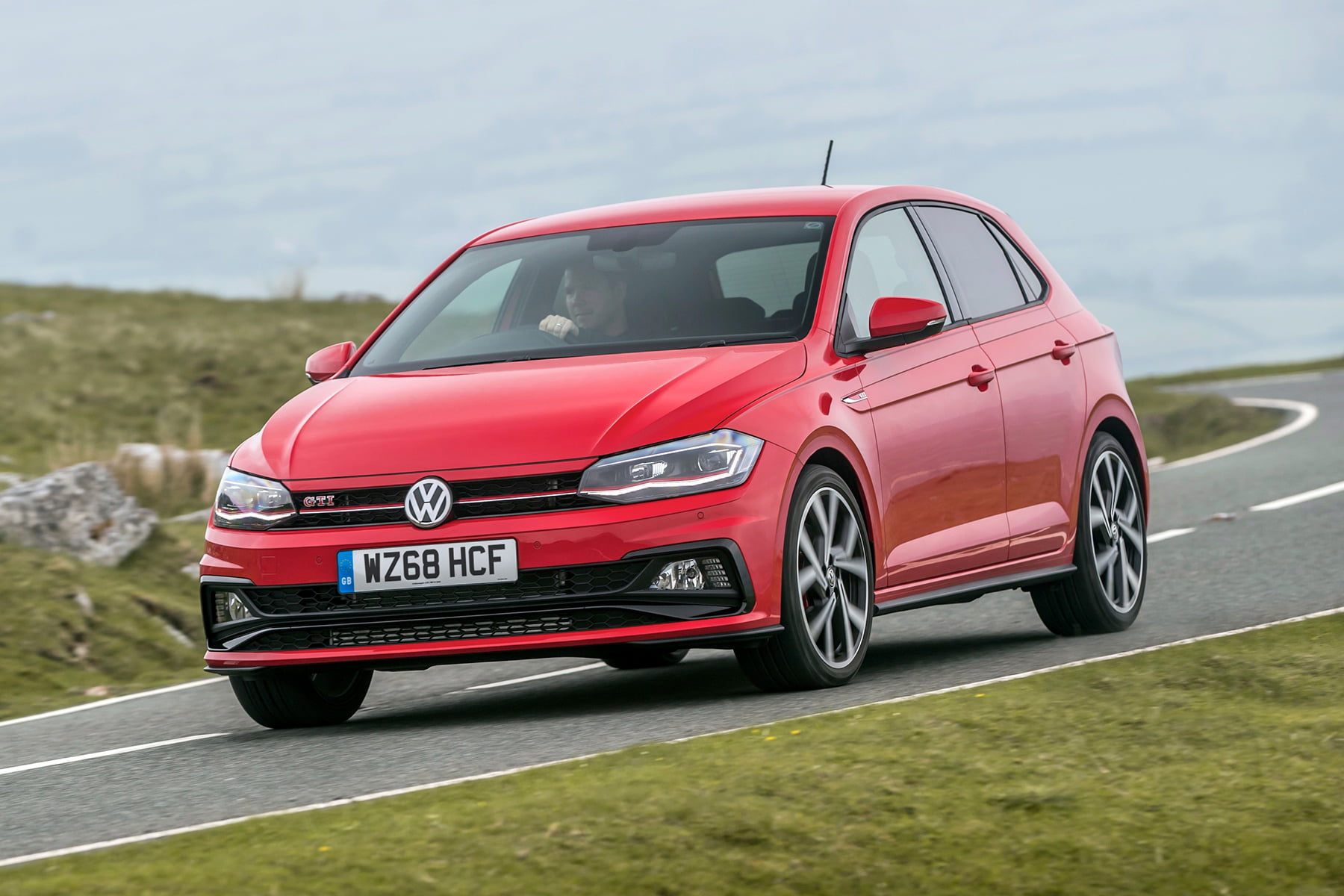
Now in its sixth generation, the Volkswagen Polo GTI is the performance model at the top of the popular Polo range, which sits between the Up! GTI and Golf GTI in Volkswagen’s GTI line-up.

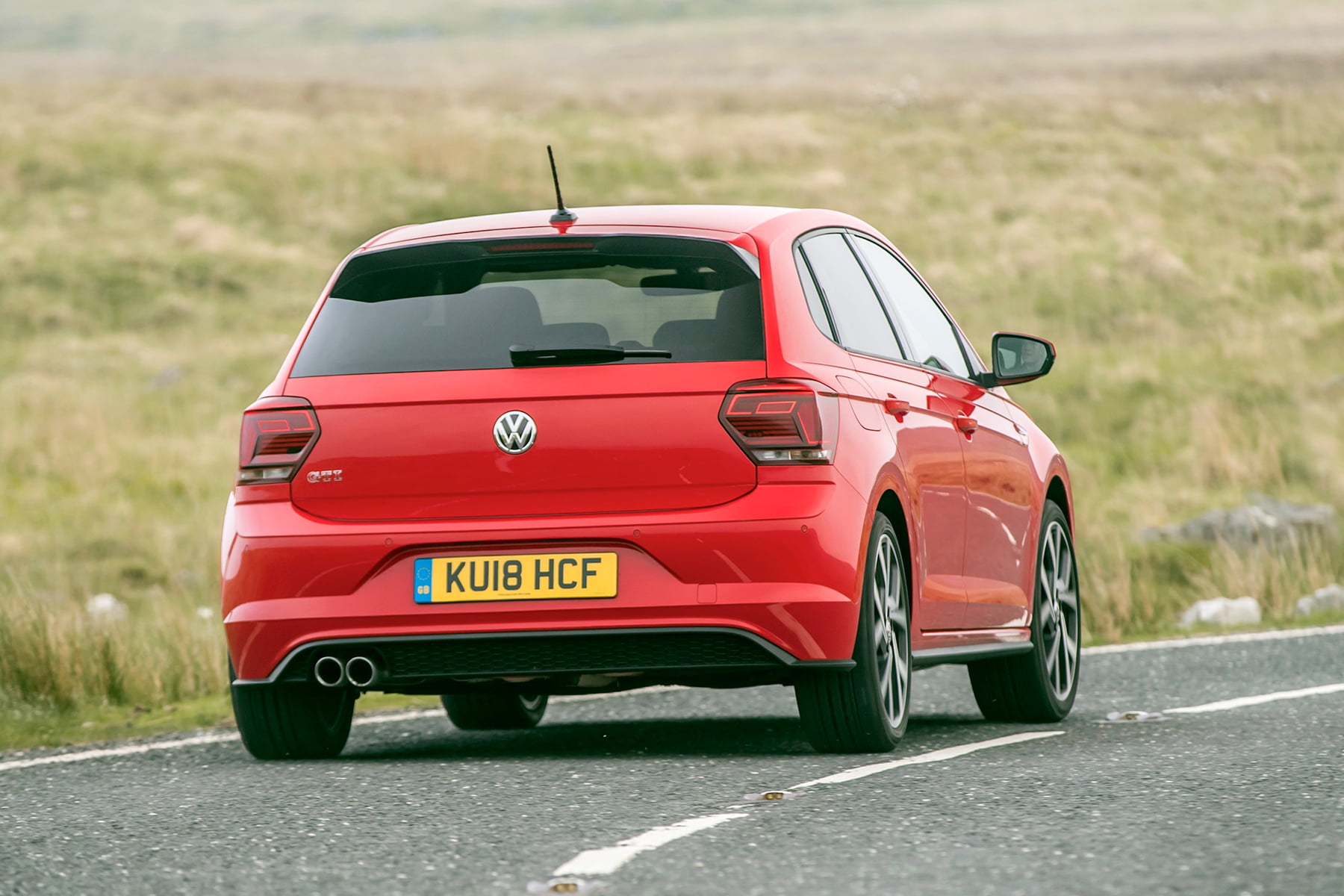
The Polo GTI differentiates itself from the regular Polo range by donning its signature GTI flair, including additional badges, sportier bumpers, and a small roof spolier. Inside, the Polo GTI has the equipment levels of the standard Polo Life trim, and a thatched seat design unique to the GTI family.

Under the hood, Volkswagen swapped out the regular Polo’s turbocharged 1.0-litre engine for a turbocharged 2.0-litre unit, similar to the engine found in a Mk6 Golf GTI. Only available as a seven-speed automatic, the Polo GTI produces 197hp, allowing it to get from 0-60mph in 6.7 seconds; almost four seconds faster than the regular 94hp model.

A facelift for the whole Polo range arrived in 2022, giving the Polo GTI an exterior design refresh and a few new tech editions ported from the Mk8 Golf.

Facing off against other small hot hatches like the Ford Fiesta ST and Hyundai i20 N, reviewers from the UK media generally agree that the Volkswagen Polo GTI is a strong competitor in its class; the hot hatch’s nippy performance, great build quality and good road manners recieving particular praise.

However, many reviews conclude that the Polo GTI’s sensible nature is also its downfall. “This is as good as a fast Polo has been in living memory”, Top Gear comments, “and super close to the bigger Golf. But it’s not entirely free from the reputation that’s dogged it for generations – that it’s simply too grown up for a hot hatch of this size.”

Honest John agree that the Polo GTI is not the best choice if you are looking for pure driving fun, but that it has its own charms that make it an attractive purchase on its own terms. “The Fiesta ST remains the default choice if you’re after a fun size hot hatchback, but the mature Polo GTI has a slow-burner appeal that you’ll grow to love.”

As of February 2026, the Volkswagen Polo GTI holds a New Car Expert Rating of C with a score of 61%. It gets good grades for its safety score and reliability record, but the rest of its grades are average to poor.

Polo GTI highlights

  • Capable all-rounder
  • Fastest Polo GTI ever
  • Practical interior almost as big as the Golf
  • Quality infotainment system

Polo GTI lowlights

  • More mischievous hot hatches are better fun
  • More rigid ride quality than the regular Polo
  • Pricy compared to rivals
  • Rather high running costs

Key specifications

Body style: Small five-door hot hatch
Engines: petrol
Price: From £28,065 on-road

Launched: Winter 2017/18
Last updated: Spring 2022
Next Update due: TBA

Media reviews

Reviews, road test and comparisons from across the UK automotive media. Click any of the boxes to view.

Auto Express

Car

Carbuyer

Carwow

Evo

Fleetworld

Heycar

Honest John

Motoring Research

Parkers

The Sunday Times

The Telegraph

Top Gear

Safety rating

Independent crash test and safety ratings from Euro NCAP

Overall score: 5 stars
Date tested: March 2022
Read the full Euro NCAP review

Adult protection: 94%
Child protection: 80%
Vulnerable road users: 70%
Safety assist: 70%

Notes on safety rating

The Volkswagen Polo GTI shares its Euro NCAP rating with the regular Polo range. The Polo was originally tested by Euro NCAP not long after it was launched in 2017 and was awarded a five-star rating.

The facelifted 2021 Polo was re-tested, which saw it awarded a fresh five-star rating in Euro NCAP’s tougher new tests in March 2022. This rating will apply to the facelifted Polo GTI when it arrives in the UK.

Eco rating

Independent economy and emissions ratings from Green NCAP

No eco rating

As of February 2026, the Volkswagen Polo GTI has not been lab tested by Green NCAP.

Reliability rating

Reliability data provided exclusively for The Car Expert by MotorEasy

All data based on MotorEasy average workshop costs for extended car warranty claims

The Volkswagen Polo range (including the GTI) has a good reliability score, according to exclusive extended warranty data provided to The Car Expert by our partner MotorEasy. This covers both the current-generation Polo range and previous models.

There are two main areas of concern for the Polo – its engine and suspension. Engine repairs can be expensive, with an average repair cost of around £800, while suspension faults usually cost around £300. Also of note are a few gearbox problems, for which the average repair bill was more than £1,400.

If you’re looking at buying a used Volkswagen Polo GTI, make sure any extended warranty you purchase covers all of these potential problem areas.

Running cost rating

Clear Vehicle Data logo close crop

Monthly cost of ownership data provided exclusively for The Car Expert by Clear Vehicle Data

Fuel consumptionAverageScore
Petrol models43 mpgC
CO₂ outputAverageScoreVariationScore
Petrol models154 g/kmC
Insurance groupAverageScoreVariationScore
All models25B
Service and maintenanceCostScore
Year 1£192B
Year 2£515B
Year 3£877C
Year 4£1,121C
Year 5£1,482C
Overall£4,187C

The Volkswagen Polo GTI is a relatively affordable car to own and run, according to whole-life cost numbers provided exclusively to The Car Expert by our data partner, Clear Vehicle Data.

While there are more economical models in this hot hatch class – like the Hyundai i20 N – the Polo is still one of the more economical performance cars on the market, with fuel economy that sits around the market average.

The car’s insurance premiums are on the affordable side too, and servicing and maintenance costs over the course of five years should be very good too.

Similar cars

If you’re looking at the Volkswagen Polo GTI, you might also be interested in these alternatives

Ford Fiesta ST Hyundai i20 N | Mini Hatch John Cooper Works | Renault Megane RS | Suzuki Swift SportToyota GR Yaris | Volkswagen Up GTI

More news, reviews and information about the Volkswagen Polo GTI at The Car Expert

Everything you need to know about Volkswagen

Everything you need to know about Volkswagen

Limited-run Volkswagen Polo GTI Edition 25 on sale in August

Limited-run Volkswagen Polo GTI Edition 25 on sale in August

Updated Volkswagen Polo GTI goes on sale

Updated Volkswagen Polo GTI goes on sale

Buy a Volkswagen Polo GTI

If you’re looking to buy a new or used Volkswagen Polo GTI, The Car Expert’s partners can help you find the right car

Motors 600x300

Find your next used car with Motors. Find out more

Auto Trader logo 600x300

Find your next new or used car with Auto Trader. Find out more

Carwow logo 600x300

Find your next new or used car with Carwow. Find out more

Lease a Volkswagen Polo GTI

If you’re looking to lease a new Volkswagen Polo GTI, The Car Expert’s partners can help you find a competitive deal

Leasing-com logo

Personal contract hire deals from Leasing.com. Find out more

Carwow logo 600x300

Personal contract hire deals from Carwow. Find out more

Select Car Leasing logo

Personal contract hire deals from Select Car Leasing. Find out more

Subscribe to a Volkswagen Polo GTI

If you’re interested in a car subscription, The Car Expert’s partners can help (PS: What’s a car subscription?)

Cocoon Vehicles logo 600x300

Car subscriptions from Cocoon.
Find out more

Just Vehicle Solutions logo 600x300

Car subscriptions from Just Vehicle Solutions.
Find out more

Flexible Vehicle Contracts logo 600x300px

Car subscriptions from Flexible Vehicle Contracts.
Find out more

Morgan updates Plus Four and Plus Six Roadsters

0

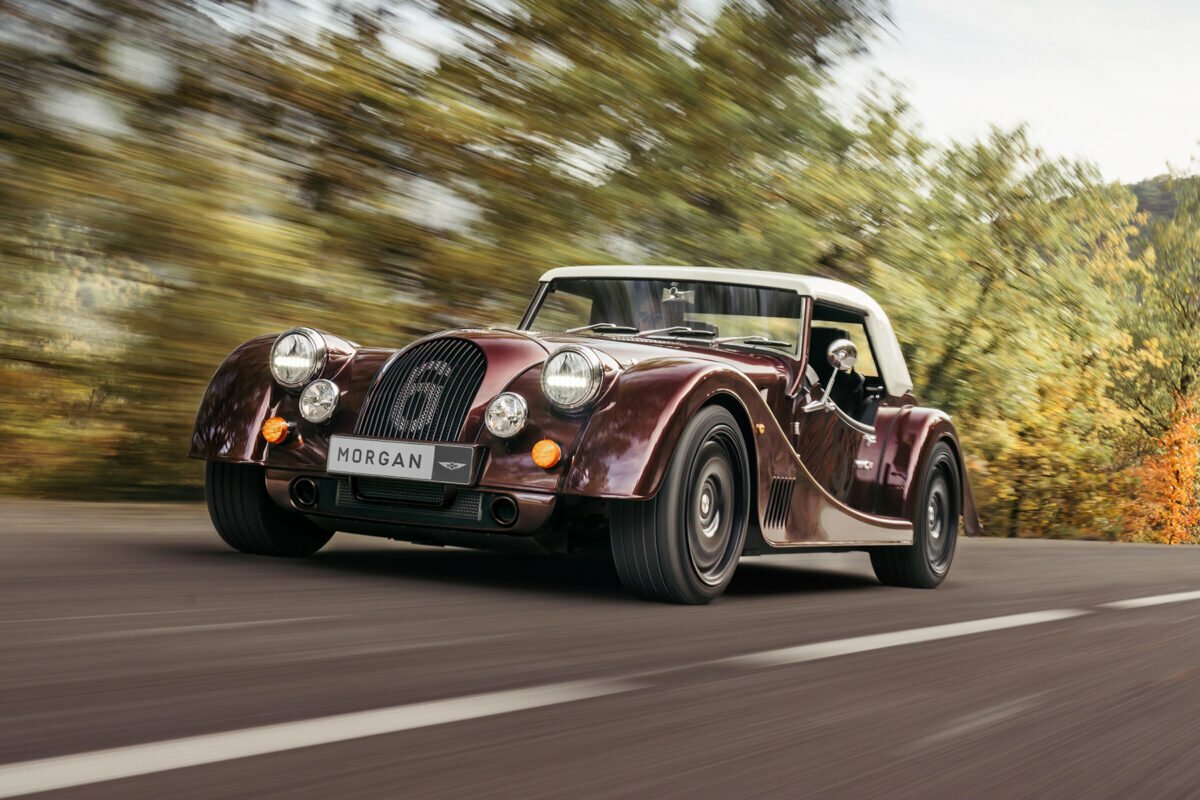
The Morgan Motor Company has announced that it will be updating its Plus Four and Plus Six roadster models from January 2023. Facelifted models gain a few interior changes, additional trim options and technical enhancements such as electronic stability control and a newly-developed braking system.

On sale since 2020 and 2019 respectively, the current-generation Morgan Plus Four and Plus Six are very similar roadster models, differentiated by the size of engine they carry and a few cosmetic contrasts. While the cheaper Plus Four is powered by a 255hp four-cylinder engine, the more powerful Plus Six makes use of a 340hp V6 – both engines sourced from BMW.

As we inch towards 2023, these luxury British sports cars are now set for a another facelift in the new year. Morgan says that the headline changes are found in the interior, including minor dashboard changes, a new LCD information display screen and further personalisation options.

The traditional dials and button controls on the centre of the re-shaped aluminium dashboard remain, but Morgan has added a glovebox on the passenger side, which houses USB ports for phone charging. Post-facelift models came with an LCD information screen behind the steering wheel, but Morgan says that it has increased the size and resolution of this screen “to improve usability for drivers.”

The launch models’ black dashboard inserts have been dropped in favour of a single-tone colour scheme, and the manufacturer has added additional centre console veneer choices to the options list. The steering wheel is now available with a satin polished centre section, and customers can spec their model with a detachable cup holder for the first time, for an additional fee.

The headrests of the leather seats are now slimmer, and Morgan adds that it has installed new stainless steel “bolt-action” door handles, also trimmed in leather. Customers who select the optional four-speaker Sennheiser sound system also gain ‘Sennheiser’-branded speaker grilles on the door panels finished in satin.

Moving on to technical upgrades, Morgan Plus Four and Plus Six models will come with electronic stability control (ESC) from next year. This tech, which is already a mandatory feature on mainstream European cars, automatically applies the brakes to help steer the vehicle when it detects a loss of steering control of road traction.

Morgan has also fitted an improved “high-performance” braking system, some suspension upgrades, and has used its partnership with BMW (who also supply Morgan’s manual and automatic gearboxes) to introduce driving mode options for Plus Four and Plus Six.

The driver will be able to choose between ‘Normal’, ‘Sport’ and ‘Sport+’ driving modes. On automatic models, a hill detection feature will select a lower gear without prompt so that the car can tackle steep inclines.

Finally, these facelifted Morgan models now come with airbags – a pretty basic safety feature that was not available across Morgan’s roadster range before the update.

That is all we know so far – Morgan will release more information, including the UK pricing of these new models, in the coming months.

The Morgan Plus Six is covered in our Expert Rating Index, and currently holds an Expert Rating of 80%. The roadster has received glowing reviews due to its potential as a weekend track toy, but media outlets comment that it is very expensive, and other upmarket sports cars are more practical.

Looking for a Morgan? The Car Expert’s partners can help

Motors 600x300

Search less, live more. We make finding the right car simple. Find out more

The UK’s automotive search engine. All the cars in one place. Find out more

Volvo unveils all-electric EX90 SUV

0

Volvo has unveiled the EX90 SUV, which is set to be the brand’s largest all-electric model, offering 517hp and a promised maximum battery range of 373 miles.

The brand-new SUV is the long-awaited replacement for the combustion-powered and plug-in hybrid XC90 seven-seater that has been on sale in the UK since 2015, but XC90 owners interested in taking its battery-powered successor for a test drive will have to wait a little longer – the EX90 is set to enter production late next year, before its official UK arrival in 2024.

Sharing its foundations with the recently revealed Polestar 3 SUV, the EX90’s design gives us a good indication of how Volvo plans to style its electric models in the future. Compared with Volvo’s current range, the most notable difference is the absence of a front grille. Instead, the SUV’s front fascia consists of subtly redesigned branding that sits between new “Thor hammer” headlights.

Daytime running lights mirror the pixel pattern design of the headlights, and an oval-shaped air intake finished in black takes up most of the front bumper. Pixel pattern lights also feature either side of the rear window, which sit above C-shaped tail lights that extend on to the boot lid.

The range will launch with a single all-wheel drive drivetrain option, which is powered by a large 111kWh battery that works in tandem with two electric motors to produce 517hp and an official battery range of 373 miles. A cheaper 408hp dual-motor variant will reportedly arrive at a later date. Both models will have their speed capped at 112mph.

Volvo adds that the EX90 will be able to charge from 10% to 80% battery capacity in under 30 minutes, and that it is the brand’s first car with bi-directional charging, allowing the owner to use the car’s battery as an extra energy supply that can power other electronic devices, including other electric cars.

The manufacturer claims that the EX90 is its safest car to date, and refers to the SUV as “a highly advanced computer on wheels”. The car is fitted with Volvo’s latest camera and sensor technology that can detect objects hundred of metres down the road, which feeds information to the 15-inch google-based ‘Snapdragon’ infotainment system that relays driving details to the cabin using Unreal Engine 5 graphics – software usually reserved for realistic video games.

The infotainment console is compatible with both Android Auto and Apple CarPlay, and 5G connectivity comes as standard. The EX90 is fitted with a 25-speaker Dolby Atmos sound system, and can be locked or unlocked remotely using a smartphone app, though this feature will require a digital services subscription.

Safety features include a ‘pilot assist’ function that can take control of the steering while changing lanes, and Volvo claims that the EX90 has the sufficient hardware to enable autonomous driving in the future. Like some models in its current range, Volvo will be able to update the SUV as and when it likes using over-the-air updates during its lifespan – the car will be able to download new features remotely while sitting on your driveway.

That sums up what Volvo has announced so far – more EX90 details will be released next year when the SUV goes into production.

Cupra adds another engine to Leon range

0

Cupra has expanded the range of engine options in its performance-enhanced Leon range by introducing a mid-range 190hp 2.0-litre petrol engine for both hatchback and estate models, and adding the entry-level 150hp engine to the estate line-up.

This is the second time in three months that Cupra has revised the engine options in its Leon range, after the introduction of the entry-level 1.5-litre petrol engine in September.

The arrival of this additional engine means that there are now five engine options in the Leon line-up, ranging from the entry-level 150hp 1.5-litre unit, up to the range-topping 245hp ‘e-Hybrid’ plug-in hybrid.

In a somewhat confusing fashion, Cupra already sold two different 2.0-litre Leon petrol engine options before the update – a 245hp version and a more powerful 300hp variant. The brand says that this new 190hp engine, which is only available with an automatic gearbox, has been added to give UK buyers more choice, and to make the range more affordable.

When in hatchback guise, this 190hp Leon can complete a 0-62mph sprint in 7.2 seconds, and Cupra estimates that it has a fuel consumption of around 41mpg.

Previously only available with the hatchback body style, the entry-level 1.5-litre petrol engine is also now available in the Leon Estate range too. The manufacturer says that this estate model will be available with either a manual or automatic gearbox, but at the time of writing only seven-speed automatic versions are currently available on the Cupra website.

Prices for the new 190hp 2.0-litre engine versions of the hatchback start at just north of £33k, while estate versions of this engine spec start at over £34k. The introduction of the 1.5-litre engine option to the estate range means that the Leon Estate is now priced at around £30k – the £38k e-Hybrid model was the cheapest you could get before the update.

The Cupra Leon is regarded by the UK media as a practical all-rounder with great straight-line speed and alluring exterior styling. It currently holds an Expert Rating of 74%.

Looking for a Cupra Leon? The Car Expert’s partners can help

Carwow logo 600x300

Discover great deals available on both new and used cars. Find out more

Auto Trader logo 600x300

Search for your next new or used car with Auto Trader. Find out more

The UK’s automotive search engine. All the cars in one place. Find out more

Motorpoint logo 600x300

Finding your next car is easy at Motorpoint. Find out more

Carparison 600x300

Personal contract hire deals from Carparison Leasing. Find out more

Hippo Leasing 600x300

Personal contract hire deals from Hippo Leasing. Find out more

Moneyshake logo 600x300

Personal contract hire deals from Moneyshake. Find out more

LeaseLoco logo 600x300

Personal contract hire deals from LeaseLoco. Find out more

Ready2Lease logo

Personal contract hire deals from Ready2Lease. Find out more

Rivervale Leasing logo 2022

Personal contract hire deals from Rivervale Leasing. Find out more

Citroën ups electric range of C5 X and C5 Aircross

0

Citroën has rolled out a small update for its plug-in hybrid C5 X and C5 Aircross models that boosts their all-electric battery range.

Starting with the large C5 X liftback that launched this year, Citroën has increased the car’s battery capacity from 13kWh to 14kWh, which the brand says reduces emissions, and ups the plug-in hybrid’s electric-only range to 39 miles – five miles more than the car could muster at launch.

The C5 Aircross has also had its all-electric range increased to 41 miles on a single charge, which the manufacturer says lowers the car’s tax band. Citroën says that both models can be fully charged in less than two hours with a 7kW charger.

Please note that this is not an over-the-air update. These battery improvements are now available with new models – UK buyers already driving a C5 X or C5 Aircross will not be impacted by these changes.

The updated plug-in hybrid C5 X is now on sale for around £37k, while entry-level electrified versions of the C5 Aircross now priced at £36k.

The Citroën C5 X has been on sale since January, and has received a wide range of positive review scores from the UK motoring media – praised for its refined and spacious interior, as well as its attractive styling. It currently holds an Expert Rating of 74%.

The taller C5 Aircross has received similar commendations, highlighted for its well-built interior, as well as its quiet driving experience. The SUV currently holds an Expert Rating of 70%.

Looking for a Citroën C5 X? The Car Expert’s partners can help

Carwow logo 600x300

Discover great deals available on both new and used cars. Find out more

Auto Trader logo 600x300

Search for your next new or used car with Auto Trader. Find out more

Carparison 600x300

Personal contract hire deals from Carparison Leasing. Find out more

Hippo Leasing 600x300

Personal contract hire deals from Hippo Leasing. Find out more

Moneyshake logo 600x300

Personal contract hire deals from Moneyshake. Find out more

LeaseLoco logo 600x300

Personal contract hire deals from LeaseLoco. Find out more

Ready2Lease logo

Personal contract hire deals from Ready2Lease. Find out more

Rivervale Leasing logo 2022

Personal contract hire deals from Rivervale Leasing. Find out more

Lexus UX gets infotainment and battery upgrades

0

Lexus has updated its UX range, installing a touchscreen infotainment system, further safety assistance features, a battery upgrade and introducing an additional range-topping trim grade, in order to keep the compact SUV competitive with key rivals like the Kia Niro and Volvo XC40.

The update impacts both hybrid ‘250h’ and all-electric ‘300e’ models, but only the latter receives a powertrain upgrade. The UX Electric’s 58kWh battery pack has been tweaked to now produce 73kWh, and although the car’s 204hp output remains the same, Lexus says that the SUV can now muster 280 miles of travel on a full charge, up from 196 miles before the update.

Lexus adds that it has tuned the steering and suspension settings of the ‘300e’ to improve the car’s driving dynamics, and says that it is working on improving the SUV’s sound insulation to make things a little quieter in the cabin. An additional ‘Sonic Platinum’ exterior colour has also been added to the options list.

The update does not include any styling changes for standard models, but does include the introduction of a new range-topping ‘F Sport Design’ trim for the hybrid ‘250h’ range – not to be confused with the ‘F Sport’ line already on sale. This trim comes with a jet black front grille, roof and rear spoiler, as well as several exterior chrome accents and the Lexus ‘F’ badging. The model sits on bigger 18-inch alloy wheels with a unique 10-spoke pattern.

Stepping inside, the most notable difference sits front and centre on the dashboard. Lexus has swapped out the UX’s trackpad control infotainment for a touchscreen, which the brand says sits a little further forward on the dash than the previous system to make it easier for the driver to use.

Both eight-inch and twelve-inch screens are available depending on the trim you select. Lexus claims that this touchscreen system has “crisper graphics” and is more responsive than the old system.

It is compatible with Android Auto (wired) and Apple CarPlay (wireless), and comes with cloud-based navigation and a voice assistant that can provide fuel prices and other driving information when asked. The driver can also use a smartphone app to lock or unlock the doors or operate the air conditioning system remotely.

A small storage cubby is now installed where the trackpad used to be on the centre console – if you opt for higher spec models this cubby will be replaced by controls for the heated seats.

Elsewhere in the cabin, an additional ‘hazel’ colour option for the upholstery is available, and Lexus says it has tweaked how the electronically-powered boot lid operates, opting for a “more gentle movement during the initial and final moments of opening and closing.”

Finally, Lexus has added to the SUV’s suite of safety assistance features, including an emergency steering feature that can automatically adjust the car’s steering to avoid obstacles, and a ‘curve speed reduction’ upgrade for the cruise control which automatically adjusts speed when an upcoming curve in the road is detected.

The updated ‘300e’ will be available to order in the UK in the second half of 2023 – pricing for this all-electric model is unconfirmed at the moment. The latest ‘250h’ range is available to order now, with prices starting at just south of £35k.

This update is likely to improve the Expert Ratings of the Lexus UX Hybrid and UX Electric, which have both received widespread criticism regarding their trackpad infotainment. The hybrid model currently holds an Expert Rating of 63%, while the electric version holds an Expert Rating of 55%.

Looking for a Lexus UX? The Car Expert’s partners can help

Carwow logo 600x300

Discover great deals available on both new and used cars. Find out more

Auto Trader logo 600x300

Search for your next new or used car with Auto Trader. Find out more

Cazoo 600x300

Buy a car online from your sofa.
We’ll deliver it. Find out more

Motors 600x300

Search less, live more. We make finding the right car simple. Find out more

Carparison 600x300

Personal contract hire deals from Carparison Leasing. Find out more

Rivervale Leasing 600x300

Personal contract hire deals from Rivervale Leasing. Find out more

Hippo Leasing 600x300

Personal contract hire deals from Hippo Leasing. Find out more

Leasing dot com 600x300

Personal contract hire deals from Leasing.com. Find out more

Renault Mégane E-Tech

Summary

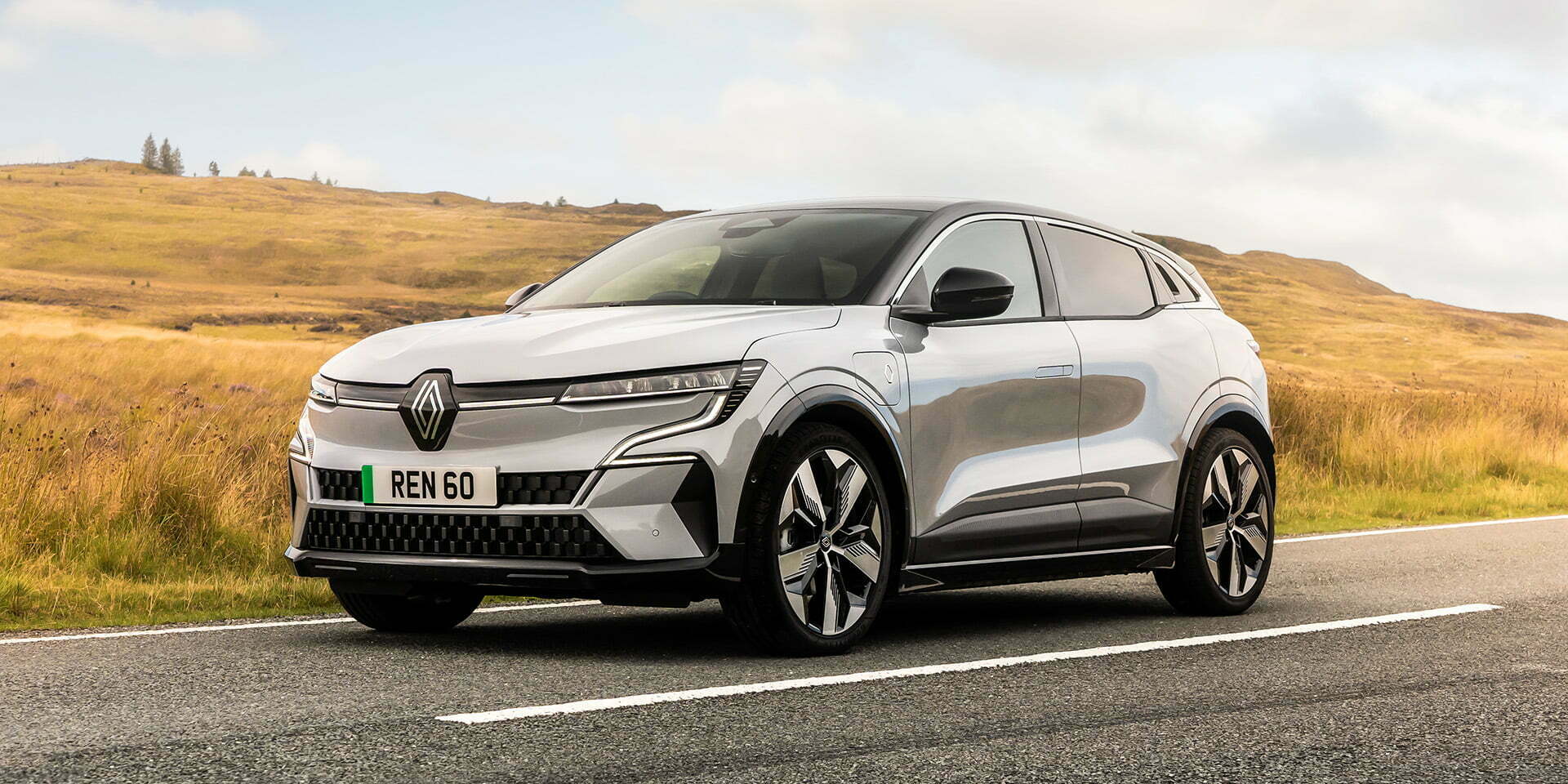
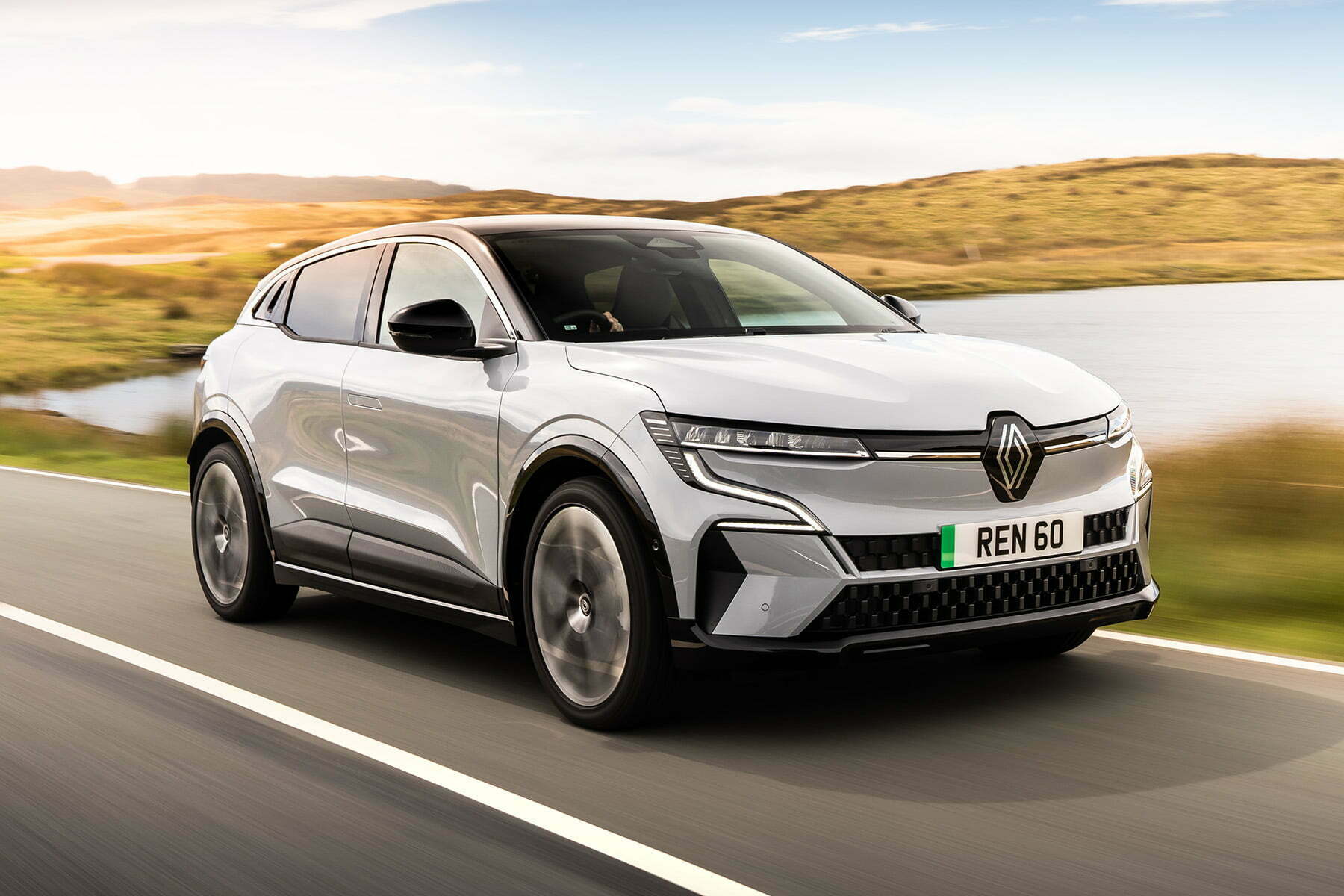
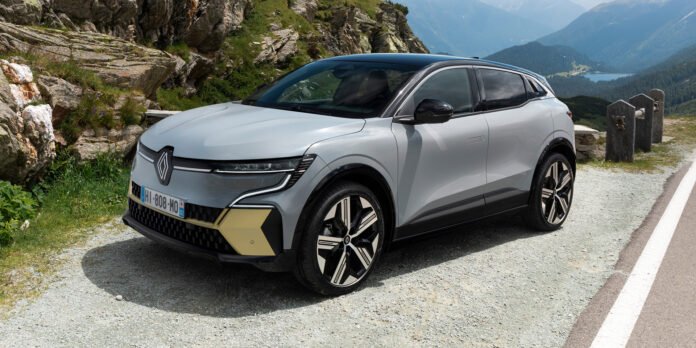
The Renault Mégane E-Tech is an electric (EV) crossover-style hatchback, which the company claims is the lightest medium-sized electric car on the market. It arrived in the UK at the end of 2022.

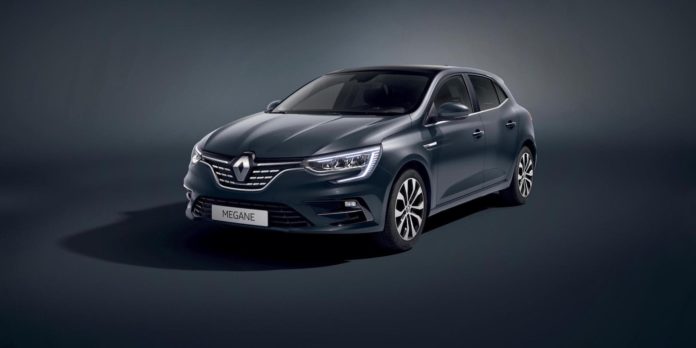
The Mégane E-Tech replaces the traditional Mégane hatchback and estate model in the Renault line-up. Although it shares the same name, the new EV carries basically nothing over from the previous petrol-powered Mégane. With its bulkier exterior styling and raised ground clearance, it is more comparable to the Kadjar SUV/crossover.

Using a 60kWh battery to produce 220hp and a promised battery range of 280 miles, it has been well received by the British motoring media so far, commended for its ride comfort efficiency, as well as being described as “seriously stylish” by Carwow.

Auto Trader suggests that “it’s a convincing alternative to the likes of the Volkswagen ID.3“, while pointing to the Mégane E-Tech’s competitive battery range and extensive list of on-board tech features, and also mentioning the car’s quiet nature on the road.

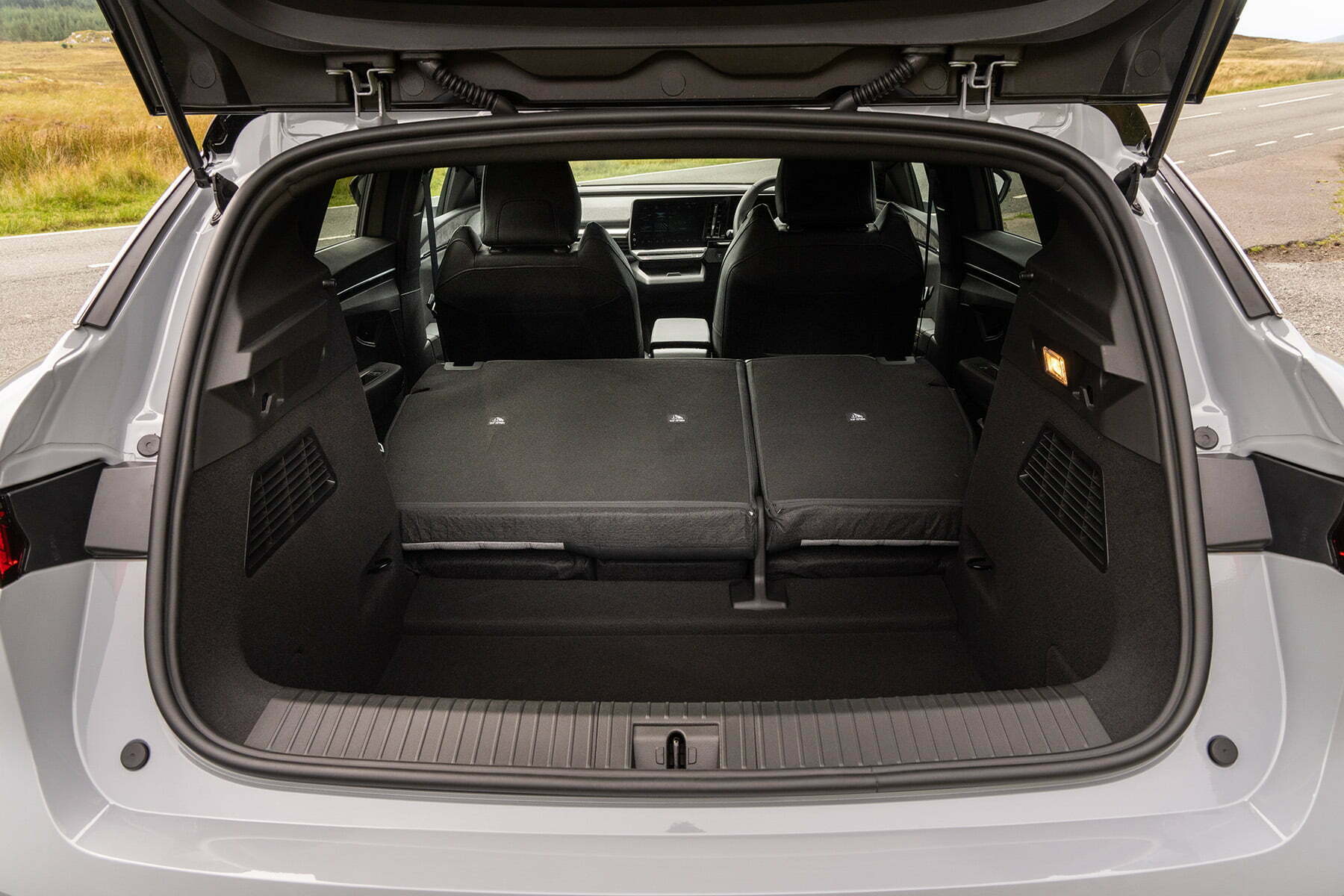
“Its only real weakness is its practicality”, Car Keys explains. Reviewers generally agree that Mégane E-Tech has a relatively short boot that isn’t very convenient, while a few outlets have criticised the electric hatchback for its small rear window that limits rearwards visibility.

As of December 2025, the Renault Mégane E-Tech holds a New Car Expert Rating of A, with a score of 73%. It gets top marks for its low running costs and zero tailpipe emissions, while its safety rating and media scores are also good. However, Renault’s new car warranty coverage is only average.

Mégane E-Tech highlights

  • Stylish inside and out
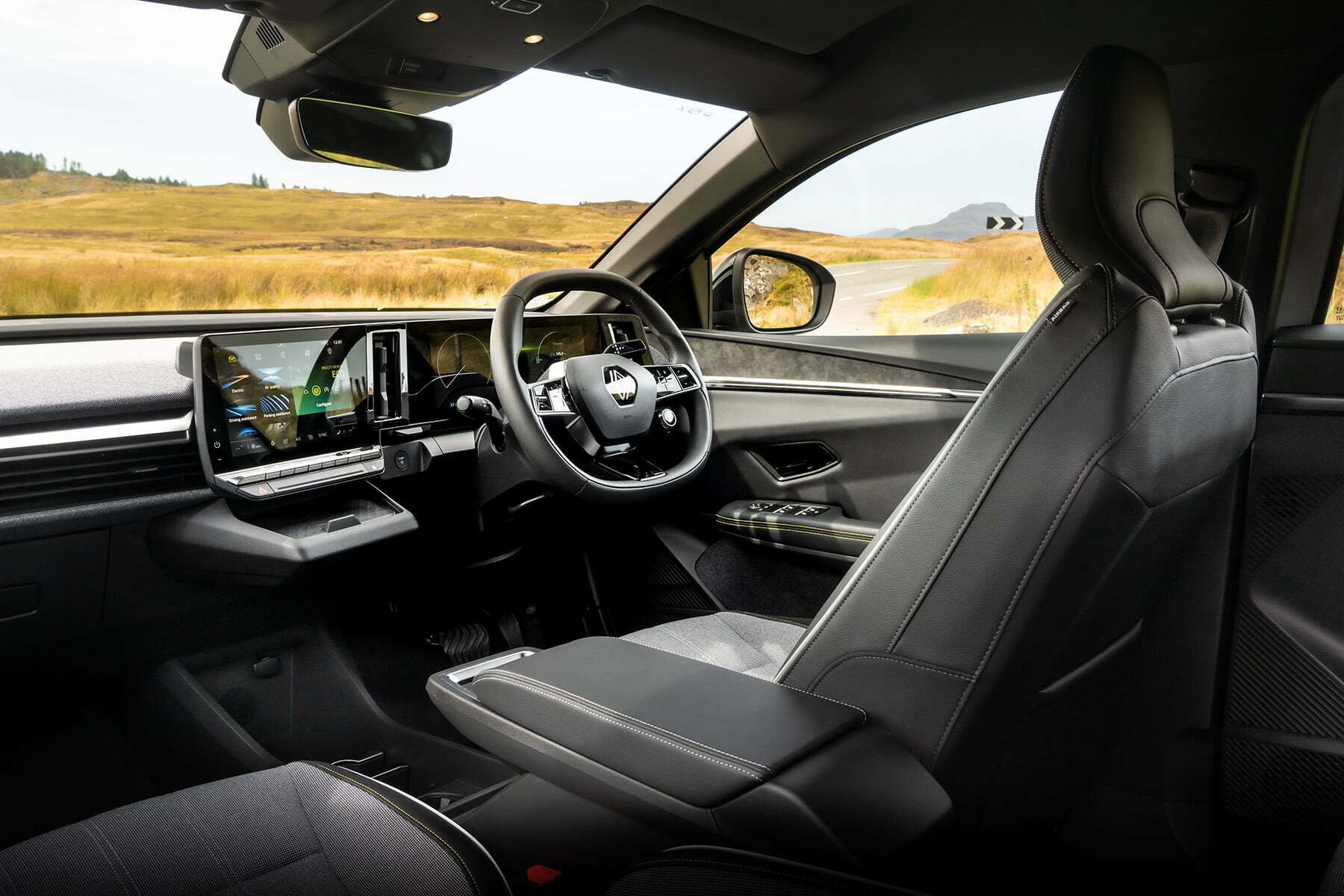
  • Plenty of on-board tech
  • Intuitive infotainment
  • Competitive battery range
  • Comfortable ride

Mégane E-Tech lowlights

  • Boot design is not very practical
  • High boot access
  • Limited rear headroom
  • Poor rear visibility
  • Not all that exciting to drive

Key specifications

Body style: Medium five-door hatchback
Engines:
electric, battery-powered
Price:
From £32,495 on-road

Launched: Summer 2022
Last updated: N/A
Replacement due: TBA

Media reviews

Highlighted reviews and road tests from across the UK automotive media. Click any of the boxes to view.

Featured reviews

More reviews

Auto Express

Auto Trader

Business Car

Car

Car Keys

Carbuyer

Discover EV

Driving Electric

Electrifying.com

Evo

Green Car Guide

Honest John

Motoring Research

Parkers

The Sunday Times

The Telegraph

Top Gear

Which EV?

Safety rating

Independent crash test and safety ratings from Euro NCAP

Overall score: 5 stars
Date tested: March 2022
Read the full Euro NCAP review

Adult protection: 85%
Child protection: 88%
Vulnerable road users: 65%
Safety assist: 79%

Euro NCAP conducted crash tests on the mid-range ‘Techno’ trim of the Renault Mégane E-Tech in Spring 2022- the model achieving a full five-star rating with favourable adult and child occupant protection scores.

However, the test results indicate that the Mégane E-Tech is not the best in its class when it comes to mitigating damage to vulnerable road users in potential crash scenarios.

Eco rating

Independent economy and emissions ratings from Green NCAP

Model tested: EV60 160 kW Electric FWD Automatic

Overall score: 5 stars
Date tested: November 2022
Read the full Green NCAP review

Clean Air Index: 10 / 10
Energy Efficiency Index: 9.4 / 10
Greenhouse Gas Index: 9.6 / 10

Running cost rating

Clear Vehicle Data logo close crop

Monthly cost of ownership data provided exclusively for The Car Expert by Clear Vehicle Data

Battery rangeAverageScoreVariationScore
EV models280 milesB
Electrical efficiencyAverageScoreVariationScore
EV models4.7 m/KWhA
Insurance groupAverageScoreVariationScore
All models26C
Service and maintenanceCostScore
Year 1£261C
Year 2£557C
Year 3£941C
Year 4£1,134C
Year 5£1,558C
Overall£4,451C

The Renault Mégane E-Tech is an affordable car to own and run, according to whole-life cost numbers provided exclusively to The Car Expert by our data partner, Clear Vehicle Data.

The Mégane is very efficient and battery range is good, so you’ll have plenty of charge for all your day-to-day driving needs. Insurance should be competitive and servicing costs are also reasonable, although some EVs are cheaper.

Reliability rating

MotorEasy logo 600x167

Reliability data provided exclusively for The Car Expert by MotorEasy

No reliability rating

As of December 2025, we don’t have enough reliability data on the Renault Mégane E-Tech to generate a reliability rating.

The Car Expert’s reliability information is provided exclusively to us using workshop and extended warranty data from our partner, MotorEasy, sourced from both official dealerships and independent workshops. 

As soon as MotorEasy has sufficient data on the Mégane E-Tech, we’ll publish the results here.

Warranty rating

New car warranty information for the Renault Mégane E-Tech

Overall ratingC50%
New car warranty duration3 years
New car warranty mileage60,000 miles
Battery warranty duration8 years
Battery warranty mileage100,000 miles

Renault’s new car warranty is pretty much the bare minimum offered in the UK, with a duration of three years and a limit of 60,000 miles. Other rivals in the price bracket do better (and in some cases, much better).

In addition to the overall new car warranty, battery components benefit from an additional eight-year/100,000-mile warranty. This is pretty much standard for all new EVs on sale in the UK, but is an extra reassurance that petrol and diesel cars don’t get.

Recalls

Official DVSA safety recalls that have been issued for the Renault Mégane E-Tech

As of December 2025, we are not aware of any DVSA vehicle safety recalls affecting the Renault Mégane. However, this information is updated very regularly so this may have changed.

You can check to see if your car has any outstanding recalls by visiting the DVLA website or contacting your local Renault dealer.

Awards

Trophies, prizes and awards that the Renault Mégane E-Tech has received

2025

  • Company Car & Van Awards – Best Small Car
  • Fleet News Awards – Best Compact Car

2022

  • DrivingElectric Awards – Technology Award
  • Parkers New Car Awards – Best Medium Electric Car
  • Top Gear Awards – Best Electric Hatch + Best Famiily Hatch

Similar cars

If you’re looking at the Renault Mégane E-Tech, you might also be interested in these alternatives

BYD Atto 3 | Citroën ë-C4 | Fiat 600e | Ford ExplorerHyundai Kona Electric | Kia EV4 | Mazda MX-30 | Mercedes-Benz EQA | Mini Aceman | Nissan Leaf | Peugeot e-2008 | Skoda Elroq | Subaru SolterraToyota bZ4X | Volkswagen ID.4

More news, reviews and information about the Renault Mégane E-Tech at The Car Expert

Revised Renault Mégane and Scenic E-Tech trim line-up lowers price

Revised Renault Mégane and Scenic E-Tech trim line-up lowers price

Everything you need to know about Renault

Everything you need to know about Renault

The best new electric cars for every budget 2024

The best new electric cars for every budget 2024

Renault Mégane E-Tech range gains ‘Iconic’ trim

Renault Mégane E-Tech range gains ‘Iconic’ trim

Renault announces UK pricing for Mégane E-Tech

Renault announces UK pricing for Mégane E-Tech

Top safety scores for Lexus, Renault and Volkswagen

Top safety scores for Lexus, Renault and Volkswagen

Renault Megane E-Tech SUV debuts in Munich

Renault Megane E-Tech SUV debuts in Munich

Renault Megane Sport Tourer E-Tech test drive

Renault Megane Sport Tourer E-Tech test drive

Renault Mégane (2016 to 2022)

Renault Mégane (2016 to 2022)

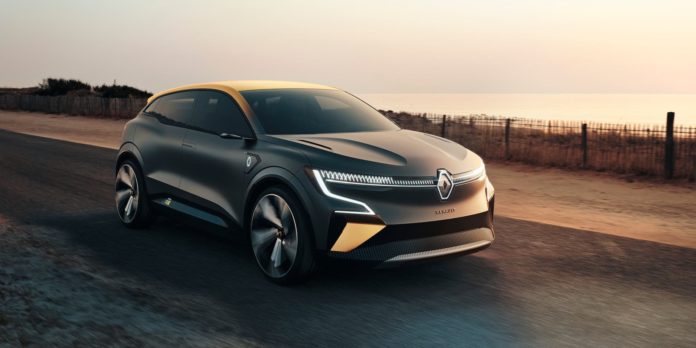
Renault concept previews next-generation Megane

Renault concept previews next-generation Megane

Renault announces prices and specs for updated Megane

Renault announces prices and specs for updated Megane

Renault Megane receives mild update and plug-in option

Renault Megane receives mild update and plug-in option

Buy a Renault Mégane E-Tech

If you’re looking to buy a new or used Renault Mégane E-Tech, The Car Expert’s partners can help you find the right car.

Motors 600x300

Find your next used car with Motors. Find out more

Auto Trader logo 600x300

Find your next new or used car with Auto Trader. Find out more

Carwow logo 600x300

Find your next new or used car with Carwow. Find out more

Lease a Renault Mégane E-Tech

If you’re looking to lease a new Renault Mégane E-Tech, The Car Expert’s partners can help you find a competitive deal.

Leasing-com logo

Personal contract hire deals from Leasing.com. Find out more

Carwow logo 600x300

Personal contract hire deals from Carwow. Find out more

Select Car Leasing logo

Personal contract hire deals from Select Car Leasing. Find out more

Subscribe to a Renault Mégane E-Tech

Subscriptions are becoming a very popular way for consumers to try an electric car for a few weeks or months to help decide whether it’s a suitable alternative to a petrol car. If you’re interested in a Renault Mégane E-Tech on car subscription, The Car Expert’s partners can help. (PS: What’s a car subscription?)

SelfDrive UK logo

Car subscriptions from SelfDrive.
Find out more

Cocoon Vehicles logo 600x300

Car subscriptions from Cocoon.
Find out more

Just Vehicle Solutions logo 600x300

Car subscriptions from Just Vehicle Solutions.
Find out more

Kia Sportage test drive

0

The Kia Sportage is one of the Korean brand’s most popular models and one of the core cars that took Kia from “pile ’em high and sell ’em cheap” budget brand to a mainstream name that stands as an equal alongside the likes of Ford, Vauxhall and Volkswagen.

You can trace the history of the Sportage right back to 1995 in the UK, with close to 200,000 Sportages having been sold over the past 27 years. The latest one, launched in 2022, is the fifth generation. Already the newcomer is continuing the strong performance of its predecessor – Kia’s best-selling model both in the UK and globally.

As of October 2022, the Sportage holds an Expert Rating of 74% on The Car Expert’s award-winning Expert Rating Index, which is significantly higher than the fourth-generation version it replaces.

What is it?

The Kia Sportage competes in the absolutely-bursting-at-the-seams mid-sized SUV market, facing competition from just about every other manufacturer out there and counting as core rivals the likes of the Ford Kuga, Toyota RAV4, Hyundai Tucson and, of course, the daddy of them all, the Nissan Qashqai.

Kia makes much of the fact that, while coming from a Korean brand, the Sportage has for the first time been designed specifically for European consumers – developed on European roads and built at the brand’s huge plant in Slovakia.

The changes runs deep compared to the last generation. The exterior has been completely redesigned with a bold new look, there’s more room inside for both occupants and their luggage, an interior design that has been markedly upgraded and a host of new tech. Add this to a totally revamped engine range that includes the first electrified drivetrains – in both mild hybrid and actual hybrid form – and there’s a lot to talk about.

First impressions

It’s easy to distinguish the new Sportage from what has gone before, as it has a completely new and much bolder exterior treatment based around Kia’s latest design language. A world away from the ‘much like everything else’ visuals of predecessors, it’s clean and sharp, with defined creases that all flow together rather well.

Up front we get Kia’s signature ‘Tiger Grille’ – following the current trend for grilles getting bigger and bigger – while the daytime running lights are encased in a striking boomerang design. Drivers being overtaken by a Sportage will certainly know what’s coming when they spot it in their rear-view mirrors…

In profile, the car’s roof slopes gently down towards the rear and the ‘belt line’ rises to meet it, while the wheel arches merge into the body in an integrated way – overall the Sportage is as satisfying in its visuals as any SUV ever can be.

One quirk of the previous model has been ditched, thankfully in this reviewer’s opinion – the rear indicators are no longer right down at bumper level but mounted in the far more prominent position used by just about every other manufacturer, halfway up the body where they are much easier to see if you are following a Sportage.

We like: General look and rear indicators in sensible place
We don’t like: Why do today’s grilles have to be so big?

What do you get for your money?

The Kia Sportage is available in six different trim levels and, once you factor in the engine and drive options, the range extends to some 16 versions. The long-established and simple-to-understand ‘2’, ‘3’ and ‘4’ grades (there is no ‘1’) are somewhat undermined by a ‘GT-Line’ model sitting between 2 and 3, and then above 4 a range flagship dubbed ‘GT-Line S’.

You first need to decide which engine you are after. The entry-level 2, which is priced from just under £28K, only comes with a 1.6-litre petrol unit of 150hp (there was a diesel alternative but it has now been discontinued), with a six-speed manual gearbox and in front-wheel-drive form.

If you want a hybrid of some flavour, you take a step up to GT-Line, with both mild and full hybrid options on offer for just under £5K and £7K respectively more than the equivalent petrol 2.

An extensive Sportage standard specification list includes an eight-inch central touchscreen display, which also includes a reversing camera display backed by front and rear parking sensors. GT-Line adds larger alloy wheels, LED front fog lights and rear lights, and various detailing add-ons aimed at a more sporty look. Most notably, the central touchscreen grows to 12 inches and gets built-in navigation. There are also a few other interior upgrades plus cruise control on manual models, adaptive cruise on auto versions.

Safety is particularly impressive, with every version featuring a suite of active systems as standard. The autonomous emergency braking (AEB) system with pedestrian, cyclist and junction detection is backed up by aids including hill-start, downhill braking, lane-keeping and even trailer stability for towing a caravan or horse box. The car maintained the Sportage’s five-star rating when it was crash-tested by Euro NCAP.

Cars in 3 trim start with the 2’s specification but gain some of the GT-Line’s extra equipment, plus various niceties such as electric front seats which are also heated, as are the rear outer pair and the steering wheel. The driver’s instrument panel also grows in size to match and join with the centre console screen, curving attractively across the fascia, while buyers also get a seven-year free subscription to Kia’s Connect service, an app-based system with such features as journey planning, petrol-station finding and remote checking that you locked the car.

Go to level 4 and the car includes adaptive headlamps, a panoramic sunroof and more detailing. Inside there’s an upmarket Harman Kardon sound system, while extra safety systems include a 360-degree around-view monitor, blind-spot and parking avoidance aids and on hybrids remote parking assistance.

The 4 and the range-topping GT-Line S are also the only Sportages available with all-wheel-drive, once an SUV signature. Unless, that is, you go for the plug-in hybrid, which was launched a little after the rest of the range. PHEV models are available in everything but entry-level 2 form, the cheapest costing a few pounds short of £40K.

The GT-Line S justifies its £39K starting price with a combination of the GT-Line’s exterior sporty look and the 4’s equipment levels, along with a powered tailgate activated by a smart key and electric adjustment in more directions on both front seats.

We like: Strong safety package.
We don’t like: Too many different models yet no entry-level hybrid version.

What’s the Kia Sportage like inside?

It seems to be the trend for SUV manufacturers to seriously upgrade their interiors at present and the Sportage certainly follows this route with what Kia describes as its first Euro-pitched ‘driver-centric’ interior design. Mind you, to get the full experience you need to choose higher-spec models, on which slipping inside reveals the very attractive pair of 12-inch screens stretching across the front fascia in a single gentle curve, one display for the driver and the other with all the infotainment.

The screen is huge, the technology behind it impressive though it can be frustrating trying to access some functions through a suite of menus – it takes a little getting used to.

Despite the focus on lots of new tech, the basics have not been forgotten. The materials used feel of a higher quality than previously, with hard plastics banished, the detailing is done to premium standards, and the ambient lighting presents a welcoming interior.

Crucially, once you are in the car it feels more spacious than previous versions, especially in the legroom afforded to rear-seat passengers. Neither this or the cargo space (591 litres with the seats up extending to 1,780 litres with them down) are impacted in hybrid versions, the electric hardware neatly packaged under the seats.

We like: Quality of the interior, front curved displays
We don’t like: Some fiddly menus

What’s under the bonnet?

You’re not short for propulsion choice with the Sportage – the only powertrain options you can’t have are a diesel or an EV. While a lack of the former is no surprise (they were briefly available but have now been dropped), Kia reckons there is no Sportage EV currently in the brand’s plans either.

Instead, you can choose from petrol (with or without mild hybrid assistance), regular hybrid and plug-in hybrid power. Our test drive is in the regular hybrid in two-wheel-drive form – you can also have it with all-wheel-drive, but only in top-spec 4 or GT-Line S models. This drivetrain takes the form of a 1.6-litre petrol engine matched to a 44kWh electric motor and putting out just under 230hp.

The hybrid is quite swift, passing 60mph in under eight seconds, while returning official fuel economy figures of close to 50mpg. This compares with the mild hybrid’s 0-62mph time of around 9.5 seconds, fuel economy of 40 to 44mpg and emissions of around 146-158mpg.

Best official figures, of course, belong to the plug-in hybrid. It pumps out more than 260hp while returning official fuel economy and emissions of 252mpg and 25g/km, with an officially rated range of up to 43 miles in electric-only mode.

What’s the Kia Sportage like to drive?

The regular hybrid has received the most positive reviews for its response and refinement and it certainly feels that way. A sub eight-second 0-60mph time is swift in such a car, but the Sportage achieves this in a very unflustered manner, switching seamlessly between electric and petrol drive as required.

Out on the road, the Kia Sportage does not write any headlines – but that is not a criticism. This is a car that prioritises comfort and refinement over exciting the driver, and succeeds handsomely.

The car rides excellently, smothering bumps without any fuss – you can imagine covering many miles in a Sportage. Through corners, it maintains this image with competent and precise turn-in and exit while not exactly communicating much to the driver through the steering wheel. But as we’ve said, this is not a sports car – it’s a hugely comfortable SUV.

We like: Quality of travel, smooth and quiet
We don’t like: Some more feeling through the steering wheel would be nice

Verdict

The success of the Kia Sportage is well-earned. Each successive generation has brought with it significant improvements and a steady march up the new-car quality chart as a result. Today the Sportage is one of the most popular SUVs in a very crowded market and this new fifth-generation version will only enhance that.

The advances are welcome and well judged. Technology, such as the hybrid powertrains, impressive infotainment and strong safety package, are matched by better basics, such as more cabin space. This will be a satisfying car to drive and to own.

Criticisms? Well not everyone will like the look of the new Sportage – more distinction does not sit well with all buyers (though its increasingly firm spot in the new car top-ten sales charts suggests few are bothered by such looks).

Perhaps the one serious question is the price – to get the full benefits of this fifth-generation Sportage, all the technology including those very attractive curved cabin displays, and the hybrid drivetrains, one has to pay around £40K, which brings the Kia Sportage rather close to some very big players, even knocking on the door of Audi and BMW territory.

Similar cars

Audi Q5 | BMW X3 | Citroën C5 Aircross | Ford Kuga | Honda CR-V | Hyundai Tucson | Jeep Compass | Mazda CX-5 | Mercedes-Benz GLCMG HS | Nissan Qashqai | Peugeot 3008 | SEAT Ateca | Skoda Karoq | SsangYong Korando | Subaru XV | Suzuki S-Cross | Toyota C-HR | Vauxhall Grandland | Volkswagen Tiguan | Volvo XC60

Key specifications

Model tested: Kia Sportage GT-Line S 2WD
Price (as tested): £39,900
Engine: 1.6-litre petrol/electric hybrid
Gearbox:
Six-speed automatic

Power: 229 hp
Torque: 350 Nm
Top speed: 120 mph
0-60 mph: 7.7 seconds

Fuel consumption: 49.6 mpg
CO2 emissions: 129 g/km
Euro NCAP safety rating: Five stars (July 2022)
TCE Expert Rating: 74% (as of Nov 2022)

Last days of the dinosaurs: the best petrol cars under £25K

The meteorite is coming; we can see it approaching in the sky. We know exactly when it will land; 31 December 2029. And we know it will be an extinction-level event that will wipe out all new petrol-powered cars in the UK. For internal combustion engines, these really are the last days of the dinosaurs.

This extinction is already underway. Most diesel cars are already gone, apart from lumbering SUVs and fleet cars that regularly cover long distances. Meanwhile, the number of purely petrol-powered cars is starting to dwindle – as last week’s announcement of the imminent end of the Ford Fiesta illustrates. In fact, there are unlikely to be any major new purely petrol cars released in the UK ever again, as the car industry shifts to hybrid and fully-electric models.

But the ultimate drop-dead date for new petrol cars is still seven years away. If you’re looking for a new or near-new car today and you’re not ready to switch to an electric or plug-in hybrid vehicle, there are still a number of excellent petrol-powered cars available to buy.

In the first of a four-part series celebrating the finest of petrol power, we’re looking at the best new and near-new petrol cars on the market that you can buy for £25K.

Whether you’re in the market for a small hatchback, a large family car, or something a bit sportier, this list has you covered. All of our recommendations are backed by our award-winning Expert Rating Index, which tracks and ranks more than 450 different cars from 51 manufacturers, based on 14,000 reviews from 30 of the UK’s top motoring titles.

All fuel consumption and gearbox information relate to the cheapest trim and engine combination on offer. All Expert Rating scores are correct as of November 2022.

Everyday hatchbacks

SEAT Ibiza

Available brand-new for less than £25K

SEAT Ibiza FR (2021 - present) front view | Expert Rating

Currently the top-ranked supermini in our Expert Rating index, the SEAT Ibiza is an award-winning value-for-money package that’s more highly regarded than the Volkswagen Polo it’s based on. This is thanks to its lower price point, as well as its comfort and refinement.

This affordable runaround is also the most fuel efficient small car on this list, so it will save you a few more pennies at the petrol pump when compared to the average compact hatchback. The Ibiza holds an Expert Rating of 79%.

  • Fuel consumption: 54 mpg
  • Gearbox: Manual only
  • Warranty: Three years or 60,000 miles

Ford Fiesta

Available brand-new for less than £25K

Ford Fiesta (2021 - present) front view | Expert Rating

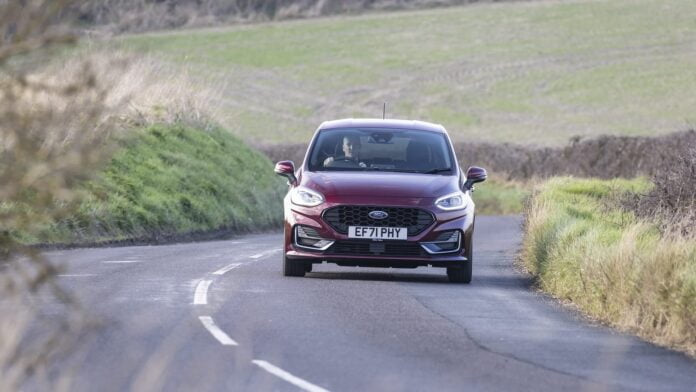
The Fiesta loses out to the Ibiza by the finest of margins in our Expert Rating Index, but it’s still an excellent choice. With a range of tweaks from its mid-life facelift, the Fiesta stands out from the crowded supermini pack thanks to its class-leading driving dynamics. But it has been criticised for some cheap interior plastics and a questionable reliability record.

Ford has recently announced that the Fiesta’s 46-year lifespan will come to an end next year, so if you’re interested in picking up a new model, you’ll need to act fast. It currently holds an Expert Rating of 79%.

  • Fuel consumption: 53 mpg
  • Gearbox: Manual or automatic
  • Warranty: Three years or 60,000 miles

Mini hatch

Available brand-new for less than £25K

The Mini hatch has been selling up a storm in recent years, despite being one of the oldest new cars on sale. Reviewers say it’s fun to drive, but also cramped in the rear. The range also gets expensive when you start looking at the options list, and its heavy-handed patriotic styling flourishes are not for everyone.

Brand-new Cooper models, and more powerful Cooper S models from the used market, are available for under £25k. The Mini hatch currently holds an Expert Rating of 78%.

  • Fuel consumption: 51 mpg
  • Gearbox: Automatic only
  • Warranty: Four years or 50,000 miles

Hot hatches

Ford Fiesta ST

Available near-new for less than £25K

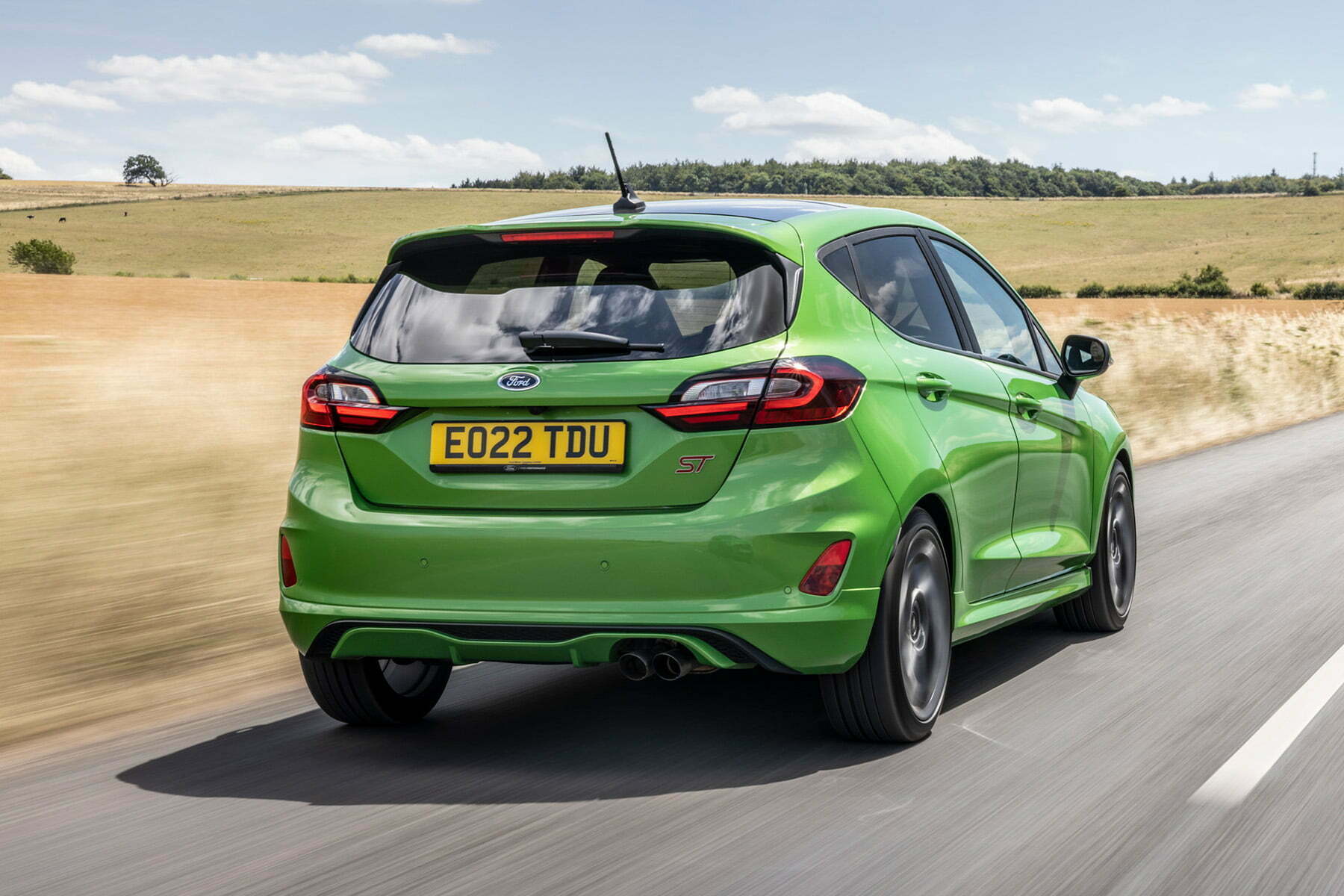
Ford Fiesta ST (2022 onwards) rear view | Expert Rating

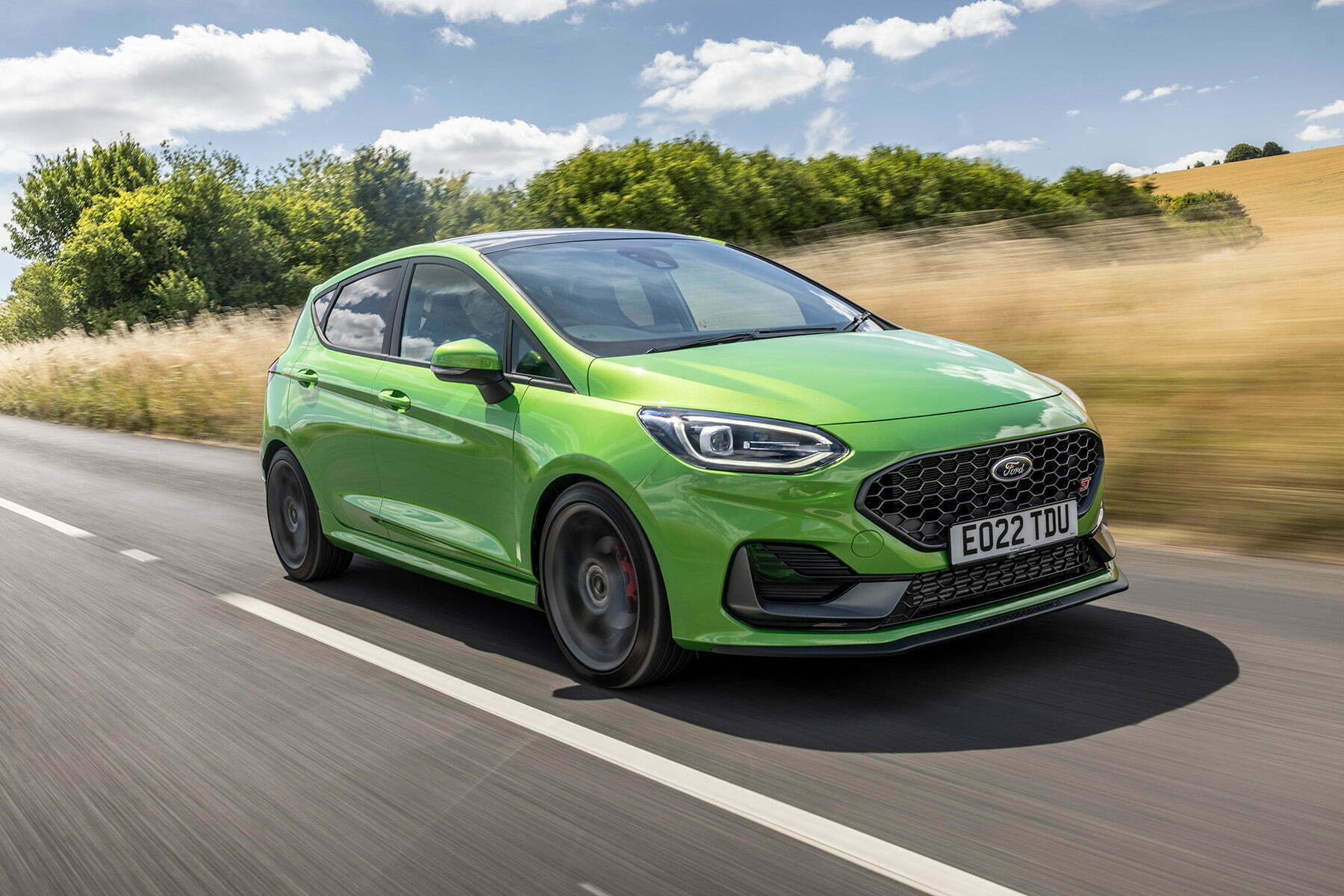
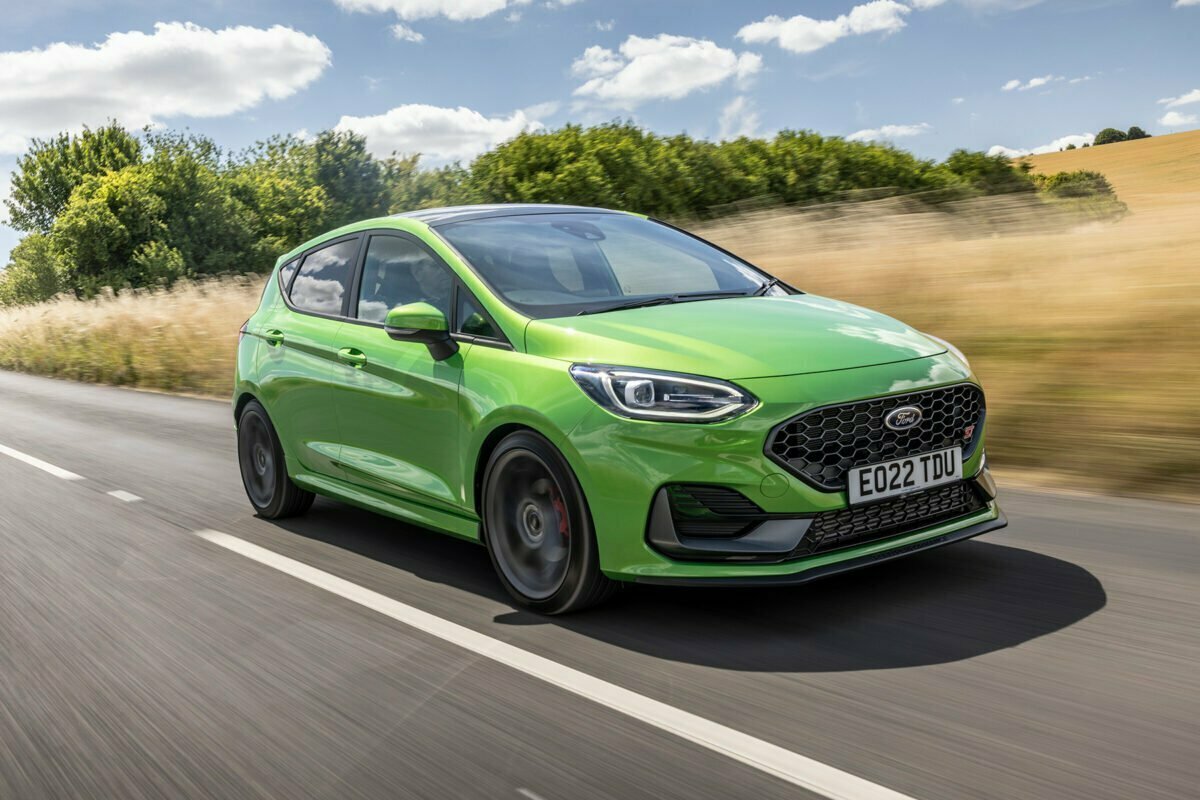
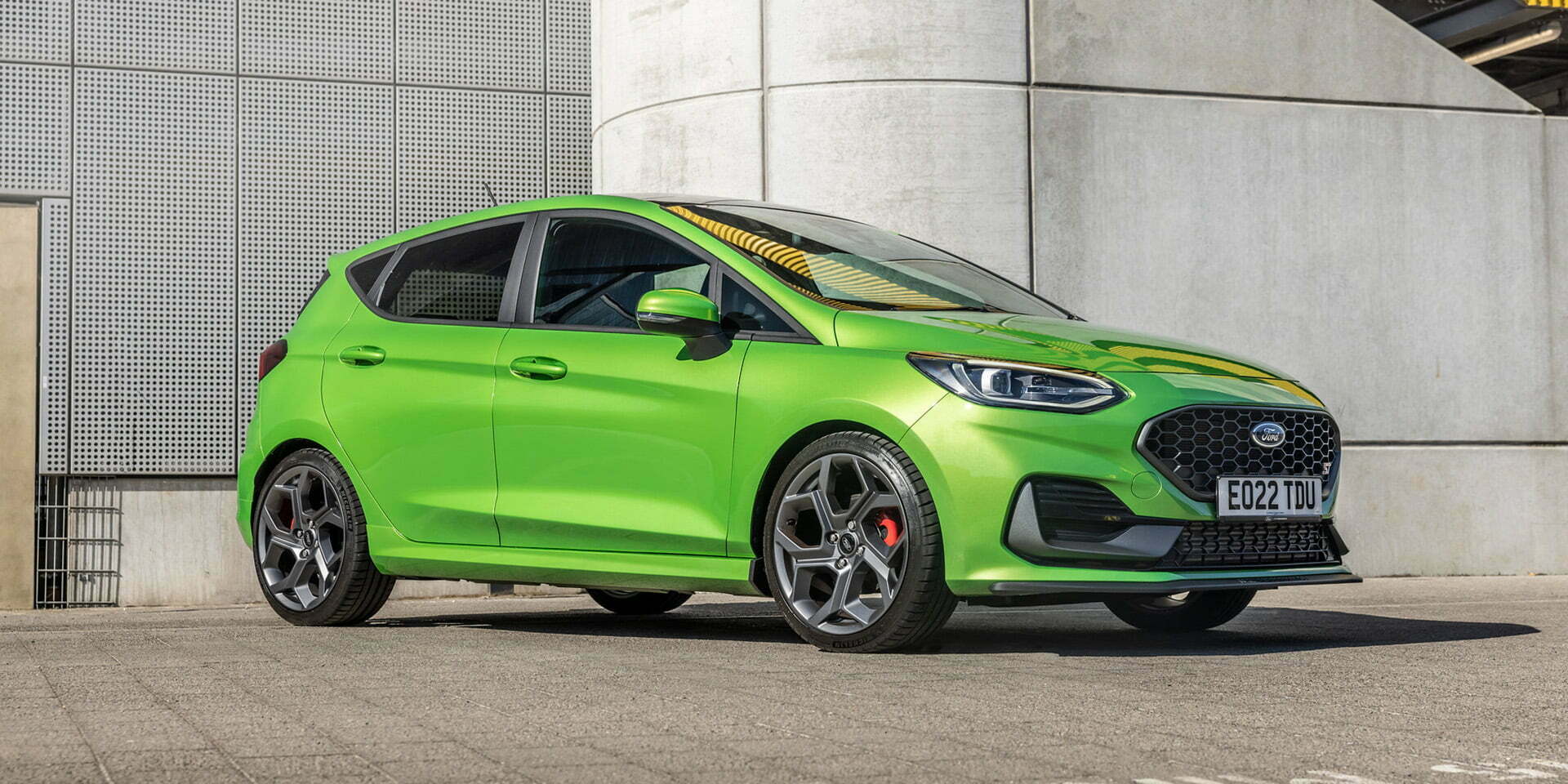
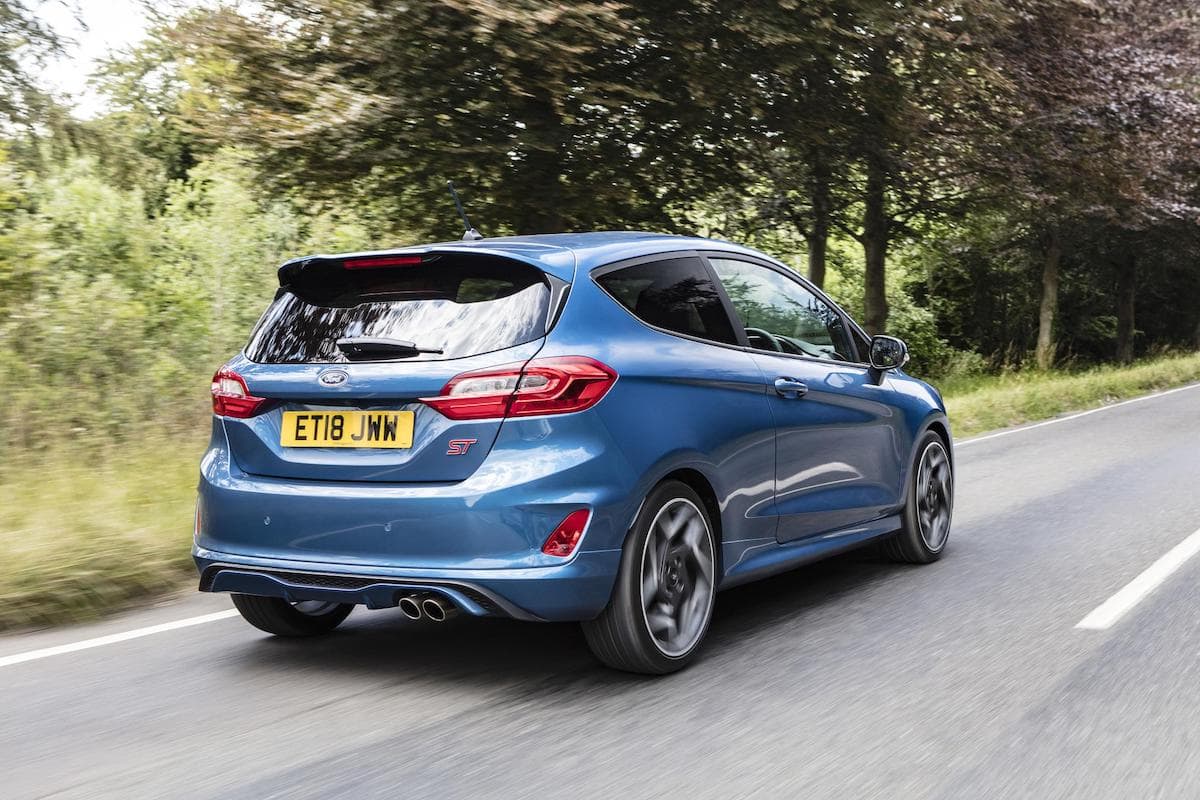
Known for its nimble handling and punchy performance, motoring journalists unanimously agree that the Ford Fiesta ST offers one of the most exciting driving experiences of any hot hatch on the market, while offering the same practicality as any regular Fiesta.

With an outstanding Expert Rating of 87%, the Fiesta ST is hard to fault, but its firm suspension can be uncomfortable on the road. The recent facelift has unfortunately increased its price above our £25k threshold, but plenty of nearly-new models can be picked up for a relative bargain on the used market.

  • Fuel consumption: 39 mpg
  • Gearbox: Manual only
  • Warranty: Three years or 60,000 miles

Hyundai i20 N

Available near-new for less than £25K

Hyundai i20 N front view | Expert Rating

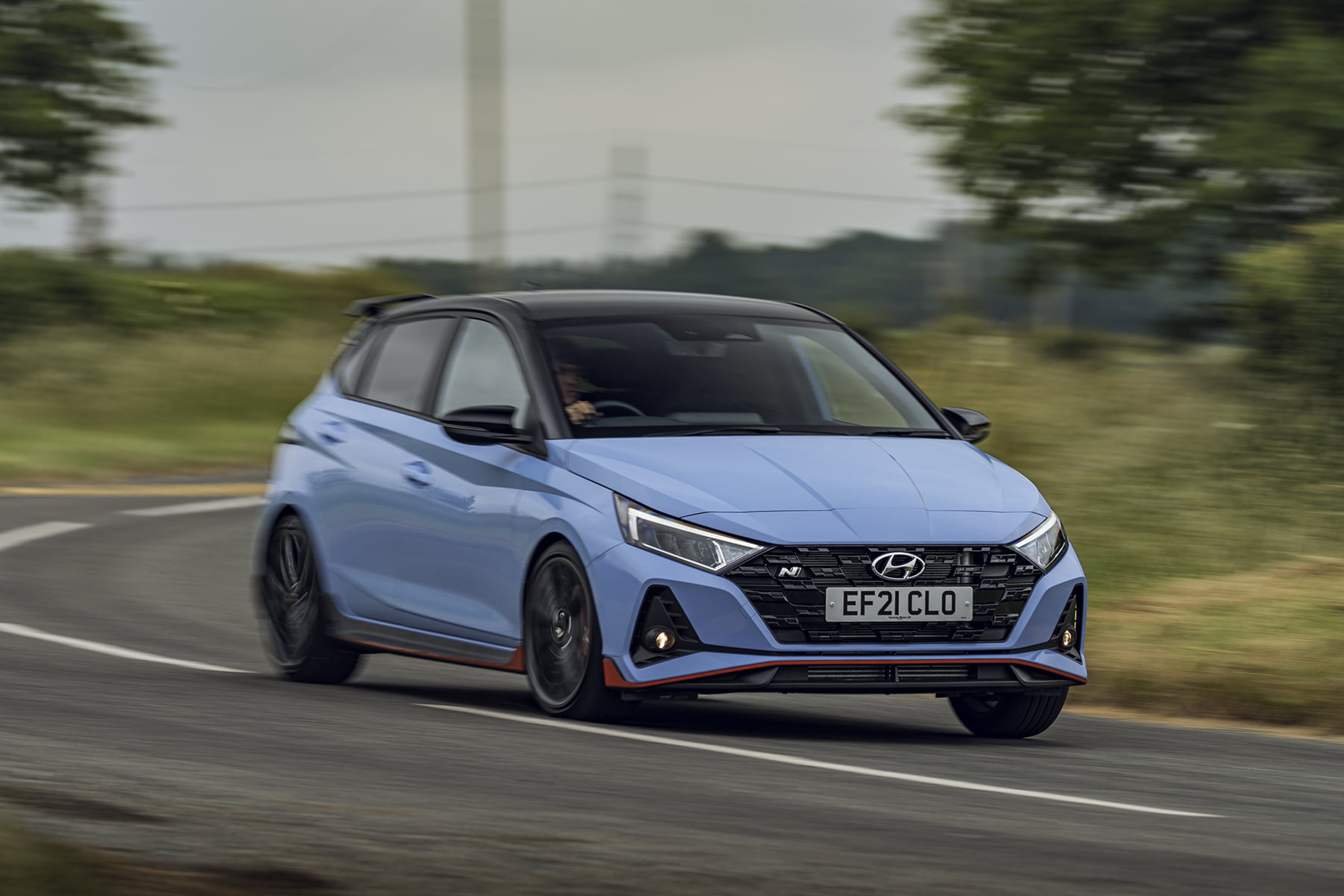
The Hyundai i20 N is the entry-level model in Hyundai’s N performance division, but it’s certainly no slouch. Slightly faster and cheaper than the Fiesta ST, it has been widely praised for handling, low running costs, and a long warranty.

That said, its impressive Expert Rating of 86% is hindered by its firm ride, and reviewers are not fans of its clunky infotainment system. The i20 N is available new for a smidge above £25k, but the used market offers up several nearly-new models at a cheaper price.

  • Fuel consumption: 40 mpg
  • Gearbox: Manual only
  • Warranty: Five years, unlimited mileage

Small SUVs

Ford Puma

Available brand-new for less than £25K

The pest petrol-powered cars for £25K – Ford Puma

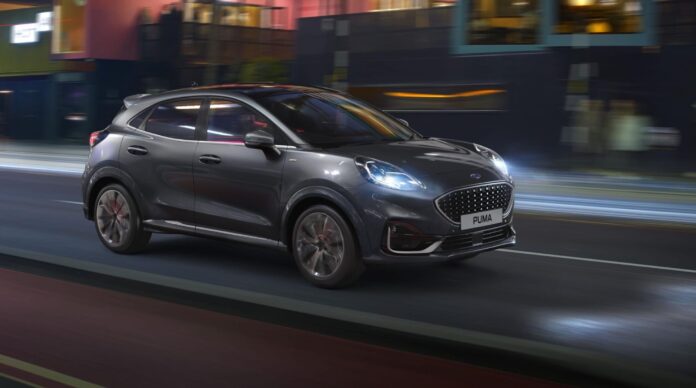
The Puma has been Ford’s best selling model in the UK in 2022, as buyers look for a car that adds a little more ground clearance without breaking the bank. Reviewers agree the Puma is practical, spacious and great to drive, although its exterior looks are not universally admired.

With an Expert Rating of 78%, the Ford Puma is the highest ranked petrol-powered small SUV in our Expert Rating Index available for less than £25k. A few nearly-new examples of the sportier Puma ST are available on the used market for under £25k, too.

  • Fuel consumption: 46 mpg
  • Gearbox: Manual or automatic
  • Warranty: Three years or 60,000 miles

Mazda CX-30

Available brand-new for less than £25K

Mazda CX-30 (2018 onwards) – front view

Praised for its driving dynamics and interior quality, the CX-30 is Mazda’s most affordable SUV option. Based on the slightly cheaper Mazda 3 hatchback, the CX-30 has been commended by the UK motoring media for its economical petrol engine and its stylish looks, although its rivals offer more cabin and boot space.

Sitting in the middle of the medium SUV class in our Expert Rating Index, the Mazda CX-30 currently holds an Expert Rating of 73%.

  • Fuel consumption: 48 mpg
  • Gearbox: Manual or automatic
  • Warranty: Three years or 60,000 miles

Family cars

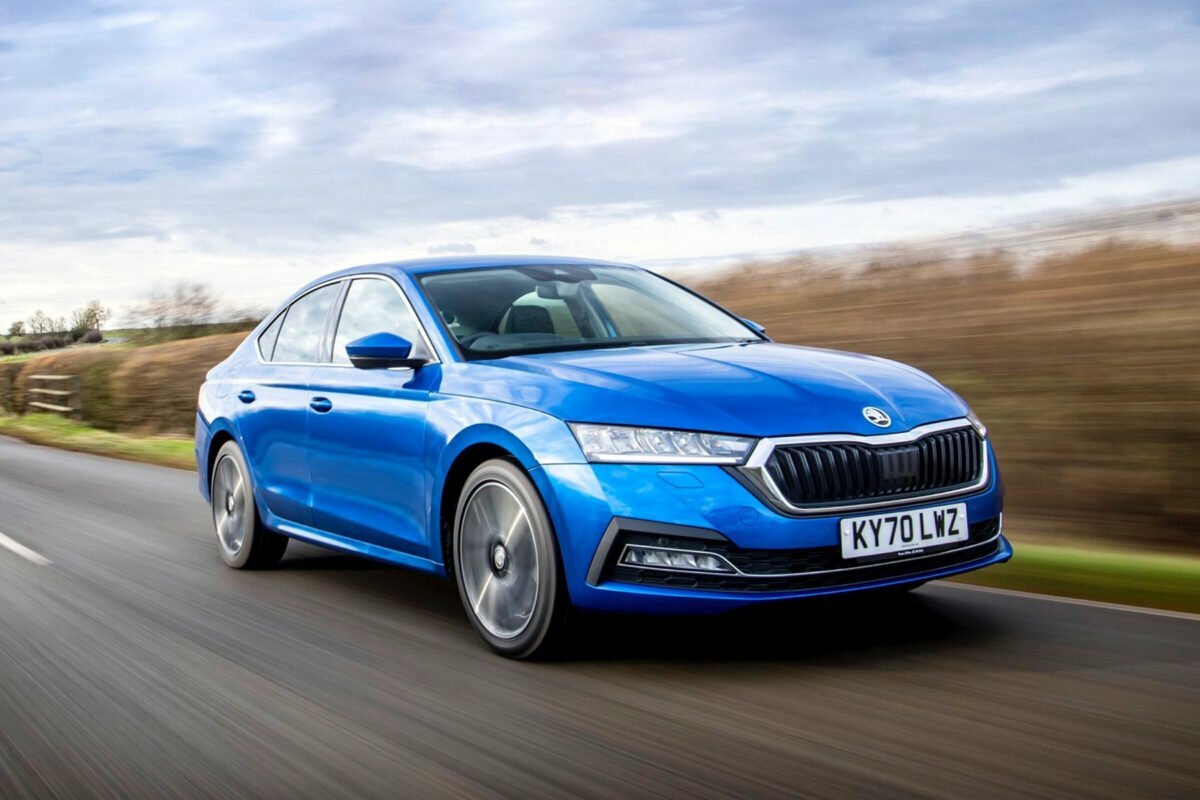
Skoda Octavia

Available brand-new for less than £25K

Last days of the dinosaurs: the best petrol cars for less than £25K – Skoda Octavia

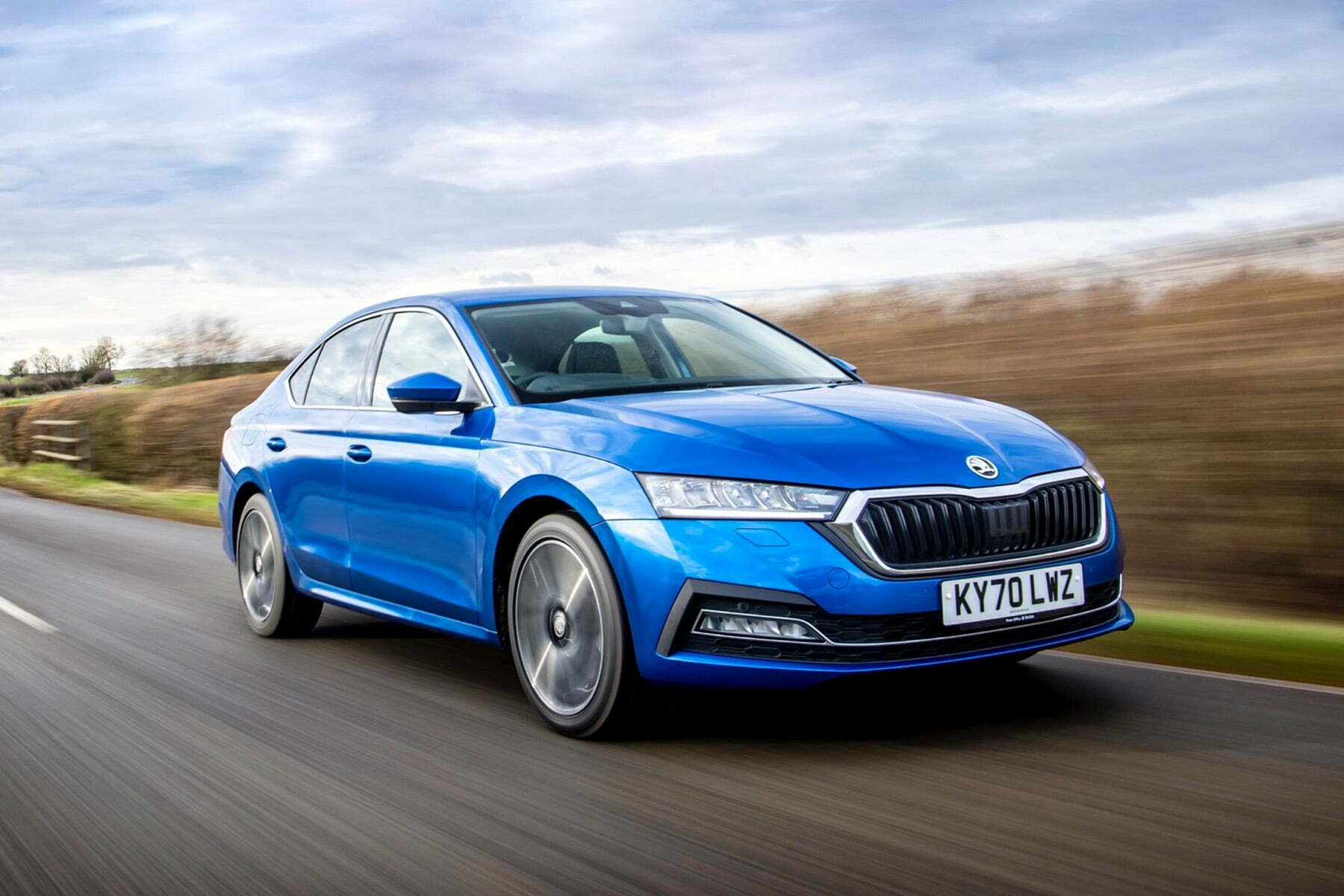
If you’re looking for a value-for-money family car that’s easy to drive and cheap to run, the Skoda Octavia needs to be on your shortlist. The saloon has the lowest fuel consumption of any car on this list, which is impressive for such a large petrol car.

A serial award-winner, the Octavia is praised for its practical and polished interior with class-leading legroom, though its infotainment system has drawn criticism, as has its polarising front-end styling. It currently holds an Expert Rating of 76%.

  • Fuel consumption: 55 mpg
  • Gearbox: Manual and automatic
  • Warranty: Three years or 60,000 miles

Peugeot 3008

Available near-new for less than £25K

Peugeot 3008 (2021 facelift) - front view

The Peugeot 3008 is a great choice for those looking to ferry the family from A to B. Reviewers are particularly fond of its styling, as well as its comfort, practicality and driving dynamics. On the other hand, a number of media outlets have expressed their dislike of the car’s infotainment system.

Although not as affordable as the Octavia, you’ll still be able to find plenty of slightly older used models on the second-hand market for under £25k. The 3008 currently holds an Expert Rating of 77%.

  • Fuel consumption: 48 mpg
  • Gearbox: Automatic only
  • Warranty: Two years, unlimited mileage

Sports cars

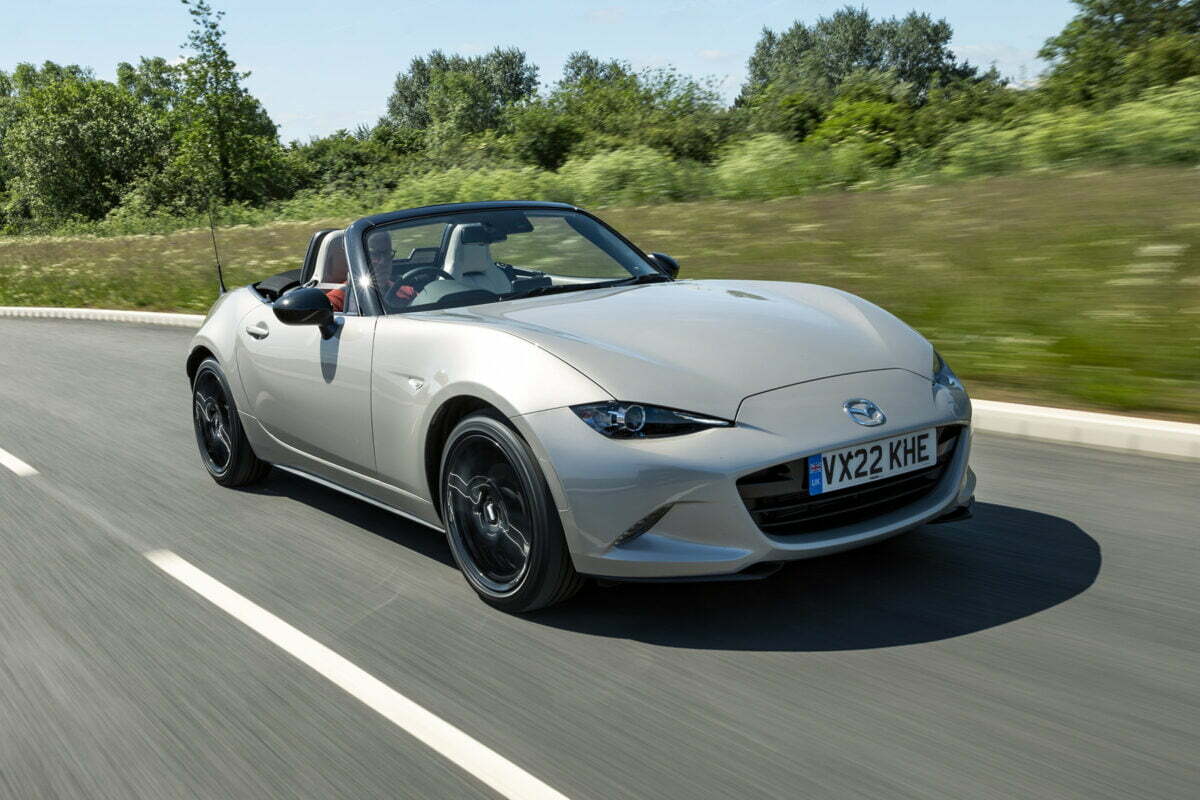
Mazda MX-5

Available near-new for less than £25K

Last days of the dinosaurs: the best petrol cars for less than £25K – Mazda MX-5

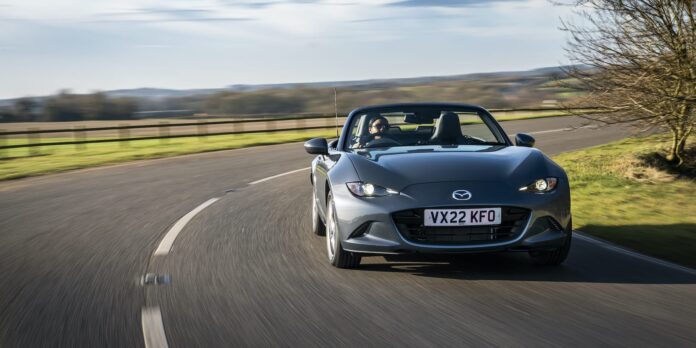
When it comes to convertibles, the MX-5 has reigned supreme for more than 30 years over four generations. The latest MX-5 holds an Expert Rating of 87% – commended for its lightweight driving dynamics, nippy performance and its low running costs. Criticisms are few and far between, but obviously you’re sacrificing a large degree of practicality to enjoy the delights of a two-seat drop-top sports car.

New MX-5 proces start at just over our £25k threshold, but there are plenty of nearly-new MX-5 models on the used market listed for much cheaper.

  • Fuel consumption: 45 mpg
  • Gearbox: Manual only
  • Warranty: Three years or 60,000 miles

Additional reporting and data wrangling by Sean Rees

Read more:

For the definitive rankings of the best new cars, check out The Car Expert’s industry-leading Expert Rating Index. The index analyses new car reviews from 30 of the top UK motoring websites, using an advanced algorithm that we have developed specifically to compare review scores.

October sales up as supply situation improves

New car registrations showed considerable improvement in October, thanks to a number of car companies finally having more cars available to supply customers. However, that doesn’t mean big deals and discounts are back again…

Registrations were up 26% in October compared to the same month last year, according to this morning’s data from the Society of Motor Manufacturers and Traders (SMMT). That sounds good at first, until you realise that last year was down 24% on October 2020, which was an unreliable year due to Covid, which in any case was on par with 2019, which was a poor month due to Brexit insecurities (remember them?), which was down 13% on 2018, which itself was a month of relative turmoil due to the after-effects of recently introduced emissions legislation. In other words, October is an unreliable guide to anything.

So the news is better but far from great. A number of big car companies – including Ford, the Volkswagen Group and Toyota – saw significant growth over the same point last year, with significant benefits for fleet customers. Indeed, fleet registrations were up 47% while private new car sales were only up by 7%.

The fact that car companies have ramped their vehicles deliveries to fleet back up suggests that they are confident that their supply difficulties of the last year are improving. Fleet customers tend to enjoy significant discounts on the retail prices that consumers pay, so car companies have been prioritising private customers while they’ve had very limited numbers of cars to sell.

October 2022 new car registrations by buyer type
Source: SMMT

Has Electric Avenue become a cul-de-sac?

Almost every month for the last few years, we’ve seen electric car sales growing relative to the overall market. That didn’t happen in October, although it’s likely to be a short-term supply problem rather than a longer-term issue. There’s also the added complication of Tesla’s numbers.

Tesla doesn’t behave like a normal car company. Its sales come in fits and starts, which has a massive effect on overall industry numbers. For example, in September, Tesla claimed 8,315 sales of the Model Y – an enormous number for a single month. In October, it announced a grand total of four Model Y registrations. Yes, four.

This level of swing on the country’s most popular EV has a massive impact on monthly industry data. So we really need to wait until the full-year results are published in a just a couple of months’ time to get a meaningful comparison on a year-by-year basis.

Electric sales will continue to grow, so don’t read too much into any suggestions that they’re struggling. However, market conditions are certainly not helping. As interest rates keep going up and supply problems still impact on vehicle availability, EVs remain expensive. And with household electricity prices soaring, there are fears (largely unjustified) that the running cost advantages of an EV have disappeared.

October 2022 new car registrations by fuel type
Source: SMMT

Good month, bad month

It’s clear that some car companies have been able to ramp production levels back up more quickly than others, with wildly varying results across the industry last month.

Ford stayed at the top of the overall sales charts, edging out Volkswagen with Audi in third place. It was a disappointing result for both Kia and Hyundai, whose October performances were down compared to the rest of this year so far.

Compared with last October, it was a good month for Abarth, Audi, Bentley, Cupra, DS Automobiles, Fiat, Ford, Genesis, Honda, Land Rover, MG, Nissan, Polestar, Skoda, Toyota and Volkswagen. All of these brands outperformed the overall new car market by at least 10%.

Meanwhile, things weren’t so cheery for Alfa Romeo, Alpine, Hyundai, Jaguar, Jeep, Kia, Lexus, Maserati, Mercedes-Benz, Mini, Peugeot, Porsche, SEAT, Smart, SsangYong, Suzuki, Tesla and Volvo. All of these companies underachieved by at least 10% compared to the overall market.

Fiesta returns to the top of the chart a week after being axed

The Fiesta stays in the headlines this week, athough this time the news is good. Just a week after Ford announced it would be killed off next summer, the Fiesta returned to the top of the sales charts for the first time since February 2021. It was a close-run thing, with Ford claiming a mere two units over the second-placed Nissan Qashqai.

However, the Fiesta’s return to glory in October hasn’t been enough to return it to the top ten in year-to-date sales, and that’s where the month’s biggest result can be found. With just two months to go in 2021, we have a new leader in the sales race as the Nissan Qashqai has overtaken the Vauxhall Corsa.

Just two months ago, it seemed a mere formality that the Corsa would retain its annual sales crown from last year. But it faltered badly in the crucial month of September, while Nissan had a stunningly successful result with the Qashqai. And in October, another 1,400-unit advantage to the Qashqai has allowed it to overhaul the Corsa.

With two months to go, it will be a very close race. But the Nissan Qashqai appears to have all the momentum at the moment.

October 2022, top 10 best-selling new cars
Source: SMMT

UK car market begins to see supply issues ease

4 November 2022

The UK car market has begun to see ongoing supply issues ease following more than a 25% increase in new vehicle registrations in October, according to The Car Expert.

After several years of tumultuous October sales due to Brexit concerns in 2019, semiconductor shortages in 2020 and knock-on effects of covid in 2021, the latest SMMT data shows that private new car registrations were up by a meagre 7% while fleet registrations increased by 47%.

The better than anticipated fleet sales increase indicates that supply issues might be improving because manufacturers usually priorities the more profitable retail market.

October also saw a continued trend in consumers opting for smaller and cheaper options with Ford Fiesta as the best-selling model alongside MINI, Vauxhall Corsa and Fiat 500. Value brands such as MG saw sales double year-on-year, while the British-built Nissan Qashqai overtook the Vauxhall Corsa as the best-selling vehicle this year with 33,562 sales to date.

Despite several months of rapid electric vehicle growth at the beginning of the year, battery electric vehicle (BEV) growth has begun to plateau. The market share for BEVs dipped below September’s result, potentially owing to the high prices of EVs in a time of ongoing tightening of household budgets.

“While many would like to make the switch to electric vehicles, the average purchase price of an EV still remains incredibly high. A large proportion of consumers would likely look to purchase an EV through finance options, such as a PCP, however this is a very significant monthly expense at a time of serious financial uncertainty, exacerbated by yet another hike in interest rates,” commented Stuart Masson, Editorial Director at The Car Expert.

“Motorists may fear that their electricity bills will shoot up even more when charging at home, but it continues to remain more cost-effective than filling up with petrol or diesel.”

Supply across many brands have improved, with the likes of Ford, CUPRA, Fiat, Skoda and Toyota all increasing October year-on-year sales by more than half. Fleet registrations benefited from a 47% rise following a significant decline in recent months due to a shortage of supply and manufacturers prioritising private sales.

“The easing of supply issues across manufacturers should start to have a positive impact on used prices as we head into 2023. Although used car prices will remain high for the foreseeable future, if the supply of new cars continues to improve, by spring we may start to see prices in the used market slacken.”

“Although there are positive signs to be gleaned from October’s result, we cannot expect there to be an immediate effect. We urge consumers to think carefully before entering expensive finance contracts, particularly with ongoing pressures on cost-of-living and hikes in interest rates.”

For expert and impartial advice relating to car finance or tips for purchasing a used vehicle, please visit: www.thecarexpert.co.uk/

ENDS

The Car Expert

Founded in 2011, The Car Expert is the UK’s most comprehensive automotive consumer advice site. With an audience of over two million readers a year, The Car Expert provides independent and impartial advice on every aspect of buying, financing, owning, and selling new or used vehicles.

The Rotten Tomatoes equivalent for the automotive world, The Car Expert consolidates reviews from 30 of the UK’s top automotive websites to create the Expert Rating Index. Bringing together science and data analysis, the index calculates a weighted average to give an aggregated score – Expert Rating – that is comparable across different brands and models.

The Expert Rating Index factors in the age of each review, so that newer reviews carry more weight than older reviews. It also breaks down the complex web of different scoring systems that various websites use in their reviews.

The Car Expert has logged over 12,000 reviews covering more than 400 cars and over 50 manufacturers, with its Expert Rating Index now trusted as the gold standard for rating and ranking new cars in the UK.

For media enquiries, please contact Performance Communications

Melissa Lodge: melissa@performancecomms.com | 07855 467 274
Richard Tanner: richard@performancecomms.com | 07876 762 345

Mercedes-Benz EQS SUV goes on sale

0

The seven-seat Mercedes-Benz EQS SUV is now on sale in the UK, which is packed with the brand’s latest on-board tech and offers an all-electric range of 365 miles.

As The Car Expert reported back in April, this new flagship SUV is essentially a raised version of the Mercedes-Benz EQS saloon, offering 20cm more ground clearance and a rear-end redesign that extends the cabin to add a third row of seats.

Its has near identical front end styling to its saloon sibling, and has a similar silhouette to the EQC SUV and recently unveiled EQE SUV, but this model is bigger than both. In fact, it is the German brand’s biggest electric car to date.

The SUV offers one of the longest battery ranges of any electric SUV on the market. At the models unveiling, Mercedes-Benz estimated that its EQS SUV could muster up to 410 miles on a single charge, but the recently released UK specs show that the SUV can travel a maximum of 365 miles on a full battery, which is five miles more than the seven-seat Tesla Model X Long Range can handle.

However, the BMW iX, which is a strict five-seater, offers up to 380 miles on a single charge in its range-topping ‘xDrive50’ guise.

The range launches with two dual-motor all-wheel drive powertrain options which both make use of a large 108kW battery. The entry-level ‘EQS 450 4MATIC’ is priced at £129k, while the more powerful ‘EQS 580 4MATIC’ costs around £10k more.

The former can reportedly complete a 0-62mph sprint in 6.0 seconds, and the latter can shave this sprint time down to 4.6 seconds. To make the car more agile in urban driving scenarios, both variants come with rear-wheel steering, which allows the SUV’s rear wheels to turn up to ten degrees for tighter turning circles.

All models come equipped with 21-inch alloy wheels, adaptive LED headlights, a panoramic roof, Nappa leather seats and a head-up display that projects driving information onto the windscreen.

Like the EQS saloon range, the brand’s 1.4 metre wide hyperscreen is available, but only comes as standard with ‘EQS 580 4MATIC’ models. This system combines a 12-inch driver display, 18-inch central display and a passenger display into one continuous dashboard screen.

This infotainment upgrade is also included in the option £14k ‘Business Class package’, which also includes entertainment screens for the rear passengers, massage seats, and adds ‘ship deck’ wood to the interior trim.

Mercedes-Benz says that its EQS SUV is now available to order in the UK, but at the time of writing the SUV is still earmarked as ‘coming soon’ on the manufacturer’s website.

Bentley unveils limited run Bentayga Odyssean

0

Bentley, which is currently celebrating record-breaking sales growth, has unveiled a rare limited edition version of its Bentayga SUV that will go on sale this month.

Called the Bentayga Odyssean, this trim features a number of unique cosmetic alterations inside and out, and makes use of a hybrid engine upgrade that is now available across the whole Bentayga range. Based on the regular size range, not the recently launched extended wheelbase ‘EWB’ version of the Bentayga, production of the Odyssean is limited to only 70 models worldwide.

The limited edition SUV can only be specced with a 3.0-litre V6 plug-in hybrid engine, unlike the standard Bentayga model, which comes equipped with a 4.0-litre V8.

This plug-in hybrid engine has been part of the Bentayga options list for some time, but Bentley says that it has now fitted the unit with a slightly bigger 18kWh battery which increases the car’s total power output to 456hp and its maximum all-electric range to 28 miles.

Exterior styling differences are minimal – ‘Odyssean’ branding can be found on the car’s rear, the headlight and tail light surrounds are finished in chrome, further chrome elements can be found on the lower front and rear bumpers, and the SUV sits on 22-inch alloy wheels with a unique ten-spoke pattern. Over 60 exterior colours are available.

Stepping inside, Bentley says that the Odyssean is the first second-generation Bentayga to sport a three-colour interior design. The dashboard, centre console and door panels are trimmed in black and white linen, and customers can choose between five different colours for the 22-way adjustable heated leather seats. ‘Odyssean’ lettering appears on the car’s treadplates.

Bentley has not announced how much this limited edition model will cost, and it is unlikely to do so. Interested UK buyers can now enquire about the Bentayga Odyssean online using the brand’s website.

On sale in the UK since early 2016, the Bentley Bentayga has received particular praise for its comfort, performance and luxury, but has been criticised for its divisive styling and for not feeling sufficiently better than the Audi Q7 on which it is based. It currently holds an Expert Rating of 69%.

This trim announcement comes as Bentley celebrates its operating profits more than doubling in the past year, as Bentayga sales grow by 9% worldwide, and the brand’s sales increase by 25% in the UK year-on-year.

Toyota Aygo X range bolstered by retractable roof trim

0

The Toyota Aygo X city car is now available to order in a range-topping ‘Air Edition’ guise that comes with an electronically-operated retractable canvas roof and black alloy wheels.

This additional trim comes with the same on-board tech specs as the slightly cheaper ‘Exclusive’ line, meaning that an eight-inch infotainment touchscreen, automatic wipers, a reversing camera, fog lights and front and rear parking sensors are included as standard.

The ‘Air Edition’ distinguishes itself from the ‘Exclusive’ trim grade thanks to its full-length retractable roof and matte black 18-inch alloy wheels, both of which are available as optional extras for lower trim levels.

Customers can choose between four different bodywork colours, with unique front bumper and side sill inserts and wheel spoke highlights finished in red or beige. Like the rest of the range, both manual and automatic variants are available.

With Toyota’s ten-year warranty, the Aygo X ‘Air Edition’ can now be ordered online in the UK, with prices starting at just north of £19k – around £500 more than the ‘Exclusive’ grade model it is based on.

The Toyota Aygo X has been highlighted by the British motoring media as a well-equipped value-for-money package with low running costs and a decent amount of safety features by city car standards, but its small engine is said to struggle at higher speeds. The city car currently holds an Expert Rating of 63%.

Ford Fiesta ST (2018 to 2023)

Summary

The Ford Fiesta ST was a performance version of the regular Fiesta hatchback. This model was launched in summer 2018, and received a mid-life facelift in 2022. It ended production along with the regular Fiesta range in summer 2023.

Like previous generations, this Fiesta ST received outstanding reviews from the UK motoring media. In addition, it also received numerous awards from various automotive titles.

The Fiesta ST received unanimous commendation for its driving dynamics, and while its pricing increased with 2022 facelift, the hot hatch was regarded as unmatched by anything in its price range. It was also praised for increased levels of refinement over previous models.

The only mild criticisms were that it was a bit softer than the previous one, although that helped to make it a more practical and comfortable car for daily use.

As of February 2026, the Ford Fiesta ST holds a Used Car Expert Rating of B, with a score of 66%. Along with its outstanding media reviews, its running costs and CO2 emissions are commendably low, while reliability seems to be pretty strong as well.

Fiesta ST highlights

  • Plenty of fun on the road
  • Punchy performance
  • Nimble driving dynamics
  • Plenty of kit included as standard
  • Surprisingly economical

Fiesta ST lowlights

  • Firm suspension can be uncomfortable
  • Value-for-money status hindered by rising prices
  • Only one five-door trim available
  • Rival brands are more reliable

Key specifications

Body style: Three- and five-door hatch
Engines: petrol
Price when new: From £27,320

Launched: Summer 2018
Last updated: Spring 2022
Ended production: Summer 2023

Media reviews

Highlighted reviews and road tests from across the UK automotive media. Click any of the boxes to view.

Featured reviews

More reviews

Auto Express

Auto Trader

Car

Car Keys

Carbuyer

Company Car Today

Eurekar

Evo

Fleetworld

Heycar

Honest John

Parkers

The Sun

The Sunday Times

The Telegraph

Top Gear

Safety rating

Independent crash test and safety ratings from Euro NCAP

Overall score: 5 stars
Date tested: September 2017
Date expired: January 2024
Read the full Euro NCAP review

Adult protection: 87%
Child protection: 84%
Vulnerable road users: 64%
Safety assist: 60%

Notes on safety rating

The Ford Fiesta was originally crash tested by Euro NCAP back in 2017 and awarded a five-star rating. However, this rating expired in January 2024 and is no longer valid as the car no longer meets the standards required for such a rating. This is normal practice, as Euro NCAP reviews its ratings on most cars annually with most ratings expiring after about six or seven years.

However, if you are comparing a used Fiesta ST to vehicles of similar age, whose ratings will have probably also expired, its safety rating score is still useful.

Eco rating

Independent economy and emissions ratings from Green NCAP

No eco rating

The Ford Fiesta ST was not assessed by Green NCAP during its production life.

Reliability rating

Reliability data provided exclusively for The Car Expert by MotorEasy

All data based on MotorEasy average workshop costs for extended car warranty claims

The Ford Fiesta family (including the ST) has an above-average reliability score of 80% as of October 2024 (our most recent data point). This applies to all Fiesta models in MotorEasy’s database, which includes both this model and older (pre-2017) generations.

The most common Fiesta warranty claims relate to suspension issues, but these are relatively inexpensive to fix on average, costing less than £200. Engine and gearbox repairs are generally the most expensive claim by a considerable margin, with an average repair bill of about £1,000.

The average repair cost for Ford Fiesta warranty claims is about £430, which is probably more than the cost of a used car warranty, so it’s certainly worth considering. If you’re looking at a used Fiesta ST, make sure any extended warranty cover you purchase covers all of the potential problem areas above.

Running cost rating

Monthly cost of ownership data provided exclusively for The Car Expert by Clear Vehicle Data

Fuel consumptionAverageScore
Petrol models40 mpgD
CO₂ outputAverageScoreVariationScore
Petrol models153 g/kmC
Insurance groupAverageScoreVariationScore
All models26C
Service and maintenanceCostScore
Year 1£203B
Year 2£511B
Year 3£828B
Year 4£1,031B
Year 5£1,434B
Overall£4,007B

For a performance car, the Ford Fiesta ST is relatively affordable to own and run, according to whole-life cost numbers provided exclusively to The Car Expert by our data partner, Clear Vehicle Data.

Fuel consumption is poor, ranking in the bottom 40% of all new cars on sale. However, the rest of the Fiesta ST’s running costs are pretty good for a hot hatch. Servicing and maintenance, along with insurance, are ranked B, which puts them in the top 40% of all new cars on sale.

Awards

Significant UK trophies and awards that the Ford Fiesta ST has received

2020

  • News UK Motor Awards – The Sun ‘Legend Award’

2018

  • Top Gear Awards – Car of the Year + Best Hot Hatch
  • Parkers New Car Awards – Car of the Year + Best Car for Thrill Seekers
  • Carbuyer Awards – Best Hot Hatch

Similar cars

If you’re looking at the Ford Fiesta ST, you might also be interested in these alternatives

Ford Puma ST | Hyundai i20 N | Mini Cooper S | Mini hatch John Cooper Works | Suzuki Swift Sport | Toyota GR Yaris | Volkswagen Polo GTI | Volkswagen Up GTI

More news, reviews and information about the Ford Fiesta at The Car Expert

Everything you need to know about Ford

Everything you need to know about Ford

Ford Fiesta ST (2013 to 2017)

Ford Fiesta ST (2013 to 2017)

Best small cars of 2022

Best small cars of 2022

Ford Fiesta (2008 to 2017)

Ford Fiesta (2008 to 2017)

Last days of the dinosaurs: the best petrol cars under £25K

Last days of the dinosaurs: the best petrol cars under £25K

Ford Fiesta to be killed off next summer

Ford Fiesta to be killed off next summer

Ford Fiesta – what went wrong?

Ford Fiesta – what went wrong?

Ford stops taking orders for Fiesta and Focus

Ford stops taking orders for Fiesta and Focus

Ford Fiesta (2017 to 2023)

Ford Fiesta (2017 to 2023)

Best small cars of 2021

Best small cars of 2021

Ford Fiesta set for a 2022 facelift

Ford Fiesta set for a 2022 facelift

Britain’s best-selling cars, August 2021

Britain’s best-selling cars, August 2021

Buy a Ford Fiesta ST

If you’re looking to buy a used Ford Fiesta ST, The Car Expert’s partners can help you find the right car

Motors 600x300

Search less, live more. We make finding the right car simple. Find out more

Auto Trader logo 600x300

Search for your next new or used car with Auto Trader. Find out more

Carwow logo 600x300

Discover great deals available on both new and used cars. Find out more

Alfa Romeo Tonale

Summary

The Alfa Romeo Tonale is a compact SUV introduced in the UK in 2022 as the brand’s first model to offer mild hybrid and plug-in hybrid power. It sits below the larger Stelvio in the Alfa Romeo range and competes with established premium family SUVs.

Built on a shared Stellantis platform, the Alfa Romeo Tonale combines distinctive exterior styling with a well-equipped cabin and tidy on-road manners. UK media reviews generally agree that it is comfortable and responsive to drive, with handling that is more engaging than many rivals in this class.

However, interior material quality has attracted criticism, particularly in earlier versions, and the mild hybrid engine has been described as underwhelming in performance and refinement. The plug-in hybrid variant, introduced in 2023, has received a more positive reception and offers improved efficiency and lower CO2 emissions.

An updated version was announced in late 2025, bringing cosmetic revisions and mechanical updates. As a result, current media scores reflect a mix of early and updated reviews.

The Alfa Romeo Tonale performs well for safety, holding a five-star Euro NCAP rating, and warranty cover is competitive. Running costs are average overall, although CO2 emissions are notably lower in plug-in hybrid form.

As of February 2026, the Alfa Romeo Tonale holds a New Car Expert Rating of B, with a score of 65%. It scores strongly for low CO2 emissions, safety and warranty cover, while average running costs and below-average media review scores temper the overall result.

Tonale highlights

  • Distinctive exterior design
  • Engaging handling for a compact SUV
  • Five-star Euro NCAP safety rating
  • Plug-in hybrid offers low CO2 emissions
  • Well equipped as standard

Tonale lowlights

  • Interior material quality below some rivals
  • Mild hybrid engine lacks urgency
  • Automatic gearbox can feel hesitant
  • Running costs only average overall

Key specifications

Body style: Compact SUV
Engines:
petrol, plug-in hybrid
Price:
From £38,660 on-road

Launched: Autumn 2022
Last updated: Spring 2026
Replacement due: TBA

Media reviews

Highlighted reviews and road tests from across the UK automotive media. Click any of the boxes to view.

Featured reviews

More reviews

Auto Express

Auto Trader

Business Car

Car

Car Keys

Carbuyer

Daily Mail

Evo

Green Car Guide

Heycar

Honest John

Motoring Research

Parkers

The Sun

The Sunday Times

The Telegraph

Top Gear

Safety rating

Independent crash test and safety ratings from Euro NCAP

Overall score: 5 stars
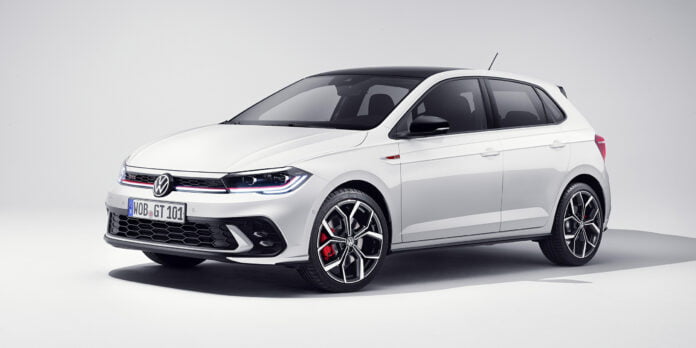
Date tested: July 2022
Read the full Euro NCAP review

Adult protection: 83%
Child protection: 85%
Vulnerable road users: 67%
Safety assist: 85%

The Alfa Romeo Tonale was tested by Euro NCAP in Summer 2022 and awarded a full five-star rating.

Testers commented that the SUV performs well in potential car-on-car and vulnerable road user crash avoidance tests, but also said that its crash protection scores are not the highest in its class as the car “lacks centre airbags and proves to be an aggressive collision partner in frontal crashes.”

Eco rating

Independent economy and emissions ratings from Green NCAP

No eco rating

As of February 2026, the Alfa Romeo Tonale has not been assessed by Green NCAP.

Running cost rating

Clear Vehicle Data logo close crop

Monthly cost of ownership data provided exclusively for The Car Expert by Clear Vehicle Data

Fuel consumptionAverageScore
Petrol models49 mpgC
Plug-in hybrid models220 mpgA
CO₂ outputAverageScoreVariationScore
Petrol models129 g/kmB
Plug-in hybrid models31 g/kmA
Battery rangeAverageScoreVariationScore
Plug-in hybrid models38 milesE
Insurance groupAverageScoreVariationScore
All models33D
Service and maintenanceCostScore
Year 1£269C
Year 2£743D
Year 3£1,197D
Year 4£1,494D
Year 5£1,957D
Overall£5,660D

Running costs for the Alfa Romeo Tonale are pretty average, according to whole-life ownership cost data exclusively provided by our technical partner, Clear Vehicle Data.

Emissions on the plug-in hybrid model are very low, although that’s helped by the fairly lame EU/UK government lab tests that don’t necessarily relate to real-world usage. We don’t have fuel consumption data as yet, but it should also be decent.

The Tonale’s insurance premiums are not overly expensive but not cheap either, and its service and maintenance costs are predicted to be on par with rivals like the Range Rover Evoque and Jaguar E-Pace.

Reliability rating

MotorEasy logo 600x167

Reliability data provided exclusively for The Car Expert by MotorEasy

No reliability rating

As of February 2026, we don’t have enough reliability data on the Alfa Romeo Tonale to generate a reliability rating.

The Car Expert’s reliability information is provided exclusively for us using extended warranty data from our partner, MotorEasy. As soon as MotorEasy has sufficient data on the Tonale, we’ll publish the score here.

Warranty rating

New car warranty information for the Alfa Romeo Tonale

Overall ratingB62%
Petrol or diesel modelsC51%
Electric or hybrid modelsB77%
New car warranty duration5 years
New car warranty mileage75,000 miles
Battery warranty duration8 years
Battery warranty mileage100,000 miles

Alfa Romeo’s new car warranty is better than average, and better than most premium brands in a similar price bracket as the Tonale.

The duration is five years, with a limit of 75,000 miles. In addition to the standard new car warranty, the Tonale plug-in hybrid version has an eight-year/100,000-mile warranty for the battery components.

Warranty on a used Alfa Romeo Tonale

  • If you are buying an ‘Alfa Romeo Certified’ Tonale from an official Alfa Romeo dealership, you will get a minimum 12-month warranty included.
  • If you are buying a used Alfa Romeo Tonale from an independent dealership, any warranty offered will vary and will probably be managed by a third-party warranty company.
  • If you are buying a used Alfa Romeo Tonale from a private seller, there are no warranty protections beyond any remaining portion of the original new car warranty.

If you’re looking to buy any used car that is approaching the end of its warranty period, a used car warranty is usually a worthwhile investment. Check out The Car Expert’s guide to the best used car warranty providers, which will probably be cheaper than a warranty sold by a dealer.

Recalls

Official DVSA safety recalls that have been issued for the Alfa Romeo Tonale

Date: June 2024
Model types: All
Build dates: 11/2022 to 05/2023
Number of vehicles affected: 26
Defect: Certain vehicles may have been equipped with an open roof anti-pinch system which does not operate according to specification.
Remedy: If required the two motors will be replaced.

Date: May 2024
Model types: All
Build dates: 12/2022 to 06/2023
Number of vehicles affected: 256
Defect: Affected vehicles may display incorrect tyre size information on the Certificate of Conformity (CoC).
Remedy: The CoC must be replaced.

Date: June 2024
Model types: All
Build dates: 11/2022 to 05/2023
Number of vehicles affected: 26
Defect: Certain vehicles may have been equipped with an open roof anti-pinch system which does not operate according to specification.
Remedy: If required the two motors will be replaced.

Date: May 2024
Model types: All
Build dates: 12/2022 to 06/2023
Number of vehicles affected: 256
Defect: Affected vehicles may display incorrect tyre size information on the Certificate of Conformity (CoC).
Remedy: The CoC must be replaced.

Date: October 2022
Model types: All
Build dates: 03/2022 to 09/2022
Number of vehicles affected: 107
Defect: Brake lights may remain illuminated when cruise control engaged.
Remedy: Update the software of the body computer module.

As of September 2024 (our most recent data point), there have been five DVSA vehicle safety recalls on the Alfa Romeo Tonale to address different issues. However, recall information is updated regularly, so this may have changed.

Not all vehicles are affected by recalls. You can check to see if your car is included in any of the above recalls by visiting the DVLA website or contacting your local Alfa Romeo dealer.

If your car is affected by a recall, the vehicle must be repaired and you should not be charged for any work required. If you are buying a used Tonale, you should insist that any outstanding recall work is completed before you take delivery of the vehicle.

Similar cars

If you’re looking at the Alfa Romeo Tonale, you might also be interested in these alternatives

Audi Q3 | BMW X1 | BMW X2 | DS 3 Crossback | Jaguar E-Pace | Lexus UX | Mercedes-Benz GLA | Range Rover Evoque | Volvo XC40

More information

More news, reviews and information about the Alfa Romeo Tonale at The Car Expert

Everything you need to know about Alfa Romeo

Everything you need to know about Alfa Romeo

Alfa Romeo ‘Tributo Italiano’ models now available

Alfa Romeo ‘Tributo Italiano’ models now available

Alfa Romeo prices up Tonale plug-in hybrid

Alfa Romeo prices up Tonale plug-in hybrid

Alfa Romeo Tonale now available to order

Alfa Romeo Tonale now available to order

Alfa Romeo reveals Tonale small SUV

Alfa Romeo reveals Tonale small SUV

Geneva: Alfa Romeo SUV concept steals the show

Geneva: Alfa Romeo SUV concept steals the show

Buy an Alfa Romeo Tonale

If you’re looking to buy a new or used Alfa Romeo Tonale, The Car Expert’s partners can help you find the right car.

Motors.co.uk logo transparent 600x300

Find your next used car with Motors. Find out more

Carwow logo 600x300

Discover great deals available on both new and used cars. Find out more

Auto Trader logo 600x300

Search for your next new or used car with Auto Trader. Find out more

Lease an Alfa Romeo Tonale

If you’re looking to lease a new Alfa Romeo Tonale, The Car Expert’s partners can help you find a competitive deal.

Carparison 600x300

Personal contract hire deals from Carparison Leasing. Find out more

Leasing-com logo

Personal contract hire deals from Leasing.com. Find out more

Select Car Leasing logo

Personal contract hire deals from Select Car Leasing. Find out more

Car subscriptions

If you’re interested in a car subscription, The Car Expert’s partners can help. (PS: What’s a car subscription?)

SelfDrive UK logo

Car subscriptions from SelfDrive.
Find out more

Cocoon Vehicles logo 600x300

Car subscriptions from Cocoon.
Find out more

Just Vehicle Solutions logo 600x300

Car subscriptions from Just Vehicle Solutions.
Find out more

Porsche 911 GT3

Summary

The Porsche 911 GT3 is a lightweight, high-performance version of the regular 911 coupé (992 generation). This is the fourth-generation version of the 911 GT3, which arrived in the UK in 2021.

The range consists of the standard GT3, along with the GT3 Touring version, which replaces the coupé’s enormous fixed rear wing with an automatically deployable rear spoiler.

Above those two is the even-higher performance GT3 RS model, which joined the line-up in 2022. This comes with several bodywork changes to improve aerodynamics and a minor performance boost. All models make use of the same 510hp (518hp for the GT3 RS) 4.0-litre six-cylinder petrol engine as the previous GT3 range, which produces a 0-62mph sprint time of 3.4 seconds. Both manual and automatic gearboxes are available.

As with previous GT3 generations, the current 911 GT3 range has had a rapturous reception from the British motoring media. Top Gear describes it as “phenomenal”.

“It’s married to one of the most sublime engines fitted to any car on sale today”, says Alex Ingram of Auto Express. “Compared with rival performance machinery, it’s even staggeringly good value for money.” While the GT3’s six-figure price tag is not exactly affordable for the average UK buyer, the coupé is still cheaper than equivalent performance rivals like the Aston Martin Vantage, McLaren 765 LT, and Mercedes-AMG GT Pro.

As of March 2026, the Porsche 911 GT3 holds a New Car Expert Rating of D with a score of 55%. While the coupé has an outstanding collection of review scores, its reliability and expensive running costs seriously hinder its overall score.

911 GT3 highlights

  • Blistering pace and acceleration
  • Aerodynamics are functional as well as aesthetic
  • Class-leading driving dynamics
  • Price undercuts key rivals

911 GT3 lowlights

  • Load road noise at high speed
  • Raw performance can be hard to handle
  • Reduced equipment levels compared to regular 911
  • Still expensive, base price and up

Key specifications

Body style: Coupé
Engines:
petrol
Price:
From £135,700 on-road

Launched: Autumn 2021
Last updated: Summer 2022
Replacement due: TBA

Media reviews

Highlighted reviews and road tests from across the UK automotive media. Click any of the boxes to view.

Auto Express

Car

Evo

Motoring Research

The Sunday Times

Top Gear

Safety rating

Independent crash test and safety ratings from Euro NCAP

No safety rating

As of March 2026, the Porsche 911 range has not been crash tested by Euro NCAP. Given that previous generations of 911 have never been tested, we’re not expecting this one to be put through the Euro NCAP programme, either.

Eco rating

Independent economy and emissions ratings from Green NCAP

No eco rating

As of March 2026, the Porsche 911 GT3 has not been lab tested by Green NCAP. Due to its price and exclusivity, it is unlikely to have its emissions tested in the future.

Reliability rating

Reliability data provided exclusively for The Car Expert by MotorEasy

All data based on MotorEasy average workshop costs for extended car warranty claims

The overall Porsche 911 family has a poor reliability rating of 12%, according to warranty data provided exclusively to The Car Expert by our partner MotorEasy. This applies to both the current 911 range (including the GT3) and previous generations, although it’s based on a relatively small number of data points.

Also worth noting is the very high average repair cost for 911 repairs, at close to £2,000. In every category, the average repair bills are significantly higher than normal, but most notably for engine repairs, where the average warranty claim for repairs to the famed Porsche flat-six engine was more than £3,400.

If you own or are considering a used Porsche 911, make sure that any used car warranty covers all these critical areas.

Running cost rating

Clear Vehicle Data logo close crop

Monthly cost of ownership data provided exclusively for The Car Expert by Clear Vehicle Data

Fuel consumptionAverageScore
Petrol models22 mpgE
CO₂ outputAverageScoreVariationScore
Petrol models295 g/kmE
Insurance groupAverageScoreVariationScore
All models50F
Service and maintenanceCostScore
Year 1£662E
Year 2£1,539E
Year 3£2,415E
Year 4£2,970E
Year 5£3,655E
Overall£11,241E

As you might have guessed, the Porsche 911 GT3 is a very expensive car to own and run, according to whole-life cost numbers provided exclusively to The Car Expert by our data partner, Clear Vehicle Data.

The coupé’s 4.0-litre engine offers just 22 mpg, which means much more frequent visits to the petrol pumps. The car’s insurance premiums are in the highest bracket, and servicing and maintenance costs total a predicted £11,000 after five years of ownership.

Awards

Trophies, prizes and awards that the Porsche 911 GT3 has received.

2023

  • Auto Trader Awards – Rory Reid Award (GT3 RS)

Similar cars

If you’re looking at the Porsche 911 GT3, you might also be interested in these alternatives.

Aston Martin Vantage | Audi R8 | Ferrari 296 GTB | Lotus Emira | McLaren 765 LT Mercedes-AMG GT | Nissan GT-R

More news, reviews and information about the Porsche 911 range at The Car Expert

Everything you need to know about Porsche

Everything you need to know about Porsche

Porsche 911 Turbo

Porsche 911 Turbo

The best new convertibles for every budget

The best new convertibles for every budget

Porsche 911 Targa 4S test drive

Porsche 911 Targa 4S test drive

Porsche 911 Turbo S Cabriolet test drive

Porsche 911 Turbo S Cabriolet test drive

Porsche 911 Turbo S revealed with 650hp

Porsche 911 Turbo S revealed with 650hp

Entry-level Porsche Carrera to cost from £82.8K

Entry-level Porsche Carrera to cost from £82.8K

Porsche 911

Porsche 911

Porsche 911 Carrera S test drive

Porsche 911 Carrera S test drive

Porsche lifts the lid on drop-top 911 Cabriolet

Porsche lifts the lid on drop-top 911 Cabriolet

New cars to look forward to in 2019

New cars to look forward to in 2019

Eighth-generation Porsche 911 revealed

Eighth-generation Porsche 911 revealed

Buy a Porsche 911 GT3

If you’re looking to buy a new or used Porsche 911 GT3, The Car Expert’s partners can help you find the right car

Motors 600x300

Find your next used car with Motors. Find out more

Auto Trader logo 600x300

Find your next new or used car with Auto Trader. Find out more

Carwow logo 600x300

Find your next new or used car with Carwow. Find out more

Honda Civic

Summary

The Honda Civic – officially badged Civic e:HEV – has never dominated UK sales charts, but it has been a consistent and distinctive presence for more than 50 years. This 11th-generation model is now offered exclusively as a petrol-electric hybrid.

In a market where many family buyers have moved towards SUV-style vehicles, the Civic remains one of the few traditional hatchbacks left standing. For drivers who prefer a lower seating position, sharper steering and a more connected feel on the road, that alone makes it worth a look.

UK media reviews have been consistently positive. Testers regularly praise the Civic’s balance between comfort and handling, with several describing it as one of the best cars in its class to drive. The steering, in particular, stands out for its precision and feedback, giving the car a more natural and reassuring feel than many newer rivals.

Inside, reviewers highlight the clear instrument layout and the welcome presence of physical switches and dials for key functions, rather than burying everything in a touchscreen. Cabin quality is generally rated highly, although rear headroom is tighter than in some competitors and the price is higher than mainstream alternatives such as the Toyota Corolla.

Fuel economy is strong for a family hatchback, helping to offset the higher purchase price, while safety results and reliability data are both very good. Honda’s standard three-year warranty is only average by current standards.

As of February 2026, the Honda Civic holds a New Car Expert Rating of A with a score of 72%. Strong media scores, good safety results and excellent reliability performance combine to make it one of the most accomplished family hatchbacks currently on sale.

Civic highlights

  • Excellent steering and genuinely enjoyable to drive
  • Strong real-world fuel economy
  • Clear dashboard with proper buttons and switches
  • Spacious boot and clever storage touches
  • Proven reliability record

Civic lowlights

  • Higher starting price than most alternatives
  • Rear headroom tight for taller passengers
  • Automatic gearbox can feel strained under hard acceleration
  • Only available as a hybrid
  • Three-year warranty is only average

Key specifications

Body style: Medium liftback
Engines:
petrol-electric hybrid
Price:
From £33,795 on-road

Launched: Autumn 2022
Last updated: Summer 2025
Replacement due: TBA

Media reviews

Highlighted reviews and road tests from across the UK automotive media. Click any of the boxes to view.

Featured reviews

More reviews

Auto Express

Auto Trader

Business Car

Car

Carbuyer

Daily Mirror

Driving Electric

Evo

Heycar

Honest John

Parkers

The Sunday Times

The Telegraph

Top Gear

Safety rating

Independent crash test and safety ratings from Euro NCAP

Overall score: 5 stars
Date tested: November 2022
Read the full Euro NCAP review

Adult protection: 89%
Child protection: 87%
Vulnerable road users: 82%
Safety assist: 83%

Eco rating

Independent economy and emissions ratings from Green NCAP

Model tested: 2.0-litre petrol/electric hybrid automatic

Overall score: 3 stars

Date tested: November 2024
Read the full Green NCAP review

Clean Air Index: 7.2 / 10
Energy Efficiency Index: 5.5 / 10
Greenhouse Gas Index: 4.1 / 10

Running cost rating

Clear Vehicle Data logo close crop

Monthly cost of ownership data provided exclusively for The Car Expert by Clear Vehicle Data

Fuel consumptionAverageScore
Hybrid models58 mpgB
CO₂ outputAverageScoreVariationScore
Hybrid models112 g/kmB
Insurance groupAverageScoreVariationScore
All models28C
Service and maintenanceCostScore
Year 1£231C
Year 2£530B
Year 3£825B
Year 4£997B
Year 5£1,390B
Overall£3,973B

The Honda Civic is a relatively inexpensive car to run, according to long-term ownership cost data provided exclusively to The Car Expert by our partner, Clear Vehicle Data.

The Civic scores consistently well across fuel economy, road tax (which is taken from the CO2 score), insurance group and servicing costs. If you’re looking for a new car with low running costs, the Honda Civic should be on your shopping list.

Reliability rating

MotorEasy logo 600x167

Reliability data provided exclusively for The Car Expert by MotorEasy

All data based on MotorEasy average workshop costs for extended car warranty claims

The Honda Civic has a very high reliability rating of 85%, according to warranty data provided exclusively to us by our commercial partner, MotorEasy. This score applies to both the current Civic and also to previous generations, which is worth considering if you are considering a used Honda Civic.

Based on more than 200 warranty claims, the average repair cost is about £400 so a used car warranty is well worth considering if you own or are considering a Civic. The most frequent claimant concern is the braking system, with an average bill of about £150. Engine faults are unsurprisingly the most expensive problems, and are not uncommon in the Civic.

Make sure that any used car warranty you purchase covers all of these problem areas.

Warranty rating

New car warranty information for the Honda Civic

Overall ratingC50%
New car warranty duration3 years
New car warranty mileage60,000 miles
Battery warranty duration8 years
Battery warranty mileage100,000 miles

Honda’s new car warranty is pretty much the bare minimum offered in the UK, with a duration of three years and a limit of 60,000 miles. Other rivals in the price bracket do better (and in some cases, much better).

In addition to the standard new car warranty, the Civic has an eight-year/100,000-mile warranty for the battery components.

Warranty on a used Honda Civic

  • If you are buying an ‘Approved Used’ Honda Civic from an official Honda dealership, you will get a minimum 12-month warranty included.
  • If you are buying a used Honda Civic from an independent dealership, any warranty offered will vary and will probably be managed by a third-party warranty company.
  • If you are buying a used Honda Civic from a private seller, there are no warranty protections beyond any remaining portion of the original new car warranty.

If you’re looking to buy any used car that is approaching the end of its warranty period, a used car warranty is usually a worthwhile investment. Check out The Car Expert’s guide to the best used car warranty providers, which will probably be cheaper than a warranty sold by a dealer.

Recalls

Official DVSA safety recalls that have been issued for the Honda Civic

As of February 2026, we are not aware of any DVSA vehicle safety recalls affecting this generation of the Honda Civic. However, this information is updated very regularly so this may have changed.

You can check to see if your car has any outstanding recalls by visiting the DVLA website or contacting your local Honda dealer.

Awards

Significant UK trophies and awards that the Honda Civic has received

2023

  • Auto Express Awards – Best Affordable Hybrid Car
  • Business Motoring Awards – Best Medium Car, Best Hybrid + Best Company Car
  • Carbuyer Awards – Best Hybrid
  • EcoCar Electrified Top 50 – Best Hybrid Medium Car
  • Parkers Awards – Best Medium Family Car

2022

  • Scottish Car of the Year Awards – Car of the Year + Best Family Car
  • Parkers New Car Awards – Car of the Year + Best Medium Family Car

Similar cars

If you’re looking at the Honda Civic, you might also be interested in these alternatives

Current models: Audi A3 | Citroën C4 | Cupra LeonHyundai i30 | Kia K4Mazda 3 | Mercedes-Benz A-Class | Mercedes-Benz CLA Hybrid | Peugeot 308 | SEAT Leon | Skoda Scala | Skoda Octavia | Toyota Corolla | Vauxhall Astra | Volkswagen Golf

Discontinued models: Fiat Tipo (2016 to 2024) | Ford Focus (2018 to 2025) | Kia Ceed (2018 to 2025) | Mercedes-Benz CLA (2019 to 2025)Renault Megane (2016 to 2022) | 

More news, reviews and information about the Honda Civic at The Car Expert

Everything you need to know about Honda

Everything you need to know about Honda

The best used family cars for every budget in 2025

The best used family cars for every budget in 2025

Honda Civic hybrid review

Honda Civic hybrid review

The safest new cars on sale in the UK

The safest new cars on sale in the UK

Five-star crash test results for 15 new cars

Five-star crash test results for 15 new cars

Honda prices up all-new Civic

Honda prices up all-new Civic

All-new Honda Civic revealed

All-new Honda Civic revealed

Refreshed Honda Civic Type R adds hardcore and stealthier versions

Refreshed Honda Civic Type R adds hardcore and stealthier versions

Honda Civic upgraded for 2020 model year

Honda Civic upgraded for 2020 model year

Honda Civic (2017 to 2022)

Honda Civic (2017 to 2022)

Twin test: Renault Megane RS vs. Honda Civic Type R

Twin test: Renault Megane RS vs. Honda Civic Type R

Honda Civic 4 Door review

Honda Civic 4 Door review

Buy a Honda Civic

If you’re looking to buy a new or used Honda Civic, The Car Expert’s partners can help you find the right car

Motors 600x300

Search less, live more. We make finding the right car simple. Find out more

Auto Trader logo 600x300

Search for your next new or used car with Auto Trader. Find out more

Carwow logo 600x300

Discover great deals available on both new and used cars. Find out more

Lease a Honda Civic

If you’re looking to lease a new Honda Civic, The Car Expert’s partners can help you find a competitive deal

Carparison 600x300

Personal contract hire deals from Carparison Leasing. Find out more

Leasing-com logo

Personal contract hire deals from Leasing.com. Find out more

Select Car Leasing logo

Personal contract hire deals from Select Car Leasing. Find out more

Subscribe to a Honda Civic

If you’re interested in a car subscription, The Car Expert’s partners can help (PS: What’s a car subscription?)

SelfDrive UK logo

Car subscriptions from SelfDrive.
Find out more

Cocoon Vehicles logo 600x300

Car subscriptions from Cocoon.
Find out more

Just Vehicle Solutions logo 600x300

Car subscriptions from Just Vehicle Solutions.
Find out more

BMW M2 (2016 to 2021)

Summary

The BMW M2 was a compact sports coupé and the entry-level model in the BMW ‘M’ division range, sitting below the larger M3 saloon and M4 coupé.

This is the original M2, which first arrived on UK roads in early 2016. This initial model was then replaced by the more powerful M2 Competition in 2018, before the range-topping M2 CS coupé joined the line-up in 2020. This range came to the end of its production cycle in 2021, replaced by the second-generation M2 which arrived in 2023.

Described by Evo as “one of the most entertaining coupés money can buy”, the BMW M2 range received universal praise from the British motoring media during its time on sale – praised for retaining the practical sensibilities of the first-generation 2 Series Coupé it is based on, while offering the impressive pace and acceleration of an ‘M’ car.

“It’s probably the best sports coupé I have driven”, The Telegraph’s Andrew English explained, commending the M2 for its “thoroughly entertaining” driving dynamics and well-built interior.

That said, Carbuyer‘s Ben Custard pointed out that the M2’s interior was almost identical to the cabin design of the standard 2 Series, and thus concluded that the inside of the M2 is a bit bland by sports car standards as a result.

A few reviewers also noted the M2 was rather expensive, but as the cheapest model in the ‘M’ division family, Carwow‘s Mat Watson argued that the BMW was worth its high price tag. “The BMW M2 takes plenty of the M4’s high-tech components and squeezes them into a smaller yet still seriously rapid package to make one of the best driver’s cars you can buy.”

As of February 2026, the first-generation BMW M2 holds a Used Car Expert Rating of D, with a score of 55%. Although it scores top marks for its outstanding media reviews and driving characteristics, it’s let down by very high running costs.

M2 highlights

  • Serious pace and acceleration
  • More practical than the average sports car
  • Entertaining on the road
  • Comfortable and well-built interior
  • Attractive exterior styling

M2 lowlights

  • Expensive, base price and up
  • Interior is rather bland considering price
  • Manual gearbox could be smoother
  • Not very spacious in the rear

Key specifications

Body style: Coupé
Engines:
petrol
Price when new:
From £51,425 on-road

Launched: Spring 2016
Last updated: Summer 2020
Replacement due: Spring 2023

Media reviews

Highlighted reviews and road tests from across the UK automotive media. Click any of the boxes to view.

Auto Express

Auto Trader

Car

Car Keys

Carbuyer

Carwow

Evo

Honest John

The Sunday Times

The Telegraph

Top Gear

Safety rating

Independent crash test and safety ratings from Euro NCAP

No safety rating

The BMW 2 Series coupé family was not crash tested by Euro NCAP during its production life. Although it was based on the 1 Series hatchback, there were enough structural alterations to the 2 Series that it did not inherit the 1 Series rating.

Eco rating

Independent economy and emissions ratings from Green NCAP

No eco rating

The BMW M2 was not tested by Green NCAP during its production life.

Running cost rating

Clear Vehicle Data logo close crop

Monthly cost of ownership data provided exclusively for The Car Expert by Clear Vehicle Data

Fuel consumptionAverageScore
Petrol models29 mpgE
CO₂ outputAverageScoreVariationScore
Petrol models224 g/kmE
Insurance groupAverageScoreVariationScore
All models49E

The first-generation BMW M2 is an expensive car to own and run, according to whole-life cost numbers provided exclusively to The Car Expert by our data partner, Clear Vehicle Data.

Fuel consumption is predictably high, while insurance is also going to be expensive. We don’t have five-year servicing and maintenance costs due to the car’s age, but M-model BMWs are always more expensive than regular BMWs to service.

Reliability rating

MotorEasy logo 600x167

Reliability data provided exclusively for The Car Expert by MotorEasy

All data based on MotorEasy average workshop costs for extended car warranty claims

As of April 2025 (our most recent data point), the BMW 2 Series family has a fairly average reliability score of 66%, according to workshop and warranty data provided exclusively to The Car Expert by our partner, MotorEasy. This score applies to all versions of the 2 Series (coupé, convertible, MPVs), including the M2.

The average repair bill for the 2 Series is about £600, although that’s likely to be significantly higher for the M2 versions. The biggest bills to date have been gearbox-related, with an average repair cost of more than £1,700. Fuel system bills are also unusually expensive, with an average bill of £1,200.

If you own a BMW M2, or if you’re looking at buying a used M2, make sure that any used car warranty you purchase covers all of the problem areas shown above.

Awards

Trophies, prizes and awards that the BMW M2 has received.

2020

  • Evo Awards – Car of the Year (M2 CS)

2016

  • iF Design Award
  • Top Gear Awards – Best Coupé

Similar cars

If you’re looking at the BMW M2, you might also be interested in these alternatives.

Alpine A110 | Audi TT RSBMW M4 | Jaguar F-Type | Lotus Elise | Mercedes-AMG A 45 Porsche 718 Cayman | Toyota GR Supra

More news, reviews and information about the BMW M2 at The Car Expert

All the new cars launched at Goodwood 2025

All the new cars launched at Goodwood 2025

New high-performance BMW M2 CS revealed

New high-performance BMW M2 CS revealed

Revised design and new tech for BMW M2

Revised design and new tech for BMW M2

Best Performance Car 2024

Best Performance Car 2024

BMW M2

BMW M2

Last days of the dinosaurs: the best petrol cars under £75K

Last days of the dinosaurs: the best petrol cars under £75K

New BMW M2 set for Spring arrival

New BMW M2 set for Spring arrival

Buy a used BMW M2

If you’re looking to buy a BMW M2, The Car Expert’s partners can help you find the right car.

Motors 600x300

Search less, live more. We make finding the right car simple. Find out more

Auto Trader logo 600x300

Search for your next new or used car with Auto Trader. Find out more

Carwow logo 600x300

Discover great deals available on both new and used cars. Find out more

How salary sacrifice makes EVs cheaper

As the demand for electric vehicles (EVs) continues to grow, the big question on buyers’ lips is no longer “Do I want an EV?” but “I want an EV but how I am going to pay for it?”.

More and more electric models are becoming available in all shapes and sizes, from almost every car brand in the UK market. And although prices are still high compared to equivalent petrol or diesel cars, they are coming down. Combined with specific financing options that favour EVs, it’s entirely possible (depending on your circumstances) that you could get a new EV for a similar price to a comparable petrol car – plus enjoy the lower running costs that go with it.

Salary sacrifice vs traditional car finance

If you buy a new EV outright, or finance it using a traditional car finance product like a personal contract purchase (PCP), you are essentially paying a lot more for the car and banking on low running costs to offset the high price. If you’re leasing a car through a personal contract hire (PCH) leasing contract, it’s much the same thing.

In most cases, however, there’s still a higher overall cost in choosing an electric car than an equivalent petrol (or diesel) one. Even if you spend a lot on filling up with petrol or diesel each month, it’s tough to make the sums work in favour of an EV in an outright purchase or via conventional finance methods.

Which brings us to salary sacrifice.

The government-backed salary sacrifice scheme (often referred to as ‘sal-sac’) allows employees to reduce their cash earnings in return for a non-cash benefit, including a car. Because the deduction is made before income tax is applied, the scheme can represent a significant saving over a normal finance product, which you pay for from your after-tax salary.

But that’s not the end of the story. You can have a petrol or diesel car on salary sacrifice if you want, but what makes it particularly advantageous for electric cars is something called benefit-in-kind (BiK) tax.

If you are provided with a car through a salary sacrifice scheme, you have to pay BiK tax on the value of that car. But the amount of tax isn’t a flat rate like VAT – it depends on a combination of the car’s CO2 emissions and its overall price.

For a car that produces zero CO2 emissions (in other words, an EV), you pay only 2% in BiK tax. This is then multiplied by the car’s value (a particular number called the P11D value), multiplied by your income tax banding (20%, 40% or 45%).

By comparison, a petrol or diesel car could have a BiK tax rate of up to 37%, which could potentially equate to a difference of hundreds of pounds per month once you multiply it by the car’s P11D value and your income tax banding.

The net result of this is that salary sacrifice, while possible, is not usually advantageous for a petrol or diesel car compared to other finance methods. But if you want an electric car, you could end up paying much the same or even less – despite the car being much more expensive to start with.

So, all good news, right? Well, mostly. But there are some things you need to bear in mind.

A more complex set of numbers

Understanding how salary sacrifice works, and how much a given car actually costs compared to other forms of payment, can be confusing. This can put off many drivers – and their employers – from even investigating the idea.

If you want to find a PCP or lease deal on a given car, you can see results from any number of providers very easily. In fact, here at The Car Expert we work with several of the UK’s top leasing providers so you can get a quote on almost any new car in seconds.

Salary sacrifice is more complicated, and trying to find out equivalent numbers has traditionally been more difficult – largely because you need to factor in your own salary situation to generate a quote. For any three different people, the same car from the same provider could cost three different amounts of money, which is a very different concept to get your head around.

It also requires your employer to be part of the process, which can be a barrier for entry – especially if you work in a small business.

Traditionally, salary sacrifice programmes were usually only offered by large companies with hundreds of employees. Today, however, every very small SMEs can be part of a salary sacrifice programme.

What are the benefits of salary sacrifice?

There are benefits for both employees and employers from sourcing an electric vehicle through a salary sacrifice programme.

For the employee, the main benefits are:

  • Lower monthly payments than other types of finance
  • No up-front deposit required
  • Insurance, servicing, road tax and breakdown assistance can usually be included

The most obvious advantage is the lower overall cost, both in terms of reduced monthly payments and not having to find thousands of pounds up-front like you would with a PCP or PCH agreement.

Bundling in your other on-road costs may be helpful, or you may prefer to manage those separately. For example, if you have a multi-car insurance policy already, it may be cheaper to stick with that rather than run separate policies for each car in your household.

For employers, the main benefits are:

  • Savings through lower national insurance (NI) contributions
  • Attractive staff perk to help attract and retain employees

Because the car is paid from an employee’s gross salary, this reduces the company’s NI contribution. Depending on the number of employees using the scheme, this could be a small saving for your business or a much larger one.

More subjectively, having a salary sacrifice programme on the books makes a company more attractive for both new and existing employees. If they can save hundreds of pounds a month on their car bills, it’s like giving them a pay raise without any cost to your business.

What are the disadvantages of salary sacrifice?

Unsurprisingly, you can’t have a load of advantages and dramatically cheaper prices without some negative factors. So what are they?

For employees, the negatives are:

  • Gross salary is reduced, which affects holiday and pension pay
  • Potential liabilities if you leave the company or need to terminate the agreement
  • You can’t choose from different providers like you can with a normal lease

Because your salary is reduced to account for the car, it affects other calculations that are also determined by your salary – mainly things like your holiday pay, overtime rates and pension payments. While the savings in terms of your car payments will almost certainly outweigh any loss in holiday or overtime pay, pension is an investment in your future so you may want to consider upping your personal pension contribution to make up for any shortfall.

Different salary sacrifice providers may have different terms and conditions about ending your contract early, so you should check what your liabilities may be if you resign or get fired or take maternity leave or lose your licence, and so on.

Because the salary sacrifice programme is set up by your employer, you’re stuck with whoever that is. Some providers havce more favourable T&Cs than others, but you can’t choose your own provider (like you can with normal leasing) for a more favourable company.

For employers, the negatives are:

  • The company is responsible for leasing the vehicle, rather than the employee
  • Company has to manage the programme for its employees
  • Potential liabilities if employees resign, are on long-term leave or are made redundant

In a sal-sac environment, the company leases the car and provides it to the employee, like a company car set-up. That means that the company is ultimately responsible for it, which means paying for the vehicle and managing the programme. In a large company with lots of employees taking cars on salary sacrifice, that can be quite a workload. Depending on the circumstances, the company may also end up being stuck with the vehicle if the employee leaves the business.

Salary sacrifice providers have provisions for various scenarios to protect the company as well as the employee in the event of an early termination of the agreement, or the company may be able to allocate the vehicle to another employee, but the company will need to do its homework to make sure it is comfortable with the T&Cs of the programme.

Balancing the pros and cons

For a petrol or diesel car, salary sacrifice is no longer as popular as it used to be because the taxation system no longer offers any significant advantages. For EVs, however, it’s a very different situation.

The very low BiK rates for electric cars mean that drivers can potentially get behind the wheel of an EV for a similar cost to a petrol car, but still enjoy the lower running costs and environmental benefits of an electric car.

The added complexities of salary sacrifice schemes mean you need to take your pay situation into account to work out exactly how much a car is going to cost you, which is more of a faff than simply looking up leasing offers on the same car. Depending on who your company’s salary sacrifice provider is, this may be relatively simple or laboriously complicated to achieve.

You’re also limited by which provider your company uses for its sal-scheme, or whether your employer even operates a scheme at all. Like regular leasing, some companies have more restrictive T&Cs than others, and also different vehicles available. But unlike regular leasing, you can’t pick and choose who to use to supply your vehicle.

For employers, there is more responsibility to manage the scheme and the vehicles. The benefits are lower NI payments and an effectively cost-free pay rise for employees using the scheme instead of leasing an electric car with their after-tax salary.

As more new providers move into the EV salary sacrifice marketplace, they are bringing new ideas and energy. Some of the new players are very active in managing the proccess for companies, making life easier for everyone and reducing the barriers to entry. They are also actively chasing smaller companies to enrol in salary sacrifice programmes, bringing the opportunity to drive an EV for less money to far more people.

Additional reporting by Tom Johnston

Alfa Romeo updates Giulia and Stelvio

0

The Alfa Romeo Giulia saloon and Stelvio SUV will receive mild mid-life facelifts early next year, featuring exterior design tweaks, interior tech upgrades and an additional range-topping ‘Competizione trim grade.

Both the saloon and SUV will receive minor cosmetic changes – Alfa Romeo says that it has altered the air intakes that sit below the triangular ‘Trilobo’ grilles on both cars.

Above the air intakes, both the Giulia and Stelvio now come with new-look Matrix LED headlights, which automatically detect both directions of traffic to avoid blinding other cars. In the rear, both models also feature LED tail light redesigns too.

Stepping inside, the updated Giulia and Stelvio look nearly identical to pre-facelift models, apart from the new 12-inch digital instrument cluster behind the steering wheel.

Replacing traditional gauges, the cluster has three layout settings – the standard ‘Evolved’ setting, the ‘Relax’ option which doesn’t display detailed information, and the ‘Heritage’ setting which features graphics inspired by the design of Alfa Romeo models from the 1960s and 1970s.

Alfa Romeo has decided to alter the trim line-ups for both the Guilia and Stelvio. The brand has retained the entry-level ‘Sprint’ and mid-range ‘Veloce’ trim grades, while the current range-topping ‘Estrema’ trim will soon be dropped.

The facelifted Giulia will only be available with a 280hp petrol engine, while customers that opt for the Stelvio will be able to choose between a 280hp petrol or a 210hp diesel engine.

Facelifted Alfa Romeo Giulia

The facelifted range is instead topped by the new ‘Competizione’ special series trim grade. Based on the ‘Veloce’ trim level, the ‘Competizione’ will be available with any engine in Alfa Romeo’s current offering, and features suspension upgrades, 21-inch alloy wheels and red brake callipers.

The Giulia and Stelvio ‘Competizione’ are finished in a trim exclusive matte grey colour, and also come with rear privacy glass, a leather dashboard and a speaker system upgrade.

Alfa Romeo says that these facelifted models will arrive in the UK in early 2023 – pricing and trim spec details are yet to be confirmed.

The Alfa Romeo Guilia and Stelvio have both been frequently commended by the British motoring media for their attractive styling, as well as their performance and driving dynamics. That said, both cars have faced criticism for their interior quality, which is said to lag behind class-leading rivals from the likes of Audi, BMW and Mercedes-Benz.

The Giulia currently holds an Expert Rating of 75% – markedly higher than the Stelvio’s respectable but fairly average Expert Rating of 69%.

Vauxhall reveals Grandland GSe plug-in hybrid

0

Vauxhall has given us a look at the second model that is set to join its new performance-focused GSe range – the 300hp Grandland GSe SUV.

This announcement comes following the unveiling of the sporty Astra GSe hatchback and estate in September. Vauxhall has not had a performance-focused line-up since the VXR range was discontinued in 2017, and this new GSe marque will only produce electrified models.

The new Grandland GSe is no different. Powered by a 1.6-litre turbocharged petrol engine paired with two electric motors, this all-wheel drive plug-in hybrid can produce 75hp more than the standard Grandland plug-in hybrid – 300hp in total. The SUV’s top speed is capped at 146mph, and Vauxhall claims that it can complete a 0-62mph sprint in 6.1 seconds.

The manufacturer reports that this electrified powertrain offers a combined fuel consumption of 217mpg. Like the Astra GSe, this new performance-enhanced SUV also comes with suspension upgrades and steering calibration adjustments to make it more agile and comfortable while turning.

The Grandland GSe sports a few subtle cosmetic tweaks, including a rear diffuser redesign and GSe badging on the boot lid. The model sits on 19-inch alloy wheels, and can be specced with a black bonnet for an optional fee.

Inside, GSe versions of the Grandland gain alcantara-trimmed performance seats for the driver and front passenger. Although Vauxhall has not yet decided on the SUV’s UK pricing, the brand says that its Grandland GSe will become available to order early next year, with the first customer orders expected to be delivered sometime in Spring 2023.

The Vauxhall Grandland has been praised for its family-friendly practicality and safety features, but overall it is generally not regarded to be as good as several rivals in a fiercely competitive SUV sector. It currently holds an Expert Rating of 57%.

Genesis G80 gets sportier

0

Like its smaller G70 sibling, the upmarket Genesis G80 saloon range is now topped by a new ‘Sport’ trim grade, which introduces sportier exterior styling, some unique interior design touches and an exclusive bodywork colour.

The G80 Sport distinguishes itself from the standard model thanks to the sharp design revisions made to the lower front and rear bumpers, which the brands says gives the saloon a sportier appearance. The bright chrome exterior accents on the front bumper, grille, door sills and window edges of the standard model have been replaced by a darker gloss chrome finish.

The Sport sits on 19-inch alloy wheels as standard, but a larger 20-inch option is also available. Customers can choose between two different alloy designs, and can choose between black or red brake callipers.

Over a dozen exterior colours are available, including an exclusive ‘Cavendish Red’ colour that is only available with this ‘Sport’ package.

The red theme continues inside, with red piping on the quilted nappa leather upholstery and heated three-spoke sports steering wheel. The dashboard and door panels blend leather with carbon fibre detailing.

The G80 Sport can only be specced with a 304hp 2.5-litre turbocharged petrol engine, but both rear-wheel drive and all-wheel drive configurations are available. Prices for this top-spec trim start at just over £50k, and opting for all-wheel drive adds a further £2k to the final price tag.

The Genesis G80 has received a wide range of review scores, ranging from excellent to mediocre, reviewers often singling out the saloon’s upmarket interior trim and the brand’s ownership care plan and warranty for particular praise, while criticising the car’s rather rigid ride comfort and reportedly poor fuel economy. It currently holds an Expert Rating of 63%.