Kia has announced a new plug-in hybrid powertrain (PHEV) for its fifth-generation Kia Sportage SUV range, which already includes petrol, diesel, hybrid and mild-hybrid options.
Thanks to its 14kWh battery pack working in tandem with a 67kW electric motor, Kia promises that this new plug-in hybrid Sportage can travel 43 miles on just electric power from full charge.
By comparison, this new Sportage powertrain has more battery range than mainstream PHEV rivals like the Peugeot 3008 and Volkswagen Tiguan, which can travel 36 and 30 miles on a full battery respectively. That said, the similarly-sized Toyota RAV4 plug-in hybrid offers a slightly better 46-mile all-electric range for a higher starting price.
The Kia Sportage PHEV uses the same turbocharged 1.6-litre petrol engine as the mild-hybrid variant, providing a power output of 265hp and a combined petrol-electric fuel consumption of 252mpg. All plug-in models are fitted with a six-speed automatic gearbox.
The mild-hybrid version of the Sportage, which usually costs around £2,000 cheaper than the plug-in hybrid, cannot travel on electric power alone, instead allowing the petrol engine to switch off when the SUV is coasting, braking or stopping.
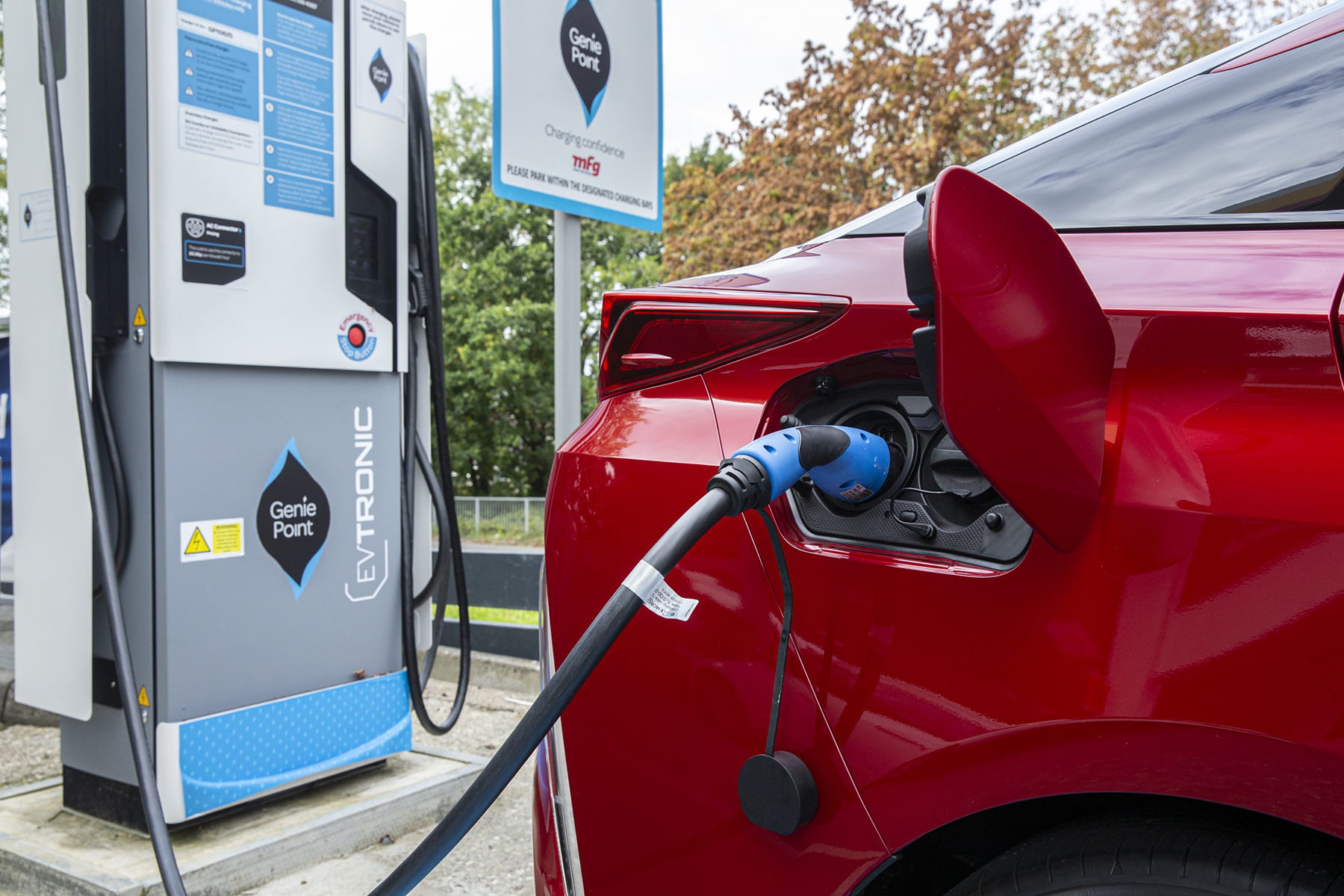
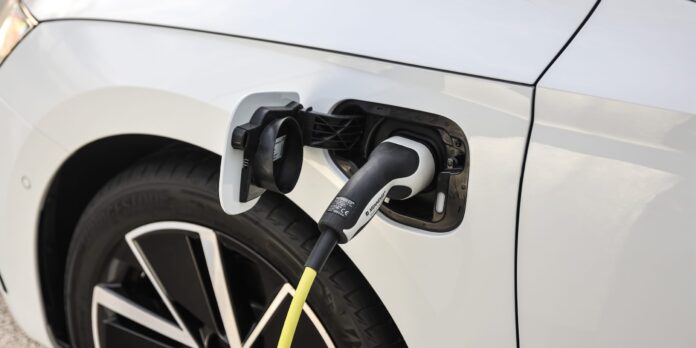
Kia says that this is its fastest-charging PHEV model to date – customers will be able to charge the battery from empty to full in one hour and 45 minutes. Kia also offers plug-in hybrid versions of its smaller Niro SUV, its larger Sorento SUV, and its XCeed hatchback.
Now available to order in the UK, this new plug-in hybrid engine is an option for every trim apart from the entry-level ‘2’ trim, which is only available with petrol and diesel powertrains.
Trims levels that offer the new plug-in hybrid powertrain
Trim level
Petrol version price
Plug-in hybrid version price
Additional features added at this trim level
Sportage GT-Line
£29,745
£38,395
4-inch head-up display Smart cruise control Lane keeping assistance Leather suede seats
Suede upholstery Ventilated seats Electric tailgate Two-tone roof
Prices for the Sportage PHEV models start at £38,395, while the cheapest model remains the petrol-powered Sportage ‘2’, which is priced at £26,745.
Since its arrival in early 2022, the current fifth-generation Kia Sportage has impressed reviewers with its generous seven-year warranty and bold exterior styling. However, many conclude that the closely-related Hyundai Tucson SUV is a better value-for-money proposition. The Kia Sportage currently holds an Expert Rating of 71%.
The MCPura is a lightly facelifted version of the original Maserati MC20, which arrived on UK streets in early 2022. There were no significant mechanical upgrades other than some revised suspension settings, with most of the changes limited to cosmetic and trim updates.
Like the MC20, the MCPura is available in both coupé and open-top (Cielo) versions, and is powered by a 620hp, twin-turbocharged V6 engine.
Media reviews have been very positive, with most titles praising the performance in both models. The minimalist interior hasn’t been quite so well-received, especially given that various features are optional extras rather than standard equipment.
Despite plenty of glowing review scores, the Maserati MC20 holds a New CarExpert Rating of E with a score of 53% as of March 2026 – a rating hindered by the supercar’s high running costs.
Highlighted reviews and road tests from across the UK automotive media. Click any of the boxes to view.
Featured reviews
“The Maserati MCPura is an easy car to fall for. Both the Ferrari 296 and McLaren Artura are more complete supercars, but the MCPura is one with a unique character that can happily lean into a GT-style role, and deliver an intense thrill when the moment comes to unleash it. It hasn’t quite stolen our hearts like it once did, but we’re glad it still exists as an unapologetically pure alternative to the hybrid norm.”
Model reviewed: MCPura Cielo Score: 8 / 10 “While the MCPura badge suggests a new start, in reality this is little more than a rebadged and mildly tweaked MC20 – and we are entirely fine with that. By resisting the urge to hybridise its sleek supercar, Maserati has preserved a driving experience that is raw, engaging, and brimming with soul. It is expensive, and the updates are subtle, but the combination of that Nettuno V6 and the drop-top drama makes this one of the most desirable supercars on the planet.” Author: Thomas Geiger Read review
Model reviewed: Cielo (2023) Score: 8 / 10 “While there’s no question of the Maserati MC20 Cielo’s static appeal, it’s not as exciting to drive as the coupe, and feels a little sparse considering its high price tag.” Author: Jordan Katsianis Read review
Model reviewed: MC20 Cielo convertible Score: 9 / 10 “Maserati’s MC20 supercar came from nowhere to deliver a unique and thrilling driving experience. This new Cielo version with its retractable hard top adds drama, retains so much of the poise and fury of the coupé and looks truly beautiful. It can stand toe to toe with McLaren and Ferrari on its own terms. What an achievement.” (Jethro Bovingdon) Read review
Model reviewed: Score: 9 / 10 “It’s been 18 years since Maserati last released a supercar, but it has been undoubtedly worth the wait. The MC20’s straight-line performance is incredible, yet it can be exploited through a wonderfully precise, agile, yet forgiving chassis. Some might yearn for a more dramatic noise, but the MC20 is authentic, and it earns a place right at the highest level of the supercar elite.” Read review
Auto Trader
Score: 10 / 10 “The Maserati MC20 is reborn as the MCPura, additional luxury trimmings adding to the existing appeal of raw speed and style.” Author: Dan Trent Read review
Model reviewed: Range overview Score: 10 / 10 “If there were six stars, we’d hand them out to this perfect example of an Italian supercar. Dressed to impress, with all the power and panache you’d expect, it also has the rarity factor and, surprisingly, a large dose of comfort.” (Erin Baker) Read review
Car
Model reviewed: MCPura Cielo Score: 10 / 10 “Maserati could have undoubtedly gone further to lift the MCPura’s cabin quality and usability, but I’m glad they left the mechanicals alone. Then there’s the ride and approachable handling that make the MCPura an easygoing companion on boring roads, and a trustworthy friend who certainly knows how to have a good time on a dry squiggle of road. With no hint of scuttle shake or chassis flex, the Cielo is perhaps the most tempting version of a fine junior supercar.” Author: Alan Taylor-Jones Read review
Model reviewed: MC20 Cielo roadster Score: 8 / 10 “The Maserati MC20 Cielo is a charming oddball choice. Emphatically old-school in more ways than one, it´s hard to believe that the very same DNA will next year spawn the 1000bhp-plus Folgore EV which is bound to rewrite the Maserati textbook. If money was no object, right now we’d rather a Ferrari 296 Spider, while putting in an early order for the upcoming Maser Folgore which will rock the supercar establishment, big time.” (Georg Kacher) Read review
Model reviewed: Coupé Score: 10 / 10 “We’ve waited a long time for Maserati to launch a car like the MC20 and, by every measure, it’s absolutely been worth the wait. There’s a feeling of engineering sparkle and polish that underlines almost every aspect of the car, from its deft handling to the everyday usability that makes it a viable daily runner.” Read review
Carbuyer
Model reviewed: Range overview Score: 7.6 / 10 “We recognise that practicality won’t be top priority for MC20 buyers, but something like a McLaren GT is able to carry longer and larger items like golf clubs.” Read review
Evo
Model reviewed: Coupé Score: 10 / 10 “The new Maserati MC20 has won evo’s heart, and eCoty 2022 along the way. This is a brilliant supercar, both to drive and to look at, with a distinct personality all its own.” Author: Adam Towler, Yousuf Ashraf Read review
Model reviewed: Cielo roadster Score: 9 / 10 “It comes at a premium, but the drop-top Maserati MC20 Cielo brings the coupe’s incredible thrills open-air at minimal compromise.” (Jethro Bovingdon) Read review
Motoring Research
Model reviewed: MC20 Cielo Score: 8 / 10 “The Maserati MC20 Cielo is priced from £230K, but the example I drove had some frighteningly expensive options. Once everything was totted up, its price started with a three. Ferrari, Lamborghini and others play the same game, of course, but the Maserati doesn’t need all the trimmings. Whatever the weather, it excels as a refreshingly uncomplicated and authentic supercar.” Author: Tim Pitt Read review
Parkers
Model reviewed: MCPura Cielo Score: 8.6 / 10 “A supercar without the hyperactivity.” Author: Alan Taylor-Jones Read review
Model reviewed: MC20 coupé Score: 8 / 10 “A scrappy and special supercar.” Author: Luke Wilkinson Read review
Model reviewed: MC20 Cielo Score: 8.2 / 10 “A charismatically gruff but comfy droptop supercar.” Author: Alan Taylor-Jones Read review
The Sunday Times
Model reviewed: MC20 Cielo roadster Score: 9 / 10 “The MC20 is widely regarded as one of the all-time great Maseratis, and the Cielo has done nothing to tarnish that image. It may suffer slightly for its extra weight when lapping a racetrack but, as a road-going supercar, it’s sublime. The neat roof, the exquisite balance and the formidable performance make it usable and easy to live with. In the rarefied atmosphere of supercars, it’s even good value.” Author: James Fossdyke Read review
Model reviewed: Score: 8 / 10 “It looks like a supercar but it’s more of a plain-Jane GT car really. A comfortable and quiet place to sit as the miles slip away. And it’s a lovely thing to look at. But the main reason I’d choose this over any other car of its type is simple. I liked it.” (Jeremy Clarkson) Read review
The Telegraph
Model reviewed: Coupé Score: 8 / 10 “Where rivals dazzle with hi-tech hybrids, the Maserati MC20 is a mid-engined Italian roadburner that’s pleasingly old-fashioned – and all the better for it.” Author: Andrew English Read review
Top Gear
Model reviewed: Coupé Score: 8 / 10 “The Maserati MC20 is a highly engaging and authentic supercar that also slips surprisingly persuasively into elegant GT mode” Read review
Safety rating
Independent crash test and safety ratings from Euro NCAP
No safety rating
As of March 2026, the Maserati MCPura/Maserati MC20 has not been tested by Euro NCAP. Due to its price and exclusivity, it is unlikely to be crash tested in the future.
Eco rating
Independent economy and emissions ratings from Green NCAP
No eco rating
As of March 2026, the Maserati MCPura/Maserati MC20 has not been lab tested by Green NCAP. Again, we’re not expecting it to ever happen.
Reliability rating
Reliability data provided exclusively for The Car Expert by MotorEasy
No reliability rating
As of March 2026, we don’t have enough reliability data on the Maserati MCPura/Maserati MC20 to generate a reliability rating.
The Car Expert’s reliability information is provided exclusively to us using extended warranty data from our partner, MotorEasy. As soon as MotorEasy has sufficient data on the MCPura/MC20, we’ll publish the score here.
Running cost rating
Monthly cost of ownership data provided exclusively for The Car Expert by Clear Vehicle Data
Fuel consumption
Average
Score
Petrol models
24 mpg
E
CO₂ output
Average
Score
Variation
Score
Petrol models
263 g/km
E
Insurance group
Average
Score
Variation
Score
All models
50
F
Service and maintenance
Cost
Score
Year 1
£598
E
Year 2
£1,469
E
Year 3
£2,209
E
Year 4
£2,622
E
Year 5
£3,502
E
Overall
£10,400
E
The Maserati MCPura/Maserati MC20 is an unsurprisingly expensive car to own and run, according to whole-life cost numbers provided exclusively to The Car Expert by our data partner, Clear Vehicle Data.
The insurance rating is an automatic F as all versions of the MC20 are a group 50 – the highest possible category.
The numbers above are unlikely to come as a shock to anyone considering a new or used MCPura/MC20.
Awards
Trophies, prizes and awards that the Maserati MC20 has received
2023
News UK Motoring Awards – Best Car Design
2022
Evo Awards – Car of the Year
2021
European Product Design Awards – Product Design of the Year
Similar cars
If you’re looking at the Maserati MCPura/Maserati MC20, you might also be interested in these alternatives
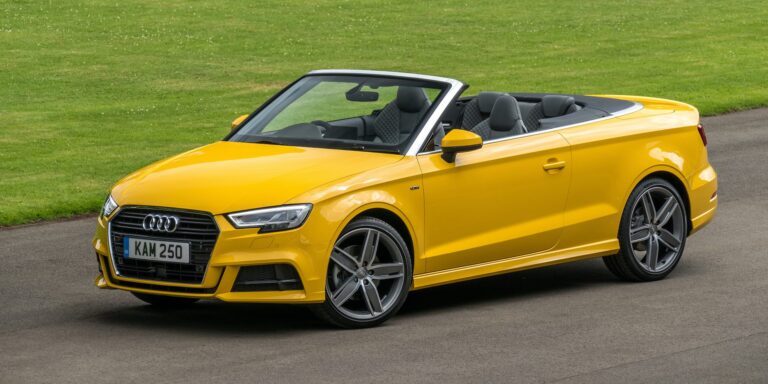
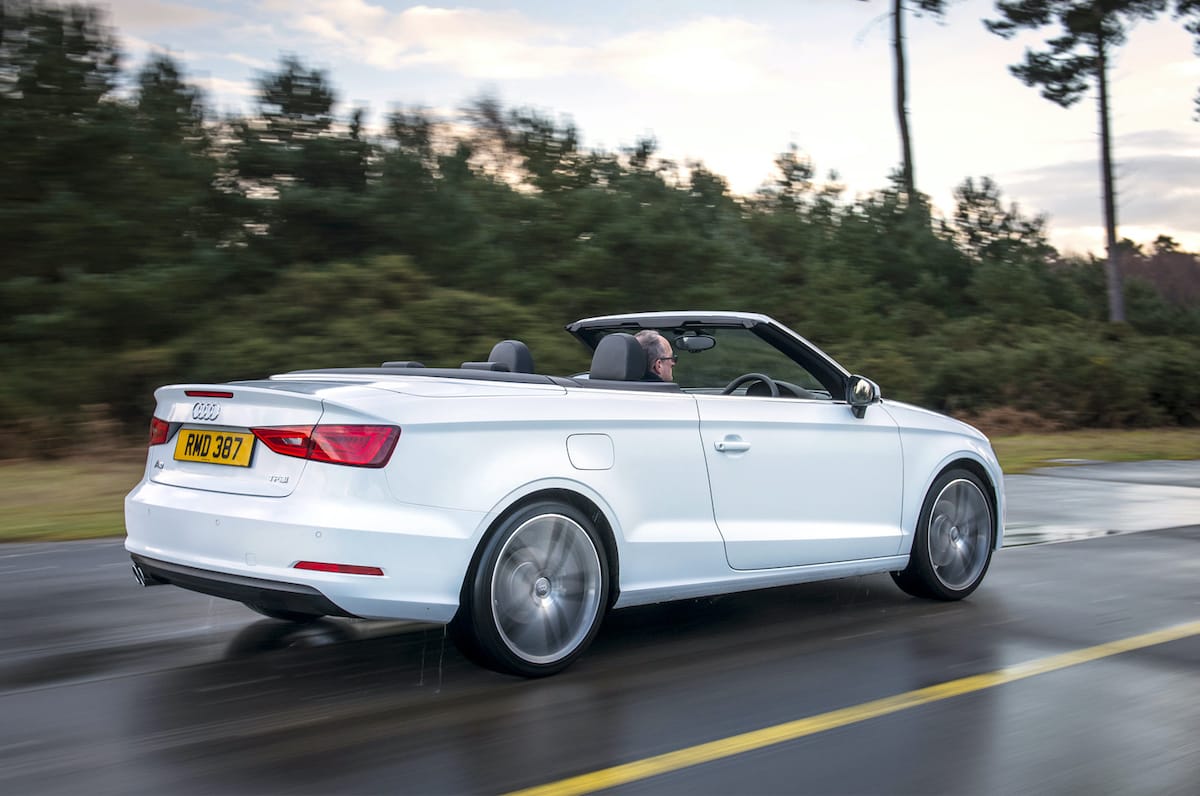
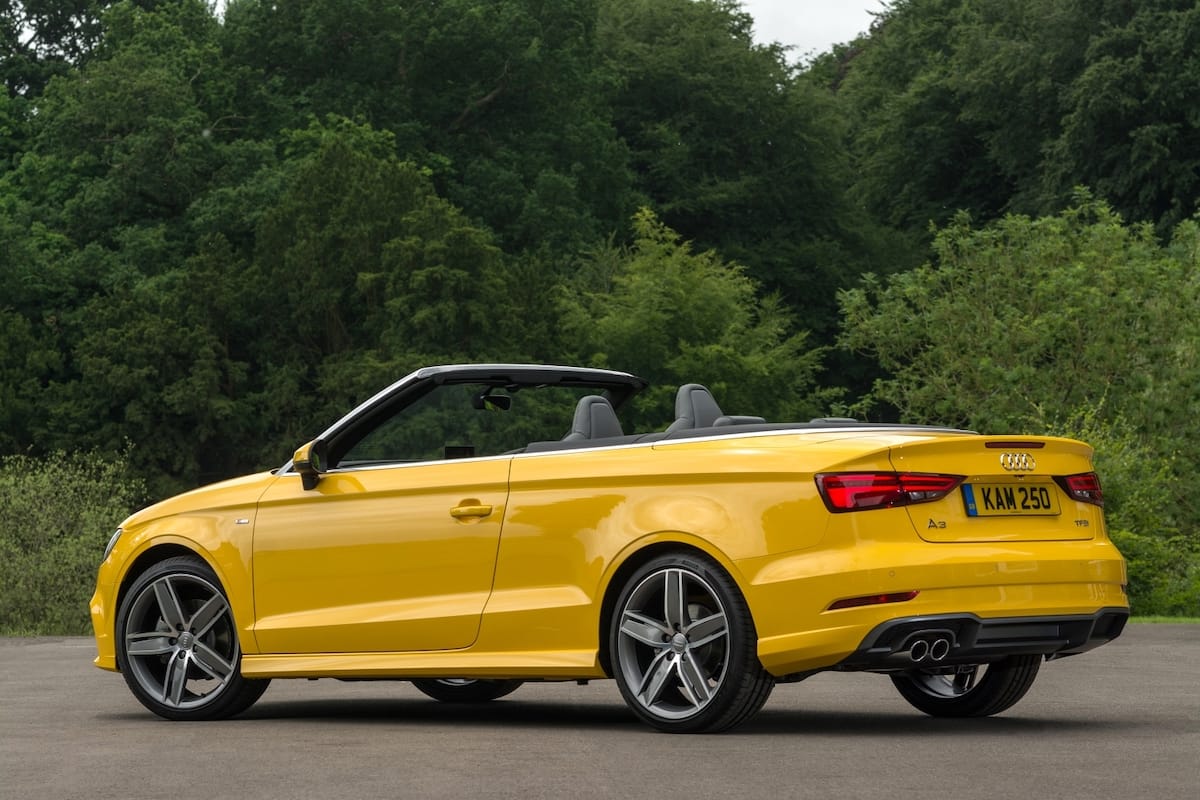
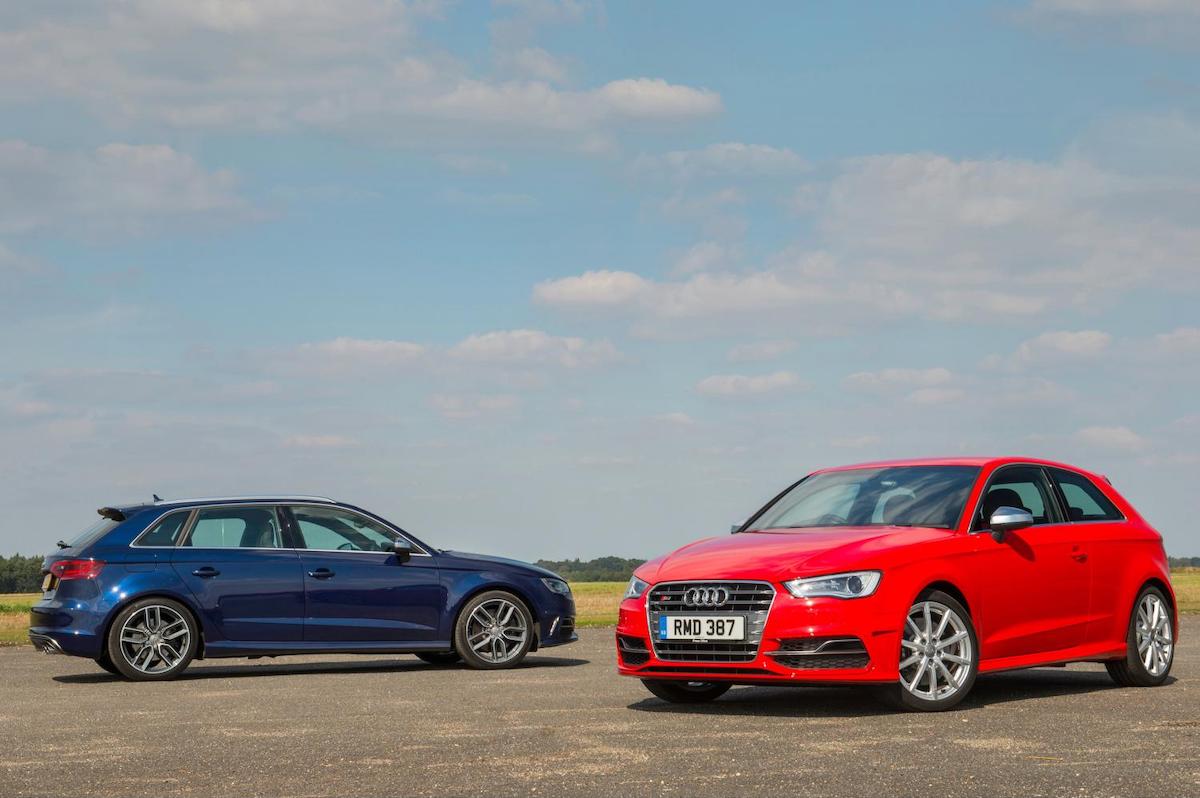
The Audi A3 Cabriolet is a compact two-door convertible, derived from the third-generation A3 hatchback. This model was launched in the UK in 2014 and continued until the end of its production life in 2020. It was not replaced when Audi launched the current A3 range.
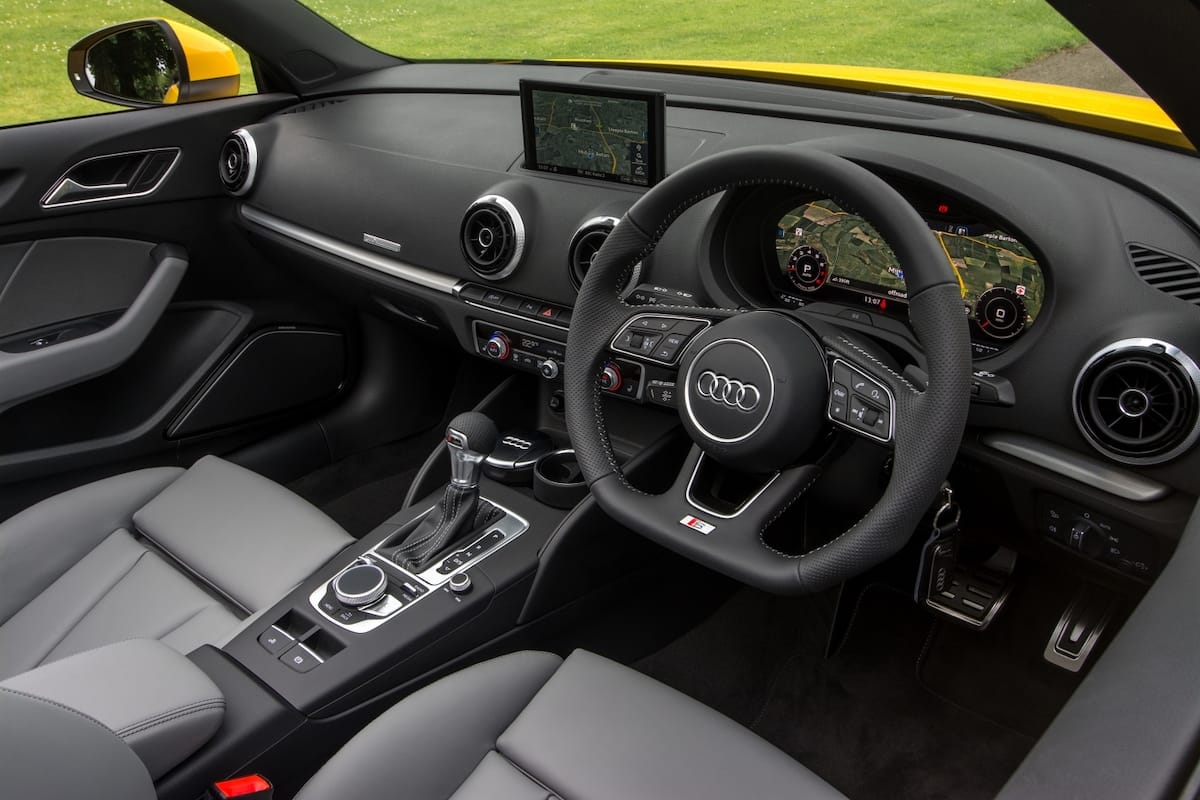
After two years on sale, the A3 Cabriolet received a mid-life facelift in 2016, consisting of cosmetic updates and new on-board tech additions. Throughout its lifespan the Cabriolet was available with a selection of petrol and diesel engines, and with either a six-speed manual or seven-speed automatic gearbox. The top-spec model was the S3 Cabriolet.
Many motoring outlets preferred the manual gearbox to the auto transmission, while several also took issue with the rather loud tyre and wind noise with the soft-top fabric roof closed. Other reviewers also warned potential buyers of the A3 Cabriolet’s steep pricing, as optional extras could easily push the price past £40,000.
That said, the Audi A3 Cabriolet had a very positive media reception during its life cycle, predominantly thanks to its “classy interior, good driving manners and a useful amount of (storage) space”, The Telegraph explained. While practicality was not the A3 Cabriolet’s speciality, it did come with a larger boot than the previous model – totalling 320-litres of boot space.
Impressed by the convertible’s exterior styling, Car commented that the A3 Cabriolet was a far more elegant proposition than its “slightly humpbacked” predecessor, while others praised the overall execution and efficient engines, which provided stronger performance and fuel economy than the previous A3 Cabriolet model.
Despite the performance upgrade, Car described the Cabriolet as “easygoing-if-not-spectacular drive”, while othersrecommended checking out the BMW 2 Series Convertible or Audi TT roadster instead if driving experience was a priority.
As of January 2025, the Audi A3 Cabriolet holds a Used Car Expert Rating of D, with a score of 61%.
Highlighted reviews and road tests from across the UK automotive media. Click any of the boxes to view.
The Car Expert
+
Model reviewed: “The Audi A3 Cabriolet is assured for a drop top, and in daily use the car will generally be a satisfactory companion.” Read review
Auto Express
+
Model reviewed: Score: 8 / 10 “The Audi A3 Cabriolet is a polished and premium car, and one of our favourite small convertibles.” Read review
Model reviewed: Score: 8 / 10 “Updates to the Audi A3 Cabriolet aren’t dramatic, but it remains a polished, premium drop-top. Audi has improved the cabin tech and increased the amount of standard kit, so what was already one of our favourite small convertibles has got a little bit better.” Read review
Model reviewed: 2013- Score: 8 / 10 “New Audi A3 Cabriolet is stylish and comfortable, but it doesn’t come cheap.” Read review
Auto Trader
+
Model reviewed: (2013-) Score: 4.6 / 10 “The Audi A3 Cabriolet is the best compact convertible there is. It’s effortlessly stylish, dripping with quality and it’s fun yet comfortable to drive.” Read review
Business Car
+
Model reviewed: (2013-) Score: 7 / 10 “The Audi A3 is a smart and classy soft-top for perk drivers.” Read review
Car
+
Model reviewed: 1.8 TFSI (2014) Score: 8 / 10 “We’ve been fans of the new A3 since its launch in three-door hatch, five-door Sportback, saloon and hot S3 guises. The Cabriolet, while no thriller, continues the trend.” Read review
Model reviewed: 2013- Score: 6 / 10 “Like other A3s, the Cabriolet is a competent, easygoing-if-not-spectacular drive, and the sports suspension is best avoided, as on-limit thrills and a hard ride aren’t its thing.” Read review
Car Keys
+
Model reviewed: S-Line 2.0 TDI Score: 8 / 10 “Stylish, smart and well-equipped, the Audi A3 Cabriolet is also a hoot to drive and, with the 148hp diesel at least, reasonably efficient to boot.” Read review
Model reviewed: 2015 Score: 8 / 10 “Audi’s A3 Cabriolet is now longer and wider, merging Germanic luxury with drop top driving.” Read review
Carbuyer
+
Score: 7.6 / 10 “The Audi A3 Cabriolet looks great – as well as being faster and more fuel-efficient than its predecessor.” Read review
Carwow
+
Model reviewed: Score: 8 / 10 “The Audi A3 Cabriolet trades some practicality for a generous portion of style.” Read review
Daily Mirror
+
Model reviewed: “If you want an extremely well-made compact four-seat convertible with a lot of performance, the Audi A3 Cabriolet has just what you’re seeking.” Read review
Evo
+
Model reviewed: Range review Score: 6 / 10 “The Audi A3 Cabriolet. It’s the second iteration of the littlest drop-top Audi, and compared to its slightly humpbacked predecessor, it’s a more elegant-looking proposition.” Read review
Green Car Guide
+
Model reviewed: A3 Cabriolet 1.4 TFSI Sport with CoD (140 PS) 6-speed manual Score: 9 / 10 “If you want a stylish and reasonably compact four-seater convertible that offers performance and economy, all in a refined package, then the Audi A3 Cabriolet 1.4 TFSI must surely be the answer.” Read review
Heycar
+
Model reviewed: (2013) “The Audi A3 Cabriolet stands out as a particularly well-executed model. It’s ageing well, being good to drive and nice to look at.” Read review
Honest John
+
Model reviewed: Score: 8 / 10 “The Audi A3 Cabriolet still looks fresh and desirable.” Read review
Parkers
+
Model reviewed: Score: 8 / 10 “The Audi A3 Cabriolet looks good, is great to drive, and has a fast folding roof and top quality interior.” Read review
The Sunday Times
+
Model reviewed: Score: 8 / 10 “Sun cream and shades at the ready – this Audi A3 Cabriolet should be at the top of buyers’ shortlists.” Read review
The Telegraph
+
Model reviewed: 1.5 TFSI Score: 8 / 10 “The Audi A3 Cabriolet remains a solid choice, combining a classy interior with good driving manners and a useful amount of space. This 1.5-litre petrol engine provides a smooth and quiet way to experience wind-in-the-hair motoring.” Read review
Model reviewed: 1.5-litre petrol automatic S Line Score: 8 / 10 “The Audi A3 Cabriolet remains a solid choice for those in the market for a soft-top, combining a classy interior with good driving manners and a useful amount of space. This 1.5-litre petrol engine doesn’t change that formula significantly, but still provides a smooth and quiet way to experience wind-in-the-hair motoring.” Read review
Model reviewed: Score: 8 / 10 “If you want a four-seater convertible that won’t feel like too much of a compromise when the sun isn’t shining, the Audi A3 Cabriolet could well be the car for you.” Read review
Safety rating
Independent crash test and safety ratings from Euro NCAP
No safety rating
The Audi A3 Cabriolet was not tested by Euro NCAP during its production life. The hatchback version of the A3 was tested in 2012 and awarded a five-star rating, but this did not apply to the Cabriolet version due to the significant structural changes resulting from removing the roof.
Eco rating
Independent economy and emissions ratings from Green NCAP
No eco rating
The Audi A3 Cabriolet was not tested by Green NCAP during its production life.
Reliability rating
Reliability data provided exclusively for The Car Expert by MotorEasy
Total claims: 679 Average repair cost: £643.58 Last updated: October 2024
As of October 2024, the Audi A3 range – including the A3 Cabriolet – has a poor reliability rating of 59%, according to warranty data provided exclusively to us by our commercial partner, MotorEasy. This score applies to both this generation A3 family and the previous (pre-2014) generation.
The average repair bill for claims is about £650, which is more than the cost of a used car warranty so that’s certainly worth considering if you are looking at a used A3.
Most repair bills to date seem to be pretty average in terms of cost. Gearbox problems are the most expensive to fix, which is not unusual, so make sure any used car warranty you purchase covers you for this.
Running cost rating
Monthly cost of ownership data provided exclusively for The Car Expert by Clear Vehicle Data
Fuel consumption
Average
Score
Variation
Score
Petrol models
40 mpg
D
33 – 43 mpg
C – E
CO₂ output
Average
Score
Variation
Score
Petrol models
162 g/km
C
149 – 193 g/km
B – D
Insurance group
Average
Score
Variation
Score
All models
34
C
29 – 46
C – D
The Audi A3 Cabriolet is a relatively expensive car to own and run, according to whole-life cost numbers provided exclusively to The Car Expert by our data partner, Clear Vehicle Data.
Fuel consumption is poor for a fairly small car, while insurance is only average. We don’t have five-year servicing cost data as the A3 Cabriolet is now long out of production, but Audi dealers are more expensive than average across the board.
Awards
Trophies, prizes and awards that the Audi A3 Cabriolet has received
2016
Carbuyer Awards – Best Convertible
2015
Auto Express Awards – Best Convertible
Carbuyer Awards – Best Convertible
2014
Auto Express Awards – Best Convertible
Scottish Car of the Year Awards – Best Drop-Top
Similar cars
If you’re looking at the Audi A3 Cabriolet, you might also be interested in these alternatives
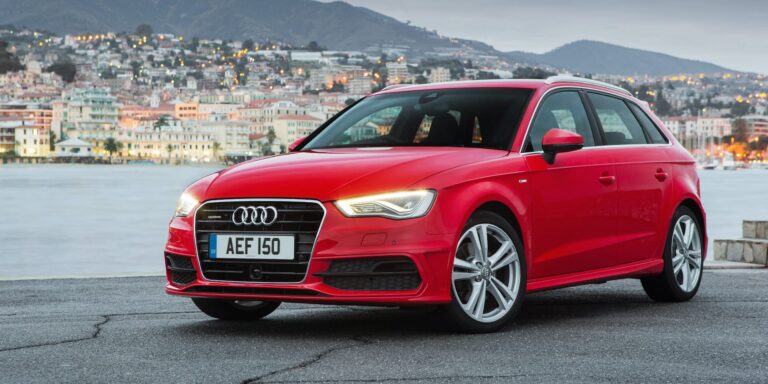
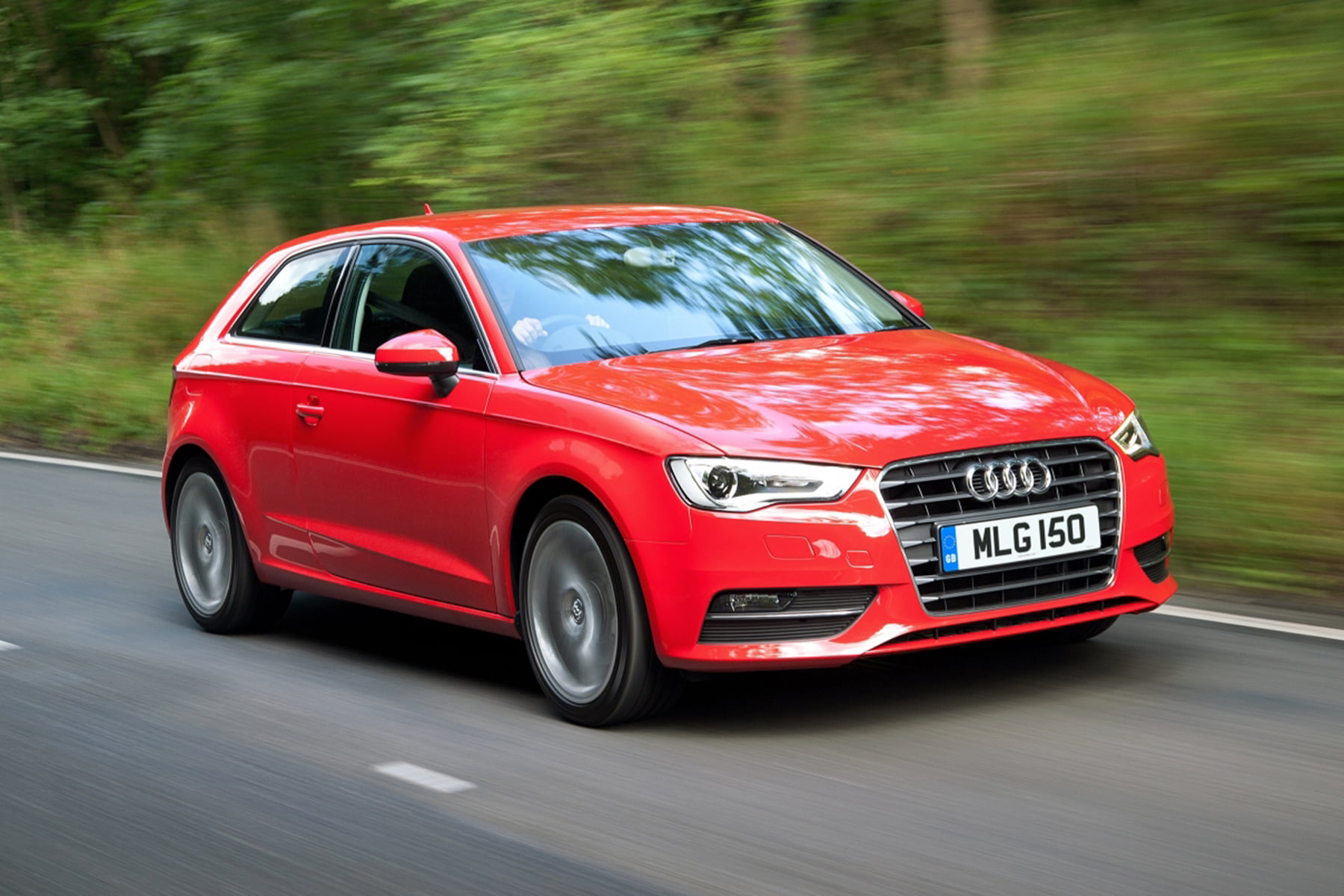
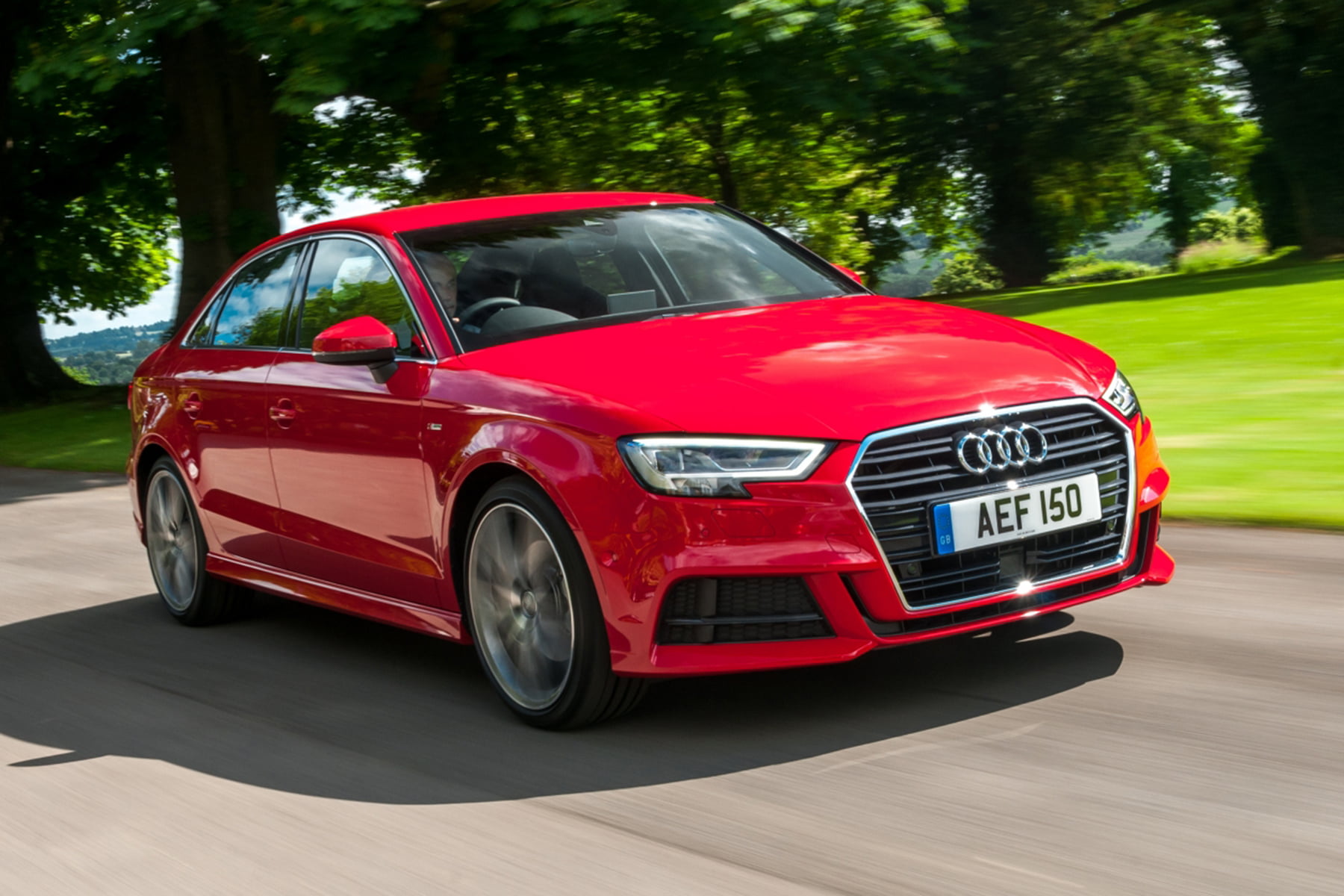
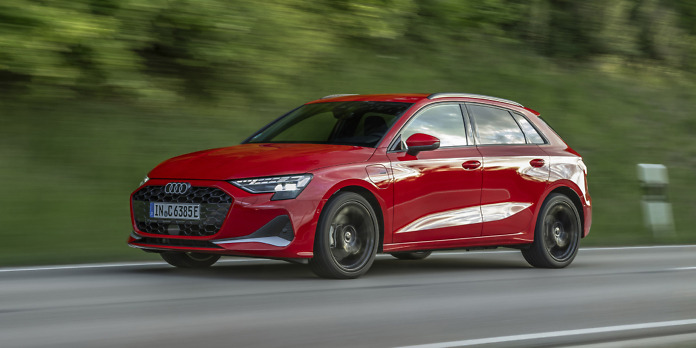
The third-generation Audi A3 first arrived in the UK as a three-door hatchback in early 2013, before the range was expanded to include the four-door saloon and five-door ‘Sportback’ hatchback. it was sold here in the UK until early 2020, when it was replaced by the current, fourth-generation, A3 range.
The range included a plug-in hybrid, called the ‘Sportback e-tron’. More performance-focused S3 models were also available in all three body styles, while the hottest of hot hatches was the RS 3 model, which is not covered here. There was also a convertible version, called the A3 Cabriolet, which is covered on a separate page.
The A3 range was given a mid-life facelift in early 2016, which included various cosmetic changes and tech upgrades inside and out, but no major alterations.
Popular throughout its tenure, the third-generation Audi A3 received global acclaim from the outset, being crowned World Car of the Year in 2014. Reviewers continued to give the A3 range high marks after its mid-life facelift – Auto Trader concluded, “the Audi A3 is one of the best cars of its type, and well worthy of anyone’s consideration.”
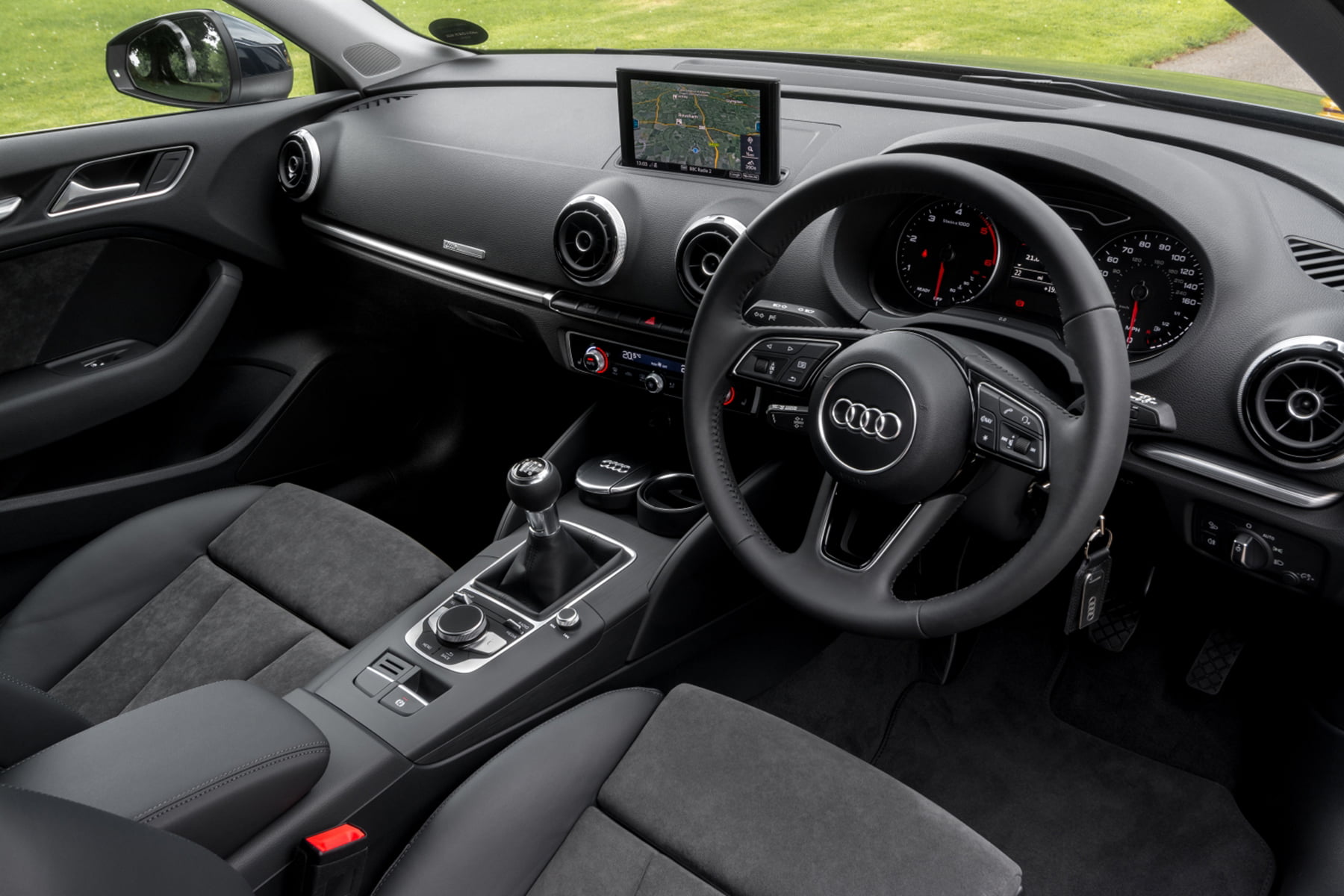
Most motoring outlets were impressed by the A3’s premium-feel interior trim and the generous levels of equipment included as standard, as well as the car’s post-facelift exterior styling, its agile driving dynamics and the range of efficient engines available. Many reviewers who were given a test drive in the Sportback model also praised the five-door version’s improved practicality when compared to the original three-door model.
Facing off against upmarket rivals like the BMW 1 Series, the third-generation A3 received one consistent criticism during its lifespan – that the range was too expensive. Although entry-level models were reasonably affordable when new, top-spec models were much more expensive, leading to a few journalists wondering if paying the Audi premium was worth it. “A Volkswagen Golf does almost everything just as well for less money”, Carbuyer explained, “but the A3’s upmarket image will appeal to plenty of potential buyers.”
As of August 2026, the third-generation Audi A3 holds a Used Car Expert Rating of D, with a score of 59%. It gets good grades for its media review scores, but its reliability record is poor and its safety rating has long expired.
Highlighted reviews and road tests from across the UK automotive media. Click any of the boxes to view.
The Car Expert
Score: 8 / 10 “The mid-life update adds to the A3’s appeal with a host of useful new technology, though making use of much of it could require extensive delving into the options list, bumping up the price. Read review
Auto Express
Model reviewed: 2013-2019 hatch Score: 6 / 10 “The Audi A3 is a popular premium hatch that’s efficient, good to drive and has a classy feel.” Read review
Model reviewed: S3 2013-2019 Score: 6 / 10 “The Audi S3 packs a turbocharged punch and has tremendous quattro 4WD grip, its understated looks and grown-up driving manners mean it flies under the radar when compared to some wild looking rivals.” Read review
Model reviewed: S3 2013 Score: 8 / 10 “The new S3 feels as crushingly fast as its predecessor in a straight line, but makes unexpected improvements in other areas.” Read review
Auto Trader
Model reviewed: Sportback Score: 8 / 10 “With its combination of strong practicality, smart (but understated) good looks, excellent quality and low running costs, the Audi A3 is one of the best cars of its type, and well worthy of anyone’s consideration.” Read review
Car
Model reviewed: (2016) 1.4 TFSI S Line Score: 8 / 10 “A tidy-handling, desirable car with a still-lovely interior and enough updates to give its drivers a subtle sense of one-upmanship over drivers of pre-May 2016 A3s.” Read review
Model reviewed: Saloon (2016) Score: 8 / 10 “It’s still a very likeable car, this S3 Saloon. There’s a certain Q-car appeal about a three-box car based on a hatchback, and under the skin we found genuine ability in many areas.” Read review
Car Keys
Model reviewed: Score: 9 / 10 “The Audi A3 hatchback is a premium small family car, with a well-appointed cabin and wide range of diesel and petrol engines, front- and four-wheel drive.” Read review
Model reviewed: 2.0TDI 150 S line (2016) Score: 9 / 10 “If you spend a lot of time on the road and really value a first-rate interior and the requisite modern tech, the A3 Sportback is a very convincing all-rounder.” Read review
Carbuyer
Model reviewed: S3 Sportback (2013-2020) Score: 6.6 / 10 “The S3 delivers hot-hatchback performance without the stereotypical boy-racer brashness.” Read review
Model reviewed: Sportback hatchback (2013-20) Score: 7 / 10 “The Audi A3 Sportback is practical and luxurious family hatchback that – despite the relatively high price tag – is easy to recommend.” Read review
Model reviewed: A3 Sportback Score: 8 / 10 “The Audi A3 Sportback is practical and luxurious family hatchback that – despite the relatively high price tag – is easy to recommend.”
Model reviewed: A3 Saloon Score: 7.8 / 10 “The Audi A3 Saloon looks sharp and has a fantastic interior plus a great range of engines. It’s surprisingly practical, too.”
Carwow
Model reviewed: S3 Sportback (2017-2020) “The S3 is incredibly fast and can even pass as practical even if it doesn’t look nearly as special as it actually is.” Read review
Model reviewed: S3 saloon 2017 Score: 7 / 10 “The S3 saloon is a master of many trades: fast, sure-footed, a head-turner in the company car park; and you could – just about – use it as a family car.” Read review
Model reviewed: 2013-2019 “Those looking for a premium hatchback will not be disappointed by the classy A3.” Read review
Company Car Today
Model reviewed: 2013-2019 hatchback “A desirable and sensible choice of company car.” Read review
Daily Mirror
Model reviewed: 2013-2019 (facelift) hatchback “If you’re an Audi lover and you’ve owned A3s before, you’ll not be disappointed with this car.” Read review
Eurekar
Model reviewed: “The Audi A3 model built between 2012 and 2018 has marvellous handling and road holding with the standard suspension.” Read review
Model reviewed: https://www.eurekar.co.uk/articles/2016-05-25/audi-a3-2016—review “The Audi A3 raises an already high bar even further, with cleaner, greener and more economical engines and a host of the latest high-tech goodies available throughout the range.” Read review
Evo
Model reviewed: A3 Sportback (2013-20) Score: 8 / 10 “The Audi A3 has a high quality interior, excellent drivetrains, and relaxed driving manners.” Read review
Model reviewed: S3 Score: 8 / 10 “It’s fast, yet completely trustworthy as there’s so much grip and traction.” Read review
Fleetworld
Model reviewed: https://fleetworld.co.uk/audi-a3/ “Audi hasn’t pulled any surprises with the new A3, and why would it when the current model is still so popular? Greener engines, a larger interior and the same high quality will boost its appeal.” Read review
Green Car Guide
Model reviewed: 1.6 TDI Sport 6-speed Score: 9 / 10 “The new Audi A3 1.6 TDI is a quality product that has very few areas of weakness.” Read review
Heycar
Model reviewed: Score: 8 / 10 “The Audi A3 Sportback looks great, has a brilliant interior that’s ageing well and comes with plenty of standard kit for the money. It’s also great to drive.” Read review
Honest John
Model reviewed: S3 2013 Score: 8 / 10 “The S3 offers enjoyable performance and handling but feels safe and controllable, which is a great blend for a family-sized hot hatchback.” Read review
Motoring Research
Model reviewed: Sportback Score: 9 / 10 “More space, more technology and a good driving experience make the latest Audi A3 Sportback one of our favourite family hatchbacks.” Read review
Model reviewed: Saloon Score: 9 / 10 “The Audi A3 Saloon is a pricey but very well-rounded and likeable family car. Read review
Motors
Model reviewed: Score: 9 / 10 “The Audi A3 is more enjoyable to drive than before, with lots of standard kit and lassy styling.”
Read review
Parkers
Model reviewed: Hatchback (2012-18) Score: 9 / 10 “The Audi A3 is still a leader in terms of image and quality.” Read review
Model reviewed: https://www.parkers.co.uk/audi/a3/s3/review/ Score: 9 / 10 “The new Audi S3 is a very impressive take on the ‘warm hatch’.” Read review
The Sun
Model reviewed: 1.5-litre turbo 150hp “The Audi A3 turbo is fast and playful and sounds great, which is important.” Read review
Model reviewed: “The improved A3 has a ride that is is whisper quiet and because it’s an Audi the build quality is second to none.” Read review
The Telegraph
Model reviewed: 2016 facelift Score: 9 / 10 “The Audi A3 is not only the best car in its class, but one of the best new cars on sale full stop.” Read review
The Times
Model reviewed: Sportback Score: 8 / 10 “The Audi A3 is a welcome refresh of the trusty hatchback.” Read review
Model reviewed: 2012 Score: 6 / 10 “The Audi A3 is a little bit characterless but a beautiful object, inside and out. Now much better to drive, too.” Read review
Top Gear
Model reviewed: Score: 7 / 10 “The latest version of the car that defined the premium hatch sector stays classy, with an advanced chassis and breadth of abilities.” Read review
Model reviewed: 306bhp Audi S3 Quattro “The Audi S3’s reactive but numb steering and sterile stability add up to something that’s more effective than fun.” Read review
Model reviewed: 2.0 TDI Sport 4dr (2012) Score: 7 / 10 “The A3’s cabin is amazing. Audi has raised the quality bar again.” Read review
Safety rating
Independent crash test and safety ratings from Euro NCAP
The Audi A3 was originally crash tested by Euro NCAP back in 2012 and awarded a five-star rating. However, this rating expired in January 2019 and is no longer valid as the car no longer meets the standards required for such a rating. This is normal practice, as Euro NCAP reviews its ratings on most cars annually with most ratings expiring after about six or seven years.
However, if you are comparing a used Audi A3 to vehicles of similar age, whose ratings will have probably also expired, its safety rating score is still useful.
Eco rating
Independent economy and emissions ratings from Green NCAP
No eco rating
The third-generation Audi A3 was not tested by Green NCAP during its production life.
Reliability rating
Reliability data provided exclusively for The Car Expert by MotorEasy
Total claims: 763 Average repair cost: £670.07 Last updated: August 2026
As of October 2024, the Audi A3 has a below-average reliability rating of 51%, according to warranty data provided exclusively to us by our commercial partner, MotorEasy. This score applies to both this generation A3 and also to both newer (2020 onwards) and previous (pre-2013) generations.
The average repair bill for claims is about £670, which is more than the cost of a used car warranty. That’s certainly worth considering if you are looking at a used A3.
Most repair bills to date seem to be pretty average in terms of cost. Gearbox problems are the most expensive to fix, which is not unusual, so make sure any used car warranty you purchase covers you for this.
Running cost rating
Monthly cost of ownership data provided exclusively for The Car Expert by Clear Vehicle Data
No data yet
Due to its age, we don’t have five-year ownership costs for this generation of the Audi A3.
Date: August 2019 Model types: All Build dates: 1/2014 to 09/2014 Number of vehicles affected: 133 Defect: The belt pulley for the camshaft adjuster may break or the bolts for the camshaft adjuster housing may come loose. Remedy: The camshaft adjuster must be replaced on the affected vehicles.
Date: February 2019 Model types: All Build dates: 04/2018 to 06/2018 Number of vehicles affected: 1,573 Defect: The centre rear head restraint may not be to specification. Remedy: Check the head restraint and replace if necessary.
Date: November 2018 Model types: All Build dates: 05/2018 to 09/2018 Number of vehicles affected: 147 Defect: The rear back rest head restraint mounting is not correctly welded. Remedy: Check and replace rear back rest frame if required.
Date: February 2018 Model types: All Build dates: 07/2014 to 11/2014 Number of vehicles affected: 6 Defect: There is a possibility of a faulty weld on the gas generator. If the airbag is deployed there is a risk that parts could be projected into the cabin with risk of injury to the occupants. Remedy: On affected vehicles replace the front passenger airbag module with a correctly manufactured version.
Date: November 2017 Model types: All Build dates: 08/2017 Number of vehicles affected: 30 Defect: The hardening process for the rear wheel bearing housings may not have been correctly performed. In the worst case, this could lead to a fractured housing. Should a fractured housing occur, there would be abnormal noises, bad tyre wear, and a theoretical possibility of wheel loss. Remedy: Recall the vehicles that are likely to be affected and replace the right and left rear wheel bearing housings.
As of September 2024, there have been five DVSA vehicle safety recalls on this generation of the Audi A3. These cover sunroof motors, tyre size data, software and different battery issues.
Not all vehicles are affected by recalls. You can check to see if your car is included in any of the above recalls by visiting the DVLA website or contacting your local Audi dealer.
If your car is affected by a recall, the vehicle must be repaired and you should not be charged for any work required. If you are buying a used A3, you should insist that any outstanding recall work is completed before you take delivery of the vehicle.
Awards
Trophies, prizes and awards that the Audi A3 received
2017
Business Car Awards – Best Compact Premium Car
Fleet News Awards – Best Compact Premium Car
2016
SME Company Car Awards – Best Green Car (Sportback e-tron)
2015
Business Car Awards – Best Mainstream Segment Car
Carbuyer Awards – Best Small Luxury Car (Sportback)
2014
World Car Awards – World Car of the Year + Best Small Hatchback
carwow Awards – Best Hybrid (Sportback e-tron)
2013
iF Design Awards – Gold Award
Scottish Car of the Year Awards – Best Executive Car (saloon)
Similar cars
If you’re looking at the Audi A3, you might also be interested in these alternatives
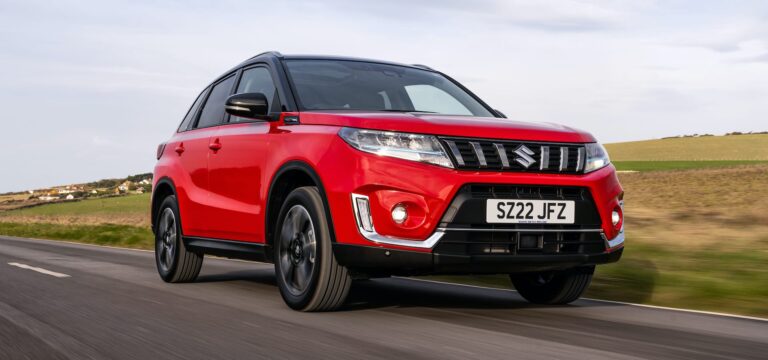
The current version of the Suzuki Vitara was launched in 2015 and has always traded on the fact that while being a road-friendly compact SUV, it also offers the all-wheel-drive flexibility that most of its rivals no longer do. And Suzuki hopes that an updated version with the brand’s first proper hybrid powertrain will further increase the appeal of a car that is already the brand’s best seller.
The Vitara competes in what is now the most competitive part of the UK market – when launched the Suzuki had around 14 rivals, now there are around 25 but almost all of them are only available in front-wheel-drive form.
Suzuki has appeared to be playing catch-up with regard to the trend to electrification, but with EU legislation now imposing heavy fines on manufacturers exceeding pre-determined average levels of CO2 emissions across their range, the brand needs to catch up quickly.
So far, the two-pronged efforts have seen mild hybrid units added across the model range, and new models in the Across and Swace that are little more than rebadged Toyotas, employing the giant brand’s proven hybrid technology. But this new unit in the Vitara is the first hybrid system created by Suzuki itself.
Suzuki refers to this system as a “full hybrid”, which is really just very optimistic marketing spin. Although the hybrid Vitara can travel under purely electric power for “short distances”, the company refrains from putting any kind of number on what actually constitutes a “short distance”. In real terms, this new setup sits somewhere between a mild hybrid (where the electric motor purely assists the petrol engine) and a conventional hybrid (which can travel for a few miles on electric power only).
The Vitara has received mixed reviews over the years – quite positive back when it was first launched way back in 2015, but declining over time as newer rivals have arrived on the scene. Our Expert Rating score of 61% (as of March 2022) is based mainly on its practicality and value for money, with strong equipment levels, but reviewers are less impressed by the quality of the interior fittings.
What’s new about the Suzuki Vitara Full Hybrid?
In short, the new hybrid engine and that’s it. The current Vitara has been around since 2015 and underwent a mid-life refresh in early 2019. It has since gained several specification updates, including the addition of mild hybrid assistance across the range, so there’s not much to tell here apart from the new hybrid drivetrain option.
The new hybrid model effectively replaces the previous automatic-gearbox Vitaras. It will be sold alongside the existing mild hybrid versions of the Vitara with manual gearboxes, while the auto versions of those cars will be phased out. Thus the range will be simplified to mild hybrids with a manual gearbox and this new “full hybrid” unit with an automatic.
How does it look?
There have been no styling updates to accompany the new engine. The Vitara has a purposeful presence, while elements such as the large clamshell-style bonnet add a sense of solidity.
Detailed styling updates were made as recently as 2020, including the addition of LED headlamps and they followed a front-end update a year earlier. On looks, the Vitara certainly holds its own against more recently launched rivals.
What’s the spec like?
The Vitara Full Hybrid is offered in three versions, dubbed SZ-T, SZ5 and the all-wheel-drive SZ5 Allgrip. Standard specification is impressive, especially in terms of safety with all versions including an extensive selection of driver assistance electronics, including a blind-spot alert and adaptive cruise control which tend to be options on many rivals.
The Vitara was awarded a five-star safety rating when tested by EuroNCAP in 2015, although this rating has now expired as the car no longer meets the current criteria for a five-star car.
All versions of the hybrid model also get climate control, smartphone connectivity with Apple CarPlay or Android Auto, navigation, a rear parking camera and keyless entry and start as standard.
Paying extra for the SZ5 version (which you have to if you want all-wheel-drive) replaces the painted alloy wheels with polished versions and adds suede seat upholstery, a panoramic sunroof and front and rear parking sensors.
What’s the Suzuki Vitara Full Hybrid like inside?
The Vitara has always earned plaudits for its interior space, with plenty of room in front and back and a good-sized boot. However the hybrid battery pack does slice into the cargo area, reducing its capacity by some 86 litres to 289 litres with the rear seats in place.
The dash is generally well laid out with the driver getting a digital display alongside the touchscreen infotainment system in the centre console. This includes sat nav as standard, Suzuki’s system which requires a bit of working through menus – however most people will simply plug in their smartphones and use their mapping software. The screen is also a bit low on the console compared to rivals, with air vents mounted above it.
Vitaras are promoted as a value-for-money option but this does mean that some of the interior plastics are not quite as supple as in some rivals. Generally, however, it’s a comfortable interior.
What’s under the bonnet?
Suzuki’s hybrid unit pairs a new 1.5-litre petrol engine with a 24kW electric motor – this is fed by a 140-volt lithium-ion battery pack and gives a combined output of 115hp.
As well as generating electrical power, the electric motor acts as a starter and provides extra torque to the petrol engine on getaway (like a mild hybrid unit). It continues to do this whenever the driver accelerates, filling the gap in torque delivery between gear shifts that is normally a drawback on auto-manual gearboxes, and when the car is slowing turns the engine off, extending the time of all-electric propulsion.
The hybrid system can be set in Eco or Standard mode through a button on the dash, prioritising either fuel-efficiency or power – in Standard mode it assists the petrol engine more frequently for “more spirited driving”… In Eco mode the driver also has three settings for the air conditioning system, either standard, emphasising the comfort of those travelling in the car or having the least drain on fuel economy.
As is typical with hybrids the system is only available with an auto transmission. In this case it’s a six-speed unit, though it does offer a manual mode via paddles behind the steering wheel.
All of this does add up to improvements in economy and emissions over the standard Vitara, but not to enormous levels. WLTP-certified fuel economy for the 2WD hybrid is 53mpg, dropping to 48.4mpg on the all-wheel-drive version, with CO2 emissions levels of 121 and 132g/km respectively.
These figures are around 4mpg and 8g/km better than the mild hybrid variants of the Vitara, which doesn’t sound much, but they are competitive for a typical compact SUV. Suzuki adds that a Vitara buyer doing 10,000 miles a year will use 61 litres less in fuel, saving at least £10 a month, and also save 129kg in CO2 emissions.
What’s the Suzuki Vitara Full Hybrid like to drive?
Test cars available on the launch event were the Allgrip all-wheel drive versions. These offer a range of driving modes, either Auto, Sport, Snow or a setting that locks the differential for tackling more challenging off-road situations. Note, however that these are only usable with the hybrid system in its Standard setting – in Eco the car defaults to Auto mode.
The Suzuki hybrid system is said to be lighter than rival traditional hybrids, but the extra weight over the standard combustion-engined Vitara is a bonus. In driving the car feels more planted on the road than previous Vitaras we’ve driven, especially when cornering when the steering gives more feedback. This makes for generally more comfortable progress.
With the hybrid not contributing as much to the overall output as some rivals, this is not a particularly swift SUV – taking almost 13 seconds to get to 62mph. But the electric system does play its part, particularly at low power and low speeds the engine is often at rest.
The car is at its best in these lower power situations, especially in Eco mode – be more aggressive and the powertrain’s audio note lets you know it’s working hard, while showing up the limitations of the auto transmission.
Suzuki claims that the electrics help to fill the torque gap between shifts in the six-speed unit, making for smoother progress through the gears. In our experience, however, the transmission is a significant weak point of the car, tending to surging under acceleration and routinely sounding as if it is racing ahead of the car. Curiously, this surging effect is less intrusive in Sport mode, which feels generally more comfortable.
Verdict
Vitara Full Hybrid prices start at £25.5K for the SZT in two-wheel-drive form, which is a £1,750 step over the mild hybrid manual. Choosing the extra equipment of the SZ5 adds another £2K, it priced at £27.5K, while the all-wheel-drive version is £29.2K. The only options available are paint finishes.
When considered alongside the equipment levels, these prices make the Suzuki Vitara Full Hybrid a value-for-money proposition. You’re buying a car that has no significant vices – once one masters the slightly odd gearbox.
Suzuki’s first ‘proper’ hybrid is not a massive step forward in the new eco environment, but it is a useful one.
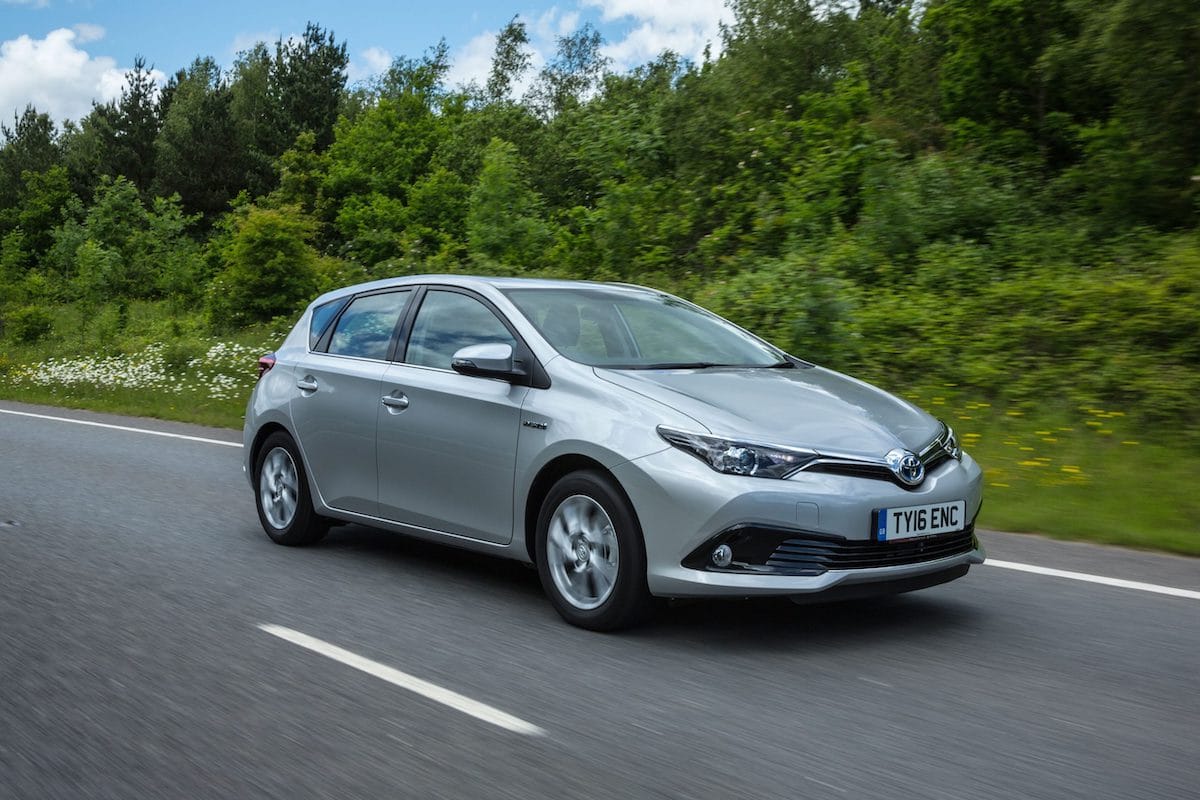
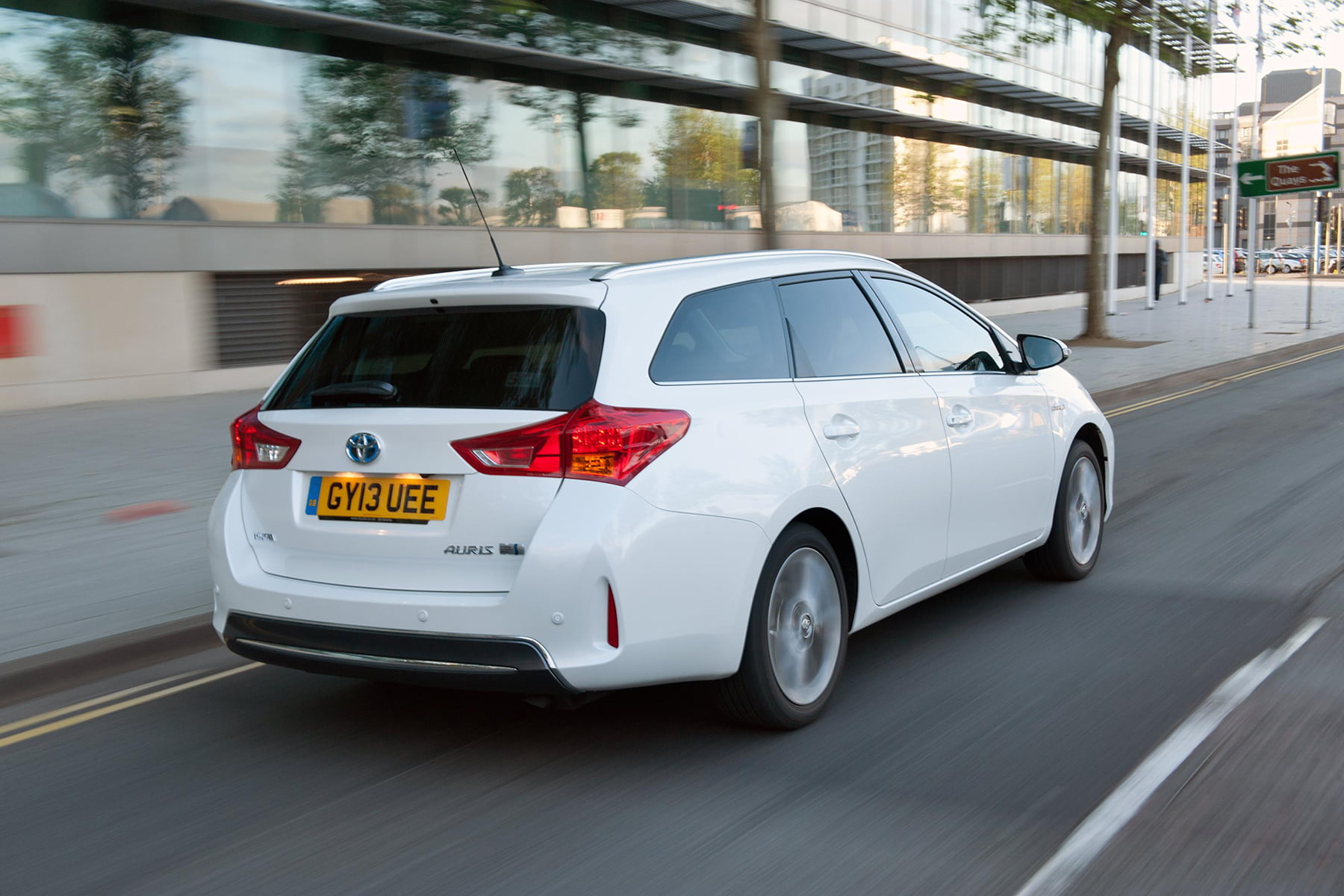
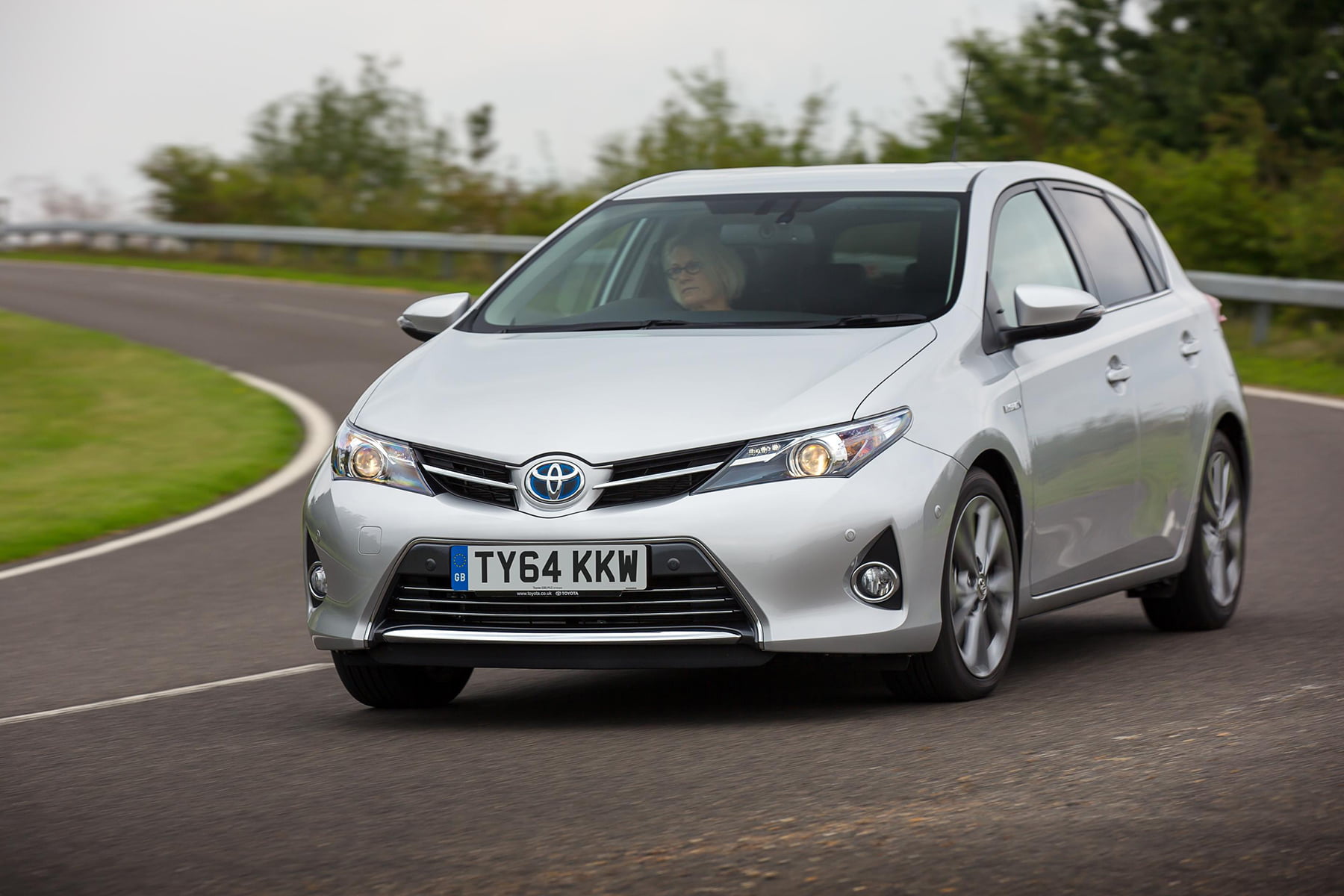
The Toyota Auris was a compact family hatchback that first arrived in the UK in 2013, and was replaced by the Toyota Corolla in early 2019. There was also an estate version called the Auris Touring Sport.
Originally available with a choice of petrol, diesel and hybrid engine options, the diesel models were discontinued not long after the model’s facelift in 2015. This mid-life facelift included exterior design tweaks, an interior trim and tech overhaul, some suspension tuning and new engines.
Offering practical, fuss-free transport at an affordable price, the Toyota Auris was the first family hatchback and estate car to offer a petrol-electric hybrid option on the UK market, and many reviewers commented that the facelifted model was starting to show its age as the model headed towards the end of its life. Carbuyer explained that, while the Auris had generous levels of equipment as standard, the interior looked “a little old-fashioned and incohesive”.
Many motoring outlets described the Auris’s exterior design as “dull”, even after its mid-life makeover, and not many were fans of the car’s performance or driving dynamics, either. “In terms of handling abilities and outright desirability”, Parkers commented, “it’s still behind plenty of other five-door family hatchbacks for kerb appeal and outright value.”
That said, the Auris did manage to stand out from the crowd during its tenure. While not being particularly sporty in any sense, the Auris Touring Sports was one of the only hybrid estate car options available in the UK – rivals like Vauxhall, Ford, SEAT and Volkswagen did not offer a direct competitor.
While the Auris lacked the flair of mainstream rivals like the Ford Focus, SEAT Leon and Volkswagen Golf, reviewers agreed that it was an inoffensive value-for-money proposition and a dependable, well-built family car – no doubt helped by Toyota’s reputation for reliability.
As Car Keys concluded, “if you expect nothing more of your car than you would of your washing machine, then the Toyota Auris is a perfectly sensible option.”
As of March 2026, the Toyota Auris holds a Used CarExpert Rating of D with a score of 56%. It scores top marks for its excellent reliability record, but the rest of its scores are poor.
Highlighted reviews and road tests from across the UK automotive media. Click any of the boxes to view.
The Car Expert
Model reviewed: Score: 7 / 10 “The Toyota Auris is a competent, ultra-dependable entrant in the family hatch market, and the latest package of updates improves the car in many areas.” Read review
Model reviewed: 2015 “The Toyota Auris is a fleet favourite and the refreshed version will only add to that popularity.” Read review
Auto Express
Model reviewed: 2012-18 “The Toyota Auris was never the most inspiring choice in the family hatch market, but it actually does a very good job.” Read review
Model reviewed: Score: 6 / 10 “The estate version of the Toyota Auris offers plenty of space and the option of an efficient hybrid powertrain.” Read review
Model reviewed: 2013-19 Score: 6 / 10 “For no-frills, dependable family motoring the Toyota Auris delivers, but it’s far from inspiring.” Read review
Model reviewed: 2015 Score: 6 / 10 “Updates for the Toyota Auris have improved it quite a bit, but the hatch still lags behind rivals.” Read review
Model reviewed: Touring Sports 2012-19 Score: 6 / 10 “Toyota Auris Touring Sports adds practicality to already capable family car package.” Read review
Auto Trader
Model reviewed: Score: 6.8 / 10 “The Toyota Auris is one of the most affordable family hatchback’s to run, but that comes at the price of driver enjoyment.” Read review
Model reviewed: Toyring Sports (2015) Score: 7.6 / 10 “The Auris Touring Sports is a handsome, comfortable, immensely practical load-lugger.” Read review
Model reviewed: 2015 Score: 7.2 / 10 “The Toyota Auris will, no doubt, find many fans across the world – Toyota isn’t the biggest car manufacturer on Earth for nothing – but it might find it tough challenging the class leaders.” Read review
Model reviewed: Estate (2013) Score: 6.6 / 10 “The Auris estate is a handsome, comfortable and practical load-lugger which is let down by a poorly resolved drivetrain and disappointing interior design and finish. Read review
Business Car
Model reviewed: Score: 6 / 10 “The Toyota Auris is efficient, spacious and quiet.” Read review
Car
Model reviewed: Auris Hybrid Touring Sports Score: 4 / 10 “The Auris Hybrid Touring Sports is not a bad car at all. But it might be worth having an energy drink or some caffeine pills before you jump in.” Read review
Model reviewed: 2013-19 Score: 6 / 10 “The new Auris is an improvement on the old, but more of an uprising rather than a full-on revolution. It remains competent but uninspiring and though it has a number of appealing traits, the ability to seduce isn’t one of them.” Read review
Car Keys
Model reviewed: Touring Sports (2018) Score: 8 / 10 “If you’re after an economical, compact estate, look no further than the Auris Touring Sports.” Read review
Model reviewed: 2015 Score: 8 / 10 “If you expect nothing more of your car than you would of your washing machine then the Toyota Auris a perfectly sensible option.” Read review
Carbuyer
Model reviewed: Score: 6.2 / 10 “The Toyota Auris is a reliable and practical family car with low running costs, making it a sensible choice for stress-free driving.” Read review
Model reviewed: 2013-19 Score: 6.8 / 10 “The Toyota Auris Touring Sports has a large boot, is relaxing to drive and should prove reliable. It’s also available with hybrid technology.” Read review
Carwow
Model reviewed: Touring Sports Score: 6 / 10 “The Toyota Auris Touring Sports is a small estate car with a big boot that can be had with an economical hybrid engine, but it doesn’t feel as plush inside as many newer alternatives.” Read review
Model reviewed: 2013-19 Score: 6 / 10 “The Toyota Auris won’t excite but has plenty of family car credentials that compensate.” Read review
Driving Electric
Model reviewed: 2013-19 Score: 7 / 10 “This generation of Toyota Auris Hybrid boasted impressive efficiency and plenty of equipment, but rivals offered far more polish and passion.” Read review
Model reviewed: “The Auris Hybrid is a typical Toyota through and through, which means it’s a mixture of good and bad.” Read review
Model reviewed: Touring Sports Score: 7.2 / 10 “The Toyota Auris Touring Sports Hybrid is a fine choice for those seeking practicality and low running costs.” Read review
Eurekar
Model reviewed: “The Toyota Auris is a better-looking car than the one that went before, and is also better dynamically, making it a good deal more fun to drive; and it has lower running costs.” Read review
Model reviewed: 2015 “The Toyota Auris is so well built that it should last for many years.” Read review
Fleetworld
Model reviewed: Touring Sports 1.4 D-4D Icon “Toyota has stuck rigidly to its preference for hybrid drive, but while the Auris Touring Sports is the only part-electric estate car in its segment, the range’s less publicised gem is a 1.4-litre diesel.” Read review
Model reviewed: Design 1.2T “A great small petrol engine which comes close to making a business case for itself. But it’s still considerably cheaper to run with a hybrid or a diesel engine, particularly when larger wheels have such a marked effect on fuel economy and CO2 emissions.” Read review
Model reviewed: “While the Auris will never set the motoring world alight, it’s inoffensive, fit for purpose and keenly priced. Tax-busting hybrid and 1.6 D-4D are the fleet picks.” Read review
Green Car Guide
Model reviewed: Score: 8 / 10 “The Toyota Auris Touring Sports is the first hybrid estate car, combining good levels of space and 70.6mpg economy.” Read review
Model reviewed: Score: 8 / 10 “The new Toyota Auris is here and it still offers the only full hybrid option in the small family hatchback class, delivering 74.3mpg and emissions of just 87g/km CO2.” Read review
Heycar
Model reviewed: Score: 6 / 10 “The Toyota Auris is a reliable, worthy, hybrid-centric hatchback.” Read review
Honest John
Model reviewed: 2013-19 Score: 6 / 10 “The Auris Touring Sports has pacious interior and fairly large boot with low loading lip. It feels well put together, has good ride quality and the hybrid offers low CO2 and 60mpg.” Read review
Model reviewed: 2013-19 Score: 6 / 10 “If you’re after an efficient, reliable and British-built family hatchback, the Toyota Auris is a fine choice.” Read review
Motors
Model reviewed: Score: 6 / 10 “The Auris offers a good level of reliability; the hybrid is cheap to run; and it’s practical considering its size.”
Read review
Parkers
Model reviewed: Touring Sports Score: 7 / 10 “The Auris estate majors on Touring, not much on Sports.” Read review
Model reviewed: 2013-19 Score: 7 / 10 “British-built Toyota Auris family hatch is solid and dependable.” Read review
The Sunday Times
Model reviewed: Touring Sports Synergy Icon Score: 6 / 10 “The Toyota Auris is soft, strong and very long.” Read review
Model reviewed: 2015 Score: 6 / 10 “The facelifted Toyota Auris has improved looks and character.” Read review
Model reviewed: Score: 6 / 10 “The Toyota Auris is competent but dull to drive and look at.” Read review
The Telegraph
Model reviewed: Score: 7 / 10 “Family hatchback buyers are spoilt for choice, but the Toyota Auris is a good all-rounder with plenty of space and a low-emissions hybrid option.” Read review
Model reviewed: Score: 7 / 10 “The Toyota Auris might not be the most exciting choice, but it deserves attention from buyers. It’s a practical, efficient and competent family hatchback that scores decently in almost every area.” Read review
Top Gear
Model reviewed: 2013 Score: 5 / 10 “The Auris is now more professional around corners, it doesn’t flounder, has reasonable body control and is placid when cruising. “ Read review
Safety rating
Independent crash test and safety ratings from Euro NCAP
No safety rating
The Toyota Auris was tested by Euro NCAP back in 2013 and awarded a five-star rating. However, this rating expired in January 2019 and is no longer valid as the car no longer meets the standards required for such a rating.
Eco rating
Independent economy and emissions ratings from Green NCAP
No eco rating
The Toyota Auris was not lab tested by Green NCAP during its production lifetime.
Reliability rating
Reliability data provided exclusively for The Car Expert by MotorEasy
Total claims: 58 Average repair cost: £494.35 Last updated: April 2025
As of April 2025 (our most recent data point), the Toyota Auris has a very good reliability score of 85%, according to workshop and extended warranty data provided exclusively to The Car Expert by our partner, MotorEasy.
Similar cars
If you’re looking at the Toyota Auris, you might also be interested in these alternatives
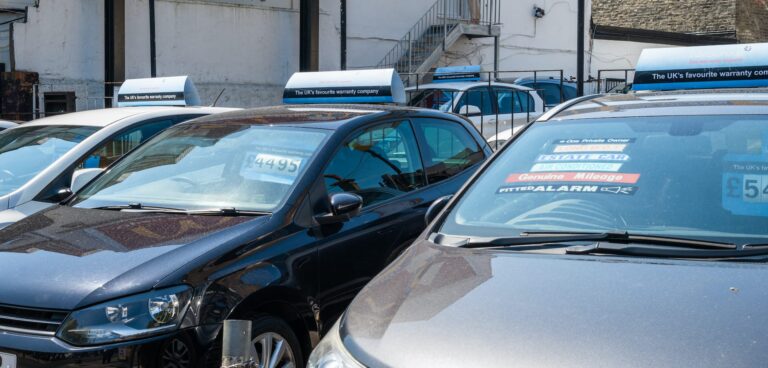
For all of the attention that the motoring media lavishes upon new cars, it’s quite removed from what actually goes on in the real world. Just one in five cars bought today is new, while the remainder of car buyers are buying a used car.
With car companies struggling to build new cars at the moment (a situation that’s unlikely to improve for the rest of this year), many new car buyers are now unable to replace their current vehicles with another new car. As a result, they’re now looking at the used car market for an alternative – and that’s driving up prices.
The outlook for new machinery doesn’t appear any better for at least the rest of this year, either. The global shortage of semiconductors, the microchips used in cars to run infotainment displays and safety control systems, has led to huge cuts in production. Many car manufacturers are quoting months-long waits for almost any new car.
It could get even worse. Now the car industry is starting to be affected by parts and materials supplied from Ukraine and/or Russia as a result of the Russian invasion and the associated sanctions on Russian companies.
New cars are stalling
With online car sales gaining far greater consumer confidence, ongoing new car production shortages and people’s driving needs significantly changing as a result of the pandemic, there has been a notable shift of new car buyers turning to the used car market.
Last year, the number of used cars changing hands grew by more than 11% over 2020 figures. That’s more than 7.5 million second-hand cars, according the Society of Motor Manufacturers and Traders (SMMT).
That has carried into 2022 and, as the electric vehicle (EV) revolution continues to gain pace, there was a record demand for used battery-powered cars – they rose 119% with more than 40,000 transactions.
Of course, a used car can be anything from an old banger that has been passed down within a family for free, to a near-new luxury car that’s barely a few weeks old, so it’s a very wide spectrum of vehicles and values.
New car sales figures, on the other hand, ended up at a bit over 1.6 million registrations in 2021. That was up very slightly on 2020 – a year that was decimated by Covid forcing the car industry to shut down for months on end – but nearly 30% down on the years immediately prior to the Covid pandemic.
Car sales, looking at 2021 as a whole year:
Used car transactions
7,530,956
New car registrations
1,647,181
Total car sales
9,178,137
New car percentage of all transactions
17.9%
Source: SMMT
The car leasing industry, which is almost entirely reliant on new car business, is certainly feeling the effects of the current production shortages, but personal contract hire (PCH), a form of leasing, is only used in just over a tenth of new car deals anyway. Most consumers purchase new cars using PCP car finance (see below).
“In the current climate, you have to consider availability – someone who may ordinarily have opted to lease a new car could ultimately have chosen a different product in the used car market because that was the pragmatic choice at a time when supply issues would have delayed delivery of a brand new vehicle,” says Adrian Dally, director of motor finance at the Finance and Leasing Association (FLA).
“Supply issues aside, leasing accounts for around 11%-13% of point of sale finance in the new car market, and has remained at this level for some time, whereas PCP accounts for around 80% and has even eclipsed hire purchase as the product of choice in the used car market.
“The PCH/PCP split may change over time as customers embrace the next generation of EVs, but for now, PCP’s flexibility is what underpins its popularity.”
A shortage caused by forced turnover
The vast majority of consumer car purchases are financed by a type of car finance called a personal contract purchase (PCP). It accounts for about 80% of new car sales and about half of new car sales.
The key feature of PCP car finance is that it consists of low monthly payments followed by a massive final balloon payment. Since most people don’t have thousands of pounds available to make the final payment, they are effectively forced to give the car back or part-exchange it, and take out another PCP on another car.
So despite a shortage of cars, there are still millions of customers who basically have to change their cars – simply deciding to keep their current car for another six months isn’t an option for them. This factor alone is what’s keeping sales turnover up across the country, despite a lack of available new cars.
With no new cars in stock, car buyers are effectively being forced to pay vastly inflated prices for a used car just so they can keep driving. Great news for car dealer profit margins, but bad news for the customer.
Knock-on shortages for the used car market
Shortages for new car supplies have a knock-on effect in the used car market. A lack of new cars right right now inevitably means a lack of near-new used car stock for the next year, and shortages of 1-3 year-old cars for the next few years.
Most used car retailers are reporting a combination of high demand and low stock, which is pushing used car prices to record levels. Car companies have spent the last two years with factories regularly being shut down, firstly due to Covid and then due to supply shortages, so that’s two years of relatively few new cars hitting the marketplace.
If new car production doesn’t return to near-normal levels until the end of this year, which is what appears likely, we’re looking at nearly three years of reduced new car production. That, in turn, will mean used car prices remain high – although maybe not as high as we’re seeing right now – well into 2023.
Stock shortages mean no discounting
Most people are wearily familiar with the pricing games playes by car manufacturers and car dealers. There always seem to be discounts, “exclusive” offers, finance incentives, freebies and other tactics to lure customers into showrooms.
But car pricing is driven by supply and demand. If dealers have too many cars and not enough customers, they start dropping their prices to get rid of them, and the car industry has been oversupplying the market with new vehicles for years, leading to perpetual discounting. This discounting can be in the form of a reduction in the price of the vehicle and/or a reduction in the interest rate to finance the car.
With high demand and no supply, there’s no incentive to reduce prices. If a dealer doesn’t have enough cars to meet customer demand, why would they offer any discounts? So car prices are higher, interest rates are higher and there’s no discounting – if you got your last car on a PCP with a decent discount and a low interest rate a few years ago, you’re going to get a major shock when you see how much an equivalent model is going to cost you each month in 2022.
Inevitably, there are still some deals around, but they are fewer, further between and less generous than you’d normally expect to see on new and near-new cars.
Are car dealers profiteering?
Car dealers certainly have little incentive to discount their cars at the moment, but that doesn’t necessarily mean they’re ripping you off (some certainly might try it, but that’s nothing new).
Other than a lack of discounting, the main reason you’re paying more for a used car right now is that the dealer is having to pay more to buy that car in the first place. Trade auctions have become feeding frenzies for car dealers, desperate to secure enough vehicles to meet customer demand.
Thanks to the internet, used car pricing across the country is highly transparent. You can check the pricing on any make and model of car on sale from Edinburgh to Eastbourne to Enniskillen right from your phone in a matter of seconds, so there’s no need to ever pay over market value for a car – it’s just that market values are currently very high.
As the swing towards second-hand cars looks set to continue, used vehicle specialists are gearing up for a bumper year ahead. Experts at online used car retailer Cazoo said used car sales increased by 17% between January 2021 and January 2022. The average price of a used car leapt by 44% to just under £17,000 as consumers surged to replace their cars, according to Cazoo Data Services.
“Part of the improved demand is due to the lack of new car supply, but with used car sales volumes for 2021 at an unexpected 7.5 million units, there have clearly been other factors at play that have helped boost sales,” says Rupert Pontin, Head of Data Communications at Cazoo.
“The pandemic has been a large motivator to increased used car demand. Many people have been unable to take holidays in the way they had done before the pandemic and chose to spend the surplus cash on a replacement car.
Equally there has been a significant boost in the number of older cars being bought as second or third vehicles that have been used as commuter vehicles with consumers seeking to avoid travelling on public transport.
“With new car supply still being hurt by a lack of semiconductors for some car makers and used car supply directly affected as a result, the pressure on used car prices looks set to continue for the foreseeable future.”
The flipside – your current car is worth more now
If you’re considering selling your current car, the good news is that you’re likely to get more money for it today than you would have a year ago. This sort of situation is very rare, so there’s no reason you shouldn’t take advantage of it if the circumstances are right.
As we mention above, dealers are paying more for cars now, so if you don’t need your car (or maybe a second car), now is a good time to sell it.
How do I avoid paying too much for a used car in 2022?
The simple reality is that used car pricing is significantly higher right now than it was a year ago, and it’s not going to return to normal anytime soon – in fact, probably not this year. That may mean you need to revise your expectations of what sort of car you can afford.
With pricing so high right now, it’s important not to overspend. Used car prices will start falling again over the next year, so paying more money now just means you’ll have lost more in three or four years’ time when you next change your car.
However, the same principles of buying a used car apply now just as much as they always have. Plan ahead, so you’re not forced into buying a car that’s outside your budget. Shop around for both car prices and finance rates. Get insurance quotes before you choose a car, not after you’ve bought it.
The good news is that your current car will be worth more as a part-exchange, so make sure you get quotes from online car buyers like our partners below rather than just accepting a dealer’s valuation at face value.
As we’ve always advised, paying full price for the right car is better than getting a ‘great deal’ on the wrong car. Take your time, work out what you really need and then what you’d ideally like to have, then see what’s available within your budget.
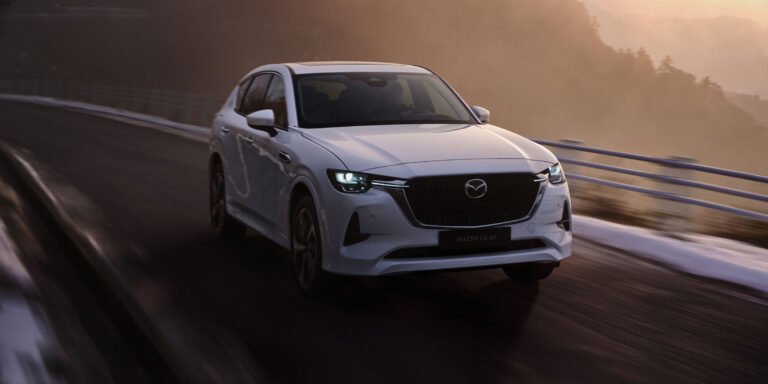
Mazda has revealed the CX-60 plug-in hybrid (PHEV), the brand’s all-new flagship SUV, and announced UK pricing and specifications.
The most powerful production model that Mazda has ever produced, the new Mazda CX-60 is now the largest SUV in the Mazda family. It sits above the existing Mazda CX-5 and will target established upmarket rivals like the Audi Q5, BMW X3 and Mercedes-Benz GLC.
The CX-60 range consists of three trim levels – the entry-level ‘Exclusive-Line’, the mid-range ‘Homura’ and the range-topping ‘Takumi’. Inside, the Exclusive-Line and Homura trims come with a black interior colour scheme, while the top-spec Takumi is trimmed with white Nappa leather, and includes a cloth trimming on the dashboard and wooden fixtures on the centre console.
The CX-60 comes with 18-inch alloy wheels as standard, and a panoramic roof is available as an optional extra. Eight exterior colours are available.
The list of on-board tech available as standard includes a 12-inch infotainment console with Apple CarPlay and Android Auto, an eight-speaker sound system, rain-sensing windscreen wipers, an auto-dimming rearview mirror, heated door mirrors, cruise control, climate control, a reversing camera, front and rear parking sensors and keyless entry.
The standard model also has a heated steering wheel, and the entry-level trim also includes several safety features, including lane-keeping assistance, blindspot monitoring and traffic sign recognition.
The 2022 Mazda CX-60 Takumi interior trim
In addition to the standard spec, the Homura trim adds ambient lighting in the cabin and a facial recognition system that automatically adjusts front seats, door mirrors and steering wheel to suit the driver. The Homura also increases the number of surround-sound speakers from eight to 12, and includes 20-inch alloy wheels.
The top-of-the-range Takumi trim does not add any further tech upgrades. Additional packages are available which add adaptive cruise control, adaptive LED headlights and wireless smartphone charging.
Trim level
On-the-road price
Exclusive-Line
£43,950
Homura
£46,700
Takumi
£48,050
The same powertrain setup is available across the entire range – a 2.5-litre four-cylinder petrol engine paired with a 18kWh battery, producing a maximum output of 327hp, a fuel consumption of 188mpg and an official electric-only range of 37 miles.
With prices starting from £44K, the Mazda CX-60 PHEV is now available to order in the UK, with the first orders expected to be delivered in Autumn 2022. Mazda has also confirmed that more powertrains will be added to the CX-60 line-up in the near future, including a 3.3-litre diesel with mild hybrid technology and a 3.0-litre petrol model.
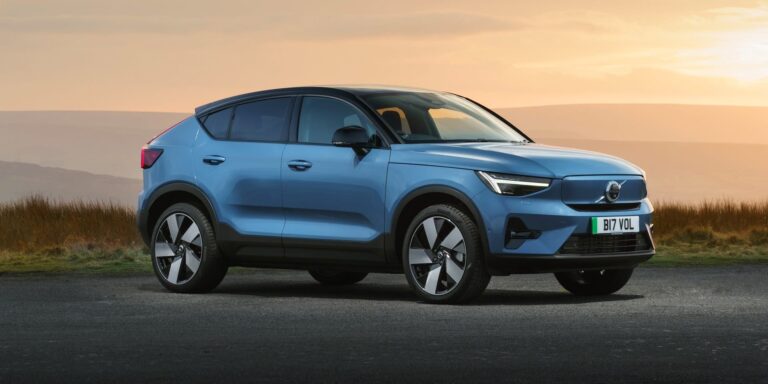
The Volvo EC40, formerly known as the C40 or the C40 Recharge, is the coupé-SUV version of the EX40 SUV, and the first model range in the Swedish brand’s line-up to debut as a purely electric model.
The five-door EC40 range consists of two power levels, the single-motor version with a smaller 69kWh battery and a dual-motor variant with a 78kWh battery – the same powertrain options available with the EX40 SUV. Volvo claims that the EC40 in dual-motor form can travel a maximum of 273 miles on a full battery.
The Volvo EC40 has received mixed review scores from the British motoring media, with many reviewers critical of the the price tag for the dual-motor version, which was the only version available to order at launch.
Volvo has since added the cheaper single-motor models to the EC40 range, but the general consensus among journalists is that, even at entry-level price, the EC40 does not make much financial sense.
“Looks aside, there’s nothing really to recommend it over the cheaper EX40”, Car comments, while Top Gear adds, “If you want a wilfully different electric crossover where practicality takes a slight backseat, Sweden already does a wholly convincing one of those, and priced from under £40,000 too. It’s called the Polestar 2.”
Auto Trader recommends that UK buyers consider rivals like the Audi Q4 e-tron and Hyundai Ioniq 5 instead, as those models are more affordable and have a longer battery range, while Parkers conclude that better performance can be found in the Tesla range for the same price.
That said, reviewers conclusively agree that the EC40 has considerable driver’s appeal – a strong performance package that can travel from 0-60mph in 4.7 seconds – slightly faster than its SUV brother thanks to its more aerodynamic sloping roofline. A majority of UK outlets were also enthused by the EC40’s interior quality, generous levels of on-board tech available as standard, and practical cabin features.
As of March 2026, the Volvo EC40 holds an Expert Rating of A, with a score of 71%. It scores top marks for its zero tailpipe emissions and low running costs, while its safety rating is also good. However, its media review scores and Volvo’s new car warranty cover are only average.
Highlighted reviews and road tests from across the UK automotive media. Click any of the boxes to view.
Auto Express
Model reviewed: Single Motor RWD Plus Score: 8 / 10 “Switching to rear-wheel drive makes the Volvo C40 a slightly more dynamic proposition, while the real-world improvements in range and efficiency do enough to keep things competitive. By and large, we’d still recommend the more practical XC40, but attractive subscription packages mean that for the time being, this C40 is actually the more affordable option.” Author: Richard Ingram Read review
Model reviewed: Range overview Score: 6 / 10 “The Volvo C40 feels needlessly powerful in this twin-motor set-up, which is also wallet-bustingly expensive, and it could do with being a little softer. For those who want the performance, a Polestar 2 is a better bet, while everyone else should opt for the single-motor C40. Either way, the appeal of the C40 seems limited over the more practical and slightly cheaper XC40 Recharge.” (Matt Robinson) Read review
Auto Trader
Model reviewed: (2023) Score: 9 / 10 “Updated with new motors and increased range, the already appealing Volvo C40 is an even more attractive bet.” (Dan Trent) Read review
Model reviewed: Range overview Score: 8 / 10 “The Volvo C40 is an impressive product, but rivals like the Q4 E-Tron and Hyundai Ioniq 5 offer more range and the Google-driven onboard tech rather excludes iPhone users, at least until a promised update adds CarPlay connectivity.” (Dan Trent) Read review
Car
Model reviewed: Range overview Score: 6 / 10 “The Volvo C40 Recharge is a good electric car with an excellent turn of pace, enough range and a quality interior. It just doesn’t feel particularly special for a car that’s meant to be Volvo’s electric flagship – and, looks aside, there’s nothing really to recommend it over the XC40 Recharge.” Read review
Car Keys
Model reviewed: Range overview Score: 8 / 10 “If you’re looking for an upmarket, stylish and powerful electric SUV, the Volvo C40 Recharge is a tough option to beat. It essentially combines all the good elements of the XC40 with an even more stylish look – not that the regular car is bad to look at, that’s for sure.” Read review
Carbuyer
Model reviewed: Range overview Score: 7.4 / 10 “The Volvo C40 is a very competent car because it’s good to drive, well built, full of modern tech and has a big battery for plenty of range. Despite this it’s still hard to recommend, simply because the electric version of the XC40 is good in all the same ways, yet it’s also more practical. Plus, if you want something more stylish, there’s also the Polestar 2 from Volvo’s sister brand, which is even better to drive.” Author: Richard Ingram Read review
Carwow
Model reviewed: Range overview Score: 7 / 10 “The Volvo C40 Recharge is effectively the coupe version of the popular Volvo XC40 Recharge electric SUV. It looks great, but that sloping roofline affects practicality.” Read review
Daily Mirror
Model reviewed: Twin Pro “The Volvo C40 Recharge Twin Pro has comfy seats, there’s more than adequate rear legroom and the coupe treatment hasn’t shut out all the light.” Read review
Discover EV
Model reviewed: Twin Pro Score: 9 / 10 “To say we were impressed by the Volvo C40 Recharge Twin Pro would be putting it lightly. It takes everything the XC40 Recharge does so well and adds a more dynamic and eye-catching design. The decision for buyers is whether stumping up the extra for the C40 Recharge is a price worth paying. But if you’re fortunate enough to have pockets which go deep enough, it will not disappoint.” Read review
Driving Electric
Model reviewed: Dual-motor, 402hp 78kWh Score: 6 / 10 “A less expensive, single-motor version will arrive later, and this is likely to be the pick of the range. For now, all the Volvo C40 can offer is more rakish styling than the XC40; the longer ranges at similar or even lower price points offered by rivals can’t be overlooked.” Read review
Evo
Model reviewed: Twin Score: 7 / 10 “So take the Volvo on face value as a well-built, attractive and perfectly capable SUV that’s also surprisingly rapid, and there’s plenty to like – against its combustion-powered alternative, it’s the better car.” (Jordan Katsianis) Read review
Green Car Guide
Model reviewed: Twin Score: 9 / 10 “The Volvo C40 Recharge ‘Crossover’ offers similar levels of space and practicality to the XC40 ‘SUV’ but with more sporty styling. Acceleration is certainly sporty, with the exception of when it feels muted from a standstill, but overall the C40 is comfort rather than sport-focused.” Read review
Heycar
Model reviewed: Score: 8 / 10 “It gets stylish looks, sports car power and decent range for an EV.” Read review
Honest John
Model reviewed: Range overview Score: 8 / 10 “The Volvo C40 recharge is a stylish, nice to drive and well-finished electric coupe-SUV. It gets a better on-paper range than the XC40 Recharge, too, but it’s more expensive to buy and not as practical.” Read review
Parkers
Model reviewed: Range overview Score: 6.8 / 10 “The C40 Recharge is a good electric car, but it doesn’t really feel as though it moves the game on for Volvo or the industry in general. Performance is rapid and it returns an acceptable range on a single charge, but it’s beaten soundly in both aspects by the Tesla Model 3.” Read review
The Sun
Model reviewed: Range overview “If you know your onions, you’ll know C40 also shares its electric gubbins with Polestar 2. That’s the better option for now. It’s different, it’s cool and the single-motor long-range model does 316 miles-plus for £42,900. There you go — I’ve just saved you £14,500.” Read review
Top Gear
Model reviewed: Range overview Score: 7 / 10 “What holds the C40 back – for now – is that fact it launches with such high spec and thus such a high price, especially given some of its interior bits are shared with XC40s half the cost. If you want a wilfully different electric crossover where practicality takes a slight backseat, Sweden already does a wholly convincing one of those, and priced from under £40k too. It’s called the Polestar 2.” Read review
Which EV?
Score: 7.8 / 10 “The Volvo C40 looks great, and the dual-motor version is very quick. Even the base entry-level Core trim is quite well equipped, but the Plus and Ultimate are full of top tech. However, the C40 is expensive, and even though the range is a little better than the XC40, this is still a weak area for such an expensive car. Overall, the C40 is a good-looking EV that drives well, but not exactly a value leader.” Author: James Morris Read review
Safety rating
Independent crash test and safety ratings from Euro NCAP
Independent economy and emissions ratings from Green NCAP
No eco rating
As of March 2026, the Volvo EC40 has not been lab tested by Green NCAP.
The Green NCAP programme measures exhaust pollution (which is zero for an electric car) and energy efficiency. Electric cars are much more energy-efficient than combustion cars, so the EC40 is likely to score very highly in Green NCAP testing whenever it ever takes place. Check back again soon.
Reliability rating
Reliability data provided exclusively for The Car Expert by MotorEasy
No reliability rating
As of March 2026, we don’t have enough reliability data on the Volvo EC40 to generate a reliability rating.
The Car Expert’s reliability information is provided exclusively to us using workshop and extended warranty data from our partner, MotorEasy, sourced from both official dealerships and independent workshops.
As soon as MotorEasy has sufficient data on the EC40, we’ll publish the score here.
Running cost rating
Monthly cost of ownership data provided exclusively for The Car Expert by Clear Vehicle Data
Battery range
Average
Score
Variation
Score
EV models
335 miles
A
Electrical efficiency
Average
Score
Variation
Score
EV models
4.3 m/KWh
B
Insurance group
Average
Score
Variation
Score
All models
30
C
Service and maintenance
Cost
Score
Year 1
£263
C
Year 2
£575
C
Year 3
£924
C
Year 4
£927
B
Year 5
£1,199
A
Overall
£3,888
B
The Volvo EC40 is cheap to run on a daily basis, but its insurance costs could be much higher than you would be expecting, according to whole-life running cost data provided exclusively to The Car Expert by our commercial partner Clear Vehicle Data.
Its long battery range is quite competitive and the SUV’s electrical efficiency (the EV equivalent of miles per gallon for a petrol or diesel car) is good. The even better news is that scheduled servicing costs for the C40 are excellent.
That said, the Volvo’s insurance premiums is estimated to be in the highest bracket.
Similar cars
If you’re looking at the Volvo EC40, you might also be interested in these alternatives
Find your next new or used car with Auto Trader. Find out more
Find your next new or used car with Carwow. Find out more
Lease a new Volvo EC40
If you’re looking to lease a new Volvo EC40, The Car Expert’s partners can help you find a competitive deal.
Personal contract hire deals from Leasing.com. Find out more
Personal contract hire deals from Carwow. Find out more
Personal contract hire deals from Select Car Leasing. Find out more
Subscribe to a Volvo EC40
Subscriptions are becoming a very popular way for consumers to try an electric car for a few weeks or months to help decide whether it’s a suitable alternative to a petrol car. If you’re interested in a car subscription, The Car Expert’s partners can help. (PS: What’s a car subscription?)
Volkswagen has finally unveiled its production version of the ID. Buzz people-carrier, after decades of concepts that have paid homage to the company’s beloved Beetle-based Type 2 van from the 1950s.
The retro-inspired ID. Buzz hopes to evoke the same enthusiasm that made the launched original Type 2 a cult classic, particularly among the hippy movement of the 1960s.
It will be built in both passenger and van forms, in a Volkswagen commercial vehicle plant in Hanover, Germany.
The first versions on sale will be rear-wheel-drive, using the company’s established EV platform that already underpins the ID.3 hatchback and ID.4 SUV models. A 150kW electric motor is powered by a 77kWh battery built into in the vehicle’s floor, for the lowest centre of gravity and maximum space inside the car.
The MPV variant offers seating for five, in what is described as a lounge-like atmosphere aided by a very long wheelbase and accessed by sliding doors. There is also space for 1,121 litres of luggage, increasing to 2,205 litres with the rear seats folded down.
No range between charges is yet being quoted for the model but Volkswagen adds that onboard charging capability will allow replenishment of the battery to 80% capacity in only 30 minutes. Despite the boxy look, Volkswagen claims that the ID. Buzz is as aerodynamic as a conventional car to help increase the battery range.
Volkswagen also plans a longer, seven-seat version of the ID. Buzz, as well as a California camper version that will be inspired by the classic T2 Camper Van. This is expected to launch in 2024, while more powerful dual-motored variants are also said to be planned.
Volkswagen will start taking orders for the ID. Buzz in May with first UK deliveries expected in October. The company hasn’t revealed any pricing or specification details, but expect a starting price of around £50K.
Proof that not even luxury supercar brands can escape the surge in automotive electrification, the Ferrari 296 is a mid-engined V6 super-coupé GTB or targa-roofed GTS that also happens to be a plug-in hybrid.
The 296 is the second Ferrari series production model to arrive in the UK that can travel on electric power alone, after the SF90 Stradale. It’s also the first road-going V6 model that Ferrari has produced since the Dino 246 GTB ended production in 1974.
However, having fewer cylinders doesn’t mean that the 296 is any less powerful than the V8 models in the Ferrari arsenal. The 3.0-litre twin-turbocharged engine is capable of producing more than 650hp and works in tandem with a 165hp electric motor. That produces a combined output of more than 800hp, almost 100hp more than the combustion-powered Ferrari F8 which the 296 replaced. Plus it has an official electric range of around 16 miles.
Described by Top Gear as the supercar that will give McLaren “sleepless nights”, the Ferrari 296 GTB has had an overwhelmingly positive reception from British reviewers, universally highlighted for what Car calls “accessible high performance, mind-blowing dynamics and style crammed with real substance.” Journalists have also shared their enthusiasm for the coupé’s exterior design, which Ferrari says is inspired by the 250 LM sports car from the 1960s.
While the majority of reviewers were impressed by the Ferrari’s ability to cruise in near silence, others are not as impressed by the electrified evolution of modern Ferrari models. The Telegraph comments that “the hybrid system is adding performance far more than it’s saving the planet.” Some reviews also reported that the battery drains quickly, meaning that the car is mostly operating purely on petrol power.
Some motoring outlets also found the 296’s touch-sensitive steering wheel controls to be rather irritating; however, from mid-2025, these can be replaced by conventional buttons. Limited boot space means there isn’t much room to accommodate shopping bags or travel luggage. The price is also steep, with optional extra packages that cost more than a full Ford Focus.
The Ferrari 296 GTS was launched several months after the GTB coupé, but has scored similarly high praise from critics. The driving experience is almost unchanged despite losing the roof, while adding an open-top experience to further enhance summer driving.
As of March 2026, the Ferrari 296 range (including both GTB coupé and GTS targa versions) holds a New Car Expert Rating of A with a score of 71%, making it the highest-scoring Ferrari in our Expert Rating Index. It has outstanding media review scores – even by Ferrari’s usual high standards – and Ferrari’s warranty offering is second to none. The plug-in hybrid aspect of the 296 also means it gets good grades for its low CO2 emissions, but it will inevitably be an expensive car to own and run.
“Given the incredible level of power, the Ferrari 296 GTB is so easy to drive quickly but, importantly, so much fun, too. The clever chassis electronics give it an approachability that means you can make the most of the glorious powertrain, which sounds superb. Yet again Ferrari has put clear water between it and its rivals – if this is how Ferrari will approach electrification in the future, there’s nothing to worry about.”
Model reviewed: 296 GTS Score: 10 / 10 “Any concerns that chopping the roof off the Ferrari 296 might dent the excitement it can generate disappear the first time you make the most of that 819bhp output. In terms of speed, sophistication and refinement, the 296 Spider remains an incredible piece of engineering. That it also maintains the theatre and thrills of the great Ferraris sends it right towards the top of the supercar pile.” (Alex Ingram) Read review
Car
Model reviewed: GTB coupé Score: 10 / 10 “Oozing power, poise and panache from every pore, this Ferrari challenges and satisfies all six senses. The steep price, long waiting list and compromised daily-driver appeal will rule out the 296 GTB for most, but the elite minority should be forming a disorderly queue for the finest Ferrari sports car in years. Accessible high performance, mind-blowing dynamics and style crammed with real substance. Truly the Ferrari 296 GTB has it all.” Author: Georg Kacher Read review
Model reviewed: 296 GTS Spider Score: 10 / 10 “Complex cabin aside, the new Ferrari 296 GTS is an indisputable triumph for Ferrari and one that joins a long list of legendary Maranello drop tops. Whereas some could accuse the GTB of being a touch too serious, the GTS is not. Taking the roof of a car is a simple idea, but one that’s difficult to execute.” Author: James Dennison Read review
Daily Mail
Model reviewed: GTB coupé “The new Ferrari 296 GTB is a significant new entrant for the iconic Italian brand. That’s because at its heart is a new V6 engine that marks a leaner, cleaner – but no less meaner – chapter for Ferrari, which it declares to be ‘epoch-changing’.” Read review
Driving Electric
Model reviewed: GTB coupé Score: 10 / 10 “The second plug-in hybrid supercar to emerge from Maranello is another triumph, showing Ferrari fans have nothing to fear from electrification.” Read review
Evo
Model reviewed: 296 GTS Score: 9 / 10 “Ferrari’s 296 GTS is an 819bhp open-air thrill ride, competing against McLaren’s latest and greatest V8 Spider.” Author: Jethro Bovingdon, Peter Tomalin Read review
The Sun
Model reviewed: GTB coupé “Good Lord, this car is blinding. It’s the mutt’s nuts. Front-end grip is mega. The steering scalpel-sharp. The brakes like anchors. And it’s fast. Crazy fast. The Ferrari 296 is easy to drive fast and easy to drive slow. It’s a ballerina with an iron fist. We all know Ferrari has to be seen to be doing the right thing as we rush head-first towards electrification. But actually this car is genius.” Read review
The Sunday Times
Model reviewed: 296 GTB “One and a half tonnes of explosively fast fun” (Jeremy Clarkson) Read review
Model reviewed: 296 GTS Score: 10 / 10 “The Ferrari 296 GTS is an astounding creation, using its electrification to the benefit of performance while retaining the high level of engagement and usability for which Ferrari supercars have become known. That it can be driven and enjoyed by those of all skill levels, in everyday scenarios as much as on the racetrack is a remarkable achievement.” (Shane O’Donoghue) Read review
Model reviewed: Range overview Score: 10 / 10 “Having the ability to cruise around in silent, stealthy electric mode will be an advantage for some customers, but the 296 GTB is at its best when the hybrid system is used for performance. Do that, and the Ferrari becomes one of the best and most spectacular supercars that money can buy.” Read review
The Telegraph
Model reviewed: GTB coupé Score: 8 / 10 “I’ve got a feeling this is the future for supercars and while I admire the engineering and skill that goes into them, I’m not entirely sure I’m going to enjoy driving them that much.” Read review
Top Gear
Model reviewed: GTB coupé Score: 10 / 10 “A huge accomplishment. A successor to the legendary Dino. A genius bit of technical development. A warning shot across McLaren’s bows. Proof downsizing can improve the breed. Evidence that Ferrari has fully got its head around hybrid and electricity. Any and all are true. But this is probably the one that matters most: the Ferrari 296 GTB is the best supercar available today.” Read review
Safety rating
Independent crash test and safety ratings from Euro NCAP
No safety rating
As of March 2026, the Ferrari 296 has not been tested by Euro NCAP. Due to its price and exclusivity, it is unlikely to undergo crash testing.
Eco rating
Independent economy and emissions ratings from Green NCAP
No eco rating
As of March 2026, the Ferrari 296 has not been assessed by Green NCAP. Again, we’re not expecting it to happen anytime soon – so you’ll just have to imagine how eco-friendly an 800hp supercar (albeit a plug-in hybrid) is likely to be.
Reliability rating
Reliability data provided exclusively for The Car Expert by MotorEasy
No reliability rating
As of March 2026, we don’t have enough reliability data on the Ferrari 296 to generate a reliability rating.
The Car Expert’s reliability information is provided exclusively to us using workshop and extended warranty data from our partner, MotorEasy, sourced from both official dealerships and independent workshops.
As soon as MotorEasy has sufficient data on the 296, we’ll publish the score here.
Running cost rating
Monthly cost of ownership data provided exclusively for The Car Expert by Clear Vehicle Data
Fuel consumption
Average
Score
Plug-in hybrid models
44 mpg
C
CO₂ output
Average
Score
Variation
Score
Plug-in hybrid models
151 g/km
C
Insurance group
Average
Score
Variation
Score
All models
50
F
Service and maintenance
Cost
Score
Year 1
£1
A
Year 2
£1
A
Year 3
£1
A
Year 4
£1
A
Year 5
£1
A
Overall
£5
A
There’s good and bad news on running costs for the Ferrari 296. All new Ferraris include seven years of scheduled servicing and maintenance, which means there’s no excuse for owners not to get their cars serviced on time, every time. We have only listed the cost as £1 a year here becvause our system can’t currently cope with a zero figure in this category.
Being a plug-in hybrid, the official CO2 emissions score is very low. Over time, this may prove to be valuable as governments start to regulate cars more heavily based on their emissions outputs.
Of course, insurance bills are going to be exactly as expensive as you’d expect on a mid-engined Ferrari with a price tag exceeding a quarter of a million pounds. Meanwhile, if you drive the 296 nicely then fuel economy is likely to be reasonable (again, helped by the plug-in hybrid system as long as you have electricity in the battery). But if you have any plans to unleash its considerable performance, that fuel economy will deteriorate quickly.
Warranty Rating
New car warranty information for the Ferrari 296 GTB and 296 GTS
Overall rating
A
100%
New car warranty duration
4 years
New car warranty mileage
Unlimited miles
Battery warranty duration
16 years
Battery warranty mileage
Unlimited miles
For a plug-in hybrid model, Ferrari’s new car warranty is the best in the business. In addition to the usual four-year/unlimited-mileage warranty that is offered on Ferrari’s pure petrol models, the battery component of the Ferrari 296 gets up to 16 years of coverage from Ferrari, again without any mileage restrictions.
Ferrari will replace the 296’s battery after eight years with a brand-new battery, and will do the same again after 16 years. No other manufacturer offers this level of support for its batteries.
Awards
Trophies, prizes and awards that the Ferrari 296 has received
2022
News UK Motor Awards – Best Dream Car
Top Gear Awards – Best Supercar
Similar cars
If you’re looking at the Ferrari 296, you might also be interested in these alternatives
Skoda has announced the pricing and specifications for a new range-topping trim in its Fabia line-up – the Monte Carlo – which features some specific interior and exterior details and a more powerful engine.
The Monte Carlo moniker is nothing new to the Skoda brand – it has been a permanent fixture in the Fabia range since 2011, celebrating Skoda’s Monte Carlo rally success during the 1930s.
This latest iteration of the Monte Carlo distinguishes itself from the entry-level Fabia by sporting glossy black door mirrors, window surrounds, side skirts and front grille, as well as 17-inch black diamond cut alloy wheels – with 18-inch alloys being an optional extra.
Unique Monte Carlo branding sits next to the Skoda lettering on the boot lid – both finished in black. Skoda also says that the Monte Carlo comes with new sports bumpers in the front and rear, but these bumpers look almost identical to the standard model, with the exception of a faux rear diffuser.
Stepping inside, the Monte Carlo package includes height-adjustable sports seats in the front – trimmed in black fabric and artificial leather with red and grey piping and white stitching. The red and black theme continues on the door panels and dashboard, which both also feature carbon fibre-like trimming with white stitching.
The list of on-board tech included with the Monte Carlo trim is the longest in the Fabia range, including an 8-inch infotainment screen with Apple CarPlay and Android Auto, and a ten-inch digital instrument display behind the steering wheel. The trim also includes a wireless smartphone charging pad, a keyless start/stop function, climate control, automatic emergency braking, rear parking sensors and lane-keeping assistance.
The Fabia Monte Carlo is available with three petrol engine choices. The cheapest is the 110hp 1.0-litre six-speed manual, which is also available with the SE L and Colour Edition trims. For an extra cost, a seven-speed automatic version of the same engine is also available.
Exclusive to the Monte Carlo trim however, is the 150hp 1.5-litre seven-speed automatic powertrain – the most powerful engine in the current Fabia range.
Engine option
On-the-road price
110hp 1.0-litre six-speed manual
£20,925
110hp 1.0-litre seven-speed automatic
£21,965
150hp 1.5-litre seven-speed automatic
£23,765
With prices starting at £20,925, the Fabia Monte Carlo is now available to order in the UK. The latest Fabia range, which arrived in the UK at the end of 2021, has impressed reviewers thanks to its impressive levels of standard equipment and its spacious and practical cabin, as well as its competitive pricing.
That said, a number of reviewers commented that the Fabia’s interior trim was rather cheap in a few places, and shared their disappointment at the lack of electrification across the range. Currently, the Skoda Fabia holds an Expert Rating of 78%, ranking it as one of the best small hatchbacks in our Expert Rating Index of more than 360 cars.
A new entry-level powertrain has been added to the Volvo C40 coupé-SUV range, while the entire XC40 Recharge SUV line-up has been refreshed for 2022.
Previously only available with a dual-motor setup to power the wheels, Volvo has announced that a cheaper single-motor variant of the electric C40 is now available to order in the UK. While the dual-motor versions are equipped with a 78kWh battery, this new single-motor powertrain uses a smaller 69kWh battery.
Consequently, Volvo says that the maximum battery range of the single-motor C40 is 269 miles – four miles fewer than the range of dual-motor models.
New single-motor versions are available with every trim level, including the new entry-level Volvo C40 ‘Core’, which is single-motor only and more than £10,000 cheaper than the dual-motor models that were previously the only options available. Should you prefer to opt for the mid-range ‘Plus’ or range-topping ‘Ultimate’ trims, the single-motor versions are £5,000 cheaper than dual-motor models.
Trim level
Powertrain
Battery size
Battery range
Drive type
Price
C40 Core
Single-motor
69kWh
269 miles
Front-wheel drive
£44,800
C40 Plus
Single-motor
69kWh
269 miles
Front-wheel drive
£50,550
C40 Plus
Dual-motor
78kWh
273 miles
All-wheel drive
£55,550
C40 Ultimate
Single-motor
69kWh
269 miles
Front-wheel drive
£53,900
C40 Ultimate
Dual-motor
78kWh
273 miles
All-wheel drive
£58,900
As well as expanding the C40 range, Volvo has also given the closely-related XC40 Recharge SUV range a minor facelift for 2022. Applied to every trim level in the XC40 range, it includes a new front bumper and a frameless grille that is similar to that on the C40.
Customers can now also choose leather-free upholstery when ordering their XC40 Recharge, while there are new exterior colours and alloy wheel designs to choose from as well.
Volvo C40 (blue) and XC40 (white)
UK buyers can now order the updated C40 and XC40 in the UK, with first deliveries expected in Autumn 2022.
Arriving as Volvo’s first all-electric car in 2021, the XC40 Recharge has received plenty of reviewer praise for its performance, battery range, comfort and safety. However, pricing has been a sticking point for journalists, with many commenting that the entry-level price of £43,550 is rather expensive. The XC40 Recharge currently holds an Expert Rating of 68%.
The Volvo C40, which swaps out the XC40’s squarer rear end for a more sloping roofline, faced the same pricing criticism at its more recent launch, as the initial absence of cheaper single-motor models disappointed many reviewers. The coupé-SUV currently holds an Expert Rating of 64%.
Probably the first thing you do when you buy a new or used car is to sort out the car insurance on it. Aside from the fact that it’s a legal requirement, organising appropriate insurance to cover damage and possible repairs to your car is a sensible thing to do.
So that’s the car sorted, but what about the tyres?
Tyre insurance is one of the many finance and insurance products that dealerships will try to push onto car buyers, along with GAP insurance, scratch & dent insurance, key insurance and other various and assorted policies.
The purpose of tyre insurance is to cover you in the event that one or more of your car tyres is damaged beyond repair. This can either be accidental damage (such as bouncing off a kerb or pothole) or malicious damage (such as someone putting a knife through your tyre).
For some people, tyre insurance can be just as important as covering the rest of the car against accidental or even deliberate damage.
This kind of insurance is most commonly attached to more expensive vehicles that feature large alloy wheels or big off-road rubber, as those tyres can be hugely expensive to replace. An increasing number of cars (like most BMWs and Minis) are also being fitted with run-flat tyres, which can’t be repaired like a normal car tyre. That usually means it’s automatically a replacement tyre for even minor damage.
Tyre insurance premiums are worked out based on the type of car, its wheel size and performance, so the cost of tyre insurance for a town runabout will be significantly cheaper than for a high-end supercar.
What does tyre insurance cover?
Tyre insurance covers unwanted damage caused by an accident – such as a kerbing or a blow-out – as well as from malicious acts like tyre slashing. Your tyre insurance will pay for replacement tyre(s) rather than repairs to your existing tyres.
Wear and tear is not covered by tyre insurance. All tyres will wear down over time and need replacing. A new tyre will usually come with about 8mm of tread on the surface, and the minimum legal tread depth in the UK is 1.6mm. Insurance providers have fairly strict rules and regulations about what they will and won’t pay for, and you won’t get a brand-new set of tyres if your old ones have barely legal tread depth.
This type of cover is becoming less commonplace. That’s not only because many drivers would rather take the chance of avoiding damage than pay for something they might never need, but also because the cost of providing the cover is becoming pretty prohibitive for the insurers.
Tyres are expensive to manufacture, and therefore pricey to buy, and there’s not a lot of profit in them for suppliers. As a result, any insurer asked to pay out for some damaged rubber will find themselves having to pay top prices – and that’s not something insurance companies like to do on a regular basis.
Do I really need tyre insurance?
In weighing up the merits of any insurance policy, you need to look at the cost of the insurance, the value of the product you’re insuring and the likelihood that you will have to make a claim on the policy.
Like most insurance policies, tyre insurance will cost you the premium (upfront cost) plus an excess if you actually make a claim.
Most tyre policies will allow you to claim for a certain number of replacement tyres over the course of the policy (usually a three-year term), so you need to weigh up the likelihood that you will make any claims on the policy during that time. If you live around heavily potholed roads, you may have already suffered tyre failures in the past.
In most cases, the premium is roughly similar to the cost of one new tyre. You’ll also have to pay an excess (roughly £25 but it will vary) if you make a claim.
Usually, it tends to work out that if you claim for more than one tyre over the life of your policy, you’d be saving money over buying the tyres brand new. However, that will obviously depend on the actual payout you receive – as mentioned, if your tyres are almost balding when you make a claim, you won’t get the full new tyre replacment price.
If you have expensive tyres, like big SUV tyres or run-flat tyres, a tyre insurance policy might be more valuable as the cost of replacing a damaged tyre is higher and/or the likelihood that you will suffer a damaged tyre is higher.
Still looking for tyre insurance?
Because of the cost and specialist nature of tyre insurance, there will be certain provisions in the policy. Here are some of the top points to look for when considering cover:
Your tyres must have the ‘E’ mark to say it is fit for purpose in the UK and Europe.
Make sure the policy covers accidental and malicious damage.
Remember it won’t cover wear caused by defective steering geometry or bad maintenance – damage has to be caused by an ‘unexpected deflation’.
See what the ‘wear and tear’ deduction is. A tyre originally with 8mm tread that is damaged when it’s at 3mm will get a proportionally lower pay out.
Look for excess charges – these can be £25 to £35.
See what the pay-out limit is – it’s usually £150 per wheel or £300 per wheel depending on premium, for up to four tyres each year. It’s highly unusual to have to claim this often though.
Remember that if a tyre is repairable it will almost certainly have to be fixed rather than replaced. Run flat tyres can’t be repaired though.
Check you don’t have to go to a main dealer for the replacement. You should be able to choose who you use.
Insurers might have a clause giving the maximum they will pay for a replacement – this stops suppliers and fitters charging over- inflated prices for work.
You will need to supply a report from the technician with two photos showing: 1) the damaged tyre and 2) its tread depth.
First arriving on UK roads in early 2017, the Toyota Prius Plug-in was an eco-friendly five-door family saloon– also known as the Prius Prime in theUSA.
Put simply, the Prius Plug-in was the plug-in hybrid version of the standard Prius range, with a larger 8.8kWh battery that can power the electric motor on its own for up to 34 miles without the help of the 1.8-litre petrol engine.
Like its regular hybrid twin, the Toyota Prius Plug-in was front-wheel drive, and received a mid-life facelift in early 2019, consisting of new interior touches, infotainment additions and an extra fifth seat in the rear.
While this 2019 refresh did improve the saloon’s review scores somewhat, the general reception of the Prius plug-in remained mixed for its entire lifespan. In one of its more favourable reviews, Driving Electric commended the Prius Plug-in for its “incredible” fuel efficiency and its quiet and relaxing driving experience.
Practicality was a key sticking point for many journalists, as the Prius Plug-in had a rather shallow boot which offered less storage space than the regular Prius models, as engineers needed to accommodate the plug-in’s chunky battery pack. The majority of reviewers agreed that otherwise the interior was spacious and had some neat practical features, but more flaws could be found on the dashboard – Parkers called the saloon’s infotainment “slow and unresponsive”.
Described by the Sunday Times as “a smart car at a silly price”, many reviewers concluded that the Toyota Prius Plug-in was hard to recommend considering its price point and tax bracket. “You’re probably better off sticking with the regular Prius and saving thousands upfront”, Heycar said, while Business Car explained that a typical Prius driver “will pay the same in company car tax as the faster and much better-to-drive Audi and BMW”.
No longer on sale, the Toyota Prius Plug-in holds a Used CarExpert Rating of A with a score of 72%. This score is the same as the rating given to the petrol-electric Prius hybrid of this generation, which was several thousand pounds cheaper.
Body style: Mid-size saloon Engines: plug-in hybrid Price when new: From £31,344 on-road
Launched: Spring 2017 Last updated: Spring 2019 Discontinued: Spring 2022
Image gallery
Media reviews
Highlighted reviews and road tests from across the UK automotive media. Click any of the boxes to view.
Auto Express
Model reviewed: Range overview Score: 8 / 10 “The question you’ll need to ask is whether you really need that 30-mile EV range. The standard Prius is already an excellent car, so we’d recommend considering how you’ll use the Plug-in before taking the plunge.” Read review
Auto Trader
Score: 7.6 / 10 “On paper the Toyota Prius Plug-in offers viable zero-emissions driving around town without the range anxiety of a pure EV, with tax benefits and other financial incentives to boot. The reality is a little more complex, given the additional cost over the regular Prius, compromises in practicality and real-world running costs that fall some way short of the dream.” Read review
Business Car
Model reviewed: Range overview Score: 7 / 10 “Priced near to rivals like the Audi A3 e-tron and BMW 330e, the Toyota has a problem on its hands: despite being significantly more efficient, a typical user will pay the same in benefit-in-kind company car tax as the faster and much better-to-drive Audi and BMW so its difficult to recommend.” Read review
Car
Model reviewed: Range overview Score: 8 / 10 “The Toyota Prius Plug-in won’t get most petrolheads’ juices flowing, but rest assured that if the future comes in plug-in form, this is a damn sight more engaging drive than the Nissan Leaf. Interestingly, this Prius feels happiest in all-electric mode and does a good job of dashing around town.” Read review
Car Keys
Model reviewed: Range overview Score: 7 / 10 “For the £11,000 extra that the Plug-In costs over the regular Prius, you do gain much improved economy, better refinement and a driving experience that’s much closer to a pure electric vehicle. But you lose out on an extra seat in the back and a fair amount of storage space.” Read review
Carbuyer
Model reviewed: Range overview Score: 8 / 10 “The Toyota Prius Plug-In has low running costs but the complicated technology pushes its price up.” Read review
Carwow
Model reviewed: Range overview Score: 7 / 10 “The Prius Plug-in makes a lot of sense with its electric-only range, but the seating arrangement limits its uses somewhat.” Read review
Discover EV
Model reviewed: Score: 7 / 10 “While it’s more economical than any direct rival, and about 10% up on the regular Prius, Toyota charges almost eight grand more for its Plug-in version. So if you live up to 30 miles away from work (and you can charge there as well), the Toyota Prius Plug-in makes for a cheap option. However, if you do lots of miles, you’re better off sticking to the brand’s hybrid.” Read review
Driving Electric
Model reviewed: Range overview Score: 8 / 10 “The Toyota Prius Plug-In offers genuine zero-emissions range in a plug-in hybrid package that delivers strong efficiency.” Read review
Electrifying.com
Model reviewed: Range overview Score: 6.5 / 10 “Choose the plug-in version and it will do reasonably well however, making the most of its relatively small battery with a 32-mile claimed range on electric-only power. That should be plenty for most commuters and will mean that you can plug in at home or work every day and save the petrol for any long trips you might do at weekends.” Read review
Green Car Guide
Model reviewed: Range overview Score: 9 / 10 “The Prius Plug-in is similar to the regular Prius Hybrid but it provides around 30 miles of electric driving rather than the very short distance possible in the Prius Hybrid. Both cars are easy and pleasant to drive. However the Prius Plug-in takes the obsession with efficiency of Toyota’s engineers to the next level – to the extent that it becomes a four rather than a five-seater.” Read review
Heycar
Model reviewed: Range overview Score: 6 / 10 “The Toyota Prius Plug-In is a cannily development from Toyota, but the target customer base is too small for it to be of much interest to most people. You’re probably better off sticking with the regular Prius and saving thousands upfront. You’ll enjoy a bigger boot, too.” Read review
Honest John
Model reviewed: Range overview Score: 6 / 10 “The Toyota Prius Plug-in is a difficult car to recommend. We like its smooth running, efficiency, long warranty and standard equipment, but we can’t help but feel a standard Prius or EV car would make more sense.” Read review
Parkers
Model reviewed: Range overview Score: 6.4 / 10 “There are more modern plug-in hybrids, there are more practical ones, and there are certainly better ones to drive – the Prius Plug-in has been around for quite a while and in several key areas it’s been surpassed by its competition.” Read review
The Sunday Times
Model reviewed: Range overview Score: 6 / 10 “A smart car at a silly price.”
Read review
Safety rating
Independent crash test and safety ratings from Euro NCAP
As of April 2025 (our most recent data point), the Toyota Prius family – including the Prius Plug-in – has a very good reliability score of 90%. This includes previous generations of the Prius as well as this model.
The Car Expert’s reliability information is provided exclusively to us using workshop and extended warranty data from our partner, MotorEasy.
Awards
Trophies, prizes and awards that the Toyota Prius Plug-in has received
2017
Next Green Car Awards – World Green Car + Best Large Family Car
Similar cars
If you’re looking at the Toyota Prius Plug-in, you might also be interested in these alternatives
Nissan is to add a new hybrid powertrain called ‘e-Power’ to the Qashqai range, pitching it at owners who spend a lot of time in urban environments.
The Qashqai will be the first Nissan model in Europe to be fitted with the e-Power unit, which is already used in versions of the Nissan Note sold in Japan.
Nissan’s e-Power system works differently to traditional hybrid vehicles, and more like what is known as a ‘range extender’ hybrid. Here’s a brief explainer.
How a normal hybrid works
A normal hybrid consists of two complete power systems: a petrol engine, complete with gearbox and driveshafts to send power from the engine to the wheels; and an electric motor (powered by a battery), which can also drive the car on its own.
The two power sources can work independently or together, so during any given journey you might be driving a petrol car, and electric car and a combination of the two working together.
How the e-Power system works
The e-Power drivetrain combines a three-cylinder 1.5-litre petrol engine of 156hp with a 140kW electric motor, which does sound similar to a typical hybrid car.
However, the petrol engine does not actually drive the wheels at all – it simply acts as a generator to charge the battery and power the electric motor, while the electric motor is responsible for driving the wheels at all times.
There’s still a battery, which can also gain some charge whenever you coast or brake, just like any other hybrid or electric car. But, as with any other non-plug-in hybrid, most of the charge will come from the petrol engine. There is no facility to plug the Qashqai into a charging socket to charge the battery
So, essentially, the Qashqai e-Power is an electric car powered by petrol…
Why does it matter?
According to Nissan, the new drivetrain will suit those who like the instant response of an electric vehicle – compared to a typical hybrid that is predominantly a petrol car – but don’t want to deal with charging it.
The e-Power’s designers claim that the electric motor provides a much better driving experience than a traditional full hybrid, producing an instant response with no delays under acceleration. There’s also no switching between petrol and electric driving, which can cause clunking or hesitation in some hybrid cars as the petrol engine switches on or off.
Another advantage of the e-Power system is that it does away with the need for a conventional gearbox and driveshafts for the petrol engine, which reduces weight and saves space.
The petrol engine will still be running most of the time, but it works differently to that in a normal car. Instead of working up and down through the rev range, it will sit at a fixed operating speed that maximises the supply of electricity to the battery while minimising fuel consumption. The operating speed will be lined to the car’s road speed, so will gradually increase as speed increases in a way that promises to be more natural than a regular hybrid car, which can see the engine revving hard even at low speeds.
Nissan’s research suggests that typical Qashqai owners can spend up to 70% of their time driving in urban environments, where the petrol engine would be operating in a low-power mode. Combined with energy recovery energy through deceleration and braking, it should produce fewer emissions than a regular hybrid car in built-up surroundings.
Because it’s effectively an electric car (albeit one powered by petrol), the Qashqai e-Power can also be driven with Nissan’s ‘e-Pedal’ system as used in the Leaf EV. Activated by a switch, this allows ‘one-pedal’ driving by using the electric motor to slow the car instead of conventional brakes using the brake pedal. This ensures as much energy as possible is recovered to the battery to minimise fuel consumption, and also reduces wear on the brake pads.
Official combined-cycle fuel economy and emissions of the Qashqai e-Power are expected to be in the region of 53mpg and 119g/km, but those driving solely in urban environments could well improve on these figures.
Prices for the Nissan Qashqai e-Power are yet to be revealed. Nissan says it will join the Qashqai range from ‘late summer’, so full pricing and specifications are expected in coming weeks.
If you look under the safety systems section when buying a new car, you’ll be wowed by a vast array of acronyms and impressive-sounding technologies.
Modern cars are quite incredible, with most able to ‘see’ the world around them and anticipate and react to situations on the road. Understanding what these technologies are, as well as which are most important, can help you decide on which new model you’re going to buy.
Here, we outline the most common driver assistance systems and what they do.
Parking assist
Parking can be tricky, because cars are getting bigger but parking spaces remain the same size. Fortunately, some cars offer a system that can park the car automatically.
Again, these systems vary, but they should be capable of driving forwards or backwards into a bay, or perform parallel parking on the street.
Advanced cruise control
This is a hugely appealing technology for anyone who spends a lot of time on the motorway. They have various levels of competence, but in their most basic form your car will use radar to judge the speed and distance of the car in front and adjust its own speed to maintain a constant distance behind.
Some can also help keep the car in its lane, with Tesla’s ‘Autopilot’ system the best known example.
Blind spot warning
One of the lessons we learn early in our driving careers is that checking your blind spot is important to avoid accidents. However, many modern cars now have blind spot warning systems that tell you if there’s a car off your rear quarter that might have escaped your vision.
They tend to work with an orange light embedded in the wing mirror, so as you check the mirror to see what’s behind you, you’ll see that you should hold off changing lanes even if you can’t see a vehicle without having to look over your shoulder.
Front collision warning
These systems scan the road ahead and can pick out obstacles in the road, such as other vehicles or pedestrians. If it identifies an object and your closing speed puts you at risk of a collision, it will alert you.
This alert comes in a variety of ways, but most use a flashing icon on the dashboard and an audible alarm. Some cars will also boost brake input to help avoid a crash, but importantly they only warn you of an obstacle – you must take action yourself.
Automatic emergency braking (AEB)
Emergency braking systems take the principle of forward collision warnings, but are capable of taking action to avoid a crash. Should a crash be anticipated, the car can apply the brakes to stop the vehicle quickly.
Some more advanced systems can also scan the opposite lane to see if it is clear, and if it decides it can’t stop in time, will steer the car around the obstacle.
Safety bodies like Euro NCAP and Britain’s own Thatcham Research contend that AEB is one of the most important factors in reducing road deaths since the seat belt.
Lane-keep assist systems (LKAS)
This one is fairly self-explanatory, but it’s important to be aware if a car has this ahead of a test drive, because it can make the steering feel quite odd if you’re not expecting it.
In its most basic form, lane departure warning systems will alert you if you’re drifting out of lane, while LKAS will actively alter the car’s steering and pull you back into the centre of the lane.
Night vision
In the car industry, night vision is still a very new technology. Introduced with the luxurious Mercedes-Benz S-Class, it has slowly filtered down to a few mainstream models such as the DS 7 Crossback.
It uses night vision to display a black and white image, usually in the instrument binnacle, that can see pedestrians or animals far in the distance, ahead of the headlights. While you shouldn’t drive by looking at the screen, it’s often used to warn of potential hazards before you’ve seen them.
This article was originally published in August 2020, and most recently updated in March 2022
The Audi A1 was launched in 2010 as the brand’s answer to the runaway success of BMW’s reborn Mini hatch. It was initially only built as a three-door hatch (like the Mini), but after a couple of years a five-door model was added, called the A1 Sportback. The model was built up until 2018, when it was replaced by an all-new version.
The A1 was immediately popular with both customers and the media, who praised it for its relative refinement compared to the Mini and other supermini-class small cars. The three-door was rather cramped in the back, and this was marginally improved with the five-door Sportback version, which certainly made accessing the rear seats easier.
As was the vogue for German car companies of the time, the Audi A1 was available with both petrol and diesel engines. A higher-performance model called the S1 was a refined alternative to a Mini John Cooper Works.
Despite its refinement and quality advantages over the Mini, reviewers marked it down for lacking the driving dynamics and general character of the British car. Review scores fell further when the third-generation Mini was launched, which maintained its driving advantage over the Audi and also matched it in terms of both refinement and offering a five-door option.
As of August 2026, the Audi A1 holds a Used Car Expert Rating of C, with a score of 61%.
Highlighted reviews and road tests from across the UK automotive media. Click any of the boxes to view.
Auto Express
Model reviewed: Three-door hatchback range Score: 6 / 10 “The Audi A1 boasted styling that distilled the sharp, sophisticated notes of the brand’s larger models into a deeply desirable yet smaller package.” Read review
Model reviewed: Sportback range Score: 6 / 10 “The Audi A1 Sportback is a small car with limited practicality, but an extra set of rear doors makes it a feasible option for families with small children. It features a wide range of diesel and petrol engines, all turbocharged and with stop-start.” Read review
Model reviewed: Sportback S Line range Score: 8 / 10 “Audi’s A1 S line supermini packs good looks, great quality and excellent refinement into a compact body.” Read review
Model reviewed: Three-door hatchback range Score: 8 / 10 “Audi A1 facelift is subtle, but tweaks make it better value.” Read review
Model reviewed: 1.4-litre petrol manual Score: 8 / 10 “Powerful enough for every eventuality and whisper-quiet, this higher-powered 1.4 TFSI is a great match for the Audi A1’s sophisticated character.” Read review
Auto Trader
Model reviewed: Three-door hatchback range Score: 3.9 / 10 “The Audi A1 is an upmarket supermini designed to appeal to style-conscious buyers who might otherwise choose a Mini or Citroen DS3. It’s well-equipped, efficient and great fun to drive.” Read review
Model reviewed: Three-door hatchback range Score: 8.6 / 10 “The Audi A1 is an upmarket supermini designed to appeal to style-conscious buyers who might otherwise choose a Mini or Citroen DS3. It’s well-equipped, efficient and great to drive.” Read review
Business Car
Model reviewed: 1.6-litre diesel manual three-door hatchback Score: 8 / 10 “The 1.6 diesel is powerful enough for Audi’s smallest model, certainly avoiding the impression of being a low-emission focused car, although the harsh ride of the S-line model in particular will be too much for some drivers.” Read review
Car
Model reviewed: 1.6-litre diesel manual Sportback Score: 8 / 10 “Though this is the most practical Audi A1, this still isn’t a supermini you’ll buy because of its utility – the major showroom draws here are the badge, the chic styling, and the best small car interior, bar none.” Read review
Model reviewed: 1.4 TFSI (2010) Score: 8 / 10 “It’s hard to see the Audi A1 being anything other than a runaway success. There’s nothing revolutionary about it but it looks good and is beautifully put together and promises Mini-beating residuals and great economy.” Read review
Car Keys
Model reviewed: Three-door hatchback Score: 8 / 10 “Coupled with its cosy interior, snug dimensions and rather unconventional engine line-up (for a supermini that is), the Audi A1 gives those who are in the market for a Volkswagen Polo or MINI Hatch something a little different to mull over.” Read review
Carbuyer
Model reviewed: Three-door range Score: 7 / 10 “The Audi A1 is a small car with many qualities that remind us of larger, more expensive models” Read review
Model reviewed: Sportback range Score: 7 / 10 “The Audi A1 Sportback is the more practical, five-door version of the three-door Audi A1. It’s slightly easier to live with, but lacks some of the three-door version’s sleek looks – although a wide colour palette and customisation options helps soften that blow.” Read review
Carwow
Model reviewed: Sportback range Score: 7 / 10 “The Audi A1 Sportback has the build quality of a premium car in a small five-door hatchback body. It’s a worthy alternative to models such as the Mini 5-door, Volkswagen Polo and the trendy Fiat 500.” Read review
Model reviewed: Three-door hatchback range Score: 7 / 10 “The Audi A1 has a lofty sticker price but low running costs and a premium badge make this a great premium city runabout.” Read review
Eurekar
Model reviewed: Three-door range overview “The quality in the Audi A1 is all around you, from the soft touch materials to the excellent technology, the way the switches work so beautifully, and the performance.” Read review
Model reviewed: 1.4-litre petrol manual Competition Line “Audi’s little firecracker may be the smallest in the luxury car maker’s range but it is hardly a shrinking violet.” Read review
Evo
Model reviewed: Three-door hatchback range Score: 8 / 10 “The Audi A1 exhibits all the usual Audi traits, but lacks any real fun factor.” Read review
Model reviewed: 1.4-litre petrol manual Sportback Sport Score: 7 / 10 “The Audi A1 Sportback 1.4 TFSI Sport looks good and the turbocharged petrol engine loves to be thrashed.” Read review
Green Car Guide
Model reviewed: 1.2-litre petrol manual SE three-door Score: 9 / 10 “If you’re looking for a Mini-sized car but don’t want a Mini, then the Audi A1 offers a premium alternative option, and in 1.2-litre guise, it returns 55.4 mpg.” Read review
Heycar
Model reviewed: Sportback range Score: 8 / 10 “The extra pair of doors greatly improved the A1’s practicality as it was now a whole load easier for rear seat occupants to get in and out.” Read review
Model reviewed: Three-door range Score: 8 / 10 “While the Audi A1 may have been a while in coming, it more than made up for it in the quality it offers.” Read review
Honest John
Model reviewed: Three-door hatch range Score: 8 / 10 “One of the most desirable small hatchbacks around, the Audi A1 does more than just trade on its badge. It’s a high quality, good to drive and refined car that is built to last.” Read review
Model reviewed: Sportback range Score: 8 / 10 “Audi’s A1 Sportback rival for the Mini, Ford Fiesta and Volkswagen Polo may have been a while in arriving after the launch of the three-door A1, but it was worth the wait for its greater practicality.” Read review
Motoring Research
Model reviewed: Range overview “Blink and you’ll miss the changes to Audi’s 2015 A1 range – but major changes weren’t needed.” Read review
Parkers
Model reviewed: Sportback range Score: 8.2 / 10 “There are plenty of reasons to like the Audi A1 Sportback: it has five doors making it a more practical choice over the standard A1 hatchback, while it’s still one of the most premium-feeling cars in this sector.” Read review
Model reviewed: Three-door range Score: 8 / 10 “The desirable Audi A1 is the premium supermini choice.” Read review
The Telegraph
Model reviewed: Range overview Score: 7 / 10 “The Audi A1 is great to drive, and feels like a truly upmarket small car; but you don’t get a lot of toys for your money, and it’s quite cramped inside.” Read review
The Times
Model reviewed: Three-door hatchback range Score: 8 / 10 “The Audi A1 provides a classy supermini alternative to the Mini and Alfa Mito.” Read review
Top Gear
Model reviewed: 1.2-litre petrol manual Sportback Score: 7 / 10 “Those looking for a classy, comfortable and luxurious city car will think it’s a lovely thing. Sadly though, the drive lets it down.” Read review
Safety rating
Independent crash test and safety ratings from Euro NCAP
The Audi A1 was tested by Euro NCAP in November 2010 and given a five-star rating. This rating expired in January 2017 and is no longer valid, as the A1 no longer fulfilled the criteria for a five-star rating. This is normal practice, as Euro NCAP reviews its ratings on most cars annually with most ratings expiring after about six or seven years.
However, if you are comparing a used A1 to vehicles of similar age, whose ratings will have probably also expired, its safety rating score is still useful.
Eco rating
Independent economy and emissions ratings from Green NCAP
No eco rating
The Audi A1 was not tested by Green NCAP during its production cycle.
Reliability rating
Reliability data provided exclusively for The Car Expert by MotorEasy
Total claims: 208 Average repair cost: £559.48 Last updated: August 2026
As of August 2026, the Audi A1 family has a C-grade reliability score of 67%, according to workshop and warranty data provided exclusively to The Car Expert by our partners at MotorEasy. This score applies to both this generation and the newer (2018 onwards) model.
Average repair bills are just over £550 to date, which is reasonably average although still more expensive than a used car warranty. Watch out for gearbox repairs, however, which have an average repair bill of about £2,000 and have been relatively common.
If you own an Audi A1, or are interested in a used A1, make sure that any used car warranty you purchase covers all of the potential problem areas shown above.
Running cost rating
Monthly cost of ownership data provided exclusively for The Car Expert by Clear Vehicle Data
Fuel consumption
Average
Score
Petrol models
55 mpg
B
Diesel models
72 mpg
A
CO₂ output
Average
Score
Variation
Score
Petrol models
120 g/km
B
Diesel models
103 g/km
A
Insurance group
Average
Score
Variation
Score
All models
20
B
As you’d expect, running costs on a small hatchback are very good. The only caveat to the above numbers is that the tests for fuel economy and CO2 emissions used to be easier, which makes this Audi A1 model look a bit better than newer small cars (such as the later, 2018-onwards, Audi A1).
However, it should still be a pretty economical on fuel, regardles of whether you’re using petrol or diesel. Insurance costs are also decent.
Similar cars
If you’re looking at the Audi A1, you might also be interested in these alternatives
Date: February 2017 Model types: All Build dates: 05/2016 to 10/2016 Number of vehicles affected: 2,622 Defect: Due to an error in the manufacturing process, the airbag and/or seat belt pretensioner may not trigger in the event of a collision. Remedy: On affected vehicles replace air bag assembly and seta belt pretensioner where necessary.
As of August 2024, there has been one DVSA vehicle safety recall on the Audi A1, which concerns airbags and seat belts.
Not all vehicles are affected by recalls. You can check to see if your car is included in any of the above recalls by visiting the DVLA website or contacting your local Audi dealer.
If your car is affected by a recall, the vehicle must be repaired and you should not be charged for any work required. If you are buying a used A1, you should insist that any outstanding recall work is completed before you take delivery of the vehicle.
Buy an Audi A1
If you’re looking to buy a used Audi A1, The Car Expert’s partners can help you find the right car
Find your next new or used car with Auto Trader. Find out more
Find your next new or used car with Carwow. Find out more
A 15% year-on-year increase in new car registrations in February sounds geat, but in reality it was hardly a month for celebrations.
According to results published by the Society of Motor Manufacturers and Traders (SMMT) yesterday, nearly 28,000 private new car sales took place in February, which was 30% better than the same month last year (when many showrooms were closed and the industry was only delivering cars on a home delivery or click-and-collect basis).
Fleet registrations were flat, with only a 2% increase, which resulted in an overall growth of 15% compared to February 2021. However, that was still about 25% below pre-pandemic years.
February results are often flakey anyway, as it’s one of the smallest months of the year for new car sales ahead of the new number plates rolling out in March.
Once again, the defining aspect of the results was the ongoing supply dramas that have forced car companies to reduce or suspend production of many different models. It’s been the same story for nearly a year now, and it’s going to keep rolling for most of 2022 – and that’s without Russia’s invasion of Ukraine making the supply situation even worse.
Source: SMMT
Strong month for plug-in power
More than a quarter of all new cars registered in February were either fully electric or plug-in hybrids, helped by the arrived of Tesla’s new Model Y crossover, which took fourth place on the sales charts. In fact, nine of the top ten cars sold in February are available with some level of plug-in power.
It was another decent month for regular hybrids (the ones that can’t be plugged in), which all contributed to a reduction in market share for pure petrol cars, while diesel continues to wither at under 10% of total market share.
Source: SMMT
Good month, bad month
Although the overall market was up 15% compared to last February, there was a wide range of gains and losses across the board as car manufacturers battle to keep factories running.
BMW was the biggest-selling brand in February, while Vauxhall edged Ford for second place by just 19 cars. Kia and Toyota made up the top five. The Volkswagen Group brands all struggled, which is presumably a consequence of supply problems.
With February being such a ‘small’ month for the UK car industry, it doesn’t take many cars to create a fairly large swing either up or down. March’s results will be far more relevant to how they are all really doing.
Corsa back on top
The Vauxhall Corsa returned to the top of the charts in February, which also gave it the overall year-to-date sales lead as last month’s top-seller, the Kia Sportage, fell back out of the top ten altogether.
It was a good month for Vauxhall as the new Mokka took third place, with Mini holding second in an ongoing renaissance for the ageing Mini hatch. Meanwhile, Tesla’s new Model Y crossover pipped its saloon sister, the Model 3, for fourth place.
In addition to the two Teslas, six other cars in the top ten are also available as electric models, while two are available as plug-in hybrids and only one (the Ford Puma) is not available with any form of plug-in power. If you’re wondering why that sounds like more than ten cars, it’s because the Kia Niro is available with both plug-in and fully electric power options.
Source: SMMT
The all-important March results are due to be published on Wednesday 6 April.
The all-new BMW 2 Series Coupé range has arrived in the UK, with prices starting from £35K.
Unlike the previous model that was based on the BMW 1 Series hatchback, the new 2 Series Coupé is based on the larger 3 Series saloon. This is because the 1 Series is now a front-wheel drive model, while the 2 Series Coupé remains a more sporting rear-wheel drive model. It is only available in M Sport specification in the UK.
It also means that, confusingly, the 2 Series Coupé is now an almost completely different vehicle to the similarly named 2 Series Gran Coupé (which is, to all intents and purposes, a 1 Series saloon) or the 2 Series Active Tourer (which is effectively a 1 Series MPV).
The 2022 BMW 2 Series Coupé is 10cm longer than the previous model, and also has a fraction more boot space. The 3 Series platform is wider and stiffer than the old 1 Series platform used by the previous 2 Series, but BMW has made the new coupé lighter by using aluminium for the bonnet, front side panels and some engine parts. The stiffer chassis is also claimed to help reduce body roll and increase grip through tight corners.
Styling-wise, the new 2 Series Coupé evolves the notchback look from the previous model, which also harks back to the acclaimed E30 3 Series coupé range from the 1980s. A pronounced bootlid spoiler gives a subtle nod to the legendary E30 M3, while 18-inch alloy wheels are fitted as standard with a 19-inch alloy option available.
Stepping inside, the interior layout and dashboard follows BMW’s current dashboard layout practice, although it’s not quite as minimalist as the new 2 Series Active Tourer and iX models. A ten-inch infotainment console juts out of the dash above the climate control functions, while an optional 12-inch digital instrument display sits behind the steering wheel.
As standard, each 2 Series Coupé model comes with a launch control feature, keyless entry, LED headlights and heated sports seats.
The new model also comes with a few new driving assistance features, borrowing tech from larger models in the BMW family. A front collision system that can brake automatically is fitted to entry-level models, as are front and rear parking sensors, a speed limiter and a lane departure warning system.
A ‘Driver Assistant’ package is available as an optional extra, which includes adaptive cruise control and a ‘Stop & Go’ function, which can bring the car to a standstill and set off again automatically without input. Another optional package, ‘Parking Assistant Plus’, adds a 360-degree parking camera.
Three trims are available in the new model range, consisting of the entry-level 220i, the diesel-powered 220d, and the range-topping M240i xDrive. The latter is four-wheel drive, and one of the most powerful coupés in its class, using a six-cylinder 3.0-litre engine to produce 374hp, a top speed of 155mph, and a 0-62mph sprint time of 4.3 seconds.
Model
Power
Torque
0-62mph time
Top speed
Fuel economy
On-the-road price
220i
184hp
300Nm
7.5 seconds
147mph
44.8mpg
£34,980
220d
190hp
400Nm
6.9 seconds
147mph
60.1mpg
£36,900
M240i
374hp
500Nm
4.3 seconds
155mph
34.9mpg
£45,795
By comparison, the standard 220i and 220d models use 2.0-litre engines to produce 184hp and 190hp respectively. The diesel variant also uses a 48V mild hybrid system, making it the most economical variant in the range at 60mpg.
Arriving in the UK in early 2022, the Volkswagen Taigo is a compact coupé-SUV that sits between the slightly smaller T-Cross and the slightly larger T-Roc in the Volkswagen SUV family.
Essentially, the Tiago is a small five-door SUV but with a sloping roofline in the rear – like a coupé model. Before arriving in Europe, the Taigo was available on the South American market, known there as the Volkswagen Nivus.
With both manual and automatic transmission models available, the Taigo range consists of several turbocharged petrol engine options that are also found in the T-Cross range, starting with the entry-level 95hp 1.0-litre Taigo Life to the range-topping 150hp 1.5-litre Taigo R-Line.
“It’s a shame it’s not available with hybrid power”, Honest John comments. While most of the Taigo’s SUV competitors offer diesel, hybrid and plug-in hybrid options, the Taigo range is limited to just petrol models – to the disappointment of a few eco-conscious publications.
Like the closely-related Polo hatchback, the most prominent criticism levelled against the Volkswagen Taigo is that other alternatives offer more exciting driving dynamics, and that the coupé-SUV is more expensive than class leaders like the Ford Puma.
According to The Sun, this generous list of standard on-board tech means that the entry-level model is “all you need”. Despite the lack of choice, many publications also praise the engine quality of the Taigo, which Carbuyer calls “excellent”.
Many reviewers also state their surprise at how practical the Taigo is, even with the sloping roofline which restricts rear headroom, and many British reviews include plaudits for the coupé-SUV’s attractive exterior styling. As Parkers concludes, “it’s not at all difficult to recommend if you’ve fallen for the looks.”
As of February 2026, the Volkswagen Taigo holds a New CarExpert Rating of B, with a score of 65%. It gets good grades for its safety rating, low CO2 emissions and running costs. However, its media review scores are only average and Volkswagen’s new car warranty cover is poor.
Body style: Small coupé-SUV Engines: petrol Price: From £24,260 on-road
Launched: Spring 2022 Last updated: N/A Replacement due: TBA
Image gallery
Media reviews
Highlighted reviews and road tests from across the UK automotive media. Click any of the boxes to view.
Auto Express
Model reviewed: Range overview Score: 8 / 10 “The new Taigo coupe-SUV takes all that’s good about Volkswagen’s compact crossovers and wraps it up in a more attractive body.” Read review
Auto Trader
Model reviewed: Range overview Score: 7 / 10 “The Taigo is the seventh SUV in the Volkswagen line-up, and sits between the T-Cross and T-Roc, with a coupe-style sloping rear roof for extra style. The model comes in the same three trim levels as most of the VW range, plus a lot of customisation options.” Read review
Car
Model reviewed: Range overview Score: 8 / 10 “It’s barely any less practical than the T-Cross, not much more expensive, feels slightly plusher inside and has a little bit more extra equipment as standard. Of course, the sensible money would still be on the T-Cross, but if you like the Taigo’s looks and don’t mind paying a bit extra for them, it’s a thoroughly decent thing. Read review
Car Keys
Model reviewed: Range overview Score: 8 / 10 “With so many SUVs already in Volkswagen’s range, it was hard to see what the Taigo could bring that others already don’t. However, it’s certainly a welcome addition, with its stylish looks, strong engines and generous equipment really appealing.” Read review
Carbuyer
Model reviewed: Range overview Score: 8 / 10 “The VW Taigo is an economical small SUV that proves style does not have to come at the expense of practicality.” Read review
Heycar
Model reviewed: Taigo 1.0 DSG R-Line “Yet another very competent Volkswagen SUV that looks a bit more stylish than the Volkswagen T-Cross.” Read review
Honest John
Model reviewed: Range overview Score: 8 / 10 “An unexpected addition to Volkswagen’s range, the Taigo represents good value for money and is more stylish than the standard T-Cross. It”s generously equipped and comes with frugal petrol engines – although it’s a shame it’s not available with hybrid power.” Read review
Parkers
Model reviewed: Range overview Score: 7.6 / 10 “If we’re being sensible, the Taigo is a pricier and less practical T-Cross with a slightly flashier interior. However, it’s not that much more to buy and you certainly don’t lose out on much space. With that in mind, it’s not at all difficult to recommend if you’ve fallen for the looks.” Read review
The Sun
Model reviewed: Range overview “The cheapest version – called Life – is all you need. It comes with 8in screens, adaptive cruise control, wireless phone charging, reversing camera, electric folding and heated door mirrors, black roof rails and LED lights. This test car, the R-Line auto, has bigger alloys, bigger screens, individual drive modes and a bigger price tag, at £28k. You don’t need it.” Read review
The Telegraph
Model reviewed: Range overview Score: 8 / 10 “There are some very good cars in this supermini crossover sector, not the least of which are the Vauxhall Mokka, Ford Puma and Nissan Juke. The Taigo isn’t going to put big dents in their positions in terms of dynamics, but it will convince an audience keen on what they see as VW interior quality, dependability and effortless class.” Read review
Top Gear
Model reviewed: Range overview Score: 6 / 10 “The driving experience will be familiar to anyone that’s coming from a T-Cross or a Polo, although it’s not on the same level as something like the Ford Puma. It looks good and is well-priced, with drivetrains that wouldn’t put anyone off but won’t independently draw anyone in. There’s also good space inside for four adults despite the chopped roof.” Read review
Safety rating
Independent crash test and safety ratings from Euro NCAP
The Taigo is structurally identical to the Volkswagen Polo hatchback, and shares the same level of safety equipment. Therefore, Euro NCAP has used some of results of its crash test of the Volkswagen Polo to assess the Taigo, and conducted additional tests where structural differences might exist and to verify the performance of the Taigo against that of the Polo.
Eco rating
Independent economy and emissions ratings from Green NCAP
Clean Air Index: 7 / 10 Energy Efficiency Index: 5.2 / 10 Greenhouse Gas Index: 3.8 / 10
Reliability rating
Reliability data provided exclusively for The Car Expert by MotorEasy
No reliability rating
As of February 2026, we don’t have enough data on the Volkswagen Taigo to generate a reliability rating.
The Car Expert’s reliability information is provided exclusive from extended warranty data from our partner, MotorEasy. As soon as we have sufficient data on the Taigo, we’ll publish the score here.
Running cost rating
Monthly cost of ownership data provided exclusively for The Car Expert by Clear Vehicle Data
Fuel consumption
Average
Score
Petrol models
51 mpg
C
CO₂ output
Average
Score
Variation
Score
Petrol models
129 g/km
B
Insurance group
Average
Score
Variation
Score
All models
19
A
Service and maintenance
Cost
Score
Year 1
£155
A
Year 2
£442
A
Year 3
£728
B
Year 4
£963
B
Year 5
£1,304
B
Overall
£3,592
B
The Volkswagen Taigo is a pretty affordable car to own and run, according to whole-life cost numbers provided exclusively to The Car Expert by our data partner, Clear Vehicle Data.
Its average fuel consumption is excellent when compared to other petrol cars of this size, and its insurance premiums should be comparatively cheap too. In addition, its servicing and general maintenance costs over the first five years of ownership should be affordable.
Similar cars
If you’re looking at the Volkswagen Taigo, you might also be interested in these alternatives
The Mclaren 765LT was a mid-engined supercar available as both a coupé and convertible (765LT Spider). A limited edition range, the 765LT was the fastest LT (Longtail) model that McLaren has ever produced.
With production limited to just 765 models, the 765LT was a variant of the McLaren 720S coupé that was fitted with some engine upgrades lifted from the track-focused McLaren Senna. Powering it was the most powerful McLaren road car engine ever made.
These upgrades, as well as aerodynamic improvements and a new chassis control system, meant that the McLaren 765LT’s 4.0-litre V8 produced 755hp of power, 45hp more than the 720S, culminating in a 0-62mph sprint time of 2.8 seconds. The 765LT was also 80kg lighter than the 720S, and came fitted with Pirelli Trofeo R race tyres as standard.
Across the British motoring media, the McLaren 765LT received unanimously positive reviews – Auto Trader called the coupé version “possibly the best supercar McLaren has ever made”, while Evo labelled the Spider convertible version “the ultimate open-top experience”.
Both the coupé and convertible models were highlighted for improving the 720S formula with increased pace and acceleration, as well as more responsive handling. A number of reviewers also commended the 765LT’s optional brake upgrades that were another component taken from the Senna.
Like the 720S, the 765LT received praise for its styling, and although the supercar was certainly expensive – the 765LT’s price tag could easily surpass £300,000 if you delved too far into the options list – some outlets praised the supercar for its pricing when compared to others in the McLaren range. As Auto Express explained: “The 765LT offers 75 to 80% of the Senna’s performance and feel for less than 40% of the price”.
With performance this powerful, however, some reviewers commented that the 765LT was not for the faint-hearted and could be hard to manage. “It is slightly jagged in its manners, and occasionally seems to be fighting against its driver rather than flattering them”, Top Gear concluded.
As of August 2025, the McLaren 765LT holds a Used CarExpert Rating of E, with a score of 54%. As with most supercars, this result comes from a combination of excellent media review scores and terrible running cost scores. Luckily for McLaren, its customers tend not to be too fussed about the latter…
Highlighted reviews and road tests from across the UK automotive media. Click any of the boxes to view.
Featured reviews
“McLaren’s stunning 765LT fulfils its brief by pushing supercars to the next level, delivering both on road and track – just make sure you have your wits about you.”
“The 765LT Spider could well be the best road car yet from McLaren’s modern back catalogue. It combines all the elements that make the 765LT Coupe such a powerhouse, then adds extra driver appeal and a brilliant new folding hard-top to form a package that’s hard to fault and very easy to be blown away by.”
Score: 10 / 10 “Between the 720S and the Senna, the McLaren 765LT feels skewed more towards the latter in its positioning. It offers 75 to 80% of the Senna’s performance and feel for less than 40% of the price. The performance in every area is astonishing, plus it has exclusivity on its side.” Read review
Auto Trader
Model reviewed: Coupé “The McLaren 765LT is a stunning car and really shows what McLaren is capable of. Tweaks to weight, stability and driving interactivity make this incredibly fun to drive. The 765LT really delivers and could be the best supercar McLaren have ever made.” Read review
Car
Model reviewed: Coupé Score: 8 / 10 “Perhaps it’s best not to look at the pantheon of McLaren LT cars and wonder where this one fits in, but to think of it fulfilling the needs of an existing 720S customer who wants more from their car both on road and on track. In this respect the 765LT feels like an instant winner.” Read review
Evo
Model reviewed: Spider Score: 10 / 10 “The new McLaren 765LT Spider absolutely delivers by refining the Coupe’s intense capability, creating the ultimate open-top experience.” Author: Steve Sutcliffe Read review
Parkers
Model reviewed: Coupe Score: 9.6 / 10 “The McLaren 765 LT is a seriously capable track machine that gets close to the pace offered by the more extreme Senna, but also promises the same level of engagement on your favourite road.” Read review
The Sunday Times
Model reviewed: Score: 9 / 10 “The McLaren 765 LT is a proper plaything for anyone with the time, money, skill and inclination.” Read review
Top Gear
Model reviewed: Coupe Score: 8 / 10 “The McLaren 765 LT is terrifically fast, looks fantastic, its focus on lightweighting is peerless, it feels connected and feeds back information very successfully, but is slightly jagged in its manners, occasionally seems to be fighting against its driver rather than flattering them.” Read review
Safety rating
InIndependent crash test and safety ratings from Euro NCAP
No safety rating
The McLaren 765LT was not crash tested by Euro NCAP during its production life.
Eco rating
Independent economy and emissions ratings from Green NCAP
No eco rating
The McLaren 765LT was not assessed by Green NCAP during its production life.
Running cost rating
Monthly cost of ownership data provided exclusively for The Car Expert by Clear Vehicle Data
Fuel consumption
Average
Score
Petrol models
23 mpg
E
CO₂ output
Average
Score
Variation
Score
Petrol models
280 g/km
E
Insurance group
Average
Score
Variation
Score
All models
50
F
The McLaren 765LT is a very expensive car to own and run, according to whole-life cost numbers provided exclusively to The Car Expert by our data partner, Clear Vehicle Data.
The car’s fuel economy of 23 mpg is one of the poorest fuel consumption stats in our Expert Rating Index, and insurance premiums are in the most expensive bracket too. All of this will come as absolutely no surprise to anyone in the fortunate position of being able to buy a McLaren 765LT.
Reliability rating
Reliability data provided exclusively for The Car Expert by MotorEasy
No reliability rating
As of August 2025, we don’t have enough reliability data on the McLaren 765LT to generate a reliability rating.
The Car Expert’s reliability information is provided exclusively to us using workshop and extended warranty data from our partner, MotorEasy, sourced from both official dealerships and independent workshops.
As soon as MotorEasy has sufficient data on the 765LT, we’ll publish the results here.
Warranty rating
New car warranty information for the McLaren 765LT
Overall rating
C
41%
New car warranty duration
3 years
New car warranty mileage
Unlimited miles
McLaren’s standard new car warranty is fairly basic, running for three years – albeit with no limit on mileage. McLaren does offer extended warranty options up until the car is 12 years old, but this is at extra cost.
Warranty on a used McLaren 765LT
If you are buying a ‘Qualified Pre-Owned’ 765LT from an official McLaren dealership, you will get a minimum 12-month warranty included.
If you are buying a used 765LT from an independent dealership, any warranty offered will vary and will probably be managed by a third-party warranty company.
If you are buying a used 765LT from a private seller, there are no warranty protections beyond any remaining portion of the original new car warranty.
If you’re looking to buy a used car that is approaching the end of its warranty period, a used car warranty is usually a worthwhile investment. Check out The Car Expert’s guide to the best used car warranty providers, which will probably be cheaper than a warranty sold by a dealer.
As of August 2025, we are not aware of any DVSA vehicle safety recalls affecting the McLaren 765LT. However, this information is updated very regularly so this may have changed.
You can check to see if your car has any outstanding recalls by visiting the DVLA website or contacting your local McLaren dealer.
The Abarth 695 was a high-performance model based on the Fiat 500 city car. Over the standard 595 hot hatch range, each 695 model was ‘hand prepared’ by the Abarth team with upgrades to the bodywork, interior trim and performance.
In recent years, the 695 range largely consisted of a regularly changing parade of limited-edition models, such as the track-focused 695 Biposto in 2016, the 695 Anniversario that launched in 2019 to mark Abarth’s 70th birthday, and the 695 Esseesse (pronounced ‘SS’) which arrived in 2021.
The petrol versions of the Abarth 500 (the 695 and 595) were very different to the new Abarth 500e electric model. The 500e is a completely different vehicle, meaning the Abarth 695 was the last of its kind.
The Abarth 695 used an upgraded version of the 595’s engine – a 1.4-litre turbocharged four-cylinder unit that produced 180hp and a top speed of 139mph. Beyond the styling tweaks unique to each limited run model, both the Anniversario and Esseesse featured an adjustable rear spoiler and custom exhaust systems.
The Abarth 695 received a mixed set of reviews from UK media outlets during its tenure, with scores ranging from below average to good. Many journalists were enthused by the arrival of the Biposto in 2016, highlighting the hot hatch for its bold exterior styling and punchy engine that Carwow said “sounds absolutely fantastic”.
That said, many reviewers concluded that the Biposto was uncomfortable on the road, lacked practical space and was expensive, especially considering it came without a stereo system.
Despite interior and infotainment upgrades added since, these issues still range true for subsequent limited editions. Concluding its review of the Anniversario, Auto Express labelled the 695 “exciting, characterful and flawed in equal measure”, commenting that while its looks and performance made the hot hatch “genuinely appealing”, the 695 was also “outdated and expensive”.
“The 695 Anniversario doesn’t really make sense”, Motoring Research commented. “The top-spec Ford Fiesta ST-3 is around £7,000 cheaper, and Abarth’s own 595 Esseesse, which has the same engine, costs £4,000 less.”
As of February 2026, the Abarth 695 holds a Used Car Expert Rating of E, with a score of just 44%. This score is one of the lowest in our Expert Rating Index of more than 600 cars and is even lower than the score given to the regular Abarth 595, which reflects the specialist niche that the 695 targets.
Highlighted reviews and road tests from across the UK automotive media. Click any of the boxes to view.
Featured reviews
“For many, the Abarth’s sheer sense of silly fun will get under their skin, and they’ll find it irresistible. We’d steer clear of the super-pricey Rivale, as there’s just as much fun to be had lower down the Abarth range.”
“The Abarth 695 is the sportiest version of the Abarth 595 hot hatch. It’s faster, firmer and more fun, but top-spec Biposto models are almost impossible to live with every day.”
Model reviewed: 70th Anniversario Score: 6 / 10 “The automotive world is a richer place thanks to cars like the Abarth 695 70th Anniversario special edition. Exciting, characterful and flawed in equal measure, it’s an expensive and outdated yet genuinely appealing hot hatchback.” Read review
Model reviewed: 695 Biposto Score: 6 / 10 “Fiat says the Abarth 695 Biposto is the world’s smallest supercar. It has the performance but price is right too.” Read review
Car
Model reviewed: 695 Biposto Record Score: 8 / 10 “Here’s the thing with the Abarth 695 Biposto Record: it’s very expensive for a car of its size, it’s impractical, noisy and uncomfortable – but I genuinely get it. It’s for folk used to those things.” Read review
Model reviewed: 695 Biposto Score: 6 / 10 “Undeniably striking with intermittently glorious detailing, the Abarth 695 Biposto is a halo car, and Fiat isn’t angling for an Abarth on every street corner. Which is just as well given the price tag. And good fun, sure – more notably in the dry.” Read review
Car Keys
Model reviewed: 695 Biposto Score: 6 / 10 “The ‘racing car for the road’ cliché is an oft-used one and hats off to Abarth for making a car which genuinely lives up to the billing, but we can’t help feel we’d have just as much fun in a Fiesta ST for half the price.” Read review
Carwow
Model reviewed: 695C convertible “For pure driving fun and silliness, the Abarth 695C is a small hot hatch with lots of character, but it’s quite expensive and isn’t practical.” Read review
Eurekar
Model reviewed: 695 Rivale “Floor the accelerator and the power keeps coming as you change up the gears, and although the continued urge doesn’t diminish, it feels quite linear after the initial kick in the back. The result is genuine enjoyment, with tremendous verve and brilliant response.” Read review
Evo
Model reviewed: 695 70th Anniversario “You might think all of that equipment is rather generous, but a glance at its £29,695 price tag quickly extinguishes that thought.” Read review
Heycar
Model reviewed: Score: 6 / 10 “Fiat describes the Abarth 695 as a track car that can be used on the road – but does it deliver? Well, on paper the answer has to be yes. Performance is keen with 0-62mph taking less than 6.0 seconds, while the car tips the scales at less than a tonne.” Read review
Honest John
Model reviewed: 695 Biposto “It’s bonkers, tremendous fun and comes with a stick-on grin as standard. But even with all those racing touches, it’s still a £50k small car.” Read review
Motoring Research
Model reviewed: 595 and 695 range overview Score: 6 / 10 “In isolation, there’s much to like about the Abarth 595 and 695. They look great and are fun to chuck about… but are also pricey and old.” Read review
Model reviewed: 695 70th Anniversario “Spending £29,695 on the 695 70th Anniversario doesn’t really make sense. But as a surefire future classic that will impress the Abarthisti – and humiliate some bigger and (even) more expensive cars into the bargain – it has its place.” Read review
Parkers
Model reviewed: 695 Esseesse “Yes, the rear seats and boot are cramped, the handling is likely to lack the finesse of better hot hatch rivals and it’s still a considerable chunk more expensive than the simply excellent Ford Fiesta ST, but if you’re looking at a limited Abarth, these things aren’t likely to matter too much anyway.” Read review
The Sun
Model reviewed: 695C Rivale Cabriolet “Abarth 695C Rivale is a fashion statement with race-tuned suspension and metallic pedals” Read review
The Sunday Times
Model reviewed: 695C Rivale “So bouncy I daren’t break the speed limit” (Jeremy Clarkson) Read review
Model reviewed: 695 Biposto Record Score: 6 / 10 “What we can probably state without fear of contradiction, though, is that an Abarth 695 Biposto Record won’t be your main car. It probably won’t even be your main supercar. But it will definitely be your smallest supercar and the only one that shares the innocent charm of the Fiat 500.” Read review
Top Gear
Model reviewed: 695C Rivale Cabriolet Score: 5 / 10 “This isn’t a car that for people who enjoy the pesky handling of a Fiesta ST or the fine damping of a Clio RS, either. It’ll be pootled around Monaco, as well-matched to the yacht it’s parked beside as the driver’s chinos and moccasins. In that sort of role, there’s something charmingly gawky about it.” Read review
Model reviewed: 695 Biposto Record “This is another in a quite long line of plumply priced Abarth special editions which, by all objective measures, make very little sense indeed. But the fact they’re still being produced is testament to the appetite of their target audience.” Read review
Safety rating
Independent crash test and safety ratings from Euro NCAP
Note on safety rating The Abarth 695’s safety rating is assessed on the regular Fiat 500 model range, upon which the Abarth 695 is based.
The Fiat 500 was crash tested by Euro NCAP back in 2017 and awarded a sub-par three-star rating. However, this rating expired in January 2024 and is no longer valid as the car no longer meets the standards required for such a rating. This is normal practice, as Euro NCAP reviews its ratings on most cars annually with most ratings expiring after about six or seven years.
Although the rating has now expired, the score is still useful if you are comparing a used Abarth 695 to vehicles of similar age – whose ratings will have probably also expired.
Eco rating
Independent economy and emissions ratings from Green NCAP
No eco rating
The Abarth 695 was not assessed by Green NCAP during its production life.
Reliability rating
Reliability data provided exclusively for The Car Expert by MotorEasy
Total claims: 22 Average repair cost: £860.08 Last updated: April 2025
As of April 2025 (our most recent data point), the Abarth 500 family (including both the 595 and 695) has a poore reliability score of just 36%, according to reliability data provided exclusively to us using workshop and extended warranty data from our partner, MotorEasy, sourced from both official dealerships and independent workshops.
It should be noted that the scores above are based on a relatively small number of vehicles to date, however the overall data is quite similar to the regular Fiat 500 range so it can be taken with a reasonable degree of confidence.
Engine repairs have been notably more expensive than other areas for the 695 to date, with an average bill of about £2,200, so make sure any used car warranty you purchase covers that.
Running cost rating
Monthly cost of ownership data provided exclusively for The Car Expert by Clear Vehicle Data
Fuel consumption
Average
Score
Petrol models
39 mpg
D
CO₂ output
Average
Score
Variation
Score
Petrol models
158 g/km
C
Insurance group
Average
Score
Variation
Score
All models
28
C
Service and maintenance
Cost
Score
Year 1
£200
B
Year 2
£534
C
Year 3
£871
C
Year 4
£1,071
B
Year 5
£1,439
C
Overall
£4,115
B
The Abarth 695 has a mixed bag when it comes to running costs, according to whole-life cost numbers provided exclusively to The Car Expert by our data partner, Clear Vehicle Data.
The hatchback’s insurance premiums are about average when compared to the rest of the market, while servicing and maintenance costs are excellent over the course of five years of ownership.
Fuel consumption, however, isn’t great, which drags down the 695’s running cost score as it’s the biggest recurring cost item of most cars.
Date: September 2022 Model types: All Build dates: 03/202 Number of vehicles affected: 1 Defect: Vehicles may have been produced with ineffective/incorrect tightening of a lock nut on the steering gear rod. Remedy: Check for the correct tightening of the lock nut and check/adjust wheel alignment if tightening was required.
Date: February 2021 Model types: All Build dates: 03/2020 to 07/2020 Number of vehicles affected: 30 Defect: The “Sport” mode system may not be set correctly and therefore may not comply with type approval requirements. Remedy: The proxi file must be updated to solve the non conformity.
Date: September 2016 Model types: All Build dates: 12/2015 to 06/2016 Number of vehicles affected: 1,045 Defect: The seat may not remain in position when subjected to greater than normal driving forces such as those involved in an impact. This may possibly cause injury to the driver/passenger seated in the right hand front seat. The right hand front seat guides may not conform to design specification and installation specifications. Remedy: Recall the vehicles that are likely to be affected and check the installation of the original seat guide. If it does not conform replace the seat cushion structure (guide).
As of September 2024 (our most recent data point), there have been three DVSA vehicle safety recalls on the current Abarth 500 range (including both the 595 and 695). These cover steering, seat belt and software issues.
Not all vehicles are affected by recalls. You can check to see if your car is included in any of the above recalls by visiting the DVLA website or contacting your local Abarth dealer.
If your car is affected by a recall, the vehicle must be repaired and you should not be charged for any work required. If you are buying a used 595, you should insist that any outstanding recall work is completed before you take delivery of the vehicle.
Similar cars
If you’re looking at the Abarth 695, you might also be interested in these alternatives
Called ‘Rive Gauche’, Renault has added a new limited-edition trim its Captur compact SUV, which features some blackout design touches and additional kit bundled into the package.
With a French name that translates to ‘left bank’, Renault says that the Rive Gauche trim is named after the River Seine in Paris, and only 800 models will be sold in the UK.
Available with a choice of four different metallic colour schemes, the exterior design of the Renault Captur Rive Gauche adds a gloss black finish to the roof and wing mirrors, as well black air intakes, body cladding and badging. There are also diamond-cut 18-inch alloy wheels and LED headlights.
Inside, the same dark colour scheme can be found on the leather upholstery and dashboard trim. The spec is based on the range-topping ‘R.S Line’ trim, but also adds a few extras including a larger nine-inch infotainment screen, a wireless smartphone charging pad, height-adjustable front seats and an auto-dimming rear-view mirror.
As for engine options, the Captur Rive Gauche is available with two powertrain options from the wider Captur range – a 90hp petrol engine and a 145hp petrol-hybrid engine. There is no plug-in hybrid option available.
The Rive Gauche is now available to order in the UK with prices starting from £24.5K for the petrol model, and £28.5K for the hybrid.
Since the Renault Captur’s UK arrival three years ago, the compact SUV has received praise for its practicality, stylish interior and competitive pricing. However, it has been criticised for an underwhelming driving experience, underperforming engines and interior build quality.
The launch of the Rive Gauche trim is unlikely to change the UK media’s opinion of the Captur – the SUV currently holding an Expert Rating of 66%, which is reasonable for the small SUV sector but well off the pace of the class-leasing Ford Puma.
UK consumers wanting to buy new cars could be facing even longer waits due to the Ukraine crisis.
Shortages and higher prices of essential raw materials needed on production lines caused by the invasion ordered by Russian president Vladimir Putin are likely to add further delays to car production, already hit by the global shortage of semi-conductor chips.
Ukraine is a prime exporter of neon gas, which is an essential part of the production process of the chips used extensively in new cars. Automotive production has already been badly affected over the past year by the microchip shortage, caused by manufacturers in the Far East closing their factories during the Covid pandemic.
Russia is also the world’s third-largest producer of nickel, used in the lithium-ion batteries of electric cars, while around one fifth of the palladium used by the German automotive industry to make catalytic convertors also comes from Russia.
Meanwhile several European manufacturers building cars sold in the UK, including BMW, Renault and Volkswagen, are already suffering production delays and suspensions due to Ukrainian component manufacturers being unable to maintain supplies.
VDA, the German automakers association, warned that the invasion, and the sanctions imposed on Russia as a result, would leave the car industry facing long-term shortages and higher prices of raw materials. According to statistics specialist GlobalData, nickel prices have increased by 21% since the end of 2021.
New figures from the Society of Motor Manufacturers & Traders (SMMT) showed that UK car production numbered just 859,575 vehicles in 2021, the lowest number since 1958, and even before the invasion of Ukraine the chip crisis was expected to continue for some time – on 23rd February, Mini was forced to again suspend production at its Oxford factory for several days due to a lack of chips.
Car dealers have been facing increasingly angry customers as their chosen models were either delayed by as much as six months, had options removed or were even removed from sale.
Suzuki GB director Dale Wyatt told The Car Expert that deliveries had been badly affected by the chip shortage; “we’ve been running at around 50% of normal production capacity and we are very concerned at potential further delays caused by the Ukraine crisis,” he said.
However, he added that dealers had reported that generally customers were being very understanding of the issues. “We’ve been trying to keep them as informed of the situation as possible and that has helped – I think what really irritates customers is voids of silence.”
The new delays could also have repercussions for Government-led programmes to encourage the switch to electric cars (EVs). The UK Government plans to ban all sales of non-electric new cars by 2030, by which time Germany plans to have 15 million EVs on its roads. But GlobalData predicts that the ongoing shortages and price rises could make it very difficult for manufacturers to produce enough cars at competitive prices to hit such targets.