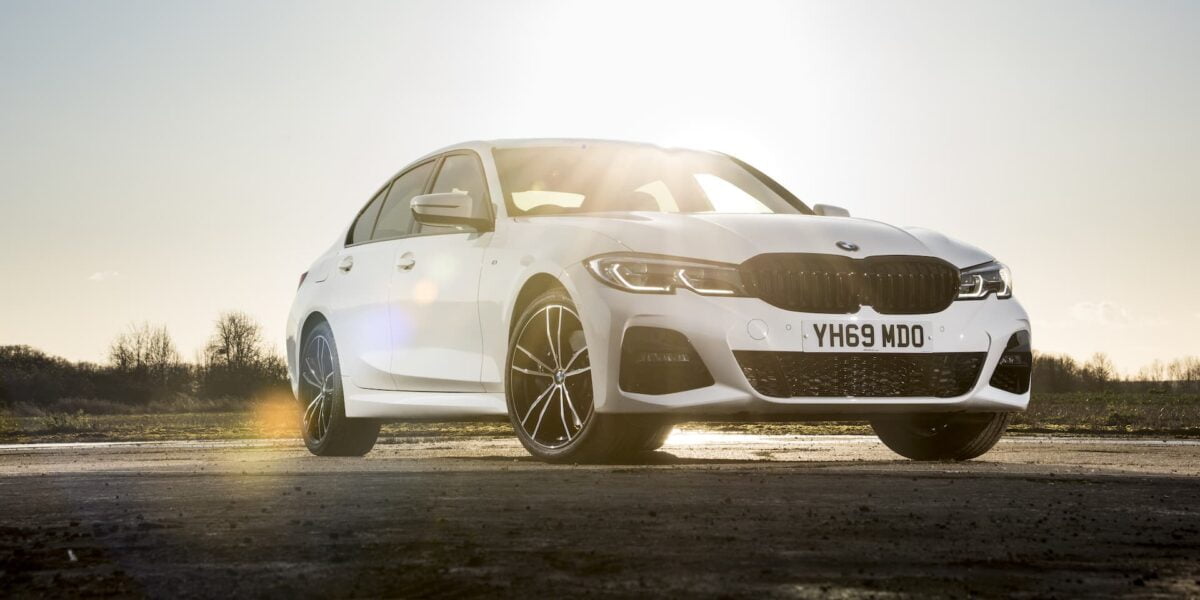
BMW has updated the most potent version of its 1 Series hatchback, with the changes aimed at improving the car’s handling during hard driving.
There are no power upgrades to the four-cylinder turbo engine of the M135i xDrive, which still puts out 306hp through an eight-speed automatic transmission, but BMW says the changes will improve the “track-inspired characteristics” of the car.
According to BMW, a series of suspension changes will ensure the car rolls less in corners and gives the driver more feedback from the steering.
The M235i will sound like it is handling more effectively, too. Its engine note has been retuned, with the sound emphasised by being “carefully amplified” through the car stereo speakers.
There are no changes to the car’s interior, but it has gained three new paint finishes. The new shades are a non-metallic dubbed Sao Paulo Yellow, a metallic titled Frozen Orange, and Frozen Pure Grey.
As the performance range-topper in the 1 Series range, the M135i is supplied as standard with performance brakes, a limited-slip differential and 18-inch alloy wheels – which can be replaced at extra cost with 19-inch versions. The car boasts a 0-62mph time of just under five seconds, an official fuel economy figure of more than 36mpg (and up to nearly 39mpg, depending on specification) and CO2 emissions of 167-177g/km.
BMW has yet to confirm prices for the updated M135i xDrive, but they are expected to remain broadly in line with the outgoing model, so expect a price tag starting from around £38,000.
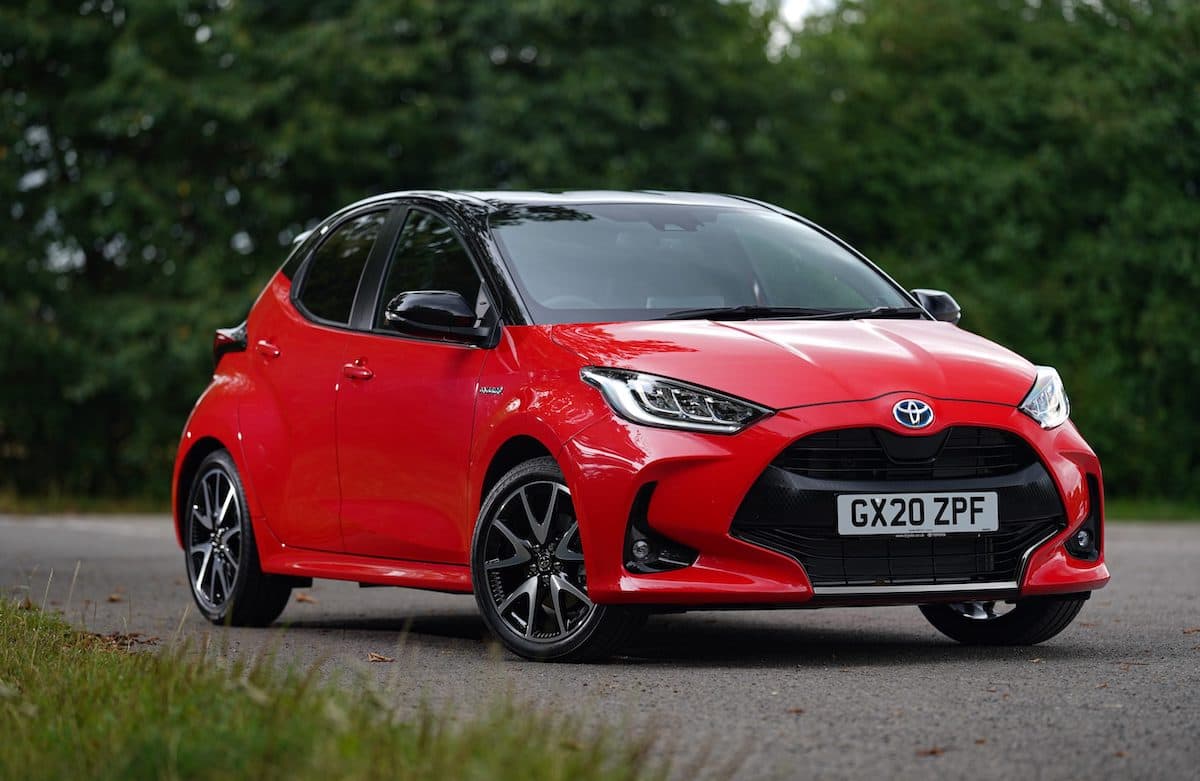
The Toyota Yaris Cross is a small SUV/crossover, which sits below the C-HR in Toyota’s crossover family and arrived on UK roads in Summer 2021.
Although it has ‘Yaris’ in its name and shares a lot of its mechanical bits with the hatchback of the same name, the Yaris Cross is much more than just a jacked-up Yaris hatch.
As with most Toyotas, the Yaris Cross is only available with a hybrid powetrain – it’s a no-plug version, so the car is still mainly reliant on the 1.5-litre petrol engine. The battery is charged by the petrol engine and also by coasting and braking as you drive, with the electricity then used to drive the electric motor.
Unlike most small crossovers, the Toyota Yaris Cross is available with all-wheel drive. That doesn’t make it a proper off-roader, however, but will help it provide more grip on wet and slippery roads.
Providing an alternative to popular small hybrid SUV/crossovers like the Nissan Juke and Ford Puma, the Toyota Yaris Cross has also been applauded for its build quality, driving dynamics and practical interior features. Business Car add that the Yaris Cross has “on-trend looks are sure to win many admirers.”
However, while the interior trim is very functional, reviewers frequently report that the Yaris Cross lacks cabin space when compared to its rivals. Ride comfort has also come into question, with Carwow commenting that the Toyota “does feel firm over lumps and bumps.”
As of March 2026, the Toyota Yaris Cross holds a New CarExpert Rating of A with a score of 75%. It scores top marks for its five-star safety rating, as well as its low running costs and low CO2 emissions. Its media review scores are good, but Toyota’s new car warranty cover is only average.
“The Toyota Yaris Cross is a funky looking and easy to drive mini SUV, especially around town. The interior is a bit dull though, and it’s pricier than some alternatives.”
Model reviewed: Range overview Score: 8 / 10 “The Toyota Yaris Cross delivers where it matters most for buyers considering a small SUV. Of course, there’s the benefit of the higher driving position with better visibility, and slightly more practicality than the Yaris supermini upon which it is based, but the Yaris Cross is also competitively priced compared to its rivals, is easy to pilot around town and offers excellent real-world economy courtesy of its efficient hybrid system.” Author: Ellis Hyde Read review
Model reviewed: Range overview Score: 8 / 10 “It’s exceptionally efficient, if not the most startling performer. The hybrid drivetrain takes little getting used to and is easy to extract fantastic efficiency from.” Read review
Auto Trader
Model reviewed: Range overview Score: 8 / 10 “Extra ride height and some off-road trimmings create an exciting, mini-SUV twist on the ever-dependable Yaris.” Read review
Business Car
Model reviewed: 1.5-litre petrol-electric hybrid Score: 7 / 10 “The Toyota Yaris Cross is a bit of a dazzler. Augmented by extensive comfort and safety features, its standard auto gearbox, comfortable driving manners and on-trend looks are sure to win many admirers. It’s just a shame that some of that sparkle didn’t rub off on the interior.” Read review
Car
Model reviewed: 1.5-litre petrol-electric hybrid Score: 8 / 10 “For the rational stuff, the Yaris Cross scores well – it’s practical, roomy for passengers and luggage and very economical. You can be sure that it’s going to be reliable, and thanks to Toyota’s 10-year warranty support, it’ll be easy to sell.” Read review
Carbuyer
Model reviewed: Range overview Score: 8.2 / 10 “The Toyota Yaris Cross is a small SUV with a clever hybrid system, making it very cheap to run.” (Andy Goodwin) Read review
Company Car Today
Model reviewed: 1.5-litre petrol-electric hybrid “Great hybrid emissions figures in a model that continues Toyota’s recent trend of offering good-to-drive and attractive cars that appeal to much more than just the finance director.” Read review
Driving Electric
Model reviewed: 1.5-litre petrol-electric hybrid Score: 8 / 10 “Toyota’s answer to the Nissan Juke is efficient and practical, although limited space in the rear means it may not be suitable for everyone.” Read review
Eurekar
Model reviewed: Range overview “All in all, Toyota has taken the compact SUV qualities from the RAV4 – which is now celebrating its 25anniversary – and added lots of Yaris city car DNA to the mix to develop the all-new Yaris Cross making it big on style, appeal and performance.” Read review
Heycar
Model reviewed: Range overview Score: 8 / 10 “The Toyota Yaris Cross is fun to drive, has a solid interior and comes fully loaded for the money. The most impressive thing is its efficiency – with its petrol-electric hybrid engine setup meaning it’ll be as cheap as chips to run.” Read review
Honest John
Model reviewed: Range overview Score: 8 / 10 “The Toyota Yaris Cross is a surprisingly desirable alternative to the Renault Captur and Vauxhall Crossland. It’ll be very cheap to run, while it’s easy to get comfortable in its ultra-functional cabin.” Read review
Motoring Research
Model reviewed: 1.5-litre petrol-electric hybrid Score: 8 / 10 “There’s much to like about the Yaris Cross. It takes the critically acclaimed Yaris supermini and makes it more family-friendly. No doubt more fashionable, too.” Read review
Parkers
Model reviewed: 1.5-litre petrol-electric hybrid Score: 8.2 / 10 ” It’s good to drive, practical, roomy for passengers and luggage and in our hands on a fairly congested test route, very economical on petrol.” Read review
The Sun
Model reviewed: 1.5-litre petrol-electric hybrid “This car is more for parents or grandparents looking after tots rather than gangly teens. Shame the rear seats don’t slide backwards and forwards like Captur.” Read review
The Telegraph
Model reviewed: Range overview Score: 8 / 10 “Even in this overheated and overcrowded market, the Toyota Yaris Cross offers genuine economy, useful space for four adults and well-honed driver appeal, along with Toyota’s proven reliability and a decent warranty.” Read review
Top Gear
Model reviewed: Range overview Score: 7 / 10 “Like the Yaris, but fancy something slightly taller? You’ll like this slightly taller Yaris.” Read review
Safety rating
Independent crash test and safety ratings from Euro NCAP
Clean Air Index: 6.7 / 10 Energy Efficiency Index: 5.2 / 10 Greenhouse Gas Index: 3.7 / 10
Reliability rating
Reliability data provided exclusively for The Car Expert by MotorEasy
No reliability rating
As of March 2026, we don’t have enough reliability data on the Toyota Yaris Cross to generate a reliability rating.
The Car Expert’s reliability information is provided exclusively to us using extended warranty data from our partner, MotorEasy. As soon as MotorEasy has sufficient data on the Yaris Cross, we’ll publish the score here.
Running cost rating
Monthly cost of ownership data provided exclusively for The Car Expert by Clear Vehicle Data
Fuel consumption
Average
Score
Hybrid models
58 mpg
B
CO₂ output
Average
Score
Variation
Score
Hybrid models
110 g/km
A
Insurance group
Average
Score
Variation
Score
All models
13
A
Service and maintenance
Cost
Score
Year 1
£154
A
Year 2
£427
A
Year 3
£691
A
Year 4
£871
A
Year 5
£1,146
A
Overall
£3,289
A
The Toyota Yaris Cross is a very cheap car to own and run, according to whole-life cost numbers provided exclusively to The Car Expert by our data partner, Clear Vehicle Data.
In what is a very rare achievement, the Yaris Pros holds a straight-A set of scores for running costs, with outstanding scores in all categories – fuel consumption, CO2 emissions, insurance group and servicing costs.
You will struggle to find a cheaper car to live with than a Toyota Yaris Cross.
Awards
Trophies, prizes and awards that the Toyota Yaris Cross has received
2023
Company Car & Van Awards – Best Small Car
2022
UK Car of the Year Awards – Best Small Crossover
Fleet World Awards – Best Fleet Small SUV
Similar cars
If you’re looking at the Toyota Yaris Cross, you might also be interested in these alternatives
The BMW M4 Competition is a high-performance coupé and convertible model based on the regular 4 Series range. The current coupé model arrived in the UK in early 2021, with the convertible due to join it before the end of the year.
This is the second generation model to carry the M4 name – the first appeared in 2014 after BMW rebranded its 3 Series coupé and convertible models as the 4 Series. However, the M4 can trace its lineage right back to the original M3 coupé of the mid-1980s.
Here in the UK, we only get the top-spec M4 Competition model, which is powered by a 3.0-litre, twin-turbo, six-cylinder petrol engine that produces 510hp. It is also available with all-wheel drive on the coupé version, while the convertible is rear-wheel drive only.
Reviewers have lavished praise on the M4, though Car magazine dubs it “Munich’s most controversial sports coupe yet,” referring to the styling and particularly the enormous front grilles that dip below the registration plate. Top Gear adds, however, that BMW knows its customers, M4 buyers are “extroverts” and the elongated kidney grilles “don’t actually look too offensive in real life…”
The power impresses widely, but it is about more than rapid acceleration. “The flexibility of the engine is second-to-none, delivering impressive acceleration even in higher gears,” says Parkers.
Equally, testers highlight that the new M4 is not the animal its predecessor was. “The old M4 was a bit feral,” says Auto Express, “but this new version feels more mature and rounded, as if it’s been shipped off to finishing school.”
Evo praises the M4’s rigidity, which means excellent handling; “The precision and response as you turn the wheel is fantastic,” adding that the car builds confidence very quickly.
There are other practical factors, such as rear seats with reasonable space for adults and an adequate boot – but these will feature on the requirements of very few M4 buyers…
As of February 2026, the BMW M4 holds a New Car Expert Rating of C, with a score of 62%. Although it gets fantastic media reviews and a strong safety rating, its CO2 emissions and reliability data are only average, and its running costs are inevitably very high.
Body style: Coupé / convertible Engines: petrol Price: From £76,990 on-road
Launched: Spring 2021 Last updated: Summer 2021 Next update due: TBA
Image gallery
Media reviews
Reviews, road tests and comparisons from across the UK automotive media. Click any of the boxes to view.
Featured reviews
“Has the BMW M4 gone soft? You only need to drive the M4 for a mile or two, with everything dialled up to maximum attack, to realise the answer is no. This is a bonafide M car with enough bite, aggression and raw capability to deliver a genuinely thrilling drive no matter the conditions.”
Model reviewed: M4 Coupé Score: 9 / 10 “The latest BMW M4’s performance is well into the supercar league, but you’ll pay handsomely for the privilege.” Author: Antony Ingram Read review
Model reviewed: CSL Score: 9 / 10 “It’s a crazy car with an even crazier price, but in most respects, the BMW M4 CSL justifies its cost by simply being a brilliant driver’s car. One that’s not just faster and more focused than the M4 on which it’s based, but also much more rewarding to drive where it counts. The CSL is an instant legend, if ever there was one, even if its steering remains a touch ordinary.” (Steve Sutcliffe) Read review
Model reviewed: M4 Competition coupé Score: 9 / 10 “The BMW M4’s design is the obvious talking point, but beneath its dramatic makeover lies a car with a broader breadth of ability than before. It’s easy to live with day to day and now delivers its thundering performance in a more user-friendly and manageable way.” Read review
Auto Trader
Score: 9 / 10 “The BMW M4 Coupe offers distinctive looks, awesome performance and generous spec.”
Read review
Car
Model reviewed: M4 Competition coupé Score: 8 / 10 “The BMW M4 Compeition manages to be both an accomplished all-rounder and a flawed yet brilliantly exciting sports coupe all at the same time. Its everyday on-road manners and luxuriously appointed cabin are almost beyond reproach.” Read review
Car Keys
Model reviewed: Score: 10 / 10 “This latest M4 is unquestionably the best yet. Though some might reckon it’s not as raw as its predecessor, its greater everyday ability makes it a much better car to live with, while still being comfortable and practical, too.” Read review
Carbuyer
Model reviewed: M4 Coupé Score: 8 / 10 “The styling might divide opinion but there’s nothing polarising about the way the BMW M4 performs.” Author: Andy Goodwin, Tom Gumbvrell Read review
Carwow
Model reviewed: M4 Convertible Score: 8 / 10 “The BMW M4 Convertible allows you to hear more of that straight-six engine sound, and it’s great to drive, but it’s heavy and the styling verges on being ugly.” Author: Neil Briscoe Read review
Evo
Model reviewed: CSL coupé Score: 8 / 10 “The BMW M4 CSL impresses at times but doesn’t seem to possess the pure magic of recent CS models. The crazy intensity of the M4 GTS is missing, too. Maybe a summer’s day and some sticky Cup 2Rs would help but, for now, the CSL doesn’t seem enough to celebrate the enormity of 50 years of M. Can we have an M2 CSL, please? Or another M4 GTS?” (Jethro Bovingdon) Read review
Parkers
Model reviewed: M4 Competition coupé Score: 8.8 / 10 “Fabulous driver’s car that really only struggles for comfort.” Read review
The Sunday Times
Model reviewed: M4 Competition coupé and M3 saloon Score: 10 / 10 “If you can get past the BMW M4’s divisive looks – or maybe even begin to like them – everything you’d want in a fast coupe is here. Power, noise, balance, control, grip… and did I mention power? There’s the practicality over a sports car, too.” Read review
The Telegraph
Model reviewed: Score: 8 / 10 “wild at heart and a tricky beast to tame.” Read review
Top Gear
Model reviewed: M4 Competition coupé Score: 9 / 10 “This supreme all-rounder of an M4 is a triumph.” Read review
Safety rating
Independent crash test and safety ratings from Euro NCAP
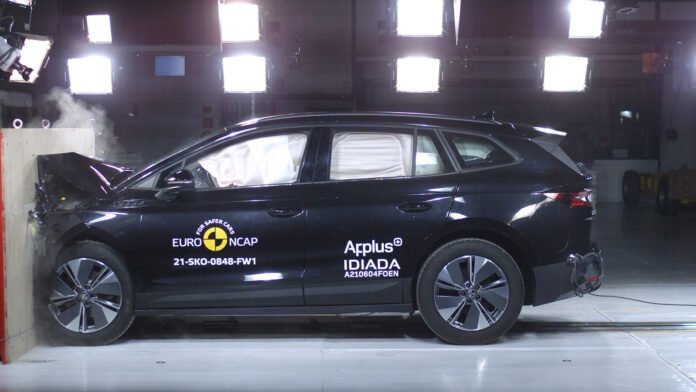
The BMW M4 Competition shares its safety rating with the mainstream BMW 4 Series Coupe range, which was tested by Euro NCAP back in 2019 and awarded a five-star rating.
The test report offered no significant criticisms, highlighting the maximum scores in the side barrier and more severe side pole test, and the maximum points scored in city-driving tests by the autonomous emergency braking system.
Eco rating
Independent economy and emissions ratings from Green NCAP
No eco rating
As of February 2026, the BMW M4 has not been tested by Green NCAP.
Reliability rating
Reliability data provided exclusively for The Car Expert by MotorEasy
No reliability rating
As of February 2026, we don’t have enough reliability data on the BMW M4 to generate a reliability rating.
The Car Expert’s reliability information is provided exclusively to us using workshop and extended warranty data from our partner, MotorEasy, sourced from both official dealerships and independent workshops.
As soon as MotorEasy has sufficient data on the M4, we’ll publish the results here.
Running cost rating
Monthly cost of ownership data provided exclusively for The Car Expert by Clear Vehicle Data
Fuel consumption
Average
Score
Petrol models
28 mpg
E
CO₂ output
Average
Score
Variation
Score
Petrol models
230 g/km
E
Insurance group
Average
Score
Variation
Score
All models
44
E
Service and maintenance
Cost
Score
Year 1
£714
E
Year 2
£1,591
E
Year 3
£2,467
E
Year 4
£2,710
E
Year 5
£2,492
E
Overall
£9,974
E
As you might expect, the BMW M4 is not exactly an economical choice, according to data exclusively provided by our commercial partner Clear Vehicle Data.
Only available with a petrol engine, the M4 is very thirsty and has high emissions. Insurance and servicing costs are also higher than the market average.
Similar cars
If you’re looking at the BMW M4, you might also be interested in these alternatives
Most buyers will consider a BMW M4 for its performance and so potential alternatives are quite varied. Several testers believe the closest rival is also made by BMW, the similarly priced M3 Competition which, being a saloon, is more practical. The likes of the Audi RS 5, Lexus RC F, Mercedes-AMG C63 and Alfa Romeo Giulia Quadrifoglio also come into the reckoning.
Though electric car drivers may be feeling smug these days, as petrol prices and availability cause dramas at the pumps, rarely does a week-long electric vehicle test go by without friction, at least in my experience.
Having tested EVs since 2013, I’m still sceptical about the amount of real-world progress being made. Prompted by more frustration-inducing inconveniences recently, it simply doesn’t correlate with the amount of progress being promoted.
The first charging experience I ever had back in 2013 was unsurprisingly rubbish. Living in south-east London at the time, in a block of flats, filming with an electric Smart Fortwo, the only charge point “available” was not available at all.
It was stuck on the forecourt of a Nissan dealership, behind chains on a Sunday afternoon. That experience with such nascent technology (combined with the low battery range of a Smart Fortwo in 2013) had me literally running the 2.5 miles between my home and the nearest street charge point for a week.
The original Smart Fortwo EV didn’t go that far between charging breaks
Mere weeks later, with another model on test, the smartphone navigation app of the day—the car’s factory-fitted was still unreliable at the time—indicated five available charging points in a nearby east London street. Things were looking up.
Upon my arrival, these points weren’t so available after all, as they were protected within a gated community of a new development. Though a kind security guard let me have access, it would transpire that these underground points didn’t have enough mobile connection to be used anyway. Though the developer earned brownie points for attempting to be progressive, the reality was unimpressive and effectively unworkable.
Fast forward to 2021. The choice of new electric cars on offer has developed enormously, and most households can now comfortably live with an EV for their regular driving needs. But the away-from-home (AFH) charging experience is still inexplicably disconcerting.
My old south-east London street has now been equipped with two on-street chargers—considerably short of the needs of the 1,000 or so apartment-dwellers, but that’s another story for another time.
Living in the north-east of England (yes, home to the pioneering Nissan Leaf), all the big-name charging point providers – BP Pulse, Fastned and Pod Point, among others – seem well established. Even so, I continue to battle (and other electric vehicle users do as well) with some basic and incredibly frustrating challenges.
1. State of disrepair
This still happens too often
One of the biggest bugbears for all EV owners is the number of charging points that seem to be out of order when you need them.
Despite a focus from some charging providers on getting broken charging points up and running, out-of-service points that aren’t flagged on apps, or even noted on the devices themselves, are a regular problem.
It’s particularly annoying when you’ve parked up, pulled the cable out and then can’t get the charging point to work.
2. Reliance on RFID cards
Despite the fact 2014 called and asked for its technology back, some charging providers still demand users register with their service, wait for a special card in the post and use their network with that physical card.
That’s fine if you’re local to that network, since it’s tickety-boo once you’re an established member (well, usually – see above). But it’s not so great for visitors who are not signed-up members of that network and just want to charge their car while they’re in the neighbourhood.
3. Reliance on mobile phone networks
One soon comes to learn quickly why RFID reliance hasn’t gone away. While the mobile networks have been working hard to maximise coverage across the UK, the depressing reality is that coverage is desperate in some more rural areas.
Being told to “download the app” in areas of unreliable connectivity is the quickest way to annoy customers wanting to give you their hard-earned cash so they can charge their cars.
4. Lack of contactless payment provision
In 2019, the government advised all charging providers to integrate universal contactless payments, in order to improve accessibility to the charging network. Yet here we are, two years later, and it’s still surprising to come across lots of machines without the option to pay with a contactless card.
Allegedly, much of the hold-up is in sourcing the hardware from European suppliers. While third-party solutions can be bolted on, these integrated payment pads have their own connectivity issues and frequently payment can’t be made – which is exacerbated if the provider can’t remotely reboot the machine to try and fix the issue.
5. Inconsistency in service levels
In the event of a hardware or software malfunction, or connectivity issue, some charging providers will offer to open the charge point to ‘Free Vend’ so you can charge your car for free. It’s a welcome courtesy to make up for system failures, not least because so few things come for free in this day and age.
But not all providers are willing to this. In any other circumstance, you’d probably vote with your feet and just go elsewhere. But until there are enough charging points to go around, EV drivers understandably need the security of a standardised approach.
6. Too many under-resourced charging providers
I’m all for healthy competition, but the number of independent operators, which haven’t had the same budgets to throw at maintenance and contactless integration, are creating friction points where there needn’t be.
Granted, I acknowledge the time when these networks were even more disparate. The acquisition of many of minor charging point owners into wider schemes, such as the POLAR network – which has now become BP Pulse – has helped in standardising some of the provisions. However, it’s still not great, is it?
7. Car makers ignoring best practice providers
Zap-Map is arguably the most reliable resource for the EV owner, having developed its service for many years now. It started off just identifying the location of charge points, then it integrated availability status information. It helps that users can create accounts and feedback information on specific points, so the community is helping one another out.
Earlier this year, the Zap-Map team launched Zap-Pay, which enables users to pay for their charging via the app. With several charging networks signing up to the Zap-Pay platform, the whole package is the best attempt at brand-agnostic standardisation we’re likely to see anytime soon.
Car makers should be falling over themselves to integrate a universal payment app into their infotainment suites, but they seem too concerned with getting in-cabin lighting right to bother with something so practical.
8. We need charging points at more suitable locations
More of these, please (charging points, that is, not Starbucks)
Any venue where there is car parking and a significant amount of dwell-time (such as a restaurant, shopping centre, country pub, etc.) warrants one or more charging points. Let’s be clear, a garage forecourt is arguably the worst location for a charging point (sorry, Shell and BP…), especially if there is an expectation that passengers will either sit in the vehicle or wander away to entertain themselves while it’s on charge.
A garage forecourt may be a place of higher CCTV coverage, but it’s also a very transient location and it’s worrying to walk away from a vehicle in such a high-risk area. Top marks to Starbucks Markham Moor, which has nailed the perfect balance.
Charging failures are holding back EV adoption
Of course, the argument for switching to an electric vehicle is still strong for most consumers. Coupled with the immeasurable benefits to health, air quality and noise, uswitch.com recently released figures showing EVs can travel more than five times further for £50 than a conventional petrol or diesel car.
I don’t want to be a Debbie Downer on the investment going into the progress that has been made expanding the EV charging network, but before we all get carried away; reality check, please.
Ford has announced that the entire Focus range, including the Ford Focus ST, is set for a mid-life makeover, featuring some exterior tweaks and new interior hardware.
Available for a starting price of £22,500, Ford will be hoping that this facelift provides a critical boost to demand for the Focus, which has long dropped off the UK’s best-seller list and has fallen well behind sales of its arch-rival, the ever-popular Volkswagen Golf.
The updated Focus has had a number of exterior changes that mirror the recent design refresh given to the Ford Fiesta. Ford has changed the bonnet design, slightly raising the nose, while the Ford badge has moved to the centre of a larger and more prominent grille. All models now feature LED headlights.
Ford Focus ST
Each trim level in the Focus range has subtly different fascia and grille designs to help identify them. The Active trim, inspired by the SUV models in the Ford line-up, features black body cladding, and a raised ride height.
The sportier ST-line trim adds side skirts, a rear diffuser, a rear spoiler, and a choice of 18- or 19-inch wheels. As with the Fiesta facelift announced last month, Ford has scrapped the standalone Vignale model and is now offering an optional premium Vignale package, which includes more design flair inside and out, and five more alloy wheel designs to choose from.
Ford Focus Active
Engines are carried over from last year’s range, although the 1.0-litre mild hybrid petrol engine is now available a seven-speed automatic transmission, having previously only been available with a six-speed manual gearbox. For fleet buyers or other high-mileage customers, a 1.5-litre diesel engine is also available. The 2.3-litre petrol engine found in the Focus ST has also been carried over untouched.
As before, the Ford Focus is available in both hatchback and estate body styles. Ford says it has added a new, easier-to-clean carpet material in the boot area of the estate, along with a water-resistant wet zone under the boot floor.
Updated interior and Sync 4 infotainment system
Taking a seat inside, the facelifted Focus includes Ford’s latest Sync 4 infotainment system, featuring a 13-inch central touchscreen compatible with both Android Auto and Apple CarPlay.
The system has speech recognition and navigation with real-time traffic information as standard, and Ford claims that it uses machine learning to learn from driver behaviour and deliver more accurate suggestions and search results over time.
Ford has also made a number of additions to the Focus’s arsenal of safety features, including blind spot assist, intersection assist which scans the road for potential collision before instigating preventative measures, and rear occupant alert which reminds the driver to check their rear seats before leaving the car.
Complete UK pricing and specifications for the facelifted Ford Focus range have not yet been announced, with further information expected in the next couple of months ahead of the updated mode going on sale.
There’s a lot to consider before taking out a finance agreement, as we have discussed previously. But one of the things that almost no-one considers before taking out car finance is: “What would happen to this car finance agreement if I should die before it’s paid off?”
Yet it’s an important question, with potentially serious implications for your loved ones. We regularly get questions from readers who have had a loved one die, wanting to know what to do about their car finance. So it’s worth understanding what would happen if the worst should occur.
A time of bereavement is obviously difficult enough already, without having to deal with a finance company demanding payments. The current lockdown situation across the UK makes simple arrangements even more complicated, so hopefully the following information will be helpful in understanding how it works and what will happen.
Your car finance debt does not disappear after you die
Many people assume that any debts would be written off after they die, but that’s rarely the case. And when it comes to a car finance debt, the finance company is still entitled to its money back.
If you have a personal contract purchase (PCP), hire purchase (HP), personal loan or any other kind of borrowing to finance your car, that debt remains payable even in the event of your death. However, the right way to deal with that debt is different depending on the type of finance product you have.
A lease is different again, as you are not borrowing any money and are simply renting the car. A car leasing agreement will have early termination penalties that apply for ending a lease early.
Who is responsible for your car finance debt after your death?
This depends on the type of finance and how it was taken out.
If you have a guarantor, they will become responsible for the finance agreement, just as they would if you were unable to make your monthly payments.
If you took out a joint agreement, which is quite common for a personal loan situation, then the other person becomes fully responsible for paying off the debt.
In most other cases, your debt will become part of your overall estate after your death. If you have a will, your nominated executor is responsible for managing your financial affairs, including your car finance debt.
If you do not have a will, an administrator will be appointed – usually a next of kin. This can get very messy, so make sure you write a will and appoint an executor.
How is your car finance settled after your death?
For whoever is in charge of the estate, the process for settling the debt will become part of managing all the expenses of the estate. This also includes loans like your mortgage and other debts, and costs like funeral expenses and any outstanding bills.
Unsecured loan
If the finance was on a personal loan, which is an unsecured loan, then the car is the property of the estate. If necessary, it can be sold to help pay off the car loan or any other debts.
Because the finance is not secured against the vehicle, the executor/administrator is free to decide what to do with it. If it’s not necessary to sell the car to settle the finance, they could give the car to your next of kin or sell it via whatever means they choose. This means that the car could be sold privately, sold directly to a trader or sent to auction. It all depends on whatever the executor decides is likely to get the best sale price for your estate.
Secured loan
Secured loans include a personal contract purchase (PCP), hire purchase (HP) or conditional sale. In this situation, the vehicle is not your property and belongs to the finance company until the last penny is paid off.
The executor of the estate is able to settle the outstanding debt and keep the car if there is enough money to cover the settlement figure in the estate. However, more often that not, this won’t be the case – especially if there are other large bills that also need to be paid.
Usually, the finance company will take the vehicle back and sell it at a trade auction. Whatever it earns at auction (after auction fees) is taken off your debt. If the selling price is enough to cover your debt, then the finance is settled. Usually, however, the selling price does not cover the total debt, so your estate will still owe the finance company whatever is still outstanding.
Another option with a secured loan is for the executor/administrator to enact a voluntary termination of your finance agreement. This requires you to have repaid more than 50% of the total amount payable, which you may have already done. If not, the executor can pay whatever is needed to bring the total paid up to the 50% point. The car is collected by the finance company with nothing further to pay, assuming you have complied with the normal conditions of voluntary termination.
Lease agreement
With a lease agreement, such as personal contract hire, there is no debt because you have not borrowed any money. It’s simply a rental contract for X months at £Y per month. However, all lease agreements will have early termination charges. These apply regardless of the reason for the agreement being ended early – even if you die. They should be set out clearly in the lease contract, so take note.
The leasing company will take its car back, but the executor may still have to settle any penalty fees for terminating the agreement early. These fees can be quite substantial, which is an unfortunate reality of leasing a car.
What if there’s not enough money to settle my car finance debt?
The finance company will expect your estate to pay off the settlement figure for your debt. It will provide the exact debt amount to your executor/administrator. However, with all of the other expenses associated with settling your finances, it is entirely possible that there might not be enough money to go around.
There’s nothing to stop the executor or administrator negotiating a settlement with the finance company for a lesser amount than is owed. If it’s a choice between taking legal action (which offers no guarantee of getting their total debt back) or taking a reduced settlement, the finance company may be prepared to take a percentage of the total and write off the rest. This is something that should be done in conjunction with professional legal assistance.
Dealing with the death of a loved one is a difficult enough time already. It’s even harder if you have a car finance company circling like a vulture, wanting payment for an outstanding debt. If you’re taking out car finance, make sure you understand the potential implications of your debts on your family or loved ones if you should die.
Here at The Car Expert, we are building commercial partnerships with companies who can offer you competitive PCP deals on either a new or used car (as well as other types of finance if you prefer). Check these out before signing any finance agreement with a car dealer:
Winter is coming, and that means the sun is rising later and the evenings are quickly becoming shorter.
For those of us commuting to and from work every day, we’ll be going from spending time in the car in bright sunshine to driving about in much darker conditions. If you’re new to driving in the dark, or simply haven’t done it for a while, it can be rather daunting.
Looking for some tips to stay safe when driving in the dark? We’ve got a handful for you…
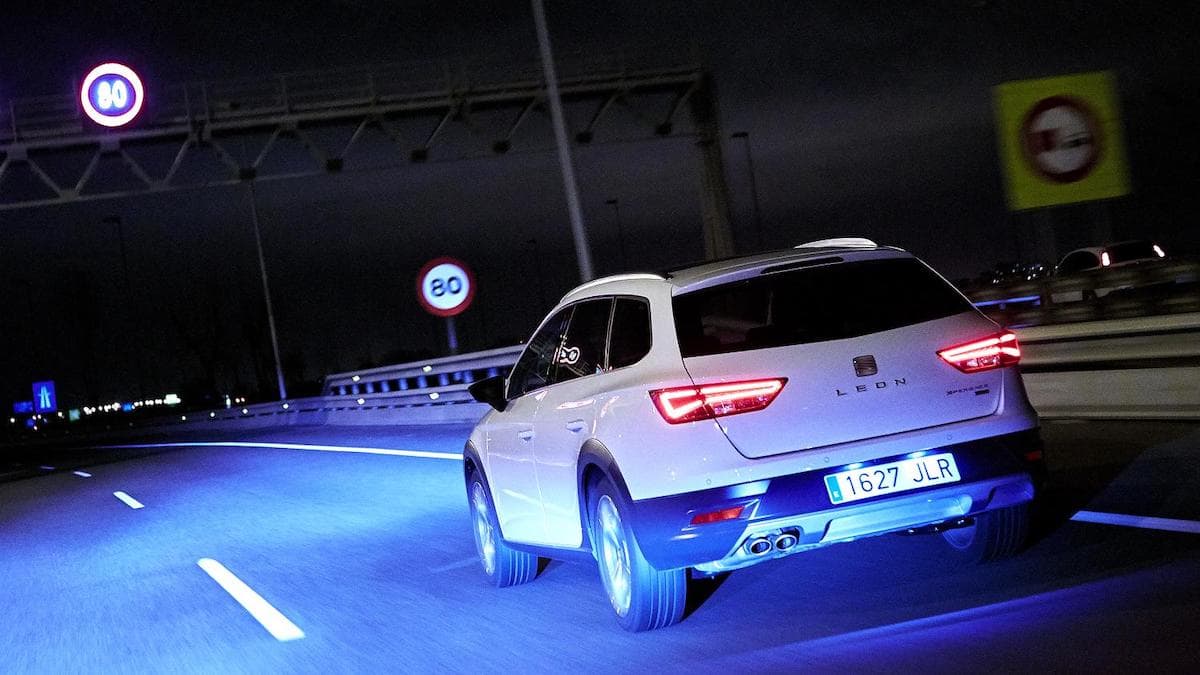
Check your headlights are working — and use them
Before setting off in darker conditions, give your headlights a test to see if they’re still working. If you haven’t used them over the summer at all, it’s possible the bulbs could be out and you may not have noticed.
Ensure that you switch in new bulbs as soon as possible if they have blown, and it’s worth investing in a spare set just in case it happens while out on the road. Most importantly though, ensure your headlights are on — both so you can see the road ahead, and so other drivers can see you.
Avoid leaving your high beams on
Though it’s important to have your headlights on, it can be equally as dangerous to yourself and other road users if you leave them on their high-beam setting compared to having them completely switched off.
Visibility for yourself may be improved — which is great if you’re the only car driving down a dark country road — but keeping them on can dazzle drivers ahead of you and those oncoming too, which vastly increases the risk of an accident. If you’re unsure how to check if your high beams are on, look in your instrument cluster — if you see a blue headlight symbol on, this typically means the lights are in their brightest setting.
Switching them off usually involves pulling the indicator stalk towards you. To turn them on, it’s the opposite action — pushing it away from yourself.
Test your brake lights
We’re sticking on the topic of lights as they’re very much the key to driving in the dark. Though you should always ensure your brake lights are functioning (it’s illegal if you’re driving around with them not working), it’s especially important in the dark.
That’s because drivers behind are less likely to see you coming to a stop in the reduced visibility conditions that driving in the dark brings, which in turn ups the risk of an accident. You can either borrow a friend or family member to check to see if your brake lights are working by them standing at the rear of the car while you push the pedal while stationary.
Alternatively, park the rear of your car against a wall or reflective surface, and use your mirrors to see if there is a red glow from the lights when pressing the brake pedal.
The same applies to indicator lenses, fog lights, number plate lights and any other light bulbs in your car. Make sure they’re working and, if not, get them replaced.
Keep your windscreen washer fluid topped up
Again, having sufficient washer fluid is something you should always strive to achieve, but it’s an especially important point in the dark.
Visibility is reduced as it is in the dark, and that’s only worsened by grime and other road dirt that is flung up onto the windscreen — which is especially more of a problem over the colder, wetter months.
As the weather turns colder, it’s important to make sure that your washer fluid doesn’t freeze in the tank or lines. Don’t use ordinary water as washer fluid as this will turn to ice as soon as the temperature reaches zero. Use either ready-mixed washer fluid or mix concentrated washer fluid with water – check the bottle for the recommended mixture based on how cold it gets where you live.
Leave more room to the car in front when driving in the dark
When following a car in the dark, it’s safer to give the driver ahead a little bit more room than you usually would.
That’s because in the dark, obstacles and potential hazards that could be easily seen in ideal daylight conditions may be obscured — presenting a possible unexpected danger. With this in mind, it’s more likely the car in front may have to brake suddenly.
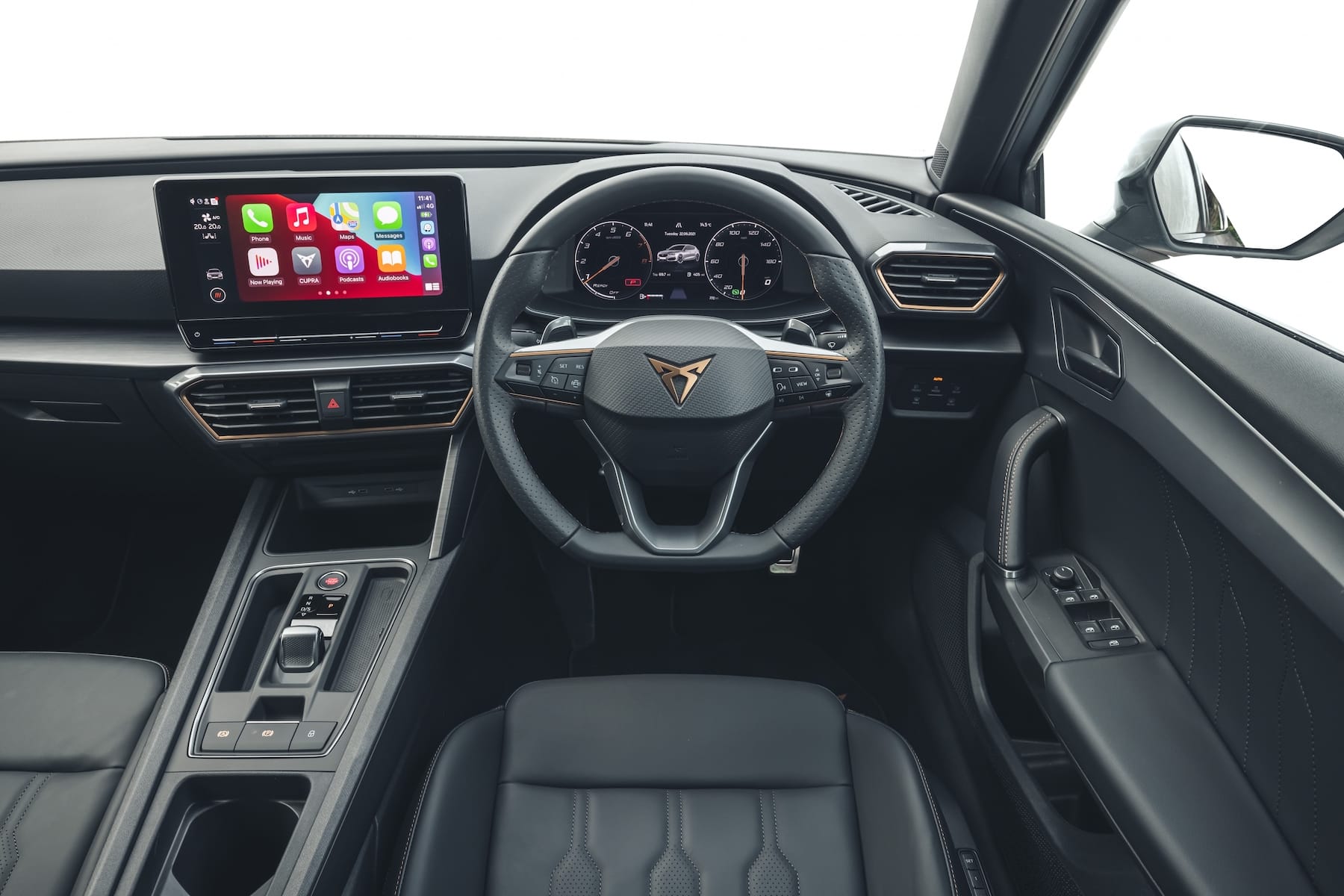
Launched in early 2020, the Cupra Leon is a sporty, performance-focused version of the SEAT Leon, available in both hatchback and estate body styles. It received a major update in the summer of 2024, which is now available in the UK.
The Cupra Leon has also been heavily influenced by the Volkswagen Golf performance models – the GTE, GTI and Golf R models. The base-spec Leon gets the Golf GTI’s 245hp, 2.0-litre petrol engine under its bonnet, while the top-spec Leon gets a 300hp unit that’s very similar to the Golf R’s 320hp engine. There’s also a plug-in hybrid version, which takes its combination of 1.4-litre petrol engine and electric motor from the Golf GTE.
The Cupra Leon has been generally well-received by the UK media, some reviewers labelling the Leon as a class leader in the hot hatch category, while the large majority conclude that it doesn’t all come together to quite the same standard as the Volkswagen Golf GTI.
Evo concludes that “the new Leon lacks the performance and engagement” of the Golf that inspired it, and Top Gear agrees, adding that “this Cupra is lacking the edge to establish itself as a worthwhile addition to the hot hatch hall of fame.”
However, many reviewers are quick to point out how surprisingly practical the Cupra Leon is day-to-day, particularly the estate variant. The Sun comments that the Leon “will slip into family life seamlessly”, while Car Keys explain that “the Leon Estate is a real all-rounder of a car, as it’s able to deliver thrills, performance and excitement on everyday drives, yet at the same time is seriously practical to use as a family car.”
Auto Trader also points out that the exterior design of the Cupra Leon is “an impressive twist on its Golf GTI foundations and arguably the more attractive choice.”
The 2024 update brought sharper exterior styling, an enhanced interior and upgraded powertrains for both petrol and plug-in hybrid models. However, underneath it’s fundamentally the same car.
As of January 2026, the Cupra Leon holds a New Car Expert Rating of A with a score of 74%. It scores top marks for its five-star Euro NCAP safety rating and low CO2 emissions, while its running costs and Cupra’s warranty coverage are also good. However, its media review scores are only average and the Leon’s reliability record is poor.
Highlighted reviews and road tests from across the UK automotive media. Click any of the boxes to view.
Auto Express
Model reviewed: 2.0-litre petrol auromatic VZ2 TSI 333 ST (estate) Score: 8 / 10 “In contrast to the Cupra Leon ST’s rather dreary appearance, this high-performance TSI 333 version is a joy to drive. Its charismatic powertrain and engaging chassis are paired with a well formed, practical estate body in this most unusually introverted Cupra.” Author: Jordan Katsianis Read review
Model reviewed: Score: 9 / 10 “Now covering a wide range of options offering tepid to hot performance, there’s something for everyone in the Cupra Leon range.” Read review
Model reviewed: 2.0-litre petrol automatic Score: 9 / 10 “If Cupra’s branding is hard to get your head around, the cars themselves are far simpler to understand. And, in this case, very easy to be impressed by. Good looking, quick, superbly fun to drive and well equipped for the money, the Cupra Leon 2.0 TSI 300 is just a great hot hatchback.” Read review
Auto Trader
Model reviewed: 2.0-litre petrol automatic VZ2 Score: 9 / 10 “Fast, stylish and well-equipped, Cupra’s take on the Leon is an impressive twist on its Golf GTI foundations and arguably the more attractive choice.” Read review
Model reviewed: 2.0-litre petrol automatic VZ2 estate Score: 9 / 10 “Stylish, understated and fun to drive the Cupra Leon Estate combines hot hatch performance with family car practicality.” Read review
Business Car
Model reviewed: Range overview Score: 8 / 10 “Exciting performance with a well-judged chassis.” Read review
Car
Model reviewed: 1.4-litre petrol/electric plug-in hybrid hatchback Score: 6 / 10 “If you view the Cupra Leon e-Hybrid as a hot hatch that’s going to cost pennies to run, you’re going to be disappointed. But as a comfortable, plug-in hybrid hatchback that occasionally uses its electric assistance to lighten up the mood, you have yourself a well-rounded, sporty-looking family car.” Read review
Car Keys
Model reviewed: Hatch Score: 8 / 10 “The Cupra Leon shows that this firm hasn’t forgotten about its original ‘core’ models, as this is a fun hatchback that looks the part with its sportier treatment.” Author: Ted Welford Read review
Model reviewed: 2.0-litre petrol automatic VZ2 estate Score: 9 / 10 “The Cupra Leon Estate is a real all-rounder of a car, as it’s able to deliver thrills, performance and excitement on everyday drives, yet at the same time is seriously practical to use as a family car.” Read review
Carbuyer
Model reviewed: Range overview Score: 8.4 / 10 “The Cupra Leon is a stylish, high-performance take on the standard hatch that’s a desirable alternative to mainstream rivals.” (Miles Goodson) Read review
Carwow
Model reviewed: 1.4-litre petrol/electric plug-in hybrid Score: 8 / 10 “The Cupra Leon looks a bit sportier than the old model, but it doesn’t go all out like the mad Honda Civic Type R. There are big air intakes and a low splitter, plus new side skirts, lowered suspension and 19-inch alloys.” Read review
Driving Electric
Model reviewed: 1.4-litre petrol/electric plug-in hybrid Score: 5 / 10 “The Cupra Leon e-Hybrid is a tough car to recommend. If you’re looking for a cheap-to-run hot hatch, you’ll find it doesn’t quite deliver on the ‘hot hatch’ side of the bargain – the full-fat 300bhp petrol version is a much better bet in that respect. And if you simply want a practical, comfortable and smart-looking hatchback with decent handling and performance for everyday driving, the regular SEAT Leon e-Hybrid fits the bill much better.” Author: Richard Ingram Read review
Eurekar
Model reviewed: “The Cupra Leon is further proof that the split from SEAT is not simply a case of rebadging existing models. These cars will be featuring their very own identity and further ventures into electrification are on the way too.” Read review
Evo
Model reviewed: 2.0-litre petrol automatic VZ2 estate Score: 7 / 10 “It’s capable and handsome, but the new Leon lacks the performance and engagement of its predecessors.”
Read review
Model reviewed: 2.0-litre petrol automatic TSI 300 Score: 9 / 10 “One of the sharpest hot hatchbacks money can buy right now, despite weird branding.” Read review
Heycar
Model reviewed: Range overview Score: 8 / 10 “The Cupra Leon is the Dexter Morgan of the hot hatch world. Like the lead character of TV show Dexter – a meek, unassuming crime-scene analyst who does an exceptional job of hiding the fact that he’s actually a deranged serial killer – the Cupra is adept at disguising its penchant for dispatching twisting country roads.” Read review
Honest John
Model reviewed: Range overview “A hot version of the new SEAT Leon, the Cupra Leon follows the Ateca in being sold as a standalone Cupra model. It’s available in five-door hatch or estate body styles as well with plug-in hybrid or petrol engine powertrains.” Read review
Motoring Research
Model reviewed: 2.0-litre petrol automatic Score: 8 / 10 “For all Cupra’s intent to be an unconventional challenger brand, the Leon 300 actually feels like a pretty sensible hot hatchback. Being both quick and practical, it can be fun on a racetrack and useful on the school run. Perhaps avoid the exhaust being in ‘Cupra mode’ for the latter, though…” Author: John Redfern Read review
Parkers
Model reviewed: Range overview Score: 8.2 / 10 “Reborn fast Leon also offers plug-in hybrid technology” Read review
The Sun
Model reviewed: 2.0-litre petrol automatic VZ2 “The Cupra Leon is the most spicy of hatchbacks, and will slip into family life seamlessly.” Read review
The Telegraph
Model reviewed: 2.0-litre petrol automatic VZ2 estate Score: 8 / 10 “The Cupra Leon Estate truly manages to be one for all seasons and all reasons. There’s a whiff of opportunity missed, though, because with the 292bhp powertrain and suspension from the hatchback, it would be an even better car. It’s still one of the finest fast estates on the market – and that makes it alright by us.” Read review
Model reviewed: 2.0-litre petrol automatic VZ2 Score: 10 / 10 “The Cupra Leon is, in short, a hot hatch par excellence. The only thing you’ll really find to dislike about it, apart perhaps from some of the scratchy interior plastics, is its infuriating infotainment system. It’s one of the best hot hatchbacks on the market today.” Read review
Top Gear
Model reviewed: Range overview Score: 7 / 10 “This Cupra is lacking the edge to establish itself as a worthwhile addition to the hot hatch hall of fame.” Read review
Model reviewed: 1.4-litre petrol/electric plug-in hybrid Score: 6 / 10 “Once the battery’s dead, this is no hot hatch. It’s just a heavy car with a small engine. So go purely petrol if you want a Cupra Leon for fun.” Read review
Safety rating
Independent crash test and safety ratings from Euro NCAP
The Cupra Leon was originally assessed by Euro NCAP back in December 2020 and awarded a five-star safety rating. Euro NCAP reassessed the updated Leon in November 2025, confirming its five-star score for another six years.
As the Cupra Leon is effectively a performance version of the SEAT Leon, Euro NCAP decided to use the same safety test for both cars. They conducted some additional whiplash tests on the Cupra Leon, but concluded that the results were the same as the SEAT.
Eco rating
Independent economy and emissions ratings from Green NCAP
No eco rating
As of January 2026, the Cupra Leon has not been assessed by Green NCAP.
Running cost rating
Monthly cost of ownership data provided exclusively for The Car Expert by Clear Vehicle Data
Fuel consumption
Average
Score
Petrol models
44 mpg
C
Plug-in hybrid models
217 mpg
A
CO₂ output
Average
Score
Variation
Score
Petrol models
149 g/km
C
Plug-in hybrid models
10 g/km
A
Battery range
Average
Score
Variation
Score
Plug-in hybrid models
77 miles
C
Insurance group
Average
Score
Variation
Score
All models
25
B
Service and maintenance
Cost
Score
Year 1
£234
C
Year 2
£602
C
Year 3
£1,030
C
Year 4
£1,272
C
Year 5
£1,665
C
Overall
£4,803
C
The Cupra Leon is pitched as a performance version of the regular SEAT Leon, and it will certainly cost you more to run. In particular, fuel consumption from the 2.0-litre petrol engine is only average. The plug-in hybrid model looks great on paper, but that’s because the EU/UK goverment lab tests are useless for assessing plug-in hybrids.
Insurance grouping is good, so the Leon shouldn’t cost too much to insure. Scheduled servicing costs are also quite good for the first three years, then get more expensive as the car gets older, which is something to bear in mind if you’re looking at a used Cupra Leon.
Reliability rating
Reliability data provided exclusively for The Car Expert by MotorEasy
Total claims: 245 Average repair cost: £757.95 Last updated: April 2025
As of April 2025 (our most recent data point), the Cupra and SEAT Leon family has a poor reliability score of 45%, according to workshop and extended warranty data from our partner, MotorEasy, sourced from both official dealerships and independent workshops. This score applies to both the current Cupra Leon and previous generations of SEAT Leons.
The most common problem reported for Leons occur in the engine, which also happen to be the most expensive with an average repair bill of more than £1,200.
Warranty rating
New car warranty information for the Cupra Leon
Overall rating
B
63%
Petrol or diesel models
C
51%
Electric or hybrid models
B
78%
New car warranty duration
5 years
New car warranty mileage
90,000 miles
Battery warranty duration
8 years
Battery warranty mileage
100,000 miles
Cupra’s new car warranty is better than average, and better than other Volkswagen Group brands like Audi, SEAT, Skoda and VW itself.
The duration is five years, with a limit of 90,000 miles. In addition to the standard new car warranty, the Leon plug-in hybrid version has an eight-year/100,000-mile warranty for the battery components.
Warranty on a used Cupra Leon
If you are buying an ‘Approved Used’ Cupra Leon from an official Cupra dealership, you will get a minimum 12-month warranty included.
If you are buying a used Cupra Leon from an independent dealership, any warranty offered will vary and will probably be managed by a third-party warranty company.
If you are buying a used Cupra Leon from a private seller, there are no warranty protections beyond any remaining portion of the original new car warranty.
If you’re looking to buy any used car that is approaching the end of its warranty period, a used car warranty is usually a worthwhile investment. Check out The Car Expert’s guide to the best used car warranty providers, which will probably be cheaper than a warranty sold by a dealer.
Date: January 2024 Recall number: R/2024/026 Model types: All Build dates: 10/2020 to 03/2022 Number of vehicles affected: 2,499 Defect: On certain vehicles with electromechanical brake servo and DSG (Direct Shift Gearbox) of a limited production period, there is a possibility that a heat protection mat was incorrectly fitted. In individual cases, the brake fluid reservoir can melt and cause a brake fluid leak into the engine compartment. Remedy: A check of the installation of the heat protection mat on affected vehicles will be conducted. If necessary, the correct heat shield condition will be restored and an additional heat shield installed.
As of September 2024 (our most recent data point), there has been one DVSA vehicle safety recalls on the Cupra Leon to address a heat shield issue. However, recall information is updated regularly, so this may have changed.
Not all vehicles are affected by recalls. You can check to see if your car is included in any of the above recalls by visiting the DVLA website or contacting your local Cupra dealer.
If your car is affected by a recall, the vehicle must be repaired and you should not be charged for any work required. If you are buying a used Leon, you should insist that any outstanding recall work is completed before you take delivery of the vehicle.
The Cupra Leon faces some tough competition, particularly from rivals from within the Volkswagen Group family, such as the Skoda Octavia vRS and Volkswagen Golf GTI. Other close competitors include the Ford Focus ST, the Hyundai i30 N, the Renault Megane RS and the Honda Civic Type R.
However, the Cupra Leon is the only one of these hot hatch options that has a plug-in hybrid variant available.
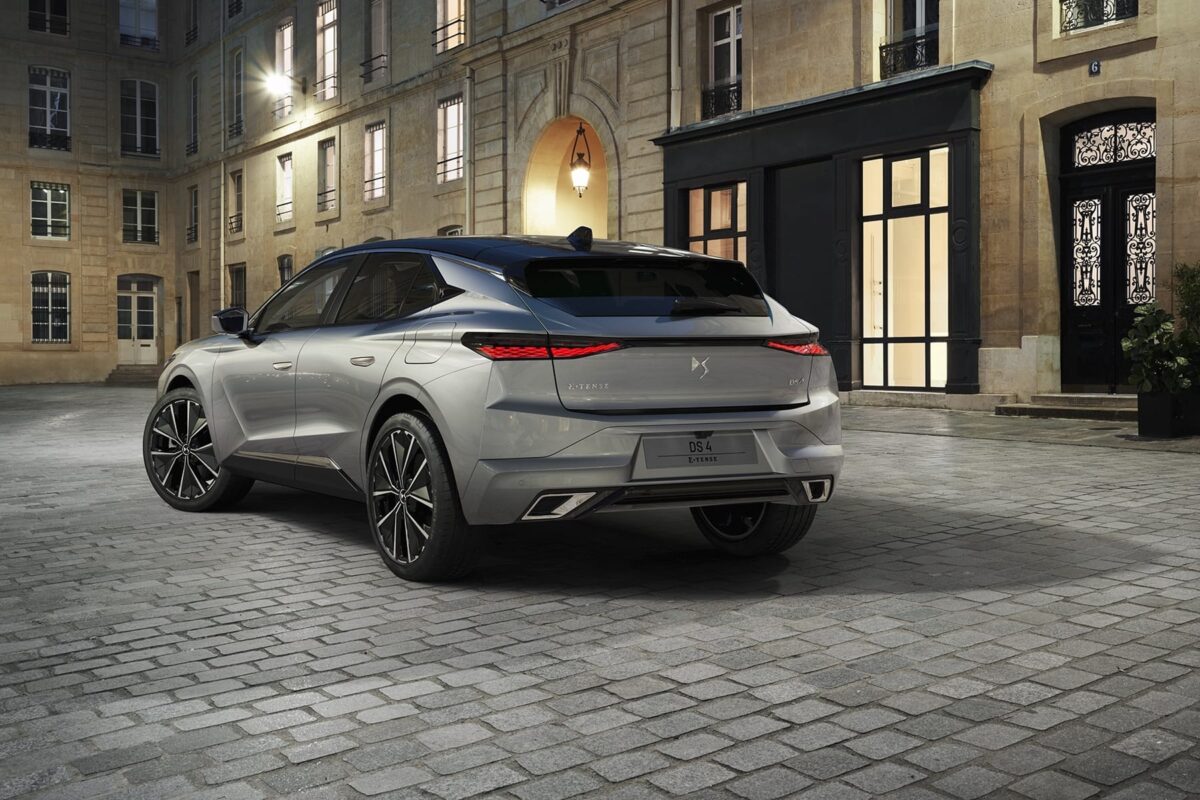
DS Automobiles has confirmed full prices for its DS 4, the new hatchback from the Citroën-derived upmarket French brand.
The second-generation DS 4, the fourth bespoke model in the DS range and expected to rival the likes of the Volkswagen Golf, will cost from £25,350 when UK deliveries begin before the end of 2021.
The car will be available with a choice of five powertrains – three petrol engines with 130, 180 or 225hp, a diesel with 130hp and a petrol/electric plug-in hybrid variant with 225hp. All will be combined with an eight-speed automatic transmission.
Trim levels will number three, dubbed DS 4, Performance Line and Cross.
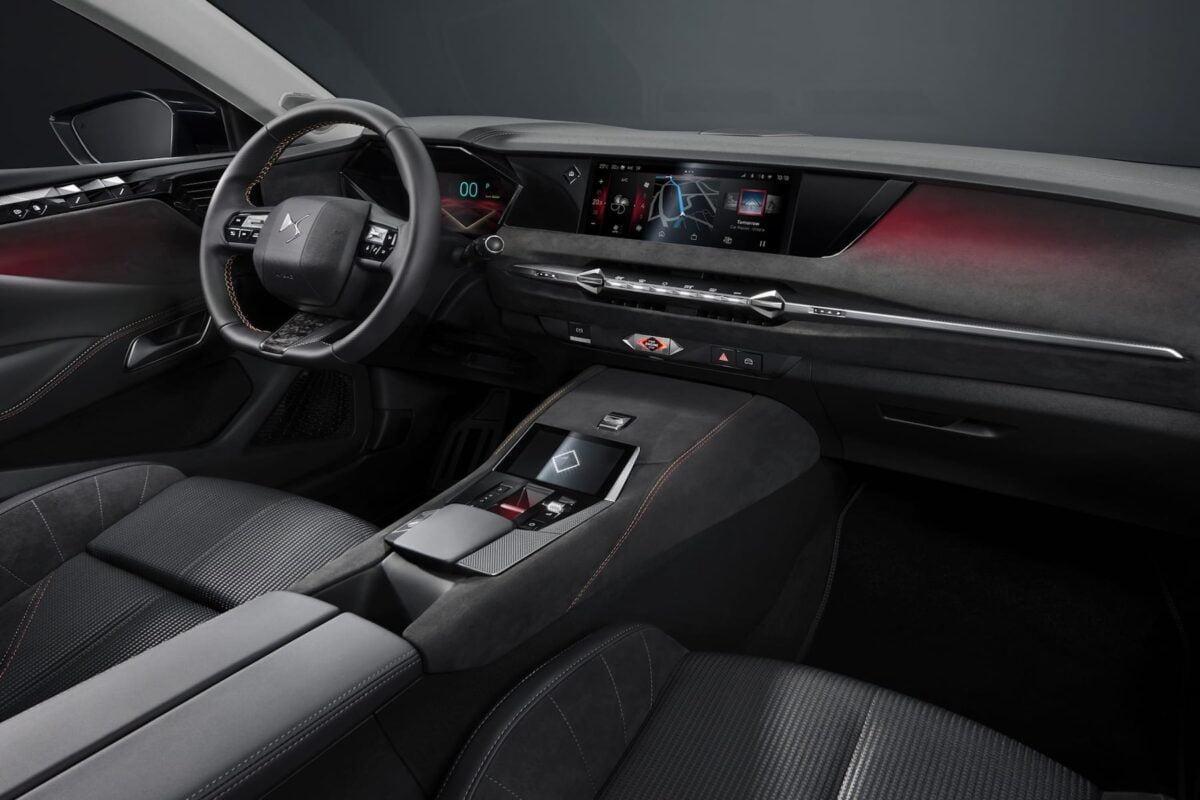
DS claims to be introducing several technology innovations to the segment with the DS 4. These include an HD touchscreen infotainment system that features voice recognition and can be updated remotely, while a second small ‘Smart Touch’ touchscreen below the centre console offers customisable shortcuts and handwriting recognition.
Safety features include the availability of a head-up display projecting key information onto the windscreen so that drivers can keep their eyes on the road, a semi-autonomous driving system and a night vision unit that uses infra-red cameras to detect hazards in low or poor visibility.
The options list will include ‘Active Scan Suspension’ – a camera mounted at the top of the windscreen scans the road ahead for poor surfaces, while four attitude sensors and three accelerometers record every movement of the suspension, controlling each wheel independently and setting them to maintain ride comfort.
The DS 4 will certainly be recognisable on the road – its front end is designed to be distinctive with a double-signature daytime running light system consisting of two lighting strips using 98 LEDs.
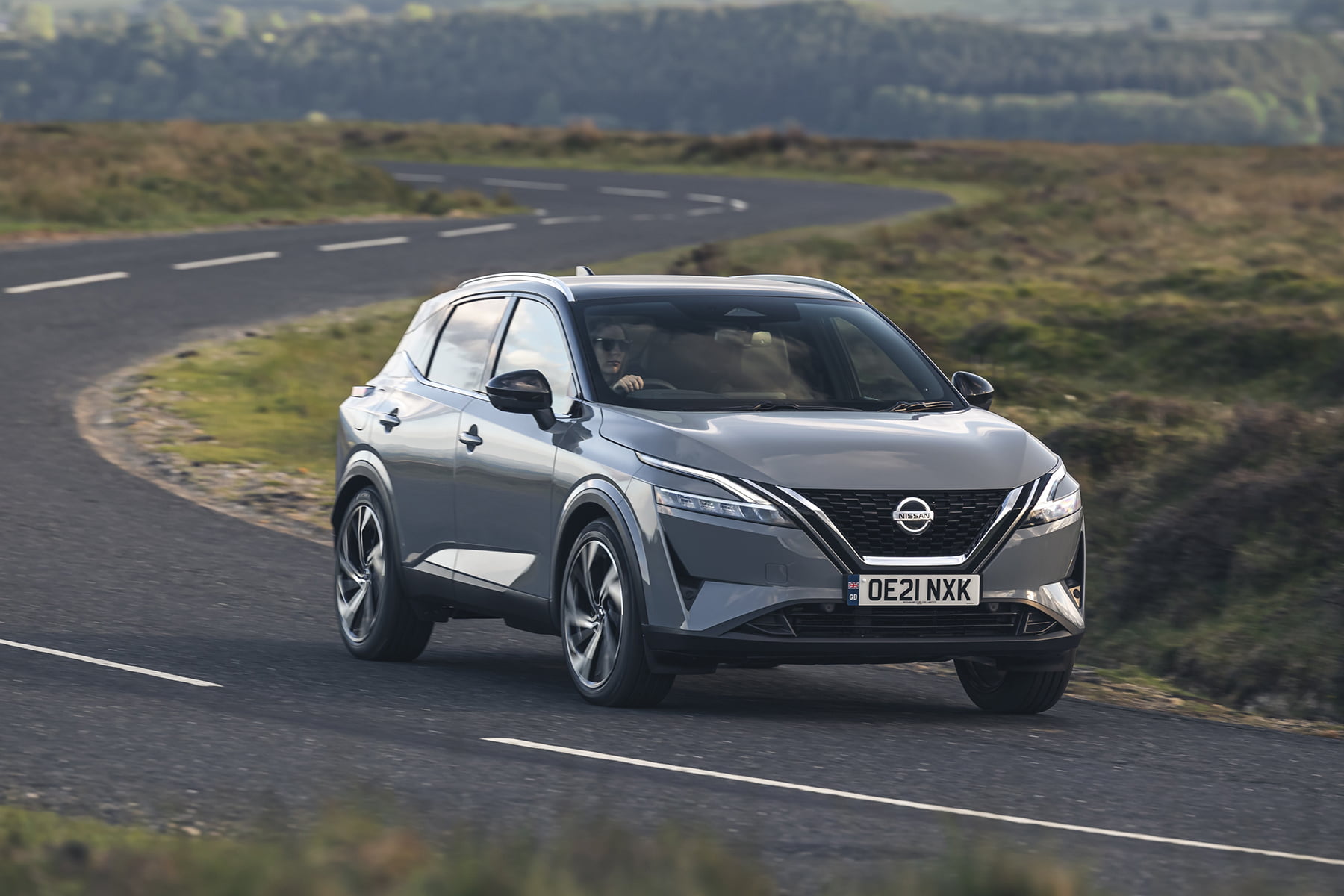
The Nissan Qashqai was not the first urban SUV-style car (the Toyota RAV4 and Honda CR-V both pre-dated it by many years) but it’s widely regarded as the car that started the crossover craze in 2007.
A sales success from the very beginning, it has remained the class best-seller against ever more rivals. And it was officially the UK’s best-selling new car in 2022 – the first time that a British-built car has topped the sales charts since 1998, almost a quarter of a century ago.
This is the third-generation version, which was launched in the second half of 2021. Like both of its predecessors, it was designed and developed by Nissan here in the UK, and is built in Nissan’s giant car plant in Sunderland.
The engine options are a 1.3-litre petrol unit with mild hybrid support, and a 1.5-litre petrol/electric ‘e-Power’ version. Unlike a conventional hybrid, the e-Power’s petrol engine doesn’t directly drive the car; it is used purely as a generator for the electric motor that sends drive to the wheels – so it’s basically a petrol-powered electric car, described by The Car Expert’s editor Stuart Masson as “much nicer than a conventional petrol/electric hybrid”.
Testers generally mark up the Qashqai for the same reasons they did the original – it doesn’t excel in one area but is more than competent in all. “The Qashqai is the establishment and no longer a clear leader, but it’s also hard to argue against,” says Top Gear.
The limited powertrain options jar with some – Simon Harris of Business Car argues the lack of a diesel engine and an ultra-low emission option will lose the car fleet customers, though adding that the Qashqai “is a much more polished performer than before”.
Otherwise, significant minus points are few; some testers find the ride a bit firm, especially on the optional 20-inch wheels; Fleetworld‘s Martyn Collins describes the six-speed manual gearbox as slick but surging between gears “making smoother changes harder than they should be.”
Finally, the car also attracts some positive jingoism, summed up by Andrew English of TheTelegraph: “Designed, engineered and built in Britain, the Qashqai is about as close to a British car as it gets.”
A facelifted version of the Qashqai will hit UK roads in summer 2022. The most noticeable aspect of this will be revised headlight and grille styling, while inside there will be upgraded infotainment technology.
As of October 2025, the third-generation Nissan Qashqai holds a New Car Expert Rating of A, with a score of 69%. It has an excellent safety rating, while its average CO2 emissions are low and its media review scores are good. However, its running costs are only average, while its reliability record and Nissan’s new car warranty coverage are poor.
Model reviewed: 1.3-litre petrol (mild hybrid) manual N-Connecta Score: 7 / 10 “The Nissan Qashqai is a great all-round performer that will serve most households in a most satisfactory manner, and the mid-spec N-Connecta is a good choice if your budget allows for it. The mid-sized SUV class is a part of the market where you’re certainly spoilt for choice. Several of these rivals are outstanding in a particular area, but few are as complete a package as the Qashqai. Read review
Model reviewed: Range overview Score: 8 / 10 “The new Nissan Qashqai is not particularly revolutionary but it does what Nissan claims it wanted to do – keep all the good bits and add some new and better bits. It drives well, offers lots of space and a quality of fit and finish that compares with most of the competition. The technology additions are generally useful and the safety package top-notch.” Read review
Auto Express
Model reviewed: Range overview Score: 8 / 10 “Few sectors of the car market are more competitive than the one where the Nissan Qashqai plys its trade, but Nissan’s effort stands out by offering consistency across the board rather than excelling in any one area. Good to drive, efficient, practical, well-equipped, and tightly priced, despite not being a class leader, the lack of weaknesses gives it an edge.” Author: Steve Walker, Ellis Hyde Read review
Model reviewed: e-Power N-Design Score: 8 / 10 “It’s easy to see why the Nissan Qashqai is so popular with UK buyers, and this mid-life update does just enough to see it keep pace with a huge pool of extremely talented rivals. The e-Power hybrid is the perfect amuse-bouche for those not ready for a full EV, and this sporty-looking N-Design model looks to represent decent enough value, too. It throws in plenty of cool kit, for less than you’d pay for a top-spec Tekna+ car.” Author: Richard Ingram Read review
Model reviewed: 1.5-litre petrol/electric e-Power Score: 8 / 10 “This is the most appealing variant in the Qashqai line-up. Nissan’s e-Power tech has addressed our issues with the Qashqai’s lacklustre engine line-up, and while the car still falls short in some areas, the extra refinement, efficiency and performance e-Power brings seems worth the cash to us given the potential to recoup running costs. Not to mention the improved driving experience.” Read review
Model reviewed: Score: 8 / 10 “The new Nissan Qashqai is an eminently usable and usefully practical family SUV. It might only be so-so to drive, but it nails the basics that some family SUVs don’t, making it an affordable and relatively successful evolution of the Qashqai formula for this third generation.” Read review
Auto Trader
Model reviewed: Range overview Score: 9 / 10 “Designed, developed and built here in Britain, the Qashqai is a deserved family favourite, this new one set to continue Nissan’s top ranking in the crossover field.” Read review
Business Car
Model reviewed: Qashqai 1.3 138hp N-Connecta Score: 7 / 10 “Excellent practicality, equipment and easy to drive. Although, fleets might get turned off with no diesel or PHEV models.” Read review
Car
Model reviewed: Range overview Score: 8 / 10 “Despite the onslaught of more than 20 C-segment crossover rivals, the Qashqai Mk2 was the class best-seller. This slicker, thoughtfully engineered, handsome and more rewarding to drive version has the capabilities to stay there.” Read review
Car Keys
Model reviewed: Range overview Score: 8 / 10 “Nissan has really moved the game forward with the new Nissan Qashqai, with a range of big advancements in the key areas that matter – how it drives, the technology on offer and its practicality. Though it doesn’t quite rival the class best, it’s a very appealing crossover nonetheless that deserves all the success it will likely get.” Read review
Carbuyer
Model reviewed: Range overview Score: 7.8 / 10 “The new Nissan Qashqai improves on the old model in all the right areas.” (Andy Goodwin) Read review
Company Car Today
Model reviewed: 1.3-litre petrol manual Tekna+ “An intelligent evolution rather than a revolution. New hybrid model will provide a much-needed efficiency boost, but the driving experience, cabin quality, improved kit levels and sharper front-end are all evidence of the big advances over the second-generation Qashqai.”
Daily Mirror
Model reviewed: Qashqai 1.3 DiG-T Tekna+ Score: 8 / 10 “If you’re upgrading from the current Qashqai you will find yourself in a hugely improved new model.” Read review
Driving Electric
Model reviewed: Range overview “The latest version of the big-selling family SUV is now on sale, with sharp new look and hybrid-only engine range.” Read review
Eurekar
Model reviewed: Range overview “Bigger, better all round and with ultra-modern technology the mild hybrid powered model is a car of our times and comes as the company gears up to take the Qashqai into the mainstream electric age.” Read review
Fleetworld
Model reviewed: Range overview Score: 8 / 10 “Better-looking, with higher levels of standard equipment and it’s keener to drive. The original crossover should keep its crown, despite keen rivals.” Read review
Heycar
Model reviewed: Range overview Score: 8 / 10 “It’s practicality where the 2021 Nissan Qashqai shines the most. From the generous stowage areas to the rear seats that fold flat, doors that open incredibly wide and extensive list of standard safety equipment, there’s no doubt that this is a car designed with families in mind.” Read review
Honest John
Model reviewed: Range overview Score: 8 / 10 “Hybrid power and increased practicality mean the new Nissan Qashqai can proudly fight it out against the Hyundai Tucson, Citroen C5 Aircross and Skoda Karoq.” Read review
Parkers
Model reviewed: Range overview Score: 8.4 / 10 “The all-new Qashqai is good to drive and a very polished performer.” Read review
The Sun
Model reviewed: “Nissan has moved the game on massively. Qashqai is posh, practical, hybrid, hi-tech and still sensibly priced from £23k.” Read review
The Telegraph
Model reviewed: e-Power Tekna Score: 8 / 10 “The Nissan Qashqai is not a battery electric car, but it’s lighter and less expensive, and filling the 55-litre tank takes a couple of minutes. This gives a range, according to our test, of 624 miles, so stick that in your charging port. You won’t be able to boast about how you’re saving the planet at parties, but if you want a smart, reliable, thoroughly competent car that’s designed and engineered in Britain, look no further.” (Andrew English) Read review
Model reviewed: 1.3-litre petrol manual Tekna+ Score: 8 / 10 “The new Nissan Qashqai has a workmanlike, tough-as-boots quality, with software systems that are well thought through and simple to operate; the model has a track record for longevity and reliability, too. Oh, and it’s built in Britain.” Read review
Top Gear
Model reviewed: e-Power Score: 7 / 10 “The e-Power drivetrain is around two grand more than an equivalent ‘normal’ Qashqai. Given the extra performance and economy on offer, it feels like good value and it’s probably safe to assume it’ll be more desirable second-hand, boosting its future value. If you’re keen to dip your toe into the world of EVs but have no ability to charge one, perhaps the ubiquitous Qashqai has just gained an increasingly vital USP. Read review
Model reviewed: Range overview Score: 7 / 10 “Into generation three, the Qashqai remains, like even its best rivals, a car for owners rather than drivers. If you want fun, spend the same money on a hatch or estate.” Read review
Safety rating
Independent crash test and safety ratings from Euro NCAP
Clean Air Index: 7 / 10 Energy Efficiency Index: 3.9 / 10 Greenhouse Gas Index: 2.1 / 10
The Nissan Qashqai had its emissions tested by Green NCAP in October 2022 – achieving a two-and-a-half star rating. This rating only applies to 1.3-litre petrol unit versions with mild hybrid support, and does not cover ‘e-Power’ versions.
Running cost rating
Monthly cost of ownership data provided exclusively for The Car Expert by Clear Vehicle Data
Fuel consumption
Average
Score
Petrol models
44 mpg
C
Hybrid models
54 mpg
B
CO₂ output
Average
Score
Variation
Score
Petrol models
146 g/km
C
Hybrid models
121 g/km
B
Insurance group
Average
Score
Variation
Score
All models
22
B
Service and maintenance
Cost
Score
Year 1
£230
C
Year 2
£587
C
Year 3
£919
C
Year 4
£1,101
C
Year 5
£1,442
C
Overall
£4,279
C
The Nissan Qashqai is pretty average in terms of its running costs, according to five-year service and maintenance data provided exclusively to The Car Expert by our technical partner, Clear Vehicle Data.
The e-Power hybrid models are good in terms of fuel consumption, while the regular petrol models are only average. Across the board, the Qashqai scores consistent B and C grades for running costs.
Reliability rating
Reliability data provided exclusively for The Car Expert by MotorEasy
Total claims: 1023 Average repair cost: £691.71 Last updated: April 2025
As of April 2025 (our most recent data point), the Nissan Qashqai has a reliability rating of 55%, which is poor according to warranty data provided exclusively to The Car Expert by our partner MotorEasy. This score applies to both the current Qashqai and the previous (pre-2021) generations.
Average repair costs for the Qashqai are reasonably high, at about £700. This is obviously more than the price of a used car warranty, which is worth keeping in mind if you are considering a used Qashqai.
Gearbox problems are particularly expensive to fix, at an average repair of £2,300, while engine repairs are also quite costly at an average repair cost of more than £1,000.
Warranty rating
New car warranty information for the Nissan Qashqai
Overall rating
D
31%
Petrol or diesel models
E
17%
Electric or hybrid models
C
56%
New car warranty duration
3 years
New car warranty mileage
60,000 miles
Battery warranty duration
8 years
Battery warranty mileage
100,000 miles
Vauxhall’s new car warranty is pretty much the bare minimum offered in the UK, with a duration of three years and a limit of 60,000 miles. Other rivals in the price bracket do better (and in some cases, much better).
In addition to the standard new car warranty, the e-Power hybrid versions of the Qashqai have an eight-year/100,000-mile warranty for the battery components.
Warranty on a used Nissan Qashqai
If you are purchasing an ‘Approved Used’ Qashqai from an official Nissan dealership, you will get a minimum 12-month warranty included.
If you are buying a used Qashqai from an independent dealership, any warranty offered will vary and will probably be managed by a third-party warranty company.
If you are buying a used Qashqai from a private seller, there are no warranty protections beyond any remaining portion of the original new car warranty.
If you’re looking to buy a used car that is approaching the end of its warranty period, a used car warranty is usually a worthwhile investment. Check out The Car Expert’s guide to the best used car warranty providers, which will probably be cheaper than a warranty sold by a dealer.
Date: February 2024 Recall number: R/2024/021 Model types: All Build dates: 05/2021 to 09/2022 Number of vehicles affected: 9,536 Defect: The capacitive mat for hand-on detection may have been damaged during manufacture of the steering wheel. The steering wheel may falsely detect the driver has their hands on the wheel with ProPilot engaged and not give a warning to place hands back on the wheel. Remedy: Inspect the steering wheel serial number and replace with a new countermeasure part where necessary.
Date: July 2023 Recall number: R/2023/232 Model types: All Build dates: 03/2022 Number of vehicles affected: 4 Defect: The child lock function on the rear door locks may be out of specification. The child lock may become disengaged when the inside door handle is operated. Remedy: Replace the rear door lock assemblies on both sides with a countermeasure part.
Date: November 2021 Recall number: R/2021/386 Model types: All Build dates: 09/2021 Number of vehicles affected: 7 Defect: Some steering rack trial parts were reintroduced into the normal production process. Remedy: Replace the steering rack with a countermeasure part.
As of September 2024 (our most recent data point), there have been three DVSA vehicle safety recalls on the current Nissan Qashqai to address different issues.
Not all vehicles are affected by recalls. You can check to see if your car is included in any of the above recalls by visiting the DVLA website or contacting your local Nissan dealer.
If your car is affected by a recall, the vehicle must be repaired and you should not be charged for any work required. If you are buying a used Qashqai, you should insist that any outstanding recall work is completed before you take delivery of the vehicle.
The mid-sized SUV class is one part of the market in which you’re really spoilt for choice. Amongst the many comparisons, the closest to the Qashqai are the likes of the Peugeot 3008, Citroën C5 Aircross, Skoda Kamiq, Volkswagen Tiguan and Ford Kuga. Several of these rivals are outstanding in a particular area – the Peugeot has an excellent-quality cabin, for example. But few are as complete a package as the Nissan.
The Ford Puma ST is the performance version of the petrol Ford Puma, introduced in 2020. It combines the standard Puma’s small SUV practicality with a more powerful engine and chassis upgrades intended to deliver sharper handling.
Power comes from a 1.5-litre turbocharged petrol engine producing 200hp, shared with the previous Fiesta ST. Suspension, steering and brakes are tuned for more focused driving, and visual changes inside and out distinguish the ST from the regular Puma.
UK media reviews have been broadly positive. The Ford Puma ST is widely regarded as one of the most engaging small SUVs to drive, with strong grip and quick steering response. The engine delivers brisk acceleration while retaining everyday usability.
However, the firmer suspension and large wheels can make the ride unsettled on rough roads. Interior materials are similar to the standard Puma and do not feel especially premium, and the sports seats may not suit all drivers.
Safety and running costs are average for the class, while CO2 emissions are higher than the standard mild hybrid Puma. As with other Ford models, warranty cover is notably shorter than many rivals.
As of February 2026, the Ford Puma ST holds a New Car Expert Rating of C, with a score of 62%. Strong media review scores support the result, while average safety performance, average running costs, higher emissions and very limited warranty cover reduce the overall grade. The Used Car Expert Rating is slightly higher at B (65%).
Body style: Small SUV/crossover Engines: petrol Price: From £33,880 on-road
Launched: Autumn 2020 Last updated: Summer 2024 Replacement due: TBA
Image gallery
Media reviews
Reviews, road test and comparisons from across the UK automotive media. Click any of the boxes to view.
Featured reviews
“When Ford updated the Puma at the end of 2024, one significant update made to the flagship ST variant wasn’t for the better. Ford dropped the 1.5-litre EcoBoost petrol engine and manual gearbox, leaving just the lower-powered 1.0-litre version with the Powershift automatic. This combination simply doesn’t do justice to the ST badge, and while the car’s chassis is lively and entertaining, the lack of punch and slow-witted auto put a big dampener on what the car can deliver. “
Model reviewed: 1.5-litre 3cyl turbocharged petrol Score: 9 / 10 “In the Puma ST, Ford has created the best-handling compact SUV on the market – and by some margin. True, it’s more expensive than the Fiesta ST with which the Puma ST shares so much – and not quite as thrilling to drive – but if this is the sort of car you want, it’s the best of its type.” Read review
Auto Trader
Model reviewed: “Ford decided to give its already sporty little Puma crossover the full ST treatment, based on the engine and other bits from the brilliant Fiesta ST. In the process we think it might just have reinvented the hot hatch as we know it.” Read review
“The Ford Puma is one of the best crossovers on the market, so the Puma ST performance edition looked incredibly promising. But changes made in the pursuit of speed have been aggressive, so it’ll be down to your driving style as to whether they suit you.” Read review
Business Car
Model reviewed: Performance Pack Score: 8 / 10 “As a package, the Puma ST shouldn’t work as well as it does, but it demonstrates the talent of Ford’s engineers as this car must be the most fun to drive small crossover on-sale right now.” Read review
Car
Model reviewed: 1.5-litre petrol manual Score: 10 / 10 “The Ford Puma ST feels just as pliable and adjustable as the Fiesta ST supermini on which it’s based; from the seating position – which simply feels a little higher than the Fiesta’s – to the powertrain, which actually improves on the superminis. The result is an unlikely all-rounder.” Read review
Car Keys
Score: 10 / 10 “Combine one of the most fun hot hatches with one of the best-driving crossovers and the result is brilliant. The Ford Puma ST is unquestionably one of the best cars of its type to drive, offering just that bit more practicality than the Fiesta ST with its larger boot and more generous rear-seat space.” Read review
Carbuyer
Model reviewed: Score: 8.4 / 10 “The Ford Puma ST is great to drive, has a brilliant engine and offers all the practicality of an SUV with hot hatch thrills.” Read review
Daily Mirror
Score: 8 / 10 “Those already in the crossover camp who want a family car with more sparkle will undoubtedly love the Puma.” Read review
Eurekar
Model reviewed: ST-Line X Vignale “What really makes this car such a winner is it’s driving experience and fun nature – starting with its smart design.” Read review
Model reviewed: Range overview “It’s not quite in the same league as the Kuga and that is arguably its toughest rival, but it delivers more of what I think a driver wants in terms of style and image. And it has that captivating ST badge.” Read review
Evo
Model reviewed: Range overview Score: 8 / 10 “A slightly more grown up and practical take on the excellent Fiesta ST that we can’t help but wish was less crossover and more coupe.” Read review
Honest John
Model reviewed: Range overview “The Puma’s sporty styling – including a sloping roofline silhouette and pronounced wheel arches – lends itself to a more extreme Puma ST design that combines form and function.” Read review
Parkers
Model reviewed: Range overview “The whole car feels just as pliable and adjustable as the supermini on which its based; from the seating position which simply feels a little higher than the Fiesta’s – to the powertrain, which actually improves on the superminis.” Read review
The Sun
Model reviewed: Range overview “It’s loads of fun. Just brilliant fun – and it’s even practical.” Read review
Model reviewed: “It’s a lot of fun to drive in a hurry, extremely well engineered and worthy of the ST badge. If just a little pricey.” Read review
The Sunday Times
Score: 6 / 10 “The Ford Puma ST is fun but flawed.” Read review
The Telegraph
Score: 8 / 10 “A combination of a high-performance drivetrain and a modish supermini SUV looks a winner on paper, but in practice the Ford Puma ST pricey and too harsh.” Read review
Top Gear
Model reviewed: Score: 8 / 10 “The right badge on the wrong car? Perhaps not. It’s a cracker to drive.” Read review
Safety rating
Independent crash test and safety ratings from Euro NCAP
Despite being recently downgraded from top marks to a four-star crash test rating, the Ford Puma has a competitive set of safety scores, particularly for adult (front seat) and child (rear seat) protection. Scores for vulnerable road user (pedestrian and cyclist) protection and safety assistance systems (to help you avoid an accident in the first place) are also above average for the small SUV sector.
Eco rating
Independent economy and emissions ratings from Green NCAP
No eco rating
As of February 2026, the Ford Puma ST has not been assessed by Green NCAP.
Running cost rating
Monthly cost of ownership data provided exclusively for The Car Expert by Clear Vehicle Data
Fuel consumption
Average
Score
Petrol models
47 mpg
C
CO₂ output
Average
Score
Variation
Score
Petrol models
150 g/km
C
Insurance group
Average
Score
Variation
Score
All models
21
B
Service and maintenance
Cost
Score
Year 1
£208
B
Year 2
£529
B
Year 3
£856
B
Year 4
£1,133
C
Year 5
£1,507
C
Overall
£4,233
C
The Ford Puma ST is a bit more expensive to own and run than the regular Puma models, according to whole-life cost numbers provided exclusively to The Car Expert by our data partner, Clear Vehicle Data.
Average servicing and maintenance costs over the first five years are likely to be about 40% more expensive than a regular Puma, while fuel economy is about 6mpg worse as well.
The good news is that insurance costs are expected to be very good, which is a pleasant surprise for a performance model.
Reliability rating
Reliability data provided exclusively for The Car Expert by MotorEasy
No reliability rating
As of February 2026, we don’t have enough reliability data on the Ford Puma ST to generate a reliability rating.
The Car Expert’s reliability information is provided exclusively to us using workshop and extended warranty data from our partner, MotorEasy, sourced from both official dealerships and independent workshops.
As soon as MotorEasy has sufficient data on the Puma ST, we’ll publish the score here.
Warranty rating
New car warranty information for the Ford Puma ST
Overall rating
E
15%
New car warranty duration
3 years
New car warranty mileage
60,000 miles
Battery warranty duration
0 years
Battery warranty mileage
0 miles
Ford’s new car warranty is pretty much the bare minimum offered in the UK, with a duration of three years and a limit of 60,000 miles. Other rivals in the price bracket do better (and in some cases, much better).
Warranty on a used Ford Puma ST
If you are buying an ‘Approved Used’ Ford Puma ST from an official Ford Direct dealership, you will get a minimum two-year, unlimited-mileage warranty included.
If you are buying a used Ford Puma ST from an independent dealership, any warranty offered will vary and will probably be managed by a third-party warranty company.
If you are buying a used Ford Puma ST from a private seller, there are no warranty protections beyond any remaining portion of the original new car warranty.
If you’re looking to buy any used car that is approaching the end of its warranty period, a used car warranty is usually a worthwhile investment. Check out The Car Expert’s guide to the best used car warranty providers, which will probably be cheaper than a warranty sold by a dealer.
Date: November 2023 Recall number: R/2023/329 Model types: All Build dates: 02/2023 to 06/2023 Number of vehicles affected: 144 Defect: Certain vehicles are equipped with tyres which do not meet the Rolling Road Resistance as required to support emissions and CO2 requirements. Remedy: Tyre replacement if required.
As of September 2024 (our most recent data point), there has been one DVSA vehicle safety recalls on the Ford Puma ST to address a tyre issue. However, recall information is updated regularly, so this may have changed.
Not all vehicles are affected by recalls. You can check to see if your car is included in any of the above recalls by visiting the DVLA website or contacting your local Ford dealer.
If your car is affected by a recall, the vehicle must be repaired and you should not be charged for any work required. If you are buying a used Puma ST, you should insist that any outstanding recall work is completed before you take delivery of the vehicle.
Performance compact SUVs are not exactly plentiful, but if you desire one there are some alternatives to the Puma ST, though generally they are 4x4s and so cost more money, while according to reviewers offering arguably less fun.
Alternatively, within the Ford family you could always look at the Fiesta ST, since it shares most of its underpinnings withe the higher-riding Puma.
Ford will launch an all-new version of its Tourneo Connect MPV in Spring 2022, in two lengths both offering seven-seat accommodation.
Replacing the previous five-seat Tourneo Connect and seven-seat Grand Tourneo Connect and based on the Transit Connect van, the new vehicle will also be offered with a range of digital technologies seeking to lift it from its budget people-carrier status to effectively take the place of Ford’s discontinued C-Max models.
The second and third row of seats are removable to increase load space. The front passenger seat also folds back to accommodate items up to three metres in length such as flat-pack furniture or timber.
Power is provided by either a 1.5-litre petrol engine or a 2.0-litre diesel engine, which is available in two power outputs. Both engines are available with manual or automatic transmissions, while the more powerful diesel unit is also available with all-wheel drive.
Entry-level Tourneo Connect models will be supplied with an infotainment system using an eight-inch screen – a ten-inch version is standard on all other models and can be specified for the entry-level car. Sport versions also include a ten-inch digital display for the driver, which is an option on other models.
Safety levels have been improved on the new model with up to 19 driver assistance technologies on offer. Standard specification on all versions includes automatic emergency braking, lane-keeping, cruise control, hill-start assistance and front and rear parking sensors.
Orders for the new Tourneo Connect open in early 2022 at prices yet to be specified. Ford expects the car to appeal to a wide range of potential buyers, from families who regularly need to carry sports and camping equipment to small businesses transporting personnel and stock.
September is always one of the two biggest months of the year for new car registrations as new number plates bring buyers into showrooms, but 2021 continues to ignore the usual scripts.
Toyota was the country’s biggest-selling car brand for the month, ahead of Kia, while perennial sales leader Ford slumped to ninth. EVs hit a new record market share, while diesel’s market share crashed to a new all-time low. And most car manufacturers struggled to get enough of any cars at all to sell to customers.
Ongoing shortages of crucial semiconductor chips continue to have a massive impact on new car registrations, and the top ten list for September reflected these supply issues. The Ford Fiesta, for example, had an absolutely disastrous month with fewer than 1,800 registrations – which doesn’t look good compared to the Vauxhall Corsa’s 5,200 sales for the month…
We’ve published our normal reporton the monthly new car registration figures, with plenty of detail that you won’t find elsewhere. So let’s now look at the mixed-up top ten results for September 2021.
It’s not the first time that the Tesla Model 3 has topped the new car sales charts, but to do so in September is probably Tesla’s strongest sales achievement yet. The American company continues to dominate the electric car scene, which will have other manufacturers scratching their heads as to why their own EVs are not selling up a storm in the same way.
The Vauxhall Corsa recovered strongly in September after a poor couple of months, and it now looks a nailed-on favourite to end 2021 as the UK’s best-selling car with a lead of more than 6,000 units with only three months to go for the year. Vauxhall will presumably be begging its Stellantis overlords for as many cars as it can get to finally bring the Ford Fiesta’s long reign to an end.
The petrol and diesel versions of the new Corsa currently hold a rather poor Expert Rating of 63% on our industry-leading Expert Rating index, although the all-electric Corsa-e manages a few points better at 67%. Those scores put the Corsa in the bottom half of the supermini class, suggesting that journalists are not as excited about the Corsa as customers seem to be.
The BMW 3 Series continues its strong run through the second half of the year, improving from fifth last month to third in September. That also means that the 3 Series is closing in on the Toyota Yaris for eighth place in year-to-date registrations with just three months of the year to go.
The 3 Series currently rates two points better than the electric Tesla Model 3 in our Expert Rating Index, and a long way ahead of other petrol/diesel/plug-in rivals from Audi, Mercedes and others. As of October 2021, it has an overall score of 85%, which is exceptionally high.
It was another great month for the Toyota Yaris, with fourth place in September resulting in selling a lot more cars than third place in August or second place in July. Toyota is coping much better with semiconductor supply than most manufacturers, which is certainly helping Yaris sales at the expense of rivals like the Ford Fiesta.
The Yaris currently holds an overall score of 67% on our Expert Rating Index, which has dropped from its previous rating of 76% since we updated our unique algorithm. This is a bigger fall than affected the Polo or Fiesta, but still keeps it four points above the Corsa.
September marked the market introduction of the all-new third-generation Nissan Qashqai, replacing one of the UK’s most successful vehicles and hoping for more of the same.
Nissan will be hoping that it can get production up to speed and maintain that level without being dogged by supply problems in order to give the new Qashqai a solid start in life. It’s certainly been a good start, and everyone up in Sunderland will have their fingers crossed…
We don’t yet have enough reviews of the new Qashqai to produce our Expert Rating report, but this will be coming soon. The previous model was competitive with other mainstream medium SUVs throughout its life, and the new one is a marked improvement in pretty much every area.
September was almost certainly the last big hurrah for the current Sportage, ahead of its replacement by an all-new model before the end of 2021. The Sportage also inched closer to the Volkswagen Polo in year-to-date sales, but the end-of-year result will very much depend on how much stock Kia has of both the outgoing car and the new model.
The Sportage currently holds an Expert Rating of 64% in our industry-leading Expert Ratings index, which puts it firmly in the bottom half of the medium SUV sector. Kia will hoping that its boldly styled replacement can improve on this score.
The Volkswagen Polo’s 2021 renaissance continued in September with another strong result. The facelifted Polo was supposed to have arrived in time for the September sales rush, but Volkswagen dealers are apparently still waiting to see the new models. Fortunately, they seemed to have about 4,000 of the current model in stock to deliver to customers…
The Polo currently holds an Expert Rating of 76%, which makes it one of the top-rated small cars according to our industry-leading Expert Rating index. Whether this will improve further once the facelifted model arrives remains to be seen.
Helping Toyota top the sales charts in September was a fantastic result for the Aygo city car, making its first appearance (that we can remember, anyway) in the top ten.
The Aygo has been around since 2014, so it’s certainly in the autumn of its life and a new model is expected to arrive sometime next year. As of October 2021, it holds an Expert Rating of just 54%, so it’s well off the pace of other city cars like the Hyundai i10 and Volkswagen Up.
The Kia Niro made a return to the top ten for the first time since February, helping Kia to second place in overall manufacturer registrations, just behind Toyota. Overall, the Hyundai-Kia collective appears to have managed its supply of semiconductors better than most car manufacturers, which has very much helped the results for both brands.
The Niro currently holds an Expert Rating of 62% in our aggregated Expert Ratings index, while the e-Niro is far more highly rated with a score of 84% – a whopping 22% better than the hybrid versions.
After disappearing from the top ten altogether last month, the Volkswagen crept back into tenth place in September. Mind you, that was still enough to overhaul a 1,600 unit deficit to the Ford Fiesta and overtake it for second place in year-to-date registrations. Volkswagen also strengthened its overall lead in the manufacturer sales race, and looks pretty certain to displace Ford as the country’s most popular car brand for 2021.
It seems that almost every manufacturer is pining for ‘premium’ perfection these days, aiming to release that one family-friendly model that scores so highly with the media and general public that it gives them the pedigree to bump up their prices. But which of these brands deserves to charge a premium?
It’s relatively easy for a brand to produce a high-performance model that has car journalists drooling, but those cars tend to serve as halo models that get headlines, while we’re interested in the real volume-selling models.
By consulting our industry-leading Expert Rating Index, we’ve ranked the best manufacturers with premium reputations by their overall Expert Rating, across all the family-oriented models in their range (saloons, hatchbacks, SUVs and so on) – deliberately ignoring sports cars and low-volume high-performance models (like BMW M or Mercedes-AMG models) that can skew the overall scores.
We’re also making an arbritary judgment on what counts as a ‘premium’ brand here. We’re looking at car companies that are selling in large volumes but are priced above the mainstream manufacturers. That means we’re not counting luxury brands like Rolls-Royce and Bentley, or niche supercar brands like Ferrari or McLaren.
With more than 8,700 different reviews from the UK motoring media powering our rankings, you can be confident that this is the definitive guide to the best premium car brands selling their models in the UK right now.
Like most car companies, Jaguar has invested heavily into SUVs in recent years. The E-Pace, F-Pace and I-Pace models now comfortably outsell the traditional XE and XF saloons, while the flagship XJ saloon has been pensioned off altogether. The F-Type coupé and convertible are not counted towards Jaguar’s score here.
Jaguar’s current range of executive and family models is a small but solid line-up, but its the all-electric Jaguar I-Pace that is the pick of the bunch. It’s well-regarded among the media for its lavish interior, thrilling performance and excellent safety features.
Every car across the range has been praised for its driving dynamics, but whatever new Jaguar catches your eye, you may find that the prices are a bit higher than for rivals from the likes of Audi, BMW and Mercedes. Finance offers aren’t helped by residual values that are generally lower than the German rivals, leading to higher monthly payments.
There have also been doubts about the long-term reliability of Jaguar cars, while the infotainment systems installed by the British manufacturer have been well off the standards set by other premium brands. A new system called Pivi Pro has closed the gap in this regard, but it’s still not a match for the likes of BMW’s iDrive.
Overall Expert Rating: 74% Stand-out model: BMW 5 Series (87%)
BMW is a global brand with considerable pedigree, particularly notable for its very wide selection of impressive high-end models at attractive prices. Labelled the fourth best premium brand by our Expert Rating Index, BMW has been ranked higher than its key competitors Audi and Mercedes-Benz, who both failed to make the top five.
Although the BMW 3 Series deserves a lot of praise, it is the BMW 5 Series that is the most beloved by the UK media. It has received more than 25 industry awards since its launch in 2017, thanks to its cars almost always offering a superior driving experience, as well as plenty of refinement and high build quality.
The only universal criticism that BMW regularly receives is that many of its optional extras are often standard features on other, cheaper brands. Oh, plus the styling of most models is most politely described as “polarising”.
The second entrant in these rankings from the Jaguar Land Rover family, Land Rover is a prestigious brand that many British motoring journalists look upon with fondness and a patriotic lens. This is likely why Land Rover is placed 3rd in this list, its Overall Expert Rating just inching ahead of BMW.
The Land Rover range comes highly recommended by the UK media for its impressive off-roading talent, as well as its lavish interior trims, every-day practical features, and quality infotainment. Reviewers also expect that the Land Rover range will be slower to depreciate in value than other competitors in the premium SUV classes.
However, much like Jaguar, the motoring media collectively shares concerns about the long-term reliability of Land Rover models, which are rather notorious for developing faults, and point out that Land Rover SUVs are not the economical choice for those looking to count their miles per gallon.
With these drawbacks, some reviewers struggle to find justification for Land Rover’s comparatively high pricing, when there are more reliable and economical high-end SUV options available for less.
Renowned for scintillating performance and fantastic engine quality, Porsche has successfully managed to take the thrilling driving dynamics and sleek and sporty interior of its 911 sports car, and tweak that formula for the premium family car market.
Porsche’s family-orientated options only consist of two SUVs and two large saloons; the exceptionally fun driving experience and surprising practicality being the key positives for buyers interested in this range.
Launched in 2019, the Porsche Taycan is the choice of our Expert Rating Index, which offers the perfect balance between the practical sensibilities of a family saloon and the blistering pace and performance of a hypercar.
Much like BMW, the major criticism that frequently crops up in Porsche reviews is the expensive price of optional extras, which should really be available as standard.
Bringing our rankings to a close, our Expert Ratings index has decided that Tesla is on top when it comes to choosing a premium brand for your next family car. With only three models in the Tesla line-up, there really isn’t too much choice, but all three have proved popular with both critics and the buying public.
In fact, the Tesla Model 3, praised for its fantastic performance, driving dynamics and minimalist style, regularly pops up in the UK’s top ten sellers list, including recently taking the top spot as the country’s best-selling car in the UK in September 2021.
Tesla has been universally admired for the exterior styling of its models and its practical tech features, but reviewers are quick to criticise the quality of interior materials and overall build quality, as well as ergonomic issues caused by concentrating almost all the car’s controls into a single touchscreen.
For the definitive rankings of the top five premium brands, we’ve used The Car Expert’s industry-leading Expert Rating index.
The index analyses new car reviews from 25 of the top UK motoring websites, using an advanced algorithm that we have developed specifically to compare review scores. It constantly recalculates and updates the Expert Rating score for every single car in real time to make sure you’re getting the most accurate and reliable ratings for every new car.
MG has unveiled an updated version of the ZS electric compact SUV, extending the car’s range by up to 110 miles.
Fitted with the new 72kWh battery, the ZS EV has an official battery range of up to 273 miles, compared to 163 miles for the existing model.
Charging of the new battery takes 10.5 hours on a standard 7kW charger, or 42 minutes using a 100kW rapid charger. The car comes fitted with a combination Type 2 and CCS charger and now includes a charging status indicator by means of LEDs inside the charging port.
Other updates to the latest version of the MG ZS include styling changes that follow the updates already applied to the petrol ZS range. The electric model now sports a bespoke front end, featuring a stamped-effect grille to improve aerodynamics and a new side-opening charging port.
LED headlights and bespoke daytime running lights are included while the rear bumper has been redesigned and new wheel designs added.
Inside, MG is fitting its latest connectivity system – this connects via a smartphone app, and offers remote control of various car, climate, security and charging functions.
Coinciding with the updates the car’s trim levels have been renamed, with the ZS EV now available in SE or Trophy variants.
The ten-inch tablet-style touchscreen in the centre console now has new graphics and has been made easier to use. A new instrument cluster is fitted while Trophy versions also offer wireless phone charging.
The MG ZS EV goes on sale in November – prices are yet to be announced. The ZS is the best-selling of MG’s now three-strong electrified range that also includes the MG 5 estate EV and larger MG HS plug-in hybrid SUV.
MG intends to introduce an additional lower-cost electric model to the ZS EV range in 2022, fitted with a 51kWh battery giving up to 198 miles between charges.
Crucially needed updates for budget EV SUV The improved battery range and updated infotainment system address two of the key concerns raised by reviewers on the original model, which contributed to the ZS EV’s relatively poor Expert Rating of 56% as of October 2021.
A (claimed) battery range of 273 miles is far more competitive with other small electric SUVs, and for many households it will make the ZS EV a far more viable option than before.
However, the update is unlikely to address the car’s other main criticisms, which were a dull driving experience and poor quality interior materials. Stuart Masson, editor
The Car Expert launches a game-changing ranking for new cars
Ratings aggregated from 25 of the UK’s top motoring websites
Invaluable market intelligence for car manufacturer
London, 7 October 2021:The Car Expert has this week unveiled its unique Expert Rating Index – the most powerful new car review and ranking platform ever seen in the UK. It’s designed to be the new gold standard for rating the best and worst new cars for consumers, and the ultimate brand performance barometer for car manufacturers.
The Expert Rating Index brings a level of sophistication never before seen in ranking the best and worst new cars in the UK. The Car Expert’s team compiles new car reviews from 25 of the UK’s top automotive sites, then applies an advanced algorithm to produce a definitive rating for each car.
It provides car manufacturers with unique market intelligence on how each media title is reporting on individual car brands and models, harnessing the combined weight of more than 8,500 new car reviews and increasing every week.
The index brings science and data analysis to the subjective and old-fashioned world of reviewing new cars, using established aggregating principles in a similar fashion to sites like Rotten Tomatoes – the world’s most famous review aggregator site – Metacritic and others.
Developed entirely within the UK but capable of being applied anywhere in the world, this is the first time that aggregated ratings technology has been used to publicly rate and rank new car reviews.
“After three years of research, development and public testing, the Expert Rating Index is now the most accurate and reliable method ever developed to rate new cars,” said Stuart Masson, editorial director of The Car Expert.
“It’s the new gold standard for ranking the best and worst new cars for both consumers and car manufacturers. Think of it as ‘the Rotten Tomatoes of car reviews’.”
The Car Expert will publish quarterly reports from the Expert Rating Index, the first of which is scheduled to be out by the end of October.
What’s an Expert Rating?
The Expert Rating score for a car is an aggregated rating made up of a number of individual review scores from up to 25 different sources. This can be as few as 12 reviews and in some cases is more than 60 (as some cars have multiple variants of engines, body styles and trim levels, or are simply more widely reviewed).
The Expert Rating Index factors in the age of each review, so that newer reviews carry more weight than older reviews. It also breaks down the complex web of different scoring systems that different websites use in their reviews.
All the data is pulled together with hundreds of calculations to produce a definitive score for each new car – the only number that you can trust.
Licensing
The Car Expert’s aggregated ratings technology is also available for licensing, either to power vehicle ratings on external sites or for internal analytical use. For example, Leasing.com, one of the UK’s top car leasing websites, is now using a custom algorithm and bespoke integration from The Car Expert to power its new car ratings.
The Car Expert is the UK’s most comprehensive automotive consumer advice site. It has been providing independent, impartial advice to UK car buyers and car owners for 10 years.
Two million readers each year rely on The Car Expert for news, information and advice on every aspect of buying, financing, owning and selling their cars.
The Car Expert also provides expert advice to broadcast media in the UK and beyond, with editor Stuart Masson regularly appearing on TV and radio with the BBC and commercial stations.
BMW has unveiled the second-generation version of its 2 Series Active Tourer, promising more space and updated powertrains to go with the bold new look.
Observers will have no difficulty telling the new compact MPV from its predecessor, the front-end dominated by the grille which under BMW’s controversial latest styling language has significantly grown in size. It houses a radar detector, part of an expanded suite of driver-assistance systems.
Other styling changes include a new front headlamp design, revised side styling and smaller rear lamp clusters.
The interior has undergone much greater changes, according to BMW following the example of the iX electric SUV. There is more space available, thanks to a bigger body shell in all dimensions and both the front and rear wheels being spaced wider apart.
The cabin is dominated by a one-piece curved display unit in which is mounted both the driver’s 10-inch digital instrument panel and a central touchscreen of 11 inches. This accesses the latest version of the BMW iDrive infotainment system, the first time this has been offered in one of the brand’s smaller cars.
The system operates in a similar fashion to a smartphone, enabling many traditional buttons and switches to be removed from the cabin.
Two petrol engines and a diesel will be available from the car’s launch, all with a seven-speed dual-clutch auto gearbox. The petrol units, which both include mild-hybrid technology, are a 1.5-litre unit of 170hp and a 2.0-litre 218hp, while the diesel is a 2.0-litre unit with 150hp.
BMW intends to expand the engine offerings in mid 2022 with plug-in hybrid variants, each able to travel up to 50 miles on electric power alone and offering either 245hp or 326hp.
BMW dealers are now taking orders for the new 2 Series Active Tourer – prices start from £30,265 and first cars are expected don UK roads in March 2022.
Our industry-leading Expert Rating Index gets plenty of use from readers looking for the best cars to suit their needs, but it also gets a lot of interest from people looking for the brickbats as well as the bouquets.
By aggregating new car reviews from 25 different media titles, the Expert Rating Index doesn’t show you the best new cars on sale, but also the worst.
In a car industry that is constantly trying to evolve and innovate with the times, it is inevitable that some new cars will struggle to compete, whether they are older models that are falling behind the curve, or models that were simply sub-standard from the start
We’ve consulted the Expert Rating Index to find the ten worst new cars on sale in the UK, as judged by the country’s top motoring websites.
All of these cars are (or have been) available for sale in 2021, although several will be withdrawn or replaced before the end of the year. The good news is that you can pick most of these cars for a relative bargain – either brand new or second-hand – which makes them a lot more attractive.
With comprehensive review data backing the rankings below, you can be confident that this is the definitive guide to the worst new cars in the UK.
So without further ado, let’s count down from tenth worst to the very bottom of the pile…
10th place: Fiat 500L (47%)
Expert Rating: 47% from 33 reviews
The tenth-worst car here is the stalwart Fiat 500L, which has been on sale now for eight years. In that time the 500L has outlived other MPV competitors like the Ford B-Max and Vauxhall Meriva, and despite its 2017 facelift, it has been marked as a fairly mediocre choice in a hugely competitive market for crossover/SUV/estate things.
The Fiat 500L has attracted some admirers over its tenure, particularly for its unique styling and roomy cabin, but reviewers are quick to point out that there are more practical and refined alternatives available at around the same price, also offering better performance, a more comfortable ride quality, and a quieter engine.
Designed to be the ultimate budget city car, the latest refresh of the Smart Fortwo coincided with the manufacturer’s rather bold step of making its range electric only in 2019, but unfortunately this has not improved the UK review ratings of this pint-sized EV one bit.
The Fortwo has often been described as fun to drive, and its size means that it is very agile in urban scenarios and quite easy to park.
However, the short battery range on the Smart Fortwo makes longer trips outside the city impossible. Add to this that there are cheaper city car alternatives like the Skoda Citigo with more storage space, rear seats and better infotainment and battery range, and you can see why the Fortwo may be a bad choice.
Launched in the UK in 2013, it is fair to say the the Ford EcoSport did not get off to a great start, being poorly received across the entire of the UK motoring media for being a substandard package in pretty much every area.
The EcoSport was markedly improved by its 2017 facelift, which greatly improved its interior trim, exterior design, and tech feature line-up, but it still faces very tough competition from SUV alternatives with more value for money, more practical features, and better performance.
The Ford EcoSport even has competitors within the Ford family, the 2020 arrival of the energetic yet sensible Ford Puma suggesting the EcoSport’s days are numbered. Pricing has been removed from the Ford UK website, and it seems that they are no longer available to order online.
The second Smart entrant on this list just pips the Ford EcoSport for 7th place, with an Expert Rating that’s just under 43% compared to the Ford being just over 43%. Er, congratulations?
The Smart Forfour suffers from a lot of the same ailments as its sister model the Fortwo; it has only a little boot space and a poor battery range, and simply does not stand up very well to other city car options like the Skoda Citigo or Volkswagen Up.
The Forfour does have more cabin room than other Smart models, and is very nimble in tight urban areas, but from a value for money perspective, it is the worst compact EV you can buy today. This likely explains why only eight media outlets have test driven the Forfour after four years on sale; perhaps Smart would rather journalists not drive it at all…
Having received largely negative reviews acros the board in recent times, it is clear to see why Smart has only sold just over 1,000 vehicles in the UK so far this year.
MG Motor’s attempt at cornering the supermini market, the MG 3 was originally launched in 2014, and had its most recent facelift in 2019, maintaining its track record of fairly negative reviews throughout its lifespan.
The MG 3 has been frequently commended for its affordability and extensive warranty, and did show some promise as the budget alternative in the supermini class, that was until the arrival of the Dacia Sandero, which is a better car in every aspect for the same price.
Reviewers generally conclude that an MG 3 test drive makes for a very uninspiring driving experience; the MG 3’s wheezy and under-powered engine, cheap interior trim, and lack of basic safety features and infotainment gadgets culminating in what is a very underwhelming car.
MG Motors has been a sales success over the last few years, with the MG ZS leading that charge, but media reviewers haven’t been as kind as customers. The ZS languishes with an Expert Rating score of just 41% – although the electric ZS EV version does do better, with a score of 56%.
One of the unique positives of the MG ZS is its seven-year new car warranty, and this budget SUV does offer great value for money, offering a starting price far lower its rivals. However, MG have been outclassed again by Dacia, as the Dacia Duster is a better package than the MG ZS in every category, and all for the same price.
Much like the MG 3 supermini, the MG ZS has received criticism from the UK media for its cheap build quality, poor safety rating and its inferior engine quality. In summary, it’s good value but not really a good car.
An all-electric seven-seat people carrier that’s essentially a modified delivery van, the Nissan e-NV200 Combi is certainly not one of the most comfortable passenger vehicles you can buy. The e-NV200 Combi seems to have had a polarising effect on the UK media; some think it is great, while others conclude that it is simply terrible.
Devoid of industry awards, the e-NV200 Combi does have one unwanted accolade to its name; the MPV received the lowest score ever given in an Auto Express review. Particular criticism is directed at the e-NV200 Combi’s poor safety standards and so-so battery range.
Nonetheless, the Nissan e-NV200 Combi does have low running costs on its side, along with a roomy interior and the fact that it has spent most of its life in a category of its own. That changed this year with the arrival of the Vauxhall Combo-e Life and its Peugeot and Citroën siblings, and the e-NV 200 is soon to be put of its misery, to be replaced by an all-new model called the Townstar.
The biggest member of the Mitsubishi line-up, the Shogun Sport is seven-seat SUV that has received plaudits from the UK media for its capable towing ability, off-road talents and its spacious interior. However, this is where the positives abruptly end.
Compared to its rivals in the mainstream large SUV category like the Kia Sorento and SsangYong Rexton, the Mitsubishi Shogun Sport has a dated interior trim that lacks refinement, poor engine quality with excessive fuel consumption and a poor ride quality on the road.
The oldest model on this list, the Mitsubishi ASX has been on sale since 2010, and is very much showing its age as a new car. Despite four separate facelifts throughout its lifetime, reviewers collectively come to the conclusion that the ASX has been consistently behind the curve in every aspect, and it is the lowest rated SUV in our Expert Rating index.
Life wasn’t always so bleak for the Mitsubishi ASX; the SUV was given a five-star safety rating from Euro NCAP after its launch, but this accolade has since expired. Reviews of the latest iteration of the ASX comment that, although the infotainment system is now of a decent standard, there are far better alternatives that offer superior driving characteristics and interior appeal for the same price.
The reluctant ‘winner’ of the competition for the worst new car sold in the UK in 2021, completing the all-Mitsubishi podium, is the rather bad Mitsubishi Mirage.
The Mirage is the lowest rated car in the entire of our Expert Rating index of more than 300 cars, with a score 10% lower than any other candidate. Launched in the UK in 2013, the Mitsubishi Mirage has had consistently abysmal reviews throughout its tenure; the decent fuel economy and generous cabin space of the Mirage seriously hampered by its drab and dated interior, poor steering dynamics, and its noisy and underwhelming engine.
If you are curious about how truly inadequate the Mirage is, it seems you do not have long to book a test drive; Mitsubishi is withdrawing from Europe, and is down to its last few cars before it runs out of stock. Therefore, you are fast running out of time if you would ever want to pick up a new Mirage.
That said, you won’t face that much competition, due to its retreat from the UK market, the semiconductor chip shortage, and general lack of interest from UK buyers, Mitsubishi only registered 40 new cars in the whole of September 2021.
For the definitive rankings of the worst new cars on sale in 2021, we’ve used The Car Expert’s industry-leading Expert Rating index. The index analyses new car reviews from 25 of the top UK motoring websites, using an advanced algorithm that we have developed specifically to compare review scores.
It constantly recalculates and updates the Expert Rating score for every single car in real time to make sure you’re getting the most accurate and reliable ratings for every new car.
The Mazda 2 supermini has earned praise from a test programme analysing new cars for their energy efficiency and environmental credentials.
The result will be welcomed by Mazda which has ‘gone its own way’ on the development of future environmentally-friendly cars.
Green NCAP is an offshoot of safety body the European New Car Assessment Programme (Euro NCAP), and aims to promote the development of cars that are clean, energy efficient and not harmful to the environment. It has been testing new cars since 2019 and giving them a rating between one and five stars, as with Euro NCAP’s well-known crash-test programme.
In the latest tests Green NCAP analysed the Mazda 2, Ford Puma crossover and DS 3 Crossback SUV. The Mazda was tested with its 1.5-litre Skyactiv-G petrol engine and scored three-and-a-half stars, its performance described as “impressive” by testers.
However, while the car’s control of pollutant emissions was rated as ‘good’, the Green NCAP report added that the car would benefit from a gasoline particulate filter as particulate emissions were high in some of the more demanding tests.
Green NCAP’s test programme includes both laboratory analysis and on-the-road testing.
The result will be seen by Mazda as vindication of its Skyactiv development strategy, which has shied away from major downsizing of engines and a wholesale switch to electric. Instead the Japanese manufacturer argues that further development of internal combustion engines has a role to play in future motoring.
Green NCAP tested the Ford Puma with its 1.0-litre mild hybrid petrol engine. The car earned a comfortable three stars, scoring well on energy efficiency and respectably for control of pollutant and greenhouse gas emissions.
However the Ford’s Clean Air Index score suffered due to the car’s emissions of ammonia (NN3), which is a pollutant currently regulated by legislation. Testers commented that an improvement in this area would have seen the Ford earn a similar three-and-a-half star rating to the Mazda.
The DS3 Crossback 1.5-litre diesel scored two-and-a-half stars – it was also marked down for its emissions of ammonia and also of nitrous oxide (NOx). However testers praised the particulate filter fitted to the turbodiesel engine, commenting that it worked well in controlling particulate emissions.
Green NCAP has so far tested 75 models from different manufacturers. Top five-star ratings have gone to several full-electric vehicles, along with the hydrogen-powered Hyundai Nexo. Green NCAP scores, when available, are included in our Expert Rating index.
The crazy year of new car registrations in 2021 continued in September, with overall numbers at their lowest point for nearly 25 years but very strong results for electric cars.
September is one of the car industry’s two biggest months of the year, along with March, thanks to the UK’s peculiar system of bi-annual number plate changes. But this year, when the industry really needed a good result after nearly two years of Covid problems, it was all a bit of a disaster.
Data published this morning by the Society of Motor Manufacturers and Traders (SMMT) shows that private new car sales were down 25% in September compared to the same month last year. Fleet registrations were down a far more substantial 43%, leaving the overall market more than 34% down compared to last year.
As has been the case for months now, the biggest problem was supply. Manufacturers have had all sorts of trouble building cars due to an ongoing shortage of semiconductor chips, which are required for almost every key component of modern cars. The month’s registrations results are effectively a reflection of which car companies had enough chips and which didn’t.
Source: SMMT
Record-breaking month for electric cars
If you’re a regular reader of our monthly new car registration report, you won’t be surprised to hear that electric cars had yet another record-breaking month. What is surprising is how strong a month September was for EV sales – likely to be a combination of ever-increasing demand and fewer supply problems than for conventional fossil-fuel cars.
EVs took a record 15% of market share in September, which translates to nearly 33,000 new cars. That’s a 49% increase on the same month last year, in an overall market that was down 34%.
Plug-in hybrids also had a good month, up more than 11%, while regular hybrids still outperformed the overall market, down 5% but still a long way ahead of the overall market.
Also unsurprisingly, it was yet another worst month ever for diesel, only just scraping together a 10% share of the market. With demand at an all-time low, many manufacturers have slowed or halted diesel car production in order to use their supplies of precious semiconductors for more popular (and more profitable) models.
Good month, bad month, ugly month
For thousands of car dealerships, September was a bad month. A huge amount of energy and effort goes into maximising new car sales in March and September, so a 34% fall in registrations means that a lot of dealerships underachieved against their targets. The good news is that their profit margins for cars they did sell should have been better, as there’s no need to discount your cars when you don’t have enough to go aroud anyway.
For manufacturers, the 2021 rollercoaster ride continues. Toyota topped the charts in September, edging out Kia, with Volkswagen in third place. This largely reflects those brands having maintained their production levels as much as possible by having an adequate supply of semiconductor chips, although all have warned that they, like most other companies, will run out and have to reduce output levels soon.
September was a disaster for Ford, with registrations down 62% (against a market drop of 34%) leading to the Blue Oval falling to seventh place in the marketplace behind Toyota, Kia, Volkswagen, BMW, Audi and Hyundai. Mercedes-Benz also had a terrible month, down 63%
Mitsubishi sales have almost completely dried up as the car manufacturer completes its exit from Europe, while Renault sales were still poor (down 49%) but much better than the last couple of months.
Tesla Model 3 charges back to top spot
September was probably the strongest month yet for Tesla, as the super-successful Model 3 comfortably topped the sales charts. It’s certainly not the first time that we’ve seen the Tesla Model 3 atop the charts, but to do so in the month of September is a significant achievement. Or, to put it another way, Tesla sold roughly the same number of Model 3s as Jaguar and Land Rover’s entire combined product range…
Meanwhile, September 2021 could also be remembered as the first month in anyone’s memory that Ford didn’t have a single model in the UK top ten. The Fiesta, of course, has been the country’s top-selling car every year for more than decade – a crown that it now seems almost certain to lose this year.
Toyota and Kia both had two cars in the top ten, as did Volkswagen (although that’s certainly not unusual), while the Mercedes-Benz A-Class was the other big name to disappear from the charts in September.
We’ll have our usual full round-up of the top ten in coming days.
International Motors, importer of Subaru and Isuzu vehicles to the UK, has acquired the aftersales business of Mitsubishi Motors, following the Japanese manufacturer’s decision to quit the UK market.
The news will be welcome to UK owners of Mitsubishi vehicles, who will have been concerned over future servicing and repair needs after the brand announced in July 2020 that it was pulling out of all European markets.
Despite Mitsubishi’s poor sales and poor reviews (the Mirage, ASX and Shogun Sport hold the bottom three places from more than 300 new cars in our industry-leading Expert Rating index), the decision to withdraw from Europe completely took many UK automotive observers by surprise.
It followed a decision by Mitsubishi’s head office in Japan to stop developing vehicles to suit European regulations due to the ever-increasing costs involved for ever-decreasing sales. The company’s UK arm has been winding down its operations and expects to finally run out of new car stock imminently.
The newly-formed aftersales business will retain the existing “Mitsubishi Motors in the UK” name under its new ownership.
The new owners of Mitsubishi’s aftersales operation insist vehicle owners will notice no changes.
What does this mean for Mitsubishi owners in the UK?
Mitsubishi owners are being promised no change from their current aftersales arrangements, although that will obviously depend on whether individual dealerships continue to offer servicing and parts for Mitsubishi cars now that the manufacturer has abandoned the UK.
The operation will be will be staffed by existing Mitsubishi aftersales management and led by Toby Marshall, a Mitsubishi Motors in the UK director for more than 12 years.
New UK 4×4 manufacturer Ineos Automotive has unveiled its plans for selling and servicing its Grenadier 4×4, and revealed the vehicle have a starting price of £48,000.
Reservations are now open for the Grenadier, which is intended to fill the gap left by the demise of the original Land Rover Defender in 2016.
Ineos head Jim Ratcliffe initially made a proposal to Jaguar Land Rover to continue manufacturing the Defender, and when this was declined decided to design and manufacture his own version. Ratcliffe believes there is a market, particularly among the likes of farmers, who will not be drawn to the all-new Land Rover Defender launched in 2020.
Ineos plans to have 200 sales and service outlets across the globe ready for the launch of the Grenadier in July 2022, a mix of established dealer groups and 4×4 specialists. Of these 23 retail sites are expected to be in the UK – three have already been appointed.
The aftersales format has been developed over three years by Ineos and German engineering and technology giant Robert Bosch – Grenadier owners will also have access to a network of Bosch workshops which should mean owners are never more than 50km from a service outlet.
The company is also working on a comprehensive online sales and service platform. Ineos commercial director Mark Tennant said: “Customer convenience, parts availability, service quality: we are focusing on getting the basics right, giving customers the buying experience they want and the aftersales support they need.
“If preferred, customers in our main markets will be able to buy their Grenadier online, including organising vehicle finance and handling any part exchanges. But we fully accept that most will want to try before they buy, for which having an extensive network on the ground is essential.”
The Ineos Grenadier is set to appear on – and off – the road in July 2022.
If you’re looking for a new car in 2021, then chances are you’ll be considering an SUV of some sort. Hatchbacks may still be the biggest-selling type of new car, especially for small cars, but petrol SUVs have well and truly overtaken saloons and estates to become the default for larger vehicles.
Despite the growing industry shift to electric models, EVs and plug-in hybrids still only make up about 15% of all new car registrations right now. And with diesel sales at an all-time low and still falling, that means that a lot of people are looking at a petrol-powered SUV or crossover for their next car.
We’ve analysed all of the petrol SUVs available at each price point, then consulted our industry-leading Expert Rating index to see which models have the highest review scores from across the UK motoring media.
With comprehensive review data backing our recommendations, you can be confident that this is the definitive guide to the best new petrol SUVs for every budget that are on sale in the UK right now.
It may not be the most stylish, comfortable or energetic petrol SUV on this list, but the Dacia Duster is truly unbeatable when it comes to value for money.
You can pick up a new model for the starting price of £14,000. However, as the ‘Essential’ variant lacks equipment, most buyers tend to go for the ‘Comfort’ model for an extra £1,000, which comes with a few more useful perks.
Dacia has recently given the Duster a makeover and, as of October 2021, the small budget SUV has an Expert Rating of 67%, based on 23 reviews from the UK motoring media.
If you are not too fussed about makes and models, top speeds and entertainment excess, the Skoda Kamoq is the perfect petrol SUV for ferrying you and your family from A to B. It is a well-built, mid-sized petrol SUV that offers plenty of cabin space and practical features.
Available for a competitive starting price of just under £23,000, the Karoq offers a comfortable driving experience, although British reviewers generally conclude that it is a bit bland compared to some of its competitors.
As of October 2021, the Skoda Karoq has an Expert Rating of 76%, based on the reviews published by 18 different UK media sources.
If fun performance is a priority for your next SUV, it’s worth checking out the Ford Puma, which has received plenty of praise from the UK media for its outstanding driving experience and surprising practicality, especially in its boot capacity and layout.
With a string of prestigious awards to its name, including 2018 European Car of the Year, the Volvo XC40 is no stranger to industry acclaim, and is still picking up trophies three years after its launch. With a dash more style than its still-impressive larger siblings, the XC60 and XC90, the XC40 has been a sales success for Volvo and has been regularly popping up in the top ten best-sellers’ list this year.
As of October 2021, the Volvo XC40 has an Expert Rating of 79%, based on scores given from 40 UK reviews.
If you’d prefer something a bit larger for your budget, there are plenty of petrol SUVs at this price point that score well in our Expert Rating index. The Mazda CX-5, Hyundai Tucson, Cupra Formentor and Peugeot 3008 all share an Expert Rating score of 75%, so are well worth a look.
If you’re looking for performance and prestige, the Porsche Macan offers plenty of interior comfort and refinement, and trademark Porsche engineering under the bonnet.
The Macan has been around since 2014, with a couple of updates over the years, including a recent facelift. The starting price is just under £48,000, but note that the more powerful Macan S and GTS models cost a great deal more than £50,000. It will take great restraint wit the infamous Porsche options list to keep your Macan within this price point.
As of October 2021, the Porsche Macan range has an Expert Rating of 79%, based on reviews collected from 31 separate UK publications.
If the Porsche Macan is a bit too much for your tastes, you may want to consider the Volvo XC60. While the Porsche offers a superior driving experience, the Volvo counters with a more comfortable ride and more everyday practicality.
It may be in the twilight of its life, having been on sale since 2015, but the Volvo XC90 remains one of the most comfortable large SUVs on the market. For a family of five (the third-row seats are really very small) and luggage, the XC90 makes an excellent road trip vehicle.
As well as being a success story in its own right, this model was also the catalyst for Volvo’s brand resurgence over the last few years, with the XC90’s platform and engines also underpinning the large S90 saloon and V90 estate, as well as the smaller XC60/S60/V60 models.
As of October 2021, the XC90 holds an Expert Rating of 79%, just edging out the Land Rover Discovery by a mere 0.1% according to our panel of UK media reviews. The Volvo may be the more comfortable car for five people around town and on motorways, but if you want to use the third row of seats and/or trek off-road, the Discovery would be a better bet.
If money’s no object in your search for your next petrol SUV, then your local Land Rover dealership is the place to be. No longer a utilitarian farmer’s tool, the Land Rover Defender is now a luxury family SUV that just happens to carry the same name as its illustrious forebear.
Launched in 2020, the new Defender retains the superb off-roading ability as Land Rovers of yesteryear, although it combines that with grand interior trim, expensive tech and everyday practicality.
Despite rather consistent doubts about the fuel economy of the Defender, this top-of-the-line SUV has an Expert Rating of 85%, based on 34 reviews from UK media sources. Although you *can* theoretically pick up entry-level Defender variants for around £50,000, the versions that people actually buy are easily upwards of £75K and can comfortably exceed £100K if you choose the petrol V8 engine and tick enough options boxes.
If the Defender is a bit too chunky and clunky for your tastes – and money really isn’t an option – you may prefer to look at the Aston Martin DBX. As far as sophisticated SUVs go, the DBX is pretty much the ultimate machine on the market. Yes, you’re trading practicality for performance and panache, but if you’re looking at dropping £160K on a V8-powered SUV, you can probably also afford a Toyota Land Cruiser for when you want to get muddy…
For the definitive rankings of the best new petrol SUVs for every budget, we’ve used The Car Expert’s industry-leading Expert Rating index. The index analyses new car reviews from 25 of the top UK motoring websites, using an advanced algorithm that we have developed specifically to compare review scores. It constantly recalculates and updates the Expert Rating score for every single car in real time to make sure you’re getting the most accurate and reliable ratings for every new car.
The Tesla Model 3 is a mid-size premium saloon and closely related to the crossover Tesla Model Y. Like all Tesla models, it is only available with an electric motor supplied by a battery pack.
The Model 3 was first unveiled in 2016, but enormous American demand combined with numerous production problems meant that it only arrived in the UK in Spring 2019.
The Tesla Model 3 has received unanimously positive reviews from the UK motoring media, with most scores indicating very good or outstanding results. Despite a rapidly increasing field of rivals entering the premium EV market, the Model 3 remains an excellent choice. It also has to compete with conventionally powered executive saloon rivals, like the Audi A4/BMW 3 Series/Mercedes C-Class trio, and has held its own surprisingly well.
The Model 3 has received particular praise for its performance, driving dynamics and minimalist style. Criticisms mainly relate to the questionable ergonomics of some of the functionality required by having everything controlled by a central screen, with Car magazine describing it as “genius when you’re stationary but can be hugely distracting when you’re moving.”
As well as regular incremental improvements, the Model 3 received a major mid-life update in late 2023, with revised styling, improved battery range and a lower price. The interior layout and controls were further streamlined, drawing even more criticisms from the motoring media.
As of March 2026, the Tesla Model 3 has a New Car Expert Rating of A, with a score of 81%. It has received fantastic media reviews, excellent safety credentials, has had strong reliability to date and produces zero tailpipe emissions, but running costs are not as cheap as you might expect for an EV, thanks to expensive insurance premiums.
Model reviewed: Standard Range Plus “It might not appeal on an emotional level, but the Tesla Model 3 manages to be fast yet serene, packed full of appealing tech, and practical to boot. With low running costs thrown into the mix, there’s not much going against it.” Read review
Auto Express
Model reviewed: 2023 facelift Score: 9 / 10 “No half-measures, most manufacturers would label this an all-new car. Improved in several key areas, our previous Car of the Year immediately elevates itself back to the top of the class with dramatically improved quality, even more tech, and a more desirable look. The fact it now undercuts its main rivals by £10k or more will make it a no-brainer for business users and private buyers alike.” Author: Richard Ingram Read review
Model reviewed: 2021 update Score: 10 / 10 “Minor cosmetic tweaks have given the Tesla Model 3 a sportier look outside and a more premium feel inside, while the continual software upgrades keep edging Tesla further ahead of its rivals on the tech front.” Read review
Model reviewed: Standard Range Plus 2020 Score: 9 / 10 “The updated Standard Range Plus version of Tesla’s Model 3 is the most accessible in the line-up but still shows that star quality.” Read review
Model reviewed: Standard Range Plus Score: 9 / 10 “The Tesla Model 3 is more affordable than ever in Standard Range Plus guise, which makes it even more appealing.” Read review
Model reviewed: Long Range AWD Score: 10 / 10 “The Tesla Model 3 is in a class of one at the moment, but that shouldn’t detract from Tesla’s achievement with its first ‘more affordable’ model. Yes, it’s still pricey, but it’s a car that drives brilliantly, looks great, seems to be built just as well as other cars at the price and is full of the most advanced tech. That all adds up to make it just about the coolest car you can buy right now.” Read review
Score: 9 / 10 “This is the Tesla to buy, full of EV pep and at a more affordable price. It competes well with other sports saloons around the same price point and looks future-proofed when it comes to self-driving tech.” Read review
Auto Trader
Model reviewed: 2023 facelift range Score: 8 / 10 “Sharper looks, fresh tech and a bit more range for the upgraded version of the all-conquering Tesla Model 3.” Author: Dan Trent Read review
Model reviewed: Range overview Score: 9 / 10 “The Tesla Model 3 is nothing less than a game-changer, with range, performance and tech that set the benchmark for what an EV should be.” Read review
Car
Model reviewed: Facelift range Score: 8 / 10 “With the updates for 2024, the Tesla Model 3 finds itself vying for pole position on the mid-sized EV grid. The combination of the Tesla Supercharger network, an impressive battery range, and stylish, idiosyncratic interior have been sharpened up by improved ride quality, lower noise levels, and better efficiency than before.” Author: Keith Adams Read review
Model reviewed: (range review) Score: 8 / 10 “The Tesla Model 3 feels like a breakthrough car.” Read review
Carbuyer
Model reviewed: Facelift range overview Score: 8.8 / 10 “An extensive facelift means the Tesla Model 3 goes further on a charge and feels better built and more refined, all while undercutting most rivals.” Author: Richard Ingram, Andy Goodwin Read review
Company Car Today
“As sensible and affordable as executive-level EVs get; updates make the Tesla Model 3 even more appealing.” Read review
Model reviewed: Standard Range Plus Score: 8.1 / 10 “The Tesla Model 3 takes EVs into new ground in terms of a compact exec saloon with a competitive price and serious range. It’s not perfect, but does plenty very well.” Read review
Daily Mirror
Score: 10 / 10 “Car of the future not only makes sense but is a brilliant drive.” Read review
Model reviewed: Long Range Score: 10 / 10 “This is the best Tesla yet. Best made, too. And one of the most entertaining cars I’ve driven this year.” Read review
Discover EV
Model reviewed: Long Range “The 2021 facelift hasn’t revolutionised the Tesla Model 3 – rather evolved it, which isn’t a bad thing as it is a very good EV to live with, and one of the best cars currently available, giving owners of even the most sporty conventionally fuelled cars something to think about.” Read review
Model reviewed: Performance Score: 9 / 10 “If you regularly do high mileage and you are in the fortunate position of having at least forty grand to spend on an electric car, then this is the EV to get. Put it this way, we were so impressed, that we bought one. And after we bought one, two of our friends then bought one. I think that says it all really.” Read review
Driving Electric
Model reviewed: 2023 facelift range Score: 9 / 10 “A recent facelift has cemented the Model 3’s position at the top of its class, with the baby Tesla offering everything you could possibly need from an electric family car.” Author: Tom Jervis, Richard Ingram Read review
Electrifying.com
Model reviewed: Range overview Score: 10 / 10 “Tesla’s best car yet is also its most affordable and has a great range. Safe, fast, technologically advanced and cheaper to run than an Audi A4.” Read review
Evo
Score: 8 / 10 “The Tesla Model 3 delivers incredible, otherworldly performance with some genuine dynamic nuance.” Read review
Model reviewed: Range review “The Tesla Model 3 is finally on the road, but away from the hype we debunk what is, electric or not, one of the most fascinating cars in decades.” Read review
Model reviewed: Performance Score: 8 / 10 “It’s fight or flight time for Tesla, as its new Model 3 Performance promises to quash the M3 at its own game.” Read review
Green Car Guide
Model reviewed: Performance (2024 facelift) Score: 9 / 10 “The Tesla Model 3 Performance has been updated and it’s now faster (0-60 mph in 2.9 seconds), it’s also better to drive, and it remains easy to charge – but there are no stalks for indicators, wipers or even gears…” Author: Paul Clarke Read review
Model reviewed: Long Range Dual Motor All-Wheel Drive Score: 10 / 10 “The main issue that we had with the Tesla Model 3 when it was first launched was the poor ride quality and the various rattles from the suspension. Our latest [2022] test car had much better ride quality than early examples, and much better ride quality than the Model Y, resulting in it being more agile and a much-improved car to drive.” (Paul Clarke) Read review
Model reviewed: Long Range Score: 10 / 10 “The Tesla Model 3 Long Range is an excellent car. It has zero tailpipe emissions yet it also has amazing performance. It’s rewarding to drive but it’s also practical (if you can live with a boot rather than a hatchback). Compared to the entry-level Model 3 Standard Range Plus, it’s around £10,000 more expensive, but you get all-wheel drive and almost an extra 100 miles of range.” Read review
Model reviewed: Standard Range Plus Score: 9 / 10 “The long-awaited Tesla Model 3 is an impressive car. Even in Standard Range Plus form, the performance is very good, the handling is rewarding, and the steering is sharp and well weighted. There’s also the very minimalistic interior, with the large touchscreen featuring virtually all controls – which some people might like, others may not.” Read review
Parkers
Model reviewed: Range review Score: 9 / 10 “Lowered prices raise Tesla Model 3’s appeal” Read review
The Independent
Model reviewed: Range overview Score: 10 / 10 “The best-selling EV still sets the standard other EVs are measured by. It has a long range, strong quality, is good value and has the benefit of Tesla’s Supercharger network.” Author: Steve Fowler Read review
The Sun
Model reviewed: (range review) “The Model 3 is easily my favourite Tesla. I’ll go further, it’s probably my favourite electric car, full stop. If the Yanks can ship them here quick enough and keep chipping away at the price, it’s game on.” Read review
The Sunday Times
Model reviewed: Long-range Score: 8 / 10 “There’s no official measure on the Tesla Model 3’s range, but we’ve been achieving more than 200 miles on a single charge.” Read review
The Telegraph
Model reviewed: (range review) Score: 8 / 10 “Undeniably special to drive and sit inside, the Tesla Model 3’s statistics make impressive reading, although the ‘affordability’ of this car is highly debatable and it simply isn’t built as well as it should be.” Read review
Top Gear
Model reviewed: Standard Range Plus Score: 8 / 10 “It’s spacious, efficient, comfortable, reasonably-priced and well-equipped.” Read review
Model reviewed: (range review) Score: 8 / 10 “Everything Tesla has done up to this point has built towards the Model 3… and it’s been worth it.” Read review
Which EV?
Model reviewed: Range overview Score: 9.2 / 10 “The 2021 Tesla Model 3 takes the electric car to beat and makes it even better. Tesla maintains its lead by adding a heat pump and further enhancements that extend battery range across all three cars. There are mild exterior and interior improvements, too. The Long Range is the best buy of the three, but the Standard Range Plus is supremely capable, and the Performance is the electric heir to the BMW M3.” (James Morris) Read review
Safety rating
Independent crash test and safety ratings from Euro NCAP
As of April 2025 (our most recent data point), the Tesla Model 3 has an excellent reliability rating of 91%, according to information provided exclusively to The Car Expert using workshop and extended warranty data from our partner, MotorEasy, sourced from both official dealerships and independent workshops.
Early Teslas don’t have a great reputation for reliability associated with build quality issues, but the core electric powertrain has historically been very strong with few problems.
The caveat to this is that the information is currently based on very few cars, so it could change as more Model 3s hit higher ages and mileages.
Running cost rating
Monthly cost of ownership data provided exclusively for The Car Expert by Clear Vehicle Data
Battery range
Average
Score
Variation
Score
EV models
345 miles
A
Electrical efficiency
Average
Score
Variation
Score
EV models
5.1 m/KWh
A
Insurance group
Average
Score
Variation
Score
All models
49
E
Service and maintenance
Cost
Score
Year 1
£340
D
Year 2
£612
C
Year 3
£952
C
Year 4
£1,176
C
Year 5
£1,514
C
Overall
£4,594
C
The Tesla Model 3 is an efficient electric car to run but other costs are not as good, according to whole-life cost numbers provided exclusively to The Car Expert by our data partner, Clear Vehicle Data.
The Model 3’s electrical efficiency (the EV equivalent of miles per gallon for a petrol or diesel car) is excellent, which helps it to achieve plenty of range from the battery. With electricity prices on the increase, that’s good news as you’re getting the most out of every kW you’re paying for.
However, insurance is pricey and servicing costs over the first five years are nothing special, either. So it’s a bit of a mixed bag overall.
Date: April 2022 Model types: All Build dates: 01/2018 to 11/2021 Number of vehicles affected: 9,471 Defect: On certain vehicles that are running firmware release 2022.8 and that experience a loss of low voltage system support the audio subsystem may become unavailable including the use of eCall functionality. Remedy: Firmware release 2022.12.3 or later reverses the power management process introduced in firmware release 2022.8 and maintains eCall audio functionality.
Date: April 2022 Model types: All Build dates: 02/2018 to 04/2022 Number of vehicles affected: 10,927 Defect: In certain conditions the user interface (UI) on affected vehicles displays vehicle speed but not a unit of speed (i.e. mph or km/h). Remedy: Tesla will deploy an over-the-air firmware update that will reintroduce the display of the speed unit when using Track Mode.
Date: February 2022 Model types: All Build dates: 07/2017 to 09/2020 Number of vehicles affected: 26,618 Defect: The rear-view camera harness may fail causing no image in the centre display. Remedy: Fit a harness guide protector and if necessary install a new harness.
Date: December 2021 Model types: All Build dates: 09/2020 to 12/2020 Number of vehicles affected: 1 Defect: The curtain side airbags may not deploy correctly. Remedy: Inspect for proper alignment and orientation of the left- and right-curtain side airbag. Re-align as necessary.
Date: December 2021 Model types: All Build dates: 01/2019 to 04/2021 Number of vehicles affected: 127 Defect: The front suspension lateral link may be insufficiently torqued. Remedy: Inspect the connection of both front suspension lateral links to the sub-frame. Replace any related damaged components and ensure correct torque of fastening bolts.
Date: May 2021 Model types: All Build dates: 06/2018 to 03/2020 Number of vehicles affected: 599 Defect: Front seat belt top loop may not be secured correctly. Remedy: Check and secure the top loop as necessary.
Date: May 2021 Model types: All Build dates: 12/2018 to 03/2021 Number of vehicles affected: 565 Defect: The brake calliper bolts may not be secured to the correct specification. Remedy: Check and secure the brake calliper bolts to correct specification.
Date: May 2020 Model types: All Build dates: 01/2020 to 02/2020 Number of vehicles affected: 5 Defect: The upper steering column bolt may not have been fitted. Remedy: Inspect the upper steering column bolt fitment and replace where necessary.
As of September 2024 (our most recent data point), there have been eight DVSA vehicle safety recalls on the Tesla Model 3. These cover software, airbags, brakes and steering systems.
Not all vehicles are affected by recalls. You can check to see if your car is included in any of the above recalls by visiting the DVLA website or contacting your local Tesla service centre.
If your car is affected by a recall, the vehicle must be repaired and you should not be charged for any work required. If you are buying a used Model 3, you should insist that any outstanding recall work is completed before you take delivery of the vehicle.
Awards
Trophies, prizes and awards that the Tesla Model 3 has received
2023
Auto Trader Awards – Best Car for Long Distances
2021
Auto Trader New Car Awards – Best Car for Families
Electrifying.com Awards – Technology Award + Efficiency Award
News UK Motoring Awards – Best Electric Car
2020
Auto Express Awards – Best Compact Executive Car + Best Premium Electric Car
Auto Trader Awards – New Car of the Year + Best Electric Car
Carbuyer Awards – Best Company Car
Parkers New Car Awards – Best Large Electric Car
2019
Auto Express Awards – Car of the Year + Best Premium Electric Car
carwow Awards – Game-changer Award
News UK Motor Awards – Green Car of the Year
Parkers Awards – Car of the Year + Best Electric Car + Best Company Car + Safety Award
Similar cars
If you’re looking at the Tesla Model 3, you might also be interested in these alternatives
If you’re looking to buy a new or used Tesla Model 3, The Car Expert’s partners can help you find the right car
Search less, live more. We make finding the right car simple. Find out more
Discover great deals available on both new and used cars. Find out more
Search for your next new or used car with Auto Trader. Find out more
Lease a Tesla Model 3
If you’re looking to lease a new Tesla Model 3, The Car Expert’s partners can help you find a competitive deal
Personal contract hire deals from Leasing.com. Find out more
Personal contract hire deals from Carparison Leasing. Find out more
Personal contract hire deals from Carwow. Find out more
Subscribe to a Tesla Model 3
Subscriptions are becoming a very popular way for consumers to try an electric car for a few weeks or months to help decide whether it’s a suitable alternative to a petrol car. If you’re interested in a car subscription, The Car Expert’s partners can help. (PS: What’s a car subscription?)
Jeep has revealed an all-new Grand Cherokee, which is expected to arrive in the UK late next year.
The 2022 Grand Cherokee will be the fourth plug-in hybrid model, or ‘4xe’, added to the Jeep line-up, as Jeep aims to catch up to its competitors in the plug-in market, eventually targeting the release of an all-electric range by 2025.
Other highlights include exterior style updates, a new interior design, and a number of tech additions that improve the infotainment and driving experience.
2014 fourth-generation Grand Cherokee vs. 2022 fifth-generation Grand Cherokee
Powertrains
Using similar plug-in hybrid technology to that in the hybrid Wrangler released earlier this year, the Grand Cherokee has a turbocharged 2.0-litre engine working in tandem with two electric motors to produce 375hp and an impressive towing capability of up to 6,000lbs.
The hybrid powertrain comes with three modes, allowing the driver to choose between pure petrol power, pure electric power, or a blend of both.
Jeep claims that the Grand Cherokee’s electric motors can achieve a range of 25 miles on their own, and the car can travel a maximum distance of 440 miles with the help of the petrol engine.
If you prefer pure petrol power, Jeep will also be offering Grand Cherokee petrol variants on launch. American customers will get to choose between the standard 3.6-litre V6 engine, and a more powerful 5.7-litre V8 engine, but the V8 variant is not likely to reach the UK.
The Grand Cherokee Trailhawk, marketed by Jeep as the ultimate off-roader, comes with a two-speed transfer box, a limited-slip differential and Jeep’s Selec-Terrain traction management system.
Interior and exterior updates
The Jeep Grand Cherokee line-up consists of the Laredo, Altitude, Limited, Overland, Trailhawk, Summit and Summit Reserve trims. The PHEV powertrain is available on the Limited, Trailhawk, Overland, Summit and Summit Reserve models.
The rather sleek exterior design includes a lower roofline, a wider seven-slot grille with active grille shutters, air curtains and a remodelling of the rear pillars, all implemented to boost aerodynamic efficiency.
The new Grand Cherokee is also over an inch wider than its predecessor, to improve handling, and there are eight different wheel sizes to choose from, the biggest being 21-inch diameter wheels. The 2022 model is also more roomy, with over 4m3 of extra cabin space compared to the last generation.
Jeep says that this is the most luxurious Grand Cherokee model to date, the top-end Summit Reserve trim featuring a Palermo leather interior 19-speaker audio system. Up to three ten-inch infotainment screens are available for customers, including a screen for the front passenger and another for the rear seats, all with Apple CarPlay and wireless phone charging included.
Tech enhancements
Jeep boasts that the 2022 Grand Cherokee has more than 110 advanced safety and security features, including active driving assist with hands-on automated driving, and a 360-degree surround view and night vision cameras.
Other features include a drowsy driver detection system, a parking assistance system, and adaptive cruise control with traffic sign recognition. Jeep has also installed Amazon Alexa as a virtual assistant, and the Grand Cherokee comes with its own 4G hotspot for up to 8 devices.
The UK specifications, including the price of the Grand Cherokee and its various trim choices, will be announced closer to its 2022 launch.