Find an Expert Rating: 
Home Blog Page 81

Mercedes-Benz CLS (2018 to 2023)

Summary

The Mercedes-Benz CLS was a large executive saloon based on the Mercedes-Benz E-Class. This was the third and final generation of the CLS, which arrived in the UK in the middle of 2018 and was facelifted in Summer 2021. It was discontinued in the second half of 2023.

Mercedes-Benz referred to the CLS as a ‘four-door coupé’, which is simply marketing spin based on the CLS being lower and sleeker (and more expensive) than the E-Class saloon upon which it’s based. There was also a higher-performance AMG model called the Mercedes-AMG CLS 53, which is not covered here.

A facelifted CLS arrived in the UK in Summer 2021, which consists of some tech upgrades and minor styling tweaks.

The third-gen CLS didn’t quite capture buyer attention or media acclaim like the original model did back in 2004, when it stood out against a rather staid range of Mercedes saloons. Declining sales year-on-year meant that the CLS will not be replaced.

It didn’t help that, for much of its production life, the CLS was only available with a 3.0-litre diesel engine and one level of (quite high) specification. This meant that the starting price of a CLS was more than £75K, which was obviously a limiting factor for many people. (The Mercedes-AMG CLS 53 was available with a 3.0-litre petrol engine, but was even more expensive with a starting price of neary £87K.)

The Mercedes-Benz CLS received generally positive reviews from the UK motoring media. It received praise for its styling and high levels of advanced technology. However, its high pricing and sleeker styling compromised its general practicality, so consumer titles marked the CLS more harshly than its E-Class siblings as a result.

No longer on sale, the Mercedes-Benz CLS has a Used Car Expert Rating of E, with a score of 50%. Its biggest black mark is running costs, which are very high – insurance, servicing and fuel consumption are all expensive.

CLS highlights

  • Comfortable long-distance cruiser
  • More space than an actual coupé
  • More glamorous than an E-Class
  • Lovely interior

CLS lowlights

  • Sleeker style restricts headroom
  • Limited powertrain choice, no electrification
  • Cabin tech still behind the entry-level A-Class
  • Pricey compared to the similar E-Class

Key specifications

Body style: Large saloon
Engines: petrol, diesel
Price when new: From £75,440 on-road

Launched: Summer 2018
Last updated: Summer 2021
Discontinued: Autumn 2023

Media reviews

Highlighted reviews and road tests from across the UK automotive media. Click any of the boxes to view.

Featured reviews

More reviews

The Car Expert

Auto Express

Auto Trader

Car

Car Keys

Carbuyer

Eurekar

Evo

Fleetworld

Honest John

Motors

Parkers

Top Gear

Safety rating

Independent crash test and safety ratings from Euro NCAP

Overall score: 5 stars
Date tested: December 2018
Date expired: January 2023
Read the full Euro NCAP review

Adult protection: 95%
Child protection: 90%
Vulnerable road users: 77%
Safety assist: 62%

Notes on safety rating

The CLS shares its safety rating with the 2016-2023 E-Class saloon, after Mercedes-Benz provided Euro NCAP with data to show that it performs comparably to its sibling. Euro NCAP also conducted additional tests on the CLS to verify the data provided.

Eco rating

Independent economy and emissions ratings from Green NCAP

No eco rating

The Mercedes-Benz CLS was not lab tested by Green NCAP during its production life.

Reliability rating

Reliability data provided exclusively for The Car Expert by MotorEasy

All data based on MotorEasy average workshop costs for extended car warranty claims

The Mercedes-Benz CLS has a lower-than-average reliability score, according to exclusive extended workshop and warranty data provided by our partners at MotorEasy. This score covers both this generation CLS and older (pre-2018) models.

More than a third of all reported problems with the CLSs relate to its electrical system, with an average repair bill of just over £500.

If you’re looking at a used Mercedes-Benz CLS, make sure any extended warranty cover you purchase covers all of these potential problem areas.

Running cost rating

Clear Vehicle Data logo close crop

Monthly cost of ownership data provided exclusively for The Car Expert by Clear Vehicle Data

Fuel consumptionAverageScore
Petrol models33 mpgD
Diesel models39 mpgD
CO₂ outputAverageScoreVariationScore
Petrol models193 g/kmD
Diesel models188 g/kmD
Insurance groupAverageScoreVariationScore
All models50F
Service and maintenanceCostScore
Year 1£371D
Year 2£896D
Year 3£1,450D
Year 4£1,849E
Year 5£2,389E
Overall£6,955E

The Mercedes-Benz CLS is a very expensive car to own and run, according to whole-life cost numbers provided exclusively to The Car Expert by our data partner, Clear Vehicle Data.

In every score above other than CO2 emissions for the diesel-engine models, the CLS is a high-cost proposition.

Similar cars

If you’re looking at the Mercedes-Benz CLS, you might also be interested in these alternatives

Audi A6 | Audi A7 Sportback | BMW 5 Series | BMW 8 Series Gran CoupéJaguar XF | Lexus ES | Maserati Ghibli | Mercedes-Benz E-Class | Porsche Panamera | Tesla Model S | Volvo S90

More news, reviews and information about the Mercedes-Benz CLA at The Car Expert
Everything you need to know about Mercedes-Benz

Everything you need to know about Mercedes-Benz

The best used estate cars for under £20,000

The best used estate cars for under £20,000

Mercedes-Benz CLS test drive

Mercedes-Benz CLS test drive

£57.5K buys new Mercedes-Benz CLS

£57.5K buys new Mercedes-Benz CLS

Buy a Mercedes-Benz CLS

If you’re looking to buy a used Mercedes-Benz CLS, The Car Expert’s partners can help you find the right car

Motors 600x300

Search less, live more. We make finding the right car simple. Find out more

Auto Trader logo 600x300

Search for your next new or used car with Auto Trader. Find out more

Carwow logo 600x300

Discover great deals available on both new and used cars. Find out more
Rolls-Royce Ghost

Summary

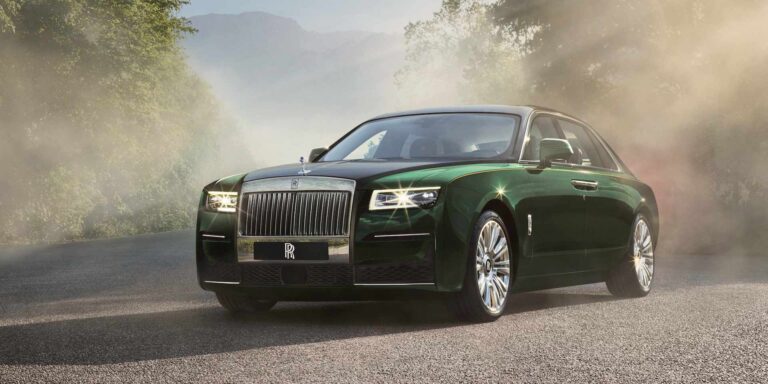
The Rolls-Royce Ghost is a large luxury saloon, and the smaller sister to the flagship Phantom. The current model was launched in 2020, with standard- and extended-wheelbase versions offered.

Unlike the previous Ghost, this one is not based on an old BMW 7 Series platform, and shares much of its underpinnings with the larger Phantom saloon and Cullinan SUV. If such things are important to you, its £260K starting price is about £100K cheaper than the Phantom so it’s basically a bargain…

As of March 2026, the Ghost holds a New Car Expert Rating of D with a score of 55%.

While the large saloon has received plenty of very positive reviews from motoring journalists who praise its comfort and luxury, the Ghost’s inevitably high running costs and poor emissions seriously hinder its score, like much of the Rolls-Royce range.

The Car Expert Best of British horizontal banner

Ghost highlights

  • Engineering excellence
  • Exquisitely finished interior
  • Unsurprisingly comfortable ride
  • Full of advanced technology

Ghost lowlights

  • Surprisingly enjoyable to drive
  • Eye-watering running costs
  • No plug-in electric option
  • Your mates will think you can’t afford a Phantom

Key specifications

Body style: Large saloon
Engine: petrol
Price: From £261,100 on-road

Launched: Summer 2020
Last updated: N/A
Replacement due: TBA

Media reviews

Highlighted reviews and road tests from across the UK automotive media. Click any of the boxes to view.

Auto Express

Auto Trader

Car

Carbuyer

Carwow

Daily Mail

Daily Mirror

Evo

Parkers

The Sunday Times

Top Gear

Safety rating

Independent crash test and safety ratings from Euro NCAP

No safety rating

The Rolls-Royce Ghost hasn’t been crash tested by Euro NCAP and we really don’t think it’s ever likely to happen. If it does, we will update this section accordingly.

Eco rating

Independent economy and emissions ratings from Green NCAP

No eco rating

As of March 2026, the Rolls-Royce Ghost has not yet been lab tested by Green NCAP.

The Ghost weighs about three tonnes with passengers on board and is powered by a 6.7-litre V12 petrol engine, so it’s safe to assume it won’t be winning any environmental awards.

Reliability rating

MotorEasy logo 600x167

Reliability data provided exclusively for The Car Expert by MotorEasy

No reliability rating

As of March 2026, we don’t have enough reliability data on the Rolls-Royce Ghost to generate a reliability rating.

The Car Expert’s reliability information is provided exclusively to us using workshop and extended warranty data from our partner, MotorEasy, sourced from both official dealerships and independent workshops. 

As soon as MotorEasy has sufficient data on the Ghost, we’ll publish the results here.

Running cost rating

Clear Vehicle Data logo close crop

Monthly cost of ownership data provided exclusively for The Car Expert by Clear Vehicle Data

Fuel consumptionAverageScore
Petrol models19 mpgE
CO₂ outputAverageScoreVariationScore
Petrol models357 g/kmE
Insurance groupAverageScoreVariationScore
All models50F

The Rolls-Royce Ghost is – unsurprisingly – a very expensive car to own and run, according to whole-life cost data provided exclusively to The Car Expert by our technical partner, Clear Vehicle Data.

For evidence of how costly this saloon is to drive on a daily basis, look no further than the very poor CO2 output and similarly poor fuel consumption. Mind you, that’s exactly what you’d expect from a heavy saloon powered by an enormous V12 petrol engine.

We don’t have servicing costs for the Ghost at the moment, but as the saying goes: if you have to ask, you probably can’t afford it…

Awards

Trophies, prizes and awards that the Rolls-Royce Ghost has received

2021

  • GQ Car Awards – Best Luxury Car
  • News UK Motoring Awards – Best Luxury Car

Similar cars

If you’re looking at the Rolls-Royce Ghost, you might also be interested in these alternatives

Audi S8 | Bentey Flying Spur | BMW 7 Series | Lexus LS | Mercedes-Benz S-Class | Mercedes-Maybach S-Class | Porsche Panamera | Rolls-Royce Phantom | Rolls-Royce Wraith

Buy a Rolls-Royce Ghost

Regardless of whether you’re looking for a new or used Ghost, The Car Expert’s partners have thousands of cars to choose from

Motors 600x300

Find your next used car with Motors. Find out more

Auto Trader logo 600x300

Find your next new or used car with Auto Trader. Find out more

Carwow logo 600x300

Find your next new or used car with Carwow. Find out more

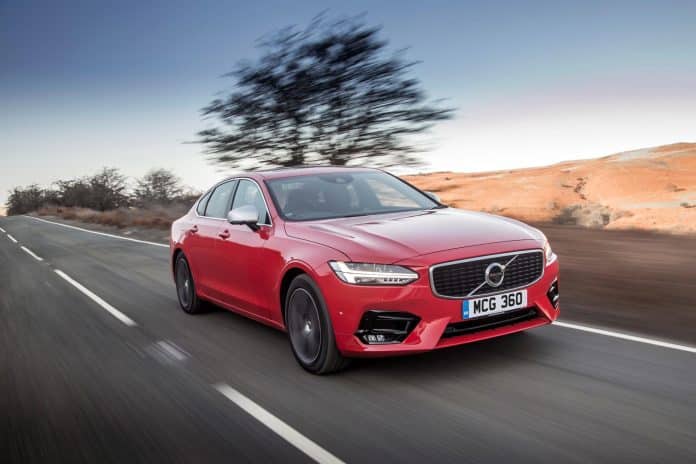
Volvo S90 (2016 to 2023)

Summary

The Volvo S90 was a large executive saloon, and the sister model to the V90 estate. It was launched in 2016 and received various light updates throughout its life, before finally being discontinued in the UK in Autumn 2023.

Originally launched with only a pair of diesel engines, the S90 was then fitted with petrol engine options and then a plug-in hybrid. Reflecting the changing tastes and requirements of buyers, the plug-in hybrid powertrain ended up being the only version available for about the last year of the car’s life.

The Volvo S90 received plenty of praise for its design, both externally and particularly inside the cabin – which even drew favourable comparisons to models from Rolls-Royce and Bentley in terms of its ambience and choice of materials. The large central touchscreen control unit was quite pioneering when the model was launched, but has now been surpassed by better units from rivals.

The driving experience was comfortable, although not as enjoyable as alternatives like a BMW 5 Series or Jaguar XF.

As of March 2026, the Volvo S90 holds a Used Car Expert Rating of C, with a score of 59%.

S90 highlights

  • Interior is still one of the best on sale
  • Exterior design is clean and understated
  • Comfortable ride
  • Good cabin and boot space

S90 lowlights

  • Driving experience doesn’t match best in class
  • Limited powertrain choice
  • Steep depreciation means lease payments are not cheap
  • Touchscreen sluggish compared to newer rivals

Key specifications

Body style: Large saloon
Engines: plug-in hybrid
Price when new: From £63,075

Launched: Summer 2016
Last updated: Summer 2019
Discontinued: Autumn 2023

Media reviews

Highlighted reviews and road tests from across the UK automotive media. Click any of the boxes to view.

Featured reviews

More reviews

Auto Trader

Business Car

Car

Car Keys

Carbuyer

Carwow

Company Car Today

Daily Mail

Eurekar

Green Car Guide

Heycar

Honest John

Motors

Parkers

The Sun

The Sunday Times

The Telegraph

Top Gear

Safety rating

Independent crash test and safety ratings from Euro NCAP

Overall score: 5 stars
Date tested: January 2017
Date expired: January 2024
Read the full Euro NCAP review

Adult protection: 95%
Child protection: 80%
Vulnerable road users: 76%
Safety assist: 93%

Notes on safety rating

The Volvo S90 was tested by Euro NCAP back in 2017 and awarded a five-star rating. However, this rating expired in January 2024 and is no longer valid as the car no longer meets the standards required for such a rating. This is normal practice, as Euro NCAP reviews its ratings on most cars annually with most ratings expiring after about six or seven years.

Although the rating has now expired, the score is still useful if you are comparing a used S90 to vehicles of similar age – whose ratings will have probably also expired.

Eco rating

Independent economy and emissions ratings from Green NCAP

No eco rating

The Volvo S90 was not assessed by Green NCAP during its production life.

Reliability rating

MotorEasy logo 600x167

Reliability data provided exclusively for The Car Expert by MotorEasy

All data based on MotorEasy average workshop costs for extended car warranty claims

As of April 2025 (our most recent data point), the Volvo S90 holds a better-than-average reliability score of 82%. This is based on workshop and extended warranty data provided exclusively to The Car Expert by our partner, MotorEasy.

Running cost rating

Clear Vehicle Data logo close crop

Monthly cost of ownership data provided exclusively for The Car Expert by Clear Vehicle Data

CO₂ outputAverageScoreVariationScore
Petrol models169 g/kmD
Diesel models157 g/kmC
Plug-in hybrid models18 g/kmA
Battery rangeAverageScoreVariationScore
Plug-in hybrid models55 milesD
Insurance groupAverageScoreVariationScore
All models44E
Service and maintenanceCostScore
Year 1£374D
Year 2£890D
Year 3£1,315D
Year 4£1,552D
Year 5£2,057D
Overall£6,188D

The Volvo S90 saloon is entirely average when it comes to running costs, according to numbers provided exclusively to The Car Expert by our data partner, Clear Vehicle Data.

As you can see from the tables above, the S90 scores a ‘C’ in most categories. We don’t currently have fuel consumption data, but given that the CO2 scores for petrol and diesel models are a C, it’s entirely likely that the fuel consumption scores would be similar.

Insurance is on the expensive side, but that’s not surprising given the car’s price bracket. Servicing costs are slap-bang in the middle of our A-to-E scale. Although the plug-in hybrid looks to be very efficient on paper, scoring an A for its emissions, that’s simply a function of the rather useless EU/UK government lab tests that produce completely unrealistic results for plug-in hybrids.

On a positive note, an official battery range of more than 50 miles is very good for a plug-in hybrid, meaning that you can do most of your day-to-day running on electric power – as long as you are able to keep the battery charged on pretty much a daily basis.

Awards

Trophies, prizes and awards that the Volvo S90 has received

2022

  • Auto Express Awards – Best Used Executive car

2021

  • Auto Express Awards – Best Used Executive car
  • Car Dealer Used Car Awards – Best Used Executive Car

2015

  • Car Design News – Production Car Design of the Year

Similar cars

If you’re looking at the Volvo S90, you might also be interested in these alternatives

Audi A6 | BMW 5 Series | Genesis G80Jaguar XF | Lexus ES | Maserati Ghibli | Mercedes-Benz E-Class | Tesla Model S | Volvo V90

More news, reviews and information about the Volvo S90 and V90 at The Car Expert

Everything you need to know about Volvo

Everything you need to know about Volvo

Volvo V60 and V90 estates back from retirement

Volvo V60 and V90 estates back from retirement

Volvo expands plug-in hybrid line-up

Volvo expands plug-in hybrid line-up

Volvo recalls more than 700,000 cars over emergency braking issue

Volvo recalls more than 700,000 cars over emergency braking issue

Volvo V90

Volvo V90

Updates to Volvo S90 and V90 models

Updates to Volvo S90 and V90 models

The best used estate cars for under £20,000

The best used estate cars for under £20,000

Volvo issues vehicle recall over fire risk

Volvo issues vehicle recall over fire risk

Most new diesel cars still pollute beyond legal limits

Volvo 90 series adds extra petrol potency

Volvo 90 series adds extra petrol potency

Volvo S90 review

Volvo S90 review

Volvo S90 and V90 gain new petrol engine

Volvo S90 and V90 gain new petrol engine

Buy a Volvo S90

If you’re looking to buy a used Volvo S90, The Car Expert’s partners can help you find the right car

Motors 600x300

Find your next used car with Motors. Find out more

Auto Trader logo 600x300

Find your next new or used car with Auto Trader. Find out more

Carwow logo 600x300

Find your next new or used car with Carwow. Find out more

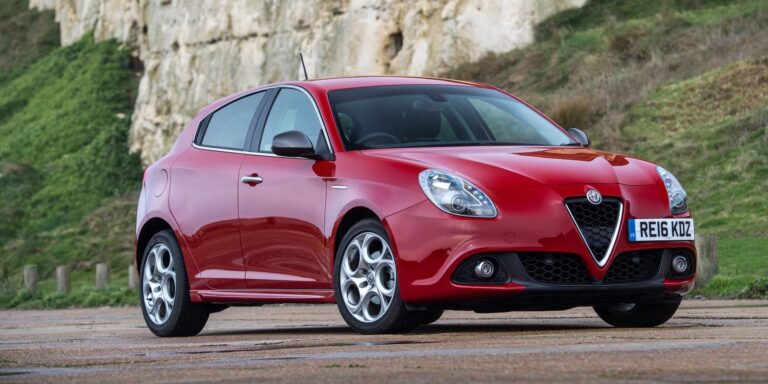
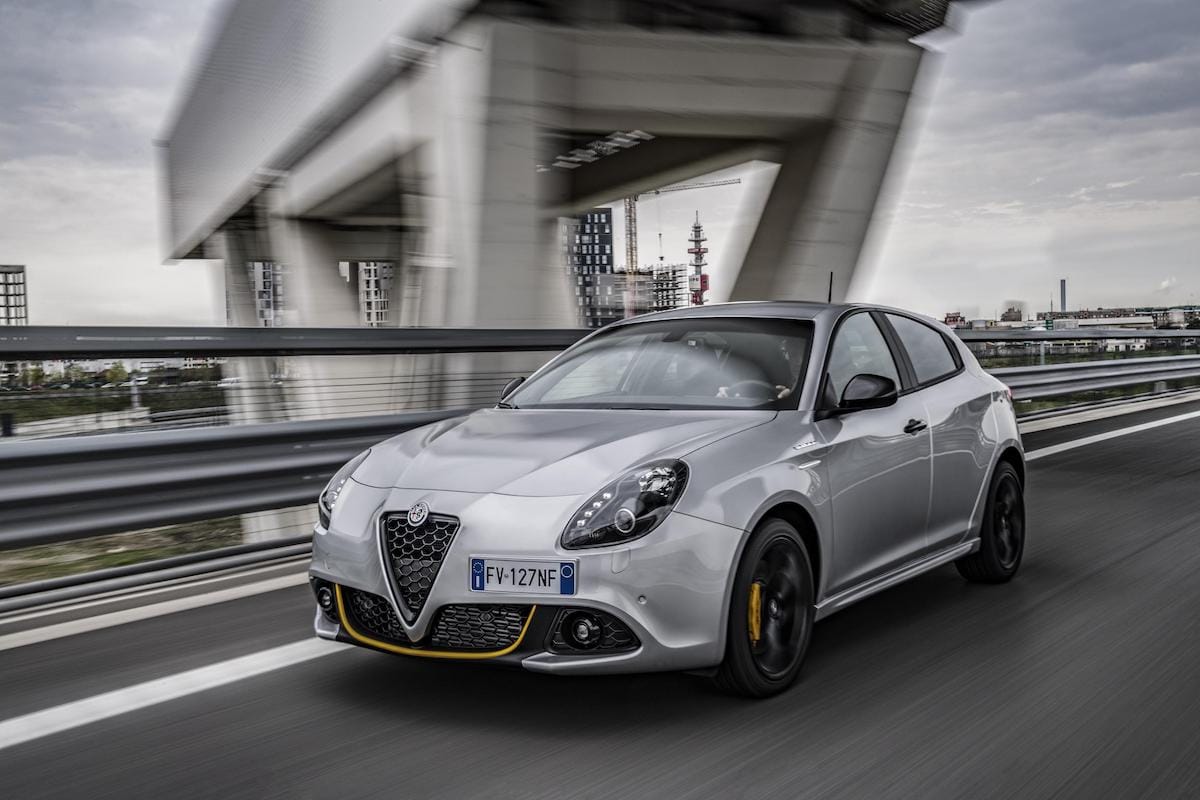
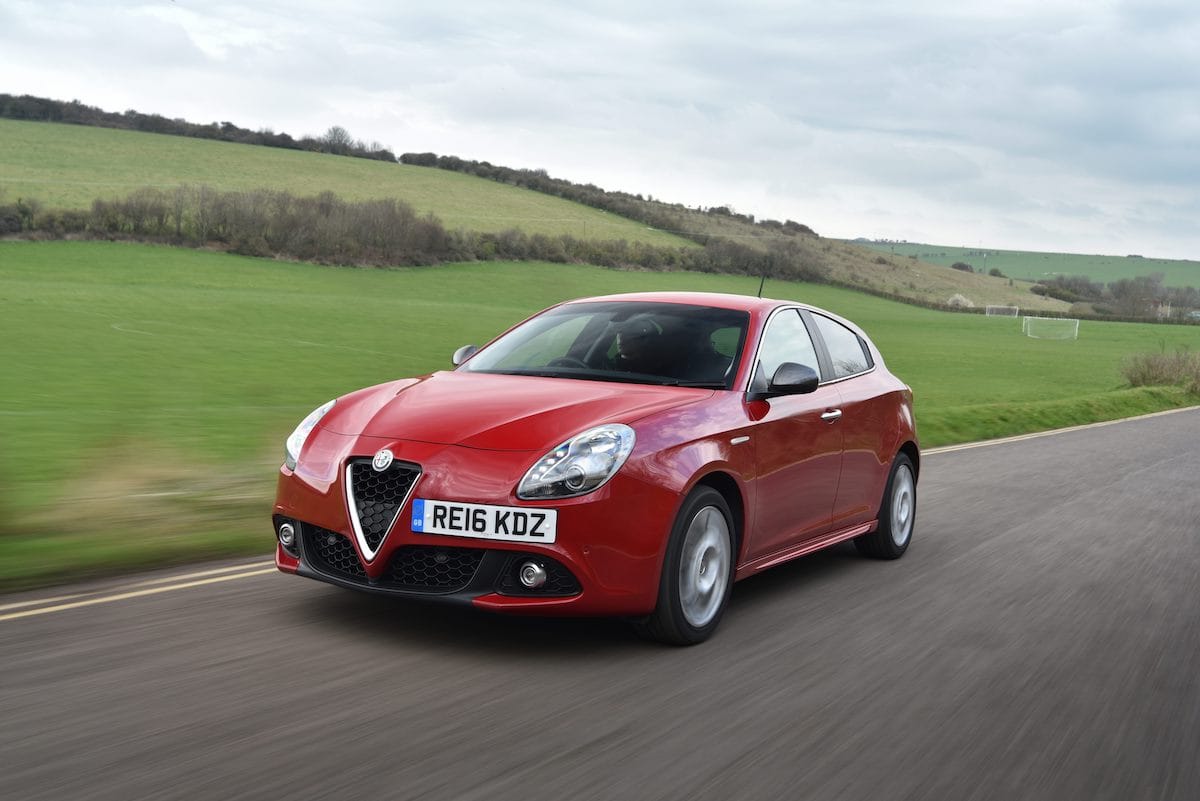
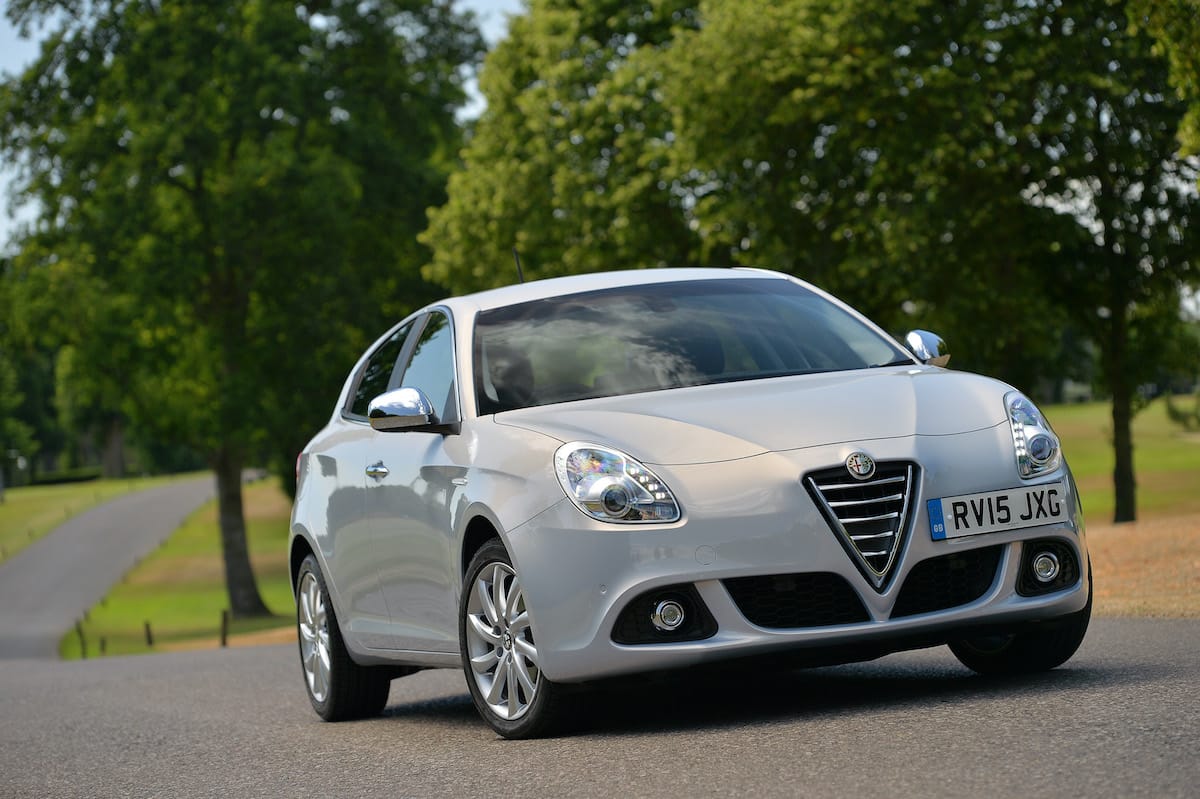
Alfa Romeo Giulietta (2010 to 2021)

Summary

The Alfa Romeo Giulietta is a mid-sized five-door hatchback that was launched in Summer 2010 and soldiered on until Spring 2021.

At the time it was launched, the Giulietta received high praise from across the UK motoring media for its driving dynamics, competitive levels of equipment and an outstanding safety rating. However, the rest of the industry evolved dramatically over the next decade while the Giulietta didn’t, and it slowly became less and less competitive over time. It was finally withdrawn from the UK market in May 2021 after 11 years on sale.

Alfa Romeo has no plan to replace the Giulietta with a similar mid-size hatchback. Instead, the new Tonale small SUV will carry Alfa’s hopes for the foreseeable future in the small family car segment.

As of February 2026, the Alfa Romeo Giulietta holds a Used Car Expert Rating of E, with a score of 52%. It gets good grades for its low CO2 emissions, but reliability is only average and its running costs are high. Its safety rating wasn’t great when it was last tested in 2017, and that score has now expired anyway.

Giulietta highlights

  • Still looks good after a decade on sale
  • Enjoyable to drive
  • Worthwhile alternative to usual mid-size hatchbacks
  • Did we mention it looks great?

Giulietta lowlights

  • Build quality not as good as German rivals
  • Cabin and boot space not up to par
  • Steep depreciation makes leasing payments high
  • Not enough improvements during ten years on sale

Key specifications

Body style: Five-door hatchback
Engines: petrol
Price when new: From £19,820 on-road

Launched: Summer 2010
Last updated: Spring 2019
Ended production: Spring 2021

Media reviews

Highlighted reviews and road tests from across the UK automotive media. Click any of the boxes to view.

Auto Express

Auto Trader

Business Car

Car

Car Keys

Carbuyer

Carwow

Daily Mirror

Eurekar

Evo

Green Car Guide

Heycar

Honest John

Motoring Research

Motors

Parkers

The Sun

The Sunday Times

The Telegraph

Top Gear

Safety rating

Independent crash test and safety ratings from Euro NCAP

Overall score: 3 stars
Date tested: December 2017
Date expired: January 2024
Read the full Euro NCAP review

Adult protection: 72%
Child protection: 56%
Vulnerable road users: 59%
Safety assist: 25%

Notes on safety ratings

When the Giulietta was first launched, way back in 2010, it was awarded a five-star rating by Euro NCAP with an outstanding set of scores. However, safety standards have moved on over the last decade, and a re-test in 2017 downgraded the Giulietta to a three-star rating.

This revised rating expired in January 2024 and is no longer valid as the car no longer meets the standards required for such a rating. This is normal practice, as Euro NCAP reviews its ratings on most cars annually with most ratings expiring after about six or seven years.

Although the rating has now expired, the score is still useful if you are comparing a used Giulietta to vehicles of similar age – whose ratings will have probably also expired.

Eco rating

Independent economy and emissions ratings from Green NCAP

No eco rating

The Alfa Romeo Giulietta was not lab tested by Green NCAP during its production life.

Reliability rating

MotorEasy logo 600x167

Reliability data provided exclusively for The Car Expert by MotorEasy

All data based on MotorEasy average workshop costs for extended car warranty claims

As of April 2025 (our most recent data point), the Alfa Romeo Giulietta has a fairly average reliability rating of 66%, according to warranty data provided exclusively to us by our commercial partner, MotorEasy. This is good news if you are considering a used Giulietta.

AThe average repair cost for the Giulietta is about £440, which is less than many of its rivals. Unsurprisingly, gearbox repairs are the most expensive at about £1,000, but these appear to be relatively rare.

Running cost rating

Clear Vehicle Data logo close crop

Monthly cost of ownership data provided exclusively for The Car Expert by Clear Vehicle Data

Fuel consumptionAverageScore
Petrol models38 mpgD
Diesel models51 mpgC
CO₂ outputAverageScoreVariationScore
Petrol models170 g/kmD
Diesel models146 g/kmC
Insurance groupAverageScoreVariationScore
All models31C

Recalls

Official DVSA safety recalls that have been issued for the Alfa Romeo Giulietta

Date: December 2019
Model types: All
Build dates: 03/2018 to 11/2019
Number of vehicles affected: 320
Defect: The intercooler sleeve may detach.
Remedy: The retaining metal band must be replaced with a new component.

Date: July 2015
Model types: All
Build dates: 06/2010 to 05/2015
Number of vehicles affected: 878
Defect: The wiring loom connected to the transmission oil pump may chafe against a support bracket and damage the wiring.. Damaged wiring may cause loss of drive or adversely affect gear changes.
Remedy: Check the wiring for any damage and repair as required. If the wiring is not damaged reposition the wiring.

As of September 2024 (our most recent data point), there have been two DVSA vehicle safety recalls on the Alfa Romeo Giulietta. These cover wiring and engine cooling systems.

Not all vehicles are affected by recalls. You can check to see if your car is included in any of the above recalls by visiting the DVLA website or contacting your local Alfa Romeo dealer.

If your car is affected by a recall, the vehicle must be repaired and you should not be charged for any work required. If you are buying a used Giulietta, you should insist that any outstanding recall work is completed before you take delivery of the vehicle.

Similar cars

If you’re looking at the Alfa Romeo Giulietta, you might also be interested in these alternatives

Audi A3 | BMW 1 Series | Citroën C4 Cactus | Fiat Tipo | Ford Focus | Honda Civic | Hyundai i30 | Infiniti Q30 | Kia Ceed | Mazda 3 | Mercedes-Benz A-Class | Mini Countryman | Peugeot 308 | Renault Megane | SEAT Leon | Skoda Scala | Skoda Octavia | Toyota Corolla | Vauxhall Astra | Volkswagen Golf

More information

More news, reviews and information about the Alfa Romeo Giulietta at The Car Expert

Alfa Romeo offers extra £2,000 deposit contribution on selected models

Alfa Romeo offers extra £2,000 deposit contribution on selected models

Alfa Giulietta gains a new look

Alfa Giulietta gains a new look

Alfa makes over its Giulietta

Alfa makes over its Giulietta

Zero-star Fiat shows the progress of safety standards

Zero-star Fiat shows the progress of safety standards

Buy an Alfa Romeo Giulietta

If you’re looking to buy an Alfa Romeo Giulietta, The Car Expert’s partners can help you find the right car.

Motors 600x300

Search less, live more. We make finding the right car simple. Find out more

Auto Trader logo 600x300

Search for your next new or used car with Auto Trader. Find out more

Carwow logo 600x300

Discover great deals available on both new and used cars. Find out more

What is key insurance and do I need it?

Have you ever gone to leave your home, the office or a friend’s house and discover you can’t find your car keys?

Cue mad panic and blood running cold as you turn the place upside down, trying to find them. And that’s not just because of the inconvenience of being unable to open and start your car and drive away – but you’re probably already totting up the cost of a possible replacement.

Modern car keys are no longer just a piece of cut metal that you stick in the vehicle’s door and turn to unlock it. Today’s keys are highly technical pieces of equipment – some don’t even need to come out of your pocket to use, operating instead using ‘keyless entry’ capability. These don’t come cheap.

And key replacement is big business: the average price of a substitute car key is £252, according to workforce specialists Checkatrade, while a recent survey by the RAC motoring organisation showed that two million drivers had lost their key at least once.

So how about some key insurance? Just as with the car itself and many of its components (windscreen, tyres, alloy wheels) you can buy insurance cover for your car keys and – similar to screen cover – it might not automatically lose you your no claims discount.

What is key insurance?

Key insurance, or key cover, protects you against the loss of your car keys. Cover can extend to straight loss, theft or damage and because you could end up being stranded if you can’t get into your car, the cost of a hire car, or use of a taxi or public transport should also be provided.

You will almost certainly need alternative transport for a few days anyway, because most modern keys can take up to a week to be ordered, set up and delivered.

Does it come with my car insurance?

Not necessarily. Some policies offer it as part of the car premium, while other insurers will provide the cover but at an extra cost. Additionally, there are specialist companies that can offer it as stand-alone cover and can then include other keys with it, such as your house’s.

Is it worth having?

Certainly with the cost of replacement car keys rising, it might be worth considering. Much depends on the type of key you have and the make of car that it belongs to.

An older car with a ‘standard’ key can probably be re-cut easily in a specialist shop but anything over and above that and you’re looking at an expensive replacement.

Some keys come with a security chip inside them that the car recognises, others have a ‘flip’ mechanism that allows them to fold inside a protective casing, some are push-button only, while the most technical are the ‘keyless’ types. So, forget hundreds of pounds – depending on which one you require, a replacement could run into thousands.

“The car keys of today are far more technologically advanced than their predecessors of 10 or 20 years ago,” says Caroline King, customer operations director at cover provider Ageas Insurance.

“Key cover can provide peace of mind that if your keys are lost or stolen, your insurer can get you back on the road quickly and with minimal disruption.”

What’s the cost?

Insurance cover for keys usually costs around £20 a year, and for that you will get a number of benefits. Check that you have all you need when you come to buy. Cover should include:

  • the cost of the new set of keys. There will be a limit on this – typically £1,500
  • the cost of re-programming an immobiliser or any other car feature that ‘talks’ to your keys
  • travel costs such as taxis, public transport or a hire car, while your own vehicle is off the road
  • an emergency dedicated helpline so that you can get immediate help if your keys go missing

Avoid the problem in the first place

When you buy a new car, and often a used one, you will get two keys. The second key is invaluable – so keep it in a safe place somewhere so that if you do lose your main one, help is at hand – even if you have to take a bus or taxi ride to go and get it!

Warranty sales rise post-lockdown – but so do claims

Warranty claims increased by nearly a third in March, as improving lockdown restrictions allowed drivers to get back on the road again, new research has revealed.

And it wasn’t just claims that mounted with every new mile motorists were taking. Sales of warranty policies also soared by almost 25%, according to a new survey of more than 100,000 warranties from Händler Protect, a company that provides warranties to car dealers to sell to their customers.

In February, its warranty sales were up about 10% compared with January, but in March warranty sales grew again by almost a quarter (just over 24%).

This was before showrooms were able to operate in a near-to-normal way, with customers only allowed back in to try before they buy from 12 April. Warranty sales continued to grow in April though – up 10% again compared to March.

However, the number of cars getting back on the road did result in an increase in claims made. Händler Protect saw an increase of 30% in claims made in March compared with February.

It was a similar story with Q1 warranty claims that were up by 24% compared with Q1 2020, while sales increased 34% for the same period. During April, the most common faults reported to the warranty provider involved water pumps, injectors, air flow sensors, alternators and fuel pumps.

“It’s inevitable that as more cars get back on the road we’ll see a percentage increase in the number of claims, particularly with so many people choosing to buy that dream car this year as they find themselves with a bit more money in their pocket,” says Lloyd O’Connor, chief executive at Händler Protect.

Here at The Car Expert, we have some fantastic warranty offers for our readers provided by our commercial partners. If you’re interested in a used car warranty, you should check these out:

  • ALA Insurance provides used car warranties in conjunction with the RAC
  • MotorEasy offers warranties and many other types of cover for car owners
  • Warrantywise is a long-established and multi-award-winning warranty provider

More car warranty information

Is a used car warranty required by law?

Is a used car warranty required by law?

The UK’s best used car warranty providers

The UK’s best used car warranty providers

How to handle a dispute with a car dealer

How to handle a dispute with a car dealer

Used car warranty – the law and your rights

Used car warranty – the law and your rights

Spares or repairs – and other dodgy trader tricks

Spares or repairs – and other dodgy trader tricks

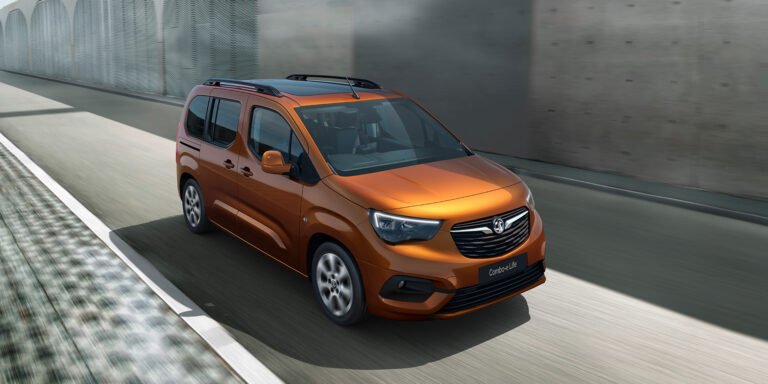
Vauxhall Combo-e Life goes on sale

Vauxhall has announced prices for the Combo-e Life, the brand’s latest all-electric people-carrier.

The van-based MPV will cost from £31,610, with the government’s £2,500 plug-in car grant included.

The new Combo-e Life is fitted with a a 100kW (136hp) electric motor producing 260Nm of torque and powered by a 50kWh lithium-ion battery, which gives the car an official battery range of 174 miles.

Fitted as standard is a single-phase 7.4kW on-board charger, while a three-phase 11kW charger is available as an option. The Combo-e Life also supports 100kWh rapid charging, so can be replenished to 80% capacity in around 30 minutes.

Only one trim level is on offer but there are two body lengths to choose from – the Medium and the longer XL. Medium models come in either five- or seven-seat configurations, while XL vehicles are only available with seven seats.

Being based on a van does mean a lot of space – Medium variants with five seats have a 597-litre boot, extending up to 2,126 litres with the rear row of seats folded, while XL variants come with 850 litres extending to 2,693 litres.

Vauxhall-e Combo interior

SE trim includes 16-inch alloy wheels, nearside and offside sliding side-access doors, LED daytime running lights with high-beam assist, a panoramic rear-view camera and automatic windscreen wipers.

Inside the standard equipment includes an eight-inch colour touchscreen infotainment system with Apple CarPlay, Android Auto and Vauxhall Connect. This gives the driver information including the battery charge and traffic updates while also connecting to Vauxhall’s e-Call and b-Call service – in an emergency or breakdown this puts the driver in touch with a trained advisor.

Safety kit includes automatic emergency braking with pedestrian detection, cruise control with a speed limiter and speed sign recognition, while rear parking sensors and a panoramic rear-view camera are also supplied as standard.

First deliveries of the Combo-e Life will be in October, while a Combo-e van will also join the range late run 2021.

.

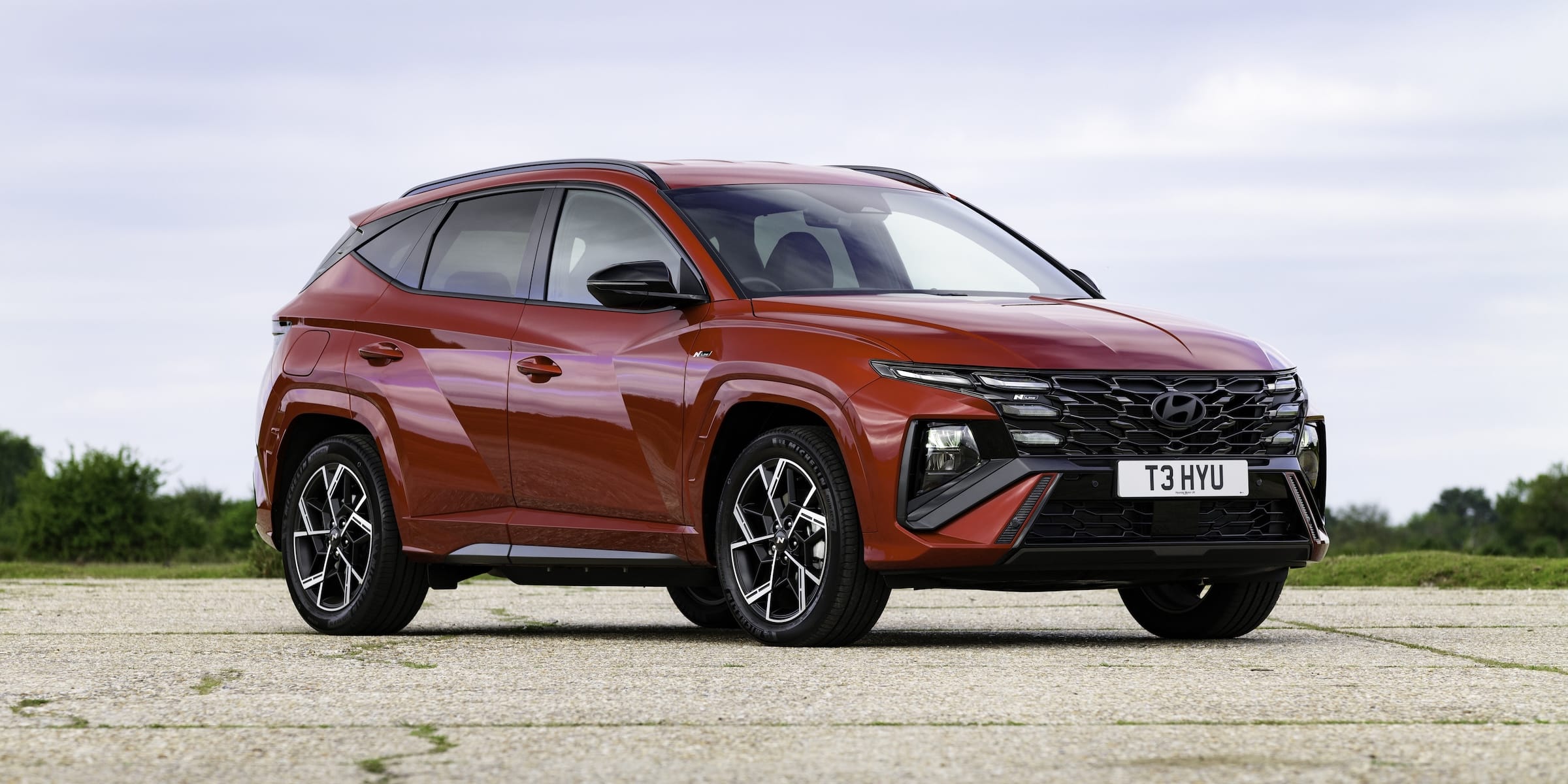
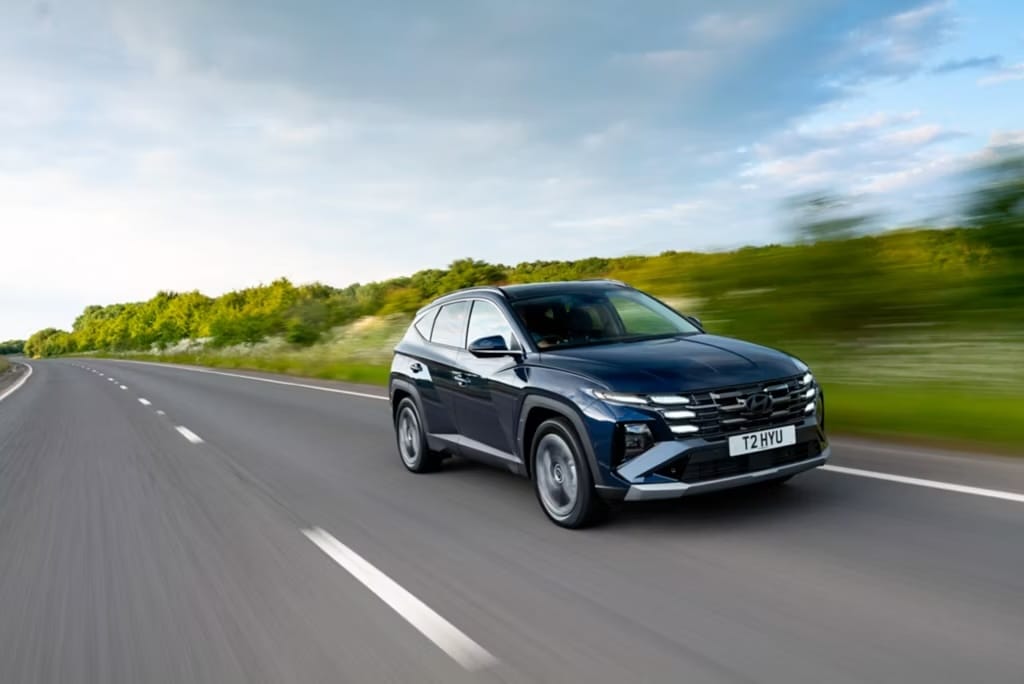
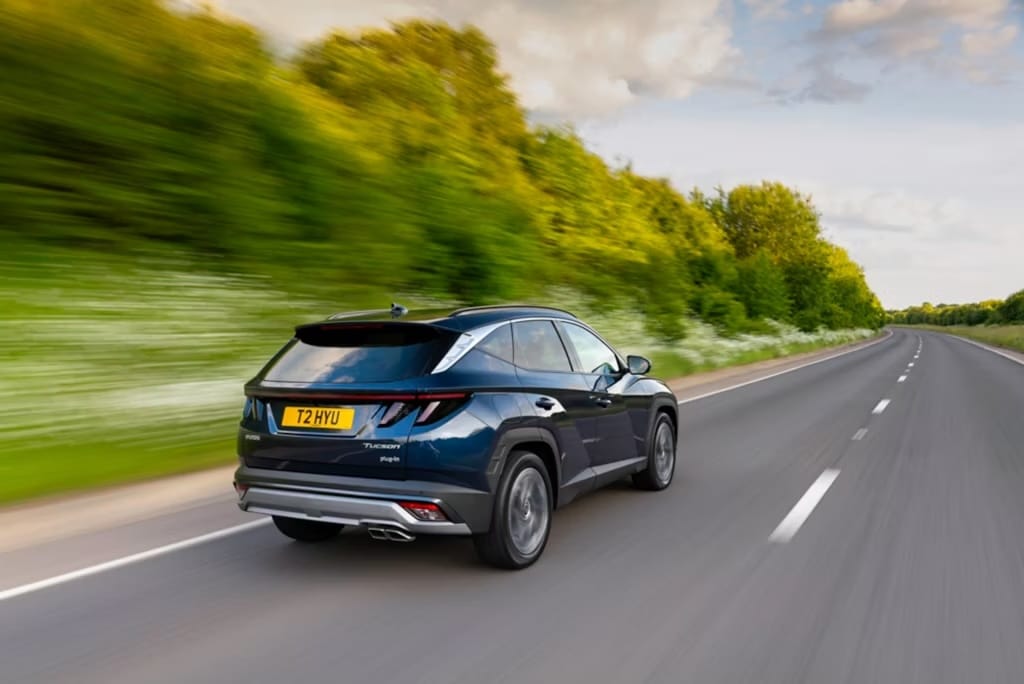
Hyundai Tucson

Summary

The Hyundai Tucson is a medium-sized SUV/crossover and one of the brand’s longest-serving nameplates – the first generation arrived back in 2004, with the all-new fourth-generation model launched in late 2020.

The Tuscon is available in petrol, mild-hybrid and regular hybrid variants, while a new plug-in hybrid joined the range in early 2021. The Tucson range was facelifted in Spring/Summer 2024.

Reviews for the Tucson have been universally positive to date, with Auto Express dubbing the latest version: “… the model that realises the company’s ambition of not being a value-led budget brand but a proper mainstream player like VW.”

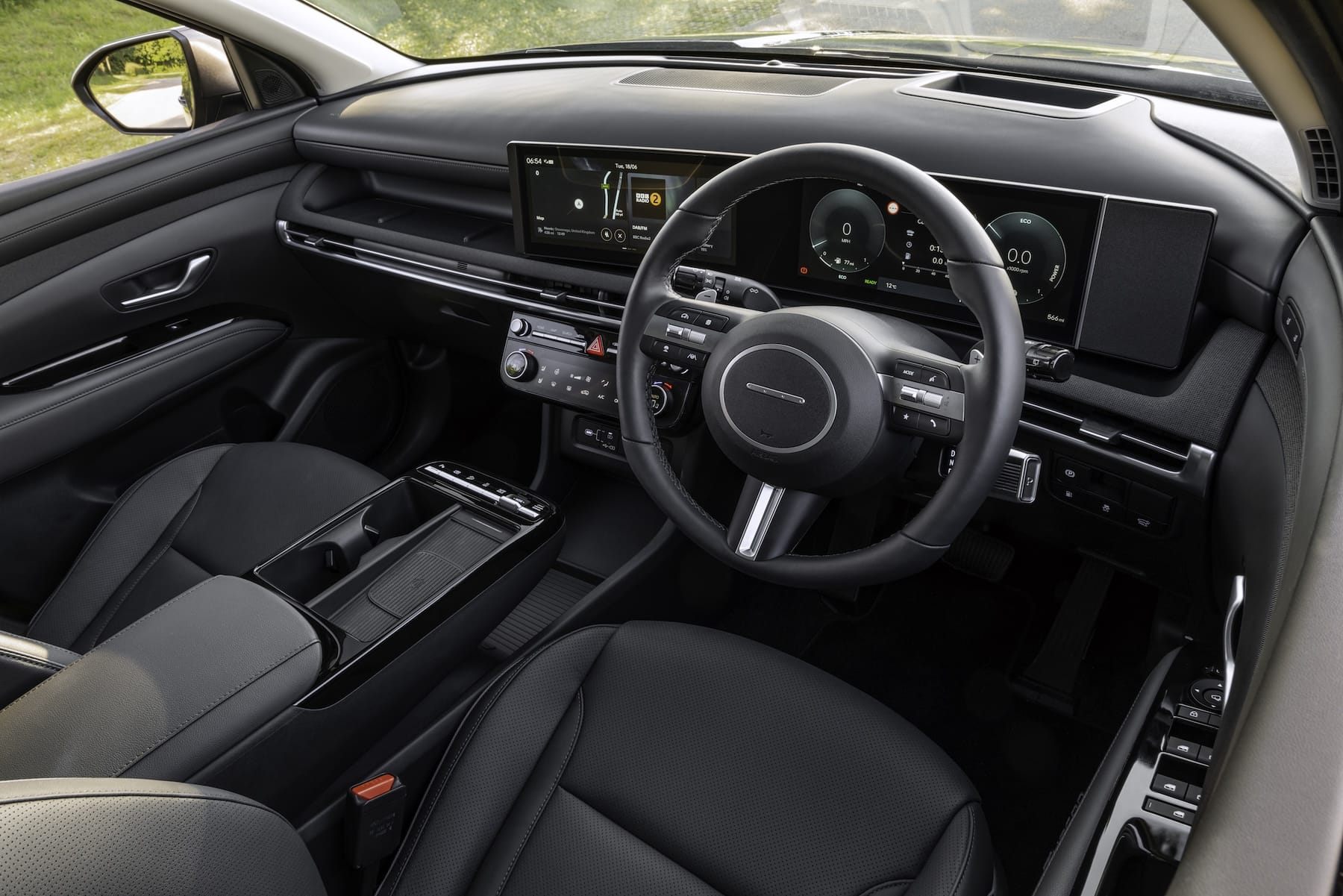
The aerodynamic and distinctive styling has come in for praise, as has the interior quality, which has been described as a major step up over previous Hyundais. Space is also improved, including a boot that’s much bigger than the one found in the rival Toyota RAV4.

The Tuscon comes with a high level of standard equipment, with even entry-level models including reversing cameras and large digital touchscreen displays, as well as extensive accident avoidance technology. It has a five-star safety rating from Euro NCAP.

Out on the road, the Hyundai earns praise for its smooth powertrains and its fuel economy figures, even when not aided by hybrid technology.

Such advances do mean that starting prices are higher than with previous versions, but reviewers conclude that the Tucson will appeal to buyers who have never previously considered a Hyundai.

As of September 2025, the Hyundai Tucson holds a New Car Expert Rating of A, with a score of 73%. It scores top marks for its low CO2 emissions and Hyundai’s generous new-car warranty, while its safety rating, running costs and media review scores are also good. The Tucson’s reliability record is only average, however, although this does include previous models.

Tucson highlights

  • Striking design stands out from the pack
  • Interior quality much improved over previous model
  • Plenty of boot space
  • Good level of standard safety tech

Tucson lowlights

  • Prices are higher than previous model
  • Driving experience is pretty bland
  • Touchscreen can be sluggish to operate

Key specifications

Body style: Medium SUV/crossover
Engines: petrol, hybrid, plug-in hybrid
Price: From £33,080 on-road

Launched: Winter 2020/21
Last updated: Spring 2024
Next update due: TBA

Media reviews

Highlighted reviews and road tests from across the UK automotive media. Click any of the boxes to view.

Featured reviews

More reviews

Auto Express

Auto Trader

Business Car

Car

Car Keys

Carbuyer

Company Car Today

Eurekar

Heycar

Parkers

The Telegraph

Top Gear

Safety rating

Independent crash test and safety ratings from Euro NCAP

Overall score: 5 stars
Date tested: October 2021
Read the full Euro NCAP review

Adult protection: 86%
Child protection: 87%
Vulnerable road users: 66%
Safety assist: 70%

The Tucson boasts an impressive level of safety kit as standard, with multiple active systems including lane-keeping assist and autonomous braking. Additional safety systems including upgraded collision avoidance, rear- and blind-spot alerts come with the mid-range spec that costs £1,500 more than the entry-level version.

Eco rating

Independent economy and emissions ratings from Green NCAP

Model tested: HEV 1.6-litre T-GDI Hybrid FWD automatic

Overall score: 2 stars
Date tested: October 2022
Read the full Green NCAP review

Clean Air Index: 4.2 / 10
Energy Efficiency Index: 4.5 / 10
Greenhouse Gas Index: 3.1 / 10

Running cost rating

Clear Vehicle Data logo close crop

Monthly cost of ownership data provided exclusively for The Car Expert by Clear Vehicle Data

Fuel consumptionAverageScore
Petrol models42 mpgC
Hybrid models47 mpgC
Plug-in hybrid models202 mpgA
CO₂ outputAverageScoreVariationScore
Petrol models152 g/kmC
Hybrid models137 g/kmC
Plug-in hybrid models26 g/kmA
Battery rangeAverageScoreVariationScore
Plug-in hybrid models44 milesD
Insurance groupAverageScoreVariationScore
All models20B
Service and maintenanceCostScore
Year 1£250C
Year 2£608C
Year 3£988C
Year 4£1,200C
Year 5£1,545C
Overall£4,591C

There are some mixed results for the Hyundai Tucson when it comes to running costs, according to data provided exclusively to The Car Expert by our partner, Clear Vehicle Data.

Fuel consumption is relatively poor for the petrol models, and only average for the hybrid models. Although the plug-in hybrid looks good on paper, this is because the EU/UK government lab tests are absolutely pointless for properly assessing plug-in hybrids (good luck driving for 202 miles on one gallon of petrol and about 38 miles’ worth of electricity!).

The good news is that insurance premiums should be very good, as the Tucson is rated in low groups by Thatcham, while servicing costs are better than average for the first five years.

Reliability rating

MotorEasy logo 600x167

Reliability data provided exclusively for The Car Expert by MotorEasy

All data based on MotorEasy average workshop costs for extended car warranty claims

The Hyundai Tucson has an average reliability score, according to warranty data provided by our partners MotorEasy. This data relates to both this current Tucson model, and older (pre-2020) versions.

The most common claims made by Tucson owners are for braking system repairs, which have an average repair bill of less than £300. Gearbox and engine repairs are more expensive, although they appear to be fairly uncommon to date.

Warranty rating

New car warranty information for the Hyundai Tucson

Overall ratingA88%
Petrol or diesel modelsB72%
Electric or hybrid modelsA96%
New car warranty duration5 years
New car warranty mileageUnlimited miles
Battery warranty duration8 years
Battery warranty mileage100,000 miles

Hyundai’s new car warranty is one of the best in the new car market, and better than most rival brands in a similar price bracket to the Tucson.

The duration is five years, with no limit on mileage. This is good news for both new and used car buyers, as it helps the residual value of the Sportage for new car buyers when they come to sell the car, and it gives near-new car buyers confidence that they are covered for years to come.

In addition to the overall new car warranty, battery components on the hybrid and plug-in hybrid models benefit from an additional eight-year/100,000-mile warranty, which is why they get a better score than the standard petrol and diesel models.

Warranty on a used Hyundai Tucson

  • If you are buying an ‘Approved Used’ Tucson from an official Hyundai dealership, you will get a minimum 12-month warranty included.
  • If you are buying a used Tucson from an independent dealership, any warranty offered will vary and will probably be managed by a third-party warranty company.
  • If you are buying a used Tucson from a private seller, there are no warranty protections beyond any remaining portion of the original new car warranty.

If you’re looking to buy a used car that is approaching the end of its warranty period, a used car warranty is usually a worthwhile investment. Check out The Car Expert’s guide to the best used car warranty providers, which will probably be cheaper than a warranty sold by a dealer.

Recalls

Official DVSA safety recalls that have been issued for the Hyundai Tucson

Date: March 2024
Recall number: R/2024/036
Model types: Tucson NX4e
Build dates: 10/2020 to 04/2021
Number of vehicles affected: 1,781
Defect: The side curtain airbag could potentially be assembled in a twisted condition.
Remedy: Affected vehicles will be inspected to ascertain if the airbag is correctly installed. If the airbag is twisted it will be removed and reinstalled correctly.

Date: August 2023
Recall number: R/2023/184
Model types: Tucson NX4e
Build dates: 03/2023 to 04/2023
Number of vehicles affected: 2,746
Defect: Certain vehicles equipped with rear door power windows may experience a malfunction of the anti-pinch function during its operation.
Remedy: Both left-hand and right-hand rear door power window regulator motors will be replaced.

Date: March 2023
Recall number: R/2023/039
Model types: Tucson NX4e
Build dates: 02/2021 to 10/2022
Number of vehicles affected: 4,023
Defect: The vehicle immobiliser may not function correctly due to incorrect vehicle software.
Remedy: Apply a software update to the Hybrid Control Unit to correct the immobiliser operation.

Date: December 2021
Recall number: R/2021/414
Model types: Tucson NX4e hybrid and plug-in hybrid
Build dates: 10/2021 to 12/2021
Number of vehicles affected: 1,706
Defect: A manufacturing defect may be present within the right-hand rear brake calliper, which may result in impaired brake performance.
Remedy: If the right-hand rear brake calliper is confirmed to be fitted with the affected batch code (1J24), it will be replaced.

Date: September 2021
Recall number: R/2021/295
Model types: Tucson NX4e hybrid and plug-in hybrid
Build dates: 10/2020 to 07/2021
Number of vehicles affected: 3,587
Defect: Vehicles equipped with smart key system may have an immobiliser malfunction.
Remedy: Apply update to the hybrid control unit to correct the immobiliser operation.

Date: July 2021
Recall number: R/2021/220
Model types: All Tucson models
Build dates: 10/2020 to 04/2021
Number of vehicles affected: 46
Defect: The side curtain airbag could potentially be assembled in a twisted condition.
Remedy: Affected vehicles will be inspected to ascertain if the airbag is correctly installed. If the airbag is twisted it will be removed and reinstalled correctly.

Date: February 2021
Recall number: R/2021/014
Model types: All Tucson models
Build dates: 09/2020 to 11/2020
Number of vehicles affected: 1,879
Defect: The vehicle VIN information may not be registered correctly within the eCall unit.
Remedy: Register the VIN information within the vehicle by resetting the eCall unit and updating.

As of September 2024 (our most recent data point), there have been seven DVSA vehicle safety recalls on the Hyundai Tucson to address different issues.

Not all vehicles are affected by recalls. You can check to see if your car is included in any of the above recalls by visiting the DVLA website or contacting your local Hyundai dealer.

If your car is affected by a recall, the vehicle must be repaired and you should not be charged for any work required. If you are buying a used Tucson, you should insist that any outstanding recall work is completed before you take delivery of the vehicle.

Awards

Trophies, prizes and awards that the Hyundai Tucson has received

2023

  • Auto Express Awards – Best Mid-size SUV

2022

  • Carbuyer Awards – Best Family Car

2021

  • Auto Express Awards – Best Mid-size SUV
  • Auto Trader New Car Awards – Best Car for Long Distance
  • DieselCar and EcoCar Top 50 – Car of the Year + Best Medium SUV
  • Carbuyer AwardsCar of the Year + Best Hybrid + Best Family Car
  • Business Car Awards – Best Medium SUV
  • Scottish Car of the Year Awards – Best Family SUV

Similar cars

If you’re looking at the Hyundai Tucson, you might also be interested in these alternatives

Current models: Chery Tiggo 7 | Citroën C5 Aircross | Dacia Bigster | Ford Kuga | Jeep Compass | Honda ZR-V | KGM Korando | Kia Sportage | Mazda CX-5 | Nissan Qashqai | Omoda 7 | Peugeot 3008 | Renault Austral | SEAT Ateca | Skoda Karoq | Suzuki S-Cross | Vauxhall Grandland | Volkswagen Tiguan

Discontinued models: Citroën C5 Aircross (2018 to 2025) | Ford Kuga (2013 to 2019)Honda CR-V (2018 to 2023) | Kia Sportage (2015 to 2021) | MG HS (2019 to 2024) | Mitsubishi Eclipse Cross (2018 to 2021) | Peugeot 3008 (2017 to 2024) | Renault Kadjar (2015 to 2022)Subaru XV (2018 to 2023) | Toyota C-HR (2016 to 2023) | Vauxhall Grandland (2017 to 2024)Volkswagen Tiguan (2016 to 2024)

More news, reviews and information about the Hyundai Tucson at The Car Expert

Britain’s best-selling cars of 2024

Britain’s best-selling cars of 2024

Hyundai Tucson facelift announced

Hyundai Tucson facelift announced

Britain’s best-selling cars of 2023

Britain’s best-selling cars of 2023

Hyundai Tucson receives small facelift

Hyundai Tucson receives small facelift

Hyundai Tucson review

Hyundai Tucson review

Britain’s best-selling cars of 2022

Britain’s best-selling cars of 2022

Britain’s best-selling cars, November 2021

Britain’s best-selling cars, November 2021

Britain’s best-selling cars, October 2021

Britain’s best-selling cars, October 2021

More five-star cars in latest safety tests

More five-star cars in latest safety tests

Britain’s best-selling cars, August 2021

Britain’s best-selling cars, August 2021

Hyundai Tucson shows its striking new face

Hyundai Tucson shows its striking new face

Britain’s best-selling cars – April 2019

Britain’s best-selling cars – April 2019

Buy a Hyundai Tucson

If you’re looking to buy a new or used Hyundai Tucson, The Car Expert’s partners can help you find the right car.

Motors 600x300

Find your next used car with Motors. Find out more

Auto Trader logo 600x300

Find your next new or used car with Auto Trader. Find out more

Carwow logo 600x300

Find your next new or used car with Carwow. Find out more

Lease a Hyundai Tucson

If you’re looking to lease a new Hyundai Tucson, The Car Expert’s partners can help you find a competitive deal.

Leasing-com logo

Personal contract hire deals from Leasing.com. Find out more

Carwow logo 600x300

Personal contract hire deals from Carwow. Find out more

Select Car Leasing logo

Personal contract hire deals from Select Car Leasing. Find out more

Subscribe to a Hyundai Tucson

If you’re interested in a car subscription, The Car Expert’s partners can help. (PS: What’s a car subscription?)

SelfDrive UK logo

Car subscriptions from SelfDrive.
Find out more

Drive Fuze logo 600x300

Car subscriptions from DriveFuze.
Find out more

Cocoon Vehicles logo 600x300

Car subscriptions from Cocoon.
Find out more

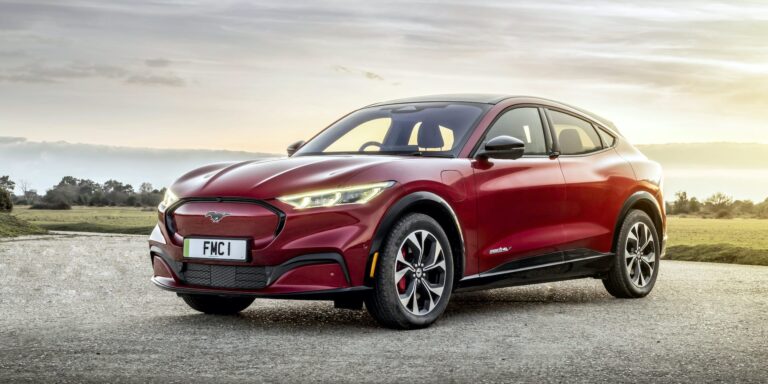
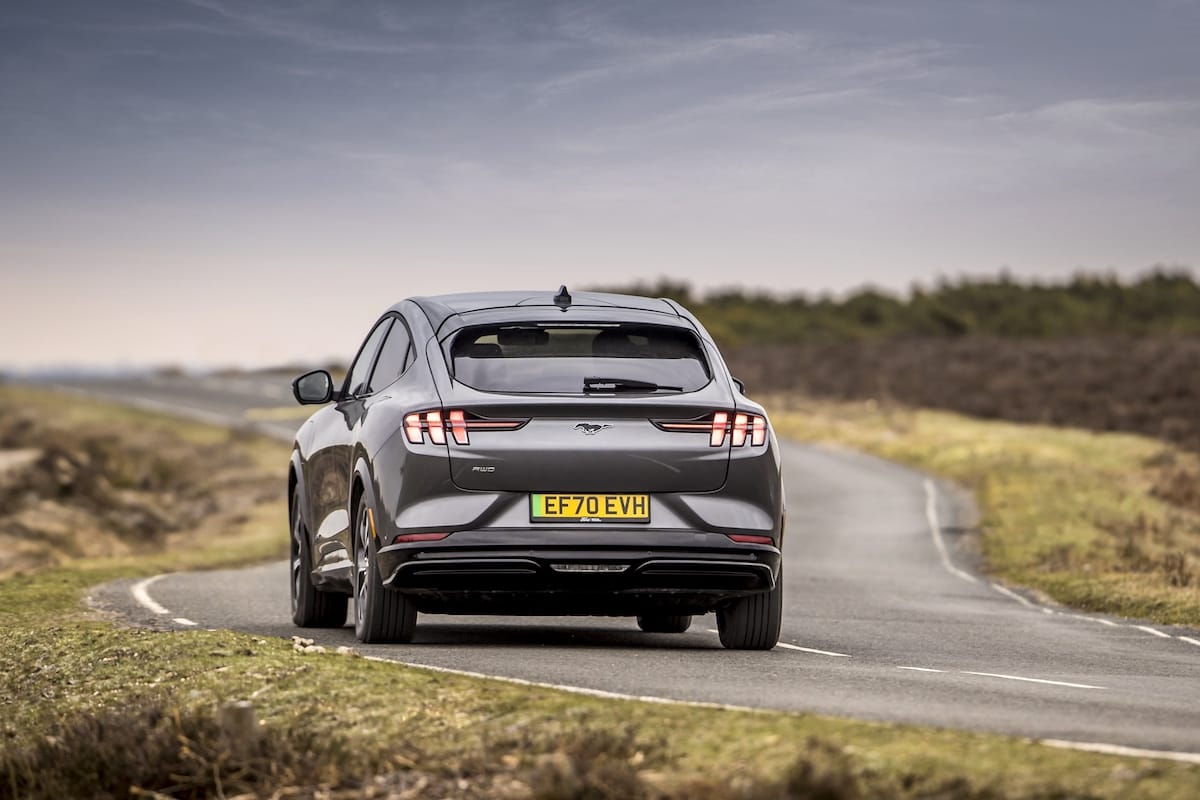
Ford Mustang Mach-E

Summary

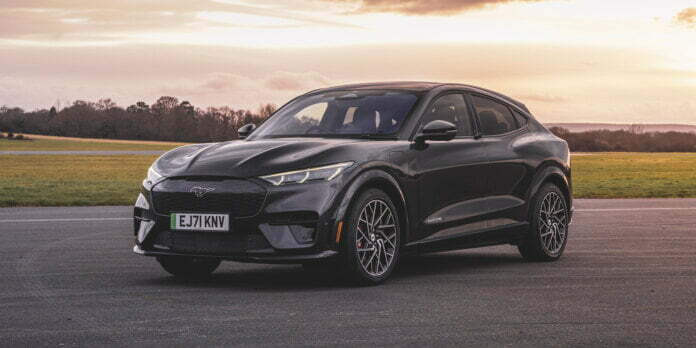
The Ford Mustang Mach-E is an electric mid-sized SUV that arrived in UK dealerships in early 2021. A GT model joined the range later in the year.

First things first: it’s obviously not a traditional Mustang. It has Mustang badges everywhere (and not a single Ford badge), but it bears absolutely no relationship to the V8-powered sports cars of the last 60 years. Car enthusiasts around the world – but especially in America – howled in response to Ford taking its hallowed muscle car name and slapping it on an electric SUV, although this has died down over the last three years.

Now that we’ve got that out of the way, what’s the Mustang Mach-E actually like? Size- and price-wise, it squares up against the likes of the Volkswagen ID.4 or the Polestar 2, and it delivers a similar sort of experience.

Like any electric vehicle, it delivers immediate acceleration from a standing start or when overtaking, and it’s quiet and smooth when you’re pottering around your local roads. The handling isn’t considered to be great (which you could probably say about most Mustangs from history), but the styling has been well received by the media. Battery range isn’t best in class, but should still be plenty for most household needs.

As of February 2026, the Ford Mustang Mach-E holds a New Car Expert Rating of A, with a score of 71%. It rates highly for safety and its lack of any tailpipe emissions, while running costs are low and media reviews are positive.

Mach-E highlights

  • Great straight-line performance
  • Plenty of interior space
  • Front and rear boot space
  • Modern styling, both inside and out
  • Battery range adequate for most households

Mach-E lowlights

  • Ride quality has been criticised
  • Handling not as good as some rivals
  • Sleek styling reduces rear headroom
  • You have to pay extra for a proper charging cable
  • People will keep telling you it’s not a real Mustang

Key specifications

Body style: Medium SUV/crossover
Powertrain: electric motor, battery-powered
Price: From £43,830 on-road

Launched: Spring 2021
Last updated: Autumn 2023
Next update due: TBA

Media reviews

Highlighted reviews and road tests from across the UK automotive media. Click any of the boxes to view.

Featured reviews

More reviews

Auto Express

Auto Trader

Business Car

Car

Car Keys

Carbuyer

Company Car Today

Daily Mail

Daily Mirror

Discover EV

Driving Electric

Electrifying.com

Eurekar

Green Car Guide

Heycar

Honest John

Parkers

The Sun

The Telegraph

Top Gear

Which EV?

Safety rating

Independent crash test and safety ratings from Euro NCAP

Overall score: 5 stars
Date tested: October 2021
Read the full Euro NCAP review

Adult protection: 92%
Child protection: 86%
Vulnerable road users: 69%
Safety assist: 82%

The Ford Mustang Mach-E comes with all of the safety kit you’d expect to protect you in the event of an accident and – even better – avoid one in the first place, so it comes as no surprise that Euro NCAP gave the Mustang Mach-e a five-star rating.

Eco rating

Independent economy and emissions ratings from Green NCAP

Model tested: Electric 4×4 Automatic

Overall score: 5 stars
Date tested: October 2021
Read the full Green NCAP review

Clean Air Index: 10 / 10
Energy Efficiency Index: 9.4 / 10
Greenhouse Gas Index: 10 / 10

Reliability rating

MotorEasy logo 600x167

Reliability data provided exclusively for The Car Expert by MotorEasy

No reliability rating

As of February 2026, we don’t have enough reliability data on the Ford Mustang Mach-E to generate a reliability rating.

The Car Expert’s reliability information is provided exclusively to us using workshop and extended warranty data from our partner, MotorEasy, sourced from both official dealerships and independent workshops. 

As soon as MotorEasy has sufficient data on the Mustang Mach-E, we’ll publish the score here.

Running cost rating

Clear Vehicle Data logo close crop

Monthly cost of ownership data provided exclusively for The Car Expert by Clear Vehicle Data

Battery rangeAverageScoreVariationScore
EV models334 milesA
Electrical efficiencyAverageScoreVariationScore
EV models3.7 m/KWhD
Insurance groupAverageScoreVariationScore
All models38D
Service and maintenanceCostScore
Year 1£252C
Year 2£481B
Year 3£765B
Year 4£997B
Year 5£1,289B
Overall£3,784B

The Ford Mustang Mach-E is a relatively affordable car to own and run, according to whole-life cost numbers provided exclusively to The Car Expert by our data partner, Clear Vehicle Data.

Electrical efficiency (the EV equivalent of miles per gallon for a petrol or diesel car) is poor, but the battery range is still more than 300 miles (up to about 380 miles on the longest-range version) on the official lab tests.

Insurance is also average, but servicing and maintenance costs are excellent across the first five years from new.

Recalls

Official DVSA safety recalls that have been issued for the Ford Mustang Mach-E

Date: June 2023
Recall number: R/2023/187
Model types: All
Build dates: 06/2022
Number of vehicles affected: 35
Defect: Certain vehicles have been produced with a mismatch of information between Vehicle Identification Number (VIN) label Certificate of Conformity (CoC) and Registration documents regarding towing.
Remedy: Affected vehicles need to have a new VIN label, exchanged Certificate of Conformity, or updated registration.

Date: June 2022
Recall number: R/2022/194
Model types: All
Build dates: 09/2020 to 05/2022
Number of vehicles affected: 6,535
Defect: It is possible that the high voltage battery main contactors may overheat.
Remedy: Dealers are required to update the Powertrain Control Module (PCM) on all vehicles.

Date: January 2022
Recall number: R/2022/015
Model types: All
Build dates: 10/2021 to 11/2021
Number of vehicles affected: 46
Defect: The rear seat belt buckle anchorage attachments may not meet the design specification.
Remedy: Inspect and repair the seat belt anchorage points using a Helicoil repair kit.

Date: January 2022
Recall number: R/2022/014
Model types: All
Build dates: 02/2020 to 06/2021
Number of vehicles affected: 2,437
Defect: Inadequate front windshield adhesion to the vehicle body structure.
Remedy: Remove & re-install the windscreen ensuring correct adhesion. Renew windscreen if damage occurs during the repair process.

Date: December 2021
Recall number: R/2021/397
Model types: All
Build dates: 02/2020 to 06/2021
Number of vehicles affected: 1,540
Defect: Vehicles could develop wind noise & water leaks around the panoramic glass roof. Should the roof glass loosen there is a risk that the glass could become detached from the vehicle.
Remedy: Add additional urethane adhesive between the vehicle body and roof glass.

Date: June 2021
Recall number: R/2021/225
Model types: All
Build dates: 10/2020 to 06/2021
Number of vehicles affected: 1,835
Defect: Incorrect location information may be sent from the eCall system.
Remedy: A software update is required to SYNC module.

As of September 2024 (our last data point), there have been six DVSA vehicle safety recalls on the Ford Mustang Mach-E that cover various manufacturing issues.

Not all vehicles are affected by recalls. You can check to see if your car is included in any of the above recalls by visiting the DVLA website or contacting your local Ford dealer.

If your car is affected by a recall, the vehicle must be repaired and you should not be charged for any work required. If you are buying a used Mustang Mach-E, you should insist that any outstanding recall work is completed before you take delivery of the vehicle.

Awards

Significant UK trophies and awards that the Ford Mustang Mach-E has received

2021

  • DieselCar and EcoCar Top 50 – Best Electric Large SUV
  • News UK Motoring AwardsThe Sunday Times Car of the Year
  • Top Gear Awards – Best Family Car

Similar cars

If you’re looking at the Ford Mustang Mach-E, you might also be interested in these alternatives

Audi e-tron | Audi Q4 e-tron | BMW iX3 | Hyundai Ioniq 5 | Jaguar I-Pace | Kia EV6 | Mercedes-Benz EQC | Nissan Ariya | Polestar 2 | Polestar 3 | Skoda Enyaq | Tesla Model Y | Volkswagen ID.4 | Volkswagen ID.5

More information

More news, reviews and information about the Ford Mustang Mach-E at The Car Expert

What’s in a (car) name?

What’s in a (car) name?

Everything you need to know about Ford

Everything you need to know about Ford

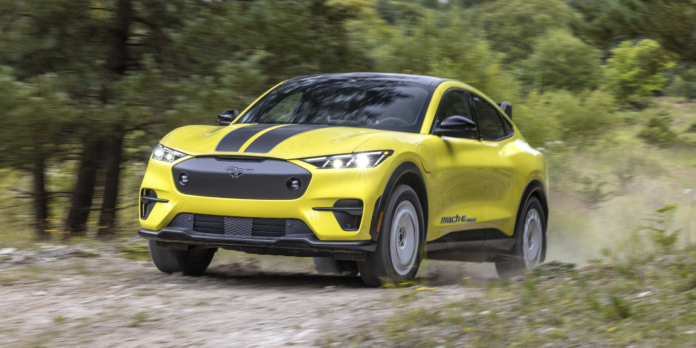
High-power Ford Mustang Mach-E Rally debuts

High-power Ford Mustang Mach-E Rally debuts

Ford Mustang Mach-E GT

Ford Mustang Mach-E GT

Ford Mustang Mach-E gets minor tech upgrade

Ford Mustang Mach-E gets minor tech upgrade

Ford Mustang Mach-E test drive

Ford Mustang Mach-E test drive

More five-star cars in latest safety tests

More five-star cars in latest safety tests

Ford unveils all-electric Mustang Mach-E

Ford unveils all-electric Mustang Mach-E

Buy a Ford Mustang Mach-E

If you’re looking to buy a new or used Mustang Mach-E, The Car Expert’s partners can help you find the right car.

Motors.co.uk logo transparent 600x300

Find your next used car with Motors.co.uk. Find out more

Auto Trader logo 600x300

Find your next new or used car with Auto Trader. Find out more

Carwow logo 600x300

Find your next new or used car with Carwow. Find out more

Lease a Ford Mustang Mach-E

If you’re looking to lease a new Mustang Mach-E, The Car Expert’s partners can help you find a competitive deal

Carparison 600x300

Personal contract hire deals from Carparison Leasing. Find out more

Leasing-com logo

Personal contract hire deals from Leasing.com. Find out more

Carwow logo 600x300

Personal contract hire deals from Carwow. Find out more

Subscribe to a Ford Mustang Mach-E

Subscriptions are becoming a very popular way for consumers to try an electric car for a few weeks or months to help decide whether it’s a suitable alternative to a petrol car. If you’re interested in a car subscription, The Car Expert’s partners can help. (PS: What’s a car subscription?)

Cocoon Vehicles logo 600x300

Car subscriptions from Cocoon.
Find out more

Just Vehicle Solutions logo 600x300

Car subscriptions from Just Vehicle Solutions.
Find out more

Flexible Vehicle Contracts logo 600x300px

Car subscriptions from Flexible Vehicle Contracts.
Find out more

Why do we drive on the left-hand side of the road?

Maybe some of you will remember the Only Fools and Horses special ‘Miami Twice’, where Del Boy closely avoids a head-on collision with a car in Florida as his brother Rodney screeches at him, “You’re on the wrong side of the road! They drive on the right-hand side of the road over here!” A comedy classic that highlights that, for some, the right side of the road is anything but.

So why is it that some countries drive on the left side of the road as we do in the UK and others, like the Americans, drive on the right? This article looks into the history of this road traffic rule and explores where the modern conventions originally came from.

Confusion reigns around the world

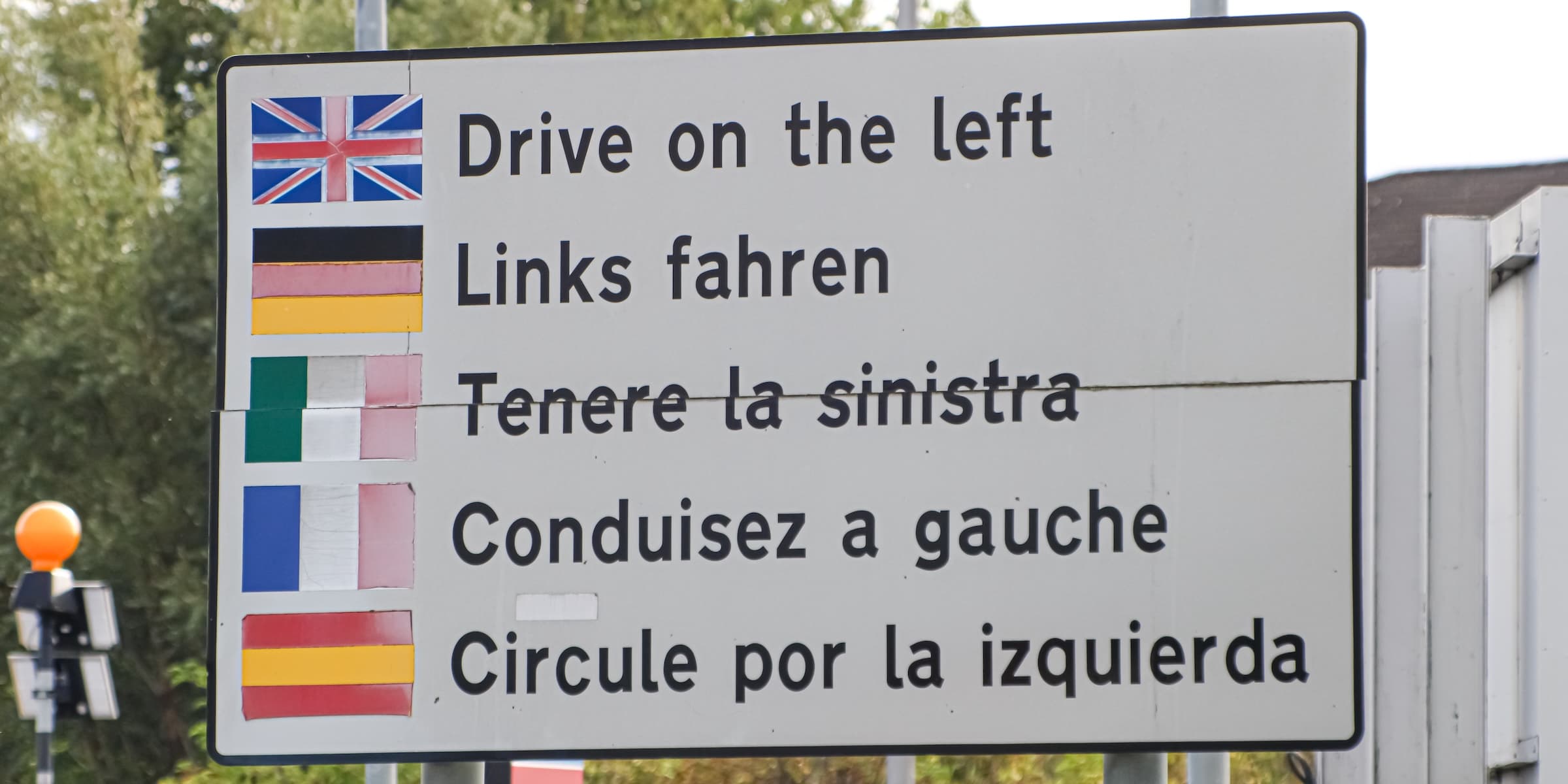
Here in the UK we drive on the left-hand side of the road, and our cars are right-hand drive (RHD) because it’s much easier to see what’s going on. It is perfectly legal to drive a left-hand-drive car (LHD) in the UK, but it is a bit more challenging – not to mention that you are always on the wrong side for toll booths and drive-through services.

Europe is generally the opposite way around to the UK, where the cars are left-hand drive and you drive on the right-hand side of the road. Again, it’s legal to drive a UK car with the steering wheel on the right over in Europe. The main issue is headlight aiming, as your lights are angled slightly towards the kerb and away from oncoming traffic. This is why you have to fit those fiddly stickers to your headlights when driving a UK car in continental Europe, as your headlights are angled towards oncoming vehicles.

Who drives on which side of the road?

Countries like the UK that drive on the left-hand side of the road are in the minority, with 74 total territories doing so, as opposed to 167 that drive on the right. Of all the roads around the world, 90% of their total distance are ‘wrong way round’ to us.

Many of the RHD/left-side-of-the-road nations are members of the Commonwealth of Nations (or previously part of the British Empire), so there is a definite political dimension to which side of the road a country drives on. Of all the current British territories, it’s only Gibraltar that doesn’t follow the left-hand rule as they drive on the right in line with the other countries in Europe.

There are a number of theories as to where the left vs. right traffic conventions have come from, but there is no definitive answer. It is only relatively recently, with the advent of modern state regulations, that road traffic rules have been defined and recorded. So let’s explore some of the likely reasons for why countries drive on the side of the road they do.

The Roman road system – insights into ancient ways

The ancient Romans were famed for their roads, whose straightness is a characteristic that is still evident on many modern roads today. The quality of Roman roads was only surpassed during the industrial revolution many hundreds of years later. With the military importance roads had in upholding the Roman Empire across Europe, they must have had a well-ordered system of organising the roads and their traffic. So which side did they use?

The best insight to this was found in 1998 during an archaeological excavation of a Roman quarry site near Swindon. The road leading to and from the quarry site was well enough preserved for the archaeologists to clearly see that one side had grooves worn into it. As carts would enter the quarry empty and leave heavily loaded, the grooves were presumably caused by cart traffic leaving the site, meaning that (at this location, at least) the Romans traffic drove on the left.

It’s likely that the rules governing Rome’s roads were standard throughout the empire, as they were primarily a military asset; transporting columns of centurions from the Irish Sea to the Middle East. As the roads were for military purposes, the rules governing them would probably have derived from the army. A theory has been offered that the left would have been the best side to use for marching Roman troops so that the sword and scabbard, worn on the left-hand side, would not catch against troops marching in the opposite direction.

Another theory is that a left-hand side position would place the right, sword-wielding hand nearer to a potential adversary coming the other way. Throughout time, right-handed people have always been numerically dominant over left-handers, so marching and driving on the left would suit the vast majority of men.

The fall of the Western Roman Empire to the barbarian invaders ended Roman road construction in Europe and the bureaucratic system governing them. However, the barbarian invaders adopted and emulated many Roman traditions and systems, meaning that Roman influence stretched into the Dark Ages and beyond. This may have included the conventions for road or track use.

Road conventions in Medieval Europe

It seems that traffic conventions set in place by the Roman Empire continued to be followed by the kingdoms that inherited Western Europe. Evidence of this is contained in a 1300 AD papal edict by Pope Benefice which decreed that all pilgrims travelling to Rome should keep to the left.

The Roman Catholic Church inherited and continued Roman authority until the dissolution of the Holy Roman Empire in 1806. This suggests that, at least until the early 19th Century, most of Europe had left-hand traffic like the UK. There is no military reason stated in the edict, which addresses the issue of congestion in the eternal city, but that is not to say that the convention itself did not have military ancestry.

An important aspect of medieval society to bear in mind is how superstitious it was. The Church believed that left-handedness was demonic, and left-handed people either had to adopt the right hand or face persecution or being ostracised. This means that handling of tools and weapons would be done with the right-hand side.

Another theory on the left-hand convention argues that for knights the only way to mount a horse wearing a sword on the left would be from the left and so for ease of mounting or dismounting the left side of a road would be used. In support of this are the origins of the modern military salute; lifting the right hand to the brow and dropping it. This originated with Medieval knights, who to greet each other would lift their helmets visor to identify each other.

Yet another theory adds that to approach somebody in peace, you would offer them your right hand to shake, as opposed to approaching them in anger with a sword or dagger in hand.  This is the origin of our modern western convention of shaking hands. Medieval society was highly violent; nearly everyone would have carried a side arm, bandit attacks and murders were common and so personal security would have been of prime concern.

It seems that the medieval conventions arose from a mixture of inherited Roman customs and from the social customs of a more violent society. However, as the superstitions of the Middle Ages gave way to the rationality of the Enlightenment, road conventions became more politicised.

The right-hand revolution

It was the republican revolutionaries in Europe and America who set about changing the road conventions to drive on the right-hand side. During the American War of Independence, French revolutionary the Marquis de Lafayette, the ‘hero of two worlds’ who went to fight against the British and who became a close friend of George Washington, suggested to him that the colonists adopt the right-hand traffic convention. Whether this was done immediately after the colonists’ victory in 1783 is not known, but the first record of a law on the subject is found shortly after with a 1792 Pennsylvania statute specifying to keep right.

In Europe, republican revolution came to France a few years after the Americans had won their freedom. With it came a commitment by revolutionaries to overturn the existing order and usher in a new age of reason. As part of this, there were strong anti-clergy and secular views in the ranks of the French revolution who sought to overthrow Papal authority by subverting its conventions and edicts, such as that on pilgrims in Rome.

There is also a theory that Napoleon changed the side of the road used because he himself was left-handed. However these may have contributed, during the revolutionary conquests the side of the road that was driven on became politicised.

It was Napoleon’s conquests throughout Europe that spread revolutionary ideology and overturned the existing conventions of its monarchies. As the French armies swept across Europe, they introduced the right-hand law to symbolise freeing countries from their old medieval social and political systems. Napoleon’s invasion of Austria showed this political aspect, as his armies only invaded the Tyrol in the west of the country, and only in that region was the right-hand side rule imposed.

Changing the side of the road on which people travelled was a symbolic act, meant to show the power of the new regime over all aspects of society and to place the revolutionary countries diametrically opposed to those they believed represented the values of the old world. Those powers that represented the old conservative world and resisted Napoleon’s advances – Britain, Portugal, Austria-Hungary and Sweden – all continued to keep to the left.

Napoleon’s failure to conquer all of Europe caused there to be a variety of conventions across countries. In Belgium there was no convention for which side of the road to travel on, with some regions driving on the left and some on the right. This situation was only addressed in 1899, not long after the first motor cars arrived, when the drive-on-the-right rule was imposed to bring order to an increasingly busy road system.

Although Napoleon conquered major colonial powers in Europe, the conventions in their colonies were generally not changed.  This was the case in the Dutch colony of Indonesia, where the original convention to drive on the left remained in place even after Napoleon changed the Netherlands to driving on the right (and has remained so until today).

The Right Wing revolution

As Napoleon tried to conquer all of Europe in the 18th century, so Hitler tried the same in the 20th Century. And like his maniacal predecessor, Hitler sought to change Europe’s driving conventions. Completing the work Napoleon started, Hitler changed all of Austria to drive on the right after the 1938 Anschluss unified Germany and Austria. Next was Czechoslovakia in 1939, and during the war Hungary was changed to drive on the right in 1944.

After the Second World War, only one country in continental Europe was still driving on the left – Sweden. It changed to match its neighbours in 1967.

The colonial and anti-colonial influence

As European empires spread throughout the world, they spread their control and influence, which included imposing driving conventions on their colonised people. Britain spread the left-hand rule to the territories it colonised, but also some that it did not.

In Japan, the influence of the British ambassador Sir Rutherford Alcock led the country to start travelling on the left from 1859, a change formalised by Japan’s government in 1872. This was also the case in China, where British influence caused a similar change to the left in the important port city of Shanghai.

As much as the road conventions were a means of colonial powers to impose their rules on their territories, they were equally used by post-colonial nations to assert their independence. This was the case in Myanmar (Burma) where as one contemporary writer noted the, ‘rule of the road was recently and suddenly imposed to supersede that inherited from colonial times’. Other post-British Empire nations like Nigeria and Ghana switched to driving on the right soon after they were granted independence from Britain.

The idea of changing to driving on the right to shake off the colonial yoke was considered in Pakistan following independence; their decision not to was all down to camels. At the time the country was heavily dependent on camel trains for transportation, whose camels were training to walk on the left.  The retraining of the camels for right-hand traffic was enough of a task for the country to reconsider the move and stay on the left.

The anti-colonial impetus for changing the road conventions seems to have petered off after the initial flood of newly independent nations asserting their new found freedom and in recent years economic reasons have taken the forefront. In 2009, Samoa – previously a German colony – which drove on the right, changed to driving on the left.  This wasn’t in order to throw off the reigns of colonial power, however, but in order to benefit from cheaper car imports from Japan and Australia!

This article was originally published in 2014, and was most recently updated in May 2021.

First Subaru EV to be called Solterra

Subaru has announced that its first production electric car, a mid-sized SUV, will be called the Solterra.

Due to go on sale in 2022, the new car is being developed as part of a wide-ranging joint project with Toyota, which unveiled its version, called the BZ4x concept, at the Shanghai motor show.

According to Subaru the name of its new EV was arrived at by fusing the Latin words for the sun and the earth, Sol and Terra. The name was chosen “to appreciate mother nature and further advance the form of coexistence with it, together with our customers, and to represent our commitment to deliver traditional Subaru SUV’s go-anywhere capabilities in an all-electric vehicle.”

Calling the car Solterra has wrong-footed Japanese media, which had predicted that the new model would be dubbed the Evoltis.

The Solterra will be built on a new platform developed as part of the collaboration between Subaru and Toyota, which has been designed for specifically for electric power. The versatile chassis will enable both brands to develop a varied range of EVs – cars of different lengths, with front, rear or all-wheel drive and with batteries of different sizes.

No other details of the new SUV have yet been revealed – however a silhouette ‘teaser image’ released suggests that it will take at least styling cues from an EV concept (pictured above) that Subaru revealed in January.

The Solterra will form the first major move towards Subaru’s announced intention for at least 40% of its global sales to be of electric or hybrid vehicles by 2030. So far the brand’s only unveiled moves towards electrification has been to add mild-hybrid versions to its existing Forester, Impreza and XV models. The Soterra will be similar in size to the existing Forester.

Subaru’s UK management hopes the Solterra will be an essential element of efforts to revive the brand – Subaru was one of the worst-hit manufacturers during the Covid-19 pandemic, selling fewer than 1,000 cars in the UK in 2020.

Semiconductor shortage causing headaches for new car customers

A worldwide shortage of semiconductor chips is causing a major headache for some of the leading car manufacturers, with customers now being forced to prioritise in-stock vehicles.

The Covid-19 pandemic has caused major disruption throughout the automotive industry and the knock-on effects are now being felt by many.

As a result of this, many manufacturers are being forced to delay deliveries and production of their vehicles, causing a huge headache to customers.

What is a semiconductor chip?

A semiconductor chip controls the flow of current through electronic equipment. To put it simply, these chips are the brains behind all our electronic devices.

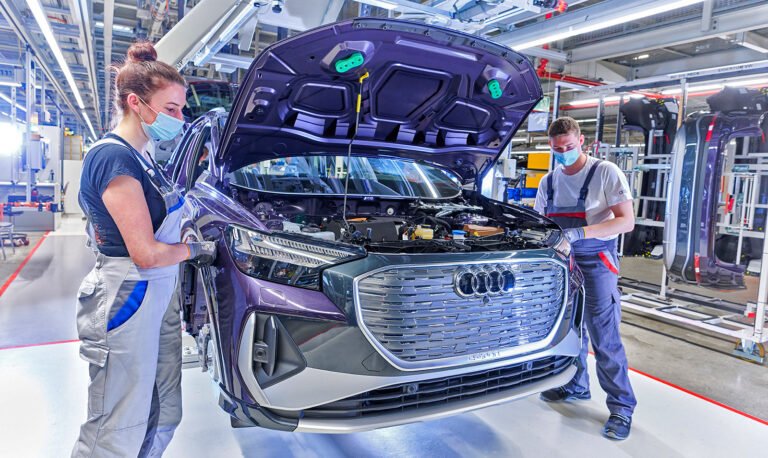
Within cars, they help power systems like an onboard computer or a touchscreen, as well as crucial safety features like the anti-lock braking system, lights or windows.

Why is there a semiconductor shortage? 

Throughout the Covid-19 pandemic, there has been a rapid rise in the demand for technology. 

Be it working remotely or home schooling, there has been a greater need for everyday technology, with consumers flocking in their numbers to buy items such as monitors, laptops and tablets. 

Combine that with the launch of new games consoles from both Sony and Microsoft, as well as the constant need for mobile phones and cars, the huge demand has simply outweighed the limited supply and we now have a global shortage of crucial semiconductor chips.

How are customers being affected?

While lengthy delays are now causing headaches to both manufactures and customers alike, the latter face the prospect of missing out on critical elements of their new cars.

Stellantis has been one of many car groups to confirm changes to its production plans. The latest Peugeot 308 models will not include the digital speedometers that they were expected to. Instead, they will be replaced by traditional analogue gauges.

In another example, Nissan and Renault have been producing current models without navigation systems or some of their standard digital screens because of the chip shortage.

With car manufacturers forced to adjust, customers are now doing the same. Customers have been forced to forego their preferred choice of a new car to simply take whatever’s available – and discounting has largely disappeared for the time being.

With the chip shortage tipped to continue into 2022, it may be a while before the situation returns to normal. However, it’s likely that the industry will catch up fairly quickly as soon as it can get more chips for its cars.

BMW 330e review

While there have been so many versions of the BMW 3 Series that it can be confusing to know which is which, this particular one, the 330e, is rapidly becoming the most important.

As it’s a plug-in hybrid (PHEV), it comes with officially quoted CO2 emissions of just 41g/km, which makes it a green car in the eyes of tax law-deciding politicians. So particularly for company car drivers – a market which the 3 Series is a massive player in, the 330e becomes a much more wallet-friendly option than other 3 Series models.

Of course the 41g/km is a fallacy as like most PHEVS this BMW will spend much longer using its petrol power than electric volts – but rules are rules…

Buy a BMW 3 Series from your sofa with Cazoo

Buy online. We’ll deliver it. Find out more


What’s new about the BMW 330e?

According to BMW, the 330e is the first 3 Series that was designed from the start with a hybrid drivetrain in mind. What this means firstly is more grunt – compared to the previous 3 Series hybrid, the motor has had its power boosted by around 25%. Added to that is better handling, due to the various elements of the drivetrain being better integrated into the chassis with many of them between the two axles.

The other big change this time round is that you don’t have to have your 3 Series PHEV as a saloon – for the first time the 330e is available in the rather more practical Touring (estate) form. And you can have it in rear-wheel-drive or all-wheel-drive, xDrive in BMW speak.

How does it look?

From the outside the 330e appears to be like any other BMW 3 Series Touring, its electric drivetrain only given away by a discreet letter on the boot-mounted model badge and what appears to be a second petrol flap on the nearside front wing, hiding the charging socket.

So you get a reasonably purposeful visual silhouette which has been updated in the latest model. Our test car looked better than that, because it came in M Sport trim, a £2,200 options package that adds a whole lot of performance-pitched extras such as bespoke wheels, sporty suspension and uprated brakes, and includes extra aerodynamic add-ons.

As a result this car certainly looks the performance part – appearing as if you have forked out for the almost mythical BMW M3. This extends to the grille – your reviewer is not a fan of BMW’s latest, enormous, in-your-face noses but the black version on the front of the 330e is rather toned down compared to the chrome monstrosities on some of the brand’s SUVs.

What’s the spec like?

As mentioned, the latest 330e comes in saloon or estate (Touring in BMW-speak) form, and with rear- or all-wheel-drive. Our test car was the Touring variant with power to all four corners.

Thankfully the bad old days when BMWs came with absolutely nothing in terms of standard equipment and everything was on the options list are along gone – such things as cruise control, a DAB digital radio, LED fog lights, automatic air-con and such do come supplied these days.

Even so this particular test car bristles with almost £10,000 worth of options including quite a lot of technology, and very few potential owners will go into a purchase without expecting to dig deeper into their budgets to afford some of the various nice-to-have extras on offer.

In terms of safety, the BMW 330e is also well equipped. It scored a full five-star rating from Euro NCAP when it was assessed in 2019, with an excellent overall set of scores in every category.

What’s the BMW 330e like inside?

BMW interiors have long been classy if not particularly distinctive and it’s no surprise to find this latest 3 Series incarnation maintaining the trend. There is plenty of space, and it is very easy to get nice and comfortable, especially as many of these cars are expected to spend their life cruising long distances.

The driver’s view is dominated by the enormous touchscreen of the infotainment system, best used as a sat nav map – its location, high up on the centre console as is practically possible is a definite positive, minimising time spent with one’s eyes off the road.

Our car was fitted with the optional Technology pack, a snip at £1,900. While this included such niceties as wireless charging, better speakers and ‘gesture control’ (adjust the radio volume by waving at it), this reviewer was most impressed by the highly efficient head-up display. Yes it projects on the windscreen and no it’s not a distraction, allowing you to take in info while never stopping looking where you are going.

The boot is quite practical and at 410 litres fairly generous, though it’s a bit smaller than a standard 3 Series Touring’s 500 litres so as to accommodate the hybrid elements. With seats down it stretches to 1,420 litres and there is still some underfloor storage, though not really big enough to hide all the electric charging cables.

What’s under the bonnet?

The hybrid drivetrain takes as its base the 2.0-litre 183hp turbo petrol engine of the 320i, attaches it to the regular eight-speed sequential auto transmission and then sandwiches between the two an electric motor powered by a lithium-ion battery placed under the rear seats. This battery is a major improvement, its capacity almost doubled from 5.4 to 10.3kWh.

The electric motor serves up its own 112hp for a total system output of an impressive 252hp. And the car comes with a new ‘Xtraboost’ feature which offers bursts – and they are bursts, only around 10 seconds a time – of power at 293hp. This is hidden in the Sport driving mode, in which sudden acceleration activates the boost.

All this means a 62mph sprint time of just over six seconds and a top speed where allowed of 136mph. The motor can of course drive the car by itself, and at speeds up to 68mph, and due to those battery upgrades the electric-only range jumps up too, officially quoted at up to 37 miles WLTP depending on which 330e you choose.

In terms of charging BMW quotes 80% recuperation from flat in 2.4 hours using one its own wallboxes, reaching full capacity in 3.4 hours. Using a conventional household socket quoted charge time is 4.2 hours to 80%, and our experience with a cable trailing across the reviews driveway confirmed this.

What’s the BMW 330e like to drive?

Traditionally BMWs have always been regarded as excellent machines to drive, a factor driving the overwhelming popularity of the 3 Series, and the 330e does not disappoint. This is a car that is very, very good on the road, a truly enjoyable experience.

The acceleration, particularly with Sport selected and activating the Xtraboost, is very impressive – but there is the nagging thought in the back of the mind as to why such niceties feature on a car aimed at those wanting greener motoring – more tax-cutting than planet-saving then?

It’s an enjoyable car through corners, the responsive chassis 3 Series owners expect not being diluted in hybrid form. And even though our car is powered on all four wheels it combines the resultant excellent grip with a slight bias towards rear-wheel drive which adds to the fun.

Of course you don’t have to hustle it and in normal travel driving the BMW is a relaxing, unflustered experience as befits its premium status. With hybrid mode selected the 330e will eat up motorway miles in a highly refined manner.

The hybrid side of the car is quite flexible – you can use it on full electric, when you want to, or you save what’s in the battery for when you know you might need it, such as in an urban controlled emissions zone. You can even choose how much battery charge you want to save and use the rest.

There’s also an automatic setting, when the hybrid unit works with the car’s sat nav to highlight the best places to use electric power on a journey you’ve programmed in. And like all the best BEVs the car offers brake-energy recuperation enabling you to put some juice back in the battery – specially useful around town with lots of coasting and braking.

Verdict

As plug-in hybrids go, the BMW 330e is a good one. It starts off with the major advantage of the 3 Series itself, a car that has dominated the wish lists of particularly company drivers for very many years. But it adds an efficient PHEV system with lots of flexibility.

The car is enjoyable to drive, and most owners will likely rate the experience and the tax savings more highly than the little bit they are doing towards encouraging greener motoring.

Similar cars

Mercedes-Benz C 300e | Peugeot 508 Hybrid | Polestar 2 | Tesla Model 3 | Volkswagen Passat GTE | Volvo V60 T8

Key specifications

Model as tested: BMW 330e xDrive M Sport Touring
Price as tested: £54,090 (inc. options)
Powertrain: 2.0 turbo petrol + electric motor
Battery: 10.3 kWh lithium-ion

Power: 252 hp combined (+ 40 hp boost)
Torque: 420 Nm combined
Top speed: 136 mph
0-62mph: 6.1 sec

Fuel economy (combined): 156 mpg
CO2 emissions: 42 g/km
Euro NCAP safety rating: 5 stars (2019)
TCE Expert Rating: 88% (as of May 2019)

Buy a BMW 3 Series from your sofa with Cazoo

Buy online. We’ll deliver it. Find out more


£37K price tag for bold new Hyundai EV

Hyundai has announced the UK prices for its Ioniq 5 crossover, the initial model in the Korean manufacturer’s new electric sub-brand.

The Ioniq 5, first car built on Hyundai’s new electric chassis called the Electric-Global Modular Platform (E-GMP) will go on UK sale later in 2021, at prices from £36,995.

Previously a model name, Ioniq will now be applied to a line-up of cars designed from the start as EVs, on bespoke electric chassis with flat floors. According to their creators this means the Ioniq models can make use of much more freedom in design.

The E-GMP platform allows a very long wheelbase freeing up more interior space, and great flexibility in the car’s drivetrain. The entry-level model of the initial versions on offer is rear-wheel-drive with a 58kWh battery and a combined cycle range of up to 240 miles, while the 73kWh rear-wheel-drive version extends the range to 300 miles.

Range topper is a 73kWh all-wheel drive variant with a range of up to 287 miles. This will only be available in the top of the three trim levels, Ultimate, at £48,145. The other two will also be offered in a mid-range trim dubbed Premium and the entry-level model in a base trim, Connect.

Hyundai Ioniq 5 rear side

All Ioniq 5 models come fitted with 800-volt charging. Using a 350kW ultra-rapid charger, recharging to 80% capacity will take a mere 18 minutes while 100km of range will be able to be added in only five minutes.

The car can also be charged using a domestic wall box or mainstream public 400-volt high-speed chargers, as its motor and inverter can convert the voltage from 400 volts to 800 volts.

Other electric innovations include the availability of a ‘Vehicle 2 Load Pack’ on all but entry-level trim. This allows vehicle-to-grid charging – owners can use their car to put electricity back into the grid while charging at home, helping to save on household bills, while also charging electric equipment, such as laptops, in the car.

The Ioniq 5 will also be instantly recognisable on the road, its striking styling very different to other Hyundais.

Citroën ë-C4

Summary

The Citroën e-C4 was launched in Spring 2021 as an electric version of the new C4 mid-size family hatchback, which has earned praise as a distinctive and chic French alternative to the traditional – mostly Germanic – family offerings.

The ë-C4 gets its power from a choice of two electric motors, in either 100kW (136hp) or 115kW (156hp) versions. The 100kW motor is paired with a 50kWh battery, while the more powerful motor gets a slightly lager 54kWh battery.

It’s hard to pigeonhole the e-C4 as it’s something of a mix of styles – it has SUV-like styling, but a strongly sloping rear roofline gives it a coupé image as well. This would normally translate into cramped rear cabin space, but it’s surprisingly roomy inside.

Having been surprised by the space, reviewers agree that the ë-C4’s interior is one of Citroën’s best for some time, with particular praise for retaining traditional buttons alongside a touchscreen, unlike many new cars.  

The ë-C4’s driving range is best described as adequate rather than outstanding, as it will cover most needs but can’t match some rivals like the Kia Niro EV or Volkswagen ID.3. However, its standard compatibility with 100kW rapid charging earns bonus points, cutting the time needed to charge at a public charging point before getting back on the road.

Adequate also describes the car’s acceleration and handling, though many reviewers also highlight its hushed and refined performance at motorway speeds. 

An updated C4 range, including the ë-C4 and ë-C4 X, was announced in Autumn 2024, with the first updated cars arriving in UK showrooms in early 2025. This added the more powerful electric motos and battery configuration, as well as improved interior technology and some light styling refreshes.

As of August 2025, the Citroën e-C4 holds a New Car Expert Rating of B, with a score of 69%. It scores top marks for its low running costs and for producing zero tailpipe emissions, but its safety rating, media review scores and new car warranty are only average.

ë-C4 highlights

  • Distinctive looks without sacrificing space
  • Quality interior
  • 100kW rapid charging capability
  • Refined at speed

ë-C4 lowlights

  • Modest real-world battery range
  • Not as affordable as some rivals
  • Performance is adequate rather than great
  • Soft suspension leads to average handling

Key specifications

Body style: Five-door liftback
Motor: Single electric motor, battery-powered
Price: From £26,295 on-road

Launched: Winter 2020/21
Last updated: Winter 2024/25
Next update due: TBA

Media reviews

Highlighted reviews and road tests from across the UK automotive media. Click any of the boxes to view.

Featured reviews

More reviews

Auto Express

Business Car

Car

Car Keys

Carbuyer

Company Car Today

Daily Mail

Daily Mirror

Discover EV

Electrifying.com

Eurekar

Fleetworld

Green Car Guide

Heycar

Honest John

Parkers

The Sun

The Sunday Times

The Telegraph

Which EV?

Safety rating

Independent crash test and safety ratings from Euro NCAP

Overall score: 4 stars
Date tested: May 2021
Read the full Euro NCAP review

Adult protection: 80%
Child protection: 83%
Vulnerable road users: 57%
Safety assist: 63%

The Citroën ë-C4 was awarded a four-star safety rating by Euro NCAP in May 2021, based on testing of the regular C4. Citroën was required to provide data to show that the ë-C4 performed in a similar manner to the C4 in crash testing to satisfy Euro NCAP that the same score should apply.

In most areas the car performed well, although not as well in every test as the best performers, hence the four-star rating. The main concern of testers was that the autonomous emergency braking (AEB) system did not recognise pedestrians well enough in all scenarios.

Eco rating

Independent economy and emissions ratings from Green NCAP

No eco rating

As of August 2025, the Citroën ë-C4 has not yet been tested by Green NCAP.

The Green NCAP programme measures exhaust pollution (which is zero for an electric car) and energy efficiency. Electric cars are much more energy-efficient than combustion cars, so the ë-C4 is likely to score very highly in Green NCAP testing if and when it takes place. Check back again soon.

Running cost rating

Clear Vehicle Data logo close crop

Monthly cost of ownership data provided exclusively for The Car Expert by Clear Vehicle Data

Battery rangeAverageScoreVariationScore
EV models235 milesB
Electrical efficiencyAverageScoreVariationScore
EV models4.7 m/KWhA
Insurance groupAverageScoreVariationScore
All models22B
Service and maintenanceCostScore
Year 1£131A
Year 2£350A
Year 3£542A
Year 4£741A
Year 5£1,022A
Overall£2,786A

The Citroën ë-C4 should be a very affordable car to own and run, according to whole-life cost data provided exclusively to The Car Expert by our technical partner, Clear Vehicle Data.

The electrical efficiency (the EV equivalent of miles per gallon for petrol and diesel cars) is very good, which leads to a decent battery range despite a modest battery size.

Insurance costs are very good, while servicing and maintenance costs over the first five years should be excellent.

Reliability rating

MotorEasy logo 600x167

Reliability data provided exclusively for The Car Expert by MotorEasy

No reliability rating

As of August 2025, we don’t have enough reliability data on the Citroën ë-C4 to generate a reliability rating.

The Car Expert’s reliability information is provided exclusively to us using workshop and extended warranty data from our partner, MotorEasy, sourced from both official dealerships and independent workshops. 

As soon as MotorEasy has sufficient data on the ë-C4, we’ll publish the results here.

Warranty rating

New car warranty information for the Citroën ë-C4

Overall ratingC56%
New car warranty duration3 years
New car warranty mileage60,000 miles
Battery warranty duration8 years
Battery warranty mileage100,000 miles

Citroën’s new car warranty is pretty much the bare minimum offered in the UK, with a duration of three years and a limit of 60,000 miles. Other rivals in the price bracket do better (and in some cases, much better).

In addition to the standard new car warranty, the ë-C4 has an eight-year/100,000-mile warranty for the battery components.

Citroën does offer a conditional warranty extension programme for up to five years beyond the end of the original new car warranty, with an overall limit of 100,000 miles (including mileage already accumulated in the first three years). However, this requires the car to be serviced by an official Citroën dealership every year, whereas your new car warranty is not restricted. Other restrictions also apply, so check with your Citroën dealer for full terms and conditions.

If you are purchasing an ‘Approved Used’ Citroën ë-C4 from an official Citroën dealership, you will get a minimum six-month warranty included. If you are buying a used ë-C4 from an independent dealership, any warranty offered will vary and will probably be managed by a third-party warranty company. If you are buying a used ë-C4 from a private seller, there are no warranty protections beyond anything that may be left on the original new car warranty.

If you’re looking to buy a used car that is approaching the end of its warranty period, a used car warranty is usually a worthwhile investment. Check out The Car Expert’s guide to the best used car warranty providers, which will probably be cheaper than a warranty sold by a dealer.

Awards

Significant UK trophies and awards that the Citroën ë-C4 has received

2023

  • Auto Express Awards – Driver Power Award
  • Carbuyer Award – Best Used Small Electric Car

2021

  • DieselCar & EcoCar Top 50 – Best Electric Medium Car

Similar cars

If you’re looking at the Citroën ë-C4, you might also be interested in these alternatives

BYD Seal | Hyundai Kona Electric | Kia EV4 | Mazda MX-30 | Mercedes-Benz EQA | MG 4 | Nissan Leaf | Omoda E5 | Peugeot e-408 | Polestar 2 | Tesla Model 3 | Vauxhall Mokka Electric | Volkswagen ID.3 | Volvo EC40

The Citroën ë-C4 is a bit difficult to pigeonhole compared to most cars. It rides a bit higher than a regular saloon/liftback like the Hyundai Ioniq, but not quite as high as an SUV/crossover vehicle like the Hyundai Kona. As such, it has plenty of rivals that sit (literally) above and below it.

More news, reviews and information about the Citroën ë-C4 at The Car Expert

Electric car grant – all the EVs with discounts in 2026

Electric car grant – all the EVs with discounts in 2026

Citroën C4 and C4 X models given facelift

Citroën C4 and C4 X models given facelift

New powertrain options for Citroën, Peugeot and Fiat

New powertrain options for Citroën, Peugeot and Fiat

Citroën ë-C4 and ë-C4 X gain more powerful drivetrain

Citroën ë-C4 and ë-C4 X gain more powerful drivetrain

MG 4 achieves top marks in crash safety test

MG 4 achieves top marks in crash safety test

Citroën unveils all-electric ë-C4 X

Citroën unveils all-electric ë-C4 X

Citroën adds ë-C4 models to retain Government EV grant

Citroën adds ë-C4 models to retain Government EV grant

Citroën C4

Citroën C4

Citroën reveals new C4 and electric ë-C4

Citroën reveals new C4 and electric ë-C4

First glimpse of new electric Citroën C4

First glimpse of new electric Citroën C4

Buy a Citroën ë-C4

If you’re looking to buy a new or used Citroën ë-C4, The Car Expert’s partners can help you find the right car

Motors 600x300

Find your next used car with Motors. Find out more

Auto Trader logo 600x300

Find your next new or used car with Auto Trader. Find out more

Carwow logo 600x300

Find your next new or used car with Carwow. Find out more

Lease a Citroën ë-C4

If you’re looking to lease a new Citroën ë-C4, The Car Expert’s partners can help you find a competitive deal

Leasing-com logo

Personal contract hire deals from Leasing.com. Find out more

Carwow logo 600x300

Personal contract hire deals from Carwow. Find out more

Select Car Leasing logo

Personal contract hire deals from Select Car Leasing. Find out more

Subscribe to a Citroën ë-C4

Subscriptions are becoming a very popular way for consumers to try an electric car for a few weeks or months to help decide whether it’s a suitable alternative to a petrol car. If you’re interested in a car subscription, The Car Expert’s partners can help. (PS: What’s a car subscription?)

SelfDrive UK logo

Car subscriptions from SelfDrive.
Find out more

Drive Fuze logo 600x300

Car subscriptions from DriveFuze.
Find out more

Cocoon Vehicles logo 600x300

Car subscriptions from Cocoon.
Find out more

Car insurance coming up for renewal? Get in early

We all know that to drive a car on the road you need adequate insurance. But are you one of those drivers who leaves their renewal to the last minute?

Well, don’t. A new study has shown that the point when you buy car insurance has a big impact on the premium you’ll be charged.

Leave your renewal until the day before your existing policy runs out and you could be quoted nearly 30% more for the next year’s cover. But get organised and pay for your insurance early and you could be in for some decent savings.

New analysis by consumer researchers NimbleFins showed that you can save 30% or more on your car insurance just by buying your policy with a start date three weeks away from the renewal date.

They analysed more than 200 Ford Fiesta car insurance quotes for a sample 45-year-old driver with a range of start dates from ‘today’ to ‘three weeks from now’, taking the average of the cheapest ten policies for each time window, and found that some insurers charge more than £1,000 extra for a last-minute purchase with an immediate start date.

Buying your renewal even one day in advance could save you at least 17% compared with asking for an immediate start.

“Insurers are cautious of buyers who leave things to the last minute,” says Erin Yurday, NimbleFins’ CEO.

“Thus, buying insurance with a forward-dated start date can save a driver between 17% to 29% – or sometimes even more. The sample driver in the study could save £262 on average by purchasing their policy three weeks in advance of the coverage start date.”

Policy start dateAnnual premiumNumber of quotes
Today£90223
Tomorrow£74733
1 week away£68245
2 weeks away£65246
3 weeks away£64046
Source: NimbleFins

As well as paying a lower price, there’s more selection when looking for a car insurance policy well in advance. The study found 46 quotes for a start date three weeks away, but only 23 offers with an immediate start.

Why there is such a big difference in price, just for getting in early, is difficult to explain. Car insurance policies are largely based on an insurer’s past claims experience with a certain driver, their history and their habits.

“Perhaps those who buy car insurance at the last minute tend to submit claims more often,” says Yurday. “Maybe car insurance companies prefer a more organised client who doesn’t leave decisions until the last minute.

“Or it could be that drivers needing insurance immediately take less time to shop around, and are therefore more likely to take a higher price – in this case, car insurance companies can get away with pricing plans a bit higher.”

Britain’s best-selling cars, April 2021

Compared to 12 months ago, April’s registration numbers look spectacular. In reality, they are still well short of pre-pandemic sales levels. But it was nice to see customers back in showrooms as the UK started the gradual return to normal life.

Whether it was the return to showroom sales or other reasons, the top ten has quite a different look to last month. Five of last month’s top ten disappeared from the list this month, replaced by some models that we haven’t seen for quite a while.

We’ve covered the detail of the monthly registration results already this week, so let’s look at the top-selling cars of the month.


The UK’s best-selling cars, April 2021

1. Vauxhall Corsa

Vauxhall Corsa Ultimate

The Vauxhall Corsa extended its lead at the top of the charts with another best-selling month in April. That’s three months out of four for the Corsa, as it doubled its year-to-date sales lead over the Ford Fiesta in the last month.

The petrol and diesel versions of the new Corsa currently hold an Expert Rating of 72% on our unique aggregator scale, based on 26 reviews we have gathered so far. That puts it in the bottom half of the supermini class, although the all-electric Corsa-e does score slightly better with an Expert Rating of 74%.

2. Mercedes-Benz A-Class

Mercedes-Benz A-Class hatch – Britain's best-selling cars of 2020

The Mercedes-Benz A-Class stepped up from third to second this month, edging out the Ford Fiesta by only nine units. Combined with the Nissan Qashqai falling out of the top ten in April, it means that the A-Class has now jumped the Qashqai to move up to third place in year-to-date sales.

The A-Class has an Expert Rating of 76% in The Car Expert’s unique aggregated Expert Rating index, based on 47 UK reviews. It ranks highly for safety, winning awards from Euro NCAP and Thatcham in previous years for its protective qualities.

3. Ford Fiesta

Ford Fiesta – Britain's best-selling car 2020

The Ford Fiesta-Vauxhall Corsa battle is inching ever further away from the defending champ. In April, the Fiesta fell 700 sales behind the Corsa, meaning that it now trials its major rival by nearly 1,500 units after the first fourth months of the year.

The Fiesta currently holds an Expert Rating of 81% in The Car Expert’s unique Expert Rating index, which aggregates reviews from 25 of the UK’s top motoring websites. That’s some 9% better than the Corsa, so the motoring media still clearly prefers the Ford.

4. Ford Puma

Ford Puma (2020 onwards) Expert Rating

One of the Fiesta’s problems is friendly fire from within the same showrooms. The Ford Puma is based on the Fiesta and had a very strong month in April, rising to fourth place in the sales charts and stealing sales from its hatchback sibling.

Ford’s little crossover has been popular with critics, currently holding a rating of 82% on our unique Expert Rating index. This remains a best-in-class score for supermini SUVs, but it has slipped a few points in the last few months as we’ve added some new reviews and other sources have revised their initial opinions.

5. Volkswagen Golf

Volkswagen Golf – Britain's best-selling cars of 2020

It may sound surprising, but fifth place in this list is the best result we’ve seen for the Volkswagen Golf in several months. Like the Ford Fiesta above and Focus below, the Golf has had to contend with internal rivalries as well as external ones. The new ID.3 is Volkswagen’s own Golf-sized electric vehicle, which is taking sales off the Golf itself.

Year-to-date, the Golf has now improved to fifth place after leapfrogging the BMW 3 Series and Volvo XC40 .

As more local reviews of different UK-spec Golf models have been published in the media, the Golf’s initial stellar Expert Rating slipped from a high of 85% to its current level of 80%. The much-vaunted ‘all-digital’ interior has drawn criticism from reviewers, who have found it inferior to the more conventional cabin of the previous-generation model. It’s not exactly disastrous news for Volkswagen, but it’s interesting to see review scores that are consistently below the previous model’s results.

6. Ford Focus

Ford Focus (2018 onwards) Expert Rating

Another sign that there is a fundamental shift going on in new car sales is the performance of the Ford Focus. Sixth place in April was a reasonable result for the Focus, but – almost unbelievably – it doesn’t feature in the top ten for year-to-date sales.

Like its little brother, the Fiesta, the Focus picked up some mild hybrid engines in the second half of last year, but it still lacks a fully-electric or plug-in hybrid option. It’s likely that we’ll see the PHEV setup from the Kuga mid-sized SUV drop into the Focus sometime soon, and Ford dealers will be looking forward to having a strong performer in the electrified family car marketplace.

In terms of critical appraisal, the Ford Focus currently holds an Expert Rating of 80% in our Expert Ratings database, which is now level with the slowly-slipping Golf and three points better than than the Mercedes-Benz A-Class.

7. Audi A3

Audi A3 (2020 onwards)

Popping up for the first time this year is the Audi A3. Available as both a five-door hatchback and a saloon, the new A3 appeared in the top ten a couple times at the end of 2020, but this is the highest we’ve seen it to date.

The Audi A3 has received generally good reviews from the UK media since it was launched, with an Expert Rating of 78% that puts it a few points behind the BMW 1 Series (81%) and a couple of points ahead of the Mercedes A-Class (76%).

8. Kia Sportage

Kia Sportage (2018) ratings and reviews | The Car Expert

After a cracking start to the year, where it was the second-best-selling car in January, the Kia Sportage then fell out of the top ten altogether in February and March. It’s popped up again in April, and a good result this month also means it has stepped up from eighth to seventh in year-to-date sales.

The Sportage currently holds an Expert Rating of 72% in our aggregated Expert Ratings index, which is midfield for medium SUVs but a couple of points behind the best-selling Nissan Qashqai and quite a margin behind the top cars in the mid-size SUV segment.

9. Volkswagen Polo

Volkswagen Polo (2018 onwards) Expert Rating

Clearly April was a month for returning favourites, as the Volkswagen Polo reappeared for the first time since about last September. Like many other historically big-selling hatchbacks, it’s had to contend with a shift in customer tastes, losing sales to VW’s own T-Cross and T-Roc mini-SUV twins.

The Polo holds an Expert Rating of 80% in The Car Expert’s New Car Ratings calculator, which is good but still a few points behind its Spanish cousin, the SEAT Ibiza. A facelifted model has just been announced, which will arrive here in the UK in the next few months.

10. Ford Kuga

Ford Kuga (2020 onwards) Expert Rating

In tenth place is another returnee, with the Kuga back after dropping out of the top ten last month. That also means that it snatches tenth place in year-to-date sales from the Volkswagen Tiguan. It was also the fourth Ford in the top ten this month in what was a great result for the Blue Oval.

Based on reviews we’ve analysed to date – which are mostly of the plug-in hybrid version, the Kuga has received generally good scores and currently holds an Expert Rating of 79%. However, you can probably expect that to shift by a few points as we get more reviews of the unplugged versions.

When is a 4×4 not a 4×4?

In these times of Tesco car parks being full of SUV-style cars, the 4×4 is not quite as it seems. After years of being the preserve of the country elite, 4x4s began appearing in a less muddy format more and more often.

With most off-road vehicles never going off-road at all, manufacturers quickly realised they didn’t need to include full-time four-wheel drive (shortened to either 4WD or 4×4) systems in their SUV models – in fact, quite often they didn’t need to include any kind of 4WD system at all. So the answer to the slightly odd title question is ‘most of the time’.

Today, many of the chunky-looking SUVs on the market are actually “faux-by-fours” with zero off-roading credentials whatsoever. Others have varying levels of mud-plugging ability, and only a few are genuinely capable of going a long way from the safety of a nice piece of Tarmac.

What is four-wheel drive?

Four-wheel drive (4WD) means that both the front wheels and rear wheels are used to move the car. Most conventional cars are two-wheel drive (2WD), driving either the front or rear wheels.

The idea behind getting all four wheels to drive the car is to share the load more evenly, meaning each wheel has less work to do. This means that the vehicle is more likely to maintain its grip on slippery surfaces, as all four wheels are contributing and each driving wheel is less likely to spin as you push down on the accelerator.

There are various ways of providing four-wheel drive on modern cars, so let’s have a look at how it’s done.

Traditional 4×4

Before we had a hundred different shapes and sizes of SUV, there were only a handful of ‘real’ four-wheel drive cars available in the UK. These included a few Land Rover and Range Rover models, as well as some very capable Japanese offerings like the Toyota Land Cruiser and Hilux, the Mitsubishi Shogun, and even small Suzuki models like the Jimny and its predecessors. All of these vehicles had one thing in common; they all had traditional 4×4 systems.

Most vehicles using this sort of 4WD/4×4 system have mechanisms to lock the differential(s) to make sure left and right wheels are getting equal drive. This last bit is critical because a normal car will always push the power to the wheel with least resistance. Anyone who has ever got a car stuck will have seen this, as one wheel spins furiously while the car goes nowhere. A locking diff system will mean that power goes equally to either side, and this is what gets you out of the mud or snow.

Some models allow either the front or rear wheels to be disengaged, turning the vehicle back into a two-wheel-drive model when conditions did not require the extra traction, such as on-road driving. This improved fuel economy and wear on components, especially at the higher speeds achieved on Tarmac compared to gravel or mud.

Most traditional 4×4 systems also have a separate control level for high and low ratios. In normal use, the vehicle would be in high ratio, and in low-speed off-road situations the driver can switch to low ratio for improved take-off in low-grip conditions. This is a level of off-roading far beyond what most modern SUVs will ever need.

All-wheel drive

In the 1980s, car manufacturers started exploring the idea of using four-wheel-drive systems for on-road performance rather than simply off-road utility. This came about as performance cars became ever faster and harder to control. Spreading the drive across four wheels rather than two means that the car has more grip, and can go faster and/or maintain its performance better in slippery conditions.

Two of the big drivers of this development were Audi and Porsche, who started using the term all-wheel drive (AWD) to describe what was basically a 4WD system optimised for on-road use. The other major difference was that these vehicles used systems to vary the amount of drive going to the front and rear wheels, rather than a simple fixed 50:50 split.

Porsche was one of the first companies to realise the potential for all-wheel drive to enhance on-road performance

With over 30 years of development, many of these systems have become highly advanced, and can control the amount of drive going to each wheel to ensure best overall grip and performance. There are a variety of systems used to achieve this by different manufacturers, but the principle remains the same.

Manufacturers, typically, have ignored simply calling these systems ‘all-wheel drive’ and applied their own terminology instead: Audi kicked things off with the name quattro, but these days BMW calls its AWD models XDrive, Volkswagen used to use Syncro but now uses 4Motion, Mercedes-Benz uses the name 4Matic, and so on. The principle is the same; a variable all-wheel-drive system that is largely designed for on-road use, although it may well be very competent in a number of fairly gentle off-road scenarios.

Dual-motor AWD

Some vehicles have different power units driving each axle. For example, several hybrid or plug-in hybrid SUVs use their petrol engine to drive the front wheels and their electric motor to drive the rear wheels when it’s needed.

Some are even clever enough to switch between driving as a front-wheel drive petrol car, a rear-wheel drive electric car or an all-wheel drive hybrid at different times, depending on circumstances.

In the world of electric vehicles, some cars have two electric motors – one that powers the front wheels and one that powers the rear wheels. It’s also possible to have four-motor electric cars, where each wheel is driven by its own electric motor for ultimate performance and control.

Two-wheel drive SUVs

This group of vehicles is the answer to the question posed by the title of this article – when is a 4×4 not a 4×4?

Not every butch-looking SUV has genuine off-roading hardware underneath the flared wheel arches and side steps. In fact, these cars may be no better than a common hatchback or saloon when the going gets muddy or snowy, and the genre has been dubbed ‘faux-by-four’ by critics. They’re also often referred to as ‘crossovers’ or ‘soft-roaders’.

Car companies worked out that customers loved the look of big four-wheel-drive vehicles, but rarely do the majority of these cars go anywhere off the beaten track. In fact, they are mostly used for popping down to Waitrose (or Aldi, if you prefer) and dropping the kids at school. In other words, normal car stuff.

So, reasoned the manufacturers, there was absolutely no need to burden their vehicles down with heavy and expensive 4WD running gear. Take out half the drivetrain and you get a vehicle which has better performance, better economy, lower emissions, lower servicing costs, is much cheaper to build and – importantly – still has the all-important ‘lifestyle’ appeal for buyers. As long as they don’t want to actually act out those lifestyle feelings by getting their car muddy.

Honda HR-V (2015 onwards) Expert Rating
Crossover, soft-roader, whatever. It’s basically a hatchback on steroids.

What has been most pleasing to manufacturers, however, is that the remarkable appetite from buyers for these vehicles has allowed them to charge hefty premiums for all sorts of soft-roaders, crossovers and other marketing buzzwords which describe cars that look like trucks but are not.

Basically, Volkswagen can butch up the looks of the Golf, stick a Tiguan badge on it and charge a huge premium for the privilege. The Honda HR-V is little more than a Jazz on steroids, the BMW X1 is a 1 Series hatch on stilts, the Nissan Juke evolved from the Note hatchback platform, and so on across pretty much every single car brand. Some of these are available with a four-wheel-drive option, but by default they are simply two-wheel-drivers with added height and weight.

For a huge number of drivers, a 2WD SUV is the perfect option, as they never intend to drive off-road anyway. Just as long as they appreciate that their car will be no better (and often worse) than a run-of-the-mill hatchback when it starts snowing, since these vehicles generally offer nothing in the way of extra traction or off-road capability.

Servicing and running costs

As with all cars, SUVs need servicing and looking after. It will probably come as no surprise that four-wheel-drive and all-wheel-drive cars might need some extra attention, due to the extra wear and tear created by having twice as many driving wheels and associated assemblies.

If your car is a 2WD SUV, your servicing and running costs should not be massively different to a regular hatchback or saloon, so make sure you are not being ripped off by the dealer or garage just because your car is an SUV. Your tyres, however, may be significantly more expensive than those found on a conventional hatchback.

Whatever type of SUV you drive or choose to buy in the future it is important to understand what it is capable of. It is also important not to be lured into buying a large heavy two-wheel drive car under the false impression it might be useful if it starts snowing… because it may not be.

No good off-road? An all-wheel drive Porsche 959 en route to winning the Paris-Dakar Rally in 1986

This article was originally published in September 2016, and comprehensively updated in May 2021.

EVs now suitable for majority of drivers

This article is brought to you by

Tusker 600x300

The biggest concern among prospective electric car buyers – the vehicle’s range – could be being driven away after new research about how far people actually travel now, shows that it’s well within the capabilities of the latest-generation EVs.

The findings, from car benefit scheme provider (and TCE partner) Tusker, reveal that the majority of UK motorists drive less than 100 miles a week and only undertake a journey of more than 100 miles once a month.

With the average range of an electric car now standing at 193 miles – and many models being able to far exceed this – the worry of being stranded at the side of the road with a flat battery, and nowhere to charge it, is fast vanishing up the electric highway.

With most drivers’ thoughts turning to leaner and greener motoring in the future, and the UK just nine years away from a total ban on petrol and diesel car production, one in four motorists now consider an electric vehicle a priority when choosing a new car. This compares with one in seven just a year ago.

You may also like: The best new electric cars for every budget

Total cost of ownership now the priority

The cost of running the vehicle, the cost of buying it and the style and image of the brand were the top three priorities for drivers choosing their next electric car.

Business users and company car drivers have also become increasingly aware of the tax benefits of driving an EV compared with an oil-burning car. Although the initial cost of an electric car is still considered to be high, the current 1% benefit-in-kind (BiK) tax on an EV is becoming highly attractive to business users.

But whatever peoples’ views are on electric vehicles versus petrol/diesel ones are, it’s clear that the number of buyers taking an electric car has risen greatly in the last year while, importantly, their commuting habits haven’t changed for several years now.

In fact, in many cases, their journeys have reduced – a legacy of the Covid pandemic and enforced lockdown which has kept people at home for months.

Even among electric car drivers, the most popular mileage sits between 21 and 100 miles per week on average, which means that most  journeys could still be carried out with an electric car, most of which can travel much further than that on a single charge.  

With an average weekly mileage of less than 100 miles, most new EVs could comfortably fulfill most households’ driving needs.

Range concerns reflect growing interest in EVs

Tusker’s research shows that the main concerns of prospective EV customers remain charging availability and driving range, which echoes every other recent survey of car buyers.

One of the reasons for continued concerns about range and charging is simply that more people than ever are now evaluating an electric car as their next form of transport.

However, the research shows that those concerns are significantly lower among drivers who have already made the switch to EVs, suggesting that people are realising that the reality of driving and charging an electric car is much easier than they had feared.

With the average EV battery range now equivalent to more than a week’s worth of typical driving, the urgency of needing to charge an electric car every day is no longer an issue. And with more public charging points being installed up and down the country every day, charging an electric car has never been more convenient.

Car sales soar but still a long way to go

UK car sales rocketed in April – but the car industry is not ready to celebrate just yet.

Figures released by the Society of Motor Manufacturers and Traders (SMMT) showed registrations of new cars in the UK were 141,583, some 30 times more than the same month in 2020.

However April 2020 was at the height of the first Covid lockdown, when car showrooms were closed and as a result just 4,321 vehicles were registered. This month’s total, while encouraging, is still almost 13% down on the average April sales over the last decade.

The reopening of showrooms resulted in retail sales showing the biggest jump, the 61,935 private registrations more than 7,000% up on the mere 871 in April 2020. But year-to-date figures show there is still a long way to go, the market so far up just 16% on 2020 despite last year being decimated by lockdowns. These figures are of course expected to improve as the year goes on and more buyers return to showrooms.

April 2021 car sales figures

Meanwhile the plug-in market appears to have stalled slightly – registrations accounted for just over 13% of the market, with unusually plug-in hybrids (PHEVs) taking more share than full battery-electrics (BEVs), at 6.8 and 6.5% respectively.

BEV registrations were down from a recent average of 7.5% of the market, in the first month of figures following the Government’s recent cuts to the Plug-in Car Grant.

Following the latest figures the SMMT has slightly boosted its prediction for full-year car registrations in 2021, from 1.83 million to 1.86 million. This will still be down 20% on the average full-year figure over the last decade. The SMMT also believes BEVs will take slightly less of overall market share than previously expected.

SMMT Chief Executive Mike Hawes described the figures as “light at the end of the tunnel after one of the darkest years in automotive history”, but added that a complete recovery is still some way off.

“Market confidence is improving, and we now expect to finish the year in a slightly better position than anticipated in February, largely thanks to the more upbeat business and consumer confidence created by the successful vaccine rollout,” Hawes added.

April 2021 best sellers

Meanwhile, in the new-car top ten, the dethroning of the Ford Fiesta has continued. Topping the charts for more than a decade, the Ford supermini could manage only third spot in the April table, with its great rival the Vauxhall Corsa continuing to lead both the monthly and year-to-date charts.

Can Genesis become a revelation?

There is a new badge coming to UK roads – and those behind Genesis hope that before long the name won’t primarily be associated with the Bible, or a 1980s musical supergroup, but with luxury vehicles.

Plans for Genesis to expand into Europe were announced this week, initially by selling cars in the UK, Germany and Switzerland. The brand has been around since 2015, but only available in Korea and the US, selling 130,000 vehicles in 2020.

But what is Genesis? Quite simply, an upmarket ‘luxury’ arm of mainstream brand Hyundai. This is not the first Far-East manufacturer to go that route, of course, but while others have seen success with their upmarket spin-offs in Asia and America, breaking the European market has not proven so easy.

Lexus is a prime example of the process working, today established on the European and UK market as a premium sister brand to Toyota. But while Nissan’s upmarket badge Infiniti has long been familiar in the US, launching in Europe in 2008 proved much more troublesome – by 2020, the brand admitted defeat and abandoned its European sales. Honda also has a premium brand called Acura in the US, but has never tried to bring it to this side of the Atlantic.

2105 Genesis GV80 side
The GV80 large SUV is one of two initial Genesis cars to go on UK sale.

Genesis will be determined to avoid such difficulties, and will pin these hopes both on the fact that its new model line-up is led by electric cars at a time when EV sales are beginning to soar, plus a rather different way of selling its cars that will dispense with dealers and go directly to customers.

While saying that his cars boast “a distinctive design”, Genesis Motor Europe managing director Dominique Boesch is promising the brand will place customer service over sales. The ‘Genesis Promise’ will include what is described as a “transparent” pricing structure with a five-year care plan included in the cost and claiming no hidden extras. And these may well not be empty promises – the brand has topped the JD Power customer service survey for three years running in markets in which it already operates.

Sales of Genesis cars will be mainly online, but for customers who want to see what they are buying, this summer the brand will open ‘studios’. Initially, these flagship centres will be located in London’s Westfield shopping centre at Shepherd’s Bush, as well as similar venues in Munich and Zurich. According to Boesch, further studios will be located in similar luxury shopping environments around Europe.

“We want to create an environment in which the customer can discover the brand and its products and enjoy a stress-free ownership throughout the whole vehicle lifetime”, Boesch says. “We have optimised the Genesis experience so owners never need to visit a dealer again, with home pick-up and delivery at every step.”

2105 Genesis G80 front
The G80 large saloon will also be available from launch.

The Genesis way of car ownership is set to be very different to the norm. Prospective customers will be encouraged to configure and order their car online, and the specifications and pricing structure have been greatly simplified to make this process easy. The five-year care plan will include warranty, servicing, roadside assistance, a courtesy car, software and sat nav map updates, maintained through the whole length of the plan.

Every owner will also be appointed a Genesis Personal Assistant, who will take full responsibility for every contact with the brand, from sales enquiries to co-ordinating service and maintenance bookings. According to Boesch, all the Personal Assistants have been recruited from backgrounds in high-end retail and hospitality sectors.

This non-dealer approach is not a first, of course, and it is a direction that parent company Hyundai has form in. The brand opened car ‘stores’ in the Bluewater and Westfield shopping centres but has run into some difficulties with them. In August 2019, dealer group Motorline gave up running the Bluewater store after just 16 months, stating that it did “not believe in the mid- to long-term viability” of the shopping centre new-car sales concept. Ancaster Group has since taken over the store for Hyundai.

The initial Genesis models on sale will be the G80 large saloon and GV80 large SUV – the newest models from the brand. These will be quickly followed by two more models, a mid-size saloon and SUV pair named the G70 and GV70, respectively.

2105 Genesis G80 interior
Genesis expects its interiors, here on the G80, to compete with the best in the premium market.

Pricing and specifications for the new range of vehicles have yet to be confirmed. While the G80 and GV80 are already available elsewhere, Genesis says that they have been specially retuned for European roads. It also hasn’t confirmed whether European versions will feature the same drivetrains used in other markets. The G80 will be on sale in electric form by the end of 2021 but whether this will be with the 370hp dual-motor electric unit offered in other markets is yet to be revealed.

We do know that new electric vehicles will follow within the first year of sales, specifically designed for the European market and one built on a dedicated electric chassis. No details have been released on these cars but observers believe one could be a production version of the Mint small car concept that was unveiled in 2019.

“The marriage of luxury and electric is a natural step and we are fully committed to it,” Boesch says. “Our first electric Genesis will be on European roads within the year. Two more electric vehicles will follow within our first year – this is only possible because we are part of a large automotive group who are leaders in electrification.”

Genesis Mint concept side view
The Genesis Mint concept unveiled in 2019 is thought to be a likely future production model.

Boesch regards Europe as the spiritual home of the premium car market. “We will work hard, earn our place,” he says. “But we believe that we have the ingredients to be different, to stand out.”

So will Genesis follow the example of Lexus and prove a UK success, or Infiniti and descend into obscurity (and inevitable ‘Genesis to Exodus’ headlines…)? Only time will tell, but over a decade of soaring growth Hyundai has made few significant mistakes. We suspect we will soon be familiar with the cars of Genesis…

Volkswagen Up (2012 to 2023)

Summary

The Volkswagen Up (styled as the up!) wa a city car-class small hatchback, available with either three or five doors. It was effectively the same vehicle as the SEAT Mii and Skoda Citigo.

An electric version of the Up was also available for several years, called the e-Up. Unsurprisingly, this is virtually identical to the SEAT Mii Electric and Skoda Citigo e iV, although all of these electric models have also now ended production. There was also a high-performance model called the Up GTI, which we have covered separately.

Despite being in production for nearly a decade, the Volkswagen Up remained one of the highest-rated small cars on sale throughout its entire production life.

The Volkswagen Up was highly praised for its build quality and driving dynamics, as well as its low running costs. However, its safety rating was downgraded by Euro NCAP due to its lack of modern accident-avoidance technology.

No longer on sale, the Volkswagen Up holds a Used Car Expert Rating of A, with a score of 71%. That’s the same score but a few points better than the electric e-Up.

Key specifications

Body style: Small three- and five-door hatch
Engine: petrol
Price when new: From £14,630

Launched: Winter 2011/12
Last updated: Spring 2019
Ended production: Winter 2023/24

Media reviews

Reviews, road tests and comparisons from across the UK automotive media. Click any of the boxes to view.

The Car Expert

Auto Express

Auto Trader

Business Car

Car Keys

Carbuyer

Carwow

Eurekar

Evo

Green Car Guide

Heycar

Honest John

Motoring Research

Motors

Parkers

The Sun

The Sunday Times

The Telegraph

Top Gear

Safety rating

Independent crash test and safety ratings from Euro NCAP

Overall score: 3 stars
Date tested: December 2019
Date expired: January 2026
Read the full Euro NCAP review

Adult protection: 81%
Child protection: 83%
Vulnerable road users: 46%
Safety assist: 55%

Notes on safety

The Volkswagen Up was initially given a five-star safety rating by Euro NCAP when it was first assessed, which was way back in 2011. However, it was reassessed in 2019 and downgraded to a three-star rating. It still provides competitive protection in the event of an accident, but it no longer meets the highest standards for avoiding an accident in the first place.

Eco rating

Independent economy and emissions ratings from Green NCAP

No eco rating

The Volkswagen Up was not lab tested by Green NCAP during its production life.

Reliability rating

Reliability data provided exclusively for The Car Expert by MotorEasy

No reliability rating

As of April 2025 (our most recent data point), we don’t have enough reliability data on the Volkswagen Up to generate a reliability rating.

The Car Expert’s reliability information is provided exclusively from workshop and extended warranty data from our partner, MotorEasy. As soon as MotorEasy has sufficient data on the Up, we’ll publish the score here.

Running cost rating

Monthly cost of ownership data provided exclusively for The Car Expert by Clear Vehicle Data

Fuel consumptionAverageScore
Petrol models54 mpgB
CO₂ outputAverageScoreVariationScore
Petrol models119 g/kmB
Insurance groupAverageScoreVariationScore
All models3A
Service and maintenanceCostScore
Year 1£141A
Year 2£434A
Year 3£676A
Year 4£893A
Year 5£1,175A
Overall£3,319A

Unsurprisingly, the Volkswagen Up is a very cheap car to own and run, according to numbers provided exclusively to The Car Expert by our data partner, Clear Vehicle Data.

Fuel consumption is about as good as you’re ever going to see from a purely petrol engine (without any form of electrical assistance), while the Up also rates very highly for servicing, insurance and road tax.

Awards

Trophies, prizes and awards that the Volkswagen Up has received

2020

  • Auto Express Awards – Best City Car

2019

  • Auto Express Awards – Best City Car
  • DieselCar & EcoCar Top 50 – Best sub-110g/km Petrol Car

2018

  • Auto Express Awards – Best City Car

2017

  • Auto Express Awards – Best City Car

2016

  • Top Gear Awards – Best First Wheels
  • Telegraph Cars Awards – Best Car Under £10,000

2013

  • Fleet World Honours – Best City Car

2012

  • World Car of the Year
  • Carbuyer Awards – Best City Car
  • Scottish Car of the Year Awards – Best Compact Car
  • Fleet World Honours – Best City Car
  • Next Green Car Awards – Best City Car

2011

  • Top Gear Awards – Best Small Car

Similar cars

If you’re looking at the Volkswagen Up, you might also be interested in these alternatives

Citroën C1 | Fiat 500 | Fiat Panda | Hyundai i10 | Kia Picanto | Peugeot 108 | SEAT Mii | Skoda Citigo | Toyota Aygo | Toyota Aygo X

More news, reviews and information about the Volkswagen Up at The Car Expert

Volkswagen e-Up (2014 to 2022)

Volkswagen e-Up (2014 to 2022)

Volkswagen Up GTI (2019 to 2023)

Volkswagen Up GTI (2019 to 2023)

The cheapest new cars on sale in 2022

The cheapest new cars on sale in 2022

The safest used first cars for 2017

The safest used first cars for 2017

Updated Volkswagen e-Up arrives with more range

Updated Volkswagen e-Up arrives with more range

Volkswagen Up! test drive

Volkswagen Up! test drive

The best cars for hauling presents this Christmas

The best cars for hauling presents this Christmas

Twin test: Volkswagen Up! vs. Kia Picanto

Twin test: Volkswagen Up! vs. Kia Picanto

Volkswagen reveals up! GTI concept

Volkswagen reveals up! GTI concept

Buy a Volkswagen Up

If you’re looking to buy a new or used Volkswagen Up, The Car Expert’s partners can help you find the right car

Motors 600x300

Search less, live more. We make finding the right car simple. Find out more

Auto Trader logo 600x300

Find your next new or used car with Auto Trader. Find out more

Carwow logo 600x300

Find your next new or used car with Carwow. Find out more

Subscribe to a Volkswagen Up

If you’re interested in a car subscription, The Car Expert’s partners can help (PS: What’s a car subscription?)

Cocoon Vehicles logo 600x300

Car subscriptions from Cocoon.
Find out more

Just Vehicle Solutions logo 600x300

Car subscriptions from Just Vehicle Solutions.
Find out more

Flexible Vehicle Contracts logo 600x300px

Car subscriptions from Flexible Vehicle Contracts.
Find out more

MG 3 (2014 to 2024)

Summary

The MG 3 (styled as MG3) is a small, supermini-class, five-door hatchback. It was launched in the UK back in 2014, with a major facelift arriving in 2019. It was finally discontinued in early 2024, ahead of an all-new model’s arrival.

There is very little to recommend the MG 3 over any other similarly-priced small cars. It had a sub-par three-star safety rating when it was tested by Euro NCAP seven years ago, and that rating has now expired because the car doesn’t even meet the required standard for a three-star rating anymore.

As a used car, it might be worth looking at if the price was low enough, but the MG 3 doesn’t stack up as a new car. The Dacia Sandero is both significantly cheaper and significantly better (although it has its own safety concerns), while more expensive rivals are both better and safer.

No longer on sale, the MG 3 has a very poor Used Car Expert Rating of C, with a score of 61%. It scores top marks for its very low running costs, while its CO2 emissions are also low, but its safety score is very poor and its media review scores were also terrible.

MG 3 highlights

  • Seven-year new car warranty
  • Attractive low-cost pricing
  • Decent cabin space
  • Appealing exterior update
  • Agile handling

MG 3 lowlights

  • Poor engine quality
  • Cheap interior trim
  • Bumpy ride
  • Very basic safety features
  • Poor fuel economy

Key specifications

Body style: Five-door hatchback
Engine: petrol
Price: From £13,820 on-road

Launched: Spring 2014
Last updated: Spring 2019
Replacement due: TBA

Media reviews

Highlighted reviews and road tests from across the UK automotive media. Click any of the boxes to view.

Auto Express

Auto Trader

Business Car

Car

Car Keys

Carbuyer

Carwow

Eurekar

Evo

Heycar

Honest John

Motors

Parkers

The Sun

The Telegraph

Top Gear

Safety rating

Independent crash test and safety ratings from Euro NCAP

Overall score: 3 stars
Date tested: June 2014
Date expired: January 2021
Read the full Euro NCAP review

Adult protection: 69%
Child protection: 71%
Vulnerable road users: 59%
Safety assist: 38%

No safety rating

The MG 3 was tested by Euro NCAP back in 2014 and achieved a three-star rating. However, this rating expired in January 2021 and is no longer valid. This is normal practice, as Euro NCAP reviews its ratings on most cars annually with most ratings expiring after about six or seven years. In some cases, Euro NCAP will re-test a model if it’s still on sale, but this hasn’t yet happened with the MG 3.

However, if you are comparing a used MG 3 to vehicles of similar age, whose ratings will have probably also expired, its safety rating score is still useful.

Eco rating

Independent economy and emissions ratings from Green NCAP

No eco rating

The MG 3 was not lab tested by Green NCAP during its production life.

Reliability rating

Reliability data provided exclusively for The Car Expert by MotorEasy

No reliability rating

As of March 2026, we don’t have enough reliability data on the MG 3 to generate a reliability rating.

The Car Expert’s reliability information is provided exclusively to us using workshop and extended warranty data from our partner, MotorEasy, sourced from both official dealerships and independent workshops. 

As soon as MotorEasy has sufficient data on the MG 3, we’ll publish the results here.

Running cost rating

Monthly cost of ownership data provided exclusively for The Car Expert by Clear Vehicle Data

Fuel consumptionAverageScore
Petrol models42 mpgC
CO₂ outputAverageScoreVariationScore
Petrol models150 g/kmC
Insurance groupAverageScoreVariationScore
All models7A
Service and maintenanceCostScore
Year 1£146A
Year 2£426A
Year 3£682A
Year 4£853A
Year 5£1,150A
Overall£3,257A

Running cost data provided exclusively to The Car Expert by our data partner Clear Vehicle Data displays that, while the MG 3 is an ageing car that struggles when compared to other budget options like the Dacia Sandero, it is certainly cheap to run and maintain.

Only available with a petrol powertrain, the MG 3 has an average fuel consumption of 43 mpg, which is surpassed by several newer hatchbacks like the Dacia Sandero and Volkswagen Polo by 10 mpg or more. If you decide to opt for this MG however, the service and maintenance costs are quite affordable when compared to the market as a whole, as is the car’s insurance.

Similar cars

If you’re looking at the MG 3, you might also be interested in these alternatives

Citroën C3 | Dacia Sandero | Ford Fiesta | Honda Jazz | Hyundai i20 | Kia Rio | Mazda 2Mini hatch | Mitsubishi MirageNissan Micra | Peugeot 208 | Renault Clio | SEAT Ibiza | Skoda FabiaSuzuki Swift | Toyota Yaris | Vauxhall Corsa | Volkswagen Polo

More news, reviews and information about the MG 3 at The Car Expert

MG 3

MG 3

Compact MG 3 hybrid now available to order

Compact MG 3 hybrid now available to order

All-new MG 3 hatchback debuts

All-new MG 3 hatchback debuts

The 10 worst new cars on sale in 2023

The 10 worst new cars on sale in 2023

Who or what is MG?

Who or what is MG?

The 10 worst new cars on sale in 2022

The 10 worst new cars on sale in 2022

The cheapest new cars on sale in 2022

The cheapest new cars on sale in 2022

The 10 worst new cars on sale in 2021

The 10 worst new cars on sale in 2021

MG 3 range bolstered with Exclusive Nav trim

MG 3 range bolstered with Exclusive Nav trim

New MG 3 launches with seven-year warranty

New MG 3 launches with seven-year warranty

Buy an MG 3

If you’re looking to buy a new or used MG 3, The Car Expert’s partners can help you find the right car

Motors 600x300

Search less, live more. We make finding the right car simple. Find out more

Auto Trader logo 600x300

Search for your next new or used car with Auto Trader. Find out more

Carwow logo 600x300

Discover great deals available on both new and used cars. Find out more

Mitsubishi Mirage (2013 to 2021)

Summary

The Mitsubishi Mirage is a small, supermini-class five-door hatchback. It was on sale from 2013 until Mitsubishi withdrew from the UK market altogether in 2021, with a number of updates over that eight-year period.

It’s an understatement to say that the Mitsubishi Mirage is not a good car. We actually found it difficult to put together a comprehensive Expert Rating for the Mirage, as there were simply very few reviews of the vehicle available. According to some of our review sources, Mitsubishi did not keep any Mirages on its press fleet in order to avoid unflattering reviews of the car being published…

The Mirage was considered sub-par when it was launched in the UK way back in 2013, and a couple of facelifts over the years did not close the gap to the rest of its supermini rivals, almost all of which have been replaced by all-new vehicles during the eight years the Mirage was on sale. By the time it was finally withdrawn from 2021, it had fallen a long way behind every other new small car on sale.

As of March 2026, the Mitsubishi Mirage holds a Used Car Expert Rating of E, with a score of 52%. It scores top marks for its low running costs and CO2 emissions, but its safety rating has long expired due to age and its media review scores were awful.

Mirage highlights

  • Respectable fuel economy
  • Generous cabin space

Mirage lowlights

  • More expensive than budget rivals
  • Dated and cheap interior
  • Underwhelming engine quality
  • Poor steering dynamics
  • Easily surpassed by newer rivals

Key specifications

Body style: Five-door hatchback
Engines: petrol
Price: From £10,580 on-road

Launched: Spring 2013
Last updated: Spring 2020
Discontinued: Autumn 2021

Media reviews

Highlighted reviews and road tests from across the UK automotive media. Click any of the boxes to view.

Auto Express

Auto Trader

Car

Car Keys

Carbuyer

Carwow

Heycar

Honest John

Motoring Research

Parkers

Top Gear

Safety rating

Independent crash test and safety ratings from Euro NCAP

Overall score: 4 stars
Date tested: September 2013
Date expired: January 2020
Read the full Euro NCAP review

Adult protection: 90%
Child protection: 72%
Vulnerable road users: 73%
Safety assist: 55%

Notes on safety rating

The Mitsubishi Mirage was originally crash tested by Euro NCAP back in 2013 and awarded a five-star rating. However, this rating expired in January 2020 and is no longer valid as the car no longer meets the standards required for such a rating. This is normal practice, as Euro NCAP reviews its ratings on most cars annually with most ratings expiring after about six or seven years.

Although the rating has now expired, the score is still useful if you are comparing a used Mirage to vehicles of similar age – whose ratings will have probably also expired.

Eco rating

Independent economy and emissions ratings from Green NCAP

No eco rating

The Mitsubishi Mirage was not lab tested by Green NCAP during its production life.

Reliability rating

MotorEasy logo 600x167

Reliability data provided exclusively for The Car Expert by MotorEasy

No reliability rating

As of March 2026, we don’t have enough reliability data on the Mitsubishi Mirage to generate a reliability rating.

The Car Expert’s reliability information is provided exclusively to us using extended warranty data from our partner, MotorEasy. As soon as MotorEasy has sufficient data on the Mirage, we’ll publish the score here.

Similar cars

If you’re looking at the Mitsubishi Mirage, you might also be interested in these alternatives

Citroën C3 | Dacia Sandero | Ford Fiesta | Honda Jazz | Hyundai i20 | Kia Rio | Mazda 2 | MG 3Mini hatch | Nissan Micra | Peugeot 208 | Renault Clio | SEAT Ibiza | Skoda FabiaSuzuki Swift | Toyota Yaris | Vauxhall Corsa | Volkswagen Polo

More news, reviews and information about the Mitsubishi Mirage at The Car Expert

The 10 worst new cars on sale in 2021

The 10 worst new cars on sale in 2021

Refreshed Mitsubishi Mirage arrives in UK

Refreshed Mitsubishi Mirage arrives in UK

Mitsubishi announces winter finance offers

Mitsubishi announces winter finance offers

Buy a Mitsubishi Mirage

If you’re looking to buy a used Mitsubishi Mirage, The Car Expert’s partners can help you find the right car

Motors 600x300

Search less, live more. We make finding the right car simple. Find out more

Auto Trader logo 600x300

Search for your next new or used car with Auto Trader. Find out more

Carwow logo 600x300

Discover great deals available on both new and used cars. Find out more

Your next car: buying vs leasing

Should you rent your next new car, buy it now, buy half later, or keep your options open? These are the basic choices for car buyers working out the best way to pay for their next vehicle.

There are countless ways to fund a new or used car, and the best option for you will depend on both your financial circumstances and the car you want.

Different types of funding for a car have quite different implications, so we have taken a look at leasing and the various forms of car finance. There are pros and cons for each, so it’s worth considering your position in detail before jumping into a big decision.

What is vehicle leasing?

Vehicle leasing is a long-term rental agreement that allows you to drive a new vehicle for a set period of time at a fixed monthly price. The leasing company is the owner of the vehicle throughout and there is no option to buy it at the end.

All the value-added tax (VAT) of the monthly fee is recoverable against tax if the vehicle is solely for business use, or 50% if the car has some private usage.

Leases are usually provided by independent companies, although some manufacturers are now offering them with new vehicles held in stock. There are plenty of different brokers, comaprison sites and providers, and we’ve rounded up some of the best here at The Car Expert.

A traditional lease is still counted as a finance agreement, even though there is no borrowing and no interest attached to it, and you will be subject to a credit check.

You choose the exact specification you’d like or a car from stock, specifying how many miles you think you’ll cover each year and the length of the lease – usually from two to five years. If you’d like something shorter with no commitment, a car subscription might be right for you.

The monthly cost of the lease is calculated in relation to the new car price, how much it will lose in depreciation and admin costs. Road fund licence and warranty are provided for the duration of the agreement, but you must insure and maintain the car unless you add a package.

All leases require an initial payment, which can be from one to 12 months’ worth of charges. This shouldn’t be called a deposit, because you won’t get it back, but the larger it is, the lower the monthly cost. For the total lease cost, add the initial payment to the monthlies.

At the end of the lease there will be excess mileage charges if you have gone beyond the agreed distance or if there is damage beyond fair wear and tear.

Personal Contract Hire (PCH)

Personal contract hire (PCH) is becoming a popular to the traditional personal contract purchase (PCP) as private car shoppers look for ways to try and minimise their montly payments.

PCH is essentially the same as a business lease agreement, except you have to pay VAT. The monthly charge is based on the length of the contract and the expected mileage.

Road fund licence is provided, but under a PCH agreement you are responsible for ensuring the vehicle is serviced to schedule and has an MOT from year three, but many leases can have a maintenance package added. You normally insure it, but again that can be added to some leases.

Leasing pros and cons
  • Leasing has been used by business users for years, from sole traders to large fleets. Large amounts of capital are not tied up in the vehicles, maintenance can be included and the admin is dealt with.
  • Because leasing companies buy vehicles in bulk at a discount, the monthly rate for personal or business users can be lower than dealer finance.
  • You simply hand the car back to the leasing company at the end of your lease.
  • It can be a cheaper way to drive a more expensive brand than traditional car finance.
  • The initial payment can be quite high compared to personal contract purchase or hire purchase (explained later).
  • You can’t use your existing car as a part exchange to start the lease.
  • You don’t own the car and won’t have the option to in future.
  • There can be excess mileage and damage charges.
  • Ending a lease early is difficult and costly.

The difference between finance and leasing

Plenty of people (and media commentators) tend to use the terms ‘car finance’ and ‘car leasing’ interchangably, but they are actually different things.

As mentioned above, a lease is simply a long-term rental agreement. Finance refers to the means of borrowing money to fund a purchase. If you look at property, It’s not that different from renting a house compared to taking out a mortgage to buy a house.

The most popular car finance agreements are the personal contract purchase (PCP) and hire purchase (HP). With a car finance agreement, you borrow the money from the finance company to pay the dealer for the car, then repay your debt to the finance company over a number of years.

Depending on the nature of the agreement, your monthly repayments may cover all of your debt, or there may still be a large chunk (called a balloon) that needs to be paid off at the end. The finance company retains control of the vehicle until you’ve paid off the whole balance.

You will generally be charged interest on the loan, unless its a 0% deal sponsored by the car company’s own finance division to help sales, and this interest can add up to several thousand pounds over the life of the agreement. If you want or need to end the agreement eaarly, your outstanding debt to the finance company needs to be settled.

Personal Contract Purchase (PCP)

The PCP is by far the most popular way for private car buyers to fund a new car in the UK, and is fast becoming just as popular for buying used cars.

A PCP is a variation on the traditional hire purchase agreement (see below). It allows you to pay a monthly fee for a new or used car and at the end of the term choose whether to pay a pre-agreed ‘balloon’ payment and own the car, or hand it back.

As we explain in our comprehensive and independent guide to PCP car finance, it’s very popular with car manufacturers and car dealers, because it keeps customers coming back for new cars.

Like a lease, when you start a PCP you agree the mileage you will cover and the term of the agreement, usually three to four years. The initial downpayment is flexible; you choose between a lower or higher monthly cost. Manufacturers often provide incentives called ‘deposit contributions’.

Part of the capital cost of the new car is deferred to become the optional final ‘balloon’ payment – fixed at the start of the agreement. You can be paying a lower monthly fee than a full loan – often half as much less.

It is often described as paying for the depreciation on the car – if you don’t pay the final payment – and in that sense is similar to a lease.

The fixed optional payment is often described as designed to leave you ‘equity’ because the value is less than the market price of the car. This ‘equity’ can be used as a deposit on a new PCP.

A PCP is a secured finance agreement like HP, so the debt is secured against the car. The finance company remains the owner of the vehicle until the end of the term unless you pay the optional final payment to own the car

The finance comes from a different source to the car, so even if there is a manufacturer contribution, you can still ask for a discount on the price of the car itself.

PCP pros and cons
  • A PCP gets you a new or used car for a lower monthly cost than HP or a bank loan.
  • You can use your own car as part exchange to start the PCP (up to a fixed percentage of the total cost).
  • There may be a deposit contribution provided by the manufacturer (independently from the dealer) as an incentive.
  • Even though you have the option not to pay the final payment to own the car interest is applied on the whole value of the car, not just the cost minus the optional final payment
  • To qualify for voluntary termination, you need to pay 50% of the total amount payable, including interest and fees.
  • The end value is fixed at the start, so that is what you must pay to own the car, even if comparable cars have a lower value. There may not be any ‘equity’ in it.
  • There can be excess mileage and damage charges.
  • Used car PCP interest rates (APRs) can be much higher than a regular loan.
  • It’s easy to soon forget the very large optional payment, or plan for it, so the car remains unaffordable even if you do decide to keep it – which is why many people choose another PCP.

Hire Purchase (HP)

HP is the age-old way of paying for consumer goods, from TVs and fridges to cars, over a set period. It can be applied to new or used cars, although its popularity has fallen dramatically over the years as more and more people have moved to PCP finance.
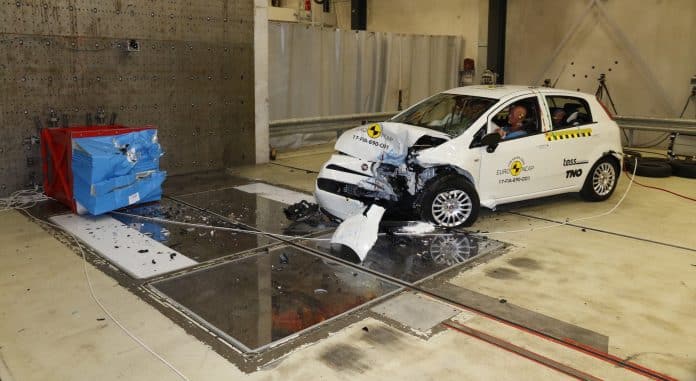
After an initial payment which can be from a part exchange or cash, you pay off the remaining or full value of the car in monthly instalments. When all payments have been made, the HP agreement ends and you own the car. Three to five years is the usual term. You’ll be subject to a credit check.

HP is secured against the car, so you don’t own the car until the last payment is made. It is usually sold at the dealership – new or used – and is an important way in which the dealer will make money on the sale, so they are likely to be keen to offer it.
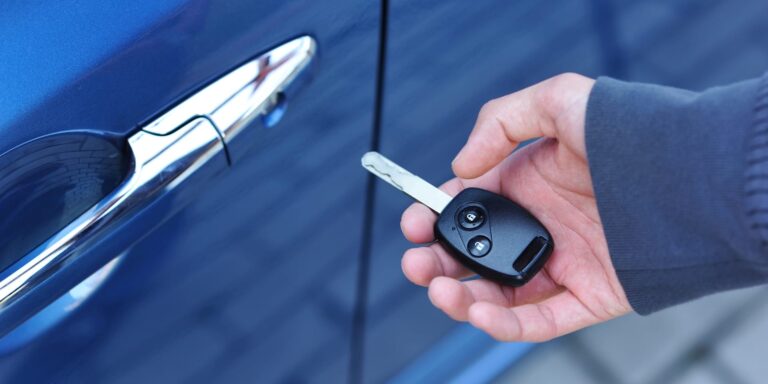
HP pros and cons
  • There is no need to specify annual mileage and no excess mileage and damage charges at the end.
  • Interest rates – expressed as annual percentage rates (APR) – are usually higher than a bank or building society loan. However, it is sometimes possible to negotiate a lower rate if you don’t mind haggling.
  • You can use your existing car as a part exchange.
  • You are committed to buying the car, there is no option to give it back.
  • If you don’t keep up the payments, the car can be repossessed without a court order, until a third of the total amount payable has been paid off.

Unsecured finance

Car finance agreements are called secured loans, because the car is secured against the debt. That means that if you default, the finance company essentially retains ownership of the vehicle until you have repaid every penny of the loan. It also means that the finance company can repossess the vehicle (either automatically or with a court order) if you default on your payments.

Alternatively, you can borrow money with a personal loan from a bank or building society. This is called an unsecured loan because you are free to spend the money as you see fit and it is not connected to a particular car. However, if you default on the loan, the bank can come after you and any of your assets to recover your debt.

Bank or building society loan

If you have a good record with your bank or building society, a loan can be simple to arrange at a competitive rate.

As mentioned above, a bank will usually be an unsecured loan, although do check to make sure. That means you borrow the money from the bank and the funds are transferred directly to you – rather than to the car dealer.

You pay for your car with the money you’ve borrowed, and you own it from day one. That also means you can sell it on before the loan ends, which may be helpful if your circumstances change and you no longer need the car, or if you hit financial trouble and need to take some drastic action.
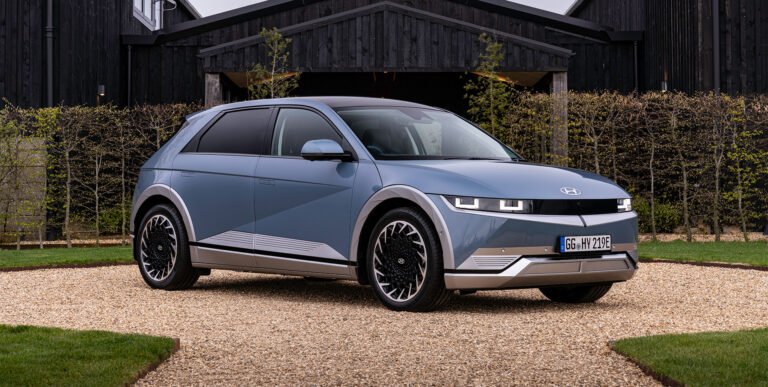
Unlike secured car finance, you usually have the flexibility to overpay or settle the loan early without heavy penalties.

Bank loans pros and cons
  • Bank loan interest rates are often much lower than dealer PCP or HP, so compare the Annual Percentage Rates (APR).
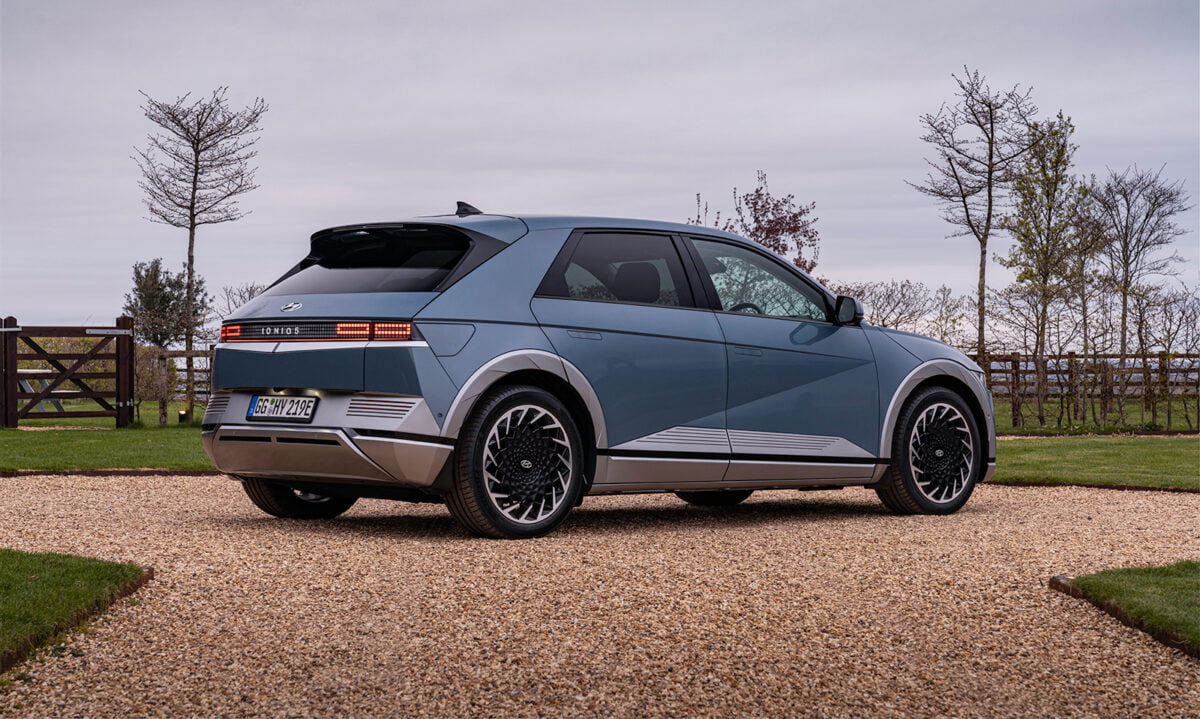
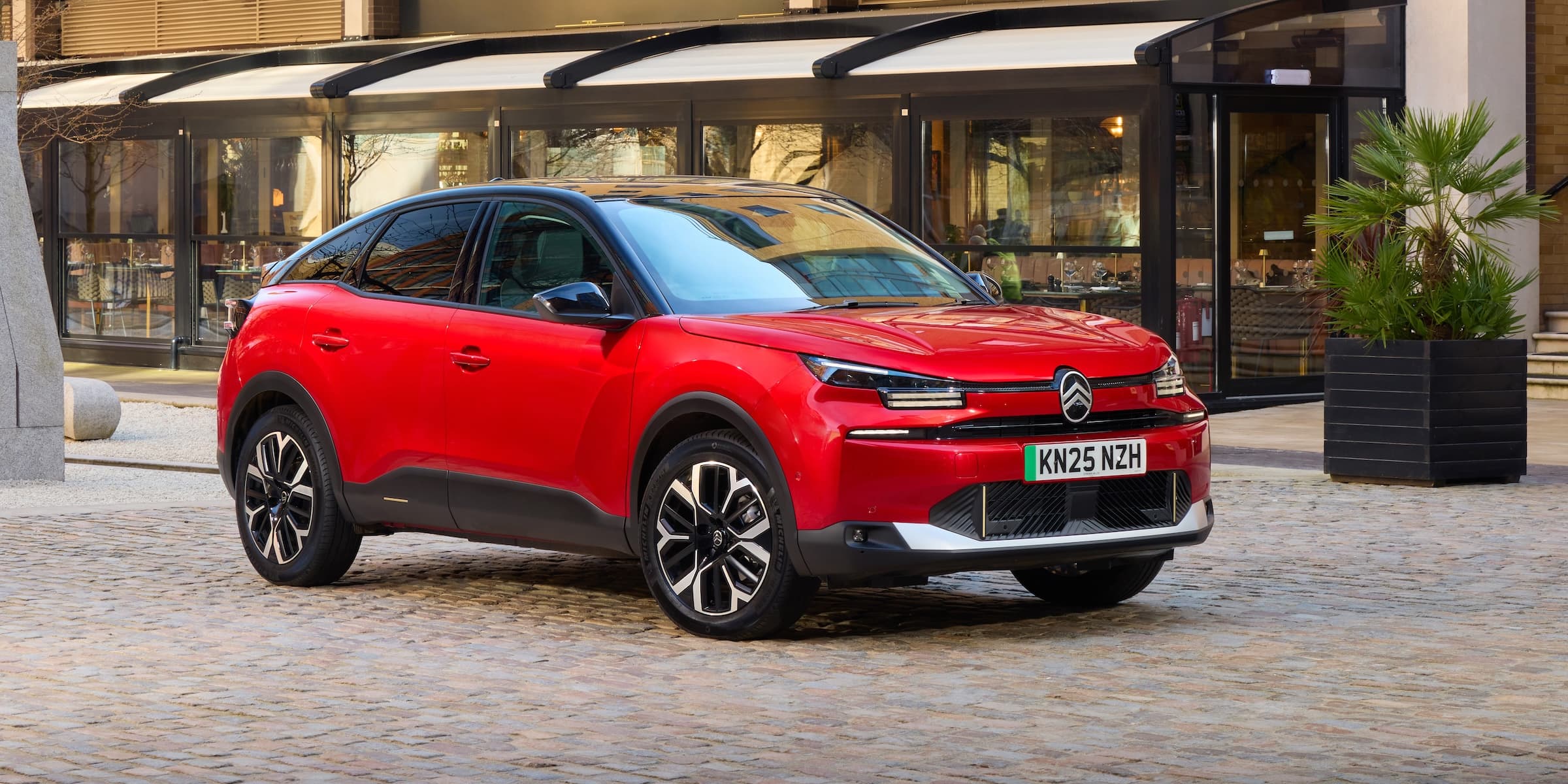
  • You own and run the car from the start with no mileage or damage penalties.
  • You can sell it or part exchange it for another when you like. However, the loan still runs its term.
  • You can use your existing car as part payment (part exchange) and fund the rest with the loan.
  •  Most banks will allow you to settle early, with no penalties except a short amount of interest while you have given notice.
  • Unless you have a high-value car to part exchange, you will have to borrow a larger value whether it’s new or used, hence bigger monthly payments.
  • Manufacturer new car incentives such as deposit contributions won’t be available if you have your own loan.

Additional reporting by Stuart Masson.