Find an Expert Rating: 
Home Blog Page 80

Mercedes-Benz EQC (2019 to 2023)

Summary

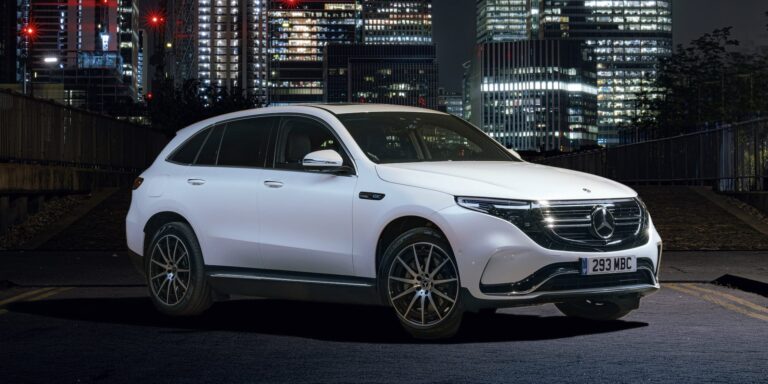
Launched in 2019, the Mercedes-Benz EQC was the first ‘proper’ production EV of any sort from the three-pointed star brand. It was discontinued in 2023.

Reviewers pointed out that the car was a late arrival to a class already boasting the Audi Q8 e-tron, Jaguar I-Pace and Tesla Model X. But some, such as Honest John, dubbed the Mercedes “a worthy adversary to any of them.”

The EQC also lost out on practicality, being slightly smaller than its main rivals – opinions were divided over the rear-seat head and legroom, though most agreed the small rear door aperture didn’t make it easy to get into the car.

The interior enjoyed much praise – “it looks and feels a quality bit of kit” said the Sunday Times. Reviewers particularly liked the high-tech infotainment system, though its full capabilities were only available on higher-spec versions.

The EQC’s performance impressed. Each axle had its own electric motor, producing all-wheel-drive, total power of 408hp and a huge 760Nm of torque – 0-62mph time is a shade over five seconds. As well as being fast, the EQC was refined – “beautifully smooth” according to the Sunday Times though hard cornering highlighted its weight with notable body roll. 

No longer on sale, the Mercedes-Benz EQC holds a Used Car Expert Rating of C, with a score of 62%. Although it gets points for having no tailpipe emissions, it’s an expensive car to live with.

EQC highlights

  • Refined on-road comfort
  • Rapid performance
  • Stylish, well-designed interior
  • Impressive infotainment system

EQC lowlights

  • Innocuous exterior styling
  • Not exactly roomy, especially in rear
  • Less fun to drive than some rivals
  • Best infotainment functionality requires spending

Key specifications

Body style: Medium SUV/crossover
Powertrain: electric motor, battery-powered
Price when new: From £74,330 on-road

Launched: Summer 2019
Last updated: N/A
Discontinued: Summer 2023

Media reviews

Highlighted reviews and road tests from across the UK automotive media. Click any of the boxes to view.

Featured reviews

More reviews

Car

Car Keys

Carbuyer

Company Car Today

Driving Electric

Evo

Green Car Guide

Heycar

Honest John

Parkers

The Sunday Times

The Telegraph

Top Gear

Which EV?

Safety rating

Independent crash test and safety ratings from Euro NCAP

Overall score: 5 stars
Date tested: September 2019
Read the full Euro NCAP review

Adult protection: 96%
Child protection: 90%
Vulnerable road users: 75%
Safety assist: 75%

The Mercedes-Benz EQC gained a top five-star rating when tested by Euro NCAP in 2019, including scoring maximum points in the side-barrier impact test and the standard-fit active safety, including autonomous emergency braking, praised for its response in a wide range of situations. 

Eco rating

No eco rating

The Mercedes-Benz EQC was not lab tested by Green NCAP during its production life.

Running cost rating

Clear Vehicle Data logo close crop

Monthly cost of ownership data provided exclusively for The Car Expert by Clear Vehicle Data

Battery rangeAverageScoreVariationScore
EV models254 milesB
Electrical efficiencyAverageScoreVariationScore
EV models3.2 m/KWhE
Insurance groupAverageScoreVariationScore
All models50F
Service and maintenanceCostScore
Year 1£423D
Year 2£874D
Year 3£1,301D
Year 4£1,433D
Year 5£1,940D
Overall£5,971D

The Mercedes-Benz EQC is not the most cost-effective electric vehicle you can buy, according to numbers provided exclusively to The Car Expert by our data partner, Clear Vehicle Data.

Electrical efficiency (the EV equivalent of miles per gallon in a petrol or diesel car) is poor compared to other EVs, meaning that you don’t go as far on a full battery charge as you’d expect.

Insurance costs are likely to be high, as the EQC is ranked in the top group as set by the UK’s insurance assessor, Thatcham Research. Servicing costs are average for a car of this price and sophistication, but other EVs will be cheaper.

Reliability rating

MotorEasy logo 600x167

Reliability data provided exclusively for The Car Expert by MotorEasy

As of December 2025, we don’t have enough reliability data on the Mercedes-Benz EQC to generate a reliability rating.

The Car Expert’s reliability information is provided exclusively to us using workshop and extended warranty data from our partner, MotorEasy, sourced from both official dealerships and independent workshops. 

As soon as MotorEasy has sufficient data on the EQC, we’ll publish the score here.

Warranty rating

New car warranty information for the Mercedes-Benz EQC

Overall ratingB76%
New car warranty duration3 years
New car warranty mileageUnlimited miles
Battery warranty duration8 years
Battery warranty mileage100,000 miles

Mercedes’ new car warranty is fairly average, and worse than rival brands in a similar price bracket as a used EQC. From new, the duration was three years, with no limit on mileage.

In addition, there’s an eight-year/100,000-mile warranty for the battery components.

Warranty on a used Mercedes-Benz EQC

  • If you are buying an ‘Approved Used’ Mercedes-Benz EQC from an official Mercedes-Benz dealership, you will get a minimum 12-month warranty included.
  • If you are buying a used Mercedes-Benz EQC from an independent dealership, any warranty offered will vary and will probably be managed by a third-party warranty company.
  • If you are buying a used Mercedes-Benz EQC from a private seller, there are no warranty protections beyond any remaining portion of the original new car warranty.

If you’re looking to buy any used car that is approaching the end of its warranty period, a used car warranty is usually a worthwhile investment. Check out The Car Expert’s guide to the best used car warranty providers, which will probably be cheaper than a warranty sold by a dealer.

Recalls

Official DVSA safety recalls that have been issued for the Mercedes-Benz EQC

Date: November 2023
Recall number: R/2023/300
Model types: All
Build dates: 02/2022 to 05/2022
Number of vehicles affected: 312
Defect: The adjustment of the headlamps might not meet specifications, and blinding of oncoming traffic may not be ruled out.
Remedy: Check the adjustment and correct, if necessary.

Date: June 2022
Recall number: R/2022/135
Model types: All
Build dates: 06/2021
Number of vehicles affected: 3
Defect: The electrical plug connection of the headlights might not be watertight.
Remedy: Check the plug connection and headlights on the affected vehicles, and replace them if necessary.

Date: November 2021
Recall number: R/2021/376
Model types: All
Build dates: 01/2016 to 01/2021
Number of vehicles affected: 50,390
Defect: The behaviour of the emergency call system might not meet specifications.
Remedy: Update the software of the communication module for the emergency call system.

Date: November 2021
Recall number: R/2021/341
Model types: All
Build dates: 05/2019 to 12/2020
Number of vehicles affected: 3,445
Defect: The wiring harness of the electrical steering might have been damaged during the assembly process.
Remedy: Check the wiring harness on the affected vehicles and perform the required repair measures, if necessary.

Date: September 2021
Recall number: R/2021/286
Model types: All
Build dates: 08/2020 to 09/2020
Number of vehicles affected: 129
Defect: The locking mechanism for the electrical connector of the side crash sensors might not meet specifications.
Remedy: Check the side crash sensors in the doors on the affected vehicles and replace them, if necessary.

Date: July 2021
Recall number: R/2021/264
Model types: All
Build dates: 05/2019 to 10/2019
Number of vehicles affected: 42
Defect: The corrosion protection of the high-voltage battery housing in the area of the connections may not be ensured over the lifetime of the vehicle.
Remedy: Rework the sealing of the high-voltage battery on the affected vehicles.

Date: May 2021
Recall number: R/2021/134
Model types: All
Build dates: 01/2016 to 01/2021
Number of vehicles affected: 663,406
Defect: The behaviour of the emergency call system might not meet specifications.
Remedy: Update the software of the communication module for the emergency call system.

Date: December 2020
Recall number: R/2020/333
Model types: All
Build dates: 12/2019 to 03/2020
Number of vehicles affected: 3,029
Defect: The wiring harness of the steering control unit might not have been manufactured according to specification.
Remedy: Check the wiring harness of the steering control unit on the affected vehicles and replace it if necessary.

Date: August 2020
Recall number: R/2020/197
Model types: All
Build dates: 01/2020 to 03/2020
Number of vehicles affected: 1,179
Defect: The left rear seat backrest lock might not meet the specifications.
Remedy: Replace the left rear seat backrest lock on the affected vehicles.

Date: January 2020
Recall number: R/2019/355
Model types: All
Build dates: 02/2019 to 10/2019
Number of vehicles affected: 150
Defect: The bolt in the front axle differential transmission might not meet durability specifications.
Remedy: Replace the electric powertrain of the front axle on the affected vehicles.

Date: November 2019
Recall number: R/2019/337
Model types: All
Build dates: 08/2018 to 09/2019
Number of vehicles affected: 2,345
Defect: Certain driver airbag modules might not be bolted onto the base plate.
Remedy: Check the driver’s airbag on the affected vehicles and replace it if necessary.

As of September 2024 (our most recent data point), there have been 11 DVSA vehicle safety recalls on the Mercedes-Benz EQC to address different issues. However, recall information is updated very regularly, so this may have changed.

Not all vehicles are affected by recalls. You can check to see if your car is included in any of the above recalls by visiting the DVLA website or contacting your local Mercedes-Benz dealer.

If your car is affected by a recall, the vehicle must be repaired and you should not be charged for any work required. If you are buying a used EQC, you should insist that any outstanding recall work is completed before you take delivery of the vehicle.

Similar cars

If you’re looking at the Mercedes-Benz EQC, you might also be interested in these alternatives

New models: Audi Q6 e-tron | BMW iX3 | DS Nº8 | Ford Mustang Mach-E | Genesis GV60 | Genesis Electrified GV70 | Hyundai Ioniq 5 | Kia EV6 | Lexus RZ | Maserati Grecale Folgore | Mercedes-Benz GLC EQ | Mercedes-Benz EQE SUV | Nissan Ariya | Polestar 2 | Porsche Macan Electric | Skoda Enyaq | Tesla Model Y | Volkswagen ID.4 | Volvo EX60

Discontinued models: Audi Q8 e-tron (2019 to 2025) | BMW iX3 (2021 to 2025) | Jaguar I-Pace (2018 to 2024)

More news, reviews and information about the Mercedes-Benz EQC at The Car Expert
Everything you need to know about Mercedes-Benz

Everything you need to know about Mercedes-Benz

Electric Mercedes-Benz EQC to take on Tesla

Electric Mercedes-Benz EQC to take on Tesla

Mercedes-Benz EQC pricing announced

Mercedes-Benz EQC pricing announced

Seven stars in latest round of crash tests

Seven stars in latest round of crash tests

Paris show round-up – more of the new cars

Paris show round-up – more of the new cars

Buy a Mercedes-Benz EQC

If you’re looking to buy a used Mercedes-Benz EQC, The Car Expert’s partners can help you find the right car

Motors 600x300

Search less, live more. We make finding the right car simple. Find out more

Auto Trader logo 600x300

Search for your next new or used car with Auto Trader. Find out more

Carwow logo 600x300

Discover great deals available on both new and used cars. Find out more

Lexus LC

Summary

On sale from 2017 to 2024, the Lexus LC certainly made headlines. Top Gear described the coupe as “the most outrageous thing to come from the maker of posh Toyotas since the LFA supercar in 2010.”

The LC was launched as a 2+2 coupe, very mildly refreshed in 2020 with a convertible joining the range at the same time.

There were two powertrain options for the coupé – the LC 500, as its name suggests, boasted a 5.0-litre V8 of 464hp. Being a Lexus, the other option had to be a hybrid, and the LC 500h mated a 3.5-litre petrol engine to an electric motor for 359hp. Naturally, this car was slower to 62mph, taking five seconds compared to the 4.7 seconds of the V8. The convertible was only available with the petrol V8.

The Lexus LC was designed for those who wanted something different to the standard-bearing Porsche 911, though reviewers believed it rivalled everything from the BMW 8 Series to the Aston Martin DB11.

Reviewers were unanimously positive about the 5.0-litre LC 500, with Evo describing it as “a fantastic coupe”. The hybrid earned mixed reviews, however – Evo, once again, describing it as “not inherently bad, but more a calmer GT cruiser”.  Top Gear called the hybrid “clever but flawed” whereas the V8 offered lots of character and performance, with a much more effective automatic gearbox.

Testers also preferred the LC 500 V8’s handling, saying that the additional weight of the hybrid model, especially in top spec Luxury trim, made it more cumbersome in corners.

The interior layout also earned praise – despite having very many buttons and switches. Reviewers liked the way the driver’s surroundings were laid out, but added that the rear seats were effectively nothing more than luggage racks.

As of March 2026, the Lexus LC holds a Used Car Expert Rating of E, with a score of 49%. It gets good media review scores, but its ownership costs are inevitably high.

Lexus LC highlights

  • V8 offers exciting performance and handling
  • Suspension upgrades improve ride
  • Hybrid’s clever gearbox better than plain CVT
  • Hybrid good for urban stop-start drives
  • Complex interior well executed

Lexus LC lowlights

  • Indecisive auto gearbox on V8
  • Hybrid can’t match V8 for performance
  • Hybrid weight affects handling
  • Lots of interior buttons
  • Back seats only good for luggage storage

Key specifications

Body style: Large 2+2 coupé and convertible
Engines: petrol, petrol-electric hybrid
Price: From £98,960 on-road

Launched: Summer 2017
Last updated: Autumn 2020
Update due: TBA

Media reviews

Highlighted reviews and road tests from across the UK automotive media. Click any of the boxes to view.

Auto Express

Auto Trader

Car

Car Keys

Carbuyer

Carwow

Eurekar

Evo

Honest John

Motors

Parkers

The Sunday Times

The Telegraph

Top Gear

Safety rating

Independent crash test and safety ratings from Euro NCAP

No safety rating

The Lexus LC was not assessed by Euro NCAP during its production life.

Eco rating

Independent economy and emissions ratings from Green NCAP

No eco rating

The Lexus LC was not assessed by Green NCAP during its production life.

Reliability rating

Reliability data provided exclusively for The Car Expert by MotorEasy

No reliability rating

As of March 2026, we don’t have enough reliability data on the Lexus LC to generate a reliability rating.

The Car Expert’s reliability information is provided exclusively to us using extended warranty data from our partner, MotorEasy. As soon as MotorEasy has sufficient data on the LC, we’ll publish the score here.

Running cost rating

Monthly cost of ownership data provided exclusively for The Car Expert by Clear Vehicle Data

Fuel consumptionAverageScore
Petrol models24 mpgE
Hybrid models35 mpgD
CO₂ outputAverageScoreVariationScore
Petrol models265 g/kmE
Hybrid models184 g/kmD
Insurance groupAverageScoreVariationScore
All models49E
Service and maintenanceCostScore
Year 1£533E
Year 2£1,217E
Year 3£1,826E
Year 4£2,106E
Year 5£2,644E
Overall£8,326E

Unsurprisingly, the Lexus LC is not just an expensive car to buy but also an expensive car to own and run, according to whole-life cost numbers provided exclusively to The Car Expert by our data partner, Clear Vehicle Data.

Fuel consumption for the 5.0-litre LC 500 is among the worst new cars in the UK, while the hybrid LC 500h is not massively better. Obviously, road tax will also be high as CO2 emissions are very much linked to fuel consumption.

Insurance and servicing costs will also be very high, which is not surprising for a £100K sports car.

Awards

Trophies, prizes and awards that the Lexus LC has received

2021

  • UK Car of the Year Awards – Best Open Top Car
  • Women’s World Car of the Year Awards – Best Luxury Car
  • Carwow Awards – Best Convertible

Similar cars

If you’re looking at the Lexus LC, you might also be interested in these alternatives

Aston Martin DB11 | Bentley Continental GT | Bentley GT Convertible | BMW 8 Series | Jaguar F-Type | McLaren GT | Mercedes-AMG GT | Polestar 1 | Porsche 911

More news, reviews and information about the Lexus LC at The Car Expert

Everything you need to know about Lexus

Everything you need to know about Lexus

Lexus announces pricing for updated LC models

Lexus announces pricing for updated LC models

Lexus LC upgraded for more comfort

Lexus LC upgraded for more comfort

Lexus LC Convertible heading for showrooms

Lexus LC Convertible heading for showrooms

Buy a Lexus LC

If you’re looking to buy a new or used Lexus LC, The Car Expert’s partners can help you find the right car.

Motors 600x300

Find your next used car with Motors. Find out more

Auto Trader logo 600x300

Find your next new or used car with Auto Trader. Find out more

Carwow logo 600x300

Find your next new or used car with Carwow. Find out more

Lease a Lexus LC

If you’re looking to lease a new Lexus LC, The Car Expert’s partners can help you find a competitive deal.

Leasing-com logo

Personal contract hire deals from Leasing.com. Find out more

Carwow logo 600x300

Personal contract hire deals from Carwow. Find out more

Select Car Leasing logo

Personal contract hire deals from Select Car Leasing. Find out more

Subscribe to a Lexus LC

If you’re interested in a car subscription, The Car Expert’s partners can help. (PS: What’s a car subscription?)

Cocoon Vehicles logo 600x300

Car subscriptions from Cocoon.
Find out more

Just Vehicle Solutions logo 600x300

Car subscriptions from Just Vehicle Solutions.
Find out more

Flexible Vehicle Contracts logo 600x300px

Car subscriptions from Flexible Vehicle Contracts.
Find out more

Kia Sportage to go Euro-specific for first time

Kia has unveiled the look of the fifth-generation Sportage SUV, and revealed that the new model will include the first version specifically designed for Europe.

The official pictures of the latest Sportage show the global version – details of the European-pitched variant, the first in the 28 years the model has been on sale, will be revealed in September but the car is expected to be close to the version already unveiled.

The new visual treatment is closely related to the recently unveiled Kia EV 6 flagship electric car – the Sportage is the second model to be created under the Korean brand’s latest ‘Opposites United’ styling language. Signature elements include the large boomerang-style headlamps pointing sharply into the central grille area, a recessed bonnet and a large spoiler atop the rear screen.

The cabin of the new Sportage is equally striking, built around a panoramic curved display panel – Kia dubs the car’s interior ‘bold but sophisticated.’ Features include a slim touchscreen pad and integrated controller for the driver.

Kia Sportage 2021 interior

Kia will also offer an even bolder version of the Sportage for the first time. Dubbed the X-Line, it will be fitted with a bespoke bumper and side sills, together with a curved roof rack. Inside buyers will have a choice of two striking trim finishes.

“Reinventing the Sportage gave our talented design teams a tremendous opportunity to do something new; to take inspiration from the recent brand relaunch and introduction of EV6 to inspire customers through modern and innovative SUV design,” said Kia’s design head Karim Habib.

No mechanical details of the new Sportage have yet been revealed but industry sources suggest the car will follow the example of sister brand Hyundai’s Tucson. This has a powertrain line-up based around a 1.6-litre petrol engine, with mild, full and plug-in hybrid options all in the range. The car is expected on sale at the end of 2021.

Kia Sportage rear three-quarter 2021

Ford Galaxy (2015 to 2024)

Summary

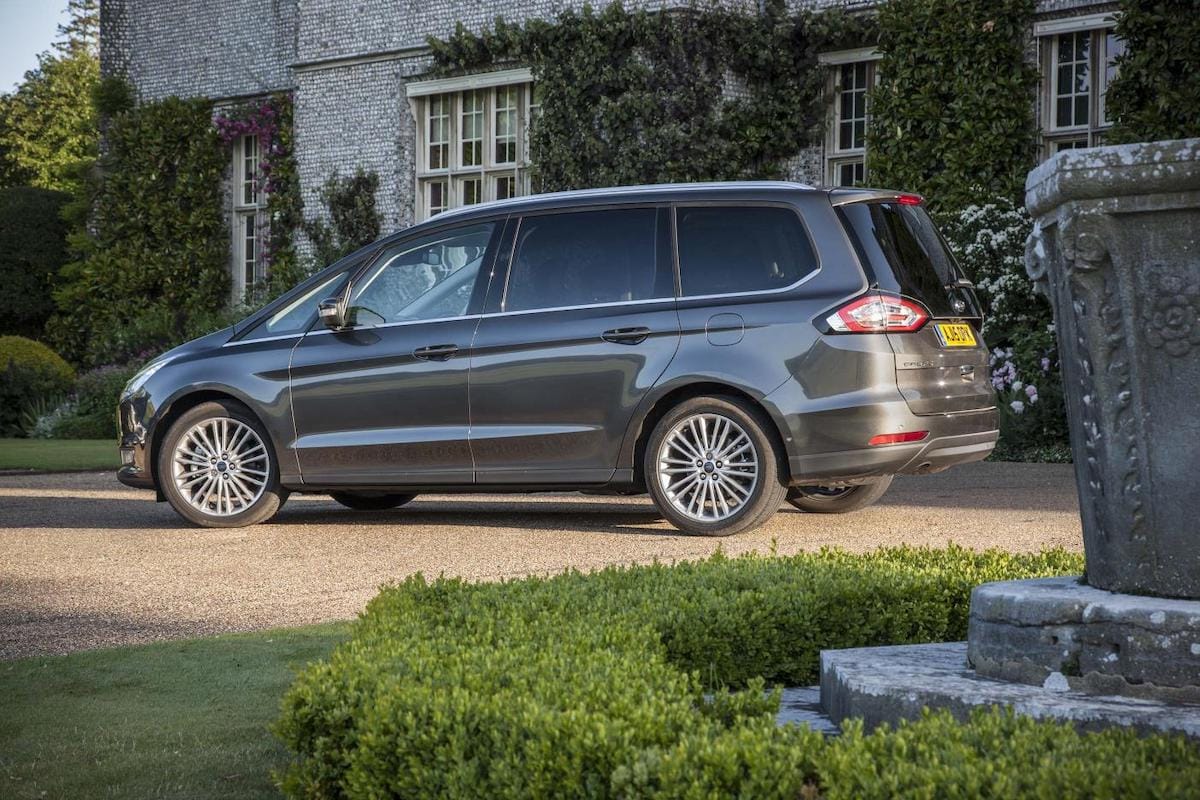
The Ford Galaxy was a large seven-seat people carrier, which was sold in the UK from 2015 to 2024. This was the third and final generation for the Galaxy model, not replaced after production ended due to falling demand for MPV-style vehicles.

Large seven-seat people carriers have largely been superseded by SUVs, but the Galaxy soldiered on long after most similar vehicles had been retired, with strong loyalty from large families and commercial users such as airport transfer operators.

Several powertrain options were offered over the decade-long production run, with petrol, diesel and hybrid versions. There was even an all-wheel-drive model available. Reviews tended to favour the diesel engine with an auto gearbox for smooth progress with no hassle.

Ford cars are usually praised for their chassis and the Galaxy maintained this trend, built on the underpinnings of the Mondeo. Most reviewers praised both the ride quality and handling, finding it surprisingly agile for something so big. Parkers commented: “This is an MPV which can seat seven comfortably without resorting to commercial vehicle handling or refinement.”

The space and flexibility of the interior also scored with the testers – the Titanium trim level ticked most boxes, especially with a ‘Family Pack’ option which featured electric folding of the big seats.

Ford kept pace with evolving technology over the Galaxy’s production run, with regular upgrades in terms of infotainment and such. However, most reviewers tended to compare the Galaxy with its slightly smaller sibling, the Ford S-Max, and sided with the smaller MPV as a better-value option that was more engaging to drive. They also highlighted the Galaxy’s image, wondering if private owners really wanted to look as if they were doing an airport taxi run…

As of February 2026, the Ford Galaxy has a Used Car Expert Rating of E, with a score of 54%. Despite positive media reviews and low CO2 emissions, the Galaxy scores poorly for reliability and is only average on running costs, which are weighted more heavily in our used car ratings.

Galaxy highlights

  • Full seven-seat space
  • Flexible interior with slide and fold seats
  • Drives well for its size
  • Upright driving position

Galaxy lowlights

  • Despite upgrades, design dated
  • Expensive to buy
  • Not as dynamic as Ford S-Max
  • Personality of an airport taxi

Key specifications

Body style: Large seven-seat MPV
Engines: diesel, petrol-electric hybrid
Price when new: From £40,725 on-road

Launched: Summer 2015
Last updated: Spring 2021
Ended production: Spring 2024

Media reviews

Highlighted reviews and road tests from across the UK automotive media. Click any of the boxes to view.

Auto Express

Auto Trader

Business Car

Car

Car Keys

Carbuyer

Carwow

Daily Mirror

Eurekar

Fleetworld

Heycar

Motors

Parkers

Top Gear

Safety rating

Independent crash test and safety ratings from Euro NCAP

Overall score: 5 stars
Date tested: September 2015
Date expired: January 2022
Read the full Euro NCAP review

Adult protection: 87%
Child protection: 87%
Vulnerable road users: 79%
Safety assist: 71%

Notes on safety rating

The Ford Galaxy was originally tested by Euro NCAP back in 2015 and awarded a five-star rating. However, this rating expired in January 2022 and is no longer valid as the car no longer meets the standards required for such a rating. This is normal practice, as Euro NCAP reviews its ratings on most cars annually with most ratings expiring after about six or seven years.

However, if you are comparing a used Galaxy to vehicles of similar age, whose ratings will have probably also expired, its safety rating score is still useful.

Eco rating

Independent economy and emissions ratings from Green NCAP

No eco rating

The Ford Galaxy was not tested by Green NCAP during its production life.

Reliability rating

Reliability data provided exclusively for The Car Expert by MotorEasy

All data based on MotorEasy average workshop costs for extended car warranty claims

The Ford Galaxy has a poor reliability score of just 16% as of April 2025 (our most recent data point), according to exclusive workshop and warranty data provided by our partner, MotorEasy.

In addition, the average repair bill is almost £900, which is a lot more than the cost of a used car warranty. Certainly worth keeping in mind if you own a Galaxy or are looking at buying a used one.

The problems are spread across all car systems. Most concerning is that many claims relate to gearbox problems, which have an average repair bill of almost £2,600.

Given the below-average reliability score and potentially expensive bills, make sure any extended warranty cover you purchase for a Ford Galaxy covers all of these potential problem areas. Also worth remembering is that many warranties are for personal use of a vehicle only, so if you’re running a Galaxy for your business (and, let’s face it, most of them are used as taxis), make sure you have a warranty that covers business use.

Awards

Trophies, prizes and awards that the Ford Galaxy has received

2015

  • Scottish Car of the Year Awards – Best MPV

Similar cars

If you’re looking at the Ford Galaxy, you might also be interested in these alternatives

Citroën Grand C4 SpaceTourer | Citroën SpaceTourer | Ford S-Max | Ford Tourneo Custom | Mercedes-Benz V-Class | Peugeot Traveller | Toyota Proace Verso | Vauxhall Vivaro Life | Volkswagen Sharan | Volkswagen Caravelle

Buy a Ford Galaxy

If you’re looking to buy a used Ford Galaxy, The Car Expert’s partners can help you find the right car

Motors 600x300

Find your next used car with Motors. Find out more

Auto Trader logo 600x300

Find your next new or used car with Auto Trader. Find out more

Carwow logo 600x300

Find your next new or used car with Carwow. Find out more

Britain’s best-selling cars, May 2021

It was a relatively positive month for new car registrations in May, at least compared to the most of the last year. Looking at the bigger picture, however, sales were still some way off pre-pandemic results. But it was nice to see things returning to some kind of normality.

Strong fleet purchasing relative to private sales meant more registrations of economical medium-sized cars, which overtook sales of SUVs for the first time in a long time. Small cars still dominated, as always, but the fight was broader than the usual Ford Fiesta/Vauxhall Corsa stoush.

We’ve covered the detail of the monthly registration results already this week, so let’s look at the top-selling cars of the month.

Report: Fleets drive new car sales growth in May


The UK’s best-selling cars, May 2021

1. Volkswagen Golf

Volkswagen Golf – Britain's best-selling cars of 2020

The Volkswagen Golf topped the charts for the first time this year in May, with a strong result that also lifted it above the Nissan Qashqai into fourth place in year-to-date sales. After a slow start to the year, the Golf now appears to be delivering far more consistent sales for Volkswagen.

As more local reviews of different UK-spec Golf models have been published in the media, the Golf’s initial stellar Expert Rating slipped from a high of 85% to its current level of 80%. The much-vaunted ‘all-digital’ interior has drawn criticism from reviewers, who have found it inferior to the more conventional cabin of the previous-generation model. It’s not exactly a disaster for Volkswagen, but it’s interesting to see review scores that are consistently below the previous model’s results.

2. Vauxhall Corsa

Vauxhall Corsa Ultimate

Despite slipping off the top of the charts in May, the Vauxhall Corsa extended its lead at the top of the charts over the Ford Fiesta. With the Ford having a very difficult month, it means that the Vauxhall now holds a sales lead of more than 2,000 units after only five months of the year. The chances of the Corsa finally snatching the best-selling car crown away from its arch rival after about a decade on top for the Fiesta are looking better each month.

The petrol and diesel versions of the new Corsa currently hold an Expert Rating of 72% on our unique aggregator scale, based on 26 reviews we have gathered so far. That puts it in the bottom half of the supermini class, although the all-electric Corsa-e does score slightly better with an Expert Rating of 74%.

3. Volkswagen Polo

Volkswagen Polo (2018 onwards) Expert Rating

After returning to the top ten charts in April, the Volkswagen Polo jumped all the way up to third in May. This strong performance also lifted it back into the top ten for year-to-date registrations, deposing the Ford Kuga from tenth place.

The success of the Polo and Golf in May also helped Volkswagen to comfortably top the charts for best-selling manufacturers, with sister brand Audi taking second place and shoving eternal market leader Ford down to third.

The Polo holds an Expert Rating of 80% in The Car Expert’s New Car Ratings calculator, which is good but still a few points behind its Spanish cousin, the SEAT Ibiza. A facelifted model has just been announced, which is expected to arrive here in the UK by the end of summer.

4. Mercedes-Benz A-Class

Mercedes-Benz A-Class hatch – Britain's best-selling cars of 2020

Fourth place in the charts is actually the worst result we’ve seen for a few months for the Mercedes-Benz A-Class. It remains in thid place for year-to-date registrations, but it has been reeling in the Ford Fiesta over the last couple of months. Could it seriously overhaul the perennial champ in the second half of this year?

The A-Class has an Expert Rating of 76% in The Car Expert’s unique aggregated Expert Rating index, based on 47 UK reviews. It ranks highly for safety, winning awards from Euro NCAP and Thatcham in previous years for its protective qualities.

5. Ford Puma

Ford Puma (2020 onwards) Expert Rating

The top-selling Ford this month was neither the Fiesta nor the Focus (which failed to make the top ten yet again), but the talented little Puma SUV.

Ford’s junior crossover has been popular with critics, currently holding a rating of 82% on our unique Expert Rating index. This remains a best-in-class score for supermini SUVs, but it has slipped a few points in the last few months as we’ve added some new reviews and other sources have revised their initial opinions.

6. Kia Sportage

Kia Sportage (2018) ratings and reviews | The Car Expert

The current Kia Sportage seems determined to go out with a bang, with its second strong sales performance in as many months. An all-new model is set to be unveiled later this month, which is likely to arrive in the UK by the end of the year.

The Sportage currently holds an Expert Rating of 72% in our aggregated Expert Ratings index, which is midfield for medium SUVs but a couple of points behind the best-selling Nissan Qashqai and quite a margin behind the top cars in the mid-size SUV segment. It’s due for replacement soon, which is worth bearing in mind if you’re tempted by current offers.

7. Ford Fiesta

Ford Fiesta – Britain's best-selling car 2020

By the Fiesta’s lofty standards, 2021 is proving to be a tough year and May was a particularly challenging month. Seventh in the sales charts means it’s now 2,300 units behind the Vauxhall Corsa in year-to-date registrations, with no indication that anything is likely to shift the balance back in Ford’s favour anytime soon.

With the Fiesta languishing in seventh and the Focus out of the top ten altogether (both in May and year-to-date figures), it was a slow month for the brand that usually dominates the UK new car market. Ford’s best-selling vehicle in May was actually the Transit Custom van.

The Fiesta currently holds an Expert Rating of 81% in The Car Expert’s unique Expert Rating index, which aggregates reviews from 25 of the UK’s top motoring websites. That’s some 9% better than the Corsa, so the motoring media still clearly prefers the Ford even if customers currently say otherwise.

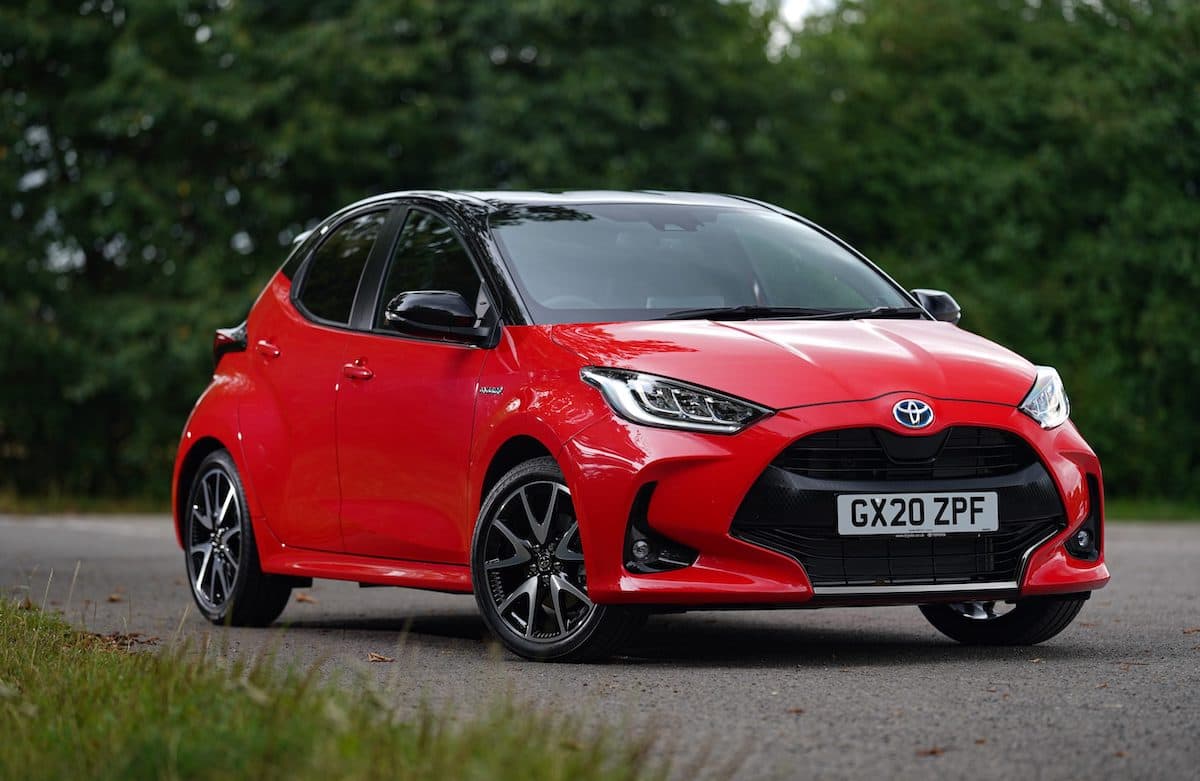
8. Toyota Yaris

2020 Toyota Yaris review - front

After making its debut in the best-sellers list back in March, the Toyota Yaris returned – again in eighth place – in May.

The Yaris currently holds an overall score of 76% on our Expert Rating index, which is several points behind the Ford Fiesta and Volkswagen Polo, although about four points ahead of the Vauxhall Corsa. It has received a number of awards in recent months, including European Car of the Year 2021, so it may be that the Yaris is going to become a far more regular sight in the top ten than its unloved predecessor.

9. Mini hatch

Mini hatch (2014 onwards) – Expert Rating

May was only the second time this year that the Mini hatch has made an appearance in the top ten list. It finished seventh in overall sales in 2020, but sits outside the top ten so far this year.

A facelifted Mini range is due to hit showrooms over the summer, which may help stimulate sales in the second half of the year.

Despite being the oldest car in the top ten, the Mini hatch still holds a very solid score of 80% in our Expert Ratings aggregator, which is better than most cars in its class. The new Mini Electric model dosn’t score so well, with an Expert Rating of only 73% – although this may change by a few points (either up or down) once the facelifted version is reviewed.

10. Audi A3

Audi A3 (2020 onwards)

Making its second appearance in a row in the lower reaches of the top ten is the Audi A3. Available as both a five-door hatchback and a saloon, the new A3 appeared in the top ten a couple times at the end of 2020, but it seems to becoming more popular of late.

It was a great month for Audi overall, rising to second place in overall manufacturer registrations behind its Volkswagen overlord. Not only was it considerably better than eternal rivals Mercedes-Benz and BMW, but more Audis were registered in May than Fords, which is something I don’t think we’ve ever said before.

The Audi A3 has received generally good reviews from the UK media since it was launched, with an Expert Rating of 78% that puts it a few points behind the BMW 1 Series (81%) and a couple of points ahead of the Mercedes A-Class (76%).

Citroën Berlingo (2018 to 2022)

Summary

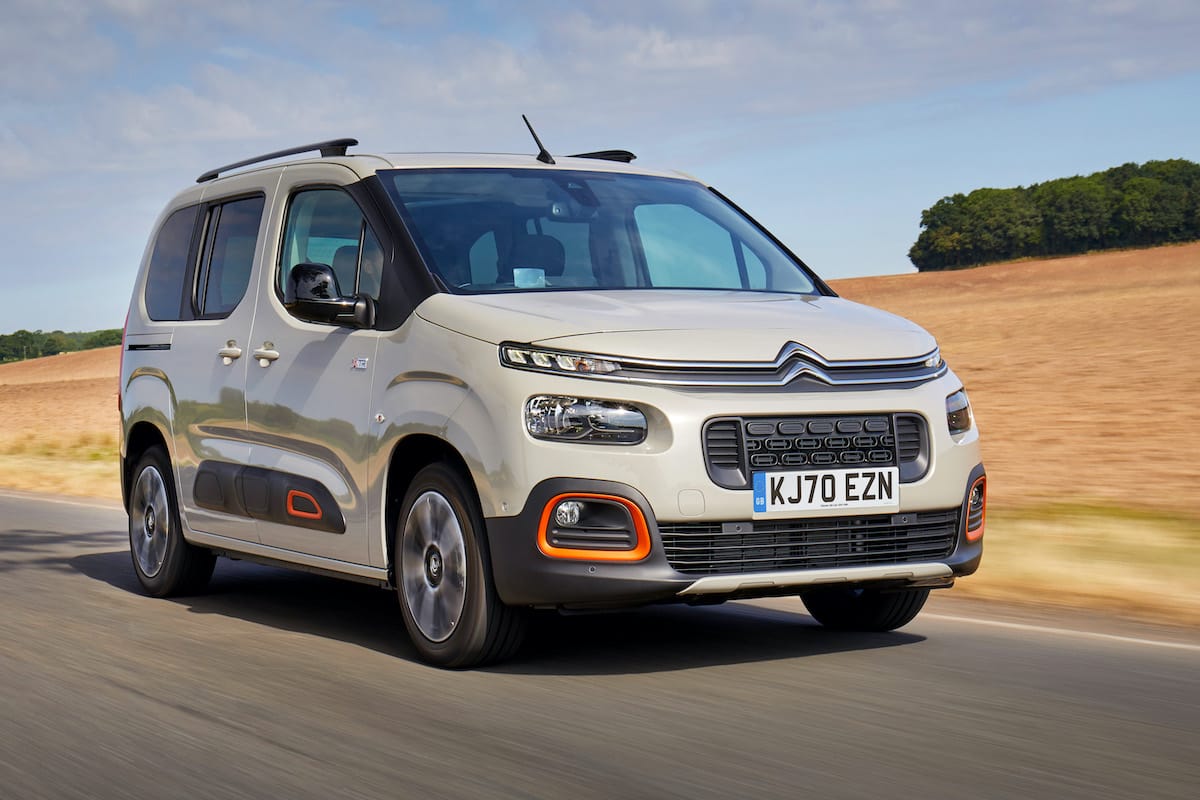
The third-generation Citroën Berlingo launched in 2018 as a no-nonsense small people carrier based on a van. This is Citroën’s second-biggest global seller after the C3, but was discontinued in early 2022 in favour of the all-electric ë-Berlingo people carrier.

The MPV is also part of one of those manufacturer alliances – the Peugeot Rifter and Vauxhall Combo Life are effectively the same car, with the main distinction of the Citroën some slightly quirky styling panels which give it a little more presence than its siblings.

The car was offered in two varieties – a standard five-seater and a 35cm longer XL version with seven seats. Engine choices were between two petrol and two diesel – most reviewers favoured the diesels for their combination of performance and economy.

All versions were marketed on what you got on a budget, and reviews emphasised this. Auto Express called the Berlingo “one of the best-value ways to transport a growing family and all that goes with it,” while Top Gear dubbed it “epic value”.

Reviewers highlighted the space – basing the car on a van profile meant loads of room for both people and their belongings. The interior was still somewhat basic, with no posh digital touchscreens and the like, but despite the hard plastics several testers noted that the quality of the fit and finish had stepped up significantly over the previous version.  

On the road, reviewers found the Berlingo “surprisingly good”, with smooth, refined progress. However, at high speeds the wind noise became intrusive while big bumps could crash their way around the cabin.

The petrol-powered Berlingo is now no longer in production as Citroën shifts its focus to electric models. As such, the conventional Berlingo has been replaced by the all-electric version called the ë-Berlingo.

As of February 2026, the Citroën Berlingo holds a Used Car Expert Rating of C, with a score of 64%. It gets good grades for its low running costs, while CO2 emissions and media review scores are also good. However, both reliability and safety scores are only average.

Berlingo highlights

  • Loads of space for both people and luggage
  • Cheap to buy and run, low insurance premiums
  • Refined on road
  • Tight turning circle
  • Build quality better than previous model

Berlingo lowlights

  • Less fun to drive than car-based alternatives
  • Body rolls a lot in corners
  • Wind noise at high speeds
  • Overall quality still basic
  • Autonomous braking not wholly effective

Key specifications

Body style: Small MPV
Engines: petrol, diesel, plug-in hybrid
Price when new: From £22,135 on-road

Launched: Summer 2018
Last updated: Winter 2020/21
Discontinued: Winter 2021/22

Media reviews

Highlighted reviews and road tests from across the UK automotive media. Click any of the boxes to view.

Auto Express

Auto Trader

Carbuyer

Carwow

Company Car Today

Heycar

Honest John

Parkers

The Telegraph

Top Gear

Safety rating

Independent crash test and safety ratings from Euro NCAP

Overall score: 4 stars
Date tested: October 2018
Date expired: January 2025
Read the full Euro NCAP review

Adult protection: 91%
Child protection: 81%
Vulnerable road users: 58%
Safety assist: 68%

Notes on safety rating

The Citroën Berlingo’s safety rating was based on Euro NCAP’s testing of the almost-identical Peugeot Rifter. The only real differences are some cosmetic body panels in the nose section, and Citroën would have been required to demonstrate that those differences would not affect the Berlingo’s performance in a crash.

However, this rating expired in January 2025 and is no longer valid as the car no longer meets the standards required for such a rating. This is normal practice, as Euro NCAP reviews its ratings on most cars annually with most ratings expiring after about six or seven years.

Although the rating has now expired, the score is still useful if you are comparing a used Berlingo to vehicles of similar age – whose ratings will have probably also expired.

Eco rating

Independent economy and emissions ratings from Green NCAP

No eco rating

The Citroën Berlingo was not tested by Green NCAP during its production life.

Reliability rating

MotorEasy logo 600x167

Reliability data provided exclusively for The Car Expert by MotorEasy

All data based on MotorEasy average workshop costs for extended car warranty claims

As of April 2025 (our most recent data point), the Citroën Berlingo has a better-than-average reliability rating of 75%, according to workshop and extended warranty data provided by our commercial partner, MotorEasy. This covers both this version of the Berlingo as well as both older (pre-2018) models.

Average repair cost to data has been just under £600. However, the most commonly reported issues have been engine problems, which are also the most expensive at nearly £1,200 on average.

If you own a Berlingo or are considering a used Berlingo, make sure that any used car warranty you purchase covers all the potential problem areas shown above.

Awards

Trophies, prizes and awards that the Citroën Berlingo has received

2022

  • Company Car Today CCT100 Awards – Best MPV

2021

  • Company Car Today CCT100 Awards – Best MPV
  • DieselCar & EcoCar Top 50 – Best Utility Vehicle

2020

  • Parkers New Car Awards – Best Medium Family Car

2019

  • Auto Express Awards – Best MPV

Similar cars

If you’re looking at the Citroën Berlingo, you might also be interested in these alternatives

Fiat Doblò Passenger | Ford Tourneo Connect | Peugeot Rifter | Vauxhall Combo Life | Volkswagen Caddy Life

Buy a Citroën Berlingo

If you’re looking to buy a used Citroën Berlingo, The Car Expert’s partners can help you find the right car

Motors 600x300

Search less, live more. We make finding the right car simple. Find out more

Auto Trader logo 600x300

Find your next new or used car with Auto Trader. Find out more

Carwow logo 600x300

Find your next new or used car with Carwow. Find out more

Subscribe to a Citroën Berlingo

If you’re interested in a car subscription, The Car Expert’s partners can help (PS: What’s a car subscription?)

Cocoon Vehicles logo 600x300

Car subscriptions from Cocoon.
Find out more

Just Vehicle Solutions logo 600x300

Car subscriptions from Just Vehicle Solutions.
Find out more
Flexible Vehicle Contracts logo 600x300px

Car subscriptions from Flexible Vehicle Contracts.
Find out more

BMW X4

Summary

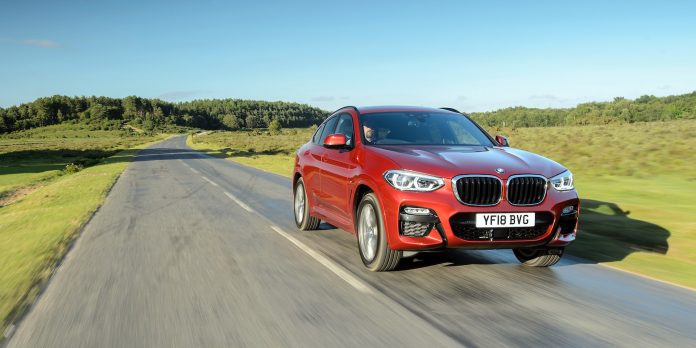
The BMW X4 is effectively the X3 SUV in a less boxy shape – most obviously a strongly raked rear end with a liftback tailgate, plus more sporty touches such as bespoke lights.

Of course, such a shape means less interior room. So while the X4 has five doors and a tailgate like the X3, reviewers point out the tighter rear-seat space – even in the latest Mk2 version, which launched in 2018 and is very slightly longer than its predecessor.

Highlighted are the tighter headroom, a feeling of being more ‘hunkered down’ in the car and far less visibility through the rear screen.

The interior, effectively the same as the X3’s, comes in for much praise. Testers like its quality of technology, the materials and how they are fitted. However some describe the mix of finishes as over-fussy.

Reviews of the BMW X4 reserve most praise for its on-the-road performance, described as both comfortable and with excellent handling, though some describe the ride as a little firm.

As of February 2026, the BMW X4 holds a New Car Expert Rating of E, with a score of 52%. Its best grades are only average, for media review scores and CO2 emissions, while reliability is below average and running costs are very high. Its safety rating has also expired due to age.
BMW X4 highlights

  • Competent engines
  • Strong handling
  • Excellent fit and finish
  • Good levels of standard safety kit

BMW X4 lowlights

  • Styling is awkward, even by BMW standards
  • No entry-level petrol engines or plug-in hybrid
  • Restricted space in back speats
  • Looks expensive compared to the similar X3

Key specifications

Body style: Medium SUV/crossover
Engines: Petrol, diesel
Price: From £54,000 on-road

Launched: Spring 2018
Last updated: Summer 2021
Replacement due: 2025?

Media reviews

Reviews, road tests and comparisons from across the UK automotive media. Click any of the boxes to view.

Featured reviews

More reviews

The Car Expert

Auto Trader

Business Car

Car

Car Keys

Carbuyer

Eurekar

Evo

Green Car Guide

Heycar

Honest John

Motoring Research

Motors

Parkers

The Sun

The Telegraph

Top Gear

Safety rating

Independent crash test and safety ratings from Euro NCAP

Overall score: 5 stars
Date tested: November 2017
Date expired: January 2024
Read the full Euro NCAP review

Adult protection: 93%
Child protection: 84%
Vulnerable road users: 70%
Safety assist: 58%

Notes on safety rating

The BMW X4 was originally assessed by Euro NCAP back in 2017 and awarded a five-star rating. However, this rating expired in January 2020 and is no longer valid as the car no longer meets the standards required for such a rating. This is normal practice, as Euro NCAP reviews its ratings on most cars annually with most ratings expiring after about six or seven years.

However, if you are comparing a used X4 to vehicles of similar age, whose ratings will have probably also expired, its safety rating score is still useful.

The BMW X4 shares its (now expired) safety rating with the almost-identical X3. Rather than physically crashing several X4s, Euro NCAP would have required BMW to submit specific data to show that the changes made to the X4’s roofline would not affect how it performs in an accident.

Eco rating

Independent economy and emissions ratings from Green NCAP

No eco rating

As of February 2026, the BMW X4 has not been tested by Green NCAP.

Reliability rating

Reliability data provided exclusively for The Car Expert by MotorEasy

All data based on MotorEasy average workshop costs for extended car warranty claims

The BMW X4 has a poor reliability score of 54%, according to workshop and warranty data provided exclusively to The Car Expert by our partner, MotorEasy. This score applies to the current (2018 onwards) X4 as well as to older models.

The biggest concern for X4 owners is the engine. Although there have only been a few warranty claims, the average repair bill is more than £3,700. Other repairs, for suspension, electrics and braking, have been quite cheap.

If you own a BMW X4 or are interested in buying a used X4, you’d do well to make sure that any used car warranty you buy has adequate cover for engine failures and faults.

Running cost rating

Monthly cost of ownership data provided exclusively for The Car Expert by Clear Vehicle Data

Fuel consumptionAverageScore
Petrol models26 mpgE
CO₂ outputAverageScoreVariationScore
Petrol models245 g/kmE
Insurance groupAverageScoreVariationScore
All models48E
Service and maintenanceCostScore
Year 1£755E
Year 2£1,679E
Year 3£2,591E
Year 4£2,811E
Year 5£3,679E
Overall£11,515E

The BMW X4 has quite high running costs, according to running cost data provided exclusively to The Car Expert by our technical partner, Clear Vehicle Data.

Its petrol engine is very thirsty and has higher emissions than the market average, and its service and maintenance costs are higher than average over the course of five years of ownership.

We don’t currently have equivalent data for diesel X4 models. Check back again soon.

Recalls

Official DVSA safety recalls that have been issued for the BMW X4

Date: December 2023
Recall number: R/2023/355
Model types: All
Build dates: 08/2023 to 09/2023
Number of vehicles affected: 46
Defect: On affected vehicles the three screws connecting the electric motor to the steering gear are potentially not fastened correctly.
Remedy: On affected vehicles the steering gear will be replaced.

Date: December 2023
Recall number: R/2023/354
Model types: All
Build dates: 03/2023 only
Number of vehicles affected: 26
Defect: On affected vehicles ingress of transmission fluid may occur to the integrated transmission control unit within the mechatronic module.
Remedy: On affected vehicles the transmission mechatronic module will be replaced.

Date: October 2023
Recall number: R/2024/156
Model types: All
Build dates: 08/2023 only
Number of vehicles affected: 33
Defect: On affected vehicles risk of potential flooding could have occurred leading to salt water ingress whilst parked in port awaiting shipping.
Remedy: The affected vehicles will be thoroughly checked cleaned and reworked as required.

Date: August 2022
Recall number: R/2022/255
Model types: All (including other BMW models)
Build dates: 10/2017 to 10/2021
Number of vehicles affected: 322,745
Defect: Undetected EGR System leaks may cause thermal activity in the intake manifold.
Remedy: The engine management control unit (DDE) will be programmed with improved software incorporating the latest OBD functionality.

Date: August 2022
Recall number: R/2022/206
Model types: All (including other BMW models)
Build dates: 09/2018 only
Number of vehicles affected: 319,399
Defect: The Exhaust Gas Recirculation cooler may leak over time and cause thermal incident.
Remedy: On the affected vehicles the EGR cooler module will be replaced.

Date: March 2022
Recall number: R/2022/084
Model types: All
Build dates: 04/2018 to 03/2019
Number of vehicles affected: 6,401
Defect: During a service visit the affected vehicles have been updated with software that could misinterpret certain input parameters for the engine management system.
Remedy: The control units will be reprogrammed with an improved version of software.

Date: January 2021
Recall number: R/2021/015
Model types: All
Build dates: 06/2020 to 11/2020
Number of vehicles affected: 388
Defect: The battery cables on the 48V starter generator may not have been sufficiently secured during the production process.
Remedy: Check the screw connection of the 48V positive / negative battery cables on the starter generator and rework if necessary.

Date: April 2020
Recall number: R/2020/120
Model types: All
Build dates: 01/2020 to 02/2020
Number of vehicles affected: 326
Defect: The cable lengths for the electric connection of the hall sensor integrated inside the seatbelt buckle could be too short.
Remedy: The front seat belt buckles will be checked and replaced if they are found to be faulty.

Date: October 2019
Recall number: R/2019/377
Model types: All
Build dates: 08/2019 to 09/2019
Number of vehicles affected: 13
Defect: The swivel bearing/s on the front axle of the affected vehicles may not have been produced to specification.
Remedy: The swivel bearing/s on the affected vehicles will be replaced.

Date: August 2018
Recall number: R/2018/220
Model types: All
Build dates: 04/2018 to 06/2018
Number of vehicles affected: 1,032
Defect: The fault affects the brake system in particular the brake calipers on the rear axle. Because of a faulty coating hydrogen gas (approximately 10 ml) could be created in the coating of the piston of the brake caliper. This will be completely outgassed during the first 2 months after the production process causing longer brake pedal travel. Under certain circumstances the relevant brake pressure cannot be build up in the rear brake circuit. As a result the brake force of the system may be reduced by up to 30%. The driver may feel a soft brake pedal and a reduction of the brake performance. In certain cases the rear brake circuit could fail leading to increased risk of an accident.
Remedy: On the affected vehicles the brake system will be bled.

Date: April 2018
Recall number: R/2018/099
Model types: All
Build dates: 08/2017 to 01/2018
Number of vehicles affected: 1,752
Defect: The sealing cap of the pressure-limiting valve in the fuel tank delivery module may be damaged. This concern could lead to a reduction in fuel transfer from the left side to the right side of the fuel tank. Therefore it is possible for the engine to stall even though the fuel gauge would show fuel present.
Remedy: Recall the vehicles that are likely to be affected and check the fuel pressure of the delivery module and the distance of the cap on the pressure-limiting valve. Where necessary the delivery module will be replaced.

As of September 2024 (our most recent data point), there have been 11 DVSA vehicle safety recalls on the BMW X4 addressing various different issues.

Not all vehicles are affected by recalls. You can check to see if your car is included in any of the above recalls by visiting the DVLA website or contacting your local BMW dealer.

If your car is affected by a recall, the vehicle must be repaired and you should not be charged for any work required. If you are buying a used X4, you should insist that any outstanding recall work is completed before you take delivery of the vehicle.

Similar cars

If you’re looking at the BMW X4, you might also be interested in these alternatives

Alfa Romeo Stelvio | Audi Q5 Sportback | BMW X3 | DS 7 Crossback | Genesis GV70 | Jaguar F-Pace | Land Rover Discovery Sport | Lexus NX | Mercedes-Benz GLC Coupé | Porsche Macan | Range Rover Velar | Volkswagen Tiguan | Volvo XC60

More information

More news, reviews and information about the BMW X4 at The Car Expert

Everything you need to know about BMW

Everything you need to know about BMW

BMW X4 M

BMW X4 M

BMW rolls out mild hybrid 3 Series, X3 and X4 models

BMW rolls out mild hybrid 3 Series, X3 and X4 models

BMW X4 test drive

BMW X4 test drive

BMW UK recalls 268,000 diesel cars over risk of fire

BMW UK recalls 268,000 diesel cars over risk of fire

BMW X4 reinvented to take on Evoque

BMW X4 reinvented to take on Evoque

Buy a BMW X4

If you’re looking to buy a new or used BMW X4, The Car Expert’s partners can help you find the right car

Motors 600x300

Find your next used car with Motors. Find out more

Auto Trader logo 600x300

Find your next new or used car with Auto Trader. Find out more

Carwow logo 600x300

Find your next new or used car with Carwow. Find out more

Lease a BMW X4

If you’re looking to lease a new BMW X4, The Car Expert’s partners can help you find a competitive deal

Leasing-com logo

Personal contract hire deals from Leasing.com. Find out more

Carparison 600x300

Personal contract hire deals from Carparison Leasing. Find out more

Select Car Leasing logo

Personal contract hire deals from Select Car Leasing. Find out more

Dipsticks! One in five car owners never check their oil

Is your car running like a well-oiled machine? Probably not, if you’re among the incredible one in five motorists who never check their engine oil level.

The findings come from a new survey by automotive part and repair specialist Kwik Fit.

Although most car makers recommend you look at your oil level once a week as part of your vehicle safety checks, that advice is largely ignored. Even if that time scale was doubled to a fortnight, only 8% of drivers would meet the recommendation.

Of the 19% who never check their oil, 8% (which would equate to three million drivers across the UK) say they don’t know how to do it, while the remaining 11% say they know where the dipstick is, but never bother to use it.

More than three-fifths of drivers (62%) say that at least three months go by between their oil checks, while a shocking 8% let at least a year pass before inspecting their levels again.

While drivers might have lost the habit of making maintenance checks during the recent Covid pandemic as they used their car less, Kwik Fit is encouraging owners to get back in the routine, as checking and topping up a vehicle’s oil is important in helping prevent excess engine wear and damage.

“Good quality oil is vital for maintaining a smooth running car, and regularly checking the oil level is a very easy way of monitoring an engine’s health,” says Roger Griggs, Kwik Fit communications director.

“If the oil level drops from the highest to lowest mark on the dipstick in less than 1,000 miles, we would recommend getting the engine checked over.”

Checking your engine oil

Checking your oil – four easy steps

Still not sure what to do? Follow these simple steps:

1  Park on a level surface, switch off the engine and wait about five minutes for all the oil to drain to the bottom of the engine.

2  Once the engine is cool, pull out the dipstick, wipe the oil off with a clean cloth then push the dipstick fully back into its tube.

3  Remove the dipstick once more and check the oil level. It should be between the upper and lower marks – if it is closer to the lower one the oil will need topping up.

4  If more oil is needed, it must be the right type for the vehicle. Consult the handbook or ask an expert if you’re not sure. Replace the dipstick and remove the oil filler cap. Add a small amount of oil at a time rather than risk overfilling, then check the level again. Add further oil if needed and replace the oil filler cap.

Fleets drive new car sales growth in May

New car registrations enjoyed the most ‘normal’ month they’ve had all year in May, with showrooms actually open for the whole month and businesses starting to ramp up operations as the UK slowly unlocks.

More than 156,000 new cars were registered in May according to figures published today by the Society of Motor Manufacturers and Traders (SMMT), which was a significant improvement on April. Once again, it was the fleet sector leading the way, taking more than half of the total market.

Fleet registrations have traditionally made up 50-55% of the new car market, but over the last year this fell sharply as thousands of UK companies simply stopped buying or leasing new cars unless it was absolutely necessary.

Are we seeing a fundamental shift in new car buying habits?

The normal year-on-year comparisons are pretty pointless, since May 2020 was a disastrous month for the UK car industry, but it’s worth noting that May 2021 was still down nearly 15% on May 2019’s results, and about 13% down on a ten-year average for the month of May.

This is not that surprising, and in fact it rather fits in with the bigger picture of a steady long-term decline in the new car market – a problem that had largely been of the industry’s own making. It also fits in with what we’ve been saying at The Car Expert for a few years now – that the rate of growth in people buying ever-more expensive new cars every three years was a bubble that had to burst at some point.

It’s too early to see how this will play out over the next year, but the pandemic may well have made a lot of people realise that their car-buying habits of the last decade were simply unsustainable.

There has also been a shift from new cars to used cars, driven partly by customers’ desires to reduce cost and lengthy waitin times on many new cars. The current shortage of crucial memory chips that power the on-board computers that run modern cars has caused huge production headaches around the world, and is set to cause delays on new car deliveries for months to come.

May was also a fairly normal month when it came to the sort of cars that were being registered. Diesel sales continue to fall as expected, petrol remains static at about 60% of all new cars, while electric, plug-in hybrid and regular hybrid sales all continue to increase.

The figures appear distorted by two factors: Firstly, May 2020 was a highly unusual month, with most showrooms closed for most of the month and very few dealers/manufacturers offering online sales. This helped brands that specialise in online sales and home delivery – like Tesla, which did outstandingly well under the circumstances. This makes backwards comparisons basically pointless.

Secondly, the SMMT figures now split mild hybrid petrol and diesel engines out from other petrol and diesel engines. This might suit political agendas but makes analysis of the data more difficult, especially since mild hybrid engines are rapidly replacing unassisted engines in almost every new model launched onto the market.

Good month, bad month

Our usual analysis of which brands have outperformed the market and which have fallen behind is rather pointless this month, as everyone improved their results by at least 200% on the same months last year. The overall market was up by 674% and there was enormous variation across all of the car companies.

One thing we can say with certainty is that it was a good month for both Volkswagen and Audi, which stormed to the top two places in overall new car registrations. Perennnial market leader Ford fell to third, just ahead of BMW.

This is going to be pretty topsy-turvy for a while as, on one hand, the market returns to life as the country returns to normal, but on the other hand, production problems will affect some brands more than others in coming months. It’s going to be a roller coaster ride for some car companies for the second half of this year.

Golf to the fore as Fiesta takes a siesta

OK, apologies for two bad puns in one headline. But it was a good month for the Volkswagen Golf, which drove to the top of the charts in May, and a poor month for the Ford Fiesta, which fell to seventh place.

This was good news for the Vauxhall Corsa, which has now extended its year-to-date sales lead over the Fiesta to more than 2,000 units. It might be to early to declare that the king is dead, but he’s certainly not looking too healthy.

Increasing fleet registrations have almost certainly helped the Golf, and are also likely to be a factor in the market share of ‘dual-purpose vehicles’ (SUVs and crossovers) falling overall, being overtaken by ‘lower medium cars’ (Golf, Mercedes A-Class, Ford Focus, etc.) that are favoured by fleets for their lower prices and better fuel economy.

We’ll publish our usual breakdown of the month’s top ten in the next day or so.

Audi A7

Summary

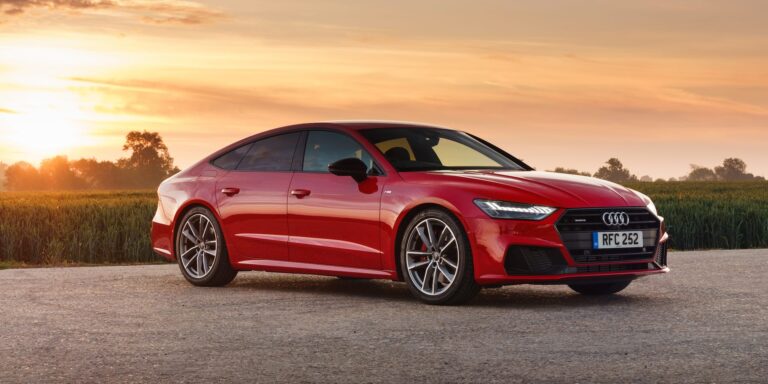
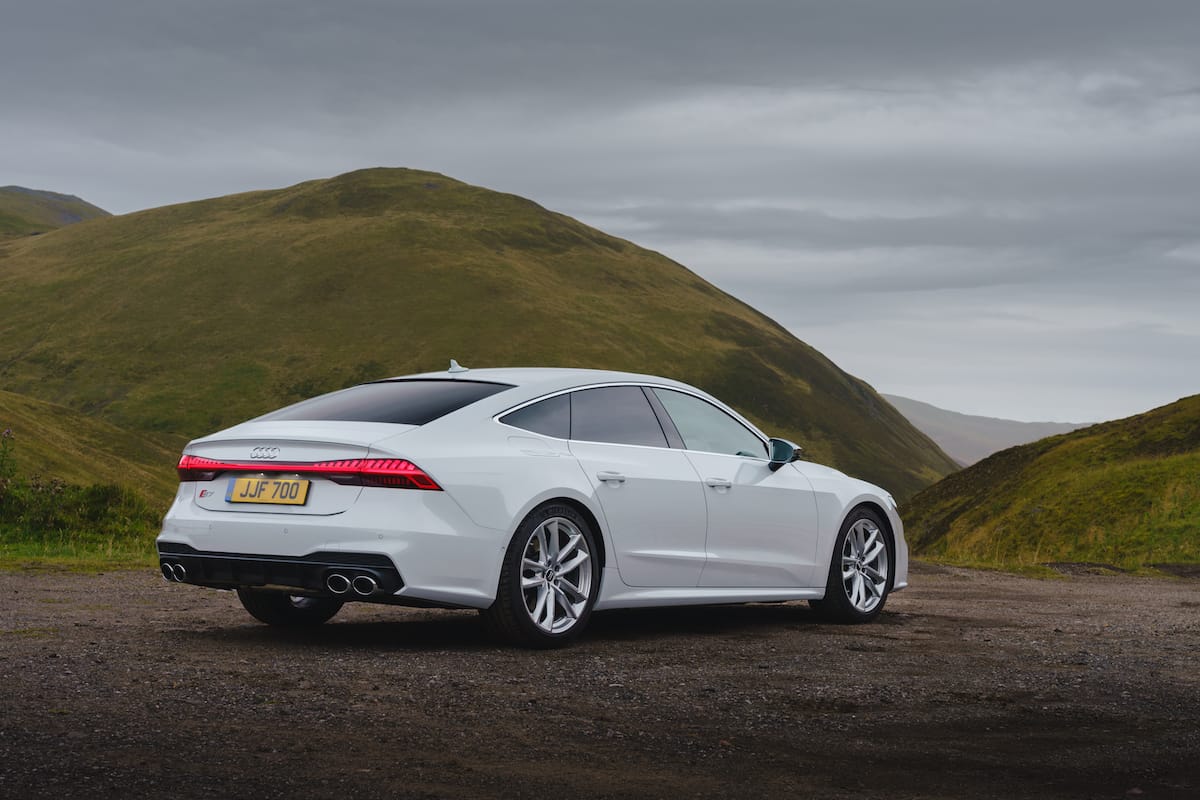
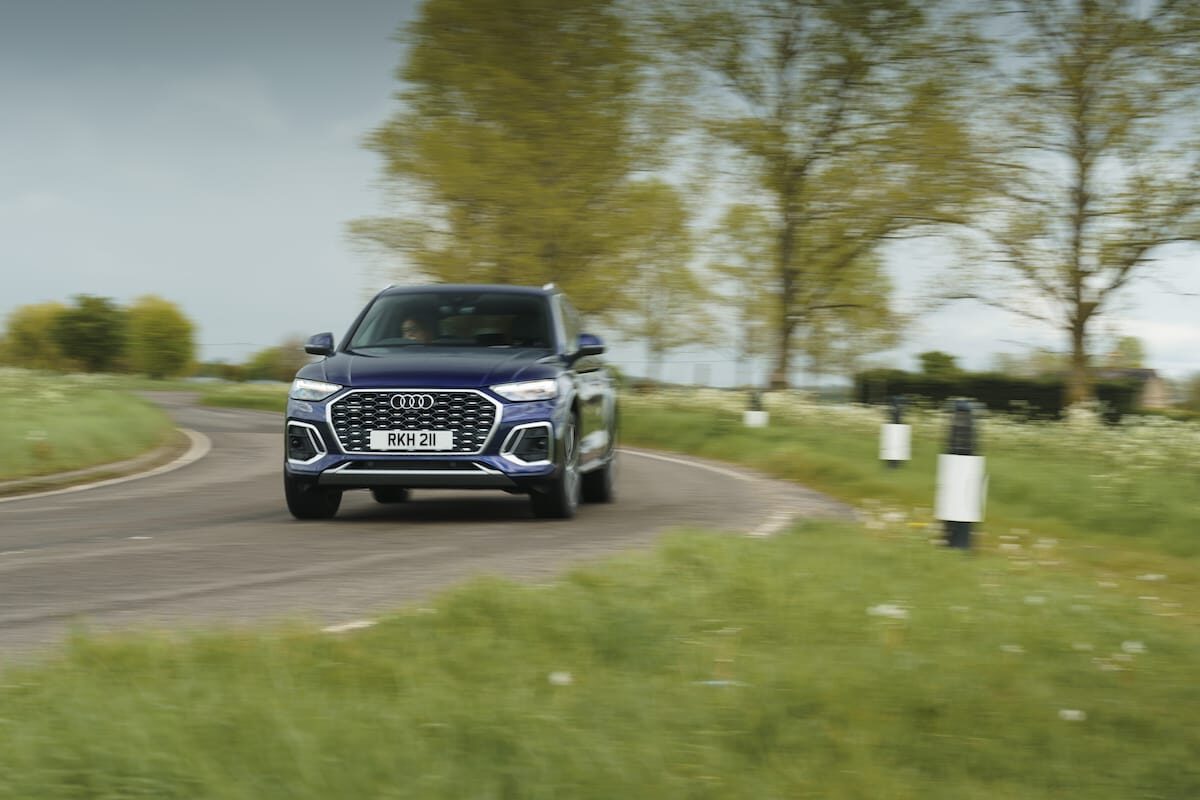
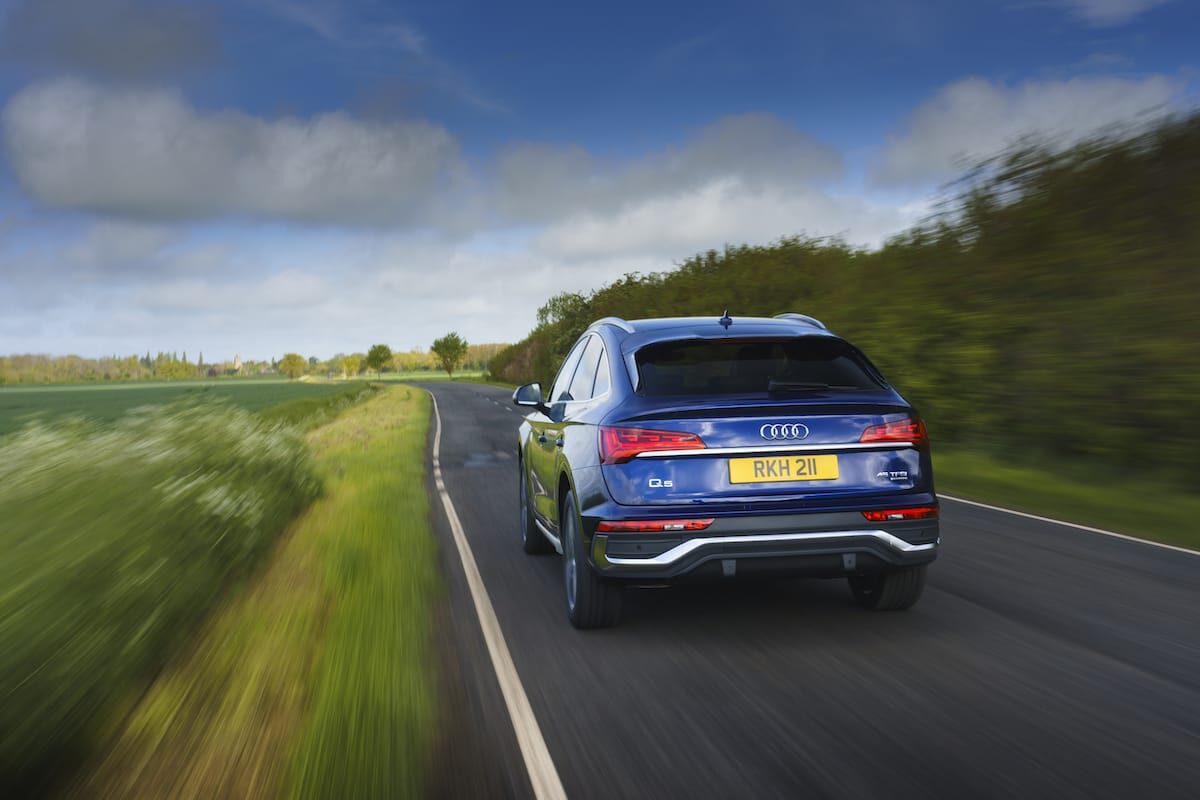
The Audi A7 Sportback aims to fill the needs of those who want sleek looks in their car but also want to carry adults in the rear seats, and it meets the brief very well.

With its swooping rear this is one of the distinctive cars in the Audi range yet it is also practical – behind the plentiful rear-seat space there is a tailgate on a car whose silhouette suggests a boot lid. The A7 is based on the Audi A6 saloon, so it’s definitely a large car that runs to almost five metres length.

The Audi A7 Sportback comes with a choice of petrol and diesel engines. Depending on which you go for, the power will go to either the front or all four wheels. Common to all are mild hybrid systems that allow the car to coast at above 35mph, improving fuel economy. Or you can go the full hog with the TSFI e plug-in hybrid.

Top of the regular Audi A7 range is the S7, which is powered by a 344hp diesel engine. There is also seriously high-performance RS 7 model, which has its own Expert Rating page.

Reviewers like the refinement of the A7, especially under electric power, but less so its ride quality, which with the big wheels most suited to the looks makes for rather firm progress. The car is marked down for feeling less connected behind the wheel compared to rivals such as the Porsche Panamera.

When the current Audi A7 arrived in 2018, it brought with it significant technology. Niceties such as the digital touchscreens earn praise, as does the fit and finish of the interior, dubbed luxurious by many testers.

However, making full use of the tech means much dipping into the options list and the car quickly becomes very expensive – especially as Audi’s equivalent saloon, the A6, offers much of what the A7 does with more practicality and for nearly £10K less money.        

As of February 2026, the Audi A7 Sportback range holds a New Car Expert Rating of D, with a score of 56%. It scores top marks for its low CO2 emissions (thanks to the plug-in hybrid version), but running costs are high and its reliability record is poor, which drags its score down to an E (46%) as a used car.

Audi A7 highlights

  • Sleeker and more attractive than the A6 saloon
  • Rear-seat space belies its looks
  • High-tech specification
  • Refined petrol engine

Audi A7 lowlights

  • Expensive, especially once options are added
  • Firm ride, especially on largest available wheels
  • Handling prowess can’t match rivals
  • Touchscreens not easy to operate on the move

Key specifications

Body style: Large five-door liftback
Engines: petrol, diesel, plug-in hybrid
Price: From £57,660 on-road

Launched: Spring 2018
Last updated: Spring 2020
Replacement due: TBA

Media reviews

Highlighted reviews and road tests from across the UK automotive media. Click any of the boxes to view.

Auto Express

Auto Trader

Business Car

Car Keys

Carbuyer

Carwow

Company Car Today

Daily Mirror

Eurekar

Evo

Fleetworld

Heycar

Honest John

Motoring Research

Parkers

The Telegraph

Top Gear

Safety rating

Independent crash test and safety ratings from Euro NCAP

Overall score: 5 stars
Date tested: October 2019
Date expired: January 2026
Read the full Euro NCAP review

Adult protection: 93%
Child protection: 85%
Vulnerable road users: 81%
Safety assist: 76%

Notes on safety

The Audi A7 shares its safety rating with the A6 saloon upon which it’s based. The A6 was tested by Euro NCAP and awarded a five-star rating in 2018, and Audi was required to provide additional evidence to show that the A7 would behave the same way in an emergency to be awarded the same rating. The A6’s five-star rating was subsequently extended to cover all A7 models in 2019.

Eco rating

Independent economy and emissions ratings from Green NCAP

Model tested: 50 TDI 4×4 Auto

Overall score: 1 stars
Date tested: February 2019
Read the full Green NCAP review

Clean Air Index: 7.3 / 10
Energy Efficiency Index: 2.5 / 10

Notes on eco rating

The Green NCAP rating above only applies to the 3.0-litre diesel automatic 50 TDI version of the Audi A7, as Green NCAP ratings are specific to engine/gearbox/drivetrain.

If any other versions of the A7 are put through the Green NCAP lab testing programme, we will publish the results here.

Reliability rating

MotorEasy logo 600x167

Reliability data provided exclusively for The Car Expert by MotorEasy

All data based on MotorEasy average workshop costs for extended car warranty claims

The Audi A7 has a very poor reliability score as of April 2025 (our most recent data point), according to exclusive extended warranty data provided by our partners at MotorEasy. This score covers both the current-generation A7 and the original (pre-2018) version.

Around a quarter of all reported problems with the A7 relate to its engine, and repairs of this nature have an average repair bill of about £1,400. Even more expensive are gearbox issues, with an average repair bill of more than £3,100.

If you’re looking at a used Audi A7, make sure any extended warranty cover you purchase covers all of these potential problem areas.

Running cost rating

Clear Vehicle Data logo close crop

Monthly cost of ownership data provided exclusively for The Car Expert by Clear Vehicle Data

Fuel consumptionAverageScore
Petrol models35 mpgD
Diesel models45 mpgC
Plug-in hybrid models189 mpgA
CO₂ outputAverageScoreVariationScore
Petrol models183 g/kmD
Diesel models165 g/kmD
Plug-in hybrid models34 g/kmA
Battery rangeAverageScoreVariationScore
Plug-in hybrid models40 milesD
Insurance groupAverageScoreVariationScore
All models47E
Service and maintenanceCostScore
Year 1£333D
Year 2£843D
Year 3£1,396D
Year 4£1,706D
Year 5£2,167D
Overall£6,445D

Running costs for the Audi A7 range are a mixed bag, according to data provided exclusively to The Car Expert by our commercial partner, Clear Vehicle Data.

Fuel economy is disappointing for petrol models but decent for diesel-engined versions. The plug-in hybrid models look amazing on paper, but this is largely thanks to ridiculous EU/UK government lab tests that are completely inadequate for plug-in hybrids. There is no way you will ever travel for 191 miles on a single gallon (4.5 litres) of fuel and some electricity…

The battery range of the plug-in hybrid model is decent compared to most rivals, providing 41 miles of electric-only range. It means that most households could some most of their weekly driving without using any petrol, but not all without consistent recharging.

Compared to the rest of the large saloon sector, the car’s service and maintenance costs are pretty average. Insurance costs likely to be high, though, based on data from the UK’s insurance group assessor, Thatcham Research.

Recalls

Official DVSA safety recalls that have been issued for the Audi A7

Date: October 2023
Recall number: R/2023/317
Model types: All
Build dates: 07/2023
Number of vehicles affected: 5
Defect: On certain vehicles, an incorrect bracket for the side airbag was fitted in the left front seat.
Remedy: Replace the side airbag and bracket.

Date: January 2023
Recall number: R/2023/027
Model types: All
Build dates: 04/2018 to 10/2021
Number of vehicles affected: 5,487
Defect: The fuel gauge may not show the drop in fuel level correctly during vehicle operation.
Remedy: The tank level sender must be replaced on the affected vehicles.

Date: June 2022
Recall number: R/2022/169
Model types: All
Build dates: 01/2022 to 02/2022
Number of vehicles affected: 109
Defect: It is possible that the engine control units were fitted with semiconductor components which do not meet the specifications.
Remedy: The engine control unit must be replaced on the affected vehicles.

Date: June 2021
Recall number: R/2021/204
Model types: All
Build dates: 12/2015 to 12/2018
Number of vehicles affected: 263
Defect: Vehicles may have been fitted with a hinged towing bracket on which the locking mechanism in the hinge module could be faulty.
Remedy: The hinge module for the towing bracket must be checked and where necessary replaced on the vehicles affected.

Date: March 2021
Recall number: R/2021/117
Model types: All
Build dates: 02/2018 to 12/2020
Number of vehicles affected: 1,298
Defect: In the event of an accident requiring the vehicle’s front passenger airbag to be activated the airbag might not inflate fully.
Remedy: The dash panel must be checked on the affected vehicles and repaired or replaced if required.

Date: June 2020
Recall number: R/2020/138
Model types: All
Build dates: 06/2017 to 03/2020
Number of vehicles affected: 1,298
Defect: It is possible that moisture may enter the belt-driven starter-alternator.
Remedy: The starter-alternator must be replaced on the affected vehicles.

Date: June 2019
Recall number: R/2019/175
Model types: All
Build dates: 12/2015 to 12/2018
Number of vehicles affected: 135
Defect: Hinged towing bracket on which the locking mechanism in the hinge module could be faulty.
Remedy: The hinge module for the towing bracket must be checked and replaced if required.

As of September 2024 (our most recent data point), there have been seven DVSA vehicle safety recalls on the Audi A7. These cover sunroof motors, tyre size data, software and different battery issues.

Not all vehicles are affected by recalls. You can check to see if your car is included in any of the above recalls by visiting the DVLA website or contacting your local Audi dealer.

If your car is affected by a recall, the vehicle must be repaired and you should not be charged for any work required. If you are buying a used A7, you should insist that any outstanding recall work is completed before you take delivery of the vehicle.

Awards

Trophies, prizes and awards that the Audi A7 has received

2022

  • Company Car Today CCT100 Awards – Best Luxury Car

Similar cars

If you’re looking at the Audi A7, you might also be interested in these alternatives

Audi A6 | BMW 5 Series | BMW 8 Series Gran Coupé | Genesis G80Jaguar XF | Lexus ES | Maserati Ghibli | Mercedes-Benz CLS | Mercedes-Benz E-Class | Porsche Panamera | Tesla Model S | Volvo S90

More information

More news, reviews and information about the Audi A7 at The Car Expert

Everything you need to know about Audi

Everything you need to know about Audi

Audi RS 7 (2019 to 2025)

Audi RS 7 (2019 to 2025)

Audi A7 (2011 to 2018)

Audi A7 (2011 to 2018)

Audi A6 and A7 receive minor updates

Audi A6 and A7 receive minor updates

Audi revises trim line-up for many models in its range

Audi revises trim line-up for many models in its range

Audi plugs in with four new hybrids

Audi plugs in with four new hybrids

New Audi A7 Sportback revealed

New Audi A7 Sportback revealed

Buy an Audi A7

If you’re looking to buy a new or used Audi A7, The Car Expert’s partners can help you find the right car

Motors 600x300

Find your next used car with Motors. Find out more
Auto Trader logo 600x300

Find your next new or used car with Auto Trader. Find out more
Carwow logo 600x300

Find your next new or used car with Carwow. Find out more

Lease an Audi A7

If you’re looking to lease a new Audi A7, The Car Expert’s partners can help you find a competitive deal

Leasing-com logo

Personal contract hire deals from Leasing.com. Find out more

Carparison 600x300

Personal contract hire deals from Carparison Leasing. Find out more

Rivervale Leasing logo 2022

Personal contract hire deals from Rivervale Leasing. Find out more

BMW iX launches as electric flagship SUV

BMW has unveiled the iX, a high-tech electric SUV will become the brand’s flagship model when it goes on sale in November.

Likely to attract most comment for its bold styling – including an enormous front ‘kidney grille’ – the iX will be available in two versions. Prices will start at just under £70K.

Both models will use the same combination of all-wheel-drive powertrain from two motors, one driving each axle, but with different power ratings. BMW describes the iX as the brand’s first all-wheel-drive pure electric vehicle.

The entry-level xDrive 40 model will produce 326hp giving it a 0-62mph time of 6.1 seconds, BMW claiming an official laboratory battery range of about 250 miles from its 70kWh battery pack. It will be compatible with 150kW DC charging allowing battery replenishment from 10% to 80% in half an hour.

The xDrive 50 variant, priced from £92K, will be rated at 523hp and compete the 62mph sprint in just 4.6 seconds. Its range is quoted at 373 miles due to a larger 100kWh battery pack. This allows even faster 195kW charging, achieving an 80% charge in 35 minutes despite having more battery to charge.

BMW iX interior I

The iX is built on a brand-new modular platform designed specifically for electric vehicles. BMW says the new design will be the basis of the group’s future, both in terms of electric mobility and sustainable manufacturing techniques.

The car is being heavily promoted on its safety package, BMW promising the most extensive set of driver-assistance systems ever seen on one of the brand’s cars. Existing technologies have had their capabilities extended while new systems include an interior camera and an exit warning function that alerts occupants to pedestrians or cyclists close-by before the doors are opened.

The iX also debuts an all-new operating system, which is said to make interaction between the driver and car more intuitive.

BMW will later extend the iX range with an even more powerful xDrive 60 model, offering more than 600hp. A launch date and price for this version is yet to be announced.

BMW iX side I

Motorists back call for tailgating fines

Most drivers have experienced it: you look in your mirror and there’s a car sitting just feet behind you at speed, usually trying to get you to move over and let them pass.

The practice, known as tailgating, is not only intimidating and aggressive, but dangerous too – last year it was listed as the cause in almost 600 serious accidents, 28 of which resulted in someone being killed.

Now almost 90% of motorists have said they support plans to fine fellow drivers for tailgating on the motorway, according to a new poll by independent car retailer Motorpoint.

The company’s online survey revealed that 87% of more than 1,600 drivers questioned, backed proposals for drivers to be fined £100 and given three points on their driving licence if convicted of tailgating on the motorway.

The government has recently been trialling new technology on parts of the M1 motorway in Northamptonshire that detects whether drivers are maintaining a minimum of a two-second safety gap between them and the vehicle in front. During the tests late last year, more than 26,000 people were found to be inside this margin.

“Tailgating has become commonplace on our roads in recent years and we are delighted to see the government finally taking action to address something that can quite literally cost people their lives,” says Mark Carpenter, chief executive officer of Motorpoint.

“The issue of tailgating extends far beyond just motorways, and this step won’t solve the problem overnight, but at least it is a move in the right direction.” 

Audi Q5 Sportback review

As the unstoppable SUV juggernaut continues on its path, demolishing every kind of regular car in its path, car companies are slicing the market for SUV-style vehicles into ever finer slices. So as well as every size from XS to XXL, it seems that “coupé SUVs” are now a thing.

Audi is already an expert at niche marketing, so it’s only natural that it has an offering here. If you’d like a medium-ish vehicle, Audi can already offer you an A4 saloon or Avant (estate), A5 coupé or cabriolet, A5 Sportback (five-door liftback) and the Q5 SUV. So if the Q5 is basically a butched-up A4 Avant on stilts, the Q5 Sportback is the equivalent of a high-riding A5 Sportback.

Like most modern SUVs, the Q5 Sportback is very much an on-road vehicle designed to look like it wants to go off-road. It also has four doors plus a rear tailgate, so this coupé SUV is neither a coupé nor an SUV. But is it actually any good, and why would you buy one over a regular Audi Q5 (or A5 Sportback, for that matter)?

Buy an Audi Q5 from your sofa with Cazoo

Buy online. We’ll deliver it. Find out more


What’s new about the Audi Q5 Sportback?

In short, the back half.

From the front doors forward, the Q5 Sportback is almost identical to the regular Q5, both inside and out. From the rear doors backward, however, the roofline has been flattened down to create a liftback-style tailgate. That liftback shape reduces rear headroom as well as boot space above the window line, but other dimensions are pretty much unchanged.

These are fine margins in design. The original Q5 is hardly a squared-off brick-shaped thing in the first place, so the difference between traditional SUV and Sportback is not really that great.

Audi expects the Sportback to make up about a quarter of all Q5 sales, so it’s certainly a niche offering. And with many, many configuration options to choose from, good luck finding one in stock that precisely matches what you want…

How does it look?

Predictably, and apologies for repeating myself, the front half looks pretty much like any other Q5. There are some minor differences in the grille patterning and other plastic trim pieces, but you’d really need to look at a Q5 and Q5 Sportback side by side to tell.

At the back, the liftback styling looks slightly awkward compared to the more conventional proportions of a regular SUV. To be fair, you could say much the same about any ‘coupé SUV’. It certainly looks much better resolved than the BMW X4, but that’s not exactly a high bar to clear…

What’s the spec like?

The Q5 Sportback will be available with a choice of one petrol engine, one diesel engine and a pair of plug-in hybrids. There will be the usual bewildering array of six trim levels, although not every trim is available with every engine option. Finally, there’s a range-topping SQ5 diesel (also available in two trim levels) that is rather different in overall specification so we’re not going to talk about it here.

Like most Audis, the standard wheels do tend to look a bit small. The entry-level spec (Sport) comes with 18-inch alloys and the S line has 19-inch alloys. Our test model was an S line with optional 20-inch wheels, and they look much better. The bigger wheels do make the ride firmer, but Audi knows full well that most of its customers will accept that compromise and happily pay for the upgraded alloys.

In terms of safety, the Q5 Sportback continues Audi’s form in providing good levels of accident avoidance technology and also protecting you in the event that a crash does occur.

Independent safety authority Euro NCAP has recently confirmed that the Q5 Sportback inherits the Q5’s five-star safety rating from when it was tested back in 2017. This may seem obvious, but car manufacturers are required to show proof that any body style variants will perform similarly to the originally tested version, which Audi has now done.

What’s the Audi Q5 Sportback like inside?

Up front, it’s all very familiar – not just from the Q5, but also the A4 and A5 models. The basic dashboard layout has been around since the current A4 was launched back in 2015 and although it works perfectly well, it’s now looking a bit last-generation.

The chief culprit here is the central ten-inch infotainment screen, which looks like a cheap Android tablet glued onto the top of the dashboard. Given that everything else in the cabin lives up to Audi’s reputation for high-quality interiors, the touchscreen is disappointing. It works OK, although it’s a bit sluggish and the graphics look quite dated compared to some of the latest systems from rival brands.

As part of Audi’s latest round of updates to the A4/A5/Q5 family, the traditional (and excellent) Audi control dial has been discarded in favour of a touchscreen. This is presumably great when sitting in an Audi showroom, but it’s rubbish when you’re bouncing along bumpy British roads and just want to change the radio station. Yes, there are steering wheel controls that you can use and yes, every other manufacturer is doing the same thing, but it’s still a backwards step in terms of user experience and safety. At least the air-conditioning controls still use physical buttons.

On the other hand, Audi’s digital driver display remains the best in the business. The shift from analogue dials to digital screens has been hit-and-miss across the car industry with some manufactures over-styling their graphics at the expense of clarity, but Audi’s display is exemplary in both its presentation and ease of use.

Unsurprisingly, it’s in the back seats and boot where things have changed as a result of the sloping roofline. Rear headroom is tight – I’m 180cm tall (5’11” in old money) and I think I’d be bumping my head on the roof over speed bumps.

Similarly, you lose the ability to load much stuff above the window line in the boot of the Q5 Sportback. Below the window line, it’s all much the same as the regular Q5. Audi claims you lose ten litres of boot space (510 vs 520 litres), and optimistically describes this as “enough for 12 carry-on suitcases”. Quite why you’d want 12 carry-on suitcases for a maximum of five passengers isn’t explained, however. The seats fold 40/20/40 so you can still get some oversize baggage in the boot if you don’t have a full complement of passengers.

What’s under the bonnet?

With the latest Q5 and Q5 Sportback range, you get a choice of a 265hp petrol engine, a 204hp diesel engine or a 300hp plug-in hybrid combination of a petrol engine with an electric motor. However, if you want the very top-spec Competition Vorsprung model, that comes with a 367hp plug-in hybrid unit instead. Both the petrol and diesel engines come with mild hybrid assistance to improve fuel economy.

As with all new Audi engines, the power units are branded with the most confusing naming system ever devised so we’ll just ignore it.

Regardless of fuel type, all Q5s come with a seven-speed automatic gearbox and Audi’s latest variable all-wheel drive system to ensure each wheel gets the right level of traction for the conditions.

Worth noting is that the CO2 emissions on the petrol unit are quite high, at 202g/km (192g/km if you don’t have the big wheels). This means that first-year road tax on our test car worked out to an eye-watering £1,345. It then drops to £490/year for the next four years, based on current tax rates.

Directly connected to high emissions is unimpressive fuel economy, so Audi expects the 2.0-litre diesel engine to be more popular – despite the overall new car market abandoning diesel in droves. We’d still caution against buying any diesel car unless you do a lot of long-distance driving.

What’s the Audi Q5 Sportback like to drive?

We drove the petrol-engined Q5 Sportback in S line trim with the optional 20-inch wheels. If you’ve read any reviews of pretty much any Audi model from over the last decade, then none of what comes below is going to come as a surprise.

Firstly, the 20-inch wheels make the ride quite bouncy. It’s not a dealbreaker, but the Sport model on standard 18-inch wheels would be much better. Audi knows that you’ll all ignore this and buy the S line model with big wheels anyway, but it’s still worth mentioning.

Performance from the 2.0-litre petrol engine is decent enough without blowing your socks off. It can be a bit laggy under acceleration and doesn’t feel as responsive as you might expect for a 265hp power output – other mid-size SUVs with similar spec feel more rapid in real-world driving – but overall performance is good enough for most needs.

The seven-speed transmission is a dual-clutch gearbox, which Audi has been using for more than a decade now with continual improvements. It’s very smooth and, importantly, it can switch between first and reverse quite quickly when you’re exiting a parking space or attempting a three-point turn. This was a bugbear of double-clutch gearboxes in the past where you’d be waiting ages for the gearbox to sort itself out while you blocked traffic in every direction…

Touring is quiet and refined, apart from the constant jiggling of the sports suspension and big wheels on every bump or ripple in the road. Like most cars, the power steering is electric and feels quite detached from the front wheels. You turn the wheel and the car goes where it’s told, but you don’t really feel anything. The turning circle for quick U-turns is surprisingly good, as I tested at least four times by repeatedly missing the designated turn-offs on the drive route.

Verdict

A verdict in two parts, then. On its own, the Audi Q5 Sportback is a good car that offers a good blend of performance, comfort and safety. Build quality seems to be excellent, although Audi’s reliability record has been a bit iffy over recent years according to various ownership surveys. Compared to a BMW X4, Mercedes GLC Coupé, or other sporty SUVs like the Alfa Romeo Stelvio, it’s easy enough to recommend.

But the question becomes trickier when you ask the obvious question: Why would you choose a Q5 Sportback over a regular Q5? You’re paying an extra £2.5K or so for the privilege of less read headroom, less boot space and slightly questionable rear window styling. If you like the way it looks then fill your boots, but the regular Q5 SUV is both cheaper and an objectively better car.

Similar cars

Alfa Romeo Stelvio | Audi Q5 SUV | BMW X4 | Jaguar F-PaceMercedes-Benz GLC Coupé | Porsche Macan | Range Rover Velar | Volvo XC60

Key specifications

Model tested: Audi Q5 Sportback 45 TFSI quattro S line
Price (as tested): £55,235
Engine: 2.0-litre petrol
Gearbox: Seven-speed automatic

Power: 265 hp
Torque: 370 Nm
Top speed: 149 mph
0-60 mph: 6.1 seconds

Fuel economy (combined): 33.6 mpg
CO2 emissions: 202 g/km
Euro NCAP safety rating: Five stars (2017)
TCE Expert Rating: 80% (Overall Q5 range, as of June 2021)

Buy an Audi Q5 from your sofa with Cazoo

Buy online. We’ll deliver it. Find out more

Volvo EX40

Summary

The Volvo EX40 is Volvo’s first fully electric car and as its name suggests, an electric version of the Swedish brand’s mid-sized XC40 crossover. However underneath, its electric drivetrain is similar to that of the Polestar 2 from the Volvo spin-off brand.

Initially launched as the XC40 Recharge, the model was renamed in 2024 to match the naming strategy deployed with the brand’s newer electric EX30 and EX90 models.

The initial model on sale is the range-topper – this uses two 204hp electric motors, one on each axle to give it full all-wheel-drive capability, and a 78kWh battery pack. Front-wheel-drive variants will be added to the line-up later in 2021.

It’s a fast EV this one, hitting 62mph from rest in under five seconds. Official WLTP range is close to 250 miles, and using a 150kWh fast charger the battery can be replenished to 80% capacity in 40 minutes.

General equipment levels are extensive too, which they should be for the price. Most of the Volvo options list is supplied on the car including a powered tailgate, panoramic sunroof, a 360-degree camera and wireless phone chargers.

The EX40 also debuts Volvo’s new Android-based infotainment system which makes use of such apps as Google maps – reviewers are split on the system’s effectiveness compared to conventional rivals.   

As of March 2026, the Volvo EX40 has an Expert Rating of B, with a score of 68%.

EX40 highlights

  • Fast acceleration and good range
  • Silent operation
  • Good quality cabin finish
  • Extensive equipment

EX40 lowlights

  • Initial models too expensive
  • Soft suspension
  • Android infotainment system not as good as rivals
  • Some loss of boot space + cable take up a lot of room

Key specifications

Body style: Compact SUV/crossover
Powertrain: electric motor, battery-powered
Price: From £43,860 on-road

Launched: Winter 2020/21
Last updated: N/A
Replacement due: TBA

Media reviews

Highlighted reviews and road tests from across the UK automotive media. Click any of the boxes to view.

Auto Express

Auto Trader

Business Car

Car

Carbuyer

Company Car Today

Daily Mail

Daily Mirror

Discover EV

Green Car Guide

Heycar

Honest John

Parkers

The Sun

The Sunday Times

The Telegraph

Top Gear

Which EV?

Safety rating

Independent crash test and safety ratings from Euro NCAP

Overall score: 5 stars
Date tested: July 2018
Date expired: January 2025
Read the full Euro NCAP review

Adult protection: 97%
Child protection: 87%
Vulnerable road users: 71%
Safety assist: 76%

The Volvo EX40 was awarded a five-star safety rating by Euro NCAP in 2021, based on the 2018 testing of the regular petrol and diesel XC40.

Other safety awards of note

Eco rating

Independent economy and emissions ratings from Green NCAP

No eco rating

As of March 2026, the Volvo EX40 has not been lab tested by Green NCAP.

The Green NCAP programme measures exhaust pollution (which is zero for an electric car) and energy efficiency. Electric cars are much more energy-efficient than combustion cars, so the EX40 is likely to score very highly in Green NCAP testing whenever it ever takes place. Check back again soon.

Reliability rating

Reliability data provided exclusively for The Car Expert by MotorEasy

No reliability rating

As of March 2026, we don’t have enough reliability data on the Volvo EX40 to generate a reliability rating.

The Car Expert’s reliability information is provided exclusively to us from workshop and extended warranty data from our partner, MotorEasy. As soon as MotorEasy has sufficient data on the EX40, we’ll publish the score here.

Running cost rating

Monthly cost of ownership data provided exclusively for The Car Expert by Clear Vehicle Data

Battery rangeAverageScoreVariationScore
EV models325 milesA
Electrical efficiencyAverageScoreVariationScore
EV models4.2 m/KWhC
Insurance groupAverageScoreVariationScore
All models30C
Service and maintenanceCostScore
Year 1£260C
Year 2£567C
Year 3£912C
Year 4£917B
Year 5£1,187A
Overall£3,843B

Running costs for the Volvo EX40 range are a mixed bag, according to data provided exclusively to The Car Expert by our commercial partner, Clear Vehicle Data.

It’s electrical efficiency (the EV equivalent of miles per gallon for a petrol or diesel car) is neither great nor poor, while insurance premiums are in the most expensive bracket. Just as well then that the Recharge’s scheduled servicing costs are excellent of the course of the first five years of ownership.

In addition, an official battery range of 308 miles (which varies from 249 miles to 334 miles, depending on which model you choose) competitive at the top of its class. So you shouldn’t need to worry about running out of charge in normal day-to-day driving.

Similar cars

If you’re looking at the Volvo EX40, you might also be interested in these alternatives

Audi Q4 e-tron | Citroën ë-C4 | DS 3 Crossback E-Tense | Hyundai Ioniq 5 | Kia e-Niro | Kia EV6 | Lexus UX Electric | Mazda MX-30 | Mercedes-Benz EQA | MG ZS EV | Peugeot e-2008 | Polestar 2 | Skoda Enyaq | Vauxhall Mokka-e | Volkswagen ID.4

Buy a Volvo EX40

If you’re looking to buy a new or used Volvo EX40, The Car Expert’s partners can help you find the right car

Motors 600x300

Find your next used car with Motors. Find out more

Auto Trader logo 600x300

Find your next new or used car with Auto Trader. Find out more

Carwow logo 600x300

Find your next new or used car with Carwow. Find out more

Lease a Volvo EX40

If you’re looking to lease a new Volvo EX40, The Car Expert’s partners can help you find a competitive deal

Leasing-com logo

Personal contract hire deals from Leasing.com. Find out more
Carwow logo 600x300

Personal contract hire deals from Carwow. Find out more

Select Car Leasing logo

Personal contract hire deals from Select Car Leasing. Find out more

Subscribe to a Volvo EX40

Subscriptions are becoming a very popular way for consumers to try an electric car for a few weeks or months to help decide whether it’s a suitable alternative to a petrol car. If you’re interested in a car subscription, The Car Expert’s partners can help. (PS: What’s a car subscription?)

Cocoon Vehicles logo 600x300

Car subscriptions from Cocoon.
Find out more

Just Vehicle Solutions logo 600x300

Car subscriptions from Just Vehicle Solutions.
Find out more

Flexible Vehicle Contracts logo 600x300px

Car subscriptions from Flexible Vehicle Contracts.
Find out more

The first Cupra electric vehicle is Born

Cupra has unveiled its first electric vehicle, a mid-sized hatchback called Born that is based on the Volkswagen ID.3.

For those unfamiliar with Cupra, it’s a performance spin-off of the Spanish SEAT brand, which itself is a subsidiary of the giant Volkswagen Group. Previously used as a name for SEAT’s performance models, Cupra became its own brand in 2018 – although most of its cars are still basically hotted-up SEATs.

The Cupra Born is effectively a reworked version of the Volkswagen ID.3, with the new Cupra being technically identical to the Volkswagen original. So, much as the ID.3 is an electric alternative to the Volkswagen Golf, the Born could be considered an electric alternative to the new (Golf-based) Cupra Leon.

However, Cupra’s designers insist that the Born has been specifically tuned – with the assistance of various electronic driving aids – to offer a different driving experience to its Volkswagen sister model.

The Born identity

It’s been a somewhat circuitous route to launch for the Cupra Born. Originally previewed in 2019 as a SEAT concept car called the el-Born, Volkswagen bigwigs then decided that it would be better suited to the fledgling Cupra spin-off brand. A revised Cupra el-Born was then announced last summer, before being renamed for this final production version as the Cupra Born.

The car will go on UK sale with four battery choices – ranging from a 110kW/150hp entry-level model with a 45Wh battery giving an official WLTP range of 211 miles and a 8.9-second 0-62mph time.

A 150kW/204hp version uses a 58kWh battery extending range to 260 miles and cutting the 0-62mph time to 7.3 seconds. This powertrain is also available with an e-boost feature, pushing power to 170kW/231hp with a 6.6-second 0-62mph time.

The range-topping version will combine the 170kW/231hp motor with a larger 77kWh battery. This extends range further still to 335 miles at the expense of a slightly slower 62mph sprint of seven seconds.

Cupra adds that the range-topping model will include a rapid recharging facility allowing 62 miles range to be added in only seven minutes using a 125kWh charging point.

SEAT and Cupra president, Wayne Griffiths, has suggested that the Cupra Born will be sold in a different way to the usual dealers to specifically target younger buyers. This is likely to mean a focus on online sales, and probably a few pop-up displays at shopping centres and other high-traffic locations.

“We want the next generation of young challengers to be part of this transformation,” says Griffiths. “That’s why Cupra will use unconventional sales models to reach new people and take the Cupra brand beyond the traditional.”

Production of the Cupra Born starts in Germany in September, and prices will be announced at around the same time. First cars are expected on UK roads early in 2022.

Volkswagen e-Up (2014 to 2022)

Summary

The Volkswagen e-Up (styled as e-up!) had been around in the UK since 2014, undergoing a major update in 2019, before it was discontinued in 2022. It was developed from the mainstream Up range which is still available – regarded by many reviewers as the best small car on the market.

The e-Up arrived in early 2014, two years after the original petrol Up. Facelifted versions had a far more efficient drivetrain than earlier models. An 82hp motor was paired a 32kWh battery to produce an official range of 161 miles – further than the more recent Mini Electric and Honda e, both of which cost rather more than the Volkswagen.

Plus points included a charging socket where the fuel filler cap would normally be, a full recharge from a 7kW home wallbox taking around four hours. Reviewers pointed out the flaw in Volkswagen’s much trumpeted claim that a fast charger will add 80% to the battery in under an hour, as most rapid chargers are at motorway service areas and the e-Up was more likely to be employed around town than eating up motorway miles.

The e-Up was like many EVs; quiet and refined on the road, but for a small car its handling was considered ponderous. Reviewers did like the extensive regenerative braking options though, helping to put charge back into the battery. 

Despite equipment including two-zone air-conditioning, heated seats and a rear-view camera, the £24K starting price of the e-Up! earned criticism. The fit and finish was highlighted as tired compared to more recent rivals. Instead of a proper infotainment system, drivers were expected to plug in their phone – the interior was not significantly updated in the decade the car was on sale.

After production stopped and started during 2020 and 2021 thanks to Covid-19 factory shutdowns and then supply shortages, the Volkswagen e-Up finally ended production in 2022.

No longer on sale, the Volkswagen e-Up has a Used Car Expert Rating of A, with a score of 72%. That’s the same rating, although a point behind, the petrol version of the Up.

e-Up highlights

  • Better battery range than some pricier rivals
  • Refined and quiet on the road
  • Generous rear-seat space and boot
  • Sensible placement of charging socket

e-Up lowlights

  • Expensive for a city car
  • Modest equipment levels
  • Uninspiring handling
  • Now dated against newer rivals

Key specifications

Body style: Small five-door hatch
Powertrain: electric motor, battery-powered
Price when new: From £24,085 on-road

Launched: Winter 2013/14
Last updated: Winter 2019/20
Ended production: Summer 2022

Media reviews

Reviews, road tests and comparisons from across the UK automotive media. Click any of the boxes to view.

Auto Express

Business Car

Car

Car Keys

Carbuyer

Carwow

Daily Mirror

Discover EV

Green Car Guide

Honest John

Motors

Parkers

The Sun

The Telegraph

Top Gear

Safety rating

Independent crash test and safety ratings from Euro NCAP

Overall score: 3 stars
Date tested: December 2019
Date expired: January 2026
Read the full Euro NCAP review

Adult protection: 81%
Child protection: 83%
Vulnerable road users: 46%
Safety assist: 55%

Notes on safety

The Volkswagen e-Up shares its safety rating with the rest of the Up range, which is not always the case for an electric model. The Up was initially given a five-star safety rating by Euro NCAP when it was first assessed, which was way back in 2011. However, it was reassessed in 2019 and downgraded to a three-star rating. Testers highlighted marginal chest protection in some tests, and that autonomous emergency braking was not a standard feature on the Up!

In summary, the e-Up still provides competitive protection in the event of an accident, but it no longer meets the highest standards for avoiding an accident in the first place.

Eco rating

Independent economy and emissions ratings from Green NCAP

No eco rating

The Volkswagen e-Up was not lab tested by Green NCAP during its production life.

Reliability rating

MotorEasy logo 600x167

Reliability data provided exclusively for The Car Expert by MotorEasy

No reliability rating

As of February 2026, we don’t have enough reliability data on the Volkswagen e-Up to generate a reliability rating.

The Car Expert’s reliability information is provided exclusively to us using workshop and extended warranty data from our partner, MotorEasy, sourced from both official dealerships and independent workshops. 

As soon as MotorEasy has sufficient data on the e-Up, we’ll publish the score here.

Running cost rating

Clear Vehicle Data logo close crop

Monthly cost of ownership data provided exclusively for The Car Expert by Clear Vehicle Data

Battery rangeAverageScoreVariationScore
EV models159 milesC
Electrical efficiencyAverageScoreVariationScore
EV models6.3 m/KWhA
Insurance groupAverageScoreVariationScore
All models10A

Awards

Trophies, prizes and awards that the Volkswagen e-Up has received

2016

  • Next Green Car Awards – Best City Car

2013

  • Next Green Car Awards – Next Generation Award

Similar cars

If you’re looking at the Volkswagen e-Up, you might also be interested in these alternatives

BMW i3 | Fiat 500 Electric | Honda e | Mini Electric | Peugeot e-208 | Renault Zoe | SEAT Mii Electric | Smart EQ Fortwo | Smart EQ Forfour | Vauxhall Corsa-e

The rapidly expanding electric car market is changing almost monthly, but is still relatively small compared to the number of petrol and diesel models available. That means that there are fewer direct competitors but a variety of different cars for a given price point. Of the cars listed above, few are genuinely similar to the Volkswagen e-Up in terms of size and specification, but all are trying to fill a similar role for urban driving.

Buy a used Volkswagen Up

If you’re looking to buy a Volkswagen Up, The Car Expert’s partners can help you find the right car

Motors 600x300

Search less, live more. We make finding the right car simple. Find out more

Auto Trader logo 600x300

Find your next new or used car with Auto Trader. Find out more

Carwow logo 600x300

Find your next new or used car with Carwow. Find out more

Vauxhall Mokka Electric

Summary

Formerly known as the Mokka-e’, the Vauxhall Mokka Electric is Vauxhall’s first mainstream electric compact SUV and evolved from the latest generation of the mainstream Mokka range – this launched in 2021 with bolder styling than its predecessor.

This electric Mokka is front-wheel-drive and powered by a 136 hp drivetrain. Three driving modes are available, Normal, Eco and Sport, and in Normal mode Vauxhall claims a battery range of 201 miles. The car also includes as standard a 100kW fast-charging system to allow battery replenishment to 80% in 30 minutes.

The mainstream Mokka receives generally average reviews, some media expressing surprise that it sells so well despite it being less practical and not as fun to drive as rivals. However the electric version produces more positive responses, the Daily Mirror dubbing it Vauxhall’s best car in years and Carbuyer stating that “it looks great and is designed to feel like a petrol car.”

The electric drivetrain is quiet and refined at higher speeds, while ride quality is highlighted, even on rougher surfaces. However the car’s acceleration is eclipsed by many rivals and its handling considered distinctly average.

The styling also earns praise – the electric model has a slightly changed front-end over the petrol version, to cut drag and increase battery range, and reviewers particularly like the bold treatment.

Minus points include practicality – the Mokka range offers less interior space than rivals and accommodating batteries cuts another 40 litres from the boot.

As of August 2025, the Vauxhall Mokka Electric holds a New Car Expert Rating of B, with a score of 68%. It scores top marks for its low running costs and for having zero tailpipe emissions, but Vauxhall’s new car warranty offering is only average and the Mokka’s safety score is poor.

Mokka Electric highlights

  • Sharp styling
  • Good ride quality
  • Quiet at motorway speeds
  • 100kW rapid charging compatible

Mokka Electric lowlights

  • Less than rapid acceleration
  • Vague steering
  • Batteries eat into boot space
  • Rear seats more cramped than rivals

Key specifications

Body style: Small SUV/crossover
Powertrain: electric motor, battery-powered
Price: From £32,505 on-road

Launched: Winter 2020/21
Last updated: Winter 2024/25
Replacement due: TBA

Media reviews

Highlighted reviews and road tests from across the UK automotive media. Click any of the boxes to view.

Featured reviews

More reviews

Auto Express

Auto Trader

Business Car

Car

Carbuyer

Company Car Today

Daily Mail

Daily Mirror

Discover EV

Eurekar

Green Car Guide

Heycar

Parkers

The Sun

The Sunday Times

The Telegraph

Top Gear

Safety rating

Independent crash test and safety ratings from Euro NCAP

Overall score: 4 stars
Date tested: July 2021
Read the full Euro NCAP review

Adult protection: 73%
Child protection: 75%
Vulnerable road users: 58%
Safety assist: 64%

Eco rating

Independent economy and emissions ratings from Green NCAP

No eco rating

As of August 2025, the Vauxhall Mokka Electric has not yet been lab tested by Green NCAP.

The Green NCAP programme measures exhaust pollution (which is zero for an electric car) and energy efficiency. Electric cars are much more energy-efficient than combustion cars, so the Mokka Electric is likely to score very highly in Green NCAP testing if and when it takes place. Check back again soon.

Running cost rating

Clear Vehicle Data logo close crop

Monthly cost of ownership data provided exclusively for The Car Expert by Clear Vehicle Data

Battery rangeAverageScoreVariationScore
EV models226 milesC
Electrical efficiencyAverageScoreVariationScore
EV models4.4 m/KWhB
Insurance groupAverageScoreVariationScore
All models22B
Service and maintenanceCostScore
Year 1£128A
Year 2£338A
Year 3£531A
Year 4£727A
Year 5£998A
Overall£2,722A

The Vauxhall Mokka Electric is a very affordable car to own and run, according to whole-life cost numbers provided exclusively to The Car Expert by our data partner, Clear Vehicle Data.

Electrical efficiency (the EV equivalent of miles per gallon for a petrol or diesel car) is good, which helps the Mokka to achieve a 200+ mile range despite a modest battery size. In real-world driving, this should still exceed 150-odd miles so is plenty for everyday needs – although you’ll be stopping fairly frequently on long road trips.

Insurance costs should be affordable, thanks to very low insurance group ratings, while servicing and maintenance costs for the first five years are excellent.

Reliability rating

MotorEasy logo 600x167

Reliability data provided exclusively for The Car Expert by MotorEasy

No reliability rating

As of August 2025, we don’t have enough reliability data on the Vauxhall Mokka Electric to generate a reliability rating.

The Car Expert’s reliability information is provided exclusively to us using workshop and extended warranty data from our partner, MotorEasy, sourced from both official dealerships and independent workshops. 

As soon as MotorEasy has sufficient data on the Mokka Electric, we’ll publish the results here.

Warranty rating

New car warranty information for the Vauxhall Mokka Electric

Overall ratingC56%
New car warranty duration3 years
New car warranty mileage60,000 miles
Battery warranty duration8 years
Battery warranty mileage100,000 miles

Vauxhall’s new car warranty is pretty much the bare minimum offered in the UK, with a duration of three years and a limit of 60,000 miles. Other rivals in the price bracket do better (and in some cases, much better).

In addition to the standard new car warranty, the Mokka Electric has an eight-year/100,000-mile warranty for the battery components.

Warranty on a used Vauxhall Mokka Electric

  • If you are buying an ‘Approved Used’ Mokka from an official Vauxhall dealership, you will get a minimum six-month warranty included.
  • If you are buying a used Mokka from an independent dealership, any warranty offered will vary and will probably be managed by a third-party warranty company.
  • If you are buying a used Mokka from a private seller, there are no warranty protections beyond any remaining portion of the original new car warranty.

If you’re looking to buy a used car that is approaching the end of its warranty period, a used car warranty is usually a worthwhile investment. Check out The Car Expert’s guide to the best used car warranty providers, which will probably be cheaper than a warranty sold by a dealer.

Awards

Trophies, prizes and awards that the Vauxhall Mokka Electric has received

2022

  • Auto Trader New Car Awards – Erin Baker Award

Similar cars

If you’re looking at the Vauxhall Mokka Electric, you might also be interested in these alternatives

Citroën ë-C4 | DS 3 Crossback E-Tense | Hyundai Kona Electric | Kia e-Niro | Mazda MX-30 | MG ZS EV | Peugeot e-2008 | Volvo XC40 Recharge

More news, reviews and information about the Vauxhall Mokka range at The Car Expert

Electric car grant – all the EVs with discounts in 2026

Electric car grant – all the EVs with discounts in 2026

Vauxhall Mokka given minor facelift

Vauxhall Mokka given minor facelift

Everything you need to know about Vauxhall

Everything you need to know about Vauxhall

Vauxhall Mokka Electric gets battery upgrade

Vauxhall Mokka Electric gets battery upgrade

Government ends electric car subsidy

Government ends electric car subsidy

Major price cuts among Corsa and Mokka range changes

Major price cuts among Corsa and Mokka range changes

Britain’s best-selling cars, December 2021

Britain’s best-selling cars, December 2021

Best small SUVs of 2021

Best small SUVs of 2021

Vauxhall slashes EV prices after government cuts grant

Vauxhall slashes EV prices after government cuts grant

Vauxhall Mokka

Vauxhall Mokka

All-new Vauxhall Mokka goes on sale

All-new Vauxhall Mokka goes on sale

All-new Vauxhall Mokka shows its face

All-new Vauxhall Mokka shows its face

Buy a Vauxhall Mokka Electric

If you’re looking to buy a new or used Vauxhall Mokka Electric, The Car Expert’s partners can help you find the right car

Motors 600x300

Find your next used car with Motors. Find out more

Auto Trader logo 600x300

Find your next new or used car with Auto Trader. Find out more

Carwow logo 600x300

Find your next new or used car with Carwow. Find out more

Lease a Vauxhall Mokka Electric

If you’re looking to lease a new Vauxhall Mokka Electric, The Car Expert’s partners can help you find a competitive deal

Leasing-com logo

Personal contract hire deals from Leasing.com. Find out more

Carwow logo 600x300

Personal contract hire deals from Carwow. Find out more

Select Car Leasing logo

Personal contract hire deals from Select Car Leasing. Find out more

Subscribe to a Vauxhall Mokka Electric

Subscriptions are becoming a very popular way for consumers to try an electric car for a few weeks or months to help decide whether it’s a suitable alternative to a petrol car. If you’re interested in a car subscription, The Car Expert’s partners can help. (PS: What’s a car subscription?)

SelfDrive UK logo

Car subscriptions from SelfDrive.
Find out more

Drive Fuze logo 600x300

Car subscriptions from DriveFuze.
Find out more

Cocoon Vehicles logo 600x300

Car subscriptions from Cocoon.
Find out more

Audi A5 Coupé (2016 to 2024)

Summary

The Audi A5 was – more or less – a sleeker and more attractive coupé version of the Audi A4 saloon. This model is the second generation, which was launched at the end of 2016, received a mild update in 2019 and ended its production life in early 2024.

Declining sales of coupé and convertible models mean that this model will not be replaced. However, there will be a new Audi A5 – according to the company’s new naming structure, the next-generation A5 will replace the previous Audi A4 range, so the next A5s will be saloons and estates rather than coupés, convertibles and liftbacks.

This A5 range consisted of the A5 Coupé shown here, as well as the A5 Cabriolet and A5 Sportback, which was a five-door liftback. The higher-performance S5 Coupé is included here, but the even-faster RS 5 Coupé was a substantially different vehicle so has its own page.

The consensus from reviewers was that the Audi A5 was more of a comfortable grand tourer and less of a sporting vehicle than the rival BMW 4 Series. As with most Audis, the interior was a comfortable and high-quality environment from which to pilot the vehicle, but the driving experience was rather uneventful.

As of January 2025, the A5 has a Used Car Expert Rating score of E, with a score of just 55%. It gets good grades for decent CO2 emissions, but its reliability record is poor and its running costs are high.

Audi A5 highlights

  • High-quality cabin
  • Understated style, if you want to be subtle
  • All-wheel-drive versions provide plenty of grip
  • Very comfortable and ergonomic driving position

Audi A5 lowlights

  • Driving experience can’t match the BMW 4 Series
  • S line suspension and/or big wheels make ride harsh
  • Lacks any real emotional punch
  • Questionable reliability

Key specifications

Body style: 2+2 coupé
Engines: petrol, diesel
Price when new: From £40,720 on-road

Launched: Winter 2016/17
Last updated: Autumn 2019
Production ended: Spring 2024

Media reviews

Highlighted reviews and road tests from across the UK automotive media. Click any of the boxes to view.

The Car Expert

+

Auto Express

+

Auto Trader

+

Car

+

Car Keys

+

Carbuyer

+

Carwow

+

Heycar

+

Honest John

+

Motoring Research

+

Parkers

+

The Sunday Times

+

The Telegraph

+

Top Gear

+

Safety rating

Independent crash test and safety ratings from Euro NCAP

Overall score: 5 stars
Date tested: November 2016
Date expired: January 2022
Read the full Euro NCAP review

Adult protection: 89%
Child protection: 87%
Vulnerable road users: 75%
Safety assist: 75%

Notes on safety rating

The Audi A5 was originally assessed by Euro NCAP back in 2016 and awarded a five-star rating. The Audi A5 Coupé and A5 Sportback share their safety rating with the Audi A4 range. The A5 Cabriolet does not have a safety rating as a result of the significant differences in its structure.

However, this rating expired in January 2022 and is no longer valid as the car no longer meets the standards required for such a rating. This is normal practice, as Euro NCAP reviews its ratings on most cars annually with most ratings expiring after about six or seven years.

However, if you are comparing a used A5 Coupé to vehicles of similar age, whose ratings will have probably also expired, its safety rating score is still useful.

Eco rating

Independent economy and emissions ratings from Green NCAP

No eco rating

The Audi A5 coupé was not tested by Green NCAP during its production life.

Reliability rating

MotorEasy logo 600x167

Reliability data provided exclusively for The Car Expert by MotorEasy

All data based on MotorEasy average workshop costs for extended car warranty claims

The Audi A5 family has a below reliability score of 40%, according to workshop data provided by our commercial partner, MotorEasy. This applies to all versions of the Audi A5 (cabriolet, coupé, Sportback) and to both generations (2007–2016 and 2017 onwards).

The big thing to look for is suspension trouble. As the MotorEasy data above shows, this is the most common issue found on Audi A5 models, usually costing around £500 to correct. Engine issues are almost as common and a lot more expensive, with the average repair cost clocking in at more than £1,200. 

Gearbox problems have also been known to crop up and are by far the most expensive faults, costing around the £3,000 mark. Bear all of this in mind if you’re looking at a used Audi A5.

Running cost rating

Clear Vehicle Data logo close crop

Monthly cost of ownership data provided exclusively for The Car Expert by Clear Vehicle Data

Fuel consumptionAverageScoreVariationScore
Petrol models41 mpgD35 – 53 mpgB – D
Diesel models50 mpgB39 – 59 mpgA – D
CO₂ outputAverageScoreVariationScore
Petrol models158 g/kmC140 – 184 g/kmB – C
Diesel models150 g/kmB125 – 188 g/kmA – C
Insurance groupAverageScoreVariationScore
All models34C26 – 47B – D
Service and maintenanceCostScore
Year 1£283C
Year 2£743C
Year 3£1,235C
Year 4£1,513C
Year 5£2,041C
Overall£5,815C

The Audi A5 Coupé has high average running costs, according to data exclusively provided by our commercial partner Clear Vehicle Data.

Petrol models offer 41 mpg on average, making the coupé more efficient than petrol versions of the A5 Cabriolet and four-door A5 Sportback. As you might expect, diesel models are the more fuel-efficient choice. Insurance premiums and maintenance costs are pretty average compared to its coupé rivals.

Recalls

Official DVSA safety recalls that have been issued for the Audi A5 range

Date: February 2022
Recall number: R/2022/036
Model types: All
Build dates: 11/2019 to 02/2021
Number of vehicles affected: 5,327
Defect: Following a previous campaign, the toe and/or camber values on the rear axle may, in certain circumstances, incorrectly be changed without this being noticed.
Remedy: The wheel alignment must be checked and, if necessary, the suspension must be serviced on the affected vehicles.

Date: June 2021
Recall number: R/2021/236
Model types: All
Build dates: 11/2019 to 02/2021
Number of vehicles affected: 10,089
Defect: One or more nuts which do not meet the specifications may have been fitted on the rear axle suspension links.
Remedy: The affected nuts on the rear axle will be replaced on affected vehicles.

Date: June 2021
Recall number: R/2021/204
Model types: All
Build dates: 12/2015 to 12/2018
Number of vehicles affected: 263
Defect: Vehicles may have been fitted with a hinged towing bracket on which the locking mechanism in the hinge module could be faulty.
Remedy: The hinge module for the towing bracket must be checked and, where necessary, replaced on the vehicles affected.

Date: October 2020
Recall number: R/2020/302
Model types: All
Build dates: 07/2020
Number of vehicles affected: 8
Defect: The seat frame may not have been bolted correctly to the seat rail on the driver and/or front passenger side.
Remedy: Check the affected seat frame connection and replace the frame if required.

Date: June 2020
Recall number: R/2020/138
Model types: All
Build dates: 06/2017 to 03/2020
Number of vehicles affected: 34,982
Defect: It is possible that moisture may enter the belt-driven starter-alternator.
Remedy: The starter-alternator must be replaced on the affected vehicles.

Date: June 2019
Recall number: R/2019/175
Model types: All
Build dates: 12/2015 to 12/2018
Number of vehicles affected: 135
Defect: Hinged towing bracket on which the locking mechanism in the hinge module could be faulty.
Remedy: The hinge module for the towing bracket must be checked and replaced if required.

Date: May 2019
Recall number: R/2019/149
Model types: All
Build dates: 02/2019 to 03/2019
Number of vehicles affected: 85
Defect: An error in the casting process may affect the rigidity of the shock absorber fork.
Remedy: The corresponding shock absorber forks must be replaced on the affected vehicles.

Date: December 2018
Recall number: R/2018/365
Model types: All
Build dates: 02/2017 to 07/2017
Number of vehicles affected: 8
Defect: Airbag securing bolts may not be to the correct torque.
Remedy: Check and replace bolts as required.

Date: February 2017
Recall number: R/2017/078
Model types: All
Build dates: 05/2016 to 10/2016
Number of vehicles affected: 2,622
Defect: Due to an error in the manufacturing process, the airbag and/or seat belt pretensioner may not trigger in the event of a collision.
Remedy: On affected vehicles, replace airbag assembly and seat belt pretensioner where necessary.

As of September 2024, there have been nine DVSA vehicle safety recalls on the Audi A5 range covering various different issues.

Not all vehicles are affected by recalls. You can check to see if your car is included in any of the above recalls by visiting the DVLA website or contacting your local Audi dealer.

If your car is affected by a recall, the vehicle must be repaired and you should not be charged for any work required. If you are buying a used A5, you should insist that any outstanding recall work is completed before you take delivery of the vehicle.

Awards

Trophies, prizes and awards that the Audi A5 has received

2020

  • DieselCar & EcoCar Top 50 – Best Coupé

2019

  • DieselCar & EcoCar Top 50 – Best Coupé

2018

  • DieselCar & EcoCar Top 50 – Best Coupé

Similar cars

If you’re looking at the Audi A5, you might also be interested in these alternatives

BMW 4 Series | Ford Mustang | Lexus RC | Mercedes-Benz C-Class Coupé

The junior executive coupé market has never been that heavily populated. The big three German rivals all maintain a presence, but no-one else has really shown much interest for a while. Lexus joined in for a while with the RC but that is no longer available, while Infiniti had its Q60 coupé a few years ago when the brand was still selling cars in Europe. The Ford Mustang is a similar size but appeals to a rather different demographic, and that’s basically your lot.

More information

More news, reviews and information about the Audi A5 range at The Car Expert

Audi RS 5 Coupe launched: V6 twin-turbo replaces V8

Audi RS 5 Coupe launched: V6 twin-turbo replaces V8

Everything you need to know about Audi

Everything you need to know about Audi

Audi RS 5 (2019 to 2025)

Audi RS 5 (2019 to 2025)

Audi A5

Audi A5

Audi A5 range expanded with new plug-in hybrid

Audi A5 range expanded with new plug-in hybrid

Audi A5 Sportback (2017 to 2024)

Audi A5 Sportback (2017 to 2024)

New Audi A5 pricing confirmed

New Audi A5 pricing confirmed

New Audi A5 to replace current A4 range

New Audi A5 to replace current A4 range

Audi revises trim line-up for many models in its range

Audi revises trim line-up for many models in its range

Audi A5 Cabriolet review

Audi A5 Cabriolet review

Audi A5 Sportback review

Audi A5 Sportback review

Audi A5 Coupe review

Audi A5 Coupe review

Buy an Audi A5

If you’re looking to buy a new or used Audi A5, The Car Expert’s partners can help you find the right car

Motors 600x300

Search less, live more. We make finding the right car simple. Find out more

Carwow logo 600x300

Find your next new or used car with Carwow. Find out more

Auto Trader logo 600x300

Find your next new or used car with Auto Trader. Find out more

Lease an Audi A5

If you’re looking to lease a new Audi A5, The Car Expert’s partners can help you find a competitive deal

Leasing-com logo

Personal contract hire deals from Leasing.com. Find out more

Carparison 600x300

Personal contract hire deals from Carparison Leasing. Find out more

Rivervale Leasing logo 2022

Personal contract hire deals from Rivervale Leasing. Find out more

Subscribe to an Audi A5

If you’re interested in a car subscription, The Car Expert’s partners can help (PS: What’s a car subscription?)

Drive Fuze logo 600x300

Car subscriptions from DriveFuze.
Find out more

Wagonex logo 2023 600x300

Car subscriptions from Wagonex.
Find out more

Cocoon Vehicles logo 600x300

Car subscriptions from Cocoon.
Find out more

£300m Ofgem project to install 3,550 EV chargers

UK energy regulator Ofgem has announced a £300 million investment that will see 3,550 new charging points added to the UK’s electric vehicle network.

Of these, 1,800 will be ultra-rapid chargers. They will be installed at motorway service areas, according to Ofgem, tripling the size of the current network.

A further 1,750 charge points will be installed in towns and cities, such as at railway stations, with the entire programme delivered within the next two years.

The investment is part of a £40 billion programme to improve Britain’s energy network, that was approved in 2020. The funding will pay for the cables, substations and electric infrastructure that will be needed to support the charge points.

The UK’s charging network has been mushrooming in recent times – currently there are close to 24,000 chargers installed across the country, more than double those available three years ago.

But evidence suggests that ‘range anxiety’ fuelled by concerns over the availability of recharging points is still preventing a mass switchover to EVs. Ofgem’s own research revealed that 36% of those households not intending to buy an electric car were put off by the lack of charging facilities near their home.

Recent figures from the Society of Motor Manufacturers & Traders (SMMT) stated that while increasing electric take-up now accounts for one in ten of new car sales, it is being driven by fleets – less than 5% of new EV sales are to private buyers.

The SMMT claims that if the Government is to meet its declared aim of banning sales of new petrol and diesel cars by 2030, some 2.7 million charging points will be needed.

Recently a commission in Northern Ireland was told drivers who have bought electric are reverting to petrol and diesel due to the lack of a viable charging network in the country. And Ford’s UK boss Lisa Brankin told the BBC that drivers remain very sceptical about switching to electric.

  • More industry news and information at The Car Expert

Suzuki Swace (2020 to 2025)

Summary

Not heard of the Suzuki Swace? Well you probably have – sort of – as this family estate was basically a Toyota Corolla estate with Suzuki badges. It was sold in the UK from 2020 to 2025.

The Swace was part of a collaboration between the two Japanese brands – using Toyota’s established hybrid technology was an economical way for Suzuki to meet increasingly stringent European emissions regulations, and the Suzuki Across was a similar project (being a rebadged Toyota RAV4).

What you got was a practical, spacious hatchback with a 120hp petrol-electric drivetrain, which meant official CO2 emissions of 103g/km and 60+ mpg fuel economy – good news for tax-challenged company car drivers.

However, reviewers noted that the car returned its best figures on urban routes with lots of speed changes – at motorway speeds, the engine struggled and economy suffered. Also, those choosing Suzuki over Toyota didn’t get the 180hp hybrid option that Corolla buyers did.

Paradoxically, motorway driving was best for comfort – the Swace offered refined progress with excellent ride quality. More challenging roads, on the other hand, exposed the insipid steering and the strangled performance of the engine. 

Reviewers also highlighted the decent specification of the Suzuki. There were only two trim levels to choose from, but even the base model included an eight-inch touchscreen, rear parking camera, dual-zone climate control, and heated front seats and steering wheel.   

As of March, the Suzuki Swace holds a Used Car Expert Rating of B with a score of 67%. Surprisingly, that score is a huge nine points behind the Corolla on which the Swace is based.

Swace highlights

  • Good fuel economy and low CO2 figures
  • Extensive equipment as standard
  • Plenty of space
  • Comfortable and refined, especially in electric mode
  • Proven Toyota reliability

Swace lowlights

  • Insipid petrol engine performance
  • Poor motorway economy
  • Lacklustre steering
  • Transmission whines under hard acceleration
  • Toyota’s own version offers much more choice

Key specifications

Body style: Mid-sized estate
Powertrain: petrol/electric hybrid
Price: From £24,499 on-road

Launched: Winter 2020/21
Last updated: N/A
Update due: TBA

Media reviews

Highlighted reviews and road tests from across the UK automotive media. Click any of the boxes to view.

Featured reviews

More reviews

Auto Express

Auto Trader

Business Car

Carbuyer

Carwow

Company Car Today

Eurekar

Honest John

Parkers

The Sun

Top Gear

Safety rating

Independent crash test and safety ratings from Euro NCAP

No safety rating

In theory, the Suzuki Swace should carry a five-star safety rating from Euro NCAP as it’s simply a rebadged Toyota Corolla, which scored a five-star rating back in 2019. However, Euro NCAP’s rating does not currently apply to the Swace.

This may be an administrative delay, or it may be that Suzuki has not provided evidence to Euro NCAP to show that the changes made from the original Corolla design would make no difference to its rating. If Euro NCAP issues a safety rating for the Swace, we will publish the results here.

Eco rating

Independent economy and emissions ratings from Green NCAP

No eco rating

The Suzuki Swace was not assessed by Green NCAP during its production life, and the equivalent Toyota Corolla model has not been tested, either.

Reliability rating

Reliability data provided exclusively for The Car Expert by MotorEasy

No reliability rating

As of March 2026, we don’t have enough reliability data on the Suzuki Swace to generate a reliability rating.

The Car Expert’s reliability information is provided exclusively to us using extended warranty data from our partner, MotorEasy. As soon as MotorEasy has sufficient data on the Swace, we’ll publish the score here.

Running cost rating

Clear Vehicle Data logo close crop

Monthly cost of ownership data provided exclusively for The Car Expert by Clear Vehicle Data

Fuel consumptionAverageScore
Hybrid models63 mpgA
CO₂ outputAverageScoreVariationScore
Hybrid models102 g/kmA
Insurance groupAverageScoreVariationScore
All models18A
Service and maintenanceCostScore
Year 1£174B
Year 2£489B
Year 3£812B
Year 4£977B
Year 5£1,296B
Overall£3,748B

The Suzuki Swace is a rather mixed bag when it comes to running costs, according to whole-life cost numbers provided exclusively to The Car Expert by our data partner, Clear Vehicle Data.

The car is quite efficient, and with a average of 64 mpg it is likely to save you a few pounds at the pumps. The car’s predicted servicing and maintenance costs are pretty manageable too, but its insurance premiums are surprisingly high.

Awards

Trophies, prizes and awards that the Suzuki Swace has received

2021

  • Scottish Car of the Year Awards – Best Hybrid

Similar cars

If you’re looking at the Suzuki Swace, you might also be interested in these alternatives

Fiat Tipo SWFord Focus Estate | Hyundai i30 Tourer | Kia Ceed SportswagonPeugeot 308 SW | Renault Megane Sport TourerSEAT Leon Estate | Skoda Octavia Estate | Toyota Corolla Touring Sports | Vauxhall Astra Sports Tourer | Volkswagen Golf Estate

The Swace faces many big-name rivals, not least its inspiration, the Toyota Corolla Touring Sports. The Ford Focus Estate is perhaps the top choice, but Kia’s Ceed Sportswagon and the Hyundai i30 Tourer score highly, as does the larger Skoda Octavia Estate.

More news, reviews and information about the Suzuki Swace at The Car Expert

Everything you need to know about Suzuki

Everything you need to know about Suzuki

Suzuki Swace test drive

Suzuki Swace test drive

Suzuki Swace receives engine and tech upgrades

Suzuki Swace receives engine and tech upgrades

Suzuki reveals hybrid estate called Swace

Suzuki reveals hybrid estate called Swace

Buy a Suzuki Swace

If you’re looking to buy a used Suzuki Swace, The Car Expert’s partners can help you find the right car.

Motors 600x300

Find your next used car with Motors. Find out more

Auto Trader logo 600x300

Find your next new or used car with Auto Trader. Find out more

Carwow logo 600x300

Find your next new or used car with Carwow. Find out more

Do I have to service my car with the dealer if I have a PCP?

The popularity of PCP car finance has allowed car manufacturers to be rather sneaky when it comes to forcing you to have your car maintained by their dealer service network, something that many car buyers are unaware of.

Today’s article comes after we received a question from a reader via Twitter: “I have a car on PCP, do I have to use the dealer service centre for all services or can I use an independent garage?”

We have previously discussed your car servicing rights, which allow you to have your car serviced outside the manufacturer dealer network without losing your warranty, but there is another issue to consider if your car is financed using a PCP.

Part of the attraction of PCP car finance is that the finance company will guarantee that the value of the car at the end of the term will at least cover the outstanding settlement figure. This is called the Guaranteed (Minimum) Future Value (GFV or GMFV) and it means that your worst-case scenario should be that you can simply give the car back with nothing more to pay.

However, the GFV is dependent on three requirements that you must meet:

  1. You must not exceed your agreed mileage over the duration of the term
  2. The car must not require any repairs beyond normal wear and tear
  3. You must have the car serviced in accordance with your contract

It’s the last item that we are concerned with today. The GFV is a value based on a car with no damage, limited mileage and a full service history. In most cases, this specifically means a full manufacturer service history – although you need to check the wording of your contract to be certain.

In most cases, if you do not have a FULL manufacturer service history (on time, every time, by an official dealership), then the finance company can either refuse to honour the GFV or charge you a hefty penalty fee.

What is a dealer service history worth?

Their argument is simple: the GFV is based on a car with a perfect service history, and a car with a full manufacturer service history is worth more than one with an incomplete history, or with services done elsewhere. To some extent, this is true. However, the penalties that finance companies are able to apply seem excessively harsh, especially since a dealer service is not necessarily a better service than one performed by a good independent garage.

Some manufacturer finance companies will charge you more than £1,000 if even one service is not in accordance with the official requirements (even if it is done by the dealer but not done on time), with the charges ratcheting up quickly if multiple services are not done by the book. This seems disproportionate to the real effect on a used car’s value, especially if servicing is done by a qualified garage but not strictly by the wording of the PCP agreement.

What if I don’t want to give the car back at the end of the term?

If you are not claiming the GFV at the end of the agreement (ie – if you are not giving the car back to the finance company), then you don’t have to worry about where you have it serviced. So if you want to settle the outstanding finance and keep the car, or sell it privately, or part-exchange it for something else, you can have your car serviced wherever you like and the only downside will be a slightly diminished resale value.

However, if your car is worth less than its settlement figure (negative equity), you won’t have the security of the GFV to cover you. This means that you will have to pay the negative equity out of your own pocket. With national used car values continually sliding downwards each year, you run the very real risk of having to cough up thousands of pounds to clear your finance because you have invalidated your GFV.

You should also read: What are your options at the end of a PCP?

Be aware of what you are signing up for!

This scenario is cropping up more and more around the country, and part of the problem is that the terms and conditions have not been explained by the dealer at the point of sale.

The other problem, as we have alluded to in previous articles, is that buyers are notoriously lazy when it comes to reading contracts before signing them. The result is that a customer is not aware that they can no longer claim their GFV, and it ends up costing them dearly.

This article was originally published in August 2015, and most recently updated in May 2021.

Trouble-free driving? Not according to breakdown survey

As research and development increases, quality continues to improve and manufacturing techniques advance, cars are becoming more and more reliable. So that should mean everyone can enjoy years of trouble-free motoring, right?

Not necessarily, according to new survey just out. The findings from automotive service and repair company Kwik Fit, shows that only three out of ten UK motorists have never had a car breakdown or failure.

The new research reveals that over a third of drivers (36%) have broken down in their current car, while a further 34% have had a breakdown in a previous car. All of which means that only 30% of drivers have never suffered a vehicle failure.

And for a quarter of those questioned during the survey the despair of grinding to a halt on a busy road must still have been fresh in their minds – 26% who broke down in their current car did so in the last six months – which would work out to 3.8 million drivers across the UK.

It’s a timely warning for motorists returning to work, with the easing of lockdown restrictions. The Kwik Fit research showed that almost a third of drivers (31%) experienced their most recent breakdown on a journey relating to work – either driving to or from workplace (22%) or travelling as part of their job (9%).

What are drivers’ greatest concerns?

The greatest concern to drivers, however, is not about being stranded but being out of pocket. This was top worry for 43% of women and 35% of men. However, the research shows that it is male drivers who should be most concerned about a potential repair bill as on average they paid £304.90 for their most recent repair, nearly £20 more than the £285.40 paid by the average female driver.

The biggest cause of drivers’ most recent breakdowns was battery failure (17%), yet only 4% of those questioned were most worried about their own battery failing. Conversely, the component most car owners are concerned about is their brakes (15%), yet brake failure was the cause of only 3% of drivers’ most recent breakdowns.

“Although some breakdowns cannot be foreseen, regular maintenance, servicing and health checks can identify potential problems in advance and keep a car running smoothly and safely, as well as avoiding costly bills,” says Roger Griggs, Kwik Fit communications director.

“As people start to head out further afield as restrictions ease, we encourage all drivers to ensure their cars are in peak condition after months of little use.”

Peugeot E-2008

Summary

Launched in 2019 and arriving in the UK in early 2020, the Peugeot E-2008 is one of the new breed of small electric crossovers. It forms part of the overall Peugeot 2008 range, along with petrol and diesel versions.

The E-2008 is one of many small electric SUVs, with most of the established manufacturers now offering a model in this category. And they’re up against a host of new brands entering the UK market, so it has become a far more competitive arena than when the E-2008 was launched six years ago.

Reviewers have praised the Peugeot E-2008 for its sharp exterior styling and upmarket interior, although its distinctive ‘i-cockpit’ dashboard isn’t universally admired. It also scores on space, offering the same as its traditionally powered siblings with no impact on boot space from the batteries.

There are few complaints about the car’s smooth, hushed progress, but it’s not considered particularly sprightly. Earlier models were somewhat underpowered, offering up only 134hp, and sub-par in terms of battery range, only offering around 160 miles in ‘real-world’ use. However, a 2023 facelift improved power from the electric motor up to 156hp and driving range to beyond 200 miles of day-to-day driving thanks to a larger battery. These figures should be perfectly good for most households, but other EVs in this segment can do better.

The Peugeot does recover marks for allowing 100kW rapid recharging, which means you can charge the battery from flat to 80% capacity in around half an hour, and for its charge socket. This is at the back, where the fuel filler normally is, so you don’t have to reverse out of a parking space after using a public charger.    

The 2023 facelift brought a few styling changes and interior updates to go with the improvements to the electric drivetrain. Peugeot also upgraded the ‘e’ in its EVs’ names from a lower-case ‘e’ to a capital ‘E’ across all its models at about the same time, so e-2008 became E-2008.

As of September 2025, the Peugeot E-2008 has a New Car Expert Rating of B, with a score of 69%. It scores highly for its low running costs and for having zero tailpipe emissions, but its media review scores were only average to begin with and have declined over time. Peugeot’s new car warranty offering is also barely average. The E-2008 doesn’t have a safety rating and we don’t currently have any reliability data, so check back again soon.

E-2008 highlights

  • Sharp exterior and interior styling
  • Smooth and quiet in the cabin
  • Rapid charging means short top-up times
  • Batteries don’t take up boot space

E-2008 lowlights

  • Battery range can’t match class leaders
  • Distinctive dashboard design not universally popular
  • Not the sharpest small SUV to drive
  • Rear seats are a big tight

Key specifications

Body style: Small SUV
Power: electric motor, battery-powered
Price: From £35,400 on-road

Launched: Winter 2019/20
Last updated: Summer 2023
Replacement due: TBA

Media reviews

Highlighted reviews and road tests from across the UK automotive media. Click any of the boxes to view.

Featured reviews

More reviews

Auto Express

Auto Trader

Business Car

Car

Car Keys

Carbuyer

Company Car Today

Discover EV

Driving Electric

Green Car Guide

Heycar

Honest John

Parkers

The Sunday Times

The Telegraph

Top Gear

Safety rating

Independent crash test and safety ratings from Euro NCAP

No safety rating

As of September 2025, the Peugeot E-2008 has not been awarded a safety rating by Euro NCAP. The conventional Peugeot 2008 range was tested in 2019, scoring four stars in standard form and five stars with the optional safety pack. The safety pack includes a more extensive autonomous emergency braking system, including adaptive cruise control with stop-and-go function.

The safety rating for the regular 2008 does not automatically apply to the electric E-2008 as replacing the engine/gearbox/fuel tank with an electric motor and battery creates substantial differences in the overall vehicle, so it may behave significantly differently in an emergency.

If and when Euro NCAP tests the Peueot E-2008, we will update this page accordingly.

Eco rating

Independent economy and emissions ratings from Green NCAP

No eco rating

As of September 2025, the Peugeot E-2008 has not been lab tested by Green NCAP.

The Green NCAP programme measures exhaust pollution (which is zero for an electric car) and energy efficiency. Electric cars are much more energy-efficient than combustion cars, so the Peugeot E-2008 is likely to score very highly in Green NCAP testing if and when it ever takes place. Check back again soon.

Running cost rating

Clear Vehicle Data logo close crop

Monthly cost of ownership data provided exclusively for The Car Expert by Clear Vehicle Data

Battery rangeAverageScoreVariationScore
EV models230 milesC
Electrical efficiencyAverageScoreVariationScore
EV models4.4 m/KWhB
Insurance groupAverageScoreVariationScore
All models26C
Service and maintenanceCostScore
Year 1£118A
Year 2£315A
Year 3£484A
Year 4£658A
Year 5£903A
Overall£2,478A

The Peugeot E-2008 should be a very cheap car to own and run, according to five-year cost data provided exclusively to The Car Expert by our technical partner, Clear Vehicle Data.

Electrical efficiency (the equivalent of miles per gallon for a petrol or diesel car) is good, although a relatively small battery means that overall driving range is only average.

Scheduled servicing costs for the first five years are excellent, although insurance premiums are not likely to be as cheap as some other small electric SUVs.

Reliability rating

MotorEasy logo 600x167

Reliability data provided exclusively for The Car Expert by MotorEasy

No reliability rating

As of September 2025, we don’t have enough reliability data on the Peugeot E-2008 to generate a reliability rating.

The Car Expert’s reliability information is provided exclusively to us using workshop and extended warranty data from our partner, MotorEasy, sourced from both official dealerships and independent workshops. 

As soon as MotorEasy has sufficient data on the E-2008, we’ll publish the results here.

Warranty rating

New car warranty information for the Peugeot E-2008

Overall ratingC56%
New car warranty duration3 years
New car warranty mileage60,000 miles
Battery warranty duration8 years
Battery warranty mileage100,000 miles

Peugeot’s new car warranty is pretty much the bare minimum offered in the UK, with a duration of three years and a limit of 60,000 miles. Other rivals in the price bracket do better (and in some cases, much better).

In addition to the standard new car warranty, the E-2008 has an eight-year/100,000-mile warranty for the battery components.

Warranty on a used Peugeot E-2008

  • If you are purchasing an ‘Approved Used’ E-2008 from an official Peugeot dealership, you will get a minimum six-month warranty included.
  • If you are buying a used E-2008 from an independent dealership, any warranty offered will vary and will probably be managed by a third-party warranty company.
  • If you are buying a used E-2008 from a private seller, there are no warranty protections beyond any remaining portion of the original new car warranty.

If you’re looking to buy a used car that is approaching the end of its warranty period, a used car warranty is usually a worthwhile investment. Check out The Car Expert’s guide to the best used car warranty providers, which will probably be cheaper than a warranty sold by a dealer.

Recalls

Official DVSA safety recalls that have been issued for the Peugeot E-2008

Date: January 2023
Recall number: R/2023/009
Model types: All
Build dates: 09/2022 to 12/2022
Number of vehicles affected: 1,610
Defect: There is an error in the software calibration of the traction battery control unit, which could result in a loss of propulsion when driving.
Remedy: Update the software of the traction battery control unit.

Date: January 2022
Recall number: R/2022/012
Model types: All
Build dates: 11/2019 to 09/2020
Number of vehicles affected: 1,100
Defect: There is a possibility that the open circuit detection system could be over-sensitive, causing a number of operational issues, including sudden power loss.
Remedy: Download the latest software configuration, check some electronic units and replace them if necessary.

As of September 2024 (our most recent data point), there have been two DVSA vehicle safety recalls on the Peugeot E-2008 – both shared with the E-208, incidentally – to address different issues.

Not all vehicles are affected by recalls. You can check to see if your car is included in any of the above recalls by visiting the DVLA website or contacting your local Peugeot dealer.

If your car is affected by a recall, the vehicle must be repaired and you should not be charged for any work required. If you are buying a used Peugeot E-2008, you should insist that any outstanding recall work is completed before you take delivery of the vehicle.

Awards

Trophies, prizes and awards that the Peugeot E-2008 has received

2023

  • EcoCar Electrified Top 50 – Best Electric Compact SUV

2020

  • DieselCar & EcoCar Top 50 – Best Compact Electric Car

Similar cars

If you’re looking at the Peugeot E-2008, you might also be interested in these alternatives

Current models: Alfa Romeo Junior Elettrica | BYD Atto 2 | Citroën ë-C3 Aircross | DS 3 E-Tense | Fiat Grande Pande Electric | Ford Puma Gen-E | Honda e:Ny1 | Hyundai Kona Electric | Jaecoo E5 | Jeep Avenger Electric | Kia EV3 | Kia Niro EV | Mazda MX-30 | MG S5 EV | Mini Aceman | Omoda E5 | Renault 4 E-Tech | Skoda Elroq | Smart #1 | Suzuki e Vitara | Toyota Urban Cruiser | Vauxhall Mokka Electric | Volvo EX40

Discontinued models: Hyundai Kona Electric (2018 to 2023) | Kia e-Niro (2019 to 2022) | MG ZS EV (2019 to 2025)

Buy a Peugeot E-2008

If you’re looking to buy a new or used Peugeot E-2008, The Car Expert’s partners can help you find the right car

Motors 600x300

Find your next used car with Motors. Find out more

Auto Trader logo 600x300

Find your next new or used car with Auto Trader. Find out more

Carwow logo 600x300

Find your next new or used car with Carwow. Find out more

Lease a Peugeot E-2008

If you’re looking to lease a new Peugeot E-2008, The Car Expert’s partners can help you find a competitive deal

Leasing-com logo

Personal contract hire deals from Leasing.com. Find out more

Carwow logo 600x300

Personal contract hire deals from Carwow. Find out more

Select Car Leasing logo

Personal contract hire deals from Select Car Leasing. Find out more

Subscribe to a Peugeot E-2008

Subscriptions are becoming a very popular way for consumers to try an electric car for a few weeks or months to help decide whether it’s a suitable alternative to a petrol car. If you’re interested in a car subscription, The Car Expert’s partners can help. (PS: What’s a car subscription?)

SelfDrive UK logo

Car subscriptions from SelfDrive.
Find out more

Drive Fuze logo 600x300

Car subscriptions from DriveFuze.
Find out more

Cocoon Vehicles logo 600x300

Car subscriptions from Cocoon.
Find out more

Mazda MX-30

Summary

New to the market in 2020, the Mazda MX-30 is a medium-sized SUV/crossover and the brand’s first full battery-electric vehicle. Mazda has taken a different route to other EV manufacturers, arguing that lighter weight and a better driving experience can be as important as outright range. 

Th MX-30 is a stylish SUV with a coupé-like shape and novel rear-hinged back doors which mean it has no central door pillars. While this should make rear access easier, the rear is rather cramped compared to rivals. It’s also worth noting that that the rear door can’t be opened unless the front door is opened first.

Reviews of the MX-30 are generally average to good, with many highlighting that the smaller and lighter batteries mean lower energy use and a car that is more fun to drive. It’s also a comfortable ride for passengers.

The look of the car, outside and in, also earns praise, especially the dash layout which is uncluttered, easy to use and upholstered in environmentally-friendly materials.  

The most widespread criticism of the MX-30, however, is its battery range, which at 124 miles is modest compared to rivals. This is due mainly to the use of smaller batteries, which are less environmentally-damaging to produce and cost less.

The Mazda MX-30 currently holds a New Car Expert Rating of A with a score of 71% as of March 2026.

MX-30 highlights

  • Unconventional approach to design and engineering
  • Smaller battery pack is lighter for a better drive
  • Uncluttered and easy-to-use controls
  • Rear-hinged doors are endlessly amusing to kids

MX-30 lowlights

  • Smaller battery pack means range is seriously limited
  • Rear-hinged doors can’t be opened unless front doors are open
  • Rear seats are cramped for adults
  • Performance not as sharp as some rivals

Key specifications

Body style: Medium SUV/crossover
Powertrain: electric motor, battery-powered
Price: From £30,050 on-road

Launched: Spring 2021
Last updated: Summer 2022
Update due: TBA

Media reviews

Highlighted reviews and road tests from across the UK automotive media. Click any of the boxes to view.

Featured reviews

More reviews

Auto Express

Auto Trader

Business Car

Car

Carbuyer

Company Car Today

Daily Mirror

Discover EV

Electrifying.com

Eurekar

Fleetworld

Green Car Guide

Honest John

Parkers

The Telegraph

Top Gear

Safety rating

Independent crash test and safety ratings from Euro NCAP

Overall score: 5 stars
Date tested: November 2020
Read the full Euro NCAP review

Adult protection: 91%
Child protection: 87%
Vulnerable road users: 68%
Safety assist: 73%

Notes on safety

The Mazda MX-30 was tested by Euro NCAP in 2020 and scored a five-star rating. In both side-impact tests it scored maximum points, and testers praised the standard-fit centre airbag that helps to prevent occupants from bouncing into each other in an accident.

Eco rating

Independent economy and emissions ratings from Green NCAP

No eco rating

As of March 2026, the Mazda MX-30 has not been lab tested by Green NCAP.

The Green NCAP programme measures exhaust pollution (which is zero for an electric car) and energy efficiency. Electric cars are much more energy-efficient than combustion cars, so the MX-30 is likely to score very highly in Green NCAP testing whenever it ever takes place. Check back again soon.

Reliability rating

Reliability data provided exclusively for The Car Expert by MotorEasy

No reliability rating

As of March 2026, we don’t have enough reliability data on the Mazda MX-30 to generate a reliability rating.

The Car Expert’s reliability information is provided exclusively to us using extended warranty data from our partner, MotorEasy. As soon as MotorEasy has sufficient data on the MX-30, we’ll publish the score here.

Running cost rating

Clear Vehicle Data logo close crop

Monthly cost of ownership data provided exclusively for The Car Expert by Clear Vehicle Data

Battery rangeAverageScoreVariationScore
EV models124 milesC
Electrical efficiencyAverageScoreVariationScore
EV models3.5 m/KWhD
Insurance groupAverageScoreVariationScore
All models19A
Service and maintenanceCostScore
Year 1£127A
Year 2£359A
Year 3£573A
Year 4£753A
Year 5£1,045A
Overall£2,857A

The Mazda MX-30 is a relatively affordable car to own and run, according to whole-life cost numbers provided exclusively to The Car Expert by our data partner, Clear Vehicle Data.

While it’s electrical efficiency (the EV equivalent of miles per gallon for a petrol or diesel car) is poor, insurance premiums shouldn’t throw up any surprises. The even better news is that scheduled servicing costs for the MX-30 are excellent.

Awards

Trophies, prizes and awards that the Mazda MX-30 has received

2021

  • DieselCar and EcoCar Top 50 – Best Electric Compact SUV
  • Scottish Car of the Year Awards – Best Electric Car Under £35k

Similar cars

If you’re looking at the Mazda MX-30, you might also be interested in these alternatives

Citroën ë-C4 | DS 3 Crossback E-Tense | Hyundai Kona Electric | Kia Niro EV | Kia Soul EV | Mini Countryman plug-in hybrid | MG ZS EV | Nissan Leaf | Peugeot e-2008 | Vauxhall Mokka-e | Volkswagen ID.3 | Volvo XC40 Recharge

More news, reviews and information about the Mazda MX-30 at The Car Expert

Everything you need to know about Mazda

Everything you need to know about Mazda

Mazda MX-30 R-EV

Mazda MX-30 R-EV

Mazda MX-30 R-EV test drive

Mazda MX-30 R-EV test drive

Government ends electric car subsidy

Government ends electric car subsidy

Mazda updates MX-30 for 2022

Mazda updates MX-30 for 2022

Mazda MX-30 review

Mazda MX-30 review

Mazda MX-30 pricing and specification announced

Mazda MX-30 pricing and specification announced

Mazda MX-30 pricing confirmed

Mazda MX-30 pricing confirmed

Mazda shows off its first electric car

Mazda shows off its first electric car

Buy a Mazda MX-30

If you’re looking to buy a new or used Mazda MX-30, The Car Expert’s partners can help you find the right car.

Motors 600x300

Find your next used car with Motors. Find out more

Auto Trader logo 600x300

Find your next new or used car with Auto Trader. Find out more

Carwow logo 600x300

Find your next new or used car with Carwow. Find out more

Lease a Mazda MX-30

If you’re looking to lease a new Mazda MX-30, The Car Expert’s partners can help you find a competitive deal.

Leasing-com logo

Personal contract hire deals from Leasing.com. Find out more

Carwow logo 600x300

Personal contract hire deals from Carwow. Find out more

Select Car Leasing logo

Personal contract hire deals from Select Car Leasing. Find out more

Subscribe to a Mazda MX-30

Subscriptions are becoming a very popular way for consumers to try an electric car for a few weeks or months to help decide whether it’s a suitable alternative to a petrol car. If you’re interested in a car subscription, The Car Expert’s partners can help. (PS: What’s a car subscription?)

Cocoon Vehicles logo 600x300

Car subscriptions from Cocoon.
Find out more

Just Vehicle Solutions logo 600x300

Car subscriptions from Just Vehicle Solutions.
Find out more

Flexible Vehicle Contracts logo 600x300px

Car subscriptions from Flexible Vehicle Contracts.
Find out more

Nissan e-NV200 Combi (2014 to 2022)

Summary

The Nissan e-NV200 Combi was a small people carrier, based on the Nissan e-NV200 van which was, itself, based on the NV200 diesel van.

The e-NV200 Combi first arrived in 2014, with an update in 2018 that included a bigger battery for longer range. However, its van origins were still very much on show so you shouldn’t expect much in the way of comfort.

Reviews for the Nissan e-NV200 Combi were decidedly mixed, ranging from very poor to very good. Auto Express, for example, gave the e-NV its lowest score ever. Meanwhile, other websites gave the little Nissan van a four-star rating.

For most of its life, the e-NV200 didn’t have too much competition in the electric MPV marketplace, which partly explains the diverging review scores as there was nothing to really compare it with. However, in the final couple of years of its lifetime a trio of almost-identical small people carriers arrived – the Citroën ë-Berlingo, Peugeot e-Rifter and Vauxhall Combo-e Life.

As of March 2026, the Nissan e-NV200 Combi holds a Used Car Expert Rating of D, with a score of 59%. It scores top marks for its low running costs and zero tailpipe emissions, but its safety rating has long expired due to age and its media reviews were very poor.

e-NV200 Combi highlights

  • Boxy shape is spacious and practical
  • Up to seven seats
  • Low running costs
  • Eco-friendly in urban driving

e-NV200 Combi lowlights

  • Poor safety credentials
  • Sub-par battery range
  • Not ideal for motorway journeys
  • Van origins mean it’s not comfy

Key specifications

Body style: Small MPV
Powertrain: electric motor, battery-powered
Price when new: From £27,855 on-road

Launched: Summer 2014
Last updated: Autumn 2018
Replaced: Late 2022

Media reviews

Highlighted reviews and road tests from across the UK automotive media. Click any of the boxes to view.

Auto Express

Auto Trader

Business Car

Car Keys

Carbuyer

Carwow

Driving Electric

Eurekar

Green Car Guide

Motors

Top Gear

Safety rating

Independent crash test and safety ratings from Euro NCAP

Overall score: 3 stars
Date tested: September 2014
Date expired: January 2021
Read the full Euro NCAP review

Adult protection: 75%
Child protection: 80%
Vulnerable road users: 60%
Safety assist: 38%

Notes on safety rating

The Nissan e-NV200 was originally crash tested by Euro NCAP back in 20xx and awarded a five-star rating. However, this rating expired in January 2020 and is no longer valid as the car no longer meets the standards required for such a rating. This is normal practice, as Euro NCAP reviews its ratings on most cars annually with most ratings expiring after about six or seven years.

Although the rating has now expired, the score is still useful if you are comparing a used e-NV200 to vehicles of similar age – whose ratings will have probably also expired.

Eco rating

Independent economy and emissions ratings from Green NCAP

No eco rating

The Nissan e-NV200 was not lab tested by Green NCAP during its production life.

Reliability rating

MotorEasy logo 600x167

Reliability data provided exclusively for The Car Expert by MotorEasy

No reliability rating

As of March 2026, we don’t have enough reliability data on the Nissan e-NV200 to generate a reliability rating.

The Car Expert’s reliability information is provided exclusively to us using workshop and extended warranty data from our partner, MotorEasy, sourced from both official dealerships and independent workshops. 

As soon as MotorEasy has sufficient data on the e-NV200, we’ll publish the results here.

Running cost rating

Clear Vehicle Data logo close crop

Monthly cost of ownership data provided exclusively for The Car Expert by Clear Vehicle Data

Battery rangeAverageScoreVariationScore
EV models124 milesC
Electrical efficiencyAverageScoreVariationScore
EV models4.2 m/KWhC
Insurance groupAverageScoreVariationScore
All models23B

The Nissan e-NV200 is a very affordable car to own and run, according to whole-life cost numbers provided exclusively to The Car Expert by our data partner, Clear Vehicle Data.

We don’t have servicing costs available due to the e-NV200’s age, but its electrical efficiency (the EV equivalent of fuel economy) is good and insurance premiums should be competitive as well.

Similar cars

If you’re interested in the Nissan e-NV200 Combi, you might also like to consider these vehicles

Citroën ë-Berlingo | Peugeot e-Rifter | Vauxhall Combo Electric Life

Buy a Nissan e-NV200 Combi

If you’re looking to buy a used Nissan e-NV200, The Car Expert’s partners can help you find the right car.

Motors 600x300

Search less, live more. We make finding the right car simple. Find out more

Auto Trader logo 600x300

Search for your next new or used car with Auto Trader. Find out more

Carwow logo 600x300

Discover great deals available on both new and used cars. Find out more