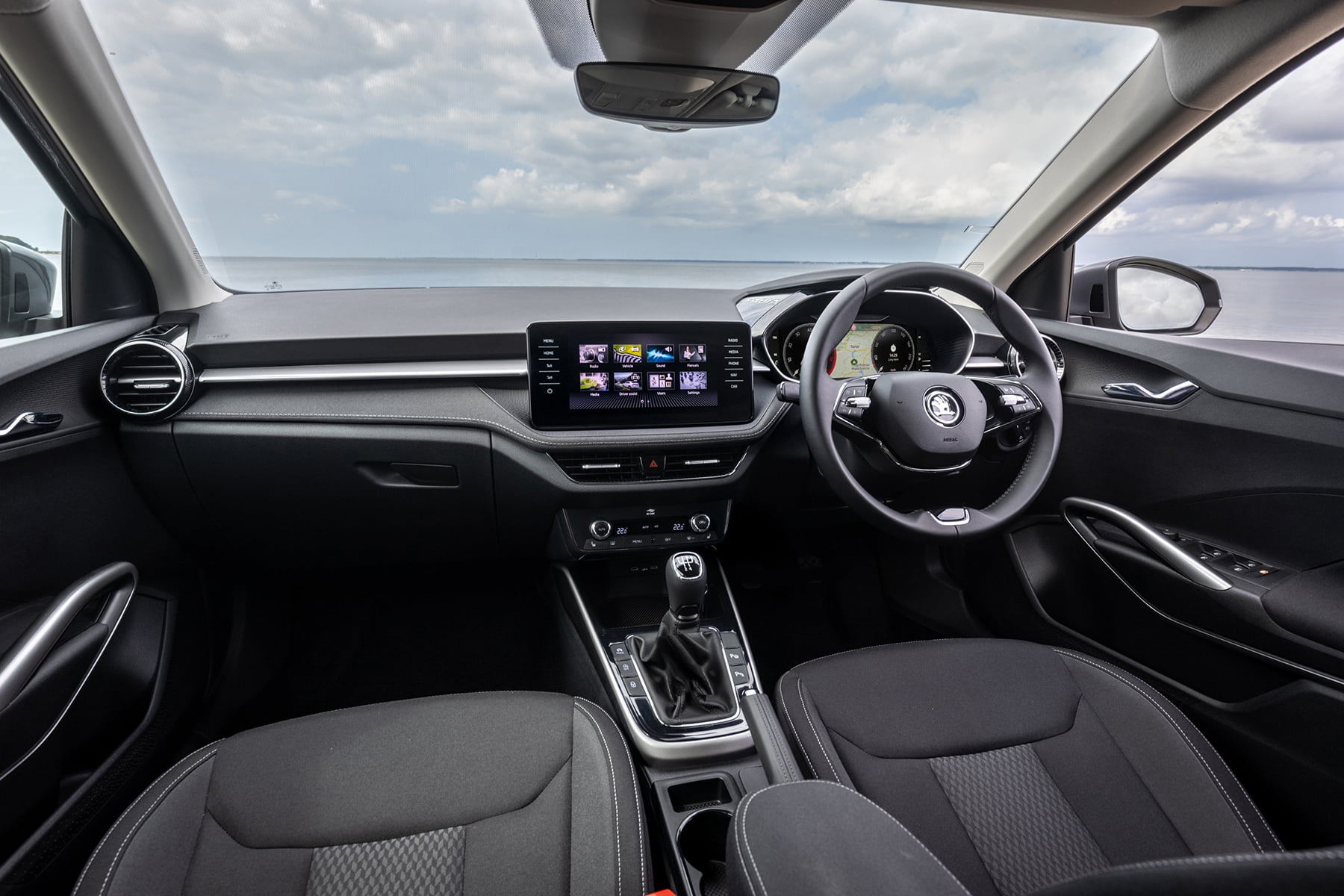
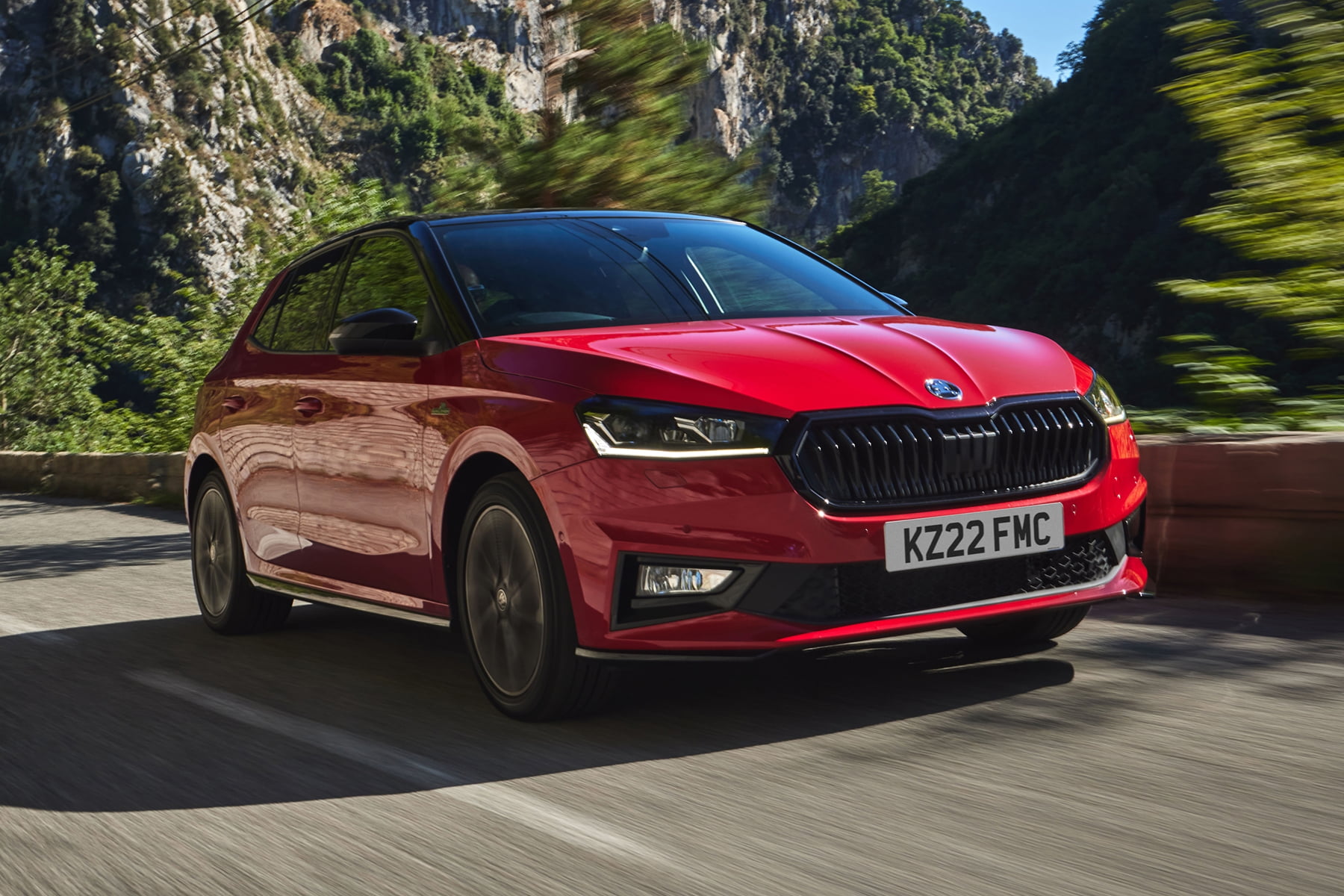
Now available to order in the UK, the limited edition Mini Electric Multitone has made its debut, featuring unique cosmetic touches inside and out.
Manufactured at Mini’s plant in Oxford, UK, like the rest of the three-door Electric hatch range, the brand only intends on selling 200 of these Multitone models here in Britain.
The most noticeable exterior alteration can be seen from above – the car’s two-tone roof is white in the front, which blends to grey and then black as you approach the rear. Mini says that deviations of this colour pattern may occur, which the manufacturer says makes every Multitone model slightly unique.
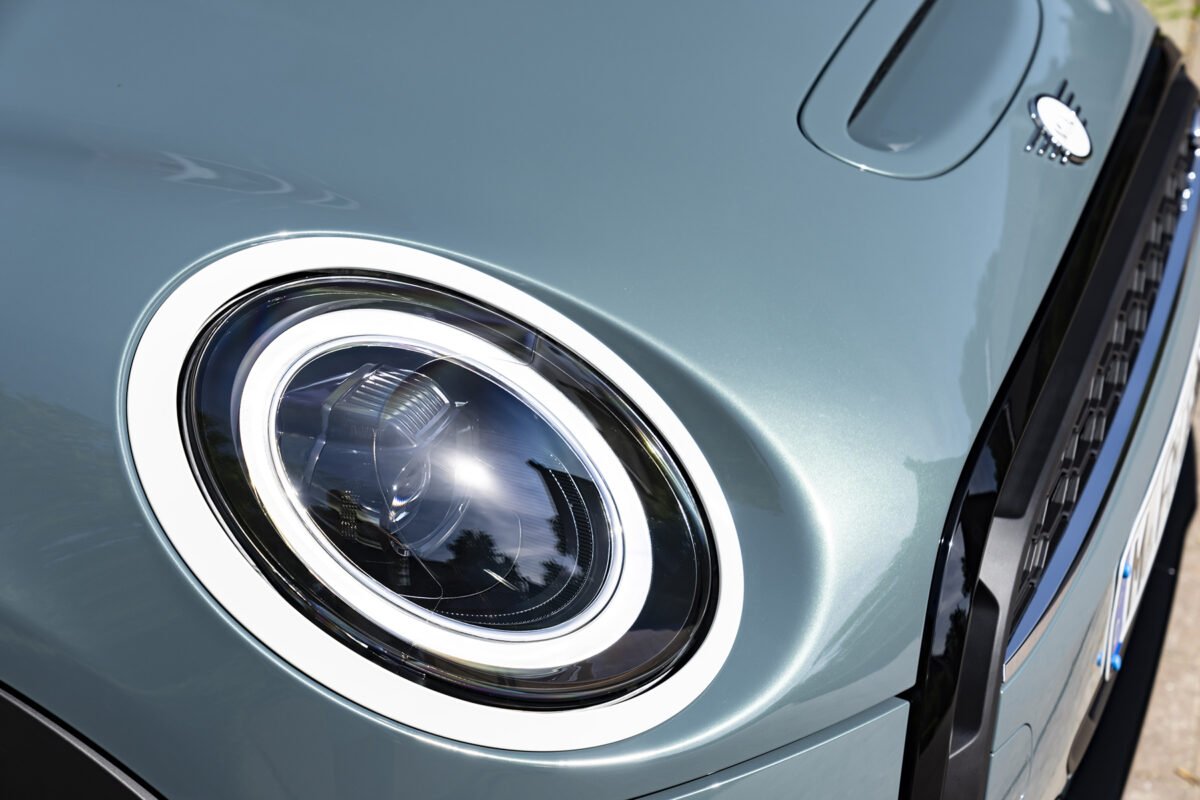
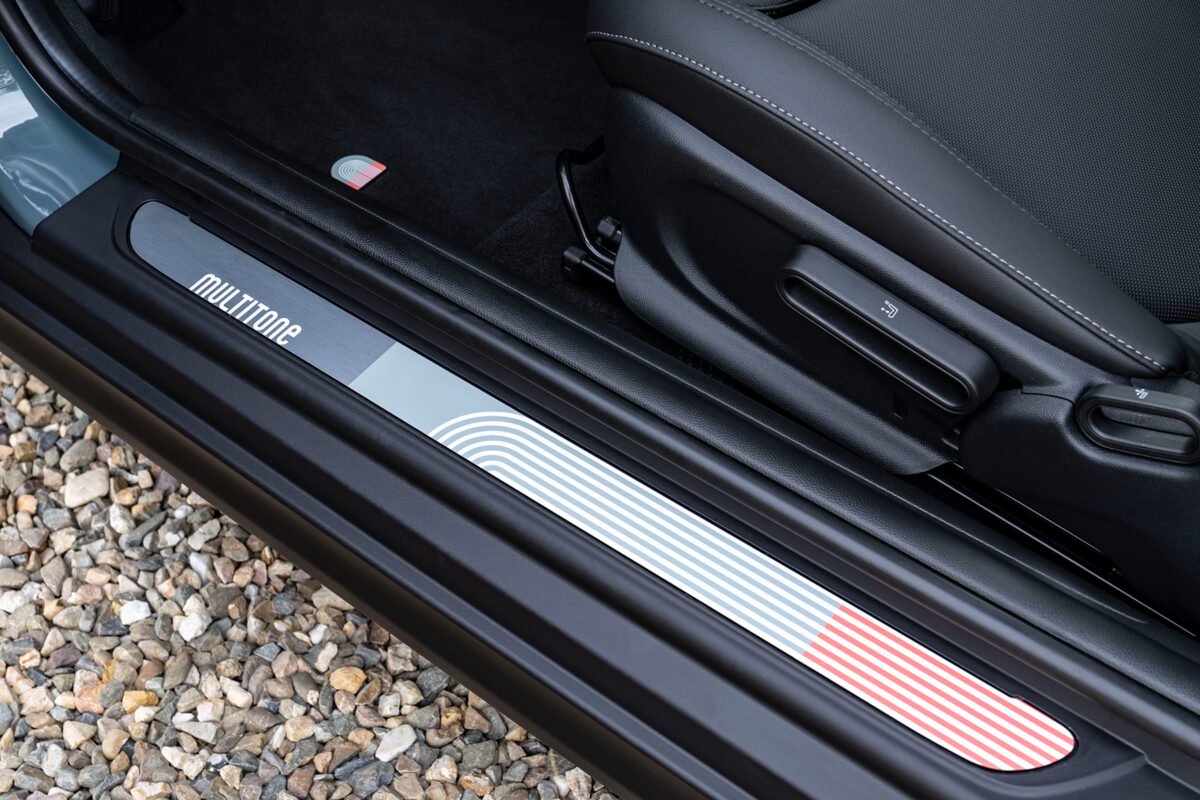
Usually finished in black, the headlight and tail light surrounds are trimmed in white, as is the Mini badge on the car’s front fascia. Multitone models also distinguish themselves from standard versions thanks to a unique rainbow motif design that can be found above the hatchback’s front wheel arches, the door sills and the self-levelling wheel caps fixed to every alloy.
Stepping inside, this motif also appears on the car’s sun visor, floor mats and steering wheel. This limited run trim is solved with the standard ‘Level 2’ equipment list, including a nine-inch infotainment screen, heated front seats, automatic dual zone air conditioning, a leather steering wheel and a rear-view parking camera.
The Mini Electric Multitone is priced at just over £33k – £2k more expensive than the entry-level model. The Mini Electric has been praised by the UK media for its fun driving dynamics, but criticised for its high pricing, particularly when compared to the petrol-powered Mini hatch. It currently holds an Expert Rating of 67%.
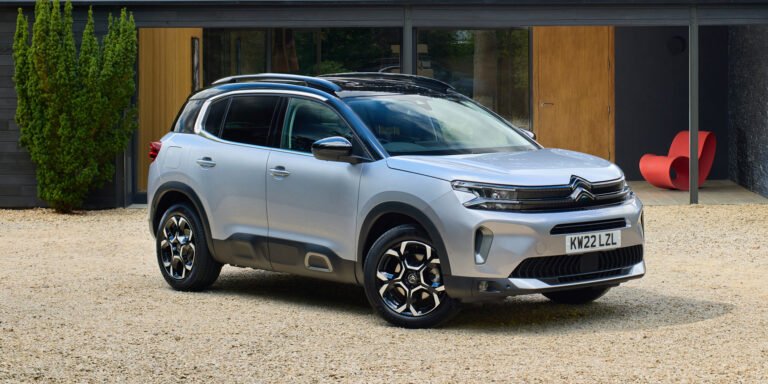
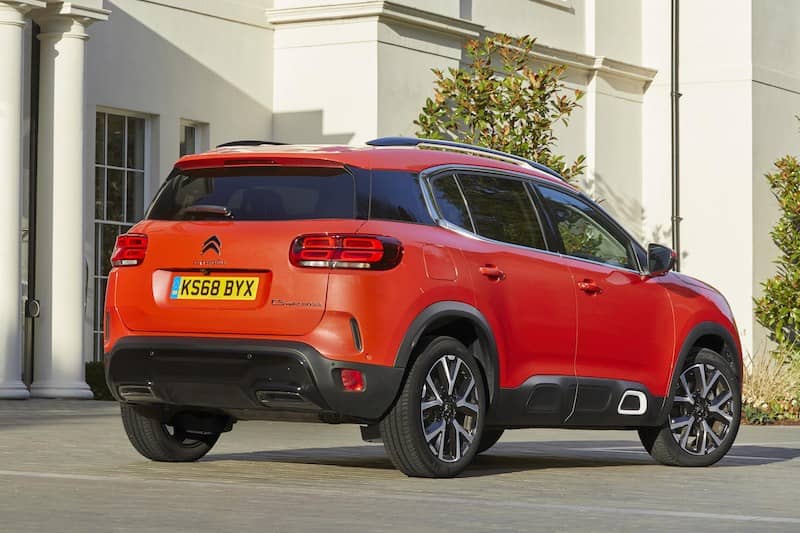
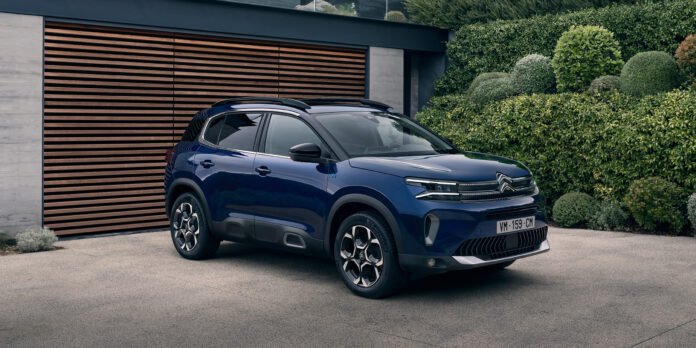
The Citroën C5 Aircross was a medium-sized SUV/crossover. This first-generation model was initially launched in China, with European sales starting in late 2018. It has now been replaced by a new C5 Aircross range that consists of hybrid and electric powertrain options.
The C5 Aircross received consistently good reviews from the UK media since its launch. It received particular praise for providing a very comfortable ride (at the expense of handling) and clever interior design. Its exterior styling was distinctive, which can be somewhat polarising, although next to some newer rivals (Hyundai Tucson, Kia Sportage) it looks quite conservative.
The C5 Aircross received a mild mid-life update in Spring 2022, with minor styling updates and trim changes.
No longer on sale, the first-generation Citroën C5 Aircross holds a Used Car Expert Rating of B, with a score of 65%. It earns top marks for its low average CO2 emissions (thanks to the plug-in hybrid model), while its running costs are also good. Its safety rating and media reviews are only average, however, and we don’t yet have enough data to make a reliability assessment. Check back again soon.
Highlighted reviews and road tests from across the UK automotive media. Click any of the boxes to view.
Featured reviews
“The Citroen C5 Aircross will turn some buyers away with its looks while attracting others. But this newcomer is right up with the best in its overcrowded segment and very much worth checking out.”
Model reviewed: Range overview Score: 7 / 10 “If comfort is your top priority, there are few mid-size SUVs that come close to the Citroën C5 Aircross. However, the trade-off is a complete lack of any driver engagement, and the C5 Aircross’s budget-friendly nature is rather obvious when sitting inside it, because the cabin is filled with cheap materials and an infuriating infotainment system.” Author: Shane Wilkinson Read review
Model reviewed: 1.2-litre petrol automatic Shine (facelift) Score: 7 / 10 “There’s not a vast amount new with the revised Citroen C5 Aircross. We’re very pleased that Citroen has stuck to its guns with its focus on comfort above all else, making this a relaxing and practical family SUV. However, the infotainment tech is still a bit of a let-down, and the auto box is best avoided.” Read review
Model reviewed: 1.6-litre petrol/electric plug-in hybrid (facelift) Score: 7 / 10 “The Citroen C5 Aircross PHEV is a solid enough package, but its average BiK rating will probably be a dealbreaker for many user-choosers. Indeed, with Citroen sources saying that a version with more than 40 miles of EV running – and the resulting lower tax hit – could well be with us by the end of the year, it’s hard to make too strong a case for a vehicle that, updates notwithstanding, feels like a bit of a stopgap.” Read review
Model reviewed: Hybrid Score: 7 / 10 “The Citroën C5 Aircross builds on the refinement offered by petrol and diesel versions with a smooth powertrain, but it also shares the same lifeless steering and peculiar ride. It’s still close to matching the appeal of its sister model, the Peugeot 3008, for a lower price.” Read review
Model reviewed: 1.2-litre petrol automatic Flair Plus Score: 8 / 10 “By adding this more affordable, more economical engine and gearbox combination to the range in place of the old PureTech 180, Citroën has boosted the appeal of the C5 Aircross. The engine is punchy and economical, and while the gearbox isn’t the fastest, it is smooth.” Read review
Auto Trader
Model reviewed: Range overview Score: 8 / 10 “The Citroën C5 Aircross is a mid-size SUV that majors on equipment, practicality, comfort and funky styling. It’s a really good all-rounder that’ll rightly appeal to a wide range of buyers.” Read review
Business Car
Model reviewed: 1.2 PureTech 130 Shine (2022) Score: 7 / 10 “The C5 Aircross is the same comfortable, refined SUV it has always been. However, the PHEV remains our favourite, thanks to its low BIK figure bringing welcome day-to-day running cost savings, and an extra layer of refinement.” (Martyn Collins) Read review
Car
Score: 8 / 10 “This works, if what you want is a car that’s as much about the passengers as it is about the driver; if you want a car that looks a little bit different from the norm, but which provides all the practicality and convenience of the familiar Japanese and German contenders.” Read review
Car Keys
Model reviewed: Hybrid 2021 Score: 8 / 10 “The Citroen C5 Aircross Hybrid brings bold design, plenty of standard kit and a comfortable ride to the electrified SUV class.” Read review
Carbuyer
Model reviewed: Range overview Score: 7.8 / 10 “The Citroen C5 Aircross is a funky and relaxing family SUV that offers very little in the way of driver enjoyment” (Andy Goodwin) Read review
Company Car Today
Model reviewed: 1.6-litre petrol/electric plug-in hybrid Flair Plus “Comfortable and sensible as well as offering plenty of character inside and out, the Citroen C5 Aircross makes plenty of sense in PHEV form.” Read review
Model reviewed: Range review Score: 7.8 / 10 “An efficient, good-looking crossover with a huge boot, the C5 Aircross brings Citroën into the heart of the segment, and certainly not before time.” Read review
Daily Mail
“Don’t expect racetrack performance. What you do get is relaxed long-legged driving that is both intuitive and calming — just what you want if you are ferrying a family around.” Read review
Daily Mirror
Model reviewed: 1.6-litre petrol automatic Flair “The new Citroën C5 Aircross might have taken a while to get here but it’s a welcome addition to the class.” Read review
Discover EV
Model reviewed: 1.6-litre petrol/electric plug-in hybrid Shine Score: 7 / 10 “As Citroën’s first plug-in hybrid model, the C5 Aircross SUV Hybrid impressed us. For customers who still want the benefits of a zero emission vehicle for daily driving, with the option to travel a long distance, without any concerns in terms of charging it provides practical and comfortable mobility.” Read review
Electrifying.com
Model reviewed: petrol-electric plug-in hybrid Score: 7 / 10 “Citroen’s family-sized plug-in hybrid might look like an SUV, but really it’s more of a butch-looking family car. That makes it more efficient and better to drive, though, unless you really need to go off-road.” Read review
Fleetworld
Model reviewed: Plug-in hybrid Flair Score: 8 / 10 “There seems to have been an explosion of plug-in hybrid rivals in the SUV sector, many from Citroën’s sister brands DS, Peugeot, and Vauxhall. However, the C5 Aircross stands out with its impressive comfort and affordable prices.” Read review
Green Car Guide
Model reviewed: 1.6-litre petrol/electric plug-in hybrid Shine (2023 facelift) Score: 8 / 10 “There’s very little to fault the Citroën C5 Aircross Plug-in Hybrid’s overall driving experience. It’s comfortable, and it offers good performance together with the potential for impressive economy if driven mainly on electric power. It also provides decent levels of space in a compact footprint.” (Paul Clarke) Read review
Model reviewed: 1.2-litre petrol manual Flair+ Score: 8 / 10 “The Citroen C5 Aircross is good to drive, it has excellent ride quality, along with lots of space, and it offers good value for money.” Read review
Heycar
Model reviewed: Range overview Score: 8 / 10 “The Citroen C5 Aircross is sufficiently different to make it stand out in a very crowded market. There are competitors that drive better, some that feel more premium, and others that are even more practical. But as an SUV for carrying all the family, the C5 Aircross makes a very strong case for itself.” Read review
Honest John
Score: 8 / 10 “It’s very practical, looks a bit unusual and has an impressive engine line-up. It won’t appeal to enthusiastic drivers but it unashamedly focuses on comfort. And that’s not a bad thing when it comes to the family crossover market.” Read review
Parkers
Model reviewed: Range review Score: 8.2 / 10 “A distinctive-looking and comfortable addition to a crowded SUV market” Read review
The Sun
“This is a well-thought-out five-seat family SUV with sliding rear seats that fold flat and a big storage bin in the central glovebox.” Read review
Model reviewed: 1.5-litre diesel automatic Flair Score: 8 / 10 “A stylish and likeable SUV with a strong – and pleasing – emphasis on comfort, rather than sportiness. Interior plastics and infotainment are let-downs, while the rear seats could be more generous – but their versatility, and the huge boot, help make up for that.” Read review
Top Gear
Model reviewed: Range overview Score: 7 / 10 “The C5 Aircross busts out of the me-too SUV mould by cheerfully rejecting sportiness.” Read review
Score: 8 / 10 “Economy is decent. You get lots of insurance-friendly safety systems too. Citroen seems to have got a handle on depreciation, as evidenced by a very decent PCP rate.” Read review
Safety rating
Independent crash test and safety ratings from Euro NCAP
The Citroën C5 Aircross received a four-star rating from Euro NCAP in standard specification, which is sold in the UK with the name ‘Feel’. The more expensive ‘Flair’ and ‘Flair Plus’ trim levels come with additional safety assist technology as standard, which gives them a five-star rating. The Feel can be optioned with this extra kit for an additional cost, which would then give it a five-star safety rating.
Eco rating
Independent economy and emissions ratings from Green NCAP
No eco rating
The Citroën C5 Aircross was not tested by Green NCAP during its production life.
Reliability rating
Reliability data provided exclusively for The Car Expert by MotorEasy
No reliability rating
As of February 2026, we don’t have enough reliability data on the Citroën C5 Aircross to generate a reliability rating.
The Car Expert’s reliability information is provided exclusively to us using workshop and extended warranty data from our partner, MotorEasy, sourced from both official dealerships and independent workshops.
As soon as MotorEasy has sufficient data on the C5 Aircross, we’ll publish the results here.
Running cost rating
Monthly cost of ownership data provided exclusively for The Car Expert by Clear Vehicle Data
Fuel consumption
Average
Score
Petrol models
44 mpg
C
Diesel models
51 mpg
C
Hybrid models
51 mpg
C
Plug-in hybrid models
166 mpg
A
CO₂ output
Average
Score
Variation
Score
Petrol models
145 g/km
C
Diesel models
145 g/km
C
Hybrid models
130 g/km
B
Plug-in hybrid models
33 g/km
A
Battery range
Average
Score
Variation
Score
Plug-in hybrid models
36 miles
E
Insurance group
Average
Score
Variation
Score
All models
21
B
Service and maintenance
Cost
Score
Year 1
£188
B
Year 2
£580
C
Year 3
£911
C
Year 4
£1,155
C
Year 5
£1,561
C
Overall
£4,395
C
The Citroën C5 Aircross is a relatively affordable car to own and run, according to whole-life cost numbers provided exclusively to The Car Expert by our data partner, Clear Vehicle Data.
Fuel consumption is only average for the petrol-engined models, but the diesels and hybrids are better. The plug-in hybrid looks great on paper, but that’s due to the woeful EU/UK government lab tests that are completely useless at measuring a plug-in hybrid…
Insurance costs should be excellent, while servicing and maintenance over the first five years should be very good as well.
Warranty rating
New car warranty information for the Citroën C5 Aircross
Overall rating
D
28%
Petrol or diesel models
E
15%
Electric or hybrid models
C
50%
New car warranty duration
3 years
New car warranty mileage
60,000 miles
Battery warranty duration
8 years
Battery warranty mileage
100,000 miles
Citroën new car warranty is fairly basic, and worse than rival brands in a similar price bracket as the C5 Aircross.
The duration is thee years, with a limit of 60,000 miles. In addition to the standard new car warranty, the plug-in hybrid version has an eight-year/100,000-mile warranty for the battery components.
If you are purchasing an ‘Approved Used’ Citroën C5 Aircross from an official Citroën dealership, you should get a minimum one-year warranty included. If you are buying a used C5 Aircross from an independent dealership, any warranty offered will probably be managed by a third-party warranty company and the terms may vary. If you are buying a used C5 Aircross from a private seller, there are no warranty protections beyond anything that may be left on the original new car warranty.
If you’re looking to buy a used car that is approaching the end of its warranty period, a used car warranty is usually a worthwhile investment. Check out The Car Expert’s guide to the best used car warranty providers, which will probably be cheaper than a warranty sold by a dealer.
Awards
Trophies, prizes and awards that the Citroën C5 Aircross has received
2020
DieselCar & EcoCar Top 50 – Best Medium SUV
2019
DieselCar & EcoCar Top 50 – Car of the Year + Best Medium SUV
2018
Company Car Today CCT100 Awards – Most Exciting New Car
Similar cars
If you’re looking at the Citroën C5 Aircross, you might also be interested in these alternatives
Toyota has announced that a ‘GR Sport’ trim will soon join its Yaris Cross range, featuring cosmetic tweaks inside and out, and a revised suspension setup.
Toyota says that the introduction of this new trim is part of an attempt to make the Yaris Cross attract a wider range of customers. ‘GR Sport’ versions of the Yaris supermini, Corolla hatchback and C-HR SUV are already on sale, which the brand says are garnering sales success.
To be clear, this is not a performance-enhanced ‘GR’ version of the Yaris Cross, like the GR Yaris hot hatch. It is a trim at the top of the standard Yaris Cross range that features the exterior and interior flair of a GR model, without any engine tweaks or changes.
However, with “better steering, roll and grip feel” in mind, Toyota has firmed up the suspension of this GR Sport trim version so that the crossover feels more responsive in high speed corners.
The front-end fascia of the car remains largely the same – this GR Sport variant features subtle redesign of the mesh pattern on the grille and lower air intake.
In the rear, this trim introduces a sportier rear diffuser which is embossed with the same mesh pattern. The trim also comes with unique 18-inch alloy wheels.
GR Sport will be the only Yaris Cross trim available in ‘Ash Grey’ – a signature colour of Toyota’s GR range – as well as an additional orange exterior colour option. Bi-tone colour configurations are available, which see the roof and window pillars finished in black.
‘GR’ branding can be seen in several places across the car’s exterior and interior, including the front grille, steering wheel, starter button, mats and headrests.
The upholstery, which is trimmed in a suede-like material, is finished in black with red stitching. Toyota has also added some silver metal accents to the doors and dashboard.
The Yaris Cross GR Sport will be available to pre-order sometime in Autumn this year, but Toyota has not announced the pricing of this trim as of yet. The brand says that this additional trim will sit alongside the range-topping ‘Excel’ trim in the Yaris Cross range, which currently costs over £28k to purchase outright.
As the key criticisms of the Yaris Cross relate to its modest performance and slow infotainment, the addition of this sporty trim grade is not likely to have much of an impact on the car’s Expert Rating of 70%.
The Mazda CX-60 is a mid-sized SUV/crossover and the Japanese manufacturer’s first plug-in hybrid model, which first arrived on UK roads in Summer 2022.
The top-spec plug-in hybrid version was the only powertrain available at launch, with mild-hybrid petrol and diesel engine choices joining the range at a later date.
The CX-60 is also Mazda’s first foray into the upmarket SUV class, and for the Top Gear team, it falls just short of the lofty standards of its German competitors. “It’s a shame the powertrain isn’t more sorted and the handling not quite on par with premium rivals like the BMW X3, Mercedes-Benz GLC and Audi Q5.”
It is “far from perfect”, Parker‘s Richard Kilpatrick explains, but the CX-60 does offer a well-equipped and “beautifully trimmed” interior and “excellent cruising ability” for considerably less than the likes of the BMW X3. Dave Humphreys of The Sunday Times also points out that this Mazda “has a longer battery range than many of the other PHEVs it competes against” too.
As of March 2026, the Mazda CX-60 holds a New CarExpert Rating of B with a score of 69%.
Body style: Medium SUV Engines:petrol, diesel, plug-in hybrid Price:From £43,950 on-road
Launched: Summer 2022 Last updated: N/A Replacement due: TBA
Image gallery
Media reviews
Highlighted reviews and road tests from across the UK automotive media. Click any of the boxes to view.
Featured reviews
“There are many things to like about the Mazda CX-60. It does exactly what you need and expect from a family car, and it does it in comfort if not in great style. But the diesel engine is surprisingly noisy and harsh, which rather detracts from the otherwise lovely cabin ambience.”
“The CX-60 is an impressive debut for Mazda in the premium SUV market. Its stylish exterior look and quality feel throughout the cabin mean it should appeal to buyers in this ultra-competitive sector, while its efficient plug-in hybrid powertrain and large, practical boot space should fit the bill for family life, too.”
Model reviewed: 2.5-litre petrol/electric plug-in hybrid Exclusive-Line Score: 8.3 / 10 “The Mazda CX-60 is not only Mazda’s biggest and most powerful car but it’s best yet, the PHEV drivetrain offering performance to go with the comfort and quality of build.” (Andrew Charman) Read review
Auto Express
Model reviewed: Score: 8 / 10 “The extra power and all-wheel drive capability of the diesel Mazda CX-60 in this form is welcome, while the wonderfully anachronistic inline-six under the bonnet is as likeable as ever, and should prove frugal. The top-of-the-line Takumi trim is an expensive proposition, however, and the at-times choppy ride remains a bone of contention.” Read review
Model reviewed: 2.5-litre petrol-electric plug-in hybrid AWD Takumi Score: 8 / 10 “Mazda’s first fully-fledged premium SUV is a solid effort. The cabin delivers a unique feel and plenty of quality in top-spec Takumi trim, which is also good value compared with established premium rivals.” (Sean Carson) Read review
Auto Trader
Model reviewed: Range overview Score: 7 / 10 ” A good level of standard equipment makes the Mazda relatively good value for money, too, and it’s pretty roomy inside. The driving experience is mostly refined, though it isn’t as sporty to drive as the power output might suggest. Nevertheless, the CX-60 is an interesting new consideration for private and company car buyers alike.” Read review
Business Car
Model reviewed: 3.3 e-Skyactiv D MHEV (2023) Score: 7 / 10 “The CX-60 diesel’s efficiency impresses, but we think its BIK figure and the general stigmatisation towards diesel power for company vehicles will make this Mazda a tough sell in the UK.” (Martyn Collins) Read review
Model reviewed: 2.5-litre petrol/electric plug-in hybrid Homura Score: 8 / 10 “Overall, the Mazda CX-60 impresses. It’s high quality, well-equipped, offers a keen drive and is cheaper to buy and run than premium rivals. Plus, strong residual values mean this Mazda performs well on a cost-per-mile basis.” (Martyn Collins) Read review
Car
Model reviewed: Range overview Score: 6 / 10 “We admire how Mazda is sticking to its guns – larger, naturally-aspirated engines are its route to improved efficiency – but somehow it doesn’t completely gel in the way its more polished premium rivals do.” Read review
Carbuyer
Model reviewed: Range overview Score: 8.2 / 10 “The Mazda CX-60 is the brand’s first plug-in hybrid, and is an interesting alternative to premium PHEVs from BMW and Audi.” Author: Miles Goodson, Andy Goodwin Read review
Driving Electric
Model reviewed: Range overview Score: 8 / 10 “Mazda’s first plug-in hybrid features a high-quality cabin and plenty of standard kit to match German rivals, although less expensive alternatives from Hyundai and Kia are more efficient.” Read review
Electrifying.com
Model reviewed: Range overview Score: 7 / 10 ““I can’t believe Mazda’s engineers couldn’t find some way to get an extra mile of electric range in order to slip under the BIK barriers. At 12% it’s just not competitive – Range Rover PHEV drivers will pay less in tax every year than the CX-60 driver.” (Ginny Buckley) Read review
Evo
Model reviewed: Range overview Score: 7 / 10 “Where the Mazda does trail its rivals is overall refinement. Tyre roar is fairly pronounced, and when running at motorway speeds in EV mode there’s nowhere for it to hide without the white noise of a combustion engine to distract you.” (Jordan Katsianis) Read review
Heycar
Model reviewed: Range overview Score: 8 / 10 “The CX-60 faces a challenge in tempting buyers away from the Audi Q5 and Mercedes GLC but its superb interior, competitive price and the plug-in hybrid’s generous electric range make it a very appealing choice.” Read review
Honest John
Model reviewed: Range overview Score: 8 / 10 “The new Mazda CX-60 is one of the most interesting SUVs to hit the market in recent years. Its posh interior is just as impressive as much more expensive alternatives, while its hybrid powertrain means it ought to be cheap to run. Standard equipment levels are good although it does lack a little polish in terms of refinement.” Read review
Parkers
Model reviewed: Range overview Score: 7.6 / 10 “Lined up against similarly-priced rivals, it suddenly feels more competitive, with the hugely competent Toyota RAV-4 or Peugeot 3008 outclassed by the new Mazda. Overall it’s likeable, but far from perfect.” Read review
The Scotsman
Model reviewed: 3.3-litre diesel automatic Score: 7 / 10 “The all-wheel-drive Mazda CX-60 is a premium package with an engaging drive and a great engine, but it’s not without its problems.” Author: Steven Chisholm Read review
The Sun
Model reviewed: Range overview “That’s hot hatch fast and it feels it from behind the wheel. Together with its accurate steering, snappy auto ‘box, grippy all-wheel-drive and ability to stay nicely upright in bends, the CX-60 is a hoot to drive.” Read review
The Sunday Times
Model reviewed: Range overview Score: 7 / 10 “The CX-60 is worthy of flagship status and showcases how Mazda is on top of its game regarding design and interior quality. Standard equipment levels are generous and, perhaps most importantly, it has a longer battery range than many of the other PHEVs it competes against.” Read review
The Telegraph
Model reviewed: 2.5-litre petrol/electric plug-in hybrid Homura Score: 6 / 10 “There are problems with the way the Mazda CX-60 drives, which is a shame because in other ways it’s very likeable. It’s good value – indeed, none of its rivals can match its combination of price, power and fuel efficiency. While the interior lacks sparkle, it’s functional, practical and very easy to get along with. If only Mazda had dialled out that pitching, bouncing character of the suspension, this would be a very recommendable car.” (Alex Robbins) Read review
Top Gear
Model reviewed: Range overview Score: 8 / 10 “The Mazda CX-60 has the hallmarks of being another likeable Mazda, thanks to its very well-appointed and logical cabin, a huge amount of standard kit and reasonable driving dynamics. But while the plug-in hybrid delivers an undeniable turn of speed, it’s a shame the powertrain isn’t more sorted.” Read review
Safety rating
Independent crash test and safety ratings from Euro NCAP
Independent economy and emissions ratings from Green NCAP
No eco rating
As of March 2026, the Mazda CX-60 has not been lab tested by Green NCAP.
Reliability rating
Reliability data provided exclusively for The Car Expert by MotorEasy
No reliability rating
As of March 2026, we don’t have enough reliability data on the Mazda CX-60 to generate a reliability rating.
The Car Expert’s reliability information is provided exclusively to us using workshop and extended warranty data from our partner, MotorEasy, sourced from both official dealerships and independent workshops.
As soon as MotorEasy has sufficient data on the CX-60, we’ll publish the results here.
Running cost rating
Monthly cost of ownership data provided exclusively for The Car Expert by Clear Vehicle Data
Fuel consumption
Average
Score
Diesel models
53 mpg
B
Plug-in hybrid models
202 mpg
A
CO₂ output
Average
Score
Variation
Score
Diesel models
138 g/km
C
Plug-in hybrid models
32 g/km
A
Battery range
Average
Score
Variation
Score
Plug-in hybrid models
40 miles
D
Insurance group
Average
Score
Variation
Score
All models
38
D
Service and maintenance
Cost
Score
Year 1
£325
D
Year 2
£788
D
Year 3
£1,244
D
Year 4
£1,496
D
Year 5
£1,987
D
Overall
£5,840
D
The Mazda CX-60 is an affordable car to own and run, according to whole-life cost numbers provided exclusively to The Car Expert by our data partner, Clear Vehicle Data.
Fuel economy is among the best in its class – Diesel models offer around 55mpg, while top-spec plug-in hybrid models can reportedly muster around 188mpg. The plug-in hybrid models look amazing on paper, but this is largely thanks to ridiculous EU/UK government lab tests that are completely inadequate for plug-in hybrids. There is no way you will ever travel for 188 miles on a single gallon (4.5 litres) of fuel and some electricity…
While the CX-60’s insurance premiums are a bit higher than the market average, the SUV’s service and maintenance costs are pretty average.
Awards
Significant UK trophies and awards that the Mazda CX-60 has received
2023
Fleet World Awards – Best Fleet Large SUV
UK News Motoring Awards – Best Large SUV
Similar cars
If you’re looking at the Mazda CX-60, you might also be interested in these alternatives
If you believe the research, around half of potential new car buyers want to go electric, yet the UK battery-electric market sits at just 15%. The majority are put off not by range anxiety, that old fear of being stranded with a completely exhausted battery and no three-pin plug socket within reach, but by the fact that you need to pay too much money to buy a car which is typically a compromise falling short of what you really want.
MG believes it can change all that with the MG 4 (which the company styles as MG4), the brand’s first full-electric hatchback, pitched as affordable but also practical and, shock horror, an electric car that is really fun to drive. Does it live up to the “bold new direction” billing?
The MG 4 is an all-new model from the brand, designed to attract those who might be considering a larger supermini or smaller SUV. In looks and construction the car is like nothing MG has so far produced. It is built on a new modular platform specially designed for electric powertrains, with a thin battery pack under the floor and able to be made in several different sizes and body styles – the MG 4 is the first of a complete range of new MGs coming over the next few years, a range that will include a sports car.
At 4.3 metres long, the MG 4 is effectively the same size as the electric family car standard bearer, the Volkswagen ID 3. It sits in the ‘grey area’ between small family cars and compact SUVs, and MG is very proud of the car’s wheelbase being almost as long as a typical compact SUV, which means lots of interior space.
It comes with two battery capacities, 51kWh and 64kWh, and promises the equivalent of 203hp of power, 250Nm of torque and a sub eight-second 0-62mph time.
First impressions
On first sight the MG 4 looks nothing like anything that has worn an MG badge since the brand was revived. The innocuous rounded styling of previous models is gone, replaced by sharper, creased looks that we are told from the basis for the next line of cars from MG. On first viewing the bold strokes, such as the body lines flowing to a point on the front, give the car a purposeful look that is both distinctive and attractive. Crucially they also provide MG with a ‘signature’, unlike previous offerings that simply looked the same as everything else in the car park.
This effect is emphasised in the Trophy model thanks to its ‘flowing’ two-tone roof finish and especially the twin rear spoiler. Following an MG 4 Trophy you will instantly know what you are looking at, though we can imagine that those two rear wings will divide opinions…
MG describes the MG 4’s interior as “simple, elegant, minimalist and functional,” which could also be described as bland – more shortly…
We like: Bold new look is attractive and not at the expense of practicality We don’t like: Twin rear spoiler will not be to everyone’s taste
What do you get for your money?
MG likes simple model line-ups and that of the MG 4 is easy to remember. Initially there are two trim levels, dubbed SE and Trophy. Unusually the entry-level SE version comes with both battery options, either the standard-range 51kWh unit or the long-range 64kWh version, while the Trophy is only offered with the long-range unit.
You get plenty of equipment too – SE models include LED lights front and rear, auto air-conditioning, a ten-inch central touchscreen display, rear parking sensors, Apple CarPlay and Android Auto smartphone capability and the iSmart connected features working through a Smartphone app. There’s a fairly innocuous four-speaker audio system as standard, upgraded to six speakers and 3D sound on the Trophy, but perhaps an area for future improvement.
The safety package, standard across all models, centres on the MG Pilot suite of driver-aids, which includes adaptive cruise control, active emergency braking with pedestrian and cyclist functions, lane-keep assist and lane-departure warning and traffic sign recognition. All good in theory, but the MG 4 has not yet been tested and rated by Euro NCAP.
Go for the Trophy and the extra safety aids extend to blind spot detection, lane-change assistance and a rear traffic alert, while among the menu of extras are a two-tone roof, a leather interior (with cloth inserts), electric driver seat adjustment, heated front seats and steering wheel, a 360-degree camera, wireless phone charging and live updates such as traffic alerts and music selections through iSmart. You only get navigation with the Trophy, but let’s face it most people simply plug in their phone these days and use Google Maps…
And how much is the money? You can buy an MG 4 SE for £25,995, or £28,995 in extra miles per charge form, while the Trophy costs from £31,495. These prices are good to start with, but they become even better when you add in the residual values. Predicted by industry-standard analysts CAP, it’s likely the RV ratings of around 60% shocked even MG, being not only at least 5% better than even the Volkswagen ID.3, more than 10% above the Peugeot e-208, Vauxhall Corsa-e and Renault Zoe.
In fact, it’s comparable to the residual values given to two more highly desirable EVs, the Porsche Taycan and Tesla Model Y. This is helped by MG’s standard seven-year, 80,000-mile warranty, which make the car more attractive at the end of a three- or four-year PCP or lease.
What this translates to is needing less money to buy one – a low car price plus strong residual values adds up to a very attractive PCP or PCH monthly payment compared to similarly sized EV.
We like: Lots of equipment for not a lot of money compared to rivals We don’t like: Audio system could be better.
What’s the MG 4 like inside?
Slip into the MG 4 and the environment is spacious. Rear-seat passengers, in particular, will feel less cramped than in even the largest typical superminis, while boot capacity of 363 litres, expanding to 1,117 litres with the rear seats folded, is more than adequate. It’s all well put together, too, if a little bland and flat – some detailing would not go amiss.
Dominating the front-seat view are the twin display screens; the driver gets a seven-inch one with all essential information on it, while emerging from the centre console is a ten-inch widescreen version which looks after all the usual essentials – audio, climate, navigation if you are either using a smartphone system or the built-in version supplied with Trophy models, and also essential driver controls such as the five driving modes and the various levels of energy recovery.
You can have up to five touchscreen menus on screen to access all these and it’s initially a little fussy to use, though it soon becomes familiar. There are also buttons on the MG-standard octagonal shaped steering wheel for performing such functions as changing the audio system volume, but we found these somewhat indistinct in their action. Our tester’s little fingers also only just reached the short stalks for indicators, wipers et al.
Below this screen is a centre console that houses the large rotary gear selector and (on the Trophy) wireless charging. A neat touch is that the tray on which one’s phone sits includes a couple of small holes through which one can feed cables to the USB sockets in the void underneath, hiding excess cabling out of the way.
We like: Excellent space, both for people and their luggage We don’t like: Fiddly menus and buttons, slightly short stalks
What’s the MG 4 like to drive?
One oddity of this car is the lack of an on switch. Thanks to the key it recognises you as you get in and comes to life if you touch the brake pedal. You then select Drive on the large gear selector dial and off you go.
As with any electric car, it’s all very quiet and smooth, the car moving along in a very relaxed manner. In the default normal driving mode (remarkably there are five), the energy recovery from regeneration under coasting is noticeable as soon as you lift off the accelerator, and it is very easy to drive it virtually as a two-pedal car.
The energy recovery can be altered in intensity through the centre console, in the same section as selecting the drive modes which as well as the default Standard mode also include Eco, Sport, Snow and an individually customisable mode.
You can proceed along in the MG 4 with no concerns – the ride quality is up to the standards one expects and the chassis does a reasonably good job of smothering less than perfect road surfaces. Or you can exploit it. Floor the accelerator and the car is instant in its response, again as is the norm with an electric car. It piles on the pace, simply getting faster quickly but without the noise of a petrol-powered car.
On twisty country roads, the MG really excels. A combination of drive to the rear wheels and careful packaging to provide perfect weight distribution – the kind of thing performance car designers focus on – mean that this is a really enjoyable car to tackle corners in, which sharp, precise handling while maintaining an upright stance with little body roll.
When one has finished driving, however, we would like a means of actually turning the car off. Having parked up everything carries on being alive until you exit the car and lock it. Apparently you can disengage the auto function on the menus to stop the car coming to life should you wish to simply sit in it and have a nap…
And there’s more to come. The MG 4 might be swift and go a long way between charges, but among an expanded line-up on the way is an extended range model with a 77kWh battery that will take the car’s range close to 330 miles, and a dual-motor 330kW high performance model, with bespoke sporty styling and a 0-62mph time below four seconds.
We like: Handling, pace, general on-the-road dynamics We don’t like: No obvious button to turn the thing on and off
Charging the MG 4
MG follows convention just once in the location of the MG4’s charging socket, which is on the left-hand side rear panel where one would expect to find a fuel filler cap on a traditional car.
With the long-range 64kWh battery fitted, charging at up to 135kW is possible. That means that if you’re using a suitable 150kW DC rapid charger, the battery will be replenished from 10 to 80% in a mere 35 minutes, around the time it takes to buy and drink a coffee. With the standard battery you are talking slightly longer at around 40 minutes. If the DC charger is a 50kW version then your driving break will be between up to an hour.
Most owners will routinely charge their cars overnight with an AC charger. With a 7.2kW wallbox, the sort that would be applicable for most homes, you are looking at up to nine hours to go from 10% to fully charged. With a three-pin plug, you’ll need around a day…
Official laboratory driving range figures for the two SE variants are 218 and 281 miles respectively, while the Trophy goes to about 270 miles due to the weight of extra equipment and that twin rear spoiler, which adds a little drag. These are certainly practical range levels which will make the MG 4 a viable everyday car for most drivers.
Verdict
Few modern buyers will recognise the name Cecil Kimber, but in 1928 he was the designer that took the leading letters from the Morris Garages company he worked for and placed them as an octagonal badge on the first of many small sports cars. One can imagine that the MG 4 is the first of the modern-era MGs that were he alive today, Kimber would be happy to see his badge on…
MG is on a roll – it was one of very few car manufacturers to grow its sales in 2021, which it did massively. It beat its sales in the last ‘normal’ year of 2019 by April and with 28,500 cars registered by the end of the year became the 12th largest maker ahead of such mainstream names as Skoda, Land Rover and Mini. Rivals argue that MG’s now 3% share of the overall market was due to the Chinese-owned brand being far less affected by the global semiconductor shortage, though MG’s UK sales boss claims that it could have sold 18,000 more cars if the factory could have supplied them, so could have had an even better year.
The MG 4 is, however, the key to the future. On the evidence of driving it we believe this car could be a game-changer for MG, taking the brand into one of the most important sectors that not only does it not currently compete in, but in which a whole lot of brands do. This is an EV that costs less than rivals, matches or exceeds them on range and boasts better predicted residual values, meaning lower monthly costs on a PCP and more value when you come to sell it on.
None of this would matter if the car was some quirky, impractical niche model, but it’s not. It ticks all the typical family car boxes, but is also quick, with seriously impressive acceleration even before the higher-powered version joins the range. It has perfect weight distribution and it’s rear-wheel drive, which means sharp, responsive handling.
This car could do for MG what the Sportage did for Kia – the model to transform the brand from one of those budget makes trying to legitimise itself with a famous British badge, to a real global player. If you want to go electric but have been put off by big prices, you need to take a look at the MG 4.
Battery size: 64 kWh Battery range: 250 miles Euro NCAP safety rating: Not yet tested (as of August 2022) TCE Expert Rating: Not yet rated (as of August 2022)
With inflation beginning to bite, we’re all looking for a bargain wherever we can find it – and it’s no different when it comes to searching for a new set of wheels. So we’ve pulled together a comprehensive list of the cheapest new cars on sale in 2022.
Global supply shortages have made new cars more expensive across the board in recent months. But, while the consumer outlook is rather gloomy at the moment, there are still some great value-for-money options on sale that can get you from A to B and beyond without breaking the bank.
Whether you are on the lookout for a brand-new affordable city car, family hatchback, high-riding SUV or a seven-seater people carrier, this definitive guide presents the cheapest new cars you can find on the market in the UK right now. Unsurprisingly, almost all of these vehicles are classed as either small cars or small SUVs, with just one larger vehicle in the medium SUV category.
Please note all that pricing listed below is directly from the manufacturer, and accurate as of August 2022. New car prices increase gradually over time, and we will update this article as frequently as we can to keep this list accurate. All fuel consumption and road tax information relates to the cheapest trim and engine combination on offer. All Expert Rating scores are correct as of August 2022.
City cars
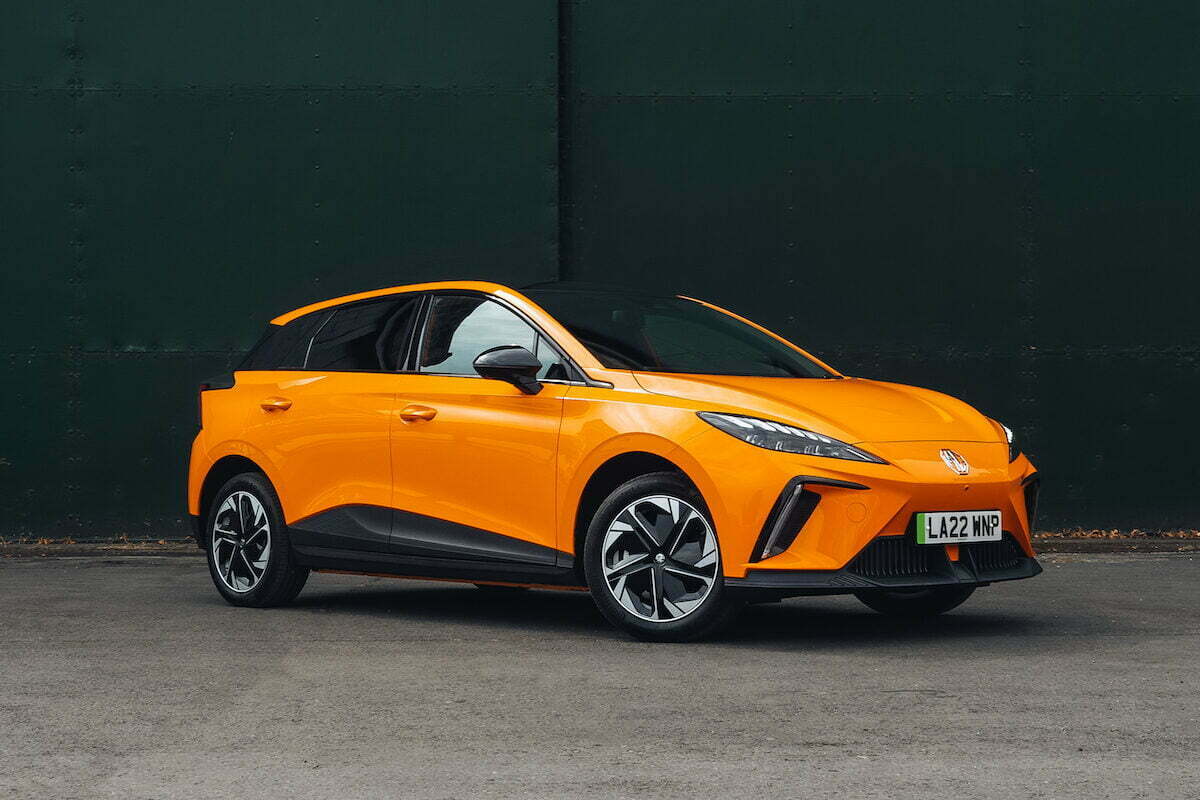
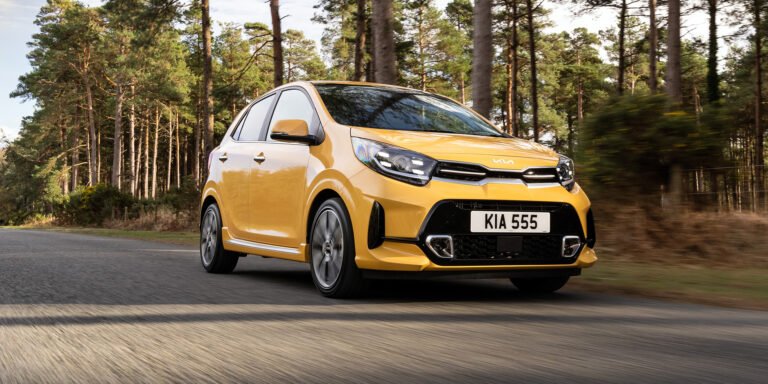
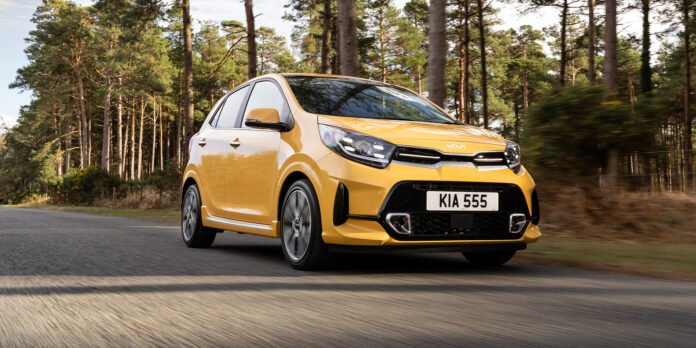
Kia Picanto – from £12,250
The title of Britain’s cheapest new car frequently changes hands, but for now it belongs to the pint-sized Kia Picanto. Now in its third generation, this award-winning city car has received a rather mixed bag of review scores since its 2017 – praised for its interior quality and driving dynamics, but criticised for its low three-star Euro NCAP crash safety rating.
Kia’s smallest model currently holds a very good Expert Rating of 74%, and comes with a seven-year warranty from the manufacturer.
The Hyundai i10 is another well-regarded compact runaround available on a budget. Built on the same platform as the Kia Picanto above, it shares many of the same traits – high levels of quality for the money, but a middling three-star Euro NCAP safety rating.
Like the Picanto, the Hyundai i10 currently holds a very good Expert Rating of 73%, and comes with a five-year warranty from the manufacturer.
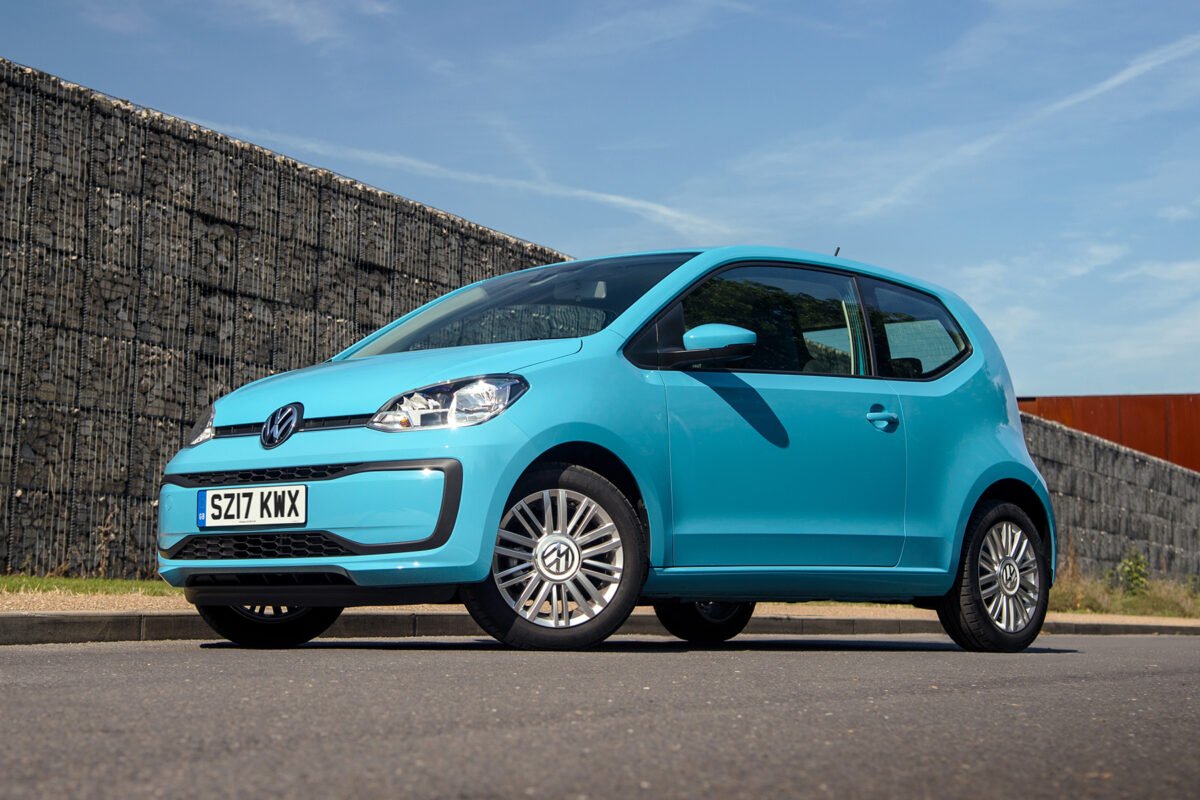
The Volkswagen Up has been the benchmark for the city car class for a decade, and is still affordably priced – three-door versions cost under £14k, while four-door versions cost a few hundred pounds more. The Up was originally awarded a five-star safety rating from Euro NCAP when it was launched, but this was downgraded to three stars in recent years.
The Up currently holds an Expert Rating of 80%, which means it is the top-ranked small car in our Expert Rating Index, out of 37 cars currently listed.
The positively ancient Fiat 500 is still on sale (alongside the all-new electric 500e) and is currently the most affordable mild hybrid car on the market, which helps give it the lowest fuel consumption of any car on this list. The 500 can also be specced with an array of personalisation options – perfect for those looking to express their individuality.
That said, the 500 has been criticised for its poor ride comfort and its lack of advanced safety features, with a three-star Euro NCAP safety rating. It currently holds an Expert Rating of 55%, which ranks it a lowly 33rd out of 37 small cars on our award-winning Expert Rating Index
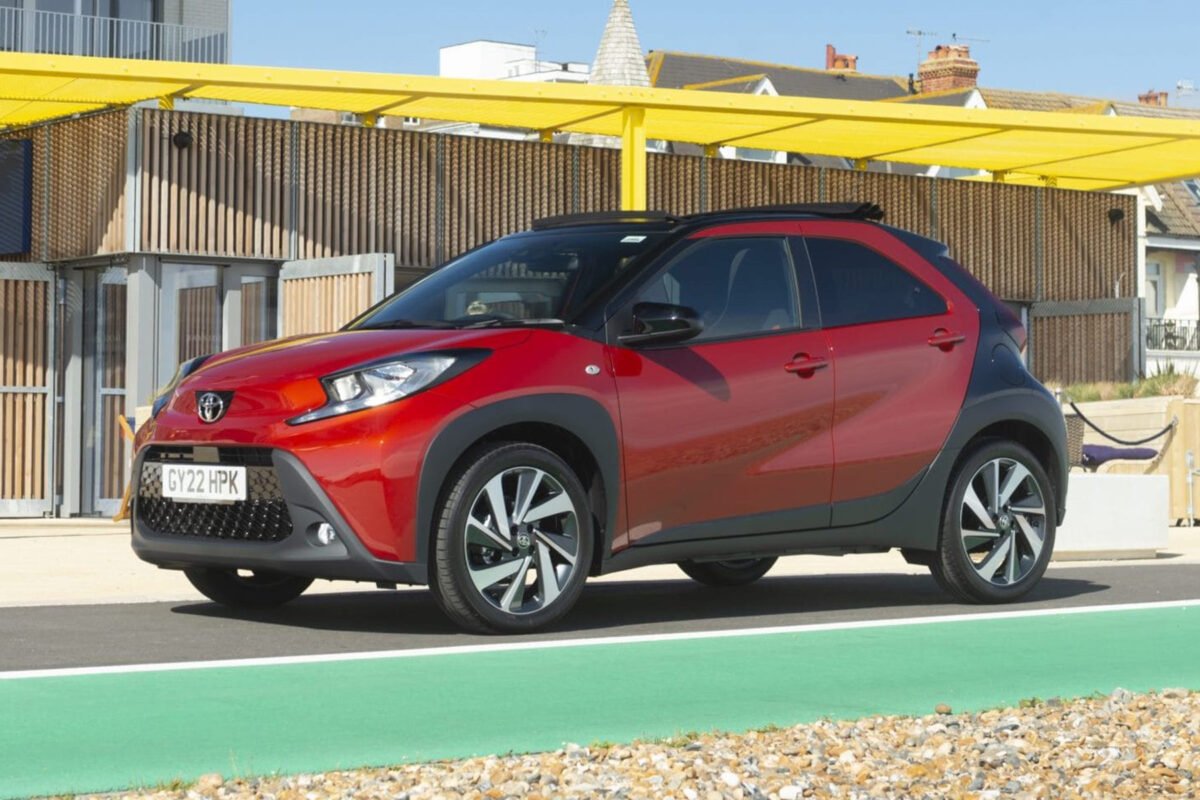
The new kid on the city car block, the Toyota Aygo X has been highlighted as a well-equipped value-for-money package that is rather roomy by small car standards. According to Euro NCAP, it is also the safest city car on this list – a four-star rating, thanks to safety tech that helps prevent crash scenarios in the first place.
The Aygo X currently holds a middling Expert Rating of 63%. It comes with a generous ten-year warranty, but you need to service the car at a Toyota dealership to keep this warranty active.
If you are on the lookout for a proper bargain, Dacia needs to be on your shortlist. As the cheapest family hatchback on the market, buying a Dacia Sandero gives you a lot of car for your coin, and the car is genuinely competitive with the other budget options on this list.
This low price point is reflected by the car’s cheap interior however, as well as its dismal two-star Euro NCAP safety rating. It currently holds an Expert Rating of 74%.
In an effort to fill the void left by the discontinued C1 city car, Citroën introduced a new entry-level model to its C3 hatchback range this year, which is quite a bargain for those that are impressed by the french brand’s distinctive styling.
The C3 has received a mixed bag of review scores since its 2017 arrival – praised for the personalisation options on offer, but criticised for sub-par driving dynamics and limited practicality. It currently holds an Expert Rating of 62%.
Reborn MG has established itself as a competitive budget brand, but the MG 3’s engines are not very efficient. Despite being one of the cheapest new cars around, the ageing MG 3 hatchback has a higher fuel consumption than any car on this list, and reviewers have not been impressed with the car’s cheap interior, bumpy ride, and three-star Euro NCAP safety rating.
The MG 3 currently holds a poor Expert Rating of 43%, which puts it second-last on our definitive rankings of teh best and worst small cars, but does come with a seven-year warranty.
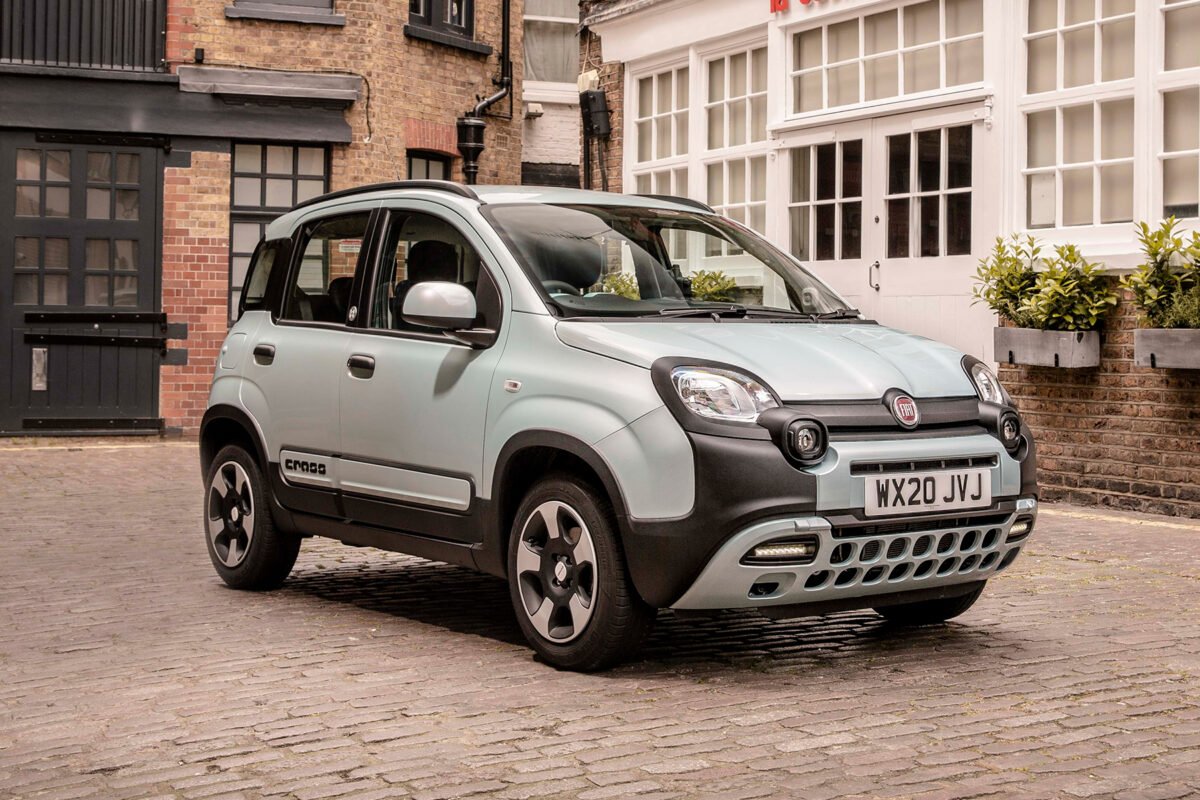
On sale for over a decade now, the Fiat Panda has been commended for its versatility as both as inner-city runaround and as an off-roader (4×4 versions). Unfortunately, Fiat has not updated the car’s safety features since its initial launch a decade ago, which has led Euro NCAP to award the hatchback its worst-possible crash test rating – zero stars.
The Panda holds a poor Expert Rating of 50%, which ranks it a lowly 34th out of 37 new small cars. Considering its age, we expect this Panda to be extinct before long.
Built on the same foundations as the Hyundai i20, but available for nearly £5k less, the Kia Rio is a competent but rather forgettable member of the supermini class – reviewers report that it will get you from A to B without any hassle, but doesn’t exactly excel in any one area.
Its three-star Euro NCAP safety rating is also a concern, but Kia does offer a seven-year warranty. The Rio currently holds an Expert Rating of 57%, putting down in 32nd place near the bottom of the small car rankings.
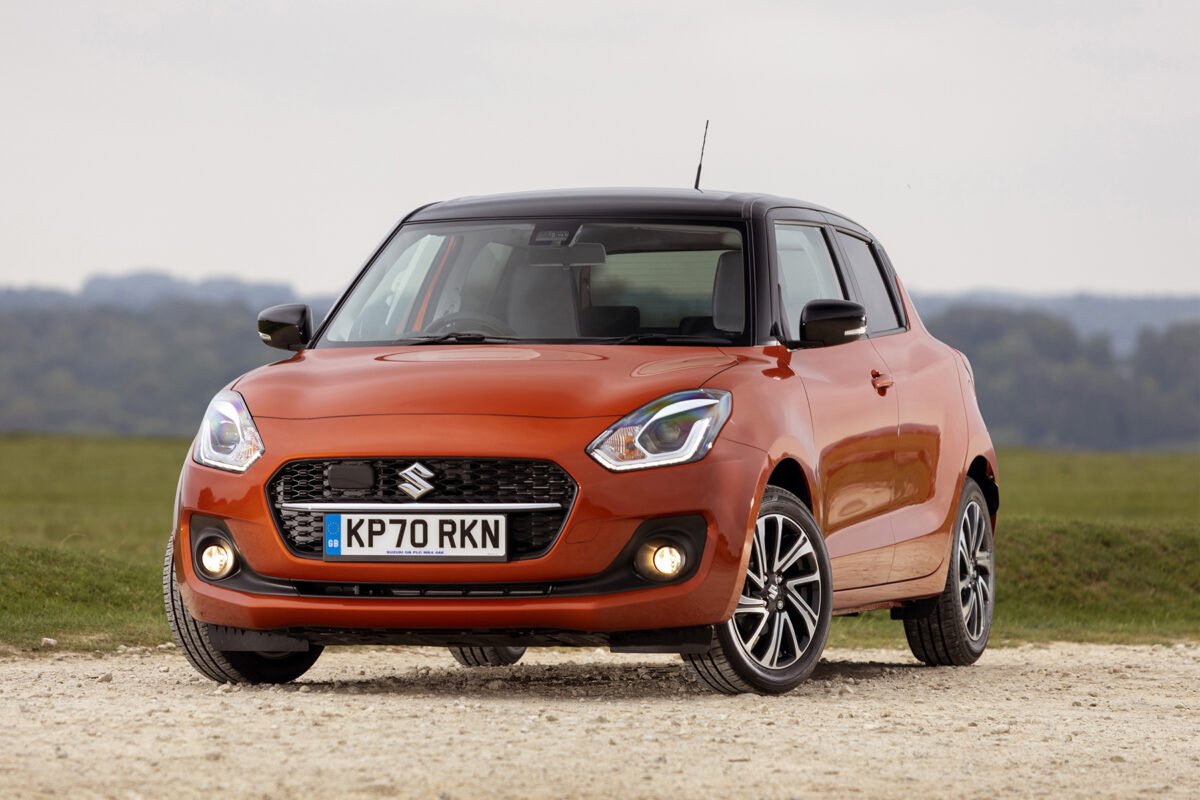
The Suzuki Swift has earned praise for its surprisingly roomy interior and funky exterior looks. Importantly for your wallet, the Swift is one of the most fuel-efficient cars on this list – keeping running costs low year after year.
However, the Swift’s boot is rather small when compared to its rivals, and its three-star Euro NCAP safety rating – while similar to other cars on this list – is nothing special. It currently holds an Expert Rating of 60%.
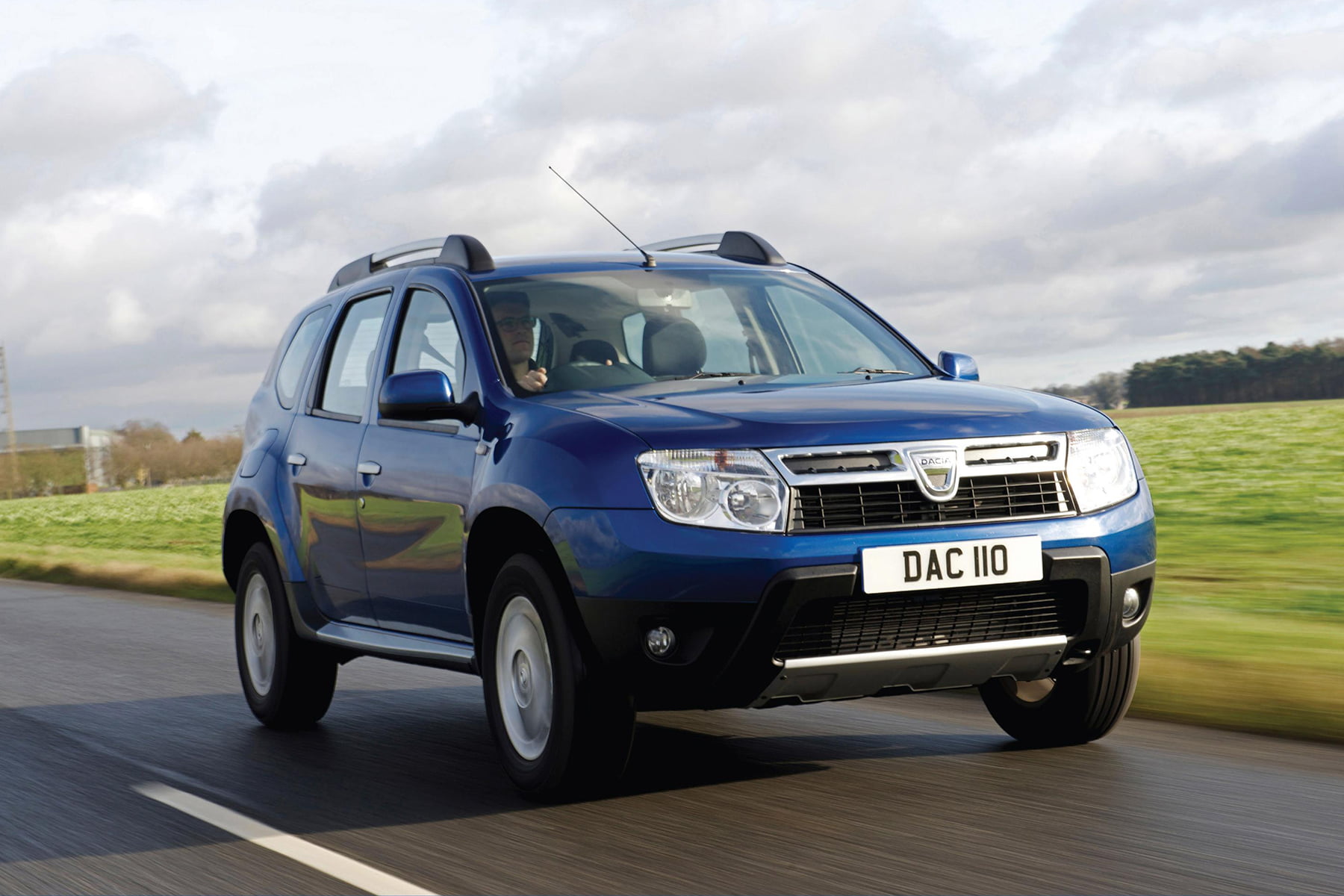
The cheapest new SUV you can currently buy, the Dacia Duster has received a wide range of review scores, ranging from outstanding to outright recommendations not to buy one. It’s an honest and unpretentious SUV, but some journalists point to the car’s sluggish driving dynamics. Again, it has an average three-star Euro NCAP safety rating.
After its mid-life facelift at the end of last year, the Duster currently holds an Expert Rating of 65%, putting very much in the middle of the midfield for small SUVs.
Although the Duster is very affordable, the Dacia Jogger might be the best value-for-money option on this list. A seven-seat SUV-cum people carrier for less than £17k? No other new car is as spacious or versatile for the money.
However, the interior materials are about as cheap as the Jogger’s price tag, and it carries a woeful one-star Euro NCAP safety rating. The Jogger currently holds an Expert Rating of 76%, which puts it 13th out of 57 medium SUVs we currently track.
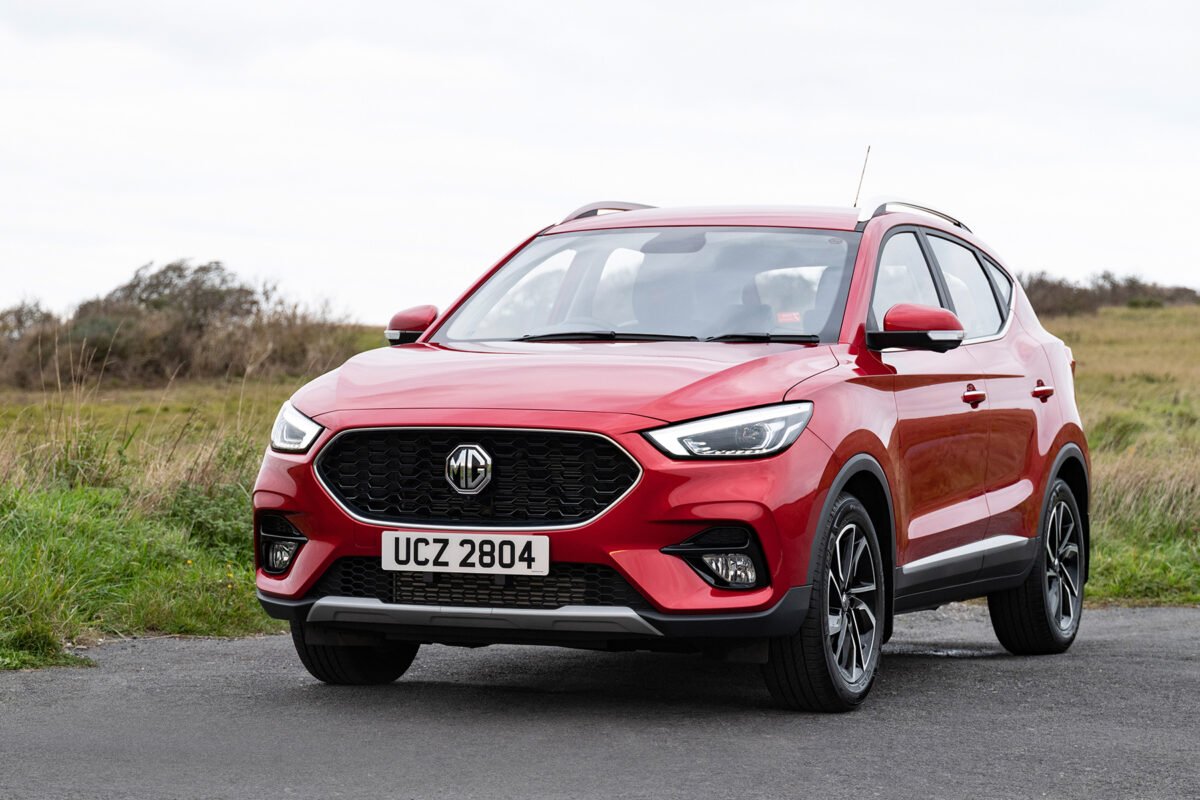
Although it’s quite spacious and comes with a seven-year warranty, the MG ZS has received rather poor media reviews. Critics point to its unsophisticated on-board tech and its dated interior design. The engine options are both underpowered and thirsty, meaning that the ZS will cost more to run than some other options on this list.
The MG ZS currently holds an Expert Rating of 45%, which is markedly lower than the score held by the electric version of the ZS, and puts it second-last in our small SUV rankings.
The smallest SUV option in the Nissan family, the second-generation Juke has had a warm reception from the motoring media – regarded as a definite improvement over its predecessor. Although it’s practical and spacious, most reviewers conclude that the Juke’s entry-level engine option lacks punch.
The most fuel-efficient SUV on this list, the Nissan Juke currently holds an Expert Rating of 65%.
A mild hybrid as standard, the Hyundai Bayon has been highlighted for its decent fuel economy, a roomy and practical interior, and the generous amount of tech that is included with the entry-level Bayon package.
Like the Juke however, the Bayon struggles to stand out in a crowded small SUV market, as a number of slightly more expensive rivals offer better engine performance and more interior refinement. This Hyundai currently holds an Expert Rating of 67%, putting it firmly in the midfield of the small SUV rankings.
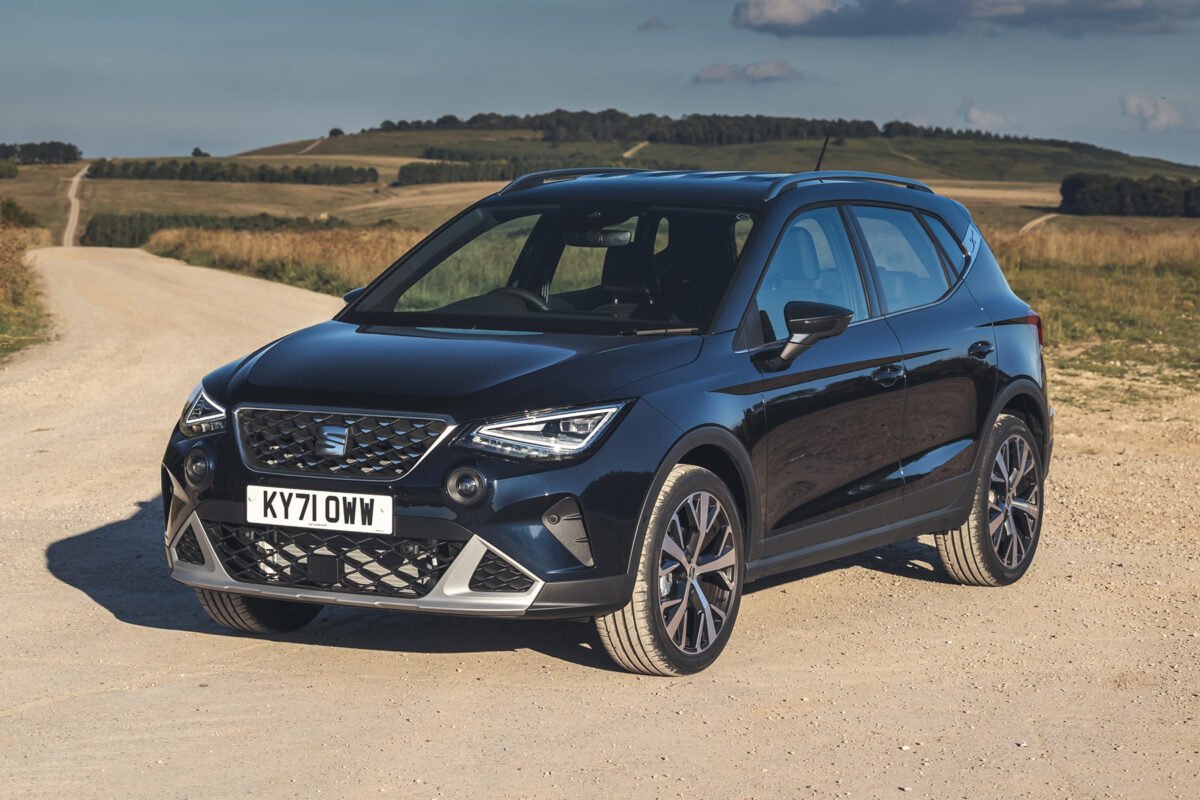
The high-riding SUV sibling of the popular Ibiza hatchback, the SEAT Arona offers the on-board tech and driving dynamics of more expensive Volkswagen Group models at a sizable discount. Reviewers conclude that the Arona has a polished interior and a fun driving experience, but a few of them concede that there are more spacious small SUVs on the market.
On sale since 2017, the SEAT Arona currently holds a very good Expert Rating of 74%, just edging its sister from Skoda, the Kamiq. It also has an excellent five-star safety rating from Euro NCAP.
The final entrant in our list of cheapest new cars and SUVs, the Skoda Kamiq is another value-for-money SUV option from a Volkswagen Group brand, which is both roomy and comfortable, but not especially interesting when compared to class leaders like the Ford Puma.
This keenly-priced Skoda currently holds an Expert Rating of 74%, just fractionally behind its SEAT Arona sister, and an equally excellent five-star safety rating from Euro NCAP.
For the definitive rankings of the best new cars, check out The Car Expert’s industry-leading Expert Rating Index. The index analyses new car reviews from 30 of the top UK motoring websites, using an advanced algorithm that we have developed specifically to compare review scores.
The Nissan Qashqai has become a British institution over the last 15 years. Now in its third generation, the Qashqai is the UK’s best-selling British-built new car and one of the best-selling cars in the country.
All three generations of Qashqai (2007 to 2014, 2014 to 2021 and 2021 to present) have been designed in London, developed in the Midlands and built in Sunderland. So although Nissan is a Japanese company, this is about the most British car you can buy right now. It’s also a major export success for Nissan GB and for the UK in general, with thousands of Qashqais heading overseas every month.
The original Qashqai popularised the type of car we know today as a crossover – looks like an SUV but offers the sort of comfort and fuel economy you’d expect from a family hatch, and with a bit more boot space that compares to an estate car. It has spawned imitators from almost every other car company, so the latest model has many more competitors to deal with than the original version did 15 years ago.
The Qashqai has received plenty of praise from the UK motoring media as a competent all-round family car. According to our award-winning Expert Rating Index, it holds an Expert Rating of 73% as of August 2022, based on 26 different UK reviews. So where do we stand on it?
The Nissan Qashqai is a mid-sized family SUV/crossover car. It seats five people with a decent amount of luggage space.
The current model you see here has been on the roads for about a year now and is a major improvement over the previous model. It’s available with a choice of a 1.3-litre petrol engine with mild hybrid assistance – which is the car we’re testing here – or Nissan’s clever new e-Power petrol/electric version, which is technically a hybrid but very different to a conventional hybrid. We’ll have a separate review of this version in coming weeks.
Customers get a choice of five different trim levels, although not all trims are available with all engine/gearbox combinations. These are (from bottom to top of the range): Visia, Acenta Premium, N-Connecta, Tekna and Tekna+
Here’s the current run-down as of August 2022:
1.3-litre petrol manual, in either 140hp or 158hp. Both are front-wheel drive
1.3-litre petrol automatic, 158hp, in either front-wheel drive or all-wheel drive
The car we’re driving here is the 1.3-litre petrol manual with 158hp in N-Connecta trim. It’s priced at £31.5K, although our car had a few extras that brought the price up to just under £34K.
It’s also worth pointing out that due to global supply chain shortages, not all specifications and options may be available – it’s a problem for all car manufacturers at the moment and the situation can change from week to week. Check with the Nissan website or your local dealer for current availability and ordering times.
First impressions
Pretty much every car company on the planet now makes a mid-size crossover model, and they all tend to follow a very similar shape.
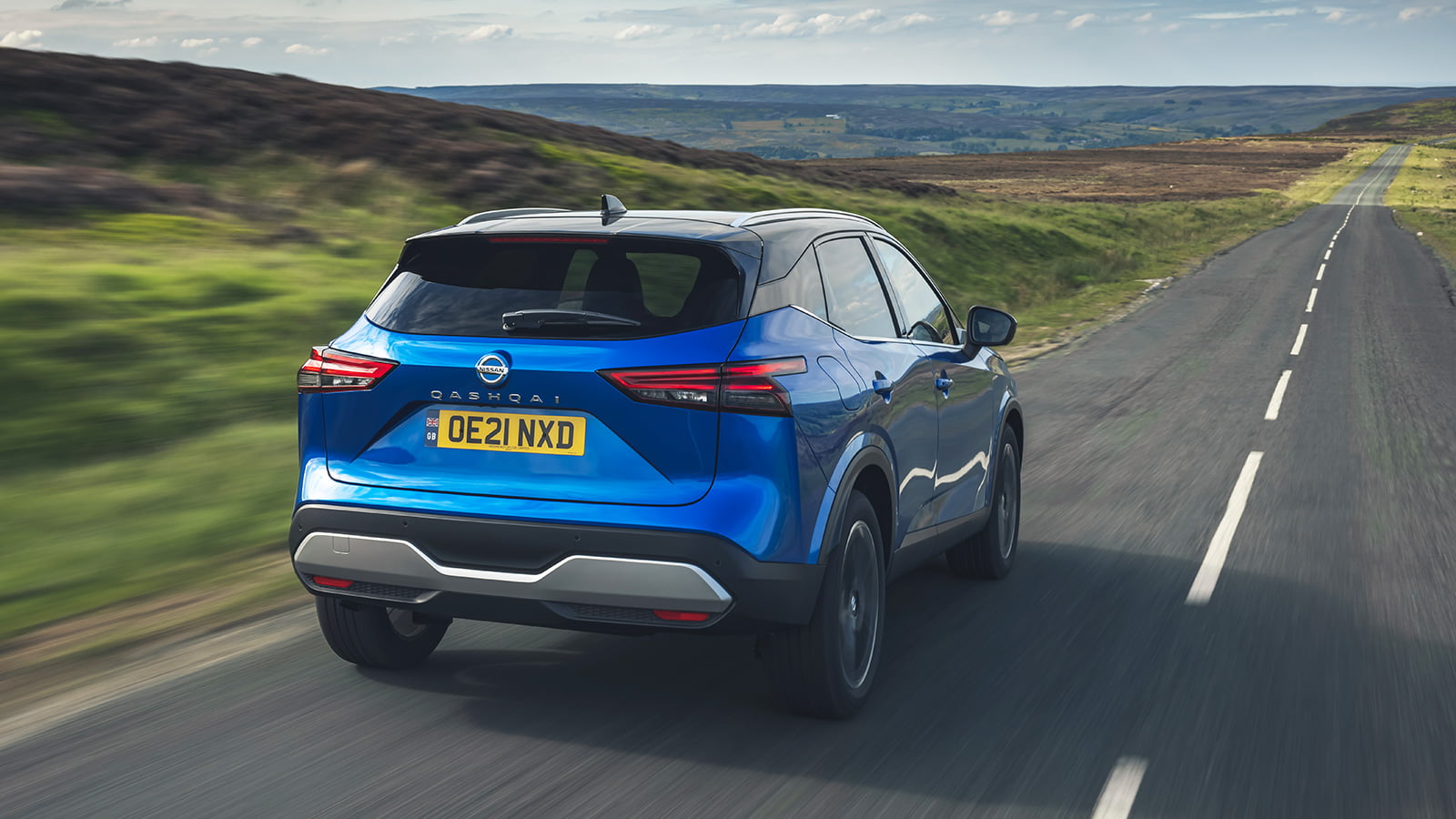
The Qashqai is no different, with the main visual interest being some dramatically styled headlights and diagonal lines at the front. The rest of the car is pretty generic family wagon in its looks.
What really lifted our test model was its bright pearlescent blue paintwork (Magnetic Blue in Nissan-speak) as shown in the images on these pages, which is a £745 extra. Given all the boring black and grey cars that dominate most car parks these days, the bright blue Nissan was a breath of fresh air.
Step inside and it’s again all very conventional family car stuff. As is the trend across the industry, it’s all depressingly black everywhere inside, while the dashboard layout has the usual high-mounted infotainment touchscreen for controlling most things.
The car we reviewed benefitted from a panoramic glass roof (standard on higher trim levels, optional on lower models), which brightened things up considerably. With the shade closed, or without the glass roof, it’s quite dark inside.
We like: Front-end styling looks distinctive, (optional) bright blue colour looks fantastic We don’t like: All-black interior is depressing and dark
What do you get for your money?
With first impressions out of the way, it’s time to look a bit harder at exactly what you’re getting for your money with the Nissan Qashqai.
The first piece of good news is that all versions of the Qashqai get a complete set of safety systems and a five-star safety rating from Euro NCAP. Nissan should be applauded for this, because many manufacturers will skimp on certain features for entry-level models, forcing you to either pay extra or upgrade to higher trim levels to get extra accident prevention equipment.
The range kicks off with the entry-level Visia trim, which is only available with the entry-level petrol engine (140hp) and only with a manual gearbox. As of August 2022, pricing starts at just over £26K. While you get all the safety kit – including adaptive cruise control – you do miss out on most of the comfort and convenience features that pricier models get. And that’s the way it should be, although it does mean that the Visia is probably not the best value pick of the range.
As you go up the range, you get a steadily increasing number of niceties. Acenta Premium adds about £2.5K, but you do get a decent uplift on kit for that. This includes alloy wheels instead of steel, a proper touchscreen display which allows for a reversing camera as well as Apple CarPlay and Android Auto connections, and other nice-to-have extras.
Next up is the mid-spec N-Connecta, which is the model we’re reviewing here and starts at just under £31K. This gets bigger alloy wheels (18-inch instead of 17-inch), a larger central touchscreen (12-inch instead of 8-inch) as well as a full digital instrument display for the driver, and various other trinkets. In our opinion, this is probably the sweet spot in value-for-money terms, as you get plenty of essentially family-friendly features that are missing from lower trim levels, like privacy glass for the rear windows, parking sensors both front and rear, extra USB points (both Type A and Type C) for charging gadgets, lots of luggage hooks and a bigger central screen.
Beyond that are the Teka and Teka+ models, which add luxuries rather than essentials. Great if your budget will comfortably stretch that far, but you’re starting to push up into a price point that then compares to some other premium-brand alternatives. You’re probably also not going to get much benefit on resale value, so you’d have to really want those extras to make it worthwhile.
Tekna (starting at just over £33K) gets a head-up display, Nissan’s ProPilot semi-autonomous driving assistant, electric driver’s seat, heated front seats/steering wheel/windscreen, wireless charging pad, even bigger (19-inch) alloy wheels and so on.
Finally, the top-spec Tekna+ (starting at just under £37K, although not available with the base-level engine) gets even bigger 20-inch wheels, leather upholstery, a Bose stereo upgrade and a partridge in a pear tree.
If you want an automatic transmission with your petrol engine, Nissan calls it Xtronic, which is jargon for a continuously variable transmission. That means no gears like a conventional gearbox, so it’s quite efficient but tends to produce a drone-like sound rather than the usual rise and fall that corresponds with your road speed like a normal gearbox.
The e-Power version is only available as an automatic as it’s driven by an electric motor so it has no gearbox.
We like: All the safety is standard on every model, rather than costing extra We don’t like: More trim choices than really necessary, no plug-in hybrid or EV choices
What’s the Nissan Qashqai like inside?
Having been somewhat underwhelmed by the Qashqai cabin at first glance, it’s time to explore things in more detail. We drove the mid-spec N-Connecta model, but the exact spec varies quite a bit depending on how much you’re spending.
The layout inside is very similar to most new family cars, with a high-mounted central touchscreen to control the stereo, satnav and several other things. Thankfully, Nissan has retained separate physical controls for the heating and cooling, which makes them easy to adjust on the go.
The cabin materials tend to be ‘hard-wearing’ rather than ‘sumptuous’. Everything feels solid enough but some of the plastics feel a bit cheap, so the perceived quality falls below what you might experience in (for example) a Volkswagen Tiguan.
Cabin space up front is pretty good in all directions, and the seats and steering wheel have a decent amount of range so drivers of any size should be able to get comfortable. In the back, space is also completely sufficient for kids and adults of normal height. A tall adult sitting in the back behind another tall adult in the front will struggle for kneeroom and legroom, but that’s pretty much the same on any similarly sized car.
The boot is also a good size – some other cars might be slightly bigger, but most households will find the Qashqai offers more than enough space for all the usual family requirements. If you want roof rails for mounting roof racks, they’re standard on Tekna and Tekna+ models, and optional on lower trim levels. Alternatively, Nissan dealers should be able to fit the rails afterwards if your car doesn’t have them.
The touchscreen works well enough for all your usual music and navigation activities – it’s never going to be as good as proper buttons and knobs for easy controlling on the move, but that ship appears to have well and truly sailed in the car industry (touchscreens are cheaper, you see, so car companies are busy trying to convince us all that we really do want them, despite them being universally rubbish to operate in a moving vehicle).
Every model Qashqai except the base Visia gets Apple CarPlay and Android Auto, so you’ll probably never need to use the factory nav system. There are sockets for both USB-A (older) and USB-C (newer) cables, so you can charge pretty much any device. A wireless charging pad is standard on Tekna/Tekna+ models, and optional on the N-Connecta. For base models, you’ll have to be plugged in to charge.
We like: Space should be adequate for most families in all seats and boot We don’t like: Touchscreen controls are never as good as physical switches
What’s the Nissan Qashqai like to drive?
Let’s get the bad news out of the way first. The manual gearbox and clutch on the Qashqai may not be the worst I’ve ever experienced in a new car, but they’re pretty close to it.
The gearbox has almost no feeling, so you tend to guess where you’re supposed to be moving the lever to change up or down a gear. Meanwhile, the clutch bite point is very high, so just as you think it’s not engaging, suddenly it locks into gear and you jerk away.
I honestly thought I’d somehow forgotten how to drive in my first ten minutes with the Qashqai, it was so bad. I had to jump back into my own car (also a manual) just to check that I hadn’t suffered a mystery head injury. So, if you’re thinking about a new Qashqai, get the automatic rather than the manual.
Moving on (in a jerky, kangaroo-hopping fashion), once you settle into a gear and don’t need to change, the Qashqai is a perfectly reasonable family car to drive. It’s certainly not exciting, but that’s not a criticism. It’s predictable, easily directed via light but direct steering, and has decent visibility for a modern car.
Most prospective customers in this market segment are unlikely to be expecting sports car performance, and the Qashqai does everything you’d expect of a solid family car. Performance from the 158hp petrol engine is adequate rather than impressive, although it’s better than you might expect. That’s thanks to the mild hybrid aspect of the engine, which assists with performance and economy.
A small electric motor supports the petrol engine for a bit of extra boost when it’s needed, giving you additional performance over and above the 158hp produced from petrol power. It also runs some of the on-board electrics when you don’t need the additional performance, which reduces the load on the engine to improve your fuel economy.
Official fuel consumption from the petrol engine with the manual gearbox is about 44mpg, and in our experience over a week, mid-high 30s was certainly achievable in real-world driving conditions. Compared to impressive-sounding lab figures from most car companies, that might not sound particularly impressive, but most cars don’t get near their official figures anyway.
You don’t feel anything to alert you to the fact the engine is a mild hybrid unit, which is normal. The Qashqai can’t run on electrical power like in a regular or plug-in hybrid, so the engine will always be needed to drive the wheels while the electric motor provides some support in the background.
It’s still not going to feel particularly fast, especially if you have three or four people and some luggage on board, but it’s perfectly reasonable for a family car. Noise levels are average and ride quality is reasonable. In other words, the Qashqai does everything well enough without standing out in any significant way.
We like: Mild hybrid system works seamlessly to give better performance than you might expect We don’t like: Manual gearbox and clutch are awful
Verdict
A lot of this review does sound like we’re damning the Nissan Qashqai with faint praise, but actually it’s an indication of how competent it is for pretty much every aspect of family life. It’s a great all-round performer that will serve most households in a most satisfactory manner. It’s absolutely fit for purpose as a family car.
The mid-sized SUV class is a part of the market where you’re certainly spoilt for choice. Several of these rivals are outstanding in a particular area, but few are as complete a package as the Nissan Qashqai.
The mid-spec N-Connecta version is a good choice if your budget allows for it. The Tekna above is an extra £2,500 and adds some nice luxury features and is also good value, while the Acenta Premium is £2,000 cheaper but you do lose quite a few nice-to-have features. Tekna+ is more than £7,000 dearer and probably not worth the extra money, especially since it won’t add much in the way of resale value.
That said, we’d absolutely avoid the manual version and stick to an automatic if you’re looking at the petrol engine. The e-Power version of the Qashqai is a significantly better car altogether, which we’ll be covering in a separate review. It is more expensive, however, so you’d be weighing up driving experience against luxuries.
Finally, it’s worth remembering that the Qashqai is designed and built here in the UK, so every vehicle sold is good for jobs, exports and the economy. That will be of more importance to some buyers than others, but you can be certain that you don’t have to compromise by buying a British-built car.
Model tested: Nissan Qashqai 1.3-litre petrol manual (158hp) N-Connecta Price (as tested): £33,745 Engine: 1.3-litre petrol with mild hybrid support Gearbox: Six-speed manual, front-wheel drive
Power: 158 hp Torque: 260 Nm Top speed: 128 mph 0-62 mph: 9.5 seconds
Fuel economy (combined): 43.7 – 44.2 mpg CO2 emissions: 144 g/km Euro NCAP safety rating:Five stars (2021) TCE Expert Rating:73% (as of August 2022)
Aston Martin has unveiled a convertible version of its V12 Vantage sports car at a luxury car show in California this week.
The Aston Martin Vantage is already available in Roadster soft-top guise with a V8 engine, but it is now joined by a twin-turbocharged 12-cylinder version, which gives the convertible 700hp and a 0-60mph sprint time of 3.5 seconds, as well as a top speed of 200mph.
This is around 200hp more than the V8 Vantage Roadster that has been on sale since 2021, although that extra power only improves the 0-60mph dash by a tenth of a second.
As you’d expect, the new soft-top shares its foundations with the recently-announced V12 Vantage coupé, but with a number of additional tweaks. The suspension has been re-tuned to account for the added weight of the roof mechanism, and in an effort to add traction in fast corners, the convertible is 4cm wider than its coupé counterpart.
As a weight-saving measure, the front bumper, bonnet, front fenders and side sills are made from carbon fibre, and a lighter stainless steel exhaust system has been fitted to save a further 7kg.
Aston Martin says that it has made some exterior design revisions over the V8 Vantage Roadster, most notably the addition of a full-width front splitter to increase downforce, and a larger grille and horseshoe-shaped bonnet vent to increase cooling for the more powerful engine.
At the rear, the V12 Vantage is optionally available with a rear spoiler (something missing from the V8 Vantage Roadster equipment list), and a choice of two different 21-inch alloy wheel designs.
Inside, the car comes with carbon fibre sports seats trimmed in leather as standard. If you are not a fan of the navy and cream interior colour scheme, Aston Martin offers the services of its ‘bespoke’ personalisation service, ‘Q’, who can change the colour of the bodywork, carbon fibre features and leather upholstery to meet your preferences.
The V8 Vantage Roadster already on sale costs north of £130,000, but there has been no word from the manufacturer about this new V12 version’s pricing. Not that it matters too much – only 249 models are in production for sale worldwide, all of which are currently reserved.
The Aston Martin Vantage range has received unanimously positive reviews from the UK motoring media since its arrival in 2018 – considered to be a huge step forward dynamically from the previous-generation Vantage. It currently holds an Expert Rating of 76%.
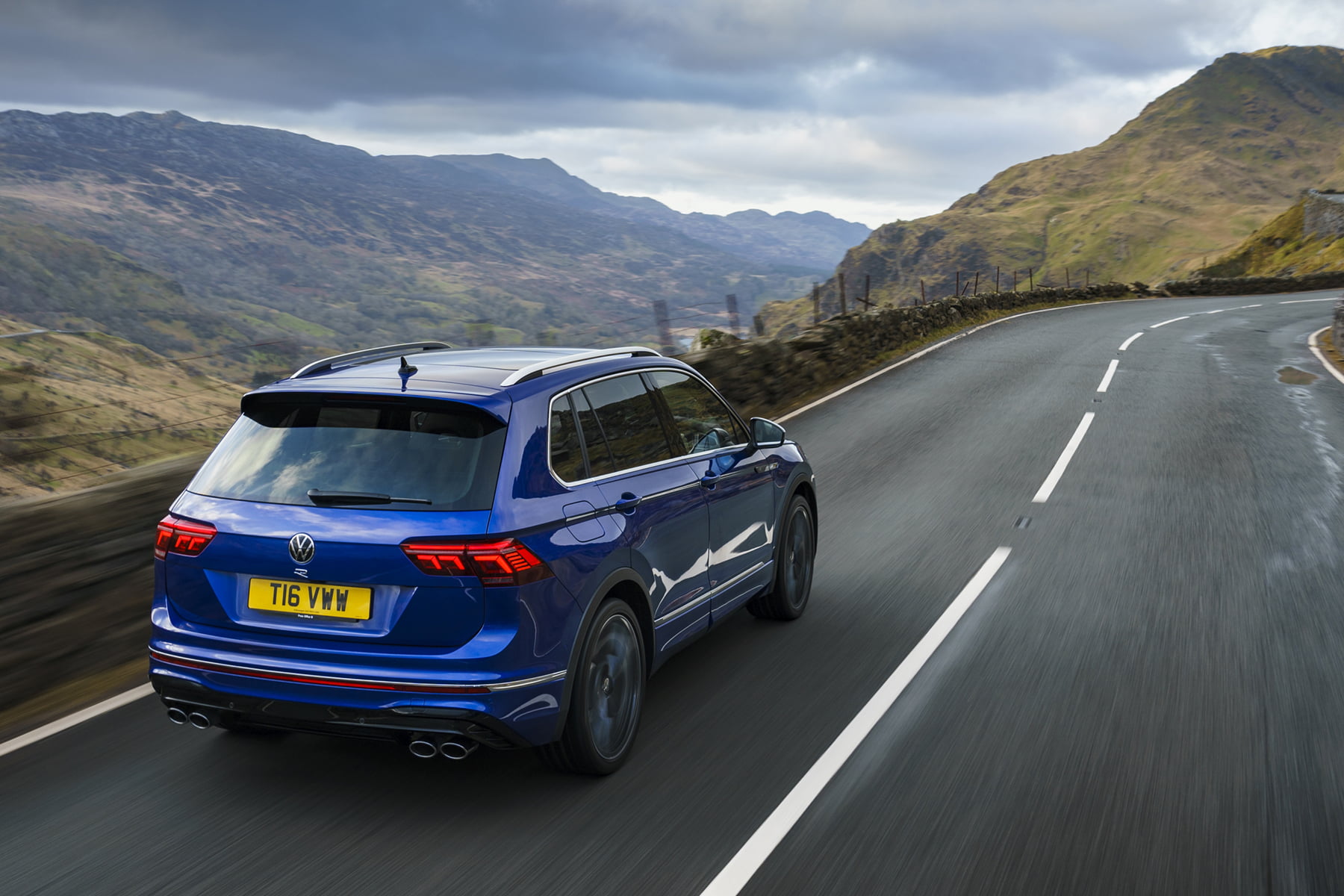
The Volkswagen Tiguan R was a high-performance version of the regular second-generation Tiguan SUV range, which was launched when the Tiguan received a mid-life facelift in 2020.
This is not to be confused with the Tiguan R-Line, which is a range-topping trim in the regular SUV range that featured many of the Tiguan R’s design elements both inside and out, but none of its performance upgrades.
The Tiguan R blended the space and practicality of an SUV with the acceleration and pace of the Golf R hot hatch, which used the same 320hp 2.0-litre turbocharged petrol engine.
“It certainly doesn’t hang about – put your foot down and it just goes”, Carwow‘s Mat Watson explained. “It’s not as fun as a Golf R, but it’s pretty comfortable.”
Several reviewers noted that the ‘hot’ SUV was not as engaging to drive as other R variants in the Volkswagen range, with Jordan Katsianis of Evo coming to the conclusion that the Tiguan R “lacks its own clear personality”, and recommending a test drive in the “more sophisticated” Porsche Macan instead. The fact that the Macan was within the Tiguan R’s price range put a dent in Volkswagen’s value-for-money reputation too.
No longer on sale, the Volkswagen Tiguan R holds a Used Car Expert Rating of E, with a score of 50%.
Body style: Medium SUV/crossover Engines:petrol Price:From £48,540 on-road
Launched: Autumn 2020 Last updated: N/A Replacement due: TBA
Image gallery
Media reviews
Reviews, road tests and comparisons from across the UK automotive media. Click any of the boxes to view.
Auto Express
Score: 8 / 10 “The Volkswagen Tiguan R is a good all-rounder. It’s fast (if not all that economical) while it offers secure and predictable handling and plenty of easily accessible performance.” Read review
Score: 8 / 10 “The Volkswagen Tiguan R succeeds as a hot SUV because of its versatility. In comfort mode it’s barely any more taxing than a 2.0-litre TDI model and rides arguably better than the standard Tiguan line-up, owing to adaptive suspension.” Read review
Car
Score: 8 / 10 “As SUVs go, the Volkswagen Tiguan R is a cracker.” Read review
Carbuyer
Model reviewed: Score: 7.2 / 10 “It may seem odd to create a performance model out of a big, boxy SUV, but the result is a car that is both sporty and practical.” Read review
Carwow
Model reviewed: “The Tiguan R certainly doesn’t hang about – put your foot down and it just goes. It’s not as fun as a Golf R, but it’s pretty comfortable.” Read review
Evo
Score: 6 / 10 “VW’s best-selling SUV, the Tiguan R, is competent and refined, but it lacks its own clear personality.” Read review
Top Gear
Score: 6 / 10 “The Volkswagen Tiguan R is a very competent and very quick thing, and it’ll no doubt sell well given the lack of rivals that match its size and performance figures.” Read review
Safety rating
Independent crash test and safety ratings from Euro NCAP
The Volkswagen Tiguan R shares its safety rating with the regular Tiguan range. Euro NCAP put the Tiguan through its paces back in 2016, awarding the car a top-level five-star safety rating.
Eco rating
Independent economy and emissions ratings from Green NCAP
No eco rating
The Volkswagen Tiguan R was not lab tested by Green NCAP during its production life.
Reliability rating
Reliability data provided exclusively for The Car Expert by MotorEasy
Total claims: 267 Average repair cost: £584.71 Last updated: April 2025
As of April 2025 (our most recent data point), the Volkswagen Tiguan family has a fairly average reliability score, according to exclusive extended warranty data provided by our partner MotorEasy. This score covers all the current-generation Tiguan (including Tiguan R) and the original (pre-2016) models.
The Tiguan’s most common mechanical problems relate to the SUV’s suspension and braking systems, which account for nearly half of all warranty claims between them. These repairs are relatively inexpensive, with an average repair bill of just over £250. Worth watching out for are gearbox problems, which are not hugely common but which have an average repair bill of about £1,700.
Given the average reliability score and potentially expensive bills, make sure any extended warranty cover you purchase for a Volkswagen Tiguan covers all of these potential problem areas.
Running cost rating
Monthly cost of ownership data provided exclusively for The Car Expert by Clear Vehicle Data
Fuel consumption
Average
Score
Petrol models
28 mpg
E
CO₂ output
Average
Score
Variation
Score
Petrol models
225 g/km
E
Insurance group
Average
Score
Variation
Score
All models
41
D
We have rather limited whole-life cost numbers for the Volkswagen Tiguan R, data provided exclusively to The Car Expert by our data partner, Clear Vehicle Data.
While we do not have data on the car’s fuel efficiency or servicing, we do know that the SUV’s insurance premiums are higher than the market average.
Similar cars
If you’re looking at the Volkswagen Tiguan R, you might also be interested in these alternatives
Toyota has started taking orders for its facelifted Corolla range, which has been given a minor performance boost, some small exterior design alterations, and a more generous entry-level equipment listin order to keep the car competitive with rivals like the new Honda Civic.
The range of body styles on offer remains the same, with a choice of hatchback, saloon and estate models, as well as the choice between 1.8- and 2.0-litre petrol-electric hybrid engines.
However, Toyota has upgraded the software that controls these powertrains, as well as squeezing some extra power out of the hybrid’s battery, which increases the car’s power output and shaves nearly two seconds off the smaller engine’s 0-62mph sprint time.
The bigger engine option is close to half a second quicker to 62mph too, and is slightly more eco-friendly – producing less greenhouse gas emissions than the pre-facelift model.
To keep the family car fresh, Toyota has rolled out some minor exterior design changes, including changes to the front grille’s mesh pattern and alloy wheels. Mid-range hatchback and estate models also now come with upgraded adaptive headlights – a feature formerly reserved for the top-spec trim.
As part of the update, the car will be able to download new features in the future through over-the-air updates, and can be connected to a smartphone app that allows you to remotely operate the climate control to heat or cool the cabin.
Toyota adds that it has installed graphical upgrades for the infotainment and digital instrument cluster screens too – presumably the same improvements that were rolled out for the RAV4 SUV range two months ago.
Speaking of the digital instrument cluster, this 12-inch customisable screen now comes as standard with the Corolla, replacing the four-inch information display and traditional gauges that used to sit behind the steering wheel on entry-level models.
All models now get the bigger 11-inch infotainment screen too (formerly an eight-inch console on lead-in models), and the cheapest trim has also gained Toyota’s ‘Smart Entry’ system that automatically unlocks the car when you are near, wireless smartphone charging, and front and rear parking sensors.
Finally, the facelifted Corolla comes with a few extra safety and driver assistance features than before. A rear seat reminder system warns you to check the back seats when exiting if the car senses that you may be leaving something behind, and a ‘Safe Exit’ feature warns you if the car’s sensors detect a pedestrian or cyclist to the rear of the car when you are opening the door.
The revised Corolla range is priced at over £29k for the entry-level hatchback version, rising to over £36k for the top-spec estate variant. The lead-in price for the family car has increased by over £5k in the last year.
Highlighted for its practicality, build quality and low running costs, the Toyota Corolla currently holds an Expert Rating of 66% – a score hindered by criticisms of the car’s driving dynamics.
Peugeot is rolling out minor model-year updates to its 3008 and 5008 SUV models, with minor cosmetic changes and increased availability of the 3008 plug-in hybrid engine option.
Mirroring similar changes to the smaller 208 and 2008 ranges, the latest updates bring changes to the entry-level ‘Active Premium’ and mid-range ‘Allure Premium’ trim grades, which are now called ‘Active Premium+’ and ‘Allure Premium+’.
These consist predominantly of dark tinted windows and either aluminium or black body trim pieces, depening on model.
The most notable change to the 3008 range is the addition of a cheaper plug-in hybrid (PHEV) option. Previously, it was only available on mid-range and top-spec models, but has now been extended across the 3008 range.
This means the entry-level price for a 3008 plug-in hybrid is now around £1,500 cheaper than before. Priced at just north of £37k, this basic model also comes with more equipment than equivalent entry-level petrol and diesel models, such as a larger ten-inch infotainment screen and faux-leather upholstery.
There are no exterior styling or powertrain changes to either the 3008 or 5008 models, and top-spec ‘GT’ and ‘GT Premium’ models remain the same.
On sale now at Peugeot dealerships and online via Peugeot’s website, entry-level 3008 models start at just over £31k, while the cheapest 5008 model starts at just above £33k.
The Peugeot 3008 has been well regarded by UK reviewers, with praise for its design, comfort and practicality, though some have taken issue with its interior design. It currently holds an Expert Rating of 77% on our award-winning Expert Rating Index.
The larger Peugeot 5008 has faced the same interior design criticisms, although it’s a comfortable family SUV with a bit more space than its smaller brother. As of August 2022, it holds an Expert Rating of 74%.
Bentley has unveiled an exclusive new limited-prodution coupé called the Mulliner Batur. Based on the Continental GT, the Batur previews Bentley’s new design language as it prepares for a new era of electric models.
Powered by Bentley’s famous W12 engine, the new coupé is the creation of the company’s in-house ‘Mulliner’ team, which handles special limited-edition projects. Like previous models, the Batur is named after a body of water around the world – in this case, Lake Batur in Indonesia.
Only 18 Mulliner Batur models will be offered, all hand-built in Crewe with the first deliveries expected in the middle of next year. As is often the case with this sort of exclusive model, the company offered them to its favourite customers, who presumably snapped them up without even blinking at the £1.7 million price tag.
For the rest of us who are not on the Bentley CEO’s speed dial, the Mulliner Batur previews what the next generation of electrified Bentleys will look like, as the manufacturer looks ahead to the scheduled launch of its first all-electric model in 2025.
Compared to Bentley’s current flagship coupé – the Continental GT – the Mulliner Batur has a squarer, sharper look, with a more vertical grille and a very thick rear window pillar.
Bentley has dropped its traditional circular headlight design for a more angular teardrop shape. The tail lights in the rear follow the same design pattern, which sit below a pop-up bootlid spoiler.
According to the brand’s Mulliner division, customers will be able to specify the colour and finish of “practically every surface” of the Batur, with an “infinite” number of paint colours for both the bodywork and the car’s 22-inch alloy wheels.
There are different options for the exterior chrome trimmings, and buyers can even choose the material that the front splitter, side skirts and rear diffuser are made from – a choice of carbon fibre or a more eco-friendly natural fibre composite.
Stepping inside, customers have three different upholstery options to choose from, with leather or a suede-like ‘dinamica’ material on offer. The show car unveiled this week features a black, red and orange interior colour scheme, with a unique “Batur Chevron” seat stitching design and an 18-carat gold gear lever.
As we head towards the 2030 deadline for the end of new petrol car sales, the Mulliner Batur is also the final hurrah for the brand’s 12-cylinder engine, which Bentley says is “entering its twilight years”.
This 6.0-litre engine has been fitted to Bentley models for over 20 years now, and has received further tuning for the debut of the Mulliner Batur, now producing 740hp – 90hp more than the Continental GT Mulliner.
Assuming that the new owners actually drive them, rather than locking them away in secure garages, you can expect to see them hitting streets next summer.
With only 75 models set to arrive on UK roads, the Audi RS 4 Avant Competition will be available to order from September, featuring visual tweaks and performance buffs.
This ‘Competition’ variant uses the same 450hp 2.9-litre twin-turbocharged V6 petrol engine as the rest of the RS 4 Avant range, but Audi says it has improved the software that controls the car’s automatic gearbox.
Now the fastest option in the RS 4 line-up, the addition of the Competition model has increased the performance-focused estate’s top speed to 174mph to 180mph, and shaved two tenths of a second off its 0-62mph sprint time.
In an effort to improve on the driving dynamics of the regular RS 4 Avant, this Competition version has had its suspension tweaked so that it sits one centimetre lower than the standard model. The suspension springs are harder to compress, and Audi has added upgraded suspension dampers and stiffer anti-roll bars, all to increase stability in high-speed corners.
This limited run trim will also have a more audible soundtrack than the regular RS 4 Avant, as Audi says it has removed around eight kilograms of sound-deadening materials from the estate, and fitted a louder exhaust system finished in matte black.
In fact, black is the recurring theme here. Competition models will only be available in one colour, called ‘Sebring Crystal Black’. The front splitter and air intakes, the wing mirrors and the rear diffuser are all finished in a dark carbon colour.
In the essense of improving track performance, the RS 4 Avant Competition’s 20-inch alloy wheels are fitted with Pirelli sports tyres too.
There are some notable interior trim changes as well, starting with the black and honeycomb upholstery colour scheme which is only available on this special edition model. This is contrasted by red stitching across the centre console, door armrests, seatbelts and the steering wheel, which is wrapped in alcantara leather.
A few bits are also added to the equipment list, including an improved speaker system, a 360-degree parking camera and some interior ambient lighting.
Prices for the Competition trim start at around £85k, which is over £17k more expensive than the entry-level RS 4 Avant. It is not the most expensive however – that honour still belongs to the range-topping ‘Vorsprung’ trim, which costs over £87k.
The RS 4 Avant Competition is likely to be something of a last hurrah for the current model, as the Audi A4 on which it’s based has been around since 2015 and is due for replacement next year. Given the world’s inevitable move to electrification, the RS 4 Avant Competition could be the last purely petrol-powered RS 4 model Audi ever builds.
Praised for its well-built and refined interior, as well as its rapid straight-line speed, the Audi RS 4 Avant currently holds an Expert Rating of 74% – a score hindered by the car’s steep pricing and its rather safe exterior styling.
It’s not just the UK which is experiencing a big surge towards electric vehicle (EV) ownership. It’s happening all over Europe too.
And even though our continental cousins are facing the same issues as we are here in the UK – a growing EV car parc with a charging infrastructure that can’t keep up – many European countries are quite well organised when it comes to running battery powered vehicles.
Latest figures from last year show that there are at least 250,000 EV chargers across Europe with several thousand additional fast chargers for drivers who need a quicker turnaround. It’s not a lot different abroad than it is in the UK when trying to find a charging point and using it.
So can you even contemplate taking your EV on a long range continental holiday trip without the (long) range anxiety?
Yes, you can. Tusker, which specialises in salary sacrifice schemes, is campaigning constantly to help customers understand more about electric vehicles and their increasing advantages. And that includes enjoying their cars on holiday.
“With the right planning, a decent satnav, an dedicated App and a means to pay for your electricity, you and your family can enjoy a great summer holiday in Europe in an electric car,” says Vicky Anderson, Tusker’s marketing director.
“Technology is improving all the time and, while it takes a little thought and planning before you set off, having a holiday road trip in an EV makes a great break while helping the environment in the UK and other countries.”
As EV know-how develops, manufacturers are giving their cars greater and greater distances. It was only a few years ago when 100 miles on a full change was considered pretty good going.
But specialist website Electric Vehicle Database says that the average range now stands at 214 miles. Many cars can do well over 300 miles so getting where you want to be is not quite the worry it was five years ago. It just requires the same planning as you would do here in the UK, and regular stops for charging can be worked into the whole holiday experience.
There are Apps available from most suppliers to help you find a topping-up point, and most EVs come with a satnav equipped to help you with this important issue too. Some cars, such as Teslas, have satnavs that even plan in charging point stops on your trip and work the duration needed for the charge into the total journey time.
Ionity, for example, has 1,800 charge points on main roads in 24 different European countries. With 428 locations already they are currently building 37 more and continue to expand.
Allego is another European car charger provider expanding across the continent. It has 28,000 points already in 15 countries. Charging sessions can be paid for using its MSP (Mobility Service Provider) card or with your own credit card via its Smoov app.
Free-to-download apps that will help you get safely to some much-needed electricity for your car include:
PlugShare: includes a trip planner and checks for you that the plugs available will fit your car
Chargemap: finds the best match for your car from 450,000 points
Greenlots: gives results by nearest station, charger type or your ‘favourites’ list
NextCharge: allows single charging for multiple subscribers
ChargePoint: filters out incompatible stations and lets you check your charging history
You’ll find charging points across Europe in public places such as supermarkets, railway stations, shopping centres and motorway service areas. Planned well, and you can coincide your charge points with stopovers for lunch or a rest break for the family.
The Netherlands has the most charging points in Europe, with around 85,000 to stop at while France (55,000), Germany (50,000) and Italy (22,000) all offer good coverage.
Steer clear of Eastern European countries if you don’t want range anxiety. Lithuania, Poland, Latvia, Romania, Estonia, Bulgaria and Hungary have relatively small numbers of charging stations. Cyprus and Greece are also behind in taking the lead with charge points.
But, planned well, and with the right satnav and app helping you there’s no reason why any European holiday shouldn’t become the break you need.
The Dacia Duster was a small SUV/crossover, priced at the budget end of the market. This model was the first generation, which was launched in late 2010and ended production in 2017.
The first iteration of the Duster received a rather mixed bag of review scores while it was on sale. As a spacious and practical family car that undercut the price of its rivals by several thousand pounds, the Duster was praised by the British media for its serious value for money, but this budget deal had several trade-offs.
“It has genuine off-road ability”, Carwow commented, “but it drives like it was designed in the 1990s”. Several reviewers agreed with this sentiment – the Duster could soak up potholes with ease, but it wasn’t too agile in the corners and was quite noisy on the motorway. A number of journalists also commented that they could not recommend the Duster due to its poor Euro NCAP safety rating.
The biggest compromise facing buyers was the car’s interior, however. Reviewers took issue with the SUV’s fragile interior plastics, dated on-board tech and the car’s rather basic entry-level equipment list, which did not include modern essentials like air conditioning.
As of February 2026, the first-generation Dacia Duster holds a Used Car Expert Rating of D, with a score of 58%. It scores top marks for its excellent reliability record and also gets good grades for its low running costs. But its media review scores were poor, while its safety score is very poor as it’s now long outdated (and wasn’t a great score when it was new).
Highlighted reviews and road tests from across the UK automotive media. Click any of the boxes to view.
Auto Express
Model reviewed: Range overview Score: 8 / 10 “The Dacia Duster offers the space and practicality of a Nissan Qashqai, but for the price of a Micra.” Read review
Model reviewed: Range overview “By keeping things relatively low-tech, Dacia has ensured the Duster has a decent reliability record, and build quality is also better than expected.” Read review
Auto Trader
Model reviewed: Range overview Score: 6.4 / 10 “If you’re a driver who’s only after SUV looks for a bargain price, then Dacia’s Sandero Stepway provides them for even less cash. If, however, you want some genuine 4×4 ability, along with adequate space for the family and an honest, no-nonsense image, the Duster will be right up your street. Proof that any car is a good car if it’s cheap enough.” Read review
Business Car
Model reviewed: 4×4 Score: 7 / 10 “The Dacia Duster comes with a low price, but you get what you pay for.” Read review
Car
Model reviewed: 1.5-litre diesel 110 EDC Prestige Score: 8 / 10 “It’s a likeable thing, the newly fettled for 2017 Dacia Duster. It’s got old-school ruggedness and an honest approach to the ever-popular SUV/crossover class, and it’s refreshing to drive something without any airs and graces.” Read review
Model reviewed: 1.5 dCi 2wd (2010) Score: 8 / 10 “The Dacia Duster is a deliciously focused device.” Read review
Car Keys
Model reviewed: Range overview Score: 7 / 10 “The Dacia Duster is the ultimate budget crossover, great for those who want a run-around that is not afraid to venture off-road a little.” Read review
Model reviewed: 1.6 Access 4×2 “Sub-£9k Dacia Duster SUV is almost unbelievable value for money.” Read review
Carbuyer
Model reviewed: Range overview Score: 8.4 / 10 “The Dacia Duster is the best-value SUV on the market today. It’s a rugged, practical and simple machine that can be surprisingly fun to drive.” Read review
Carwow
Model reviewed: Range overview Score: 5 / 10 “The Dacia Duster offers amazing value for money, lots of space for the price and genuine off-road ability, but it feels like a budget model and drives like it was designed in the 1990s.” Read review
Daily Mail
Model reviewed: Score: 7 / 10 “The Dacia Duster is basic, agricultural, old hat, but honest about what it is.” Read review
Model reviewed: Laureate dCi 110 Score: 10 / 10 “The Dacia Duster is gloriously unpretentious.” Read review
Daily Mirror
Model reviewed: 4×4 “The Dacia Duster is a terrifically good value SUV that’s spacious, rugged, drives really rather well and doesn’t empty your pocket with a load of kit that you don’t really need.” Read review
Eurekar
Model reviewed: Score: 8 / 10 “The new dual-clutch automatic gearbox in the Dacia Duster is a worthy choice, thanks to its smooth and fast shifts.” Read review
Green Car Guide
Model reviewed: 1.5-litre diesel manual 4×4 Score: 7 / 10 “If you’re looking for the utmost in refinement and you’re a fan of upmarket, tech-laden interiors then the Dacia Duster may not be the car for you, but if you want a good value overall package that can cope with the average demands of UK rural life then you should consider the Duster.” Read review
Heycar
Model reviewed: Range overview Score: 6 / 10 “The Dacia Duster makes a mockery of premium price tags and those lifestyle adverts you’ll see in glossy magazines. Few cars offer this much space and practicality for such a low price.” Read review
Honest John
Model reviewed: Range overview Score: 6 / 10 “Overall, the Duster makes a mockery of the prices asked for rival SUVs. It’s not perfect, but you’ll get to enjoy the smug sense of satisfaction of having more money in your wallet.” Read review
Parkers
Model reviewed: Range overview Score: 7 / 10 “Price-leading Dacia Duster is hugely desirable SUV for families.” Read review
The Sun
Model reviewed: Ambiance 4×2 “The Dacia Duster offers a supple, comfortable ride but there is body roll in corners. But that won’t bother owners who just love the value.” Read review
The Sunday Times
Model reviewed: Range overview Score: 6 / 10 “The Dacia Duster is a four-wheel-drive family car that gets back to basics, and is all the better for it.” Read review
Model reviewed: Score: 8 / 10 “The long and short of it is that the Dacia Duster is a seriously well-priced and decent SUV that does everything you need it to do.” Read review
The Telegraph
Model reviewed: Range overview Score: 5 / 10 “The Dacia Duster gives you a lot of space for little money. However, it’s easy to see why it’s much cheaper than a Skoda Yeti or Nissan Qashqai because it has a budget interior, agricultural driving manners and a poor crash-test rating.”
Read review
Model reviewed: Score: 3 / 10 “Dacia’s sports utility offering is a no-frills, retro package that fails to excite.” Read review
Safety rating
Independent crash test and safety ratings from Euro NCAP
The Dacia Duster was originally tested by Euro NCAP back in 2011 and awarded a three-star rating. However, this rating expired in January 2018 and is no longer valid as the car no longer meets the standards required for such a rating. This is normal practice, as Euro NCAP reviews its ratings on most cars annually with most ratings expiring after about six or seven years.
Although the rating has now expired, the score is still useful if you are comparing a used Duster to vehicles of similar age – whose ratings will have almost certainly expired as well.
Eco rating
Independent economy and emissions ratings from Green NCAP
No eco rating
The first-generation Dacia Duster was not assessed by Green NCAP as it was out of production before the emissions testing body came into being in 2018.
Reliability rating
Reliability data provided exclusively for The Car Expert by MotorEasy
Total claims: 25 Average repair cost: £200.10 Last updated: April 2025
As of April 2025 (our most recent data point), the Dacia Duster holds an excellent reliability score of 86%, according to workshop and warranty data provided exclusively to The Car Expert by our partner, MotorEasy.
The average repair cost is also very low at £200, meaning that the Duster is also likely to be inexpensive to fix if it does go wrong. The only caveat to all this good news is that we still don’t have a lot of data on the Duster’s servicing costs, so the results could change quite significantly with only a few high-cost repairs.
Awards
Trophies, prizes and awards that the Dacia Duster has received
2017
Carbuyer Awards – Best Cheap Car + Best Winter Car
2016
Carbuyer Awards – Best Winter Car
2015
The Green Apple Awards – Best Small SUV
2013
Tow Car Awards – Best Budget 4×4
2012
Top Gear Awards – Best Bargain Car
Similar cars
If you’re looking at the Dacia Duster, you might also be interested in these alternatives
Alternative ‘Blackline’ exterior styling will soon be available on the range-topping Bentley Flying Spur Mulliner model.
This Blackine styling package is by no means new, however. Bentley says that around one in five of the flagship Continental GT Mulliner models that roll out of its factory in Crewe are specced with this alternative styling configuration.
Capitalising on the popularity of this additional package, Bentley now plans to offer it as an optional extra for the slightly more expensive Bentley Flying Spur Mulliner.
The Blackline specification removes the exterior chrome detailing found on the standard Mulliner models, and replaces them with gloss black versions. This means that the front bumper, the wing vents above the front wheels, the wing mirrors and the radiator grille are all finished in black rather than chrome, as is the Bentley logo and ‘Mulliner’ trim branding.
Bentley adds that it will offer this trim package with two optional 22-inch alloy wheel designs. One of these options includes self-levelling Bentley badges on the centre caps.
That sums up the Blackline package – there are no performance or interior design changes over regular Flying Spur Mulliner models. There has been no word from Bentley as to how much this alternative exterior styling option will cost, and it’s likely to stay that way, as the brand prompts potential customers to inquire about model pricing instead of listing costs on its website.
Now available as a plug-in hybrid, the Bentley Flying Spur currently holds an Expert Rating of 83%. While enthusiast-focused UK publications have given the luxury saloon glowing reviews thanks to its lavish interior and driving dynamics, consumer-orientated titles are less impressed by the Bentley’s expensive pricing and high running costs.
The Mercedes-Benz V-Class is a large people carrier that can seat up to eight people, which replaced the Viano model when it first arrived on UK roads in 2014.
There is also a camper version, called the Marco Polo, but only the people carrier range is covered here. There’s also the EQV electric version of the V-Class, which has a separate Expert Rating.
Like many models in this segment, the V-Class is based on a commercial van – the Mercedes-Benz Vito – but Carbuyer comments that “Mercedes has transformed it from a humble van to something more akin to a private jet on the inside”, featuring a high-quality interior that Heycar argues “has more in common with a luxury saloon than a van or MPV.”
The cabin is also fitted with plenty of useful on-board tech as standard. That said, Carwow says that the car’s infotainment system does now feel rather dated – the same system that the V-Class launched with in 2014. The car’s age has consequently led many to question its expensive price, as other people carrier options are both newer and cheaper.
While the people carrier’s 2019 facelift didn’t address the infotainment, it did update the car’s engine options. The former engines, described as “noisy” by Parkers, were replaced by more refined versions that are also more economical.
The majority of reviewers agree that the V-Class offers a relaxing driving experience, including Top Gear which says that the people carrier’s “steering is light and accurate”, and “visibility is excellent”, culminating in a “a pleasant, refined and comfortable experience.”
Others, however, find it hard to ignore its van-based origins. “It still feels solid at high speed, but the faster you go the more brittle the chassis feels” Auto Express claims, adding that “the van underpinnings at the rear mean the car sometimes thumps over expansion joints on the motorway.”
Another update to the V-Class arrived in early 2024. This addressed the infotainment system and overall technology, as well as offering a more substantial restyle. Underneath, however, it’s the same basic vehicle rather than anything genuinely new.
As of July 2025, the Mercedes-Benz V-Class holds a very poor New Car Expert Rating of E, with a score of 42%. Its scores in each category range from average at best to very poor at worst.
Highlighted reviews and road tests from across the UK automotive media. Click any of the boxes to view.
Featured reviews
“The Mercedes-Benz V-Class certainly sits on the premium end of the people-moving segment, but it justifies its increased price with excellent build quality, a surprisingly refined driving experience and a frugal engine. It may not be quick, but this isn’t a performance-orientated offering after all.”
“The Mercedes V-Class is a large, practical, posh van-based MPV that’s seriously roomy and comes with a decent amount of equipment, but there are cheaper alternatives.”
Model reviewed: 300 d AMG Line LWB 2019 Score: 7 / 10 “If you want a plush MPV with acres of space then the new Mercedes V-Class really is the S-Class of posh people movers.” Read review
Model reviewed: 2019 Score: 6 / 10 “Luxury Mercedes V-Class MPV is classy inside, but van-like dynamics and high purchase price hold it back slightly.” Read review
Model reviewed: 250 Score: 6 / 10 “Lots of practicality and luxury mean the Mercedes V250 is one of the best upmarket MPVs on sale – but it comes at a price.” Read review
Auto Trader
Model reviewed: Score: 8 / 10 “It might not look like a traditional luxury car – in fact, it’s based on the Vito van – but the Mercedes V-Class is one of the best.” Read review
Carbuyer
Model reviewed: Range overview Score: 7.6 / 10 “With up to eight seats, the Mercedes-Benz V-Class is a big, luxury MPV with a price tag to match.” Read review
Heycar
Model reviewed: Range overview Score: 7 / 10 “While there’s no denying the Mercedes-Benz V-Class owes its roots to the company’s van side of the business, this luxury MPV is a great deal more than just a box with some seats bolted in. The cabin of the V-Class has more in common with a luxury saloon than a van or MPV, with plush materials, a high-quality dashboard and excellent refinement even at motorway speeds.” Read review
Honest John
Model reviewed: Score: 8 / 10 “The Mercedes-Benz V-Class has a luxurious and comfortable cabin, is easy and relaxed to drive, well-equipped as standard, and has a five star Euro NCAP rating.” Read review
Motors
Model reviewed: Score: 6 / 10 “The Mercedes-Benz V-Class has a spacious cabin, practical layout, solid build quality.”
Read review
Parkers
Model reviewed: 2019 Score: 8 / 10 “Luxury MPVs don’t come roomier than the Mercedes-Benz V-Class.” Read review
Top Gear
Model reviewed: Score: 8 / 10 “A few niggles aside, this V-Class feels luxurious and worth the outlay. A fine, MPV/business-express.” Read review
Safety rating
Independent crash test and safety ratings from Euro NCAP
The Mercedes-Benz V-Class was assessed by safety body Euro NCAP back in 2014, achieving some impressive safety scores for occupant protection and safety assistance technology as part of its five-star rating. Please note, however, that this score, while still valid, is rather outdated, and Euro NCAP has made its assessments harder since then.
Eco rating
Independent economy and emissions ratings from Green NCAP
Clean Air Index: 7.2 / 10 Energy Efficiency Index: 1.2 / 10
Testing a diesel version of the people carrier, Green NCAP said that the V-Class is fitted with a number of mechanical features that make the car very effective at mitigating pollutant emissions. That said, it takes plenty of energy to move a vehicle of this weight, and so the V-Class received a low energy efficiency score due to its fuel consumption average of around 35mpg.
The rating above only applies to the 250d model, which is powered by a 2.0-litre diesel engine mated to an automatic gearbox. It does not apply to any other engine/gearbox combination.
Reliability rating
Reliability data provided exclusively for The Car Expert by MotorEasy
Total claims: 39 Average repair cost: £727.35 Last updated: April 2025
As of April 2025 (our most recent data point), the Mercedes-Benz V-Class has a very poor reliability score of 21%, according to exclusive workshop and warranty data provided by our partners at MotorEasy. However, this is based on quite a small number of vehicles to date and could change significantly as the number of repair bills increases over time.
The average repair cost is just over £700, although that’s still more than the cost of a used car warranty so worth bearing in mind.
A third of all reported problems with the V-Class relate to its electrical system, with an average repair bill of around £450. However, most faults on this model appear to be relatively inexpensive to repair.
If you’re looking at a used Mercedes-Benz V-Class, make sure any extended warranty cover you purchase covers all of these potential problem areas.
Awards
Significant UK trophies and awards that the Mercedes-Benz V-Class has received
2019
Professional Driver Awards – Car of the Year + Best MPV
2018
Professional Driver Awards – Best MPV
2017
Professional Driver Awards –Best MPV
2016
Business Car Awards – Best MPV
2015
iF Awards – iF Product Design Award
2014
Red Dot Awards – Red Dot Design Award
Similar cars
If you’re looking at the Mercedes-Benz V-Class, you might also be interested in these alternatives
On a hot day, getting into your car can feel like stepping into a sauna. What usually follows is a scramble to put your keys in the ignition so you can get the air conditioning (AC) running to make the heat more manageable.
Most of us immediately turn the air conditioning dial into the blue zone and crank the fan speed up to max, overlooking an important feature on the dashboard – the air-recirculation button.
This button, usually in the form of a car silhouette with a U-turn arrow in the middle, boosts your AC to help your cabin get as cold as possible as quickly as possible, as well as reducing pollen and pollutants from entering the car’s cabin.
In this article, we will explain what the air-recirculation button does, when you should use it, and the potential drawbacks this feature can cause.
So, what does it do?
When you switch your car’s AC on, it sucks in air from the outside, passes it through the cooling system and ten pushes the cooler air into the cabin. The air-recirculation button stops this intake from the outside and instead starts sucking air from within the car to be cooled and then pushed back into the cabin, thus ‘recirculating’ the air around the cabin.
As the air-con system continually cools the same air over and over again, rather than pulling hot air in from the outside, the cabin will cool down faster. The longer your AC is running on recirculated mode, the cooler the inside of your car will get.
The air-recirculation button is located within the rest of the AC controls. If your car is more modern, you may have to search for the air conditioning settings on the infotainment screen.
For those of us with automatic climate control, the car will already be trying to get the temperature down to your desired levels as soon as you put the keys in the ignition, but you’ll still usually have to activate the recirculation function manually. Some cars will revert to outside ‘fresh’ air after a period of time, so you may need to reactivate the recirculation function again to keep it going.
When should I use it?
This feature is perfect for heatwaves and hot days in general, as your car’s interior will cool down quicker than if you’re relying on cooling outside air.
It might seem common sense to keep the recirculation button on in the winter too, in an attempt to keep the interior toasty and not draw in frosty air from outside. In reality, it’s best to switch it off on cold days – the outside air will be forced through a heater anyway, so it will be sufficiently warm before it reaches you.
Regardless of whether it is hot or cold however, you should not use the recirculation feature all the time, as we will explain…
What are the pros and cons?
Pros
It cools down the car’s interior faster
It helps to de-fog windows faster in the heat
It stops pollen and pollutants from entering the car
It keeps your air filter cleaner for longer
It reduces the strain on your AC system and saves battery power
It can marginally reduce your car’s fuel consumption
Cons
It can fog up your windscreen in the cold and wet
It traps humidity in the cabin
It can lead to higher CO2 levels which can make you drowsy
If you would prefer to keep the windows up on a hot day, pairing the AC and the air-recirculation feature is the most effective combination for cooling down the cabin and keeping it cool.
Pushing this button will also de-fog your windscreen faster in the heat, and not using it will put pressure on your AC system in a heatwave, as it has to work harder to continuously cool hot air from outside.
An AC under less strain essentially saves battery power, and can marginally reduce the fuel your car consumes on your journey as the AC doesn’t need as much assistance.
Additionally, as you are cutting off the air from outside, the recirculation button also stops pollen and gaseous pollutants from entering the car, as well as foul-smelling odours, which in turn keeps your AC system’s air filter cleaner for longer.
That said, leaving the air-con in recirculated mode all the time can have negative effects on your health and your ability to drive.
Recirculated air is essentially air that you and your passengers have already been breathing. Therefore leaving this feature on for extended periods of time saps the air of oxygen and fills it with carbon dioxide (CO2) second-hand moisture, which can make the driver groggy after a while.
This effect is amplified on road trips with every seat occupied, and can hinder your concentration. With four or five people breathing the same air over and over again, CO2 levels can increase quite quickly.
For this reason, it’s best to switch off the recirculation feature after half an hour or more, or open your side window a smidge to get some much needed fresh air. Some cars will automatically disable the recirculation function after a while (about 15 minutes or so) to ensure a plentiful supply of fresh air.
The Mercedes-Benz C-Class Cabriolet was a four-seater convertible that first arrived on UK roads in 2016 – two years after its executive saloon sibling. It was facelifted in 2018, and remained on sale until 2024 when it was replaced the new Mercedes-Benz CLE.
This generation of C-Class also included a coupé body style, as well as high-performance models from Mercedes-AMG, but we are only covering the Cabriolet on this page.
Like its big brother, the E-Class Cabriolet, this convertible C-Class was commended by the UK motoring media for its classy looks inside and out, as well as its strong range of engine options which were both fast and relatively frugal.
The C-Class saloon was obviously a more practical choice for the daily commute, but Carwow added that the soft-top was “surprisingly spacious” inside, and offered a relaxed driving experience that few rivals could match. “The C-Class Cabriolet pretty much does it all – well, apart from being outright fun to drive”.
The majority of reviewers agreed with this sentiment – the C-Class Cabriolet was one of the most elegant convertibles around, but not the most exciting. Others preferred the interior design of its competitors too.
“It just lacks that last degree of driving precision you get in a BMW 4 Series Convertible, or the quiet, efficient quality interior of an Audi A5 Cabriolet“, Parkers argued. “That said, it’s the best of the three if you value comfort over driver feedback – and it’s incredibly at home on Britain’s motorways.”
No longer on sale, the Mercedes-Benz C-Class Cabriolet holds a Used Car Expert Rating of D, with a score of 56%. It scored well in terms of media reviews and low CO2 emissions, but its running costs are high and its reliability record is poor.
Body style: Convertible Engines:petrol, diesel Price:From £49,510 on-road
Launched: Summer 2016 Last updated: Autumn 2018 End of production: 2023?
Image gallery
Media reviews
Highlighted reviews and road tests from across the UK automotive media. Click any of the boxes to view.
Featured reviews
“The Mercedes C-Class Cabriolet looks great and its eye-catching cabin feels more special than most posh convertibles, but it’s neither as sporty nor as practical as some alternatives.”
Score: 10 / 10 “It feels like a miniature version of the flagship S-Class Cabriolet, but at half the price.” Read review
Auto Trader
Model reviewed: Score: 7.2 / 10 “With its shrunken S-Class looks, superb cabin and wide engine range, the Mercedes C-Class Cabriolet offers, on the face of it at least, fantastic spread of abilities, while the impressive refinement and efficient diesels should make it easy to live with.” Read review
Car
Model reviewed: C220d Cabriolet Score: 6 / 10 “Merc’s drop-top C-class caters perfectly for those seeking a smart-looking cruiser; it looks suitably sleek in practically any spec, with Merc’s imperious posing quality as standard.” Read review
Carbuyer
Score: 8 / 10 “If you’re after a refined, classy four-seat convertible, then the Mercedes C-Class Cabriolet could well be for you.” Read review
Heycar
Model reviewed: Range overview Score: 8 / 10 “In a tightly competitive marketplace, the Mercedes-Benz C-Class Cabriolet demonstrates strengths in a number of areas. Its handsome styling is combined with a classy interior, while a premium badge and generous equipment add to the impressive package.” Read review
Honest John
Model reviewed: Score: 8 / 10 “Refined and relaxing to drive, relatively affordable pricing and generous equipment, interior design matches classy exterior with plenty of neat features.” Read review
Parkers
Model reviewed: Score: 9.2 / 10 “That Mercedes has managed to make a relatively affordable, yet very well finished and secure-feeling Cabriolet without sacrificing traditional brand values of safety, solidity and quality is, therefore, to be applauded. However, there’s no denying that the Audi A5 is thoroughly accomplished as an open-topped interpretation of a four-seater coupe.” Read review
The Sunday Times
Model reviewed: Score: 8 / 10 “Top on or top off, or top somewhere in between, it’s a handsome car. Some Mercedes can look busy and bossy and a little too full of themselves. Not this one.” Read review
The Telegraph
Model reviewed: Score: 8 / 10 “The C-class Cabriolet is everything you’d expect a soft-top Mercedes would be. Unfortunately that includes expensive, particularly when compared with Audi’s slightly larger A5. If you can live with that you will find the C-class to be a suitably indulgent companion with a great top-down driving experience and a wonderfully inviting interior.” Read review
Top Gear
Model reviewed: Range overview Score: 8 / 10 “Mercedes nails it. The C-Class cabrio is pleasant to drive but majors on open-top relaxation.” Read review
Safety rating
Independent crash test and safety ratings from Euro NCAP
The Mercedes-Benz C-Class Cabriolet was tested by Euro NCAP back in 2017 and awarded a five-star rating. However, this rating expired in January 2024 and is no longer valid as the car no longer meets the standards required for such a rating. This is normal practice, as Euro NCAP reviews its ratings on most cars annually with most ratings expiring after about six or seven years.
Although the rating has now expired, the score is still useful if you are comparing a used C-Class Cabriolet to vehicles of similar age – whose ratings will have probably also expired.
Eco rating
The Mercedes-Benz C-Class Cabriolet has not explicitly been tested for its emissions output, but Green NCAP has put the C-Class saloon through its paces – testing two diesel powertrain options that are also available in the Cabriolet range. Both vairants were awared three-star emissions ratings.
Please note that this rating stands for these specific model configurations, and not petrol models.
Reliability rating
Reliability data provided exclusively for The Car Expert by MotorEasy
Total claims: 1065 Average repair cost: £606.81 Last updated: April 2025
The Mercedes-Benz C-Class has a lower-than-average reliability score, according to exclusive extended warranty data provided by our partners at MotorEasy. This score covers both this generation C-Class and older models, in saloon, coupé and convertible (Cabriolet) bodystyles.
More than a third of all reported problems with the C-Class relate to its electrical system, with an average repair bill of just under £500. The other area to look out for is the suspension, which accounts for around a fifth of repair claims. Again, the average bill for these was about £500. Gearbox problems are (unsurprisingly) the most expensive, with an average repair price of £1,600, but fortunately they appear to be relatively rare.
If you’re looking at a used Mercedes-Benz C-Class, make sure any extended warranty cover you purchase covers all of these potential problem areas.
Running cost rating
Monthly cost of ownership data provided exclusively for The Car Expert by Clear Vehicle Data
Fuel consumption
Average
Score
Petrol models
37 mpg
D
Diesel models
50 mpg
C
CO₂ output
Average
Score
Variation
Score
Petrol models
171 g/km
D
Diesel models
149 g/km
C
Insurance group
Average
Score
Variation
Score
All models
37
D
Service and maintenance
Cost
Score
Year 1
£244
C
Year 2
£616
C
Year 3
£1,014
C
Year 4
£1,265
C
Year 5
£1,719
C
Overall
£4,858
C
The Mercedes-Benz C-Class Cabriolet can be a rather expensive car to own and run, according to whole-life cost numbers provided exclusively to The Car Expert by our data partner, Clear Vehicle Data.
Fuel consumption for petrol models is poor, while diesel mpg figures meet the market average. Insurance premiums are on the expensive side, and maintenance costs over the first five years of ownership are predicted to increase year-on-year, getting rather costly by year five.
Awards
Trophies, prizes and awards that the Mercedes-Benz C-Class Cabriolet has received
2017
Auto Express Awards – Best Convertible
Similar cars
If you’re looking at the Mercedes-Benz C-Class Cabriolet, you might also be interested in these alternatives
The Fiat Tipo was a medium-sized family hatchback and estate sold in the UK from 2016 until production ended in early 2024. It was positioned as a straightforward, affordable alternative to more established family cars, with an emphasis on space and low purchase costs rather than driving appeal.
Throughout its life, the Fiat Tipo was consistently praised for keen pricing, generous equipment levels and a roomy cabin. It offered good value for money when new, particularly for buyers prioritising space and low running costs.
However, media reviews were generally poor. The Fiat Tipo was widely criticised for uninspiring handling, modest performance and interior materials that did not match leading rivals. Safety performance was a particular weakness, with a three-star Euro NCAP rating at a time when most competitors achieved five stars. That rating has now expired due to age.
Now available only on the used market, the Fiat Tipo presents a clear trade-off. Running costs are competitive and environmental performance is respectable, but its media reputation and safety record remain significant drawbacks.
The Fiat Tipo currently holds a Used Car Expert Rating of D, with a score of 59%. Strong running cost and eco scores are outweighed by very weak media reception, a poor safety score and limited original warranty cover.
Highlighted reviews and road tests from across the UK automotive media. Click any of the boxes to view.
Featured reviews
“If you need a car to ensure you get from A to B with little fuss, the Fiat Tipo could be a good option. But please ensure you pay an extra £500 for the safety pack…”
“The spacious, relatively economical Fiat Tipo five-door hatchback marks the Italian brand’s return to the small family car market where it faces stiff competition from the likes of the SEAT Ibiza and Kia Ceed.”
Model reviewed: (range review) Score: 6 / 10 “The Fiat Tipo comes as a compact hatch or SW estate, and it’s easy to drive, offers decent space and is good value for money.” Read review
Car
Model reviewed: 1.6-litre MultiJet 120 Lounge Score: 6 / 10 “The Fiat Tipo pulls the same car-for-the-class-above trick that Dacia applies to its range – this is a Ford Focus for the price of a Fiesta – yet there’s no waft of ‘eau-de-cheapskate’ when you open the door.” Read review
Carbuyer
Model reviewed: Hatchback range Score: 7.2 / 10 “If you’re after a small family hatchback that’s strong on value, practicality and standard equipment, then the Fiat Tipo could well be for you.” Read review
Model reviewed: Estate range Score: 7.2 / 10 “The Fiat Tipo Station Wagon is a practical, spacious and generously equipped family estate car, let down by an uninspiring engine range and dull driving experience.” Read review
Carwow
Model reviewed: Station Wagon estate range Score: 5 / 10 “The Fiat Tipo Station Wagon is an affordable small estate car with a big boot and a decent amount of equipment but it doesn’t drive as well as more upmarket alternatives.” Read review
Heycar
Model reviewed: Hatchback range Score: 5 / 10 “They say that ‘you pays your money and you takes your choice’. The thing is, what if your priority is to pay as little money as possible, and you don’t give a flying Fiat about the quality of what that money gets you? Well, dear friends, that’s where the Tipo comes in.” Read review
Model reviewed: Station Wagon range Score: 6 / 10 “There are several things that the Fiat Tipo Station Wagon has going for it, namely its ability to carry passengers and luggage with relative ease, the good specification levels and the competitive pricing. It should be relatively cheap to run too, but it’s not great to drive, particularly comfortable or of high quality.” Read review
Honest John
Model reviewed: Hatchback range Score: 6 / 10 “The Fiat Tipo doesn’t stand out as a particularly remarkable family car, but it feels sturdily made, it’s practical and it is very competitively priced.” Read review
Model reviewed: Estate range Score: 6 / 10 “There’s nothing outstanding or exciting about the Fiat Tipo Station Wagon, but equally there’s not a lot wrong with it. There is one issue that stands out, though – the active safety tech comes in optional packs instead of as standard, and without it the car only gets a three-star safety rating.” Read review
Parkers
Model reviewed: SW estate range Score: 6 / 10 “Practical estate car majoring in value-for-money” Read review
Model reviewed: Hatchback range Score: 6.4 / 10 “The Fiat Tipo is a sensible, good-value family hatch” Read review
The Sunday Times
Model reviewed: 1.6-litre diesel manual Lounge MultiJet 120 Score: 6 / 10 “Vaguely forgettable hatch but its thriftiness is appealing.” Read review
The Telegraph
Model reviewed: Hatchback range Score: 6 / 10 “The Fiat Tipo doesn’t excel in any particular area, and in a lot of ways it falls far behind the market leaders. But the flexibility of the pricing structure and a very low starting figure means that the Tipo could still prove tempting.” Read review
Top Gear
Model reviewed: Range overview (hatchback and estate) Score: 6 / 10 “Probably Fiat’s least interesting car, but that doesn’t mean it’s worth ignoring if you love a bargain.” Read review
Safety rating
Independent crash test and safety ratings from Euro NCAP
The Fiat Tipo was originally tested by Euro NCAP back in 2016 and awarded a three-star rating. However, this rating expired in January 2023 and is no longer valid as the car no longer meets the standards required for such a rating. This is normal practice, as Euro NCAP reviews its ratings on most cars annually with most ratings expiring after about six or seven years.
However, if you are comparing a used Tipo to vehicles of similar age, whose ratings will have probably also expired, its safety rating score is still useful.
Eco rating
Independent economy and emissions ratings from Green NCAP
No eco rating
The Fiat Tipo was not assessed by Green NCAP during its production life.
Running cost rating
Monthly cost of ownership data provided exclusively for The Car Expert by Clear Vehicle Data
Fuel consumption
Average
Score
Petrol models
41 mpg
C
Diesel models
57 mpg
B
Hybrid models
53 mpg
B
CO₂ output
Average
Score
Variation
Score
Petrol models
125 g/km
B
Diesel models
133 g/km
B
Hybrid models
119 g/km
B
Insurance group
Average
Score
Variation
Score
All models
11
A
Service and maintenance
Cost
Score
Year 1
£131
A
Year 2
£406
A
Year 3
£655
A
Year 4
£858
A
Year 5
£1,180
A
Overall
£3,230
A
The Fiat Tipo is a relatively affordable car to own and run, according to whole-life cost numbers provided exclusively to The Car Expert by our data partner, Clear Vehicle Data.
Fuel economy scores range from good to poor, depending on your choice of engine. However, it’s fair to say that there are plenty of more economical alternatives available to choose from.
Other than that, everything else about owning and running a Fiat Tipo looks to be excellent – servicing and maintenance, insurance, and road tax (which is based on CO2 emissions) scores are all outstanding.
Reliability rating
Reliability data provided exclusively for The Car Expert by MotorEasy
No reliability rating
As of February 2026, we don’t have enough reliability data on the Fiat Tipo to generate a reliability rating.
The Car Expert’s reliability information is provided exclusively to us using extended warranty data from our partner, MotorEasy. As soon as MotorEasy has sufficient data on the Tipo, we’ll publish the score here.
Warranty rating
New car warranty information for the Fiat Tipo
Overall rating
E
15%
New car warranty duration
3 years
New car warranty mileage
100,000 miles
Battery warranty duration
0 years
Battery warranty mileage
0 miles
Fiat’s new car warranty is below average, and off the pace of many other car brands. The duration is three years, with a limit of 100,000 miles, which means that most Tipos sold in the UK will now be out of warranty.
Warranty on a used Fiat Tipo
If you are buying an ‘Approved Used’ Fiat Tipo from an official Fiat dealership, you will get a minimum six-month warranty included.
If you are buying a used Fiat Tipo from an independent dealership, any warranty offered will vary and will probably be managed by a third-party warranty company.
If you are buying a used Fiat Tipo from a private seller, there are no warranty protections beyond any remaining portion of the original new car warranty.
If you’re looking to buy any used car that is approaching the end of its warranty period, a used car warranty is usually a worthwhile investment. Check out The Car Expert’s guide to the best used car warranty providers, which will probably be cheaper than a warranty sold by a dealer.
Date: May 2024 Recall number: R/2024/182 Model types: All Build dates: 04/2021 to 11/2023 Number of vehicles affected: 23 Defect: Affected vehicles may display incorrect tyre size information on the Certificate of Conformity (CoC). Remedy: The CoC must be replaced.
Date: July 2023 Recall number: R/2023/168 Model types: All Build dates: 03/2023 to 04/2023 Number of vehicles affected: 68 Defect: Affected vehicles may have been fitted with a faulty 48-volt battery. This may lead to a loss of the functionality of the battery. This may result in a risk of thermal runaway in the case of water infiltration. Remedy: The repair is a check of the PBU valve code and replacement of the 48-volt battery if necessary.ill reintroduce the display of the speed unit when using Track Mode.
Date: April 2021 Recall number: R/2021/093 Model types: All Build dates: 10/2020 to 03/2021 Number of vehicles affected: 620 Defect: Due to a fault in the airbag control module software the airbag system may fail to be active without this being indicated on the instrument panel. Remedy: Carry out an update to the airbag control module and instrument panel software.
Date: June 2017 Recall number: R/2017/164 Model types: All Build dates: 11/2016 to 04/2017 Number of vehicles affected: 11 Defect: The driver’s airbag was manufactured with an incorrectly manufactured airbag inflator initiator that may not ignite when a deployment voltage is provided to the initiator. As a result, vehicles may experience a ‘non-deployment’ of the driver airbag during a crash event warranting an airbag deployment, which could increase the risk of injury. Remedy: Recall the vehicles that are likely to be affected and replace the driver airbag unit (initiator included) with a quality-assured unit.
Date: December 2016 Recall number: R/2016/262 Model types: All Build dates: 09/2015 to 11/2016 Number of vehicles affected: 25 Defect: Due to the non-conforming layout of the airbag wiring and missing cut-proof protection, the airbag wiring may interfere with the steering wheel wiring terminal. This can cause the abrasion of the wiring itself. This abrasion may cause a short-circuit and consequent inadvertent deployment of the steering wheel airbag. Remedy: Recall all affected vehicles to inspect the airbag wiring and apply cut-proof padded tape.
As of September 2024 (our most recent data point), there have been five DVSA vehicle safety recalls on the Fiat Tipo to address different issues. However, recall information is updated regularly, so this may have changed.
Not all vehicles are affected by recalls. You can check to see if your car is included in any of the above recalls by visiting the DVLA website or contacting your local Fiat dealer.
If your car is affected by a recall, the vehicle must be repaired and you should not be charged for any work required. If you are buying a used Tipo, you should insist that any outstanding recall work is completed before you take delivery of the vehicle.
Kia has announced the UK pricing and specifications for its facelifted XCeed crossover, with two engine options on offer and a revised trim line-up.
AsThe Car Expert reported last month, this minor model refresh consists of revised exterior styling, suspension improvements and changes to the range of trim grades available.
The update slims down the range of engine options too – the entry-level 1.0-litre petrol is no more, and diesel options have been scrapped as well. The only choices now available are a 160hp 1.5 litre petrol engine, and a 140hp 1.6-litre plug-in hybrid (PHEV) model. The former is only available as a six-speed manual, while the latter is fitted with a six-speed automatic gearbox.
Once you have chosen your engine, there are three trim levels on offer. The range starts with the lead-in ‘2’ trim, followed by the mid-range ‘3’ trim. The range-topping grade, which used to be called ‘4’, has been renamed ‘GT-Line S’.
Apart from this marketing revamp, the equipment list is nearly the same as before, apart from a few tweaks. The entry-level ‘2’ trim no longer has heated wing mirrors like the more expensive models, but does now come with an extra USB port in the back.
While collision avoidance safety technology used to be optional on entry-level models, this software is now included with the ‘2’ package as well.
Aside from their exterior design tweaks, the ‘3’ and sporty ‘GT-Line S’ spec sheets remain the same. Please note that the PHEV version is only available with the ‘3’ trim (there used to be a ‘4’ PHEV model before the update), and has a few features not included with the petrol-powered ‘3’ package, including smart cruise control.
Lane-keeping assistance used to come with ‘3’ PHEV models before the update, but that feature is currently missing from the facelift specifications list.
Key trim level features
Entry-level ‘2’ (from £22,995)
16-inch alloy wheels
LED headlights
Eight-inch infotainment screen
Seven-speaker audio system
Rear parking camera
USB ports in the front and back of the cabin
Collision avoidance tech that can recognise pedestrians and cyclists
Cruise control and a speed limiter
Leather-trimmed steering wheel and faux leather-trimmed gearshift
Black cloth upholstery
Mid-range ‘3’ (from £25,495)
All features included with the ‘2’ if they are not replaced
18-inch alloy wheels (unique 16-inch alloys on the PHEV)
Ten-inch infotainment screen
Privacy glass
Rain-sensing front wipers
Electrically folding, adjustable and heated door mirrors with integrated LED indicators
Black cloth and faux leather upholstery
Heated front seats
Dual-zone automatic air conditioning
Automatic defog system
Auto-dimming rear mirror
Smart key with engine start/stop button
Rear parking sensors
Smart cruise control (PHEV only)
Range-topping ‘GT-Line S’ (from £29,995)
All features included with the ‘2’ and ‘3’ if they are not replaced
GT-Line body kit
Panoramic sunroof
Black leather with suede seat upholstery
Memory driver’s seat with power height adjustment
Heated outer rear seats
Electronically-operated tailgate
Eight-speaker audio system
12-inch digital instrument cluster
Wireless smartphone charger
Front parking sensors
Blind-spot monitoring
Speed limit warning feature
Prices for the new range kick off at £23k, rising to £30k for the top-spec ‘GT-Line S’ before optional extras are considered, including roof racks, tow bars, interior lighting, mud guards and even a Kia-branded watch.
The XCeed ‘3’ PHEV variant is the most expensive option available – priced at over £32k. This is only £1k less than the brand-new and slightly larger Kia Niro PHEV.
As the most prevalent criticism of the XCeed has been that it has rather cramped rear seating, this minor facelift is not likely to significantly improve its current Expert Rating of 67% in coming months.
When you first arrange insurance for your car you know what to expect. You’ll have to give personal details, along with information about your new car. It’s all straightforward stuff and completed quite quickly. So that’s it, is it?
Well not quite, because there are plenty of things that you need to keep in contact with your insurer about during and at the end of your policy year. During the course of a 12-month contract you take out with an insurance company, there could be any number of changes to your circumstances. And insurance companies like to know about these things – no matter how insignificant they might seem to you.
Moving house, modifying your car, allowing other people to get behind the wheel – these are all important notifications, and not keeping your insurer up to date with events could have a serious impact on your policy. That can result in you not getting the level of compensation you were expecting if anything was to go wrong.
Here is our list of things you should tell your insurer – and when. The cover provider will get all the initial information they need at the time the new policy begins, but these are factors you should share with your underwriter during the policy’s term or, in some cases, at the end when you come to renew.
Whatever happens, being completely transparent and upfront with your insurer is the best way forward. It means everyone knows what’s happening and it ensures you get the right level of cover, should you ever need it.
Notify your insurer as soon as possible about any of these:
1. You’ve been involved in an accident. No matter how big or small or whoever’s fault it was, let the insurer know. You might not even want to claim, but someone else could be planning to do so against you, and your insurer needs to be forewarned. Damage, or repairs to damage, could also affect your car’s value.
2. You sell your car. Hundreds of cars are sold every day and telling your insurer is easily forgotten because you have moved on to new wheels. But you need to sever insurance ties with the old car to avoid being liable for anything that could happen to it later.
3. You’re moving to a new house. This doesn’t appear important at first sight, but different postcodes attract different premiums depending on how much of a risk their area is considered to be, so it’s important to alert your insurer immediately when you move. You never know… your premium might go down. Additionally, the insurer also needs to be able to contact you, so the same goes if you alter your email address or phone number.
4. You change where you park the car at night. Insurers always ask where the car will be left overnight: in a garage, on a driveway or out on the street. There are varying costs for this as the risks are different. But if the insurer thinks your car is safely locked up in a garage and it gets damaged during the night while parked on the road, they won’t look too kindly on that.
5. Your annual mileage changes. More miles means a higher likelihood of an accident or damage so if you find yourself suddenly well up on the miles you agreed with your cover provider, best to let them know. If you don’t, it could nullify your policy and any cover you thought you had.
6. You change your name. It’s simple really. If your name has changed, due to marriage, divorce or any other reason, let the insurer know so that your documents can identify you properly and easily.
7. You change your job. Just like mileage, parking places and what you use your car for, your occupation will attract its own premium. Nurses or midwives for example, historically attracted higher premiums because it was considered their car would be left all day in a hospital car park or out on the road while they were visiting patients. Computer programmers and web designers attract some of the lowest premiums. Insurers put occupation high up the list of details they want to know.
Inform your insurance company before you do any of these:
1. Modify your car. Thinking of adding alloy wheels or a spoiler to your car to improve its looks? Tell your insurer first – you could invalidate your cover if you don’t. The same goes for a respray, an engine power boost or alterations to the car’s suspension set-up. The insurer might not even cover these latest additions but, in any case, a modification could mean an increase in premium.
2. Change your car. It’s the car that’s being insured, so if you change your motor it’s just like starting all over again. Inform the cover provider and negotiate a new price. It might be cheaper than the one you already have.
3. Change the use. If your premium is based on general social use and the commute to work and back, you’ll have to let the insurer know if you suddenly start using your car for deliveries or as a taxi. Some insurers don’t cover all professions, so it’s worth telling them exactly what you do.
4. Let someone else drive. It’s fine to add people as named drivers to your car, but do make sure you do it. Regular users need to be added to the policy or you might not be covered.
5. Change the registration plate. The registration or number plate is the car’s identity. If you are thinking of changing the original marking for a personal one, tell your cover provider.
6. Drive abroad. Motoring in another country can be stressful and can take time to get used to, especially when you’re swapping to the right hand side of the road. You need to make sure you are fully covered for this so let your provider know where you’re going.
Declare these at renewal time:
1. Penalty points. Your driving history has a bearing on the premium you pay – or even whether or not a provider is prepared to insure you at all. If you have received penalty points, you should declare this usually at renewal, although some insurers want to know immediately. And in the rarer event that you have been banned from driving, your insurance will become invalid anyway, so let your provider have the bad news.
2. Claims. Insurers like to know about any claims made for accidents, loss or damage, whether it was your fault or not, and even if the claim was made through a different insurance company. Let them know so it can be recorded.
Following its global launch in February, the Alfa Romeo Tonale compact SUV is now available to order in the UK.
The Tonale, which is set to challenge rivals like the Audi Q3and BMW X1, will be the entry-level SUV in the Alfa Romeo family, sitting below the larger Stelvio. It also effectively replaces the Giulietta hatchback, which finally disappeared from sale last year after 11 years in production.
For the UK launch, there will only be one powertrain available, which is Alfa Romeo’s first electrified model. It consists of a 1.5-litre petrol-electric mild hybrid driving the front wheels through a seven-speed automatic gearbox. Unlike most mild hybrid powertrains, the Tonale will be able to travel very short distances (such as creeping along in stop-start traffic) on electrical power alone, but the petrol engine will kick in as soon as you need to move at anything more than crawling pace.
Other engine choices announced at the Tonale’s launch in February and available in other markets include a lower-output 130hp version as well as a more powerful 275hp plug-in hybrid model. These will presumably make their way to the UK at some point in the future, although nothing has yet been announced.
In terms of trims, UK buyers will have a choice of entry-level ‘Ti’ and top-spec ‘Veloce’, as well as a limited-production launch edition trim called ‘Speciale’.
The three trim levels only offer minor variations, with the standard equipment offered on the entry-level Ti trim appearing quite comprehensive.
Every Tonale comes with adaptive LED headlights in the front, and an electrically-powered tailgate in the rear, with folding and heated wing mirrors. Windscreen wipers and headlights (including high beam) offer automatic activation.
The infotainment system comprises a ten-inch touchscreen to control most of the car’s functions, including DAB digital radio and navigation. There’s also a wireless charging pad, although you’ll still have to plug in for Apple CarPlay or Andoid Auto (both of which are included as standard). Sensibly, the dual-zone climate control is not operated from the touchscreen, instead operated by a row of physical buttons underneath the central air vents.
Front and rear parking sensors are also included as standard, as well as a rear view parking camera. Safety assistance features include adaptive cruise control, traffic sign recognition and lane-keeping assistance. The Tonale has not yet been put through Euro NCAP’s safety testing regime, but we’ll report the results as soon as that happens.
Alfa Romeo Tonale – standard equipment
Exterior
Adaptive Matrix LED headlights
LED tail lights
Heated wing mirrors
Electrically-powered tailgate
Automatic windscreen wipers
10-inch infotainment console
12-inch digital instrument cluster
Adaptive cruise control
Traffic sign recognition
Interior
Wireless smartphone charging
Dual-zone climate control
Leather steering wheel
Electrically-adjustable driver’s seat
Gear paddle shifters
Comfort and convenience
Front and rear parking sensors
Parking camera
Keyless entry
10-inch infotainment console
12-inch digital instrument cluster
Adaptive cruise control
Traffic sign recognition
Lane-keeping assistance
Stepping up to the top-spec Veloce trim adds a extra £2,500 over the Ti spec. For that, you get 19-inch alloy wheels instead of 18-inch versions, as well as upgraded ‘Dual Stage Valve Suspension’ which apparently improves the ride. You also get privacy glass and gearshift paddles on the stering column. Other changes are cosmetic, such as red brake calipers and dark trim instead of satin chrome.
The Speciale launch edition version looks to be good value, being the cheapest model on offer but offering everything on the Veloce version except the trick suspension. It also gets even larger 20-inch alloy wheels.
Prices for the Alfa Romeo Tonale start at around £38.5k for the Speciale, £40K for the Ti and £42.5K for the Veloce, which means that the Alfa undercuts the electrified versions of upmarket rivals like the Volvo XC40 and Range Rover Evoque by a few thousand pounds.
The new SUV is available to order now from Alfa Romeo dealers, although the company has not indicated when first deliveries are expected to arrive in the UK.
Alfa Romeo is quoting PCP finance payments “from £429/month” for the new Tonale, but this is based around a very specific combination of model/specification/deposit/term/mileage. You should ignore these promoted prices and crunch numbers based on your own circumstances.
For what it’s worth, the APR of 7.9% on this offer is nothing special, and there’s no deposit contribution (a discount for taking the finance offer) available either.
There is a growing problem of car companies putting selected finance information into press releases, and we’ll have more to say about this in the next week or so. Stuart Masson, editor
The Audi RS Q3 was the sporty performance-enhanced version of the regular Q3 range, available in regular SUV and ‘Sportback’ coupé SUV body styles.
This ‘hot’ SUV slotted into the market above cheaper performance SUVs like the Cupra Ateca and below luxury options like the Lamborghini Urus, and directly rivalled the BMW X2 M35i, Mercedes-AMG GLA 45, and Porsche Macan S. With stiff competition like this, a few reviewers found the RS Q3 hard to recommend.
While it was slightly slower overall than hot hatch cousins like the RS 3, Carbuyer says that it was still very quick in a straight line, with more composed handling in the corners than the standard Q3. Beyond the SUV practicality it offered, Carwow added that its soundtrack made it a stand-out choice. “That characterful five-cylinder engine. It just sounds better than the competition.”
Drawbacks aside, the RS Q3’s well-equipped interior, sporty exterior and engine soundtrack were appealing to any Audi owner looking for a performance-tuned model upgrade, but for some this was not enough. “For proper driving enthusiasts”, Honest John concludes, “the Macan wins every time, even if the RS Q3 makes all the right noises.”
The Audi RS Q3 was sold in the UK from 2019 until early 2024. No replacement model has been announced for the current-generation Audi Q3 family, and none is currently expected.
As of February 2026, the Audi RS Q3 holds a Used CarExpert Rating of E with a score of 52%.
Highlighted reviews and road tests from across the UK automotive media. Click any of the boxes to view.
Auto Express
Model reviewed: Range review Score: 8 / 10 “If a rapid, small SUV is a niche you crave, then the Audi RS Q3 is all you’re being served right now at this sort of price point.” Read review
Car
Model reviewed: Range review Score: 6 / 10 “The RS Q3 has plenty going for it, specifically that fantastic five-pot motor.” Read review
Carbuyer
Model reviewed: Range review Score: 7.8 / 10 “The Audi RS Q3 adds a much more powerful engine to the Q3 recipe, which already includes a great interior and a large boot.” Read review
Carwow
Model reviewed: Sportback Score: 6 / 10 “The Audi RS Q3 Sportback is a fast SUV with a distinctive five-cylinder petrol engine and a lovely interior. The lower, lighter hatchback RS 3 will be even more fun to drive, mind you.” Read review
Model reviewed: SUV Score: 7 / 10 “The Audi RS Q3 is a fast SUV with a distinctive five-cylinder petrol engine and a lovely interior. The lower, lighter Audi RS 3 will be even more fun to drive, mind you.” Read review
Evo
Model reviewed: Score: 9 / 10 “Anti-ageing treatment keeps Audi’s RS Q3 dark horse on the pace.” Read review
Model reviewed: Sportback Score: 6 / 10 “Contrary to expectations, the Audi RSQ3 Sportback hits back against its flaws with a charismatic demeanor unusual in the class.” Read review
Heycar
Model reviewed: Score: 8 / 10 “The Q3 is Audi’s second-smallest SUV, now into its second generation. And the cult success of a leftfield sporty version of the original, the RS Q3, has encouraged the marque to quickly launch a follow-up. Wisely, Audi has stuck to the original template, which proved such a guilty pleasure.” Read review
Honest John
Model reviewed: Score: 6 / 10 “For proper driving enthusiasts, the Macan wins every time, even if the RS Q3 makes all the right noises.” Read review
Top Gear
Score: 6 / 10 “Something of an oddity, but not without charm.” Read review
Safety rating
Independent crash test and safety ratings from Euro NCAP
The Audi RS Q3 has not specifically been assessed by Euro NCAP, but it shares its safety score with the regular Audi Q3 range which was awarded a five-star rating in 2018. However, this rating expired in January 2025 and is no longer valid as the car no longer meets the standards required for such a rating. This is normal practice, as Euro NCAP reviews its ratings on most cars annually with most ratings expiring after about six or seven years.
Although the rating has now expired, the score is still useful if you are comparing a used RS Q3 to vehicles of similar age – whose ratings will have probably also expired.
Eco rating
Independent economy and emissions ratings from Green NCAP
No eco rating
As of February 2026, the Audi RS Q3 has not been assessed by Green NCAP.
Reliability rating
Reliability data provided exclusively for The Car Expert by MotorEasy
Total claims: 119 Average repair cost: £396.86 Last updated: April 2025
As of January 2025, the Audi Q3 range (including the RS Q3) has an excellent reliability score, according to workshop data provided exclusively to The Car Expert by our partners at MotorEasy. This score covers both the current version of the Q3 and the previous (pre-2018) generation.
To date, average repair bills for the Q3 have been relatively low, at about £400. Suspension problems are the most common faults, although they’re relatively inexpensive with an average repair bill of about £250. Engine problems are also reasonably common and are inevitably more expensive to fix, with an average repair bill of about £850. Gearbox bills have been very expensive, but seem to be rare.
If you’re looking at a used Audi RS Q3, make sure any extended warranty cover you purchase covers all of these potential problem areas.
Running cost rating
Monthly cost of ownership data provided exclusively for The Car Expert by Clear Vehicle Data
Fuel consumption
Average
Score
Petrol models
29 mpg
E
CO₂ output
Average
Score
Variation
Score
Petrol models
223 g/km
D
Insurance group
Average
Score
Variation
Score
All models
41
D
Service and maintenance
Cost
Score
Year 1
£508
E
Year 2
£1,186
E
Year 3
£1,893
E
Year 4
£2,149
E
Year 5
£2,930
E
Overall
£8,666
E
The running costs for the Audi RS Q3 can get quite expensive, according to full-life costings provided by our commercial partner Clear Vehicle Data.
Fuel consumption is poor and insurance costs can get quite expensive. Finally, scheduled servicing and maintenance costs over the first five years are predicted to be more expensive than the average car.
Similar cars
If you’re looking at the Audi RS Q3, you might also be interested in these alternatives
The Skoda Fabia is a small five-door supermini-class hatchback, with the current model launched in the UK in late 2021.Like prior generations of the hatchback, the Fabia Monte Carlo trim sits at the top of the range, which offers sportier exterior styling.
The previous generation also included an estate version of the Fabia, called the Fabia Combi, but Skoda decided to scrap plans to renew the estate version due to concerns that it would not pass European emissions standards.
For this current generation of Fabia, Skoda has updated the exterior design to match its line-up of newer models, extended the wheelbase to allow for more legroom in the cabin, and has updated the interior with more practical features and updated on-board tech.
The Skoda Fabia shares parts with other similarly-sized hatchbacks in the Volkswagen group family, including its range of engine options which are also found fitted to the SEAT Ibiza and Volkswagen Polo.
“It’s a shame there’s no electric version”, says Carwow. The Skoda Fabia has a petrol-only range, with no hybrid, plug-in hybrid or electric models.
However, if electrification is not a necessity for your next hatchback, it is hard to ignore the value-for-money that the Fabia offers. Car concludes: “The latest Fabia is another Skoda which beats its Volkswagen and SEAT stablemates at their own game. It’s roomy, handsome, well-built, easy to use and should be cheap to run.”
Despite their structural and mechanical similarities, the entry-level Fabia starts around £3,000 cheaper than either the Ibiza or Polo.
With these prices, an improved practical interior, good levels of on-board tech available as standard and more boot space, Auto Express affirms that the fourth generation of Skoda Fabia “has all the credentials to challenge the very best in the supermini class.”
As of August 2025, the Skoda Fabia holds a New Car Expert Rating of B, with a score of 69%. It scores top marks for its media review scores, while it also gets good grades for its safety rating, low CO2 emissions and running costs. However, Skoda’s new car warranty coverage is poor.
Model reviewed: 1.0-litre (110hp) petrol manual Monte Carlo “The Skoda Fabia has broad appeal, though solos and couples will find it easier to live with than small families – unless it’s just you and the dog. In that case, it’s perfect.” Author: Cat Dow Read review
Auto Express
Model reviewed: 1.5-litre petrol automatic Monte Carlo Score: 8 / 10 “In all forms, the latest Skoda Fabia is a challenger to the very best superminis. Some will certainly see a benefit to the extra power of this 1.5-litre engine over the existing 1.0-litre unit, but don’t let the looks of the Monte Carlo fool you; this is not a remotely sporty hatchback.” (Alex Ingram) Read review
Model reviewed: Range overview Score: 9 / 10 “If you’re after an affordable supermini that delivers plenty of space, comfort and on-board technology, then the Skoda Fabia won’t disappoint.” Read review
Model reviewed: 1.0-litre petrol manual SE L hatch Score: 9 / 10 “The new Skoda Fabia has all the credentials to challenge the very best in the supermini class.” Read review
Auto Trader
Model reviewed: Range overview Score: 8 / 10 “Design changes are minimal but it offers the most space inside, clever storage solutions and a quiet drive. There are four trim levels and five petrol engines on offer.” Read review
Car
Model reviewed: Score: 8 / 10 “The latest Fabia is another Skoda which beats its VW and SEAT stablemates at their own game. It’s roomy, handsome, well-built, easy to use and should be cheap to run. Your trade-off is ho-hum dynamics. But that last part isn’t really the point, is it?” Read review
Car Keys
Model reviewed: Range overview Score: 9 / 10 “The Skoda Fabia is just about everything expected from a modern-day supermini. It’s pleasant and easy to drive, decently equipped and has a well-built interior. It’s also smart to look at, while impressively practical for a small car. It’s largely very good value for money, too, providing you don’t go too wild with additional extras.” Read review
Carbuyer
Model reviewed: Range overview Score: 8.8 / 10 “A size increase serves the Skoda Fabia well, making it an ideal supermini for families.” Read review
Daily Mail
Model reviewed: 1.0-litre petrol automatic SEL “For a brand that has built its name on value for money, the Skoda Fabia is getting proper posh, and is not always that cheap.” Read review
Daily Mirror
Model reviewed: 1.0-litre petrol manual SE L Score: 8 / 10 “The Skoda Fabia SE-L five-door hatchback has more legroom in the back, the boot can now hold 380 litres of luggage, it has USB sockets in clever places and the quality of the interior materials has been improved.” Read review
Eurekar
Model reviewed: Fabia SE L “Where the new Fabia has moved on considerably is with its build quality and finish and the cockpit is smart, well designed and very comfortable.” Read review
Heycar
Model reviewed: Fabia Monte Carlo “What the Fabia Monte Carlo does do very well is offer a polished and relaxed driving experience. You might not be able to attack bends as you would do in a proper hot hatch, but the Fabia Monte Carlo is assured through corners and the steering nicely weighted. It’s comfortable too, while motorway driving is nice and refined.” Read review
Model reviewed: Range overview Score: 9 / 10 “The Skoda Fabia has ditched its boxy appearance in favour of a far more sleek and stylish look. Yet it’s as practical and comfortable as ever. Good to drive and with a quality interior, we think it’s one of the best small hatchbacks around. Still want that Volkswagen Polo?” Read review
Honest John
Model reviewed: Range overview Score: 10 / 10 “The latest Skoda Fabia is a perfect example of how to make the ideal small hatchback. It does everything incredibly well, is cheap to run and even looks good. With cheaper prices than a Volkswagen Polo, this is where the smart money goes.” Read review
Parkers
Model reviewed: Range overview Score: 8.4 / 10 “It’s bigger, more refined and still up there with the best.” Read review
The Telegraph
Model reviewed: Fabia Monte Carlo Score: 8 / 10 “It looks the business but underneath there aren’t enough changes from the likeable standard Fabia to make it involving.” Read review
Model reviewed: Range overview Score: 6 / 10 “Soft and spacious with much-improved cabin quality and an economical, if rather plodding, range of engines. Skoda’s smallest car is a big step up, but adding options and more powerful engines will likely cost a lot and that roly-poly handling might put a few off.” Read review
Top Gear
Model reviewed: Range overview Score: 8 / 10 “If you’re not quite ready to go electric yet then you could do a lot worse than the baby Skoda.” Read review
Safety rating
Independent crash test and safety ratings from Euro NCAP
The Skoda Fabia was crash tested by Euro NCAP at the end of 2021, achieving a five-star rating. Its list of standard safety equipment includes automatic emergency braking with pedestrian and cyclist detection, and lane-keeping assistance.
Eco rating
Independent economy and emissions ratings from Green NCAP
Clean Air Index: 5.8 / 10 Energy Efficiency Index: 6 / 10 Greenhouse Gas Index: 4.9 / 10
Running cost rating
Monthly cost of ownership data provided exclusively for The Car Expert by Clear Vehicle Data
Fuel consumption
Average
Score
Petrol models
54 mpg
B
CO₂ output
Average
Score
Variation
Score
Petrol models
118 g/km
B
Insurance group
Average
Score
Variation
Score
All models
14
A
Service and maintenance
Cost
Score
Year 1
£142
A
Year 2
£409
A
Year 3
£660
A
Year 4
£878
A
Year 5
£1,181
A
Overall
£3,270
A
The Skoda Fabia is a very affordable car to own and run, according to whole-life cost numbers provided exclusively to The Car Expert by our data partner, Clear Vehicle Data.
The Fabia is one of the most economical models in the small hatchback class, and its insurance premiums are low too. When it comes to service costs, the Skoda is predicted to be cheap to maintain over five years of ownership.
Reliability rating
Reliability data provided exclusively for The Car Expert by MotorEasy
Total claims: 128 Average repair cost: £625.96 Last updated: April 2025
The Skoda Fabia has a reliability rating of 61%, which is about average. This covers both the current model and older (pre-2022) generations.
The average repair cost of just over £600 is fairly high for this segment of car, and certainly more than the cost of a used car warranty. The most common problems relate to the engine, which are also the most expensive with an average repair bill of £1,200.
Warranty rating
New car warranty information for the Skoda Fabia
Overall rating
E
17%
New car warranty duration
3 years
New car warranty mileage
60,000 miles
Skoda’s new car warranty is pretty much the bare minimum offered in the UK, with a duration of three years and a limit of 60,000 miles. Other rivals in the price bracket do better (and in some cases, much better).
If you’re looking to buy a used car that is approaching the end of its warranty period, a used car warranty is usually a worthwhile investment. Check out The Car Expert’s guide to the best used car warranty providers, which will probably be cheaper than a warranty sold by a dealer.
Buying a used Skoda Fabia
If you are purchasing an ‘Approved Used’ Skoda Fabia from an official Skoda dealership, you will get a minimum 12-month warranty included.
If you are buying a used Skoda Fabia from an independent dealership, any warranty offered will vary and will probably be managed by a third-party warranty company.
If you are buying a used Skoda Fabia from a private seller, there are no warranty protections beyond any remaining portion of the original new car warranty.
If you’re looking to buy a used car that is approaching the end of its warranty period, a used car warranty is usually a worthwhile investment. Check out The Car Expert’s guide to the best used car warranty providers, which will probably be cheaper than a warranty sold by a dealer.
Awards
Trophies, prizes and awards that the Skoda Fabia has received