Find an Expert Rating: 
Home Blog Page 40

BMW i5

Summary

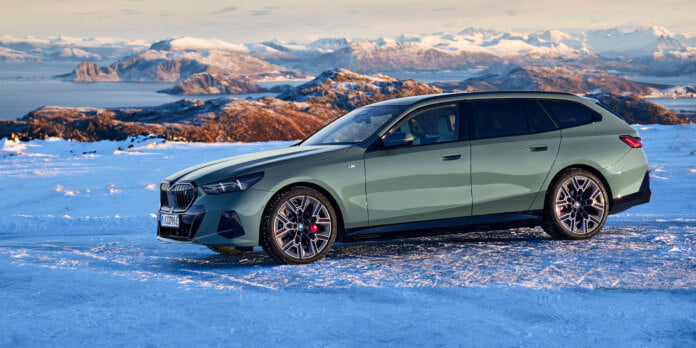
The BMW i5 is the electric version of the latest eight-generation BMW 5 Series executive saloon. It sits between the smaller i4 and the larger i7 in the electric ‘BMW i’ range.

Initially launched as a saloon, an i5 Touring (estate) joined the range in the summer of 2024. It has received very similar reviews from motoring journalists, while other data points like safety and running costs are also very similar to the saloon.

While the highly-regarded seventh-generation 5 Series range is a tough act to follow, the i5 has been earmarked by UK reviewers as a compelling class leader – offering some of the i7’s interior opulence as part of a cheaper and more engaging package.

Vicky Parrott of Electrifying.com explains that the saloon “strikes a fantastic happy medium”, offering a blend of “executive slicker and occasional country-road thriller.” Parkers‘ Tom Wiltshire agrees, arguing that the BMW is “the most engaging EV in its size class, and even gives outright sports EVs such as the Porsche Taycan a run for driving dynamics.”

James Fossdyke of the Sunday Times praises the car’s “clean”, “well-built” and “very high tech” interior design, while Sean Carson of Auto Express asserts that no other electric saloon can match the i5’s refinement and infotainment features. That said, the Top Gear team adds that this high-tech cabin “can be a bewildering place to navigate.”

Some outlets suggest that the i5 isn’t as fun to drive as its petrol-powered predecessors, while others take issue with the saloon’s expensive price tag. The most frequent criticism refers to the car’s battery range, which Carbuyer describes as “adequate”. The i5 can reportedly muster up to 357 miles on a single charge, while rivals like the Mercedes-Benz EQE and Tesla Model S can travel up to 376 miles and 405 miles, respectively.

As of April 2026, the BMW i5 holds a New Car Expert Rating of A, with a score of 77%. This reflects its excellent media reviews and safety rating, as well as its zero tailpipe emissions. Running costs are also good, although car insurance premiums are likely to be fairly expensive.

i5 highlights

  • Refined and tech-laden interior
  • Agile handling and impressive performance
  • Comfortable and roomy cabin
  • Class-leading infotainment
  • Zero tailpipe emissions

i5 lowlights

  • Key rivals can go longer on a single charge
  • High price tag with an expensive options list
  • Restricted saloon boot opening
  • Lighter petrol-powered versions are more fun to drive
  • Some running costs are quite high

Key specifications

Body style: Large saloon and estate
Engines:
electric, battery-powered
Price:
From £67,795 on-road

Launched: Autumn 2023
Last updated: Summer 2024
Replacement due: TBA

Media reviews

Reviews, road tests and comparisons from across the UK automotive media. Click any of the boxes to view.

Featured reviews

More reviews

Auto Express

Auto Trader

Car

Carbuyer

Driving Electric

Electrifying.com

Evo

Heycar

Honest John

Parkers

The Independent

The Times

Top Gear

Which EV?

Safety rating

Independent crash test and safety ratings from Euro NCAP

Overall score: 5 stars
Date tested: December 2023
Read the full Euro NCAP review

Adult protection: 89%
Child protection: 85%
Vulnerable road users: 86%
Safety assist: 78%

Eco rating

Independent economy and emissions ratings from Green NCAP

No eco rating

As of April 2026, the BMW i5 has not been tested by Green NCAP.

The Green NCAP programme measures exhaust pollution (which is zero for an electric car) and energy efficiency. Electric cars are much more energy-efficient than combustion cars, so the i5 is likely to score very highly in Green NCAP testing whenever it ever takes place. Check back again soon.

Running cost rating

Clear Vehicle Data logo close crop

Monthly cost of ownership data provided exclusively for The Car Expert by Clear Vehicle Data

Battery rangeAverageScoreVariationScore
EV models337 milesA
Electrical efficiencyAverageScoreVariationScore
EV models4.1 m/KWhC
Insurance groupAverageScoreVariationScore
All models44E
Service and maintenanceCostScore
Year 1£373D
Year 2£714D
Year 3£1,016C
Year 4£1,322D
Year 5£1,645C
Overall£5,070D

The BMW i5 is a reasonably expensive car to run and own, according to whole-life cost data provided exclusively to The Car Expert by our technical partner, Clear Vehicle Data. However, it’s still cheaper to live with than a conventionally powered saloon of similar size and sophistication – like the regular BMW 5 Series.

Electrical efficiency (the EV equivalent of miles per gallon in a petrol or diesel car) is only average, although a large battery means that driving range between charges is very good.

Insurance costs are inevitably high (as they are for any 5 Series), while servicing and maintenance costs are not bad for this level of price and luxury.

Reliability rating

MotorEasy logo 600x167

Reliability data provided exclusively for The Car Expert by MotorEasy

No reliability rating

As of April 2026, we don’t have enough data on the BMW i5 family to generate a reliability rating.

The Car Expert’s reliability information is provided exclusively to us using workshop and extended warranty data from our partner, MotorEasy, sourced from both official dealerships and independent workshops. 

As soon as MotorEasy has sufficient data on the i5, we’ll publish the score here.

Recalls

Official DVSA safety recalls that have been issued for the BMW i5

Date: February 2024
Recall number: R/2024/211
Model types: All
Build dates: 12/2023 only
Number of vehicles affected: 1
Defect: On affected vehicles if faulty cell modules have been installed then a malfunction may occur in the high voltage battery.
Remedy: On the affected vehicles the faulty cell modules in the High Voltage battery will be replaced.

As of September 2024 (our most recent data point), there has been one DVSA vehicle safety recall on the BMW i5 – and only affecting one vehicle – addressing a battery issue.

Not all vehicles are affected by recalls. You can check to see if your car is included in any of the above recalls by visiting the DVLA website or contacting your local BMW dealer.

If your car is affected by a recall, the vehicle must be repaired and you should not be charged for any work required. If you are buying a used i5, you should insist that any outstanding recall work is completed before you take delivery of the vehicle.

Awards

Trophies, prizes and awards that the BMW i5 has received.

BMW i5 – Best Large Car – The Car Expert Awards 2024

2024

  • World Car Awards – Best Luxury Car (entire 5 Series range)

2023

Similar cars

If you’re looking at the BMW i5, you might also be interested in these alternatives.

Audi e-tron GT | BMW i4 | BMW i7 | Citroën C5 X | DS Nº8 | Genesis Electrified G80 | Hyundai Ioniq 6Kia EV6 | Lexus ES Electric | Mercedes-Benz EQE | Polestar 2 | Porsche Taycan | Tesla Model S | Volkswagen ID.7

More news, reviews and information about the BMW 5 Series range at The Car Expert

Everything you need to know about BMW

Everything you need to know about BMW

New BMW i5 Touring estate available to order

New BMW i5 Touring estate available to order

All-new BMW 5 Series range makes debut

All-new BMW 5 Series range makes debut

Buy a BMW i5

If you’re looking to buy a new or used BMW i5, The Car Expert’s partners can help you find the right car.

Motors.co.uk logo transparent 600x300

Find your next used car with Motors. Find out more

Auto Trader logo 600x300

Find your next new or used car with Auto Trader. Find out more

Carwow logo 600x300

Find your next new or used car with Carwow. Find out more

Lease a BMW i5

If you’re looking to lease a new BMW i5, The Car Expert’s partners can help you find a competitive deal.

Leasing-com logo

Personal contract hire deals from Leasing.com. Find out more

Carwow logo 600x300

Personal contract hire deals from Carwow. Find out more

Select Car Leasing logo

Personal contract hire deals from Select Car Leasing. Find out more

Subscribe to a BMW i5

Subscriptions are becoming a very popular way for consumers to try an electric car for a few weeks or months to help decide whether it’s a suitable alternative to a petrol car. If you’re interested in a car subscription, The Car Expert’s partners can help. (PS: What’s a car subscription?)

Cocoon Vehicles logo 600x300

Car subscriptions from Cocoon.
Find out more

Just Vehicle Solutions logo 600x300

Car subscriptions from Just Vehicle Solutions.
Find out more

Flexible Vehicle Contracts logo 600x300px

Car subscriptions from Flexible Vehicle Contracts.
Find out more

Hyundai Tucson receives small facelift

0

The family-sized Hyundai Tucson range is set for a mild refresh in the new year, which introduces several cosmetic changes and tweaks to the car’s dashboard layout.

This mid-life update comes as Hyundai attempts to keep the family-sized SUV competitive with the popular Nissan Qashqai and the similar Kia Sportage, which has overtaken the Tucson in the race for 2023’s best-selling new car in the UK in recent months.

Tucson owners won’t notice many exterior differences – the update includes a small tweak to the slim LED headlight shape and the dashed daytime running lights take up a bit more space on the front grille, but otherwise the SUV’s looks remain largely the same after the update. The alloy wheel design has been updated too.

The most notable changes are inside, with a new dashboard layout and infotainment spread that gives the SUV a more upmarket look. Like the latest iteration of the smaller Kona crossover, the digital instrument cluster and central infotainment console are connected in one continuous screen and the steering wheel has been changed too, again based on the design of the Kona.

To make the Tucson’s more user-friendly, Hyundai has decided to get rid of the touch-sensitive sliders in favour of dial controls and switches for the climate control functions. The gear-selector buttons have been moved from the centre console, freeing up more storage space. 

That sums up this minor refresh – the powertrain options remain the same. The SUV’s UK pricing list may change though, but we have no indication of this just yet. Pricing details will follow in the coming months – closer to the update’s arrival early next year.

Reviews for the Tucson have been universally positive to date – the SUV has been widely praised for its interior quality and space, as well as its safety tech. It currently holds an Expert Rating of 75%, which is hindered by criticisms of its pretty bland driving experience.

Toyota Yaris Cross gets minor refresh

0

The compact Toyota Yaris Cross crossover range will soon gain an additional hybrid engine option and some on-board tech upgrades – in line with the smaller Yaris hatchback’s refresh in June.

This being the first modification to the crossover range since the introduction of the sportier ‘GR Sport’ trim in August last year, Toyota says that this round of enhancements “focuses on the top purchase considerations for customers”, keeping the car competitive with rivals like the popular Ford Puma and Nissan Juke.

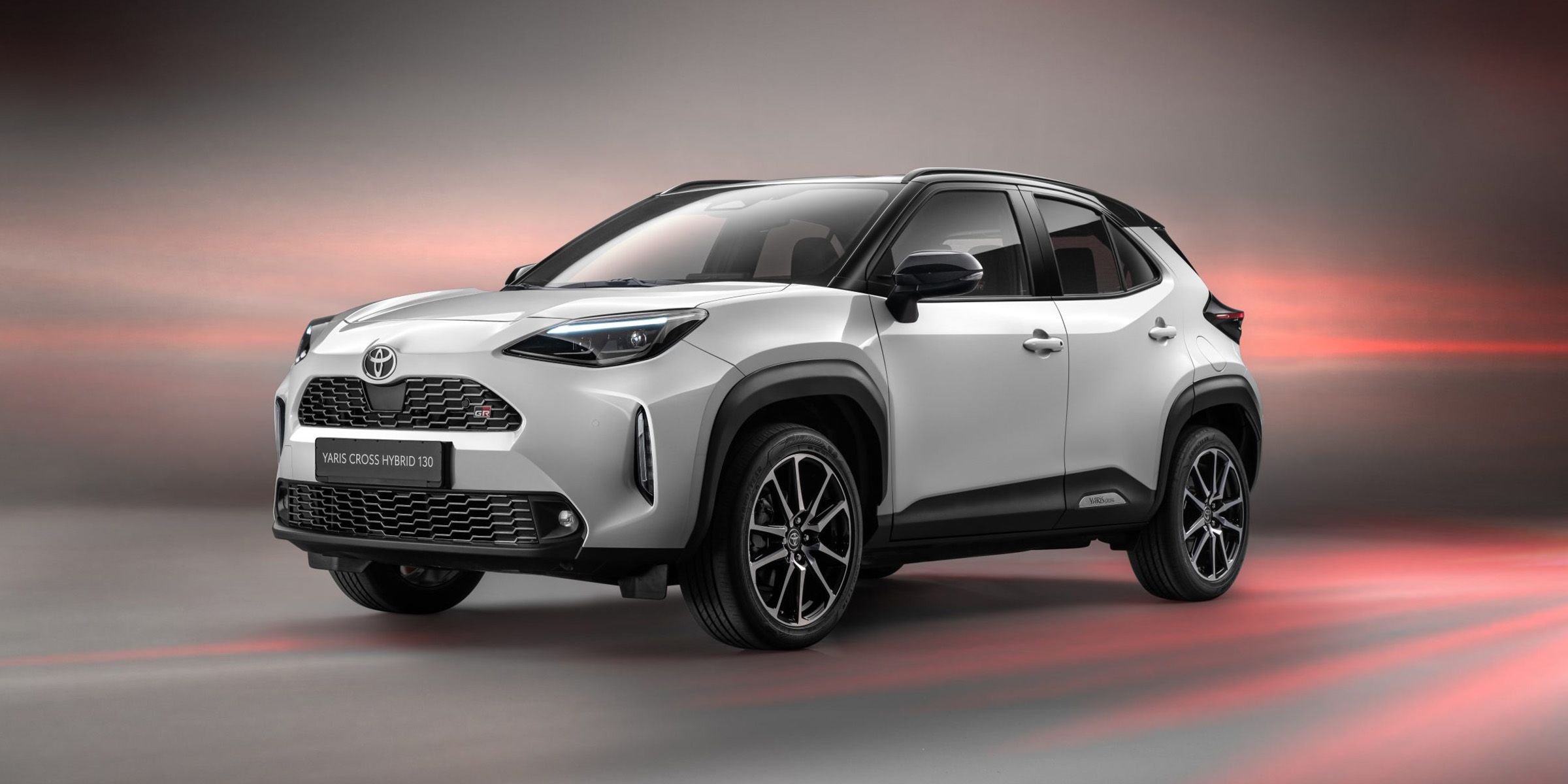
Toyota says that the most important change is the expansion of its engine choices. The update adds an extra petrol-electric hybrid option – a more powerful 130hp 1.5-litre unit that is half a second quicker to 62mph than the single powertrain option currently on sale – 10.7 seconds in total.

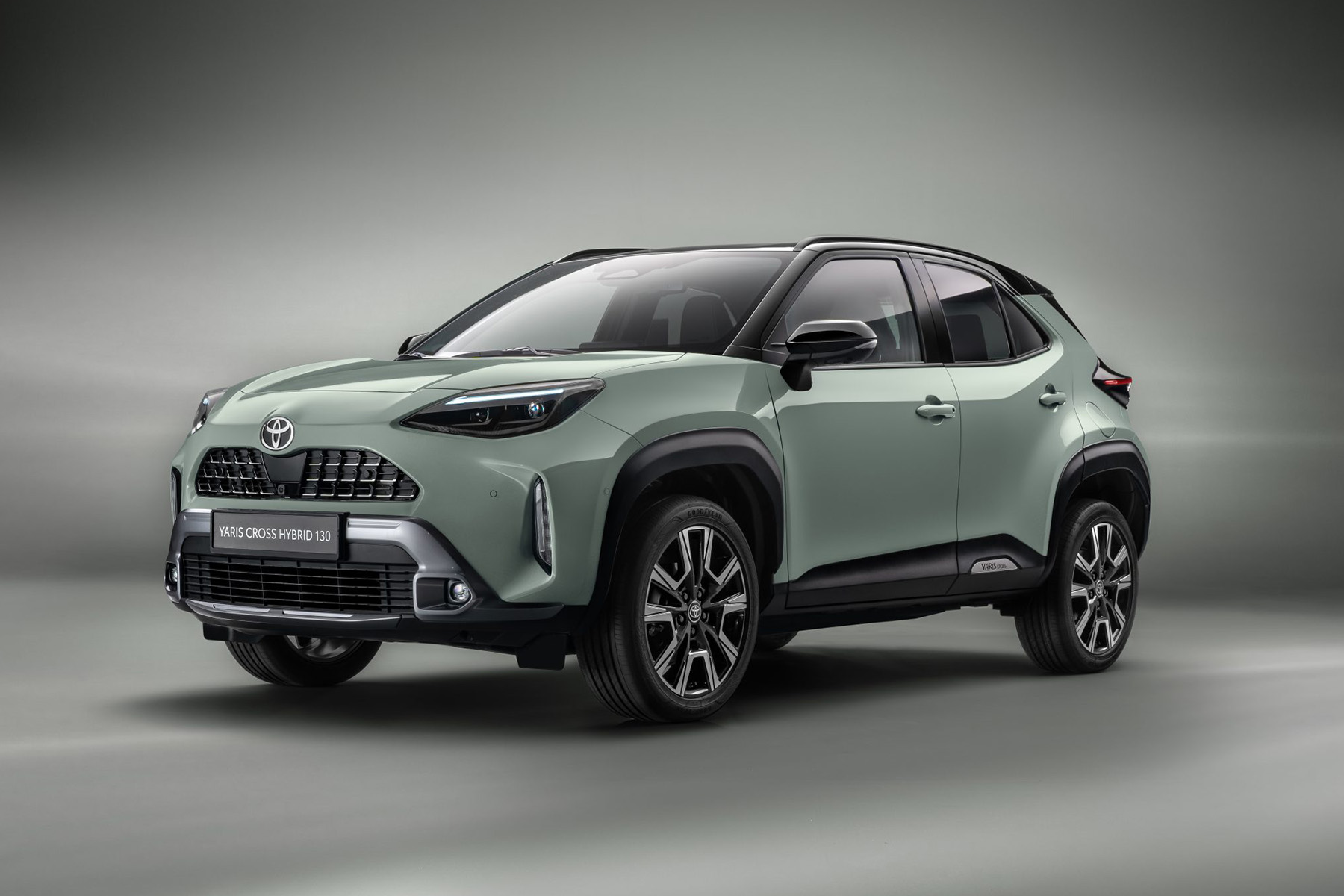
This engine will be available with top-spec ‘GR Sport’ and new ‘Premiere Edition’ versions. This new trim is said to “enhance” the car’s “visual appeal” by introducing a new paint colour, ‘Urban Khaki’, which is shown above. Like the ‘GR Sport’, ‘Premiere Edition’ models have a two-tone exterior with black elements and 18-inch alloy wheels. Other than that, the car’s exterior looks remain the same. Inside, this trim spec matches the interior stitching with the green body colour.

Toyota adds that a new ‘Juniper Blue’ exterior colour has been added to the full range of trims, and that seat upholstery has also been refreshed with a new pattern and a soft-material lower instrument panel covering has been introduced. The manufacturer has also attempted to reduce engine and wind noise in the cabin, using thicker windscreen and side window glass and engine dampers.

Now onto the tech. Like the Yaris, the Yaris Cross will be getting the brand’s ‘digital key’ software, which allows the driver to lock, unlock and start the car from their smartphone.

The entry-level models come with a nine-inch central screen (formerly of higher trims), while higher trims will feature a larger 11-inch infotainment console, as opposed to the eight- and nine-inch systems currently available. Toyota says the infotainment software is more ‘intuitive and reactive’ after the update, and that it is wirelessly compatible with Android Auto and Apple CarPlay.

The four-inch LCD driving information screen behind the steering wheel has also been replaced by either a seven- or 12-inch digital instrument cluster, depending on the trim you choose. The car’s safety tech has been tweaked too – the camera and radar system can reportedly scan further and wider than before when detecting potential hazards on the move.

The safety tech is also said to be improved thanks to the introduction of an upgraded camera and radar system which can scan further and wider than before, increasing scope for the detection of accident risks. There is also a new ’emergency driving stop system’ which stops the car, turns on the hazard lights and unlocks the doors if it detects no input from the driver after an extended period of time and after a warning sound.

Finally, Toyota says that the car’s adaptive cruise control has been revised to respond more quickly and “operate with a more natural feel”.

UK pricing and arrival date are yet to be announced, but we do know that these revised Yaris Cross details will arrive in December. The lead-in price for the range currently sits at under £25k before the update’s arrival.

As the key criticisms of the Yaris Cross relate to its modest performance and slow infotainment, this minor facelift could potentially impact the car’s current Expert Rating of 69%.

Full Vauxhall Astra Electric range now on sale

0

Vauxhall has announced that its full all-electric Astra range is now available to order in the UK, with the arrival of the Astra Sports Tourer Electric estate car.

Unveiled at the end of last year, the Vauxhall Astra Electric (hatchback and estate bodystyles) is powered by a 54kWh battery and a 156hp electric motor pairing, which the manufacturers says can muster a maximum electric range of 258 miles on a single charge (256 miles for Sports Tourer).

The exterior styling and interior layout of the Astra Electric range is almost identical to the entry-level petrol model, apart from the absence of exhaust pipes in the rear, and the larger 18-inch alloy wheels that come as standard.

The ‘GS’ grade comes with LED headlights, tail lights and daytime running lights, as well as LED front fog lights. The car sits on 18-inch alloy wheels as standard, and features dark-tinted privacy glass for the rear windows.

Lead-in tech includes a ten-inch infotainment touchscreen that can run Apple CarPlay and Android Auto – like the combustion-powered Astra – and dual-zone climate control. The steering wheel, front seats and folding door mirrors are all heated with the ‘GS’ spec, and the car can be opened using a keyless entry function.

Opting for the ‘Ultimate’ adds more advanced Matrix LED headlights, as well as a panoramic sunroof and leather upholstery. A head-up display projects driving information onto the heated windscreen, and a wireless charging pad for smartphones is also included.

Pricing for the hatch starts at over £37k for the hatchback version, while lead-in versions of the larger Sports Tourer are priced at just under £40k.

This Vauxhall Astra Electric range has largely failed to stand out in what is a very competitive family EV sector so far. While models are well-equipped as standard and the car’s efficient battery offers a long range, reviewers add that its pricing is comparatively expensive, and rivals are more engaging on the road. The Astra Electric currently holds an Expert Rating of 55%.

Jeep Avenger soon available with petrol power

0

Jeep has announced that its compact Avenger crossover line-up is no longer electric-only, with additional petrol mild-hybrid and limited-run traditional petrol models on offer from the end of November.

Previously only available as a 156hp electric car, Jeep says that the Avenger will soon also be sold with its ‘e-Hybrid’ powertrain – a 100hp mild-hybrid setup that pairs a 1.2-litre petrol engine with a 21kW electric motor and 48V of extra mild-hybrid assistance.

This new variant of the crossover can also drive on electric power only – but only for up to just over half a mile when cruising in traffic at under 18mph. Heavy traffic is also where Jeep’s ‘e-creeping’ function comes into play, allowing for a series of short forward movements without accelerator input. Like the fully-electric model already on sale, this ‘e-Hybrid’ uses an automatic gearbox. Acceleration from 0-62mph takes 11 seconds.

Other than the engine, the ‘e-Hybrid’ also offers a few other new features, including the brand’s ‘open-air’ panoramic sunroof and an electronically-powered driver seat with a massage function. On the dashboard, drivers can choose between a seven-inch or ten-inch digital instrument cluster, which displays ‘e-Hybrid’ information such as drive mode, engine status feedback and power metre readings.

For a limited time, UK buyers can also opt for a conventional 1.2-litre turbocharged petrol model tied to the middling ‘Altitude’ trim. Called the ‘Altitude Plus’, this model also offers an output of 100hp and the package includes Jeep’s navigation software, a reversing camera, 18-inch alloy wheels, heated seats and blind spot monitoring tech.

On sale from the end of this month, Jeep is yet to finalise the UK price list.

The Jeep Avenger has received a very warm welcome from the British motoring media – praised for attractive styling, competitive battery range and its off-road capability, while being criticised for its pricing. It currently holds an Expert Rating of 74%.

Land Rover Discovery review

0

Make and model: Land Rover Discovery D300
Description: Large seven-seat SUV, diesel
Price range: £60,540 (plus options)

Land Rover says: “Discovery combines an exceptional design evolution with a versatile and intelligently packaged interior which embodies the spirit of family adventure.”

We say: Undoubtedly competent and supremely comfortable, but it’s big, expensive, heavy and inefficient.


Introduction

Like the other grandee names in the Land Rover family – Defender and Range Rover – the Land Rover Discovery has come a long way from its utilitarian origins.

Now in its fifth generation, the Discovery is a sophisticated seven-seat SUV that has to appeal to buyers who will rarely venture off the beaten track. Yet, at the same time, it needs to be worthy of the Land Rover name by being perfectly capable in the sorts of off-road situations that would embarrass most SUVs from other brands.

For the purposes of our review, we’re going to take the Discovery’s off-road talents as a given. What we’re interested in finding out is whether they compromise the Disco’s abilities on-road, since that’s where it will inevitably spend the vast majority of its time with most of its customers.

What is it?

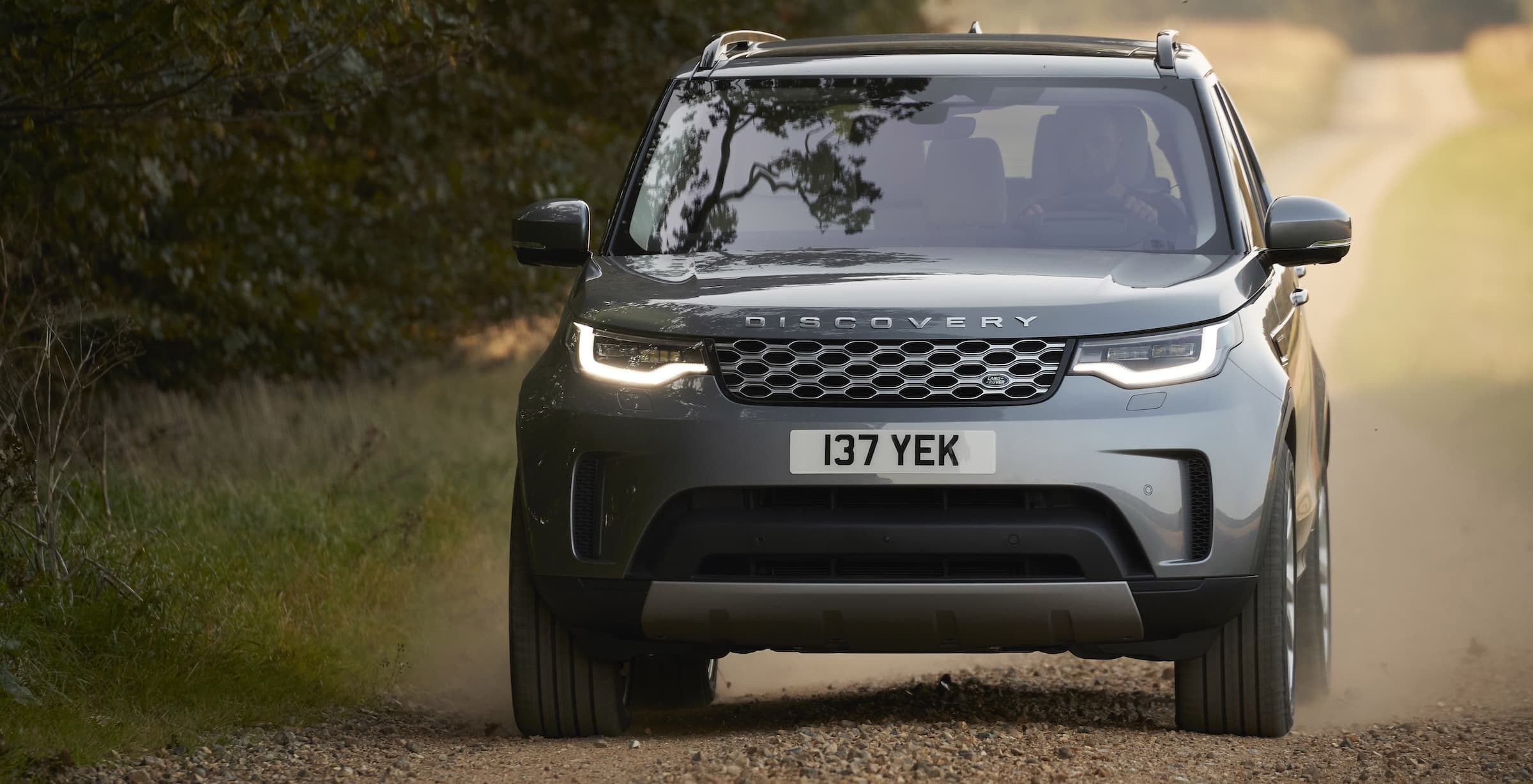
The Land Rover Discovery is a large, seven-seat 4×4 with a starting price of just over £60K. It used to be the biggest model in the Land Rover family, but has been overtaken by the latest Range Rover and Defender models. Unlike those models, the Discovery is only available in one size and seating configuration.

The current Discovery has been around since 2017, and this is the fifth generation of vehicle to carry the name (Land Rover die-hards, we’re going with what the company says so we’re not going to argue whether it’s really only the third generation…). It had a major update in late 2020, although visually there wasn’t a great deal of change.

Customers have a choice of diesel or petrol power for the Discovery, although exact engine availability will depend on which of the four trim options you choose.

Who is this car aimed at?

Unusually, Land Rover offers not one, but two large seven-seat SUVs in the same price bracket. The Discovery and Defender 110 are similar in price, size and equipment levels. So what gives?

The Discovery is more subtle in styling, if you can ever call a five-metre-long SUV subtle, while the Defender pays homage to its famous predecessor with its squared-off styling. The Disco follows the last decade of Land Rover’s Russian doll approach to styling, with everything looking like a larger version of the original Range Rover Evoque.

It’s fair to suggest that the new Defender isn’t really a replacement for the old Defender at all, but rather a replacement for the old Discovery. Meanwhile the Discovery has moved more upmarket, looking and feeling like an entry-level Range Rover.

Who won’t like it?

Land Rover is very much a premium brand these days, competing in the same space as Mercedes-Benz, BMW and Audi. So, like those brands, it’s not about value for money. If you’d like to tick most of the same boxes on the spec sheet for a little over half the price, you should be looking at a Skoda Kodiaq.

It’s also a very large, near-three-tonne SUV (once you put a couple of people in it and fill up the tank with diesel), so it’s not going to win any awards from climate change campaigners. The Defender and Range Rover models are available with plug-in hybrid powertrains, but the Discovery has not been blessed with these.

First impressions

The Discovery may no longer be the largest model in the Land Rover family, but it’s still big. Really big. Which is great news if you you want to take up to six passengers with you, because most seven-seaters are rather cramped once you fill up all the available seats.

Of course, if you don’t need the third row of seats, they fold flat into the floor and you have a big, square boot space. The rear of the car even lowers down at the touch of a button to make loading easier, as the Disco sits very high up off the ground (more on that later).

Styling-wise, it’s a mixed bag. The front half is all quite neat and smooth, and far better resolved than any SUV from BMW (admittedly, that’s a low bar to clear). It all looks like an Evoque XXL. But the back half of the car isn’t anywhere near as attractive. For such a wide vehicle, it manages to look very tall and narrow, and the silly offset number plate doesn’t look any better now than it did six years ago.

Our car was finished in an attractive metallic greyish-blue colour called Byron Blue, with silver alloy wheels. It was a nice change from the usual dark grey or black cars with dark grey or black wheels that you usually see on the roads or at your local Land Rover dealer. Why can’t more customers pick brighter colours for their cars and wheels?

What do you get for your money?

Once we’ve got the first impressions out of the way, it’s time to look a bit harder at exactly what you’re getting for your money with the Land Rover Discovery.

As of late 2023, the range starts with the Discovery S, only available with a 300hp diesel engine (yes, they still exist) and with a starting price of just over £60K. It’s actually pretty well equipped and is certainly not just a price-leader model that no-one is likely to ever buy.

The 3.0-litre diesel engine is hooked up to an automatic transmission, with no manual alternative. It’s a proper four-wheel-drive vehicle, meaning that all wheels are driven all the time – although the amount of drive going to each wheel will vary depending on the conditions.

In terms of standard equipment, the Discovery S has all the basics you’ll need, although obviously the niceties are kept for more expensive models. It’s good to see that all the safety kit is standard rather than costing extra, which isn’t always the case.

Above this model is the Dynamic SE trim, with either or diesel or petrol power and starting at about £68K with same diesel engine. Then comes Dynamic HSE trim, which bumps the price to just over £72K, and finally the top-spec Metropolitan Edition for £77K.

What’s the Land Rover Discovery like inside?

The interior is where most of Land Rover’s money went during the mid-life update. If you’re looking for a used Discovery, you’ll see a big difference between the pre-facelift (2017 to 2020) models and the post-facelift (2021 onwards) versions.

There’s plenty of room for everyone, with good headroom and legroom in the first two rows. Inevitably the third row is tighter, but you could still carry two adults back there for relatively short trips. The middle-row seats don’t slide and fold as quickly as you’d like, so if you’re using the third row regularly you’ll get tired of waiting for the partially electric seat to get out of the way.

The biggest single improvement on post-2020 models is the new infotainment system, which Land Rover calls Pivi Pro. The screen is larger (11 inches) and more responsive than on older cars, and the whole thing runs much more smoothly. That said, it’s still not as user-friendly as some systems on other cars, and you’ll probably end up just running Apple CarPlay or Android Auto rather than the fairly fiddly built-in systems.

The dashboard layout is fairly conventional and logical in its layout, although it’s starting to look dated compared to rivals. There are lots of storage spots all throughout the cabin, which is great. Unfortunately, several of them were very reluctant to open when their buttons were pressed, which suggests that Land Rover’s build quality is still not up to scratch. Budget cars get this sort of stuff right, so it’s unacceptable in a £60K+ premium vehicle.

Boot space is great with the rear row of seats down – the square shape of the Discovery’s back end maximises load space compared to the en vogue coupé SUVs found elsewhere. With all three rows in use, you obviously lose the vast majority of your boot, so you’ll only be able to fit a few smaller bags back there.

Standard-fit air suspension means you can lower the back end of the car at the touch of a button. This is helpful if you’re loading heavy bags or bulky objects, as the Discovery sits quite high – you definitely climb up into it. The motorised tailgate can also be opened or closed remotely with your car key.

What’s under the bonnet?

The only engine choice for the Discovery S is a 3.0-litre diesel unit, helped along with mild hybrid assistance. It’s called a D300 in Land Rover lingo. The company does emphasise the mild hybrid bit quite a lot on its website, but don’t get too excited. Most diesel engines are now mild hybrids, and it just means that the engine gets a bit of electrical support to hopefully provide a small improvement to fuel economy.

In practical terms, it’s still a near-three-tonne SUV so don’t be expecting a Christmas card from Greta Thunberg. Over the course of a week of mixed driving on roads we use regularly, we saw fuel economy of about 29mpg. Our usual petrol estate would probably achieve somewhere close to 40mpg for the same sort of driving.

Being a big diesel engine, it produces loads of torque, so you can expect that the Discovery will maintain its performance well regardless of how much you load it up with passengers and luggage, and your fuel consumption won’t suffer as much as it would on a petrol vehicle. You can get a Discovery with a petrol engine, but I can’t imagine why you’d want to unless you have your own private oil refinery.

The gearbox is an automatic transmission, which shifts smoothly between its eight gears. This is a proper four-wheel drive, so all four wheels drive the car at all times. Some SUVs are two-wheel drive only, or may only use all four wheels on occasion. The Discovery can apportion drive to each wheel depending on how much grip is available at the time, so traction is always maximised. There’s nothing you need to do to assist or control this, it’s all done by the car.

At this point in the review, it’s probably time to address the elephant in the room when it comes to Land Rover – reliability. According to data supplied to The Car Expert by our partner MotorEasy, the Discovery has a very poor reliability rating.

What’s the Land Rover Discovery like to drive?

As said right at the top, we’re only evaluating the Discovery’s on-road ability here. There are plenty of good 4WD websites and magazines that can give you plenty of detail about how good it is off the road, but that’s not where the vast majority of Discoveries spend their time.

We’re interested in assessing how well the Disco copes with ordinary day-to-day driving and road trips, which is exactly how most families will use it. We found plenty of good and not-so-good in this regard.

Firstly, the driving position is great once you get there. It’s definitely a step up to get into the Discovery, and you’ll find that you actually look down on almost every other car on the road – plus most delivery vans apart from the really big ones. That gives you plenty of visibility down the road to see what’s coming.

Being diesel-powered and weighing more than 2.5 tonnes, the Discovery is sluggish to respond off the mark but does then pick up speed rather quickly if you keep the throttle pedal floored. Combined with its large dimensions and huge turning circle, it’s a clumsy thing for city driving. This is not the ideal car for negotiating car parks, stop-start traffic and narrow laneways, notwithstanding the fact that plenty of owners do use them in these environments on a daily basis.

Find your way free of the urban jungle and the Discovery is far more comfortable. The ride is generally quite good – our car rode on 20-inch alloy wheels, but if you pay extra for larger wheels then you can expect the ride to become bumpier. Corners, however, feel quite roly-poly. This is a combination of relatively soft suspension and sitting quite high up. It doesn’t detract from the car’s overall ability, but it’s noticeable if you’re used to a low-slung saloon or hatchback or estate car.

In comparison, big SUVs from the German trio of Mercedes, BMW and Audi tend to be less comfortable in ride, but feel more planted in corners. There’s no real right or wrong way to go about it, just a different approach. Be sure to take a good test drive in any car you’re thinking of buying to make sure you’re comfortable with how it drives.

The front and middle-row seats were certainly comfortable, even after a couple of hours on longer runs. We only tried the third row briefly, but it was better than expected. You still wouldn’t want to travel over great distances back there as an adult, but for shorter trips it was perfectly reasonable. Steering is light, as it is on most

The diesel engine grumbles along with more noise than you’d get from a similar petrol unit, and the tyres are also quite noisy. Once you get up to motorway speeds, a fair amount of wind noise is also audible. Overall, it’s not an overly noisy car but others are quieter.

How safe is the Land Rover Discovery?

The Land Rover Discovery was assessed by Euro NCAP back in March 2017 and awarded a five-star safety rating, with a very good set of scores in every category – both in how it avoids an accident in the first place, and how it copes with an accident if impact is unavoidable.

It’s worth pointing out that this rating is due to expire in January 2024, which is normal practice for Euro NCAP (the ratings usually expire the January after the sixth anniversary of the initial publication).

Verdict

With Land Rover now offering four different seven-seat SUVs in its range (Discovery, Discovery Sport, Defender and Range Rover), it’s getting hard to see how the Discovery can stand out in its own family, let alone among rivals from other brands.

Would you choose a Discovery over a Defender 110 with the same engine and similar spec for similar money? Or how about a near-new (last-generation) Range Rover, which would also be a similar price?

After a week of driving the big Disco, the overall impression was of a car with undoubted competence but little real character. It certainly did everything we needed it to do, and in considerable comfort. But the driving experience was fairly average and the fuel economy was poor. And then there’s the historically poor reliability of the Discovery across all generations.

The off-roading capabilities are certainly overkill for the needs of most households, but you’re paying for them in both the price of the car and the additional running costs every month. If your driving circumstances involve travelling a fair distance off-road, then a Land Rover Discovery would be a great all-round vehicle. But if you never venture any further off the tarmac than a National Trust car park or well-maintained campsite, there are more suitable alternatives available.

Similar cars

If you’re looking at the Land Rover Discovery, you might also be interested in these alternatives

Audi Q7 | BMW X5 | Genesis GV80 | Land Rover Defender | Lexus RX | Maserati LevanteMercedes-Benz GLE | Range Rover Sport | Tesla Model XToyota Land Cruiser | Volkswagen Touareg | Volvo XC90

Key specifications

Model tested: Land Rover Discovery S
Price (as tested): £69,090 (including £10,600 in optional extras)
Engine: 3.0-litre diesel (with mild hybrid assistance)
Gearbox:
Eight-speed automatic

Power: 300 hp
Torque: 650 Nm
Top speed: 130 mph
0-60 mph: 6.5 seconds

Fuel economy (combined): 33.3 mpg
CO2 emissions: 222 g/km
Euro NCAP safety rating: Five stars (Sept 2022)
TCE Expert Rating: 77% (as of Nov 2023)

Buy a Land Rover Discovery

If you’re looking to buy a new or used Land Rover Discovery, The Car Expert’s partners can help you find the right car

Cazoo 600x300

Buy a car online from your sofa. We’ll deliver it. Find out more

Motors 600x300

Search less, live more. We make finding the right car simple. Find out more

Carwow logo 600x300

Discover great deals available on both new and used cars. Find out more
Auto Trader logo 600x300

Search for your next new or used car with Auto Trader. Find out more

Lease a Land Rover Discovery

If you’re looking to lease a new Land Rover Discovery, The Car Expert’s partners can help you find a competitive deal

Carparison 600x300

Personal contract hire deals from Carparison Leasing. Find out more

Hippo Leasing 600x300

Personal contract hire deals from Hippo Leasing. Find out more

LeaseLoco logo 600x300

Personal contract hire deals from LeaseLoco. Find out more

Rivervale Leasing logo 2022

Personal contract hire deals from Rivervale Leasing. Find out more

Subscribe to a Land Rover Discovery

If you’re interested in a car subscription, The Car Expert’s partners can help (PS: What’s a car subscription?)

Pivotal JLR logo

Car subscriptions from Pivotal, Land Rover’s official subscription service.
Find out more

Mycardirect subscriptions – 600x300

Car subscriptions from Mycardirect.
Find out more

Cocoon Vehicles logo 600x300

Car subscriptions from Cocoon.
Find out more

Wagonex logo 2022

Car subscriptions from Wagonex.
Find out more

Alfa Romeo ‘Tributo Italiano’ models now available

0

Alfa Romeo has announced that its Guilia, Tonale and Stelvio models are now available with a limited-run ‘Tributo Italiano’ trim, which the brand says pays homage to its Italian origins.

These ‘Tributo Italiano’ editions are positioned at the top of their respective model ranges, and offer a few cosmetic alterations over range-topping ‘Veloce’ and ‘Competizione’ trims. Three exclusive exterior body colours are available, which as you might have already guessed, follow the colour scheme of the Italian flag. The roof and wing mirrors are instead finished in black.

Alfa Romeo has made other exterior alterations, but they are more subtle, starting with the black grille surrounds, which are chrome on standard models. Behind the alloy wheels (19-inch on the Giulia, 20-inch on the Tonale and 21-inch on the Stelvio) ‘Tributo Italiano’ models also get red Brembo brake callipers.

There are more cosmetic tweaks unique to the Tonale version, including body-coloured bumper cladding from front to back that is usually black. Chrome-plated twin exhaust tailpipes also feature on the ‘Q4’ plug-in hybrid variant.

Inside, sports seats are trimmed in black perforated leather with red accents, and the headrests are embroidered with the brand’s logo and ‘Tributo Italiano’ lettering. Red stitching also appears on the dashboard, seats and door panels.

Again focusing on the Tonale, Alfa adds that the Tonale ‘Tributo Italiano’ also comes with a new carbon design dashboard fascia, with the Alfa Romeo logo and ambient lighting.

Prices for this limited edition trim now start at over £45k for the Tonale variant, around £48k for the Giulia version, and £54k for the Stelvio ‘Tributo Italiano’.

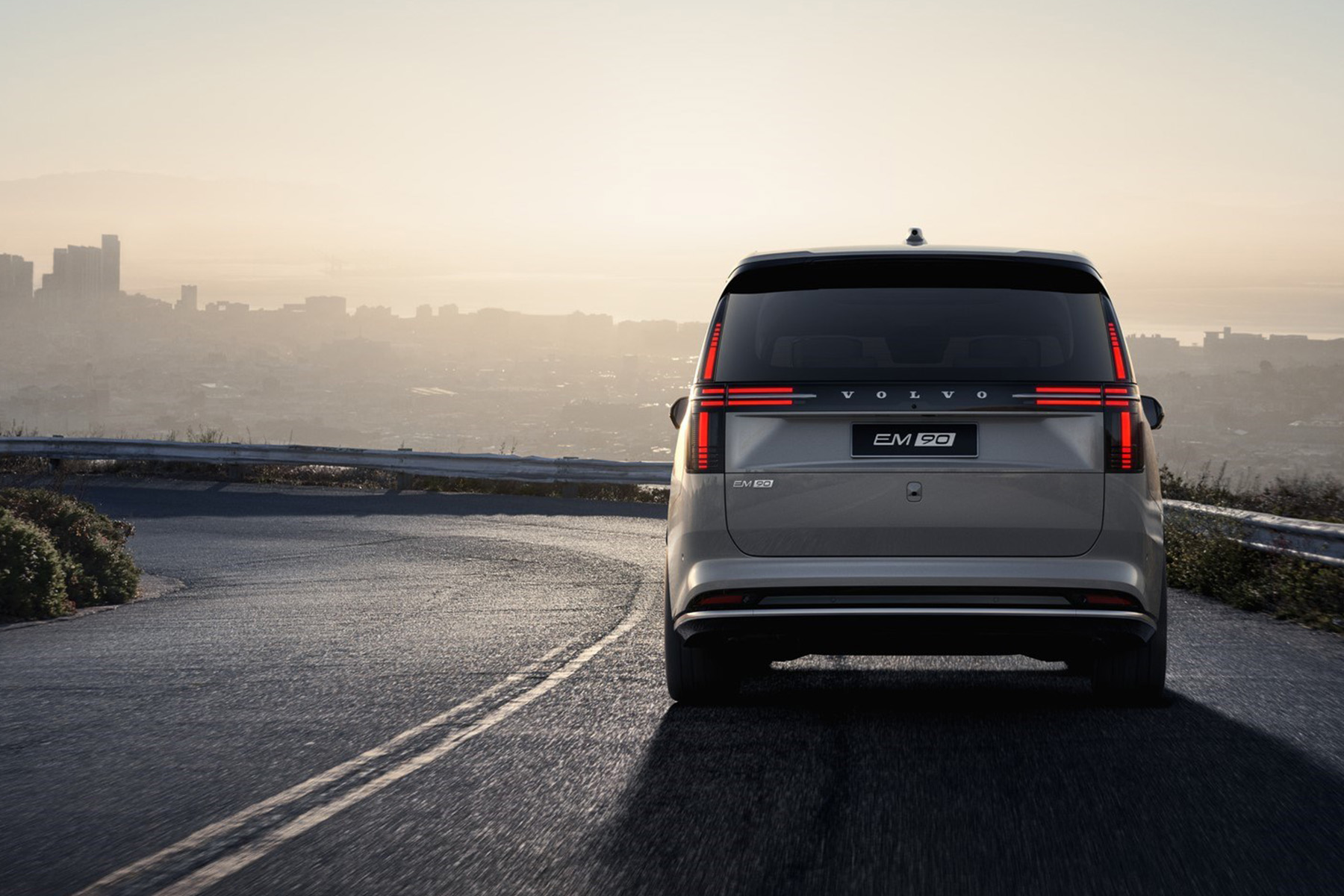
Electric Volvo EM90 people carrier unveiled

0

Yet another addition to Volvo’s expanding global electric range, the Swedish manufacturer has unveiled its EM90 – an upmarket people carrier that aims to provide a “comfortable living room experience” and an impressive battery range.

Following on from Volvo’s unveiling of its compact EX30 and large EX90 SUVs earlier this year, the EM90 is targeted at customers looking for even more interior space, as it is around 20 centimetres longer than its EX90 SUV sibling. That said, this people carrier will offer seating for six at launch, while the EX90 is a seven-seater as standard.

Set to rival the likes of the recently-launched Lexus LM petrol-hybrid and the electric Mercedes-Benz EQV, this Volvo shares its foundations with the 009 MPV from related Chinese brand Zeekr, but with different interior and exterior styling that takes several design cues from Volvo’s other electric models, including the brand’s ‘Thor’s Hammer’ headlight design.

The people carrier makes use of a large 116kWh battery, which reportedly provides a range of 458 miles on a single charge. This battery unit can be charged from 10-80% capacity in less than 30 minutes. The car’s power comes from a 265hp electric motor mounted on the rear axle, which takes the EM90 from 0-62mph in 8.3 seconds.

By comparison, the older Mercedes-Benz EQV can muster 190 miles on a full battery, though it does use a smaller 90kWh battery. A bigger battery usually means more weight, and the EM90 is no exception, weighing in at over 2,700kg. That’s 200kg more than the EQV and around 1,000kg more than an average hatchback.

Volvo remarks that the people carrier is aimed at those looking for a “spacious, versatile and comfortable premium experience on the move”, and to that end the EM90 is equipped with “top-notch sound isolation and road noise cancellation technology”, air suspension and what Volvo calls ‘silent’ tyres.

In the cabin area, the middle row comprises of two armchair-style lounge seats which can slide forwards and backwards, recline and are heated and ventilated. The third row has two more conventional seats. The middle seats come with folding tray tables and control panels for the climate control and other settings, and a 15-inch screen folds down from the ceiling that can stream media, mirror your smartphone and take online video calls. 

Volvo says that the car’s voice assistant, “can turn the interior of the EM90 into a theatre, a meeting room or a bedroom for the rear seats”, with “screens, seats, windows, air-conditioner and lighting all adjusting accordingly” with one voice prompt. 

In the front, the people carrier gets a similar minimalist dashboard design to that of the EX30 and EX90, with a 15-inch infotainment screen in the centre and a digital instrument cluster behind the steering wheel. Volvo has kept physical button controls to a minimum – these installed on the steering column and centre console.

So, is it coming to the UK? As of yet, we don’t know for sure. Volvo admits that its EM90 has been primarily designed for the Chinese market, where the demand for people carrier options is on the rise instead of falling, and says that it will “look into the demand of MPVs around the world before launching in other markets”. 

Driving in Portugal – what are the rules?

0

You can see why Portugal is such a popular tourist destination for UK and other European travellers. Sitting proudly in the southern part of Europe, Portugal has a lot to offer: great coastlines, fine weather, exciting cities and excellent cuisine.

If you like city life, capital Lisbon or Porto are exciting destinations while, if the sea is more of a pull, the Faro district and Algarve on the Atlantic Ocean offer much to visitors. There’s a rich history here and architecture, ancient villages and a vibrant culture all help to make Portugal a country well worth experiencing.

It’s a bit of a drive to get there – from the UK you must go through France and Spain by road, but it’s certainly achievable. But even if you fly in and then hire a car, driving around Portugal, with its open roads and friendly people, is a pleasure.

But you’ll need some careful planning if you do intend to drive in the country. The UK has a good relationship with Portugal and the Portuguese, but driving in their country is a completely different experience from doing so in Britain. For a start, they drive on a different side of the road.

Planning a driving holiday there, or flying in to take a hire car, requires forethought and a good understanding of what you can and can’t do while motoring on Portugal’s roads.

Here The Car Expert looks at the most important elements to consider when planning to take a car to Portugal or hiring one there. We’ve included a handy checklist too. As each journey is unique, always check that you have everything covered for your particular visit.

Basic rules for driving in Portugal

You must be 18 years or over and hold a full valid driving licence to drive in Portugal. A regular licence card will be sufficient, as the paper counterpart is no longer a requirement. You won’t need an international driving permit either. Some countries expect you to have this document – basically a translation of your UK licence – but although it’s recognised in Portugal, it’s not a legal requirement.

What you will need to stay on the right side of the law though, is proof that you have insurance cover for your vehicle (although you don’t need a European ‘green card’ any more). And you should carry with you documents that show the identity of the car, such as a V5 registration document or ‘logbook’. 

Always carry your personal ID or passport with you everywhere, and if your car is more than three years old and has an MOT certificate, take that too. Ensure that the vehicle is fully taxed in the UK before travelling.

The vehicle’s ‘home country’ must be shown on it and for British cars that’s a ‘UK’ sticker or badge. The old ‘GB’ is no longer accepted in Europe, and neither are country badges incorporating the English, Scottish or Welsh flags.

You can have the ‘UK’ letters incorporated into your front and rear number plates or buy small ‘UK’ stickers to fix to the plates and these are acceptable in Portugal. If you prefer, a single ‘UK’ sticker or magnetic badge on the rear of the car would also be permitted.

Speed limits

As with most countries in Europe, Portugal uses the metric system for speed and distance, so all its road direction signs are shown in kilometres rather than miles, and speed limits are shown in km/h (kilometres per hour) not mph (miles per hour). 

Special speed restrictions apply in certain areas for motorhomes and vehicles towing trailers so keep an eye out for these or check before you travel but, in general terms the speed limits are quite straightforward.

In built-up areas the limit is 50km\h (just over 30mph). Out of town this rises to 90-100km/h (55-62mph) and is indicated by local road signs. The 100km\h limit is usually for dual carriageway routes. Portuguese motorways have a flat 120km/h (75mph) limit.

Speeding fines can be expensive if you are caught going seriously over the limit. It also depends on the type of road you are driving on. Penalties start at €60 to €300 for speeding at less than 20km/h above the limit. For 40km/h over it’s up to €600 and if you’re caught at more than 60km/h over the speed limit in a built-up area, the fine could be as high as €2,500.

Portuguese authorities use radar speed cameras and unmarked vehicles – often hidden away or lurking on motorway bridges – to catch offenders. Police speed traps are known locally as ‘Caça a Multa’ which literally means ‘fine hunting’, so the best advice is to make sure you’re not the one being ‘hunted’.

In-car devices that show the location of mobile police speed cameras are not permitted – fines can reach more than 2000 Euro if you’re caught using one. However, you will often see official signs showing that police speed equipment is being used in the area, as a form of warning. 

Blood alcohol limits

We don’t condone any kind of drinking before you get behind the wheel, but it’s important to know what the drink-drive limit is. As with most of Europe, in Portugal the maximum level of alcohol in the blood (Blood Alcohol Content) permitted is 0.5 grams per litre (also expressed as 0.05%). For commercial vehicle drivers it’s lower: 0.2g/l (0.02%), and that’s the same for new drivers with less than three years’ experience. By comparison, it’s 0.8 g/l (0.08%) in England and Wales, and 0.5 g/l (0.05%) in Scotland.

Police can randomly ask for a breath test to be carried out if they suspect you are under the influence of alcohol. You will almost certainly be asked to provide a sample if you’re involved in any kind of collision. You can refuse the breath test but you will be taken to a police station for a blood test instead.

Police can confiscate your vehicle for several reasons including failing an alcohol breath test, not having vehicle registration documents, having forged number plates or refusing to pay a fine.

Parking regulations

Be careful where you pull up and park to ensure you don’t break any local rules. You must leave your vehicle facing in the direction of travel, unless signs tell you otherwise. When parking in built-up areas ensure your car is not within five metres of a junction or blind bend, within three metres of a tram stop, on a pedestrian crossing, opposite a building entrance or on a taxi rank.

Elsewhere, avoid parking at night on a carriageway, on a bridge, a level crossing, in a tunnel, or anywhere else where visibility is restricted. And stay at least 20 metres away from junctions and intersections.

Portugal’s main towns and cities such as Faro, Lisbon and Porto operate ticket machines for parking – each one will have its own instructions so check carefully. If the police don’t like your choice of parking space you could be clamped or even towed away. And you won’t see your car again until you pay a fine plus costs involved with the towing and impounding.

What to carry in the car

Portuguese police will expect you to have in your vehicle a reflective jacket for anyone who gets out of the car and stands on the carriageway. A warning triangle for breakdowns is not compulsory for foreign vehicles although it is recommended as a safety precaution.

Headlamps must be set so that they don’t dazzle oncoming traffic. This can be adjusted manually in some cars while, for others, you can fit headlamp beam deflectors. You don’t have to carry spare lightbulbs but it’s still a good idea, as are a first aid kit and fire extinguisher, both of which are well worth considering.

Much of this equipment can be found in useful ‘European driving kits’, sold by specialist suppliers such as motoring organisations for around £25.

Seatbelts

Seatbelt laws are the same as in the UK: if your car has them, front and rear, they must be worn. Make sure everyone is buckled up as there are fines of up to €600 for failing to wear a belt. Children who are under 12 years and less than 150cm in height must be carried in a proper child seat or restraint.

If you are planning on carrying a child in a rear-facing restraint on the front seat, the passenger airbag must be switched off.

Driving

Keep to the right-hand lane as much as possible but if you are overtaking, do so on the left. If you are being overtaken, move over as far as possible to the right and don’t start accelerating.

If you see a tram unloading people, be prepared to stop – you can’t pass one unless there is a boarding island for passengers. If that’s the case, move past slowly and carefully. Don’t enter any junction or crossroads if you don’t think you can get through without obstructing traffic.

There are plenty of narrow streets in Portuguese towns and villages and, if you’re the closest to a ‘pull-in’ place, you will be expected to do so, even if it means reversing. On a hill, the vehicle going up should give way to the one coming down. Always give way to an emergency vehicle, or a military one.

Horns are not especially welcome in Portugal and should be used only if absolutely necessary. Far better to flash your lights instead to warn of your presence. Using a horn is not permitted during the hours of darkness except in an emergency.

Portugal’s traffic lights are red, amber and green like the UK’s, but there is no amber after the red ‘stop’ signal. A flashing red signal will be seen near level crossings to warn of approaching trains.

You cannot use a mobile phone while driving in Portugal, even if it has a hands-free option. It’s illegal to carry cycles on the back of a car.

Cars towing a caravan must not jointly exceed 18.75 metres in length, 4 metres in height and 2.55 metres in width. Make sure your rear-view wing mirrors are wide enough to see clearly behind you. No load should exceed 10 tonnes at any axle.

Toll roads

As with many European countries, you must pay a toll to use the motorways. Most will take cash or a card while on many M-ways there’s the option of the Via Verde system which has an electronic reader attached to the car’s windscreen to automatically register your usage. Approaching special Via Verde lanes, you will see a ‘Portagem Peage’ sign.

There is also a system called ‘EasyToll’ which allows foreign visitors to register their vehicle details and credit card number so that automatic payment can be made. It’s convenient and easy to sign up for: (www.portugaltolls.com).

There is a good range of service areas on Portuguese motorways and from these you can buy unleaded and diesel fuel and make use of electric vehicle (EV) charging points. Some larger towns have automatic fuel pumps.

Emergency assistance in Portugal

Portugal’s motorways have emergency phones sited at 2km intervals. You can also call 112 (the European emergency number) from your own phone and make contact with services such as fire, ambulance or police, 24 hours a day. They will speak English as well as a number of other European languages.

Checklist for driving in Portugal

Must haves:

  • Driving licence
  • Passport
  • Vehicle insurance
  • MOT certificate
  • V5 registration or vehicle ID
  • ‘UK’ country sticker
  • Headlamp beam deflectors
  • Hi-viz jackets

Options:

  • Warning triangle
  • Spare bulb kit
  • Fire extinguisher
  • Map or satnav
  • Fuel can
  • Screen wash
  • Bottled water
  • Phone power bank
  • Torch


Read more:

Kia EV9

The Kia EV9 was The Car Expert’s Best Premium Large Car 2025!

Summary

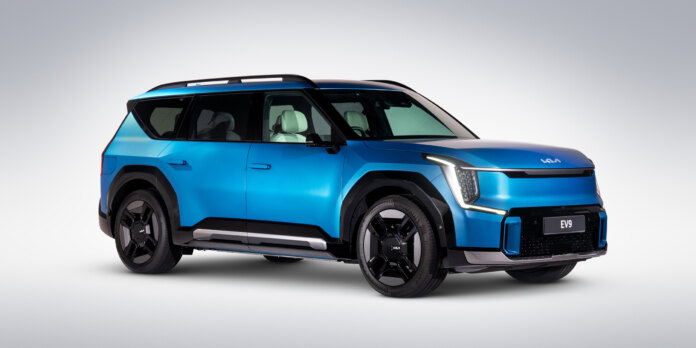
The Kia EV9 is a large upmarket seven-seat SUV, and Kia’s flagship all-electric model, which became available to order in the UK in Autumn 2023.

A similar size to the latest Range Rover, the EV9 is Kia’s largest model and can comfortably accommodate seven adult occupants – a fact that will appeal to many British buyers. That said, the EV9 is also Kia’s most expensive model ever.

Carbuyer‘s Andy Goodwin points out that other large premium SUVs at this price point have a higher quality interior fit and finish, and for those who are expecting the switch to electric power to lead to future savings, Richard Ingram of Auto Express warns that “poor efficiency means this EV9 won’t cost peanuts to run.”

However, other outlets argue that the SUV is truly impressive and justifies its price tag in other ways. The Driving Electric team praises the EV9’s “strong electric range” and “seemingly endless standard equipment list”, while Top Gear‘s Ollie Kew concludes that the SUV “feels tough enough for everyday family life, feature-stuffed enough to be future-proof, and packing enough range and performance to justify a price that would’ve seemed laughable for a Kia – or any Korean car – a decade ago.”

Our own editor at The Car Expert, Stuart Masson, said: “The Kia EV9 is an excellent car. If you’re looking at spending around £60-80K on a large SUV, and you’re comfortable with it being an EV, you’ll struggle to find a better choice than the Kia EV9.”

As of January 2026, the Kia EV9 holds a New Car Expert Rating of A, with a score of 79%. It scores top marks for its strong media reviews, five-star Euro NCAP safety rating, zero tailpipe emissions and seven-year new car warranty, but its overall score is dragged down slightly by running costs that are only average.

EV9 highlights

  • Long battery range
  • Plenty of space and practicality
  • Well-equipped as standard
  • Very fast max charging speed

EV9 lowlights

  • Interior quality doesn’t match similarly-priced rivals
  • Expensive, base price and up
  • Slightly firm ride comfort
  • Fiddly touch-sensitive controls

Key specifications

Body style: Large SUV
Engines:
electric, battery-powered
Price:
From £64,995 on-road

Launched: Autumn 2019
Last updated: N/A
Replacement due: TBA

Media reviews

Highlighted reviews and road tests from across the UK automotive media. Click any of the boxes to view.

Featured reviews

More reviews

The Car Expert

Auto Express

Auto Trader

Car

Carbuyer

Driving Electric

Electrifying.com

Evo

Green Car Guide

Heycar

Honest John

Parkers

Regit

The Sun

The Sunday Times

The Telegraph

Top Gear

Safety rating

Independent crash test and safety ratings from Euro NCAP

Overall score: 5 stars
Date tested: December 2023
Read the full Euro NCAP review

Adult protection: 84%
Child protection: 88%
Vulnerable road users: 76%
Safety assist: 83%

Eco rating

Independent economy and emissions ratings from Green NCAP

No eco rating

As of January 2026, the Kia EV9 has not been assessed by Green NCAP.

The Green NCAP programme measures exhaust pollution (which is zero for an electric car) and energy efficiency. Electric cars are much more energy-efficient than combustion cars, so the EV9 is likely to score very highly in Green NCAP testing if and when it takes place. Check back again soon.
Running cost rating

Clear Vehicle Data logo close crop

Monthly cost of ownership data provided exclusively for The Car Expert by Clear Vehicle Data

Battery rangeAverageScoreVariationScore
EV models322 milesA
Electrical efficiencyAverageScoreVariationScore
EV models3.2 m/KWhE
Insurance groupAverageScoreVariationScore
All models49E
Service and maintenanceCostScore
Year 1£345D
Year 2£668D
Year 3£1,065C
Year 4£1,328D
Year 5£1,623C
Overall£5,029C

The Kia EV9 is not a particularly cheap EV to own and run, according to whole-life cost numbers provided exclusively to The Car Expert by our data partner, Clear Vehicle Data.

Electrical efficiency (the EV equivalent of miles per gallon in a petrol or diesel car) is poor, although that’s not surprising for a huge, seven-seat SUV. Similarly sized diesel SUVs also score very poorly on fuel consumption, so the EV9 will still be cheaper to run than one of those.

Insurance is likely to expensive, but servicing costs are not bad for a car of this price and sophistication – again, it’s more than competitive against similar vehicles from other brands.

Reliability rating

MotorEasy logo 600x167

Reliability data provided exclusively for The Car Expert by MotorEasy

No reliability rating

As of January 2026, we don’t have enough reliability data on the Kia EV9 to generate a reliability rating.

The Car Expert’s reliability information is provided exclusively to us using extended warranty data from our partner, MotorEasy. As soon as we have sufficient data on the EV9, we’ll publish the score here.

Warranty rating

New car warranty information for the Kia EV9

Overall ratingA98%
New car warranty duration7 years
New car warranty mileage100,000 miles
Battery warranty duration8 years
Battery warranty mileage100,000 miles

Kia’s new car warranty is one of the best in the new car market, and better than pretty much any rival brands in a similar price bracket to the EV9.

The duration is seven years, with a limit of 100,000 miles. This is good news for both new and used car buyers, as it helps the residual value of the EV9 for new car buyers when they come to sell the car, and it gives near-new car buyers confidence that they are covered for years to come.

In addition to the overall new car warranty, battery components are covered by a separate eight-year/100,000-mile warranty. This is pretty much standard for all new EVs on sale in the UK, but it’s an extra reassurance that petrol and diesel cars don’t get.

Recalls

Official DVSA safety recalls that have been issued for the Kia EV9

As of January 2026, we are not aware of any DVSA vehicle safety recalls affecting the Kia EV9. However, this information is updated very regularly so this may have changed.

If you own a Kia EV9, you can check to see if your car has any outstanding recalls by visiting the DVLA website or contacting your local Kia dealer.

Awards

Trophies, prizes and awards that the Kia EV9 has received.

Kia EV9 – Best Premium Large Car 2025, The Car Expert Awards

2025

  • Fleet News Awards – Best Large SUV
  • Great British Fleet Awards – Best EV Large SUV

2024

  • The Car Expert Awards – Best Premium Large Car
  • World Car Awards – World Car of the Year + Best EV
  • UK Car of the Year
  • AM Awards – Best EV
  • Auto Express Awards – Best Large Company Car
  • Business Motoring Awards – Best Large SUV
  • Carbuyer Awards – Best Large Electric Car
  • Fleet News Awards – Breakthrough Electric Car
  • Great British Fleet Awards – Best EV Large SUV
  • iF Design Awards – Gold award
  • Parkers Awards – Best Seven-Seat Car
  • Scottish Car of the Year Awards – Best Large EV
  • Women’s World Car Awards – World’s Best Car + Best SUV

2023

  • Driving Electric Awards – Car of the Year + Best Premium Electric Car
  • Top Gear Awards – Best Family Car

Similar cars

If you’re looking at the Kia EV9, you might also be interested in these alternatives.

BMW iX | Hyundai Ioniq 9 | Land Rover Defender | Land Rover Discovery | Mercedes-Benz EQE SUV | Mercedes-Benz EQS SUV | Range Rover Electric | Range Rover plug-in hybrid | Tesla Model X | Volkswagen ID. Buzz | Volvo EX90

More news, reviews and information about the Kia EV9 at The Car Expert

Everything you need to know about Kia

Everything you need to know about Kia

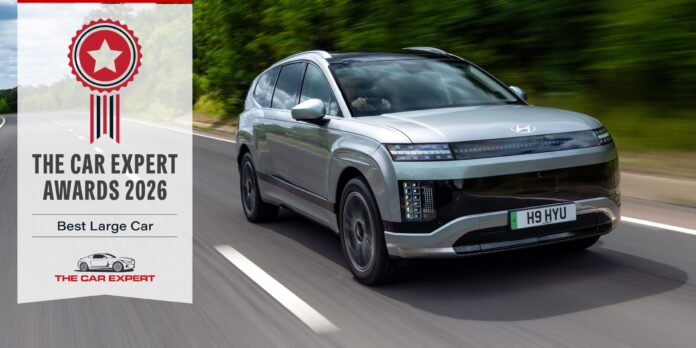
Best Large Car 2026

Best Large Car 2026

The best used family cars for every budget in 2025

The best used family cars for every budget in 2025

High-peformance Kia EV9 GT arriving next year

High-peformance Kia EV9 GT arriving next year

Best Premium Large Car 2025

Best Premium Large Car 2025

Kia EV9 Air test drive

Kia EV9 Air test drive

Electric cars – what’s on sale and what’s coming in 2024?

Electric cars – what’s on sale and what’s coming in 2024?

Kia EV9 test drive

Kia EV9 test drive

Electric Kia EV9 SUV now on sale

Electric Kia EV9 SUV now on sale

Kia unveils all-electric EV9 SUV

Kia unveils all-electric EV9 SUV

Buy a Kia EV9

If you’re looking to buy a new or used Kia EV9, The Car Expert’s partners can help you find the right car.

Motors 600x300

Find your next used car with Motors. Find out more

Auto Trader logo 600x300

Find your next new or used car with Auto Trader. Find out more
Carwow logo 600x300

Find your next new or used car with Carwow. Find out more

Lease a Kia EV9

If you’re looking to lease a new Kia EV9, The Car Expert’s partners can help you find a competitive deal.

Leasing-com logo

Personal contract hire deals from Leasing.com. Find out more

Carwow logo 600x300

Personal contract hire deals from Carwow. Find out more

Select Car Leasing logo

Personal contract hire deals from Select Car Leasing. Find out more

Subscribe to a Kia EV9

Subscriptions are becoming a very popular way for consumers to try an electric car for a few weeks or months to help decide whether it’s a suitable alternative to a petrol car. If you’re interested in a car subscription, The Car Expert’s partners can help. (PS: What’s a car subscription?)

SelfDrive UK logo

Car subscriptions from SelfDrive.
Find out more
Cocoon Vehicles logo 600x300

Car subscriptions from Cocoon.
Find out more

Just Vehicle Solutions logo 600x300

Car subscriptions from Just Vehicle Solutions.
Find out more

Tech upgrades for Volkswagen ID.4 and ID.5

0

Volkswagen has announced that it has made several alterations to its ID.4 SUV and ID.5 coupé-SUV models, including an infotainment upgrade, battery improvements and a new optional sound system.

The mid-sized electric SUV market is incredibly competitive at the moment, and with newer models like the Nissan Ariya, Toyota bZ4X and the updated Audi Q4 e-tron now challenging for EV sales, Volkswagen has given its competing ID.4 and ID.5 model lines a few bits of new tech in the hopes of giving them the edge over their rivals.

To start, Volkswagen says it has improved the battery power and range in both cars, using a new drive unit developed for the larger ID.7 saloon which is now available to order here in the UK. The upgrade means that the ID.4 and ID.5 now have an output of 286hp, and you should feel the difference when you put your foot down, as the brand says that this change adds 75% more torque, jumping from 310 to 545Nm.

Volkswagen adds that the new power unit ups the ID.4’s battery range by an additional 11 miles – now a 337-mile maximum on a single charge. The slightly more aerodynamic ID.5 can muster a reported 339 miles on a full battery – 12 miles more than the pre-facelift version. Charging speeds have also been improved, as new models will be able to charge at up to 175kW, instead of the previous 135kW limit.

The most noticeable change, however, can be found inside – a larger 13-inch infotainment screen in the middle of the dashboard, with illuminated slider controls for cabin temperature. To make room for the larger screen, Volkswagen’s engineers have moved the drive selector onto the steering column, like on the ID.7.

Volkswagen has taken some flack for its infotainment voice assistant feature in the past, and says that this model refresh makes the software respond more precisely to natural voice commands and offers new functions, now allowing you to ask about weather information, sports event scores or stock market prices.

Finally, the brand’s optional ‘Digital Sound Package’ has been replaced by a ten-speaker Harman Kardon sound system which is only available as an optional extra for rear-wheel-drive ‘Pro’ and high-power GTX versions here in the UK. There is a new exterior colour option too – a ‘Costa Azul’ metallic blue.

That sums up this fairly minor model line refresh – prices for the ID.4 now begin at just over £46k, while an entry-level ID.5 model now costs just under £51k new.

The best new cars of the year will be revealed…

0

Trying to pick the best new car of the year causes endless arguments among motoring journalists – every single year. Every automotive title has its own ideas about how such a title should be awarded, based on their own criteria.

Every car reviewer is a human being with their own ideas and their own preferences. Every car review is one person’s (or one group of people’s) opinion of how good or bad a car is. If you’re only relying on one source, you’re not getting the full picture.

Our approach at The Car Expert is simple. Using the power of our exclusive Expert Rating Index, we’ve tracked new car reviews from 35 of the UK’s leading motoring websites over the last 12 months and compiled all of the scores awarded to each new model. All of those scores are fed into our sophisticated algorithm that accounts for the various different scoring system that the different websites and magazines use. And we’ll use that data to produce our awards for the very best new cars you can buy.

There are a couple of changes to this year’s awards worth mentioning. One is that we’ve dropped the Euro NCAP requirement (see below) as not enough cars were tested this year. We’d have preferred not to, but we wouldn’t have had enough cars eligible to make the awards worthwhile.

The second is that we’ve dated the awards to reflect the coming year rather than the year just ending. This caused some internal debate, but ultimately marketing benefits won out over strict technical accuracy…

We’ll be revealing the winners, including our overall Car of the Year 2024 title, at 10am on Monday 4 December.

Best new cars and class champions

The new models certainly grab all of the attention from the motoring media, but that doesn’t necessarily mean that they’re better than what’s already available.

In each of our award categories, we recognise not just the best model launched in the last 12 months but also the top-ranked cars overall. In some cases, a new model has jumped straight to the top of the pile while, in others, an existing car is still top dog.

To help our readers appreciate the relative quality of the best newcomers, we’ve come up with Best New Models and Class Champions for each category. And, recognising the rapid growth of electric cars against the decline of petrol and diesel versions, we have separate class champion recognition for the very best electric and internal combustion cars.

Eligibility

A new model is a car that has arrived in the UK in the last 12 months – which means cars on the road and registered, not just announced or available to order but arriving sometime next year. You should be able to pop down to your local dealer and see any of our award winners in the metal – and buy on one the spot.

In previous years, we have insisted that all winners must have a current, valid Euro NCAP safety rating of at least four stars. Unfortunately, we’ve had to remove that requirement for this year because there simply haven’t been enough new cars rated by Euro NCAP by the time our entries closed.

Last year, the safety organisation tested 66 different new cars. This year, it’s only six (although another six or so will be tested after our deadline has passed). That means that most of the new cars launched this year would be ineligible.

A few cars were ineligible last year because they hadn’t been tested, but have since received a complying Euro NCAP score so they included in this year’s awards. Assuming that there are a suitable number of ratings published next year by Euro NCAP, we anticipate this requirement will return for next year’s awards.

The class of 2023

Here, in alphabetical order, are the cars that are eligible for The Car Expert Awards 2024. An asterisk denotes a car that was launched in 2022 but only received a Euro NCAP score in 2023, so it was ineligible for last year’s awards.

The awards will be announced at 10am on Monday 4 December, so check back for all the winners!

A look back at last year’s results

Mazda MX-30 R-EV test drive

0

Make and model: Mazda MX-30 R-EV
Description: Range-extender version of Mazda’s first electric SUV
Price range: £31,250 – £35,550

Mazda says: “The perfect solution for customers who want an electric car for everyday use but the flexibility to undertake longer journeys without reliance on charging infrastructure.”

We say: Looks good and is fun to drive, but removing range anxiety brings other compromises. A car of limited appeal.


Introduction

Mazda launched its first electric vehicle, the MX-30 SUV, in 2020 and as is typical of this brand went a different route to everyone else, targeting light weight and a better driving experience over outright range.

Generally the car has been well received, holding an Expert Rating of 61% as of November 2023, but the most significant criticism has been its poor battery range. Mazda says 124 miles is more than adequate for most buyers who won’t travel any further on a daily basis.

Potential customers, however, seem to have disagreed and the MX-30 is a rare sight on UK streets. Now, however the brand has provided another answer for critics of its range, by adding a petrol engine to its electric vehicle! 

What’s new about this car?

This new variant of the Mazda MX-30 has only one new feature to speak of, but it’s a very significant one. The R-EV is not a purely battery-powered electric vehicle but a form of plug-in hybrid with a petrol engine added to the car. The ‘R’ in the title stands for Range Extender, and we explain what that means in more detail further below.

It’s still an electric vehicle in principle, since only the electric motor is used to drive the wheels. The petrol engine (and it’s no ordinary petrol engine) works as a generator to charge the battery when it runs out of electricity. This boosts the car’s potential driving range to nearly 400 miles.

How does it look?

The MX-30 scores in the visual stakes, with a coupe-like profile that is very far removed from a typical somewhat boxy SUV. All part, so we’re told, of creating a look that reinforces the fun-to-drive aspect. It’s even more aggressively raked than most so-called ‘coupé SUVs’, which is what the car’s designers were aiming for.

The biggest visual feature is the combination of a lack of central pillars and a pair of rear-hinged doors for back-seat passengers. That helps with the sleek looks, but it significantly impacts on the MX-30’s practicality as a family car.

You can’t open the rear doors without opening the fronts first, which will be endlessly irritating for owners who regularly have passengers jumping in and out of the rear seats. The rear-hinging design should mean very easy entry and exit of the car when the doors are open, but it doesn’t quite work out that way in practice.

We like: One of the sleekest looking SUVs around
We don’t like: Rear-hinged doors that can’t open before fronts

What are the specs like?

In terms of specification, the RE-V version of the Mazda MX-30 almost entirely replicates that of the all-electric models. So there are three trim levels, but they have been given snappy new names which the pure EV range has also adopted.

Now we have Prime-Line, Exclusive Line and Makoto – there was a limited edition launch model called Edition R but this sold out soon after it was announced. There’s no price penalty between BE-V or R-EV – both start at just over £31K, though unless you choose a white car you’ll be paying between £550 and £1,800 for one of the six exterior paint options.

Mazda has always been known for extensive standard equipment and all models include items formerly regarded as upper-level desirables, such as adaptive cruise control and a head-up display. Front and rear parking sensors and a reversing camera are fitted to all versions, as are navigation, Apple CarPlay and Android Auto smartphone capability and an extensive selection of active safety aids. These earned the MX-30 a five-star Euro NCAP safety rating when it was tested in 2020, a score which has been extended to the new R-EV version as well.

Exclusive-Line adds £1,900 to the cost and this pays for posher alloys and exterior detailing, heated front seats and power adjustment in multiple directions on the driver’s, and smart keyless entry.

Finally there is the top-level Makoto, costing from £35.5K and gaining a powered tilting and sliding sunroof, 360-degree view monitor, an uprated Bose sound system with 12 speakers, de-icing on the wipers and heating on the steering wheel, and additional active safety aids.

There is one additional and useful feature on the Makoto that the all-electric versions don’t have ­– ‘Vehicle to Load’. A three-pin plug socket is fitted allowing one to use the car’s battery energy to power a separate electric appliance, such as a lighting system or cooker whilst camping. If the battery becomes depleted while in use for this, the engine will cut in to recharge it just as it does when on the road. 

We like: Amount of equipment including strong safety package
We don’t like: Very limited body colour choice without paying more

What’s it like inside?

The MX-30 recalls Mazda’s RX-8 sports car made between 2002 and 2012 in the form of its rear-hinged back doors and lack of central pillar. Previous cars built this way have emphasised the way they open up the entire side of the car making it very easy to get in and out.

Sadly this is not the case for rear-seat passengers in the MX-30. Tall people will struggle to get in and, once installed, find themselves with not much room (also much like the RX-8!). It’s not very bright either, thanks to the small coupe-style windows, unless you go for the top-spec Makato model with its standard-fit sunroof.

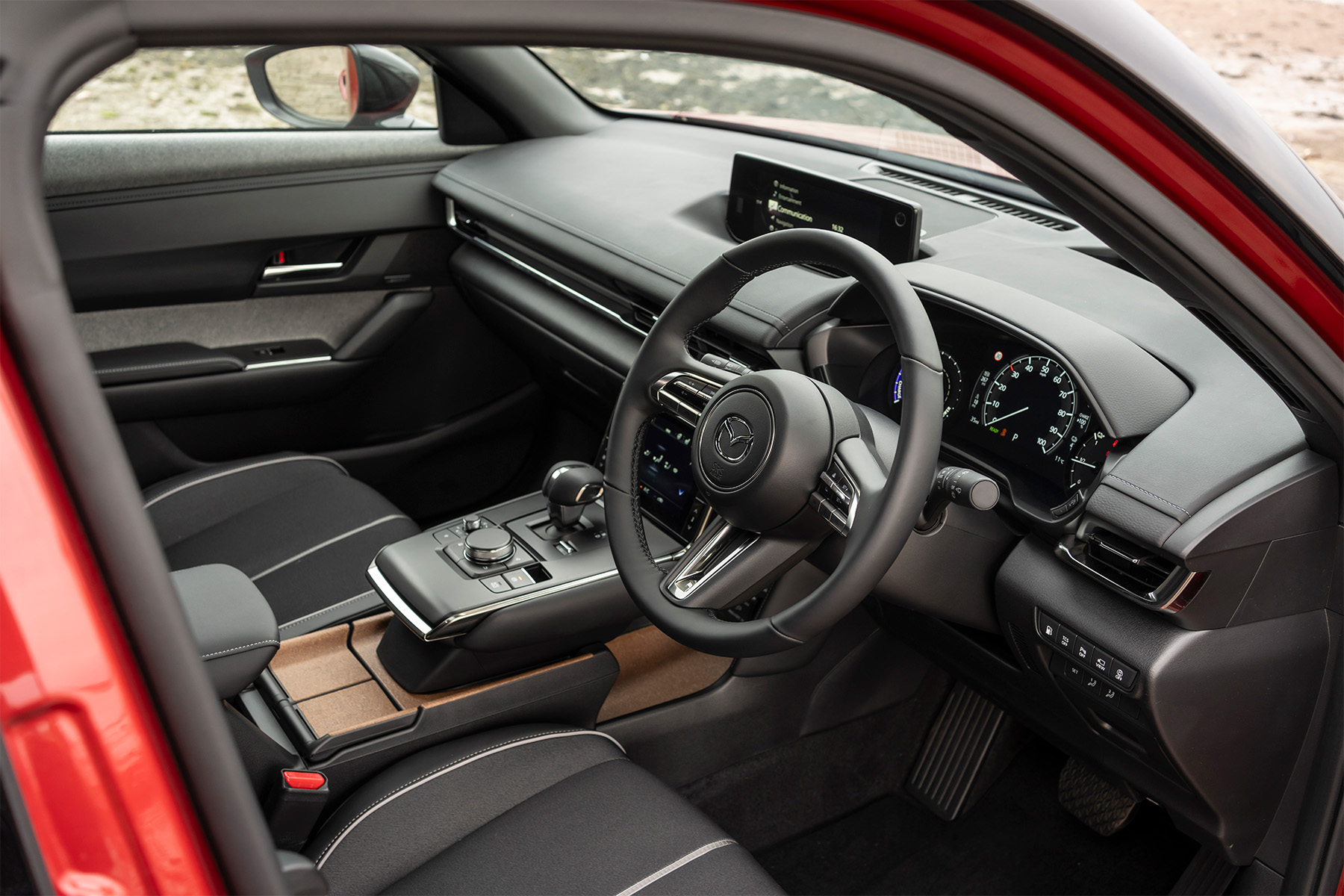
The front half of the cabin is far more spacious, and the driver will appreciate the sensible layout of the controls and the high-mounted sat-nav screen atop the centre console.

The eco-friendly talking points debuted with the B-EV continue in the new model, including realistic looking artificial leathers and cork trim made out of the waste from bottle-stopper production, recalling Mazda’s earliest days as a cork manufacturer. Mind you, some of the finishes are slightly odd in colour – one appearing a bit like a rust shade – but generally the cabin feels of high quality.

Boot space also takes a hit from the addition of a petrol engine, down to 350 litres (compared to 366 litres in the electric-only MX-30). Other small SUVs offer more.

We like: Quality of fit and finish
We don’t like: Cramped rear seat space, reduced boot space

Under the bonnet

First a quick recap – Mazda justified the limited 124-mile range between charges of the full-electric MX-30 by arguing that few people travel a long way on a daily basis. Therefore a more responsive EV with particularly a lighter battery (the MX-30’s battery pack is claimed to be about half the weight of a typical EV’s) will be much more fun to drive and use much lower amounts of rare-earth minerals in its construction.

This view attracted some criticism, which appeared to wash over the designers who responded that the MX-30 is not a car for everyone. But now we have this new plug-in hybrid version, adding a small petrol engine which is only present to generate energy for the battery when needed – said engine has no connection with the wheels.

As you might expect with Mazda, the combustion element is anything but ordinary. Instead it marks the return of the rotary engine technology that the Japanese brand has persisted with for many years – and another connection between the MX-30 and the RX-8 sports car.

Rotary engines are very different beasts to typical petrol units, being naturally small (this one is just 0.8 litres, which is about half the capacity of a conventional engine), light in weight and exceptionally smooth in operation – ideal for this application.

This energy generation is vital as the battery range of the R-EV drops from the 124 miles of the all-electric model to just 53 miles, basically because the battery is much smaller again. This means the MX-30 R-EV is much more like a plug-in hybrid car, even though the mechanics under the bonnet work quite differently.

That range might not sound a lot at all, but again for many owners commuting daily to their place of work and charging overnight it will be perfectly adequate, with the internal combustion backup there if a sudden dash across half the country is required or desired. Mazda’s own research suggests the daily mileage clocked up by users of their cars averages out at around 26 miles a day, while government figures quote average distances travelled of 100 miles a week.

The R-EV also offers a range of driving modes – ‘normal’ sees the car running on electric power until the battery charge drops under a percentage that the driver can set (anything from 20 to 100% charged), at which point the engine will wake up and start recharging.

In ‘Charge’ mode the engine will be alive all the time charging the battery, for such occasions when one needs the car to be electric only, when it can be switched to EV mode. The system is clever too – for example, accelerate hard and the engine will immediately cut in to aid battery power and maintain the swift pace. 

One other positive of having a very small battery is that it takes less time to charge. A typical 7kW home charger will provide a full refill in under two hours, while an 11kW charger takes 50 minutes. Unlike many plug-in hybrids, the R-EV also offers DC rapid charging capability, a 36kW charger taking the battery from 20 to 80% in 25 minutes, or in other words a coffee stop…

How does it drive?

When we drove the all-electric MX-30 back in 2021, we were impressed by its driving performance, Mazda’s ‘light weight means better handling’ claim being completely borne out – it felt swift despite a ten-second 0-62mph time, and boasted excellent handling with progress along twisty country roads more akin to a sporty saloon than SUV.

The R-EV does everything its all-electric sister does, just a little bit more rapidly, cutting just over half a second off the 62mph sprint. It retains the cornering prowess, helped by the fact that both versions use the latest version of Mazda’s electronic chassis assistant, which can moves the grip bias from front to rear to better control the G-forces.

Just like the battery variant, the R-EV offers an extensive regenerative braking function, which the driver can adjust using using paddles behind the steering wheel.

There is one major oddity when driving this car, however, the point where the engine wakes up to do its thing. The cut-in is so smooth you don’t feel it, but you do then become aware of a low but mildly irritating constant buzz – because the rotary unit is not connected to the wheels and therefore does not vary in its load, the note never changes…

One more thing – it’s important to plug the R-EV in whenever possible, rather than simply using the engine. Do the latter and, on the evidence of our test drive, you’re looking at fuel economy of less than 40mpg, which is worse than most petrol-powered small SUVs.

We like: Drive modes that make most efficient use of electric power and energy recovery
We don’t like: Sound of the range-extender, a not too loud but annoying constant buzz

Verdict

Mazda does not expect the R-EV to take that big a slice of MX-30 sales. The car is a somewhat niche model anyway and the brand insists that, for most owners, the full electric version’s modest range will still be more than sufficient for day-to-day use.

So this is a newcomer for a very specialist audience – those who like the different way that Mazda goes about doing EVs, but who need to travel longer distances on occasion. If this sounds like you, and you don’t need to carry passengers in the back very often, then the MX-30 R-EV could be worth a look.

MX-30 R-EV highlights

  • Range-extender engine removes any range anxiety
  • Looks sporty for an SUV
  • Quality build
  • Versatile options for charging and using electric power

MX-30 R-EV lowlights

  • Cramped rear space
  • Rear doors can’t be opened without fronts
  • Adding engine cuts electric-only range in half
  • Engine note not the best

Similar cars

Citroën ë-C4 | DS 3 Crossback E-Tense | Hyundai Kona Electric | Kia Niro EV | Kia Soul EV | Mini Countryman plug-in hybrid | MG ZS EV | Nissan Leaf | Peugeot e-2008 | Vauxhall Mokka-e | Volkswagen ID.3 | Volvo XC40 Recharge

Key specifications

Model tested: Mazda MX30 RE-V Makoto
Price (as tested): £37,700
Powertrain: Single electric motor plus petrol generator
Battery:
18 kWh

Power: 170 hp
Torque: 260 Nm
Top speed: 87 mph
Acceleration (0-62mph): 9.1 seconds

Range: 53 miles (battery); 282 miles (petrol back-up)
CO2 emissions: 21 g/km
Euro NCAP rating: Five stars (November 2020)
TCE Expert Rating: Not yet rated (November 2023)

Buy a Mazda MX-30 R-EV

If you’re looking to buy a new or used Mazda MX-30, The Car Expert’s partners can help you find the right car

Carwow logo 600x300

Discover great deals available on both new and used cars. Find out more

Auto Trader logo 600x300

Search for your next new or used car with Auto Trader. Find out more

Cazoo 600x300

Buy a car online from your sofa. We’ll deliver it. Find out more

Motors 600x300

Search less, live more. We make finding the right car simple. Find out more

Lease a Mazda MX-30 R-EV

If you’re looking to lease a new Mazda MX-30, The Car Expert’s partners can help you find a competitive deal

Carparison 600x300

Personal contract hire deals from Carparison Leasing. Find out more

Hippo Leasing 600x300

Personal contract hire deals from Hippo Leasing. Find out more
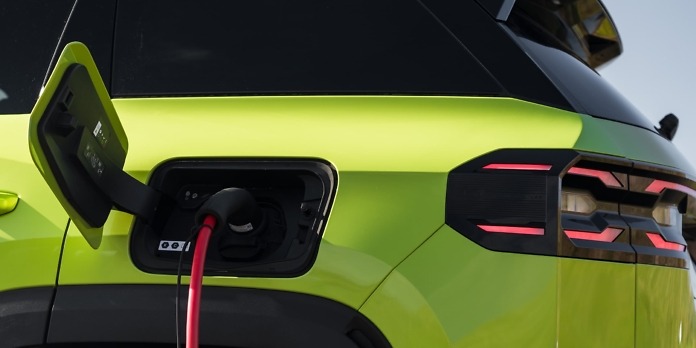
LeaseLoco logo 600x300

Personal contract hire deals from LeaseLoco. Find out more

Rivervale Leasing logo 2022

Personal contract hire deals from Rivervale Leasing. Find out more

Subscribe to a Mazda MX-30 R-EV

Subscriptions are becoming a very popular way for consumers to try an electric car for a few weeks or months to help decide whether it’s a suitable alternative to a petrol car. If you’re interested in a car subscription, The Car Expert’s partners can help. (PS: What’s a car subscription?)

Mycardirect subscriptions – 600x300

Car subscriptions from Mycardirect.
Find out more

Wagonex logo 2022

Car subscriptions from Wagonex.
Find out more

Cocoon Vehicles logo 600x300

Car subscriptions from Cocoon.
Find out more

Drive Fuze logo 600x300

Car subscriptions from Drive Fuze.
Find out more

Who or what is Aiways?

How long does it take to set up a car manufacturer? Just five years it seems, if you are Aiways, one of the youngest of the ever-expanding list of Chinese brands setting their sights on UK sales.

This is a brand that no UK buyer is likely to have heard of, partly because despite having sold cars in Europe for a couple of years, it’s not planning to put its first product on British roads until late 2023. But it’s also a maker to take note of, particularly the fact that like Chinese rival BYD, Aiways makes its own batteries, and to a patent design.

The company name might raise some eyebrows too, with all the adverse publicity circulating about AI at present, but this is nothing to do with Artificial Intelligence. In Chinese, ‘Ai’ means ‘love’, and the brand’s name is supposed to signify that ‘love is on the way’…

So who or what is Aiways?

Two entrepreneurs, one of them formerly a sales head of Volvo cars in China, founded Aiways in China in 2017. And they did not hang about – this manufacturer has very firm ambitions of joining the global set by “making electric mobility accessible”. In the five years since launch Aiways has built a production plant that can now turn out 300,000 vehicles a year, a research and development centre and a separate factory which produces its own bespoke-design batteries.

Aiways made its European debut in 2019 at the Geneva motor show ahead of expansion into Europe – the company has made one attempt already to launch in the UK, but the Covid pandemic forced it to reset and go again.

When will Aiways launch in the UK?

It’s supposed to happen before the end of 2023, though details of exactly when and how are currently not being released. Given that we’re rapidly running out of days until the end of the year, it’s likely to be 2024 before you see any Aiways cars on UK roads.

Aiways already sells cars in 14 European countries, including France, Germany and Italy, as well as Israel and its home market of China. UK sales won’t be far away – some leasing providers in the British market are already adding the Aiways U5 SUV to their lists.

What models does Aiways have and what else is coming?

The Aiways launch model, and the one leading its expansion into the UK, is a compact crossover simply called the U5 – no quirky model names name-checking disco-loving felines or sea creatures from this brand.

First seen in Europe at the 2019 Geneva motor show, the U5 is powered by a 63kWh battery and offers a range of around 250 miles. Aiways claims that the car is a clean-sheet design, reflecting nothing that has gone before, and the few European testers who have tried it have been impressed by the amount of interior space, particularly legroom. That’s especially for front-seat passengers – Aiways doesn’t feel the need to include a glovebox though a case that clips into the gap in the fascia is on the options list.  Generally the U5 has been compared to crossovers produced by fellow Chinese brand MG.

Also coming is a sharper-styled more coupe-like SUV called the – you guessed it, U6. This has a rather more fashion-led interior design and has attracted some initial praise from reviewers.

Where can I try a Aiways car?

We don’t know yet, because Aiways hasn’t given details of how it intends to sell its cars in the UK market beyond its sales boss suggesting the brand will work “with an established importer”.

If this happens, it will be a somewhat more normal way of doing things compared to Germany where the brand has chosen to have its cars sold by Euronics, the electronics and white goods retailer – fancy going out to buy a washing machine and a new car from the same shop?

What’s particularly significant about this company?

Aiways is one of very few EV manufacturers that makes its own batteries, and this is another brand with its own patent design of battery pack. The packs consist of 24 high-density cells in a sandwich arrangement, separating the wet and dry-cell parts of each battery. This is claimed to be a much safer design, minimising the likelihood of coolant leakage and a resultant fire.

Summary

Predicting how well Aiways will do in an increasingly congested UK market is almost impossible as there are so many questions still to be answered about this precocious youngster of a brand. But it is clear that Aiways is not ‘just another Chinese brand’, its cars displaying novel elements that are also practical, such as the way interior space is freed up (who really keeps anything useful in a glovebox?).

The brand scores on technology too, particularly with its patent in-house battery pack which will also help keep customer delivery times short.  Aiways is definitely a manufacturer to watch.

You may also like:

Volvo XC60 Black Edition now on sale

0

Volvo has expanded its mid-sized XC60 trim line-up with the addition of the ‘Black Edition’ optional package, which changes the SUV’s looks, inside and out.

Rather than being a free-standing trim choice of its own, the ‘Black Edition’ is an optional extra that can be combined with either the mid-range ‘Plus’ or top-spec ‘Ultimate’ trim grades. As you might have guessed, this package finishes the car in black – this optional extra is strictly cosmetic.

In addition to painting the exterior in what the brand calls ‘Onyx Black’, the car’s logo emblems and model lettering are also finished in black, as are the 21-inch alloy wheels. This theme continues inside, with a charcoal-coloured headliner and seating finished in the same shade. Volvo offers two ventilated upholstery options – a partial Nappa leather and textile combo, or full Nappa leather.

Provided you opt for the two top trims, the ‘Black Edition’ trim can be specced with one of three powertrains – a mild-hybrid petrol and two petrol-electric plug-in hybrids.

On sale now, prices for the Volvo XC60 Black Edition start just north of £54k for the ‘Plus’ grade. Volvo adds that there are savings for buyers who order before 27th November, which knocks around £2k off that lead-in price.

The Volvo XC60 currently holds an Expert Rating of 75%, and has been particularly praised for its exterior and interior design, class-leading safety standards and comfort. However, its driving experience is not considered as enjoyable as some rivals.

New high-power MINI JCW Countryman revealed

0

Mini has revealed its next iteration of its John Cooper Works Countryman ‘hot SUV’, with a more powerful petrol engine, fresh exterior looks based on the new third-generation Countryman range, and an interior overhaul with a larger infotainment screen.

Designed by Mini’s performance-focused John Cooper Works sub-division, this model is the high-power variant of the latest Countryman SUV that was shown off at the Munich motor show in September.

Instead of the 2.0-litre 230hp petrol unit that powers the current JCW Countryman, Mini has decided to opt for a more powerful 2.0-litre engine for this next-generation model, which provides 300hp. This performance boost impacts the 0-62mph sprint time, which decreases from 6.5 seconds to 5.4 seconds.

As you would expect, the JCW has the same broad design strokes and silhouette as the standard Countryman, but with a slightly sportier exterior finish that Mini managing director Stefanie Wurst says exudes “a unique combination of style, power and a sense of adventure.”

In typical JCW style, the model features plenty of red accents, most prominently on the roof, wing mirrors and front bumper air intakes, and the standard model’s dashed grille design is replaced by a chequered pattern finished in matte back to match the bodywork.

Those that eventually take the model for a test drive will also notice that the car is not so ‘mini’ anymore either, as it is six centimetres taller and 13 centimetres longer than its predecessor, which should increase shoulder room and legroom in the cabin. The car sits on 19-inch alloy wheels as standard, but 20-inch alloys are also available.

Only available as an all-wheel drive automatic, Mini says it has focused on giving the JCW Countryman the “go-kart feeling” that has become synonymous with the smaller Mini hatch. The tyre width has been increased by 25 centimetres, presumably to improve traction in high-speed corners, and the car boosts the sound of the engine in the cabin to “enhance the emotional driving experience.”

Like the standard countryman, Mini has given the JCW a new minimalist interior design with a large circular OLED display in the centre of a recycled polyester dashboard.

This screen is customisable, with different display modes to choose from including a ‘personal mode’ which allows you to pick any picture to use as the screen’s background, and the optional projector hidden behind the screen will then pick out the dominant colours and display them across the knitted dash and door panels.

The car’s voice assistant can be used to operate numerous functions, such as navigation, telephone, and entertainment. The boot offers 460 litres of luggage space, which increases to 1,450 litres with the rear seats folded down.

Now on to assistance tech – Mini says that this ‘hot SUV’ comes with 12 sensors and four surround-view cameras that support several driver assistance systems, including blind spot monitoring and a cross-traffic alert, as well as a partially automated driving function that is included in the optional ‘driving assistant professional’ package, that allows the driver to take their hands off the steering wheel on “highway-like routes” at speeds of up to 37mph.

That sums up what we know about the new Mini John Cooper Works Countryman. The manufacturer is yet to announce exactly when the model will become available to order, and further details like UK pricing and full specifications list will be announced in the coming months. Check back soon!

Volkswagen ID.7 now available to order

0

Set to challenge the sales of the BMW i5, Tesla Model 3 and Hyundai Ioniq 6, the new Volkswagen ID.7 saloon is now available to order in the UK in ‘Pro Launch Edition’ guise.

This all-electric model will eventually replace the Arteon saloon and Passat estate in Volkswagen’s range, as a ID.7 Tourer estate variant is also planned. For now, the saloon is available to order only in one introductory 286hp ‘Pro Launch Edition’ trim, which is powered by a 77kWh battery and can reportedly muster a 384-mile range.

A more powerful variant is also on the way next year, the ID.7 ‘Pro S’, which is projected to have a range of about 430 miles thanks to its larger 82kWh battery.

Volkswagen says it has maximised interior space by opting for short overhangs and a long wheelbase. LED lights feature in the front and back, and the car sits on 19-inch alloy wheels. The side and rear windows are made of heat-insulating glass, and the heated wing mirrors are electronically adjustable too.

Inside, the ID.7 introduces Volkswagen’s new “Ready 2 Discover” 15-inch infotainment display, complete with freely assignable favourites buttons and – in response to feedback from customers – illuminated sliders to control cabin temperature. It also comes with the brand’s navigation software installed.

Wireless smartphone charging is included, as is a voice assistant for controlling the phone call and navigation system. This voice assistant can also open the panoramic sunroof, which can be switched between opaque and transparent.

The steering wheel is heated and wrapped in leather, while the heated power-adjustable seating is trimmed in a mircofleece fabric. Ambient cabin lighting, keyless start and entry, three-zone climate control and an auto-dimming rear-view mirror also come as standard.

Pricing for the new electric saloon now starts at under £56k. Customers that order an ID.7 by 2nd January 2024 can get a free Ohme wall charger, or £750 in charging credit from We Charge by Elli – a public charging network owned by Volkswagen.

Pricing announced for new Mercedes-Benz CLE Coupé

0

Mercedes-Benz has announced the pricing for hard-top coupé versions of its new CLE, which is now on sale in the UK. Cabriolet versions are set to arrive in the new year.

The ‘CLE’ nameplate is new. Previously, Mercedes-Benz offered its C-Class and E-Class models in saloon, estate, coupé and cabriolet body styles. The introduction of the CLE range slims down this wide range of models, as Mercedes-Benz ramps up its investment in its all-electric EQ range of cars.

The spiritual successor to the Mercedes-Benz CLK models that were removed from production back in 2010, the CLE replaces the coupé and cabriolet models in the C-Class and E-Class model lines, which are being retired.

The new range is based on the same foundations as the C-Class, and will no doubt be one of the German brand’s last combustion-powered models to debut in the UK. The 2+2 seater CLE is close to 4.9 metres in length, making it longer than the large E-Class coupé and its closest rival, the BMW 4 Series Coupé.

Four trims are on offer, starting with the entry-level ‘AMG Line’ trim. Mercedes’ trim names are a bit confusing – this trim and the grades above aren’t high-power ‘AMG’ versions, this is simply what the brand decided to name these trim grades. Mercedes’ MBUX software setup comes as standard, pairing a 12-inch digital instrument cluster behind the steering wheel with a 12-inch infotainment display on the dashboard.

The lead-in model also comes with ambient lighting and a leather-wrapped steering wheel, as well as several safety tech features such as blind spot monitoring, traffic sign recognition and a reversing camera for parking scenarios.

The ‘AMG Line Premium’ upgrades the car’s LED headlights with the brand’s ‘adaptive high-beam assistance’ tech, and gives the CLE a surround-view parking camera and a panoramic roof. Now reaching towards the top of the range, the ‘AMG Line Premium Plus’ introduces head-up display software which projects driving information onto the lower windscreen, and comes with a higher-quality Burmester speaker system that uses Dolby Atmos.

Key trim level features

Entry-level ‘AMG Line’ (from £46,605)

  • 12-inch infotainment display
  • 12-inch digital instrument cluster
  • Voice assistant
  • Wireless smartphone compatibility
  • 18-inch alloy wheels
  • Automatic climate control
  • LED headlights
  • Nappa leather steering wheel
  • Ambient lighting
  • Blind spot assistance
  • Traffic sign recognition
  • Reversing parking camera

‘AMG Line Premium’ (from £50,355)

  • All ‘AMG Line’ features that are not replaced
  • 19-inch alloy wheels
  • Adaptive LED headlights
  • Keyless start and entry
  • 360-degree parking camera
  • Panoramic sliding roof

‘AMG Line Premium Plus’ (from £54,355)

  • All lower trim features that are not replaced
  • 20-inch alloy wheels
  • Head-up display
  • 17-speaker Burmester sound system

Top-spec ‘Premier Edition’ (from £56,855)

  • All lower trim features that are not replaced
  • 20-inch alloy wheels in black
  • Heated steering wheel
  • Nappa leather upholstery

Finally, the range-topping ‘Premier Edition’ will include all of the prior features, but with a more plush interior, including a heated steering wheel and Nappa leather upholstery.

Buyers who opt for either of the top two trims will be offered the optional ‘driving assistance package plus’ bundle. This includes more intelligent speed limiter tech, evasive steering assistance, and active lane change assistance.

Four different powertrain options are available, including both rear-wheel drive and all-wheel drive configurations, and all come with 48V of mild-hybrid assistance and a nine-speed automatic gearbox.

The range begins with the petrol-powered CLE 200 which makes use of a 198hp 2.0-litre engine. This is followed by the CLE 200d – a 191hp 2.0-litre diesel powertrain. These two are the only other rear-wheel drive choices.

The more expensive two are four-wheel drive. The CLE 300 4MATIC uses the same 2.0-litre petrol engine as the 200, but the 300’s output is boosted to 252hp. Finally, the range-topping engine belongs to the CLE 450 4MATIC – a 381hp 3.0-litre straight-six petrol engine capable of accelerating from 0-62mph in 4.4 seconds, around three seconds faster than the standard model.

Now available, prices for the CLE range start at under £47k, rising to £73k for the CLE 450 4MATIC in ‘Premier Edition’ guise.

Another flat month for consumer new car sales in October

Private new car sales continued to struggle in October, a scant 0.3% up on the same month last year, according to latest data published this morning by the Society of Motor Manufacturers and Traders (SMMT).

As cost-of-living pressures and high interest rates continue to squeeze household budgets, consumer new car spending is failing to keep pace with the growth in fleet purchasing. While private new car sales were flat in October, fleet registrations were up by 29%, meaning that the overall new car market was up by 14% on the same month last year.

October is a month that has fluctuated significantly over the last five years, and this year’s overall result is the best since 2017 – well before the Covid-19 pandemic. And that’s despite zero growth in private new car sales, which shows just how strong fleet sales were last month.

New car registrations by buyer type – October

BuyerOctober 2023October 2022% changeMarket share 2023Market share 2022
Private62,91562,7380.3%41.0%46.7%
Fleet87,47967,91128.8%57.0%50.6%
Business3,1353,695-15.2%2.0%2.8%
Total153,529134,34414.3%
Source: SMMT

Year to date

BuyerYTD 2023YTD 2022% changeMarket share 2023Market share 2022
Private713,301701,8051.6%44.4%52.3%
Fleet854,372606,95240.8%53.2%45.4%
Business37,76433,95511.2%2.4%2.5%
Total1,605,4371,342,71219.6%
Source: SMMT

Consumers still avoiding new EVs

On the surface, it looked like a good month for electric cars, with sales up by 20% over the same month last year. But market share of less than 16% is lower than the year-to-date average, causing headaches for the car industry. Starting in January, they have to sell at least 22% EVs, which means a 40% increase on October’s market share.

The SMMT claims that less than 25% of EV sales this year have been to private buyers. Some quick maths based on the published numbers suggests that this equates to only about 9% of consumers who have bought EVs this year. For fleet buyers, it’s a very different story. Based on fleet customers making up at least 75% of EV sales, that puts EV market share at more than 23% for fleets – already exceeding next year’s targets.

So if car companies want to hit their mandated EV targets for 2024, it’s clear that they need to convince a lot more consumers to switch to electric power.

In the meantime, plug-in hybrid sales continue to creep upwards, a trend that has been developing over the last few months. Whether or not this is from people moving away from diesel (large SUVs are a good example, where there are few EV options but quite a few plug-in hybrids), or from people who are hesitant about going all-in on a switch from petrol to electric power, remains to be seen.

New car registrations by fuel type – October

FuelOctober 2023October 2022% changeMarket share 2023Market share 2022
Petrol*84,45177,9868.3%55.0%58.0%
Electric23,94319,93320.1%15.6%14.8%
Hybrid19,57415,71224.6%12.7%11.7%
Plug-in hybrid14,2858,90060.5%9.3%6.6%
Diesel*11,27611,813-4.5%7.3%8.9%
Total153,529134,34414.3%

*includes mild hybrids
Source: SMMT

New car registrations by fuel type – Year to date

FuelYTD 2023YTD 2022% changeMarket share 2023Market share 2022
Petrol*905,331771,27117.4%56.4%57.4%
Electric262,487195,54734.2%16.3%14.6%
Hybrid202,130158,13927.8%12.6%11.8%
Diesel*122,211134,894-9.4%7.6%10.0%
Plug-in hybrid113,27882,86136.7%7.1%6.2%
Total1,605,4371,342,71219.6%

*includes mild hybrids
Source: SMMT

Good month, bad month

Despite overall market growth of more than 14%, it wasn’t champagne and caviars for car companies in October. Some brands saw significantly less growth than the market average, while others saw sales fall dramatically.

In terms of good news, it was a strong month for Cupra, Genesis, GWM Ora, Jaguar, Jeep, Land Rover, Lexus, Maserati, MG, Peugeot, Porsche, Renault, SEAT, Skoda, Smart, Suzuki, Tesla and Volvo. All of these brands overachieved against the overall market by at least 10%.

Not so happy, however, were Abarth, Bentley, Citroën, Dacia, DS Automobiles, Fiat, Ford, Honda, Mazda, Mercedes-Benz, Nissan, Polestar, SsangYong, Subaru, Toyota and Volkswagen. All of these companies underachieved against the overall market by at least 10% (which means growth of less than 4% and, in some cases, significant falls)

That means that the following brands were more or less where we expected them to be in October: Alfa Romeo, Alpine, Audi, BMW, Hyundai, Kia, Mini and Vauxhall.

In absolute terms, Tesla had the largest growth. This October, it registered nearly 2,700 new cars. Last October, it registered 11. No, that’s not a typo.

At the other end of the scale, Fiat registered nearly 1,500 fewer cars this October than it did last year – a fall of 57% in a market that was up 14%.

In overall sales, Volkswagen continued to lead the market, just ahead of sister brand Audi. Ford placed third, ahead of BMW and Vauxhall.

October

RankBrandRegistrationsMarket share
1Volkswagen13,0588.5%
2Audi12,5988.2%
3Ford12,1197.9%
4BMW11,1887.3%
5Vauxhall9,2666.0%
6Toyota8,6165.6%
7Peugeot7,1064.6%
8Kia6,8314.5%
9Hyundai6,1564.0%
10MG6,0794.0%

Source: SMMT

Year to date

RankBrandRegistrationsMarket share
1Volkswagen136,3918.5%
2Ford123,8947.7%
3Audi116,6667.3%
4Kia96,7846.0%
5Toyota93,6395.8%
6BMW89,4035.6%
7Vauxhall85,2195.3%
8Hyundai75,4564.7%
9Nissan74,5924.7%
10Mercedes-Benz72,8014.5%

Source: SMMT

Ford Puma locks in sales crown with another month on top

With just two months to run until the end of 2023, the Ford Puma has opened up a commanding lead at the top of the sales charts. Last year’s (and last month’s) best-selling new car, the Nissan Qashqai, had a slow month in October and didn’t even make the top ten.

In fact, the race for second place is very close between the Qashqai and the Vauxhall Corsa, while the Kia Sportage overtook the Tesla Model Y for fourth place. And on a sad final note, the now-discontinued Ford Fiesta has finally slipped off the bottom of the top ten sales charts forever, with the Audi A3 now in tenth place after a strong performance in October.

We’ll have our usual monthly analysis of the top ten tomorrow.

October

RankBrandRegistrations
1Ford Puma4,824
2Mini hatch3,779
3Vauxhall Corsa3,464
4Volkswagen Polo3,426
5BMW 1 Series3,424
6Kia Sportage3,422
7Peugeot 20083,145
8Audi A33,012
9Ford Kuga2,948
10Volvo XC402,577

Source: SMMT

Year to date

RankBrandRegistrations
1Ford Puma42,136
2Nissan Qashqai34,952
3Vauxhall Corsa33,641
4Kia Sportage31,575
5Tesla Model Y30,087
6Hyundai Tucson29,990
7Nissan Juke27,253
8Mini hatch26,249
9Vauxhall Mokka25,471
10Audi A325,452

Source: SMMT

BYD Dolphin test drive

0

Make and model: BYD Atto 3
Description: Mid-sized hatch – new-to-UK brand’s second offering
Price range: £26,195 – £31,695

BYD says: “The BYD Atto 3 combines modern aesthetics with exceptional intelligence and efficiency derived from pioneering electric vehicle technology and smart connectivity.”

We say: Competently styled, with lots of equipment and affordable, the BYD Dolphin is certainly worthy of consideration by the EV family hatch buyer.


Introduction

You cannot fault the pace of BYD Auto – the Chinese brand launched itself onto the UK market with its Atto 3 SUV in mid 2023, and a second model has arrived only a couple of months on in the form of the Dolphin, a mid-sized electric hatchback.

A larger saloon model, called the Seal, will be in showrooms before the end of 2023 and boasts a sub-four-second 0-62mph time. Meanwhile an aggressive dealer growth programme has already included the opening of a showroom in London’s Berkeley Square amongst the likes of Bentley, Ferrari and Rolls-Royce, and will see the brand’s outlets increase from the current single figures to 100 by the end of 2024 – clearly, BYD is very serious about making its mark in the UK.

What is it?

The Dolphin is part of BYD’s ‘Ocean Series’, and one of some 19 different models the brand offers in its home market of China. As we detailed in our feature on the brand, BYD Auto might not be well known to UK car buyers but the company is big globally, having sold more than five million EVs. It’s even bigger in batteries – half the world’s iPad batteries are made by BYD and it supplies the batteries for one in five smartphones.

The Dolphin is a mid-sized hatchback and as such will be aiming to take customers from the likes of fellow Chinese contender the highly-regarded MG 4, but also other mainstream EVs –it offers the interior space of a Volkswagen ID.3 in a car that is more Peugeot e-208 sized. The newcomer will eventually be available in four trim levels and two battery sizes – once the entry-level versions join the range in 2024 prices will start from a highly affordable £26,195.

How does it look?

The BYD Dolphin strikes a satisfactory pose – basically, it looks a lot like any other mid-sized hatchback, which for many years seemed to be something EVs must not do. We are told that the rounded styling represents “the graceful lines of a leaping dolphin.” We’re not sure about that, but the visuals, notably the strong arrowhead-like creases on the flanks, are very competently done. The rear light signature, an LED running right across the flank, strikes a distinctive note too.  

It’s a practical profile too – the car boasts a long wheelbase with short overhangs, a side effect of the car’s platform and its clever battery pack, and an attribute that translates to impressive interior space.

We like: General exterior styling is pleasingly normal
We don’t like: ‘Build Your Dreams’ written across the rear – but this is now a ‘no cost option’

What are the specs like?

Launch versions of the Dolphin are on offer in the two top trim levels, Comfort and Design, and from early in 2024 they will be joined by two lower trims dubbed Active and Boost (A, B, C, D, get it?). And as we will detail shortly the range encompasses three motor ratings and two battery sizes.

Prices start from about £26K for the Active, which is a head-turning price, offering true affordability in the EV market – even the most expensive Design variant is cheaper than the entry models of some European rivals. And the low price does not come at the expense of standard equipment – the list includes the kind of extras you don’t usually find in base versions.

The front seats have electric adjustment, for example, while there are also auto headlights, keyless entry and start, the list goes on… Even the huge rotatable touchscreen and ‘Vehicle to Load’ feature that allows the car battery to be used to charge an external electric device are standard across the range.  

The safety package is particularly impressive, which has allowed the Dolphin to earn the maximum five-star rating from Euro NCAP with an impressive set of scores across the board. It offers a comprehensive suite of active safety aids, including forward collision warning, autonomous emergency braking, rear collision warning, rear cross-traffic alert and rear cross-traffic brake, lane departure prevention and emergency lane-keeping assist.

Other highlights of the comprehensive specification across the range include adaptive cruise control, a panoramic camera and more aids including blind spot monitoring, hill descent control and traffic sign recognition.

The Boost specification adds £1,000 to the price which pays for a more powerful motor, 17-inch wheels and a multi-link rear suspension. Finally, we have the two top levels and the first versions on sale, Comfort and Design which use the most powerful motor and battery.

The Comfort costs a smidge over £30K and gains heated front seats and an 11kW onboard charger compared to the 7kW of the lower trims, while for another £1,500 the range-topper comes with a panoramic roof, privacy glass in the rear seats, wireless smartphone charging and vehicle-to-load.  

We like: Breadth of specification, especially safety aids
We don’t like: Entry-level versions not available at launch

What’s it like inside?

The positive impressions given off by the Dolphin continue once one steps inside. It’s well put together with the soft-touch surfaces feeling more upmarket than some buyers might expect.

The colour scheme is interesting – BYD arrived in the UK with some quite outlandish colour combinations (ooh, pink…) but has reacted quickly to customer feedback, in a similar vein to putting the brand’s full name across the back of the boot. From November 2023 production the standard interior finish will be the more subtle black that UK buyers tend to prefer.

The interior of the first BYD, the Atto 3, was we were told inspired by gym equipment and the Dolphin has its own theme, its interior apparently boasting aquatic elements, the most notable being the interior door handles which we are told are shaped to represent dolphin fins… it’s a little more conventional though – no door bins masquerading as playable guitar strings for example.

The controls are logically laid out and fairly minimalist – a great many functions are controlled through the laptop-sized infotainment screen which can be rotated from landscape to vertical format. Opinions of this are mixed (our reviewer considers vertical sensible, especially when using sat nav maps, while his colleague on the launch drive event couldn’t see the point), but one issue is the screen’s size – in vertical format, it seriously intrudes into the driver’s field of vision.

By the way, there are a couple of ways of rotating said screen – a button on the screen itself, or asking BYD’s voice assistant. Now we did not have unwarranted success with this, saying “Hey BYD” eliciting a response to this reviewer but the Yorkshire accent of his colleague producing only ignorance… 

BYD says that the patented design of its Blade battery pack frees up more space on the insides and this becomes obvious when sitting in the back seat – the room, both ahead of the legs and above the head, is surprisingly generous for a car of the size.

At first glance, the boot appears small by comparison, but it does have a second compartment under the floor, big enough to store the charging cables and other items you might want to hide away. The official figures are 345 litres, rising to 1,310 with the seats folded – that’s adequate for a supermini, though some rivals offer more.

We like: Lots of people room, especially in the back
We don’t like: Boot space could be bigger

Under the bonnet

As is typical with EVs, the Dolphin’s powertrain is slim. The electric motor is mounted between the front wheels and the battery pack sits under the cabin floor, adding to the car’s rigidity.

Like the Atto 3 the Dolphin employs BYD’s cobalt-free Blade battery pack.  Its design allows much denser packaging of the battery cells and as these are of Lithium Iron-Phosphate (LFP) they are said to be much safer – BYD delights in showing video tests of the pack involving pressing nails into them and running over them with heavy trucks.

There are two battery sizes on offer and three motor options. The upper two trim levels come with the larger of the two batteries, a 60kWh unit promising a WLTP-certified range between charges of 265 miles and powering the 204hp motor. This will send the Dolphin through 62mph from rest in seven seconds – not so many years ago such pace would see GTi or similar badges added to the car.  Comfort and Design models can also be charged at rates up to 88 kW, boosting the battery from 30 to 80% in half an hour.

The two lower trim versions joining the range in the first quarter of 2024 have a 45kWh LFP battery, its estimated range likely to be around the 190 to 210-mile mark depending on the motor – the base Active model gets a 95hp unit while the Boost virtually doubles its power to 176hp. We’ve yet to see performance or charging figures for these cars.

One other notable aspect of the Dolphin is its standard-fit heat pump – this clever system makes use of all the residual heat it can find to make the car’s batteries more efficient. What this means in simple terms is that the drop-off in range the average EV owner expects in cold winter conditions is far less of an issue if you are driving a BYD. 

How does it drive?

The Dolphin eases away and accelerates with all the virtually silent smoothness that is now expected of an EV. At motorway speeds, there is audible wind noise, which with an EV becomes more noticeable because there’s no engine to drown it out.

The driving experience is easy, if uninvolving. There’s little feel through the steering wheel but, even with its snappy acceleration, the Dolphin is not the kind of car you’d imagine enthusiastically hustling along a challengingly twisty country route.

Ride comfort is good, with only the most damaged of road surfaces unsettling the car, though the multi-link suspension no doubt helps with this – we’re not convinced the entry-level torsion bar will be so forgiving. 

Anyone trying out the BYD who has previously driven an EV will find one other major difference – there’s no regenerative braking to speak of. The drivetrain does include some regeneration, but not to a level one can feel behind the wheel. Perhaps it’s something to do with the makeup of the battery pack, but this is definitely not a car one can drive on a single pedal like many other electrics.

We like: Unfussed progress and level of ride comfort
We don’t like: Wind noise at speed

Verdict

There’s a lot to like about the BYD Dolphin. It’s potent enough for a mainstream car, it tackles much of the UK’s less-than-perfect road surfaces without issue, it looks okay inside and out and it comes with a long list of equipment.

Yes, it has its quirks, but these idiosyncracies are nothing that significantly affects one’s life with the car. And then you remember just how much you will pay for all of this, at which point the Dolphin becomes a car that really opens up EV motoring to a much wider potential audience.

Dolphin highlights

  • Affordable for an EV
  • Quality interior
  • Lots of interior space
  • Safe battery format

Dolphin lowlights

  • Wind noise at speed
  • Aggressive safety assistants
  • Boot not biggest
  • Not many dealers yet

Similar cars

Cupra Born | DS 3 E-Tense | Honda e | Kia Soul EV | MG 4Mini Electric | Ora Funky Cat | Peugeot e-208 | Renault Zoe | Smart #1 | Vauxhall Corsa ElectricVolkswagen ID.3

Key specifications

Model tested: BYD Dolphin Design
Price (as tested): £31,695
Motor unit: 150kW, 60kWh battery
Gearbox:
Automatic
Power: 176 hp

Top speed: 99 mph
0-60 mph: 7.0 seconds
Battery range: 265 miles (WLTP combined)
Euro NCAP safety rating: Five stars (October 2023)
TCE Expert Rating: 58% (as of November 2023)

Buy a BYD Dolphin

If you’re looking to buy a new or used BYD Dolphin, The Car Expert’s partners can help you find the right car

Carwow logo 600x300

Discover great deals available on both new and used cars. Find out more

Auto Trader logo 600x300

Search for your next new or used car with Auto Trader. Find out more

Lease a BYD Dolphin

If you’re looking to lease a new BYD Dolphin, The Car Expert’s partners can help you find a competitive deal

Carparison 600x300

Personal contract hire deals from Carparison Leasing. Find out more

Rivervale Leasing logo 2022

Personal contract hire deals from Rivervale Leasing. Find out more

LeaseLoco logo 600x300

Personal contract hire deals from LeaseLoco. Find out more

Hippo Leasing 600x300

Personal contract hire deals from Hippo Leasing. Find out more

Subscribe to a BYD Dolphin

Subscriptions are becoming a very popular way for consumers to try an electric car for a few weeks or months to help decide whether it’s a suitable alternative to a petrol car. If you’re interested in a car subscription, The Car Expert’s partners can help. (PS: What’s a car subscription?)

Mycardirect subscriptions – 600x300

Car subscriptions from Mycardirect.
Find out more

Wagonex logo 2022

Car subscriptions from Wagonex.
Find out more

Cocoon Vehicles logo 600x300

Car subscriptions from Cocoon.
Find out more

Drive Fuze logo 600x300

Car subscriptions from Drive Fuze.
Find out more

New Skoda Superb range unveiled

0

The new fourth-generation Skoda Superb range has been unveiled, which has been given a minor design update, more interior space and a more efficient set of powertrain options.

This new model’s design isn’t a major departure from the current model’s exterior looks. Instead, Skoda says it has made a “number of small tweaks” to make the car more aerodynamic, which in turn makes the car slightly more fuel efficient. As before, both saloon and ‘Combi’ estate models will be available.

Skoda has also moderately increased the family car’s length and height, which it says provides a bit more headroom and legroom in the cabin, as well as an additional 20 litres of boot space – 645 litres in total (690 litres for the estate).

In the front, the design of the car’s long bonnet has been changed, with a new contour shape and a larger Skoda badge installed flush against the bodywork. A wider grille is flanked by more angular Matrix LED headlights which the brand claims delivers “40% more light than the first generation”.

The grille’s chrome surround finish also features on the lower bumper, which now has a squarer shape, and a new oval-shaped tail light design features in the rear. Scrolling indicators are available with the range-topping trim, and the car sits on 17-inch alloy wheels as standard.

It’s inside the cabin that the big differences can be seen, starting with the new infotainment setup. Skoda has opted to give the Superb a larger 10-inch console that juts out of the dashboard (displayed below is the larger 13-inch screen that comes with top-spec versions), with a hand rest underneath.

Below that sits three smart dials that can control heating and ventilation, media volume, the zoom of the screen’s navigation map and the car’s driving mode. The Superb also comes with a wireless smartphone charging box that also cools the device during the process.

There will be no all-electric models in the Superb generation, Skoda has decided to continue offering petrol, diesel and plug-in hybrid options. The range begins with the entry-level 1.5-litre mild-hybrid 150hp petrol, followed by two 2.0-litre petrols with either 204hp or 265hp – the latter with four-wheel drive.

Two 1.5-litre diesel options will also be offered, the first with 150hp and the second with 193hp and all-wheel drive. Finally the range is topped by a 2.0-litre 204hp petrol plug-in hybrid, which can reportedly muster 60 miles of electric-only driving. All models come with an automatic gearbox.

That sums up the key points of Skoda’s latest model announcement. The ‘Combi’ estate becomes available to order in January, and the saloon will follow in April. Details like UK pricing will follow in the coming weeks.

Average car running costs rise to almost £250 a month

Britain’s economy is very flat as we head toward the end of 2023, without a lot of good news on the horizon. The cost of living crisis still looms large, and it is still more important than ever to double-check that you can afford to run the car you are looking to buy.

 The Car Expert has tallied up these monthly costs, and they may be more expensive than you think. Using data collected from our technical partner Clear Vehicle Data, insurance comparison site Confused.com and financial analytics company NimbleFins, The Car Expert estimates that motorists spend an average of £245.76 each month simply on running a petrol or diesel car each month – and that doesn’t include purchase costs or finance payments.

This is an increase of £28 a month on the same bills last year – a 13% increase in 12 months.

Over a year, this means the average car costs about £3,000 to run. While many of us have been keeping an eye on the cost of fuel at the pumps in the last year, NimbleFins reports that UK car owners spend just under £120 on fuel a month on average, which is the same figure they reported last year.

Obviously, fuel is the cost that fluctuates the most each month, as most other costs are either fixed or don’t vary significantly. Prices were very high in Summer 2022, at nearly £2 a litre, then gradually fell for most of the last 12 months to less than £1.40 before starting to rise again in the last couple of months.

Instead, the recent rise in running costs is mostly due to the insurance sector. Analysing its database of offers from its trusted insurance providers, Confused.com says that insurance premiums are 58% higher on average compared to this time last year.

ItemAverage monthly spend
Fuel£119.58
Car insurance£77.00
Routine maintenance and servicing£22.75
Vehicle excise duty (road tax)£13.75
MOT£4.58
Breakdown cover£1.50
Parking permits and tickets£3.67
Fines£0.35
Cleaning and other costs (like garage rent)£2.58
Monthly average total (excluding purchase costs)£245.76
Source: Confused.com and NimbleFins (2023 figures)

NimbleFins adds that some upkeep costs for car owners, like cleaning products and garage rent, have become cheaper over the last six months as inflation has started to fall. Other costs, like annual road tax and MOT charges are unchanged.

Why are insurance costs rising?

Based on its car insurance database of over six million quotes in just the last three months, Confused.com reports that insurance premiums have increased by around £148 on average since the summer.

The company adds that this is the sharpest increase since it started recording insurance prices in 2006, and that all regions in the UK are seeing the highest prices on record.

There are several reasons for this:

  • New car prices have been steadily increasing, which means that premiums have increased to cover the values of the vehicles insured
  • Used car values have been at historically high levels, which means that insurers have had to pay out much more in the event of a write-off
  • Many new cars come with the latest driving assistance technology, which can cost the insurer more to repair or replace

In addition, Confused.com suggests that the rising popularity of electric vehicles (EVs) has also had a significant effect. The company concludes that:

  • EVs are usually more expensive than their petrol or diesel equivalents, which will in turn raise insurance costs
  • EVs can be more expensive to repair (although this is not universally true)
  • A shortage of trained EV repairers and body shops means that cars are taking longer to repair, so insurance companies are spending more money on courtesy vehicles for their customers
  • EVs generally have quicker acceleration and speed than fossil-fuel vehicles, so could appear riskier to insurers
  • Used electric car values have been even higher than petrol/diesel cars, which in turn keeps insurance premiums high

What you can do to keep costs at a minimum

Managing your insurance renewal

If you have just received an expensive renewal quote, the best first step is to use a price comparison site to ensure you’re not paying more than you need to, and it’s quite likely that you will be able to get a cheaper quote from elsewhere.

While it might take a large chunk out of your finances in the short term, paying an annual lump sum for your car insurance is the cost-effective option, should you be able to afford it. This is because insurance companies often charge interest for spreading the cost of your cover over the year.

To lower your insurance further, you could also increase your voluntary excess, but make sure you can afford to pay that sum if you need to make a claim. You might be tempted to lower your estimated mileage to keep costs down, but the best thing to do is be honest and accurate. You will be charged down the line for going over the estimate you gave, and insurance companies can also see very low mileage estimates as a risk too.

Actions to save at the petrol station

Ever-increasing fuel costs are the largest expenditure you will face from month to month, so any savings you can regularly make at the petrol pump can really go the extra mile.

To keep your car as fuel efficient as you can, you should make sure your car’s engine well maintained, and that your tyres are properly inflated. Drive in the highest gear possible to conserve fuel, avoid accelerating or braking too hard, and also keep your steering as smooth as possible.

Many drivers also travel long distances to find the best petrol pump deals, but make sure you weigh up the cheaper fuel prices with the distance you need to travel to the petrol station. Check out our full set of fuel-saving tips here.

Servicing plans – check the fine print

A service plan can be a good way to spread your car’s maintenance expenses over the year, but you need to look carefully to ensure that the terms and conditions suit your needs. You might spend more overall but in more manageable monthly chunks rather than in one big hit each year.

Some plans are quite affordable, but remember to check for limitations in the fine print, such as a maximum value for the car’s age and/or mileage. Some providers offer a multi-year plan but lock you into that specific dealership for servicing, which is no good if you move house to the other side of the country.

Keep some cash handy for unplanned expenses

As we’ve said in our Ten golden rules for buying a car: Any car can go wrong at any time with expensive consequences, so you need to make sure your wallet can cope with it.

It doesn’t have to be a breakdown or failure – it could be a puncture or damaged wheel from hitting a pothole. It could be a broken window from a vandal or thief. It could be that you accidentally put the wrong fuel in your tank during a moment’s inattention, or any sort of unexpected drama.

If you’re so financially stretched that you can’t deal with these inevitable demands on your bank account, you are very likely to hit money troubles at some stage of your car ownership. Instead, you might want to look for a cheaper (or cheaper to run) car.

Read more:

New Mercedes-Benz E-Class Estate now on sale

0

Part of the latest sixth-generation Mercedes-Benz E-Class range, a new E-Class Estate model is now available to order in the UK, offering more rear space for passengers, several on-board tech upgrades, a subtle exterior styling refresh and a new engine line-up.

Its range was first unveiled back in April – announced as Mercedes-Benz tries to keep its combustion-powered range up to date with the technology and design ethos rolled out across its newer all-electric EQ range.

The Estate has been given the same cosmetic treatment, including new-look tail lights in the rear, which are longer than before, and display a new three-pointed star light signature. An illuminated grille surround is also an optional extra.

Compared with its predecessor, the Estate has gotten bigger – three centimetres wider and two centimetres longer to be exact. The brand says that this change gives rear passengers a bit more leg and elbow room than the prior model.

Like the saloon, the E-Class Estate engine options list has been overhauled. Customers will be able to choose from four petrol and diesel engines with 48V of mild-hybrid assistance, or a plug-in hybrid with a 21kWh battery and a reported all-electric range of 62 miles. All models will be fitted with a nine-speed automatic gearbox.

Opting for the plug-in hybrid engine will decrease the car’s storage space. The mild-hybrid E-Class Estate comes with 615 litres of boot space (1830 litres with the rear seats down), while the plug-in hybrid model instead comes with 460 litres of room in the boot (1675 litres with the rear seats down).

Over the standard E-Class, the Estate has been given an air suspension upgrade in the rear to improve driving comfort. Besides the hybridised engines, Mercedes-Benz adds that it has also been able to marginally improve the car’s aerodynamics when compared to the current Estate, further improving the car’s fuel efficiency.

In the cabin, the E-Class Estate has been given the same interior makeover as its saloon sibling, which includes the optional E-Class ‘Superscreen’ dashboard which runs the brand’s latest ‘MBUX’ software, as well as several third party apps, including TikTok, Zoom video calls, and even the Angry Birds game. A selfie camera is also located on the top of the dashboard.

The options list also includes ambient cabin lighting with a ‘sound visualisation’ – a lighting system that responds to the media you are playing – and an automatic climate control feature that automatically regulates temperature, air flow and air distribution for the front and back of the cabin separately.

Pricing for the new estate starts at just south of £58k for the lead-in ‘E 200 AMG Line’ model, rising to around £79k for the hybridised ‘E 200 e’ variant in the range-topping ‘AMG Line Premium Plus’ guise.

Who or what is Lucid?

Ask who is the US-based automotive manufacturer that produces the most potent range of electric vehicles (EVs) on the market and most will likely say Tesla, but in fact that title is held by another more recent start-up, boasting former Tesla top brass amongst its management.

Lucid Motors states proudly that it builds “the longest range, fastest-charging luxury electric car in the world,” and considering its Air saloon hits 62mph in under three seconds, will go more than 500 miles before needing plugging in, and recharge much faster than typical rivals, it has a point. 

Lucid is a car maker with big ambitions – an even more potent Air with three motors instead of two, an SUV with similar supercar levels of performance, and annual production of around half a million vehicles. This is a company that could be seriously gunning for Tesla’s EV number-one status.  

So who or what is Lucid?

The company that became Lucid was launched in 2007 in America under the name Atieva, by Bernard Tse, who had previously been vice-president of Tesla. Initially, Atieva made batteries for EVs and powertrains for other vehicle manufacturers.

In 2013, the company scored a major coup by signing up Peter Rawlinson. A renowned engineer in the automotive industry, Rawlinson had previously headed the engineering teams at Jaguar and Lotus, before in 2010 becoming another attracted by the Tesla dollar where he oversaw the engineering of the Model S, Tesla’s breakout model that really put Elon Musk’s company on the map (and still in production today). Initially taking on the role of chief technology officer at Lucid, Rawlinson became the company’s CEO in 2019.

Atieva was renamed Lucid Motors in 2016, when the company announced plans to create its own car, a performance luxury EV, in a brand-new factory in Casa Grande, Arizona. Bold plans for the $700 million plant included an initial output of 20,000 cars a year, rising to 130,000 at which point it would be redesigned to boost annual production to 380,000 – that’s a lot of EVs…

Lucid also proved adept at attracting investment, allowing construction of the factory to start in late 2019 – the first examples of the new car, named the Lucid Air, started coming off the Arizona production line in September 2021.

While that 380,000 planned annual production might seem ambitious, Lucid is looking even higher – a second international factory is planned in Saudi Arabia building another 150,000 vehicles a year, possibly influenced by the Saudi Government announcing it will buy at least 50,000 and possibly as many as 100,000 Lucid vehicles over ten years.

Meanwhile, in the UK, Aston Martin has announced a deal with Lucid which will see the US manufacturer supply the electrical hardware and batteries for Aston’s planned future range of EVs.   

When will Lucid launch in the UK?

Watch this space… Lucid definitely has plans for UK sales with right-hand-drive vehicles, and its one current model, the Air, has appeared at the Goodwood Festival of Speed.

Suggestions as to exactly when those sales will start keep being made, and then changed, but we are told that UK buyers attracted to Lucid’s models will be able to start putting their money down in 2024. Other than that, we don’t have any information as to when we’ll see Lucid cars on UK roads.

What models does Lucid have and what else is coming?

There’s just one Lucid model on the market at present, the Air. This comes in three main varieties, the Pure, Touring and Grand Touring, with prices starting from around $78,000 in the US. 

These are no EV slouches. The single-motor Pure’s electrics give it the equivalent of 430hp, which sees it through 62mph from rest in 4.5 seconds with up to 410 miles between charges. And Lucid’s charging technology allows that battery to be replenished at a rate that adds 200 miles in just 15 minutes.

The Touring has two motors, which cut the 62mph sprint to 3.4 seconds and two minutes from the charging time, while also adding 15 miles to the range. And the Grand Touring hits 62mph in 3.0 seconds, thanks to its battery which at 113kWh is the largest in any car giving it a range between charges of, wait for it… 512 miles… And it takes just 12 minutes to replenish 200 miles’ worth of energy.   

While that sounds impressive, we’re told that a new and even more potent version of the Air is on the way. Three electric motors will produce a combined 1,600hp, putting the car into hypercar territory with 0-62mph times of under two seconds.

Meanwhile, Rawlinson has revealed plans for a Lucid SUV, the Gravity, due to be unveiled in November 2023 as a rival to the Tesla Model X  – we are promised that this too will offer “supercar levels of performance”. And Lucid aims to follow the Gravity with a rival to the Tesla Model 3 saloon, revealing it by 2025.

Where can I try a Lucid car?

Nowhere in the UK, at present. Currently the best way to experience a Lucid is to go to the USA, although the company has opened ‘retail studios’ in Munich, Germany and Norway.

UK sales are not likely to commence until the second half of 2024, and Britain is likely to be in the second phase of an extensive launch across Europe.

What’s different about this company?

Lucid has put its electric vehicle hardware expertise into many areas, not least electric motorsport.

Working with McLaren Applied Technologies, Lucid has been supplying the battery packs for the cars of the FIA ‘s single-seater electric international racing series, Formula E, and the third-generation cars of what is now a world championship now use Lucid electric motors too.  

Summary

On first hearing the name Lucid, it sounds like one of those start-up ideas with boldly stated ambitions that will never happen.

But once you learn what the company has already achieved, both in the sheer potency of its product, and the major interest being attracted to sell that product to, it becomes clear that this is a manufacturer that could easily get very big indeed – Tesla watch out, a big rival is coming up fast in your rear-view mirror…

You may also like:

Hyundai Kona

Summary

The Hyundai Kona is a small SUV/crossover that sits between the smaller Bayon and larger Tucson in Hyundai’s SUV line-up. This is the second-generation model which is now available as a petrol or petrol-electric hybrid model.

While its predecessor shared its foundations with the petrol-powered Kia Stonic, the new Kona is based on the latest version of the battery-powered Kona Electric, and has been adapted to appeal to customers more interested in traditional petrol and hybrid cars.

Reviewers agree that the crossover is a certain improvement over the previous iteration. Parker‘s Alex Ingram says that the Kona’s “physical growth in size compared with its predecessor means it’s now big enough to comfortably cover typical family-car duties”.

That said, some outlets assert that the hybrid version is rather underpowered, while others take issue with the crossover’s ride quality. The Kona’s styling is unlike anything else in this segment, which has delighted some reviewers while leaving others less impressed. It will certainly be a significant factor in customer buying decisions.

As of April 2025, the Hyundai Kona holds a New Car Expert Rating of B, with a score of 70%. This is largely based on the Kona’s media reviews, safety rating and running cost data, as the model is too new to have any meaningful reliability data. Check back soon.

Kona highlights

  • Spacious and well-equipped interior
  • Competitive pricing
  • Intuitive infotainment

Kona lowlights

  • Rivals are more fun to drive
  • Value will depreciate faster than other small SUVs
  • Hybrid model feels slow

Key specifications

Body style: Small SUV/crossover
Engines:
petrol, petrol-electric hybrid
Price:
From £25,725 on-road

Launched: Autumn 2023
Last updated: N/A
Replacement due: TBA

Media reviews

Highlighted reviews and road tests from across the UK automotive media. Click any of the boxes to view.

Featured reviews

More reviews

Auto Express

Business Car

Car

Carbuyer

Honest John

Parkers

The Sunday Times

Safety rating

Independent crash test and safety ratings from Euro NCAP

Overall score: 4 stars
Date tested: December 2023
Read the full Euro NCAP review

Adult protection: 80%
Child protection: 83%
Vulnerable road users: 64%
Safety assist: 60%

Eco rating

Independent economy and emissions ratings from Green NCAP

No eco rating

As of April 2025, the Hyundai Kona has not been lab tested by Green NCAP.

Reliability rating

MotorEasy logo 600x167

Reliability data provided exclusively for The Car Expert by MotorEasy

No reliability rating

As of April 2025, we don’t have enough reliability data on the latest iteration of the Hyundai Kona to generate a reliability rating.

The Car Expert’s reliability information is provided exclusively to us using extended warranty data from our partner, MotorEasy. As soon as we have sufficient data on the second-generation Kona, we’ll publish the score here.

Running cost rating

Clear Vehicle Data logo close crop

Monthly cost of ownership data provided exclusively for The Car Expert by Clear Vehicle Data

Fuel consumptionAverageScoreVariationScore
Petrol models45 mpgC42 – 49 mpgC – D
Hybrid models59 mpgA55 – 60 mpgA – B
CO₂ outputAverageScoreVariationScore
Petrol models141 g/kmB131 – 150 g/kmA – B
Hybrid models107 g/kmA106 – 115 g/kmA – A
Insurance groupAverageScoreVariationScore
All models26B16 – 28A – B
Service and maintenanceCostScore
Year 1£204B
Year 2£544B
Year 3£894B
Year 4£1,120B
Year 5£1,444B
Overall£4,206B

The Hyundai Kona is a pretty affordable car to own and run, according to whole-life cost numbers provided exclusively to The Car Expert by our data partner, Clear Vehicle Data.

Petrol models average fuel consumption of 46mpg (44 to 49mpg) which sits around the market average, while hybrid models are much more fuel efficient, offering 60mpg on average. The car’s servicing and maintenance costs should be fairly affordable over the course of the first five years of ownership, and the Kona has fairly low insurance premiums.

Awards

Trophies, prizes and awards that the Hyundai Kona has received.

2023

  • Auto Express AwardsCar of the Year
  • Carbuyer Awards – Best Small Family Car

Similar cars

If you’re looking at the Hyundai Kona, you might also be interested in these alternatives.

Alfa Romeo Tonale | BMW X1 | Citroën C3 Aircross | Dacia Duster | Ford Puma | Honda HR-V | Hyundai Bayon | Jeep Renegade | Kia Niro | Mazda CX-3 | MG ZS | Nissan Juke | Peugeot 2008 | Renault Captur | SEAT Arona | Skoda Kamiq | SsangYong Tivoli | Suzuki Vitara | Toyota Yaris Cross | Vauxhall Crossland | Vauxhall Mokka | Volkswagen T-Cross | Volkswagen T-Roc

More news, reviews and information about the Hyundai Kona at The Car Expert

Electric car grant – all the EVs with discounts in 2026

Electric car grant – all the EVs with discounts in 2026

Everything you need to know about Hyundai

Everything you need to know about Hyundai

Eight five-star results in latest Euro NCAP tests

Eight five-star results in latest Euro NCAP tests

Best Small SUV 2024

Best Small SUV 2024

Hyundai Kona Electric

Hyundai Kona Electric

Pricing announced for new Hyundai Kona Electric

Pricing announced for new Hyundai Kona Electric

New Hyundai Kona Electric specs announced

New Hyundai Kona Electric specs announced

The best new electric cars for every budget 2022

The best new electric cars for every budget 2022

Hyundai Kona N (2021 to 2023)

Hyundai Kona N (2021 to 2023)

The ten best-selling electric cars of 2021

The ten best-selling electric cars of 2021

Britain’s best-selling new cars, July 2021

Britain’s best-selling new cars, July 2021

Hyundai Kona Hybrid test drive

Hyundai Kona Hybrid test drive

Buy a Hyundai Kona

If you’re looking to buy a new or used Hyundai Kona, The Car Expert’s partners can help you find the right car.

Motors 600x300

Find your next used car with Motors. Find out more

Auto Trader logo 600x300

Find your next new or used car with Auto Trader. Find out more

Carwow logo 600x300

Find your next new or used car with Carwow. Find out more

Lease a Hyundai Kona

If you’re looking to lease a new Hyundai Kona, The Car Expert’s partners can help you find a competitive deal.

Leasing-com logo

Personal contract hire deals from Leasing.com. Find out more

Carparison 600x300

Personal contract hire deals from Carparison Leasing. Find out more

Select Car Leasing logo

Personal contract hire deals from Select Car Leasing. Find out more

Subscribe to a Hyundai Kona

If you’re interested in a car subscription, The Car Expert’s partners can help. (PS: What’s a car subscription?)

SelfDrive UK logo

Car subscriptions from SelfDrive.
Find out more

Drive Fuze logo 600x300

Car subscriptions from DriveFuze.
Find out more

Cocoon Vehicles logo 600x300

Car subscriptions from Cocoon.
Find out more