There’s been a lot of news in the media over the last month about car finance mis-selling, with phrases like “the next PPI scandal” being thrown around along with suggestions of compensation payouts totalling billions of pounds. But what’s the real story?
A lot of the media coverage in recent weeks has been unhelpful in explaining what’s currently going on, why the government regulator is investigating the car finance sector, which customers may be affected and what the implications are. This article will hopefully help to answer a lot of the questions that people have been asking.
The reason that the FCA banned these types of agreements was that it felt that they were not transparent or fair to consumers.
However, customers (and their lawyers) felt that there was a case to be made that simply banning these agreements wasn’t enough, and that they had been ripped off by car dealers and car finance companies. There have been complaints, the Ombudsman has ruled in favour of customers on two occasions recently, and the regulator has now stepped in to try and sort it all out.
What’s a Discretionary Credit Arrangement?
Prior to 2021, certain car finance agreements allowed a broker (usually a car dealer) to manipulate the interest rate offered by the finance company up or down within a certain range, increasing or decreasing the customer’s monthly payments accordingly.
Car finance is a fairly complex process most of the time. The customer buys a car from a dealer, and will usually apply for finance to pay for the car. The dealer doesn’t lend the customer money, instead acting as a broker for a car finance company (the lender). The lender pays the dealer for the car, the dealer hands the car over to you and then you pay back the lender over a period of years. The lender also pays the dealer a commission for arranging the loan.
The dealer collects all of your personal information, along with the car price and details, and submits an application on your behalf to the finance company. The lender then indicates that it would approve a finance agreement on particular terms, including a given interest rate. The dealer then tells you that you’ve been approved and you sign all the relevant documents so you can take home your car.
With a DCA, there was an additional – hidden – step involved. The finance company would indicate its approval at (say) 7% interest. But rather than telling you that the lender had approved your application at that rate, the dealer would then have the ability to jack up that interest rate to (say) 10% without telling you, thereby significantly increasing your monthly payment.
The dealer would receive additional commission from the lender for doing this, so both the dealer and the finance company were profiting from this activity.
As I just mentioned, the dealer doesn’t lend you the money. So it’s rather unfair that the dealer should be able to manipulate the finance company’s offer at a significant additional cost to you.
The complaints mount up
The FCA says that the Financial Ombudsman Service has received about 10,000 complaints about these agreements. Most of them have been rejected however a couple of customers recently won their cases against the finance companies, resulting in compensation payments of around £1,000.
These cases grabbed the FCA’s attention, and also potentially opened the door for thousands of other customers to seek similar compensation as a precedent had now been set. In order to properly investigate and prevent a stampede of claims, the FCA has paused the complaints process while it looks into the situation properly. So until the FCA completes its investigation, any complaint you make will simply be put on hold until after September 2024.
Consumer advice personality Martin Lewis, who has a huge following in the UK, then started talking about the issue on television and online, encouraging people to take action even if they’re not sure whether they ever had a DCA-type finance contract. It’s been reported that around 700,000 people went to his website to lodge their complaints immediately. This will probably give Mr Lewis a lovely new list of names, email address and phone numbers for him to market to, but won’t actually improve your chances of getting compensation if you do end up being due any.
What sort of car finance agreements may be eligible for compensation?
Finance agreements with DCAs were usually used car finance agreements, in the form of a hire purchase (HP) or personal contract purchase (PCP), and generally arranged by the dealer who sold you the car. The dealer may have been a franchised or ‘main’ dealer – one that represents a car manufacturer – or an independent dealer. Whether a small or large dealer, and regardless of the price of the car, the principle is the same.
There won’t be many new car finance agreements that would have had discretionary commission, as new car finance deals tend to be advertised offers at promotional rates. That means you’d either be approved or declined at the advertised rate and the dealer wouldn’t have the ability to change the interest rate.
There may be some cases where a DCA was present on a new car finance agreement, but the number of customers are likely to be small compared to used car buyers.
How do I know if my car finance agreement had a DCA?
The contract paperwork is unlikely to mention that the agreement included discretionary commission, so don’t be surprised if you can’t see it in the contract.
Almost all car finance contracts include a commission to the broker (the dealer), which is perfectly legal and entirely reasonable assuming it’s declared correctly. So just because there’s some small print that confirms that the dealer receives remuneration for arranging the finance, doesn’t mean it’s a DCA.
You can contact your car finance lender (not the dealer where you bought the car) and ask them. They are obliged to tell you if your finance agreement had a discretionary credit provision.
Most car finance providers have now created dedicated pages on their websites to cover this issue. There are usually FAQs, along with forms you can complete to enquire as to whether your finance agreement had a DCA. You can also register your complaint if it did have a DCA and you feel that you have been treated unfairly.
You can also contact the lender in writing or by phone, but if a website form is provided then that’s going to be the best way to initiate an enquiry or complaint.
What if I don’t have my finance contract?
Don’t worry if you don’t have the contract paperwork. You don’t need it, and your contract probably won’t specify whether there was a DCA anyway (which is one of the FCA’s concerns).
You can contact the finance company as above and go through the usual security questions to identify yourself, and they should be able to find your contract details.
Are all DCA agreements affected?
No, not necessarily. Just because your car finance agreement had a provision for discretionary commission, doesn’t mean that the dealer automatically jacked up your interest rate.
As a rule, dealers would put the rate up if they thought you could afford it. If they suspected that you were already pushing the limits of affordability, they may have chosen not to try and squeeze you for any more. In other cases, the dealer may have lowered the rate below the bank’s initial offer to help sell a car.
How do I make a claim for compensation?
Right now, claims are not being processed. The FCA has paused the complaints process for DCA agreements while it conducts an industry-wide investigation into how they were being sold. This is expected to take until the end of September, so nothing is going to happen before then.
You can certainly contact your finance company right now to ask whether you had a discretionary commission agreement. This also won’t prevent you from pursuing the matter later once the FCA makes its decision.
Should I sign up to celebrity campaigns or class actions?
You don’t need to do this right now. What will happen in terms of claiming will depend on what the FCA decides after it completes its investigation.
If the FCA decides there’s a systemic problem
If the FCA decides that industry-wide redress is needed for DCA agreements, it will put a claims process in place for finance companies to follow and for any customers to use. It will be free, so you won’t need to pay lawyers any money. There will also be a clear time limit for making claims (the FCA has indicated 15 months), so you will have plenty of time to make a complaint and there’s no need to be at the front of the queue.
Signing onto any class action campaigns won’t increase your chances of getting any money (or any more money than the FCA’s own process).
The same applies to Martin Lewis or anyone else that claims to be acting in your interests. When the time comes, all they’re going to do is direct you to the FCA process for making a claim.
If the FCA decides there’s no systemic problem
It’s still possible that the FCA may decide that this is not an industry-wide problem, but rather something that’s limited to specific lenders and dealers. That seems unlikely, given the steps already taken, but it will depend on what the regulator finds and what it thinks it can prove.
If the FCA decides that it’s not an industry-wide problem, then your chances of getting compensation will be significantly less. You’ll still be able to take your case to the Financial Ombudsman or a county court if you think you have been mis-sold, but that will require significant time and probably legal assistance, which means significant money as well.
In this situation, we’re likely to see class actions launched at specific lenders, which you’ll be able to join if you wish and you have a qualifying finance agreement.
The FCA has indicated it will allow complaints to the Ombudsman to be referred for 15 months after the finance company’s decision, rather than the usual six-month limit. Bear in mind, however, that even if you win, your costs may eat up most of whatever you need up being awarded.
What happens next?
This issue will continue to evolve as the FCA proceeds with its investigation. There’s unlikely to be any official news for a while yet – the FCA has indicated it will set out its next steps in Q3 2024, so that’s at least July. So anything you read or hear in the meantime is likely to be speculation.
The pause on handling customer complaints runs through until the end of September, so we’re unlikely to see the FCA making its final decision before that time.
As more news on this issue arises, we’ll bring you more information and analysis.
This article was originally published in February 2024. Last updated in March 2024 with additional information about car finance websites adding contact and complain information.
Its first new model since it dropped the SsangYong name, KGM Motors has announced that its large petrol-powered Torres SUV has now arrived in the UK, rivalling the likes of the Nissan X-Trail and the new Skoda Kodiaq.
The SUV marks a fresh start for the Korean manufacturer, which faced significant financial troubles during the Covid-19 pandemic, filed for bankruptcy at the end of 2020, and was then bought out by a consortium led by chemical and steel company KG Group.
At 4.7 metres long and 1.9 metres wide, KGM explains that the car is intended to sit in-between the mid-sized Korando and large Rexton SUVs in its range. While some similarly-sized rivals offer seven seats, the Torres only comes in a five-seat configuration.
KGM says that the SUV’s exterior looks “project a rugged and tough aesthetic”, while the interior “offers a delicate, comfortable, and contemporary space.”
The ICE-powered Torres range will include two trims – the entry-level ‘K30’ and top-spec ‘K40’. Two-wheel drive versions of both trims are available now from KGM’s dealership network, while the A all-wheel drive variant of the ‘K40’ is scheduled for a summer arrival.
As standard, the SUV comes with two 12-inch screens with Apple CarPlay and Android Auto compatibility. The ‘K30’ package also includes keyless entry and start, heated front seats, a heated steering wheel, a rear parking camera and dual-zone air-conditioning.
The ‘K40’ swaps out the standard 18-inch alloy wheels with larger 20-inch alloys, and adds ventilated front seats in ‘premium leather’. The rear seats are also heated with this trim, and a wireless smartphone charger, a motorised tailgate and adaptive cruise control are included.
Both options are powered by a 1.5-litre turbocharged four-cylinder petrol unit – the same engine that powered the smaller Tivoli – that can muster 163hp and complete a 0-62mph sprint in 9.8 seconds. The SUV offers 703 litres of boot space, and the towing capacity is 1,500kg.
Pricing for the Torres starts at just south of £35k for the lead-in ‘K30’, rising to £40k for the all-wheel drive ‘K40’ version.
The Torres will also be available with an electric powertrain – a separate model called the Torres EVX that makes use of a 73kWh battery that reportedly can deliver a maximum range of 287 miles on a single charge. KGM says we will learn more about this model at its official launch in April.
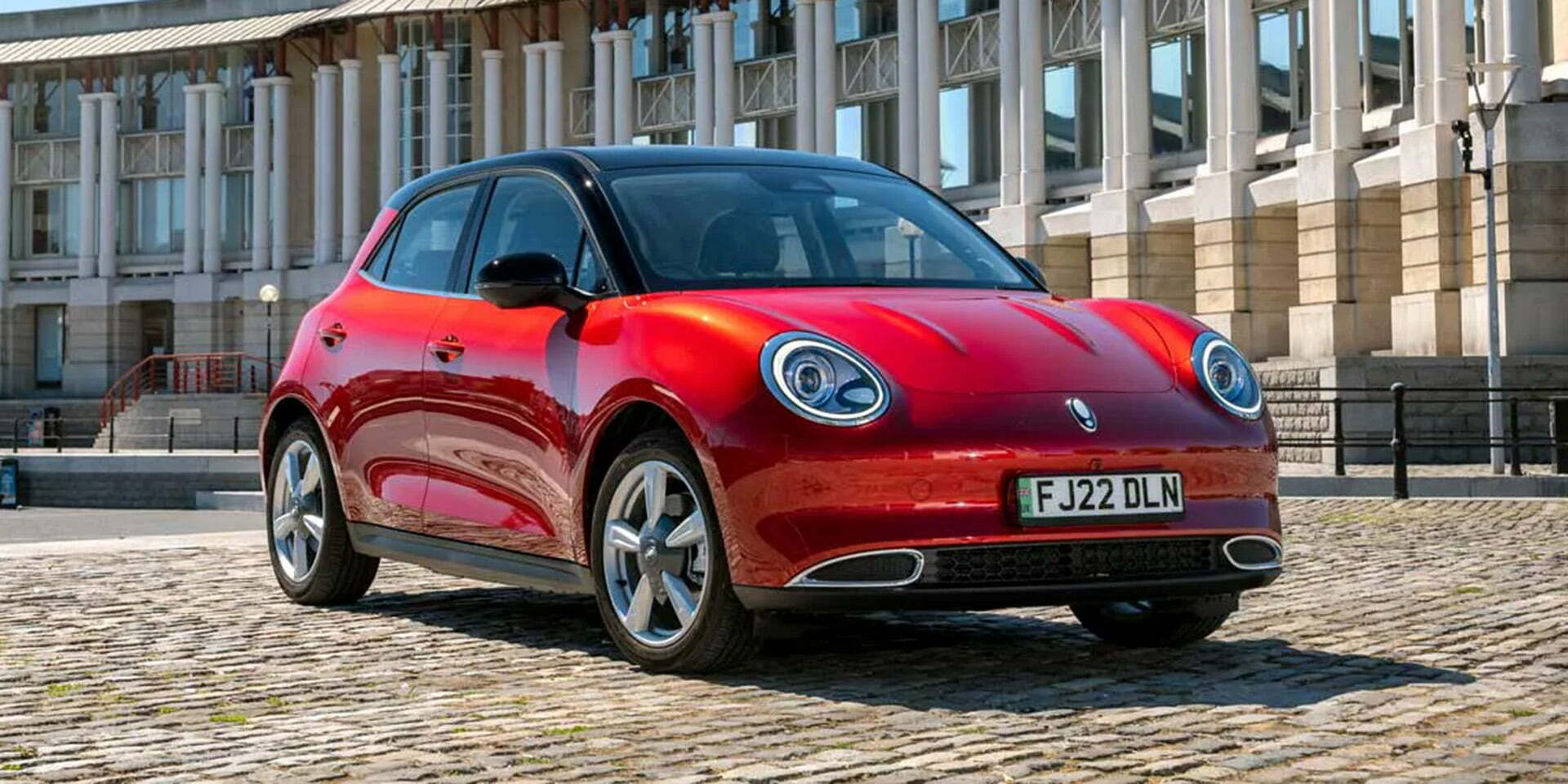
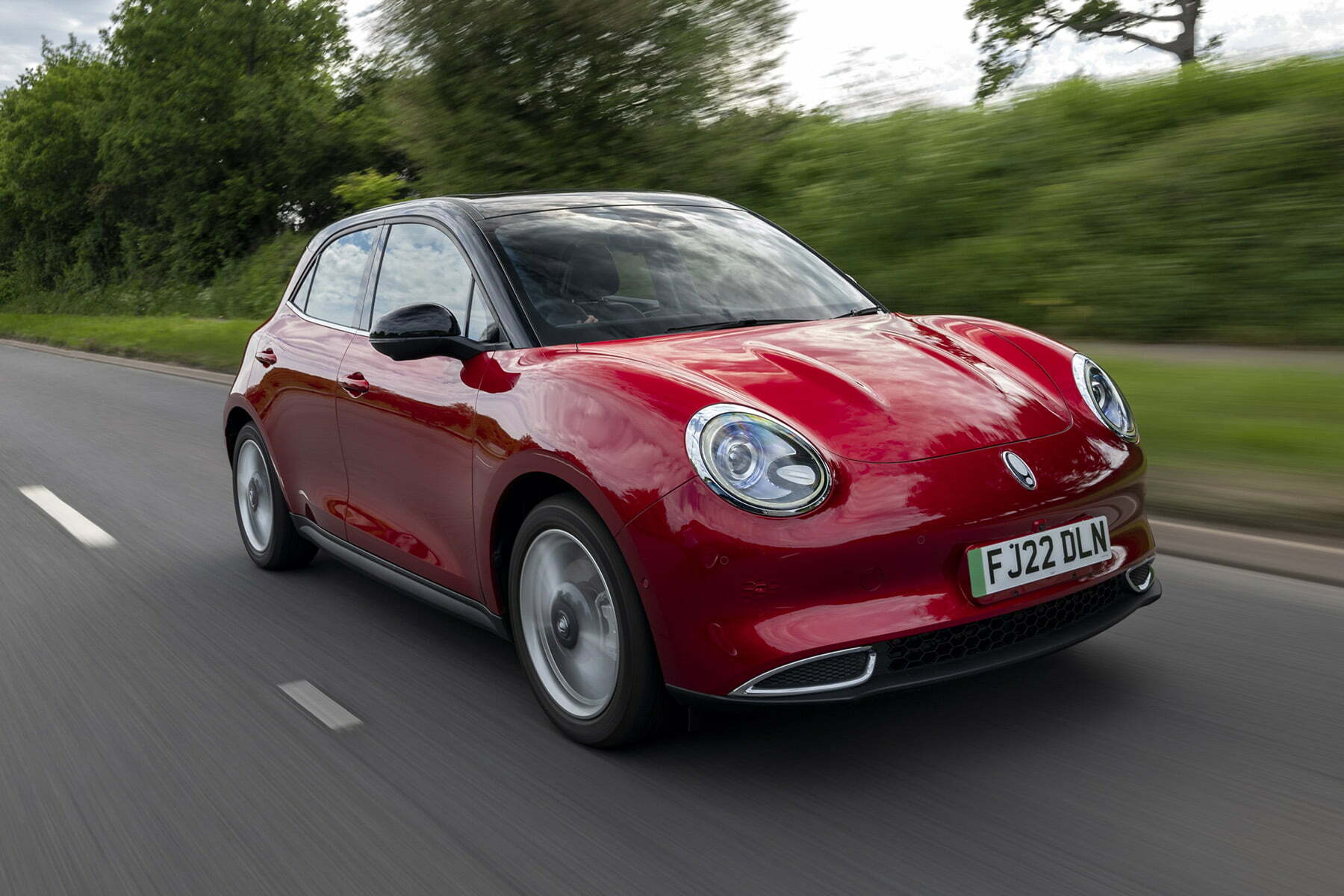
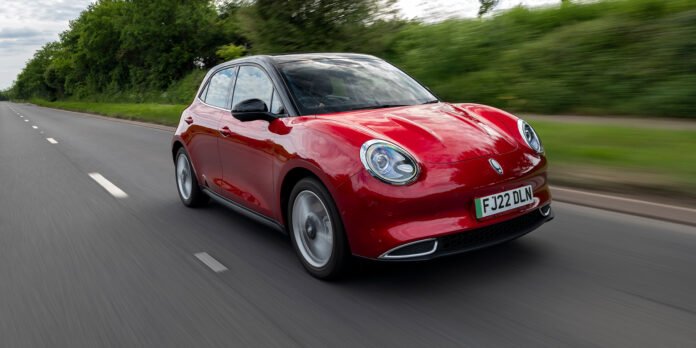
Initially launched in the UK as the ‘Funky Cat’, the 03 is an all-electric hatchback launched by Ora – a fledgling brand owned by Chinese motoring giant Great Wall Motors.
Slightly smaller than the Volkswagen ID.3 but larger than the electric Mini hatch, the 03 is Ora’s first foray into the European market, which has received a rather mixed bag of reviews from UK media sources since it became available to order in the last weeks of 2022.
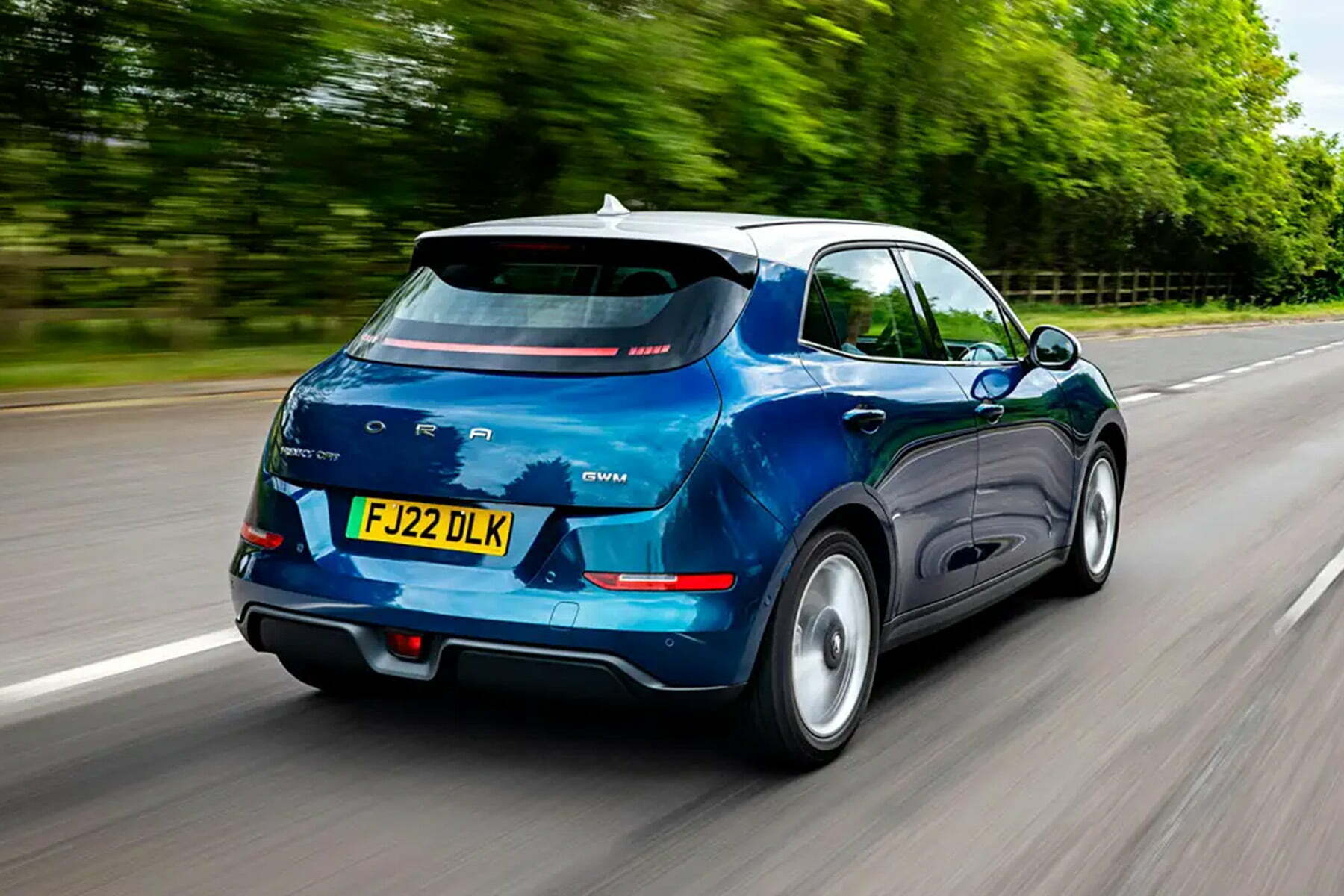
Often described as “a good start”, some reviewers found it hard to look past its unusual ‘Funky Cat’ name and questionable infotainment, while others have earmarked the hatchback as an interesting left-field choice that could tempt buyers who usually opt for the cars of bigger brands. The styling is often described as a combination of Mini Cooper and Nissan Micra design cues.
As of 2025, the Ora 03 is offered in three trim levels – Pure, Pro and GT – with prices starting at £25K and climbing in £4K increments to the range-topping GT at £33K.
The entry-level Pure model comes with a 43kWh battery, which is good for an official 193-mile electric range, while the top-spec GT has a 63kWh battery, boosted by a heat pump, that raises its official range to 248 miles. As for charging, a 15% to 80% boost should take around 45 minutes.
Parker‘s Alan Taylor-Jones concludes that the hatchback will appeal to those “more focused on style than sensibility”, pointing to the car’s smart styling that is hindered by its small boot, and the fact that it has less battery range than some smaller, cheaper electric superminis.
That said, Richard Ingram of Auto Express adds that the 03 does “punch above its weight on kit and cabin tech” – a conclusion mirrored by the car’s impressive five-star Euro NCAP safety rating.
“The Funky Cat is different”, says The Sun‘s Ron Gill, “but it doesn’t move the game on.” While Ora’s first entrant in the UK market is a capable hatchback, it does little to stand out in an increasingly crowded electric family car pack.
As of September 2025, the GWM Ora 03 holds an Expert Rating of A, with a score of 73%. It has an excellent safety score, very low running costs and produces zero tailpipe emissions, as well as an excellent new car warranty. Journalists are not that impressed with how it drives, but it should be a very affordable car to live with.
Launched: Winter 2022/23 Last updated: N/A Replacement due: TBA
Image gallery
Media reviews
Highlighted reviews and road tests from across the UK automotive media. Click any of the boxes to view.
Featured reviews
“As an urban runabout, the electric GWM Ora 03 is spacious for a supermini, has an excellent safety rating and comes with an impressive equipment list.”
Model reviewed: Range overview Score: 6 / 10 “Cute retro looks and lots of safety kit help the GWM Ora 03 stand out from rival electric vehicles.” Author: Max Adams, Alex Ingram Read review
Model reviewed: 03 GT Score: 6 / 10 “The flagship GWM Ora 03 GT has been given a sporty new look and more equipment, but the changes are purely cosmetic.” Author: Alastair Crooks Read review
Model reviewed: First Edition Score: 8 / 10 “The GWM Ora Funky Cat is arguably the biggest and most pleasant surprise of 2022. It’s time to sit up and take notice of the Chinese car industry; if you can see past the childish name and slightly challenging rear-end styling, the Funky Cat is an extremely credible small EV. Watch out, Europe, China’s on the march.” Author: Richard Ingram Read review
Auto Trader
Model reviewed: Score: 7 / 10 “In a competitive market, the GWM Ora 03 (former Funky Cat) faces a tough battle but those cute looks are a good start, even if some of the finer details lack polish.” Author: Dan Trent Read review
Business Car
Model reviewed: First Edition 45kWh Score: 5 / 10 “The Ora Funky Cat drives well enough, but there are too many shortcomings sacrificed for style.” Author: Martyn Collins Read review
Car
Model reviewed: Range overview Score: 6 / 10 “This is a solid if not outstanding initial gambit from Ora that’ll certainly appeal to those more focused on style than sensibility.” Read review
Carbuyer
Model reviewed: Range overview Score: 8 / 10 “The Ora Funky Cat has landed in the UK on all fours and is one of the strongest small EVs currently on sale.” Author: Tom Jervis Read review
Driving Electric
Model reviewed: Range overview Score: 8 / 10 “The Ora Funky Cat may not be to everyone’s tastes, but it’s a great electric city car with a plush interior and all the kit you could possibly need.” Author: Tom Jervis Read review
Electrifying.com
Model reviewed: Range overview Score: 6 / 10 “You might choose it just for the looks, quality and technology, but the Ora Funky Cat is good to drive too. Rivals have a longer range and can charge faster, but that might not worry drivers who rarely venture out of town.” Author: Tom Barnard Read review
Green Car Guide
Model reviewed: Range overview Score: 8 / 10 “The Ora Funky Cat has characterful exterior styling, an interesting interior, the refinement that you would expect from an EV, and decent driving dynamics. Perhaps the biggest surprise is the quality of the car, especially the cabin.” Author: Paul Clarke Read review
Heycar
Model reviewed: Range overview Score: 7 / 10 “Weird name aside, the Ora Funky Cat is actually a really likeable electric car. We love its cutesy looks and cheerful interior, while it also strikes us as excellent value for money.” Author: Andy Brady Read review
Parkers
Model reviewed: Range overview Score: 5.4 / 10 “If you like the styling of the GWM Ora 03 (formerly known as the Funky Cat) and enjoy its fun interior, you likely won’t be disappointed by the car’s undemanding driving dynamics. But we’ll hold out hope for a software update to fix some of our bigger complaints with the car.” Author: Keith Adams Read review
The Scotsman
Model reviewed: First Edition Score: 5 / 10 “There’s no doubt Chinese brands are going to have a major role in the UK’s motoring landscape but probably not off the back of the Ora Funky Cat, which feels like a car rushed out to meet a set of on-paper specs with little focus on how well it works in the real world.” Author: Matt Allan Read review
The Sun
Model reviewed: Range overview “Funky Cat is different but it doesn’t move the game on. If you really want a smart, do-it-all electric car, go and try a Kia Niro. That’s the Top Cat.” Read review
The Sunday Times
Model reviewed: Range overview Score: 8 / 10 “The Funky Cat has its problems, including the price tag and the comparatively small battery, but it’s still a competitive product, nonetheless. The driving experience and cabin quality are both a match for the Funky Cat’s rivals, and the in-car technology is impressive.” Read review
The Telegraph
Model reviewed: 03 GT Score: 6 / 10 “Rebranded and restyled, this five-door hatchback brings quirky charm and generous kit, but struggles to turn novelty into substance.” Author: Alex Robbins Read review
Model reviewed: First Edition Score: 4 / 10 “There’s far too much ‘that’ll do’ for the Ora Funky Cat to be a credible contender in what is going to be a very hard-fought sector of the market, despite its attractive five-year/unlimited mileage warranty.” Author: Andrew English Read review
Top Gear
Model reviewed: Range overview Score: 5 / 10 “Interesting to look at and to explain to your friends, but the Funky Cat is let down by some fundamental issues.” Author: Greg Potts Read review
Model reviewed: Funky Cat First Edition Score: 7 / 10 “The indicators are a nightmare: it’s a light touch for a quick indicate and a heavy touch when you’re sat at a junction, but it’s all too easy to press too hard.” Read review
Which EV?
Model reviewed: Score: 7 / 10 “If you like to stand out and you can handle the name, the Ora Funky Cat could be the small EV for you. It has personality by the bucketload, provides a respectable range, and gives the likes of the Honda e and Mini Electric a run for their money. But there’s no denying this is a Chinese oddball, and it’s not as fun to drive as it looks.” Author: Tim Barnes-Clay Read review
Safety rating
Independent crash test and safety ratings from Euro NCAP
The GWM Ora 03 was awarded Euro NCAP’s best small family car for 2022, based on its impressive scores across all four categories of testing.
The hatchback comes with adaptive cruise control with steering assistance as standard, traffic-sign recognition and a driver monitoring system.
Eco rating
Independent economy and emissions ratings from Green NCAP
No eco rating
As of September 2025, the GWM Ora 03 has not been assessed by Green NCAP.
The Green NCAP programme measures exhaust pollution (which is zero for an electric car) and energy efficiency. Electric cars are much more energy-efficient than combustion cars, so the Ora 03 is likely to score very highly in Green NCAP testing if and when it takes place. Check back again soon.
Running cost rating
Monthly cost of ownership data provided exclusively for The Car Expert by Clear Vehicle Data
Battery range
Average
Score
Variation
Score
EV models
216 miles
C
Electrical efficiency
Average
Score
Variation
Score
EV models
4 m/KWh
C
Insurance group
Average
Score
Variation
Score
All models
24
B
The GWM Ora 03 should be a relatively affordable car to own and run, according to whole-life cost numbers provided exclusively to The Car Expert by our data partner, Clear Vehicle Data.
The electrical efficiency (the EV equivalent of fuel economy in a petrol or diesel car) is only average, but if you are able to charge from home then it is still significantly cheaper than paying for petrol at a service station.
We don’t yet have servicing and maintenance costs for the GWM Ora 03, so check back soon.
Reliability rating
Reliability data provided exclusively for The Car Expert by MotorEasy
No reliability rating
As of September 2025, we don’t have enough reliability data on the GWM Ora 03 to generate a reliability rating.
The Car Expert’s reliability information is provided exclusively to us using extended warranty data from our partner, MotorEasy. As soon as MotorEasy has sufficient data on the 3, we’ll publish the score here.
Warranty rating
New car warranty information for the GWM Ora 03
Overall rating
A
96%
New car warranty duration
5 years
New car warranty mileage
Unlimited miles
Battery warranty duration
8 years
Battery warranty mileage
100,000 miles
GWM’s new car warranty is better than average, and better than some other brands in a similar price bracket to the 03.
The duration is five years, with no limit on mileage. In addition, there is an eight-year/100,000-mile warranty for the battery components.
If you’re looking to buy a used car that is approaching the end of its warranty period, a used car warranty is usually a worthwhile investment. Check out The Car Expert’s guide to the best used car warranty providers, which will probably be cheaper than a warranty sold by a dealer.
Awards
Significant UK trophies and awards that the GWM Ora 03 has received.
2022
Driving Electric Awards – Best Urban Electric Car
Similar cars
If you’re looking at the GWM Ora 03, you might also be interested in these alternatives.
Find your next new or used car with Auto Trader. Find out more
Find your next new or used car with Carwow. Find out more
Lease a GWM Ora 03
If you’re looking to lease a new GWM Ora 03, The Car Expert’s partners can help you find a competitive deal.
Personal contract hire deals from Leasing.com. Find out more
Personal contract hire deals from Carwow. Find out more
Personal contract hire deals from Select Car Leasing. Find out more
Subscribe to a GWM Ora 03
Subscriptions are becoming a very popular way for consumers to try an electric car for a few weeks or months to help decide whether it’s a suitable alternative to a petrol car. If you’re interested in a car subscription, The Car Expert’s partners can help. (PS: What’s a car subscription?)
Providing peace of mind and protection in the event of an accident, car safety features will always be an important factor for many when car shopping, particularly for those who are looking for their next family runaround.
Cars of every shape and size are getting safer and safer too, thanks to the increasing standards of crash avoidance technology expected of every new model. Car manufacturers are now fitting their cheapest models with on-board safety systems that only expensive luxury cars had a decade or so ago, partly thanks to increasingly strict government rules.
But, even though safety standards for new cars are consistently climbing across the board in the UK, there are a few models that our Expert Rating Index singles out from the rest of the competition.
All holding five-star safety scores from independent crash tester Euro NCAP, the new cars listed below have been commended for their adult occupant protection, child occupant protection, vulnerable road user protection (mainly cyclists and pedestrians) and safety assistance technology (accident avoidance and mitigation), with high scores in each category.
How our safety rating scores are calculated
Our Safety Rating score uses a complex algorithm based on Euro NCAP testing results, using all four of Euro NCAP’s testing categories rather than just the headline score. This includes a complete breakdown of scores for adults, children, pedestrians and assist systems, so you can see the information that matters most to you.
Euro NCAP scores expire after six or seven years, as the scoring criteria gets tougher each year and cars that were tested several years ago can no longer be guaranteed of maintaining their initial score. A car may be re-tested if it’s still on sale, which happened in the case of the Tesla Model S below, although this doesn’t always happen.
Euro NCAP testing gets tougher almost every year, so a five-star score from 2019 doesn’t necessarily equate to a five-star result in 2024. To account for this, and to factor in the seven-year expiry period, our safety rating algorithm contains an age factor as well.
Highlighted by our Expert Rating Index, all of these cars are fitted with features to both help prevent collisions and protect occupants if a crash can’t be avoided. These include autonomous emergency braking, software to detect driver fatigue and a system to notify emergency services when a crash happens.
Please note that the below list doesn’t include any new car that hasn’t been put through its paces by Euro NCAP, and thus some of the newest market entrants like the Volvo EX30 unfortunately have to sit this one out.
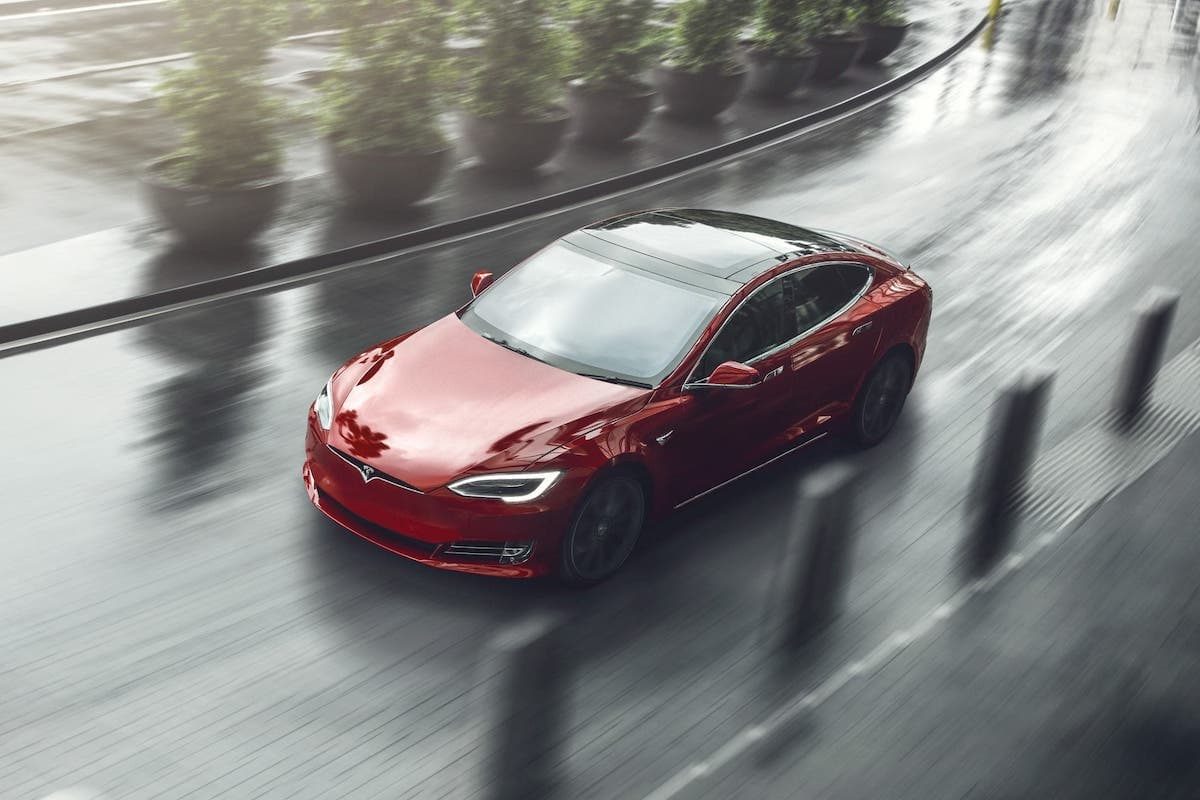
It’s been on sale since 2014 – although with plenty of updates over the last decade – but the Tesla Model S is the safest new car you can buy in the UK today. Well, assuming you can afford £100K for a new car and are happy to have it in left-hand drive, because that’s the only version of the Model S you can still buy at the moment.
Originally tested back in 2014, the Model S was re-tested by Euro NCAP in 2022 and returned another outstanding set of scores. In particular, Tesla scores top marks for its exceptional safety assistance technology. This tech is crucial as – obviously – avoiding an accident altogether is better than surviving one.
It’s not, as Tesla describes, an autopilot function where the car can drive itself. But the combination of Tesla’s various tech systems as a safety net for the driver is better than anything else on sale.
The Tesla Model S currently holds a New CarExpert Rating of A, with a score of 81% on our award-winning Expert Rating Index. That puts it jointly at the very top of the charts of the best new cars on sale.
Independent crash test and safety ratings from Euro NCAP
You’re looking at the world’s best-selling car in 2023. Not just the world’s best-selling electric car, but the most popular car of any kind across the whole planet. If you still have any doubts that the electric revolution is underway, the Tesla Model Y should end those now.
Like the Model S above, the Tesla Model Y aced its Euro NCAP safety tests in 2022. As with all Tesla vehicles, the driver-assistance technology is the best around, and the Model Y also scores the best-ever results for adult protection. The other scores, for children and other road users, are excellent as well.
The Tesla Model Y has received plenty of praise from the UK motoring media, and currently holds a New CarExpert Rating of A, with a score of 81% on our unique Expert Rating Index.
Independent crash test and safety ratings from Euro NCAP
The fifth-generation Lexus RX SUV impressed Euro NCAP testers when it was put through its safety paces in late 2022, achieving high scores in every category. The car’s particular stand-out trait is its ‘vulnerable road user protection’ score (pedestrians and cyclists), which is the highest of any car on this list.
Winner of The Car Expert’s ‘Best Large SUV’ award last year, the Lexus RX holds a New CarExpert Rating of A, with a score of 73%.
The electric Mercedes-Benz EQE is another executive saloon held in high regard by Euro NCAP, with high safety scores in every category. The EQE also comes with Mercedes’ ‘Car-to-X Communication’ – award-winning software that allows cars to notify each other of hazards in real time to help prevent accidents.
The Mercedes-Benz EQE currently holds a New Car Expert Rating of A, with a score of 76%.
While the fourth-generation Nissan X-Trail isn’t the most economical SUV on the market, it is certainly one of the safest, with its 2022 Euro NCAP test resulting in three category scores above 90%. It’s also the highest-ranked model available with traditional petrol power (with a mild-hybrid kick) on this list.
The Nissan X-Trail currently holds a New Car Expert Rating of B, with a score of 66%.
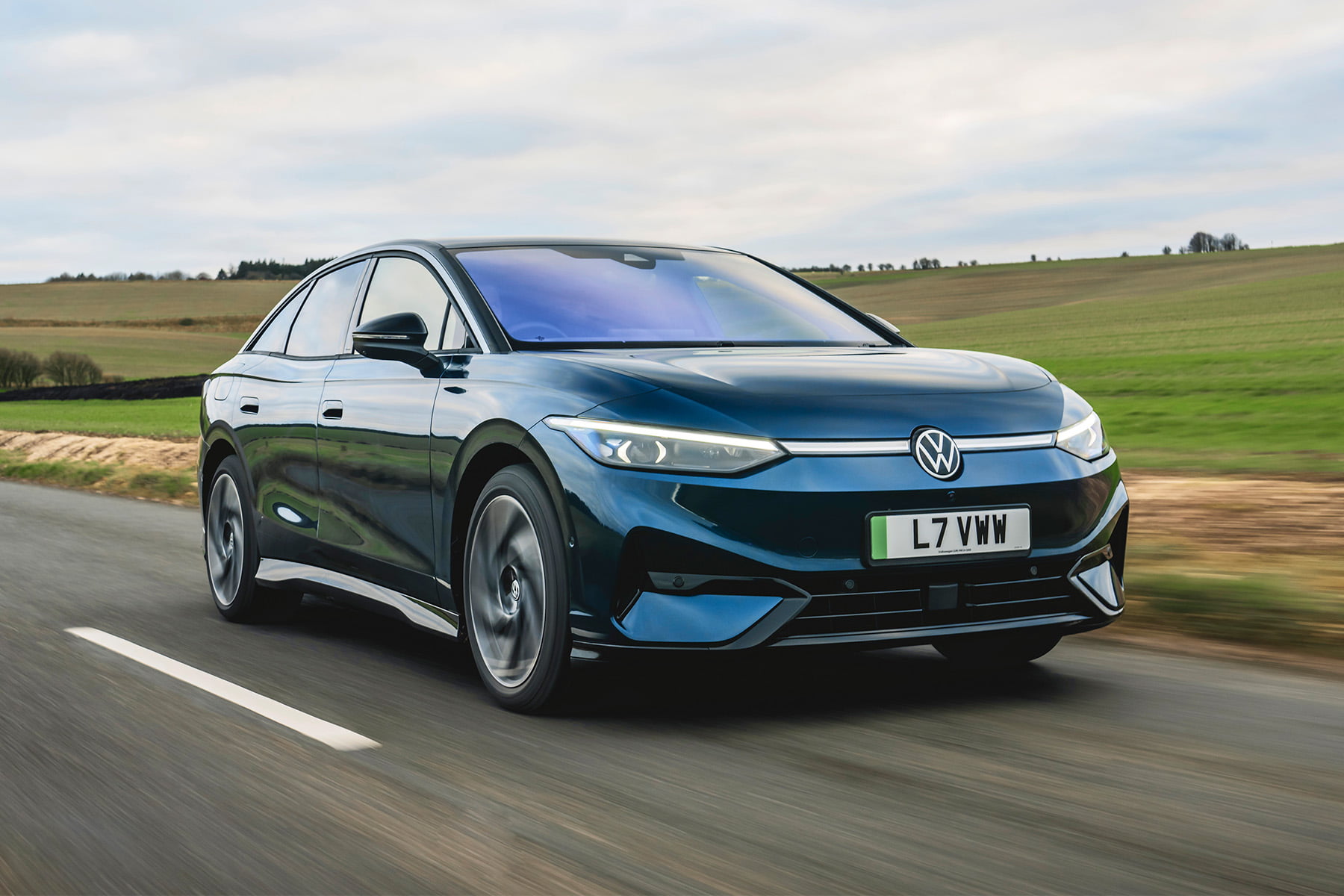
The most recent arrival on this safety leaderboard, the ID.7 is a sign of what’s to come from Volkswagen, including the brand’s latest safety tech. Euro NCAP commented that the large battery-powered saloon was one of the most impressive cars it tested in 2023, and gave the car a very high ‘adult occupant protection’ score.
The Volkswagen ID.7 currently holds a New CarExpert Rating of A, with a score of 80% in our Expert Rating Index.
Formerly the manufacturer of pint-sized electric city cars, the launch of the #1 (pronounced as ‘Hashtag One’) was a fresh start for Smart – a mid-sized hatchback that achieved the brand’s highest ever Euro NCAP safety scores.
The Smart #1 currently holds a New Car Expert Rating of A, with a score of 79%.
The electric Toyota bZ4X and Subaru Solterra are twins, developed as a joint venture between the two companies. As a result, the two cars share the same five-star safety rating from Euro NCAP in 2022, and while the SUVs couldn’t quite match the Model Y’s impressive score sheet, a 91% ‘safety assistance technology’ score is the highest that either brand has ever achieved.
The Toyota bZ4X currently holds a New Car Expert Rating of A, with a score of 79%.
The third-generation BMW X1 passed its Euro NCAP examinations with flying colours in 2022, with a particularly impressive safety assistance technology score. This rating stands for petrol, diesel and plug-in hybrid versions of the X1, as well as the all-electric iX1.
Both the BMW X1 and electric iX1 currently hold a New Car Expert Rating of A, with a score of 78%.
Mazda’s flagship SUV offering, the CX-60 has received plenty of reviewer praise for its long list of standard equipment, which also includes plenty of safety tech. When it comes to Euro NCAP scores, the Mazda is joint-top in the ‘child occupant protection’ and ‘vulnerable road user protection’ assessment categories.
The Mazda CX-60 currently holds a New CarExpert Rating of B, with a score of 68%.
The famous Italian luxury sports car manufacturer Maserati is currently enjoying a rebirth under its latest owners. But how much do you know about the company and its history?
Maserati is based in the northern Italian city of Modena, although it’s probably only the second-most-famous car company associated with the city. For car enthusiasts, Modena is best known as the home town of the legendary Enzo Ferrari and his famous racing team, although Enzo moved his operation a dozen miles down the road to the town of Maranello during the second world war. But that’s another story.
Maserati is a manufacturer founded in motor racing – like Ferrari – and which launched its first road car in 1947 – also like Ferrari. The two companies were long-time rivals as well as neighbours, and both faced financial ruin in the 1950s before finding new buyers to bail them out in the 1960s. Their paths diverged for decades then came back together, then went their separate ways once more in recent years.
Over its near-100 years of car manufacturing, Maserati has built a reputation for luxury in a sporting package. Over the years, the company has been owned by a succession of other manufacturers, including Ferrari for a while. But it has also produced many cars, and model names, that have become classics – names such as Quattroporte, Mistral and Ghibli. Now the brand is launching into the electric revolution with another distinctive name: Folgore.
The Maserati story started with six brothers born in Modena between 1881 and 1898. The brothers (Carlo, Bindo, Alfieri, Mario, Ettore and Ernesto) were quickly enthused by the then-revolutionary new automobile, so they set up a family firm in 1914 in Bologna, about 30 miles east of Modena. They started out made spark plugs but, before long, the brothers moved into building and racing cars for other companies.
The first car to be called a Maserati, the Tipo 26, appeared in 1926. It made its debut at the Targa Florio, a famous road race around Sicily, driven by Alfieri Maserati to a win in its class and ninth place overall.
The early years of Maserati were all about racing, including two victories at the Indianapolis 500 in America. Maserati’s greatest success came in 1957 when it won the Formula 1 world championship, but on-track successes masked serious financial problems and Maserati withdrew its team from motorsport at the end of that year. It did keep on building racing cars for wealthy customers, however.
By this time, the brothers had long sold up to an Italian industrialist named Adolfo Orsi, but continued to work for Maserati for many years. This marked the start of a chaotic few decades for the company, during which point it changed owners on a fairly regular basis.
Orsi moved the Maserati factory to the family’s home town of Modena in 1940 and the first Maserati road car, called the A6, appeared in 1947. This marked the start of a period of great success for the company, which grew even further after the introduction of a whole new type of car, the Quattroporte luxury sports saloon, in 1963.
In 1968, Maserati was sold to French car maker Citroën, but the 1973 oil crisis pushed Maserati, and Citroën, almost to oblivion and in 1975 it was was jointly acquired by the Italian state and former racing driver Alejandro De Tomaso, who owned his own sports car company.
De Tomaso’s control of the company lasted until 1993 when Maserati was bought by automotive giant Fiat, which also owned Ferrari. Maserati was subsequently positioned as Ferrari’s luxury arm and this arrangement lasted until 2005 when Maserati was split from Ferrari and attached to another Fiat-owned sports car brand, Alfa Romeo.
Fiat merged with US car giant Chrysler in 2014 and then, in 2021, Fiat-Chrysler joined with the French PSA Group (owner of Peugeot, Citroën, Vauxhall and others) to form Stellantis Automobiles. This wheeling and dealing brought Maserati back into the same family as one of its former owners, Citroën.
Maserati Sebring, 1962
What models does Maserati have and what else is coming?
Maserati currently offers a six-strong model range, of which the flagship Quattroporte has the most history – the first example of the marque’s four-door (quattro porte in Italian) saloon appeared in 1963. The latest is the sixth generation and has been around a while, launched in 2013. It’s a similar size to the BMW 7 Series and is due to replaced next year.
Sharing the Quattroporte’s underpinnings is another model with a long-standing name, the Ghibli (pronounced ‘jib-lee’). This is a slightly smaller saloon (think BMW 5 Series in size) and again the current version dates back to 2013, though it received a major update in 2017.
Somewhat younger is the GranTurismo, a two-door coupe now in its second incarnation which was launched in 2023. It’s a major rival to the likes of the Bentley Continental GT and even the Porsche 911. The GranTurismo has also spawned a drop-top version, the GranCabrio.
Maserati was one of the earliest of the luxury brands to go the SUV route. Its first SUV, a large model called the Levante, launched in 2016, and in 2022 it was joined by a smaller sister, the Grecale. This has underpinnings shared with a car boasting a rather stronger 4×4 pedigree, the Jeep Grand Cherokee.
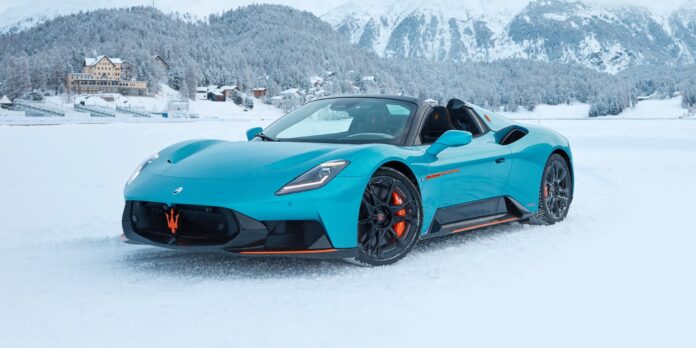
Topping the range is Maserati’s supercar, the MC20. Launched in 2022 as the first mid-engined model from the brand since 2005, it produces more than 620hp from its twin-turbo V6 pitching it against rivals from the likes of Lamborghini and McLaren (and of course, Ferrari).
There is currently little hint of any completely new model lines from Maserati but the brand is fully committed to going electric, though it doesn’t use such downmarket phrases. Maserati EVs will carry the badge ‘Folgore’, which is Italian for ‘lightning’.
The first Folgore models will be electric versions of the Grecale SUV and GranTurismo coupé, while a GranCabrio Folgore is also on the way. Maserati has also returned to motorsport to promote its electric ambitions, competing in the all-electric Formula E World Championship.
Folgore – it’s Italian for ‘lightning’ and is the name Maserati gives to its EV models
Where can I try a Maserati car?
If you are interested in buying a Maserati, you should be prepared to travel. Being an exclusive manufacturer means there are not many dealers selling new Maseratis – in fact, there are just a dozen or so across the UK.
The most recent developments are the Maserati ‘Store’ concept, the idea being less car dealership and more retail outlet. Combining showroom and workshop, the Stores aim to let customers create their bespoke cars in the way one would specify a made-to-measure suit from a tailor.
The first Maserati Store opened in Hatfield, north of London, in September 2023, with Maserati’s official UK brand ambassador David Beckham doing the honours. The second is being opened this May in Ascot, Surrey.
Due to their limited production and high values, classic Maseratis are traded through specialist dealer networks and auction houses all over the world. As a result, there are many old models here in the UK today that were originally delivered to other countries but have found their way here over the years.
What makes Maserati different to the rest?
Maserati was, for several years, a sister to Ferrari and the two brands’ cars are still built in the same district of Italy. In fact, bodies for some Maserati models are still built by Ferrari in Maranello and then transported up the road to the Maserati factory in Modena.
Some versions of the Quattroporte, Ghibli and Levante also use V8 engines designed and built by Ferrari, but this arrangement is ending with those models as Maserati shifts to its own engine designs.
While Ferraris are all about performance over occupant comfort, Maseratis are principally grand tourers – their impressive levels of performance are matched by the luxury, cars in which it is easy to clock up hundreds of miles in opulent comfort.
A Maserati fact to impress your friends
The Maserati badge is a trident and was created by one of the brothers, Mario Maserati, in 1920. He was apparently inspired by the ‘Fountain of Neptune’ statue depicting the legendary sea god that stands in the Piazza Magiore in Bologna. The logo was considered appropriate as it both recalls the founding city of the Maserati company and also signifies strength and vigour.
Summary
Many observers might consider that Maserati sits forever in the shadow of its more famous neighbour, Ferrari. It shouldn’t be that way – the brand has just as much Italian history and a motorsport tradition that saw F1 world championship success in the 1950s, underlining the performance pedigree of its cars.
With such credentials, plus a degree of luxury one won’t see in Ferraris, Maseratis remain highly desirable cars. If you like the idea of a fine Italian sporting saloon, SUV or sports car that has far greater exclusivity than a run-of-the-mill BMW, Audi or Porsche, maybe a Maserati could be just right for you.
Scandinavia is known for its clear air, beautiful mountains, forests and lakes, and some of the roads that will get you to these wonderful sights are simply breath-taking.
Sweden is no exception to this rule – it’s the largest of the Nordic countries and is blessed with fine scenery, exciting cities and incredible islands dotted throughout its vast areas of water: the lakes and rivers.
Sweden is the fifth largest country in Europe but despite the vast wilderness of beauty throughout its nation, the majority of its people live in towns and cities – Stockholm, the capital, being the biggest of these. There’s also Malmo and Gothenburg.
Steeped in history, there’s wonderful architecture to be seen in its many towns and villages while memories of the Viking era are everywhere. Out on the open road you’re more likely to come across an elk or reindeer than another car in some areas. These can be a real danger on many routes and warning triangles will often feature at the roadside to warn you.
Swedish roads are a joy to drive – long, open and well-maintained, they are among the best in the world. But you need to be prepared for trips into the wilderness not least because temperatures can vary so much. Warm in the summer, Sweden can become very cold in winter months with sub-zero temperatures a regular occurrence. The coldest ever recorded temperature was minus 52 degrees C in 1966.
It’s a wealthy country and its towns and cities are home to much business and manufacture, among these the car industry, telecommunications and pharmaceutical.
If you are one of many UK motorists who is considering this Scandinavian country for a vacation this year, you’ll need some careful organisation before going there. Flying in and hiring a vehicle is easy, with all the main rental companies and others, available with a wide variety of vehicles.
Driving in Sweden is a completely different experience from doing so in the UK. And that isn’t just because the Swedes drive on a different side of the road from us.
It’s much more than that and planning a driving holiday or using a car on business while in the country, requires careful planning and a good understanding of what you can and can’t do behind the wheel there.
So it’s well worth spending some time planning your trip and making sure you have everything in place for your northern European excursion.
Here The Car Expert looks at the most important elements to consider when planning to drive in Sweden, and we’ve included a handy checklist. As each journey is unique, always check that you have everything covered for your particular visit.
Keep right
Like all of continental Europe and the vast majority of countries around the world, Sweden drives on the right side of the road with local cars being left-hand drive (in other words, the opposite of the UK).
Right-hand-drive cars are legal, so you can drive your own car over from the UK, but it’s less convenient for things like toll booths, parking gates or drive-through restaurants.
Licence requirements
You must be 18 years or over to drive in Sweden and you should hold a full UK driving licence. Just the licence card will do, as the paper counterpart is no longer a requirement.
You must be at least 20 years old to rent some vehicles in Sweden so check before you sign the rental agreement. Whether you are renting or using your own vehicle, always carry your personal ID or passport with you.
Taking your own car to Sweden
It’s legal to drive your UK-registered, right-hand drive car in Sweden, but remember that you have to drive on the opposite side of the road.
If you’re using your own car, you’ll need to prove that you have insurance cover so take your certificate with you (but you don’t need a European ‘green card’) and you must carry with you documents that show the identity of the car, such as a V5 ‘logbook’.
The vehicle’s ‘home country’ must be shown on it. Most people today have the ‘UK’ letters and the Union Flag incorporated into their vehicle’s number plates but if you don’t have this, you must affix a ‘UK’ sticker to the rear of the vehicle. The ‘GB’ badge is no longer allowed, even within European ‘golden stars’ and the same goes for country badges such as the English, Scottish or Welsh flags.
You’ll also need to adjust your headlight beam to avoid dazzling oncoming traffic. Many modern cars allow you to do this from the dashboard, while older cars will require anti-dazzle stickers to be fitted to the headlights. These are available from car parts stores or travel shops at the ferry terminal.
Speed limits
Speed limits are shown in kilometres (km/h) rather than miles (mph) and in Sweden are not based on the category of the road, but the considered safety of the route.
In built-up and suburban areas, the limit can vary between 50km/h (31mph) and 100km/h (62mph) so keep a close eye on roadside signage. Motorways have a blanket 110km/h (68mph) top speed.
Speeding fines differ greatly depending on the speed that drivers are caught. For going up to 10km/h over the limit in a built-up area, fines start at 2000 Krona (kr) (£150); up to 30km/h over its 3,600 kr (£270) and if you’re stopped going more than 35km/h over the speed limit on a motorway it’s 4,000 kr (£300).
There are speed cameras on many Swedish roads and they can often be hidden or difficult to see. You are not allowed any kind of speed camera or radar detection equipment in your car. Likewise, if your satnav unit shows where speed cameras are sited, you must de-activate this function as it’s illegal.
Don’t use a mobile phone while driving either, unless it’s completely hands-free.
Blood alcohol limit
We don’t recommend any drinking of alcohol if you are going to drive but it’s worth knowing the limits. The drink drive limit is 0.2 g/l (also shown as 0.2 milligrams or 0.02%), which makes Sweden one of the strictest countries in the world for drink-driving. Most countries Europe – including Scotland – have a limit of 0.05%, while England and Wales are 0.08% (one of the highest limits anywhere in the world).
The police take a hard line on drink driving, so be careful even when you are getting behind the wheel ‘the next morning’. Officers can demand a breath test at any time and without reason and there are severe penalties – fines or even prison – if you are shown to be over the limit.
What to carry in the car
While motoring through Sweden, ensure you have a warning triangle in the car and make sure your lights don’t dazzle oncoming drivers – you must have beam deflectors fitted (or the ability to manually adjust your lights). You must switch dipped lights on all the time, on every road although cars sold in Sweden will have this feature automatically.
You will also need to have winter tyres fitted to your car if you are planning to drive in snow and ice between 1st December and 31st March. Some areas require you to fit snow chains too – look for local signs. If you have a trailer, this must also have the correct tyres.
Although not a requirement, it’s also recommended that you have a fire extinguisher, first aid kit, tow rope, spare bulbs, reflective jacket and jump leads.
Specialist suppliers, such as motoring organisations, sell ‘European driving kits’ for around £25, which contain everything you are likely to need for a holiday road trip, and it’s well worth considering one.
Seatbelts
Seatbelt rules are the same as in the UK: if your car has them, they must be worn.
Children less than 135cm in height must be in an approved child seat in the front or back of the car. Above this height they can ride on a regular seat and if they are over 140cm they can sit in the front passenger seat if the airbag is switched off.
Driving in Sweden
Keep to the right-hand lane as much as possible but if you are overtaking do so on the left.
Overtake only when you are sure it is safe to do so. There are many roads which have a dedicated lane for drivers wanting to drive slowly. They are required to keep over and let others pass them when they are not in this special lane.
Priority is usually given to vehicles approaching you from the right but look for road signs which might indicate something different. Don’t use your horn unless absolutely necessary, such as in an emergency or to prevent an accident.
Traffic signals are red, amber and green and follow a similar pattern to the UK. A flashing amber light can mean the traffic signals are faulty while a separate, smaller set of lights next to the main signals can sometimes include an arrow permitting you to drive in the direction it is pointing.
If you are towing a trailer or caravan ensure that your car and the rig don’t exceed 24 metres in length, 4.5 metres in height and 2.6 metres in width. Make sure you can see clearly behind you with the use of two wide rear-view mirrors.
Road signs
Road signs are usually coloured yellow with a red outline for those giving advice or warning, and blue where something is mandatory. They use pictures and therefore rarely need words. Where words are used these will be in the Swedish language except for ‘Stop’ which is in English. Most directional signs are written in Swedish with distances in kilometres.
Fuel availability
Petrol and diesel is widely available throughout the country. Swedish motorways don’t have service areas – these are sited close to exits and signs will point you there on reaching the intersection. They almost all have automatic, card-operated pumps which take internationally-recognised credit cards.
There are more than 2,500 charging stations for electric vehicles (EVs) throughout Sweden.
Toll roads
There are few toll roads in Sweden and there is no fee to pay for using the motorways. However, you will have to pay tolls on some of the main bridges, such as Sundsvall, Motala and Skurubron.
Parking
Although there are wide open spaces in Sweden, its main cities can be very congested. That makes parking more difficult. It’s certainly limited in built-up areas with restricted zones shown by road signs. There are steep fines for illegal parking and while wheel clamps are not used by the police, your car can be towed away. There will be a fine to pay for a vehicle’s release plus costs for the towing.
Park with the car looking towards the direction of travel. If it’s not a marked parking spot you probably can’t stop there. A blue sign with a ‘P’ in it usually signals free parking but beware, this might have a time limit so check very carefully.
Do not park anywhere that the police might consider dangerous such as near an intersection, level crossing, bus or tram stop, crest of a hill or blind bend. Don’t stop in bicycle lanes or pedestrian paths.
Emergency number
In Sweden as with most of Europe, you can dial 112 and make contact with emergency services such as fire, ambulance or police, 24 hours a day. Operators will speak English, French and other European languages.
The Aston Martin Vantage has been given a pretty comprehensive update, which includes a substantial increase in power output, further mechanical alterations to improve driving dynamics, revised exterior looks and a new interior design.
Starting with the car’s exterior, Aston Martin has decided to give its lead-in (but still very expensive) supercar offering taller oval-shaped Matrix LED headlights and a larger chequered front grille which mirrors the design of the new DB12 grand tourer. The model has also been given a higher nose with deeper bonnet contours, as well as frameless wing mirrors and sharp air intakes that jut out of either side of the bumper.
Aston Martin Vantage (pre-facelift vs. post-facelift)
What isn’t immediately noticeable is the work Aston’s engineers have completed underneath. This is still a front-engined rear-drive sports car, but the manufacturer says that everything forward of the windscreen has been revised, with stiffer but lighter chassis components and an improved power steering system which reportedly provide sharper steering.
Aston Martin adds that the suspension has been improved thanks to ‘state-of-the-art’ dampers (that also feature on the DB12) that have an ‘immense’ range of control and speed of response. The car’s wider wheel arches house 21-inch alloy wheels wrapped in Michelin Pilot Sport tyres and cast-iron brake discs that have been upgraded to handle the engine’s higher power output.
Speaking of the power output, the Vantage has been given a 155hp boost (30% increase) thanks to larger turbochargers and other tweaks, and can now muster 665hp when you put your foot down. That makes it almost as powerful as the DB12.
It’s the same engine – a 4.0-litre twin-turbocharged petrol V8 supplied by Mercedes-AMG – but the brand says that this added power meant that the car’s engine cooling system had to be completely redesigned with two further auxiliary coolers added to the main radiator to cope with the extra heat. As before, the engine is paired with an eight-speed automatic gearbox.
Don’t expect this power hike to quicken the supercar’s already rapid 0-60mph sprint time by much though – this sprint time has been cut by a reported tenth of a second, now 3.4 seconds. Top speed stands at 202mph – 7mph higher than the pre-facelift Vantage.
The Vantage has had a significant overhaul inside too, with the brand’s latest ten-inch infotainment touchscreen front and centre below the revised dashboard. Wirelessly compatible with Apple CarPlay, several of the car’s functions can be controlled through this display, but Aston Martin reassures customers that physical buttons have been retained for gear selection, drive selection, heating and ventilation.
The infotainment comes with the brand’s own 3D navigation software, with the driver able to input their destination using What3words. Fitted as standard is an 11-speaker surround sound audio system, but a 15-speaker Bowers & Wilkins system is also available for an additional fee.
Now available to order, the refreshed Vantage will enter production imminently, and customers can access a huge amount of extra customisation options by ordering their new model through the ‘Q by Aston Martin’ service.
Aston Martin hasn’t specified if the price of the Vantage has increased post-update, which did sit at around the £125k mark before the facelift, as the brand operates on a ‘enquire to find out’ basis. The first customer deliveries are expected to arrive in the Summer.
The Aston Martin Vantage currently holds a New Car Expert Rating of D, with a score of 56% in our Expert Rating Index. Although it has received positive media reviews, it score suffers from its very high CO2 emissions and running costs.
Mercedes-Benz has announced that a ‘Limited Edition’ version of its high-performance AMG A 45 S hatchback is on offer until the end of the year, which comes with a range of cosmetic alterations.
The most notable change is the new paintwork – an exclusive ‘AMG green hell magno’ finish with large ‘A 45 S’ lettering on the doors and the AMG crest on the bonnet. The hot hatch sits on 19-inch matte black alloy wheels with yellow accents to match the bodywork decals.
The fuel cap also features the AMG logo, and the light projectors shine the same branding onto the road when you get in and out of the vehicle. This trim comes with insulated tinted rear windows, and the A 45 S fixed rear spoiler is painted black too.
Yellow accents also feature inside- across the dashboard trim, doors and on the ‘AMG Performance’ seats that are also embroidered with ’45 S’ lettering on the headrests.
That sums up how the ‘Limited Edition’ differs from the standard A 45 S, apart from the price. Pricing for this ‘Limited Edition’ is yet to be confirmed (though Mercedes says that the model can be ordered now in the UK), but it is expected to cost a few thousand more than the £63k A 45 S, which is the most expensive model in the AMG A-Class range.
The engine remains the same – a 421hp turbocharged 2.0-litre petrol engine with a top speed of 168mph and a 0-62mph sprint time of 3.9 seconds.
The Mercedes-AMG A 45 holds a New Car Expert Rating of B, with a score of 67% in our Expert Rating Index. It has great reviews from the media and a strong safety score, but running costs are extremely high.
Personal contract hire (PCH) is an increasingly popular way of driving a new car for personal use. It is considered a viable alternative to a personal contract purchase (PCP) that we have discussed on many occasions previously.
Personal contract hire is a form of leasing. The principle is generally the same as any kind of car rental, except that the term usually lasts three or four years rather than a few days. So while the car is in your possession, you don’t actually own it and are not making payments towards ownership.
This is different from a PCP, which is an ownership product. That means that you have borrowed the money from the finance company to pay for the car, and your monthly finance payments are paying off that to eventually take ownership of the vehicle.
The confusion tends to come from most people treating a PCP like a rental and never taking full ownership of the vehicle. But if you never intend to pay off the whole car, you may find a simple lease contract like PCH is more suitable for your needs. So let’s explore it in more detail.
Contract hire has been a popular financing method for businesses to manage their vehicle fleets for many years. Instead of buying or financing cars, they simply rent them. Personal contract hire for consumers works in the same way – the key difference is that, unlike a business, you can’t reclaim VAT on personal contract hire.
Unlike a PCP or hire purchase (HP), most contract hire financing is not arranged at a car dealership, although dealers can do this for you and more manufacturers are starting to offer ‘in-house’ PCH deals through dealers.
Instead, most contract hire customers will arrange their new car lease through either an independent broker, a specialist leasing company or the manufacturer finance company’s dedicated contract hire department. That means that you can access a huge number of leasing providers and agents from the comfort of your own home via their websites.
You can lease a new car without having to even get up off your sofa, as there are hundreds of brokers available to help you out online. If you’d like some suggestions of where to start, check out The Car Expert’s guide to the best sites for leasing a new car.
Like a PCP, you pay an upfront initial payment, followed by regular monthly payments. Other similarities are an annual mileage allowance that you must stick to, and requirements to keep the car fully serviced and in good condition. Unlike a PCP, however, there’s no debt and there’s no option to buy the vehicle at the end. You just hand it back to the lease company and – as long as it is an acceptable condition – that’s it.
Is a PCH cheaper than PCP?
Theoretically, no. But in practice, the answer is often yes.
For the same vehicle, the same deposit, same term and same mileage, there shouldn’t really be any major difference in the monthly payments for a PCH agreement compared to a PCP, as the calculations used to work out the payments will be the same. However, PCH often works out to be cheaper – even if it’s only a few pounds per month.
The power of mass purchasing
One of the reasons for this is that the leasing companies buy thousands of cars from car manufacturers every year, so they almost always get a better price on the same car than you can get from a dealer. That means they can pass on lower rentals to you. This is particularly the case if you are choosing a car that’s in stock or an advertised offer, rather than ordering a particular specification from the factory.
Sometimes, leasing companies might be getting a 40% discount on the price of each car, which is comfortably better than anything you can negotiate with your local dealer.
The power of competition
With hundreds of brokers across the UK and many different finance providers able to arrange a contract hire agreement on the same vehicle, it is a very competitive market with plenty of offers to choose from.
This is quite different from a PCP deal on a new car, where the dealer almost always sources the finance exclusively from the manufacturer’s own finance company. With less competition, there’s less incentive to offer you the best deal possible.
What should I know that the leasing company won’t tell me?
The leasing company remains the owner of the vehicle at all times, and you’re simply renting their vehicle from them at an agreed monthly price for an agreed term (just like renting a house, really). That gives them the power to call the shots with more control than in a finance agreement.
With PCH, you are not covered by as many consumer protections as a PCP or HP agreement because you’re not buying anything. This means you do not have the protection of voluntary termination during the agreement, nor the right to stop the finance company from repossessing the vehicle in the event of non-payment.
The flipside of lowest possible monthly payments is that contract hire agreements are usually the least flexible type of car finance. If you default on your payments, or your circumstances change and you want to terminate the agreement early, you are likely to face significantly higher costs compared to other forms of finance.
Despite leasing agreements being much less complicated than PCP finance agreements with their balloons and GFVs, there is usually an additional layor of complexity in that you generally source a car through a leasing broker, who then engages the actual leasing company. That means that the person who helps set up your lease may have no connection whatsoever to the company providing the lease or the dealer supplying the vehicle. If you change your mind and withdraw from the agreement, you may get a refund from the leasing company but you probably won’t get your money back from the broker.
Leasing is generally only available on new cars, rather than used cars. However, there are some exceptions to this rule and some leasing brokers can arrange a lease for you on a pre-registered car, or a dealer demonstrator, or some other type of near-new vehicle.
Does personal contract hire include insurance?
Any deals you see advertised online won’t include any extras like insurance or servicing, or any factory options on the car. However, you can add these extras to your agreement if you like, which can be wrapped up into your overall monthly payments.
You’ll need to crunch your own numbers to work out if it’s cheaper or more expensive than sorting those things out yourself, but it does give you the opportunity to lock in your overall costs with more certainty.
Do I own the vehicle?
No. You may or may not be the registered keeper of the vehicle on the V5C logbook, but the car is owned by the finance company that provides your contract hire. You are simply renting it for an agreed period of time.
Personal contract hire – the pros and cons
Pros:
Leasing usually involves lower monthly payments than other car finance products such as PCP.
Leased vehicles are usually brand new and covered by the manufacturer’s full new car warranty, so you’re less likely to encounter vehicle faults or breakdowns than with a used car, and less likely to have to pay for any problems.
Routine servicing and tyre costs can be included in optional maintenance packages (at extra cost).
The monthly payment is fixed for the duration of the contract.
If you find your mileage is greater than what you had expected, the lease can often be amended to reflect this (by increasing your monthly payment).
Many different brokers and finance companies can arrange contract hire finance for the same vehicle, so you have much greater finance choice than with a PCP.
Cons:
The payments may be cheap but the contracts are usually inflexible, so trying to end a lease early may be very expensive.
You don’t own the vehicle and must return it at the end of the lease term.
You agree the mileage limit at the start of the agreement. If you go over that amount, you’ll be charged a penalty.
You’ll be charged for any damage to the vehicle beyond normal wear and tear, although most leasing companies will cover the first £150.
You don’t benefit from the same level of consumer protection that you do with a PCP or HP, like voluntary termination or repossession rights.
Is personal contract hire right for me?
You need to make sure you properly understand any finance agreement before you sign up for it, whether it’s a rental or purchase contract. Be aware of exactly how much you are paying per month as well as any fees (which are mostly non-refundable if you change your mind), and make sure you are not over-stretching yourself.
If that means that you can’t afford the car of your dreams, then so be it. There will always be additional expenses when running a car, and if you can’t afford to eat because your monthly car payment is due then you have made a fairly fundamental error.
Broadly speaking, if you are likely to change your car in a few years’ time, then PCH can be a cost-effective way to finance it.
If you are going to keep it for longer than four years, or you are not sure how long you may want or need to keep the car, then you may well be better off with a hire purchase (HP) or a personal loan instead, which will give you more freedom and flexibility.
This article was originally published in December 2017, and was comprehensively updated in February 2024.
Disclaimer
Most car finance agreements in the UK are regulated by the Financial Conduct Authority, and anyone involved in the selling or provision of car finance must be accredited by the FCA.
You should always consider the terms and conditions of any agreement carefully before taking out any form of car finance, as you are making a substantial ongoing commitment and there may be significant costs if you change your mind or are unable to meet your commitments at a later date.
Basic checks by drivers would help reduce the large number of avoidable and costly breakdowns that occur on the UK’s motorways every day, say road safety experts.
The most common reasons for motorists dialling out for an emergency rescue are the car’s battery and tyres, or running out of fuel. All of these scenarios can be avoided – or at least have the chances of them happening, reduced – if drivers took extra time to check their vehicles before setting off on a journey.
Simple maintenance checks greatly reduce the risk of trouble, say experts at road safety and breakdown recovery group GEM Motoring Assist. And the organisation is encouraging drivers to ensure they check battery condition, tyre pressures and fuel levels before driving on any motorway.
“Breaking down on the motorway – or experiencing an emergency situation – can be frightening, especially if you’re not sure on what action to take,” says GEM road safety adviser James Luckhurst.
“A breakdown is always going to be a high-risk situation, for you, your passengers and the professionals who come out to rescue and recover your car. And there are ways of reducing that risk if you find yourself in difficulty.
“But it’s important to know that most motorway breakdowns could be prevented by ensuring vehicles are well maintained and with plenty of fuel.”
Top tips if you do break down on a motorway
If your car is malfunctioning, aim to leave the motorway at the next junction or services
If this isn’t possible, move into the hard shoulder or the nearest emergency area
Put your hazard lights on
If you can, get out of the vehicle using the passenger door
Move behind the safety barrier if there is one and go on to the verge if it’s safe
Don’t attempt any repairs to your vehicle
Don’t put out a warning triangle
Call National Highways on 0300 123 5000, then a breakdown provider for help
If you cannot do the above, or in an emergency, stay in your vehicle, keep seatbelts and hazard lights on
Mazda has revealed the UK pricing for its latest minor MX-5 refresh which is due in March – an update thatincludes small exterior design alterations, a larger infotainment touchscreen, a new ‘track driving mode’ and a few mechanical upgrades.
Starting with the car’s looks, the updated MX-5’s exterior design is largely the same as the current model, but does feature redesigned LED headlights that now incorporate daytime running lights, and Mazda says it has updated the design of the tail lights in the rear too. An additional grey paint option has also been introduced.
Inside, a larger nine-inch touchscreen display that the manufacturer says offers clearer navigation mapping and, like the current software, wireless Apple CarPlay compatibility. Mazda adds that it has also added some additional USB-C ports for charging electronic devices, and installed a frameless rear-view mirror.
Mazda has also introduced a ‘track’ mode that can be activated using a physical button on the lower right-hand side of the steering wheel, which uses dynamic stability control tech to improve track times. This tech automatically controls braking and engine torque in high speed corners to prevent the car’s rear end from slipping at high speed.
The manufacturer also says it has improved response of the accelerator “to deliver a more accurate throttle application” and has tweaked the steering system, again to improve response.
This facelift also introduces a few additional bits of safety tech, including lane-keeping assistance and speed sign recognition which are included as standard.
The refreshed range of convertible and ‘RF’ retractable hard-top models will arrive in March with an unchanged engine line-up. Pricing begins at £28k for the convertible in the lead-in ‘Prime-Line’ guise.
The Mazda MX-5 has received widespread praise for its driving dynamics, light weight and uncompromised sports car experience. The only real criticisms relate to its lack of space and inevitably poor practicality. It currently holds a New Car Expert Rating of B with a score of 67%.
Fiat has announced that it is now selling a special ‘Collezione 1957’ edition of its 500 supermini for a limited time, which pays homage to the car’s heritage.
Limited to just 1,957 examples, this collectors’ edition model features several exterior touches and an interior finish inspired by the very first Fiat 500 range that launched back in 1957. There aren’t any hard-top models – this new trim is exclusively for the cabriolet 500 while stock is available.
As this is a special edition model, the exterior and interior trim is locked, and further customisation is limited. The bodywork is painted with a two-tone white and light green colour scheme, while the soft-top roof fabric is beige. The alloy wheels are painted white, and the wing mirrors, exhaust tips and bits of the front bumper are finished in chrome.
Inside, the interior features ivory-coloured upholstery with leather inserts and a wooden dashboard. Fiat adds that a panel that can also be found on the centre console which displays how the 500 has grown over the years, and is embossed with your car’s place on the manufacturing line out of 1,957 models.
The manufacturer stresses that the ‘Collezione 1957’ is “not just about aesthetics” and is well-equipped, with LED headlights, fog lights, and a seven-inch digital instrument cluster behind the steering wheel. The car’s engine is no different to the rest of the 500 range – a 70hp 1.0-litre petrol mild-hybrid engine coupled with a manual transmission.
The Fiat 500 ‘Collezione 1957’ is now available to order online in the UK, but if you are interested, you will have to act quickly. Pricing begins at just under £24k, which is around £4k more than the standard 500 supermini.
The petrol-powered Fiat 500 currently holds a poor New CarExpert Rating E with a score of 50%, which puts it down near the bottom of the small car sector.
The high-performance ‘hot SUV’ version of the electric Fiat 600e has made its public debut, and will be Abarth’s most powerful car yet.
The Abarth made its first appearance in Milan this week, though the car is yet to complete final testing. The 600e will be Abarth’s second electric model, following on from the brand’s performance-packed take on the Fiat 500 Electric – the 500e. Only one preview image has been released so far and we are a few months away from the SUV’s full launch.
When compared to the Fiat 600e, exterior alterations include muscular bumper cladding in the front and rear with a large front splitter, larger 20-inch alloy wheels and a spoiler above the rear window. The SUV’s preview also shows off the car’s exclusive ‘Hypnotic Purple’ exterior colour.
The wheels also house high-performance brakes and are wrapped in Hankook performance tyres. The suspension has been lowered and the car has a mechanical limited-slip differential, which Abarth claims to guarantee “excellent driving stability, improved handling, and traction.”
While the Fiat 600e has an output of 154hp, the Abarth version can reportedly muster 240hp, which makes it the brand’s most powerful model yet – 85hp more than the smaller 500e.
That sums up what we know about performance so far, as Abarth is keep other stats like acceleration and top speed under wraps for now. The car’s battery range is also currently unknown, but expect it to offer slightly less than the fiat 600e’s 250-mile single charge maximum.
In typical Abarth fashion, its 600e iteration will be initially only available in a limited edition ‘Scorpionissima’ trim guise following the SUV’s launch. Again, we don’t know much about this trim yet – Abarth has said though that it will only be manufacturing 1,949 examples for customers to order.
Centuries of history, great beaches and coastlines, winding mountainous roads and bustling towns and cities: Greece has lots going for it if you’re planning a holiday there. And getting around by car is a good way to enjoy the country – and its many islands, dotted around the magical Aegean Sea.
Forget long, boring motorways and characterless A-roads – driving in Greece can be a fantastic and exciting experience in which you can take in stunning scenery, breath-taking coastal roads and sleepy villages steeped in history and mystique.
And while much of Greece has a laid-back, rustic feel to it, the main cities, such as Athens, Thessaloniki and Petraeus, are vibrant business hubs with commerce and industry to match. Its main industry is, perhaps not surprisingly, tourism – followed by shipping and industrial products manufacture.
So Greece could well be at or near the top of your list for a holiday and it’s certainly well worth a look if you love touring by car. It’s not all plain-sailing though – many of Greece’s more rural roads can be rough and pot-holed and some are known to be affected by flooding or sand storms, whipped up by the coastal winds. Local drivers often drive down the middle of these roads too, mindful of grazing sheep, uneven road surfaces and rocks fallen in a landslide.
If you are one of many UK motorists who is considering Greek climes for a vacation this year, you’ll need some careful organisation before going there. Flying in and hiring a vehicle is good option as there are many companies willing to rent you a vehicle – of varying qualities and conditions.
Driving in Greece is a completely different experience from doing so in the UK. And that isn’t just because the Greeks drive on a different side of the road from us.
It’s much more than that and planning a driving holiday or using a car on business while in the country, requires careful planning and a good understanding of what you can and can’t do behind the wheel there.
This isn’t just for your safety and convenience. Getting on the wrong side of the Greek police can result in several types of penalty including fines, car towing or the removal of your number plates so that you have to go and retrieve them from a local police station.
So it’s well worth spending some time planning your trip, and making sure you have everything in place for your south eastern European excursion.
In this guide, The Car Expert looks at the most important elements to consider when planning to drive in Greece, and we’ve also included a handy checklist. As each journey is unique, always check that you have everything covered for your particular visit.
Keep right
Like all of continental Europe and the vast majority of countries around the world, Greece drives on the right side of the road with local cars being left-hand drive (in other words, the opposite of the UK).
Right-hand-drive cars are legal, so you can drive your own car down from the UK, but it’s less convenient for things like toll booths, parking gates or drive-through restaurants.
Licence requirements
You must be 18 years or over to drive in Greece and you should hold a full UK driving licence. Just the licence card will do, as the paper counterpart is no longer a requirement.
An international driving permit is recognised by the Greek authorities, but it’s not a requirement.
Whether you are renting or using your own vehicle, always carry your personal ID or passport with you too.
Taking your own car to Greece
If you are using your own car, you’ll need to prove that you have insurance cover so take your certificate with you (but you don’t need a European ‘green card’). You must also carry with you documents that show the identity of the car, such as a V5 ‘logbook’.
The vehicle’s ‘home country’ must be shown on it. Most people today have the ‘UK’ letters and the Union Flag incorporated into their vehicle’s number plates but if you don’t have this, you must affix a ‘UK’ sticker to the rear of the vehicle. The ‘GB’ badge is no longer allowed, even within European ‘golden stars’ and the same goes for country badges such as the English, Scottish or Welsh flags.
It’s legal to drive your UK-registered, right-hand drive car in Greece, but remember that you have to drive on the opposite side of the road.
You’ll also need to adjust your headlight beam to avoid dazzling oncoming traffic. Many modern cars allow you to do this from the dashboard, while older cars will require anti-dazzle stickers to be fitted to the headlights. These are available from car parts stores or travel shops at the ferry terminal.
Speed limits
As with most countries in the world, Greece uses the metric system for speed and distance. That means distances on road signs are shown in kilometres rather than miles, and speed limits are shown in kilometres (km/h) rather than miles (mph).
In any built-up area the limit is 50km/h (equivalent to 31mph), while on open roads outside of urban areas the limit rises to between 90km/h (56mph) and 110km/h (68mph), so keep an eye out for local roadside signage.
Motorways have a usual 130km/h (81mph) top speed, but this can also vary locally.
Speeding fines differ greatly depending on the speed that drivers are caught. For going up to 20km/h over the limit, fines start at €40; up to 30km/h over it’s €100 and if you’re stopped going more than 30km/h over the speed limit there are fines of €350. Greek police do not collect on-the-spot fines.
You can also be disqualified from driving if the authorities feel you have broken even more serious laws.
You are not allowed any kind of speed camera or radar detection equipment when driving on Greek roads and there’s a possible €2,000 fine if you’re caught. Likewise, if your satnav unit shows where speed cameras are sited, you must de-activate this function as it’s illegal.
It’s said that Greek drivers tend to be on the fast side and have a more relaxed attitude to speed limits. Don’t be tempted to be drawn into their way of driving – it’s always best to abide by all local laws and stay on the right side of the traffic police.
Don’t use a mobile phone while driving either, unless it’s completely hands-free. There are fines of up to €100 if you’re caught.
Blood alcohol limit
Obviously, we don’t recommend any drinking of alcohol if you are going to drive, but it’s worth knowing the limits. The drink drive limit is 0.5g/l (also shown 0.05%). For new drivers with less than three years’ experience, the limit is 0.2g/l (0.02%).
The police take a hard line on drink driving, so be careful even when you are getting behind the wheel ‘the next morning’. For comparison, the limit is 0.8 g/l (0.08%) in England and Wales, so the Greek limit is only just over half that.
The Greek police can ask you take a random breath test at any time if they suspect you have been drinking. There’s also a saliva test for those suspected of being under the influence of drugs. If you refuse to do either of these, the authorities can fine you, confiscate your licence or even impose a prison sentence.
What to carry in the car
There are several things you’ll need in your vehicle while motoring through Greece, both for your safety and to ensure you’re within the law, should you be stopped for a check. These include a warning triangle, a fire extinguisher and a first aid kit. All of these are compulsory requirements for every vehicle. Carrying a reflective jacket in the car is not compulsory but it’s still a good idea in case you break down on a major route or when visibility is reduced.
You don’t have to carry spare bulbs for your headlamps, but the police do insist that you have beam deflectors (or the ability to manually adjust your lights) to avoid dazzling other road users.
Specialist suppliers, such as motoring organisations, sell ‘European driving kits’ for around £25, which contain everything you are likely to need for a continental road trip, and it’s well worth considering one.
Seatbelts
Seatbelt rules are the same as in the UK: if your car has them, they must be worn. It’s the driver’s responsibility to make sure everyone is buckled up and there’s a €350 fine for not wearing one.
Children under 12 years old and less than 135 cm in height must be in an approved child seat in the front or back of the car. Infants under three years must be in a suitable child restraint and those between three and 11 must be in an appropriate child seat for their size.
Driving
Keep to the right-hand lane (the inside lane) as much as possible, and only overtake on the left.
Overtake only when you are sure it is safe to do so, but never attempt to pass someone if you are approaching a railway crossing or if a vehicle ahead of you has stopped for an emergency or safety reason. If you are flashed from behind it probably means someone wants to pass you. It’s best to let them go.
Greek drivers often flash their lights coming towards you if there is a hazard ahead, so keep a lookout for that.
Priority is usually given to vehicles approaching you from the right, but look for road signs which might indicate something different. Outside urban areas and on major routes, traffic on the main road has priority over anyone intending to turn out of a side or lesser road at an intersection.
Traffic signals are red, amber and green and follow a similar pattern to the UK. Some cities though, use a flashing amber light for drivers to proceed with caution. Some Greek islands have no traffic lights at all so you should be extremely vigilant when pulling up at an intersection and be ready to let local drivers through first if necessary.
Pedestrian lights have only red and green. Where there is a pedestrian crossing with no lights, it is unlikely that local drivers will stop to let people cross. Bear that in mind if you have cars behind you as you approach a crossing – they probably won’t be expecting you to slow up.
If you are towing a trailer or caravan ensure that your car and the rig don’t exceed 18 metres in length, four metres in height and 2.55 metres in width. Make sure you can see clearly behind you with the use of two wide rear-view mirrors.
Road signs
Most directional road signs in Greece are in two languages – Greek and English. The Greek names usually come first followed by the English but occasionally the Greek and English directions might be on two separate signs. In rural areas you might find names written with only the Greek alphabet.
Don’t always expect the English translation to be exactly as you know it – ‘Athens’, for example, could well be shown as ‘Athina’, ‘Pireaus’ could be ‘Piraus’, and there are many others.
Fuel availability
Petrol, diesel, and LPG (Autogas) are widely available throughout the country, and most roads have signs showing the distance to the nearest stations. Some filling areas will accept credit cards but others might only take cash so be prepared. There are no automatic, card-operated pumps in Greece – instead you’ll find many filling stations fully serviced with operators ready to help you.
Service areas do operate along Greek motorways but these are not as plentiful as you might find in some European countries, so don’t let your fuel tank run down too low.
There are two types of diesel available. One is called ‘Diesel’ and is suitable for vehicles such as tractors. But if you have a passenger car you should look for a more refined version – called ‘Diesel Premium’, ‘Diesel Super’ or ‘Diesel Ultimate’. It is illegal to carry spare fuel in a can inside your car
There are around 2,100 charging stations for electric vehicles (EVs) throughout Greece, equating to arund 4,900 actual charge points.
Toll roads
As with many motorway networks in European countries, the roads are paid for with money collected through tolls. Most motorways have a levy to pay, as do the Rio-Antirrio Bridge and the Aktio-Preveza Tunnel.
The cost is based in which road you’re using and the distance you are travelling. Payment can be made by cash at a toll booth, credit card or using an on-board unit with a system known as GRITS (Greek Interoperable Tolling Systems).
Parking
Some roads in mainland Greece and the islands can be congested which can make parking on a street very difficult. In large cities such as Athens, public parking areas are hard to find although some are for tourists only. Look for local signage before you pull up and leave your car anywhere.
You must not park within five metres of an intersection, 15 metres of a level crossing, 15 metres of a bus or tram stop, three metres of a fire hydrant, five metres of a stop sign and five metres of a traffic light. Signs might also tell you which side of the road you can park, so check for these too.
Most city roads will have restrictions and fees to pay before parking. Much of the payment is collected using parking meters and can range from 30-minute stops to two hours.
Wheel clamps are not used in Greece but illegally parked cars can be towed away by the police. There will be a fine to pay for a vehicle’s release plus costs for the towing.
Emergency number
In Greece as with most of Europe, you can dial 112 and make contact with emergency services such as fire, ambulance or police, 24 hours a day. Operators will speak English, French and other European languages.
The popular Ford Puma has been given a minor mid-life update that includes small exterior alterations and a revised dashboard layout that includes on-board tech upgrades.
Recently crowned the UK’s best-selling car of 2023, the compact crossover looks nearly identical post-facelift to the Puma that has been in showrooms since 2019. But, this refreshed model has a larger Ford badge that has moved from the lower bonnet to the grille and re-shaped Matrix LED headlights with a different daytime-running light signature.
The large majority of changes are in the cabin, however. The update introduces a new dashboard layout that’s designed to reduce clutter, with Ford deciding to get rid of several physical buttons in favour of moving more settings to the digital displays.
These screens – the digital instrument cluster behind the steering wheel and the central infotainment screen – have been made larger as a result. The instrument cluster, which is now 13 inches across, can be customised to show the information that the driver finds most helpful.
The infotainment display on the other hand, which is 12 inches (formerly eight inches), is high-definition and runs Ford’s latest software, which is reportedly sharper and has a built-in Alexa voice assistant. Smartphones using Android Auto or Apple CarPlay can also now connect wirelessly.
The car’s interior also features a new two-spoke steering wheel design, a new sliding armrest, synthetic leather upholstery, ambient lighting, and an optional panoramic glass roof.
The list of driving assistance tech has also been revised as a surround-view parking camera replaces the rear view camera previously available, and intersection assistance and reverse braking assistance are also included as standard.
The Puma’s powertrain options are reduced by this facelift, with the entry-level 125hp 1.0-litre petrol mild-hybrid now being the only model that is available with a six-speed manual gearbox.
The rest are seven-speed automatics, including the more powerful 155hp version of the same 1.0-litre mild-hybrid and the 170hp 1.0-litre Puma ST mild-hybrid. The top-spec 200hp version of the Puma ST has been dropped too, with only that 170hp version now available.
The revised looks and tech come with a slight price bump – an additional £150 to be exact. Now on sale, the facelifted Puma costs under £26k for the lead-in 125hp ‘Titanium’, while pricing for the Puma ST starts at around £34k.
The Ford Puma currently holds a New Car Expert Rating of A, with a score of 71%. As well as favourable media reviews, the Puma has low CO2 emissions and a decent safety rating. Running costs are higher than some rivals, however.
The latest eighth-generation BMW i5 range now includes ‘Touring’ estate models, which are slightly larger than previous 5 Series estates.
The BMW i5 Touring can be configured and ordered on the BMW website, with the first orders expected to arrive in May. The BMW 5 Series Touring line-up will also later include a plug-in hybrid, which is scheduled for a Summer arrival. Besides the different powertrain, both models will be structurally identical.
Compared to its predecessor, this new iteration is ten centimetres longer, 3 centimetres wider and 2 centimetres higher, which provides 570 litres of boot space, expanding to 1,700 litres with the rear seats folded.
This estate model launch coincides with the introduction of a new trim level – the ‘Special Edition’. This is the new entry-level grade for the i5 Touring and a mid-range option in the saloon range, above the lead-in ‘M Sport’. The model features 19-inch alloy wheels and blue metallic exterior paint as standard, and sports a few bodywork alterations, including an altered front bumper design.
The rear-wheel drive ‘Sport Edition’ and ‘M Sport’ editions of the Touring are only available with the 340hp eDrive40 powertrain, while the i5 ‘M Model’ Touring gets the all-wheel drive ‘M60 xDrive’ powertrain, which provides 601hp and a reported 0-62mph sprint time of 3.9 seconds. Its speed is electronically limited at 143mph.
The former can officially muster up to 348 miles of range on a single charge, while the more powerful latter has a reduced maximum battery range of 314 miles. Prices for the i5 Touring now start at just over £69k for the ‘eDrive40’, rising to £99k for the i5 Touring ‘M60 xDrive’.
The BMW i5 range currently holds a New Car Expert Rating of A, with a score of 80% in our Expert Rating Index. This reflects its excellent media reviews and safety rating, as well as its zero tailpipe emissions. However, it’s dragged down slightly by the i5’s relatively high running costs – particularly for car insurance.
The next iteration of the petrol-powered Mini hatch is now on sale in the UK, with two powertrains and three trim levels on offer.
The ‘Cooper’ nameplate has made a return, as Mini has decided to revive the well-known moniker for all of its next-generation compact hatchbacks. This new three-door model sports the oval-shaped LED headlights and two-tone paintwork that has become synonymous with the British brand.
The exterior looks are almost identical to the all-electric version, including a smoother front bumper and new taillights in the rear, replacing the current model’s Union Flag design. The lights are customisable and customers can choose between three different light signatures, including a more patriotic option.
When it comes to engines, the range is divided by the entry-level ‘Cooper C’ and top-spec ‘Cooper S’ models, which are both automatics. The former is a three-cylinder petrol that offers 156hp and a 0-62mph sprint time of 7.7 seconds. The more expensive latter can muster 204hp, and a quicker sprint time of 6.6 seconds. By comparison, the fastest electric variants – the ‘Cooper SE’ – has a 0-62mph time of 6.7 seconds.
These engine options have been carried over from the previous third-generation Mini, but have been given performance boosts. As you might expect, the ‘Cooper C’ is the more economical option, with an estimated fuel economy of just under 46mpg.
Inside, the dashboard has been given a significant overhaul. A circular infotainment screen is front and centre like the previous design, but the display has been given more prominence on the dashboard. The speed gauge behind the steering wheel is gone – instead, speed is displayed in the central screen and the car can be specified with a head-up display for an additional fee which projects driving information (including speed) onto the windscreen.
The gear selector and handbrake button have been moved from the centre console to a panel below the infotainment, which also includes the turn-key ignition. Mini says that the new Cooper has 210 litres of boot space, which is around the same as its predecessor.
There are three different trims on offer, starting with the lead-in ‘Classic’. This model comes with 16-inch alloy wheels, vegan leather and cloth upholstery and a heated steering wheel. The mid-range ‘Exclusive’ has 17-inch alloy wheels, comes in the unique ‘British Racing Green’ exterior colour, and adds grey roof lining and John Cooper Works sports seats.
The range-topping ‘Sport’ guise has the largest 18-inch alloy wheels, a ‘Chilli Red’ bodywork colour with a black roof and mirror caps, a John Cooper Works ‘sport brake’ and some mechanical additions, including a suspension upgrade.
Now available to configure on the Mini website, the fourth-generation petrol-powered Mini is on sale from just over £23k. Prices rise to £31k for the ‘Cooper S’ with the ‘Sport’ trim.
Almost unnoticed in the consumer automotive world, a major change to GAP insurance has taken place overnight that affects almost every car dealer in the country. Why do car buyers need to know about this? Read on.
GAP insurance is a popular product that car buyers can purchase in addition to their regular comprehensive car insurance. We have a whole GAP insurance hub here at The Car Expert that explains it in more detail, so we won’t go into it again here. But the way that you can buy GAP is now changing.
The Financial Conduct Authority (FCA) has been investigating GAP insurance for many months, as a result of unfair sales tactics and overinflated prices charged by car dealers. As a result of this investigation, almost every car dealer in the country has had to stop selling GAP insurance as of today (7 February 2024).
The target of the investigation was car dealers, but the impact of the investigation has also affected online GAP providers, which wasn’t the intention at all.
We spoke to a number of GAP insurance providers today to find out whether they are still able to sell policies, and what they expect to happen in coming weeks.
No. There have been reports in the trade media that GAP insurance has been ‘banned’, but this is not true. However, it is being withdrawn (at least temporarily) by the vast majority of car dealers, which in turn make up the vast majority of GAP sales.
The FCA is adamant that it has no intention of banning GAP insurance as a product, but it is very unhappy at how that product has been sold by car dealers and their insurance underwriters. As a result, the FCA has told several insurance underwriters to stop selling GAP insurance until they can show significant improvements in how it is provided.
The insurance companies affected by this underwrite almost every GAP policy sold by car dealerships across the UK – regardless of the brand name on the policy. As such, car dealers have not been able to sell GAP insurance through these insurers as of today.
GAP insurance providers and brokers who do not use these underwriters are not currently affected, and may continue selling GAP insurance as normal. This applies to some (but not all) online GAP insurance companies. Again, it comes down to the insurance company that ultimately underwrites the policies. Some online GAP providers use the same underwriters as dealers, and have therefore been forced to stop selling GAP for the time being.
Why have dealers stopped selling GAP insurance?
In short, because they’ve been taking the mickey for many years.
In more detail, the FCA is unhappy that car dealers (and their insurance underwriters) have been charging eye-watering prices for GAP insurance policies, combined with hard-sell tactics to intimidate customers into buying a product they didn’t really understand, need or want.
Car dealers have traditionally made huge commissions from selling GAP insurance – literally hundreds of pounds per policy, which was often more than they would make from selling the car itself. That’s why they always pushed it so hard.
Back in 2015, the FCA introduced rules to stop car dealers selling GAP on the spot – they had to provide relevant information to the customer and then observe a two-day waiting period before they could proceed with a GAP sale. This was imposed so that customers could take the information away and do their own research before making a decision. However, the regulator clearly feels that this didn’t go far enough in addressing its concerns.
In theory, dealers will be able to resume selling GAP policies once their insurance providers have demonstrated to the FCA that it’s being done appropriately. In reality, however, that means dealers will be getting far less commission, so most of them are unlikely to bother. If they can only earn £30 instead of £300+ from selling a GAP policy, they’ll simply try to flog you something else instead…
What did the FCA say?
Basically, the FCA called out car dealers and insurers for fleecing customers. It was particularly concerned that commissions were as high as 70% of the policy cost, and overall payouts from insurers amounted to only 6% of all GAP income they received.
The regulator wrote to insurers in September last year, warning that “more action must be taken to ensure good consumer outcomes”. It went on to say: “The FCA has told firms manufacturing GAP insurance products they must take immediate action to prove customers are getting a fair deal, or it will intervene – giving firms a three-month ultimatum.”
That ultimatum expired over Christmas, and the FCA was unhappy with submissions made by insurers that they were addressing the high prices and low payouts associated with dealer-sold GAP policies, arguing that they do not represent ‘fair value’ to customers.
The FCA made clear to insurers that if they could not prove that they were providing fair value to customers, they could expect action to be taken. And that is what’s been happening over the last few weeks, with several insurers asked (which really means ‘instructed’) to withdraw their GAP offerings.
Where can I buy GAP insurance in 2024?
As a generalisation, dealers won’t be selling GAP insurance for the foreseeable future, but online providers should be able to continue. However, it’s not currently that simple.
The FCA’s actions are very much targeting car dealers, who are the brokers for the vast majority – about three quarters – of all GAP insurance products sold. In recent weeks, the FCA has asked several insurance underwriters to voluntarily withdraw their GAP offerings no later than 6 February. This covered pretty much every insurer (as far as we’re aware) providing GAP policies to car dealers in the UK.
It wasn’t the FCA’s intention (apparently) to stop online GAP providers from selling policies, because those products are far more reasonably priced and the market is much more competitive. Research over the years has shown that online sellers can generally provide the same level of cover for 60-75% less than charged by car dealers – and in many cases, underwritten by the very same insurance company.
Some online providers have been stopped from selling GAP insurance
Although some online GAP providers are still able to trade normally, others have been caught up in the FCA’s intervention because they use one or more of the same underwriters who service car dealers. As such, some of those providers have been forced to stop offering GAP policies as of today until either they can find a new underwriter or the FCA clears their current provider.
Even for those companies who are still trading, there has been considerable confusion. We’ve been speaking to several providers over the last few days, and some of them were told on Monday (5 February) that they would have to stop offering policies on Tuesday with just 24 hours’ notice. That order was then rescinded the following day, just hours before the midnight deadline, after they’d already started removing information from their websites and cancelling advertising spending, so they’ve then had to put everything back again.
It appears that while the FCA’s intentions were well-meaning, the implementation has been carried out poorly – the phrase “throwing the baby out with the bathwater” has come up many times in our conversations with GAP providers this week.
Some of these companies are specialist GAP providers who do nothing else, and they are currently unable to trade – even though they were not the target of the FCA action and are not supposed to be affected. One managing director who spoke to The Car Expert today said that he had supported the FCA’s intentions back in September, but it could now wipe out his business if it’s not resolved.
Hopefully, the mess that the FCA has created for those online providers will be sorted soon. For others, it’s business as usual – albeit after a lot of confusion over the last few weeks.
Is GAP insurance still worthwhile in 2024?
There are various different flavours of GAP insurance, and they’re all perfectly valid products as long as you’re buying the right product to suit your needs – and as long as you’re paying a reasonable price.
GAP is like any other insurance product. You’re paying an amount of money to cover the risk of losing a much larger amount of money. Chances are that you’ll never need to make a claim, so you have to weigh up whether the cost of the policy is worth the risk.
One of the big benefits of most GAP policies is that they cover finance shortfall. Almost all private customers buying new cars (and most customers buying near-new cars) will finance them on a PCP agreement. That’s important because you could be financially exposed if your car is stolen or written off.
Most customers with a PCP will spend most of their agreement with what’s called negative equity – that means you owe the car finance company more than what the car’s worth. So if your car is written off and the insurance company gives you a cheque, it might not be enough to pay off your finance. So you’ll still owe the finance company money, even though you no longer have the car. Most GAP insurance policies will cover your finance shortfall (it’s called Finance GAP).
The golden rule is to shop around to decide which policy, and provider, is best for you. Or maybe to decide that you don’t need it at all. If you do want to buy a GAP insurance policy in 2024, our regularly updated list of best providers is the best place to start:
It’s fair to say that sales of electric cars disappointed in 2023. Although the total number of cars sold was a record, that was in a growing market. In terms of market share, 2023 was no better than 2022.
The EV share of the UK new car market was just under 17% in 2023, exactly the same as it had been a year earlier. Given the ever-increasing number of models to choose from, and improving price competitiveness against petrol cars, expectations had been higher.
That said, EVs are comfortably the second most popular form of power source, after petrol. EVs outsell hybrids and plug-in hybrids, while diesel cars are rapidly disappearing from new car showrooms altogether.
The shift from fossil fuels to electricity is well underway, however, and almost certainly past the point of no return. EV development shows no signs of slowing, with even more new cars heading for UK streets right across the market.
So if you are considering buying a new EV, you need to know whether you should be heading for your favourite brand’s showroom now, or waiting for a forthcoming new model. Read on…
Existing brands
Most of the car companies you already know are currently shifting from fossil-fuel vehicles to electric ones. Here’s what they already have on the market and what they’ll be bringing to showrooms over the next 12 months.
Abarth
Abarth 500e
Fiat’s sporty sub-brand Abarth launched its first EV in 2023, a more powerful version of its parent’s highly popular 500e small car. That won’t change in 2024. While Fiat’s electric successor to the 500X – the 600e – will reach the UK very soon, the Abarth version won’t arrive for another year. But when it does, it will be Abarth’s most powerful model yet, with the equivalent of 240hp on offer.
This time last year we wrote that a date for Alfa’s first EVs had still not been revealed but the initial offerings were likely to be SUVs and a replacement for the Giulia saloon. Well the new Giulia is coming, and will still be a saloon in an increasingly SUV-dominated world, but it won’t go on sale until next year.
By that time, however, the brand’s first electric model will already be on sale. The Alfa Romeo Milano is due in the middle of this year and is a small SUV that shares its underpinnings with a number of electric Peugeot/Citroën/Vauxhall models.
We haven’t featured Renault’s sports-focused sub-brand in this annual feature before as it’s offered no EVs, but the first might just sneak in by the end of the year.
The A290 is a sporty small car, based on the upcoming Renault 5 and designed to offer the fun of Alpine’s current only model, the evocative but not very practical A110. In 2025 the A290 will be joined by the GT X-Over, which as its name suggests is an electric crossover targeting the likes of Ford’s Mustang Mach-e.
It’s more than a year since Aston Martin stated that its first EV would launch in 2025, and nothing appears to have changed that plan – in fact the car, a new SUV, might not arrive until late next year. Last October the brand secured £9 million from the UK government to help develop the underpinnings for both the SUV and a GT model that will follow it.
Audi has offered a range of EVs for a while now and one of its core models, the Q4 e-tron, received a major update in September 2023 that added better efficiency, faster charging and more kit. The e-tron GT saloon will also get the facelift treatment later this year, while there will also be a couple of new models joining the range.
The Q6 e-tron is, as its name suggests, an SUV sitting between the current Q4 and Q8 models. It’s built on the same platform as the all-new, all-electric Porsche Macan. Later in the year, we should see the A6 Avant e-tron – this sleek looking EV ushers in Audi’s new design style and is likely to attract a lot of interest as executive buyers haven’t been able to buy much in the way of electric cars with estate bodies up to now.
Bentley has been working for some time on its first EV and we hear the planned introduction in 2025 might slip a year, followed by the launch of new all-electric models each year until 2030. The brand is saying very little about the initial electric car but some rumours suggest it will have the equivalent of 1,500hp and a 1.5-second 0-62mph time…
BMW’s already-strong range of electric cars expanded in 2023, with the i5 and i7 saloons joining the line-up and immediately both winning awards in The Car Expert’s Car of the Year Awards 2024. The i5 went on sale before the petrol and hybrid versions of what is widely regarded as the German brand’s most significant car.
There is more to come in 2024. While the i5 saloon has only just arrived on UK roads, the estate version (Touring in BMW-speak) is due to be unveiled any moment now and will probably land in the UK by the middle of the year.
We can also expect the iX2, an electric version of the new X2 small coupe-SUV, and a facelifted version of the i4, BMW’s slinky electric saloon based on the 4 Series Gran Coupé.
Chinese brand BYD (Build Your Dreams) only arrived in the UK midway through 2023 but has already opened several dealers, including a flagship outlet on London’s Mayfair. It has also launched three models in that time, the latest being the Seal saloon that takes aim at the hugely successful Tesla Model 3.
The big launch in 2024 will be the Seal U, turning said saloon into a big SUV with no less potency and the same keen pricing which has turned a lot of interest BYD’s way.
What will follow it is yet to be revealed – the brand unveiled the Sea Lion 07, another SUV in its ‘Ocean’ series in China in November. We think the chances are high that this car, a rival to the Tesla Model Y, will come to the UK.
Citroën already boasts an EV range of four mainstream models, led by the its ë-C4 hatchback and its jacked-up sister, the ë-C4 X. The other two are electric versions of the van-based people-carriers, the Berlingo and SpaceTourer. In addition, there’s also the tiny Ami city runabout, which technically isn’t a car but a quadricycle.
Just one new electric model is expected in 2024 and not until the end of the year, but the ë-C3 will be significant. Offered initially as a hatchback with an Aircross crossover variant following later, the C3 will according to its makers be Europe’s cheapest EV. It likely won’t cost less than the Dacia Spring, also coming this year, but the Dacia is made in China…
SEAT spin-off brand Cupra had a quiet year in 2023, focusing on its only EV, the Born family hatch. Matters will likely remain that way for much of 2024, though we expect before the end of the year to see the oddly-named Tavascan, the brand’s first SUV and in sporty coupe format.
The Renault-owned Romanian budget brand Dacia has until now focused on offering bargain basement fossil-fuel models rather than joining the rush to electrification, but we expect that to change towards the end of 2024 with the arrival of the Spring.
Already on sale in other markets, the Spring is a small SUV likely to be priced at less than £20,000 but with a range of under 140 miles. We also hear Dacia is having to work on the quality of the car’s interior before putting it before UK buyers.
Citroën’s lifestyle-pitched spin-off DS Automobiles has concentrated on offering its compact crossover the DS 3 to electric buyers over the past year, the model facelifted in late 2022. Not a lot will change through much of this year but the brand has said that every new model launched from 2024 will be electric, bringing forward its plans from 2027.
The first of these newcomers is expected to be a new DS 4 E-Tense, a mid-size car (not to be confused with the previous DS 4 E-Tense, which was a plug-in hybrid).
Fiat went through 2023 with just its 500e supermini waving the electric flag, but proving a perennially popular model. It’s set to get some siblings in 2024.
First of these is the 600e, which replaces the previous 500X model. It may also be offered as a petrol/electric hybrid at a later date. Next is a new version of the Panda, one of Fiat’s best-known models, which is on the way but not until the end of the year. Apparently it’s going to have a ‘retro’ design and be cheaper than its 500e sister, and will also be offered with both electric and petrol drivetrains.
Most intriguing is the imminent revival of the Topolino, another of Fiat’s classic model names. The original Fiat 500, launched in 1936, was often known as the Topolino, and the new tiny runabout will be retro-styled as a result, though underneath it’s simply a restyled Citroën Ami, produced by its fellow brand in the giant Stellantis monolith.
US electric brand Fisker joins the list of EV sellers having arrived in the UK in 2023 with its Ocean SUV (not be confused with the Ocean series of cars offered by equally new Chinese brand, BYD). Nothing new is likely to appear in 2024, but next year we expect to see the Pear, a new family hatch pitched as an entry-level EV.
Ford may be one of the biggest brands in the UK but has hardly rushed to jump on the electric bandwagon, the only activity in 2023 seeing the sole EV, the Mustang Mach-E, gain a more potent GT variant.
We’ll see another Mustang Mach-E version this year, the Rally, with more power and off-road-pitched chassis upgrades. But more significant will be the arrival – likely towards the end of the year – of the new Ford Explorer. Adopting a model name more familiar to Ford buyers in the US, this is a five-seat SUV, based on the Volkswagen ID.4 and targeting the likes of the Skoda Enyaq and Kia EV6.
There’s a second electric Ford crossover on the way too, the smart money saying it will resurrect a model name much more familiar to UK buyers – Capri. This won’t owe that much to the saloon beloved of 1970s cop dramas, but will instead be one of those ‘almost coupe-like’ SUVs with the likes of the Polestar 2 in its sights.
The three-strong Genesis EV range continued without additions through 2023, as the company went through restructuring and a move back under the wing of its parent company, Hyundai. It also started rolling out proper dealerships, in addition to its studio-style spaces in high-profile locations.
As of right now, we don’t have any intelligence on any electric Genesis models joining the line-up in 2024. That means that its two main EVs, the GV60 and GV70 Electrified, will be continuing to fly the Genesis flag this year. The G80 Electrified saloon is a lovely car, but essentially only a niche model even within the niche brand that is Genesis.
What is GWM? It stands for Great Wall Motors, a Chinese brand that has been around for a good while now – just not in the UK. In 2023, GWM launched its new electric brand on these shores, called GWM Ora. Its first model is a small hatch, the ‘Funky Cat’.
Now there was quite a lot to like about the small hatch but many reviewers couldn’t get past the name and the makers have taken note – the brand is now GWM Ora and the Funky Cat has been renamed Ora 03.
First move in 2024 is to add an extra version of the Ora 03 with a larger (and therefore longer-range) battery. Later in the year, we’ll see the Ora 07, a saloon offering an alternative to the Hyundai Ioniq 6 and Tesla model 3.
A long-time advocate of hybrid powertrains, Honda has been slow to the all-electric party. Its first full EV was the Honda e two-seater city car, which appeals for its styling but offers a range considered fairly paltry in today’s market.
In October 2023, the e was joined by a sister using effectively the same hardware in a compact SUV package, which during a day off in the marketing department was signed off as the Honda e:Ny1 (“anyone”, geddit?). One good point is that the battery range is vastly superior at around 250 miles, almost double that of the two-seater.
We don’t expect to see anything new in the EV line from Honda in 2024. The brand has said for some time that it is working on a range of “revolutionary new EVs” called the 0 Series, but the first of these is not expected to arrive until 2026.
Hyundai has been right in the middle of the EV sales battle since launching the first of its electric models, the Ioniq, back in 2017. Now the Korean brand offers the Ioniq 5 SUV and Ioniq 6 saloon, as well as electric variants of the Kona crossover in two battery sizes.
We expected to see a performance-pitched variant of the 5 under the brand’s N badging late in 2023, but that’s now arriving in early 2024. Later in the year, Hyundai should launch its Ioniq 7, the brand’s equivalent to the recently launched EV9 from sister brand Kia.
Just one EV continued to feature in the Jaguar range through 2023, the I-Pace ‘performance SUV’ as the classic British badge continued to work with sister Land Rover on an all-new electric platform to go under a range of new models from both brands.
Some £2.5 billion has been poured into a new EV plant being built in Solihull, Birmingham and the first car out of it is expected to be a four-door GT with lots of range and lots of power. But it won’t arrive in showrooms until 2025.
Jeep’s first EV went on sale in early 2023, the Avenger winning the European Car of the Year Award. Initially it was only sold in two-wheel-drive form (a Jeep that’s not four-wheel-drive, bound to upset the traditionalists…) but in 2024 it will be joined by a proper 4×4 version.
A second all-electric Jeep is on the way. Called the Recon, it will aim to steal sales from the likes of Land Rover’s Defender with its tempting features reportedly including the equivalent of close to 600hp. But you won’t see it in UK showrooms until 2025.
Who? KGM is the snappy new name for what was Korean manufacturer SsangYong. The rebrand happened at the end of 2023 after the debt-ridden maker was sold and saved from bankruptcy.
The first totally KGM launch will be the Torres. Sized between the Korando and the much larger Rexton, it will follow the Korando format by being offered in combustion and electric powertrain options, and could go on sale as early as April. The electric version, dubbed the EVX, will get a more heavily styled front end to distinguish it.
KGM is also working on an electric pick-up truck and another SUV, after its parent company signed an electric powertrain agreement with Chinese maker BYD. Concept versions of both have been unveiled at motor shows but it’s unclear whether either model will appear in the metal until 2025.
Kia certainly made its presence felt in the electric market in 2023, the Korean brand’s well-received EV6 being followed by a big sister, the seven-seat EV9. Meanwhile the much older and more quirky Soul continued on sale with two electric power options, but its days are numbered.
The EV6 is expected to enjoy a subtle update sometime in 2024 but Kia’s latest extension to its EV line-up probably won’t hit showrooms until right at the end of the year at the earliest. The EV3 will be the smallest member of the line-up, slotting into the space left by the demise of the Soul and being rather more slippery than its box predecessor.
There’s also another new electric model, the EV5, in Kia’s plans but we won’t see that until at least 2025.
Land Rover’s electric plans are mostly waiting on the same development programme as is sister brand Jaguar. Some observers expected the first EV with a Land Rover badge to be a version of the recently relaunched Defender, but it is now expected that the electric pioneer will be the brand’s flagship model, the Range Rover.
Land Rover bosses are giving few details about the new model but a waiting list opened in December 2023 has already attracted more than 16,000 responses and the car is expected to launch in 2024.
The new Range Rover EV is said to offer no less off-road capability than its combustion-engined sister and Land Rover’s engineering head has said it will be “the quietest and most refined Range Rover yet.”
Another long-time advocate of hybrid powertrains with sister brand Toyota, Lexus doubled its full-electric offerings in 2023 when the RZ SUV went on sale alongside its smaller sister the UX 300e.
At least two new electric models are in development and have been shown in concept form at the Tokyo motor show. The LF-ZC will be an upmarket electric saloon and the LF-ZL an SUV range-topper, but we don’t expect to see production versions of either until at least 2026.
There never seems to be much hurry about new model launches at Lotus, what we used to know as a renowned British sports car manufacturer. But no longer, as the new Lotus that is just going on sale now is the Eletre, an EV as its name suggests and described as the first Lotus ‘performance SUV’, rivalling the likes of the Porsche Macan. There’s also the 2,000hp Lotus Eviya hypercar, but they’re rare enough to make a Bugatti look common.
The Eletre marks the remoulding of Lotus into a producer of high-tech electric models and we should see the third new product sometime in 2024. The Emeya will be in more traditional Lotus territory, a saloon with more than 900hp in its most potent variant and with the Tesla Model S and Porsche Taycan in its sights. Rumours also exist that an estate-bodied Emeya will join the line-up later.
This time last year we wrote that Maserati’s first all-electric car should arrive in 2023, and we are still waiting. But first examples of the GranTurismo Folgore, a two-door coupe, should be on the roads early in the year, while the Gracale Folgore sports SUV is also now on sale with first deliveries expected this year.
More Maseratis wearing the brand’s Folgore moniker (it actually means ‘lightning’ in Italian) are on the way, with the GranCabrio Folgore following later this year and an electric version of the brand’s halo model, the MC20, coming in 2025.
Mazda continues to pitch its belief that electric isn’t the only future option. As such, the only electric news of 2023 was the launch of a plug-in hybrid version of the Japanese brand’s only EV, the MX-30. This adds a small rotary engine, generating power to boost the battery’s minuscule range.
This attitude doesn’t look like changing just yet. Mazda is known to be working on a new electric platform under its Skyactiv programme, but we won’t see anything on this platform until at least 2025.
Meanwhile a concept for replacing the iconic Mazda MX-5 unveiled at the Tokyo motor show in October 2023 was fitted with the rotary-electric powertrain, which Mazda says is the perfect solution for a small sports car.
Mercedes-Benz has fully embraced the move to electric and continues to work through the alphabet with new models. This time last year there were six electric models buyers to choose from, and a couple more – the EQE SUV and EQS SUV – joined the line-up over the last year, although we also lost the EQC at the same time.
Things look much quieter in 2024. The EQT will go on sale, a van-based MPV with its hardware actually provided by Renault from its Kangoo range. More exciting to some will be the likely arrival of the EQG, an electric version of the veteran Mercedes go-anywhere 4×4, the G-Class.
The much-awaited electric version of the big-selling C-class saloon is not likely to arrive until 2025, while there are also rumours that Mercedes will stop adding the EQ suffix to its electric models before long.
MG is facing the equivalent of difficult second-album syndrome. Having traded for a few years on less than exciting budget EVs, it launched the MG 4 in 2022 to waves of surprised delight from reviewers, a clutch of awards and strong sales as a result.
We are still waiting to see if the next MG EV will be as good and the brand plans to update its combustion offerings first. But one significant electric launch in 2024 will be the Cyberster, an electric drop-top sports car directly recalling the kind of cars the original MG was known for.
Meanwhile towards the end of 2024 we should see a new electric MG SUV, pitched as the brand’s flagship model and on UK sale in 2025. The MG 4 is also likely to get an update this year focusing particularly on the interior.
Mini revealed its all-new hatchback, to be called Cooper, at the end of 2023 to replace its original uninspiring electric model. The new model is built on a platform designed purely as an EV and offers two power options.
Some don’t like the fact that the electric Mini is being built in China, not at Cowley in Oxford where combustion Minis have come out of for many years. However, this should change in 2026 as the Oxford plant is retooled to build the new electric Mini Cooper. Also welcome is the news that the new electric Mini goes further than the old one between charges but still less than 200 miles.
Joining the line-up in 2024 is due to be an electric version of the Countryman SUV and later in the year a new Mini model, the Aceman – this is a crossover which will offer a battery option stretching the WLTP-certified range to just under 250 miles.
Nissan went through 2023 with no additions to its two-strong EV range, the pioneering Leaf hatchback and the Ariya SUV, launched in 2022.
It appears that there will be no big EV arrivals from the Japanese brand in 2024, either. We know that a successor to the Leaf and electric variants of the Juke and Qashqai SUVs are on the way because they are going to be built together at Nissan’s UK plant in Sunderland, but we won’t see any of these until well after 2024.
We also know that the next Nissan Micra supermini will be an electric-only model and we may get a first look at one in 2024 – but don’t expect it in showrooms until next year.
Peugeot strengthened its EV offerings at the end of 2023 when the e-308 started arriving in showrooms to join its smaller sister the e-208. The small car’s SUV version, the e-2008 continues on sale and in 2024 we expect to see the same treatment applied to the larger model with the launch of the e-3008.
This year should also see the unveiling of Peugeot’s largest electric SUV, the e-5008, while we are expecting a new electric version of the 408 coupe-styled SUV, though this might not be until early 2025. The e-208 will also undergo a significant facelift this year.
Volvo spin-off performance brand Polestar has attracted quite a bit of interest with its initial mainstream offering, the Polestar 2 but the car remained the only model in the brand throughout 2023, as the expected arrival of the Polestar 3 SUV slipped into 2024.
We now expect to see the 3 sometime this year to take on the likes of Audi’s Q8 e-tron and the Jaguar I-Pace, but the big news of 2024 is the unveiling of a smaller SUV sister, the Polestar 4. Revealed at the start of the year this has one feature that has created headlines for having no rear windscreen – a camera does the job of looking out the back instead and frees up more interior space as a result.
Another year which has seen Porsche’s electric credentials relying on the Taycan SUV as the wait went on for the much-vaunted and much-delayed electric version of the Macan, also an SUV but rather more sporty.
The Macan EV has now been officially unveiled, but won’t go on sale until late in the year alongside the existing petrol versions of the car, which will remain on sale until late in 2025.
Renault’s first EV, the Zoe, was finally axed at the end of 2023, officially to make way for the forthcoming re-imagination of the Renault 5 as an EV, though the Zoe’s recent zero-star Euro NCAP rating can’t have helped its long-term prospects.
We won’t see the new 5 until the end of the year as production can’t start until they move the last Zoe bits out of the factory at the end of March.
Renault EV sales currently rely on the Mégane E-Tech family car, though arriving very shortly is a crossover version of the car reviving the Scenic badge. A smaller crossover, dubbed the Renault 4, is expected in 2025.
Rolls-Royce has finally joined the ranks of the electric manufacturers with what many consider one of the most desirable EVs around. The Spectre, the replacement for the Wraith four-door coupe, offers the equivalent of 575hp which sends the huge car through 62mph in just over four seconds. The price tag is huge too, starting from around a third of a million…
What comes next from the Sussex super-luxury car manufacturer is yet to be confirmed, possibly a cabriolet version of the Spectre at the end of the year. Rolls-Royce stated in February 2023 that all of its product would be fully electric by the end of 2030.
Volkswagen’s Spanish brand SEAT continued to offer nothing in the way of electric cars in 2023 and that situation looks set to continue in 2024, the brand having effectively been nullified by its child, Cupra.
Mixed messages have been coming out of Volkswagen headquarters as to whether SEAT has a future though the most recent indications are that the brand will survive and launch an ‘urban EV’ sometime in 2025 – mind you this new model could still end up wearing a Cupra badge.
Very little EV-related to report from the Volkswagen-owned Czech brand. The Enyaq, in both stock SUV and coupe-SUV form, continued to be Skoda’s only electric offering throughout 2023 and that might not change this year. However, things will start ramping up pretty quickly after that.
Skoda has teased a few details of no less than six new EVs it plans to launch by 2026. The first will be the Elroq, which will replace the current Karoq combustion SUV and might be unveiled before the end of 2024 with sales starting in 2025.
Both versions of the Enyaq are likely to be facelifted in 2025, with an EV hatchback, estate and seven-seat SUV also in the plans.
Smart severed its last links with its past in 2023 when the Fortwo was finally dropped for the new #1 (yes, Hashtag one…), a small crossover that the brand’s traditional aficionados will likely consider far too normal to wear a Smart badge.
Arriving this year is the Smart #3, described as a “sports-utility coupe” and the largest car ever produced by Smart. It’s likely to be pitched against such cars as the Tesla Model Y and Skoda Enyaq.
Why no #2? Inside sources suggest there will be one, but not until at least 2025 – just to confuse matters it will effectively succeed the old Fortwo and therefore be the smallest Smart.
Subaru went through 2023 with just the one electric model, the Solterra SUV, which is simply a lightly restyled Toyota bZ4X. Unlike the Toyota, it’s only available in all-wheel-drive form but has helped vastly boost Subaru’s UK sales (although that wasn’t difficult…).
Despite this, the Japanese brand seems in no hurry to add to its electric offerings, with nothing new expected in Europe in 2024.
Suzuki is another brand currently left behind in the rush to electric power. There are currently no electric models in its line-up and this likely won’t change in 2024.
There is an electric Suzuki coming – the eVX concept, which was displayed in updated form at the 2023 Tokyo motor show will likely reach production in 2025, again with Toyota contributing a lot of its electric expertise.
Tesla, the one brand all buyers immediately associate with electric motoring, contented itself with updates to its core range in 2023. Its two biggest-selling models – the Model Y and Model 3 – remain on sale in the UK, but the Model S and Model X are now special-order models and only available in left-hand drive, which very much limits their appeal.
The pioneering American brand tends to continuously improve its cars through over-the-air updates rather than go for major facelifts, although the Model 3 did get a signifcant overhaul in late 2023.
There will be no all-new product from Tesla in 2024 though boss Elon Musk has indicated that a new small and much cheaper EV could start rolling out off the line in late 2025. This could have a sub-£25,000 starting price in the UK and may well be badged the Model 2.
Toyota’s sole electric offering alongside its various hybrids in 2023 was, for a second year, the bZ4X crossover. This situation is unlikely to change in 2024. We know that the production version of the bZ Sport crossover concept is on the way to rival the likes of the Hyundai Ioniq 6, but it likely won’t be in showrooms until 2025.
At the 2023 Tokyo motor show, the brand showed a pair of electric concepts, a radical SUV called the FT-3e and a sports car, the FT-Se, pitched as a spiritual successor to the MR-2. Both could well reach production but not in the coming year.
Vauxhall Astra Electric and Vauxhall Astra Sports Tourer Electric
Vauxhall’s electric offerings multiplied in 2023 when the Corsa Electric small hatch was joined by the all-new Astra family car and the Mokka SUV in electric form, while the two van-based people-carriers, the Combo Life and Vivaro Life, continued to offer electric versions.
In 2024 the expansion continues, with firstly a longer-range version of the Mokka available to order from March. The Astra Sports Tourer (estate) also gets an electric model this year, while the Grandland may just squeeze in at the end of the year as an all-new electric SUV similar to sister brand Peugeot’s e-3008 and offering a range of ore than 400 miles.
Vauxhall is also said to be planning an entry-level city car, smaller than the Corsa electric and targeting the likes of the Renault 5, but we don’t expect to see this before 2025.
The company has confirmed that it will have electric versions of all its cars by the end of 2024, and will phase out all of its petrol and diesel models no later than 2028.
Volkswagen’s extensive electric line-up expanded further in 2023, with the ID.7 going on sale right at the end of the year as a replacement for the Passat and the ID.Buzz enjoying a proper year of sales as a modern version of the iconic microbus.
It doesn’t look as if we will be getting anything new in 2024, though work is underway on a small SUV likely to be called the ID.2 – although we won’t see that until 2026. The Up! city car could return as a new EV in the following year.
Volvo’s electric offerings continued to be two-strong in 2023 in the form of the C40 and XC40 Recharge. As we predicted the new large electric SUV, the EX90, didn’t quite make it into showrooms before the end of the year and it seems we will likely have to wait until nearer the end of 2024 to see one on the road.
Arriving in showrooms almost as these words are being written is the EX30, a small and highly aerodynamic electric SUV, while Volvo is also planning a large electric saloon, the ES90, which may be unveiled late in 2024 but won’t reach showrooms until 2025.
Part of the electric revolution is the proliferation of new car manufacturers hoping to muscle their way into the market. You may not have heard of these yet, but they’ll all be here in the UK soon.
Aiways
Aiways is one of the clutch of new Chinese brands flooding into the UK and is expected to get here in 2024, though how it will sell its cars is still to be revealed.
The first model is likely to be a compact crossover dubbed the U5 – it reputedly has loads of legroom especially for front-seat passengers as the maker doesn’t fit a glovebox to get in the way. A coupe-like SUV dubbed the U6 is also in Aiway’s plans but unlikely to be here before the end of 2024.
In this report last year we stated that American brand Lucid was planning to arrive in the UK in late 2023 with its upmarket electric rival to the Mercedes S-Class, the Lucid Air.
That timetable has slipped a bit, and the brand expects to start taking orders for the Air this year with a UK launch in 2025. A Lucid electric SUV was also unveiled at the 2023 Los Angeles motor show, called the Gravity.
Nio is another Chinese manufacturer planning to launch not just models in the UK but whole brands. They will likely be called Nio, Alps and Firefly, and offer electric cars across the market with Firefly examples being particularly affordable.
The first UK-available Nio is set to be an SUV called the EL6 along with a Europe-developed hatchback rival to the Tesla Model 3 called the ET5. There is a chance that both will arrive before the end of 2024, though this might slip to 2025.
Omoda is a new brand from Chinese automotive giant, Chery. It now intends to stake its claim in the UK in 2024 – the brand is pretty serious about it too, said to be seeking 100 dealers and some reports suggesting it could even build a UK production plant by 2030.
The first model on UK sale will likely be the Omoda 5, an SUV offered first in combustion-engined form with an EV variant following quickly behind.
Finally, yet another Chinese manufacturer, but one already established in Scandinavia and planning rapid expansion across Europe. The UK is included in these plans though likely not until right at the end of 2024.
The first car offered is likely to be the Xpeng G6 mid-sized SUV but with Xpeng having favoured signing up dealers to sell its cars rather than welling direct online, you probably won’t be able to buy one until 2025.
The Skoda Scala is a mid-sized hatchback that replaces the Rapid in the Skoda range. It was unveiled in late 2018 before going on sale in early 2019. It is built on the same platform that underpins a lot of different Volkswagen Group models, like the similarly-sized VW Golf and SEAT Leon hatchbacks.
The Scala has received generally positive scores from the UK motoring media, but the level of enthusiasm has varied from mildly disinterested to wildly enthusiastic. Most reviews have praised the Scala’s practicality and spaciousness, but criticised the overall lack of refinement compared to its rivals and other Volkswagen Group cars built on the same platform.
In 2023, the Scala was given a small facelift, including a few minor cosmetic changes and an expanded standard equipment list. As of August 2025, the Skoda Scala holds a New CarExpert Rating of B with a score of 65%, which is a midfield score for this class.
Model reviewed: 1.0-litre petrol SE L “The Scala is everything we’ve come to expect from a modern Skoda. It’s good to look at, hugely practical, comfortable and yet the firm’s long-lasting principle of value remains.” Read review
Auto Express
Model reviewed: 1.5 TSI DSG Score: 7 / 10 “The addition of Skoda’s 1.5 TSI 150 engine and DSG gearbox certainly gives more choice in the Scala range, but even with SE Technology trim’s strong balance between kit and cost, there’s more affordability on offer elsewhere in the Scala line-up.” Read review
Car
Model reviewed: (range review) Score: 6 / 10 “It’s easy to compare the Skoda Scala with the Volkswagen Golf, and indeed many will. In truth, however, it’s not a serious alternative. No, where the Scala belongs is as a higher quality, more spacious alternative to cars like the Vauxhall Astra or Hyundai i30.” Read review
Carbuyer
Model reviewed: Range overview Score: 8.6 / 10 “The Skoda Scala is more practical and less expensive than the similarly sized Volkswagen Golf.” Read review
Company Car Today
Model reviewed: 1.5-litre petrol automatic SE Score: 7.8 / 10 “The Scala almost feels like a return to the Skoda of old in terms of good, solid, practical and sensible cars, but the Superb and its SUVs do more to move the brand forward.” Read review
Daily Mirror
Model reviewed: 1.0-litre petrol manual SE L Score: 6 / 10 “The Skoda Scala is basically a VW Golf with another badge – and lots of bells and whistles.” Read review
Evo
Model reviewed: (range review) Score: 6 / 10 “The Skoda Scala surprises little, but is a serious upgrade on the Rapid that went before. But thrilling? No.” Read review
Green Car Guide
Model reviewed: 1.0-litre petrol manual SE Score: 7 / 10 “If you’re looking for a competent, reasonably efficient, spacious and good value hatchback, then the Skoda Scala could be your answer.” Read review
Heycar
Model reviewed: Range overview Score: 8 / 10 “Are you looking for as much car as you can possibly get for as little cash as possible? That’s always been where Skoda has been able to trump most rivals, and so it continues with the Scala. This is one of the roomiest cars in the class, and also one of the most affordable.” Read review
Honest John
Model reviewed: (range review) Score: 6 / 10 “Some might argue that Skoda has perhaps played it a little too safe with the Scala, by producing a decent family hatchback that doesn’t excel or falter in any particular area. However, with the Focus being better to drive, and the Ceed getting the better warranty deal, the Scala feels a little too short on quality to trouble the best in the compact family class.” Read review
Model reviewed: 1.5 SE L “While standard equipment is on a par with rivals, it’s easy to go big on the options.” Read review
Parkers
Model reviewed: Range review Score: 8.4 / 10 “Another capable addition to the family hatchback class” Read review
The Sun
“Skoda Scala is a hit with fuss-free looks, value for money, versatile engine range and big practicality.” Read review
The Sunday Times
Model reviewed: 1.0-litre petrol manual SE Score: 7 / 10 “Cool, it is not. But you’ll have the satisfaction that it undercuts its rivals on price while coming with an impressive list of standard equipment, a smart cabin and acres of space.” Read review
The Telegraph
Model reviewed: 1.0-litre petrol manual SE Score: 8 / 10 “Sum the Skoda Scala up in three words? Sensible, sensible, sensible. Fun it ain’t, and nor is it particularly exciting, but it does offer space, comfort, easy-going driving manners, and a pleasing lack of pretension. Trouble is, the Octavia’s a better all-rounder, and not that much more expensive.” Read review
Top Gear
Model reviewed: Range overview Score: 7 / 10 “A nicely judged hatchback from Skoda. No particular surprises, but then again, you probably weren’t expecting any.” Read review
Safety rating
Independent crash test and safety ratings from Euro NCAP
Independent economy and emissions ratings from Green NCAP
No eco rating
As of August 2025, the Skoda Scala has not been lab tested by Green NCAP.
Running cost rating
Monthly cost of ownership data provided exclusively for The Car Expert by Clear Vehicle Data
Fuel consumption
Average
Score
Petrol models
52 mpg
B
CO₂ output
Average
Score
Variation
Score
Petrol models
123 g/km
B
Diesel models
128 g/km
B
Insurance group
Average
Score
Variation
Score
All models
15
A
Service and maintenance
Cost
Score
Year 1
£138
A
Year 2
£387
A
Year 3
£659
A
Year 4
£868
A
Year 5
£1,170
A
Overall
£3,222
A
The Skoda Scala is a pretty affordable car to own and run, according to whole-life cost numbers provided exclusively to The Car Expert by our data partner, Clear Vehicle Data.
The petrol car’s fuel economy is very good, its insurance premiums are estimated to be quite low, and the Scala’s servicing and maintenance costs are predicted to remain fairly cheap over the course of five years of ownership.
Reliability rating
Reliability data provided exclusively for The Car Expert by MotorEasy
No reliability rating
As of August 2025, we don’t have enough reliability data on the Skoda Scala to generate a reliability rating.
The Car Expert’s reliability information is provided exclusively to us using extended warranty data from our partner, MotorEasy. As soon as MotorEasy has sufficient data on the Scala, we’ll publish the score here.
Warranty rating
New car warranty information for the Skoda Scala
Overall rating
E
17%
New car warranty duration
3 years
New car warranty mileage
60,000 miles
Skoda’s new car warranty is pretty much the bare minimum offered in the UK, with a duration of three years and a limit of 60,000 miles. Other rivals in the price bracket do better (and in some cases, much better).
Buying a used Skoda Scala
If you are purchasing an ‘Approved Used’ Skoda Scala from an official Skoda dealership, you will get a minimum 12-month warranty included.
If you are buying a used Skoda Scala from an independent dealership, any warranty offered will vary and will probably be managed by a third-party warranty company.
If you are buying a used Skoda Scala from a private seller, there are no warranty protections beyond any remaining portion of the original new car warranty.
If you’re looking to buy a used car that is approaching the end of its warranty period, a used car warranty is usually a worthwhile investment. Check out The Car Expert’s guide to the best used car warranty providers, which will probably be cheaper than a warranty sold by a dealer.
Date: March 2020 Recall number: R/2020/086 Model types: All Build dates: 07/2019 to 02/2020 Number of vehicles affected: 3,782 Defect: Due to a fault of the software of the OCU control unit (Online Connectivity Unit), the e-call function may work incorrectly. Remedy: An update of the software of the OCU control unit has to be carried out.
Date: November 2019 Recall number: R/2019/376 Model types: All Build dates: 08/2019 to 09/2019 Number of vehicles affected: 99 Defect: The functions e-call and Info/Service call may not work correctly due to a software fault. Remedy: The OCU control unit has to be replaced in the affected vehicles.
As of September 2024 (our most recent data point), there have been two DVSA vehicle safety recalls on the Skoda Scala to address different issues.
Not all vehicles are affected by recalls. You can check to see if your car is included in any of the above recalls by visiting the DVLA website or contacting your local Skoda dealer.
If your car is affected by a recall, the vehicle must be repaired and you should not be charged for any work required. If you are buying a used Scala, you should insist that any outstanding recall work is completed before you take delivery of the vehicle.
It was a very slow start to 2024 for private new car sales, recording the worst results in fifteen years according to data published this morning by the SMMT (Society of Motor Manufacturers and Traders).
Just over 50,000 new cars found their way into private hands in January, down 16% on the same month last year, which makes it the worst result since the early days of the great financial crisis in 2009. This is in stark contrast to fleet registrations, which were up 30% on last January. As a result, the overall market was up 8% compared the same month last year.
The January results are a continuation of sales trends from the second half of 2023, which saw private new car sales gradually slowing while fleet sales powered ahead to pre-pandemic levels.
Although there’s been a lot of media attention on poor EV sales to consumers, the fall in private new car sales is a much broader issue that covers all types of vehicles.
Private customers turning away from new cars
Source: SMMT
The last three months have seen private new car sales down 6% (November), 14% (December) and 16% (January). Looking longer term, the last six months of 2023 saw private sales down 2% compared to the same period in 2022, but the trend has been accelerating lately.
There’s no single reason for this, but rather a combination of factors. Car prices have been getting more and more expensive in recent years, even before the rapid increases in inflation and interest rates over the last year or so. Since since almost all new car buyers finance their cars in one way or another, that has pushed monthly payments upwards.
As a result, customers have been taking longer-term agreements, with four years now the norm rather than three years. Fewer customers appear to be changing their cars before the end of their agreements, preferring to wait until the last minute before swapping. As a result of customers keeping their cars longer, new car sales each year are falling.
This pattern has been further influenced by high inflation over the last year. Interest rates have been rising to combat inflation, providing a double-whammy on monthly car payments. Add in reduced levels of disposable income as other household bills eat into consumer salaries, and new cars have become unaffordable for more and more people.
There seems to be nothing on the horizon that’s likely to bring about dramatic change in these factors anytime soon, so we could be seeing a profound shift in the automotive industry.
Are we seeing the end of private new car ownership for all but the super-wealthy? That might sound overly dramatic, but private new car sales are down more than 35% compared to their peak in 2017, so maybe it’s not as silly as it sounds.
Poor consumer EV sales making things hard for car companies
Source: SMMT
Having just said that poor consumer sales are more than just an EV problem, there’s no doubt that EV sales are making the problem worse. According to the SMMT, private new EV sales fell by 25% compared to last January, which is 9% worse than the overall fall in private new car sales. And this is the first month of the government’s new ZEV mandate coming into effect, which requires car companies’ total sales to be at least 22% EVs.
Overall, EVs took less than 15% of the new car market in January. That’s better than the same month last year, but a long way short of the 22% target. In fact, EV sales will have to increase by 50% on January’s numbers to hit that target.
The real demand may even be worse than that. We expect that at least some car manufacturers would have held over EV registrations from December to give them a small head start into the ZEV mandate for 2024. In addition, Tesla had a reasonable month, tripling its deliveries over last January. So many EV models from other brands have probably had a very poor month indeed.
Plug-in hybrids continued their mini-resurgence of recent months, while petrol continues to be the dominant fuel for new car sales. Regular hybrids had a surprisingly poor month, down 1% against overall market growth of 8%, while diesel was unsurprisingly poor.
In one small piece of good news, the SMMT has finally decided to stop listing mild hybrid petrol and diesel models separately from regular petrol and diesel models. That means we no longer have to make our own tables to put them back together again. Yay!
Good month, bad month
It’s been a mixed bag of results to start the year, with some brands performing well and others struggling. If you’re new to this, we rate a brand’s performance as ‘good’ if it outperforms the overall market by at least 10%. Given that the overall market was up 8%, that means a ‘good’ result means growth of at least 18% year-on-year.
Similarly, a ‘bad’ month means underachieving by at least 10% against the overall market. So for January, that means registrations falling by at least 2% compared to the same month last year.
Overall, Vauxhall had the largest growth in volume – up by more than 3,000 units – while Toyota saw the biggest fall (down by about 2,500 units).
As usual, Volkswagen was the country’s best-selling brand, ahead of BMW, Kia, Ford and Audi.
Kia Sportage tops the charts in January
The Kia Sportage pipped the Ford Puma (2023’s best-selling new car) to top the sales charts in January. The rest of the top ten consisted of familiar faces, although there were no Teslas to be seen. We’d expect to see the Model Y pop up in March, based on previous years.
Vehicle technology has come along in such huge leaps and bounds over the last decade that it’s almost impossible to buy a new car that doesn’t have satnav, smartphone pairing, anti-lock brakes, air conditioning and electric windows. And that’s before you think about cross-path detection, lane control and self-parking.
But there are thousands of drivers in the UK who have none of these features on their car and indeed, don’t want them. These are Britain’s classic car owners – the legion of hardy, deep-pocketed drivers who put style before substance, the driving experience before intelligent cruise control and a petulant manual gearbox before an elegant eight-speed auto.
There are still many things to love about owning and driving a classic car: stand-out style and good looks, the camaraderie of an owner’s club, the history and heritage of your marque and its model, the sheer joy of firing the old girl up and heading off into the countryside for a blast.
That’s why so many enthusiasts buy and run classics, and also why there are a good number of garages, agencies and websites ready to source and sell you one. Of course, you don’t need to buy an ancient car to own a classic. Many ‘prestige’ cars are classics of the future and are sought after right now.
While you will have to plan for the financial implications of things failing and parts needing to be found, you will at least have almost zero depreciation to worry about – and might not have to pay any road tax (this is certainly the case if your car was built before 1976).
Here at The Car Expert, we’re building and updating guides to the top sites to buy used vehicles of all categories. So here is our pick of some of the best for buying a classic car (in alphabetical order, rather than any ranking).
We like: Simple, honest approach We don’t like: The ‘sold’ section might prove frustrating
Trading for more than 35 years, Bicester Sports & Classics are passionate about owning and running a classic and it shows in the website.
“We want you to truly enjoy the whole buying, driving and living with a sports or classic car experience”, it says, adding that they “believe in educating first time buyers into the reality of owning a classic and helping them understand what it is to drive and own one and keep that dream alive.”
That’s why every sale includes a workshop inspection and report, engine compression check, a full service and MOT inspection, a detailed valet and lots more.
Not everything on their books is necessarily ‘old’. Click on the ‘Showroom’ page and you’ll be taken to a smart, simple selection of classics which included, when we looked, a 2013 Ferrari 458 and a 2017 Jeep Grand Cherokee SRT. Certainly they will be classics one day.
Most cars are 30-40 years old though and beautiful examples too. Each comes initially with one picture and a brief description of year, make and model. Click on one and you’re taken to a new page showing at least 25 more pictures, interior and exterior, along with a more detailed description of the car’s history, features, information about work or upgrades, and the all-important price.
There’s a section on finance packages from these licensed credit brokers, a contact page if you’re looking to sell a car, after care facilities such as servicing, storage and warranties and, slightly oddly, a big page on cars they have already sold. You were too late!
BSC clearly love the whole art of buying and running a classic and the site reflects this beautifully.
Car & Classic
URL: carandclassic.com They say: “The largest, busiest and most trusted marketplace for classic cars in the world”
We like: Huge choice – possibly too huge We don’t like: Car descriptions and pictures vary in quality
There’s a lot going on when you call up the ‘busiest marketplace in the world’. Looking for a classic vehicle? This is certainly one place to come, and not just your car either: there are also listings for motorcycles, modern cars, US cars, 4x4s, camper vans and even race cars.
Down the centre of the landing page is a long list of cars currently for sale, both private and trade. But the mix is mind-blowing. Thankfully you can whittle down your search drastically using tabs to the left of the page (listing hundreds of well-known and obscure brands), by decade, or via one of the categories mentioned above.
We clicked on ‘Jaguar’ and 4672 results came back. This truly is a massive, international set-up and if you can’t find a car here, you’re being extremely fussy. There are details of auctions for cars currently going on, but the bulk of the results are for straight sales. Choose something you like and you’re taken to more detail including several pictures, price, mileage, year, where it’s being kept, and the seller’s own description of their car.
There’s an option to message the seller via the site and in some cases there’s also phone details. Considering many of the pictures are taken by amateurs, the photography is quite good. Descriptions are a bit random – some long and detailed, others short and to the point.
Among the other features of this busy site are an ‘Auction’ tab giving details of live and upcoming sales, sections just for classic cars or classic bikes, a ‘Magazine’ section, full of news, feature articles and advice, plus an area to sell your vehicle.
We like: Straightforward and easy to navigate We don’t like: Pictures are varied in number and quality
Owned by publishing giant Bauer Consumer Media, this is a no-nonsense site with few frills. It does, though, provide a wide and extensive range of classics cars to choose from. You’re given an initial choice from a number of ‘Popular Classic Car Makes’ but, if that’s not what you need you can click on ‘View all makes’.
Do that, and you are presented with a massive alphabetical ‘who’s who’ of car brands, old and new. We tried ‘Packard’ and the search came back with nine cars, four in the UK, three from Belgium and two in Germany.
Whittle down the search further and you’re left with a manageable selection. Each car gives a brief explanation of features (mileage, price, left or right hand drive and a reference code). Some are private sellers and others are dealers. Selecting a car opens another page with longer description and pictures.
Some of these were very long while others just a few paragraphs. Similarly, some had 50 or so pictures while others half a dozen. But there’s a phone number included in each so it’s easy to get in touch with the seller for more information.
It’s a fairly simple site to look at but there are some add-on features, such as a nice classic car news section and a reviews area – a buyer’s guide for a selection of well-known cars, from Jaguar E-Type to Vauxhall Calibre.
We like: Good personal feeling to the site We don’t like: Quite short on detail
Established in 1979, the Classic Car Shop specialises in finding high quality classic and sports vehicles to sell, along with other with top-end services. Based in Derbyshire the company operates out of a showroom which is available for viewings.
The personal services include locating the car of your choice for you and full workshop facilities for specialist work. All Classic Car Shop cars come with a full parts and labour warranty with UK and international roadside recovery included.
From the home page there’s a drop-down menu for potential purchasers, with sub-divisions to make finding your car easier. You’ll find sections such as British Sports, Classic European, Veteran and Vintage, Specialist Rolls-Royce, Classic 4×4 – even Classic Lawnmowers!
Alternatively, you can use the search engine to refine your search right down to a make and model. It includes minimum and maximum price, min and max mileage, and the age spread in years, that you’d accept.
If they have a car matching your requirements, you’ll get one picture and the price. Click on it to open a page with three or four more pictures and a brief description. There’s not a lot of detail on-line so your next course of action would be to pick up the phone and call them or fill in an email submission form.
A gallery of the company’s own vehicles (cars and vintage motorbikes) is featured along with a small blog section.
We like: Interesting reading throughout We don’t like: Cars for sale just a small part of the site
Another site owned by a publishing company, Classic Driver is an on-line magazine about classic and sports cars, property and other items linked to a luxury lifestyle. Founded in 1998, its marketplace offers a big selection of motorcycles, boats, watches and, of course, classic cars.
So, if you’re looking to buy you can start by simply typing into the search box the car you are interested in. Alternatively, there are drop down boxes into which you can type make, price (high and low), year (from and to) and your country, as this is a truly international marketplace.
Then initial listing of cars of your choice show one photograph, one line of description and the price, which is given in US dollars. Click on a car you would like to know more about and the page opens up with more pictures, and greater detail including mileage, chassis number, fuel type, left or right hand drive, gearbox and year of manufacture.
There follows a block of copy describing the car. This varies in length depending on what the seller is prepared to write. Certainly all the cars we looked at were being sold by dealers, but there were 6,800 cars for sale when we looked so we couldn’t check them all.
There’s a large, varied spread of machinery. Look at Ford for example, and just in the UK, and there are 20 cars available, including new (Mustang Mach-e), old (Capri) plus race and rally examples.
Being linked to a magazine means there’s plenty of interesting features and blogs to read along with a great shop selling toys, models, clothes and shoes.
Classic Trader
URL:classic-trader.com They say: “The international marketplace for classic vehicles”
We like: Interesting magazine section We don’t like: Search engine fiddly to use
Classic Trader’s founders Torsten Claus and Christian Plagemann both loved classic vehicles since their early childhood. Started in 2013, the site is a great marketplace for cars and motorcycles and there’s an excellent link to the online magazine containing lots of interesting news, features, profiles and tips.
You can search by category, for example French Classics, Rally & Race Car, US Muscle Cars or Pre-War Classics, or by make or model. Again the sellers are mostly dealers but there are some private buys available in there too.
There are more than 11,000 vehicles listed in the ‘Cars’ section so you need to edit your search. Start with make and model, if you know what you want, and you can put in a guide price, specify colour, year of manufacture, mileage, which country you want to buy in and even if you want a dealer or private seller.
The initial list within your search parameters gives one picture plus details of price, series number, whether dealer or private seller, body style, maximum power output and mileage. Click on a car and you get extra pictures, more information covering technical details and a description of the car, its history and current condition. There’s the option to call or email the seller.
There’s additionally a selling section, the magazine and the option to sign up for a newsletter. But there’s plenty to read online though so you might not need that.
ClassicMobilia
URL:classicmobilia.com They say: “Unrivalled knowledge and dedication to the classic car market”
We like: Neat, tidy website We don’t like: Not as much detail as some
Milton Keynes based ClassicMobilia have been operating since 2009 and offer a friendly, open-doors approach to buying a classic car. The showroom is open to browsers (by appointment) and the website has that same approachable feel to it.
They don’t want to just sell you a car, says owner Keith Riddington on his website, but to help you understand the reality of owning and driving a classic. They buy cars, sell cars, source them for customers, offer finance, preparation and warranties, and advise on protecting your investment.
When we looked there were 135 vehicles to choose from. There’s a good mix of newer and older classics along with some fun stuff like a classic Porsche tractor or a Mini Moke. You can sort by price, age or mileage, or by using the drop down menus to edit down to the make and model you’re looking for.
You initially get one picture and brief details including colour, fuel type, engine size and year of manufacture. Click on something you like the look of and you’re offered lots more pictures, an at-a-glance overview and a more detailed description of the car and its features. The features tab shows a repeat of what’s in the description overview.
You can call the showroom or send an email inquiry. There are also facilities to arrange for a finance quote or to dive straight in and book a test drive. There’s advice about car sourcing, transportation and importing plus a good blog section.
Peter Vardy Heritage
URL:petervardy.com They say: “Built to drive. Cherished to last”
We like: Easy to use site We don’t like: Fairly brief details given
Peter Vardy Heritage is part of the mighty Peter Vardy Group of car dealerships which already represents ‘classic’ marques such as Jaguar, Porsche and BMW. Based in Edinburgh, the heritage site showcases some of recent history’s more iconic models.
You start at the main petervardy.com landing page and from there you can find ‘Classic Cars’ under the ‘Find a car’ drop down section. There were only 27 cars available from the heritage division when we looked so it was almost worth a browse rather than using the filter, but that’s there if you need it. You can specify year, cash/finance purchase, min and max mileage, colour and other requirements.
You’ll initially get one picture and a brief overview of price, mileage and key features. Click on ‘View details’ and the page opens to an attractive display of large photos and some brief headline details about your chosen car. Click on one of the main pictures and the whole gallery becomes available.
If you’re interested there’s a phone number to call or online email to complete. The main site contains other options including selling a car, maintenance of classics and restoration.
We like: Good clear pictures We don’t like: Not as much description as some
Started in 1963, London-based Hexagon certainly has plenty of experience. Founder Paul Michaels has led to company through decades of representing some of the biggest automotive brands in the world – BMW, Porsche, Aston Martin, Alfa Romeo and Lotus.
Today it offers a host of classic cars from its showroom – there are more than 100 in stock – along with servicing, car sourcing, restoration, body shop work and finance arrangements. There’s even a restaurant on site.
There are a couple of teaser shots on the landing page or you can go straight to the drop down menu and look for ‘Current stock’. There’s a good mix of more recent and vintage classics. Choose the brand you require and a new page will open with models from your choice. Each has a picture and brief details including year, mileage, colour and price. Click on ‘More details’ if you find something you like and you’re taken to a new page.
Here are lots more pictures, a specification sheet, a summary, more detailed specification and a description of the car. Want to take it further? There are phone or email options to get in touch and even an out-of-hours phone number.
A news section with a small selection of interesting blogs finishes the site nicely. It’s another well designed website that’s worth a visit, if only to view the cars.
We like: Tempting photography We don’t like: Limited detail
Howard Wise has been in the motor trade since leaving school aged 15 back in the early 1970s. The business ‘Howard Wise Cars’ was formed in 2007 and offers a mix of more modern prestige cars and older classics.
Based in their showroom headquarters in Loughton, Essex, the company has a small but beautiful collection of the finest cars of offer, each well presented on this website. The showroom pictures reveal a bright and airy space tastefully decorated with historic automobilia, and the site itself follows that trend.
Click on either ‘Classic’ or ‘Prestige’ and you’ll be presented with the current stock. There is some serious machinery here: Alfa Romeo Zagato, Ferrari Dino and Jaguar E-type Series 1 among the classics with a Ford GT, Lamborghini Gallardo and Mercedes SL500 Convertible leading the prestige way.
Click on a favourite and you’re taken straight to a page with several pictures, price, mileage and year plus brief details. Scroll down and there’s more detail about standard equipment, features and optional extras fitted. The classic cars’ descriptions are more historic in their content but with some specification details.
The website also includes a buying section showing cars Howard Wise is actively ‘hunting’, plus a small news/ blog section.
The BMW 4 Series range – including both soft-top and hard-top models – has been given a mid-life facelift that introduces several cosmetic changes inside and out, as well as an infotainment update and a slimmer engine line-up.
This model range refresh has now been rolled out for the 4 Series Coupé and 4 Series Convertible models, and the high-performance M4 range has been given a similar treatment too. The five-door 4 Series Gran Coupé isn’t included in this model update, but a revised version of that model is expected sometime this year.
Starting with the exterior, the updated BMW 4 Series isn’t a dramatic departure from the pre-facelift version. The same prominent kidney grilles and oval-shaped headlights remain, but BMW has changed the headlight light signatures and those grilles are now surrounded by matte chrome.
The design of the 19-inch alloy-wheels has also been refreshed, and the diffuser on the rear bumper is now painted in a high-gloss black and houses slightly larger exhaust pipes. Eight exterior colours are now available, with an additional metallic red and metallic green now on the options list.
Stepping inside, the most notable addition is the new leather-wrapped three-spoke steering wheel with a flat bottom and gear shift paddles included as standard, which BMW says “underscores the sharper sporting profile of the updated 4 Series.
The manufacturer adds that it has reduced the amount of physical buttons on the dashboard, instead adding ventilation and temperature controls to the infotainment console as part of a design process the car maker calls “advanced digitalisation”. Seat and steering wheel heating can now also be adjusted by touching the display, as well as by voice control.
Speaking of the infotainment, the dual-screen curved display has been given BMW’s latest software update, which adds more digital customisation options.
Interior ambient lighting on the doors, centre console and footwells, as well as electrically-folding wing mirrors, have also been added to the standard equipment list, and BMW says that it has restructured the 4 Series options list so that you can better individualise your order.
Now on to the engine line-up. BMW now offers less choice in the 4 Series powertrain department, with just two petrol mild-hybrid units to choose between – both hooked up to an eight-speed automatic transmission. Diesel models have been dropped.
The entry-level ‘420i’ model is rear-wheel drive and produces 184hp using its turbocharged 2.0-litre engine. It will complete a 0-62mph sprint in 7.5 seconds (8.2 seconds in the heavier Convertible version), with its top speed capped at 149mph.
The range-topper is the ‘M440i’, which is powered by a 374hp 3.0-litre straight-six engine that will complete the same sprint in 4.5 seconds (4.9 seconds for the Convertible). UK spec 420i models will be available in ‘M Sport’ and ‘M Sport Pro’ trim guises, while the ‘M440i’ is only available in its exclusive ‘M Performance’ trim.
Last but certainly not least by any metric, the performance-focused M4 and M4 Convertible models have had their own facelift that alters the cars’ headlights, instals a new steering wheel, and boosts the power output.
Rear-wheel drive has been dropped from the line-up – leaving the four-wheel-drive ‘xDrive’ as the only choice – and BMW’s M division engineers have managed to squeeze an extra 20hp out of the M4’s powerful 3.0-litre straight-six petrol engine. Total output increases to 530hp, but it’s 0-62mph sprint time remains unchanged – 3.5 seconds (3.7 seconds for the Convertible).
Now available to order in the UK, this revised 4 Series range will officially go into production in March, with the first customer orders to be fulfilled this Spring. Prices begin at £43k for the Coupé and just under £50k for the Convertible. As you might expect, the M4 range is much more expensive, starting at £84k.
The BMW 4 Series holds a New Car Expert Rating of A, with a score of 75%. It also rates as an A in our used car rating, with a slightly lower score of 72%. This is made up of excellent media reviews and safety rating, good CO2 emissions, but poor running costs.
The BMW Z4 convertible can now be specified as a six-speed manual as part of an optional extra package that also includes some sporty cosmetic touches.
Called the ‘Handschalter’ pack, this optional extra is currently only available with the top-spec Z4 M40i model. It replaces the convertible’s eight-speed automatic transmission with a six-speed manual gearbox that BMW says has been “developed exclusively” for the Z4.
Paired with the M40i’s 340hp straight-six petrol engine, the Z4 ‘Handschalter’ can reportedly complete a 0-62mph sprint in 4.6 seconds – a tenth of a second slower than the automatic.
This optional pack also includes the brand’s dark high-gloss ‘Shadowline’ exterior finish on the grille, headlights, wing mirrors and front bumper, while the upgraded ‘M Sport’ brake calipers are painted in red. The ‘Handschalter’ also comes with mixed-size wheels – a first for the Z4 – with 19-inch alloys in the front and 20-inch alloys in the back. The only exterior colour option is a new metallic ‘Frozen Deep Green’.
Inside, the convertible’s interior is trimmed in ‘Cognac’ leather – replacing he standard black leather upholstery – with BMW M stitching.
In addition to the Z4 M40i’s starting price of just over £57k, the ‘Handschalter’ pack costs and additional £5k, upping the total to over £62k. BMW is yet to announce if this six-speed gearbox will eventually be available with other Z4 variants, or as a standalone option outside the ‘Handschalter’ pack.
The BMW Z4 currently holds a New Car Expert Rating of B, with a score of 68%. That’s a combination of excellent scores for safety and reliability, middling media reviews and high running costs.
Dubbed ‘the car without a rear window’ by the British motoring media, the electric Polestar 4 coupé-SUV is now available to order here in the UK with two powertrain options to choose from.
First unveiled in April last year, this model will sit between the Polestar 2 saloon and Polestar 3 SUV in terms of size and price. Like the larger ‘3’, the ‘4’ is a bespoke model designed by Polestar which is not based on models from parent company Volvo.
Instead, the rear view mirror in the cabin has a high-definition screen that displays the live feed of a roof-mounted rear camera, which the manufacturer says gives a much wider field of view. This screen can also be disabled, allowing the driver to view passengers in the rear seats when needed.
On the performance front, Polestar remarks that the 544hp dual-motor variant of the ‘4’ is the fastest car it has ever produced – capable of completing a 0-62mph sprint in 3.8 seconds. This top-spec variant has a battery range of 360 miles, and a ‘disconnect clutch’ feature allows the car to disengage the front electric motor when not needed, to maximise range and efficiency.
There is also a cheaper 272hp single-motor variant, which can muster a reported 379 miles on a single charge – a similar range to the new Porsche Macan. Both options make use of a large 100kWh battery pack, which can charge at speeds of up to 200kW. A vehicle-to-load (V2L) feature is also planned (arriving at a later date) which can draw power from the battery to power any auxiliary equipment outside the car – a first for Polestar.
Inside, a full-length glass roof comes as standard, which is also available with an electrochromic functionality which controls the flow of light into the cabin.
A 15-inch portrait-oriented infotainment screen juts out of the dashboard which runs the brand’s Snapdragon software, which features Google Maps, Google Assistant and Google Play as standard. A secondary media and climate control screen is mounted between the front seats to enable rear occupant control.
A ten-inch digital instrument cluster sits behind the steering wheel, and a heads-up display projects driving information on to the windscreen. This heads-up display software also comes with a ‘snow mode’, that changes the colour of projected driving information from white to yellow.
Available to order now in the UK, pricing for the Polestar 4 starts just shy of £60k. If you have your eyes on the dual-motor model, pricing for that starts at £67k. The first customer orders are expected to arrive in August. The larger Polestar 3 is also now available to order with prices starting at £80k.