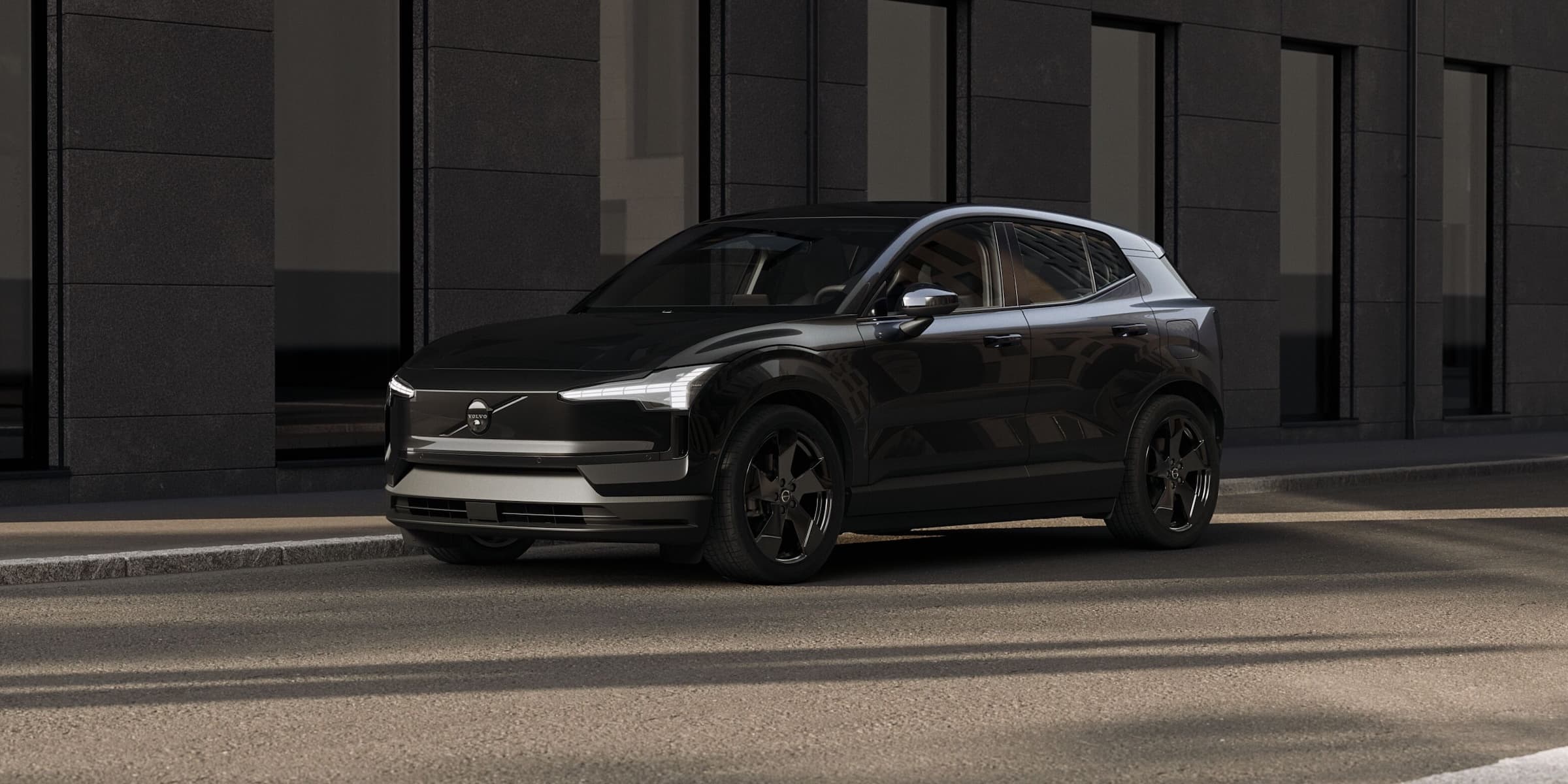
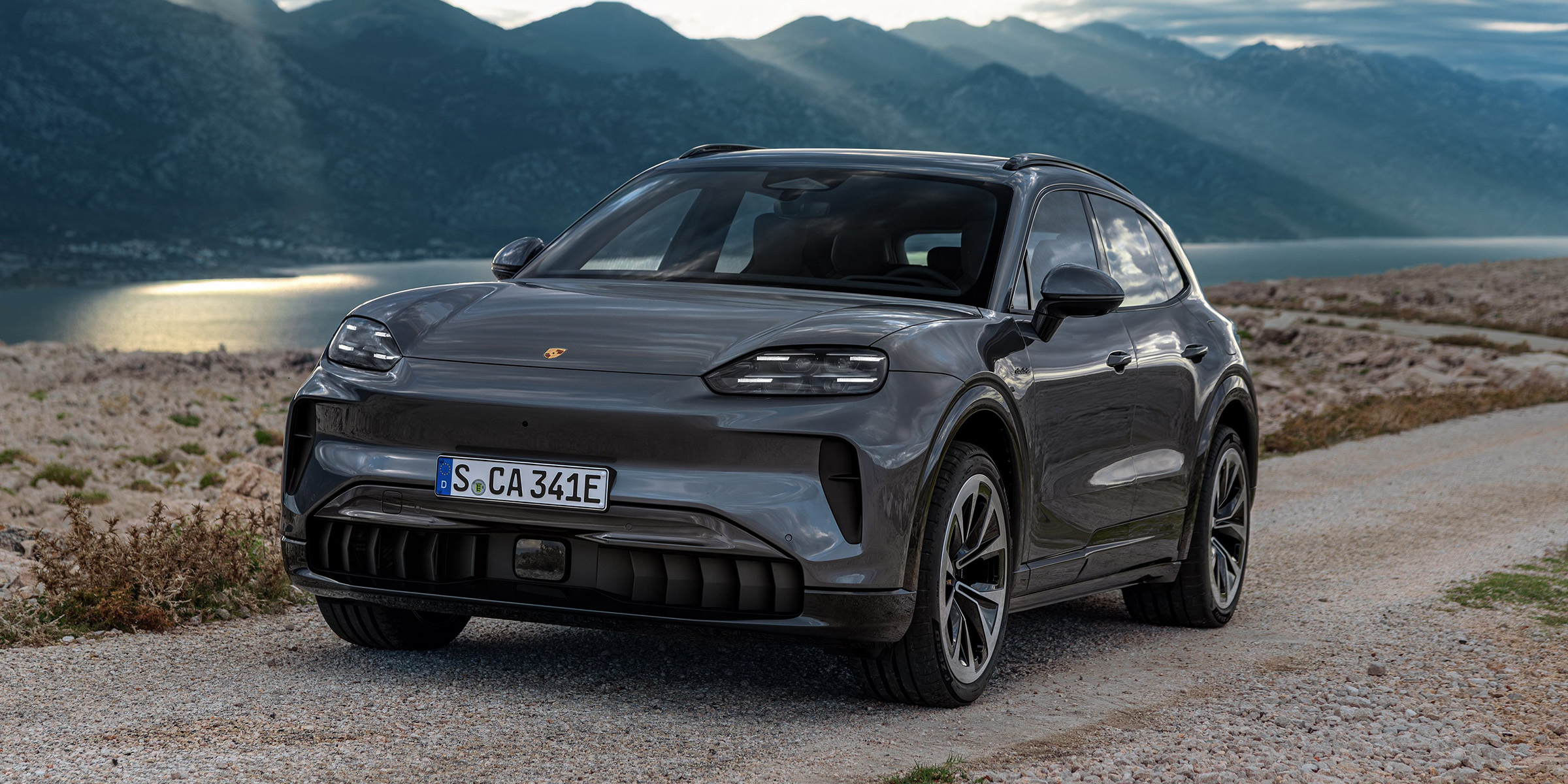
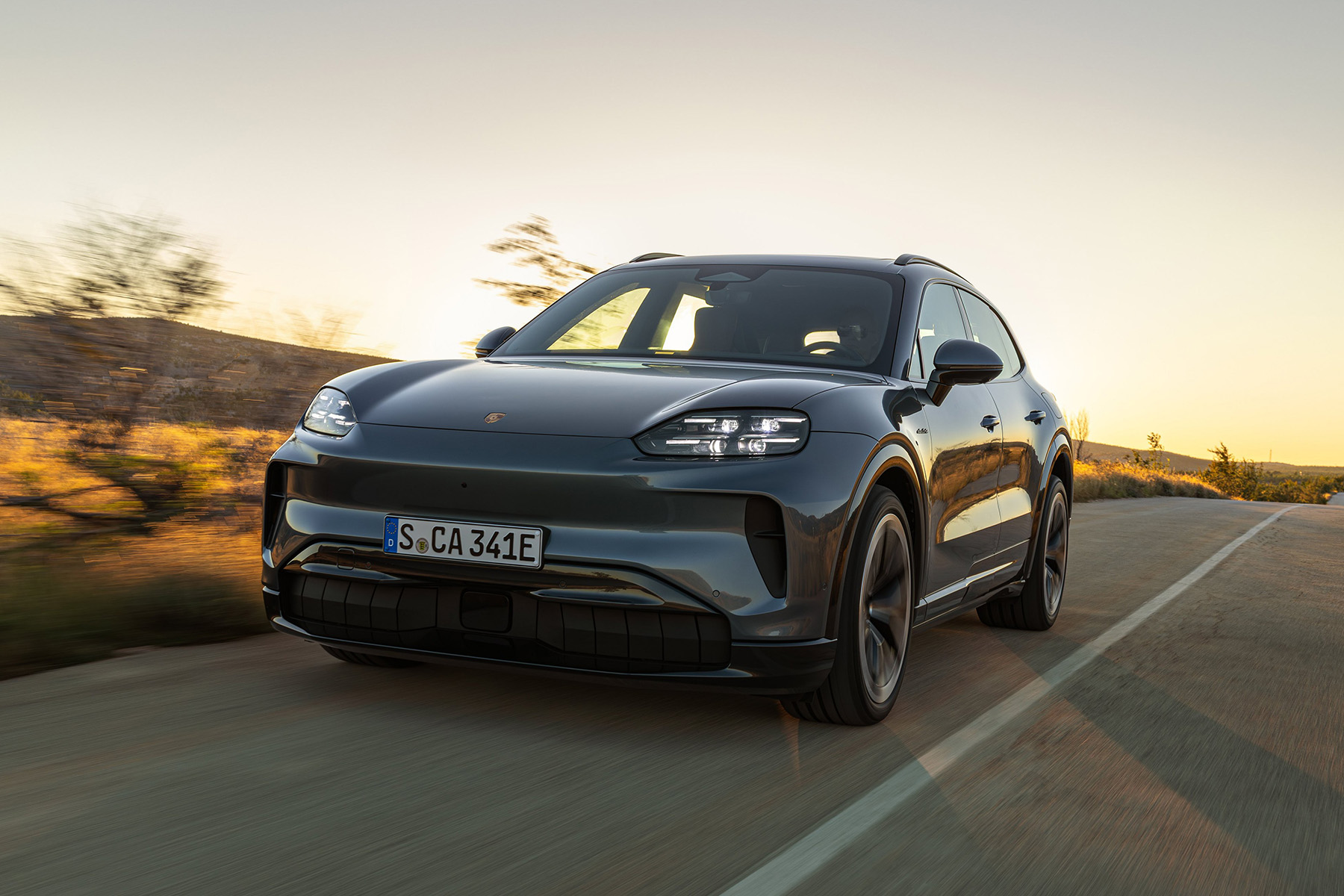
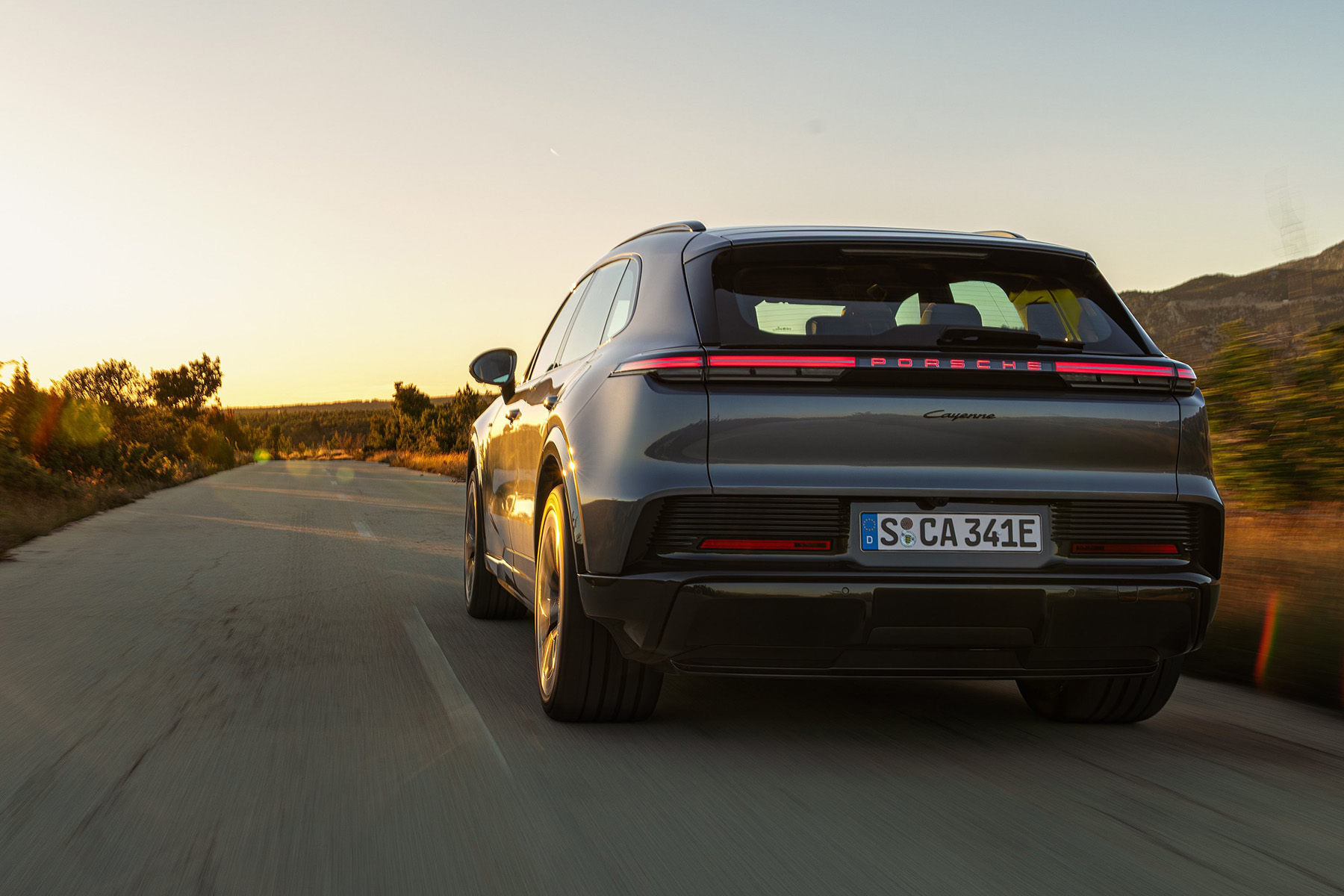
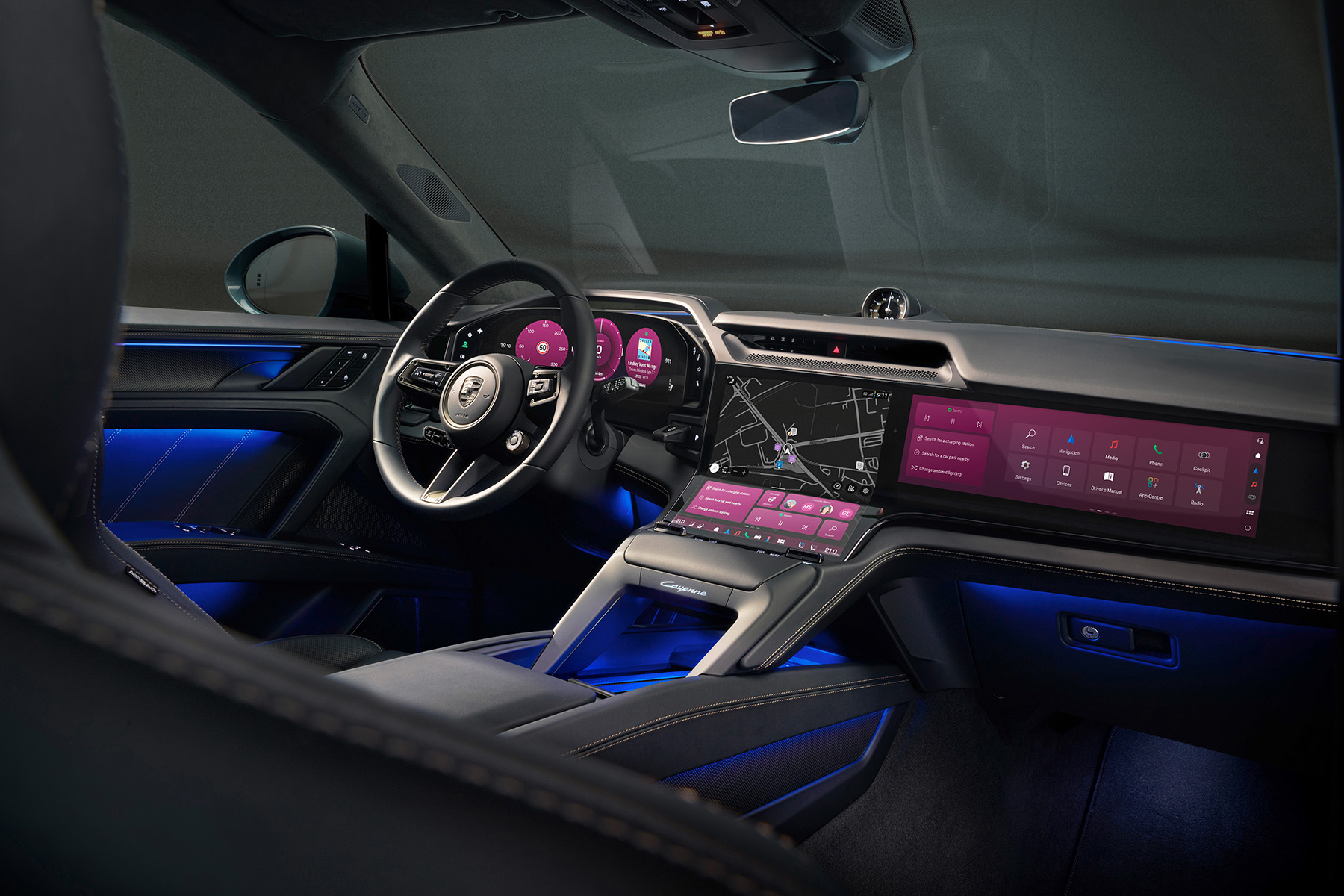
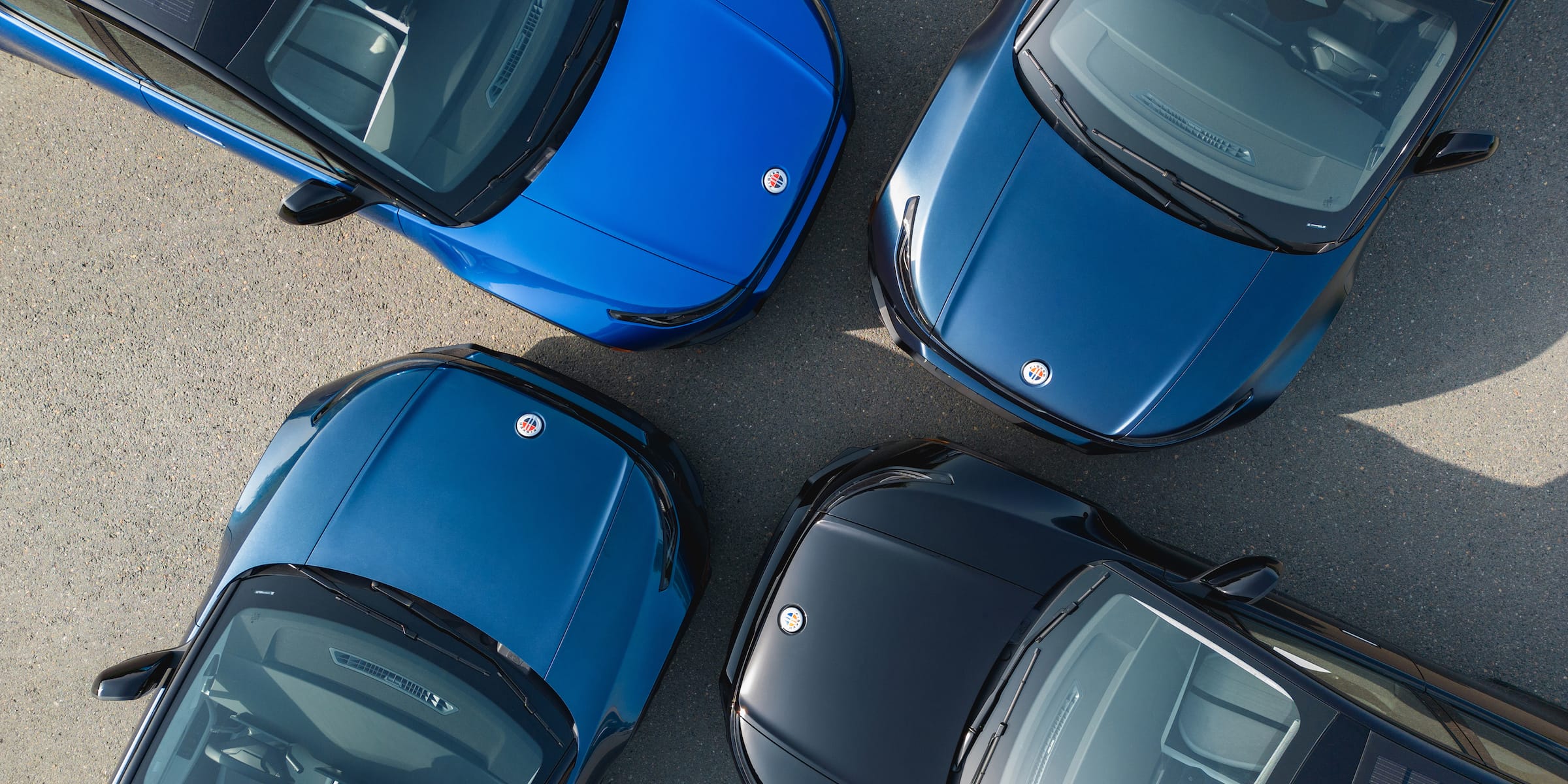
Volvo has introduced a Black Edition version of the Volvo EX30, adding a series of cosmetic tweaks to the compact electric SUV.
The new variant is now available for order in the UK and is offered on the Single Motor Extended Range and Twin Motor Performance versions of the EX30.
What’s different?
The Black Edition brings no mechanical changes. Instead, it adds gloss black styling details throughout.
These include black 19-inch alloy wheels, black exterior badging, tinted rear windows and dark-finished mirror caps and roof spoiler. The car is only available in Onyx Black paint.
Inside, the Black Edition uses a dark blue ‘Indigo’ fabric interior with recycled denim accents.
Battery size, power outputs and charging capability remain unchanged. The Single Motor Extended Range version continues to offer up to around 295 miles of official driving range, while the Twin Motor model remains the quicker option.
What does it mean for buyers?
In practical terms, the Black Edition is a styling package rather than a new model. It does not improve range, performance or technology over the standard EX30.
The Volvo EX30 was one of the UK’s best-selling electric cars in 2025, and this addition simply gives buyers another cosmetic option within the existing range.
The Black Edition is based on higher-spec trim levels and sits above entry versions in the line-up, with pricing starting just over £40,000.
For a broader ownership picture — including safety, running costs and warranty cover — see our full Volvo EX30 Expert Rating.
Make and model: Genesis GV60 Pure Description: Mid-size electric crossover Price range: From £53,300
Summary: The Genesis GV60 is a mid-size electric crossover with strong comfort, rapid charging and generous equipment. It remains competitive, but newer rivals now offer more range and space.
For a broader ownership picture, see our Genesis GV60 Expert Rating, which combines media reviews, safety data, reliability, running costs and warranty cover.
When the Genesis GV60 arrived in 2022, it was the first model from Hyundai’s luxury brand designed as an electric car from the start. It quickly became the most convincing car in the Genesis range.
This update brings modest styling tweaks, but the meaningful changes are mechanical. A larger battery improves driving range, while the 800-volt charging system remains one of the quickest available.
At more than £53,000, though, the GV60 sits in a fiercely competitive part of the market. The question isn’t whether it’s good – it is – but whether it’s still good enough after four years on sale.
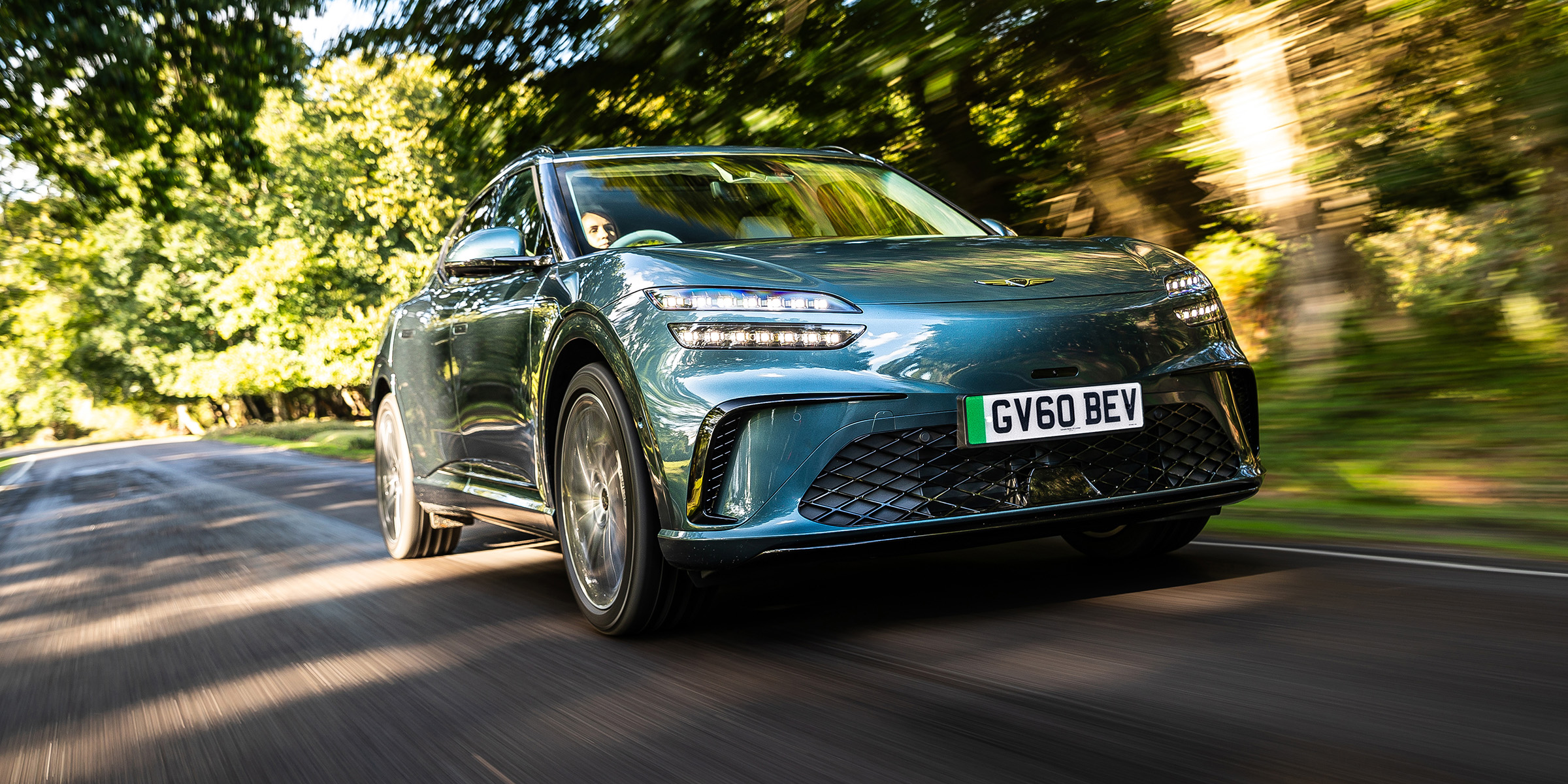
The Genesis GV60 combines coupe-like crossover proportions with distinctive front and rear lighting, subtly updated for this latest version.
Price and equipment
The range now starts with the rear-wheel-drive ‘Pure’ trim level, as tested here and priced from £53,300.
Power comes from a single electric motor producing 229hp, good for 0–62mph in 7.8 seconds. That’s comfortably quick for everyday use. Above it sit the dual-motor Sport and high-performance versions, but most buyers will find the Pure entirely sufficient.
The major update is the battery. Capacity rises from 77kWh to 84kWh, increasing the official driving range to 348 miles. That’s competitive, but some rivals now go further.
Charging is still one of the GV60’s strongest points. Its 800-volt system allows 10–80% charging in around 18 minutes on a suitably powerful 350kW public charger. That makes long journeys easier to plan.
Standard equipment levels are generous. Heated seats, heated steering wheel, synthetic leather upholstery, a heat pump, battery pre-conditioning and a power tailgate are all included.
Options packs are still available, which is increasingly unusual. Some add genuinely useful technology, but they’re expensive. It’s easy to push the GV60 well past £60,000, at which point competition becomes even tougher.
Genesis continues to include a five-year ownership package covering warranty, servicing, breakdown cover and collection for servicing. That remains a meaningful advantage over most rivals.
Inside the car
The GV60 makes good use of its purpose-built electric layout. There’s plenty of space in the front and adequate room in the rear, although headroom is tighter than in boxier alternatives.
Boot space is acceptable rather than generous. It’s usable for family life, but some competitors offer more. A small front storage compartment adds a little extra flexibility.
Build quality is strong. Materials feel solid and well assembled, and the overall design is distinctive without being gimmicky.
A new 27-inch integrated display now combines driver information and media functions in one wide panel. It looks modern and suits the car’s premium positioning. The system works well once you’re used to it, but the menu layout can feel busy and takes time to learn.
Genesis offers fingerprint and facial recognition for driver profiles. The fingerprint system works well. The facial recognition is clever, but unnecessary.
Overall, the cabin feels convincingly upmarket. It doesn’t quite lead the class for space or simplicity, but it’s well executed.
The cabin offers solid build quality and good passenger space, although rear headroom is slightly tighter than in some rivals.
Driving range and charging
With its 84kWh battery, the GV60 Pure is rated at up to 348 miles on the official UK/EU government lab testing cycle.
In real-world driving, 250–300 miles between charges is realistic depending on conditions. That’s more than enough for most owners, but a few rivals now offer longer official figures.
Where the Genesis still impresses is with its charging speed. The 800-volt architecture allows very rapid charging when connected to a high-powered public charger. A heat pump and battery conditioning system are standard, helping maintain efficiency in colder weather.
On the road
The GV60 is tuned for comfort rather than sharp handling.
Ride quality is one of its strongest attributes. It deals well with poor road surfaces and feels settled at motorway speeds. Noise levels are low, reinforcing the car’s upmarket feel.
Steering is accurate but not especially engaging. Through corners it feels secure and predictable, but it won’t excite keen drivers. That’s not necessarily a flaw – it simply reflects the car’s priorities.
Performance from the single-motor Pure is more than adequate. It’s smooth, responsive and easy to drive in traffic. You don’t need more power unless you specifically want it.
On the road, the GV60 focuses on comfort and refinement rather than sharp handling, delivering a composed and easy-driving experience.
Verdict
The Genesis GV60 remains the brand’s most convincing product. This update improves driving range and keeps charging performance among the best in the class, while the cabin continues to feel solid and distinctive. The five-year ownership package is a genuine differentiator.
However, the market has moved on. Some rivals now offer more space, longer range or sharper handling. Once options are added, the price becomes difficult to ignore.
The GV60 is still a strong alternative to the established German premium brands. It’s refined, well-built and easy to live with. It’s still good, but it’s no longer ahead of the pack.
For a broader ownership picture – including safety, reliability, running costs and warranty cover – see our full Genesis GV60 Expert Rating.
If your car won’t start, needs servicing or has developed an unexpected fault, getting it to a garage isn’t always practical.
A mobile mechanic can come to your home or workplace and carry out many common repairs on the spot. For busy households, or anyone who relies on their car every day, that convenience can make a big difference.
There are now several UK websites that help you find and book a mobile mechanic. Some are national organisations with their own technicians. Others connect you with local independent specialists.
Here’s how they compare — and which type of service suits different situations.
How mobile mechanic websites differ
Most platforms fall into one of three categories:
National organisations with their own mechanics You’re booking directly with a branded service, such as the AA or RAC.
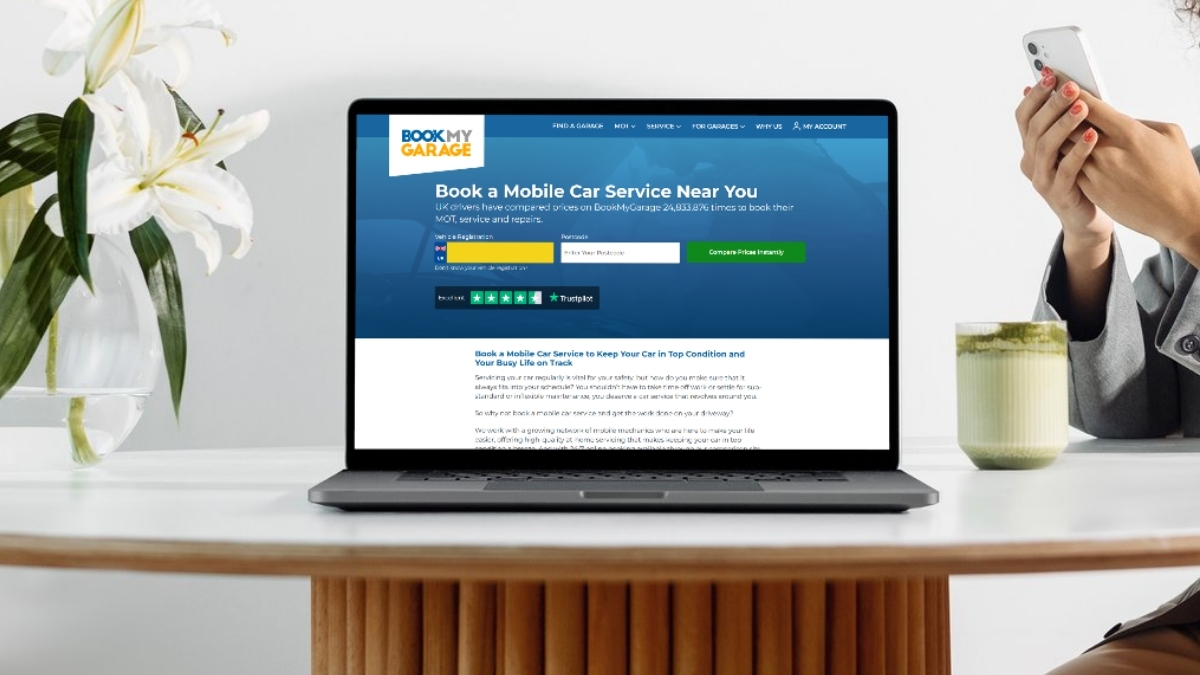
Comparison platforms These connect you with independent mobile mechanics in your area and allow you to compare quotes.
Retailer-based mobile services Typically limited to specific types of work, such as tyres or batteries.
Understanding the model helps you decide which route suits your needs.
What it does The RAC offers a mobile mechanic service covering common jobs such as servicing, diagnostics, brakes and battery replacements.
How it works You enter your registration and postcode, select the type of work required and receive fixed pricing for your vehicle. You then choose a date and book online.
Strengths Clear pricing and a recognisable national brand. Booking is straightforward.
Limitations Availability may vary by location, and more complex repairs may still require a workshop visit.
Best for: Routine servicing and common repair work from a well-known provider.
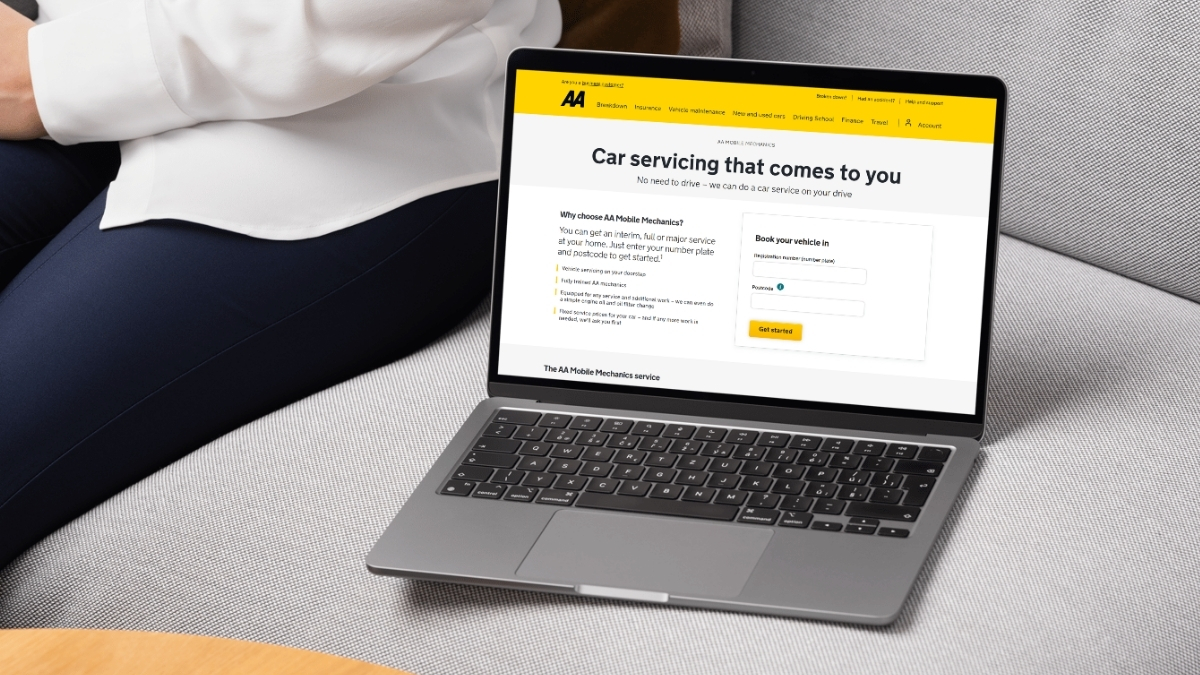
What it does The AA provides mobile servicing and repair through its own technicians.
How it works Enter your registration and postcode, choose the required work and receive a fixed quote. You book and pay online, and the mechanic comes to you.
Strengths Transparent pricing and a structured booking process.
Limitations Not every repair can be completed at home.
Best for: Drivers who prefer using an established national motoring organisation.
Commercial partnerships *The Car Expert has commercial partnerships with the AA, Book My Garage, Click Mechanic, Fix My Car and RAC. If you click through to their websites, we may receive a small commission. This does not affect our editorial selection.
Years ago, if you needed a spare part for your broken car, you would go to your local High Street (or back street) motor factors shop or dealership and get them to source it for you.
But the massive growth in internet use, advances in technology and, to some extent, the Covid lockdown period, have all opened the (car) door to a much larger world of online shopping. And that includes motor spares.
Businesses have set themselves up exclusively to supply the demand for spare parts, and have computer systems, massive warehouses and fleets of vans and drivers just waiting to find, pack and deliver that elusive item you need, to repair your car and get it back on the road.
The Car Expert has put together this list of potential sites to visit for spares. This is for drivers who want to find the right part for their car, easily, conveniently and at a competitive price. If you’re looking for performance upgrades or sporty bodykits, there might be more specialist sites to look at.
You’ll notice that some of the sites have an asterisk next to their name. These sites are commercial partners of The Car Expert, so if you click through to their sites and buy anything, we may receive a small commission. This does not affect the price you pay, but helps us keep the site running.
The best websites for buying car parts online in 2026
Servicing the UK and Republic of Ireland, Euro Car Parts’ 10,000 staff operate in 300 branches, fulfilment centres and distribution hubs.
The landing page takes you straight to the shopping area: choose from categories including batteries, oil, wiper blades, bulbs and tools from the drop-down menus across the top. Or go directly to the part you need.
For this you can either enter your car registration number to get specific information on ‘top searches’ or in ‘departments’, or if you don’t have a specific car go in via make, model, year, engine and fuel type.
There are latest offers, ‘trending’ products, special areas of interest such as ‘winter accessories’ and ‘travel and leisure’ and a news and blog section to keep you entertained.
With a vast range of car parts, accessories, batteries, oils and tools available, GSF offers free UK delivery on all orders over £25. You can even click and collect at one of their 180 branches if you’re in a hurry for a part.
From the landing page, there’s the invitation to ‘search the entire store’ or you can use drop-down menus to narrow down your hunt for service parts, wipers, steering or lighting spares, for example. You can, as with other sites, enter your car’s registration number and call up spares that way.
An ‘accessories’ section brings up car security, technology and travel & leisure among other topics, while ‘tools’ will likewise present you with a wide range of well-known manufacturers to have a look through.
There’s a ‘knowledge hub’ full of guides and advice articles, a section describing GSF’s nationwide branches and details on joining the company’s VIP Club for excusive discounts.
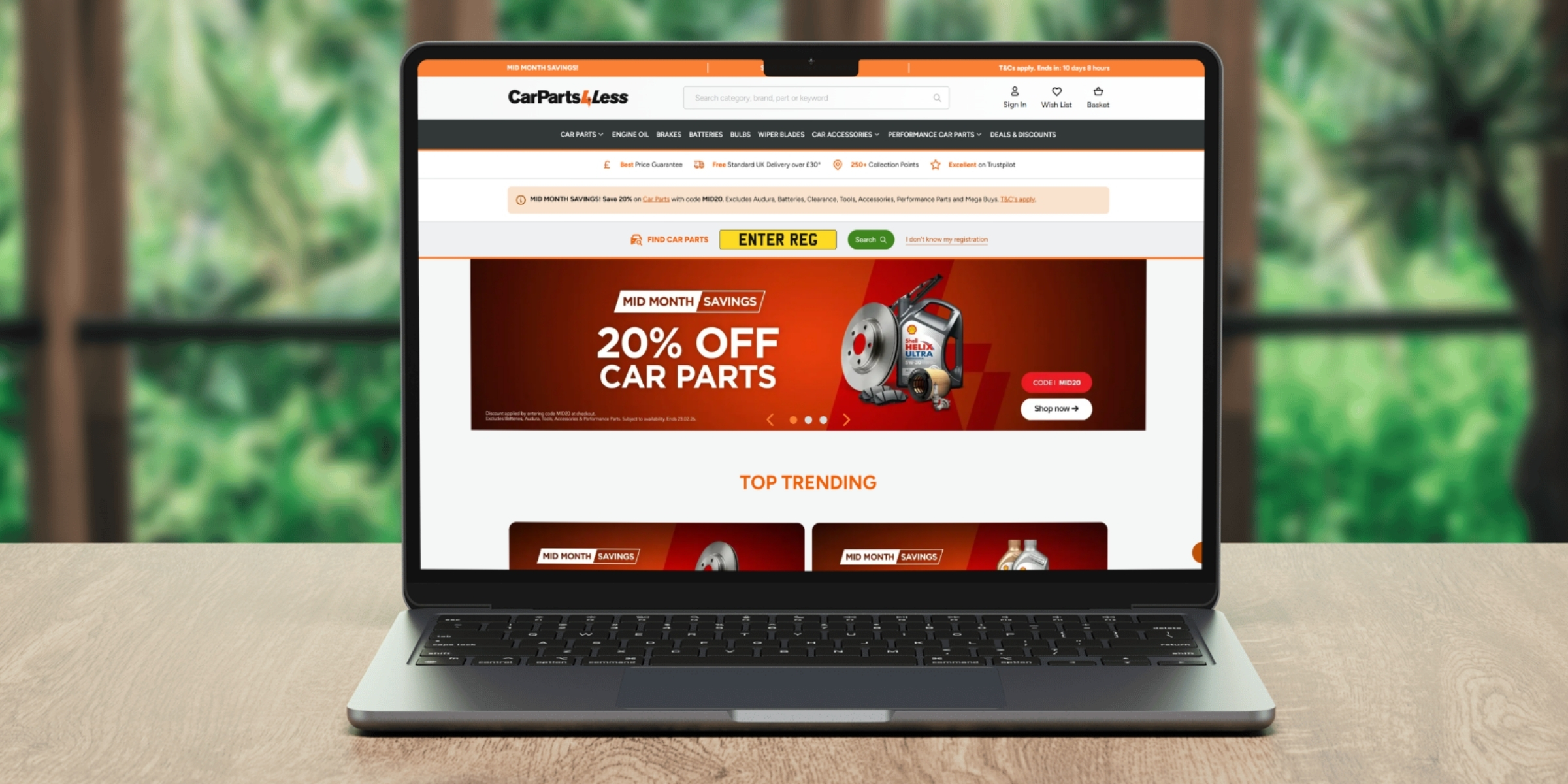
CarParts4Less have a wide range of stock in one of the largest online parts stores for cars and vans in the UK. They focus on offering the best prices and will price match other competitors subject to certain conditions. Free delivery over £30 is offered.
To search for parts there’s the registration number search or you can input vehicle make, model, engine and fuel type and look at the results that way. A drop-down menu on the landing page lists a cross-section of all the most popular parts while giving – if you need it – specific information on items such as wiper blades, batteries and engine oil.
‘Latest offers’ are listed on the landing page which also contains a breakdown of all stock, sorted into categories such as ‘service parts’, engine parts’ or ‘body & exhaust’.
Car care accessories and performance spares are listed separately and there’s a newsletter available to which you can sign up and receive discounts.
Operating in 27 European countries and with more than four million parts from 1400 for cars, vans and motorbikes, Autodoc is a big player in this arena.
Finding the right part is made easy by the fact that there are several ways to go about it. If you know the part number you can enter that into the search box immediately. Otherwise, input your vehicle registration number or look via the ‘make, model and engine’ search facility.
And if that doesn’t work for you, there’s the option to go to an online catalogue and search a category such as tyres, brakes, filters or body. If it’s engine oil you need add your car’s registration number and the Autodoc system finds the vehicle and the recommended lubricant, along with hundreds of other parts exactly for that model.
It even lists other recommended products for the car, right down to an indicator bulb. The site contains a help centre, advice blog and a news section.
A German organisation, Buycarparts has teamed up with Autodoc to supply spare parts, the latter is where Buycarparts gets its stock and is also a partner for sales contracts.
The set is bright and simple to use: there’s an initial search at the top of the landing page for ‘product, vehicle or brand’ or you can input your car registration number and browse that way or just go straight to the category of product you’re after.
Products are also listed by ‘top car parts’, ‘top manufacturers’ for any part, or ‘top sellers’ if you want to know what everyone else is choosing and fitting.
Tyres and wheels have categories that are separated from the rest, there’s a ‘special offers’ catalogue while the ‘Tools’ section offers a vast range with ‘Top’ categories currently trending as the most popular.
eBay is a massive online sales tool that is known the world over. So it’s no surprise that there’s a huge and varied choice available if you’re looking for that precise part for your car.
The nature of eBay’s online marketplace means it’s not as direct or specific as going to a specialist car spares retailer, but you might find what you want from a private individual at a good price. If you are after several bits to fix your car, you’ll have to trade with a number of sellers, rather than getting everything from one source, but if you are prepared to do the legwork, it can be significantly cheaper.
Many parts are brand new while others will be second-hand, but there are bargains to be had. There is also the perennial concern when buying from any second-hand marketplace that there will be stolen parts being advertised for sale, particularly from private sellers.
They say: Online shopping that really is convenient
This online spare parts shop has a product range of more than two million items, including 5,000 tyres, 2,000 car battery models, and more than 2,000 oils. The website offers spares from 500 premium manufacturers in ‘original parts quality’.
It’s an easy website to use and searching for a part can be done via part name, car (registration number), item ID or OEM number to find spares easily. If you go via the specific car details you are presented with a huge list of categories for that individual model, such as damping, clutch, electrics, glow plug system and towbar.
Scroll down further and there’s the opportunity to search within a range of popular car brands while the chance to sign up for the company’s newsletter offers ‘exclusive deals’.
Another huge, worldwide organisation, Amazon is known for its ability to make sourcing parts and having them delivered quickly (same day in some cases) easy and convenient.
Like eBay, Amazon doesn’t offer that bespoke individual parts retailing service but it does have the ability and know-how to find you lots of parts that you might need for your car.
Typing in, for example, ‘ford puma wiper blades’ will bring you a large choice of relevant items to look at and consider, many of them with free delivery. Specialist car parts businesses have even taken to offering and selling their stock on Amazon now, which demonstrates the strength and reach the site has.
You might need to go to different suppliers for a list of wanted parts but if you have an Amazon account, and many people do, you won’t have to keep inputting your name and address details.
With more than a million parts in stock and a claimed 5.5 million customers, Mister Auto is another large Europe-wide parts retailer, operating in more than 20 countries.
From the landing page, a ‘cover-all’ search engine will look for products, reference numbers or brands of parts, or you can search using your car’s make, model, engine and fuel type. ‘Most common brands’ are listed to help with this.
Scrolling down, the products are listed in sections such as filters, spark plugs, locks and steering. Once you have found your car, a list of available parts is shown – there’s a further ‘refine’ tool if you input the vehicle’s first registration date, although you can skip this.
It’s an easy-to-use site with pictures of products to assist and a simple design and display. A ‘top spare parts’ section lists the most commonly looked-for products, like tyres and brake pads, and there’s a good advice and maintenance section.
YMF Car Parts (York Motor Factors Ltd) was founded in 1969 by a husband and wife team out of an old butchers shop in York. Today the business operates from six sites in the North of England. They have a fleet of delivery vehicles plus there’s a trade counter collection service if you are close enough to one of their outlets.
‘All we need is your reg number’ says the message on the landing page: inputting that in the search box starts your hunt for parts for your specific vehicle. The smart-looking site is illustrated well by neat pictures and explanations of many of the parts.
Once you have found the spare you think you need, a click through to ‘view product’ helps you decide if it’s definitely right, with technical details, pictures and, of course, the price.
It’s a friendly site with offers of help along the way courtesy of a chat line. Free delivery is offered over £30 and there’s the option of signing up for a newsletter with ‘discounts and ideas’.
Motor World has been around for more than 25 years on the UK’s High Streets and was one of the largest chains of motoring stores in Britain. Today it offers a claimed 70,000 vehicle parts, car care products, accessories and tools, all available on-line under the ‘My Motor World’ banner.
The landing page shows you immediately the offering: across the top are drop-down menus for a range of products such as ‘Car parts, ‘Car care’, ‘Engine oil’ and ‘Wipers’. Of course, there are many different manufacturers, styles and price ranges to consider, so to make things simpler the website features an easy number plate look-up system.
Type in your car’s registration number and then, no matter which part or set of parts you’re looking for, you’ll only get choices related to your exact vehicle. No licence plate number? Just use the ‘entire range’ search box.
It’s a busy site but easy to navigate around. Products are shown well and pricing is clear, and if you become a ‘member’ there are discounts to be had.
A well-known name in the worlds of car parts, servicing, maintenance, cycling and leisure activities, Halfords has a UK network of Autocentres providing parts and repair services.
But its online shopping experience is just as comprehensive. ‘Never beaten on price’ the site says and you’ll see offers such as ‘£5 off today’ and ‘25% off’ dotted around the web pages.
It’s an easy site to use, especially if you have a registration number to input. Do that and you’ll be shown a huge range of parts categories to choose from including ‘Filtration’, ‘Suspension & steering’, ‘Body parts’ and ‘Ignition’.
Click on any of these and the lists become more specific until you drill down to exactly what you need. Then, if there is a choice, you choose the price that’s right for you. It’s a good site to navigate around – simply add products to your basket and when ready, go to ‘Pay’.
This internet-based business promises to use the ‘vast knowledge of its employees’ to help you find the best deals. It’s a modern approach, it says, but it hasn’t lost sight of the traditional values of customer service.
First things first then… enter your registration number in the parts search box. If you don’t have a license number, there’s a drop down section asking for make, model, engine size and other items to help with the search.
With number entered, the next page opens up to clearly set out the parts categories for your particular car. It’s simple and easy to use. Click on a section such as ‘Exhausts’ and a new page offers items such as ‘Catalytic converters’, Exhaust clamps’, ‘Silencers’ and a host of other items.
If you don’t see exactly what you want, there’s the option to email or inquire directly via the site to locate your part, which Online Automotive say ‘the chances are’ they will have.
A lot has changed since Southern Exhausts Supplies opened their doors in 1991. Still based in the south, SES Autoparts now offer much more than just exhausts – a full range of parts are available to order online.
From the home page there’s the opportunity to enter your car registration number or input the vehicle’s details using a variety of drop down menus. You can alternatively have a browse by clicking one of three other main drop downs.
There’s ‘Car parts’, ‘Tools’ and ‘Brands’. Click for car parts, for example, and you will be shown a big list of categories with all the usual choices. Choosing tools does a similar thing with a vast range of equipment listed, while the brands sector offers a list of manufacturers if you have a specific product in mind.
Once in the ‘Checkout’ area you have the option of ‘Click & collect’ or ‘Delivery’ to receive your goods. It’s a bright and attractive site offering great choice.
This article was originally published in February 2023. Last updated February 2026.
*The Car Expert has commercial partnerships with CarParts4Less, Euro Car Parts and GSF Car Parts. If you click through to their websites and make any purchases, we may receive a small commission. This does not affect the price you pay.
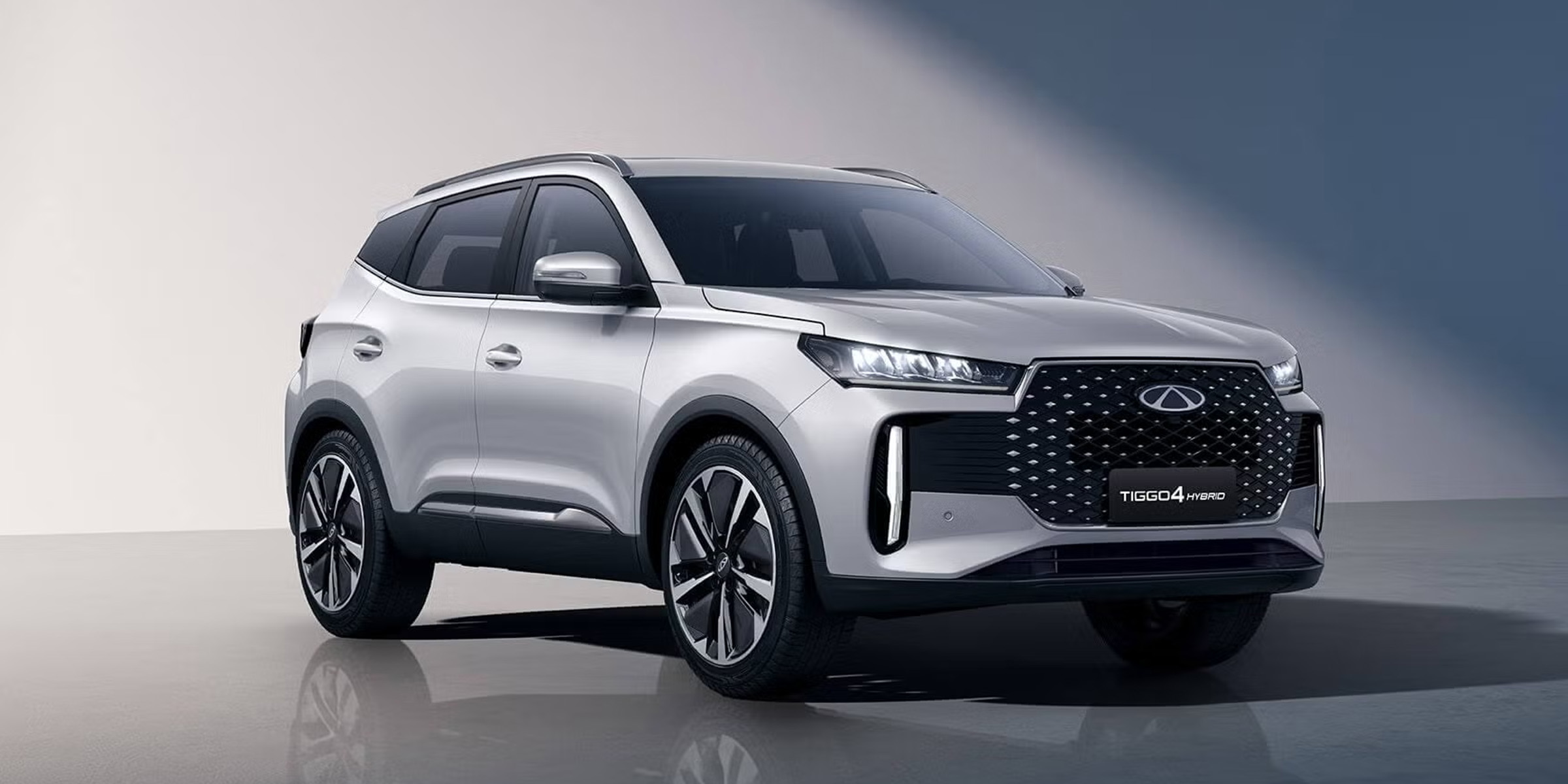
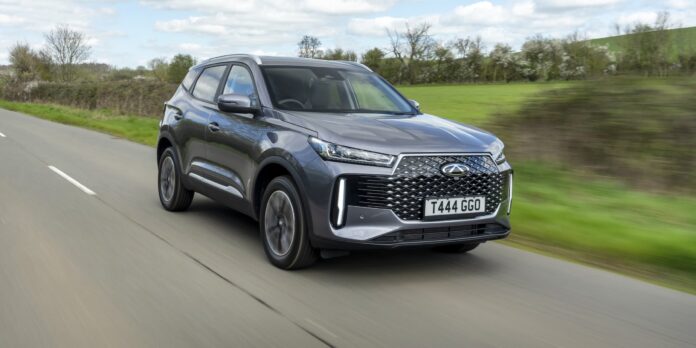
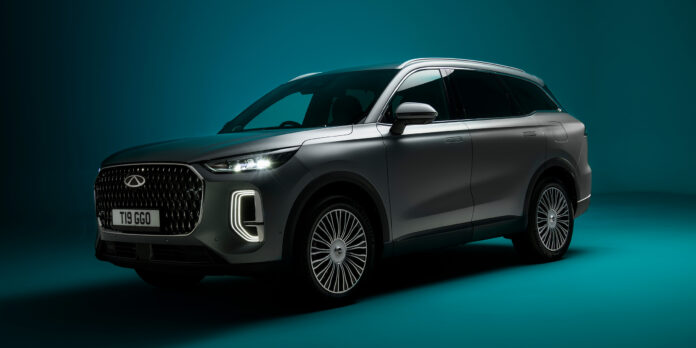
The Chery Tiggo 4 is a small petrol-electric hybrid SUV/crossover that is scheduled to arrive in UK showrooms sometime in 2026.
Set to rival compact high-riding hybrids like the GWM Haval Jolion Pro and Toyota Yaris Cross, the Tiggo 4 will be an important (hopefully) high-volume budget-end model for Chery, as the Chinese marque continues its rapid expansion into the UK market, undercutting established rivals on price.
Chery’s UK offering already includes the larger Tiggo 7, Tiggo 8 and Tiggo 9 SUV’s, and the manufacturer adds that the arrival of the Tiggo 4 will complete the Tiggo line-up.
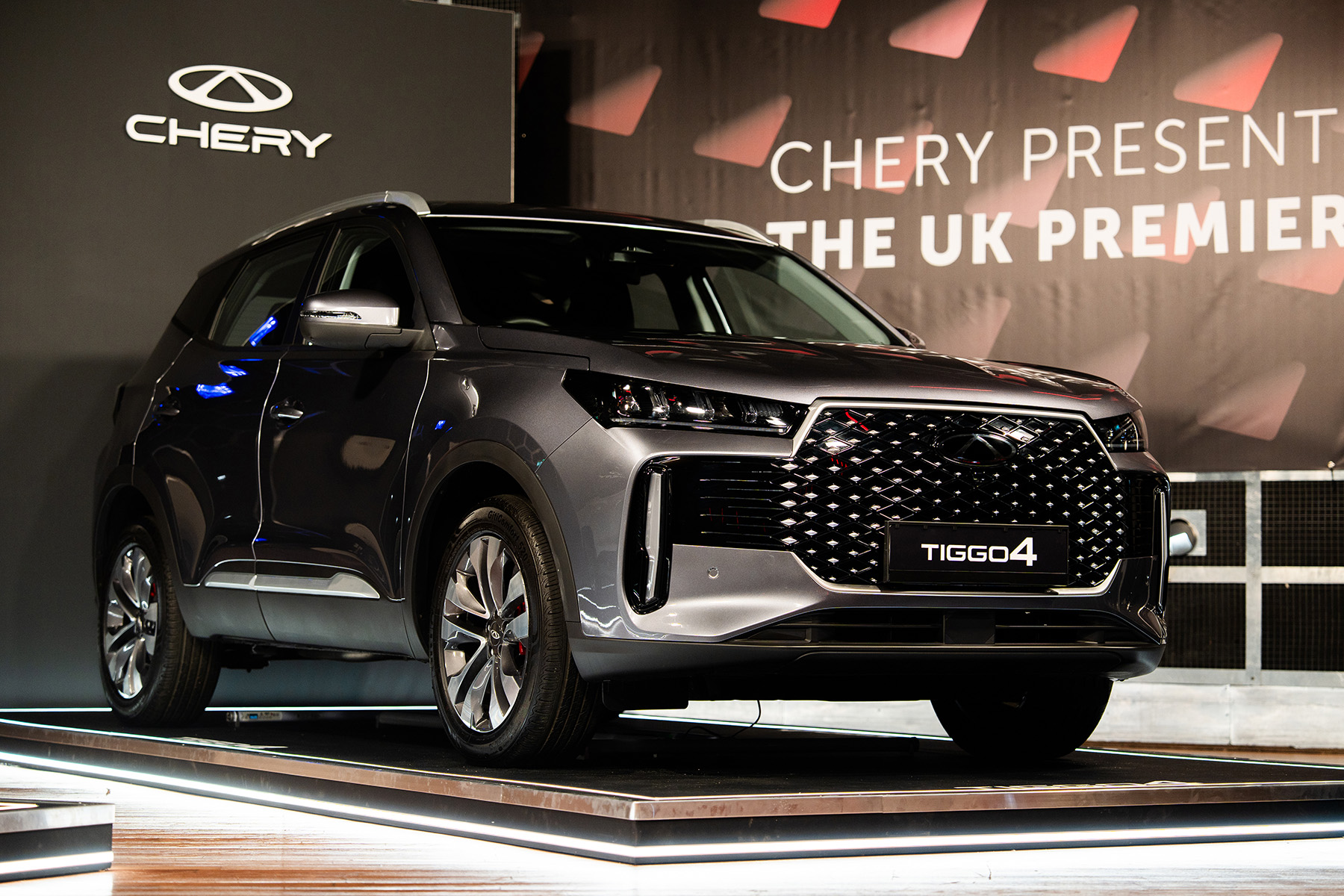
While the crossover is already on sale in Australia, no one in the British motoring media has got behind the wheel of the Tiggo 4, apart from the stationary display model pictured below. That means we have no review scores to display at the moment.
We will update this page with more information and reviews, as well as safety and running cost data, as soon as those are available. Check back soon!
Body style: Small SUV/crossover Engines:petrol-electric hybrid Price:TBA
Launching: 2026 Last updated: N/A Replacement due: TBA
Image gallery
Media reviews
Highlighted reviews and road tests from across the UK automotive media. Click any of the boxes to view.
There are no reviews on the Chery Tiggo 4 – foreign or UK-based test drives – to display here currently. Once reviews from the UK automotive media are published, we will update this section.
Safety rating
Independent crash test and safety ratings from Euro NCAP
Independent economy and emissions ratings from Green NCAP
No eco rating
As of February 2026, the Chery Tiggo 4 has not been assessed by Green NCAP.
Running cost rating
Monthly cost of ownership data provided exclusively for The Car Expert by Clear Vehicle Data
No data yet
As of February 2026, we don’t have independently verified data available for the Chery Tiggo 4. Check back again soon.
Reliability rating
Reliability data provided exclusively for The Car Expert by MotorEasy
No reliability rating
As of February 2026, we don’t have enough reliability data on the Chery Tiggo 4 to generate a reliability rating.
The Car Expert’s reliability information is provided exclusively to us using workshop and extended warranty data from our partner, MotorEasy, sourced from both official dealerships and independent workshops.
As soon as MotorEasy has sufficient data on the Tiggo 4, we’ll publish the results here.
Warranty rating
New car warranty information for the Chery Tiggo 4
Overall rating
A
88%
Petrol or diesel models
A
81%
Electric or hybrid models
A
98%
New car warranty duration
7 years
New car warranty mileage
100,000 miles
Battery warranty duration
8 years
Battery warranty mileage
100,000 miles
Chery’s new car warranty is better than average, and better than rival brands in a similar price bracket as the Tiggo 4.
The duration is seven years, with a limit of 100,000 miles. In addition to the standard new car warranty, this hybrid crossover has an eight-year/100,000-mile warranty for the battery components.
Warranty on a used Chery Tiggo 4
If you are buying an ‘Approved Used’ Chery Tiggo 4 from a Chery-approved third-party dealership, you will get a minimum one-year warranty included.
If you are buying a used Chery Tiggo 4 from an independent dealership, any warranty offered will vary and will probably be managed by a third-party warranty company.
If you are buying a used Chery Tiggo 4 from a private seller, there are no warranty protections beyond any remaining portion of the original new car warranty.
If you’re looking to buy any used car that is approaching the end of its warranty period, a used car warranty is usually a worthwhile investment. Check out The Car Expert’s guide to the best used car warranty providers, which will probably be cheaper than a warranty sold by a dealer.
As of February 2026, we are not aware of any DVSA vehicle safety recalls affecting the Chery Tiggo 4. However, recall information is updated regularly, so this may have changed.
You can check to see if your car has any outstanding recalls by visiting the DVLA website or contacting your local Chery dealer.
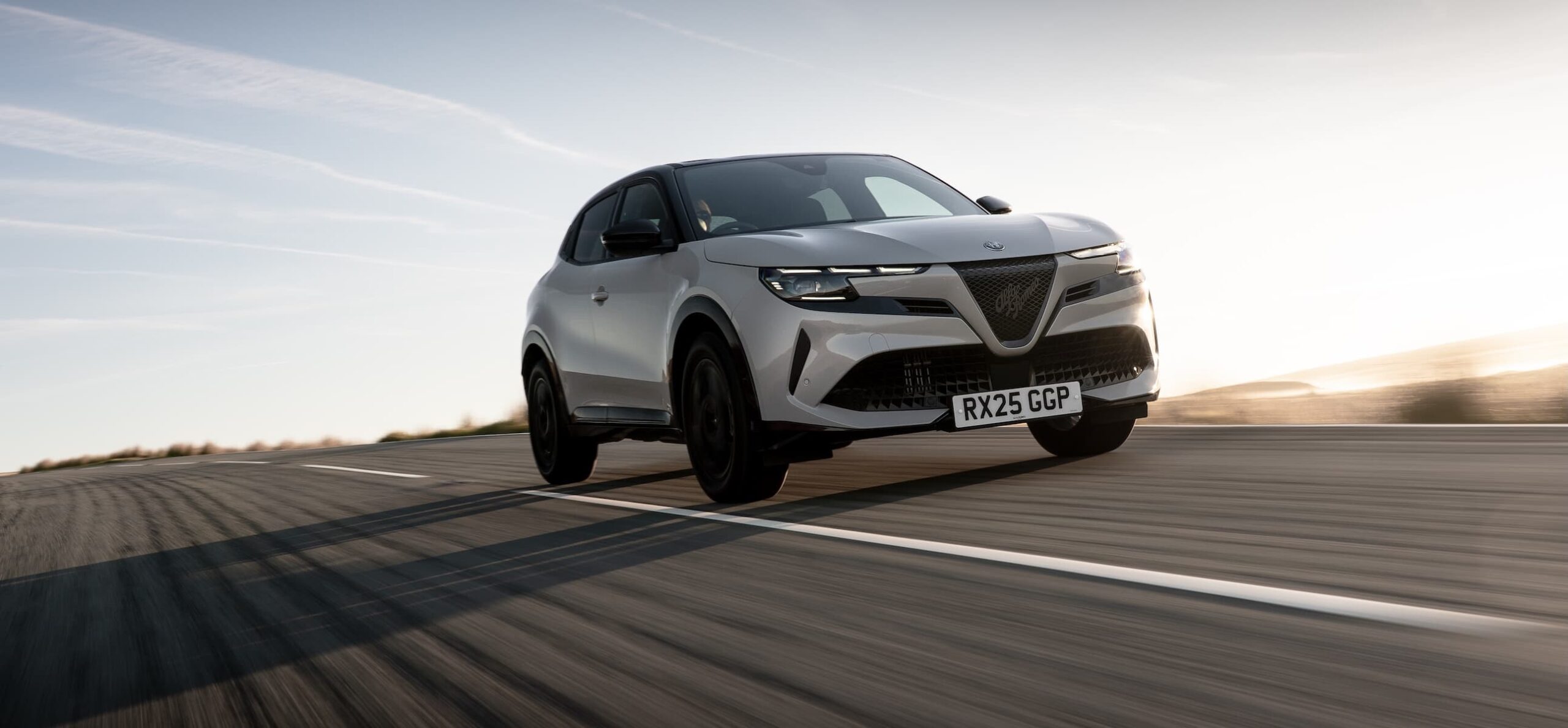
Make and model: Alfa Romeo Junior Ibrida Description: Small-medium petrol SUV with mild hybrid assistance Price range: from £29,000
Summary: The Alfa Romeo Junior Ibrida looks distinctive and drives tidily, but the engine is disappointingly unrefined and it doesn’t fully deliver the character you might expect from the badge.
The Alfa Romeo Junior Ibrida is the petrol-powered version of Alfa’s new small SUV. While the Junior Elettrica is fully electric, the Ibrida uses a 1.2-litre petrol engine with mild hybrid assistance. If you’re considering the electric version, see our full Alfa Romeo Junior Elettrica review and its Expert Rating, which combines safety, running costs, reliability and warranty data.
We tested the Junior Ibrida on UK roads to see whether it offers a more convincing driving experience than its electric sibling — and whether it feels like a genuine Alfa Romeo rather than another Stellantis small SUV with Italian badges.
It’s called ‘Ibrida’, which is Italian for ‘hybrid’, but it’s really only a mild hybrid system so it can’t drive on electric power alone. This system is widely used across the Stellantis group, appearing in cars such as the Peugeot 2008 and Vauxhall Mokka.
So while the badge is Italian, the engineering underneath is shared with many other cars. Alfa aims to set it apart with sharper styling and chassis tuning. Over a week’s use, this blend of familiar engineering and badge distinction defined much of the experience.
For a broader ownership picture, see our Alfa Romeo Junior Ibrida Expert Rating, which combines media reviews, safety data, reliability, running costs and warranty cover.
The Junior Ibrida’s styling is almost indistinguishable from the Elettrica electric version
Price and equipment
The Junior Ibrida starts at around £29K, making it cheaper than the electric Junior and well positioned against petrol or hybrid rivals such as the Ford Puma, Peugeot 2008 and Vauxhall Mokka.
There are several trims, with higher-spec versions adding larger alloy wheels, upgraded interior trim and more driver assistance technology.
Equipment levels are competitive, and most buyers won’t feel short-changed on features. But once you start adding options, pricing quickly approaches larger or more spacious alternatives.
Inside the car
The Junior Ibrida’s cabin mirrors the electric version. The dashboard design is clean and modern, with Alfa’s traditional twin-dial theme reinterpreted digitally.
Build quality feels solid, and it’s good to see proper physical climate controls rather than burying everything inside a touchscreen. The infotainment system is straightforward to use and responds quickly enough, even if the graphics aren’t class-leading.
Where the Ibrida falls slightly short is in distinctiveness. Much of the switchgear is familiar from other Stellantis products. If you’re expecting something that feels uniquely Alfa Romeo inside, you may be underwhelmed.
Front-seat space is fine for adults, but rear legroom is tight compared with some dedicated EV rivals. There’s also a transmission tunnel running through the middle of the rear floor, which compromises comfort for a third passenger.
Boot space is broadly in line with rivals, though not outstanding.
Much of the switchgear is shared with other Stellantis cars. Rear legroom is tight, although no worse than most rivals.
On the road
The Junior Ibrida feels competent and predictable in everyday driving, but it doesn’t quite deliver the sparkle traditionally associated with Alfa Romeo.
The 1.2-litre petrol engine produces adequate performance for urban and motorway use, but it’s not particularly refined and certainly doesn’t sound distinctive. The mild hybrid system smooths low-speed driving and makes stop-start traffic less jerky than a conventional petrol setup.
Under harder acceleration the engine can sound coarse, and it never feels particularly eager. Compared with the Junior Elettrica, which delivers smooth and instant electric response, the Ibrida feels more conventional and noticeably less refined.
Alfa has tuned the steering and suspension to give the car slightly sharper responses than its Stellantis siblings. It turns in neatly and feels stable through bends. Ride comfort is reasonable, although we were driving the entry-level model on smaller wheels. The larger wheels fitted to higher trims are likely to make it firmer on potholed and broken surfaces.
Overall, it’s tidy rather than thrilling. There’s competence here, but not much emotional character.
Handling is sharper than Stellantis siblings, but still not particularly sporty or fun to drive
Verdict
The Alfa Romeo Junior Ibrida makes sense on paper. It’s cheaper than the electric version, well equipped and easy to drive. But it doesn’t feel particularly special.
The styling stands out and the handling is tidy, yet the engine feels ordinary and the cabin doesn’t fully justify the premium positioning. After driving the Junior Elettrica, the petrol version feels like a backward step.
You’d have to really want an Alfa Romeo, really not want an electric car, and not be too concerned about getting the best car for your money to choose the Junior Ibrida.
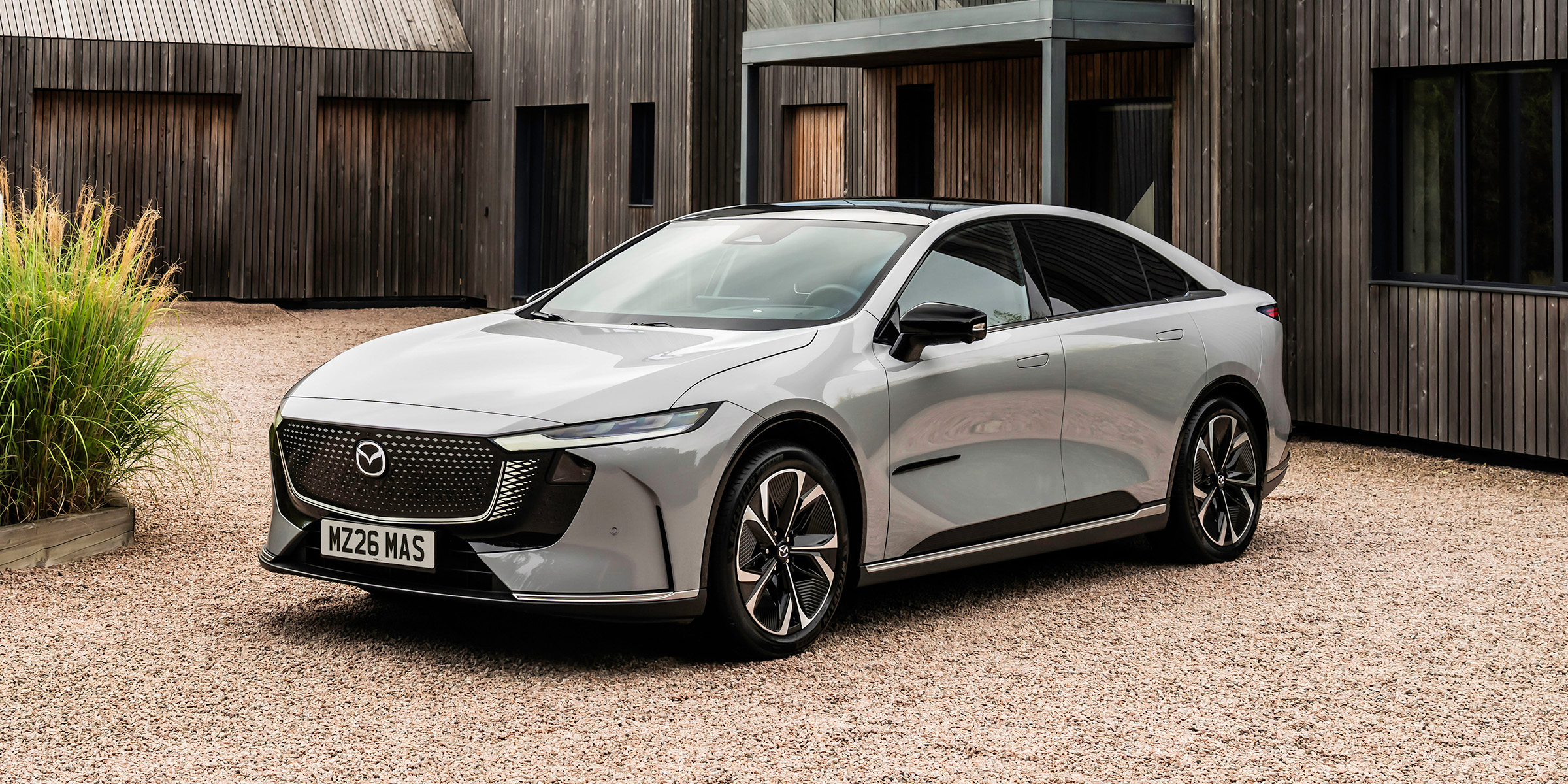
Mazda has announced the price list for its new all-electric Mazda 6e saloon, which will arrive in the UK this summer with two trims to choose from.
This fourth-generation Mazda 6 range – now electric only – is the third battery-powered car Mazda to arrive on UK roads, after the compact MX-30 crossover and its range extender sister model.
While the saloon is launching across mainland Europe with two powertrain options – an entry-level 69kWh and top-spec 80kWh battery, the Mazda 6e will only be sold in Britain with a 258hp 78kWh powertrain, which delivers an official range of 348 miles and a 0-62mph sprint time of 7.9 seconds – a 10% to 80% battery top-up taking around 24 minutes when using a 195kW DC rapid charging station.
Inside, a 15-inch infotainment touchscreen and ten-inch digital instrument cluster are paired together on the dashboard, complemented by an augmented reality head-up display that projects driving information onto the windscreen.
Opening the boot reveals 336 litres of boot space – over 100 litres less than its petrol-powered predecessor. That said, you do also get 72 litres of add ‘frunk’ storage space under the bonnet.
Two trims will be offered when the electric saloon arrives in UK showrooms this Summer – the ‘Takumi’ and ‘Takumi Plus’. ‘Takumi’ models will feature black or stone ‘Maztex’ artificial leather, while ‘Takumi Plus’ offers tan Nappa leather with artificial suede cloth woven fabric seat trim.
Pricing for the new range will begin at just south of £39k for the ‘Takumi’, rising to £40k for the ‘Takumi Plus’.
Many cars drive from the front, some deliver their power through the rear and yet more have 4×4 capability. But what does it all mean, and which do you need?
The growth of SUVs and crossovers in recent years has left thousands of motorists longing for a rugged car with four-wheel-drive capability. But many 4×4 lookalikes aren’t actually four-wheel drive at all and, even though they might look the part, many put their drive through only two wheels – front or rear.
And separately, there are plenty of road cars that offer four-wheel drive – also known as all-wheel drive – especially in sportier performance models.
There are advantages and disadvantages in all of these drive set-ups, so which one do you need? Are you a regular user of roads that leave the beaten track behind and head for the hills? Do you do a lot of towing? Are you a low-use town driver? Do you like the feel of total grip as you power through a corner on a fun Sunday morning blast?
Here we look at the various transmission offerings and set out each one’s case for you. Before we go through the pros and cons of each, here’s a simple breakdown of how each system works…
For: In front-wheel drive (FWD) cars, all the power and transmission technology is fitted together at the front of the car. There are no extra components such as a drive shaft running the length of the vehicle (and therefore no intrusive transmission tunnel) so there’s less chance of something becoming noisy or going wrong.
Front-driven cars are common today and the technology appears in thousands of different models of all shapes and sizes. The compact nature of a front-drive setup keeps things simpler and generally more reliable. Fewer components mean less weight, which will save you money in terms of everyday running costs such as fuel use.
Many drivers prefer the predictability of a FWD car on the road, especially in snow and ice, where rear-wheel drive vehicles are more likely to slip and slide. With the weight of the engine being over the driven wheels of a front-wheel drive car, there’s likely to be more grip when the going gets slippy.
Against: Because the front wheels are having to do both the steering and the powering, there is a greater chance of understeer – where the front tyres start to lose grip in a corner. You could also experience oversteer, especially if you decelerate in the middle of a corner and the back of the car gets lighter as the weight shifts forward.
This could end up in the car spinning. Front tyres will also wear more quickly on a front-driven car as they are working harder, plus they are more likely to wheel spin during hard acceleration from standstill.
Do I need it? For most drivers, the convenience, extra space and versatility of a front wheel drive car is the decider. Easier, more predictable to drive and often more comfortable than a rear-wheel drive car, FWD will offer you, and thousands of other drivers, everything you need in a car.
For: Rear-wheel drive (RWD) cars are generally sportier or higher end vehicles. True sports machines such as Ferraris and Porsches will be rear-driven but, as their engines are usually at the rear too, the weight over the driven wheels will have the same effect as a front-engined, front-wheel drive car in terms of grip and handling.
Many standard saloon-type cars that have a sportier edge, such as BMW and Mercedes-Benz models, will feature front engines but rear drive. Hit a pothole in a rear-wheel drive car and you’re unlikely to do any damage to the drive and transmission as you might with a front-driven car.
Enthusiastic drivers who like to get the best out of their cars on a winding road, can enjoy the rear-wheel drive experience which includes sharp cornering ability and the feeling that you’re being ‘pushed’ along the road rather than ‘pulled’. Hard acceleration is usually better too, as the weight shifts to the rear of the car as you pull away. Rear-wheel drive cars are better balanced as the weight of their components are spread out across the entire vehicle.
Against: Likely to be more expensive than a front-wheel drive equivalent because of the extra technology and components needed. When the weather gets bad you’re more likely to wheel spin or slide. Give the car too much throttle and you could easily start an out-of-control spin – in fact some drivers have perfected this and do impressive looking ‘doughnuts’. Rear tyres will wear quicker than on a FWD car.
Do I need it? Yes, if you enjoy performance, sport and a bit of driver input in your motoring. Rear-wheel drive cars are usually built as “driver’s cars” and can offer excitement, greater enjoyment and that little bit of exotica or luxury.
For: As the name suggests, a four-wheel drive (4WD) car, often badged 4×4, has four driven wheels, each of them connected to the car’s transmission via a transfer case.
Modern 4x4s will evenly distribute power between the wheels in normal driving conditions, usually sending more of the power to the front wheels in normal, dry road conditions. When things start to get rough or slippery the system comes into its own and works harder to send power to the wheels that need it most as they slip and scrabble to find grip.
In harsh conditions, the system can be locked, which sends equal power to each wheel to ‘force’ the car forwards and out of trouble. Four-wheel drive cars are perfect for drivers who regularly use remote or poor quality roads or routes affected by bad weather.
However, it’s also employed in high-performance machinery such as a Porsche 911 Carrera 4S, where ultimate grip is essential. Having 4WD can be useful if towing heavy loads such as a large caravan.
Against: Four-wheel drive is typically found on more expensive higher-end vehicles and for good reason – there’s a lot of technology in there which has to be paid for.
There are some cheaper 4x4s – Fiat Panda, Dacia Duster or Suzuki Jimny for example – but 4WD is usually associated with more premium models. With all that technology comes extra weight and therefore higher motoring costs. There are more moving comments to fail and four wheel drive can increase tyre wear too.
Do I need it? – If you live on a farm, in a remote area or somewhere where the weather is more often bad than good, a 4WD car is worth considering. For some people, just knowing that they have four wheel drive capability, should they need it, is enough to sway them towards a 4×4 model. If your budget can stretch to that luxury, the peace of mind of a 4×4 is something worth having.
The Chery Tiggo 9 is a large seven-seat combustion-powered SUV, and the third model from Chinese automotive giant Chery to arrive on UK roads, following the smaller Tiggo 7 and Tiggo 8.
Now on sale in the UK, the Tiggo 9 is currently only available in the petrol plug-in hybrid variety, which its manufacturer calls the ‘CSH’, or ‘Chery Super Hybrid’. Most of the British motoring media has now published reviews on this flagship SUV, with the reviewer outlook being generally positive, particularly due to the Tiggo 9’s practicality and attractive price tag.
“The level of equipment is remarkable”, says Steve Fowler of The Independent, “the front-seat comfort is excellent, and the Super Hybrid system delivers a rare combination of strong performance and genuine efficiency.”
Tim Pitt of Motoring Research notes that the Chery “feels less polished than most rival seven-seat SUVs”, particularly when it comes to driving experience which is hindered by “vague steering and grabby brakes”, but adds that “its affordable price, plentiful standard equipment and seven-year warranty could outweigh such shortcomings if your focus is value for money.”
Carwow’s Tom Wiltshire also criticises the car’s “floaty” driving experience, concluding that “the way it drives doesn’t justify the price tag.” That said, Erin Baker of Autotrader argues that the Tiggo 9 “might just be the best-handling Chinese SUV yet, which should make European brands sit up.”
As of February 2026, the Chery Tiggo 9 holds a New Car Expert Rating of B, with a score of 66%. While the SUV’s review scores have been fairly average, this overall rating is bolstered by Chery’s generous seven-year warranty.
“The Tiggo 9 offers great equipment levels, competitive pricing and an impressive plug-in hybrid system. The driving experience lets it down slightly, though most big families will happily overlook that aspect.”
Model reviewed: Range overview Score: 9 / 10 “Crucially, it might just be the best-handling Chinese SUV yet, which should make European brands sit up.” Author: Erin Baker Read review
Car
Model reviewed: Range overview Score: 6 / 10 “It’s a long way from perfect, lacks a clear brand identity and the third row remains an occasional-use solution. But for those who can forgive these compromises in exchange for price and specification, there’s a lot to recommend it.” Author: Keith Adams Read review
Honest John
Model reviewed: Range overview Score: 6 / 10 “The Chery Tiggo 9 provides a whole heap of practicality, versatility and standard equipment for a very appealing price compared with rivals. It also impresses for interior quality, comfort and refinement. It’s patchy in terms of dynamics and ergonomics, though.” Read review
Motoring Research
Model reviewed: Range overview Score: 7 / 10 “The Tiggo 9 feels less polished than most rival seven-seat SUVs, particularly to drive. Nonetheless, its affordable price, plentiful standard equipment and seven-year warranty could outweigh such shortcomings if your focus is value for money.” Author: Tim Pitt Read review
Parkers
Model reviewed: Range overview Score: 7.6 / 10 “f you can live with the notion of buying a car from an unknown brand, the Chery Tiggo 9 has a lot going for it, and certainly feels more resolved than some of its less well-developed smaller sister cars from Omoda and Jaecoo.” Author: Keith Adams Read review
The Independent
Model reviewed: Range overview Score: 8 / 10 “t doesn’t shout about itself, and the styling is deliberately conservative, but spend time with it and the strengths quickly become clear. The level of equipment is remarkable, the front-seat comfort is excellent, and the Super Hybrid system delivers a rare combination of strong performance and genuine efficiency.” Author: Steve Fowler Read review
Top Gear
Model reviewed: Range overview Score: 7 / 10 “It is not exciting or different in terms of offering anything we haven’t seen before, but what it is, is laser focused on what matters to most family car customers, and Chery hasn’t wasted too much time on the rest.” Author: Jack Rix Read review
Safety rating
Independent crash test and safety ratings from Euro NCAP
No safety rating
As of January 2026, the Chery Tiggo 9 has not been assessed by Euro NCAP.
Eco rating
Independent economy and emissions ratings from Green NCAP
No eco rating
As of January 2026, the Chery Tiggo 9 has not been assessed by Green NCAP.
Running cost rating
Monthly cost of ownership data provided exclusively for The Car Expert by Clear Vehicle Data
No data yet
As of January 2026, we don’t have independently verified data available for the Chery Tiggo 9. Check back again soon.
Reliability rating
Reliability data provided exclusively for The Car Expert by MotorEasy
No reliability rating
As of January 2026, we don’t have enough reliability data on the Chery Tiggo 9 to generate a reliability rating.
The Car Expert’s reliability information is provided exclusively to us using workshop and extended warranty data from our partner, MotorEasy, sourced from both official dealerships and independent workshops.
As soon as MotorEasy has sufficient data on the Tiggo 9, we’ll publish the results here.
Warranty rating
New car warranty information for the Chery Tiggo 9
Overall rating
A
88%
Petrol or diesel models
A
81%
Electric or hybrid models
A
98%
New car warranty duration
7 years
New car warranty mileage
100,000 miles
Battery warranty duration
8 years
Battery warranty mileage
100,000 miles
Chery’s new car warranty is better than average, and better than rival brands in a similar price bracket as the Tiggo 9.
The duration is seven years, with a limit of 100,000 miles. In addition to the standard new car warranty, the Chery Tiggo 9 plug-in hybrid has an eight-year/100,000-mile warranty for the battery components.
Warranty on a used Chery Tiggo 9
If you are buying an ‘Approved Used’ Chery Tiggo 9 from an official Chery dealership, you will get a minimum one-year warranty included.
If you are buying a used Chery Tiggo 9 from an independent dealership, any warranty offered will vary and will probably be managed by a third-party warranty company.
If you are buying a used Chery Tiggo 9 from a private seller, there are no warranty protections beyond any remaining portion of the original new car warranty.
If you’re looking to buy any used car that is approaching the end of its warranty period, a used car warranty is usually a worthwhile investment. Check out The Car Expert’s guide to the best used car warranty providers, which will probably be cheaper than a warranty sold by a dealer.
As of January 2026, we are not aware of any DVSA vehicle safety recalls affecting the Chery Tiggo 9. However, recall information is updated regularly, so this may have changed.
You can check to see if your car has any outstanding recalls by visiting the DVLA website or contacting your local Chery dealer.
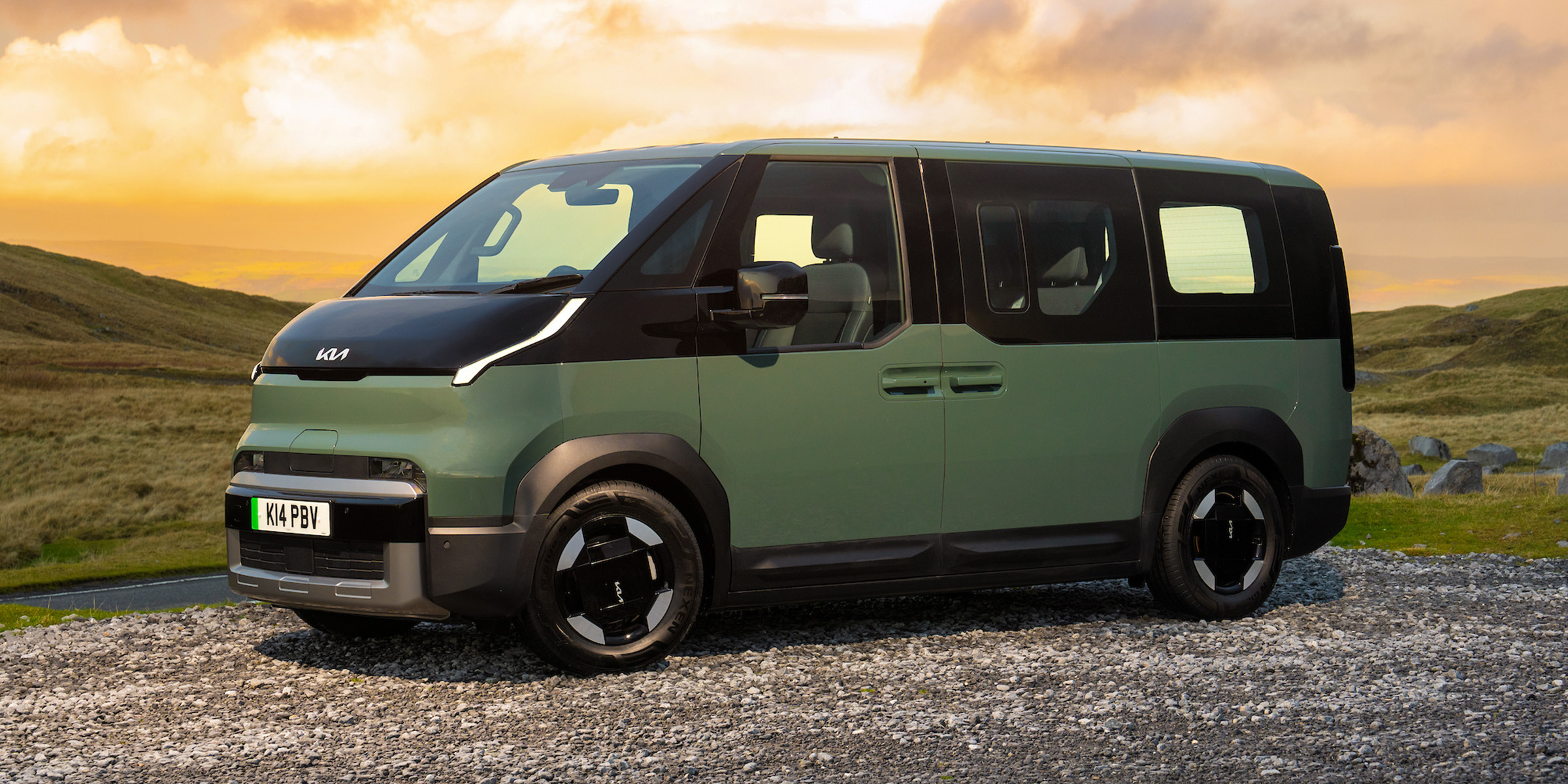
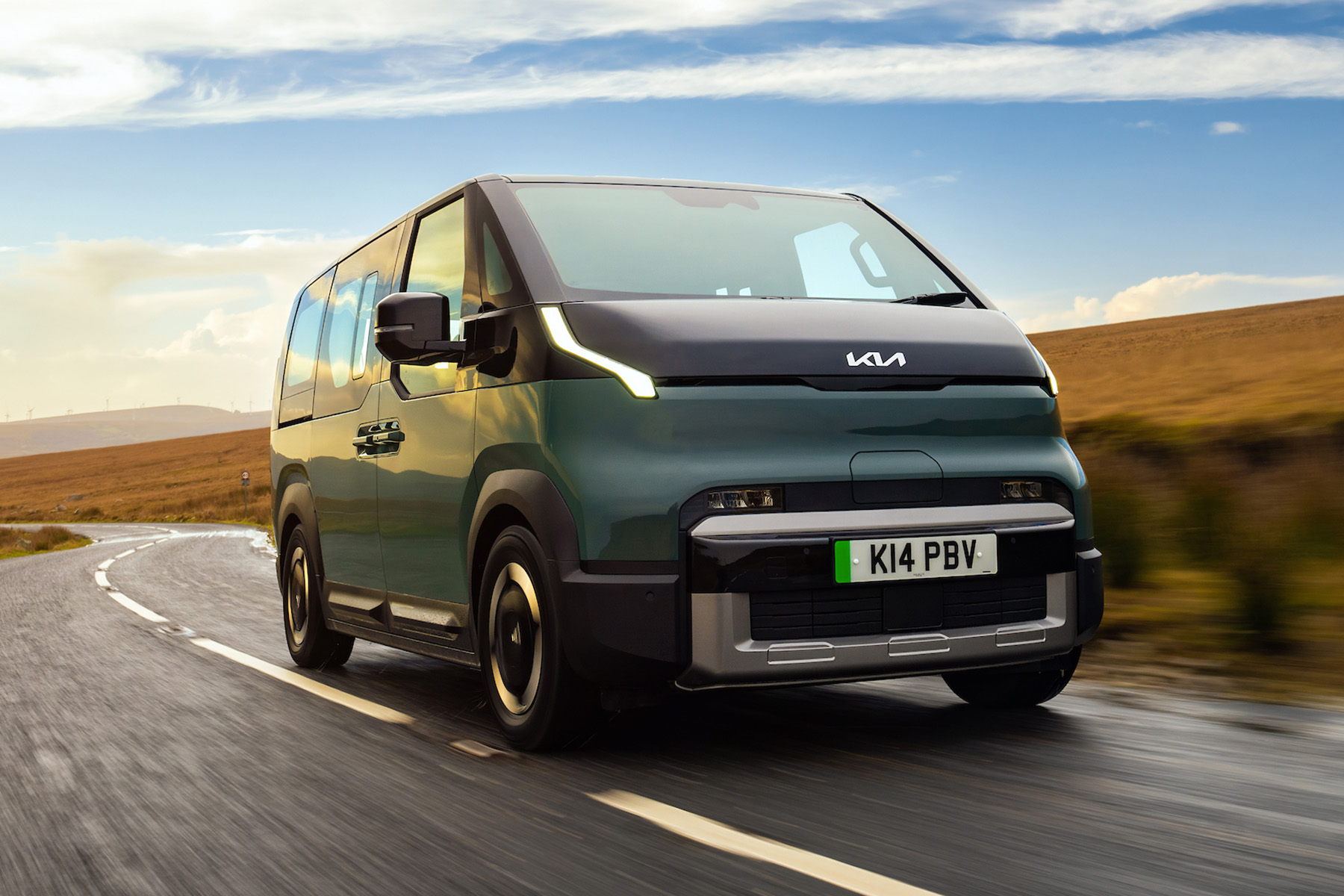
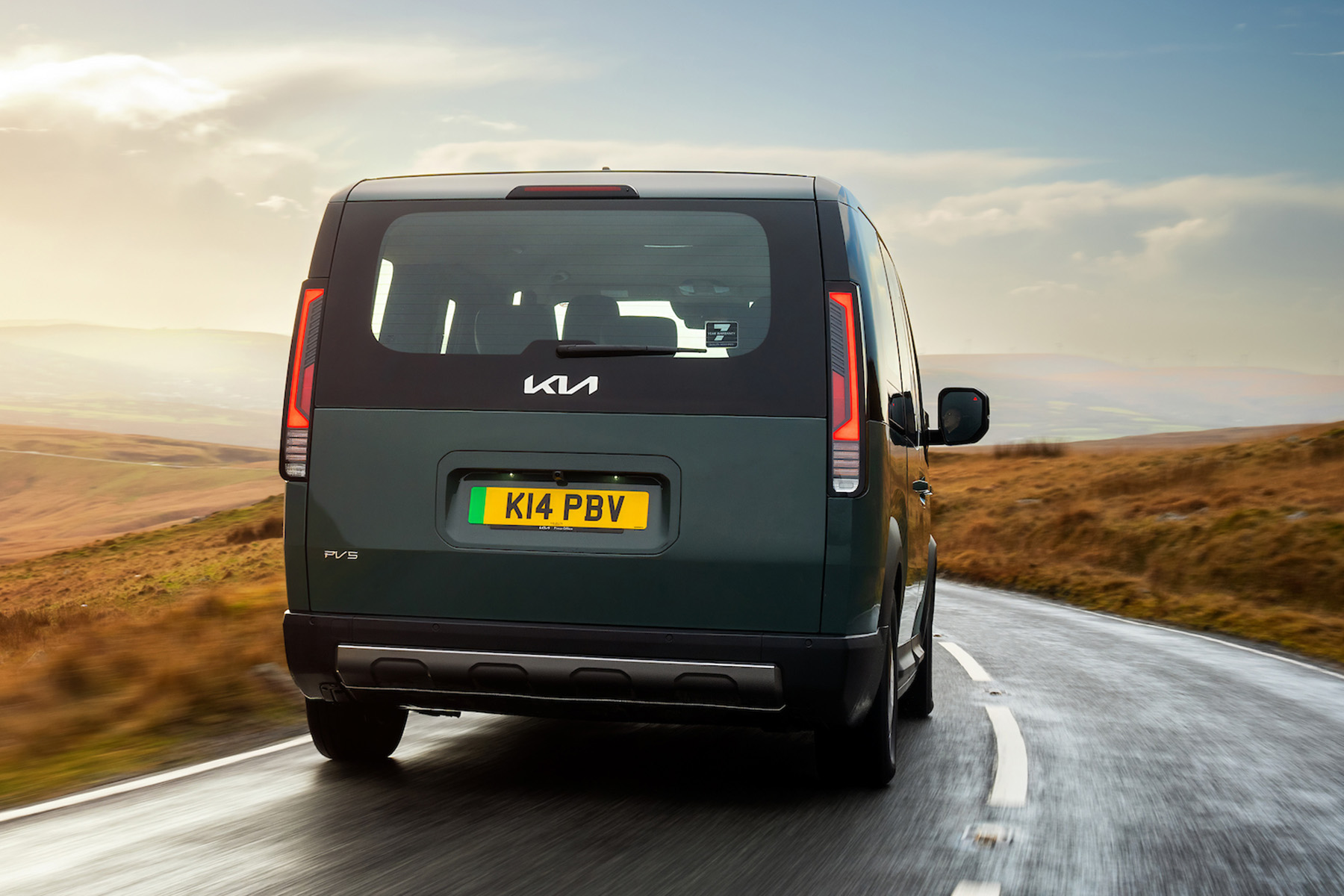
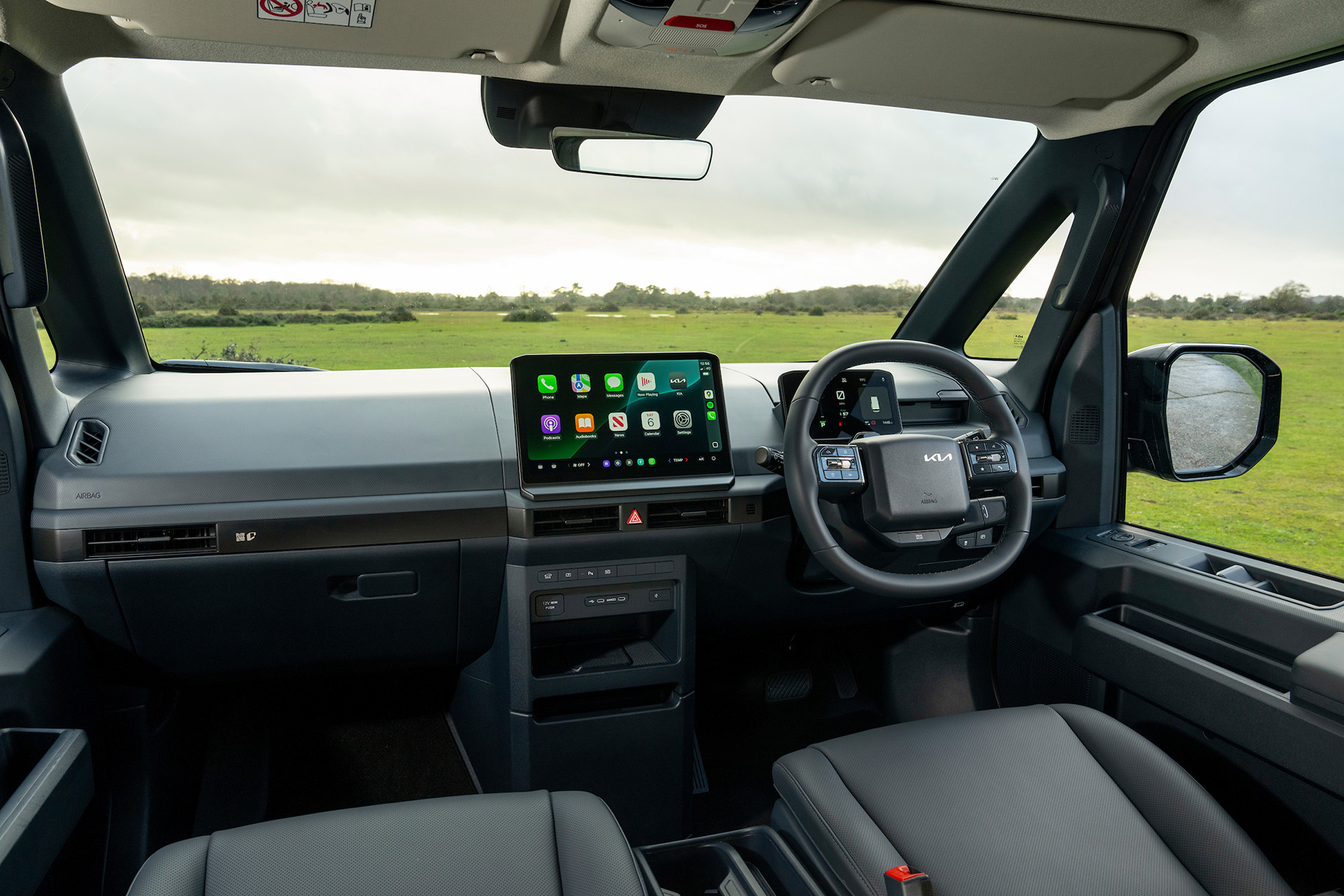
The Kia PV5 Passenger is a van-based all-electric people carrier that first arrived on UK roads in early 2026. The PV5 range also includes Cargo panel van variants.
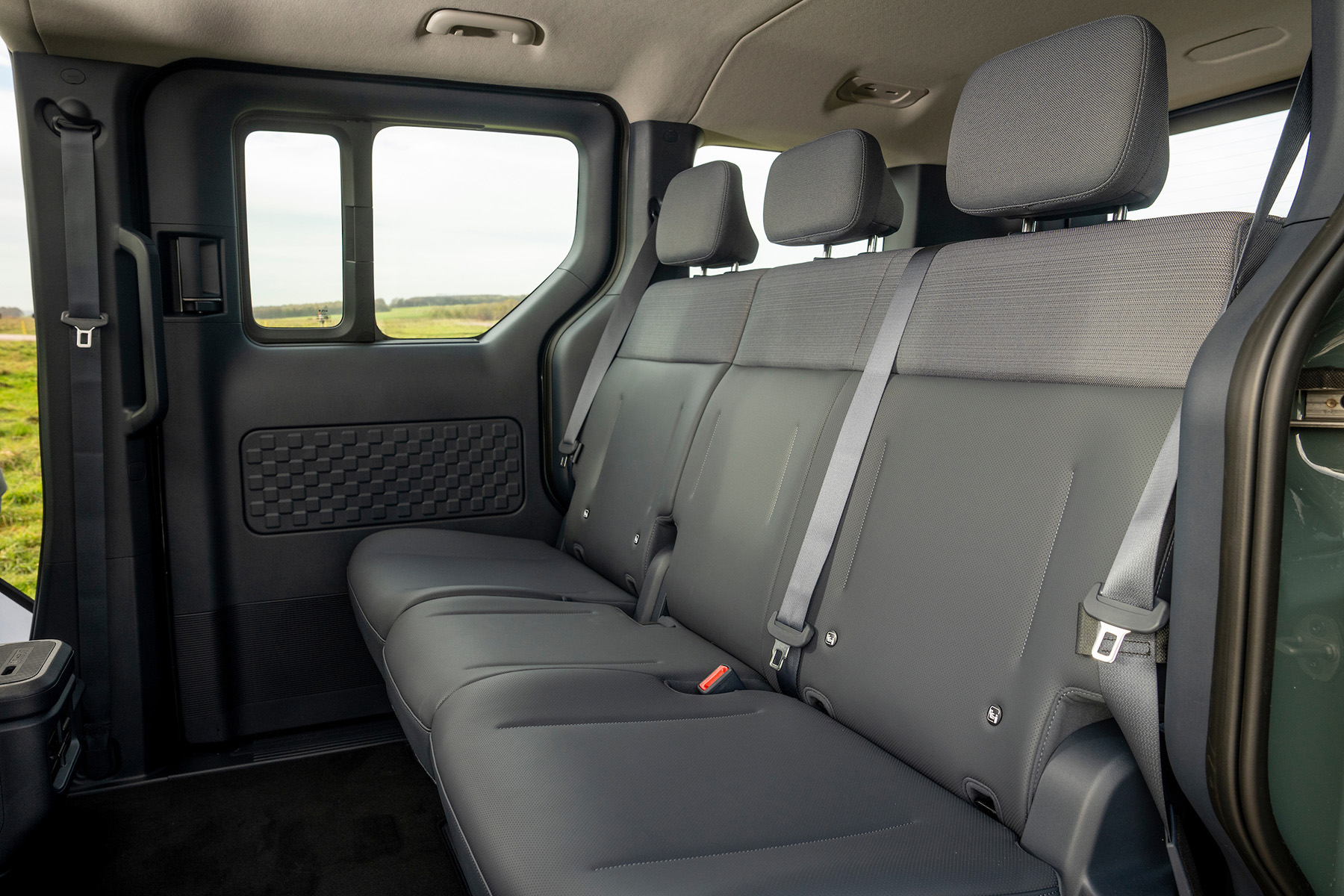
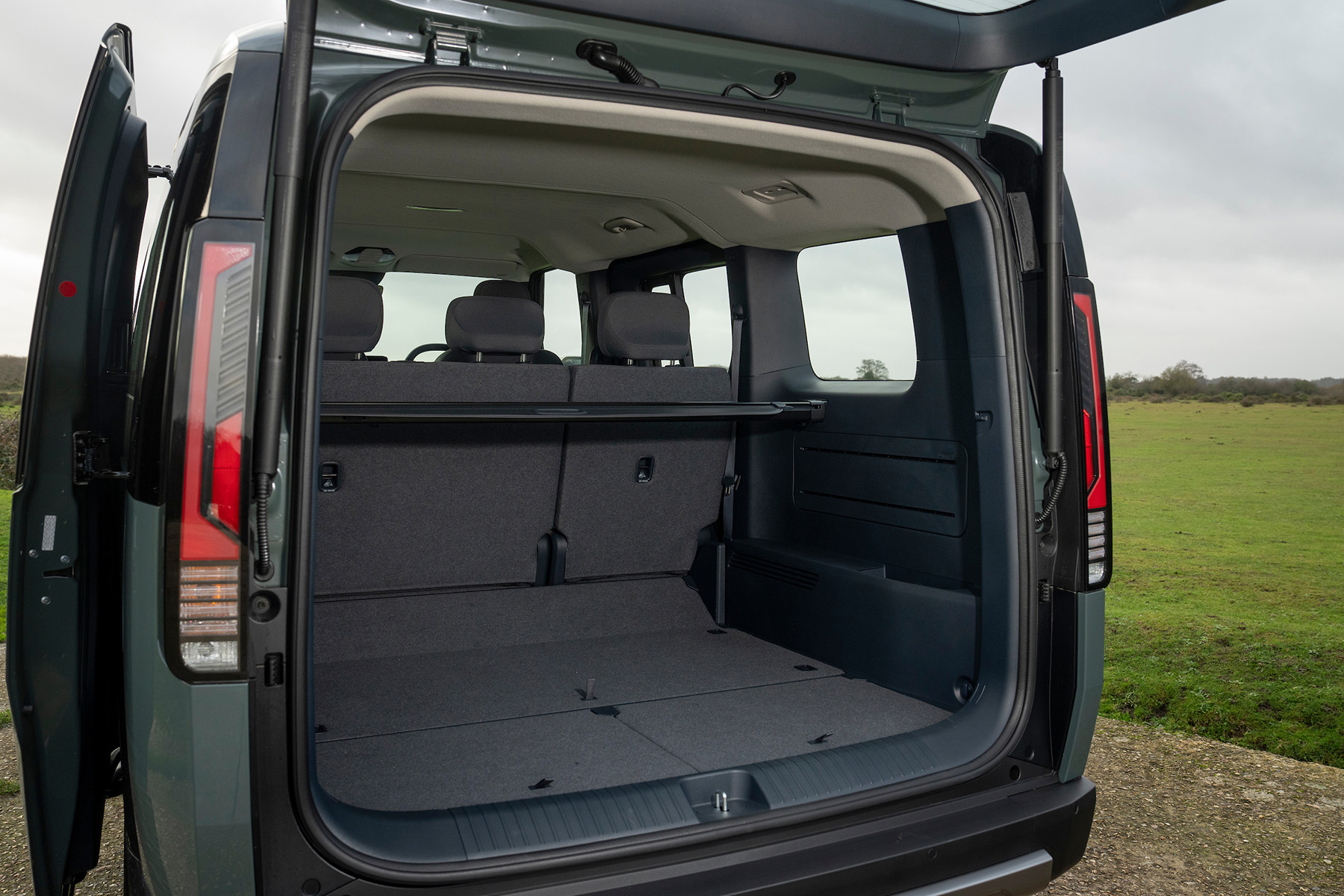
Joining a slim field of battery-powered people hauliers that provide an alternative to the very competitive SUV category, the Kia PV5 has received an overwhelmingly positive reviewer reception from the British motoring media, highlighted for its cavernous interior space, comfortable driving experience and its affordability when compared to its all-electric rivals.
“It makes the cookie cutter crossovers that dominate our roads look cramped and unimaginative”, says the Top Gear team, “and makes the brilliant Volkswagen ID. Buzz look wildly overpriced.”
Parker’s Alan Taylor-Jones adds that, while the PV5’s driving range is “average” and the people carrier’s interior fit and finish is “functional rather than plush”, the Kia has an “excellent ride, huge boot, and generous equipment levels.”
While there is now an array of UK-based reviews on this model, we are holding off on giving the Kia PV5 Passenger a full Expert Rating score until we are able to collect running cost estimation for the people carrier. Check back soon!
Body style: Van-based people carrier Engines:electric, battery-powered Price:From £32,995
Launched: Winter 2025/26 Last updated: N/A Replacement due: TBA
Image gallery
Media reviews
Highlighted reviews and road tests from across the UK automotive media. Click any of the boxes to view.
Featured reviews
“The Kia PV5 Passenger is a solid first effort into the van-based people mover market from Kia. The exterior styling is very Total Recall-like and futuristic, while the performance is plentiful and battery range is decent. But it feels a bit spartan and workmanlike inside, and nothing like as appealing as a Volkswagen ID. Buzz. We’re expecting to see some more luxurious versions appearing over the next 12 months, which will be more appealing to family buyers. For now, it feels like a very smooth, quiet, airport taxi.”
Model reviewed: Range overview
Score: 7 / 10
The Car Expert
Stuart Masson
“If you’re looking for a spacious SUV but want something really affordable and don’t like to go the obvious route, give the Kia PV5 Passenger a look. It’s got a charm that most modern SUVs can’t touch, and it has all the practicality your family could ever need.”
Model reviewed: Range overview Score: 9 / 10 “The Kia PV5 is a new-age take on the big family car, and far more practical than an SUV.” Author: Richard Ingram Read review
Auto Trader
Model reviewed: Range overview Score: 9 / 10 “This is a supremely confident first attempt at building an electric van from Kia. It’s so well equipped for the money that it’s hard not to recommend you book a test drive ASAP.” Author: Tom Roberts Read review
Electrifying.com
Model reviewed: PV5 Passenger Score: 9 / 10 “Kia wants to be a leader in the electric people-mover space, and with the PV5 they’ve got off to a brilliant start. The design, tech, and interior, are all bang up to the minute and it’s at an amazingly affordable price.” Author: Ginny Buckley Read review
Honest John
Model reviewed: Range overview Score: 8 / 10 “It’s not perfect, but if you’re after an immensely practical electric family wagon that won’t break the bank, then look no further than the Kia PV5 Passenger. We like it a lot.” Read review
Parkers
Model reviewed: Range overview Score: 8.4 / 10 “The Kia PV5 Passenger is a spacious, practical electric people hauler that outshines the Citroen e-Berlingo and Volkswagen ID.Buzz in value, comfort, and versatility. Though its driving range is average and the interior is functional rather than plush, its excellent ride, huge boot, and generous equipment levels make it a top choice for families seeking an affordable electric MPV.” Author: Alan Taylor-Jones Read review
The Independent
Model reviewed: Range overview Score: 9 / 10 “The Passenger version is a full-on electric MPV alternative that costs less than many smaller EVs yet offers genuine five-seat space, loads of kit and a driving experience that’s more refined than some premium SUVs.” Author: Steve Fowler Read review
Top Gear
Model reviewed: Range overview Score: 9 / 10 “We’ll leave it to more sensible people to assess how the PV5 fares as a commercial vehicle but as a big family car, it’s compelling: refined, interesting and preposterously spacious. It makes the cookie cutter crossovers that dominate our roads look cramped and unimaginative and makes the brilliant ID. Buzz look wildly overpriced.” Read review
Safety rating
Independent crash test and safety ratings from Euro NCAP
Independent economy and emissions ratings from Green NCAP
No eco rating
As of February 2026, the Kia PV5 Passenger has not been assessed by Green NCAP.
The Green NCAP programme measures exhaust pollution (which is zero for an electric car) and energy efficiency. Electric cars are much more energy-efficient than combustion cars, so the PV5 is likely to score very highly in Green NCAP testing if and when it takes place. Check back again soon.
Running cost rating
Monthly cost of ownership data provided exclusively for The Car Expert by Clear Vehicle Data
No data yet
As of February 2026, we don’t have independently verified data available for the Kia PV5 Passenger. Check back again soon.
Reliability rating
Reliability data provided exclusively for The Car Expert by MotorEasy
No reliability rating
As of Kia PV5 Passenger, we don’t have enough reliability data on the Kia PV5 Passenger to generate a reliability rating.
The Car Expert’s reliability information is provided exclusively to us using workshop and extended warranty data from our partner, MotorEasy, sourced from both official dealerships and independent workshops.
As soon as MotorEasy has sufficient data on the PV5, we’ll publish the results here.
Warranty rating
New car warranty information for the Kia PV5 Passenger
Overall rating
A
98%
New car warranty duration
7 years
New car warranty mileage
100,000 miles
Battery warranty duration
8 years
Battery warranty mileage
100,000 miles
Kia’s new car warranty is better than average, and better/worse than rival brands in a similar price bracket as the PV5.
The duration is seven years, with a limit of100,000 miles. In addition to the standard new car warranty, this electric people carrier has an eight-year/100,000-mile warranty for the battery components.
Warranty on a used Kia PV5 Passenger
If you are buying an ‘Approved Used’ Kia PV5 Passenger from an official Kia dealership, you will get a minimum one-year warranty included.
If you are buying a used Kia PV5 Passenger from an independent dealership, any warranty offered will vary and will probably be managed by a third-party warranty company.
If you are buying a used Kia PV5 Passenger from a private seller, there are no warranty protections beyond any remaining portion of the original new car warranty.
If you’re looking to buy any used car that is approaching the end of its warranty period, a used car warranty is usually a worthwhile investment. Check out The Car Expert’s guide to the best used car warranty providers, which will probably be cheaper than a warranty sold by a dealer.
Recalls
Official DVSA safety recalls that have been issued for the Kia PV5 Passenger
As of February 2026, we are not aware of any DVSA vehicle safety recalls affecting the Kia PV5 Passenger. However, recall information is updated regularly, so this may have changed.
You can check to see if your car has any outstanding recalls by visiting the DVLA website or contacting your local Kia dealer.
Find your next new or used car with Auto Trader. Find out more
Find your next new or used car with Carwow. Find out more
Lease a Kia PV5 Passenger
If you’re looking to lease a new Kia PV5 Passenger, The Car Expert’s partners can help you find a competitive deal.
Personal contract hire deals from Leasing.com. Find out more
Personal contract hire deals from Carwow. Find out more
Personal contract hire deals from Select Car Leasing. Find out more
Subscribe to a Kia PV5 Passenger
Subscriptions are becoming a very popular way for consumers to try an electric car for a few weeks or months to help decide whether it’s a suitable alternative to a petrol car. If you’re interested in a car subscription, The Car Expert’s partners can help. (PS: What’s a car subscription?)
Choosing a new or used car involves navigating a vast amount of information. Professional road tests, safety results, reliability data, running costs and environmental reports are all published separately, often using different scoring systems and criteria.
The challenge is not access to information, but how to evaluate it consistently and bring it together in a way that reflects real-world ownership.
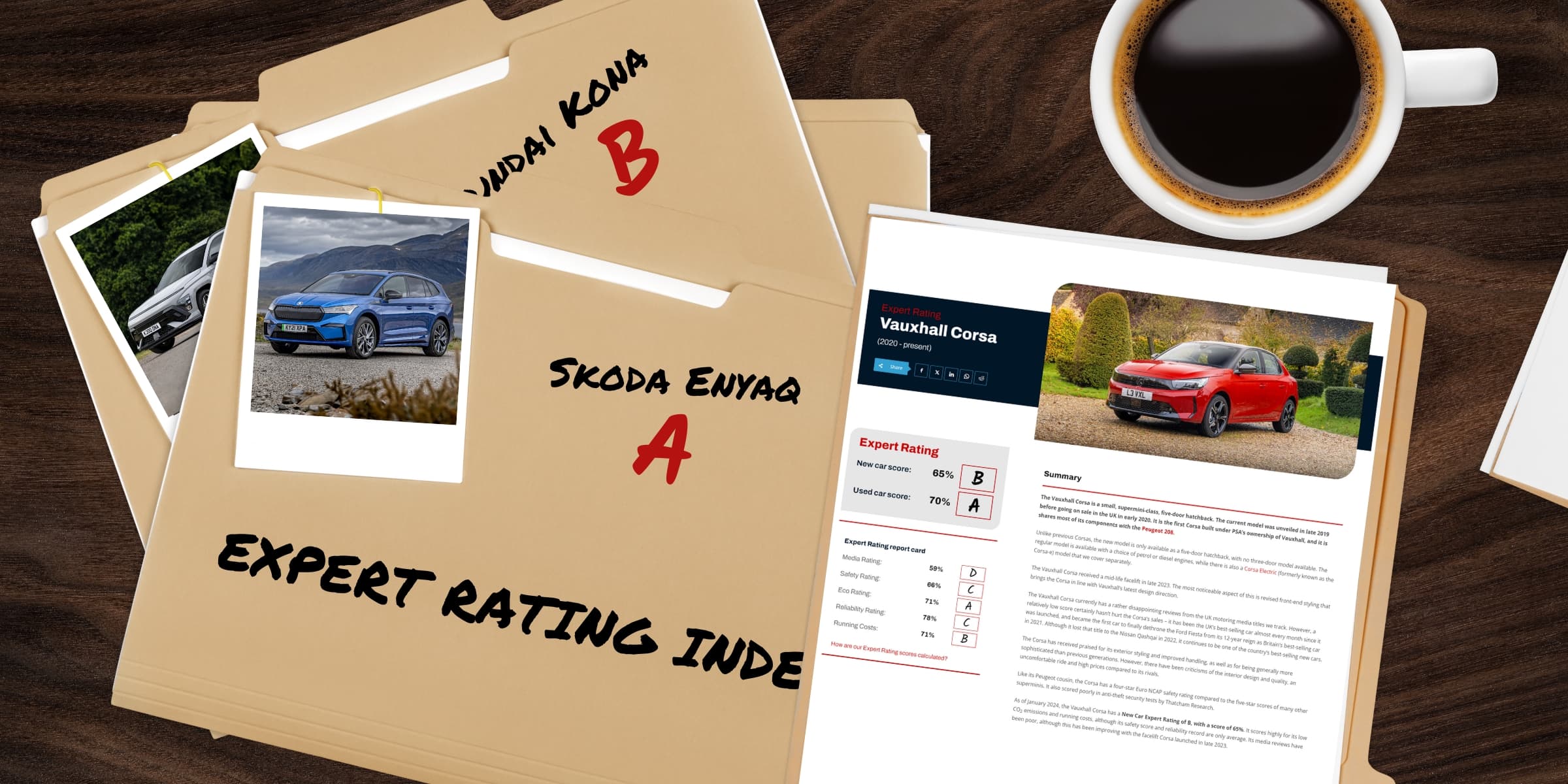
The Expert Rating Index was developed to address this problem. It combines independent media reviews with safety testing, environmental data, reliability records, running costs and manufacturer warranty coverage into a structured, evidence-based scoring system.
The result is a balanced overall assessment designed to reflect long-term ownership as well as initial driving impressions.
At a glance
The Expert Rating Index combines independent media reviews with safety, environmental, reliability, running cost and warranty data. Each category is scored separately and then weighted to produce overall ratings for both new and used cars. Scores are updated regularly as new data becomes available.
What is an Expert Rating?
The Expert Rating is The Car Expert’s structured scoring system for new and used cars in the UK. We have been developing and refining it for more than eight years, with the current third-generation version launched in 2024 and refined further in 2025.
Every new car on sale in the UK receives a New Car Expert Rating. This rating brings together large volumes of independent data covering the factors that matter most to car buyers, including:
Professional road test reviews
Safety testing results
Environmental performance
Reliability data
Running costs
New car warranty information
All data comes from established UK and European sources that assess cars sold in the UK.
We convert this information into clear category scores for media reviews, safety, environmental impact, reliability, running costs and warranty. These category scores are then combined into an overall Expert Rating.
Separate ratings are produced for new and used cars, reflecting the different priorities of each type of buyer. For example, long-term reliability and ownership costs carry greater importance for used car buyers.
Each car’s results are presented in a simple report card format, with both an A–F grade and a percentage score for readers who want more detail. Further explanation of each category is provided below.
Expert Rating categories
Media Rating
In earlier versions of the Expert Rating, a car’s overall score was based entirely on media review scores. Today, this forms the Media Rating, which is now one part of the overall Expert Rating.
The Media Rating brings together individual review scores from more than 30 established UK and European automotive publications. Depending on the model, this may include as few as 10 reviews or more than 60. Some manufacturers limit media access to certain models, while others encourage broad coverage, which affects the number of reviews available.
What is an aggregated rating?
Rather than relying on a single review, we combine scores from multiple independent sources to reflect the overall consensus of professional road testers.
To do this, we use a weighted average system. This means we do not treat every review equally. For new cars, more recent reviews carry greater weight than older ones. For used cars, reviews are not weighted by age.
We also standardise the wide range of scoring systems used by different publications. A score of 7/10 may represent different levels of merit depending on the outlet. Our system converts these varied scoring scales into a consistent format before combining them into a single Media Rating.
This approach ensures the Media Rating reflects the broad professional view of a car, rather than the opinion of any one journalist or publication.
Reviews without scores
Some publications review cars without giving them a numerical score. These reviews are included in our database for readers to access, but they do not contribute to the Media Rating.
Unlike some review aggregators, we do not create artificial scores for unscored reviews or manually adjust scores up or down. In rare cases, a review may be included without its score if the editor believes it does not fairly represent the model being assessed. Final editorial responsibility for these decisions rests with The Car Expert.
Safety Rating
Our Safety Rating is based on Euro NCAPtesting results. We use the full breakdown of Euro NCAP’s assessment, not just the overall star rating.
This includes detailed scores for:
Adult occupant protection
Child occupant protection
Pedestrian protection
Safety assist systems
This approach allows you to see where a car performs strongly — and where it may be weaker — depending on the type of protection that matters most to you.
Expiry and test age
Euro NCAP ratings expire after six or seven years. Testing standards are regularly updated and become more demanding over time, which means a five-star rating awarded several years ago may not reflect current safety expectations.
If a car remains on sale, it may be re-tested under the latest criteria, although this does not always happen.
We also take the age of the test into account. Because standards tighten over time, a five-star result from 2019 is not directly comparable to a five-star result from 2025.
Euro NCAP is revising its testing protocols in 2026, so we will update our safety scoring to reflect this.
Eco Rating
Our Eco Rating is currently based on official carbon dioxide (CO2) tailpipe emissions data for each model. We calculate an average across all available versions of the car, including petrol, diesel, hybrid and plug-in hybrid variants.
Electric vehicles produce zero tailpipe CO2 emissions and therefore score 100% in this category.
Plug-in hybrids officially produce very low CO2 emissions, but real-world results depend heavily on how frequently the vehicle is charged and how much driving is completed using electric power. For consistency and fairness, we use the official government test data for all vehicles.
What this rating does — and does not — measure
The Eco Rating focuses specifically on tailpipe emissions. It does not attempt to measure the full environmental impact of electricity generation, fuel production or vehicle manufacturing.
We focus on tailpipe CO2 because it is directly linked to air quality and public health, particularly in urban areas where most vehicles are used.
While exhaust gases contain pollutants other than CO2, these are broadly correlated with CO2 output under modern emissions standards, making it a reasonable indicator for comparative purposes.
Additional environmental data
Where available, we also display Green NCAP results, including air quality and energy efficiency ratings. However, as only a limited number of models are tested each year, Green NCAP data is not currently included in the calculation of the Eco Rating.
We continue to assess additional data sources to further strengthen this category over time.
Running Costs Rating
Our Running Costs Rating is based on independent data supplied by our technical partner, Clear Vehicle Data.
Using large-scale vehicle cost datasets, we calculate average running cost scores across each model range, covering the major expenses you can expect during ownership. These include:
Fuel consumption
CO2 emissions (which affect road tax and related charges)
Insurance group
Servicing, maintenance and repair costs (covering the first five years of ownership)
This provides a realistic view of how expensive a car is likely to be to run, not just how much it costs to buy.
Clear Vehicle Data also provides running-cost information to many of the UK’s leading leasing and fleet companies, ensuring the data reflects real-world commercial standards.
We apply separate calculation models for new and used cars. For used vehicles, servicing patterns and cost weightings differ to better reflect long-term ownership.
Reliability Rating
Our Reliability Rating is based on real-world repair and warranty data supplied by our commercial partner, MotorEasy.
This data comes directly from MotorEasy’s nationwide network of franchised dealers and independent garages. We analyse both the number of warranty claims made for each model and the average cost of those claims.
This approach provides insight into how frequently problems occur and how expensive they are likely to be when they do.
By focusing on actual repair records rather than owner surveys alone, the Reliability Rating reflects real ownership experience over time.
Warranty Rating
Our Warranty Rating assesses the standard manufacturer cover provided with each new car. We evaluate the length and structure of the standard manufacturer warranty, including:
Duration (in years)
Mileage limits
Additional warranty cover specific to electric and hybrid components
Longer warranties generally provide greater peace of mind and can reduce financial risk, particularly during the early years of ownership.
We do not include conditional warranty extensions (such as cover that only applies if the car is serviced within a franchised dealer network), nor do we factor in optional extended warranties available at extra cost. The rating reflects the standard protection provided at no additional charge.
For models offered with petrol, diesel and hybrid powertrains, we aggregate the warranty data across all versions to produce a single model score.
By including warranty coverage as a separate category, the Expert Rating recognises that protection and support after purchase are an important part of a car’s overall value.
How the overall Expert Rating is calculated
Each category — Media, Safety, Eco, Reliability, Running Costs and Warranty — is scored independently using its own methodology.
These category scores are then combined to produce two separate overall scores:
New Car Expert Rating
Used Car Expert Rating
The weighting of each category differs between new and used cars to reflect different buyer priorities. For example, reliability and long-term running costs carry greater weight in used car assessments, while recent media reviews and safety performance carry greater emphasis for new cars.
The final score is presented in both percentage form and as a simplified A–F report card grade.
We do not publish the precise mathematical formula behind the weighting system. However, the principles behind it are transparent: each category contributes proportionately to reflect its importance in real-world ownership.
Why scores change over time
Expert Ratings are dynamic and may increase or decrease as new information becomes available.
This can happen for several reasons:
New professional reviews are published
Safety ratings are updated or expire
Reliability and warranty data is refreshed
Running cost data changes
Older reviews gradually carry less weight in new car assessments
Because data is continuously updated, each model’s score reflects the most current evidence available. Percentage scores may change more frequently than headline A–F grades.
This approach ensures the Expert Rating reflects how a car performs today — not just when it was launched.
Media sources and data inclusion
The Media Rating draws from more than 30 established UK automotive publications and national media outlets with regular motoring coverage.
We assess potential sources based on:
Quality and depth of reviews
Consistency of scoring
Breadth of model coverage
Editorial credibility
We review our media source list periodically and may add or remove publications where appropriate.
We only include UK-based websites to ensure pricing, specification and market positioning are relevant to UK buyers.
Owner reviews
We do not currently include owner-submitted reviews in the Expert Rating calculation.
While owner feedback can provide useful anecdotal insight, it often produces highly polarised results and can be difficult to verify at scale. Our methodology prioritises structured, independently verifiable data sources.
We continue to explore ways of incorporating owner data responsibly in the future.
Coverage and scope
The Expert Rating Index covers the vast majority of new cars on sale in the UK, with additional models added regularly.
Used Car Expert Ratings are also expanding, although historical data can be more limited for older models.
Where multiple versions of a model exist, we assess whether to group or separate them based on meaningful differences in engineering, performance or positioning. Electric models are always rated separately from equivalent petrol, diesel or hybrid versions.
Updates
The Expert Rating Index is updated continuously as new data becomes available.
On average, each model is refreshed approximately once per month, although high-profile vehicles may update more frequently if significant new data is published.
Licensing
Expert Rating data is available for licensing. The ratings are currently used by selected UK automotive partners under bespoke agreements.
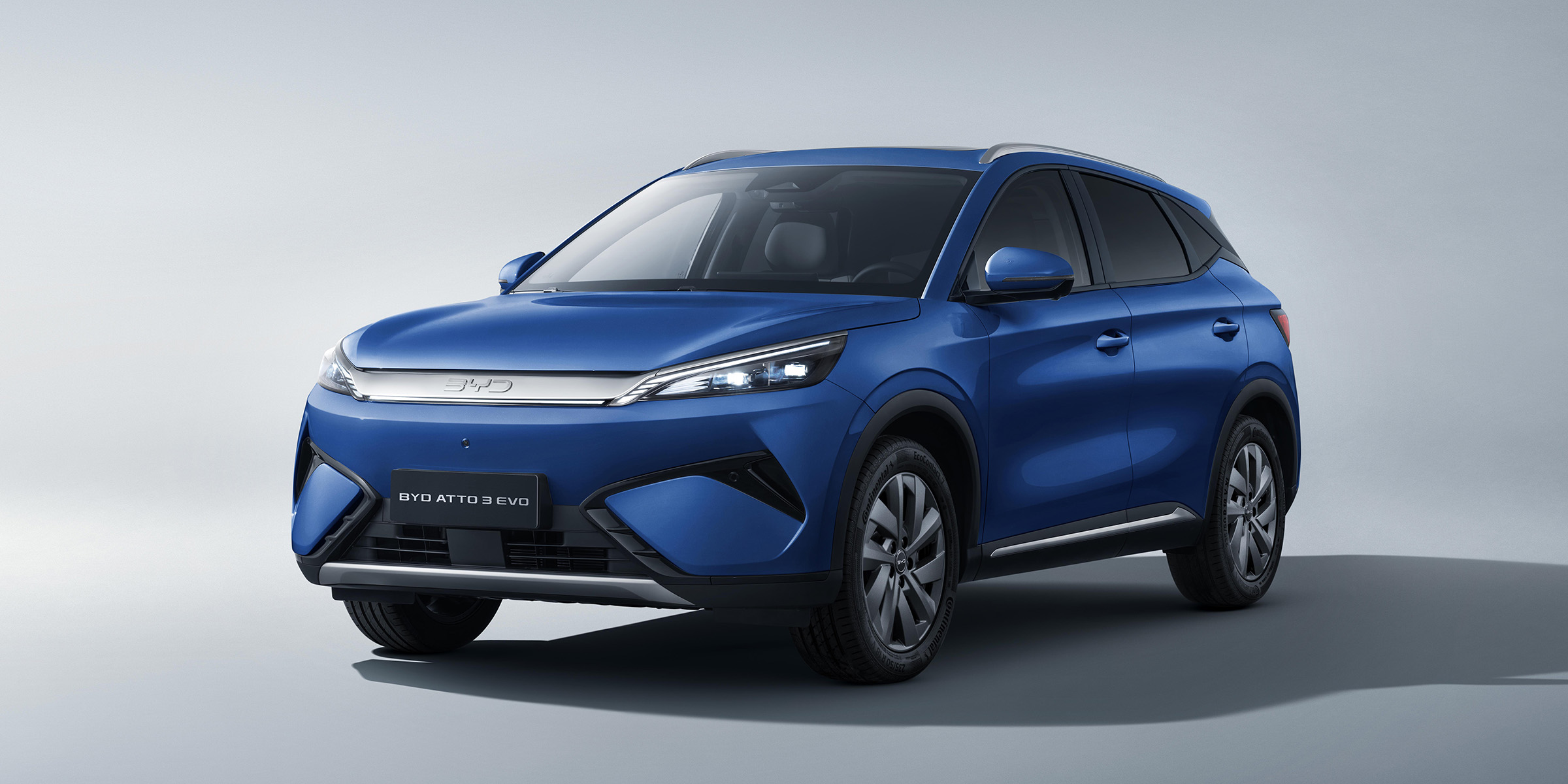
BYD has unveiled its revised Atto 3 ‘Evo’ range, which gives the all-electric family SUV more power, a longer battery range and faster charging, along with a simpler range structure and a longer standard equipment list.
On sale in the UK since 2023, the Atto 3 was Chinese manufacturer BYD’s first foray into the British market, and it has expanded its range to include eight other model options since then.
The Atto 3 compete for buyer attention in the mid-size SUV category – perhaps the most crowded field of family car choices in the UK – and this mid-life update comes as BYD attempts to keep the Atto 3 competitive with the likes of the Skoda Enyaq, which has been updated since the Atto 3’s arrival, and highly-regarded newcomers like the Renault Scenic E-Tech and Ford Explorer.
First off, front-wheel drive iterations of the SUV are no more. The updated ‘Evo’ range consists of rear-wheel drive and all-wheel drive model options, and BYD has updated the suspension system too.
There are just two versions of the Atto 3 ‘Evo’, both powered by a larger 75kWh battery. Built on the latest 800V architecture, the SUV charges at speeds up to 220kW using a DC rapid charging station, with a 10% to 80% top-up taking around 25 minutes.
The rear-wheel-drive ‘Design’ is powered by a single rear-mounted electric motor producing 313hp, enough for a 0-62mph time of 5.5 seconds and an official single-charge travel distance of 317 miles.
The all-wheel-drive ‘Excellence’ adds another electric motor to the front axle, boosting the power output up to 449hp, and cutting the 0-62mph sprint time down to 3.9 seconds. Faster acceleration means less battery range in this case however, with this top-spec model able to muster up to 292 miles of travel without recharging.
Both versions of the Atto 3 ‘Evo’ have a towing capacity of 1,500kg (braked) and BYD’s Vehicle-to-Load (V2L) technology, which can power external devices at up to 3kW.
Elsewhere, subtle changes to the SUV’s exterior looks include revised front and rear bumpers, new-look 18-inch alloy wheels, slimmer side skirts and a sportier spoiler at the trailing edge of the roof.
Inside, BYD has decided to move of the gear selector from the centre console to the steering column, and the manufacturer has made some revisions to the car’s nine-inch digital instrument cluster behind the steering wheel.
The car’s 16-inch central infotainment touchscreen – which BYD boasts is the biggest infotainment system in the mid-size SUV class – now has integrated Google functions such as Google Maps, Google Play Store for a range of car-optimised applications, and Google Assistant. The car also has AI-powered voice assistant tech.
In he rear, the boot space has been expanded by 50 litres – 490 litres in total – which grows to 1,360 litres with the rear seats folded. Another new addition is the ‘frunk’ beneath the bonnet with 101 litres of extra space – which can be used for shopping trips or charging-cable storage.
That just about sums up the Atto 3 ‘Evo’ range – BYD hasn’t announced exactly when the updated range will arrive in British showrooms at the time of writing, and hasn’t told the motoring media what the updated price list looks like yet.
The BYD Atto 3 currently holds a New Car Expert Rating of A, with a score of 74%. It scores top marks for its excellent safety rating and zero tailpipe emissions, although media reviews have been less complimentary.
The BYD Sealion 5 – or Sealion 5 DM-i – is a mid-size plug-in hybrid SUV that arrived in UK roads in early 2026 as one of the cheaper model options in the BYD range.
BYD’s answer to plug-in hybrid equivalents in the Hyundai Tucson, Volkswagen Tiguan and Volvo XC60 model line-ups, the Sealion 5 has been given a lukewarm reception by the British motoring media, with review scores ranging from average to excellent.
Summing up general reviewer consensus, Carwow’s Tom Wiltshire describes the BYD as a clear “head-over-heart purchase”, with “low running costs, lots of space and impressive standard equipment”, but “a mediocre driving experience and forgettable styling.”
The Car Expert’s own Stuart Masson says that the SUV is “thoroughly bland”, with a “forgettable” driving experience, but that the Sealion 5 also “comes with a decent level of kit for the money” and “it’s very quiet and would certainly be easy enough to live with.”
Richard Ingram of Auto Express agrees that the driving experience isn’t up to par, commenting that “doesn’t handle as well as its European and Korean counterparts.” That said, for those looking for the best value-for-money deal, “that simply won’t matter.”
As of February 2026, the BYD Sealion 5 holds a New Car Expert Rating of B, with a score of 67%. Beyond its review scoring, this overall score is helped by low predicted running costs and BYD’s generous new car warranty.
Body style: Medium SUV Engines:petrol plug-in hybrid Price:From £29,995
Launched: Winter 2025/26 Last updated: N/A Replacement due: TBA
Image gallery
Media reviews
Highlighted reviews and road tests from across the UK automotive media. Click any of the boxes to view.
Featured reviews
“The BYD Sealion 5 looks thoroughly bland – a bit like a ten-year-old MG, if we’re honest – but thankfully the rest of the package is better than it looks. It also comes with a decent level of kit for the money, and there’s plenty of room inside for a growing family. The driving experience is pretty forgettable, but it’s very quiet and would certainly be easy enough to live with – and it has a battery range that should allow to do most of your daily errands on purely electric power.”
Score: 7 / 10
The Car Expert
Stuart Masson
“Offering plug-in power for a petrol price is the Sealion 5’s key selling point, so it’s a bit like getting a hotel room upgrade – you’re still in the same place, but there are some extras that you might not have expected for the price you pay.”
Score: 7 / 10 “The BYD Sealion 5’s accomplished, efficient and refined plug-in hybrid system is among the very best of its type, while the spacious cabin, long kit list and premium-feeling interior will win it plenty of fans looking for an affordable, easy-to-live-with family SUV. It doesn’t handle as well as its European and Korean counterparts, but for many, that simply won’t matter.” Author: Richard Ingram Read review
Auto Trader
Model reviewed: Range overview Score: 9 / 10 “Affordable to buy, cheap to run and packed with tech, the BYD Sealion 5 DM-i looks onto a winner.” Author: Dan Trent Read review
Car
Score: 6 / 10 “The BYD Sealion 5 is a decidedly mediocre car, but its price does an awful lot of heavy lifting. Just don’t be too surprised if you have to make a few compromises in the name of saving money.” Author: Ted Welford Read review
Daily Mail
“The BYD Sealion 5 is a car for people who want a brand new family SUV but want to pay slightly less than they would for an equivalently specced Nissan Qashqai or Kia Sportage. It certainly isn’t a car for people for people who want their dream SUV.” Author: Freda Lewis-Stempel Read review
Electrifying.com
Score: 7 / 10 “The BYD Sealion 5 DM-i is a mid-sized, plug-in hybrid SUV that’s perfectly pleasant to drive, has a reasonable electric range and very competitive monthly finance deals. An MG HS goes further on electric power, but the BYD still makes sense if purchase costs are a priority.” Author: Vicky Parrott Read review
Honest John
Score: 6 / 10 “Common with other models in the range, the BYD Sealion 5’s main attraction is the value for money it represents, coming with plenty of equipment and as a PHEV for the price competitors charge for a basic petrol. This is offset by frustrating onboard tech, a firm ride and a laggy hybrid system.” Read review
Regit
Score: 8 / 10 “The BYD Sealion 5 has more than enough room for five people and their luggage – and delivers a brisk yet sensible ride for all. But topping all that is a car that won’t be making regular visits to the pumps, which is only a good thing in this evil economic climate.” Author: Tim Barnes-Clay Read review
Safety rating
Independent crash test and safety ratings from Euro NCAP
No safety rating
As of February 2026, the BYD Sealion 5 has not been assessed by Euro NCAP.
Eco rating
Independent economy and emissions ratings from Green NCAP
No eco rating
As of February 2026, the BYD Sealion 5 has not been assessed by Green NCAP.
Running cost rating
Monthly cost of ownership data provided exclusively for The Car Expert by Clear Vehicle Data
Fuel consumption
Average
Score
Plug-in hybrid models
119 mpg
A
CO₂ output
Average
Score
Variation
Score
Plug-in hybrid models
55 g/km
A
Battery range
Average
Score
Variation
Score
Plug-in hybrid models
46 miles
D
Insurance group
Average
Score
Variation
Score
All models
27
C
The BYD Sealion 5 is a relatively affordable car to own and run, according to whole-life cost numbers provided exclusively to The Car Expert by our data partner, Clear Vehicle Data.
With an average fuel consumption of 119mpg, the Sealion 5 is very efficient, even when compared to other plug-in hybrid SUVs of this size. There are rivals however that can offer a better electric-only range of 46 miles, like the Volkswagen Tiguan PHEV.
On the insurance front, the Sealion 5 is predicted to sit in a middling bracket, costing a little above the average car to insure.
Reliability rating
Reliability data provided exclusively for The Car Expert by MotorEasy
No reliability rating
As of February 2026, we don’t have enough reliability data on the BYD Sealion 5 to generate a reliability rating.
The Car Expert’s reliability information is provided exclusively to us using workshop and extended warranty data from our partner, MotorEasy, sourced from both official dealerships and independent workshops.
As soon as MotorEasy has sufficient data on the Sealion 5, we’ll publish the results here.
As of February 2026, we are not aware of any DVSA vehicle safety recalls affecting the BYD Sealion 5. However, recall information is updated regularly, so this may have changed.
You can check to see if your car has any outstanding recalls by visiting the DVLA website or contacting your local BYD dealer.
Voluntary termination (VT) is a legal way to end certain car finance agreements early and return the car to the finance company. It applies to PCP and HP agreements, but it’s one of the most misunderstood areas of car finance.
Many drivers assume voluntary termination lets them simply hand the car back and walk away. That’s not usually how it works. Whether it costs you anything – or makes sense at all – depends on the numbers in your agreement.
This guide explains:
what voluntary termination is
how it works for PCP and HP
the crucial “50% total amount payable” rule
when voluntary termination makes sense – and when it doesn’t
Do you need to catch up on the finer details of PCP car finance?
Voluntary termination is a statutory consumer right in UK law, as part of theConsumer Credit Act. It allows you to end a regulated car finance agreement early by returning the vehicle to the finance company.
As long as the agreement is regulated (which the above agreement types are), it doesn’t matter whether the car was new or used.
However, it’s important to understand what voluntary termination is not:
It’s not the same as just stopping your payments
It’s not the same as voluntary surrender
It’s not always free
The law is there to protect consumers who can no longer afford their monthly payments. Equally, it provides protection to finance companies to ensure borrowers can’t simply walk away from their obligations at any time. It does this by setting the minimum repayment amount at 50% of the total amount payable (a very specific and complicated number that we explain further below).
PCP vs HP: How voluntary termination works differently
Voluntary termination applies to both PCP and HP, but it works very differently in practice.
Voluntary termination of a PCP
With a PCP agreement:
Your monthly payments usually cover only part of the car’s value
There’s a large final balloon payment at the end
That balloon payment is included towards the total amount payable
This means many PCP agreements don’t reach the 50% repayment point until very late in the contract, well past the halfway point in the duration of the agreement. This is where many people go wrong.
Voluntary termination of an HP
With HP:
There is no balloon payment
Monthly payments repay the full value of the car plus interest
As a result, the halfway point is usually reached around halfway through the agreement, making voluntary termination much more practical on HP than PCP.
The “50% of Total Amount Payable” rule
To use voluntary termination without paying anything extra, you must have paid at least 50% of the total amount payable on your agreement.
This is the single most important rule – and the most misunderstood – and it has nothing to do with how long you’ve had the car.
What does “total amount payable” include?
It includes:
the amount borrowed
interest
fees
for PCP agreements, the final balloon payment
It is not based on:
how long you’ve had the car
how many monthly payments you’ve made
If you haven’t yet paid 50%, you can still terminate — but you’ll need to pay the difference to get up to that 50% amount.
Stuart says:
“Voluntary termination is about 50% of the money, not 50% of the time. On a PCP, the big final payment is included, so most people don’t reach the halfway point until very late. Check the total amount payable before assuming you can just hand the car back.”
Electric vehicles (EVs) have mushroomed in popularity in recent years, despite attracting plenty of negative headlines. And while most of these scare stories are steadily being debunked, the one that refuses to go away is that EVs are more likely to catch fire than ‘fossil-fuel’ (petrol or diesel)-engined vehicles.
In the early days potential EV buyers experienced ‘range-anxiety’– that dread of being stranded in the middle of nowhere with a flat battery and nowhere to plug it in – but now many EVs have ranges comparable to those of traditional cars. Meanwhile ‘charge anxiety’ – a fear of not being able to find a working plug-in point when you need to charge – is slowly being put to bed by mass roll-outs of new charging facilites.
The one EV fear that refuses to go away, however, is the claim that they’re much more likely to catch fire than are traditional combustion-engined vehicles. Pictures of electric car fires pop up regularly on social media, usually showing a flaming or burnt-out Tesla somewhere in America, with the caption “Look how dangerous electric vehicles are!”
Recently those fears have been stocked by some news outlets seizing on figures showing that electric vehicle fires mushroomed over the last couple of years – but all is not as it may seem, as we shall see shortly.
The fact is that EV fires are an urban myth – research into actual cases has shown that EVs are much less likely to combust than their petrol or diesel equivalents. That’s not to say that all those pictures on social media never happened; you just don’t see an equivalent number of photos of petrol cars burning to the ground…
However it’s not all good news. When an EV does go up in flames, it presents a far trickier proposition for the emergency services trying to extinguish the blaze.
Most of the noise surrounding electric car fires comes from people who are very vocal about their absolute opposition to EVs and the phasing out of petrol and diesel cars. At best, their concerns stem from a lack of understanding of electrically-powered equipment as a whole.
We’ve all had electrical appliances we’ve had to chuck away after the batteries – likely left in far too long – corroded all over their contacts. And a fair few of us have likely experienced an overloaded plug overheating and melting.
With electric cars boasting huge high-voltage battery packs mostly composed of lithium-ion cells, it’s perhaps no surprise that such fears transfer to them and are ramped up to life-threatening level. But evidence of the risk of electric car fires suggests the exact opposite.
Long odds
The figures simply don’t support the narrative, instead showing that the odds of suffering a fire in an EV are much longer than if driving a petrol or diesel car.
Data sourced from UK fire services revealed that in 2022-23 there were more than 19,000 vehicle fires – more than many might have thought. But of these just 239, 0.24%, involved EVs. As an example in 2023 a Freedom of Information request to Shropshire Fire & Rescue Service revealed that the authority had dealt with one EV fire in three years, in 2020.
In 2022 611,000 vehicle fires were recorded in Sweden of which 23 were EV fires – or 0.004%. Back in the UK the Energy Saving Trust published data in 2025 concluding that EV fire risks were 0.0012%, compared to 1% for petrol or diesel cars.
This data came from globally recognised Australian specialist EV FireSafe, which found that from 2010 to June 2024, across the world just 511 verified EV traction battery fires were recorded. Consider this against the fact that some 14 million new EVs were registered in 2023 alone, bringing total global numbers on the roads to 40 million.
What about those headlines of EV fire risks climbing? They came from a report published in May 2025 by business insurer QBE, which stated that fires caused by lithium-ion batteries had doubled in two years. “UK fire brigades are now tackling at least three lithium-ion battery fires a day, following a 93% surge between 2022 and 2024,” the insurer stated.
However not only did EV numbers on UK roads more than double in this period, the QBE data showed that in 2024 EVs represented only 730 of the 1330 fires linked to lithium-ion batteries, which are used in all kinds of equipment, notably smartphones.
Meanwhile what actually constituted an EV in the figures was open to question. QBE’s figures showed that of those 730 EV fires, electric cars with high-voltage traction batteries accounted for just 232 – the rest were electric bikes and scooters.
For many years fire services often did not differentiate between fossil-fuel and EVs in their vehicle fire data, and while now most of them do, there is evidence that EV data often includes electric scooters, without differentiating them.
E-scooters and bikes have rapidly risen in popularity in recent years, but there have also been major concerns over their batteries, particularly in the cheaper models available. The regulations, battery management and safety features required of the high-voltage batteries in electric cars do not apply to those in e-scooters and there have been several incidences of fires in such vehicles, usually while charging them at home from a standard plug – in the first three months of 2023 alone four fatalities were recorded from e-scooter battery fires.
The BBC asked the Home Office why the data available was not more detailed and specific, and was told: “We are reviewing the incident reporting system and considering the collection of data on fires involving lithium-ion batteries, electric vehicles, e-scooters and e-bikes.”
There are very good reasons why an EV is less likely to catch fire than a petrol or diesel car. An EV has far fewer moving parts (friction between components can be a regular cause of fires, leading to overheating). There is no flammable liquid such as petrol being pumped through the car from the fuel tank, usually at the back, to the engine at the front, and there is no hot exhaust to encourage combustion. Without the extensive cooling systems provided by a radiator, and many litres of coolant constantly circulating through the engine, a petrol car would overheat and potentially catch fire within minutes.
One valid point that the anti-EV brigade frequently brings up is that a petrol car is unlikely to spontaneously catch fire while parked in a garage in the middle of the night – it’s only likely to happen when the car is hot from running. Some EV fires have been known to happen while the car has been parked overnight, thanks to a process called thermal runaway. What’s that, you ask?
Causes of electric car fires
So when an EV does catch fire, why does it happen? The centrepiece is the lithium-ion battery pack. Although this is the same technology that goes into a phone or laptop battery, EVs have sophisticated cooling systems for their battery packs to keep them at optimal temperatures. This prevents them running too hot during recharging or driving, so your car batteries don’t get very hot while working hard, like your phone or laptop can do.
EV fire expert Professor Paul Christensen from the University of Newcastle explained to Air Quality News that all battery packs store large amounts of energy in a very small space, which is why they can get hot.
If the pack is penetrated (such as in an accident), or exposed to excessive heat, or incures some other kind of failure, an internal short circuit can occur.
This short circuit causes excessive heat which cannot be removed as fast as it is being generated, and this leads to a chemical reaction which generates more heat, which accelerates the chemical reaction, which generates more heat… This escalating cycle is called thermal runaway. It can, says Prof Christensen, cause ignition or even an explosion.
Dealing with EV fires
Although electric car fires are very rare, they pose great challenges to emergency services – who are still in the process of learning how to tackle such incidents.
The big issue with EV fires is actually putting them out, as they are very difficult to extinguish and then to keep extinguished, mainly as they do not require a supply of oxygen to keep burning. In a piece reassuring residents in its county that EVs are not a greater fire risk and residents should have no qualms about buying one, Bedfordshire Fire Service did reveal that several EV manufacturers advise that an EV fire should be allowed to burn out by itself in a controlled manner.
If attempts are made to put out an EV fire, the most effective extinguishant is not any kind of foam or such like but water and lots of it – one fire service estimated that anything from 4,000 to 10,000 litres of water could be needed.
Once the fire is out, emergency services have to remain vigilant as the nature of EV battery packs has in the past seen examples of fires reigniting after they were apparently extinguished – sometimes weeks afterwards.
This has raised concerns among such bodies as vehicle recovery services, with increasing instances of fire engines actually following recovery trucks to their destination in case the fire starts again. It has been claimed that a quarter of all fires in scrapyards are caused by spent lithium-ion batteries.
According to Bedfordshire Fire Service, an EV fire can generate more than 100 chemicals, some of which are highly toxic such as carbon monoxide. Fire service protective breathing equipment should be able to cope with such chemicals, but even a light wind can carry pollutants a long way. Of course, a burning petrol car will also release a lot of pollutants into the air as well…
Among the more remarkable measures for tackling EV blazes, a fire service in Denmark has developed a car-sized container which can be lowered off the back of a specially converted truck and a still-smouldering EV lowered into it. The container is then pumped full of water and taken to a safe storage area, where it is left for sometimes several weeks until it is deemed the vehicle is safe.
Certainly the issues of fighting EV fires has raised issues about EV batteris in other areas. Installing EV charging points in such places as underground car parks may need to be reconsidered, while one further worry for those researching EV-related safety is the re-use of lithium-ion battery packs.
End-of-life or written-off EVs will often have their battery packs removed and re-used, often ending up in classic cars converted to run as EVs. With much still to learn about how battery packs react in the latter stages of their life, people should be very cautious before going down this route – particularly as there are plenty of reputable classic car converters in the market using brand-new battery packs instead.
Fire retardants
Although there are relatively few EV fires, car manufacturers are taking them seriously. The EV industry is still young and there’s much still to learn, but battery technology is improving all the time, and alongside this battery safety.
A major recent development has been the blade battery format, first introduced by BYD – while the Chinese manufacturer’s cars are rapidly which becoming familiar on UK roads, BYD has long been the world’s largest manufacturer of rechargeable batteries used in smartphones, tablets and the like.
While a type of lithium-ion battery, the blade unit is built in a different format and employs lithium iron phosphate (LFP), which is less likely to catch fire compared to a traditional unit. BYD has demonstrated this claim by driving nails into its battery packs and heating them in an oven to 300 degrees Celsius.
As the blade-format batteries are cheaper to make and make much less use of rare earth minerals, wider adoption of them in new EVs appears likely.
The existing technology is also under constant improvement, developing measures to contain a fire inside the battery pack for as long as possible, providing the occupants of the car with more time to escape. This is achieved through a host of methods, from ceramic blankets (the same basic technology as used in fireproof document storage boxes) to gels and foam encasing the battery pack.
The big challenge for such technology is to keep pace with the technology advancement of the packs themselves, which is moving at a very fast rate.
China was the first to adopt new regulations focused on thermal runaway, which include a requirement for fire and smoke to contained within the battery pack for at least five minutes after first ignition. Europe produced its own similar regulations in 2023, but manufacturers were already building EVs to meet these requirements to pre-empt the regulation.
Summary
All those involved insist that the answer is not to turn away from the EV but to learn the best way to tackle the rare likelihood of a fire. Experts such as Prof Christensen believe the answer will lie in a number of measures working together, both in the design of the batteries and how a fire is fought. “The last thing I want to do is demonise lithium-ion batteries,” he says. “They are amazing, we’ve seen no battery like them before and they are essential to the decarbonisation of the planet.”
So the conclusion? The chances of your EV catching fire are rare, but if it does, it will be a challenge for the emergency services to deal with, but one which they are rapidly getting to grips with.
There are plenty of good reasons you might not want to buy an electric car – high costs, lack of charging infrastructure, your own driving circumstances, and so on. However, fears of a life-threatening blaze shouldn’t be one of those reasons, because you are much less likely to suffer a fire in an electric vehicle than if you bought a petrol or diesel car instead…
Chinese motoring giant Chery is planning to launch its fourth brand in the UK in two years, with the arrival of Lepas later this year.
While Chery is yet to detail exactly which Lepas models are coming to the UK, we do know that the first Lepas model will arrive in Britain in the third quarter of this year – sometime in July, August, or September.
It’s the latest move in Chery’s meteoric rise up the UK new car sales charts. Last month, its three existing brands (Chery, Jaecoo and Omoda) combined to take third place in UK new car registrations, behind only Volkswagen and Kia. That’s despite Omoda only being on sale here for about 18 months, Jaecoo about 12 months and Chery about three months.
Beyond the Chery family, Lepas will join the ever-expanding list of Chinese automotive marques vying for UK car buyers’ attention, including BYD, Changan, Geely, GWM, Leapmotor and Xpeng.
Already on sale in Indonesia, and about to launch in Australia, the Lepas range consists of one model so far, called the L8. It is a mid-size plug-in hybrid SUV that is essentially a reworked version of the Chery Tiggo 8, sharing the same foundations, powertrain options and on-board tech.
Lepas has also announced plans for smaller L4 and L6 SUVs in other markets, but little is known about them so far.
Lepas is expected to sit underneath the Omoda and Jaecoo brands in the Chery family, looking to offer households a more affordable entry point to plug-in hybrid or all-electric car ownership. In other words, it is Chery’s answer to budget manufacturers like Leapmotor or Dacia.
Where Lepas clearly differentiates itself from its Chery Group rivals is powertrains. It is expected that the brand won’t offer purely petrol cars, only hybrids and electric models.
We’ll bring you more information about Lepas as soon as we have it, so stay tuned.
Interested in finding out what else is coming this year? We have the full breakdown of what to expect in 2026 – new brands and models – right here.
The Omoda 4 is a small SUV/crossover and will be the new entry-level model in the Omoda range when it launches in the UK sometime in 2026.
This Expert Rating page is currently a stub, written in anticipation of the car’s UK launch. Reviewers are yet to get their hands on the car, and some basic details about the model, including powertrain options and pricing, are yet to be confirmed by the manufacturer.
Omoda says has the 4 been designed to “offer drivers a sense of safety, security and space”, as the Chinese brand targets targeting younger buyers with a price tag presumably cheaper than the £24k Omoda 5.
The car’s exterior design includes plenty of sharp contour lines, lighting bolt-shaped LED light signatures and black SUV-style bumper cladding. Omoda says the car’s looks are “Cyber Mecha” – inspired by a Japanese sci-fi literary genre – and the car’s cabin layout is said to be inspired by a spaceship cockpit.
We will update this page with more information and reviews, as well as safety and running cost data, as soon as those are available. Check back soon!
Body style: Small SUV/crossover Engines:petrol, electric (expected) Price:Not yet announced
Launching: 2026 Last updated: N/A Replacement due: TBA
Image gallery
Not many images of the model at the moment! The images above we taken at a model preview event in October 2025.
Media reviews
Highlighted reviews and road tests from across the UK automotive media.
There are no reviews on the Omoda 4 – foreign of UK-based test drives – to display here currently. Once reviews from the UK automotive media are published, we will update this section.
Safety rating
Independent crash test and safety ratings from Euro NCAP
No safety rating
As of February 2026, the Omoda 4 has not been assessed by Euro NCAP.
Eco rating
Independent economy and emissions ratings from Green NCAP
No eco rating
As of February 2026, the Omoda 4 has not been assessed by Green NCAP.
Running cost rating
Monthly cost of ownership data provided exclusively for The Car Expert by Clear Vehicle Data
No data yet
As of February 2026, we don’t have independently verified data available for the Omoda 4. Check back again soon.
Reliability rating
Reliability data provided exclusively for The Car Expert by MotorEasy
No reliability rating
As of February 2026, we don’t have enough reliability data on the Omoda 4 to generate a reliability rating.
The Car Expert’s reliability information is provided exclusively to us using workshop and extended warranty data from our partner, MotorEasy, sourced from both official dealerships and independent workshops.
As soon as MotorEasy has sufficient data on the Omoda 4, we’ll publish the results here.
Warranty rating
New car warranty information for the Omoda 4
Omoda’s new car warranty is one of the best in the new car market, and better than most other cars in a similar (presumed) price bracket to the Omoda 4.
The duration is seven years, with a limit of 100,000 miles. This is good news for both new and used car buyers, as it will help the residual value of the Omoda 4 for new car buyers when they come to sell the car, and it gives near-new car buyers confidence that they are covered for years to come.
If you’re looking to buy a used car that is approaching the end of its warranty period, a used car warranty is usually a worthwhile investment. Check out The Car Expert’s guide to the best used car warranty providers, which will probably be cheaper than a warranty sold by a dealer.
As of February 2026, we are not aware of any DVSA vehicle safety recalls affecting the Omoda 4. Its brand-new after all. However, recall information is updated regularly, so this may have changed.
If you do purchase this model in the near future, you can check if your car has any outstanding recalls by visiting the DVLA website or contacting your local Omoda dealer.
At the time of writing, Omoda is yet to announce exactly which powertrains will be included in the new Omoda 4 range. Above is a list of just some of the wide array of small budget-end crossovers that are likely competitors through price alone.
It was a strong start to the year for the two biggest Chinese car companies, as they continue to make huge inroads into the UK new car market.
New car registration data published today by the Society of Motor Manufacturers and Traders (SMMT) showed that the overall new market grew by 3% over the same month last year, thanks to a 4% increase in private sales and a 2% increase in fleet registrations.
But underneath the headline numbers, there were a number of key stories. The main one is the continued growth of the two largest Chinese car manufacturers, BYD and Chery Group (Chery, Jaecoo and Omoda). The second was the lower-than-expected sales of electric cars.
Chery Group’s three brands essentially operate as one unit (for the moment, at least). In January, their combined sales placed them third in the UK market, behind only Volkswagen and Kia. That means that they outsold giants like Ford, BMW and Audi, let alone other household names like Vauxhall and Renault.
If you add Chery Group and BYD together, they outsold Volkswagen – the UK’s biggest-selling brand for several years now. This is a pattern that has been repeating more often than not for the last few months, and is only going to continue as these two companies continue to grow rapidly throughout the year. The impact of this on the rest of the industry is going to be profound, as a growing number of other car brands see customers disappearing to their new Chinese rivals.
EV registrations were basically the same this January as they were last year, which means that market share fell slightly since overall registrations were up 3%. But both petrol and diesel registrations fell, so it was still a net gain against the vehicles that are now four years from extinction.
Plug-in hybrids continued their surge, helped by the Jaecoo 7, BYD Seal U and MG HS, which were all in the top ten cars for January and are all predominantly/exclusively plug-in hybrids. Over the last few months, plug-in hybrids have been closing in on regular hybrids in terms of sales, and just half a percentage point of market share separated them in January.
January and February have traditionally been slower months for EV sales, although last year was an exception as numbers jumped by 42%, making it less surprising that growth wasn’t repeated this year. We’ll really need to wait until the Q1 results at the end of March to really see what EV sales are doing.
The ZEV mandate target for 2026 is 33%, so an EV market share of less than 21% isn’t a great start. However, the real target is probably going to end up being somewhere between 25-28% so we’re not a long way off in reality.
Good month, bad month
It’s the start of a new year, so here’s a quick recap on how we judge whether a car brand has had a good or bad month.
Sales numbers can fluctuate depending on a number of factors, so we allow plenty of wiggle room. If a brand outperforms the overall market by at least 10%, that’s a good month. If a brand underperforms against the overall market by at least 10%, that’s a bad month. If it’s within 10% above or below, that’s within normal expectations.
This month, the overall market was up 3.4% over last January, so brands that grew by at least 13.4% has a good month. Brands that saw registrations slide by at least 6.6% had a bad month. Got it? Good.
In terms of overall volume growth year-on-year, BYD added more than 2,400 additional cars (technically, Jaecoo did better, but it hadn’t actually started selling cars to customers in January last year). Going the other way, Peugeot dropped the most, registering 1,500 fewer cars than last January.
Volkswagen (as usual) was the UK’s best-selling brand, ahead of Kia, BMW, Ford and Audi. However, if we count Chery’s three interlinked brands together, it would put Chery Group into third place.
The Kia Sportage was the UK’s most popular new car in January, just as it was last year, and in 2024. In second place, the Jaecoo 7 continued its late 2025 success. The Ford Puma – the UK’s best-selling car for the last two years – finished third, ahead of the UK-built Nissan Qashqai and the Vauxhall Corsa.
The BYD Seal U made its top ten debut in sixth place, just ahead of the UK-built Nissan Juke, while the top ten was rounded out by the Volkswagens Tiguan and Golf, and the MG HS.
We’ll have our usual analysis of the top ten shortly.
The PCP (personal contract purchase) is by far the most popular way to buy a car on finance in the UK, for both new and used cars. It’s also the option most heavily promoted by car manufacturer and car dealerships.
But while the PCP is everywhere, it’s also widely misunderstood. Many buyers sign agreements worth tens of thousands of pounds without fully understanding how they work, what the risks are, or what happens at the end.
This guide explains, in plain English:
What a PCP actually is
Why it’s so popular
How the payments work
Your options at the end of the agreement
The key advantages and disadvantages
When a PCP might – or might not – be right for you
When you visit a car dealership, the salesperson is often more interested in your monthly budget than in which car you want. That’s because PCP finance makes cars look far more affordable on a month‑to‑month basis.
Around 90% of new cars bought privately in the UK are financed using PCP, making it by far the most common way to pay for a new car. Hire purchase (HP), leasing, personal loans and other funding methods make up the remaining minority.
PCP is also increasingly used for used cars, especially ‘approved used’ vehicles sold by franchised dealers. Around half of all used cars sold by dealerships are now bought on PCP, and that proportion continues to rise.
For dealers and manufacturers, PCP has two big advantages:
Lower monthly payments allow customers to afford more expensive cars
Most customers can’t afford the large final payment, so they return to the dealer for another PCP, creating repeat business
What is a PCP?
A personal contract purchase (PCP) is a specific type of hire purchase (HP) agreement. On finance paperwork, it’s often still described as a hire purchase, which adds to customer confusion. It’s also often incorrectly referred to as a personal contract plan (rather than purchase).
The key difference between PCP and a traditional hire purchase is how much of the car you repay each month.
With a hire purchase, you repay the full value of the car in equal monthly instalments
With a PCP, you repay only part of the car’s value during the agreement, with a large amount left until the end
That large amount at the end is known as the final payment or balloon payment.
You then have several options for dealing with this final amount, depending on whether you want to keep your car, change it for another one or simply get rid of it.
How PCP monthly payments work
With a PCP, your monthly payments are lower because you are not paying off the full cost of the car. Instead, you are paying for the car’s depreciation over the agreement.
Here’s a simplified comparison (for illustration only – interest and fees excluded):
Hire Purchase Borrow: £24,000 Monthly payments: 48 x £500
Personal Contract Purchase Borrow: £24,000 Monthly payments: 47 x £340 Final payment: £8,000
In both cases, the car only becomes yours once all payments are made, including the final £8,000 on the PCP.
Most buyers change their car every three to four years and don’t have a large lump sum available. For those buyers, PCP offers much lower monthly payments than hire purchase.
Why PCP makes cars seem more affordable
In practice, many buyers don’t use PCP to reduce their monthly payments. Instead, they use it to buy a more expensive car for the same monthly cost.
For example:
Hire Purchase Borrow: £24,000 Monthly payments: 48 x £500
Personal Contract Purchase Borrow: £36,000 Monthly payments: 47 x £500 Final payment: £12,500
The monthly payment is the same, but the PCP allows you to borrow significantly more because a large chunk is deferred to the end.
This is one of the main reasons premium brands such as Audi, BMW and Mercedes‑Benz sell so many cars in the UK – PCP finance makes them look affordable on a monthly basis.
Why PCP car finance is so confusing
Despite its popularity, PCP is a complicated product. Research consistently shows that around 90% of buyers don’t fully understand how their PCP works or what’s in the small print.
Car dealers tend to be fairly terrible at explaining how PCPs work, largely because they just want you to buy the car and not get bogged down in financial details that may derail their sale. Also, many car salespeople are not properly trained on how PCPs work, so they don’t explain it clearly because they don’t understand it themselves.
Even car websites and national news media reports often confuse PCP with leasing or other types of finance, which doesn’t help consumers make informed decisions.
If you find PCP confusing, you are very much not alone.
The three parts of a PCP agreement
Every PCP has three main components:
1. Deposit (upfront payment)
The deposit is your upfront payment. The more you put down, the less you borrow and the lower your monthly payments.
Most PCPs limit the maximum deposit (often around 30% of the car’s price). Your deposit can be:
Cash
Part‑exchange value of your current car
A combination of both
2. Monthly payments (term)
Most PCP agreements run for 36 to 48 months, with 48 months now the most common.
You make regular monthly payments by direct debit. On a 48‑month PCP, this usually means 47 smaller payments followed by one very large final payment.
Longer terms generally mean lower monthly payments, but the difference is often smaller than buyers expect.
3. Final payment (balloon)
The final payment is the most important – and most misunderstood – part of a PCP. It’s usually referred to as the balloon payment.
When the agreement is set up, the finance company predicts what your car will be worth at the end, based on:
The car itself and its specification
The length of the agreement
Your agreed annual mileage
Your deposit and monthly payments cover the difference between the purchase price and this predicted future value.
If you look at the two examples we mentioned earlier, there were final payments of £8,000 and £12,500 respectively. So we’re talking about a significant lump of money that you owe the finance company or need to otherwise avoid paying.
This final amount must be settled at the end of the agreement. Many finance companies describe this final amount as an Optional Final Payment, but that’s misleading as it’s part of your finance contract and the amount must be settled. You have several options as to how to deal with this final amount, depending on whether you want to keep your car or change it, but all of them ultimately involve the finance company getting its money back.
Stuart says:
“If a dealer pushes you to ‘just focus on the monthly payment’, that’s a red flag. It’s usually how people end up overpaying on a PCP. Always check the upfront payment and total amount payable before you sign anything.”
The finance company guarantees that, subject to certain conditions, the value of your car at the end of the agreement will be at least the same as the final balloon payment – hence, a Guaranteed Future Value.
If you don’t want to pay out the final balloon amount (or can’t afford to), you can simply give the car back to the finance company instead and the finance is settled.
So again referring to our initial example, instead of paying the final payment of £8,000, you hand back a car that should now be worth £8,000.
If the finance company has got its numbers right to begin with, the car should be worth the same or a bit more than what is owed at the end of the agreement – so everyone walks away happy.
If the market value of the car turns out to be less than the amount outstanding (so the car’s only worth £7,000 but you still owe £8,000), that’s not your problem – the finance company takes the loss.
What are my options at the end of the PCP contract?
So you are coming to the end of your PCP agreement and the finance company has written to you to remind you that you will have to settle the outstanding balance fairly soon. What are your choices?
1) Give the car back. The finance company has guaranteed that the value of the car will be equal to the balance outstanding, so (subject to a few conditions) you can simply give it back and walk away. Effectively, you have treated your PCP like a lease.
2) Pay the outstanding balance, either in cash or by refinancing. You keep your current car, and either pay off the balance from your savings or take out another loan to pay it off.
3) Part-exchange your car with a dealer. This is the most common way to settle your PCP, and the one dealers and car manufacturers prefer – but you don’t have to go back to the same dealer or even stick with the same brand of car.
For a far more comprehensive explanation of how these three options work and what you need to keep in mind, check out our dedicated article about your options at the end of a PCP.
You cannot sell the car privately without the finance company’s permission, as the car does not legally belong to you until the finance is settled.
PCP on new vs used cars
New cars
Most new car PCPs are offered by manufacturers’ own finance companies. Finance deals are usually part of an overall marketing strategy and often replace traditional cash discounts.
Almost all new car advertising is now done using example PCP finance quotes rather than vehicle prices. It’s important to understand that these are simply examples, and you can tailor a finance plan to suit your needs. If that means a higher or lower deposit, shorter or longer term, or adding any additional options to the vehicle, it shouldn’t change the interest rate or deposit contribution (if any) being offered.
Many new car offers are time-limited, meaning you have to have signed an order and taken delivery by a certain date. If you don’t, you may find that the interest rate suddenly goes up and/or the deposit contribution is no longer available, meaning your new car is suddenly a lot more expensive than you expected.
Used cars
PCP car finance works in exactly the same way on used cars, but interest rates are usually higher and deposit contributions are rare.
The offerings on PCP deals for used cars vary greatly as there are rarely any big discounts from car manufacturers (who would much rather sell you a new car), and dealers tend to use whichever finance company they have a partnership with, rather than working exclusively with the manufacturer’s finance company.
That means that, although a used car may have a sticker price that’s significantly cheaper than a brand new car, it might not be that much cheaper in terms of your monthly payment because there’s less discounting and you have to pay more in interest.
What are the disadvantages of a Personal Contract Purchase?
PCP can work well in the right circumstances, but there are important downsides.
The reason that car dealers and car manufacturers push PCP finance so hard is that it’s generally good news for them. It may or may not be suitable for you, but they don’t really care about that. They’re just desperate to make you think that it’s good for you.
So here are the things you really need to consider before signing that PCP contract:
You get locked into an endless PCP cycle
It’s expensive to get out early
The terms and conditions are restrictive
You can’t sell the car to repay your debt
You get locked into an endless PCP cycle
A PCP is not great if you want to keep your car at the end of the agreement, as you’ll have to pay a large chunk of money to settle the rest of the finance (the balloon amount).
Statistically, there’s about a 90% chance you won’t have enough cash available to pay off your balloon amount at the end of your agreement to keep your car, so you’d have to borrow more money to pay off the balloon. If you don’t have the cash and you don’t want to borrow more money to keep your current car, that means you’re pretty much having to change your car at the end of the term and take out another PCP, even if that’s not convenient at the time.
It’s really difficult to get out early
A PCP is not great if you want or need to change your car early (see below), as your monthly repayments are not enough to cover both the car’s initial rate of depreciation and the interest on the loan. As a result, you’re likely to owe a lot more than your car is worth for the majority of your PCP term.
That means you will probably have to pay a lot of money (often thousands of pounds) just to get rid of your current car, before you even start to worry about paying for your next car.
The rules are restrictive
If you want to claim the Guaranteed Future Value (GFV) and return the car at the end of your agreement, you must have complied with the mileage allowance. The car must also have been fully serviced – on time, every time – usually by a franchised dealership (not an independent garage). Finally, you must return the car in good condition, as you’ll be responsible for any damage beyond normal wear and tear.
Because the car belongs to the finance company, you can’t change the registration details (for example, transfer the car from your name into your spouse’s name) and the person borrowing the money must be the registered keeper and main driver.
The car must be kept fully comprehensively insured at all times, with the finance disclosed to the insurer, and the insurance must also be in your name as the registered keeper, so you can’t have the car registered in someone else’s name or at a different address.
None of these restrictions are necessarily a problem, but the combination of all of them does limit what you can do with your car.
You can’t sell the car to repay your debt
A PCP is a form of secured finance, meaning the money borrowed is secured against the vehicle (unlike a personal loan, which is unsecured).
If you want to sell the car yourself, rather than part-exchanging it or giving it back to the finance company, it can be tricky because it’s not actually your car to sell. Some finance companies will have specific requirements about how you go about selling the vehicle and settling your debt, while others will simply refuse to allow it at all.
Is a PCP right for me?
A PCP can make sense if:
You plan to change your car every few years
Your finances are stable
You understand and accept the final payment risk
It’s usually less suitable if:
You want to keep the car long‑term
You may need to exit the agreement early
You are stretching your budget to afford a more expensive car
Before signing anything, make sure you understand:
The total amount payable
The interest rate and fees
The final payment
Ask questions. Take your time. It’s far better to feel awkward in the showroom than regret the decision later.
Most car finance agreements in the UK are regulated by the Financial Conduct Authority, and anyone involved in the selling of car finance must be accredited by the FCA.
You should always consider the terms and conditions of any agreement carefully before taking out any form of car finance, as you are making a substantial ongoing commitment and there may be significant costs if you change your mind or are unable to meet your commitments at a later date.
This article was first published in 2013 and is continually updated based on reader feedback and questions. Latest update: February 2026.
Ask people to name a posh car and plenty will immediately reply “Mercedes-Benz”. The German brand has long been renowned as a producer of upmarket machines, and to drive – or especially, own – one was seen as a symbol of success, many years before younger intelopers such as BMW assumed such status.
Mercedes-Benz, along with BMW and Audi, forms the German backbone of the executive car market, their sales dominated by company car users. But the Mercedes history stretches back much earlier than either of its rivals – to the earliest days of motoring, in fact.
While it may enjoy an unmatched heritage, today’s Mercedes-Benz is very much a 21st century manufacturer, with one of the widest line-ups of electric models in the industry.
Mercedes-Benz can be considered as the company that started the car industry as we know it. German inventor Karl Benz built what is widely considered to be the first proper car in 1886, while only a few weeks later, fellow countryman Gottlieb Daimler fitted a petrol engine to a stagecoach (and had previously invented the motorcycle).
Benz and Daimler were two of the pioneers of the new automobile industry. Daimler cars were branded ‘Mercedes’ from about 1902 (see “A Mercedes fact to impress your friends” below) and, up until the mid-1920s, Mercedes and Benz were great rivals.
By the 1920s, both Benz and Daimler were in trouble – as was much of the German economy. The two companies merged to form Daimler-Benz in 1926, with the cars branded Mercedes-Benz. The new company’s logo combined Daimler’s three-pointed star with Benz’s laurel wreath, and it remains so nearly 100 years later (although the laurel wreath is not used on most company branding).
As with most of Germany’s large manufacturing companies, things took a dark turn in the 1930s. Mercedes-Benz was heavily supported by the new Nazi government, and a personal favourite of Adolf Hitler – and therefore, favoured by most prominent Germans. After 1937, car production was scaled back as the Nazis directed Mercedes-Benz to focus on lorries and aircraft engines for the military, and the company became one of Germany’s main producers of military equipment until the end of the second world war.
Following the war, Mercedes-Benz re-established itself as a manufacturer of upmarket cars, and its reputation was restored following the launch in 1952 of the 300 SL ‘Gullwing’, today regarded as one of the most valuable and sought-after of classic cars.
1952 Mercedes-Benz 300 SL ‘Gullwing’
While Mercedes enjoyed its reputation as one of the world’s leading ‘premium’ car manufacturers, the company also developed many of the safety innovations we take for granted today, such as crumple zones, anti-lock brakes, traction control and airbags. Laudably, it has made thousands of its patented safety technologies freely available to other car manufacturers in order to improve road safety for everyone.
Although its safety reputation is world-class, some of the company’s business decisions have not been so successful – particularly in its attempt to buy, create or develop brands in addition to the core Mercedes-Benz brand.
In 1998, Daimler-Benz merged with US car manufacturer Chrysler to form DaimlerChrysler, but the marriage was a failure and the American company was offloaded within a decade after huge financial losses. The resultant cost-cutting had a significant impact on the quality of engineering on Mercedes-Benz models of the time, and some company insiders still refer to this time as the “lost decade” for Mercedes.
It partnered with watchmaker Swatch to develop the Smart city car brand, which became very well known but was again never profitable – it’s now a partnership between Mercedes-Benz and Chinese giant, Geely, and has been relaunched as a maker of electric SUVs.
At the turn of the millennium, the company revived the long-dormant Maybach name for a line of limousines to sit above the Mercedes brand and challenge Rolls-Royce in the luxury market. This also failed, and the Maybach name is now used on top-spec Mercedes models instead.
Unlike those efforts, the Mercedes performance brand AMG has been a huge success. Originally a private tuner and racer of Mercedes-Benz cars, the car manufacturer eventually bought the tuning company and created the Mercedes-AMG division. The story of AMG is told in a separate article.
The company is now officially called the Mercedes-Benz Group, with the Daimler name nowhere to be seen. It currently organises its most famous brand into four divisions:
Mercedes-Benz is the core name for most models with petrol, diesel and hybrid powertrains
Mercedes-EQ is the company’s rapidly growing electric division
Mercedes-AMG is the performance division
Mercedes-Maybach is the top level of luxury for certain S-Class models and occasionally other vehicles
Mercedes-Benz has also built light commercial vehicles for most of its history. Today, it offers a range of vans and even sold a pick-up truck for a while – the short-lived X-Class.
In addition to luxury cars and light commercial vehicles, you can find the three-pointed star on a variety of heavy commercial vehicles. It’s not well known that Karl Benz developed the world’s first truck and world’s first bus, shortly after his passenger car went into production. Mercedes-Benz has gone on to become a leading name in both trucks and buses to this day.
Most recently the company has also announced an ultra-luxurious new brand called Mercedes-Mythos, said to combine the opulence of Maybach with the performance of AMG. The first Mythos, a version of the SL cabriolet, appeared at the end of 2024 with a second hardcore variant of the CLE coupe on the way.
Meanwhile like most of the automotive industry Mercedes is reacting to the worldwide political mood music and slowing its transition to electric-only models, while also steadily dropping the EQ moniker for its electric vehicles – in future they will simply follow the mainstream model lines.
What models does Mercedes-Benz have and what else is coming?
For many decades, the core of the Mercedes-Benz line-up were three ranges of saloons and estates – the C-Class, E-Class and S-Class – while sports car fans were catered for by the SL convertible. Today, however, it has one of the largest model ranges in the industry.
Over the years, Mercedes-Benz has dabbled in almost every style and size of car available – some with more success than others – and with a variety of often-confusing names. Significant rationalisation has taken place in more recent times however, model lines such as the once very popular SLK two-seat cabriolet dropped as the brand focuses on its core saloons and particularly SUVs – today most of the fossil-fuel models come in hybrid form alongside a very wide range of electric vehicles (EVs).
Until recently, further model name confusion was added with the EVs placed in a separate group to their traditional siblings, dubbed EQ. But in the next couple of years these will steadily be brought back into the mainstream model line – so instead of the GLA and EQA, for example, we will have a single new GLA line with the electric model called the GLA-EQ.
The A-Class was launched in 1997 as the first Mercedes small car – it was a brilliantly clever small vehicle, but far too expensive to sell profitably. The current A-Class is a far more conventional five-door hatchback, with a taller B-Class sibling. Recent rumours have suggested both were to be dropped but as of February 2026 they remain on sale.
The conventional triumvirate of saloons, the C-Class, E-Class and S-Class, remain available, the C-Class and E-Class also coming in estate form. Both have spawned coupé versions known as the CLA and CLE, while the CLA also comes as an estate, dubbed a ‘Shooting Brake’ because of its more curvy rear profile. And just one drop-top remains in the Mercedes line-up, the CLE Cabriolet.
Current ‘A’-rated Mercedes-Benz models in our Expert Rating Index
For those who need loads of space, there’s a van-based eight-seater MPV called the V-Class.
Mercedes followed the industry rush to SUVs, with its first model being the hugely successful M-Class, which subsequently became the GLE in one of the company’s many model-name changes. Today, you can choose between the GLA, GLB, GLC, GLE and GLS in order of increasing size, and there are also coupé-SUV variants of the GLC and GLE.
The G comes from G-Class, an old-school 4×4 that rivals Land Rover for its go-anywhere ability. It was first developed as a military vehicle in 1970, before being reinvented as a luxury model but without losing any of its off-road prowess. Today it is still available, but starts at more than £140,000…
Mercedes offers a very wide range of EVs – as of February 2026 you can have the CLA EQ, EQE and EQS saloons (the CLA also offered as a shooting brake), the EQA and EQB crossovers, SUV variants of the EQE and EQS and the ‘EQ’ versions of the more traditional GLB and GLC SUVs. Even the proper off-roader G-Class and the V-Class people mover now come in electric form.
Turning to what’s coming next, without doubt the most important new Mercedes-Benz on the way is the new C-Class – the BMW 3 Series rival will arrive sometime in 2026 as the C-Class EQ – it will only be available in electric form.
Topping a host of SUV launches will be an electric version of the best-selling Mercedes in the class, the GLC. It will be joined by a third-generation GLA with both petrol and electric drivetrains, and a second-generation GLB which offers seven seats.
Mercedes models generally remain highly regarded by reviewers and owners, with the majority earning ‘A‘ and ‘B‘-level scores in The Car Expert’s industry-leading Expert Rating index. Only the G-class SUV and V-class people carrier truly let the side down with ‘D‘ and ‘E‘ ratings respectively, the former primarily on its cost and the V-class dubbed poor to average in virtually every category.
Where can I try a Mercedes-Benz car?
Mercedes-Benz is an upmarket ‘premium’ manufacturer and you won’t find a dealership in every town – in fact the brand has taken much closer control of its dealer operation in recent times and cut its number of outlets. But with close to 140 dealerships well spread across the UK, you won’t have to travel too far to test drive a Mercedes.
The company also has a flagship centre called Mercedes-Benz World, opened in 2006 on the former Brooklands race track in Surrey. Designed to be as much a family day out as a dealership, the facility offers driving experiences in Mercedes-AMG performance cars on a specially designed track and skidpan, and in 4×4 models on a purpose-built off-road course. There are also three floors of displays and exhibitions, as well as showrooms for new and used cars.
Mercedes-Benz Vans dealerships are usually separate to the passenger car dealers, although there are some sites that sell both.
What makes Mercedes-Benz different to the rest?
Amazingly, Mercedes-Benz – through its two founders – can legitimately claim to be responsible for giving the world the motor car, the van, the truck, the bus and the motorcycle.
The company has long enjoyed a reputation for outstanding engineering. Although this took a hit during the DaimlerChrysler years, Mercedes has worked hard to re-establish its engineering excellence over the last decade. Among ‘legacy’ car companies, it’s also one of the leading adopters of electric vehicles.
Janis Joplin famously sang “Lord, won’t you buy me a Mercedes-Benz?”, neatly illustrating the enduring reputation and appeal of the three-pointed star. Today, cars of the premium sector are not nearly as exclusive as they once were, and Mercedes-Benz – along with Audi and BMW – is one of the most popular car brands in the UK (it was the ninth best-selling brand in the UK in 2025, out of more than 50 brands, outselling mainstream names like such as Skoda, Peugeot and Renault among others.
Despite increasing familiarity of the three-pointed star on UK roads, owning a Mercedes-Benz is still considered special for many car buyers.
A Mercedes-Benz fact to impress your friends
The name ‘Mercedes’ has nothing to do with either Daimler or Benz, but it became the brand name for Daimler’s cars from the early 1900s onwards and has survived through until today.
One of the Daimler company’s early distributors was a German entrepreneur living in the south of France, named Emil Jellinek. He sold and raced cars from a variety of manufacturers under the brand name Mercedes, named after his daughter Mercédès Jellinek. Back in the 1890s, you could have bought a Peugeot-Mercedes, a De Dion-Mercedes or even a Benz-Mercedes from Jellinek’s garage in Nice.
Jellinek commissioned a sports car from Daimler to his own demanding specifications, and the resulting Daimler-Mercedes became a huge success – so much so, that Jellinek ended up on the Daimler board and the company adopted the brand name Mercedes for all its cars.
When Daimler merged with Benz in 1925, the company became Daimler-Benz and its cars were branded Mercedes-Benz.
Jellinek was a superstitious man, and believed that the name Mercedes brought him luck. He named almost all of his personal and business interests Mercedes for the rest of his life, and even changed his own name to Emil Mercedes in his later years.
Emil Jellinek, German entrepreneur
The name ‘Mercedes’ has nothing to do with either Daimler or Benz, but it became the brand name for Daimler’s cars from the early 1900s onwards and has survived through until today.
One of the Daimler company’s early distributors was a German entrepreneur living in the south of France, named Emil Jellinek. He sold and raced cars from a variety of manufacturers under the brand name Mercedes, named after his daughter Mercédès Jellinek. Back in the 1890s, you could have bought a Peugeot-Mercedes, a De Dion-Mercedes or even a Benz-Mercedes from Jellinek’s garage in Nice.
Jellinek commissioned a sports car from Daimler to his own demanding specifications, and the resulting Daimler-Mercedes became a huge success – so much so, that Jellinek ended up on the Daimler board and the company adopted the brand name Mercedes for all its cars.
When Daimler merged with Benz in 1925, the company became Daimler-Benz and its cars were branded Mercedes-Benz.
Jellinek was a superstitious man, and believed that the name Mercedes brought him luck. He named almost all of his personal and business interests Mercedes for the rest of his life, and even changed his own name to Emil Mercedes in his later years.
Summary
Mercedes-Benz has always been an upmarket marque, and while rivals such as Audi and BMW have in more recent times provided huge challenges to that status, driving a car with a three-pointed star badge is still today regarded as something special.
With one of the most recognisable badges around now appearing on an extensive range of electric cars, there are many more headlines still to be written about Mercedes-Benz.
The lavish Mercedes-Benz S-Class executive saloon has been given a mid-life facelift, including the introduction of the brand’s ‘Hyperscreen’ infotainment tech and a new petrol V8 engine option.
The luxurious flagship model of the ICE-powered Mercedes-Benz range, the S-Class in its current seventh-generation iteration was been on sale for six years now. While this a model update rather than a brand new model, it is a pretty significant facelift, Mercedes reporting that half of the car’s components are either new or revised – that’s around 2,700 modifications in total.
At first glance, the most notable change is the enlarged front grille, now finished with dozens of small illuminated chrome three-pointed stars. The hood ornament is now backlit too, for an additional fee. The new headlights with micro-LED technology also use the Mercedes logo as a light signature, and there are the brand’s logo appears again in the new chrome-framed tail-lights.
Inside, where the old touchscreen infotainment tech has been replaced by Mercedes’ ‘Superscreen’ infotainment package, which consists of a 14-inch central touchscreen and a 12-inch passenger media display on one continuous display, as well as a 12-inch digital instrument cluster behind the steering wheel.
The infotainment runs the latest version of Mercedes’ ‘MBUX’ system, which features an AI-powered ChatGPT virtual assistant and navigation software built from Google Maps. Mercedes adds that this infotainment tech is its most responsive yet, and that the system is compatible with future over-the-air updates.
The centre console has gained two wireless charging pads for smartphones, while physical rocker switches have been added to the steering wheel following customer feedback about the previous touch-sensitive panels. One eyebrow-raising interior oddity is the new heated front seat belts, which warm up to 44 degrees and are supposed to encourage the driver and passengers to remove thicker clothing like coats and jumpers for the optimal belt fit and to improve crash safety.
In the rear, passengers now have two detachable remotes mounted to the back of the centre console which control new 13-inch media screens embedded in the back of the front seats. These screens also come with HD camera tech for on-the-go video conferencing – this is an upmarket executive saloon after all.
Finally, Mercedes-Benz has made several tweaks to the S-Class engine option line-up, the biggest change being the introduction of a 530hp V8 engine choice for the ‘S 580 4Matic’ model. This engine is assisted by mild-hybrid tech, which doesn’t power any electric-only miles but assists the V8 when in stop-start traffic or when coasting on the motorway, improving fuel economy.
That sums up this latest S-Class refresh – the most important broad strokes at least. The Mercedes-Benz S-Class holds a New Car Expert Rating of C, with a score of 61%. It scores top marks for its strong media reviews and low CO2 emissions, but the overall score is dragged down by very high running costs and poor reliability.
The Porsche Cayenne is a large luxury electric SUVand the big brother of the Macan Electric. Now available to order in the UK, this battery-powered range arrived eight years after the third-generation petrol-powered Cayenne, which is still on sale. It is only offered in a SUV bodystyle – no Coupé-SUV models on offer here, atleast for now.
Reviewer opinion on this new luxury EV is rather sparse at the moment. A number of outlets displayed below got behind the wheel of a prototype version in 2025. While those reviews should be taken with a pinch of salt – the proper production version of the Cayenne Electric hasn’t been reviewed in the UK at the time of writing – they suggest that the Porsche is likely to be a reviewer favourite this year.
“It’s an impressive statement of intent”, says Thomas Geiger of Auto Express, who argues that the beefy Porsche is “certain to be one of the best electric SUVs on offer.”
The Electrifying.com team also sang the SUV’s praises, commenting that the prototype version stood up well against the likes of the BMW iX, Polestar 3, Volvo EX90, praising the car’s “breadth of ability”.
As we don’t have any UK-based reviews or running cost estimations for the Cayenne Electric to display on this page just yet, we are holding off on giving this new Porsche flagship a full-fat Expert Rating score. The SUV has been awarded full five-star Euro NCAP safety credentials, however.
Body style: Large SUV Engines:electric, battery-powered Price:From £83,200
Launched: Winter 2025/26 Last updated: N/A Replacement due: TBA
Image gallery
Highlighted reviews and road tests from across the UK automotive media. Click any of the boxes to view.
Auto Express
Model reviewed: Prototype model “The all-new Porsche Cayenne Electric is certain to be one of the best electric SUVs on offer.” Author: Thomas Geiger Read review
Car
Model reviewed: Prototype model “The Cayenne is shaping up to be one of the most compelling, capable and comfortable SUVs we’ve ever driven. Notice I didn’t say ‘EVs we’ve ever driven’? By turns sumptuously comfortable and sensationally good driven hard, it’s also spacious, practical and quick to charge. Author: Ben Miller Read review
Electrifying.com
Model reviewed: Prototype model Score: 8 / 10 “Going to battery power has in no way limited Porsche’s popular big SUV. If anything, the breadth of ability it now has – from rock-crawler to sports car to family hauler – has only become even more impressive.” Author: Thomas Geiger Read review
Top Gear
Model reviewed: Prototype model “The rear seats and boot are as roomy as you would expect from Porsche’s chonker in chief, and the materials all have the swanky solidity you would demand from a pricey flagship German SUV.” Author: Sam Burnett Read review
Safety rating
Independent crash test and safety ratings from Euro NCAP
While the Euro NCAP safety credentials of the petrol-powered Cayenne have now expired, the Cayenne Electric was put through its crash test paces in late 2025, and passed with flying colours. The SUV had particularly impressive safety scores in the adult protection and child protection categories.
Eco rating
Independent economy and emissions ratings from Green NCAP
No eco rating
As of February 2026, the Porsche Cayenne Electric has not been assessed by Green NCAP.
The Green NCAP programme measures exhaust pollution (which is zero for an electric car) and energy efficiency. Electric cars are much more energy-efficient than combustion cars, so the Cayenne Electric is likely to score very highly in Green NCAP testing if and when it takes place. Check back again soon.
Running cost rating
Monthly cost of ownership data provided exclusively for The Car Expert by Clear Vehicle Data
No data yet
As of February 2026, we don’t have independently verified data available for the Porsche Cayenne Electric. Check back again soon.
Reliability rating
Reliability data provided exclusively for The Car Expert by MotorEasy
No reliability rating
As of February 2026, we don’t have enough reliability data on the Porsche Cayenne Electric to generate a reliability rating.
The Car Expert’s reliability information is provided exclusively to us using workshop and extended warranty data from our partner, MotorEasy, sourced from both official dealerships and independent workshops.
As soon as MotorEasy has sufficient data on the Cayenne Electric, we’ll publish the results here.
Warranty rating
New car warranty information for the Porsche Cayenne Electric
Overall rating
B
76%
New car warranty duration
3 years
New car warranty mileage
Unlimited miles
Battery warranty duration
8 years
Battery warranty mileage
100,000 miles
Porsche’s new car warranty is better than average, and better than rival brands in a similar price bracket as the Cayenne Electric. The duration is three years, with no limit on mileage.
In addition to the standard new car warranty, this electric SUV has an eight-year/100,000-mile warranty for the battery components.
Warranty on a used Porsche Cayenne Electric
If you are buying an ‘Approved Used’ Porsche Cayenne Electric from an official Porsche dealership, you will get a minimum two-year warranty included.
If you are buying a used Porsche Cayenne Electric from an independent dealership, any warranty offered will vary and will probably be managed by a third-party warranty company.
If you are buying a used Porsche Cayenne Electric from a private seller, there are no warranty protections beyond any remaining portion of the original new car warranty.
If you’re looking to buy any used car that is approaching the end of its warranty period, a used car warranty is usually a worthwhile investment. Check out The Car Expert’s guide to the best used car warranty providers, which will probably be cheaper than a warranty sold by a dealer.
Recalls
Official DVSA safety recalls that have been issued for the Porsche Cayenne Electric
As of February 2026, we are not aware of any DVSA vehicle safety recalls affecting the Porsche Cayenne Electric. However, recall information is updated regularly, so this may have changed.
You can check to see if your car has any outstanding recalls by visiting the DVLA website or contacting your local Porsche dealer.
Find your next new or used car with Auto Trader. Find out more
Find your next new or used car with Carwow. Find out more
Lease a Porsche Cayenne Electric
If you’re looking to lease a new Porsche Cayenne Electric, The Car Expert’s partners can help you find a competitive deal.
Personal contract hire deals from Leasing.com. Find out more
Personal contract hire deals from Carwow. Find out more
Personal contract hire deals from Select Car Leasing. Find out more
Subscribe to a Porsche Cayenne Electric
Subscriptions are becoming a very popular way for consumers to try an electric car for a few weeks or months to help decide whether it’s a suitable alternative to a petrol car. If you’re interested in a car subscription, The Car Expert’s partners can help. (PS: What’s a car subscription?)
Make and model: Dacia Bigster Journey HEV Description: Petrol-electric hybrid SUV Price range: £26,765 (plus options)
Dacia says: “A modern, streamlined design boldly highlights Bigster’s ruggedness, while its spacious, well-equipped interior ensures you travel in comfort every day!” We say: Cheap, boxy, excellent on fuel and practical.
The Dacia Bigster follows in the Duster’s popular footsteps. While the Duster is similar in size to the MG ZS and Renault Captur, the Bigster is aimed at buyers of the Ford Kuga and Nissan Qashqai.
What is it?
As its name suggests, the Bigster is the largest car in Dacia’s line-up. It’s over 22cm longer than the Duster and has an additional 4cm of rear knee room. However, its other dimensions are identical to its sibling; think of the Bigster as a stretched Duster.
It’s a family SUV that can be equipped with a hybrid powertrain and four-wheel drive, if you desire. It’s designed to be affordable while still offering a reasonable level of kit.
Being affordable, the material quality is sometimes questionable, so don’t expect soft-touch plastics or fancy leather.
Who is this car aimed at?
As good as it is, the Nissan Qashqai is quite expensive, limiting options for those who don’t need anything overly fancy. And while the Dacia Duster ticks the cheap small family SUV boxes well enough, having the option of an even bigger car means larger families can get on board for only a few grand more.
It’ll also suit those who venture off the beaten path and don’t mind crushing mud into their carpets. It suits my dogs and me perfectly; the saliva can be easily cleaned, and mucky dog paws can be washed off the Bigster’s rubber boot liner, if you equip it.
Who won’t like it?
Those coming from a Nissan Qashqai or Kia Sportage might find the Bigster too cheap in places and lacking the usual digital creature comforts. That doesn’t mean it has a stripped-back 1970s-style cabin, but its systems aren’t as finely tuned as those found in the Nissan or Kia.
Similarly, those who value cabin quality should look elsewhere. The cabin is filled with scratchy plastics and cheaper materials, but this is a sub-£25k car, after all. Scratchy plastics and cheap trim aside, the Bigster feels quite robust in the places that matter most.
First impressions
It’s good-looking, but because the Bigster is a relatively new name, I found people confused it with the almost identical and cheaper Duster. Not that it should annoy you, as the Duster’s great, but this is the brand’s flagship and it’s difficult to see that from the outside.
It’s not until you start filling its boot with shopping, dogs, prams, and junk that you realise where the extra cash goes, as the way the Bigster’s boot space can be utilised is mesmerising. Don’t get me wrong, the Duster does this job well, but the Bigster does it much better, and you’ll swear less when trying to fit larger items into the car’s boot.
What do you get for your money?
There are three trim levels: ‘Expression’, ‘Journey’, and ‘Extreme’, but all versions of the Bigster come loaded with reasonable levels of tech as standard.
Even the entry-level Expression, costing £25.2K, has a 360-degree camera to help with parking in confined spaces, as well as electrically folding mirrors, wireless smartphone connectivity, traffic sign recognition, blind-spot monitoring, cruise control, lane-keep assist, and keyless entry.
Spending an extra £1.5K gets you the Journey, which includes dual-zone climate control, an electronic parking brake, 20/40/20 folding rear seats and a powered tailgate.
The range-topping Extreme includes everything the Journey model offers, plus some unique design elements, a panoramic sunroof, modular roof bars, and an upgraded entertainment system.
Optional extras include roof boxes, interior storage, rubber mats, a pet pack, camping kits, blackout blinds and side steps.
If you plan to take the Bigster off-road, note that the four-wheel-drive system is only available with a petrol powertrain, not the hybrid version, and is only offered on the Expression and Extreme trims.
We like: simple powertrain and trim list. Decent standard tech. Four-wheel drive option We don’t like: What’s meant to be a cheap car can quickly become expensive after a few options are applied.
What’s the Dacia Bigster like inside?
Whether you’re planning an off-road camping trip or a countryside road trip, the Bigster will have your back with a can-do attitude. And although its utilitarian exterior is carried inside the cabin, it’s nowhere near as extreme as, say, a Jeep Wrangler.
It’s filled with hard plastics, which are easy to wipe down after being in contact with muddy feet or paws.
If you’re familiar with the Duster’s interior, then the Bigster will feel no different, as this is just a long-wheelbase variant. And while that’s good in some areas, it’s not great in others. For example, the car’s multimedia screen can be woefully slow at times, especially when inputting sat-nav directions. This aside, the graphics are blocky and vibrant, and it’s fairly easy to use.
The cabin is also filled with a decent number of physical switches, meaning you’ll spend less time faffing around with the annoying touchscreen. And if, like me, you prefer Android Auto or Apple CarPlay to manufacturer systems, the Bigster supports them as well.
Comfort is where the Bigster falls flat. It’s not terrible, and you won’t require a chiropractor, but I found it hard to get comfortable on longer motorway runs. This could also be because I suffer from a bad back, but regardless.
We like: Physical switches, wipeable interior, and phone connectivity. We don’t like: Touchscreen is sometimes slow. Not that comfortable.
What’s the Dacia Bigster like to drive?
Luckily, Dacia hasn’t given the Bigster the Duster’s woeful turbocharged 1.0-litre. Instead, there are three engines to choose from: a 140hp petrol unit, a 155hp petrol/electric hybrid, and a 130hp petrol unit with four-wheel drive. Both the petrol engines have mild hybrid assistance, but they can’t run on electrical power alone like the 155hp hybrid powertrain.
The engine tested here is the 155 hybrid. A 1.8-litre petrol engine is assisted by an electric motor to drive the wheels plus a smaller electric motor like the one in the mild hybrid units. All the power is sent to the front wheels, unlike some companies that use a hybrid system to provide four-wheel drive.
On longer motorway runs, my Bigster Journey 155 returned an average of about 60mpg, while mixed runs were closer to 55mpg. However, a fair bit of wind noise enters the cabin at motorway speeds.
Being a hybrid, this model only comes with an automatic gearbox. Unfortunately, it’s overly complicated and quite clunky to use. This means that the 155’s straight-line punch is hindered when you need to overtake, as sinking the throttle results in a large delay before it takes off.
We like: Good economy in all driving situations We don’t like: Noisy at motorway speeds, clunky gearbox
How safe is the Dacia Bigster
As chunky and utilitarian as it may seem, the Bigster scored just three stars during Euro NCAP’s testing. This information was pulled from the Duster’s 2024 testing, as they are essentially the same car.
Safety has been a weak point for Dacia over the years. Three stars for the Bigster and Duster doesn’t sound great (and it’s not) but they’re the best performers in the Dacia family – the Sandero models only score two stars, while Jogger and Spring get an abysmal one-star score each.
Dacia argues that its customers don’t want expensive safety systems, but the reality is that even similarly priced models from Chinese brands do much, much better.
Verdict
The Dacia Bigster is a jack of all trades. It’s not only a family car, but can also be an off-road campervan, a tool mover and a trailer hauler. And unlike many of its rivals, it’s affordable, even in range-topping form.
The entry-level 140hp model is good, but we recommend stepping up to the 155 hp model, as it offers a bit more punch and improved fuel economy.
You’ll struggle to get a better car for the money that offers as much room, standard equipment and efficiency. The only real let-down is a sub-standard safety rating, although it obviously exceeds all the basic legal requirements. But if you don’t mind sacrificing a few creature comforts, the Dacia Bigster is a solid choice.
Whether you’re going camping with a caravan for the first time, need a trailer to move furniture around or want to take up boating, it can be useful to know how to tow.
If you’ve never towed before, or it’s been a while, it’s a good idea to go over the basics of what to think about when towing a trailer.
Anyone who has a full UK driving licence (not a provisional licence) can tow a trailer behind their vehicle. However, the specifics of what sort of trailer you’re allowed to tow get a bit confusing, because the trailer weight you’re qualified to tow up to depends on when you passed your test.
If you passed before 1997, you can tow a combined weight (vehicle and trailer) of up to 8,250kg. At this point, the rules changed, so if you passed after 1 January 1997, you are only permitted to tow a combined weight of up to 3,500kg.
The law changed again in 2021 to allow more drivers to tow without extra training. When you update your driving licence, the category ‘BE’ will automatically be filled in. Even if your current licence doesn’t show this yet, you can still legally tow a trailer.
If you only have a provisional licence, you are not allowed to tow a trailer at all.
Do I need to go on a towing course?
Not anymore. The law no longer requires drivers to take a car-and-trailer driving test, but these courses are still available. If you’re not confident about towing or you’d like a refresher, it can be helpful to get professional training to make sure you’re comfortable and safe towing on the road (or off it!).
What sort of trailer can I tow?
Anything. If your car can tow, you can hook up a caravan, trailer or horse box – as long as it fits within the maximum allowable dimensions (7m long by 2.55m wide) and the weight doesn’t exceed your combined limit, you’re good to go.
A term often used to work out how much you can tow is the Maximum Allowable Mass (MAM). It’s the maximum weight the vehicle and trailer combined can be when they are both loaded, which includes passengers and luggage. It’s important that this figure is not exceeded, as this is the maximum the vehicle is rated to safely tow.
Can my car tow a trailer?
Not every car can tow a trailer. Some vehicles are not rated for towing and therefore can’t legally be fitted with a tow bar. Most can, however, although you won’t get a tow bar as standard equipment. Each car will also be rated for a maximum towing weight.
Some manufacturers offer a retractable tow bar as a factory-fitted option, while others require an aftermarket bar. Your local dealer will be happy to arrange this for you, or there are plenty of specialist centres that can fit a tow bar to your car.
When adding a tow bar to your car, it must be ‘type approved’. This means it meets the relevant UK/EU regulations and is suitable for the vehicle.
The next task is to determine the vehicle’s rated towing capacity. In the UK, trailers must be fitted with their own brakes if they weigh more than 750kg. Cars have different towing capacities for braked and unbraked trailers.
Generally speaking, smaller/lighter cars will have lower towing ratings than bigger/heavier cars. That sounds obvious, as a larger car will handle the extra weight of a trailer hanging off the back better. However, it’s not always that simple, and there are other technical factors that determine a car’s maximum towing weight.
A vehicle’s towing capabilities are usually listed in the car’s handbook. Otherwise, this information could be found on the Vehicle Identification Number (VIN) plate or the manufacturer’s website. You mustn’t exceed the trailer weight limit prescribed for your vehicle.
If towing figures are not shown in these locations, this could be an indication that the vehicle is not suitable for towing. Once again, a dealer should be able to help you get the answers you need.
What about an automatic transmission?
If you’re driving a modern car, you should have no problems towing with an automatic transmission. Most new cars these days are automatics, and plenty of models are no longer available with a manual gearbox anyway, so you may not even have a choice.
With older cars, automatic transmissions used to cause problems for towing, and you may have heard people say that manual gearboxes were much better. This was often due to overheating, or the transmission not being strong enough to cope with the additional load of the trailer.
Some drivers also prefer the precise control of a manual gearbox, using the gears and engine braking to slow the vehicle rather than relying solely on the brakes.
Can you tow with an electric car?
Yes, absolutely. Electric vehicles generate loads of torque, which is what helps you move heavy loads – like a trailer weighing hundreds of kilograms. So they can make excellent towing vehicles.
The sophisticated electronics that regulate electric motors can also be used to help keep your vehicle stable and under control when towing, especially in slippery conditions.
With any car – regardless of power source – a big issue is significantly reduced driving range thanks to the extra weight and drag caused by the trailer. For an EV, that means longer journeys will require more frequent charging stops. Due to the design of most car parks and the placement of charging points, you may need to disconnect the trailer each time you charge the vehicle.
For petrol or diesel cars, there’s a similarly massive impact on your car’s fuel consumption when you tow. But at least an extra fuel stop only takes a few minutes (and you can usually fill up your car with the trailer still attached), so it’s still an extra cost but less of an inconvenience.
How to hook up a trailer
UK law requires the trailer to be fitted with a number plate that matches the towing vehicle (some other countries require trailers to have their own registrations). Connecting a trailer can obscure the car’s number plate, so a duplicate rear plate must be clearly visible on the back of the trailer in the correct yellow colour. You can buy these from any number of number plate retailers for about £25.
The trailer should be loaded with the weight evenly distributed so it handles predictably and doesn’t cause uneven tyre wear. It’s important to check the trailer is in good working order before every journey. This includes checking the rear lights, which should be connected next to the tow bar, so drivers behind you can tell when the brakes are applied.
Caravans tend to be wider than cars, so extended wing mirrors are a legal requirement to minimise blind spots. Thankfully, these are fairly cheap – failing to fit them can mean points on your licence and/or a hefty fine. However, it’s illegal to drive with extended wing mirrors when the vehicle is not towing, so make sure to take them off when you detach the caravan.
How to drive when towing
Different speed limits apply when you’re towing, on single carriageways you should not exceed 50mph and on dual carriageways and motorways the maximum speed is 60mph. This should make it easier to handle the extra weight and aerodynamic impact of your trailer or caravan.
When travelling up or down hills, it’s advisable to use a lower gear to help the car propel the extra weight up the hill or use engine braking to slow the vehicle and trailer down hill.
Wind can significantly affect a trailer, causing it to sway behind the car. To prevent it from swinging out of control, gently slow the vehicle and keep the car straight. Do not attempt to change lanes if the trailer or caravan is not completely under control.
Operating a trailer at low speeds requires strong awareness of your surroundings and of how the trailer and vehicle interact. It may seem counterintuitive, but when backing up with a trailer, the vehicle must reverse in the opposite direction to move the trailer in the desired direction. Once the trailer is moving in the correct direction, the driver can reverse the car normally.
The most important tip is to plan ahead. Anticipate braking and corners well in advance. Be gentle with all your inputs (steering, accelerating, and braking), and keep checking all your mirrors. Because your vehicle is now basically twice as long as normal, you need a lot more space to change lanes or navigate corners.
The WISER checklist for caravan and trailer towing
Safety organisation GEM Motoring Assist has a series of towing tips for drivers, calling it the WISER list.
W for weight Check the ‘Gross Train Weight’ (the weight of your fully-loaded car plus a fully-loaded trailer) on the car’s Vehicle Identification Number (VIN) plate. It’s an offence to drive the car if you’ve exceeded this weight. Make allowances for limited acceleration and longer stopping distances. With a loaded trailer, you may not stop as quickly as you are used to, so leave plenty of space.
I for insurance Most car insurance policies cover you for towing a caravan or trailer. However, this will usually only be third party, meaning that if your caravan became detached from the car, you would be covered for injury to other people or damage to their property, but the ‘van would not be covered. Also, ensure you have appropriate breakdown cover. Most recovery companies won’t take a trailer unless it is specified in your contract.
S for speed Speed limits for vehicles towing trailers are lower than you might be used to when you’re not towing. On single-carriageway roads, your maximum speed is 50mph, while on dual carriageways and motorways, the maximum speed is 60mph. There are additional rules for towing; please review them. You must not use the third lane of a three-lane motorway, for example. The penalty is £100 and three points on your driving licence.
E for engine Consider whether your car is powerful enough to tow a trailer. A good rule of thumb is to check the trailer’s maximum mass or weight. If it’s 85% or less than the total kerb weight of the car, then towing should be fine.
R for reversing Go slow and steady. The slower you do it, the less likely you are to get into trouble. Find an empty field or car park so you can quietly practice until you are confident. To steer the trailer, you need to move the wheel in the opposite direction to that of a car with no trailer. This can be tricky, but practice makes perfect – the more you do it, the more natural it becomes.
We regularly receive readers asking for help resolving their disputes with car dealers. Most of their issues can be listed under three headings:
I was promised something and the dealer is refusing to honour it
I want to cancel my car order but the dealer won’t let me
My car has broken and the dealer won’t fix it
Basically, the underlying issue is the same each time: “The dealer is being dodgy and not giving me what I am entitled to.” We will look at each of the three examples above, but there are many other reasons why car buyers and car owners get into arguments with car dealers.
Of course, these disputes play into people’s built-in distrust of car dealers anyway. We assume that all dealers are robbing us blind and dodging their legal responsibilities, so we’re starting with some very negative assumptions as soon as an issue arises.
While that does still happen far too often in the car industry, in most cases the dealer is not trying to screw you over. But that still doesn’t mean they are necessarily going to respond in the way you want.
To have the best chance of getting what you want, you need to clearly articulate the problem, state the outcome you are looking for and be able to explain yourself clearly and concisely. If you are generally ranting or being vague and non-specific, you are likely to end up bogged down in an argument or going around in circles without resolving anything.
The other two qualities you will need in spades are patience and persistence. Resolving your issue could well be a slow process (sometimes deliberately so), which means you will probably need to keep chasing and keep restating your case to different people until it gets resolved.
Step back and summarise your dispute
To successfully resolve your issue with the dealership, make sure you are very clear about the problem and the outcome you are looking for.
In a single sentence, summarise your dispute with the dealer. It should look something like the three examples at the top of this article.
Now, in another single sentence, summarise what outcome you want.
These two steps sound obvious, but it is amazing how many people get so caught up in their argument that they lose sight of what they’re trying to achieve in the first place – especially if the dispute drags on for any length of time.
Imagine you’re presenting your case to a judge
It can be tricky if you feel like you’re being messed around by the dealer, but try to imagine you are pleading your case to an impartial and unemotional judge, presiding over your dispute in a courtroom (and hopefully it won’t ever get to that point!). This will help you prepare your case when you are asking the dealer to resolve your problem, and to anticipate their response.
A judge would listen to both sides of the dispute and ask for evidence to back up any claims you make. So you need to be clear in explaining your problem and you need to provide evidence to prove your case. You also need to understand the dealer’s position – because a judge obviously would. Regardless of how inconvenienced you are by your problem, there is almost always an opposing point of view.
It’s all about the paperwork
I’ve said it many times before and I will probably be saying it forever: verbal promises are worthless because you have no proof of anything. A judge wouldn’t simply accept your word over a dealer’s, and would ask you to present evidence to back up your claim. This is what you need to be referring to when you are disputing a problem with a dealer:
contract (vehicle order form, finance agreement, repair work agreement, etc.)
written quotations (on company stationery, not a blank piece of paper)
letters or emails from the dealership
advertisements, offers or vouchers
brochures
The key items are those in the top line of that list: the official contracts you and the dealer have signed regarding your vehicle order, car finance or repair/maintenance work. These are legally binding agreements between you and the dealer and form the crux of any dispute.
The vehicle contract spells out exactly what you are getting for your money. Every relevant piece of information should be included in this document. If the dealer offers you a free service or tank of fuel, have it written into the contract. If you are signing an order subject to a satisfactory inspection or repair, make sure it’s written down and worded in a way that you agree to. If you need a specific delivery date, or are making any particular arrangements for collecting the vehicle, have it written into the contract. No exceptions, no excuses.
The same applies to your finance agreement and any service/workshop agreement. Most people do not bother reading these documents in detail, which is a mistake when you are signing your agreement to any terms and conditions contained within. If you don’t read the document before signing it, you lose the right to complain about whatever’s in it. If you read it and don’t like what you find, either don’t sign it and leave, or make amendments as necessary and make sure the dealer signs off on it.
If your issue is not covered by the relevant contract, then you will need to show other written evidence to back up your claim. The other items in the list above are what you need to be referring to, and you will need to show clear evidence to support your case.
Understand the different parties involved
Cars are complex things, but the way we buy and run them can be complicated as well. This can mean that what you think is a simple issue for the dealer is actually a more difficult matter that involves the manufacturer, the finance company, the warranty provider or another third party.
The dealer sells new cars on behalf of the manufacturer, finance on behalf of the finance company, and other aftermarket insurances and warranties on behalf of those providers. Any issues involving anything beyond the specifics of the sale will usually involve another party, and the dealer will usually need to consult with them before agreeing to anything. This is normal, but don’t allow them to use it as an excuse to do nothing.
Escalate the matter to the next person
There is often a temptation to go “straight to the boss” and bypass lower levels of an organisation to get a problem solved. The problem with that approach is that the boss usually has no idea who you are and will simply bounce the problem back down to the bottom of the chain to get it sorted. So summon all your levels of patience and start at the bottom, working your way up as necessary.
Your first point of call at the dealership is usually the sales executive or service advisor. It is highly likely that they will need to go and get more information and authority to fix your problem from their manager. This is perfectly normal – sales execs and service advisors rarely have any authority to do anything except take your money.
If the salesperson or service advisor can’t sort your problem, you will need to escalate the matter to more senior people until it gets resolved. The next port of call is the sales manager or service manager. This person at least has control over a budget to fix problems and can usually authorise fixing yours.
If the sales/service manager can’t/won’t help, the top person at the dealership is the general manager or dealer principal. This person can authorise any action that falls under the control of the dealership. If you can show that you have spent time trying to get your matter resolved and are coming to the general manager as a last resort, they will quite often cooperate simply to get the problem resolved and make it go away, regardless of whether or not they agree with you.
Often, an individual dealership is part of a larger group of dealers owned by a large company. If so, you can take the matter up with the dealer’s head office.
If you are dealing with a franchised dealership representing a manufacturer (as opposed to an independent used car dealer) and are not happy with how the dealer is handling your problem, you can also take your issue to the manufacturer’s customer service department at their head office. To an extent, this means starting again at the bottom of another chain, but manufacturers are able to exert pressure on a dealership to get problems sorted, so by all means make use of it.
If you have failed to get anywhere with the dealership, and the manufacturer if appropriate, you can then take your case to the independent Motor Ombudsman (or Financial Ombudsman Service if it relates to your car finance) or take legal action against the dealer.
Fortunately, if you have followed a logical process and been diligent in escalating the matter, it should have been sorted long before reaching this point.
What if the dealer still refuses to cooperate?
Even if you have a clear-cut case where you have the law on your side and the dealer is in the wrong, it doesn’t mean they will play nicely and give you what you want.
Unfortunately, dealers will sometimes simply refuse to comply with their legal obligations. All you can really do is engage a lawyer and take them to court – and they are betting on you not wanting to go to that level of cost and effort.
Understand that you may not get what you want
If a dealer is prepared to defend itself from legal action or an Ombudsman’s inquiry, then the management obviously feel that they have a very strong case and that you are in the wrong.
Regardless of how aggrieved you feel about your problem, there is always a strong chance that you won’t get your problem resolved the way you want it. You need to be prepared to accept that the dealer may have no obligation to fix your problem, even if leaves you with a broken car or a large bill.
I was promised something and the dealer is refusing to honour it
This problem can easily summed up in the section “It’s all about the paperwork” above. If you don’t have a written promise, then it doesn’t exist. If you do have it set out in writing, you should be able to get what you are entitled to without many problems. If you have a written promise that’s not being honoured, you will need to escalate the matter until it is resolved.
I want to cancel my car order but the dealer won’t let me
When you sign a vehicle order form, you are signing a legally-binding contract to purchase a car and the dealer is signing a legally-binding contract to supply it. In most cases, there is no legal provision for cancelling your purchase if you’re buying in person at the dealership, so the dealer is under no obligation to let you walk away from your contract.
Usually, these matters end up being resolved with the dealer agreeing to cancel the order in return for keeping the buyer’s deposit. For more information, read our in-depth article about cancelling a vehicle order.
Once you have taken delivery of the vehicle, trying to hand it back for any reason is usually complicated and expensive, even more so if you have taken out car finance to purchase it.
My car has broken and the dealer won’t fix it
Vehicle faults are often the most difficult issues to resolve. As already mentioned, cars are complicated machines and they operate in very harsh environments. It is entirely likely that something will go wrong at some stage, and fixing problems can be tricky.
A vehicle fault may be covered under its new car warranty, which is provided by the vehicle manufacturer. A used car warranty is usually provided by a third party on behalf of the dealer or manufacturer and underwritten by an insurance company. The dealer generally does not provide the warranty and requires approval from the warranty provider to carry out any work under warranty.
One of the issues with disputes over vehicle faults is that is can be difficult to show how the fault was caused, and owners will often refuse to accept that they may have actually caused the problem themselves.
Used cars are especially difficult in this regard, as the car was not new when purchased and will have already experienced wear and tear. Indeed, a fault may have been caused by a previous owner and gone completely undetected until the new owner has a problem. Tracing problems can be expensive and time-consuming, and dealers will inevitably be wary that customers will sometimes never be happy with the result.
Be patient, be persistent and appreciate the effort that goes in on both sides to sort out a problem, and you are likely to get there in the end. If you rant or are unreasonable in your demands to the dealer, they are unlikely to cooperate.
This article was originally published in March 2016. Last updated February 2026.