August saw a sharp downturn in private new car sales, which dropped 8% compared to the same month last year, in what will be a concerning result for the car industry.
Data published this morning by the Society of Motor Manufacturers and Traders (SMMT) shows that overall new car registrations were up 24% year-on-year in August, but that was driven by a 58% growth in fleet registrations. This was the 12th consecutive month of growth for fleets, which is a reflection of the massive falls in fleet numbers from the previous 12 months.
Are poor private sales a blip or a warning?
August is a notoriously difficult month for making predictions, as it’s the second-smallest month of the year (just above February). Both months lead into new number plate months in March and September, which are the two biggest months of the year. As such, relatively small swings in sales up or down can distort the data by a large degree.
However, there’s no arguing the fact that August 2023 was the slowest August for private new car sales since 2012 – when most of the country was more interested in watching the London 2012 Olympic Games than running out to buy a new car.
With ever-increasing interest rates and new car prices following a similar trajectory, it’s entirely reasonable to expect that consumers to be reining in their new car spending. All year, we’ve seen private new car sales up or down by a couple of percentage points, but an 8% drop is more significant. But we’ll have to wait and see what happens in September for a better assessment. Private sales in March, the other headline month of the year, were underwhelming and we’re not expecting anything massive for September or the rest of this year.
August
Buyer
August 2023
August 2022
% change
Market share 2023
Market share 2022
Private
32,071
34,891
-8.1%
37.4%
50.7%
Fleet
51,951
32,794
58.4%
60.7%
47.6%
Business
1,635
1,173
39.4%
1.9%
1.7%
Total
84,657
68,858
24.4%
Source: SMMT
Year to date
Buyer
YTD 2023
YTD 2022
% change
Market share 2023
Market share 2022
Private
527,442
522,840
0.9%
44.7%
53.2%
Fleet
623,637
437,280
42.6%
52.9%
44.5%
Business
28,219
22,979
22.8%
2.4%
2.3%
Total
1,179,298
983,099
20.0%
Source: SMMT
Electric car sales improving, although not definitive
It looked to be a good month for electric car sales, which took 20% of the market in August. That’s up on the year-to-date average of 16%, but again it’s difficult to judge anything on August data alone – especially for EVs. Tesla had two cars in the top ten this month, and the American brand accounted for almost half of the EV growth in August.
Plug-in hybrids continue their improved form from the last couple of months, although regular hybrids slipped back a bit. Diesel sales endured yet another ‘worst month ever’, with market share falling to a new low of 6.5%. And obviously, everything else was petrol as usual.
New car registrations by fuel type – August
Fuel
August 2023
August 2022
% change
Market share 2023
Market share 2022
Petrol*
47,688
39,979
19.3%
55.7%
58.0%
Electric
17,243
10,006
72.3%
20.1%
14.5%
Hybrid
8,551
8,007
6.8%
10.0%
11.6%
Plug-in hybrid
6,601
3,884
70.0%
7.7%
5.6%
Diesel*
5,574
6,982
-20.1%
6.5%
10.1%
Total
85,657
68,858
28.3%
*includes mild hybrids Source: SMMT
New car registrations by fuel type – Year to date
Fuel
YTD 2023
YTD 2022
% change
Market share 2023
Market share 2022
Petrol*
669,034
566,412
18.1%
56.7%
57.6%
Electric
193,221
137,498
40.5%
16.4%
14.0%
Hybrid
144,542
113,339
27.5%
12.3%
11.5%
Diesel*
92,043
104,170
-11.6%
7.8%
10.6%
Plug-in hybrid
80,458
61,680
30.4%
6.8%
6.3%
Total
1,179,298
983,099
20.0%
*includes mild hybrids Source: SMMT
Good month, bad month
There’s always quite a lot of fluctuation in August, as car manufacturers and dealerships either hold cars back for September or push to get them out the door beforehand. But in an overall market that was up 24% compared to the same month last year, there were plenty of winners and losers across the board.
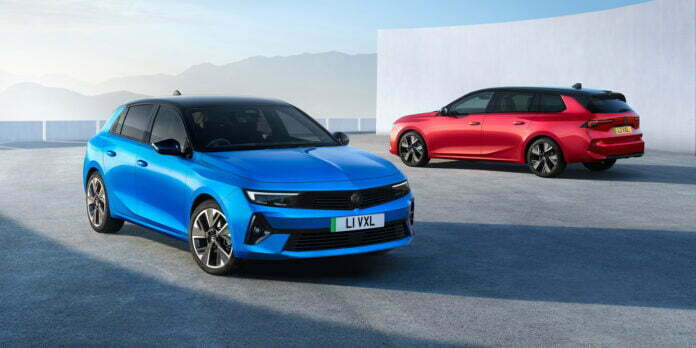
Volkswagen was the biggest-selling brand in August ahead of Ford and Audi, which was the same as last month. Vauxhall was fourth, replacing Kia, while BMW was again fifth.
All eyes will now be on the crucial September results…
The Ford Puma was again the best-selling car in August, further extending its lead in the 2023 sales race. Tesla had a strong month, with both of its cars in the top ten, while Ford also had the Kuga and outgoing Fiesta in the best-sellers list as well.
Notably missing from the top ten was Nissan, with neither the Qashqai nor the Juke making an appearance in August. This means that the Qashqai has now slipped to fourth in the year-to-date sales race, overtaken by the Tesla Model Y. However, it may be worth pointing out that the same thing happened last year, with the Qashqai nowhere to be seen in August then topping the charts with a massive month in September. Is Nissan trying to pull the same trick again this year?
The Ford Fiesta made what could well be its final appearance in the top ten in August, unless Ford is holding a lot of stock back for September. Now that the Fiesta is out of production, it’s unlikely to reappear.
We’ll have our usual full analysis of the top ten shortly.
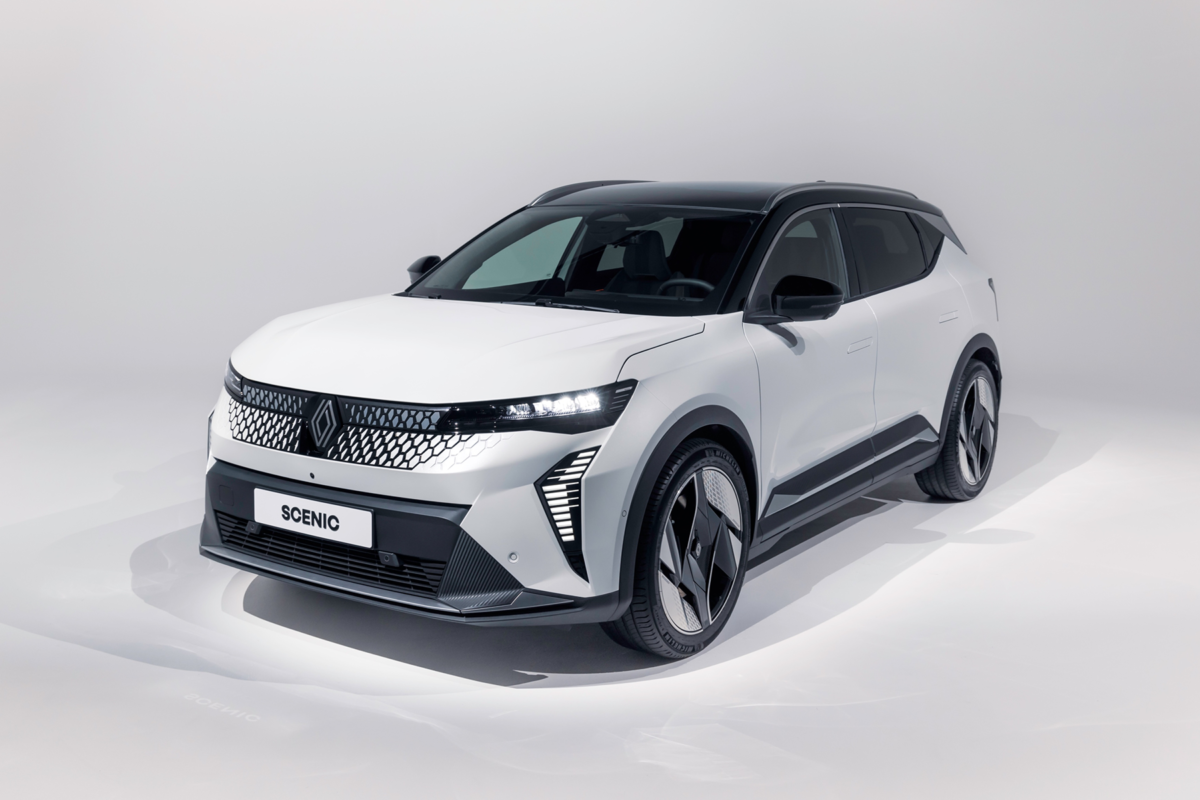
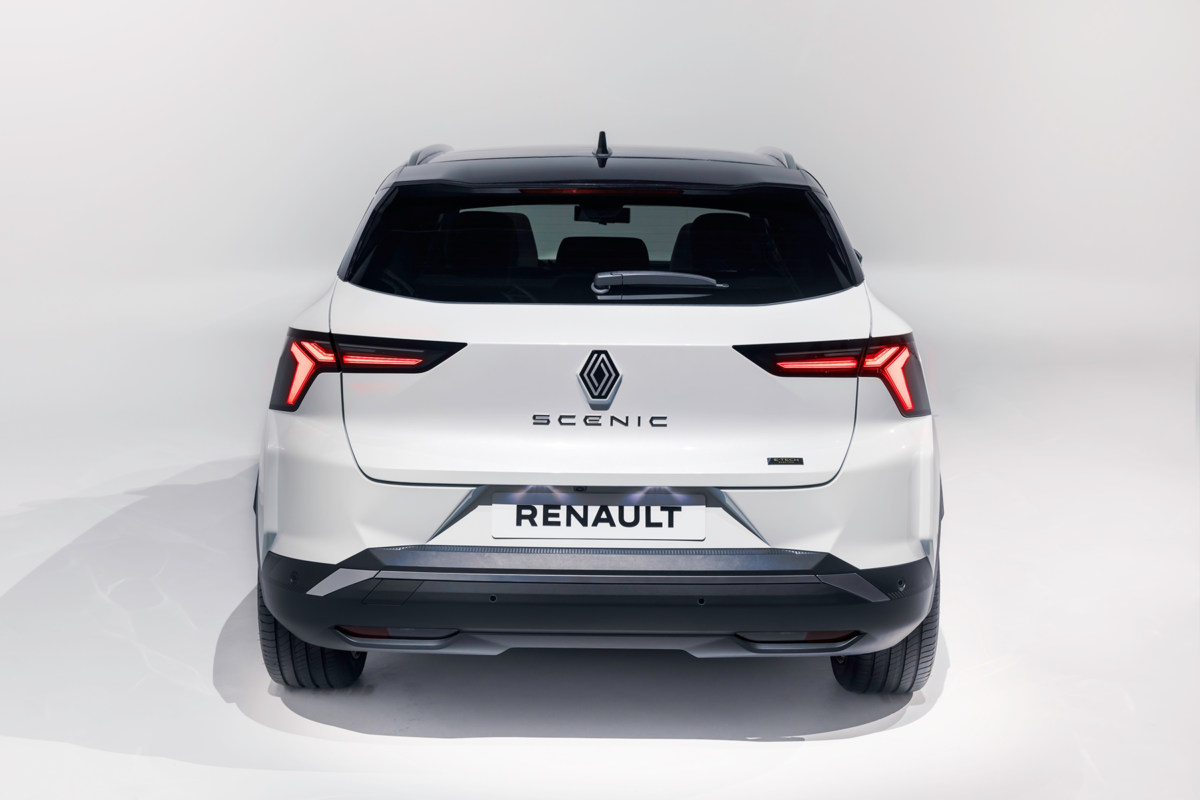
After a four-year absence, the Renault Scenic nameplate will return to the UK market in early 2024, but the former combustion-powered people carrier we knew is long gone.
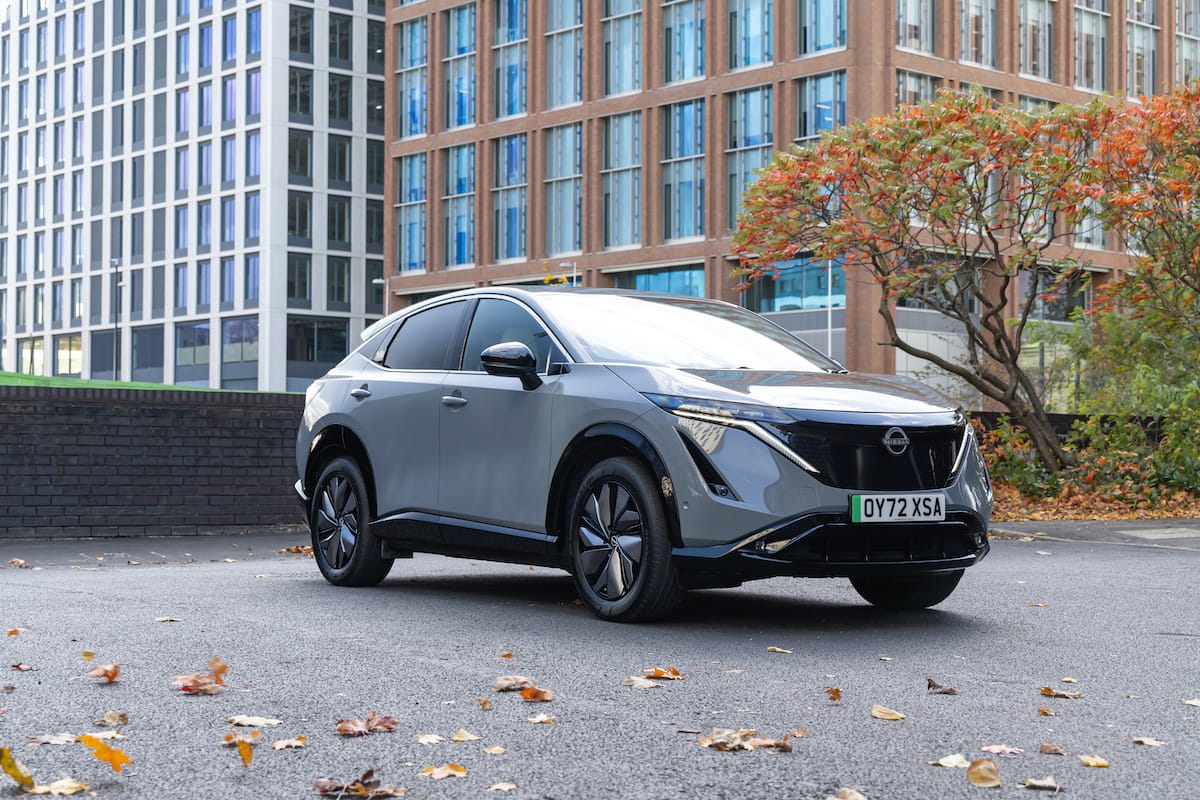
The Scenic was retired in 2019 due to the declining popularity of people carriers in the UK. This new model is instead a large SUV, and an all-electric one at that – marketed as the ‘Scenic E-Tech’. It shares its foundations with the smaller Mégane E-Tech and the Nissan Ariya.
Unveiled this week at the Munich motor show, the new Scenic has been “designed around families and their need to travel freely and safely”, Renault adding that it has a keen focus on sustainability. 24% of the new model’s materials are reportedly recycled and, when the car is eventually put out to pasture, 90% of its mass is recyclable.
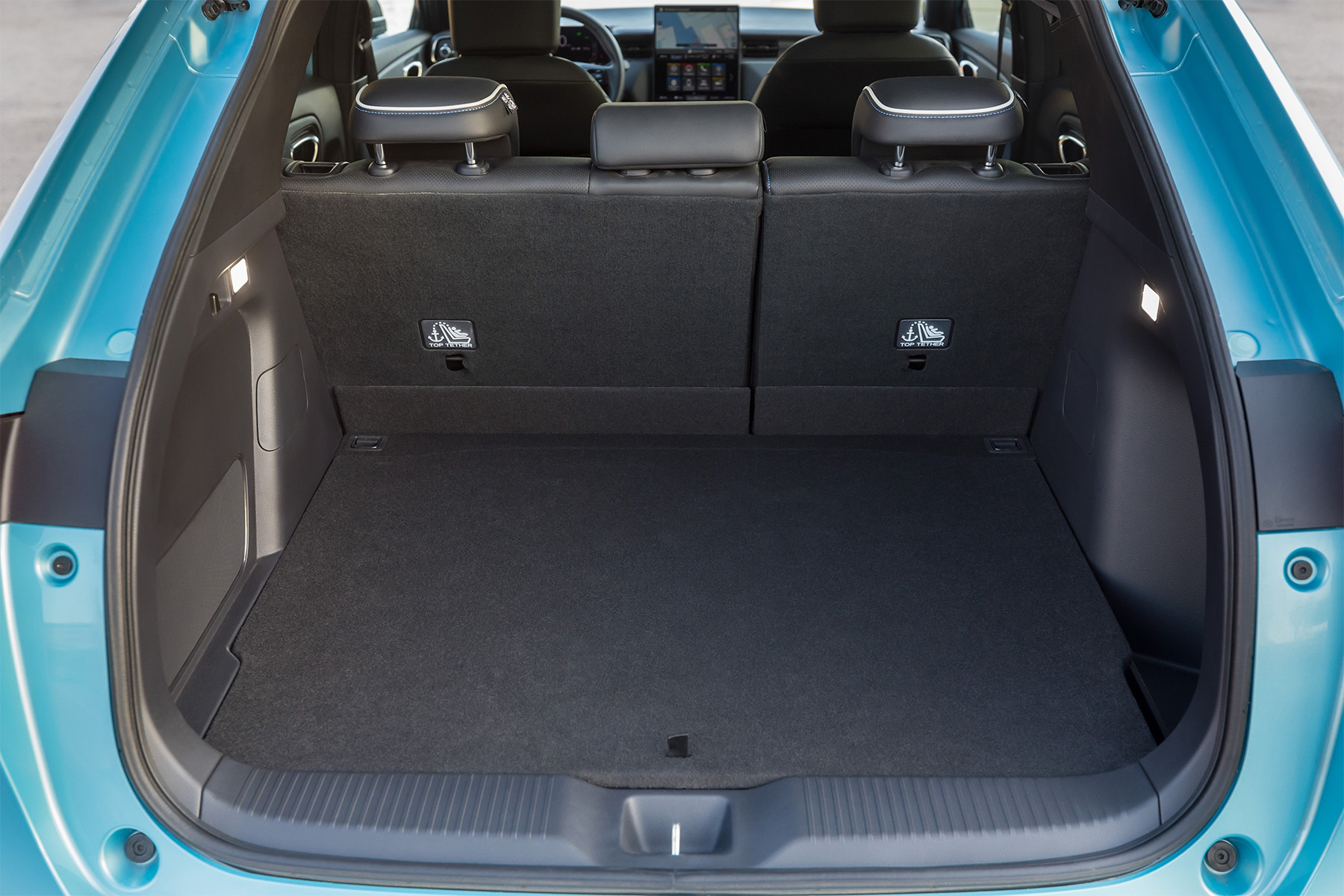
This new iteration has a slightly longer cabin than the former Scenic people carrier, which should boost rear legroom, but has a shorter stance as the roofline is a few centimetres lower. Opening the boot reveals 545 litres of storage space, which is 27 litres less than the people carrier, but 89 litres more than the Nissan Ariya.
Renault adds that the car’s cabin is “fully flat”, and that it sits on 19-inch alloy wheels as standard, though 20-inch alloy wheels will also be available. Following the latest design trends, the Scenic’s door handles are flush with the body. The grille, which features Renault’s latest branding, is composed of small diamonds, which appear and disappear depending on the light and angle.
Inside, a 12-inch portrait-oriented touchscreen is angled towards the driver on the dashboard, sitting next to a 12-inch digital instrument cluster behind the steering wheel. The central screen comes with Google Play installed, offering more than 50 different apps, “from music quizzes and family games to journey planning”.
Two different powertrain options will be offered. The first uses a 170hp electric motor and a 60kWh battery pack pairing to deliver an estimated range of 260 miles. The second features a more powerful 220hp electric motor, coupled with a larger 87kWh pack that Renault says can travel up to 379 miles on a single charge.
That just about sums up what we know about the new Renault Scenic E-Tech. More details, including UK pricing and full trim specifications, will be announced closer to the car’s official arrival early next year.
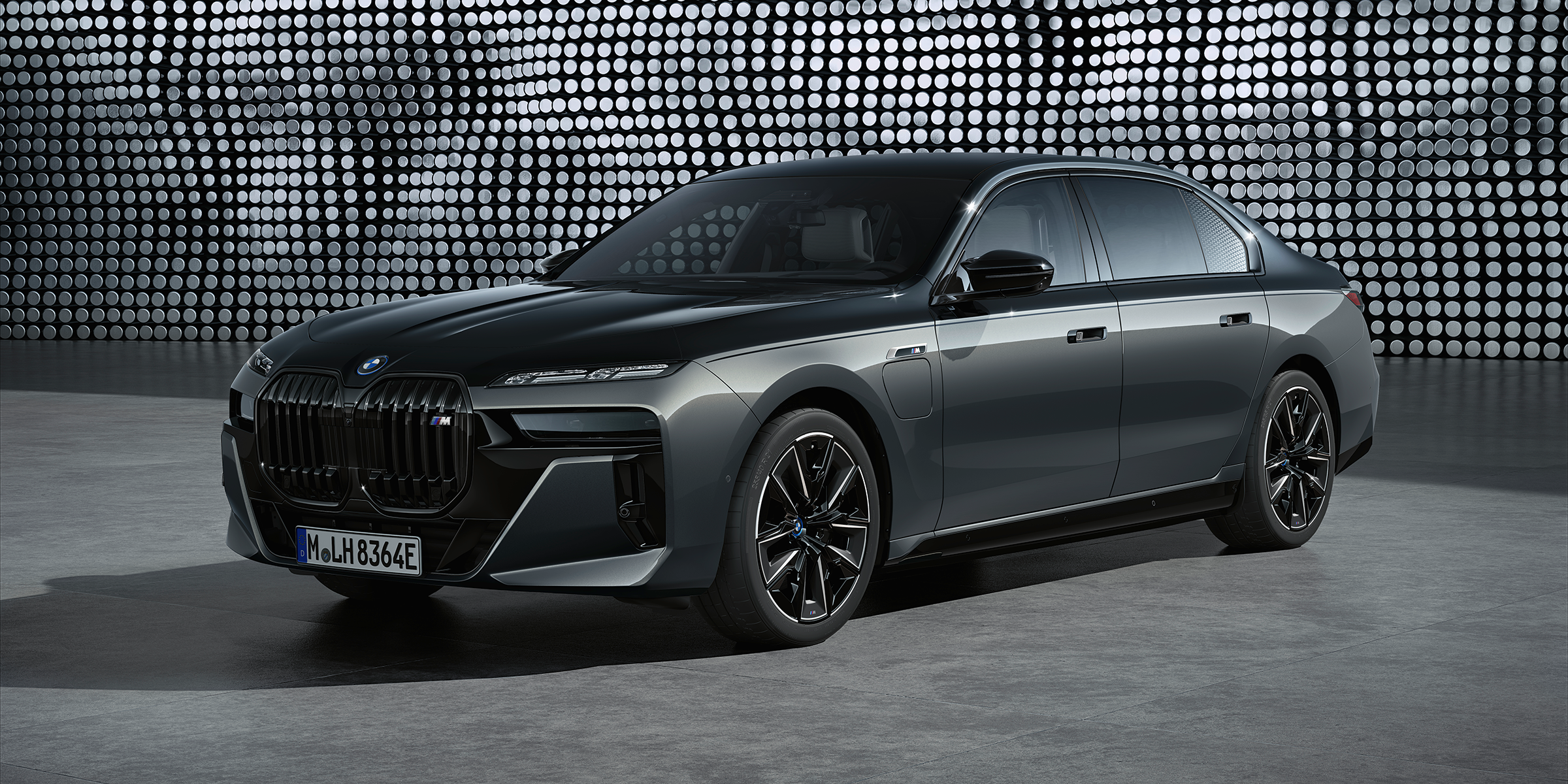
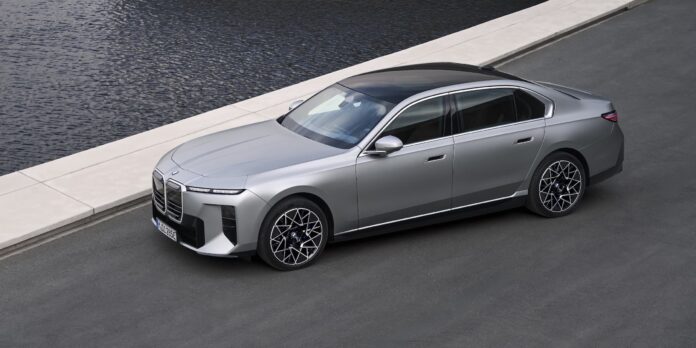
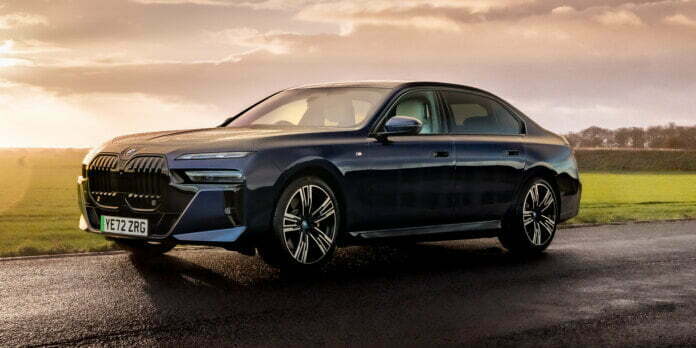
On sale in different guises since 1977, the BMW 7 Series is the German brand’s largest luxury saloon. This is the latest seventh-generation model, which became available to order at the start of 2023. The range also includes the all-electric i7 saloon, which is instead covered here.
The new 7 Series offers one of the most luxurious driving experiences around, with innovative on-board tech that makes it stand out from its rivals. Yet British reviewers are yet to give the plug-in hybrid full marks, with many preferring the electric i7 for being marginally more comfortable.
Motoring outlets have also criticised the BMW’s divisive exterior styling and eye-watering six-figure price tag – complaints that also apply to the i7 – but all agree that the cabin is of the highest quality. “It has arguably the finest interior in the automotive world”, asserts Top Gear‘s Jason Barlow. “You can argue among yourselves about the exterior design, but inside is a knock-out.”
As of February 2026, the BMW 7 Series holds a New Car Expert Rating of B, with a score of 64%. This is somewhat lower than the all-electric i7, which is due to higher running costs and slightly lower review scores from the UK motoring media.
“The BMW 7 Series is a high-end saloon that’s filled to the brim with kit and is very comfortable throughout. Looks will divide people though, and it certainly isn’t cheap.”
Model reviewed: Range overview Score: 8 / 10 “Divisive styling doesn’t change the fact that the BMW 7 Series is one of the most impressive luxury vehicles on sale today.” Author: Max Adams, Shane Wilkinson Read review
Auto Trader
Model reviewed: Range overview Score: 8 / 10 “The BMW 7 Series sells in tiny numbers in the UK and Europe but has a bigger role to play as a global ambassador for the brand’s latest tech, design and innovation.” (Dan Trent) Read review
Car
Model reviewed: 3.0-litre petrol/electric plug-in hybrid M760e Score: 10 / 10 “We find BMW’s approach to the new 7 Series generally appealing – instead of building a bespoke electric car, it’s engineered its latest flagship right from the start to accept every kind of powertrain. That means that every 7 Series customer knows that they’re getting the best of BMW’s best, no matter which kind of engine suits their needs and lifestyle.” Author: Alan Taylor-Jones Read review
Heycar
Model reviewed: Range overview Score: 8 / 10 “The BMW 7 Series makes a statement in the way it looks and drives, and with a cabin packed full of technology. Not everyone loves the styling, but the big 7 remains at the pinnacle of the BMW range for comfort and class.” Author: Al Suttie Read review
Honest John
Model reviewed: Range overview Score: 8 / 10 “Luxury and technology abound in the BMW 7 Series, with a truly first class experience for those in the back. Look beyond the divisive design and you’ll find a limousine that’s as good to drive as it is to be driven in.” Read review
Parkers
Model reviewed: Range overview Score: 8.8 / 10 “Its design may put some off, but it may attract others. But what really sets the BMW 7 Series apart is the impressive build quality of its interior and the technology available to the buyer.” (CJ Hubbard) Read review
Top Gear
Model reviewed: Range overview Score: 9 / 10 “The new 7 Series has arguably the finest interior in the automotive world, beautifully executed, well-made and imaginative. You can argue among yourselves about the exterior design, but inside is a knock-out.” (Jason Barlow) Read review
Safety rating
Independent crash test and safety ratings from Euro NCAP
No safety rating
As of February 2026, the BMW 7 Series has not been tested by Euro NCAP.
Eco rating
Independent economy and emissions ratings from Green NCAP
No eco rating
As of February 2026, the BMW 7 Series has not been tested by Green NCAP.
Reliability rating
Reliability data provided exclusively for The Car Expert by MotorEasy
Total claims: 231 Average repair cost: £904.44 Last updated: April 2025
The BMW 7 Series has a historically poor reliability record, according to workshop and extended warranty data provided by our partner, MotorEasy, This includes both the current model and previous (pre-2022) generations of 7 Series.
The average repair bill to date has been about £900, with suspension problems being the most common faults. Engine problems have also been common, and they’re more expensive to repair with an average bill of £1,300.
Running cost rating
Monthly cost of ownership data provided exclusively for The Car Expert by Clear Vehicle Data
Fuel consumption
Average
Score
Plug-in hybrid models
255 mpg
A
CO₂ output
Average
Score
Variation
Score
Plug-in hybrid models
25 g/km
A
Battery range
Average
Score
Variation
Score
Plug-in hybrid models
48 miles
D
Insurance group
Average
Score
Variation
Score
All models
50
F
Service and maintenance
Cost
Score
Year 1
£504
E
Year 2
£1,022
E
Year 3
£1,567
E
Year 4
£1,871
E
Year 5
£2,471
E
Overall
£7,435
E
The seventh-generation BMW 7 Series is quite an expensive to run and own, according to whole-life cost data provided exclusively to The Car Expert by our technical partner, Clear Vehicle Data.
The 7 Series is only offered as a plug-in hybrid in the UK, which means that the official fuel consumption and CO2 emissions figures look amazing, but they won’t be anything like that in real-world driving. There’s no way you’ll ever manage to travel 259 miles on one gallon (4.5 litres) of petrol and a full battery. In our own review of the 750e model, we averaged 35-40mpg over a week of driving.
The car’s insurance premiums also reflect its eye-watering price tag, although service and maintenance costs over five years of ownership are predicted to be around the market average, and a bit cheaper to maintain than key rivals like the Mercedes-Benz S-Class.
Warranty rating
New car warranty information for the BMW 7 Series
Overall rating
B
76%
New car warranty duration
3 years
New car warranty mileage
Unlimited miles
Battery warranty duration
8 years
Battery warranty mileage
100,000 miles
BMW’s new car warranty is fairly average, running for three years, with no limit on mileage. That’s better than Audi (three years/60,000 miles) and the same as Mercedes.
In addition to the standard new car warranty, the 7 Series has an eight-year/100,000-mile warranty for the plug-in hybrid battery components.
If you are purchasing an ‘Approved Used’ BMW 7 Series from an official BMW dealership, you should get a minimum 12-month/unlimited mileage warranty included. If you are buying a used 7 Series from an independent dealership, any warranty offered will probably be managed by a third-party warranty company and the terms may vary. If you are buying a used 7 Series from a private seller, there are no warranty protections beyond anything that may be left on the original new car warranty.
If you’re looking to buy a used car that is approaching the end of its warranty period, a used car warranty is usually a worthwhile investment. Check out The Car Expert’s guide to the best used car warranty providers, which will probably be cheaper than a warranty sold by a dealer.
Similar cars
If you’re looking at the BMW 7 Series, you might also be interested in these alternatives.
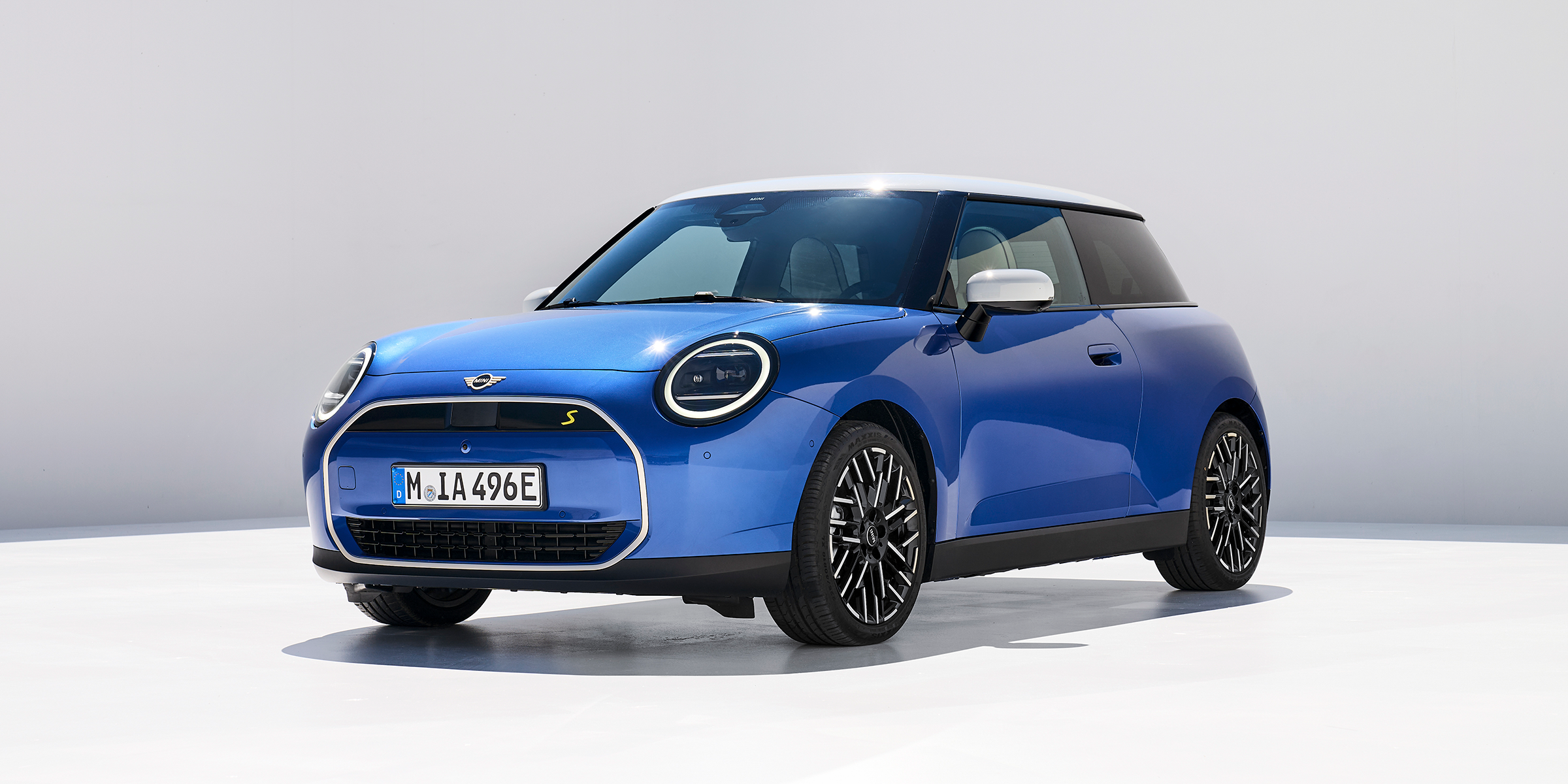
Mini has shown off its fifth-generation Electric hatchback at the Munich motor show, which the brand says offers a “major step forward in technology” over the current range.
An unmistakable Mini, this new model sports the oval-shaped LED headlights and two-tone paintwork that has become synonymous with the British brand, in a simplistic exterior design that Mini says is a “reinvention” of the Mini Electric that has been on sale in the UK since 2020.
The ‘Cooper’ nameplate is set to make a return too, as Mini has decided to revive the well-known moniker for all of its next-generation compact hatchbacks, whether they are all-electric or petrol-powered.
Exterior design changes include flush door handles, the removal of wheel arch plastics and air vents in favour of giving the car a smoother front bumper, and more notably new taillights in the rear, replacing the current model’s Union Flag design. The lights are customisable though, and customers can choose between three different light signatures, including a more patriotic option.
Mini says that it has made the tyre tracks wider to aid steering and road traction, and adds that the new model is slightly longer than the current iteration, which should provide more legroom in the cabin – particularly for passengers in the back. 200 litres of luggage space can be found in the boot (11 litres less than the current Mini Electric), which extends to 800 litres with the rear seats folded.
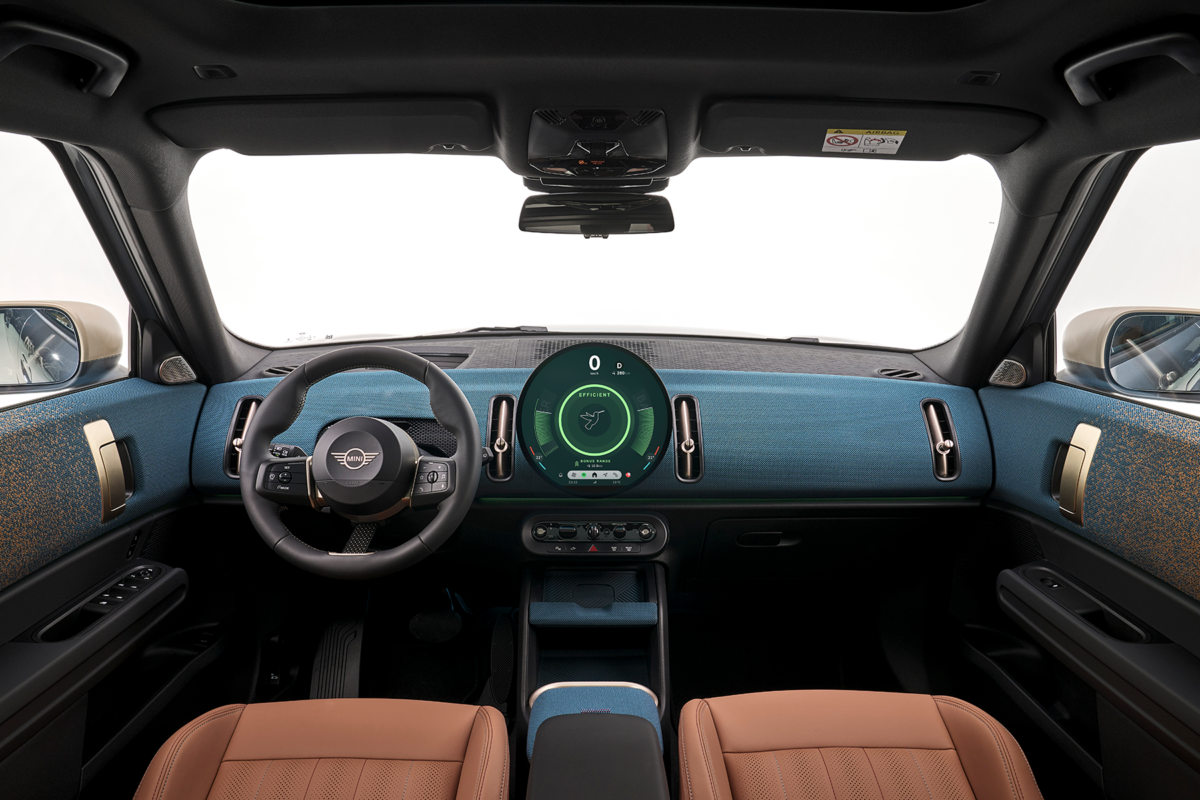
Stepping inside, the Cooper Electric comes with a circular central screen like its predecessor, but the display has been given more prominence on the dashboard.
This nine-inch console comes with seven different ‘experience modes’ that change the display style and the colour of the lighting that’s projected onto the knitted dashboard. It is also where driving information and navigation is displayed, as there is no digital instrument cluster behind the steering wheel. A head-up display is available for an additional fee though, which projects driving information onto the windscreen.
These ‘experience modes’ also alter the car’s driving behaviour. ‘Go-Kart’ mode, for example, modifies steering response and the intervention limits of traction control for more driving fun, while ‘Green’ mode optimises the battery efficiency to provide a longer range.
Two different powertrains will be available, starting with the lead-in ‘E’. This model makes use of a 41kWh battery and a 184hp electric motor to provide an official range of up to 190 miles and a 0-62mph sprint time of 7.3 seconds.
The top-spec ‘SE’ can complete the same run in a reported 6.7 seconds, thanks to its larger 54kWh battery and its more powerful 218hp electric motor. It also has a longer maximum range – 250 miles.
Once you have selected your desired battery option, you will have three trims to choose from – ‘Classic’, ‘Exclusive’ and ‘Sport’. The full trim specifications are yet to be released, but each trim has several unique cosmetic features.
That just about sums up what we know about the new electric Cooper range so far. Mini is yet to announce exactly when the new model will go on sale, but has said that it plans to deliver the first customer orders in Spring next year.
Pricing begins at a flat £30k for the Cooper Electric ‘E’, rising to above £34k for the ‘SE’ powertrain.
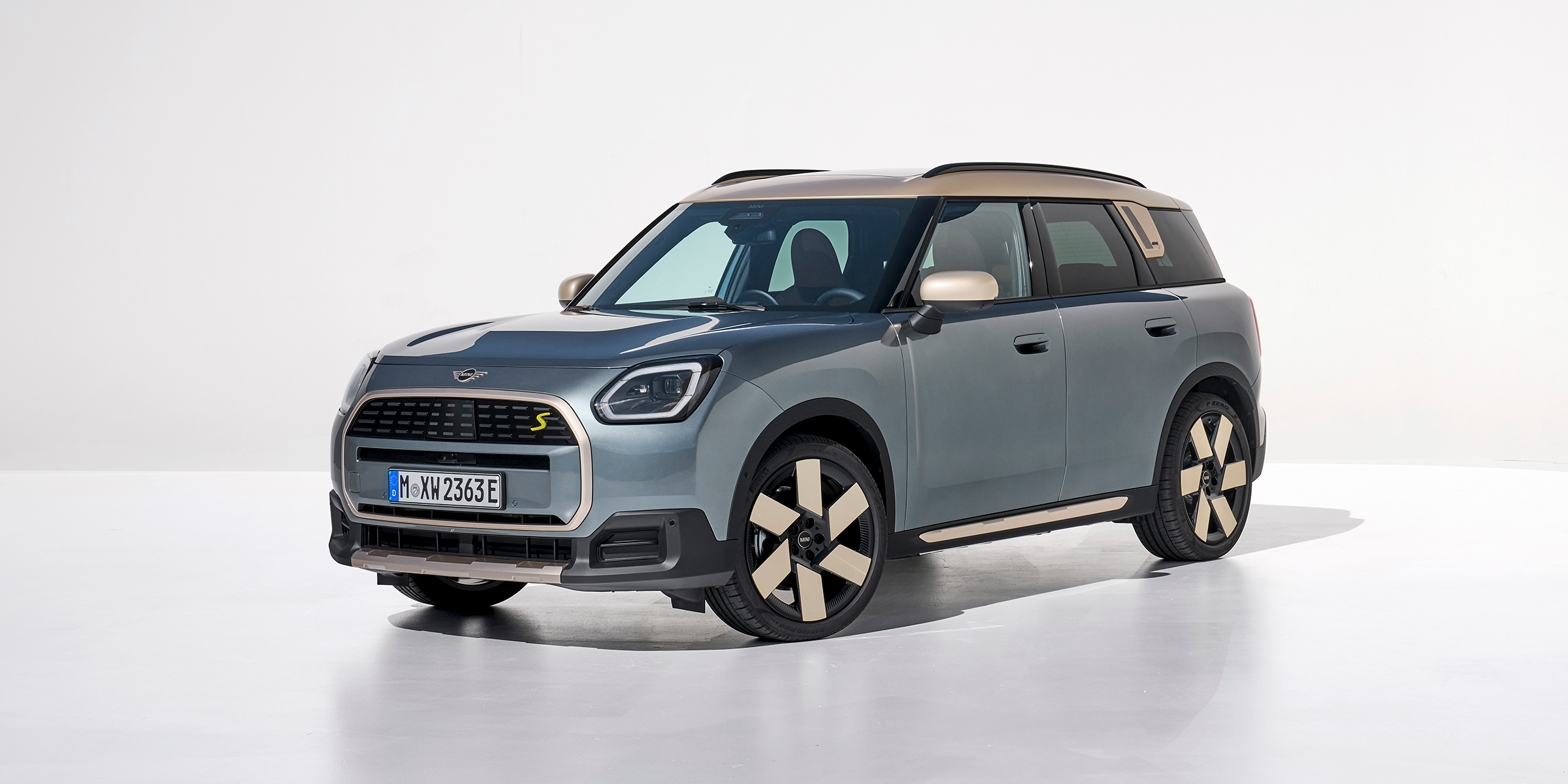
Mini has debuted the next iteration of its Countryman crossover at the Munich motor show, which will be offered a family-sized electric (EV) option for the first time.
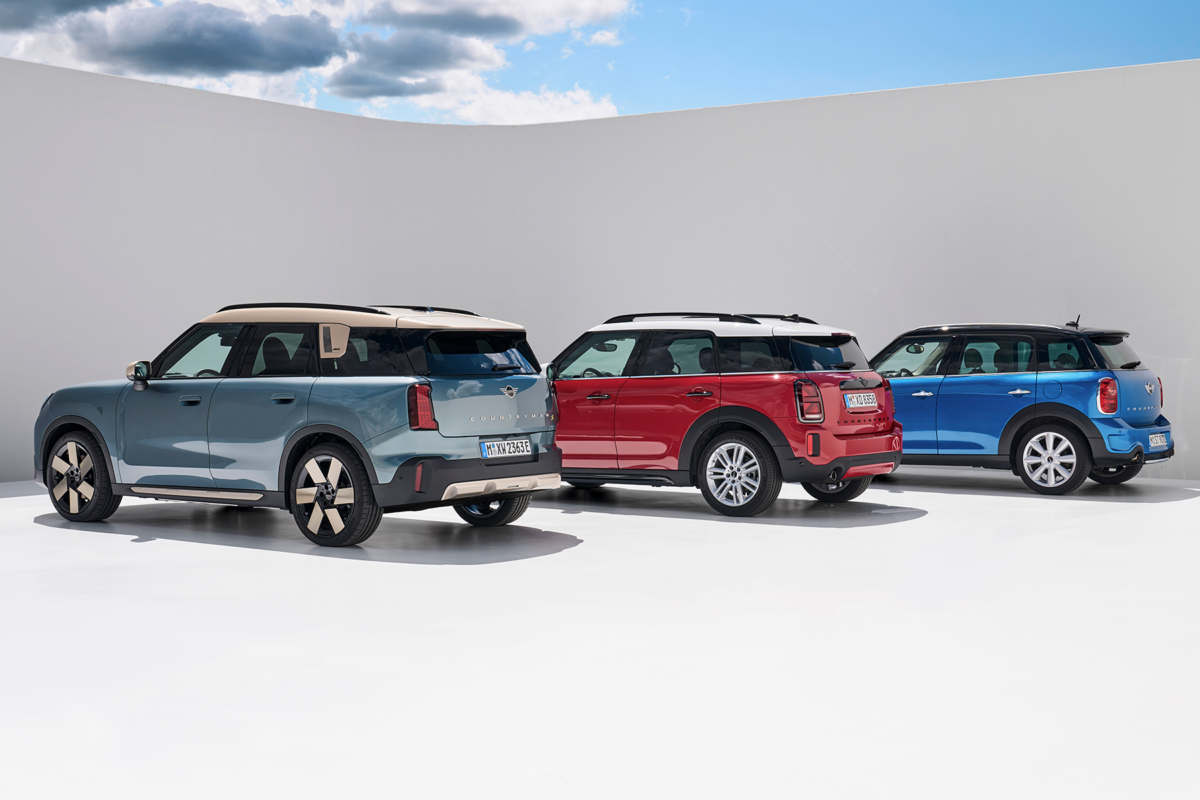
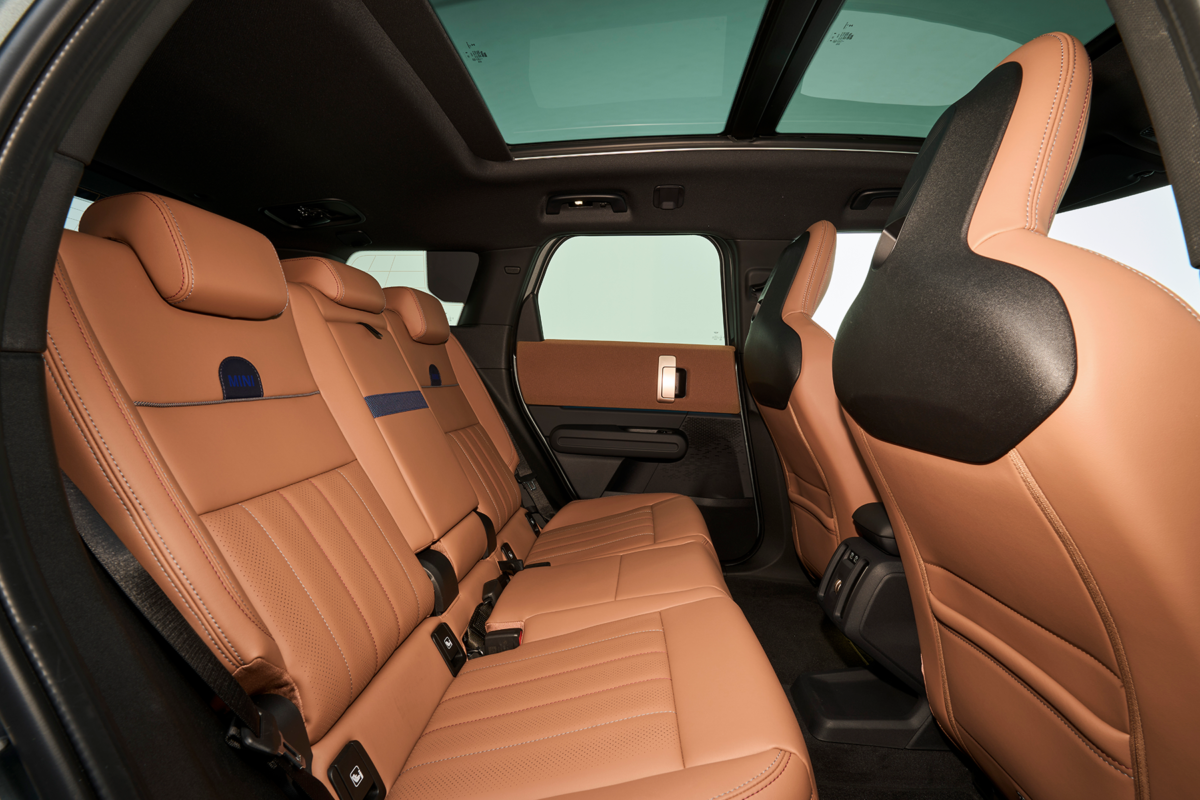
The new Countryman is not so ‘mini’ either, as it is six centimetres taller and 13 centimetres longer than its predecessor, which should increase shoulder room and legroom in the cabin. The car sits on 17-inch alloy wheels as standard, but bigger 19- and 20-inch alloy wheels will also be offered for an additional fee.
The new Countryman compared with its predecessors
Starting with the petrol models, the new Countryman range begins with the 170hp ‘C’ model, followed by the 218hp all-wheel drive ‘S ALL4’. The range also includes a high-performance Countryman ‘JCW ALL4’ model, which provides 300hp and a 0-62mph sprint time of 5.4 seconds.
Two electric models will be offered, which both use the same 65kWh battery to deliver a “go-kart feel” driving experience. The 204hp ‘E’ is equipped with a single electric motor and can muster a reported 287 miles of range on a single charge, while the more expensive 313hp all-wheel drive ‘SE ALL4’ has an official battery range of 269 miles.
Electric versions are compatible with 22kW AC charging optionally and 130kW DC charging, and the brand says that the latter charges the battery from 10% to 80% in under 30 minutes.
Inside, the Countryman adopts the same circular OLED central screen on the dash as the Mini Electric. There is no instrument cluster behind the steering wheel, with the driving information displayed on the central screen or the optional head-up display that projects data onto the windscreen.
The display is customisable, with different display modes to choose from including a ‘personal mode’ which allows you to pick any picture to use as the screen’s background, and the optional projector hidden behind the screen will then pick out the dominant colours and display them across the knitted dashboard.
Customers in the UK have the choice of three trims – ‘Classic’, ‘Exclusive’ and ‘Sport’ – with the exact specifications of these trim grades yet to be confirmed. The new Countryman isn’t available to order just yet, but Mini says that the first customer orders should be delivered by February next year.
Prices begin at over £28k for the entry-level ‘C’, while pricing for the electric range begins at over £41k. The most expensive model will be the ‘SE ALL4’, which will cost close to £47k before trim levels are considered.
Volkswagen has unveiled its ninth-generation Passat estate-only family car, which will be available with either petrol or plug-in hybrid power.
Set to rival the Mercedes-Benz C-Class estate and BMW 3 Series Touring like the current Passat estate model, the new version will join the Volkswagen range next year, sitting alongside the cheaper Golf estate and more expensive Arteon Shooting Brake.
The current Passat generation was available as a saloon when it first launched in 2015, but this saloon version was discontinued, and this next-generation range follows suit. The current line-up did also include a more rugged Passat Alltrack estate model, but there is no word if that model will be carried forward either.
Making its public debut at the Munich motor show next week, the new Passat builds on the exterior design of its predecessor, with sharper body contours, slimmer LED headlights and taillights that stretch across the boot lid in the rear.
The new model is reportedly more aerodynamic – which will marginally improve the estate’s fuel efficiency – and it is bigger too. There is an extra five centimetres of length between the front and rear wheels, which increases legroom for passengers in the back. There is also an additional 40 litres of boot space when compared to the current eighth-generation – 690 litres in total.
Four different engine options will arrive in the UK, starting with a new 150hp 2.0-litre petrol mild-hybrid option which allows the car to coast without using the combustion engine. This will be followed by two plug-in hybrid models that use the same 1.5-litre turbo petrol engine and 20kW battery pairing, providing an output of 204hp and 272hp respectively.
The current range includes a plug-in hybrid version, but Volkswagen says that these ninth-generation plug-in hybrids are “newly developed”, offering an all-electric range of up to 62 miles for the first time.
Topping the range is a four-wheel drive turbocharged 2.0-litre petrol. Diesel models are set to go on sale in Germany, but they will not be coming to the UK. All models are fitted with an automatic gearbox.
Inside, a 13-inch central touchscreen running Volkswagen’s latest infotainment software is paired with a ten-inch digital instrument cluster behind the steering wheel. A larger 15-inch infotainment console is also available on the options list.
The drive selector has been moved to the steering wheel column, freeing up more space for storage cubbies on the centre console. Matrix LED headlights and a semi-autonomous parking assistance feature that can park the car using the driver’s smartphone are also offered for an additional fee.
That sums up what we know about the new Passat at the moment. The estate has been priced at just under €40k in Germany, with UK pricing, trims and exact arrival date yet to be confirmed. The details are sure to follow in the coming months.
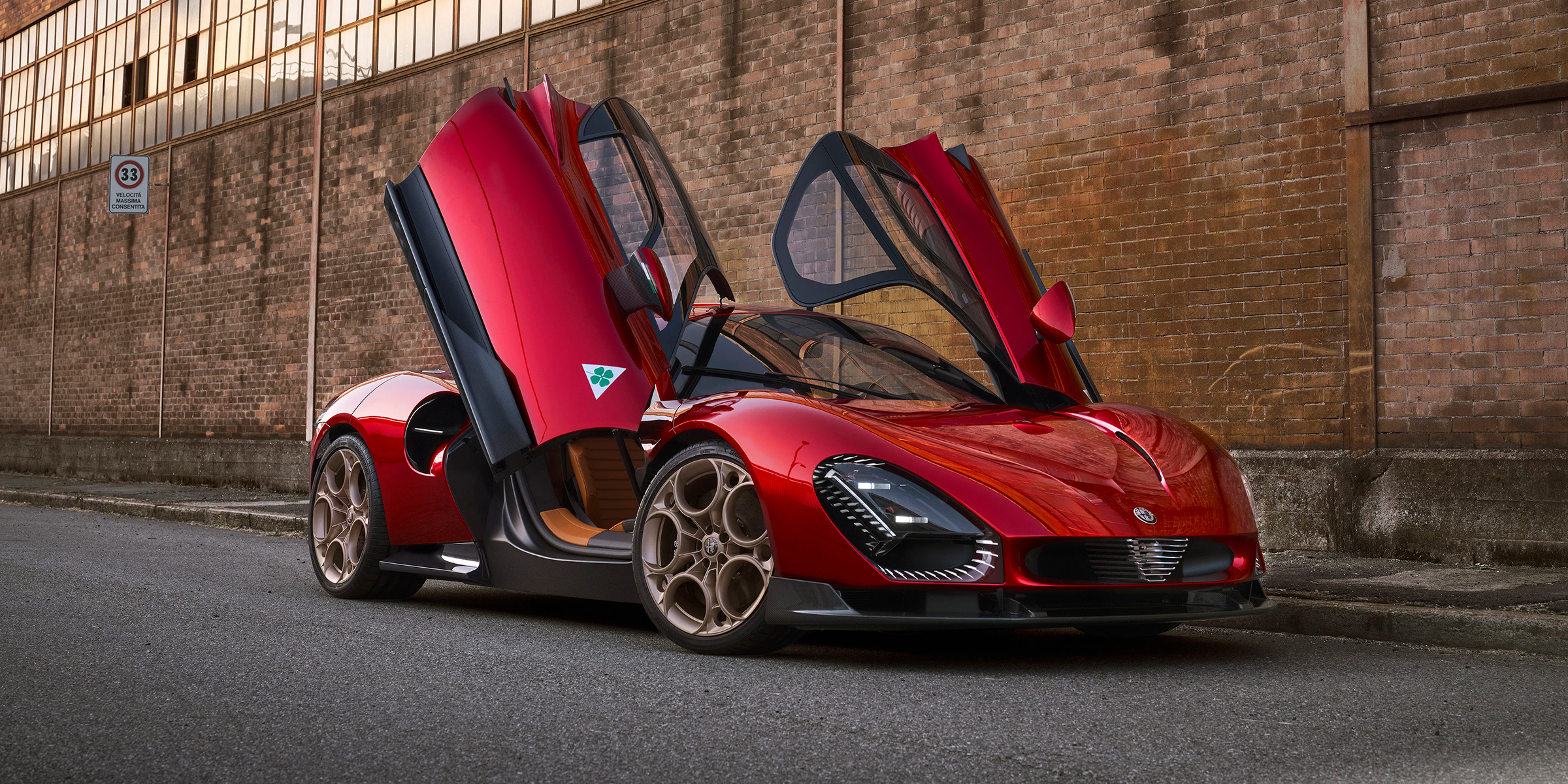
In development since 2021, Alfa Romeo has unveiled the new 33 Stradale supercar, which will be delivered to a select number of wealthy customers next year.
Viewed by its designers as a stylish modern interpretation of the 1967 33 Stradale, Alfa Romeo says that the new supercar links the internal combustion engines of its past with the brand’s all-electric future.
Handcrafted by bespoke coachbuilder Carrozzeria Touring Superleggera, the new 33 Stradale marks Alfa Romeo’s return to custom-built limited-edition cars, or “fuoriserie”, for the first time in over 50 years. This supercar will be the first in a series of custom-built models that display what the brand can achieve while paying tribute to its history.
This will no doubt be Alfa’s final combustion-powered supercar, but it is also the manufacturer’s first electric car (EV). Buyers could have either opted for a more traditional 620hp twin-turbocharged 3.0-litre V6 petrol engine, or a 750hp fully-electric configuration with a maximum battery range of 280 miles.
The petrol engine option is essentially an upgraded version of the powerful petrol unit in Alfa’s Giulia Quadrifoglio and Stelvio Quadrifoglio, while the EV has a similar tri-motor four-wheel-drive setup as the Maserati’s upcoming GranTurismo Folgore, and will have artificial engine sounds as a feature in the cabin.
The petrol version can reportedly muster a 0-62mph sprint time of “under three seconds” and a top speed of 207mph. The EV can complete the same sprint in “under two-and-a-half seconds”.
Besides performance, Alfa Romeo also wanted to optimise the supercar’s drivability and comfort, and therefore every model produced will be tested and certified by a team of dedicated engineers, working with F1 driver Valtteri Bottas.
The car has aluminium chassis and carbon fibre monocoque foundations to keep the weight low and provide agile cornering, and comes with a new four-wheel steering system that Alfa has developed which can reportedly filter out rough road surfaces to boost driving comfort.
There are two driving modes to choose from – ‘Strada’ (road) and ‘Pista’ (track). The former gives the driver a more comfortable ride with slower throttle response, and softer suspension. Track mode, meanwhile, sharpens the throttle response, stiffens the suspension and keeps the exhaust valve open constantly.
Interested? Well here comes the bad news. This model costs an estimated £1.7 million… and it’s already sold out. The first sketches of the supercar were shown off to prospective customers at last year’s Monza Grand Prix, and within two weeks Alfa had filled the order list with specially selected customers who respect “the car’s history and iconicity”.
In keeping with the supercar’s nameplate, only 33 models will go into production, making this a very exclusive performance car. Those chosen customers will have to wait though – the first model will be delivered in December 2024, and it could take until 2026 to deliver all 33 cars.
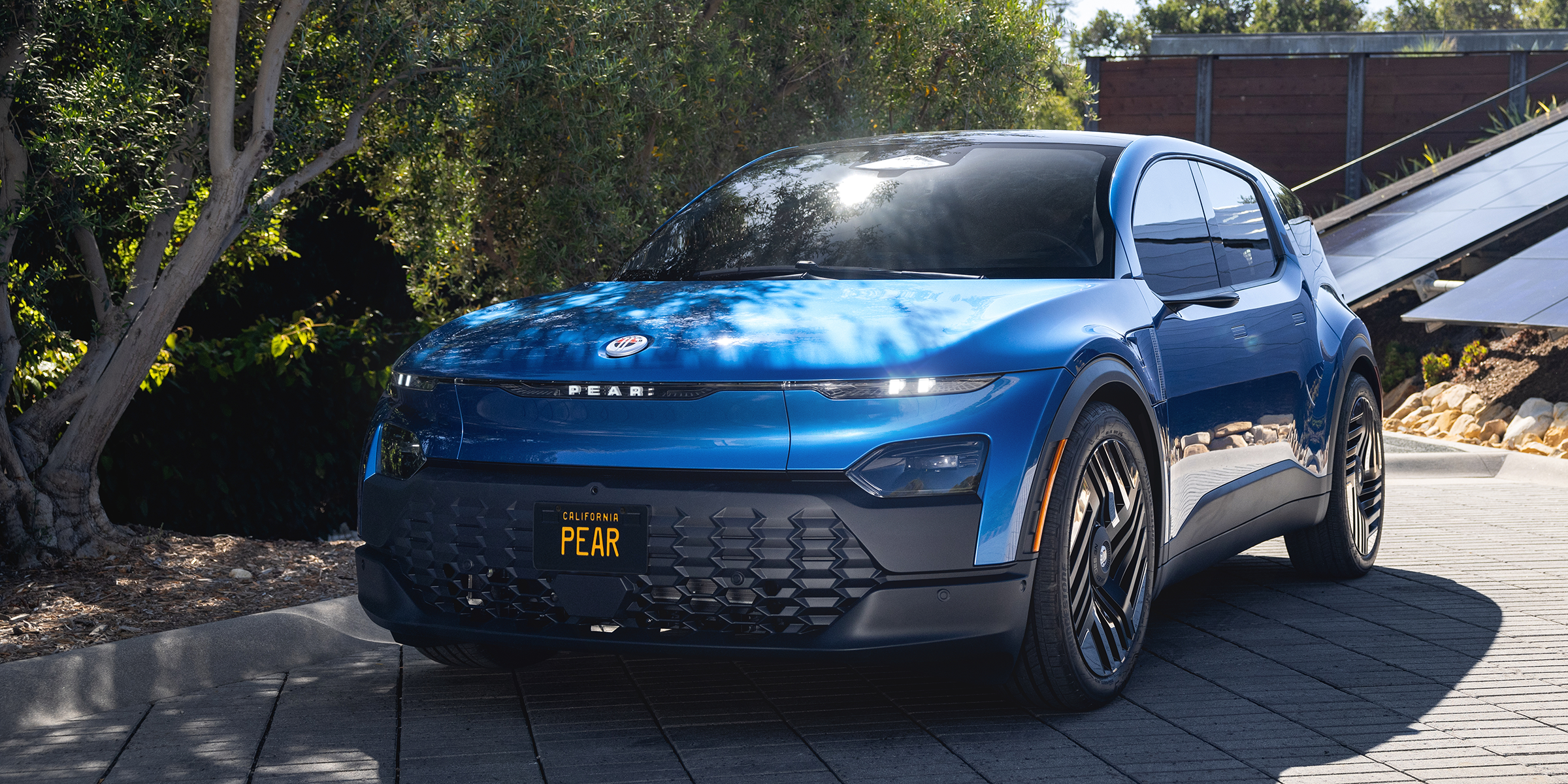
The brand-new electric Fisker Pear SUV/crossover is set for a UK arrival, which will sit below the larger Ocean SUV in Fisker’s British offering.
While the Ocean is set to go on sale in the next few months, buyers will have to wait longer for the more “affordable” Pear, which is likely to arrive on British roads in 2024 or early 2025.
The crossover will be available with two different battery options – an entry-level model with a maximum range of 180 miles on a single charge, and a top-spec variant that can reportedly muster up to 320 miles on a full battery. Fisker adds that a high-performance model – the Pear ‘Extreme’ – will also join the range.
For the standard car, Fisker quotes a 0-60mph time of 6.3 seconds, and says that both front-wheel drive and all-wheel drive models will be available. The Pear sits on 20-inch alloy wheels as standard, but 22-inch alloy wheels will also be offered for an additional fee.
The compact crossover will seat up to six, with two rows of three seats. With no centre console in the front, the passenger bench next to the driver’s seat has space for two, and can be folded down in what Fisker calls ‘lounge mode’, allowing rear passengers to watch media on the car’s 17-inch rotating screen.
The car’s interior – which is trimmed using some recycled and bio-based materials – has been reportedly designed with long-term durability in mind, “with no fragile moving parts”. The crossover has front boot storage space which can be optionally insulated to keep stored items hot or cold.
The show model features some hollow fixtures on either side of the dashboard – this is presumably where the manufacturer tends to install wing mirror cameras – tech that the brand says is still under review. The crossover will also feature 5G connectivity.
One of the car’s most unique features is its ‘houdini’ boot lid. To allow access to the rear boot space, the car’s rear window slides down into the boot lid (like how windows operate on side doors), and then the boot lid panel moves down into the lower bumper. Fisker says that this design aids tight street parking situations and avoids damage in parking structures with low ceilings.
Set to rival the likes of the Renault Mégane E-Tech, Kia Niro EV, and Volkswagen ID.3 the Pear has been priced at just under $30k in the US. UK pricing has not been announced, but this converts to around £24k.
That sums up what we know about the Fisker Pear so far, more details are sure to follow in the coming months.
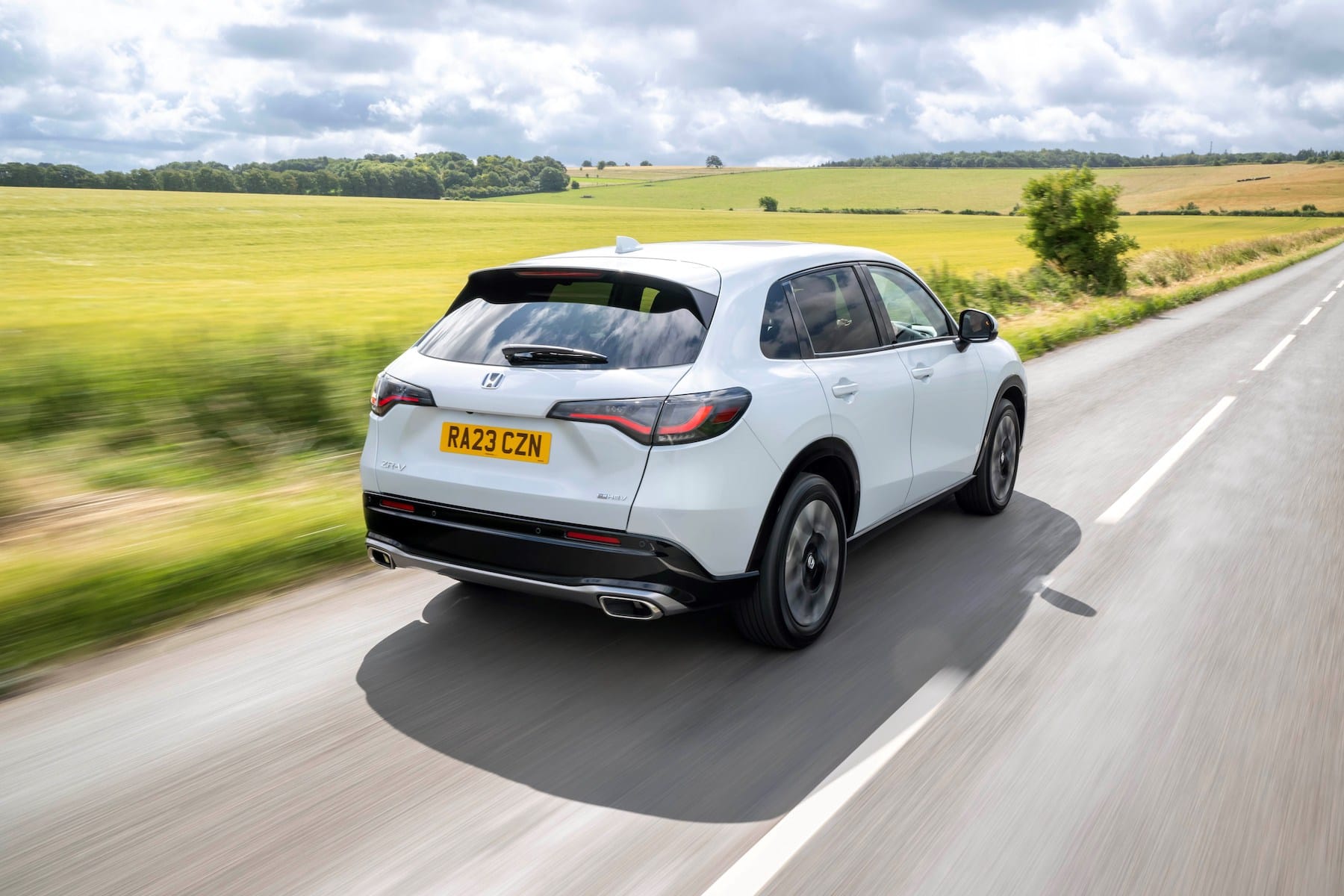
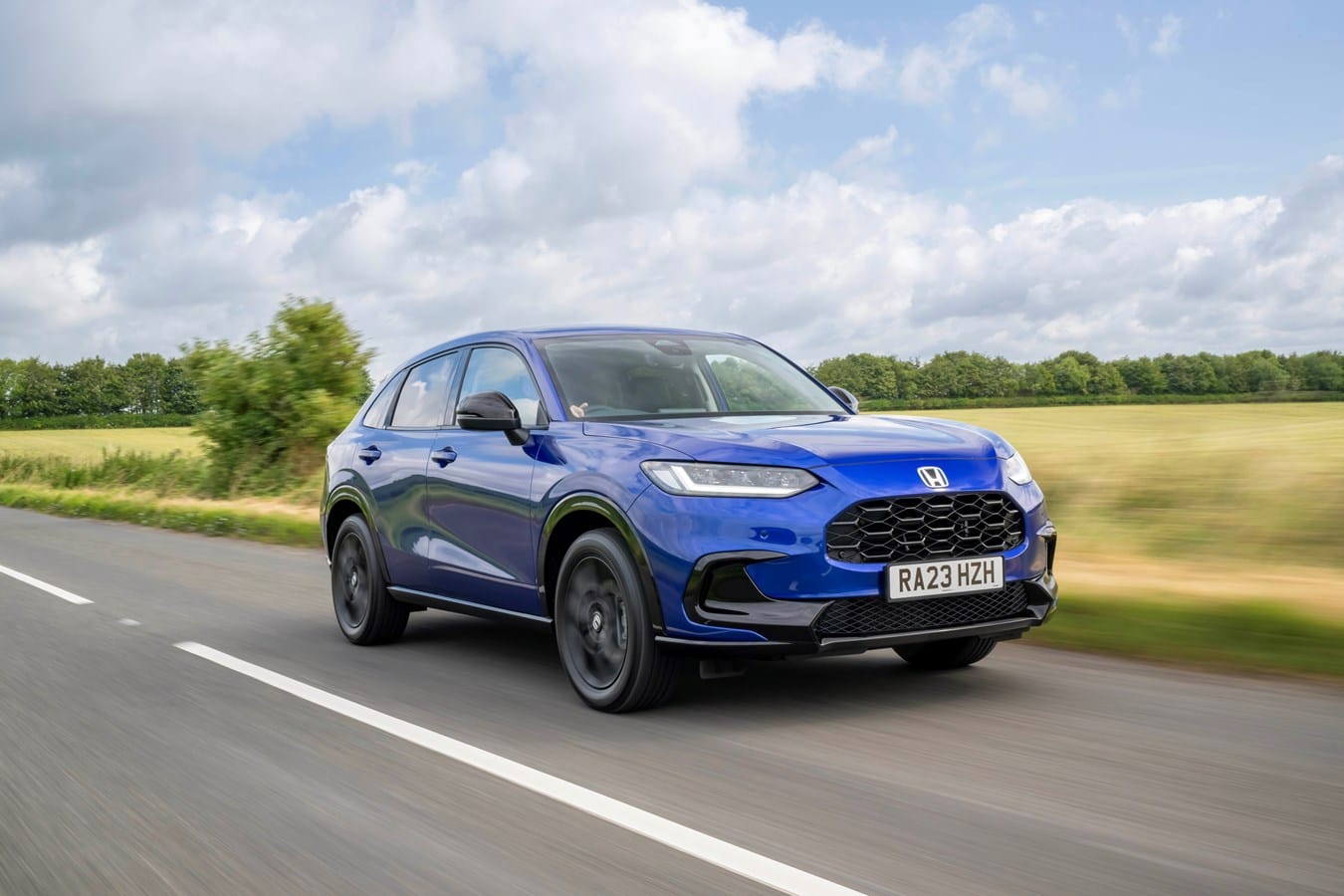
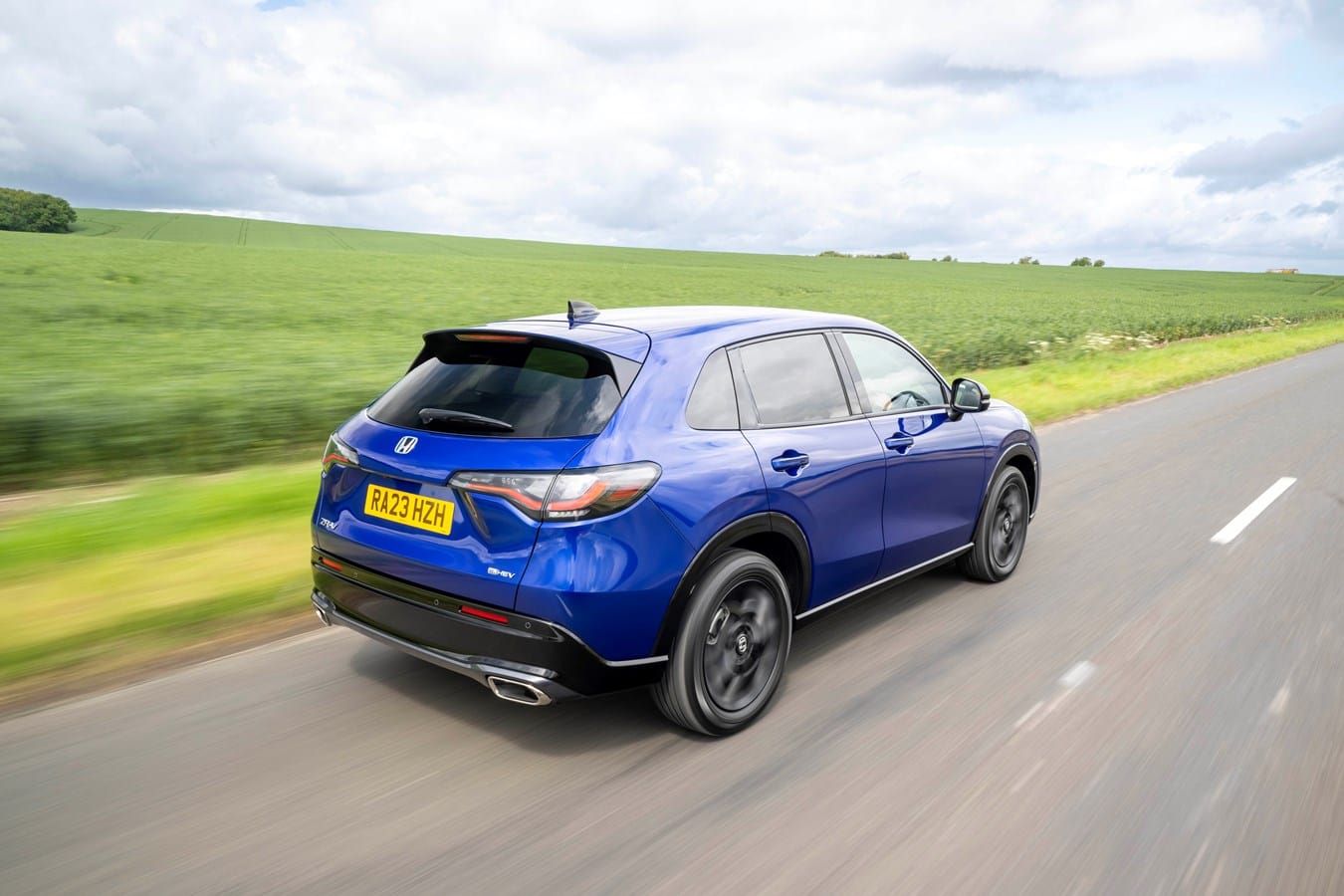
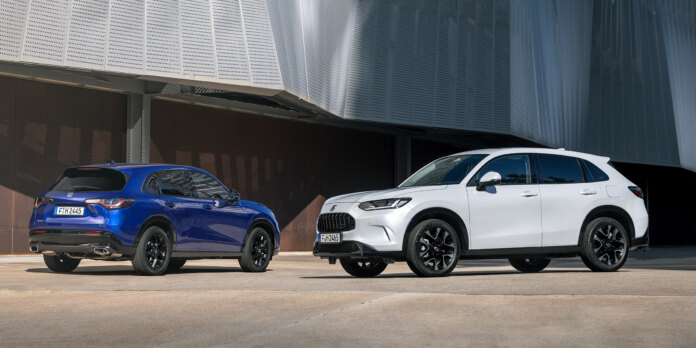
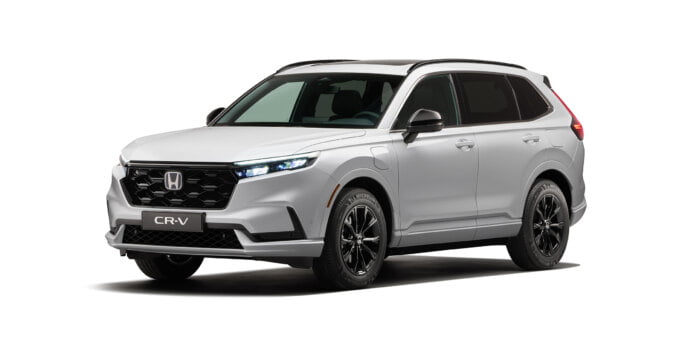
The Honda ZR-V is a mid-sized family SUV/crossover that joins the Honda range in Autumn 2023, sitting between the compact HR-V and larger CR-V SUVs.
It has received a rather mixed bag or review scores so far from the British motoring media, with many outlets praising the car for its economical hybrid powertrain, but still struggling to recommend it over the cheaper Civic hybrid hatchback.
Parker‘s Luke Wilkinson concludes that “the only reason you’d buy the ZR-V over the Civic is because you want an SUV”, and Top Gear‘s Greg Potts agrees, suggesting that buyers “just get it in the Civic rather than messing about with a heavier, uglier SUV.”
If you are looking for a crossover with more ride height however, reviewers agree that this mid-sized Honda makes a strong case against rivals like the popular Nissan Qashqai and Kia Sportage. Car‘s Tim Pollard says the ZR-V offers “a great driving experience, good comfort levels, and a spacious interior that’s loaded with technology”, though “its boot space might be a little lacklustre.”
Another key sticking point for motoring journalists is the SUV’s price tag, as there bigger vehicles available on the market for less money. However, as Martyn Collins of Business Car sums up, “If you like the way the Civic drives, but need an SUV, the Honda ZR-V is a good compromise.”
As of February 2026, the Honda ZR-V holds a New CarExpert Rating of C with a score of 62%. It scores top marks for its excellent safety rating and low CO2 emissions, however its media review scores and running costs are both poor.
Highlighted reviews and road tests from across the UK automotive media. Click any of the boxes to view.
Featured reviews
“The Honda ZR-V is a solid medium SUV with an economical hybrid engine, but it doesn’t really stand out from a crowded family car market in any particular area.”
Model reviewed: Range overview Score: 8 / 10 “Honda’s answer to the Nissan Qashqai features a slick hybrid setup and generous cabin space, but it’s not without its flaws.” Author: Ellis Hyde, Alex Ingram Read review
Model reviewed: 2.0-litre petrol/electric hybrid Sport Score: 8 / 10 “Honda’s new ZR-V has the fundamentals needed to make it a compelling C-segment SUV option. It’s spacious, well built and has very impressive real-world efficiency, so is easy to recommend.” Author: Jordan Katsianis Read review
Business Car
Model reviewed: 2.0-litre petrol/electric hybrid Advance Score: 8 / 10 “If you like the way the Civic drives, but need an SUV, the Honda ZR-V is a good compromise.” Author: Martyn Collins Read review
Car
Model reviewed: Range overview Score: 6 / 10 “The Honda ZR-V makes an excellent case for itself when compared against its SUV rivals. Its boot space might be a little lacklustre alongside the likes of the Kia Sportage and Nissan Qashqai, but it compensates for that with a great driving experience, good comfort levels, impressive fuel economy and a spacious interior that’s loaded with technology.” Author: Tim Pollard Read review
Carbuyer
Model reviewed: Range overview Score: 7.6 / 10 “The ZR-V is a good effort from Honda but not a class-leading SUV. It scores well for space, equipment levels and comfort, and the in-car tech is easy to use. However, there isn’t the polish here we’ve come to expect from Honda.” Author: Jordan Katsianis, Andy Goodwin Read review
Daily Mirror
Model reviewed: 2.0-litre petrol/electric hybrid Advance Score: 6 / 10 “The Honda ZR-V is a practical performer, but pretty pricey.” Author: Gareth Butterfield Read review
Heycar
Model reviewed: Range overview Score: 8 / 10 “Honda has put its own unique slant on the family SUV. The ZR-V is good to drive, efficient to run and packed with plenty of intuitive technology.” Author: Richard Aucock Read review
Honest John
Model reviewed: Range overview Score: 8 / 10 “The Honda ZR-V is a likeable family SUV with an upmarket interior and efficient hybrid powertrain. Its bland looks won’t do it any favours though, and nor will its relatively high start price.” Read review
Parkers
Model reviewed: Range overview Score: 7.8 / 10 “The only reason you’d buy the ZR-V over the Civic is because you want an SUV. The ZR-V is a good SUV, but the Civic is a much better car.” (Luke Wilkinson) Read review
The Sunday Times
Model reviewed: Range overview Score: 6 / 10 “In many ways, the new ZR-V is brilliant. The powertrain is as refined as it is clever, the cabin is roomy and well built, and the driving experience offers comfort and stability.” (James Fossdyke) Read review
The Telegraph
Model reviewed: Range overview Score: 6 / 10 “Whatever you think of Honda’s legendary reliability, clever marketing and this almost-brilliant hybrid system, when all’s said there are better and bigger vehicles out there for less money; one of them even carries a Honda badge.” (Andrew English) Read review
Top Gear
Model reviewed: Range overview Score: 6 / 10 “Honda’s hybrid powertrain is still impressive, but just get it in the Civic rather than messing about with a heavier, uglier SUV.” (Greg Potts) Read review
Safety rating
Independent crash test and safety ratings from Euro NCAP
Independent economy and emissions ratings from Green NCAP
No eco rating
As of February 2026, the Honda ZR-V has not been assessed by Green NCAP.
Reliability rating
Reliability data provided exclusively for The Car Expert by MotorEasy
No reliability rating
As of February 2026, we don’t have enough reliability data on the Honda ZR-V to generate a reliability rating.
The Car Expert’s reliability information is provided exclusively to us using extended warranty data from our partner, MotorEasy. As soon as MotorEasy has sufficient data on the ZR-V, we’ll publish the score here.
Running cost rating
Monthly cost of ownership data provided exclusively for The Car Expert by Clear Vehicle Data
Fuel consumption
Average
Score
Hybrid models
49 mpg
C
CO₂ output
Average
Score
Variation
Score
Hybrid models
131 g/km
B
Insurance group
Average
Score
Variation
Score
All models
35
D
Service and maintenance
Cost
Score
Year 1
£169
B
Year 2
£440
A
Year 3
£709
A
Year 4
£912
A
Year 5
£1,292
B
Overall
£3,522
A
The Honda ZR-V has a mixed bag of running costs, according to five-year ownership cost data provided exclusively to The Car Expert by our technical partner, Clear Vehicle Data.
For a relatively compact hybrid vehicle, fuel consumption isn’t great – and that’s the biggest running costs for most people. Servicing and maintenance bills, however, should be very good compared to most vehicles.
Similar cars
If you’re looking at the Honda ZR-V, you might also be interested in these alternatives.
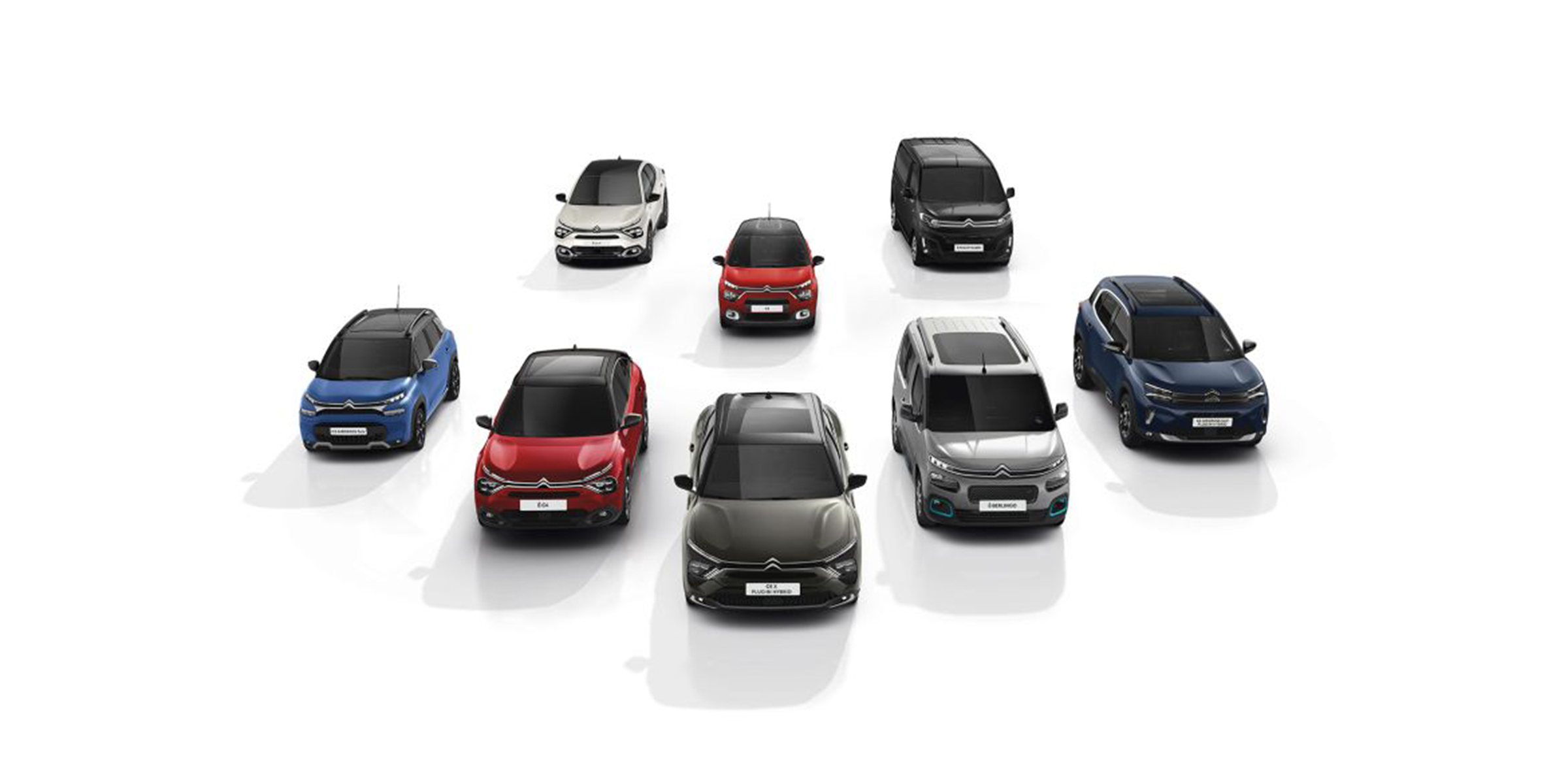
Citroën has decided to scrap its current trim naming strategy to make its model line-ups “easier to understand”, and will soon offer a slightly slimmer range of trims which it says will improve model delivery times.
From the start of September, the French manufacturer will offer each of its models with and entry-level ‘You’, mid-range ‘Plus’ and a top-spec ‘Max’ trim grade. Some models, like the ë-C4, ë-C4 X, and C5 Aircross, will also be available with an additional ‘Collection’ trim spec.
This comes as the existing trim names – ‘Sense’, ‘Sense Plus’, ‘Shine’ and ‘Shine Plus’ – have been deemed a bit too confusing by the brand, which wants to “simplify the customer purchase process to enhance consumer trust”, now hoping that the new trim naming strategy promotes “a better understanding of the range, its trim levels, and the options available.”
With transparency in mind, Citroën says it has also altered the design of its website to make the differences between the trims easier to understand, and make the site easier to navigate, again to make the ordering process a bit smoother.
The manufacturer is yet to publish the exact specifications for each model trim, but says that these new trim grades have been designed to meet different customer preferences and lifestyles.
For example, the lead-in ‘You’ grade in the C4 and C4 X model lines will comes with the brand’s ‘comfort’ seats and suspension packs, while the ‘mid-range’ ‘Plus’ trim introduces several on-board tech features, including a head-up display, a rear-view camera, and Citroën’s navigation software. Finally, the top-spec ‘Max’ adds adaptive cruise control, rear privacy glass and larger alloy wheels.
Moving from a four-trim line-up to three trims will reportedly shorten customer delivery times, and Citroën adds that it plans to reduce the entry-level pricing of some of its models, though the brand has not revealed any more information on price cuts as of yet.
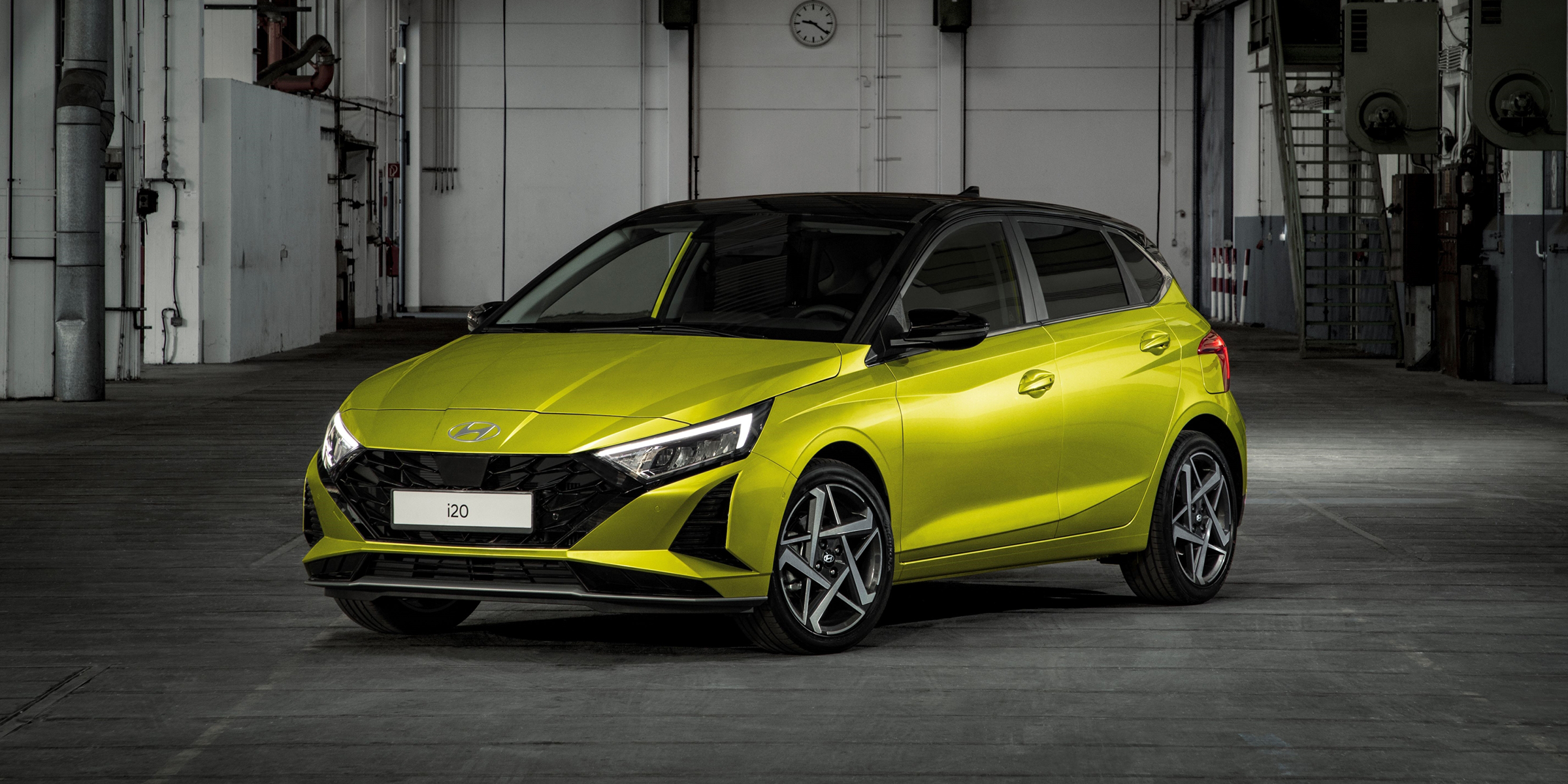
Hyundai has announced pricing and specifications for its refreshed i20 hatchback, which has gained an updated exterior and a few tech additions.
This mid-life facelift, which was announced in May, includes a redesigned front end, with a lower nose that moves the brand’s logo from the front grille to the bonnet. Alongside a new-look rear bumper, the refreshed i20 also features thicker LED lights in the front and rear and new-look 16-inch or 17-inch alloy wheels.
The hatchback’s options list will also include three new paint colours – a metallic lime green, a metallic blue and a grey.
The updated range begins with the ‘Advance’ trim, which comes with LED headlights, front and rear parking sensors with a rear view camera, an eight-inch infotainment touchscreen and a ten-inch instrument cluster behind the steering wheel. To meet the UK’s most recent safety regulation changes, the car now comes with lane-keeping assistance as standard too.
Key trim features
Entry-level ‘Advance’ (from £20,770)
16-inch alloy wheels
LED headlights
Eight-inch infotainment touchscreen
Ten-inch instrument cluster
Cruise control with a speed limiter
Leather steering wheel
Front and rear parking sensors
Rear view parking camera
Adjustable heated wing mirrors
Lane-keeping assistance
Mid-range ‘Premium’ (from £22,570)
All ‘Advance’ features plus:
17-inch alloy wheels
Front fog lamps
Privacy glass
Automatic wipers
Ambient interior lighting
Heated front seats
Heated steering wheel
Front armrest
Ten-inch infotainment touchscreen
Top-sped ‘Ultimate’ (from £24,070)
All ‘Advance’ and ‘Premium’ features plus:
Keyless entry
Wireless smartphone charger
Blind spot monitoring
Bose sound system upgrade
The mid-range ‘Premium’ grade adds rear privacy glass and heating for the steering wheel and front seats. This trim also comes with a larger ten-inch infotainment console in the centre of the dashboard, and automatic wipers.
The top-spec ‘Ultimate’ introduces an eight-speaker Bose sound system with “‘dynamic speed compensation technology” which monitors vehicle speed and automatically adjusts music levels, as well as a wireless smartphone charger, blind spot monitoring and keyless entry.
Prices for the refreshed i20 start at under £21k, rising to just over £24k for the ‘Ultimate’.
The Hyundai i20 has received praise for being a significant improvement over the previous model. Reviewers have particularly noted its styling and interior quality, although it’s still not considered to be on a par with rivals like the SEAT Ibiza and Ford Fiesta. It currently holds an Expert Rating of 62%.
The Nissan Ariya is just one of many new electric family SUVs vying for your money and attention at the moment. We drove it at the European launch last summer and loved it, but we’ve now had a chance to spend a much longer time behind the wheel here in the UK. One year on, does it still impress?
After Nissan’s pioneering efforts with the Leaf more than a decade ago, you’d have expected the company to build on that success. But although a second-generation Leaf came along in 2017, it took until 2022 for Nissan to add a second electric car to its line-up (and we’re deliberately ignoring the fairly awful van-based e-NV200 people carrier).
Based on plenty of positive media reviews, the Ariya was awarded our Best Medium SUV in The Car Expert’s 2022 Car of the Year awards. It’s had a few trim tweaks since then, so we’ve had a longer UK review to really get under the skin and see what it’s like to live with.
What is it?
Last year, we said that the Nissan Ariya “looks and feels like a Nissan Qashqai from the future”, and that still holds. It’s broadly similar in size (roomier in the cabin) but it definitely feels a generation ahead of the Qashqai.
The Ariya line-up has expanded since it was launched last year, with a new entry-level model and a new top-end model. Customers now get a choice of four trim levels (Engage, Advance, Evolve and Evolve+) and three powertrains, which are:
160kW motor, 63kWh battery, front-wheel drive
178kW motor, 87kWh battery, front-wheel drive
225kW motor, 87kWh battery, all-wheel drive
290kW motor, 87kWh battery, all-wheel drive
The entry-level Engage model is only available as a front-wheel drive model, while the headline Evolve+ version is only available with the all-wheel-drive powertrain (called e-4orce).
The version we spent a week with was the Evolve spec, with the 87kWh battery and front-wheel-drive motor.
Who is this car aimed at?
If you’re looking for a plug-and-play family EV, you’ve come to the right place. For anyone looking at making a switch from petrol or diesel to electric power, this is a fantastic starting point.
Despite car company marketing efforts, the reality is that there is inevitably a learning curve that comes with switching to an EV – your mindset has to reset when it comes to refuelling vs. recharging and the way that affects how you use the car. So the last thing you want is added complexity of trying to fathom how the various functions of the car all work as well. The Ariya is dead easy to live with, which makes that jump much easier.
Who won’t like it?
There are cheaper alternatives – the MG 5 estate makes every other electric family car look expensive – and there are similarly priced EVs that give you more kit or more space for the money, like the Skoda Enyaq. There are also other EVs that give you better driving range, like the Tesla Model Y.
If price, space or 350-odd miles of range are top priorities for you, there are better options out there. The Ariya is pretty good in most areas, but doesn’t really excel in any one department.
First impressions
Unlike most modern cars, which tend to be heavily and aggressive overstyled, the Nissan Ariya is a welcome contrast. Its exterior styling is clean and minimalist, without heavy-handed slashes or fake air vents everywhere.
However, the design does tend to look best in brighter metallic colours, especially with the contrasting black roof and mirrors. Our car was Blue Pearl, which looked fairly dull and dreary, especially paired with dark grey wheels. It looked nothing like the blue on the website, so best check out cars in the metal at your local Nissan dealer before making your choice.
The interior styling follows a similar theme, with a Scandi-style sleek and pared-back look. The upholstery was black leather, while the (fake) matt woodgrain looked refreshingly stylish and modern – not something you usually associate with woodgrain trims on cars.
The stand-out design elements in the cabin are two sets of touch controls embedded into the woodgrain trim, the climate control buttons on the dashboard and some additional buttons in the centre console. They’re no better than normal touchscreen controls, which means they’re not as good as physical buttons for using on the move, but they look cool.
We like: Sleek styling, both inside and out We don’t like: Dull colours take the edge off the design
What do you get for your money?
Once we’ve got the first impressions out of the way, it’s time to look a bit harder at exactly what you’re getting for your money with the Nissan Ariya.
The line-up kicks off with the 160kW Engage with the smaller 63kW battery for just under £40K. According to official lab tests, this will give you a battery range of 250 miles, so you can expect 200+ miles in most real-world driving conditions. Advance trim is about £3.5K more at just over £43K on-road, and from there you can spend £4K more (just over £47K) for the Evolve version.
To go a bit quicker and further, the 178kW motor with the larger 87kW adds £5K to each of the above models. This gives an official battery range of 310 miles, which we found worked out to about 250-ish miles in real-world driving.
The previous top-spec power unit is a 225kW electric motor in all-wheel drive with the 87kW battery, This adds a bit less than £3K to Advance and Evolve models (not available for the base-spec Engage model). Finally, there’s a new flagship Evolve+ version that’s priced at £59K (a £4K premium over the Evolve). This one gets a hefty performance upgrade, with 290kW on tap, driving through all four wheels and powered by the 87kWh battery.
Our car was the second-to-top-level Evolve, which has pretty much all the mod-cons you could want in a family car and then some. You get a panoramic glass sunroof, adaptive high beam LED headlights, a Bose sound system, head-up display, adaptive cruise control with lane-keeping assistance (which Nissan calls ProPilot), all the usual driver assistance safety systems and 360-degree parking cameras, ventilated front seats and heated (but not ventilated) rear seats, and memory for your seats/steering wheel/mirrors/infotainment settings and even the centre console, which is electrically adjustable (we’ll get back to that bit shortly).
We like: Good equipment levels. All the key safety kit is standard on all models. We don’t like: Top-spec Evolve+ looks pricey at £60K compared to entry-level £40K model
What’s the Nissan Ariya like inside?
Having been impressed by the Ariya’s cabin at first glance, it’s time to explore things in more detail. The front half of the cabin is very spacious, with plenty of legroom all the way across the cabin. There’s no gearbox to get in the way, like in a petrol car, and Nissan has moved all of the heating and air-con systems under the bonnet where the petrol engine would normally live. That frees up a lot of space between the driver and front passenger, and certainly makes the car feel more spacious.
The centre console on the Evolve model can move forwards and backward by a few centimetres, and it’s electric so it’s linked to the memory function for the seats and mirrors. After trying a few different positions for the first few hours of driving, we ended up leaving it all the way back. The console itself is not that practical with very little storage space inside, which was disappointing.
To make up for this lack of storage, there’s an electrically-powered drawer in the centre of the dashboard, which also has a retractable plastic lid to turn it into a very small table. While the extra storage space is welcome, it absolutely didn’t need to be a powered unit and would be perfectly fine as a manually-operated drawer…
Other than, the Ariya’s cabin is a genuinely lovely place. Helped by the Evolve’s panoramic sunroof, it’s light and spacious so it has more of a lounge-like feel than than the dark, cave-like space of many cars.
The minimalist dashboard is dominated by two 12-inch screens laid out side-by-side across the top of the dash. One screen is directly in front of the driver and contains all of the usual instrument information like speed, battery level, distance to empty and any warning lights or messages. Alongside sits the second screen, which has all of your music, satnav guidance and other information.
There’s also a very useful head-up display where key information is projected directly onto the screen in front of the driver. However, as with a lot of head-up displays, it’s very difficult to read if you’re wearing polarised sunglasses.
There’s (wireless) Apple CarPlay and (wired) Android Auto, and the Evolve spec also comes with a ten-speaker Bose-branded sound system. The stereo was disappointing compared to brand-name stereos (which aren’t usually built by the brand name indicated, but rather a specialist car stereo provider) in other cars, which is something we’ve noticed on Bose systems in different Nissan models over the last few years.
The front seats are comfortable for short trips, but lack support on longer journeys. We took the Ariya on a 1,000-mile road trip from southern England up to Scotland and back for a family holiday, and my back didn’t enjoy day-long stints behind the wheel.
Back-seat room is decent for your rear passengers. Like the front, the floor is nice and flat as there’s no exhaust system or driveshaft like you’d get on a petrol car, so all three rear seat occupants get adequate room for their legs and feet. Headroom is also pretty good.
The boot is reasonable without for everyday use, although not so great when you want to load up for a week-long road trip. The raked rear windscreen compromises ultimate load space if you’re trying to fit three or four suitcases. On the positive side, there’s a large additional space under the boot floor on the two-wheel-drive models, which can take quite a bit of stuff that you want to either keep hidden from prying eyes or protected from everything else in the boot.
We like: Good cabin space front and rear, lovely cabin ambience We don’t like: Boot space on the small side, Bose stereo disappointing
What’s the Nissan Ariya like to drive?
Overall, the Ariya driving experience is everything you would want and expect from a family EV. Like any electric car, it’s very smooth and refined due to a lack of the noise and vibration that come with any petrol or diesel car. It’s also commendably quiet as motorway speeds, with the tyres producing much less noise than on other Nissan models like the Qashqai and X-Trail.
The 19-inch wheels that come on most Ariya models provide a reasonably good balance between style and comfort. Large potholes will bounce you around, but mostly it was a smooth ride on every surface.
Our car had the mid-spec 178kW motor in front-wheel drive, which provided plenty of performance even when loaded up. The 225kW engine next up in the range would probably be preferable, but not really necessary for a family car.
Like most electric cars, you can adjust the amount of regeneration provided. If you’re new to EVs, regeneration occurs whenever you lift your foot off the accelerator pedal to coast. The car converts some of the kinetic energy (the wheels turning) into electricical energy, giving you a small boost of charge to your battery.
Given that we were on a 1,000-mile road trip, there was plenty of time to play with the regeneration settings and work out what was most comfortable. By default, the Ariya will coast much like a petrol car when you lift off. However, you can increase this regeneration by tapping the drive controller (the thing that replicates a gear level in a fossil-fuel car) into a regen mode, which means the car will slow down more quickly when you lift off the accelerator and send more electricity back to the battery. In most driving circumstances, this proved to be a good balance although on motorways I would often shift back into normal mode.
On top of that, Nissan has a function called e-Pedal for maximum regeneration, which feels like the car is applying the brakes every time you lift off the accelerator. That means you can mostly drive the Ariya without using the brake pedal until you are almost stopped, and even more electricity is sent back to the battery every time you slow down.
In practice, it was too aggressive for our liking and we eventually gave up on it. I’ve found the same in Nissan’s e-Power hybrid motors on the Qashqai and X-Trail, and other manufacturers seem to have the one-pedal driving mode better sorted.
We like: Beautifully quiet, smooth and refined We don’t like: e-Pedal set-up is very jerky
How safe is the Nissan Ariya?
The Nissan Ariya is a very safe car. It was tested by Euro NCAP in November 2022 and awarded a five-star safety rating, with excellent scores across the board. These scores cover adult protection, child production, vulnerable road user protection (basically minimising damage to pedestrians and cyclists in an accident) and, probably most importantly, the tech that helps you avoid an accident in the first place.
Particularly pleasing is that all of the crucial safety tech is standard on all Ariya models, rather than costing extra on top of the car. Some of the more advanced tech (semi-autonomous driving assistance, for example) is optional, but the core stuff that makes up the five-star safety score is all standard.
For our scoring purposes, the Ariya gets 10/10 for safety.
Charging the Nissan Ariya
If you’re charging the 87kWh Ariya from a wallbox at home, Nissan advises that it will take about 13 hours to charge the battery from 10% to full. So even if you are driving a couple of hundred miles every day, you can still comfortably charge overnight and be good to go again next day. In reality, the average household does about 100 miles a week, so its not a problem.
If you have access to 22kW charging (most homes don’t, but a lot of office and on-street chargers do), this drops to five hours – so you could get a full charge during a day’s work, for example.
If you’re out and about and charging from a public charging station, the Ariya can take up to 130kW of rapid charging, which can get you from 20% to 80% of battery charge (equivalent to about 200 miles of charge) in half an hour. That’s not bad, although some rivals are able to charge even faster.
So long journeys are certainly manageable with a little planning – and this will only get better over time as more rapid charging points are installed all over the country.
The Ariya comes with two cables; a Type 2 cable for wallbox or public charging, and a Type 3 cable for connecting the car to a regular three-pin plug (although that would take more than a day to charge the battery). Both cables are about 5m long, which is about average. The charging point is on the left-hand side of the car, just behind the front wheel, which is convenient for most charging point layouts.
Verdict
A year ago, we said that the Nissan Ariya is a ‘fine family car’. Today, we’re even more convinced of that. Everything works pretty much exactly as you’d expect and you get all the creature comforts you’d want for the money.
The 87kWh battery will cover you for almost all of your driving needs, meaning you’re not constantly worried about running low on electricity, and performance on the single-motor version is fine for most people. If you want a bit more power and the reassurance of all-wheel drive in winter weather, you might prefer to pay an extra £3K for the e-4orce version instead.
Like most EVs, the Ariya is not cheap – our test car hits the road at almost exactly £54K. But at least you get a good level of equipment and the cabin certainly compares favourably to plenty of petrol cars for the same money.
Despite recent price cuts and a new entry-level model, the Ariya still looks expensive compared to rivals like the Kia EV6 or Hyundai Ioniq 5, although it’s closer than it was before. However, the Nissan is better looking than either of them and the cabin is a nicer place in which to spend a lot of time.
There are more choices than ever for an electric family car, and that number is increasing almost every week. But you’re making the switch from a petrol or diesel car to an EV, the Nissan Ariya would be a great place to start.
Model tested: Nissan Ariya Evolve Price (as tested): £54,085 Motor unit: 178kW single electric motor Gearbox: Single-speed automatic Power: 178kW (240hp) Torque: 300 Nm
Top speed: 100 mph 0-60 mph: 7.6 seconds Battery size: 87 kWh Battery range: 289 miles Euro NCAP safety rating:Five stars (November 2022) TCE Expert Rating: 74% (as of August 2023)
Buy a Nissan Ariya
If you’re looking to buy a new or used Nissan Ariya, The Car Expert’s partners can help you find the right car
Find your next used car with Motors.co.uk. Find out more
Search for your next new or used car with Auto Trader. Find out more
Discover great deals available on both new and used cars. Find out more
Lease a Nissan Ariya
If you’re looking to lease a new Nissan Ariya, The Car Expert’s partners can help you find a competitive deal
Personal contract hire deals from Carparison Leasing. Find out more
Personal contract hire deals from Leasing.com. Find out more
Personal contract hire deals from Select Car Leasing. Find out more
Subscribe to a Nissan Ariya
Subscriptions are becoming a very popular way for consumers to try an electric car for a few weeks or months to help decide whether it’s a suitable alternative to a petrol car. If you’re interested in a car subscription, The Car Expert’s partners can help. (PS: What’s a car subscription?)
The Honda e:Ny1 is a compact electric SUV that joined the UK market in late 2023. It is based on the same foundations as the petrol-powered Honda HR-V rather than a dedicated electric platform.
UK media reception has been mixed to negative. Reviewers generally describe the e:Ny1 as comfortable, easy to drive and well equipped, but many question whether it does enough to justify its price against strong competition. Several rivals offer greater driving range, more performance or more interior space for similar money.
Honda subsequently reduced the list price by around £5,000 compared to the original launch pricing, bringing the e:Ny1 closer to the £40K mark. That adjustment has improved its value proposition, although published media scores largely reflect the higher original pricing.
There is currently no independent Euro NCAP safety rating for the e:Ny1. As with any new car without safety data, this creates an element of uncertainty within the Expert Rating Index.
Running costs are competitive for the class, helped by reasonable efficiency and typical EV servicing requirements. Honda’s new car warranty remains the standard three-year / 60,000-mile cover, with the battery covered for eight years / 100,000 miles, which is broadly average in this market.
As of February 2026, the Honda e:Ny1 holds a New Car Expert Rating of C, with a score of 62%. Its competitive running costs support the result, but weak media scores and the absence of an independent safety rating limit its overall standing. The Used Car Expert Rating is also a C grade (61%).
Feels average rather than distinctive for the price
Key specifications
Body style: Compact SUV/crossover Engines:electric, battery-powered Price:From £39,995 on-road
Launched: Autumn 2023 Last updated: N/A Replacement due: TBA
Image gallery
Media reviews
Highlighted reviews and road tests from across the UK automotive media. Click any of the boxes to view.
Featured reviews
“The Honda e:Ny1 is a compact electric SUV offering smooth everyday performance, competitive space and a large portrait touchscreen. However, above-average cabin noise, touchscreen-dependent controls and an unremarkable driving experience limit its appeal in a competitive EV market.”
Model reviewed: Advance
Score: 5.2 / 10
The Car Expert
Stuart Masson
“The Honda e:Ny1 is comfortable and has a spacious interior, but the boot is small and it’s pretty expensive.”
Model reviewed: Range overview Score: 6 / 10 “Its maker says this is the “ideal car” for first-time EV drivers, and we can see why plenty of existing Honda customers may be intrigued by the e:Ny1’s familiar styling, strong efficiency and tech-filled interior. However, in an incredibly competitive part of the market, this car falls short; an unpolished driving experience, middling practicality and a high price mean that rivals like the Tesla Model Y and Skoda Enyaq have the edge.” Author: Richard Ingram Read review
Model reviewed: Range overview Score: 7 / 10 “Name aside, the Honda e:Ny1 is a solid addition to the compact electric crossover class – a sector of the market that’s booming. However, while it drives nicely and offers some good tech, it doesn’t excel in any one area, and its range and charging capability are more limited than its main rivals.” Author: Sean Carson Read review
Auto Trader
Model reviewed: Score: 8 / 10 “Quirky name aside, the Honda e:NY1 very much plays by the rulebook for small electric crossovers and comes brimming with new tech.” Author: Dan Trent Read review
Car
Model reviewed: Range overview Score: 6 / 10 “The e:Ny1 is a safe bet. Steadfast reliability meets strong residuals in a package that’s not too new or scary.”
Author: Murray Scullion Read review
Carbuyer
Model reviewed: Range overview Score: 7.6 / 10 “The Honda e:Ny1 is confusingly named and priced, which distracts from its virtues as a decent all-around EV.” Author: Andy Goodwin, Richard Ingram Read review
Driving Electric
Model reviewed: Range overview Score: 7 / 10 “The Honda E:Ny1 is not only confusing for its name, but also its high price – a shame, given how accomplished it is in several areas.” Author: Tom Jervis Read review
Electrifying.com
Model reviewed: Range overview Score: 6 / 10 “There’s nothing fundamentally wrong with Honda’s e:Ny1, apart from the daft name maybe. It does everything perfectly well. But it doesn’t stand out in any particular area and it needs to at this price level.” Read review
Heycar
Model reviewed: Range overview Score: 8 / 10 “If you’re looking for an unintimidating electric car with a plush cabin and impressive technology, we’d recommend the Honda e:Ny1. You can get bigger EVs for the money – so family buyers want to look elsewhere – while there are cheaper options, too.” Author: Andrew Brady Read review
Honest John
Model reviewed: Score: 8 / 10 “Comfortable and easy to drive, the Honda e:Ny1 makes for an excellent first electric car. You can get bigger or more upmarket alternatives for the same price, though, which might make the e:Ny1 a hard sell in a crowded marketplace.” Read review
Parkers
Model reviewed: Range overview Score: 6 / 10 ”Honda’s first mainstream electric car is a solid, if slightly confusing, effort.“ Author: Murray Scullion Read review
The Sun
Model reviewed: Range overview “It’s too expensive, has limited range compared to rivals – and it’s naff name doesn’t help.” Author: Rob Lewis Read review
The Sunday Times
Model reviewed: Range overview Score: 6 / 10 “It won’t excite enthusiasts but by today’s EV standards, the Honda e:Ny1 is a very competent and sensible car and is an important addition to Honda’s line up. There are some drawbacks to the rest of the package, namely the average boot space and interior material quality that leaves much to be desired.” Author: Dave Humphreys Read review
The Telegraph
Model reviewed: Advance Score: 6 / 10 “The Honda e:Ny1 is a nice enough job and it drives well, if a bit stiffly. While some folk won’t like that it is built in China, it seems a little unfair to single Honda out for that. Somehow, the proposition of this first proper Honda EV just doesn’t seem generous enough to make it much of a contender – and the entirely stupid name doesn’t help, either.” Author: Andrew English Read review
Top Gear
Model reviewed: Range overview Score: 6 / 10 “A solid electric car for people who are looking for a solid electric car experience.”
Author: Sam Burnett Read review
Safety rating
Independent crash test and safety ratings from Euro NCAP
No safety rating
As of February 2026, the Honda e:Ny1 has not been assessed by Euro NCAP.
Eco rating
Independent economy and emissions ratings from Green NCAP
Clean Air Index: 10 / 10 Energy Efficiency Index: 9 / 10 Greenhouse Gas Index: 9.2 / 10
Running cost rating
Monthly cost of ownership data provided exclusively for The Car Expert by Clear Vehicle Data
Battery range
Average
Score
Variation
Score
EV models
256 miles
B
Electrical efficiency
Average
Score
Variation
Score
EV models
3.7 m/KWh
D
Insurance group
Average
Score
Variation
Score
All models
43
E
Service and maintenance
Cost
Score
Year 1
£195
B
Year 2
£457
B
Year 3
£783
B
Year 4
£928
A
Year 5
£1,265
B
Overall
£3,628
B
The Honda e:Ny1 should be a pretty cheap car to own and run, according to long-term ownership data provided exclusively to The Car Expert by our technical partner, Clear Vehicle Data.
Electrical efficiency (the EV equivalent of miles per gallon for petrol or diesel cars) isn’t great, but a decent battery size still means that battery range is more than enough for most owners. Insurance costs could be higher than expected, but this may depend on vehicle specification and your own driving circumstances.
Servicing costs for your first five years should be very low compared to most other new cars.
Reliability rating
Reliability data provided exclusively for The Car Expert by MotorEasy
No reliability rating
As of February 2026, we don’t have enough reliability data on the Honda e:Ny1 to generate a reliability rating.
The Car Expert’s reliability information is provided exclusively to us using workshop and extended warranty data from our partner, MotorEasy, sourced from both official dealerships and independent workshops.
As soon as MotorEasy has sufficient data on the e:Ny1, we’ll publish the score here.
Warranty rating
New car warranty information for the Honda e:Ny1
Overall rating
C
50%
New car warranty duration
3 years
New car warranty mileage
60,000 miles
Battery warranty duration
8 years
Battery warranty mileage
100,000 miles
Honda’s new car warranty is generally sub-par, and is not as good as several rival brands in a similar price bracket as the e:Ny1.
The duration is three years, with a limit of 60,000 miles. In addition, there’s an eight-year/100,000-mile warranty for the battery components.
Warranty on a used Honda e:Ny1
If you are buying an ‘Approved Used’ Honda e:Ny1 from an official Honda dealership, you will get a minimum 12-month warranty included.
If you are buying a used Honda e:Ny1 from an independent dealership, any warranty offered will vary and will probably be managed by a third-party warranty company.
If you are buying a used e:Ny1 from a private seller, there are no warranty protections beyond any remaining portion of the original new car warranty.
If you’re looking to buy any used car that is approaching the end of its warranty period, a used car warranty is usually a worthwhile investment. Check out The Car Expert’s guide to the best used car warranty providers, which will probably be cheaper than a warranty sold by a dealer.
As of February 2026, we are not aware of any DVSA vehicle safety recalls affecting the Honda e:Ny1. However, this information is updated very regularly so this may have changed.
You can check to see if your car has any outstanding recalls by visiting the DVLA website or contacting your local Honda dealer.
Find your next new or used car with Auto Trader. Find out more
Find your next new or used car with Carwow. Find out more
Lease a Honda e:Ny1
If you’re looking to lease a new Honda e:Ny1, The Car Expert’s partners can help you find a competitive deal.
Personal contract hire deals from Leasing.com. Find out more
Personal contract hire deals from Carwow. Find out more
Personal contract hire deals from Select Car Leasing. Find out more
Subscribe to a Honda e:Ny1
Subscriptions are becoming a very popular way for consumers to try an electric car for a few weeks or months to help decide whether it’s a suitable alternative to a petrol car. If you’re interested in a car subscription, The Car Expert’s partners can help. (PS: What’s a car subscription?)
There’s been a lot said and written about the car industry’s current shift away from petrol and diesel cars to electric vehicles (and a lot of it is, frankly, rubbish). But one of the big issues that gets raised all the time is electric vehicle charging – and, particularly, charging when you’re away from home.
Our position at The Car Expert isn’t to lobby you about whether the 2030 ban on new petrol and diesel cars is a good or bad thing. It’s simply to try to help you understand what your options are when buying a new or used car, and what you need to know if you’re planning to buy a car – whether it runs on petrol, diesel, electricity or fairy dust.
We’ve written previously about how living day-to-day with an EV is perfectly feasible for most households, even if you don’t have your own private driveway and charging point. As long as you can charge it up roughly once a week at work, the shops, gym or a local street charging point, you should have plenty of electricity to get you through your normal weekly driving needs.
But what if you’re going on holiday? What’s it really like to take an electric car on a week-long family road trip holiday, relying on public charging to get you all the way there and back – and in the summer holidays when everyone else is out doing the same thing?
Well, we figured the best way to help you understand it was to do just that and report on our findings.
Our choice of vehicle for this trip was the Nissan Ariya, which was awarded ‘Best Medium SUV’ in The Car Expert’s 2022 Car of the Year Awards. Kindly supplied by Nissan UK, our Ariya had the larger 87kWh battery, which gives an official driving range (according to the EU/UK government lab tests) of 310 miles. In the real world, with three people and a load of luggage, and mainly motorway driving, it worked out closer to 250-ish miles.
Over eight days, we travelled 1,030 miles from Surrey in South-East England up to Scotland and back. Our route went from home up to York, then up to Edinburgh, across to Loch Lomond, then back to Glasgow, down to Liverpool, and finally back home to Surrey.
So here’s what it’s really like to take a 1,000-mile family road trip in an electric car.
After 1,000 miles of driving up and down the length of the country, we never remotely looked like running out of electricity. The number of charging points along our route was easily sufficient to keep us charged up.
But there were hassles, mainly in terms of finding suitable charging points at each destination. None of the hotels we stayed at had charging available, so we had to park in public car parks – paying both to park the car and also to charge it. We also needed about half a dozen different apps to access the different charging points, as they’re all provided by different operators and there’s no nationwide app that works for all charging points.
The problems we found are all solvable, but need a more co-ordinated effort to do so.
1. Some charging points were marked incorrectly or didn’t exist
In both York and Liverpool, I followed mapping directions to charging points that were not where they were indicated. In a couple of cases, I circled in vain around public car parks looking for non-existent charging points before giving up and going onto the next suggested point.
Worse was in Liverpool, where on one occasion the navigation directions led to a private garage rather than the correct public car park (with a large sign saying “THIS IS NOT THE Q-PARK!”, so presumably it happens fairly regularly).
Trying to exit this required reversing against traffic lights across a pedestrian crossing onto a busy major road, which was quite dangerous.
2. Some charging points existed but were not on major EV charging maps
When booking a holiday cottage in Luss, Scotland, we were assured that there were two charging points in the village car park. But when we turned up, the indicated car park had no chargers.
Turns out that there was a second public car park, further away from the high street. This did have the two promised charging points, although there was no signage for passing traffic to direct them there, nor were they indicated on the Zapmap app (or on the car’s own navigation maps).
Surely if you’re a business or council installing paid public charging points, it makes sense to put up some signs and make sure they’re indicated on mapping services so that people can find them (and you can earn money from them).
3. Many charging points didn’t have contactless payment
Most rapid chargers we found had contactless support (although two were broken), and this is now a requirement for newly installed rapid chargers.
But most of the slower (7kW to 22kW) chargers didn’t have any contactless support at all. That meant the only way to use the charger was to download a specific app for that charging company, go through a registration process including providing all your payment details and then finally using the app to operate the charger.
4. Most charging points don’t display charging costs
If you go to a service station to fill up with petrol or diesel, you have a sign outside the station telling you what the price is, as well as prices on every single fuel bowser for every different fuel type.
But with electric charging, most charge points displayed no information at all. The charging point companies will tell you that the pricing information is displayed in their apps, but that’s no help if you want to pay with contactless.
So you are effectively forced to pay whatever the charging company decides, without knowing how much it costs until you check your bank statement to find out how much you’ve been charged…
5. Too many chargers were out of service or faulty
Over the space of a week, we attempted to charge at 11 different charging points across England and Scotland. In that time, we came across eight chargers that were broken or didn’t work properly.
These were afflicted by a range of problems:
Charger out of service
Charger said it was working, but didn’t actually deliver any charge
Broken screen so we couldn’t see what was happening (but could at least use the app to manage charging)
App wouldn’t recognise a specific charging point in a bank of charging units, meaning we had to move to a different unit (luckily, another unit was available)
App registration process didn’t work so couldn’t charge
Delivered charge but wouldn’t unlock afterwards
The UK government recently said that it would introduce a 99% availability mandate for rapid chargers. Based on our experience, there’s quite a way to go to reach that point. And, like the contactless situation, that doesn’t apply to slower chargers, which seems ridiculous as those are the ones that people will want to be using for overnight charging.
6. Too many different apps are needed for different charging points
For a one-week trip, I had to download seven different smartphone apps just to be able to charge at the various charging points we came across (plus the Zapmap app to find the charging points). Then you need to register your account and provide all your payment information – usually while in a car park with poor wi-fi reception.
And that was for only one week of driving, using about a dozen different charging points. If we’d had the car for a month or longer, who knows how many apps we would have needed.
Car manufacturers, and other companies like Zapmap, are starting to introduce their own payment apps that cover many different charging operators, but there’s no single app that covers all of them. Maybe a big tech firm like Apple or Google needs to step in and pull all of the charging companies together, giving us in one app to charge anywhere.
7. Most charging points are located in paid public car parks
We stayed in four different hotels in four large cities (York, Edinburgh, Glasgow, Liverpool), and none of them had charging points for their guests – even though they all had either their own car parks.
As a result, we had to find our own charging points, which were usually located in large, multi-storey car parks (NCP, Q-Park, etc.). So in order to charge our car, we had to pay to use their car park and not use the hotel car park we had effectively already paid for. This added £17.50 to our York overnight stay and £24 to our Liverpool stay.
For the car parks, this is presumably great business. For customers, not so much.
Summary
As you can see, most of the problems above had little or nothing to do with the number of chargers provided along our route. They are mostly related to providing better information and a better service to customers.
After a week-long trip, we arrived home with the overwhelming conclusion that an electric vehicle is a beautifully smooth, comfortable and quiet way to travel up and down the UK – but that the country’s public charging infrastructure is simply not fit for purpose.
Motorway charging ranged from adequate to very good, which is about what you’d expect given that it was the start of summer holidays, but destination charging was poor to non-existent.
We stayed at four different hotels and a holiday cottage, all of which had parking but none of which had any charging facilities. Given that the hotels were all decent-quality hotels in large cities (York, Edinburgh, Glasgow, Liverpool), this was very disappointing.
It meant we had to pay to park in another car park so that we could charge the car, which on two occasions turned a £40-odd charge into a £60-70 charge.
And that, of course, was only after we managed to find charging points that were: a) correctly located on mapping services; b) actually working, rather than out of service or removed altogether; and c) not already in use.
I’m a fairly tech-savvy and patient person, and understand the challenges of EV infrastructure better than most people (who are obviously not working in or around the car industry) so I tended to grumble under my breath and move on. But the average punter is not going to be so accommodating.
As an example, my dearly beloved partner is far less patient when it comes to technology (it’s OK, she’s probably not reading this). Especially when the tech doesn’t work properly or is unnecessarily complicated. She was annoyed at the various charging dramas we had on the trip, and she didn’t have to actually do anything.
Or there’s my mother, who is a complete technophobe. Her car radio is still tuned to the same station as when she bought the car about eight years ago, and who has never used her satnav or cruise control because she doesn’t know how. The chances of her successfully navigating the same road trip in an EV are slim to none.
For electric vehicles to finally make that jump to being the default choice for new car buyers (and then used car buyers), the supporting infrastructure needs to be seamless, painless and foolproof. On the evidence of our week, some progress has been made but much more is needed.
Ford has announced that its second-generation Ford Transit Custom Nugget camper van will be available to order from Ford dealerships this Autumn, with the first orders arriving early next year.
The fruit of a collaboration between Ford and campervan specialist Westfalia, the new Nugget shares its foundations (and many components) with the next-generation Transit Custom van range which is now available to order on Ford’s website.
The camper van will soon be available with a 170hp diesel engine paired with an eight-speed automatic transmission. In a year’s time, Ford plans to launch a 232hp plug-in hybrid variant of the Nugget, powered by a 2.5-litre petrol engine and a 12kWh battery – the same plug-in hybrid option that is available in the brand’s Kuga SUV range. Front-wheel drive and all-wheel drive options are available.
Ford says that the Transit Custom’s new chassis with independent rear suspension gives the new Nugget sharper handling than its predecessor, and the camper van’s flat cabin floor makes it easier to move from the front two seats to the living area in the rear.
The dashboard layout is the same as the Transit Custom van, featuring a digital instrument cluster behind the steering wheel, and a 13-inch infotainment touchscreen that comes with Ford’s navigation and voice control function, as well as wireless Android Auto and Apple CarPlay compatibility.
The standard equipment list also includes adaptive cruise control with lane keeping assistance, and a 360-degree camera system for parking in tight spaces.
The front driver and passenger seats are able to rotate 180-degrees when the camper is parked to face a three-seat bench in the rear. The modular living area features an L-shaped kitchen area with an integrated drawer fridge and induction hob and sink (with a hot water connection). The cabinets come with damped closing mechanisms to reduce rattling when on the move.
Roller blackout blinds replace the previous model’s curtains, and both double beds can be set up without inhibiting movement around the cabin. The new tilting Dormer roof that can flip up the end piece of the mattress to improve headroom above the kitchen section and is made of ‘self-folding’ fabric, which reportedly simplifies lowering the roof.
Ford also offers a solar roof option that will charge the on-board battery and allow for a limited amount of off-grid electricity without the need of a generator.
An additional seven-inch touchscreen in the living area allows you to check and control the Nugget’s heating, water levels, battery level and the customisable colour mood lighting. A shower outlet mounted in the rear is now standard, while a tailgate privacy tent is optional.
That sums up what we know about the Ford Transit Custom Nugget for now, pricing and trim specifications are yet to be revealed. These details are sure to follow in the coming months.
The Ford Tourneo Connect is a compact people carrier. This is the third-generation model, which first arrived on UK roads in 2022. Unlike previous generations, the latest Tourneo Connect is based on a Volkswagen – the Caddy.
The people carrier has received a mixed bag of review scores from the British motoring media, ranging from good to excellent, with many outlets inevitably drawing comparisons to the closely related Volkswagen Caddy, which is available at a slightly better price.
While concluding that the Tourneo Connect is a value-for-money package that offers “supreme roominess and flexibility”, Parker‘s Murray Scullion explains that “… the Volkswagen Caddy comes with a better warranty and can be had for less money if you forgo a few creature comforts. Which ultimately makes the Ford harder to recommend.”
The Telegraph‘s Alex Robbins predicts that most British buyers looking for a large family vehicle will still opt for an SUV, but if you are prepared to consider a people carrier with van-like looks, he says that the Tourneo Connect “is everything a good car for a large or active family should be: roomy, versatile, safe and comfortable.”
Other outlets point out that the Tourneo’s engine options are very fuel efficient – more economical than many people carriers and SUVs currently on sale – while others warn buyers of the car’s rather low-rent interior, particularly those looking to swap out an older Ford Galaxy or S-Max model.
As of February 2026, the Ford Tourneo Connect holds a New Car Expert Rating of B, with a score of 67%. It scores top marks for its CO2 emissions, while its safety rating and running cost scores are also good.
Body style: People carrier Engines:petrol, diesel Price:From £29,334 on-road
Launched: Spring 2022 Last updated: N/A Replacement due: TBA
Image gallery
Media reviews
Highlighted reviews and road tests from across the UK automotive media. Click any of the boxes to view.
Featured reviews
“While the Ford Tourneo Connect is a lightly rehashed Volkswagen Caddy, that means it’s based on one of the best platforms in the business. Add to that a boxy, van-derived body, and the Tourneo Connect delivers a tempting slice of family motoring. It’s available with petrol, diesel or plug-in hybrid drive, although if you want to go electric, you’ll need to look at the similar, but slightly smaller, Ford Tourneo Courier.”
Model reviewed: Grand Tourneo Connect Score: 8 / 10 “More buyers might prefer an SUV these days, but for those with an active, outdoor lifestyle, the Grand Tourneo is certainly worth a look.” (Sean Carson) Read review
Business Car
Model reviewed: (2023) Score: 7 / 10 “Good to drive, impressively practical and with the latest tech, the Ford Tourneo Connect has a lot to recommend it.” (Martyn Collins) Read review
Carbuyer
Model reviewed: Range overview Score: 8 / 10 “If you don’t mind the van-like looks, the Ford Tourneo Connect is a great family car with loads of space inside.” Author: Sam Naylor Read review
Heycar
Model reviewed: Range overview Score: 8 / 10 “Ford has teamed up with Volkswagen to create the Tourneo Connect, which is heavily based on the VW Caddy. It comes in two body length – the Grand Tourneo Connect is the longer – and each can be ordered with five or seven seats to work as brilliant MPVs. Just don’t expect too much in the style stakes.” Author: Al Suttie Read review
Honest John
Model reviewed: Range overview Score: 8 / 10 “Commercial-based MPVs are no longer the ‘van with windows’ they once were and the Ford Tourneo Connect is a perfect example. Flexible, versatile and comfortable, as well as better value than its close sibling from Volkswagen, the Tourneo Connect gets you a lot of everything for a very reasonable price.” Read review
Parkers
Model reviewed: Range overview Score: 7 / 10 “The Tourneo Connect offers supreme roominess and flexibility. However, the Volkswagen Caddy, which is nearly identical to the Ford, comes with a better warranty and can be had for less money if you forgo a few creature comforts. Which ultimately makes the Ford harder to recommend.” Author: Tom Webster Read review
The Scotsman
Model reviewed: Grand Tourneo Connect Active Score: 7 / 10 “Ford’s move from car-based people carriers to adapted vans brings positives and negatives.” Author: Matt Allan Read review
The Telegraph
Model reviewed: 2.0-litre diesel automatic Grand Tourneo Connect Active Score: 10 / 10 “On the face of it, the Ford Grand Tourneo Connect might seem to have an identity crisis. But in reality, it knows exactly what it’s about. It is everything a good car for a large or active family should be: roomy, versatile, safe and comfortable. Most buyers will still choose an SUV instead. But if you’d entertain a car of this ilk as an alternative, I’d urge you to try this one. Yes, it’s a van with windows – but as a family car, it’s hard to beat. ” (Alex Robbins) Read review
Top Gear
Model reviewed: Grand Tourneo Connect Active Score: 8 / 10 “The roof’s nice and high so there’s tonnes of headroom which in turn allows for a greater feeling of space inside the cabin. There’s good legroom in the middle row, and a decently sized pair of chairs at the very back which again, are good for smaller humans/short trips.” Author: Vijay Pattni Read review
Safety rating
Independent crash test and safety ratings from Euro NCAP
Crash testers Euro NCAP gave the Ford Tourneo Connect a full five-star safety rating in March 2022. The test results are shared with the structurally identical Volkswagen Caddy. It applies to all Tourneo Connect models, including both five- and seven-seat models.
Eco rating
Independent economy and emissions ratings from Green NCAP
Model tested: 1.5-litre Ecoboost Petrol FWD Automatic
Clean Air Index: 5.1 / 10 Energy Efficiency Index: 3.4 / 10 Greenhouse Gas Index: 1.5 / 10
Emissions testers Green NCAP gave the Ford Tourneo Connect a low two-star emissions rating in June 2023, which is expected for an petrol-powered vehicle of this size. This rating only applies to 1.5-litre petrol models fitted with an automatic gearbox, not diesel models.
Reliability rating
Reliability data provided exclusively for The Car Expert by MotorEasy
No reliability rating
As of February 2026, we don’t have enough reliability data on the Ford Tourneo Connect to generate a reliability rating.
The Car Expert’s reliability information is provided exclusively to us using workshop and extended warranty data from our partner, MotorEasy, sourced from both official dealerships and independent workshops.
As soon as MotorEasy has sufficient data on the Tourneo Connect, we’ll publish the score here.
Running cost rating
Monthly cost of ownership data provided exclusively for The Car Expert by Clear Vehicle Data
Fuel consumption
Average
Score
Petrol models
41 mpg
C
Diesel models
50 mpg
C
Plug-in hybrid models
570 mpg
A
CO₂ output
Average
Score
Variation
Score
Petrol models
155 g/km
C
Diesel models
148 g/km
C
Plug-in hybrid models
11 g/km
A
Battery range
Average
Score
Variation
Score
Plug-in hybrid models
72 miles
D
Insurance group
Average
Score
Variation
Score
All models
18
A
Service and maintenance
Cost
Score
Year 1
£138
A
Year 2
£423
A
Year 3
£687
A
Year 4
£930
A
Year 5
£1,244
A
Overall
£3,422
A
The Ford Tourneo Connect is relatively cheap to run when compared to other people carriers, according to data exclusively provided by our commercial partner Clear Vehicle Data.
Fuel consumption, while nothing special when compared to the market as a whole, is better than Ford’s older and slightly thirstier Galaxy and S-Max people carriers. Insurance premiums are very low, and service and maintenance costs are predicted to be relatively inexpensive over the course of five years of ownership.
Similar cars
If you’re looking at the Ford Tourneo Connect, you might also be interested in these alternatives.
Just as humans need a steady supply of water, cars also need fluids to continue running well. Without the correct levels of solutions in the right place at the right time a car will, sooner or later, give you trouble.
Leaving fuel to one side – because without it, your car is definitely going nowhere – there is an array of other vital fluids that your vehicle’s engine requires for it to continue working in a safe and reliable manner. Leave any of these neglected and you could be doing some lasting damage to your engine.
So don’t disregard dashboard warning lights or other tell-tale signs when it comes to your fluid level checks and top-ups, which should be done regularly. Here are the main ones to look for and how to replenish them.
It’s crucial that you use the correct fluids for your vehicle, as the wrong fluids can cause expensive damage. If you don’t feel confident doing any of these yourself, get an expert from your local garage or workshop to do it for you. The main thing is – don’t ignore it.
Engine oil
An engine’s lifeblood, the importance of motor oil cannot be overstated. It lubricates moving parts so that they’re not worn by friction and adds an element of cooling while helping to reduce the build-up of sludge from older oil.
To check the level, find the dipstick in your engine bay – it’s usually coloured brightly. Pull it out, wipe it clean and then re-insert. Remove it again and look at the level of oil showing on the stick. There will be a high or ‘full’ marking and a low or ‘minimum’ one. You want to see oil between these markings, towards the higher end.
To replenish, find the oil cap –it should be obviously marked in a bright colour or with an oil can image on it. Fill with fresh oil slowly and check the dipstick again for the new level.
Engine coolant
Another vitally important fluid – it stops the engine overheating. It’s basically water but with an equal measure of anti-freeze solution in there to stop things icing up over the winter months.
In an emergency, water alone can be added to the coolant system but this should be topped up with anti-freeze as soon as possible. The coolant reservoir is plastic and should have markings on the outside showing the maximum and minimum levels. Check this when the engine is cold.
The filler cap will have the word ‘coolant’ on it and perhaps a thermometer symbol. Pressure can build up in the system so when you unscrew the cap, do so slowly and with a rag held over the top to catch any splashes.
Brake fluid
Brake fluid is part of a hydraulic system and enhances the pressure you exert on the brake pedal. Without the correct level of fluid your brakes will be seriously affected and become much less efficient.
The brake fluid master cylinder is under the bonnet and has a reservoir attached to it which has the ‘full’ marking on it. The fluid level should be topped up to this level. Only use the recommended brake fluid for your particular car.
Power steering fluid
This is certainly one to keep an eye on, although power steering fluid doesn’t need tending to very often, unless there’s a serious problem with your system.
It’s designed to last about 80,000 miles, though some modern cars will go on longer than this. Checking it can be done in a similar way to the brake fluid – the reservoir will be made of plastic and the level marking should be on its side for easy inspection. If it does need replenishing, carefully remove the cap and pour some new fluid in.
Windscreen washer fluid
It’s probably the easiest of them all to check and replenish. The reservoir will have a windscreen symbol on it – the cap can be opened and the contents inspected at any time as the fluid is not pressurised and does not get hot.
There are many additives available to buy that you simply add to water before filling up. These help to clean the front and rear screens better than if you used water alone.
The Smart #1 is an all-electric five-door crossover and Smart’s first all-new model in eight years, which marks the brand’s pivot away from pint-sized city cars towards larger family car models.
Designed by joint Smart owners Geely and Mercedes-Benz, the #1 is similar in size to the Kia Niro EV and Volkswagen ID.3. This represents a significant shift away from Smart’s traditional focus on tiny city cars that prioritise urban mobility over everything else.
As a result of Smart’s change of direction, the #1 name reflects its place as the first new model in the newly reorganised company. A second new model followed a few months later, which is called #3. No, we don’t get it either. Next up is the #5. Maybe Smart just doesn’t like even numbers?
Oh, and #1 is meant to be pronounced as ‘Hashtag One’. Yes, seriously.
Beyond the standard models, the range is topped by a sporty ‘Brabus’ model, that provides a considerable performance boost.
“It marks a turning point for the brand and there’s lots to like about it, but a poor infotainment system could be what undoes the #1”, says Driving Electric. Many reviewers agree, explaining that while the infotainment screen is very responsive, it can be quite distracting, and the lack of physical control buttons makes the system harder to use.
After receiving a set of rather mediocre review scores before the car’s official UK arrival, British motoring outlets have collectively given a much more positive outlook for the #1 since it started arriving on UK roads, as the car has been consistently commended for its high-quality interior and its excellent Euro NCAP safety rating in recent months.
As of August 2025, the Smart #1 holds a New Car Expert Rating of A with a score of 77%. It scores top marks for its safety rating, zero tailpipe emissions, low running costs and new car warranty coverage, but its media review scores to date have only been average.
Model reviewed: Range overview Score: 7 / 10 “The Smart #1 has to be the best example in recent history of a thoroughly decent, well-engineered, refined, and comfortable car being undone by its software experience. There’s lots of high-quality hardware here, and while the on-the-road behaviour isn’t all that inspiring, the #1 does nail the brief of being accomplished around town, and clever with its packaging, offering surprising practicality.” Author: John McIlroy Read review
Model reviewed: Brabus Score: 6 / 10 “The Brabus #1 has huge straight-line pace and a nicely finished cabin, but the fact that this supermini-sized crossover will cost you north of £40,000 is still hard to overlook. There’s not really any more driving pleasure to be had here than with the regular versions, and the extra motor also cuts the official range to under 250 miles. This might just be a case of more being less.” Author: John McIlroy Read review
Business Car
Model reviewed: Brabus Score: 8 / 10 “The Smart #1 remains the most convincing model to date, just stick to the Pro+ and Premium versions. Don’t get us wrong, the #1 Brabus’s acceleration will make you smile, but apart from the power, it’s tidy rather than an involving drive – and we’d still go for the standard car.” Author: Martyn Collins Read review
Model reviewed: Premium Score: 8 / 10 “On the road, the Smart #1 impresses – but it’s a tidy rather than involving drive, even with 268hp, which makes the Smart one of the most powerful EVs in its class. The ride also seems decently balanced, feeling less bothered by road imperfections than you might expect.” (Martyn Collins) Read review
Car
Model reviewed: Range overview Score: 8 / 10 “It might not be a Smart as you know it, but it’s the company’s most convincing car yet.” (Murray Scullion) Author: Murray Scullion Read review
Carbuyer
Model reviewed: Range overview Score: 7.8 / 10 “The Smart #1 will be a desirable electric SUV for many; it’s not without merit, but it’s let down by poor infotainment software.” Author: Andy Goodwin, Alex Ingram Read review
Driving Electric
Model reviewed: Range overview Score: 7 / 10 “Rather fittingly, the Smart #1 is a smart-looking and luxurious-feeling small electric SUV with a punchy powertrain, but several flaws keep it from the top of the class.” Author: Tom Jervis Read review
Electrifying.com
Model reviewed: Range overview Score: 9 / 10 “The Smart #1 is arguably the most conventional Smart ever made, but is none the worse for it. Beautifully made, refined and pleasing to drive, it’s an interesting alternative to the familiar names in the sector.” Author: Ginny Buckley Read review
Green Car Guide
Model reviewed: Brabus Score: 9 / 10 “The smart #1 is very good to drive, and it’s even better in BRABUS trim. The smart #1 BRABUS offers sports car performance, agile handling, sharp steering and comfortable ride quality. The electric driving range of up to 248 miles will be okay for many people, and a maximum DC rapid charging rate of 150 kW means that public charging should be a relatively quick affair.” Author: Paul Clarke Read review
Heycar
Model reviewed: Range overview Score: 7 / 10 “Forget what Smart used to stand for with its squished two-seater cars. The new Smart #1 offers as much interior space as a Mercedes-Benz E Class, it’s packed with tech, has a decent range, and is good looking.” Author: Matthew MacConnell Read review
Motoring Research
Score: 6 / 10 “A fully electric, family-sized crossover, the Smart #1 is a sensible car with a silly name.” Author: Tim Pitt Read review
Parkers
Model reviewed: Range overview Score: 7.6 / 10 “We’d seriously consider a Smart #1 over a Cupra Born or Volkswagen ID.3. If you think the same way, we recommend opting for a Premium-spec car for the best results. It isn’t that much more expensive than the entry-level Pro+ model, but it has a slightly longer range and a lot more equipment.” Author: Murray Scullion Read review
The Sun
Model reviewed: Range overview “Gripes aside, #1 is swift, roomy and design-led enough to cause a family-friendly buzz. But that hashtag can do 1.” Read review
The Sunday Times
Model reviewed: Range overview Score: 8 / 10 “The cutesy looks of the Smart #1 won’t appeal to everyone, and British owners will wince when telling people they own a “Hashtag One”; it’s a properly stupid name. But those things aside we were really impressed with the performance, handling and ride quality, equipment levels and charging speeds.” Read review
The Telegraph
Model reviewed: Range overview Score: 6 / 10 “Despite the grim software, there’s a rather good family car trying to get out.” Read review
Top Gear
Model reviewed: Range overview Score: 6 / 10 Smart has been reborn as a Toys R Us Mercedes. The #1 is soft-edged and comforting, but it’s yet another electric crossover and lacks a USP.” Read review
Which EV?
Score: 8 / 10 “The Smart #1 represents a very positive change of direction. This car combines quality and technology with plenty of interior passenger space, although cargo capacity is more hatchback than SUV. While the range isn’t top of the pile, it’s a massive leap forward for Smart, and means this car could easily be your main one, not just a city runabout. And all the cars are quick – perfect for nipping around urban environments.” Author: James Morris Read review
Safety rating
Independent crash test and safety ratings from Euro NCAP
Independent economy and emissions ratings from Green NCAP
No eco rating
As of August 2025, the Smart #1 has not been lab tested by Green NCAP.
The Green NCAP programme measures exhaust pollution (which is zero for an electric car) and energy efficiency. Electric cars are much more energy-efficient than combustion cars, so the #1 is likely to score very highly in Green NCAP testing whenever it ever takes place. Check back again soon.
Running cost rating
Monthly cost of ownership data provided exclusively for The Car Expert by Clear Vehicle Data
Battery range
Average
Score
Variation
Score
EV models
249 miles
B
Electrical efficiency
Average
Score
Variation
Score
EV models
4 m/KWh
C
Insurance group
Average
Score
Variation
Score
All models
31
C
Service and maintenance
Cost
Score
Year 1
£294
D
Year 2
£610
C
Year 3
£969
C
Year 4
£1,231
C
Year 5
£1,542
C
Overall
£4,646
C
The Smart #1 should be a very cheap car to own and run, according to exclusive data provided to The Car Expert by our technical partner, Clear Vehicle Data.
Electrical efficiency (the EV equivalent of miles per gallon in a petrol or diesel car) is only average, but a decent-sized battery provides plenty of range for local driving. If you are able to charge the car at home, it should be considerably cheaper to run than an equivalent petrol or diesel car.
Insurance premiums and initial servicing costs are also fairly middling, but servicing should improve relative to other cars after the first year.
Reliability rating
Reliability data provided exclusively for The Car Expert by MotorEasy
No reliability rating
As of August 2025, we don’t have enough reliability data on the Smart #1 to generate a reliability rating.
The Car Expert’s reliability information is provided exclusively to us using workshop and extended warranty data from our partner, MotorEasy, sourced from both official dealerships and independent workshops.
As soon as MotorEasy has sufficient data on the #1, we’ll publish the results here.
Warranty rating
New car warranty information for the Smart #1
Overall rating
A
82%
New car warranty duration
3 years
New car warranty mileage
Unlimited miles
Battery warranty duration
8 years
Battery warranty mileage
100,000 miles
Smart’s overall new car warranty is worse than average, and worse than rival brands in a similar price bracket as the #1.
The duration is only three years, which is pretty much the bare minimum offered in the UK, albeit with no limit on mileage.
In addition to the standard new car warranty, there is also an eight-year/100,000-mile warranty for the battery components.
Buying a used Smart #1
If you are purchasing an ‘Approved Used’ Smart #1 from an official Smart dealership, you will get a minimum 12-month warranty included.
If you are buying a used Smart #1 from an independent dealership, any warranty offered will vary and will probably be managed by a third-party warranty company.
If you are buying a used Smart #1 from a private seller, there are no warranty protections beyond any remaining portion of the original new car warranty.
If you’re looking to buy a used car that is approaching the end of its warranty period, a used car warranty is usually a worthwhile investment. Check out The Car Expert’s guide to the best used car warranty providers, which will probably be cheaper than a warranty sold by a dealer.
Awards
Trophies, prizes and awards that the Smart #1 has received
2023
iF Design Award
Red Dot Design Award
Similar cars
If you’re looking at the Smart #1, you might also be interested in these alternatives
Find your next new or used car with Auto Trader. Find out more
Find your next new or used car with Carwow. Find out more
Lease a Smart #1
If you’re looking to lease a new Smart #1, The Car Expert’s partners can help you find a competitive deal.
Personal contract hire deals from Leasing.com. Find out more
Personal contract hire deals from Carwow. Find out more
Personal contract hire deals from Select Car Leasing. Find out more
Car subscriptions
Subscriptions are becoming a very popular way for consumers to try an electric car for a few weeks or months to help decide whether it’s a suitable alternative to a petrol car. If you’re interested in a car subscription, The Car Expert’s partners can help. (PS: What’s a car subscription?)
The Vauxhall Astra Electric, unsurprisingly, the electrically powered version of the eighth-generation Astra family. It became available to order in the UK in Summer 2023, with first cars expected to arrive in the Autumn.
Like its fossil-fuel siblings, the Astra Electric is available in both five-door hatchback and estate (called Sports Tourer) body styles.
Joining an increasingly crowded family EV sector, the initial media reviews for the Vauxhall Astra Electric have been distinctly average. The UK motoring media has so far concluded that the battery-powered Astra is not a bad vehicle at all, but the strength and pricing of the competition makes the Astra Electric hard to recommend.
“There are simply better options for similar money or less”, says Parker‘s Alan Taylor-Jones while recommending the Cupra Born and the MG 4. Nevertheless, Dave Humphreys of The Sunday Times explains that the Astra Electric is a “polished” package that is “pleasant to drive” and offers a competitive battery range.
Driving Electric‘s Tom Jervis adds that this electric car range would be a good choice for those wanting to make the switch to a full EV without wanting a completely different driving experience, as the “Astra Electric looks and feels almost identical to the petrol-powered model… until you look at the price.”
As of August 2025, the Vauxhall Astra Electric holds a New CarExpert Rating of B, with a score of 69%. It scores top marks for its low running costs and zero tailpipe emissions. However, its safety rating and Vauxhall’s new car warranty coverage are only average, while its media review scores are poor.
Body style: Five-door hatch and estate Engines:electric, battery-powered Price:From £35,005 on-road
Launched: Summer 2023 Last updated: N/A Replacement due: TBA
Image gallery
Media reviews
Highlighted reviews and road tests from across the UK automotive media. Click any of the boxes to view.
Featured reviews
“What the Vauxhall Astra Electric does perfectly is to provide what existing owners of petrol, hybrid, or plug-in hybrid models already know and love about the Astra, just in a smoother, quieter, and more responsive package. While it doesn’t offer any outstanding qualities compared to bespoke EV rivals such as the Volkswagen ID.3, it does deliver decent value for money in an increasingly competitive class.”
“The Vauxhall Astra Electric is an all-electric family hatchback with smart styling and a well-sized boot, but it’s not efficient on the motorway and the rear seats are cramped for adults.”
Model reviewed: Score: 7 / 10 “There’s a place for cars like the Vauxhall Astra Electric for those wanting to make the switch to a full EV without wanting a completely different driving experience. The powertrain and efficiency figures are certainly competitive in its class, but there are too many compromises with driveability and practicality to make the Astra Electric a front runner in the family EV segment.” Author: Alastair Crooks Read review
Auto Trader
Model reviewed: Score: 8 / 10 “The Vauxhall Astra Electric joins the existing petrol and hybrid models and offers a no-nonsense option to go electric in a traditional hatchback. It’s a convincing choice as well, though it looks pricey compared to some of its direct rivals.” (Dan Trent) Read review
Business Car
Model reviewed: Ultimate 54kWh hatchback Score: 8 / 10 “Electric models are an attractive addition to the already appealing Vauxhall Astra range. We like the fact there are few compromises to make the move to EV here.” Author: Martyn Collins Read review
Car
Model reviewed: Hatchback range Score: 6 / 10 “With entry-level GS costing a fiver shy of £40k and Ultimate topping out at over £43k, the Vauxhall Astra Electric is pricier than the more spacious, better to drive and longer-range Volkswagen ID.3, let alone the sub-£30k MG4 Long Range.” Author: Alan Taylor-Jones Read review
Carbuyer
Model reviewed: Score: 7.8 / 10 “While the Vauxhall Astra Electric isn’t as radical as something like a Tesla Model 3 or Renault Megane E-Tech, it will be instantly familiar to buyers. In fact, you’ll be hard-pressed to tell it apart from the petrol version if you don’t spot the green flashes on its number plates. While this should appeal to buyers making the switch to an EV, it also holds the Astra Electric back in some regards; its boot has been cut in size, and there’s a hump running through the cabin.” Author: Andy Goodwin, Alastair Crooks Read review
Carwow
Model reviewed: Estate (Sports Tourer) range Score: 7 / 10 “The Vauxhall Astra Sports Tourer Electric is a practical estate, but similarly priced EVs can go further on a charge.” Author: Darren Cassey Read review
Driving Electric
Model reviewed: Score: 7 / 10 “The Vauxhall Astra Electric looks and feels almost identical the the petrol-powered model… until you look at the price.” Author: Tom Jervis Read review
Electrifying.com
Model reviewed: Score: 7 / 10 “We admire the Astra’s ability to squeeze more miles out of less energy – it is one of the most efficient electric cars we’ve tested. It’s also good to drive. But it has less space and performance than rivals which makes it difficult to justify the inflated prices.” (Tom Barnard) Read review
Heycar
Model reviewed: Score: 7 / 10 “While there are some weird and wonderful electric cars on the market, the new Vauxhall Astra Electric keeps things simple. It’s just an Astra that happens to be powered by electricity – and, once you’ve driven it, you may never want to buy a petrol or diesel car ever again.” Read review
Honest John
Model reviewed: Score: 6 / 10 “Comfortable and easy to live with, the Vauxhall Astra Electric will tick the boxes for a lot of EV buyers. It’s a shame it doesn’t have a little more flair, though, or at least a tantalisingly cheap price tag.” Read review
Parkers
Model reviewed: Score: 6.2 / 10 “While the Vauxhall Astra Electric isn’t a bad electric car, there are simply better options for similar money or less. If you want the reassurance of a European brand you’re better off with a Cupra Born or another bespoke electric car. If you’re after value then the MG4 Long Range is almost impossible to beat for the money.” (Alan Taylor-Jones) Read review
The Sunday Times
Model reviewed: Ultimate hatchback Score: 7 / 10 “The Vauxhall Astra Electric nails the brief of making an electric hatchback seem perfectly normal. There’s plenty to like, with styling that’s modern without being polarising and an interior that’s well-made and has decent standard equipment. Its battery range should suit many people and it’s pleasant to drive. Vauxhall could earn even more sales by offering a cheaper model with slightly less equipment, but overall the Astra Electric delivers a polished performance.” (Dave Humphreys) Read review
Top Gear
Model reviewed: Score: 6 / 10 “We like the current eighth-generation Astra. It looks great, drives well and is now further improved by offering real variation in its powertrains. The Vauxhall Astra Electric on its own might fall short compared to purpose-built EV rivals in terms of maximum battery size, but that brings compensations: it’s well-priced and not too heavy, and it recharges fast. The range figure and recharge times are decent because it is, we’ve found, admirably efficient.” (Greg Potts) Read review
Safety rating
Independent crash test and safety ratings from Euro NCAP
The Vauxhall Astra has been given a four-star rating from Euro NCAP. This stands for all Astra models, electric included.
Shy of a full five-star rating, Euro NCAP comments that the Astra has “plenty of crash avoidance technology, but does not have some of the latest advancements introduced in the market”, and that the car was not “equipped with a centre airbag for far-side crash protection, a countermeasure which is increasingly common on modern cars”.
Eco rating
Independent economy and emissions ratings from Green NCAP
No eco rating
As of August 2025, the Vauxhall Astra Electric has not been lab tested by Green NCAP.
The Green NCAP programme measures exhaust pollution (which is zero for an electric car) and energy efficiency. Electric cars are much more energy-efficient than combustion cars, so the Astra Electric is likely to score very highly in Green NCAP testing if and when it takes place. Check back again soon.
Running cost rating
Monthly cost of ownership data provided exclusively for The Car Expert by Clear Vehicle Data
Battery range
Average
Score
Variation
Score
EV models
260 miles
B
Electrical efficiency
Average
Score
Variation
Score
EV models
4.8 m/KWh
A
Insurance group
Average
Score
Variation
Score
All models
26
C
Service and maintenance
Cost
Score
Year 1
£131
A
Year 2
£303
A
Year 3
£488
A
Year 4
£638
A
Year 5
£912
A
Overall
£2,472
A
The Vauxhall Astra Electric is a very affordable car to run, according to running cost data provided exclusively to The Car Expert by our commercial partner, Clear Vehicle Data.
Electricial efficiency (the EV equivalent of miles per gallon for petrol or diesel cars) is pretty good, which helps the Corsa to squeeze more than 220 miles out of a battery, on average. This is based on EU/UK government lab testing, so real-world driving will be lower, but is still decent for a small hatchback. Like any EV, if you can charge it at home home then it will be much cheaper than running a petrol or diesel car.
Servicing and insurance costs should be very good as well, so running a Vauxhall Astra Electric should hopefully be a relatively painless experience.
Warranty rating
New car warranty information for the Vauxhall Astra Electric
Overall rating
C
56%
New car warranty duration
3 years
New car warranty mileage
60,000 miles
Battery warranty duration
8 years
Battery warranty mileage
100,000 miles
Vauxhall’s new car warranty is pretty much the bare minimum offered in the UK, with a duration of three years and a limit of 60,000 miles. Other rivals in the price bracket do better (and in some cases, much better).
In addition to the standard new car warranty, the Astra Electric has an eight-year/100,000-mile warranty for the battery components.
Warranty on a used Vauxhall Astra Electric
If you are purchasing an ‘Approved Used’ Astra from an official Vauxhall dealership, you will get a minimum six-month warranty included.
If you are buying a used Astra from an independent dealership, any warranty offered will vary and will probably be managed by a third-party warranty company.
If you are buying a used Astra from a private seller, there are no warranty protections beyond any remaining portion of the original new car warranty.
If you’re looking to buy a used car that is approaching the end of its warranty period, a used car warranty is usually a worthwhile investment. Check out The Car Expert’s guide to the best used car warranty providers, which will probably be cheaper than a warranty sold by a dealer.
Reliability rating
Reliability data provided exclusively for The Car Expert by MotorEasy
No reliability rating
As of August 2025, we don’t have enough reliability data on the Vauxhall Astra Electric to generate a reliability rating.
The Car Expert’s reliability information is provided exclusively to us using workshop and extended warranty data from our partner, MotorEasy, sourced from both official dealerships and independent workshops.
As soon as MotorEasy has sufficient data on the Astra Electric, we’ll publish the results here.
Similar cars
If you’re looking at a new or used Vauxhall Astra Electric, you might also be interested in these alternatives.
Find your next new or used car with Auto Trader. Find out more
Find your next new or used car with Carwow. Find out more
Lease a Vauxhall Astra Electric
If you’re looking to lease a new Vauxhall Astra, The Car Expert’s partners can help you find a competitive deal.
Personal contract hire deals from Leasing.com. Find out more
Personal contract hire deals from Carwow. Find out more
Personal contract hire deals from Select Car Leasing. Find out more
Subscribe to a Vauxhall Astra Electric
Subscriptions are becoming a very popular way for consumers to try an electric car for a few weeks or months to help decide whether it’s a suitable alternative to a petrol car. If you’re interested in a car subscription, The Car Expert’s partners can help. (PS: What’s a car subscription?)
For a relatively small country, Italy has so much to offer: historic cities, mountains for skiing, lakes for boating and long, wide beaches for catching some sun. It’s no wonder why Italians are so proud of their homeland and the diversity it can offer.
Most of its beautiful sights and experiences can be accessed by car via good, fast A-roads and motorways (autostrade). Leave the main routes and head for the countless towns and villages dotted throughout Italy and you’ll enjoy wonderful and interesting excursions and stop-overs in some of the most stunning scenery in the world.
The pace of life can be slower and more relaxed than in the UK, which gives visitors time to experience the enviable way of life many Italians lead. It’s what they call la dolce vita – the sweet life!
But you’ll need some careful planning if you do intend to drive in this Mediterranean country. The UK has a lot in common with its Italian friends but driving in their country is a completely different experience from doing so in Britain. For a start, they drive on a different side of the road from the British.
It’s so much more than that though, and planning a driving holiday, flying in and hiring a car or visiting the country and moving around on business, requires careful planning and a good understanding of what you can and can’t do while using Italy’s roads.
Here The Car Expert looks at the most important elements to consider when planning to take a car to Italy or to hire one there. We’ve included a handy checklist too. As each journey is unique, always check that you have everything covered for your particular visit.
Basic rules for driving in Italy
You must be 18 years or over and hold a full valid driving licence to drive in Italy. The licence card in your wallet or purse will do, as the paper counterpart is no longer a requirement. Nor is an international driving permit – some countries expect you to have this validation, but Italy is not among them.
You’ll need to prove that you have insurance cover (but you don’t need a European ‘green card’ any more) and you must carry with you documents that show the identity of the car, such as a V5 registration document or ‘logbook’.
Always carry your personal ID or passport with you everywhere, and if your car is more than three years old and has an MOT certificate, take that too. Ensure that the vehicle is fully taxed before travelling.
The vehicle’s ‘home country’ must be shown on it and for British cars that’s a ‘UK’ sticker or badge. The old ‘GB’ is no longer accepted in Europe, and neither are country badges incorporating the English, Scottish or Welsh flags.
You can buy small ‘UK’ stickers to fix to your front and rear number plates which are accepted by Italian authorities. But if you don’t want to do that, use a ‘UK’ sticker or magnetic sign for the back of your car.
Speed limits
As with most countries in the world, Italy uses the metric system for speed and distance. That means distances on road signs are shown in kilometres rather than miles, and speed limits are shown in km/h (kilometres per hour) rather than mph (miles per hour).
In built-up areas the limit is between 50km/h and 70km/h depending on the road and surroundings, so keep a close eye on roadside speed signs. A-roads outside of built-up areas have a 90km/h to 110km/h limit while on motorways the top end is 130km/h (dropping to 110km/h if it’s snowing).
Italian police take a dim view of speeders and you’ll find cameras and mobile units everywhere. Even a small amount over the limit can land you in trouble. Speeding fines vary greatly in Italy depending on how much over the speed limit you were when caught, the type of road you were driving on and the time of day (some fines are increased at night). Avoid all this red tape by staying on the right side of the limit.
You are not allowed to have speed camera locator devices in your car. However, if your car’s satnav unit shows fixed cameras as a ‘Point of Interest’, that is allowed.
Blood alcohol limit
Obviously, we don’t condone any kind of drinking before you get behind the wheel, but it’s important to know what the legal limit is.
There are strict drink-drive limits in Italy. Like most of Europe, the maximum level of alcohol in the blood (Blood Alcohol Content) is 0.5 grams per litre (also expressed as 0.05%) and 0.0 g/l for drivers with less than three years’ experience.
By comparison, it’s 0.8 g/l (0.08%) in England and Wales (0.5 g/l or 0.05% in Scotland).
If the highway police (polizia stradale) suspect you have been drinking they can request a roadside breath test similar to what you’d expect from British traffic police.
Parking regulations
You can’t just pull up and park where you like in Italy and there are rules governing where and how you can leave your car unattended.
Don’t park on or near a bend in the road or the brow of a hill. You should also steer clear of road junctions, cycle lanes, bus stops, loading areas and pavements. Don’t park near a ‘no parking’ sign or in front of garage doors or driveways. These will often have a sign nearby saying ‘passo carrabile’ – it means ‘tow away zone’. Other areas might result in a wheel clamp being fitted.
You should park on the right hand side of the road so you’re not facing traffic. The only time you can leave your car on the left is on a one-way street but not in a narrow one – there should be three metres between you and the cars on the other side of the road.
Some areas are restricted for free parking and you have to pay to stop there. These are often controlled by meters from which you receive a ticket to leave inside your windscreen. These can cost between one Euro and four Euros per hour but everywhere is different. Some are free on Sunday so it’s always worth checking the signage.
What to carry in the car
There are several items that the Italian police will expect you to have in your car while motoring and you risk big on-the-spot fines if you can’t show them. These include reflective jackets (it’s not strictly illegal if you don’t have one but you can be fined for walking on the carriageway without wearing one) and a warning triangle for breakdowns.
Headlamps must be set so that they don’t dazzle oncoming traffic. This can be adjusted manually in some cars while, for others, you can fit headlamp beam deflectors. It’s not mandatory to carry spare lightbulbs but it’s still a good idea, and the same goes for a first aid kit.
Specialist suppliers, such as motoring organisations, sell ‘European driving kits’ for around £25, which contain everything you’ll need.
Seatbelt rules
Seatbelt laws are the same as in the UK: if your car has them, front and rear, they must be worn. It’s the driver’s responsibility to make sure everyone is buckled up. Children less than 150cm tall or weighing less than 36kg must be carried in car seats or on boosters. Children over 18kg can use a booster if you wish. There is no age limitation on this.
Driving
Keep to the right hand lane as much as possible but if you are overtaking, do so on the left.
Don’t attempt to overtake anything on a bend, the brow of a hill, at a junction or when another car is slowing down for pedestrians at a crossing.
Generally, the right of way must be given to vehicles approach from the right, or if it’s on rails such as a tram. These have priority over everything, as do emergency vehicles. If you’re driving on a mountain road and come across another vehicle at a narrow point, the car coming down the hill would be expected to reverse up to a passing place.
Horns are not especially welcome in Italy and if you are in a built-up area it’s much better to use a flash of your lights rather than the hooter, unless there’s an emergency.
Traffic signals follow a similar pattern as in the UK, including the red and yellow phase just before the green for ‘go’. Always stop on a red light. Don’t make a right turn on ‘red’ as you can in some European countries – it’s not allowed in Italy. In some areas you might see a flashing amber light, which means ‘proceed with caution’. This could be at a busy junction, for example.
You cannot use a mobile phone while driving and the same goes for headphones – they are forbidden. A single phone earpiece is acceptable though.
If you are towing a caravan ensure that your car and the ‘van don’t exceed 12 metres in length, 4 metres in height and 2.55 metres in width. Make sure your rear view wing mirrors are wide enough to see clearly behind you.
Unleaded petrol, diesel and LPG are widely available in Italy. There is no leaded fuel but you are allowed to carry filled containers.
Toll roads
Most Italian motorways are paid for through tolls. You can generally use either cash or a credit card to pay for these and the fee depends on the length of motorway you have used. There is also a pre-paid card system called a Viacard which is accepted at most toll booths.
If you are planning to go through a lot of booths, a Telepass is available. It’s an electronic device that’s fixed to the inside of your windscreen and allows you to drive through toll booths in a special lane without having to stop.
Emergency assistance on the road
Italy’s roads have emergency phones sited every 2 km and they’re usually coloured yellow to make them easy to see. Some will connect directly to a call centre while others give you the option to call specifically for breakdown recovery, using a button with a spanner on it, or for medical assistance, which is a ‘red cross’ button.
You can also call 112 (the European emergency number) from your own phone and make contact with services such as fire, ambulance or police, 24 hours a day. They will speak English as well as a number of other European languages.
Car finance data from the first six month of this year shows that the popularity of traditional new car finance is decreasing, continuing a pattern that has been developing over the last two years.
According to data published this month by the Finance and Leasing Association (FLA), the number of private car buyers financing a new car in the first six months of this year has gone down by 7%. That’s despite the number of private new car registrations going up by 2%, according to industry data published by the Society of Motor Manufacturers and Traders (SMMT).
So what does this mean, and what’s causing it?
How most consumers fund their new cars
The vast majority of private new car buyers use a car finance product called a PCP (personal contract purchase), although other products like HP (hire purchase) are still used by a small number of customers. PCP was originally a finance product very much aimed at new car customers, but it is increasingly used for used car finance as well.
For new car sales, car finance is almost exclusively provided by the car manufacturer’s chosen car finance provider – either their own bank (like Volkswagen Financial Services), or a partner firm (banks like Santander work with a number of car brands to provide new car financial services).
This provision of funding, usually arranged by the dealership on behalf of the finance provider, grew massively in popularity over the last decade. In 2009, less than half of all private new car buyers used the manufacturers’ financing. By 2018, it was more than 90%, peaking in 2020 at 93%.
In other words, nearly every new car buyer for several years has been arranging their car finance at the dealership. But over the last two years, this has started to change.
From about the summer of 2021 onwards, the number of new car buyers financing their cars in this manner started falling and has continued to do so at an ever-increasing rate. The full-year numbers for 2021 showed only a small drop, to just under 92%, but this fell to 84% in 2022. And based on the data for the first six months of this year, it has fallen to less than 79%.
To put it another way: about 33,000 fewer customers have bought a new car using traditional car finance in the first six months of this year compared to 2021, despite private new car sales going up by about 25,000 cars over the same period.
Private new car sales vs. car finance
Year
Private new car sales
Number of car finance deals
Market penetration
2018
1,052,202
959,729
91%
2019
1,018,258
933,417
92%
2020
747,507
696,737
93%
2021
802,504
737,053
92%
2022
818,192
684,327
84%
2023*
435,325
342,216
79%
* 2023 data for Jan-Jun only New car sales data: SMMT Car finance data: FLA
What’s causing this shift?
Obviously, the car industry has endured enormous upheavals over the last three years thanks to Covid-19 and ongoing production problems that have followed. Plus there’s been Russia’s war against Ukraine and the impact that has had on the global economy. And, of course, the car industry itself is in the middle of the largest upheaval in its history with fossil-fuel cars being phased out in favour of electric cars.
These factors have played havoc with new car supply and pricing, so that’s impacted on customer choice. But there is also something of a revolution going on in terms of automotive retail, with new types of funding opening up for customers.
In recent years, we have seen growth in leasing (personal contract hire) for private customers, rather than it being the exclusive domain of fleet buyers. There are various reasons for that, but the key issue here is that leasing numbers don’t count towards the FLA’s car finance data as no money is being borrowed – leasing is simply a rental.
Likewise, we’re now seeing significant interest and growth in two other types of car funding; salary sacrifice and car subscriptions. These are also forms of leasing/rental, so again they don’t show up in the FLA data.
With so many factors involved for both supply and demand, it’s difficult to pin down how much each of these factors are contributing to the overall numbers. And it means that tracking how much money is being spent on new car funding is getting more difficult.
Why are customers shifting away from PCP car finance?
It’s good news for consumers that there are now multiple types of funding widely available for new cars. Each different type of funding has its own pros and cons, so customers can make sure that they have the right type of finance for their needs rather than being obliged to take a PCP.
Given that we’ve been working to grow awareness and understanding of car finance pretty relentlessly over the last decade at The Car Expert, I’d like to think that more customers are paying attention and thinking more carefully about the financial choices, at least partly based on the sort of independent guidance found here (and increasingly elsewhere as various other motoring sites reference our work).
In reality, it’s more likely to be the result of more finance options springing up to meet customer demand for lower monthly payments and/or more flexibility. On top of that, the EV revolution is again playing a key part.
Salary sacrifice is particularly attractive for electric vehicles, thanks to substantial tax advantages. If you’re eligible to take a sal-sac package, you could save hundreds of pounds a month compared to PCP finance or PCH leasing. There are loads of dedicated salary sacrifice providers popping up to cater for this demand, and this trend is likely to continue while the tax advantages are so compelling.
Car subscriptions are also becoming more popular thanks to their flexibility and all-inclusive nature. Although the monthly payments are higher, they usually cover service, wear-and-tear items like tyres, road tax and often comprehensive insurance as well. Plus they are also available for terms as short as a month or two, meaning you can try an electric car for a few weeks to decide whether it’s right for you before committing to a four-year lease or PCP.
Firstly, the PCP remains the dominant car finance product for private new car buyers, and is likely to remain so for the time being. Of the 79% of new car buyers who have arranged their finance through car dealerships this year, the vast majority are using a PCP instead of other forms of finance. No other form of funding comes close.
But as fossil-fuel cars are phased out and EVs become the norm, the PCP as we know it looks less and less attractive. This, however, is likely to depend on the government’s approach to tax benefits for electric cars.
The government has promised that EVs will enjoy their current level of tax advantage (called Benefit in Kind, which applies to company cars and salary sacrifice) will run until at least 2028. But, of course, this government has been known to change its mind or U-turn on monetary policy with regularity, so this could change completely if it suits a political purpose…
The other large monetary trend is a shift away from ownership towards usership. Customers have shown to be quite happy to trade away ownership of their assets in favour of lower payments. We see this with various subscription packages for phones, TV, music, gym and lifestyle memberships, computer equipment and many more areas, and cars will be no different.
Most customers never pay off their PCP debts in full anyway, preferring to hand the car back at the end of their agreement and start again with another car. So they’re effectively treating their car finance like a lease anyway, which means a jump from a PCP to actually leasing or renting a car is a pretty natural step.
What does the future hold for PCP finance?
We’re again starting to see change in the world of PCP finance. Only this week, Vauxhall announced that it will now offer five-year PCP deals on its new electric vehicles. This is up from the maximum of four years offered by almost every car finance lender until now, and Vauxhall isn’t offering longer terms on its petrol and diesel models at this time.
A five-year PCP will mean lower monthly payments for customers, helping them to afford EVs that are still significantly dearer than equivalent petrol cars. But this comes with risks.
Taking an extra year on your car finance agreement mean paying a lot more interest (the Vauxhall offer is currently set at 10% APR, so you’re paying thousands of pounds in interest over five years). And you’re borrowing more money but paying less off each month, meaning that you’re carrying a lot more debt for a much longer period.
If your financial situation deteriorates over the next five years, you could be in a much deeper hole than with a three- or four-year loan. But longer-term finance agreements look inevitable as the cost of new cars, particuarly electric cars, continues to increase and customers look for the lowest possible monthly payments.
Assuming that Vauxhall’s five-year PCP offer proves popular, it’s almost guaranteed that the rest of the Stellantis family (which includes Peugeot, Citroën, DS Automobiles, Fiat, Jeep, Alfa Romeo, Abarth and Maserati) will follow. And that’s likely to lead to other brands doing the same to remain competitive. Then the leasing companies are likely to follow, and suddenly a five-year finance deal will become normal.
We’ve already seen this happen in recent years, when three-year PCP and PCH offers gradually became four-year offers in the second half of the last decade. And although their finance products work differently, other countries are trending towards longer terms as well as cars get ever-more expensive.
In the USA, for example, seven-year finance deals are pretty much normal now for new cars, and there are many eight-year finance deals being offered as well (America doesn’t really do PCPs, so their finance agreements are more comparable to HPs).
So how should customers finance their next new car?
As mentioned earlier, we very much believe that a wide choice of funding products is a good thing for customers. What’s most important is that you look carefully at your options, rather than taking the product that a salesperson or advertisement is trying to sell you – it will almost certainly be the best option for them, but not necessarily for you.
We’re big fans of car subscriptions for customers who are interested in testing the waters on an electric car before locking themselves into a long-term contract. But if you know what sort of car you want and you’re happy to keep it for a few years or more, a subscription probably isn’t for you.
Salary sacrifice is a very attractive option for new electric cars, but you have to be eligible and your company has to offer a sal-sac programme. That means that many customers can’t access this form of funding.
Leasing is continuing to grow in popularity, especially as it often works out cheaper than an equivalent PCP for the same vehicle. However, the terms and conditions are very strict, so cancelling your agreement mid-term is likely to be very expensive.
The PCP is likely to remain popular, especially as manufacturers and dealers push people into longer-term deals to help keep payments down. Make sure you’re very comfortable with the monthly payment levels, as you’ll be locked into them for years to come.
The Peugeot 508 is a medium-sized liftback and estate model. This is the original version, which was launched in the UK in 2011. It was given a major update in 2014 and then replaced by a completely new model in 2018.
The 508 was a replacement for two previous Peugeot models, the 407 and 607 saloons. It lined up against what was then a large market of rival large cars, including the Ford Mondeo, Vauxhall Insignia and Volkswagen Passat.
The Peugeot 508 was available in both liftback and estate body styles, with petrol and diesel engine choices. There was also a more off-road all-wheel-drive version called the RXH, which followed similar concepts like the Audi A4 allroad and Volvo XC70. The RXH sat slightly higher off the ground and had some styling changes to make it look more SUV-ish.
In 2014, the 508 range was given a mid-life update, with refreshed front-end styling, improved engines and upgraded interior technology. This then continued on sale until early 2018, when it was replaced by the second-generation 508 range.
No longer on sale, the Peugeot 508 has a Used Car Expert Rating of D, with a score of 55%.
Highlighted reviews and road tests from across the UK automotive media. Click any of the boxes to view.
Featured reviews
“The Peugeot 508 SW is a car to turn the heads of those looking for a premium estate, offering striking visuals, efficient engines and plenty of technology.”
“Luxurious with sleek styling, the practical Peugeot 508 SW estate is a compelling all-rounder.”
Model reviewed: SW
Score: 6 / 10
Auto Express
More reviews
The Car Expert
Model reviewed: SW GT Score: 6 / 10 “The 508 SW GT might look good on paper, but in the flesh it feels confused and unresolved. If you want this rakish estate’s good looks and slick interior, a lesser model will feel more rounded – and cost much less.” Read review
Auto Express
Model reviewed: (2014) Score: 6 / 10 “Peugeot’s 508 has been on the receiving end of a facelift that boosts its styling and fuel efficiency.” Read review
Model reviewed: “The 508’s so-so image means heavy depreciation, but potentially excellent value when buying used.” Read review
Model reviewed: Score: 4 / 10 “The Peugeot 508 is a comfortable saloon that has been outclassed by rivals.” Read review
Model reviewed: Score: 6 / 10 “The diesel-electric Peugeot 508 HYbrid4 saloon is clever but expensive.” Read review
Auto Trader
Model reviewed: Score: 6.2 / 10 “The Peugeot 508 SW has a lot going for it, with a striking exterior, shed loads of equipment thrown in as standard, and some very efficient diesel engines.” Read review
Model reviewed: Score: 7.8 / 10 “The Peugeot 508 is a classy car, with economical engines.” Read review
Model reviewed: SW Score: 5.6 / 10 “The Peugeot 508 SW has a lot going for it, with a striking exterior, loads of equipment thrown in as standard, and some very efficient diesel engines, which should attract plenty of fleet buyers.” Read review
Business Car
Model reviewed: “New engines, noticeable front and rear refreshes and upgrades to the interior and equipment, the 508’s is more hefty a mid-life revision than some cars get.” Read review
Model reviewed: 508 SW Score: 8 / 10 “The Peugeot 508 SW is an impressive entry into the upper medium estate sector.” Read review
Car
Model reviewed: GT (2017) Score: 4 / 10 “With a knobbly ride, irritating ergonomics and less rear space than some of its rivals, the 508 GT is hard to justify.| Read review
Model reviewed: SW HDI 140 Allure (2015) Score: 6 / 10 “The revised Peugeot 508 is pretty decent. It won’t uproot many 3-series drivers but makes an affable alternative choice.” Read review
Car Keys
Model reviewed: 1.6-litre GT Line Score: 8 / 10 “The 508 is still a great car with plenty of style, practicality and luxury on offer.” Read review
Model reviewed: Score: 8 / 10 “The Peugeot 508 isn’t necessarily better than its more established rivals, but it is certainly on a par, offering an excellent all-round package of driving dynamics, comfort, space and spec.” Read review
Model reviewed: Score: 7 / 10 “The Peugeot 508 SW is the estate version of the company’s sleek saloon, offering great practicality, attractive styling and a good drive.” Read review
Model reviewed: RXH “The Peugeot 508 RXH is definitely a car with potent pros and cons, so if you are looking to buy one you will want to carefully weigh these up – especially when you consider that it starts from £31,495.” Read review
Carbuyer
Model reviewed: Score: 6.4 / 10 “Peugeot 508 feels high-quality and owner satisfaction has improved in recent years.” Read review
Daily Mirror
Model reviewed: SW “This stylish Peugeot 508 SW is really rather good.” Read review
Eurekar
Model reviewed: “Peugeot’s 508 is a plush, upmarket saloon or estate with an excellent ride, safe handling and very good road-holding.” Read review
Evo
Model reviewed: Score: 6 / 10 “This is a big car and feels it, but the steering is precise and progressive and the Peugeot 508 RXH is easy to place.” Read review
Model reviewed: 2.0 HDi SR Score: 8 / 10 “The Peugeot 508 2.0 HDi SR is cheap to run and dynamically very good.” Read review
Model reviewed: 2.2 HDi 204 GT Score: 8 / 10 “The Peugeot 508 looks good, drives well, and offers lots of kit.” Read review
Model reviewed: Score: 8 / 10 “The Peugeot 508 offers German-rivaling build and proper French dynamics.” Read review
Green Car Guide
Model reviewed: Hybrid4 HDi Score: 8 / 10 ” The Peugeot 508 HYbrid4 has emissions of just 95g/km CO2, together with official combined economy of 78.5mpg – impressive figures for a large family saloon that also has four-wheel drive capability.” Read review
Model reviewed: e-HDI 112 Score: 7 / 10 “The 508 scores well for its economy and low emissions, but for us it certainly loses marks for its EGC gearbox.” Read review
Model reviewed: Hybrid4 HDi Score: 8 / 10 “The Peugeot 508 HYbrid4 is expensive to buy but it does have a low benefit in kind tax rating, so it’s likely to appeal to company car buyers.” Read review
Heycar
Model reviewed: SW Score: 7 / 10 “The Peugeot 508 SW is a large family estate car that looks gorgeous.” Read review
Model reviewed: Score: 6 / 10 “The Peugeot 508 is a car that’s well worth a closer look if you’re considering used premium-badged cars and fancy something newer and better-equipped.” Read review
Honest John
Model reviewed: Score: 6 / 10 “After years of dull and lacklustre family cars, the 508 was the first sign that Peugeot had rediscovered its mojo.” Read review
Motoring Research
Model reviewed: Score: 8 / 10 “Not only is it one of the best looking cars on sale today, it also offers a driving experience that few off-roaders can match.” Read review
Motors
Model reviewed: Score: 6 / 10 “The Peugeot 508 is nice to drive and efficient, but overly priced.” Read review
Parkers
Model reviewed: Score: 8 / 10 “Stylish saloon that’s both rare and good value.” Read review
Model reviewed: RXH Score: 7 / 10 “The Peugeot 508 offers an interesting combination of diesel hybrid power and limited off-road ability.” Read review
Model reviewed: SW Score: 8 / 10 “For business drivers looking for more practicality than the saloon, the Peugeot 508 SW could be the car to choose.” Read review
The Sun
Model reviewed: “The 508 trumps the VW Passat for design and the cabin is top drawer.” Read review
The Sunday Times
Model reviewed: Score: 6 / 10 “The Peugeot 508 is the best French saloon of the past 15 years.” Read review
Model reviewed: RXH Hybrid4 estate Score: 4 / 10 “The Peugeot 508 RXH is an interesting alternative to the likes of an Audi A6 allroad and Volvo XC70, mixing estate car space with some off-road ability and, unusually, diesel-electric hybrid power.” Read review
The Telegraph
Model reviewed: Score: 8 / 10 “The Peugeot 508 is a great looking car, partly because it’s a hatchback with frameless side windows, partly based on the Exalt concept from the 2014 Paris motor show.” Read review
Top Gear
Model reviewed: Score: 6 / 10 “The 508 SW is a decent effort from Peugeot that deserves more attention than it gets.” Read review
Model reviewed: 508 SW GT “The 508 SW GT is a seriously engaging car, tackling the twisty, bumpy and greasy but quick test routes like it was made for them.” Read review
Safety rating
Independent crash test and safety ratings from Euro NCAP
The Peugeot 508 was awarded a five-star safety rating from Euro NCAP back when this model was launched in 2011. However, this rating expired in January 2018 as the 508 no longer met the requirements for a five-star car. This is normal practice, as Euro NCAP reviews its ratings on most cars annually with most ratings expiring after about six or seven years.
However, if you are comparing a used Peugeot 508 to vehicles of similar age, whose ratings will have probably also expired, its safety rating score is still useful.
Eco rating
Independent economy and emissions ratings from Green NCAP
No eco rating
The Peugeot 508 was not lab tested by Green NCAP during its production life as it pre-dated the launch of Green NCAP in 2018.
Reliability rating
Reliability data provided exclusively for The Car Expert by MotorEasy
Total claims: 61 Average repair cost: £620.25 Last updated: April 2025
The Peugeot 508 family has a reliability score that’s slightly below than average, according to exclusive extended warranty data provided by our partners at MotorEasy. The above score covers both this original-generation 508 and newer (2018 onwards) version.
The most costly item to date has been gearbox repairs, with an average repair bill of nearly £2,000. Engine bills are also more expensive than a used car warranty, with an average bill of about £800.
Running cost rating
Monthly cost of ownership data provided exclusively for The Car Expert by Clear Vehicle Data
The Peugeot 508 is too old a vehicle for us to have running cost data.
Awards
Trophies, prizes and awards that the Peugeot 508 received
2011
Fleet World Awards – Best New Car
Next Green Car Awards – Best Large Family Car
Similar cars
If you’re looking at the Peugeot 508, you might also be interested in these alternatives
Aston Martin has announced that a cabriolet version of its DB12 grand tourer is coming to the UK, with the first orders arriving by the end of 2023.
Like the DB12 coupé, the Volante is more of an evolution of its predecessor, rather than an all-new luxury convertible. It is built on the same foundations as the DB11 Volante, and is powered by the same mid-mounted twin-turbocharged 4.0-litre V8 engine which is supplied by Mercedes-AMG. This engine is paired with an eight-speed automatic transmission.
This cabriolet variant of the new DB12 comes with stiffer suspension and extra chassis bracing, as well as the soft-top roof mechanism carried over from the DB11 Volante, which can open in 14 seconds and close in 16 seconds.
These alterations add 111kg of additional weight, but the convertible can still complete a 0-62mph sprint in a reported 3.7 seconds – a tenth of a second slower than the coupé version. Top speed is capped at 202mph.
Inside, the Volante is piratically identical to the DB12 coupé, apart from the option of wood-veneer seatbacks which Aston Martin says adds “an extra layer of visual interest” with the roof down.
The dashboard features a ten-inch infotainment system that Aston Martin has built in-house, which is compatible with Apple CarPlay and Android Auto, and will receive over-the-air updates after arrival. An 11-speaker audio system comes as standard, but a 15-speaker Bowers & Wilkins system will also be available on the options list.
The Alcantara leather-wrapped upholstery comes with a new quilting pattern, and five pre-defined drive modes can be selected using controls on the centre console, each varying the car’s amount of grip and traction so that the customer can find their ideal preference.
Safety assistance technology includes adaptive cruise control, lane keeping assistance and traffic sign recognition. The slimmer door mirrors come with blind spot monitoring technology, and a 360-degree parking camera is also included.
Aston Martin says that the DB12 Volante will soon enter production, with the first customer orders set to arrive before the end of the year.
As 2023 progresses, the electric car market continues to grow and evolve. More zero-emission options are available than ever before as brands continue their efforts to swap fossil-fuel cars for battery-powered alternatives.
EV sales are still steadily growing, with 176,000 new electric cars cars finding homes in the first seven months of this year – a 38% increase over the same period last year. One electric car sits in the annual top ten best-sellers list as of August 2023, with more than 21,000 Tesla Model Y SUVs have been sold in the UK since the turn of the year.
The last year has seen the introduction of several competitively-priced electric models, but with the retirement of the Smart EQ ForTwo and EQ ForFour hatchbacks there are now no electric cars available for below £25k. You can get a pint-sized Citroën Ami for around £8k, but that’s a quadricycle that does not come with airbags and is illegal to drive on the motorway.
Now starting with new models available for under £30k, we’ve analysed all the electric cars available at key price points in the new car market, and consulted our industry-leading Expert Rating Index to see which models have the highest review scores from across the UK motoring media.
With comprehensive review data backing our recommendations, you can be confident that this is the definitive guide to the best new electric cars for every budget that are on sale in the UK right now.
There still aren’t many brand-new EVs that you can pick up for less than £30,000, but there have been several new entrants to launch in this budget bracket in the last year, led by the appealing MG 4.
Not only does this family-sized hatchback offer a low price point that makes it an attractive gateway to EV ownership, reviewers also conclude that it is one of the best options in its class, thanks to its competitive battery range and its comfortable and rewarding driving experience.
As of August 2023, the MG 4 has an Expert Rating of 80%, with reviewers also commending the car for its long warranty, though the hatchback has been criticised for some cheap interior plastics and its rather poor rear visibility.
If you consider a compact city car to be more your style, the Fiat 500 Electric is also now priced just below the £30,000 mark. It has been praised for its driving dynamics and interior quality – both of which are significant improvements over the regular petrol-powered Fiat 500.
With the first-generation Hyundai Kona Electric now out of production, the small Peugeot e-208 hatchback is now the best choice in the under £35k bracket, according to our Expert Rating Index.
Cheap to run, well-equipped as standard and comfortable to drive, the e-208 has won several industry awards, including ‘European Car of the Year’ back in 2020. It shares many of its parts with the popular Vauxhall Corsa Electric, but the Peugeot’s Expert Rating of 73% is 11% higher than the Vauxhall.
The e-208 has also received considerable praise for its design and interior quality, but reviewers have also commented that the car is pretty cramped in the rear, and that some of its rivals can travel further on a single charge.
If you’d prefer something a bit larger, the Kia Soul EV is another capable choice in this price bracket. Commended for its nippy performance and competitive battery range, the Soul EV has received very positive reviews, but has been criticised for its rather divisive exterior looks.
Also, keep an eye out for the second-generation Hyundai Kona Electric which has just launched in this price range. It has been given several great review scores so far, and offers more interior space than the e-208 and Soul EV.
The £40,000 threshold is where the all-electric market starts to get really competitive, and at the moment, our Expert Rating Index says that the Kia Niro EV is the best choice that sits below that threshold.
The Car Expert‘s ‘Best Small SUV’ of 2022, the Kia Niro EV builds on its highly-regarded predecessor the e-Niro by offering a longer battery range, fresh exterior looks, more user-friendly on-board tech and a more spacious cabin. Add in Kia’s reputation for reliability and the SUV’s seven-year warranty, and it’s clear to see that the Niro EV is an impressive package.
As of August 2023, the SUV holds an Expert Rating of 79% – a score that is hindered by the car’s pricing. Top-spec models can get fairly expensive, with the price extending well beyond the £40k mark.
If you would rather something more exciting to drive, why not check out the Cupra Born? The Car Expert‘s ‘Best Hot Hatch’ of 2022, the Born is a capable family car with sporty looks and a competitive battery range.
Upping your budget to £50k brings access to some of the best electric cars on the market, and the best choice in this price range is a tie between two sister models with excellent review scores.
The Car Expert‘s ‘Car of the Year’ for 2022, the Kia EV6 is the first of a new breed of all-electric Kia cars – and judging by its review scores, this family-sized crossover fits the bill and then some.
The EV6 arrived in the UK last year to universally positive media reception. It has received high praise for its sharp driving dynamics and impressive design inside and out, as well as its battery range and charging capabilities which set the benchmark for EVs in this price range.
Recognised for its retro-futuristic design, the Ioniq 5 has become a fan favourite among the media, commended for its spacious and practical interior and its impressive infotainment, as well as its battery range. On the other hand, both the EV6 and Ioniq 5 have pretty firm suspension that makes riding over larger potholes an uncomfortable experience.
As of August 2023, the Kia EV6 and Hyundai Ioniq 5 both hold an outstanding Expert Rating of 88%, which means that they currently sit at the top of the currently the medium car class in our Expert Rating Index.
If you would rather a saloon car, the Tesla Model 3 is another great choice for under £50k, praised for its performance, driving dynamics and minimalist style.
The Jaguar I-Pace has won countless awards since it was launched in 2018, and is still widely considered to be one of the best premium electric SUVs on sale. As Jaguar’s first all-electric model, the I-Pace has been praised for its outstandingly fun performance, its good looks, and its everyday practicality.
With a starting price of just under £70,000, the Jaguar I-Pace has an excellent Expert Rating of 83% from 18 reviews, which makes it the highest-ranked medium SUV in our Expert Rating Index.
Too expensive? Prices for the BMW i4 range start at £50,000. Equipped with BMW’s latest tech innovations and an impressive powertrain that delivers pacy performance and class-leading battery range, the i4 has also received overwhelmingly positive review scores, though its rivals have more cabin space in the rear.
The Porsche Taycan range embodies all that we have come to love about Porsche performance in an all-electric package. The regular Taycan sports saloon has been widely commended for its ride quality, pace, battery range and its handsome looks, while the more expensive Taycan Cross Turismo estate is one of the most complete all-electric motoring packages money can buy, offering all that performance but with 80 litres of extra boot space.
With an entry-level price tag of around £79k for the Taycan (and £88k for the Taycan Cross Turismo), you would have some room in the budget for some added extras should a £100k purchase be within your means. Be careful however – Porsche has a tendency to put most of the features you want on the options list, for expensive additional fees.
While the Porsche Taycan holds an excellent Expert Rating of 89%, the Porsche Taycan Cross Turismo holds an exceptional Expert Rating of 91%, making it the highest-ranked electric car in our Expert Rating Index.
Interested in the Taycan? You should check out the closely-related Audi e-tron GT too. It also delivers blistering performance in near silence, and combines the alluring looks of a hypercar and the practicality of a four-door family car.
If you are looking for a luxurious family car and your budget can easily stretch beyond the six figure mark, our Expert Rating Index recommends that you take the Mercedes-Benz EQS for a test drive. This high-end saloon is as sophisticated as all-electric motoring gets, featuring unparalleled interior opulence, loads of on-board tech and a class-leading battery range.
The flagship model in the Mercedes-Benz EQ family and The Car Expert‘s ‘Car of the Year’ in 2021, the EQS currently holds an Expert Rating of 87% – a score slightly hindered by reports of rigid ride comfort, and complaints about the car’s eye-watering price tag.
The equally expensive BMW i7 has also been widely praised for its spacious and refined cabin filled with cutting-edge technology, but its exterior styling has divided reviewer opinion.
The electric car market has been growing rapidly over the last 12 months, with brand-new EVs arriving from almost every manufacturer. Starting with the newcomers, we have had the first all-electric contenders from Chinese brands arrive in the UK with affordable pricing, including the oddly named Ora Funky Cat, and BYD’s Dolphin and Atto 3.
The electric SUV sector has become even more crowded, as Jeep has now introduced its compact Avenger, Renault has electrified its Mégane, the BMW iX1 and Genesis GV60 have arrived, the Toyota bZ4X and Subaru Solterra are now on sale, and since Smart decided to discard its former model range in favour of a fresh restart with its #1 family car.
Volkswagen turned reviewer heads with the launch of its all-electric ID.Buzz people carrier, while Hyundai introduced a saloon version of its Ioniq 5 hatchback, the Ioniq 6. Mercedes-Benz added two further models to its EQ range, the EQE saloon and EQS SUV, while Rolls-Royce unveiled their first lavish electric car, the Spectre.
Finally, some manufacturers have started targeting the hot hatch market with their latest EV launches. The high-performance Abarth 500e and MG 4 XPower are already on offer, as well as the larger Kia EV6 GT.
Coming soon
There are plenty more EVs at every price point on their way before the end of 2023 and into next year. Here’s just a few of the new models planned for launch over the next 12 months.
The starting price for electric cars will also come back down soon as cars like the new BYD Dolphin (starting at £25K) arrive in the UK in coming months, as well as Dacia’s first electric model, the Spring small SUV. Other new Chinese brands will help put pricing pressure on European car brands as well, which is good news for buyers.
Car enthusiasts will see an increase in the number of EV models specifically tuned for performance. The Hyundai Ioniq 5 N is expected to arrive imminently, and Alpine’s first hot hatch – the A290 – is set to arrive in 2024.
There will be more electric models from mainstream brands on offer as well. The Renault 5 hatchback is planned for a 2024 release, while two new electric Fiats are close to entering production – the pint-sized Topolino quadricycle (based on the Citroën Ami) and the mid-size 600e crossover.
Premium brands will continue to add more electric models to their line-ups. The next Maserati GranTurismo range will include an electric ‘Folgore’ model, Lotus has unveiled its new Evija hypercar and Eletre SUV, American brand Fisker is expecting to introduce its Ocean SUV next year, and the Polestar 3 SUV is still in the works.
As the electrification of large cars increases, Volvo has now started taking orders for its huge EX90 SUV, which will soon be rivalled in size by the new Kia EV9.
For the definitive rankings of the best new electric cars for every budget, we’ve used The Car Expert’s industry-leading Expert Rating Index. The index analyses new car reviews from 35 of the top UK motoring websites, using an advanced algorithm that we have developed specifically to compare review scores.
It constantly recalculates and updates the Expert Rating score for every single car in real time to make sure you’re getting the most accurate and reliable ratings for every new car.
Car journeys can cause some back pain from time to time, but if back pain is becoming a persistent issue when behind the wheel, perhaps it’s time to change your driving routine.
Discomfort and lower back pain are frequent complaints reported by drivers, but road safety and breakdown organisation GEM Motoring Assist says there are simple solutions that can make a big difference for comfort and safety, and has given its top tips for drivers with back pain.
As GEM chief executive Neil Worth explains, “human beings are not built to sit in a constrained posture, sometimes for long periods of time. No wonder this so often leads to stiffness and reduced mobility, especially among older drivers.”
“Regular breaks on journeys are so important,” says health journalist Susie Kearley. “Getting out of the car, walking about and stretching will help to relieve any muscles feeling the strain.
“Take a break whenever you feel your back muscles tightening. The more you stop and move, the less likely you are to end up with back pain. If you stretch and move before and after your journey, this can be helpful too, particularly if you’re prone to back problems.”
Here are GEM’s top tips for avoiding and alleviating back pain for more comfortable driving:
Planning
Take the time to plan any long journeys or trips on unfamiliar roads. Build in time for frequent breaks.
Position
Adjust your seat to ensure you can reach and fully press the pedals without your back moving away from the back of the seat. Keep some bend in your knees, as having them too straight can cause pain.
Posture
Try not to slouch in the driving seat, as this is a common cause of back pain. Leaning forward can increase pressure on the back muscles and spine, so good posture is particularly important on long journeys.
Pockets
Empty your back pockets before getting into the car. A mobile phone or wallet pushing into your lower back can misalign your spine and cause unnecessary pain.