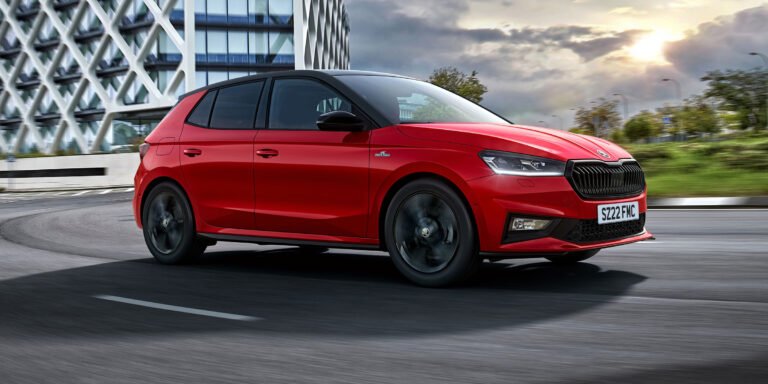
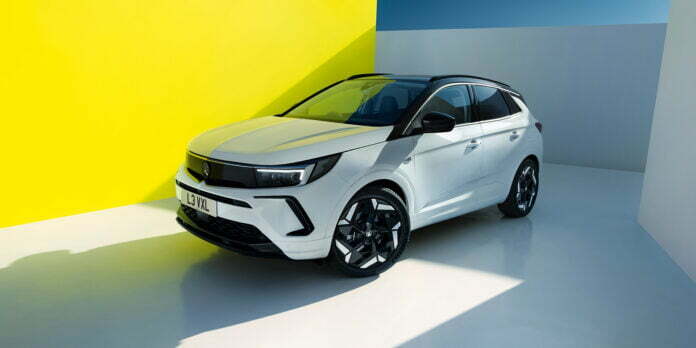
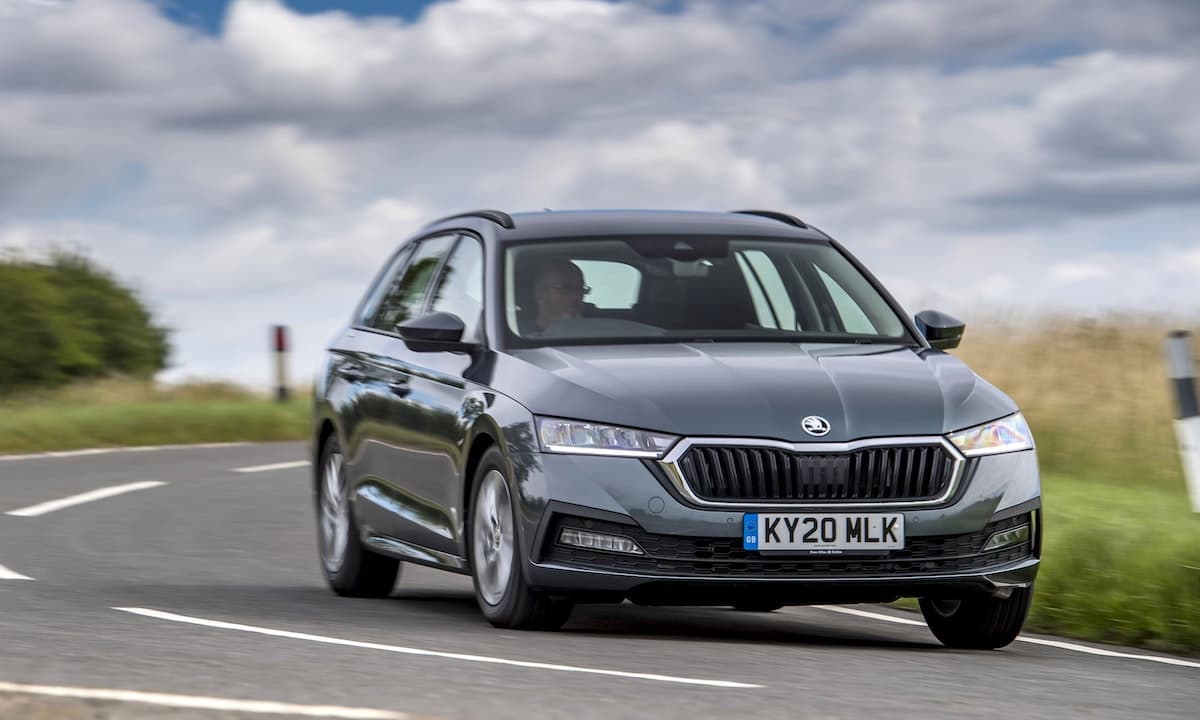
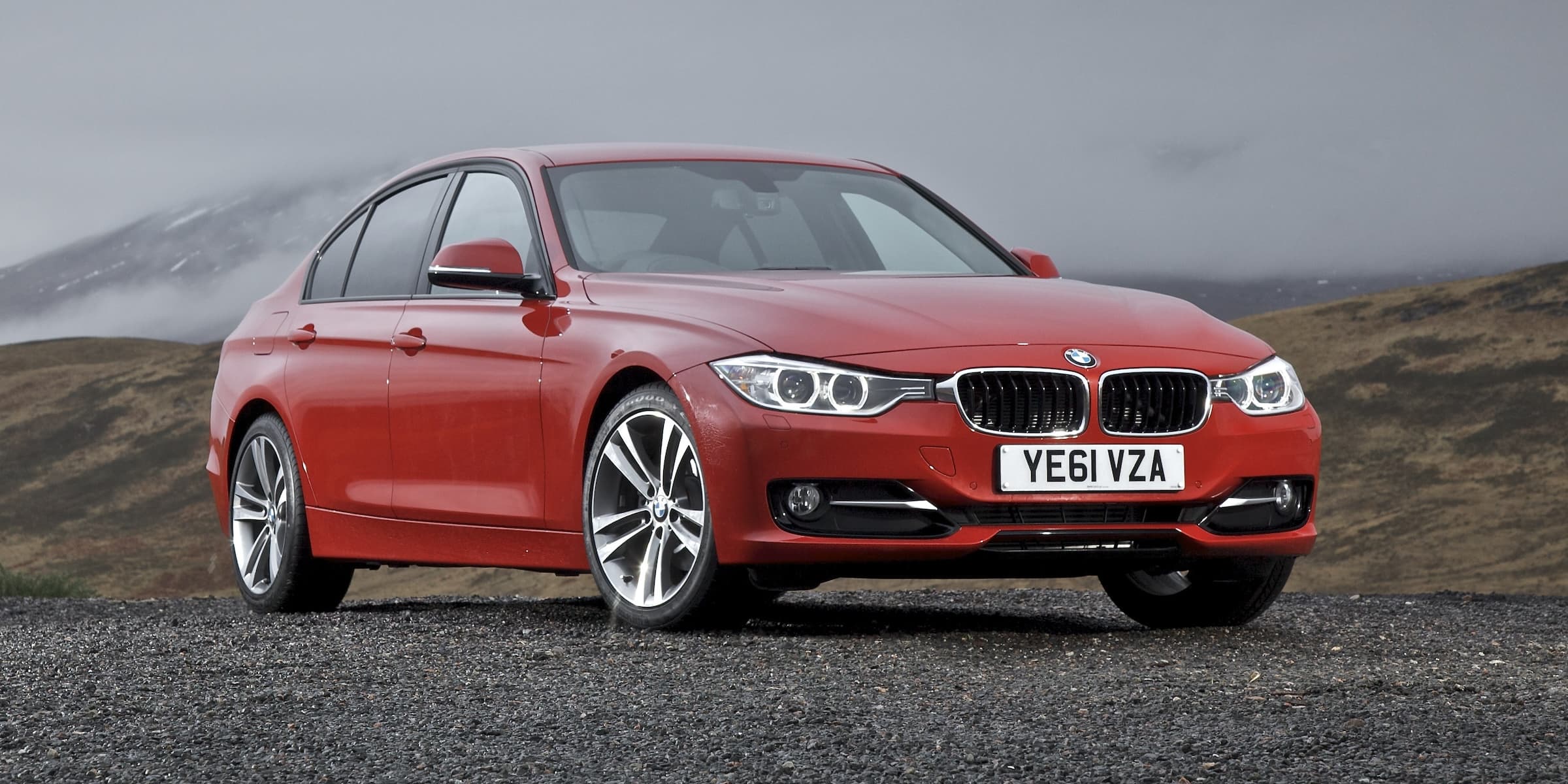
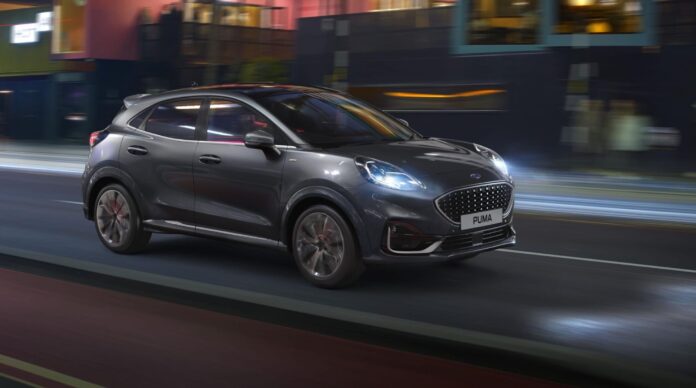
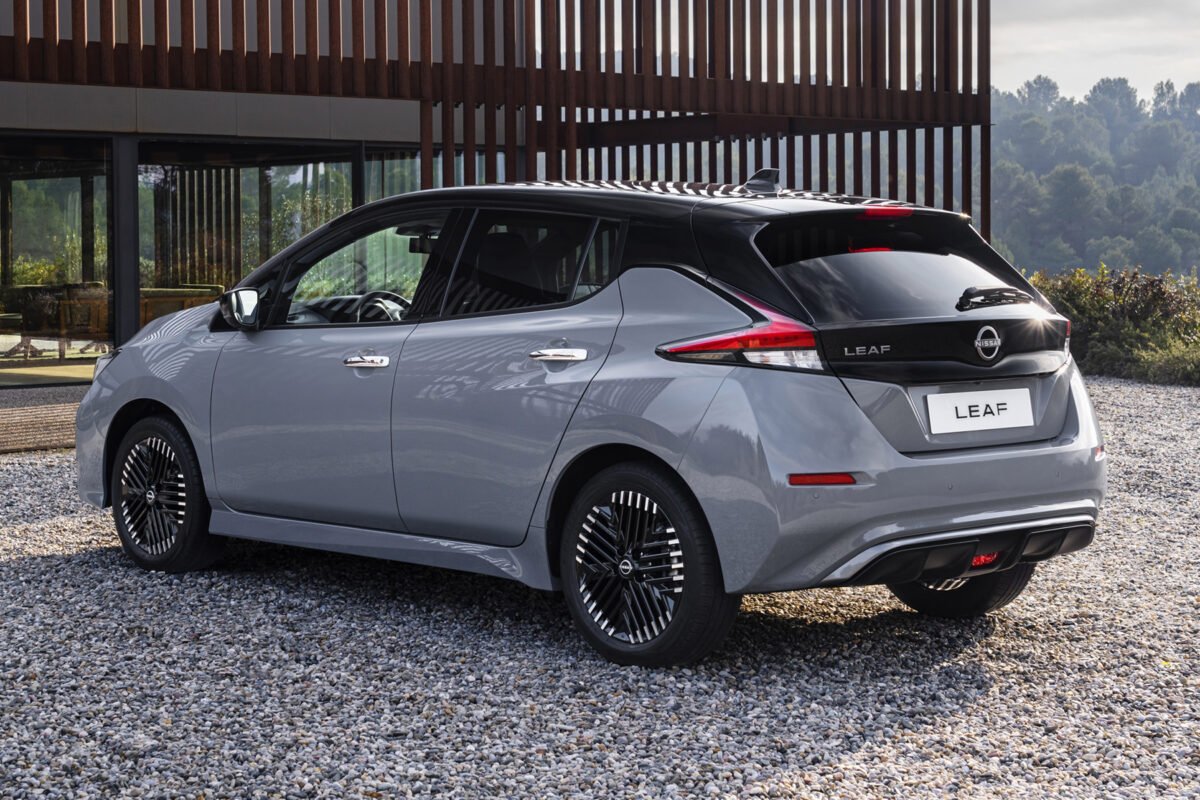
Skoda has announced the pricing and specifications for a new range-topping trim in its Fabia line-up – the Monte Carlo – which features some specific interior and exterior details and a more powerful engine.
The Monte Carlo moniker is nothing new to the Skoda brand – it has been a permanent fixture in the Fabia range since 2011, celebrating Skoda’s Monte Carlo rally success during the 1930s.
This latest iteration of the Monte Carlo distinguishes itself from the entry-level Fabia by sporting glossy black door mirrors, window surrounds, side skirts and front grille, as well as 17-inch black diamond cut alloy wheels – with 18-inch alloys being an optional extra.
Unique Monte Carlo branding sits next to the Skoda lettering on the boot lid – both finished in black. Skoda also says that the Monte Carlo comes with new sports bumpers in the front and rear, but these bumpers look almost identical to the standard model, with the exception of a faux rear diffuser.
Stepping inside, the Monte Carlo package includes height-adjustable sports seats in the front – trimmed in black fabric and artificial leather with red and grey piping and white stitching. The red and black theme continues on the door panels and dashboard, which both also feature carbon fibre-like trimming with white stitching.
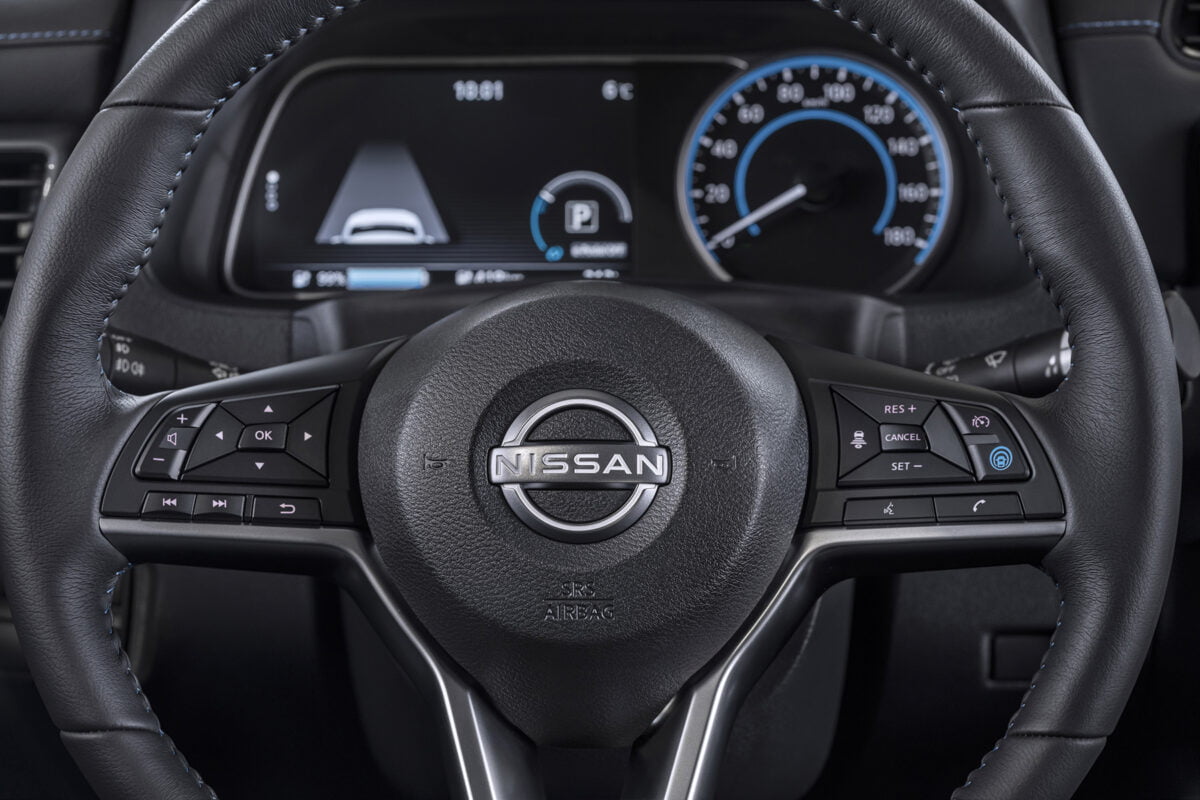
The list of on-board tech included with the Monte Carlo trim is the longest in the Fabia range, including an 8-inch infotainment screen with Apple CarPlay and Android Auto, and a ten-inch digital instrument display behind the steering wheel. The trim also includes a wireless smartphone charging pad, a keyless start/stop function, climate control, automatic emergency braking, rear parking sensors and lane-keeping assistance.
The Fabia Monte Carlo is available with three petrol engine choices. The cheapest is the 110hp 1.0-litre six-speed manual, which is also available with the SE L and Colour Edition trims. For an extra cost, a seven-speed automatic version of the same engine is also available.
Exclusive to the Monte Carlo trim however, is the 150hp 1.5-litre seven-speed automatic powertrain – the most powerful engine in the current Fabia range.
Engine option
On-the-road price
110hp 1.0-litre six-speed manual
£20,925
110hp 1.0-litre seven-speed automatic
£21,965
150hp 1.5-litre seven-speed automatic
£23,765
With prices starting at £20,925, the Fabia Monte Carlo is now available to order in the UK. The latest Fabia range, which arrived in the UK at the end of 2021, has impressed reviewers thanks to its impressive levels of standard equipment and its spacious and practical cabin, as well as its competitive pricing.
That said, a number of reviewers commented that the Fabia’s interior trim was rather cheap in a few places, and shared their disappointment at the lack of electrification across the range. Currently, the Skoda Fabia holds an Expert Rating of 78%, ranking it as one of the best small hatchbacks in our Expert Rating Index of more than 360 cars.
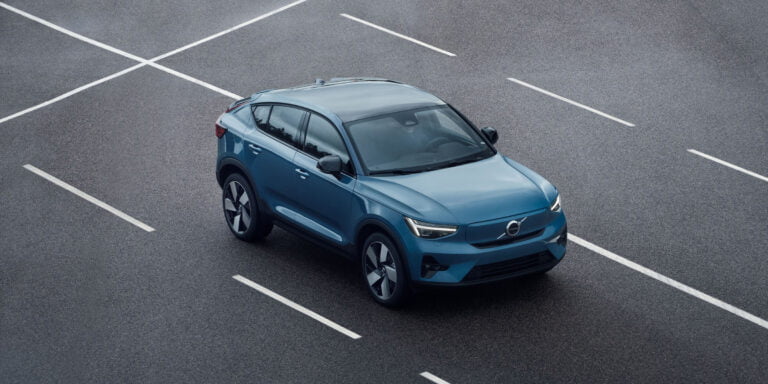
A new entry-level powertrain has been added to the Volvo C40 coupé-SUV range, while the entire XC40 Recharge SUV line-up has been refreshed for 2022.
Previously only available with a dual-motor setup to power the wheels, Volvo has announced that a cheaper single-motor variant of the electric C40 is now available to order in the UK. While the dual-motor versions are equipped with a 78kWh battery, this new single-motor powertrain uses a smaller 69kWh battery.
Consequently, Volvo says that the maximum battery range of the single-motor C40 is 269 miles – four miles fewer than the range of dual-motor models.
New single-motor versions are available with every trim level, including the new entry-level Volvo C40 ‘Core’, which is single-motor only and more than £10,000 cheaper than the dual-motor models that were previously the only options available. Should you prefer to opt for the mid-range ‘Plus’ or range-topping ‘Ultimate’ trims, the single-motor versions are £5,000 cheaper than dual-motor models.
Trim level
Powertrain
Battery size
Battery range
Drive type
Price
C40 Core
Single-motor
69kWh
269 miles
Front-wheel drive
£44,800
C40 Plus
Single-motor
69kWh
269 miles
Front-wheel drive
£50,550
C40 Plus
Dual-motor
78kWh
273 miles
All-wheel drive
£55,550
C40 Ultimate
Single-motor
69kWh
269 miles
Front-wheel drive
£53,900
C40 Ultimate
Dual-motor
78kWh
273 miles
All-wheel drive
£58,900
As well as expanding the C40 range, Volvo has also given the closely-related XC40 Recharge SUV range a minor facelift for 2022. Applied to every trim level in the XC40 range, it includes a new front bumper and a frameless grille that is similar to that on the C40.
Customers can now also choose leather-free upholstery when ordering their XC40 Recharge, while there are new exterior colours and alloy wheel designs to choose from as well.
Volvo C40 (blue) and XC40 (white)
UK buyers can now order the updated C40 and XC40 in the UK, with first deliveries expected in Autumn 2022.
Arriving as Volvo’s first all-electric car in 2021, the XC40 Recharge has received plenty of reviewer praise for its performance, battery range, comfort and safety. However, pricing has been a sticking point for journalists, with many commenting that the entry-level price of £43,550 is rather expensive. The XC40 Recharge currently holds an Expert Rating of 68%.
The Volvo C40, which swaps out the XC40’s squarer rear end for a more sloping roofline, faced the same pricing criticism at its more recent launch, as the initial absence of cheaper single-motor models disappointed many reviewers. The coupé-SUV currently holds an Expert Rating of 64%.
Probably the first thing you do when you buy a new or used car is to sort out the car insurance on it. Aside from the fact that it’s a legal requirement, organising appropriate insurance to cover damage and possible repairs to your car is a sensible thing to do.
So that’s the car sorted, but what about the tyres?
Tyre insurance is one of the many finance and insurance products that dealerships will try to push onto car buyers, along with GAP insurance, scratch & dent insurance, key insurance and other various and assorted policies.
The purpose of tyre insurance is to cover you in the event that one or more of your car tyres is damaged beyond repair. This can either be accidental damage (such as bouncing off a kerb or pothole) or malicious damage (such as someone putting a knife through your tyre).
For some people, tyre insurance can be just as important as covering the rest of the car against accidental or even deliberate damage.
This kind of insurance is most commonly attached to more expensive vehicles that feature large alloy wheels or big off-road rubber, as those tyres can be hugely expensive to replace. An increasing number of cars (like most BMWs and Minis) are also being fitted with run-flat tyres, which can’t be repaired like a normal car tyre. That usually means it’s automatically a replacement tyre for even minor damage.
Tyre insurance premiums are worked out based on the type of car, its wheel size and performance, so the cost of tyre insurance for a town runabout will be significantly cheaper than for a high-end supercar.
What does tyre insurance cover?
Tyre insurance covers unwanted damage caused by an accident – such as a kerbing or a blow-out – as well as from malicious acts like tyre slashing. Your tyre insurance will pay for replacement tyre(s) rather than repairs to your existing tyres.
Wear and tear is not covered by tyre insurance. All tyres will wear down over time and need replacing. A new tyre will usually come with about 8mm of tread on the surface, and the minimum legal tread depth in the UK is 1.6mm. Insurance providers have fairly strict rules and regulations about what they will and won’t pay for, and you won’t get a brand-new set of tyres if your old ones have barely legal tread depth.
This type of cover is becoming less commonplace. That’s not only because many drivers would rather take the chance of avoiding damage than pay for something they might never need, but also because the cost of providing the cover is becoming pretty prohibitive for the insurers.
Tyres are expensive to manufacture, and therefore pricey to buy, and there’s not a lot of profit in them for suppliers. As a result, any insurer asked to pay out for some damaged rubber will find themselves having to pay top prices – and that’s not something insurance companies like to do on a regular basis.
Do I really need tyre insurance?
In weighing up the merits of any insurance policy, you need to look at the cost of the insurance, the value of the product you’re insuring and the likelihood that you will have to make a claim on the policy.
Like most insurance policies, tyre insurance will cost you the premium (upfront cost) plus an excess if you actually make a claim.
Most tyre policies will allow you to claim for a certain number of replacement tyres over the course of the policy (usually a three-year term), so you need to weigh up the likelihood that you will make any claims on the policy during that time. If you live around heavily potholed roads, you may have already suffered tyre failures in the past.
In most cases, the premium is roughly similar to the cost of one new tyre. You’ll also have to pay an excess (roughly £25 but it will vary) if you make a claim.
Usually, it tends to work out that if you claim for more than one tyre over the life of your policy, you’d be saving money over buying the tyres brand new. However, that will obviously depend on the actual payout you receive – as mentioned, if your tyres are almost balding when you make a claim, you won’t get the full new tyre replacment price.
If you have expensive tyres, like big SUV tyres or run-flat tyres, a tyre insurance policy might be more valuable as the cost of replacing a damaged tyre is higher and/or the likelihood that you will suffer a damaged tyre is higher.
Still looking for tyre insurance?
Because of the cost and specialist nature of tyre insurance, there will be certain provisions in the policy. Here are some of the top points to look for when considering cover:
Your tyres must have the ‘E’ mark to say it is fit for purpose in the UK and Europe.
Make sure the policy covers accidental and malicious damage.
Remember it won’t cover wear caused by defective steering geometry or bad maintenance – damage has to be caused by an ‘unexpected deflation’.
See what the ‘wear and tear’ deduction is. A tyre originally with 8mm tread that is damaged when it’s at 3mm will get a proportionally lower pay out.
Look for excess charges – these can be £25 to £35.
See what the pay-out limit is – it’s usually £150 per wheel or £300 per wheel depending on premium, for up to four tyres each year. It’s highly unusual to have to claim this often though.
Remember that if a tyre is repairable it will almost certainly have to be fixed rather than replaced. Run flat tyres can’t be repaired though.
Check you don’t have to go to a main dealer for the replacement. You should be able to choose who you use.
Insurers might have a clause giving the maximum they will pay for a replacement – this stops suppliers and fitters charging over- inflated prices for work.
You will need to supply a report from the technician with two photos showing: 1) the damaged tyre and 2) its tread depth.
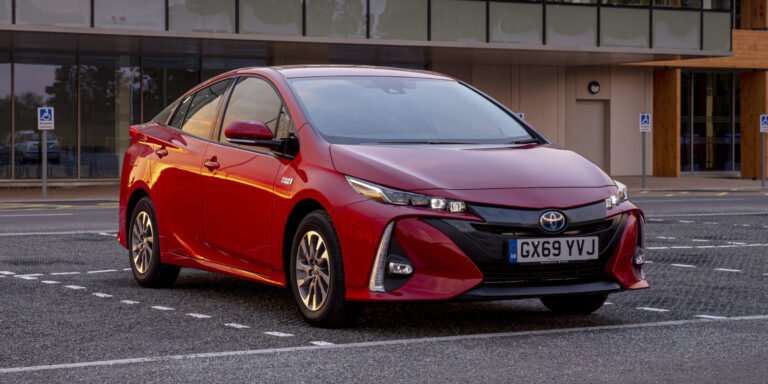
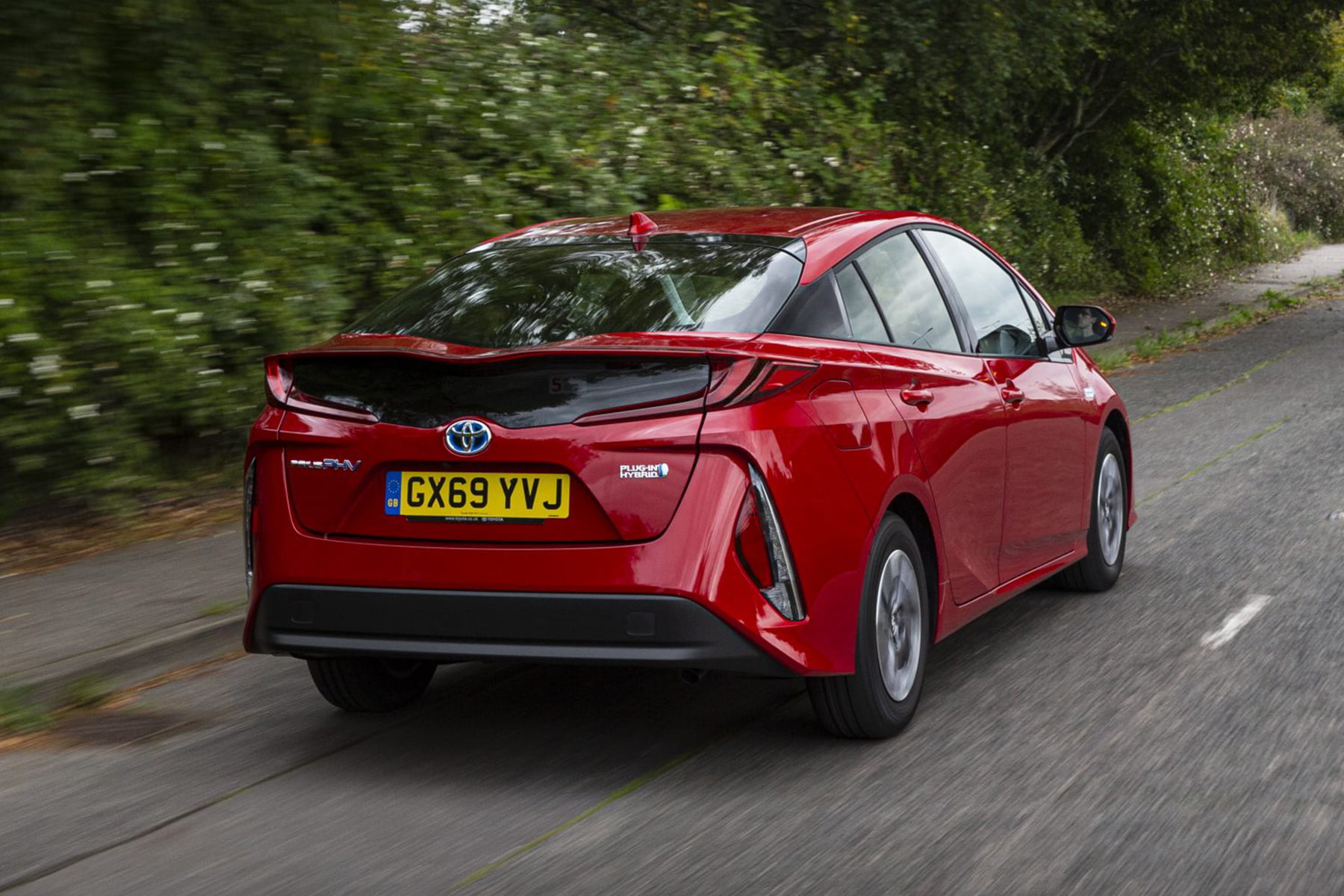
First arriving on UK roads in early 2017, the Toyota Prius Plug-in was an eco-friendly five-door family saloon– also known as the Prius Prime in theUSA.
Put simply, the Prius Plug-in was the plug-in hybrid version of the standard Prius range, with a larger 8.8kWh battery that can power the electric motor on its own for up to 34 miles without the help of the 1.8-litre petrol engine.
Like its regular hybrid twin, the Toyota Prius Plug-in was front-wheel drive, and received a mid-life facelift in early 2019, consisting of new interior touches, infotainment additions and an extra fifth seat in the rear.
While this 2019 refresh did improve the saloon’s review scores somewhat, the general reception of the Prius plug-in remained mixed for its entire lifespan. In one of its more favourable reviews, Driving Electric commended the Prius Plug-in for its “incredible” fuel efficiency and its quiet and relaxing driving experience.
Practicality was a key sticking point for many journalists, as the Prius Plug-in had a rather shallow boot which offered less storage space than the regular Prius models, as engineers needed to accommodate the plug-in’s chunky battery pack. The majority of reviewers agreed that otherwise the interior was spacious and had some neat practical features, but more flaws could be found on the dashboard – Parkers called the saloon’s infotainment “slow and unresponsive”.
Described by the Sunday Times as “a smart car at a silly price”, many reviewers concluded that the Toyota Prius Plug-in was hard to recommend considering its price point and tax bracket. “You’re probably better off sticking with the regular Prius and saving thousands upfront”, Heycar said, while Business Car explained that a typical Prius driver “will pay the same in company car tax as the faster and much better-to-drive Audi and BMW”.
No longer on sale, the Toyota Prius Plug-in holds a Used CarExpert Rating of A with a score of 72%. This score is the same as the rating given to the petrol-electric Prius hybrid of this generation, which was several thousand pounds cheaper.
Body style: Mid-size saloon Engines: plug-in hybrid Price when new: From £31,344 on-road
Launched: Spring 2017 Last updated: Spring 2019 Discontinued: Spring 2022
Image gallery
Media reviews
Highlighted reviews and road tests from across the UK automotive media. Click any of the boxes to view.
Auto Express
Model reviewed: Range overview Score: 8 / 10 “The question you’ll need to ask is whether you really need that 30-mile EV range. The standard Prius is already an excellent car, so we’d recommend considering how you’ll use the Plug-in before taking the plunge.” Read review
Auto Trader
Score: 7.6 / 10 “On paper the Toyota Prius Plug-in offers viable zero-emissions driving around town without the range anxiety of a pure EV, with tax benefits and other financial incentives to boot. The reality is a little more complex, given the additional cost over the regular Prius, compromises in practicality and real-world running costs that fall some way short of the dream.” Read review
Business Car
Model reviewed: Range overview Score: 7 / 10 “Priced near to rivals like the Audi A3 e-tron and BMW 330e, the Toyota has a problem on its hands: despite being significantly more efficient, a typical user will pay the same in benefit-in-kind company car tax as the faster and much better-to-drive Audi and BMW so its difficult to recommend.” Read review
Car
Model reviewed: Range overview Score: 8 / 10 “The Toyota Prius Plug-in won’t get most petrolheads’ juices flowing, but rest assured that if the future comes in plug-in form, this is a damn sight more engaging drive than the Nissan Leaf. Interestingly, this Prius feels happiest in all-electric mode and does a good job of dashing around town.” Read review
Car Keys
Model reviewed: Range overview Score: 7 / 10 “For the £11,000 extra that the Plug-In costs over the regular Prius, you do gain much improved economy, better refinement and a driving experience that’s much closer to a pure electric vehicle. But you lose out on an extra seat in the back and a fair amount of storage space.” Read review
Carbuyer
Model reviewed: Range overview Score: 8 / 10 “The Toyota Prius Plug-In has low running costs but the complicated technology pushes its price up.” Read review
Carwow
Model reviewed: Range overview Score: 7 / 10 “The Prius Plug-in makes a lot of sense with its electric-only range, but the seating arrangement limits its uses somewhat.” Read review
Discover EV
Model reviewed: Score: 7 / 10 “While it’s more economical than any direct rival, and about 10% up on the regular Prius, Toyota charges almost eight grand more for its Plug-in version. So if you live up to 30 miles away from work (and you can charge there as well), the Toyota Prius Plug-in makes for a cheap option. However, if you do lots of miles, you’re better off sticking to the brand’s hybrid.” Read review
Driving Electric
Model reviewed: Range overview Score: 8 / 10 “The Toyota Prius Plug-In offers genuine zero-emissions range in a plug-in hybrid package that delivers strong efficiency.” Read review
Electrifying.com
Model reviewed: Range overview Score: 6.5 / 10 “Choose the plug-in version and it will do reasonably well however, making the most of its relatively small battery with a 32-mile claimed range on electric-only power. That should be plenty for most commuters and will mean that you can plug in at home or work every day and save the petrol for any long trips you might do at weekends.” Read review
Green Car Guide
Model reviewed: Range overview Score: 9 / 10 “The Prius Plug-in is similar to the regular Prius Hybrid but it provides around 30 miles of electric driving rather than the very short distance possible in the Prius Hybrid. Both cars are easy and pleasant to drive. However the Prius Plug-in takes the obsession with efficiency of Toyota’s engineers to the next level – to the extent that it becomes a four rather than a five-seater.” Read review
Heycar
Model reviewed: Range overview Score: 6 / 10 “The Toyota Prius Plug-In is a cannily development from Toyota, but the target customer base is too small for it to be of much interest to most people. You’re probably better off sticking with the regular Prius and saving thousands upfront. You’ll enjoy a bigger boot, too.” Read review
Honest John
Model reviewed: Range overview Score: 6 / 10 “The Toyota Prius Plug-in is a difficult car to recommend. We like its smooth running, efficiency, long warranty and standard equipment, but we can’t help but feel a standard Prius or EV car would make more sense.” Read review
Parkers
Model reviewed: Range overview Score: 6.4 / 10 “There are more modern plug-in hybrids, there are more practical ones, and there are certainly better ones to drive – the Prius Plug-in has been around for quite a while and in several key areas it’s been surpassed by its competition.” Read review
The Sunday Times
Model reviewed: Range overview Score: 6 / 10 “A smart car at a silly price.”
Read review
Safety rating
Independent crash test and safety ratings from Euro NCAP
As of April 2025 (our most recent data point), the Toyota Prius family – including the Prius Plug-in – has a very good reliability score of 90%. This includes previous generations of the Prius as well as this model.
The Car Expert’s reliability information is provided exclusively to us using workshop and extended warranty data from our partner, MotorEasy.
Awards
Trophies, prizes and awards that the Toyota Prius Plug-in has received
2017
Next Green Car Awards – World Green Car + Best Large Family Car
Similar cars
If you’re looking at the Toyota Prius Plug-in, you might also be interested in these alternatives
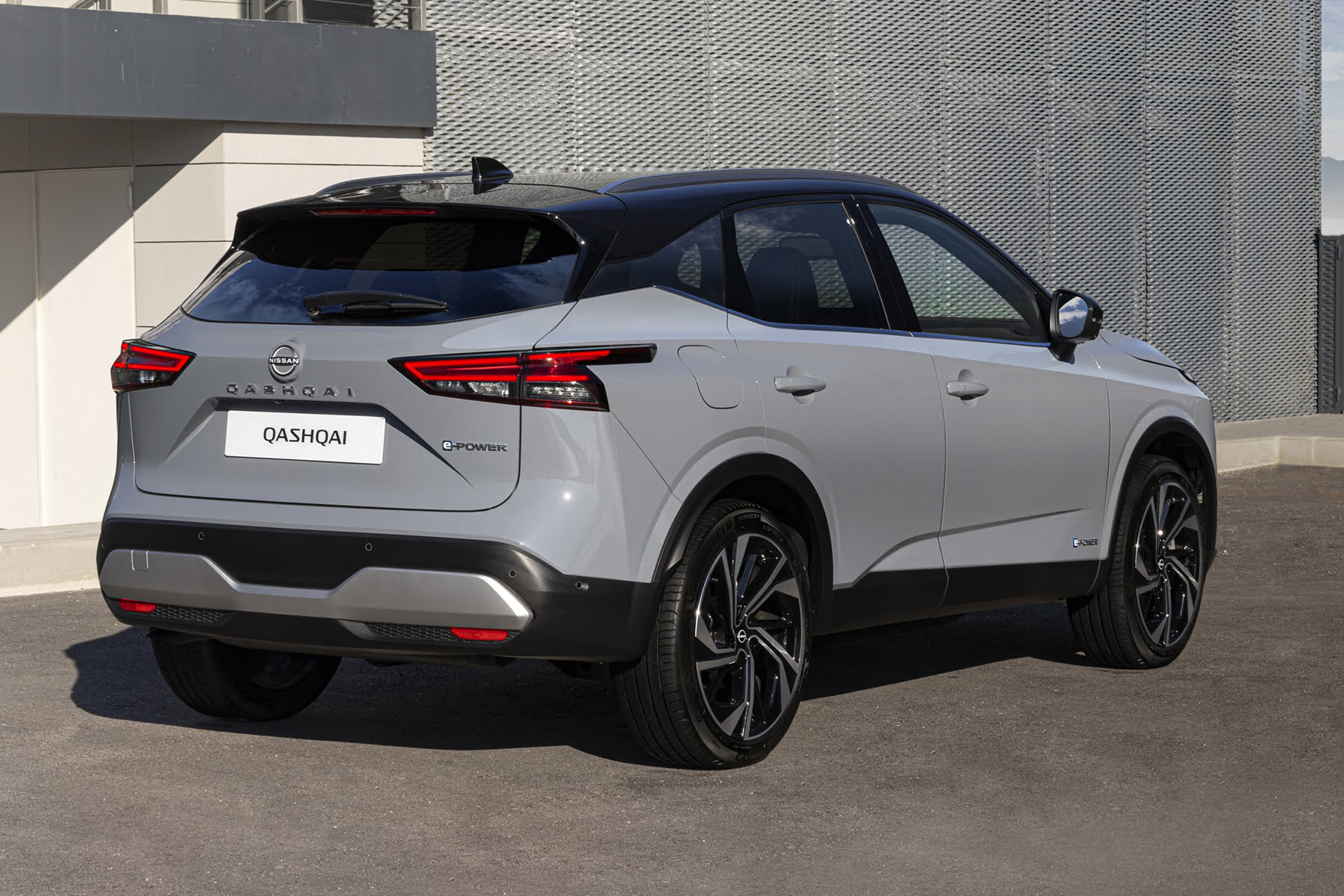
Nissan is to add a new hybrid powertrain called ‘e-Power’ to the Qashqai range, pitching it at owners who spend a lot of time in urban environments.
The Qashqai will be the first Nissan model in Europe to be fitted with the e-Power unit, which is already used in versions of the Nissan Note sold in Japan.
Nissan’s e-Power system works differently to traditional hybrid vehicles, and more like what is known as a ‘range extender’ hybrid. Here’s a brief explainer.
How a normal hybrid works
A normal hybrid consists of two complete power systems: a petrol engine, complete with gearbox and driveshafts to send power from the engine to the wheels; and an electric motor (powered by a battery), which can also drive the car on its own.
The two power sources can work independently or together, so during any given journey you might be driving a petrol car, and electric car and a combination of the two working together.
How the e-Power system works
The e-Power drivetrain combines a three-cylinder 1.5-litre petrol engine of 156hp with a 140kW electric motor, which does sound similar to a typical hybrid car.
However, the petrol engine does not actually drive the wheels at all – it simply acts as a generator to charge the battery and power the electric motor, while the electric motor is responsible for driving the wheels at all times.
There’s still a battery, which can also gain some charge whenever you coast or brake, just like any other hybrid or electric car. But, as with any other non-plug-in hybrid, most of the charge will come from the petrol engine. There is no facility to plug the Qashqai into a charging socket to charge the battery
So, essentially, the Qashqai e-Power is an electric car powered by petrol…
Why does it matter?
According to Nissan, the new drivetrain will suit those who like the instant response of an electric vehicle – compared to a typical hybrid that is predominantly a petrol car – but don’t want to deal with charging it.
The e-Power’s designers claim that the electric motor provides a much better driving experience than a traditional full hybrid, producing an instant response with no delays under acceleration. There’s also no switching between petrol and electric driving, which can cause clunking or hesitation in some hybrid cars as the petrol engine switches on or off.
Another advantage of the e-Power system is that it does away with the need for a conventional gearbox and driveshafts for the petrol engine, which reduces weight and saves space.
The petrol engine will still be running most of the time, but it works differently to that in a normal car. Instead of working up and down through the rev range, it will sit at a fixed operating speed that maximises the supply of electricity to the battery while minimising fuel consumption. The operating speed will be lined to the car’s road speed, so will gradually increase as speed increases in a way that promises to be more natural than a regular hybrid car, which can see the engine revving hard even at low speeds.
Nissan’s research suggests that typical Qashqai owners can spend up to 70% of their time driving in urban environments, where the petrol engine would be operating in a low-power mode. Combined with energy recovery energy through deceleration and braking, it should produce fewer emissions than a regular hybrid car in built-up surroundings.
Because it’s effectively an electric car (albeit one powered by petrol), the Qashqai e-Power can also be driven with Nissan’s ‘e-Pedal’ system as used in the Leaf EV. Activated by a switch, this allows ‘one-pedal’ driving by using the electric motor to slow the car instead of conventional brakes using the brake pedal. This ensures as much energy as possible is recovered to the battery to minimise fuel consumption, and also reduces wear on the brake pads.
Official combined-cycle fuel economy and emissions of the Qashqai e-Power are expected to be in the region of 53mpg and 119g/km, but those driving solely in urban environments could well improve on these figures.
Prices for the Nissan Qashqai e-Power are yet to be revealed. Nissan says it will join the Qashqai range from ‘late summer’, so full pricing and specifications are expected in coming weeks.
If you look under the safety systems section when buying a new car, you’ll be wowed by a vast array of acronyms and impressive-sounding technologies.
Modern cars are quite incredible, with most able to ‘see’ the world around them and anticipate and react to situations on the road. Understanding what these technologies are, as well as which are most important, can help you decide on which new model you’re going to buy.
Here, we outline the most common driver assistance systems and what they do.
Parking assist
Parking can be tricky, because cars are getting bigger but parking spaces remain the same size. Fortunately, some cars offer a system that can park the car automatically.
Again, these systems vary, but they should be capable of driving forwards or backwards into a bay, or perform parallel parking on the street.
Advanced cruise control
This is a hugely appealing technology for anyone who spends a lot of time on the motorway. They have various levels of competence, but in their most basic form your car will use radar to judge the speed and distance of the car in front and adjust its own speed to maintain a constant distance behind.
Some can also help keep the car in its lane, with Tesla’s ‘Autopilot’ system the best known example.
Blind spot warning
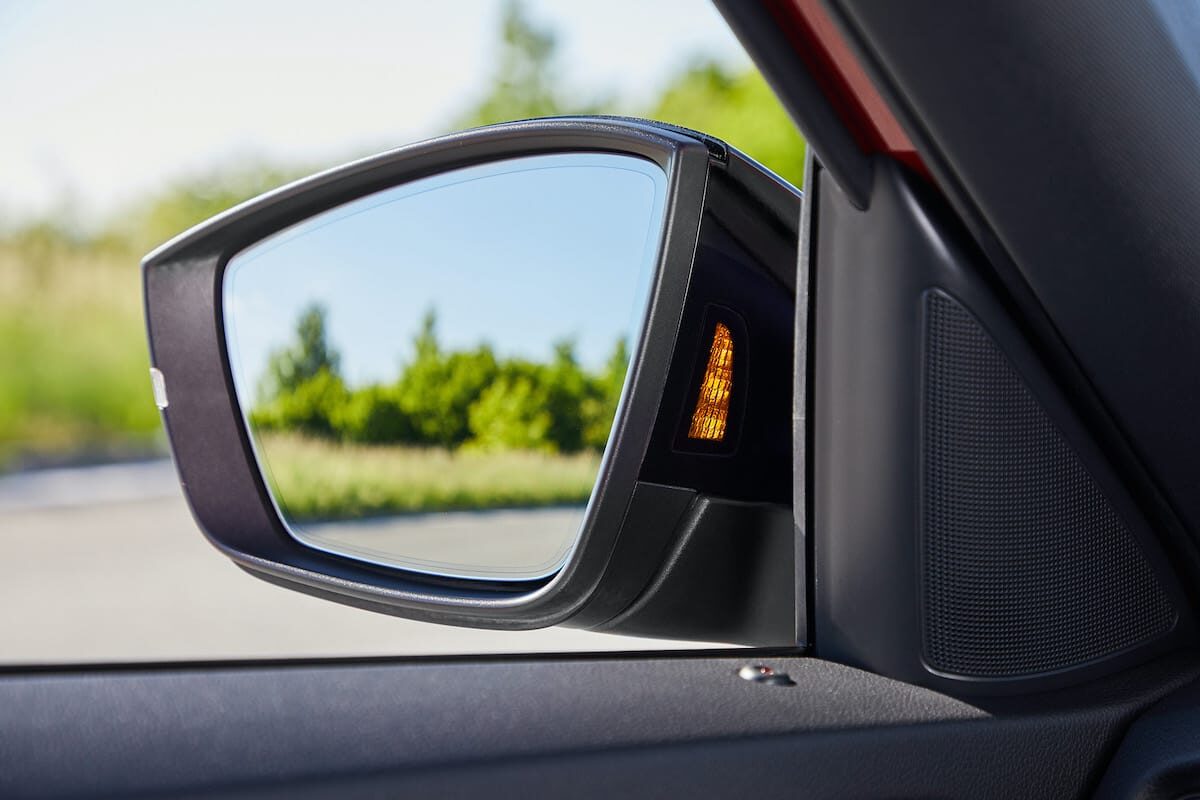
One of the lessons we learn early in our driving careers is that checking your blind spot is important to avoid accidents. However, many modern cars now have blind spot warning systems that tell you if there’s a car off your rear quarter that might have escaped your vision.
They tend to work with an orange light embedded in the wing mirror, so as you check the mirror to see what’s behind you, you’ll see that you should hold off changing lanes even if you can’t see a vehicle without having to look over your shoulder.
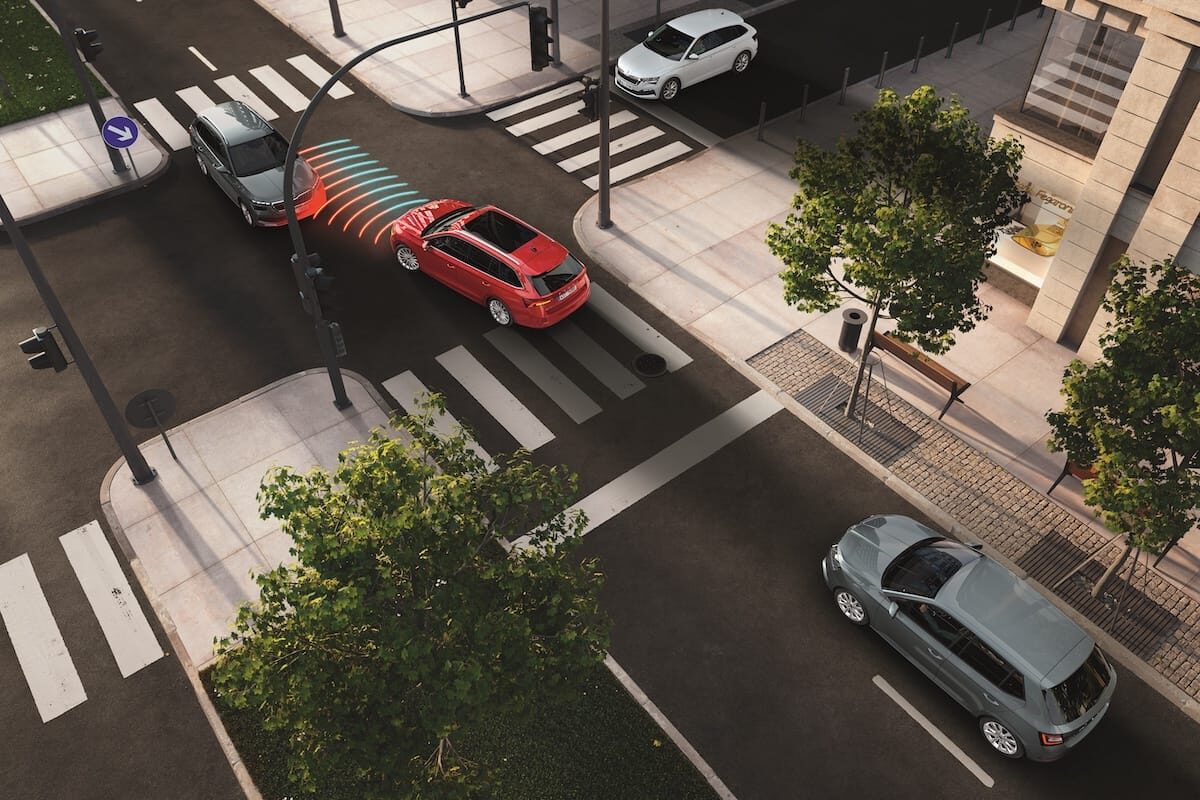
Front collision warning
These systems scan the road ahead and can pick out obstacles in the road, such as other vehicles or pedestrians. If it identifies an object and your closing speed puts you at risk of a collision, it will alert you.
This alert comes in a variety of ways, but most use a flashing icon on the dashboard and an audible alarm. Some cars will also boost brake input to help avoid a crash, but importantly they only warn you of an obstacle – you must take action yourself.
Automatic emergency braking (AEB)
Emergency braking systems take the principle of forward collision warnings, but are capable of taking action to avoid a crash. Should a crash be anticipated, the car can apply the brakes to stop the vehicle quickly.
Some more advanced systems can also scan the opposite lane to see if it is clear, and if it decides it can’t stop in time, will steer the car around the obstacle.
Safety bodies like Euro NCAP and Britain’s own Thatcham Research contend that AEB is one of the most important factors in reducing road deaths since the seat belt.
Lane-keep assist systems (LKAS)
This one is fairly self-explanatory, but it’s important to be aware if a car has this ahead of a test drive, because it can make the steering feel quite odd if you’re not expecting it.
In its most basic form, lane departure warning systems will alert you if you’re drifting out of lane, while LKAS will actively alter the car’s steering and pull you back into the centre of the lane.
Night vision
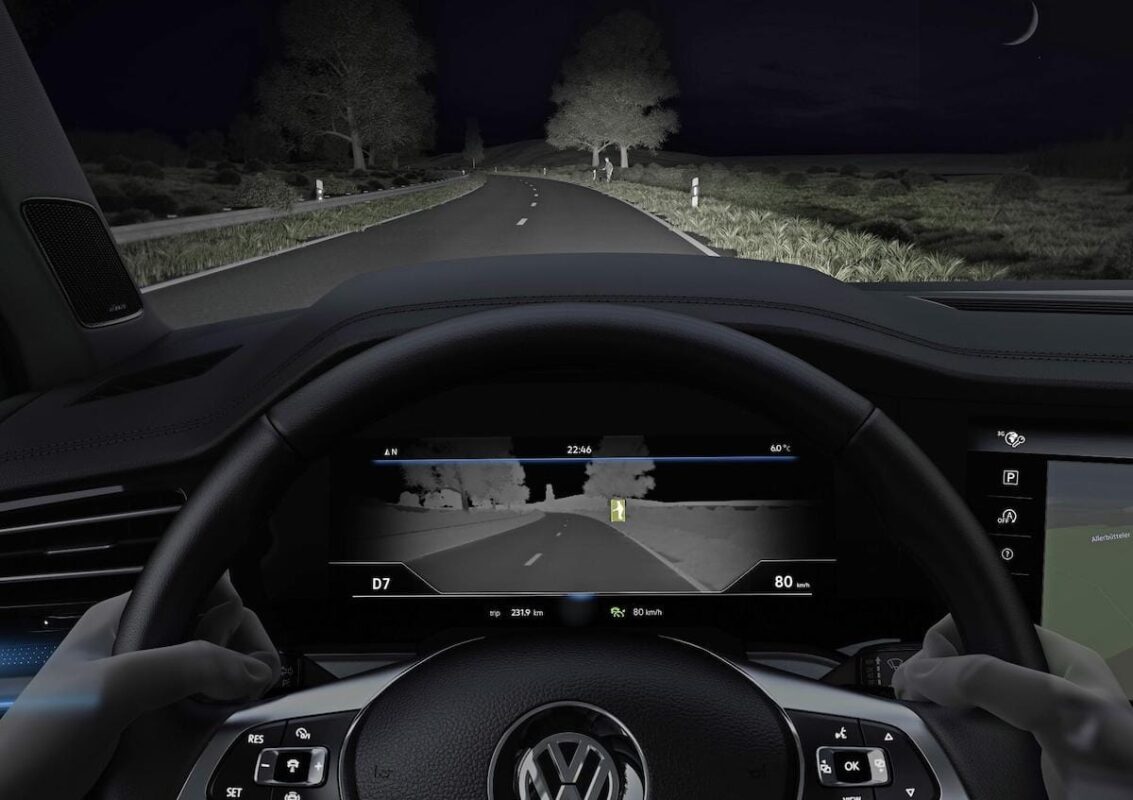
In the car industry, night vision is still a very new technology. Introduced with the luxurious Mercedes-Benz S-Class, it has slowly filtered down to a few mainstream models such as the DS 7 Crossback.
It uses night vision to display a black and white image, usually in the instrument binnacle, that can see pedestrians or animals far in the distance, ahead of the headlights. While you shouldn’t drive by looking at the screen, it’s often used to warn of potential hazards before you’ve seen them.
This article was originally published in August 2020, and most recently updated in March 2022
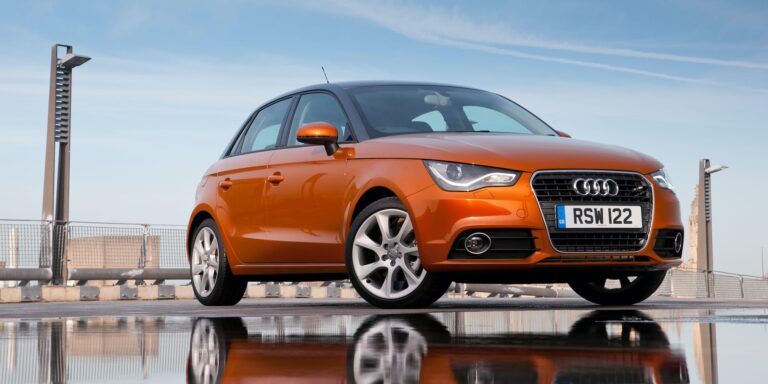
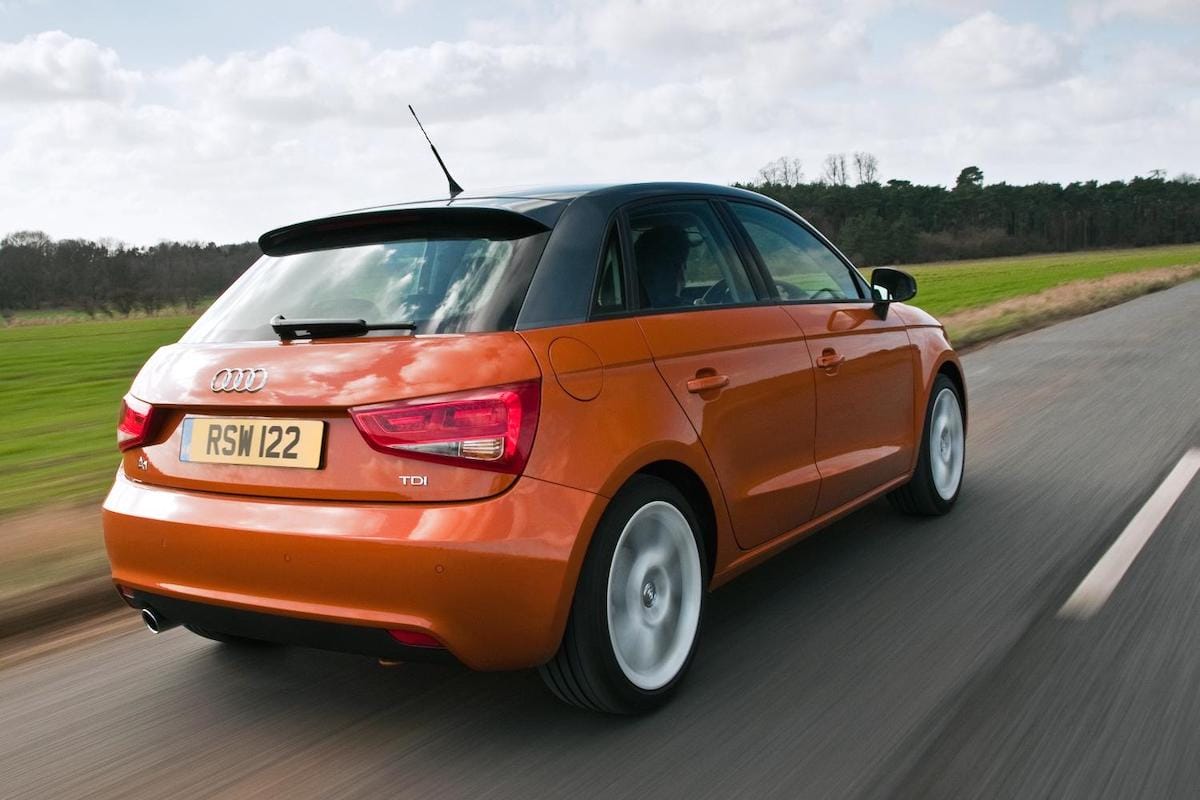
The Audi A1 was launched in 2010 as the brand’s answer to the runaway success of BMW’s reborn Mini hatch. It was initially only built as a three-door hatch (like the Mini), but after a couple of years a five-door model was added, called the A1 Sportback. The model was built up until 2018, when it was replaced by an all-new version.
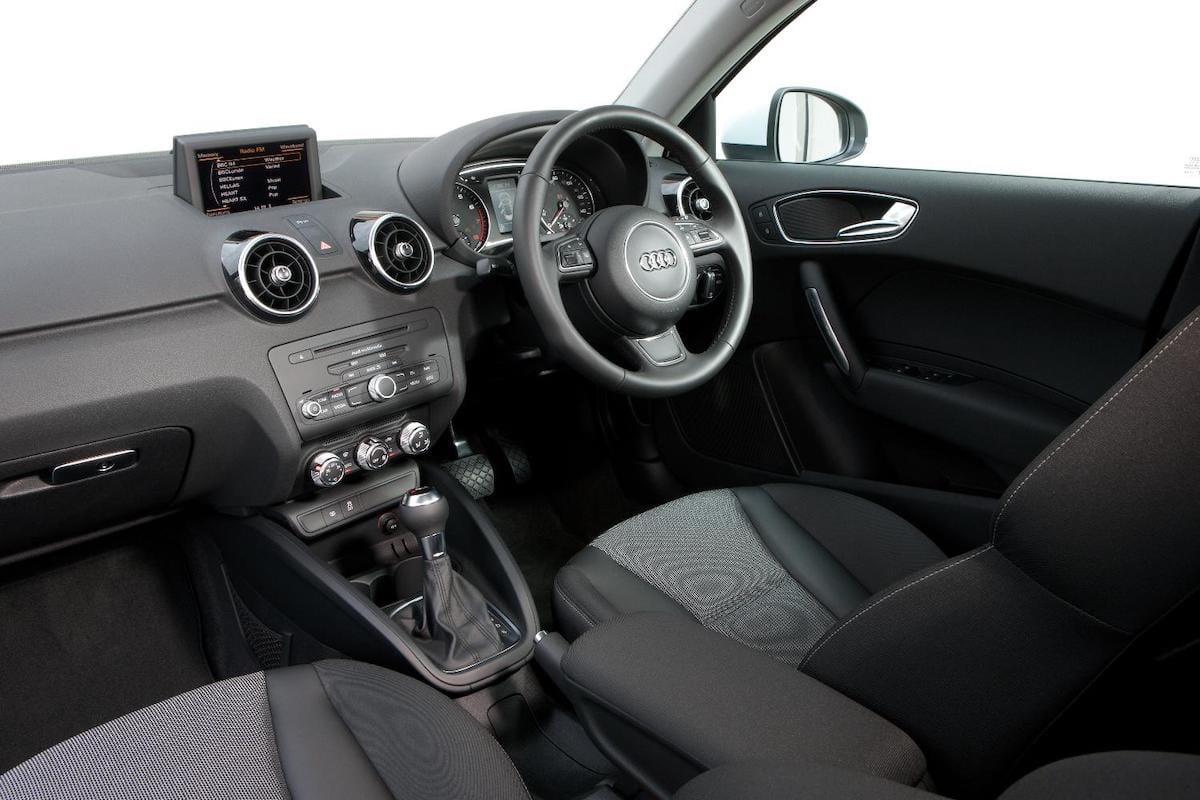
The A1 was immediately popular with both customers and the media, who praised it for its relative refinement compared to the Mini and other supermini-class small cars. The three-door was rather cramped in the back, and this was marginally improved with the five-door Sportback version, which certainly made accessing the rear seats easier.
As was the vogue for German car companies of the time, the Audi A1 was available with both petrol and diesel engines. A higher-performance model called the S1 was a refined alternative to a Mini John Cooper Works.
Despite its refinement and quality advantages over the Mini, reviewers marked it down for lacking the driving dynamics and general character of the British car. Review scores fell further when the third-generation Mini was launched, which maintained its driving advantage over the Audi and also matched it in terms of both refinement and offering a five-door option.
As of January 2025, the Audi A1 holds a Used Car Expert Rating of D, with a score of 59%.
Highlighted reviews and road tests from across the UK automotive media. Click any of the boxes to view.
Auto Express
+
Model reviewed: Three-door hatchback range Score: 6 / 10 “The Audi A1 boasted styling that distilled the sharp, sophisticated notes of the brand’s larger models into a deeply desirable yet smaller package.” Read review
Model reviewed: Sportback range Score: 6 / 10 “The Audi A1 Sportback is a small car with limited practicality, but an extra set of rear doors makes it a feasible option for families with small children. It features a wide range of diesel and petrol engines, all turbocharged and with stop-start.” Read review
Model reviewed: Sportback S Line range Score: 8 / 10 “Audi’s A1 S line supermini packs good looks, great quality and excellent refinement into a compact body.” Read review
Model reviewed: Three-door hatchback range Score: 8 / 10 “Audi A1 facelift is subtle, but tweaks make it better value.” Read review
Model reviewed: 1.4-litre petrol manual Score: 8 / 10 “Powerful enough for every eventuality and whisper-quiet, this higher-powered 1.4 TFSI is a great match for the Audi A1’s sophisticated character.” Read review
Auto Trader
+
Model reviewed: Three-door hatchback range Score: 3.9 / 10 “The Audi A1 is an upmarket supermini designed to appeal to style-conscious buyers who might otherwise choose a Mini or Citroen DS3. It’s well-equipped, efficient and great fun to drive.” Read review
Model reviewed: Three-door hatchback range Score: 8.6 / 10 “The Audi A1 is an upmarket supermini designed to appeal to style-conscious buyers who might otherwise choose a Mini or Citroen DS3. It’s well-equipped, efficient and great to drive.” Read review
Business Car
+
Model reviewed: 1.6-litre diesel manual three-door hatchback Score: 8 / 10 “The 1.6 diesel is powerful enough for Audi’s smallest model, certainly avoiding the impression of being a low-emission focused car, although the harsh ride of the S-line model in particular will be too much for some drivers.” Read review
Car
+
Model reviewed: 1.6-litre diesel manual Sportback Score: 8 / 10 “Though this is the most practical Audi A1, this still isn’t a supermini you’ll buy because of its utility – the major showroom draws here are the badge, the chic styling, and the best small car interior, bar none.” Read review
Model reviewed: 1.4 TFSI (2010) Score: 8 / 10 “It’s hard to see the Audi A1 being anything other than a runaway success. There’s nothing revolutionary about it but it looks good and is beautifully put together and promises Mini-beating residuals and great economy.” Read review
Car Keys
+
Model reviewed: Three-door hatchback Score: 8 / 10 “Coupled with its cosy interior, snug dimensions and rather unconventional engine line-up (for a supermini that is), the Audi A1 gives those who are in the market for a Volkswagen Polo or MINI Hatch something a little different to mull over.” Read review
Carbuyer
+
Model reviewed: Three-door range Score: 7 / 10 “The Audi A1 is a small car with many qualities that remind us of larger, more expensive models” Read review
Model reviewed: Sportback range Score: 7 / 10 “The Audi A1 Sportback is the more practical, five-door version of the three-door Audi A1. It’s slightly easier to live with, but lacks some of the three-door version’s sleek looks – although a wide colour palette and customisation options helps soften that blow.” Read review
Carwow
+
Model reviewed: Sportback range Score: 7 / 10 “The Audi A1 Sportback has the build quality of a premium car in a small five-door hatchback body. It’s a worthy alternative to models such as the Mini 5-door, Volkswagen Polo and the trendy Fiat 500.” Read review
Model reviewed: Three-door hatchback range Score: 7 / 10 “The Audi A1 has a lofty sticker price but low running costs and a premium badge make this a great premium city runabout.” Read review
Eurekar
+
Model reviewed: Three-door range overview “The quality in the Audi A1 is all around you, from the soft touch materials to the excellent technology, the way the switches work so beautifully, and the performance.” Read review
Model reviewed: 1.4-litre petrol manual Competition Line “Audi’s little firecracker may be the smallest in the luxury car maker’s range but it is hardly a shrinking violet.” Read review
Evo
+
Model reviewed: Three-door hatchback range Score: 8 / 10 “The Audi A1 exhibits all the usual Audi traits, but lacks any real fun factor.” Read review
Model reviewed: 1.4-litre petrol manual Sportback Sport Score: 7 / 10 “The Audi A1 Sportback 1.4 TFSI Sport looks good and the turbocharged petrol engine loves to be thrashed.” Read review
Green Car Guide
+
Model reviewed: 1.2-litre petrol manual SE three-door Score: 9 / 10 “If you’re looking for a Mini-sized car but don’t want a Mini, then the Audi A1 offers a premium alternative option, and in 1.2-litre guise, it returns 55.4 mpg.” Read review
Heycar
+
Model reviewed: Sportback range Score: 8 / 10 “The extra pair of doors greatly improved the A1’s practicality as it was now a whole load easier for rear seat occupants to get in and out.” Read review
Model reviewed: Three-door range Score: 8 / 10 “While the Audi A1 may have been a while in coming, it more than made up for it in the quality it offers.” Read review
Honest John
+
Model reviewed: Three-door hatch range Score: 8 / 10 “One of the most desirable small hatchbacks around, the Audi A1 does more than just trade on its badge. It’s a high quality, good to drive and refined car that is built to last.” Read review
Model reviewed: Sportback range Score: 8 / 10 “Audi’s A1 Sportback rival for the Mini, Ford Fiesta and Volkswagen Polo may have been a while in arriving after the launch of the three-door A1, but it was worth the wait for its greater practicality.” Read review
Motoring Research
+
Model reviewed: Range overview “Blink and you’ll miss the changes to Audi’s 2015 A1 range – but major changes weren’t needed.” Read review
Parkers
+
Model reviewed: Sportback range Score: 8.2 / 10 “There are plenty of reasons to like the Audi A1 Sportback: it has five doors making it a more practical choice over the standard A1 hatchback, while it’s still one of the most premium-feeling cars in this sector.” Read review
Model reviewed: Three-door range Score: 8 / 10 “The desirable Audi A1 is the premium supermini choice.” Read review
The Sunday Times
+
Model reviewed: Three-door hatchback range Score: 8 / 10 “The Audi A1 provides a classy supermini alternative to the Mini and Alfa Mito.” Read review
The Telegraph
+
Model reviewed: Range overview Score: 7 / 10 “The Audi A1 is great to drive, and feels like a truly upmarket small car; but you don’t get a lot of toys for your money, and it’s quite cramped inside.” Read review
Top Gear
+
Model reviewed: 1.2-litre petrol manual Sportback Score: 7 / 10 “Those looking for a classy, comfortable and luxurious city car will think it’s a lovely thing. Sadly though, the drive lets it down.” Read review
Safety rating
Independent crash test and safety ratings from Euro NCAP
The Audi A1 was tested by Euro NCAP in November 2010 and given a five-star rating. This rating expired in January 2017 and is no longer valid, as the A1 no longer fulfilled the criteria for a five-star rating. This is normal practice, as Euro NCAP reviews its ratings on most cars annually with most ratings expiring after about six or seven years.
However, if you are comparing a used A1 to vehicles of similar age, whose ratings will have probably also expired, its safety rating score is still useful.
Eco rating
Independent economy and emissions ratings from Green NCAP
No eco rating
The Audi A1 was not tested by Green NCAP during its production cycle.
Reliability rating
Reliability data provided exclusively for The Car Expert by MotorEasy
Total claims: 194 Average repair cost: £557.89 Last updated: October 2024
As of October 2024, the Audi A1 family has C-grade reliability score of 64%, according to workshop and warranty data provided exclusively to The Car Expert by our partners at MotorEasy. This score applies to both this generation and the newer (2018 onwards) model.
Average repair bills are just over £550 to date, which is reasonably average although still more expensive than a used car warranty. Watch out for gearbox repairs, however, which have an average repair bill of more than £2,000 and have been relatively common.
If you own an Audi A1, or are interested in a used A1, make sure that any used car warranty you purchase covers all of the potential problem areas shown above.
Running cost rating
Monthly cost of ownership data provided exclusively for The Car Expert by Clear Vehicle Data
No data yet
Due to its age, we don’t have five-year ownership costs for the original Audi A1.
Similar cars
If you’re looking at the Audi A1, you might also be interested in these alternatives
Date: February 2017 Model types: All Build dates: 05/2016 to 10/2016 Number of vehicles affected: 2,622 Defect: Due to an error in the manufacturing process, the airbag and/or seat belt pretensioner may not trigger in the event of a collision. Remedy: On affected vehicles replace air bag assembly and seta belt pretensioner where necessary.
As of August 2024, there has been one DVSA vehicle safety recalls on the Audi A1, which concerns airbags and seat belts.
Not all vehicles are affected by recalls. You can check to see if your car is included in any of the above recalls by visiting the DVLA website or contacting your local Audi dealer.
If your car is affected by a recall, the vehicle must be repaired and you should not be charged for any work required. If you are buying a used A1, you should insist that any outstanding recall work is completed before you take delivery of the vehicle.
Buy an Audi A1
If you’re looking to buy a used Audi A1, The Car Expert’s partners can help you find the right car
Search less, live more. We make finding the right car simple. Find out more
Find your next new or used car with Auto Trader. Find out more
Find your next new or used car with Carwow. Find out more
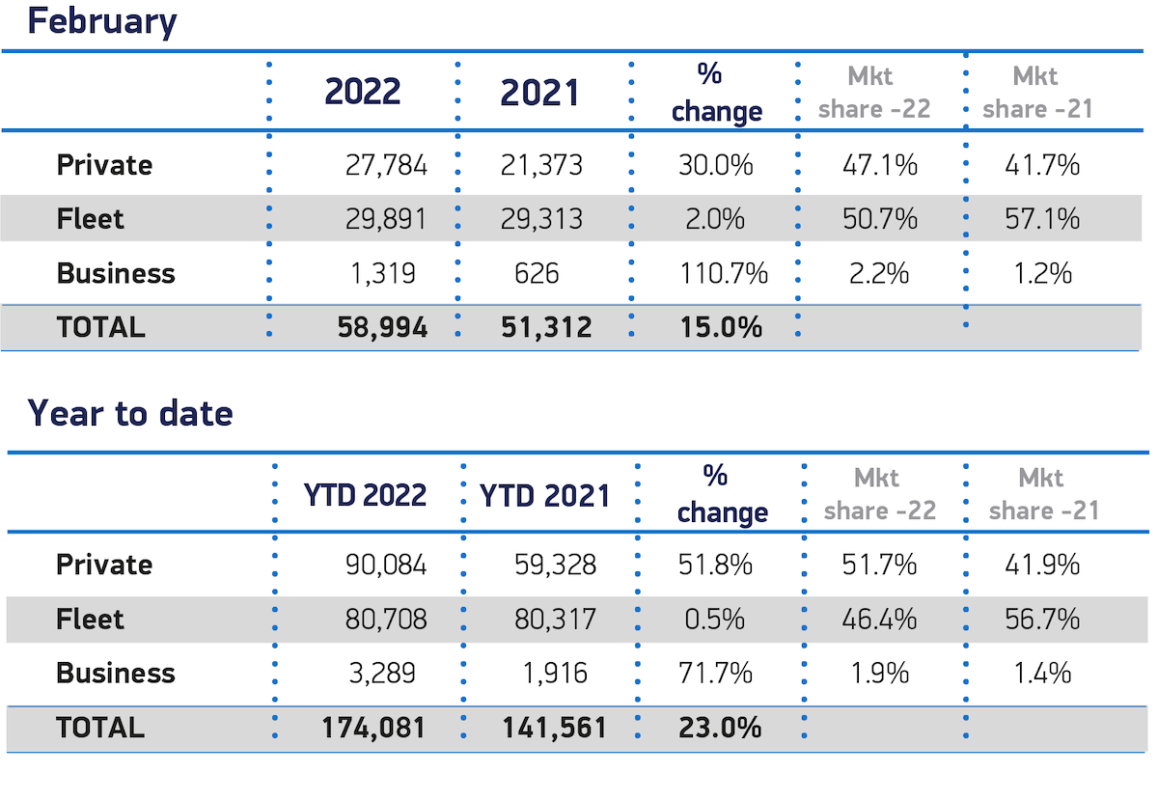
A 15% year-on-year increase in new car registrations in February sounds geat, but in reality it was hardly a month for celebrations.
According to results published by the Society of Motor Manufacturers and Traders (SMMT) yesterday, nearly 28,000 private new car sales took place in February, which was 30% better than the same month last year (when many showrooms were closed and the industry was only delivering cars on a home delivery or click-and-collect basis).
Fleet registrations were flat, with only a 2% increase, which resulted in an overall growth of 15% compared to February 2021. However, that was still about 25% below pre-pandemic years.
February results are often flakey anyway, as it’s one of the smallest months of the year for new car sales ahead of the new number plates rolling out in March.
Once again, the defining aspect of the results was the ongoing supply dramas that have forced car companies to reduce or suspend production of many different models. It’s been the same story for nearly a year now, and it’s going to keep rolling for most of 2022 – and that’s without Russia’s invasion of Ukraine making the supply situation even worse.
Source: SMMT
Strong month for plug-in power
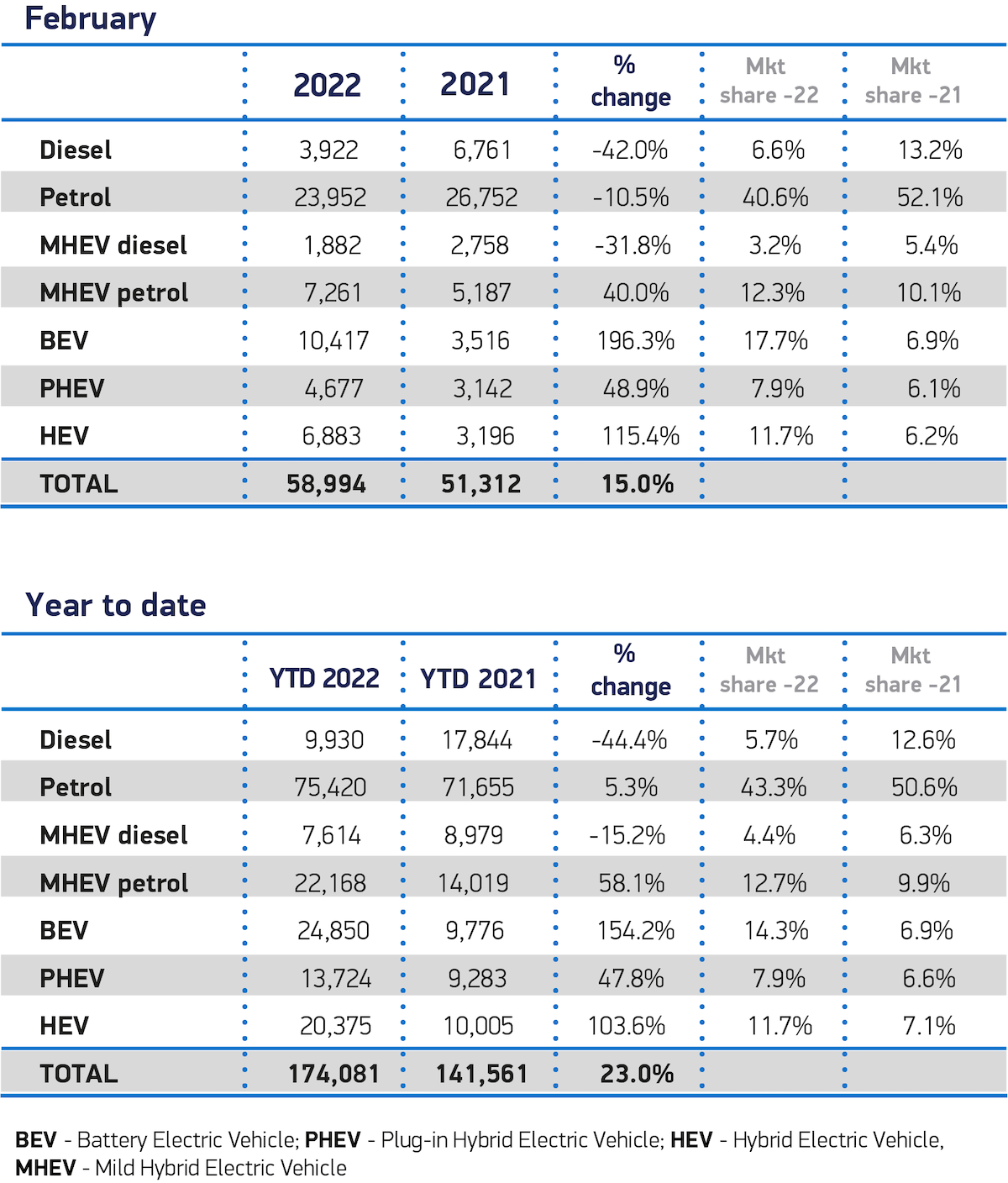
More than a quarter of all new cars registered in February were either fully electric or plug-in hybrids, helped by the arrived of Tesla’s new Model Y crossover, which took fourth place on the sales charts. In fact, nine of the top ten cars sold in February are available with some level of plug-in power.
It was another decent month for regular hybrids (the ones that can’t be plugged in), which all contributed to a reduction in market share for pure petrol cars, while diesel continues to wither at under 10% of total market share.
Source: SMMT
Good month, bad month
Although the overall market was up 15% compared to last February, there was a wide range of gains and losses across the board as car manufacturers battle to keep factories running.
BMW was the biggest-selling brand in February, while Vauxhall edged Ford for second place by just 19 cars. Kia and Toyota made up the top five. The Volkswagen Group brands all struggled, which is presumably a consequence of supply problems.
With February being such a ‘small’ month for the UK car industry, it doesn’t take many cars to create a fairly large swing either up or down. March’s results will be far more relevant to how they are all really doing.
Corsa back on top
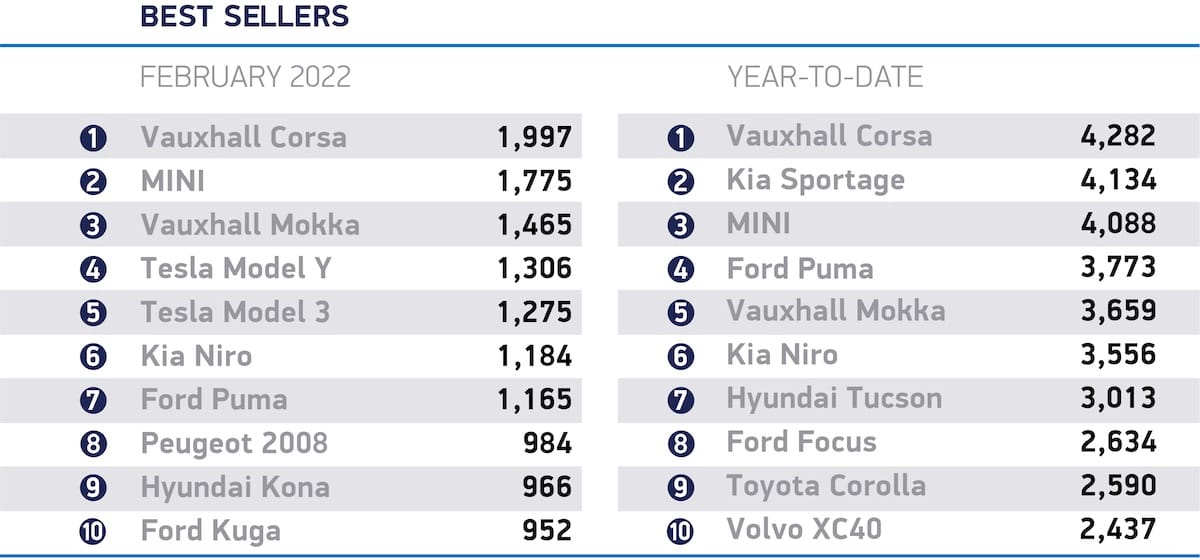
The Vauxhall Corsa returned to the top of the charts in February, which also gave it the overall year-to-date sales lead as last month’s top-seller, the Kia Sportage, fell back out of the top ten altogether.
It was a good month for Vauxhall as the new Mokka took third place, with Mini holding second in an ongoing renaissance for the ageing Mini hatch. Meanwhile, Tesla’s new Model Y crossover pipped its saloon sister, the Model 3, for fourth place.
In addition to the two Teslas, six other cars in the top ten are also available as electric models, while two are available as plug-in hybrids and only one (the Ford Puma) is not available with any form of plug-in power. If you’re wondering why that sounds like more than ten cars, it’s because the Kia Niro is available with both plug-in and fully electric power options.
Source: SMMT
The all-important March results are due to be published on Wednesday 6 April.
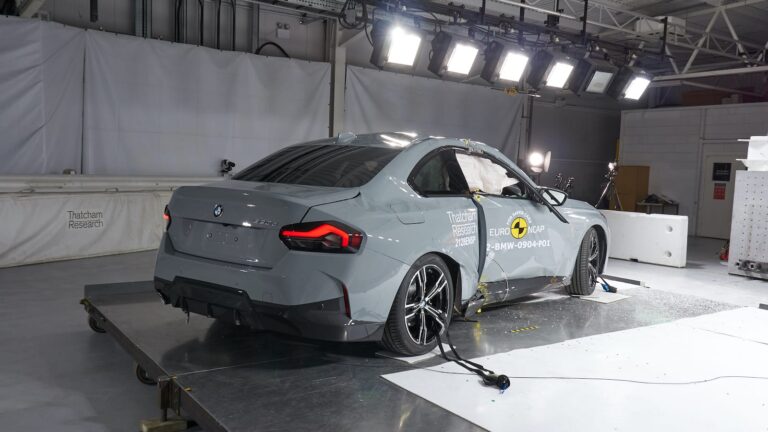
The all-new BMW 2 Series Coupé range has arrived in the UK, with prices starting from £35K.
Unlike the previous model that was based on the BMW 1 Series hatchback, the new 2 Series Coupé is based on the larger 3 Series saloon. This is because the 1 Series is now a front-wheel drive model, while the 2 Series Coupé remains a more sporting rear-wheel drive model. It is only available in M Sport specification in the UK.
It also means that, confusingly, the 2 Series Coupé is now an almost completely different vehicle to the similarly named 2 Series Gran Coupé (which is, to all intents and purposes, a 1 Series saloon) or the 2 Series Active Tourer (which is effectively a 1 Series MPV).
The 2022 BMW 2 Series Coupé is 10cm longer than the previous model, and also has a fraction more boot space. The 3 Series platform is wider and stiffer than the old 1 Series platform used by the previous 2 Series, but BMW has made the new coupé lighter by using aluminium for the bonnet, front side panels and some engine parts. The stiffer chassis is also claimed to help reduce body roll and increase grip through tight corners.
Styling-wise, the new 2 Series Coupé evolves the notchback look from the previous model, which also harks back to the acclaimed E30 3 Series coupé range from the 1980s. A pronounced bootlid spoiler gives a subtle nod to the legendary E30 M3, while 18-inch alloy wheels are fitted as standard with a 19-inch alloy option available.
Stepping inside, the interior layout and dashboard follows BMW’s current dashboard layout practice, although it’s not quite as minimalist as the new 2 Series Active Tourer and iX models. A ten-inch infotainment console juts out of the dash above the climate control functions, while an optional 12-inch digital instrument display sits behind the steering wheel.
As standard, each 2 Series Coupé model comes with a launch control feature, keyless entry, LED headlights and heated sports seats.
The new model also comes with a few new driving assistance features, borrowing tech from larger models in the BMW family. A front collision system that can brake automatically is fitted to entry-level models, as are front and rear parking sensors, a speed limiter and a lane departure warning system.
A ‘Driver Assistant’ package is available as an optional extra, which includes adaptive cruise control and a ‘Stop & Go’ function, which can bring the car to a standstill and set off again automatically without input. Another optional package, ‘Parking Assistant Plus’, adds a 360-degree parking camera.
Three trims are available in the new model range, consisting of the entry-level 220i, the diesel-powered 220d, and the range-topping M240i xDrive. The latter is four-wheel drive, and one of the most powerful coupés in its class, using a six-cylinder 3.0-litre engine to produce 374hp, a top speed of 155mph, and a 0-62mph sprint time of 4.3 seconds.
Model
Power
Torque
0-62mph time
Top speed
Fuel economy
On-the-road price
220i
184hp
300Nm
7.5 seconds
147mph
44.8mpg
£34,980
220d
190hp
400Nm
6.9 seconds
147mph
60.1mpg
£36,900
M240i
374hp
500Nm
4.3 seconds
155mph
34.9mpg
£45,795
By comparison, the standard 220i and 220d models use 2.0-litre engines to produce 184hp and 190hp respectively. The diesel variant also uses a 48V mild hybrid system, making it the most economical variant in the range at 60mpg.
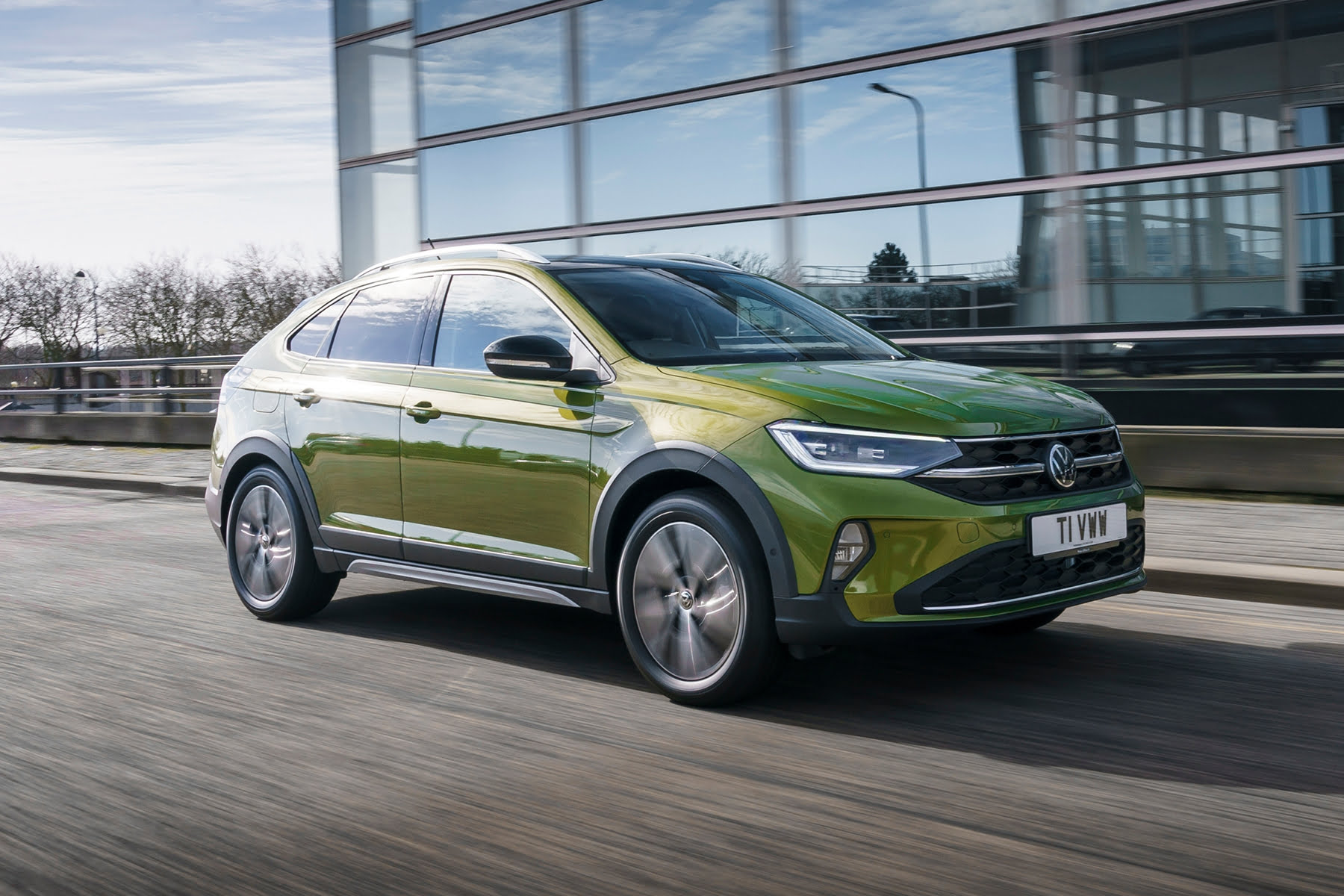
Arriving in the UK in early 2022, the Volkswagen Taigo is a compact coupé-SUV that sits between the slightly smaller T-Cross and the slightly larger T-Roc in the Volkswagen SUV family.
Essentially, the Tiago is a small five-door SUV but with a sloping roofline in the rear – like a coupé model. Before arriving in Europe, the Taigo was available on the South American market, known there as the Volkswagen Nivus.
With both manual and automatic transmission models available, the Taigo range consists of several turbocharged petrol engine options that are also found in the T-Cross range, starting with the entry-level 95hp 1.0-litre Taigo Life to the range-topping 150hp 1.5-litre Taigo R-Line.
“It’s a shame it’s not available with hybrid power”, Honest John comments. While most of the Taigo’s SUV competitors offer diesel, hybrid and plug-in hybrid options, the Taigo range is limited to just petrol models – to the disappointment of a few eco-conscious publications.
Like the closely-related Polo hatchback, the most prominent criticism levelled against the Volkswagen Taigo is that other alternatives offer more exciting driving dynamics, and that the coupé-SUV is more expensive than class leaders like the Ford Puma.
According to The Sun, this generous list of standard on-board tech means that the entry-level model is “all you need”. Despite the lack of choice, many publications also praise the engine quality of the Taigo, which Carbuyer calls “excellent”.
Many reviewers also state their surprise at how practical the Taigo is, even with the sloping roofline which restricts rear headroom, and many British reviews include plaudits for the coupé-SUV’s attractive exterior styling. As Parkers concludes, “it’s not at all difficult to recommend if you’ve fallen for the looks.”
As of February 2026, the Volkswagen Taigo holds a New CarExpert Rating of B, with a score of 65%. It gets good grades for its safety rating, low CO2 emissions and running costs. However, its media review scores are only average and Volkswagen’s new car warranty cover is poor.
Body style: Small coupé-SUV Engines: petrol Price: From £24,260 on-road
Launched: Spring 2022 Last updated: N/A Replacement due: TBA
Image gallery
Media reviews
Highlighted reviews and road tests from across the UK automotive media. Click any of the boxes to view.
Auto Express
Model reviewed: Range overview Score: 8 / 10 “The new Taigo coupe-SUV takes all that’s good about Volkswagen’s compact crossovers and wraps it up in a more attractive body.” Read review
Auto Trader
Model reviewed: Range overview Score: 7 / 10 “The Taigo is the seventh SUV in the Volkswagen line-up, and sits between the T-Cross and T-Roc, with a coupe-style sloping rear roof for extra style. The model comes in the same three trim levels as most of the VW range, plus a lot of customisation options.” Read review
Car
Model reviewed: Range overview Score: 8 / 10 “It’s barely any less practical than the T-Cross, not much more expensive, feels slightly plusher inside and has a little bit more extra equipment as standard. Of course, the sensible money would still be on the T-Cross, but if you like the Taigo’s looks and don’t mind paying a bit extra for them, it’s a thoroughly decent thing. Read review
Car Keys
Model reviewed: Range overview Score: 8 / 10 “With so many SUVs already in Volkswagen’s range, it was hard to see what the Taigo could bring that others already don’t. However, it’s certainly a welcome addition, with its stylish looks, strong engines and generous equipment really appealing.” Read review
Carbuyer
Model reviewed: Range overview Score: 8 / 10 “The VW Taigo is an economical small SUV that proves style does not have to come at the expense of practicality.” Read review
Heycar
Model reviewed: Taigo 1.0 DSG R-Line “Yet another very competent Volkswagen SUV that looks a bit more stylish than the Volkswagen T-Cross.” Read review
Honest John
Model reviewed: Range overview Score: 8 / 10 “An unexpected addition to Volkswagen’s range, the Taigo represents good value for money and is more stylish than the standard T-Cross. It”s generously equipped and comes with frugal petrol engines – although it’s a shame it’s not available with hybrid power.” Read review
Parkers
Model reviewed: Range overview Score: 7.6 / 10 “If we’re being sensible, the Taigo is a pricier and less practical T-Cross with a slightly flashier interior. However, it’s not that much more to buy and you certainly don’t lose out on much space. With that in mind, it’s not at all difficult to recommend if you’ve fallen for the looks.” Read review
The Sun
Model reviewed: Range overview “The cheapest version – called Life – is all you need. It comes with 8in screens, adaptive cruise control, wireless phone charging, reversing camera, electric folding and heated door mirrors, black roof rails and LED lights. This test car, the R-Line auto, has bigger alloys, bigger screens, individual drive modes and a bigger price tag, at £28k. You don’t need it.” Read review
The Telegraph
Model reviewed: Range overview Score: 8 / 10 “There are some very good cars in this supermini crossover sector, not the least of which are the Vauxhall Mokka, Ford Puma and Nissan Juke. The Taigo isn’t going to put big dents in their positions in terms of dynamics, but it will convince an audience keen on what they see as VW interior quality, dependability and effortless class.” Read review
Top Gear
Model reviewed: Range overview Score: 6 / 10 “The driving experience will be familiar to anyone that’s coming from a T-Cross or a Polo, although it’s not on the same level as something like the Ford Puma. It looks good and is well-priced, with drivetrains that wouldn’t put anyone off but won’t independently draw anyone in. There’s also good space inside for four adults despite the chopped roof.” Read review
Safety rating
Independent crash test and safety ratings from Euro NCAP
The Taigo is structurally identical to the Volkswagen Polo hatchback, and shares the same level of safety equipment. Therefore, Euro NCAP has used some of results of its crash test of the Volkswagen Polo to assess the Taigo, and conducted additional tests where structural differences might exist and to verify the performance of the Taigo against that of the Polo.
Eco rating
Independent economy and emissions ratings from Green NCAP
Clean Air Index: 7 / 10 Energy Efficiency Index: 5.2 / 10 Greenhouse Gas Index: 3.8 / 10
Reliability rating
Reliability data provided exclusively for The Car Expert by MotorEasy
No reliability rating
As of February 2026, we don’t have enough data on the Volkswagen Taigo to generate a reliability rating.
The Car Expert’s reliability information is provided exclusive from extended warranty data from our partner, MotorEasy. As soon as we have sufficient data on the Taigo, we’ll publish the score here.
Running cost rating
Monthly cost of ownership data provided exclusively for The Car Expert by Clear Vehicle Data
Fuel consumption
Average
Score
Petrol models
51 mpg
C
CO₂ output
Average
Score
Variation
Score
Petrol models
129 g/km
B
Insurance group
Average
Score
Variation
Score
All models
19
A
Service and maintenance
Cost
Score
Year 1
£155
A
Year 2
£442
A
Year 3
£728
B
Year 4
£963
B
Year 5
£1,304
B
Overall
£3,592
B
The Volkswagen Taigo is a pretty affordable car to own and run, according to whole-life cost numbers provided exclusively to The Car Expert by our data partner, Clear Vehicle Data.
Its average fuel consumption is excellent when compared to other petrol cars of this size, and its insurance premiums should be comparatively cheap too. In addition, its servicing and general maintenance costs over the first five years of ownership should be affordable.
Similar cars
If you’re looking at the Volkswagen Taigo, you might also be interested in these alternatives
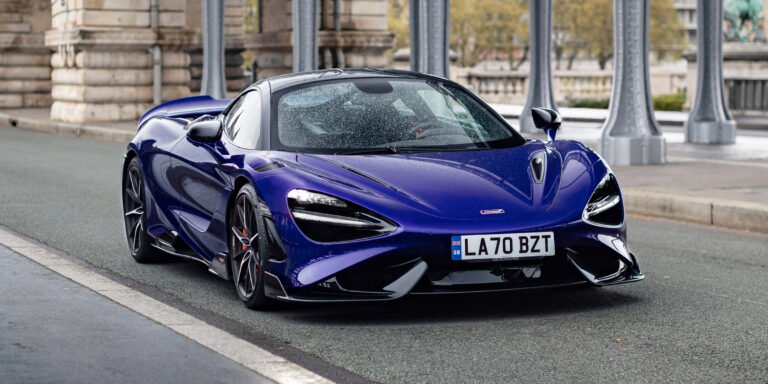
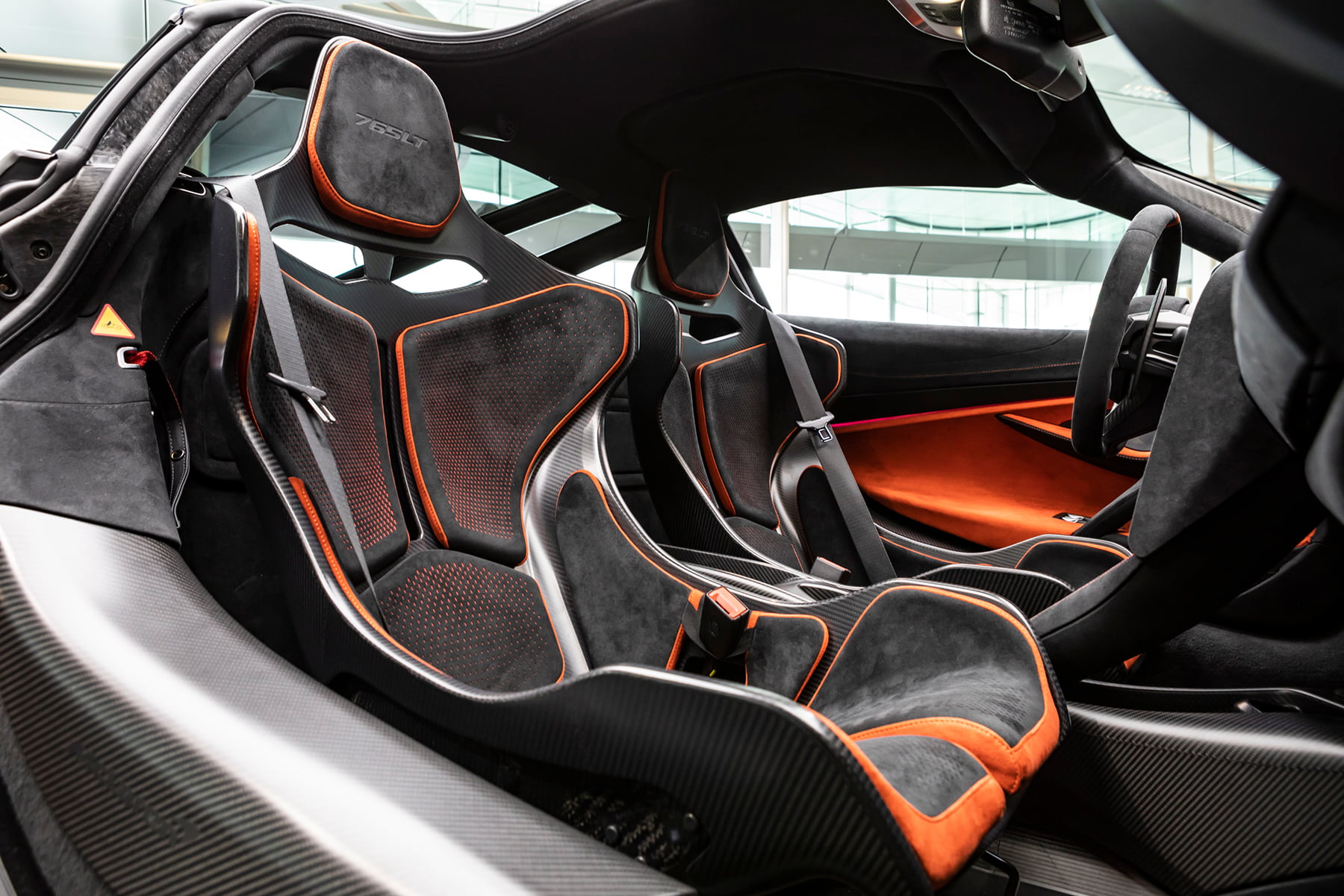
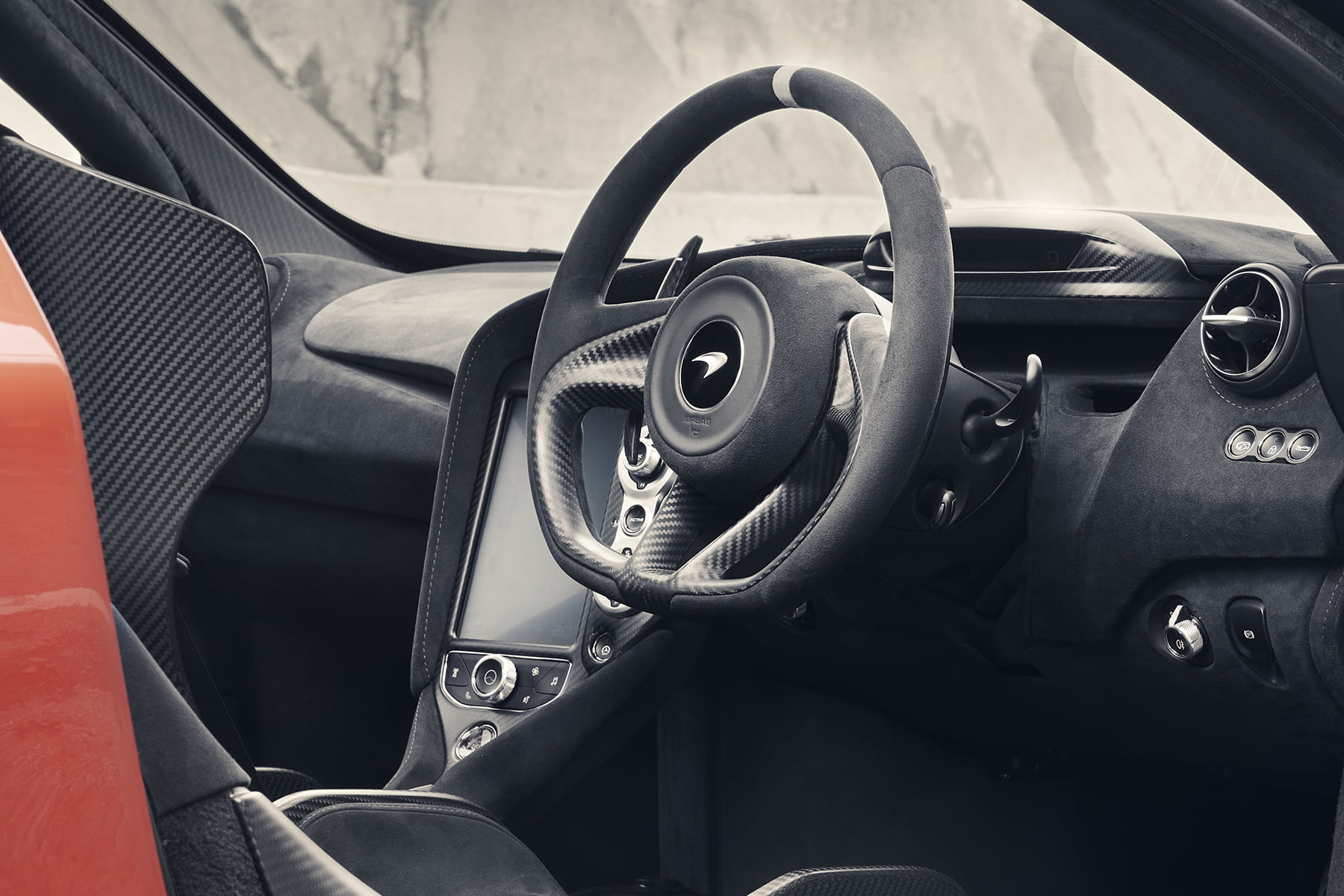
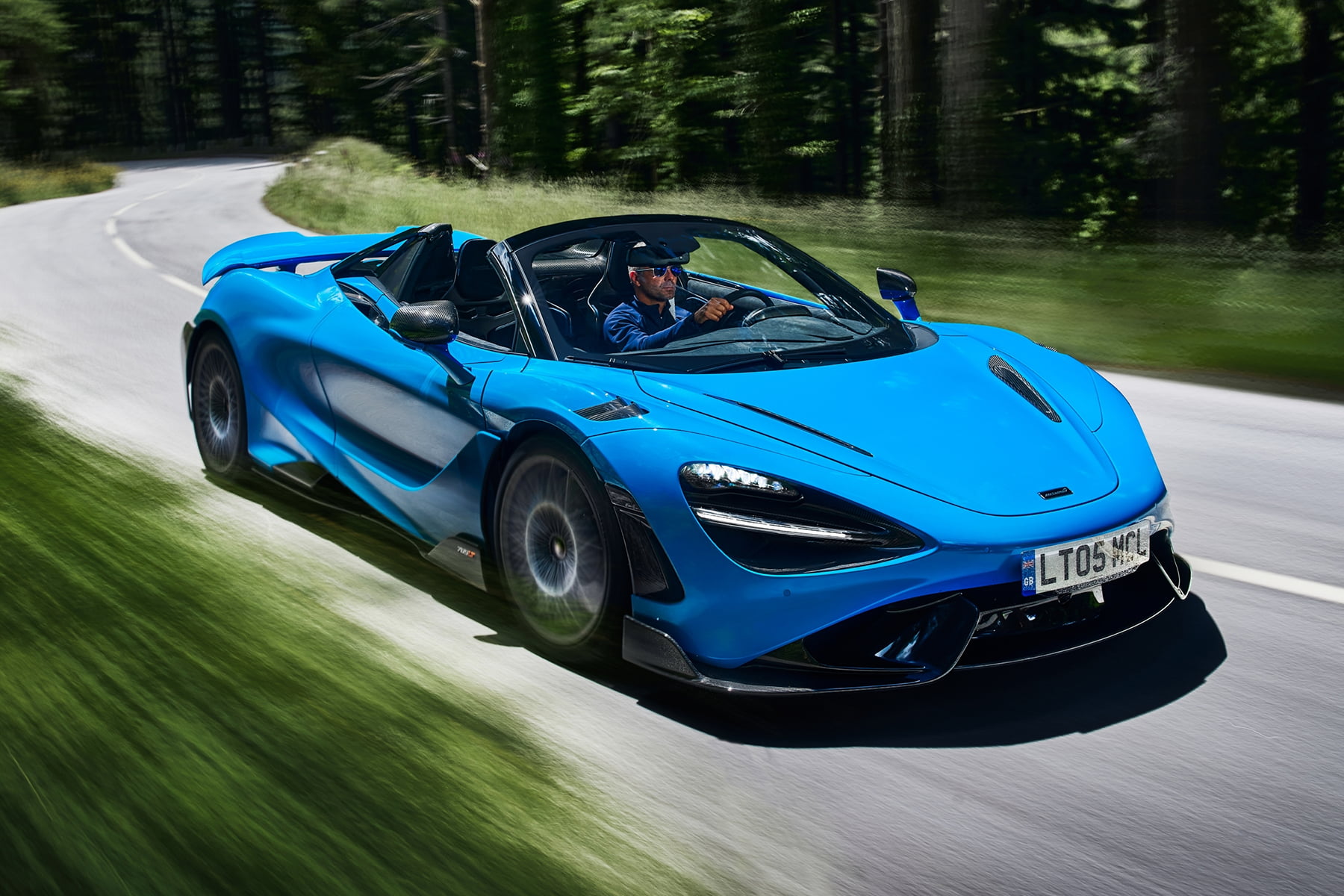
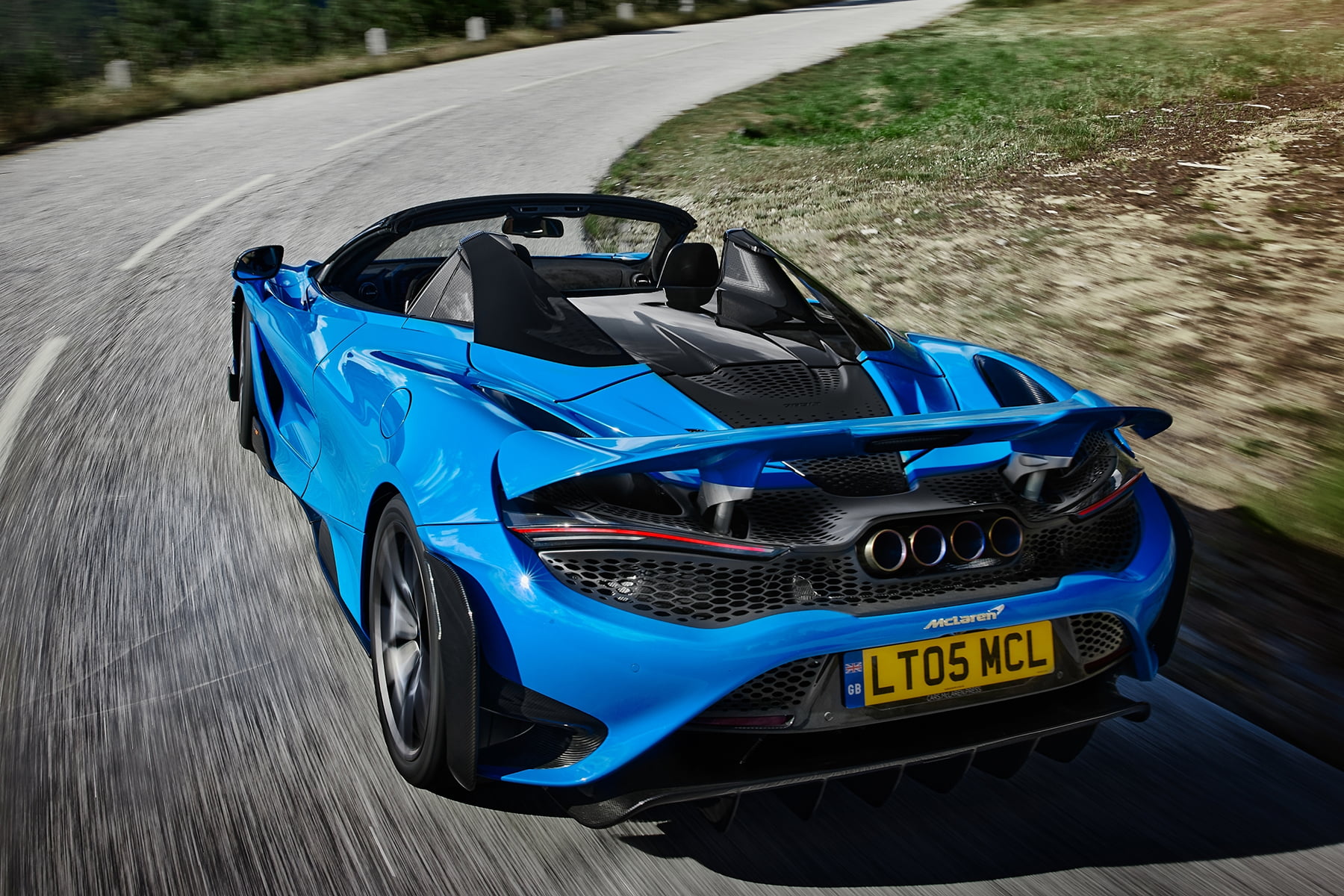
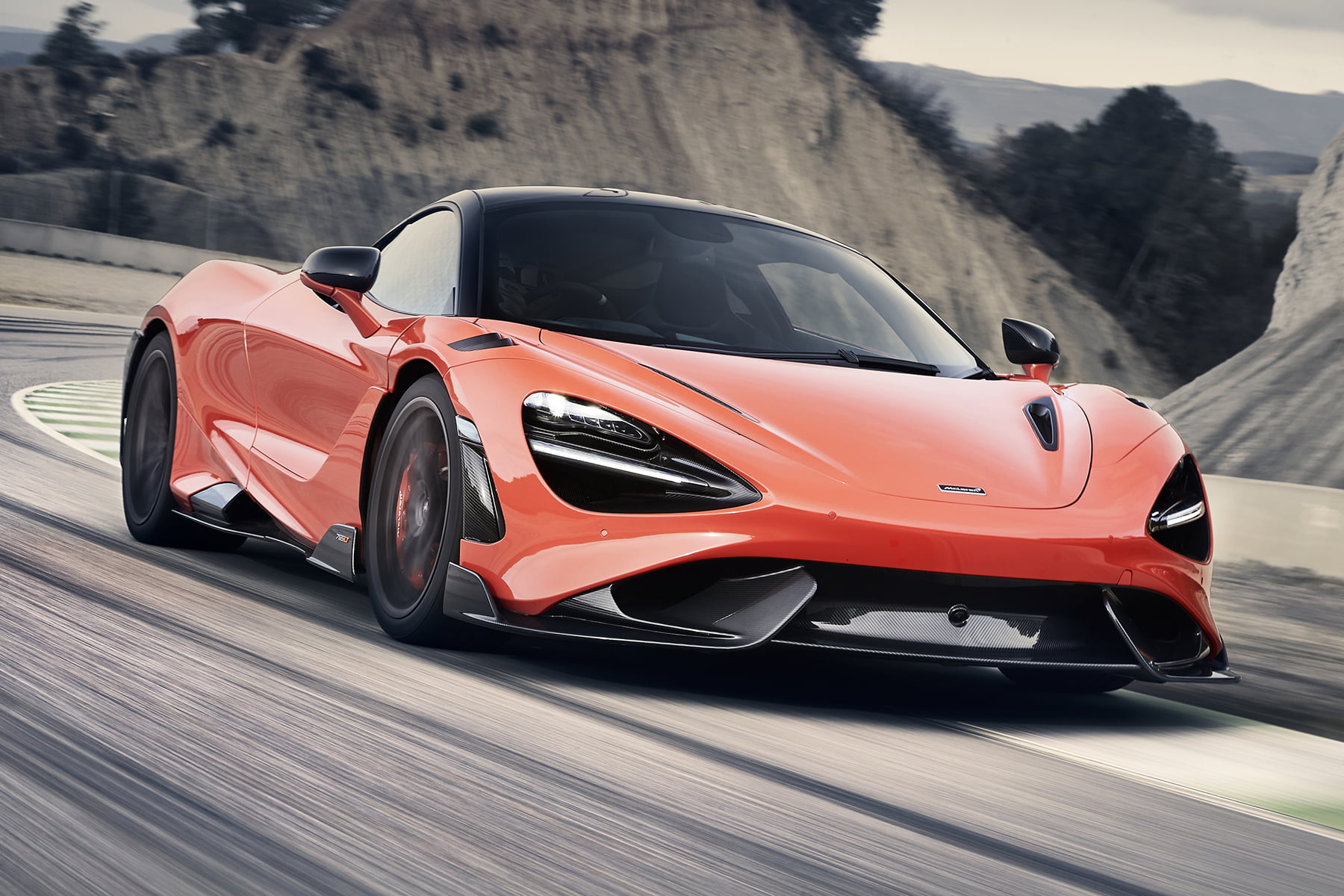
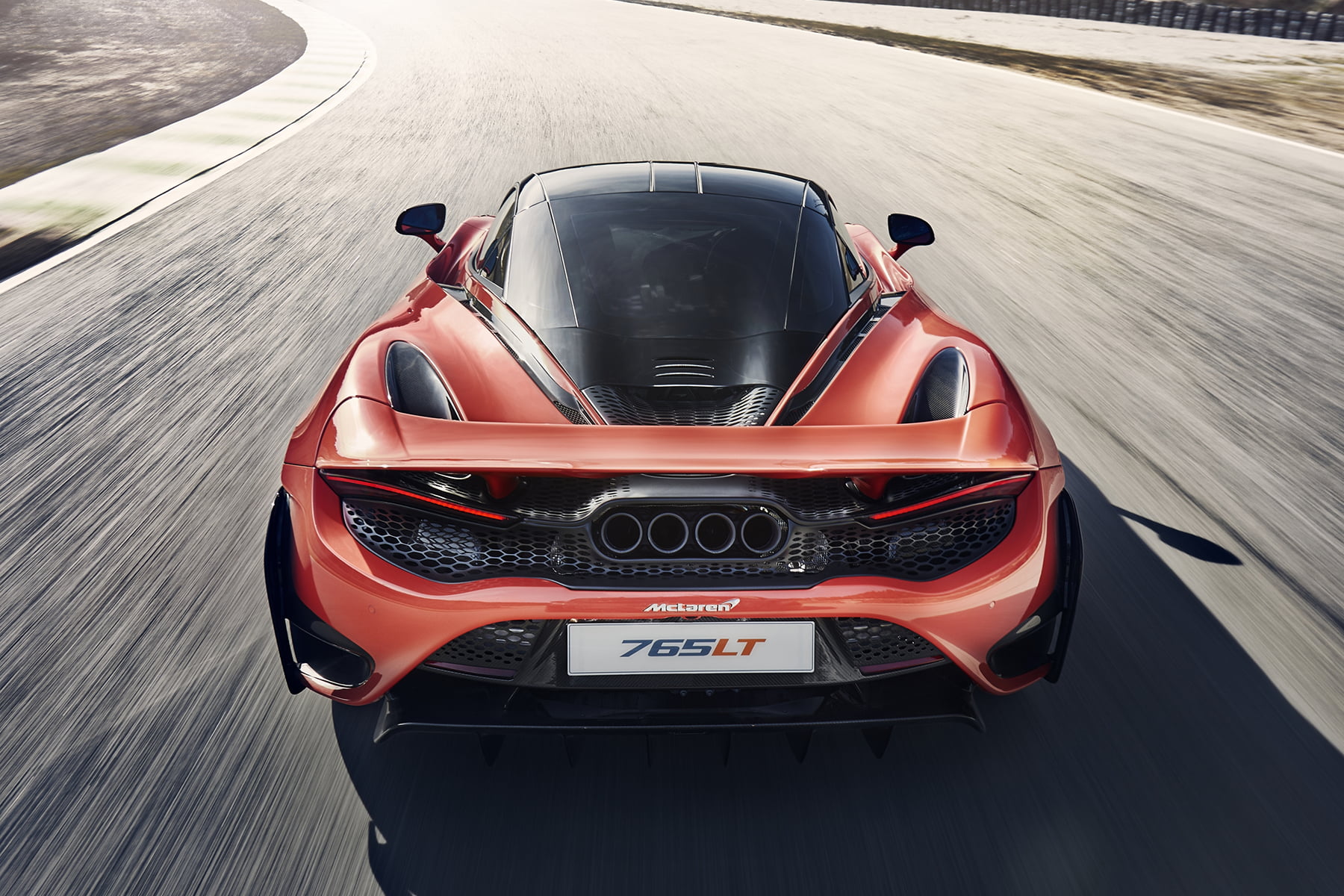
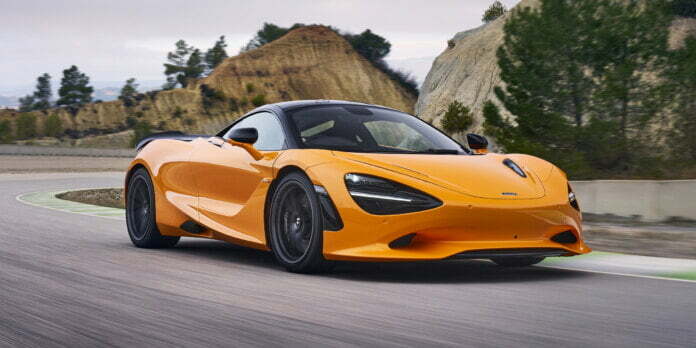
The Mclaren 765LT was a mid-engined supercar available as both a coupé and convertible (765LT Spider). A limited edition range, the 765LT was the fastest LT (Longtail) model that McLaren has ever produced.
With production limited to just 765 models, the 765LT was a variant of the McLaren 720S coupé that was fitted with some engine upgrades lifted from the track-focused McLaren Senna. Powering it was the most powerful McLaren road car engine ever made.
These upgrades, as well as aerodynamic improvements and a new chassis control system, meant that the McLaren 765LT’s 4.0-litre V8 produced 755hp of power, 45hp more than the 720S, culminating in a 0-62mph sprint time of 2.8 seconds. The 765LT was also 80kg lighter than the 720S, and came fitted with Pirelli Trofeo R race tyres as standard.
Across the British motoring media, the McLaren 765LT received unanimously positive reviews – Auto Trader called the coupé version “possibly the best supercar McLaren has ever made”, while Evo labelled the Spider convertible version “the ultimate open-top experience”.
Both the coupé and convertible models were highlighted for improving the 720S formula with increased pace and acceleration, as well as more responsive handling. A number of reviewers also commended the 765LT’s optional brake upgrades that were another component taken from the Senna.
Like the 720S, the 765LT received praise for its styling, and although the supercar was certainly expensive – the 765LT’s price tag could easily surpass £300,000 if you delved too far into the options list – some outlets praised the supercar for its pricing when compared to others in the McLaren range. As Auto Express explained: “The 765LT offers 75 to 80% of the Senna’s performance and feel for less than 40% of the price”.
With performance this powerful, however, some reviewers commented that the 765LT was not for the faint-hearted and could be hard to manage. “It is slightly jagged in its manners, and occasionally seems to be fighting against its driver rather than flattering them”, Top Gear concluded.
As of August 2025, the McLaren 765LT holds a Used CarExpert Rating of E, with a score of 54%. As with most supercars, this result comes from a combination of excellent media review scores and terrible running cost scores. Luckily for McLaren, its customers tend not to be too fussed about the latter…
Highlighted reviews and road tests from across the UK automotive media. Click any of the boxes to view.
Featured reviews
“McLaren’s stunning 765LT fulfils its brief by pushing supercars to the next level, delivering both on road and track – just make sure you have your wits about you.”
“The 765LT Spider could well be the best road car yet from McLaren’s modern back catalogue. It combines all the elements that make the 765LT Coupe such a powerhouse, then adds extra driver appeal and a brilliant new folding hard-top to form a package that’s hard to fault and very easy to be blown away by.”
Score: 10 / 10 “Between the 720S and the Senna, the McLaren 765LT feels skewed more towards the latter in its positioning. It offers 75 to 80% of the Senna’s performance and feel for less than 40% of the price. The performance in every area is astonishing, plus it has exclusivity on its side.” Read review
Auto Trader
Model reviewed: Coupé “The McLaren 765LT is a stunning car and really shows what McLaren is capable of. Tweaks to weight, stability and driving interactivity make this incredibly fun to drive. The 765LT really delivers and could be the best supercar McLaren have ever made.” Read review
Car
Model reviewed: Coupé Score: 8 / 10 “Perhaps it’s best not to look at the pantheon of McLaren LT cars and wonder where this one fits in, but to think of it fulfilling the needs of an existing 720S customer who wants more from their car both on road and on track. In this respect the 765LT feels like an instant winner.” Read review
Evo
Model reviewed: Spider Score: 10 / 10 “The new McLaren 765LT Spider absolutely delivers by refining the Coupe’s intense capability, creating the ultimate open-top experience.” Author: Steve Sutcliffe Read review
Parkers
Model reviewed: Coupe Score: 9.6 / 10 “The McLaren 765 LT is a seriously capable track machine that gets close to the pace offered by the more extreme Senna, but also promises the same level of engagement on your favourite road.” Read review
The Sunday Times
Model reviewed: Score: 9 / 10 “The McLaren 765 LT is a proper plaything for anyone with the time, money, skill and inclination.” Read review
Top Gear
Model reviewed: Coupe Score: 8 / 10 “The McLaren 765 LT is terrifically fast, looks fantastic, its focus on lightweighting is peerless, it feels connected and feeds back information very successfully, but is slightly jagged in its manners, occasionally seems to be fighting against its driver rather than flattering them.” Read review
Safety rating
InIndependent crash test and safety ratings from Euro NCAP
No safety rating
The McLaren 765LT was not crash tested by Euro NCAP during its production life.
Eco rating
Independent economy and emissions ratings from Green NCAP
No eco rating
The McLaren 765LT was not assessed by Green NCAP during its production life.
Running cost rating
Monthly cost of ownership data provided exclusively for The Car Expert by Clear Vehicle Data
Fuel consumption
Average
Score
Petrol models
23 mpg
E
CO₂ output
Average
Score
Variation
Score
Petrol models
280 g/km
E
Insurance group
Average
Score
Variation
Score
All models
50
F
The McLaren 765LT is a very expensive car to own and run, according to whole-life cost numbers provided exclusively to The Car Expert by our data partner, Clear Vehicle Data.
The car’s fuel economy of 23 mpg is one of the poorest fuel consumption stats in our Expert Rating Index, and insurance premiums are in the most expensive bracket too. All of this will come as absolutely no surprise to anyone in the fortunate position of being able to buy a McLaren 765LT.
Reliability rating
Reliability data provided exclusively for The Car Expert by MotorEasy
No reliability rating
As of August 2025, we don’t have enough reliability data on the McLaren 765LT to generate a reliability rating.
The Car Expert’s reliability information is provided exclusively to us using workshop and extended warranty data from our partner, MotorEasy, sourced from both official dealerships and independent workshops.
As soon as MotorEasy has sufficient data on the 765LT, we’ll publish the results here.
Warranty rating
New car warranty information for the McLaren 765LT
Overall rating
C
41%
New car warranty duration
3 years
New car warranty mileage
Unlimited miles
McLaren’s standard new car warranty is fairly basic, running for three years – albeit with no limit on mileage. McLaren does offer extended warranty options up until the car is 12 years old, but this is at extra cost.
Warranty on a used McLaren 765LT
If you are buying a ‘Qualified Pre-Owned’ 765LT from an official McLaren dealership, you will get a minimum 12-month warranty included.
If you are buying a used 765LT from an independent dealership, any warranty offered will vary and will probably be managed by a third-party warranty company.
If you are buying a used 765LT from a private seller, there are no warranty protections beyond any remaining portion of the original new car warranty.
If you’re looking to buy a used car that is approaching the end of its warranty period, a used car warranty is usually a worthwhile investment. Check out The Car Expert’s guide to the best used car warranty providers, which will probably be cheaper than a warranty sold by a dealer.
As of August 2025, we are not aware of any DVSA vehicle safety recalls affecting the McLaren 765LT. However, this information is updated very regularly so this may have changed.
You can check to see if your car has any outstanding recalls by visiting the DVLA website or contacting your local McLaren dealer.
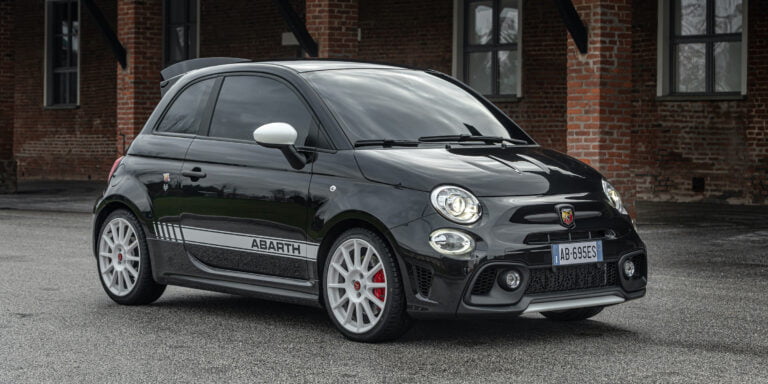
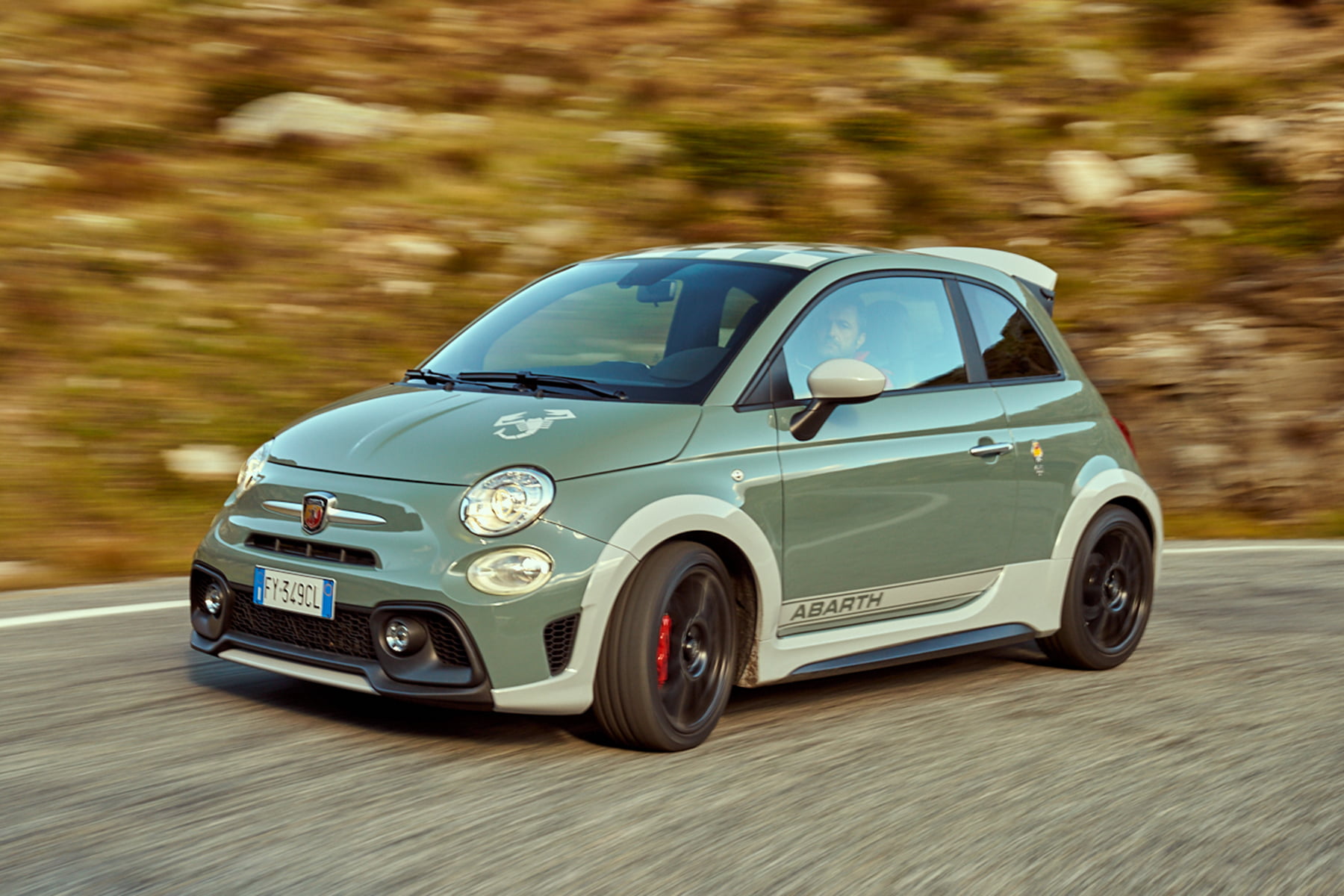
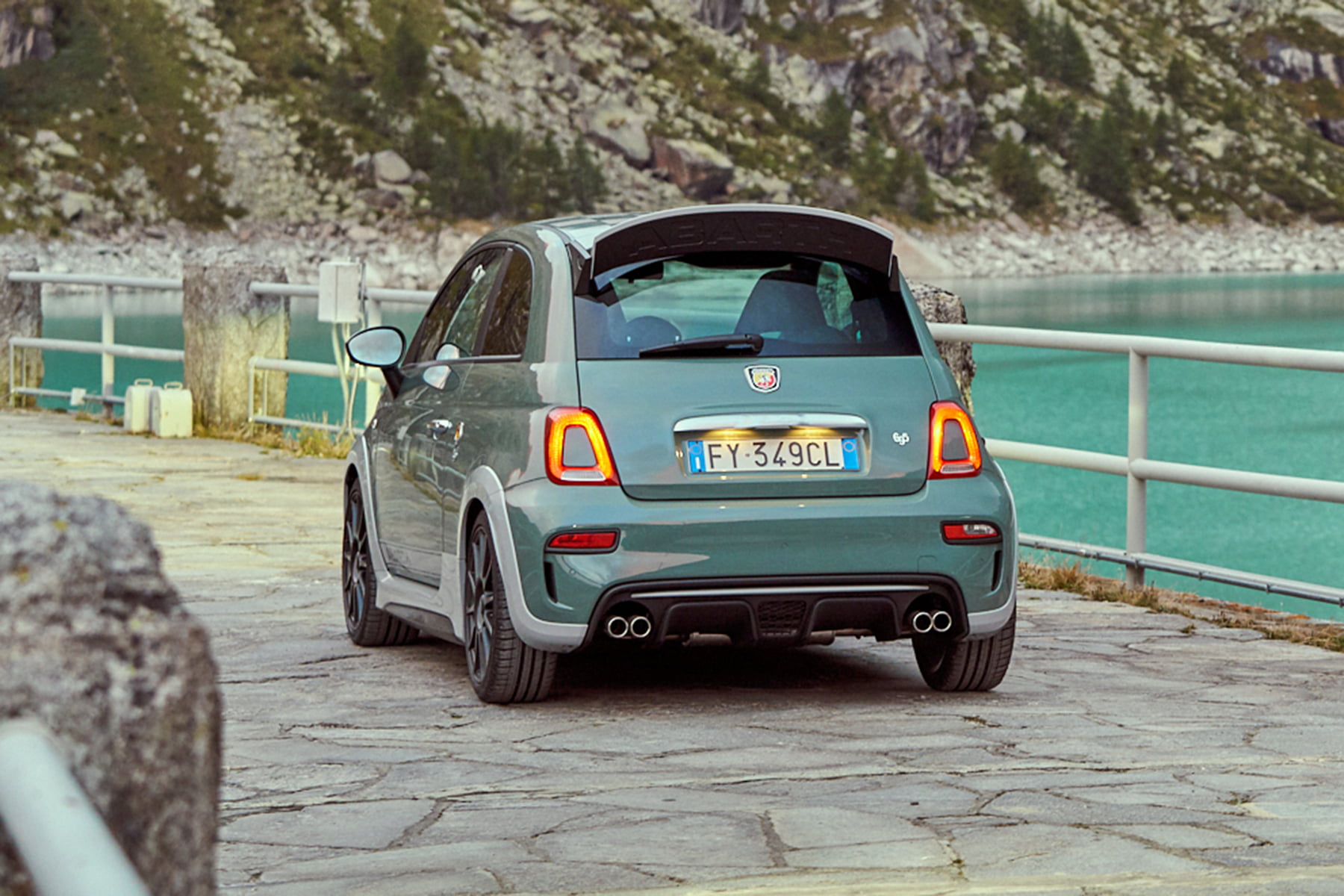
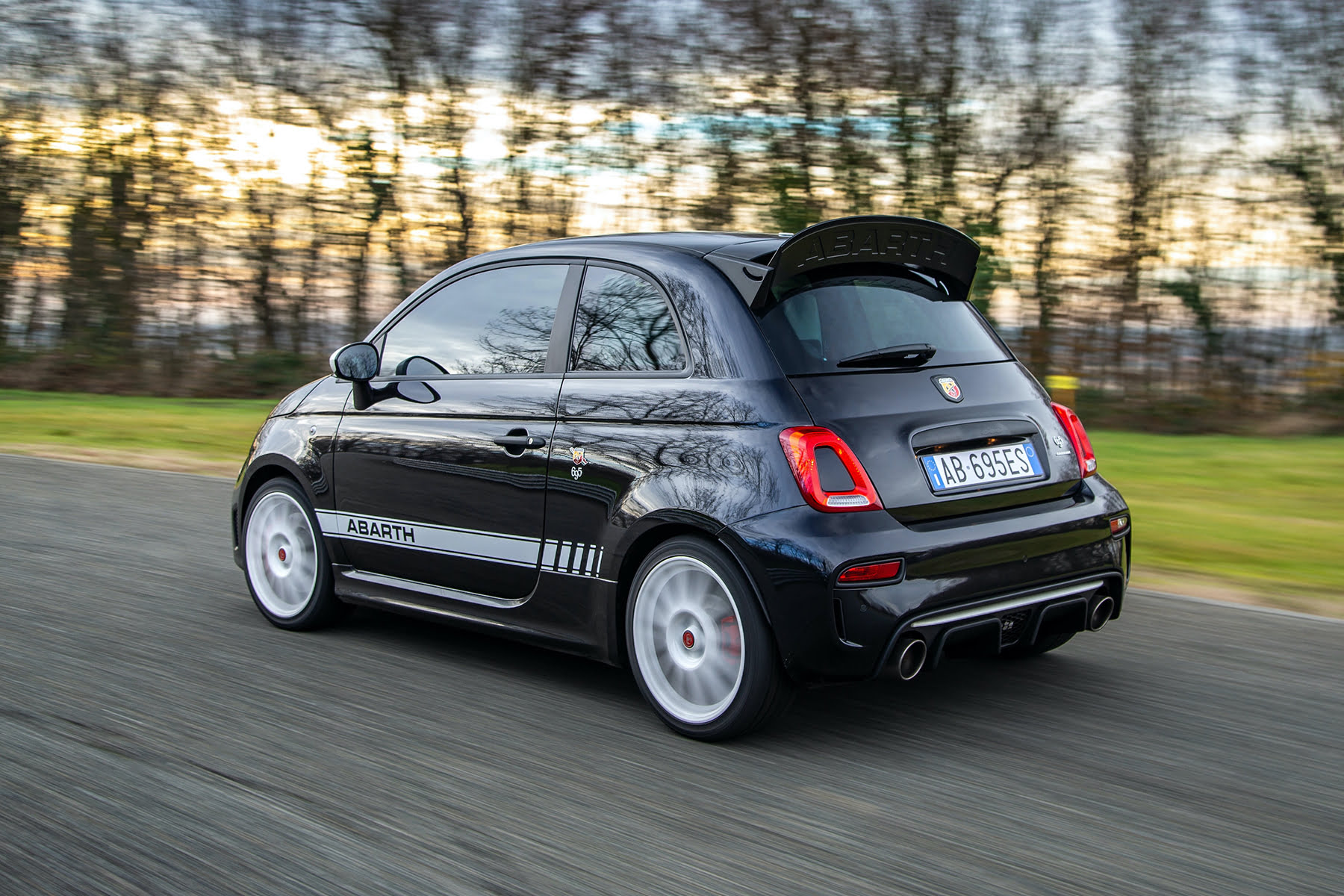
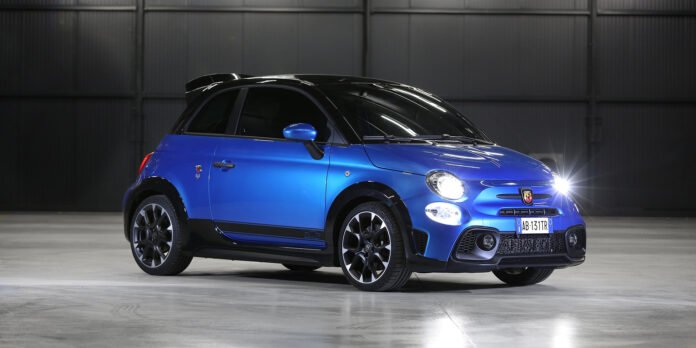
The Abarth 695 was a high-performance model based on the Fiat 500 city car. Over the standard 595 hot hatch range, each 695 model was ‘hand prepared’ by the Abarth team with upgrades to the bodywork, interior trim and performance.
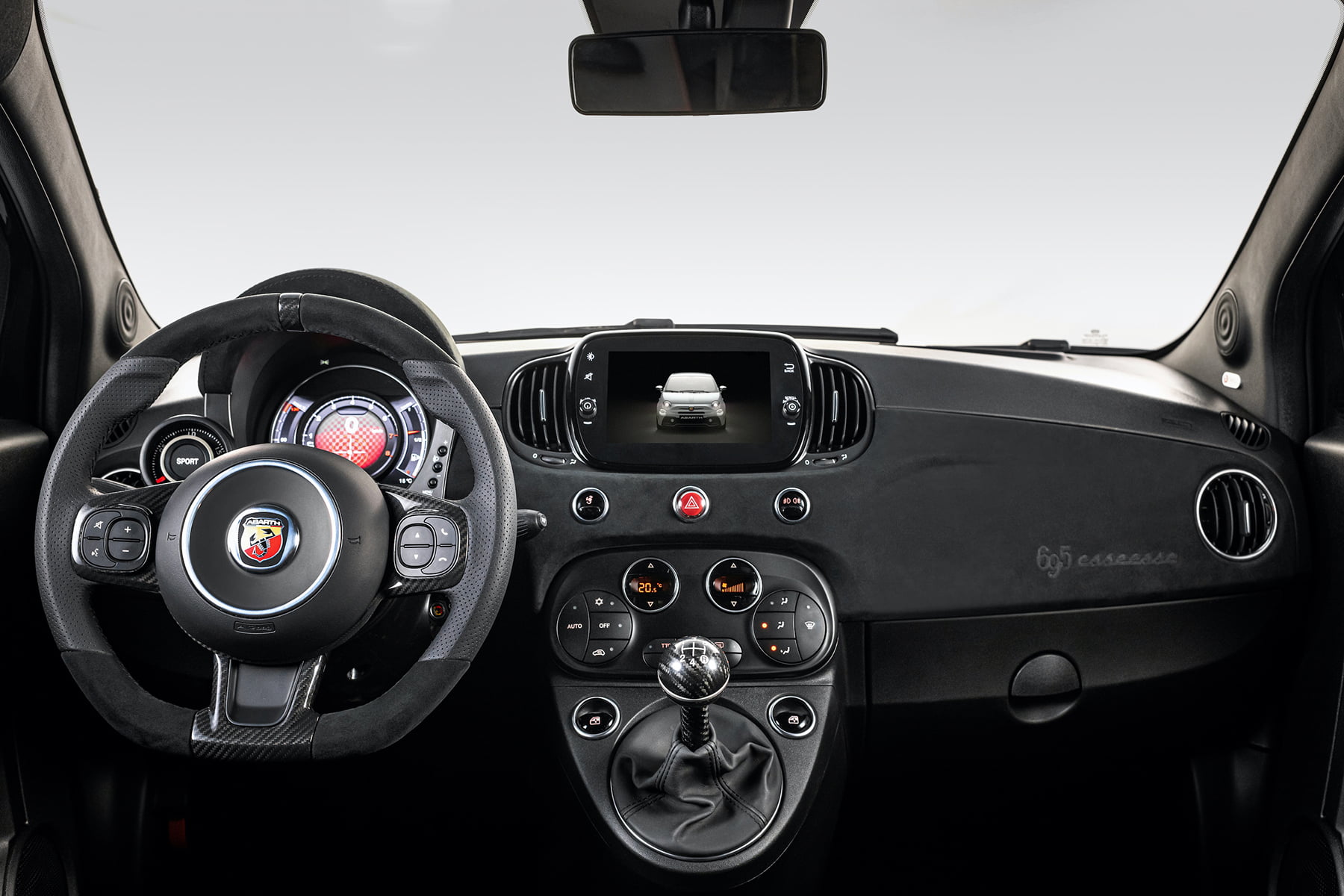
In recent years, the 695 range largely consisted of a regularly changing parade of limited-edition models, such as the track-focused 695 Biposto in 2016, the 695 Anniversario that launched in 2019 to mark Abarth’s 70th birthday, and the 695 Esseesse (pronounced ‘SS’) which arrived in 2021.
The petrol versions of the Abarth 500 (the 695 and 595) were very different to the new Abarth 500e electric model. The 500e is a completely different vehicle, meaning the Abarth 695 was the last of its kind.
The Abarth 695 used an upgraded version of the 595’s engine – a 1.4-litre turbocharged four-cylinder unit that produced 180hp and a top speed of 139mph. Beyond the styling tweaks unique to each limited run model, both the Anniversario and Esseesse featured an adjustable rear spoiler and custom exhaust systems.
The Abarth 695 received a mixed set of reviews from UK media outlets during its tenure, with scores ranging from below average to good. Many journalists were enthused by the arrival of the Biposto in 2016, highlighting the hot hatch for its bold exterior styling and punchy engine that Carwow said “sounds absolutely fantastic”.
That said, many reviewers concluded that the Biposto was uncomfortable on the road, lacked practical space and was expensive, especially considering it came without a stereo system.
Despite interior and infotainment upgrades added since, these issues still range true for subsequent limited editions. Concluding its review of the Anniversario, Auto Express labelled the 695 “exciting, characterful and flawed in equal measure”, commenting that while its looks and performance made the hot hatch “genuinely appealing”, the 695 was also “outdated and expensive”.
“The 695 Anniversario doesn’t really make sense”, Motoring Research commented. “The top-spec Ford Fiesta ST-3 is around £7,000 cheaper, and Abarth’s own 595 Esseesse, which has the same engine, costs £4,000 less.”
As of February 2026, the Abarth 695 holds a Used Car Expert Rating of E, with a score of just 44%. This score is one of the lowest in our Expert Rating Index of more than 600 cars and is even lower than the score given to the regular Abarth 595, which reflects the specialist niche that the 695 targets.
Highlighted reviews and road tests from across the UK automotive media. Click any of the boxes to view.
Featured reviews
“For many, the Abarth’s sheer sense of silly fun will get under their skin, and they’ll find it irresistible. We’d steer clear of the super-pricey Rivale, as there’s just as much fun to be had lower down the Abarth range.”
“The Abarth 695 is the sportiest version of the Abarth 595 hot hatch. It’s faster, firmer and more fun, but top-spec Biposto models are almost impossible to live with every day.”
Model reviewed: 70th Anniversario Score: 6 / 10 “The automotive world is a richer place thanks to cars like the Abarth 695 70th Anniversario special edition. Exciting, characterful and flawed in equal measure, it’s an expensive and outdated yet genuinely appealing hot hatchback.” Read review
Model reviewed: 695 Biposto Score: 6 / 10 “Fiat says the Abarth 695 Biposto is the world’s smallest supercar. It has the performance but price is right too.” Read review
Car
Model reviewed: 695 Biposto Record Score: 8 / 10 “Here’s the thing with the Abarth 695 Biposto Record: it’s very expensive for a car of its size, it’s impractical, noisy and uncomfortable – but I genuinely get it. It’s for folk used to those things.” Read review
Model reviewed: 695 Biposto Score: 6 / 10 “Undeniably striking with intermittently glorious detailing, the Abarth 695 Biposto is a halo car, and Fiat isn’t angling for an Abarth on every street corner. Which is just as well given the price tag. And good fun, sure – more notably in the dry.” Read review
Car Keys
Model reviewed: 695 Biposto Score: 6 / 10 “The ‘racing car for the road’ cliché is an oft-used one and hats off to Abarth for making a car which genuinely lives up to the billing, but we can’t help feel we’d have just as much fun in a Fiesta ST for half the price.” Read review
Carwow
Model reviewed: 695C convertible “For pure driving fun and silliness, the Abarth 695C is a small hot hatch with lots of character, but it’s quite expensive and isn’t practical.” Read review
Eurekar
Model reviewed: 695 Rivale “Floor the accelerator and the power keeps coming as you change up the gears, and although the continued urge doesn’t diminish, it feels quite linear after the initial kick in the back. The result is genuine enjoyment, with tremendous verve and brilliant response.” Read review
Evo
Model reviewed: 695 70th Anniversario “You might think all of that equipment is rather generous, but a glance at its £29,695 price tag quickly extinguishes that thought.” Read review
Heycar
Model reviewed: Score: 6 / 10 “Fiat describes the Abarth 695 as a track car that can be used on the road – but does it deliver? Well, on paper the answer has to be yes. Performance is keen with 0-62mph taking less than 6.0 seconds, while the car tips the scales at less than a tonne.” Read review
Honest John
Model reviewed: 695 Biposto “It’s bonkers, tremendous fun and comes with a stick-on grin as standard. But even with all those racing touches, it’s still a £50k small car.” Read review
Motoring Research
Model reviewed: 595 and 695 range overview Score: 6 / 10 “In isolation, there’s much to like about the Abarth 595 and 695. They look great and are fun to chuck about… but are also pricey and old.” Read review
Model reviewed: 695 70th Anniversario “Spending £29,695 on the 695 70th Anniversario doesn’t really make sense. But as a surefire future classic that will impress the Abarthisti – and humiliate some bigger and (even) more expensive cars into the bargain – it has its place.” Read review
Parkers
Model reviewed: 695 Esseesse “Yes, the rear seats and boot are cramped, the handling is likely to lack the finesse of better hot hatch rivals and it’s still a considerable chunk more expensive than the simply excellent Ford Fiesta ST, but if you’re looking at a limited Abarth, these things aren’t likely to matter too much anyway.” Read review
The Sun
Model reviewed: 695C Rivale Cabriolet “Abarth 695C Rivale is a fashion statement with race-tuned suspension and metallic pedals” Read review
The Sunday Times
Model reviewed: 695C Rivale “So bouncy I daren’t break the speed limit” (Jeremy Clarkson) Read review
Model reviewed: 695 Biposto Record Score: 6 / 10 “What we can probably state without fear of contradiction, though, is that an Abarth 695 Biposto Record won’t be your main car. It probably won’t even be your main supercar. But it will definitely be your smallest supercar and the only one that shares the innocent charm of the Fiat 500.” Read review
Top Gear
Model reviewed: 695C Rivale Cabriolet Score: 5 / 10 “This isn’t a car that for people who enjoy the pesky handling of a Fiesta ST or the fine damping of a Clio RS, either. It’ll be pootled around Monaco, as well-matched to the yacht it’s parked beside as the driver’s chinos and moccasins. In that sort of role, there’s something charmingly gawky about it.” Read review
Model reviewed: 695 Biposto Record “This is another in a quite long line of plumply priced Abarth special editions which, by all objective measures, make very little sense indeed. But the fact they’re still being produced is testament to the appetite of their target audience.” Read review
Safety rating
Independent crash test and safety ratings from Euro NCAP
Note on safety rating The Abarth 695’s safety rating is assessed on the regular Fiat 500 model range, upon which the Abarth 695 is based.
The Fiat 500 was crash tested by Euro NCAP back in 2017 and awarded a sub-par three-star rating. However, this rating expired in January 2024 and is no longer valid as the car no longer meets the standards required for such a rating. This is normal practice, as Euro NCAP reviews its ratings on most cars annually with most ratings expiring after about six or seven years.
Although the rating has now expired, the score is still useful if you are comparing a used Abarth 695 to vehicles of similar age – whose ratings will have probably also expired.
Eco rating
Independent economy and emissions ratings from Green NCAP
No eco rating
The Abarth 695 was not assessed by Green NCAP during its production life.
Reliability rating
Reliability data provided exclusively for The Car Expert by MotorEasy
Total claims: 22 Average repair cost: £860.08 Last updated: April 2025
As of April 2025 (our most recent data point), the Abarth 500 family (including both the 595 and 695) has a poore reliability score of just 36%, according to reliability data provided exclusively to us using workshop and extended warranty data from our partner, MotorEasy, sourced from both official dealerships and independent workshops.
It should be noted that the scores above are based on a relatively small number of vehicles to date, however the overall data is quite similar to the regular Fiat 500 range so it can be taken with a reasonable degree of confidence.
Engine repairs have been notably more expensive than other areas for the 695 to date, with an average bill of about £2,200, so make sure any used car warranty you purchase covers that.
Running cost rating
Monthly cost of ownership data provided exclusively for The Car Expert by Clear Vehicle Data
Fuel consumption
Average
Score
Petrol models
39 mpg
D
CO₂ output
Average
Score
Variation
Score
Petrol models
158 g/km
C
Insurance group
Average
Score
Variation
Score
All models
28
C
Service and maintenance
Cost
Score
Year 1
£200
B
Year 2
£534
C
Year 3
£871
C
Year 4
£1,071
B
Year 5
£1,439
C
Overall
£4,115
B
The Abarth 695 has a mixed bag when it comes to running costs, according to whole-life cost numbers provided exclusively to The Car Expert by our data partner, Clear Vehicle Data.
The hatchback’s insurance premiums are about average when compared to the rest of the market, while servicing and maintenance costs are excellent over the course of five years of ownership.
Fuel consumption, however, isn’t great, which drags down the 695’s running cost score as it’s the biggest recurring cost item of most cars.
Date: September 2022 Model types: All Build dates: 03/202 Number of vehicles affected: 1 Defect: Vehicles may have been produced with ineffective/incorrect tightening of a lock nut on the steering gear rod. Remedy: Check for the correct tightening of the lock nut and check/adjust wheel alignment if tightening was required.
Date: February 2021 Model types: All Build dates: 03/2020 to 07/2020 Number of vehicles affected: 30 Defect: The “Sport” mode system may not be set correctly and therefore may not comply with type approval requirements. Remedy: The proxi file must be updated to solve the non conformity.
Date: September 2016 Model types: All Build dates: 12/2015 to 06/2016 Number of vehicles affected: 1,045 Defect: The seat may not remain in position when subjected to greater than normal driving forces such as those involved in an impact. This may possibly cause injury to the driver/passenger seated in the right hand front seat. The right hand front seat guides may not conform to design specification and installation specifications. Remedy: Recall the vehicles that are likely to be affected and check the installation of the original seat guide. If it does not conform replace the seat cushion structure (guide).
As of September 2024 (our most recent data point), there have been three DVSA vehicle safety recalls on the current Abarth 500 range (including both the 595 and 695). These cover steering, seat belt and software issues.
Not all vehicles are affected by recalls. You can check to see if your car is included in any of the above recalls by visiting the DVLA website or contacting your local Abarth dealer.
If your car is affected by a recall, the vehicle must be repaired and you should not be charged for any work required. If you are buying a used 595, you should insist that any outstanding recall work is completed before you take delivery of the vehicle.
Similar cars
If you’re looking at the Abarth 695, you might also be interested in these alternatives
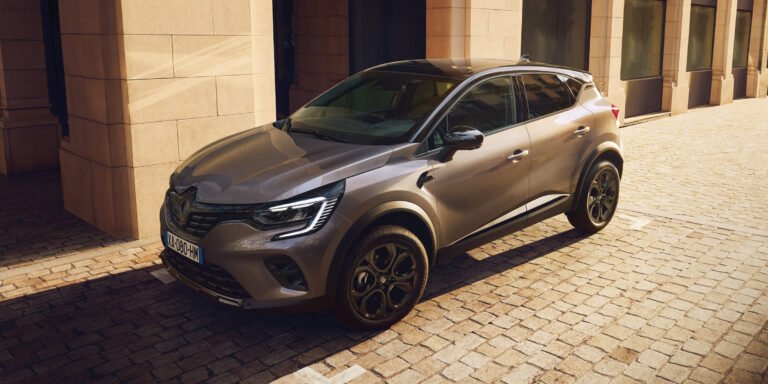
Called ‘Rive Gauche’, Renault has added a new limited-edition trim its Captur compact SUV, which features some blackout design touches and additional kit bundled into the package.
With a French name that translates to ‘left bank’, Renault says that the Rive Gauche trim is named after the River Seine in Paris, and only 800 models will be sold in the UK.
Available with a choice of four different metallic colour schemes, the exterior design of the Renault Captur Rive Gauche adds a gloss black finish to the roof and wing mirrors, as well black air intakes, body cladding and badging. There are also diamond-cut 18-inch alloy wheels and LED headlights.
Inside, the same dark colour scheme can be found on the leather upholstery and dashboard trim. The spec is based on the range-topping ‘R.S Line’ trim, but also adds a few extras including a larger nine-inch infotainment screen, a wireless smartphone charging pad, height-adjustable front seats and an auto-dimming rear-view mirror.
As for engine options, the Captur Rive Gauche is available with two powertrain options from the wider Captur range – a 90hp petrol engine and a 145hp petrol-hybrid engine. There is no plug-in hybrid option available.
The Rive Gauche is now available to order in the UK with prices starting from £24.5K for the petrol model, and £28.5K for the hybrid.
Since the Renault Captur’s UK arrival three years ago, the compact SUV has received praise for its practicality, stylish interior and competitive pricing. However, it has been criticised for an underwhelming driving experience, underperforming engines and interior build quality.
The launch of the Rive Gauche trim is unlikely to change the UK media’s opinion of the Captur – the SUV currently holding an Expert Rating of 66%, which is reasonable for the small SUV sector but well off the pace of the class-leasing Ford Puma.
UK consumers wanting to buy new cars could be facing even longer waits due to the Ukraine crisis.
Shortages and higher prices of essential raw materials needed on production lines caused by the invasion ordered by Russian president Vladimir Putin are likely to add further delays to car production, already hit by the global shortage of semi-conductor chips.
Ukraine is a prime exporter of neon gas, which is an essential part of the production process of the chips used extensively in new cars. Automotive production has already been badly affected over the past year by the microchip shortage, caused by manufacturers in the Far East closing their factories during the Covid pandemic.
Russia is also the world’s third-largest producer of nickel, used in the lithium-ion batteries of electric cars, while around one fifth of the palladium used by the German automotive industry to make catalytic convertors also comes from Russia.
Meanwhile several European manufacturers building cars sold in the UK, including BMW, Renault and Volkswagen, are already suffering production delays and suspensions due to Ukrainian component manufacturers being unable to maintain supplies.
VDA, the German automakers association, warned that the invasion, and the sanctions imposed on Russia as a result, would leave the car industry facing long-term shortages and higher prices of raw materials. According to statistics specialist GlobalData, nickel prices have increased by 21% since the end of 2021.
New figures from the Society of Motor Manufacturers & Traders (SMMT) showed that UK car production numbered just 859,575 vehicles in 2021, the lowest number since 1958, and even before the invasion of Ukraine the chip crisis was expected to continue for some time – on 23rd February, Mini was forced to again suspend production at its Oxford factory for several days due to a lack of chips.
Car dealers have been facing increasingly angry customers as their chosen models were either delayed by as much as six months, had options removed or were even removed from sale.
Suzuki GB director Dale Wyatt told The Car Expert that deliveries had been badly affected by the chip shortage; “we’ve been running at around 50% of normal production capacity and we are very concerned at potential further delays caused by the Ukraine crisis,” he said.
However, he added that dealers had reported that generally customers were being very understanding of the issues. “We’ve been trying to keep them as informed of the situation as possible and that has helped – I think what really irritates customers is voids of silence.”
The new delays could also have repercussions for Government-led programmes to encourage the switch to electric cars (EVs). The UK Government plans to ban all sales of non-electric new cars by 2030, by which time Germany plans to have 15 million EVs on its roads. But GlobalData predicts that the ongoing shortages and price rises could make it very difficult for manufacturers to produce enough cars at competitive prices to hit such targets.
If you’re thinking of buying a used car right now, you’re not alone. Supply issues for new cars, plus a post-pandemic kick-start of the second-hand market means that thousands of drivers are looking for quality used models.
It’s pushing the price up of previously-owned vehicles, but that doesn’t seem to be stopping prospective buyers. Only 18% of car transactions currently going ahead are for brand new examples, which means that around four out of every five cars bought in the UK at the moment are used.
Buying used can be a good idea, but purchasing any car is not just a one-off payment – it’s a long-term investment. Just buying the vehicle itself is a hefty expense, but there are several other costs that will have to be factored in.
Getting a well-maintained two- or three-year old model can save you thousands of pounds compared with the equivalent new car. But it can be risky if you don’t carry out the correct checks first to ensure you know exactly what you are buying and are therefore not taking the chance and ending up with a ‘dodgy motor’ that can turn into a money-trap.
So, before you set yourself a budget for your new, used car, dial in some extras that will cost a few pounds now but could, in some cases, save you a fortune in the long run.
Here are six things that we at The Car Expert think you should include in your used car buying process and financial plan.
1. Car history check
Industry reports, including one from the RAC motoring organisation, show that half of all cars available for sale second hand, have some form of “hidden history”. Usually this is as simple as a number plate change, but it may mean that the car was previously written off in an accident, had the mileage illegally rolled back or still has outstanding debt to a finance company.
A car history check will scan through all of these features and more for the car you’re thinking of buying. All you need is the registration number or VIN (vehicle identification number). If the seller seems reluctant to give you either of these, be suspicious.
Many companies and motoring organisations offer car history checks; some even for free, although these would be a very basic process. Prices vary but expect to pay anything from £6 to £15, depending on the level of investigation you require.
Many used cars will come with some sort of warranty to cover parts for a short period of time, especially if you’re buying from a dealer or specialist sales company. But if you’ve spent hard-saved cash on a decent car you should be thinking about buying a used car warranty once any guarantee has run out.
A used warranty covers you for parts and labour repair costs if your car fails dramatically. Policies vary greatly and each has its own ‘small print’ limits on vehicle age, mileage and the total amount of payout, so it’s worth looking carefully at what’s on offer before signing up to anything.
Deciding whether to buy a warranty is a valid consideration for any used car buyer. Not everyone will need one: some drivers have mechanical knowledge and an adequate toolbox, while others might have ready access to parts.
But for most people the question is: do I want some financial support behind me if my car suddenly needs an expensive fix? Allowing for a few years of warranty cover in your used car budget is certainly worth considering, given the peace of mind it brings. Cover can start from £10, but each case is different and you can build a policy to suit your circumstances.
New cars usually come with at least a year’s roadside assistance and recovery as part of the manufacturer’s offer. Used cars do not. Additionally, they will have covered several thousand miles and might have parts that are starting to wear out and so are more likely to break down at the roadside than a brand new model.
So recovery is another service that is worth considering and adding into your used car buying budget. If you travel far from your home or are likely to be on the road a lot in your new, used car, assistance of this kind can be vital. Nobody wants to end up stranded on a hard shoulder, country road layby or at the side of the road in an unfamiliar town.
There are plenty of roadside rescue companies to choose from, as we have highlighted here at The Car Expert. Most providers charge an annual subscription for cover and almost all offers a full range of options, from basic roadside repairs right up to rescue throughout Europe.
You can include recovery of your vehicle to your home, and there are even home-start options if your car has issues before you even set off. Prices start from £30 for basic assistance and you’re likely to be looking at £50-£60 for a more comprehensive ‘recovery to home’ policy.
You’re going to be paying good money for your imminent used car so why not look after your investment as much as you can by giving it regular servicing and maintenance? Most modern cars will only need a service once a year, so it should be straightforward to budget for that.
Having your car regularly professionally checked and keeping the service record book up to date and fully stamped by a garage or dealership will not only reduce the chances of something failing on the car, it also increases your safety with important components being checked, and maintains its value too – a car with an FSH (full service history) is more attractive to buyers when you come to sell on.
It’s possible to sign up to a service plan. Many franchised dealers will be happy to offer you one to buy while you’re sorting out a deal for your car. Alternatively you can go back and arrange a service plan later. With prices in the £20 to £30 a month region, it’s a good way to budget for your pride and a joy’s future maintenance and well-being.
Keeping your car in good condition for the road is not just a good idea, it’s the law. You’re not allowed to drive around with a badly cracked windscreen or worn out tyres.
You have to get those things fixed, so a maintenance budget in place as soon as you get your new car, is a good idea. And make sure the car you’re buying is in good condition in the first place, with plenty of miles left in the tyres, exhaust and battery.
The higher the CO2 emissions a car produces, the higher its vehicle road tax will be, so opting for a low emissions car will help your budget. Work out what you can afford before falling in love with a 5.0-litre V8 gas-guzzler.
Likewise, insurance costs vary greatly. Everyone’s insurance premium is different because they are worked out according to the car being insured, the driver’s age and experience and other factors such as where you live and your driving record.
An expensive high performance car is going to cost a lot more to insure than a sensible town runabout, so bear this in mind before agreeing to buy any vehicle.
* The Car Expert has commercial partnerships with ALA Iinsurance, Car Guide, CarVertical, Motoreasy, Warranty Direct and Warrantywise. Should you decide to use their services, or if you sign an agreement with any of these companies, we may receive a small commission.
The Vauxhall Grandland (nee Grandland X) was a medium-sized SUV/crossover, which was launched in late 2017 and was based on the Peugeot 3008. It quickly became one of the most popular models in the Vauxhall family.It has since been replaced by a new second-generation Grandland range, which includes an all-electric version.
Initially launched as the Vauxhall Grandland X in 2018 – in line with Vauxhall’s naming practice of giving all its crossover models an ‘X’ suffix – the model was updated in late 2021 with Vauxhall’s new corporate styling themes. At the same time, the X was dropped and the model renamed Grandland. The same has applied to the Crossland and Mokka models.
The Grandland X received average to good reviews from the UK motoring media throughout its whole production life. It was praised for its family-friendly practicality and safety features, but overall it was generally not regarded to be as good as several rivals in a fiercely competitive sector of the new car market.
Ending production in 2024, the original Vauxhall Grandland holds a Used Car Expert Rating of B, with a score of 67%. It gets excellent scores for low running costs and CO2 emissions, while its reliability is also good. However, its safety rating has now expired and media reviews have been poor. Vauxhall’s new car warranty coverage is also poor, although plug-in hybrid models at least get an eight-year warranty on battery components.
“The new, simplified Vauxhall Grandland range represents better value than its predecessor, while the design updates and new infotainment tech make it more appealing. However, while the powertrain is punchy and the Vauxhall offers improvements and fair efficiency, the Grandland’s ride and its infotainment tech could be more polished.”
Model reviewed: Range overview Score: 7.4 / 10 “The Vauxhall Grandland is a sensible, spacious family SUV with the option of efficient plug-in hybrid power, but it can’t compete with the best in class.” (Ellis Hyde) Read review
Model reviewed: Score: 7 / 10 “Vauxhall has drastically improved this latest Grandland, with a much smarter design and high-tech interior that really lift this model.” (Ted Welford) Read review
Model reviewed: GSe (2023) Score: 7 / 10 “The most powerful version of Vauxhall’s mid-size SUV offers a decent amount of performance, but it’s more likely to appeal to company car drivers rather than all-out enthusiasts.” Read review
Model reviewed: 1.6-litre petrol/electric plug-in hybrid Score: 7 / 10 “By offering a significant level of electrification, the Vauxhall Grandland is relatively refined and should be cheap to run for private buyers and business users. However, despite the efficiency potential the PHEV isn’t perfect and comes with compromises, even if there is a lot of kit on offer.” Read review
Model reviewed: plug-in hybrid Score: 7 / 10 “A raft of visual updates have definitely freshened the Grandland and Vauxhall’s range feels more cohesive. But it’s still a mid-table player at best, neither offending nor exciting potential buyers, albeit delivering strong efficiency, respectable comfort and practicality, and some strong tech.” Read review
Model reviewed: 1.5-litre diesel manual Elite Nav Score: 7 / 10 “We’ve always been more convinced by the lower end of the Vauxhall Grandland X line-up; and our judgement here hasn’t changed.” Read review
Model reviewed: 2.0-litre diesel automatic Ultimate Score: 6 / 10 “Vauxhall’s tempting finance deals make it an interesting proposition, but we’d save some cash and opt for one of the cheaper and better-value engine and spec combinations.” Read review
Business Car
Model reviewed: GSe (2023) Score: 7 / 10 “The Grandland doesn’t deal with the GSe’s extra power well – and despite the extra traction from the four-wheel drive system, grip levels are easily found.” Read review
Car
Model reviewed: Ultimate Score: 6 / 10 “This version of the Grandland X is the most convincing in terms of driving experience and equipment offered, but the least convincing when it comes to value for money.” Read review
Car Keys
Model reviewed: 1.6-litre petrol-electric automatic plug-in hybrid Hybrid4 Score: 7 / 10 “This Hybrid4 powertrain delivers a great mix of performance and efficiency, which were two things that the Grandland X was lacking. But they can’t improve on the regular Grandland X formula, which is far from lacking, but also not the best crossover on sale today.” Read review
Carbuyer
Model reviewed: Range overview Score: 8 / 10 “The Vauxhall Grandland may not be the most scintillating SUV on the market, but it ticks a lot of family-friendly boxes.” Author: Tom Jervis, Andy Goodwin Read review
Carwow
Model reviewed: Range overview Score: 6 / 10 “The Vauxhall Grandland X is decently practical, safe and good value for money. However, the mixed interior quality might put you off.” Read review
Company Car Today
Model reviewed: Hybrid4 plug-in hybrid “There’s little to tell the Hybrid model from other Grandland X models, which makes the prices look steep. However, its refinement and financial proposition, especially when the cheaper front-drive models arrive, gives Vauxhall a good contender in the PHEV sector.” Read review
Daily Mirror
Model reviewed: 1.5-litre diesel manual Sport Nav Score: 6 / 10 “The Vauxhall Grandland X is everything it needs to be, but about a decade later than when it could have made a big difference in this market.” Read review
Heycar
Model reviewed: Grandland X range Score: 6 / 10 “If the Vauxhall Grandland X was a pair of shoes, it would be a pair of Clarks – a firm that’s daggy image clouds the fact that it produces quality footwear. The Grandland X, meanwhile, has an uninspiring exterior and boring interior that mask what is fundamentally a decent family car.” Read review
Honest John
Model reviewed: (range review) Score: 8 / 10 “The Grandland X is Vauxhall’s first all-new model since it was acquired as part of PSA Group. Built in France, it’s Vauxhall’s largest SUV, fitting above the Mokka X and Crossland X in the range.” Read review
Model reviewed: 1.6-litre diesel manual Sport Nav “Should you buy a Vauxhall Grandland X rather than the plethora of competitors? No reason why not. It is a very good-looking car and doesn’t divide opinion in the manner of the Peugeot 3008.” Read review
Parkers
Model reviewed: Range review Score: 8 / 10 “Vauxhall’s Qashqai-fighter combines French tech with Germanic style” Read review
The Scotsman
Model reviewed: 1.6-litre petrol/electric plug-in hybrid GSe Score: 5 / 10 “Vauxhall’s family SUV shows that lost of power and sporty styling don’t necessarily make for an engaging driving experience.” Author: Matt Allan Read review
The Sun
Model reviewed: Range overview “Solid and dependable — but not world-class.” Read review
The Telegraph
Model reviewed: 1.6-litre hybrid automatic Hybrid4 Ultimate Nav Score: 6 / 10 “We love the smooth, fast drivetrain, but with that exception this hybrid Vauxhall Grandland X feels far too ordinary to justify its steep price tag. Best make sure you haggle hard, then – or alternatively, go for the Business Edition, which makes vastly more sense.” Read review
Model reviewed: 1.2-litre petrol manual Elite Nav Score: 6 / 10 “If you want a more conservatively styled Peugeot 3008 then there is some logic to buying Vauxhall’s largest SUV. However, while competent at most things, the Grandland X fails to excel in any particular area.” Read review
Top Gear
Model reviewed: Range overview Score: 6 / 10 “If you can look past the silly name, you’ll get a practical crossover that offers a decent, albeit limited engine range, roomy interior and most of the safety features and tech that buyers want these days. All that is wrapped up in a reasonably well-priced package.” Read review
Safety rating
Independent crash test and safety ratings from Euro NCAP
The Vauxhall Grandland (then known as the Grandland X) was crash tested by Euro NCAP back in 2017 and awarded a five-star rating. However, this rating expired in January 2024 and is no longer valid as the car no longer meets the standards required for such a rating. This is normal practice, as Euro NCAP reviews its ratings on most cars annually with most ratings expiring after about six or seven years.
However, if you are comparing a used Grandland (or Grandland X) to vehicles of similar age, whose ratings will have probably also expired, its safety rating score is still useful.
Eco rating
Independent economy and emissions ratings from Green NCAP
No eco rating
The Vauxhall Grandland was not tested by Green NCAP during its production life.
Running cost rating
Monthly cost of ownership data provided exclusively for The Car Expert by Clear Vehicle Data
Fuel consumption
Average
Score
Plug-in hybrid models
207 mpg
A
CO₂ output
Average
Score
Variation
Score
Petrol models
143 g/km
C
Diesel models
137 g/km
C
Plug-in hybrid models
30 g/km
A
Battery range
Average
Score
Variation
Score
Plug-in hybrid models
36 miles
E
Insurance group
Average
Score
Variation
Score
All models
22
B
Service and maintenance
Cost
Score
Year 1
£200
B
Year 2
£544
C
Year 3
£856
B
Year 4
£1,082
B
Year 5
£1,455
C
Overall
£4,137
C
The Vauxhall Grandland is a relatively affordable car to own and run, according to whole-life cost numbers provided exclusively to The Car Expert by our data partner, Clear Vehicle Data.
We don’t have verified fuel consumption data for the petrol and diesel models, but the CO2 emissions ratings (which are closely linked to fuel consumption) are very good. The plug-in hybrid model looks fantastic on paper, but this is largely due to the woefully unrealistic EU/UK goverment lab testing process, which makes all plug-in hybrids look fantastic.
Rounding out the good scores are very good results for insurance and servicing costs. For a mid-sized SUV, this is a great set of scores.
Reliability rating
Reliability data provided exclusively for The Car Expert by MotorEasy
Total claims: 24 Average repair cost: £862.44 Last updated: April 2025
The Vauxhall Grandand is a generally reliable car to own and run, with an 82% warranty reliability score according to workshop and extended warranty data provided by our partner, MotorEasy.
Engine problems are the main thing to look out for, making up almost half of all warranty claims to date. They’re also the most expensive problem to fix, with an average repair bill of more than £1,700.
Electrical system faults are also common, although the average cost is only around £250 to fix.
Warranty rating
New car warranty information for the Vauxhall Grandland
Overall rating
D
31%
Petrol or diesel models
E
17%
Electric or hybrid models
C
56%
New car warranty duration
3 years
New car warranty mileage
60,000 miles
Battery warranty duration
8 years
Battery warranty mileage
100,000 miles
Vauxhall’s new car warranty is pretty much the bare minimum offered in the UK, with a duration of three years and a limit of 60,000 miles. Other rivals in the price bracket do better (and in some cases, much better).
In addition to the standard new car warranty, plug-in hybrid versions of the Grandland have an eight-year/100,000-mile warranty for the battery components.
Warranty on a used Vauxhall Grandland / Grandland X
If you are purchasing an ‘Approved Used’ Grandland or Grandland X from an official Vauxhall dealership, you will get a minimum six-month warranty included.
If you are buying a used Grandland or Grandland X from an independent dealership, any warranty offered will vary and will probably be managed by a third-party warranty company.
If you are buying a used Grandland or Grandland X from a private seller, there are no warranty protections beyond any remaining portion of the original new car warranty.
If you’re looking to buy a used car that is approaching the end of its warranty period, a used car warranty is usually a worthwhile investment. Check out The Car Expert’s guide to the best used car warranty providers, which will probably be cheaper than a warranty sold by a dealer.
Recalls
Official DVSA safety recalls that have been issued for the Vauxhall Grandland
2023
2022
2021
2020
2019
2018
Date: October 2023 Recall number: R/2023/295 Model types: Grandland Build dates: 07/2023 to 09/2023 Number of vehicles affected: 108 Defect: Affected vehicles may have a too low torque on the wheel bolts that could lead to loose wheels or wheel detachment in a worst case scenario. Remedy: Check and re-torque wheel bolts if necessary.
Date: April 2023 Recall number: R/2023/098 Model types: Grandland plug-in hybrid models Build dates: 07/2019 to 01/2023 Number of vehicles affected: 1,375 Defect: Affected vehicles may face the risk of perforation of the high-voltage battery reinforcing plate/battery cover over the vehicle lifetime due to water intrusion. Remedy: A protective wax will be applied between high-voltage battery battery reinforcing plate and battery cover.
Date: April 2023 Recall numbers: R/2023/101 + R/2023/105 + R/2023/108 Model types: Plug-in hybrid models Build dates: 07/2019 to 12/2022 Number of vehicles affected: 770 + 873 + 550 Defect: Affected vehicles may experience high-voltage battery overheating that may lead to a thermal runaway and, in a worst case, to a battery or vehicle fire. Remedy: The BMS (Battery Management System) will be reprogrammed with enhanced battery monitoring software.
Date: December 2022 Recall number: R/2022/352 Model types: Grandland X Build dates: 04/2017 to 09/2017 Number of vehicles affected: 10,100 Defect: The operation of the brake vacuum pump may be affected by material detaching from the timing belt, caused by the ageing of the engine oil. Remedy: A software update will be downloaded, which will improve the vacuum diagnosis (to warn earlier about the risk of loss or reduction of braking assistance). The timing belt will be checked and, if needed, replaced with other components of the braking assistance system and the vacuum pump.
Date: July 2022 Recall number: R/2022/226 Model types: Grandland X plug-in hybrid models Build dates: 11/2019 Number of vehicles affected: 3 Defect: A high-voltage battery where there is a mismatch in the voltage of the individual cells. Remedy: Replace the high-voltage traction battery.
Date: June 2021 Recall number: R/2021/206 Model types: Grandland X Build dates: 06/2020 Number of vehicles affected: 17 Defect: The rear wheel hub the shock absorber and the brake calliper are possibly not tightened according to specification. Remedy: Check the affected bolted connections on the rear axle for correct tightening torque application and replace affected components if necessary.
Date: March 2021 Recall number: R/2021/109 Model types: Grandland X Build dates: 09/2019 Number of vehicles affected: 162 Defect: Vehicles may have an engine cooling radiator air intake module sealing baffle missing. Remedy: Install the missing radiator air intake sealing baffle.
Date: March 2021 Recall number: R/2021/088 Model types: Grandland X Build dates: 01/2018 to 11/2020 Number of vehicles affected: 31 Defect: Vehicles may be fitted with a non-conforming accessory trailer hitch. Remedy: Check the batch number and, if necessary, replace the trailer hitch.
Date: December 2020 Recall number: R/2020/370 Model types: Grandland X Build dates: 11/2019 Number of vehicles affected: 1 Defect: A possible short-circuit between the electrodes of the high-voltage battery. Remedy: Replace the high-voltage battery.
Date: November 2020 Recall number: R/2020/329 Model types: Grandland X Build dates: 02/2018 to 06/2018 Number of vehicles affected: 88 Defect: The diesel particle filter (DPF) might be defective / develop cracks. Remedy: Replace the diesel particulate filters on all affected vehicles.
Date: November 2020 Recall number: R/2020/323 Model types: Grandland X Build dates: 08/2020 Number of vehicles affected: 14 Defect: Vehicle rear wheel hub bolts may not be tightened according to specification and/or the incorrect wheel hub may be installed. Remedy: Check the bolt security and, if necessary, replace the rear wheel hubs.
Date: November 2020 Recall number: R/2020/320 Model types: Grandland X Build dates: 09/2020 Number of vehicles affected: 1 Defect: Possible crack in the rear axle knuckle casting. Remedy: Check and, if necessary, replace the rear axle knuckle.
Date: October 2020 Recall number: R/2020/288 Model types: Grandland X Build dates: 10/2019 to 03/2020 Number of vehicles affected: 3,185 Defect: The urea injector might block and lead to NOX emissions out of regulatory limits. Remedy: Updating the ECU software to avoid the future blockage of the urea injector.
Date: September 2019 Recall number: R/2019/298 Model types: Grandland X Build dates: 06/2019 Number of vehicles affected: 10 Defect: The rear seat centre belt might not be fixed correctly to the lower fastening point. Remedy: Check and, if necessary, correct the fixation of the centre rear seat belt at the lower fastening point.
Date: April 2019 Recall number: R/2019/117 Model types: Grandland X Build dates: 02/2018 to 06/2018 Number of vehicles affected: 500 Defect: Vehicles might deliver a higher diesel particulate rate than specified. Remedy: Check and, if necessary, replace the diesel particulate filter (DPF). Some models will also need a software change.
Date: July 2018 Recall number: R/2018/190 Model types: Grandland X Build dates: 09/2017 to 12/2017 Number of vehicles affected: 122 Defect: The piping seam of the front leather seat cover does not open as required in case of a seat airbag deployment. Remedy: Replace all affected leather front seat leather covers.
Date: July 2018 Recall number: R/2018/186 Model types: Grandland X Build dates: 05/2018 Number of vehicles affected: 1 Defect: Engine oil might leak from an oil plug in the cylinder block. This could lead to oil stains on the floor low engine oil volume (warning on dashboard if volume is low) or MIL on if the oil pressure is low. Remedy: Tighten the oil plug in the cylinder block on the timing case side to 42 Nm.
As of September 2024 (our most recent data point), there have been 19 DVSA vehicle safety recalls on the Vauxhall Grandland and Grandland X to address different issues.
Not all vehicles are affected by recalls. You can check to see if your car is included in any of the above recalls by visiting the DVLA website or contacting your local Vauxhall dealer.
If your car is affected by a recall, the vehicle must be repaired and you should not be charged for any work required. If you are buying a used Grandland or Grandland X, you should insist that any outstanding recall work is completed before you take delivery of the vehicle.
Safety body Euro NCAP has announced its first results of 2022, with six of the seven models tested gaining top five-star ratings.
Volkswagen earned three top scores, for the facelifted Polo superini, the all-new Taigo small SUV and the electric ID.5. The new Lexus NX medium SUV also scored five stars, as did the electric Renault Megane E-Tech. Finally, the Ford Tourneo Connect small van-based people carrier picked up a five-star rating.
Euro NCAP pointed out that the results came in the wake of new safety legislation introduced for 2022, focusing on the fitment of active safety technology such as autonomous emergency braking and speed assistance.
Testers praised the recent facelift of the Volkswagen Polo that added new centre airbags and more effective crash-avoidance systems. The Polo had previously been rated five stars back in 2017 and the upgraded facelift model maintains that score under tougher new Euro NCAP tests.
The Volkswagen ID.5 electric crossover, which arrives in the UK shortly, inherits the score of the almost-identical ID.4 tested last year. In a similar vein, the Ford Tourneo Connect inherits its five-star rating from the Volkswagen Caddy upon which it’s based.
The new electric Renault Megane E-Tech, which will arrive in the UK to replace the conventional Megane hatchback later this year, also earned praise for its improved body construction, restraint systems and driver assistance systems. It’s a welcome improvement for Renault, which was sharply criticised by Euro NCAP and other safety bodies in recent months for a run of poor scores for Renault and Dacia models, most notably a woeful zero-star score for the popular Renault Zoe.
Matthew Avery, chief research strategy officer for the UK’s Thatcham Research, a Euro NCAP member organisation, said: “It’s also good to see a return to five-star form for Renault. The Megane E-Tech has high levels of all-round safety and an especially good child occupant score of 88% – making it a great EV choice for families.”
Although it also earned a five-star rating, the Lexus NX also received an unusual ticking-off from Euro NCAP for a lack of technical information its engineers shared with Euro NCAP. The safety body commented that this lack of co-operation left “a careless impression that is atypical for a Toyota brand.”
The NX shares much of its structure and mechanical componentry with the Toyota RAV4, which suggests that its Euro NCAP certification could have been much simpler if Lexus had provided the necessary information.
The BMW 2 Series Coupé was the only car in this round of testing that failed to secure a maximum five-star score. It was awarded four stars, marked down for its autonomous emergency braking. Testers concluded that it performed adequately in safety scenarios involving other cars and pedestrians, but was limited in more challenging situations such as cyclists crossing or turning across the path of the car.
Testers added, however, that the BMW offers good crash protection to occupants and satisfactory protection to vulnerable road users, describing its four-star rating as “creditable.”
Euro NCAP Secretary General, Michiel van Ratingen, commented that while it was good to start the year with some high-performing cars, the next ten years will bring huge challenges, with assisted and automated driving very much at the forefront of the changes ahead.
“Our focus on ADAS – advanced driver assistance systems – over the last ten years or so makes us well-placed to rate these new aspects of vehicle technology and to continue to provide key information to car buyers in the future,” van Ratingen added.
BMW has started taking orders for its second-generation 2 Series Active Tourer, an all-new version of the mini-MPV.
The 2 Series range is a confusing mix of very different models for BMW, so let’s quickly catch you up. The 2 Series Active Tourer shown here is a tall front-wheel drive MPV-style vehicle based on the 1 Series hatchback, while the 2 Series Gran Coupé is a saloon (not an actual coupé) based on the 1 Series hatchback. However, the 2 Series Coupé and (forthcoming) 2 Series Convertible are entirely different vehicles altogether, driven via the rear wheels and possessing a far more sporting personality.
The car, which differs from fellow 2 Series models by only being available with a front-wheel-drive powertrain, will go on sale with a choice of two mild-hybrid petrol engines or a diesel, all combined with a seven-speed auto gearbox.
The three-cylinder 1.5-litre 220i produces 170hp and its four-cylinder 2.0-litre sibling, the 223i, produces 218hp. A diesel option continues to be available, a 2.0-litre four-cylinder model called the 218d which offers 150hp.
In the summer of 2022, the range will be extended by the addition of two plug-in hybrid models. These will offer either 244 or 325hp, with an electric range of 49 miles.
The major changes to the new Active Tourer are in the car’s technology. The interior design is directly descended from BMW’s iX and i4 electric models, with a single-section curved dash housing a 10-inch driver’s digital display and an 11-inch central touchscreen.
BMW has added its latest eighth-generation iDrive infotainment system to the new car, replacing many of the buttons and switches of its predecessor with a smartphone-style display which can be customised to suit the individual owner. The touchscreen operation and voice control replaces many functions previously carried out using a controller adjacent to the gear lever.
The new Active Tourer is slightly larger than its predecessor and visually the obvious difference is a larger front grille which houses the sensor for the car’s extended driver assistance technologies.
A wider track front and rear and re-engineering of the front suspension is claimed to offer better steering response, while the rear three-link suspension is also new.
Prices for the new 2 Series Active Tourer start at just over £30K for the 170hp mild hybrid 220i. The 218hp 223i is just under £33K and the 218d diesel starts at just under £32K. The car will be available in three trim levels dubbed Sport, Luxury and M Sport.
The Toyota RAV4 is one of the biggest selling ‘road-friendly’ SUVs but, when it comes to something bigger, the Japanese brand has previously offered only its more rugged, more off-road pitched Land Cruiser. In Toyota’s US range, however, has long been a large family SUV, the Highlander.
The arrival of the Highlander has produced mixed reviews – our Expert Rating score of 62% (as of February 2022) is earned chiefly from plusses for the comfort, space and equipment, but less impressive views of the dated interior and the drive.
In terms of the UK model range, the Highlander is a completely new model. It’s now the brand’s largest SUV sold here, assuming the role of range flagship. It also allows Toyota to claim the largest SUV line-up in the market which, by the end of 2022, will stretch to some seven different models.
Intended to be a more road-pitched alternative to Toyota’s go-anywhere Land Cruiser, the Highlander fills a gap right at the top of the brand’s line-up, offering SUV choice to large families courtesy of its seven seats. Drop the third row and you have boot space that Toyota claims no other equivalent SUV can match.
How does it look?
At almost five metres long, 1.9 metres wide and 1.8 metres high the Highlander is big, very big for a UK model, but it does not look too massive when viewed from outside despite such features as the standard-fit 20-inch alloy wheels.
That said, despite a styling treatment that relates it to its smaller RAV4 sister it’s not one of the most stylish of SUVs out there, with its generous curves and its huge front grille. Few buyers in its target market are likely to be deterred, however, once they get inside it and realise just how much space it offers.
What’s the spec like?
As befits a flagship SUV Toyota has loaded its Highlander with equipment. Buyers have the choice of two trim levels, dubbed Excel and Excel Premium, and common to both are LED headlamps, triple-zone air conditioning, a panoramic sunroof, wireless phone charging, heated front seats and an 11-speaker sound system from premium brand JBL.
Also included are a power-operated tailgate, heated steering wheel and black leather upholstery, bolstering the car’s premium appeal.
Buy the Excel Premium, at an additional cost of £2,000, and the extras added include the ability to open the tailgate by waving one’s leg, a head-up display projected on to the windscreen and a digital rear-view mirror.
The safety specification is good, with Toyota’s ‘Safety Sense’ package of active safety aids fitted as standard. So all the usual elements are present, topped by autonomous braking with pedestrian and cyclist detection but also a feature that provide steering assistance should the driver swerve to avoid the obstacle.
Other highlights include lane departure warning, assistance at intersections and a clever adaptive cruise control that reduces speed when cornering. The Highlander has not been tested by Euro NCAP, so we don’t have independent verification of its safety credentials.
What’s the Toyota Highlander like inside?
This is a spacious SUV, mostly. Obviously there is the load-carrying flexibility offered by seven seats, though the third row should be reserved for the smallest members of the family as they are rather cosy – more so than say those in the Discovery. With them in place you get a 322-litre boot, which is more than in the Land Rover though 27 of these litres are under a panel in the floor.
Mind you most buyers won’t be using all seven most or even some of the time – fold the third row into the floor and then the load-carrying ability of the Highlander really scores – the standard boot is 865 litres, with a flat floor, and it jumps to a gargantuan 1909 litres if you fold the centre row of seats too.
Adding further flexibility is the ability to slide that centre seat row forward or backward by 18cm. This enables more space in what already feels a roomy SUV, further emphasised by the standard-fit panoramic roof producing a light and airy ambience.
The general fit and finish of the interior is up to Toyota’s expected high standards but it all feels a bit bland and dour compared to the quality wood veneers one finds in other contenders, especially the dash which really does not match up to rivals. But the controls are well placed within easy reach of the driver – if you value practicality over looks then you won’t be bothered.
The one significant disappointment is the multimedia – topping the centre console is an eight-inch display with the usual sat nav and smartphone integration but the graphics, with their gaudy colours, basic detail and hardly intuitive operation are a generation behind what one expects today and what are supplied by rivals. Toyota can do an up-to-date system, the brand’s new Smart Connect unit is in the Yaris Cross and the Highlander badly needs a similar upgrade.
What’s under the bonnet?
Engine choice for the Toyota Highlander is simple because there is just the one – it’s Toyota’s familiar full-hybrid unit, now in its fourth iteration. There appear to be no plans for any other Highlander powertrains and certainly not a plug-in hybrid, Toyota arguing that such large SUVs tend to be used for cruising long distances in which the self-charging hybrid offers much better credentials than its plug-in sibling.
So we have a 2.5-litre petrol engine driving the front wheels and matched to a pair of electric motors, one of them mounted on the rear axle to provide all-wheel-drive. Total power is 247hp with 239Nm of torque, which sees this big hunk of a vehicle through 62mph from rest in 8.3 seconds.
The driver has the choice of four modes, which set the powertrain as their names suggest. They are called Eco, Normal, Sport and Trail – while off-road is not the Highlander’s intended market it is not totally helpless when the tarmac runs out.
There is also a separate EV all-electric mode, which will use whatever battery power one has stored up and can be selected with any of the four main driving modes. But in such a big, heavy vehicle – the Highlander tips the scales at more than two tonnes – you won’t travel very far this way.
Toyota claims that in certain circumstances the Highlander can travel on electric power only for up to 80% of a journey, but it will be a short one before the battery runs out and the petrol engine insists on adding its presence.
Overall the Highlander’s official fuel economy and emissions figures do not at first glance appear earth-shattering with combined cycle fuel economy of just under 40mpg and CO2 emissions of 160g/km.
However these figures would be a whole lot worse if one was hauling this SUV around using the petrol engine only, and are close to what one would expect from such a model with a diesel engine. When one looks at the overall picture, compared to its direct rivals the Highlander is one of the better models for economy.
What’s the Toyota Highlander like to drive?
We have come a long way from the early days of hybrids when you could distinctly hear the change between electric and petrol propulsion and each journey was accompanied by odd and never repetitive comments from the powertrain. The unit in the Highlander is just about the smoothest and quietest hybrid this reviewer has yet experienced and this makes for a very relaxing drive.
Weirdly the steering column does include ‘gear’ paddles, introducing an artificial sense of control of the CVT drivetrain. But in use they are as superfluous as one would expect, and it’s better to leave the system to sort itself out.
On the road the Highlander is unruffled, offering all the power one needs without really emphasising that it is doing so – it is very easy to forget just how heavyweight an SUV one is at the wheel of, the dynamics comparable to its smaller sister the RAV4.
The car stays suitably poised when cornering, with a lack of body roll, but overall the on-the-road dynamics are highly competent without the driver actually feeling they are doing very much – it’s a bland, uninvolving drive.
It’s a very comfortable vehicle to travel in, however. The suspension tends to the soft side without being too soft and so it generally does a very good job of smothering the imperfections in a typical UK road surface, without becoming nauseous for occupants.
Verdict
There is a lot to be impressed about regarding the Toyota Highlander. It ticks the right boxes for space, refinement, economy and equipment with the question marks reserved for more subjective areas such as the driving experience.
You will also know when buying a Highlander that you are getting dependable transport – Toyota’s warranty extends to five years or 100,000 miles and the brand has a high reputation for its reliability.
The one problem is all that equipment is reflected in the pricing – starting at plus £50,000 this is an expensive SUV when compared to highly-regarded rivals such as the Kia Sorento, and the amount you lay out to buy a Highlander brings it uncomfortably close to vehicles from the premium brands, such as Audi and Volvo, where the badge might become a tempting factor.
Overall the Highlander is a competent, large SUV – but in a crowded market, it sits amongst the crowd with no stand-out quality to make a name for itself.
Model tested: Toyota Highlander Excel 2.5 Hybrid AWD-i Price (as tested): £51,620 Engine: 2.5-litre petrol-electric hybrid Gearbox: CVT automatic
Power: 247 hp Torque: 239 Nm Top speed: 111 mph 0-62 mph: 8.3 seconds
Fuel economy (combined): 39.23-39.79 mpg CO2 emissions: 160 – 163 g/km Euro NCAP safety rating: Not tested yet TCE Expert Rating:62% (as of February 2022)
The all-new Morgan Super 3 is “the most configurable Morgan ever”, according to the eccentric British brand.
Inspired by Morgan’s long history of three-wheel models that stretches back to the early 1900s, the New Super 3 succeeds the successful 3 Wheeler, which was produced between 2011 and 2021 and was the most popular car in the company’s 113-year history.
While the Super 3 could only be a Morgan, almost nothing has carried over from the previous 3 Wheeler. Most notably, the engine is now enclosed within the sleeker bodywork and is a car-based unit provided by Ford, rather than a motorcycle engine that sits proudly outside the body shell.
The Super 3 is the first Morgan to be built with a monocoque structure, instead of the body-on-frame ladder chassis that the brand still uses for the construction of its four-wheel models. The new model is also more powerful – the Ford-sourced three-cylinder 1.5-litre engine produces 120hp, which results in a 0-62mph time of seven seconds.
The Morgan Super 3 is 110kg heavier than its predecessor, with a total kerb weight of 635kg – which is also 90kg heavier than the entry-level four-wheeled Caterham Seven. The new model keeps the five-speed manual gearbox fitted to the outgoing 3 Wheeler with a few minor tweaks. It’s the same gearbox found in a Mazda MX-5.
Visually, the Super 3 has moved on in its inspiration from the 3 Wheeler, which paid homage to Morgan’s pre-war three-wheeled models of the 1920s. The Super 3’s retro exterior design, on the other hand, is inspired by jet-age planes from the 1950s. It’s a smoother and cleaner look, which also includes configurable sideblades for mounting luggage.
Traditional headlight pods and a horseshoe front grille sit in front of the nose cone that houses the engine, all flanked by cycle guard-style wheel arches that cover specially developed 20-inch Avon Speedmaster tyres. A cut-off exhaust tip juts out of the right rear bodywork.
The interior upholstery can be trimmed with a choice of vinyl, water-resistant leather, or saddle leather. The new Super 3 comes fitted with an adjustable steering wheel, adjustable pedal box and a footwell heater. ‘Accessory rail’ bungee cords allow stowage of items in the sides – where door pockets would be, if it had any doors. Further storage is available in under-seat compartments, plus a larger boot and optional luggage rack that mounts above the concealed rear wheel.
For the first time in a Morgan, the dashboard features fully-digital dials and USB sockets, with an optional satnav system developed by Beeline also available. Customers can choose between a smartphone mount or a cup holder below the dashboard, while the stop/start button – inspired by the ‘missile release’ button on military aircraft – is one of the few parts carried over from the old 3 Wheeler.
Expected to follow up the success of the previous 3 Wheeler, the Super 3 will be available with an extensive list of more than 200 options and accessories, allowing customers to customise their order with a wide range of additional features, liveries and graphics. Morgan says that its online customisation tool was built using “gaming technology” which gives users a 360° view of the vehicle.
Attaching to the sideblades of the beetle-shaped bodywork, optional accessory rails can be mounted for strapping luggage to the trike.
Now available to order online, UK deliveries are expected to start arriving by the end of Summer 2022, with prices starting at £42K.
Featuring some minor styling tweaks inside and out, Dacia has added a new Extreme SE trim to its Duster SUV range, available for UK customers to order from April 2022.
Based on the range-topping Prestige package, which includes keyless entry, automatic air conditioning, blind spot monitoring and a mulitview parking camera, the Dacia Duster Extreme SE Edition adds some orange detailing on the roof bars, door mirrors and front grille, and gloss black 17-inch alloy wheels.
The Extreme SE is also available in a new ‘Urban Grey’ colour scheme, one of eight exterior colours customers can choose from. The orange accents can also be found on the grey upholstery and dashboard inside, with ‘Piano Black’ inserts fitted to the front door panels. The front seats are heated.
Like the Prestige trim, the Extreme SE comes equipped with an eight-inch infotainment console compatible with Android Auto and Apple CarPlay, plus Dacia’s own sat nav software. The same six engine options are available for the Extreme SE, as well as a four-wheel drive variant – soon to be the most expensive Dacia Duster model in the range.
Prices for the new top-of-the-range Duster Extreme SE are set to start at £17,495, which is £300 more than the Duster Prestige. Dacia will start taking orders in April, with the first customer cars expected to arrive from May.
Since its arrival in Summer 2018, the Dacia Duster has received a broad range of review scores from the UK media, praised for its value-for-money and practicality, and criticised for its driving dynamics and safety shortcomings. The compact SUV currently holds an Expert Rating of 64% in our Expert Rating Index.
For someone who isn’t initiated in the world of cars, a dashboard symbol appearing can be a huge scare. Step into an electric vehicle or hybrid and things start to get real.
With the UK government’s Road to Zero strategy hurtling towards making the country ultra-low emission by 2030, now is the right time to brush up on your understanding of dashboard lights and signs.
While that deadline is nine years away, according to data released by SMMT motorists are quickly making the switch. The number of electric cars registered in the UK from 2012 until the end of October 2021 was more than 675,000 plug-in vehicles, 345,000 BEVs, and 325,000 PHEVs.
In the past two years, the UK electric car market has grown by 66 per cent. Furthermore, despite the impact of Covid-19, 2020 saw immense growth for plug-in vehicles.
The chances are that your next new car will be in the electric family. The days of regular oil checks and changes could well and truly be over. But one thing that alternative fuel vehicles are keeping is dashboard lights. As these can vary from one manufacturer to another, here’s our guide to electric and hybrid car dashboard symbols…
Colour-coded electric and hybrid dashboard symbols
Thanks to an easy-to-understand standard colour code, drivers can clearly comprehend what their electric or hybrid vehicle is telling them.
RED: Symbols in this colour signify high alert and are serious warnings. If they occur whilst you are driving, it’s best to pull over in a safe place and examine the problem.
AMBER / YELLOW: Any signs that pop up in this colour represent issues that can become imminent. These are problems that will need your attention at the earliest but you don’t need to stop driving.
GREEN / BLUE / BLACK: Symbols in these colours as well as white are used to provide information about the car. In most cases, they do not indicate warnings.
A guide to electric and hybrid car dashboard symbols
When you see this symbol, it’s time to fasten your seatbelt, check your mirrors, and drive off. There’s no engine under an electric car’s bonnet so once you press the start button, it’s as quiet as a mouse. But while you soak in the silence, rest assured that the lack of audible isn’t a cause for concern.
Once the car is on and ready to drive, this lit up green icon will signify that you can start driving. In some electric vehicles, you might find the words ‘Ready’ or ‘Go’ to indicate when the car is ready to take off. Also bear in mind that if this symbol doesn’t light up in green when you turn the car on, then there’s most likely a problem.
Electric car: Eco Mode
Eco mode was designed to help drivers squeeze as many miles as possible from their batteries. If that’s your goal, you’ll want to be driving in eco mode as much as you can. Eco mode equals slower acceleration which means lowered performance and enhanced efficiency.
Eco mode is a choice, so if this icon suddenly lights up on your dashboard, you’ve probable pressed it by accident. Switching it off will take you back to speedier driving.
Electric car: General Fault
This one can be a little bit frustrating if it pops up because it means that there’s a general fault with the car. Many manufacturers will group a range of problems under one warning light.
When you see the spanner, it could mean that there is a problem with the electrical system, the battery or traction system, charging issues, and so on. The symbol should, however, be accompanied by a message on the display screen. Follow the instructions on screen to fix the problem.
Electric car: Limited Power
It’s a cute tortoise, and the perfect animal for the symbol that lights up to show Limited Power. Unlike the chilled-out tortoise, when this icon lights up, you need to pay attention. The Limited Power warning light is a serious one in most cases and will usually light up with a warning message to let you know what’s wrong.
You’ll notice a reduction in the car’s speed which could be down to an electrical fault, battery power and temperature, or any other defect that could be affecting the car’s performance. It’s highly recommended that you immediately take the car to an approved dealer for them to check and fix the issue.
Electric car: Pedestrian Alert
Safety is the top priority for car manufacturers. And as electric cars are super quiet, the Pedestrian Alert is a much-needed warning. Pedestrians will hear an electronic sound that broadcasts when the car is at slow speed. This acts as a warning for pedestrians to avoid collisions.
Some models may have the option to switch the sound off. This will automatically cause the symbol to stay lit up. If, however, it lights up at any other time, this indicates a fault with the alert.
Electric car: Low Battery
A self-explanatory symbol. When you have around 10% charge remaining, this icon will light up to remind you that it’s time to plug in.This symbol can vary between electric cars; sometimes it mimics the low fuel warning light of a petrol or diesel car, and other times it’s an image of an almost-empty AA battery.
You’ll see this icon really make a splash when it starts flashing. This is to indicate that you have 5% or less charge and that the car will be running out of power soon. This is a warning symbol in addition to the power reserve indicator, which shows how much electricity is left, and how many miles you can drive before running out or charge.
Electric car: Electrical Fault
If there’s an exclamation mark over the image of a car or battery, you’re being warned about an electrical system issue. This can involve either the batteries, motors, or wiring.
For an amber warning, take the car to an approved dealer or workshop to get checked over. If the symbol is red, the car may end up shutting down reducing available power. You should head straight to the approved garage to get it fixed.
Hybrid car: EV Operation Indicator
This light lets the driver know that they’re running on electric-only mode. You should continue driving normally, as in a hybrid, this is the most economical mode to drive in.
Hybrid car: E-Mode
When the letter ‘E’ is crossed out, this means that Electric Mode is currently unavailable for driving. This can happen because of more aggressive driving, like putting the pedal to metal to gain speed on the motorway.
In this instance, the car’s electric power can’t recharge fast enough to let you switch to E-Mode. To take driving back to E-Mode, you can slow down and wait for the electric power to return.
Hybrid car: Auto-Glide Control Indicator
Often referred to as AGC, turning this light on allows the car to coast by reducing deceleration and braking interference. The objective of AGC is to improve fuel economy whilst driving.
Hybrid car: Battery Charge Level
Means what it shows; this symbol indicates that the battery is low to almost empty. Red means it’s a serious warning and in this case, the battery will need to be recharged at the earliest. Until the battery is charged up, the car will run on petrol power.
Hybrid car: Battery Temperature Warning
In hybrid and electric vehicles, the battery symbol will illuminate when the traction battery temperature is high. Or, when the engine gets too hot (hybrids). In conventional vehicles, the same message is shown via an engine light.
If this icon shows up, it’s best to pull over safely, stop, and switch the car off for a while.
Hybrid car: Pedestrian Warning
Like the Pedestrian Alert on EVs, this is the warning light on hybrids where the pedestrian is the main object. The symbol will alert the driver to help prevent accidents and dangerous collisions from occurring.
You should instantly brake, however, if there’s a delayed response from the driver, automatic braking will kick in.
Get in touch with Hippo Leasing if you want to discuss financing on a new or used car, or visit their website for more information.
This article was originally published on the Hippo Leasing website. All images from Hippo Leasing.
With the UK government banning the sale of new petrol and diesel cars by 2030, the number of plug-in hybrid models (PHEVs) has been growing rapidly.
Although momentum is now swinging to fully electric models, the plug-in hybrid offers a comfortable halfway house for buyers who are not ready or not able to let go of their combustion engine just yet, but still want the benefit of an EV at least some of the time. If you’re a company car driver, there are still some good tax benefits to driving a PHEV instead of a purely petrol or diesel car.
So if you are wondering if your favourite badge now sits on a plug-in hybrid car, our guide tells you what’s already available and what’s coming in the next year.
Alfa Romeo
Alfa Romeo Tonale
Alfa Romeo entered 2022 without any plug-in models in the range, but that will change later this year with the arrival of the all-new Tonale small SUV.
Unveiled in February and expected to go on sale in April, the Tonale is the first Alfa Romeo to be launched since the company became part of the Stellantis empire.
Audi has plug-in hybrid versions of most models in its range – it would probably be easier to list the models that are not available with plug-in assistance.
The most obvious omission is the popular Audi A4 saloon and estate range, although we may see an all-new A4 launched before the end of this year. Whenever it arrives, it will definitely have plug-in versions available.
Bentley has a plug-in version of the Bentayga large SUV, which is not that surprising since it shares most of its mechanical parts with the Audi Q7 and Porsche Cayenne.
The Flying Spur saloon gains a plug-in drivetrain in 2022, although there’s no indication that this will be offered on the mechanically similar Continental GT and GTC models.
Like Audi, BMW offers plug-in hybrid versions of most of the top-selling models in its range, with the main exception being the 1 Series hatch.
Sadly the i8 plug-in hybrid sports car is no more, and there’s no sign of any replacement in BMW’s plans.
The second-generation 2 Series Active Tourer MPV arrives later this year, with a PHEV version included in the line-up. A larger Gran Tourer version is likely to follow, although it’s yet to be revealed.
Citroën currently only offers the C5 Aircross – which is about to receive a mid-life facelift – as a plug-in hybrid.
These will be joined later in the year by the new C5X, which will sit at the top of the Citroën range when it arrives in the UK summertime.
Citroën is moving to a fully-electric line-up more quickly than most brands, and has already made its van-based people carries (Berlingo and SpaceTourer) electric only.
SEAT spin-off Cupra currently offers plug-in hybrid variants of its parent’s Leon model and its standalone Formentor, in two varieties.
As Cupra’s range grows, we can expect more PHEVs to join the line-up, but we don’t have an indication of any timings yet. The Ateca medium SUV probably won’t get a plug-in version until an all-new model is launched, which is not likely to be this year.
The UK’s favourite budget brand doesn’t have any plug-in hybrid cars on sale at the moment, and apparently has no firm plans to launch any in the next 12 months.
Upmarket Citroën spin-off brand DS Automobiles has three models with plug-in assistance. The DS 7 Crossback has been around for a few years,
Meanwhile, the DS 4 and DS 9 models are brand new. The first DS 9 large saloons are now being delivered in the UK, with the DS 4 medium hatchback set to arrive shortly.
Ferrari’s first-ever plug-in hybrid model will arrive in 2022, as the Italian supercar brand begins its move away from pure petrol engines to an electrified future.
The 296 GTB will be powered by a 2.9-litre petrol V6 and a 165hp electric motor, which should combine to give it stunning performance and suprising economy (although not at the same time, obviously).
A GTS or Spider version has yet to be announced, but seems inevitable based on Ferrari’s mid-engined sports car history over the last 50 years.
Fiat currently has no plug-in hybrids and only one full EV (the new 500), and there are no new models on the horizon for the rest of 2022.
Now that it’s part of the vast Stellantis empire, future Fiat models will share platforms with Peugeot/Citroën/Vauxhall models, so we can expect to see PHEVs rolled out with every new car launched. The first of these is likely to be an SUV version of the next-generation Panda, but that is unlikely to appear until 2023.
Ford currently offers a plug-in hybrid version of the Kuga medium SUV, as well as the van-based Tourneo Custom.
It’s likely that we will see a new SUV unveiled later this year, which will replace the soon-to-be-axed Mondeo. This will almost inevitably include a plug-in hybrid version of some sort, but we’ll have to wait and see.
New brand Genesis has attracted criticism for the lack of electric options, having launched a new brand into Europe in 2021 with only petrol and diesel models.
Genesis does intend to electric versions of its G80 large saloon and GV70 mid-size SUV this year, as well as the all-new GV60 crossover, but there’s no news of any plug-in hybrids at this stage.
Honda has long been an industry pioneer in hybrid models, but has been rather behind the game with longer-range plug-in hybrid options.
Despite the Jazz, HR-V and CR-V ranges all offering regular hybrid models, there are currently no plug-in hybrids in the Honda range. There is an all-new Civic due later this year, but (initially, at least) there will not be any PHEV version.
Hyundai launched its first plug-in hybrid with the Ioniq saloon five years ago. It’s not the most exciting car in the world, but it has been a popular alternative to the Toyota Prius.
Today, it also has PHEV versions of the Tucson medium SUV and Santa Fe large SUV. We’re not expecting any additional plug-in hybrids this year, but other existing models are likely to get plug-in power as they are updated in coming years.
Jaguar is in the midst of a product reorganisation that will ultimately see its entire model range replaced by EVs in the second half of this decade.
In the meantime, the E-Pace small SUV and F-Pace medium SUV are the only models in the current line-up that are available with plug-in hybrid power. We’re not expecting to see the ageing XE and XF saloons, which now only make up a small percentage of Jaguar sales, updated to accept PHEV powertrains.
Jeep currently offers plug-in hybrid options on its two smaller SUVs, the Compass and Renegade. There’s no PHEV version of the Wrangler currently in the UK, although it exists in America so it may end up here at some point.
The all-new Grand Cherokee, which is Jeep’s flagship large luxury SUV, will be offered with a plug-in hybrid option when it lands here later this year.
Kia has one of the most impressive electrified model portfolios in the industry, with three highly regarded EVs (EV6, e-Niro and Soul) and four models available as plug-in hybrids.
2022 will see the arrival of an all-new Niro, which as before will be available in regular hybrid, plug-in hybrid and fully-electric forms.
Lexus, like sister brand Toyota, has long been an advocate of hybrids. However, it’s taken a long time for Lexus to get around to releasing its first plug-in hybrid model.
The new Lexus NX is a medium SUV, and the second generation of model to carry the name. However, there do not appear to be plans for any other PHEV models to join the family this year.
Maserati is another brand with nothing on the books now. However, it is due to launch the new Grecale medium SUV shortly, which is believed to be getting a plug-in hybrid version at some point.
Maserati’s existing models (Quattroporte, Ghibli and Levante) are unlikely to be given plug-in upgrades, with the company expected to transition to pure EVs for most models in coming years.
Mazda has long been an advocate of improving combustion engines rather than investing in electric car technology, but it finally joined the EV ranks with the MX-30 crossover in 2020. However, its battery range did not impress customers so an additional version is coming in 2022 with a petrol engine added to chage the battery…
Due to be officially revealed in March is the CX-60, a new mid-sized SUV and Mazda’s first dedicated PHEV. A larger seven-seat model called the CX-80 is lso on its way, although probably not before 2023.
Like Ferrari, McLaren will also start delivering its first plug-in hybrid model in 2022. Called the Artura, it will be a rival for the new 296 GTB.
Also like Ferrari, this will simply be the first step on McLaren’s path to full electrification over the next new years. Supercars as we know them are ending, and a brave new world is about to start.
Mercedes-Benz has moved to electrified powertrains with enthusiasm. As well as a range of EQ electric models, Mercedes offers plug-in options across most of its main model families.
In fact, it’s only the low-volume niche models that are not available with plug-in power.
MG is pushing hard on its EV line-up, with the ZS small SUV and MG 5 estate both fully electric and a new MG 4 EV model on the way.
On the plug-in hybrid side, MG offers the HS medium SUV, which is one of the most affordable PHEV cars on the market in 2022. Like all MGs, it’s quantity over quality – so there’s a lot of value for money but it lacks the refinement of bigger-name brands.
Most of the Mini range is relatively old now, which makes integrating a plug-in hybrid set-up difficult and expensive if the car wasn’t originally designed for it.
The only model available with plug-in hybrid power is the Countryman SUV, which has been a solid seller for Mini in the last few years. The next-generation Mini hatch is due in 2023, although that may skip PHEV and simply offer a choice between pure petrol and pure electric (like the current one).
Nissan was one of the first to embrace the electric age with its Leaf, now in its second generation. But its model range is notably lacking when it comes to plug-in hybrid models. Surprisingly, the popular Qashqai medium SUV does not offer a plug-in option, which puts Nissan rather behind its major rivals.
The all-new X-Trail larger SUV is set to arrive later this year, and is likely to have some kind of PHEV option, although nothing has been formally announced.
Peugeot has made a solid start to electrifying its model range. At the smaller end of the scale, the 208 supermini and 2008 small SUV are both available with pure electric power, while the 508 saloon/estate and 3008 medium SUV are available as plug-in hybrids.
An all-new Peugeot 308 family car is landing in the UK right about now, which will also be available with PHEV power. A fully-electric version will also join the range next year.
If you haven’t heard of Polestar, it’s Volvo’s electric performance car offshoot. So far, it has launched the Polestar 1 (a plug-in hybrid GT) and the Polestar 2, an compact executive alternative to the Tesla Model 3 or more conventionally powered rivals.
The Polestar 1 is the brand’s first and only PHEV, as all future models are set to be purely electric. It has now ended its limited production run, so even if you have about £140K lying around, you might struggle to find a new one.
Porsche has two plug-in hybrids in its line-up – the Panamera large saloon and estate, and the Cayenne large SUV.
The Panamera has been largely overshadowed for the last couple of years by the new Taycan electric model, which is also available as a saloon and an estate. It will be interesting to see whether it has a future once the current model reaches the end of production in a few years’ time.
Renault currently offers the choice of two plug-in hybrids, although one of them is on the way out very shortly.
The Captur one of a small number of small SUVs available as a PHEV, which is a handy USP in a ever-growing market. Meanwhile, the Megane medium hatch and estate range has now ended production, which includes the plug-in hybrid version. It will be replaced by an all-new Megane later this year, but that will be a fully electric SUV.
At the start of 2022, the only plug-in hybrid in SEAT’s range is the Leon, available as a hatchback or estate.
Later this year, we expect to see an update to the Tarraco large seven-seat SUV. This is likely to include a PHEV option, but there are no details yet.
Skoda has had a plug-in hybrid version of its highly awarded Superb for a few years, and it has been joined recently by a PHEV powertrain in the new Octavia.
The company apparently has no plans to offer plug-in hybrid versions of its other models, preferring to move straight to fully electric vehicles instead.
Suzuki is another Japanese brand that is arriving very late to the plug-in party. The company’s only offering is a rebadged Toyota RAV4 PHEV called the Across, and there appear to be no plans to add any other plug-in hybrids anytime soon.
For the company that essentially pioneered hybrid cars with the Prius more than 20 years ago, Toyota has been curiously resistant to building hybrids that can plug into a socket.
It even developed an entire marketing strategy – the “self-charging” hybrid – to try and convince people that not being able to plug the car in was somehow better.
Anyway, the company finally released a plug-in version of the Prius a few years back, and then a similar PHEV powertrain for the RAV4 more recently.
Vauxhall has enjoyed success with the Corsa-e and Mokka-e electric models, but it has a couple of PHEV options as well.
The Grandland (nee Grandland X) SUV has had a plug-in hybrid option for a couple of years now, while the all-new Astra hatchback and estate are due to hit UK showrooms very soon, with plug-in hybrid versions of both and an all-electric model arriving in 2023 as well.
If you’re looking for a plug-in hybrid, Volkswagen has several models for you to choose from. Whether its hatch, saloon/liftback, estate or SUV, VW has PHEVs up and down the range.
Most of these will only be available for as long as the current generation models remain in production, with the company shifting to purely electric power for most of its most popular models.
Volvo is another brand that has plug-in models all the way through its range of stylish saloons, estates and SUVs.
The current XC90, which spearheaded Volvo’s reinvention over the last decade, will end production this year to be replaced by an all-new, all-electric large SUV. Other models will continue offering plug-in hybrid power for now, but their eventual replacements are also likely to be pure EVs.
Arriving on UK roads in late 2011, the sixth-generation BMW 3 Series is a mid-sized family car available as a saloon and estate. It was sold in the UK until 2019, when it was replaced by an all-new model.
This was the first 3 Series not to be offered in convertible and coupé versions, as these were renamed as the 4 Series range. In 2016 BMW added a ‘Gran Turismo’ hatchback model to the 3 Series range, which is not covered here.
Available with a wide range of petrol and diesel powertrains, the range was topped by the plug-in hybrid 330e model first introduced in 2016 – capable of travelling a maximum of 25 miles on battery power alone. A high-performance M3 saloon was also availalble, although that’s also not covered here.
Described by the Sunday Times as “the best in its class”, the sixth-generation 3 Series was very popular with the motoring media and UK buyers during its seven-year tenure – highlighted for its driving dynamics and refined cabin interior, as well as the improved fuel economy of its 2015 facelift.
Reviewers also praised the increased practicality of the ‘Touring’ estate version, and particularly commended the 330e plug-in hybrid model for offering low running costs while retaining much of the driver’s appeal of the standard combustion-powered models.
One key criticism of the BMW 3 Series during its lifespan was that its interior refinement was noticeably poorer than its bigger brother, the 5 Series.
As of February 2026, the BMW 3 Series holds a Used Car Expert Rating of D, with a score of 59%. While it scored top marks for its many positive media reviews and average running costs were good (helped by the plug-in hybrid version), the 3 Series has a very poor reliability record and its Euro NCAP safety rating has long expired due to age.
Body style: Compact executive saloon Engines: petrol, diesel, plug-in hybrid Price when new: From £24,800 on-road
Launched: Autumn 2011 Last updated: Winter 2016/17 Production ended: Autumn 2018
Image gallery
Media reviews
Highlighted reviews and road tests from across the UK automotive media. Click any of the boxes to view.
Auto Express
Model reviewed: 320d M Sport (2015) Score: 8 / 10 “The BMW 3 Series 320d is still a great drivers’ car and now more refined than ever, too. Plenty of practicality, efficiency and badge image means it ticks all the right boxes, and at £33,365 for this M Sport auto it’s affordable, if not cheap.” Read review
Model reviewed: M Sport Score: 5 / 10 “A popular choice in the UK, the 3 Series M Sport mixes usual 3 Series traits of a great drive and low running costs with a sportier look.” Read review
Model reviewed: F30 Score: 8 / 10 “The BMW 3 Series Mk6 (F30) is an impressive all-round executive saloon, thanks to its great handling, efficient engines and high-quality interior.” Read review
Model reviewed: “The most fuel-efficient 3 Series line up there’s ever been and every model in the range has been tweaked to make it feel more sporty and given extra kit including sat nav as standard.” Read review
Auto Trader
Model reviewed: 2015 Score: 8.2 / 10 “The latest BMW 3 Series is not quite as thrilling to drive as the Jaguar XE, nor as refined as the latest Audi A4. Still, it has such a wide range of abilities that, as an all-rounder, it’s still one of the best small saloons.” Read review
Model reviewed: Score: 9.2 / 10 “The march of the BMW 3 Series continues. Every area has now been honed, but it’s the ride, refinement and economy which have gone to another level.” Read review
Car
Model reviewed: 320d M Sport (2017) Score: 8 / 10 “The BMW 3 Series 320d always was a very good car, but the incremental polishing given to this mid-life facelift model makes it even better. In M Sport trim, it’s a genuinely desirable-looking car, one that feels special inside too.” Read review
Model reviewed: 330e (2016) plug-in hybrid Score: 8 / 10 “The BMW 3 Series 33e plug-in hybrid is green but great.” Read review
Model reviewed: 330d Touring xDrive (2014) Score: 6 / 10 “This car is not quite the king of efficiency, pace, price – yet it is the most versatile, foolproof combination of 3-series virtues yet.” Read review
Model reviewed: Gran Turismo Score: 6 / 10 “The BMW 3 Series Gran Turismo is inexplicably pricier than the Touring, which costs more than the saloon, so they’re asking you to pay extra for a smidge more rear legroom and less of everything else.” Read review
Model reviewed: 328i Touring (2012) Score: 10 / 10 “The latest 3-series is our favourite junior exec, and on this showing, the handsome, roomy Touring version is now our favourite Three.” Read review
Model reviewed: 328i Score: 8 / 10 “Steering, brakes, ride quality, grip, handling… Every other aspect of the new 3-series constitutes a proper improvement over the saloon’s predecessor, already a highly involving and entertaining drive.” Read review
Model reviewed: 320d 2012 Score: 10 / 10 “The latest BMW 3-Series moves the game on with useful gains in refinement while retaining that dynamic edge. Straight to the top of the class.” Read review
Car Keys
Model reviewed: Saloon Score: 10 / 10 “The BMW 3 Series is consistently one of the most searched for cars on the internet, and the latest version does a great job of upholding its reputation.” Read review
Model reviewed: Touring “On the road BMW has successfully transplanted the 3 Series saloon’s superb driving characteristics into the larger model. This includes a comfortable ride – on the motorway the BMW 3 Series Touring is as at home as any car on the UK’s major roads – and very little noise intrusion.” Read review
Carbuyer
Model reviewed: Score: 8.6 / 10 “The BMW Series has set the class benchmark for many years.” Read review
Model reviewed: Touring (2012) Score: 7.4 / 10 “The BMW 3 Series Touring is a more versatile – and arguably more stylish version of the sporty, economical and classy 3 Series saloon” Read review
Model reviewed: Score: 8.6 / 10 “Regardless of which body style you go for, the BMW 3 Series’ impressive ride and handling come as standard. It’s fun on a twisty road and comfortable on a long motorway journey.” Read review
Model reviewed: Luxury “Luxury trim is all about comfort and style. The leather seats and chrome trim give the BMW 3 Series a very upmarket feel.” Read review
Carwow
Model reviewed: 2015 Score: 8 / 10 “The BMW 3 Series is a compact executive saloon with sporty looks and an excellent infotainment system.” Read review
Eurekar
Model reviewed: “The BMW 3 series built between 2012 and 2020 was uniformly good looking and svelte; and optimised for the best performance and economy balance, with marvelous handling and a very good ride.” Read review
Evo
Model reviewed: 330d M Sport review (2012-19) Score: 9 / 10 “MW’s diesel-powered 3-series has long been the acceptable face of oil-burning for enthusiasts. This new F30-generation 330d M Sport is no exception.” Read review
Fleetworld
Model reviewed: Touring “The BMW 3 Series Touring takes the best bits of the latest saloon and adds incredibly well-executed practicality to the appeal for a small uplift in price and fuel consumption.” Read review
Model reviewed: 2022 “New, more refined engines, lower CO2 and more power, higher cabin quality and increased standard equipment: the ‘new’ 3 Series is an excellent all-rounder for fleet.” Read review
Heycar
Model reviewed: Score: 9 / 10 “Such a complete car, it’s still hard to fault even now.” Read review
Honest John
Model reviewed: Touring Score: 8 / 10 “If you’re after a classy, upmarket and practical alternative to a family SUV, the BMW 3 Series Touring is hard to beat.” Read review
Model reviewed: Score: 8 / 10 “The BMW 3 Series does it all, reliably and efficiently, offering cut-above motoring to the everyday motorist. It still has a driver-pleasing edge, though, with superb handling and an enthusiastic nature.” Read review
Parkers
Model reviewed: Score: 8.8 / 10 “The BMW 3 Series saloon is an extremely popular fleet and family car.” Read review
Model reviewed: 2011-2019 Score: 8.4 / 10 “The BMW 3 Series Touring retains the saloon’s strong handling and performance credentials, while offering more a more practical interior layout and engines to meet the economy, performance and environmental priorities of most drivers.” Read review
The Sunday Times
Model reviewed: 2016 Gran Turismo (340i) Score: 8 / 10 “The BMW 3 Series GT was always a good idea; what it lacked in sparkle it made up for with comfort, cabin space and practicality. Now, with the arrival of the new version, those virtues have been enhanced, and joined by greater driving thrills and sharper looks.” Read review
Model reviewed: BMW 3-series 320d xDrive SE Score: 8 / 10 “Rear seat space, the size of the boot, the way everything operates and the ride: it’s all how it would be if you’d designed it yourself.” Read review
Model reviewed: Gran Turismo F34 (2013) Score: 8 / 10 “Like a 3-series… but bigger and much more practical.” Read review
Model reviewed: Plug-in hybrid (2014) Score: 8 / 10 “The 3 Series Plug-in hybrid brings BMW dynamics and value for money.” Read review
Model reviewed: F30 Score: 10 / 10 “Back to its brilliant best dynamically.” Read review
The Telegraph
Model reviewed: Touring 2016 Score: 8 / 10 “The BMW 3-series Touring is one of the most rewarding premium estates to drive, and it has plenty of other strong points, too, such as its excellent interior, reasonable price, and low company car tax.”
Model reviewed: 2016 Score: 8 / 10 “The BMW 3-series remains one of the best premium saloons around, combining strong performance with low running costs and a fun drive with impressive luxury.” Read review
Model reviewed: Touring (2012) Score: 8 / 10 “The BMW 3 Series Touring is a true all-rounder.” Read review
Top Gear
Model reviewed: 320d and 328i Score: 8 / 10 “The 320d and 328i are both excellent, excellent cars.” Read review
Model reviewed: Plug-in hybrid 330e “The BMW 3 Series Plug-in Hybrid 330e is an easy-to-use, fundamentally well sorted and desirable small saloon.” Read review
Safety rating
Independent crash test and safety ratings from Euro NCAP
The sixth-generation BMW 3 Series was originally crash tested by Euro NCAP back in 2012 and awarded a five-star rating. However, this rating expired in January 2019 and is no longer valid as the car no longer meets the standards required for such a rating. This is normal practice, as Euro NCAP reviews its ratings on most cars annually with most ratings expiring after about six or seven years.
However, if you are comparing a used BMW 3 Series to vehicles of similar age, whose ratings will have probably also expired, its safety rating score is still useful.
Eco rating
Independent economy and emissions ratings from Green NCAP
No eco rating
The BMW 3 Series was not tested by Green NCAP during its production life.
Awards
Trophies, prizes and awards that the BMW 3 Series received
2014
Honest John Awards – Best Compact Executive Car
Red Dot Awards – Red Dot Design Award (Gran Turismo)
2013
Carsite Awards – Best Compact Executive Car
Fleet News Awards – Best Premium Car
Honest John Awards – Best Executive Car
Tow Car Awards – Best in Middleweight Class (Touring)
Reliability rating
Reliability data provided exclusively for The Car Expert by MotorEasy
Total claims: 2124 Average repair cost: £778.07 Last updated: April 2025
As of April 2025 (our most recent data point), the BMW 3 Series is below average when it comes to reliability with a score of just 32%, according to extended warranty data provided by our commercial partner, MotorEasy. This covers both this version of the 3 Series as well as both newer (2019 onwards) and older (pre-2011) models.
Based on a large number of warranty repairs, the average repair costs is also high at more than £750. That’s obviously a lot more than the cost of a used car warranty, which is certainly worth considering if you own a 3 Series or are thinking about buying one.
The most common problems reported for the 3 Series are engine-related, with an average repair bill of £1,600. Electrical system, braking and suspension issues are also common.
Make sure that any used car warranty you are purchasing covers all of these potential problem areas.
Similar cars
If you’re looking at the BMW 3 Series, you might also be interested in these alternatives
Nissan has given its Leaf electric vehicle (EV) a mid-life makeover, with minor styling changes to bring it into line with the latest models from the Japanese brand.
The styling updates extend to body detailing, new choices in 16-inch and 17-inch alloy wheel designs and a refreshed range of exterior colours. Added to the existing five single colours and five two-tone finishes are a pair of new colours, Pearl Blue and Magnetic blue, previously seen on the Nissan Qashqai and Ariya.
The refreshed look is intended to follow Nissan’s latest brand identity and includes the manufacturer’s newly released updated logo on the front, back and wheels.
The Leaf line-up will continue to be offered with two battery sizes, with the top Leaf e+ model offering up to 239 miles of range between charges.
Nissan’s ProPilot technology remains available for the car, an adaptive cruise control system with the ability to stop and restart in heavy traffic, as does the e-pedal which allows driving of the car using a single pedal with regenerative braking.
On all but entry-level Acenta grade variants buyers can specify a smartphone app which allows remote control of several aspects of the car such as the climate control system, and can link the car to an Amazon Alexa smart device.
Nissan plans to have electrified options of every caer in its range after this summer, and plands to launch 23 new electrified models – including 15 fully-electric vehicles – by 2030.
Orders for the revamped Leaf range open in March with first deliveries in April. Prices start from £26,995 after the government’s plug-in car grant has been applied.
The Nissan Leaf, which is built here in the UK at Nissan’s Sunderland plant, has received consistently good scores from the UK motoring media since its arrival in Spring 2018, although it is falling behind the latest generation of EVs in terms of battery range and performance.
With its overall Expert Rating of 72%, the all-electric Leaf is competitive with most conventionally-powered family cars.