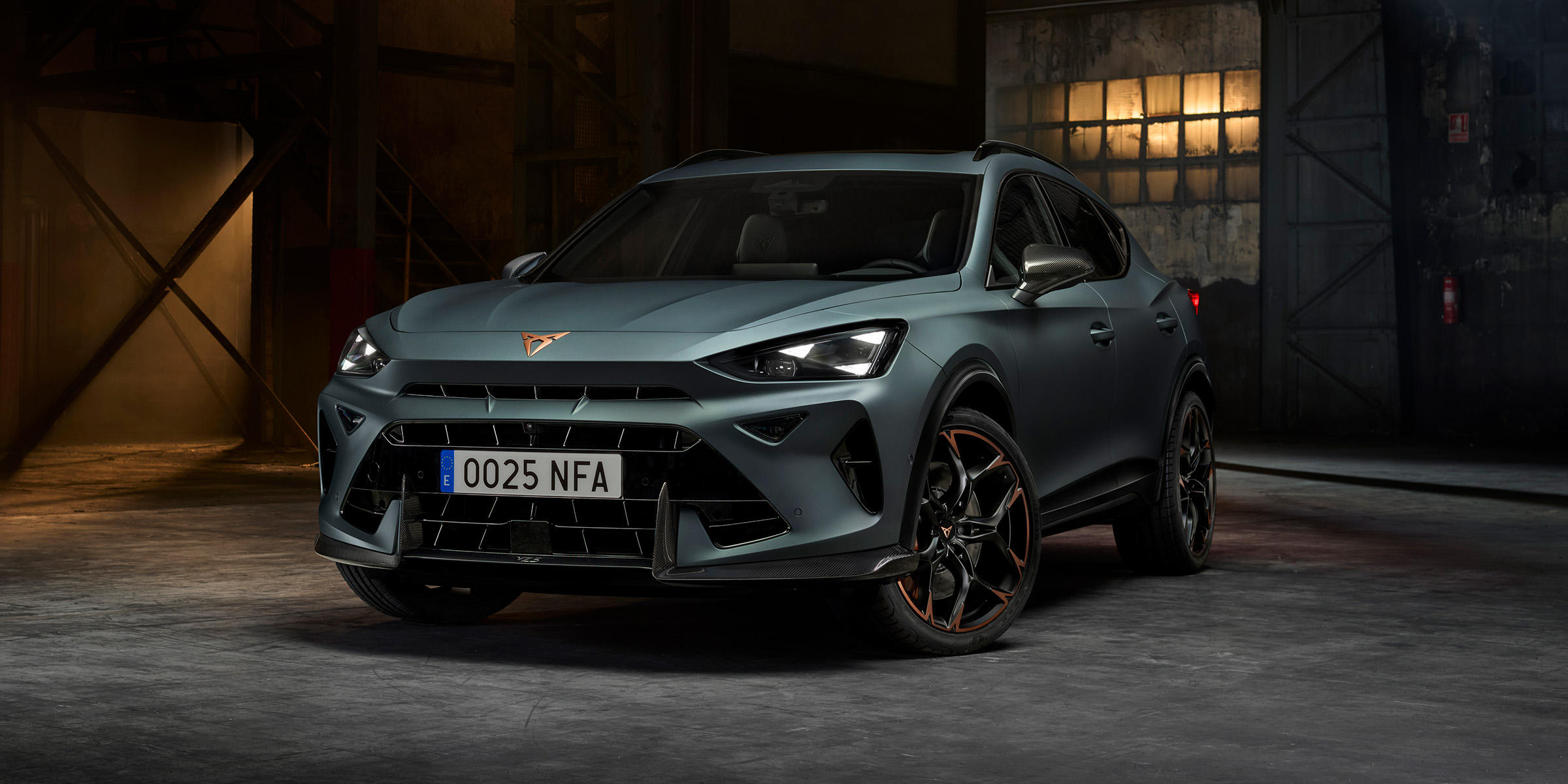
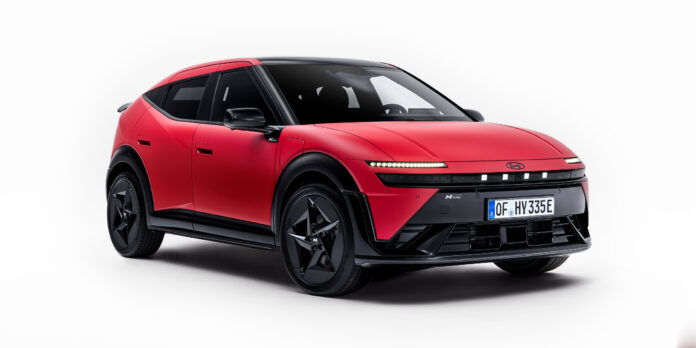
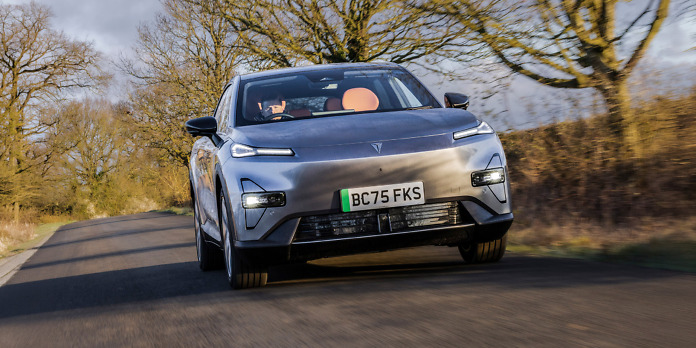
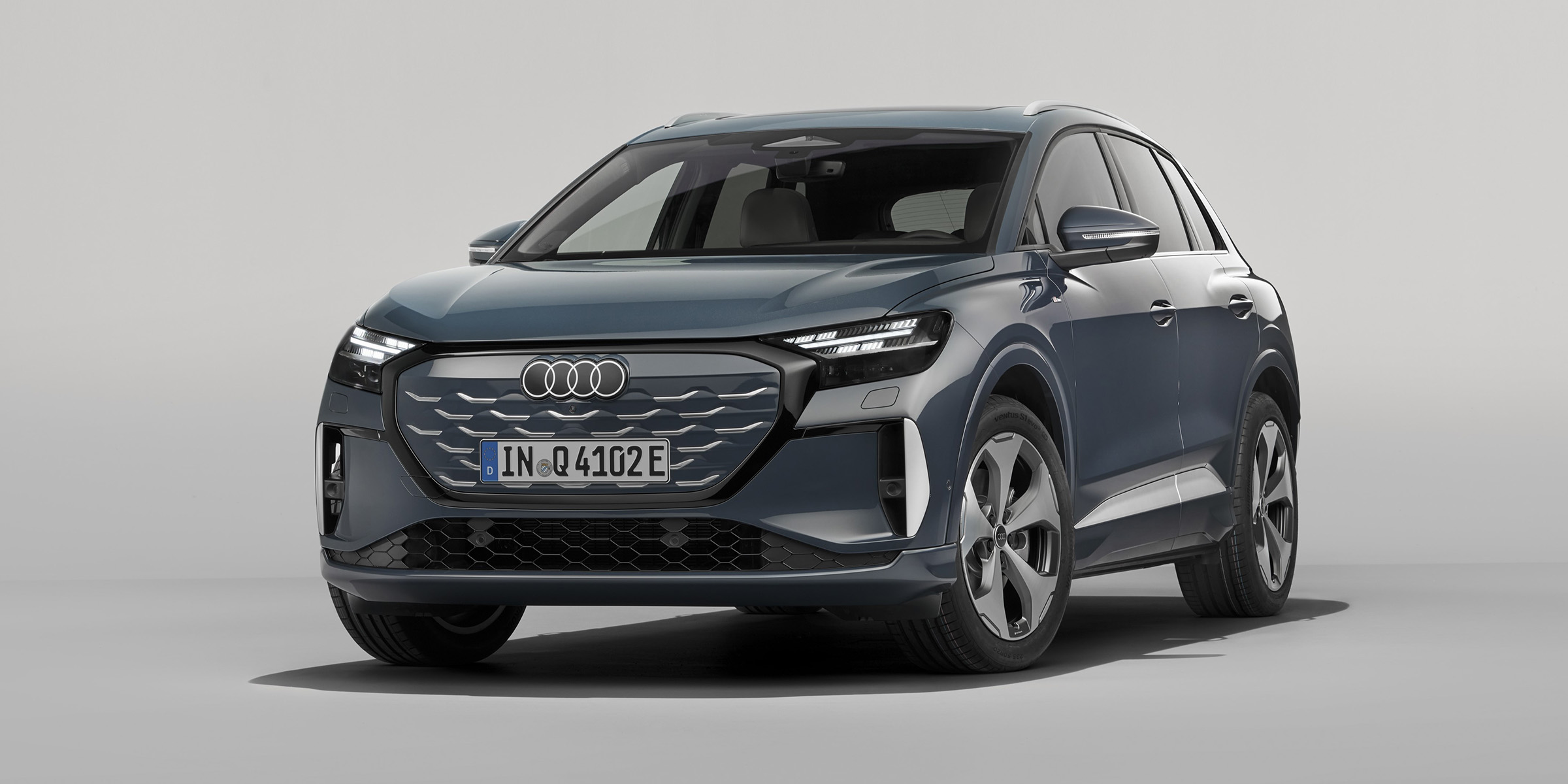
Cupra has revived its limited-edition Formentor VZ5, bringing the brand’s most powerful crossover model to the UK for the first time.
The Cupra Formentor VZ5 was first unveiled in February 2021 and went on sale in European markets shortly afterwards. It never reached the UK though, and it was only built in left-hand drive. This time around, Cupra has specifically confirmed that the VZ5 would be available in right-hand drive for the first time, opening the model up to UK buyers.
The VZ5 sits at the very top of the Formentor range and is powered by an Audi-sourced 2.5-litre five-cylinder turbocharged petrol engine producing 390hp. Power is sent to all four wheels through a seven-speed dual-clutch automatic gearbox, with a torque-splitting rear differential helping to improve traction and cornering performance.
Its 390hp output puts it above the top-spec Formentor ‘VZ 333’, which uses a 333hp 2.0-litre turbocharged engine.
The crossover has been given a number of styling upgrades to set it apart from standard Formentor models. These include a unique front bumper, a VZ5-branded front splitter, wider wheel arches and a revised rear diffuser. Copper detailing – a Cupra trademark – features throughout the exterior design.
Inside, the VZ5 gains the brand’s ‘CUPBucket’ sports seats, along with ambient lighting and a few bespoke trim details.
Only 4,000 examples of the Formentor VZ5 will be produced worldwide, making it Cupra’s most exclusive model to date. Priced from £64k, the Formentor VZ5 is available to order now, with first UK deliveries expected before the end of 2026.
The Cupra Formentor range overall holds a New Car Expert Rating of A, with a score of 71%. It scores top marks for its five-star safety rating, while its media review scores and new car warranty coverage are also good. However, its CO2 emissions and overall running costs are poor.
Modern cars collect a lot of information as part of their normal operation. Most of it is used for maintenance, diagnostics and connected services, but some systems can also monitor driving behaviour and vehicle location.
Understanding what your car records helps you make informed decisions about how that data is used and who can access it.
Some of the information is collected automatically by the vehicle itself. Other data comes from information you provide through the infotainment system or smartphone apps connected to the car.
So what exactly is being collected, and what happens to it?
What your car collects automatically
Even if you never connect your phone or create an online account, modern cars generate a significant amount of data simply by being driven. Manufacturers use this information to help with servicing, warranty claims, fault diagnosis, breakdown support and safety systems.
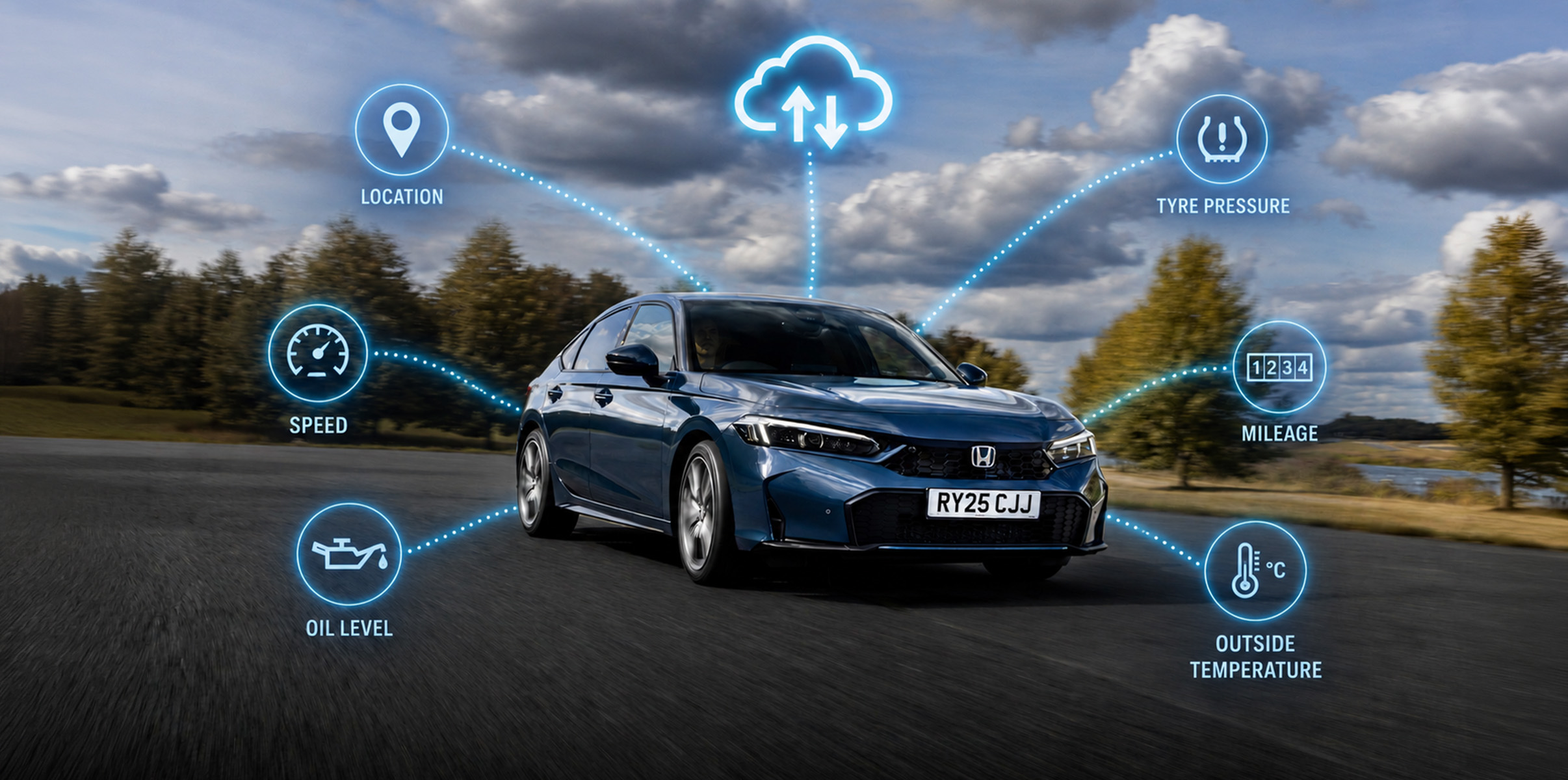
Honda UK’s website provides a useful example of the type of information manufacturers may collect from connected vehicles. According to the company’s own documentation, connected vehicles can record data including:
Vehicle speed
Mileage
Fuel or energy consumption
Tyre pressure
Oil level
Engine status
Battery charge status
Steering angle
Braking information
Driving characteristics
Vehicle occupancy
Diagnostic fault codes
Vehicle location
Much of this information is generated automatically as part of the vehicle’s normal operation.
What you provide through the infotainment system
Modern infotainment systems can collect additional information based on how you use them. This may include destinations entered into the navigation system, account information used for connected services and other settings stored within the vehicle.
The more connected your car becomes, the more information it may store about your preferences and how you use it.
In many cases, this information helps provide useful features and services, but it also means there is more personal data associated with the vehicle.
What Apple CarPlay and Android Auto collect
Many drivers now connect their smartphones to their cars using Apple CarPlay or Android Auto.
Once connected, information from your phone can be displayed through the vehicle’s infotainment system, allowing access to navigation, messaging, music and other apps.
This creates another layer of data sharing alongside the information already being collected by the vehicle itself. Apple and Google both allow users to manage some privacy and sharing settings, although many drivers may not realise how much information their phones and apps generate in everyday use.
Exactly what information is stored and how it is used will depend on the systems and services involved.
What happens to all this data?
Most vehicle manufacturers collect data for practical reasons.
The information can help identify faults, support warranty claims, assist with servicing and provide connected features through smartphone apps and online services.
In Honda’s case, the company says data transmitted from connected vehicles is stored on its remote servers for up to six months. Owners can download the information through the Honda app and delete it if they wish.
Manufacturers generally explain what information they collect and how it is used within their privacy policies and connected services documentation.
How employers and fleet operators use vehicle data
Vehicle data is not only useful to manufacturers. Many businesses that operate company vehicles use telematics systems to monitor how those vehicles are being used. This can include information such as routes taken, braking behaviour, journey times and periods when a vehicle is stationary.
The aim is usually to improve efficiency, reduce wear and tear and help promote safer driving. Professional drivers are generally familiar with these systems and they are often linked to schemes that reward safer driving behaviour.
Telematics are becoming increasingly common on company vehicles, and are also often required by insurance companies for high-risk drivers (like young people).
Fleet managers will use telematics services to monitor things like seatbelt usage, airbag deployment, forward vehicle distance systems, bonnet status, door locks and tyre pressures. Newer Hyundai vehicles, for example, can also transmit a GPS location signal to a fleet manager via in-built software every ten seconds.
On electric vehicles, the system can also track battery charge levels, charging status and battery temperatures.
Why vehicle data collection can be controversial
While many drivers are comfortable with their vehicles collecting data for maintenance and safety purposes, concerns can arise when that information is used to assess driving behaviour or access personal footage.
Earlier in 2026, the BBC reported concerns from some Motability customers about the scheme’s requirement for drivers under the age of 30 to have telematics devices fitted to their vehicles. Some users argued that aspects of their disability could affect how smoothly they drive.
Motability responded that the scheme was designed to help improve safety and keep costs down, and that it had removed 300 drivers since the pilot programme began. However, after the BBC’s article was published, Motability withdrew its compulsory black box requirement.
Separately, Tesla found itself in a major controversy a few years ago after reports that company employees had accessed and shared footage from customers’ cars. This reportedly included crash footage and sensitive images captured by the cameras fitted to Tesla models.
The bottom line
Modern cars collect far more information than older vehicles ever did. Much of that data is used to support servicing, diagnostics, safety systems and connected features that many drivers use every day.
However, vehicle manufacturers, employers and fleet operators can all make use of different types of vehicle data, depending on how the vehicle is owned and operated.
If you’re concerned about privacy, it’s worth checking what information your manufacturer collects and how long it is stored for. Most car companies explain this in their connected services and privacy documentation, and some allow owners to download or delete their data through an app.
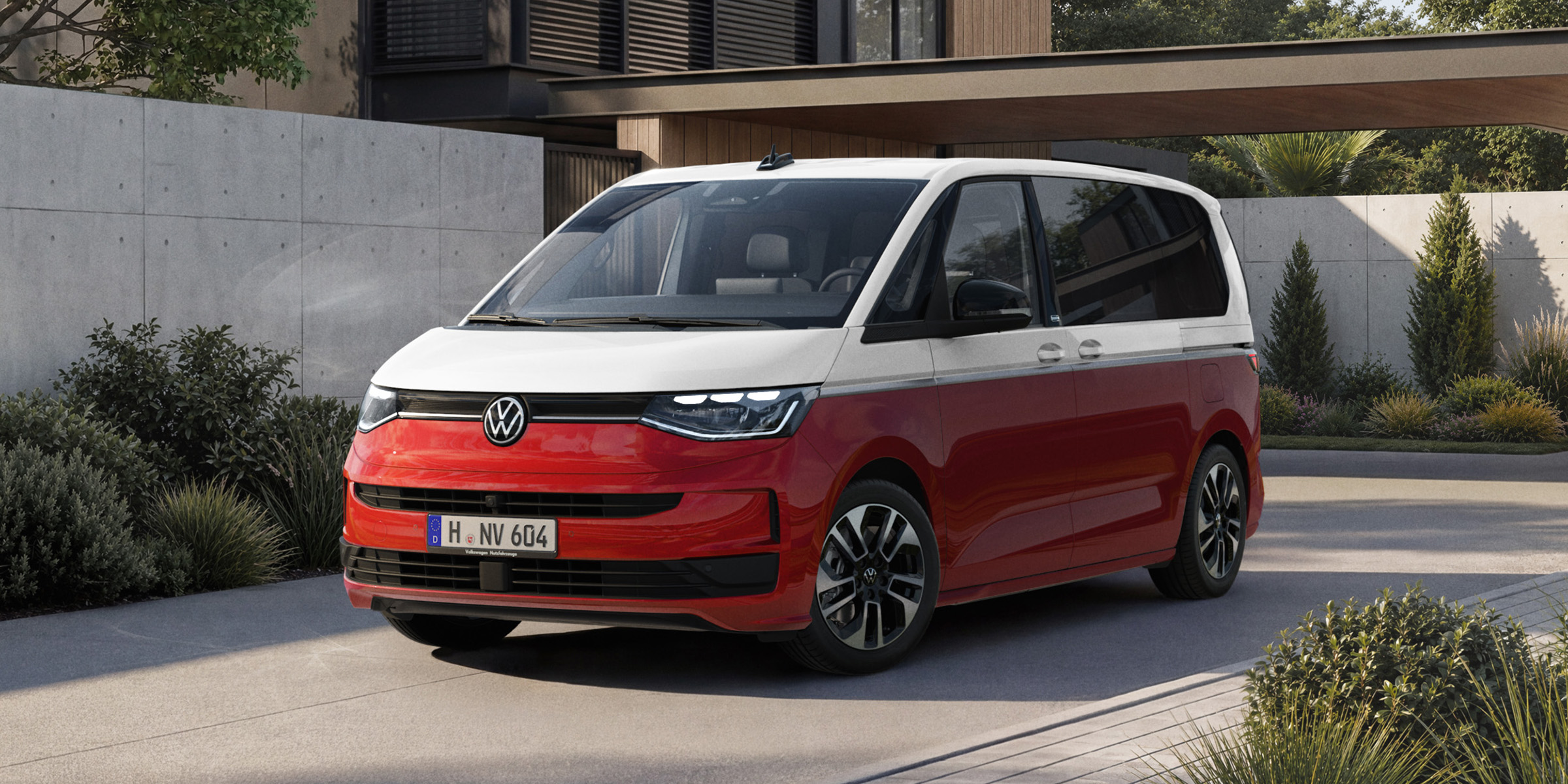
Volkswagen has announced the return of its Caravelle badge to the UK, renaming its Multivan people carrier as part of an update that also includes a redesigned front end, upgraded technology, improved driver assistance systems and a revised trim line-up.
Volkswagen says the decision reflects the popularity and heritage of the Caravelle badge, which was used on previous generations of its passenger-carrying vans.
The range will comprise of ‘Caravelle Trend’, ‘Life’ and ‘Style’ trim levels, while California camper van buyers will continue to choose between ‘Beach’, ‘Coast’ and ‘Ocean’ variants. A new ‘Generation’ special edition joins both ranges, featuring unique styling and exclusive paint options.
Revised styling and new colours
Volkswagen has given both the Caravelle and California larger LED headlights, a redesigned front bumper and a more prominent light signature.
Higher-spec models gain an illuminated light bar linking the headlights, like newer Volkswagen electric models such as the ID. Buzz.
Buyers will have more personalisation options, including new alloy wheel designs, paint colours and, for the first time, a matte paint finish. A ‘Candy White’ and ‘Sunset Red’ two-tone paint scheme will be exclusive to the new Generation special edition.
Interior tweaks
Inside, Volkswagen has overhauled the dashboard layout. A new 13-inch infotainment touchscreen sits front and centre, alongside Volkswagen’s latest digital instrument cluster behind the steering wheel. Like the ID. Buzz, the gear selector has moved to a steering-column-mounted stalk, freeing up space in the centre console.
Wireless smartphone charging is now standard and more powerful than before, while USB-C charging ports have been upgraded from 45W to 60W. Additional USB-C ports are fitted in the rear, and ambient lighting now illuminates the cupholders.
Expanded safety tech suite
One of the biggest upgrades comes in the form of Volkswagen’s latest ‘Travel Assist’ system.
The updated technology can now recognise traffic lights and automatically react to them, while assisted lane changes on motorways are also supported. ‘Emergency Assist’ remains part of the package, capable of bringing the vehicle safely to a stop if the driver becomes unresponsive.
Flagship plug-in hybrid powertrain
The flagship powertrain continues to be Volkswagen’s ‘eHybrid 4MOTION’ plug-in hybrid system.
Combining petrol and electric power, it produces 245hp and features a 20kWh battery, giving buyers the option of short-distance electric driving alongside the security of a petrol engine for longer journeys.
Elsewhere in the range, Volkswagen will continue to offer a 150hp 2.0-litre diesel and a 204hp petrol engine. All models come with a DSG automatic gearbox as standard.
More seating flexibility
Volkswagen has also revised the seating layout of the Multivan – now Caravelle.
A new eight-seat configuration allows passengers in the rear to sit facing each other. Higher-spec ‘Life’ and ‘Style’ models gain twin armrests on second-row seats, while upgraded upholstery options include more durable dark leather and ArtVelours trim.
UK availability
Volkswagen has not yet confirmed UK pricing for the updated Caravelle and California range. More details, including full specifications and prices, are expected ahead of their UK launch later this year.
The UK government is running an electric car grant that offers up to £3,750 towards the price of certain new electric cars to help boost sales.
The grant was announced last July and is set to continue through 2026. While the roll-out of the programme was largely botched, things are now moving smoothly.
The grants are available only to eligible cars, and the amount offered will depend on a range of factors. These include the car’s price (up to £37,000 on-road, although there appears to be wiggle room in there) and how environmentally friendly the production process is, including not just the cars but the factories that build them.
There are two bandings of grant on offer. The higher band provides up to £3,750 for the most eco-friendly cars built by the most eco-friendly factories, while the lower band provides up to £1,500. And there are plenty of EVs that don’t qualify at all. The government implied that Chinese-made cars will not qualify for the grants on any level (and indeed, none have yet been approved), suggesting that Chinese car factories do not meet its sustainability criteria.
As of mid-2026, a majority of cars have some form of discounting applied. Many companies whose cars are not eligible for the government grant have applied their own discounting instead.
On the surface, it appears to be good news for customers – someone’s giving them up to 10% off the price of the car, and it doesn’t really matter whether it’s the government or the car manufacturer. In reality, however, a juicier up-front discount on the car is almost certainly going to mean fewer incentives elsewhere, so you may see fewer 0% finance offers, free home chargers, public charging credits and so on.
We’re now almost a year into this grant programme and new discounts are still being announced regularly. We’ve pulled together a list of all the brands we currently know about, and we keep updating it as new discounts are announced. However, always check with your local dealer or on the manufacturer’s website before placing any order.
Need to know info
We’ve trawled all of the car manufacturer websites to explore the fine print on these offers. The quality of information is mixed, and the terms and conditions vary considerably across different brands. For any brand offering its own ‘grant’ programme, please assume the following unless otherwise stated:
Many of the manufacturer offers are branded as ‘grants’ or ‘contributions’, but that’s just marketing bollocks to tie in with the government’s grant programme. They’re just discounts applied to the price of the car.
Discounts apply to new cars only, not pre-registered cars, dealer demonstrator cars or used cars.
Discounts only apply to private new car buyers, not fleets or businesses who already have separate pricing.
Discounts exclude Motability customers, who already have separate pricing.
The discounts should not be conditional or linked to any finance offers, so don’t be led down the garden path by dealers who insist that you have to take their finance to get the discount. Some brands have separate finance offers unrelated to this offer.
Discounts can be altered or removed without prior notice, so check with dealers for latest information.
Discounts may or may not replace any other previously announced offers. Again, check with the dealer.
Terms, conditions and exclusions will always apply, so read all documents carefully before signing anything.
All deals will have cut-off dates, so check with the dealer. This means that the discounts will inevitably be limited to vehicles that can be delivered by the cut-off date, which may limit you to existing stock rather than ordering a car that won’t arrive before the offer ends.
Abarth currently offers two electric models, the 500e and 600e. When the government’s grant was launched in summer 2025, neither model was eligible so Abarth offered its own discount of £1,500 on each car.
However, as of May 2026, the Abarth 600e is now eligible for the government grant so the previous offer has been replaced by the grant. This is in addition to a pricing and specification restructure that brought the entry-level 600e pricing down by about £4K in January, so the Abarth 600e is now a far more attractive proposition than it was 12 months ago.
We’ve just listed pricing for entry-level models here.
As of May 2026, the lower-level models of the Alfa Romeo Junior Elettrica line-up are now eligible for a £1,500 government EV grant. This excludes the top-spec Veloce model.
In addition, Alfa Romeo is continuing to offer its own £1,500 discount on all Junior Elettrica models, including the Veloce.
We’ve only listed the price of the entry-level model below.
The Alpine A290 – Alpine’s hot hatch version of the Renault 5 and winner of The Car Expert’s Best Hot Hatch 2026 award – is now eligible for the full government of £3,750, having initially only been approved for the lower £1,500 grant.
On the downside, when the increased grant was announced, Alpine bumped up the car’s price by £495 and downgraded its own PCP car finance offer for the A290, removing a £1,000 deposit contribution and bumping up the interest rate from 1.9% APR to 4.9% APR. As a result, the net cost to the customer didn’t really improve despite the government chipping in an extra £2,250 of taxpayers’ money! Poor form, Renault. The current offer runs until the end of March 2026.
There are four versions of the A290 available; we’ve just listed the starting price here.
Citroën is the first manufacturer to announce electric models that are actually eligible for the government grant, rather than offering its own discounts. The grant provides £1,500 towards six electric models in the Citroën range – the ë-C3, ë-C3 Aircross (The Car Expert’s Best Value Family Car 2026 award winner), ë-C4, ë-C4 X, ë-C5 Aircross and ë-Berlingo (short wheelbase ‘M’ models only).
In addition, the new long-range version of the Citroën ë-C5 Aircross is now eligible for the higher-level £3,750 grant. This makes the far better long-range version a much better deal than the regular ‘Comfort Range’ version, being only £470 dearer once the additional grant money is factored in.
Citroën says that existing 0% APR finance offers will continue to be offered, with the usual caveat that terms and conditions apply to any finance offers so check with your local dealer.
We’ve just listed the starting prices for each model here to save space.
DS Automobiles has two models that are eligible for the government grant, with £1,500 towards both the DS 3 E-Tense and the new DS Nº4 E-Tense (the DS Nº4 is the upgraded version of the previous DS 4).
Customers can also get a free wallbox charger, valued at up to £1,000, with any new electric DS3 or DS Nº4 models, while there are also finance offers available. Conditions apply, so check the fine print with your local dealer.
As with its sporty spin-off, Abarth, Fiat is offering a mix of in-house discounts and government grants of £1,500. The Fiat 500e and Grande Panda Electric models are not eligible for the grant, so they get a Fiat discount, while the 600e is now available with £1,500 of government support.
As with the Abarth performance models, the Fiat 600e also benefitted from a substantial price drop in early 2026, making it much better value today than it was a year ago.
We’ve just listed pricing for entry-level models here.
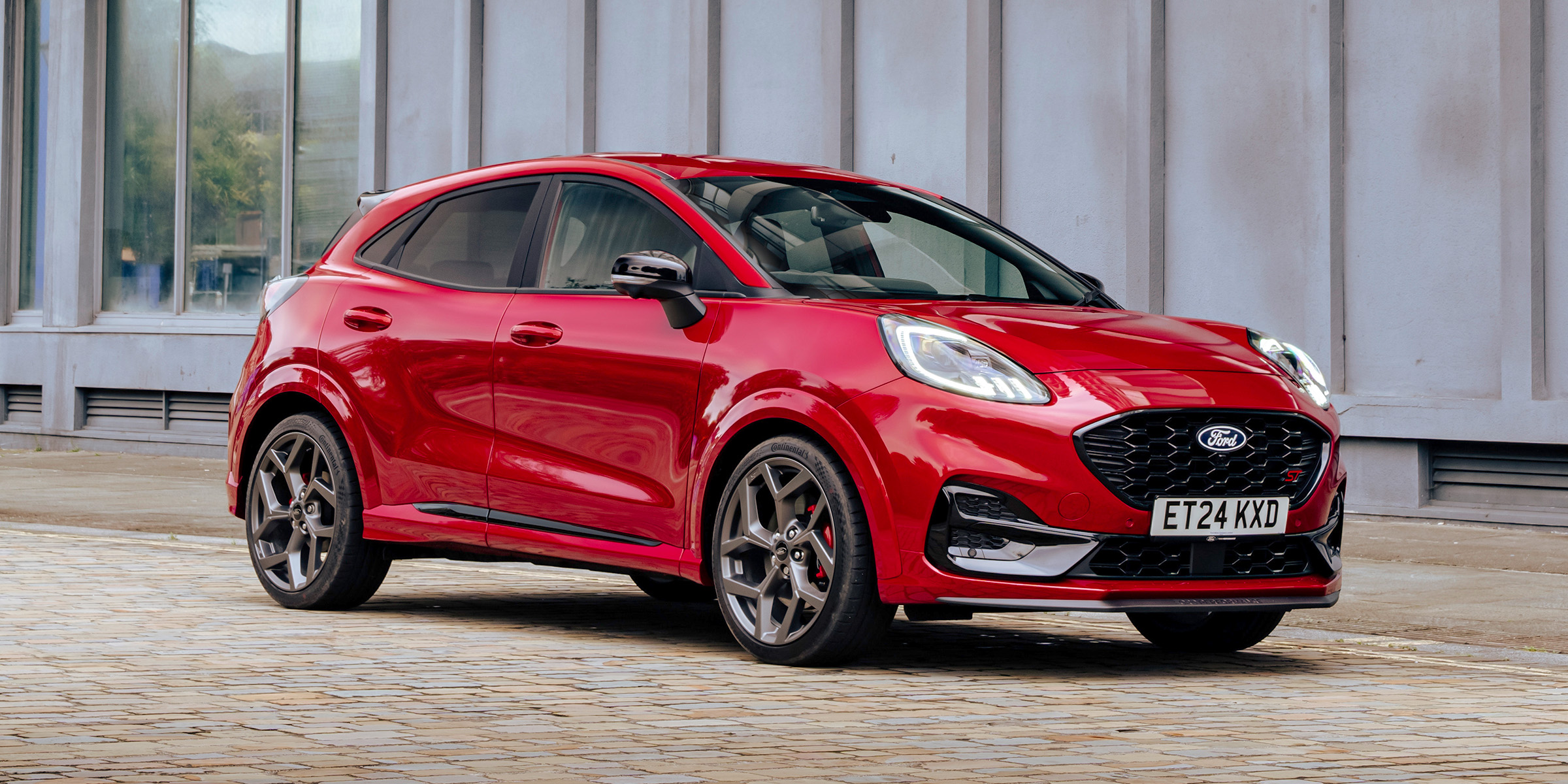
The Ford Puma Gen-E and E-Tourneo Courier are two of the few vehicles that qualify for the higher band of government grant funding, meaning discounts of £3,750.
The Puma Gen-E is the EV version of the UK’s best-selling new car and a crucial model for Ford, which has struggled to sell enough electric cars to hit its government-mandated targets. Getting the full £3,750 grant for the Puma will help Ford’s efforts enormously, but we’ve been told by some dealers that stock for 2026 will be extremely limited – so you might need to act fast.
The E-Tourneo Courier is a van-based people carrier, which is also based on the Puma platform. Although it’s only a niche seller, almost £4,000 off the purchase price will certainly make it more attractive.
Ford’s larger EVs – the Explorer, Capri and Mustang Mach-E – do not receive any government grants and Ford does not have any equivalent discounts available.
GWM (Great Wall Motors) is offering a discount of £3,750 on all Ora 03 models (the car previously known as the Ora Funky Cat), matching the theoretical maximum amount of the government electric car grant.
This is a substantial discount, amounting to 15% off the price of the entry-level Ora 03 Pure, and is in addition to GWM’s existing discounts and 0% APR PCP finance offers on the Ora 03. Speak to your local dealer for all the terms and conditions.
Only the price of the starting model is shown here, but there are more trims available at extra cost.
Hyundai currently only has one model that qualifies for the government grant – the Kona Electric gets a £1,500 subsidy. However, the company is offering its own discounts on the rest of its EV models, even those that are priced a long way over the government grant threshold.
The best offer is on the new Hyundai Inster city car – winner of The Car Expert’s Best Small Car 2026 award – which gets a £3,750 discount on all versions (which amounts to 16% off the base model Inster 01), while the rest of Hyundai’s electric models are getting £1,500 off – even the brand-new Ioniq 9 large SUV that starts at £65K.
Listing every version here would take up too much space, so we’ve just listed the entry-level version for each model.
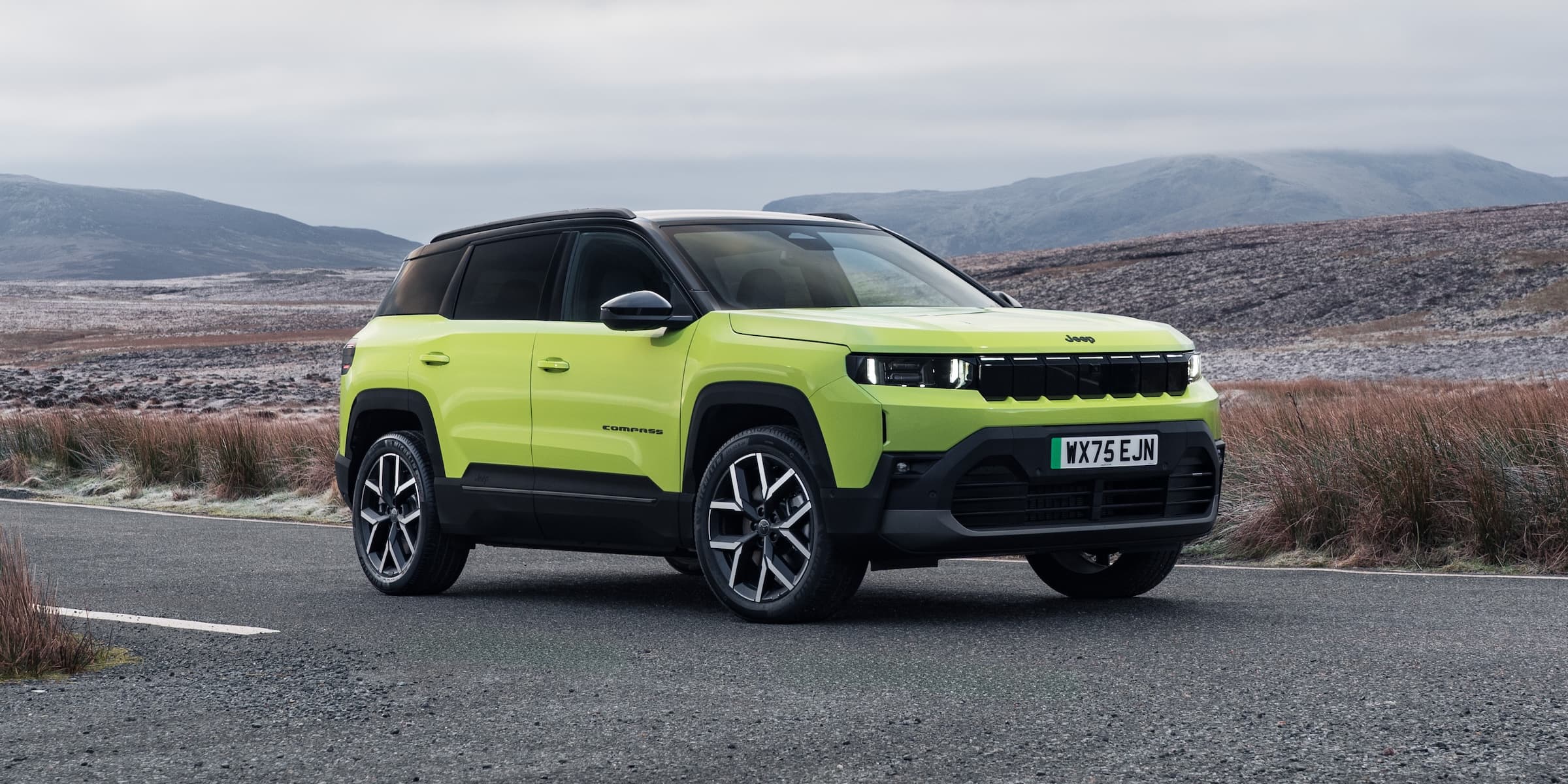
The Jeep Avenger Electric and Compass Electric have both been approved for government electric car grant funding at £1,500, in line with similar models for other Stellantis brands.
The grant is in addition to existing finance offers and any other incentives offered by Jeep dealers.
Starting prices shown below, but check full details with your local Jeep dealer.
As of April 2026, Kia has four models that qualify for the lower-level £1,500 EV grant from the UK government. These are specific versions of the Kia EV2, EV3, EV4 and PV5.
Kia is also offering deposit contributions on many of its other electric models, even though they are not eligible for the government grant. Check the Kia website or talk to your local dealer for all the details.
Starting prices shown here, but there are several trims and specifications available.
New Chinese brand Leapmotor was first out of the blocks with its own discounts, following the government’s confusing grant announcement and convoluted criteria calculations. The company is offering £1,500 off the T03 city car and new B10 compact SUV, while the C10 large SUV gets a £3,750 discount.
In addition to the discounts, Leapmotor is offering 0% APR PCP finance, but separate terms and conditions apply so check with the dealer to make sure this finance offer meets your needs.
MG is offering a £1,500 discount on its MG 4 (including the high-performance MG 4 XPower version) and MG S5 EV models, which it says will be in addition to any other incentives. As of late 2025, there are deposit contributions available on these and other MG models if you take the company’s finance offers – terms and conditions apply, as usual, so check with the dealer.
We’ve just listed the starting price for each model, rather than all the versions. Sadly, the MG Cyberster sports car is not included…
Nissan has three models that are eligible for the government grant, with £1,500 towards both the Ariya and the all-new Micra, while the all-new Leaf – which is built in Sunderland – gets the full £3,750 government grant.
The government grant programme was announced before Nissan had released pricing information for either the Micra or Leaf, so the ‘previous price’ information is a bit irrelevant as the company had the luxury of factoring in the grants when working out UK pricing and specs.
Nissan also had to revise pricing for the Ariya to slide it under the government’s £37,000 limit, so check with your dealer to make sure any vehicle you’re looking at is eligible. Top-spec all-wheel drive models, along with the flagship Nismo model, are not eligible for the grant and don’t carry any separate discount.
Starting prices shown here, but there are multiple trims and specifications available.
Peugeot now has five models that qualify for the lower band of government grant funding of £1,500. Announced in late July were the E-208 small hatch, the E-2008 small SUV and the E-Rifter people carrier (which is built in the UK at Ellesmere Port). Meanwhile, the E-308 family hatch and estate, and E-408 crossover were also approved for £1,500 grants in late August.
The company is also offering its own £1,500 discount on the e-Traveller van-based people carrier, which does not get a government grant. At the moment, there are no discounts on the remaining Peugeot electric models, the E-3008 and E-5008 SUVs.
Peugeot also has other discounts available on various EVs in its range, so check with your local dealer for current information.
All of Renault’s electric models are now eligible for the government grant, with £1,500 now on offer towards the Renault 5 and Renault Megane models. The Renault 4 and versions of the Renault 5 with the larger (52kWh) battery are eligible for the larger £3,750 grant, as is the Renault Scenic.
However, as with its Alpine sub-brand, Renault has cheekily bumped up pricing on some of its models since the grants came into effect, while also reducing some deposit contributions and increasing interest rates on its finance offers (despite the Bank of England lowering its base interest rate), so not all of the taxpayer contributions are being passed onto customers.
Skoda has received £1,500 government grants for selected versions of the Elroq compact SUV (The Car Expert’s Car of the Year 2026) and Enyaq medium SUV models.
Eligible Elroq models are SE, SE L, Edition and SportLine trims with all battery options, while ENyaq is limited to SE L models with the 63kWh or 82kWh batteries, or the Edition model with the 63kWh battery.
New Chinese car brand Skywell only has one model on sale in the UK at the moment, the Skywell BE11 mid-sized electric SUV. The good news is that Skywell is offering a £3,750 discount, equivalent to the maximum government grant, on both the Standard Range and Long Range versions.
In addition to the new discount, Skywell is offering a £6,000 deposit contribution (basically a discount) if you take certain finance offers. The Skywell UK website does not explain this very clearly, so speak to your local dealer if you’re interested.
The new range of Smart cars is not eligible for the government’s EV grant, so the company is offering its own “Smart EV Car Grant” discounts instead, to the tune of £1,500 on both the #1 and #3 models.
As of December 2025, Smart is offering an additional £1,500 off its #1 and #3 electric models, over and above its existing discounts of £3,000 on the #1 and £3,000 on the #3. The new #5 electric SUV is not included in the offer. The current 0% APR PCP offers are apparently still available as well.
Starting prices for each model below, but there are plenty of higher trim levels to choose from.
Suzuki announced pricing for the new e Vitara range after the government grant programme was launched, but since it’s not eligible for a taxpayer grant (the factory in India apparently doesn’t meet the government’s sustainability requirements), Suzuki says it has additionally discounted the e Vitara by £3,750 from its original plans. Hmmm…
The ‘discounted’ pricing applies until the end of the year, along with an offer for a free home charging wallbox. Starting prices shown below, but there are several trim and spec choices available.
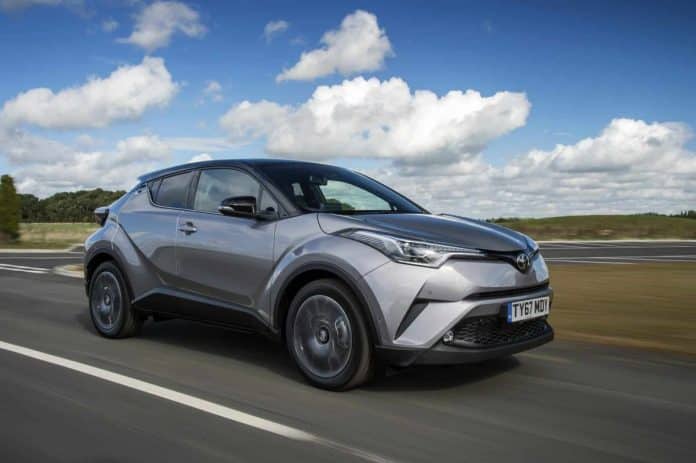
Toyota is offering a discount of £1,500 across its new Toyota C-HR+ SUV range, which is now on sale in the UK.
Toyota has also announced a 0% PCP car finance offer (speak to your local Toyota dealer for all the details) which coincides with the model launch, as well as an additional £1,500 deposit contribution (terms and conditions apply).
The other EV models in the Toyota line-up don’t get any government EV funding – the Urban Cruiser is built in the same Indian factory as the Suzuki e Vitara, above, while the bZ4X starting price is above the £37K threshold for the grant.
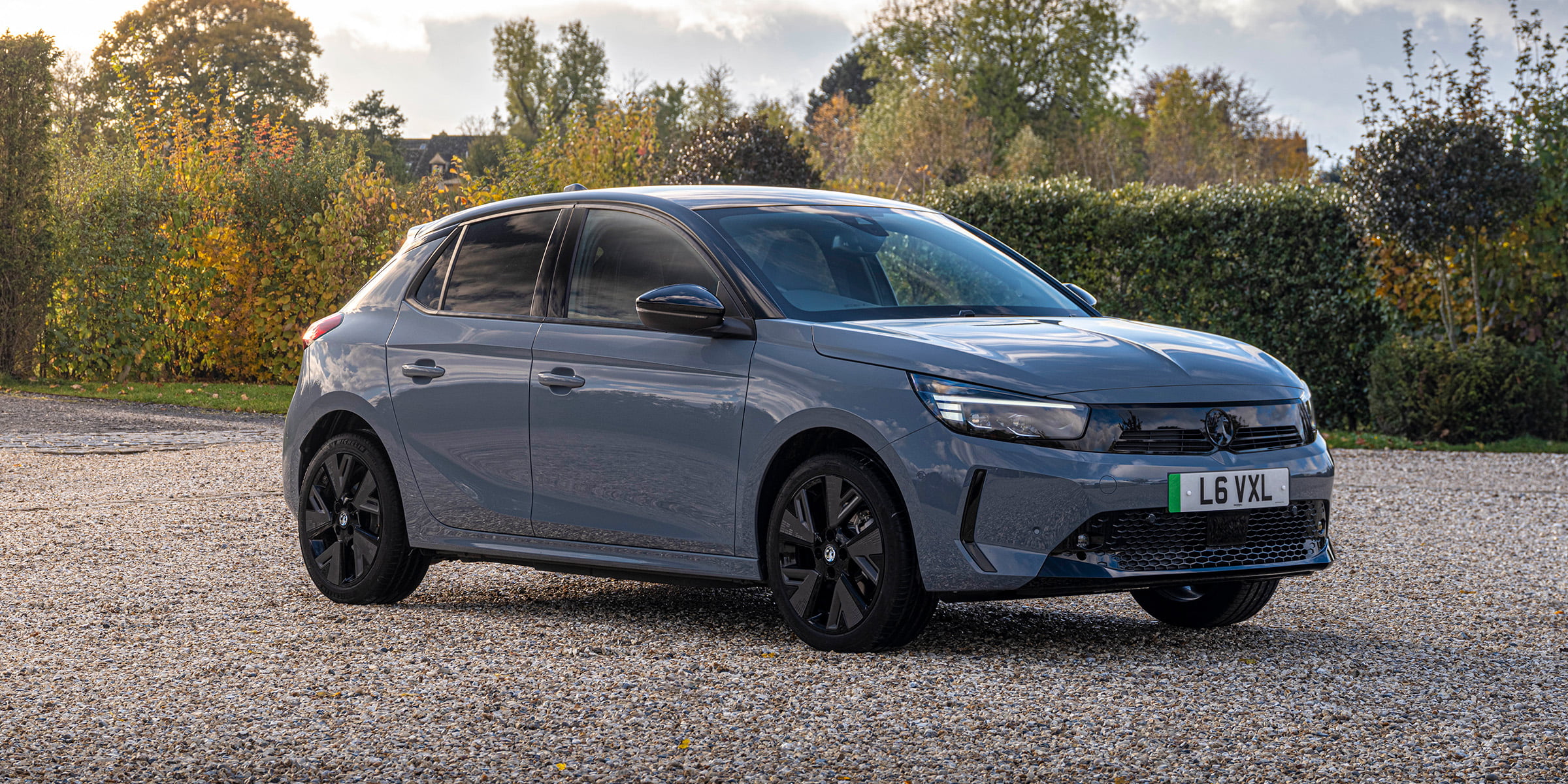
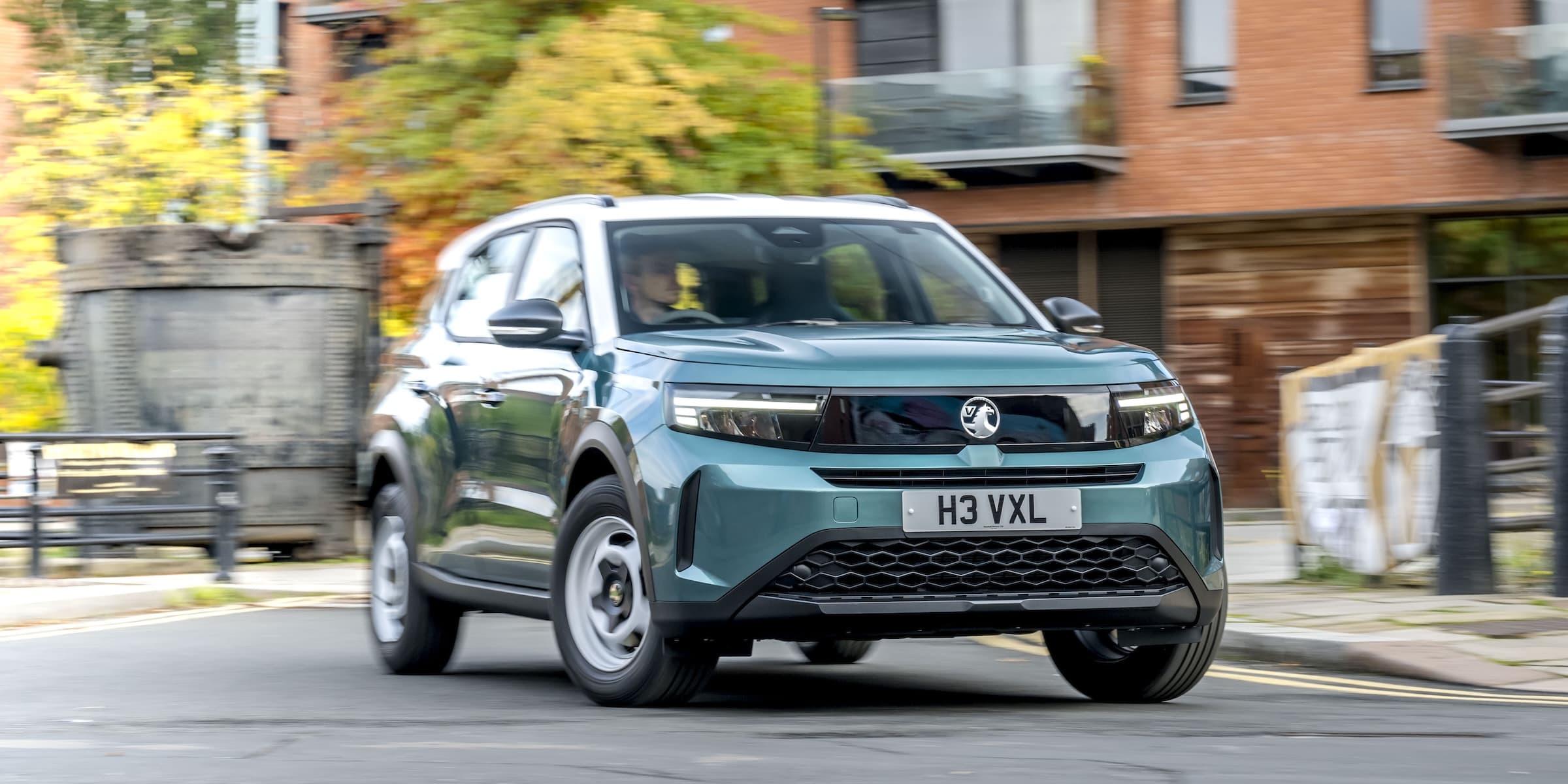
Vauxhall originally offered a £1,500 discount on all its EV models, which was subsequently superceded by the government announcing that all Vauxhall EVs are eligible for a £1,500 grant. This replaced Vauxhall’s own offer, so you don’t get both.
This means that any new Astra Electric, Combo Life Electric, Corsa Electric, Frontera Electric, Grandland Electric or Mokka Electric should be available with a £1,500 government contribution. The van-based Vivaro Life Electric is not eligible, according to Vauxhall’s own information, which is curious as the identical Citroën and Peugeot models are offered with a £1,500 grant.
Vauxhall says that existing finance offers (including 0% APR PCP deals on selected models) will continue, as well as any other finance discounts and home charger discounts. Once again, we’ve only listed pricing for the entry-level models here.
Volkswagen has three models eligible for £1,500 of government grant funding, limited to selected specifications of the ID.3 hatchback, ID.4 SUV and ID.5 coupé SUV models. As with Cupra, any versions with a starting price of more than £37K are ineligible, like the sportier GTX models.
Volkswagen has said that it anticipates that other models in its electric range may also be eligible, with further information due “soon”. Existing finance offers should still be available.
As with other brands, here are the starting prices for the eligible models.
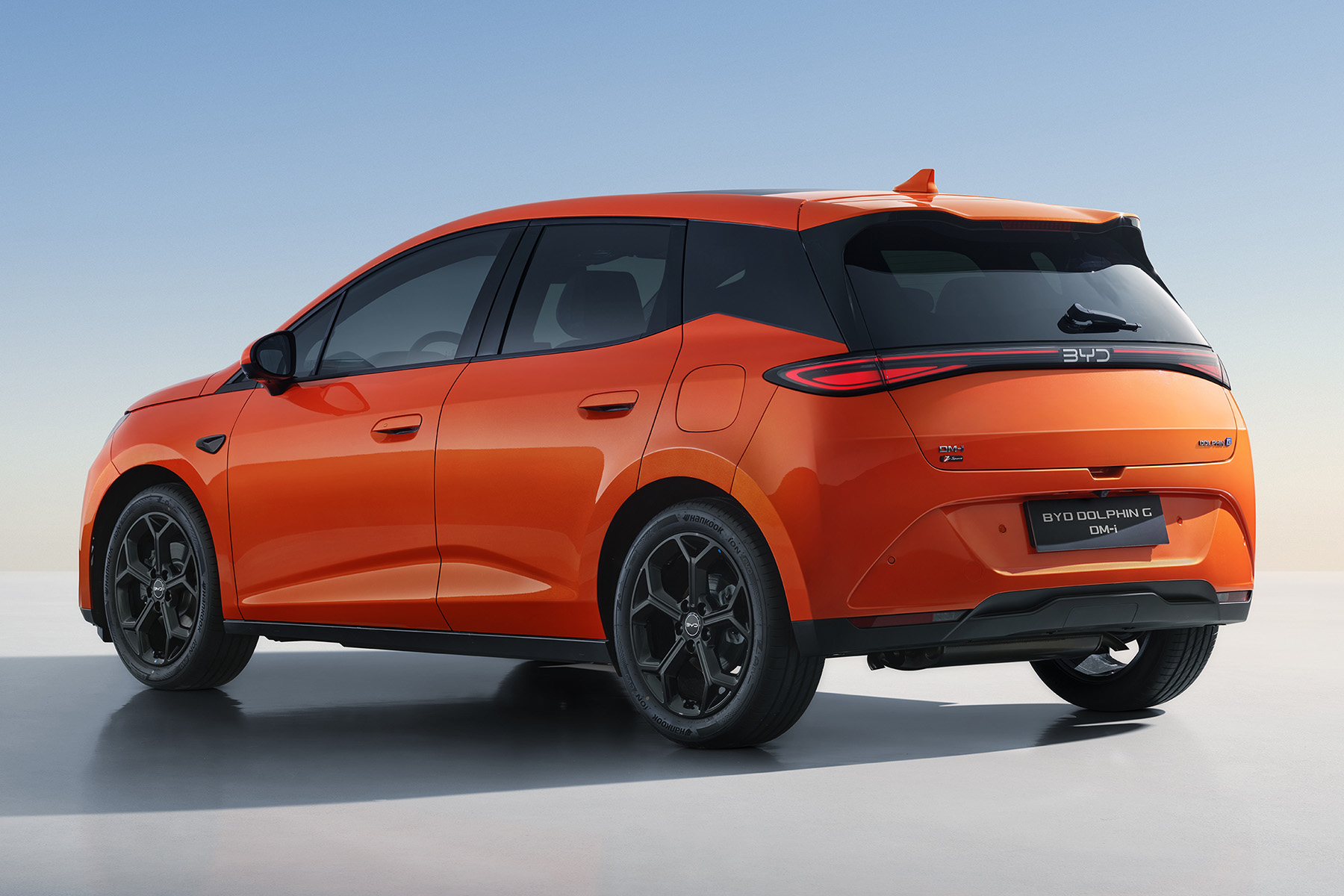
BYD is expanding its rapidly growing UK line-up with the new Dolphin G DM-i the brand’s first model developed specifically for Europe and introduces the Chinese brand’s plug-in hybrid powertrain to the supermini class.
According to BYD, the Dolphin G DM-i can travel up to 65 miles on electric power alone and offers a combined driving range of up to 646 miles when its battery and fuel tank are both full.
How does it differ from the Dolphin and Dolphin Surf?
Although it shares part of its name with the existing BYD Dolphin, the new Dolphin G DM-i is a very different proposition.
The standard BYD Dolphin is an all-electric family hatchback which is a bit larger, competing for sales alongside the likes of the Volkswagen ID.3, MG 4 and Cupra Born.
The recently launched Dolphin Surf sits below both cars in the range as a compact city EV. It’s shorter, cheaper and designed primarily for urban driving.
The new Dolphin G DM-i effectively slots between the two. At just over four metres long, it’s larger than the Dolphin Surf but smaller than the standard Dolphin. Unlike either of its stablemates, it uses a plug-in hybrid powertrain, combining an electric motor, battery and petrol engine.
Class-leading practicality
BYD claims the car offers class-leading interior space. The boot space is particularly impressive. At 425 litres, it offers more luggage room than many rivals in the supermini class and some family hatchbacks from the class above. Fold the rear seats and capacity increases to 1,225 litres.
For comparison, supermini rivals like the Renault Clio, Toyota Yaris, Peugeot 208 and Volkswagen Polo all offer less than 400 litres of boot space.
Plug-in hybrid system focuses on electric driving
Unlike many traditional plug-in hybrids that rely heavily on their petrol engine, BYD’s ‘DM-i’ (Dual Mode Intelligence) system is designed to operate primarily as an electric car.
The front-mounted electric motor produces 163hp, driving the wheels in most situations while the 1.5-litre petrol engine largely acts as a generator to keep the battery topped up.
Similarly-sized hybrids like the Honda Jazz e:HEV work in a similar way. However, the BYD can be plugged in to charge – unlike the Jazz – and offers up to 65 miles of electric-only driving (should you opt for the larger 18kWh battery model), allowing many owners to complete their daily journeys without using any petrol at all.
The larger battery can also be rapid charged at up to 39kW DC, allowing a 10-80% recharge in around 26 minutes. The BYD can muster a 0-62mph time of 8.3 seconds. Two battery options will be offered:
7kWh battery (Active trim) with up to 24.8 miles of electric range
18kWh battery (Boost, Comfort and Sport trims) with up to 65 miles of electric range
Technology punches above its class
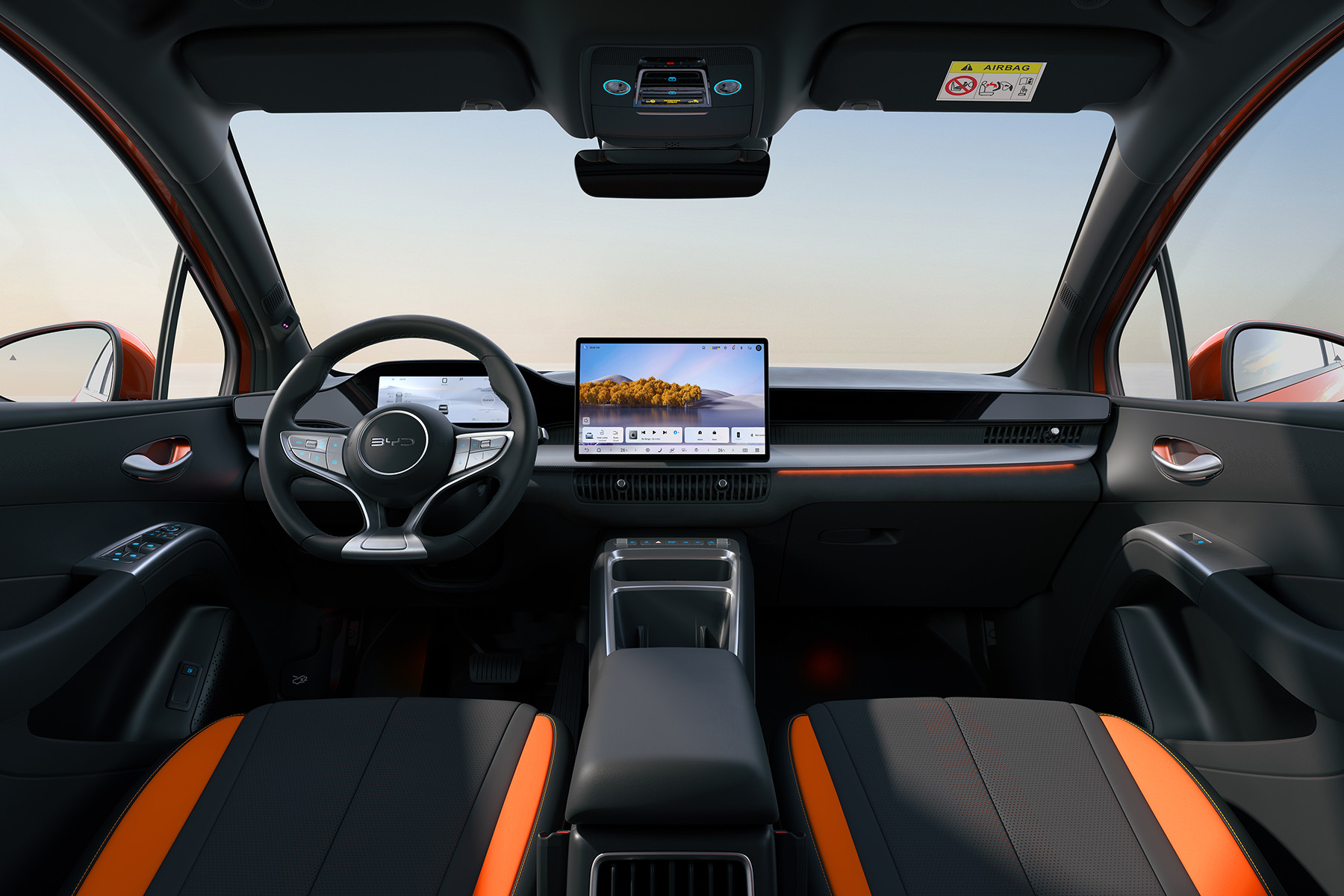
Entry-level versions of the Dolphin G DM-i get a rotating touchscreen, adaptive cruise control, front and rear parking sensors, a reversing camera and wireless smartphone connectivity.
Higher-spec versions add features rarely seen in the supermini class, including a head-up display that projects driving information onto the windscreen, a panoramic glass roof, and a surround-view parking camera.
UK pricing and availability
BYD dealers across Europe will begin taking orders this summer, with first customer deliveries expected in early autumn. Full UK pricing and specifications have yet to be confirmed. Interested? More details are sure to follow in the coming weeks, check back soon!
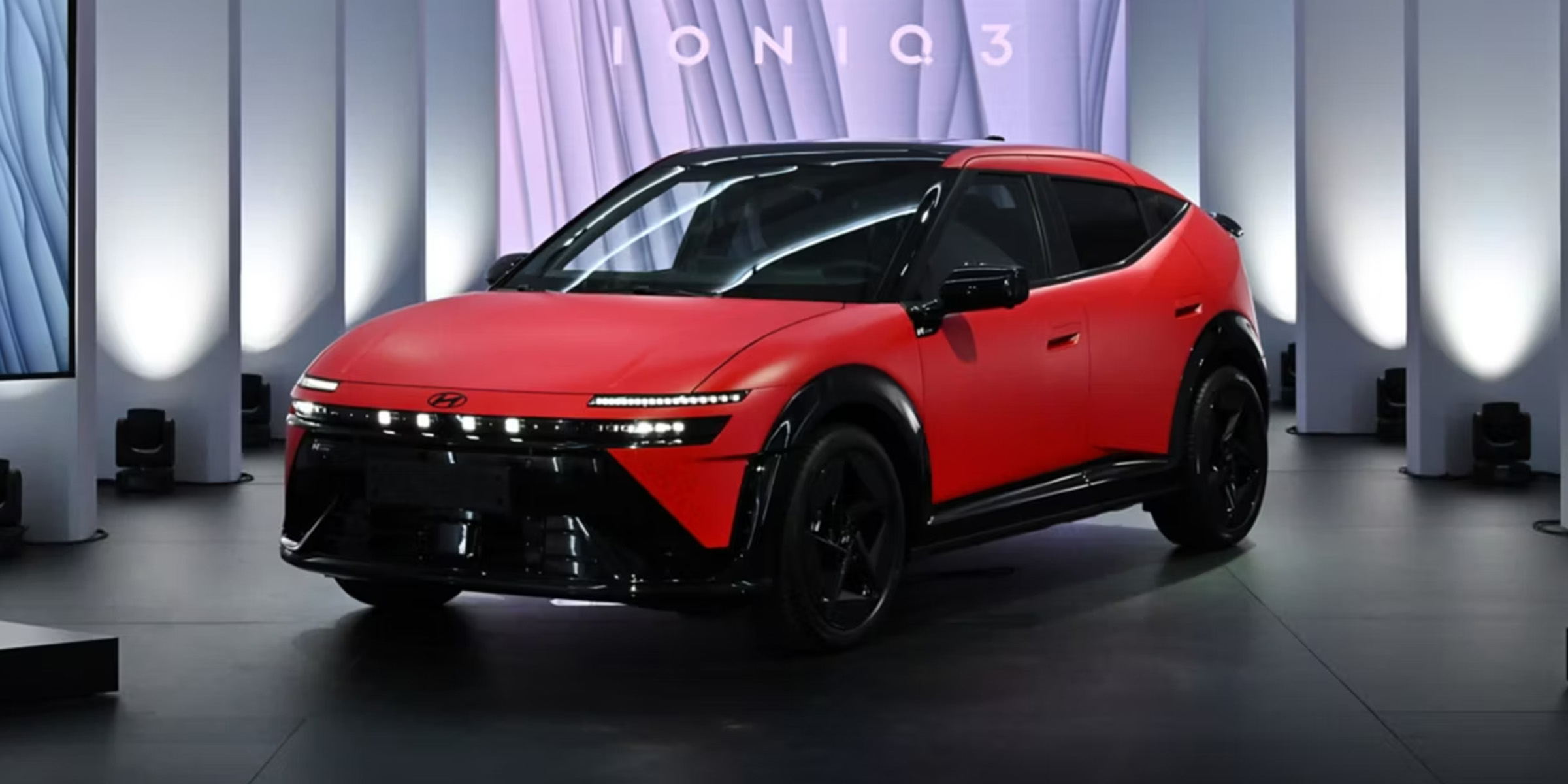
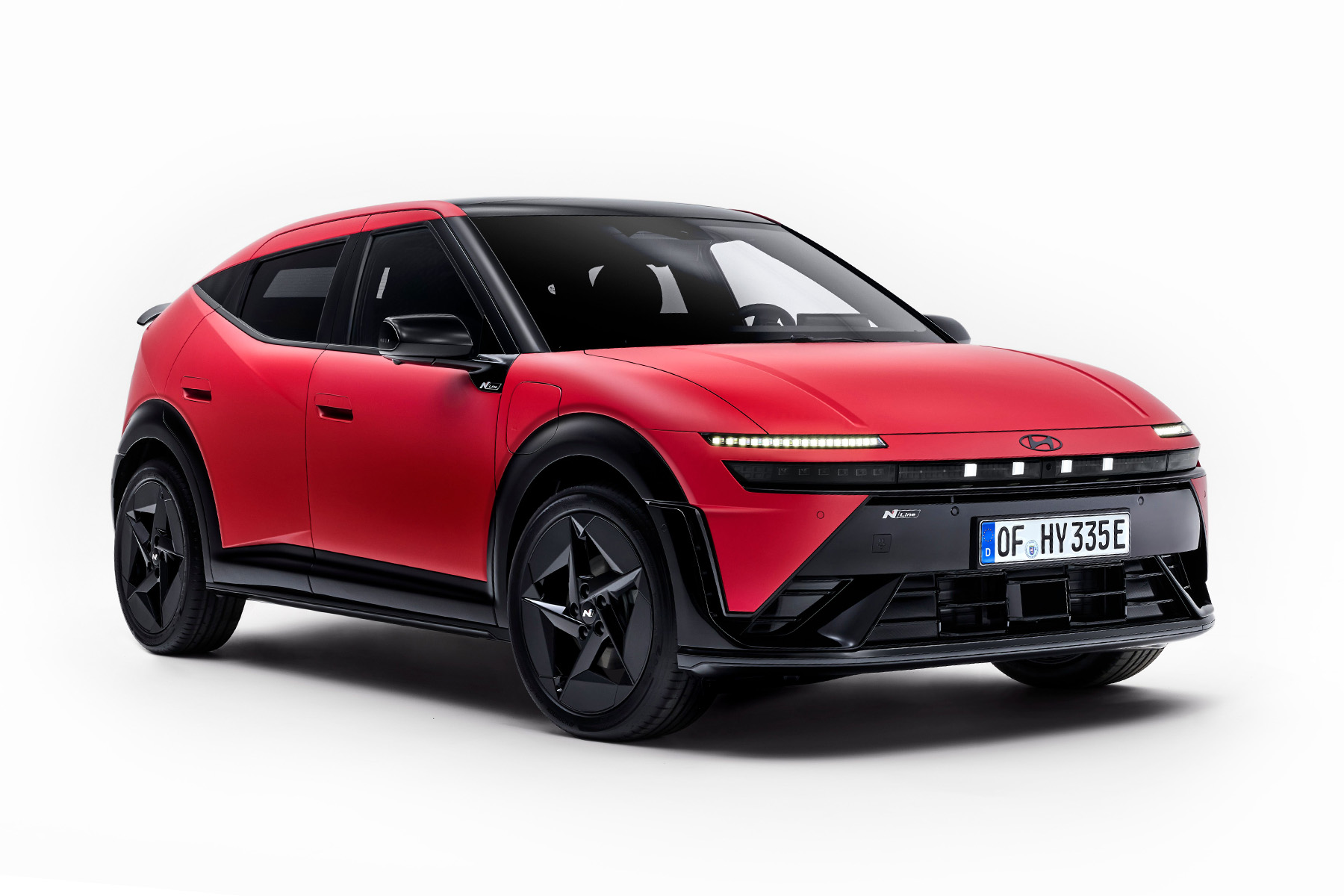
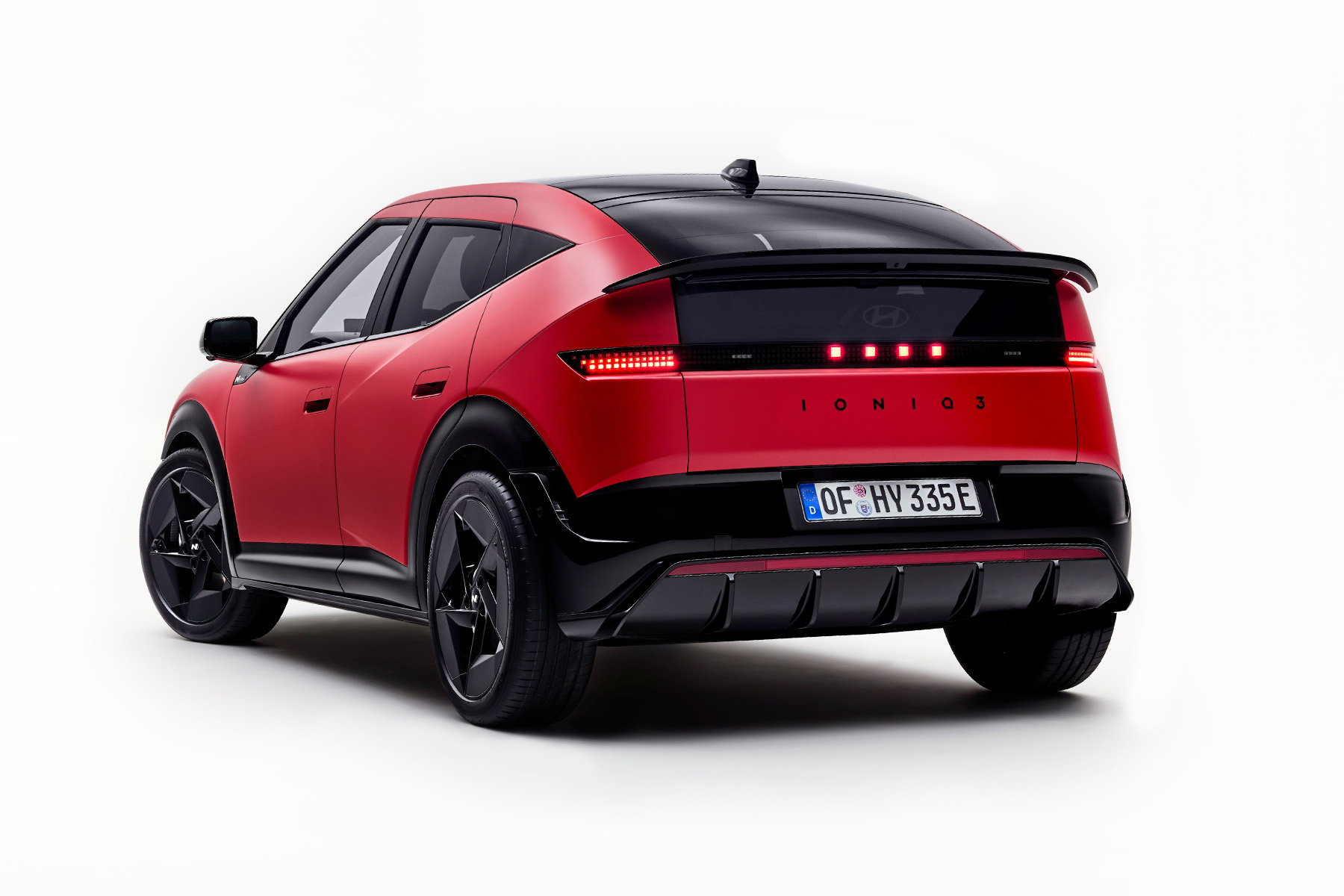
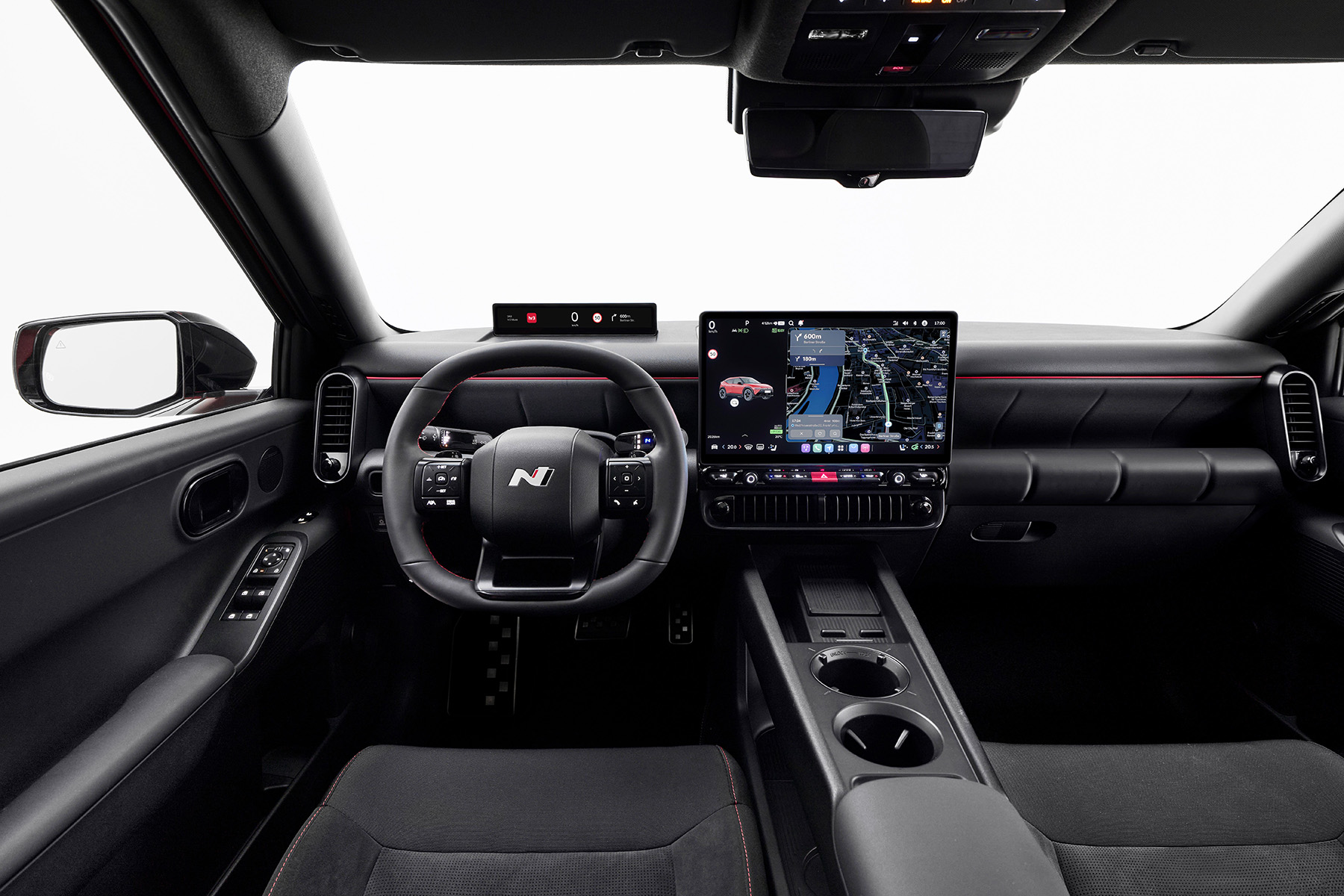
The Hyundai Ioniq 3 is an all-electric family hatchback that is likely to arrive in UK showrooms in late 2026 or early 2027.
Positioned above the compact Inster city car and below the larger Ioniq 5 hatchback and Ioniq 6 saloon in Hyundai’s all-electric line-up, the Ioniq 3 is set to challenge the sales of the similarly-sized MG 4 and Volkswagen ID.3.
While the hatchback has been officially unveiled, its still early days yet. No one in the British motoring media has got behind the wheel of the Ioniq 3. That means we have no review scores to display at the moment.
We will update this page with more information and reviews, as well as safety and running cost data, as soon as those are available. Check back soon!
Body style: Small hatchback Engines:electric, battery-powered Price:TBA
Launching: Winter 2026/27 Last updated: N/A Replacement due: TBA
Image gallery
Media reviews
Highlighted reviews and road tests from across the UK automotive media.
There are no test drive reviews on the Hyundai Ioniq – foreign or UK-based test drives – to display here currently. Once reviews from the UK automotive media are published, we will update this section.
Safety rating
Independent crash test and safety ratings from Euro NCAP
No safety rating
As of June 2026, the Hyundai Ioniq 3 has not been assessed by Euro NCAP.
Eco rating
Independent economy and emissions ratings from Green NCAP
No eco rating
As of May 2026, the Hyundai Ioniq 3 has not been assessed by Green NCAP.
The Green NCAP programme measures exhaust pollution (which is zero for an electric car) and energy efficiency. Electric cars are much more energy-efficient than combustion cars, so the [Model] is likely to score very highly in Green NCAP testing if and when it takes place. Check back again soon.
Running cost rating
Monthly cost of ownership data provided exclusively for The Car Expert by Clear Vehicle Data
No data yet
As of June 2026, we don’t have independently verified data available for the Hyundai Ioniq 3. Check back again soon.
Reliability rating
Reliability data provided exclusively for The Car Expert by MotorEasy
No reliability rating
As of June 2026, we don’t have enough reliability data on the Hyundai Ioniq 3 to generate a reliability rating.
The Car Expert’s reliability information is provided exclusively to us using workshop and extended warranty data from our partner, MotorEasy, sourced from both official dealerships and independent workshops.
As soon as MotorEasy has sufficient data on the Ioniq 3, we’ll publish the results here.
Warranty rating
New car warranty information for the Hyundai Ioniq 3
Overall rating
A
93%
New car warranty duration
5 years
New car warranty mileage
Unlimited miles
Battery warranty duration
8 years
Battery warranty mileage
100,000 miles
Hyundai’s new car warranty is better than average, and better than rival brands in a similar price bracket as the Ioniq 3.
The duration is five years, with no limit on mileage. In addition to the standard new car warranty, the electric car has an eight-year/100,000-mile warranty for the battery components.
As of June 2026, we are not aware of any DVSA vehicle safety recalls affecting the Hyundai Ioniq 3. However, recall information is updated regularly, so this may have changed.
You can check to see if your car has any outstanding recalls by visiting the DVLA website or contacting your local Hyundai dealer.
If you’re looking to buy a new or used Hyundai Ioniq 3, The Car Expert’s partners can help you find the right car.
Find your next new or used car with Auto Trader. Find out more
Find your next new or used car with Carwow. Find out more
Subscribe to a Hyundai Ioniq 3
Subscriptions are becoming a very popular way for consumers to try an electric car for a few weeks or months to help decide whether it’s a suitable alternative to a petrol car. If you’re interested in a car subscription, The Car Expert’s partners can help. (PS: What’s a car subscription?)
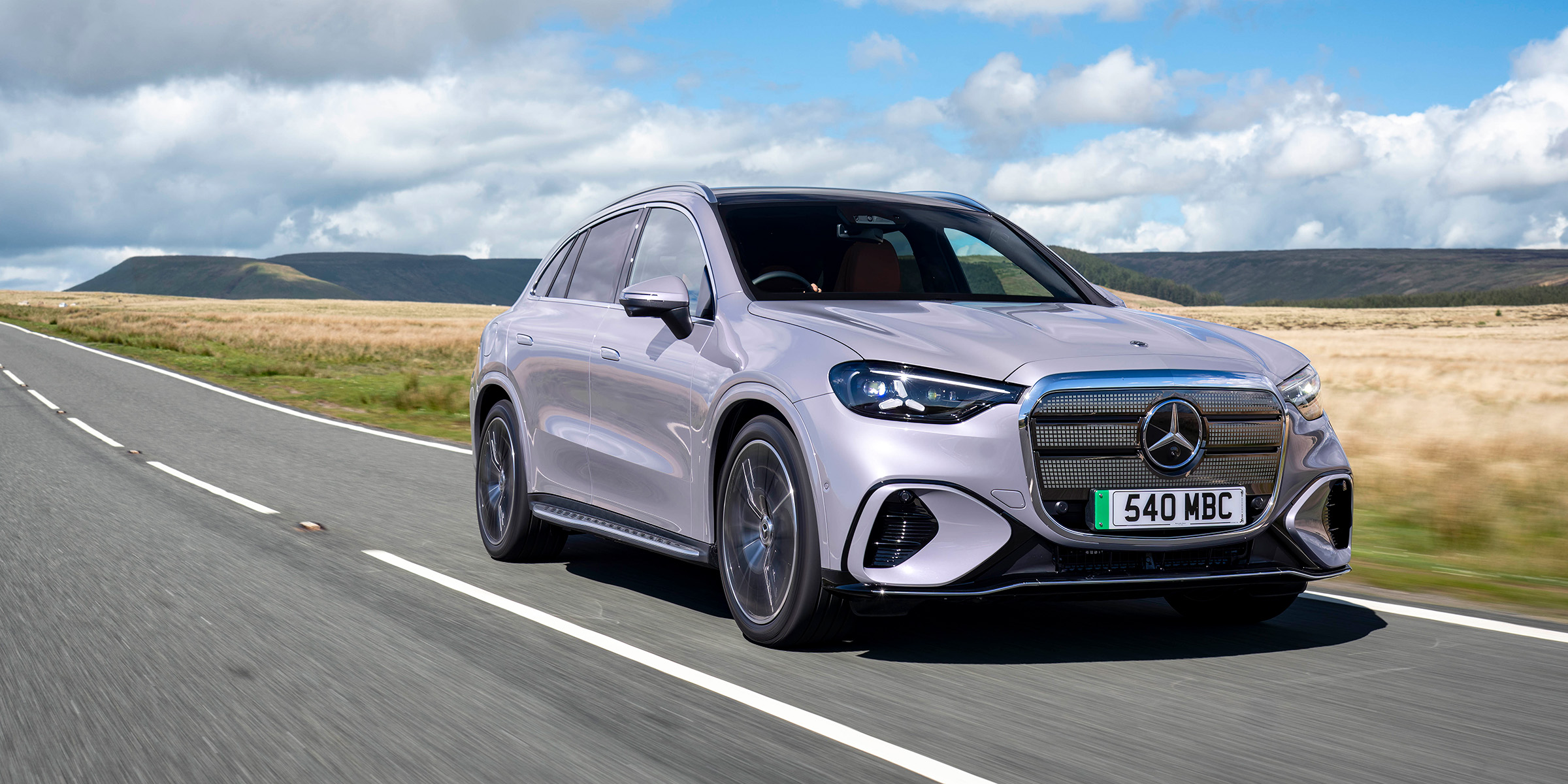
Mercedes-Benz has added a new entry-level model to its all-electric GLC EQ line-up with the introduction of the ‘GLC 250‘, offering a lower-cost alternative to the more powerful ‘GLC 400 4MATIC’ model.
The new model choice arrives as demand for the electric GLC reportedly continues to exceed expectations, with Mercedes-Benz claiming it has already attracted more orders than any electric vehicle in the brand’s history.
The GLC 250 sits beneath the dual-motor ‘GLC 400 4MATIC’ in the range, using a single electric motor mounted on the rear axle rather than an all-wheel-drive setup.
Power drops from 490hp in the ‘GLC 400 4MATIC’ to 354hp. The ‘GLC 250’ completes the 0-62mph sprint in 5.9 seconds, which is only modestly slower than its more powerful sibling and still quicker than many petrol-powered family SUVs.
Both models use the same 85kWh usable battery pack, meaning range remains one of the 250’s biggest strengths. Mercedes-Benz quotes up to 389 miles on the WLTP cycle, making it one of the longest-range electric SUVs in its class.
It also retains the rapid charging capability as higher-spec models. Rapid charging speeds of up to 320kW allow the battery to be replenished from 10% to 80% in around 22 minutes, making it well suited to long-distance journeys.
Like the rest of the electric GLC range, buyers can also add the optional ‘Refinement Package’, which brings ‘AIRMATIC’ air suspension and rear-wheel steering. The latter turns the rear wheels by up to 4.5 degrees to improve manoeuvrability in town while enhancing stability at motorway speeds.
The ‘GLC 250’ is available in the same five trim levels as the ‘GLC 400 4MATIC’ – ‘Sport’, ‘AMG Line’, ‘AMG Line Premium’, ‘AMG Line Premium Plus’ and ‘Premier Edition’.
Higher-spec ‘AMG Line Premium’ models and above gain Mercedes-Benz’s full-width ‘MBUX Hyperscreen’ setup, which combines multiple displays beneath a single panel across the dashboard.
Mercedes-Benz has priced the lead-in ‘GLC 250 Sport’ at over £55k – a £5k saving when compared to the ‘GLC 400 4MATIC’ in the same guise.
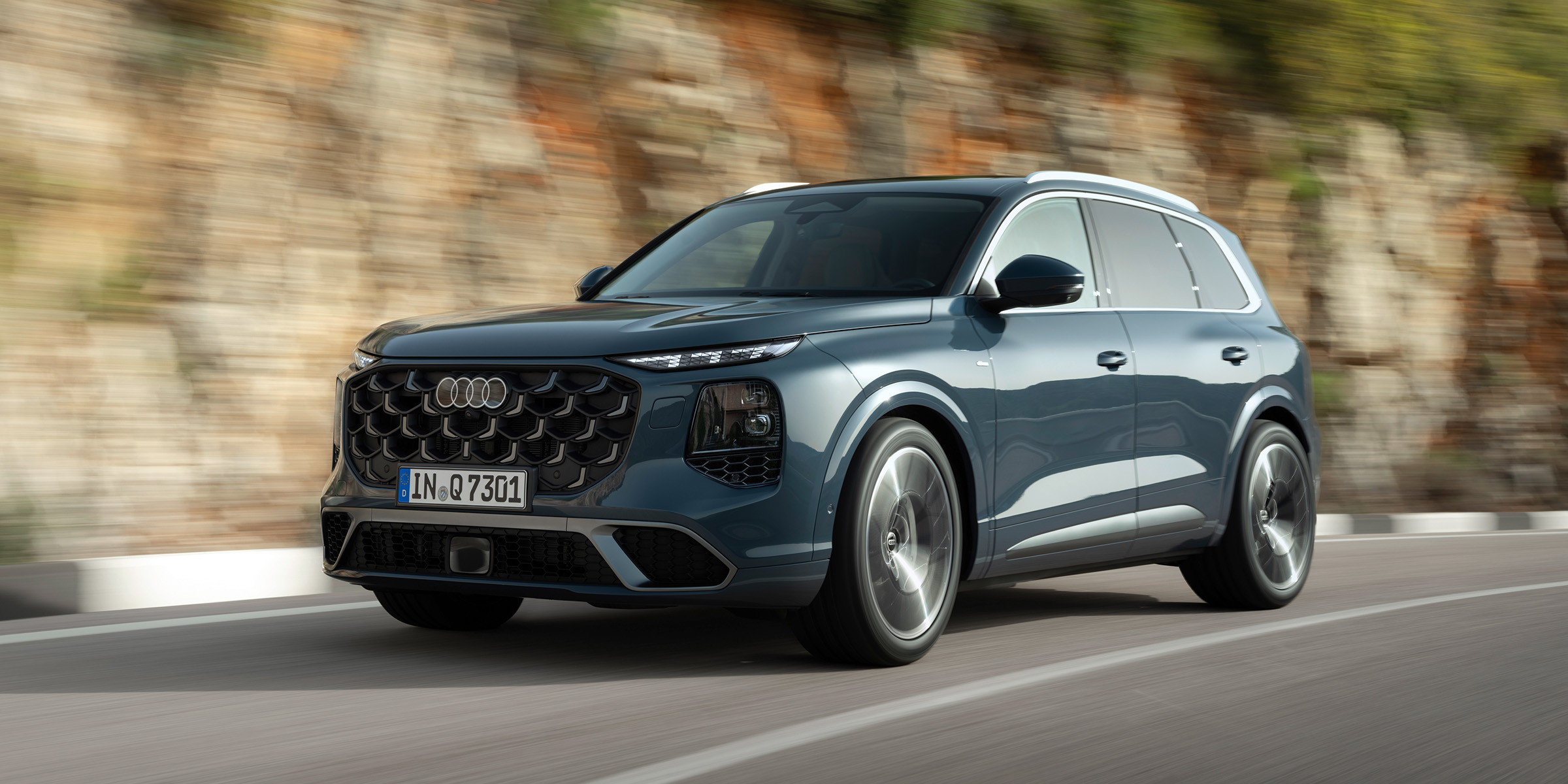
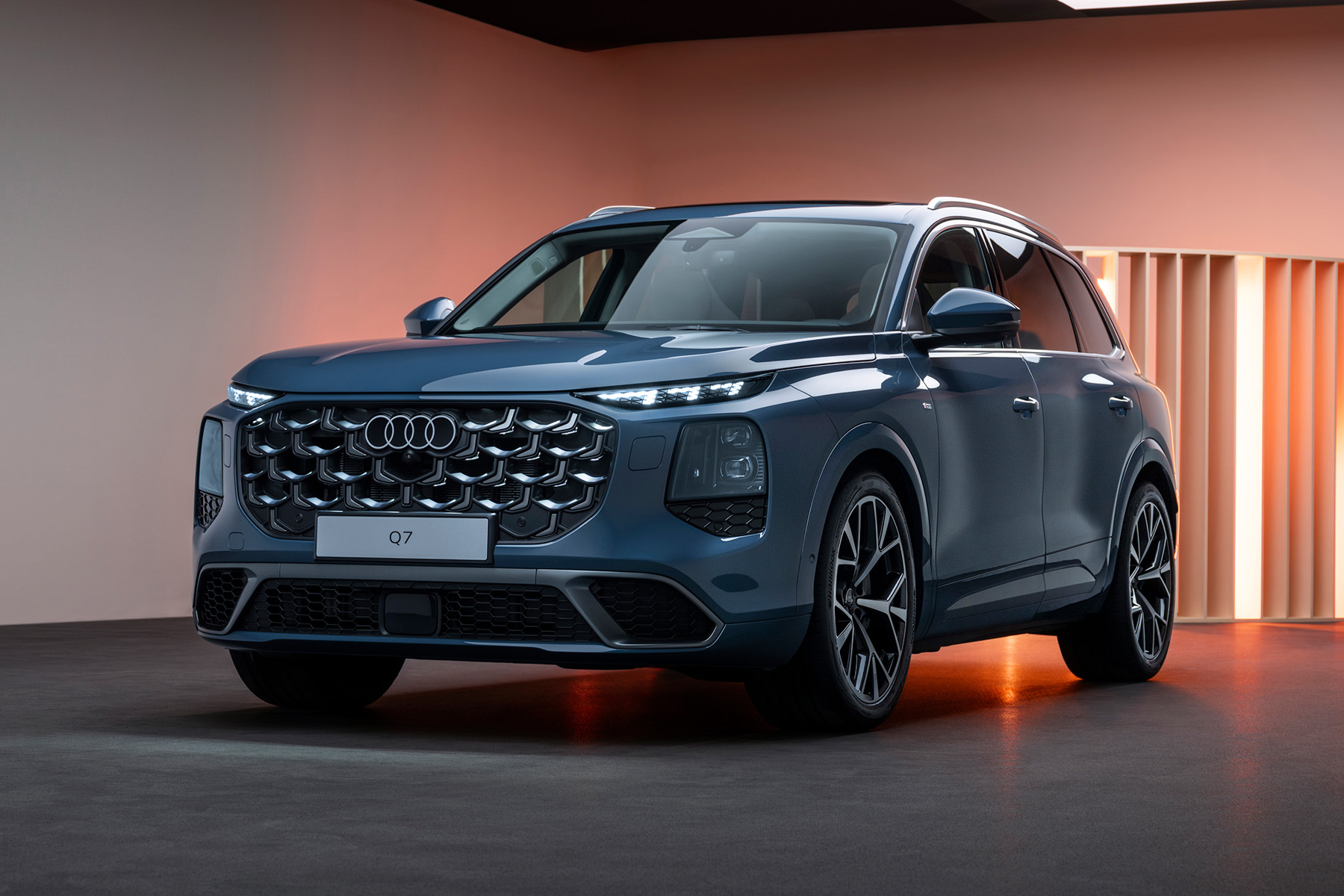
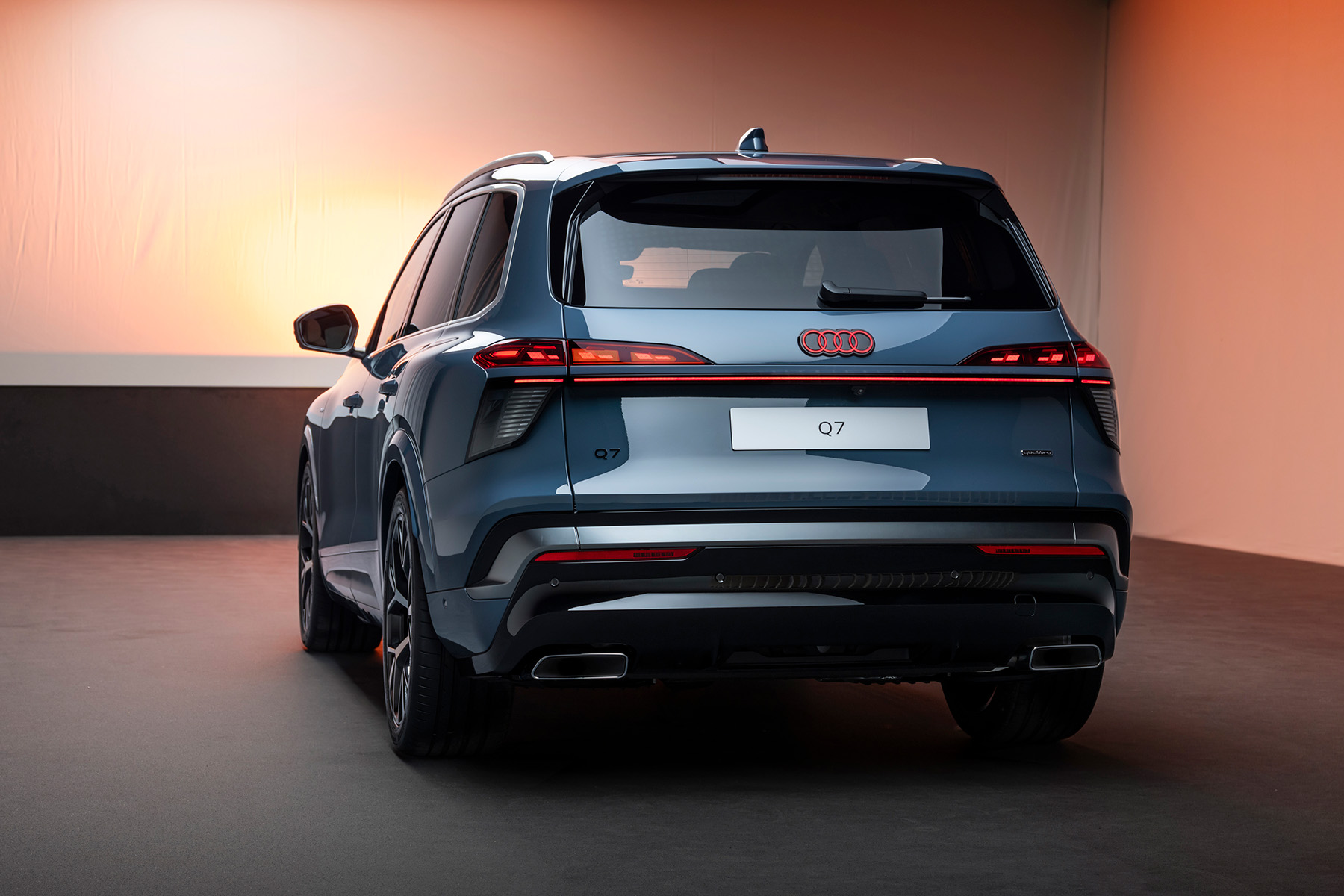
Audi has revealed the third-generation Q7, giving its largest SUV a redesigned cabin, new tech and improved diesel powertrain efficiency.
Set to arrive in UK showrooms in September, the new Q7 will continue to be offered exclusively with seven seats in the UK. It also becomes one of the most technologically advanced models in Audi’s line-up, with features ranging from adaptive air suspension and all-wheel steering to digital OLED lighting and a panoramic glass roof with switchable transparency.
Seven seats as standard
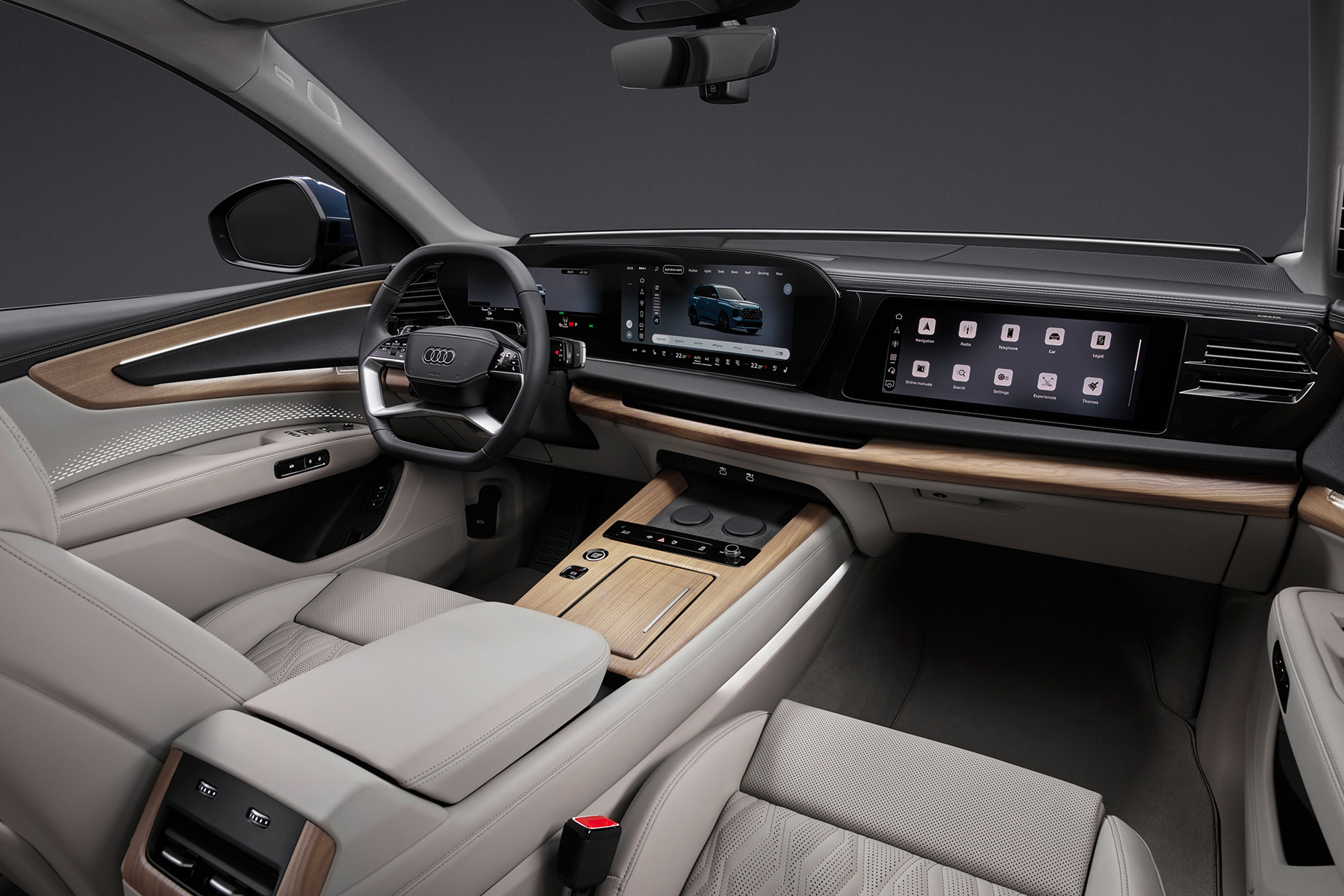
The biggest change for UK buyers is inside. Audi has redesigned the cabin with a cleaner layout, new infotainment displays and improved practicality.
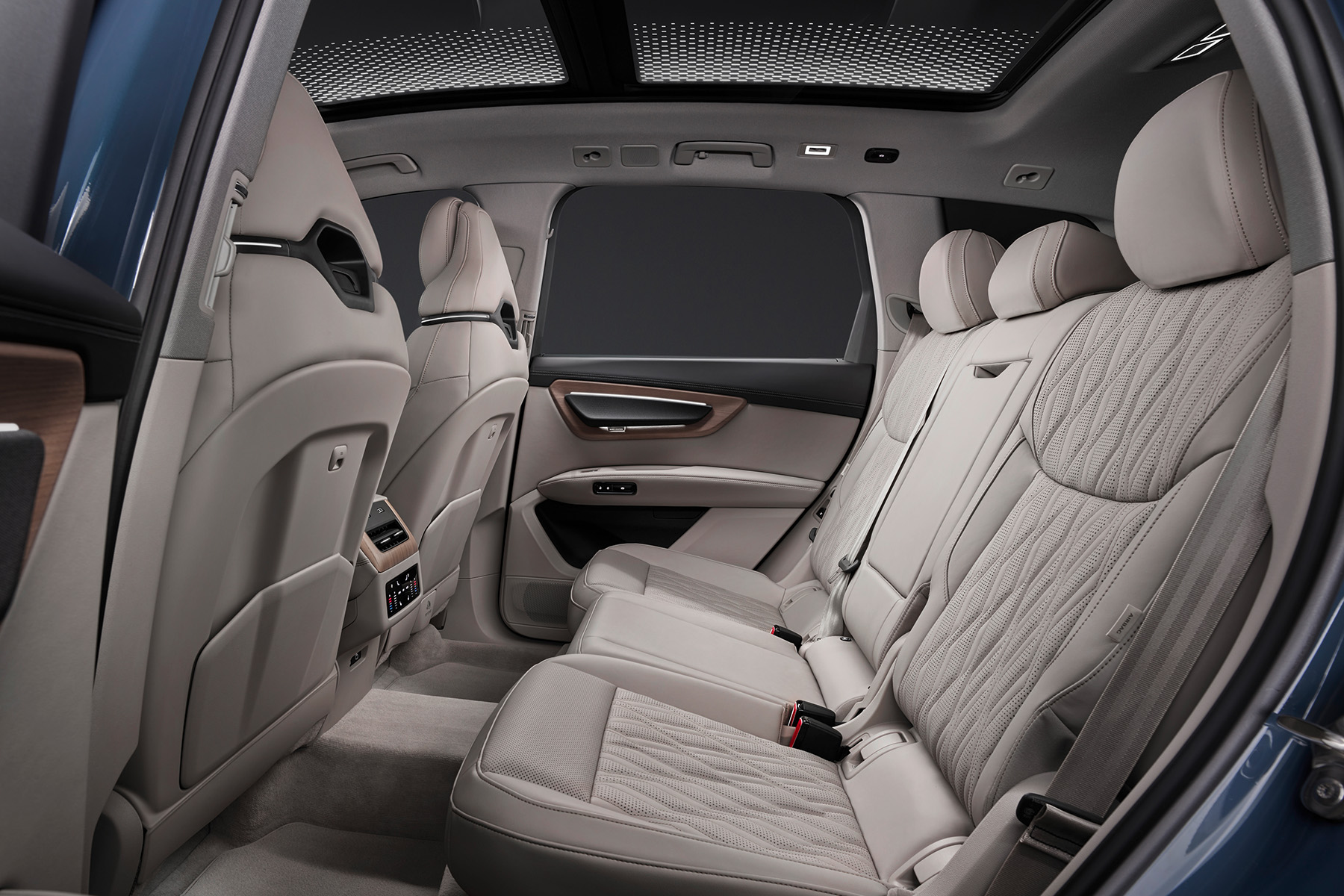
Unlike many large SUV rivals that charge extra for third-row seating, every UK-spec Q7 comes with seven seats as standard. All rear seats feature ISOFIX child-seat mounting points, while the second row can slide forwards electrically to provide access to the rearmost seats.
Boot space remains a strong selling point. The Q7 offers between 581 and 722 litres of luggage capacity depending on the position of the second-row seats, expanding to as much as 2,075 litres with the rear seats folded flat.
A new centre console incorporates twin wireless smartphone charging pads, larger cupholders and additional storage, while top-spec versions gain a panoramic glass roof that can switch between transparent and opaque at the touch of a button.
New tech
Inside, a curved OLED display combines the digital driver’s display and central touchscreen, while a dedicated passenger screen is fitted as standard. Audi’s latest voice assistant is also included, with ChatGPT integration allowing occupants to ask more natural questions and access information without reaching for a smartphone.
The Q7 also gains access to Audi’s app store, allowing users to download music, navigation, news and entertainment apps directly to the vehicle.
Higher-spec models can be fitted with an upgraded Bang & Olufsen sound system featuring seat-mounted vibration units that allow occupants to physically feel bass frequencies through their seats.
Audi continues its focus on lighting technology with new Digital Matrix LED headlights and third-generation OLED rear lights.
Drivers can choose from up to eight different lighting signatures, while the headlights can project information directly onto the road ahead. Features include lane guidance markers, blind-spot warnings and even an ice warning symbol when road temperatures suggest slippery conditions.
A particularly unusual feature is a new projected turn signal that displays a flashing indicator graphic onto the road surface beside the vehicle, helping cyclists and pedestrians spot the driver’s intentions at night.
V6 diesel power remains
At launch, UK buyers will have a single engine choice – a 3.0-litre V6 diesel producing 299hp.
The engine uses Audi’s latest mild-hybrid technology, which can provide an additional 24hp of assistance when accelerating. The system also allows limited electric-only operation at low speeds, helping improve fuel economy and reduce emissions.
Audi has also fitted an electrically powered compressor to improve throttle response and reduce turbo lag, giving the large SUV stronger acceleration from low engine speeds.
As before, all models feature ‘quattro’ four-wheel drive and an eight-speed automatic gearbox. The new Q7 will also come with adaptive air suspension and all-wheel steering as standard.
The air suspension automatically adjusts ride height depending on conditions, while all-wheel steering improves manoeuvrability at low speeds and stability on the motorway. Audi has also added a new function that lowers the vehicle when parked, making it easier for passengers to get in and out.
Its standard seven-seat layout, diesel powertrain and advanced technology package help it stand apart from many rivals, particularly the BMW X5 and Mercedes-Benz GLE, where seven seats are either optional or unavailable on certain versions.
When is it arriving?
The new Audi Q7 will open for orders in the UK during July, with first customer deliveries expected to begin in September. Pricing is expected to start from just under £82k.
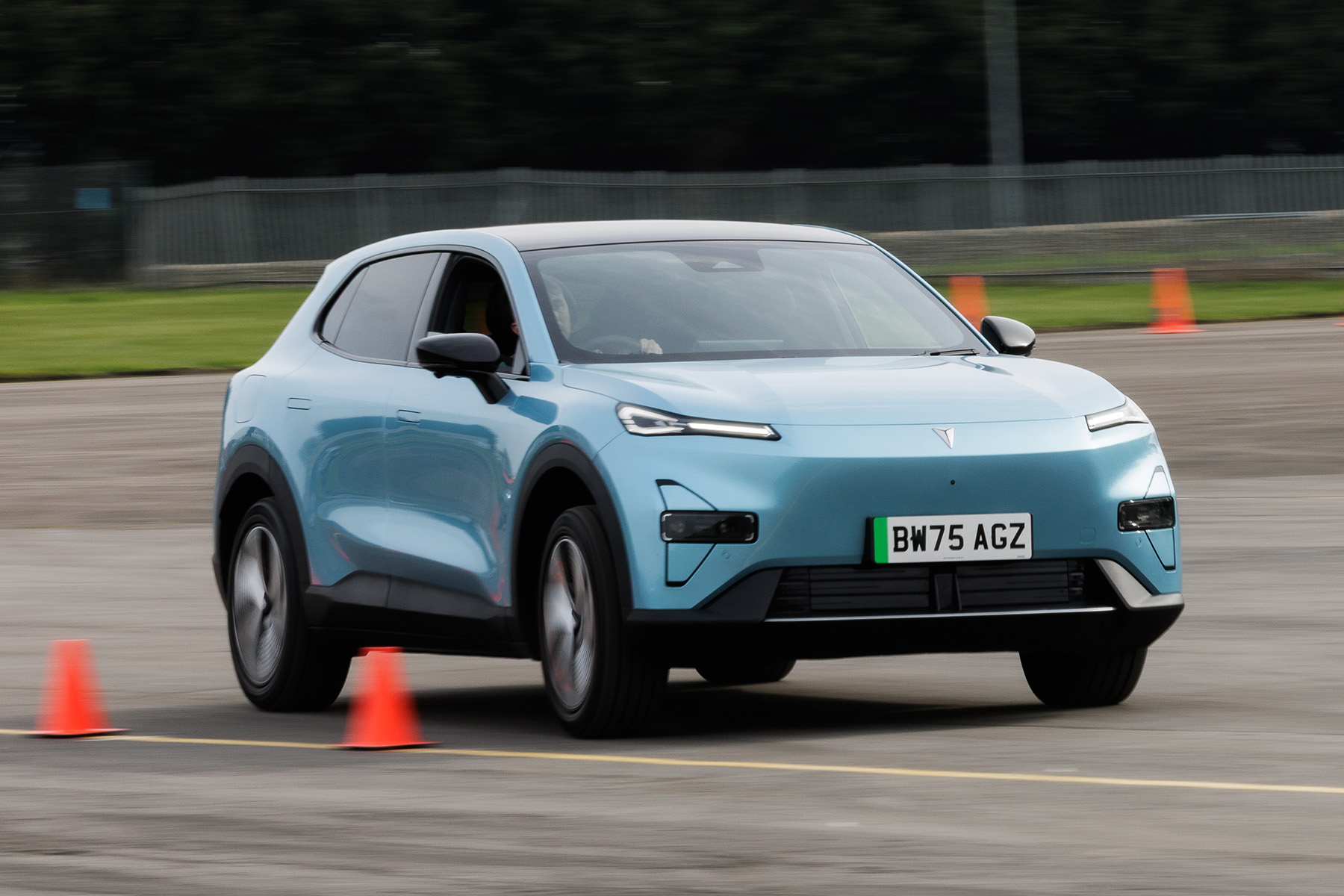
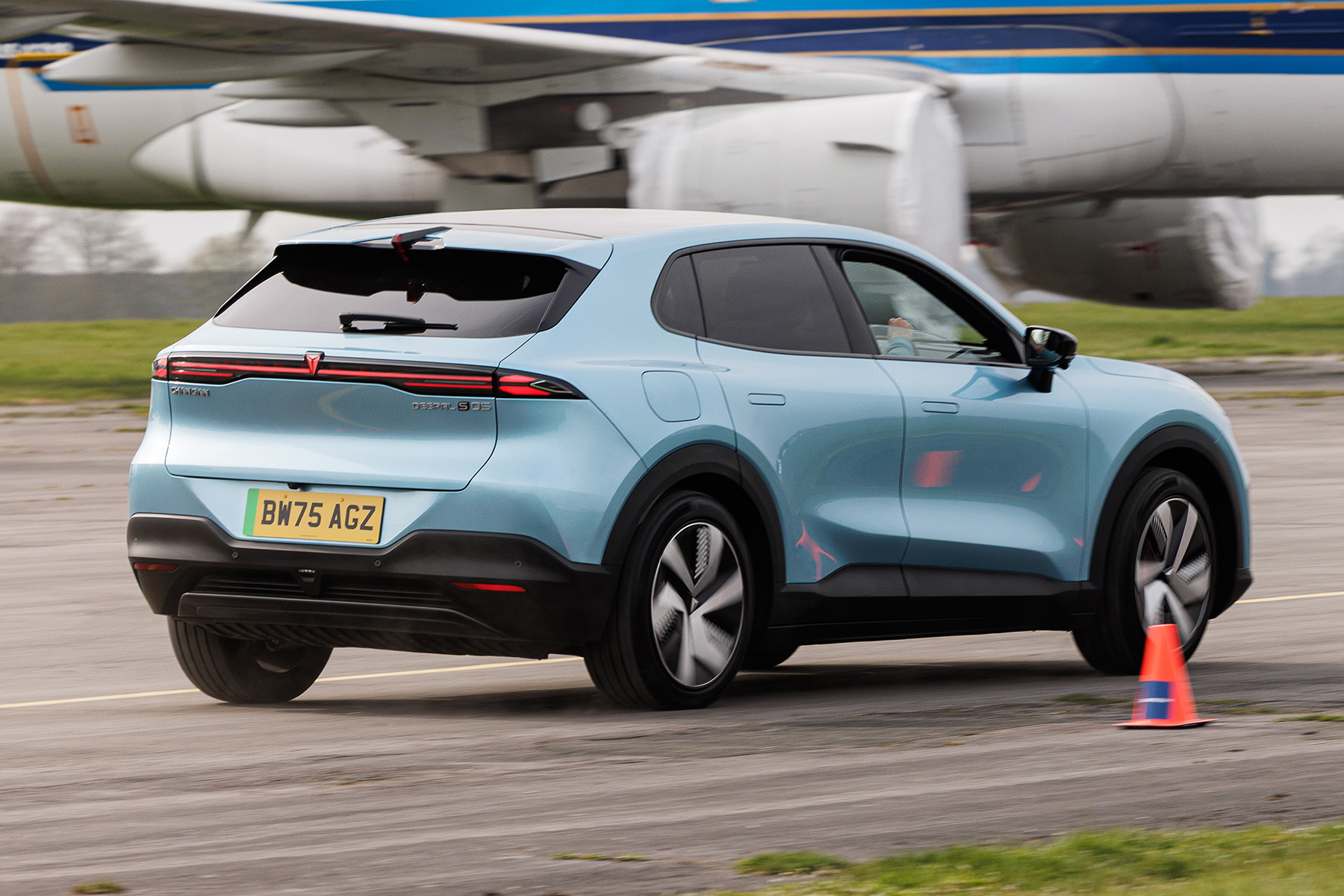
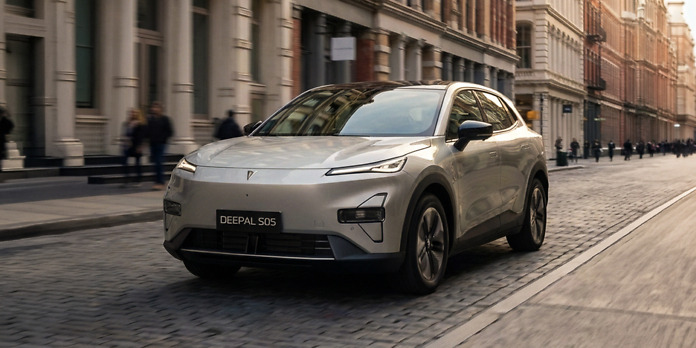
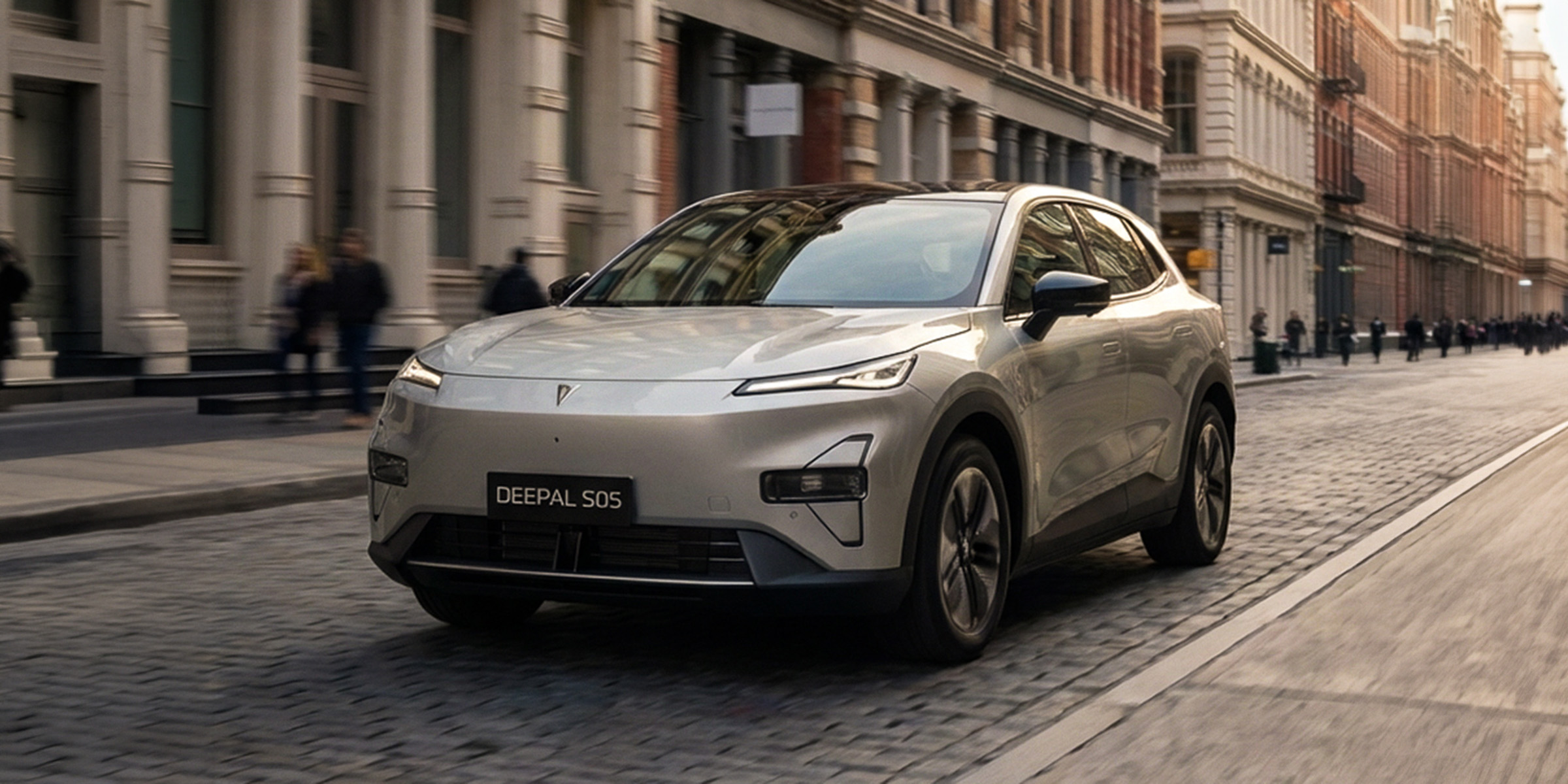
The Changan Deepal S05 is a mid-sized electric SUV that arrived in UK showrooms in Spring 2026. Changan has announced that a plug-in hybrid version of the S05 is also set for a UK arrival, which we will cover separately.
A leftfield rival to the likes of the Peugeot E-3008, Renault Scenic E-Tech and Skoda Enyaq, the Deepal S05 has divided reviewers, recieving a mixed bag of review scores from the British motoring media so far.
Described as a “very competent offering” by Electrifying.com’s Tom Ford, Green Car Guide’s Paul Clarke, adds that the SUV is good looking, spacious and the driving experience “features comfortable ride quality with rewarding rear-wheel drive handling.”
For others however, the SUV’s driving experience is a point of criticism. The Car Expert’s own Andrew Charman comments that the Changan isn’t “particularly well-suited to UK road surfaces”, while Eliis Hyde of Auto Express makes note of the car’s “clumsy handling.”
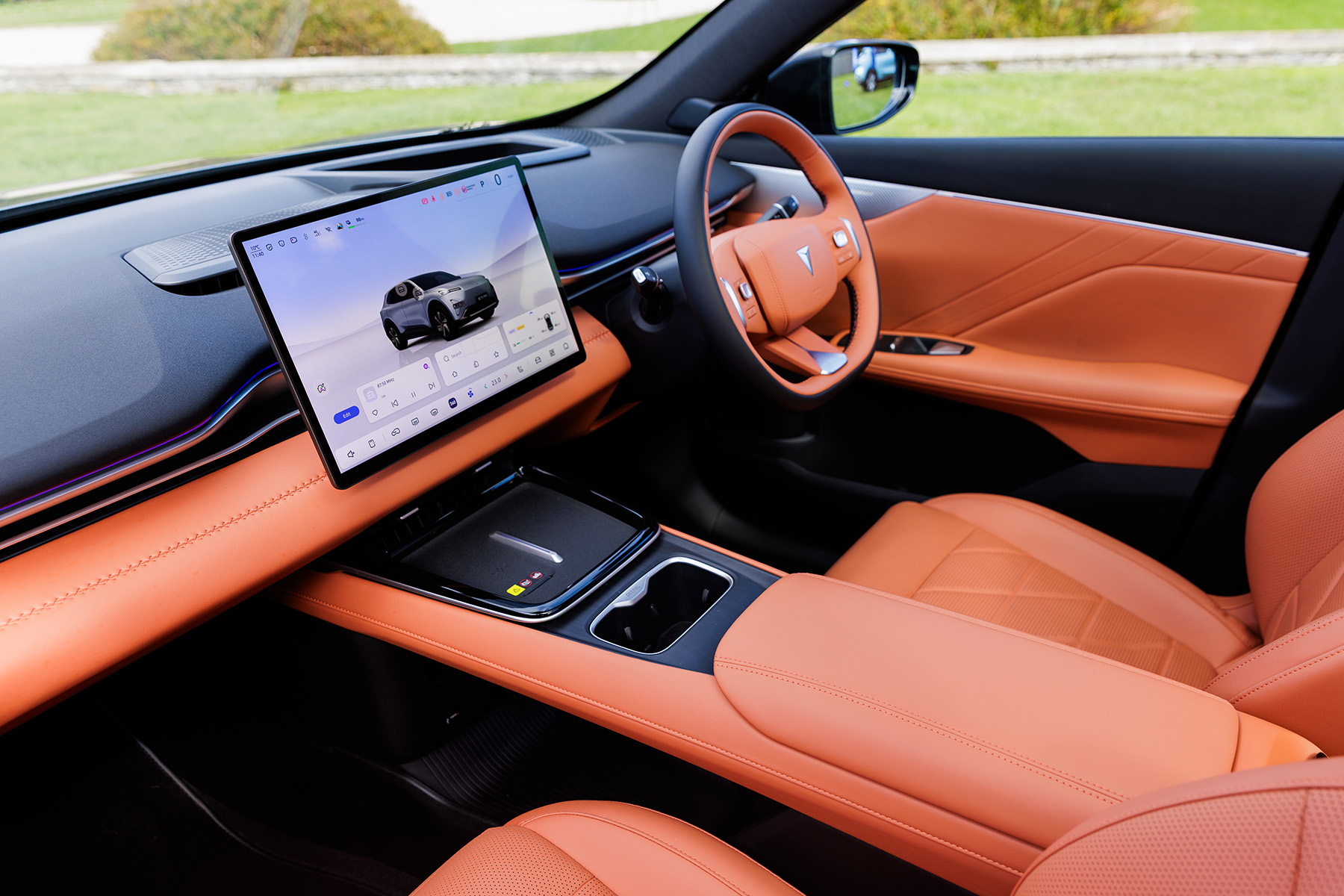
“The Deepal S05 doesn’t feel fully finished”, concludes Which EV’s Tim Barnes-Clay, with the caveat that it is “a strong base to build on” that is well-equipped as standard and offers “an infotainment system that stands out amongst its Chinese rivals.”
We don’t have the complete ownership picture of the Changan Deepal S05 formulated just yet. Once we receive running cost estimations for the model, we will give the SUV an Expert Rating score.
Body style: Small SUV Engines:electric, battery-powered Price:From £37,990
Launched: Spring 2026 Last updated: N/A Replacement due: TBA
Image gallery
Media reviews
Highlighted reviews and road tests from across the UK automotive media. Click any of the boxes to view.
Featured reviews
“The Changan Deepal S05 slots into the innocuous middle of the mid-sized family SUV chart – it scores for space and equipment but these qualities are dulled by less impressive driving manners.”
“The Changan Deepal S05 has its merits, like the impressive amount of space, bountiful standard kit list and better onboard tech than many of the Chinese cars we’ve tested to date. However, all of them are overshadowed by the sub-par driving experience, particularly the clumsy handling.”
Model reviewed: Range overview Score: 8 / 10 “The Italian design helps the S05 stand out from the crowd of similarly-sized electric SUVs, this and the usual combination of generous tech and equipment making it a convincing rival to the likes of a Vauxhall Grandland Electric or Skoda Enyaq straight out the blocks.” Author: Dan Trent Read review
Car
Model reviewed: Range overview Score: 6 / 10 “The Changan Deepal S05 is an unusual car. It occupies an uncomfortable no-man’s land between its most rough-edged Chinese alternatives and its time-served European rivals. The trouble is, it’s priced too closely to its European competitors to make sense.” Author: Luke Wilkinson Read review
Carwow
Model reviewed: Range overview “The Changan Deepal S05 is a small, stylish SUV with a posh cabin and the choice of rear- or all-wheel drive, but its charging speed is average at best.” Read review
Company Car and Van
Score: 7 / 10 “Whilst from a purely driving point of view the Changan Deepal S05 is not thrilling, we doubt that this will stop UK customers from getting into one. Offering one model with everything included, is a canny way to grab customers attention, especially when the average British car buyer opts for a top-specced vehicle.” Author: Andrew Walker Read review
Electrifying.com
Model reviewed: Range overview Score: 7 / 10 “The Changan Deepal S05 is a very competent offering. It’s got a simple buying structure, loads of useful standard kit and feels well made. It’s a bit low-key in some areas, but not everyone wants chintz. It’s worth taking a look, especially if the finance price is right.” Author: Tom Ford Read review
Green Car Guide
Model reviewed: Range overview Score: 9 / 10 “A very competent all-rounder. It looks good on the outside and in the interior, and it’s spacious. The driving experience features comfortable ride quality, with rewarding rear-wheel drive handling.” Author: Paul Clarke Read review
Honest John
Model reviewed: Range overview Score: 4 / 10 “The Changan Deepal S05 is well equipped considering how much it costs, but its price tag isn’t low enough to make up for shortcomings in terms of range, rapid charging ability and ride and handling.” Read review
Top Gear
Model reviewed: Range overview Score: 6 / 10 “The Deepal S05 is stylish and competent enough to compete with established names.” Author: Joe Holding Read review
Which EV?
Model reviewed: Range overview Score: 7.5 / 10 “The Deepal S05 doesn’t feel fully finished, but Changan has a strong base to build on. It is well-equipped, attractive, very comfortable, and offers excellent practicality, with an infotainment system that stands out amongst its Chinese rivals.” Author: Tim Barnes-Clay Read review
Safety rating
Independent crash test and safety ratings from Euro NCAP
Independent economy and emissions ratings from Green NCAP
No eco rating
As of June 2026, the Changan Deepal S05 has not been assessed by Green NCAP.
The Green NCAP programme measures exhaust pollution (which is zero for an electric car) and energy efficiency. Electric cars are much more energy-efficient than combustion cars, so the Deepal S05 is likely to score very highly in Green NCAP testing if and when it takes place. Check back again soon.
Running cost rating
Monthly cost of ownership data provided exclusively for The Car Expert by Clear Vehicle Data
No data yet
As of June 2026, we don’t have independently verified data available for the Changan Deepal S05. Check back again soon.
Reliability rating
Reliability data provided exclusively for The Car Expert by MotorEasy
No reliability rating
As of June 2026, we don’t have enough reliability data on the Changan Deepal S05 to generate a reliability rating.
The Car Expert’s reliability information is provided exclusively to us using workshop and extended warranty data from our partner, MotorEasy, sourced from both official dealerships and independent workshops.
As soon as MotorEasy has sufficient data on the Deepal S05, we’ll publish the results here.
Warranty rating
New car warranty information for the Changan Deepal S05
Overall rating
A
98%
New car warranty duration
7 years
New car warranty mileage
100,000 miles
Battery warranty duration
8 years
Battery warranty mileage
120,000 miles
Changan’s new car warranty is better than average, and better than rival brands in a similar price bracket as the Deepal S05.
The duration is seven years, with a limit of 100,000 miles. In addition to the standard new car warranty, the electric SUV has an eight-year/100,000-mile warranty for the battery components.
Recalls
Official DVSA safety recalls that have been issued for the Changan Deepal S05
As of June 2026, we are not aware of any DVSA vehicle safety recalls affecting the Changan Deepal S05. However, recall information is updated regularly, so this may have changed.
You can check to see if your car has any outstanding recalls by visiting the DVLA website or contacting your local Changan dealer.
Find your next new or used car with Auto Trader. Find out more
Find your next new or used car with Carwow. Find out more
Lease a Changan Deepal S05
If you’re looking to lease a new Changan Deepal S05, The Car Expert’s partners can help you find a competitive deal.
Personal contract hire deals from Leasing.com. Find out more
Personal contract hire deals from Carwow. Find out more
Personal contract hire deals from Select Car Leasing. Find out more
Subscribe to a Changan Deepal S05
Subscriptions are becoming a very popular way for consumers to try an electric car for a few weeks or months to help decide whether it’s a suitable alternative to a petrol car. If you’re interested in a car subscription, The Car Expert’s partners can help. (PS: What’s a car subscription?)
Chinese newcomer Changan is broadening its UK line-up with the launch of a plug-in hybrid version of its Deepal S05 family SUV, soon offering buyers a longer-range alternative to the fully electric model.
Scheduled to go on sale in September, the Deepal S05 ‘PHEV’ plug-in hybrid can reportedly travel more than 621 miles between charging stops and fuel fill-ups, making it one of the longest-range plug-in hybrids in its class.
Based on the figures released so far, Changan appears to be targeting the BYD Seal U most directly. Both models combine a sizeable battery with a petrol engine designed to maximise efficiency, while prioritising electric driving for everyday journeys.
The Deepal S05 offers a claimed 62 miles of electric-only range, putting it towards the top of the class and ahead of many plug-in hybrid rivals that typically offer between 35 and 50 miles of electric driving.
New Ultra-Hybrid tech
The S05 PHEV is the first model to use Changan’s new ‘Ultra-Hybrid’ system, developed with input from the company’s UK engineering centre.
Power comes from a 172kW electric motor paired with a 1.5-litre four-cylinder petrol engine. Combined output stands at 255hp. A 18kWh battery provides the electric range and can be charged at up to 55kW DC, which is unusually quick for a plug-in hybrid.
The S05 also includes Vehicle-to-Load (V2L) technology as standard, allowing owners to power external devices such as camping equipment, tools or electric bikes directly from the car’s battery.
Changan says the plug-in hybrid has been specifically developed for European buyers, with a focus on efficient urban driving and long-distance usability.
Official WLTP fuel economy is rated at around 141mpg when the battery is regularly charged. Even with a depleted battery, Changan claims consumption of around 52mpg, which compares favourably with many conventional petrol SUVs.
UK launch this autumn
The Changan Deepal S05 PHEV will arrive in UK showrooms in September, with pre-orders opening later this summer.
Buyers will be able to choose from ‘Pro’ and ‘Max’ trim levels, although full UK specifications and pricing have yet to be announced.
Like other Changan models, the S05 PHEV will be backed by a seven-year/100,000-mile vehicle warranty, plus an eight-year/124,000-mile warranty for its electrical systems, helping the brand compete with established rivals on peace of mind as well as technology.
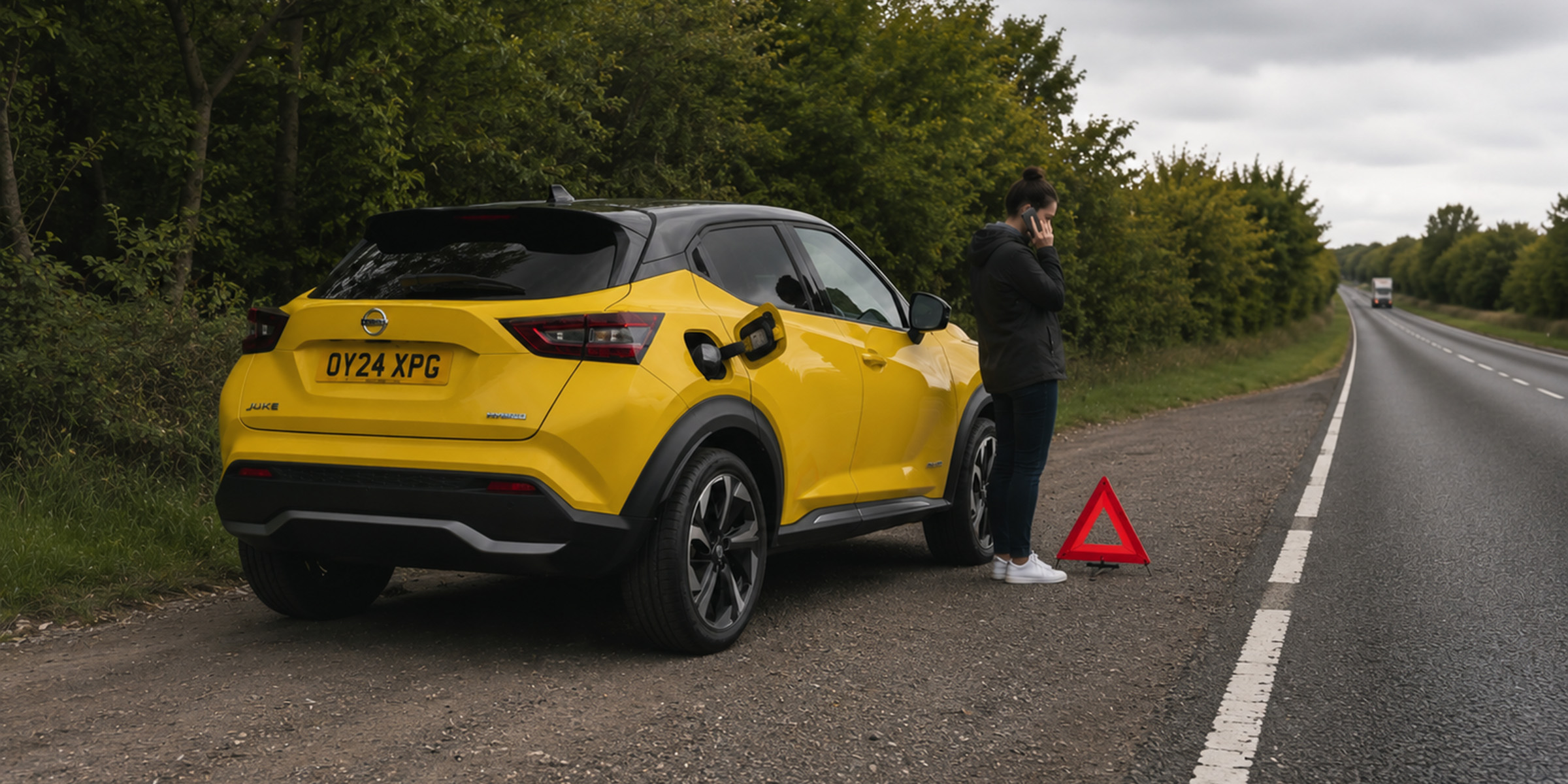
Well, you thought you could squeeze a few more miles out of your car to get home or to the next petrol station, and it hasn’t gone to plan.
Perhaps you weren’t keeping an eye on the fuel gauge, or your car has conked out earlier than you anticipated. Either way, you’ve run out of fuel at the side of the road.
This scenario is more common than you might expect, particularly in recent months with the surging prices of fuel that have caused lengthy queues and dry pumps to become a common sight at petrol stations across the UK.
In short, it really depends on your breakdown policy. According to research from financial information company Defaqto, 89% of breakdown policies in the UK do provide cover for motorists who run out of fuel. This does mean that one in ten drivers are not covered by their policies when they run dry on the road however.
If your breakdown policy provider is the AA, RAC or Green Flag – good news! All three providers state online that they regularly assist their policyholders who have run out of fuel, though you should note that Green Flag will expect you to pay for the cost of the additional fuel, and your policy may be the same.
Contacts for breakdown assistance:
AA: 0800 88 77 66 The AA provides assistance if you run out of fuel. Depending on your circumstances and level of cover, patrols may provide enough fuel to reach the nearest filling station or arrange recovery if required.
RAC: 03301 598 751 The RAC provides assistance if you run out of fuel. Patrols may be able to supply emergency fuel or arrange recovery to a nearby filling station, depending on the circumstances and your level of cover.
Green Flag: 0800 400 600 Green Flag provides assistance if you run out of fuel. The cost of any replacement fuel supplied at the roadside is typically the responsibility of the policyholder.
Start Rescue: 0333 320 0975 Start Rescue provides assistance if you run out of fuel and can arrange recovery to a nearby filling station if necessary. Recovery limits and conditions will depend on the terms of your policy.
Rescue My Car: 01423 535 795 Rescue My Car provides assistance if you run out of fuel and can arrange recovery to a nearby filling station. Any recovery beyond the limits included with your policy may incur an additional charge.
GEM Motoring Assist: 01342 825 676 GEM Motoring Assist provides assistance if you run out of fuel, including roadside help and recovery where required. The availability of replacement fuel and any associated costs will depend on the circumstances and policy terms.
Contact details accurate as of June 2026
If you are reading this article at home, it’s a good idea to skim through your car documents looking for what your breakdown policy actually covers overall. If you are stuck at the side of the road with a dry tank, call your policy provider anyway – they will tell you whether you are covered.
If you are not actually covered for scenarios like this, or you don’t even have a breakdown policy, you can still get urgent assistance but for an upfront fee. They will expect you to pay over the phone for the callout and the additional fuel, which could end up being rather expensive.
The AA has recently recorded that the number of its members running out of fuel has surged in line with rising fuel prices, and although it will assist all of these members on request and top up their tanks for free, the company recommends pre-emptive measures above all.
Carefully plan your route and find the nearest petrol station as soon as your fuel light comes on.
Fuel rescue – other questions to consider
My fuel light has just turned on – how far can I go?
The fuel light turning on usually indicates that your fuel tank is only 10-15% full – how far your car can go once the light is on depends on the car. A survey published by TankOnEmpty.com in 2019 suggests that a Ford Fiesta can travel 37 miles on average when its fuel light is on, while a BMW 3 Series can travel 44 miles.
In actuality, how far you can go also depends on factors like the condition of the road, how accurate your car’s computer is at calculating fuel levels, what gear you are usually in and tyre pressure. So, if you are trying to do the maths in your head and planning on playing petrol station roulette, the odds are probably stacked against you.
I’m on empty and the engine is starting to splutter and bang, what is happening?
The engine is now misfiring, and this means that some of the engine cylinders aren’t getting enough petrol to burn. This won’t continue for too long – if the engine has started misfiring you don’t have long before the car conks out all together. Find the safest place to park on the side of the road at short notice.
Is it illegal to run out of fuel?
Not really – you’re not breaking any UK law by running out of fuel. That said, running out of fuel and obstructing the road for other drivers is indeed illegal, and you may receive a £100 fine and three points on your licence. If you are on the motorway, the law cites running out of fuel as one of the reasons you’re allowed to use the hard shoulder.
Is running out of fuel bad for my car?
If this is your first time running out of fuel in a relatively new car, you likely have nothing to worry about. If this is your four, fifth or sixth time running dry in an older car, you should be a bit more concerned.
Older cars can have debris that’s accumulated over the years at the bottom of the fuel tank. There are filters designed to prevent this debris from making it into the engine. But running out of fuel has the potential to clog these filters and other components, which can eventually impede the flow of fuel. Repeatedly running dry could also cause your fuel pump to overheat, wearing it out prematurely.
That said, the health of your car should not be your first priority – look after yourself! Being stationary on the roadside can be quite dangerous, particularly if you are parked up on the hard shoulder of a busy motorway. Remember to exit your car from the door furthest from traffic, walk away from the hard shoulder and out of the way of other vehicles.
Running out of fuel has caused a road accident, does my insurance cover this?
While most car insurance policies will cover you if you run out of fuel, they won’t cover you for accidents caused by running out of fuel. If you have caused an accident when running out of fuel or obstructing the road, you could be taken to court, or issued with nine points on your licence and an unlimited fine.
Most electric vehicle owners do the majority of their charging at home. Others may regularly use chargers at work or rely on public charging near where they live.
But what happens when you’re travelling further afield and need to charge your car while you’re out?
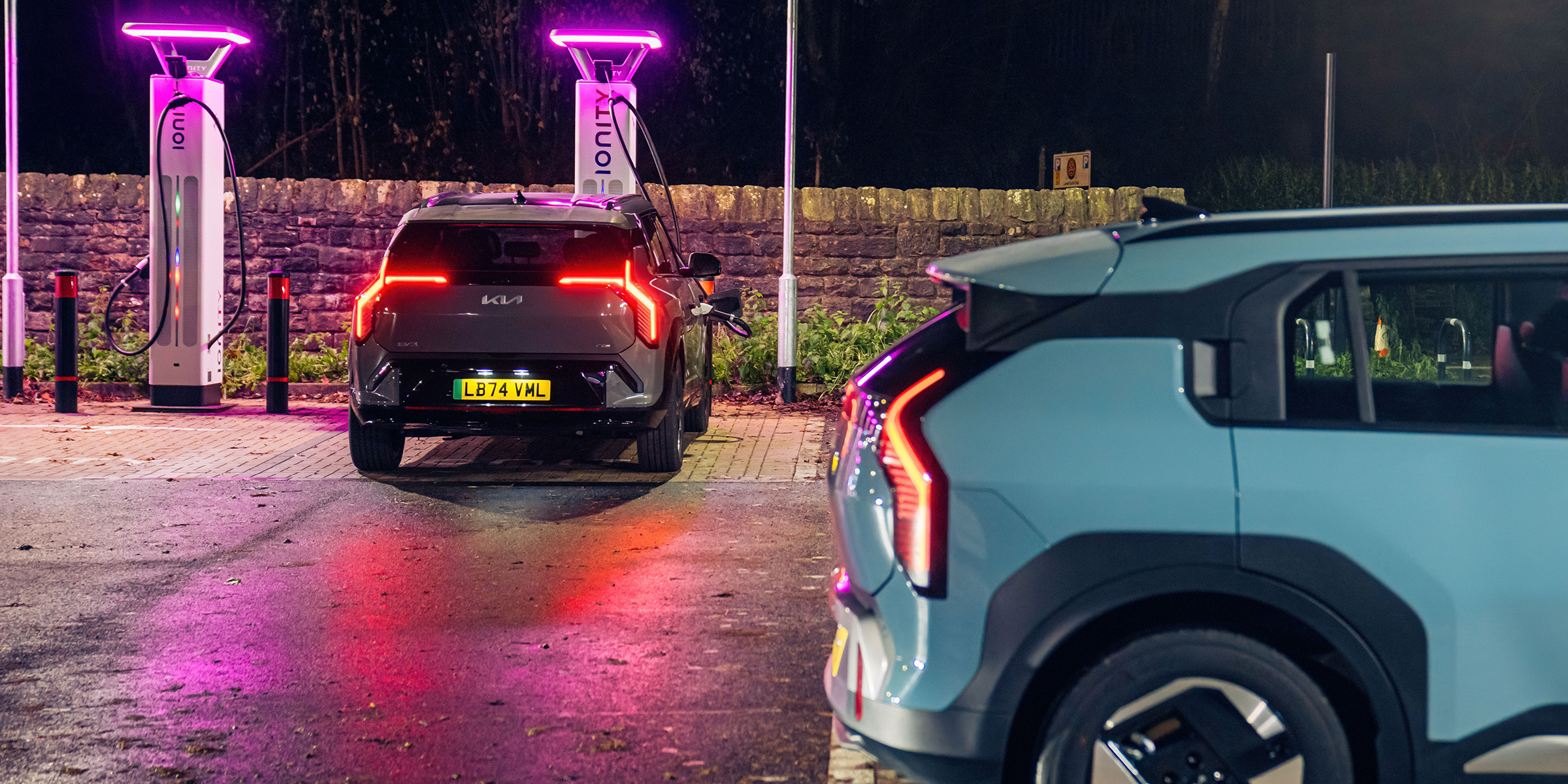
That’s where destination charging comes in. Increasing numbers of hotels, restaurants, shopping centres, cinemas, retail parks and leisure attractions now offer EV charging for visitors. Rather than stopping briefly for a rapid charge on the way to your destination, you charge your car while you’re already there doing something else.
For many EV drivers, destination charging can make longer journeys more convenient and reduce the need to make a separate charging stop before heading home.
How does destination charging work?
Destination charging is exactly what the name suggests – charging your vehicle at your destination.
The idea is simple. You arrive somewhere that you plan to spend some time, plug your car in and let it charge while you’re working, shopping, eating, watching a film or staying overnight.
Because the vehicle is likely to be parked for several hours, destination chargers don’t need to be as powerful as the rapid chargers found at motorway service stations.
Most destination chargers provide between 7kW (which is what you usually get from a home wallbox) and 22kW. That’s faster than a standard three-pin domestic plug, but much slower than the ultra-rapid chargers that can deliver 100kW or more.
The aim isn’t to add as much charge as possible in a short space of time. It’s to steadily recharge the battery while you’re occupied elsewhere.
A hotel, for example, may provide slower charging because guests are likely to be staying overnight. A charger at a cinema or restaurant may offer a faster charging rate because visitors are only expected to stay for a few hours.
Why is destination charging useful?
Destination charging helps make EV ownership more convenient. Instead of planning a separate charging stop, you can add charge while you’re already parked.
That can be particularly useful if:
You’re staying overnight at a hotel
You’re spending several hours at a shopping centre
You’re attending a conference or business event
You’re visiting a leisure attraction for the day
Rather than watching the battery percentage and wondering whether you’ll have enough charge to get home, destination charging can provide some welcome reassurance while you’re away from your usual charging routine.
Who provides destination chargers?
There are plenty of UK suppliers including:
BP Pulse – thousands of sub-22kW chargers in supermarkets and retail sites
Connected Kerb – specialist charging network ‘where drivers need them’
Ionity – ultra-fast supplier also serves retail hubs and leisure sites with slow chargers
Pod Point – one of the largest destination charging suppliers in the UK
RAW Charging – hospitality and leisure charging specialists
Shell Recharge – their 60,000 points include destination charging
Tesla – manufacturer brand has 2,100 specialist destination chargers
Some chargers are free for customers to use, while others require payment. The pricing structure varies depending on the operator and location.
Finding a destination charger
Many hotels, retail parks and leisure venues now advertise EV charging as part of their facilities. You can also use charging apps to find nearby chargers before you travel. Popular options include:
Bonnet
Chargemap
Charge Now
ChargePoint
Octopus Electroverse
PlugShare
Plugsurfing
Zapmap
These apps can help you locate chargers, check availability and, in many cases, pay for charging through the app itself. Payment options vary but often include contactless card payments, app-based payments and RFID cards.
Using destination chargers considerately
As EV charging becomes more common, good charging etiquette becomes increasingly important.
If you’re using a destination charger:
Only park in a charging bay if you’re actively charging
Move your vehicle once charging is complete if practical
Return cables and connectors neatly when you’ve finished
Follow any instructions provided by the site operator
Remember that other drivers may also be relying on those charging points. A little consideration helps everyone make the most of the available charging infrastructure.
Is destination charging important?
For many EV owners, yes. Home charging remains the most convenient way to keep an electric car topped up, but destination charging can make longer journeys much easier to manage. Instead of treating charging as a separate task, it becomes something that happens while you’re getting on with your day.
As more businesses install chargers for customers and visitors, destination charging is likely to become an increasingly useful part of everyday EV ownership.
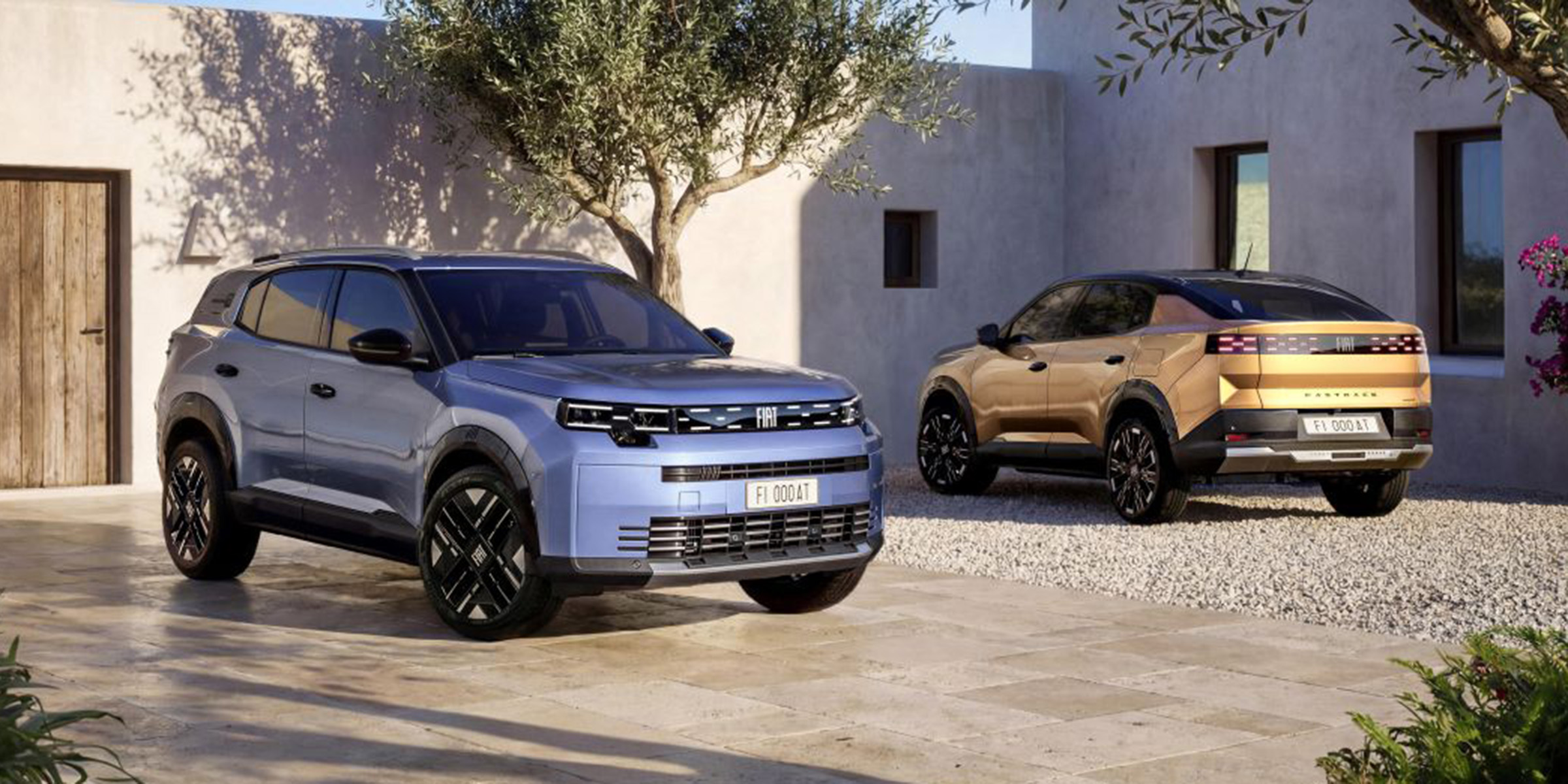
Fiat has released the first image of its upcoming Grizzly mid-sized SUV and coupé-SUV ‘Fastback’ line-up, which will become an important part of brand’s UK line-up from the second half of 2026.
Both the SUV and coupé-SUV share the same underpinnings but targeting slightly different buyers. While the standard Grizzly prioritises practicality and interior space, the Fastback adopts a sloping roofline aimed at style-conscious customers.
It will be slightly more compact than some of those rivals, yet Fiat claims it will offer class-leading interior space and boot capacity.
Petrol, hybrid and electric power expected
Fiat has confirmed that the Grizzly range will be available with a full range of powertrains, from conventional petrol engines through to fully electric versions.
That broad line-up could give it an advantage over some rivals that are increasingly focusing on electrified powertrains only. Buyers should be able to choose between petrol, hybrid and battery-electric models depending on their budget and driving needs.
The Grizzly has been designed as a family SUV first and foremost. Fiat says its upright proportions maximise cabin space and headroom, while the relatively compact exterior dimensions should make it easier to manoeuvre in urban environments than larger family SUVs.
The company is also promising a high-quality cabin with improved technology and a greater focus on everyday usability than previous Fiat SUVs.
Meanwhile, the Grizzly Fastback will offer a more lifestyle-oriented alternative, with a sleeker design and increased load length for carrying larger items.
Arriving in the UK this year
The Fiat Grizzly and Grizzly Fastback will launch in Europe, including the UK, during the second half of 2026.
Pricing, specifications and technical details have yet to be announced, but if Fiat can combine competitive pricing with the practicality it is promising, the Grizzly could become one of the brand’s most important models in years as it looks to challenge established players in the family SUV market.
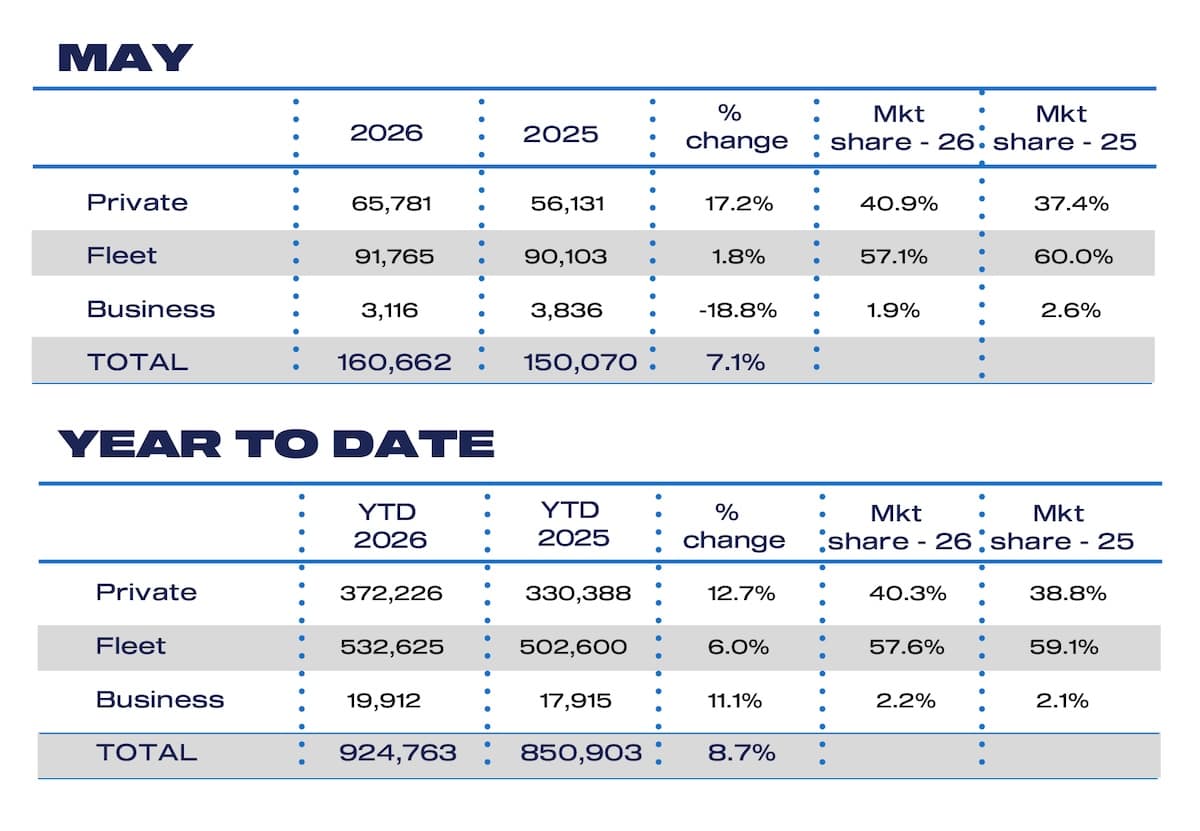
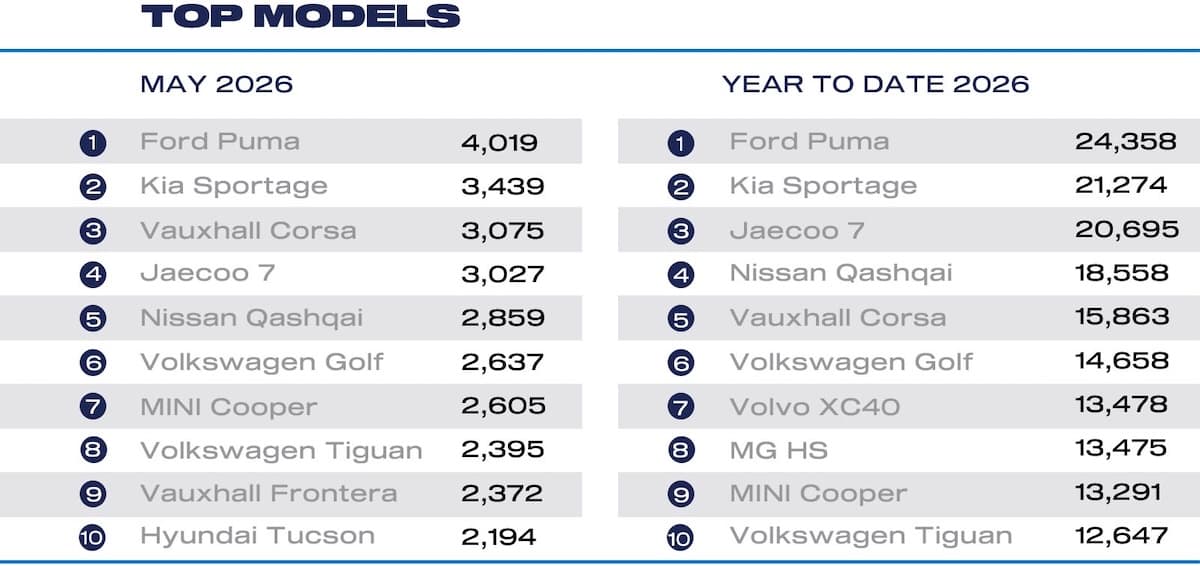
A familiar duo topped the sales charts in May – as the Ford Puma and Kia Sportage held on to first and second for the second month running in the race to be crowned the UK’s best-selling new car 2026.
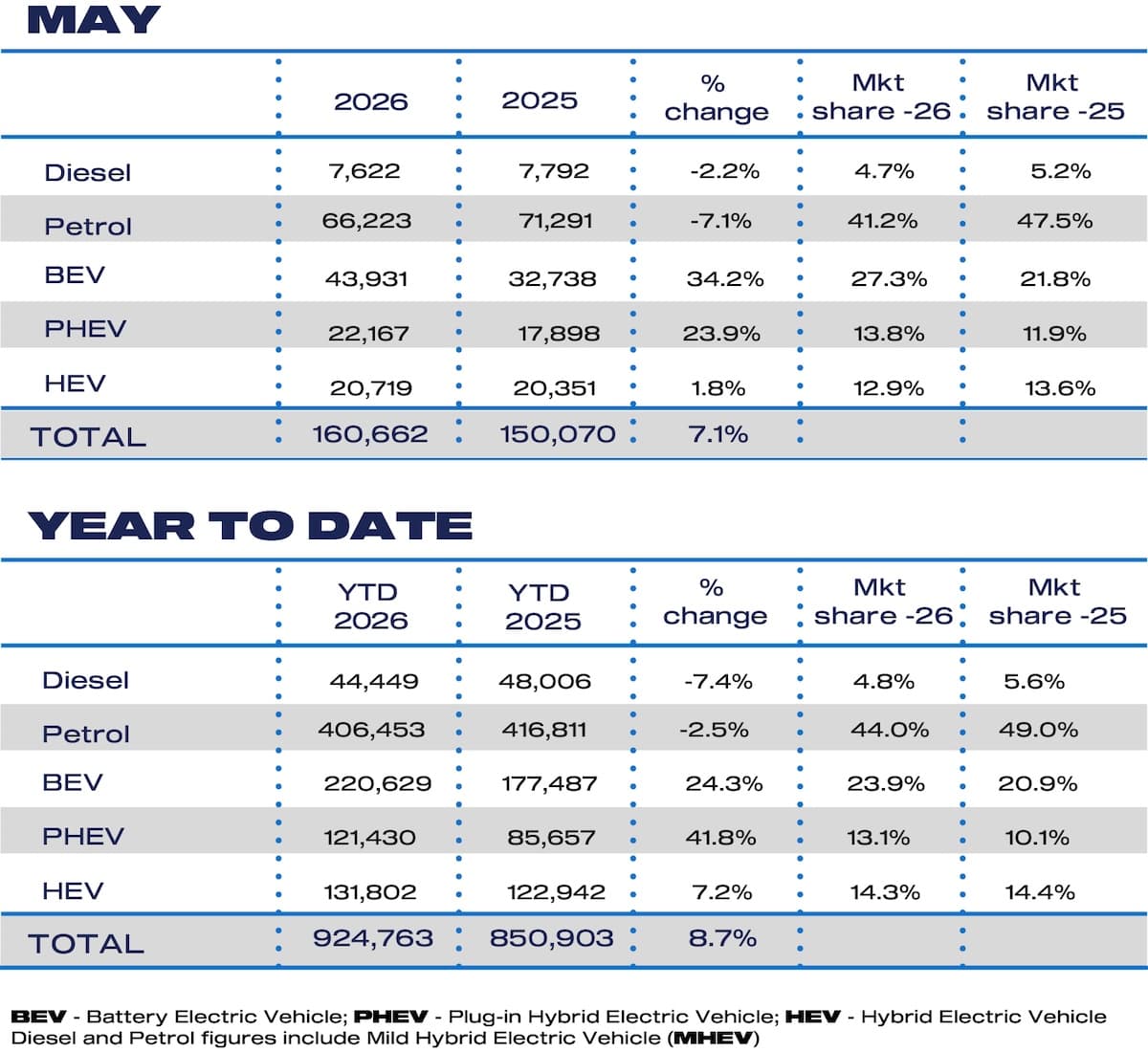
According to results published this morning by the Society of Motor Manufacturers and Traders (SMMT), May produced another month of new car market growth, with total registrations growing by 7% year-on-year to over 160,000.
Driving that growth is a surge in demand for hybrid and electric cars. Not long after Donald Trump decided to invade Iran and send oil prices skyrocketing, we wrote that this oil crisis could be a catalyst for driving more customers to switch from fossil-fuel cars to EVs. Now three months, with potentially months of petrol pricing pain still to come, but May has seen EV sales jump up 34% year-on-year, with now over a quarter of all new car sales being battery-powered
Winner of the best-selling new car accolade in both 2024 and 2025, the Ford Puma is starting to build a sales lead at the top once again, with over 3,000 more model registrations than any other model.
Chniese brand Jaecoo claimed a sizable slice of the new car market again in May with the Jaecoo 7 SUV finishing fourth last month – evidence that its table-topping sales performance in March was no one-off anomaly.
While it’s still hard to predict how the rest of the year will pan out, we at The Car Expert predict that both the Jaecoo 7, Ford Puma and the Kia Sportage will all be key contenders for the top spot in 2026, but they will have to maintain consistent sales form if they are to keep popular alternatives like the Nissan Qashqai and Vauxhall Corsa in the rear-view mirror.
As for the annual leaderboard, there were no movers after May, with each model in the top ten holding on to its position in the sales table.
The Ford Puma sold in impressive numbers throughout 2025, and has continued that red hot sales form into 2026, currently sitting top of the charts once again. The battle at the top is still tight, but the Puma built on its lead in May, opening a 3,000 registrations gap over the Kia Sportage.
The Puma has received plenty of praise from the UK motoring media, and currently holds a New CarExpert Rating of B, with a score of 65% on our unique Expert Rating Index. The electric version – the Puma Gen-E – fairs better, holding a New Car Expert Rating of A, with a score of 71%.
The Kia Sportage was so close to taking the UK’s best-selling car title in 2024, before the SUV fell at the final sales hurdle in December. 2025 was a similar story. The SUV re-claimed second place after leapfrogging the Jaecoo 7 after April. The Sportage sells in impressive numbers, and has cemented itself as a buyer favourite in the UK.
The new Kia Sportage currently holds a New CarExpert Rating of A, with a score of 72% on our award-winning Expert Rating Index.
Jumping up to second in the annual registrations leaderboard in March and claiming fourth in May, the Jaecoo 7 is still a serious contender for the UK’s ‘best-selling new car’ accolade. Jaecoo will be hoping that its table-topping sales performance in March can be repeated. Can the SUV can go the full distance and snatch the title from the Puma? Time will tell.
The Jaecoo 7 currently holds a New Car Expert Rating of B, with a score of 68% in our Expert Rating index.
The Nissan Qashqai remains one of the nation’s most popular cars – a claim validated by the SUV’s top ten sales consistency. A commendable sales showing in May sees the SUV maintain fourth in the annual leaderboard.
The Qashqai is the current jewel in the crown of the British car manufacturing industry – designed in London, developed in the Midlands and built in Sunderland. It’s also the UK’s best-selling British-built car. On sale since Autumn 2021, the Qashqai holds a New CarExpert Rating of A, with a score of 74%.
Compact and affordable – the Vauxhall Corsa supermini is a British favourite. While the hatchback has now been surpassed by the Ford Puma, the Corsa is still posting strong registrations totals, and holds fifth.
The Vauxhall Corsa currently holds a New Car Expert Rating of C, with a score of 65%, while its all-electric counterpart holds a New Car Expert Rating of A, with a score of 71%.
Volkswagen is the UK’s most popular car manufacturer by total sales numbers, but it took until last year for one of its models to firmly cement itself in the top ten places. That model is the mid-sized Golf, held on to finish in sixth in 2025. 2026 looks like more of the same, as the Golf holds on to sixth.
The Volkswagen Golf currently holds an excellent New Car Expert Rating of A, with a score of 77%.
After rocketing up to sixth in the annual leaderboard after a high-volume month of sales in March, the Volvo XC40 misses out on the top ten in May, but holds on to seventh place regardless. One of the oldest models on this list, the XC40 has been increasing in popularity over the last year, as a more upmarket alternative to the Ford Puma.
The Volvo XC40 currently holds a commendable New CarExpert Rating of B, with a score of 66% in our industry-leading Expert Rating Index.
Another mid-sized SUV that often records high sales totals in the UK, the MG HS holds on to eighth in the annual table after May. A cheaper alternative to the likes of the Nissan Qashqai and Volkswagen Tiguan, can the HS hold on to its top ten status in the months ahead?
The MG HS currently holds a New Car Expert Rating of A, with a score of 74% in our Expert Rating Index.
Now in its fourth generation, the Mini Cooper as been a British buyer favourite for decades, and this latest iteration is no different. After finishing seventh in April, the Cooper sit stills in ninth in the annual table.
The Mini Cooper currently holds a New Car Expert Rating of A, with a score of 71% in our Expert Rating index, while its battery-powered twin the Mini Cooper Electric holds a New Car Expert Rating of A, with a score of 81%.
Volkswagen’s second most popular model in the UK, the Tiguan has made faily consistent appearances in the monthly top ten for the past two years, an eighth place finish in May enough to hold tenth in the annual table, with a whole host of models jostling for position not far off the top ten.
The Volkswagen Tiguan currently holds a New CarExpert Rating of A, with a score of 71%. That puts it squarely in the middle of a crowded compact SUV class.
We will be back with June’s new car registration update in the first week of July, as the 2026 race for the UK’s best-selling car accolade continues. Check back soon!
Make and model: Citroën ë-C3 Aircross Description: Small electric SUV Price range: £24,315 to £54,590 (plus options)
Summary: The Citroën ë-C3 Aircross is sensibly priced, well-equipped and practical. The only drawback is that real-world range falls well short of official claims.
For a broader ownership picture, see our Citroën ë-C3 Aircross Expert Rating, which combines media reviews, safety data, reliability, running costs and warranty cover.
The Citroën ë-C3 Aircross is a compact electric SUV at an accessible price point, sitting in one of the busiest segments of the current electric car market.
The ë-C3 Aircross is highly regarded here at The Car Expert as an ownership proposition, and it won our Best Value Family Car 2026 award. That was based on its affordability – both to buy and run – as well as positive media reviews from across the UK since it was launched last year.
For a broader ownership picture, see our Citroën ë-C3 Aircross Expert Rating. This review focuses on what the car is like to drive and live with over time.
Price and equipment
The Citroën ë-C3 Aircross range starts from just over £24K for the Collection trim level, with the Max tested here from £25.5K. For the money, the standard equipment list is strong. The Collection includes a ten-inch touchscreen with wireless Apple CarPlay and Android Auto, automatic air conditioning with physical controls, ambient interior lighting, keyless entry and a driver assistance suite including automatic emergency braking and lane departure warning. The Max adds wireless phone charging, a heated steering wheel, blind-spot detection, front parking sensors, 3D navigation, and LED rear lights. The test car was also fitted with heated front seats, which do not appear in the standard equipment list for either trim – worth checking with your dealer before ordering.
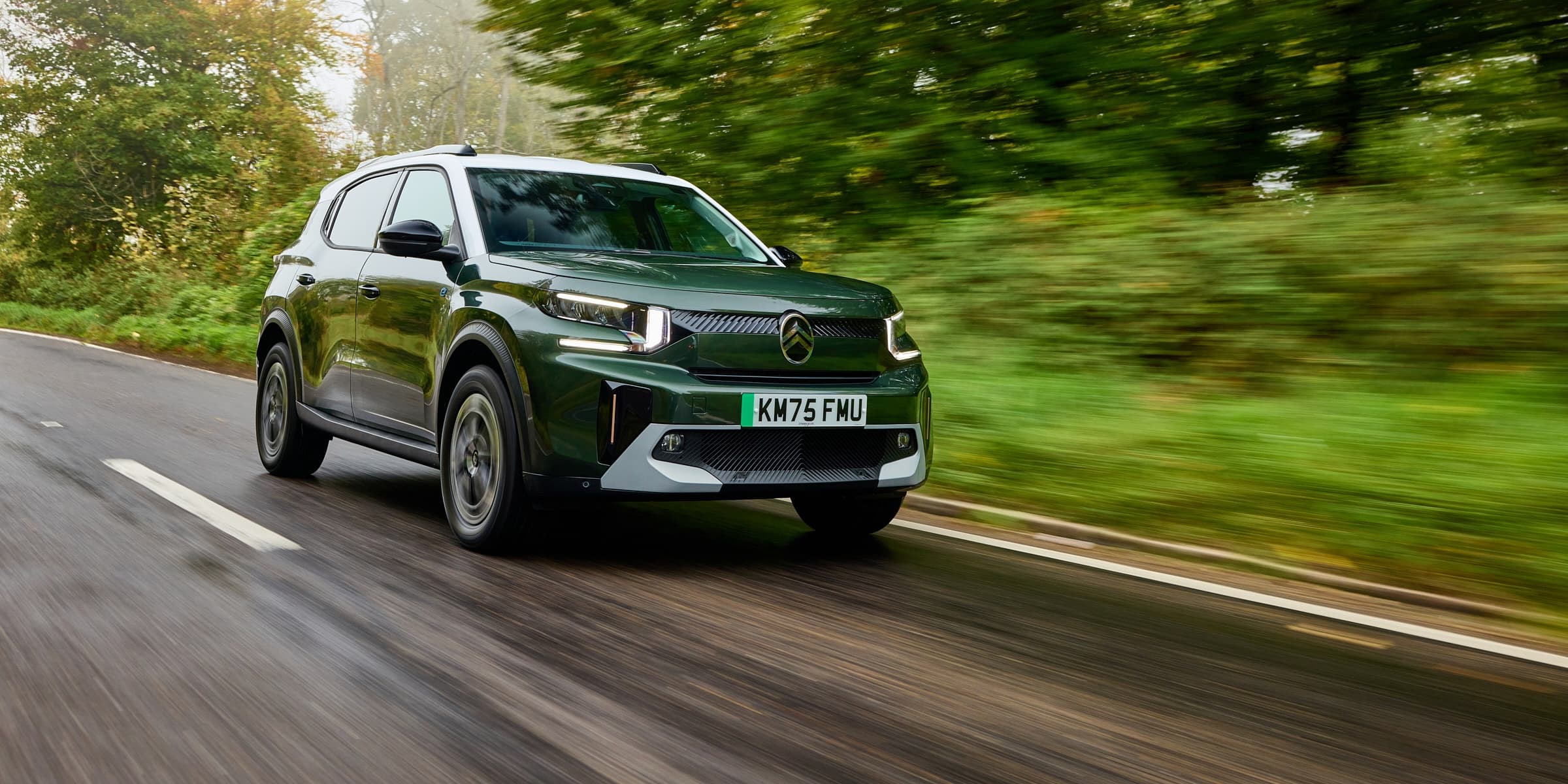
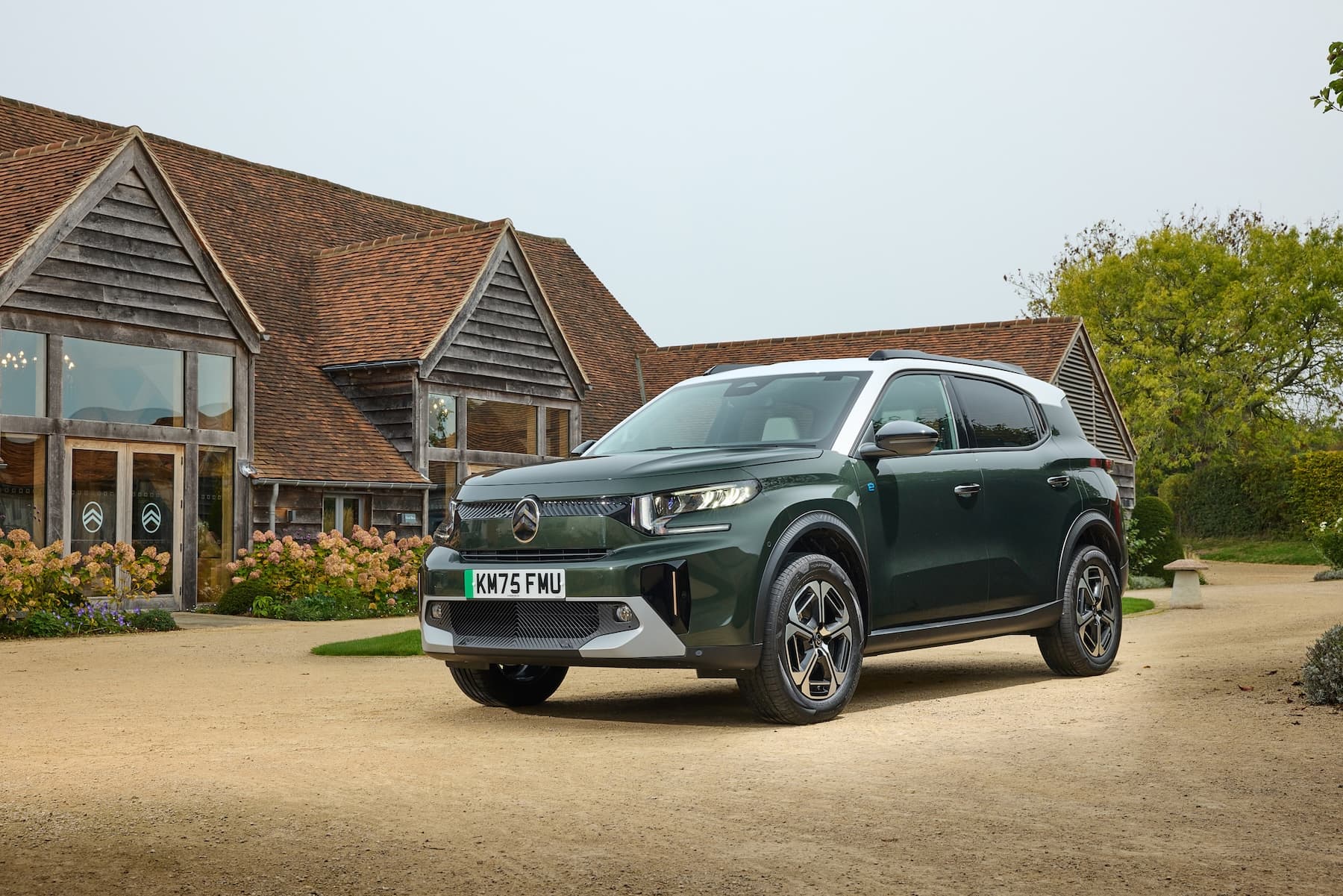
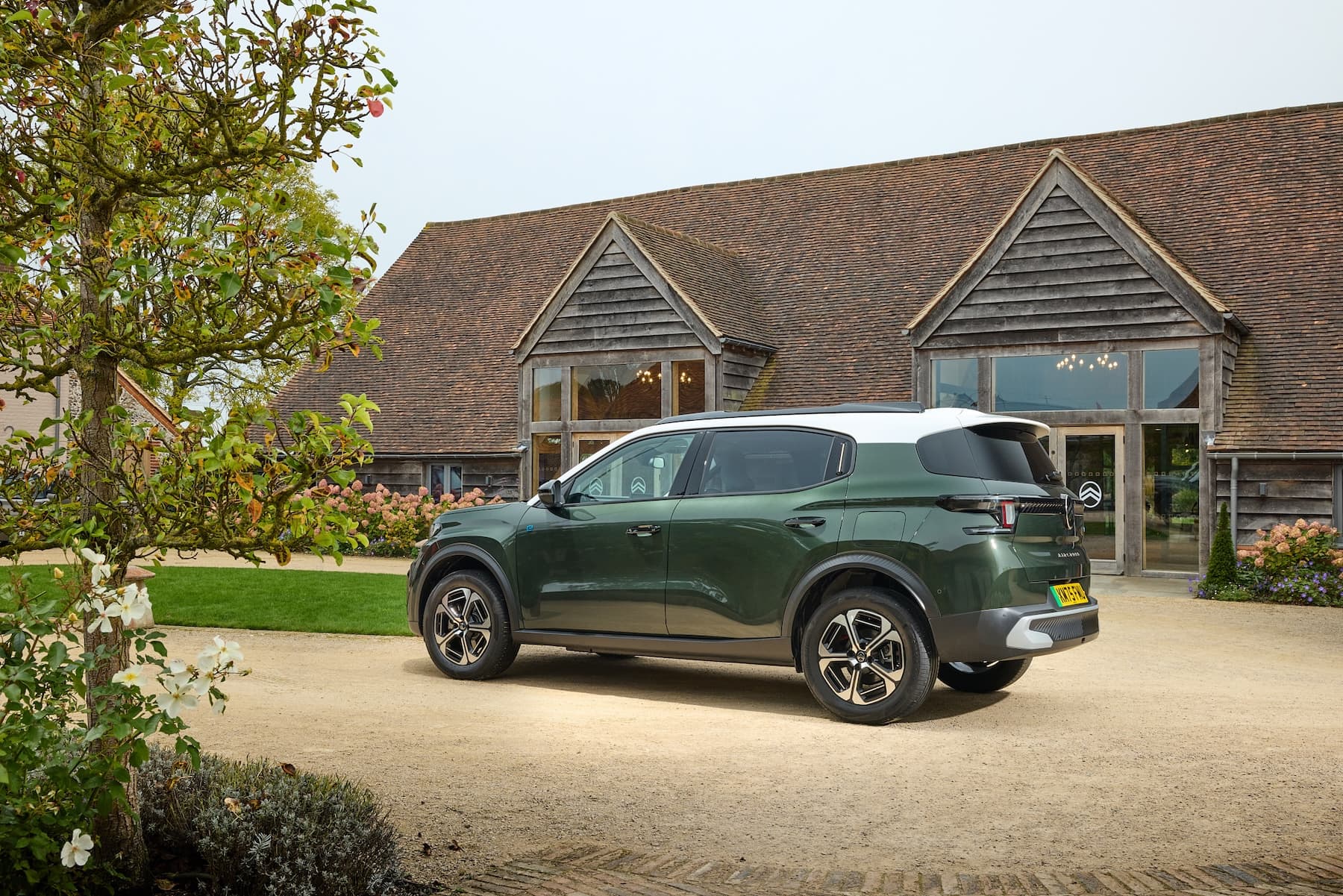
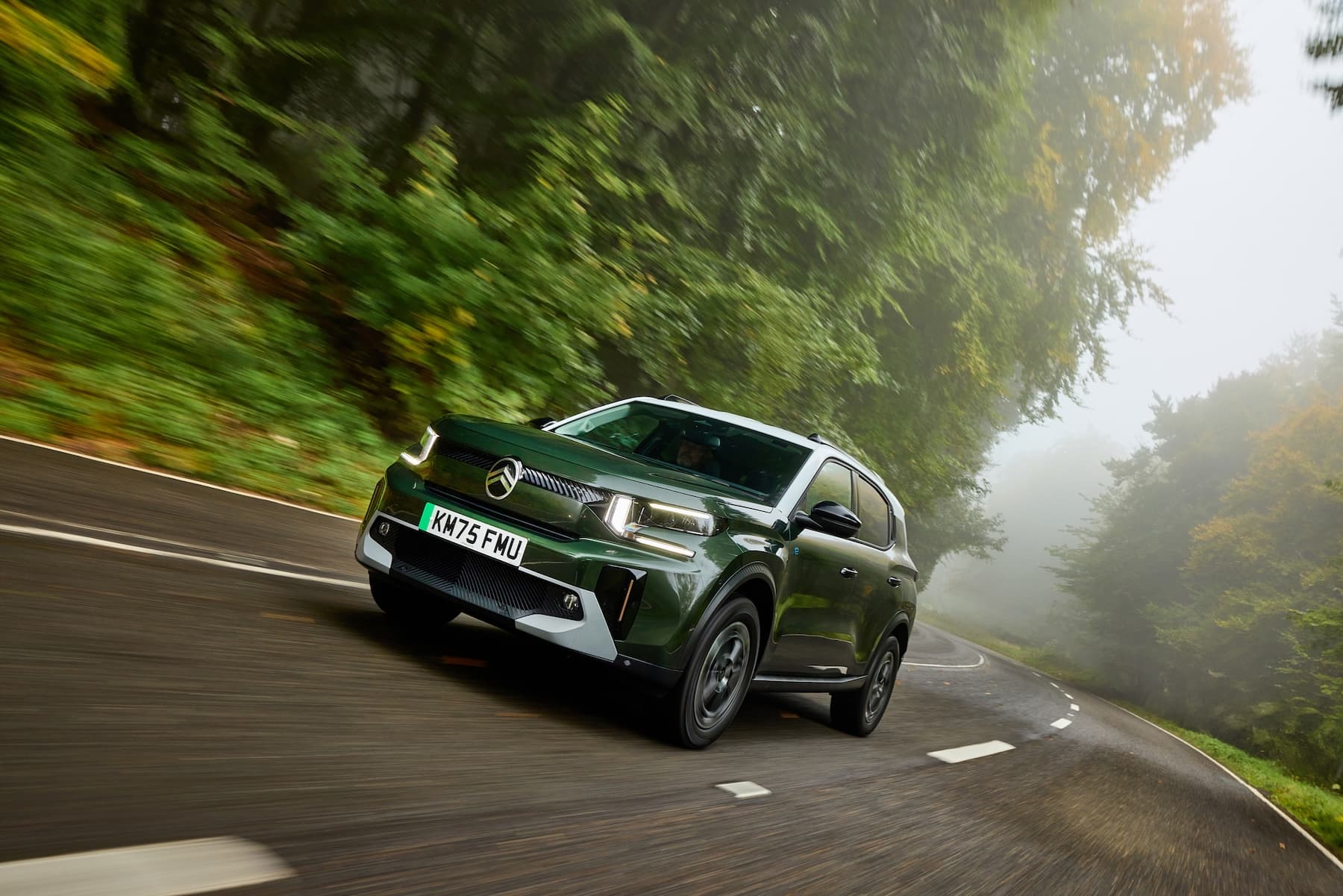
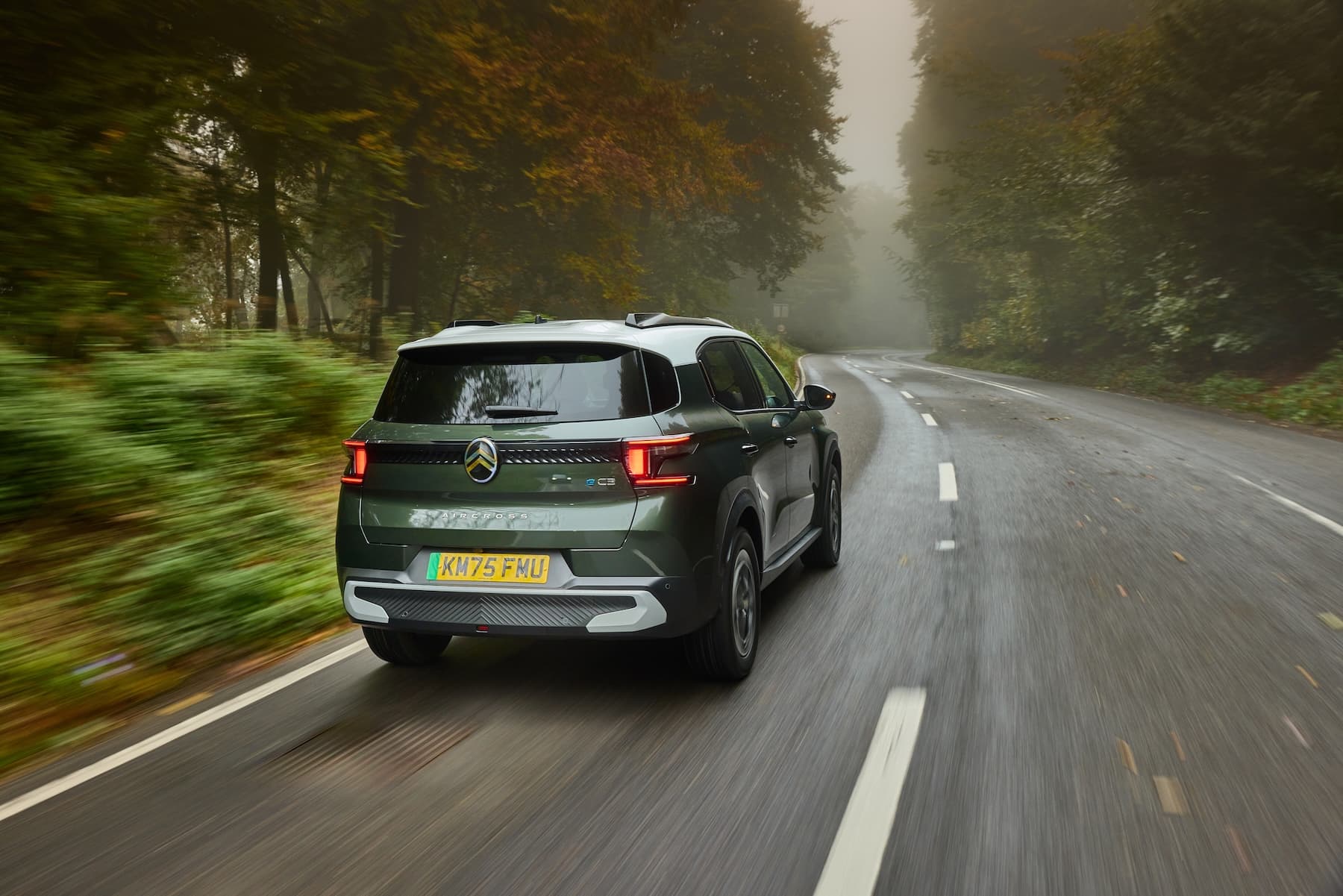
Body colours and the distinctive colour clips that sit around the car’s exterior are available as options. Our test car arrived in green with a white roof (it was the exact car seen in the photos), a combination that divided opinion – practical for spotting the car in a crowded car park, though not to everyone’s taste as a style choice.
The Citroën ë-C3 Aircross’s compact proportions and upright stance make it easy to manoeuvre in urban environments – and easier to find in a car park, depending on your colour choice.
Inside the car
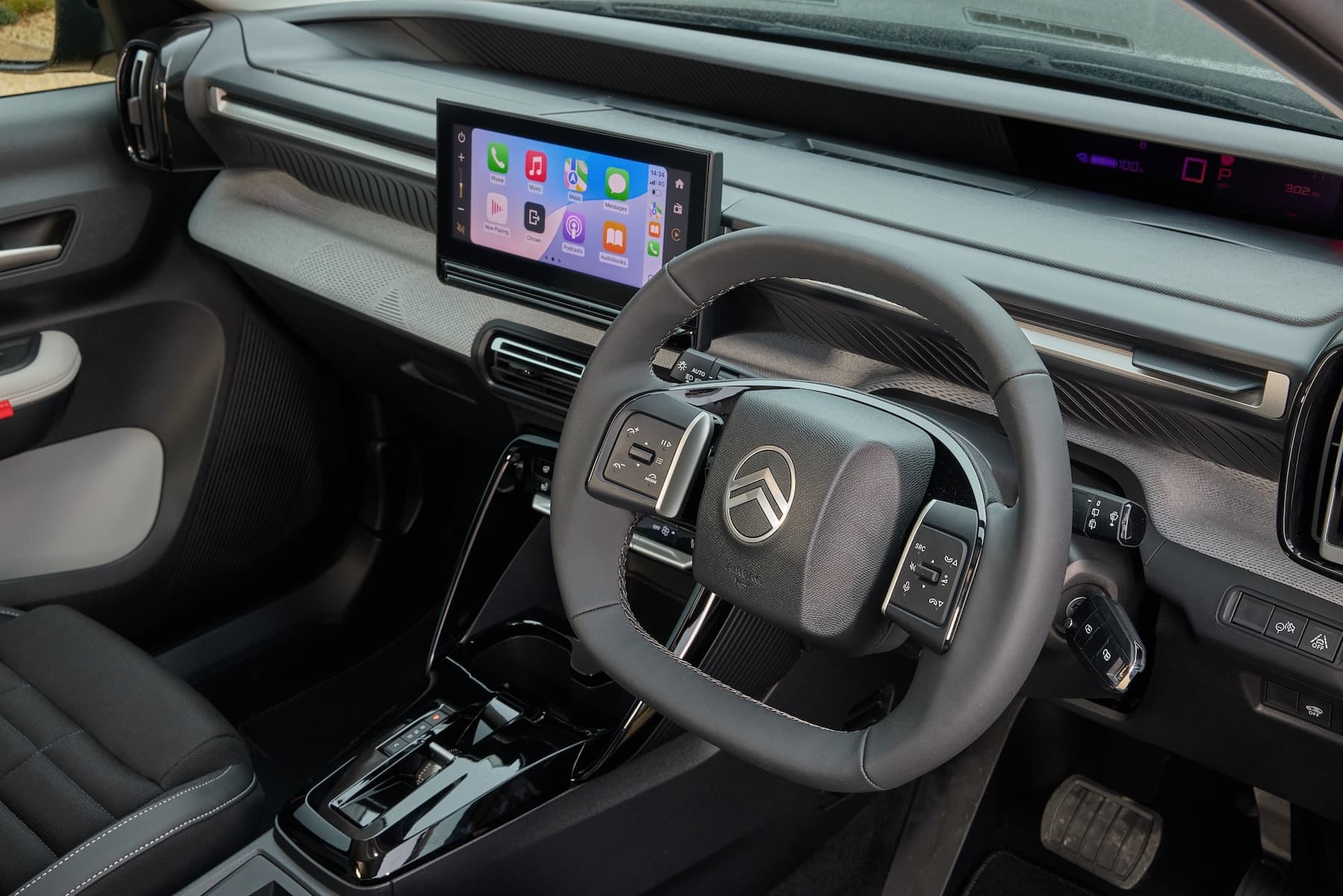
The cabin is simple and honest, which suits the price. Rather than chasing an elaborate design, Citroën has focused on making the space pleasant and functional. Fabric and cloth surfaces on the dashboard and door panels are noticeably nicer than the grey plastics usually found at this price from many rivals.
The most interesting design decision is the driver display, which is a small digital screen mounted at the base of the windscreen, replacing the conventional instrument cluster behind the steering wheel. It works well, presenting key information clearly without distracting from the road. It is less elaborate than BMW’s full-width panoramic windscreen system, but considerably better than Peugeot’s i-Cockpit arrangement, where a similar concept is let down by a steering wheel that never feels natural. Here, the compact steering wheel is more comfortable than Peugeot’s version, though the grip positions are not quite perfect. The display would also benefit from more customisation options.
The central touchscreen is a sensible size – large enough to use without dominating the dashboard, demonstrating that you don’t need a screen the size of a small television for a touchscreen to work well. Its limitations lie in the software: functionality is restricted and personalisation options are limited. The physical air conditioning controls are a genuine highlight. Having a dedicated set of buttons for climate functions rather than routing everything through a touchscreen is exactly what more manufacturers should do, and it is done well here.
The driver assistance disable function is thoughtfully implemented – a dedicated button with a touch-and-hold action to switch off specific systems. Again, something all cars should offer.
The front seats are firm and lack lumbar adjustment. They are supportive enough for a long day – 360 miles in one day produced no significant discomfort – but lack the shape and bolstering that more demanding drivers might want. The heated front seats and heated steering wheel in the MAX are welcome in winter. The wireless charger is conveniently placed, though the phone became noticeably hot during use.
Rear space is good for a car of this size. Headroom is generous, the floor is nearly flat and there is useful clearance beneath the front seats for rear passengers’ feet. The batteries beneath the floor raise the seating position slightly, meaning knees sit a little higher than ideal, though it is better than some cars in this class. The absence of a central rear armrest will be a frustration to some, and the rear seat splits only 2/3 to 1/3 rather than offering a more versatile arrangement. The boot offers up to 460 litres with the rear seats in place. A small pocket at the top of the front seatback is a thoughtful detail for keeping a phone accessible on the move.
The four door trims each carry a small fabric tag with motivational messages: ‘Have fun’, ‘Be cool’, ‘Feel good’ and ‘Be Happy’. Reactions will vary. They are, at the very least, original…
Inside the Citroën ë-C3 Aircross, the head-up display and physical air conditioning controls are highlights – practical choices that make the car noticeably easier to live with day-to-day.
Driving range and charging
The 44kWh battery claims up to 188 miles on the official test. Our test car showed an estimated 174 miles at a full charge – already below the headline figure. At motorway speeds, real-world range fell closer to 100 miles, which is a significant shortfall for anyone who does any regular higher-speed driving. Slowing to 60mph improved efficiency noticeably, but that is not a realistic solution for time-constrained journeys.
This is the most important caveat for anyone considering the Standard Range version. For predominantly urban and suburban use, the range is workable. For mixed or motorway-heavy driving, the Extended Range variant with the 54kWh battery and up to 249 miles of claimed range would be a considerably more sensible choice.
Charging at a public fast charger at up to 100kW takes just under half an hour from 20% to 80%. A full charge from a 7kW home wallbox will likely take six to seven hours. The charging port is on the left rear of the car. It did not appear to lock reliably on the test car, though this may have been a procedural issue rather than a fault.
On the road
The driving experience is comfortable and competent. The ride absorbs poor surfaces well and deals with urban road imperfections without drama. Steering is very light, which suits city use and feels natural for the class.
Performance from the 113hp motor is adequate rather than brisk – throttle response feels organic, which will reassure drivers making the move from small petrol SUVs. Initial response is positive enough, but acceleration fades notably as speed picks up.
On open roads and at higher speeds, it is less convincing. But this is a city-focused car rather than a motorway cruiser, and should be judged on those terms.
The regenerative braking system is not as sophisticated as many EVs. It offers only two settings – on or off – with no intermediate steps, no paddle control and no one-pedal driving. For a car aimed squarely at urban use, where smooth deceleration and energy recovery are most valuable, this feels like a significant omission.
The Citroën ë-C3 Aircross on the road, where its comfortable ride and natural throttle response suit urban driving well – though real-world range at motorway speeds is tighter than the official figure implies.
Ownership
The Citroën ë-C3 Aircross has not yet been assessed for safety by Euro NCAP, so we can’t tell you how it performs in an emergency.
The standard new car warranty runs for three years or 60,000 miles, which is on the short side. Battery components are covered separately for eight years or 100,000 miles.
The review score reflects the driving experience. Our Citroën ë-C3 Aircross Expert Rating tells a broader story, combining the subjective opinions of car reviews with objective safety data, running costs, warranty information and more – which means the Expert Rating often arrives at a notably different conclusion. It’s worth reading both before making any buying decision.
Verdict
The Citroën ë-C3 Aircross Max is a well-considered electric SUV at a sensible price. Thoughtful design decisions – physical climate controls, a useful head-up display, a practical interior – reflect a manufacturer thinking about usability rather than specification lists. Rear space is good, equipment is generous and the overall package represents honest value.
The Standard Range version’s real-world range is its most significant limitation. Motorway driving quickly erodes the headline figure, and buyers with regular longer journeys should seriously consider the Extended Range option before committing. The lack of multi-step regeneration and one-pedal driving is also a missed opportunity in a car that pitches itself as an urban specialist.
Choose the larger battery, coupled with its low running costs (which helped it to secure our Best Value Family Car 2026 award), and the Citroën ë-C3 Aircross makes a compelling case for itself as a new family car.
Chinese brand Leapmotor is continuing its UK expansion with the launch of the new B05, a family-sized electric hatchback that aims to shake up the increasingly competitive market for affordable electric cars.
The newcomer will sit below the larger C10 SUV in the firm’s line-up and takes aim at established rivals such as the MG 4, Kia EV3, Volkswagen ID.3, Renault Mégane E-Tech and BYD Dolphin. Leapmotor believes the B05’s combination of standard equipment and price tag gives it a strong advantage over many competitors.
Rear-wheel drive sets it apart
One of the most unusual features of the B05 is its rear-wheel-drive layout. While most affordable electric hatchbacks use front-wheel drive, Leapmotor has opted for a rear-mounted motor producing 215hp, giving the car a claimed 0-62mph time of 6.7 seconds.
That makes it quicker than many mainstream electric family hatchbacks, including entry-level versions of the Volkswagen ID.3 and Renault Megane E-Tech. It also places the B05 in similar performance territory to higher-powered versions of the MG 4.
Leapmotor says the chassis has been specifically tuned for European roads with support from Stellantis engineers, while a 50:50 weight distribution and multi-link rear suspension are intended to deliver a more engaging driving experience than many rivals.
Competitive range and charging
Power comes from a 67kWh battery that delivers up to 300 miles of battery range.
That figure places the B05 towards the top end of the family hatchback EV segment. It comfortably exceeds the range offered by the standard BYD Dolphin and is broadly comparable with larger battery versions of the MG 4 and Volkswagen ID.3.
Rapid charging capability is equally competitive. The B05 can charge from 30% to 80% in 17 minutes at speeds of up to 174kW, making it one of the faster-charging cars in its class.
Family-friendly size
At over four metres long, the B05 sits firmly in the mid-sized hatchback segment, and Leapmotor says its cell-to-chassis battery technology helps maximise interior space. By integrating the battery into the vehicle structure, engineers have been able to free up more cabin room while also making the car’s body more rigid.
The result is a spacious cabin with generous rear passenger accommodation and a 345-litre boot. Fold the rear seats down and luggage capacity expands to 1,400 litres. There are also 25 storage compartments spread throughout the cabin.
While the boot is slightly smaller than some similarly-priced SUV alternatives, it compares well with many conventional hatchback rivals.
A single trim available
Like the rest of the Leapmotor range, the B05 will be offered in a single, highly specified trim level rather than multiple grades.
Standard equipment includes a panoramic glass roof, 19-inch alloy wheels, electrically adjustable heated seats, wireless Apple CarPlay and Android Auto, wireless phone charging and a 12-speaker audio system. The car’s safety assistance tech suite includes adaptive cruise control, lane-keeping assistance, blind-spot monitoring and a surround-view camera system.
Pricing and availability
The Leapmotor B05 will be priced from £29k – that includes the brand’s £1,500 ‘LEAP-GRANT’ incentive.
Order books open in early July, with first UK customer deliveries expected later the same month. The B05 will be sold through Leapmotor’s growing UK dealer network and comes with a four-year/60,000-mile vehicle warranty, plus an eight-year/100,000-mile battery warranty.
What will you leave behind when you sell your car, hand it to a dealer or give it back to a leasing or rental company? As well as that pound coin which fell into the seat, it could be a nice amount of personal data.
Some people compare the modern car to a laptop on wheels. The data gathering centre is the infotainment screen which you will be tapping and swiping or talking to. Here’s a list of the potential harvest:
location data – where you are
navigation history – where you’ve been and frequently visit
synced phone contacts
call logs, and sometimes text messages
paired device IDs, user profiles, e-mail addresses, usernames, subscription identifiers
payment information
Under new safety rules for new cars, systems must track the driver’s head and eyes to monitor for micro-sleep, sleep, and unresponsiveness, and then warn the driver. These can capture biometric data.
Several years ago, car manufacturers looked at the lucrative use companies such as Facebook were making of the data generated by our interactions and decided that they too could capitalise on the data that we were donating to their cars.
Every year the not-for-profit Mozilla Foundation and parent of the Mozilla Corporation (web browsing and safeguards) produces Privacy Not Included (PNI) reports that analyse how much data is extracted from consumers who buy different kinds of products, including cars, and rates them. It’s perhaps better known in the USA than here in the UK.
All 25 major car brands reviewed in Mozilla’s 2023 edition of PNI received fail marks for consumer privacy. According to Mozilla’s researchers (who combed through the privacy agreements, apps and asked questions), global brands — including BMW, Ford, Toyota, Tesla, Kia and Subaru could collect deeply personal data such as sexual activity, immigration status, race, facial expressions, weight, health and genetic information, and where you drive.
Data is being gathered by sensors, microphones, cameras, and the phones and devices drivers connect to their cars, as well as by car apps, company websites, dealerships, and vehicle telematics. Researchers couldn’t confirm whether any of the brands encrypted all the personal information they stored on vehicles.
What do the carmakers do with all this information?
Brands can then share or sell this data to third parties. Mozilla said that they can also take much of this data and use it to develop inferences about a driver’s intelligence, abilities, characteristics, preferences and more.
There aren’t many public examples of this happening, although data security is a worry. In 2024, Volkswagen inadvertently exposed the personal information of 800,000 electric vehicle owners, including their location data and contact details.
Last month, General Motors (GM) agreed to pay $12.75m to resolve claims that it illegally sold hundreds of thousands of Californians’ locations and driving data to two data brokers. It included precise and personal location data. While state laws prevented insurers using that data to set premiums, the Californian Attorney General said that GM misled consumers for saying in its privacy policy that it would not sell driving or location data and then doing it anyway.
Hang on – isn’t most of this personal data just on my mobile phone?
Of course, some drivers don’t load any favourite phone numbers, destinations or music directly into their car. They do all the interaction via their mobile phones, using Apple CarPlay or Android Auto.
You might think that when you unplug your mobile phone from your car, you walk away with all the data in the phone.
“The reality is, data is being pulled and stored by the car,” says Martin Wilson, vice president of partnerships at Privacy4Cars, which calls itself the world’s leading authority on vehicle privacy and data security. “Even if it’s Apple CarPlay, the information will be cached in that car by the entertainment system. It depends on what settings you’ve put on your devices. Quite often, they’ll ask you, ‘Do you want to sync your phone to the car?’ Well, if that is the case, that will typically take a copy of your contacts out of your phone and store it in the dashboard. All that data is stored unencrypted, everywhere you have driven is recorded and all this can be potentially viewed by anyone getting into the car.
“Would you give me your mobile phone – unlocked, for me to do whatever I want with it? Probably the answer is no. So why would you do the same in a car?”
Well established in America, Privacy4Cars holds details on which data is stored on over 140,000 makes and models and how to remove it which, like Mozilla, it has gleaned through all the very long and complicated documents few of us would ever have the time or will to read. It sells a data deletion platform to dealers which enables them to clear data from cars and prove it to buyers. Now the company is also working with UK and European car dealers, fleet and leasing suppliers on ‘data cleansing’ used cars to meet our legal requirements. It’s the sole approved supplier for the Data Deletion and Privacy Protection Certificate launched this year by the National Association of Motor Auctions (NAMA).
An increasing number of cars now have an infotainment system with an operating system from Google. It was sold to some carmakers under the names Android Automotive and then Google Built-In. They then put their own wrapping around it.
To take one example, the Renault 5 E-Tech Google system is called openR link. This brings real-time navigation routes indicating charging points and estimated stopping times according to your preferences, the car’s consumption and the state of the traffic. Say “Hey Google” and it will play music, make calls, turn the heat up or down and take you to the nearest pizza restaurant if you desire. Google Play gives you sports news, entertainment, music and podcasts.
Google in the business of providing clever navigation, entertainment and better searches. And also targeting advertising at you based on your inputs. You don’t have to have a Google account or sign-in to use a car with Google Built-in, but you might find you have to if you want to use some of the apps. “As soon as you use any Google service, you’ve given them an incentive for them to collect data,” says Martin.
These connections we make to our cars are very convenient, but they are often left behind. You may have climbed into a rental car to find the phone numbers of the previous renters. “We did a fun audit recently.,” Martin continues. “We took 30 ex-lease cars in a in a compound and looked at them. Out of those 30, 27 still had personal data in them. There were 121 phones connected to them.”
He uses the example of the car of a military contractor, which contained the locations of where vehicle had been driven, most of which were classified MoD sites, plus his home address, with email address and phone number.
There’s a very specific worry for American drivers. Many of them have electric garage doors which receive a code from the car when it approaches and then open. Leaving that data when the car is moved on could risk being burgled as a future owner of the car could then enter their house through a door inside the garage.
Did I hear that Chinese cars could be spying on me?
In April 2025, The i paper reported that the Ministry of Defence had banned EVs with Chinese components from sensitive sites and military training bases.
It followed up with a report that MoD officials were being warned against having sensitive conversations or connecting work phones inside their government-provided EVs due to espionage fears, some of which were Chinese-built.
While it’s logical that security-sensitive workers and organisations are alert to any potential threats, if you have a Chinese car or are thinking of buying one, your phone calls are unlikely to be hacked by a foreign power. However, data gathering infotainment and camera systems are fitted across global brands, so the same privacy issues apply.
The UK consumer does have protection
Good news. Ever heard of GDPR? In the UK, data protection is governed by the UK General Data Protection Regulation (UK GDPR) and the Data Protection Act 2018, and it’s much stricter than privacy laws in the USA.
Under GDPR, once a car or van leaves your hands as a private individual, manufacturers, dealerships, leasing, motor finance, motor insurance and car rental/car sharing companies must delete personal data collected and stored in vehicles (e.g., navigation and smartphone data).
Under the legislation, you have rights in relation to your personal data, with some exceptions. These include the right to have data erased. You could, in theory demand that a dealer shows you they have done so when you complete the deal.
Jonathan Butler is legal counsel to the Vehicle Remarketing Association (VRA), Partner and Head of Automotive at Geldards law firm. “Consumers may choose to delete their data before disposal, but they are not the party carrying the legal obligation once control of the vehicle has transferred. GDPR places that duty on the organisation determining the continued use and handling of the data.
“It is not uncommon for dealers to include terms suggesting that customers should wipe data before returning a vehicle. While that may be sensible as a matter of good practice, it does not displace the dealer’s obligations under GDPR. Data protection duties cannot be contracted away. If a business is the controller, it must have its own processes to identify and securely delete personal data: it cannot rely on the customer to have done so.”
Deleting data is now a massive topic in the motor trade and its associations. The Information Commissioner’s Office hasn’t yet taken anybody to court, but should that happen the fine is likely to be immense.
You yourself could take action at the County Court if you believed that your car-stored data could be out in the world, says Butler. “The evidence of misuse is not the point, because the law is that it must not be retained without a lawful basis. Where a vehicle changes hands, the original purpose for holding your data will almost always have fallen away. At that point, the law requires deletion – without any need to show that harm has already occurred. The obligation to delete personal data is fundamentally preventative.”
Incidentally, there is a household exemption in GDPR. A private individual selling their own car is not generally considered a data controller where a sale is genuinely private and not commercial. You won’t be in trouble.
The Data Deletion Certificate may have its day
It is possible for somebody to use the owner’s manual and other instructions to go through a car and delete the data, but it’s likely to take a very long time and because it’s down to one person’s judgment, not provable and prone to error.
Under GDPR, the dealer/data controller must have a data wiping process which is repeatable, objective and certifiable for an audit trail.
Privacy4Cars has an app designed for the motor trade, which works with a tablet and mobile phone. The registration plate or Vehicle Identification Number (VIN) in the corner of the windscreen is scanned by phone, and the user is presented with a step-by-step guide to clear all the data on that individual vehicle. This is claimed to typically takes less than 90 seconds. The user can then capture an image to demonstrate they’ve been in the vehicle and at the end of the process, a time, date-stamped and location-based certificate is generated to say that vehicle has been cleaned, when it was cleaned and who’s done it.
For buyers of used cars who want to know that it’s a blank slate, Privacy4Cars is working with organisations like CAP HPI and MotorCheck to have the info presented on vehicle history checks as well as manufacturer ‘approved used’ schemes, being able to produce a certificate showing it’s been done.
The expectation is that ‘data cleansed’ will become one of the standard things in a used car ad along with ‘Not recorded stolen’, ‘never written off’ and battery health certificates.
The Toyota C-HR+ is an electric mid-sized SUV/crossover. It sits between Toyota’s other two electric SUVs, being smaller than the bZ4X but larger than the Urban Cruiser.
Despite the name, the C-HR+ is a completely different car to the Toyota C-HR. That car is designed for petrol and hybrid power, while the C-HR+ is a purely electric car and is built on the same platform as the bZ4X. It’s quite different from the regular C-HR, both inside and out.
Being a dedicated EV, rather than being based on a petrol car design, the C-HR+ benefits from more cabin and boot space. The interior layout is completely different to the C-HR, and is quite reminiscent of the Citroën ë-C4 with a low steering wheel and high-mounted display above it. The boot runs to 416 litres, which is notably larger than the 310-litre boot in the plug-in hybrid C-HR.
“It’s certainly worth a look”, concludes The Car Expert’s own Andrew Charman, explaining that the car’s “refined” driving manners and “precise” steering contribute the the C-HR+ being Toyota’s “most satisfying electric vehicle so far.”
The Parkers team adds that the Toyota has “an interior that feels indestructible” with “wonderful levels of polish”, though “the rear is as dingy as an outhouse and the boot is very average for a family SUV.”
“It’s not quite as versatile as a Skoda Elroq or Kia EV3“, argues Car’s Ryan Gilmore, but “the battery tech is competitive and its undeniably stylish.”
As of June 2026, the Toyota C-HR+ holds a New Car Expert Rating of A, with a score of 74%. It scores top marks for its excellent five-star safety rating and zero tailpipe emissions, while its overall running costs are also low. However, its media review scores and Toyota’s standard new car warranty offering are only average.
Score: 8 / 10 “Toyota’s second electric car is an appealing coupe-SUV, promising a long driving range and decent all-weather charging speeds.” Author: Catherine Kent Read review
Car
Score: 8 / 10 “There’s a lot to recommend about the Toyota C-HR+, and that extends beyond the usual Toyota build-quality and reputation for not going wrong. It’s nice to drive, the battery tech is competitive and its undeniably stylish. Arguably, it’s not quite as versatile as a Skoda Elroq or Kia EV3, and try as they might, it’s still not brimming with personality.” Author: Ryan Gilmore Read review
Carwow
“The Toyota C-HR+ looks stylish and promises a long range, but models with the larger battery are more expensive than an equivalent Kia EV4.” Read review
Electrifying.com
Score: 8 / 10 “The Toyota C-HR+ is a very sensible car. It’s got good range, fast charging, and all the peace of mind that a huge battery warranty and Toyota’s many decades at the top of the reliability charts can offer. This is, without doubt, a very solid and recommendable family EV. But it does feel short on charm or character next to cars like the new Nissan Leaf, the Skoda Elroq and the Kia EV3, all of which are also just a bit more practical and enjoyable to drive.” Read review
Honest John
Model reviewed: Range overview Score: 8 / 10 “Once you get past its somewhat confusing name, the Toyota C-HR+ is a likeable EV that ticks a lot of boxes. It’s surprisingly good fun to drive, reasonably good value, and well-made, but there are better value and more practical alternatives out there including the Skoda Elroq and Kia EV3.” Read review
Parkers
Score: 7.8 / 10 “Sporty looks meet good electric underpinnings.” Author: Ryan Gilmore Read review
Top Gear
Score: 7 / 10 “The Toyota C-HR+ is quite stylish, even if the interior is drably trimmed, And it’s pretty good to drive. It rights the wrongs of the early bZ4x and adds some charm of its own. That should be enough to keep it afloat in a sea of rivals.” Author: Paul Horrell Read review
Safety rating
Independent crash test and safety ratings from Euro NCAP
The C-HR+ is based on the Toyota bZ4X, and its safety rating is based on that car’s performance. Euro NCAP takes additional information into account when deciding to extend a safety rating to a similar model, which may involve additional tests to confirm that the two cars perform similarly in all emergency situations.
Eco rating
Independent economy and emissions ratings from Green NCAP
No eco rating
As of June 2026, the Toyota C-HR+ has not been assessed by Green NCAP.
The Green NCAP programme measures exhaust pollution (which is zero for an electric car) and energy efficiency. Electric cars are much more energy-efficient than combustion cars, so the C-HR+ is likely to score very highly in Green NCAP testing if and when it takes place. Check back again soon.
Running cost rating
Monthly cost of ownership data provided exclusively for The Car Expert by Clear Vehicle Data
Battery range
Average
Score
Variation
Score
EV models
346 miles
A
Electrical efficiency
Average
Score
Variation
Score
EV models
4.4 m/KWh
B
Insurance group
Average
Score
Variation
Score
All models
36
D
The Toyota C-HR+ is a relatively affordable car to own and run, according to whole-life cost numbers provided exclusively to The Car Expert by our data partner, Clear Vehicle Data.
The car’s average battery range of 346 miles (ranging from 283 to 377 miles) is very competitive when compared to the rest of the electric crossover category. That said, the car’s predicted insurance premiums are higher than the average car.
Warranty rating
New car warranty information for the Toyota C-HR
Overall rating
C
48%
New car warranty duration
3 years
New car warranty mileage
60,000 miles
Battery warranty duration
8 years
Battery warranty mileage
100,000 miles
Toyota’s new car warranty is pretty much the bare minimum offered in the UK, with a duration of three years and a limit of 60,000 miles. Other rivals in the price bracket do better (and in some cases, much better). Additionally, the battery components are covered by a separate eight-year/100,000-mile warranty.
Toyota does offer a conditional warranty extension programme for up to seven years beyond the end of the original new car warranty, with an overall limit of 100,000 miles (including mileage already accumulated in the first three years). However, this requires the car to be serviced by an official Toyota dealership every year, whereas your new car warranty is not restricted. Other restrictions also apply, so check with your Toyota dealer for full terms and conditions.
Similar cars
If you’re looking at the Toyota C-HR+, you might also be interested in these alternatives.
If you’re looking to buy a new or used Toyota C-HR+, The Car Expert’s partners can help you find the right car.
Find your next new or used car with Auto Trader. Find out more
Find your next new or used car with Carwow. Find out more
Lease a Toyota C-HR+
If you’re looking to lease a new Toyota C-HR+, The Car Expert’s partners can help you find a competitive deal.
Personal contract hire deals from Leasing.com. Find out more
Personal contract hire deals from Carwow. Find out more
Personal contract hire deals from Select Car Leasing. Find out more
Subscribe to a Toyota C-HR+
Subscriptions are becoming a very popular way for consumers to try an electric car for a few weeks or months to help decide whether it’s a suitable alternative to a petrol car. If you’re interested in a car subscription, The Car Expert’s partners can help. (PS: What’s a car subscription?)
Ahead of the new Mitsubishi Outlander PHEV arriving in UK showrooms this month, the Japanese brand has revealed more details about the technology that underpins its flagship SUV.
Mitsubishi says two key features set the model apart from many rivals: its Super All-Wheel Control (S-AWC) four-wheel-drive system and its ability to automatically switch between three different driving modes to maximise efficiency and performance.
Rally-inspired four-wheel-drive tech
At the heart of the Outlander PHEV is Mitsubishi’s Super All-Wheel Control system, a technology developed from the firm’s decades of experience in the World Rally Championship and Dakar Rally.
Unlike many conventional four-wheel-drive systems that use mechanical driveshafts to connect the front and rear axles, the Outlander uses separate electric motors at each axle. This allows the car to vary power distribution almost instantly depending on grip levels and driving conditions.
The system also incorporates ‘Active Yaw Control’, which uses torque vectoring and selective braking to improve cornering stability. By automatically adjusting power delivery between the left and right wheels, the Outlander can remain more stable through bends while requiring less corrective steering input from the driver.
Seven drive modes for different conditions
Drivers can also choose from seven terrain settings depending on road and weather conditions.
These include ‘Normal’, ‘Eco’ and ‘Power’ modes for everyday driving, alongside dedicated ‘Tarmac’, ‘Snow’, ‘Gravel’ and ‘Mud’ settings designed to optimise traction and stability on more challenging surfaces.
Mitsubishi says the various systems work together simultaneously, rather than switching between different traction and stability functions independently, helping the SUV maintain grip and composure with minimal driver intervention.
How the plug-in hybrid system works
The Outlander PHEV’s plug-in hybrid powertrain is designed to operate primarily as an electric vehicle, automatically switching between three driving modes depending on battery charge levels and power demands.
In ‘EV’ mode, the SUV runs solely on electricity using its front and rear electric motors. This is the default setting when the battery has sufficient charge, allowing quiet, zero-emission driving.
When additional power is required — such as during hard acceleration or hill climbing — the system can switch into ‘Series Hybrid’ mode. Here, the petrol engine acts as a generator, producing electricity to power the motors and recharge the battery, rather than directly driving the wheels.
At higher cruising speeds, or when battery charge is low, the Outlander can move into ‘Parallel Hybrid’ mode. In this setting, the petrol engine directly powers the wheels while the electric motors provide additional assistance when needed. Any surplus engine power can also be used to top up the battery.
The transitions between modes are automatic and designed to be virtually imperceptible to occupants.
Audi has announced that it has updated its electric Q4 e-tron SUV and coupé-SUV range, introducing a longer battery range, new technology and bidirectional charging.
The Q4 e-tron has become one of Audi’s most important models in the UK, finishing as the UK’s third best-selling EV last year. This update comes as the German marque looks to keep the Q4 e-tron competitive with alternatives like the Tesla Model Y, Kia EV6, Hyundai Ioniq 5, Skoda Enyaq and Volkswagen ID.4.
Longer range and faster charging
Audi says efficiency upgrades have increased the Q4 e-tron’s driving range to as much as 360 miles on a single charge, depending on version.
Charging performance has also been improved, reducing the time spent at rapid chargers on longer journeys. Higher-powered versions can now charge at up to 185kW, allowing the battery to be topped up from 10% to 80% in around 27 minutes.
The updated Q4 e-tron also becomes the first Audi to offer bidirectional charging. This allows owners to use the vehicle’s battery to power external devices such as e-bikes, camping equipment and electrical appliances. In some European markets, the car can even be used as a home energy storage system, although UK availability of that feature is yet to be confirmed.
Interior tweaks
Inside, Audi has given the Q4 e-tron a more modern feel with upgraded displays and infotainment tech. All versions now feature an 12-inch digital driver’s display and a larger 13-inch central touchscreen, while wireless smartphone connectivity and twin wireless charging pads are standard.
Higher-specification models gain further tweaks, including a passenger touchscreen, an augmented reality head-up display and improved voice controls powered by artificial intelligence.
Four trim levels available
Audi has simplified the UK line-up into four trim levels: ‘Sport’, ‘S line’, ‘Black Edition’ and ‘Vorsprung’.
The entry-level ‘Sport’ model comes well equipped with 19-inch alloy wheels, heated front seats, three-zone climate control, ambient lighting and the latest infotainment system.
Stepping up to ‘S line’ adds sportier styling, 20-inch alloy wheels, sports suspension and a more driver-focused interior featuring a flat-bottom steering wheel and leather sports seats.
The ‘Black Edition’ introduces gloss black exterior detailing, Audi Sport alloy wheels, electrically adjustable front seats and heated rear outer seats.
At the top of the range, ‘Vorsprung’ models gain Matrix LED headlights, digital OLED rear lights, a panoramic glass roof, SONOS premium audio, augmented reality head-up display and Audi’s most advanced driver assistance systems.
Cars with plugs (EVs and plug-in hybrids) and Chinese brands drove all the growth in May’s new car registration results, according to numbers published this week by the Society of Motor Manufacturers and Traders (SMMT).
Although the overall market was up by about 7% over the same month last year, most of the growth was concentrated on Chinese car brands and plug-in cars. Most European, Japanese and Korean brands saw flat or falling sales in May.
These were also bought by a lot more consumers, with private sales up 17%. Fleet registrations, meanwhile, were up only 2%.
Source: SMMT
EVs and plug-in hybrids see large growth as petrol cars see large fall
Cars with plugs (EVs and plug-in hybrids) accounted for 41% of all new cars registered in May, up from 34% this time last year. That put them almost equal with purely petrol cars for the first time – give or take 100 cars – which saw a large drop in market share from 48% a year ago.
This was the most significant part of the month’s data, as it suggests customers are increasingly looking for cars that can be plugged into the grid rather than relying on petrol stations. Basic (non-plugged) hybrids have been leapfrogged by plug-in hybrids, which offer a more flexible combination of electric driving for everyday use and petrol backup for longer trips.
America’s war on Iran is obviously a key factor in driving this behavioural shift, and it will be interesting to see how things change if and when petrol prices start falling again. But the longer that the situation in the Middle East drags on without a resolution, the more likely it is that demand for plug-in cars will harden to become a permanent demand.
Source: SMMT
Good month, bad month
Although the overall market was up by 7%, plenty of big-name brands were a long way off the pace in May.
That means that the following brands were about where we’d expect them to be: Audi, Cupra, Kia, Land Rover, MG, Polestar, Porsche, Renault, Vauxhall, Volkswagen and Volvo. All of these brands were within 10% (plus or minus) of the overall market result, which is quite normal.
Volkswagen was, as usual, the best-selling brand in the UK, comfortably ahead of Audi, Kia, BMW and Vauxhall. However, Chery Group’s three connected brands (Chery, Jaecoo, Omoda), which currently operate as one collective brand, would be placed second if they were counted together.
Jaecoo had the largest absolute growth, increasing its sales compared to last year by more than 3,500 cars – a 210% increase. Going in the other direction, the biggest loser by volume was Nissan, registering 2,000 fewer cars in May (down 30%) than in the same month last year.
Chinese brands (not including Western brands that build cars in China, such as Tesla or Volvo) saw growth of about 13,500 units compared to last May, which was comfortably more than the overall market growth of 10,600 units. That means that established brands were collectively down by 2% compared to last year, which shows how the market growth is actually Chinese brands displacing more familiar names.
The China-on-China battle is also getting more heated. Jaecoo outsold BYD for the first time (despite BYD’s numbers being up 70%), helped by the fact that Jaecoo now has more than one model contributing proper volume. Chery outsold Omoda, Geely registered more than 1,000 cars despite not existing here this time last year, and Leapmotor went from fewer than 100 registrations to more than 900. And as these new brands start fighting each other harder, it will put everyone else under even more pressure.
Ford Puma stays on top
Source: SMMT
The Ford Puma has extended its lead in the 2026 new car sales race with another best-selling month in May. It finished the month comfortably ahead of its usual rival, the Kia Sportage. The Vauxhall Corsa recorded a strong month in third place, just ahead of the Jaecoo 7.
Both Volkswagen (Golf and Tiguan) and Vauxhall (Corsa and Frontera) had two models in the top ten in May.
The BYD Seal 6 is a mid-sized saloon and ‘Touring’ estate range, and the petrol plug-in hybrid counterpart to the all-electric BYD Seal.
Officially named the Seal 6 DM-i – ‘DM-i’ being the moniker BYD gives to its plug-in hybrid models, standing for ‘Dual Mode Intelligent’ – the saloon and estate line-up has divided the British motoring media to date, with criticisms of the plug-in hybrid range generally outweighing the positives.
Journalists Alan Taylor-Jones and Luke Wilkinson have published multiple reviews of the Seal 6 across several titles, the pair’s Car reviews concluding that the BYD’s unrefined handling and “thrashy and unpleasant” powertrain means that the Seal 6 “desperately needs to go back to finishing school”, despite the car’s attractive pricing and practicality.
On the other hand, Steve Fowler of The Independent gave the range a much higher review score, praising the saloon and estate for its “excellent” interior quality and its “refined and relaxing” driving experience.
As of June 2026, the BYD Seal 6 holds a New Car Expert Rating of A, with a score of 71%. Beyond the car’s below average reviewer reception, this overall rating is bolstered by the BYD’s excellent safety profile and generous warranty.
Model reviewed: Seal 6 DM-i saloon Score: 7 / 10 “The BYD Seal 6 Saloon boasts strong pricing and efficiency, but the unsettled ride and basic Boost trim limit the appeal.” Author: Paul Barker Read review
Model reviewed: Range overview Score: 8 / 10 “Unlike many plug-in hybrids, the BYD Seal 6 DM-i’s smooth, electric-biased plug-in hybrid powertrain is designed to be efficient regardless of battery charge, and not simply a Benefit-in-Kind tax box-ticking exercise. But there’s plenty else for company car buyers to like; there’s loads of standard kit, a comfortable drive and plenty of cabin space.” Author: Alex Ingram Read review
Auto Trader
Model reviewed: Saloon Score: 7 / 10 “The saloon version of BYD’s Seal 6 DM-i has the same impressive hybrid tech as its estate equivalent but loses out in practicality.” Author: Dan Trent Read review
Model reviewed: Range overview Score: 8 / 10 The Seal 6 DM-i shares a name with BYD’s breakthrough Model 3 rival – but little else, given it’s hybrid rather than full electric and based on the Seal U SUV. There are frustrations with the nagging safety systems and infotainment, and it’s hardly exciting to drive. But, as tested in Touring estate trim, the BYD Seal 6 is practical, comfortable, efficient and a refreshing break from the SUV norm.” Author: Dan Trent Read review
Business Car
Model reviewed: 1.5-litre petrol/electric plug-in hybrid Comfort Lite Score: 7 / 10 “Whilst it’s not that much fun to drive, there’s no doubting the BYD Seal 6’s decent EV range, and it is going to be affordable, with prices expected to range from £33,000 to £38,000, and all versions well-equipped and well-made. Although, like other plug-in hybrids, future changes in taxation might make the Seal EV a more attractive fleet option.” Author: Martyn Collins Read review
Car
Model reviewed: Seal 6 DM-i saloon Score: 4 / 10 “While there’s no arguing with the price, especially given the equipment and tech on offer, practicality and all-electric range, it desperately needs to go back to finishing school.” Author: Alan Taylor-Jones, Luke Wilkinson Read review
Model reviewed: Seal 6 DM-i Touring estate Score: 4 / 10 “The Seal 6 DM-i estate is another strong offering from BYD. The only real issue I have with the car is the way it rides. It’s a little too stiff for my liking, which seems at odds with its brief as a long-legged family car. It also isn’t an especially engaging car to drive quickly, but that’s a fault shared between most of its rivals. At this money, Skoda and Volkswagen have good reason to be worried.” Author: Alan Taylor-Jones, Luke Wilkinson Read review
Carwow
Model reviewed: Seal 6 DM-i Touring estate Score: 6 / 10 “The BYD Seal 6 Touring offers an efficient plug-in hybrid system and generous kit for an affordable price, but it’s not very good to drive.” Author: Mario Christou Read review
Electrifying.com
Model reviewed: Range overview Score: 6 / 10 “The BYD Seal 6 DM-i is fine in terms of its practicality, equipment and pricing, but it is a shame that BYD haven’t made it more comfortable and enjoyable to drive.” Author: Vicky Parrott Read review
Honest John
Model reviewed: Range overview Score: 6 / 10 “There’s a fair bit to like about the BYD Seal 6, but the driving experience is underwhelming, the entry-level engine is rather gutless and the safety systems are overbearing to the point of rage. It feels rather rough around the edges, even accounting for its keen price.” Read review
Parkers
Model reviewed: Seal 6 DM-i Touring estate Score: 5.8 / 10 “We can see the appeal of the Seal 6 if your getting out of a baggy old Mondeo estate, but it just isn’t very good to drive compared to its key rivals. It’s shame as it offers good value and impressive space.” Author: Alan Taylor-Jones, Luke Wilkinson Read review
Model reviewed: Seal 6 DM-i saloon Score: 5.4 / 10 “Great value, but you’ll have to put up with unpolished driving dynamics and relatively sluggish performance if you buy one.” Author: Alan Taylor-Jones, Luke Wilkinson Read review
The Independent
Model reviewed: Range overview Score: 8 / 10 “Every time I drive a new BYD, I come away impressed – and the Seal 6 DM-i is no exception. I drove the Touring, but the same applies to the saloon: quality is excellent, the driving experience is refined and relaxing, and the combination of electric and petrol power works seamlessly.” Author: Steve Fowler Read review
The Sun
Model reviewed: Seal 6 DM-i Touring estate “This is a car that’s been specifically made for British and German tastes and is the antidote to the never-ending flood of lookalike Chinese electro-SUVs.” Author: Rob Gill Read review
The Telegraph
Model reviewed: Seal 6 DM-i Touring estate Score: 8 / 10 “PHEVs may be losing fleet favour, but this model combines economy, comfort and a practical 62-mile electric range.” Author: Andrew English Read review
Safety rating
Independent crash test and safety ratings from Euro NCAP
Independent economy and emissions ratings from Green NCAP
No eco rating
As of June 2026, the BYD Seal 6 has not been assessed by Green NCAP.
Running cost rating
Monthly cost of ownership data provided exclusively for The Car Expert by Clear Vehicle Data
Fuel consumption
Average
Score
Plug-in hybrid models
59 mpg
B
CO₂ output
Average
Score
Variation
Score
Plug-in hybrid models
43 g/km
A
Battery range
Average
Score
Variation
Score
Plug-in hybrid models
43 miles
D
Reliability rating
Reliability data provided exclusively for The Car Expert by MotorEasy
No reliability rating
As of June 2026, we don’t have enough reliability data on the BYD Seal 6 to generate a reliability rating.
The Car Expert’s reliability information is provided exclusively to us using workshop and extended warranty data from our partner, MotorEasy, sourced from both official dealerships and independent workshops.
As soon as MotorEasy has sufficient data on the Seal 6, we’ll publish the results here.
Warranty rating
New car warranty information for the BYD Seal 6
BYD’s new car warranty is better than average, and better than rival brands in a similar price bracket as the Seal 6.
The duration is a six years, with a limit of 93,750 miles. In addition to the standard new car warranty, this plug-in hybrid range has an eight-year/155,350-mile warranty for the battery components.
Warranty on a used BYD Seal 6
If you are buying an ‘Approved Used’ BYD Seal 6 from an official BYD dealership, you will get the remaining balance of the original six-year new car warranty and the eight-year battery warranty, and if the warranty is up, you get a minimum 12-month warranty included.
If you are buying a used BYD Seal 6 from an independent dealership, any warranty offered will vary and will probably be managed by a third-party warranty company.
If you are buying a used BYD Seal 6 from a private seller, there are no warranty protections beyond any remaining portion of the original new car warranty.
If you’re looking to buy any used car that is approaching the end of its warranty period, a used car warranty is usually a worthwhile investment. Check out The Car Expert’s guide to the best used car warranty providers, which will probably be cheaper than a warranty sold by a dealer.
As of June 2026, we are not aware of any DVSA vehicle safety recalls affecting the BYD Seal 6. However, recall information is updated regularly, so this may have changed.
You can check to see if your car has any outstanding recalls by visiting the DVLA website or contacting your local BYD dealer.
BMW has bolstered its M2 line-up with the introduction of the new ‘M2 xDrive’, marking the first time the compact coupé has been offered with all-wheel drive.
The arrival of xDrive brings the M2 closer to potent all-wheel drive rivals such as the Audi RS 3, Mercedes-AMG CLA 45 S and Porsche 718 Cayman GTS. However, BMW has retained the ability to switch the M2 into a rear-wheel-drive configuration, and paired with the stability control switched off, this provides a more traditional M-car experience.
BMW’s M xDrive system distributes power between the front and rear wheels to maximise grip and stability. Under normal driving conditions, the system sends power exclusively to the rear wheels, only engaging the front axle when extra traction is needed.
More grip, more pace
Power continues to come from BMW’s familiar 3.0-litre twin-turbocharged straight-six petrol engine, producing 480hp. However, thanks to the extra traction provided by xDrive, the new model can sprint from 0-62mph in 3.7 seconds – three-tenths quicker than the rear-wheel-drive M2. Top speed is electronically limited to 155mph, or 177mph when fitted with the optional ‘M Driver’s Package’.
BMW says the new drivetrain makes the M2 more capable in poor weather conditions and on slippery surfaces, while also delivering improved stability and confidence when driving enthusiastically on road or track. An electronically controlled ‘Active M Differential’ continues to manage power delivery across the rear axle, helping sharpen cornering performance and maximise traction.
New engine tech
The M2 xDrive also introduces a new technology called ‘BMW M Ignite’, which will eventually be rolled out across BMW M’s six-cylinder engines.
Inspired by racing engines, the system uses a pre-chamber combustion process designed to improve efficiency under heavy loads, such as during track driving, while helping BMW meet future emissions regulations. According to BMW, the technology allows drivers to spend longer on track before needing to refuel, without compromising performance.
Familiar M2 recipe
Aside from the drivetrain changes, the M2 remains largely unchanged. Standard equipment includes staggered 19-inch front and 20-inch rear alloy wheels, ‘M Compound’ brakes, adaptive chassis settings and BMW’s eight-speed automatic gearbox.
Buyers will also gain access to a wider selection of paint finishes, including ‘Borusan Turkish Blue’, which is being offered on the M2 for the first time.
When is it arriving?
The M2 xDrive arrives in UK showrooms from late summer 2026, priced from just north of £74k. UK deliveries are scheduled to begin soon after.
Kia has expanded its all-electric PV5 Passenger range with the introduction of a new seven-seat model and a higher-specification ‘Elite’ trim grade.
The new PV5 Passenger seven-seater, which joins the existing five-seat version, introduces a more flexible 2-2-3 seating layout. Kia claims that this new layout offers generous passenger space across all three rows, while sliding side doors and a low step-in height should make access easier for children, older passengers and those with limited mobility.
Designed with families and taxi operators in mind
While the PV5 has been developed as a multi-purpose vehicle suitable for private buyers, Kia is also targeting professional users. While the five-seat version could only really be compared to other five-seater electric MPVs like Volkswagen ID. Buzz, the addition of a seven-seat version means that the PV5 becomes a practical challenger to the likes of the Ford E-Tourneo Custom and Mercedes-Benz EQV.
The new variant offers 318 litres of boot space with all seven seats in place, expanding to 785 litres when the third row is folded flat. Kia also claims class-leading interior dimensions, including over a metre of legroom and headroom.
Over 240 miles of range
Unlike the five-seat model, which is available with either a 52kWh or 71kWh battery, the seven-seat PV5 will be sold exclusively with the larger 71kWh unit. Kia says this will deliver more than 240 miles of battery range, with rapid charging allowing a 10% to 80% battery top-up in under 30 minutes when connected to a suitable 150kW charger. By comparison, the five-seat version can muster up to 256 miles with the same battery pack.
The PV5 also supports Vehicle-to-Load (V2L) technology on higher-spec models, allowing owners to power electrical devices directly from the vehicle’s battery — useful for camping trips, outdoor activities or mobile businesses.
New Elite trim joins the range
Alongside the seven-seat model, Kia has introduced a new ‘Elite’ specification above the existing ‘Essential’ and ‘Plus’ trims.
This new flagship trim grade adds:
Electrically operated sliding doors
Ventilated front seats
A surround-view parking camera system
Blind-spot camera monitoring
Side parking sensors
Full artificial leather upholstery
A premium paint finish included as standard
UK pricing
The PV5 Passenger range now starts from around £33k for the five-seat ‘Essential’ model with the smaller 51kWh battery. That version also qualifies for the government’s new Electric Car Grant, reducing its effective price by £1,500.
Pricing for the seven-seater in ‘Essential’ guise instead starts at £36k. Kia says details regarding grant eligibility for the new seven-seat variant will be announced at a later date.
‘Elite’ variants of the five-seater and seven-seater are priced at around £40k and £42k respectively.
Buy yourself a new car and you can expect it to come with at least three years’ warranty on its parts replacement and any repair work. But choose a used car – and more than seven million buyers do that every year in the UK – and you probably won’t get the same benefits.
Certainly, many second hand cars will come with some sort of warranty to cover parts for a short period of time, but that could only be for a few months.
So anyone who has spent hard-saved cash on a decent used vehicle should be thinking about buying a used car warranty of their own. This type ofwarranty covers you for parts and labour repair costs if your car fails dramatically.
They vary greatly and each will have its own terms and conditions in relation to age, mileage and the total amount of payout, so you must look carefully at what’s on offer before signing up to anything.
Deciding whether to buy a warranty is a valid consideration for any used car buyer and it’s important to weigh up the pros and cons of having the cover in the first place. For every owner, the situation will be different.
Some owners might have easy access to parts for their car. Others might be a dab hand at repairs or knows someone who can help them. A few drivers will have bought a cheap car that doesn’t even justify an expensive repair if something was to go seriously wrong with it further down the road.
But for most people, the consideration is this: do I want the peace of mind of having some financial support behind me if my car suddenly needs an expensive fix? Or do I think that the monthly premiums I’d pay for the warranty cover would work out more than the cost of any repair bill I encounter?
Many warranty policies will cover labour costs and other expenses such as car hire if your vehicle is off the road, so these are considerations too.
It’s an interesting balance between extra cost and extra peace of mind and, certainly for buyers of fairly new used cars that are still worth good money, it’s something to think about. And there are several companies that will help you make that decision with a range of offerings. The Car Expert has looked at some of the best.
The cost of a warranty will vary according to the age and value of your car plus the mileage it has already done. The level of cover you require will also have an impact on cost. Getting insurance against repairs beyond the engine, main mechanicals and electrics will raise the premium but, even so, there are lots of extras you can add in.
However, anything that will naturally wear out – tyres, battery, exhaust, clutch – will not normally be covered.
So, if you’ve bought a used car, or your once newly purchased vehicle has reached the end of its original warranty, where should you go to find some cover? All the leading used car warranty providers have good websites to guide you through their offerings. All you have to decide is which one is right for you.
The benefit of all these websites is that they are not aimed at serious car lovers, but people who just want to choose the right policy for their needs. Each company has its own strengths and unique points, but all of them offer the time-saving option of being a one-stop shop for your next used car warranty, and are simple to navigate and use.
They say: A safety net against a wide range of car faults
Well-known for its two main products, GAP insurance and warranty cover, ALA recently ‘freshened up’ their brand to be more user-friendly, clear and confident. This has certainly helped them present an easy to use website.
ALA warranty comes in three levels of cover: Silver, Gold and Platinum. Top level Platinum covers most mechanical and electrical components such as steering rack, cylinder head, oil pump and starter motor. It includes wear-and-tear cover for many components, and diagnostics cover up to £150.
There are some exclusions such as non-mechanical and electrical parts, consumables or complex elements like wiring harnesses.
Gold level is comprehensive but covers fewer parts and is not so generous on wear and tear while Silver level covers less than the other two levels but is the cheapest option. It’s available for much longer though – cars can be up to 16 years old and have 150,000 miles on the odometer, which is well worth keeping in mind if you’re looking at buying an older car.
The attractive website promises to do everything for you – founder Duncan McClure Fisher’s vision was to create a value for money service that’s easy to use.
MotorEasy authorises work quickly, handles all the discussions and payment directly with the repairing garage so you won’t be ripped off, works with its own 10,000-strong network of garages and monitors all repairs using a team of experts.
A huge number of potential faults are covered, such as mechanical and electrical, overheating issues, air conditioning, emissions and sat nav problems. But MotorEasy won’t cover consumables such as batteries, tyres, brake pads and filters unless they were faulty from manufacture.
How they come up with a quote is all well explained – make and model, age, mileage and length of cover – while other sections describe the types of cover provided and even ask whether you actually need cover with the help of a ‘Reliability Hub’.
There are three types of policy to choose from – A, B or C – with A being the most comprehensive, but it’s only for newer cars with less than 65,000 miles on the clock. B and C offer less but are for older models – typically five or 13 years old with 100,000 or 130,000 miles covered. There’s also a ‘Lite’ version which offers repairs arising from a roadside breakdown.
Policies are tailored to suit you so each is differently priced. Keep the number of years of cover down or pay some of the costs yourself and the premium will be reduced.
The AA is best known as a roadside assistance company so it’s no surprise that 12 months basic breakdown cover for personal use motoring, is one of the standard features of its used car warranty. Cover is administered through the insurance provider Opteven, and the AA has more than 10 years’ experience in this growing field of vehicle insurance.
Almost all mechanical and electrical faults are covered by an AA warranty, up to the parts’ market value, as well as in-car entertainment and remote key fobs. Hybrids and electric vehicles (EVs) can have AA warranty and there are no limits to the number of claims anyone can make.
Parts not normally covered include diagnostic issues, oils, fluids, and components replaced in pairs such as shock absorbers and springs.
The AA has access to a nationwide network of repair shops, and an adviser will tell you which one to contact if required. If a repair looks like taking more than eight hours, car hire or overnight accommodation is offered in all policies.
Standard cover is called Protect Essential and is available for cars up to 10 years old with less than 100,000 miles. An enhanced package, Protect Plus, adds extra features but is only available for cars up to eight years old and 80,000 miles. AA members get discounts.
Warrantywise are specialists in this field and offer car, van, EV and classic car cover. There are five levels of car cover, based on your vehicle’s age and mileage. It’s simple to follow.
The 04/40 policy, for example, is for cars less than four years old that have done fewer than 40,000 miles while 12/120 cover is for older cars up to 12 years on the road and with 120,000 miles on the clock.
Once you have identified the ideal plan for your car you can then personalise it to suit your own needs. Each has a basic level of help that includes unlimited repairs, car hire, onward travel costs, parts and labour costs and roadside assistance.
Your warranty won’t replace worn parts or any non-mechanical or non-electrical parts. Warrantywise promises to check the market to make sure it covers more parts than its rivals – but choosing to remove some of those from your particular cover will lower your premium.
Among the cover items you can add are airbag, air conditioning, multimedia, emissions failure and the MOT.
Warranty Direct is owned by Firstbase, also known as FBFM, a specialist car warranty company, with everything underwritten by the insurer QBE.
With 20 years in the business, Warrantwise offers two types of policy, Gold and Silver. Both are comprehensive but the Silver offering has fewer benefits and does not cover a long list of ‘Gold’ covered items such as multimedia components, ECU control units, pressure switches, compressors and condensers. Roadside assistance is included in both packages though.
The key features of their packages are broad mechanical and electrical coverage, a streamlined claims process and peace of mind on cost when it comes to finding spare parts. Batteries are not included on EV and hybrid policies.
You can spread the cost of the warranty, giving you a more flexible way to finance the deal. The cost of cover varies significantly depending on car make, model and mileage. Vehicles must be under 12 years old and have covered less than 120,000 miles to qualify for cover.
Dynamo’s website actually starts by asking if you actually need extended warranty. It then goes on to show, in most cases, why you might – that is, protecting yourself from a big bill, being able to choose your own level of cover and buying as little as one year’s cover if you wish. The company’s broad range includes van, motorbike and EV coverage too.
It makes it clear from the off which cars it won’t consider covering and they include high performance brands such as Aston Martin, Rolls Royce, Porsche and Ferrari and specialist models like the Audi R8, Nissan GTR, Subaru WRX and Mazda RX7.
Dynamo offers nationwide coverage from a list of authorised garages and ‘hassle-free’ support. If something on your car breaks down, you simply wait for approval then get your repairs done at one of the chosen garages while Dynamo sorts out the bill.
Its warranty does not cover the costs to replace consumables like tyres, but you can add in ‘wear and tear’ for items that are well used. The company is a socially responsible business and actively supports a range of charities.
*The Car Expert has commercial partnerships with ALA Insurance, the AA, MotorEasy and Warrantywise. If you click through to their websites and proceed to purchase a used car warranty, we may receive a small commission. This does not affect the price you pay.
This article is continually updated to ensure the information is accurate. It was last updated in June 2026.