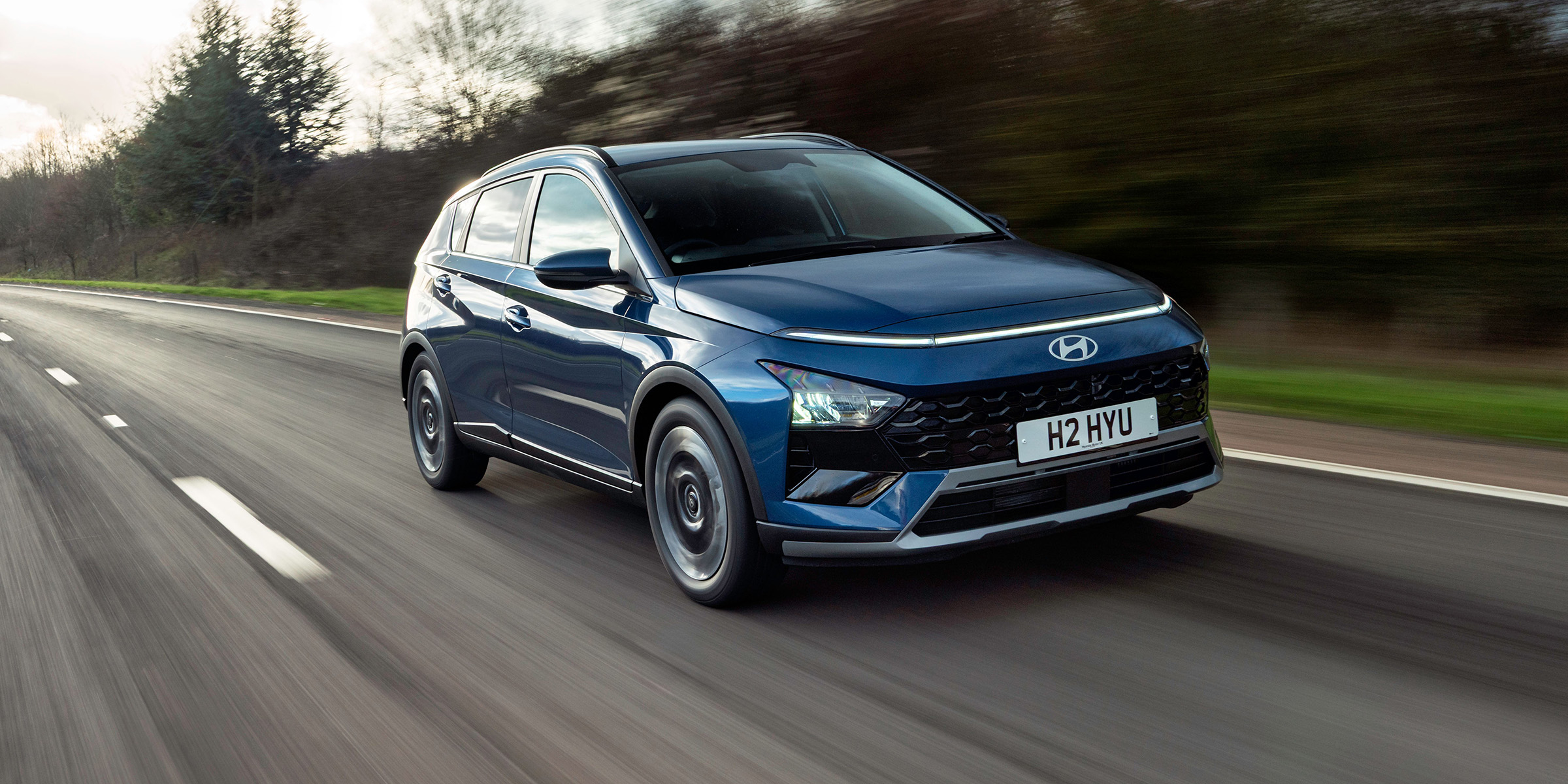
Make and model: Hyundai Bayon Description: Small SUV/crossover Price range: £23,795 to £27,545
Summary: The Bayon excels in no particular area but proves competent in all aspects, a practical family car.
For a broader ownership picture, see our Hyundai Bayon Expert Rating, which combines media reviews, safety data, reliability, running costs and warranty cover.
Hyundai Bayon review 2026 – first UK drive | The Car Expert
Hyundai launched the Bayon small crossover in 2021, effectively jacking up its i20 hatchback to try and compete in a market led by Britain’s best-selling car, the Ford Puma. Buyers were offered a simple formula, with just two petrol engines to choose from.
Now for 2026 we have an updated Bayon, the process seemingly consisting merely of updating the trim and dropping the more powerful engine. As such the Bayon remains one of the less headline-making models in the Hyundai range, but a car that offers an image of being the perfect solution for those who want to use their car every day without having to think much about it – does it live up to the billing?
The Bayon is a bit of an oddity in the Hyundai range – marketed as a small SUV, it has a distinctive exterior treatment that gives it more of a hatchback look, together with a driving position more akin to a typical car than the elevated view of many of its perceived rivals. But this is a car that is less distinctive than those exterior looks suggest and, as such, it tends to sit in the background of the Hyundai line-up, not really making much of a statement for itself.
Price and equipment
The potential Bayon buyer now faces a choice of one engine, a manual or auto gearbox and two trim levels, dubbed Black Line and Tech Line. Prices start at just under £24K for the Black Line manual, the auto adding just over £1K to the bill.
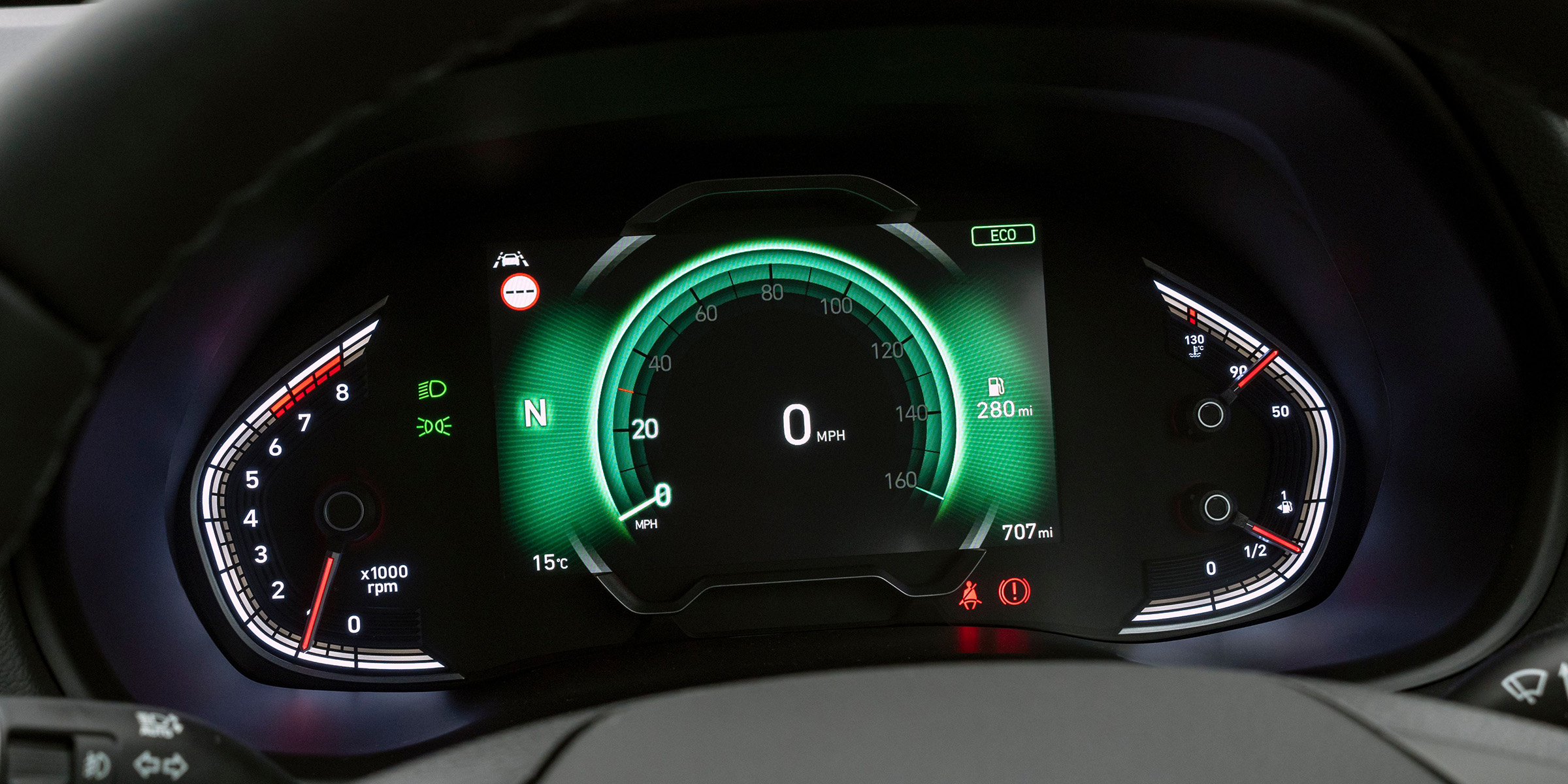
Notable features on Black Line versions include 16-inch alloy wheels, heated front seats and steering wheel, a driver’s display and central touchscreen (each ten inches in size), Apple CarPlay and Android Auto compatibility, and rear parking sensors with a camera.
Upgrading to Tech Line costs another £1,500 – additions include 17-inch wheels, keyless entry and start, wireless phone charging, and automatic air-conditioning, wipers and parking sensors. Buyers also get to choose from a range of interior trims, whereas an all-black finish is (as its name suggests) standard on the Black Line.
Tech Line Bayons can also be specified with an extra ‘Tech Pack’, costing £1,000 and adding an upgraded sound system, windscreen acoustic film and a sunroof.
Standard across all versions is an extensive safety specification, including several driver aid electronics. The Bayon was crash-tested by Euro NCAP in 2021 and earned a four-star rating, which tends to be typical of cars in this sector.
Inside the car
You don’t feel like you are getting into an SUV, thanks to a low seating position, but once inside, the space available for what is a small car is definitely a plus point – rear seat legroom is particularly good, headroom a little less so. A 411-litre boot (a bit bigger than the pre-facelift version due to dropping the mild hybrid system), grows to 1,205 litres with the rear seats down, which is competitive for the segment, though not as big as the Ford Puma’s.
The dash layout is fairly ordinary, which this may surprise some after that sharply styled exterior. However, it’s generally easy to use; the central ten-inch touchscreen, a standard Hyundai fitment, is high-mounted and easy to reach, though its menus do seem a bit complex at times – a row of shortcut buttons along the base help here. The climate control, meanwhile, has its own panel with proper controls.
The generally black finish on our test car does tend to highlight the hard plastics, of which there are plenty, adding to the rather ordinary feel of one’s surroundings.
Under the bonnet
When launched, the Bayon offered a simple choice between two petrol engines. The update has removed that choice, and now you can only have your car with a 90hp unit, attached to a six-speed manual or seven-speed automatic transmission. It’s also lost the mild-hybrid assistance that was fitted pre-facelift, now running a simple petrol unit.
This manual version of the Bayon tested by The Car Expert passes through 62mph from rest in a shade under ten seconds. Combined cycle fuel economy is quoted at about 48mpg with 134g/km of CO2 emissions. The auto takes somewhat longer to 62mph at 13.3 seconds, although fuel economy and emissions are comparable.
On the road
It’s difficult to write very much about the road dynamics of the Bayon, because they are pretty innocuous – which may suit much of its target market. It goes where it’s pointed, in not that much of a hurry, and without making any real fuss about it.
Despite the low seating position, visibility is generally good. The engine sounds quite perky but this hides a somewhat underpowered performance overall. However, the ride quality is generally good – once one gets up to motorway speeds, the car will happily cruise at this pace, while in the twisty bits the steering gives the right amount of feedback.
Verdict
There’s not a lot to get excited about with the Hyundai Bayon, but this should not be seen as a criticism. This is a small SUV that basically does everything it needs to do to more than acceptable levels. As such, it should be a consideration for any buyer looking for a reliable workhorse, particularly families who simply want to drive their car all week long without having to really think about it.
We like:
• Well specified • Easy to drive • Spacious for its size • Efficient
We don’t like:
• Feels perkier than it is • Low driving position restricts vision • Some cheap plastic trim
Now that the Financial Conduct Authority (FCA) has announced a £7.5bn redress scheme for customers who were mis-sold car finance, up to 12 million car buyers could be owed compensation. But that also means there will be scammers out to prey on unsuspecting consumers with promises of easy money.
As part of the scheme, lenders will be required to contact eligible customers who have not already lodged claims. To help streamline the scheme and reduce costs to lenders, the FCA has dropped a previously planned requirement for lenders to use recorded delivery letters, and will now allow ‘a range of communication channels’ instead. But that opens the door for scammers posing as lenders to catch out unwary customers.
Anyone receiving a phone call, text message or email about potential car finance compensation should immediately be suspicious. Do not give out any personal information – end the call, do not reply to the email or click on any links in the email, and do not call any phone number that claims to be from your lender.
You can then contact your lender yourself and in your own time, and the best way to guarantee that you’re talking to the genuine lender is to check their contact details on the FCA website, or by calling the FCA’s scams helpline (0800 111 6768), before calling, emailing or filling in any online forms.
The FCA has given lenders clear instructions on how to handle customer claims, deadlines to respond to customer claims and deadlines to contact customers who may be eligible for compensation. You don’t need to pay any company to handle your compensation claim on your behalf. You are entitled to join a class action or engage a claims management company to act on your behalf if you wish, and they may claim that they could earn you more money than by using the free FCA process, but the FCA is advising against this and so are we. The FCA’s free claims process is designed to ensure that eligible customers get fairly compensated for any losses.
Customers have until August 2027 to lodge a car finance claim, so we are going to see a lot of news coverage and a lot of advertising from claims management firms for the next 18 months or so. But that also means that there will be plenty of scammers around over that same period, so customers need to beware.
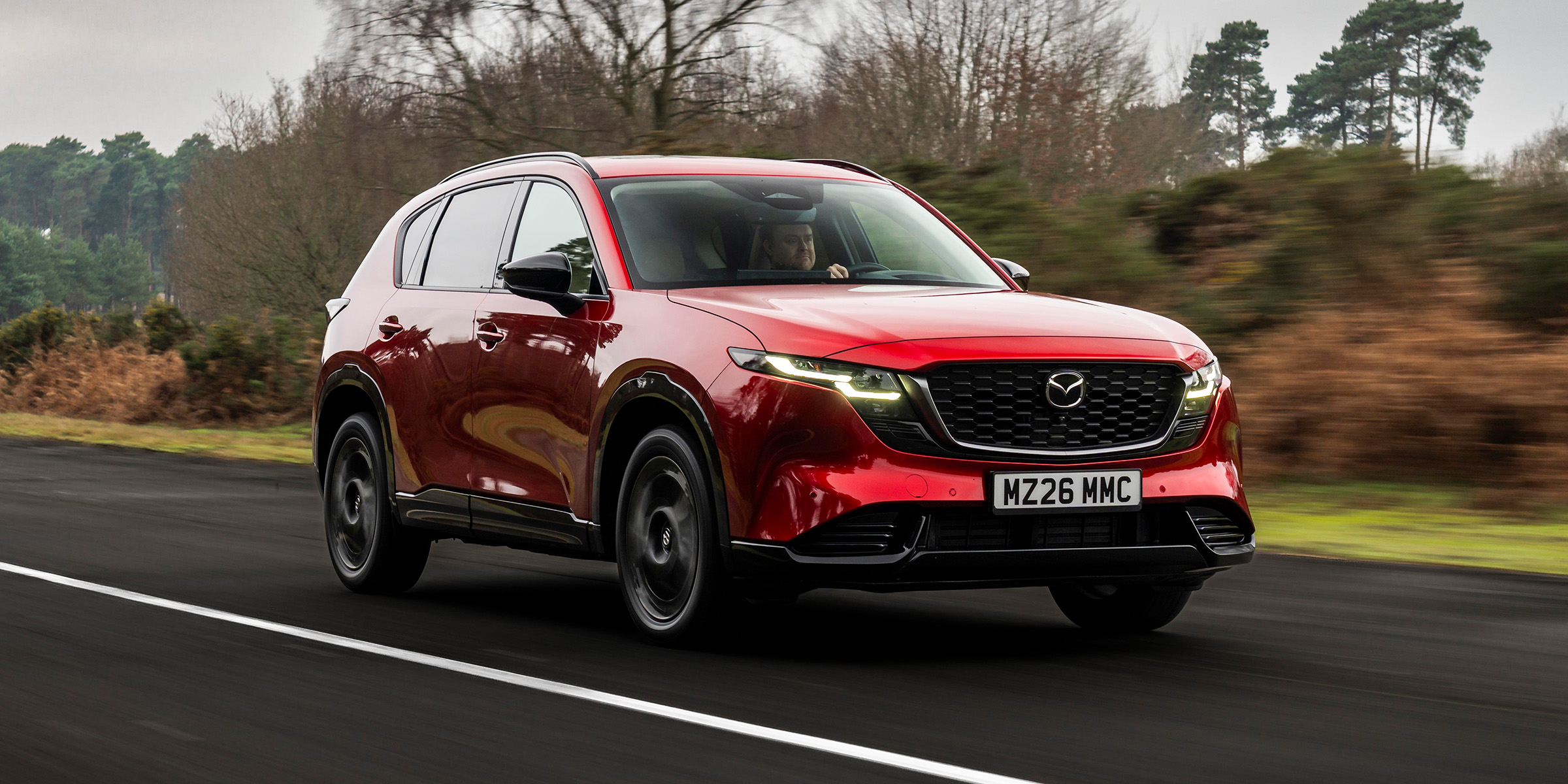
Mazda has confirmed UK pricing and specifications for the new third-generation CX-5 SUV, which is now available to order in the UK.
Rivalling the likes of the Nissan Qashqai, Kia Sportage and Hyundai Tucson, the CX-5 remains Mazda’s best-selling model in the UK, with more than 100,000 units sold since the original CX-5 launched in 2012.
Engine and performance
All versions of the new CX-5 use the same petrol engine option: a 2.5-litre ‘e-Skyactiv G’ unit producing 141hp. It replaces the previous entry-level 2.0-litre engine. The engine is paired with a 24V mild-hybrid system and a six-speed automatic gearbox, which is standard across the range.
Front-wheel drive is standard, while all-wheel drive is available on higher-spec models. Mazda quotes a 0–62mph time of 10.5 seconds for the front-wheel-drive version.
Size and practicality
The new CX-5 is larger than the outgoing second-generation model, with a longer cabin and increased overall dimensions. Boot capacity has increased by 61 litres, and the rear seats now feature a 40:20:40 split-folding layout. Rear doors have also been redesigned to open wider, making access easier.
Interior and technology
Inside, the CX-5 features an updated dashboard layout with a larger central touchscreen. Depending on trim, this measures either around 13 inches or 16 inches.
For the first time in a Mazda model, the system includes built-in Google services. A ten-inch digital instrument display is also fitted. Higher-spec models add a 12-speaker Bose sound system, while a panoramic sunroof is available on upper trims.
Driving and safety
Mazda says the CX-5 has received updates to its chassis and suspension to improve ride comfort and handling.
The SUV also features an updated suite of driver assistance systems and has achieved a five-star Euro NCAP safety rating.
Pricing and availability
The new Mazda CX-5 is priced from under £32k, rising to £41k depending on specification.
Orders are open now, with first UK deliveries expected in summer 2026.
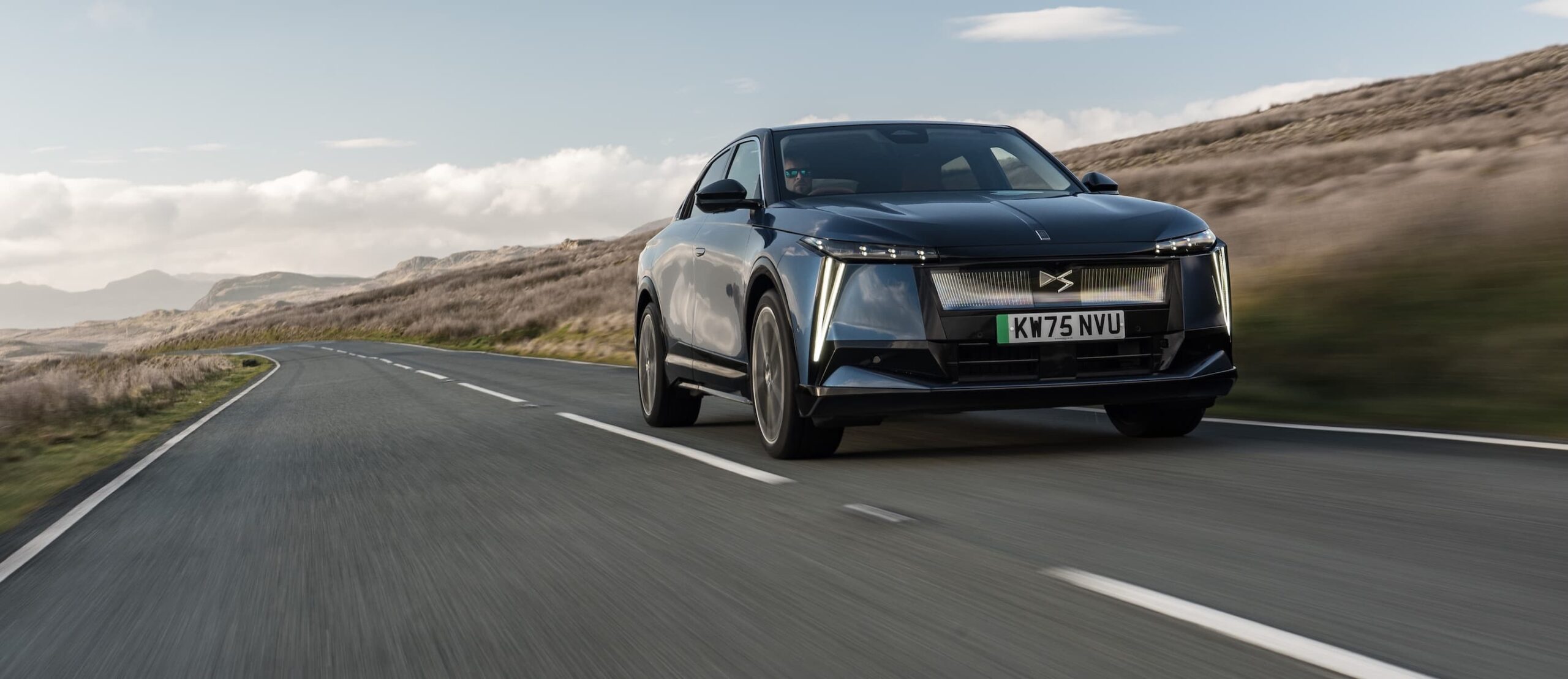
DS does things differently. It’s a French car brand that decided its cars should look and feel unlike anyone else’s, rather than follow the established German template for what a luxury car should be. The DS Nº8 is its most expensive and most ambitious model – a large electric SUV that costs as much as a BMW or Mercedes, and needs to justify it.
In a consumer market that tends be obsessed with German precision or Tesla-style minimalism, DS leans into something altogether more French – theatrical, textured, unapologetically distinctive. With a growing number of new car brands that seem to be little more than Tesla copycats, there’s an admirable quality about a brand that wants to define premium on its own terms.
The DS Nº8 is an electric-only model, designed to whisk four adults (five at a squeeze) along in comfort – even over long distances at motorway speeds, which is not normally a strength for electric cars. That is the sort of territory that cars like the BMW 5 Series and Mercedes-Benz E-Class have traditionally dominated, and customers of those vehicles haven’t really embraced EVs with as much gusto as buyers of urban-focused small SUVs.
I wanted this review to go well. There’s something appealing about a car brand with the confidence to do things its own way, and the Nº8 looked promising on paper. But after a day behind the wheel, I came away disappointed in the drive – at least in the specification of our press car, which I’ll come to shortly.
The Nº8 comes in two trim levels: Pallas (from just under £51K) and Étoile. The car I drove was the Étoile all-wheel drive Long Range, with 350hp and a base price of just over £63K. Add a panoramic roof, upgraded leather interior and a set of optional 21-inch alloy wheels, and the total came to just under £69K.
Almost touching £70K is a big ask for any French car brand, especially one whose previous flagship models (DS 7, DS 9) have sold in underwhelming numbers.
At that price, you’re looking at the same alternatives as someone considering a BMW iX3 or a Volvo EX60. DS argues that the Nº8 will hold its value better than most rivals when you come to sell it, which would help bring down the overall cost of ownership. But large, expensive French cars have not historically been strong on resale values, and I’d want to see actual evidence before factoring that into a buying decision.
Both trim levels are well specified. Even the entry-level Pallas comes with a solid level of equipment. The Étoile adds a distinctive full-width light bar at the front, better interior materials and a suspension system that uses a camera to try to improve the ride – more on that later.
The DS Nº8 exterior design is deliberately different from the German and Scandinavian alternatives at this price – and it’s one of the car’s strongest selling points.
Inside the car
The cabin is where the Nº8 makes the strongest case for itself. The materials feel genuinely expensive: there’s a distinctive stitched pattern on the seats, brushed metal detailing on the door speakers and centre console, and the overall impression is of a car that’s been designed with care rather than just assembled. The main touchscreen is large and quick to respond, the head-up display puts key information in your eyeline as you drive, and the front seats are heated and ventilated.
There are also small fans built into the top of the front headrests that blow warm air towards the back of your neck. It’s an unusual idea that works in principle. On our car, one of the fans buzzed audibly throughout the drive – probably a fault with the specific car, but not what you’d expect on a car at this price.
The steering wheel is polarising. Its four X-shaped spokes are visually dramatic but the rim itself isn’t as comfortable to hold as the best in this class – Volvo, for comparison, sets a high standard for steering wheel comfort that the DS doesn’t match.
The more significant problem is rear passenger space. I’m 180cm tall – just under six foot – and sitting in the back, my head was touching the roof. Anyone taller will be uncomfortable. For a car that’s supposed to be a luxury product, that’s a meaningful shortcoming.
The boot holds around 620 litres, and is long and fairly shallow, which means it suits bags laid flat better than suitcases standing upright. It’s more practical than many saloons but less versatile than a conventional SUV or estate.
The DS Nº8 cabin feels genuinely expensive and has been designed with care, which is more than can be said for most rivals at this price. The 620-litre boot suits flat luggage better than upright suitcases.
Driving range and charging
The version I drove is claimed to cover 427 miles on a full charge, based on the standard laboratory test. Real-world range will be lower, but it’s a competitive number. If you’re weighing up the all-wheel drive version against the cheaper front-wheel drive model, it’s worth knowing the front-wheel drive version claims up to 466 miles – a meaningful difference if you don’t specifically need all-wheel drive. Either way, more than 400 miles is much more than most households will really need.
DS says the car can charge from 20-80% in just under half an hour at a public charging point. Charging peaks at 160kW, which is lower than some rivals. DS’s response is that its system is engineered to maintain a higher average charging speed throughout the session rather than peaking quickly and then dropping off. That’s a reasonable argument, but one we weren’t able to verify on the day as we didn’t charge the car.
Home charging runs at 11kW. The car can also supply power to external devices – useful for camping, or running tools on a building site. An option that allows two-way charging, so you can use the car to run your home or sell power back to the grid, is available at extra cost.
On the road
The Nº8 uses a camera-based adaptive suspension system that watches the road ahead and adjusts the suspension before each bump arrives, rather than waiting until the wheel hits it. In Comfort mode, it works reasonably well – the ride is composed, if not quite as smooth as the best cars in this class. It works best on motorway-style roads rather than mixed surfaces, as the handling wallows around in a manner that’s not particularly pleasant when the road gets twistier.
In Sport mode, the adaptive system switches off entirely, leaving the suspension in a firmer fixed setting that was noticeably uncomfortable yet still doesn’t provide a confidence-inspiring driving experience. Flicking through Comfort, Normal and Sport failed to find a happy balance on our test route.
Our car was fitted with optional 21-inch wheels, which looked great but may have been detrimental to the driving experience. But the bigger problem with these wheels was the noise they produced. Concrete surfaces on the M25 motorway produced an almost deafening roar, and our phone-based sound level meter consistently recorded noise levels above 100dB while driving at 70mph – not what you’d expect at this price point and directly at odds with the car’s comfort-oriented persona. Levels on other road surfaces were not much better, with far too much road noise for what was an almost £70K luxury-oriented car.
Other reviewers who drove the Nº8 on the standard 20-inch wheels didn’t report the same issue, so this may be specific to the bigger wheels. The driving score below reflects the car as we tested it, and we’ll re-evaluate this if we drive the car again on the standard wheels.
In other driving aspects, the Nº8 works well. There’s strong, smooth acceleration, the car feels stable at motorway speeds, and the cruise control system adjusts your speed automatically as you approach bends by reading the navigation map. That last feature is genuinely useful on a longer journey.
The DS Nº8’s camera-based adaptive suspension works well in Comfort mode, but the optional 21-inch wheels generate serious tyre noise.
Verdict
The DS Nº8 is a car I would love to recommend. The interior is genuinely impressive, and there’s something refreshing about a car that doesn’t look or feel like everything else at this price.
But the problems are real and they’re not minor, like rear headroom that rules out taller passengers, tyre noise on the larger wheel option that requires passengers to shout at one another to be heard, and suspension tuning that fails to find a happy compromise between comfort and handling. At nearly £69,000 as tested, these aren’t things you should have to accept. DS has the right idea, but the Nº8 just isn’t quite the finished article.
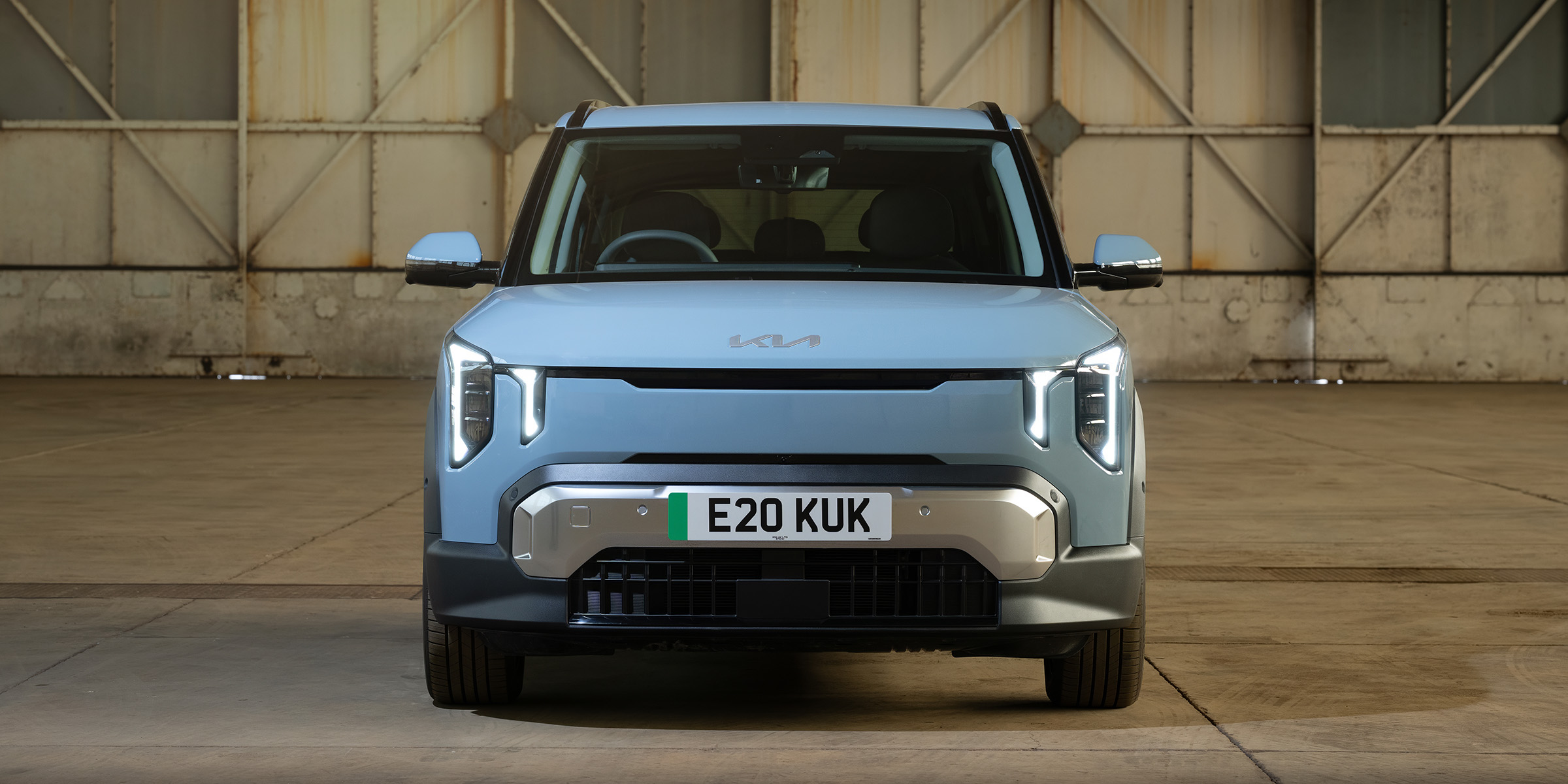
Kia has confirmed UK pricing and additional specifications for the new EV2, its smallest electric SUV to date, which is now available to order.
The EV2 is now Kia’s cheapest electric model, sitting below the larger EV3 which was awarded The Car Expert’s ‘Car of the Year‘ accolade in 2024.
The crossover is set to challenge compact SUVs like the Renault 4 E-Tech and Ford Puma Gen-E, but has slightly smaller supermini measurements, being a similar length and width to the Mini Cooper Electric but with more ground clearance.
Powertrains
Kia’s brief for the EV2 is offering the brand’s electric powertrain tech and intuitive on-board tech offered with the EV3 and EV4 in a ‘more accessible’ package, while still offering the interior space and versatility required for family ferrying.
With order books now open for the compact Kia, there are two different powertrain options to choose between.
42kWh ‘Standard Range’ with a claimed range of around 190 miles
61kWh ‘Long Range’ with a claimed range of up to 281 miles
Both versions are built on 400V electrical architecture – like the EV3 and EV4 – with DC rapid charging from 10% to 80% taking around 30 minutes under optimal conditions.
Interior space and practicality
Kia says the EV2 has been designed to maximise interior space despite its compact size. It features a sliding rear seat system and a boot capacity of 362 litres, along with a 15-litre ‘frunk’ front storage compartment.
The company claims interior space is comparable to larger models such as the now-retired Kia Ceed.
Tech and infotainment
All versions of the EV2 will feature a three-screen dashboard layout, consisting of:
A 12-inch digital instrument display
A 12-inch infotainment touchscreen
A five-inch climate control display
The system runs Kia’s latest connected car ‘Navigation Cockpit’ software and supports over-the-air updates, meaning that the car can download updates and possibly even new tech futures in the future from your drvieway.
Wireless Apple CarPlay and Android Auto are included as standard, along with a voice assistant system. Kia also plans to offer additional in-car apps such as streaming services, depending on the spec you opt for.
Driver assistance and features
The EV2 includes a range of driver assistance systems as standard, including:
‘Highway Driving Assist 2’ – Helps with motorway driving by maintaining a set speed, keeping a safe distance from the car ahead, and providing gentle steering support to keep the vehicle centred in its lane. It can also assist with lane changes when prompted.
Adaptive cruise control – Automatically adjusts the car’s speed to maintain a safe following distance from the vehicle in front, slowing down and speeding up as traffic conditions change.
Autonomous emergency braking – Monitors the road ahead for vehicles, pedestrians or cyclists and can apply the brakes if it detects a likely collision and the driver doesn’t react in time.
Blind spot monitoring – Warns the driver if there is a vehicle in the blind spot. Some systems also show a camera view of the blind spot in the instrument display when indicating.
Regenerative braking with one-pedal driving (i-Pedal) – Allows the driver to control both acceleration and deceleration using just the accelerator pedal. When the driver lifts off, the car slows down using regenerative braking, often bringing the vehicle to a complete stop without needing to press the brake pedal.
A new ‘In-Cabin Monitoring Unit’ (ICMU) is also fitted, which monitors driver attention and occupant position and can intervene if required.
Other standard features include LED lighting, heated front seats and steering wheel, and multiple USB-C charging ports.
Pricing
The Kia EV2 range starts from just over £24k including a temporary “Kia Reservation Saving”, which offsets the absence of a confirmed UK government electric car grant at launch. Prices rise to around £36k for the top-spec ‘GT-Line S’.
The “Reservation Saving” reduces the price by £3,750 on most variants, or £1,500 on the entry-level ‘First Edition’ model. Order books are now open, as of 1st April, with first UK deliveries expected later in the year.
The UK’s financial regulator has outlined its final plans for a £9 billion scheme to compensate 12 million car finance customers, with money starting to flow later this year.
The FCA (Financial Conduct Authority) has been looking into the mis-selling of certain types of car finance products since the start of 2024, with the investigation expanding and then narrowing again over the last two years. After a lot of consultation, court cases and media speculation, the regulator has finalised a compensation package.
What’s this all about?
In January 2024, the FCA announced that it was investigating the misuse of specific types of arrangements within millions of car finance agreements, called Discretionary Commission Arrangements (DCAs). These allowed finance managers at car dealerships to manipulate the interest rates on car loans that had already been approved in principle by car finance lenders.
In other words, the dealer would submit an initial finance application to the lender on a customer’s behalf, and the lender would approve the loan at a particular interest rate. But rather than tell the customer that they’d been approved, the dealer could then decide to move that interest rate up or down – which usually meant up, increasing the customer’s monthly payments.
DCAs were banned in 2021, but there was a growing number of cases coming through the Financial Ombudsman Service and through the courts, with customers claiming that the finance companies and dealers had mis-sold finance. When a couple of these cases resulted in wins and compensation for customers, the FCA decided to investigate the whole practice industry-wide.
The investigation then broadened into more general aspects of commission payments from lenders to dealers, and how these commissions were disclosed (or not). Meanwhile, one group of cases was taken all the way to the Supreme Court as concerns of widespread mis-selling expanded to cover almost all types of car finance. The court struck down two of the three charges, but one was upheld.
Who is getting compensation?
The FCA has decided that numerous finance companies “broke the law by failing to disclose important information to customers”, and is implementing an industry-wide compensation scheme to redress these failures.
After months of consultation across the industry, the FCA has determined that about 12 million agreements (not necessarily 12 million customers, as some people will have had multiple agreements) are eligible for some compensation.
Most of the eligible customers will have had contracts containing DCAs, although they won’t have known that as it was not disclosed. Some cases will involve very high levels of commission that were deemed unfair, while other cases fell foul of various disclosure requirements.
The affected agreements cover a 17-year period from 2007 to 2024. There is concern that older cases will be harder to prove if neither the lender nor the customer still have any paperwork to confirm details of the finance agreements.
There are multiple criteria for determining which customers are eligible for compensation and how much they are likely to receive, which we won’t go into here as the FCA explains it well enough on its own site. You’re most likely to be eligible if your agreement included a DCA, or if your lender paid what the FCA considers an excessively high level of commission to the dealer that sold you the agreement.
The onus is on the lenders to determine eligibility and determine compensation amounts, with the FCA overseeing their work.
How will the compensation scheme work?
The FCA has effectively created two parallel schemes; one for agreements taken out before April 2014, and one for agreements taken out from April 2014 to November 2024. This is because there are likely to be challenges to the FCA’s authority to regulate the pre-2014 cases, since it was not the government regulator for car finance before April 2014.
In order to prevent the threat of legal challenges from derailing the post-2014 claims (which make up the bulk of the 12 million agreements in question), the pre-2014 claims will be handled separately.
Customers who have already registered their details with their lenders will not need to do anything further, and these complaints will be processed first. Customers who have not yet lodged a complaint will then be processed afterwards. If customers do not lodge a complaint but are likely to be owed money, lenders will have to make contact to invite them to lodge a complaint.
The deadlines for lenders to implement their schemes and contact customers are slightly different depending on whether the agreements were taken out before or after April 2014.
Customers will have until August 2027 to lodge a complaint if they have not been contacted. If customers are contacted by their lender, they will have six months to respond and lodge a claim.
The estimated average compensation amount is about £830, although this will depend on your circumstances. For most customers, the FCA’s calculations will be based on the commission paid and the estimated loss based on the interest paid on the loan. The calculation will include provision for interest on the compensation amount at a minimum of 3% per year.
In about a third of cases, compensation will be capped to ensure that customers don’t end up in a better position than they would have been if they had not been mis-sold.
How do I get car finance compensation?
If you believe that you may be eligible for compensation for a car finance agreement (most likely an HP or PCP agreement) taken out between April 2007 and November 2024, you should lodge a complaint.
You will need to complain to the lender who financed the car, not the car dealer or the car manufacturer. If you still have the contract paperwork, you should be able to see which company it was. If you don’t know the lender, that makes it harder. You can try checking your online credit report to look for details of old loans, or search your old bank statements for direct debit references if you still have them.
However, even if you do nothing, any lender will still be obliged to contact you in coming months (by the end of December 2026 for post-April 2014 agreements, by the end of February 2027 for pre-April 2014 agreements) if you are likely to be eligible for compensation.
The FCA website also has information on how to complain for free. You don’t need to pay a claims management company or law firm to act on your behalf, although you are entitled to do so if you wish. However, using a legal firm is likely to take longer, will cost you money and does not guarantee that you will ultimately receive any more compensation than you would get using the FCA’s free scheme.
Watch out for scams
Now that the FCA has announced a compensation scheme, there will inevitably be scammers out to prey on unsuspecting consumers with the promise of easy money.
Lenders will be required to contact customers if they believe that the customer may be eligible for compensation and that customer has not already lodged a claim. To help streamline the scheme and reduce costs to lenders, the FCA has dropped a previously planned requirement for lenders to use recorded delivery letters, and will now allow ‘a range of communication channels’ instead. But that opens the door for scammers posing as lenders to catch out unwary customers.
Anyone getting a phone call or an email about potential car finance compensation should immediately be suspicious. Do not give out any personal information – end the call, do not reply to the email or click on any links in the email, and do not call any phone number that claims to be from your lender.
You can then contact your lender yourself and in your own time, and the best way to guarantee that you’re talking to the genuine lender is to check their contact details on the FCA website (https://www.fca.org.uk/consumers/fca-firm-checker), or by calling the FCA’s scams helpline (0800 111 6768), before calling, emailing or filling in any online forms.
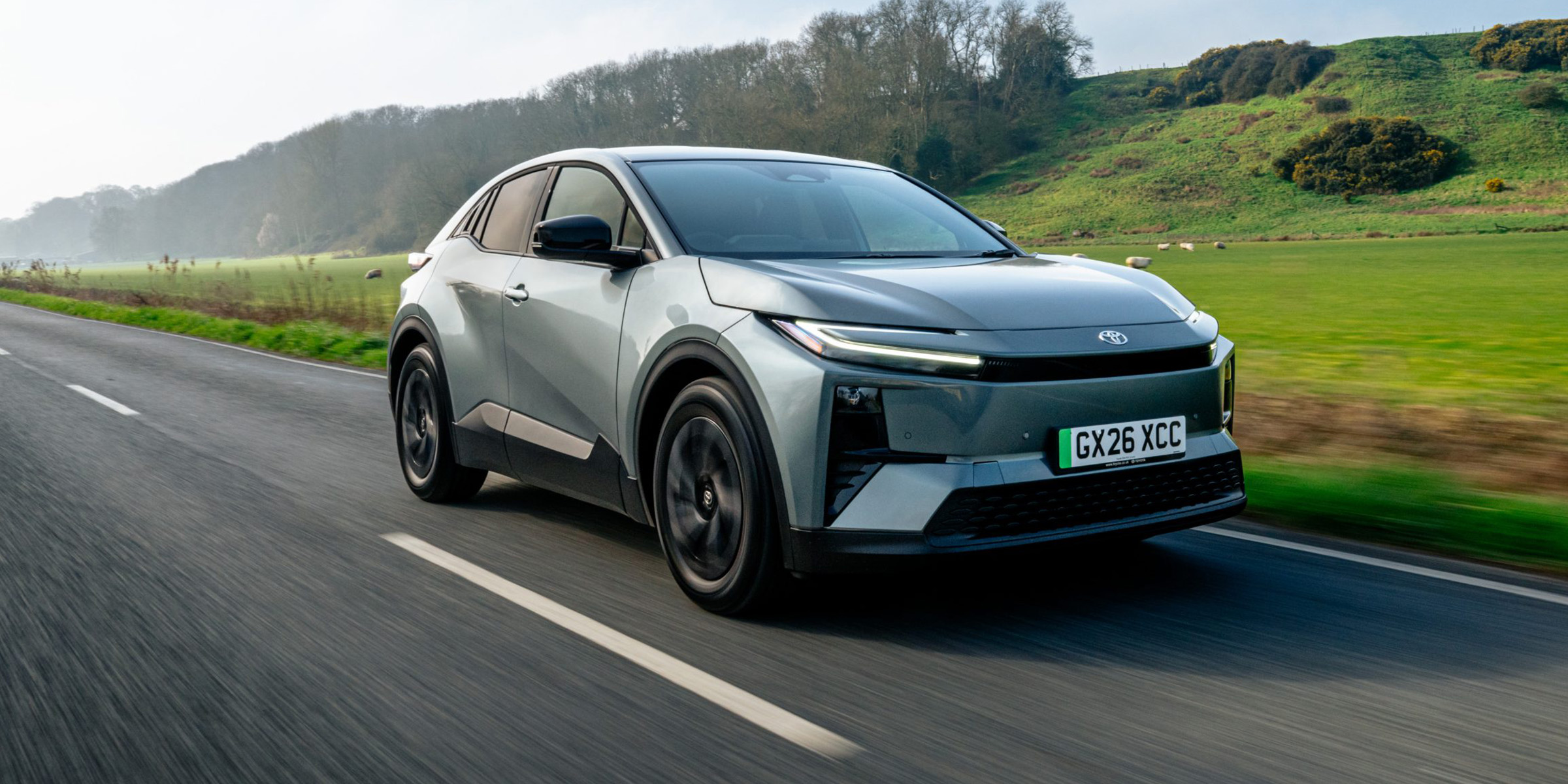
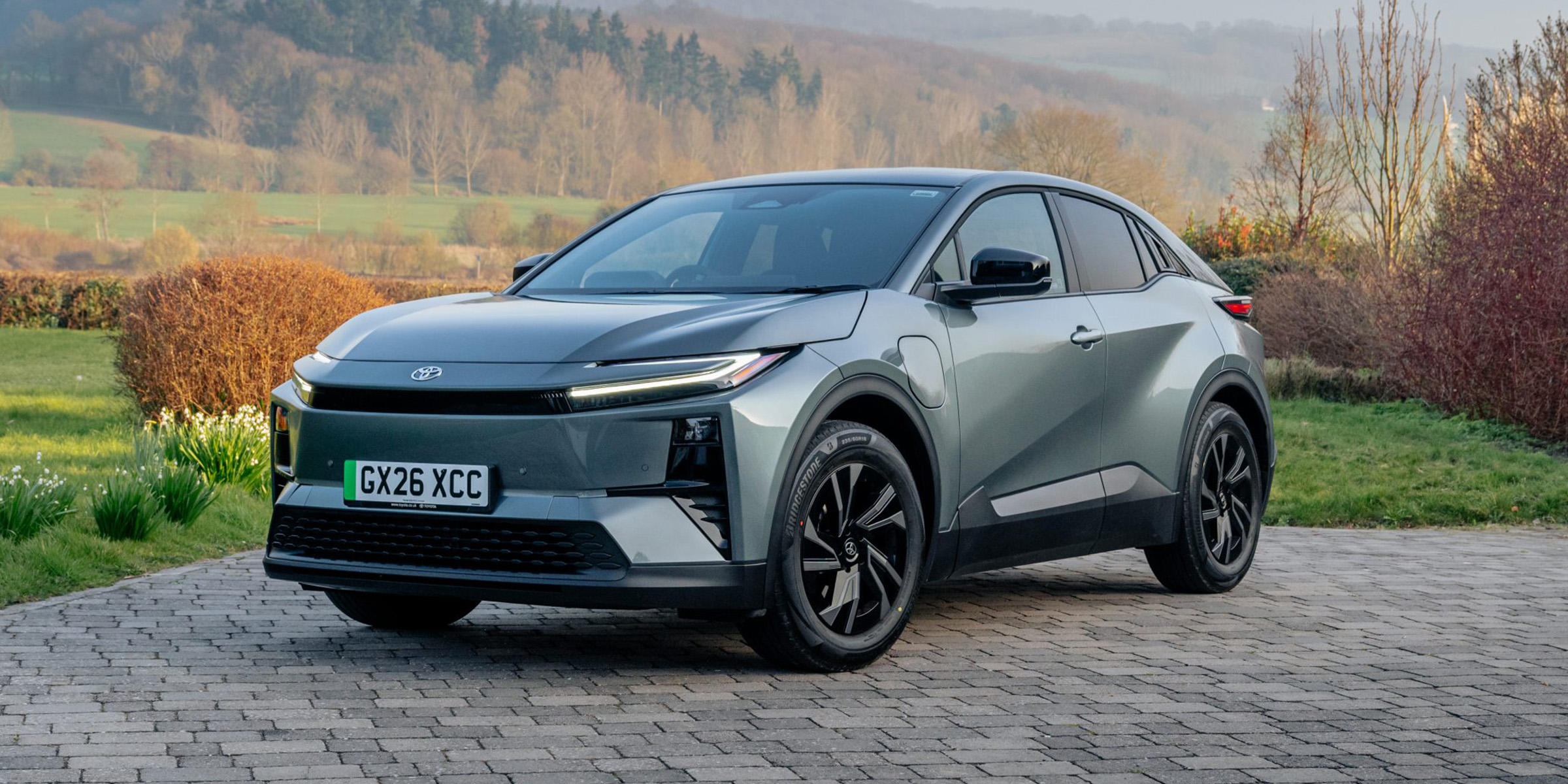
Make and model: Toyota C-HR+ Description: Mid-sized electric SUV Price range: £34,495 to £40,995
Summary: The image of the C-HR but with electric power – it should be a success.
For a broader ownership picture, see our Toyota C-HR+ Expert Rating, which combines media reviews, safety data, reliability, running costs and warranty cover.
Toyota C-HR+ review 2026 – first UK drive | The Car Expert
Toyota has not lit many fires with its two electric vehicle offerings to date – the bZ4X, a mid-sized SUV that is quite large for its market, and the underwhelming Urban Cruiser small crossover. It could be a different story with a new model that has much wider appeal – a fully electric sibling to the C-HR, consistently the brand’s third-best-selling car.
The C-HR+ is not, however, the hybrid C-HR with an all-electric powertrain but a completely new vehicle actually much closer related to the bZ4X and on the same bespoke electric platform. It’s a substantial 17cm longer than the C-HR, which should mean more rear-seat space (consistently a complaint with the regular C-HR). It also has a lower centre of gravity to aid handling.
European buyers have a choice of two battery sizes, three trim levels and front or all-wheel-drive powertrains. The AWD model won’t be sold in the UK, though Toyota has hinted that it might add it at a later date.
Price and equipment
UK buyers can choose from three trim levels for the C-HR+, with very few extra-cost options. The entry model is the Icon, supplied with a 57kWh battery pack and costing £34.5K (not including the government grant of £1,500 which as of March 2026 all C-HR+ models qualify for). Standard equipment includes 18-inch alloy wheels, LED lights front and rear, synthetic leather trim, heated front seats and steering wheel, a smart key and notably, two wireless smartphone chargers at the base of the centre console.
As of March 2026, the C-HR+ has yet to undergo Euro NCAP safety testing. However, all versions are specified with Toyota’s extensive line-up of ADAS electronic driver aids, including adaptive cruise control, a blind-spot monitor and parking sensors with a rear-view camera and auto braking.
All cars also have Toyota’s standard three-year warranty which then stretches up to 10 years so long as service intervals are kept up with. The battery warranty guarantees the pack maintaining 70% capacity for 10 years or remarkably, one million miles.
Upgrading to Design costs £2,500, which mostly pays for the bigger battery and thus more power and range which will likely make this the most popular model. You also get privacy glass and a powered tailgate, with 20-inch alloy wheels as an option.
The larger alloys are standard on the range-topping Excel, which at £40,995 also gets exterior styling tweaks, more suede and synthetic leather, a powered driver’s seat, and some extra driver-assistance safety systems. This car can also be specified with an optional £905 Premium Pack, which comprises grey trim, an upgraded sound system and a panoramic sunroof.
Inside the car
The larger cabin of the C-HR+ compared to its traditionally-powered sister can certainly be felt in the rear seats, especially in terms of legroom, though it’s still not exactly spacious, and the boot space lacks when compared to rivals. The small triangular side windows, a C-HR styling signature, do make it feel a little dark in the back, unless one spends lots of money on a range-topping Excel and the optional sunroof.
Toyota’s fit and finish has long been solid and the C-HR+ maintains the trend. The driver’s environment is new to the car, notably the central touchscreen containing a row of buttons along its base rather than in a separate panel below it. This does make the map higher, a bonus, and thankfully it’s not a touchscreen-only setup, with proper buttons and dials for such aspects as the climate control.
The driver’s display is in its own pod mounted on the base of the windscreen and can seem a little far away – some users might find their preferred steering wheel position obscures part of the display.
Driving range and charging
The entry-level Icon comes only with a 58kWh battery, good for 167hp and an official combined cycle range of up to 284 miles. Both batteries offer the same torque figure of 268Nm and those thinking of hitching a caravan to their EV should note that only cars with the larger 77kWh battery pack have a towing capacity stated, which is 750kg.
The larger pack of the Design or Excel variants ups the power to 224hp with an official range of 376 miles with the standard 18-inch wheels of the Design, or 347 miles on the 20-inch rims of the range-topping Excel. These figures are impressive, and initial observation of energy consumption on the launch suggested 300+ miles would certainly be the norm.
All versions of the C-HR+ accept 150kW rapid public chargers, which can produce a 10-80% recharge in around half an hour. It takes longer in colder conditions, though all cars have a heat pump as standard and battery pre-conditioning to aid charging time.
Icon and Design models have an 11kW AC onboard charger, that 10 to 80% recharge taking four hours 48 minutes on a home wallbox. On Excel versions it’s uprated to 22kW, which can cut the replenishment time to two hours 12 minutes – however, most home wallboxes don’t charge that fast, so it won’t necessarily be of benefit.
On the road
The cars on the European launch event were to mid-range Design specification with the larger battery and more power. As is typical of EVs it was just a case of selecting drive and moving efficiently away – the selector is a dial at the base of the centre console, which this reviewer prefers to those that put the functions on what would normally be the windscreen wiper stalk.
One of the reasons for the C-HR’s success is that, as well as looking sporty for an SUV, it is also fun to drive, and Toyota has maintained this trait in its EV. The test cars were swift enough with a 0-62mph time of just over seven seconds, rode well and cornered with confidence, especially on a mountainous route in Portugal that included plenty of twists and turns along with some sudden changes in road surface quality – reminding one of typical UK roads. The car coped well with all this, and the precise steering was particularly noticeable.
A plus is the proper brake regeneration via the fingertip paddles mounted just behind the steering wheel. The minus is that the difference between the four degrees of retardation does not feel very marked and this is not a car you can drive on a single pedal – even on level four you will still be using the brake to aid the slowing process.
Vision from the driving position is generally good in all directions except behind – the letterbox view through the rear window is quite restrictive.
We also had a brief go in the all-wheel-drive variant – behind the wheel, it does not behave very differently from its front-wheel drive sibling, though the additional grip can be felt in faster cornering. If Toyota does decide to sell it in the UK, it will likely find only a niche market, though it will suit those living in more rural areas, especially in winter.
Verdict
In the C-HR+, Toyota has produced its most satisfying electric vehicle so far. The newcomer offers all of the attributes that have made its fossil-fuel inspiration a success and adds some extra ones, such as better rear seat space. Those in the market for a mid-sized family SUV should certainly give it a look.
Buy a new car from a dealer and you can rightly expect to get a warranty lasting for several years. But what about a used car? Should you expect a used car warranty, and is it a legal requirement?
New cars come with the assurance that, if anything fails or breaks down during the first few years of their life, they will be repaired and brought back to standard by the manufacturer’s official agent, such as a dealership. That’s one of the many advantages of buying a new model.
When it comes to used cars, however, it’s a mixed bag. Newer used cars are likely to be covered by their original factory warranty, but once a car is out of its new car warranty period, the type and length of used car warranty offered by a dealer (if any) will vary considerably. While most used car dealerships will use the lure of some sort of warranty to attract you into their showroom to buy a vehicle from them, they are not obliged to do this.
Let’s have a look at what you might get.
Balance of new car warranty
Depending on the maker of the car, this can be anything from three years to seven from the date the car was first registered to its original owner. This means you get all the same warranty coverage as a new car buyer, but obviously only for however long is left on that original warranty.
Under EU rules – which still apply in the UK following Brexit – all new cars must have a minimum of two years’ unlimited mileage new car warranty. However, most car companies offer a longer period than this, although the mileage might be capped after two years (for example, a three-year / 100,000 mileage warranty).
Depending on the car manufacturer, the warranty after the first two years may be managed differently to the warranty in the first two years. However, this shouldn’t affect you as a customer and it should be perfectly seamless.
‘Approved’ used car warranty
If you’re buying a used car from a franchised dealership (eg – a used Audi from an official Audi dealership), it will probably come with what looks like a factory warranty for at least 12 months – often with the option to pay more to extend this for another year or two.
However, there will almost certainly be differences between an ‘approved used car’ warranty and a new car warranty, despite the official-looking branding.
The used car warranty will be provided by a third-party warranty company and branded up as a manufacturer product – a process called ‘white labelling’. There’s absolutely nothing wrong with that, as long it’s being made clear to you who is actually providing the warranty and what the process is if you ever need to make a claim.
In theory, claiming on an approved used car warranty should be as seamless as a new car warranty from the customer’s point of view. However, there will almost certainly be certain terms and conditions, as well as stricter limits on claims, compared to a new car warranty. Other than a smoother claims experience, there’s usually nothing better or more comprehensive about an ‘official’ used car warranty than one from a third-party provider.
Third-party dealer warranty
If you’re buying a car from an independent used car dealership, you may well be offered a used car warranty as part of the purchase. This will be an ‘aftermarket’ used car warranty, which entitles you to some protection from breakdown or failure – within strictly defined limits.
Usually, any warranty offered with a used car will be for a short period of time – often 30 days or 90 days – and with specific exemptions on what you can claim for.
No warranty at all
Contrary to many people’s assumptions, there’s no law saying that a used car has to be sold with a warranty. And if you’re buying a cheap used car, chances are that you won’t get any kind of warranty (or at least, nothing that’s worth the paper it’s written on).
Dealers might tell you that by not offering a warranty, they are passing on savings to you, as if you were buying from a private seller. It’s a fair point, but it could leave you with an unwanted repair bill in a few weeks’ time if something goes wrong.
If you don’t get any warranty, or only a token offering, dealers will often try to sell you a warranty instead. This can be very expensive, so be wary.
Obviously, if you’re buying a used car from a private seller, you don’t get any kind of cover unless the car is still under its new car warranty. If they’re trying to convince you that the car has a used car warranty, check it for yourself as it may not be transferable to you when you buy the vehicle.
Buying your own used car warranty
Many used car buyers will choose to buy their own used car warranty – and there are plenty available online. A warranty from a specialist provider will almost certainly be far more comprehensive than the one being thrown in for free by a car dealer, so it’s certainly worth checking out.
Similarly, buying a warranty online is usually much cheaper than buying a warranty from a dealer, or extending the ‘official’ used car warranty from a franchised dealership (because dealers usually mark up warranties quite substantially to boost their profit margins). Many car owners will buy a warranty online when their existing warranty runs out, to make sure they remain protected against the most expensive repairs for a broken car.
As with anything, you need to check carefully to see what’s covered and what you’d have to pay in terms of any excess, but it’s highly likely that a warranty bought online will be better value than one bought at the dealership.
Whatever car you’re buying, at whatever price you’re paying, you do have one level of law-enforced cover provided in the form of the Consumer Rights Act 2015, which offers you some protection.
The Act specifies that car dealers have to give you the car that they have described in their advertising, it has to be fit for purpose and it must be of a reasonable and safe quality.
That’s not the same as getting a warranty, and it’s far more limited and specific to protect buyers if they have purchased a car that is faulty or not as described.
The Act allows a consumer to reject a faulty or mis-sold car under specific circumstances, meaning you have the right to reject the vehicle and claim a full or partial refund from the seller. This only applies when you are buying from an official dealer and does not relate to private purchases. There is also a specific process involved, and it depends on how long you have had the car. Luckily for you, The Car Expert has a comprehensive guide to rejecting a faulty car.
This article was originally published in March 2023, and updated in April 2026.
Additional reporting by Stuart Masson.
Here at The Car Expert, we have some fantastic warranty offers for our readers provided by our commercial partners. If you’re interested in a used car warranty, you should check these out:
ALA Insurance provides used car warranties in conjunction with the RAC
MotorEasy offers warranties and many other types of cover for car owners
Electric cars are becoming more and more popular every day. More than 470,000 new EVs were sold in 2025, a 24% increase on the year before, and used EV sales are surging as more cars enter the used car market. This number will keep growing as the world shifts from fossil fuels to electric power.
But the reality remains that an electric vehicle is a far more viable option if you’re able to charge it off-street at home, rather than relying on the public charging network. The electricity is much cheaper and you can charge your car while you sleep, rather than having to sit around waiting for your car to charge while you’re out and about.
The same, of course, applies to plug-in hybrids since their smaller batteries are more likely to require charging every day if you want to get the maximum benefit from them.
If you’re charging at home, you really need a wallbox rather than relying on a standard three-pin plug socket. While you can charge your car this way, it’s slower and more hazardous if your home’s wiring isn’t up to scratch. A wallbox is pretty much a must-have.
Although many car manufacturers can offer you a free or discounted wallbox when you buy a new EV, not all of them do – and you certainly won’t get any such consideration if you’re buying a used EV. Fortunately, there are many suppliers offering home charging solutions.
For most households, a 7kW wallbox is sufficient since that’s all your home electricity installation is likely to be able to supply. If you’re lucky enough to have three-phase power, you can probably get a 22kW wallbox that will charge your car significantly faster.
Here, The Car Expert looks at some of the best websites offering advice and equipment for drivers looking to charge up at home.
Please note that several of the companies listed below have an asterisk next to their name – they are commercial partners of The Car Expert, which means that we may get a small commission if you click through to their website. This doesn’t affect the deals you are offered or the price you pay; it just helps us to keep running our site.
Best websites for buying an EV home charger in 2026
Pod is the new name for Pod Point, which was founded in 2009 and claims to have already provided more than 250,000 charge points to UK customers. Additionally, it operates a network of 7,300 public bays.
Its home charger unit is called the Solo 3S, and is available in 3.6kW or 7kW versions. The 7kW version starts at £1,099 installed. Those prices are for the untethered version – if you want the tethered version with a five-metre cable, it’s an extra £50. The Solo 3S is also solar-compatible, which is perfect if you have your own solar panels at home.
The company is now offering a charging point subscription called Pod Drive, which reduces your upfront payment to £100 and then charges you £40/month. If you have a basic energy tariff, you could save some money over a three-year period thanks to electricity rebates, but if you already have a smart tariff (which you really should if you charge an EV at home), then you can’t take the subscription offer.
Simpson & Partners is a Cotswolds-based business that prides itself on designing wallboxes with high aesthetic appeal and build quality. Founded by the people who also started and then sold Anderson EV chargers, the husband-and-wife team of David and Mandy Simpson started over with Simpson & Partners in 2021.
The company offers home or business chargers, all based on a sleek design that’s about the same size as a piece of A4 paper and available in either 7kW or 22kW versions. You can have a tethered or untethered set-up (the untethered one looks cleaner, while the tethered one means you don’t have to dig your cable out of the car every time you want to charge), and there’s a wide range of colours for the unit.
There’s also a smart charging app that allows you to schedule charging times and track your energy usage. It can also connect your phone to the wallbox via Bluetooth rather than wi-fi, which could be handy if your home internet service goes down or doesn’t stretch to your charging point.
A 7kW home wallbox starts at £1,073 installed, although the more popular ‘Plus’ version starts at £1,199 and can also integrate with a home solar system. If you have three-phase power and want a 22kW version for faster charging, prices start at £1,499 installed.
Myenergi’s goal is to optimise electric power use at home. Its home charger unit is called the Zappi, a ‘smart’ unit with a difference – it can either be used to charge your car using power from the grid or, via optional charging modes, it can use 100% green energy generated from your own solar panels or wind turbines. Harnessing your own power means you can charge your car for free.
The Zappi comes with three charging modes – fast charge (quick power from renewable energy and the grid), eco mode (green energy plus grid power to top up if needed) and eco+ mode (continuously monitored to pause car charging if there is too much consumption elsewhere in your house).
You can set timers for charging at the most economical periods, there’s remote access to control the device from anywhere in the world and the unit is pincode protected to prevent other people using the equipment uninvited.
Zappi prices start from £779 and comes with a three-year warranty. Choose from 7kW single-phase or 22kW three-phase, and either tethered (comes with a cable) or untethered (plug only, use your car’s cable). There’s an option online to request a ‘fully installed’ quote.
Established in Norway in 2018, Easee’s mission is to create the world’s smartest EV charger. Its home charger unit is the Easee One, which is a slim and stylish 7kW unit.
The Easee One is an untethered wall charger, but you can convert it to a tethered unit by locking a cable in place using the Easee app. Helpfully, the company can also sell you a cable and wall hook…
There’s an app to help you control the charger and set up charging sessions, and other features are explained such as charging three connected cars at the same time with the technology distributing the power automatically between the vehicles. A Q&A section on the Easee website deals with other queries and an accessories page offers cables, an aluminium post for several chargers and a U-hook to keep your cable in place.
The Easee One 7kW is currently available for £679 plus installation.
EV Home is a supplier and installer of home charging points. They currently have five different models available from Ohme, Hypervolt, Myenergi and EVEC.
It’s a simple website and a simple idea. You complete an enquiry form that helps find the most compatible wallbox for your home and car. EV Home uses your property layout and electrical set-up to recommend a design and specification that they think will best suit you, your car and house.
There’s a clear table that compares all four charger options, so you can work out which unit is best for your hoe.
There’s a no-commitment inquiry form at the foot of the web page, a 24/7 telephone number – or you can go straight to the next step and book an installation. More detailed information on pricing and charge points is offered along with an explanation of any government grants available.
Andersen is owned by British brand Evios, with all home chargers now offered under the Andersen brand. Its products are built here in the UK.
Andersen has a range of three home charging units; the A2, A3 and Quartz. The A2 and A3 are larger than most wallboxes as they hide tethered charging cables within their sleek housings. The smaller Quartz models is a socket-only design. All are available in a range of colours and finishes to either blend in or stand out from your house.
All Andersen chargers are also compatible with solar panels. Installed prices start at £1,130 for the Quartz, running up to £1,634 for the A2. Different trims, colours and other extras may bump those prices up.
Ohme runs an environmentally-friendly smart charging system that nudges its customers to charge their vehicles at off-peak times, using spare energy that can’t be stored on the grid while saving money too. Its website asks you to input an EV of your choice and tells you the full cost with a standard charger and tariff compared with the cost with Ohme’s equipment and using its smart ‘time-of-use’ tariff.
There are two wall chargers to choose from, the Home Pro for £999 including standard installation and the ePod for £949 including installation. Both are 7kW-only units.
The Home Pro is a tethered unit with a five-metre cable (an eight-metre cable is available at extra cost), and has a large LCD screen on the front panel you can use to see charging information rather than having to refer to the smartphone app. It’s also solar compatible.
The ePod is a more compact unit, untethered and without the screen so you need to use the app to monitor your charging.
There are some interesting and helpful guides on the Ohme website including details of the chargers and the app, explanations on how the company operates to save money and there’s a helpful section for people who are new to the electric revolution and are ‘getting started’ on their journey.
Rolec has been an expert in the outdoor electrical services industry for 30 years and specialises in three main areas: marina and waterside, caravan hook-ups and EV charging, and is the manufacturer of the UK’s largest range of smart AC and DC rapid chargers.
The company claims to offer the UK’s most affordable home charger – the QUBEV Smart, which starts at £449 plus installation for a 7kW unit. It’s also available in a 22kW version at extra cost.
The Zura wall charger is unique on this page in having two sockets or cables (depending on whether you choose tethered or untethered), which is ideal if you have more than one EV on the driveway. It can also be controlled by a card or fob, so you can allow other people to access the charger when you’re not around.
Rolec also offers a smart charging app called Monta, which finds off-peak rates by smart charging your car and integrating any home energy tariff. It’s a convenient way to control your car charging.
Smart Home Charge is a supplier and installer of EV charging points, rather than a manufacturer under its own brand. It offers charging points from many of the brands on this page, such as Easee, Andersen, Ohme, Hypervolt and more.
The company also offers finance (from a third-party lender) to help make a charger and installation more affordable, although you’ll pay a fair amount of interest with this option.
As well as wallboxes, Smart Home Charge can help you with charging cables and other accessories. The site also has lots of helpful info for customers who are new to electric cars.
Smartly is not a manufacturer of EV charging points, but a supplier and installer of chargers – including many of the brands featured on this page – as well as solar panels and battery storage units.
So if you want to fully embrace the electric future, you can get a complete set-up for your whole home – roof-mounted solar panels to generate electricity from the sun, a wallbox to charge your electric car, and a battery unit to store your solar electricity to use overnight.
if you want to compare wallboxes from different manufacturers, Smartly makes it easy to check pricing and specifications. There are options for both tethered (with cable) and untethered (no cable), as well as 7kW or 22kW depending on your home electricity supply.
You can buy charging points without installation, which is hardly if you’re building or renovating your house and already work with an electrician, or Smartly can arrange a standard installation for £500 regardless of which wallbox you choose.
Wallbox provides a wide range of charging solutions for residential, business and public users and is especially interested in finding new ways to store, use and charge for electricity. This includes sharing power with other users and making payments for your own use with excess energy.
The company manufactures several charging points but the two main offerings for home use are the Pulsar Pro and Pulsar Max. The Plus is Wallbox’s smallest charger, its tiny 16cm x 16cm dimensions make it ideal for most garages. Capable of up to 22kW speedy charging, it comes with Type 1 or 2 connectors and a five metre cable (optional seven metres).
The Pulsar Max is the company’s newest version: a tough, neat design, ready for outdoor and indoor use, it comes in six bright colours to suit your home’s style. Only slightly larger than the Pulsar Pro and also equipped to deliver up to 22kW power, the Max offers users smart charging suggestions so you can tap in to cheap supplies, for example, overnight while you sleep.
With bluetooth and wi-fi connectivity the Pulsars can be controlled remotely, while the Max even responds to voice commands, using Amazon Alexa or Google Assistant.
Wallbox doesn’t sell directly to the public, but will put you in touch with its retailers (like Rightcharge or Smartly above).
Zaptec is a Norwegian company offering two wall charger units, the Zaptec Go and Zaptec Pro.
The equipment matches its maximum charge to the capacity of your car so that you get the most efficient charge for that vehicle. The Zaptec Go is a small and light package and, coming with 60% fewer parts than its competitors, Zaptec says it provides the market’s easiest installation. Peace of mind is assured with a generous five year guarantee.
The state-of-the-art technology inside the Zaptec Go is always connected to Wi-Fi or 4G and therefore keeps itself up to date on latest functions and updates. Prices aren’t given, as Zaptec will refer you to one its retail and installation partners instead.
The website includes a full products page of all its equipment, including that for flats and apartments, plus an interesting news section with useful advice.
Looking for a new electric car? Our Expert Ratings give you the definitive verdict on every new EV on sale in the UK:
This article was first published in August 2022. Last updated April 2026. Additional reporting by Stuart Masson.
*The Car Expert has a commercial partnership with Pod, and Stuart has a home wallbox provided by Simpson and Partners. If you click through to their websites, we may receive a small commission.
“If my satnav shows I’m going four to five miles per hour slower than my car speedometer says, which do I believe?”is a question we are often asked by our readers at The Car Expert.
If you drive often following a route set by your car’s satnav, you might notice that there was a consistent discrepancy between the speed showing on the speedometer and that on her navigation screen. At most speeds, the speedo reading can be several mph faster than the satnav unit is indicating.
Many other drivers have reported the same thing over the years, and this situation is actually common to nearly every car on the market. But why is this the case? Surely car manufacturers can make their speedos accurate to the precise mph you are travelling at?
How a car speedometer works
Speed is the measurement of distance over time. But a car speedometer doesn’t actually measure how fast you travel from Point A to Point B. Car speedos usually work by measuring rotation of the car’s driveshaft, axle or wheel. They then use some basic maths to extrapolate that rotation and determine how fast you are travelling. It’s a very similar concept to a bicycle speedometer.
However, if the diameter of the wheel/tyre alters, the extrapolation calculation will be incorrect. For example, the diameter will increase if you put new tyres on the car (more tread, which wears down over thousands of miles) or increase the tyre pressure. This means that, for each revolution of the wheel, the car is travelling further, meaning your speed is greater.
If the diameter decreases (eg – worn tyres, less air in the tyres, a different brand of tyre with slightly different dimensions), then the car will be travelling a shorter distance for each revolution of the wheel, therefore you will be going slower.
Margin of error in a car speedometer
The differences in wheel diameter resulting from the above circumstances could be tiny (maybe a few millimetres), but at 30mph your car wheels are rotating 6-7 times every second, so it can quickly make a difference of a few miles per hour.
This margin for error is taken into account in how the law is applied, and how manufacturers calibrate their car speedos.
How a satnav speedometer works
Satellite navigation units (either portable or integrated into the car) calculate your car’s speed by measuring actual distance travelled over time using GPS satellite tracking.
They repeatedly locate your exact position on earth via satellite and calculate how far you have travelled, then divide by the time it took for you to travel that distance. Satnav accuracy is determined by satellite signal quality and is unaffected by your car’s tyres.
Many satnavs are unable to account for changes in vertical direction, so they may be less accurate if you are travelling up or down a steep hill. They are also inherently more accurate at higher speeds, as a larger distance over time reduces rounding errors, but a satnav will usually be much closer to a car’s true speed than the speedometer.
Some factory satnav systems will also use data from the car to integrate with the GPS signal to improve overall accuracy.
The law for car speedometers in the UK
The UK law is based on the EU standard, with some minor changes. A speedo must never show less than the actual speed, and must never show more than 110% of actual speed + 6.25mph.
So if your true speed is 40mph, your speedo could legally be reading up to 50.25mph but never less than 40mph. Or to put it another way, if your speedo is reading 50mph, you won’t be doing more than 50mph but it’s possible you might actually only be travelling at 40mph.
To ensure that they comply with the law and make sure that their speedometers are never showing less than true speed under any foreseeable circumstances, car manufacturers will normally deliberately calibrate their speedos to read ‘high’ by a certain amount. As your satnav is not the designated device by which a car’s speed is measured, it does not need to incorporate any fudge factoring.
Chery has confirmed UK pricing and specifications for the Tiggo 4 ‘CSH‘, a new petrol-electric hybrid compact SUV that will serve as an entry point to the brand’s line-up.
The compact family car is scheduled to arrive in this Summer and will be offered with a single hybrid powertrain and two trim level choices.
Hybrid powertrain
The Tiggo 4 ‘CSH’ uses Chery’s latest petrol-electric hybrid system, combining a 1.5-litre petrol engine with an electric motor, a 2kWh battery and a dedicated hybrid automatic transmission.
Total system output is quoted at 204hp. Unlike a plug-in hybrid, the system does not support external charging and instead relies on regenerative braking and the petrol engine to maintain battery charge.
This setup places it alongside other hybrid crossovers such as the Toyota Yaris Cross and Renault Captur E-Tech, although the Chery offers higher quoted power output than most direct rivals in the B-SUV segment.
How big is it?
The Tiggo 4 sits in the ‘B-segment’ SUV class, making it one of the smaller models in Chery’s range. Its size is comparable to UK best-sellers like the Nissan Juke and Ford Puma.
Chery says the car is designed to balance compact exterior dimensions with practicality. Boot capacity is up to 1,155 litres with the rear seats folded, and it uses a five-seat layout.
What’s it like inside?
Inside, the Tiggo 4 features a dual-screen layout on the dashboard, with two 12-inch displays for the instrument cluster and infotainment system.
Wireless Apple CarPlay and Android Auto are included as standard, along with a voice control system activated by the “Hello Chery” command. Keyless entry and remote start are also standard across the range.
Higher-spec ‘Summit’ models add features such as cooled wireless phone charging, a 360-degree camera system and an electrically adjustable driver’s seat.
Trim levels
Two trims will be available:
‘Aspire’ – includes fabric upholstery, heated door mirrors, electric windows and a rear-view camera
‘Summit’ – adds eco-leather upholstery, a 360-degree camera, electric driver’s seat adjustment and privacy glass
Both versions share the same powertrain and core tech features. The crossover comes with a seven-airbag setup and a range of driver assistance systems. These include adaptive cruise control, autonomous emergency braking, blind spot detection, lane departure warning and rear collision warning.
Pricing and availability
The Chery Tiggo 4 ‘CSH’ is priced from just south of £20k for the ‘Aspire’ trim and just under £22k for the ‘Summit’. Pre-orders are now open, with first UK deliveries expected in the Summer.
The Toyota Aygo X (pronounced ‘Aygo Cross’) is a crossover city car that challenges compact supermini rivals like the Fiat 500 and Hyundai i10.This is the newest petrol-electric hybrid version, which is now the only variant of the Aygo X you can buy new in the UK.
While Toyota defines this change to an updated hybrid model as a facelift and not a standalone model, we have decided to give the Aygo X Hybrid its own Expert Rating page due to the vastly different driving experience, and because the pre-facelift petrol-powered Aygo X is no longer on sale.
Now available to order in the UK, the Aygo X Hybrid has been given a warm reception by the British motoring media, with a collection of review scores that are greatly improved over the petrol Aygo X.
“The Toyota Aygo X now feels like it has the engine should have been available from the start”, says Car’s Ted Welford. “It’s considerably faster but also much more efficient.”
Likewise, the Top Gear team calls the car’s fuel economy “incredible”, and “positively rapid” when compared to the Aygo X, also praising the city car’s “nimble” steering and brakes. That said, they also criticise the car’s automatic gearbox, the lack of a manual option, and the price premium that comes with the car’s hybrid powertrain.
As of April 2026, the Toyota Aygo X Hybrid holds a New Car Expert Rating of A, with a score of 72%.
Body style: Small city car Engines:petrol-electric hybrid Price:From £21,695
Launched: Spring 2026 Last updated: N/A Replacement due: TBA
Image gallery
Media reviews
Highlighted reviews and road tests from across the UK automotive media. Click any of the boxes to view.
Featured reviews
“The new petrol/electric powertrain has transformed the Toyota Aygo X Hybrid into almost a completely different car from the original – and woefully underpowered – Aygo X. This is now a proper city car that can keep up with the cut and thrust of commuter traffic while still returning excellent fuel economy, and it’s even fun to drive.”
Model reviewed: Excel
Score: 7.8 / 10
The Car Expert
Stuart Masson
“Compact, charismatic and curiously potent, we think there’s lots to love about the Toyota Aygo X Hybrid.”
Score: 8 / 10 “Toyota’s cute little Aygo X gets a welcome electrified boost with an all-new hybrid engine.” Author: Dan Trentr Read review
Car
Score: 8 / 10 “The Toyota Aygo X now feels like it has the engine should have been available from the start. It’s a significant improvement over the tired and slow 1.0-litre, and the fact it’s considerably faster but also much more efficient is a true best of both worlds. Even if it does mean it now needs to cost a lot more, at least by city car standards.” Author: Ted Welford Read review
Carwow
Score: 9 / 10 “A highly efficient hybrid engine, chunky looks and fun driving experience make the Toyota Aygo X a charming city car, but you can buy a bigger car for the same price.” Author: Mario Christou Read review
Parkers
Score: 8 / 10 “The hybrid system represents a significant improvement to the way it drives, not just in terms of its performance but also its all-round driving manners. The fuel economy is also terrific, and paired with Toyota’s long warranty and famed reliability, this should prove to be a very hassle-free and affordable car to run.” Author: Ted Welford Read review
The Telegraph
Score: 8 / 10 “Maybe you can live with the cramped rear quarters and small boot; maybe you just want an easy-going urban runaround. If so, the good news is that Toyota hasn’t forgotten about you. Indeed, it has spent much time and effort making a car with you in mind – and making sure it’s more than just a pretty face.” Author: Alex RObbins Read review
Top Gear
Score: 6 / 10 “It rides and steers well enough, although the new hybrid engine is gruff when you put your foot down and the CVT ‘auto’ is truly, eye-wateringly awful. No manual now either.” Read review
Safety rating
Independent crash test and safety ratings from Euro NCAP
Independent economy and emissions ratings from Green NCAP
No eco rating
As of April 2026, the Toyota Aygo X Hybrid has not been assessed by Green NCAP.
The Green NCAP programme measures exhaust pollution (which is zero for an electric car) and energy efficiency. Electric cars are much more energy-efficient than combustion cars, so the [Model] is likely to score very highly in Green NCAP testing if and when it takes place. Check back again soon.
Running cost rating
Monthly cost of ownership data provided exclusively for The Car Expert by Clear Vehicle Data
Fuel consumption
Average
Score
Hybrid models
72 mpg
A
CO₂ output
Average
Score
Variation
Score
Hybrid models
87 g/km
A
Insurance group
Average
Score
Variation
Score
All models
18
A
The Toyota Aygo X Hybrid should be a very cheap car to run, according to key data currently available on the car.
We don’t yet have servicing and maintenance costs, so check beck again soon.
Reliability rating
Reliability data provided exclusively for The Car Expert by MotorEasy
No reliability rating
As of April 2026, we don’t have enough reliability data on the Toyota Aygo X Hybrid to generate a reliability rating.
The Car Expert’s reliability information is provided exclusively to us using workshop and extended warranty data from our partner, MotorEasy, sourced from both official dealerships and independent workshops.
As soon as MotorEasy has sufficient data on the Aygo X Hybrid, we’ll publish the results here.
Warranty rating
Overall rating
C
50%
New car warranty duration
3 years
New car warranty mileage
60,000 miles
Battery warranty duration
8 years
Battery warranty mileage
100,000 miles
Toyota’s standard new car warranty is essentially the bare minimum offered by car manufacturers in the UK, and worse than rival brands in a similar price bracket as the Aygo X.
The duration is three years, with a limit of 60,000 miles. In addition to the standard new car warranty, this hybrid version has an eight-year/100,000-mile warranty for the battery components.
Toyota does offer the opportunity to extend the new car warranty out to ten years, but only if you have the car serviced by an official Toyota dealership.
Warranty on a used Toyota Aygo X Hybrid
If you are buying an ‘Approved Used’ Toyota Aygo X from an official Toyota dealership, you will get a minimum one-year warranty included.
If you are buying a used Toyota Aygo X from an independent dealership, any warranty offered will vary and will probably be managed by a third-party warranty company.
If you are buying a used Toyota Aygo X from a private seller, there are no warranty protections beyond any remaining portion of the original new car warranty.
If you’re looking to buy any used car that is approaching the end of its warranty period, a used car warranty is usually a worthwhile investment. Check out The Car Expert’s guide to the best used car warranty providers, which will probably be cheaper than a warranty sold by a dealer.
Recalls
Official DVSA safety recalls that have been issued for the Toyota Aygo X Hybrid
As of April 2026, we are not aware of any DVSA vehicle safety recalls affecting the Toyota Aygo X Hybrid. However, recall information is updated regularly, so this may have changed.
You can check to see if your car has any outstanding recalls by visiting the DVLA website or contacting your local Toyota dealer.
The field of petrol-powered city cars is much smaller than a few years ago – petrol-powered rivals have been dropped for bigger alternatives, and if the do come in this size, they are now usually all-electric. The Aygo X Hybrid doesn’t have many key rivals to contend with, the closest competitors being the Fiat 500 which has also been hybridised.
From a funny-looking, underpowered, rear-engined car to one of the biggest manufacturers in the world, the story of Volkswagen – German for ‘people’s car’ – is unlike any other in the car industry.
Take a deep breath… Founded by the Nazis as the pet project of Adolf Hitler. Largely bombed into oblivion during the second world war. Resurrected by a British army major when no other car company wanted it. Exploded into international popularity on the back of the hippie wave. Acquired a range of other car companies to become one of the world’s most powerful industrial organisations. Nearly bought out by Porsche in a family scuffle, responded by acquiring Porsche instead. Embroiled in a global emissions cheating scandal. Now one of the car companies leading the global shift to electric vehicles.
The story of Volkswagen could fill not just a book but a bookshelf. We have a selection of the highlights and lowlights here.
Volkswagen’s origin story is one of the darkest in automotive industry. As part of the Nazi economic expansion programme in Germany in the 1930s, Adolf Hitler sought to create a locally-built car that every German family could afford. He gave the job of designing such a car to a man who would become his good friend and designer of many German wartime machines, Ferdinand Porsche (who started his own sports car company after the war).
Porsche’s design – some say stolen from a Czech designer – was a car powered by a small air-cooled engine mounted in the back rather than in front, and with a beetle-shaped body designed to compensate for its lack of engine power with smooth aerodynamics.
What would become Volkswagen came into being with a state-owned factory (and accompanying town) that opened in 1937. The first prototype car appeared the following year, but the factory was switched over to making military vehicles – mostly designed by Porsche – for the looming war before production of the little car could even begin.
As well as being responsible for producing a huge amount of war material, the factory and its war machines were largely built by slave labour from nearby concentration camps. Allied bombing decimated the facility, and it was ultimately captured by American forces as the war drew to a close.
After the war, the plant was occupied by British forces and Major Ivan Hirst was put in charge of resurrecting production of the passenger car. The patched-up factory was soon producing 1,000 cars a month but the business was generally considered worthless. It was offered for sale to almost every car company in the world, but they all passed. Ford was even offered the company for free but turned it down.
Instead, Volkswagen was developed as a company owned by the new West German government – the Type 1 (universally known as, but never officially called, the Beetle) was its first car, but the Type 2 commercial vehicle became equally iconic in camper form as a symbol of the 1960s.
Volkswagen Type 1Volkswagen Type 2
The Volkswagen Type 1 would go on to become one of the most popular cars in history, remaining in production for more than 60 years and with more than 21 million cars built.
In the second half of the 20th century, Volkswagen built up a reputation for quality that was the envy of its rivals. By the mid 1970s, however, the company was struggling to replace its very old models and sales suffered. Volkswagen’s next generation of cars drew heavily from its first brand acquisitions – two German companies called NSU and Auto Union (which consisted of four further brands, including Audi). These would generally be far more conventional than the quirky originals.
First came the Passat in 1973, followed by the Golf in 1974 and the Polo in 1975. Beetle production continued alongside the new models in Germany until 1978, although it continued in Brazil until 2003.
The Golf, Polo and Passat have formed the core of the VW range ever since. The Golf is now in its eighth generation and is one of the three most popular cars in the world, with more than 35 million sold.
By the end of the 20th century, Volkswagen was a massive global automotive group with four core brands (VW, Audi, SEAT and Skoda). It subsequently added Bentley, Lamborghini, Bugatti and motorcycle maker Ducati to the list, and also created SEAT spin-off Cupra. An American-focused budget brand called Scout is also on the way in the second half of this decade.
During the 2000s, among a series of legal actions by the EU against Volkswagen’s ownership laws in Germany (it’s a long story), sibling company Porsche rather audaciously tried to buy the much larger Volkswagen. However, Porsche’s enormous debt made it vulnerable to a takeover itself and Volkswagen ended up buying a controlling stake of its smaller sibling instead. It was officially described as a merger, but ultimately Volkswagen ended up in control.
Volkswagen was caught in a major scandal that spread around the world in 2015 when US authorities discovered that the company had installed software to deactivate legally required emissions systems in some of its diesel cars. It quickly emerged that millions of Volkswagens, as well as cars from Audi, SEAT, Skoda and Porsche, contained various versions of the software.
Millions of vehicle recalls followed, along with prosecutions and compensation payments in various countries (although not much in the UK, as our laws are weak). Other car companies have subsequently been charged with emissions equipment tampering, but not on the scale of Volkswagen. It was also discovered that the company had, through a third party research company, experimented on monkeys and then humans in diesel fume inhalation tests.
The company showed little public remorse for its actions for a long time, although eventually began a management clear-out and a shift in direction away from diesel.
As part of efforts to rehabilitate its public image, Volkswagen announced a massive investment in electric vehicles with a new line of vehicles carrying the ‘ID’ branding. So far, this has resulted in five models (ID.3, ID.4, ID.5, ID.7 and ID. Buzz) with more to come among 10 new models the brand says it will launch by 2028.
What models does Volkswagen have and what else is coming?
Volkswagen today has one of the most extensive line-ups on the UK market, with more than 20 models to choose from. The core remains three names that have been around since the 1970s, the Polo supermini, the Golf family hatch which remains one of the best-known cars on the market, and the Passat large car – the last is a remarkable survivor, VW ignoring the virtual demise of the larger car market to launch a new model in 2024 with plug-in hybrid options.
The rise of the SUV has certainly been exploited by Volkswagen, with a range of models whose names all start with the letter ‘T’. The first was the Touareg, a large model launched in 2002 – now in its third generation, the current model is set to be last, VW intending to drop it in 2027. It is the only mainstream VW model that does not have a New Car Expert Rating of ‘A’ or ‘B’ in The Car Expert’s industry-leading Expert Rating index, its ‘E’ score earned for its poor reliability, high emissions and running costs, and poor warranty.
Volkswagen followed the Touareg with a host of further SUVs across the entire size range. In ascending size order, the T-Cross, Taigo, and Tiguan remain while the T-Roc, which formerly sat between Taigo and Tiguan, was dropped in 2025 ahead of an all-new model set to arrive in 2026. Also in 2025, the Tayron arrived as a five or-seven-seater which will replace the Touareg as largest SUV in the VW line-up.
If you prefer MPVs, Volkswagen can offer you the Golf-based Touran, the Multivan, and the electric ID. Buzz – with styling that directly recalls the original Type 2 of the 1950s. There is also a camper van, the latest California, launched in 2025 and based on the Multivan.
‘ID.’ is the moniker used by Volkswagen across its bespoke EV models. The Golf-sized ID.3 was Volkswagen’s first purpose-built electric car, going on UK sale in 2020. It was followed a year later by a crossover version dubbed the ID.4 and then a coupe-SUV version called the ID.5. The most recent EV model is the ID.7, which is effectively an electric Passat.
After all that, we haven’t even mentioned Volkswagen’s van range…
As well as the second-generation T-Roc, Volkswagen plans to start integrating its combustion-engined and electric models by moving away from numbers for its EVs. A new small electric car that was going to be called the ID.2 will now carry an ID. Polo badge, while there will also be a higher-riding off-road themed version called the ID. Cross X and pitched as an electric alternative to the T-Cross.
In similar vein a major update of the ID.4 is likely to include renaming it the ID. Tiguan, while slightly more surprising is the revamped version of the pioneer VW EV being branded as the ID.3 Neo – the same was a code used during the car’s development.
We also expect to see a new small EV from VW, possibly in 2027. It likely won’t now be known as the ID.1 – a concept version was dubbed the ID. Every1 but the production model may be called the ID. Up as per VW’s previous small car. And an ID. Golf is also reportedly in development.
Current Volkswagen range on our Expert Rating Index
You’re never too far from a Volkswagen dealership in the UK. With some major rivals such as Ford reducing their outlets in recent years, VW now has one of the most prolific networks on the market, with more than 250 dealerships spread across the UK.
What makes Volkswagen different to the rest?
Even the Dieselgate scandal has failed to seriously dent Volkswagen’s long-held reputation as a mainstream manufacturer of higher quality than rivals such as Ford, Toyota or Vauxhall.
For decades, highly-rated TV advertising emphasised this image, with one of the company’s most memorable tag lines being “If only everything in life was as reliable as a Volkswagen”. Even today, the brand still jealously guards an image of quality.
A Volkswagen fact to impress your friends
What will you get if you order part number 199 398 500 A from your local Volkswagen dealer? The surprising answer is a sausage – Volkswagen makes and sells more of them than it does cars.
Volkswagen began producing food for its workers as soon as its factory first opened in the 1930s, as the location was then very remote. The currywurst sausage has been produced since 1973, and in that time has attracted much critical acclaim – in 2019, seven million were made.
The bratwurst sausage is cut into bite-sized chunks and seasoned with a spicy ketchup sauce (also listed as a VW part), while a vegetarian version of the sausage is also available. In Germany, the sausages are given to customers, and sold in local supermarkets and football stadiums.
Summary
Few car manufacturers have anything like the heft of Volkswagen. The German manufacturer has weathered its controversial beginnings and more recent scandals, and today the VW badge on the front of a car remains an object of some desire.
Cupra has announced updates to its all-electric Tavascan coupé-SUV, including a new entry-level variant, revised interior technology and additional features.
This is the Tavascan’s first mid-life update since its UK launch in Autumn 2024, as Cupra aims to keep the family car competitive with similarly-sized newcomers like the MG S6 EV, Citroën ë-C5 Aircross and BYD Sealion 7, as well as recently-updated alternatives like the Skoda Enyaq.
New entry-level version added
The main change is the introduction of a new lower-powered variant, which sits below the existing models in the line-up.
This version uses a 190hp electric motor paired with a 58kWh battery. Cupra quotes a range of around 270 miles from full charge and a 10% to 80% rapid charging time of approximately 28 minutes.
It joins the existing Tavascan range, which includes:
A 286hp model with a 77kWh battery
A 340hp dual-motor ‘VZ’ version, also using a 77kWh battery
The addition of the smaller battery and lower output brings the Tavascan more in line with other electric SUVs that offer multiple battery options, such as the Volkswagen ID.5 and Skoda Enyaq.
On-board tech updates
The updated Tavascan introduces changes to the in-car technology and controls.
A new ten-inch digital instrument display replaces features behind the steering wheel, while the infotainment system now runs on Android Automotive OS. This allows access to apps via a built-in app store, similar to systems used by Volvo and Polestar.
Cupra has also added physical buttons to the steering wheel, moving away from touch-sensitive controls used in some Volkswagen Group models.
Other tweaks and additons
New digital access features have been introduced, including the ability to use a smartphone as a key. Owners can share access with other users, while functions such as automatic locking and unlocking based on proximity are also included.
The Tavascan also gains vehicle-to-load (V2L) capability, allowing it to supply power to external devices using the car’s battery. This feature is increasingly common in electric vehicles, with similar functionality offered by models such as the Hyundai Ioniq 5 and Kia EV6.
Cupra has also added or updated several driving-related features. Launch Control is available on versions with the larger 77kWh battery, enabling maximum acceleration from a standstill. One-pedal driving is also included, allowing the car to slow down and stop using regenerative braking when the driver lifts off the accelerator.
Further updates include:
A revised climate control system that can pre-condition the cabin before entry
An updated sound system developed with Sennheiser
A new exterior colour option, Midnight Black
When is the update arriving?
Production of the updated Cupra Tavascan is due to begin in the coming weeks, with the first customer deliveries expected in the latter part of the third quarter of 2026.
What’s the first word that comes to mind when you think of Volvo? Chances are, it will be “safety”. The Swedish brand has built a long and enviable reputation for producing some of the safest cars in the world, which continues today.
From its very beginning, almost 100 years ago, safety was Volvo’s number one priority. Its most famous innovation is the three-point seatbelt, introduced in 1959 and claimed by the company to have saved more than a million lives around the world over the last 65 years.
Today, Volvo combines its expertise in safety with high standards of quality and technology, making it a credible rival to the German luxury carmakers Audi, BMW and Mercedes-Benz. Volvo is a brand currently trying to be the most technologically savvy in the market and, unsurprisingly, a leading player in the transition to electrification.
A very Swedish brand, despite being Chinese-owned since 2010, Volvo enjoys a brand reputation that makes it the envy of many rivals.
So who or what is Volvo?
At the time of writing, Volvo is just one year shy of its centenary anniversary. Founded in Sweden in 1927, the car company had safety as its guiding principle from the start, and it’s a mantra the company has never moved away from. The name Volvo comes from the Latin, meaning ‘I roll’. This is because the original intention had been to create a new type of ball bearing but those plans never came to pass.
The first Volvo car was followed within a year by the first Volvo truck, the start of a truck and bus division that immediately became more profitable and important than its cars, especially as it was not until the launch of a small car called the PV444 in 1944 that Volvo really took off as a car manufacturer. It quickly became Volvo’s best seller, especially in North America, and led to the company opening a new factory in Canada.
However, by the 1970s, Volvo was struggling against a wave of new Japanese brands, particularly in the United States. The company decided that it could only survive by merging with a larger car manufacturer. After a failed attempt to join with fellow Swedish car manufacturer Saab, the Volvo Car Corporation was separated from the rest of the company in 1978. It worked closely with Renault for more than 15 years until a planned merger in 1994 was rejected by the board and shareholders, and the partnership ended.
Volvo Group management then decided that commercial vehicles were the future and looked to offload the struggling car division altogether. In 1999, Ford paid more than $6 billion for the Volvo Car Corporation and placed the Swedish brand in its ‘Premier Automotive Group’ alongside Aston Martin, Jaguar and Land Rover.
Ford made the most of its asset – Volvo technology was used by the other three Premier brands and in Ford cars. But the division faced mounting losses, and Jaguar and Land Rover were sold to Indian giant Tata in 2008. Ford was loath to lose Volvo, however, and repositioned the brand with a more upmarket image to take on the likes of BMW and Mercedes-Benz. Typical of this new breed of Volvo was the first XC60 crossover, which was an immediate success and continues on sale in its second generation today.
2008 Volvo XC602025 Volvo XC60
Despite the sale of Jaguar, Land Rover and Aston Martin to boost cash reserves back in America, Ford’s troubles deepened in the great financial crisis of the late 2000s. Fears for the future of Volvo increased and pleas to ensure the brand’s survival were even made to the Swedish government. Volkswagen was touted as a suitor, but the successful bidder proved to be Chinese giant Geely, and a $1.8 billion deal was signed in 2010.
Geely proved an excellent fit for Volvo. Technical advancements, such as new vehicle platforms and more efficient petrol and diesel engines, helped to establish quality alongside the company’s long-standing reputation for safety. In 2015, the brand hit half a million annual sales for the first time. In recent years, Geely has also become the second-largest shareholder in Volvo Group, the parent company that sold off Volvo Cars to Ford, so in a way the car company has come home under its Chinese owners…
It is perhaps no surprise for a car manufacturer from Scandinavia (where the switch to electric has progressed much faster than elsewhere) and owned by the Chinese (who are amassing a considerable lead in developing new EV technology), Volvo has made large strides towards EV adoption. It dropped its traditional saloons and estates to focus on SUVs, and announced that they would all be fully electric by 2030.
Recently, however, this ambition has been scaled back slightly as the growth in EV demand has slowed and fierce competition has increased the number of options in the market. Some of the estates are now back on sale, and the brand is now saying that by 2030 it intends at least 90% of its sales to be ‘electrified’ – meaning both full EVs and hybrids. The end goal is still a purely EV line-up, but it has probably been delayed by five years.
Volvo also steered a different direction for three years following the appointment of former Dyson executive Jim Rowan as CEO in 2022. He made no secret of his aim to turn the brand into effectively a software company that makes cars, but this also brought technical issues and inevitable delays to new models which led to falling share prices. Following Rowan’s surprise resignation in 2025 Volvo turned to Håkan Samuelsson as an interim boss – his appointment widely seen as ‘steadying the ship’ as he led the company for 10 years between 2012 and 2022.
What models does Volvo have and what else is coming?
Once known for its large saloons and particularly estates, Volvo has moved away from such cars – the S60 and S90 saloons were both dropped in 2023 while their estate siblings, the V60 and V90, were also cut but then reinstated a year later, when Volvo decided the estate market was not dying after all. They now sit in a showroom otherwise dominated by SUVs. The current nine-strong model line-up also includes four electric vehicles.
The V60 and V90 estates are unlikely to be around for much longer, despite having their fans and both being regarded as quality premium products. The V60 receives consistent praise for its general quality of design and comfort levels and earns a New Car Expert Rating of B in The Car Expert’s Expert Rating analysis. It cannot match the rival BMW 3 Series Touring for its handling, but this is an area in which BMW excels.
It’s a similar story with the Volvo V90 – much-praised design, quality and comfort but if you want the best drive go for the BMW 5 Series Touring. Today, the Volvo earns a New Car Expert Rating of C – its safety specification now regarded as only average.
In recent years the core Volvo range has been the three SUVs, going up in size through XC40, XC60 and XC90. With the Swedish brand having committed to selling only electric vehicles by 2030, all were thought to be coming towards the end of their lives.
However, Volvo has indicated that it could keep these three around a while longer. The XC90 recently underwent a major update, inspired by the electric EX90 that was supposed to replace it. But it only earns an New Car Expert Rating of D, marked down for high running costs and average ratings for its CO2 emissions and safety specification.
The three fossil fuel SUVs were formerly sold with plug-in and mild-hybrid drivetrains but the XC40 is now only available with the latter. The XC60 is considered the best of the trio with a New Car Expert Rating of B. And with the general slowing of the electric switchover Volvo has indicated that all three are set to be significantly updated, centring on new ‘Gen 2’ plug-in hybrid systems.
The flagship of the Volvo electric range the EX90 large SUV, launched in 2024 and offering seven seats. It’s earned good reviews from some testers though it has also been dubbed too large and heavy, and expensive. The Car Expert gives it a New Car Expert Rating ofA, an accolade shared with the smallest sibling the EX30.
The EX30 has particularly impressed, racking up a couple of Car of the Year titles from UK media but also being criticised for the lack of buttons in the cabin, with almost everything controlled through a central touchscreen. A more rugged version called the EX30 Cross Country joined the line-up in 2025.
The EX40 was the first fully electric Volvo, initially known as the XC40 Recharge, and is closely related to the Polestar 2 produced by Volvo’s sister brand. A coupé SUV version of this model is called the EC40 (initially called the C40) – this was the first Volvo model to launch only in electric form. While generally praised, it has been criticised for being notably more expensive than the mechanically identical EX40. Yet it also earns a New Car Expert Rating of A, the EX40 only managing a B.
Set to arrive in 2026 is the EX60, which as its name suggests is the electric version of the XC60 but described by Volvo as “a new beginning” with improvements in battery range, charging and performance. It has also been the first significant model launched since the company’s tilt towards more ‘software-defined vehicles’ and inevitably suffered glitches as a result – an issue that has also affected the new flagship large saloon, the ES90. Effectively replacing the S90 this car is designed to take on the likes of the BMW i5 and Audi A6 e-tron.
Where can I try a Volvo car?
Volvo is one of the manufacturers that has been evolving towards offering direct sales of its cars through its website, and has even extended this to used cars. Despite this, dealerships still form an essential part of the sales process, especially when it comes to offering test drives.
The brand has just over 100 retail outlets, reasonably well spread across the UK, so a prospective Volvo buyer should not have to drive too far to try one out.
What makes Volvo different to the rest?
Volvo has managed to change its 1970s reputation for tough but not particularly luxurious cars to become one of those makers that sits above other mainstream brands, with levels of quality and technology that makes them a credible rival to the ‘premium’ makers such as BMW and Audi. But the one quality that has stayed with this maker is its reputation for safety.
Volvos offered laminated glass windows way back in the 1940s. The company invented the three-point seatbelt, then opened up the patent to ensure all makers could fit them in their vehicles. Rear-facing child seats, side impact protection and side airbags, and blind-spot information are among a long list of safety features universally used today but first seen on a Volvo.
Despite routinely clocking up some of the highest scores in Euro NCAP crash tests, Volvo continues to heavily develop its safety package – the company has a stated aim of a future which produces “zero collisions”.
https://www.youtube.com/watch?v=fj_WFwVOYn8
“A million more” – Volvo’s superb advertisement celebrating the value of the seat belt
A Volvo fact to impress your friends
Volvos have always been known to be robust vehicles, and nowhere is this more acutely demonstrated than in the manufacturer’s own High Mileage Club. When your car passes 150,000 miles you qualify for Bronze membership and a badge for your car celebrating the fact, 300,000 miles gets you Silver membership, and to hit Gold you just have to clock up 500,000 miles.
Top of the club as we write is the late Irv Gordon in the USA, who between buying his Volvo 1800S in 1966 and his death in 2018 completed 3.1 million miles in it.
Summary
The Volvo of today is a brand that offers much in all areas – its cars are built to high standards, are comfortable to travel in and perform well. Anyone who gets into a Volvo also knows they are travelling in one of the safest cars around, the quality that this maker values more than any other.
Additional reporting by Stuart Masson
This article was published in May 2025 and updated in March 2026
Mitsubishi has officially revealed UK details for the all-new Outlander PHEV, marking the return of a popular SUV nameplate and a brand that left the UK due to cost-saving measuressix years ago.
Arriving a few months from now, the latest Outlander aims to reassert Mitsubishi’s presence in a competitive and increasingly crowded field of plug-in hybrid family-friendly haulers like the Nissan Qashqai and Volkswagen Tiguan.
Powertrain and performance
The new Outlander PHEV is powered by a 2.4-litre petrol engine working in tandem with two electric motors, one in the front and one in the back, giving it four-wheel drive as standard. Mitsubishi states a combined output of over 300hp and a total driving range of more than 500 miles without re-fueling and re-charging.
While full UK homologation figures are yet to be published, this setup broadly aligns it with other plug-in hybrid SUVs in the segment. For comparison, the Toyota RAV4 plug-in hybrid produces 302hp, while the Hyundai Santa Fe plug-in hybrid has 261hp.
Seating and practicality
A key change for this generation is the introduction of a seven-seat version for the UK market. The previous model was only available with five seats due to packaging constraints.
The new range will include:
‘Nativa’ – a seven-seat variant
‘Diamond’ – a five-seat model with higher specification
This brings the Outlander into closer alignment with other large plug-in hybrid SUVs such as the Hyundai Santa Fe PHEV and Volvo XC90 Recharge, both of which offer three-row seating.
Plenty of strong competitors
When the original Outlander PHEV launched, it had relatively few direct competitors. The segment has since expanded, with alternatives now available from brands including Toyota, Hyundai, Kia, Volvo and Lexus, as well as a host of similar options from Chinese newcomers like BYD, Chery, Jaecoo and Omoda.
As a result, the new Outlander enters a more competitive market where buyers have a wider choice of plug-in hybrid SUVs with similar performance and capability.
Pricing and availability
The new Mitsubishi Outlander PHEV will start from just south of £47k. Mitsubishi has opened registrations of interest ahead of first UK deliveries, which are expected in May 2026.
The Volvo ES90 is a large all-electric executive saloon that is now available to order in the UK, with the first orders arriving on UK roads in late 2026.
Built on the same foundations as the taller Volvo EX90 SUV, the ES90 is Volvo’s answer to the likes of the Audi A6 e-tron, BMW i5 and Mercedes-Benz EQE, and following the British motoring media’s first batch of test drives, reviewers largely agree that the flagship EV stacks up well against its rivals.
“The Volvo ES90 has Scandi-design sumptuousness to spare” says Electrifying.com’s Ginny Buckley, “and offers even more tech and value than its EX90 sibling”, praising the saloon for its “really impressive” tech suite and its “pretty good” battery range.
Largely in agreement, of Ellis Hyde of Auto Express concludes that the ES90 “has plenty of plus points, but the Polestar 4 does it it all and more for significantly less money”, arguing that the Polestar offers a “more modern-feeling and more practical interior” for around £10k less up front.
While the Volvo is now available to order in the UK and there are several reviews published on the model from British outlets, we are holding off on giving the ES90 a full-fat Expert Rating score just yet. Once reviewers get their hands on the model on UK roads and we have collected running cost data for the model, we will update this page with a score. Check back soon!
Score: 7 / 10 “Big, luxurious, fast and very clever, Volvo’s electric flagship is quite literally a lot of car.” Author: Dan Trent Read review
Car
Model reviewed: Range overview Score: 6 / 10 “With supreme refinement and a long-distance electric range, it ticks the two key boxes required for a car like this. Its rear space is also vast and, when combined with its plush material quality and generous equipment levels, in many ways feels more like a car from the class above.” Author: Ted Welford Read review
Electrifying.com
Score: 9 / 10 “The Volvo ES90 has Scandi-design sumptuousness to spare, and offers even more tech and value than its EX90 sibling.” Author: Ginny Buckley Read review
Honest John
Model reviewed: Range overview Score: 8 / 10 “Regardless of how you want to categorise it, the Volvo ES90 is a very good premium EV. Elegant looks on the outside are complemented by a proper luxury car inside. It’s probably a bit too tech-heavy for our liking, but you can’t not be impressed.” Read review
Parkers
Model reviewed: Range overview Score: 6.8 / 10 “In many respects, the Volvo ES90 is an impressive electric car, offering buyers a sense of quality, calm and space that’s closer to luxury limos like the BMW i7 than its direct executive class rivals. But we’re disappointed by the over-reliance on the touchscreen and aren’t blow away by the driving experience.” Author: Ted Welford Read review
The Independent
Model reviewed: Range overview Score: 8 / 10 “The ES90 is a stylish, super-quiet and very comfortable electric saloon that’s nicely equipped, brilliantly made and avoids the SUV clichés. It’s not quite perfect, but it feels like a grown-up car for a grown-up world.” Author: Steve Fowler Read review
The Telegraph
Model reviewed: Single Motor RWD Score: 8 / 10 “While it’s far more likely to be a car you ride in rather than drive, I rather enjoyed driving the Volvo ES90. It feels like one of those old-fashioned limos with a large capacity combustion engine that can cross continents in a day – although these days you’d need to factor in charging.” Author: Andrew English Read review
Top Gear
Model reviewed: Range overview Score: 8 / 10 “The ES90 is well conceived, and takes a whole host of the company’s core values and reimagines them for the EV world.” Author: Jason Barlow Read review
Safety rating
Independent crash test and safety ratings from Euro NCAP
No safety rating
As of March 2026, the Volvo ES90 has not been assessed by Euro NCAP.
Eco rating
Independent economy and emissions ratings from Green NCAP
No eco rating
As of March 2026, the Volvo ES90 has not been assessed by Green NCAP.
The Green NCAP programme measures exhaust pollution (which is zero for an electric car) and energy efficiency. Electric cars are much more energy-efficient than combustion cars, so the ES90 is likely to score very highly in Green NCAP testing if and when it takes place. Check back again soon.
Running cost rating
Monthly cost of ownership data provided exclusively for The Car Expert by Clear Vehicle Data
No data yet
As of March 2026, we don’t have independently verified data available for the Volvo ES90. Check back again soon.
Reliability rating
Reliability data provided exclusively for The Car Expert by MotorEasy
No reliability rating
As of March 2026, we don’t have enough reliability data on the Volvo ES90 to generate a reliability rating.
The Car Expert’s reliability information is provided exclusively to us using workshop and extended warranty data from our partner, MotorEasy, sourced from both official dealerships and independent workshops.
As soon as MotorEasy has sufficient data on the ES90, we’ll publish the results here.
Warranty rating
New car warranty information for the Volvo ES90
Overall rating
C
50%
New car warranty duration
3 years
New car warranty mileage
60,000 miles
Battery warranty duration
8 years
Battery warranty mileage
100,000 miles
Volvo’s new car warranty is fairly average, and similar to what is offered by rival brands in a similar price bracket as the ES90.
The duration is three years, with a limit of 60,000 miles. In addition to the standard new car warranty, the car has an eight-year/100,000-mile warranty for the battery components.
As of March 2026, we are not aware of any DVSA vehicle safety recalls affecting the Volvo ES90. However, recall information is updated regularly, so this may have changed.
You can check to see if your car has any outstanding recalls by visiting the DVLA website or contacting your local Volvo dealer.
Find your next new or used car with Auto Trader. Find out more
Find your next new or used car with Carwow. Find out more
Lease a Volvo ES90
If you’re looking to lease a new Volvo ES90, The Car Expert’s partners can help you find a competitive deal.
Personal contract hire deals from Leasing.com. Find out more
Personal contract hire deals from Carwow. Find out more
Personal contract hire deals from Select Car Leasing. Find out more
Subscribe to a Volvo ES90
Subscriptions are becoming a very popular way for consumers to try an electric car for a few weeks or months to help decide whether it’s a suitable alternative to a petrol car. If you’re interested in a car subscription, The Car Expert’s partners can help. (PS: What’s a car subscription?)
The BMW i3 is a new electric family car, and is an electric version of the upcoming BMW 3 Series. It was revealed in March 2026 and is expected to hit UK roads by the end of the year.
Although it recycles the ‘i3’ name from BMW’s previous small electric car, this one is not a replacement for that model. This time around, the name follows BMW’s current EV naming convention – the i3 is an electric 3 Series, like the i5 is an electric 5 Series and the i7 is an electric 7 Series.
The i3 is the second model from BMW’s ‘Neue Klasse’ programme. It follows the iX3 SUV, which is now on sale in the UK. Neue Klasse is a name that BMW enthusiasts will be familiar with, as it refers to a BMW saloon range launched in the 1960s that was so influential that it influenced BMW’s design and engineering principles for the next 40 years. As the company moves into a more sustainable, EV-dominated, era in the 2020s, BMW has revived the name for its latest models.
UK pricing and specification have yet to be finalised. Like the new iX3, the first model to be launched will be the i3 50 xDrive, which is a high-end, 469hp all-wheel drive powertrain that offers both high performance and up to 560 miles of driving range (UK specification is yet to be finalised).
Inside, the i3 shares its cabin design with the new iX3, particularly the distinctive Panoramic iDrive display that stretches right across the width of the base of the windscreen.
Lower-priced models will join the line-up at a later date. Initially, the i3 will only be available as a saloon, but it was announced at the world premiere that an estate model will also be offered later this year.
We expect that the first media reviews will start to be published in late summer, with Euro NCAP safety data likely later in the year.
Body style: Medium-sized saloon and estate Engines:electric, battery-powered Price: TBA
Launched: Spring 2026 UK arrival: Autumn 2026
Image gallery
Media reviews
Highlighted reviews and road tests from across the UK automotive media.
No media rating
As of March 2026, we don’t have any reviews of the upcoming next-generation iX3. We expect to see first reviews published in late summer, with first reviews on UK roads in late 2026.
Safety rating
Independent crash test and safety ratings from Euro NCAP
No safety rating
As of March 2026, the BMW i3 has not been assessed by Euro NCAP. Production doesn’t start until August 2026, so we are unlikely to see Euro NCAP results until late this year at the earliest.
Eco rating
Independent economy and emissions ratings from Green NCAP
No eco rating
As of March 2026, the BMW i3 has not been assessed by Green NCAP.
The Green NCAP programme measures exhaust pollution (which is zero for an electric car) and energy efficiency. Electric cars are much more energy-efficient than combustion cars, so the i3 is likely to score very highly in Green NCAP testing if and when it takes place. Check back again soon.
Running cost rating
Monthly cost of ownership data provided exclusively for The Car Expert by Clear Vehicle Data
No data yet
As of March 2026, we don’t have running cost data available for the BMW i3. Check back again soon.
Reliability rating
Reliability data provided exclusively for The Car Expert by MotorEasy
No reliability rating
As of February 2026, we don’t have enough reliability data on the BMW i3 to generate a reliability rating.
The Car Expert’s reliability information is provided exclusively to us using workshop and extended warranty data from our partner, MotorEasy, sourced from both official dealerships and independent workshops.
As soon as MotorEasy has sufficient data on the i3, we’ll publish the results here.
Warranty rating
New car warranty information for the BMW i3
Overall rating
B
76%
New car warranty duration
3 years
New car warranty mileage
Unlimited miles
Battery warranty duration
8 years
Battery warranty mileage
100,000 miles
While the BMW i3 hasn’t arrive yet, we can mention BMW’s new car warranty, which is better than average, and better than rival brands in a similar price bracket as the i3.
The duration is three years, with no limit on mileage. In addition to the standard new car warranty, this electric car has an eight-year/100,000-mile warranty for the battery components.
As of March 2026, the BMW i3 has yet to enter production so we don’t have any recall information. However, this information is updated regularly, so this may change once production begins.
You can check to see if your car has any outstanding recalls by visiting the DVLA website or contacting your local BMW dealer.
Find your next new or used car with Auto Trader. Find out more
Find your next new or used car with Carwow. Find out more
Subscribe to a BMW
Subscriptions are becoming a very popular way for consumers to try an electric car for a few weeks or months to help decide whether it’s a suitable alternative to a petrol car. If you’re interested in a car subscription, The Car Expert’s partners can help. (PS: What’s a car subscription?)
Having launched a range of electric vehicles in recent times, Kia has now returned to one of its most successful traditionally powered market segments with a replacement for the Ceed.
The K4 will sit alongside the EV4 to give buyers a choice of petrol or electric power, and will no doubt appeal to those who simply don’t want to follow the crowd and drive an SUV.
The hatch version of the K4 is arriving now, with an estate sister to follow before the end of 2026. We’re unlikely to see the saloon version that’s sold in other markets. Meanwhile, the Xceed crossover will continue to be sold as the sole remaining member of the Ceed line.
The K4 makes an immediate impression with sharp styling, and while one of the larger cars in its class, it has a low stance that aids the visual appearance.
The K4 is offered with three petrol engine choices and Kia’s standard three trim levels dubbed Pure, GT-Line and GT-Line S. The 1.0-litre 115hp powerplant is available across all three trim levels and the only engine with the choice of six-speed manual or seven-speed auto gearboxes, though only Pure buyers can choose to go manual.
GT-Line buyers can choose a 1.6-litre engine with 150hp, with a significantly better 0-62mph time but at a cost of 6mpg in fuel economy, rated just shy of 44 mpg. On top-spec GT-Line S cars, the 1.6-litre engine has power bumped up to 180hp, with an 8.4-second 0-62mph time and fuel economy of 42 mpg.
Currently, only the 1.0-litre engine comes with mild hybrid assistance – regular hybrids are on the way, but there’s no indication yet as to whether the K4 will get a plug-in hybrid variant.
K4 prices start at a competitive £26K for the manual Pure, with an automatic gearbox adding an extra £1,500. The only real extra-cost option is the paint, with ‘Premium finishes’ adding £620. Standard equipment across the line-up includes such niceties as a three-screen dashboard layout with a 12-inch driver’s display and a central touchscreen, wireless smartphone connection, multiple USB-C ports in both the front and rear, automatic climate control, and a rear camera and parking sensors.
GT-Line variants cost £30K with the 1.0-litre engine and just over £31K with the 1.6-litre version. Additions include an increase in alloy wheel size from 16 to 17 inches, several styling tweaks, artificial leather upholstery, and heated front seats with the driver’s being electrically adjustable.
You’ll pay £34K for the top-level GT-Line S in 1.0-litre form, and just under £37K for the 180hp 1.6-litre variant. The extras include a tilt/slide sunroof, more stylish upholstery, vented front seats plus heating on the rears and the steering wheel, an eight-speaker upmarket sound system and wireless phone charging.
All of the usual electronic driver aids come as standard, though Pure grade cars do without an extra blind spot collision avoidance system (a camera view on the driver’s display) and the GT-Line S gets an extra forward collision avoidance system – as of March 2026, the Kia K4 is yet to be crash tested by Euro NCAP under new stricter protocols introduced this year.
Finally, all versions come with Kia’s still industry-topping seven-year/100,000-mile warranty with service intervals of one year/10,000 miles.
Inside the car
On getting into the K4, it scores even before considering the interior layout – it is bigger than both its Ceed predecessor, and the EV4, and so is roomy, especially in the rear seats, often a pinch point in this market. The boot space is excellent too, at least in the larger-engined models at 438 litres (rising to 1,217 with the rear seats folded). The mild hybrid drivetrain eats up some 110 litres.
The dash layout will be familiar to anyone who has checked out a recent Kia, with two 12-inch touchscreens in a large panel and separated by a third screen for the climate control. Thankfully, there are also proper buttons for the climate functions, as the screen sits rather awkwardly behind the steering wheel rim.
The central touchscreen displays all of the efficiency one has got used to in recent Kia models and such prowess is matched by the general fit and finish – there is still a fair amount of black plastic, but it’s all bolted together to a reasonable level of quality.
One oddity is the drive selector on the auto versions – it sits in the same position as the gear lever on manual models, but its huge proportions suddenly seem so last-generation in an era of using delicate stalks to select go.
On the road
The Car Expert’s initial test drives were in cars with the 1.0-litre powerplant – we will be conducting a review of the larger engines later. On paper, it appeals with official fuel economy not far shy of 50mpg and competitive emissions.
Taking 12 seconds to pass 60mph is, however, quite slow in today’s market, and the engine does not feel particularly eager even with a lot of revs. However, in general use, and especially negotiating busy urban roads, it’s reasonably refined.
We tried cars with both the six-speed manual gearbox and the seven-speed auto – the latter is fast becoming the norm in today’s world as doing your own gear shifting becomes a dying art, but the auto did disappoint, feeling indecisive, slow to react when accelerating away from a standstill.
In terms of its general road manners, the Kia comes up to the mark. It rides generally in comfort, with only the poorest road surfaces unsettling it. In corners the steering is highly precise, the car being as enjoyable to drive as it is practical.
Of course, you have to put up with the various driver alerts that are a feature of today’s cars, particularly the lane departure warning, but thankfully, this can easily be cancelled on the steering wheel without resorting to the touchscreen.
Verdict
Kia’s designers faced a big task replicating the success of the Ceed, and on the early evidence, they’ve met the brief. The K4 is a good-looking car, but more importantly, it ticks all of the important boxes for family transport – it’s well-built, comfortable, with loads of room and lots of equipment at a competitive price. It should do well.
We like:
• Good value pricing • Lots of room in back • General fit and finish • Sharp steering
We don’t like:
• Slow 1.0-litre engine • Indecisive auto gearbox • Hybrids not here yet, no news on plug-in hybrids • Mild hybrid cuts size of boot
We’ve been here before, many times. A conflict erupts in or around an oil-producing country, markets panic, and British drivers spend a few weeks wincing at vastly inflated petrol prices before things eventually settle down again. It’s been going on for 50-odd years, most recently when Russia invaded Ukraine in 2022 and petrol almost hit £2 per litre.
Each time, drivers simply had to absorb the hit and carry on, largely because there was no realistic alternative. This time, that might finally be about to change.
Unleaded petrol is currently pushing towards 150p per litre, with diesel approaching 170p. Oil is getting close to $120 a barrel, and things very much look like they’re going to get worse before they start to get better. For a typical UK driver covering 8,000 miles a year, that already means around £200-£300 a year extra compared to January’s prices – and with prices still rising, those figures are likely to increase further before the crisis is resolved.
But the more significant question isn’t how high prices will go or how long the spike will last. It’s whether this crisis – unlike all those before it – arrives at a moment when enough buyers have a genuine, affordable alternative to simply putting up with it.
Four years has made a big difference
When Russia invaded Ukraine in 2022, there were around 600,000 electric cars on UK roads. Charging was patchy, ranges were limited on affordable models, and the upfront cost premium remained a serious obstacle for most buyers. Switching was possible for some, but not straightforward for most households.
Just four years later, the picture is now substantially different. By the end of this year, there will be around two million electric cars on UK roads, with plenty of choice at every price point of the new car market. Monthly finance payments on some electric models are now comparable to or lower than their petrol counterparts. This has also really benefited used car buyers, with thousands more 1-5 year-old EVs coming onto the used car market every month.
Charging infrastructure has also expanded substantially, with about 120,000 public charging points across the UK, and a much greater proportion of the country now has access to public charging. There are more fast charging points, meaning less time stopped to recharge on long journeys.
For drivers with home charging – those with a driveway or garage who can plug in overnight – the economics are already stark. Home charging typically costs around 3-4p per mile, or roughly £250-300 for 8,000 miles a year. The same distance in a petrol car at current prices costs well over £1,800 – a difference of more than £1,500 annually, and it’s getting wider every time the oil price ticks upward.
For car buyers still nervous about switching, range anxiety is a real issue. But reality is usually quite different to perception. The average battery range on all new EVs on sale is about 280 miles in government lab tests, with plenty of new cars offering more than 300 miles and some now up to 500 miles. When you consider that the average household weekly mileage is about 120 miles, and 98% of all journeys in the UK are less than 50 miles, battery range and access to daily charging become less of a concern.
This won’t change everything overnight
The shift away from petrol and diesel cars to electric vehicles is inevitable, even if it’s not moving as quickly as previously expected. We are past the point of no return, and fossil fuels will be phased out over the next decade or so, even if there is a marginal stay of execution.
But the barriers to switching that remain are real, and it would be misleading to pretend otherwise. EV drivers without off-street parking can pay up to ten times more per unit of electricity than those charging at home, which eliminates most of the cost advantage. The public charging network, while much improved, still has significant gaps in reliability and availability in many parts of the country.
Electricity prices are not entirely immune to geopolitical events either – rising wholesale gas prices are already a factor in the current crisis. The Office for Budget Responsibility has warned that sustained disruption could add a full percentage point to UK inflation this year, squeezing household budgets in ways that make any major purchase harder to justify, including a new car.
The Iran crisis won’t trigger a sudden mass shift to electric and plug-in hybrid cars. Most people don’t change their car because of a news event, and the majority of drivers aren’t in a position to change their car right now anyway.
But car buying decisions are shaped by a gradual process of experience and persuasion rather than a single moment of calculation, and every oil price spike reinforces the same message: petrol costs are inherently unpredictable in a way that electricity costs are not. Every new affordable electric model, every improvement to public charging, every driver who makes the switch and finds the reality less complicated than they feared, chips away at the reasons not to switch.
Most buyers today change their car when their current finance agreement ends. For those customers whose agreements are ending in the next few months, an increasing number will be thinking about whether now is the time to make the jump from fossil fuels to electricity. For some buyers sitting on the fence, this particular crisis will be the moment that tips their decision. Not a majority, maybe, but enough to matter. And every piece of research conducted in recent years shows that once drivers switch to an EV, very few switch back.
The tipping point that’s been 50 years in the making
Anyone buying a petrol car today is accepting that this will probably happen again – another conflict, another price spike, another few months of pain at the pump before things settle. It has happened repeatedly throughout most of our lifetimes, and there is no reason to believe it will stop this time.
For most of the last 50 years, this has simply been the reality of driving a car. But for most buyers of new or near-new cars, that doesn’t have to be the case anymore. An electric car, or maybe a plug-in hybrid, can cover the vast majority of household driving needs with real advantages, and the few remaining disadvantages are being reduced almost daily.
In many ways, the current war in Iran is simply the latest ugly conflict in the world’s most volatile oil-producing region. But it’s the first one that could genuinely shift the needle on how millions of people approach the question of what car to buy next.
The Volkswagen California is a large campervan available with a choice of petrol, diesel and plug-in-hybrid powertrains in the UK.
Described by Richard Ingram of Auto Express as “the king of the compact campers”, the California has been the go-to campervan choice in the UK since it first arrived on UK roads in 2003, and this latest ‘T7’ generation model is no different.
Heycar’s Phil Hall concludes that “it is pricey”, but that the VW is “the best all-round campervan going”, praising the California for its “plush” and well-designed interior.
Built on the same foundations as the brand’s Golf hatchback and Multivan people carrier, the California has also picked up widespread praise for its driving dynamics. Carwow’s Neil Briscoe says that the camper is “far comfier and more car-like” than prior iterations.
As of March 2026, the Volkswagen California holds a New Car Expert Rating of D,with a score of 56%. Beyond the car’s solid set of review scores, this overall rating is hindered by high predicted running costs.
Highlighted reviews and road tests from across the UK automotive media. Click any of the boxes to view.
Featured reviews
“In the cab, the California T7 is far comfier and more car-like than the van-based T6, and you no longer have to work around a big gear shifter nor a manual handbrake, as those controls are now just buttons on the dash. The infotainment system is mostly OK, but the touch-sensitive buttons for cabin temperature are infuriating.”
“The latest Volkswagen California isn’t tangibly better than before. The shorter kitchen isn’t as useful, and it reduces the amount of available storage in the cabin – all so you can have two sliding doors. Yet overall, the Cali remains the king of the compact campers, with loads of clever, considered features that just make it super easy to live with.”
Score: 8 / 10 “The latest Volkswagen California is a very impressive thing. The interior tweaks that take advantage of Multivan platform work overwhelmingly well, and intelligent packing will overcome the minor storage issues. It’s better to drive than the old T6, looks sleeker and feels more civilised to travel in.” Author: Graham King Read review
Carbuyer
Model reviewed: Range overview Score: 7.8 / 10 “The Volkswagen California successfully defends its title as the king of camping and feels more modern than before. It feels more car-like to drive than ever thanks to Volkswagen Golf underpinnings.” Author: Richard Ingram Read review
Green Car Guide
Model reviewed: California Ocean Score: 8 / 10 “The Volkswagen California Ocean Campervan is amazingly well-packaged. It can seat four or sleep four, and turn into a mini-living room with its own kitchen.” Author: Paul Clarke Read review
Heycar
Model reviewed: Range overview Score: 8 / 10 “There’s a reason why campsites are dominated by VW campers, and the latest T7 California looks set to continue that trend. It’s pricey, but it’s the best all-round campervan going.” Author: Phil Hall Read review
Honest John
Model reviewed: Range overview Score: 8 / 10 “It might not be perfect, but the latest Volkswagen California is a quality camper van that sets the standard by which all others are judged. We’re sure it will soon become an incredibly popular sight on a campsite near you.” Read review
Parkers
Model reviewed: Range overview Score: 9.2 / 10 “There are lots of clever features such as the drawer-style fridge, outdoor shower and living space touchscreen control panel. The beds are comfortable, it’s warm and cosy, there’s a decent amount of interior storage space. Being spun off from a car platform, it’s also much better to drive than its van-based predecessors.” Author: Graham King Read review
Top Gear
Model reviewed: Range overview Score: 8 / 10 “A campervan designed by people who actually go camping. Space for four people to travel and sleep in proper comfort.” Read review
Safety rating
Independent crash test and safety ratings from Euro NCAP
No safety rating
As of March 2026, the Volkswagen California has not been assessed by Euro NCAP. That said, the campervan’s people carrier sister model – the Multivan – has been awarded a full five-star safety rating.
Eco rating
Independent economy and emissions ratings from Green NCAP
No eco rating
As of March 2026, the Volkswagen California has not been assessed by Green NCAP.
Running cost rating
Monthly cost of ownership data provided exclusively for The Car Expert by Clear Vehicle Data
Fuel consumption
Average
Score
Diesel models
35 mpg
D
CO₂ output
Average
Score
Variation
Score
Diesel models
210 g/km
D
Insurance group
Average
Score
Variation
Score
All models
44
E
Service and maintenance
Cost
Score
Year 1
£181
B
Year 2
£519
B
Year 3
£858
C
Year 4
£1,122
C
Year 5
£1,510
C
Overall
£4,190
C
The Volkswagen California is a relatively expensive car to own and run, according to whole-life cost numbers provided exclusively to The Car Expert by our data partner, Clear Vehicle Data.
We currently only have fuel economy data for diesel versions, which deliver 35mpg on average. There are many similarly sized large family ferriers that aren’t as thirsty, but campervans like the Mercedes-Benz Marco Polo and Ford Transit Custom Nugget return similar fuel economy numbers.
With all of the extra on-board features and equipment that come with a campervan, as well as the rather expensive price tag, you perhaps won’t be surprised to hear that the California sits in one of the highest insurance premium brackets, too.
Reliability rating
Reliability data provided exclusively for The Car Expert by MotorEasy
No reliability rating
As of March 2026, we don’t have enough reliability data on the Volkswagen California to generate a reliability rating.
The Car Expert’s reliability information is provided exclusively to us using workshop and extended warranty data from our partner, MotorEasy, sourced from both official dealerships and independent workshops.
As soon as MotorEasy has sufficient data on the California, we’ll publish the results here.
Warranty rating
New car warranty information for the Volkswagen California
Overall rating
D
28%
Petrol or diesel models
E
15%
Electric or hybrid models
C
50%
New car warranty duration
3 years
New car warranty mileage
60,000 miles
Battery warranty duration
8 years
Battery warranty mileage
100,000 miles
Volkswagen’s new car warranty is worse than average, and worse than rival brands in a similar price bracket as the California.
The duration is three years, with a limit of 60,000 miles. In addition to the standard new car warranty, the California plug-in hybrid version has an eight-year/100,000-mile warranty for the battery components.
Warranty on a used Volkswagen California
If you are buying an ‘Approved Used’ Volkswagen California from an official Volkswagen dealership, you will get a minimum one-year warranty included.
If you are buying a used Volkswagen California from an independent dealership, any warranty offered will vary and will probably be managed by a third-party warranty company.
If you are buying a used Volkswagen California from a private seller, there are no warranty protections beyond any remaining portion of the original new car warranty.
If you’re looking to buy any used car that is approaching the end of its warranty period, a used car warranty is usually a worthwhile investment. Check out The Car Expert’s guide to the best used car warranty providers, which will probably be cheaper than a warranty sold by a dealer.
Recalls
Official DVSA safety recalls that have been issued for the Volkswagen California
As of March 2026, we are not aware of any DVSA vehicle safety recalls affecting the Volkswagen California. However, recall information is updated regularly, so this may have changed.
You can check to see if your car has any outstanding recalls by visiting the DVLA website or contacting your local Volkswagen dealer.
BYD has announced pricing for its updated Atto 3 ‘Evo’ range, which gives the all-electric family SUV more power, a longer battery range and faster charging, along with a simpler range structure and a longer standard equipment list.
On sale in the UK since 2023, the Atto 3 was Chinese manufacturer BYD’s first foray into the British market, and it has expanded its range to include eight other model options since then.
The Atto 3 compete for buyer attention in the mid-size SUV category – perhaps the most crowded field of family car choices in the UK – and this mid-life update comes as BYD attempts to keep the Atto 3 competitive with the likes of the Skoda Enyaq, which has been updated since the Atto 3’s arrival, and highly-regarded newcomers like the Renault Scenic E-Tech and Ford Explorer.
First off, front-wheel drive iterations of the SUV are no more. The updated ‘Evo’ range consists of rear-wheel drive and all-wheel drive model options, and BYD has updated the suspension system too.
There are just two versions of the Atto 3 ‘Evo’, both powered by a larger 75kWh battery. Built on the latest 800V architecture, the SUV charges at speeds up to 220kW using a DC rapid charging station, with a 10% to 80% top-up taking around 25 minutes.
The rear-wheel-drive ‘Design’ is powered by a single rear-mounted electric motor producing 313hp, enough for a 0-62mph time of 5.5 seconds and an official single-charge travel distance of 317 miles.
The all-wheel-drive ‘Excellence’ adds another electric motor to the front axle, boosting the power output up to 449hp, and cutting the 0-62mph sprint time down to 3.9 seconds. Faster acceleration means less battery range in this case however, with this top-spec model able to muster up to 292 miles of travel without recharging.
Inside, BYD has decided to move of the gear selector from the centre console to the steering column, and the manufacturer has made some revisions to the car’s nine-inch digital instrument cluster behind the steering wheel.
The car’s 16-inch central infotainment touchscreen – which BYD boasts is the biggest infotainment system in the mid-size SUV class – now has integrated Google functions such as Google Maps, Google Play Store for a range of car-optimised applications, and Google Assistant. The car also has AI-powered voice assistant tech.
UK pricing will start from £39k for the ‘Design’, rising to around £43k for the ‘Excellence’. Customers will be able to configure and order the revised Atto 3 from 2nd April.
The BYD Atto 3 currently holds a New Car Expert Rating of A, with a score of 74%. It scores top marks for its excellent safety rating and zero tailpipe emissions, although media reviews have been less complimentary.
The MG S9 – or MGS9 PHEV – is a seven-seat plug-in hybrid SUV and the largest offering in the MG UK range at the time of its arrival in Spring 2026.
Joining a growing large plug-in hybrid category that already includes the Hyundai Santa Fe and Mazda CX-80, as well as keenly-priced Chinese newcomers like the Omoda 9 and Chery Tiggo 9, the MG S9 is both longer and taller than the brand’s HS SUV.
“Space in the rear seats, which is the main reason you’d choose it over the HS, isn’t particularly great”, says Alastair Crooks of Auto Express, however adding that the SUV represents “extraordinary value for money.”
While the large SUV is set to arrive in British showrooms imminently, only a select few in the British motoring media has got behind the wheel of the S9 at the time of writing. That means we have no Expert Rating score to display at the moment.
We will update this page with more information and reviews, as well as safety and running cost data, as soon as those are available. Check back soon!
Body style: Large SUV Engines:petrol plug-in hybrid Price:From £34,205
Launched: Spring 2026 Last updated: N/A Replacement due: TBA
Image gallery
Media reviews
Highlighted reviews and road tests from across the UK automotive media. Click any of the boxes to view. Reviews are rather sparse in number at the moment, but that is sure to change in the coming weeks.
Featured reviews
“The MGS9 is extraordinary value for money and will appeal to anyone looking to ferry kids around while not breaking the bank on running costs. It comes with a few annoying quirks that spoil the experience.”
Model reviewed: Range overview Score: 7 / 10 “MG has manoeuvred itself into a nice little corner of the market – more dependable than some of its upstart rival Chinese carmakers but plenty cheaper than the likes of Hyundai and Kia who made their name doing a similar sort of thing.” Author: Sam Burnett Read review
Safety rating
Independent crash test and safety ratings from Euro NCAP
Independent economy and emissions ratings from Green NCAP
No eco rating
As of March 2026, the MG S9 has not been assessed by Green NCAP.
Running cost rating
Monthly cost of ownership data provided exclusively for The Car Expert by Clear Vehicle Data
No data yet
As of March 2026, we don’t have independently verified data available for the MG S9. Check back again soon.
Reliability rating
Reliability data provided exclusively for The Car Expert by MotorEasy
No reliability rating
As of March 2026, we don’t have enough reliability data on the MG S9 to generate a reliability rating.
The Car Expert’s reliability information is provided exclusively to us using workshop and extended warranty data from our partner, MotorEasy, sourced from both official dealerships and independent workshops.
As soon as MotorEasy has sufficient data on the S9, we’ll publish the results here.
As of March 2026, we are not aware of any DVSA vehicle safety recalls affecting the MG S9. However, recall information is updated regularly, so this may have changed.
You can check to see if your car has any outstanding recalls by visiting the DVLA website or contacting your local MG dealer.
The Toyota C-HR+ is an upcoming mid-sized SUV/crossover electric car. It sits between Toyota’s other two electric SUVs, being smaller than the bZ4X but larger than the Urban Cruiser (also coming later in 2025).
Despite the name, the C-HR+ is a completely different car to the Toyota C-HR. That car is designed for petrol and hybrid power, while the C-HR+ is a purely electric car and is built on a different platform. It is quite different both inside and out.
The new Toyota C-HR+ will enter a hugely competitive electric SUV market, with pretty much every car brand having something to offer in this segment. It’s also the most popular segment for private EV buyers.
There will be three trim levels available (Base-spec Icon, mid-level Design, and top-spec Excel). The entry-level Icon will get a 167hp motor with a 58kWh battery, which should yield an official driving range of about 280 miles. The Design and Excel models get a more powerful 224hp motor with a 77kWh battery, which means the official battery range improves to about 370 miles (for Design) and 330 miles (for Excel). All of these numbers are subject to final confirmation before the C-HR+ goes on sale in the UK.
Toyota expects the mid-spec Design model to be the biggest seller, based on expected pricing and specification – and because it gets the best driving range of all the models.
Being a dedicated EV, rather than being based on a petrol car design, the C-HR+ benefits from more cabin and boot space. The interior layout is completely different to the C-HR, and is quite reminiscent of the Citroën ë-C4 with a low steering wheel and high-mounted display above it. The boot runs to 416 litres, which is notably larger than the 310-litre boot in the plug-in hybrid C-HR.
The Toyota C-HR+ is now on sale in the UK, with the model available to configure on the Toyota UK wesbite. First deliveries are expected in March 2026.
Body style: Medium-sized SUV/crossover Engines:electric, single or dual motors Price:from £32,995 (including £1,500 electric grant)
World launch: Spring 2025 UK arrival date: Spring 2026
Image gallery
Media reviews
The first media reviews of the Toyota C-HR+ have started to be published, though keep in mind that some of these test drives are based on the prototype version. Keep checking back for the latest updates.
Auto Express
Score: 7 / 10 “The new Toyota CH-R+ has plenty of plus points, but ultimately fails to stand out from the crowded family EV class.” Author: Paul Barker Read review
Auto Trader
Score: 8 / 10 “Toyota’s second electric car is an appealing coupe-SUV, promising a long driving range and decent all-weather charging speeds.” Read review
Car
Score: 8 / 10 “There’s a lot to recommend about the Toyota C-HR+, and that extends beyond the usual Toyota build-quality and reputation for not going wrong. It’s nice to drive, the battery tech is competitive and its undeniably stylish. Arguably, it’s not quite as versatile as a Skoda Elroq or Kia EV3, and try as they might, it’s still not brimming with personality.” Author: Ryan Gilmore Read review
Electrifying.com
Score: 8 / 10 “The Toyota C-HR+ is a very sensible car. It’s got good range, fast charging, and all the peace of mind that a huge battery warranty and Toyota’s many decades at the top of the reliability charts can offer. This is, without doubt, a very solid and recommendable family EV. But it does feel short on charm or character next to cars like the new Nissan Leaf, the Skoda Elroq and the Kia EV3, all of which are also just a bit more practical and enjoyable to drive.” Read review
Top Gear
Score: 7 / 10 “The Toyota C-HR+ is quite stylish, even if the interior is drably trimmed, And it’s pretty good to drive. It rights the wrongs of the early bZ4x and adds some charm of its own. That should be enough to keep it afloat in a sea of rivals.” Author: Paul Horrell Read review
Safety rating
Independent crash test and safety ratings from Euro NCAP
No safety rating
As of March 2026, the Toyota C-HR+ has not been assessed by Euro NCAP.
Eco rating
Independent economy and emissions ratings from Green NCAP
No eco rating
As of March 2026, the Toyota C-HR+ has not been assessed by Green NCAP.
The Green NCAP programme measures exhaust pollution (which is zero for an electric car) and energy efficiency. Electric cars are much more energy-efficient than combustion cars, so the C-HR+ is likely to score very highly in Green NCAP testing if and when it takes place. Check back again soon.
Running cost rating
Monthly cost of ownership data provided exclusively for The Car Expert by Clear Vehicle Data
No data yet
As of March 2026, we don’t have independently verified data available for the Toyota C-HR+. Check back again closer to the vehicle’s UK launch.
Reliability rating
Reliability data provided exclusively for The Car Expert by MotorEasy
No reliability rating
The Toyota C-HR+ is a brand-new model so we won’t have any meaningful reliability data for years to come.
The Car Expert’s reliability information is provided exclusively to us using workshop and extended warranty data from our partner, MotorEasy, sourced from both official dealerships and independent workshops.
As soon as MotorEasy has sufficient data on the C-HR+, we’ll publish the results here.
Warranty rating
New car warranty information for the Toyota C-HR
Overall rating
C
56%
New car warranty duration
3 years
New car warranty mileage
60,000 miles
Battery warranty duration
8 years
Battery warranty mileage
100,000 miles
Toyota’s new car warranty is pretty much the bare minimum offered in the UK, with a duration of three years and a limit of 60,000 miles. Other rivals in the price bracket do better (and in some cases, much better). Additionally, the battery components are covered by a separate eight-year/100,000-mile warranty.
Toyota does offer a conditional warranty extension programme for up to seven years beyond the end of the original new car warranty, with an overall limit of 100,000 miles (including mileage already accumulated in the first three years). However, this requires the car to be serviced by an official Toyota dealership every year, whereas your new car warranty is not restricted. Other restrictions also apply, so check with your Toyota dealer for full terms and conditions.
Similar cars
If you’re looking at the Toyota C-HR+, you might also be interested in these alternatives.
Find your next new or used car with Auto Trader. Find out more
Find your next new or used car with Carwow. Find out more
Lease a Toyota C-HR+
If you’re looking to lease a new Toyota C-HR+, The Car Expert’s partners can help you find a competitive deal.
Personal contract hire deals from Leasing.com. Find out more
Personal contract hire deals from Carwow. Find out more
Personal contract hire deals from Select Car Leasing. Find out more
Subscribe to a Toyota C-HR+
Subscriptions are becoming a very popular way for consumers to try an electric car for a few weeks or months to help decide whether it’s a suitable alternative to a petrol car. If you’re interested in a car subscription, The Car Expert’s partners can help. (PS: What’s a car subscription?)
TheVolvo EX60 is an all-electric mid-size SUV that the manufacturer says ‘represents a new beginning’ for the Volvo, with improved battery range, charging speed, and performance.
As a mid-sized SUV, this EX60 sits above the smaller EX30 and EX40 models and below the larger EX90 in Volvo’s battery powered line-up, and is now poses a sales challenge to the likes of the BMW iX3, Renault Scenic E-Tech, Ford Explorer and Tesla Model Y.
Volvo claims that the SUV offers a class-leading battery range of 503 miles on a single charge (in an all-wheel drive configuration). The Swedish manufacturer adds that the EX60 can add up to 211 miles of range in ten minutes when using a 400kW DC rapid charging station.
Now available to order in the UK, the EX60 is available with three different powertrain variants. The 680hp ‘P12 AWD Electric’ variant offers that class-leading 503-mile range, while the 510hp ‘P10 AWD Electric’ clocks in at a range of up to 410 miles.
A rear-wheel powered 376hp ‘P6 Electric’ variant delivers up to 385 miles of range. All in all, the EX60 is available in seven different variants, all offered with ten years of battery warranty.
While you can order an EX60 online right now, the first orders won’t arrive until September, so no one in the British motoring media has got behind the wheel of the EX60 just yet. That means we have no review scores to display at the moment.
We will update this page with more information and reviews, as well as safety and running cost data, as soon as those are available. Check back soon!
Body style: Medium SUV/crossover Engines:electric, battery-powered Price:From £56,860
Launched: Spring 2026 Last updated: N/A Replacement due: TBA
Image gallery
Media reviews
Highlighted reviews and road tests from across the UK automotive media. Click any of the boxes to view.
There are no reviews on the Volvo EX60 to display here currently – the model is available to order but reviewers aren’t likely to get their hands on the model until late Summer or Autumn. Once reviews from the UK automotive media are published, we will update this section.
Safety rating
Independent crash test and safety ratings from Euro NCAP
No safety rating
As of March 2026, the Volvo EX60 has not been assessed by Euro NCAP.
Eco rating
Independent economy and emissions ratings from Green NCAP
No eco rating
As of March 2026, the Volvo EX60 has not been assessed by Green NCAP.
The Green NCAP programme measures exhaust pollution (which is zero for an electric car) and energy efficiency. Electric cars are much more energy-efficient than combustion cars, so the EX60 is likely to score very highly in Green NCAP testing if and when it takes place. Check back again soon.
Running cost rating
Monthly cost of ownership data provided exclusively for The Car Expert by Clear Vehicle Data
No data yet
As of March 2026, we don’t have independently verified data available for the Volvo EX60. Check back again soon.
Reliability rating
Reliability data provided exclusively for The Car Expert by MotorEasy
No reliability rating
As of March 2026, we don’t have enough reliability data on the Volvo EX60 to generate a reliability rating.
The Car Expert’s reliability information is provided exclusively to us using workshop and extended warranty data from our partner, MotorEasy, sourced from both official dealerships and independent workshops.
As soon as MotorEasy has sufficient data on the Volvo, we’ll publish the results here.
As of March 2026, we are not aware of any DVSA vehicle safety recalls affecting the Volvo EX60. However, recall information is updated regularly, so this may have changed.
You can check to see if your car has any outstanding recalls by visiting the DVLA website or contacting your local Volvo dealer.
Find your next new or used car with Auto Trader. Find out more
Find your next new or used car with Carwow. Find out more
Subscribe to a Volvo EX60
Subscriptions are becoming a very popular way for consumers to try an electric car for a few weeks or months to help decide whether it’s a suitable alternative to a petrol car. If you’re interested in a car subscription, The Car Expert’s partners can help. (PS: What’s a car subscription?)