Find an Expert Rating: 
Home Blog Page 34

Honda e:Ny1 range gets price cut

0

Honda has decided to revise the pricing of its e:Ny1 to make the crossover a more affordable proposition in the highly competitive compact EV category.

This small electric family car was launched back in Autumn last year with a retail price of just under £45k – a price tag that was a great deal higher than rivals like the Jeep Avenger, Hyundai Kona Electric, BYD Dolphin and Smart #1.

Honda’s explanation for higher pricing at the time was the car’s high-quality engineering, as it has been designed to provide “exceptional” comfort and quietness.

Six months after the car’s first arrival, the e:Ny1’s entry-level price has been cut by £5k – from £45k to just south of £40k. This does bring the Honda closer to the pricing of its electric crossover rivals, but alternatives are still cheaper. By comparison, the new Hyundai Kona Electric costs £35k as standard and the Smart #1 can currently be purchased for £32k.

Key trim level features

Lead-in ‘Elegance’ (from £39,995)

  • 15-inch infotainment touchscreen
  • 10-inch digital instrument cluster
  • Front and rear parking sensors
  • Rear view parking camera
  • Blind spot monitoring
  • Lane keeping assistance
  • Traffic sign recognition
  • Heated and electrically-adjustable driver seat
  • Synthetic leather upholstery
  • Dual zone air conditioning
  • Rear privacy glass
  • Wireless smartphone charging

Top-spec ‘Advance’ (from £42,195)

  • All ‘Elegance’ features that are not replaced
  • Semi-autonomous parking assistance
  • Multi-view parking camera
  • Panoramic sunroof
  • Heated leather steering wheel
  • Powered tailgate

The range-topping ‘Advance’ trim grade has also been given the same £5k price reduction. That said, larger EVs like the Skoda Enyaq SUV are cheaper than this. The current benchmark electric model when it comes to value for money is the MG 4, which is priced at just under £27k.

Orders of the e:Ny1 with this revised pricing will re-open on the 23rd April, and customers can book a test drive in person at their local dealership or on the Honda website.

The Honda e:Ny1 currently holds a New Car Expert Rating of C with a score of 62%. Pricing has been a key issue for UK reviewers, while others remark that rivals offer more battery range, but otherwise outlets agree that this Honda is a capable EV with refined driving dynamics and good performance.

Hyundai Tucson facelift announced

0

Hyundai has announced that it has given its mid-sized Tucson SUV a mild mid-life refresh that includes minor exterior styling changes and more on-board tech.

This update comes three years after this fourth-generation model’s initial arrival, as Hyundai looks to increase consumer demand for its most popular car in Europe. It comes at an ideal time for the brand too, as the SUV has recently fallen out of Britain’s best-selling top ten leaderboard, while its closest rival the Kia Sportage sits in the top three.

Starting with the SUV’s exterior looks, Hyundai has given the Tucson a revised bumper designs in the front and back with new skid plates, larger daytime running lights and new-look alloy wheels.

Inside, Hyundai says it has entirely redesigned the interior, starting from scratch to design the updated car’s dashboard, centre fascia, steering wheel, and centre armrest. The seats also get a new pattern and additional cloth and leather material upholstery options.

A 12-inch central infotainment screen and 12-inch digital instrument cluster are included as standard, and the infotainment touchscreen has a new display screen that houses controls for the automatic dual-zone climate control. The infotainment is also compatible with over-the-air updates for the first time, which allows the car to remotely download future software improvements and features while on the driveway.

A 12-inch head-up display that projects driving information onto the windscreen also features on the options list, and the updated car has keyless entry and start-up. Hyundai has also added a rear occupant alert, that detects motion or breathing around the rear seats when the car doors are opened.

That sums up this minor mid-life facelift. Hyundai is yet to confirm the refreshed Tucson’s UK specs and pricing, as well as exactly when we can expect updated models to arrive in showrooms.

Omoda E5

Summary

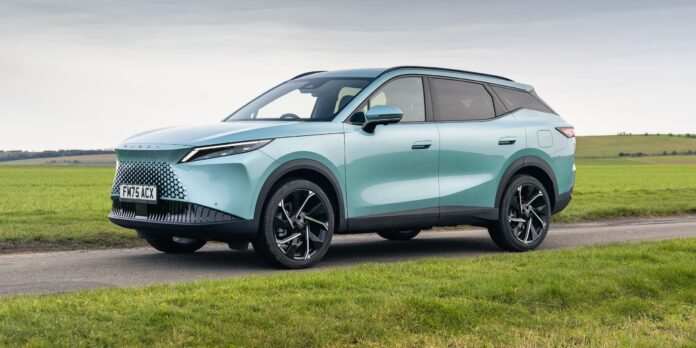
The Omoda E5 is a medium-sized SUV/crossover and the first model to be launched by new Chinese brand Omoda. There is also an Omoda 5 petrol version, which we cover separately.

The 5 and E5 arrived in the UK in late 2024, with about 80 Omoda dealers added to the network in the first year on sale.

The Omoda E5 is a Nissan Qashqai-sized vehicle, so Omoda is aiming right at the heart of the family car market. This model has already been on sale in China and some other international markets for a couple of years, where it’s usually called a Chery Omoda C5.

Reviewers generally prefer the electric E5 to its petrol-powered sibling. Our own editor at The Car Expert, Stuart Masson, says it has “a much better driving experience and nicer interior”, while CJ Hubbard at Car agrees that “there’s a general sense of additional polish”.

However, the overall feeling is that the E5 belies its budget background a little too much. Darren Cassey at Carwow laments that “alternatives outshine it in almost every other measure”.

As of September 2025, the Omoda E5 holds a New Car Expert Rating of A, with a score of 71%. It achieves top marks for its five-star safety rating, zero tailpipe emissions and Omoda’s excellent new car warranty coverage. Running costs should be good as well, but poor media review scores drag the overall rating down dramatically.

Key specifications

Body style: Medium SUV
Powertrain:
single electric motor, front-wheel drive

Price: Approx. £35,000 (pricing and specs TBC)
UK launch: May 2024

Media reviews

Highlighted reviews and road tests from across the UK automotive media. Click any of the boxes to view.

Featured reviews

More reviews

Auto Express

Auto Trader

Business Car

Car

Driving Electric

Electrifying.com

Green Car Guide

Parkers

Regit

The Sunday Times

Top Gear

Safety rating

Independent crash test and safety ratings from Euro NCAP

Overall score: 5 stars
Date tested: November 2024
Read the full Euro NCAP review

Adult protection: 87%
Child protection: 87%
Vulnerable road users: 68%
Safety assist: 88%

Independent crash test and safety ratings from Euro NCAP

The petrol Omoda 5 (known as the Chery Omoda 5 at the time) was originally crash tested by Euro NCAP back in 2022 and awarded a five-star rating. This rating was extended to the electric Omoda E5 in November 2024 as Euro NCAP was satisfied that it performed equally well in every emergency situation.

Eco rating

Independent economy and emissions ratings from Green NCAP

No eco rating

As of September 2025, the Omoda E5 has not been tested by Green NCAP.

The Green NCAP programme measures exhaust pollution (which is zero for an electric car) and energy efficiency. Electric cars are much more energy-efficient than combustion cars, so the Omoda E5 is likely to score very highly in Green NCAP testing if and when it takes place. Check back again soon.

Running cost rating

Clear Vehicle Data logo close crop

Monthly cost of ownership data provided exclusively for The Car Expert by Clear Vehicle Data

Battery rangeAverageScoreVariationScore
EV models257 milesB
Electrical efficiencyAverageScoreVariationScore
EV models4.2 m/KWhC
Insurance groupAverageScoreVariationScore
All models35D

Based on the limited data we currently have available, the Omoda E5 should be a reasonably affordable car to own and run. Electrical efficiency (the EV equivalent of miles per gallon in a petrol or diesel car) is good, which helps give the E5 a decent battery range. As with any electric car, the energy cost very much depends on whether you can chearge the car at home or work, or if you are relying on public charging.

We’ll update this further once we have full five-year servicing and maintenance costs.

Reliability rating

MotorEasy logo 600x167

Reliability data provided exclusively for The Car Expert by MotorEasy

No reliability rating

As of September 2025, we don’t have enough reliability data on the Omoda E5 to generate a reliability rating.

The Car Expert’s reliability information is provided exclusively to us using workshop and extended warranty data from our partner, MotorEasy, sourced from both official dealerships and independent workshops. 

As soon as MotorEasy has sufficient data on the Omoda E5, we’ll publish the results here.

Warranty rating

New car warranty information for the Omoda E5

Overall ratingA99%
New car warranty duration7 years
New car warranty mileage100,000 miles
Battery warranty duration8 years
Battery warranty mileage100,000 miles

Omoda’s new car warranty is one of the best available from any car manufacturer in the UK, and better than rival brands in a similar price bracket as the E5.

The duration is seven years, with a limit of 100,000 miles. Additionally, there’s an eight-year/100,000-mile warranty for the battery components.

Warranty on a used Omoda E5

  • As of September 2025, all used Omoda E5s should still be under their new car warranty. The first cars arrived in late 2024, meaning that they will still be under new car warranty until late 2031 – unless they hit their 100,000-mile limit before then.

If you’re looking to buy any used car that is approaching the end of its warranty period, a used car warranty is usually a worthwhile investment. Check out The Car Expert’s guide to the best used car warranty providers, which will probably be cheaper than a warranty sold by a dealer.

Recalls

Official DVSA safety recalls that have been issued for the Omoda E5

As of September 2025, we are not aware of any DVSA vehicle safety recalls affecting the Omoda E5. However, recall information is updated very regularly so this may have changed.

You can check to see if your car has any outstanding recalls by visiting the DVLA website or contacting your local Omoda dealer.

Similar cars

If you’re looking at the Omoda E5, you might also be interested in these alternatives.

BYD Atto 2 | Citroën ë-C4 | DS 3 E-Tense | Ford Puma Gen-EHonda e:Ny1 | Hyundai Kona Electric | Jaecoo E5 | Jeep Avenger | Kia Niro EV Mazda MX-30 | MG S5 EV | Peugeot e-2008 | Skoda Elroq | Suzuki e Vitara | Toyota Urban Cruiser | Vauxhall Frontera Electric

More news, reviews and information about Omoda at The Car Expert

The UK is becoming a battleground for Chinese car brands

The UK is becoming a battleground for Chinese car brands

Why UK buyers need to start taking Chinese cars seriously

Why UK buyers need to start taking Chinese cars seriously

Omoda 7

Omoda 7

Omoda 7 review – first UK drive

Omoda 7 review – first UK drive

Omoda 9 review

Omoda 9 review

Omoda 4

Omoda 4

Omoda 5 line-up bolstered by hybrid model

Omoda 5 line-up bolstered by hybrid model

New cars – what’s coming in 2026

New cars – what’s coming in 2026

Best Family Plug-In Hybrid Car 2026

Best Family Plug-In Hybrid Car 2026

It’s time to reveal the best cars of the year…

It’s time to reveal the best cars of the year…

Omoda 7 SUV prepares to launch in UK

Omoda 7 SUV prepares to launch in UK

New Omoda 4 crossover unveiled

New Omoda 4 crossover unveiled

Buy an Omoda E5

If you’re looking to buy a new or used Omoda E5, The Car Expert’s partners can help you find the right car.

Motors 600x300

Find your next used car with Motors. Find out more

Auto Trader logo 600x300

Find your next new or used car with Auto Trader. Find out more

Carwow logo 600x300

Find your next new or used car with Carwow. Find out more

Lease an Omoda E5

If you’re looking to lease a new Omoda E5, The Car Expert’s partners can help you find a competitive deal.

Leasing-com logo

Personal contract hire deals from Leasing.com. Find out more

Octopus vertical 600x300

EV leasing deals from Octopus Electric Vehicles. Find out more

Select Car Leasing logo

Personal contract hire deals from Select Car Leasing. Find out more

Subscribe to an Omoda E5

Subscriptions are becoming a very popular way for consumers to try an electric car for a few weeks or months to help decide whether it’s a suitable alternative to a petrol car. If you’re interested in a car subscription, The Car Expert’s partners can help. (PS: What’s a car subscription?)

SelfDrive UK logo

Car subscriptions from SelfDrive.
Find out more

Cocoon Vehicles logo 600x300

Car subscriptions from Cocoon.
Find out more

Just Vehicle Solutions logo 600x300

Car subscriptions from Just Vehicle Solutions.
Find out more

Omoda 5

Summary

The Omoda 5 is a medium-sized SUV/crossover and the first model to be launched by new Chinese brand Omoda. There is also an E5 electric version, which we cover separately.

The 5 and E5 arrived in the UK in the second half of 2024, with about 80 Omoda dealers now in place across the UK as of the summer of 2025.

The Omoda 5 was launched with a 1.6-litre petrol engine, with a hybrid model expected to join the range in late 2025. It’s a Nissan Qashqai-sized vehicle, so Omoda is aiming right at the heart of the family car market. This model has already been on sale in China and some other international markets for a couple of years, where it’s usually called a Chery Omoda C5. It has been tested by Euro NCAP and holds a five-star safety rating.

Unfortunately, early media reviews of the Omoda 5 have been less than complimentary, with poor review scores. Our own editor at The Car Expert, Stuart Masson, says that “the Omoda 5 is competent enough”, but that it “lacks the polish of more expensive rivals”.

The company has responded quickly to criticisms, with an upgraded model set to arrive in the UK in the autumn of 2025. It features changes to suspension to improve ride and handling, as well as a higher-quality interior from its electric sibling, the E5. We’ll continue to update this page as reviews of the revised model are published.

As of September 2025, the Omoda 5 has a New Car Expert Rating of D, with a score of 56%. It scores top marks for its five-star safety rating and new car warranty, but CO2 emissions are only average, running costs are high compared to other small SUVs and media review scores are very poor. It’s still a new car, so this rating may improve as more media reviews are published in coming months.

Key specifications

Body style: Medium SUV
Engines:
petrol

Price: From £25,235
UK launch: Autumn 2024

Media reviews

Highlighted reviews and road tests from across the UK automotive media. Click any of the boxes to view.

Featured reviews

More reviews

Auto Trader

Business Car

Car

Heycar

Parkers

The Independent

The Sunday Times

Safety rating

Independent crash test and safety ratings from Euro NCAP

Overall score: 5 stars
Date tested: December 2022
Read the full Euro NCAP review

Adult protection: 87%
Child protection: 87%
Vulnerable road users: 68%
Safety assist: 88%

Eco rating

Independent economy and emissions ratings from Green NCAP

No eco rating

As of September 2025, the Omoda 5 has not been tested by Green NCAP. Check back again soon.

Running cost rating

Clear Vehicle Data logo close crop

Monthly cost of ownership data provided exclusively for The Car Expert by Clear Vehicle Data

Fuel consumptionAverageScore
Petrol models31 mpgE
CO₂ outputAverageScoreVariationScore
Petrol models170 g/kmC
Insurance groupAverageScoreVariationScore
All models33C

Based on the limited data we currently have available, the Omoda 5 is not likely to be as cheap to own and run as many other similar cars. Fuel consumption is particularly poor compared to other small and mid-sized crossovers, which will concern potential customers.

We’ll update this further once we have full five-year servicing and maintenance costs.

Reliability rating

MotorEasy logo 600x167

Reliability data provided exclusively for The Car Expert by MotorEasy

No reliability rating

As of September 2025, we don’t have enough reliability data on the Omoda 5 to generate a reliability rating.

The Car Expert’s reliability information is provided exclusively to us using workshop and extended warranty data from our partner, MotorEasy, sourced from both official dealerships and independent workshops. 

As soon as MotorEasy has sufficient data on the Omoda 5, we’ll publish the results here.

Warranty rating

New car warranty information for the Omoda 5

Overall ratingA85%
New car warranty duration7 years
New car warranty mileage100,000 miles

Omoda’s new car warranty is one of the best in the new car market, and better than most other cars in a similar price bracket to the Omoda 5.

The duration is seven years, with a limit of 100,000 miles. This is good news for both new and used car buyers, as it will help the residual value of the Omoda 5 for new car buyers when they come to sell the car, and it gives near-new car buyers confidence that they are covered for years to come.

If you’re looking to buy a used car that is approaching the end of its warranty period, a used car warranty is usually a worthwhile investment. Check out The Car Expert’s guide to the best used car warranty providers, which will probably be cheaper than a warranty sold by a dealer.

Recalls

Official DVSA safety recalls that have been issued for the Omoda 5

As of September 2025, we are not aware of any DVSA vehicle safety recalls affecting the Omoda 5. However, recall information is updated very regularly so this may have changed.

You can check to see if your car has any outstanding recalls by visiting the DVLA website or contacting your local Omoda dealer.

Awards

Significant UK trophies and awards that the Omoda 5 has received.

2025

  • Autotrader Awards – Best value new car

Similar cars

If you’re looking at the Omoda 5, you might also be interested in these alternatives.

Citroën C3 Aircross | Dacia Duster | Ford Puma | Honda HR-V | Hyundai Bayon | Jeep Renegade | Hyundai KonaKGM (SsangYong) Tivoli | Kia Niro | MG ZS | Nissan Juke | Peugeot 2008 | Renault Captur | SEAT Arona | Skoda Kamiq | Suzuki Vitara | Toyota Yaris Cross | Vauxhall Frontera | Volkswagen T-Cross

More news, reviews and information about Omoda at The Car Expert

The UK is becoming a battleground for Chinese car brands

The UK is becoming a battleground for Chinese car brands

Why UK buyers need to start taking Chinese cars seriously

Why UK buyers need to start taking Chinese cars seriously

Omoda 7

Omoda 7

Omoda 7 review – first UK drive

Omoda 7 review – first UK drive

Omoda 9 review

Omoda 9 review

Omoda 4

Omoda 4

Omoda 5 line-up bolstered by hybrid model

Omoda 5 line-up bolstered by hybrid model

New cars – what’s coming in 2026

New cars – what’s coming in 2026

Best Family Plug-In Hybrid Car 2026

Best Family Plug-In Hybrid Car 2026

It’s time to reveal the best cars of the year…

It’s time to reveal the best cars of the year…

Omoda 7 SUV prepares to launch in UK

Omoda 7 SUV prepares to launch in UK

New Omoda 4 crossover unveiled

New Omoda 4 crossover unveiled

Buy an Omoda 5

If you’re looking to buy a new or used Omoda 5, The Car Expert’s partners can help you find the right car.

Motors 600x300

Find your next used car with Motors. Find out more

Auto Trader logo 600x300

Find your next new or used car with Auto Trader. Find out more

Carwow logo 600x300

Find your next new or used car with Carwow. Find out more

Lease an Omoda 5

If you’re looking to lease a new Omoda 5, The Car Expert’s partners can help you find a competitive deal.

Leasing-com logo

Personal contract hire deals from Leasing.com. Find out more

Carwow logo 600x300

Personal contract hire deals from Carwow. Find out more

Select Car Leasing logo

Personal contract hire deals from Select Car Leasing. Find out more

Subscribe to an Omoda 5

If you’re interested in a car subscription, The Car Expert’s partners can help. (PS: What’s a car subscription?)

SelfDrive UK logo

Car subscriptions from SelfDrive.
Find out more

Cocoon Vehicles logo 600x300

Car subscriptions from Cocoon.
Find out more

Just Vehicle Solutions logo 600x300

Car subscriptions from Just Vehicle Solutions.
Find out more

The best new electric cars for every budget 2024

The electric car market is more competitive than ever, with a vast and growing selection of battery-powered cars now battling for consumer attention.

New government mandates came into force at the start of 2024, which stipulate that manufacturers now have a minimum electric car sales quota to meet. This has started to slowly lower the barrier to EV ownership, as more mainstream manufacturers look to undercut their rivals by launching cheaper electric models.

While there are several new compact EVs on the way that are all vying to dominate the emerging budget EV market, all-electric options priced below £30k are currently sparse, at least for now.

Going by new sales alone, one EV really stands above the competition. The Tesla Model Y SUV is not only the best-selling electric car by some margin, but is also the world’s most popular car of any fuel type right now, and frequently appears towards the top of the UK’s monthly sales charts.

However, there are several all-electric models that are just as worthy of your attention, and some of them have a cheaper price tag too.

Now starting with new models available for under £30k, we’ve analysed all the electric cars available at key price points in the new car market, and consulted our industry-leading Expert Rating Index to see which models have the highest review scores from across the UK motoring media.

With comprehensive review data backing our recommendations, you can be confident that this is the definitive guide to the best new electric cars for every budget that are on sale in the UK right now.

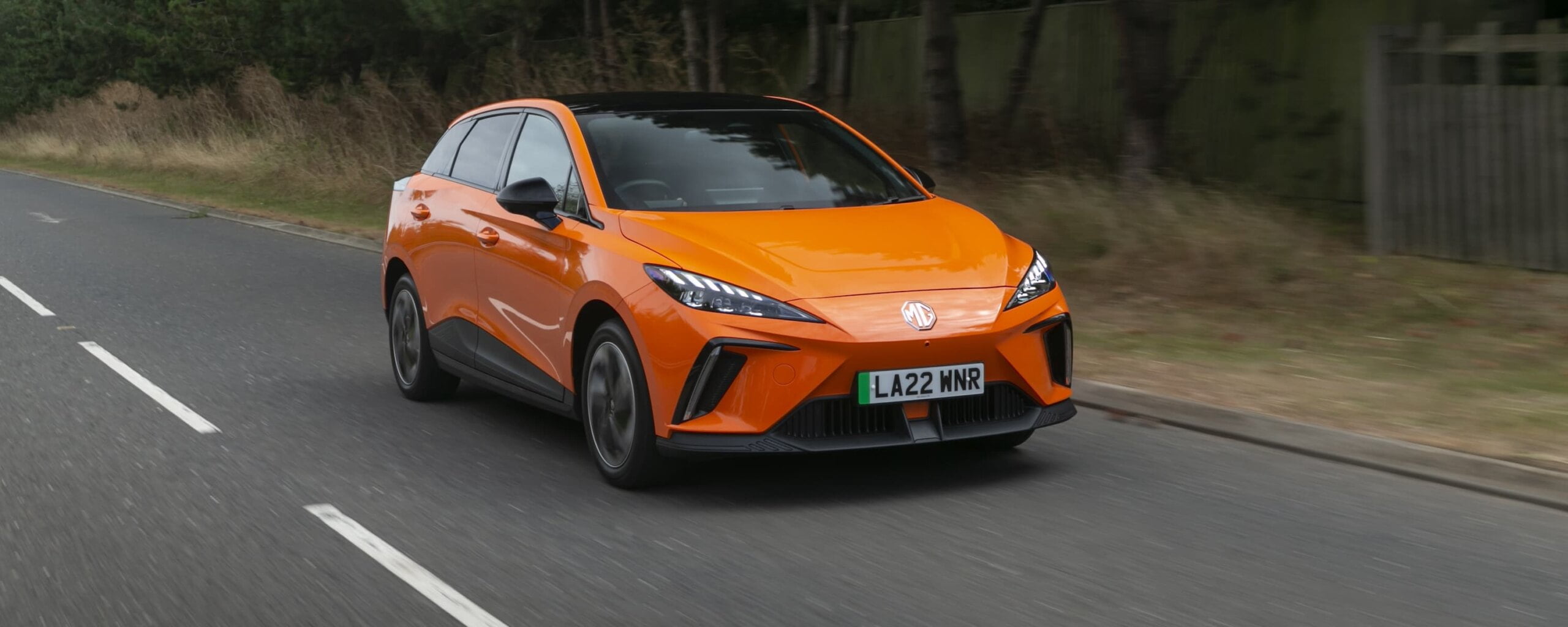
Best EV under £30,000: MG 4

MG 4 Trophy Extended Range

This under £30k bracket will soon be bolstered by several new budget EVs that will drive down the entry-level electric car prices. For now though, only one battery-powered family car is recommended at this price point by our Expert Rating Index – and it’s also our 2024 Car of the Year.

The appealing MG 4’s low price point makes it an attractive gateway to EV ownership, and in addition to five-star Euro NCAP safety rating, British reviewers also commend the family car for its competitive battery range and its comfortable and rewarding driving experience.

While many manufacturers have now set their sights on competing with this benchmark budget EV in the near future, offering more value-for-money than the MG 4 will be a tough challenge. The hatchback also comes with a generous seven-year warranty, and its running costs are pretty low too.

As of March 2024, the MG 4 has an impressive New Car Expert Rating of A with a score of 81%. That said, the hatchback has been criticised for some cheap interior plastics and its rather poor rear visibility.

Even cheaper than the MG 4 is the brand-new Dacia Spring. While it is available to order now, it can’t match the MG’s range and performance, and we are yet to publish the car’s Expert Rating – coming soon! If you would prefer to wait until next year, small but cheap EVs like the Citroën ë-C3, Renault 5 and Skoda Epiq could also be capable alternatives.

Best EV under £35,000: Smart #1

Smart #1 | Expert Rating

Spearheading Smart’s re-birth as a stylish and spacious upmarket EV builder, the #1 (pronounced ‘Hashtag One’) is the best pick in the sub-£35k bracket according to our Expert Rating Index.

Beyond its attractive exterior, the hatchback offers a generous on-board tech package as standard, plenty of interior practicality and refinement, and competitive performance and battery range. The car also has an excellent safety rating, and will be cheap to run on a daily basis too.

On the other hand, if you would prefer a car with physical buttons for its controls this may not be the car for you, and in its standard form it’s not that fun to drive. As of March 2024, the Smart #1 holds a New Car Expert Rating of A with a score of 79%.

This price point is a lot more competitive, with plenty of EVs priced just north of the £30k mark. Our best-of-the-rest choice is currently the compact Renault Mégane E-Tech crossover, which is equally stylish and comfortable. It isn’t as practical though, with limited rear headroom and a relatively short boot.

Best EV under £40,000: Cupra Born

Cupra Born | Expert Rating

Should you have around £40k to spend, this is where your range of new EV choices really starts to expand. Our Expert Rating Index suggests that the Cupra Born is certainly worthy of a test drive.

The Born stands out from the rest of the mainstream EV crowd when it comes to driving fun, and has been described by the motoring media as more sophisticated and sporty than the Volkswagen ID.3 hatch that it is based on. The car’s interior space and practicality also highlight its great family car credentials and, again, it should be cheap to run and service.

As of March 2024, the Cupra Born holds a New Car Expert Rating of A with a score of 81% – a score that is slightly hindered by fiddly touch-sensitive controls.

If you are looking for a higher driving position and more interior space, the Nissan Ariya SUV just squeezes into this price bracket. Its cabin is spacious, refined and well-built, and it’s just as eye-catching on the road, but the SUV’s driving experience isn’t as engaging.

Best EV under £50,000: Kia EV6 or Hyundai Ioniq 5

Upping your budget to £50k brings access to some of the best electric cars on the market, and the best choice in this price range is a tie between two sister models with excellent Expert Ratings.

Our 2022 Car of the Year, the Kia EV6 is the first of a new breed of all-electric Kia cars – and judging by its review scores, this family-sized crossover fits the bill and then some.

The EV6 arrived in the UK last year to universally positive media reception. It has received high praise for its sharp driving dynamics and impressive design inside and out, as well as its battery range and charging capabilities which set the benchmark for EVs in this price range.

Recognised for its retro-futuristic design, the Ioniq 5 has become a fan favourite among the media, commended for its spacious and practical interior and its impressive infotainment, as well as its battery range. On the other hand, both the EV6 and Ioniq 5 have pretty firm suspension that makes riding over larger potholes an uncomfortable experience.

As of March 2024, the Kia EV6 and Hyundai Ioniq 5 both hold a New Car Expert Rating of A with a score of 81%, which means that, alongside the aforementioned MG 4 and Cupra Born, they currently sit at the top of our Expert Rating Index.

We can’t move on from this section without mentioning the highly-regarded Skoda Enyaq though, which holds the same Expert Rating score. The SUV has a huge boot, offers excellent battery range and its pretty easy to drive. The Skoda is also packed with safety tech, and comes with the brand’s practical ‘Simply Clever’ niceties throughout the cabin.

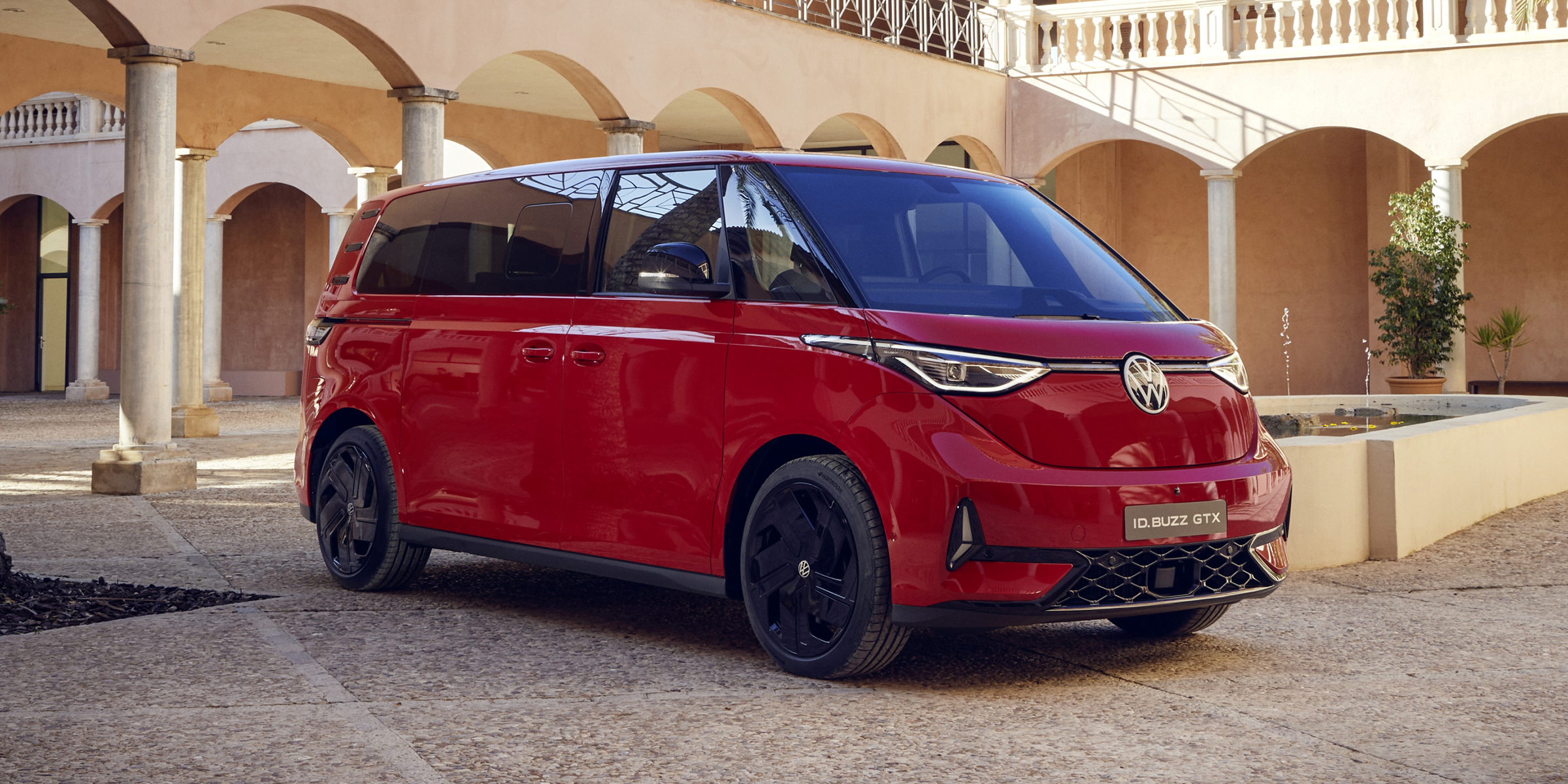
Best EV under £75,000: Volkswagen ID. Buzz

Volkswagen ID. Buzz | Expert Rating

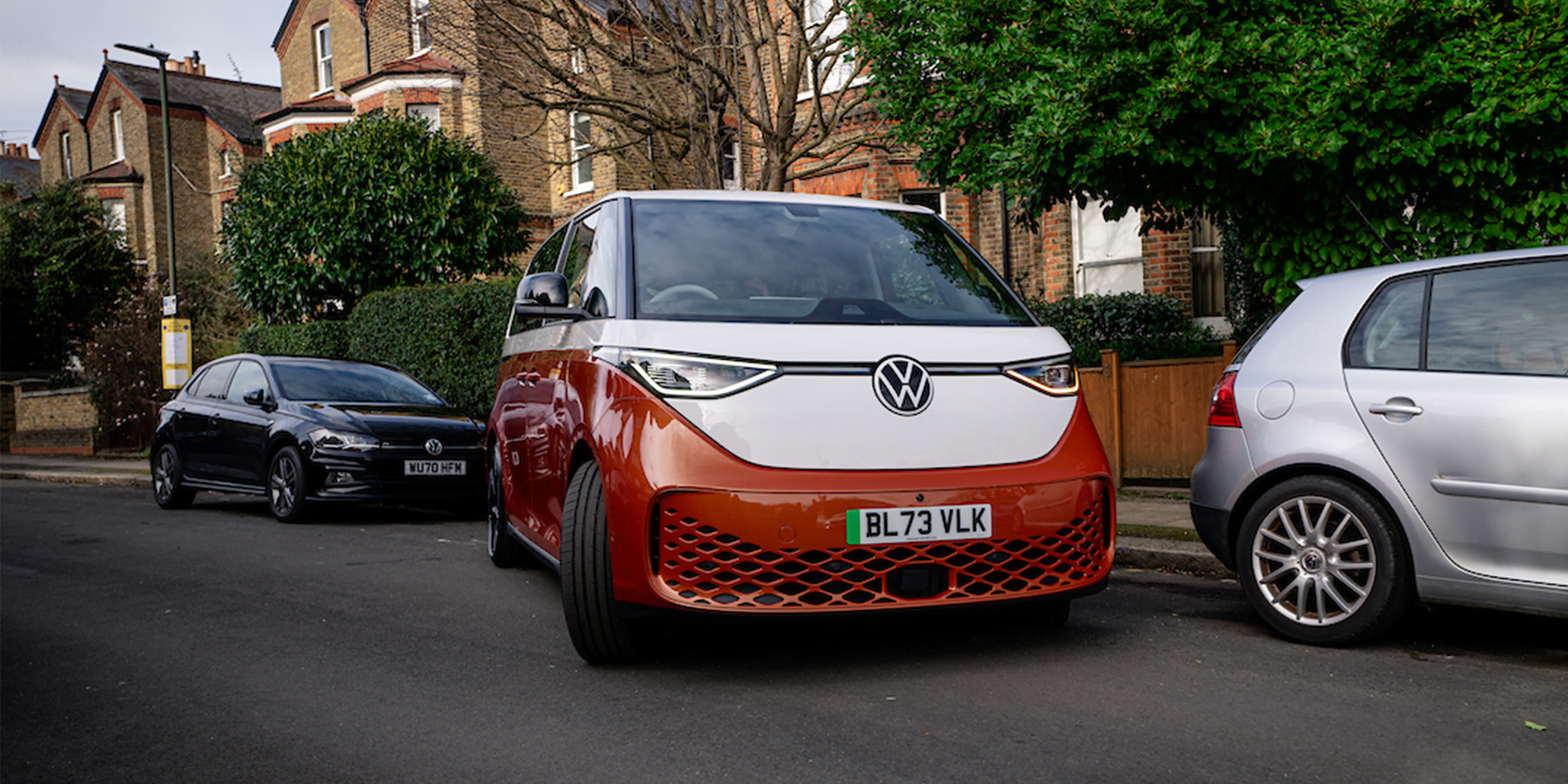
A modern retelling of the classic of the Type 2 Microbus of the 1960s, the electric Volkswagen ID. Buzz is a fantastic zero-emission choice for larger families, provided you have around £75k to spend.

The people carrier is cheaper than that of course – around £15k cheaper as standard to be more exact – but more room in your budget allows you to explore the car’s optional interior comfort, infotainment and safety tech packages with more freedom.

Currently available in a five-seat configuration with a longer seven-seat ‘LWB’ version on the way this year, reviewers comment that the ID. Buzz is one of the most practical EVs currently on sale. It’s battery range is impressive, it will certainly turn heads when driving through town, and its resale values are sure to remain strong too.

That said, some outlets have called the car’s infotainment ‘confusing’, and its price remains a contentious reviewer issue – there are other new premium battery-powered people carriers available for less. As of March 2024, the Volkswagen ID. Buzz holds a New Car Expert Rating of A with a score of 81%.

Is this Volkswagen too bulky for your taste? The new BMW i5 saloon has also been earmarked by UK reviewers as a compelling class leader that blends agile handling and impressive performance with interior class and comfort.

Best EV under £100,000: Tesla Model S

Tesla Model S – Expert Rating 2024

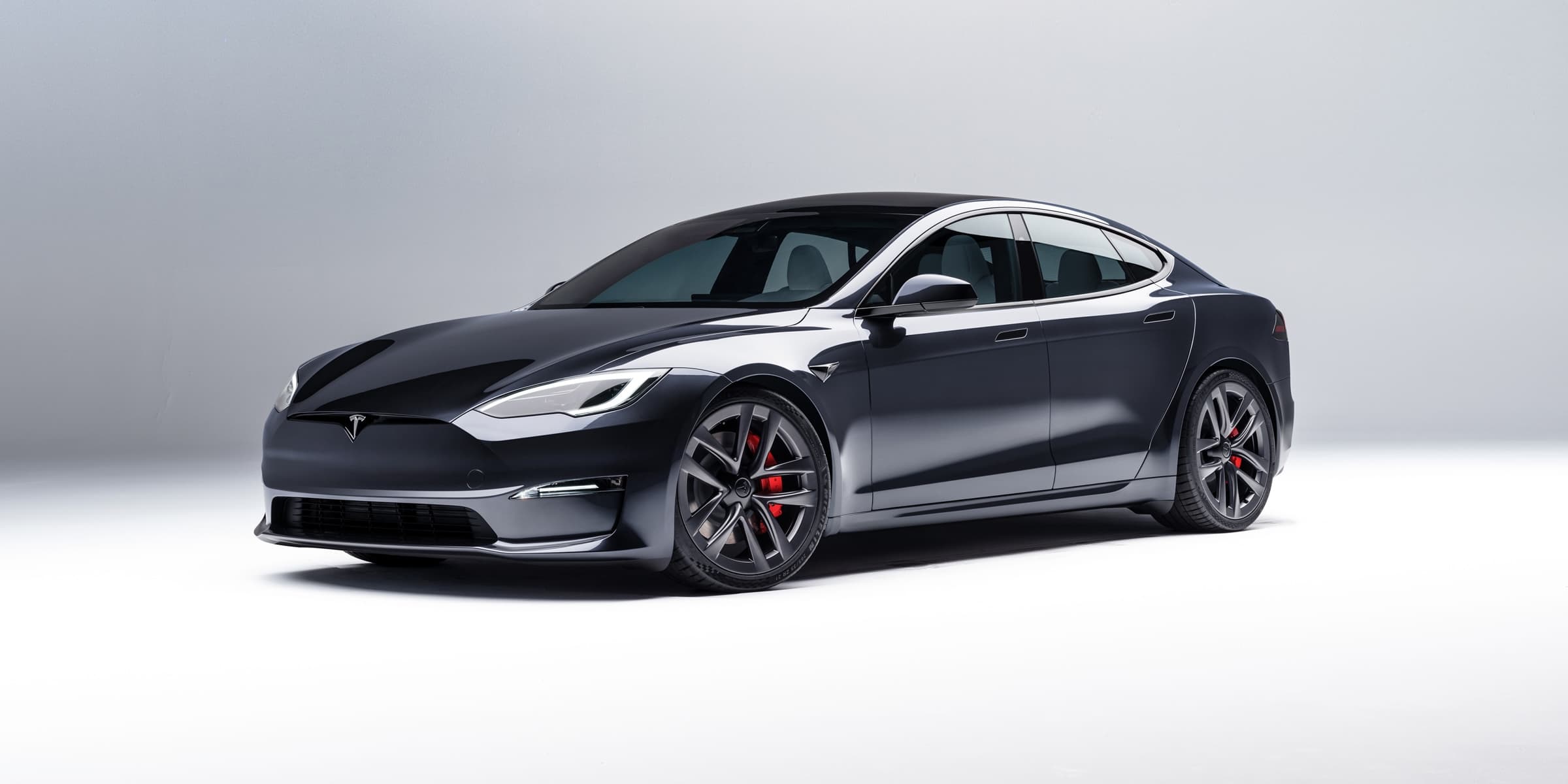
Our Expert Rating Index has chosen the accomplished Tesla Model S saloon as the best choice in the under £100k bracket. This is the oldest model on this list – launched in the UK back in 2014 – but don’t let its age deceive you.

The Model S has been a pioneering vehicle for the image of electric cars, almost single-handedly changing the perception of electric vehicles having poor performance and range. Reviewers still commend this Tesla for its sleek attractive looks, as well as its engaging performance and driving dynamics.

Tesla is keen to keep the model up to date with newer competitors too – its latest 2021 update including substantial on-board tech and battery upgrades. As of 2024, this flagship model is now only available in left-hand drive and in ultra-fast Plaid trim.

As of March 2024, the Tesla Model S holds a New Car Expert Rating of A with a score of 81%. The car’s long-term reliability remains an issue, though Tesla has made improvements in this area in recent years. Reviewers also comment that German rivals still offer higher interior quality.

One such German rival is the Porsche Taycan – an electric saloon that embodies all that we have come to love about Porsche performance with excellent ride quality, pace, battery range and handsome looks.

Money no object: Mercedes-Benz EQS

Mercedes-Benz EQS | Expert Rating

If you are looking for a luxurious family car and your budget can easily stretch beyond the six figure mark, our Expert Rating Index recommends that you take the Mercedes-Benz EQS for a test drive. This high-end saloon is as sophisticated as all-electric motoring gets, featuring unparalleled interior opulence, loads of on-board tech and a class-leading battery range.

The flagship model in the Mercedes-Benz EQ family and The Car Expert‘s ‘Car of the Year’ in 2021, the EQS currently holds a New Car Expert Rating of A with a score of 79% – a score slightly hindered by reports of rigid ride comfort, high running costs and complaints about the car’s eye-watering price tag.

The luxurious BMW i7 has also been widely praised for its spacious and refined cabin filled with cutting-edge technology, but its exterior styling has divided reviewer opinion.

What else has arrived in the last year?

The electric car market has been growing rapidly over the last 12 months, with brand-new EVs arriving from almost every manufacturer.

Starting with the compact crossovers, the Dacia Spring has now arrived in the UK with very affordable pricing, and Hyundai has replaced its original Kona Electric with an all-new model, which reviewers agree is a significant improvement over its well-regarded predecessor. The Honda e:Ny1 is also now available in the UK, with some less than flattering review scores.

The electric hot hatch market has become more competitive as the Abarth 500e and MG 4 XPower have now been challenged by the larger Hyundai Ioniq 5 N, which has picked up overwhelming media praise.

The electric SUV sector has become even more crowded with the arrival of the Lexus RZ, Fiat 600e, Volvo EX30 and BMW iX2, though the latter has also faced rather heavy reviewer criticism and thus sits at the bottom of our electric car rankings.

Newcomer Fisker also launched its flagship Ocean SUV, and there have been three key additions to the large SUV market – the Kia EV9, Mercedes-Benz EQS SUV and Volvo EX90. Those looking for high performance could also be intrigued by the arrival of the Lotus Eletre.

Finally, three new electric saloons are now on offer – the BMW i5, BYD Seal and Volkswagen ID.7.

Coming soon

There are plenty more EVs at every price point on their way before the end of 2024 and into next year. Here’s some of the most newsworthy new models planned for launch over the next 12 months.

While the pricing for the new BYD Dolphin has been raised above £30k, there are a host of new budget EVs looking to fill the void, such as the Citroën ë-C3, Renault 5, Skoda Epiq and the new electric Fiat Panda.

Car enthusiasts will see another increase in the number of EV models specifically tuned for performance. Alpine’s first hot hatch – the A290 – is set to arrive this year, and more expensive coupés like the MG Cyberster, Maserati GranCabrio Folgore and Lotus Emeya are arriving in the next 12 months.

The already extremely competitive electric SUV category will be bolstered by the likes of the Alfa Romeo Milano, Audi Q6 e-tron, BYD Seal U, Cupra Tavascan, Ford Explorer, Hyundai Ioniq 7, Polestar 3, Renault Scenic E-Tech and Smart #3 in the near future.

There are also new electric versions of the Mini Countryman and Porsche Macan, and that’s before we even get to the new brands without much name recognition that are looking to make an impact on the UK market.

Alongside its Ocean, Fisker is planning the release of its smaller Pear crossover, and KGM – the new name for refreshed brand SsangYong – will be launching its Torres EVX SUV as well.

Omoda has recently outlined its plans for the UK, including the imminent release of its E5 SUV, and other Chinese brands like Aiways, Nio and Xpeng are all looking to launch in Britain by the end of the year. Keep an eye out for American brand Lucid too, which is launching its upmarket Air executive saloon in the UK sometime next year.

For the definitive rankings of the best new electric cars for every budget, we’ve used The Car Expert’s industry-leading Expert Rating Index. The index analyses new car reviews from 35 of the top UK motoring websites, using an advanced algorithm that we have developed specifically to compare review scores.

It constantly recalculates and updates the Expert Rating score for every single car in real time to make sure you’re getting the most accurate and reliable ratings for every new car.

Toyota C-HR

Summary

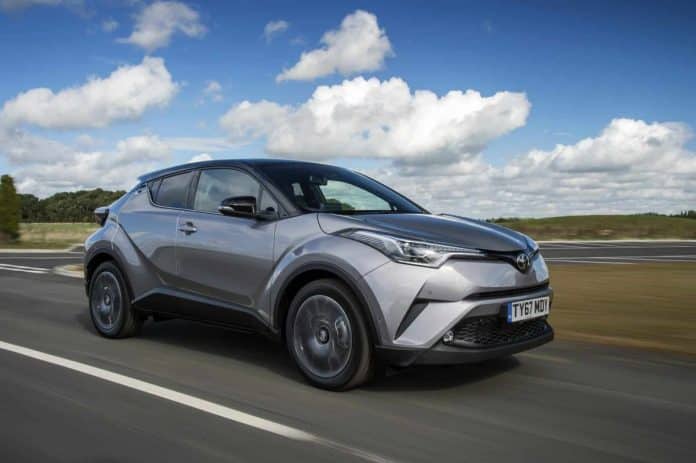
The Toyota C-HR is a medium-sized SUV/crossover. This is the second-generation model, which arrived in the UK towards the end of 2023 and is only available as a hybrid. Plug-in hybrid versions are set to arrive in the near future.

Reviewers agree that the new C-HR is an improvement over the original model – a frugal family car that is both comfortable and rather fun to drive.

“If you’re after a distinctive but efficient SUV with a raised driving position and an easy drive, it’s well worth a look”, says Parker‘s Alan Taylor-Jones, who adds that those in need of a “properly practical family wagon” should look elsewhere – referring to the car’s rather cramped rear seats and limited seating flexibility.

As of July 2025, the Toyota C-HR holds a New Car Expert Rating of A with a score of 73%. It scores top marks for its excellent safety rating and low CO2 emissions, while its running costs are also low. However, Toyota’s warranty rating is only average and the C-HR’s media review scores to date have been poor.

C-HR highlights

  • Efficient hybrid engines
  • Comfortable driving experience
  • Appealing exterior looks

C-HR lowlights

  • Rivals are more practical
  • Alternatives are cheaper
  • A bit noisy on the move

Key specifications

Body style: Small SUV/crossover
Engines:
petrol-electric hybrid
Price:
From £31,290 on-road

Launched: Winter 2023/24
Last updated: N/A
Replacement due: TBA

Media reviews

Highlighted reviews and road tests from across the UK automotive media. Click any of the boxes to view.

Featured reviews

More reviews

Auto Express

Auto Trader

Car

Carbuyer

Electrifying.com

Heycar

Honest John

Parkers

The Telegraph

Top Gear

Safety rating

Independent crash test and safety ratings from Euro NCAP

Overall score: 5 stars
Date tested: April 2024
Read the full Euro NCAP review

Adult protection: 85%
Child protection: 86%
Vulnerable road users: 86%
Safety assist: 79%

Eco rating

Independent economy and emissions ratings from Green NCAP

No eco rating

As of July 2025, the Toyota C-HR has not been lab tested by Green NCAP.

Running cost rating

Clear Vehicle Data logo close crop

Monthly cost of ownership data provided exclusively for The Car Expert by Clear Vehicle Data

Fuel consumptionAverageScore
Hybrid models58 mpgB
Plug-in hybrid models325 mpgA
CO₂ outputAverageScoreVariationScore
Hybrid models109 g/kmA
Plug-in hybrid models19 g/kmA
Battery rangeAverageScoreVariationScore
Plug-in hybrid models41 milesD
Insurance groupAverageScoreVariationScore
All models25B
Service and maintenanceCostScore
Year 1£204A
Year 2£516A
Year 3£828A
Year 4£1,008A
Year 5£1,322A
Overall£3,878A

The Toyota C-HR is a relatively affordable car to own and run, according to whole-life cost numbers provided exclusively to The Car Expert by our data partner, Clear Vehicle Data.

The hybrid’s fuel economy sits above the market average, and its battery range is decent for a hybrid too. Insurance premiums are comparatively low and service and maintenance costs over the course of five years of ownership should be pretty affordable.

Reliability rating

MotorEasy logo 600x167

Reliability data provided exclusively for The Car Expert by MotorEasy

No reliability rating

As of July 2025, we don’t have enough reliability data on the Toyota C-HR to generate a reliability rating.

The Car Expert’s reliability information is provided exclusively to us using workshop and extended warranty data from our partner, MotorEasy, sourced from both official dealerships and independent workshops. 

As soon as MotorEasy has sufficient data on the C-HR, we’ll publish the results here.

Warranty rating

New car warranty information for the Toyota C-HR

Overall ratingC56%
New car warranty duration3 years
New car warranty mileage60,000 miles
Battery warranty duration8 years
Battery warranty mileage100,000 miles

Toyota’s new car warranty is pretty much the bare minimum offered in the UK, with a duration of three years and a limit of 60,000 miles. Other rivals in the price bracket do better (and in some cases, much better). Additionally, the battery components are covered by a separate eight-year/100,000-mile warranty.

Toyota does offer a conditional warranty extension programme for up to seven years beyond the end of the original new car warranty, with an overall limit of 100,000 miles (including mileage already accumulated in the first three years). However, this requires the car to be serviced by an official Toyota dealership every year, whereas your new car warranty is not restricted. Other restrictions also apply, so check with your Toyota dealer for full terms and conditions.

If you are purchasing an ‘Approved Used’ Toyota C-HR from an official Toyota dealership, you will get a minimum 12-month/10,000-mile warranty included, and you can avail yourself of the extended warranty program described above until the car is ten years old.

If you are buying a used C-HR from an independent dealership, any warranty offered will vary and will probably be managed by a third-party warranty company. If you are buying a used C-HR from a private seller, there are no warranty protections beyond anything that may be left on the original new car warranty.

If you’re looking to buy a used car that is approaching the end of its warranty period, a used car warranty is usually a worthwhile investment. Check out The Car Expert’s guide to the best used car warranty providers, which will probably be cheaper than a warranty sold by a dealer.

Similar cars

If you’re looking at the Toyota C-HR, you might also be interested in these alternatives.

Citroën C5 Aircross | Ford Kuga | Honda ZR-V | Hyundai Tucson | Jeep Compass | Kia Niro | Mazda CX-30 | MG HS | Nissan Qashqai | Peugeot 3008 | Renault Arkana | SEAT AtecaSkoda Karoq | Subaru Crosstrek | Suzuki S-Cross | Vauxhall Grandland | Volkswagen Tiguan

More news, reviews and information about the Toyota C-HR at The Car Expert

Everything you need to know about Toyota

Everything you need to know about Toyota

Toyota C-HR test drive

Toyota C-HR test drive

New Toyota C-HR crossover revealed

New Toyota C-HR crossover revealed

Toyota C-HR test drive

Toyota C-HR test drive

Pricing and specs for refreshed Toyota C-HR range

Pricing and specs for refreshed Toyota C-HR range

Toyota C-HR (2016 to 2023)

Toyota C-HR (2016 to 2023)

Updated Toyota C-HR gets new hybrid engine and more equipment

Updated Toyota C-HR gets new hybrid engine and more equipment

Toyota boosts its scrappage scheme offer

Toyota boosts its scrappage scheme offer

Toyota dominates list of best-value hybrids

Toyota dominates list of best-value hybrids

Best value cars to stop depreciation

Best value cars to stop depreciation

Toyota C-HR review

Toyota C-HR review

Crash test issues for Fiat and Ford

Crash test issues for Fiat and Ford

Buy a Toyota C-HR

If you’re looking to buy a new or used Toyota C-HR, The Car Expert’s partners can help you find the right car.

Motors 600x300

Find your next used car with Motors. Find out more

Auto Trader logo 600x300

Find your next new or used car with Auto Trader. Find out more

Carwow logo 600x300

Find your next new or used car with Carwow. Find out more

Lease a Toyota C-HR

If you’re looking to lease a new Toyota C-HR, The Car Expert’s partners can help you find a competitive deal.

Leasing-com logo

Personal contract hire deals from Leasing.com. Find out more

Carwow logo 600x300

Personal contract hire deals from Carwow. Find out more

Select Car Leasing logo

Personal contract hire deals from Select Car Leasing. Find out more

Subscribe to a Toyota C-HR

If you’re interested in a car subscription, The Car Expert’s partners can help. (PS: What’s a car subscription?)

SelfDrive UK logo

Car subscriptions from SelfDrive.
Find out more

Drive Fuze logo 600x300

Car subscriptions from DriveFuze.
Find out more

Cocoon Vehicles logo 600x300

Car subscriptions from Cocoon.
Find out more

Hyundai Ioniq 5 N

The Hyundai Ioniq 5 N was The Car Expert’s Best Performance Car 2025!

Summary

The Hyundai Ioniq 5 N is the range-topping high-performance variant of the highly-regarded Ioniq 5 hatchback and a serious challenger in the emerging electric hot hatch category.

With sportier styling and supercar-rivalling acceleration, the Ioniq 5 N became available to order in late 2023, and has picked up overwhelming reviewer praise since then. Described as “a new and brilliant chapter” for the electric car class by Top Gear – a brand that awarded the model its ‘Car of the Year’ title – most reviewers agree that the hot hatch is a benchmark EV performance model for not only Hyundai, but the motoring world at large.

Luke Wilkinson of Parkers says that the car is “enchantingly engaging in the corners and packed with clever technology.” Sharing the same dimensions as the standard Ioniq 5, Electrifying.com‘s Ginny Buckley also points out that the Ioniq 5 N also doubles as “a great practical family car” with “a large boot” and “plenty of room in the back.”

That said, its size may deter some hot hatch buyers – particularly those interested in much more compact electric hot hatches like the Abarth 500e – and pricing may also prove to be an issue for many. It costs over £20k more than the entry-level Ioniq 5, and the electric MG 4 XPower offers a similar level of straight-line speed but for around £30k less.

As of December 2025, the Hyundai Ioniq 5 N holds a New Car Expert Rating of A, with a score of 77%. It scores top marks for its universally excellent media review scores, plus more mundane factors like its zero tailpipe emissions and new car warranty coverage. It also gets good grades for its safety rating, however, its supercar levels of performance inevitably mean that running costs are high.

Ioniq 5 N highlights

  • Explosive acceleration and pace
  • Entertaining to drive
  • Fast charging speeds
  • Just as practical as regular Ioniq 5

Ioniq 5 N lowlights

  • Reduced battery range when compared to Ioniq 5
  • Expensive, base price and up
  • Heavy and large for a hot hatch

Key specifications

Body style: Medium hatchback
Engines:
electric motor, battery-powered
Price:
From £65,000 on-road

Launched: Winter 2023/24
Last updated: N/A
Replacement due: TBA

Media reviews

Highlighted reviews and road tests from across the UK automotive media. Click any of the boxes to view.

Featured reviews

More reviews

Auto Trader

Business Car

Car

Carbuyer

Carwow

Driving Electric

Electrifying.com

Green Car Guide

Heycar

Honest John

Parkers

The Sunday Times

The Telegraph

Top Gear

Safety rating

Independent crash test and safety ratings from Euro NCAP

Overall score: 5 stars
Date tested: October 2021
Read the full Euro NCAP review

Adult protection: 88%
Child protection: 86%
Vulnerable road users: 63%
Safety assist: 88%

While not specifically crash tested by safety body Euro NCAP, the Hyundai Ioniq 5 N shares a five-star safety rating with the structurally-identical Ioniq 5 hatchback.

Eco rating

Independent economy and emissions ratings from Green NCAP

No eco rating

As of July 2025, the Hyundai Ioniq 5 N has not been assessed by Green NCAP.

The Green NCAP programme measures exhaust pollution (which is zero for an electric car) and energy efficiency. Electric cars are much more energy-efficient than combustion cars, so the Ioniq 5 N is likely to score very highly in Green NCAP testing whenever it ever takes place. Check back again soon.

Reliability rating

MotorEasy logo 600x167

Reliability data provided exclusively for The Car Expert by MotorEasy

No reliability rating

The Hyundai Ioniq 5 N is a brand-new model, and as of July 2025, we don’t have enough reliability data on the hot hatch to generate a reliability rating.

The Car Expert’s reliability information is provided exclusively to us using workshop and extended warranty data from our partner, MotorEasy, sourced from both official dealerships and independent workshops. 

As soon as MotorEasy has sufficient data on the Ioniq 5 N, we’ll publish the results here.

Running cost rating

Clear Vehicle Data logo close crop

Monthly cost of ownership data provided exclusively for The Car Expert by Clear Vehicle Data

Battery rangeAverageScoreVariationScore
EV models278 milesB
Electrical efficiencyAverageScoreVariationScore
EV models3.3 m/KWhE
Insurance groupAverageScoreVariationScore
All models49E
Service and maintenanceCostScore
Year 1£523E
Year 2£906D
Year 3£1,334D
Year 4£1,474D
Year 5£1,953D
Overall£6,190D

The Hyundai Ioniq 5 N is a rather expensive car to own and run, according to whole-life cost numbers provided exclusively to The Car Expert by our data partner, Clear Vehicle Data.

While we don’t have accurate battery range data to present at the moment, the car’s electrical efficiency (the EV equivalent of miles per gallon on a petrol or diesel car) is excellent. On the other hand, the hot hatch’s insurance premiums are very high, and predicted servicing and maintenance costs over the course of five years of ownership are average at best.

Recalls

Official DVSA safety recalls that have been issued for the Hyundai Ioniq 5 N

As of July 2025, we are not aware of any DVSA vehicle safety recalls affecting the Hyundai Ioniq 5 N. However, this information is updated very regularly so this may have changed.

You can check to see if your car has any outstanding recalls by visiting the DVLA website or contacting your local Hyundai dealer.

Awards

Trophies, prizes and awards that the Hyundai Ioniq 5 N has received.

Hyundai Ioniq 5 N – Best Performance Car 2025, The Car Expert Awards

2024

  • UK Car of the Year Awards – Best Performance Car

2024

Similar cars

If you’re looking at the Hyundai Ioniq 5 N, you might also be interested in these alternatives.

Abarth 600e | Alpine A390 | BMW i4 M50Cupra Born | Genesis GV60 Sport PlusKia EV6 GT | MG 4 XPower | Tesla Model 3 PerformanceVolkswagen ID.3

More news, reviews and information about the Hyundai Ioniq 5 N at The Car Expert

Electric car grant – all the EVs with discounts in 2026

Electric car grant – all the EVs with discounts in 2026

Best Hot Hatch 2026

Best Hot Hatch 2026

Best Performance Car 2025

Best Performance Car 2025

Everything you need to know about Hyundai

Everything you need to know about Hyundai

Pricing announced for high-power Hyundai Ioniq 5 N

Pricing announced for high-power Hyundai Ioniq 5 N

Hyundai Ioniq 5 N hot hatch debuts

Hyundai Ioniq 5 N hot hatch debuts

Buy a Hyundai Ioniq 5 N

If you’re looking to buy a new or used Hyundai Ioniq 5 N, The Car Expert’s partners can help you find the right car.

Motors 600x300

Find your next used car with Motors. Find out more

Auto Trader logo 600x300

Find your next new or used car with Auto Trader. Find out more

Carwow logo 600x300

Find your next new or used car with Carwow. Find out more

Lease a Hyundai Ioniq 5 N

If you’re looking to lease a new Hyundai Ioniq 5 N, The Car Expert’s partners can help you find a competitive deal.

Leasing-com logo

Personal contract hire deals from Leasing.com. Find out more

Carwow logo 600x300

Personal contract hire deals from Carwow. Find out more

Select Car Leasing logo

Personal contract hire deals from Select Car Leasing. Find out more

Subscribe to a Hyundai Ioniq 5 N

Subscriptions are becoming a very popular way for consumers to try an electric car for a few weeks or months to help decide whether it’s a suitable alternative to a petrol car. If you’re interested in a car subscription, The Car Expert’s partners can help. (PS: What’s a car subscription?)

SelfDrive UK logo

Car subscriptions from SelfDrive.
Find out more

Drive Fuze logo 600x300

Car subscriptions from DriveFuze.
Find out more

Cocoon Vehicles logo 600x300

Car subscriptions from Cocoon.
Find out more

Driving in Finland – what are the rules?

0

Want to escape the UK’s busy roads and motorways and enjoy traffic-free motoring for a couple of weeks? Finland’s your answer. Its well-maintained roads are often free of other cars and vans for miles, but watch out for wild animals! Here’s what to check, for you and your car, before you drive there.

‘Traffic’ and ‘jam’ are two words that are rarely used together in Finland. Traffic is light in this beautiful Nordic country that’s full of interesting lakes, massive forests and stunning scenery. And all of that makes driving there a great pleasure.

You’re well in the north when in Finland – its land borders Nordic neighbours Norway and Sweden in places and at one point all three countries come together at a spot known as Treriksroset (Three-Country Cairn). Finland also borders Russia.

Finland is known as ‘the land of the lakes’ and for good reason – 10% per cent of the country is made up of inland lakes and rivers, complementing the huge areas of land covered by forests. Less than 10% of Finland’s land is arable.

Many of the country’s roads are a driver’s dream. They are long, winding, interesting and with lots to see and admire along the way. One thing you won’t have to worry about is other traffic. Hold-ups are very rare anywhere in Finland. It’s said that if a Finnish driver has to wait five minutes, they will call that ‘a jam’.

If you are going to be held up it’s more likely to be because of elk, reindeer or other animals on the road and these should always be in mind while driving in the wilderness. Indeed, if you are flashed by another driver, it could well be because of an animal or herd just around the corner.

It’s known as one of the happiest countries in the world and the way of life is relaxed and pleasant which also makes for a good driving vacation.

And if you’re there on business, it’s also a great place to be. Finland’s industries include metal, chemical and forestry. Its capital Helsinki is home to an array of churches, cathedrals, hotels and other Art Nouveau buildings as well as more modern architecture such as the world-famous Oodi Library.

If you are considering this northern country for a vacation this year, it’s certainly a good choice for road trips. But you’ll need some careful organisation before going there. Flying in and hiring a vehicle is easy, with all the main rental companies and others, available with a wide variety of vehicles.

Driving in Finland is a completely different experience from doing so in the UK – starting with the fact that the Finns (famous for their rally drivers) use the other side of the road from us.

But it’s more than that and planning a driving holiday or using a car on business while in the country, requires careful planning and a good understanding of what you can and can’t do there.

To get the most out of your visit it’s well worth spending some time planning your trip to ensure you have everything in place. In the summer it can be warm and fine, but Nordic weather can set in hard during the winter months.

Here The Car Expert looks at the most important elements to consider when planning to drive in Finland, and we’ve included a handy checklist. As each journey is unique, always check that you have everything covered for your particular visit.

Basic rules

You must be 18 years or over to drive in Finland and you should hold a full UK driving licence. Just the licence card will do, as the paper counterpart is no longer a requirement.

If you are using your own car, you’ll need to prove that you have insurance cover so take your certificate with you (but you don’t need a European ‘green card’) and take any documents that show the identity of the car, such as a V5C ‘logbook’.

The vehicle’s ‘home country’ must be shown on it by way of ‘UK’ letters and the Union Flag incorporated into your vehicle’s number plates. If you don’t have these on your plates, you must affix a ‘UK’ sticker to its rear. The ‘GB’ badge is no longer allowed, even within European ‘golden stars’ and the same goes for country badges such as the English, Scottish or Welsh flags.

To hire a car, you must be at least 19 years old and should have held a full driving licence for at least 12 months. You might need a second proof of ID, such as your passport, as well as your driving licence.

Always make sure you are carrying the rental company’s paperwork with you to prove you are entitled to drive. Whether you are renting or using your own vehicle, always have your personal ID or passport with you.

Drink drive rules

We don’t recommend any drinking of alcohol if you are going to drive but it’s worth knowing the limits. The drink drive limit is 0.5 g/l (also shown as 0.5 milligrams or 0.05%), which is the same as Scotland. For comparison, the limit is 0.8 g/l (0.8 milligrams, 0.08%) in England, Wales and Northern Ireland.

As in many other countries, the authorities take a hard line on drink driving. Testing is much more extensive than here in the UK – random breath and blood tests can be asked for at any time and the Finnish police claim to carry out up to 1.8 million tests a year. The same rules for the public road also apply if you are venturing off-road into the forests or onto the lakes for some ice driving.

Speed limits

Speed limits are shown in kilometres (km/h) rather than miles (mph). In most built-up areas, the limit is 50km/h (31mph). Outside of the suburban zones the limit rises to 80km/h (50mph), but this can vary so keep an eye on roadside signage. Major A-roads and highways have a 100km/h (62mph) ceiling while motorways bring a blanket 120km/h (75mph) top speed. During winter months those top two limits drop to 80km/h and 100km/h respectively.

Most traffic penalties, including those for speeding, are based on the driver’s income, so they can become quite expensive if you are caught breaking the law. Police can issue spot fines for road offences, but they don’t collect any money – it has to be paid into a bank within two weeks.

The minimum fine is €115 (£99), but for many people this could be more – the authorities divide your monthly net income by 60 and use a multiplier to increase that figure according to the amount over the limit you were caught speeding and, therefore, the severity of the fine.

There are speed and traffic enforcement cameras on roads throughout Finland, especially in more urban areas. But at least you are warned if you are in one of these zones – look for yellow road signs with a ‘camera’ image on it.

Do not use any kind of police camera detection equipment in your car. If the authorities catch you, they will take it away and issue you with a fine. Only use a mobile phone while driving if it’s completely hands-free.

What to carry in the car

As well as your documentation ensure, while motoring through Finland, that you have a warning triangle in the car in case you have to get out of the vehicle by the roadside. This is a compulsory requirement.

Make sure your lights don’t dazzle oncoming drivers. You must have beam deflectors fitted (or the ability to manually adjust your lights) and you must switch dipped lights on all the time, day or night, summer or winter. If you are flashed by an oncoming driver, it might mean you are not showing your dipped headlights.

Finnish drivers use full beam (pitkat valot) regularly while driving at night alone, and you can too. Just make sure you switch to dipped beam if you see someone else on the road.

Although not a requirement, it’s also recommended that you have a reflective jacket, a fire extinguisher, first aid kit, tow rope, spare bulbs and jump leads. Specialist suppliers, such as motoring organisations, sell ‘European driving kits’ for around £25, which contain everything you are likely to need for a holiday road trip, and they are well worth considering.

Winter tyres are compulsory throughout Finland in the winter months (1st December to 1st March). You might also consider fitting studded tyres if you’re planning to drive in the north of the country, closer to the Arctic Circle.  

Roads in Finland are generally well-maintained during the winter but don’t expect them to be salted. The authorities prefer to send out the snow ploughs. All major roads are kept open, but the police will sometimes close B-roads if the weather is especially bad.

Seatbelts

Seatbelt rules are the same as in the UK: if your car has them, they must be worn. Children less than 135cm in height must use an appropriate car child seat and infants under 3 years old must be in an appropriate baby seat. If it’s rear-facing and on the front passenger seat, you should switch the airbag off.

Driving

Keep to the right-hand lane as much as possible but if you are overtaking do so on the left. Priority is given to vehicles approaching you from the right as well as trams and emergency vehicles.  Don’t use your horn in built-up areas unless necessary, for example as a genuine warning. Out on the mountain roads, the horn can be used more readily on bends, brows of hills and when visibility is poor.

Traffic signals are red, amber and green and follow a similar pattern to the UK. You might see a green arrow rather than a light which means you can go in that direction. If there’s a red light but with a green arrow showing, you may turn but do so with caution. A flashing yellow light also means you can proceed with caution.

If you are towing a trailer or caravan, ensure that your car and the rig don’t exceed 18.75 metres in length, 4.2 metres in height and 2.6 metres in width. Make sure you can see clearly behind you with the use of two wide rear-view mirrors.

When towing a trailer up to 750kg in weight the speed limit is 100km/h (62mph). For trailers heavier than that it’s 80km/h (50mph).

Road signs

Warning signs are usually triangular and yellow with a red outline, apart from the stop sign which is red with the word ‘Stop’ written in English. Square round signs are mandatory instructions, usually with pictures, while square blue signs offer information.

Directional signs are blue or green and written in Finnish with distances in kilometres.

Fuel availability

Petrol and diesel are widely available throughout the country from more than 2,000 fuel stations. But remember that if you venture into the northern areas, such as the Lapland region, it can easily be 60 miles between fuel and service areas. They are generally open from 7am to 9pm but some operate 24 hours a day. Almost all take internationally recognised credit cards.

Toll roads

There are no toll roads in Finland and no toll bridges either. The maintenance of roads in Finland is paid for through citizens’ taxes so you can use the highways for free.

Parking

Parking is strictly controlled but well sign posted. Most cities use parking vouchers to ‘buy’ time, which can be purchased from street-side vending machines using cash or card.

Parking bays are clearly marked, as are ‘No Parking’ zones. Park badly, or for too long and your car could be towed away. There will be a fine to pay for a vehicle’s release plus costs for the towing.

Park with the car looking towards the direction of travel and leave side lights on if visibility is poor. Do not park closer than five metres from an intersection, level crossing or pedestrian crossing.

Emergency number

In Finland as with most of Europe, you can dial 112 and make contact with emergency services such as fire, ambulance or police, 24 hours a day. Operators will speak English, French and other European languages.

Checklist

Must haves:

  • Driving licence
  • Vehicle insurance
  • MOT certificate (if relevant)
  • V5C or vehicle ID
  • Passport
  • UK sticker or number plate markings
  • Warning triangle
  • Headlamp beam deflectors
  • Winter tyres (some months)
  • Studded tyres (some months)

Options:

  • Hi-viz jacket
  • First aid kit
  • Fire extinguisher
  • Spare bulb kit
  • Screen wash
  • Bottled water
  • Map or satnav
  • Phone power bank
  • Torch
  • Fuel can

Read more:

Additional engine option for Dacia Sandero

0

The Dacia Sandero hatchback and Sandero Stepway crossover can now be ordered with a more powerful engine, as well as a new ‘Journey’ trim grade.

In addition to the 90hp petrol and 100hp bi-fuel powertrain options, both compact Dacia cars are now offered with a range-topping 110hp turbocharged petrol engine paired with a six-speed manual gearbox that can complete a 0-62mph sprint in ten seconds – around a second quicker than the standard 90hp Sandero.

This new engine option is just as fuel efficient too, offering a reported 46mpg. This 110hp unit is only available with the top-spec ‘Extreme’ trim though, and is priced at just over £18k.

Now sitting below the ‘Extreme’ is the new mid-range ‘Journey’ trim, which builds on the equipment list of the lead-in ‘Essential’ and ‘Expression’ versions. Identifiable by a shark-fin antenna, the ‘Journey’ adds automatic air conditioning, rear parking sensors, a reversing camera, electronic parking brake and a 8-inch infotainment system that is compatible with Apple CarPlay and Android Auto.

This new trim level is priced at just south of £16k, and also comes with larger 16-inch alloy wheels and wing mirrors finished in black.

While its low Euro NCAP safety rating is a concern, the Dacia Sandero offers great value-for-money, with low running costs and excellent reliability. It currently holds a New Car Expert Rating of C with a score of 62%.

Toyota GR Yaris stock to return with large price hike

0

Toyota has announced that a fresh batch of GR Yaris models will be offered to UK buyers in a few months time, and the acclaimed hot hatch has been given a few mechanical updates too.

This high-performance hatchback first arrived in the UK towards the end of 2020 and has accumulated a wide array of industry awards since then, with universal praise for its acceleration and handling. The key issue for interested British customers is the lack of stock.

In fact, the GR Yaris hasn’t been available new for some time now – there was a waiting list you could join back in 2022, but it closed in May that year, presumably due to high demand. Toyota is yet to announce exactly how big this new GR Yaris ‘UK allocation’ is, but expect models to be limited to just a few thousand examples.

This high demand has led Toyota to adjust the hatchback’s pricing for 2024, and this raised cost may surprise those patiently waiting for new stock. Pricing will start at just north of £44k – a £14k price increase when compared to the car’s initial launch price.

This higher price tag does include some mechanical upgrades though, including tweaks to the three-cylinder engine which slightly boosts power and torque output, a strengthened chassis, a revised dashboard layout and driving position, adjusted suspension for greater handling control and a new optional automatic gearbox that provides “competition-fast” gear changes.

The range has also been expanded to include two special edition models, named after the manufacturer’s rally car drivers, Sébastien Ogier and Kalle Rovanperä. These special editions offer “distinctive” exterior and interior styling tweaks, and have been developed with “personal input” from Toyota Gazoo Racing World Rally Team, all for the much higher price of £60k.

With more details coming in May, Toyota says it will be reaching out to existing GR Yaris owners and those who joined the now-closed waiting list, and potential buyers will be able to enter a “ballot for the opportunity” to get their hands on a 2024 model.

As of March 2024, the Toyota GR Yaris holds a New Car Expert Rating of B, with a score of 68%. Despite its overwhelmingly high UK review scores, this rating is hindered by the car’s high running costs.

Pricing announced for new Suzuki Swift hatchback

0

Suzuki has debuted its new fourth-generation Swift hatchback, which features altered exterior looks, an interior overhaul and a mild-hybrid engine.

This next-generation version is not a complete departure from its predecessor. That said, Suzuki has decided to give the Swift softer bodywork contours the out-going model, a larger piano black front grille, new headlights with an L-shaped lighting signature and a clamshell-like bonnet shape.

The Suzuki badge has been moved to the base of the bonnet too, rather than the centre of the grille. Redesigned tail-lights also feature in the rear, and the new Swift comes with a proper set of rear door handles, unlike the current model.

The interior has been given a larger makeover. The new dashboard layout moves the infotainment touchscreen further up, now jutting out of the dash so that it’s more in the driver’s eye-line. This nine-inch central touchscreen is new too, and is compatible with Android Auto and Apple CarPlay.

Suzuki has also decided to change the steering wheel design as well, and the brand has stuck with physical buttons and controls, instead of touch-sensitive sliders and screen controls that are often used by other manufacturers. 

This next-generation Swift is also powered by a different engine. It’s a 1.2-litre three-cylinder petrol unit paired with a single-speed automatic gearbox, which Suzuki says is more responsive at lower speeds. Like the current model, the Swift’s engine gets mild-hybrid assistance from an integrated starter generator that helps when accelerating and with fuel efficiency. Suzuki adds that the car can deliver 64mpg, and both manual and automatic gearbox options will be available.

The standard ‘Motion’ trim spec includes LED headlights, 16-inch alloy wheels, Suzuki’s navigation software, adaptive cruise control, heated front seats, a rear view parking camera, rear parking sensors, traffic sign recognition and blind spot monitoring.

Available to order in the UK from April onwards, pricing for the hatchback will start at under £19k. Suzuki is yet to announce if this Swift generation will include a high-power Swift Sport hot hatch version, though it has said that a four-wheel drive ‘AllGrip’ version of the Swift will bolster the hatchback range later this year.

Different types of car leasing sites

Most businesses have always used leasing as a means of paying for their vehicles, rather than buying them outright, and it has been gaining in popularity for personal customers in recent years as well.

Most private new car buyers still take out traditional car finance (like a PCP or HP) at the dealership when they buy a new car. But as prices have been steadily increasing over the last five years or so, there has been a lot more interest in leasing, called personal contract hire (PCH).

Why is this? Basically, the monthly payments tend to be slightly lower. So if you’re keen to get the most expensive vehicle for your monthly budget, you can usually get more with a lease than with a PCP. Or, you can get the same car for a bit less money each month.

We’re not going to go into all the ins and outs of the different types of finance (the links above give plenty of detail), rather we’re simply going to look at how leasing is arranged and what you should look for if you’re going to lease a new car.

Most of this information is only relevant to new car buyers – used car leasing does exist, but it’s still a very small part of the market. Used car buyers looking for finance will usually go with PCP or HP, or take out a personal loan from a bank.

Skip the dealer, order direct or from a broker

New car retail is changing, with several car companies now offering direct sales through their websites, but most private customers still go to a dealership to buy a new car. Personal new car finance is usually arranged at the dealership through the car manufacturer’s preferred finance partner (or their own finance company, for some of the big players).

Leasing, on the other hand, tends to happen away from the dealership and is mostly arranged through brokers or directly through the leasing provider. You can certainly arrange a lease through the car company’s finance company, but this isn’t usually any cheaper than a PCP.

Leasing customers face a wide choice of providers to find the best deals:

  1. Independent brokers and leasing companies
  2. Manufacturer leasing offers
  3. Comparison sites tracking all of them

Independent leasing brokers

Most leasing customers will choose a car from a specialist leasing site. Independents offer a great deal more choice than manufacturer sites, since they’ll offer cars from multiple brands rather than just one.

The biggest leasing operators have very good relationships with the major car manufacturers (which is not surprising, since they may be buying thousands of new cars every year), so the deals are likely to be just as good as you’d get buying directly though the manufacturer’s own leasing operation. Plus you have the option of comparing cars from different brands in one place to work out what’s best for you.

Different leasing sites will offer deals on a range of models from different manufacturers, which means there can be considerable fluctuations in pricing on the same car. So, as always, it pays to shop around. The sites with the most cars to choose from don’t necessarily have the cheapest prices. What might seem a choice of fewer offers on other sites can produce better deals.

Most leasing sites are brokers rather than lease providers. They work with the big leasing companies to provide cars and deals to customers, much like a dealer network selling cars on behalf of a car company.

There’s no substitute for deciding exactly what you want and then spending a few hours online, carefully trawling different leasing sites to find the right deal on your preferred car.

Read more: The best sites for leasing a new car

Leasing comparison sites

While some broker sites will have strong relationships with specific leasing providers for their cars, others will have a range of options for each car.

It works in much the same way as a comparison site for insurance or broadband providers, so you can see who the actual leasing provider is as well as the deal that they’re offering. The comparison site may have offers from other brokers, as well as directly from the lease providers, so these sites tend to offer the most choice. But, like those insurance comparison sites featuring furry creatures or opera singers, they’re not necessarily cheaper as their fees are included in the prices. You may find the same car and deal slightly cheaper by going direct.

What about car manufacturer websites?

In recent years, several car manufacturers have added personal leasing offers to their long-established business leasing services. Often it serves as a way of shifting large numbers of specific models, and to feed their used car forecourts with end-of-lease cars.

Leasing from a manufacturer comes with obvious advantages – you are effectively ‘cutting out the middle man’ by dealing direct, rather than going through a dealership, but you still get all the front-line servicing and maintenance back-up.

The biggest downside is a lack of choice. Manufacturer sites tend to offer just a few grades available, sometimes on cars that are less easy to shift off forecourts, and on by no means their entire model line-up. There’s also the other obvious drawback that you can’t directly compare cars from different brands side-by-side.

If you go to a showroom, they’ll happily provide you a PCH quote on any car in the range, in any specification, but it will often cost you just as much as a PCP on the same vehicle. Leasing is usually cheaper than a PCP because the leasing company has enormous buying power, meaning they’re getting substantial discounts on their cars and paying some of those savings onto you. If you’re sitting in a showroom trying to buy or lease one car, you don’t have anything like the same leverage for haggling.

Read more:

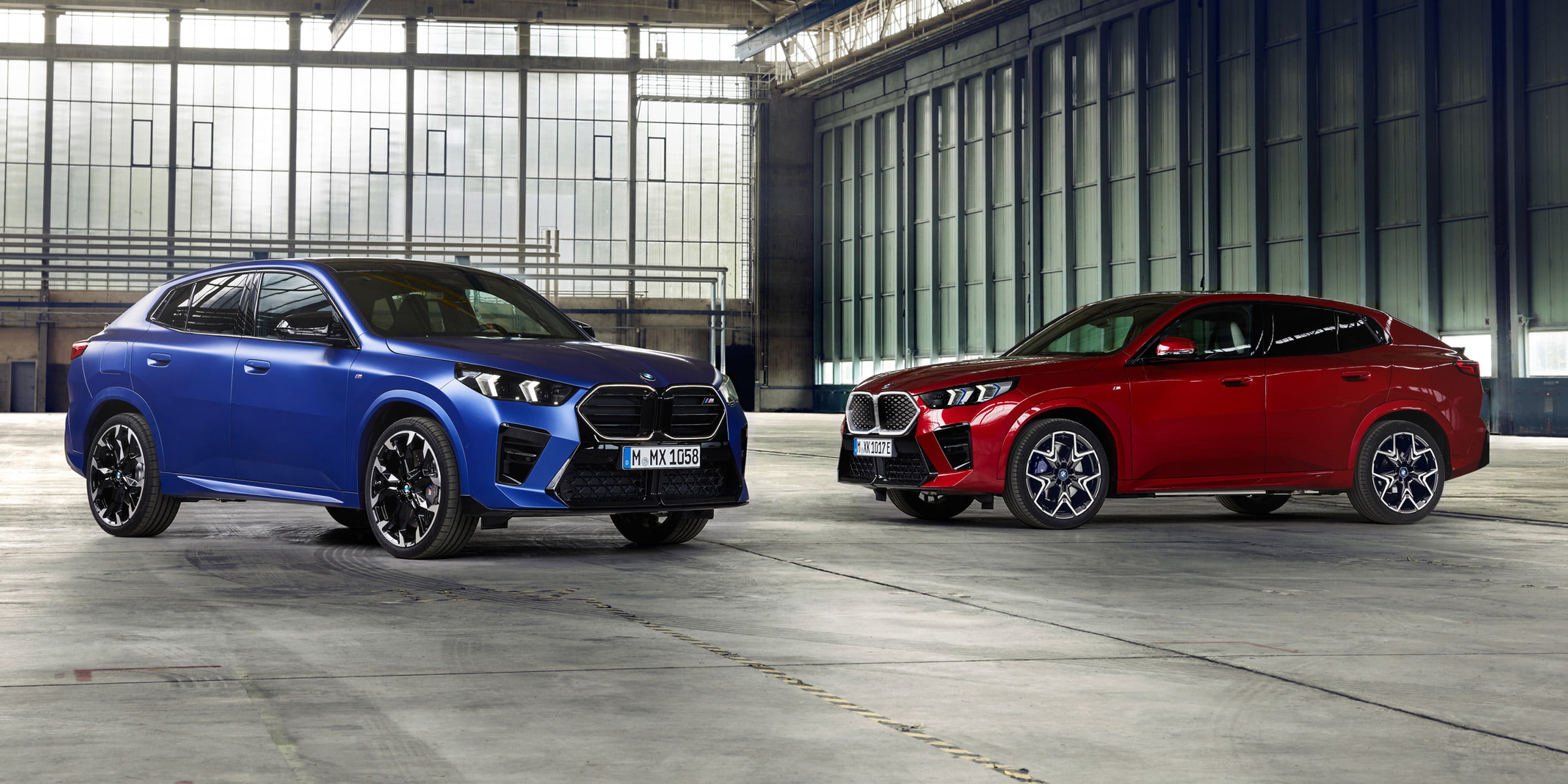
BMW iX2

Summary

The BMW iX2 is a coupé-styled version of the mechanically identical electric iX1 SUV, which became available to order in Spring 2024.

Available only with BMW’s ‘M Sport’ package in the UK, the iX2 is sportier than the standard iX1 SUV – the key difference being its sloping rear roofline. It’s also notably more expensive than its more practical sibling.

Carbuyer’s Sam Naylor praises the iX2 for its “powerful” electric motors and its “upmarket interior” trim, but argues that it’s “a more expensive and less spacious version of the iX1, so you’d have to be a big fan of the way it looks to choose one.”

Nevertheless, CJ Hubbard of Parkers points out that the iX2 is “the most enjoyable version of the second-generation BMW X2”, commenting that the electric version is more comfortable than its petrol-powered equivalent.

The Top Gear team concluded bluntly – if you’re after a compact BMW electric SUV, “just get the iX1.”

As of February 2026, the BMW iX2 holds a New Car Expert Rating of B, with a score of 65%. It’s let down by very low media review scores, with most journalists pointing out that the closely related iX1 is a far better buy. However, the iX2 scores top marks for producing zero tailpipe emissions, while its running costs are also low.

iX2 highlights

  • Better to drive than petrol-powered X2
  • Upmarket interior
  • Powerful electric motors

iX2 lowlights

  • More expensive than the iX1 with less practicality
  • Unsettled ride comfort of bumpy roads
  • Rivals can go further on a single charge

Key specifications

Body style: Small coupé-SUV
Engines:
electric, battery-powered
Price:
From £51,615 on-road

Launched: Spring 2024
Last updated: N/A
Replacement due: TBA

Media reviews

Reviews, road tests and comparisons from across the UK automotive media. Click any of the boxes to view.

Featured reviews

More reviews

Auto Express

Auto Trader

Car

Carbuyer

Discover EV

Driving Electric

Electrifying.com

Evo

Green Car Guide

Heycar

Parkers

The Sunday Times

The Telegraph

Top Gear

Safety rating

Independent crash test and safety ratings from Euro NCAP

No safety rating

As of February 2026, the BMW iX2 has not been tested by Euro NCAP.

The closely related iX1 SUV was awarded a full five-star safety rating in 2022, but this score has not been extended to the iX2. That may change, so check back again soon for all the latest information.

Eco rating

Independent economy and emissions ratings from Green NCAP

No eco rating

As of February 2026, the BMW iX2 has not been tested by Green NCAP.

The Green NCAP programme measures exhaust pollution (which is zero for an electric car) and energy efficiency. Electric cars are much more energy-efficient than combustion cars, so the iX2 is likely to score very highly in Green NCAP testing whenever it ever takes place. Check back again soon.

Reliability rating

MotorEasy logo 600x167

Reliability data provided exclusively for The Car Expert by MotorEasy

No reliability rating

As of February 2026, we don’t have enough reliability data on the BMW iX2 to generate a reliability rating.

The Car Expert’s reliability information is provided exclusively to us using workshop and extended warranty data from our partner, MotorEasy, sourced from both official dealerships and independent workshops. 

As soon as MotorEasy has sufficient data on the iX2, we’ll publish the results here.

Running cost rating

Clear Vehicle Data logo close crop

Monthly cost of ownership data provided exclusively for The Car Expert by Clear Vehicle Data

Battery rangeAverageScoreVariationScore
EV models275 milesB
Electrical efficiencyAverageScoreVariationScore
EV models4.1 m/KWhC
Insurance groupAverageScoreVariationScore
All models35D
Service and maintenanceCostScore
Year 1£265C
Year 2£492B
Year 3£767B
Year 4£978B
Year 5£1,262B
Overall£3,764B

The BMW iX2 is a relatively affordable car to own and run, according to whole-life cost numbers provided exclusively to The Car Expert by our data partner, Clear Vehicle Data.

The car’s battery range is competitive, as its average of 266 miles on a full charge is above the market average. Its electrical efficiency (the EV equivalent of miles per gallon on a petrol or diesel car) is also reasonable for a car of this size.

Insurance premiums sit at around the market average too, and while predicted servicing costs in the first year of ownership are a little high, maintenance costs over the first five years are largely excellent.

Similar cars

If you’re looking at the BMW iX2, you might also be interested in these alternatives.

Audi Q4 e-tron | BMW iX1BMW iX3 | DS 3 Crossback E-Tense | Hyundai Kona Electric | Kia EV3 | Lexus UX Electric | Mazda MX-30 | Mercedes-Benz EQA | Nissan Ariya | Peugeot e-2008 | Toyota bZ4X | Volvo EC40

More news, reviews and information about the BMW iX2 at The Car Expert

New BMW X2 and iX2 coupé-SUVs now on sale

New BMW X2 and iX2 coupé-SUVs now on sale

Everything you need to know about BMW

Everything you need to know about BMW

Electric cars – what’s on sale and what’s coming in 2024?

Electric cars – what’s on sale and what’s coming in 2024?

New electric BMW iX2 SUV revealed

New electric BMW iX2 SUV revealed

Buy a BMW iX2

If you’re looking to buy a new or used BMW iX2, The Car Expert’s partners can help you find the right car.

Motors 600x300

Find your next used car with Motors. Find out more

Auto Trader logo 600x300

Find your next new or used car with Auto Trader. Find out more

Carwow logo 600x300

Find your next new or used car with Carwow. Find out more

Lease a BMW iX2

If you’re looking to lease a new BMW iX2, The Car Expert’s partners can help you find a competitive deal.

Carparison 600x300

Personal contract hire deals from Carparison Leasing. Find out more

Leasing-com logo

Personal contract hire deals from Leasing.com. Find out more

Select Car Leasing logo

Personal contract hire deals from Select Car Leasing. Find out more

MG 4 review

0

Make and model: MG 4 EV Extended Range
Description: Mid-sized five-door hatchback, electric
Price range: £36,495 (plus options)

MG says: “The MG4 EV is an all-electric hatchback designed to offer customers affordable, zero-emissions motoring without compromise.”

We say: For anyone who says that new EVs are too expensive, have a look at the MG 4.


Introduction

The MG 4 is one of the most significant electric cars to be sold in the UK to date, for one simple reason. It offers exceptional value for money compared to any other EV on sale, with a blend of design, performance, and technology at a price point that’s about £10K below comparable vehicles.

It has been showered with awards over the last year, including (obviously most prestigiously) The Car Expert’s Car of the Year 2024. Our award system aggregates new car reviews from up to 35 different UK media titles, so it reflects a broad consensus of opinions.

But awards and trophies from the motoring media don’t necessarily reflect the priorities of real-world car buyers. So is the MG 4 merely “a good car for the price”, or is it genuinely “a good car” without any caveats? That’s what we’re here to find out.

What is it?

The MG 4 is a mid-sized five-door hatchback, similar in size and space to cars like the Volkswagen ID.3 and Cupra Born. Or, if you’re currently in a petrol car and thinking about switching to electric, similar in size to a Volkswagen Golf, Ford Focus or Vauxhall Astra.

In other words, this is MG’s entry into the mainstream family hatchback market, but offering an electric motor for the same price (or better) than petrol models from other brands. The MG 4 starts at £27K, while the Vauxhall Astra starts at £29K for an automatic petrol car, and £38K for an electric model.

Who is this car aimed at?

This is pretty straightforward – anyone looking to make the switch from fossil fuels to electric power in a family-sized car. Whether for business or personal use, the MG 4 is the most affordable way to make that jump. Yes, there are cheaper electric cars now on sale – the BYD Dolphin, for example – but not at this size and with this level of equipment.

Who won’t like it?

Anyone who turns their nose up at the idea of an MG family car, and thinks that a ‘real MG’ is a two-seat British roadster of questionable reliability. Also anyone who turns their nose up at cars made in China (despite the fact that China is the world’s largest producer of cars, including those by several premium and luxury brands).

There are valid reasons to question how and why Chinese companies are able to build electric cars at vastly lower prices than European countries (massive government subsidies, apparently) and what the long-term effect on the UK and European car industries will be. But from a consumer point of view – since more than 80% of new cars sold in the UK are imported from somewhere else anyway – it’s hard to argue that you should pay £10,000 more for a European-built car than a Chinese-built car on principle.

First impressions

The MG 4 has a style that’s unlike most family hatchbacks. The nose is sharp and low, helped by the lack of a traditional engine that needs to fit under the bonnet. The side profile has various different angles that manage to look interesting rather than awful (as attempted and failed by BMW), while even the rear manages to be interesting with an unusual split rear spoiler over the rear windscreen on Trophy models. It’s slightly odd but doesn’t look bad.

Overall, it’s a much more coherent and stylish design than the MG 5 estate, which looked like a decade-old Volkswagen Passat when it was first launched, and then a weird squinty thing when it was facelifted…

Inside, the MG 4’s cabin feels bang-on average for the family car class, rather than a bargain basement special. Like most new cars, the dashboard is uncluttered, as most functions are controlled from the large central touchscreen taking centre stage. There’s a high-mounted shelf jutting out from the dashboard, which contains the gear selector dial and parking brake, along with a tray for your phone. There are some cheaper materials here and there, but most of the obvious bits are done well enough.

Cabin space is decent for both front and rear passengers, although boot space is decent without being class-leading. Again, it’s all very comparable with everything else in its class, but at a price point that makes others look silly.

What do you get for your money?

Across the range, the MG 4 looks strong. There are two trim levels – SE and Trophy – with each version having a choice of two battery sizes.

The entry-level model is the SE, starting at £27K. Bumping that up to the SE Long Range adds an extra £2.5K, which gets a larger battery (see “MG 4 economy, battery range and charging” below) and a slightly more powerful electric motor. However, the extra weight of the battery offsets the extra power, so overall performance is almost exactly the same.

The Trophy spec is available in Long Range (£32.5K) or Extended Range (£36.5K), and again the difference is the size of the battery. The Extended range model gets an even more powerful motor, but this provides a significant jump in performance as well.

All MG 4 models get a ten-inch central touchscreen, which is used to control most functions (including heating and cooling, which is annoying). It’s compatible with both Apple CarPlay and Android Auto.

If you pay extra for the Trophy specification, you get a better stereo along with wireless connection for Apple CarPlay. There’s also satnav (although if you’re using the Apple or Android systems, you probably won’t ever use the MG navigation), 360-degree surround cameras, heated front seats and steering wheel (which should be standard on all EVs), wireless charging (which is pointless as you still have to plug in for CarPlay or Android Auto) and an auto-dimming rear-view mirror.

We like: Competitive equipment levels, simple model range without extensive options lists
We don’t like: Wireless charging is pointless, heated seats and steering wheel should be standard on all models

What’s the MG 4 like inside?

You sit slightly higher than in a normal hatchback, as the batteries are mounted under the floor. There’s decent room in all directions, while the seats are passable without being anything better. The steering wheel is a slightly octagonal shape, presumably combining car designers’ unfathomable desire to mess with a simple circular steering wheel with the octagonal MG badge design…

As with almost every new car on sale today, most functions are controlled through a central touchscreen, which cuts down on buttons (and is therefore much cheaper for car manufacturers). However, the screen layout and ‘buttons’ are a bit fiddly and difficult to use on the move. We also noticed that there was often significant lag between touching the screen and getting any response. Mostly a second or two – just enough to be annoying or to make you think that you hadn’t tapped correctly –  but at one point it was more than five minutes, and long after I’d given up stabbing at the screen and resigned myself to listening to the Radio 4 news, it suddenly started responding to all of the different taps I’d made in growing frustration. The usual IT trick of switching it off and back on again fixed it, but the controls were still laggy.

This may have just been an isolated problem with our car, but it serves as a reminder that trying to control every function of a car through a central touchscreen is a terrible idea. This is not just an MG issue, as pretty much every car company is doing the same thing at the moment. It’s impossible to drive safely while stabbing repeatedly at different points of the screen, especially with the lag, so you have to pull over and stop repeatedly every time you want to find a different radio station or adjust the heating.

We like: Good cabin space, both front and rear
We don’t like: Octagonal steering wheel, poor touchscreen software, touchscreens in general

What’s the MG 4 like to drive?

If you’re expecting the MG 4 to be a Tesla-like rocketship, you’re going to be disappointed. The top-spec Trophy Extended Range offers a satisfying response as you put your foot down, but you’re unlikely to startle your passengers. The lower-output models are perfectly suited for urban driving.

Like all EVs, the MG 4 is very smooth and quiet at urban speeds. It copes well with the UK’s largely rubbish road infrastructure, providing a comfortable ride and absorbing most pothole shocks well. It’s also decent at higher speeds, on A-roads and motorways, where the car feels stable and changes direction nicely. The batteries are located on the floor of the car, under your feet, which helps to keep the car’s centre of gravity low and keeps it nice and upright while cornering, rather than leaning over like some cars do.

Steering is decent, although there’s no real feel to provide any feedback. It’s not an exciting drive, but it’s not supposed to be. You do notice a lot of wind and road noise at higher speeds, however, which is not as good as some other EVs.

Braking – again, like all EVs – is a combination of regenerative braking (where the car uses the electric motor to slow the car down and return some electricity to the battery) and physical braking (using the traditional discs and pads). You can adjust how much the car slows down when you lift off the accelerator, so if you want it to coast like a petrol car you can do that, or you can adjust it through several steps to slow down more quickly, as if you’re applying the brakes each time you lift off the accelerator.

The more regenerative braking you use, the more electricity is recovered to the battery, which can eke out a few extra miles between charges. At its highest setting, you can largely drive the car without using the brake pedal at all apart from harder stops.

On some cars, the transition from regenerative braking to physical braking can feel unusual and unnatural. But the MG 4 handles this well, so that you don’t really notice and the braking feels perfectly normal.

Some family cars do feel better to drive, like the Ford Focus, but the MG 4 certainly holds its own here.

We like: Smooth and quiet at urban speeds, braking is better than some other EVs
We don’t like: Louder than expected at higher speeds

How safe is the MG 4?

There remains a sneering assumption from some people (see “Who won’t like it?” above) that cheap Chinese cars must be unsafe. But that’s simply not true. In fact, since MG has shifted development from the UK to China, its safety ratings have improved – that’s not a criticism of the quality of the former UK engineers, but a reflection of the levels of investment that MG has made to improve its vehicles over the last decade.

In terms of safety, the news for the MG 4 is all good. Euro NCAP tested the car at the end of 2022 and awarded it a top five-star rating, with good results in all four testing categories. That makes it one of the safest cars on the road today.

All models get a comprehensive suite of safety systems as standard. This includes autonomous emergency braking, adaptive cruise control, speed limit assist, lane keep assist and automatic high beam. Trophy models also get blind spot assist and a rear cross-traffic alert (helpful if you have to reverse out of a blind driveway or crowded car park).

MG 4 economy, battery range and charging

If you’re starting with the entry-level MG 4 SE for £27K, you get a 51kWh battery with a claimed range of 218 miles on the official UK/EU government lab test. In real-world driving, you’re probably looking at about 180 miles.

The SE Long Range and Trophy Long Range models get a larger 66kWh battery, which increases the driving range to 281 miles for the SE and 270 miles for the Trophy (which is curious, as both cars officially weigh the same amount and have the same size wheels). Assume that you’ll probably get about 230 miles and 280 miles in the real world and you shouldn’t be too far off.

The Extended Range version of the MG 4 Trophy gets an even larger 77kWh battery that offers an official battery range of 323 miles. Let’s call it 280 miles in reality.

The two larger battery options also have a faster-charging capability, able to charge at 135kW compared to 117kW on the smaller battery. That saves you a bit of time if you are charging at some of the fastest public chargers, but won’t make any difference at home or with a slower (50kW) public charger.

In terms of electrical efficiency (the EV equivalent of fuel economy in a petrol or diesel car), the MG 4 scores well. According to our exclusive analysis of the UK new car market from comprehensive running cost data provided by our technical partner, Clear Vehicle Data, the MG 4 scores a B, which puts it in the top 40% of new EVs on sale. If you can charge it at home, the MG 4 will be cheap as chips to run.

Verdict

In terms of driving the car and living with it, the MG 4 performs normal family duties as well as any other car. There are a few rough edges when you compare it to the best cars in its class, but it’s better than plenty of other competitors. It can certainly say that it competes on merit, rather than simply being a budget choice.

Unless you really need the extra range, the entry-level SE is our recommendation (and the average mileage of most UK vehicles is 120 miles/week, so a range of 180-odd miles is certainly workable for most households). The top-spec Trophy Extended Rage model doesn’t really offer enough extra, other than a bit more performance, to justify an extra £10K.

After a week with the MG 4, it’s hard to imagine why you’d want to buy any petrol-powered family hatch for the same money. If you can charge at home and your usual driving doesn’t involve long journeys, the MG 4 is pretty much unbeatable value.

Similar cars

Cupra Born | DS 3 E-Tense | Honda e | Hyundai Ioniq 5 | Hyundai Kona Electric Kia Soul EV | Mini Electric | Ora Funky Cat | Peugeot e-208 | Renault Mégane E-Tech | Renault Zoe | Smart #1 | Vauxhall Corsa Electric | Volkswagen ID.3

Key specifications

Model tested: MG 4 Trophy Extended Range
Price as tested: £36,495
Engine: Single electric motor, rear-wheel drive
Gearbox: Single speed automatic

Power: 245 hp
Torque: 
350 Nm
Top speed: 112 mph
0-62 mph: 6.1 seconds

CO2 emissions: 0 g/km
Electric range: 323 miles
Euro NCAP safety rating: Five stars (Dec 2023)
TCE Expert Rating: A (81%, as of March 2024)

Buy an MG 4

If you’re looking to buy a new or used MG 4, The Car Expert’s partners can help you find the right car

Cazoo 600x300

Buy a car online from your sofa. We’ll deliver it. Find out more

Motors 600x300

Search less, live more. We make finding the right car simple. Find out more

Carwow logo 600x300

Discover great deals available on both new and used cars. Find out more

Auto Trader logo 600x300

Search for your next new or used car with Auto Trader. Find out more

Lease an MG 4

If you’re looking to lease a new MG 4, The Car Expert’s partners can help you find a competitive deal

Carparison 600x300

Personal contract hire deals from Carparison Leasing. Find out more

Rivervale Leasing logo 2022

Personal contract hire deals from Rivervale Leasing. Find out more

Leasing-com logo

Personal contract hire deals from Leasing.com. Find out more

Hippo Leasing 600x300

Personal contract hire deals from Hippo Leasing. Find out more

Subscribe to an MG 4

Subscriptions are becoming a very popular way for consumers to try an electric car for a few weeks or months to help decide whether it’s a suitable alternative to a petrol car. If you’re interested in a car subscription, The Car Expert’s partners can help. (PS: What’s a car subscription?)

Mycardirect subscriptions – 600x300

Car subscriptions from Mycardirect.
Find out more

Wagonex logo 2023 600x300

Car subscriptions from Wagonex.
Find out more

Cocoon Vehicles logo 600x300

Car subscriptions from Cocoon.
Find out more

Drive Fuze logo 600x300

Car subscriptions from Drive Fuze.
Find out more

Sporty Volkswagen ID. Buzz GTX model revealed

0

The large ID. Buzz people carrier is the latest Volkswagen model to get the brand’s high-performance ‘GTX’ treatment, which will be offered in standard- and long-wheelbase body styles.

Described by its manufacturer as “the most powerful series-production Bulli (van for adventures) of all time”, the ID. Buzz GTX is quite an oddity when compared to the rest of the performance model category.

Automotive marques like Audi, Skoda and Tesla (Volkswagen too) have launched large ‘hot SUVs’ in recent years, but a ‘hot people carrier’? When it becomes available to pre-order in the Summer, this Volkswagen will be in a class of its own.

This model is the latest in an increasingly large selection of electric GTX models, following the arrival of the ID.4 GTX and ID.5 GTX, and the reveal of the ID.7 GTX Tourer. On display at Volkswagen’s annual media conference with a blood red paint job, the powerful people carrier range will include standard and long wheelbases and two battery sizes, and will be available as a 5-, 6- or 7-seater.

Starting with the exterior looks, the people carrier sports several GTX design features, such as the sportier front bumper with ‘arrowhead’ LED daytime-running lights, a honeycomb grille and black exterior accents. The 19-inch alloy wheels are also finished in black, and larger 21-inch alloys will also feature on the options list.

Inside, the ID. Buzz GTX has the same 13-inch central touchscreen as the ID.3 GTX, which runs Volkswagen’s latest infotainment software which includes a ChatGPT-powered AI voice assistant. A head-up display that projects driving information onto the windscreen is also optional.

Long-wheelbase cars can also be fitted with an electronically-controlled panoramic roof – the largest sunroof ever fitted to a Volkswagen. The model comes with ‘Comfort’ seats trimmed in a sustainable microfleece material with red stitching and the GTX logo, and Volkswagen adds that GTX models are the only variants in the ID. Buzz range to be equipped with a black headliner.

Now on to the powertrains. Four-wheel drive as standard, the people carrier will be offered with either a 79kWh or 86kWh battery pack, both paired with two electric motors. The former adds 136hp to the regular 282hp ID.Buzz output, and this performance increase drops the GTX’s 0-62mph sprint time to 6.6 seconds, as well as boosting the car’s towing capacity of 1,800kg.

Volkswagen is yet to announce the people carrier’s battery range – this and other details like UK pricing and further specifications are sure to arrive in the coming months.

Compact MG 3 hybrid now available to order

0

MG Motors has announced that its new third-generation MG 3 hatchback is now available to order from UK dealerships, which is more spacious than its predecessor and is a hybrid as standard.

This new iteration of the budget ‘MG3’ comes as many other motoring rivals across the industry look to retire their combustion-powered superminis, the most notable casualty of the last year being the Ford Fiesta. Therefore, this new MG could have a broad appeal with buyers looking for value-for-money, thanks to its sub-£20k price tag.

Dubbed the MG 3 Hybrid+, the latter half of its name refers to its 102hp 1.5-litre four-cylinder petrol engine and 136hp electric motor pairing which MG says makes the car the fastest accelerating hybrid supermini on the market. The combined output of 238hp is quite high by small hatch standards, and provides a reported 0-62mph time of eight seconds. Top speed is capped at 105mph.

As a petrol-electric hybrid, MG says that the hatchback can travel in “fully electric” mode “for city driving”, but hasn’t confirmed exactly how far the car can travel on only electric power. The brand has said that the MG 3 has an overall fuel consumption of 64mpg though – around 20mpg more than its petrol-only predecessor.

As for interior space, the new MG 3 is around ten centimetres longer and a smidge wider than the former model, which frees up cabin room in the front and back, and increases the dimensions of the boot too (293 litres).

Two different trim levels are available to order – the lead-in ‘SE’ and the top-spec ‘Trophy’. Priced at a few hundred over £18k, the ‘SE’ comes with a seven-inch digital instrument cluster behind the steering wheel and a ten-inch infotainment display that is compatible with Android Auto and Apple CarPlay, and runs the brand’s own navigation software.

Also offered as standard is the marque’s ‘MG Pilot’ safety tech package, which includes adaptive cruise control, lane keeping assistance, and an ‘intelligent’ speed sign recognition feature that (when on) automatically adjusts the car’s speed when entering a new speed zone.

Also included are rear parking sensors and a rear-view parking camera, making the ‘SE’ a pretty generous entry-level package – considering that rival brands generally reserve some of these safety features for higher trims.

Key trim level features

Lead-in ‘SE’ (from £18,495)

  • Halogen headlights
  • 16-inch alloy wheels
  • Seven-inch digital instrument cluster
  • Ten-inch infotainment screen
  • MG’s navigation software
  • Adaptive cruise control
  • Automatic headlight high beam
  • Lane keeping assistance
  • Blind spot monitoring
  • Speed sign recognition
  • Rear parking sensors
  • Rear-view parking camera
  • Fabric upholstery

Top-spec ‘Trophy’ (from £20,495)

  • All ‘SE’ features that are not replaced
  • LED headlights
  • 360-degree parking camera
  • Lane changing assistance
  • ‘Leather-style’ upholstery
  • Keyless entry
  • Heated front seats
  • Heated steering wheel
  • Rear privacy glass
  • Rain sensing windscreen wipers

The ‘Trophy’ grade, which costs £2k more, is said to “deliver even more comfort, style and convenience”, by adding heated front seats and a heated steering wheel, as well as a ‘leather-style’ upholstery trim, which is presumably faux leather.

This trim also comes with LED headlights, keyless entry, a surround-view parking camera and rain sensing windscreen wipers. Now available to order, the MG 3 Hybrid+ comes with a seven-year or 80,000-mile warranty.

All-new compact Skoda Epiq EV unveiled

0

Skoda has revealed a new budget-end electric crossover – the Epiq – which will rival the likes of the Citroën ë-C3 and next-generation Fiat Panda when its goes on sale in the UK in 2025.

With a name that Skoda says is derived from ancient Greek, the Epiq is one of six new electric models that Skoda plans to launch in Europe in the coming years, expanding the Czech brand’s EV offering which only includes the larger Enyaq SUV so far. It will be the second of the six to arrive in the UK, following the compact Elroq crossover.

While fellow Volkswagen Group brands have decided to target this budget EV category with hatchback models, such as the Volkswagen ID.2 and Cupra Raval, Skoda has instead decided to give the Epiq more ground clearance and thick SUV-style bumper cladding, and refers to this new model as a ‘city SUV’.

A year away from the car’s official launch, we don’t have the full spec sheet as of yet, but Skoda has announced that this small EV will be powered by a single front-mounted electric motor and either a 38kWh or 56kWh battery, depending on the trim you choose.

The latter option can reportedly deliver up to 248 miles on a single charge, and is compatible with rapid charging speeds of up to 125kW, which charges the battery from 10% to 80% in 20 minutes. The battery also has a bi-directional vehicle-to-load (V2L) feature, which means it can power external devices like laptops and kettles, or top up home electricity networks.

Inside, Skoda has opted for the minimal approach to dashboard layout (an increasingly popular trend across the industry), with physical buttons limited to the steering wheel and a panel just above the centre console. The most eye-catching feature is the floating touchscreen in the centre of the dash, which runs the brand’s latest infotainment software.

The crossover is about as long as the brand’s Fabia supermini, but offers an extra 110 litres of luggage space in the boot – 490 litres total.

That sums up what we know so far about the Skoda Epiq. UK pricing is yet to be confirmed, but the manufacturer says that it is aiming for a €25k price tag in Europe (£21.4k).

Fisker Ocean (2024)

Summary

The Fisker Ocean was a mid-size electric SUV that launched in the UK in late 2023 as a rival to the Tesla Model Y and other family electric SUVs. Positioned as a stylish and sustainably built alternative in the competitive family EV market, it attracted considerable early attention from media and buyers alike.

However, Fisker filed for bankruptcy in 2024 and subsequently ceased trading. As a result, the Ocean no longer has manufacturer backing, and there is no formal UK warranty support, retail network or long-term infrastructure for software updates and parts supply. This fundamentally altered the ownership outlook for the vehicle.

Before the company’s collapse, early media reviews had ranged from average to very positive. Reviewers praised the Ocean’s generous standard equipment, competitive pricing and distinctive design. Innovative features such as “California mode” – which lowered all the windows and opened the panoramic roof at the touch of a button – were widely highlighted.

Some reviewers had also noted shortcomings. While the Ocean offered strong electric driving range and a spacious interior, several outlets criticised inconsistent software, a large but occasionally frustrating touchscreen system and interior materials that did not always match the car’s ambitious positioning.

As of February 2026, the Fisker Ocean holds a Used Car Expert Rating of D with a score of 60%. Despite early positive reviews and zero tailpipe emissions, the absence of manufacturer support and meaningful warranty backing makes the Fisker Ocean a very high-risk used purchase.

stuart 2022

Stuart’s view:

“The Fisker Ocean may look tempting on the used market as prices fall, but we do not recommend buying one.
With Fisker no longer operating as a manufacturer, there is no meaningful warranty backing and no established UK infrastructure for long-term servicing, parts supply or software support. Modern electric vehicles rely heavily on ongoing software updates and manufacturer involvement, and the absence of that support creates significant ownership risk.
There are plenty of electric SUVs that deliver comparable range and space, with full manufacturer backing and far lower ownership risk.”

Stuart Masson

Editor, The Car Expert

Ocean highlights

  • Strong electric driving range on paper
  • Generous standard equipment
  • Distinctive exterior design
  • Spacious family SUV layout

Ocean lowlights

  • Company collapsed in 2024
  • No meaningful new car warranty support
  • Uncertain long-term software updates
  • Parts supply and servicing infrastructure unclear
  • Very weak resale confidence

Key specifications

Body style: Medium SUV/crossover
Engines:
electric motor, battery-powered
Price:
From £36,900 on-road

Launched: Winter 2023/24
Discontinued: Summer 2024
Replacement due: None – company collapsed

Media reviews

Highlighted reviews and road tests from across the UK automotive media. Click any of the boxes to view.

Auto Express

Auto Trader

Car

Carbuyer

Driving Electric

Electrifying.com

Regit

Top Gear

Safety rating

Independent crash test and safety ratings from Euro NCAP

No safety rating

The Fisker Ocean was not assessed by Euro NCAP during its brief production life.

Eco rating

Independent economy and emissions ratings from Green NCAP

No eco rating

The Fisker Ocean was not assessed by Green NCAP during its brief production life.

Running cost rating

Clear Vehicle Data logo close crop

Monthly cost of ownership data provided exclusively for The Car Expert by Clear Vehicle Data

Battery rangeAverageScoreVariationScore
EV models385 milesA
Electrical efficiencyAverageScoreVariationScore
EV models3.8 m/KWhD
Insurance groupAverageScoreVariationScore
All models50F

The Fisker Ocean is a relatively affordable car to own and run with one notable caveat, according to whole-life cost numbers provided exclusively to The Car Expert by our data partner, Clear Vehicle Data.

The car’s battery range is very competitive, as its average of 385 miles on a full charge is one of the longest ranges in this class. Its electrical efficiency (the EV equivalent of miles per gallon on a petrol or diesel car) is also reasonable for a car of this size.

The insurance group rating sits at the top of the scale, which usually means high insurance costs. With Fisker no longer operating, insurers are likely to treat the Ocean less favourably than similar electric SUVs because replacement parts and approved repair support may be difficult to secure. That increases the likelihood of the car being written off after relatively modest accident damage.

Reliability rating

MotorEasy logo 600x167

Reliability data provided exclusively for The Car Expert by MotorEasy

No reliability rating

As of February 2026, we don’t have enough reliability data on the Fisker Ocean to generate a reliability rating.

The Car Expert’s reliability information is provided exclusively to us using workshop and extended warranty data from our partner, MotorEasy, sourced from both official dealerships and independent workshops. 

As soon as MotorEasy has sufficient data on the Ocean, we’ll publish the results here.

Warranty rating

New car warranty information for the Fisker Ocean

Overall ratingF0%
New car warranty duration0 years
New car warranty mileage0 miles
Battery warranty duration0 years
Battery warranty mileage0 miles

With Fisker’s collapse in 2024, there is no new car warranty support available for existing cars.

If you are considering a used Ocean, bear in mind that third-party warranties are likely to be significantly more expensive than for comparable vehicles.

If you’re looking to buy any used car that is approaching the end of its warranty period, a used car warranty is usually a worthwhile investment. Check out The Car Expert’s guide to the best used car warranty providers, which will probably be cheaper than a warranty sold by a dealer.

Recalls

Official DVSA safety recalls that have been issued for the Fisker Ocean

As of February 2026, we are not aware of any DVSA vehicle safety recalls affecting the Fisker Ocean. However, recall information is updated regularly, so this may have changed.

You can check to see if your car has any outstanding recalls by visiting the DVLA website.

Awards

Trophies, prizes and awards that the Fisker Ocean has received.

2024

  • Carwow Awards – ‘Highly Recommended’ Award
  • Red Dot Design Awards – Red Dot Award

Similar cars

If you’re looking at the Fisker Ocean, you might also be interested in these alternatives.

Current models: Audi Q6 e-tron | BMW iX3 | BYD Sealion 7 | Changan Deepal S07 | Citroën ë-C5 Aircross | DS Nº8 | Ford Mustang Mach-E | Genesis Electrified GV70 | Hyundai Ioniq 5 | Kia EV6 | Leapmotor C10 | Lexus RZ | Mercedes-Benz GLC EQ | MG S6 EV | Nissan Ariya | Peugeot E-5008 | Polestar 2 | Renault Scenic E-TechSkoda EnyaqSubaru Solterra | Toyota bZ4X | Tesla Model Y | Vauxhall Grandland ElectricVolkswagen ID.4 | Volvo EX60

Discontinued models: Audi Q8 e-tron | BMW iX3 | Jaguar I-Pace | Mercedes-Benz EQC

More news, reviews and information about the Fisker range at The Car Expert

Electric cars – what’s on sale and what’s coming in 2024?

Electric cars – what’s on sale and what’s coming in 2024?

Who or what is Fisker?

Who or what is Fisker?

New Fisker Pear crossover set for UK arrival

New Fisker Pear crossover set for UK arrival

Electric cars – what’s on sale and what’s coming in 2023?

Electric cars – what’s on sale and what’s coming in 2023?

Buy a Fisker Ocean

If you’re looking to buy a used Fisker Ocean, The Car Expert’s partners can help you find the right car.

Motors 600x300

Find your next used car with Motors. Find out more

Auto Trader logo 600x300

Find your next new or used car with Auto Trader. Find out more

Carwow logo 600x300

Find your next new or used car with Carwow. Find out more

New BMW X2 and iX2 coupé-SUVs now on sale

0

The new second-generation BMW X2 coupé-SUV range has arrived in the UK, with petrol mild-hybrid and all-electric iX2 models now available to order.

Not heard of the X2 before? It’s essentially very similar to the BMW X1 – the brand’s lead-in SUV offering – but with a sloping coupé-style roofline instead of the X1’s traditional SUV rear end. As you might expect, the X2 engine and trim options are identical to the X1 range which has been on sale since 2022.

Like the X1 line-up, the new petrol-powered X2 range begins with the 170hp mild-hybrid ‘sDrive20i’ model, and is followed by the sportier four-wheel drive 300hp ‘M35i xDrive’. The electric iX2 range is also identical to the iX1 powertrain options, starting with the 204hp ‘eDrive20’ that we previously thought wasn’t coming to the UK.

This electric coupé-SUV can reportedly muster up to 283 miles on a single charge. The range-topper is the electric ‘xDrive30’ which boosts power to 313hp for the caveat of reduced battery range, with a maximum of 267 miles from full charge.

While the top speed is capped at 132mph for the lead-in petrol model, the iX2 won’t reach these speeds – the eDrive20′ is instead electronically capped at 106mph.

BMW says it has given its second iteration of the X2 a “broader, more muscular stance”, with “significantly larger dimensions” which make the model more practical for family outings and daily commutes. Indeed, the car is 20 centimetres longer, two centimetres wider and six centimetres taller than the outgoing X2, which the brand says increases shoulder, elbow and knee room in the front and back.

Boot space has also increased by 90 litres – now 560 litres total (525 litres for the iX2) – and an electronically-operated trailer tow hitch can be ordered as an option, which can tow as much as 1,800kg.

The coupé-SUV’s interior is practically identical to the insides of the X1. A curved dual-screen display juts out of the dashboard, housing the ten-inch digital instrument cluster and 11-inch infotainment display. The latter allows the occupants to stream videos and play video games when stationary, and is compatible with both Android Auto and Apple CarPlay.

The on-board tech features that come as standard include a navigation system, two-zone automatic climate control, several driver assistance systems, and parking assistance with a reversing camera.

Now available to order and with the first deliveries expected to arrive this month, pricing for the X2 now begins at over £40k, while pricing for the electric iX2 starts at close to £52k.

Subtle exterior refresh for Audi A3

0

The Audi A3 ‘Sportback’ hatch and saloon range has been given a few exterior alterations as part of a mid-life facelift that also adds a few bits of standard kit previously reserved for higher trim models.

Minor visual tweaks include a slightly wider hexagonal front grille (for the S line trim) that is “noticeably flatter” and larger air intakes either side of the front bumper. The bumper also has a revised spoiler that has been designed to make the car appear lower. The updated A3 also has a chunkier rear bumper, finished in black.

The daytime running lights now feature four different ‘signatures’ that appear when the car is locked or unlocked, and the owner can switch between them to customise their car’s appearance.

More important for buyers looking for value-for-money, Audi has also added a few bits of equipment to the standard model offering previously available with higher trims, commenting that the A3 is “more digital than ever.”

For starters, all A3 models now come with the brand’s ‘Virtual Cockpit’ digital instrument cluster behind the steering wheel, as well as the 10-inch central touchscreen running Audi’s latest infotainment software. The revised centre console now comes with an adjustable armrest and a “flatter” automatic gear shifter design.

The car comes with a smartphone charging pad, four USB charging ports and revamped interior lighting, including backlit doors and lights for the centre console and cupholders. There is also a new Sonos stereo system on the options list. Adaptive cruise control and high beam assist for the headlights don’t come as standard, but are available on subscription through the Audi app after purchase.

Audi has also unveiled a new A3 Allstreet model with beefy SUV-style bumper cladding as part of this facelift announcement, but for Germany and “other European countries”, which is yet to include the UK. The model has a raised ride height and comes with roof rails finished in black.

That sums up what we know about the refreshed Audi A3 range so far. Pre-orders will open in mid-April, when Audi will confirm UK pricing and trim specs.

The Audi A3 range has received generally good scores from the UK media. Combined with better-than-average scores for safety, CO2 emissions and running costs, it adds up to an excellent Expert Rating score of A (70%) as both a new and used model. It would be even better, however, if it wasn’t for a poor reliability score (although this includes previous A3 models as well as the current model).

Kia EV9 Air test drive

Make and model: Kia EV9 Air
Description: Entry-level version of large electric seven-seat SUV
Price range: £65,025 (plus options)

Kia says: “The spacious and striking EV9 is a rugged, sophisticated, and technologically advanced electric vehicle.”

We say: We were impressed by the top-spec EV9 even at the price and now the new Air model is a more budget-friendly solution, for those who want all the attractions of the EV9 but don’t need so much potency or off-road ability.


Introduction

In December 2023 we drove the brand-new Kia EV9, a huge all-electric SUV and pitched as the brand’s flagship model. It offered something that no electric rival at the time could – seven seats – but in the initially available version, the top specification GT-Line S, it also came with a close to £76,000 price tag, which made several people sit up and take notice.

Now Kia is launching the entry-level version of the EV9 – it’s called the Air and the major difference is performance. Instead of the twin-motor, all-wheel-drive powertrain of the GT-Line S, the Air has a single motor powering the rear wheels. As a result, it’s starting price is about £11,000 cheaper than its sibling.

What is it?

The Kia EV9 is the brand’s second bespoke electric model, after the highly-awarded EV6 (The Car Expert’s Car of the Year 2022). However, it looks almost brick-like compared to the coupé-inspired styling of its smaller sister. With seven seats in three rows, the EV9 takes on the largest SUV models offered by mostly ‘premium’ brands, such as the Audi Q7 and the Land Rover Defender and Discovery, but it offers something those don’t in the form of an electric drivetrain.

In the EV9 Air, the power comes from a single motor powering the rear wheels only, as opposed to the twin motors and all-wheel drive of the higher-spec GT-Line and GT-Line S models. With only 200hp available, the Air’s power output is almost halved compared to its sisters, though it also tips the scales significantly lighter, with nearly 150kg saved. Mind you, it’s still a 2.5-tonne vehicle…

Who is this car aimed at?

With its lower (though still substantial) price, the Kia EV9 Air brings the trailblazing seven-seat EV SUV to a wider audience. Because while large SUVs are still a popular choice for car buyers, EV options have been almost non-existent.

The Tesla Model X offered seven seats but cannot now be ordered in right-hand drive (or for less than £100K), and all other big electric SUVs from the likes of BMW and Mercedes have only five seats. So for those who have traditionally owned big Land Rovers or similar but want to go electric, the Kia is currently the only option. And if you don’t really need the off-road ability the top-spec models provide through their four-wheel propulsion and off-road driving aids, the Air is likely to appeal.

Who won’t like it?

Some out there will still believe that paying more than £60,000 for any Kia is ridiculous. They’re missing out, because Kia – the budget brand – is a memory from very long ago. Today, this company competes squarely with the biggest mainstream names and even the upmarket German brands don’t dismiss it as a rival. 

Any buyer who really wants a big SUV should at least look at the Kia – and if they consider the EV9 too big, the company has smaller EV SUV models on the way.

The message does seem to be getting, through. Kia doesn’t expect to sell too many EV9s (fewer than 4,000 a year), but the brand’s UK boss Paul Philpott told The Car Expert at the launch that the order book is pleasingly full, while at a time when the fleet market is said to be propping up the car retail industry, 40% of sales so far are to retail buyers.

First impressions

For those who have got used to the look of Kia’s initial bespoke electric model, the EV6, a first viewing of the EV9 will possibly be unnerving. This is no shrinking violet but a huge, dominant SUV with squared-off styling – it measures up at more than five metres long with a three-metre wheelbase.

While imposing, the EV9 appears purposeful rather than just brick-like. Kia’s ‘opposites attract’ styling language does seem to be able to cope with the requirements of electric models, such as what you put on the front where the radiator grille once was, rather better than do several rivals (BMW being the most obvious). 

The Kia continues to score points inside the cabin, with a roomy interior and an impression of quality. The fittings and fixtures all feel upmarket, with no nasty cheap plastics evident. 

What do you get for your money?

The Kia EV9 Air costs £8,000 less than the GT-Line model, and £12,000 less than the top-spec GT-Line S version. So apart from one fewer motor, what else do Air buyers miss out on? Well, not much of great importance.

Being two-wheel drive, the EV9 Air does not have the ‘terrain mode’ functions in the all-wheel-drive models to help the EV9 tackle more challenging off-road surfaces. The alloy wheels are smaller (19-inch instead of 21-inch) and you don’t get roof rails.

Inside the cabin, the Air doesn’t offer as many electric adjustments in the front seats, nor a massage function. You also miss out on a sunroof and the head-up display, while the sound system is not quite so premium (though still perfectly adequate). You also can’t specify the optional six-seat layout, which is only offered with the GT-Line S.

So what does the Air include? Rather a lot actually. Equipment levels are very impressive, especially considering that Kia wants to take on ‘premium’ brands where traditionally options lists have been very long. Notably the safety spec is very extensive, which we cover in more detail below. 

Other highlights include three-zone climate control, powered and heated seats in both the first and second rows, a ‘smart’ powered tailgate, wireless phone charging and a ‘vehicle to load’ system which allows the powering of external equipment, such as camping stoves and lights, from the car’s battery.

Also easily forgotten but a significant factor is that every Kia comes with one of the longest warranties in the market, at seven years or 100,000 miles. This also transfers with the car when it’s sold on.

We like: Extensive equipment list, full safety spec and long warranty
We don’t like: Items such as roof rails not available as options

What’s the Kia EV9 Air like inside?

The EV9 is a big car, but still very easy to get into for this quite short reviewer. Once inside, it doesn’t take long to get comfortable up front – the steering wheel adjustment is manual rather than electric as on the upper models, but this makes it quicker to set to one’s preference.

Dominating the top of the dash is what looks like one very long screen, but is actually two. The right screen forming the driver’s essential instruments and the left provides a very wide infotainment screen. As is becoming the norm in new cars, a lot of the car’s functions are controlled using this screen, but any initial confusion over which buttons to touch quickly becomes second nature. It works particularly well with apps such as Google Maps through the wireless smartphone connection.        

The main impression of this car’s interior is of roominess – the flat platform of the electric powertrain serves up plenty of opportunity for versatile space-filling – and quality surroundings. There’s nothing to suggest this is an entry-level model from the standard of fit and finish. A typical example of the neat touches is the way that some controls are incorporated into the trim and activated by a finger on a graphic, rather than pressing a switch. 

Kia is also highlighting the sustainability of the materials used in the car, many of the surfaces created from recycled drinks bottles and other plastic, polyurethane, fishing nets and various renewable materials.

Very few seven-seaters offer true adult-sized space in the third row but the EV9 does better than most, while access to said third row is easy with a simple button-press tilting the second-row seat out of the way.  

A third row of seats does not benefit boot space either but again the EV9 outscores rivals. Its 333 litres is a lot more than you get in a Land Rover Discovery, while all EV9s also come with a ‘frunk’, an extra cavity under the bonnet. Because there’s no second electric motor sharing this space, the Air’s frunk is almost twice the size of the AWD models, offering another 90 litres to fill. 

We like: Quality interior, lots of room even in third row
We don’t like: Audible warnings don’t stay off when turned off 

What’s the Kia EV9 Air like to drive?

The Kia EV9 is a very big car but one that is surprisingly easy to drive, basically because the driver doesn’t have to do a lot. Press the start button and select Drive on a short little stalk at the lower right of the steering wheel, and off it glides.

A Kia EV9 with around half the power of the first version launched might sound concerning to buyers, but they needn’t worry. The EV9 GT Line-S can do 0-60mph in about five seconds, which is potent to a level that most buyers of a big SUV just don’t need. While it takes the EV9 Air nearly ten seconds to reach 60mph, the impression given is more smooth and unhurried than slow.

On the road, the EV9 doesn’t feel as big behind the wheel as it does viewing the car from outside. It’s an easy car to drive and place, with plenty of help available too – this reviewer still finds particularly likeable the feature on Kias and Hyundais that turns one of the instrument dials turn into a camera screen looking down the side of the car as soon as the indicator is activated in that direction.

As is typical of an EV, the Kia has two battery regen paddles mounted on the steering wheel, increasing or decreasing the amount of retardation as required, and with use of these it’s very easy to drive the car with minimal use of the brake pedal, while also returning a little energy to that big battery.

This is not a car you’d expect to excel in the handling stakes and to be honest few owners will ever properly test this aspect of the EV9. But the placing of the heavy battery low and flat on the chassis helps to ensure that even when cornering at speed this big machine stays pleasingly upright, with none of the body roll one might expect. 

Inevitably, you need to be careful on narrower lanes, and manoeuvring around supermarket car parks will also be a matter for full attention – this really is a big machine – but overall the EV9 is a car that does everything with very little fuss. Most owners are likely to be more than happy with how it drives. 

We like: Very comfortable ride and confident, upright stance in corners
We don’t like: It is very big and will be defeated by ever-shrinking town centre parking spaces

How safe is the Kia EV9 Air?

Kia does not differentiate between wallet size when it comes to safety – the entry-level version of the Kia EV9 comes with the same extensive suite of active safety technology offered on the top-spec cars. This includes front and rear parking sensors and a 360-degree around-view monitor, particularly useful for parking such a big machine.

Some of the aids can be turned off using the central touchscreen, particularly the lane departure warning and speed limit functions, but unlike some cars they don’t stay off permanently – next time you start the car you’ll need to deactivate them again. “Turning off the bongs” became a ritual performed at the start of each launch test drive.

While this may be irritating, the reason is obvious – the EV9 secured a top five-star Euro NCAP safety rating when tested last year, with good scores in all areas from accident prevention to occupant protection and efforts to avoid injuries to pedestrians and cyclists.

Kia EV9 Air economy, battery range and charging

The EV9 Air uses the same under-floor mounted and enormous 100kWh battery as its more expensive siblings, but as it only has one instead of two electric motors to power it offers around 35 miles more range between charges. 

The official battery range, according to the UK/EU government tests, is 349 miles. In real-world driving, you should still expect to get well over 300 miles except in the coldest conditions. This is more than enough for the vast majority of customers’ needs, despite the fact that diesel SUVs can go further between fuel stops.

Kia doesn’t differentiate between models on charging either – even the Air can use 800V 350kW charging which will boost the battery from 10% to 80% in less than half an hour. Such public chargers are not yet common however, and they are expensive to use. On the much more prolific 50kW chargers, you will need around 90 minutes for the same charge.

For charging at home, a typical 7kW wallbox will take the battery from 10% to full in nine hours – use a three-pin plug and you are looking at more than 40 hours… 

Verdict

The Kia EV9 impressed many when it launched just a few months ago and now the Air model adds a significant extra appeal. As the entry point to the range, it makes the EV9 a consideration for those with less money to spend on a big electric SUV.

At the same time those choosing the Air won’t have an impression of missing out – most of the cost saving comes from powering only two wheels instead of four which will suit most owners anyway, and much of the equipment, particularly the safety specification, is standard across the range.

We have no doubt that the big hitters from Germany will get round to making their own seven-seat electric SUVs but buyers don’t need to wait, because there is a very effective one available already in the Kia EV9.  

Similar cars

If you’re looking at the Kia EV9, you might also be interested in these alternatives

BMW iX | Hyundai Ioniq 7 | Land Rover Defender | Land Rover Discovery | Mercedes-Benz EQS SUV | Range Rover plug-in hybrid | Tesla Model X | Volkswagen ID. Buzz | Volvo EX90

Key specifications

Model tested: Kia EV9 Air
Price as tested: £65,025
Engine: Single electric motor, rear-wheel drive
Gearbox: Single speed automatic

Power: 200 hp
Torque:
350 Nm
Top speed: 114 mph
0-62 mph: 9.4 seconds

CO2 emissions: 0 g/km
Electric range: 349 miles
Euro NCAP safety rating: Five stars (Dec 2023)
TCE Expert Rating: 77% (as of March 2024)

Buy a Kia EV9

If you’re looking to buy a new or used Kia EV9, The Car Expert’s partners can help you find the right car.

Motors 600x300

Find your next used car with Motors. Find out more

Auto Trader logo 600x300

Find your next new or used car with Auto Trader. Find out more

Carwow logo 600x300

Find your next new or used car with Carwow. Find out more

Lease a Kia EV9

If you’re looking to lease a new Kia EV9, The Car Expert’s partners can help you find a competitive deal.

Leasing-com logo

Personal contract hire deals from Leasing.com. Find out more

Carparison 600x300

Personal contract hire deals from Carparison Leasing. Find out more

Select Car Leasing logo

Personal contract hire deals from Select Car Leasing. Find out more

Subscribe to a Kia EV9

If you’re interested in a car subscription, The Car Expert’s partners can help. (PS: What’s a car subscription?)

SelfDrive UK logo

Car subscriptions from SelfDrive.
Find out more

Drive Fuze logo 600x300

Car subscriptions from DriveFuze.
Find out more

Cocoon Vehicles logo 600x300

Car subscriptions from Cocoon.
Find out more

Lexus LBX

Summary

The Lexus LBX is a compact SUV/crossover which first arrived on UK roads in Spring 2024. Only available as a petrol-electric hybrid, this small family car is now the cheapest model in the Lexus range and shares its foundations with the similar Toyota Yaris Cross.

Unfortunately for Lexus, other motoring outlets aren’t as enthusiastic. The Carwow team notes that the car “isn’t particularly practical”, mentioning the rather tight rear seating, while Carbuyer‘s John McIlroy argues that the LBX is expensive, particularly when compared to more spacious alternatives from mainstream automotive brands.

Colin Overland of Parkers concludes that the LBX is a decent addition to the crowded small SUV category which is “fairly refined and comfortable”, but it is “not very Lexusy, in terms of luxury and sophistication, while being quite expensive for what remains at heart a perfectly decent Toyota.”

As of March 2026, the Lexus LBX holds a New Car Expert Rating of B, with a score of 68%. It scores top marks for its eco rating, helped by low CO2 emissions from its hybrid engine.

LBX highlights

  • High-quality, well-equipped cabin
  • Precise steering
  • Nippy and efficient hybrid powertrain

LBX lowlights

  • Tight for rear passengers
  • Expensive when compared to rivals
  • Not as luxurious as other Lexus SUVs

Key specifications

Body style: Small SUV/crossover
Engines:
petrol-electric hybrid
Price:
From £29,995 on-road

Launched: Spring 2024
Last updated: N/A
Replacement due: TBA

Media reviews

Highlighted reviews and road tests from across the UK automotive media. Click any of the boxes to view.

Featured reviews

More reviews

Auto Trader

Business Car

Car

Carbuyer

Carwow

Fleetworld

Heycar

Honest John

Motoring Research

Parkers

Regit

The Scotsman

The Telegraph

Top Gear

Safety rating

Independent crash test and safety ratings from Euro NCAP

Overall score: 5 stars
Date tested: December 2024
Read the full Euro NCAP review

Adult protection: 82%
Child protection: 83%
Vulnerable road users: 79%
Safety assist: 76%

Eco rating

Independent economy and emissions ratings from Green NCAP

No eco rating

As of March 2026, the Lexus LBX has not been lab tested by Green NCAP.

Reliability rating

MotorEasy logo 600x167

Reliability data provided exclusively for The Car Expert by MotorEasy

No reliability rating

As of March 2026, we don’t have enough reliability data on the Lexus LBX to generate a reliability rating.

The Car Expert’s reliability information is provided exclusively to us using workshop and extended warranty data from our partner, MotorEasy, sourced from both official dealerships and independent workshops. 

As soon as MotorEasy has sufficient data on the LBX, we’ll publish the results here.

Running cost rating

Clear Vehicle Data logo close crop

Monthly cost of ownership data provided exclusively for The Car Expert by Clear Vehicle Data

Fuel consumptionAverageScore
Hybrid models61 mpgA
CO₂ outputAverageScoreVariationScore
Hybrid models105 g/kmA
Insurance groupAverageScoreVariationScore
All models24B
Service and maintenanceCostScore
Year 1£202B
Year 2£539C
Year 3£876C
Year 4£1,078B
Year 5£1,406B
Overall£4,101B

The Lexus LBX is a relatively affordable car to own and run, according to whole-life cost numbers provided exclusively to The Car Expert by our data partner, Clear Vehicle Data.

The crossover’s average fuel consumption of 61mpg (59 to 63pmg) is lower than the market average in the small SUV sector, and the car’s servicing and maintenance costs should be fairly affordable over the course of the first five years of ownership. The LBX also has insurance premiums that sit at around the market average.

Similar cars

If you’re looking at the Lexus LBX, you might also be interested in these alternatives.

Citroën C3 Aircross | Dacia Duster | Fiat 500X | Ford Puma | Honda HR-V | Hyundai Bayon | Kia Stonic | Mazda CX-3 | MG ZS | Mitsubishi ASX | Nissan Juke | Peugeot 2008 | Renault Captur | SEAT Arona | Skoda Kamiq | SsangYong Tivoli | Suzuki Vitara | Toyota Yaris CrossVauxhall Crossland | Vauxhall Mokka | Volkswagen T-Cross | Volkswagen T-Roc

More news, reviews and information about the Lexus LBX at The Car Expert

Lexus LBX test drive

Lexus LBX test drive

Everything you need to know about Lexus

Everything you need to know about Lexus

New Lexus LBX hybrid now available to pre-order

New Lexus LBX hybrid now available to pre-order

Buy a Lexus LBX

If you’re looking to buy a new or used Lexus LBX, The Car Expert’s partners can help you find the right car.

Motors 600x300

Find your next used car with Motors. Find out more

Auto Trader logo 600x300

Find your next new or used car with Auto Trader. Find out more

Carwow logo 600x300

Find your next new or used car with Carwow. Find out more

Lease a Lexus LBX

If you’re looking to lease a new Lexus LBX, The Car Expert’s partners can help you find a competitive deal.

Leasing-com logo

Personal contract hire deals from Leasing.com. Find out more

Carwow logo 600x300

Personal contract hire deals from Carwow. Find out more

Select Car Leasing logo

Personal contract hire deals from Select Car Leasing. Find out more

Subscribe to a Lexus LBX

If you’re interested in a car subscription, The Car Expert’s partners can help. (PS: What’s a car subscription?)

Cocoon Vehicles logo 600x300

Car subscriptions from Cocoon.
Find out more

Just Vehicle Solutions logo 600x300

Car subscriptions from Just Vehicle Solutions.
Find out more

Flexible Vehicle Contracts logo 600x300px

Car subscriptions from Flexible Vehicle Contracts.
Find out more

Everything you need to know about Ford

The cars of Ford dominated the UK car sales charts for so long that many buyers thought they were buying the products of a British company rather than an American one. 

In a way they were, because Ford of Britain was formed way back in 1909. But the company always had its roots in the Ford Motor Company set up in America by motor industry pioneer, Henry Ford.

The ‘blue oval’ badge of Ford quickly became one of the most recognisable brands of any type. Ford was the dominant manufacturer in the automotive market, with its products – both cars and vans – topping UK best-seller lists for half a century. Vehicles such as the Cortina, Escort, Fiesta and Transit becoming household names. The Ford plant at Dagenham in Essex was the biggest car manufacturing site not just in the UK, but across Europe.

In more recent times, however, the image of Ford in the UK has changed. Ford of Britain was subsumed into Ford of Europe in 1967 and car production in Dagenham stopped in 2002 (although it still makes lots of engines). And after topping the UK sales charts for 48 straight years, Ford finally lost its title in 2021.

The company is now moving into a period of transformation and a slow evolution into electric vehicles.  

So what’s the history of Ford in the UK?

Two years after Henry Ford established his company in the USA in 1901, the first Ford cars arrived in the UK. The Ford Motor Company (England) was established in 1909 and a year later opened an assembly plant in Manchester – Ford’s first factory outside America. By 1919, 40% of cars registered in the UK were Ford products.

A second factory followed in Cork, initially making tractors and later cars. The Manchester plant was extended, but Ford decided it needed better sea access and in 1929 began building a new factory alongside the Thames estuary in Essex at Dagenham. This eventually became the biggest car plant in Europe, stretching across 500 acres. Its first product was the Model Y, a small car that was the first Ford specifically designed for sale outside America and the first £100 car (equivalent today to around £6,000).

After playing a major role in the war effort, building both vehicles and Merlin engines for aircraft, Ford returned to producing cars. In 1946, Dagenham built its millionth vehicle and by 1953, 40,000 people were working directly for Ford of Britain.

New factories followed at Halewood in Liverpool and Swansea in Wales, and throughout the second half of the 20th century Ford grew to dominate the car market with models that became very familiar to even those who didn’t drive cars – the Anglia, Cortina, Escort, Sierra and Fiesta. The Escort and Fiesta, in particular, consistently took best-selling UK car awards, year after year.

It wasn’t all good news, however. Industrial action became a growing issue and in 1968 a three-week strike by female sewing machinists proved to be a landmark dispute. The women made car seat covers and were seeking pay parity with male colleagues – they brought production to a halt across Ford and the dispute was only settled with the intervention of government employment secretary, Barbara Castle. Later the story of the women was immortalised in the film Made in Dagenham.  

Ford got even bigger in 2008 when it took over Jaguar and Land Rover, owning both brands for eight years before selling them and the Halewood factory to Indian giant Tata Motors. By this time, Ford’s car production had moved away from Britain, victims of both high costs and disruption caused by repeated industrial action. 

The Cork plant had already closed in 1984 and Dagenham felt the changes, too. Production of the Sierra large car was transferred to Belgium from 1990, leaving just the Fiesta being made in Essex. In 2002 it was decided to build the new Fiesta only in Spain and the last of almost 11 million vehicles came off the Dagenham line. 

Since then, Dagenham has been turned into an engine production centre, making a million a year. It’s now Ford’s only UK engine plant – a second facility at Bridgend in south Wales opened in 1980, but closed in 2020 as part of a cost-cutting drive.

Ford built its last vehicle in the UK, a Transit van, at Southampton in 2013, 102 years after the first Ford came off a UK production line. Today, to choose a Ford is no more buying British than going for a Volkswagen, Toyota, Renault or many other brands.             

What models does Ford in the UK have and what else is coming?

For more than half a century, Ford made the cars that everybody knew, and since the 1990s the three core models had been the Fiesta, Focus and Mondeo, all three routinely in the UK best-sellers charts. From 2009 to 2020, the Fiesta was Britain’s most popular car for 12 straight years.

Today just one remains – being named Britain’s best-selling car of all time did not prevent the Fiesta being axed in 2022 (though the last stock is still available in early 2024) and Ford dropped the Mondeo in the same year. The Focus survives – for now – and is today available in five-door hatch and estate form with mild-hybrid petrol engines. However, it’s due to be retired next year with no replacement model forthcoming.

Core of the current Ford line-up, and the car that both did for the Fiesta and assumed its UK best-seller status in 2023, is the Puma, a small SUV. Launched in 2019 and reviving a name formerly used on a small coupe in the 1990s, the Puma was recently updated and again uses a mild-hybrid petrol engine, though we are told an electric version is on the way.

The Puma’s bigger sister is the Kuga, an SUV that has been around since 2008. Now in its third generation, it comes in hybrid and plug-in hybrid form. 

Ford’s move towards electrification has been rather slower than many manufacturers. As of early 2024, the only electric model available here in the UK employs one of the blue oval’s most iconic model names. The Mustang Mach-E is not the coupe muscle-car the name suggests (though confusingly you can buy the latest version of that car from dealers) but an electric SUV. One aspect the two Mustangs share is potency, the fastest Mach-E hitting 60mph in under five seconds.     

Ford does say that its range will be fully electric by 2030 and the next EV – on the way later this year – is another SUV, bringing to Europe the Explorer name previously sold in the US. And there are persistent rumours that another classic Ford name, Capri, will be revived at the end of 2024, albeit as yet another SUV rather than a low-slung coupé. 

Ford also used to offer a pair of people-carriers, the S-Max and the Galaxy, much used by luxury taxi firms. The retrenchment of the range has put paid to both (though the S-Max is officially still available), and currently the only MPVs on sale are the (Volkswagen) van-based Tourneo Custom and Tourneo Connect.

One other Ford commercial vehicle merits a mention – the Ranger pick-up has proven a major success, with many sold to retail customers who didn’t particularly need a pick-up but liked the idea of driving the Ranger. 

Current Ford model range

Where can I try a Ford car?

Over the past 70 years, if you went out to buy a new car the first dealership you came across was likely to be selling Fords – with around 400 outlets, the blue oval was the biggest name on the forecourt. 

This is changing, however. In 2020, as part of plans “to build a stronger and more sustainably profitable Ford sales and servicing network for the future in the UK,” Ford announced it would slash dealer numbers virtually in half, closing between 160 and 180 outlets. This programme is still underway, but in most parts of the country you’re still unlikely to be very far from a Ford outlet.  

What makes Ford in the UK different to the rest?

A difficult one this as for so many years a Ford was the ‘safe choice’ – the cars were affordable and so many of them on the roads. New drivers were very likely to find themselves in a used Fiesta or Escort as their first car and for anyone looking to buy the first dealership visited was typically that of either Ford or its prime rival in Britain, Vauxhall.

In recent years that has changed. Hit heavily by the rise to mainstream prominence of former budget brands – such as Kia and Hyundai – and changing desires among the buying public, who increasingly no longer want the same practical-but-not-exactly-exciting cars that everyone else drives, Ford has has to reassess its entire business. 

Being the biggest maker with the most cars on the roads doesn’t being the success it once promised. The resultant transformation of Ford is still going on at the same time as the brand switches to electric, and the Ford that emerges will be a very different operation to the household name of the late 20th century.    

A Ford in the UK fact to impress your friends

Turning Dagenham from a car manufacturing plant to one making engines had one slightly unusual side effect.

So much land became surplus to requirements that there was plenty of space to rehearse the opening and closing ceremonies of the 2012 London Olympics in relative secrecy. The rehearsals took place in the spring of that year, in often very poor weather. The opening ceremony, held at a brand-new stadium just ten miles from Dagenham and helmed by Oscar-winning director Danny Boyle, was globally praised as a masterpiece.    

Summary 

Ford in Britain today is very different to even just ten years ago. Then it was the biggest name in cars, the Fiesta anchored at the top of the charts. While the Puma has regained some of that top-seller status, today a slimmed-down Ford offers fewer models and is no longer the most obvious go-to when buying a new car.

Driving a product of the blue oval does remain very popular, but Ford’s biggest test is ahead as we await a swathe of promised new electric models. These will determine just how much future influence Ford has on a market it dominated for more than a century.    

What are the alternatives to PCP car finance?

Deciding on the best way to finance a car can often feel like trying to find your way through a maze without a map. If you’re looking for independent guidance, a car dealer is no help as they will simply point you in the direction of a personal contract purchase (PCP) because that’s what suits them. But there are plenty of alternatives to PCP car finance, depending on whether you’re looking for a new or used car, and whether you’re looking for a petrol/diesel car or an EV.

With options ranging from hire purchase (HP) agreements to personal loans, leasing, salary sacrifice, subscriptions and even paying with cash, there are more funding choices available to car buyers than ever before. This guide aims to shed light on these various financing methods, helping you to make a decision that aligns with your financial situation and car ownership goals.

To help identify which type of finance is likely to work best for your needs, it helps to have an understanding of the following, as different types of finance are better suited to different financial circumstances:

  • How much money do you want to spend up front and then each month?
  • Do you want a new car or a used car?
  • Do you want an EV or a petrol/diesel/hybrid car?
  • How long do you want to keep the car?
  • Do you want to be locked into a fixed date to change the car or would you prefer flexibility?
  • Does your workplace offer any car finance schemes like salary sacrifice?

A quick refresher: The personal contract purchase (PCP) explained

Hire Purchase (HP)

Hire Purchase (HP) is the original car finance product, and still a viable option for plenty of car buyers. You won’t come across them on a new car too often, as the car companies and dealers are all geared towards PCP or PCH (leasing), but there’s nothing to stop you choosing to use an HP to fund a new car if you want to.

Under an HP agreement, you pay a deposit upfront followed by monthly payments. These payments cover the entire cost of the car plus interest. It’s a form of secured finance, so the finance company essentially owns the car until you’ve paid off the last penny. You sign a contract to buy the car from the dealer, the bank pays the dealer for the car, and you then pay off the bank over time. It works in the same way as a mortgage on your house, where you might consider yourself a ‘homeowner’ but it’s actually the bank in charge.

There’s no final balloon payment like you get on a PCP agreement. That means that the monthly price is higher on an HP, as you’re paying off more of the loan each month. The flip side is that you’re better positioned if your financial situation goes south, as you’re paying off more of your debt each month. So if you need to sell the car because you can’t afford the payments, your car’s selling price is more likely to cover your debt to the finance company. With a PCP, that’s not usually the case.

You don’t have a guaranteed future value (GFV) like you do with a PCP, so if the car’s value drops faster than expected, you can’t just give it back at the end of the agreement. But that also means that you don’t have to worry about mileage limits, vehicle condition or servicing like you do with a PCP.

With HP or PCP car finance agreements, customers are also protected by a consumer right called voluntary termination (VT). This has more value for an HP than it does for a PCP. For more information, we have a comprehensive guide to voluntary termination.

In terms of monthly payments, a five-year HP will usually result in similar monthly payments to a three-year PCP – all other things being equal. So a five-year HP could be a viable alternative to a three- or four-year PCP, depending on your budget and future plans.

HP finance tends to be best for used car buyers, particularly if you’re looking at a cheaper used car (say, less than £10,000). It’s also a good choice if you want to keep the car beyond the finance term, rather than being forced to change it.

HP also tends to be useful for customers with relatively poor credit records – because the finance is secured against the car, lenders tend to be more comfortable lending to sub-prime customers.

HP – pros

  • Straightforward agreement, no balloon
  • Voluntary termination protection
  • Plenty of online finance providers to choose from
  • Fixed repayments, no mid-term interest rate changes
  • No concerns around mileage, condition or servicing

HP – cons

  • Monthly payments higher than PCP
  • Until the last penny is paid, the bank still controls your car
  • Interest rates can be quite high on a used car
  • Very few discounts and deals on new cars
  • Can’t be used for buying from a private seller

Learn more about HP car finance:

Personal loan

A personal loan usually comes from your local bank or building society. They generally offer a lower interest rate than an HP or PCP – although it can vary considerably – and the loan is unsecured. That means that the bank lends you the money (instead of paying the car dealer directly) and you use it to buy whatever car you like.

If you’re looking at buying a car privately or at an auction, a personal loan may be your only real option as most lenders won’t offer HP or PCP car finance on a car from a private seller or auction house.

The interest rate is fixed for the duration of the loan, although you may not be offered anything like the advertised ‘Representative APR’. This is particularly the case if you have a poor credit history or you’re only borrowing a relatively small amount of money.

Terms can stretch from one to seven years, so there’s flexibility for you to find the right term to match your monthly budget. Bear in mind, however, that you don’t really want the loan to last longer than you plan to keep the car, so you don’t end up continuing to pay off a car that you no longer own.

There’s no question about who owns the car or what you can do with it – it’s yours from day one. That means you can do whatever you like to the car as you don’t have to worry about handing it back like you would with a PCP or PCH agreement. It also means that the bank can’t repossess the car if you fail to maintain your monthly payments – although they can punish you heavily and even push you into bankruptcy.

Like an HP, your payments will be higher than a PCP for the same borrowing amount over the same term. But because the finance is not linked to the car, you have more flexibility and control over what you do with the car at any time. Compared to an HP, your payments could well be a lot less if you can get a favourable rate from a bank. But if you’re a sub-prime customer, you may struggle to get a personal loan at a competitive interest rate.

Unlike HP or PCP car finance agreements, you’re not covered by voluntary termination protections with a personal loan. That means less protection if your finances go bad.

For a similar interest rate, a personal loan should give similar payments to an HP agreement. That means a five-year personal loan could be a viable alternative to a three- or four-year PCP car finance agreement.

A personal loan tends to be best for used car buyers, especially if you are buying from a private seller. There’s often a maximum limit on how much you can borrow, so it tends to work best for cheaper used cars (up to about £15,000). It’s also a good choice if you want to keep the car beyond the finance term, rather than being forced to change it.

If you have a good credit record, personal loans can be quite a cheap way to borrow money. However, if you a poor credit history then you may struggle to get a personal loan at a competitive rate.

Personal loan – pros

  • Lots of banks and lenders to choose from
  • Fixed repayments, no mid-term interest rate changes
  • No concerns around mileage, condition or servicing
  • The car is yours at all times
  • Interest rates can be low if you have a good credit history
  • Best choice for buying from a private seller or auction house
  • No restrictions on vehicle modifications

Personal loan – cons

  • Monthly payments higher than PCP
  • No voluntary termination protection
  • Interest rates can be quite high if you have a poor credit history

Leasing

Car leasing, more specifically known as personal contract hire (PCH), is essentially a long-term rental. You pay an upfront fee and then a monthly fee to use the car, but you will never own it – unlike a PCP or HP, where your monthly payments are steadily working towards eventual ownership of the car.

Most leasing involves brand-new cars, rather than used cars. There is a small but growing market for used car leasing, but it’s still very limited. Usually it involves customers taking up leases from other customers who have defaulted on their agreement or terminated their lease for some reason.

The ‘initial rental’ is broadly similar to the upfront deposit on a PCP. The higher your initial rental, the lower your monthly rental. Most leases tend to run for two to four years. At the end, there’s no option to buy the car – it just goes back to the leasing company.

Leasing tends to be cheaper than PCP finance on many cars, usually thanks to the buying power of leasing companies. Because they usually pay much less for a new car than your or I do in a showroom (because they buy thousands of cars a year), leasing companies tend to get massive discounts. That means they can afford to set their payments lower. However, the best deals are usually on cars that are in stock, rather than on a custom order for a new car.

As with a PCP, you are obliged to keep within your mileage allowance, ensure there is no damage beyond normal wear and tear, and have the car serviced on time, every time, usually by an official dealer rather than your local garage. Failure to stick to these conditions will result in huge penalties.

If you want or need to cancel your lease mid-term, there are large penalty charges – usually higher than you’d get with a PCP. You also don’t benefit from voluntary termination rights with a lease like you do with a PCP or HP.

On the downside, because you never own the car, your payments do not contribute towards ownership equity in the vehicle. Additionally, lessees must consider mileage caps; exceeding these limits can result in hefty penalties at the end of the lease term. Also, any modifications or significant changes to the vehicle are typically restricted.

PCP car finance can be more attractive than PCH leasing if there’s a possibility you might want to own the vehicle at the end of the agreement. It provides more flexibility by offering the choice to either return the vehicle, trade it in towards another car, or purchase it outright with the final balloon payment.

Leasing tends to work best for new-car customers, as the payments are often cheaper than on a PCP. It can also be good if you like to change your car fairly frequently, as terms don’t usually go beyond four years. There are also usually plenty of deals on offer from hundreds of leasing brokers.

However, leasing tends to be very inflexible, so if your circumstances change the penalties for early termination can be very large.

Leasing – pros

  • Plenty of brokers to choose from
  • Fixed repayments, no mid-term rental changes
  • Monthly payments are often lower than any other kind of financing
  • Usually no need to visit a car dealership
  • End of agreement is simple – just give the car back

Leasing – cons

  • No ownership element; you’re just renting a car
  • No voluntary termination protection
  • Mileage, condition, servicing limits
  • Generally only available for brand-new cars rather than used
  • Large penalties for terminating early
  • Strict restrictions on vehicle modifications

Learn more about car leasing:

Salary sacrifice

Salary sacrifice (known as sal-sac) is a form of leasing that used to be quite popular, then it largely died out when tax rules changed, as there was no great benefit over other forms of car finance like leasing. However, this has changed for electric vehicles, so sal-sac is making quite a comeback.

Electric vehicles attract less Benefit in Kind (BiK) tax, which means the amount of money deducted from your pre-tax salary each month is much less than if you bought the same car from a dealer using a PCP using your after-tax salary. Industry sources have suggested to The Car Expert that as many as half of all new EV buyers are using salary sacrifice, compared to about 90% who use PCP car finance on a petrol/diesel/hybrid car.

If you’ve never taken a salary sacrifice package before, the jargon can be quite confusing because you’re not talking about a simple monthly payment or rental. The amount you pay will also depend on your salary, as that determines how much tax you pay – the higher your earnings, the cheaper a car can be.

To be able to lease a car on sal-sac, your employer has to be enrolled in a sal-sac programme. It also tends to rule out self-employed people, or those who don’t have a consistent PAYE salary, but you’ll need to speak to a sal-sac provider to determine your eligibility.

There’s no real cost benefit for choosing sal-sac on a petrol or diesel car, and most sal-sac deals are only for new cars. There’s a small but growing market for used car sal-sac, but it’s currently very limited.

Salary sacrifice is a great choice if you’re looking at a new electric car, and assuming you’re eligible for a sal-sac lease. You could potentially save hundreds of pounds a month compared to a PCP, depending on the car.

Salary sacrifice – pros

  • Significant tax advantages for EVs
  • Fixed repayments, no mid-term rental changes
  • Monthly payments are much lower than any other kind of financing for EVs
  • Usually no need to visit a car dealership
  • End of agreement is simple – just give the car back

Salary sacrifice – cons

  • Most leasing T&Cs apply as sal-sac is a form of leasing
  • No voluntary termination protection
  • Mileage, condition, servicing limits
  • Generally only available for brand-new cars rather than used
  • Your employer must be signed up to a sal-sac programme
  • Many people won’t be eligible for sal-sac
  • No cheaper for petrol/diesel/hybrid cars

Learn more about salary sacrifice:

Car subscriptions

Car subscriptions are a new form of financing, and are essentially short-term rolling monthly leases. The idea follows popular digital and consumer models where you have a rolling monthly contract rather than a fixed, long-term agreement.

A car subscription usually has little to no upfront cost, but the monthly payments are higher. You can keep the car as long as you like, but subscription is generally aimed at people who want a car from 1-12 months, rather than 3-4 years. If you’re looking to keep the car longer than a year, a regular car lease is likely to be cheaper overall.

Depending on your provider, you can change cars as often as every month – although there are usually fees for collecting and delivering cars, so that could get quite expensive. If you like that idea, or if you only need a car for a few months (maybe for seasonal work, or if you’re only in the UK for a short while), then a car subscription would probably work out cheaper than a short-term car rental. And certainly cheaper than terminating a long-term lease within your first year.

A popular attraction of subscriptions has been the ability for customers to try out an electric car for a few months to see if an EV suits their lifestyle. If it turns out that you don’t like it, you can give it back with very little notice and no termination charges. If you took out a four-year lease or PCP on an EV and then decided you didn’t like it, it would cost you a fortune to get out of it.

Insurance can usually be included (at extra cost), which also helps for customers who are not UK residents. The cars are usually new or near-new, and you may get a car that has previously been used by another subscriber (a bit like a rental car).

Car subscriptions are great if you only need a car or van for a few months, or if you like the idea of changing your car regularly. They’re also a great way to try a different car, like an EV, without having to make a long-term commitment.

If you want to stick with the same car for longer than a year, a regular car lease is probably cheaper.

Car subscriptions – pros

  • No upfront payment or long-term commitment
  • Ability to change cars regularly
  • Great for short-term car needs or trying different vehicles
  • No need to visit a car dealership
  • You can end the agreement with very little notice and no penalties

Car subscriptions – cons

  • Monthly payments are higher than PCP or other options
  • No voluntary termination protection
  • Mileage and condition requirements
  • Often a limited selection of vehicles available
  • Not really suited for long-term needs

Learn more about car subscriptions:

Cash purchase

If you’re not keen on borrowing money or committing yourself to ongoing monthly payments, you may prefer to pay for a car in cash. Of course, that does require you to have sufficient savings to splash thousands of pounds on a car, which rules out most people.

In days gone by, having cash (or funds provided from a personal loan) gave you a great negotiating position to haggle with a car dealer. Today, however, that’s less likely. Main dealers, in particular, are heavily incentivised to sell you car finance, and the best new car deals are almost always attached to finance packages. There are also restrictions about paying for a car in physical cash – usually, you’ll have to transfer the funds electronically as dealers are unable to accept large quantities of cash thanks to money-laundering laws.

However, a cash purchases can still hold some advantages worth considering. You own the car immediately, unlike a PCP, and you don’t have to pay any interest. This can be significant, as interest rates are usually more than 10% APR on a used car, adding thousands of pounds to the overall cost of the vehicle.

Some dealers, particularly smaller independent garages, may still prefer the immediacy of having funds in the bank rather than finance. That means they may be prepared to offer you a better price if you can pay up immediately.

If you do have thousands of pounds to spare that you’re thinking about using to buy a car, it’s probably worth speaking to a financial advisor first. They may suggest a better use for that money to earn you more from other sources, which could outweigh the interest you’d pay by financing the car.

Summary of PCP car finance alternatives

Although PCPs still make up the majority of new car financing for private customers (up to 80%), this is starting to come down as alternatives to PCP car finance become better known and understood.

Today, there are more choices than ever for funding your next car. This is great news for consumers, although it’s important to carefully compare your options to work out what’s best for you and your finances – today and for every month that you’re planning to keep the car.

As a general rule, the cheapest options tend to be the least flexible, so you need to be confident that your financial and/or employment situation will be stable for the next 3-4 years. If you like the idea of ultimate flexibility, be prepared to pay more for that privilege. And there are options in between that offer varying degrees of affordability and flexibility.

Even if you do decide to stick with a PCP, there are plenty of online brokers and lenders that may be able to offer you a better deal than the car dealer – especially if you’re buying a used car.

Explore your options, get plenty of different quotes and understand how different finance products work. The more effort you put in, the more likely you are to end up with the best financial choice for your needs.

Read more

All-electric Dacia Spring now available

0

Dubbed “the most affordable new electric car in the UK” by its manufacturer, the long-awaited Dacia Spring crossover has reached the UK market, with two trim grades now available.

Posing a direct sales challenge to budget EVs like the BYD Dolphin and Citroën ë-C3, we last reported on the Spring in 2020 when it was a concept model. Back then, Dacia promised an electric range of 124 miles on a single charge, and the crossover has been on sale in other countries since 2021.

Dacia decided to wait until the model’s 2023 facelift to plan the car’s UK launch – an update that introduced an exterior styling refresh and the brand’s latest logo. Dacia affirms that its electric crossover is “comfortably inside the UK’s top ten most affordable new cars”, including pint-sized petrol runarounds.

Indeed, only the Fiat Panda, Kia Picanto and Dacia Sandero can be purchased new from a dealership for less than the Spring, which is available to pre-order now by placing a £99 deposit via Dacia’s website.

The brand says it has listened to its customers, providing a budget alternative to the “traditionally high purchase price that many UK drivers say stops them from making the switch to an EV”, and expects the car to be one of its best sellers.

Looking at the specs, the Spring can also muster a few more miles than what was initially promised too. The entry-level ’45’ model can reportedly travel up to 137 miles on a single charge, while the top-spec ’65’ is able to handle distances of up to 186 miles on a single charge.

The EV is certainly one of the most affordable battery-powered cars to ever go on sale in the UK, but it is also one of the slowest. For the lead-in price of £15k, you get a 45hp powertrain – the same amount of power you would get from a Smart car from the early noughties.

Considering that its Citroën ë-C3 rival offers 83hp as standard – for around £8k more – its clear to see how Dacia has managed to undercut other brands on price, and why the manufacturer hasn’t led this announcement with the crossover’s 0-62mph sprint time, which is a pretty slow 19 seconds.

The ’65’ powertrain option – which costs just under £16k cheapest – cuts this sprint time to 13.7 seconds thanks to its more powerful 65hp electric motor. Both make use of a 27kWh battery (which is smaller than the battery fitted to some plug-in hybrid SUVs) and can be charged from 20% to 100% in four hours using a 7kW charging station.

Two trims are available, starting with the lead-in ‘Expression’ model. This spec includes a seven-inch digital instrument cluster behind the steering wheel, cruise control, rear parking sensors, electric front windows and remote central locking.

As standard, the car comes with a ‘media control system’ instead of an infotainment screen – a phone holder and USB port combo that allows the owner to use an app on their smartphone to run the car’s infotainment. To get the ten-inch infotainment screen shown above, you will need to opt for the ‘Extreme’ trim, which also adds electric rear windows and some copper-coloured accents on the dashboard.

Dacia also stresses that the budget crossover meets Europe’s strict safety standards. In its quest to provide value-for-money motoring options, the brand doesn’t have the best track record when it comes to Euro NCAP safety testing – its compact Sandero hatchback holds a poor two-star safety rating, while the larger Jogger people carrier was awarded a one-star safety rating by the crash testers in 2022.

Nevertheless, the Spring comes with an emergency braking system that can detect vehicles, pedestrians and cyclists, traffic sign recognition with speed alerts, rear parking assistance, and lane keeping assistance, as well as driver attention warning that alerts the driver when it detects drowsiness.

Dacia hasn’t yet specified how much boot space the vehicle offers, but says that the car has 1,004 litres of luggage space with the rear seats folded. Beyond the purchase price, the manufacturer also gives the buyer an extra £250 to put towards accessories on the options list, or towards a home charger from the brand’s chosen provider.

That sums up what we know about the Dacia Spring’s UK arrival. The first customer orders are expected to be delivered in October. As more British reviewers get their hands on the budget crossover in the near future, keep an eye out for the model’s Expert Rating which will be published here on The Car Expert in the coming months!