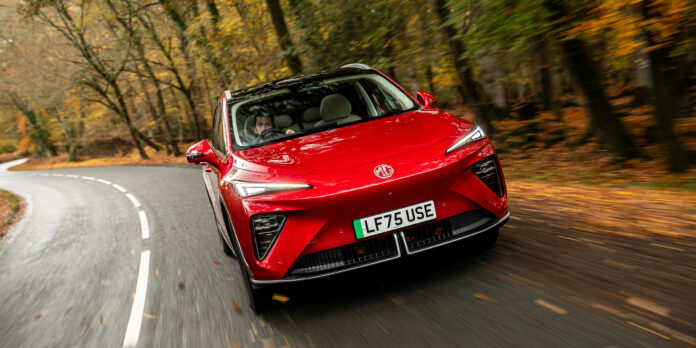
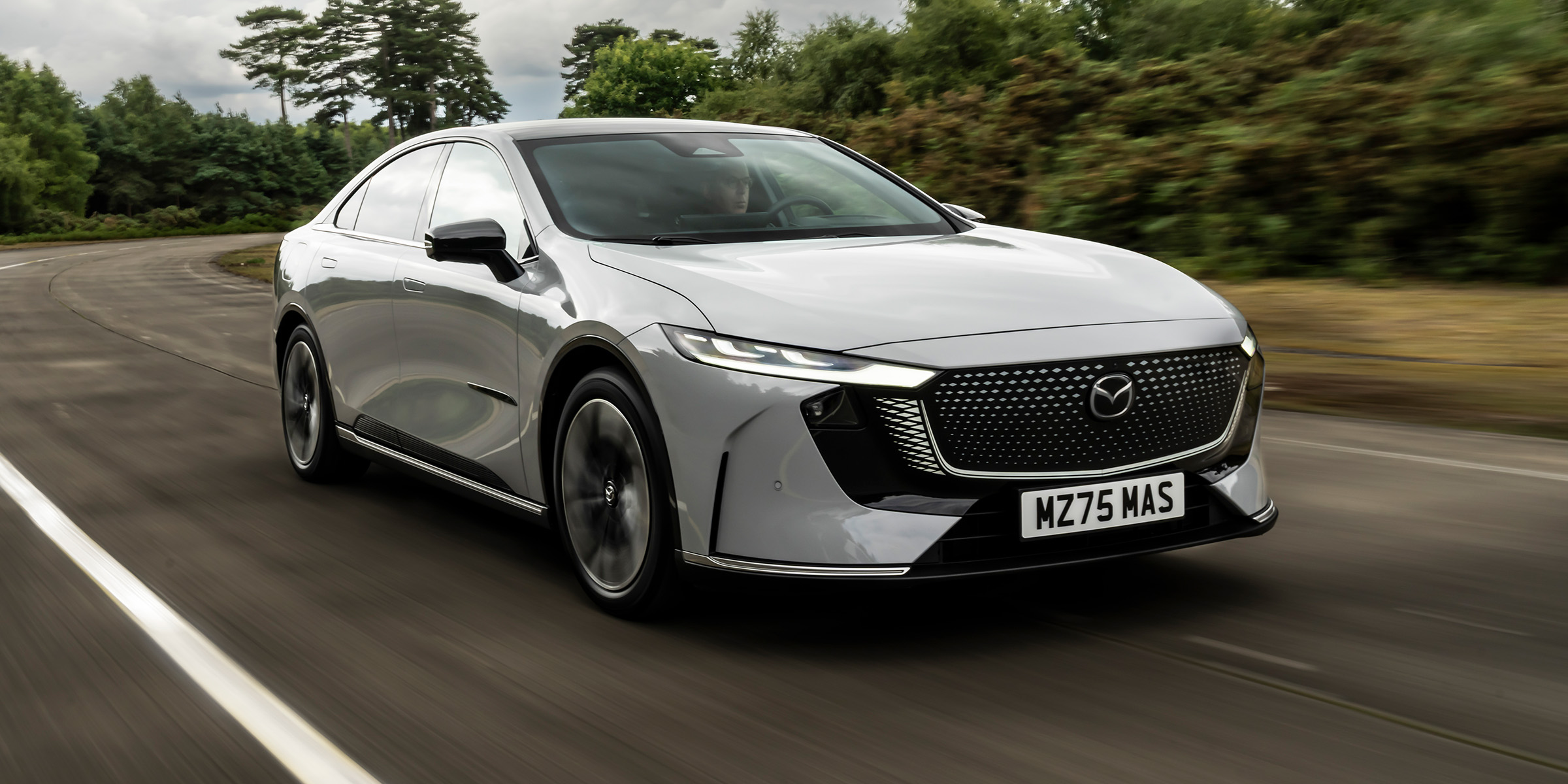
This medium car category is the most competitive sector of the UK’s new car market, and a large bulk of the class of 2026 belong in this category.
Our medium car category includes mid-sized hatchbacks, saloons and SUVs. Last year, The Car Expert came to the conclusion that the line between ‘car’ and ‘SUV’ has become so blurred that it’s effectively pointless, so we’ve grouped them all together.
Instead, we’ve separated medium cars into mainstream and premium, as that tends to better reflect how real-world car buyers look for their next vehicle. The badge and feature list tend to be more important than the body style, although customers are overwhelmingly choosing SUV-style cars instead of conventional hatchback/saloon/estate models – even if they’re no more practical and no more spacious (and have zero off-roading capabilities).
This category is one of the largest in our awards this year, with 13 new models. The eligible cars this year were:
Our awards recognise both the best new models launched over the last 12 months and the best overall cars in each category – because newest doesn’t always mean best, as you can see below.
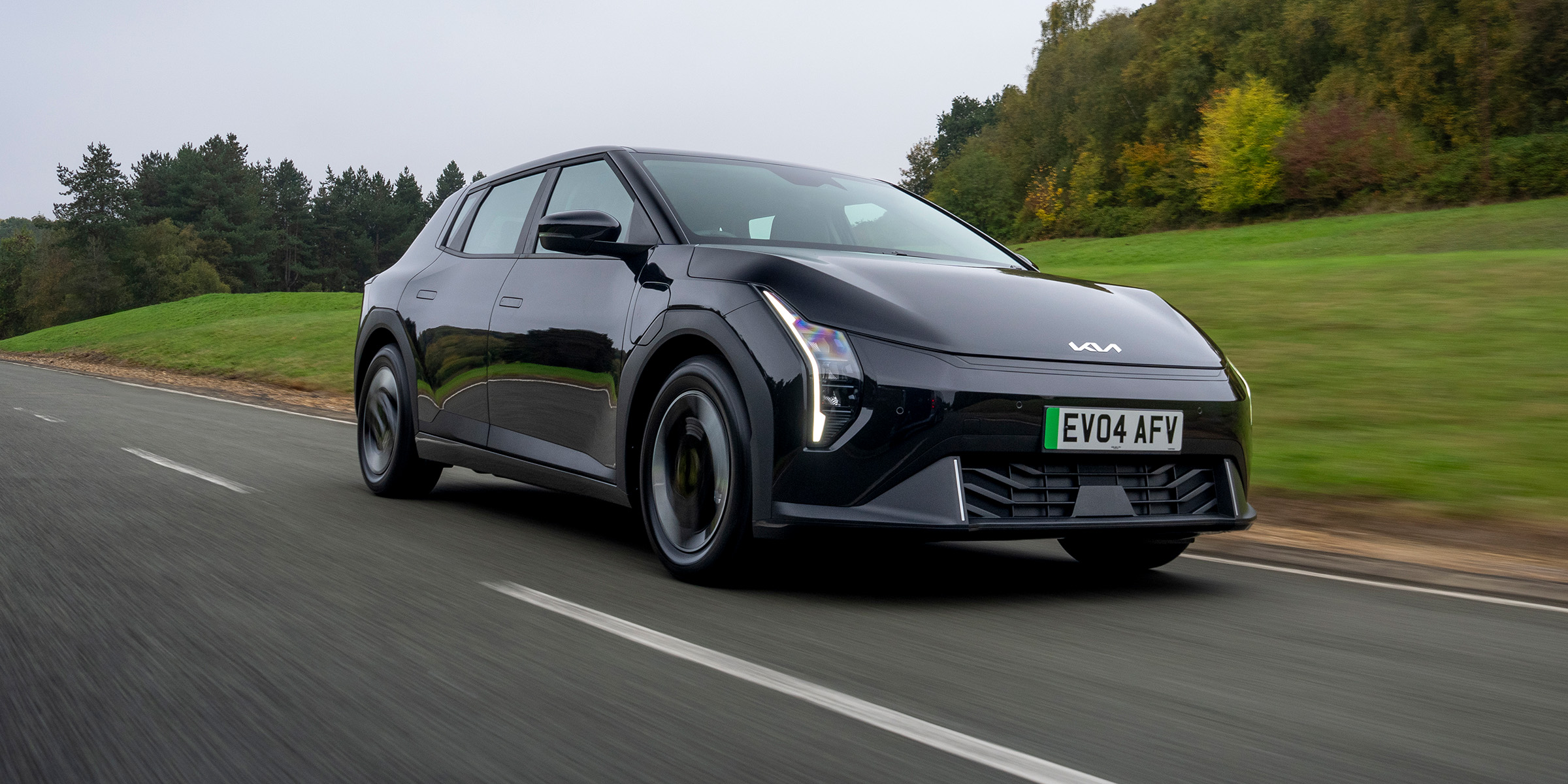
Kia is on a roll. Hot on the heels of the Kia EV3 hatchback – winner of The Car Expert’s Car of the Year 2025 – the Korean manufacturer launched its larger EV4 saloon and hatchback range this year, which has been given an overwhelmingly positive reception of its own.
The EV4 is another knockout electric model from Kia, and continues the brand’s determination to challenge in every sector with its signature combination of striking design and advanced technology.
The EV4 brings much-needed new inspiration to the mid-sized car category, and is a fresh alternative to the endless sea of SUVs and crossovers. Available in a space-age fastback design or slightly more conventional five-door hatchback, it offers buyers a comfortable ride with driving dynamics that are a cut above the class average.
Kia is firmly establishing itself as a leading light in the EV revolution, and the new EV4 will only enhance that reputation.
In many ways, the EV4 is a smaller, more affordable alternative to The Car Expert’s Car of the Year 2022, the Kia EV6, and has picked up plenty of reviewer praise for its well-designed, spacious interior, sprightly handling, comfortable driving experience, and competitive battery range.
Although the Kia EV4 is the top-rated medium car launched in the last 12 months, that doesn’t mean it immediately moves to the top of the pile. As of December 2025, another model still carries a higher Expert Rating score.
Class champion, electric: Hyundai Ioniq 5
The new Kia EV4 might be a great car, but it’s not the outright best electric car in this category. Instead, it’s the retro-futuristic Hyundai Ioniq 5 that scores highest on our Expert Rating Index – just edging its Kia EV6 twin to top spot.
The Ioniq 5 is around £5k more expensive than the smaller EV4, but that extra money gets you two of the finest medium-sized EVs on the new car market. So if your budget stretches to £40K or more, the Hyundai Ioniq 5 remains the best car in this segment.
Class champion, petrol/diesel/hybrid: Volkswagen Golf
The Mk8 Volkswagen Golf has been a popular and dependable choice for UK buyers for years now, and became a regular fixture in the UK’s top ten new car sales charts again this year.
The highest-ranked medium car in our Expert Rating index by Media Rating, the Volkswagen Golf was most recently updated in the summer of last year, and has been widely commended for its great ride comfort, excellent safety standards, and its handling and refinement.
In the mid-sized family vehicle segment, the line between ‘car’ and ‘SUV’ has become so blurred that it’s effectively pointless. So, as we did last year, we’ve grouped them together.
Instead, we separated medium cars into mainstream and premium, as that tends to better reflect how real-world car buyers look for their next vehicle. The badge and feature list tend to be more important than the body style, although customers are overwhelmingly choosing SUV-style cars instead of conventional hatchback/saloon/estate models – even if they’re no more practical and no more spacious (and have zero off-roading capabilities).
The premium category is inevitably smaller than the mainstream category, and there was inevitably debate about where to draw the line between mainstream and premium. In the end, the eligible cars this year were:
Our awards recognise both the best new models launched over the last 12 months and the best overall cars in each category – because newest doesn’t always mean best.
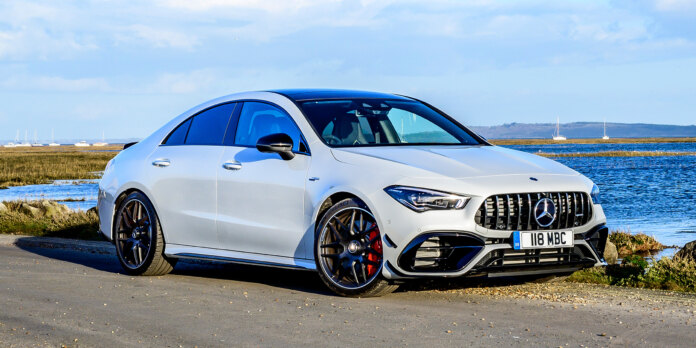
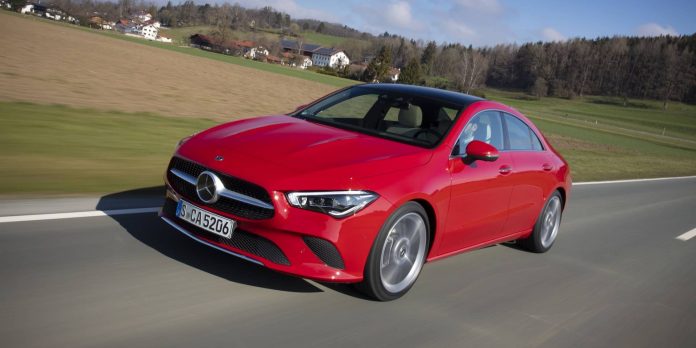
Built on a brand-new electric platform, the new Mercedes-Benz CLA EQ launches the world’s oldest car company into an all-new generation of electric power, and it’s a winner.
The CLA EQ offers everything a compact Mercedes saloon should have – class-leading technology, refinement, comfort and desirability – and makes other cars in this segment look a bit old-hat. It puts any questions about battery range firmly to rest, and it offers a genuinely luxurious experience for driver and passengers.
The electric car industry is evolving rapidly, and the CLA shows that Mercedes-Benz plans to remain at the forefront of this new automotive landscape for the long term.
While several outlets mark the car down for its rather tight rear legroom and its subdued driving character, the saloon’s powertrain technology and serene driving experience make it a new premium benchmark for the rest of the industry to chase.
Although the Mercedes-Benz CLA EQ is the top-rated premium medium car launched in the last 12 months, that doesn’t mean it immediately moves to the top of the pile. As of December 2025, another model still carries a higher Expert Rating score.
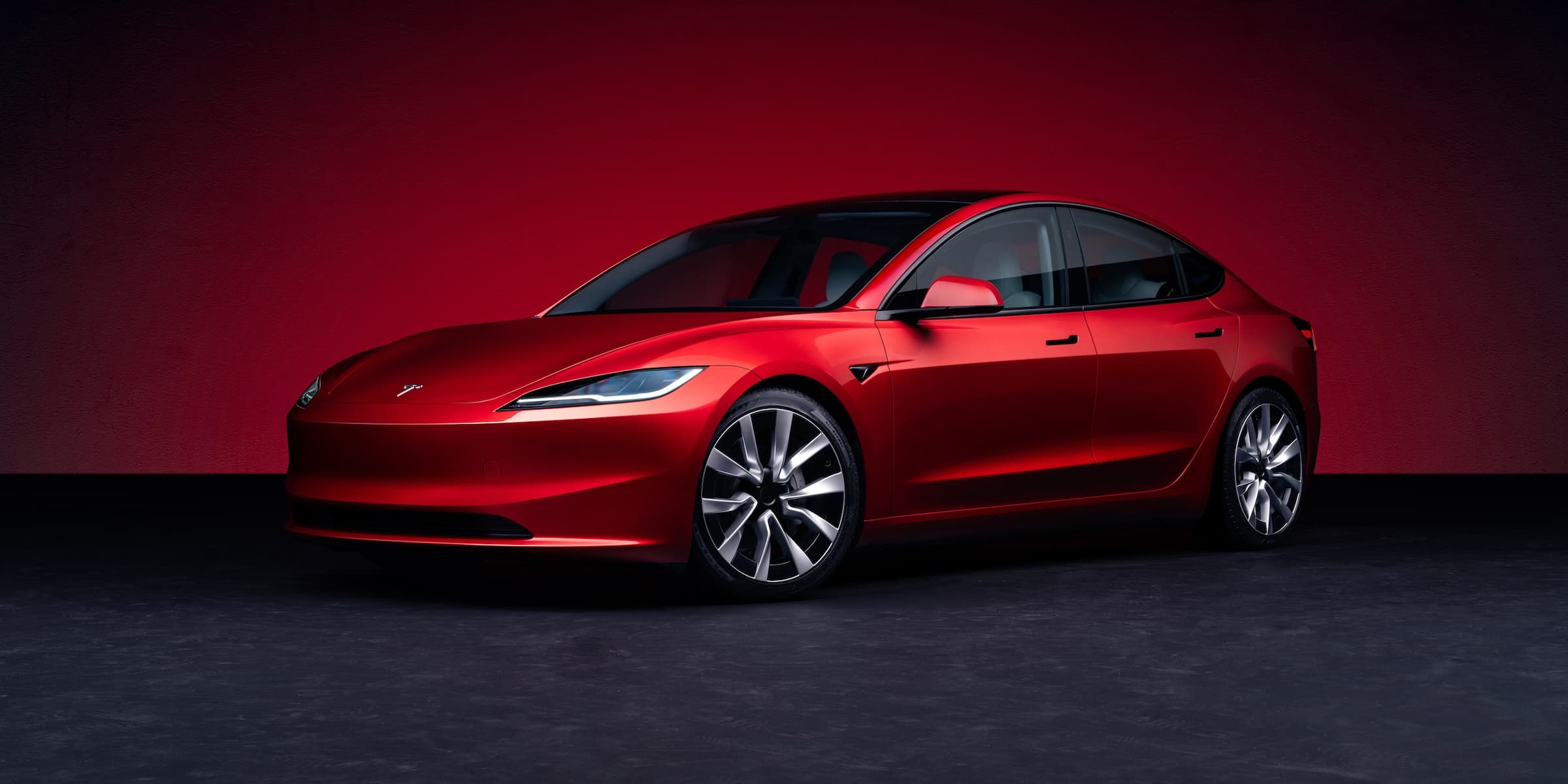
Class champion, electric: Tesla Model 3
The new Mercedes-Benz CLA EQ might be a great car, but it’s not the outright best electric car in this category. Instead, it’s the updated Tesla Model 3 saloon that scores top marks among premium medium cars on our Expert Rating Index.
Tesla has weathered a number of controversies over the last year, but what’s beyond doubt is that the company continues to refine and improve its electric cars to keep them at the top of the pile. The Model 3 edges its crossover sibling, the Model Y, but a couple of points, but both are excellent choices.
The all-new Audi A5 didn’t score highly enough to win our Best Premium Medium Car 2026 award, but it is now the highest-scoring petrol/diesel/hybrid car in this segment.
If you’re confused about the name, this car replaces the previous Audi A4, rather than the previous A5 models. It’s part of a confusing and now-abandoned naming plan to separate fossil-fuel Audis from electric ones. Anyway, the new A5 builds on the strengths of the old A4 with a comfortable and stylish interior, and Audi’s usual high standards of fit and finish.
While the large car segment has been slower than the rest of the new car market in the shift to electrification in recent years, there are now quite a few large battery-powered saloons and SUVs to choose from, particularly after this year.
Five new large cars launched in the UK in the last 12 months, and all of them are electric.
Our large car category includes both large saloons and SUVs. Last year, The Car Expert came to the conclusion that the line between ‘car’ and ‘SUV’ has become so blurred in many cases that it’s effectively pointless. So we’ve grouped them together.
Instead, we’ve separated large cars into mainstream and premium categories, as this better reflects how real-world car buyers look for their next vehicle. The badge, price tag (or monthly payments) and feature list tend to be more important than the body style, although customers are overwhelmingly choosing SUV-style cars instead of conventional hatchback/saloon/estate models – even if they’re no more practical and no more spacious (and have limited off-roading capabilities).
Our awards recognise both the best new models launched over the last 12 months and the best overall cars in each category – because newest doesn’t always mean best.
Over the last few years, Hyundai has launched car after car that all do the boring family stuff brilliantly without looking like boring family cars. Like the Ioniq 5 and Santa Fe before it, the Hyundai Ioniq 9 SUV is no exception.
The Ioniq 9 is the company’s largest EV yet, and it upscales the clever thinking that went into the Ioniq 5 and Ioniq 6. There’s the familiar Hyundai design flair, which won’t necessarily please everyone but elevates the Ioniq 9 beyond more conventionally styled rivals.
It’s highly practical and flexible, features a spacious cabin for both driver and passengers, comes loaded with top-notch tech, and offers more than enough driving range to suit almost any household needs.
In many ways, it’s more car than most people will ever need. But it ticks pretty much every box a growing family could ever want.
Although the Hyundai Ioniq 9 is the top-rated large car launched in the last 12 months, that doesn’t mean it immediately moves to the top of the pile. As of December 2025, another model still carries a higher Expert Rating score.
Class champion, electric: Kia EV9
The Hyundai Ioniq 9 may be cheaper to buy as standard, but the Kia EV9 – winner of our Best Premium Large Car award in 2025 – is still the very best electric large car choice on the market, according to the aggregated media reviews in our Expert Rating Index.
The EV9 has a clever design, strong build quality, loads of standard kit, acres of cabin and boot space, and a warranty that makes so-called ‘premium’ brands look stingy. Plus, it’s fully electric at a price that matches diesel and petrol models from other brands. Kia could charge another £10,000 for the EV9 and it would still be good value.
Class champion, petrol/diesel/hybrid: Skoda Superb
The fourth-generation Skoda Superb carries on the tradition of living up to its name – it really is superb. Nothing else in the market can match the big Skoda’s blend of practicality, comfort and value, plus a five-star safety rating as well.
With a choice of petrol, diesel and plug-in hybrid powertrain options, there’s a model in the range for every need.
In the large family vehicle segment, the line between ‘car’ and ‘SUV’ has become so blurred in many cases that it’s effectively pointless. So, as we did last year, we’ve grouped them together.
Instead, we separated large cars into mainstream and premium as that tends to better reflect how real-world car buyers look for their next vehicle. The badge and feature list tend to be more important than the body style, although customers are overwhelmingly choosing SUV-style cars instead of conventional hatchback/saloon/estate models – even if they’re no more practical and no more spacious (and have zero off-roading capabilities).
The premium category is inevitably smaller than the mainstream category, and there was inevitably debate about where to draw the line between mainstream and premium. In the end, the eligible cars this year were:
Our awards recognise both the best new models launched over the last 12 months and the best overall cars in each category – because newest doesn’t always mean best.
Available in both ‘Sportback’ saloon and ‘Avant’ estate bodystyles, the well-rounded Audi A6 e-tron is a lavish electric executive car that not only looks the part, but delivers a class-leading battery range and a smooth driving experience with rewarding rear-wheel drive handling.
Reviewers agree that the Audi stacks up well against rivals like the Mercedes-Benz EQE and BMW i5, and the car has also received plenty of praise for its intuitive on-board tech and straight-line performance, which make it feel worthy of its upmarket price tag.
The A6 e-tron also jumps straight to the top of the pile as our class champion for large premium electric cars.
As of December 2025, the new Audi A6 e-tron tops our Expert Rating Index for best large premium car, but if you don’t want an EV, then you’ll need to look elsewhere.
Class champion, petrol/diesel/hybrid: BMW 5 Series
The BMW 5 Series has always been a class leader, and the current eighth-generation model is no different. Now offered with a choice of petrol or plug-in hybrid power (the electric i5 is ranked separately), the 5 Series continues to outperform its major rivals – the Mercedes-Benz E-Class and Audi A6 – in almost every way.
The Best Family Plug-In Hybrid Car award represents the very best of family-friendly plug-in hybrid models launched in the past 12 months.
Offering the best of both worlds, plug-in hybrids essentially serve as a halfway house between traditional petrol power and all-electric motoring. Powered by both a combustion engine and electric motors, plug-in hybrids are more fuel efficient than your average petrol car, and can drive on electric power alone for extended periods, provided that you top up the car’s battery regularly.
Plug-in hybrids have been growing in popularity in the UK in recent years, and every year there is usually a healthy selection of brand new plug-in hybrid arrivals worthy of your attention. The eligible cars this year were:
The Omoda 9 is here to ride the wave of a resurgence in plug-in hybrid car sales, and it very much looks like the right car at the right time.
If you’re looking for a plug-in hybrid that majors on electric driving, the Omoda 9 offers up to 90 miles of EV range. Plus it can rapid charge at a public charging point, while most plug-in hybrids can only slow charge.
On top of that, you get a luxurious SUV that’s loaded with tech and spacious enough for a family road trip. It’s quiet and smooth in either EV or petrol mode, and has a five-star Euro NCAP safety rating.
The Chancellor’s proposed new tax on electric car mileage makes plug-in hybrids suddenly look like a smart choice, and the Omoda 9 has an enormous electric driving range that means you can do most of your driving on electric power while paying half the mileage tax of a pure EV. Plus, for those longer journeys, you have the reassurance of a petrol engine to keep you motoring for hundreds of miles.
The Best Value Family Car award is given to the best value-for-money purchase capable of ferrying the family from A to B.
The common denominator in this category is price tag, and from there, the vast collection of aggregated media review scores in our Expert Rating Index indicates which of these budget-end runarounds is best suited to becoming a new member of the family.
Size and powertrain aren’t taken into account here, with pint-sized electric city cars and large, bulky petrol SUVs all in the mix for this award. The eligible cars this year were:
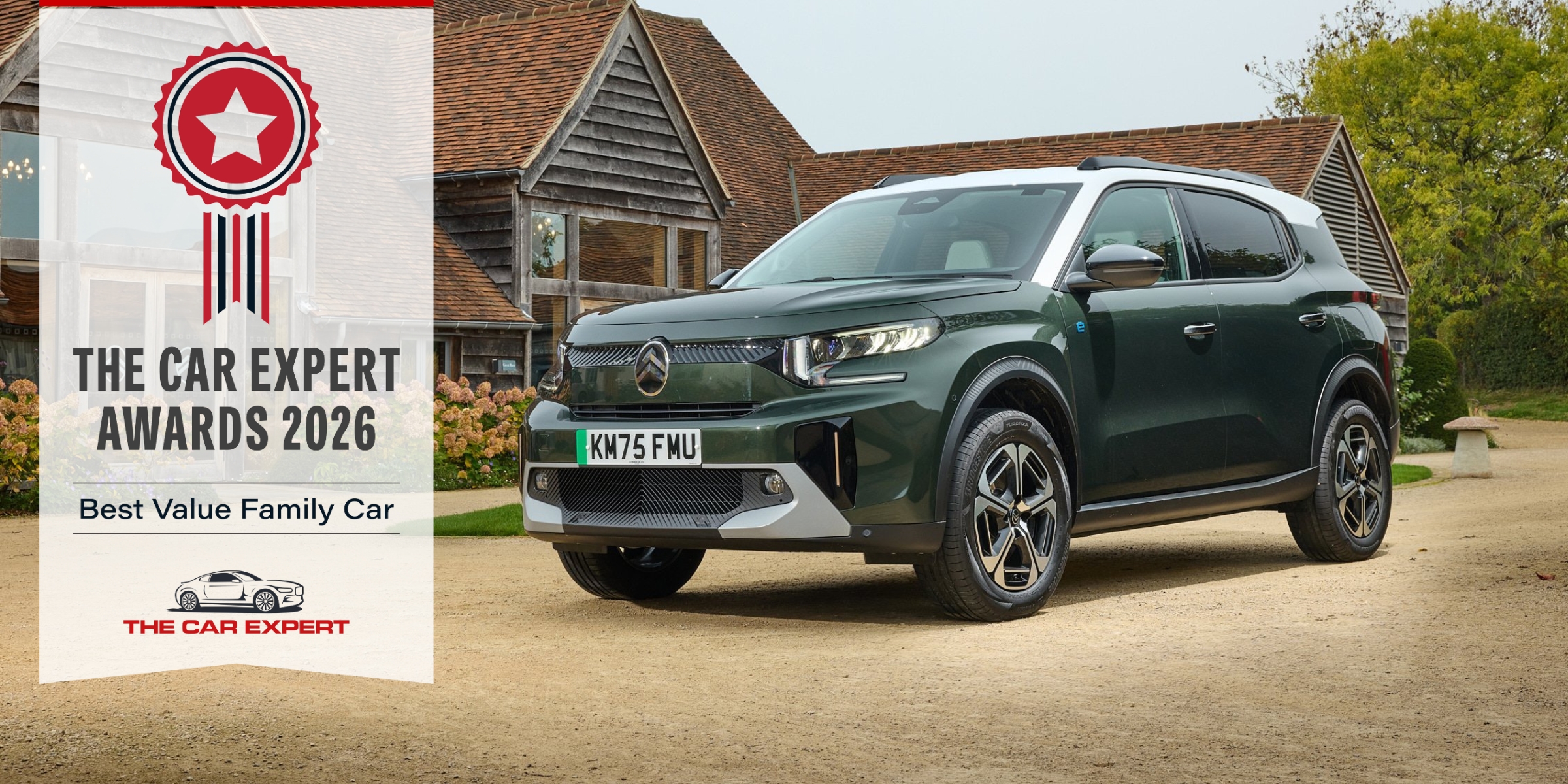
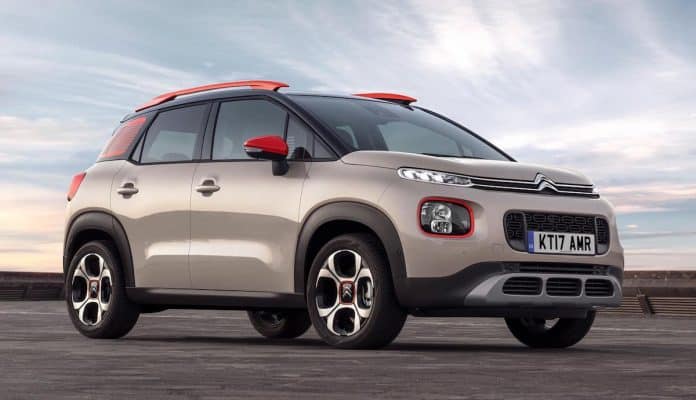
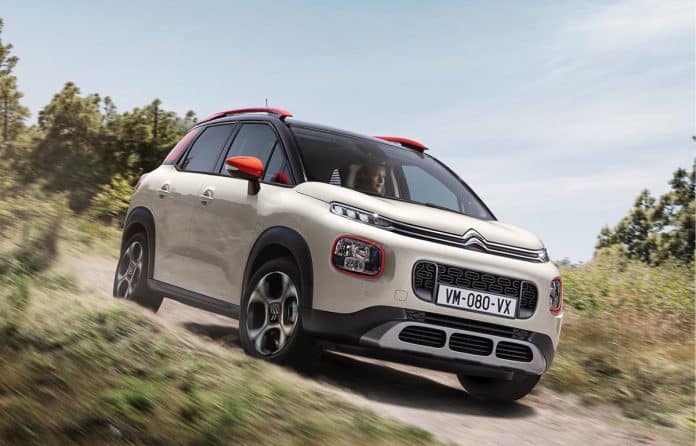
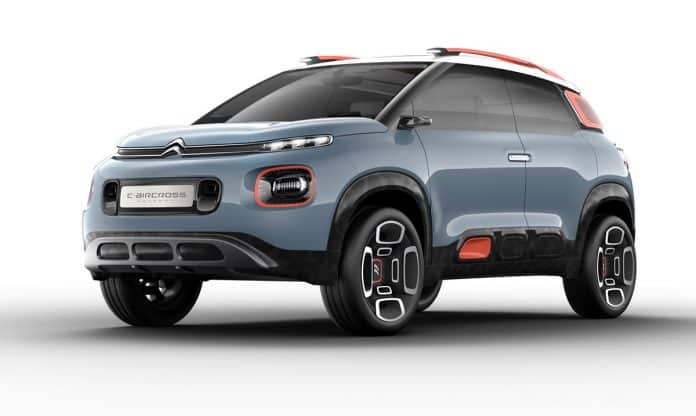
The Citroën ë-C3 Aircross serves up a top value family car that should be at the top of your shopping list in 2026 – especially when you look at the price tag.
It packs plenty of practicality into a compact footprint, with more space than you’ll find in many larger cars. The electric motor is smooth and refined, beautifully complementing the comfortable ride, and the equipment levels are far beyond what you’d expect for the money.
Citroën has done a genuinely impressive job with the ë-C3 Aircross. It makes budget-brand offerings look cheap and other mainstream rivals overpriced. With household budgets getting ever-tighter, this could be the smartest car-buying decision you could make in 2026.
The Best Family Petrol Car award represents the very best of family-friendly petrol-powered models launched in the past 12 months.
The number of new petrol models entering the UK market has been gradually shrinking year-on-year, but 2025 saw several new arrivals that caught the attention of buyers interested only in combustion engines.
This category includes a handful of models marketed as ‘hybrids’ by their manufacturers, but they aren’t full-fat hybrids. In truth, they are mild-hybrids – petrol cars with a small battery that slightly boosts fuel efficiency.
Every car included here is powered predominantly by petrol, though some are also available as petrol-electric hybrid or plug-in hybrids too. The eligible cars this year were:
The all-new Citroën C5 Aircross is an ideal family car for the half of all UK households who are not yet ready to make the jump into an EV.
Powered by a petrol engine with mild-hybrid support, the C5 Aircross delivers strong fuel economy at an affordable price. It’s also comfortable, spacious and comes loaded with kit in a way that makes some rivals look stingy.
There’s a big focus on comfort, providing a relaxing drive that seems perfectly designed for family road trips. And all this comes at a very competitive price, meaning you can enjoy driving the C5 Aircross even more.
The Best Luxury Sports Car award represents the hero cars of the marketplace: exotic brand names associated with extravagant lifestyles, hefty price tags and outrageous performance.
You’ll find coupés and convertibles here, with engines either out front or behind the driver. Petrol power is a given, with as many as 12 cylinders, although the category does include an electric model as of this year.
Our awards recognise both the best new models launched over the last 12 months and the best overall cars in each category – because newest doesn’t always mean best.
This time last year, we were singing the praises of Ferrari’s latest GT masterpiece – the 12Cilindri. Now, the Ferrari has some serious V12-powered competition.
Winner of our Best Luxury Sports Car award 2026, the muscular twin-turbocharged Aston Martin Vanquish offers serious pace, razor sharp handling and glamourous interior fit and finish, making it one of the most potent and alluring performance cars money can buy.
Available as a coupé or a ‘Volante’ convertible, the Aston has been widely commended for its long distance comfort too. The grand tourer is also expected to have a slower depreciation than its key rivals.
If this truly is the end of the loud and proud combustion-powered supercar era – with the Vanquish facing off against the Italian opulence of the Ferrari 12Cilindri and Lamborghini Temario – it’s hard to imagine it ending on a higher note.
The hot hatch is a UK institution, with generations of pocket rockets that cram genuine sports car performance into a shopping trolley hatchback body.
Once a category of cars heavily resisting the shift to electrification, the electric age is now in full swing, and there is more than a handful of performance-focused battery-powered hatchbacks promising pace and agility in equal measure.
As you might expect, new hot hatch launches were few in number over the last 12 months. There were only three, and all of them were electric. The eligible cars this year were:
Our awards recognise both the best new models launched over the last 12 months and the best overall cars in each category – because newest doesn’t always mean best, as you can see below.
The Alpine A290 takes all that’s good about the Renault 5 (our Best Small Car Award winner last year) and dials everything up a couple of notches.
For many people, the A290 will be their first experience with the Alpine brand, so it was important for the company to get it right. And it’s more than done that. The A290 blends retro-futuristic style, sharp handling and a massive want factor that makes a Mini Cooper look rather old-hat.
While it’s not the best choice for those looking for ample cabin space or long battery range, the car’s sleek styling and driver entertainment make it one of the most desirable compact cars on sale right now.
Winner of our Best Performance Car award in 2025, the Hyundai Ioniq 5 N set a new benchmark for performance EVs when it arrived on UK roads last year. Staggering performance and superb handling, all while retaining the same practicality as a regular Ioniq 5.
Anyone who still says that EVs can’t be fun to drive needs to get behind the wheel of the Ioniq 5 N.
While our Expert Rating Index doesn’t rank the Toyota GR Yaris well in the eco, running cost and warranty categories, it has an exceptional Media Rating score. Reviewers truly adore this petrol-powered three-door pocket rocket, which was originally designed for entry World Rally Championship.
The British motoring media have near-universal praise for the way the GR Yaris drives, with particular acclaim for its performance and handling. The key issue here is availability. While not technically retired, you can’t currently buy one from a Toyota dealership at the time of writing. Toyota now sells the car in small batches, which means newsletter sign-ups, higher price tags and long waiting lists.
One year on from hosting the UK launch of Chinese car brand Omoda, in October 2025 the plush Magazine venue in the shadow of London’s O2 saw the debut of another, somewhat different Chinese brand, Geely (pronounced Jee-lee).
While this latest arrival from the Far East may appear to be yet another badge trying to compete in a market already saturated by new Chinese brands, Geely claims to have been in the UK much longer than any of its rivals – almost 20 years in fact.
Back in 2006 the Chinese company acquired what is today known as the London Electric Vehicle Company, LEVC, makers of the ‘black cab’ taxi, a globally recognised signature of the capital. Geely has since acquired controlling stakes in other major automotive names, including upmarket Swedish brand Volvo and its performance spin-off Polestar, and British sports car manufacturer Lotus.
An enormous company globally, Geely has ambitious plans for its UK operation, expecting to be selling more than 100,000 cars annually within three years.
So who or what is Geely?
Geely Holdings, or to give its full name, Zhejiang Geely Holding Group Co Ltd (ZGH), was formed in 1986 and so is much older than many of the new Chinese brands in the UK. Unlike most of those, ZGH remains privately owned by its founder, entrepreneur Li Shufu.
The company started life making components for refrigerators – its first wheeled products, motorcycles, did not appear until 1994. Li Shufu wanted to prove China could build luxury cars and produced a prototype based on a Mercedes-Benz E-Class. But his first production model, launched in 1997, was a small hatchback based on a platform from Japanese brand Daihatsu.
While Geely became China’s first privately owned automotive group, a licence had to be obtained to make the car and so production didn’t begin until 2002.
The company adopted its Geely Automotive Holdings Ltd name in 2004, having just produced its first sports car, and when the Chinese government changed the way it managed the state automotive industry, leading to a general decline in both sales and quality, Geely responded by pouring big investment into research and development facilities, increasing the quality of its cars and establishing the reputation for leading technology it holds today.
The first Geely cars were exported in 2003, with the company exhibiting at the Frankfurt motor show in 2005. By 2012, Geely was China’s second-largest automotive exporter, beaten only by Chery. It was also undertaking a somewhat drawn-out acquisition of a UK company, Manganese Bronze Holdings, makers of the London black cab – Geely eventually restructured the company as LEVC.
Major restructuring followed in 2014 to arrest a period of sliding sales and outdated tech – Geely’s brands were all brought together and the cars that followed were more upmarket. Aiding this process was the market experience within Volvo – Geely had snapped up the Swedish maker when Ford put it up for sale in 2010.
A new brand called Lynk & Co was launched in Europe in 2016, and Geely then took a controlling stake in UK sports car manufacturer Lotus in 2017. The company also has 17% of Aston Martin while electric van maker Farizon, newly launched in the UK, is another Geely brand, as is premium badge Zeekr.
Today, Geely remains based in Hangzhou, in the Zhijang region of China. Its ten manufacturing plants are all in China but the group has a global reach, operating in more than 80 countries around the world and in 2024 producing more than 3.3 million vehicles.
When did Geely launch in the UK?
The Geely badge is very new to the UK market, only launched in late 2025 at a glitzy event in London. Its first 25 dealerships opening for business at the same time to sell the first European model, the EX5 electric SUV.
However the company claims to have been in the UK since 2006, when it acquired what is now LEVC.
What models does Geely have and what else is coming?
Geely’s launch model is a mid-sized electric SUV, the EX5. Targeting the Tesla Model Y, it’s available in three varieties all priced under £40,000. Geely hopes to be the first Chinese brand to qualify for the government’s electric car grant but for now is offering its own – along with a heavily subsidised home charger from Andersen.
The brand has big plans, claiming it will launch ten models onto the UK market within three years. What these will be is yet to be revealed, though we do know that they won’t all be EVs. They will, however, be ‘electrified’, with the first two additions expected to be plug-in hybrids.
Where can I try a Geely car?
Geely’s dealer network is currently small but growing quickly – 25 outlets were named at the launch event, and these are planned to grow to 50 by the end of 2025 and then double to 100 over the next year.
Virtually all the new Geely dealers are standalone, not as might be expected attached to existing Volvo or Polestar outlets – only Lipscomb at Maidstone also has a Volvo centre. And while the new network includes all the major cities, Geely is also targeting smaller towns where other more traditional manufacturers have moved out of – a network that stretches “from Dundee to Exeter” already includes such less obvious places as Oswestry and Goole.
What’s particularly significant about this company?
Geely is unusual amongst Chinese brands in remaining privately owned and free from the state control that at times has held back the Chinese motor industry. As such it has been free to grow to globally significant levels – it has been on the global Fortune 500 list for 13 years, and in 2022 was the only Chinese maker named in a list of the top 10 most valuable automotive brands around the world.
The group has become renowned for the level of its technology. Today it operates four research and development centres – two in China, one in Sweden, and since 2018, a UK centre in Coventry, the spiritual home of the British motor industry.
Where makes Geely different to the rest?
Geely arrives on the UK market in the wake of a host of Chinese brands and one might think it would struggle for recognition against already established rivals. However, the company claims to score over those rivals both in terms of its experience with established European brands such as Volvo and Polestar, and its technology.
Geely’s technology levels outshine many of its rivals – its lithium-ion phosphate ‘short blade’ battery packs are said to be even safer than those of rivals, passing six stringent tests including being cooked in a furnace, frozen and having not one but eight nails driven through it. The battery packs also form part of the structure of each car, adding to rigidity.
The group is even in the process of launching its own satellite network, which will prove pivotal to the connected technology of its cars. The first 41 of an initial phase of 72 satellites are already in orbit, the latest 11 launched in August 2025.
Summary
It’s easy to dismiss Geely as yet another Chinese brand but this is one company likely to go the distance. Its global reach, long experience of the European market through its ownership of the likes of Volvo and Polestar, and technology that is considered leading-edge even in the go-ahead Chinese market, suggests that this is a badge that is here to stay.
Sitting at the top of the latest C3 Aircross range, the Citroën ë-C3 Aircross is a compact electric family car. There is also a petrol mild-hybrid range which we cover here.
Built on the same foundations as the Vauxhall Frontera Electric, the ë-C3 Aircross has been given a warm welcome by the British motoring media, who largely agree that the compact electric family car offers great value-for-money and a comfortable driving experience.
“It’s fantastically comfortable, practical and spacious”, says The Independent’s Steve Hogarty, “and while the laid-back performance and middling range is unlikely to get your heart racing, it remains one of the smartest buys in family SUVs.” Parker’s Ted Welford adds that the car has “driving manners and an interior that doesn’t feel as cheap as the price suggests.”
The Car team on the other hand notes that the crossover’s electric range will be too short for some, and describe the car as “noisy and unrefined”, but nevertheless conclude that the ë-C3 Aircross “ticks the box of being an affordable electric family car better than perhaps anything we’ve seen to date.”
As of February 2026, the Citroën ë-C3 Aircross holds a New Car Expert Rating of A, with a score of 72%. Beyond the SUV’s positive set of review scores, the Citroën scores well in the eco and running cost categories.
Model reviewed: Range overview (including petrol C3 Aircross) Score: 8 / 10 “The C3/E-C3 Aircross feels like a car of its time, with 2025 likely to be the year of the affordable EV. In our opinion, the Citroen’s changes to the comfort, plus extra specification and lower prices than the related Vauxhall Frontera, make it our favourite of the two Stellantis offerings.” Author: Martyn Collins Read review
Car
Score: 8 / 10 “I came away from driving the Vauxhall Frontera Electric thinking what astonishing value for money it was, but the Citroen e-C3 Aircross takes things a step further with its further price cut and more generous equipment levels. No other EV currently offers such value for money. This is a comfortable, easy-going and practical EV that ticks the box of being an affordable electric family car better than perhaps anything we’ve seen to date.” Author: Ted Welford Read review
Electrifying.com
Model reviewed: Range overview Score: 8 / 10 “The Citroen e-C3 Aircross is incredible value for money, especially given how roomy, comfortable and well-equipped it is.” Author: Ginny Buckley Read review
Heycar
Model reviewed: Range overview (including petrol C3 Aircross) Score: 7 / 10 “The Citroen C3 Aircross has taken on a chunky new aesthetic while gaining extra practicality in the form of a seven-seat option and more choice thanks to the new electric e-C3 Aircross. It’s still very affordable, but compromises have inevitably been made, particularly in terms of refinement.” Author: Matt Robinson Read review
Honest John
Model reviewed: Range overview Score: 8 / 10 “The Citroen e-C3 Aircross is a much more pleasant car to drive than its Hybrid sibling, switching a not especially refined three-cylinder engine for a smooth electric powertrain. It packs a lot of practicality into its small frame, but it’s a shame you can’t spec this one as a seven-seater.” Read review
Parkers
Model reviewed: Range overview Score: 8.6 / 10 “The Citroen e-C3 Aircross is a stylish, practical and comfortable electric family SUV that is a very welcome addition to this class. As with the Vauxhall Frontera it shares so much in common with, it represents fantastic value for money, with driving manners and an interior that doesn’t feel as cheap as the price suggests.” Author: Ted Welford Read review
The Independent
Model reviewed: Range overview Score: 9 / 10 “Citroen has played to its strengths with the new e-C3 Aircross. It’s fantastically comfortable, practical and spacious, and while the laid-back performance and middling range is unlikely to get your heart racing, it remains one of the smartest buys in family SUVs.” Author: Steve Hogarty Read review
The Sunday Times
Model reviewed: Range overview (including petrol C3 Aircross) Score: 6 / 10 “Its performance is not what you’d call exciting, but it also doesn’t feel depressingly slow, and getting up to speed is mostly drama free, as is keeping up with traffic.” Author: Will Dron Read review
Safety rating
Independent crash test and safety ratings from Euro NCAP
No safety rating
As of January 2026, the Citroën ë-C3 Aircross has not been assessed by Euro NCAP.
Eco rating
Independent economy and emissions ratings from Green NCAP
No eco rating
As of January 2026, the Citroën ë-C3 Aircross has not been assessed by Green NCAP.
The Green NCAP programme measures exhaust pollution (which is zero for an electric car) and energy efficiency. Electric cars are much more energy-efficient than combustion cars, so the ë-C5 Aircross is likely to score very highly in Green NCAP testing if and when it takes place. Check back again soon.
Running cost rating
Monthly cost of ownership data provided exclusively for The Car Expert by Clear Vehicle Data
Battery range
Average
Score
Variation
Score
EV models
228 miles
C
Electrical efficiency
Average
Score
Variation
Score
EV models
4 m/KWh
C
Insurance group
Average
Score
Variation
Score
All models
16
A
The Citroën ë-C3 Aircross is a relatively affordable car to own and run, according to whole-life cost numbers provided exclusively to The Car Expert by our data partner, Clear Vehicle Data.
The battery-powered SUV’s average battery range of 228 miles is competitive in the compact EV category, though it is bestest by rivals like the Ford Puma Gen-E and Hyundai Kona Electric. Its insurance premiums are predicted to be in one of the cheapest brackets, and should have similar insurance costs to the Vauxhall Frontera Electric.
Please keep in mind that, because the ë-C3 Aircross is brand new at the time of writing, we don’t have the full running costs picture for the model just yet, as we are waiting for servicing and maintenance cost estimates.
Reliability rating
Reliability data provided exclusively for The Car Expert by MotorEasy
No reliability rating
As of January 2026, we don’t have enough reliability data on the Citroën ë-C3 Aircross to generate a reliability rating.
The Car Expert’s reliability information is provided exclusively to us using workshop and extended warranty data from our partner, MotorEasy, sourced from both official dealerships and independent workshops.
As soon as MotorEasy has sufficient data on the ë-C3 Aircross, we’ll publish the results here.
Warranty rating
New car warranty information for the Citroën ë-C3 Aircross
Overall rating
C
50%
New car warranty duration
3 years
New car warranty mileage
60,000 miles
Battery warranty duration
8 years
Battery warranty mileage
100,000 miles
Citroën’s new car warranty is fairly bog standard, and similar to rival brands in a similar price bracket as the ë-C3 Aircross.
The duration is three years, with a limit of 60,000 miles. In addition to the standard new car warranty, this electric crossover has an eight-year/100,000-mile warranty for the battery components.
Recalls
Official DVSA safety recalls that have been issued for the Citroën ë-C3 Aircross
As of January 2026, we are not aware of any DVSA vehicle safety recalls affecting the Citroën ë-C3 Aircross. However, recall information is updated very regularly, so this may have changed.
You can check to see if your car has any outstanding recalls by visiting the DVLA website or contacting your local Citroën dealer.
Find your next new or used car with Auto Trader. Find out more
Find your next new or used car with Carwow. Find out more
Lease a Citroën ë-C3 Aircross
If you’re looking to lease a new Citroën ë-C3 Aircross, The Car Expert’s partners can help you find a competitive deal.
Personal contract hire deals from Leasing.com. Find out more
Personal contract hire deals from Carwow. Find out more
Personal contract hire deals from Select Car Leasing. Find out more
Subscribe to a Citroën ë-C3 Aircross
Subscriptions are becoming a very popular way for consumers to try an electric car for a few weeks or months to help decide whether it’s a suitable alternative to a petrol car. If you’re interested in a car subscription, The Car Expert’s partners can help. (PS: What’s a car subscription?)
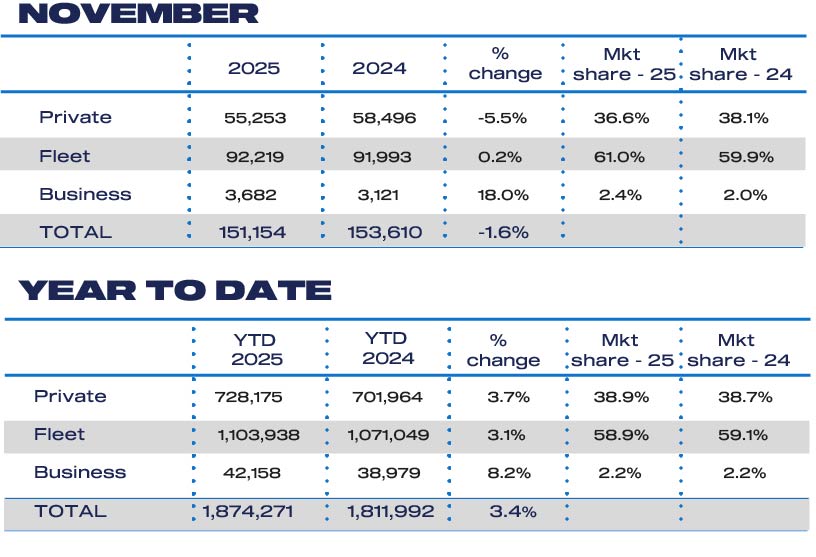
New car registrations were down by about 2% in November, with private sales down 5.5% and fleet registrations flat compared to the same month last year.
According to data published by the Society of Motor Manufacturers and Traders (SMMT), about 2,500 fewer vehicles were registered in November 2025 than in the same month in 2024. In reality, this is more or less the same sort of number that we’ve seen in November going back to the middle of last decade, excluding the ‘Covid years’ of 2020 to 2022.
EVs and plug-in hybrids outperform the market
Although the headline numbers were flat, the make-up of cars sold continues to shift from purely fossil-fuelled vehicles to EVs and hybrids.
Petrol-powered car sales fell by 6%, while diesel cars have become little more than a footnote in new car data. Petrol cars are still comfortably the largest type of new car sold, but their market share fell from 46% to 44%. Electric cars made up 26% of the market, growing by 4% compared to last year, while plug-in hybrids continued their strong growth over the last 12 months and regular hybrids also grew slightly.
Officially, a market share of 25% in November, and 23% year-to-date, means that EV sales are still behind the government’s mandated target of 28% for this year. However, by the time that various loopholes and provisions are taken into consideration, the net target is estimated to be about 23%, so the industry is now on track to hit that by the end of the year.
The targets go up to 33% next year, so car manufacturers will have no interest in over-achieving this year. Most of them are already managing their inventories for the rest of the year to ensure they hit their 2025 targets and carry over any extras into January.
Source: SMMT
Good month, bad month
Despite overall registration numbers being similar to those of last year, there was considerable movement among the different car manufacturers.
As usual, Volkswagen was comfortably the best-selling brand in the UK in November, accounting of 8% of all new car registrations last month.
The two big Chinese manufacturers, BYD and Chery Group (Chery, Jaecoo, Omoda), continue to make strong inroads into the market, putting ever-increasing pressure on struggling European and Japanese brands. It’s almost certain that 2026 will see this pressure reach breaking point for some brands within the industry, as there is still plenty more growth to come from the current batch of Chinese brands and others on the way.
Ford Puma edges closer to retaining sales crown
The Ford Puma was again the UK’s best-selling car in November, outselling the Kia Sportage – its main rival in the 2025 sales race – by about 1,000 units. That gives the Puma a formidable lead with just one month to go, although we have seen large swings in the last couple of months in recent years so Ford won’t be celebrating just yet (and Kia has an updated Sportage now in showrooms).
Source: SMMT
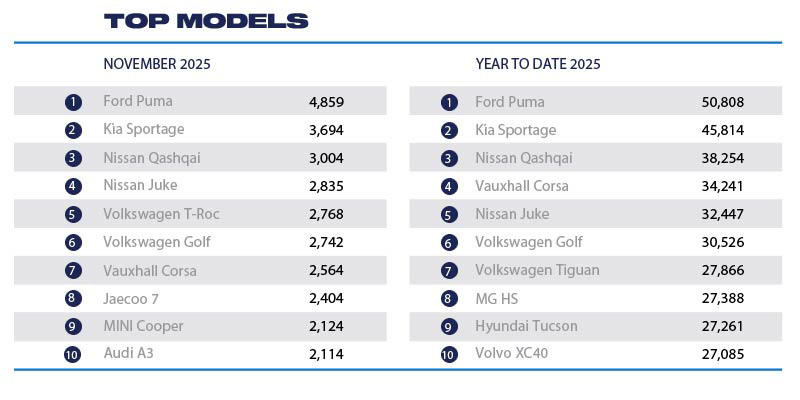
UK manufacturing enjoyed three cars in the top ten, courtesy of the Mini Cooper, Nissan Juke and Nissan Qashqai. The Jaecoo 7 remained in the best-sellers list for a fourth month. The make-up of the top ten could shift dramatically for 2026, as the UK government makes significant changes to the makes and models of cars available via Motability, which accounts for about 20% of all new car registrations.
Alfa Romeo has unveiled limited edition ‘Collezione’ versions of its high-performance Giulia Quadrifoglio saloon and Stelvio Quadrifoglio SUV, with only two such examples on offer for UK buyers.
With only 63 examples of the ‘Collezione’ range to be sold worldwide, Alfa Romeo says that these special editions are “an authentic tribute” to “the most fascinating and high-performance Alfa Romeo cars”, painted in a similar red hues to that of the brand’s the 33 Stradale supercar that looks black or red depending on the lighting.
Besides the exclusive colour, exterior alterations over the standard Quadrifoglio line-up is minimal. Carbon fibre trim is used for the front badge and wing mirror caps.
Stepping inside, both variants feature a leather-upholstered dashboard with red stitching, and have leather and Alcantara seat upholstery. Leather also features on the door panels and centre console, and the models have Sparco carbon-fibre shell sports seats with the individual production number of each ‘Collezione’ embroidered into the headrest.
The engine remains unchanged – a 520hp 2.9-litre twin-turbocharged V6 – but an Akrapovic exhaust system and carbon-ceramic brakes are included in the price tag, instead of being optional extras.
Unfortunately for interested UK buyers, only two of these 63 ‘Collezione’ versions will be arriving on UK roads, and both are of the Giulia saloon variety. Alfa Romeo has not UK pricing just yet, but we expect the price tag to greatly exceed the £87k fee for the standard Giulia Quadrifoglio.
the Alfa Romeo Giulia Quadrifoglio holds a New Car Expert Rating of E, with a score of just 54%, while its Stelvio equivalent holds a New Car Expert Rating of E, with a score of 55%. While the driving experience of both models score top marks with motoring journalists, reviewers find that the cars’ ownership merits are less convincing. These scores are also hindered by high estimated running costs.
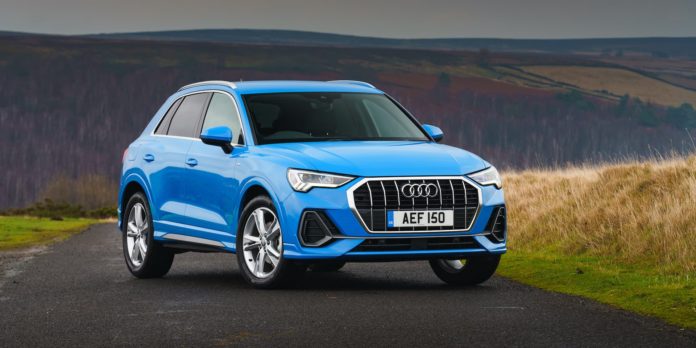
The Audi Q3 is a mid-sized SUV and ‘Sportback’ coupé-SUV range, sitting above the smaller Q2 and larger Q5 in Audi’s model line-up. This is the third-generation Q3 – arriving in Summer 2025 – which is offered with pure-petrol, diesel, or plug-in hybrid power.
Built on the same foundations as the Skoda Kodiaq and Volkswagen Tiguan, The latest iteration of the Q3 has had a solid reviewer reception in the UK, picking up review scores ranging from above average to good, with particular praise for its practical interior, classy cabin finish, refined driving experience and Audi’s class-leading on-board tech offering.
“In almost all of the areas it needs to, the new Audi Q3 excels”, says Jordan Katsianis of Auto Express. “I wouldn’t say any it is especially engaging to drive, but it always feels impressively composed and well-rounded – not something you can say about most of its rivals.”
Top Gear’s Stephen Dobie offers up similar praise, explaining that the Q3 is everything an Audi should be; “comfy interior, tidy if uninvolving dynamics, and a generous choice of engines and power sources”, concluding that the Audi is a “solid, safe bet.”
While a few outlets mark the car down for road noise, a lack of infotainment physical buttons and switches and thirsty pure petrol engines, the biggest drawback cited by motoring journalists is the price. The Motoring Research team points out that “only one version dips below £40,000”, and “many desirable features are extra-cost options”.
As of December 2025, the Audi Q3 holds a New Car Expert Rating of B, with a score of 67%. Beyond the Audi’s positive set of review scores and its full five-star Euro NCAP safety credentials, this overall rating is hindered by higher-than-average estimated running costs.
Model reviewed: Range overview Score: 8 / 10 “The new Audi Q3 is much more stylish and sharper to drive than its predecessor, but faces stiff competition from cheaper VW and Cupra relatives.” Author: Dan Trent Read review
Car
Model reviewed: Range overview Score: 8 / 10 “Audi hasn’t built the most exciting SUV in the world, but it has built one of the most complete. The Q3 is refined, classy and endlessly polished. Its styling might be a little too safe, and the steering won’t thrill keen drivers, but as an everyday premium SUV it nails the brief.” Author: Keith Adams Read review
Model reviewed: Q3 Sportback range Score: 8 / 10 “The Audi Q3 Sportback looks sharper than the regular Q3, feels more fashionable and carries plenty of brand cachet. Yet the compromises are obvious. You get less rear headroom, a smaller boot, and driving dynamics that lag behind the badge’s promise. For some, none of that will matter – they’ll buy with their eyes. For others, the regular Q3 SUV is the more balanced, rounded car. The Sportback is therefore a niche choice, but a well-executed one if image is your top priority.” Author: Keith Adams Read review
Electrifying.com
Model reviewed: 2.0-litre petrol/electric plug-in hybrid Score: 7 / 10 “The new Audi Q3 e-hybrid gets a plug-in hybrid powertrain with a longer electric range than most rivals, not to mention an impressively hi-tech interior. But is that enough to justify a price that makes the equivalent BMW X1 plug-in hybrid look cheap, and is in the same territory as a Tesla Model Y?” Author: Vicky Parrott Read review
Heycar
Model reviewed: Range overview Score: 6 / 10 “Some of the interior trim feels quite cheap, and the ride isn’t as comfortable as we’d like. The engine line-up is impressive, though, and the increase in range for the PHEV is very welcome.” Author: Matt Robinson Read review
Honest John
Model reviewed: Range overview Score: 6 / 10 “This generation of Audi Q3 feels like a step backwards from its predecessor in some regards, with the BMW X1 being better in most areas. The engine line-up is great, though, and the plug-in hybrid version comes with a useful uplift in electric-only range.” Read review
Motoring Research
Model reviewed: Range overview Score: 8 / 10 “The 2025 Audi Q3 is an accomplished family SUV that feels a cut above mainstream rivals. Its bold styling is an acquired taste, but a roomy interior, comfortable ride and efficient engines – particularly the new e-Hybrid – all count in its favour.” Read review
Parkers
Model reviewed: Range overview Score: 8 / 10 “The Audi Q3 isn’t thrilling, but it is refined, polished and reassuringly premium. Comfortable to drive, classy inside and strong across its engine range, it’s one of the most convincing small SUVs you can buy today.” Author: Keith Adams Read review
Top Gear
Model reviewed: Range overview Score: 7 / 10 “The new Q3 nails everything an Audi SUV should be: comfy interior, tidy if uninvolving dynamics, and a generous choice of engines and power sources.” Author: Stephen Dobie Read review
Safety rating
Independent crash test and safety ratings from Euro NCAP
Independent economy and emissions ratings from Green NCAP
No eco rating
As of December 2025, the third-generation Audi Q3 has not been assessed by Green NCAP.
Running cost rating
Monthly cost of ownership data provided exclusively for The Car Expert by Clear Vehicle Data
Fuel consumption
Average
Score
Petrol models
38 mpg
D
Diesel models
51 mpg
C
Plug-in hybrid models
143 mpg
A
CO₂ output
Average
Score
Variation
Score
Petrol models
173 g/km
D
Diesel models
146 g/km
C
Plug-in hybrid models
45 g/km
A
Battery range
Average
Score
Variation
Score
Plug-in hybrid models
68 miles
D
The Audi Q3 is a relatively affordable car to own and run when compared to the mid-sized SUV market at large, according to whole-life cost numbers provided exclusively to The Car Expert by our data partner, Clear Vehicle Data.
The estimated average fuel consumption of petrol-only models – 38mpg – makes this entry-level Q3 thirstier than many other similarly sized rivals that undercut Audi on price. Diesel version fair a bit better, with an average economy of 51mpg. As you might expect, the top-spec plug-in hybrid is the most fuel efficient, UK tests returning 143mpg on average.
The plug-in hybrid’s battery range of 68 miles also means that the car can cover all of your shorter weekly commutes on electric power alone should you charge it semi-regularly. That said, PHEV alternatives like the Cupra Terramar and Volkswagen Tiguan can cover several miles more on a single charge, as per our data.
Reliability rating
Reliability data provided exclusively for The Car Expert by MotorEasy
No reliability rating
As of December 2025, we don’t have enough reliability data on the third-generation Audi Q3 to generate a reliability rating.
The Car Expert’s reliability information is provided exclusively to us using workshop and extended warranty data from our partner, MotorEasy, sourced from both official dealerships and independent workshops.
As soon as MotorEasy has sufficient data on the Q3, we’ll publish the results here.
Warranty rating
New car warranty information for the Audi Q3
Overall rating
D
28%
Petrol or diesel models
E
15%
Electric or hybrid models
C
50%
New car warranty duration
3 years
New car warranty mileage
60,000 miles
Battery warranty duration
8 years
Battery warranty mileage
100,000 miles
Audi’s new car warranty is the basic industry standard, and worse than rival brands in a similar price bracket as the Q3.
The duration is three years, with a limit of 60,000 miles. In addition to the standard new car warranty, the Q3 plug-in hybrid version has an eight-year/100,000-mile warranty for the battery components.
Warranty on a used Audi Q3
If you are buying an ‘Approved Used’ Audi Q3 from an official Audi dealership, you will get a minimum one-year warranty included.
If you are buying a used Audi Q3 from an independent dealership, any warranty offered will vary and will probably be managed by a third-party warranty company.
If you are buying a used Audi Q3 from a private seller, there are no warranty protections beyond any remaining portion of the original new car warranty.
If you’re looking to buy any used car that is approaching the end of its warranty period, a used car warranty is usually a worthwhile investment. Check out The Car Expert’s guide to the best used car warranty providers, which will probably be cheaper than a warranty sold by a dealer.
As of December 2025, we are not aware of any DVSA vehicle safety recalls affecting the Audi Q3. However, recall information is updated very regularly, so this may have changed.
You can check to see if your car has any outstanding recalls by visiting the DVLA website or contacting your local Audi dealer.
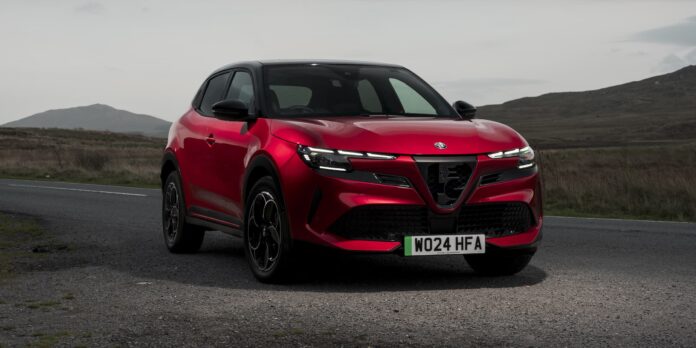
The Alfa Romeo Junior Ibrida is a small petrol SUV with mild hybrid assistance that sits alongside the all-electric Junior Elettrica.
The petrol-powered Junior (It’s called Ibrida – Italian for ‘hybrid’ – but it’s really a petrol-engined car with mild hybrid support) delivers competent handling and Italian styling at a competitive price, but it falls short of the broader package offered by its electric sibling and many rivals, with average ownership credentials and only middling expert reception.
The Junior Ibrida sits on the same Stellantis platform as several small SUVs but applies Alfa Romeo styling and tuning. Its 1.2 litre engine delivers adequate performance for daily use but doesn’t match the immediacy or smoothness of the electric Junior Elettrica. Media reviews are mixed, praising its handling but noting compromises in refinement and cabin quality. Euro NCAP safety testing has not yet been completed for this mode
As of February 2026, the Alfa Romeo Junior Ibrida holds a New Car Expert Rating of C, with a score of62%, reflecting modest media praise, average running costs, and solid warranty cover, but limited excitement and refinement compared with stronger alternatives.
“While the Alfa Romeo Junior Ibrida looks the part and offers everyday usability at a reasonable price, it doesn’t deliver the refinement or overall ownership strength many buyers will expect at this level. Compared with the all-electric Junior Elettrica, the petrol-assisted Ibrida feels like a compromise — cheaper to buy but less accomplished in key areas like refinement, ride quality and long-term satisfaction. You’d have to strongly prioritise petrol power and Alfa-branded style over everyday usability to choose it over better-rounded alternatives in the small SUV segment.”
Not as fun to drive as the Junior Elettrica Veloce
Key specifications
Body style: Small SUV/crossover Engines:petrol mild-hybrid Price:From £28,400 on-road
Launched: Spring 2025 Last updated: N/A Replacement due: TBA
Image gallery
Media reviews
Highlighted reviews and road tests from across the UK automotive media. Click any of the boxes to view.
Featured reviews
“The petrol version of the Alfa Romeo Junior is less impressive than the electric model – it feels like a backward step. You’d have to really want an Alfa Romeo, really not want an electric car, and not be too concerned about getting the best car for your money to choose the Junior Ibrida.”
Model reviewed: Ibrida
Score: 5.8 / 10
The Car Expert
Stuart Masson
“The hybrid Alfa Romeo Junior looks as good as its electric sibling – without the range anxiety – but the interior feels just as cheap and it’s less comfortable.”
Model reviewed: Range overview (including EV) Score: 8 / 10 “While the hybrid Alfa Romeo Junior Ibrida is available at a fairly competitive price, it’s less impressive to drive than the electric versions. That would be OK for most other cars in this segment, but not one wearing an Alfa Romeo badge.” Author: Alex Ingram, Ellis Hyde Read review
Car
Score: 6 / 10 “I’m glad Alfa Romeo is managing to stay relevant but, after being spoiled by the firm’s utterly masterful Giorgio platform, I’m saddened to see the brand reduced to such derivative engineering under Stellantis. In fairness, the Junior is the best-driving version of CMP on sale by far, but it’s still a long way behind the likes of the Ford Puma, BMW X1 and MINI Countryman for outright thrills.” Author: Luke Wilkinson Read review
Heycar
Model reviewed: Range overview Score: 7 / 10 “Hybrid power is a welcome addition to the Alfa Romeo Junior range. The hybrid keeps the sporty feel of the electric Juniors, even if outright performance isn’t as strong, and there’s even some fun to be had with the handling. It’s economical too, but we suspect the Alfa’s styling will be the biggest draw for most customers.” Author: Antony Ingram Read review
Honest John
Model reviewed: Range overview Score: 8 / 10 “Alfa Romeo’s smallest and most affordable car, the Junior Ibrida, is an easy car to like. It’s well-priced against its hybrid rivals and better than most of them to drive, with a well-judged balance between ride and handling.” Read review
Parkers
Model reviewed: Range overview Score: 6.2 / 10 “The Alfa Romeo Junior Ibrida drives far better than the Jeep Avenger and Fiat 600 too and sits in the upper ranks of small SUVs for handling. It looks pretty slick too.” Author: Ryan Gilmore and Luke Wilkinson Read review
The Sun
Model reviewed: Range overview “At the end of the day, the Junior Ibrida is not a classic Alfa. It won’t stir your soul. But it will deliver cost-effective motoring.” Author: Rob Lewis Read review
Top Gear
Model reviewed: Range overview (including electric version) Score: 7 / 10 “The Junior is usefully packaged, and feels solidly made in its structure, even if cabin materials aren’t the plushest and it uses too many parts bin bits from other Stellantis products. Outside, it has some smart detailing and a purposeful stance, but it’s not the prettiest design.” Read review
Safety rating
Independent crash test and safety ratings from Euro NCAP
No safety rating
As of February 2026, the Alfa Romeo Junior Ibrida has not been assessed by Euro NCAP.
Eco rating
Independent economy and emissions ratings from Green NCAP
No eco rating
As of February 2026, the Alfa Romeo Junior Ibrida has not been assessed by Green NCAP.
Running cost rating
Monthly cost of ownership data provided exclusively for The Car Expert by Clear Vehicle Data
Fuel consumption
Average
Score
Petrol models
59 mpg
B
CO₂ output
Average
Score
Variation
Score
Petrol models
109 g/km
A
Insurance group
Average
Score
Variation
Score
All models
26
C
Running costs for the Alfa Romeo Junior Ibrida are pretty reasonable, according to data provided exclusively to The Car Expert by our commercial partner, Clear Vehicle Data.
The car’s estimated fuel economy of 59mpg is rather impressive by petrol mild-hybrid standards. For comparison, our data reports that mild-hybird rivals like Stellantis stablemate the Jeep Avenger returns 50mpg, and the Ibrida matches the fuel efficiency of full-fat hybrid alternatives like the Toyota Yaris Cross.
Insurance costs are pretty average, based on data from the UK’s insurance group assessor, Thatcham Research.
Reliability rating
Reliability data provided exclusively for The Car Expert by MotorEasy
No reliability rating
As of February 2026, we don’t have enough reliability data on the Alfa Romeo Junior Ibrida to generate a reliability rating.
The Car Expert’s reliability information is provided exclusively to us using workshop and extended warranty data from our partner, MotorEasy, sourced from both official dealerships and independent workshops.
As soon as MotorEasy has sufficient data on the Junior Ibrida, we’ll publish the results here.
Warranty rating
New car warranty information for the Alfa Romeo Junior Ibrida
Overall rating
B
77%
New car warranty duration
5 years
New car warranty mileage
75,000 miles
Battery warranty duration
8 years
Battery warranty mileage
100,000 miles
Alfa Romeo’s new car warranty is better than average, and better than rival brands in a similar price bracket as the Junior.
The duration is five years, with a limit of 75,000 miles. In addition to the standard new car warranty, this Ibrida mild-hybrid version has an eight-year/100,000-mile warranty for the battery components.
Warranty on a used Alfa Romeo Junior Ibrida
If you are buying an ‘Approved Used’ Alfa Romeo Junior Ibrida from an official Alfa Romeo dealership, you will get a minimum one-year warranty included.
If you are buying a used Alfa Romeo Junior Ibrida from an independent dealership, any warranty offered will vary and will probably be managed by a third-party warranty company.
If you are buying a used Alfa Romeo Junior Ibrida from a private seller, there are no warranty protections beyond any remaining portion of the original new car warranty.
If you’re looking to buy any used car that is approaching the end of its warranty period, a used car warranty is usually a worthwhile investment. Check out The Car Expert’s guide to the best used car warranty providers, which will probably be cheaper than a warranty sold by a dealer.
Recalls
Official DVSA safety recalls that have been issued for the Alfa Romeo Junior
As of February 2026, we are not aware of any DVSA vehicle safety recalls affecting the Alfa Romeo Junior Ibrida. However, recall information is updated very regularly, so this may have changed.
You can check to see if your car has any outstanding recalls by visiting the DVLA website or contacting your local Alfa Romeo dealer.
The seven-seat Dacia Jogger has been given a minor mid-life facelift that is now available to order, including cosmetic tweaks, new interior trimmings and a hybrid engine update.
The budget-end people carrier, which rivals the sales of the Ford Tourneo Connect and Volkswagen Touran, has been given a different LED headlight signature – dashes and dots instead of the previous chevron-shaped design – and a new-look front grille adorned with white dashes either side of the Dacia logo.
In the rear, Dacia has also revised the taillight design that stretches from roof to boot lid, with the new light units blending better with the rear window glass. The manufacturer has also added an additional ‘sandstone’ metallic paint colour to the options list.
Stepping inside, the revised Jogger comes with ‘more resistant’ upholstery materials, some tweaks to the dashboard design and a new ten-inch infotainment touchscreen wirelessly compatible with Android Auto and Apple CarPlay.
Additional new tech like automatic high-beam assist headlights, a multi-view parking camera, and a wireless smartphone charger have also been added to the Jogger range, depending on the trim level opted for.
In the engine department, customers can now spec the brand’s 155hp petrol-electric hybrid powertrain in the Jogger – the same engine offered in the Duster and Bigster model line-ups. This combines a 1.8-litre petrol engine with two electric motors and a 1.4kWh battery. Power is sent to the front wheels through an automatic transmission, with a 0-62mph sprint reportedly taking nine seconds.
Now on sale, pricing for the facelifted Dacia Jogger starts at just south of £19k in the UK, £25 more than the pre-facelift range. The Jogger holds a New CarExpert Rating of D with a score of 69%. It scores top marks for its low running costs and CO2 emissions, but its media review scores are only average and its safety rating is very poor.
The Toyota Corolla hatchback and estate range will get a very mild update in Spring next year, consisting of two additional exterior paint optionsand a new interior trim material.
Available to order in March 2026, and very likely the last update to arrive for the twelfth-generation Corolla before it is replaced by a new iteration of the Corolla in 2027, this small refresh is entirely cosmetic, with no changes to the family car’s 1.8- and 2.0-litre petrol-electric hybrid powertrain options or on-board tech.
An additional ‘onyx grey’ colour will be added to the options list for the ‘GR Sport’ versions of the Corolla hatch and Touring Sports estate, and there’s also a new ‘dark grey’ metallic exterior finish will also be offered to Toyota customers for March onwards.
Inside, the interior is trimmed in a new material the brand calls ‘Samara’, which is made from recycled materials and is part of the entry-level ‘Icon’ trim package.
As of January 2025, the Toyota Corolla holds a New Car Expert Rating of A with a score of 73%. The Corolla has received consistently positive reviews from the UK motoring media. It has received particular praise for its practicality, build quality and low running costs. Criticisms have been directed at its driving dynamics compared to rivals like the Ford Focus.
Make and model: Kia EV4 Description: Mid-sized hatchback and fastback Price range: £34,695 to £45,445
Kia says: “The Kia EV4 has been developed to enhance the appeal of Kia’s EV offering for a broad demographic, wrapping its advanced technologies and practical layout in an eye-catching, modern design.” We say: The looks will divide opinions but the EV4 combines Kia’s established quality with something refreshingly different in the EV market.
Kia’s electrification strategy continues apace with the EV4, the fourth member of the brand’s range designed from the start as electric vehicles – or, you could argue, the fourth and fifth.
You see the EV4 bucks the electric trend in a couple of ways; firstly it is not an SUV, which just about every EV seems to be especially in the hotly-contested mid-sized family vehicle segment, and it is available in two distinct body styles – as a five-door hatchback and a ‘fastback’, industry-speak for a saloon body style but with a rear that has a more practical tailgate opening.
What is the Kia EV4?
Kia describes the EV4 as its first-ever electric hatchback and saloon design, and the car can be seen as an electric successor to the very successful Ceed family car. The hatch version is designed for Europe only and even built in the same European factory that has long been home to the Ceed, at Zilina in Slovakia, whereas the Fastback is a global model, built in Korea and targeting the likes of the Tesla Model 3.
More pertinent to potential buyers will be that this is the longest-range electric Kia yet. With the larger of the two battery options, the EV4 offers a maximum official range of 388 miles, and while you won’t achieve this in real-world use, this is a car that won’t regularly trouble the public charging network and so will suit many drivers.
The EV4 uses the same underpinnings as its already on-sale sisters in the Kia electric range, and this has allowed the creation of compact dimensions. Both versions look suitably slippery – the Fastback is Kia’s most aerodynamically-efficient model yet.
Admittedly, the looks of both EV4 variants will likely be considered somewhat polarising; they’re certainly different from the typical electric SUV fare, though still quite unlike a typical combustion-engined hatchback – but a quick straw poll did elicit mainly positive reactions, including a “that’s the first electric car I might consider buying”…
Two battery sizes are available for the EV4, the 58kWh version dubbed ‘standard range’ while the 81kWh is the ‘long range’. Even the smaller pack is officially quoted at up to 273 miles between charges, while the power and torque output is common to both versions.
The car follows Kia’s established form of three trim levels, dubbed Air, GT-Line and GT-Line S. The Air can be had with either battery pack while all other models use the larger one. Reflecting its perceived image, the Fastback is not offered in Air trim.
What do you get for your money?
Kia’s three-grade structure starts with the Air, costing from £34,695 with the standard battery and £3,000 more in long-range format. As has become typical, the standard equipment list is long, the options few or non-existent.
All variants come with plentiful equipment, including some items not commonly found on entry-level cars. Notable among these are the heated seats and steering wheel, and an infotainment screen and separate driver’s display each measuring over 12 inches, separated by a bespoke climate control screen of five inches in a panel that stretches right across the fascia.
GT-Line versions, likely to be most popular among buyers, cost £39,395. They replace the standard 17-inch wheels with 19-inch versions, while the additions include electric adjustment of the front seats, wireless phone charging, a digital key, various styling tweaks and ambient lighting, the colour of which can be customised.
Range-topper is the GT-Line S at £43,895. For this, you get a more upmarket Harman Kardon eight-speaker sound system, head-up display, sunroof, heating on the rear seats and ventilation on the fronts, a powered tailgate, upgraded headlights and a vehicle-to-load system with even a three-pin plug socket in the car.
The Fastback, meanwhile, can be had as a GT-Line at £40,895 or GT-Line S for £46,295, with equipment levels matching those of its hatch sisters.
In terms of safety, the EV4 offers a long list of electronic driver assistance systems as standard across the range. As of November 2025, it has not yet undergone Euro NCAP safety testing, although Kia’s recent record has been strong.
The only safety aids offered as extras are on the top GT-Line S versions – they comprise remote smart parking and a collision avoidance assistance system while parking, a 360-degree around view monitor and a blind-spot view monitor. This is rather useful, as soon as the indicators are activated it posts on the driver’s display a camera view of the blind spot in the direction of the indicator.
Of course, the EV4 also comes with Kia’s standard seven-year warranty, one of the longest in the industry, while another less obvious but desirable plus is the length of the service intervals, some 20,000 miles between visits to the dealer.
We like: Long warranty and service intervals We don’t like: Heat pump a cost option and only available on top model
What’s the Kia EV4 like inside?
We expect quality cabins from Kia these days and the EV4 does not disappoint, the fit and finish looking suitably upmarket – what is actually hard plastic is well disguised as something more exclusive.
Space is good in both front and rear rows, at least in the hatch – the sloping roof of the Fastback does compromise headroom a little, while both versions have quite high floors due to accommodating the battery pack. This also makes for easy loading of the cargo space.
Both boots are cavernous, especially in the Fastback, thanks to the car measuring up 30cm longer than the hatch. There are 435 litres of space in the hatch, which, with the rear seats down, stretches to 1,415 litres. And with a load-bay opening of more than a metre, it’s certainly practical. The Fastback offers some 55 litres more, but with a narrower gap to load through.
The driver’s surroundings are very well thought out. That long infotainment screen is efficient and strikes the right balance with physical buttons for more important functions both under the main screens and on the steering wheel. Mind you the separate five-inch display for the climate control seems a bit superfluous, particularly as its position neatly hides it behind the steering wheel.
We like: Sensible combination of screens and proper buttons We don’t like: More cosy rear-seat space of Fastback
What’s under the bonnet?
Whether you choose the 58kWh ‘standard’ pack or the 81kWh ‘long range’ version, the power output is the same, at 150kW or 204hp, with 283Nm of torque. The car will pass 62mph from rest in 7.5 to 7.9 seconds depending on version, plenty quick enough for most, and go on to 105mph.
In terms of range, the standard pack offers up to 273 miles and the long-range pack 388 miles in the Air, or 362 in the upper-spec models (more equipment means more weight!…). The Fastback will go for 380 miles between charges, aided by those more slippery aerodynamics.
Both battery packs can be recharged at up to 150kW on a public fast charger, which means half an hour to go from 10 to 80% on the 58kWh pack, with the 81kWh version being just a couple of minutes slower. With a more common 50kW charger, you are looking at 55 and 79 minutes respectively. On an 11kW AC unit, such as a home wallbox, the figures are five hours 20 minutes or seven hours 15 minutes.
One disappointment is that the EV4 does not come with the 800-volt charging technology available on more premium Kia electric models klike the EV6 and EV9 – this would make faster charging times possible. As mentioned, a heat pump is available to help improve battery efficiency in sub-zero winter conditions, but only as a £900 cost option and only on top-level GT-Line S grades.
What’s the Kia EV4 like to drive?
One immediate positive aspect of driving the EV4, in this reviewer’s opinion, is that it has a power button to turn it on and off – too many EV brands are dumping this feature, the use of which does add a degree of comforting certainty, especially at the end of a drive.
Like all electric models, the EV4 moves off smoothly and silently. On the road, it behaves exactly as a family car should, which is something quite a few EVs brands miss. It’s eager while not being too fast, and it is a comfortable car to travel in, whatever the road surface.
During the test drive event, we tried out cars in both Air and GT-Line specifications. There is one area in which the entry model scores over its more expensive sibling, the 17-inch wheels producing a more compliant ride than do the 19-inch upgraded versions – bigger is not always better…
Lifeless handling is something that tends to go with EV ownership, but the EV4 is better than the norm. While there is still not that much feedback through the steering wheel, it does at least weight up nicely the more one turns into a corner, producing a generally satisfying performance.
All EV4s come with five drive modes, the obvious ones of Eco, Normal and Sport supplemented by Snow and a ‘MyDrive’ mode customisable to the driver’s preference. On all but Air versions the ambient lighting changes colour depending on mode, green for Eco, blue for Normal, red for Sport, etc. (However, we are told it can be disabled, so passengers don’t keep asking why you are in Sport mode.)
Also capable of being disabled are the now-mandatory and (to many) intrusive speed limit and lane departure warnings. There’s no distinct button but pressing certain controls for a set time does the deed – holding down the volume dial on the steering wheel for three seconds does for the speed limit alert. It’s an indication of how poorly thought-out these new EU rules are (which we still get despite not being part of the EU) that car manufacturers are now building in various ways to disable them…
The driving modes do offer noticeable differences, and they also tie into the regenerative braking – the three levels can be altered by paddles behind the steering wheel and the most severe will, if necessary, bring the car to a full stop, enabling one-pedal driving.
We drove both the hatch and Fastback versions, and in driving dynamics there is nothing to choose between them. This is a slight disappointment, as the Fastback presents a more sporty visual image and it would be good to have a more potent version available.
We like: A proper start button We don’t like: The Fastback could offer a more sporty version
Verdict
At a time when new EVs are appearing almost weekly from both recognised and new brands, the Kia EV4 stands out from the crowd, both the hatch and particularly the Fastback offering something different. Looks do not deceive either, as underneath the distinctive visuals are cars that make full use of Kia’s now established and well-proven efficient electric architecture.
Kia expects 85% of EV4 sales to be of the hatch, which is not surprising as the Fastback will appeal to a niche selection of buyers who really want something different in their EV. And while we are told most buyers will want GT-Line trim, the Air has much to recommend it, offering the most range and a better ride – don’t suppose we can have a GT-Line on 17-inch wheels Mr Kia dealer? We thought not…
The EV4 hatch is quite pricey when compared to some potential rivals, particularly as there is no tempting government grant to sweeten the purchase, but we can see it appealing to a wide variety of buyers, especially the many who have driven Kias before.
Model tested: Kia EV4 GT-Line 81kWh / Fastback GT-Line S Price as tested: £39,395 / £45,395 Powertrain: Electric motor, front-wheel-drive Gearbox: Single-speed automatic
Well, another Budget is in the books. And there’s a lot to cover for car owners, car drivers and anyone looking to buy a car over the next few years.
The UK chancellor, Rachel Reeves, announced a raft of new measures that seemed to alternate between good and bad news for consumers, depending on what sort of car you have and how much driving you do. We’ve listed all of the main topics below, but there was certainly a lot of giving with one hand while taking with the other…
1. EVs to be hit with a pay-per-mile tax
As had been widely leaked and trailed in recent weeks, the biggest news was that EV owners will have to pay a new levy of 3p per mile from April 2028. The current average annual mileage for EVs in the UK is about 8,000 miles/year, so that will add an extra £240/year to the cost of driving an EV.
At this stage, the government doesn’t actually know how it’s going to implement this new tax, and the industry has already raised numerous issues with the expectation that owners will have to self-report their annual mileage and pay their extra tax on top of their road tax each year.
Although this tax (known as eVED, or electric vehicle excise duty) won’t commence until 2028, it will effectively hit sales of both new and used EVs immediately. Some companies, like Ford, have already complained that new EV sales have already been affected since this wacky idea was first leaked to the media about a month ago.
We’ll have to wait to find out exactly how the government plans to enforce this new tax, especially since it says that mileage will be recorded each year as part of your MOT test – except that new cars don’t have an MOT test until after they’re three years old. Apparently, the government will expect you to go to an MOT centre to have your mileage checked anyway, even though you don’t need the MOT inspection…
All in all, nowhere near enough thought has gone into this idea. Mileage-based taxation is not inherently bad (we basically have this already with fuel duty, since more than half of the cost of every litre of petrol and diesel is tax anyway), but it would have been better if the government had put some thought into the plan before announcing it.
2. Fuel duty increase is cancelled again
Good news if you drive a petrol, diesel or hybrid car – the chancellor has cancelled the scheduled annual increase in fuel duty for another year.
This is the 15th year in a row that successive chancellors have cancelled the scheduled inflationary increase in fuel duty, which really makes you wonder why they don’t bin the whole schedule altogether. The answer is that it’s simply performative political bullshit, with each chancellor doing his/her best to appear heroic by cancelling the scheduled – but highly unpopular – tax increase.
At a time when the government is regulating that a growing number of new cars must be EVs, it is counter-productive to be increasing the cost of driving an EV by hundreds of pounds a year while freezing the costs of driving a fossil-fuel car.
3. Luxury car tax threshold finally raised
One piece of welcome news is that the government has finally got around to increasing the Expensive Car Supplement, which forces buyers of cars that cost more than £40,000 to pay an extra £425 in road tax per year for five years.
The supplement was introduced in 2017 as a tax raid on luxury vehicles, but the price of cars has increased so much over the last eight years that the £40,000 threshold now catches many very ordinary family cars, none of which could remotely be considered luxurious. And because EVs still tend to be more expensive than petrol cars, a disproportionately high number of EVs were falling foul of this tax.
Successive chancellors have ignored this for years, but the current one has finally decided to increase the threshold to something more realistic. As of April 2026, this threshold will increase to £50,000. While that’s good news in general, it does mean that no-one’s going to want to buy a car priced from £40K to £50K before April, as it will effectively get £2.1K cheaper then. A better idea would have been to backdate it to last April, forgoing some tax revenue but ensuring new car sales keep on rolling rather than stalling.
Conversely, if you’re looking at a new car that’s currently priced just under the £40K threshold, you’ll want to buy it before April. A number of car companies have been reducing prices, particularly for EVs, to keep them under the threshold, and they’ll almost immediately put prices up by a few thousand in April once the threshold moves.
4. Employee Car Ownership Scheme stays – for now
One of the mooted plans for the Budget was the proposed cancellation of the Employee Car Ownership Scheme (ECOS), which allows employees to buy cars at a discounted price, rather than their employer providing them with a company car. It saves employers a lot of tax and works well for employees – but the government misses out on potential tax revenue.
The car industry had howled loudly at the idea of this scheme being cancelled. Not only is it responsible for a lot of new car sales, but it feeds those cars into the used car market after a couple of years, providing a lot of near-new stock for car dealers.
The chancellor announced that plans to abandon the scheme had been deferred, so in essence the can has just been kicked a couple of years down the road.
5. Motability changes
The UK’s Motability scheme is an important part of helping people with disabilities to retain their independence. But there has been a growing concern that the scheme is out of control, with about 20% of all new car sales being Motability sales. For a taxpayer-funded disability scheme, this is simply ridiculous.
On top of that, the sort of cars that eligible customers can choose are often far posher than the average working household could ever hope to afford. The government has responded by kicking ‘luxury’ car brands like Alfa Romeo, Audi, BMW and Mercedes-Benz out of the scheme. Although, curiously, Volvo and Polestar are still included, so presumably the government doesn’t consider them to be luxury brands…
This news apparently came out of the blue, with the affected brands not given any advance warning. Understandably, they’re rather annoyed since they have ordered thousands of cars to supply to Motabliity that they now won’t be able to sell. While it’s hard to argue that a taxpayer-funded scheme should focus on more mainstream vehicles, there still needs to be due process in applying changes.
Currently, only 7% of Motability vehicles are built in the UK, which is scandalous for a scheme that we all pay for. The government says that it wants this to increase to 25% by 2030, but that’s still not good enough. There are plenty of UK-built cars at sensible prices that could be used for Motability – Nissan Qashqai/Juke/Leaf, Mini Cooper, Toyota Corolla hatch and estate, and Vauxhall/Peugeot/Citroën van-based electric people carriers. Imported cars should only be allowed when none of these options fit the bill.
While the car companies will be delighted (except the Chinese brands, which are not eligible), this doesn’t help lower-income households switch from fossil-fuel cars to EVs, as they still won’t be able to afford a new car. What’s desperately needed is a grant for used EVs, not new cars, preferably attached to a scrappage scheme that helps to get people out of old petrol or diesel bangers and into a newer, but still used, EV.
A real missed opportunity that represents a victory for lobbyists over taxpayers.
7. More money for EV public charging points
Another welcome announcement was an extra £200 million for more public charging points. We don’t have any detail yet, but hopefully this will help get more charging points into regional locations that are currently underserved in charging infrastructure.
What was very much missing from the Budget was any kind of help to reduce the cost of public charging, whether by price caps or VAT reductions as have long been called for. The government seems content to punish those who don’t have the ability to charge in a driveway or garage at home, which is inevitably going to affect people on lower incomes.
Too much whack-a-mole politics, not enough strategy
The sum total of all this is a bewildering mix of giving and taking without any overall strategy in sight, especially for electric cars – which the government is pushing people to buy through ever-increasing mandated registration targets.
Hitting EV owners with an extra £240/year (on average) to drive their cars – a number which will inevitably increase over the years as 3p/mile becomes 4p/mile, then 5p/mile and eventually 10p/mile and so on – will quickly outweigh government discounts on new EVs. Plus, it hits all EV owners, not just those who can afford a new car.
Temporary actions to delay expected cost increases (fuel duty, ECOS) being presented as massive favours to motorists are, frankly, insulting our intelligence. Sadly, most of the national news media lacks the enthusiasm or understanding to properly tackle the chancellor on these decisions.
There is some good news in the Budget (more public EV charging, more money for the EV grant), but it’s mostly just appeasing whichever lobbyists shout the loudest, rather than properly implementing a long-term strategy for the future of motoring in the UK.
Leasing is one of the most affordable ways of getting behind the wheel of your next car, without long term commitment. With the rising demand for well-maintained used cars, you can save even more by opting for a lease car that is a few years older.
Leasing a car was once limited to business motorists and large fleets, as dealerships promoted PCH (personal contract hire) deals alongside the longer-established PCP (personal contract purchase) schemes to consumers, but it has become an increasingly popular alternative to traditional car finance in recent years.
With new car prices rising and the British used car market growing year-on-year – 7.6 million used cars were sold in 2024, 6% more than the year prior – several UK car leasing companies now offer attractive value-for-money deals on approved used cars that have been leased to others prior.
When compared to buying a used car outright, leasing can offer several advantages, particularly in terms of cashflow. Most leasing products these days also include the option to include servicing and maintenance in the monthly payments. This removes the risk of big bills when you take the car for its annual service.
We won’t go into detail about the pros and cons of car leasing here, but if you’re keen to know more then check out our guide to personal contract hire.
So if you’ve added up the sums and decided used leasing is for you, you’ll face a new question – which car leasing operator should you go for?
Remember is to ensure you are looking at PCH offers, and not BCH (business contract hire), available only to business customers. It’s also vital to be careful entering your details, particularly the annual mileage as it can make a big difference to your potential costs.
Used car leasing is arranged through specialist leasing companies, and we’ve listed our top ten of them below.
Most of the top ten companies listed here are brokers, rather than actually providing the lease – a bit like franchise car dealers who sell vehicles on behalf of a manufacturer, rather than the manufacturer selling you a car directly.
The list of companies below isn’t ranked – they all provide a high level of service and are worthy of consideration. They’re simply sorted by those who are commercial partners of The Car Expert (the ones with an asterisk next to their name), which means that we may get a small commission if you click through to their website, and those that are not. This doesn’t affect the deals you are offered or the price you pay on any of the sites.
They say: “Pre-loved lease vehicles. Ready to be loved again.”
Leasing.com describes itself as the car leasing expert and is one of several comparison sites on the internet. The company doesn’t lease cars itself but acts as a comparison site for lease companies, enabling customers to compare deals and select the one that best suits them.
Having been trading since 2000, Leasing.com claims to have helped more than a million people find a deal, and it certainly offers plenty of choice. With the ever-growing popularity of used cars, leasing.com has now expanded into used car leasing, with a new website aptly named ‘re.leasing.com’.
Beyond the company’s featured used car picks, there’s a wide choice of potential cars – from MG and Mini to Jaguar and Mercedes-Benz. The cars are typically between two and four years old, have less than 50,000 miles on the clock, and come with a maintenance package that includes servicing, MOT, maintenance, and mechanical repairs.
Since July 2021, Leasing.com’s vehicle ratings have been powered by The Car Expert’s industry-leading Expert Rating Index, so you can be sure that the vehicles have been reviewed and rated by professional journalists from 30 of the UK’s top automotive websites.
They say: “Our fantastic selection of ‘Re-Lease’ cars offer exceptional value for money.”
Select Car Leasing claims to be one of the biggest providers of lease cars, boasting 50,000-plus cars delivered in around 16 years of trading, and 21,000 five-star Trustpilot reviews as a result.
Each used car listing includes all the usual information plus a few useful tags that show you whether the car is reserved or in-stock ready for delivery, and whether a servicing and tyre maintenance package is included in the monthly fee or is an optional extra.
You can search for your preferred car by entering your desired model, budget, gearbox, annual mileage, contract length and fuel type, with the company’s stock of around 500 used offers evenly split between petrol and all-electric models.
Select Car Leasing also currently promotes a price-match service, paying out £50 in Amazon vouchers if customers find a comparable deal at a better price elsewhere.
Gateway2Lease has a pretty vast selection of approved used cars, as well as vans and pick-ups for commercial customers. The site has a handy search column tool that allows you to customise the leasing term and annual mileage as you search, updating the monthly cost as you go.
The cars on offer are generally no older than three years old, and there are plenty of electric options. Each car is given a ‘G2L score’, although it’s not clear how those scores are calculated.
You can sort models by trim levels, fuel type, CO2 levels and P11d values to find the right car for your budget. Cars that are in stock are also tagged so you can see which models are available for immediate delivery. As with most other sites, there’s also plenty of useful information for first-time leasing customers to explain how everything works.
They say: “Trust us to find the right deal, whatever your budget.”
Pink Car Leasing has a wide array of personal new car leasing deals, business leasing deals, van leasing offers, and now used car leases for both individual customers and businesses.
The websites selection of used lease deals stands at around 170 offers at the time of writing, with Pink Car adding that it’s working hard to expand the number of choices on offer.
The search function allows you to set your desired model, bodystyle, transmission, fuel type, annual mileage and contract length, with the monthly price updating as you go. You can also search for used cars by entering your monthly budget, showing you only what is within your price range.
VIP Gateway is a Manchester-based leasing broker with customers all across the UK. To back up its ambitions to provide the very highest levels of service, the company claims to have customers on their ninth or even tenth vehicles.
There’s also a whole raft of testimonials from famous customers, with a particular emphasis on Manchester-based football stars and celebrities.
The site has a colourful menu to highlight special offers, in-stock vehicles, electric cars, short-term leasing, used leasing offers, prestige vehicles and so on. Used car leasing is a relatively new concept in the UK, and while VIP Gateway fully intends to offer used car leasing imminently, there are no used leasing offers listed on the website at the time of writing.
They say: “Find affordable vehicle leasing deals from the experts.”
In business since 2002, Nationwide Vehicle Contracts says that it offers an ‘unrivalled’ choice of cars and vans with competitive leasing quotes available at the ‘touch of a button’. True to those words, the company’s website does have one of the biggest collection of used leasing deals of the brands we have covered so far.
Based in Manchester and offering nationwide 14-day delivery for most of its listings, Nationwide has some of the cheapest used leasing deals we have found on our search, though the models on offer are a little older on average than other websites – usually three to four years old.
Beyond the standard details on every listing, the website also tells you which cars come with breakdown recovery included at first glance, and you can also search for specific models, price tags, body styles and fuel types.
They say: “Find affordable vehicle leasing deals from the experts.”
Cheshire-based Green Apple Leasing has been in business since 1927, and has an easy-to-use website with plenty of positive customer testimonials and an excellent five-star Trustpilot rating.
The company offers both deposit and no deposit used car leasing deals, and its listings make the handy distinction between personal and business leasing costs. The selection of different models is vast, with 51 different pages of results if you don’t specify make, fuel type and transmission, all of which can be searched for in the tool bar.
For drivers that aren’t quite sure if they would like a hybrid or full fat electric lease car, you can also search for ‘green friendly’ cars – a search function that includes both.
While the prices are quite competitive, one drawback is that the website uses stock photos, instead of actual photos of the vehicle, meaning you can’t actually see what you would be getting until you enquire.
They say: “A hassle-free and affordable way to drive a quality vehicle.”
Another established used leasing marketplace that offers no deposit deals and has excellent five-star ratings on Trustpilot and Google, Leasing Options has a great website design that’s simple to navigate and easy to understand.
There’s a useful toggle between personal and business leasing deals, and the listings give you all the details you need while scrolling. The search bar is more detailed than rival websites, allowing you to search for the exact trim level you prefer, as well as entering you maximum budget and desired lease length.
The website also has a handy model comparison tool, which can show you which of your desired models is cheaper to finance.
They say: “Delivering a great leasing experience since 2006”
Based in Harrogate, Synergy’s website doesn’t have all the flashy search functions of rival websites on this list, but its deals are just as competitive.
While the company has a smaller selection of cars usually around four years old and doesn’t allow you to edit your contract terms on the website, it says it can provide you with a customised quotes if you speak to its sales team, and has a ‘Top 20 Deals’ page with attractive prices that does include some used models.
Hippo Leasing’s parent company certainly knows a thing or two about cars and the automotive business – the family-owned Hippo Motor Group has been trading for more than a century. They use that experience and know-how to make car leasing simple for customers, using their access to a wide range of vehicle manufacturers to bring a vast choice of vehices, from Ford to Ferrari.
Hippo devotes a specific section of its website to used car leasing. All used cars come with a minimum six-month warranty (potentially more if the car is still under its new car warranty) and go through a comprehensive workshop inspection before collection by the customer.
The site is well laid out and begins with four easy steps to lease a car, from finding one to driving one. If you don’t know what you want, there’s a browse section broken down into sections such as price, make, body type, and new or used, and if you need a nudge in the right direction there’s a good section of hottest special offers.
Additional reporting by Tom Johnston and Stuart Masson.
*The Car Expert has commercial partnerships with Gateway2Lease, Hippo Leasing, Leasing.com, Pink Car Leasing, Select Car Leasing and VIP Gateway. If you click through to their websites, we may receive a small commission.This does not affect the price you pay.
The Mercedes-Benz CLA EQ is a mid-sized electric saloon and estate that went on sale in the UK in Autumn 2025.
Replacing the second-generation CLA range, this EQ line-up is part of the latest third-generation CLA model line-up which also includes hybrid versions which we will cover separately.
Built on the German manufacturer’s latest 800V architecture, the ‘CLA with EQ Technology’ has been given a warm welcome by the British motoring media, picking up two Awards from outlet Parkers after launch with reviewer Keith Adams concluding that the saloon offers “exceptional real-world range, a beautifully finished interior and one of the best infotainment systems currently fitted to a compact EV.”
“Blimey, it’s lovely”, says Electrifying.com’s Tom Barnard. “It really does feel like a much more premium prospect even than a Polestar 2 – never mind a Tesla Model 3.” Top Gear’s Tom Ford describes the sub-£50k EV as a “eminently sensible spaceship”, pointing to the car’s “monster range and dazzling efficiency”, but adds that it lacks driving character, “even for an EV”, concluding that it’s “a bit vanilla to drive”.
As of January 2026, the Mercedes-Benz CLA EQ holds a New Car Expert Rating of A, with a score of 82%. It scores top marks for its media review scores, excellent safety rating and zero tailpipe emissions, while its overall running costs are also good.
Body style: Mid-sized saloon and estate Engines:electric, battery-powered Price:From £45,615 on-road
Launched: Autumn 2025 Last updated: N/A Replacement due: TBA
Image gallery
Media reviews
Highlighted reviews and road tests from across the UK automotive media. Click any of the boxes to view.
Featured reviews
“The new Mercedes CLA represents a huge step forward for the brand’s electric models, and EVs in general, highlighted by incredible efficiency and range.”
“The Mercedes-Benz CLA is a comfortable and posh electric saloon car, but it’s not very spacious inside and its claimed range isn’t very easy to reach.”
Score: 8 / 10 “The Mercedes-Benz CLA is the company’s new electric star. It’s clever, comfortable and capable of over 400 miles on a single charge.” Read review
Business Car
Score: 9 / 10 “Overall, we would describe the new Mercedes-Benz CLA as a fundamentally good car, transformed by its highly impressive efficiency into a potentially game changing EV – one likely to be much in demand, as the extremely robust expected residual value shows.” Author: Sean Keywood Read review
Car
Model reviewed: CLA 250+ Score: 8 / 10 “The CLA 250+ is the electric Mercedes we’ve been waiting for – the first that feels both desirable and genuinely usable. With real-world range of 350-400 miles, it rewrites what’s possible for everyday drivers at this price point, offering genuine long-distance ability without anxiety or compromise. It’s brisk, beautifully composed and so refined at speed that it feels born for motorways.” Author: Keith Adams Read review
Electrifying.com
Model reviewed: Range overview Score: 9 / 10 “The Mercedes-Benz CLA loads up a lot of innovate, efficiency-enhancing technology to deliver a useful potential range, allied with the possibility of rapid charging, too. And that styling and interior? Blimey, it’s lovely, and really does feel like a much more premium prospect even than a Polestar 2 – never mind a Tesla Model 3.” Author: Tom Barnard Read review
Green Car Guide
Score: 9 / 10 “The Mercedes-Benz CLA has an impressive electric driving range: up to 484 miles, or 462 miles in the case of our test car – which is still excellent, especially for a sub-£50,000 compact family saloon. It also features 320 kW ultra-rapid charging.” Author: Paul Clarke Read review
Honest John
Model reviewed: Range overview Score: 8 / 10 “If you can distract yourself from the extremely impressive and headline-grabbing range figure, there’s plenty else to like about the Mercedes CLA EQ, including its comfortable, relaxing drive. We’re less sure about some of the interior design choices, though.” Read review
Parkers
Score: 9 / 10 “Like the very best Mercedes over the years, the CLA250+ combines excellent ride quality with high levels of roadholding. Quiet and efficient, it’s a compact electric-powered luxury sedan that has a very impressive driving range that should be enough to easily cope with the everyday demands of most British drivers.” Author: Keith Adams Read review
The Independent
Score: 8 / 10 “The new CLA feels like Mercedes back to its very best – and it hasn’t been there for a while. I love the way the car drives, the range it offers and the on-board tech. I can take or leave the styling – there are just too many stars on there! But the biggest drawback – for the moment – is the charging compatibility of the 800v platform. I’d wait for my CLA until that issue is fixed next year.” Author: Steve Fowler Read review
The Telegraph
Score: 8 / 10 “Will a range of 484 miles finally convince you that EVs have come of age? Mercedes tries to cater for all tastes with its new smallest model.” Author: Andrew English Read review
Top Gear
Score: 7 / 10 “An eminently sensible spaceship. AI-infused with monster range and dazzling efficiency, but not exactly fizzing with excitement.” Author: Tom Ford Read review
Safety rating
Independent crash test and safety ratings from Euro NCAP
Euro NCAP rated the Mercedes-Benz CLA as its Best Small Family Car in 2025.
Eco rating
Independent economy and emissions ratings from Green NCAP
No eco rating
As of January 2026, the Mercedes-Benz CLA EQ has not been assessed by Green NCAP.
The Green NCAP programme measures exhaust pollution (which is zero for an electric car) and energy efficiency. Electric cars are much more energy-efficient than combustion cars, so the CLA EQ is likely to score very highly in Green NCAP testing if and when it takes place. Check back again soon.
Running cost rating
Monthly cost of ownership data provided exclusively for The Car Expert by Clear Vehicle Data
Battery range
Average
Score
Variation
Score
EV models
462 miles
A
Electrical efficiency
Average
Score
Variation
Score
EV models
4.8 m/KWh
A
Insurance group
Average
Score
Variation
Score
All models
41
D
The Mercedes-Benz CLA EQ is a relatively affordable car to own and run, according to whole-life cost numbers provided exclusively to The Car Expert by our data partner, Clear Vehicle Data.
The car’s average estimated battery range of 462 miles is excellent when compared to rivals in the mid-sized EV class, thanks to the CLA EQ’s class-leading electrical efficiency (the EV equivalent of miles per gallon for a petrol or diesel car) of 4.8 miles per KWh. As you might expect of a Mercedes-Benz however, the car’s predicted insurance costs are much higher than the average electric car.
Reliability rating
Reliability data provided exclusively for The Car Expert by MotorEasy
No reliability rating
As of January 2026, we don’t have enough reliability data on the Mercedes-Benz CLA EQ to generate a reliability rating.
The Car Expert’s reliability information is provided exclusively to us using workshop and extended warranty data from our partner, MotorEasy, sourced from both official dealerships and independent workshops.
As soon as MotorEasy has sufficient data on the CLA EQ, we’ll publish the results here.
Warranty rating
New car warranty information for the Mercedes-Benz CLA EQ
Overall rating
B
76%
New car warranty duration
3 years
New car warranty mileage
Unlimited miles
Battery warranty duration
8 years
Battery warranty mileage
100,000 miles
The Mercedes-Benz new car warranty is better than average, and better than rival brands in a similar price bracket as the CLA EQ.
The duration is three years, with no limit on mileage. In addition to the standard new car warranty, the CLA EQ has an eight-year/100,000-mile warranty for the battery components.
Recalls
Official DVSA safety recalls that have been issued for the Mercedes-Benz CLA EQ
As of January 2026, we are not aware of any DVSA vehicle safety recalls affecting the Mercedes-Benz CLA EQ. However, recall information is updated very regularly, so this may have changed.
You can check to see if your car has any outstanding recalls by visiting the DVLA website or contacting your local Mercedes-Benz dealer.
Find your next new or used car with Auto Trader. Find out more
Find your next new or used car with Carwow. Find out more
Lease a Mercedes-Benz CLA EQ
If you’re looking to lease a new Mercedes-Benz CLA EQ, The Car Expert’s partners can help you find a competitive deal.
Personal contract hire deals from Leasing.com. Find out more
Personal contract hire deals from Carwow. Find out more
Personal contract hire deals from Select Car Leasing. Find out more
Subscribe to a Mercedes-Benz CLA EQ
Subscriptions are becoming a very popular way for consumers to try an electric car for a few weeks or months to help decide whether it’s a suitable alternative to a petrol car. If you’re interested in a car subscription, The Car Expert’s partners can help. (PS: What’s a car subscription?)
The MG S6 EV is a medium-large electric SUV, which sits above the smaller MG S5 EV and is similar in size to the MG HS, which is a petrol and plug-in hybrid SUV. It was launched in late 2025.
The S6 EV is built on the same basic platform as the MG S5 EV and the MG 4 hatchback, and is offered with a 77kWh battery. That gives it an official driving range of 329 miles in the rear-wheel drive version, and 301 miles in the higher-performance, all-wheel drive version.
As with most MG models, the S6 EV is available in a choice of trim levels – SE (lower spec) and Trophy (higher spec). Both are very well equipped and priced competitively, although only the Trophy is available with all-wheel drive.
The cabin follows the modern trend for a large central touchscreen that controls most functions, but MG has retained physical controls for at least some of the key functions that drivers use on the move, like climate control and volume. The touchscreen operating system is also much improved on earlier MG models, and much better than on the similarly priced MG IM5 and IM6 executive models.
The European media launch took place in the UK in November 2025, so we will assemble the first media reviews in coming weeks. Our editor, Stuart Masson, attended the launch and was very impressed:
“The S6 EV is yet another step forward for MG, and it looks like it will be a hugely competitive car in the booming family electric SUV market. Build quality is good and equipment levels are excellent, while rear cabin space is huge and the boot is also more than large enough for most household needs. There’s even a decent-sized frunk for storing cables and other gear under the bonnet, which is something many brands fail to achieve.
“While it’s not particularly exciting to drive, that’s unlikely to be a priority for lots of families, and even then, the S6 is better than most electric SUVs. Overall, you have to wonder why you’d pay a lot more to buy a similar vehicle from other brands.”
As of February 2026, the MG S6 EV holds a New Car Expert Rating of A, with a score of 78%. It achieves top marks for its five-star safety rating from Euro NCAP, and it’s covered by MG’s excellent seven-year new car warranty. Media review scores have only been average so far, but this may change as more titles review the S6 in depth.
Body style: Medium-large SUV Engines:electric, single- or dual-motor Price:From £37,995 on-road
Launched: Autumn 2025 Last updated: N/A Replacement due: TBA
Image gallery
Media reviews
Featured reviews
“The MG S6 is another hit, even better than the smaller S5 launched earlier this year. For the same money, the S6 is a better car than MG’s own IM6 – the infotainment system is much easier to use, and it’s a more practical vehicle. It’s not as fast, but it’s still more than fast enough for most people’s needs.”
Model reviewed: Range overview
Score: 8 / 10
The Car Expert
Stuart Masson
“It’s a bit like a Black Friday deal – it’s undeniably a good price, but if you think about what you need rather than what you want, you might be able to save a bit more cash still.”
Model reviewed: Range overview Score: 8 / 10 “Above all else, it’s a genuinely fun car to drive, with multiple driving modes and smooth regenerative braking settings.” Author: Tom Roberts Read review
Business Car
Model reviewed: Range overview Score: 8 / 10 “It drives well, has impressive levels of standard kit, and seems efficient. However, like a lot of Chinese rivals, we found the ADAS too overpowering, and some of the interior finishes and switchgear feel noticeably cheaper than rivals.” Author: Martyn Collins Read review
Car
Model reviewed: Range overview Score: 6 / 10 “MG has added another perfectly adequate electric SUV to its line-up. The S6 is worth a look if space, tech and punchy performance are on your wish list. It’s incredibly competent, and ideal for moving family and flotsam, in a safe, practical package.” Author: Amrit Kaur Read review
Car Keys
Model reviewed: Range overview Score: 10 / 10 “The MG S6 EV isn’t trying to reinvent the electric car—it’s trying to make one that fits neatly into normal life. And on that front, it succeeds. It offers strong value, a useful real-world range, plenty of kit and MG’s excellent warranty coverage.” Author: Edward Clark Read review
Electrifying.com
Model reviewed: Range overview Score: 8 / 10 “The MG S6 EV is a really decent all-round family EV. It’s a bit characterless, but it will do a fine job of ferrying you and your family around in comfort.” Author: Vicky Parrott Read review
Green Car Guide
Model reviewed: Range overview Score: 7 / 10 “The MG S6 is an electric C-segment SUV – as is the existing MG S5. The MG S6 is a decent car overall, but we’re struggling to see how the higher price is justified primarily by a longer body, a larger boot, a slightly longer range and some extra equipment.” Author: Paul Clarke Read review
Honest John
Model reviewed: Range overview Score: 8 / 10 “It might not have much wow factor from the outside but the MG S6 EV is a very solid all-rounder. It’s not quite the bargain you might expect but thanks to a pleasant, spacious interior and complemented by a decent driving range, it should be on your shortlist.” Read review
Parkers
Model reviewed: Range overview Score: 6 / 10 “In real world testing, we weren’t too impressed with its range or efficiency. What’s more, there are some excellent rivals for less money and almost as much space, with some offering more range.” Author: Amrit Kaur Read review
The Independent
Model reviewed: Range overview Score: 8 / 10 “MG’s largest electric SUV mixes huge cabin space, calm refinement and generous equipment with competitive pricing. The Trophy Long Range impresses most, even if charging speeds and ride polish still need work.” Author: Phil Huff Read review
Top Gear
Model reviewed: Range overview Score: 6 / 10 “The S6’s problem, strangely, is the price. At the time of writing MG doesn’t get subsidies like Europeans, and so it finds itself undercut by rivals that go as far on a charge and are just as good on the road.” Author: Paul Horrell Read review
Safety rating
Independent crash test and safety ratings from Euro NCAP
Independent economy and emissions ratings from Green NCAP
No eco rating
As of February 2026, the MG S6 EV has not been assessed by Green NCAP.
The Green NCAP programme measures exhaust pollution (which is zero for an electric car) and energy efficiency. Electric cars are much more energy-efficient than combustion cars, so the S6 EV is likely to score very highly in Green NCAP testing if and when it takes place. Check back again soon.
Running cost rating
Monthly cost of ownership data provided exclusively for The Car Expert by Clear Vehicle Data
Battery range
Average
Score
Variation
Score
EV models
320 miles
A
Electrical efficiency
Average
Score
Variation
Score
EV models
3.6 m/KWh
D
Insurance group
Average
Score
Variation
Score
All models
40
D
As of February 2026, we only have a limited amount of running cost data for the MG S6 EV. As soon as we get five-year servicing and maintenance costs, we’ll update this information.
Warranty rating
New car warranty information for the MG S6 EV
Overall rating
A
96%
New car warranty duration
7 years
New car warranty mileage
80,000 miles
Battery warranty duration
8 years
Battery warranty mileage
100,000 miles
MG’s new car warranty is one of the best in the new car market, and better than pretty much any rival brands in a similar price bracket to the MG S6 EV.
The duration is seven years, with a limit of 80,000 miles. In addition, battery components benefit from an additional eight-year/100,000-mile warranty. This is pretty much standard for all new EVs on sale in the UK, but is an extra reassurance that petrol and diesel cars don’t get.
If you’re looking to buy a used car that is approaching the end of its warranty period, a used car warranty is usually a worthwhile investment. Check out The Car Expert’s guide to the best used car warranty providers, which will probably be cheaper than a warranty sold by a dealer.
As of February 2026, we are not aware of any DVSA vehicle safety recalls affecting the MG S6 EV. However, recall information is updated very regularly, so this may have changed.
You can check to see if your car has any outstanding recalls by visiting the DVLA website or contacting your local MG dealer.
Find your next new or used car with Auto Trader. Find out more
Find your next new or used car with Carwow. Find out more
Lease an MG S6 EV
If you’re looking to lease a new MG S6 EV, The Car Expert’s partners can help you find a competitive deal.
Personal contract hire deals from Leasing.com. Find out more
Personal contract hire deals from Carwow. Find out more
Personal contract hire deals from Select Car Leasing. Find out more
Subscribe to an MG S6 EV
Subscriptions are becoming a very popular way for consumers to try an electric car for a few weeks or months to help decide whether it’s a suitable alternative to a petrol car. If you’re interested in a car subscription, The Car Expert’s partners can help. (PS: What’s a car subscription?)
Make and model: Mazda 6e Description: Large electric hatchback Price range: To be announced
Mazda says: “An all-new mid-sized electric car, the Mazda 6e brings a fresh take to the well-regarded internal combustion engine powered Mazda 6.” We say: Generally well-designed. If some irritations can be dialled out of UK-spec versions, the Mazda 6e will offer a refreshing alternative to yet another electric SUV.
Mazda has long promoted a message of “electric is not the only answer” and, as a result, has been slow to adopt the transition to electric vehicles.
Currently just one EV, the MX-30, is available in the Mazda UK model range, an SUV that has earned praise for its style and on-road performance but criticism for its mediocre range, to the point that it’s now also offered in range-extender form with a small petrol engine acting as a generator.
Now we have Mazda’s second EV and perhaps its most high-profile electric model, yet which still refuses to follow the market norm – in a market saturated with SUVs, the Japanese brand has chosen to go with a third-generation version of its Mazda 6 large saloon.
Mind you this is not quite a Mazda in the traditional sense – the car has been achieved in a large part by using the EV hardware from Chinese manufacturer Changan, partnering with Mazda and recently launching in the UK in its own right. While a Mazda on the exterior, the 6e’s componentry underneath is sourced from Changan’s Deepal models.
There’s a lot still to learn about the Mazda 6e. While already on sale in Europe, it’s not due to reach UK showrooms until mid-2026, and specifications and pricing will not be revealed until January. However, in order for The Car Expert to obtain an early impression of the car, Mazda UK made available a European-specification left-hand-drive example for a first drive.
What is the Mazda 6e?
The Mazda 6 is a long-established large car which in its previous petrol and diesel form, last sold in 2022, rivalled the likes of the Ford Mondeo and Volkswagen Passat, and attracted praise for its style and driving dynamics.
For its third generation, the car has been reinvented as an electric vehicle. Mazda believes that the 6e will offer a tempting alternative to the usual SUV norm, with its main rival being the world’s best-selling electric saloon, the Tesla Model 3.
In Europe, the Mazda 6e is available with two battery options offering slightly different power, range and charging speeds. Whether the UK will get both or one of the options is still to be decided.
First impressions
The Mazda 6e is a big car – comparable to the CX-60 SUV in footprint, it measures some 4.9 metres in length, 35mm longer than its predecessor. Again bucking current EV trends, it has a long bonnet and short tail – more like a petrol car than an electric one. While actually a hatchback, its profile is that of a saloon, giving it a sharp, stylish appearance.
Also contributing to the visual familiarity is Mazda’s decision to retain the impression of a front grille. EVs don’t need airflow into an engine and so there’s no need for a conventional grille, but the brand’s signature wing design to the grille and headlights remains. While achieved by a graphic rather than any mesh, it produces a pleasing three-dimensional impression and is certainly easier on the eye than the bluff front ends of many EVs.
The headlamps do more than simply illuminate the road ahead. They light up when the car is unlocked, along with the door handles and mirrors popping out, while the lights will ‘flutter’ when charging, producing an animated sequence when the car is at 50% and again when fully charged. Thankfully, this feature can be turned off as, according to Mazda personnel, “it’s quite bright” and probably wouldn’t be appreciated by your neighbours at 3am…
Other exterior features include an active spoiler at the top of the rear screen, which raises into the airflow at speeds above 56mph. This too can be customised, for example being activated by selecting Sport in the three drive modes or even not at all.
We like: Stylish looks with grille design better than many EVs We don’t like: Headlight charging display rather gimmicky
What do you get for your money?
This section has to be heavily caveated, as UK prices and specifications are not due to be revealed until around six months before the Mazda 6e goes on sale in mid-2026.
In Europe the car sells at prices from €45,000 and is available in two grades, dubbed Takumi and Takumi Plus. Notables in the specification of our Takumi-level car included keyless entry, an electric tailgate, a black artificial leather interior, ambient lighting with 64 colour combinations, a 14-speaker Sony audio system and a panoramic glass sunroof.
Takumi Plus versions get a premium tan Nappa leather interior – other additions will only be known when the UK specifications are announced.
In terms of safety, the Mazda 6e comes well-equipped with a wide range of electronic driver aids – as it was undergoing our test, Euro NCAP awarded the car a five-star rating, with the car faring particularly well in its occupant protection ratings.
We like: Strong safety rating We don’t like: UK specification yet to be revealed
What’s the Mazda 6e like inside?
Mazda has long been known for its quality fit and finish, and the 6e maintains the image. Large exterior proportions translate to plenty of interior space, though the rear seat headroom (a complaint levelled at the previous Mazda 6) does not appear greatly improved. The floor does have the battery pack under it, which also has an effect on the boot with 466 litres available, extending to 1,074 litres with the rear seats folded. On the plus side, it is a flat floor with the tailgate providing a wide loading aperture.
There is also a separate storage area under the bonnet, rated at 72 litres. A lift-out basket can be purchased as an accessory, allowing stowage of shopping or such like and leaving a second space underneath for housing such items as the car’s charging cables. A bung in the base of the ‘frunk’ allows rinsing out of dirty items.
The driver’s environment is very different from the usual Mazda norm – the brand has long waved a flag for conventional control buttons over touchscreens, so previous owners of Mazdas may be disappointed to find all those buttons, and notably the large rotary knob between the front seats, have gone, replaced by a large touchscreen. This is one of the most visible signs that the 6e is not a ‘real’ Mazda.
This screen, close to 15 inches in size, initially appears to have all the confusing complexities that have attracted recent criticism of such systems, but whoever designed it has clearly done their research – if one has to rely on a touchscreen, let it be as sensible as this one.
Mazda insists it has been designed to be as user-friendly as possible, the standout feature being a permanent button bar along the base of the screen – most of these buttons are editable, allowing an owner to place the controls they will use most often in the bar where they will always be available for one-touch operation. For example, one button can control the heated seats for half of the year and then be swapped for seat ventilation when summer arrives.
Other touchscreen controls are based on swipe moves, plus a clever graphic of the car which rotates to bring up such functions as tailgate opening, seat heating and such for again, one-touch operation. The system also boasts voice control for all major functions.
The driver gets their own ten-inch digital display, while the standard head-up display projected onto the windscreen provides essential information without requiring a glance away from the view ahead.
The steering wheel is also very different to previous Mazda fare – plenty of proper buttons remain here, sensibly grouped, while there are two that can be customised with the driver’s preferred controls.
We like: Touchscreen well thought out with editable permanent control bar. We don’t like: No one-touch cancellation of alerts.
What’s under the bonnet?
The Changan-sourced electrical hardware of the Mazda 6e is somewhat odd. There are two battery sizes, 67kWh and 80kWh, and what makes them slightly strange is that they make use of different battery technologies. The 67kWh version uses a newer type of battery technology and is regarded by Mazda as the “performance” model, its equivalent 258hp sending the car through 62mph from rest in 7.6 seconds.
The 80kWh battery in the ‘long-range’ model which we drove offers 244hp, which produces a 0-62mph time a mere two tenths slower than the 67kWh unit. Longer range means an extra 50 miles or so, with an official maximum of around 345 miles instead of just under 300.
However, the newer battery technology of the 67kWh unit makes a big difference when it comes to charging. It can accept ultra-rapid public charging of up to 200kW, going from 10 to 80% in just 22 minutes. The bigger battery takes 45 minutes to reach the same level, which in today’s market seems a lifetime.
Mazda claims not to have decided whether both battery options will be available on British cars, and if not which of the two will be chosen. Knowing the concerns about charging time among UK customers, and the fact that an official range of close to 300 miles is reasonable in today’s market, we suspect the 67kWh unit will get the nod – all the range advantage of the larger battery will be lost while waiting for it to recharge.
One other aspect to note – the Mazda 6e has a towing capability of 1,500kg, which is 500kg more than several rivals. That should make it interesting to those who need their EV to haul caravans and trailers.
What’s the Mazda 6e like to drive?
In typical EV form, there is no start button in the Mazda 6e. One simply selects drive from the right-hand stalk and off it goes with no fuss.
It’s generally easy to drive, cruising in serene silence. At just under two tonnes, it’s lighter than many large EVs. The rear-wheel drive format makes for precise steering, though still with the innocuous handling that is rapidly becoming the norm in the EV era.
The ride of our test car did feel a little fidgety, the suspension a little soft and only slightly improved, but not removed, by selecting Sport in the driving modes – the alternatives are Normal and an individually customisable mode. But again, this comes with a caveat, as Mazda tells us that the suspension is still being “tweaked” for UK-spec models.
There are adjustable levels of regenerative braking and you can certainly feel the effect when dialling this aspect up – however the car does not offer one-pedal driving and will not come close to a stop without use of the brakes.
Safety features include a camera view on the driver’s display of the inside wheel when turning, activated by the indicator and, we are told, helping to avoid clipping wheels on kerbs. We are not sure this is really an issue, and the more recent development among some rivals of showing the blind spot in such situations would be preferable.
Mazda personnel were keen to deactivate the lane-departure warning alert on the test models, explaining that it was over-aggressive and intrusive and would be modified for cars coming to the UK. They might want to do similar for the driver distraction alert, which tended to complain even when the driver’s eyes never left the road ahead.
We like: Easy cruiser with enough potency when needed. We don’t like: Could do with feeling more planted on road.
Verdict
The Mazda 6e is, on first experience, a reasonable effort. Depending on price and specification, and Mazda’s ability to dial out certain irritations before putting it on UK sale, it could well appeal to those EV buyers who don’t want an SUV.
The car does lack some of the distinction that has been a Mazda feature in the past, but it looks stylish, is generally comfortable to travel in and maintains the brand’s general build quality.
In the automotive world, Lotus remains somewhat of an enigma. To motorsport fans, the name is revered, belonging to one of the most famous teams in Formula One history. The company’s efforts to build and sell road cars, however, make for a less glorious tale.
In its early years, Lotus cars were renowned for their light weight and innovative construction, some of the first to make great use of materials like fibreglass. As a result, several models are today regarded as classics.
Lotus never made much money, however, and at the time of its founder’s early death, the company was in serious trouble. From there, the story became one of Lotus passing between larger manufacturers while never really achieving sustained success.
Today’s owners have tried completely reinventing Lotus, abandoning its long-held values of small, lightweight cars for electric power and a much more upmarket customer base. The signs are, however, that this approach could yet change again, so what next for Lotus?
The history of Lotus is wrapped up in motor racing, most famously in Formula One. Company founder Colin Chapman was a fairly competent young driver in the 1950s, but he soon realised he was better as a team manager and car designer.
Chapman built his first racing car in 1948 and established Lotus Engineering in 1952, initially building sports racing cars. Lotus made its F1 debut in 1958, and progress was swift – six drivers’ world championships and seven constructors’ titles followed from 1963 to 1978.
Like Ferrari, the road car business initially came about as a means of funding the racing programmes, with Chapman building road cars in a new factory in Hertfordshire. The early cars were aimed more at amateur racers, with the first significant road machines being the Mark VI and then the Lotus Seven, a small open two-seat roadster and a direct predecessor of today’s Caterham Seven. It was offered as a kit for owners to put together themselves, which avoided purchase tax.
The 1960s saw a number of classic Lotus models, topped by the Lotus Elan roadster of 1962 and the Europa coupé, launched in 1966 with a mid-mounted Renault engine.
Lotus road products extended beyond its own cars, the company most famously creating a high-performance version of the 1960s Ford Cortina – the Lotus Cortina became the preferred mount for many saloon car racers. The commercial successes of this and other projects allowed Lotus to purchase a former RAF airfield at Hethel in Norfolk in 1966, building a new factory with its own test track, where the company is still based today.
The first Lotus to be sold fully-built was a 2+2 coupé version of the Elan, marking the start of an attempt to move upmarket. This led to the creation of one of the company’s most famous cars, the mid-engined Lotus Esprit, helped by a starring role in two James Bond films.
2025 Lotus Esprit2022 Lotus Emira
While its cars became cult classics, Lotus struggled to make money and, by 1980, annual production had dropped from 1,200 to fewer than 400 cars. A deal to relaunch the company in the US staved off collapse but then Chapman died of a heart attack in late 1982, aged just 54.
It was then revealed that Lotus was implicated in Inland Revenue efforts to trace huge UK government subsidies lost in the DeLorean project, a Northern Ireland start-up that collapsed in scandal. Lotus had designed the chassis for the car, and it was suggested that had Chapman was highly likely to have been convicted of being part of a fraud if he had not died.
Lotus was again saved from bankruptcy by an investment by the founder of British Car Auctions, David Wickins. He struck an agreement with Inland Revenue and persuaded further investors to get involved, and would later be described as the saviour of Lotus.
Wickins recruited rising young designer Peter Stevens to update the Lotus range, with new cars including an all-new Elan and the Elise, but he also realised much more money would be needed and looked for a new buyer, starting a period of international owners for Lotus.
The first was US giant General Motors, which took over in 1986. The most visible results of its ownership were the Lotus Carlton, which turned a mild-mannered company car saloon into a supercar beater, and the Vauxhall VX220, which was a reworked Lotus Elise. But after just seven years, GM sold Lotus to an Italian businessman who also owned Bugatti, who eventually sold it onto Malaysian manufacturer Proton.
The Proton ownership lasted to 2017, when 51% of Lotus was acquired by Chinese giant Geely, which also owns a controlling stake in Volvo. The rest of the company remained with Proton, and has led to the formation of a subsidiary company called Lotus Technology to produce electric vehicles.
In 2021, Lotus announced all of its cars would be upmarket EVs by 2028, with plans to boost annual production from 1,500 to more than 10,000. But things have not worked out that way so far. Due to a lack of enthusiasm for expensive sports cars and now the threat of tariffs in the prime market of America, Lotus has recently been forced to deny that it plans to close its Hethel factory and move sports car production to the US (its EVs are already made in China).
Lotus sales were down more than 40% in the first part of 2025, and the firm has reacted to struggling growth in top-end EVs by a partial return to petrol engines, developing a so-called ‘hyper hybrid’ system – the first car equipped with this system is likely to appear in coming months.
What models does Lotus have and what else is coming?
The Lotus model range has undergone major change in recent years, re-aligned for an electric future. Currently, it stretches to three models, all launched since 2022 when the long-running Exige, Elise and Evora models were discontinued.
First of the newcomers was the Emira, which arrived in early 2022 as possibly the last traditional Lotus. The two-seater is powered by either a rear-mounted 360hp Mercedes-AMG petrol engine or a 400hp version provided by Toyota. It’s a rapid sports car with some reviewers even describing the more powerful variant as a small supercar.
The Eletre, launched in 2023, is a clear sign of Lotus’ new direction, being both a large, luxury electric SUV. It’s completely different to anything previously produced by the company, and has earned praise for its potency and handling, though less so for its price and running costs.
The newest car in the Lotus family is the Emeya, a high-performance electric saloon which, alongside the Eletre, breaks another company tradition, both cars made not in the Hethel factory but in China. Some reviewers have baulked at the fact that this car, a rival to the Porsche Taycan, is large and heavy, the exact opposite of a traditional Lotus, but again it scores for its levels of performance and comfort.
There is also the ultra-high-performance Lotus Eviya, which is a 2,000hp electric coupé described as a hypercar. Pricing is more than £2 million, and media reviews are few and far between, so it’s not a car we cover here at The Car Expert.
These new cars have not, however, so far shown the volume increase that Lotus planned. As a result, the company is set to launch a plug-in hybrid version of the Eletre at the end of 2025 – the so-called ‘hyper hybrid’. Assuming it provides a sales boost, we can expect a plug-in hybrid version of the Emeya saloon to follow.
Where can I try a Lotus car?
Lotus is a specialist manufacturer and as such has only a small number of outlets – 15 of them in the UK, including just one each in Scotland and Northern Ireland, and none at all in Wales.
A flagship showroom was opened in Mayfair, central London in 2023 but just a year later the running of it was transferred from Lotus to dealer group HR Owen.
What makes Lotus different to the rest?
The Lotus ‘difference’ has largely disappeared in recent times – the company still trades to a great extent on its glorious motorsport history, but with the last victory as long ago as 1987 and the factory team closing in 1994, it’s a history mostly kept alive by Chapman’s son Clive and his Classic Team Lotus heritage operation.
The signature Lotus quality evident in its road cars has always been their small size and light weight, but this has now been abandoned with the latest highly expensive, large and heavy electric cars. Lotus now needs to find a new image to differentiate itself from its rivals.
A Lotus fact to impress your friends
While Colin Chapman will always be recognised as the driving force behind Lotus, he could not have founded the company without two brothers, Michael and Nigel Allen. They gave Chapman the use of their extensive workshop and carried out a great deal of development on the early Lotus cars.
While a graphic on the Lotus badge composed of four letters, A, C, B and C, has always been credited as the initials of Anthony Colin Bruce Chapman, some sources claim that he reputedly told the brothers that the letters stood for ‘Colin Chapman and the Allen Brothers’.
Nigel Allen died in February 2025, the last of the original ‘gang of four’ that founded Lotus.
Colin Chapman in the workshop Michael and Nigel Allen
Summary
Lotus has always had a chequered history which, while founder Colin Chapman was alive, at times became murky. But after his death, it settled into a scenario constantly repeated across the automotive industry, of a niche manufacturer struggling to turn a sustained profit.
The latest route to that solution from the current ownership has seen Lotus abandon just about all of its DNA, nimble and light sports cars making way for heavy and expensive very upmarket electric saloons and SUVs. Whether this will eventually prove to be the right move remains to be seen – the signs so far are not exactly encouraging…
Currently only offered with an all-electric drivetrain, the pint-sized Fiat 500 city car will soon be offered with a petrol mild-hybrid engine.
Now entering production – including both hatchback and convertible models – the Fiat 500 Hybrid pairs a three-cylinder 1.0-litre petrol engine with a small 12-volt battery that provides a minor fuel efficiency boost and assists the petrol engine on rare occasion. The launch of this now predominantly petrol-powered model comes in response to declining sales of the electric 500.
Paired with a six-speed manual gearbox, this is a similar setup to the petrol mild-hybrid version of the previous generation 500 city car range. This time, however, the car is built on newer 500 Electric foundations, with near identical looks to its battery-powered twin (apart from a reworked front grille to feed more air to the petrol engine). This mild-hybrid is also 5hp less powerful than the previous version – 65hp in total.
With 65hp to play with, you’d imagine that pace and acceleration aren’t exactly the 500 Hybrid’s strong suit. When it does arrive in Britain in the coming months, it will be one of the slowest new cars on UK roads, with a 16-second (17 seconds in drop-top form) 0-62mph sprint time.
The 500 Hybrid’s interior is very similar to the 500 Electric, with a ten-inch infotainment touchscreen sitting front and centre on the dashboard. The dashboard also features a larger and squarer storage cubby and the gear shifter is elevated alongside the steering wheel – like the old petrol 500.
Now in production in Poland, Fiat is aiming to produce 100,000 500 Hybrid models a year, with right-hand drive models to start on the production line in April next year. That makes it likely that we won’t see this new mild-hybrid in the UK until Summer 2026. Fiat is yet to announce UK pricing just yet, but those details, and the full trim specifications, are sure to arrive in the coming months.