Find an Expert Rating: 
Home Blog Page 4

Toyota C-HR+

Summary

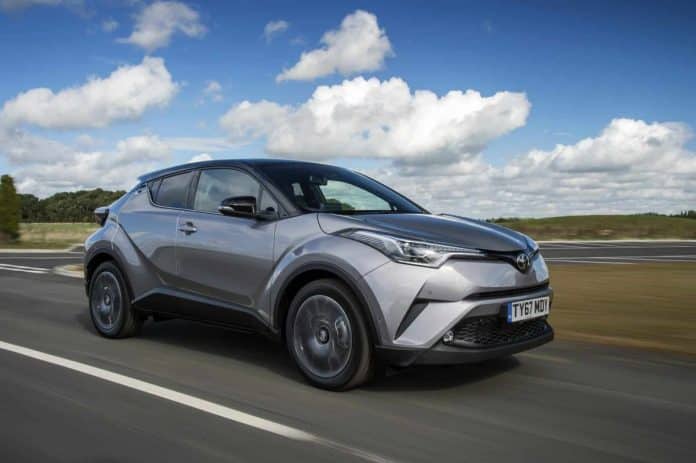
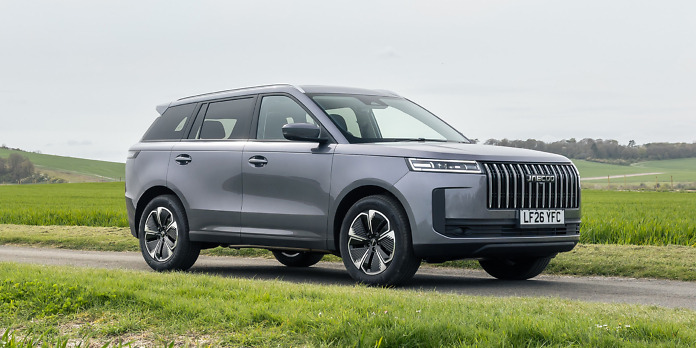
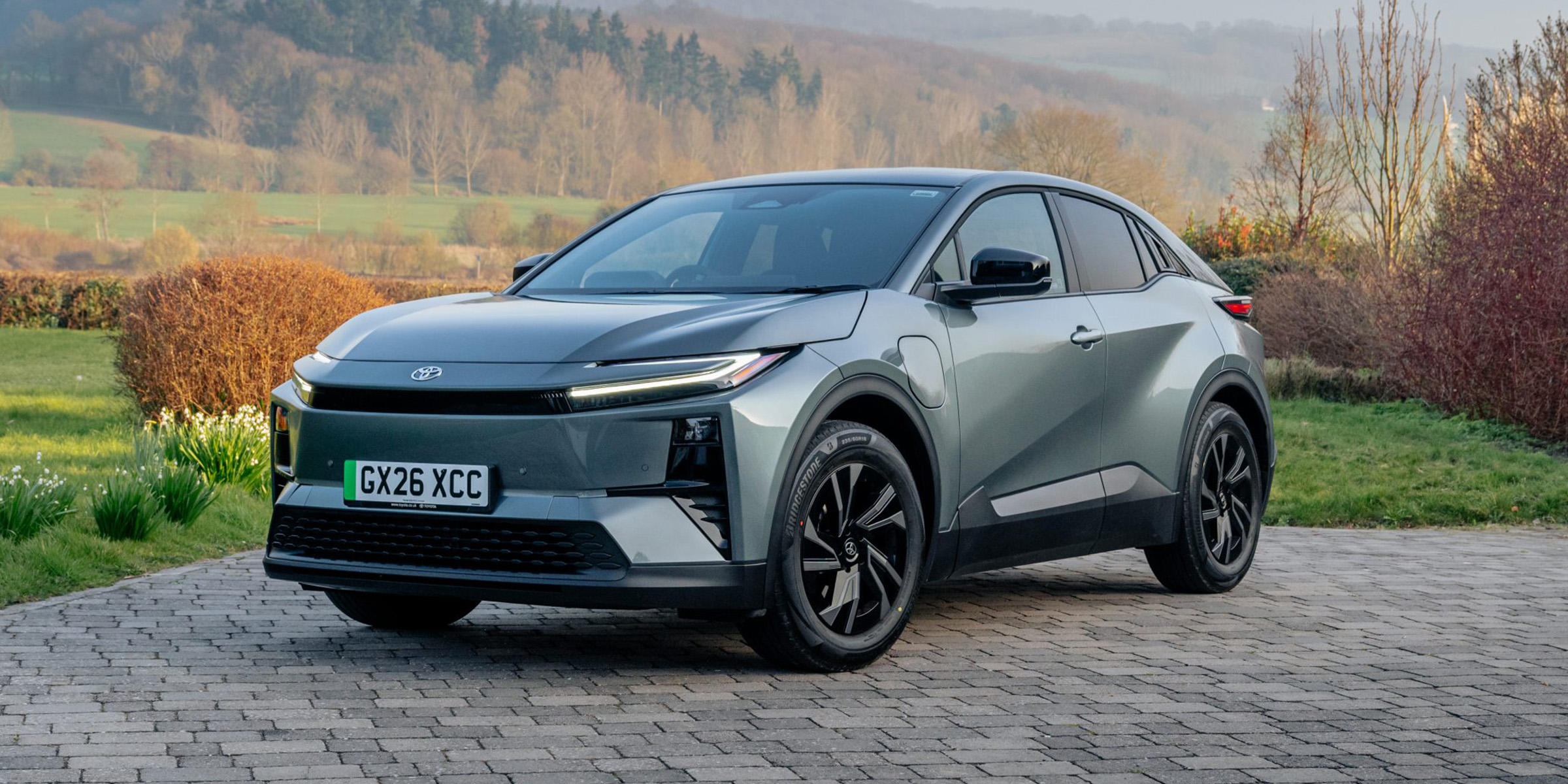
The Toyota C-HR+ is an upcoming mid-sized SUV/crossover electric car. It sits between Toyota’s other two electric SUVs, being smaller than the bZ4X but larger than the Urban Cruiser (also coming later in 2025).

Despite the name, the C-HR+ is a completely different car to the Toyota C-HR. That car is designed for petrol and hybrid power, while the C-HR+ is a purely electric car and is built on a different platform. It is quite different both inside and out.

The new Toyota C-HR+ will enter a hugely competitive electric SUV market, with pretty much every car brand having something to offer in this segment. It’s also the most popular segment for private EV buyers.

There will be three trim levels available (Base-spec Icon, mid-level Design, and top-spec Excel). The entry-level Icon will get a 167hp motor with a 58kWh battery, which should yield an official driving range of about 280 miles. The Design and Excel models get a more powerful 224hp motor with a 77kWh battery, which means the official battery range improves to about 370 miles (for Design) and 330 miles (for Excel). All of these numbers are subject to final confirmation before the C-HR+ goes on sale in the UK.

Toyota expects the mid-spec Design model to be the biggest seller, based on expected pricing and specification – and because it gets the best driving range of all the models.

Being a dedicated EV, rather than being based on a petrol car design, the C-HR+ benefits from more cabin and boot space. The interior layout is completely different to the C-HR, and is quite reminiscent of the Citroën ë-C4 with a low steering wheel and high-mounted display above it. The boot runs to 416 litres, which is notably larger than the 310-litre boot in the plug-in hybrid C-HR.

The Toyota C-HR+ is now on sale in the UK, with the model available to configure on the Toyota UK wesbite. First deliveries are expected in March 2026.

Key specifications

Body style: Medium-sized SUV/crossover
Engines:
electric, single or dual motors
Price:
from £32,995 (including £1,500 electric grant)

World launch: Spring 2025
UK arrival date: Spring 2026

Media reviews

The first media reviews of the Toyota C-HR+ have started to be published, though keep in mind that some of these test drives are based on the prototype version. Keep checking back for the latest updates.

Auto Express

Auto Trader

Car

Electrifying.com

Top Gear

Safety rating

Independent crash test and safety ratings from Euro NCAP

No safety rating

As of March 2026, the Toyota C-HR+ has not been assessed by Euro NCAP.

Eco rating

Independent economy and emissions ratings from Green NCAP

No eco rating

As of March 2026, the Toyota C-HR+ has not been assessed by Green NCAP.

The Green NCAP programme measures exhaust pollution (which is zero for an electric car) and energy efficiency. Electric cars are much more energy-efficient than combustion cars, so the C-HR+ is likely to score very highly in Green NCAP testing if and when it takes place. Check back again soon.

Running cost rating

Clear Vehicle Data logo close crop

Monthly cost of ownership data provided exclusively for The Car Expert by Clear Vehicle Data

No data yet

As of March 2026, we don’t have independently verified data available for the Toyota C-HR+. Check back again closer to the vehicle’s UK launch.

Reliability rating

MotorEasy logo 600x167

Reliability data provided exclusively for The Car Expert by MotorEasy

No reliability rating

The Toyota C-HR+ is a brand-new model so we won’t have any meaningful reliability data for years to come.

The Car Expert’s reliability information is provided exclusively to us using workshop and extended warranty data from our partner, MotorEasy, sourced from both official dealerships and independent workshops. 

As soon as MotorEasy has sufficient data on the C-HR+, we’ll publish the results here.

Warranty rating

New car warranty information for the Toyota C-HR

Overall ratingC56%
New car warranty duration3 years
New car warranty mileage60,000 miles
Battery warranty duration8 years
Battery warranty mileage100,000 miles

Toyota’s new car warranty is pretty much the bare minimum offered in the UK, with a duration of three years and a limit of 60,000 miles. Other rivals in the price bracket do better (and in some cases, much better). Additionally, the battery components are covered by a separate eight-year/100,000-mile warranty.

Toyota does offer a conditional warranty extension programme for up to seven years beyond the end of the original new car warranty, with an overall limit of 100,000 miles (including mileage already accumulated in the first three years). However, this requires the car to be serviced by an official Toyota dealership every year, whereas your new car warranty is not restricted. Other restrictions also apply, so check with your Toyota dealer for full terms and conditions.

Similar cars

If you’re looking at the Toyota C-HR+, you might also be interested in these alternatives.

BYD Atto 3 | Citroën ë-C5 Aircross | Cupra Tavascan | Ford Capri | Ford Explorer | Hyundai Ioniq 5 | Kia EV5 | Leapmotor C10Mini Countryman Electric | Nissan Ariya | Peugeot e-3008 | Renault Scenic E-Tech | Skoda Enyaq | Smart #5 | Vauxhall Grandland ElectricVolvo EX40 | Volkswagen ID.4

More news, reviews and information about the Toyota C-HR at The Car Expert
Everything you need to know about Toyota

Everything you need to know about Toyota

Toyota C-HR test drive

Toyota C-HR test drive

Toyota C-HR

Toyota C-HR

New Toyota C-HR crossover revealed

New Toyota C-HR crossover revealed

Toyota C-HR test drive

Toyota C-HR test drive

Pricing and specs for refreshed Toyota C-HR range

Pricing and specs for refreshed Toyota C-HR range

Toyota C-HR (2016 to 2023)

Toyota C-HR (2016 to 2023)

Updated Toyota C-HR gets new hybrid engine and more equipment

Updated Toyota C-HR gets new hybrid engine and more equipment

Toyota boosts its scrappage scheme offer

Toyota boosts its scrappage scheme offer

Toyota dominates list of best-value hybrids

Toyota dominates list of best-value hybrids

Best value cars to stop depreciation

Best value cars to stop depreciation

Toyota C-HR review

Toyota C-HR review

Buy a Toyota C-HR+

If you’re looking to buy a new or used Toyota C-HR+, The Car Expert’s partners can help you find the right car.

Motors 600x300

Find your next used car with Motors. Find out more

Auto Trader logo 600x300

Find your next new or used car with Auto Trader. Find out more

Carwow logo 600x300

Find your next new or used car with Carwow. Find out more

Lease a Toyota C-HR+

If you’re looking to lease a new Toyota C-HR+, The Car Expert’s partners can help you find a competitive deal.

Leasing-com logo

Personal contract hire deals from Leasing.com. Find out more

Carwow logo 600x300

Personal contract hire deals from Carwow. Find out more

Select Car Leasing logo

Personal contract hire deals from Select Car Leasing. Find out more

Subscribe to a Toyota C-HR+

Subscriptions are becoming a very popular way for consumers to try an electric car for a few weeks or months to help decide whether it’s a suitable alternative to a petrol car. If you’re interested in a car subscription, The Car Expert’s partners can help. (PS: What’s a car subscription?)

SelfDrive UK logo

Car subscriptions from SelfDrive.
Find out more

Drive Fuze logo 600x300

Car subscriptions from DriveFuze.
Find out more

Cocoon Vehicles logo 600x300

Car subscriptions from Cocoon.
Find out more
Volvo EX60

Summary

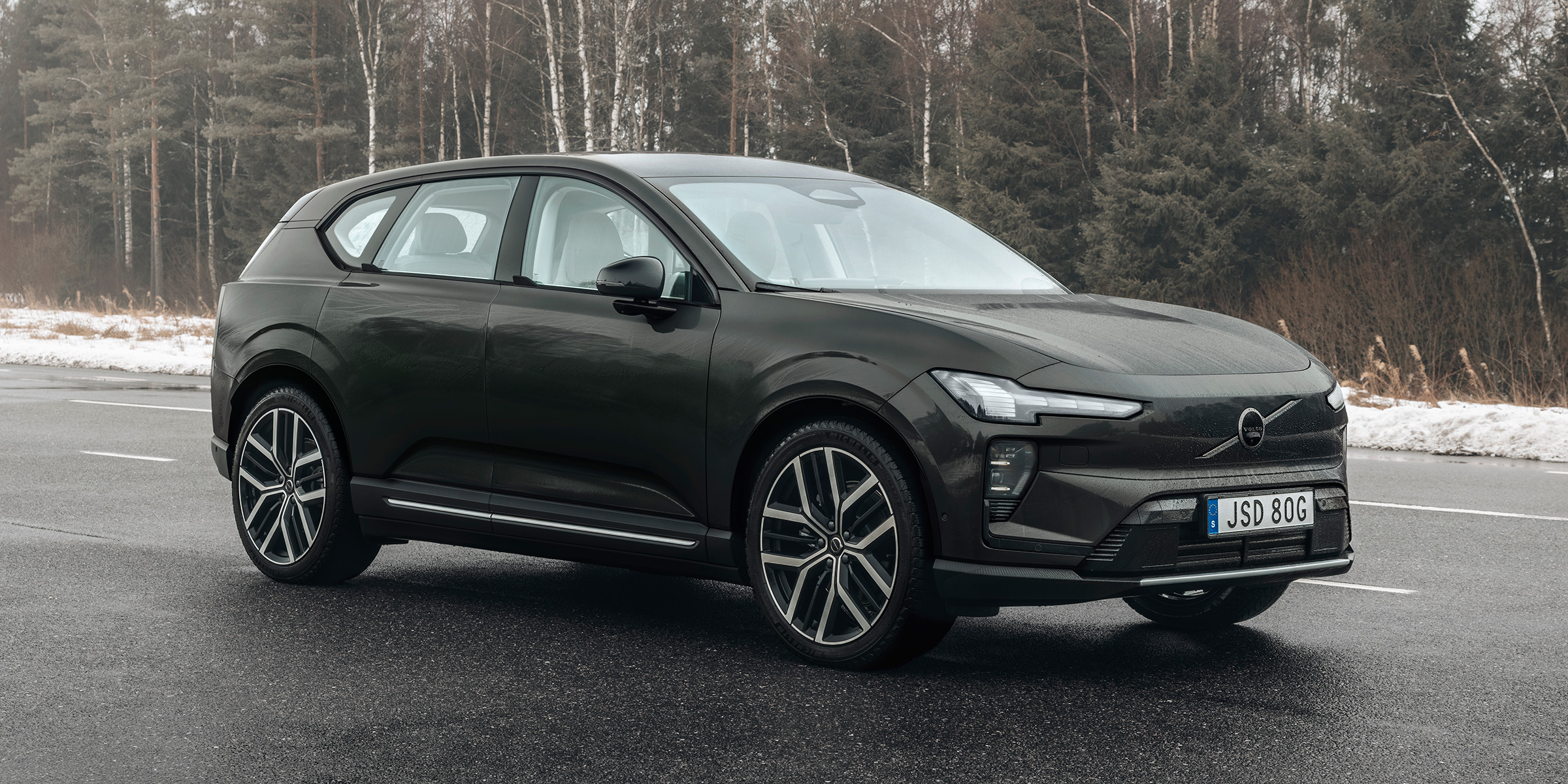
The Volvo EX60 is an all-electric mid-size SUV that the manufacturer says ‘represents a new beginning’ for the Volvo, with improved battery range, charging speed, and performance.

As a mid-sized SUV, this EX60 sits above the smaller EX30 and EX40 models and below the larger EX90 in Volvo’s battery powered line-up, and is now poses a sales challenge to the likes of the BMW iX3Renault Scenic E-TechFord Explorer and Tesla Model Y.

Volvo claims that the SUV offers a class-leading battery range of 503 miles on a single charge (in an all-wheel drive configuration). The Swedish manufacturer adds that the EX60 can add up to 211 miles of range in ten minutes when using a 400kW DC rapid charging station.

Now available to order in the UK, the EX60 is available with three different powertrain variants. The 680hp ‘P12 AWD Electric’ variant offers that class-leading 503-mile range, while the 510hp ‘P10 AWD Electric’ clocks in at a range of up to 410 miles.

A rear-wheel powered 376hp ‘P6 Electric’ variant delivers up to 385 miles of range. All in all, the EX60 is available in seven different variants, all offered with ten years of battery warranty.

While you can order an EX60 online right now, the first orders won’t arrive until September, so no one in the British motoring media has got behind the wheel of the EX60 just yet. That means we have no review scores to display at the moment.

We will update this page with more information and reviews, as well as safety and running cost data, as soon as those are available. Check back soon!

Key specifications

Body style: Medium SUV/crossover
Engines:
electric, battery-powered
Price:
From £56,860

Launched: Spring 2026
Last updated: N/A
Replacement due: TBA

Media reviews

Highlighted reviews and road tests from across the UK automotive media. Click any of the boxes to view.

There are no reviews on the Volvo EX60 to display here currently – the model is available to order but reviewers aren’t likely to get their hands on the model until late Summer or Autumn. Once reviews from the UK automotive media are published, we will update this section.

Safety rating

Independent crash test and safety ratings from Euro NCAP

No safety rating

As of March 2026, the Volvo EX60 has not been assessed by Euro NCAP.

Eco rating

Independent economy and emissions ratings from Green NCAP

No eco rating

As of March 2026, the Volvo EX60 has not been assessed by Green NCAP.

The Green NCAP programme measures exhaust pollution (which is zero for an electric car) and energy efficiency. Electric cars are much more energy-efficient than combustion cars, so the EX60 is likely to score very highly in Green NCAP testing if and when it takes place. Check back again soon.

Running cost rating

Clear Vehicle Data logo close crop

Monthly cost of ownership data provided exclusively for The Car Expert by Clear Vehicle Data

No data yet

As of March 2026, we don’t have independently verified data available for the Volvo EX60. Check back again soon.

Reliability rating

MotorEasy logo 600x167

Reliability data provided exclusively for The Car Expert by MotorEasy

No reliability rating

As of March 2026, we don’t have enough reliability data on the Volvo EX60 to generate a reliability rating.

The Car Expert’s reliability information is provided exclusively to us using workshop and extended warranty data from our partner, MotorEasy, sourced from both official dealerships and independent workshops. 

As soon as MotorEasy has sufficient data on the Volvo, we’ll publish the results here.

Recalls

Official DVSA safety recalls that have been issued for the Volvo EX60

As of March 2026, we are not aware of any DVSA vehicle safety recalls affecting the Volvo EX60. However, recall information is updated regularly, so this may have changed.

You can check to see if your car has any outstanding recalls by visiting the DVLA website or contacting your local Volvo dealer.

Similar cars

If you’re looking at a new or used Volvo EX60, you might also be interested in these alternatives

Audi Q6 e-tron | BMW iX3Ford Mustang Mach-E | Hyundai Ioniq 5 | Jaguar I-Pace | Kia EV6 Mercedes-Benz GLC Electric | Mini Countryman Electric | Nissan Ariya | Peugeot e-3008 | Polestar 2 | Porsche Macan Electric | Skoda Enyaq | Smart #3 | Tesla Model Y | Volkswagen ID.4

More information

More news, reviews and information about the Volvo EX60 at The Car Expert

New electric Volvo EX60 SUV now available to order

New electric Volvo EX60 SUV now available to order

Buy a Volvo EX60

If you’re looking to buy a new or used Volvo EX60, The Car Expert’s partners can help you find the right car.

Motors 600x300

Find your next used car with Motors. Find out more

Auto Trader logo 600x300

Find your next new or used car with Auto Trader. Find out more

Carwow logo 600x300

Find your next new or used car with Carwow. Find out more

Subscribe to a Volvo EX60

Subscriptions are becoming a very popular way for consumers to try an electric car for a few weeks or months to help decide whether it’s a suitable alternative to a petrol car. If you’re interested in a car subscription, The Car Expert’s partners can help. (PS: What’s a car subscription?)

Cocoon Vehicles logo 600x300

Car subscriptions from Cocoon.
Find out more

Just Vehicle Solutions logo 600x300

Car subscriptions from Just Vehicle Solutions.
Find out more

Flexible Vehicle Contracts logo 600x300px

Car subscriptions from Flexible Vehicle Contracts.
Find out more

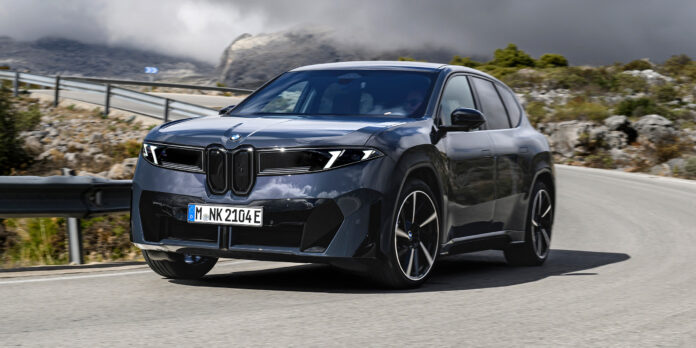
New BMW i3 revealed – it’s an electric 3 Series

0

BMW has revealed the new i3, an electric saloon that will sit alongside the upcoming all-new 3 Series petrol models. It marks the second car to emerge from the company’s “Neue Klasse” reinvention.

The i3 name needs a quick explanation. BMW previously used the name i3 for a small city car sold between 2013 and 2022, which was a completely different sort of vehicle. This new i3 is the electric version of the next 3 Series, just as the i5 is an electric 5 Series and the i7 is an electric 7 Series.

The Neue Klasse programme, explained when the BMW iX3 launched late last year, represents a complete reset of BMW’s approach to electric cars. The i3 shares the same underlying technology as the iX3 – including the same advanced electrical systems, the same windscreen-wide information display, and the same fast-charging capability – but in a traditional 3 Series saloon body, rather than an SUV.

For a broader ownership picture, see our BMW i3 Expert Rating, which will be continually updated as new information becomes available.

What’s new

In 3 Series terms, everything. The i3 is the first model of the new 3 Series range to be revealed, exactly as BMW did with the 5 Series and 7 Series launches in recent years. But much of the hardware is shared with the all-new BMW iX3 SUV, which we reviewed last week.

As the second model in BMW’s Neue Klasse reinvention, the i3 shares a lot of the new features and innovations that were debuted in the iX3, and the cabin layout is very similar.

The most notable claim is range. BMW quotes up to around 560 miles on a single charge under official test conditions, although that figure is provisional at this stage. We’ll have exact lab test numbers closer to the UK launch later this year.

The charging capability is equally impressive on paper. At a compatible public fast charger, BMW claims around 250 miles of range can be recovered in roughly ten minutes – and the car supports bidirectional charging, meaning it can supply power back to a home energy system or charge external devices like an e-bike directly from the battery.

Inside, the i3 carries over the Panoramic iDrive system that impressed in the iX3 review. Rather than relying solely on a central touchscreen, it projects information across the full width of the windscreen – speed, navigation, media and more – directly into the driver’s line of sight. It’s one of the more genuinely useful pieces of technology in any new car right now, and its presence here confirms it will become a Neue Klasse signature rather than an iX3 exclusive.

Physical buttons are retained for key functions, and the cabin design follows the same clean, driver-focused layout as the iX3. BMW has also continued its sustainability approach from the iX3, with around 30% of the car built from recycled or secondary materials, including aluminium chassis components and seat fabrics made from recycled textiles.

Timing and pricing

First UK deliveries are expected the last few months of 2026, and we are yet to see full UK pricing and specifications. The only variant confirmed so far is the i3 50 xDrive with all-wheel drive and 469hp, which suggests a premium positioning. A single-motor, lower-powered version at a more accessible price is likely to follow, which is exactly how the launch of the new iX3 is rolling out.

The petrol and hybrid versions of the new 3 Series are expected to be revealed later this year, with UK sales beginning in early 2027.

The context

The 3 Series has been BMW’s defining model for five decades. Launching the electric version first – before the petrol models – is a deliberate signal about where BMW sees the range heading, and puts the i3 in direct competition with the Tesla Model 3, the Polestar 2 and the upcoming Mercedes-Benz C-Class EQ, among others.

Whether it drives as well as a traditional 3 Series is the question that matters most to many BMW owners, and one that can only be answered once we can get behind the wheel later this year.

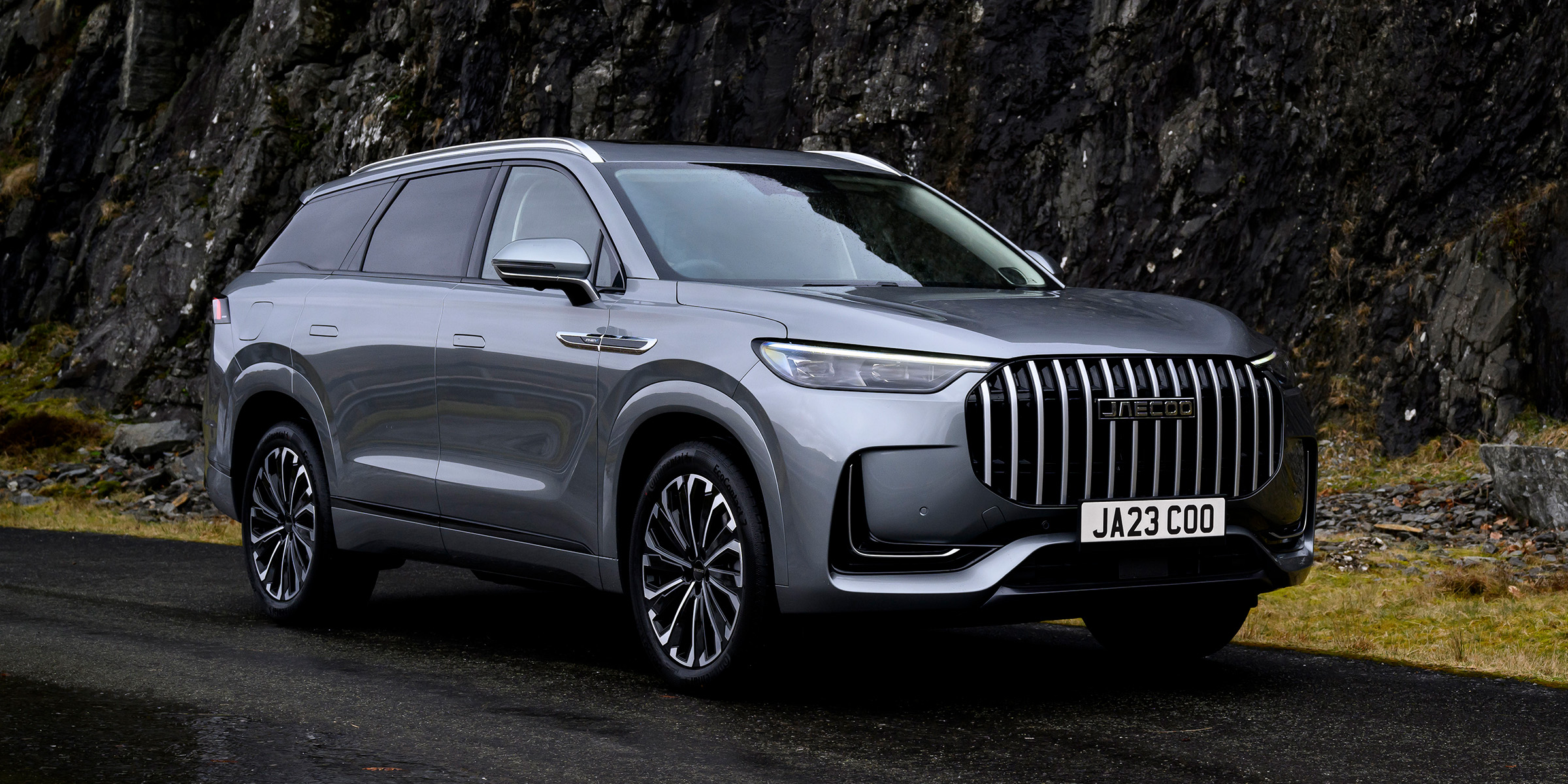
Jaecoo 7 range expanded with new hybrid model

0

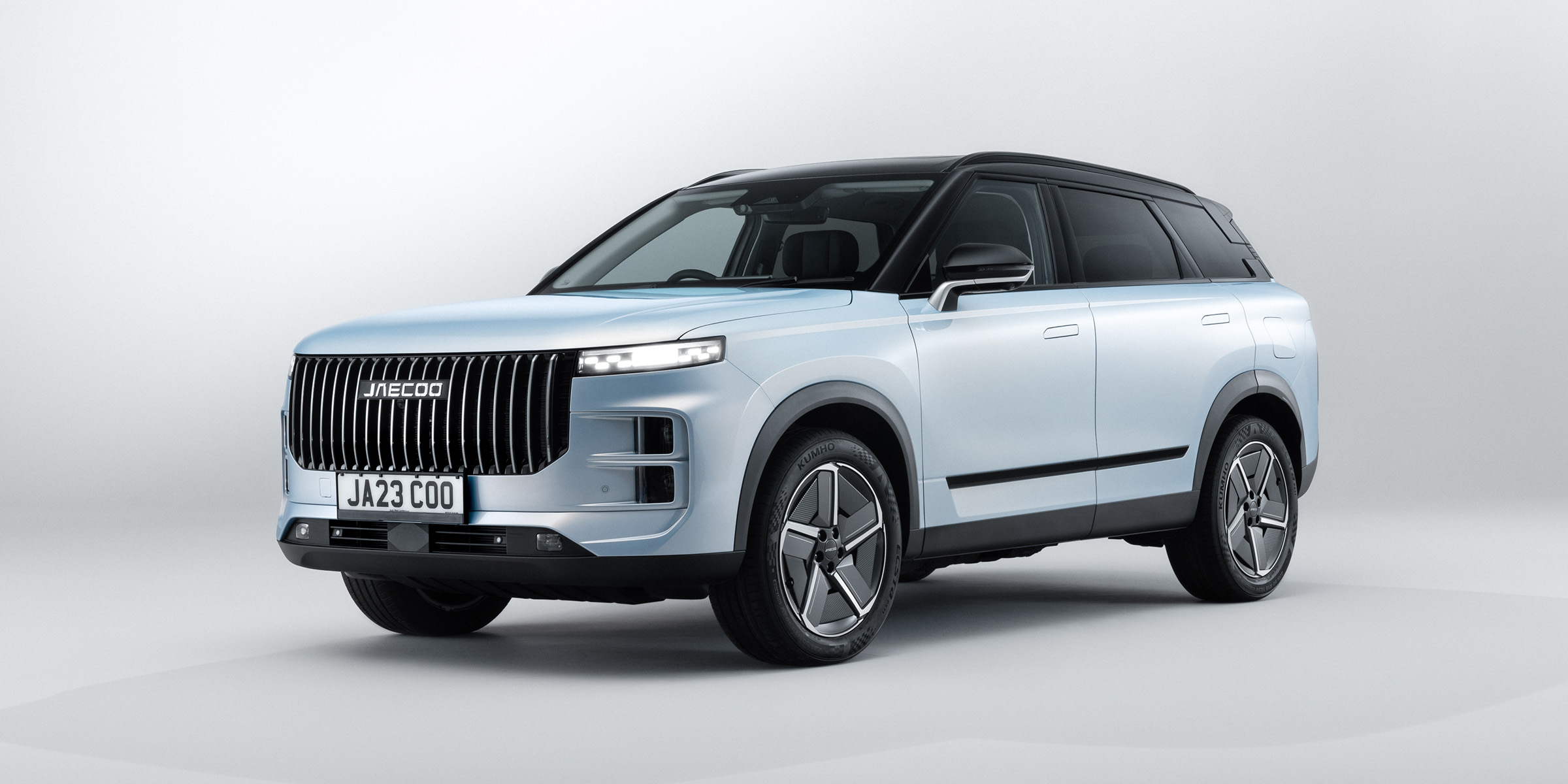
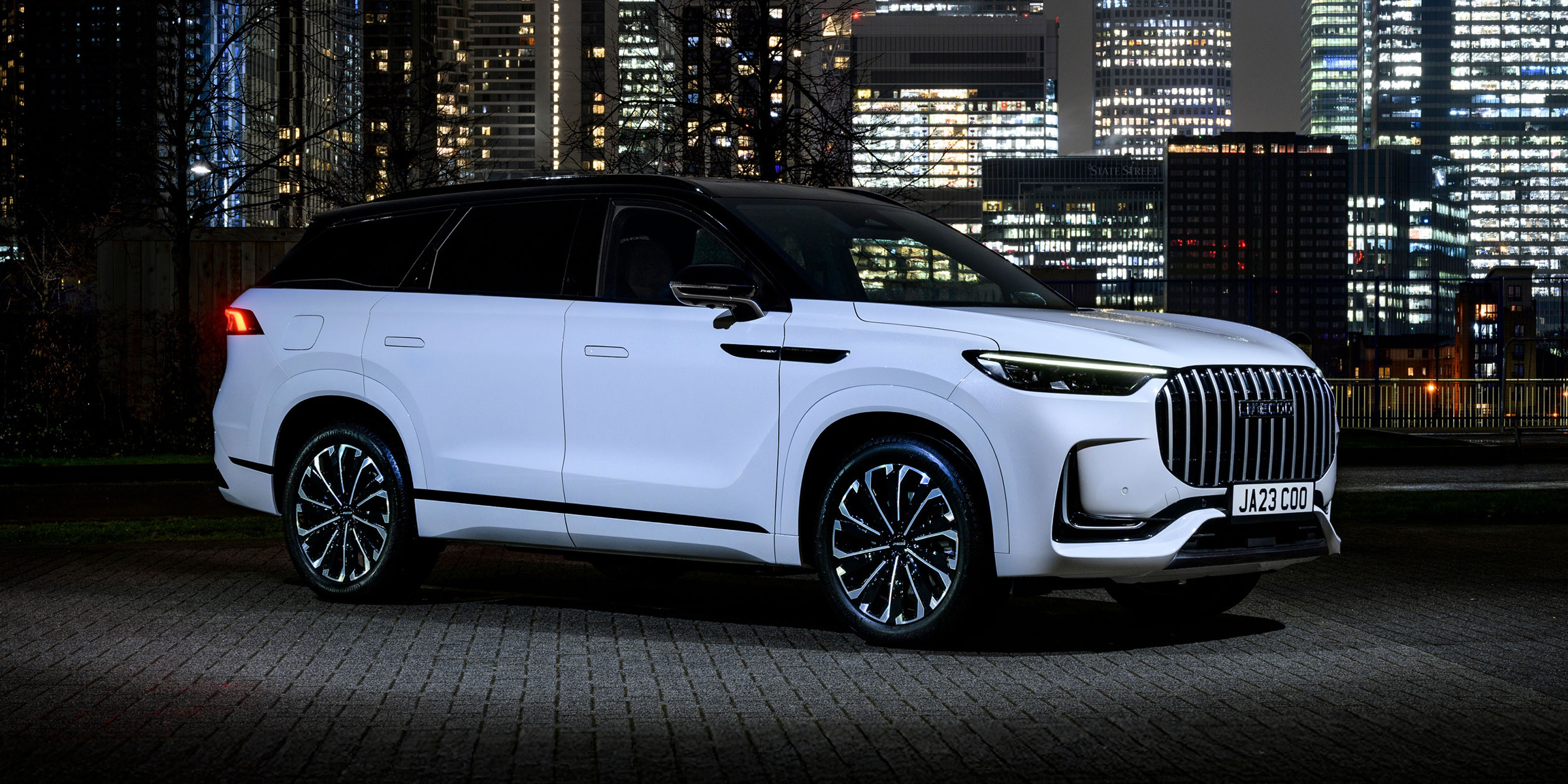
Jaecoo has expanded its UK line-up with two new versions of the Jaecoo 7 SUV which arrive in May: a new petrol-electric hybrid model and a blacked-out special edition of its existing plug-in hybrid.

JAECOO 7 Hybrid (SHS-H)

For the first time, the Jaecoo 7 will be offered as a full hybrid, badged ‘SHS-H’. It’s positioned as a more affordable and convenient alternative to the plug-in hybrid, especially for drivers who can’t easily charge at home.

The ‘SHS-H’ uses a 1.5-litre turbocharged petrol engine combined with an electric motor, producing 224hp. Performance is respectable, with 0–62 mph taking 8.3 seconds and a top speed of 112mph. Jaecoo claims CO₂ emissions of 125g/km and fuel economy of up to 53mpg.

Two trims will be available:

Pure (from £29,195)

  • Cloth upholstery
  • 13-inch infotainment screen with wireless Apple CarPlay and Android Auto
  • Dual-zone climate control
  • Parking sensors.

Deluxe (from £32,795)

  • All ‘Pure’ features not replaced
  • Eco-leather seats
  • Upgraded eight-speaker sound system
  • Larger 15-inch infotainment display.

Black Luxury Edition

Alongside the hybrid, JAECOO has introduced a new Black Luxury version of the existing plug-in hybrid ‘SHS-P’ model.

This model is based on the top-spec ‘Luxury’ trim and focuses purely on styling changes rather than mechanical updates. It features a full blacked-out look, including:

  • Black front grille and exterior badges
  • Black mirrors, roof, wheels and roof rails
  • A black ‘Luxury’ badge on the rear pillar
  • Dark interior details such as a black headliner and sun visors

The Black Luxury edition is priced from at over £37k. Both new variants will be available to order through Jaecoo’s UK dealer network from May 2026, and like the rest of the range, they come with a seven-year/100,000-mile warranty and one year of RAC breakdown cover.

Who are Jaecoo?

Jaecoo is a brand owned by Chinese motoring giant Chery, and its taking the UK by storm. The brand has recorded over 35,000 registrations since launch, and the Jaecoo 7 was the fifth best-selling car in February 2026, with 1,446 units sold that month.

Plug-in hybrid models have made up more than 70% of Jaecoo 7 sales so far, and the addition of a and other hybrid option broadens the range of model choices further.

Lepas L8

Summary

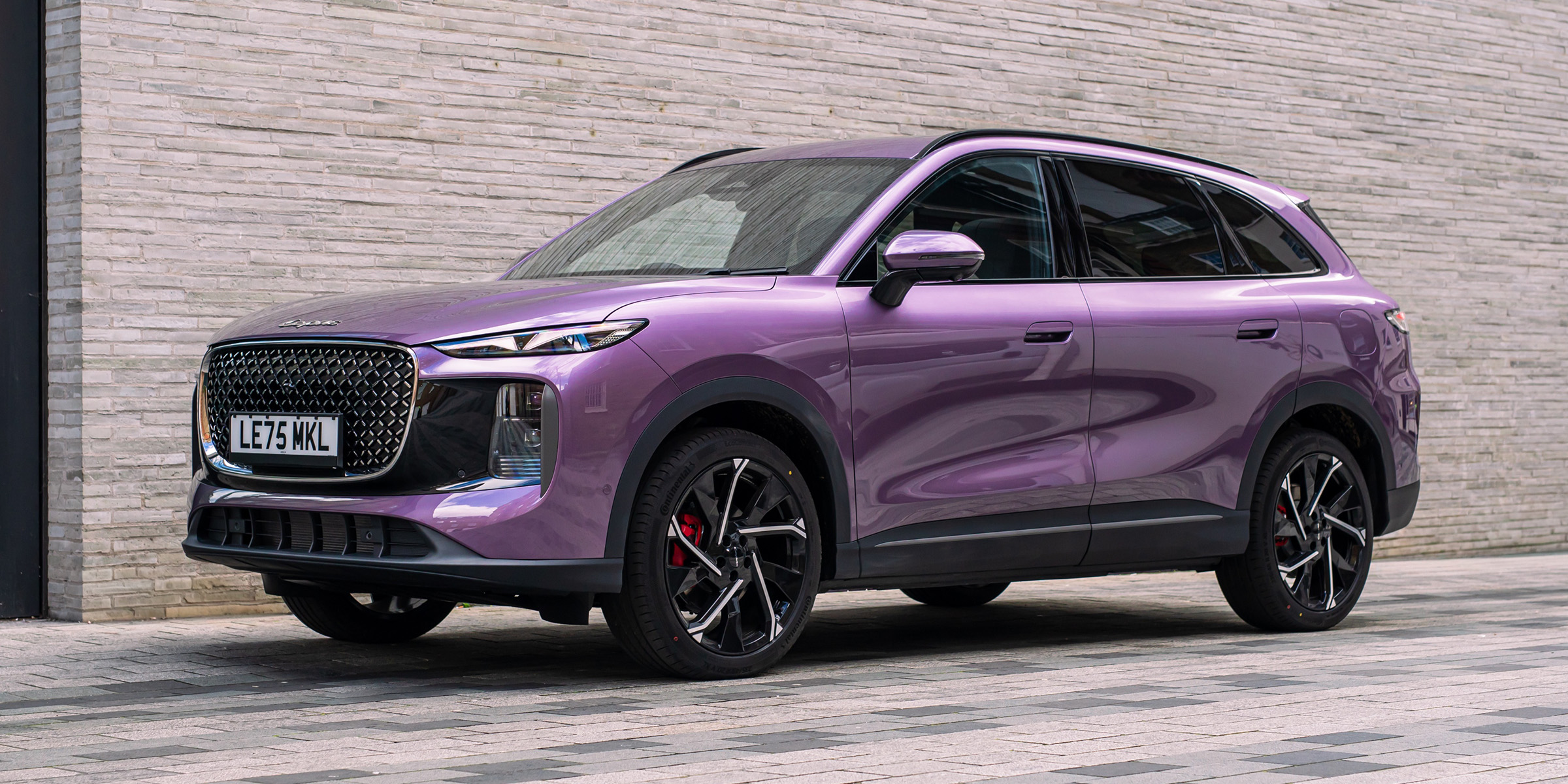
The Lepas L8 is a large plug-in hybrid SUV from Chinese newcomers Lepas, launching in the UK in the second half of 2026.

Lepas may be a new name in Europe, but not a standalone startup. It’s part of the huge Chery Group and a sister brand to Chery, Omoda and Jaecoo, which have all enjoyed successful UK launches in over the last two years.

The L8 is a five-seat SUV based on the Chery Tiggo 8, which arrived in the UK late last year. Although technical details have not yet been confirmed, it’s likely to be powered by the same 1.5-litre petrol/electric plug-in hybrid powertrain, promoted by Chery Group as its Super Hybrid System.

Based on Chery’s approach with its other brands already launched in the UK, we expect the Lepas L8 to offer a high level of standard specification at a price that undercuts most other vehicles in its class.

Lepas will be announcing the details of its UK rollout in coming weeks, but we expect that it will be plugged into the extensive dealer network that Chery Group has already established. It’s also likely that another model or two will soon be announced by the time showrooms open.

At the time of writing, no one in the British motoring media has got behind the wheel of the Lepas L8. That means we have no review scores to display at the moment.

We will update this page with more information and reviews, as well as safety and running cost data, as soon as those are available. Check back soon!

Key specifications

Body style: Large SUV
Engines:
petrol plug-in hybrid
Price:
TBA

Launching: Autumn 2026
Last updated: N/A
Replacement due: TBA

Media reviews

Highlighted reviews and road tests from across the UK automotive media. Click any of the boxes to view.

There are no reviews on the Lepas L8 – foreign or UK-based test drives – to display here currently. Once reviews from the UK automotive media are published, we will update this section.

Safety rating

Independent crash test and safety ratings from Euro NCAP

No safety rating

As of March 2026, the Lepas L8 has not been assessed by Euro NCAP.

Eco rating

Independent economy and emissions ratings from Green NCAP

No eco rating

As of March 2026, the Lepas L8 has not been assessed by Green NCAP.

The Green NCAP programme measures exhaust pollution (which is zero for an electric car) and energy efficiency. Electric cars are much more energy-efficient than combustion cars, so the L8 is likely to score very highly in Green NCAP testing if and when it takes place. Check back again soon.

Running cost rating

Clear Vehicle Data logo close crop

Monthly cost of ownership data provided exclusively for The Car Expert by Clear Vehicle Data

No data yet

As of March 2026, we don’t have independently verified data available for the Lepas L8. Check back again soon.

Reliability rating

MotorEasy logo 600x167

Reliability data provided exclusively for The Car Expert by MotorEasy

No reliability rating

As of March 2026, we don’t have enough reliability data on the Lepas L8 to generate a reliability rating.

The Car Expert’s reliability information is provided exclusively to us using workshop and extended warranty data from our partner, MotorEasy, sourced from both official dealerships and independent workshops. 

As soon as MotorEasy has sufficient data on the L8, we’ll publish the results here.

Recalls

Official DVSA safety recalls that have been issued for the Lepas L8

As of March 2026, we are not aware of any DVSA vehicle safety recalls affecting the Lepas L8. However, recall information is updated regularly, so this may have changed.

You can check to see if your car has any outstanding recalls by visiting the DVLA website or contacting your local Lepas dealer.

Similar cars

If you’re looking at a new or used Lepas L8, you might also be interested in these alternatives

Audi Q7 | BMW X7 | Chery Tiggo 8Genesis GV80 | Hyundai Santa Fe | Kia Sorento | Land Rover Defender | Lexus RX | Mercedes-Benz GLE | Mercedes-Benz GLS | Nissan X-Trail | Peugeot 5008 | Porsche Cayenne | Range Rover | Range Rover Sport | SEAT Tarraco | Skoda Kodiaq | KGM Rexton | Suzuki Across | Volkswagen Touareg | Volvo XC90

More information

More news, reviews and information about the Lepas range at The Car Expert

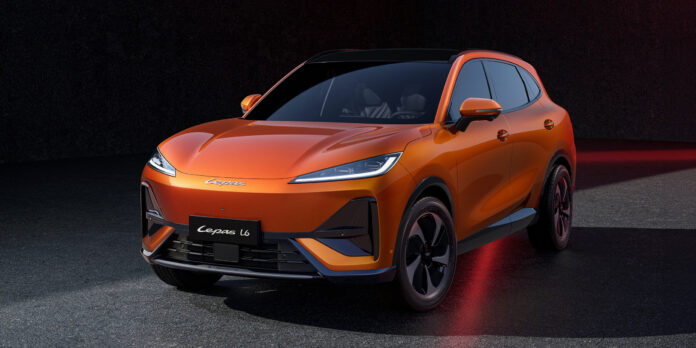
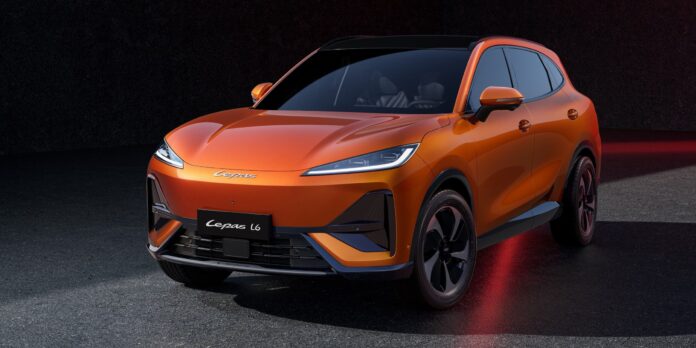
Lepas L6

Lepas L6

New Lepas L6 SUV launched

New Lepas L6 SUV launched

Lepas confirms L8 SUV as first UK model

Lepas confirms L8 SUV as first UK model

Lepas set for UK arrival in 2026

Lepas set for UK arrival in 2026

Buy a Lepas L8

If you’re looking to buy a new or used Lepas L8, The Car Expert’s partners can help you find the right car.

Motors 600x300

Find your next used car with Motors. Find out more

Auto Trader logo 600x300

Find your next new or used car with Auto Trader. Find out more

Carwow logo 600x300

Find your next new or used car with Carwow. Find out more

Subscribe to a Lepas L8

If you’re interested in a car subscription, The Car Expert’s partners can help. (PS: What’s a car subscription?)

Cocoon Vehicles logo 600x300

Car subscriptions from Cocoon.
Find out more

Just Vehicle Solutions logo 600x300

Car subscriptions from Just Vehicle Solutions.
Find out more

Flexible Vehicle Contracts logo 600x300px

Car subscriptions from Flexible Vehicle Contracts.
Find out more

Everything you need to know about DS Automobiles

DS Automobiles has now been on the UK market for 12 years but, even after more than a decade of sales, many still struggle to understand just what the brand stands for and where it sits in the automotive market.

Part of this is perhaps due to the fact that before setting up on its own, DS spent six years as an extra badge on Citroëns, signifying top-level models with more luxurious finishes and higher levels of kit.

So is DS Automobiles still a part of Citroën? Or is it something different?

When DS was spun off from the French automotive giant as its own brand in 2014, the newcomer’s stated ambition was to “revive the tradition of premium vehicles in the French automotive industry”. It’s been trying to do that ever since, emphasising its links to Paris and the centre of high fashion.

The company claims that this has been transmitted into its cars, while trying, like many have before, to break into the executive market dominated by the German heavyweights – Audi, BMW and Mercedes-Benz.

So far, the Germans are losing little sleep. DS models have been praised for their distinctive design and extensive equipment offerings, but have earned criticism from many reviewers as having too much style over substance.

This elicits little more than a gallic shrug from DS, which still bases its strategy around being fashionable. It insists that its models “embody the French art of travel” with French luxury and plenty of savoir-faire.

So who or what is DS?

DS first appeared in 2009 as an additional badge hung on cars in the mainstream Citroën range, designed to signify a more upmarket model with the likes of special paint finishes and upgraded interiors – a spotlighted example has always been leather upholstery patterned to resemble a watch strap.

The first model to carry the new badge was the Citroën DS3 hatch, which appeared in 2010. Other high-spec Citroëns called the Citroën DS4 and Citroën DS5 followed in quick succession. But parent PSA Group had long desired a premium badge to site above its mainstream Citroën and Peugeot ranges, so DS was launched into Europe in 2014 as a standalone brand (having been successfully trialled in China two years earlier). As such, its three models were renamed DS 3, DS 4 and DS 5, respectively.

More than a decade on, the DS brand still struggles for recognition or appeal amongst many buyers, probably not helped by a fairly lukewarm reception to its initial model range from the motoring media. For many years, none of its models carried an Expert Rating of more than 60% which compared poorly to the aforementioned German rivals, not to mention booming brands such as Hyundai or Kia.

DS planned to evolve out of this reputation from 2024 by reinventing itself as an upmarket electric brand, even claiming bold ambitions of moving “above premium” to take on the likes of Bentley. DS UK sales dropped in 2025, barely breaking 1,000, just as the new boss of parent group Stellantis was telling journalists that slower-selling brands would be axed.

Despite that DS management argues that the company is turning a profit and coming models will help it grow significantly – while the second generation range is taking a while to establish itself, the first of the new models, the DS No8, has attracted some positive comment. A lot is riding on the soon to arrive DS No4 and a replacement due in 2027 for the DS 3.

When did DS Automobiles launch in the UK?

DS-branded Citroëns started appearing in the UK in 2010, and the first cars rebranded as DS models were launched in 2014.

Even then, the process took a while – DS cars continued to be sold out of Citroën dealers for several years, while the first distinct DS ‘boutique’ eventually opened in London in 2016.

What models does DS Automobiles have and what else is coming?

The DS range has undergone major changes in what the company describes as ‘transition years’ of 2024 and 2025. Just three models are currently listed, with the DS 3 the one remaining car from the brand’s ‘first generation’.

The DS 3 has undergone very confusing model naming over the years and if you are thinking of buying used make sure you know which car you are getting. The original Citroën DS 3, launched in 2010, was a supermini, which lost its Citroën moniker with the launch of DS as a standalone brand in 2014, becoming the DS 3. In 2019, it was replaced by a jacked-up crossover-style model called the DS 3 Crossback. Then in 2023 the crossover was updated and dropped the Crossback tag to become… the DS 3. Confused yet?

The DS 3 is currently available as a hybrid or a full-electric model, dubbed the E-Tense, but is due to be replaced in 2027 – not before time as poor reliability and media reviews, plus average running costs and safety, have as of March 2026 earned it a paltry 53% Expert Rating.

The next DS3 will likely be known as the DS No3, the new moniker applied to the second-generation line-up. The first of these is the No8, a medium-sized liftback that took the role of range flagship when it arrived in Autumn 2025. Available with three power outputs and front or all-wheel drive, it has certainly boosted the DS reputation with an A-level 70% Expert Rating.

Next in showrooms will be the No4, which is just going on sale in early 2026. This is a family-sized hatchback – it was originally planned as an EV but with the global slowdown in the switch to electric will now also be offered with hybrid and plug-in hybrid powertrains.    

DS Nº4

DS Nº4

DS Nº4 E-Tense

DS Nº4 E-Tense

DS Nº8

DS Nº8

Where can I try a DS Automobiles car?

Not at Citroën outlets – DS has been one of those manufacturers to try and shun the traditional dealer model and set up ‘boutique stores’ in high-profile shopping malls, the first in the world opening in the Westfield shopping centre in West London in 2016.

It didn’t entirely work – today these boutiques have become ‘Stores’ and there are only around 25 in the UK – the only ones in Wales are in the very south and in Scotland you will find them only in Edinburgh, Glasgow and Stirling. Many of these stores are on motor retailer parks, with Citroën outlets close by.

What’s particularly significant about this company?

In an automotive market where mechanical components are becoming uniform across the board, DS Automobiles is a car brand that trades heavily on an image of a lifestyle brand, centred on Paris and high fashion.

Alongside that novel watchstrap leather, its car interiors feature design touches like pearl stitching – a thread that disappears into the leather it holds and comes directly from haute-couture dressmakers. The instrumentation, meanwhile, employs the skills of luxury watchmakers.  

The DS obsession with upmarket fashion and lifestyle extends to a service called ‘Only You Privilege’, which it claims “opens the door to an exclusive world”. Available for three years to anyone buying a new DS, Only You offers access to high-class dining, private shows, exclusive tours of museums and such like.  

A DS fact to impress your friends

Why is DS called DS? There are several supposed explanations, with the accepted convention being that the name harks back to one of Citroën’s most revered models, the revolutionary Citroën DS that was first launched in the 1950s.

The letters are said to stand for ‘Different Spirit’ or ‘Distinctive Series’, while in French you pronounce DS in a similar way to ‘déese’, and that means ‘goddess’. Take your pick…

1956 Citroën DS

Summary

The fashion-dominated image of DS has so far only generated niche appeal here in the UK. The brand is regarded as a bit of an oddity and has never really fully enthused British car buyers. Even the brand’s management have been less than happy with the sales from its UK showrooms.

The planned switch to electric only in 2024 was intended to reinvent the brand, with models launched as recently as 2023, such as the BMW 5 Series-rivalling DS 9, dropped. Global markets have diluted those electric plans but DS management certainly ‘talk the talk’, claiming now they want to go further upmarket to become a rival to the likes of Bentley – brave words, but difficult to see this becoming reality.

You may also like:

This article was originally published in July 2023 and updated in March 2026.

Mini John Cooper Works

Summary

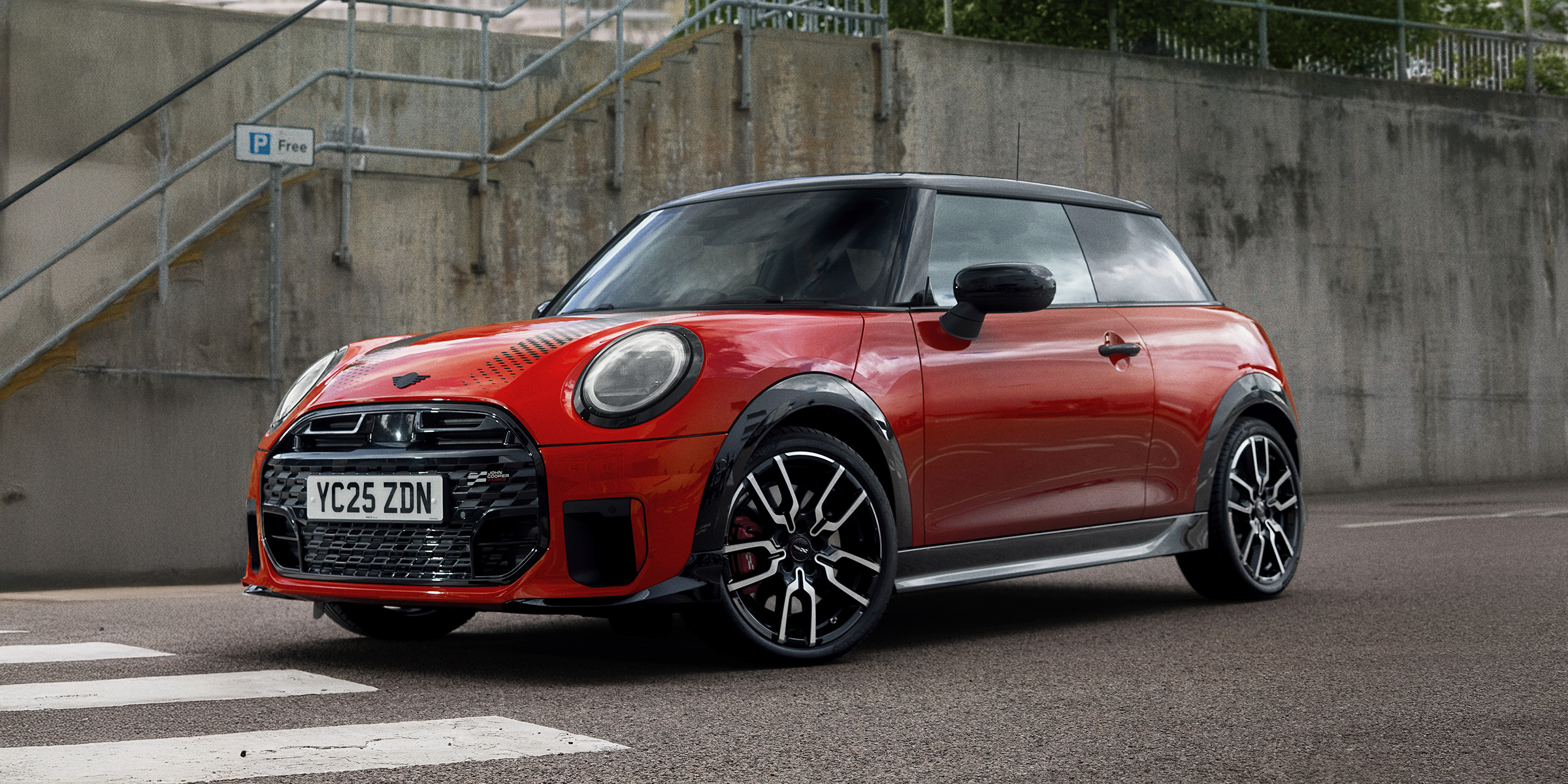
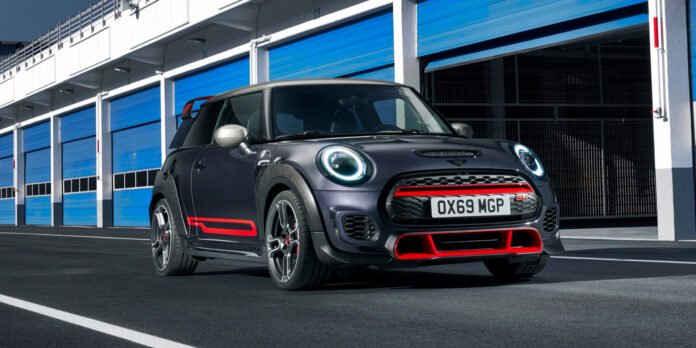
The Mini John Cooper Works, or JCW, is a hot hatch that sits at the top of the highly-regarded Mini Cooper hatchback range. First arriving on UK roads in early 2025, this latest John Cooper Works range also includes electric models, which we cover separately.

One of the last pure petrol-powered hot hatches available in the UK – a dying breed that also still includes the Toyota GR Yaris and Volkswagen Polo GTI – the British motoring media are thankful the petrol JCW has been re-booted for this latest generation of Minis, praising the car for its swift acceleration and its polished interior fit and finish. Nevertheless, reviewers cite several complaints.

“It’s a shame that the JCW is so combative”, says Evo’s Yousuh Ashraf, explaining that the car “wears you down” and “becomes a nuisance” a lot of the time due to its “unyielding” ride. Parker’s Graham King also criticises the car’s “extremely stiff ride quality”, while Carwow’s Tom Wiltshire concludes that “doesn’t feel like a big enough step from the standard Cooper S and it’s very uncomfortable.”

“If you’re after a fast, top-spec Mini Cooper with all the toys and plenty of performance, this is a great car”, explains Jordan Katsianis of Auto Express. “If you’re looking for a brilliant hot hatchback, you might have to look elsewhere.”

As of March 2026, the Mini JCW holds a New Car Expert Rating of B, with a score of 66%. Beyond the car’s rather average set of review scores, this overall rating is bolstered by the car’s full five-star Euro NCAP safety credentials.

Mini JCW highlights

  • Strong performance
  • Competitive pricing
  • High quality interior

Mini JCW lowlights

  • Hard suspension hinders driving comfort
  • No manual gearbox option
  • Cheaper Minis are just as fun

Key specifications

Body style: Small hatchback
Engines:
petrol
Price:
From £33,530

Launched: Spring 2025
Last updated: N/A
Replacement due: TBA

Media reviews

Highlighted reviews and road tests from across the UK automotive media. Click any of the boxes to view.

Featured reviews

More reviews

Car

Evo

Parkers

Safety rating

Independent crash test and safety ratings from Euro NCAP

Overall score: 5 stars
Date tested: October 2025
Read the full Euro NCAP review

Adult protection: 83%
Child protection: 82%
Vulnerable road users: 81%
Safety assist: 77%

Eco rating

Independent economy and emissions ratings from Green NCAP

No eco rating

As of March 2026, the Mini John Cooper Works has not been assessed by Green NCAP.

Running cost rating

Clear Vehicle Data logo close crop

Monthly cost of ownership data provided exclusively for The Car Expert by Clear Vehicle Data

Fuel consumptionAverageScore
Petrol models43 mpgC
CO₂ outputAverageScoreVariationScore
Petrol models147 g/kmC
Insurance groupAverageScoreVariationScore
All models27C

The Mini John Cooper Works is a relatively affordable car to own and run, according to whole-life cost numbers provided exclusively to The Car Expert by our data partner, Clear Vehicle Data.

The car’s fuel economy is estimated to be 43 mpg on average, which is poor when compared to the average hatchback of this size but still quite competitive for a petrol-powered hot hatch. Insurance estimates from Thatcham Research also suggest that the JCW will be cheaper to insure than many other hot hatch competitors too.

Reliability rating

MotorEasy logo 600x167

Reliability data provided exclusively for The Car Expert by MotorEasy

No reliability rating

As of March 2026, we don’t have enough reliability data on the Mini John Cooper Works to generate a reliability rating.

The Car Expert’s reliability information is provided exclusively to us using workshop and extended warranty data from our partner, MotorEasy, sourced from both official dealerships and independent workshops. 

As soon as MotorEasy has sufficient data on the Mini John Cooper Works, we’ll publish the results here.

Warranty rating

New car warranty information for the Mini John Cooper Works

Overall ratingD37%
New car warranty duration3 years
New car warranty mileageUnlimited miles
Battery warranty duration0 years
Battery warranty mileage0 miles

Mini’s new car warranty is slightly better than average, and better than rival brands in a similar price bracket as the JCW.

The duration is three years, with no limit on mileage.

Warranty on a used Mini John Cooper Works

  • If you are buying an ‘Approved Used’ Mini John Cooper Works from an official Mini dealership, you will get a minimum one-year warranty included.
  • If you are buying a used Mini John Cooper Works from an independent dealership, any warranty offered will vary and will probably be managed by a third-party warranty company.
  • If you are buying a used Mini John Cooper Works from a private seller, there are no warranty protections beyond any remaining portion of the original new car warranty.

If you’re looking to buy any used car that is approaching the end of its warranty period, a used car warranty is usually a worthwhile investment. Check out The Car Expert’s guide to the best used car warranty providers, which will probably be cheaper than a warranty sold by a dealer.

Recalls

Official DVSA safety recalls that have been issued for the Mini John Cooper Works

As of March 2026, we are not aware of any DVSA vehicle safety recalls affecting the Mini John Cooper Works. However, recall information is updated regularly, so this may have changed.

You can check to see if your car has any outstanding recalls by visiting the DVLA website or contacting your local Mini dealer.

Similar cars

If you’re looking at a new or used Mini John Cooper Works, you might also be interested in these alternatives

Audi RS 3 | Toyota GR Yaris | Mercedes-AMG A 35 | Mercedes-AMG A 45 | Volkswagen Polo GTI

More information

More news, reviews and information about the Mini range at The Car Expert

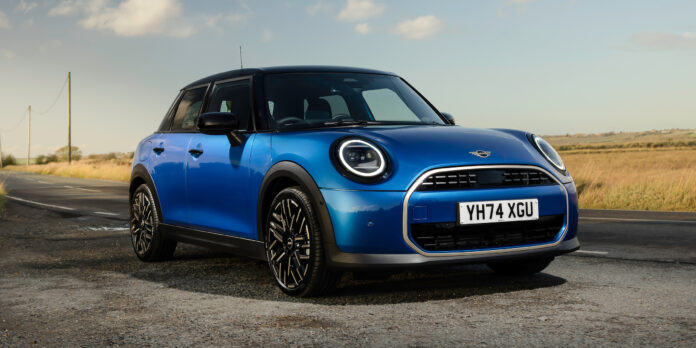
Mini Countryman

Mini Countryman

Five of the safest new small cars on sale in 2025

Five of the safest new small cars on sale in 2025

Mini John Cooper Works Electric

Mini John Cooper Works Electric

Mini JCW GP (2019 to 2020)

Mini JCW GP (2019 to 2020)

Mini hatch John Cooper Works (2015 to 2024)

Mini hatch John Cooper Works (2015 to 2024)

Mini hatch (2014 to 2024)

Mini hatch (2014 to 2024)

Mini Clubman (2015 to 2024)

Mini Clubman (2015 to 2024)

Mini Countryman (2017 to 2024)

Mini Countryman (2017 to 2024)

Mini Convertible (2016 to 2024)

Mini Convertible (2016 to 2024)

Mini Electric (2020 to 2023)

Mini Electric (2020 to 2023)

Mini Cooper Convertible

Mini Cooper Convertible

Mini Countryman Electric

Mini Countryman Electric

Buy a Mini JCW

If you’re looking to buy a new or used Mini JCW, The Car Expert’s partners can help you find the right car.

Motors 600x300

Find your next used car with Motors. Find out more

Auto Trader logo 600x300

Find your next new or used car with Auto Trader. Find out more

Carwow logo 600x300

Find your next new or used car with Carwow. Find out more

Lease a Mini JCW

If you’re looking to lease a new Mini JCW, The Car Expert’s partners can help you find a competitive deal.

Leasing-com logo

Personal contract hire deals from Leasing.com. Find out more

Carwow logo 600x300

Personal contract hire deals from Carwow. Find out more

Select Car Leasing logo

Personal contract hire deals from Select Car Leasing. Find out more

Subscribe to a Mini JCW

If you’re interested in a car subscription, The Car Expert’s partners can help. (PS: What’s a car subscription?)

Cocoon Vehicles logo 600x300

Car subscriptions from Cocoon.
Find out more

Just Vehicle Solutions logo 600x300

Car subscriptions from Just Vehicle Solutions.
Find out more

Flexible Vehicle Contracts logo 600x300px

Car subscriptions from Flexible Vehicle Contracts.
Find out more

Vauxhall flips the script on EV pricing

For most new cars, the buying equation tends to be that the electric version of a particular model is more expensive than the same or similar car with petrol power. You pay more for the EV and then save money on your running costs over time.

But that creates a position where the petrol version is the ‘default’ choice, and plug-in hybrid or electric versions are optional upgrades. At a time when car manufacturers are trying to encourage buyers to choose EVs, it reinforces the idea that there’s a higher upfront cost to going electric.

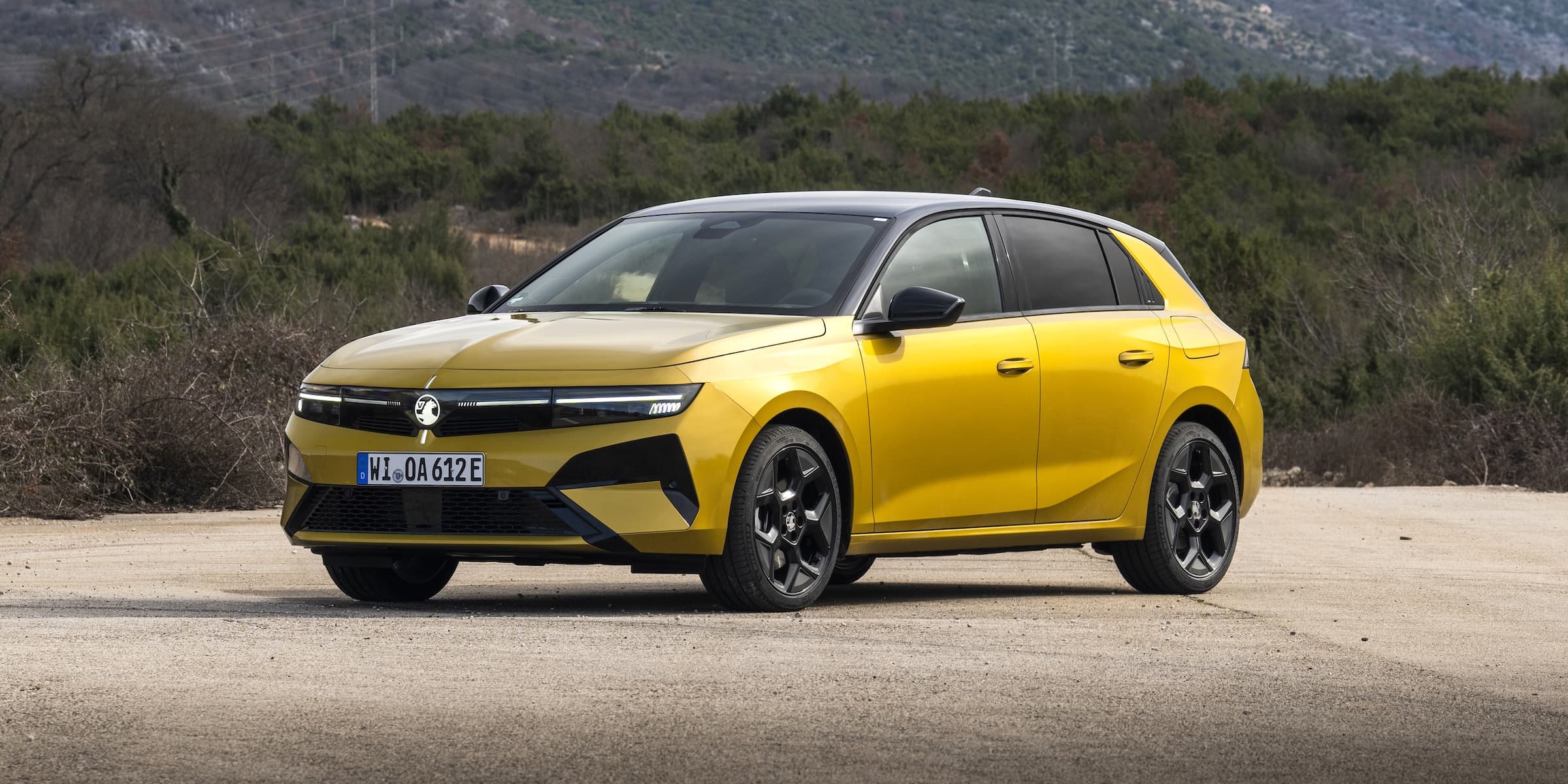
For the last few months, Vauxhall has been starting to flip that script. With the new Frontera, launched late last year, it priced the petrol and electric versions at the same price. And there have been finance campaigns on the Corsa hatchback that put the electric and petrol versions on the same monthly payments (although the rest of the terms were not identical). Now, Vauxhall has taken another big step forward with the updated Astra, launched this week and hitting UK streets this summer.

The revised Astra starts at £29,995, regardless of whether you choose the electric, plug-in hybrid or mild hybrid version. On top of that, the hatchback and estate models are the same price. It only gets more expensive if you go for a higher trim level.

Reframing the conversation

The effect is deceptively simple but significant in what it signals. When the electric version costs the same as the alternatives, the buyer stops asking “Can I justify paying more for the electric car?” and starts asking “Is there a reason not to get the electric one?” That’s a very different conversation, and it’s one that most buyers will answer differently.

While most brands charge more for their electric cars and then have to discount them further to bring them within buyers’ budgets, Vauxhall is reframing the entire proposition. The EV model becomes the default, with the plug-in hybrid or mild hybrid versions becoming fallback options.

As the UK government’s ZEV (zero-emission vehicle) mandate starts to really bite into the new car market, Vauxhall’s approach feels like a much smarter way of positioning EVs to the average buyer who has no strong allegiance to any particular powertrain philosophy and just wants the best options for their needs.

It will be very interesting to see whether this approach pays dividends for Vauxhall. The Astra is no longer a massive seller, as customers have been steadily moving away from hatchbacks and estates to SUVs, but if it helps shift more Astra customers into electric models, we can expect to see this pricing structure rolled out across the rest of the Vauxhall line-up and the wider Stellantis family.

We’ll have a review of the revised Astra next week, as well as updates to our Expert Ratings pages for both the petrol/hybrid Astra and the Astra Electric.

Clever new pricing structure for updated Vauxhall Astra

Vauxhall has announced pricing for a mid-life update to the Astra, with revised exterior styling, a new interior finish and a larger battery for the electric version.

The physical changes are modest. The front end gets a narrower grille and an illuminated Vauxhall badge, the gloss black interior trim has been replaced with a satin grey finish that should show fewer fingerprints, and physical buttons return for climate control and audio functions. The electric version’s battery has grown slightly, with claimed range rising by around 22 miles to up to 281 miles.

The more interesting development is the pricing. Every version of the updated Astra – electric, plug-in hybrid or petrol mild hybrid, hatchback or estate – costs exactly the same at each trim level, starting from £29,995. That’s a deliberate reversal of the usual approach, where electric versions cost more than conventional alternatives. Here, the electric model is effectively the default choice: buyers who’d prefer a plug-in hybrid or hybrid instead can have one, but they won’t save any money by doing so.

The estate – Vauxhall calls it the Sports Tourer – is also priced identically to the hatchback, which the company says is unique in the market.

There will be small variations in monthly payments on PCP or PCH contracts, despite the identical pricing, as these finance agreements take the value of the car in three or four years’ time into account.

One note on the mild hybrid option: it uses a petrol engine with electric motor assistance and can run on electric power for very short distances at very low speeds. That’s more than most mild hybrid cars, but it can’t drive for any meaningful distance on electric power.

As mentioned, there are only three prices to consider at the moment – £29,995 for the entry-level Griffin specification, £31,495 for the mid-spec GS, and £33,995 for the top-of-the-range Ultimate. Pure petrol models will rejoin the range later in the year, with both manual and automatic gearbox options. These will presumably be cheaper.

Orders open in June, with deliveries from July. We’ll have our review of the updated Astra, as well as updates to our Expert Ratings, next week.

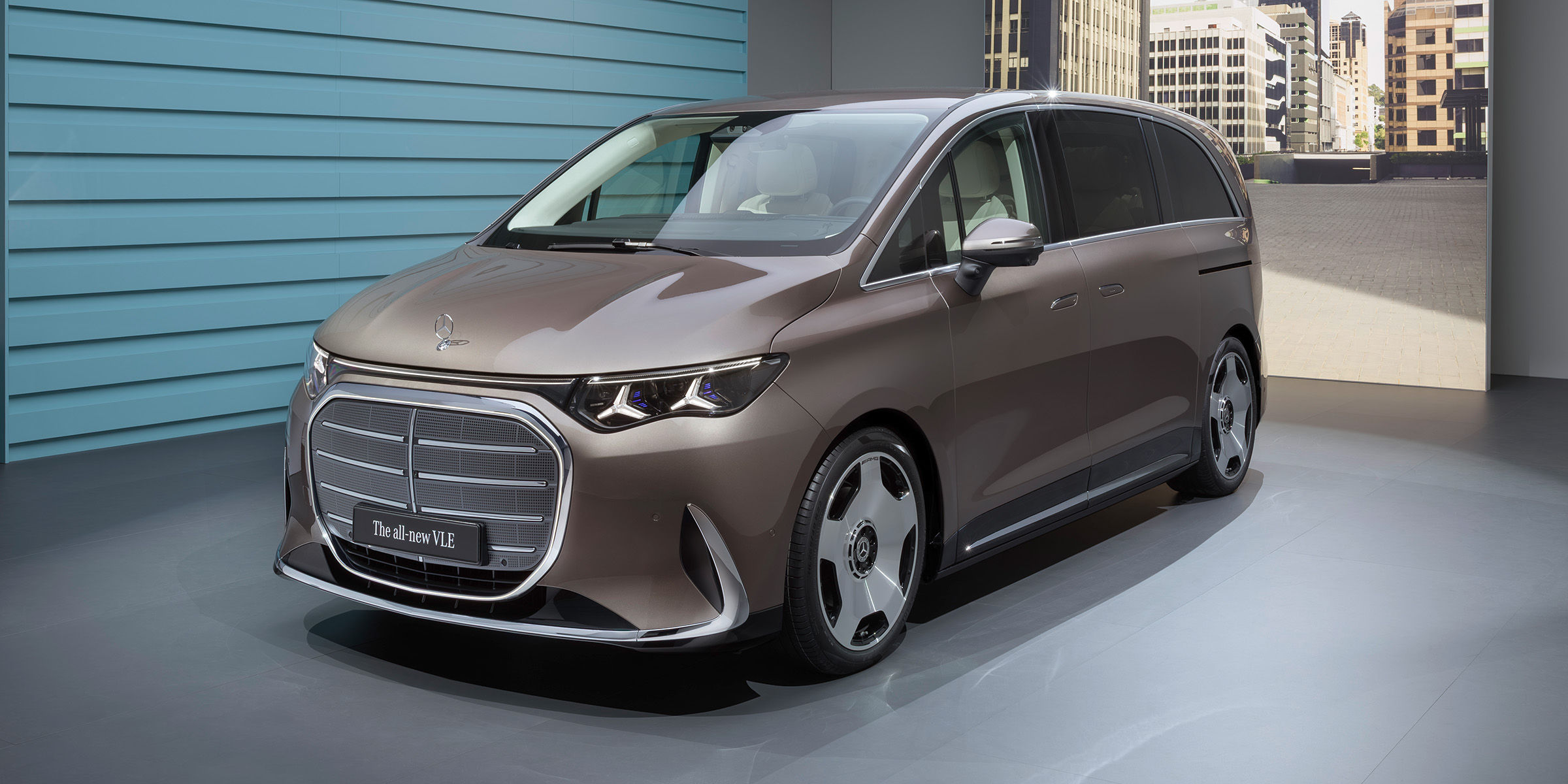
New Mercedes-Benz VLE people carrier unveiled

0

Mercedes-Benz has unveiled its new electric VLE – a large electric people carrier with seating for up to eight passengers.

Built on new 800-volt foundations – like the brand’s CLA EQ and GLC EQ models – Mercedes-Benz says the VLE will offer a driving range of more than 435 miles. By comparison, close rival the Volkswagen ID. Buzz can muster up to 293 miles on a single charge, so the VLE offers a significant battery range upgrade.

Its 800-volt electrical system allows charging for up to 220 miles of range in around 15 minutes, and the model will feature air suspension and rear-axle steering, with Mercedes claiming a turning circle of just under eleven metres.

Inside, the VLE will offer a flexible seating layout, with removable seats that can be moved on integrated wheels. Buyers will also be able to choose electrically adjustable seats with features including massage, lumbar support and wireless charging.

A large 31-inch retractable screen will be available for rear passengers, while the dashboard features a three-screen ‘MBUX Superscreen’ layout consisting of a ten-inch driver display and two 14-inch screens for the infotainment touchscreen and passenger media display.

The infotainment operating system – ‘MB.OS’ – supports over-the-air software updates and an AI-based voice assistant. That just about sums up what we know about the new VLE at the moment. UK pricing and full specifications will be announced at a later date.

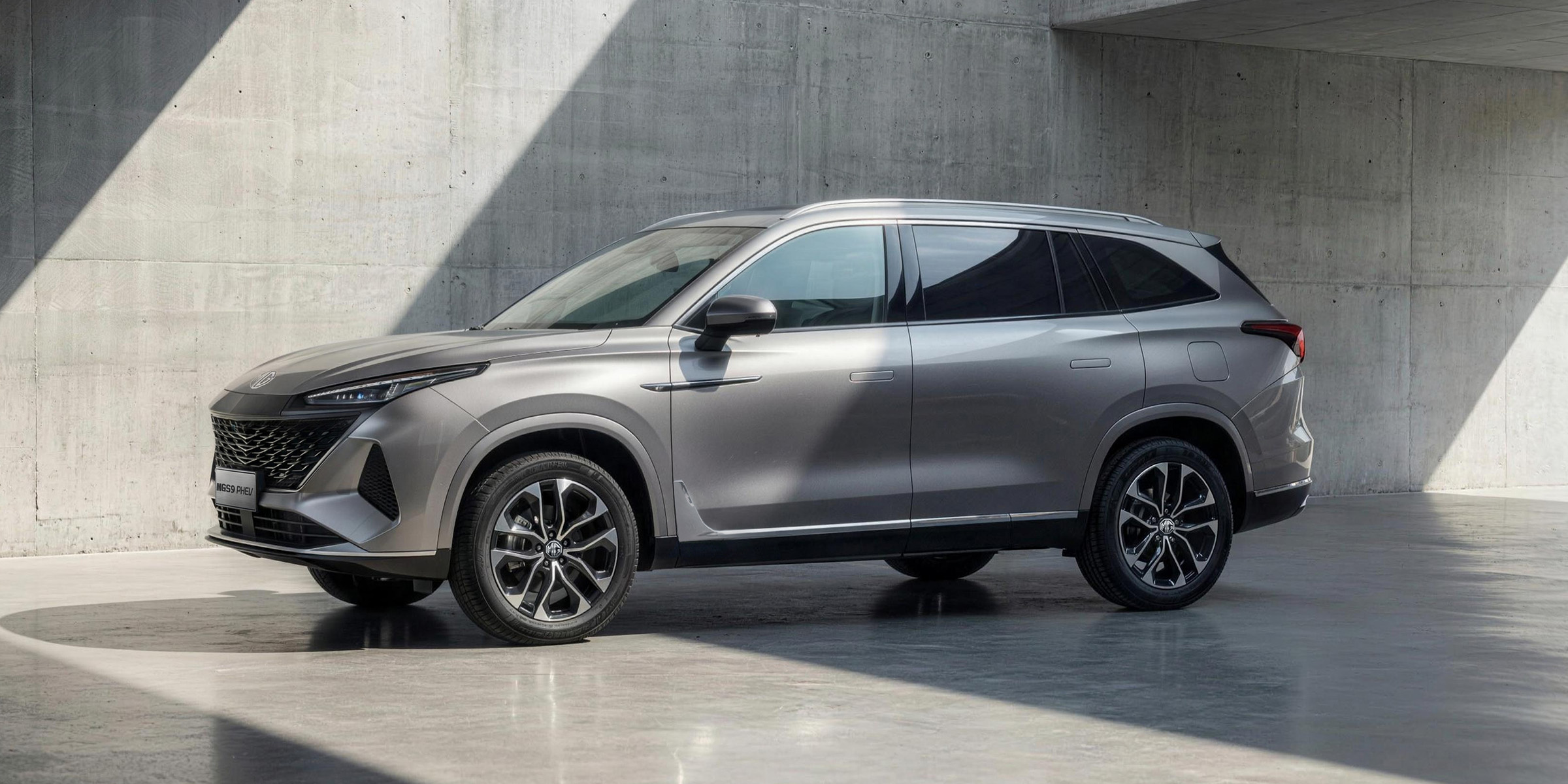
Seven-seat MG S9 SUV debuts

0

MG has revealed its new plug-in hybrid MG S9 SUV, which is MG’s first SUV to feature three rows of seating.

Joining a growing large plug-in hybrid category that already includes the Hyundai Santa Fe and Mazda CX-80, as well as keenly-priced Chinese newcomers like the Omoda 9 and Chery Tiggo 9, the MG S9 is both longer and taller than the brand’s HS SUV and has been designed “to meet the needs of modern families looking for versatility without sacrificing efficiency or value.”

Power comes from MG’s plug-in hybrid powertrain, that also features in the HS range. The system pairs a 1.5-litre turbocharged petrol engine with a 25kWh battery, delivering an electric-only driving range of up to 62 miles.

MG is yet to release the car’s full technical specs and trim grade list, but adds that leather-style upholstery, a large panoramic sunroof, tri-zone climate control, a Bose sound system and heated and ventilated seats with massage functions, and tri-zone climate control will all be available, with the last two reserved for the ‘Premium’ trim.

Inside, the SUV has a similar interior layout to the smaller HS, with a 12-inch digital instrument cluster and 12-inch infotainment touchscreen jutting out of the dashboard as part of a single display.

Opening the boot reveals 332 litres of luggage space behind the third row of seats, which extends to more than 1,000 litres of boot capacity when the third row is folded away. The S9 has also already been crash tested by safety body Euro NCAP, achieving a five-star safety rating.

That just about sums up what we know about the MG S9 so far. The manufacturer says that the model is coming soon, with more details, including UK pricing to be announced later this month.

Jaecoo 8

Summary

The Jaecoo 8 is a large six- or seven-seat SUV and the new flagship model in Jaecoo’s UK range. Now available to order, the SUV is currently only offered as a plug-in hybrid.

Powered by the same hybrid powertrain as the Chery Group stablemates like the Omoda 9 and Chery Tiggo 9, the Jaecoo 8 has just become available to order at the time of writing, and the British motoring media is yet to score the model in its reviews. That is sure to change in the coming weeks.

Once reviewers have got their hands on the SUV, and when we receive running cost estimations for the model, we will give the Jaecoo 8 an Expert Rating score. Check back soon!

Key specifications

Body style: Large SUV
Engines:
petrol plug-in hybrid
Price:
From £45,500

Launched: Spring 2026
Last updated: N/A
Replacement due: TBA

Media reviews

Highlighted reviews and road tests from across the UK automotive media. Reviews are few and far between at the moment, but that will change in the coming weeks.

Carwow

Safety rating

Independent crash test and safety ratings from Euro NCAP

No safety rating

As of March 2026, the Jaecoo 8 has not been assessed by Euro NCAP.

Eco rating

Independent economy and emissions ratings from Green NCAP

No eco rating

As of March 2026, the Jaecoo 8 has not been assessed by Green NCAP.

Running cost rating

Clear Vehicle Data logo close crop

Monthly cost of ownership data provided exclusively for The Car Expert by Clear Vehicle Data

No data yet

As of March 2026, we don’t have independently verified data available for the Jaecoo 8. Check back again soon.

Reliability rating

MotorEasy logo 600x167

Reliability data provided exclusively for The Car Expert by MotorEasy

No reliability rating

As of March 2028, we don’t have enough reliability data on the Jaecoo 8 to generate a reliability rating.

The Car Expert’s reliability information is provided exclusively to us using workshop and extended warranty data from our partner, MotorEasy, sourced from both official dealerships and independent workshops. 

As soon as MotorEasy has sufficient data on the Jaecoo 8, we’ll publish the results here.

Warranty rating

Jaecoo’s new car warranty is better than average, and better than rival brands in a similar price bracket as the Jaecoo 8.

The duration is seven years, with a limit of 100,000 miles. In addition to the standard new car warranty, this plug-in hybrid version has an eight-year/100,000-mile warranty for the battery components.

Recalls

Official DVSA safety recalls that have been issued for the Jaecoo 8

As of March 2026, we are not aware of any DVSA vehicle safety recalls affecting the Jaecoo 8. However, recall information is updated regularly, so this may have changed.

You can check to see if your car has any outstanding recalls by visiting the DVLA website or contacting your local Jaecoo dealer.

Similar cars

If you’re looking at a new or used Jaecoo 8, you might also be interested in these alternatives

Audi Q7 | BMW X7 | Chery Tiggo 9Genesis GV80 | Hyundai Santa FeKia Sorento | Land Rover Defender | Lexus RX | Mercedes-Benz GLE | Mercedes-Benz GLS | Nissan X-Trail | Omoda 9Peugeot 5008 | Porsche Cayenne | Range Rover | Range Rover Sport | SEAT Tarraco | Skoda Kodiaq | KGM Rexton | Suzuki Across | Volkswagen Touareg | Volvo XC90

More information

More news, reviews and information about the Jaecoo range at The Car Expert

Jaecoo 5 range bolstered by new hybrid model

Jaecoo 5 range bolstered by new hybrid model

Jaecoo 7 range expanded with new hybrid model

Jaecoo 7 range expanded with new hybrid model

Jaecoo 5

Jaecoo 5

Jaecoo 8 plug-in hybrid now available to order

Jaecoo 8 plug-in hybrid now available to order

Jaecoo E5

Jaecoo E5

New cars – what’s coming in 2026

New cars – what’s coming in 2026

It’s time to reveal the best cars of the year…

It’s time to reveal the best cars of the year…

Three more Chinese car brands coming to the UK this year

Three more Chinese car brands coming to the UK this year

China – the world’s new automotive superpower

China – the world’s new automotive superpower

Which new cars are built in China?

Which new cars are built in China?

Pricing announced for electric Jaecoo E5

Pricing announced for electric Jaecoo E5

Pricing announced for Jaceoo 5 SUV

Pricing announced for Jaceoo 5 SUV

Buy a Jaecoo 8

If you’re looking to buy a new or used Jaecoo 8, The Car Expert’s partners can help you find the right car.

Motors 600x300

Find your next used car with Motors. Find out more

Auto Trader logo 600x300

Find your next new or used car with Auto Trader. Find out more

Carwow logo 600x300

Find your next new or used car with Carwow. Find out more

Lease a Jaecoo 8

If you’re looking to lease a new Jaecoo 8, The Car Expert’s partners can help you find a competitive deal.

Leasing-com logo

Personal contract hire deals from Leasing.com. Find out more

Carwow logo 600x300

Personal contract hire deals from Carwow. Find out more

Select Car Leasing logo

Personal contract hire deals from Select Car Leasing. Find out more

Subscribe to a Jaecoo 8

If you’re interested in a car subscription, The Car Expert’s partners can help. (PS: What’s a car subscription?)

Cocoon Vehicles logo 600x300

Car subscriptions from Cocoon.
Find out more

Just Vehicle Solutions logo 600x300

Car subscriptions from Just Vehicle Solutions.
Find out more

Flexible Vehicle Contracts logo 600x300px

Car subscriptions from Flexible Vehicle Contracts.
Find out more

Jaecoo 8 plug-in hybrid now available to order

0

Chinese brand Jaecoo has announced that its new flagship 8 ‘SHS-P’ SUV will be arriving in UK showrooms in May, with six- or seven-seat layouts on offer.

The large SUV is Jaecoo’s answer to the Kia Sorento and Hyundai Santa Fe, and slots into the brand’s range above the smaller Jaecoo 7 SUV which has proved to be a smash hit sales success in the UK since it first arrived last year.

Only available as a plug-in hybrid, the SUV is powered by a turbocharged 1.5-litre petrol engine working in tandem with an electric motor to deliver a combined output of 428hp and an 83-mile electric-only travel range.

On a full battery and a full tank, Jaecoo says that the SUV can muster over 700 miles of travel without stopping, and the battery can be topped up from 30% to 80% in around 20 minutes. A 0-62mph sprint can be completed in 5.8 seconds.

This SUV also marks the first time that Jaecoo has fitted ‘lockable differentials’ to one of its models – which force both wheels in the front or back to rotate at the same speed, improving the SUV’s off-roading credentials. The car can also wade through waters up to 60 centimetres tall, and ‘adaptive’ suspension is included as standard.

Jaecoo will launch the new range with two trim options. The cheaper ‘Luxury’ grade has a seven-seat configuration, and is aimed at those wanting a large upmarket family ferrier. Power-adjustable front seats with heating and ventilation are included, with five massage modes and headrest-integrated speakers.

The range-topping ‘Executive’ is instead a six-seater version, aimed at those prioritising passenger comfort. Four of the seats are heated, ventilated and massaging, and those are joined by an additional pair of folding seats in the boot area.

Choosing the ‘Executive’ model also adds a ‘zero-gravity’ front passenger seat, that can be adjusted 123 degrees and provides an extended legroom.

The SUV is now available to order online, with the first examples arriving on British roads in May. Pricing starts at over £45k for the ‘Luxury’ model, rising to over £47k for the ‘Executive’.

Mazda CX-6e

Summary

The Mazda CX-6e is a mid-sized upmarket electric SUV built in collaboration with Chinese car brand Changan.

Not yet on sale but expected to launch in the UK this year, the CX-6e is Mazda’s answer to the Audi Q6 e-tronFord Explorer and Tesla Model Y, and under the hood the SUV is structurally identical to the Changan Deepal 07.

Essentially the all-electric equivalent of the brand’s petrol-powered CX-60 – though slighting longer and with a lower ride height – the CX-6e makes use of a 78kWh battery and 258hp rear-mounted e-motor pairing that provides up to 300 miles on a single charge.

The model made its debut at the Brussels motor show in January, and it is yet to be reviewed by the British motoring media just yet. We will update this page with more information and reviews, as well as safety and running cost data, as soon as those are available. Check back soon!

Key specifications

Body style: Medium SUV
Engines:
electric, battery-powered
Price:
TBA

Launching: 2026
Last updated: N/A
Replacement due: TBA

Media reviews

Highlighted reviews and road tests from across the UK automotive media.

There are no reviews on the Mazda CX-6e – foreign or UK-based test drives – to display here currently. Once reviews from the UK automotive media are published, we will update this section.

Safety rating

Independent crash test and safety ratings from Euro NCAP

No safety rating

As of March 2026, the Mazda CX-6e has not been assessed by Euro NCAP.

Eco rating

Independent economy and emissions ratings from Green NCAP

No eco rating

As of March 2026, the Mazda CX-6e has not been assessed by Green NCAP.

The Green NCAP programme measures exhaust pollution (which is zero for an electric car) and energy efficiency. Electric cars are much more energy-efficient than combustion cars, so the CX-6e is likely to score very highly in Green NCAP testing if and when it takes place. Check back again soon.

Running cost rating

Clear Vehicle Data logo close crop

Monthly cost of ownership data provided exclusively for The Car Expert by Clear Vehicle Data

No data yet

As of March 2026, we don’t have independently verified data available for the Mazda CX-6e. Check back again soon.

Reliability rating

MotorEasy logo 600x167

Reliability data provided exclusively for The Car Expert by MotorEasy

No reliability rating

As of March 2026, we don’t have enough reliability data on the Mazda CX-6e to generate a reliability rating.

The Car Expert’s reliability information is provided exclusively to us using workshop and extended warranty data from our partner, MotorEasy, sourced from both official dealerships and independent workshops. 

As soon as MotorEasy has sufficient data on the Mazda, we’ll publish the results here.

Recalls

Official DVSA safety recalls that have been issued for the Mazda CX-6e

As of March 2026, we are not aware of any DVSA vehicle safety recalls affecting the Mazda CX-6e. However, recall information is updated regularly, so this may have changed.

You can check to see if your car has any outstanding recalls by visiting the DVLA website or contacting your local Mazda dealer.

Similar cars

If you’re looking at a new or used Mazda CX-6e, you might also be interested in these alternatives

Audi Q6 e-tron | BMW iX3 | Citroën ë-C4 | Ford Mustang Mach-E | Hyundai Ioniq 5 | Hyundai Kona Electric | Kia EV6 | Mercedes-Benz EQA | Mini Countryman Electric | Nissan Ariya | Polestar 2 | Skoda Enyaq iV | Subaru Solterra | Tesla Model Y | Toyota bZ4X | Volkswagen ID.4 | Volvo XC40 Recharge

More information

More news, reviews and information about the Mazda CX-6e at The Car Expert

Electric Mazda CX-6e SUV arriving in late 2026

Electric Mazda CX-6e SUV arriving in late 2026

Buy a Mazda CX-6e

If you’re looking to buy a new or used Mazda CX-6e, The Car Expert’s partners can help you find the right car.

Motors 600x300

Find your next used car with Motors. Find out more

Auto Trader logo 600x300

Find your next new or used car with Auto Trader. Find out more

Carwow logo 600x300

Find your next new or used car with Carwow. Find out more

Subscribe to a Mazda CX-6e

Subscriptions are becoming a very popular way for consumers to try an electric car for a few weeks or months to help decide whether it’s a suitable alternative to a petrol car. If you’re interested in a car subscription, The Car Expert’s partners can help. (PS: What’s a car subscription?)

Cocoon Vehicles logo 600x300

Car subscriptions from Cocoon.
Find out more

Just Vehicle Solutions logo 600x300

Car subscriptions from Just Vehicle Solutions.
Find out more

Flexible Vehicle Contracts logo 600x300px

Car subscriptions from Flexible Vehicle Contracts.
Find out more

Everything you need to know about Audi

For many years there were two German behemoths that divided up the premium market – BMW and Mercedes-Benz. Audi was a much smaller badge in the Volkswagen group that merited little attention.

Over the past 25 years, however, Audi has grown massively to turn the big two into a big three. It has done this by embracing technology and offering models that initially provided something different to the BMWs that every middle-manager wanted to drive, and latterly took over that much-vaunted status. In fact where for many years ‘typical BMW driver’ was used as a derogatory term (perhaps with a hint of jealousy), today it is just as often applied to Audi drivers.

Such criticisms make little dent on the reputation of a manufacturer that continues to produce impressive cars with bang up-to-date technology, and which while adopting the opportunities of electric power long before rivals, still offers a wide range of petrol and even diesel options. 

This was set to change with Audi planning to launch its last ‘conventionally driven’ models in 2026, but like many others the company has reacted to the slowing of the global switch to EVs. Audi announced in mid-2025 that it had abandoned plans to not sell any cars with combustion engines after 2033. Now Audi says there is no fixed end-date for such models.

So who or what is Audi?

This section could probably be described as “A tale of two Audis”, because the company of today is much younger than its name or badge. The original version of Audi disappeared with the second world war, and the name was resurrected by Volkswagen in the 1960s.

Audi 1.0 was founded in 1909 by a German engineer named August Horch. It was Horch’s second attempt at starting a car company, as he left his original company – Horch – after falling out with his fellow directors. He used the name ‘Audi’ as his former partners prevented him using the Horch name again.

Audi flourished despite difficult conditions in Germany following the first world war. However, as part of a series of mergers and acquisitions in the early 1930s, Audi became part of a conglomerate called the Auto Union. This consisted of four German brands: Audi, DKW, Wanderer and – ironically – Horch.

Although the four brands all continued to build their own cars, each also carried the new logo of Auto Union – four interlocking rings to symbolise the four interlinked brands.

Despite the high profile and success of Auto Union, Audi suffered relative to its sister brands. Sales were well in decline even before production was inevitably turned over to manufacturing vehicles for the German military as the second world war loomed.

As with most German industrial operations, the second world war was a dark time for Auto Union. As many as seven labour camps provided thousands of prisoners to build vehicles and armaments for the Nazis. By the end of the war, the company was all but wiped out with most of its factories bombed and destroyed by the Allies.

After hostilities had ceased, Auto Union bosses set about restarting the company despite there being little more than the brand names left. What remained of its factories were located in the east of Germany, which fell under Soviet control after the war, so Auto Union re-established itself in the town of Ingolstadt in Bavaria, in the south of West Germany.

The revived Auto Union struggled and was bought out by Daimler-Benz (owners of Mercedes-Benz) in 1959, but Daimler quickly realised that it had no real need for Auto Union or its collection of brand names and sold it off to Volkswagen not five years later. VW wasn’t really interested in Auto Union, either, but it wanted to get its hands on the Ingolstadt factory to help meet booming worldwide demand for the Beetle.

Eventually, Volkswagen did decide to make a go of some of the cars that Auto Union had been developing under Daimler’s ownership. It kept the Auto Union logo, but ditched the name and resurrected the long-abandoned Audi brand instead. Audi 2.0 was born.

Through the 1970s, Audi grew and developed as a respected but conservative brand. To spice things up a bit, the company decided to use Volkswagen’s abandoned all-wheel drive military technology to go rallying.

Launched in 1980, the Audi Quattro was the first mainstream all-wheel-drive car on the market. It took a string of rallying successes and transformed Audi’s image from a fairly staid brand to a technological powerhouse. Soon afterwards, the slogan ‘Vorsprung durch Technik’ (progress through technology) made its debut and is still a core of Audi’s marketing today.

The 1990s saw Audi move upmarket to become a premium manufacturer, targeting the business market and the two German heavyweights of BMW and Mercedes-Benz. Sales were fuelled by an ever-increasing model range, and promoted by major sporting success – in the 15 years from 2000 to 2014, Audi won the Le Mans 24-hour race 13 times.

Advanced technology has continued to play a core role in Audi’s continually advancing sales ever since, such innovations as digital cockpit displays and various driving aids appearing on Audi models before many rivals. At one point in the 2000s, Audi produced more profit than all the other brands in the Volkswagen Group combined.

More recent times have been less successful, however – 2024 and 2025 proved particularly difficult years as Audi suffered from slowing demand for EVs and the effect of US President Donald Trump’s new tariffs in what is an important market for the German brand. Audi’s 2025 sales in the UK slumped by more than 9%.

Perhaps stung into action Audi management are now undertaking what they describe as the biggest change in the history of the company. Forthcoming new models such as the next A4 will be core to a complete rebuild but the changes will apparently stretch way beyond Audi’s products.

What models does Audi have and what else is coming?

The development of electric power has seen Audi’s enormous model range swell even further, although it has always seemed to be in less of a hurry to drop its combustion-engined models than many other brands.

The main designators are A for traditional cars and Q for SUVs. The more performance-pitched models usually carry S designations (so the S3 is a faster version of the A3, for example), while the most highly potent versions are badged RS (so the RS 3 is an even faster version of the A3).

Audi decided early in 2025 to drop plans to differentiate its combustion-engined and electric ranges by their model numbers – the idea had been that petrol/diesel/hybrid models would carry odd numbers (like A1, A3, A5 and A7), while electric models – called ‘e-tron’ in Audiland – would carry even numbers (A6 e-tron saloon, Q4, Q6 and Q8 e-tron SUVs and such).

Now both types will carry the same model numbers with what drives them indicated by the addition of TFSI (petrol), TDI (diesel), or e-tron (electric) after the model name.  

Meanwhile the Audi range has undergone some recent trimming as the brand reacts to more challenging market conditions, with the biggest casualties being its two smallest cars. The Q1 SUV has already been dropped and while the A1 – Audi’s alternative to BMW’s Mini – remains on sale, it will not be replaced.  

Audi’s traditional car range progresses up through the A3, A5, A6 and A8. There are S versions of the A3, A5 and A8 and RS models of the A3 and A5, while the A5 and A6 can also be had with Avant (estate) bodystyles.

The change in naming strategy saw a new A6 launched in 2025 to replace the previous A7 and in petrol, diesel and plug-in hybrid variants, alongside the electric version, now called the A6 e-tron and a completely different car to its fossil-fuelled sibling – confused yet?

On the SUV side, we have the Q2, Q3, Q5, Q7 and Q8 in fossil-fuel versions (and all available in more potent S form), and the Q4 e-tron and Q6 e-tron electric models. The Q3 and Q5 gained all-new versions in 2025 which include coupe-like Sportback models, while the Q8 e-tron, which was Audi’s first production electric car and again confusingly a completely different vehicle to the fossil-fuelled Q8, has been replaced by the latest Q6 e-tron.

The Q8 can also be had as an RS model, as can the e-tron GT, this being a sporty large electric saloon that is more or less an Audi-badged and styled Porsche Taycan.

Finally there are a wide range of powertrain options in the combustion-engined models. Most models include a plug-in hybrid in their line-up, while the A3, A5, A6, A8, Q3 and Q8 can even be had with diesel engines – the oil burner is not dead yet.

Current Audi range on our Expert Rating Index

Audi A1

Audi A1

Audi A3

Audi A3

Audi A5

Audi A5

Audi A6

Audi A6

Audi A6 e-tron

Audi A6 e-tron

Audi A7

Audi A7

Audi A8

Audi A8

Audi e-tron GT

Audi e-tron GT

Audi Q2

Audi Q2

Audi Q3

Audi Q3

Audi Q4 e-tron

Audi Q4 e-tron

Audi Q5

Audi Q5

Audi Q6 e-tron

Audi Q6 e-tron

Audi Q7

Audi Q7

Audi Q8

Audi Q8

Audi Q8 e-tron

Audi Q8 e-tron

Audi R8

Audi R8

Audi RS 3

Audi RS 3

Audi RS e-tron GT

Audi RS e-tron GT

Audi RS Q3

Audi RS Q3

Audi RS Q8

Audi RS Q8

In terms of new Audi models soonest to arrive is likely to be the Q9, an enormous seven-seat SUV to take on the BMW X7 and Mercedes-Benz GLS – we expect to see this in 2026.

Audi has moved away from its once much-desired sports models in recent times with neither the TT and R8 two-seater coupes and convertibles, or the sporty and drop-top variants of the A5 being replaced. But this may be about to change.

One of the most eagerly awaited new cars from the brand is a production version of the Concept C shown at the Munich motor show in September 2025. Apparently dubbed the C-Sport within Audi but seen by most observers as an electric successor to the long-lived TT coupe, the two-seater is being jointly developed with Porsche and is set to be unveiled in 2027.

The striking styling of the Concept C, dubbed ‘Radical Next’ by Audi, will also be seen on the next-generation A4, which is due in 2028. For many years a core Audi model, the next A4 will be an e-tron.    

Where can I try a Audi car?

You won’t miss an Audi dealership – the brand has a distinctive design for its showrooms right down to the basic structure of the building, and they tend to dominate their surroundings. There are plenty of them around, the UK hosting around 130 Audi centres though more than 100 are in England.

What makes Audi different to the rest?

Audi built its reputation initially on being something different when any moderately successful business executive wanted to drive a BMW, and as the company’s reputation grew it bolstered it by its massive investment in technology.

Even today, when most upmarket manufacturers offer models with the latest electronic advances both in safety, driver aids and interior features such as infotainment and connectivity, you still expect to see the newest advances on an Audi first – this is expected to ramp up in coming years, with “next-level” technology promised on the forthcoming Audi A4.

An Audi fact to impress your friends

Audi’s name is Latin – after founder August Horch left his original company, which he’d named after himself, the German courts determined that he couldn’t take the company name with him. 

So Horch called a meeting in the apartment of a business friend in an effort to come up with a new name – as the business brains in the room struggled to come up with something suitable the friend’s son, who was quietly doing his Latin homework as the meeting went on, eventually spoke up and said that as Horch meant ‘hear’ in German, why not use the closest Latin translation, which was to ‘listen’ – ‘Audi’…  

An early Audi logo as used from approx. 1909 to 1932

Summary 

Audi is today one of the world’s major executive car brands with a huge reputation, and even though there are now a lot more Audis on the roads, many owners still feel that being behind the wheel of one is a little bit special.

Buy an Audi

If you’re looking to buy a new or used Audi, The Car Expert’s partners can help you find the right car.

Motors 600x300

Find a used Jaguar with Motors. Find out more

Auto Trader logo 600x300

Find a new or used Jaguar with Auto Trader. Find out more

Carwow logo 600x300

Find a new or used Jaguar with Carwow. Find out more

Lease an Audi

If you’re looking to lease a new Audi, The Car Expert’s partners can help you find a competitive deal.

Leasing-com logo

Personal contract hire deals from Leasing.com. Find out more

Carparison 600x300

Personal contract hire deals from Carparison Leasing. Find out more

Rivervale Leasing logo 2022

Personal contract hire deals from Rivervale Leasing. Find out more

This article was originally published in August 2024 and updated in February 2026.

BMW iX3 review – first UK drive

0

Make and model: BMW iX3 50 xDrive
Description: Mid-size electric SUV
Price range: from £58,755

Summary: The new BMW iX3 is the first car from BMW’s ambitious Neue Klasse programme – and after driving it, we think it might be the best electric SUV money can buy.


Introduction

The new BMW iX3 is more than just another new electric SUV – it’s the starting point for an entirely new generation of BMWs, and the first of some 40 new or updated models that will be launched over the next two years.

BMW has staked its immediate future on what it calls the Neue Klasse – German for “new class” – and the iX3 is the first car to come from this programme. The name is borrowed from a range of small saloons BMW made in the 1960s that were so influential they shaped everything the company built for the next 40 years. BMW is making the same claim for this generation: that everything changes now.

After spending a few hours behind the wheel of the new iX3, it’s a claim that’s hard to argue with.

It’s a mid-sized electric SUV, available in three trim levels starting from just under £59K. The car I drove was the M Sport trim, which BMW expects to be the most popular version. With some options added, the price tag came to around £65K.

For a broader ownership picture, see our full BMW iX3 Expert Rating.

Price and equipment

£60K-£65K is a lot of money for any car. At that price, there are electric SUVs – particularly from Chinese brands – that will hand you a longer features list for considerably less. That’s a fair point, and if maximising equipment-per-pound is your priority, there are better ways to spend £60K.

But the BMW doesn’t feel like a car where you’re paying extra for a badge. It feels like a car where you’re paying extra for quality, and the difference is apparent from the moment you sit in it.

The entry-level model has most of the stuff you’ll really want, like heated and electrically adjustable front seats, wireless phone charging and a comprehensive package of safety technology. The mid-range M Sport adds sportier styling, upgraded seat materials and additional ambient interior lighting. The top-spec M Sport Pro goes further with better seats, more striking exterior details and upgraded headlights.

The car I drove had a few extras, including a Harman Kardon stereo, a head-up display and three-zone climate control, bringing the total to around £65K.

Inside the car

This is where BMW has done something genuinely clever with what it calls ‘Panoramic iDrive’. Across the full width of the windscreen – from one side to the other – there’s a strip of information projected directly under your line of sight as you drive. Speed, battery level and directions sit in front of the driver. The rest of the strip is yours to set up from a selection of information: the weather, your music, navigation instructions, a phone call in progress. You can glance at it without taking your eyes a long way off the road, because it’s right there in front of you rather than on a screen further down the dashboard.

It sounds like a gimmick, but it isn’t. Within ten minutes of driving, you wonder why no one did it sooner.

The steering wheel looks odd at first – four spokes rather than the usual three, with a slightly unusual shape. On a conventional car this would block the instrument dials. It doesn’t matter here, because the driver information is at the base of the windscreen rather than behind the wheel. And it’s genuinely comfortable to hold, which is more than I can say for most BMW steering wheels I’ve driven over the years.

Physical buttons are few, but the important ones are real buttons – parking brake, hazard lights, volume, rear window heating – rather than touchscreen menus. The rest runs through a central screen, with software that’s one of the easiest to navigate through of any new car.

The seats and surfaces throughout the cabin use recycled materials – including textiles made from used plastic bottles and aluminium salvaged from elsewhere in the manufacturing process. Around a third of the car is built from materials that have been used before in some form. BMW has also managed to reduce the length of wiring running through the car by the equivalent of six football pitches, by better integrating its various computer systems. That kind of detail doesn’t show up on a spec sheet, but it reflects genuine engineering effort.

Rear passenger space is good. Two adults will sit comfortably with plenty of legroom and headroom. The floor between the seats is quite deep, which sounds trivial but makes a noticeable difference to how spacious the back feels – some electric cars have a raised floor due to the battery underneath, which can leave rear passengers feeling slightly cramped. The boot is a decent size and shape, and there’s a useful storage compartment under the front bonnet – ideal for keeping charging cables out of the main boot. The car can also tow a caravan or trailer, which many electric cars cannot.

Driving range and charging

BMW claims up to 500 miles from a full charge, which puts the iX3 ahead of most rivals on paper – although the new Mercedes-Benz GLC EQ and Volvo EX60 will offer similar range later this year. Real-world range will always be less than the official number, and will vary with speed, weather and driving style – but a battery this size means running low on charge should be an unusual event rather than a daily concern.

More impressive is how quickly it recharges. At a 400kW public charger, the iX3 can recover around 230 miles of range in about ten minutes. These chargers are currently rare in the UK, but will be more common in the next few years as EV charging infrastructure continues to roll out. It’s substantially faster than most electric cars currently manage, and it changes the calculus of a long motorway journey in a meaningful way. Stopping for ten minutes rather than 30-45 minutes is a different kind of inconvenience.

The charging socket is at the right rear of the car, in the same place you’d find a fuel cap on a regular BMW. It’s an intuitive position, and it works best if you reverse into parking spaces rather than pulling in nose-first.

On the road

This is the best electric SUV I’ve driven to date. The steering is direct and well judged, and is better than the significantly more expensive BMW iX. The suspension handles poor road surfaces well without making the car feel harsh, and on motorways you could genuinely cover hundreds of miles without fatigue. It’s quiet and well-composed, and the now-compulsory electronic nanny systems are much less intrusive than on most new cars.

The power is more than adequate. Getting to 62mph takes under five seconds, and the performance is smooth rather than aggressive. Day-to-day, it feels effortless.

The car includes a self-parking function that will reverse into a space on your behalf, and a remote function where you can stand outside the car and guide it into a tight gap using the key. There’s also a parallel parking function, although this feature was not cooperating on our car. If you like using these parking assistant functions, the iX3 is a bit snappier than most other cars, so you don’t feel like you’re endlessly waiting for the car to make up its mind and get on with it.

Verdict

The new BMW iX3 is the most complete electric SUV I’ve driven to date, and the price is the only real reservation. At £65K as tested, it’s a significant investment, but the quality does shine through.

Most aspects of the car are genuinely hard to fault. The interior technology is genuinely better than the class norm, especially the panoramic display. The driving experience is very good and better than anything else in a comparable price bracket, and the design is the most attractive BMW has produced in years. If the budget stretches, it’s worth it.

The only disappointment is BMW’s paltry three-year new car warranty, which doesn’t inspire confidence when a car is this loaded with so much new and unproven technology. Kia, Hyundai and several Chinese brands offer seven-year warranties, so there’s no excuse for BMW not to do better.

For a broader ownership picture, see our full BMW iX3 Expert Rating.

We like:

  • The windscreen display is one of the most useful pieces of tech in any new car
  • Steering and ride quality are genuinely better than the rest of the class
  • 500-mile claimed range and very fast public charging as standard
  • A cabin that feels premium without being ostentatious
  • Significant environmental credentials backed by real engineering decisions

We don’t like:

  • Pricing of £60-£65K is not cheap
  • Three-year warranty is unimpressive for a car at this price
  • Self-parking functions are clever but not entirely reliable
  • Limited physical controls will frustrate some drivers
  • It’s a heavy car – 2.4 tonnes – and that occasionally shows on twistier roads

Similar cars

Alpine A390 | Audi Q6 e-tron | BYD Sealion 7 | Changan Deepal S07 | Cupra TavascanFord Mustang Mach-E | Genesis Electrified GV70Hyundai Ioniq 5 | Kia EV6 | Lexus RZMercedes-Benz GLC EQ | Mini Countryman Electric | Nissan Ariya | Peugeot e-3008 | Polestar 3 | Porsche Macan Electric | Skoda Enyaq | Tesla Model Y | Volkswagen ID.4 | Volvo EX60

Key specifications

Model tested: BMW iX3 50 xDrive M Sport
Price as tested: £65,500
Engine: Single electric motor, all-wheel drive
Gearbox: 
Single-speed automatic

Power: 345 kW (469 hp)
Torque: 645 Nm
Top speed: 130 mph
0-60 mph: 4.9 seconds

Battery range: 192 miles
CO2 emissions: 0 g/km
Euro NCAP safety rating: Not yet tested (March 2026)
TCE Expert Rating: Not yet rated (March 2026)

Tyre markings explained

Buying tyres can seem like trying to understand a foreign language, but the markings on the tyres all carry important information that is critical to making the right decision when your old tyres need replacing.

Found on the side of the tyre, called the tyre sidewall, these letters and numbers refer to the width, height, diameter, load and speed parameters of your tyres. The numbers are a confusing mess of millimetres, inches, percentages and other codes, which can make it all a bit bewildering.

Our helpful tyre markings guide clearly explains all the key numbers and letters, without any jargon or sales spiel. When buying tyres, a tyre shop may give you a choice of different sizes or specifications that will fit your car, so this guide will help you make the right choice.

Tyre width

Tyre width is measured in millimetres (mm) and for the vast majority of car tyres always ends with the number ‘5’.

Why is this important? Tyre width is important as it can affect both your car’s performance and how economical it is with fuel. The amount of rubber that is in contact with the road (called the contact patch) impacts your tyres grip and rolling resistance. The larger the contact patch, the greater the grip but the higher the rolling resistance, resulting in lower fuel economy.

Aspect ratio

Aspect ratio, sometimes referred to as ‘profile’, is the height of the tyre’s sidewall outward from the rim represented as a percentage of the tyre’s width. So, if a tyre has an aspect ratio of 65, that means the height of the tyre’s sidewall is 65% of the tyre’s width.

Why is this important? Low profile tyres (where the profile is lower than 50%) require the sidewall to be stiffer, while higher profile sidewalls (more than 50%) provide more flex to cushion you over bumps and potholes. As such, higher profile tyres tend to provide more comfort. Lower profile tyres tend to provide better handling as the stiffer sidewall means that the tyre doesn’t move around as much when cornering.

In recent years, however, low profile tyres (which allow larger alloys wheels to be fitted) are more often chosen for aesthetics rather than their performance benefit.

Rim diameter

Rim diameter is the diameter of the metal wheel that fits in the centre of the tyre. The majority of car wheels are measured in whole inches and generally range from 12” to 22”.

Why is this important? Larger diameter wheels and tyres are preferable for high performance vehicles as the tread has less pronounced curvature. This creates a larger contact patch and increased grip, which is important for powerful cars and for maximising performance when cornering. In combination with low profile tyres, large diameter wheels are now fitted onto most modern cars more for aesthetic than performance reasons.

While the number denotes the rim diameter in inches, the letter before it tells us the type of construction used in the casing of the tyre. In this case, ‘R’ stands for Radial construction, which is pretty much universal for modern car tyres. Other examples include “B” for Bias-ply or “D” for Diagonal construction, usually only seen on cars from the 1960s or earlier.

Load Index

Using the “tyre load index table” below, your tyre’s load index indicates the maximum weight that your tyre can safely support. This way of measuring a tyre’s weight capacity is relatively modern and was introduced to provide a more consistent method of comparing tyres.

Why is this important? Putting more weight on your tyres than they can safely handle is dangerous. It can make the car unstable and can lead to a tyre failing in a blowout.

The tyres on passenger cars usually have a load index between 75 and 104, each index number having a specific corresponding load weight that the tyre can safely drive with.

Load IndexKilograms (kg)
75387
76400
77412
78425
79437
80450
81462
82475
83487
84500
Load IndexKilograms (kg)
85515
86530
87545
88560
89580
90600
91615
92630
93650
94670
Load IndexKilograms (kg)
95690
96710
97730
98750
99775
100800
101825
102850
103875
104900

Speed Index

Speed index is a letter(s) which relates to the table on the left. It represents the maximum speed that your tyre can safely run for a maximum of 10 minutes while supporting the maximum weight indicated by its load index. Every vehicle has a minimum required speed index as required by the manufacturer.

Why is this important? Like excess weight, driving at a speed beyond the safe limit of a tyre’s design can be dangerous. The tyre will not handle well at higher speeds and the excess load can cause it to fail – and at motorway speeds, that could lead to a serious accident.

It is acceptable, legal and safe to fit a higher speed index tyre than originally fitted, but not a lower speed index. It may also invalidate your insurance.

Winter tyres are an exception and it is permitted by most vehicle manufacturers to reduce the speed index fitted by one step.

Speed index symbolApprox. max mph
Q99
R106
S112
T118
H131
V149
VR131
W168
Y186
ZR149
This is a selection of the most common symbols, the full A-Z list can be found on the AA website.

Other markings

Brand name – Often the largest marking on the tyre, the brand which designed and manufactured the tyre will always proudly display its name and/or logo.

Tyre name or pattern name – The tyre is likely to have its own product name as a marking too, denoting what product range it comes from or the type of tread pattern it has.

Country of manufacture – In some cases, the name of the country where the tyre was manufactured will be marked on the tyre wall, telling you where your tyre exactly came from.

Manufacturing date code – The tyre will sometimes be marked with its manufacture date, displayed as a long set of letters and numbers like this ‘DOTXXXXXXXX1320’. The last four numbers relate to the manufacture date – ‘1320’ means that the tyre was made in the 13th week of 2020.

European ECE Type Approval – Appearing as the letter ‘E’ and a number encased in a circle, this mark indicates that the tyre meets European safety standards. The number tells you what country that the tyre was tested in to meet those standards – ’11’ means it was tested and approved in the UK.

‘TWI’ – You may find these letters in the grooves to the tyre treads, instead of the sidewall. ‘TWI’ stands for ‘Tyre Wear Indicator’ and if you can see this marking clearly it means that your tyre is pretty worn and needs changing.

‘SSR’ – Tyres with this sidewall marking are ‘Self-Supporting Run-flat’ tyres that can continue to be used in the event of pressure loss thanks to its reinforced walls.

‘MOE’ – This marking denotes another run-flat tyre, but for Mercedes-Benz drivers (Mercedes Original Equipment tyre).

‘M+S’ – Nope, not Marks & Spencer. A marking like this tells you that your tyre is ideal for mud and snow conditions.

Some tyres – particularly performance tyres – will also have codes to show that they are specifically designed to suit a particular car manufacturer’s requirements. For example, a tyre manufacturer may have different versions of a particular tyre to suit Audi, BMW and Mercedes-Benz requirements. These don’t usually make a massive difference to the tyre’s specification, although they do allow car manufacturers and tyre companies to charge a significant extra premium for them.

Read more:

This article has been updated in March 2026, and was originally published in September 2014.

Denza Z9GT

Summary

The Denza Z9GT is an upmarket high-performance ‘shooting brake’ estate car that is scheduled to arrive on UK roads in the second half of 2026.

BYD-owned Denza is a Chinese brand that aims to challenge the sales of the likes of Porsche, Lexus and Genesis, and its Z9GT is the brand’s flagship model. This Expert Rating page refers to all-electric versions of the model. We will give the plug-in hybrid variant coverage on its own separate page.

A leftfield alternative to the Porsche Taycan, the Z9GT is powered by three separate electric motors and a 100kW battery, delivering over 950hp and reportedly a 0-62mph sprint time of 3.4 seconds. UK specifications are yet to be confirmed, but the estate can reportedly muster over 390 miles of travel on a single charge.

The model is yet to make its European debut at the time of writing – that’s coming in April. It is yet to be reviewed by the British motoring media just yet. We will update this page with more information and reviews, as well as safety and running cost data, as soon as those are available. Check back soon!

Key specifications

Body style: Estate
Engines:
electric, battery-powered
Price:
TBA

Launching: 2026
Last updated: N/A
Replacement due: TBA

Media reviews

Highlighted reviews and road tests from across the UK automotive media.

There are no reviews on the Denza Z9GT – foreign or UK-based test drives – to display here currently. Once reviews from the UK automotive media are published, we will update this section.

Safety rating

Independent crash test and safety ratings from Euro NCAP

No safety rating

As of March 2026, the Denza Z9GT has not been assessed by Euro NCAP.

Eco rating

Independent economy and emissions ratings from Green NCAP

No eco rating

As of March 2026, the Denza Z9GT has not been assessed by Green NCAP.

The Green NCAP programme measures exhaust pollution (which is zero for an electric car) and energy efficiency. Electric cars are much more energy-efficient than combustion cars, so the CX-6e is likely to score very highly in Green NCAP testing if and when it takes place. Check back again soon.

Running cost rating

Clear Vehicle Data logo close crop

Monthly cost of ownership data provided exclusively for The Car Expert by Clear Vehicle Data

No data yet

As of March 2026, we don’t have independently verified data available for the Denza Z9GT. Check back again soon.

Reliability rating

MotorEasy logo 600x167

Reliability data provided exclusively for The Car Expert by MotorEasy

No reliability rating

As of March 2026, we don’t have enough reliability data on the Denza Z9GT to generate a reliability rating.

The Car Expert’s reliability information is provided exclusively to us using workshop and extended warranty data from our partner, MotorEasy, sourced from both official dealerships and independent workshops. 

As soon as MotorEasy has sufficient data on the Denza, we’ll publish the results here.

Recalls

Official DVSA safety recalls that have been issued for the Denza Z9GT

As of March 2026, we are not aware of any DVSA vehicle safety recalls affecting the Denza Z9GT. However, recall information is updated regularly, so this may have changed.

You can check to see if your car has any outstanding recalls by visiting the DVLA website or contacting your local Mazda dealer.

Similar cars

If you’re looking at a new or used Denza Z9GT, you might also be interested in these alternatives

Audi e-tron GT | Mercedes-Benz EQS | Porsche Taycan Cross TurismoTesla Model S | Zeekr 001

More information

More news, reviews and information about the Denza range at The Car Expert

Denza D9 DM-i hybrid people carrier unveiled

Denza D9 DM-i hybrid people carrier unveiled

New cars – what’s coming in 2026

New cars – what’s coming in 2026

Who or what is Denza?

Who or what is Denza?

Three more Chinese car brands coming to the UK this year

Three more Chinese car brands coming to the UK this year

China – the world’s new automotive superpower

China – the world’s new automotive superpower

All the new cars launched at Goodwood 2025

All the new cars launched at Goodwood 2025

Buy a Denza Z9GT

If you’re looking to buy a new or used Denza, The Car Expert’s partners can help you find the right car.

Motors 600x300

Find your next used car with Motors. Find out more

Auto Trader logo 600x300

Find your next new or used car with Auto Trader. Find out more

Carwow logo 600x300

Find your next new or used car with Carwow. Find out more

Subscribe to a Denza

Subscriptions are becoming a very popular way for consumers to try an electric car for a few weeks or months to help decide whether it’s a suitable alternative to a petrol car. If you’re interested in a car subscription, The Car Expert’s partners can help. (PS: What’s a car subscription?)

Cocoon Vehicles logo 600x300

Car subscriptions from Cocoon.
Find out more

Just Vehicle Solutions logo 600x300

Car subscriptions from Just Vehicle Solutions.
Find out more

Flexible Vehicle Contracts logo 600x300px

Car subscriptions from Flexible Vehicle Contracts.
Find out more

February new car sales reach 22-year high as EV sales struggle

The UK’s new car market has continued its strong sales form into February, recording the highest total sales volume seen in over two decades. Over 90,000 new models were registered last month – a high last reached in February 2004.

New car registration data published today by the Society of Motor Manufacturers and Traders (SMMT) showed that the overall new market grew by 7% over the same month last year, thanks to a large 17% uptick in private sales and a 2% increase in fleet registrations.

While private sales saw the largest increase, fleet buyers still account for nearly 60% of new car sales in the UK. Sales in the all-electric category grew by 3% – below the overall average – while plug-in hybrid demand surged by 44% when compared to February last year.

Underneath the headline numbers, there were a number of key stories. The main one is the continued growth of Chinese car manufacturer Jaecoo, with the Jaecoo 7 making the top five best-seller’s leaderboard in February, just below the Tesla Model 3 which still proves to be a popular all-electric choice in the UK.

Finishing top of the pile was the ever-popular Ford Puma – the UK’s most popular new car choice in 2025. Sealing top spot in February means the compact Ford crossover has moved up to first once again in the annual charts, with the Kia Sportage not far behind.

All eyes on March after February sales surge

© SMMT

Over 90,000 new models arrived on UK roads last month – that’s around 6,000 more than February last year. February is traditionally a lower sales volume month, as buyers tend to wait for the new numberplates that arrive in March.

Given the new car market’s positive start to the year, the SMMT’s chief executive Mike Hawes says that all eyes are now on March’s registration results, “which typically set the tone for the year.”

Digging a bit deeper to look at the sales results by brand, Chery’s three brands (Chery, Omoda and Jaecoo) accounted for roughly 5% of all sales in the UK last month. That’s on par with the likes of Audi, Mercedes-Benz, Skoda and Vauxhall and a larger market share than household names like Renault and Toyota.

That said, the market leaders remain. Ford accounted for roughly 7% and Volkswagen 8% of the market last month. If you add Chery Group and fellow Chinese marque BYD together however, they outsold Volkswagen. The Chinese brands now pose a serious sales threat, and the impact of this on the rest of the industry is going to be profound, as a growing number of other car brands see customers disappearing to their new Chinese rivals.

EV demand flat once again

© SMMT

Electric car (EV) registrations saw an incremental increase of 3% in February when compared to the same month last year, which means that market share fell slightly since overall registrations were up 7%. Diesel registrations fell by 7% and petrol registrations crept up by close to 1%, so it was still a net gain against the vehicles that are now four years from extinction.

The all-electric share of the overall car market has now declined for the second consecutive month – a dip that partly reflects a strong start to 2025, when electric car buyers sought to avoid April’s introduction of new tax rates.

The ZEV mandate target for 2026 is 33%, so an EV market share of less than 22% (so far for the year) isn’t a great start. However, the real target is probably going to end up being somewhere between 25-28% so we’re not a long way off in reality.

Plug-in hybrids continued their surge, helped by the Jaecoo 7, Volkswagen Tiguan and Volvo XC40, which were all in the top ten cars for February. Over the last few months, plug-in hybrids have been closing in on regular hybrids in terms of sales, and just 1.5% market share separated them in February.

Good month, bad month

Should this be your first time reading one of our new car sales breakdowns, here’s a quick recap on how we judge whether a car brand has had a good or bad month.

Sales numbers can fluctuate depending on a number of factors, so we allow plenty of wiggle room. If a brand outperforms the overall market by at least 10%, that’s a good month. If a brand underperforms against the overall market by at least 10%, that’s a bad month. If it’s within 10% above or below, that’s within normal expectations.

This month, the overall market was up 7.2% over last February, so any brand that grew their sales by at least 17.2% has had a good month. Brands that saw registrations slide by at least 2.8% had a bad month.

January was a good month for Alfa Romeo, Alpine, BYD, Citroën, Dacia, Ford, GWM, Ineos, Jaecoo, KGM, Land Rover, Mazda, Mercedes-Benz, Omoda, Polestar, Skoda, Smart, Subaru and Suzuki.

Meanwhile, it was a bad month for DS Automobiles, Fiat, Genesis, Honda, Hyundai, Jeep, Kia, Lexus, Lotus, Maxus, MG, Mini, Nissan, Peugeot, Porsche, SEAT, Suzuki, Tesla, Volkswagen and Volvo.

That means the following brands were about where we’d expect to see them: Abarth, Audi, BMW, Cupra, Maserati, Renault, Skywell, Toyota, Volvo and Vauxhall.

Puma returns to the top

© SMMT

The Ford Puma was the UK’s most popular new car in February, outselling January’s best-seller the Kia Sportage by over 1,000 registrations. It’s beginning to look like business as usual, with the Puma and Sportage fighting it out to be crowned the UK’s best selling new car – the same table-topping rivalry as the two years prior.

The Mini Cooper finished third in February – enough to see the hatchback climb up to seventh in the annual chart after two months. The rest of February’s top ten was much closer, with 350 sales separating fourth and tenth place.

The Tesla Model 3 recorded its first monthly top ten appearance of the year finishing fourth, closely followed by the Jaecoo 7which is continuing its late 2025 success. Several of last year’s other consistent sales performers also appear, including the Volkswagen Tiguan and Vauxhall Corsa in seventh and eighth respectively, but there is one notable absence – the British-built Nissan Qashqai.

Omoda 7 review – first UK drive

Make and model: Omoda 7 Noble
Description: Mid-size plug-in hybrid SUV
Price range: from £35,000

Summary: The Omoda 7 is the most complete car the brand has brought to the UK yet – a plug-in hybrid SUV that outperforms the pricier Omoda 9 and undercuts equivalent European rivals by thousands of pounds.


Introduction

If you’re still getting your head around who exactly Omoda is, it’s one of three new brands (soon to be four) that Chinese giant Chery Group has launched into the UK over the last couple of years. They all sell various flavours of family SUV, dominated by plug-in hybrids, with a couple of EVs and a couple of petrol models as well.

Omoda is considered the ‘fashion-forward’ brand in the family, but all of them (the others being Chery, Omoda and Lepas) sell SUVs that offer a load of equipment for prices that undercut equivalent European brands by thousands of pounds.

You don’t need to know the company’s background to guess that the Omoda 7 sits between the smaller Omoda 5 and the larger Omoda 9. It’s a mid-sized SUV, launching as a plug-in hybrid model with a purely petrol version to follow later in the year. Two trim levels are available: Knight at £32K and Noble at £35K.

On paper, the plug-in hybrid Omoda 7 Noble sizes up very well to the Omoda 9, which is £10K dearer. The (slightly) bigger car gets more performance and a longer electric-only driving range, but most of the equipment levels are similar.

For a broader ownership picture, see our full Omoda 7 Expert Rating.

Price and equipment

£35,000 for a well-equipped plug-in hybrid SUV with 204hp, a 16-inch touchscreen, heated and ventilated front seats, a panoramic sunroof, a 12-speaker audio system and a seven-year warranty is outstanding value. Rivals with comparable equipment and a plug-in hybrid powertrain routinely cost several thousand pounds more.

The Knight at £32,000 is no poor relation either. It still gets the 16-inch central display, wireless Apple CarPlay and Android Auto, a 50W cooled wireless charging pad, synthetic leather seats, keyless entry and a 540-degree camera system with a transparent chassis view – which shows a real-time image of what’s beneath the car when manoeuvring, and works better than you might expect.

The Noble adds 20-inch alloys, a panoramic sunroof, multi-colour ambient lighting, an upgraded 12-speaker audio, front seat ventilation, a power tailgate and an in-car fragrance system. The seven-year, 100,000-mile new car warranty is standard on both, and it remains one of the strongest ownership commitments available at any price point.

Inside the car

The Omoda 7’s cabin is deliberately different from the Jaecoo 7, which shares the same underpinnings. Where the Jaecoo takes a more upright, vertical approach to its interior design, the Omoda 7 goes horizontal – a wide, low dashboard with a clean, modern feel that works well in practice.

Physical controls are almost entirely absent. The few that exist feel sturdy to the touch, but you find yourself wishing there were more of them. Navigating menus for functions that could be a single button press is a recurring irritation that the car industry as a whole hasn’t solved yet. If you’re going to put everything on a screen, the operating system needs to be rock solid, but Omoda hasn’t quite nailed it – it’s better than plenty of other brands, but not as good as the best in the business.

The central touchscreen is large at almost 16 inches. The right-hand side of the screen is partially obscured by your left hand on the steering wheel, which is an odd oversight on what is otherwise a thoughtful interior. A slightly smaller screen would probably fix it without any real loss. The nine-inch driver’s display suffers from the same issue found in most new cars – too much information, presented in fonts that are slightly too small. Less info, but presented more clearly, would serve drivers better.

The Noble’s fragrance system offers nine scent combinations. My sense of smell is poor, so I can’t offer much personal insight here – others may find it a welcome touch of personalisation, or they may find it unnecessary. Either way, it’s there.

Rear passenger space is generous. Two adults sit comfortably with room to spare, and the floor is flat despite the hybrid powertrain – a genuine achievement that adds to the sense of spaciousness. The boot measures 630 litres, which is notably larger than the Jaecoo 7’s 440 litres and competitive across the segment. Towing capacity is 750kg unbraked and 1,250kg braked.

Driving range and charging

Omoda claims 56 miles of electric-only range from the 18kWh battery. As this was a short launch drive rather than a week-long UK test, real-world range under typical British conditions can’t be confirmed here – expect the usual variation depending on speed, temperature and driving style.

The plug-in powertrain (which Omoda calls SHS, for Super Hybrid System) is interesting. The 1.5-litre petrol engine has been designed specifically for hybrid use rather than adapted from a conventional unit, which means it can be optimised to work more efficiently as it only really drives the wheels at higher speeds. It also means that the engine can charge the battery efficiently and quickly to keep the electric motor full of charge for lower-speed driving.

One practical note worth knowing before you buy: the charging port sits on the right-rear quarter panel, behind the rear wheel. At most UK public charging bays, that means reversing in. It’s not a dealbreaker, but it’s worth factoring into your daily routine.

The SHS can also charge at up to 40kW at public charging points, which is much faster than most plug-in hybrids – typically limited to around 7kW, the same as a home wallbox. And with vehicle-to-load capability standard across the range, the car can supply up to 3kW to external devices, which is a useful real-world addition.

On the road

The Omoda 7 won’t set your pulse racing. The ride is on the heavier side and the car isn’t particularly agile, but then that’s true of most mid-sized family SUVs – the segment prioritises comfort and practicality over driver engagement, and buyers seem broadly fine with that trade-off.

Within those expectations, the Omoda 7 is composed and refined. There’s a bit of roll through corners, which is more noticeable when the car has to change direction along windy roads, but nothing that’s uncomfortable if you’re sticking to the speed limit. The odd bump – even a large one – presents no problem, although repeated bouncing on poor surfaces feels less settled.

With 204hp and plenty of torque on tap, there’s more than enough performance for day-to-day driving. With the electric motor doing most of the work at lower speeds, the Omoda 7 is as responsive as any EV in urban situations. It’s only as the speed builds up through about 40-50mph that the petrol engine really takes charge of driving, which is when the electric motor loses efficiency anyway. So if you’re cruising along a motorway at 70mph, you’re pretty much driving a petrol SUV. The transition from electric to petrol power is quite seamless.

There’s not a lot of noise at speed, either. In fact, the Omoda 7 feels quieter than its big brother, the Omoda 9, although we didn’t take any noise level readings to back this up. The petrol engine is unobtrusive as it switches on and off.

Verdict

The Omoda 7 is the most complete car Omoda has brought to the UK to date, and at £32,000 to £35,000 it represents genuinely strong value in a crowded segment. The plug-in hybrid powertrain is highly efficient, the equipment levels are competitive at both trim levels, and the seven-year warranty remains one of the best ownership commitments available regardless of price.

It won’t excite drivers who prioritise how a car feels through corners, and the near-total absence of physical controls is a reasonable objection. But for a family looking for a well-equipped, practical, efficient SUV that won’t stretch the budget, it’s a serious proposition – and a better car than the Omoda 9 that costs £10K more.

For a broader ownership picture, see our full Omoda 7 Expert Rating.

We like:

  • Outstanding value at both trim levels, particularly the Noble at £35,000
  • Seven-year warranty that outclasses almost every rival at this price
  • Spacious rear cabin with a flat floor despite the hybrid powertrain 630-litre boot, well above average for the segment
  • V2L standard across the range, for supplying power to external devices

We don’t like:

  • Ride is on the heavy side; not the most engaging car in the segment
  • Almost no physical controls, which becomes wearing on longer journeys
  • Charging port position means reversing into most public charging bays
  • Screen fonts too small; driver’s display tries to show too much at once
  • Dark exterior colours lose much of the design detail – choose carefully

Similar cars

Audi Q3 | Chery Tiggo 7Citroën C5 Aircross | Cupra Terramar | Dacia Bigster | Ford Kuga | Honda ZR-V | Hyundai Tucson | Jaecoo 7 | KGM Torres | Kia Sportage | Land Rover Discovery Sport | Mazda CX-5 | MG HS | Mini Countryman | Nissan Qashqai | Peugeot 3008 | Renault Austral | SEAT Ateca | Skoda Karoq | Subaru Forester | Suzuki Across | Toyota C-HR | Vauxhall Grandland | Volkswagen Tiguan

Key specifications

Model tested: Omoda 7 Noble SHS
Price: £35,000
Engine: 1.5-litre petrol engine + electric motor, all-wheel drive
Gearbox: 
Three-speed hybrid automatic

Power: 204 hp
Torque: 365 Nm
Top speed: 112 mph
0-60 mph: 8.4 seconds

Battery range: 56 miles
CO2 emissions: 23 g/km
Euro NCAP safety rating: Five stars (July 2025)
TCE Expert Rating: Not yet rated (March 2026)

How to claim for pothole damage

Britain’s motorists continue to suffer at the hands of potholes, despite claims from Government and local authorities that they are tackling the tarmac trouble.

And as the UK’s crater-hit highways continue to fall apart, millions of cars and vans are damaged every year – victims of holes, cracks and broken surfaces, with tyres, wheels and suspension broken or destroyed completely as a result.

It’s estimated that drivers now have to watch out for an average six potholes per mile on the UK’s roads, as specialists reveal that the number of repairs being carried out has actually dropped.

Latest expert figures from the Annual Local Authority Road Maintenance (ALARM) survey shows that last year 1.8 million potholes were filled in by local authorities – that’s down from 2 million the previous year. Local councils fill in, on average, nearly 15,000 potholes each year.

But a recent poll by leasing company Select Car Leasing found that 80% of motorists believed their council wasn’t doing enough to repair their highways on time. And a further 70% said that when repairs were carried out, they were falling apart again, just days later.

The ALARM survey revealed that compensation claims paid to drivers has gone down by 2.6% to 410 cases per authority – with 92% of these relating specifically to potholes. There has though, says the report, been a big rise in the total amount paid out for compensation claims, which has increased by 30% to £19.7 million.

Most local authorities consider a road crack to be a pothole if it is more than 40mm deep. And as they struggle to keep up with demand to improve road surfaces, the cost of a pothole treatment steadily rises – latest figures put a pothole repair at £57 each.

The AA motoring group said that call outs for pothole related incidents rose 18% to 68,700 in January 2026 alone, while the RAC revealed that their most recent findings from last year, showed an 11% spike in pothole emergency call outs.

“Potholes have a significant financial impact on motorists, who most of the time must bear the cost of repairs to paintwork, suspension and tyres – even though they have already paid for local road maintenance through their council tax,” said James Luckhurst, road safety adviser to the GEM motoring group. “There is no consistent national policy among councils as to whether or not they will compensate drivers for damage caused by potholes. Those drivers who can’t afford to pay for their repairs risk making journeys in vehicles that are potentially unsafe.

Potholes – where do they come from?

  • A pothole starts when the road surface wears away and a hollow starts to appear. A small crack can develop quickly, especially if the road is well-used, and can be a serious hazard to drivers, motorbike riders and cyclists.
  • Water seeps into the cracks in the surface which over time get worse. Water pressure and constant vehicle movements can cause a pothole to increase in size. During winter, an added danger is surface water freezing and expanding repeatedly in the road surface helping to enlarge the gaps.
  • As traffic moves over the weakened area it causes road material to become loose and eventually a pothole is created.

How to claim for pothole damage

  1. If you believe you have a valid claim, make sure you are able to give the exact location of the offending pothole.
  2. Be prepared to gather evidence for a good case, as claiming isn’t easy.
  3. Note when you went through the obstruction, what direction you were travelling in and approximately how wide and deep you think the hole was.
  4. If it’s safe to do so, stop and examine the pothole. Take photographs if you can, but don’t put yourself or anyone else at risk in the process.
  5. Obtain quotes for any repairs that may be required. Keep copies of these, along with receipts and invoices, if they form part of your claim.
  6. Write to the correct authority. Your local council or body can be found on the gov.uk website and for main roads, ensure you are addressing your grievance to Highways England, Traffic Wales or Transport Scotland, for example.
  7. Include all the details and state that you are requesting a settlement of your claim.
  8. Expect an initial rejection, especially if the hole has already been reported and is therefore on a ‘watch list’. Local authorities will often say that it has a system of regular inspection and repair, but you can check what the council’s system is and take steps to make sure they are carrying out the procedures they claim.
  9. If you feel your case is strong enough (and perhaps the damage is serious enough), it might be worth getting legal advice or taking your case to the small claims court. But this could end up being a lengthy and costly process.

Pothole ahead – staying safe on the road

  1. Always be aware of dangerous potholes on your regular journeys. If necessary, find an alternative route.
  2. Keep your distance from the car in front. Motorists will often brake or swerve suddenly if they have spotted a pothole too late, so ensure you are far enough away to slow down safely.
  3. Stick to the speed limit, and slow down on smaller roads and residential streets where potholes may be prevalent. Hitting a pothole at speed will cause much more damage to your vehicle.
  4. Never swerve to avoid a pothole; always slow down or stop completely if necessary, checking that there are no cars close behind you. Drive over the pothole slowly or manoeuvre around it if it’s safe to do so.

Reporting potholes

  • Help your local authority by reporting any dangerous potholes that are causing problems in the area.
  • Your local council website will guide you to the right procedure for reporting a pothole.
  • The website FixMyStreet.com also allows you to pinpoint potholes in your local area, using a postcode, and reporting them that way to the correct authority.
  • Main roads are the responsibility of national agencies such as National Highways. Go to www.gov.uk/report-pothole or call them on 0300 123 5000. This number is available 24 hours a day. 

Read more:

This article was published in April 2023 and was updated in March 2026.

Fiat 600

Summary

The Fiat 600 is a compact SUV/crossover with similar exterior styling to its smaller 500 hatchback sibling which shares its foundations with the Jeep Avenger crossover. This is the petrol mild-hybrid version – we cover the all-electric 600e separately.

Like its electric twin that launched in the UK a year prior, British reviewers conclude that the Fiat 600 is stylish, competitively priced and offers a comfortable driving experience, but that it is ultimately hard to recommend.

“The 600e ticks the rational boxes”, says the Top Gear team, praising the crossover for its “comfy” driving experience and its good value-for-money, before ultimately concluding that the 600 “doesn’t really break the mould, and it’s not as good to drive as several other small SUVs.”

Carwow’s Darren Cassey adds that the Fiat is agile and well-suited for inner-city driving, and that the car’s performs “admirably” on a motorway cruise, but that “the light steering and lack of punch from the engines means there’s not much enjoyment to be had” and “alternatives are much more spacious.”

As of March 2026, the Fiat 600 holds a New Car Expert Rating of C, with a score of 61%. Beyond the car’s rather average set of review scores, this overall score is helped by the car’s low running cost estimations and hindered by average new car warranty coverage.

600 highlights

  • Keenly priced
  • Comfortable driving experience
  • Smart exterior looks

600 lowlights

  • Not as spacious as some rivals
  • Light steering and brakes
  • Frustrating infotainment system

Key specifications

Body style: Small SUV/crossover
Engines:
petrol with mild-hybrid assistance
Price:
From £25,750

Launched: Spring 2024
Last updated: N/A
Replacement due: TBA

Media reviews

Highlighted reviews and road tests from across the UK automotive media. Click any of the boxes to view.

Featured reviews

More reviews

Auto Trader

Carbuyer

Heycar

Honest John

Parkers

The Telegraph

Top Gear

Safety rating

Independent crash test and safety ratings from Euro NCAP

No safety rating

As of March 2026, the Fiat 600 has not been assessed by Euro NCAP.

Eco rating

Independent economy and emissions ratings from Green NCAP

No eco rating

As of March 2026, the Fiat 600 has not been assessed by Green NCAP.

The Green NCAP programme measures exhaust pollution (which is zero for an electric car) and energy efficiency. Electric cars are much more energy-efficient than combustion cars, so the 600 is likely to score very highly in Green NCAP testing if and when it takes place. Check back again soon.

Running cost rating

Clear Vehicle Data logo close crop

Monthly cost of ownership data provided exclusively for The Car Expert by Clear Vehicle Data

Fuel consumptionAverageScore
Petrol models58 mpgB
CO₂ outputAverageScoreVariationScore
Petrol models110 g/kmA
Insurance groupAverageScoreVariationScore
All models17A
Service and maintenanceCostScore
Year 1£186B
Year 2£517B
Year 3£830B
Year 4£1,023B
Year 5£1,378B
Overall£3,934B

The Fiat 600 is a relatively affordable car to own and run, according to whole-life cost numbers provided exclusively to The Car Expert by our data partner, Clear Vehicle Data.

The petrol mild-hybrid crossover delivers 58 mpg on average, which makes it quite fuel efficient when compared to its piers. The car’s insurance premiums are predicted to be in one of the cheapest brackets too, and the 600’s estimated servicing and maintenance costs over the first five years of ownership are affordable when compared to mainstream rivals.

Reliability rating

MotorEasy logo 600x167

Reliability data provided exclusively for The Car Expert by MotorEasy

No reliability rating

As of March 2026, we don’t have enough reliability data on the Fiat 600 to generate a reliability rating.

The Car Expert’s reliability information is provided exclusively to us using workshop and extended warranty data from our partner, MotorEasy, sourced from both official dealerships and independent workshops. 

As soon as MotorEasy has sufficient data on the 600, we’ll publish the results here.

Warranty rating

New car warranty information for the Fiat 600

Overall ratingE15%
New car warranty duration3 years
New car warranty mileage100,000 miles
Battery warranty duration0 years
Battery warranty mileage0 miles

Fiat’s new car warranty is fairly boilerplate, a duration is three years and with a limit of 100,000 miles being match and bested by similar rivals.

Warranty on a used Fiat 600

  • If you are buying an ‘Approved Used’ Fiat 600 from an official Fiat dealership, you will get a minimum six- or 12-month warranty included.
  • If you are buying a used Fiat 600 from an independent dealership, any warranty offered will vary and will probably be managed by a third-party warranty company.
  • If you are buying a used Fiat 600 from a private seller, there are no warranty protections beyond any remaining portion of the original new car warranty.

If you’re looking to buy any used car that is approaching the end of its warranty period, a used car warranty is usually a worthwhile investment. Check out The Car Expert’s guide to the best used car warranty providers, which will probably be cheaper than a warranty sold by a dealer.

Recalls

Official DVSA safety recalls that have been issued for the Fiat 600

As of March 2026, we are not aware of any DVSA vehicle safety recalls affecting the Fiat 600. However, recall information is updated regularly, so this may have changed.

You can check to see if your car has any outstanding recalls by visiting the DVLA website or contacting your local Fiat dealer.

Similar cars

If you’re looking at a new or used Fiat 600, you might also be interested in these alternatives

Alfa Romeo Junior Ibrida | Audi Q2 | BMW X1 | Dacia Duster | Ford Puma | GWM Haval Jolion Pro | Jaecoo 5 | Jeep Avenger | Honda HR-V | Hyundai Bayon | Kia Niro | MG ZS | Toyota Yaris Cross | Renault Captur | SEAT Arona | Suzuki Vitara | Toyota Urban Cruiser | Vauxhall Frontera | Volvo XC40

More information

More news, reviews and information about the Fiat range at The Car Expert

Electric car grant – all the EVs with discounts in 2026

Electric car grant – all the EVs with discounts in 2026

Fiat Panda (2012 to 2024)

Fiat Panda (2012 to 2024)

Fiat 500L (2013 to 2021)

Fiat 500L (2013 to 2021)

Fiat 500X (2014 to 2024)

Fiat 500X (2014 to 2024)

Fiat 500 (2015 to 2025)

Fiat 500 (2015 to 2025)

Fiat Tipo (2016 to 2024)

Fiat Tipo (2016 to 2024)

What can we expect from the Fiat-Peugeot merger?

What can we expect from the Fiat-Peugeot merger?

New cars – what’s coming in 2026

New cars – what’s coming in 2026

It’s time to reveal the best cars of the year…

It’s time to reveal the best cars of the year…

Petrol power returns to Fiat 500

Petrol power returns to Fiat 500

Fiat Grande Panda Electric

Fiat Grande Panda Electric

Fiat Grande Panda Hybrid

Fiat Grande Panda Hybrid

Buy a Fiat 600

If you’re looking to buy a new or used Fiat 600, The Car Expert’s partners can help you find the right car.

Motors 600x300

Find your next used car with Motors. Find out more

Auto Trader logo 600x300

Find your next new or used car with Auto Trader. Find out more

Carwow logo 600x300

Find your next new or used car with Carwow. Find out more

Lease a Fiat 600

If you’re looking to lease a new Fiat 600, The Car Expert’s partners can help you find a competitive deal.

Leasing-com logo

Personal contract hire deals from Leasing.com. Find out more

Carwow logo 600x300

Personal contract hire deals from Carwow. Find out more

Select Car Leasing logo

Personal contract hire deals from Select Car Leasing. Find out more

Subscribe to a Fiat 600

If you’re interested in a car subscription, The Car Expert’s partners can help. (PS: What’s a car subscription?)

Cocoon Vehicles logo 600x300

Car subscriptions from Cocoon.
Find out more

Just Vehicle Solutions logo 600x300

Car subscriptions from Just Vehicle Solutions.
Find out more

Flexible Vehicle Contracts logo 600x300px

Car subscriptions from Flexible Vehicle Contracts.
Find out more

New 4×4 powertrain for Dacia Bigster and Duster

0

Dacia has announced a new ‘Hybrid 150’ all-wheel drive powertrain for its Duster and Bigster SUVs which is set to arrive later this year.

The system pairs a 1.2-litre turbocharged petrol engine with 48-volts of mild-hybrid assistance, plus an electric motor mounted on the rear axle to provide all-wheel drive capability.

Together, the system produces around 150hp, with the petrol engine doing most of the heavy lifting. Power is sent through a six-speed automatic gearbox, while the rear motor uses its own two-speed gearbox to help deliver stronger acceleration at low speeds and improved fuel efficiency at higher speeds.

Whats new?

The new ‘Hybrid 150’ builds on mild-hybrid powertrains Dacia already offers. The Duster and Bigster can already be specced with the mild-hybrid ‘140’ engine option, which uses the same 1.2-litre turbocharged engine but mustering around 138hp.

Meanwhile, the brand’s ‘Hybrid 155’ full-hybrid system — which combines a 1.8-litre petrol engine with two electric motors — is also already offered at the top of the Duster and Bigster model ranges. That system produces around 153hp and – unlike this new mild-hybrid 4×4 setup – is capable of driving short distances on electric power alone in urban conditions.

Who’s it for?

The ‘Hybrid 150’ 4×4 is aimed at buyers who want the efficiency benefits of mild-hybrid technology and off-road capability in one value-for-money package – the latter being what Dacia is known for.

It could appeal to customers who regularly drive on rough roads or in poor weather but still want lower fuel consumption than a conventional petrol SUV.

When is it available?

Dacia has confirmed that the ‘Hybrid 150’ 4×4 will be offered on both the Duster and the Bigster, although full technical specifications and official fuel economy figures have yet to be announced.

Further details, including UK pricing, are expected closer to launch, with the new powertrain to arrive later in 2026.

Ford Tourneo Custom

Summary

The Ford Tourneo Custom is a van-based nine-seater people carrier on sale in the UK since early 2024. The model range includes both diesel and plug-in hybrid models. There is also an all-electric version – the E-Tourneo Custom – which we will cover separately.

Described by Top Gear’s Peter Rawlins as a “proper family space shuttle”, the Tourneo Custom has been widely praised for its interior space and versatility by the British motoring media, as well as its car-like driving dynamics.

Parker’s Tom Webster argues that the Ford’s flat cabin floor makes it stand out from its similarly-priced premium price tag rivals. “There aren’t many other ways to carry nine people with every passenger getting an acceptable amount of legroom.”

“Ride comfort is excellent and so is stability”, says the Carbuyer team, adding that the Tourneo Custom is an easy car to drive at motorway speeds” with minimal road and wind noise.

As of March 2026, the Ford Tourneo Custom holds a New Car Expert Rating of D, with a score of 57%.

Tourneo Custom highlights

  • Comfortable and refined driving experience
  • Car-like driving dynamics with nine seats
  • Plenty of legroom
  • Wide range of model options

Tourneo Custom lowlights

  • Expensive, base price and up
  • Rather noisy diesel engine
  • Slightly lethargic auto gearbox

Key specifications

Body style: Van-based people carrier
Engines:
diesel, plug-in hybrid
Price:
From £55,260

Launched: Spring 2024
Last updated: N/A
Replacement due: TBA

Media reviews

Highlighted reviews and road tests from across the UK automotive media. Click any of the boxes to view.

Featured reviews

More reviews

Auto Trader

Carbuyer

Heycar

Parkers

Top Gear

Safety rating

Independent crash test and safety ratings from Euro NCAP

Overall score: 4 stars
Date tested: May 2025
Read the full Euro NCAP review

Adult protection: 86%
Child protection: 86%
Vulnerable road users: 79%
Safety assist: 66%

Eco rating

Independent economy and emissions ratings from Green NCAP

No eco rating

As of March 2026, the Ford Tourneo Custom has not been assessed by Green NCAP.

Running cost rating

Clear Vehicle Data logo close crop

Monthly cost of ownership data provided exclusively for The Car Expert by Clear Vehicle Data

Fuel consumptionAverageScore
Diesel models37 mpgD
Plug-in hybrid models152 mpgA
CO₂ outputAverageScoreVariationScore
Diesel models203 g/kmD
Plug-in hybrid models42 g/kmA
Battery rangeAverageScoreVariationScore
Plug-in hybrid models46 milesD
Service and maintenanceCostScore
Year 1£103A
Year 2£410A
Year 3£641A
Year 4£913A
Year 5£1,340B
Overall£3,407A

The Ford Tourneo Custom is a relatively affordable car to own and run, according to whole-life cost numbers provided exclusively to The Car Expert by our data partner, Clear Vehicle Data.

The average fuel consumption of diesel models isn’t that impressive – 37 mpg – but plug-in hybrid versions are significantly more fuel efficient, delivering 152mpg on a full tank and topped up battery.

The plug-in hybrid variants of the people carrier can reportedly muster up to 46 miles of electric only driving, which is decent for a vehicle of this size, though some SUV rivals offer a longer electric-only range.

Finally, the people carrier’s predicted servicing and maintenance costs are excellent over the first five years of ownership from new, with some of the cheapest predicted servicing costs in the entire people carrier category.

Reliability rating

MotorEasy logo 600x167

Reliability data provided exclusively for The Car Expert by MotorEasy

No reliability rating

As of March 2026, we don’t have enough reliability data on the Ford Tourneo Custom to generate a reliability rating.

The Car Expert’s reliability information is provided exclusively to us using workshop and extended warranty data from our partner, MotorEasy, sourced from both official dealerships and independent workshops. 

As soon as MotorEasy has sufficient data on the Tourneo Custom, we’ll publish the results here.

Warranty rating

New car warranty information for the Ford Tourneo Custom

Overall ratingD28%
Petrol or diesel modelsE15%
Electric or hybrid modelsC50%
New car warranty duration3 years
New car warranty mileage60,000 miles
Battery warranty duration8 years
Battery warranty mileage100,000 miles

Ford’s new car warranty is fairly boilerplate, and similar to what’s offered rival brands in a similar price bracket as the Tourneo Custom.

The duration is three years, with a limit of 60,000 miles. In addition to the standard new car warranty, plug-in hybrid versions come with an eight-year/100,000-mile warranty for the battery components.

Warranty on a used Ford Tourneo Custom

  • If you are buying an ‘Approved Used’ Ford Tourneo Custom from an official Ford dealership, you will get a minimum one-year warranty included.
  • If you are buying a used Ford Tourneo Custom from an independent dealership, any warranty offered will vary and will probably be managed by a third-party warranty company.
  • If you are buying a used Ford Tourneo Custom from a private seller, there are no warranty protections beyond any remaining portion of the original new car warranty.

If you’re looking to buy any used car that is approaching the end of its warranty period, a used car warranty is usually a worthwhile investment. Check out The Car Expert’s guide to the best used car warranty providers, which will probably be cheaper than a warranty sold by a dealer.

Recalls

Official DVSA safety recalls that have been issued for the Ford Tourneo Custom

As of February 2026, we are not aware of any DVSA vehicle safety recalls affecting the Ford Tourneo Custom. However, recall information is updated regularly, so this may have changed.

You can check to see if your car has any outstanding recalls by visiting the DVLA website or contacting your local Honda dealer.

Similar cars

If you’re looking at a new or used Ford Tourneo Custom, you might also be interested in these alternatives

BMW 2 Series Active Tourer | Citroën Berlingo | Citroën SpaceTourer | Ford Tourneo Connect | Lexus LM | Mercedes-Benz V-Class | Peugeot Rifter | Vauxhall Combo Life | Volkswagen Multivan

More information

More news, reviews and information about the Ford range at The Car Expert

Electric car grant – all the EVs with discounts in 2026

Electric car grant – all the EVs with discounts in 2026

Ford Mustang (2015 to 2023)

Ford Mustang (2015 to 2023)

Ford Galaxy (2015 to 2024)

Ford Galaxy (2015 to 2024)

Ford S-Max (2015 to 2024)

Ford S-Max (2015 to 2024)

Ford Focus ST (2012 to 2018)

Ford Focus ST (2012 to 2018)

Ford Focus (2011 to 2018)

Ford Focus (2011 to 2018)

Ford EcoSport (2013 to 2023)

Ford EcoSport (2013 to 2023)

Ford Kuga (2013 to 2019)

Ford Kuga (2013 to 2019)

Ford Mondeo (2015 to 2022)

Ford Mondeo (2015 to 2022)

Ford Fiesta (2008 to 2017)

Ford Fiesta (2008 to 2017)

Ford Fiesta ST (2018 to 2023)

Ford Fiesta ST (2018 to 2023)

Ford Fiesta ST (2013 to 2017)

Ford Fiesta ST (2013 to 2017)

Buy a Ford Tourneo Custom

If you’re looking to buy a new or used Ford Tourneo Custom, The Car Expert’s partners can help you find the right car.

Motors 600x300

Find your next used car with Motors. Find out more

Auto Trader logo 600x300

Find your next new or used car with Auto Trader. Find out more

Carwow logo 600x300

Find your next new or used car with Carwow. Find out more

Lease a Ford Tourneo Custom

If you’re looking to lease a new Ford Tourneo Custom, The Car Expert’s partners can help you find a competitive deal.

Leasing-com logo

Personal contract hire deals from Leasing.com. Find out more

Carwow logo 600x300

Personal contract hire deals from Carwow. Find out more

Select Car Leasing logo

Personal contract hire deals from Select Car Leasing. Find out more

Subscribe to a Ford Tourneo Custom

If you’re interested in a car subscription, The Car Expert’s partners can help. (PS: What’s a car subscription?)

Cocoon Vehicles logo 600x300

Car subscriptions from Cocoon.
Find out more
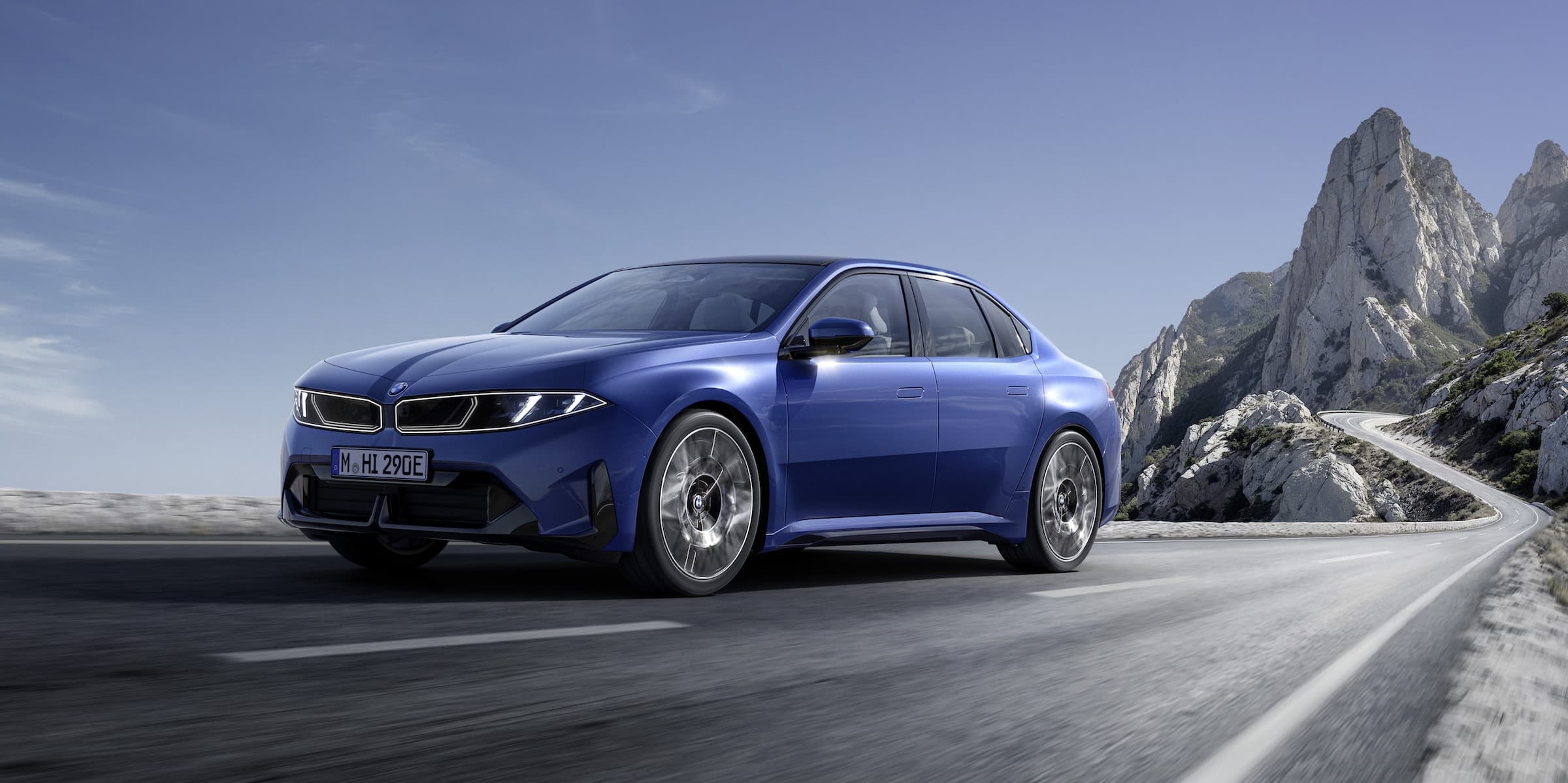
Just Vehicle Solutions logo 600x300

Car subscriptions from Just Vehicle Solutions.
Find out more

Flexible Vehicle Contracts logo 600x300px

Car subscriptions from Flexible Vehicle Contracts.
Find out more
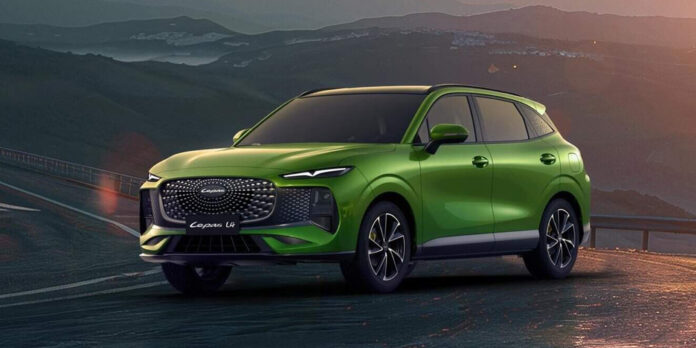
Hyundai Inster review – first UK drive

0

Make and model: Hyundai Inster 01
Description: Small electric hatchback
Price range: From £20,655

Summary: For those wanting to go electric on a budget the Hyundai Inster ticks most boxes, with plenty of equipment, lots of space and a competitive range.


Introduction

The Hyundai Inster launched in the Spring of 2025, becoming the Korean manufacturer’s lowest-priced electric vehicle and pitched firmly as one of the latest breed of more affordable sub £2K EVs – with a grant available as of February 2026 applied, prices currently start at just over £20K.

The Inster arrives in an increasingly competitive market, taking on several rivals including the well-received Renault 5. It’s a proper small car, 3.8 metres long and 1.6 metres wide, but for such compact dimensions, it offers surprising space inside.  

In a short period, the Inster has certainly made its mark, particularly for its practicality and stylish looks, which between them defy the affordability tag. Accolades for the Inster include being named The Car Expert’s Best Small Car 2026.

For a broader ownership picture, see our full Hyundai Inster Expert Rating.

Price and equipment

The Inster comes in two equipment levels dubbed 01 and 02, while there is also a separate Inster Cross model with traditional SUV-themed styling, though no extra off-road capability.

The 01 is available with either a 42kWh or 49kWh battery, dubbed ‘Standard Range’ and ‘Long Range’ while the 2 only comes with the larger unit. Prices start at £23,755 for the 01 Standard Range, £25,305 for the Long Range, with the 02 costing from £27,005.

These prices are high compared to rivals, and as of February 2026, the Inster is not eligible for the government’s Electric Car Grant. However, the car’s competitiveness is transformed by Hyundai’s own grant of £3,750 on all versions, bringing the starting price down to £20,655. The grant is currently scheduled to run until March 2026, but we would not be surprised to see it continue. 

Generally, the Inster is well equipped – the standard kit includes a heat pump (making the most of the battery’s range, particularly in colder conditions), climate control, keyless entry, Apple CarPlay and Android Auto integration, rear parking sensors, and plenty of ADAS driver aids. The car has a four-star Euro NCAP safety rating, which tends to be normal for smaller cars. 

Significant extras one gets by paying close to £2,000 more for the Inster 2 include larger alloy wheels, LED front and rear lights, interior ambient lighting, front parking sensors and a rear-view camera, a heated steering wheel, wireless phone charging and significantly more versatility in the rear, the seats both reclining and sliding. 

Inside the car

This may be a small car, but it is surprisingly spacious inside for four occupants (it is very much a four-seater) and their luggage – if you go for the 02. The sliding rear seats can extend the boot space from 238 to 351 litres, but disappointingly, you can only have them in the more expensive model. However, the rear seats do fold completely flat on all versions, while the 02 allows you to drop the front ones too.

The driver’s environment is reassuringly traditional. While the car follows the current norm of a centre touchscreen and another ahead of the steering wheel hosting the essential driver’s information, it also boasts plenty of physical controls.

Hyundai goes completely away from over-reliance on screens, with a whole panel of buttons below the screen, including air-conditioning controls (with manual sliders to change airflow direction), plus essential controls mounted on the steering wheel. 

Generally, the interior is well put together, though it’s an environment more of hard plastic than soft-touch surfaces.

Driving range and charging

The Car Expert’s standard range test car is quoted at up to 203 miles between charges, which the long-range extends to 229 miles, or 223 with the Inster 02 due to its extra equipment. These figures stack up well against rivals and while an initial test drive does not allow a real-world mileage calculation, early adopters of the car report satisfactory range results with energy consumption close to the quoted 4.3 miles/kWh.

The Inster will charge at up to 85kW at a public charging point, so a typical 150kW public rapid charger will replenish the battery from 10 to 80% in around half an hour. On a 7kW home wallbox, a full charge will take just over six hours.

The charging port, by the way, is in the car’s front end – just remember to park it the right way round…   

On the road

The Inster displays all the typical EV traits of being easy to drive, and its compact dimensions make for a competent performance on urban streets, easily nipping in and out of slower traffic. Unlike many EVs it is front-wheel drive, so it doesn’t have quite such a tight turning circle as some rivals, but with big windows and a high seating position it is very easy to see out of in all directions. 

On the open road the car feels planted, little surprise as this is quite a heavyweight in its segment, at around 1.4 tonnes. Our 01 offers a power output equivalent to 97hp while the 02 is rated at 115hp, cutting the 0-62mph time from a pedestrian 11.7 seconds to a still not that impressive 10.6 seconds – slower than rivals such as the Renault 5.

The car accelerates smoothly enough but on the motorway our 01 felt a little underpowered. However 70mph is not this car’s prime environment; it will best suit an owner who does a lot of slower-speed urban driving, and they will be able to make the most of the brake regeneration – the levels of this are easily changed through paddles on the steering wheel.

Ride comfort is generally good, the suspension soft enough to dial out the imperfections of typical urban streets while never feeling wallowy. 

Verdict

There is a lot to like about the Hyundai Inster – first-time EV buyers in particular will find it reassuringly easy to drive and appreciate the traditional interior, Hyundai’s designers resisting the temptation to put everything on a touchscreen.

With lots of equipment and space, a generally good performance and competitive range, the Inster is a good-value first EV – so long as you get it with the grant…  

For a broader ownership picture, see our full Hyundai Inster Expert Rating.

We like:

  • Lots of flexible interior space
  • Small car handling good for in-town driving
  • Range compares well to rivals
  • Plenty of physical controls
  • Well-equipped

We don’t like:

  • Without grant more expensive than rivals
  • Sliding rear seats not standard
  • Plenty of interor plastic
  • Heavy car for its size
  • Underpowered at higher speeds

Similar cars

BYD Dolphin | Citroën ë-C3 | Dacia Spring | Fiat 500e | GWM Ora 03 | Kia EV2 | Leapmotor T03 | Mini Cooper Electric | Peugeot e-208 | Renault 5 | Vauxhall Corsa Electric

Key specifications

Model tested: Hyundai Inster 01 Standard Range
Price: £20,655 (with £3,750 EV grant)
Powertrain: Electric motor, 42kWh battery
Gearbox: 
Single-speed automatic

Power: 97 hp
Top speed: 87 mph
0-60 mph: 11.7 seconds
Efficiency (combined): 4.2 m/kWh

Battery range: 203 miles
CO2 emissions: 0 g/km
Euro NCAP safety rating: Four stars (July 2025)
TCE Expert Rating: A, 79% (February 2026)

Buy a Hyundai Inster

If you’re looking to buy a new or used Hyundai Inster, The Car Expert’s partners can help you find the right car.

Motors 600x300

Find your next used car with Motors. Find out more

Auto Trader logo 600x300

Find your next new or used car with Auto Trader. Find out more

Carwow logo 600x300

Find your next new or used car with Carwow. Find out more