With used electric car (EV) choices widening and prices finally starting to fall to realistic levels for many more households, there’s never been a better time to make the all-electric switch. In fact, many second-hand electric models are now similarly priced to their petrol-powered counterparts.
New EV sales grew slowly but steadily during the 2010s, but really took off from 2020. There are now more than a million EVs on UK roads, but about three-quarters of those are less than three years old, so many of them are only now starting to hit the used car market for the first time. That means there’s now a lot more choice for customers, which has also brought prices down significantly from where they were a couple of years ago.
We analysed all the used electric cars available at several price points, using the thousands of deals listed on the website of our partner Motors. Then, we consulted our industry-leading Expert Rating Index to see which models have the highest ratings for safety, running costs, reliability and favourable reviews from motoring journalists.
Every car listed below has used models available to purchase now. Our list concentrates on cars no more than five years old (and most no more than three) because there’s a lot more choice. Once you start going back more than five years, you’re largely restricted to Teslas, Nissan Leafs and a few Smart city cars.
With our comprehensive Expert Ratings data and hundreds of media reviews backing our recommendations, you can be confident that this is the definitive guide to the best used EV bargains that are on sale in the UK right now.
The pricing estimates and model age figures used in this article are based on actual listings on Motors and are accurate as of August 2024. The used car market is constantly shifting, and it’s likely that these prices will increase or decrease further in the coming months.
Part of the previous Volkswagen Golf Mk7 line-up, the e-Golf was one of the best all-electric hatchbacks on the market a few years back. The EV industry now offers superior electric powertrains and on-board tech, but the e-Golf is still a great value-for-money choice in this budget bracket. It also drives much like a regular petrol-powered Golf, but quieter, which makes it ideal for buyers looking for their first EV.
The Volkswagen Golf Mk7 range holds a Used Car Expert Rating of B in our Expert Rating Index, with a score of 69%.
Another electrified version of a UK favourite, the Vauxhall Corsa-e (renamed the Corsa Electric as part of last year’s facelift) stands out due to its well-equipped cabin and comfortable driving experience, but it can get rather cramped in the back.
Roomy, affordable and reliable – the second-generation Nissan Leaf was the best selling electric car worldwide not that long ago. That said, it has also been surpassed by newer rivals that offer a longer battery range.
For a few thousand more than the old e-Golf, you can instead opt for its replacement. The Volkswagen ID.3 is now fairly cheap on the used market, and has been widely praised for its performance and decent battery range, as well as overall comfort and ease of use. That’s if you can live with the rather fiddly infotainment, which Volkswagen took a few years to improve.
The Volkswagen ID.3 holds a Used Car Expert Rating of A in our Expert Rating Index, with a score of 78%.
A sign of the rapidly growing used EV market if there ever was one, you can now buy a four-year old Tesla for a smidge under £15k. The mid-sized saloon is tech-laden and offers punchy performance, but ride comfort can be harsh and build quality patchy.
While this is the previous version of the Kona Electric, this compact SUV is still impressive, even by current standards. It’s practical, fun to drive and is affordably priced on the used market.
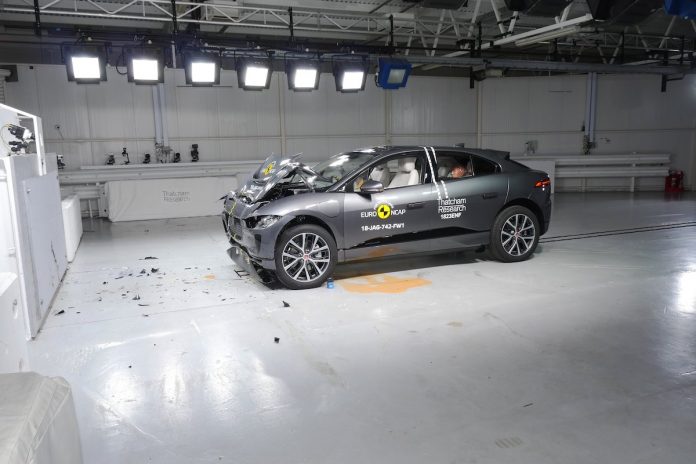
A few years ago the Jaguar I-Pace was generally considered to be one of the best electric cars on sale – albeit one of the most expensive. Now, the latter is no longer the case. Praised for its battery range, sports car performance and its polished and practical interior, the I-Pace is currently more affordable on the used market than other upmarket second hand SUVs from the likes of Audi and Mercedes-Benz, and it comes with excellent safety credentials too.
The Jaguar I-Pace holds a Used Car Expert Rating of B in our Expert Rating Index, with a score of 66%.
Designed to be an attractive low-price gateway to EV ownership, it’s no surprise that the well-received MG 4 hatchback offers great value-for-money on the used market too.
The Mégane E-Tech is a stylish crossover-style hatchback that offers intuitive infotainment, a competitive battery range and a comfortable ride. That said, rear visibility isn’t great and the car’s boot design isn’t very practical.
The award-winning Skoda Enyaq is one of the most practical EVs out there, commended for its spacious cabin with a large boot, its long battery range and its comfortable driving experience. Importantly, the SUV is a value-for-money pick on both the new and used market. There’s currently a wide selection of low-mileage used models listed online for under £25k.
The Skoda Enyaq holds a Used Car Expert Rating of A in our Expert Rating Index, with a score of 79%.
The sporty Ford Mustang Mach-E is an accomplished all-rounder that blends impressive straight-line performance with a spacious and comfortable interior. The car’s handling isn’t considered to be great, however.
This retro-modern Hyundai is larger than it looks and is well-mannered on the road. Reviewers are also impressed by the car’s powertrain and on-board tech, but alternatives have a softer ride.
Currently the world’s most popular electric car, the family-friendly Tesla Model Y has been praised by reviewers for its impressive performance and battery range. It may be more expensive on the used market than some similarly-sized rivals, but its class-leading on-board tech makes it a stand-out EV choice which includes worldwide access to Tesla’s acclaimed Supercharger charging network.
The Tesla Model Y holds a Used Car Expert Rating of A in our Expert Rating Index, with a score of 72%.
The Kia EV6 is a sleek family-sized electric car that is slightly sportier than its Hyundai Ioniq 5 counterpart, but just as well-designed and spacious inside. Like the Hyundai though, its ride quality has been criticised.
A spacious SUV with a refined and high-quality interior, the Nissan Ariya is a good value-for-money choice in the £30k price bracket due to its generous standard equipment list. It’s not very exciting to drive, though.
Its eye-catching van-shaped styling may not be for everyone, but the Volkswagen ID. Buzz can’t be beat when it comes to interior space and practicality. Ideal for large families, the ID. Buzz people carrier can quietly and comfortably handle long distances on a single charge. Like other Volkswagen EVs however, reviewers take issue with the car’s rather confusing infotainment.
The Volkswagen ID. Buzz holds a Used Car Expert Rating of A in our Expert Rating Index, with a score of 78%.
Another well-received electric Volkswagen with an impressive battery range the relatively new ID.7 saloon has just started to appear on the used car market with some reasonable prices.
Polarising exterior looks aside, the BMW iX is a large luxurious SUV with impressive infotainment and a class-leading battery range. Its pricing has been slashed on the used market, but alternatives are still cheaper.
For the definitive rankings of the best used family cars for every budget, we’ve used The Car Expert’s industry-leading Expert Rating index. The index analyses new car reviews from 35 of the top UK motoring websites, plus Euro NCAP safety data, reliability data and running cost data. A number of complex algorithms come together to give us overall new and used car ratings.
The algorithms constantly recalculate and update the Expert Rating scores every time new data points are added (we’re currently at about 7.5 million!) to make sure you’re getting the most accurate and reliable recommendations for every new car – and a growing number of used cars as well.
The new electric Cupra Tavascan coupé-SUV range will soon be available to order in the UK, with four models to choose from.
We first covered the Tavascan after the model’s official debut in April last year – this being Cupra’s second all-electric model – so this SUV has been a long time coming. Described back then by its manufacturer as “a glimpse of what the brand’s future electric models will look like”, the Tavascan will launch as a competitor to the popular Tesla Model Y SUV.
The SUV’s exterior looks “remains faithful” to the Tavascan 2019 concept car, with its angular front end features including triangular Matrix LED headlights, a large grille and pronounced bonnet indents. The Tavascan’s sloping roof line and sharp door panel contours lead to a full-width rear tail light that features an illuminated Cupra badge in the centre.
The SUV sits on 21-inch alloy wheels finished in black and bronze, which are wrapped in performance tyres as standard.
Cupra will launch the car with two powertrains and four trim levels. The cheaper ‘V1’ and ‘V2’ is powered by a 77kWh battery and electric motor pairing that produces 286hp and a reported maximum range of 352 miles, which is a longer travel distance that the surpasses what the range topping Tesla Model Y ‘Long Range’ can muster.
The second more powerful option is powered by the same 77kWh battery, but is tuned more for performance. Available with the ‘VZ1’ and ‘VZ2’ trims, this 340hp powertrain can complete a 0-62mph sprint in 5.5 seconds – 1.3 seconds faster than the entry-level version. Top speed is electronically capped at 112mph. The SUV is compatible with up to 11kW AC charging and 135kW DC fast-charging stations.
Available to reserve now but officially launching on 11th September, pricing for the Cupra Tavascan will start at just over £47k for the ‘V1’, rising to nearly £61k for the range-topping ‘VZ2’.
Does anyone driving a car today not know the Volkswagen Golf? Celebrating its 50th anniversary in 2024, this is a car that remarkably, replaced the VW Beetle and in the process became a standard bearer for a whole new format, the front-wheel-drive hatch.
Many a rival has come and gone since then, but the Golf has simply remained as a constant presence, Volkswagen jealously guarding the car’s reputation of being just a little more upmarket and of better quality than contenders produced by the likes of Ford and Vauxhall. So far 37 million Golfs have been built, 2.3 million of them for the UK.
The current, eighth-generation Golf has been on sale since 2019, and the 50th anniversary coincides with the usual mid-life update. Volkswagen calls it the ‘Golf 8.5’, which may be over-egging it somewhat, although the revamp does extend to engine updates and even changes to the car’s chassis.
What is it?
The 2024 Volkswagen Golf is an extensive update of the Golf 8, which arrived in UK showrooms in 2019 and was widely seen as a much changed for the better car compared to its predecessor. There were gripes, though, and Volkswagen claims that customer feedback has driven some of the changes on the new car. It also makes use of updated technology launched on recent new models, particularly the all-new Tiguan SUV that went on sale earlier this year.
What this means for customers is more tech, particularly a new digital cockpit, and improvements to the engines, especially the plug-in hybrid models which get bigger batteries and more range as a result.
The plug-in hybrids are part of an extensive choice of power running across both the five-door hatch and five-door estate versions of the Golf. You can also have regular petrol (with mild hybrid assistance) or turbo diesel, but not a fully electric model – we’ll explain why shortly…
Who is this car aimed at?
The Golf has long suited and continues to suit a wide range of customers, being regarded as competent a family car as it is a fleet driver’s motorway muncher. Much of this appeal is generated from past reputation, the Golf always regarded as just a bit better than the car park crowd. This is no longer true, as today there are some very good rivals out there, but the Golf continues to sell in vast numbers and generate many happy owners.
Who won’t like it?
If you are convinced by the switch to electric and want an electric Golf, you can’t have one right now. There was an electric e-Golf version of the previous (2012 to 2019) model, but from 2020 Volkswagen launched its ID range of models. The ID.3 is essentially the electric equivalent of the Golf, and it’s likely that the next generation of that model will merge with the next-generation Golf (probably keeping the Golf name) as fossil-fuel Golfs finally disappear.
As for when that will be, we’re not really sure at the moment. You’d normally expect a car to have a life span of seven to eight years, with a major update halfway through. That would put the next-gen Golf’s arrival in about 2027 or 2028. However, like many car manufacturers, Volkswagen is keeping an eye on EV sales around the world. If take-up is not growing sufficiently, we may well see a ‘Golf 8.75’ with a further round of updates instead to prolong internal combustion power for a few more years.
First impressions
Well it looks like a Golf… Visually there are few changes to the latest variant, even considering the changes underneath. The usual facelift fare of updating the front and rear lamps has taken place, and you can now specify more powerful LED beams up front with a range of some 500 metres.
Other changes include a horizontal light bar in the front grille to give the car a little bespoke personality at night, aided by perhaps the most novel update, the VW badge on the bonnet now being illuminated. A good thing, perhaps, that the 1980s trend of Beastie Boys fans stealing VW badges is long in the past – replacing one would now be rather more costly…
The exterior tweaks succeed in maintaining the Golf’s recognisable proportions, but they also leave it looking just a little dated amongst more recent rivals which have come to market with more radical visual treatments.
What do you get for your money?
The new Golf range is extensive – there are two body choices in the five-door hatch and estate, up to six trim levels (depending on the engine) for the hatch and three for the estate, and seven current engines, with more to follow.
Currently the buyer can choose between petrol units of 115 or 150hp, a 150hp mild hybrid petrol unit and two petrol/electric plug-in hybrids of 204 or 272hp – the latter in the sports-pitched GTE model. You can even still buy a diesel if you really feel the need (although almost no-one will), with a choice of 115hp or 150hp engines.
Both plug-in hybrids now make use of a larger battery giving them an official all-electric range of more than 80 miles, around double previous versions. They can also now use DC rapid chargers, which is relatively unusual for a plug-in hybrid vehicle.
On the road prices start at £27K for the hatch models, with the estates about £1,400 dearer. Plug-in hybrid variants start from just under £37K.
Standard equipment on the entry-level ‘Life’ models, include the new digital dashboard and infotainment system. Wireless smartphone integration, front and rear parking sensors and adaptive cruise control come as standard on all variants too.
There’s some interesting new technology on the options list, including a 360-degree bird’s eye view monitor and from Autumn 2024, Park Assist Pro, a natty system that allows you to park the car while standing alongside it, using your smartphone.
What’s the Volkswagen Golf like inside?
It’s within the car where far more visible changes are evident, with the infotainment system hardware and software first seen on the new Tiguan earlier this year. Volkswagen’s latest operating system is promised to be more intuitive and user-friendly, following some criticism of its predecessor. And it is, though still not quite as simple to use as those of some rivals.
The system is based around a central screen of close to 13 inches mounted atop the centre console. Unlike may rivals, the screen still looks tacked onto the dashboard as an afterthought rather than smoothly integrated. You can issue commands via touch or using an ‘AI-powered’ voice control.
Not everyone is ready for such advances, however, and VW has taken note as it’s not all pokes of the touchscreen – there are now a row of illuminated physical switches at the base of the central screen, while an the steering wheel has returned to offering proper buttons rather than the unpopular haptic touch controls of the pre-facelift version.
To more basic matters – VW claims to have applied more premium materials to the doors, dash and upholstery, again a source of criticism in the 2019 version. They look okay, but rivals have upped their game and the Golf doesn’t stand above its opposition to the level it once did.
Similarly the space for both people and luggage are not class-leading, but plenty enough for most owners.
What’s the Volkswagen Golf like to drive?
Disappointedly there were no plug-in hybrid versions to try on the Golf launch event, despite going on sale with the rest of the engine options. More powerful models, including the latest Golf GTI, will arrive in showrooms later in 2024. So we contented ourselves with the 1.5-litre mild hybrid petrol unit of 150hp in a hatch, and an estate fitted with the 2.0-litre 115hp diesel.
While Volkswagen engines have attracted emissions-cheating controversy in recent years, their mechanical qualities have never been in doubt. Both the petrol and diesel units in our test cars were refined in their power delivery and quiet in operation.
All of which combines well with an on-the-road performance that is confident, producing a comfortable ride and very little extraneous noise even at motorway speeds. The car remains poised through corners without proving particularly exciting – enthusiastic drivers will find little to enthuse them, but the vast majority of owners will be happy with a car that is very easy to live with.
How safe is the Volkswagen Golf?
The eighth generation Golf was crash-tested by Euro NCAP in 2019, gaining a top-level five-star rating, and it retained it when retested in 2022 after the safety body tightened its test protocols.
The Golf comes with an extensive safety specification including a full suite of driver-assistance technology, and it’s pleasing to note that adaptive cruise control is standard even on entry-level Life versions. Useful extras such as a rear traffic alert and lane-change assistance systems come with higher trim levels but the essentials are on every model.
Volkswagen Golf fuel economy
Once if you wanted high fuel economy you went diesel. Now, even if you can get them, they no longer stand well clear of their petrol counterparts. All of the petrol engines are officially certified at above 50mpg, the mild hybrids at 53.3mpg, whereas the two diesels just crest 60mpg.
The less than real-world method of measuring plug-in hybrid economy produces stratospheric ratings above 940mpg, but more pertinent, especially for fleet drivers and their benefit-in-kind tax, is the CO2 emissions figures of 6-8g/km. The petrol and mild-hybrid engines range from 120 to 127g/km.
Verdict
Usually mid-life facelifts produce little to get excited about but this package of updates to the Volkswagen Golf is significant and wide-ranging. The Golf has remained a favourite car for many buyers for half a century because it does everything expected of it to a high standard and this update will keep it very much in contention with much younger rivals.
Model tested: Volkswagen Golf Match 1.5 eTSI / Estate Life 2.0 TDI Price (as tested): £31,475 / £32,670 Engine: 1.5-litre petrol / 2.0-litre diesel Gearbox: seven-speed auto / six-speed manual
Fuel economy: 53.0mpg / 64.3mpg Euro NCAP safety rating: Five stars (2019) TCE Expert Rating:A (80%) as of August 2024)
Buy a Volkswagen Golf
If you’re looking to buy a new or used Volkswagen Golf, The Car Expert’s partners can help you find the right car
Search less, live more. We make finding the right car simple. Find out more
Search for your next new or used car with Auto Trader. Find out more

Discover great deals available on both new and used cars. Find out more
Lease a Volkswagen Golf
If you’re looking to lease a new Volkswagen Golf, The Car Expert’s partners can help you find a competitive deal
Personal contract hire deals from Carparison Leasing. Find out more
Personal contract hire deals from Leasing.com. Find out more
Personal contract hire deals from Rivervale Leasing. Find out more
Subscribe to a Volkswagen Golf
Subscriptions are becoming a very popular way for consumers to try a car for a few weeks or months to help decide whether it’s for them. If you’re interested in a car subscription, The Car Expert’s partners can help. (PS: What’s a car subscription?)
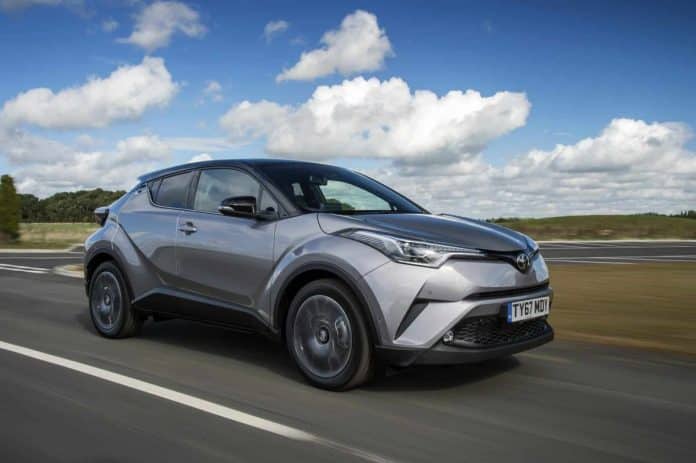
Make and model: Toyota C-HR Description: Small SUV/crossover Price range: from £31,300
Toyota says: “The all-new Toyota C-HR combines stand-out styling, an engaging drive and class-leading efficiency with a focus on European customer expectations of premium quality and sustainability.”
We say: Toyota has overhauled its model range with striking new designs and the C-HR is no different, targeting the small SUV market.
This is the second generation of the Toyota C-HR. Since the model made its debut in 2017, more than 840,000 units have been sold across Europe. It sits somewhere in the middle of Toyota’s range as a small SUV or crossover bodystyle.
The model was updated in 2023 to reflect the futuristic styling and technology-forward ethos of the rest of Toyota’s line up. The brand’s range includes an increasing number of hybrid options as well as its all-electric Toyota bZ4X SUV.
In our Expert Rating Index, as of August 2024, media reviews of the Toyota C-HR have earned the car an overall Expert Rating of B with a score of 65%. As the car was released recently, we don’t yet have a score for it as a used pick.
What is the Toyota C-HR?
The C-HR is classed as a small SUV or crossover so it sits in the same category as the likes of the SEAT Ateca, Skoda Karoq and Ford Kuga. The model is only available with basic hybrid and plug-in hybrid options so it’s designed to have good fuel economy and emit less emissions. When the C-HR first came to the UK there weren’t as many small SUV competitors but the market has grown as demand in this segment has increased.
The next model up from this in Toyota’s range is the RAV4 which also now comes as a basic hybrid or plug-in hybrid. Alternatively, if you’re ready to go fully electric, the bZ4X is Toyota’s first electric SUV which offers a range of up to 318 miles. For those looking for something even larger and more capable, the latest generation of the Toyota Land Cruiser will be available in the UK later this year.
First impressions
The curves of the previous generation C-HR have faded away in favour of a more angular design. It brings the small SUV’s styling closer to that of the bZ4X and emphasises Toyota’s new generation of futuristic looks. Unusually, the C-HR features two-tone paintwork on the higher trim levels which includes the roof and rear of the vehicle in black while the rest is a colour of your choosing.
Toyota positions the C-HR as an upmarket SUV with additional features to make the body look sleek. This includes flush door handles that pop out when you unlock the car and retract when you drive away. Inside, the focus is on the central touch screen and on top trim level options ambient lighting can be set to one of 64 different colours.
We like: Futuristic styling and colour options We don’t like: Flush door handles are an unnecessary addition
What do you get for your money?
There’s five trim levels available: Icon, Design, Excel, GR Sport, and Premiere Edition. These all come with a hybrid engine or Design, Excel and GR Sport can be specified as plug-in hybrids.
Icon gets 17-inch alloy wheels, fabric upholstery, and an eight-inch touchscreen with wireless Apple CarPlay and Android Auto. Standard safety equipment includes adaptive cruise control, road sign assist, lane trace assist and a blind spot monitor with safe exit assist which detects if you’re likely to open your door into the path of a vehicle approaching from the rear. As the entry point to the C-HR range, Icon starts from £31,300.
Design adds 18-inch alloy wheels, rear privacy glass, powered tailgate and parking sensors with automatic brake function. The driver’s display and the central screen are enlarged to 12 inches and it comes with a wireless phone charger. This trim level starts at £34,695 for the hybrid and £39,145 for the plug-in hybrid. From this level bi-tone paint finishes and a panoramic glass roof can be specified as optional extras.
Excel gets slightly bigger wheels again at 19 inches and bi-tone paintwork comes as standard at this level. In the front there’s sports seats with suede-effect upholstery, overhead there’s a panoramic roof and this trim gets a 360-degree view of the car. Additional safety features include lane change assist, front cross traffic alert, adaptive high-beam headlights, cornering lights and a driver monitoring system. For the hybrid option Excel starts at £38,160, and the plug-in hybrid begins at £42,610.
GR Sport starts at either £40,655 or £43,540 depending on which type of hybrid suits you best. It gets 20-inch alloy wheels, a head-up display and JBL audio. Unlike the other trim levels, GR Sport gets Toyota Gazoo Racing inspired exterior and interior styling. This trim can be specified with additional safety and premium packs to add features such as a panoramic roof, digital rearview mirror and lane change assist.
Premiere Edition gets all of the standard and optional features included in the Excel trim level with the addition of leather upholstery and bi-tone paintwork in Sulphur metallic with Astral Black roof and rear quarters. This top trim is priced from £42,730 and only available with a hybrid engine.
As standard, the C-HR range comes with a three-year warranty. After this point owners can extend their warranty period by 12 months/10,000 miles with a service at an authorised Toyota workshop. This can extend up to 10 years/100,000 miles as long as services after the three year mark are completed by a qualifying workshop.
We like: Distinct trim levels with good amount of optional extras We don’t like: More expensive than close competitors
What’s the Toyota C-HR like inside?
In the front, the C-HR feels reasonably spacious and easy to get familiar with. The touch screen tilts towards the driver which makes it slightly closer to reach. Underneath, there’s a bank of climate control buttons which are intuitive and simple to use. There’s a small shelf in front of the passenger and a glovebox beneath.
In the back, head and leg room isn’t as generous as competitors. With a short driver in front it gives rear passengers a bit more leg space but the sloping roof also limits rear access with small rear doors and windows. Some cars in this class receive a folding centre console in the rear from the middle seat back which houses cup holders but these are instead integrated into the rear doors instead.
The boot is a decent size but it has quite a large lip to lift luggage over and doesn’t get an adjustable floor height. The plug-in hybrid versions have a higher boot floor but this is fixed and reduces boot room slightly. Regardless, the C-HR’s boot should be plenty big enough for daily tasks, weekends away and occasionally filling it to the brim for longer holidays.
We like: Well thought out media layout for the driver We don’t like: Restricted rear leg and head room
What’s under the bonnet?
The C-HR is available in three different configurations: a 1.8-litre petrol hybrid, a 2.0-litre petrol hybrid and a 2.0-litre plug-in hybrid. The plug-in hybrid is the most powerful option and can travel up to 41 miles on electric only. This makes it ideal for short commutes and city driving. It comes with all the cables you need to charge at home using a three-pin plug or at a wall box. To get the most out of a plug-in hybrid, it needs to be charged regularly so you can maximise the use of its electric-only range and save fuel.
The basic hybrid options don’t have the facility to be externally charged so the electric-only driving range is limited to a few miles. But if you don’t have access to charging at home or work, or the plug-in model is outside of your budget, then the standard hybrids might be a better fit.
Whilst towing is unlikely to be a primary objective for most customers, all versions can tow up to 725kg so summer holiday trips with a trailer full of camping gear are sorted.
What’s the Toyota C-HR like to drive?
The steering and accelerator feel very light. It’s easy to manoeuvre the car and it only needs gentle inputs to go where you want it to. A one-pedal driving mode can be selected to make it easy to drive in stop start traffic or the brake pedal is very responsive with normal driving. Thanks to the hybrid power, the C-HR gets up to speed reasonably quickly and doesn’t feel like it’s lacking in power. Obviously, it’s not designed to be a sports car so if you put your foot down it can be a little noisy but for the majority of daily driving it’s easy to get along with.
Visibility out of the rear is a bit limited due to the sloping roofline so the reversing camera and mirrors help you get a good sense of what’s behind. Like an increasing number of modern cars, the C-HR has a number of pings and dings to alert you of various things such as the speed limit and lane-keeping assistance. These can be turned off through a menu in the driver’s display, but they have to be deactivated every time you get into the car thanks to new EU regulations.
As the C-HR range has various different wheel sizes, the smaller options are likely to provide the most comfortable ride. That’s not to say the larger wheels are uncomfortable but smaller wheels are generally more forgiving over potholes and uneven road surfaces. Standard safety equipment includes intelligent adaptive cruise control, lane departure alert, lane trace assist, road sign assist, blind spot monitoring, hill-start assist and eCall which automatically contacts emergency services in the event of an accident.
We like: Easy to drive and make the most of electric power We don’t like: Restricted rear visibility
Verdict
The Toyota C-HR sits on the smaller end of the small SUV scale but it comes well equipped and it’s very easy to live with. The hybrid engine options give it great fuel efficiency which can be maximised with the plug-in variant. Inside, it has the right balance of modern and traditional with a large touchscreen display and simple climate control buttons.
For young families or those who occasionally have rear passengers, the C-HR fits the bill. It sits closer to a large hatchback so for extra rear passenger and boot space, competitors can offer more room. With access to charging the plug-in hybrid version could make a very economical ride but given its higher price point, the 1.8-litre basic hybrid should provide more than enough oomph, affordability and comfort.
Similar cars
If you’re looking at the Toyota C-HR, you might also be interested in these alternatives.
CO2 emissions: 110 g/km Euro NCAP safety rating:5 stars TCE Expert Rating: 65% (as of August 2024)
Buy a Toyota C-HR
If you’re looking to buy a new or used Toyota C-HR, The Car Expert’s partners can help you find the right car
Search less, live more. We make finding the right car simple. Find out more
Search for your next new or used car with Auto Trader. Find out more
Discover great deals available on both new and used cars. Find out more
Lease a Toyota C-HR
If you’re looking to lease a new Toyota C-HR, The Car Expert’s partners can help you find a competitive deal
Personal contract hire deals from Carparison Leasing. Find out more
Personal contract hire deals from Leasing.com. Find out more
Personal contract hire deals from Rivervale Leasing. Find out more
Subscribe to a Toyota C-HR
Subscriptions are becoming a very popular way for consumers to try an electric car for a few weeks or months to help decide whether it’s a suitable alternative to a petrol car. If you’re interested in a car subscription, The Car Expert’s partners can help. (PS: What’s a car subscription?)
Maserati has unveiled its new GT2 Stradale supercar in California, which is slightly more powerful than the brand’s MC20 flagship.
This new track-focused supercar is described by its manufacturer as the “technical and stylistic” midpoint between Maserati’s mid-engined MC20 sports car and its new GT2 race car designed for the brand’s return to GT competitions.
Maserati insists that the supercar is well-rounded, explaining that the GT2 Stradale “evokes style and racing performance without sacrificing the best driving experience on the road.” Taking exterior design cues from both the MC20 and GT2, the Stradale is powered by the same 3.0-litre twin-turbocharged V6 engine but is 60kg lighter than its MC20 sibling.
This weight reduction, as well as engine tuning that adds an extra 10hp and the GT2’s aerodynamics, means that the GT2 Stradale can complete a 0-62mph sprint in 2.8 seconds – a tenth of a second faster than the MC20. The engine’s total output is 640hp, and top speed is capped at 199mph.
Inside, the car comes with Alcantara leather-trimmed carbon fibre sport seats, and a digital instrument cluster and infotainment screen pairing installed on a suede-look dashboard. The steering wheel is also wrapped in Alcantara leather and comes with integrated gear shift lights.
To give the Stradale a race car feel, Maserati has also given the car a GT2 Stradale badge on the dashboard and lightweight fabric pulls instead of normal door handles.
The options list includes several personalisation options, including paint colours from its ‘Fuoriserie’ range and extra carbon fibre trim for the cabin.
While the GT2 Stradale is now available to configure on Maserati’s website, the brand is yet to announce the supercar’s UK price and model allocation (how many cars are coming to the UK for sale).
Part of its latest high-power M5 line-up, BMW’s performance-focused ‘M’ division has debuted the new M5 Touring – an estate version with a stretched roofline with a unique roof spoiler.
Besides providing supercar-rivalling pace and acceleration, BMW says that this new M5 range “combines electrifying performance with an unrivalled long-distance capability”, pointing to the fact that the performance car is now a petrol plug-in hybrid, combining a 4.4-litre twin-turbocharged V8 petrol engine with a 19kWh battery and electric motor.
The added battery boosts the car’s output to 727hp – up from last generation’s petrol-only 567hp – and gives the car an estimated electric-only driving range of 38 to 42 miles.
BMW adds that this plug-in hybrid configuration can provide a fuel consumption of up to 166mpg – a large improvement over the last model’s average consumption of 25mpg. Top speed is limited to 155mph (can be pushed up to 189mph with the optional ‘M Drivers’ package’), and this Touring estate can reportedly complete a 0-62mph sprint in 3.6 seconds. This is two tenths of a second slower to 62mph than the Audi RS6 Avant.
In basic terms, the M5 Touring is the same car as the saloon version but with a bit more practicality. It has slightly wider wheel arches and is around four centimetres longer and seven centimetres wider than the standard M5.
Both versions of the new M5 come with larger blacked-out kidney grilles with an illuminated surround, more pronounced air intakes and sharper bonnet contour lines in the front, and a chunky two-section quad-exhaust diffuser on the rear bumper. The Touring’s extended rear roofline ends with a spoiler that provides extra downforce.
Inside, the M5 Touring comes with a familiar interior design, including a curved continuous digital instrument cluster and infotainment display that juts out of the dashboard, and front seats that are both heated and ventilated.
A premium Bowers & Wilkins sound system is included as standard, while an optional panoramic sunroof can be installed for an additional fee. The list of on-board tech features includes semi-autonomous parking assistance, which can cover distances of up to 200 metres on its own.
Now available to order in the UK, the third-generation BMW M5 Touring costs over £112k as standard, with the first customer deliveries expected to arrive on UK roads early next year.
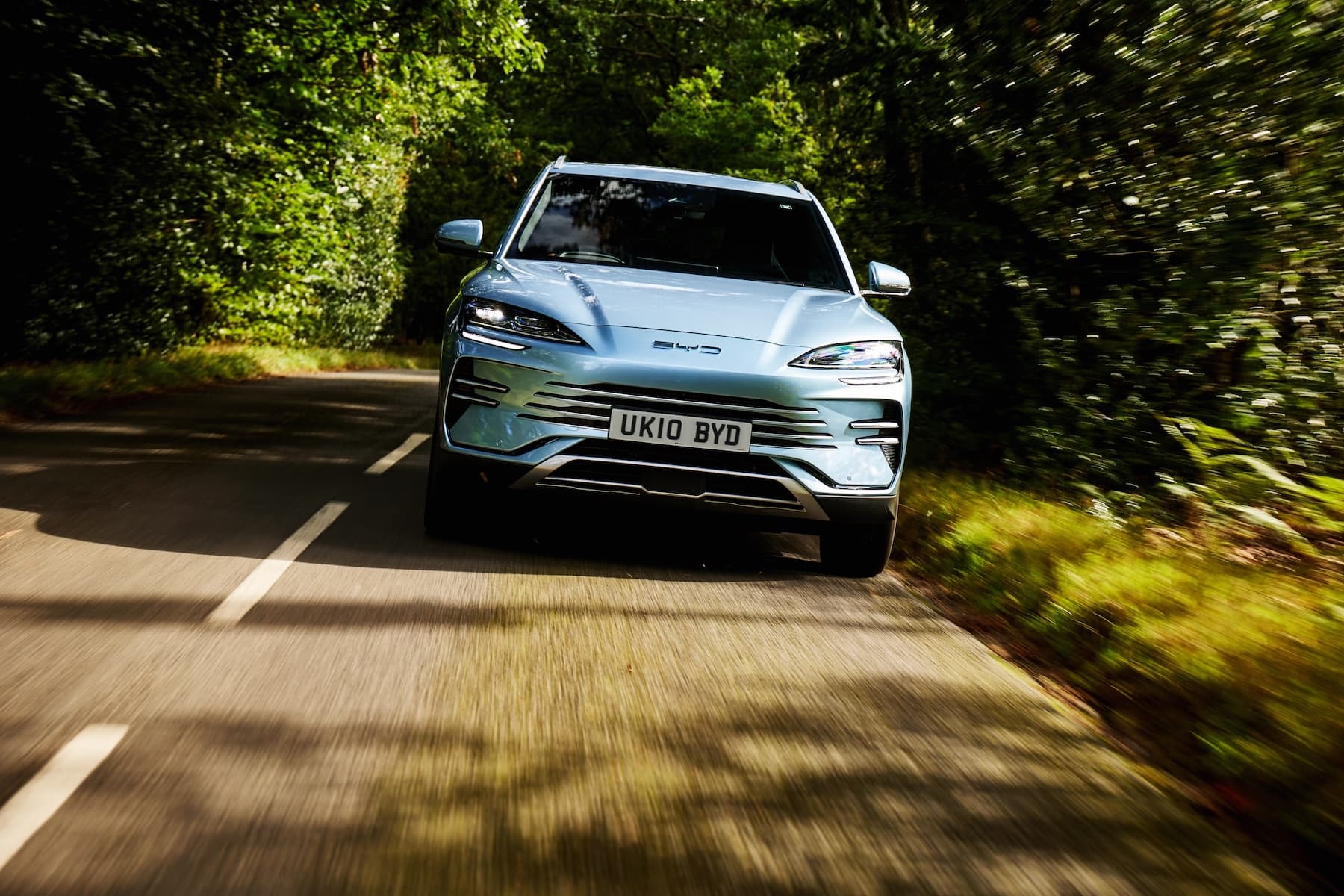
The Subaru Crosstrek is the newest addition to the Subaru range after its all-electric model Solterra joined the lineup in 2023. It replaces the XV in the line-up, which was sold across two generations (2010-2017 and 2017-2024).
Most of Subaru’s range has a very specific audience, but the Crosstrek feels more applicable to customers who are not as focused on ruggedness and practicality. The Crosstrek feels like a good middle ground for drivers who only need that functionality occasionally instead of every day.
As of August 2024, our award-winning Expert Rating Index doesn’t yet include results for the Subaru Crosstrek as we don’t have enough safety data or running cost information just yet, but Subaru will be hoping that the new model improves on the previous XV model, which earned a lowly rating of D (with a score of just 59%) as a new car purchase, and a C grade (with a score of64%) as a used pick.
What is it?
The Crosstrek is the replacement for Subaru’s XV model. It’s a small SUV / crossover which essentially means it’s higher and slightly larger than a hatchback. It’s the smallest model in Subaru’s range and comes with just one hybrid engine option.
There’s plenty of competition in the SUV market so the Crosstrek could be looked at alongside the likes of the Kia Stonic, Dacia Duster and Hyundai Kona. For a bit more space, the Seat Ateca, Skoda Karoq, or Ford Kuga could be alternatives to consider. Crosstrek finds itself somewhere between small SUV and medium SUV ranges, so once you’ve decided on a budget, this will help to inform which other cars you might also consider.
First impressions
Compared to the Outback the Crosstrek looks small in the flesh but inside it’s spacious and shares a very similar interior layout. Externally, it features chunky black plastic wheel arches and trim around the bumper. It sits noticeably higher than a hatchback but not quite as high as a standard SUV. This makes it very easy to get in and out of and doesn’t make you step up into or down into the car.
In keeping with the rest of Subaru’s range, the Crosstrek is much more modern compared to its predecessor and the angular styling gives it a bit more personality. Inside, the touchscreen is the main focus and everything feels solidly put together. True to Subaru’s reputation it feels built to last and comes with lots of safety equipment as standard.
We like: Feels built to last and has good safety features We don’t like: Just one engine option
What do you get for your money?
The Crosstrek range starts from £34,290 and rises to £36,290. Two trim options are available: Limited, or Touring. If you fancy a special paint finish that doesn’t come as standard then that costs an extra £595 on top of the purchase price.
Subaru offers a range of different finance options with PCP deals coming in at £298.75 a month with a £7,620 deposit for the entry-level spec. Personal and business contract hire deals are a little more expensive on the monthly amount or Subaru has a 50/50 deal. This is where you pay a 50% deposit, then pay the final 50% a year later with 0% APR.
Limited trim comes with roof rails, six-way manually adjustable driver’s seat, heated front seats, Apple CarPlay and Android Auto, rear view camera, and tyre pressure monitoring. Touring adds synthetic leather seat trim, sunroof, 10-way power adjustable driver’s seat, and sat nav.
Safety equipment includes adaptive cruise control, lane departure prevention, traffic sign recognition, intelligent speed limiter, blind spot monitoring, lane change assist and reverse automatic braking.
The Crosstrek comes with a three-year / 60,000 mile warranty, which is pretty much the bare minimum and no more these days, while the battery is covered under an eight-year / 100,000 mile warranty.
We like: All safety equipment is included as standard We don’t like: Short warranty compared to rivals
What’s the Subaru Crosstrek like inside?
The interior feels like it’s made to be hard wearing. In the centre of the dash is a large integrated touchscreen which has some real buttons surrounding it to help with climate controls. While the screen layout is easy to navigate on the move thanks to the large icons, it can be a bit laggy. With Apple CarPlay and Android Auto connected, the user experience is much smoother.
In the back there’s a good amount of legroom and most passengers will be comfortable with the amount of headroom as well. There’s also enough space for three adults to sit alongside each other without feeling uncomfortable on longer journeys.
The boot space is more than adequate for everyday use and the weekly shop but rivals like the Ford Puma, Dacia Duster and the Hyundai Kona have bigger boots. With the seats down loading space opens up to make room for much larger items. Unlike others in this category the Crosstrek doesn’t have additional storage space underneath the boot floor.
We like: Robust, well laid out cabin We don’t like: Small boot compared to rivals
What’s under the bonnet?
Subaru offers the Crosstrek with one engine option, a 2.0-litre petrol engine with hybrid assistance. Although the Crosstrek can drive on electric power alone, it’s rather limited compared to most hybrid models from other manufacturers. Running purely on electricity, it can go for about a mile and reach no more than 25mph, so it’s generally only useful for stop-start urban traffic.
The main role of the electric motor is to provide additional support to the petrol engine, helping to improve fuel economy by reducing load on the engine. Subaru claims that it offers a 10% benefit in fuel economy compared to the same engine without electric support.
Fuel economy is officially rated at 37mpg but, for real-world driving, expect this to vary between 32 to 35mpg. With very economical driving, 40mpg could be achieved. Despite it being the smallest model in Subaru’s lineup, the manufacturer hasn’t skimped on giving the Crosstrek good towing capacity. It can tow a braked trailer up to 1,270kg.
What’s the Subaru Crosstrek like to drive?
The Crosstrek feels much lighter on the road than the Outback. It feels much easier to manoeuvre as it’s a shorter car, all round visibility is very good and aided by a reversing camera. For local journeys it’s easy to jump in and go and the hybrid engine helps it to stay quiet and smooth. The higher ride height gives you a better view of the road and makes the car feel safer than a hatchback where you might be sat lower down.
If you put your foot down the engine can be a bit noisy but this is mostly a product of the type of transmission this car has. Once it’s up to speed it quietens down again. Driving it smoothly and speeding up gradually elicits the best response. This means it can feel underpowered compared to other SUVs that are quicker. However, the Crosstrek is built for off-road driving as well as on-road, so if this is a priority its straight line power isn’t as important.
We like: Great driving position and visibility We don’t like: Engine feels a bit underpowered
Verdict
The Subaru Crosstrek is a good alternative to a standard hatchback model thanks to the elevated ride height and decent space for rear passengers. If you drive it in a measured way then it’s a very smooth and quiet ride but for enthusiastic drivers who are after a bit more power then there are sportier SUVs out ther.
Like the rest of Subaru’s lineup, the Crosstrek is aimed at drivers who might need to take the car off-road or be more adventurous with how they use it. However, this is perhaps the company’s best option, aside from the all-electric Solterra, for drivers who won’t necessarily use the car for these activities.
CO2 emissions: 174 g/km Euro NCAP rating: Not yet tested (August 2024) TCE Expert Rating: Not yet rated (August 2024)
Buy a Subaru Crosstrek
If you’re looking to buy a new or used Subaru Crosstrek, The Car Expert’s partners can help you find the right car
Search less, live more. We make finding the right car simple. Find out more
Search for your next new or used car with Auto Trader. Find out more
Discover great deals available on both new and used cars. Find out more
Lease a Subaru Crosstrek
If you’re looking to lease a new Subaru Crosstrek, The Car Expert’s partners can help you find a competitive deal
Personal contract hire deals from Carparison Leasing. Find out more
Personal contract hire deals from Leasing.com. Find out more
Personal contract hire deals from Rivervale Leasing. Find out more
Subscribe to a Subaru Crosstrek
Subscriptions are becoming a very popular way for consumers to try an electric car for a few weeks or months to help decide whether it’s a suitable alternative to a petrol car. If you’re interested in a car subscription, The Car Expert’s partners can help. (PS: What’s a car subscription?)
With so many new cars and new brands popping up almost every week, how do you give a car a name people can remember? Here’s our take on when car companies get it right, or wrong, or just confuse everyone.
Naming a car can be a marketing headache. Some car manufacturers don’t even bother, preferring to use numbers or some kind of alphanumeric combination. You might think that a simple number is a lot less evocative than a proper name, but try mentioning the number 911 near a Porsche enthusiast…
But most of the time, a proper name tends to be more memorable than a simple number or model code – even if it’s an unofficial name. For example, no-one ever refers to Volkswagen’s most famous car as the Type 1, which is its official title; to the whole world, it’s simply the Beetle (even though Volkswagen never used that name).
Old names for new cars
You can understand why car makers want to revive old names when they launch new cars, or simply cling onto them for decade after decade. After over a century of cars, coming up with a new name that nobody else owns is a huge task. For example, Elon Musk wanted to call his range of Teslas the Model S, Model E, Model X and Model Y (spelling out S.E.X.Y.). Unfortunately for Elon, Ford owned the rights to the Model E name and wasn’t interested in selling them. So we got the Tesla Model 3 instead.
For legacy car companies, bringing back a well-loved old name has often worked spectacularly well. In 2001 BMW brought us an all-new Mini which looked a little like the old one which had only just gone out of production. The Mini Cooper tag was already secured for the future and after Clubman and Countryman had their revivals it was time to invent the Paceman and the Aceman. Nice and neat.
Volkswagen had a good 21 years from the ‘New Beetle’ (despite technically never having had an ‘old’ Beetle…), the ‘new’ Fiat 500 of 2007 became a million-seller and spawned larger versions with the same face. The 2020 500 Electric picked up that style, which was stretched to add the 600e, although bringing back the 124 sports car didn’t last long.
It’s only just gone on sale in France, but it seems buyers are likely to go crazy for the new Renault 5, bringing back a name last seen in 1996 but with a real visual link to the original – then it’s reviving the even more legendary Renault 4 (last sold here 1992).
Ford is having good and bad days with old names. It worked with the Puma, the UK’s best-selling car last year and about to get an electric version. The nearest Puma ancestor was the well-liked little coupé of 1997-2002, and nobody seems to mind that today’s Puma is chalk and cheese in comparison.
However, Ford has faced criticism for its more recent attempts to revive other famous names from its history. Its first electric car was a large SUV and in a move that infuriated car enthusiasts – especially back home in America – it was called the Mustang Mach-E and given various Mustang design cues. Today, the Mustang Mach-E comfortably sits alongside the legendary petrol powered coupé in both North America and Europe, and there are plenty of Mustang fans who own the electric SUV as their daily car and a petrol version – either modern or classic – as their second car.
Having weathered that storm, Ford’s trying it again. This time it’s resurrecting a name last used in the 1980s on a sporty rear-wheel-drive coupé that’s still loved by many today – the Capri.
Like the electric Mustang, the new Ford Capri is a large five-door electric SUV. It’s based on the new Ford Explorer EV (wand both are based on a Volkswagen platform), which also revived another of Ford’s legendary American model names for European car buyers. To be fair, the Explorer was never a popular Ford model in Europe, but still is in the USA and Ford is trying to build on its ‘heritage’ names across its range.
Even before it’s in the showrooms, the new Capri seems to have mightily annoyed many people by looking nothing at all like its namesake. At least the Mustang Mach-E has plenty of clear visual references to the classic Ford sports car, which the Capri lacks. Is it a big mistake? Time will tell, but Ford has certainly scooped a lot of free publicity in the process. For a lot of younger people, ‘Capri’ may not have any real association with Ford anyway – or certainly not a specific association with what was largely a poor man’s Mustang.
Random names
Another approach used by car companies is to make up a new word – the Renault Twingo was made up of twist+swing+tango, or create a name which almost sounds like a real word but isn’t. Other made-up names include the Hyundai Ioniq 5, Kia Stonic, Vauxhall Mokka and Grandland. Toyota even did the same for a whole car company when launching its premium brand Lexus in the 19080s.
Alternatively, you could introduce real words that have nothing to do with cars but stick in your mind, hopefully in a good way. This is the option preferred by Chinese manufacturers which are big names at home but unknown in Europe.
GWM Ora was formed in 2018 as a subsidiary of Great Wall Motors, which is the eighth-largest automobile manufacturer in China. Ora stands for ‘Open, Reliable and Alternative’’ and is aimed at younger people. Its first EV in 2022 was called the GWM Funky Cat. In Europe it also sold the hybrid sub-brand Wey, the Wey Coffee 01 and Coffee 02 SUVs. It seems that this was too much coffee and one too many cats. The Funky Cat is now the GWM Ora 03, the Wey Coffees now the GWM Wey 05 and GWM Wey 03.
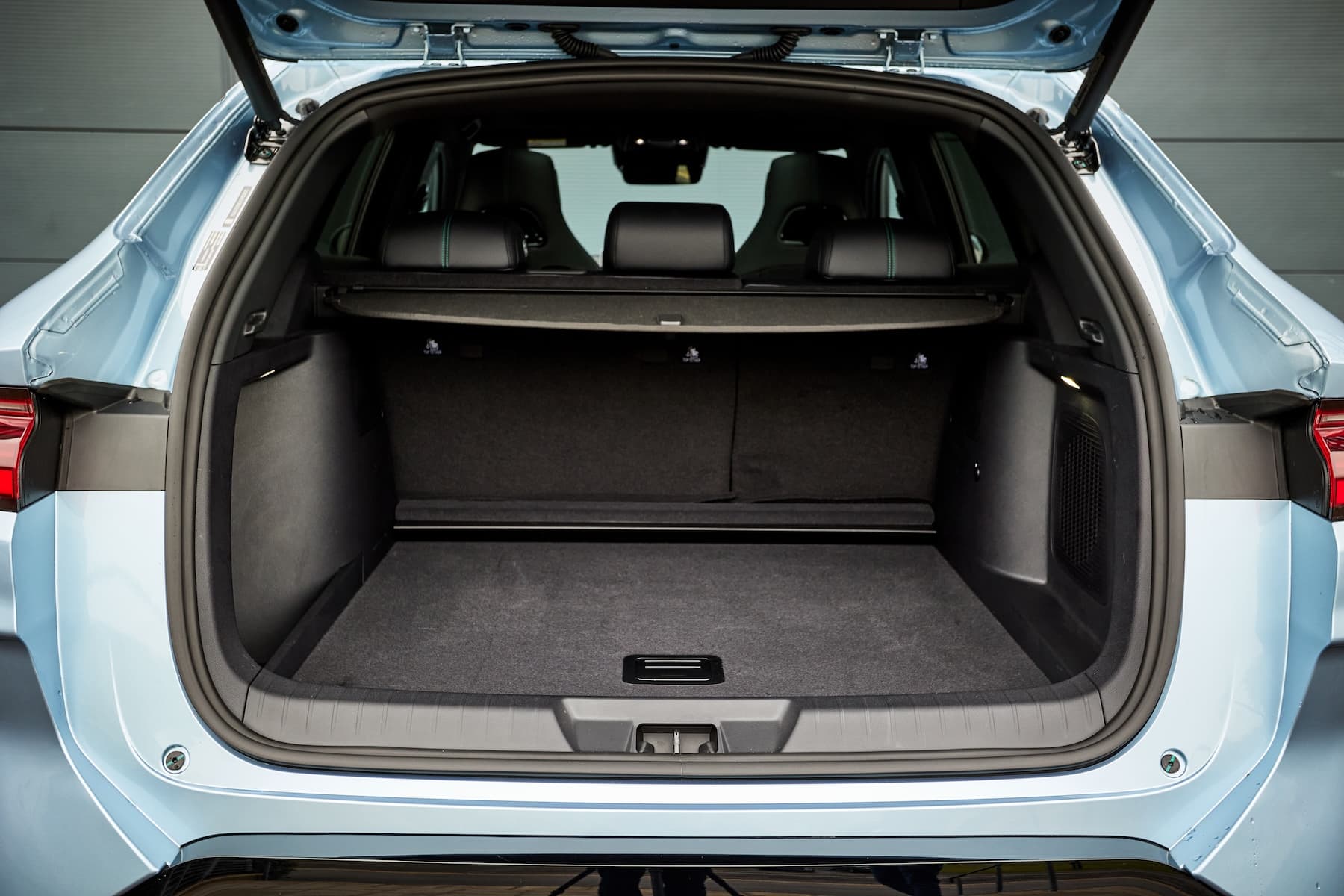
On the other hand, BYD (Build Your Dreams) offers the Seal and Dolphin models. The cars have nothing to do with aquatic creatures apart from being a smooth shape, but hey, what’s not to like about seals and dolphins? In China, it also has a model called the Seagull, but that’s not currently available in the UK.
Still, could be worse. Mitsubishi launched a sporty coupé model back in the 1980s called the Starion. Except that it was supposed to be called the ‘Stallion’ (since it was inspired by the Ford Mustang, and Mitsubishi also had a model called the Colt), but got caught up in an embarrassing example of Japanese mispronunciation of English words. The company hurriedly came up with a story that suggested that the name was a portmanteau of ‘Star of Orion’, but no-one fell for it.
Mitsubishi did have some form with poor naming choices. For decades, Mitsubishi’s large SUV was called the Pajero in most of the world but it was changed to Shogun or Montero in certain markets. It turns out that the original name was quite insulting in Spanish…
Alphabet soup
Many car manufacturers have used various alphanumeric combinations as model names to position their models, although the names usually had a logical structure. Today, you’d be forgiven that some car manufacturers have completely lost the plot.
Then there is the tactic of a seemingly random mix of lower and upper case letters with numbers. Some even throw in a punctuation mark of some description.
Nobody’s been able to make any sense of the Honda e:Ny1. This bizarre combination of lower-case letter, colon, upper-case letter, another lower-case letter and number was quickly interpreted by motoring journos everywhere (and even some Honda people) as being a play on the word “anyone”, until being severely told off by higher-up Honda spokespeople. You must pronounce it as “E-N-Y-1”, although apparently the colon is silent…
Then there’s the Toyota bZ4X, a mid-size electric SUV. Like the Honda, the clunky combination of lower case and upper case lettering is infuriating to both grammar pedants and auto-correct software. Toyota explains it’s the first model to be launched in its bZ ‘beyond zero’ family of zero-emission vehicles, and that the name references the size of the car (4 means mid-size, apparently) and vehicle type (X means crossover or SUV). There will be more bZ models with equally catchy names coming soon, we are told.
Mercedes gives its electric models an ‘EQ’ designation (EQA, EQB, EQC, EQE, EQS and EQV so far). But that doesn’t tell you what sort of car each of those are – and the EQE and EQS are sold as both saloons and SUVs, just to make it more complicated. Except the new electric version of the G-Class isn’t called the EQG, as it was changed at the last minute to become the “Mercedes-Benz G 580 with EQ Technology”.
When numerical logic goes wrong
There’s always been a logic to numbers going up as cars go up in size. BMW, for example, built its reputation on the 3 Series, 5 Series and 7 Series for its small, medium and large saloons. Audi adopted its ‘A’ naming strategy in the 1990s, ranging from A2 to A8 as the cars went from smallest to largest.
But this became more complicated as brands started offering a greater variety of body styles. Traditional saloons, hatchbacks and estates were joined by MPVs and SUVs, there was a run on coupés and cabriolets, then we got swoopier saloons and estates that the Germans like to (incorrectly) call ‘four-door coupés’ and ‘shooting brakes’, and then something called a ‘coupé SUV’. So we needed more letters and numbers to cover all eventualities, and then we needed to find some way to differentiate electric cars from petrol models.
This has resulted in something of a confusing mess. We could give you pages of confusing nomenclature, but we can see your eyes glazing over so we’ll just highlight a few examples.
Audi is in the process of rearranging its numbering so that even numbers are for electric models (like the new A6 and Q6 models, for example), while odd numbers denote fossil-fuel models. So the new A5 saloon replaces the old A4 saloon, while the A6 and A8 replacements will apparently be named the A7 and A9. The old A5 coupé and cabriolet models have disappeared, while the current A7 will also vanish soon.
This has led to plenty of confusion as this is gradually rolled out, with Audi currently offering both the Q8 (which is a petrol- or diesel-powered SUV) and the Q8 e-tron (which is a completely unrelated electric SUV)
Volkswagen has the names ID.3, ID.4, ID.5 and ID.7 for its electric models, which seems sensible until you add in the ID. Buzz, which sits between the ID.5 and ID.7 in terms of size but isn’t called the ID.6…
Aston Martin has a long tradition of DB cars, starting with the DB2 (at which point the old car was hastily renamed the DB1). But after the DB7, Aston Martin decided to jump a number and go straight to the DB9. It then skipped DB10 as well because that was a James Bond movie special, so went straight on to DB11 and now DB12. We bet there won’t be an ‘unlucky’ 13 either, so we expect the DB12’s replacement to be the DB14.
Peugeot has followed a logical three-digit naming tradition since the 1950s and its current range includes the 208, 308, 408 and 508. For its SUV models, it adds another zero – so you get 2008, 3008 and 5008. Of course, car companies can’t help making a mess of things and Peugeot’s certainly done that.
The 208, for example, is pronounced as “Two-Oh-Eight” in the same fashion that Peugeot has used for as long as its three-digit system has existed. But the SUV version of that car, the 2008, is most definitely not the “Two-Double-Oh-Eight” as literally everyone who’s not a Peugeot employee calls it. According to Peugeot people, it absolutely must be pronounced as “Two Thousand and Eight”. Which would be fine if the hatch was called the “Two Hundred and Eight”, but is otherwise contradictory nonsense.
Then there’s Smart. For its new electric SUV that relaunched the brand after a long run of tiny city cars, it went with the name #1. Seems logical for the first model of a new generation, right? That’s because you almost certainly pronounced it in your head as “Number One”. But it’s actually supposed to be “Hashtag One”. To confuse things further, the second model was the #3 and the third model will be called the #5. Maybe Smart just doesn’t like even numbers?
In a ray of hope for common-sense car naming, Kia is keeping things simple with its new range of electric cars: EV3, EV6 and EV9, with an EV4 and EV5 on the way.
Likewise, Swedish EV brand Polestar has the 2, 3 and 4 models, with the next two cars set to be called (unsurprisingly) the 5 and 6. Clear and logical, if not particularly exciting. Although there’s inevitably one wrinkle there – if you’re wondering what happened to the Polestar 1, it did actually exist. It was a very expensive, strictly limited-production performance flagship model that didn’t really have anything to do with the rest of the brand. It wasn’t even an EV, which is a slightly odd choice for an EV-only car company. Because it is obviously asking too much for things to be simple…
Not many European countries drive on the left side of the road as we do in the UK, but Malta is one of them. That makes it slightly easier to adjust to if you’re considering a motoring holiday on the island, but there’s still plenty to comprehend before you go there.
A former British colony, Malta continues to drive on the left side of the road with the steering wheel on the right side of the car, so that’s one less thing to worry about if you’re planning a visit to the Mediterranean island and want to explore it by road.
Using a vehicle is a very good way to see Malta with its beautiful beaches, rich history and stunning architecture. It’s a small island – just 316km2 in size – so it’s easy to squeeze in all the sights you want to see in a relatively small time period.
Situated all alone in the middle of the Med, Malta is made up of five islands. Malta, Gozo and Comino are all inhabited while two others, Kemmunett and Filfla, make up the archipelago. Sicily lies to the north and Tunisia to the west, with the rest of Africa below it to the south.
A succession of countries have ruled Malta at various times, including the British, French and Romans, and the country’s 7,000-year history is testament to that. It means there’s an abundance of architecture and art to explore, and the island is home to three UNESCO world heritage sites.
Architecture goes back centuries to ancient temples and churches, while more recent Gothic, Baroque and Neoclassical designs and styles can be seen at almost every turn.
Hot, dry weather and attractive beaches make Malta a popular destination for sun seekers. The coast is quite rocky but local people make the most of what sand they have and use the sea to great effect – water sports are very popular here. Diving is particularly well followed and there are several wrecks to explore off the coastline.
Cuisine is heavily weighted towards Italy, and Sicily in particular, but there are also influences from France, Spain and Africa. These can all be eaten in a wide variety of hotels and restaurants throughout the island. Nightlife is also good with bars, clubs and live music venues all operating, especially during the summer months.
As a tiny land mass, Malta has a small economy. But it’s a thriving one, driven by manufacturing, aviation and shipping, and business is welcomed on the island.
Flying in and hiring a vehicle is really the only option for a motoring holiday and you’ll find a wide selection of car rental companies, such as Avis, Alamo and Europcar, all operating from the country’s main airport, Malta International.
The Maltese might use the same side of the road as the British, but driving in Malta is a completely different experience from doing so in the UK. Planning a driving holiday or using a car on business, requires careful planning and a good understanding of what you can, and can’t do behind the wheel while there.
Here The Car Expert looks at the most important elements to consider when planning a holiday or business trip to Malta, and we’ve included a handy checklist. As each journey is unique, always check that you have everything covered for your particular visit.
Basic rules
You must be at least 18 years old and hold a full driving licence to get behind the wheel in Malta. Just the licence card will do, as the paper counterpart is no longer a requirement. International Driving Permits are recognised but are not a necessity.
You can ship your own car in Malta and if you do that, you’ll need to prove that you have car insurance so always have your certificate with you. You should also always carry with you documents that show the identity of the vehicle, such as a V5C ‘logbook’. And always have your passport or other form of ID.
If it’s registered in the UK, your vehicle’s ‘home country’ must be shown on it. A ‘UK’ sticker on the rear is one way to do this but you can also display a small UK badge on both number plates if you wish. The ‘GB’ badge is no longer allowed, even within European ‘golden stars’ and the same goes for country signs such as the English, Scottish or Welsh flags.
It’s more likely you’ll be using a hire car, in which case always have the rental agreement paperwork with you while driving. You must be at least 21 to drive a rental car although customers under 25 might be charged a ‘young driver’ surcharge. Check with the rental company first. You will also need to show you have held a full driving licence for at least two years.
We don’t recommend any drinking of alcohol if you are going to drive, but you should be aware of the country’s limit. It’s 0.8 g/l (0.08%) blood alcohol level, which is the same as in England and Wales. Breath tests are usually required after any accident where someone has been injured or where a possible motoring offence has been committed.
The police can stop anyone they suspect of being ‘over the limit’ and if that test proves positive another will have to be taken at the local police station.
Penalties for a positive test range from a fine of up to €2,300 (approx. £1,900) to a six-month confiscation of driving licence or even a prison sentence.
Speed limits
Speed limits are shown in kilometres (km/h) rather than miles (mph). In built-up areas the speed limit is 50 km/h (31 mph). Outside of towns the limit is between 60 km/h (37 mph) and 80 km/h (50 mph) depending on district, so keep an eye on local signage. There are no motorways in Malta.
Speed cameras are used in the country, but these are forewarned using a white square sign with a black camera image on it. The speeding fine is usually €100 (£85) but it depends on severity of offence. Speed camera detection devices are illegal when driving on Maltese roads and will be confiscated by the police. And don’t use a mobile phone while driving unless it is ‘hands-free’. The fine is €200 (£170).
What to carry in the car
The rental company will probably take care of this but it’s always worth checking you have the legally required warning triangle in the car in case of breakdown or accident. It’s also recommended you have a hi-viz jacket, fire extinguisher, first aid kit and spare bulbs for the car’s headlamps, although these are not a legal necessity.
Specialist suppliers, such as motoring organisations, sell ‘European driving kits’ for £25-£30, which contain everything you are likely to need for a Continental road trip, and it’s well worth investing in one.
Seatbelts
Seatbelt rules are the same as in the UK: if your car has them, they must be worn. It’s the driver’s responsibility to make sure everyone is buckled up – there’s a €50 (£42) fine for not using one.
And children need to be fastened in too – any child under 135 cm tall must ride in the rear of the car. Children over this height and up to 150 cm can go in the front but must be in an approved child restraint for their size. If no restraints are available, the child may travel in the rear with an adult belt on.
Driving
Keep to the left-hand lane as much as possible but if you are overtaking you must do so on the right. Never attempt to overtake on or near a level crossing, pedestrian crossing or major junction. Local drivers rarely indicate and can pull out suddenly especially if they want to pass you.
You will usually give way to vehicles using the ‘main’ road unless signs state otherwise. At crossroads that have no controls or road markings, give priority to vehicles coming from your right. The same goes for roundabouts, although Maltese drivers are notorious for failing to give way at these traffic islands and for never using their indicators, so extra care must be taken here. Always give way to emergency vehicles as soon as you can.
You do not need to use dipped headlights, but only use full beam on unlit roads. Switch on your dipped lights when entering a tunnel. Horns must be used sparingly – they are not allowed to be sounded in built-up areas between 11pm and 6am, unless in an emergency.
There are no specific laws for towing a trailer or caravan, but you must ensure that your car has the correct towing fittings and apparatus. Make sure you can see clearly behind you with the use of two wide rear-view mirrors.
If you are involved in an accident, however minor, you must tell the police and rental company (if applicable) and get an insurance accident report. If you don’t you could end up paying the whole repair bill before you leave the island.
Traffic signs
Traffic lights are red, amber and green and follow a similar pattern to the UK. Road signs usually have pictures which are self-explanatory and are similar to those used in the UK. They include the ‘low flying aircraft, ‘elderly people crossing’ and ‘roadworks’ warning signs that UK drivers will be familiar with. There’s an additional sign showing a hooter which means ‘no use of horn or motor noise’.
Warning signs are triangles with a red outline, regulation signs are circles with a red border or blue circles with white arrows, while information and places of interest signs are square or round and mostly brown.
Directional signs are generally blue squares with the town names written in Maltese and the distances shown in kilometres. Most signs will be written in English, including ‘Stop’, ‘School’ and ‘Disabled people’.
Main (arterial) roads are advised with blue signs and white letters while secondary (distributor) roads have yellow signs with black lettering.
Fuel availability
Unleaded and diesel fuel are widely available on Malta’s roads. Some locals say there are too many fuel stations: certainly, every town or village has at least one service site. LPG liquid gas and CNG natural gas are offered at some points.
Stations are open 24 hours a day, usually with an attendant in daytime hours and a self-service set-up during the night. Cash or credit card is accepted. Many service areas will have tyre inflators and puncture repair services, along with food, drink and spare parts shops.
Parking
Take care where you park in Malta as this element of motoring is strictly controlled. Parking enforcement officers oversee traffic laws and will punish rule-breakers. The larger towns have street parking meters which often only give one or two hours’ time limits but there are also covered car parks. Some towns, such as Valletta and Floriana offer cheap or even free park and ride services. There is a charge to enter Valletta in a car during daytime hours – the maximum amount is €6.50 (£5.50).
If you’re planning to park on the road look for markings: white markings are for general parking, yellow lines mean no parking, green bays are usually for residents while blue bays are time restricted often allowing parking between 8am and 6pm only. Stay well away from disabled parking bays unless you have the correct badge displayed. Cars badly parked or causing an obstruction will be clamped or even towed away. There’s a fee for release with either of these.
Emergency number
In Malta, as with most of Europe, you can dial 112 and make contact with emergency services such as fire, ambulance or police, 24 hours a day. Operators will speak English, French other European languages.
Lexus has rolled out a minor update to its NX hybrid SUV which adds more on-board tech to the standard equipment list and an optional panoramic sunroof.
The brand admits that this range refresh is “not radical”, but that it adds “a touch of extra lustre to the model” as Lexus looks to challenge the UK sales of close competitors like the Audi Q5, BMW X3, and Volvo XC60.
To start, the NX 350h hybrid has a renamed entry-level trim. The ‘Urban’ is essentially identical to the previous lead-in option, but introduces wireless smartphone compatibility for both Android Auto and Apple CarPlay infotainment services. Key features include 18-inch alloy wheels, front and rear parking sensors, heated front seats, a motorised tailgate and a ten-speaker audio system.
Moving up the trim levels, the mid-range ‘Premium’ available with both the NX 350h hybrid and NX 450h+ plug-in hybrid now includes eight-way power adjustable front seats, adding to a trim grade that already included illuminated door handles, rear privacy glass, a heated steering wheel, and blind spot monitoring tech.
The options list for the ‘Premium’, which includes a larger 14-inch infotainment display to replace the standard ten-inch one, has been expanded to include a panoramic sunroof which Lexus says brings “more light into the cabin than the previous sunroof.” This sunroof comes as standard with the top-spec ‘Takumi’ trim levels.
Finally, the NX is now available with an extra exterior colour option – ‘Sonic Copper’ – which is paired with sand-coloured leather interior trimmings. Pricing for the NX starts at over £44k for the 350h, and at just under £50k for the 450h+.
The Lexus NX currently holds a New CarExpert Rating of A with a score of 75%. This score is competitive in the medium SUV class and makes the NX the highest-scoring Lexus in our Expert Rating Index.
A new iteration of the Skoda Octavia vRS is now available to order in the UK, which its manufacturer says is its most powerful vRS model to date.
Based on the standard Octavia saloon and estate – a car widely praised for its family car credentials – this new vRS model differentiates itself from the standard range thanks to restyled sporty front and rear bumpers and a new ‘vRS’ logo on the black surround radiator grille, as well as black side window trim and wing mirrors.
At the back, the new bumper diffuser and tailpipes are also finished in black while the estate models also feature black roof rails as standard. The car sits on 19-inch ‘anthracite’ alloy wheels, instead of the standard car’s 16-inch alloys.
Stepping inside, the vRS comes with a leather steering wheel and aluminium pedal covers as part of a jet black interior trim finish with the same 13-inch infotainment screen as the standard Octavia and electronically-adjustable sports seats with a massage function.
The car is powered a 2.0-litre four-cylinder petrol engine – much like the previous Octavia vRS – but with a 20hp boost. While not as economical as the Octavia, Skoda is keen to stress that this 265hp vRS variant is “remarkably efficient”, as it has a fuel consumption of around 41mpg.
A 0-62mph sprint reportedly takes 6.4 seconds (saloon). This is only two tenths of a second slower off the mark than parent brand Volkswagen’s equivalent – the Golf GTI – and for a slightly cheaper price tag.
Now available to order in the UK, the Skoda Octavia vRS currently costs a few hundred under £39k, while pricing for the estate version starts at just under £40k.
The standard Skoda Octavia currently holds an Expert Rating of A, with a score of 77%. That’s a fairly impressive score, and the highest for any petrol-powered Skoda in our Expert Rating Index.
Volkswagen has added a new trim option to its T-Roc R options list which finishes the car in black and comes with several extra bits of on-board equipment over the standard model.
The performance-enhanced T-Roc R is the latest Volkswagen model to receive the brand’s ‘Black Edition’ treatment, after the Golf hatchback and Tiguan SUV. As you might guess, this trim’s key attraction is its all-black exterior finish with roof rails, wing mirrors and 19-inch alloy wheels painted the same dark colour as the bodywork.
Volkswagen stresses that this range-topping T-Roc R choice offers both “style and substance”, the latter referring to the longer list of on-board equipment that includes a rear-view parking camera, heated front seats, a motorised boot lid and a tilting and sliding panoramic sunroof. The ‘Black Edition’ also comes with a six-speaker Beats sound system.
Now on sale, the Volkswagen T-Roc R ‘Black Edition is available for over £44k – a thousand more than the standard T-Roc R trim option.
Make and model: Hyundai Ioniq 5 Premium Description: Mid-sized hatchback, electric motor Price range: £45,900 (plus options)
Hyundai says: “The Ioniq 5 doesn’t just herald a new era for electric vehicle design, but for performance and capability.”
We say: The Hyundai Ioniq 5 is one of the best new EVs you can buy. It’s quiet and smooth to drive, while the sharp styling is still a stand-out feature.
There’s a lot of noise in the media about Chinese EVs at the moment, but it’s the Korean car brands that are currently leading the way in broadening the electric marketplace with a range of market-leading models. And although Hyundai had offered worthy models for several years, it was the launch of the Hyundai Ioniq 5 in 2021 (followed by its closely related cousin, the Kia EV6) that pushed the Hyundai group – which also includes premium brand Genesis – to the front of the pack.
It’s been three years since the Ioniq 5 was launched and its mid-life facelift is imminent, but it remains one of the highest-rated new cars on sale according to our award-winning Expert Rating Index. Media reviews have been positive, while it also scores top marks for its safety rating and low running costs.
So what makes the Ioniq 5 so popular with media reviewers? We spent a week with a middle-of-the-range Ioniq 5 to find out.
What is it?
As with many electric models, pigeon-holing the Hyundai Ioniq 5 in comparison to conventional petrol or diesel cars is a bit tricky because the packaging of an electric vehicle is laid out differently. Instead of an engine, gearbox, fuel tank and exhaust, we have a compact electric motor but a bulky battery.
Size-wise, it’s slightly shorter than a BMW 3 Series or Audi A4 overall, but the wheelbase (the length between the front and rear wheels) is much longer and the overhangs (in front of the front wheels and behind the rear wheels) are shorter. That means you have significantly more cabin space, allowing five adults to travel comfortably.
You sit a bit higher than you would in a conventional saloon or hatchback – almost as high as SUV or crossover family cars.
So it’s a mid-sized car with the cabin space of a bigger car. You sit higher than a normal car but not as high as an SUV. It’s available in either rear-wheel drive or all-wheel drive versions, with a range of trim and performance levels. And it’s getting a light mid-life upgrade in the second half of 2024 – nothing dramatic, but the usual minor exterior redesigns and trim changes, plus improved battery capacities for slightly longer driving range.
Who is this car aimed at?
The Hyundai Ioniq 5 is right in the middle of the EV family car market, pitched against a growing number of rivals from almost every major car manufacturer.
Underneath its retro-futuristic surface, the Ioniq 5 is closely related to the Kia EV6 and Genesis GV60; all are about the same size and share most of their hardware. It’s no coincidence that all three brands are part of the same family – the Hyundai and Kia are almost direct rivals in the mainstream family market, while the Genesis is aimed a more premium audience.
Who won’t like it?
The majority of people who won’t like the Ioniq 5 are the sort of customers who are unlikely to even consider it.
With any electric car, you’ll get people who are simply not interested. That’s unfortunate, as most of the anxieties car buyers have about electric cars are more perception than reality. It’s slowly changing over time, but there remains a large minority of car buyers who claim that they will ‘never’ drive an electric car.
In addition, there will be people who won’t be able to come around to the idea of paying £45K for a Hyundai, regardless of the powertrain. They’re likely to prefer a £45K petrol Audi/BMW/Mercedes and that’s that.
First impressions
It’s been around for three years already, but the Ioniq 5 is still one of the most distinctively styled new cars on sale. It’s also bigger than it looks, being basically crossover-size without the butch SUV styling.
Hyundai and Kia have taken huge steps in their design over the last decade, with bold vehicles that chart their own styling direction, rather than looking like cheap knock-offs of European models. The Ioniq 5 has been a statement car for Hyundai, with its sharp, retro-futuristic lines combined with EV proportioning.
The 1980s-inspired detailing is done beautifully, being distinctive without kitsch, although one wonders how well it will age as the current Eighties pop-culture revival fades.
Inside, the first impression is one of spaciousness. Being an EV, the space between driver and passenger is very open (there’s no automatic or manual gearbox that normally fills the space), so you have plenty of room for storage – and on certain trim levels, a centre console that can slide forwards and backwards.
The dashboard layout is an exercise in minimalism, which looks wonderful but does have practical weaknesses that we’ll come to a bit later.
What do you get for your money?
Once we’ve got the first impressions out of the way, it’s time to look a bit harder at exactly what you’re getting for your money with the Hyundai Ioniq 5.
As this is being written, the Ioniq 5 is about to get a mid-life update here in the UK. Visually, you won’t notice a lot of difference although there will be a new N Line trim that looks sportier. There will be slightly redesigned bumpers and new alloy wheel designs, along with a couple of new colours.
Mechanically, the most important part of the update is that the Ioniq 5 will get slightly bigger batteries (the smaller goes from 58kWh to 63kWh, while the larger grows from 77kWh to 84kWh) for better driving range, along with standard heat pumps and pre-conditioning systems. We’ll cover those below.
From launch, there have been three trim levels for the Ioniq 5 – SE Connect, Premium and Ultimate – as well as a special edition Namsan Edition last year. As part of the mid-life update, SE Connect becomes Advanced, while N Line and N Line S trims have been added to the range.
Trying to decide which is the best model for your needs means working your way through a matrix of five trim levels, three levels of electric motor performance, two battery sizes and two drive options (rear wheels only or all four wheels). For example, lower-spec Advance and Premium models are only available in rear-wheel drive, with either of the two batteries (and which come with different power outputs), while N-Line and Premium models are only available with the larger battery, but with a choice of rear-wheel drive or all-wheel drive, which again are linked to different motor outputs.
Pricing starts at £40K, which gets you an Advance-spec car with the smaller battery and rear-wheel drive, and runs up to £56K for an N Line S model with the larger battery and all-wheel drive.
If you’re looking at a used pre-facelift Ioniq 5, there’s a different trim and specification matrix to consider. For example, we drove a Premium-spec car with all-wheel drive and a 325hp motor – which is no longer available in the facelifted range.
Overall trim levels are good across the board. We’re not going to get into the detail here because there are too many variations to cover. It’s all a bit confusing and feels unnecessary – Tesla manages to sell plenty of Model 3 and Model Y electric cars with a very limited number of choices…
Spend some time looking at the spec sheet or used car listings to make sure any model you’re thinking about has all the key features you want before making a decision.
We like: Facelift models get battery conditioning and heat pumps as standard (previously optional) We don’t like: Too many combinations of performance, battery, specification and driving wheels
What’s the Hyundai Ioniq 5 like inside?
If you’re stepping into the Hyundai Ioniq 5 from a similarly sized petrol or diesel car, the biggest difference you’ll notice is the abundance of space in every direction. Combined with a minimalist approach to the controls – most things are managed from the central touchscreen – it gives the cabin a very open feel.
The battery is laid out like a big pancake under the floor, which means you sit higher than a conventional car – more or less a similar position to most SUV or crossover family cars. The motor takes up much less space than an engine and gearbox, freeing up a lot of room in the front of the cabin.
A lack of gearbox means no wall between the driver and passenger, and the footwell area is also largely open. The centre space is used for a storage console that can also be slid forwards or backwards depending on how you want the space to be arranged. The drive selector is located on the steering column, freeing up even more useful space in the centre console. With the console pushed back, the driver can exit from the passenger side relatively easily to help in tight parking situations.
Rear-seat passengers also benefit, with plenty of legroom and no central tunnel for the middle passenge to straddle. In fact, Hyundai claims the cabin is similar in size to what you’d usually find in the next category up (so the space of an Audi A6 or BMW 5 Series in a car the size of an Audi A4 or BMW 3 Series). The rear seats also slide forwards and backwards to let you choose between more legroom or more boot space. Head room is good, and better than its Kia EV6 sibling.
The seats are comfy and sofa-like, rather than heavily bolstered in the typical German fashion. We found them comfortable enough for a couple of hours, but seating is always a personal preference so you should test drive yourself before making any buying decision. We also wish the steering wheel had just a bit more reach adjustment so you could pull it out further.
Boot space is good at just under 530 litres, with the hatchback shape providing more space and better accessibility than a saloon but not as much as an estate or SUV. There’s a hidden tray under the boot floor as well as a small frunk (front trunk) for additional storage space, either of which are a good place to keep your charging cables but not much more.
The dashboard is dominated by a pair of 12-inch wide screens mounted side by side. The driver’s screen replaces traditional gauges, while the central screen is a touchscreen for controlling almost all the car’s functions. There’s also a row of buttons for key functions under the screen (although no overall ‘home’ button, annoyingly), and dedicated air-conditioning controls.
The driver’s screen is generally good, although some of the screen is blocked by the steering wheel. The fonts are also fairly small and difficult to read, so we’d prefer to see less information and larger fonts. Most car manufacturers tend to do the same thing – presumably it looks good in the design studio, but it’s not always easy to read on the move. At least the key speed information is large and smack in the middle of the screen.
The central touchscreen is clear and easy to read, although all the usual caveats about trying to operate touchscreens on the move apply here as they do in any car – it’s simply not as easy or safe as physical buttons. Apple CarPlay and Android Auto are both standard, although in wired form only so your phone has to be plugged into a USB port in the front footwell at all times.
Some models offer the option of digital wing cameras instead of traditional mirrors, but these tend to prove divisive among reviewers. Our car didn’t have them so we can’t offer an opinion.
Finally, the facelifted models will get a rear windscreen wiper. For whatever reason, the original versions don’t have this and the rear window gets dirty quite easily.
We like: Abundance of space in well-laid out interior We don’t like: Frunk is too small to be really useful, Apple CarPlay and Android Auto not wireless
What’s the Hyundai Ioniq 5 like to drive?
The Hyundai Ioniq 5 is definitely configured for comfort rather than handling, which is likely to be just fine for most families.
The Ioniq 5 is a heavy car, thanks to the battery pack, but this is placed along the bottom of the car so it keeps the centre of gravity low, helping to reduce roll in cornering. However, it does make the ride feel lumpy on poor quality roads and over potholes or speed humps. To be fair, that’s also the case on most executive saloons or SUVs with ‘sports packs’ or large alloy wheels. A back-to-back comparison with our usual family car, a Volvo V60 estate with R-Design sports suspension and 19-inch wheels, resulted in the Hyundai feeling more comfortable for both front and rear occupants.
Assuming that you’re happy to keep your driving within the confines of the speed limits on any given road, the Ioniq 5 is generally a very comfortable car to drive. There are three driving modes – eco (which is default on start-up), normal and sport – plus a snow mode if it gets icy.
Acceleration will very much depend on which model you’re driving. The entry-level SE Connect only offers about 170hp, which is fine for urban driving but will feel a little underdone when overtaking on a country road with four people and luggage on board. The 228hp motor will be fine for most people, while the 325hp twin-motor set-up with all-wheel drive offers strong performance in every situation.
Our car was the 325hp version. Immediate response is very strong, especially in normal or sport modes where the accelerator pedal is more sensitive. Fortunately, there’s none of the queasiness that you get from flooring the throttle in a Tesla, which will keep your passengers happy (and your upholstery clean).
We spent most of the week in eco mode, which requires pressing harder on the accelerator to get a response but is good for normal day-to-day driving. Sport mode, on the other hand, felt mostly unnecessary. Having tried it once, we immediately switched back to normal mode and never felt the need to try it again.
Steering is very light, as it is in most modern cars, but nicely direct so you don’t have to turn the wheel endlessly like you do in many older cars. That doesn’t mean the car likes changing direction suddenly, however, so it’s not really a car for enthusiastic driving. It’s definitely more suited to cruising than hustling.
Braking feel is well judged, which is not always the case in electric cars. In lighter braking applications, the car doesn’t actually use the brake pads to slow down – the electric motor does that instead. This is used to generate electricity to eke out a few more miles of battery range (and reduces brake pad wear significantly), but on some EVs it makes the brakes feel a bit unnatural when you stand harder on the pedal and the brake pads are called in to slow the car more rapidly. Pleasingly, the Ioniq 5 doesn’t suffer from this at all, so the brakes feel perfectly normal.
We like: Comfortable ride in most situations We don’t like: Sport mode likely to be fairly irrelevant for most people, ride crashes over speed bumps and potholes
How safe is the Hyundai Ioniq 5?
It’s all good news on the safety front. Euro NCAP tested the Ioniq 5 in 2021 and awarded it a five-star rating, and that score is still valid today. On top of that, all the safety kit is included as standard rather than costing extra. That means top marks from us.
It scored well in all the crash tests, with good protection for both adults and children in the event of a collision. There are ISOFIX child seat mounting points in both outer rear seats, but not in the middle or in the front passenger seat.
In terms of avoiding an accident in the first place, the Ioniq 5 also performs well. Although autonomous emergency braking (AEB) systems are now compulsory on all new cars in Europe, the level of performance varies. The Hyundai scored well in all of these tests.
Accident avoidance systems – like advanced cruise control, blind-spot assist, lane-keeping assist and so on – are standard on all models, which is something we particularly like to see. They all work well, without trying to pull the car in different directions like you get on some other vehicles.
Hyundai Ioniq 5 economy, battery range and charging
The Car Expert’s unique Expert Rating Index pulls running cost data from across the entire new car market, and the Ioniq 5 performs very well here, scoring an A-grade from us overall.
One of the most important factors for an EV is its electrical efficiency – the equivalent of fuel economy for a petrol or diesel car. The Ioniq 5 scores a C-grade here, which is fairly middling. The lower-performance, rear-wheel drive models are better as they use less electricity, although they tend to come with smaller batteries so you don’t really get longer range.
Official driving range figures vary from 238 miles with the smallest 58kWh battery to 320 miles on the largest 80kWh battery. Call it 200 miles to 300 miles and you’ll be pretty safe. All-wheel drive models lose about 13 miles of range compared to the rear-wheel drive versions, which isn’t much of a penalty given the additional performance on offer.
Standard on all facelift models is a battery heating system with pre-conditioning and heat pump, which provides better battery efficiency in all temperatures. This was introduced last year on the original model and it’s worth looking out for if you’re buying a used Ioniq 5.
When you want to charge up, the news is good. With a maximum 350kW charging rate, the Ioniq 5 can support the fastest chargers currently available in the UK. However, these chargers are currently rare and are more expensive to use than other chargers, so it’s not a big deal at the moment. But once more of them start rolling out, this will become a more useful advantage over many other EVs.
The charging flap is located on the right-rear corner of the car, which means you will probably need to reverse into most public charging bays to connect the cable. The Ioniq 5 comes with two charging cables; a 5.0-metre Type 2 cable for wallbox or fast chargers, and a 6.5-metre Type 3 cable for plugging into a regular three-point plug. This last-mentioned cable is not recommended for regular use, however, as it would take you more than a whole day to charge any of the batteries on offer…
Verdict
It’s more than three years old now, but the Hyundai Ioniq 5 is still one of the best new EVs you can buy. It’s no surprise that it’s one of the highest-rated cars in our Expert Rating Index, with excellent scores for safety, running costs and obviously zero exhaust emissions.
The new car warranty on the Ioniq 5 is good as well, covering you for five years with unlimited miles. The battery is covered for eight years, although with a 100,000 mile limit. This is one area where the Kia EV6 is better, as it comes with a seven-year new car warranty.
The Hyundai is whisper-quiet, smooth and relaxing to drive. The sharp styling is still a stand-out feature and looks like nothing else on the road without being wacky. The tech is good and everything works well, so your EV learning curve should be relatively short.
Charging is pretty much future-proof, as you’ll be able to take advantage of the growing number of ultra-rapid charging points across the UK in coming years.
We drove the Kia EV6 recently and raved about it. The Hyundai Ioniq 5 is every bit as good, and in many ways even better. Underneath, the two cars are very similar so your preference will likely be dictated by styling, specific key features on the model you’re looking at, and any deals on offer. Overall, we’d say the Ioniq 5 is a better family car thanks to its comfier seats, better rear headroom for adults and larger boot. But it’s a narrow victory and will depend on your priorities.
Right now is a good time to buy either a new or used EV, as prices are much better than they have been previously and there are good deals around as well. If you’re looking at changing your car and are in the market for a new or near-new EV, the Hyundai Ioniq 5 is one of the finest around.
Model tested: Hyundai Ioniq 5 Premium Price (as tested): £48,990 (including £725 for premium paint) Engine: Twin electric motors, all-wheel drive Gearbox: single-speed automatic
Power: 239 kW / 325 hp Torque: 605 Nm Top speed: 115 mph 0-60 mph: 5.2 seconds
Electric range: 307 miles CO2 emissions: 0 g/km Euro NCAP safety rating: Five stars (November 2022) TCE Expert Rating:A (81%) as of August 2024
Buy a Hyundai Ioniq 5
If you’re looking to buy a new or used Hyundai Ioniq 5, The Car Expert’s partners can help you find the right car
Search less, live more. We make finding the right car simple. Find out more
Search for your next new or used car with Auto Trader. Find out more
Discover great deals available on both new and used cars. Find out more
Lease a Hyundai Ioniq 5
If you’re looking to lease a new Hyundai Ioniq 5, The Car Expert’s partners can help you find a competitive deal
Personal contract hire deals from Carparison Leasing. Find out more
Personal contract hire deals from Leasing.com. Find out more
Personal contract hire deals from Rivervale Leasing. Find out more
Subscribe to a Hyundai Ioniq 5
Subscriptions are becoming a very popular way for consumers to try an electric car for a few weeks or months to help decide whether it’s a suitable alternative to a petrol car. If you’re interested in a car subscription, The Car Expert’s partners can help. (PS: What’s a car subscription?)
Audi has confirmed its UK pricing and trim structure for a new A5 saloon and estate range that has now replaced the brand’s current A4 line-up.
This range revision comes as the German marque looks to give its petrol-powered cars odd line-up numbers, while battery-powered EVs take the even ones. This should mean that we will eventually get an electric A4 range.
Unveiled last month, the new A5 saloon and ‘Avant’ estate are built on a new platform and are available with pure-petrol and petrol or diesel mild-hybrid powertrains in a range that includes standard and sportier ‘S5’ models.
The new range includes three different trim levels and five different engine options. The range kicks off with a standard 150hp front-wheel drive petrol model, followed by more powerful 204hp petrol and a diesel mild-hybrids. The diesel ‘TDI’ mild-hybrid is also available with ‘quattro’ all-wheel drive. The range is topped with a 362hp 3.0-litre V6 petrol engine which is only available with the S5.
Key trim level features
Entry-level ‘Sport’ (from £41,950)
18-inch alloy wheels
Comfort suspension
LED headlights rear lights
Electrically adjustable, heated and folding wing mirrors
Windscreen with acoustic glass
Front centre armrest
12-inch digital instrument cluster
15-inch infotainment screen
Wireless smartphone charging
Heated front seats
Three-zone climate control
Leather upholstery
Multi-coloured ambient LED Interior lighting
Leather multi-function steering wheel with shift paddles
Rear view parking camera
Adaptive cruise control
Lane departure warning
Traffic sign recognition
Mid-range ‘S Line’ (from £44,100)
All ‘Sport’ features that are not replaced
19-inch alloy wheels
Sports suspension
‘S line’ exterior styling
Rear privacy glass
Alternate multi-function steering wheel with shift paddles, flattened top and bottom
Black cloth headlining
Aluminium door sill inserts
Pedals and footrest in stainless steel
Top-spec ‘Edition 1’ (from £49,100)
All lower trim features that are not replaced
20-inch alloy wheels
Matrix LED headlights
Black styling pack plus & black door mirrors
Black door handles
Dark chrome finish to exhaust tailpipes
Brake callipers painted in red
Keyless go system with safelock
Microfibre/artificial leather upholstery
Softwrap in Dinamica microfibre with contrast stitching
Passenger side infotainment display
Surround view parking camera
Lane departure warning with emergency assist
Lane change assistant
Rear cross traffic assist and rear turn assist
The three trim levels – ‘Sport’, ‘S Line’ and ‘Edition 1’ – are available across the A5 and A5 ‘Avant’ engine range, apart from the range-topping S5 which is only available with the ‘Edition 1’ trim. On top of the trim level features displayed above, the S5 also comes with a sportier front bumper and air intake design, OLED tail lights, a panoramic sunroof with switchable transparency, a heated steering wheel, a head-up display and a more advanced Bang & Olufsen sound system.
Pricing for the range begins at just under £42k, rising to over £70k for the S5 Avant. Opting for an ‘Avant’ estate over a saloon model adds roughly £2k to the asking price.
The long-running slump in private new car sales continued in July, with no apparent end in sight to the current predicament according to the figures published this week by the Society of Motor Manufacturers and Traders (SMMT).
Officially, the industry is celebrating 24 consecutive months of growth in new car registrations, but that’s all thanks to post-recovery and growth in the fleet sector. For private new car sales, it’s a very different story. July was the ninth consecutive month of falling private new car sales year-on-year. Ten of the last 12 months, and 15 of the last 24 months, have also been down year-on-year.
Private sales were down 11% in July, fractionally ahead of the year-to-date average of 12%. That’s about 59,000 fewer cars registered to private owners in the first seven months of this year compared to last. In comparison, fleet registrations were up 13% in July, which is well short of the year-to-date total of 21% growth.
Source: SMMT
EV sales growing but political games abound
Electric vehicle registrations continue to outperform the overall market, despite another poor month for market-leader Tesla, increasing by 19% against overall market growth of 3%. The SMMT lamented that private EV sales fell in terms of market share, while also conceding that actual private new car registrations actually increased by 1% – which looks good compared to overall private new car sales falling by 11%. But the industry is doing its best to talk down EV growth as it tries to appeal for government grants, so this is nothing really new.
The UK’s ZEV (zero emissions vehicle) mandate means that car companies are each supposed to sell 22% electric vehicles from their overall totals, but the reality is that very few brands are currently achieving this, while others are heavily discounting to try and hit their targets. There are also loopholes that allow underachieving car companies to buy credits from overachieving companies, while plug-in hybrids also provide a smaller level of contribution to the overall targets.
Hybrid (+31%) and plug-in hybrid (+12%) sales were also well up in July, while petrol (-6%) and diesel (-22%) sales fell.
What the numbers show is that the transition away from pure petrol and diesel cars is starting to accelerate, although many buyers are preferring to take the smaller step of moving to a hybrid – with or without a plug – rather than jumping straight to a purely electric vehicle.
Source: SMMT
Good month, bad month
Despite the overall market being fairly flat, there are always brands that do better or worse than the rest. Here’s how they performed in July.
It was a good month for Abarth, BMW, BYD, Citroën, Cupra, Dacia, Genesis, Honda, Hyundai, Jeep, Land Rover, Mercedes-Benz, Nissan, Peugeot, Renault, SEAT, Smart, Subaru and Volvo. All of these brands outperformed the overall market by at least 10% (so had growth of at least 12.5% compared to the same month last year).
Meanwhile, results weren’t so cheerful for Alfa Romeo, Alpine, Audi, Bentley, DS Automobiles, Ford, GWM Ora, Ineos, Lexus, Maserati, Mazda, Polestar, Porsche, Skoda, Suzuki, Tesla, Toyota and Vauxhall. All of these brands underachieved against the overall market by at least 10% (so sales fell by at least 7.5% compared to last July)
That means that the following brands were more or less where you’d expect them to be: Fiat, Jaguar, KGM (nee SsangYong), Kia, MG, Mini and Volkswagen. All of these were within 10% better or worse than the overall market.
Volkswagen was comfortably the best-selling brand in July, ahead of BMW, Kia, Audi and Nissan. Of the volume brands, Volvo had a particularly strong month with registrations up more than 60%. Ford had another pretty awful month, with registrations down 31%.
Sportage stays on top
For the third month in a row, and the fourth time this year, the Kia Sportage was the UK’s best-selling new car. With five months to go, the Sportage is edging ever closer to the overall top spot, currently only 1,600 units behind the Ford Puma.
The Volvo XC40 was a surprise fourth place in the best-sellers list, while the Volkswagens Golf and Polo were the only two hatchback models in the top ten for July – everything else being an SUV/crossover vehicle. Volkswagen had three cars in the top ten: Golf in fifth, T-Roc in seventh and Polo in ninth.
We’ll have our usual analysis of the top ten in coming days.
This is the all-new Audi A6 e-tron, a car which both does and doesn’t replace the previous Audi A6. We’ll explain…
Audi has been reshuffling its model names to more clearly differentiate between its traditional fossil-fuel models and its new electric models. The plan is that electric – e-tron, in Audi-speak – models will get even numbers (A4, A6, A8, Q2, Q4, Q6, Q8, etc.), while petrol/diesel/hybrid models will get odd numbers (A1, A3, A5, A7, Q3, Q5, Q7, etc.).
That means that the car that will directly replace the previous Audi A6 will be called the Audi A7, while the current Audi A7 Sportback will cease to exist. Similarly, the recently launched Audi A5 replaces the previous Audi A4.
This new Audi A6 e-tron will essentially be the electric alternative to the upcoming A7. Unlike the previous A6, it won’t be available as a saloon. But it will be available as a liftback (called Sportback), like the former A7, as well as an estate (called Avant). Yes, it’s confusing.
The Audi A6 e-tron (and higher-performance S6 e-tron) will compete against its traditional German rivals – in this case, the BMW i5 and Mercedes-Benz EQE models.
Audi A6 e-tron AvantAudi A6 e-tron Sportback
The new A6’s styling is sleek, with an emphasis on aerodynamics. Careful attention has been paid to how flows over, under and through the car to maximise efficiency and therefore driving range. The most notable example of this is the latest version of Audi’s camera-based rear view mirror system, replacing traditional wing mirrors. This is likely to be optional, although full UK specifications won’t be revealed until next month.
Audi also promises that the A6 e-tron will have advanced and distinctive lighting technology both front and rear, helping drivers to see better at night while also providing clearer information to cars following behind.
Inside the cabin, digital screens abound. As is now commonplace, the driver will have a digital display behind the steering wheel – in this case 12 inches in size – while in the centre of the dashboard is a 14-inch touchscreen display powered by Google Android Automotive OS. Additionally, there will be an optional 11-inch display for the front passenger, which will be clever enough to project its display in a way that the driver will not be able to see it while the car is moving.
There will be plenty of technology options, like an advanced new head-up display and electrically dimming panoramic sunroof, which we’ll explore in more detail once the UK pricing and specifications are announced in September.
There will be two electric motor options available from launch, with potentially more to come down the line. The first is a rear-wheel drive 270kw (367hp) version, while the top-spec S6 versions will offer 370kw (503hp) and all-wheel drive.
Audi S6 e-tron SportbackAudi S6 e-tron Avant
All models will offer a 100kWh battery, that Audi claims will offer an official driving range of up to 450 miles for the A6 Sportback and 430 miles for the A6 Avant. In real-world driving, you can expect close to 400 miles depending on your circumstances. Battery range for the S6 versions is still to be confirmed, but will presumably be slightly less due to the extra weight and performance.
If you can find a fast enough charging point, all models can accept rapid charging of up to 270kW, meaning you can charge from 10%-80% in 21 minutes (public charging measurement figures usually only go to 80% as the speeds then slow down to protect the battery).
Audi also claims that the regenerative braking system will be able to handle up to 95% of everyday braking needs. Not only will that preserve your brake pads, but it will recuperate more wasted energy as you slow down, boosting your driving range in urban driving.
Full UK pricing and specification information will be available in early September, and it’s likely that the first cars will start arriving here by the end of the year.
Jaguar – a classic automotive name, renowned as one of the most British of car manufacturers, a symbol of upmarket quality forged in a time when British cars ruled the world. But it’s a brand that has been through a tumultuous time lately, with an uncertain future.
William Lyons started his car company in the 1930s but it was in the 1950s that Jaguar really made its name – its sports cars were well-built and their performance proven in the most toughest of motor races, the Le Mans 24 Hours. This success made them highly desirable, which rubbed off on the brand’s range of upmarket-pitched saloons.
The Lyons mantra, of making value-for-money cars that had ‘grace, space and pace’, impressed buyers. Through the 1960s, driving a Jaguar saloon or sports car was a sure sign of success. But this image would be severely tested in subsequent years as Jaguar fell victim to the various mergers that led to the ill-starred British Leyland.
Later owners of Jaguar included Ford, which won few fans by fitting Jaguar cars with parts from its Mondeo production line, and then Indian giant Tata, which initially seemed to be reviving Jaguar but then reverted into a predictable tale of poor sales and monetary losses.
Various rebrands have not helped to encourage confidence in the Jaguar of today, and with the model range currently being gutted for a switch to electric vehicles, predictions of the big cat’s future success remain less than confident.
Jaguar started life as the Swallow Sidecar Company, set up in 1922 by motorcycle enthusiasts William Lyons and William Walmsley. This evolved into SS Cars in the mid-1930s, which produced upmarket vehicles based on Standard-Triumph chassis – the origin of the SS name has never been proven but some sources claim it stood for Standard Swallow.
‘Jaguar’ was initially a specific range of models in the SS Cars family, rather than the brand name. However, the SS name (along with a Germanic-looking logo), was less than palatable in the aftermath of the second world war thanks to Nazi connotations. As such, the whole company was renamed after the popular Jaguar models.
In 1950, Jaguar leased the factory that became its home, Browns Lane in Coventry, from fellow UK car maker Daimler. Ten years later, the company bought out Daimler altogether, its name being applied to the most luxurious Jaguar cars.
Jaguar’s reputation rocketed throughout the 1950s thanks to its desirable sports cars such as the C-type, D-type and the iconic E-type. The cars looked desirable while their performance was proven on the race track – Jaguar won the Le Mans 24 Hours five times in the 1950s, beating the likes of Ferrari and Mercedes-Benz, and would return to win the race again in 1988 and 1990.
The 1960s saw Jaguar producing, alongside the highly desired E-type, a series of saloons such as the Mk1 and Mk2, cars which proved popular among others with police forces and which have found enduring fame on various British TV shows.
The company was worried about its future, however, as it had never made its own bodies – these were produced by the specialist Pressed Steel, which was taken over by the British Motor Corporation (BMC) in 1965. Lyons agreed to merge Jaguar into BMC, which also owned Austin and Morris. Eventually all would become part of the calamitous British Leyland, which had to be taken over by the government in 1975 to prevent it from collapsing.
Jaguar’s reputation suffered in this period but was seperated out and privatised in 1984, when the company again returned to quality and profit. This attracted US automotive monolith Ford, which snapped up Jaguar in 1989. Ford subsequently created the Premier Automotive Group, which also included Aston Martin, Volvo and Land Rover.
1964 Jaguar E-Type2021 Jaguar F-Type
Under Ford’s ownership, Jaguar launched two volume-pitched saloons called the S-Type and X-Type, with criticisms of the latter including too many components taken from the parts bin of the Ford Mondeo. Jaguar never made a profit in Ford’s ownership and also became increasingly entwined with Land Rover, the two attracting similar customers. In 2008, Ford was decided to sell off both Jaguar and Land Rover – the sale attracted wide interest and Indian giant Tata won the bidding war.
Tata established a new company called Jaguar Land Rover (JLR) to administer the two brands, and the future looked bright for a while – new models such as the XE/XF/XJ saloons, the first Jaguar SUV in the F-Pace and a long-awaited successor to the E-Type dubbed the F-Type, were sold from ever more impressive dealerships.
However, times have got steadily tougher, with years of losses and stagnating sales. Most recently, the inevitable switch to electrification has added an extra complication. Jaguar launched its first (and so far only) EV, the I-Pace, in 2019. However, that model will be imminently discontinued.
The first of three new electric models is expected next year so the current model range is being culled. Production of the F-Type, XE and XF has already ceased, while the E-Pace small SUV and I-Type EV (both of which are built by another company in Austria) will end in coming months. The F-Type SUV will be Jaguar’s only model until the first of the all-new EVs is launched.
Also plummeting in number are Jaguar dealerships, while each of those outlets left are being revamped into something called a ‘House of Brands’. Jaguar has merely a space in the showroom alongside the other three ‘families’ – Range Rover, Discovery and Defender. It’s a very long way from the glory years of the 1950s…
What models does Jaguar have and what else is coming?
Jaguar is a brand in transformation and how long any of its six current models are still going to be available in showrooms is open to question. Five of the six have officially been cancelled, so you’ll have to move quickly if you want to find any remaining new stock.
The only continuing model in the Jaguar range is the mid-sized F-Pace SUV, a mid-sized model that went on sale in 2016 and was facelifted in 2020. It sits on the same platform as the Range Rover Velar from sister brand Land Rover.
Jaguar’s one electric model is the I-Pace. It is a standalone model, sharing nothing with any other Jaguar or Land Rover model. Like the E-Pace, it’s built by a third-party factory in Austria, and it will also be killed off very shortly.
The two Jaguar saloons – the smaller XE and larger XF – have now ended production and will not be replaced. The XE went on sale in 2015 as a rival to the likes of the BMW 3 Series, Audi A4 and Mercedes C-Class, but never touched its German rivals for popularity.
The XF also dates from 2015 and was offered in both saloon and estate form. Again rivalling German market leaders like the BMW 5 Series, Audi A6 and Mercedes E-Class, it also bows out without ever coming close to matching their sales success.
The F-Type sports car was available as a coupé and convertible, launched way back in 2012 and discontinued only a few months ago. It proved initially popular, but sales trailed off dramatically after the first few years.
Future Jaguar models, and when they might appear, have attracted much media speculation. The brand has said it intends to become electric only by 2025 and the first newcomer, due before the end of 2024, will be an upmarket four-door GT model with a price tag potentially stretching into six figures.
We’ll then apparently see a large SUV taking on sister brand Range Rover, followed by a large limousine. But pundits are looking at Jaguar’s potential future with concern…
Where can I try a Jaguar car?
How close your nearest Jaguar dealer is may well depend on when you are reading this. In 2022, the brand had more than 80 outlets but as part as parent JLR’s latest ‘Reimagine’ strategy dealer numbers are being massively pruned.
The remaining outlets are being revamped into a what JLR calls its ‘House of Brands’ approach, with Jaguar merely one of the four ‘families’ alongside three names from sister Land Rover. Some predictions claim Jaguar could end up with just 20 outlets across the UK.
A Jaguar fact to impress your friends
For many years Jaguars were instantly recognisable by a prominent chrome sculpture of a leaping jaguar on their bonnets. Known as the ‘leaper’, it was first mounted on an SS Jaguar 100 car in 1938.
Eventually, increasing pedestrian safety legislation spelt the end of the leaper, and Jaguar shifted to a roundel bearing a snarling big cat’s face (called the ‘growler’). But the shape of the leaper lives on today in the company’s logo.
Summary
There is a lot of glorious history around Jaguar involving some superlative and much-desired cars, but there is also a feeling that in today’s market such things mean very little for a brand increasingly losing significance.
Even its own dealerships are now dominated by the products of sister brand Land Rover – the much-awaited electric reimagining of Jaguar will without doubt decide the brand’s future.
The car industry’s rush towards electrified motoring has introduced plenty of different low-emission options for buyers to choose from in the last decade – some more economical and eco-friendly than others.
While the focus has inevitably been on the plethora of new EV models being launched on almost a weekly basis, there’s also growing demand for vehicles that combine internal combustion and electrical power – regular hybrids (that can’t be plugged into an external socket) and plug-in hybrids (which can be externally charged).
Over the last last few years, plug-in hybrids have been rather overlooked by both car buyers and car manufacturers, with most buyers preferring to either stick with a more basic hybrid or jump straight to a fully electric car. But this has been changing over the last 12 months.
Half-year data published by the Society of Motor Manufacturers and Traders (SMMT) for the first six months of 2024 shows that new plug-in hybrid registration numbers are up by more than 30% in the UK compared to the first half of last year.
This does need to be taken in context – plug-in hybrid sales are less than half of fully electric cars, and about two-thirds of basic hybrids, both of which have surged over the last four years. But plug-in hybrids have overtaken diesel sales in the last 12 months and are growing more rapidly than any other form of power.
So, why is plug-in hybrid demand now rising, and would a new plug-in hybrid model be a good fit for you and your needs?
What is a plug-in hybrid?
With the sheer number of hybridised and full-electric car choices now available on the market, it can be pretty confusing when trying to differentiate between them on your search for a new set of wheels.
While there are some outliers that need further explanation – like Nissan’s ‘ePower’ hybrid system and the Mazda MX-30 R-EV – we can generally split new cars into five different powertrain categories. Simply put:
Traditional internal combustion-powered car – A car with a petrol or diesel engine that runs on fuel alone, as we’ve all come to know over the last 100+ years.
Mild hybrids – A mild hybrid uses that same petrol or diesel engine, but adds a small boost of electric assistance that usually slightly increases fuel economy and not much else. Often goes by the erroneous abbreviation of MHEV (mild hybrid electric vehicle) – this is nothing but industry propaganda, as a mild hybrid can’t run as an electric car.
Regular hybrid – Again, a hybrid makes use of the same petrol engine (almost never a diesel engine) you’re used to, but also has an electric motor and battery as a secondary power source. It can drive on electric power alone for a few miles and only if you’re being gentle on the accelerator. You don’t plug these models in, they recharge using the engine and braking system. Again, often erroneously referred to as a HEV (hybrid electric vehicle), but it’s usually a petrol-dominated car in practice.
Plug-in hybrid – These models pair a petrol (or sometimes a diesel) engine with a more powerful electric motor and a bigger battery that you can plug in to charge. Plug-in hybrids offer more electric-only driving range on full charge than a hybrid. Often called a PHEV (plug-in hybrid electric vehicle), but we don’t use this at The Car Expert because most of them are still predominantly petrol-powered in the real world.
Electric cars – Remove the combustion-powered engine from the equation and you get a purely electric car. The battery is usually much bigger and the electric motor (or motors) more powerful, and these cars can travel the furthest on electric power.
A plug-in hybrid comes with both a fuel filler neck and a charging socket. The fuel tank feeds petrol or diesel to the combustion engine, while the battery charged by the charging socket powers up the electric motor, which works in tandem with the engine (or on its own if you choose) to power the car.
When the battery is charged, it makes the combustion engine more efficient and charge can be used to power the car’s stop/start, so you don’t burn fuel in slow moving traffic. The electric-only range won’t come close to matching the travel distance a full fuel tank can provide, usually anywhere between 15 and 50+ miles depending on the model.
Why opt for a plug-in hybrid?
The rising demand for plug-in hybrids reflects both the increasing interest in battery-powered vehicles from consumers and the manufacturer’s need to sell more eco-friendly models. When compared to petrol and all-electric cars, they offer several benefits.
A half-way house between petrol and electric motoring
Interested in swapping your petrol car for an electric one but not entirely convinced? Plug-in hybrids are a good half-way house that allow you to drive on traditional fuel or electric charge (or both at the same time) at your discretion. Opting for a plug-in hybrid is also a good choice if you live in an area with limited public electric charging infrastructure.
Good for long-distance journeys
Most new EVs on sale offer a real-world battery range of 200-ish miles, and there are a growing number of models that can do more than 300 miles. But for some drivers, that’s still not enough.
If you rack up hundreds of miles on a regular basis, choosing a plug-in hybrid model means less planning trips around petrol pumps and charging stations, while still enjoying electric power for local driving.
Cheaper to run than traditional combustion-powered cars
The average daily commute in the UK is around nine miles – it hasn’t really fluctuated much over the last 20 years – and a plug-in hybrid can handle these shorter trips on just electric power. If you can regularly charge your car using the electricity grid at home, it means fewer trips to the petrol pumps and large annual travel cost savings.
The usual default drive setting for a plug-in hybrid pairs the engine and electric motor to work in tandem, which makes the car more fuel efficient for out-of-town journeys too.
Quiet driving experience
In electric mode, a plug-in hybrid drives just like a full EV, which means near-silence and significantly smoother travel than while running as a petrol or diesel car.
Most plug-in hybrids use only the electric motor when setting off and while driving at lower speeds, with the engine only kicking in later as you get up to speed or require more power – assuming you have enough electricity in the battery, of course.
Tax benefits
Plug-in hybrid cars benefit from personal and business tax cuts because of their lower environmental footprint when compared to traditional fossil-fuel cars. Both road tax and benefit in kind (BiK) are lower for plug-in hybrid vehicles as they’re based on CO2 emissions.
Highest-ranked models available as plug-in hybrids in our Expert Rating Index
Beyond the advantages, there are some drawbacks, starting with the higher upfront purchase or finance deal cost when compared to a traditional petrol-powered car.
And while the plug-in hybrid can offer the best of both worlds – EV driving around town and petrol power for longer journeys – it also has the flipside of giving you the worst of both worlds. Usually, that means you’re either driving around in an electric car and dragging around several hundreds kilograms of engine/gearbox/exhaust, or conversely driving a petrol car and dragging around several hundreds kilos of dead battery and electric motor. Obviously, neither of these situations are very efficient compared to either a pure petrol or pure electric car.
Plug-in hybrids have a smaller battery than a fully electric car, which means its electric driving range is much less. That means that you need to put the battery on charge after pretty much every journey to get the most out of the potential running cost benefits of an EV. By comparison, you might only need to charge a full EV once a week or even once a fortnight.
Any buyer looking at a new plug-in hybrid should also consider installing a proper wall box at home – which will cost you about £1,000 – as a regular household three-pin plug charges the battery at a much slower rate.
Unlike fully electric cars, plug-in hybrids generally aren’t compatible with fast public chargers (though some are), and therefore electric cars are almost always faster to charge.
Finally, as we covered here, full-electric cars are nearly always cheaper to service, and opting for a plug-in hybrid comes with the same combustion-powered engine maintenance costs as a standard petrol car.
The Honda Jazz is a five-door supermini-class small hatchback. This model was launched in the summer of 2020, with the only engine option being a 1.5-litre petrol-electric hybrid.
The Jazz is also available as a faux off-road version called the Jazz Crosstar, which sits a little bit higher and has big grey plastic trim pieces but is no better at crossing the Sahara than an ordinary Jazz.
It has been praised for its practicality, with more room for both passengers and luggage than similarly sized rivals. The hybrid system also makes it economical for urban driving. The regular Jazz usually scores better than the Crosstar when tested separately.
As of February 2026, the Honda Jazz holds a New Car Expert Rating of B with a score of 66%, which puts it right in the middle of a large and very competitive field of small cars. It scores top marks for its low CO2 emissions and exceptional reliability record, while its running costs are also generally low. However, Honda’s new car warranty is only average and the Jazz’s media review scores are poor, which drags down the overall rating.
Highlighted reviews and road tests from across the UK automotive media. Click any of the boxes to view.
Featured reviews
“The Honda Jazz has carved its own niche in being the ultra practical option in this segment that will massively appeal to those who aren’t passionate about their mode of transport. It’s the ultimate head-over-heart supermini.”
Model reviewed: 1.5-litre petrol/electric hybrid EX
Model reviewed: Range overview Score: 8 / 10 “Practical, efficient and highly-specced, the hybrid Honda Jazz supermini is an attractive if relatively pricey package” Author: Ellis Hyde, Paul Adam Read review
Model reviewed: 1.5-litre petrol/electric hybrid EX Style Score: 8 / 10 “The EX Style maintains the typical Honda Jazz plus points of a fabulously spacious cabin and brilliant fuel economy. The hybrid system is very slick, and the ride and handling are more than up to the job. However, we can’t help but feel that this range-topper doesn’t really add enough to warrant the extra cost over the already generously equipped models further down the range.” Read review
Model reviewed: 1.5-litre petrol automatic Crosstar Score: 6 / 10 “With a higher price point and only a modest increase in kit, the Honda Jazz Crosstar really is a case of image over substance. It’s slightly less efficient than the regular Jazz and despite the increased size, boot capacity takes a hit as well.” Read review
Auto Trader
Model reviewed: Range overview Score: 6 / 10 “Part supermini, part pint-sized people carrier, the Honda Jazz remains a master of useful interior space and flexibility. New from 2020 are the standard hybrid powertrain, and addition of the Jazz Crosstar to the range.” Read review
Business Car
Model reviewed: 1.5-litre petrol/electric hybrid SR Score: 8 / 10 “All versions of the Honda Jazz get the full suite of safety features – refreshing on a small car – including a new centre airbag between the driver and front passenger, which will ultimately become mandatory.” Read review
Car
Model reviewed: Range overview Score: 8 / 10 “The Jazz is peak Honda. Full of clever solutions for its customers, whether they live in a city and need maximum interior versatility in a car that fits in a tiny parking space, or simply want an economical car that’s easy but not punitively boring to drive. It deserves your admiration if you like engineering.” Read review
Car Keys
Model reviewed: 1.5-litre petrol/electric hybrid Crosstar Score: 8 / 10 “If you like your supermini to wear chunkier and more rugged styling, then the addition of this Crosstar variant to the Honda Jazz range will be appreciated. It retains all the charm of the standard car – its unique interior, efficiency and impressive powertrain, but adds extra visual flair.” Read review
Model reviewed: Range overview Score: 8 / 10 “Fundamentally, the Honda Jazz remains similar to before. It’s still the safe, sensible and practical choice that its loyal buyers love. Not everything needs to be as ‘sporty’ or ‘dynamic’ as possible, and the Jazz continues to keep its own little segment of the market – carving out a niche for itself. “ Read review
Carbuyer
Model reviewed: Range overview Score: 8.2 / 10 “The quirky Honda Jazz is even smoother and cheaper to run with a hybrid powertrain” Read review
Company Car Today
Model reviewed: EX “Some obvious and well-executed improvements, especially with the cabin, combine with a good hybrid powertrain offering decent running costs to make the Honda Jazz a clever and efficient small car.” Read review
Daily Mail
Model reviewed: 1.5-litre petrol/electric Crosstar EX “Visibility in the new Honda Jazz hatchback is much improved, thanks to a wider windscreen and much thinner pillars. The Crosstar variant has a reduced size SUV-style that is more flexible, funky and practical than the standard version. This is my favourite.” Read review
Daily Mirror
Model reviewed: Crosstar Score: 6 / 10 “To those of you who have had a string of Jazzes and are considering moving up to this generation, I’d really recommend a go in the Crosstar version.” Read review
Driving Electric
Model reviewed: Range overview Score: 7 / 10 “The now hybrid-only Honda Jazz is technologically impressive, very efficient and practical – but not much fun to drive.” (James Howe) Read review
Eurekar
Model reviewed: 1.5-litre petrol/electric hybrid EX “The Honda Jazz’s interior is minimalist yet classy. The central touchscreen and seven-inch digital instrument cluster are simple and easy to read. Interestingly, in response to consumer demand, Honda has reinstated physical controls for heating and ventilation underneath the touchscreen.” Read review
Model reviewed: 1.5-litre petrol/electric hybrid Crosstar “It’s surprising just how often the Honda Jazz Crosstar runs on purely electric in town and city as you purr around in silence. It’s only when you put your right foot down really hard, or are driving on the motorway, that you notice that power is also coming from the engine.” Read review
Fleetworld
Model reviewed: Hybrid “Pleasingly, the Jazz marks a return to form for Honda and the Hybrid is comfortably better than the competition it faces today. However, that comes at a price premium and there are compelling new rivals en route that may dull its shine.” Read review
Heycar
Model reviewed: Crosstar Score: 6 / 10 “The standard Honda Jazz is an excellent car, with low running costs and a versatile interior. The Jazz Crosstar builds on that with rugged styling and some extra equipment as standard. Its oddity factor gives it some appeal but, in truth, its relatively high price tag makes it difficult to justify.” Read review
Model reviewed: Range overview Score: 8 / 10 “No one ever regretted buying a Honda Jazz. It’s the sort of car that’ll continue to surprise you with its practicality, reliability and frugal fuel economy. The latest model is more appealing than ever, thanks to a modern cabin and clever hybrid engine setup.” Read review
Honest John
Model reviewed: Range overview Score: 8 / 10 “If you’re looking for a versatile small car that won’t cost a fortune to run, the new hybrid Honda Jazz is a brilliant option. It’s more appealing than ever before, thanks to fresh new looks and a revamped interior. On the downside, it’s a little expensive, and the hybrid setup won’t appeal to everyone.” Read review
Parkers
Model reviewed: Range overview Score: 7 / 10 “Versatile, grown-up hatchback gains hybrid tech” Read review
The Sun
Model reviewed: “The Honda Jazz is a well thought out, perfectly executed sensible that makes life simple.” Read review
The Sunday Times
Model reviewed: Range overview Score: 8 / 10 “Flawed, but could prove to be one of the more satisfying superminis/compact crossovers long-term.” Read review
The Telegraph
Model reviewed: 1.5-litre petrol-electric hybrid EX Score: 6 / 10 “If you already own a Honda Jazz and are looking at replacing it, this will be automotive catnip. If you aren’t already a Jazz aficionado, there’s not a lot here to convince you to to get the latest one unless you really like the fuel savings and the engineering.” Read review
Top Gear
Model reviewed: Range overview Score: 6 / 10 “Unbelievably roomy, versatile, and easy to recommend. But would you want one yourself? That’s a harder question…” Read review
Safety rating
Independent crash test and safety ratings from Euro NCAP
Clean Air Index: 6.7 / 10 Energy Efficiency Index: 7 / 10 Greenhouse Gas Index: 5.6 / 10
Three-and-a-half stars
The Honda Jazz was awarded a 3.5-star eco rating from Green NCAP in July 2021. Green NCAP said: “The Honda Jazz 1.5 i-MMD Hybrid represents the latest in petrol-hybrid and diesel technologies, and performs well.
“It achieves high scores for Energy Efficiency and also does very well for Clean Air. The Greenhouse Gas Index is the weakest of the three areas of assessment, but the Honda emerges with a solid 3½ star rating.”
Reliability rating
Reliability data provided exclusively for The Car Expert by MotorEasy
Total claims: 73 Average repair cost: £252.17 Last updated: April 2025
As of April 2025 (our most recent data point), the Honda Jazz has an outstanding reliability rating of 94%, according to warranty data provided exclusively to us by our commercial partner, MotorEasy. This score applies to both this generation Jazz and previous (pre-2020) generations, which is good news if you are considering a used Honda Jazz.
The repair bills claimed under warranty to date have been very inexpensive – with the exception of gearbox issues, which have a bill of more than £800. In fairness, that’s still less than average gearbox repair bills for most other cars.
All in all, the Jazz looks like being a reliable choice as a used car.
Running cost rating
Monthly cost of ownership data provided exclusively for The Car Expert by Clear Vehicle Data
Fuel consumption
Average
Score
Petrol models
48 mpg
C
Hybrid models
63 mpg
A
CO₂ output
Average
Score
Variation
Score
Petrol models
134 g/km
A
Hybrid models
102 g/km
A
Insurance group
Average
Score
Variation
Score
All models
22
A
Service and maintenance
Cost
Score
Year 1
£137
A
Year 2
£372
A
Year 3
£610
A
Year 4
£788
A
Year 5
£1,122
A
Overall
£3,029
A
The Honda Jazz is a very affordable car to own and run, according to whole-life cost numbers provided exclusively to The Car Expert by our data partner, Clear Vehicle Data.
While the fuel consumption of petrol models sits around the market average, the data suggests that hybrid models are much more economical. Both insurance and maintenance costs are predicted to be cheap too.
Warranty rating
New car warranty information for the Honda Jazz
Overall rating
C
50%
New car warranty duration
3 years
New car warranty mileage
60,000 miles
Battery warranty duration
8 years
Battery warranty mileage
100,000 miles
Honda’s new car warranty is pretty much the bare minimum offered in the UK, with a duration of three years and a limit of 60,000 miles. Other rivals in the price bracket do better (and in some cases, much better). Additionally, the battery components of the hybrid system are covered by a separate eight-year/100,000-mile warranty.
If you are purchasing an ‘Approved Used’ Honda Jazz from an official Honda dealership, you will get a minimum 12-month warranty included. If you are buying a used Jazz from an independent dealership, any warranty offered will vary and will probably be managed by a third-party warranty company. If you are buying a used Jazz from a private seller, there are no warranty protections beyond anything that may be left on the original new car warranty.
If you’re looking to buy a used car that is approaching the end of its warranty period, a used car warranty is usually a worthwhile investment. Check out The Car Expert’s guide to the best used car warranty providers, which will probably be cheaper than a warranty sold by a dealer.
Awards
Trophies, prizes and awards that the Honda Jazz has received
2023
Carbuyer Awards – Best Used Hybrid Car
Similar cars
If you’re looking at the Honda Jazz, you might also be interested in these alternatives
Schools are finishing for the term, workplaces are shutting up and families are packing their belongings in readiness for the summer vacation. And that means millions of cars will be hitting the roads and heading for the holiday hotspots at home and abroad.
Cars will feature highly again this year when it comes to planning a vacation. More than 13 million UK drivers will take friends and relatives away using the family vehicle this year, says a new survey.
Long journeys
And many of those will be holidaying at home and abroad, opening up all sorts of issues when it comes to planning for a long road trip.
The research, from car service and repair specialist (and partner of The Car Expert) Kwik Fit, shows that 4.5 million drivers are planning their main holiday in the UK, but will also be taking the car abroad this summer.
And almost double that number – nearly nine million drivers – will have their main holiday overseas but will also be going on a summer break in the UK and relying on the car to get them and their families there safely.
Around 16 million people say they will be using their car as their main mode of travel for at least one of their summer holidays, the research reveals. Those using their car for a UK destination and will be covering an average of less than 400 miles, although 7% of them will be clocking up more than 1,000 miles.
The research also found that those heading overseas in their own car this summer – around 4.5 million holidaymakers – will travel an average more than 600 miles, although 8% will top a whopping 2,000 miles.
Simple car checks
But despite these lengthy journeys, often with heavy loads of luggage and passengers, a significant proportion of owners will get into their car without making any checks before hitting the road.
More than a third (35%) of drivers say they don’t even check their tyre pressures, while only a half (45%) look at their tyre tread. Many drivers will also neglect to check their car’s vital fluids. The survey found that four out of 10 motorists (41%) don’t check their screen wash is topped up, 46% won’t look at their oil level, 62% ignore the coolant and 67% won’t bother with their brake fluid.
Overseas regulations
But vehicle condition isn’t the only aspect of holiday motoring that drivers are neglecting, says Kwik Fit. Only a third (37%) of drivers heading overseas will thoroughly check the road regulations of the country they are going to.
Four out of 10 (39%) say they will do a quick check online, while 12% will rely on their ferry or tunnel booking information. Nearly one in eight (12%) say either they don’t need to do any checks because they have travelled to a country before, or they simply won’t bother with any research whatsoever.
As The Car Expert has highlighted in our popular Driving in… series, neglecting to do any prior foreign travel checks could be storing up trouble for motorists, as regulations change across Europe.
Some European cities require cars to display a sticker identifying their level of emissions now, while other foreign towns ban some vehicles altogether. In France, for example, the penalty for non-compliance is harsh and can be as high as €450 (£370).
Other rules which have changed in recent years include the requirement, since Brexit, to display a UK sticker and to cover up any GB emblem or country flag, including on the numberplate. Drivers are also required in most countries to carry their vehicle’s V5C document (logbook), a first aid kit, fire extinguisher and a hi-viz vest, which must be inside the car, not in the boot.
“It’s quite worrying to see just how many drivers will be setting off without making the proper checks on their vehicle, or the rules of the road at their destination,” says a spokesperson for Kwik Fit.
“Advance preparation can save a lot of hassle, and a few simple checks – especially tyres and fluids – can help prevent problems en route. And as well as car checks, making sure drivers know the latest rules for their journey is a sensible measure.
“The last thing they need is to be pulled over and fined for not displaying a sticker that costs only a few pounds or for having their hi-viz in the boot.”
Many car service and repair companies, including Kwik Fit, will carry out a free vehicle health check for customers, which could be a sensible decision for drivers before they set off on a long journey.
The Cupra Formentor SUV and Cupra Leon hatchback and estate have received a mid-life refresh that is now available to order in the UK.
As we reported back in May, the update introduces more “aggressive” exterior looks for both model ranges, including sharper triangular LED headlights and a wider grille design on a new ‘shark-nose’ front fascia that also features the brand’s updated logo.
Inside, the interior layout of both models remains largely the same, but there are new material options for the dashboard and seat trims, and a new 13-inch infotainment screen (an inch larger than before) sits above two touch-sensitive sliders for the media volume and heating controls. An optional 12-speaker Sennheiser sound system has also been added to the options list.
Both cars will be available with traditional petrol, mild-hybrid and plug-in hybrid engine options. The pre-facelift options remain, including the lead-in 150hp 1.5-litre petrol, but with a new 333hp 2.0-litre petrol engine option with four-wheel drive and a 272hp plug-in hybrid (joining the 200hp PHEV already available) that can reportedly muster an electric-only driving range of around “over 70 miles”.
Now available to order with seven different trim levels to choose from – starting with the lead-in ‘V1’ up to the range-topping ‘1st Edition’ models – pricing for the Cupra Formentor now starts at over £33k. The Leon, which has the same trim level choices, has a slightly cheaper starting price point of just north of £31k for the hatchback, while the Leon estate now costs £33k.
The Cupra Leon and Formentor both currently hold a New Car Expert Rating of A with a score of 72%.
Skoda has revised its electric Enyaq SUV line-up with the addition of two new trim grade choices – the ’50’ and ’50 Edition’ – which come with a smaller battery and drop the car’s entry-level price.
Introduced to the electric SUV range to “bring down the cost of switching to a new Enyaq”, the new trims are powered by a 52kWh battery pack – a lower capacity than the 58kWh and the range-topping 77kWh options previously available,
To make way for the new ’50’ and ’50 Edition’ trim levels, the 58kWh Enyaq ’60’ has been discontinued – a change that Skoda says was lowered the SUV’s entry-level price by £2k.
The rear-wheel drive 170hp ’50’ and ’50 Edition’ have a reported battery range of 234 miles and can complete a 0-62mph sprint in 9.1 seconds. Top speed is capped at 99mph. By comparison, the 77kWh ’85 Edition’ is said to muster up to 358 miles on a single charge and has a 0-62mph sprint time of 6.7 seconds, but is over £7k more expensive.
The new entry-level ’50’ spec includes 19-inch alloy wheels, artificial leather upholstery, a digital instrument cluster and LED headlights. The slightly more expensive ’50 Edition’ adds more advanced Matrix LED headlights, heated front seats, an electronically-adjustable drivers seat and adaptive cruise control.
Pricing for the Skoda Enyaq range now begins at just under £37k. The SUV holds a New Car Expert Rating of A, with a score of 82%. It has excellent scores across every category, with the caveat that we don’t yet have reliability data at this time.
Cars have become so technical and complicated in the last 20 years that repairing them is now a skilled and technical exercise which requires training and knowledge to carry out.
That’s why it’s so much rarer to see someone tinkering with their car – bonnet up and wheels off – on a Sunday morning than it was two decades ago.
It means that if your car requires some attention or a repair, probably your only choice is to take it to a professional workshop or garage. And that’s where you must trust in the person who will be looking after your vehicle and rely on them when they tell you what’s wrong and how they are going to fix it.
But can they be trusted? Will they do the work they promise? Are you likely to get a fair cost for the parts and labour? And is there a chance they might add in other ‘repairs’ that your car didn’t even need in the first place?
A recent study revealed that 56% of British drivers – potentially 28 million people – believe they have been scammed or overcharged after taking their car to a mechanic, while 40 million drivers admit to being fearful of the possibility of being conned or having to pay higher costs of repair than they should.
The survey, by car service marketplace Fixter, shows that more than a quarter (27%) of UK motorists would rather drive their car in poor condition than risk being scammed at the garage – a decision that’s fraught with danger, illegal in some cases, and a risk to other road users.
The survey found that 70% of drivers aged 25-35, were the most sceptical of garages, with 63% of 35-48 year olds, 52% of those aged 50-64 and 43% of 65-plus drivers unsure about taking their car to a mechanic. Ten million women drivers said they face feelings of anxiety and stress about going to a workshop.
Reduce the risk of garage scams
Conduct a pre-work check
It’s important to check your car before it goes in for work such as a service, so you can see what changes have been made. Oil, coolant and tyres can all be easily checked beforehand. Take a photo of any issues pre-service so you can compare them after.
Ask for an itemised list
Always make sure you know what is being done to your car. Ensure you ask for a list so you can more easily identify what repairs have been made.
Technical jargon
A good way for mechanics to fool customers is to use garage jargon and technical terms. Ask for a proper explanation if there’s something you don’t understand. If the mechanic can’t give it to you in your terms, consider looking elsewhere. Try to get a grip of the basic workings of your car so that you don’t look like a complete novice when you go in.
Unnecessary part replacement
You arrive to collect your car to be told that certain parts were needed after the mechanic had looked at them. Did they really have to be replaced? Ask to see the components that have been taken from your car and request an explanation as to why they had to be changed.
Parts overcharging
If you don’t know how much parts typically cost for your car, how can you check them when the garage bill arrives? Once you’re told what parts your car needs, go online to get an idea of what they cost. It won’t be exact but at least you’ll know roughly if the garage is being honourable.
Not actually replacing parts
If you’re having work done deep inside the car’s engine that you’ll never be able to look at, how do you know that new parts have been fitted? One way to find out is to ask to see the old parts that came out. You can even take them away with you. If the garage can’t do this, be suspicious and ask questions.
Fluid replacements
You’re given a list of fluids that had to be replaced in your car and each carries a charge. Some liquids, such as transmission fluid, are designed to last up to 100,000 miles. Do your research and check what the owner’s handbook says on all your car’s liquid replacements.
Higher bill than quote
Is the final bill way higher than you were expecting? Did extra work ‘have to be done’? Get a written quote for planned work, including parts and labour rates, before anything is started, and confirm that the bill will match it. Honest mechanics will call you first if an unexpected expensive problem needs fixing. If your garage won’t agree to a written quote, go elsewhere.
Test drive the car
It’s important not to just dash home after a car service. Ask yourself if anything feels different while you drive and if everything is functioning as it was before.
Make and model: Renault Captur Description: Small SUV/crossover Price range: from £21,095
Renault says: “Known as Clio’s big brother – with even more tech, the new Renault Captur is as versatile and multi-talented as ever before.”
We say: The small SUV market is highly competitive but the Renault Captur does a great job at standing out with its technology and hybrid engine option.
This is the second-generation Renault Captur, launched in 2019. The company has now updated the Captur in line with a number of new models and updates to its overall range.
Since the original model’s launch in 2013, more than 194,000 units have been sold in the UK and more than two million across Europe. When the first model was initially released more than a decade ago, the Captur was one of the few small SUV/crossover models available at the time. It has since seen rising competition from other manufacturers with cars in the same segment.
Captur is the brand’s smallest SUV, with the Megane, Scenic, Symbioz, Arkana, Austral and Rafale sitting above the Captur in Renault’s lineup and the Clio just below.
As of July 2024, the Renault Captur holds an overall New Car Expert Rating of A with a score of 72%. As a used buy it’s rated even better at 76%.
What is it?
Based on the the Renault Clio small hatchback, the Captur is a small SUV that seats five. It sits higher than the Clio, offering a bit more practicality and ease when getting in and out. Over the past few years, competition in this category has boomed as the SUV bodystyle has become more desirable.
If you’re looking at the Captur, you might also be considering similar sized cars such as the Dacia Duster, Nissan Juke, SEAT Arona, or the Peugeot 2008. This segment caters to drivers who don’t need a large SUV but equally want a higher ride height than a hatchback and more space for passengers and luggage.
First impressions
In keeping with the rest of Renault’s lineup, the updated Captur has a fresher, more modern feel. Externally, the styling has been refreshed to include a new grille with Renault’s latest logo, and some sleeker new headlamp and tail light designs. There are also some striking new alloy wheel designs.
Inside, the interior has been updated with a new screen and infotainment system powered by Google to make it more intuitive. The refresh includes a digital driver’s display. Interior materials are a mix of plastics, fabric and synthetic leather as Renault has omitted real leather and chrome from the Captur to improve the car’s sustainability credentials.
We like: Modern updated styling and interior We don’t like: Limited seat adjustability
What do you get for your money?
The Captur comes in a choice of three trim levels: ‘evolution’, ‘techno’ and ‘esprit Alpine’. Pricing for trim options depends on which engine you opt for, either a petrol or hybrid which we’ll discuss in more detail later on. Entry-level evolution starts from £21K with the petrol engine or £24.5K in its hybrid guise. In the middle comes techno at just under £23K or from £26.3K, and esprit Alpine is only available with the hybrid engine from £28K.
As standard, evolution comes with 17-inch wheels, rear parking sensors, reversing camera, rear sliding seats, wireless Apple CarPlay and Android Auto, seven-inch digital driver display, wireless phone charger, ten-inch touchscreen, and keyless entry and start.
Techno trim adds 18-inch alloy wheels, roof bars, electrically folding door mirrors, three driving modes, ten-inch driver display, and two rear USB-C ports. The top specification esprit Alpine includes 19-inch alloy wheels, heated front seats, heated steering wheel, two-tone paint with a contrasting roof colour, and adaptive cruise control with speed limiter.
Standard safety equipment covers Isofix points on the outer rear seats, cruise control and speed limiter, traffic sign recognition, active emergency braking, driver attention alert, emergency lane keep assist, hill start assist and a tyre pressure warning light.
The Captur comes with a three-year / 60,000 mile warranty.
We like: Tech focused specification throughout all trim levels We don’t like: Heated seats reserved for top specification
What’s the Renault Captur like inside?
The interior layout has been simplified to focus on the screen in the centre of the dash. The previous iteration of the Captur had three round dials underneath the screen for climate control. These functions have now been integrated into a switch strip along the bottom of the screen. This means the climate control features are displayed on the screen and controlled with proper switches or via the touchscreen for things like heated seats on the top trim level.
There’s a good amount of legroom in the back and the outer rear seat backs are inset so rear passengers. This creates a bolsters on either side so instead of the outer passengers bumping into the middle passenger going around a bend, it’s easier to stay put. The outer seats also have Isofix points. Depending on whether you need to prioritise legroom or boot space, the rear seats slide forward as a bench up to 16 cm.
In the boot, there’s a false floor that can be lifted up to reveal more space underneath. The false floor makes the boot floor the same height as the boot lip so it’s easy to load luggage straight in and out. The hybrid’s boot space is a little bit smaller than the petrol engine. When the seats are folded down the load space sits at the same height as the false floor.
Depending on which trim level you go for there’s a different gearstick and the centre console floats on the esprit Alpine trim to add an extra storage shelf.
We like: Updated intuitive Google-led touchscreen We don’t like: Cheap feeling plastic strip below climate controls
What’s under the bonnet?
Renault offers the Captur with two engine options. The 1.0-litre petrol engine is available with evolution or techno trim levels. It comes with a six-speed manual gearbox and has official fuel economy figures of about 47mpg. For those that want to use a Captur to tow, the petrol engine can handle more weight, with an unbraked trailer up to 645kg or a braked trailer up to 1,200kg – ideal for a small caravan.
The petrol/electric hybrid unit is quicker and more powerful than the petrol engine, and fuel economy should be better with official figures stating 60mpg is possible.
It’s a conventional hybrid, rather than a more substantial plug-in hybrid, so you can’t plug the Captur hybrid into an external charging point and it means you only get a small amount of driving range in electric mode. All of the electricity is ultimately generated, either directly or indirectly, by the petrol engine. There’s a button inside the car that can keep battery charge over 40% to save it for things like going uphill or towing.
The hybrid comes with a six-speed automatic gearbox and, due to the addition of the battery and electric motor, is heavier than its petrol counterpart. This means towing is limited to 720kg for an unbraked trailer and 750kg for a braked one.
What’s the Renault Captur like to drive?
The seating position in the Captur is quite high, so for taller drivers we’d recommend going for a test drive to see if the position is comfortable for you. The steering wheel is adjustable for reach and height, and the seats are either manually or electrically adjustable depending on the trim level.
As the esprit Alpine trim has larger wheels, the ride is firmer than the 18-inch wheels on the techno trim. The hybrid option we tried was very quiet at low speeds, and was only noisy when you put your foot all the way to the floor. For normal driving, it’s relaxed and easy to position on the road.
Different driving modes called Eco, Comfort and Sport are available to tweak the driving experience to suit the situation. On the right-hand side of the steering wheel, there’s a button called the My Safety Switch. This allows the driver to customise the safety features they would like to use and turns off the ones they don’t want.
We like: Smooth and quiet hybrid driving experience We don’t like: High seating position in the cabin
Verdict
The Renault Captur is a great example of a small SUV that has a good amount of technology and practicality. It also seems competitively priced for cash buyers and those looking for finance or lease agreements.
Unlike the touchscreen systems in some rival cars, the new Google-based display in the Captur is easy to use and doesn’t require Apple CarPlay or Android Auto for it to be simple to use on the go. A rear sliding bench is a rare feature which allows for plenty of different boot configurations along with additional storage space under the boot floor.
Renault expects around 60% of customers to go for the hybrid powertrain and the majority to opt for the techno trim level. We agree this appears to be the best value option for the equipment and driving experience with prices starting from just over £26K. As always, we recommend test driving a Captur to make sure it’s the right fit for you.
CO2 emissions: 105 g/km Euro NCAP safety rating: Five stars (2019) TCE Expert Rating:A (72%) as of July 2024
Buy a Renault Captur
If you’re looking to buy a new or used Renault Captur, The Car Expert’s partners can help you find the right car
Search less, live more. We make finding the right car simple. Find out more
Search for your next new or used car with Auto Trader. Find out more
Discover great deals available on both new and used cars. Find out more
Lease a Renault Captur
If you’re looking to lease a new Renault Captur, The Car Expert’s partners can help you find a competitive deal
Personal contract hire deals from Carparison Leasing. Find out more
Personal contract hire deals from Leasing.com. Find out more
Personal contract hire deals from Rivervale Leasing. Find out more
Subscribe to a Renault Captur
Subscriptions are becoming a very popular way for consumers to try a car for a few weeks or months to help decide whether it’s for them. If you’re interested in a car subscription, The Car Expert’s partners can help. (PS: What’s a car subscription?)
While there’s a lot of noise about electric cars, and debate about the pace at which the world is shifting from fossil-fuel cars to EVs, there’s one aspect of electrification that hasn’t gained as much attention. It’s the sheer variety of mobility options that electric power has given us, dispelling the idea that we all need conventional cars in which to get around.
Electric micro-mobility is becoming a big business. But what do we mean by micro-mobility? Well, pretty much any kind of transport that is smaller than a conventional car. So it covers electrically-assisted bicycles, electric scooters, electric mopeds and motorbikes, and so-called ‘microcars’ or ‘nanocars’.
All of these vehicles ca fill particular niches in urban environments, where total journeys may only be a few miles but may not be well served on a bus or train, or in a taxi. Many UK and European cities already have a vibrant offering of rental e-bikes and e-scooters, which can be very convenient for short trips across the city if you don’t have any luggage to carry, and the market for electric mopeds is also steadily growing – although you’re still exposed to the elements and not able to carry much in the way of baggage. So the next step up is the microcar.
These tiny electric city cars are classified as quadricycles, which means they don’t have to meet many of the legal standards for safety that conventional cars do. However, that does allow them to be much smaller and lighter than normal cars – about half the size and less than half the weight – making them exceptionally cheap to run.
Small is beautiful
In cities like London or Manchester, the number of cars queued throughout the streets with one or two people on board creates enormous congestion. Not only while getting from A to B, but also parked up on the side of the road or in car parks. And every year, cars get longer, wider, taller and heavier – making the clogging of our cities even worse.
We have seen various attempts at making very small cars, most notably from the Mercedes-owned brand, Smart. The original Smart Fortwo was a genuine attempt to address increasing congestion with a small city car. But over three generations, it also got bigger and heavier as it was required to comply with tougher environmental and safety legislation.
With the rapidly advancing technology in electric vehicle, however, we’re starting to see fresh attempts to build tiny electric city cars. Electric power creates opportunities to reduce size, as electric motors and relatively small batteries take up much less space than a petrol engine plus a gearbox plus a fuel tank plus an exhaust system and all the other associated bits that a petrol-powered car needs.
The first attempts at electric city cars came a couple of decades ago, with dreadful vehicles like the G-Wiz. Because they were categorised as quadricyles (like a quad bike) rather than cars, they didn’t have to meet the same safety criteria that all cars do. And as a result, they weren’t fitted with much in the way of even basic safety equipment, resulting in at least one death in London in what was a very low-speed collision.
Thankfully, things have moved on and there are now several manufacturers entering the electric city car market. They are still categorised as quadricycles rather than cars, but the standard of vehicle is now much higher.
Renault offered the Twizy for about a decade, which sat two people in a tandem arrangement. However, that model was discontinued a couple of years ago. A successor is apparently on the cards but UK availability has not been announced.
The biggest name to launch into the world of electric city cars is Stellantis, one of the world’s largest car companies, through its brands Citroën and Fiat. Citroën has made a lot of noise about its smallest model, the Ami, which launched a couple of years ago and is now available in the UK. The Ami also forms the basis for a new model from Fiat, the Topolino, which is likely to arrive next year.
Citroën AmiFiat TopolinoRenault Twizy
The sounds of Silence
Having an automotive colossus like Stellantis in the microcar market gives it far more credibility than it has had in the past, but the Citroën Ami and Fiat Topolino are not necessarily the class leaders in this sector.
A new player is Spanish manufacturer Silence, which is owned by colossal infrastructure and energy company, Acciona. Backed by Nissan, Silence produces a couple of electric mopeds and has now launched a microcar called the S04, which will be sold in the UK through Nissan dealers later this year.
The Silence S04 follows a similar formula to the Citroën Ami and Renault Twizy, being a very short and narrow two-seater vehicle. How short and narrow? The S04 and Twizy are just 2.3m long, with the Ami being slightly longer at 2.4m. To give you an idea of how small that it, that’s shorter than the original 1998 Smart Fortwo (2.5m long). Even the original 1959 Mini was three metres long…
In terms of width, the Silence, Renault and Citroën all clock in at about 1.3m wide, which is again narrower than an old Mini (1.4m) or the original Smart (1.5m).
When you compare these nanocars with a traditional supermini hatchback, the scale is even more impressive. They’re a staggering 40% shorter than a Volkswagen Polo, for example, which is just over four metres long, and nearly 30% narrower. They’re also about 60% lighter, depending on specification.
Having such a small footprint means that nanocar designers have to get creative with packaging. The Twizy arranged its occupants in a tandem seating arrangement, with the passenger directly behind the driver and with a very limited view. The S04 and Ami have a staggered side-by-side layout with the driver slightly ahead of the passenger, which gives a bit more room for twirling the steering wheel without banging elbows.
Is the Silence S04 the ultimate city car?
Silence S04
The Silence S04 recently had its global media launch at Acciona’s headquarters in Madrid, which The Car Expert attended. What was surprising is how much the S04 looks to have moved the microcar goalposts compared to the more basic Citroën Ami.
Despite being slightly shorter in overall length, the S04 offers slightly more cabin space (although it’s obviously still pretty cosy) and a creditable amount of boot space at 247 litres. That’s 37 litres more than you get on a brand-new electric Mini Cooper three-door hatchback, and about 247 litres more than you get in a Citroën Ami, which doesn’t have a boot at all.
The clever packaging of the S04 is made possible thanks to its two electric motors. Unlike the Ami, which uses a conventional single electric motor in the front of the car, the S04 has two small motors mounted inside the rear wheels. These in-wheel motors take up less space while providing better performance. They also allow better control for stability in slippery conditions, as the left and right wheels can be controlled separately depending on how much grip each has available.
But the Silence S04’s biggest party trick is having two removable batteries. These are two cubes with integrated wheels and handles, a bit like a pair of small suitcases, which are mounted under the seats. They can simply be popped out and wheeled away to be charged or swapped (Silence has a rapidly expanding battery swap network of 140 stations throughout Spain’s biggest cities, and is planning to offer something similar in major UK cities once it commences sales later this year).
Those batteries give the S04 an official driving range of up to 90 miles, which is about twice as far as the Ami. For a car that’s never likely to leave the city, that’s likely to be plenty since you can remove the batteries to charge them at home, thereby overcoming one of the regular complaints of EVs in cities. A word of warning, though – each battery pack weighs about 40kg, so you’re not going to be lugging it up flights of stairs. You’ll need either an elevator or a ground-floor plug.
Silence S04 vs Citroën Ami vs Fiat Topolino electric city cars
The biggest difference between the Silence S04 and the Stellantis twins (the Citroën Ami and Fiat Topolino are essentially the same car with a few visual differences) is the price.
As of July 2024, Citroën Ami prices run from £7,700 to £8,700 depending on specification. UK pricing for the Fiat Topolino has not been announced, but is likely to start at around £8,000 as well. The Silence S04, however, will start at £15,000. That could stop a lot of potential customers in their tracks.
Now, the S04 has a lot going for it over the Ami and Topolino, so the price difference can be explained away quite logically. You get more cabin space, and a proper boot with decent luggage space, which makes the S04 as usable around town as a much bugger car. You get twice as much driving range, plus a pair of removable batteries so you don’t have to worry about not having access to an on-street or public charging point. That makes it a viable option for far more people than any other EV.
You get many more comfort features – like proper doors, proper windows that are even electric, electric mirrors, keyless access via your smartphone, and so on.
You also get more performance and better brakes, which means the S04 is better able to keep up with the cut and thrust of city traffic. The lower-spec L6e version has a top speed of just 28mph, same as the Ami and with similarly sluggish acceleration, while the higher-spec L7e (an extra £1,000) claims a top speed of 54mph and far more rapid acceleration. In reality, you wouldn’t want to take any of these cars beyond a 30mph zone. The L7e’s advantage is its better acceleration rather than a higher top speed.
Still, that price point looks high when Dacia is about to launch the all-electric Spring, a proper electric car, for the same starting price as the S04. It will be basic, but it will seat four people with more boot space and offer an official driving range of 140 miles, with a top speed that’s (just barely) compatible with UK motorway speed limits. Yes, it’s a different sort of vehicle and it will cost more to run, but its larger size is likely to appeal more to private customers who are looking for a conventional car.
Where the Silence S04 is likely to do well is with inner-city businesses, like couriers, who will benefit from its tiny size and tiny running costs. There will be a dedicated single-seat cargo version, as we’ve also seen with the Ami and Twizy, where the passenger seat is replaced with more cargo space.
Another key target market will be moped riders who want to move up to the relative comfort of a covered cabin, but without the bulk and running costs of a normal car. Citroën has been promoting the Ami as an alternative to scooters and mopeds rather than as an alternative to regular cars, and Silence is likely to do well in the same market.
A bright future for electric mobility
We’ve only had a short drive of the S04 through Madrid, but it was clear that it’s a step ahead of the Citroën Ami in pretty much every way. Once we’ve had the benefit of a longer drive on UK roads, we’ll update you with a more comprehensive review.
What’s clear is that electric power is able to give us a big step forward in urban mobility. Whether you want an eco-friendly electric moped instead of a traditional petrol-powered Vespa, an electrically-assisted bicycle to help you stay fit while making your cross-town commute a lot easier, an e-scooter that’s quicker and more fun than catching a tube or bus, or a microcar that’s a real buzz for zipping around the city, the EV revolution is creating all sorts of exciting possibilities.