There’s a certain magic and mystique to Iceland. Lava rocks, black beaches, geo-thermal lakes and a sun that barely sets in the summer: there’s interest and excitement at every turn.
Set in the Arctic Circle, Iceland is not a place to expect tropical temperatures and a seaside holiday. But there is much to see and do if you decide to visit the country for a vacation – and exploring by car is a great way to do that.
An island situated between the North Atlantic and Arctic Oceans, Iceland has a history of volcanic activity. There are regular volcano eruptions and the ground shows much evidence of lava and dark-coloured sands.
But that doesn’t dampen the spirits of the inhabitants – the people are very friendly and the country ranks highly in terms of quality of life, economy, education and peace. Iceland has no army, relying only on a small coast guard.
In terms of business the island has always relied heavily on fishing but more recently, tourism, fish products and aluminium production have boosted the coffers. Tourism has particularly been developed and there is lots for visitors to experience.
Art features highly with capital city Reykjavik home to several galleries such as the Municipal Galley and the National Gallery of Iceland. Bars and restaurants feature highly in a vibrant nightlife, and food lovers will enjoy a ‘different’ style of cuisine which relies more on meat with little or no spicing.
Porramatur is the traditional dish which includes shark and ram’s meat with cheese. Coffee also features highly on the Icelandic people’s menu.
While Iceland isn’t necessarily the first country on your holiday list – and you can’t drive there without using a ferry – it is certainly worth considering a visit, if only for the open roads and sights from the driver’s seat. The Highlands and the Westfjords are highlights for beautiful, untouched scenery and nature.
So if you are one of many UK motorists who does choose Iceland’s roads when it comes to planning a vacation, you’ll need some careful organisation before going there.
Although it’s possible to bring in a car on a ferry, flying in and hiring a vehicle is the most obvious option and you’ll find a selection of car rental companies, including Hertz, Avis and Budget, operating at Keflavik International, the main airport, and other arrival points such as Reykjavik and Akureyri.
Driving in Iceland is a completely different experience from doing so in the UK. And that isn’t just because the Icelanders drive on a different side of the road from us.
It’s much more than that and planning a driving holiday or taking your car to the Arctic on business, requires careful planning and a good understanding of what you can, and can’t do behind the wheel while there.
It’s well worth spending some time planning your trip and making sure you have everything in place for your Nordic excursion before you leave. Here The Car Expert looks at the most important elements to consider when planning to drive in Iceland, and we’ve included a handy checklist. As each journey is unique, always check that you have everything covered for your particular visit.
Basic rules
You must be 17 years old or over to drive in Iceland and you should hold a full UK driving licence. This will allow you 30 days of motoring in the country. Just the licence card will do, as the paper counterpart is no longer a requirement.
You’ll need to prove that you have minimum third party car insurance cover for your vehicle so take your certificate with you (but you don’t need a European ‘green card’). If you are hiring a vehicle (which is quite likely) you will need to be at least 20 years old and have held a driving licence for at least a year.
Always also carry with you documents that show the identity of your car, such as a V5C ‘logbook’ or the hire car agreement papers. And always have your personal ID or passport with you too.
Your vehicle’s ‘home country’ must be shown on it. A ‘UK’ sticker on the rear is one way to do this but you can also show a small UK badge on both number plates if you wish. The ‘GB’ badge is no longer allowed, even within European ‘golden stars’ and the same goes for country signs such as the English, Scottish or Welsh flags.
Speed limits
Speed limits are shown in kilometres (km/h) rather than miles (mph). In built-up areas the speed limit is 30-50 km/h (18-31 mph) while on more open roads the limit rises to 80 km/h (50 mph) on gravel roads and 90 km/h (56 mph) where the route is tarmacked. There are no motorways in Iceland, and therefore no tolls, but you can use the main ring road which runs around the entire coastline of the island, almost 830 miles long.
Speed humps and speed cameras are used to control traffic in Iceland, and there are lots of roadside cameras dotted throughout the road network. However, you are allowed to use radar detection equipment in your car.
Get stopped for speeding in Iceland, and you will likely get an on-the-spot fine of 23,500 Krona (ISK) (£130) for a small amount over the limit rising, depending on gravity, to 80,000 ISK (£450) for a serious offence.
Roads and conditions change quickly in Iceland so the best way is to watch for speed signs and stick to them. Don’t ever use a mobile phone while driving unless it is ‘hands-free’.
Blood alcohol limits
We don’t recommend any drinking of alcohol if you are going to drive but it’s worth knowing the limits. In Iceland’s case this is zero. There is a 0 g/l limit for all drivers so be careful if you have had a few drinks ‘the night before’ too. By comparison, it’s 0.8 g/l (0.8 milligrams) in England and Wales.
If there is any suspicion of drinking and driving by the police, you’ll probably be asked to take a breath test. Iceland takes a dim view of drinking (or drug use) and driving and the penalty for a first offence can reach 100,000 ISK (£560).
What to carry in the car
You must carry in your car a first aid kit, fire extinguisher, warning triangle and a Hi-Viz reflective jacket in case you have to leave your car at the roadside. Although not compulsory it’s a good idea to have spare bulbs with you for the car’s lights, especially as you have to have dipped headlights switched on at all times.
Specialist suppliers, such as motoring organisations, sell ‘European driving kits’ for around £25, which contain everything you are likely to need for a Continental road trip, and it’s well worth investing in one.
Make sure your lights are adjusted so they don’t dazzle oncoming traffic and if you meet someone on a narrow road you will be expected to slow right down so that loose gravel doesn’t fly up and hit their windscreen. They will be doing the same for you.
Seatbelt rules
Seatbelt rules are the same as in the UK: if your car has them, they must be worn. It’s the driver’s responsibility to make sure everyone is buckled up – there’s a 20,000 ISK (£115) fine for not using one.
Children under 135 cm in height must be an appropriate child seat or carrier. Minors who are over 150 cm tall may use adult seat belts but they cannot sit in front of an active airbag.
Driving
Keep to the right-hand lane as much as possible but if you are overtaking do so on the left. You will usually give way to vehicles on the ‘main’ road at a junction unless signs state otherwise. Buses and emergency vehicles always take priority.
You will find a lot of roundabouts on Icelandic roads, especially so in Reykjavik. Cars on the inside lane of roundabouts have priority over those going around the outside so look out for other traffic carefully – this is the cause of many accidents involving visitors.
Horns should be used sparingly but you are allowed to sound yours when you are overtaking and of course in the case of an emergency.
It will get cold and wintry in Iceland and you will be expected to have the appropriate winter tyres fitted to your vehicle from early November until mid-April. Those dates can be changed by the authorities if weather conditions are especially bad. Rental cars will be fitted with the correct winter tyres if they are required.
There are no specific towing rules in Iceland but make sure you can see all around you with the use of wide rear-view mirrors and ensure other drivers know your intentions with early signalling.
Mountain ‘F-roads’ (the F stands for Fjall or mountain) are open only for limited periods during the year so check with your rental company if you are planning to drive there. Rural roads can become single lane in places and bridges can also be narrow, allowing only one car to cross at a time. Always drive slowly and with extra care in winter conditions.
Four-wheel drive vehicles are ideal for Iceland, but never venture off-road in one. It’s illegal, as Iceland wants to preserve its flowers and vegetation, and can lead to high fines and even imprisonment.
Traffic signs
Traffic lights are red, amber and green and follow a similar pattern to the UK. Don’t turn on a red unless arrows indicate that you can. There are spot fines for ignoring a red light of up to 15,000 ISK (£85).
Road signs usually have pictures which are self-explanatory and look similar to those in the UK. There are a few extra ones such as ‘reindeer’, ‘snowmobiles prohibited’, ‘loose gravel’ and ‘road grading ahead’. The stop sign has the word ‘Stop’ in English although ‘stop for checkpoint’ reads: ‘Stans Eftirlit’.
Mandatory instructions are usually blue circles with white symbols, prohibitory signs are generally yellow circles with a red border while warning signs are yellow triangles with the red border.
Directional signs are generally yellow with the town name written in Icelandic and the distance shown in kilometres. A place name will be in blue with yellow writing.
Fuel availability
Fuel stations are plentiful and electric charge points are growing but there are still some areas where access to both are limited so keep an eye on the fuel gauge. Popular fuel brands include OB, N1 and Atlantsolia. Garages accept credit card payment and pre-paid fuel cards, available from fuel outlets and stations.
Parking
In built up areas such as Reykjavik and Akureyri, parking is controlled using special zones, multi-storey car parks and pay-and-display on-street areas. Ticket machines take coins and cards – you input your car registration number only: there is no ticket to put in the windscreen. There are also Apps such as Parka, to download that you can pay with.
Parking is at its most expensive in Reykjavik’s centre but as the city is quite small, even a five-minute walk in from your car will save you money. Charges start at about £2 per hour. Illegally parked cars will be ticketed and fined 3400 ISK (£20).
If you do park on the street, make sure you are facing the direction of traffic and only in a marked bay. If there are no road markings it’s illegal to stop there. Don’t cross oncoming traffic to get to a parking space. Avoid roadside space outside of towns.
The Vadlaheidi Tunnel in the north of the country is about five miles long and costs 1850 ISK (£10) to pass each time you go – there is no ‘return charge’ option.
Emergency number
In Iceland, as with most of Europe, you can dial 112 and make contact with emergency services such as fire, ambulance or police, 24 hours a day. Operators will speak English, French other European languages.
The new car market is changing significantly, with more electric cars gradually growing their market share while petrol and diesel cars are reducing in number. This is being forced by the (previous) government’s zero emission vehicle mandate, which sets minimum targets for electric vehicles from all major car brands.
Fleet business has been better, so the overall market is up 6% on the first half of last year. But it’s been an up-and-down year for several car manufacturers – especially those who are behind on their EV targets.
Let’s take a look at which car brands are flying high and which are struggling as we pass the halfway point of 2024. We’ve ranked them in order of overall registrations, from largest to smallest.
The German giant remains the UK’s favourite car brand in 2024 so far, although growth of 5% is slightly behind the overall market growth of 6%. However, Volkswagen has strengthened its position over the last three months after a slow start to the year. At the end of the first half of 2024, its market share of 8.3% is almost exactly the same as it was a year ago.
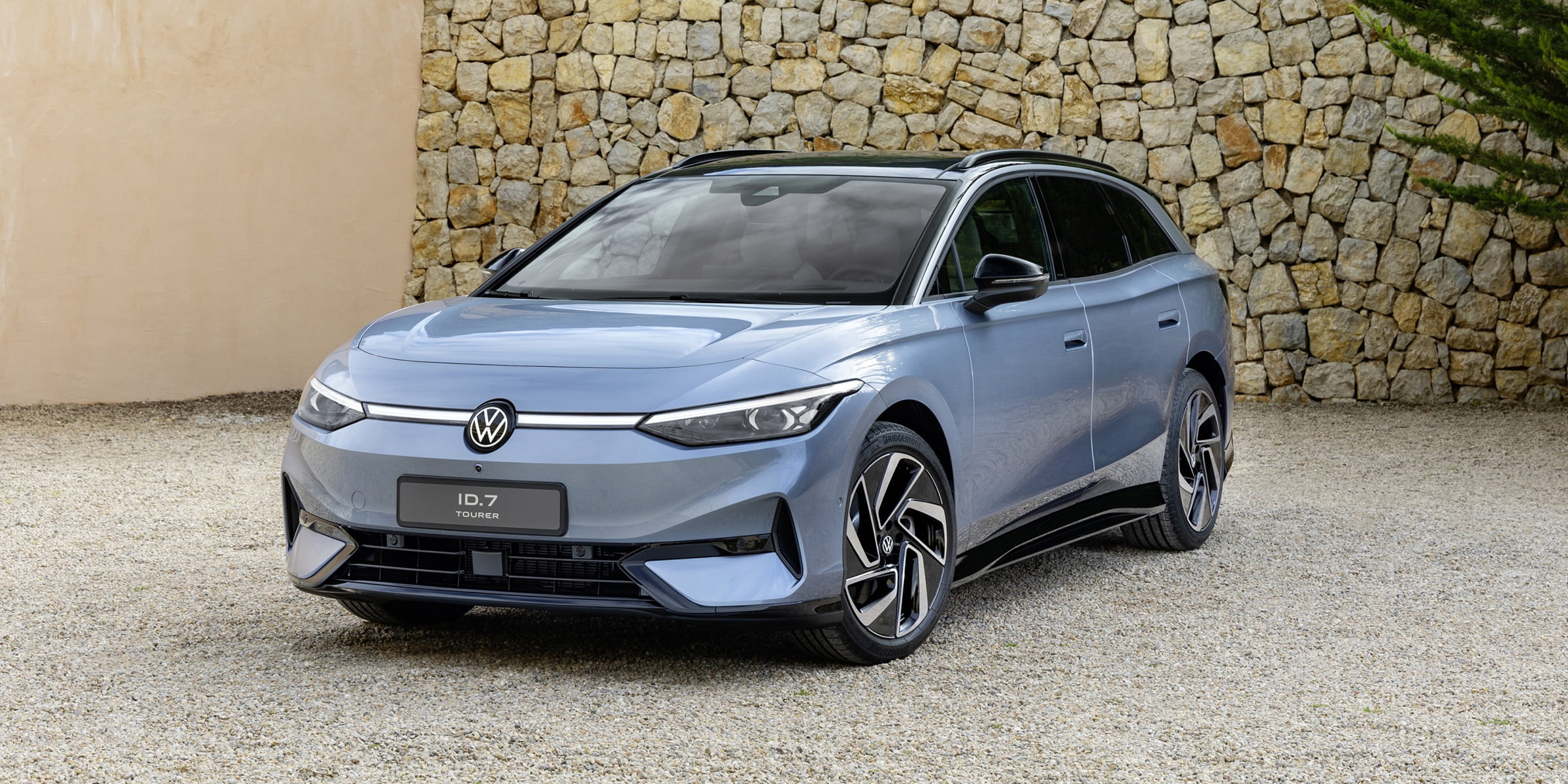
Volkswagen has a large range of electric cars on offer (ID.3, ID.4, ID.5, ID.7[above] and ID. Buzz), but sales haven’t been as sparkling as the company would like, and it’s believed to be behind on its 2024 EV sales target. That should mean some good deals on Volkswagen EV models over the second half of the year.
It’s been a strong first half of the year for BMW, with new car sales up by a third over the same period last year. However, it’s worth noting that 2023 was a comparatively poor year for the company. It jumps to second place overall, up from sixth at the same point last year.
BMW is believed to be one of the best-placed companies in terms of EV sales, meaning it won’t have to discount heavily throughout the rest of 2024 to hit its mandated targets. The company has a strong range of EVs on offer (i4, i5[above], i7, iX, iX1, iX2, iX3), which mostly score very highly on our Expert Rating Index.
Audi remains the third-best-selling car company in 2024, just as it was this time last year. But it has sold significantly fewer cars this year – about 3,000 units – compared to a year ago. With sales down by 4% against a market that’s up by 6%, Audi remains a powerhouse of the UK car market but one that’s not as strong as it was.
The company has a small but potent choice of EV models (Q4 e-tron, Q8 e-tron, e-tron GT) on sale at the moment, with the Q6 e-tron[above] joining the line-up shortly and an A6 e-tron also likely to appear before the end of the year. But it is believed to need to sell quite a few more EVs to hit its ZEV mandate target for the year.
As it was a year ago, Kia is the fourth biggest car brand in terms of UK new car sales, outpacing its parent company Hyundai. However, its sales haven’t kept up with overall market growth (up 3% against market growth of 6%), representing a slight fall in market share from 6.2% to 6% over the last 12 months.
Kia has some of the best EVs on sale at the moment (Soul EV, Niro EV, EV6, EV9[above]) and is believed to be close to its 2024 EV sales targets. However, it will be looking forward to the arrival of the smaller EV3 SUV to help boost electric sales before the end of the year.
A facelifted EV6 is also apparently in the pipeline and should arrive in the UK before Christmas, along with updates for its petrol-powered Picanto small hatchback and a significant update to its petrol and hybrid Sorento large SUV models.
For decades, Ford was the UK’s favourite car brand. But now it’s only the fifth biggest in terms of sales, slipping from second last year. Ford’s passenger car range has shrunk over the last few years, with the Fiesta, Mondeo, Galaxy and S-Max all consigned to history and the Focus set to disappear next year as well. Of course, the company remains massively popular with its van range where it holds an impressive market dominance.
Ford’s EV range leaves much to be desired as well. The Mustang Mach-E is a lovely car but doesn’t sell in big enough numbers – or with enough profitability – to help Ford’s overall numbers. The new Explorer is a crossover-styled EV (it’s actually a Volkswagen ID.4 under the skin) that’s arriving in showrooms about now after a year-long delay, and it will soon by joined by the all-new Capri EV. This isn’t a coupé sports car like the original Capri, but a slightly sleeker SUV than the Explorer (and is basically a Volkswagen ID.5 underneath).
Ford’s approach of dusting off classic names from its history and applying them to EV SUV models hasn’t been universally popular, and the company has a big job ahead of it to head its EV sales targets. Ford has said that it won’t be paying any fines for selling too many petrol cars/not enough EVs, which may mean that it simply stops selling certain petrol models in coming months to avoid missing its EV quota.
Nissan has been on a bit of a roll for the last couple of years, as the UK continues to enjoy success with its British-built Qashqai[above] and Juke models. In fact, these two cars make up more than three quarters of all Nissan sales in the UK.
Nissan has outpaced the overall market in 2024, with sales up 22% against the overall market growth of 6%. In fact, its sales are up 75% over the last two years, which is a remarkable achievement for a volume car company.
In terms of electric models, Nissan has the excellent Ariya SUV and the now-out-of-production Leaf saloon. The company is believed to be behind on its EV targets for 2024, so expect some cracking deals on the Ariya in coming months…
Mercedes-Benz had a slow year in 2023, particularly in the first half of the year, so its growth of of 21% in the first half of this year (against overall market growth of 6%) isn’t quite as impressive when you consider that it had fallen by 7% last year (against overall market growth of 18%).
Mercedes is believed to be ahead of target on its EV sales quota so far this year, so you probably won’t see any massive discounting on its EQA, EQB, EQE saloon, EQE SUV[above], EQS saloon, EQS SUV or EQV models in coming months, other than to hold position against its competitors.
For many years, Toyota has argued that hydrogen fuel cell-powered EV were a better bet than battery-powered EVs. Unfortunately for Toyota, almost no-one else has agreed. Governments around the world, and the rest of the global car industry, have moved decisively towards battery EVs. In fact, the number of hydrogen stations in the UK has dwindled to almost zero in the last year.
Toyota is now urgently trying to catch up on its EV model range, but we won’t see an influx of new electric models for a few years. As of right now, the company only has the weirdly named bZ4X mid-sized SUV in its line-up, and that model hasn’t exactly been selling its socks off. This is seriously hampering Toyota’s efforts to hit its 2024 EV sales targets, although it can claim some credit for its wide range of hybrid models.
As we pass the halfway point of 2024, Toyota sales are down 9% and the company has fallen from fifth to eighth place in terms of brand sales. Like Ford, it’s a brand that may have to stop selling some of its petrol and hybrid models before the end of the year to avoid breaching its EV quota.
Hyundai’s registrations were almost exactly the same as they were 12 months ago, at just over 46,000 cars. That, of course, represents a net fall given that the overall market grew by 6%. It also means that Hyundai has slipped from eighth to ninth in the manufacturer sales rankings.
The Hyundai Ioniq 5[above] remains one of the stand-out new EVs on the market, while the Kona Electric small SUV and Ioniq 6 saloon are also excellent. The company is apparently slightly behind its EV sales targets, but not by a huge amount so it should be able to meet its requirements by the end of the year without too much discounting.
It’s been a disappointing six months for Vauxhall, with sales well off the pace of the overall market. It’s down 8% on last year, which isn’t great news as it underachieved against the overall market in the first half of last year as well. The company did have a much stronger second half of the year in 2023, so it will be hoping to repeat that this year.
Although Vauxhall has a solid choice of electric models (Corsa Electric, Astra Electric, Mokka Electric, Combo Life Electric, Vivaro Life Electric), none of them appear to be selling well enough to get Vauxhall close to its 2024 EV sales quota. The company does have two new SUVs joining the family later this year – the new Frontera small SUV [above] will replace the ageing Crossland, while the new Grandland replaces the current model. Both will be available in electric versions, which may help get Vauxhall over the line.
MG’s revival over the last few years has been a success story for its Chinese owners, and the brand has broken into the top ten for new car sales this year, moving up one place to tenth from last year. MG has outperformed the market for a few years’ running now, and this looks set to continue for the rest of this year.
Key to the brand’s relentless improvement has been a notable improvement in quality and equipment levels – the latest MG models are able to compete on broadly even terms with big-name rivals, rather than relying on budget pricing to excuse its fairly average model range as it did in the past.
The MG 4 (our reigning Car of the Year) remains the company’s top-performing electric model, along with the ZS EV small SUV and the MG 5 estate. New to the line-up is the Cyberster electric roadster[above], while the petrol and hybrid HS mid-size SUV has just been revealed at the Goodwood Festival of Speed and the all-new MG 3 hybrid small hatchback has only recently been launched as well. Expect MG to be an even bigger player in years to come.
The Czech arm of the giant Volkswagen Group holds its 12th place position in the new car market, with sales growth that just outperforms the overall market. Its growth has slowed down slightly from last year (where it grew by 51%), but with a couple of crucial new models arriving in the next few months, Skoda may have a strong end to the year.
In terms of electric models, Skoda currently only has the Enyaq mid-sized SUV. It may be joined by a smaller EV SUV model called the Elroq before the end of the year, while all-new versions of the popular Superb and Kodiaq models are also hitting UK showrooms about now. Skoda is apparently a little behind its EV sales targets, although the Volkswagen Group is able to trade credits within its brands to avoid any fines, so we don’t really know how well the company is placed overall.
Peugeot remains in 13th place on the sales charts, despite increasing sales by 14% in the first half of the year compared to 2023 – although the first half of last year was a poor period for Peugeot (down 5% against a market that was up 18%), so most of this year’s improvement was cancelling out last year’s losses.
Peugeot has been updating most of its big-selling models over the last year, with updates to its small 208 hatch and all-new generations of the 3008 and 5008 SUVs, along with a new 408 coupé-SUV [above] and an electric version of the 308 hatch and estate.
The company now has a decent range of electric cars (e-208, e-308, e-2008, e-3008, e-5008 and e-Rifter), but none of them are apparently selling in large enough numbers for Peugeot to hit its EV sales quota. Expect aggressive discounting of Peugeot EV models over the next six months.
Land Rover is another brand that has seen solid growth – up 18% compared to the first six months of last year – but remains in the same place on the manufacturer pecking order. This comes despite the brand having no new models in 2024.
In terms of electric vehicles, there’s nothing to report as yet. An electric version of the flagship Range Rover should be on sale soon, but that’s not going to sell enough units to allow Land Rover to hit its EV sales targets. Presumably the company will be looking to buy credits from elsewhere in order to avoid fines for not meeting its quota.
Good sales news for Volvo, with strong growth in 2024 following on from similar improvements in the first half of 2023. It also moves up one spot to 15th in the brand sales rankings.
Of particular importance is the sales performance of its newest and smallest model, the EX30 small electric SUV[above]. It hasn’t been completely smooth sailing, however, with the EX30 currently being recalled for technical problems.
Volvo also recently announced that it is bringing back its two estate models, the V60 and V90, which had been dropped from the UK range last year. These will only be available as plug-in hybrids, and are only likely to sell in limited numbers, but it does provide welcome relief from the endless parade of SUVs offered by most car brands.
Volvo’s electric line-up is performing well, with the EX30 joining the electric EX40 (formerly XC40 Recharge) and EC40 (formerly C40) models in showrooms. Before the end of the year, Volvo will also have the enormous EX90 electric SUV to replace the venerable XC90 model that has been on sale for almost a decade. An all-new luxury electric MPV model called the EM90 may reach the UK late this year, but is more likely to arrive next year.
It’s been a very strong start to the year for Renault, with new car sales up 65% over the first half of 2023. The company also moves up from 18th to 16th place on the sales leaderboard.
Several models in the Renault range have been replaced or updated over the last year, with new or improved versions of the Clio, Captur and Austral (replacing the unloved Kadjar) on offer in UK showrooms. There are also new EVs hitting the market, with the eagerly anticipated Renault 5 retro-electric small hatch [above] soon to be joined by a new Scenic E-Tech EV mid-size SUV and Espace E-Tech large SUV.
The more sportily styled models in the Renault range have also been re-branded as Alpine trim levels, replacing the previous RS-line models. This ties in the Alpine sports brand more closely to the Renault mothership, much like Fiat does with Abarth and Mercedes does with AMG.
Tesla has endured a tough 2024 to date. Despite the Model Y being the world’s best-selling car of 2023 (of any type, not just ‘best-selling electric car’), the company has endured problems trying to keep up supply this year.
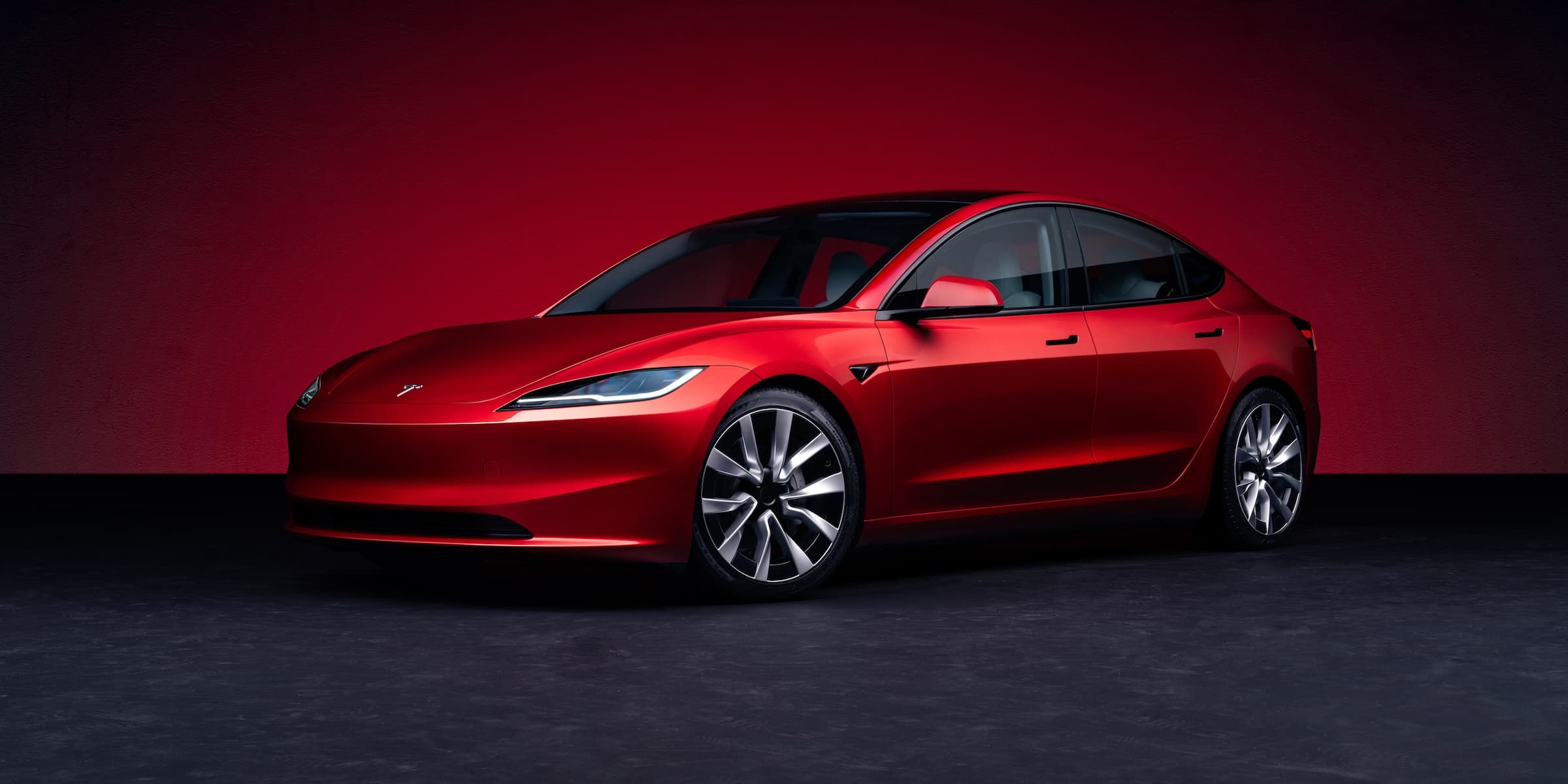
There have been strikes and fires at its German factory where the Model Y is built, while sales of the Model 3[above] were restricted as the company overhauled its popular saloon over winter. Expect the second half of the year to be stronger for Tesla, assuming it can get its labour disputes in Germany sorted soon.
Surprisingly, SEAT has enjoyed a strong start to the year, with sales up 34% on the same period last year – which itself was up 25% on the previous year.
It’s surprising because SEAT hasn’t had any new models in what seems like a long time, and parent company Volkswagen appears to have little interest in promoting its Spanish value brand – all the effort seems to be going to SEAT’s performance spin-off brand, Cupra.
Industry sources have suggested to The Car Expert that SEAT has been aggressively chasing fleet deals, as it has little in the way of new product to woo consumers. The company also has zero EV models at present, so will be relying on trading credits within the overall Volkswagen Group results to ensure it avoids government fines.
Mini’s slow results for the first half of 2024 reflect an almost-complete overhaul of its model range in the last few months, rather than a lack of interest in the brand.
The entire Mini range (hatchback, convertible, Countryman, Clubman) is being replaced, with the new models being designed as EVs from the start rather than being converted from existing petrol models. The Clubman estate model is gone, to be replaced shortly with a new model called Aceman. The hatchback models will now be called Cooper[above].
Expect Mini to have a strong second half of the year, as its new electric range finally arrives in showrooms.
Honda has had a good six months, with registrations up 24% compared to the same period last year. The company’s latest models are inevitably SUVs of various sizes, but the Civic hatch remains a stand-out car.
In terms of electric vehicles, the cute-but-impractical Honda e has gone, leaving the small and awfully named e:Ny1[above] as the only electric model in the family. As well as having a daft name (you must pronounce it “E-N-Y-1”, not “Anyone”, or else Honda will be unhappy with you…), the e:Ny1 isn’t really a very good car. Honda is apparently well behind its 2024 EV sales target, so expect heavy promotions and offers for the don’t-call-it-Anyone over the next few months.
Renault’s budget brand has seen modest growth this year so far, although slightly behind the curve compared to the overall new car market (5% vs. 6%). Despite this, it’s actually moved up a place, from 22nd to 21st, in the manufacturer sales table compared to the same point last year.
Dacia has two new models of interest this year – the all-new Duster small SUV and the electric Spring even-smaller SUV [above], which will also be the UK’s cheapest new car when it arrives in the next few months. However, the Spring is unlikely to sell in enough numbers to help Dacia hit its EV sales quota for 2024, so it will be relying on parent company Renault to have enough credits to cover both brands.
Modest growth of 1% means that Citroën has fallen behind the market in 2024, after a similar underachievement in 2023. It has also slipped a spot, falling behind Dacia and dropping from 21st to 22nd place in the manufacturer sales race at the year’s halfway point.
An all-new C3 and electric ë-C3[above] model range should help capture some fresh sales in the second half of the year, but otherwise it’s hard to see where new business is going to come from for Citroën. Its electric models are also falling behind the market, with the ë-C4 and ë-C4 X not exactly flying out of showrooms, and the van-based ë-Berlingo and ë-SpaceTourer people carriers not adding many sales either.
After a strong 2023, Mazda sales have gone into reverse in 2024. A 13% drop against an overall market growth of 6% is bad news, with the company struggling to convince car buyers of its value in the marketplace.
Mazda’s only electric model, the MX-30[above], is hampered by poor battery range – a result of Mazda misreading customer expectations. A range-extender hybrid version has been added to the line-up this year, but it may well be too late to rescue the MX-30’s sales. Most Mazda models are well regarded by motoring journalists, but are failing to make an impact in customers’ eyes.
If you’re not an avid follower of the world car industry, Cupra is the performance spin-off brand from Spanish brand SEAT. Parent company Volkswagen seems to view Cupra as having stronger prospects than SEAT, as it has prioritised new models and marketing on Cupra while SEAT has languished.
Being a new brand with a growing model range, it’s not surprising that Cupra sales have comfortably exceeded the overall new car market. The sole EV model is the Cupra Born hatchback, which is a tweaked version of the Volkswagen ID.3. It was originally supposed to be a SEAT, but Volkswagen decided that it would do better with a Cupra badge. By the end of the year, the Born should be joined by an electric coupé-SUV called the Tavascan[above].
Suzuki has enjoyed a strong couple of years in terms of sales, although its run may be coming to an end. Despite sales up 11% compared to the first six months of last year, Suzuki doesn’t have any EVs currently on sale and has announced it will drop a few of its current models over the next year.
A new Swift has just been launched [above], but there won’t be a replacement for the Swift Sport version. The ageing Ignis small crossover is approaching the end of its production life and won’t be replaced. The Swace is nothing more than a rebadged Toyota Corolla estate and will be discontinued, and the Jimny small SUV will be killed off a second time (it was launched as a passenger car but failed to meet new emissions test so was relaunched as a commercial vehicle, and will now fail new emissions tests for LCVs).
Suzuki’s first electric car should be unveiled in coming months, although it may not reach the UK until next year. So the company has zero chance of meeting its EV sales targets for 2024…
The sales numbers for Jaguar look good, with impressive growth of 57% compared to the overall market growth of just 6%. This has come almost entirely from the brand’s SUV models (E-Pace, F-Pace and electric I-Pace[above]), as its saloon models (XE and XF) have now ended production, as has the F-Type sports car.
An all-new electric Jaguar saloon to rival the Porsche Taycan is likely to be unveiled later this year, but is not expected to go on sale until next year. That means Jaguar’s EV sales targets are dependent on the ageing I-Pace SUV.
After enjoying strong growth during 2023, sales numbers have come crashing back down for Porsche in 2024. This is partly due to a range overhaul, with upgrades to the Panamera, Cayenne, 911 and Taycan models over the last year. There has also been a slowdown in Taycan sales after a frenzy over its first couple of years on sale. Porsche’s EV model has been highly regarded, but a glut of two-year-old Taycans hitting the used car market has hurt resale values quite dramatically.
An all-new electric Macan SUV model joins the Porsche line-up later this year, although it remains to be seen how much this will boost Porsche’s sales. The updated 911 range will also arrive shortly. On the other hand, Boxster and Cayman models are now reaching the end of their lives ahead of all-new electric replacements due to be launched next year.
Fiat sales have been sliding over the last couple of years, underachieving by a long way against the overall market. This is partly due to an ageing model line-up that is gradually being addressed, with models like the Tipo, Panda and (petrol) 500 all well past their use-by dates.
The electric 500e model (which is completed unrelated to the petrol version) continues to lead the way for Fiat, along with the larger 600e electric crossover model. The company has also announced an electric Grande Panda model [above], which should provide a competitively priced option for new car buyers when it arrives sometime before the end of this year.
Fiat is now part of the enormous Stellantis group, so it will be able to exploit loopholes in the EV sales mandate by trading credits with other family brands – although none of them seem to be selling enough EVs to be ahead of target at the moment.
Lexus is following up a strong 2023 with another impressive sales performance in the first half of 2024. With some fresh models in the line-up, as well as a new small crossover called the LBX that brings the brand to a lower price point, Lexus is on a growth spurt.
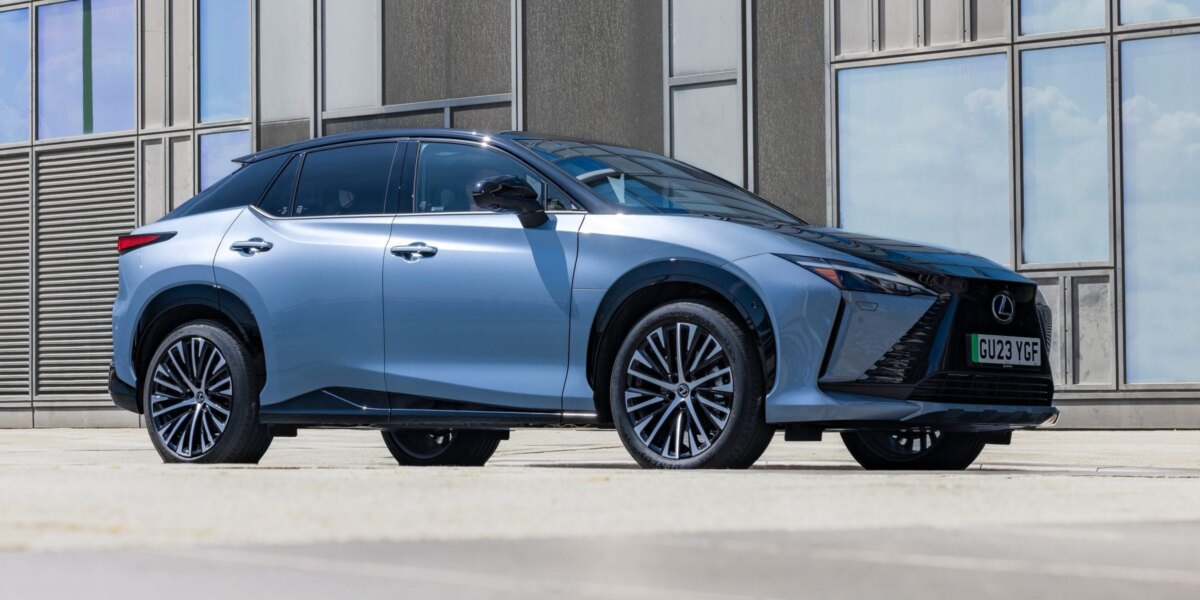
Like its parent brand Toyota, Lexus is struggling to shift electric cars. It has two in the range, the mid-sized RZ[above] and the smaller UX, both of which have just received substantial price cuts to help shift stock so that Lexus can hit its EV sales quota. The company is also offering discounted finance, subsidised home charging points and own-brand insurance products to help bring down the total ownership costs of its electric models.
Jeep has turned around a stagnant 2023 with a huge improvement in 2024, more than doubling the number of cars sold in the first six months of the year. This eye-catching figure needs to be taken in context, however, as we’re now getting down to the bottom half of of the sales chart where overall numbers are much smaller – so a big increase or decrease in sales involves fewer cars than at the top of the tables.
Jeep’s growth is being driven by its only electric model, the Avenger small SUV[above], and steady sales of some of its older fossil-fuel models. Like other brands in the enormous Stellantis family, there’s also a strong emphasis on fleet sales rather than private customers.
The growth number for BYD is fairly irrelevant, since it was only just getting started last year – just 100 sales of the Atto 3 crossover for the first half of 2023 compared to 2,900 in 2024. In the last year, it has added the small Dolphin hatch and the highly regarded Seal saloon[above].
In worldwide sales, BYD is now battling Tesla to be the world’s largest electric car company. Its high-profile sponsorship of the current European football championships is also driving brand awareness, so we can expect BYD sales to continue their rapid upwards trajectory for the next few years.
The company has already signed some major fleet deals and is expanding its model range quickly. It might currently only rank 31st on the manufacturer sales charts, but expect another massive improvement by the end of this year.
Swedish brand Polestar is a spin-off EV-only brand from Volvo, and has had a tough start to 2024. This is largely due to it still only having one model currently available for sale, the Polestar 2. The company is also being split more comprehensively from Volvo to stand on its own two feet, which has involved a bit of restructuring trauma.
Things are looking up for Polestar sales, however, with two new models set to join the family in the next few months. The imaginatively named Polestar 3 and Polestar 4[above] models should hit UK roads by about September, and are set to be joined next year by Polestars 5 and 6. They probably paid some marketing agency a fortune to come up with those model names…
In countries like the USA and Australia, Subaru is a big-name brand that sells boatloads of new cars every year. In the UK, however, it’s a minnow fighting to stay relevant against more familiar European names and new Asian start-ups.
But things are at least growing for Subaru, with sales up 30% ion the first half of this year, following a strong year in 2023. Hopefully the company is finally emerging from the doldrums of recent years, when we wondered why it even bothered continuing in the UK since it sold so few cars.
Subaru has a small but focused line-up of crossover models, all of which are highly capable of going off-road to places that your average SUV would never reach. The brand has a loyal following in rural areas, and is smart enough to give its customers what they want. At present, Subaru only has one electric model – the Solterra, which is a rebadged Toyota bZ4X. But it seems to be selling in sufficient numbers to ensure that Subaru will hit its EV sales quota by the end of the year.
The Smart brand has been through a complete metamorphosis over the last year. Tiny city cars are out, and more generic electric crossovers are in. “If you can’t beat them, join them,” I guess. The good news for Smart is that this has resulted in immediate sales success, with registrations jumping from less than 200 to more than 1,000 for the first half of the year.
Mercedes-owned Smart has partnered with Chinese giant Geely to produce an all-new range of electric models, starting with the #1 (No no no, not “Number 1”. You pronounce it “Hashtag 1”. Yes, I am being serious.) Next up is the Hashtag 3 (no, I don’t know what happened to the #2).
KGM Motors is the new name for SsangYong, a result of a change of ownership for the beleaguered Korean brand. It has also coincided with an update for the small Tivoli SUV [above] and an all-new model called the Torres, available with either petrol or electric power.
It remains to be seen how successful the new owners will be at growing the company, but it remains one of the smallest brands in terms of sales numbers and appears vulnerable to a horde of new Chinese brands launching in the UK with budget-priced SUVs.
Like BYD, GWM Ora is another new Chinese car company that only started UK operations last year. As such, its impressive-sounding growth needs to be taken in context.
GWM currently only has one model on sale in the UK, the Ora 03[above]. Despite only being on sale for about a year, it’s already undergone a name change from the dubious-sounding ‘Ora Funky Cat’ – turns out that it didn’t seem as funky to Western audiences as it did back in China…
Despite its growth, the immediate future for GWM seems a bit shaky. Like other Chinese car brands, it is set to have large tariffs slapped on its cars by the EU (although not here in the UK). As a result, GWM has basically closed its European offices and is going to manage operations from back in China. Will this be a short-term setback or a prelude to a full withdrawal from European sales? We’ll keep you posted.
A solid start for Alfa Romeo in 2024, with the caveat that it’s coming off a poor performance in 2023. It’s another brand where impressive-sounding growth in percentage terms is only based on a small number of cars.
Alfa was still in the middle of its last relaunch under Fiat ownership when it was merged into the enormous Stellantis group, so its new masters are implementing yet another reboot for Italy’s most seductive (yet hopelessly underachieving) car company.
The newest model in the Alfa Romeo range is the MilanoJunior small electric SUV [above], which is basically a better-looking Jeep Avenger. Embarrassingly, the company had to change the name just a couple of days after its global launch thanks to a dispute with the Italian government, which took offence to an Italian company naming its car after the city of Milan – Alfa’s ancestral home – when the car will be built in Poland.
Apparently, the government’s ire doesn’t extend to American brand Ford calling its new German-built SUV the Capri, however…
Yet another brand in the burgeoning Stellantis portfolio, DS was spun off from Citroën several years ago to offer a more premium French car experience. Sales, however, have not exactly been premium with the company struggling to convince buyers to give up their premium German cars.
DS will apparently be leading the French EV revolution, with fossil-fuel models being phased out fairly quickly. As of right now, however, the only electric model is an EV version of the DS 3 small crossover[above]. With so many different brands in the Stellantis family competing for attention and investment, you wonder how long DS will remain a viable proposition.
After a strong 2023 (in percentage terms, at least), 2024 has been a sales disappointment for Genesis. Just over 500 new cars were registered in the first six months of this year, a 31% decrease on the same period last year.
The brand’s UK division has been restructured, being brought directly under control of parent company Hyundai rather than being allowed to operate independently. It’s pushing on, however, with the launch of its new ‘Magma’ performance range at this week’s Goodwood Festival of Speed.
At least Genesis doesn’t have to worry about hitting its EV sales quota, with a line-up that includes the GV60[above], Electrified GV70 and Electrified G80. Apparently, about 85% of UK sales are for its electric models, which isn’t that surprising as they’re far superior to the brand’s petrol and diesel cars.
It’s been a difficult couple of years for Bentley in terms of UK sales. The first half of this year has been nearly 40% down on the same period in 2023, which in turn was down 13% on 2022.
The company has been overhauling its product offering, with the Bentaga SUV being comprehensively updated last year and the Continental GT[above] getting a similar refresh right now. Like other luxury car brands, Bentley is also increasingly looking at low-volume, limited-edition models to generate its income, rather than relatively higher-volume models with skinnier profit margins.
Bentley’s first electric model was due to be launched in 2025, but has apparently now been pushed back by at least a year.
Abarth is a performance brand for fast Fiat enthusiasts, with only two models – a faster petrol Fiat 500 and a faster electric Fiat 500. There’s only so many of those that a company can sell, although sales are up this year off the back of the new electric Abarth 500e [above].
There will finally be another Abarth model arriving later this year – a faster version of the Fiat 600 electric crossover. It will boost sales, but not by any great amount.
Maserati is another Stellantis brand in the middle of a reboot. The line-up is looking rather fresher than it has for a while, with the Grecale mid-sized SUV and MC20 supercar now joined by the new GranTurismo and GranCabrio [above] GTs. All are available with a choice of petrol or electric power.
Meanwhile, the older models – Quattroporte and Ghibli saloons, and Levante large SUV, have been quietly discontinued. Stellantis is also gradually weaning Maserati away from its long-term partnership with Ferrari, which no longer supplies Maserati with V8 engines, but still builds and paints a number of Maserati bodyshells in its Maranello factory before trucking them up the road to Maserati’s factory in nearby Modena.
The evergreen Alpine A110 sports car lives on in an endless procession of special-edition models. But finally, later this year, the Alpine range will double with an all-new model that should dramatically increase sales.
The new Alpine A290 [above] is a hotted-up version of the new retro-tastic Renault 5 small electric hatchback. Launched the Le Mans 24-hour race last month, it should reach UK showrooms before the end of the year.
After launching with a splash last year, Ineos Automotive’s answer to the discontinued old-school Land Rover Defender, the Grenadier, is enduring a difficult second year of sales.
The company has also announced that it is delaying the launch of its electric SUV, to be called the Fusilier. Ostensibly, this is because of concerns about the flatlining EV market. But it’s entirely likely that flatlining sales of the Grenadier may be a bigger reason…
Several low-volume or luxury brands (like Aston Martin, Bugatti, Caterham, Ferrari, Lamborghini, Lotus, Morgan and Rolls-Royce, among others) don’t report monthly sales numbers so we can’t track their performances over time. In any case, with so few models sold each year, you’d inevitably see wild fluctuation in percentage terms almost every month.
It’s probably safe to say that Ferrari is making loads of money while Aston Martin is running up large losses, since that’s the way things have been for both brands since approximately forever. Bugatti and Rolls-Royce are halo brands for parent companies Volkswagen and BMW, respectively, so their financial performances tend to be absorbed into the overall group numbers rather than disclosed separately.
In the late 1980s, the three largest Japanese car makers – Toyota, Honda and Nissan – all decided to launch upmarket sister brands. Honda produced Acura, Nissan came up with Infiniti and from Toyota we got Lexus.
All three have proven especially successful in the US, and today Acura and Infiniti are primarily US brands. Lexus, however, is also in 90 countries across the world and the biggest seller of premium cars in its home market of Japan.
While Honda has never tried to launch Acura in Europe, both Nissan and Toyota decided there were rich pickings to be had for their premium brands. Infiniti crashed and burned, lasting just 12 years in the UK, but Lexus has proven rather more resilient – first going on sale in 1990, Lexus dealers are today established and successful operators on the British market.
Lexus succeeded first on its quality – “the relentless pursuit of perfection” became a slogan for the brand – and later for its hybrid drivetrains. At a time long before the rise of electric vehicles, when Toyota was pioneering hybrid cars as a green move for mainstream buyers, Lexus was doing the same for those with more money to spend.
The seed for Lexus was sown in 1983 when Toyota initiated a project called ‘Flagship 1’ to “build the world’s best car”. This became the Lexus LS 400 and the Toyota team were set numerous challenging goals for their new car including an ‘anti-ageing’ programme – a car with 50,000 miles on the clock that should look, feel and drive just like a brand-new one.
Meanwhile the Japanese government introduced restrictions on car exports, which made it significantly more profitable for manufacturers to sell their more expensive models abroad. As a result, and after much research – particularly in north America – Toyota launched Lexus in 1989. By the end of the year more than 16,000 LS 400s had been sold, most of them to American buyers.
Lexus launched in the UK in 1990 with just the LS, the smaller GS saloon not joining the line-up until 1993. By this time Lexus was adding more models in the US, where the brand was outselling BMW and Mercedes-Benz, and topping customer satisfaction surveys.
There were innovations too – in 1998 the second-generation LS 400 was the first European car to offer satellite navigation as standard, and the LS 430 of 2000 debuted air suspension, keeping the car level no matter what the load or road surface. Other Lexus introductions included a host of safety features such as collapsible steering columns and twin-chamber airbags.
1998 Lexus LS 4002002 Lexus 2054 concept
The brand had such a top reputation by this time that when movie director Steven Spielberg made sci-fi thriller Minority Report, set in 2054, he had Lexus create the car that star Tom Cruise drove.
Remarkably despite its global success, Lexus did not launch in its home market of Japan until 2005, where it proved an instant success. A year later the GS 450h marked the debut of the hybrid drivetrain – presented as a greener way to drive, Lexus and sister brand Toyota earned much positive publicity in following years as perceived pioneers of the technology.
Lexus reached a new milestone in 2011 with the LFA, a carbon-fibre supercar – just 500 were made and they sold out instantly. By 2019, Lexus dealers could be found in 90 countries and the brand sold its 10 millionth vehicle that year, of which 1.6 million were hybrid-powered. A year later Lexus made the next step with its full electric vehicle, the UX 300e.
What models does Lexus have and what else is coming?
Lexus was once all about upmarket saloons challenging the likes of the BMW 5 Series and Mercedes S-Class, but these days the marque’s nine-strong current line-up is dominated by SUV models, denoted by ‘X’ in the brand’s two-letter model naming system.
The UX, NX and RX are SUVs going up in size and all available as regular hybrids. The UX, launched in 2019, was the first compact SUV from Lexus, and in 2020 it was joined by an electric version, the brand’s first BEV.
The mid-sized NX, targeting the likes of the BMW X3 and Audi Q5, is also the first Lexus model offered as a plug-in hybrid and one of the most warmly received, one media review dubbing it “The best car Lexus has launched for years”.
The larger RX, pitched as an alternative to a BMW X5 or Land Rover Discovery Sport, is one of the longest-lasting Lexus models – the current version which arrived in showrooms at the end of 2022 is the fifth generation, and again has earned very positive reviews.
The RZ, on sale early in 2023, is the second EV from Lexus and effectively an electric alternative to the NX – it’s closely related to the Toyota bZ4X and Subaru Solterra, but quite a lot more expensive.
Most recent addition to the SUV line-up is the LBX, which arrived in the Spring of 2024. This is the upmarket version of the Toyota Yaris Cross – the smallest Lexus available and currently only on sale in regular hybrid form.
Lexus has not entirely abandoned traditional cars. The ES is a large executive saloon and was sold in the USA for many years before first being offered to British buyers in 2019. It’s only sold as a hybrid and in terms of refinement many reviewers consider this car very comparable to the best from the German premium brands.
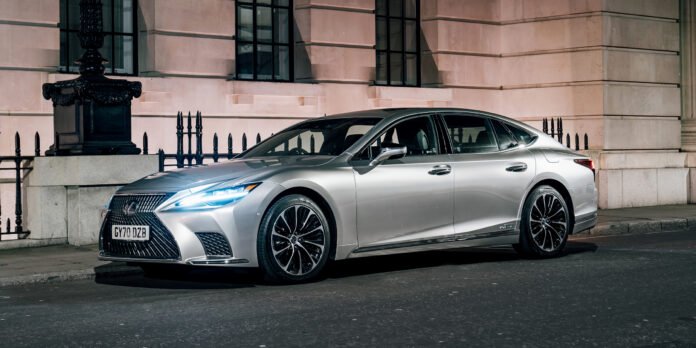
There is an even larger Lexus saloon, the LS – it only comes as a hybrid with a 3.5-litre petrol engine, though you can have all-wheel-drive. This car is probably the least highly regarded of the brand’s line-up, lovely inside but not that great to drive.
Finally sports car fans are not forgotten – the most potent model in the Lexus range is the LC, offered in coupe and convertible form with either a 359hp hybrid powertrain or with a 5-litre V8 petrol engine pushing out 500hp. Reviewers love the V8, less so the hybrid…
In terms of new models Lexus is set to buck a market trend and launch an MPV in 2024. The second-generation of the LM, previously only sold in China, will be offered with a hybrid drivetrain to European buyers.
The hope is to attract the luxury VIP transport market, struggling to find suitable machines to replace axed models such as the Ford Galaxy and Volkswagen Sharan. In standard form the LM has seven seats, but it can be ordered with just four.
The most exciting new Lexus is expected in 2026 – the Electrified Sport will be a spiritual successor to the LFA supercar of 2011, and while the exact potency of its electric powertrain is yet to be revealed, it is said to be able to go from 0 to 62mph in only two seconds.
Where can I try a Lexus car?
Lexus is an upmarket brand so it doesn’t have as many dealerships as more mainstream manufacturers – in total there are around 50 across the UK. Some are attached to outlets of sister brand Toyota but many are standalone – Lexus Chester, for example, is run by a group that also has Mazda and Skoda outlets on the same site.
Hybrid powertrains helped enhance the reputation of Lexus in the premium market, but the standout reason for the brand’s success has always been quality. From the start the team working on creating the first Lexus cars was encouraged to be obsessive about their detail, while also urged to build in the highest levels of reliability.
That this priority has persisted is proven by the brand’s repeated high performance in customer quality and satisfaction surveys – especially in the US where Lexus consistently dominates the very highly regarded J. D. Power survey.
A Lexus fact to impress your friends
Drive a Lexus? You could have been driving an Alexis… There have been several explanations of the Lexus name, from simply meaning ‘luxury and high-end technology’ to ‘luxury exports to the US’…
In fact the name doesn’t mean anything specific – world-renowned advertising agency Saatchi & Saatchi was commissioned to produce a name for Toyota’s new luxury brand, and front runner among more than 200 options they came up with was ‘Alexis’.
Toyota’s suits were worried, however, that Alexis sounded too much like a person than a car – they might have been influenced by the fact that actress Joan Collins was playing a character called Alexis Colby in the big-hit US soap opera Dynasty at the time.
The solution was simple – they dropped the first letter, and changed the ‘i’ to a ‘u’ to produce Lexus…
Summary
Lexus is an upmarket Japanese brand that has steadily built up a big presence on the automotive scene – while several years of hybrid publicity helped its cause, the brand has succeeded primarily due to the quality of its cars.
The second-generation MG HS SUV has been unveiled at the Goodwood Festival of Speed, with new exterior styling, more interior space and an infotainment upgrade.
Replacing the original MG HS model that has been on sale since 2019 and is currently a British top ten best-seller, this new iteration of the large high-riding family car is now available to order, with two trims and two powertrain options to choose from.
This model launch coincides with MG’s centenary year – the brand started making two-seater sports cars under the name ‘Morris Garages’ back in 1924. The new HS broadly follow the design brief of the first-generation, with its big SUV frame and large wheel arches, but with a larger front grille and narrower LED headlights that stretch further up the bonnet.
As before, the new HS is available with both a traditional petrol engine or a plug-in hybrid configuration. The pure petrol is described by the manufacturer as the ‘new generation’ – a 169hp 1.5-litre unit paired with a six-speed manual gearbox (a seven-speed automatic is also available) that is capable of achieving 0-62mph in 9.4 seconds.
The more expensive plug-in hybrid uses the same 1.5-litre petrol engine, but it works in tandem with a 25kWh battery and ‘high-efficiency’ 67kW electric motor to provide an electric-only range of up to 75 miles. This 348hp setup is faster, reaching 62mph from stationary in a reported 6.8 seconds.
The length between the wheels has been made around five centimetres longer, which MG says has improved legroom inside. The car is also three centimetres shorter, to help create a “more athletic silhouette”. Boot capacity has increased by 44 litres to a maximum of 507 litres.
The ‘SE’ and ‘Trophy’ trim names are carried over from the previous range. The range-topping ‘Trophy’ package includes a wireless smartphone charger and surround view parking camera, and all models come with a 12-inch digital instrument cluster behind the steering wheel and a 12-inch infotainment display in the centre of the dashboard, both screens connected in a continuous display.
The infotainment is compatible with both Apple CarPlay and Android Auto, and comes with MG’s built in navigation software.
MG has built the interior with more premium trim materials to “create a more welcoming and relaxing ambiance”, as well as installing a new three-spoke steering wheel with improved switchgear and a shuttle-style gear shifter.
While front fog lights, electrically adjustable and folding heated door mirrors, a motorised tailgate and a more advanced eight-speaker audio system are reserved for the ‘Trophy’, all HS models come with the brand’s ‘MG Pilot’ safety assistance package, including lane keep assistance, blind spot detection rear cross traffic alert, and a door open warning.
Prices now begin at just south of £25k, around £1k more than the previous line-up’s entry-level price point. Plug-in hybrid models cost more than £31k, and the upgrade from ‘SE’ to ‘Trophy’ adds another £3k.
Ford has revived one of its old nameplates for a new family-sized electric coupé-SUV that shares its foundations with the similar Volkswagen ID.5.
Set to challenge the sales of high-riding EVs like the Skoda Enyaq coupé, Ford Mustang Mach-E and Tesla Model Y, the new Capri is derived from the new Ford Explorer crossover, with the most notable difference being the Capri’s sloping coupé-style rear roofline.
Both the Explorer and Capri are the fruit of a collaboration with Volkswagen, these models being built on the same platform as the German brand’s ID.4 and ID.5 EVs. This new coupé-SUV has nothing in common with the well-known Capri coupé of the 1970s and 1980s, much like the brand’s best-selling Puma crossover is entirely different to the sporty Puma coupé of the late 1990s.
Instead, Ford is simply launching this new model with a badge that carries some name recognition. The manufacturer refers to the model as a new interpretation of the Capri, Ford Europe design lead Amko Leenarts commenting that the new EV has to fit into the current Ford line-up, and “not just exist as something for a designer to bring back an old car.”
Ford says that the Capri provides “sports car acceleration”. Two powertrains will be offered, with the entry-level 77kWh rear-wheel drive 282hp single motor able to complete a 0-62mph sprint in 6.4 seconds, while the top-spec 79kWh all-wheel drive 335hp dual motor can reportedly reach the same speed in 5.3 seconds.
In its more economical lead-in guise, the 77kWh battery provides a maximum battery range of 390 miles. This is around 15 miles more than the Explorer SUV – a testament to the Capri’s more aerodynamic rear roofline.
While coupé-SUVs usually offer less boot space than their SUV-style counterparts, this is not the case for the Capri. Ford says that the new EV has room enough for “more than 570 litres” of luggage. By comparison, the Explorer has a boot capacity of 450 litres, while the Volkswagen ID.5 offers 549 litres of boot space.
Like the Explorer, the Capri comes with a square-shaped steering wheel and a 15-inch portrait-oriented infotainment screen front and centre on the dashboard, which slides backwards to give access to a small storage cubby underneath.
That sums up what we know about the new Capri so far. More details, including UK pricing and specifications, are sure to follow in the coming months as we near the model’s official launch.
Citroën spin-off marque DS Automobiles has given its ‘4’ hatchback a facelift, which includes more standard tech, the addition of a petrol-electric hybrid powertrain option and a revised trim line-up.
Available to order this Summer, the DS 4 range now includes a ‘Hybrid 136’ automatic engine option, which will now sit alongside the ‘PureTech 130’ petrol, ‘BlueHDi 130’ diesel and plug-in hybrid ‘225 E-Tense’ powertrains already available.
This new petrol-electric hybrid choice pairs a turbocharged 1.2-litre petrol unit with 16kW electric motor and a six-speed automatic transmission , providing an output of 136hp and a reported fuel economy of 57mpg. The hybrid can also complete a 0-62mph sprint in 10.4 seconds, which is over a second faster than the lead-in pure petrol version.
The new engine option can’t come close to matching the electric-only 42-mile travel distance of the plug-in hybrid E-Tense, but DS says that the hybrid can handle short distances on only electric power.
The previous ‘Performance Line’, ‘Rivoli’ and ‘Opera’ trim grades are no more, replaced by the new ‘Pallas’ and ‘Etoile’ which are both available with every engine option.
The entry-level ‘Pallas’ comes with a slightly longer list of standard equipment than the previous ‘Performance Line’, including a wireless smartphone charging pad, traffic sign recognition, adaptive cruise control and a Chat GPT AI-powered voice assistant for the infotainment system which is compatible with both Android Auto and Apple CarPlay.
The new top-spec ‘Etoile’ has an Alcantara interior trim with electronically adjustable front seats. The more expensive model also includes more advanced Matrix LED headlights and a head-up display that projects driving information onto the windscreen, as well as a scrolling turn indicator animation. This model also comes with a rear traffic alert.
The ‘Etoile’ can also be specced with an optional package which swaps the Alcantara for Nappa leather, and adds a heated steering wheel and heated front seats.
Prices for the refreshed DS 4 range start at £32k for the petrol-powered ‘Pallas’, rising to £46k for the plug-in hybrid E-Tense ‘Etoile’ with the Nappa leather package. The new hybrid costs around £1k more than the standard petrol.
The DS 4 currently holds a New Car Expert Rating of B, with a score of 66%. It scores top marks for its low average CO2 emissions (largely thanks to the plug-in hybrid model) and gets good grades for its safety rating and low running costs. However, media reviews have been poor.
We’ve now reached the halfway point of 2024, so we can have a good look at the new car sales market – and it’s very much a tale of contrasting fortunes.
The UK now has a fairly entrenched two-speed new car market. Fleet sales are ticking along strongly and consistently, which is a combination of large businesses continuing to catch-up delayed vehicle purchases from the pandemic, and strong business confidence encouraging ongoing fleet turnover.
On the other hand, private new car sales are crumbling. The half-year results for private sales are the worst since the current twice-yearly registration plate change came into effect in 1999. Or, if you prefer, the worst sales results in more than a quarter of a century – with the obvious exception of 2020, when the UK was plunged into a sudden lockdown from March to May and almost no cars were sold. It’s bad news every month, and seemingly getting worse.
There has been a concerted push from some aspects of the media to blame poor private new car sales on a lack of EV demand, and the car industry seems happy to go along with that view in public as it suits the industry’s current lobbying for more government subsidies for EVs. But it’s not accurate.
Private new car sales peaked in 2016 and have been sliding ever since. There are multiple reasons for this, although the biggest factors have been related to car finance (which is also why business registrations have declined).
As well as being numerically low, private registrations in 2024 have also taken the lowest percentage of the overall new car market. In 2024 to date private sales have made up only 38% of all new registrations, which is a record low. This compares to an average of 46% over the prior 24 years, and a gradual decline from almost 50% near the start of the century. Even though 2020 half-year results were worse due to the Covid pandemic, as shown below, this affected fleet and business sales as well so the overall market fell in proportion.
January to June new car registrations over the last 25 years
Year
Private registrations
% of all registrations
Fleet registrations
Business registrations
All registrations
2024
382,881
38%
600,404
23,470
1,006,763
2023
435,325
46%
490,764
23,631
949,720
2022
428,034
53%
354,442
19,063
802,079
2021
410,698
45%
481,258
18,017
909,973
2020
314,588
48%
325,518
13,396
653,502
2019
568,046
45%
671,400
29,799
1,269,245
2018
587,256
45%
677,614
49,124
1,313,994
2017
617,679
44%
728,582
55,550
1,401,811
2016
649,237
46%
717,483
53,916
1,420,636
2015
637,051
46%
685,184
54,654
1,376,889
2014
623,640
48%
602,113
61,512
1,287,265
2013
557,498
48%
555,561
50,564
1,376,889
2012
476,283
45%
537,176
44,221
1,057,680
2011
438,199
43%
537,815
53,624
1,029,638
2010
535,155
48%
519,933
53,574
1,108,622
2009
427,911
46%
445,194
51,850
924,955
2008
537,359
43%
629,344
80,776
1,247,479
2007
564,988
45%
617,286
85,025
1,267,299
2006
560,252
45%
601,195
80,478
1,241,925
2005
587,205
45%
618,408
90,872
1,296,485
2004
659,721
48%
566,719
150,127
1,376,567
2003
665,075
49%
549,734
132,676
1,347,485
2002
664,349
49%
557,481
125,863
1,347,693
2001
617,861
49%
536,867
114,300
1,269,028
2000
520,085
43%
566,913
129,739
1,216,709
Source: SMMT (Society of Motor Manufacturers and Traders)
So why are private new car sales performing so badly?
There are several reasons why private new car sales have been falling for the last eight years, but the biggest is that buyers have been buying ever-more expensive cars on car finance agreements and then trying to fit those into budgets that have not been increasing at the same rate.
Longer car finance terms
PCP car finance has been around since the 1980s, but it really started to take off in about 2010 in conjunction with a government scrappage scheme – launched in the depths of the great financial crisis in 2009 and helped by record low interest rates. Long story short, customers could buy a more expensive car for lower monthly payments than they had been used to, and they liked it.
But cars, and customer tastes, got even more expensive. So rather than buying cheaper cars to keep their payments down, buyers started taking longer agreements instead. The default PCP term shifted from three years to four years, and that meant 25% fewer new car buyers each year as everyone kept their existing car for a year longer.
Cars have become much more expensive
New cars have also become increasingly expensive over the last decade. To pick one popular car as an example: Back in 2015, the then-new Vauxhall Corsa launched with a starting price of £8,995. Today, a new Corsa starts at £18,505 – more than double the price.
Over the same period, average weekly earnings haven’t come close to matching that level of increase, and real-world average disposable income hasn’t really increased at all for many people.
Higher interest rates make car finance more expensive
On top of the extreme price increases, the cost of financing a new car has increased significantly as interest rates have climbed over the last couple years after more than a decade at record lows. This adds a significant extra chunk onto monthly payments for a PCP (or a lease, but the costs of leasing are much more opaque).
Private cars counted under fleet registrations
As costs have increased, customers have increasingly been looking for alternatives to PCP car finance. Some have turned to leasing (personal contract hire), company car schemes or salary sacrifice – especially if they’re looking for an electric car. However, any new cars obtained via these methods are counted as fleet registrations rather than private registrations, as the leasing company is the owner of the vehicle rather than the end user. So there has been a small but significant shift of new cars from the private registration category to the fleet registration category. This particularly affects EVs, as they have the greatest tax benefits from using company car or salary sacrifice schemes, even for privately used cars.
(Incidentally, the same has applied to business purchases, as fewer small businesses choose to buy their company cars outright these days and prefer to lease them.)
Electric cars are even more expensive
Although the price of electric cars has come down over the last few years (or at least held steady), in contrast to petrol and diesel cars, there’s still a definite gap on like-for-like vehicles. To stick with the Vauxhall Corsa, an electric model is about £10,000 dearer than an equivalent petrol version with an automatic gearbox.
Even with some significant discounting and favourable finance terms currently available on a lot of electric vehicles, the upfront and monthly costs are still generally higher – unless you’re eligible for a salary sacrifice scheme.
Most industry analysts expect EV and petrol car prices to reach parity in the next couple of years, but we’re not there just yet.
There’s no end in sight for the current situation
The fall in private new car sales has been accelerating over the last year and there doesn’t appear to be any improvement on the horizon. Cars are not going to magically get cheaper, and finance rates are not going to return to the historic lows of the last decade.
Fewer households are buying brand-new cars, and those who do are keeping their cars for longer. More people are shifting from buying new cars to buying used instead, with used car sales growing steadily over the last few years as private new car sales have declined.
That’s not necessarily a bad thing from a household finance point of view, or from an environmental point of view. The vast majority of consumers change their cars because their finance agreement is coming to an end, not because their cars are falling apart. Keeping your car for four years instead of three is actually quite prudent in most cases.
But it’s obviously a problem for the car industry if people stop buying new cars – and if you want a steadily supply of used cars, you need someone to be buying those cars new in the first place. It’s even more crucial if the industry wants to have any chance of hitting its targets for selling new electric cars, so we can expect to see offers and incentives improving throughout the rest of this year.
After being removed from sale last Summer due to “changes in customer preferences”, Volvo has decided to re-introduce its V60 and V90 models to its UK range as British buyers have shown a renewed interest in the estate bodystyle.
Re-introducing models that the manufacturer says is a “key element of Volvo Cars’ heritage”, the mid-size V60 is now available once again in Plus and Ultra specifications with either the T6 or T8 petrol-electric plug-in hybrid powertrains, which combine a 145hp electric motor with a 253hp or 310hp petrol engine respectively, or a 197hp B4 mild-hybrid petrol powertrain. The larger V90 is also offered with the same T6 and T8 drivetrain options.
The V60 is now on sale from just over £43k, while prices for the V90 start at over £62k. To clarify, the S60 and S90 saloons retired at the same time last year are not returning.
As part of this Volvo range refresh, the brand has also unveiled new ‘Black Edition’ versions of the all-electric EC40 coupé-SUV and EX40 SUV.
Available with both the ‘Plus’ and ‘Ultra’ trims, this ‘Black Edition’ package adds all-black exterior styling, black high-gloss front grille, Volvo emblem and tailgate badging, plus 20-inch high-gloss black alloy wheels.
The Volkswagen Passat is a large family car that has been sold in many different iterations in the UK. This is the ninth-generation model, which is only available in the estate car body style. Petrol models are on sale now, with plug-in hybrid models set to join the range later in 2024.
The latest Passat has had a warm welcome from the British motoring media – Car’s Keith Adams concluding that the estate is “outstandingly refined” and “has acres of room inside”.
“It’s more conservative than the electric ID.7 Tourer”, comments Carbuyer’s Andy Goodwin, but adds that it is certainly comfortable on the road. Several outlets have described the car’s exterior styling as ‘dull’, while other reviewers miss the fuel-efficient diesel engines of the prior model.
As of September 2025, the Volkswagen Passat holds a New Car Expert Rating of A, with a score of 73%. It schieves top marks for its safety rating and low CO2 emissions, while media review scores have also been good to date. Running costs are average, although that will depend on which model you choose, but servicing and insurance groups are good across the board. However, Volkswagen’s new car warranty coverage lets the side down in terms of the overall score, as it’s far too stingy compared to some other brands.
Model reviewed: Range overview Score: 8 / 10 “The Volkswagen Passat is a smart, sleek, and well-built estate car that could well have enough appeal to steer buyers away from SUVs.” Author: Jordan Katsianis Read review
Model reviewed: 1.5-litre petrol/electric plug-in hybrid Score: 8 / 10 “A dent in boot space is the only major downside to the new Volkswagen Passat plug-in hybrid as it stands. Pricing, of course, will ultimately determine if it’ll outshine its many decent rivals (the new Skoda Superb being atop that list). The plug-in hybrid’s range is outstanding and the recharge rate would allow most to run it almost exclusively as an electric car. With that in mind, the new Passat PHEV is certainly the most versatile estate Volkswagen has ever made.” Author: Alastair Crooks Read review
Auto Trader
Model reviewed: Range overview Score: 8 / 10 “The new Volkswagen Passat estate majors on space, comfort and refinement, and it’s not bad to drive, either. The only hitch is a price tag that makes it more expensive than the Tiguan SUV to buy.” Read review
Business Car
Model reviewed: 1.5-litre petrol automatic Elegance “While it might not be that exciting to drive, the new Volkswagen Passat impresses with its overall competence, refinement, and interior space.” Author: Murthyvittala Read review
Car
Model reviewed: Range overview Score: 8 / 10 “It doesn’t set the world alight, but the new Volkswagen Passat is luxurious and capable and quietly gets on with the job – as long as you don’t need a saloon or hatchback. It is outstandingly refined, has acres of room inside and is an excellent long-distance cruiser.” Author: Alan Taylor-Jones Read review
Carbuyer
Model reviewed: Range overview Score: 8.2 / 10 “It’s more conservative than the ID.7 Tourer, but the Volkswagen Passat Estate offers masses of space and a comfy driving experience.”
Author: Andy Goodwin, Alastair Crooks Read review
Electrifying.com
Model reviewed: Passat GTE Score: 8 / 10 “But aside from its slightly anonymous styling, there’s plenty to like here. The Mk9 Passat may occupy a more niche market segment than ever, but we’d recommend trying one in place of the increasingly default SUV.” Author: Stephen Dobie Read review
Heycar
Model reviewed: Range overview Score: 8 / 10 “A very good all-rounder in the family car stakes. If you want something roomy and posh, but you don’t want an SUV, then the Volkswagen Passat should be on your shortlist.” Author: Ivan Aistrop Read review
Honest John
Model reviewed: Range overview Score: 8 / 10 “The latest Volkswagen Passat is a hugely compelling family estate car. It has space and practicality by the bucketload, an interior that’s solidly built, nicely finished and well equipped, plus it’s comfortable and pleasant to drive.” Read review
Parkers
Model reviewed: Range overview Score: 8.4 / 10 “The Volkswagen Passat is a great choice if you’re in the market for a large family car. It’s refreshing to see a manufacturer lavish so much attention on a car that isn’t an SUV – and the results speak for themselves. The Passat is more practical, more comfortable and more refined than any mainstream SUV rival on the market today.” Author: Luke Wilkinson Read review
Top Gear
Model reviewed: Range overview Score: 7 / 10 “Not as sharply styled as it once was, and its lack of individuality might perturb some. But the car’s core values mostly remain.”
Author: Stephen Dobie Read review
Safety rating
Independent crash test and safety ratings from Euro NCAP
Independent economy and emissions ratings from Green NCAP
No eco rating
As of September 2025, the latest Volkswagen Passat range has not been lab tested by Green NCAP.
Reliability rating
Reliability data provided exclusively for The Car Expert by MotorEasy
No reliability rating
As of September 2025, we don’t have enough reliability data on the latest Volkswagen Passat to generate a reliability rating.
The Car Expert’s reliability information is provided exclusively to us using workshop and extended warranty data from our partner, MotorEasy, sourced from both official dealerships and independent workshops.
As soon as MotorEasy has sufficient data on the Passat, we’ll publish the results here.
Running cost rating
Monthly cost of ownership data provided exclusively for The Car Expert by Clear Vehicle Data
Fuel consumption
Average
Score
Plug-in hybrid models
706 mpg
A
CO₂ output
Average
Score
Variation
Score
Petrol models
126 g/km
B
Plug-in hybrid models
9 g/km
A
Battery range
Average
Score
Variation
Score
Plug-in hybrid models
80 miles
C
Insurance group
Average
Score
Variation
Score
All models
37
D
Service and maintenance
Cost
Score
Year 1
£176
B
Year 2
£503
B
Year 3
£825
B
Year 4
£1,068
B
Year 5
£1,421
B
Overall
£3,993
B
The Volkswagen Passat is a pretty affordable car to own and run, according to whole-life cost numbers provided exclusively to The Car Expert by our data partner, Clear Vehicle Data.
We don’t yet have the car’s fuel consumption figures, but the Passat’s insurance premiums are fairly low when compared to other options in the large car category, and its servicing and maintenance costs over the course of the first five years of ownership are predicted to be better than average, too.
Awards
Significant UK trophies and awards that the Volkswagen Passat has received.
2025
Caravan and Motorhome Club Awards – Towcar of the Year + Best Towcar (1,300kg – 1,500kg caravan)
Similar cars
If you’re looking at the Volkswagen Passat, you might also be interested in these alternatives.
The Mercedes-Benz EQE SUV is a large electric SUV based on the similarly sized EQE saloon. It became available to order in the UK in 2023.
Like the saloon version, the EQE SUV has been praised for its competitive battery range and interior ambience, which are both big factors in its favour.
However, the EQE SUV has also faced criticisms. As Driving Electric‘s Tom Jervis sums up, “The Mercedes EQE SUV boasts a giant touchscreen, fast charging, lots of storage and – to its detriment – a hefty price tag.” Fellow reviewers agree, citing that the Mercedes is very expensive, particularly as an entry-level version of the luxurious BMW iX is over £20k cheaper.
In addition, others remark that this SUV doesn’t stack up well against its executive saloon counterpart either. Calling the EQE SUV a “disappointment”, The Telegraph‘s Andrew English argues that “it just wasn’t that enjoyable to drive” and that “it doesn’t have the fine driving dynamics of its saloon EQE sister.”
Despite the strong competition, Parker‘s Alan Taylor-Jones adds that the EQE SUV “certainly has a few things going for it”, concluding that the car has “plenty of space inside for people, and the boot is large enough for most.” Though you would expect it considering its high price tag, he also points out that “base models get plenty of equipment.”
As of July 2025, the Mercedes-Benz EQE SUV holds a New Car Expert Rating of A, with a score of 71%. While motoring journalists might not like it that much, the EQE SUV scores highly for its outstanding safety rating and zero tailpipe emissions, both of which are likely to be more important to paying customers. Running costs are high, which is not surprising given the car’s luxury, sophistication and £100K price tag.
“The Mercedes-Benz EQE SUV is exceptionally refined and mostly comfortable, making short work of challenging British roads and their broken surfaces. But as with many of Merc’s big EQ products, there are still some issues concerning its packaging, build quality and general handling. It’s an expensive proposition, too. “
Model reviewed: Range overview Score: 7 / 10 “SUV version of the all-electric Mercedes EQE saloon is more practical and better equipped, but also considerably more expensive.” Author: Dan Trent Read review
Car
Model reviewed: Score: 6 / 10 “There’s undoubtedly a good car in the EQE SUV. Unfortunately, it just doesn’t seem like Mercedes’ engineers have quite finished setting it up. It genuinely feels as if a few calibration tweaks could do wonders for the ride and handling, something that’d make it far more recommendable. But it’s still an awfully expensive e-SUV and it doesn’t feel as luxurious as the similarly costly BMW iX.” (Alan Taylor-Jones) Read review
Carbuyer
Model reviewed: Range overview Score: 8 / 10 “The Mercedes EQE SUV boasts impressive technology, range and interior space, but it’s also expensive and misses the mark in other areas.” Author: Andy Goodwin, Alex Ingram Read review
Driving Electric
Model reviewed: Range overview Score: 7 / 10 “Like a top-of-the-range smartphone, the Mercedes EQE SUV boasts a giant touchscreen, fast charging, lots of storage and – to its detriment – a hefty price tag.” Author: Tom Jervis Read review
Parkers
Model reviewed: Range overview Score: 6.4 / 10 “The Mercedes EQE SUV certainly has a few things going for it. There’s plenty of space inside for people, and the boot is large enough for most. Even base models get plenty of equipment, while the performance and range offered by the batteries and motors is good if not exceptional when compared to other electric SUVs.” Author: Alan Taylor-Jones Read review
The Telegraph
Model reviewed: EQE SUV 350 4Matic Score: 4 / 10 “This Mercedes-Benz EQE SUV was a disappointment, especially after the surreal ride quality of the S-class-sized EQS to which it owes a lot of its running gear. It just wasn’t that enjoyable to drive, it didn’t have the fine dynamics of its saloon/hatchback EQE sister – and it seems like an awesome amount of money for a not desperately good car.” Author: Andrew English Read review
Top Gear
Model reviewed: Range overview Score: 6 / 10 “Two or three years ago the EQE SUV might have brought something to the table, but the game’s long since moved on.”
Author: Sam Burnett Read review
Safety rating
Independent crash test and safety ratings from Euro NCAP
In addition to its five-star rating, Euro NCAP has also independently tested the EQE SUV’s driver assistance tech, concluding that it offers “very good” highway assistance and “excellent” safety.
Eco rating
Independent economy and emissions ratings from Green NCAP
No eco rating
As of July 2025, the Mercedes-Benz EQE SUV has not been assessed by Green NCAP.
The Green NCAP programme measures exhaust pollution (which is zero for an electric car) and energy efficiency. Electric cars are much more energy-efficient than combustion cars, so the EQE SUV is likely to score very highly in Green NCAP testing whenever it ever takes place. Check back again soon.
Reliability rating
Reliability data provided exclusively for The Car Expert by MotorEasy
No reliability rating
As of July 2025, we don’t have enough reliability data on the Mercedes-Benz EQE SUV to generate a reliability rating.
The Car Expert’s reliability information is provided exclusively to us using extended warranty data from our partner, MotorEasy. As soon as we have sufficient data on the EQE SUV, we’ll publish the score here.
Running cost rating
Monthly cost of ownership data provided exclusively for The Car Expert by Clear Vehicle Data
Battery range
Average
Score
Variation
Score
EV models
348 miles
A
311 – 378 miles
A – A
Electrical efficiency
Average
Score
Variation
Score
EV models
3.7 m/KWh
D
3.4 – 4.2 m/KWh
B – E
Insurance group
Average
Score
Variation
Score
All models
50
F
50 – 50
F – F
Service and maintenance
Cost
Score
Year 1
£404
C
Year 2
£886
C
Year 3
£1,382
C
Year 4
£1,626
C
Year 5
£2,097
C
Overall
£6,395
C
The Mercedes-Benz EQE SUV is a rather expensive car to maintain, according to whole-life cost numbers provided exclusively to The Car Expert by our data partner, Clear Vehicle Data.
The SUV certainly has a competitive battery range – mustering a maximum of 324 to 334 miles on a single charge depending on the model you choose – but its electrical efficiency (the EV equivalent of miles per gallon for a petrol or diesel car) is below average. Its service and maintenance costs over five years of ownership might be more expensive than you anticipate, and its insurance costs are in the highest bracket too.
Similar cars
If you’re looking at the Mercedes-Benz EQE SUV, you might also be interested in these alternatives.
Find your next new or used car with Auto Trader. Find out more
Find your next new or used car with Carwow. Find out more
Lease a Mercedes-Benz EQE SUV
If you’re looking to lease a new Mercedes-Benz EQE SUV, The Car Expert’s partners can help you find a competitive deal.
Personal contract hire deals from Carparison Leasing. Find out more
Personal contract hire deals from Leasing.com. Find out more
Personal contract hire deals from Select Car Leasing. Find out more
Subscribe to a Mercedes-Benz EQE SUV
Subscriptions are becoming a very popular way for consumers to try an electric car for a few weeks or months to help decide whether it’s a suitable alternative to a petrol car. If you’re interested in a car subscription, The Car Expert’s partners can help. (PS: What’s a car subscription?)
The MG Cyberster is an electric two-door convertible that became available to order in the UK in Summer 2024, with two different powertrain options available.
Beating its brand competitors to the punch, MG is the first marque to launch an all-electric soft-top sports car in the UK. Therefore, the MG Cyberster currently sits in a class of its own, at least for now.
It’s available in two trim levels, Trophy and GT, with the only real difference being performance. The Trophy has a very respectable 340hp and is rear-wheel drive, while the GT has a ferocious 500hp and is all-wheel drive, so it can go from 0-62mph in only 3.2 seconds – which, incidentally, is exactly the same time as the legendary McLaren F1 supercar…
The MG Cyberster’s best party trick is its electric scissor doors, which are bound to attract attention wherever you go. For bonus street theatre points, you can remotely open and close the doors from the car key.
UK reviewers are rather torn when it comes to the Cyberster – Yousuf Ashraf of Evo concludes that the car is “stunning to look at, but not to drive.” Our own editor at The Car Expert, Stuart Masson, said: “The MG Cyberster GT is missile-like fast in a straight line, but all that performance comes at the expense of driving enjoyment.”
A coupé version was previewed as a concept car at the 2024 Goodwood Festival of Speed. There’s no word on whether it will go into production, but it would be a logical extension to the model range.
As of July 2025, the MG Cyberster holds a New Car Expert Rating of B, with a score of 68%.
Body style: Convertible Engines:electric, battery-powered Price:From £54,995 on-road
Launched: Summer 2024 Last updated: N/A Replacement due: TBA
Image gallery
Media reviews
Highlighted reviews and road tests from across the UK automotive media. Click any of the boxes to view.
Featured reviews
“The Cyberster is currently in a class of one. It’s not just a new car for MG, it’s a new kind of car for the whole industry. It’s missile-like fast in a straight line, but all that performance comes at the expense of driving enjoyment.
“The MG Cyberster is an electric convertible that’s stylish and comfortable with some ferocious performance, but it’s no hardcore sports car when the road starts winding.”
Model reviewed: Range overview Score: 8 / 10 “The MG Cyberster brings strong performance and eye-catching design, but is more open-topped grand tourer than MGB-style sports car.” Author: Dean Gibson, Paul Adam Read review
Auto Trader
Model reviewed: Range overview Score: 8 / 10 “MG puts an electric twist on its convertible sports car roots with the stylish and fun to drive Cyberster.” Author: Dan Trent Read review
Car
Model reviewed: GT Score: 8 / 10 “Its connection with old British-built MGs is a stretch, but as a halo model for SAIC-era MG the Cyberster is an excellent grand tourer. It’s way better than it needs to be, a car that can confidently stand on its own. Its connection with old British-built MGs is a stretch, but as a halo model for SAIC-era MG the Cyberster is an excellent grand tourer. It’s way better than it needs to be, a car that can confidently stand on its own.” Author: Ben Whitworth Read review
Carbuyer
Model reviewed: Range overview Score: 7.8 / 10 “The Cyberster looks the business, with curvaceous styling and dramatic scissor doors, it’s comfortable to drive, it goes like the clappers, it has a respectable range figure and the cabin is smartly trimmed and full of tech.” Author: Dean Gibson Read review
Driving Electric
Model reviewed: Range overview Score: 9 / 10 “The MG Cyberster is a fantastic halo model for the brand, with stunning looks and performance.” Author: Shane Wilkinson Read review
Electrifying.com
Model reviewed: Range overview Score: 8 / 10 “Not the purist driver’s car that some may be hoping for, but still a fun, theatrical and entertaining electric roadster.” Author: Thomas Geiger Read review
Evo
Model reviewed: Range overview Score: 6 / 10 “Its design and performance figures promise a sports car experience that it doesn’t deliver on, and the chassis doesn’t feel dialled in even when you drive within its comfort zone.” Author: Yousuf Ashraf Read review
Green Car Guide
Model reviewed: Trophy Score: 9 / 10 “The MG Cyberster looks amazing with its dramatic scissor doors, and it’s great to drive. Its performance is perfectly adequate for a sports car in rear-wheel drive Trophy trim, but if you want supercar levels of acceleration, there’s also the all-wheel-drive GT model. It even has a practical driving range, and we’d say it’s good value. It’s just a shame that the fun driving experience is spoilt by constant beeps and boings, and it’s not a quick or easy process to switch these off.” Author: Paul Clarke Read review
Heycar
Model reviewed: Range overview Score: 7 / 10 “The most appealing thing about the MG Cyberster, though, is that it’s truly unique. Name another two-seat all-electric convertible sports car available on the new car market, we dare you. Spoiler alert: you can’t, because there isn’t one.” Author: Ivan Aistrop Read review
Honest John
Score: 8 / 10 “Very good to drive whether you want to cruise along, tackle a twisty road, or make a statement around town, the MG Cyberster is a classy and surprisingly understated roadster. Comfort and refinement take precedence over outright cornering speed, and the MG Cyberster is all the better for it. Only let down by the slightly fussy dash design.” Read review
Parkers
Model reviewed: Range overview Score: 8.2 / 10 “It can’t match a Porsche 718 Boxster or BMW Z4 for driving fun, but the rapid acceleration, comfortable ride and refined road manners mean it’s not without its merits.” Author: Luke Wilkinson Read review
The Sunday Times
Model reviewed: Trophy Score: 8 / 10 “Good value and performance in one package.” Author: Dave Humphreys Read review
The Telegraph
Model reviewed: GT Score: 6 / 10 “The MG Cyberster looks good, it drives reasonably well (as long as you don’t push too hard), and at sensible speeds on A- and B-roads the efficiency is fairly respectable. I’d prefer to buy a nimble Mazda MX-5 while I can, but in the world of EV motoring the MG not only is the sole drophead sports car, it’s also a half decent drophead sports car.” Author: Andrew English Read review
Top Gear
Model reviewed: Range overview Score: 8 / 10 “The MG Cyberster is an unabashed reinvention of the sports car. It won’t outhandle the establishment, but it does plenty that they can’t at a reasonable price.”
Author: Stephen Dobie Read review
Which EV?
Model reviewed: Range overview Score: 9 / 10 “There’s no EV to compare to the MG Cyberster. The only roadsters in this class are petrol-powered. The fact that the Cyberster competes well even with these shows just how competitively priced it is.” Author: James Morris Read review
Safety rating
Independent crash test and safety ratings from Euro NCAP
No safety rating
As of July 2025, the MG Cyberster has not been crash tested by Euro NCAP.
Eco rating
Independent economy and emissions ratings from Green NCAP
No eco rating
As of July 2025, the MG Cyberster has not been lab tested by Green NCAP.
The Green NCAP programme measures exhaust pollution (which is zero for an electric car) and energy efficiency. Electric cars are much more energy-efficient than combustion cars, so the Cyberster is likely to score very highly in Green NCAP testing whenever it ever takes place. Check back again soon.
Reliability rating
Reliability data provided exclusively for The Car Expert by MotorEasy
No reliability rating
As of July 2025, we don’t have enough reliability data on the MG Cyberster to generate a reliability rating.
The Car Expert’s reliability information is provided exclusively to us using workshop and extended warranty data from our partner, MotorEasy, sourced from both official dealerships and independent workshops.
As soon as MotorEasy has sufficient data on the Cyberster, we’ll publish the results here.
Running cost rating
Monthly cost of ownership data provided exclusively for The Car Expert by Clear Vehicle Data
Battery range
Average
Score
Variation
Score
EV models
296 miles
A
Electrical efficiency
Average
Score
Variation
Score
EV models
3.8 m/KWh
D
Insurance group
Average
Score
Variation
Score
All models
48
D
Service and maintenance
Cost
Score
Year 1
£218
B
Year 2
£542
B
Year 3
£890
B
Year 4
£1,026
A
Year 5
£1,398
A
Overall
£4,074
A
The MG Cyberster is a relatively affordable car to own and run, according to whole-life cost numbers provided exclusively to The Car Expert by our data partner, Clear Vehicle Data.
Electrical efficiency (the EV equivalent of miles per gallon for petrol and diesel cars) is good, which helps the sports car to achieve a very good driving range of 296 miles, according to the official government lab tests.
Insurance costs are likely to be higher than average, while scheduled servicing and maintenance costs are likely to be excellent for the car’s first five years.
Warranty rating
New car warranty information for the MG Cyberster
Overall rating
A
97%
New car warranty duration
7 years
New car warranty mileage
80,000 miles
Battery warranty duration
8 years
Battery warranty mileage
100,000 miles
MG’s new car warranty is one of the best in the new car market, and better than pretty much any rival brands in a similar price bracket to the Cyberster.
The duration is seven years, with a limit of 80,000 miles. This is good news for both new and used car buyers, as it helps the residual value of the Cyberster for new car buyers when they come to sell the car, and it gives near-new car buyers confidence that they are covered for years to come.
In addition to the overall new car warranty, battery components are covered by a separate eight-year/100,000-mile warranty. This is pretty much standard for all new EVs on sale in the UK, but it’s an extra reassurance that petrol sports cars don’t get.
As of July 2025, we are not aware of any DVSA vehicle safety recalls affecting the MG Cyberster. However, this information is updated very regularly so this may have changed.
You can check to see if your car has any outstanding recalls by visiting the DVLA website or contacting your local MG dealer.
Find your next new or used car with Auto Trader. Find out more
Find your next new or used car with Carwow. Find out more
Lease a MG Cyberster
If you’re looking to lease a new MG Cyberster, The Car Expert’s partners can help you find a competitive deal.
Personal contract hire deals from Leasing.com. Find out more
Personal contract hire deals from Carwow. Find out more
Personal contract hire deals from Select Car Leasing. Find out more
Subscribe to a MG Cyberster
Subscriptions are becoming a very popular way for consumers to try an electric car for a few weeks or months to help decide whether it’s a suitable alternative to a petrol car. If you’re interested in a car subscription, The Car Expert’s partners can help. (PS: What’s a car subscription?)
Renault has expanded its pretty crowded SUV range with the official arrival of the new Symbioz hybrid, which is now available to order in the UK.
Positioned between the brand’s Captur and Austral SUVs, and sitting alongside other high-riding Renault options like the Arkana and Rafale coupé-SUVs and the all-electric Mégane E-Tech and Scenic E-Tech, Renault says that the Symbioz gives the manufacturer “a stronger presence at the entry level of the C-segment”, which includes the popular Nissan Qashqai.
The SUV is powered by a 145hp 1.6-litre petrol engine and electric motor pairing that provides an estimated fuel economy of 60mpg and a 0-62mph sprint time of 10.6 seconds. The boot offers 492 litres of luggage space (1582 litres with the rear seats folded) and top speed is electronically limited at 106mph.
There are three trim levels on offer, starting with the lead-in ‘techno E-Tech’ package which includes LED headlights and taillights, rain-sensing windscreen wipers, automatic air conditioning, keyless entry and start, and a wireless smartphone charger.
The car comes with a ten-inch infotainment screen with built-in Google navigation and Android Auto and Apple CarPlay compatibility, and a ten-inch digital instrument cluster behind the synthetic leather steering wheel. The car sits on 18-inch alloy wheels as standard, and heated electric folding door mirrors feature also.
The SUV has rear privacy glass and a rear-view parking camera as standard, and entry-level safety features include hill start assistance, adaptive cruise control and lane keeping assistance.
The mid-range ‘techno esprit Alpine E-Tech’ grade instead sits on larger 19-inch alloys, and introduces a motorised tailgate and electrically adjustable heated front seats to the range. The top-spec ‘iconic esprit Alpine E-Tech’ builds on the lower trim specs by adding a glass sunroof, a more advanced surround view 3D parking camera, hands-free parking assistance and a premium nine-speaker Harman Kardon sound system.
Pricing for the new Symbioz starts at around £29k. By comparison, the entry-level Nissan Qashqai e-Power hybrid currently costs over £34k, while pricing for the Toyota RAV4 hybrid range begins at just under £40k.
The long-awaited MG Cyberster convertible is now on sale in the UK, which is the most powerful production model in MG’s 100-year history.
The battery-powered sports car currently sits in a class of its own, with the only other electric convertible currently available being the much smaller Fiat 500 Electric cabriolet. Instead, the Cyberster poses more of a sales threat to petrol-powered premium drop-tops like the BMW Z4 and Porsche 718 Boxster.
Equipped with unique design features like its scissor doors and arrow-shaped turning signals, the convertible is powered by 77kWh battery with two different power options.
The single-motor real-wheel drive ‘Trophy’ has an output of 340hp and can reportedly muster 316 miles on a single charge. It can also complete a 0-62mph sprint in five seconds flat.
By comparison, the top-spec all-wheel drive Cyberster ‘GT’ offers Ferrari-rivalling speeds. This dual-motor option instead offers 503hp, and while it can accelerate to 62mph from stationary in a very quick 3.2 seconds, it does offer less battery range – 276 miles to be exact.
The roadster can charge at speeds of up to 150kW (rapid charging), with 10% to 80% battery charge taking 30 minutes at this highest speed.
The car’s electronically-controlled fabric roof can be opened or closed in around 15 seconds at speeds up to 30mph. The car sits on 19-inch alloy wheels as standard (20-inch alloys for the ‘GT’) and is fitted with Brembo brakes with three-mode regenerative braking to maximise energy efficiency.
Standard safety features include lane keeping assistance, adaptive cruise control and blind spot monitoring as part of the brand’s ‘MG Pilot’ package.
Inside, a ten-inch digital instrument cluster is flanked by two seven-inch displays angled towards the driver. Yet another screen is mounted to the centre console, providing touchscreen access to the dual-zone climate controls.
The infotainment is compatible with both Android Auto and Apple CarPlay, and a eight-speaker Bose sound system, interior ambient lighting and surround view parking camera also come as standard.
Besides centre console storage, the boot offers 249 litres of luggage space. This is 25 litres less than the Porsche 718 Boxster, not to mention the Boxster also comes with ‘Frunk’ storage under the bonnet, which is not a Cyberster feature.
Now available to order, Pricing starts at just south of £55k for the ‘Trophy’, rising to £60k for the ‘GT’. This is similar pricing to that of the petrol BMW Z4 and Porsche 718 line-ups. All models come with a seven-year, 80,000-mile warranty and the first customer orders are scheduled to arrive this August.
Available to purchase for a very small number of customers, the limited-run Aston Martin Valiant coupé will soon make its public debut at the 2024 Goodwood Festival of Speed here in the UK.
This powerful supercar is a personal commission designed for Aston Martin’s renowned F1 driver Fernando Alonso, and is powered by a 745hp 5.2-litre Twin-Turbo V12 petrol engine mated to a six-speed manual gearbox. Developed through Aston Martin’s ‘Q’ division, the manufacturer says that the car’s looks emulate the ‘Muncher’ DBS V8 race car for the 1970s.
The initial idea for the coupé was to make a “lightweight, more extreme, race car inspired version” of the Aston Martin Valour – another limited edition 5.2-litre V12 Aston Martin model that was unveiled last year to mark the brand’s 110th birthday.
Some of the car’s foundations have been 3D-printed, leading to a 3kg weight reduction, while the car’s torque tube which holds the rear end in place during acceleration and braking is made of magnesium, saving an extra 9kg of weight. The 21-inch alloy wheels are also made of magnesium – another 14kg saving.
Six new bodywork inlets draw cooling air onto the carbon ceramic brakes to maintain optimum braking performance, with apertures around the circumference of the wheel allowing the heat generated by the carbon ceramic discs to vent.
The car has also been given a new suspension set-up and greater aerodynamic downforce, and comes with three different driving modes – ‘Sport’, ‘Sport+’ and ‘Track’.
Inside the two-seat cabin, the car is trimmed in plenty of exposed satin-finish carbon fibre and is fitted with a new slimmer-diameter steering wheel which is unique to Valiant and is devoid of physical switches. The gear shifter is also a unique design, with Aston Martin commenting that it has “focused on perfecting the weight and feel of the gear shift.”
Aston Martin is yet to provide any performance stats for the model, and like the Valour, the coupé’s price tag is not exactly marketed by the manufacturer – likely stretching into the seven-figure range. The Valiant is about as exclusive as limited-edition sports cars can get. Only 38 will be sold worldwide, with the first customer deliveries to commence before the end of the year.
New car registrations followed a familiar pattern in June, according to data published today by the Society of Motor Manufacturers and Traders (SMMT), with strong fleet sales but abysmal private sales.
Overall, the market was up just 1% over the same month last year. But as has been the case for most of the last year, private new car sales were poor (down 15%) while fleet and business registrations were strong (up 14% and 22%, respectively).
Source: SMMT
At the halfway point of the year, we see that private new car sales are down 12% compared to the first half of 2023, while fleet registrations are up 22% – leasing to an overall increase of 6% on last year.
Making life even more miserable for car dealers in June was the general election. Elections are like kryptonite to car showrooms, as customers shy away from spending money on big-ticket items during a period of national uncertainty. Dealers will be hoping to get a bit of a rebound in July once the election is resolved and a (presumably) new government installed in Westminster.
June saw the best month of the year for electric cars in terms of market share, taking 19% of all new car registrations. This is still down on the full-year target of 22% set by the outgoing government, but the industry is confident that the second half of the year will be stronger than the first (and the limited amount of EV sales data from previous years tends to back that up).
Petrol-powered cars are still dominant with just over half (51%) of all new car sales, but their market share is starting to slip thanks to the steady growth of EVs, hybrids and plug-in hybrids. Diesel, as usual, is disappearing into insignificance with only 6% of the market.
In terms of the half-year result, EV sales are only slightly up on the same point last year, with just under 17% of the market. Based on predicted sales for the rest of the year, that will need to jump to about 30% over the next six months to get to a full-year share of 22% – which is highly unlikely. Fortunately for car manufacturers, there are a few loopholes that they will be able to use to wiggle out of any enormous fines for not hitting their targets…
Good month, bad month
Despite similar overall registration numbers to last June, there was quite a bit of movement among the car manufacturers.
That means that the following manufacturers were pretty much where you’d expect them to be: Audi, Fiat, Honda, Hyundai, Kia, Mazda, Mercedes-Benz, MG, Peugeot, Skoda and Volkswagen. These brands were all within 10% of the overall market for last June, so only minor movements up or down.
Kia Sportage tops the sales charts in June
Source: SMMT
Kia’s family SUV, the Sportage, was the best-selling new car in June, ahead of the UK-built Nissan Juke and resurgent Tesla Model Y. With the market-leading Ford Puma down in eighth place this month, the Sportage has closed in on the Puma for the overall sales crown.
Tesla had two cars in the top ten for the first time in many months, with the Model Y crossover in third place and the freshly updated Model 3 saloon in tenth.
Citroën has unveiled a new ‘Peps’ trim for its pint-sized electric Ami quadricycle, which the brand says is a “sporty version with urban ruggedness.”
Now available to order, its manufacturer says that the ‘Peps’ “bringing together the best bits” from the other range-topping ‘Pop’ and ‘Tonic’ models, but with a new exterior colour – ‘Night Sepia’ grey (which is also available on the standard Ami).
Besides the new colour, the ‘Peps’ differs from the ‘Pop’ and ‘Tonic’ thanks to yellow decals on the front fascia, black bumper cladding, a rear spoiler, and a circular graphic behind the side windows.
The ‘Peps’ comes with with the same yellow and red door decals, as well as interior accessories like a smartphone clip, door nets, a central separation luggage net, a hook, and three storage bins.
Citroën has also scrapped the Ami ‘Cargo’ variant, which was designed to appeal to small businesses that run inner-city errands. Instead, the brand has rolled out a new ‘Ami Cargo Kit’, which can be fitted to any Ami to provide the Cargo’s business-focused configuration (the passenger seat is converted into a storage space) after five minutes of setup.
Pricing for the Citroën Ami ‘Peps’ now starts at under £9k, with the additional ‘Ami Cargo Kit’ priced at just over £250.
Previously only available in dual-motor all-wheel drive configurations, the all-electric Polestar 3 SUV is now available in the UK with a cheaper single-motor rear-wheel drive setup that can reportedly travel further on a single charge.
Simply called the ‘Long Range Single Motor’, this new powertrain choice uses the same large 111kWh battery pack as the ‘Dual Motor’ all-wheel drive version, and can charge at speeds of up to 250kW, with 10% to 80% battery charge taking a reported 30 minutes at this wattage.
The most notable difference is the longer battery range. This rear-wheel drive version can reportedly muster up to 403 miles from full charge – 11 miles more than the ‘Dual Motor’ variants.
This comes with the trade-off of less power. The ‘Single Motor’ has an output of 299hp – down from the Dual Motor’s 483hp – and this slows the car’s 0-62mph sprint time to 7.8 seconds (from the Dual Motor’s 4.8 seconds).
This new powertrain lowers the SUV’s entry-level price by £10k, to just south of £70k, as is part of the brand’s updated ‘2025’ Polestar 3 model range. The ‘Single Motor’ package still includes all of the Dual Motor’s equipment amenities, including a heated steering wheel and rear seats, soft-close doors, Brembo brakes, a surround view parking camera, a head-up display and a Dolby Atmos sound system.
While the ‘Launch Edition’ range sat on 21-inch alloy wheels as standard, the ‘2025’ line-up comes with smaller 20-inch alloys for both the ‘Single Motor’ and ‘Dual Motor’.
When the original Nissan Leaf first appeared on our roads more than a dozen years ago, it’s promise was to be the future of eco-friendly motoring. It wasn’t exciting, the battery range was terrible and the public charging infrastructure was almost non-existent, so unsurprisingly most car buyers saw it as little more than a curiosity.
Then Elon Musk came along.
Musk understood the obvious point – car makers were never going to get the general public excited about electric cars if they were ugly shopping trolleys with little real-world relevance. So he gave us the Tesla Model S, which immediately revolutionised the idea of electric motoring and kick-started the global shift towards EVs that’s now underway.
The Tesla Model S had three key selling points over any other electric car that existed or was in development at the time. Firstly, it was a large five-seat saloon that had a proper real-world battery range of more than 200 miles. Secondly, he built a global Tesla charging network to charge his cars, rather than relying on governments to do it for him. And thirdly, the Tesla Model S was about the fastest thing on four wheels.
The Model S was aimed at buyers of Mercedes E-Class, BMW 5 Series and Audi A6 executive saloons. Even lower-spec models offered acceleration that was massively better than any of its more conventional rivals, while top-spec versions could out-accelerate pretty much any Ferrari, Lamborghini or Porsche supercar on the roads. All while carrying five people and their luggage.
Tesla quickly built up an enormous fanbase, and all of its subsequent models (Model X, Model 3 and Model Y) have followed in a similar performance vein. They were also popular with regular car buyers as opposed to just performance car enthusiasts, and the Tesla Model Y was the world’s best-selling car of any kind – not just EVs – last year.
Other car companies have quickly jumped on the performance bandwagon, with a rapidly growing number of cars that go from a standing start to 62mph (the imperial equivalent of 100km/h) in less than four seconds. And the car companies are not shy about proclaiming their performance levels – a quick check of all the websites from the car companies shown below found that most of them prominently displayed the 0-62mph times for their fastest electric models, which they generally don’t do for their petrol and diesel models. There’s usually accompanying copy and images or video, extolling the performance levels of their electric wondercars.
This week, I was at the launch of the new MG Cyberster roadster (review coming next week). At the press briefing, the MG people were very keen to stress that the Cyberster GT model’s 0-62mph time of 3.2 seconds is exactly the same as for the legendary McLaren F1, still regarded by many experts as possibly the finest supercar ever built. If you’d like to buy a used F1, the current going price is about £10 million. A Cyberster GT is £60,000. So you get the same acceleration for 167 times less money…
Why are EVs so fast?
Not all EVs offer this sort of breakneck acceleration; plenty are sold with fairly ‘normal’ levels of performance that are similar to any petrol or diesel family car. But it’s much easier for car companies to generate enormous performance from an electric motor, which can deliver maximum performance instantaneously. A petrol engine, in comparison, generates more performance as the revs increase, so the acceleration is more linear.
With a bigger electric motor, or adding an additional electric motor, getting tremendous acceleration out of any sort of car is simple – like a Tesla saloon that’s faster than a supercar.
So why is this a problem?
Electric vehicles have brought a whole new level of performance to ordinary vehicles, and within the affordability of hundreds of thousands of car buyers. And as older EVs work their way through the used car market, the prices are getting very cheap.
It’s all well and good being able to out-drag a Ferrari, but most Ferraris (or Porsches, or McLarens, or Aston Martins, etc.) are enormously expensive cars, that are usually fastidiously maintained by wealthy owners who tend to have other cars for their day-to-day driving needs.
Their stratospheric price tags and running costs also inevitably limit the number of these cars on the roads, and generally only appeal to enthusiasts who are likely to treat them well.
A quick check on Motors (our preferred used car marketplace) this week revealed that you can buy a 2015 Tesla Model S, which will accelerate from 0-62mph in 3.1 seconds, for £12,750. That’s less than the cheapest new car on sale in the UK, but with supercar-beating levels of performance.
There were about 20 Model S cars for less than £20,000. Several have covered more than 100,000 miles, and a quick check through all the pictures showed many of these cars on budget tyres – one even had three different brands of tyres on four wheels – and a few showed signs of kerb damage on the wheels that hadn’t been repaired.
The electric motor performance won’t degrade over time like petrol engines often do, so these cars will still retain their breakneck acceleration, but potentially on cheap tyres (and possibly brakes), and with wheel alignment issues from bouncing off kerbs or potholes over the last decade. That’s a recipe for trouble.
There are thousands of high-performance electric cars in the process of entering the used car market, and in the next few years we are going to see many more of them at very cheap prices. How long until we start seeing regular reports of used EV drivers getting themselves involved in dramatic accidents when you combine enormous performance, poor driving standards, wet and slippery roads, budget no-name tyres and neglected maintenance?
Back to the MG Cyberster…
The new MG has a big button on the steering wheel, labelled ‘Super Sport’. This unlocks the full 500hp and 725Nm of performance, unleashing acceleration that can frankly feel sickening if repeated too often. Having played with this a few times on the Scottish highland driving route and becoming increasingly nauseous, I then pulled over for a breather. While admiring the scenery, I was joined by a local Scotsman who owned a Tesla Model 3 Performance, but was very enthusiastic about the MG. He knew all about it, and was definitely interested in swapping his Model 3 for a used Cyberster in a few years.
But the Tesla is a four-door saloon and this is a two-seat roadster, I pointed out. “I’m not bothered about that,” he said as he ran around the MG taking lots of photos. “I don’t need a four-door car, it’s the performance I’m interested in. How fast is it?” I gave him the magical McLaren-matching time and his face dropped. “That’s slower than what I’ve got now.”
What about insurance costs?
One thing that’s likely to deter more than a few buyers from a used performance EV is likely to be the car insurance cost. The insurance companies are already wise to the risks of drivers completely unprepared for blistering EV acceleration, and the quickest EVs tend to have very high insurance costs.
The inevitable flip side to that is likely to be a growing number of people driving very fast used EVs without fully comprehensive insurance – or maybe no insurance at all. That, in turn, will drive up insurance costs for the rest of us.
Given that governments are unlikely to intervene to limit EV acceleration, it may be insurance companies that come up with a solution. It’s entirely possible we’ll start to see aftermarket chips or modifications that can limit an EV’s performance, and insurers may well insist on owners fitting these limiters to nobble their cars’ performance in return for reduced insurance premiums.
The fastest accelerating electric cars on sale in 2024
Most of the cars listed above are new or near-new models, having only been launched in the UK in the last year or so. But there are a few cars that stand out for the performance they offer at a ridiculously cheap price, which I’ve noted in bold.
If you’re looking at a new car, you can get a brand-new MG 4 XPower for about £36K (less any discount you can negotiate). If you’re happy to take a nearly-new demo or used car, you can get that down to about £25K. And they’re going to get cheaper, as this model was only launched last year.
The brand-new Volvo EX30 is the Swedish brand’s smallest and cheapest model, starting at £40K for the Twin Motor version. But with two electric motors, it can accelerate faster than a £100K Porsche 911.
On the used car side, Teslas currently represent a performance bargain. As previously mentioned, you can buy a used Model S for less than £13K – less than the price of the cheapest new car on sale, but with better acceleration than a used Lamborghini Huracan of similar age for ten times the price.
Alternatively, you can get a five-year-old Tesla Model 3 Performance from about £16K, with acceleration that will shame just about any petrol car, regardless of age or price tag.
All of the used car prices in the right-hand column above are going to keep coming down over the next couple of years. Right now, there are relatively few five-year-old EVs available for sale compared to petrol or diesel cars. There are more than a million EVs on UK roads today, but about three-quarters of those cars are less than three years old. So the majority of EVs have yet to hit the used car market, let alone filter through multiple owners.
Within a very short period of time, there will be a staggering number of used cars on our roads with performance well in excess of anything most people have ever experienced. As of today, Auto Trader (which includes both car dealers and private sellers) has more than 1,500 used EVs for sale with 0-62mph acceleration of less than four seconds. By the end of this year, that could well have doubled, with prices steadily falling.
Should we be concerned about this? Absolutely. Is there a realistic solution? Other than insurance companies insisting on performance limiters (which are not widely available at this time), I doubt it.
Buy an electric car
If you’re looking to buy a new or used EV, The Car Expert’s partners can help you find the right car.
Find your next new or used car with Auto Trader. Find out more
Find your next new or used car with Carwow. Find out more
Lease an electric car
If you’re looking to lease a new EV, The Car Expert’s partners can help you find a competitive deal.
Personal contract hire deals from Carparison Leasing. Find out more
Personal contract hire deals from Leasing.com. Find out more
Personal contract hire deals from Rivervale Leasing. Find out more
Subscribe to an electric car
Subscriptions are becoming a very popular way for consumers to try an electric car for a few weeks or months to help decide whether it’s a suitable alternative to a petrol car. If you’re interested in a car subscription, The Car Expert’s partners can help. (PS: What’s a car subscription?)
Just two car brands have held the ‘golden trio’ of Royal Warrants, supplying vehicles to the late Queen, the Duke of Edinburgh and Prince of Wales – Jaguar and its long-time sister Land Rover. Her Majesty was a huge fan of Land Rover, reputedly in her lifetime owning more than 30 of them.
Yet Land Rover is a name with a fanbase that goes far beyond the Royals and around the globe – from the moment the first basic model was launched in 1948 as a British answer to the WWII-era Jeep, it became the workhorse of choice for anyone with a job to do off-road, from farmers to electricity suppliers to rescue workers.
Later models like the Freelander and Discovery, and an upmarket sister called the Range Rover, extended the appeal of Land Rover beyond the role of utility vehicle, with rural families in particular adopting it as everyday transport.
Despite a diluting of the original brand with the likes of two-wheel drive, and a reputation for terrible reliability and security, Land Rover remains the first choice of many who want an upmarket SUV offering a good drive on the road – but also the ability to go a long way off the road.
Land Rover began life as a single vehicle fro the Rover motor company. After the second world war, many vital materials like steel were still rationed and Rover needed a stop-gap model to keep sales going.
Chief designer, Maurice Wilks, had a farm in Wales where he was making use of surplus US Army Jeeps. He realised he could produce an all-terrain vehicle that was better than a Jeep, made from surplus steel offcuts with light alloy body panels and a Rover engine.
Rover knew its market from the start – among the vital elements of the design were power take-offs, enabling the vehicle to power farm machinery and the like.
Rover launched its ‘Land Rover’ at the 1948 Amsterdam motor show and it was an instant success. By the end of the year, it was Rover’s most popular vehicle and was being exported to 70 countries. Regular improvements followed, a major one in 1956 being the launch of a longer-wheelbase model, followed by the first diesel-engined version a year later.
By 1959, 250,000 Land Rovers had been sold and a new Series II was launched in 1961. It only took seven more years for Land Rover to reach its first half-million sales. By now the catalogue included many different types to suit different industry needs, right up to a small Army truck called the Forward Control – Land Rovers would go on to become a vast part of the British Army’s vehicle roster and they remain so today.
The next milestone for Land Rover came in 1970 with the launch of an all-new upmarket sister model, the Range Rover. This would prove to be equally successful and become a core part of Land Rover’s future. Rover was now part of British Leyland, a merger first with Leyland and then BMC: as BL struggled, eventually falling into state control to avoid bankruptcy, Land Rover success continued, reaching a million vehicles in 1976 – two years later Land Rover Ltd was formed as a separate company within the BL group.
The base Land Rover model had now reached Series III while the Discovery, an all-new sister launched in 1989, widened the appeal beyond the core utility market. A year later, the Series III was updated with a new name – Defender.
By now BL had been privatised and broken up. In 1994, Land Rover gained a new owner, German giant BMW – this lasted just six years but saw in 1997 the arrival of the first Land Rover without a separate chassis. This was called the Freelander and aimed as much at families as farmers – it quickly became the brand’s best-seller and, from 2010, the first mainstream Land Rover to be available with two-wheel drive.
Under Ford’s ownership from 2000, new Range Rover and Discovery models both abandoned the separate chassis but retained their excellent off-road prowess – through the way they were built and increasing electronic technology helping their drivers.
1989 Land Rover Discovery2023 Land Rover Discovery
Ford had also owned Jaguar since 1990, and in 2007 it sold both brands to Tata – the Indian giant set up a new British-registered operation and the two became one under Jaguar Land Rover Ltd or JLR. Tata still owns both brands today.
A controversial move was the axing of the Defender in 2016 – the ‘original Land Rover’. In 2019 an all-new Defender appeared but while highly capable, it had no connection to its predecessor and among those most annoyed by the original’s demise was billionaire Sir Jim Ratcliffe – he tried to get a deal to continue making old Defenders and when rebuffed he created his own interpretation, the Ineos Grenadier.
Another controversial aspect of the new Defender, and the current Discovery, is that they are no longer built in the UK, but in Slovakia. Other Land Rovers are still British products, however, made at factories in Solihull and Halewood.
Successive rebrands of both Land Rover and Jaguar in recent years have attracted mixed reactions and the latest strategy is also leaving some observers non-plussed. As well as further pruning dealer numbers that have been on the slide for some time, the remaining outlets are being presented as a ‘House of Brands’ with four ‘families’ – Jaguar, Range Rover, Discovery and Defender – having their own bespoke areas within the showroom. We’ll wait to see how that works out…
What models does Land Rover have and what else is coming?
The current Land Rover range is divided neatly into two – the Land Rovers and their more upmarket (and more expensive) siblings, the Range Rovers.
Core of the Land Rover range is the Defender. It has no connection to its much-admired predecessor, though it remains very capable on and off road. It comes in three wheelbase lengths and the engine choices include a plug-in hybrid.
The Discovery, now in its third or fifth generation depending on who you talk to, is effectively a bigger Defender, though both can be had in seven-seat form. It remains a supreme off-road vehicle but certain aspects spark mixed reactions, especially its awkward rear styling.
The Discovery Sport is, as its name suggests, a slightly less bulky Land Rover, though yet again you can have it with seven seats. When launched in 2015 it replaced the more compact, and long-lasting, Freelander. While again very off-road capable, it more than any other model has epitomised a worsening Land Rover reputation for poor reliability.
The upmarket side of the showroom starts with the Range Rover itself, the fifth-generation model and still the flagship vehicle in the Land Rover range, as it has been since the first Range Rover launched back in 1970. Petrol, diesel and plug-in hybrid versions are available. While upmarket and very highly rated for its luxury, it is every bit as capable off-road as its Land Rover siblings. Again, however, poor reliability has persisted across the generations, and the latest models also suffer from an unwanted reputation for being very easy to steal.
The Range Rover Sport first launched in 2005, effectively as a vehicle for those who wanted a Range Rover but a bit smaller and not so expensive. The latest third generation model includes a couple of plug-in hybrid options with all-electric ranges cresting 70 miles.
In 2011 Range Rover added a third model, the Evoque, which was completely updated in 2019. It’s a medium-sized SUV with petrol, diesel and PHEV drivetrains. Rumours of an electric version are still to come to pass, while Land Rover has never looked like repeating the convertible Evoque that was part of the initial line-up.
The youngest of the current Range Rover roster is the Velar. Launched in 2017 it fills a perceived gap between the Evoque and the Range Rover Sport. Built on the same underpinnings as several models from sister company Jaguar, it is popular for its capabilities but again, has earned poor scores for its reliability.
The Velar’s days in its present form are apparently numbered – in 2025 we expect to see a completely new model, only available in electric form. It won’t be the first electric Land Rover though – a Range Rover Sport EV is expected to be unveiled by the end of 2024 while EV versions of both the Evoque and the flagship Range Rover are believed to be on the way.
Also coming is a ‘baby’ version of the Defender likely dubbed Defender Sport while the Discovery is expected to be completely reinvented as an EV – both Discovery variants have lost sales to the latest Defender.
Meanwhile the Freelander is coming back, but initially at least only in China. A new range of EVs will be marketed under the Freelander brand, but with no Land Rover badges, and if they are a success they could be sold globally.
Looking to get behind the wheel of a Land Rover? You’ll have further to travel than you used to, and it could get worse in the future. Back in 2016 JLR had 117 Land Rover outlets, but a revamp saw big investments in huge dealerships selling both brands, but the number of them shrinking below 90.
Now the latest ‘Reimagine’ strategy is apparently seeking to reduce that number even further as the brand sets up for a future focusing on electric vehicles – some of the more outlandish rumours suggest the number of outlets could end up at just 18…
What makes Land Rover different to the rest?
For most of the life of Land Rover you could be sure that if you bought one it would be able to go where all its rivals could not. The vehicles were all four-wheel drive, built to take the toughest terrain.
However, reliability has always been a sticky point, especially in markets outside the UK that are understandably less parochial about British vehicles. The Australians, for example have a famous saying: “If you want to go Outback, take a Land Rover. If you want to come back, take a Toyota.”
You can buy two-wheel drive Land Rovers these days, which to some older fans of the marque is considered sacrilegious. But even the 2WD variants will still be a lot more capable on the rough stuff than most of their rivals, while bringing Land Rover ownership to a wide range of drivers.
A Land Rover fact to impress your friends
All early Land Rover models were painted a light ‘Pastel Green’ and the reason is very simple – Rover had managed to get hold of hundreds of litres of military-surplus paint. Later the ‘standard’ colour changed to a deep bronze green for connected reasons – Land Rovers were an immediate hit with the Army and the green was seen as a military colour.
Summary
Land Rover’s reputation for producing the off-roaders that really can go as far off the blacktop as you could ever want has survived a host of challenges, from constant changes of owner to questionable reliability.
Today there are a host of SUVs challenging those wearing Land Rover and Range Rover badges. Many offer similar levels of luxury and technology endowing them with serious off-road ability, and several have a better reputation for reliability – but still those in the market for a ‘proper’ 4×4, especially those living in rural areas, will more than likely look first towards Land Rover.
The range-topping Volkswagen Golf R has gained a slight performance boost, small exterior tweaks and a few interior upgrades, including the introduction of a newer infotainment system.
To start, the Golf R has inherited the exterior tweaks recently given to the standard Golf line-up, including a slimmer grille, 3D LED headlights and an illuminated Volkswagen badge. Its manufacturer has also re-sculpted the front and rear bumpers, introducing larger air intakes. The car now sits on lightweight 19-inch alloy wheels which are reportedly better equipped to handle thermal stress of high speed braking.
The hot hatch is powered by the same 2.0-litre four-cylinder petrol engine and seven-speed automatic gearbox pairing, but with a small power boost. The Golf R now offers an output of 333hp – an increase of 13hp – and that shaves a tenth of a second of the car’s 0-62mph sprint time, which now stands at 4.6 seconds. This is a full second faster than the recently unveiled Golf GTI Clubsport, which uses the same engine.
Top speed is electronically limited at 155mph, though this can be boosted to 167mph if you opt for the optional ‘Performance Package’. Volkswagen has also revisited the engine’s coolant technology and tweaked the ignition to provide a slightly louder engine soundtrack.
Inside, the Golf R has also been given a larger 13-inch infotainment display that juts out of the centre of the dashboard – a system that comes with Chat GPT AI as a built-in voice assistant feature. The optional Performance package also adds an improved G-metre (which calculates peak and mean acceleration) and GPS lap timer.
As part of this facelift announcement, Volkswagen has also unveiled a new Golf R Black Edition, which offers a bit more over the Golf R besides its glossy black exterior finish. The model comes with darkened IQ matrix LED headlights and a bigger roof spoiler.
That sums up this mild model update. The refreshed Golf R will go on sale in Germany next month, and the UK soon after, with UK pricing and specifications yet to be confirmed.
The Volkswagen Golf R currently holds a New Car Expert Rating of A with a score of 70%. This score is a couple of points lower than both the standard Golf model and the Golf GTI.
Make and model: Honda Civic Sport Description: Mid-size five-door liftback, petrol-electric hybrid Price range: £36,495 (plus options)
Summary: The Honda Civic blends sharp steering, proper physical controls and excellent fuel economy into one of the most satisfying family hatchbacks on sale.
Some cars impress you gradually. Others make their point within the first few metres. The Honda Civic falls firmly into the second camp.
After stepping out of Honda’s electric e:Ny1 and into the Civic, the difference was immediate. The steering felt alive. The controls felt intuitive. The whole car seemed to respond with a clarity that’s becoming increasingly rare. Within a few hundred yards, it was obvious that this felt like a “proper” Honda.
On paper, the Civic doesn’t shout. It’s a mid-sized family hatchback in a market dominated by SUVs, and it’s not priced as a bargain alternative. But after a week of everyday UK driving, it proved to be one of those cars that quietly wins you over.
Price and equipment
The current Civic is offered exclusively as a petrol/electric hybrid (the basic, unplugged variety), which simplifies the range but inevitably pushes the starting price higher than some petrol-only rivals. It isn’t a budget hatchback, and Honda doesn’t pretend that it is.
Equipment levels are competitive rather than extravagant. You get the essentials most people expect, and you’re not forced into a maze of expensive option packs to make the car feel complete. It’s sensibly specified, and there’s a reassuring sense that the money has been spent on engineering rather than gimmicks.
In a market where many cars are trying to impress you with screens and lighting effects, the Civic takes a more restrained approach.
Inside the car
Climb inside and the first thing you notice is how refreshingly normal it feels. There’s a central touchscreen, of course, but it doesn’t dominate the dashboard in the way so many modern systems do. Below it sit proper physical controls for climate and key functions — real dials and buttons that you can adjust without taking your eyes off the road.
It might look slightly retro at first glance, especially compared to the giant screens in some rivals, but after a few days you realise it’s simply better. It works. You press something, and it does what you expect. There’s no digging through menus to turn the temperature up by one degree.
The hexagonal metallic trim stretching across the dashboard is a particularly nice touch. It disguises the air vents within the pattern and gives the cabin a distinctive identity without resorting to piano black plastic or fake wood. It’s subtle, but it’s thoughtful.
The digital instrument display is clear and legible, although it does feel slightly crowded with information. You never struggle to find your speed, but it could afford to be a little calmer in presentation.
Wireless Apple CarPlay worked well during our week with the car. The wireless charging pad, however, did not. Like the one in the e:Ny1, it struggled to hold a charge reliably and felt more decorative than useful.
Front seats are supportive and comfortable over longer journeys. Rear space is decent for a car of this size, although taller passengers may notice the roofline encroaching on headroom. The rear seats themselves are reasonably comfortable, and the boot is well shaped, with clever touches like a sideways-retracting luggage cover that feels properly engineered rather than an afterthought.
On the road
The first few metres tell you almost everything you need to know about the Honda Civic. After stepping out of the e:Ny1 the week before, the difference was obvious straight away. The steering feels alive in your hands. It’s light, but not vague. There’s a clarity to it that most modern cars seem to have forgotten.
You turn into a corner and the car responds exactly as you expect. There’s no hesitation, no artificial weighting, no sense that software is deciding how much feedback you’re allowed to feel. It just does what you ask. That alone makes the Civic more enjoyable to drive than a large number of its rivals.
Ride comfort is well judged. It’s firm enough to keep the body under control but never crashy, and it deals with everyday bumps in a calm, grown-up way. On a longer motorway run it settles into an easy rhythm, and wind and road noise are kept nicely in check. It’s not whisper-quiet, but it’s certainly refined enough for regular long journeys.
The hybrid system works smoothly in the background most of the time. Around town, it often runs on electric power alone, and the switch to petrol power is subtle. You don’t have to think about it — which is exactly how it should be.
If you press on a bit harder, the automatic gearbox (which uses a different system to a conventional automatic with fixed gears) can feel slightly elastic. When you accelerate briskly, the engine note rises and holds steady rather than stepping neatly through gear changes, and that can feel less connected than a traditional automatic. It’s improved compared to similar systems from other brands, and in everyday driving it’s perfectly fine. But if you’re in the mood for something more engaging, you do notice it.
Fuel economy over the week averaged 53mpg in mixed driving, which is excellent for a car of this size and performance. That makes the Civic easy to justify as a sensible daily car, even if you still enjoy the way it drives.
The one frustration, which has become increasingly common across the industry, is the constant stream of warning chimes. The speed alert sounds at just 1mph over the limit and can’t be permanently disabled. On paper it’s there for safety. In reality, it becomes background noise you’d rather not have to deal with.
Even so, when the week was up, this was a car I genuinely didn’t want to hand back. That doesn’t happen often. The Civic manages to feel modern without losing the sense that it was engineered by people who care about how a car should drive. And in 2024, that feels quietly refreshing.
Verdict
The Honda Civic isn’t the loudest voice in the room. It isn’t chasing trends or trying to reinvent the family hatchback. Instead, it focuses on getting the fundamentals right.
It steers beautifully. It feels thoughtfully engineered. It offers strong real-world fuel economy and sensible practicality. The interior prioritises usability over spectacle, and that pays dividends in daily driving.
It isn’t perfect. The CVT gearbox can feel slightly detached when pushed, the driver assistance warnings are intrusive, and rear headroom could be better. But none of these overshadow the broader impression of a car that has been designed by people who care about how it actually feels to drive.
After a week with the Civic, handing the keys back was genuinely disappointing. That doesn’t happen often.
For a broader ownership assessment, including safety, running costs and reliability data, see our full Honda Civic Expert Rating.
We like:
Steering feel that’s rare in modern family cars
Proper buttons and dials instead of touchscreen overload
Excellent real-world fuel economy
Well-judged ride comfort and refinement
Clever, practical touches like the sliding rear luggage cover
We don’t like:
Gearbox can feel disconnected under hard acceleration
Rear headroom is tight for taller passengers
Speed warning chimes are intrusive
Wireless charging pad struggles to hold a charge
Similar cars
If you’re looking at the Honda Civic, you might also be interested in these alternatives.
If you are a fan of the TV drama series ‘Game of Thrones’, you might know that it was filmed in Croatia. And as a visitor to the country, you can join a tour to find out more about that fantasy show. But driving in Croatia is no game and requires research before you go there. Here’s what you need to know.
Fine weather, lovely beaches, stunning scenery and masses of history – these are just some of the reasons why tourists visit Croatia and make it part of their holiday plans.
Remains of Neanderthal people have been found in Croatia, dating this southeastern European country’s history back at least 40,000 years. It has been invaded by the Greeks, the Romans and the Croats (from today’s Poland), and this interesting past can be seen in the country’s architecture.
Blessed with a wonderful coastline that stretches along a huge area of the Adriatic Sea, and warm weather, Croatia is a popular destination for sun-seekers. Squeezed between Slovenia to its north and Bosnia and Herzegovina to the south it’s the coastline that dominates here and there are hundreds of islands dotted along this area of the territory, some of them inhabited.
The coast’s water is clear and unpolluted – Croatia has been ranked first for swimming water quality by the European Environmental Agency. The country also has eight national parks.
Also high up the plus-point list is the country’s cuisine – some of the region is influenced by Italian food while other areas take their inspiration from Austria, Turkey and Hungary with meat, fish and vegetable dishes abundant on restaurant menus.
From a business point of view, manufacturing is dominant, with plastics, textiles, wood products and petrol refining among the big businesses operating here.
The capital Zagreb is well worth a visit especially for the nightlife while Dubrovnik, a World Heritage site, is home to the ‘old town’ and city walls that so many tourists like to see. Other popular cities include Sibenik, Pula and Osijek.
It’s possible to drive to Croatia if you have the time, probably going through France and Italy, so you’ll pass through some wonderful scenic areas long before you reach Croatia’s border.
Flying in and hiring a vehicle is another option for travel and you’ll find a wide selection of car rental companies, such as Sixt, Alamo and Europcar, all operating from the country’s main airports of Dubrovnik, Zagreb and Split.
But driving in Croatia is a completely different experience from doing so in the UK, not just because the people there drive on a different side of the road from us. Planning a driving holiday or using a car on business, requires careful planning and a good understanding of what you can, and can’t do behind the wheel while there.
Here The Car Expert looks at the most important elements to consider when planning to drive in Croatia, and we’ve included a handy checklist. As each journey is unique, always check that you have everything covered for your particular visit.
Basic rules
You must be 18 years or more and hold a full driving licence to get behind the wheel in Croatia. Just the licence card will do, as the paper counterpart is no longer a requirement. International Driving Permits are recognised but are not a necessity.
You can use your own car in Croatia for up to six months at a time (temporary import). You’ll need to prove that you have car insurance if you have your own vehicle so take your certificate with you. You should also always carry with you documents that show the identity of the vehicle, such as a V5C ‘logbook’. And always carry your passport or other form of ID.
If it’s registered in the UK, your vehicle’s ‘home country’ must be shown on it. A ‘UK’ sticker on the rear is one way to do this but you can also show a small UK badge on both number plates if you wish. The ‘GB’ badge is no longer allowed, even within European ‘golden stars’ and the same goes for country signs such as the English, Scottish or Welsh flags.
It’s quite likely you’ll be using a hire car, in which case always have the rental agreement paperwork with you while driving. If you’re under 21 you will probably be charged a ‘young person’ surcharge for renting a vehicle. There could also be an extra insurance fee for anyone over 70.
Speed limits
Speed limits are shown in kilometres (km/h) rather than miles (mph). In built-up areas the speed limit is 50 km/h (31 mph). Outside of towns the limit is 90 km/h (56 mph) while main A-roads (expressways) have a 110 km/h (68 mph) top speed. Motorways have a blanket 130 km/h (81 mph) limit.
The traffic police are vigilant and will hand out on-the-spot fines, reflecting the seriousness of your speeding offence. Stray 10 km/h (6 mph) above the limit and you face a 30 Euro (£25) fine. At the other end of the scale, go more than 50 km/h (31 mph) over and it’s a whopping 2650 Euro (£2200) penalty.
Speed camera detection devices are illegal when driving on Croatian roads. And don’t use a mobile phone while driving unless it is ‘hands-free’. The fine is 130 Euro (£110).
Blood alcohol limits
We don’t recommend any drinking of alcohol if you are going to drive, but you should be aware of the country’s limit. For drivers over 25 years it’s 0.5 g/l (0.5 milligrams) blood alcohol level, which is the same limit as in Scotland. Anyone under this age must register zero (0 g/l).
For comparison, it’s 0.8 g/l (0.8 milligrams) in England and Wales.
Penalties for a positive test range from a fine, severity dependent on the amount over the limit you are, to a prison sentence.
What to carry in the car
You must have in your car a warning triangle, Hi-Viz reflective jacket and a first aid kit. The authorities also expect you to have headlamp converters for your headlights (or have manually adjusted lamps) so you don’t dazzle on-coming drivers. And consider carrying some spare bulbs with you.
Specialist suppliers, such as motoring organisations, sell ‘European driving kits’ for £25-£30, which contain everything you are likely to need for a Continental road trip, and it’s well worth investing in one.
Seatbelts
Seatbelt rules are the same as in the UK: if your car has them, they must be worn. It’s the driver’s responsibility to make sure everyone is buckled up – there’s €130 (£110) fine for not using one.
And children need to be fastened in too – any child under 135 cm tall must ride in the rear of the car. Offspring over this height and up to 150 cm can go in the front but must be in an approved child restraint for their size. A similar €130 fine applies for not doing this.
Driving
Keep to the right-hand lane as much as possible but if you are overtaking you must do so on the left. Never attempt to overtake on or near a level crossing, pedestrian crossing or major junction. If you are being overtaken do not accelerate and keep well over.
You will usually give way to vehicles using the ‘main’ road unless signs state otherwise. At crossroads that have no controls or road markings, give priority to vehicles on your right. Give way to emergency vehicles as soon as you can.
In Croatia you should use dipped headlamps all year round. Horns must be used sparingly – they are not banned but only use them in an emergency or to avoid a collision.
It can get extremely cold in Croatia and, if it snows, you will be expected to have the appropriate winter tyres fitted to your vehicle between November and March.
When towing a trailer or caravan ensure that your car and the rig don’t exceed 12 metres in length, 4 metres in height and 2.55 metres in width. Make sure you can see clearly behind you with the use of two wide rear-view mirrors.
Traffic signs
Traffic lights are red, amber and green and follow a similar pattern to the UK. You might see an additional ‘arrow’ light which, if lit, means you can proceed, checking that it’s safe to do so.
Road signs usually have pictures which are self-explanatory and include the ‘cattle in road’, ‘queue ahead’ and ‘roadworks’ warning signs that UK drivers will be familiar with. The roadworks one is yellow rather than our white though.
Warning signs are triangles with a red border, mandatory instruction ‘order’ signs are circles with a red border or blue circles, while information signs are square or round and mostly blue.
Most signs will be written in Croatian where applicable, but the stop sign features the word ‘Stop’ in English, as does ‘WC’. Directional signs are generally white squares with the town names written in Croatian and the distances shown in kilometres.
Fuel availability
Unleaded and diesel fuel and are widely available on Croatia’s roads and there is growing coverage for electric vehicles (EVs), especially in hotels. Fuel stations stay open until late (10pm) and some even operate 24 hours a day. Debit and credit cards are accepted. If you are visiting an island, check on fuel station availability first.
There are plenty of rest stops too, ranging from a basic car park and toilet to a full service area with shop, restaurant and even a play park.
Motorways in Croatia are paid for by tolls. It’s a simple ticket set-up where you take one on entering an M-way and present it when leaving. You pay the person in the toll booth – the amount will be shown on a display board, so you don’t have to speak!
Parking
There is plenty of space to park your car although most car parks are open air rather than under cover. You can park anywhere on the street if it has white lines and a ‘P’ sign. Check carefully for parking instruction signs.
Where you have to pay a charge, this is simply done by parking meter, a ‘TISAK’ vending kiosk, by text service or via an App, and you can opt to have a text message sent when you are nearing time expiry.
Parking is prohibited on or near a bend, intersection or brow of a hill, and in areas reserved for other activities, like bus or tram stops and taxis.
Emergency number
In Croatia, as with most of Europe, you can dial 112 and make contact with emergency services such as fire, ambulance or police, 24 hours a day. Operators will speak English, French other European languages.
Make and model: Nissan Qashqai N-Design e-Power Description: Mid-sized five-door SUV, petrol/electric hybrid Price range: £34,845 (plus options)
Nissan says: “The comprehensive update to the styling, on-board tech and interior design reinforce the Qashqai’s position as the segment-leader, as well as its place in automotive history as a segment-creator.”
We say: The updates to the Nissan Qashqai are not extensive, but they do improve the experience for both driver and passengers.
The Nissan Qashqai really needs no introduction. It’s the best-selling British-built car in the UK, and a success story for Nissan’s UK operations. Designed in London, developed in the Midlands and built in Sunderland, this is about the most British car you can buy today – even if the badge on the bonnet is Japanese.
Here, we have the updated version of the Qashqai, which is now on sale across the UK. It freshens up the current generation, which was launched back in 2021. Given that it was only three years old and one of the country’s best-selling cars, there was no need for a major overhaul and so Nissan has concentrated on small but meaningful tweaks to improve an already solid package.
The car we drove was Nissan’s clever e-Power version of the Qashqai. It’s categorised as a hybrid vehicle, but that’s selling it short. Most hybrids are rather unpleasant things to drive, with annoying whining noises and often awkward shifts between petrol and electric power. The Qashqai e-Power isn’t like that. Essentially, it’s a petrol-powered EV.
If the idea of a ‘petrol-powered EV’ sounds confusing, don’t worry. It’s actually quite simple, and much nicer to drive, as we’ll explain below.
What is it?
The Nissan Qashqai is the archetypal family car of the 21st century. It looks like a rugged SUV, but in reality it’s little more than a jacked-up hatchback. Usually, this type of car is called a crossover, as it merges SUV styling with conventional car mechanicals. There are no claims of any kind of off-roading prowess here, so don’t plan any Saharan adventures.
This is the third-generation Qashqai, which launched in 2021 and is now lightly updated. It seats five people with enough room for your regular luggage needs. It’s available in a regular petrol engine, with either manual or automatic transmission, and in the e-Power petrol/electric version, which is automatic only.
The updates have improved the car in a few ways, and Nissan has also simplified the model range a little.
Nissan Qashqai N-Design (red) and Tekna (blue)
Who is this car aimed at?
The Nissan Qashqai is the UK’s definitive family car, so it’s no surprise that it will appeal to families. There are no high-performance or uber-luxury models, just a very conventional range of trim levels with very conventional standard and optional features.
As part of the mid-life update, there’s now a sportier-looking ‘N-Design’ trim level as shown in most the pictures on this page (the red car). There’s no performance improvements, but it’s a bit sharper to drive.
Who won’t like it?
When you’re one of the most popular cars in the country, you’ll inevitably get people who rail against you. Those people have plenty of similar cars to look at from other brands, as pretty much every car company has been copying the Qashqai for the last 15 years.
There are also people who still believe that Japanese brands like Nissan don’t have the same levels of engineering and build quality as German brands. They’re wrong, but there’s not much you can do to convince them otherwise. Their loss…
First impressions
Family crossover wagons all tend to follow a similar formula, and the Qashqai e-Power is no different (mainly because it pioneered the formula, at least in Europe). The new headlights and grille on the updated Qashqai look more sophisticated than the original version, but the rest of the car is pretty par for the course.
Step inside and you’d be hard-pressed to spot the differences between the facelifted model and the original. There are some revised trim patterns and seat trim designs, while on higher-spec models, there’s Alcantara (artificial suede) covering various surfaces.
The interior is still blandly black in most versions, with a high-mounted widescreen infotainment system. If you covered the Nissan badge on the steering wheel, you could easily be in any one of about 14 different family crossover vehicles. Given that Nissan also sells the Qashqai-sized Ariya EV, which has a lovely interior, it’s a bit disappointing.
If all this sounds uninspiring, it’s only because it’s a formula that works and every car manufacturer knows that. All the buttons and switches are where you’d expect them to be, and you’ll immediately ignore the Nissan operating system on the big screen by using Apple CarPlay or Android Auto. So it’s all very familiar, and everything’s easy to use.
We like: New front end styling dramatically freshens things up We don’t like: It’s a bit uninspired inside
What do you get for your money?
As part of the facelift, the e-Power version of the Qashqai now comes in five trim levels – ‘Acenta’, ‘N-Connecta’, ‘N-Design’, ‘Tekna’ and ‘Tekna+’ – rather than three as before. They’re all mechanically the same, with a petrol engine generating electricity for a 190hp electric motor, so it’s just equipment levels that change.
Being an EV (although a petrol-powered EV), there’s no manual gearbox option. And all the e-Power Qashqais are front-wheel drive – if you need/want four-wheel drive, you’ll have to have a regular petrol-driven version.
Pricing has crept up a bit, but there are now more choices and cheaper options than before. The Acenta Premium model starts at just over £34K, and you then jump a bit over £2K to the N-Connecta model, another £3K to either N-Design or Tekna, and finally another £3K to Tekna+ at just under £43K.
All the main safety kit is standard on all models, so all you’re paying for with the higher trim levels are creature comforts and more advanced (and pricey) safety systems.
Acenta Premium gets 18-inch wheels, cloth seat upholstery, reversing camera, LED headlights, adaptive cruise control, rear parking sensors, dual-zone climate control, Apple CarPlay and Android Auto (wired), automatic headlights and wipers, a 12-inch widescreen touchscreen central display and auto-folding side mirrors.
Step up to N-Connecta and you get all of the above plus Google connectivity, 360-degree surround cameras, wireless charging plus wireless Apple CarPlay/Android Auto, customisable ambient lighting, a digital driver’s display instead of old-school dials, roof rails and privacy glass. You also get Nissan’s Pro Pilot semi-autonomous driving assistance system, which can steer/accelerate/brake to keep you in your lane. This model is definitely a worthwhile upgrade over the Acenta Premium specification.
The next step gives you a choice – either Tekna or N-Design, for the same money. This is new, giving customers a choice between a more luxurious specification or a sportier one.
Tekna builds on N-Connecta, adding an electric driver’s seat, heated front seats and steering wheel, artificial leather upholstery, 19-inch wheels, a head-up display, auto tailgate and panoramic glass roof.
N-Design offers a different set of specifications, reflecting its sportier side, You get 20-inch wheels, some specific N-Design body trim pieces, black trim everywhere instead of chrome, black quilted leather and Alcantara upholstery throughout the cabin. Compared with the Tekna for the same price, you don’t get electric or heated seats, the head-up display or the auto tailgate. It definitely looks a bit sharper than the other models, and is likely to be the model used for most Qashqai advertising.
At the top of the tree, Tekna+ offers all the kit. Wheels are 20 inches in diameter, the windscreen is heated, the front seats will massage you, the front passenger seat gets electric adjustment, the standard stereo is replaced by a ten-speaker Bose unit (£590 on Tekna and frankly not worth it), and there’s a few different colouring to some trim pieces so that you can your car apart from non-plus Tekna models.
We like: All the main safety kit is standard on all models We don’t like: Tekna+ trim seems a bit pricey for what you get
What’s the Nissan Qashqai e-Power like inside?
As mentioned earlier, the cabin is pretty conventional in almost every way. We drove both the Tekna and N-Design models, so they had a good selection of toys.
Probably the best news is that all Qashqai models keep real buttons and knobs for the climate control system, rather than putting the controls into the touchscreen. That makes it much easier to adjust on the go, especially if you just want to dial the temperature up or down, or hit the demister button.
The cabin is roomy enough in both the front and the back – a tall adult won’t be that comfortable in the back seats, but that’s going to be the same on any car in this size category. You can adjust the driver’s seat and steering wheel by good amounts, so most people will be able to get comfy quite easily.
The boot is decent without being class-leading in size. Make sure you test any new car with whatever you need to carry on a regular basis (bikes, cellos, golf clubs, etc.) before you sign any order forms. Models from N-Connecta upwards get roof rails for mounting racks or boxes on top of the car – the Acenta Premium doesn’t get these as standard, but a Nissan dealer should be able to fit them easily enough.
As with most new cars, the central touchscreen handles all the music and navigation duties. Nissan has worked to improve the tech that powers the screen, as well as the services it offers. For all models apart from Acenta Premium, Google is now integrated into the operating system. That means Google Maps instead of Nissan’s own mapping system, and “Hey Google” voice control to adjust things like the car’s air-conditioning, seat heating, and other systems. You can also donwload apps from Google Play, and there’s Amazon Alexa compatibility as well.
All e-Power models get wireless Apple CarPlay and Android Auto as standard, so you’ll probably never need to use the factory nav system. In cars from other brands (particularly Volvo and Polestar), Apple users have been massively short-changed by Google integrations, but we haven’t had a chance to play with things like Apple Maps, Apple Music, Apple Podcasts and other apps i the new Qashqai yet. If you use Apple CarPlay, make sure you’re happy with how everything works on a new Qashqai before signing on the dotted line.
There are sockets for both USB-A (older) and USB-C (newer) cables, so you can charge pretty much any device. A wireless charging pad is standard on everything except Acenta Premium. Like wireless chargers in most cars, it’s a bit rubbish whenever you hit a bump/speed hump/pothole, so you’ll probably end up plugging in to charge anyway.
Higher-spec cars get a panoramic glass roof, which helps brighten up the interior a lot. It’s a £650 option on lower-level models, however. At night, you can configure ambient lighting on N-Connecta and above, in up to 64 different colour options.
We like: Space is adequate in cabin and boot, good range of driver’s seat and steering wheel adjustment We don’t like: Interior materials are not best-in-class for quality but still reasonable
What’s the Nissan Qashqai e-Power like to drive?
This is where the Qashqai e-Power is different to almost any other car on sale (well, apart from its larger sibling, the Nissan X-Trail).
Technically, the e-Power is considered a hybrid as it has both a petrol engine and an electric motor. But that’s not really accurate, as the petrol engine doesn’t drive the car – it’s not even connected to the wheels. A normal hybrid model can drive as a petrol car, an electric car, or a bit of both. Sounds great in theory, but the shifts between each mode tend to be clunky, and there’s a fair bit of mechanical complexity in getting the petrol and electric motors to play happily together.
The e-Power system works differently. Its petrol engine is simply a generator to convert petrol into electricity, which is sent either to a small battery or directly to the electric motor, depending on how urgently it’s needed. The electric motor is what drives the car – hence our earlier description of it as a ‘petrol-powered electric car’.
So driving the Qashqai e-Power feels a lot like driving an electric car – because it is. You get the smooth, powerful feeling of an EV under acceleration, rather than a petrol engine revving up then changing gear and revving again. You also don’t get the chopping and changing between petrol and electric power units as you would in a regular hybrid car.
Like any electric car, you get instant response for strong low-speed acceleration, which tapers off as you get closer to the national speed limit (top speed is ‘only’ 105 mph, which is 20+mph less than the petrol model). In real-world terms, it’s great for the cut and thrust of urban driving, but not as strong as you might expect when overtaking on a motorway with a full load of passengers and luggage.
The fuel economy on pre-facelift models is no better than you’d see on a hybrid family car from other brands, but it’s still reasonable. We haven’t had a chance to propely assess the facelifted model, but there are no mechanical changes so it should be similar. And if you like the idea of driving an EV but hate the idea of charging an EV, then you’ve come to the right place.
The petrol engine will switch on and off as necessary to maintain charge to the battery and electric motor, but it’s not usually intrusive. The updated Qashqai improves this further with thicker glass and better soundproofing, so it’s even quieter. It’s quite impressive, with minimal road or wind noise up to the legal speed limit (and possibly beyond, although I couldn’t possibly comment on that…)
Other than the power unit, the e-Power model drives just like an automatic petrol Qashqai. That means it’s very predictable and not remotely exciting, but then that’s exactly what most customers want from their family wagon. Even the N-Design model, despite its big wheels and slightly flashier styling, isn’t a ‘sports’ model. A lack of any sporting pretentions is a good thing and makes a nice change from car companies that really want you to believe that their family crossover is somehow inspired by F1/Le Mans/world rallying or something.
We like: e-Power system is much nicer to drive than a conventional hybrid We don’t like: Fuel economy is no better than a conventional hybrid
How safe is the Nissan Qashqai e-Power?
The Qashqai range was tested by Euro NCAP in late 2021 and awarded a top five-star rating. It scored exceptionally well across the board, with 90+% scores for adult passenger impact protection, child impact protection and accident-avoidance technology.
Although the facelift hasn’t added any new safety kit, the Qashqai’s Euro NCAP scores are some of the best on record. Better still is the fact that all of the key safety kit is fitted standard on all models, rather than cheaper versions missing out on potentially life-saving technology.
All models apart from the Acenta Premium get Nissan’s ProPilot driving assistance technology, with lane guidance and traffic jam assist to allow the car to start and stop almost completely autonomously in low-speed traffic.
Verdict
The Nissan Qashqai has been a hugely successful car, both here in the UK and around the world, ever since the first model was launched because it’s always been a very competent car that’s easy to live with. It’s absolutely fit for purpose as a family car, and the latest updates certainly continue to keep the Qashqai competitive in the new car market.
It’s not particularly exciting to drive, but the e-Power system of a petrol engine generating electricity for the electric motor is much nicer than a conventional petrol/electric hybrid. It is quite a bit dearer than a regular petrol automatic Qashqai in the same trim level, however.
Finally, it’s worth repeating what we’ve said in every previous Qashqai review. The Nissan Qashqai e-Power is designed and built here in the UK, so every vehicle sold is good for jobs, exports and the economy. That will be of more importance to some buyers than others, but you can be certain that you don’t have to compromise on quality or safety by buying a British-built car.
Model tested: Nissan Qashqai e-Power N-Design Price (as tested): £34,845 Engine: 1.5-litre petrol plus 190hp electric motor Gearbox: single speed, automatic
Power: 190 hp Torque: 330 Nm Top speed: 105 mph 0-62 mph: 7.9 seconds
Fuel economy (combined): 53.3 mpg CO2 emissions: 119 g/km Euro NCAP safety rating:Five stars (2021) TCE Expert Rating:A (76%) – as of June 2024
Fiat has announced a new compact crossover that will be available with both hybrid and electric options that the brands says is inspired by the Panda hatchback of the 1980s.
As its name suggests, it’s a bit bigger than the city car-sized Panda hatchback that we have become accustomed too, and is based on the same foundations as the upcoming Citroën C3 and Vauxhall Frontera. The car’s boxy shape, rectangular faux grille and sloping rear window are all nods to the first-generation Panda of the 1980s, which had a sales tlly of nearly five million models during its lifespan.
These retro design cues are paired with square pixel LEDs lights in the front and back, much like the electric Hyundai Ioniq 5 hatchback that arrived in 2021.
That just about sums up the firm details we know about the new Grande Panda so far. Fiat is yet to show us what the car looks like on the inside, and powertrain, trim specification and pricing details are yet to be confirmed.
We are sure to find out more at Fiat’s 125th anniversary celebration this Summer. This model is supposedly the first of several Panda-inspired family cars, as Fiat has pledged to launch one new addition every year until 2027.
BMW has revised its high-performance M2 coupé for 2024, including new exterior colour options and slight tweaks to the chassis setup, power output and infotainment package.
On sale for around a year now, BMW has updated the latest second-generation M2 so that the sports car “once again sets the benchmark for driving pleasure in a compact two-door form.” The car’s aggressive exterior looks remain unchanged, but BMW has expanded the range of bodywork colours to 14 options by adding new shades of yellow, green, blue and purple.
The most notable changes are under the hood. BMW says that the coupé’s 3.0-litre twin-turbocharged straight-six petrol engine (manual and automatic options offered) has been given a 20hp boost – now 480hp total (0-60mph in four seconds) – and that the chassis technology has been improved, though exactly how the chassis has been improved hasn’t been explained in detail.
2024 BMW M2
Inside, BMW is now offering the M2 with a revised flat-bottomed steering wheel wrapped in leather and fitted with gearshift paddles. Electrically-adjustable ‘M Sport’ seats have also been added to the options list.
The car’s interior layout is practically identical post-update, including the 12-inch digital instrument cluster and 15-inch infotainment display pairing. However, these screens now run the brand’s newer ‘Operating System 8.5’ which is reportedly more user-friendly and customisable than the prior system.
A head-up display with augmented reality navigation is offered for an extra fee that will project navigation instructions onto the road ahead.
The cheaper and less powerful BMW 2 Series Coupé range has also been given a small facelift – a line-up that is being manufactured alongside the M2 at BMW’s factory in Mexico. This includes the same infotainment updates and more exterior paint colours, as well as some slight bodywork tweaks.
2024 BMW 2 Series Coupé
The 2 Series now has a chunkier grille surround and body-coloured side skirts – replacing the black trim side skirts of the pre-facelift model. In contrast, the wing mirrors are now finished in black. The top-spec ‘M240i’ model also gets a slightly bigger diffuser on the rear bumper.
A semi-automated ‘parking assistant’ feature that can handle acceleration, braking, steering and gear shifting tasks during parking manoeuvres is now standard, as are 18-inch low-weight alloy wheels, sport seats, and dual-zone automatic air-conditioning.
The engine options remain unchanged, with ‘220i’, ‘230i’ and ‘M240i’ options to choose from (all automatic only). The top-spec ‘M240i’ can complete a 0-60mph sprint in 4.3 seconds, which is only 0.3 seconds slower than the M2, which now costs around £17k more.
Pricing for the updated M2 and 2 Series Coupé now start at £63k and £37k (not including additional on-the-road charges) respectively.
The BMW M2 currently holds a New Car Expert Rating of C, with a score of 62%. Although it receives high praise from motoring journalists, its overall score is weighed down by inevitably high running costs, while its safety rating and CO2 emissions levels are only average.
By comparison, the BMW 2 Series Coupé currently holds a New Car Expert Rating of B, based on a score of 68%. This is a combination of excellent media review scores, good CO2 emissions, an average safety rating and relatively poor running costs.